Whole Tyrant – Red China – Trojan Horse

Red China – Trojan Horse if not Jackass

I describe Red China’s Communist Face using terms such as Evil, Aggressor, Public Enemy No. 1,Tyrant, Occupier, Subjugator, Wicked, Cunning, Jackal, Expansionist, Neocolonialist, Obstructionist, Jackass, and Trojan Horse.

Red China’s global ambitions cannot be trusted because of her One-Party Governance with no Public Accountability and Transparency. I describe Red China’s Communist Face using terms such as Evil, Aggressor, Public Enemy No. 1,Tyrant, Occupier, Subjugator, Wicked, Cunning, Jackal, Expansionist, Neocolonialist, Obstructionist, Jackass, and Trojan Horse.

Rudra Narasimham Rebbapragada

Special Frontier Force – Establishment 22 – Vikas Regiment

CHINA’S GLOBAL AMBITIONS: ARE THERE LESSONS TO BE LEARNT FROM TIBET?

Clipped from: http://www.smh.com.au/comment/chinas-global-ambitions-are-their-lessons-to-be-learnt-from-tibet-20170820-gy0dk0.html
I describe Red China’s Communist Face using terms such as Evil, Aggressor, Public Enemy No. 1,Tyrant, Occupier, Subjugator, Wicked, Cunning, Jackal, Expansionist, Neocolonialist, Obstructionist, Jackass, and Trojan Horse.

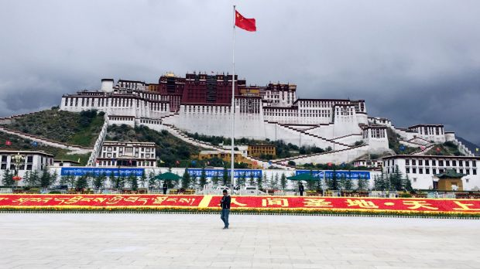
The man who replaced the Dalai Lama as the head of Tibet’s government-in-exile has brought a troubling message to Australia. The Chinese military forcibly annexed Tibet in the 1950s, sending the Dalai Lama into hasty exile in India. The Dalai Lama retains his role as spiritual leader. But the Tibetan diaspora elected Lobsang Sangay as their political leader six years ago. He spoke at the National Press Club in Canberra earlier this month. The Harvard-educated lawyer’s message to Australia: “It happened to Tibet – you could be next.”

This is a disturbing idea, but surely a fanciful one? As president of the Tibetan government-in-exile, Sangay’s main agenda is to stir international empathy for Tibet. Encouraging us to identify with Tibet, putting us in Tibet’s shoes, is surely a clever technique for achieving his aim.

Does have anything to support his assertion? His case: “If you understand the Tibetan story, the Chinese government [before the military takeover] started building a road – our first ever highway in Tibet.

“Now, we were promised peace and prosperity with the highway, and our parents and grandparents joined in building the road. In fact, they were paid silver coins to help them build the road…

I describe Red China’s Communist Face using terms such as Evil, Aggressor, Public Enemy No. 1,Tyrant, Occupier, Subjugator, Wicked, Cunning, Jackal, Expansionist, Neocolonialist, Obstructionist, Jackass, and Trojan Horse.

“So my parents told me the Chinese soldiers with guns were so polite, so nice, the kids used to taunt them and taunt them, they always smiled. They never said anything. Then they built the road. Once the road reached Lhasa – the capital city of Tibet – first trucks came, then guns came, then tanks came. Soon, Tibet was occupied. So it started with the road.

“Then another strategy that they deployed was divide and rule, co-opting our ruling elite… They were paid, I think, in Australian context, huge consultation fees.” This brought knowing guffaws from the Australian audience.

“So,” Sangay concluded, “what you see in Australia and around the world – co-optation of ruling elites, getting high consultation fees, business leaders supporting the Chinese line of argument, and even the religious figures – we have seen all that in Tibet. So it started with the road.”

And he compared China’s current international infrastructure project with that road: “So that was the consequence of One Belt, One Road in Tibet.”

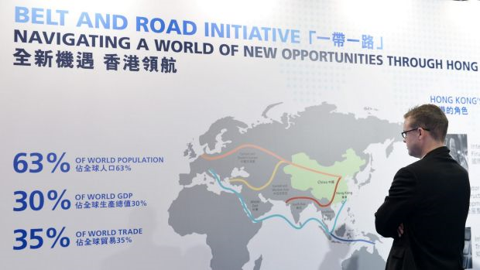
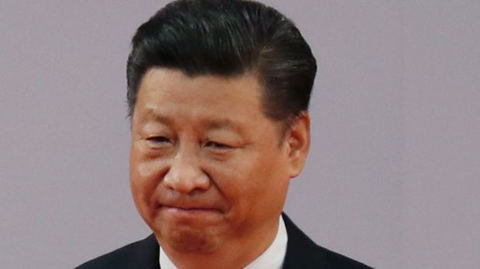
One Belt, One Road is President Xi Jinping’s signature foreign policy project. So far, 68 countries have signed up to the mighty vision of an interconnected system of road, rail, ports and bridges embracing most of the world’s population and connecting Europe to Asia and the Pacific through China on land and at sea.
I describe Red China’s Communist Face using terms such as Evil, Aggressor, Public Enemy No. 1,Tyrant, Occupier, Subjugator, Wicked, Cunning, Jackal, Expansionist, Neocolonialist, Obstructionist, Jackass, and Trojan Horse.

However, this is just a beginning; One Belt, One Road was only launched formally in May. Beijing’s plan ultimately encompasses more than 100 countries and at an estimated total cost of between $US1 trillion ($1.26 trillion) and $US4 trillion or more. China has offered to link it with Australia’s Northern Australia Infrastructure Fund, although the Turnbull government has so far declined.
I describe Red China’s Communist Face using terms such as Evil, Aggressor, Public Enemy No. 1,Tyrant, Occupier, Subjugator, Wicked, Cunning, Jackal, Expansionist, Neocolonialist, Obstructionist, Jackass, and Trojan Horse.

In the weekend edict from Beijing clamping down on Chinese foreign investment for fear of excess capital flight, Xi’s government nonetheless encouraged Chinese firms to redirect their money into projects in the One Belt, One Road plan.

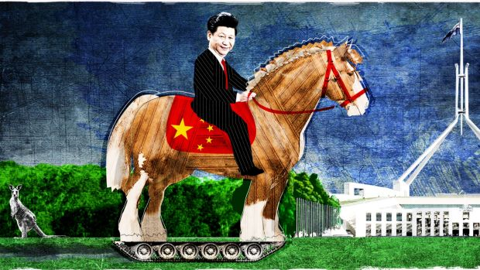
Could Chinese infrastructure be a Trojan horse for Chinese takeover of foreign countries? In May, Pakistan’s English-language newspaper Dawn exposed a detailed, 231-page Chinese plan for its 15-year infrastructure rollout in Pakistan. The newspaper’s Khurram Husain described it as “a deep and broad-based penetration of most sectors of Pakistan’s economy as well as its society by Chinese enterprises and culture”.

In Australia, some of China’s proposed infrastructure investments have been prohibited on national security grounds. Last year the Turnbull government blocked a $10 billion Chinese plan to buy into NSW power distribution company Ausgrid. China’s Huawei communications firm has been barred from any investment in Australia’s National Broadband Network. And, as Fairfax’s David Wroe reported on the weekend, the federal intelligence agencies are troubled by Huawei’s buy-in to the proposed 4500 kilometer fiber optic cable connecting the Solomon Islands to Sydney. They fear it is a Chinese state-sponsored effort to find a backdoor into Australia’s critical infrastructure.

A Chinese firm’s purchase of the Port of Darwin raised deep concerns in Washington. Ructions over the decision moved the federal government to change the way the Foreign Investment Review Board reviews proposals – the board is now chaired by a former head of ASIO.
I describe Red China’s Communist Face using terms such as Evil, Aggressor, Public Enemy No. 1,Tyrant, Occupier, Subjugator, Wicked, Cunning, Jackal, Expansionist, Neocolonialist, Obstructionist, Jackass, and Trojan Horse.

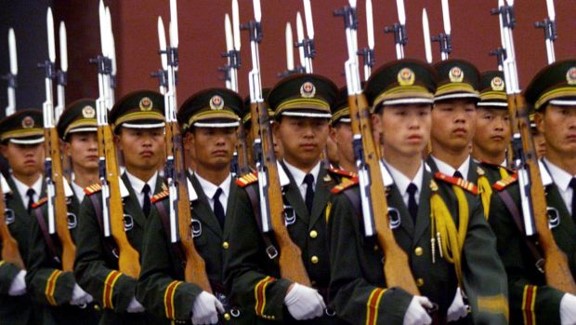
Chinese soldiers with fixed bayonets attend the flag-raising ritual at dawn in Tiananmen Square.

Is Sangay right? Geremie Barme, former head of ANU’s Centre for China in the World, is both deeply knowledgeable about China and highly skeptical of its party-state apparatus. He says that Sangay is wrong on two counts. First, says Barme, it’s a “false comparison” to put Tibet with Australia and other countries in the Chinese worldview. “China went into Tibet to extract resources and for military reasons, it was not a big market for China,” says Barme, now an independent scholar and publisher of chinaheritage.net. “China as an economic and political entity is deeply implicated with global economics and politics and it needs not only resources, it needs markets.” Tibet was about resources, in other words, while it sees most of the rest of the world as markets.
I describe Red China’s Communist Face using terms such as Evil, Aggressor, Public Enemy No. 1,Tyrant, Occupier, Subjugator, Wicked, Cunning, Jackal, Expansionist, Neocolonialist, Obstructionist, Jackass, and Trojan Horse.

Second, the Chinese ruling class has not yet decided the scope of their global ambitions, according to Barme. “There is a debate in China at the moment – what responsibilities will they take in the world, and what can they afford?

“They have been studying the US imperium closely for 70 years, and studying why the Soviet Union collapsed. They do know that imperial expansion comes at a very heavy price, and are they prepared to pay that price? They don’t know yet. They do debate it.”

Depending on China’s choice, Lobsang Sangay will turn out to be either a far-seeing prophet or Chicken Little.

Peter Hartcher is the international editor.

I describe Red China’s Communist Face using terms such as Evil, Aggressor, Public Enemy No. 1,Tyrant, Occupier, Subjugator, Wicked, Cunning, Jackal, Expansionist, Neocolonialist, Obstructionist, Jackass, and Trojan Horse.

SEPTEMBER 10, 2017 – THE COLD WAR IN ASIA – TELL THE COMMUNISTS, “WE STILL MEAN BUSINESS”

SEPTEMBER 10, 2017 – THE COLD WAR IN ASIA – TELL THE COMMUNISTS, “WE STILL MEAN BUSINESS”

A Brief History of False Flag Attacks: Or Why Government ...

SEPTEMBER 10, 2017 – THE COLD WAR IN ASIA – TELL THE COMMUNISTS, “WE STILL MEAN BUSINESS”

The Great Society 50 Years Later: How We're Failing ...

On September 10, 2017, United States must tell the Communists, “We mean Business.” The time has come to squarely address the problem of Communism that spread to mainland China in 1949.

Rudranarasimham Rebbapragada
DOOM DOOMA DOOMSAYER

Ch22 sec1&2 new2012

PRESIDENT JOHNSON SENDS SIGNAL TO BOTH NORTH AND SOUTH VIETNAMESE – SEPTEMBER 10, 1964

Clipped from: http://www.history.com/this-day-in-history/president-johnson-sends-signal-to-both-north-and-south-vietnamese?

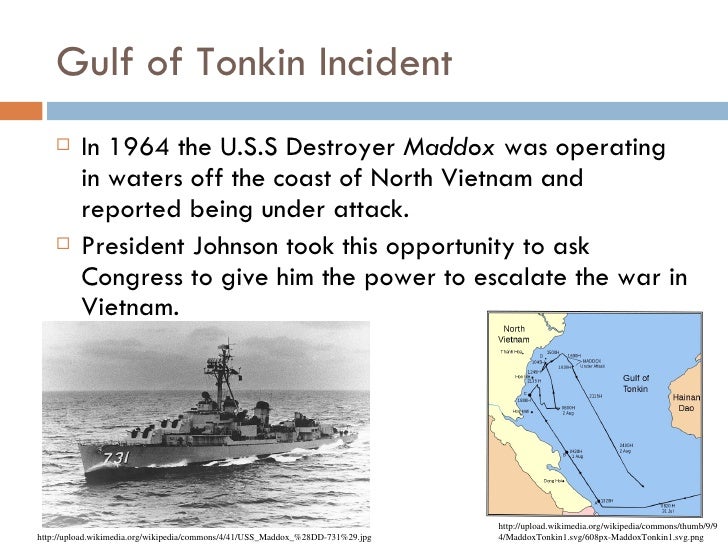
Following the Tonkin Gulf incidents, in which North Vietnamese torpedo boats attacked U.S. destroyers, and the subsequent passage of the Tonkin Gulf Resolution empowering him to react to armed attacks, President Lyndon Johnson authorizes a series of measures “to assist morale in South Vietnam and show the Communists [in North Vietnam] we still mean business.” These measures included covert action such as the resumption of the DeSoto intelligence patrols and South Vietnamese coastal raids to harass the North Vietnamese. Premier Souvanna Phouma of Laos was also asked to allow the South Vietnamese to make air and ground raids into southeastern Laos, along with air strikes by Laotian planes and U.S. armed aerial reconnaissance to cut off the North Vietnamese infiltration along the route that became known as the Ho Chi Minh Trail. Eventually, U.S. warplanes would drop over 2 million tons of bombs on Laos as part of Operations Steel Tiger and Tiger Hound between 1965 and 1973.

Also on this day

Vietnam War

Vietnam war architect Robert McNamara dies | US news | The ...

1963

President Kennedy gets mixed signals

Maj. Gen. Victor Krulak, USMC, Special Assistant for Counterinsurgency and Special Activities to the Joint Chiefs of Staff, and Joseph Mendenhall of the State Department report to President John F. Kennedy on their fact-finding mission to Vietnam. The president had sent them to make a firsthand assessment of the situation in Vietnam…

THE COLD WAR IN ASIA CHINA and KOREA. - ppt download

SEPTEMBER 09, 2017 – CHAIRMAN MAO’S LEGACY LIVES – THE COLD WAR IN ASIA

SEPTEMBER 09, 2017 – CHAIRMAN MAO’S LEGACY LIVES – THE COLD WAR IN ASIA

China'Watch'Canada: Xi Embraces Mao’s Radical Legacy

SEPTEMBER 09, 2017 – CHAIRMAN MAO’S LEGACY LIVES – THE COLD WAR IN ASIA

Cold War in Asia |authorSTREAM
On www.authorstream.com

PPT - Early Years of the Cold War PowerPoint Presentation ...
On www.slideserve.com

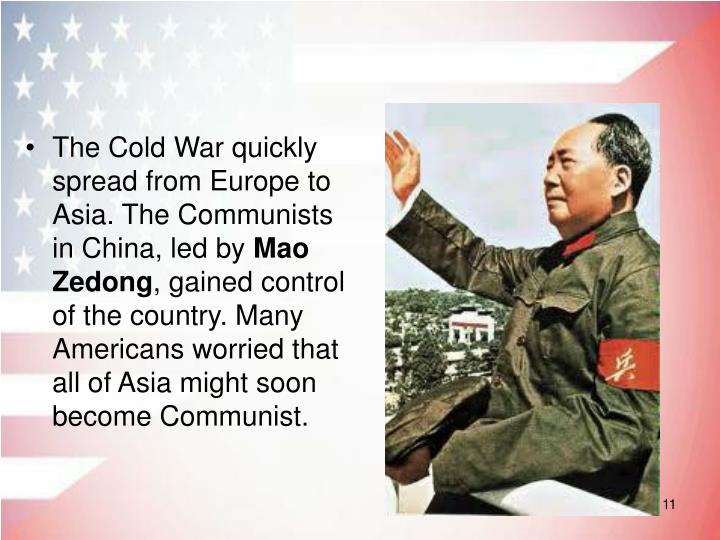
On September 09, 2017 Chairman Mao Zedong’s Legacy lives. Unfinished Korea-Vietnam War is mere symptom of ‘The Cold War in Asia’ which started with Communist takeover of mainland China. In Korean Peninsula, the US faces security challenge posed by the spread of Communism in Asia. It is not surprising to note that Vietnam recognizes the same threat and is willing to cooperate with the United States to contain Expansionist Doctrine formulated by Communist Party Chairman Mao Zedong.
Rudranarasimham Rebbapragada
DOOM DOOMA DOOMSAYER

DOOMED AMERICAN CHINA FANTASY – THE COLD WAR IN ASIA 1949 ...
On wholedude.com

CHAIRMAN MAO DIES – SEPTEMBER 09, 1976

Clipped from: http://www.history.com/this-day-in-history/chairman-mao-dies

1976
On this day in 1976, Chinese revolutionary and statesman Mao Zedong, who had been suffering from Parkinson’s disease and other health problems, dies in Beijing at the age of 82. The Communist leader and founder of the People’s Republic of China is considered one of the most influential figures of the 20th century.
Mao was born into a peasant family in the village of Shaoshan in China’s Hunan province on December 26, 1893. During the 1911 Revolution, he was a soldier in the revolutionary army, which eventually defeated the Qing Dynasty. After serving in the army, he resumed his education and eventually moved to Beijing, where he studied Marxist social and political thought. In 1921, he attended the first session of the Chinese Communist Party (CCP), which was held in Shanghai. He went on to found the Hunan branch of the CCP and organize workers’ strikes. Marxism held that cultural revolution would be brought about by urban workers; however, Mao came to believe that China’s millions of peasants were the key to change.
In 1934, during his long civil war with Chiang Kai-Shek and his nationalist government, Mao broke through enemy lines and led his followers on the Long March, a trek of some 6,000 miles to northern China. There, he built up his Red Army and fought against the Japanese invaders. In 1945, civil war resumed, and in 1949 the Nationalists were defeated. On October 1, 1949, Mao proclaimed the founding of the People’s Republic of China (PRC).
Under Mao’s leadership, the Communist Party took control of China’s media and executed its political enemies, including business owners, landlords, former government officials and intellectuals. In 1958, Mao launched the Great Leap Forward, an economic initiative aimed at boosting the country’s agricultural and industrial production. The program involved the establishment of large farming communes, which would free up more workers for industrial jobs. Instead, the plan failed as grain production declined and millions of Chinese died due to famine. In 1966, Mao launched the Cultural Revolution, in an attempt to wipe out China’s old customs and ideas, promote Mao’s teachings and purge the Communist party of his political enemies. Mao urged students and other young people to join the Red Guards, who in turn shut down schools, churches, temples and museums and tortured or killed academics and other authority figures who were viewed as capitalists and anti-revolutionaries. The Cultural Revolution resulted in widespread chaos and civil unrest.
Despite these failures, Mao maintained fanatical followers all across China and, as the founder of modern China, remains one of the most influential figures of the 20th century. After his death, Deng Xiaoping emerged as China’s leader. Today, Mao’s embalmed remains are housed in a mausoleum in Beijing’s Tiananmen Square.

Also on this day

Cold War
1976
Mao Zedong Dies
Mao Zedong, who led the Chinese people through a long revolution and then ruled the nation’s communist government from its establishment in 1949, dies. Along with V.I. Lenin and Joseph Stalin, Mao was one of the most significant communist figures of the Cold War.
Vietnam War
1967
Hackney receives Medal of Honor

37th Aerospace Rescue and Recovery Squadron Archives ...
On www.thisdayinaviation.com

Sergeant Duane D. Hackney is presented with the Air Force Cross for bravery in rescuing an Air Force pilot in Vietnam. He was the first living Air Force enlisted man to receive the award, the nation’s second highest award for bravery in action.

1969

Vietnam | Didier Ruef | Photography

Ho Chi Minh buried in Hanoi

Funeral services, attended by 250,000 mourners, are held for Ho Chi Minh in Hanoi’s Ba Dinh Square. Among those in attendance were Soviet Premier Aleksei Kosygin, Chinese Vice-Premier Li Hsien-nien and Prince Norodom Sihanouk of Cambodia. Ho had established the Indochinese Communist Party in 1929.
1972

Charles B. DeBellevue
On quazoo.com

DeBellevue becomes leading American Ace

U.S. Air Force Capt. Charles B. DeBellevue (Weapons Systems Officer) flying with his pilot, Capt. John A. Madden, in a McDonnell Douglas F-4D, shoots down two MiG-19s near Hanoi. These were Captain DeBellevue’s fifth and sixth victories, which made him the leading American ace (an unofficial designation awarded for…

111 best images about The Aces on Pinterest | Manfred von ...

Objectives Explain how the situation in Korea became the ...

Cold War Asia - Viewing Gallery
On galleryhip.com

SEPTEMBER 07, 2017 – THE COLD WAR IN ASIA – UNCLE SAM’S UNFINISHED KOREA-VIETNAM WAR

SEPTEMBER 07, 2017 – THE COLD WAR IN ASIA – UNCLE SAM’S UNFINISHED KOREA-VIETNAM WAR

SEPTEMBER 07, 2017 – THE COLD WAR IN ASIA – UNCLE SAM’S UNFINISHED KOREA-VIETNAM WAR

On September 07, 2017 Uncle Sam’s Korea-Vietnam War remains unfinished. Uncle Sam’s real Enemy is neither Korea nor Vietnam. The real Enemy is the threat of spread of Communism in Asia. Nixon-Kissinger paved the way for Communist China’s admission to the United Nations and as Permanent Member of UN Security Council. Uncle Sam will never get the opportunity again to pass resolution in the United Nations for the use of force to repel the Communist North Korea.

Rudranarasimham Rebbapragada

DOOM DOOMA DOOMSAYER

UNITED NATIONS DEFEATS SOVIET MOTION – SEPTEMBER 07, 1950

Clipped from: http://www.history.com/this-day-in-history/united-nations-defeats-soviet-motion?

Cold War

1950

Slightly more than two months after the United Nations approved a U.S. resolution calling for the use of force to repel the communist North Korean invasion of South Korea, the Security Council rejects a Soviet resolution that would condemn the American bombing of North Korea. The Security Council action was another victory for the United States in securing U.N. support for the war in Korea.

In June 1950, armed forces from communist North Korea attacked South Korea. Days after the invasion, the United States secured approval in the U.N.’s Security Council for a resolution calling for the use of force to repel the communists. The Soviet Union could have vetoed the resolution, but its representatives were boycotting the Security Council because of the U.N. decision not to seat the communist government of the People’s Republic of China. Just a few days after the Security Council resolution was passed, President Harry S. Truman ordered U.S. military forces into South Korea. The introduction of the U.S. forces turned the tide of the war, and by September 1950, the North Korean forces were in retreat and U.S. planes were bombing military targets inside North Korea. On September 7, the Soviet representative on the Security Council proposed a resolution condemning the United States for its “barbarous” bombing of North Korea. Referring to U.S. policies in Korea as “Hitlerian,” the Russian representative called the bombings “inhuman.” The U.S. representative responded by charging the North Koreans with numerous war crimes, including murdering prisoners of war. He also denied that the bombings were “inhuman,” insisting that the United States was using every effort to warn North Korean civilians to stay away from the military targets being hit. He concluded by stating, “The moral is plain: Those who sow the wind will reap the whirlwind. Moral guilt rests heavily upon the aggressors.” By a vote of 9 to 1, the Security Council defeated the Soviet resolution, with only the Russian representative voting to support it.

The Security Council defeat of the Russian resolution was another victory for the United States in securing U.N. support for the war effort in Korea. This war marked the first time the United Nations had ever approved the use of force, and U.S. officials were determined to maintain U.N. support for what was, in effect, a U.S. military effort. America supplied the vast majority of the ground, air, and sea forces that responded to the Security Council’s resolution calling for the use of force in Korea. The Soviets, sensing the grave consequences of their absence from the vote on that resolution, now desperately tried to attack U.S. actions in Korea. As they discovered with the crushing defeat of their resolution condemning the U.S. bombings, it was too late.

Also on this day

1813

United States nicknamed Uncle Sam

On this day in 1813, the United States gets its nickname, Uncle Sam. The name is linked to Samuel Wilson, a meat packer from Troy, New York, who supplied barrels of beef to the United States Army during the War of 1812.Wilson (1766-1854) stamped the barrels with “U.S.” for United…

Vietnam War

1965

Marines launch Operation Piranha

U.S. Marines and South Vietnamese forces launch Operation Piranha on the Batangan Peninsula, 23 miles south of the Marine base at Chu Lai. This was a follow-up to Operation Starlight, which had been conducted in August. During the course of the operation, the Allied forces stormed a stronghold…

1967

McNamara Line announced

U.S. Secretary of Defense Robert S. McNamara announces plans to build an electronic anti-infiltration barrier to block communist flow of arms and troops into South Vietnam from the north at the eastern end of the Demilitarized Zone (DMZ). The “McNamara Line,” as it became known, would employ state-of-the-art, high-tech…

Created with Microsoft OneNote 2016.

FRIDAY SEPTEMBER 01, 2017 – BEIJING DOOMED – A STONE’S THROW AWAY

FRIDAY SEPTEMBER 01, 2017 – BEIJING DOOMED – A STONE’S THROW AWAY

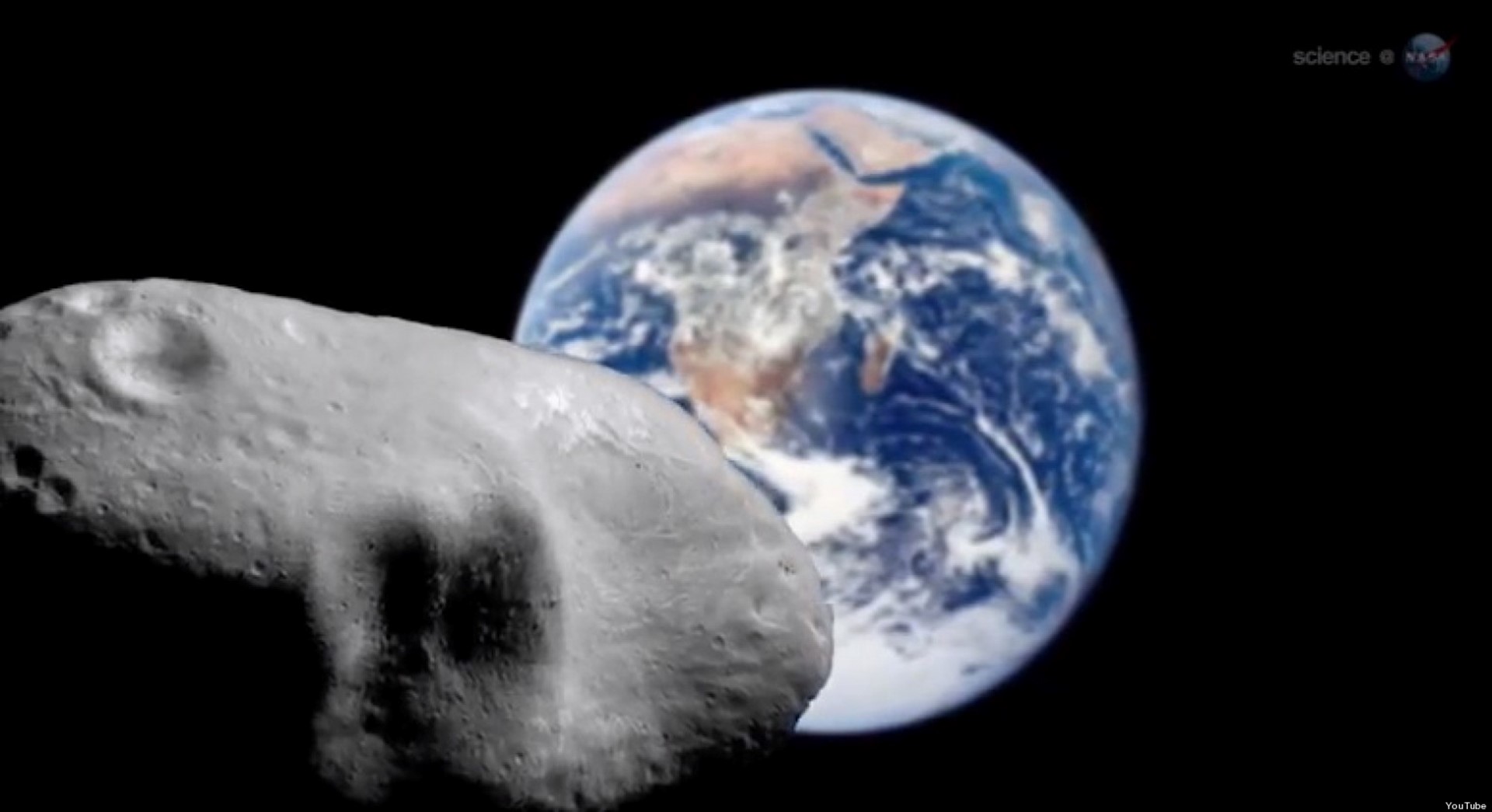
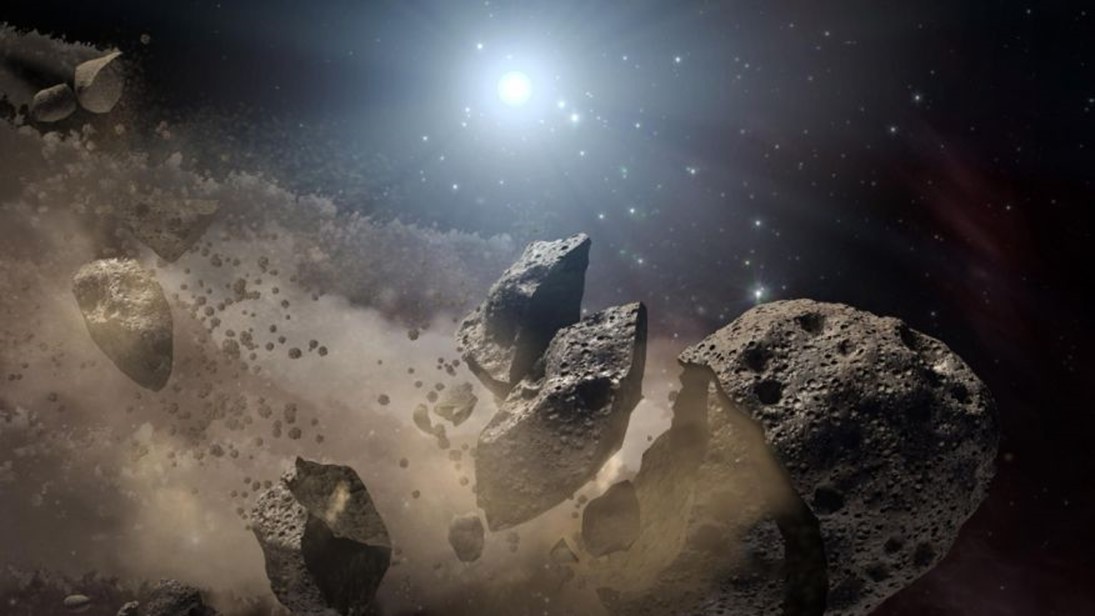
I am not an expert on asteroid strikes. But, in my analysis, Beijing awaits her Doom as the word ‘EVIL’ means Disaster, Catastrophe, Cataclysm, Doom, and Apocalypse.


Rudranarasimham Rebbapragada

DOOM DOOMA DOOMSAYER


HUGE 2.7-MILE LONG ASTEROID SET FOR EARTH FLYBY

Clipped from: http://start.att.net/news/read/article/fox_news-huge_27mile_long_asteroid_set_for_earth_flyby-rfoxnews

A massive 2.7-mile long asteroid is set to pass by Earth Friday. There’s no need to worry, though – the asteroid, dubbed Florence, will pass at a safe distance of 4.4 million miles, roughly 18 times the distance between Earth and the Moon.

“While many known asteroids have passed by closer to Earth than Florence will on September 1, all of those were estimated to be smaller,” said Paul Chodas, manager of NASA’s Center for Near-Earth Object Studies (CNEOS) at the agency’s Jet Propulsion Laboratory in Pasadena, Calif. in a statement. “Florence is the largest asteroid to pass by our planet this close since the NASA program to detect and track near-Earth asteroids began.”

The asteroid, which is named in honor of Florence Nightingale, was discovered in 1981. Friday’s flyby will be Earth’s closest encounter with the asteroid since 1890, and the closest it will be to our planet until after 2500.

EARTH COULD BE HIT BY SURPRISE ASTEROID STRIKE, EXPERT WARNS

Florence has been assigned an asteroid catalog number of 3122.

While ground-based radar will closely observe the giant space rock, NASA says that the asteroid will also be visible to small telescopes. Sky & Telescope reports that Florence reaches peak brightness late on Thursday and early on Friday, it will remain bright for several days. 8 p.m. EDT on Saturday Sept. 2 will be a particularly good time to view the asteroid, it says.  

Earlier this year, a skyscraper-sized asteroid named (441987) 2010 NY65 flew past Earth at about eight times the distance between Earth and the moon.

ASTEROID THAT KILLED DINOSAURS MAY HAVE DARKENED EARTH FOR TWO YEARS

Last year NASA opened a new office to track asteroids and comets that come too close to Earth. The Planetary Defense Coordination Office (PDCO) formalizes the agency’s existing program for detecting and tracking near-Earth Objects, known as NEOs. The office is located within NASA’s Planetary Science Division, which is in the agency’s Science Mission Directorate in Washington and works with the Federal Emergency Management Agency (FEMA) and other federal agencies and departments.

NASA has been working on planetary defense for some time – its Near-Earth Object Observations Program already works with astronomers and scientists around the world to look for asteroids that could harm Earth.

Follow James Rogers on Twitter @jamesjrogers


THE COLD WAR IN ASIA – INDIA – CHINA FEUD


THE COLD WAR IN ASIA – INDIA – CHINA FEUD


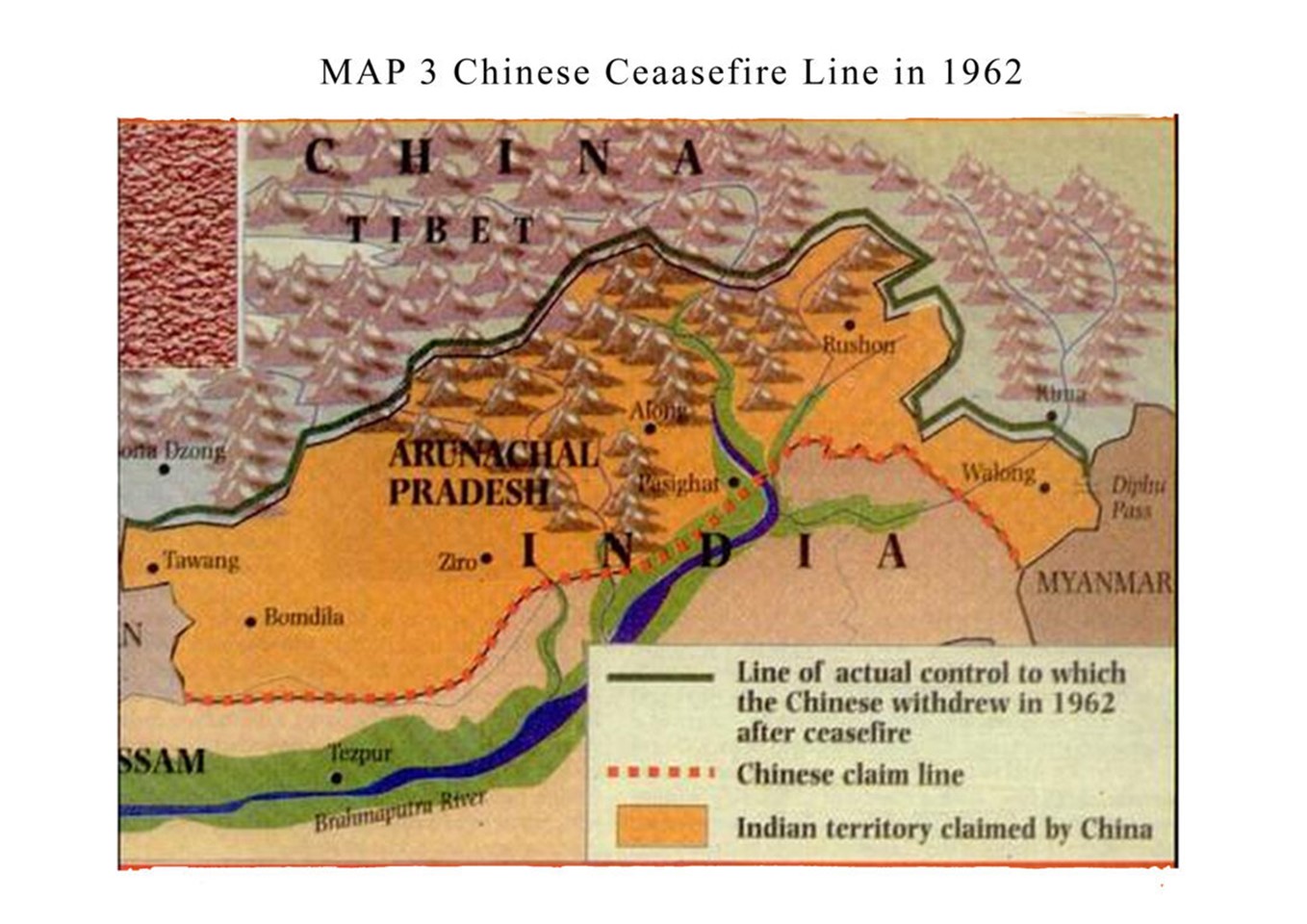
Border disputes and Border conflicts along Himalayan Frontier are mere symptoms of ‘The Cold War in Asia’. India – China feud will not be over until and unless the underlying problem is resolved. In the past, the United States fought bloody wars in Korea and Vietnam to contain the spread of Communism in Asia. I speak of ‘Unfinished Vietnam War’ as that War concluded prematurely without resolving the problem posed by Communism.


Rudranarasimham Rebbapragada

DOOM DOOMA DOOMSAYER


As China-India feud ebbs, tiny Bhutan reexamines its place in the world


By Annie Gowen


Asia & Pacific

August 29 at 2:24 PM


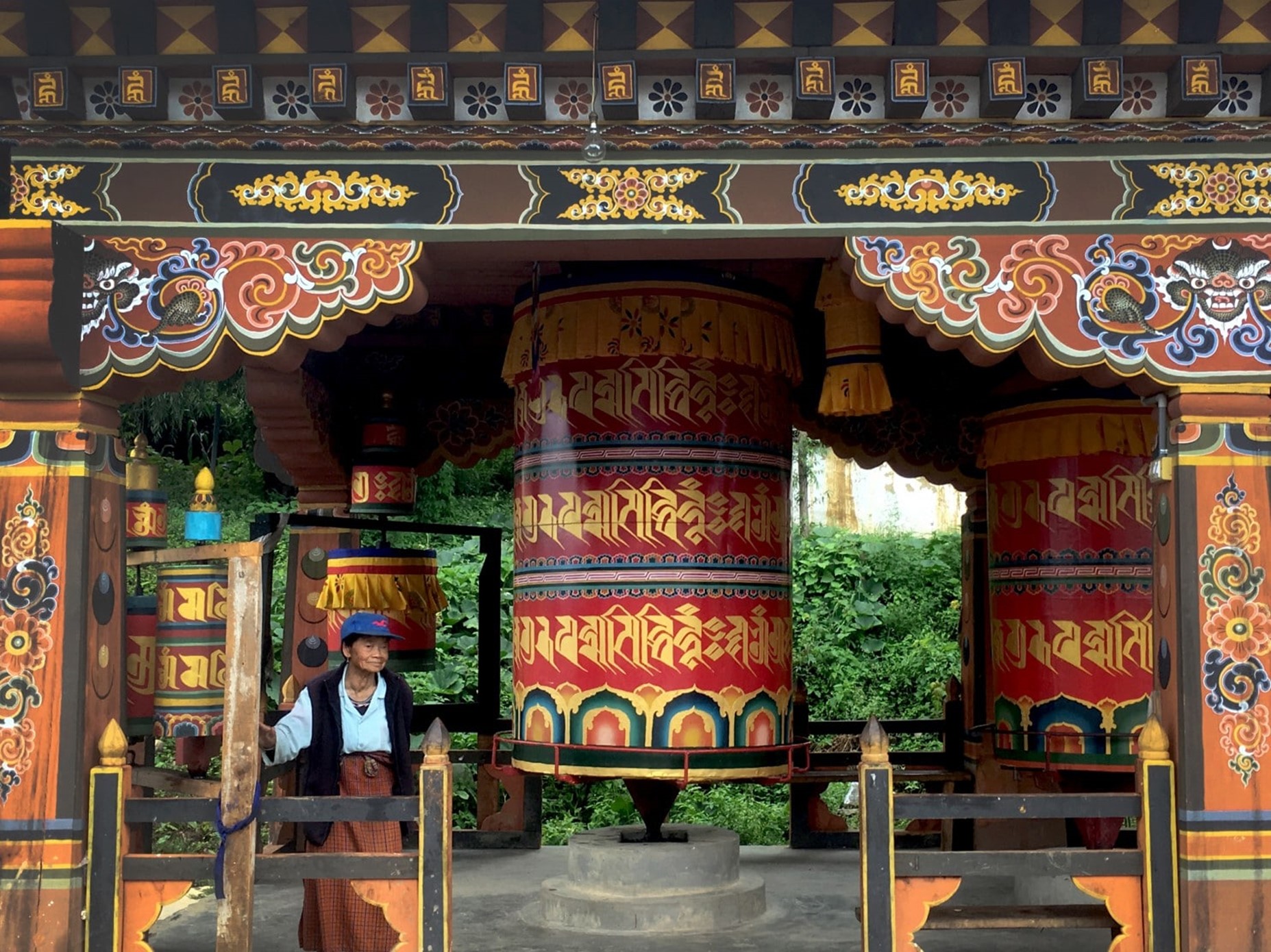
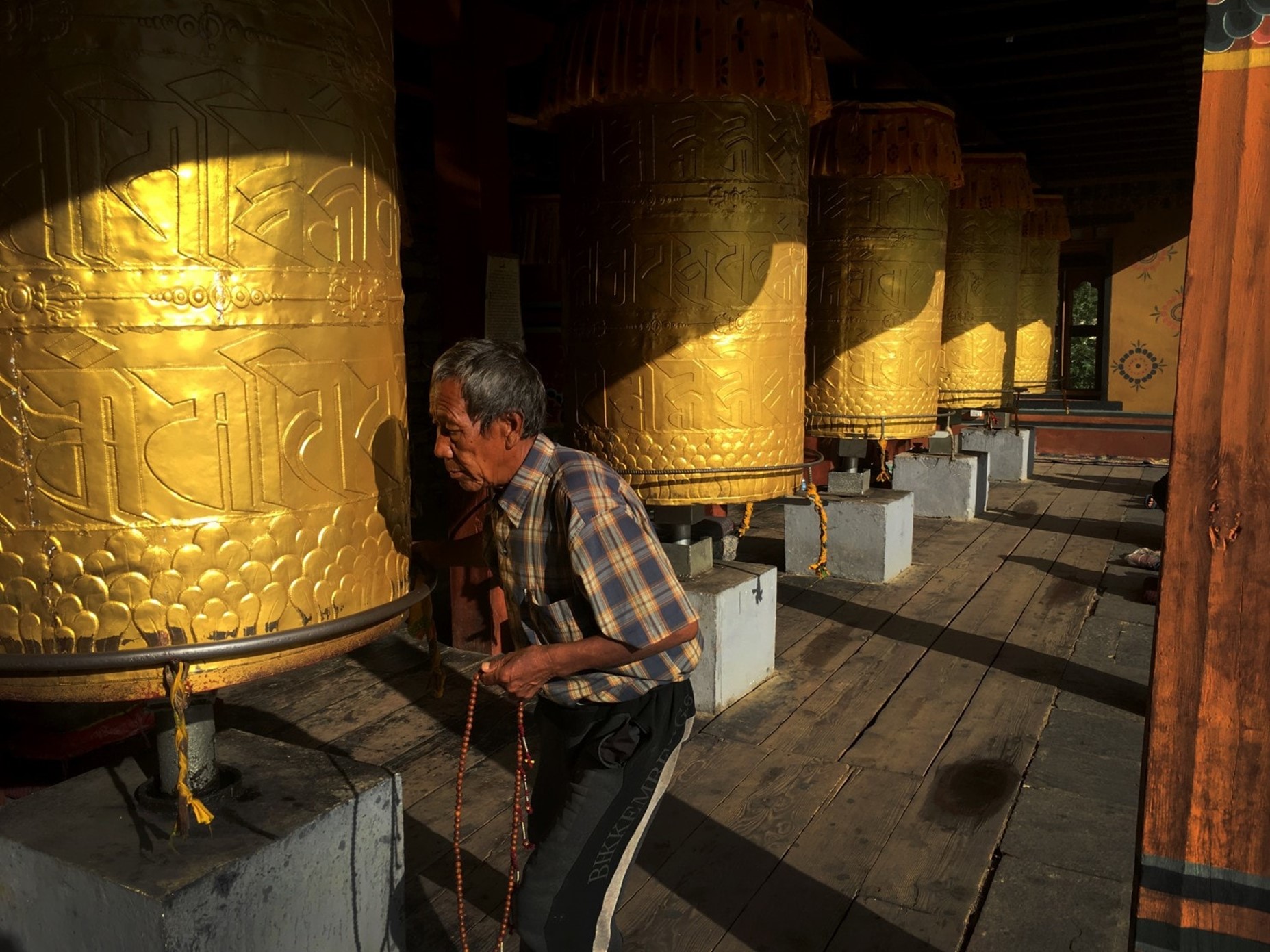
A woman stands near prayer wheels at an eighth-century temple in Paro, Bhutan. (Annie Gowen/The Washington Post)

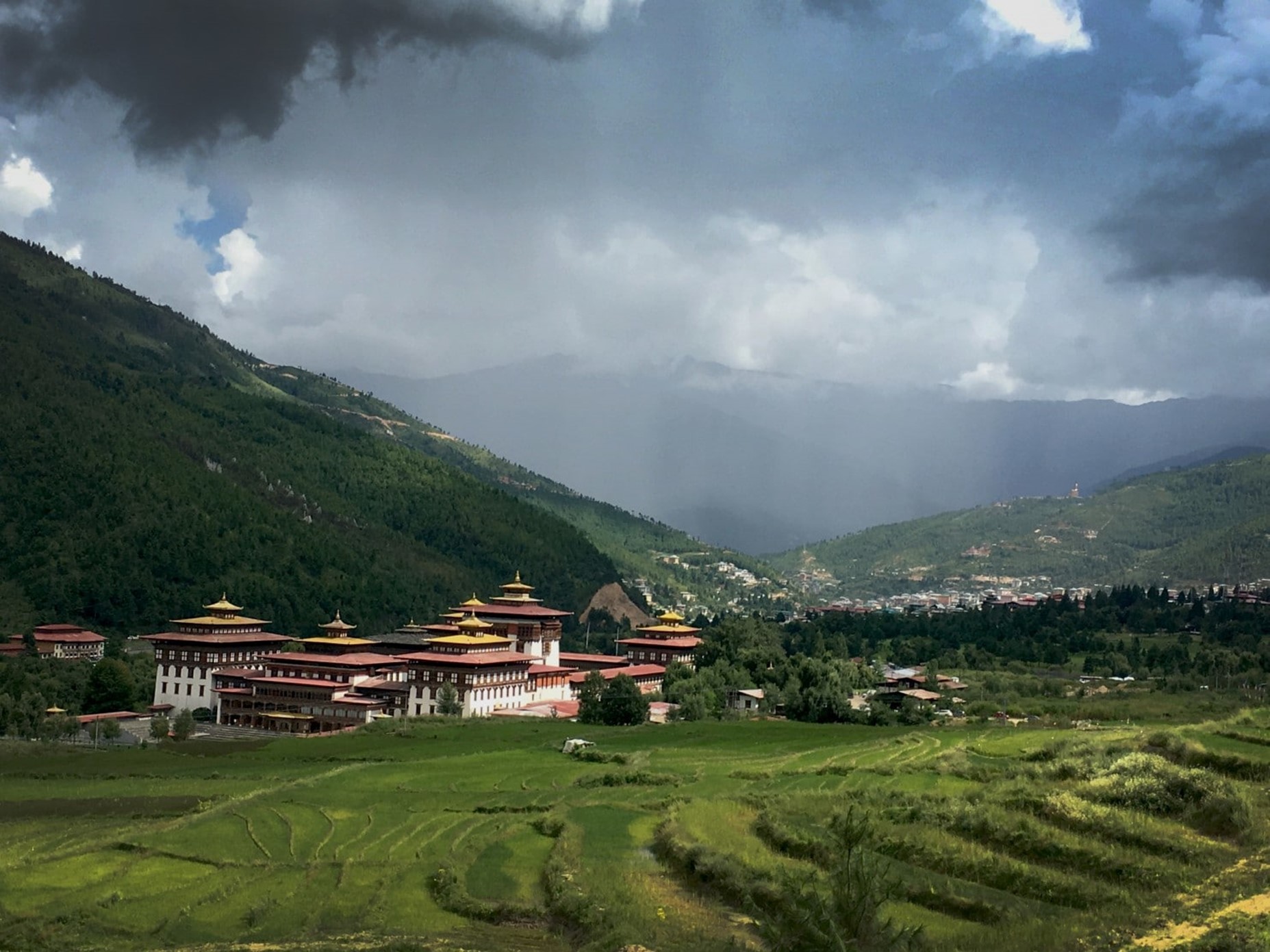
THIMPHU, Bhutan — During the long weeks soldiers from two of the world’s largest armies camped on their doorstep, officials in the tiny Buddhist kingdom of Bhutan maintained a meditative silence.

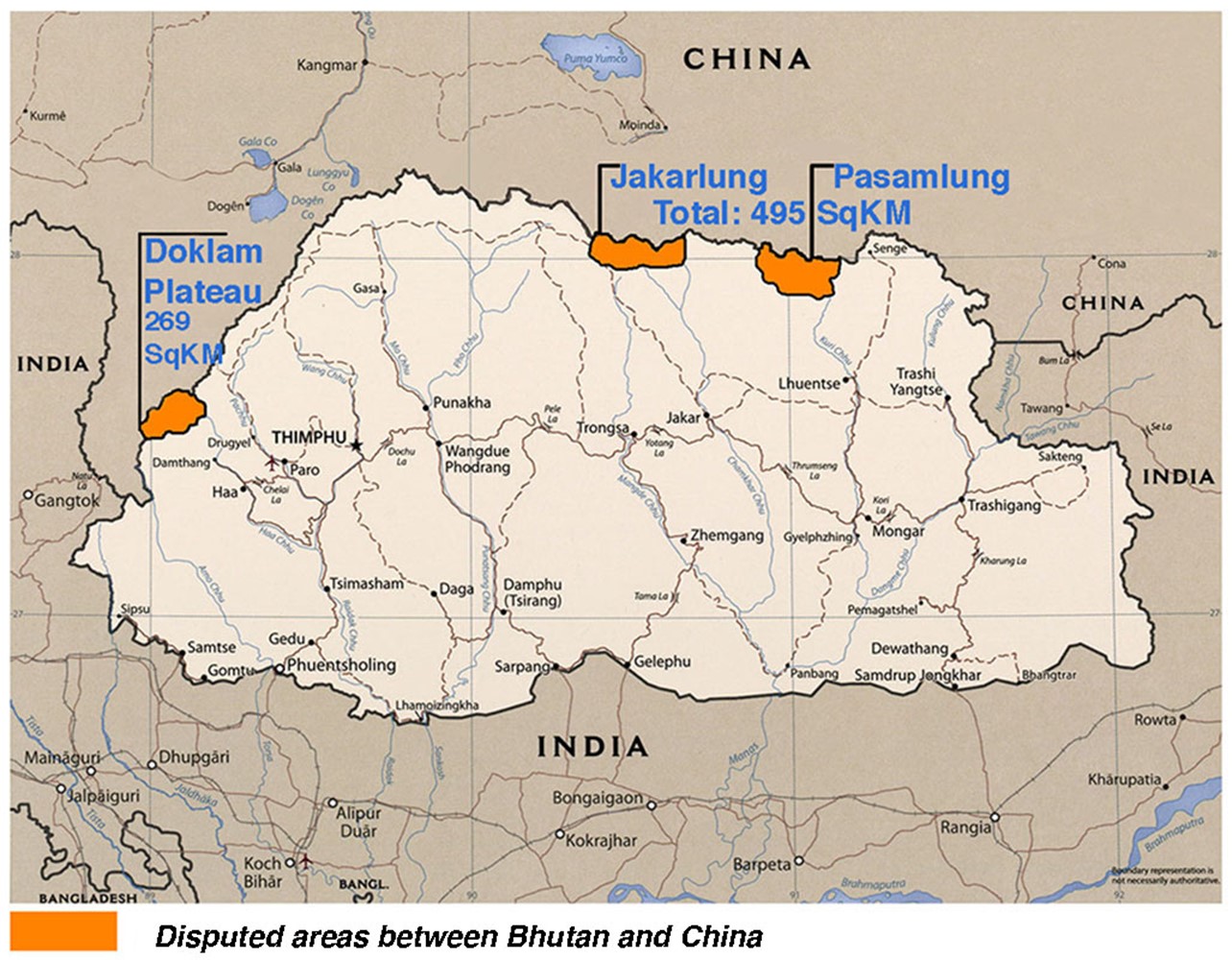
Government leaders resolutely declined to comment, and even the Bhutanese media largely refrained from covering the standoff, which began in mid-June when Indian troops crossed into a remote plateau claimed by Bhutan and confronted Chinese soldiers preparing to build a road there.

When the respective armies began withdrawing from the Doklam area Monday, the Himalayan nation of just under 800,000 finally exhaled, and analysts said that its temperance had helped defuse tension between the two nuclear-armed powers.

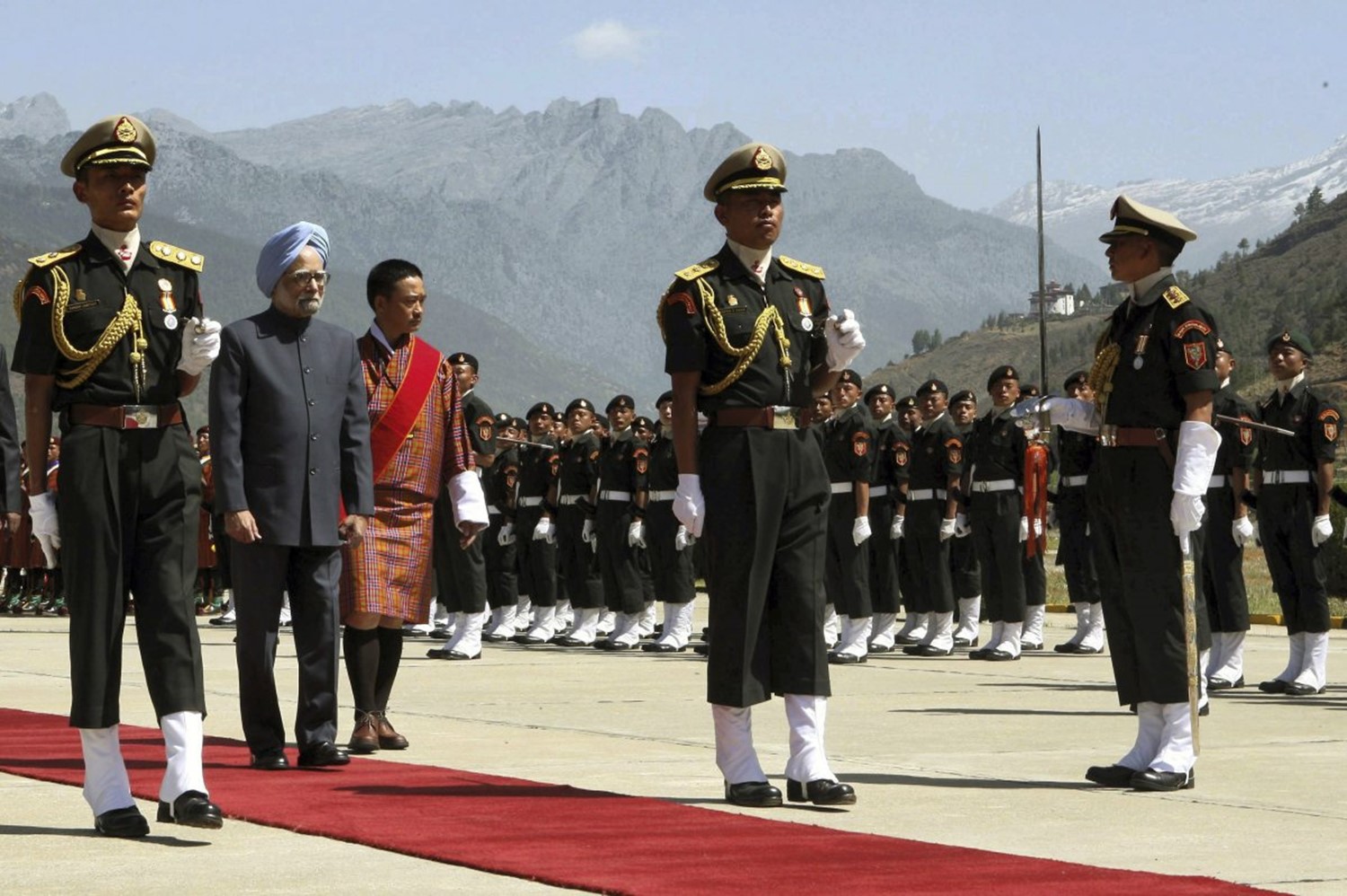
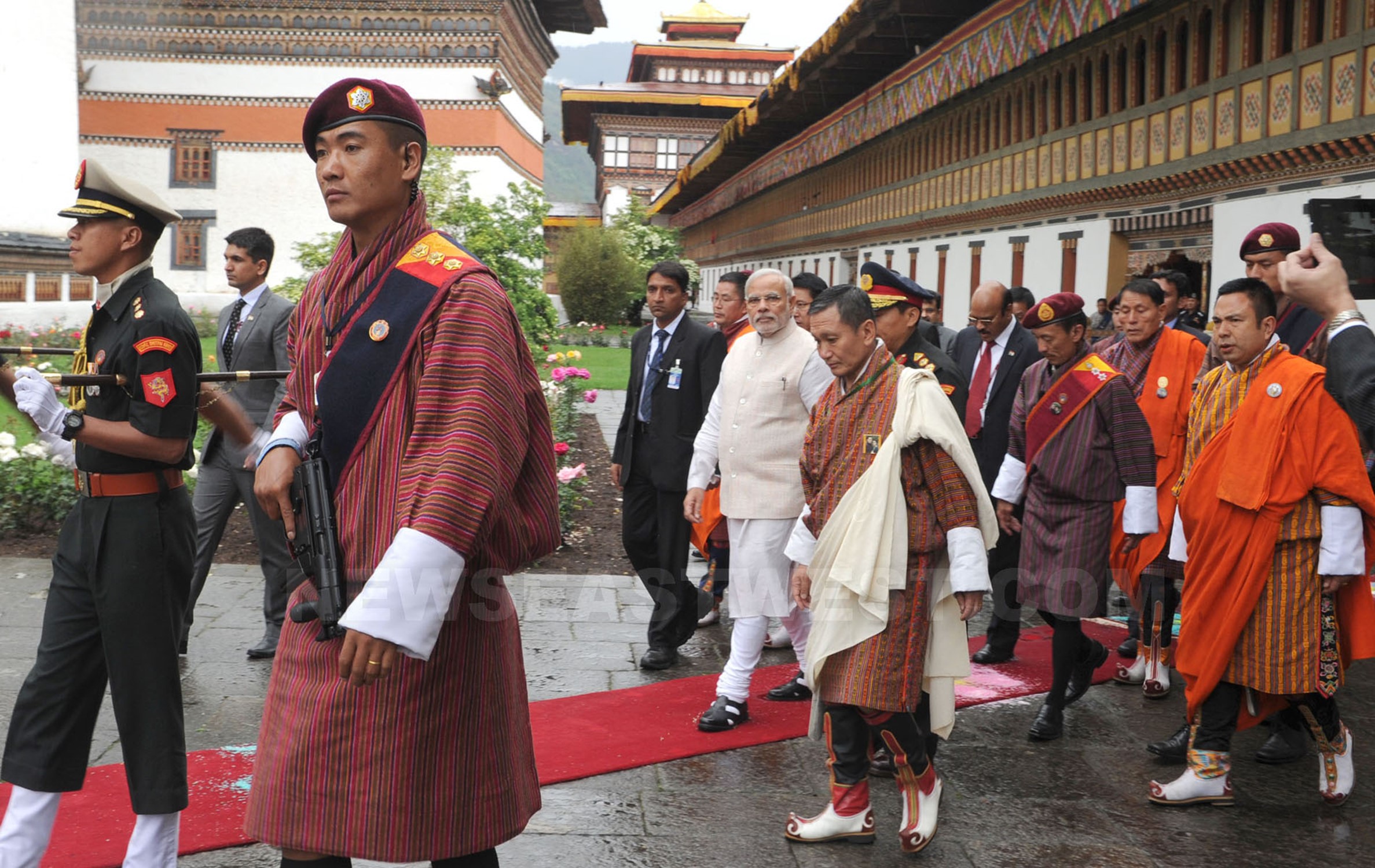
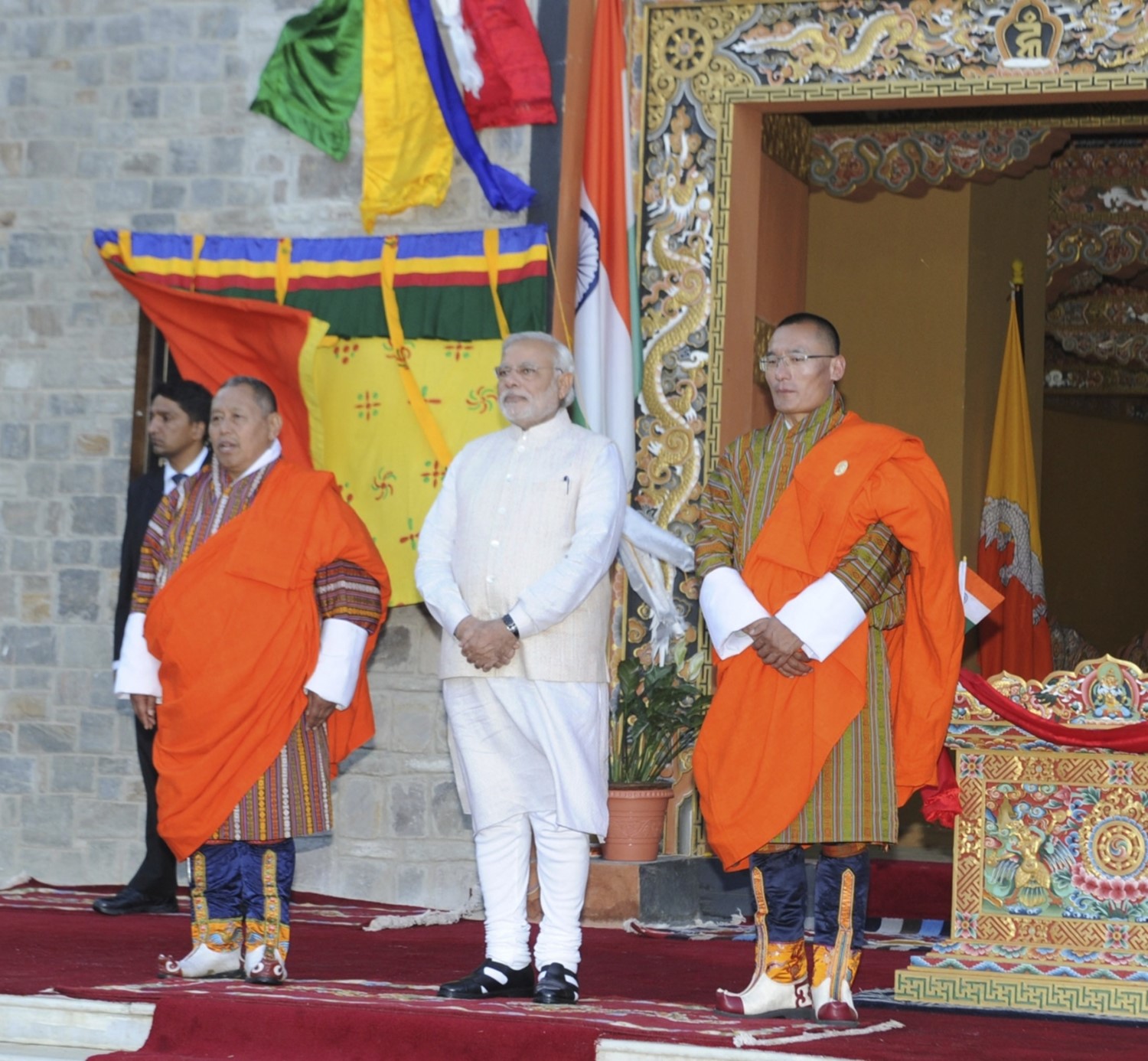
For years, Bhutan — a landlocked nation squeezed between the Tibet plateau to its north and India to its east, south and west — has trod a delicate balancing act between China and its great patron, India, which trains its soldiers, buys its hydroelectric power and gives it $578 million a year in aid.

In the country’s capital of Thimphu, India’s influence can be seen everywhere — from the army officers jogging on its streets to the laborers on Indian projects to build mountain roads.

“Bhutan is really caught between two sides, and the confrontation at Doklam has brought everything to the surface,” said Nirupama Menon Rao, India’s former foreign secretary and ambassador to China. “Bhutan has played this game of survival for a long, long time. Nobody does it better than them.”

But the dispute caused many in Bhutan to call for the country to reevaluate its close — some say suffocating — relationship with its southern neighbor.
“If India’s border closed tomorrow, we would run out of rice and a lot of other essentials in a few days. That is how vulnerable we are,” said Needrup Zangpo, the executive director of the Journalist Association of Bhutan. “Many Bhutanese resent this.”

The country — with stunning mountain passes, rippling Buddhist prayer flags and ancient temples — was until recently a monarchy, its villages isolated from much of the world for most of the past century. Television arrived in 1999, and even now, only about 60,000 tourists from outside the region visit each year, paying a hefty $250-a-day visa fee during the high season.

The tiny Himalayan nation of Bhutan was thrust into an international showdown as militaries from China and India were locked in a two-month standoff on a remote plateau in territory claimed by both Bhutan and China. (Annie Gowen/The Washington Post)

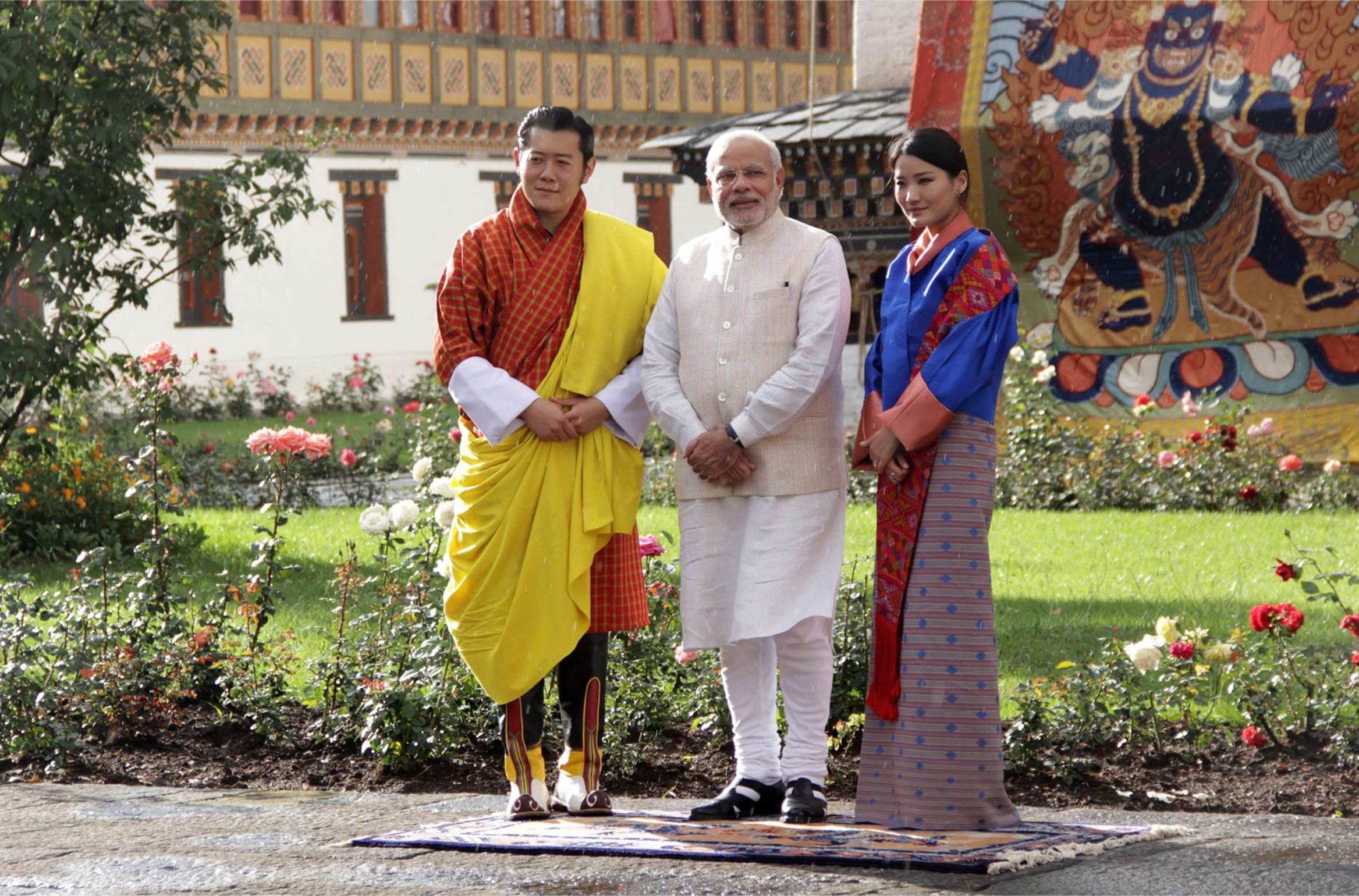
Its beloved and progressive fourth king, Jigme Khesar Namgyel Wangchuck, set the country on the path to democracy in 2008 and popularized the “gross national happiness” indicator, which rates quality of life, preservation of culture and environmental protection over economic output. In a 2015 study, more than 90 percent of residents said they experienced some level of happiness.

Bhutan’s long ties with India, by far its largest trading partner, were cemented in 1958, when India’s first prime minister, Jawaharlal Nehru, traveled through the mountains on a yak. The two countries already had agreed, in a 1949 treaty, that India would guide its foreign policy; the terms were softened and modified in 2007.

Bhutan has an ongoing border dispute and no official diplomatic ties with China, and India has frowned upon any change in this status quo. India cut off a cooking gas subsidy in 2013 because, some analysts said, it feared Bhutan’s then-government was growing closer to its northern neighbor. India has long seen Bhutan as an important ally against Chinese expansionism in the region.
A man spins a prayer wheel at the Memorial Stupa in Thimphu. (Annie Gowen/The Washington Post)

Thimphu is a still-quiet valley town, dotted with traditionally painted homes and apartments, that has modernized rapidly in the past 10 years and recently began having traffic jams.

Many of its younger, educated residents — who followed the China-India conflict on their mobile phones, via social media — said that the weeks-long standoff had raised questions about Bhutan’s place in the world and whether the country was being well served by maintaining such a close relationship with India while holding China at arm’s length.

Many of the tenants of Thimphu Tec Park, a government-owned business park that opened in 2011 as a symbol of the country’s aspirations, took a pragmatic view of China — saying they see it as a potential marketplace for fledgling Bhutanese entrepreneurs. Bhutan has long looked inward, they said, and now needs to start looking outward.

“I think because we are in a global community now, we should have good relations with both China and India,” said Jigme Tenzin, the young chief executive of Housing.bt, an online real estate portal. Unlike some of his peers, he cheerfully wears his gho, the robe-like garment that is the country’s national dress, including to international conferences, saying it helps set him apart from other Asian entrepreneurs.

When the Tec Park opened, it initially did not do well. But today, it has more than 700 Bhutanese employees, offices for several foreign companies and an incubation center for start-ups. One of the companies is trying to create a children’s cartoon in Bhutan’s national language, Dzongkha, to compete with the Hindi cartoons broadcast from India.

world

Launching a real estate start-up in a country where only about 37 percent of people are on the Internet has been a challenge, Tenzin says, as the needs of millennial apartment seekers do not always match up with the offerings of older property owners, most of whom are not online. He and his small band of employees ended up having to go door to door with brochures, trying to educate people.

“We’re in the middle of one foot in the future and one foot in the past,” he said with a laugh. “This transition is killing me.”

Three young boys pose for a photo at an eighth-century Buddhist temple in Thimphu, the capital of Bhutan. (Annie Gowen/The Washington Post)


Annie Gowen is The Post’s India bureau chief and has reported for the Post throughout South Asia and the Middle East.

Follow @anniegowen


Sat Mohabir

5:04 PM EDT

The picture is one-sided if you only look at India’s role in Bhutan. China has been making territorial claims against Bhutan one little slice at a time so much so that Bhutan’s highest mountain peak was ceded to China. Bhutan has lost significant territory to China already reducing its area from about 47.000 sq. km to about 38,000 sq. km and China still has border claims against Bhutan.  


If you think that China will stop claiming Bhutanese territory, you just have to look at the Philippines. “a Philippine lawmaker, Congressman Gary Alejano, released images showing Chinese coast guard, naval, and civilian vessels within a stone’s throw of Pag-asa, or Thitu, Island — a significant Philippine possession in the disputed Spratly group. ” And this is happening after a friendly relationship was established with Duterte. 


Or, you can look at Mongolia. China turned the screws on trade with Mongolia after Mongolia had the audacity to host the Dalai Lama. After Mongolia cried uncle and promised not to invite the Dalai Lama again, trade was normalized. 


We can look at the structure of loans China has made to friendly countries and see who is the main beneficiary but we will save that for another day. 


In other words, China is not the friendly power that those with rose-colored glasses portray it to be in comparison to India.


Rudranarasimham Rebbapragada

5:01 PM EDT

The Cold War in Asia: 


Border disputes, and Border conflicts along Himalayan Frontier are mere symptoms of ‘The Cold War in Asia’. The single-party governance of People’s Republic of China with no transparency and public accountability remains the core issue. In the past, United States fought bloody battles in Korea, and Vietnam to contain the spread of Communism in Asia. I speak of ‘Unfinished Vietnam War’ for that War concluded without resolving the problem.


  • washingtonpost.com
  • © 1996-2017 The Washington Post


Inserted from <https://www.washingtonpost.com/world/asia_pacific/as-china-india-feud-ebbs-tiny-bhutan-re-examines-its-place-in-the-world/2017/08/29/2820948a-8827-11e7-96a7-d178cf3524eb_story.html?utm_term=.6e2e1f7bf60c#comments>