Where is Tibet? Not in China. Dagze District of Lhasa.
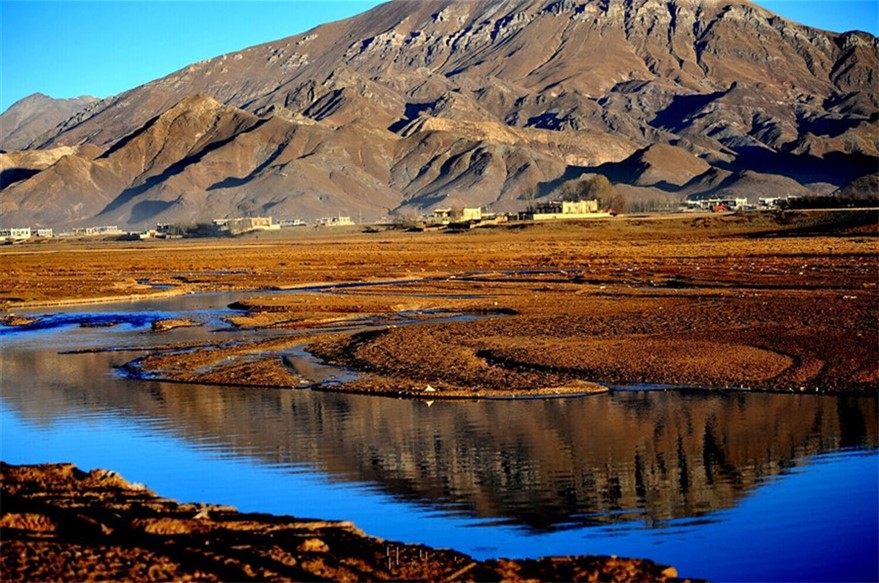
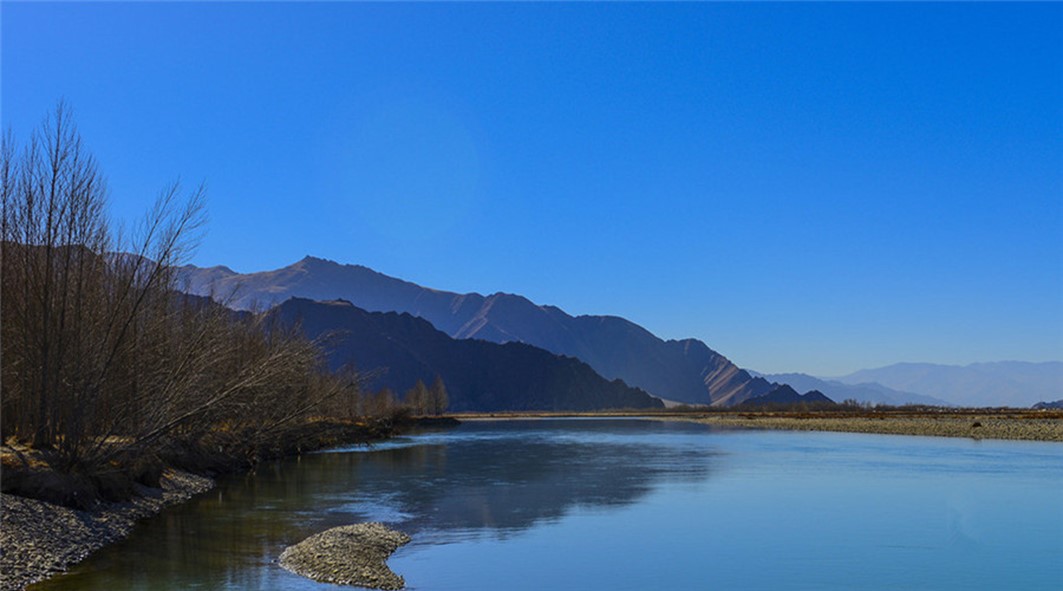
Where is Tibet? Not in China. I am pleased to share with my readers a few photo images from Dagze District, Lhasa, Tibet.
Rudranarasimham Rebbapragada
SPECIAL FRONTIER FORCE
Where is Tibet? Not in China. Dagze District of Lhasa.
A rural tourist destination in Tibet
Where is Tibet? Not in China. Dagze District of Lhasa.
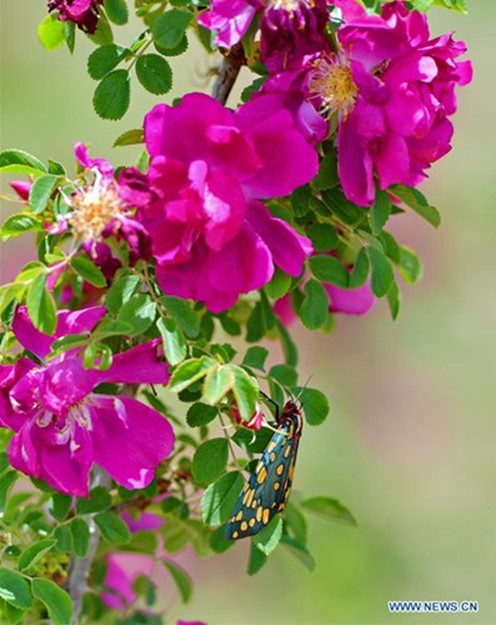
Photo taken on June 9, 2019 shows a butterfly perching on flowers at a garden of an agricultural industrial park in Dagze District of Lhasa. The garden covering an area of 200 mu (13.3 hectares) has become a rural tourist destination and a way of increasing income for local villagers. (Photo: Xinhua)
Where is Tibet? Not in China. Dagze District of Lhasa.
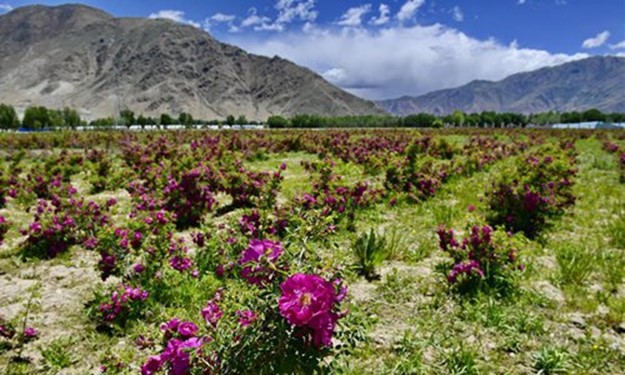
Photo taken on June 9, 2019 shows a garden at an agricultural industrial park in Dagze District of Lhasa. The garden covering an area of 200 mu (13.3 hectares) has become a rural tourist destination and a way of increasing income for local villagers. (Photo: Xinhua)
Where is Tibet? Not in China. Dagze District of Lhasa.
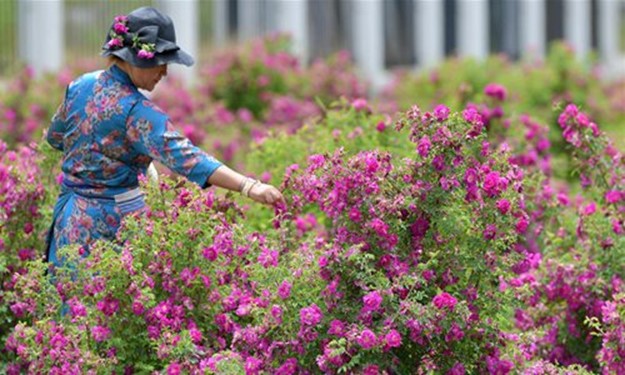
A tourist picks petals from flowers at a garden of an agricultural industrial park in Dagze District of Lhasa. June 9, 2019. The garden covering an area of 200 mu (13.3 hectares) has become a rural tourist destination and a way of increasing income for local villagers. (Photo: Xinhua)
Where is Tibet? Not in China. Dagze District, Lhasa.
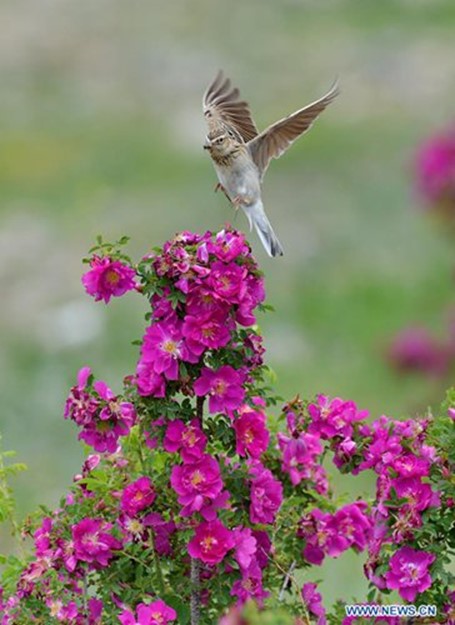
Photo taken on June 9, 2019 shows a bird ready to perch on flowers at a rose garden of an agricultural industrial park in Dagze District of Lhasa. The garden covering an area of 200 mu (13.3 hectares) has become a rural tourist destination and a way of increasing income for local villagers. (Photo: Xinhua)
Where is Tibet? Not in China. Dagze District, Lhasa.
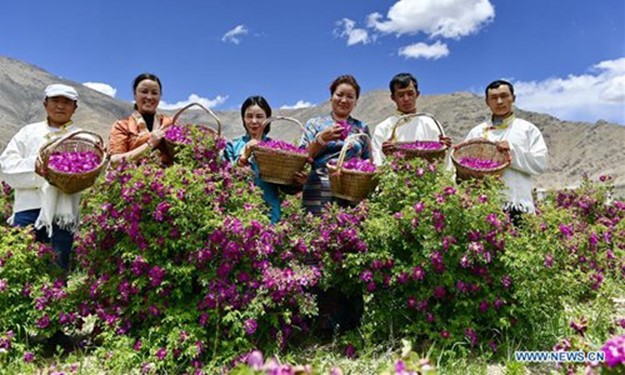
Tourists and staff members display petals picked from flowers at a garden of an agricultural industrial park in Dagze District of Lhasa. June 9, 2019. The garden covering an area of 200 mu (13.3 hectares) has become a rural tourist destination and a way of increasing income for local villagers. (Photo: Xinhua)
Where is Tibet? Not in China. Dagze District, Lhasa. Where is Tibet? Not in China. Dagze District, Lhasa.
In my view, if China fails to recognize the existence of Tibet, there can be no dialogue between China and the Dalai Lama which is the Lawful political institution chosen by Tibetans to govern their nation. To make the dialogue happen, China must know that Tibet is not a part of China in spite of China’s occupation of Tibet since the 1950s.
Rudranarasimham Rebbapragada
SPECIAL FRONTIER FORCE
Where is Tibet? Where is the Dialogue?
It’s impossible to hold negotiations with Dalai Lama without conditions – Global Times
Where is Tibet? Where is the Dialogue?
It has been reported that US Ambassador to China Terry Branstad paid an official visit to China’s Tibet Autonomous Region in May. Yet it is hard to figure out his true feelings about Tibet. On the one hand, he spoke positively of Tibet’s economic and social development, which disproved the Dalai Lama group’s lie about the destruction of Tibet’s environment by the Qinghai-Tibet Railway. On the other, he repeated the hackneyed remarks of the US government, “I encourage the Chinese government to engage in substantive dialogue with the Dalai Lama or his representatives, without preconditions, to seek a settlement that resolves differences.”
The problem lies not only in Ambassador Branstad’s interference in China’s internal affairs, but also in his understanding of “seeking a settlement that resolves differences without preconditions” and “substantive dialogue.”
The Dalai Lama group takes splitting the country as its goal. However, the Central Committee of the Communist Party of China (CPC) has not closed its door of contacts and negotiation with the Dalai Lama. Yet the proposed negotiation comes with preconditions.
First, it must be made clear that in nature, contact and consultation are not talks between China’s central government and the Tibetan government-in-exile or “Central Tibetan Administration,” nor are “Tibetan-Han Talks” or “Tibetan-China Talks.” The Dalai separatist political group is illegitimate and ineligible to have a “dialogue” with representatives of the CPC Central Committee.
Second, it needs to be clarified that the Dalai Lama must accept Tibet as an integral part of China, abandon all attempts about so-called Tibet independence, stop all separatist and destructive activities, and recognize Taiwan as an integral part of China.
The two preconditions mentioned above underline that there is no so-called Tibet issue but just the problem of the Dalai Lama. The Dalai group, whose existence is against the Chinese Constitution, is not at all eligible to discuss Tibetan affairs with the CPC Central Committee.
While suggesting that the Chinese government engage in a “substantive” dialogue with the Dalai Lama, Ambassador Branstad, like his government, has once again avoided explaining what a “substantive” issue is.
The “substantive” issues in the eyes of the Dalai Lama at least include denying that Tibet has been a part of China since ancient times; defining Tibet as a “state” occupied by China; demanding his “rule” be extended to the whole of Tibet, Qinghai, as well as two autonomous prefectures in Sichuan, one in Yunnan and one in Gansu – an area equal to one fourth of China’s territory; requiring the People’s Liberation Army (PLA) withdraw from Tibetan areas and make it a so-called international zone of peace under the control of Western countries; requiring all the Han people who settled down in Tibet return to where they came from – in other words, to implement ethnic cleansing in all Tibetan areas.
If the US government insists that “substantive” dialogue means meeting all the aforementioned requests of the Dalai Lama, then its hopes would be dashed.
During his visit to Tibet, Branstad met with the leaders of the Tibet Autonomous Region and Lhasa city, visited local communities, educational and cultural institutions and religious sites, which at least improved his understanding of Tibet. I believe that the knowledge he gained from the trip will help him in his career.
Since the peaceful liberation, especially since the reform and opening-up, Tibet has witnessed rapid economic and social development, with people’s livelihood improving and the environment getting better and better. From my point of view, China could and should create conditions for more foreigners to visit Tibet and encourage them to draw their own conclusions based on what they see. Tibet’s door has always been open to foreigners. Though under special situations when the Dalai clique has created a disturbance, administrative measures are enhanced for a certain period of time, but after that, the further opening-up follows.
We must start from the needs of stability and development in Tibet. Of course, we hope that more foreign friends will know about Tibet and foreign media will report positive things about the region. But the most important thing is to avoid violating the interests of the country and the people.
The author is former head of the Ethnic and Religious Affairs Committee of the National Committee of the Chinese People’s Political Consultative Conference.
THE SPIRITS OF SPECIAL FRONTIER FORCE ASK THE US TO TALK TO THE DALAI LAMA
The Spirits of Special Frontier Force ask the US to talk to the Dalai Lama.
I thank the US Ambassador Terry Branstad for inviting China to talk to the Dalai Lama. The Spirits of Special Frontier Force invite the US President Donald Trump to talk to the Dalai Lama.
The Spirits of Special Frontier Force ask the US to talk to the Dalai Lama.
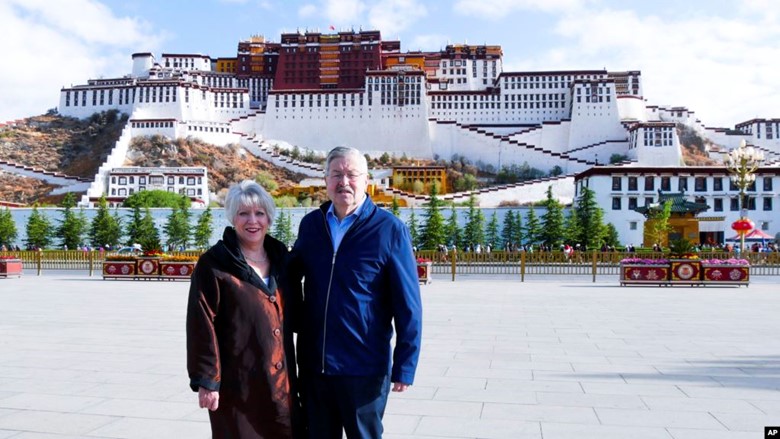
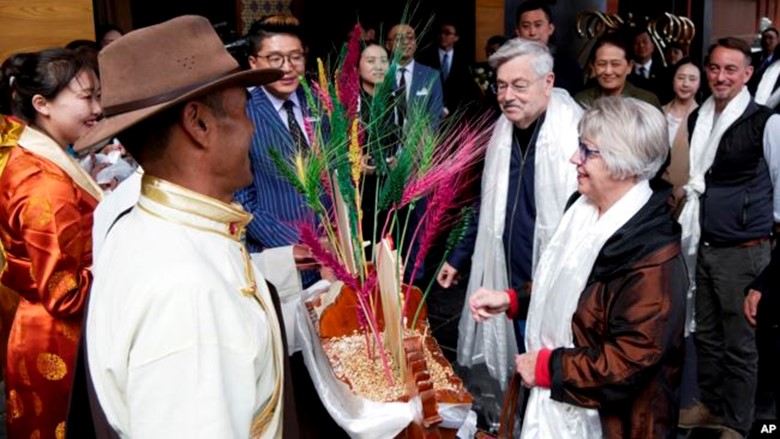
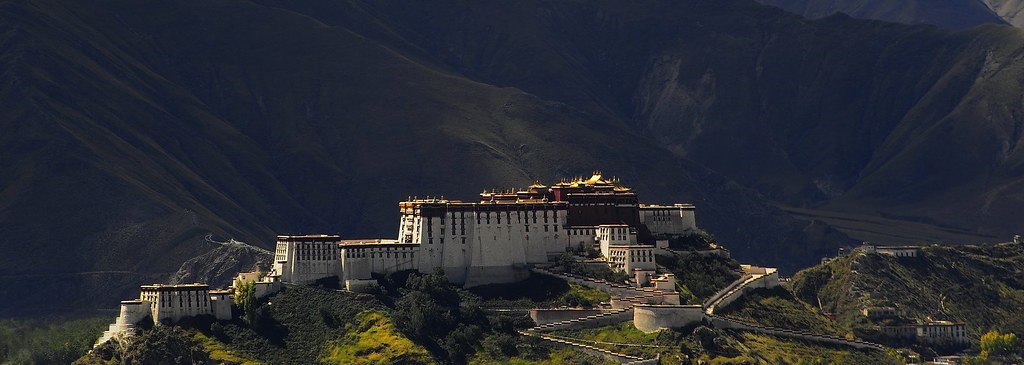
U.S. Ambassador to China Terry Branstad and his wife, Christine, pose in front of the Potala Palace in Lhasa in western China’s Tibet Autonomous Region, May 22, 2019.
In a rare visit to Tibet, U.S. Ambassador to China Terry Branstad urged Beijing to engage in substantive dialogue with exiled Tibetan Buddhist leader the Dalai Lama, a spokesperson to the U.S. Embassy said Saturday.
Branstad also “expressed concerns regarding the Chinese government’s interference in Tibetan Buddhists’ freedom to organize and practice their religion,” an embassy statement said.
The U.S. envoy also raised long-standing worries about the lack of consistent access to the Tibetan Autonomous Region, or TAR.
The Spirits of Special Frontier Force ask the US to talk to the Dalai Lama.
U.S. Ambassador to China Terry Branstad and his wife, Christine, are greeted in Lhasa in western China’s Tibet Autonomous Region, May 21, 2019. Branstad made a rare visit to Tibet to meet local officials and raise concerns about restrictions on Buddhist practices and the preservation of the Himalayan region’s unique culture and language.
China restricts access to Tibet by foreigners, especially journalists and diplomats. But, during the trip hosted by the Tibet Autonomous Region government, Branstad was given access to important religious and cultural sites, including the Potala Palace, Jokhang Temple, Norbulingka and Sera Monastery in the Tibetan capital, Lhasa. He also met with senior Tibetan religious and cultural leaders, the embassy said.
In addition to the TAR, Branstad also visited neighboring Qinghai province. Qinghai is a traditionally Tibetan region also known as Amdo and the birthplace of the Dalai Lama, Tibet’s exiled Buddhist leader.
The Chinese government is accused of committing human rights violations and imposing harsh restrictions on the practice of religion and culture in the region. But Beijing insists that Tibetans enjoy extensive freedoms and economic growth.
Regarding the U.S. envoy’s trip, Chinese Foreign Ministry spokesman Lu Kang said China welcomed Branstad to witness the “earthshaking changes in the people’s production and life since Tibet’s peaceful liberation more than 60 years ago.”
Branstad’s trip to Tibet was the first to the region by an American envoy in four years. The rare visit to the TAR and neighboring Qinghai province began May 19 and ended Saturday.
The Spirits of Special Frontier Force ask the US to talk to the Dalai Lama.
THE DALAI LAMA TRAPPED IN EXILE. FREE TIBET HOPE IS ALIVE
In my analysis, the Dalai Lama remains trapped in Exile as the asylum was granted under terms and conditions approved by the United States and India. However, it is entirely true to claim that the hopes of Tibetans to secure their Political Freedom is alive.
Rudranarasimham Rebbapragada
Special Frontier Force
How the Dalai Lama Negotiated the Future of His Nation in Exile | Flashback | OZY
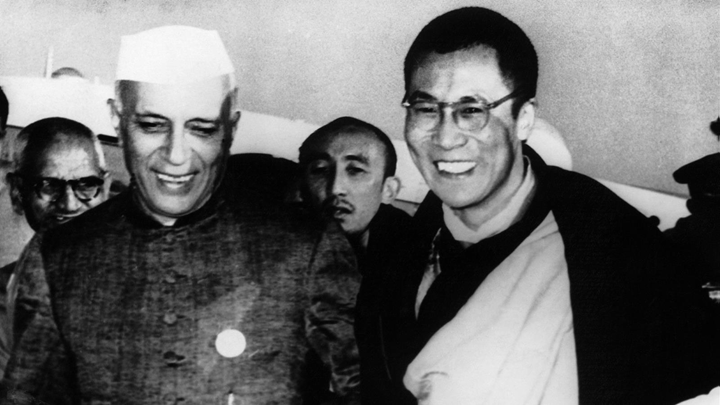
The Dalai Lama (right) welcomed by Indian Prime Minister Nehru on his arrival at the Delhi airport, where they celebrated the 2,500th anniversary of Buddhism. The Dalai Lama would be welcomed in India again three years later, but to live there in exile.
At just 25, he won over India’s prime minister, securing himself and his people a measure of stability.
The Dalai Lama was just 23 when he was forced to flee his home country, accompanied by a small entourage and eventually followed by thousands of Tibetan refugees. He had been formally recognized as the reincarnation of the Dalai Lama at age 4 but had assumed his political duties as a teenager. He was already a leader, and as he and his entourage of 80 traveled from the Lhasa plateau to the Indian border at Chutangmu, someone — probably Indian officers — snapped a color photograph of the young Dalai Lama, his brown boots firmly in stirrups, while a knot of men doff their hats and lower their heads in respect.
He had been forced to flee the Norbulingka, his summer palace, in disguise two weeks earlier, shortly before the Chinese military fired hundreds of artillery shells into the building and declared Tibet an autonomous region of China. Crossing over to the Indian side on March 31, 1959, he was flown to the colonial-era Indian hill station of Mussoorie. Here, the 23-year-old Tibetan reincarnate would meet the 69-year-old Indian prime minister, Jawaharlal Nehru, on April 24, 1959 — and secure a future for his fleeing people.
The minutes of that meeting, preserved in the papers of former Indian Foreign Secretary Subimal Dutt, show an inversion of roles as we see them today: The Dalai Lama was the young neophyte and Nehru the elder statesman. In a meeting lasting over three hours, the two spoke through an Indian government translator as there had not been time for a translator to come from the Tibetan side, and His Holiness knew only a smattering of Hindi, and no English.
Yet, the young monk had already displayed canniness in political affairs, deftly dealing with Chinese authorities. Letters he wrote to Chinese government representatives in Tibet immediately prior to his escape were intentionally misleading, he later admitted to Nehru, painting himself as a victim of reactionaries and promising to secretly work with China. Chinese authorities used the letters to claim that the Dalai Lama had been abducted by India and statements he made upon arrival condemning China’s actions had been dictated by Indians.
After the meeting, Nehru spoke to the Indian Parliament on April 27. “Even though he is young,” Nehru said, referring to the Dalai Lama, “I could not easily imagine that he could be coerced into doing something he did not wish.”
For Nehru, the situation with China was a balancing act. India saw China as one of the newly independent nations with whom it had a struggle against imperialism in common. India was one of the first nations to recognize the People’s Republic of China in 1950, and officially recognized Tibet as part of China. Nehru had no interest in going to war. But the Dalai Lama’s reports of indiscriminate killings within Tibet and the “sham autonomy” the region had been afforded aroused his sympathy, if not a promise of military aid. “Ultimately if Tibet’s independence is to be achieved,” Nehru told the young Buddhist, “it will be due to its own people’s courage and ability to stand up to suffering.”
Nehru wasn’t alone in refusing to act, and he knew it. In 2019, the Dalai Lama recalled Nehru explaining that the U.S., preoccupied with the Korean Peninsula at the time, wouldn’t risk a fight with China to help Tibet. And his objections weren’t just ideological: India’s military capabilities weren’t up to war with China, particularly not over regional concerns. But eventually, Tibet would play a major role in the monthlong India-China war of 1962, in which China eventually triumphed. But Nehru dissuaded the Tibetans from pushing their cause at the U.N., recognized Chinese sovereignty and urged the Dalai Lama to enter talks with the Chinese.
In the end, the Dalai Lama’s flight and India’s decision to grant him asylum — albeit not in a legal sense — gets to the heart of two nation-building processes in Asia.
In the end, the Dalai Lama’s flight and India’s decision to grant him asylum — albeit not in a legal sense — gets to the heart of two nation-building processes in Asia.
Nehru was not offering an intervention. He could and did, however, offer refuge. What came from the meeting with the Dalai Lama, says Amitabh Mathur, former adviser on Tibet affairs to the government of India, was “to keep the civilizational struggle alive, keep their identity alive.” Large tracts of land were given to Tibetans to establish settlements, complete with monastic institutions and schools, to allow them to preserve the religious and cultural foundations of their society. Care was taken that the settlements be in a welcoming climate for mountain-raised Tibetans.
Today, the status of Tibetans in India is nuanced. They are not legally citizens but have voting rights, officially since 2014. They elect a Tibetan parliament in exile, based out of Dharamshala, which performs administrative functions including taxes and running censuses and places like schools.
In the end, the Dalai Lama’s flight and India’s decision to grant him asylum — albeit not in a legal sense — gets to the heart of two nation-building processes in Asia. India and China are still scrapping over borders, as evidenced by the standoff over a road in Doklam less than two years ago. And China is still violently asserting authority over its borderlands, like Xinjiang, where a recent crackdown on the Uighur minority has raised an international alarm.
Tibetans have not been allowed to return to their territory, but when Nehru let them stay and build a community in India, he furthered their cause. As Nehru would state in the meeting, “the Dalai Lama being in India keeps alive the question of Tibet in the minds of the world.”
THE DALAI LAMA AND XI JINPING MEETING IN NEW DELHI
In my analysis, the proposed meeting between the Dalai Lama and Xi Jinping in New Delhi in 2014 never happened as the meeting was not approved by the United States. I ask my readers to know that the asylum granted to the Dalai Lama was fully approved by the United States with certain terms and conditions. He is not entirely free to make political decisions without the approval of the United States and India.
Dalai Lama Exclusive: Chinese President Had Agreed To Meet Me In Delhi
Book Excerpt | Sonia Singh | Updated: May 15, 2019 14:35 IST
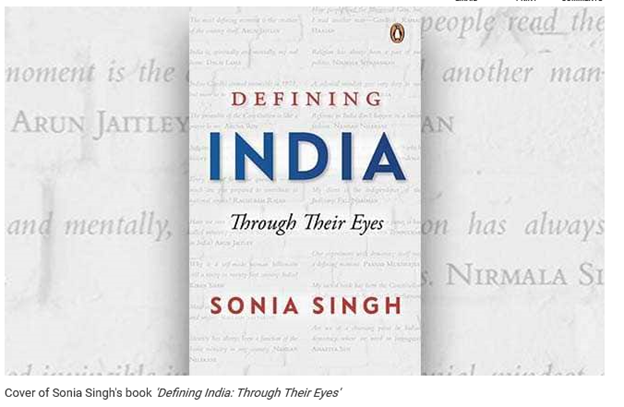
Cover of Sonia Singh’s book ‘Defining India: Through Their Eyes’
The Dalai Lama, Tibet’s spiritual leader in exile has been in India for the last 60 years, his very existence remaining an irritant to China which has often publicly denounced him as an Enemy. Yet, in this rare conversation for her book, ‘Defining India’, the Dalai Lama told Sonia Singh, that he had reached out to China for a meeting with President Xi during his visit to Delhi in 2014…and surprisingly China had agreed. India however intervened and the meeting didn’t happen. Here’s an excerpt from the book.
Prime ministers will change but it’s clear that India has always walked a very careful tightrope with China on the Tibet question. ‘Prime Minister Modi has looked at redefining India’s relationship with China and you have enjoyed greater visibility under his government with your visit to Arunachal Pradesh and the Tawang monastery. Yet, “thank you” celebrations to mark your sixty years in India had to be shifted from Delhi to Dharamshala to avoid angering the Chinese. How has dealing with Prime Minister Modi been?’ I ask.
‘Awkward,’ says the Dalai Lama wryly, then adding, ‘And it’s only natural, understandable. The China-India relationship is very important. When the Doklam problem happened [in 2017, China tried to build a road in Doklam, a stretch in Bhutan bordering India and China, to which India and Bhutan objected, resulting in a standoff], the media asked me about my beliefs and I told them that these were minor; neither India nor China want to destroy one another-we have to live side by side. The ultimate goal should be “Hindi-Chini bhai-bhai!” That is the only realistic way.
‘So, naturally Prime Minister Modi is concerned about good relations with China. I actually know him very well. When he was the chief minister of Gujarat, the state found an ancient Buddhist monastery and as chief minister, Mr. Modi invited me to a function for this. Besides the official meeting, he also came to see me at my hotel. We have very good relations. He is quite an active Indian prime minister, continuously visiting many countries. That, I admire at his age.’
And it is then as we talk of the prime minister that the Dalai Lama drops his political bombshell. ‘In 2014, when Chinese President Xi Jinping visited Delhi for talks with Prime Minister Modi, I requested a meeting with him. President Xi Jinping agreed, but the Indian government was cautious about the meeting, so it didn’t happen.’
Just like the historic moment between the heads of North Korea and South Korea in 2018, this could have been a meeting that had the promise to change the course of China-Tibet relations, especially as there have been reports that there are informal contacts between both sides. President Xi is said to have a close knowledge of Buddhism through his father who headed the Communist Party’s religious work in 1980. During his stint as a young provincial officer as well in 1982, Xi Jinping was posted in Zhengding, China where he backed a Buddhist monk’s efforts to rebuild the famous Linji Temple and has asked workers to study the partnership between party and religion. In 2014, in a speech in Delhi, the Dalai Lama had said that President Xi was the first Chinese leader to publicly say that Buddhism had a role to play in the preservation of Chinese culture.
However, a meeting between the Dalai Lama and President Xi could have also been used as a propaganda tool by the Chinese to outwit both India and the Dalai Lama, who is seen by some foreign policy strategists as India’s trump card against the Chinese. It’s not surprising then that the request for the meeting must have sent the ministry of external affairs into a spin leading to a denial of the request.
Excerpted with permission of Penguin India from ‘Defining India: Through Their Eyes’ by Sonia Singh. Order your copy here.
COMMENT
Disclaimer: The author and publisher of the book are responsible for the contents of the excerpt and the book. NDTV shall not be responsible or liable for any defamation, intellectual property infringement, plagiarism or any other legal or contractual violation by the excerpt or the book.
LIFE UNDER SHADOW: LONELY PLANET AND IMPOSSIBLE BEAUTY OF TIBET
Life Under Shadow. Lonely Planet. Impossible Beauty of Tibet.
My Life is Under Shadow. It means that I am a Prisoner of the Circumstances. I live as a Slave in Free Country. I am not “FREE” and so, the Beauty of Tibet remains Impossible.
Rudranarasimham Rebbapragada
SPECIAL FRONTIER FORCE
Lonely Planet: Impossible beauty of Tibet | Stuff.co.NZ
Tibet offers fabulous monasteries, breathtaking high-altitude walks, stunning views of the world’s highest mountains and one of the most likable cultures you will ever encounter.
A Higher Plain
For many visitors, the highlights of Tibet will be of a spiritual nature: magnificent monasteries, prayer halls of chanting monks, and remote cliffside meditation retreats. Tibet’s pilgrims – from local grandmothers murmuring mantras in temples heavy with the aromas of juniper incense and yak butter to hard-core professionals walking or prostrating themselves around Mt Kailash – are an essential part of this experience. Tibetans have a level of devotion and faith that seems to belong to an earlier, almost medieval age. It is fascinating, inspiring and endlessly photogenic.
Life Under Shadow. Lonely Planet. Impossible Beauty of Tibet. Restrictions require foreign travelers to pre-arrange a tour with a guide and transport for their time in Tibet, making independent travel impossible.
Restrictions require foreign travelers to pre-arrange a tour with a guide and transport for their time in Tibet, making independent travel impossible.
The Roof of the World
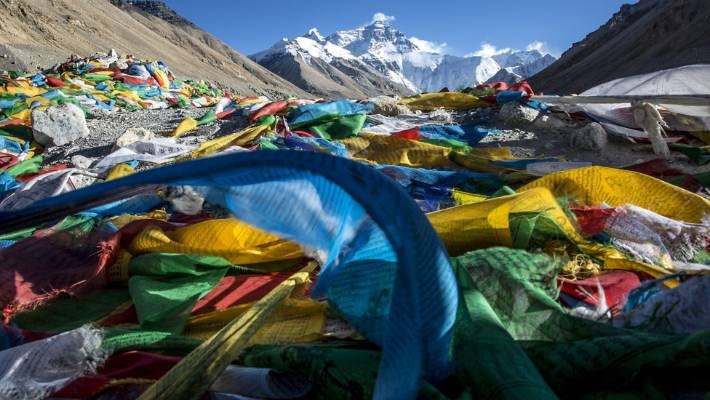
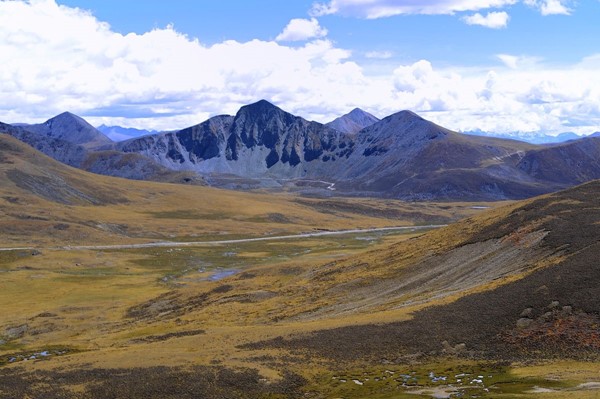
Tibet’s other big draw is the elemental beauty of the highest plateau on earth. The geography here is on a humbling scale and every view is illuminated with spectacular mountain light. Your trip will take you past glittering turquoise lakes, across huge plains dotted with yaks and nomads’ tents, and over high passes draped with colorful prayer flags. Hike past the ruins of remote hermitages, stare open-mouthed at the north face of Everest or make an epic overland trip along some of the world’s wildest roads. The scope for adventure is limited only by your ability to get permits.
Politics & Permits
There’s no getting away from politics here. Whether you see Tibet as an oppressed, occupied nation or an underdeveloped province of China, the normal rules of Chinese travel simply don’t apply. Restrictions require foreign travelers to pre-arrange a tour with a guide and transport for their time in Tibet, making independent travel impossible. On the plus side, new airports, boutique hotels, and paved roads offer a level of comfort unheard of just a few years ago, so if the rigors of Tibetan travel have deterred you in the past, now might be the time to reconsider.
Life Under Shadow. Lonely Planet. Impossible Beauty of Tibet.
The Roof of the World.
The Tibetan People
Whatever your interests, your lasting memories of Tibet are likely to be off the bottle of Lhasa Beer you shared in a teahouse, the yak-butter tea offered by a monk in a remote monastery or the picnic enjoyed with a herding family on the shores of a remote lake. Always ready with a disarming smile, and with great tolerance and openness of heart despite decades of political turmoil and hardship, the people truly make traveling in Tibet a profound joy. Make sure you budget time away from your pre-planned tour itinerary to take advantage of these chance encounters.
Life Under Shadow. Lonely Planet. Impossible Beauty of Tibet.
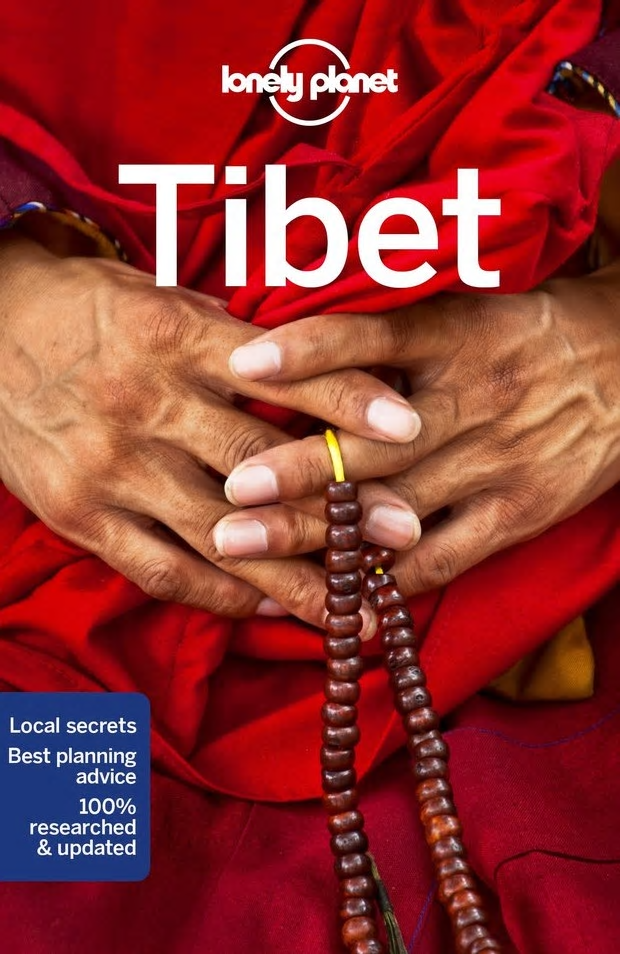
This is an edited extract from the first edition of the 10th edition of Lonely Planet’s Tibet guidebook
Tibet’s Top Five
Mt Kailash, Ngari
Worshipped by more than a billion Buddhists and Hindus, Asia’s most sacred mountain rises from the Barkha plain like a giant four-sided 6714m chörten (Buddhist stupa). Throw in the stunning nearby Lake Manasarovar and a basin that forms the source of four of Asia’s greatest rivers, and who’s to say this place really isn’t the center of the world? Travel here to one of the world’s most beautiful and remote corners brings an added bonus: the three-day pilgrim path around the mountain erases the sins of a lifetime.
Barkhor Circuit, Lhasa
You never know quite what you’re going to find when you join the centrifugal tide of Tibetans circling the Jokhang Temple on the Barkhor Circuit. Pilgrims and prostrators from across Tibet, stalls selling prayer wheels and turquoise, Muslim traders, Khampa nomads in shaggy cloaks, women from Amdo sporting 108 braids, thangka (religious painting) artists and Chinese military patrols are all par for the course. It’s a fascinating microcosm of Tibet and a place you’ll come back to again and again.
Life Under Shadow. Lonely Planet. Impossible Beauty of Tibet.
A valid Chinese visa is required to travel to Tibet.
Potala Palace, Lhasa
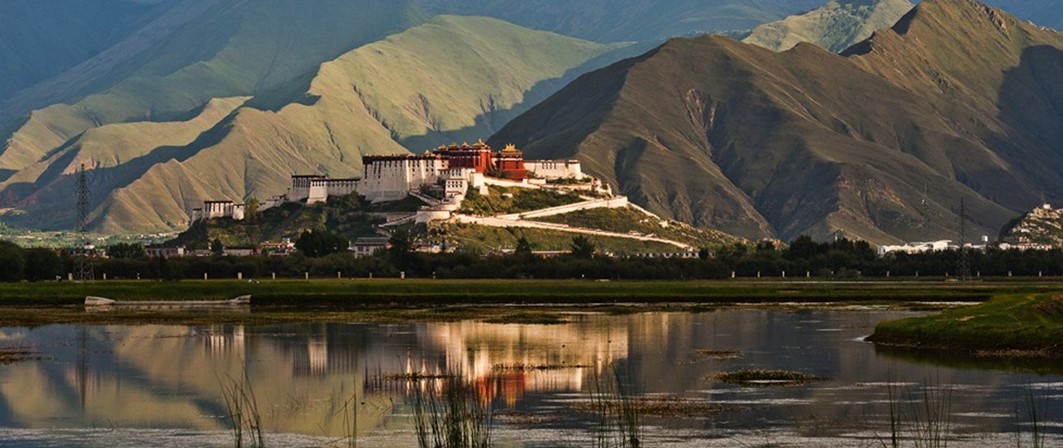
There are moments in travel that will long stay with you, and your first view of Lhasa’s iconic Potala Palace is one such moment. A visit to the former home of the Dalai Lamas is a spiraling descent past gold-tombed chapels, opulent reception rooms, and huge prayer halls into the bowels of a medieval castle. It’s nothing less than the concentrated spiritual and material wealth of a nation. Finish by joining the pilgrims on a walking kora (pilgrim circuit) of the entire grounds.
Jokhang Temple, Lhasa
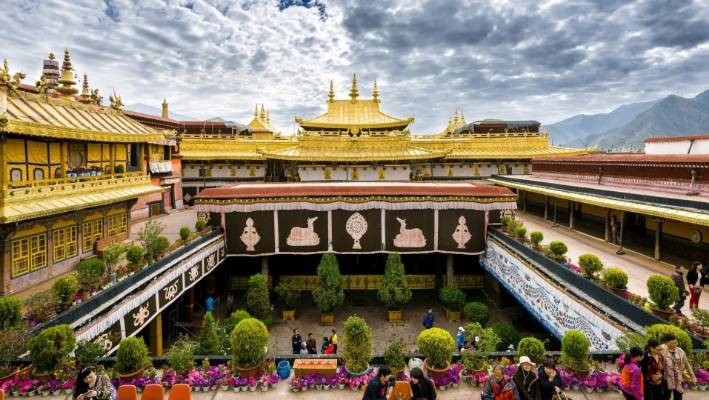
The atmosphere of hushed awe is what hits you first as you inch through the dark, medieval passageways of the Jokhang, Lhasa’s most sacred temple. Queues of wide-eyed pilgrims shuffle up and down the stairways, past medieval doorways and millennium-old murals, pausing briefly to stare in awe at golden buddhas or to top up the hundreds of butter lamps that flicker in the gloom. It’s the beating spiritual heart of Tibet, despite some damage caused by a fire in 2018. Welcome to the 14th century.
Views of Mt Everest
Don’t tell the Nepal Tourism Board, but Tibet has easily the best views of the world’s most famous mountain from its northern base camp. While two-week trekking routes on the Nepal side offer only fleeting glimpses of the peak, in Tibet you can drive on a paved road right up to unobstructed views of Mt Everest’s incredible north face framed in the prayer flags of Rongphu Monastery. Bring a sleeping bag, some headache tablets and a prayer for clear skies.
Life Under Shadow. Lonely Planet. Impossible Beauty of Tibet.
The scope for adventure is limited only by your ability to get permits.
When to Go
High Season: (May–mid-Oct)
The warmest weather makes travel, trekking and transport easiest. Prices are at their highest, peaking in July and August. Book ahead during the 1 May and 1 October national holidays.
Shoulder: (Apr & mid-Oct–Nov)
The slightly colder weather means fewer travelers and a better range of vehicles. Prices are 20 percent cheaper than during the high season.
Low Season: (Dec–Feb)
Very few people visit Tibet in winter, so you’ll have key attractions largely to yourself. Hotel prices and many entry tickets are discounted by up to 50 percent, but some restaurants close. Tibet is closed to foreign tourists in March.
Currency: Rénmínbì, or yuán (¥)
Language: Tibetan, Mandarin Chinese
Visas: A valid Chinese visa is required. A Tibet Tourism Bureau (TTB) permit is also required to enter Tibet.
Money: ATMs are available in Lhasa, Shigatse and a couple of other towns. Credit cards can be used in Lhasa. Otherwise, bring cash US dollars and euros.
Mobile Phones: Buy an inexpensive local pay-as-you-go SIM or data card for cheap local calls, but get it before arriving in Tibet. Buying a mobile phone in China is cheap and easy.
Daily Costs
Midrange Budget: US$75–150
A one-way flight to Lhasa from Kathmandu: US$280–400
A one-way flight to Lhasa from Chéngdū: US$180–260
Hundreds welcomed him home as he described the ailment as ‘a little bit serious’.
The Supreme Ruler of Tibet returns to his base after hospital treatment.
The Dalai Lama has returned to his headquarters in the north Indian hill town of Dharmsala after a brief stay in a hospital in the capital for treatment of a chest infection.
Hundreds of exiled Tibetans lined the streets of Dharamsala carrying ceremonial scarves and incense sticks to welcome the Dalai Lama on Friday.
The 83-year-old Tibetan spiritual leader told reporters that he had fully recovered, but that the illness had been “a little bit serious”.
The Supreme Ruler of Tibet returns to his base after hospital treatment.
The Dalai Lama described the illness as ‘a little bit serious’ (Chris Radburn/PA)
He did not give any details.
The Dalai Lama usually spends several months a year traveling the world to teach Buddhism and highlight Tibetans’ struggle for greater freedom in China.
But he has cut down on his travels in the past year to take care of his health.
The Living Tibetan Spirits continue to wage a Fight for Survival as they have not yet reached the Final Destination in Life. The Fight for Tibet is the only option while the Dalai Lama is trapped in Exile.
Dalai Lama’s fight for Tibet, 60 years after exile
Duration: 03:29
Tibet’s highest spiritual leader fled his home country and began his life as an exile – advocating for the country’s cultural autonomy. But as China’s grip on Tibet tightens, his fellow Tibetans may face a fight for survival.
The 14th Dalai Lama flees from Tibet to India across the Himalayas, 1959. He is riding a white pony, third from the right. Photograph: Popperfoto/Getty Images
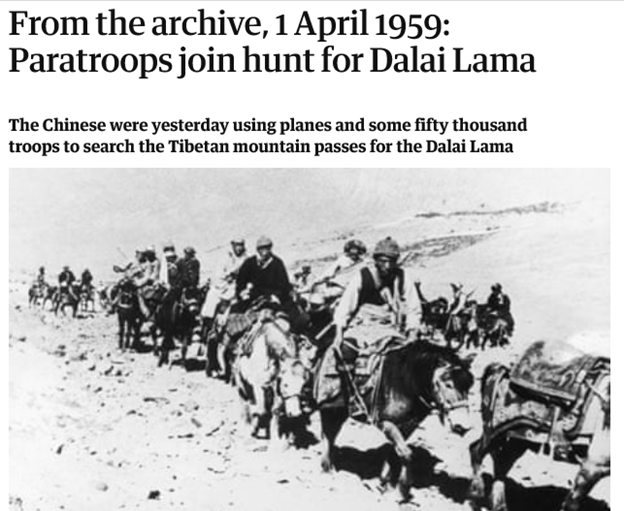
The Chinese were yesterday using planes and some fifty thousand troops, including paratroops, to search the Tibetan mountain passes for the Dalai Lama. But according to reports from Kalimpong, in North-east India, the Tibetan religious leader, moving only by night, was expected to cross the frontier within a few days.
Meanwhile in New Delhi, Mr. Silun Lukhangwa, a former Tibetan Premier, said it was hoped to send a delegation to the United Nations to protest against Chinese action in his country. He was speaking after two Tibetan groups had appealed for Indian aid in the crisis in an interview with Mr. Nehru. An Indian official press release merely said: “Mr. Nehru spoke to them briefly, expressing the hope that the present difficulties in Tibet would end peacefully. He made it clear that India was not in a position to intervene and in fact would not like to take any steps which might aggravate the situation there.”
The Dalai Lama is accompanied on his flight by his mother and sisters, as well as most members of the Tibetan Cabinet, it was learned yesterday. His progress on the 200-mile trek to safety is slow, but it was believed in Kalimpong yesterday that reports that he had been injured in a fall were incorrect. The territory through which he is believed to be moving is the roadless mountainous region of the Tibetan plateau, south-east of Lhasa, bordering Bhutan and the Indian North-east Frontier Agency. The Indian north-east frontier region has been closed to anyone without a permit, and it was stated in New Delhi that no permits could be issued at present.
Reports said the Chinese were dropping paratroopers in an effort to intercept the Dalai Lama. Other troops were going from village to village and monastery to monastery “harassing” inhabitants and monks to try to extort information about him. Strong cordons of Chinese soldiers were being thrown round many monasteries, including the one at Rongbuk, near Mount Everest.
The Tibetan delegation gave Mr. Nehru a memorandum asking him:
1. To lend his active support in securing the personal safety of the Dalai Lama.
2. To send immediately a mercy mission to Tibet with medical supplies.
3. To sponsor the Tibetan cause before the United Nations.
4. To permit Tibetan refugees to cross over freely into India.
It was thought in New Delhi that Mr. Nehru might well pass on the memorandum to the Chinese for their information. The Tibetan groups’ leader, Mr. Lukhangwa, told reporters: “The Dalai Lama’s wishes are the wishes of the people of Tibet. Whatever he says, we will follow him.”











 Whole Dude - Whole Concept