TIBET IS THE KEY FOR BALANCE OF POWER IN ASIA. #TIBETEQUILIBRIUM
Tibet is the Key for Balance of Power in Asia. It is not Geometry. It is Geography that Matters. #TibetEquilibrium
In my analysis, it is not “Geometry” but it is “Geography” that Matters to secure the Balance of Power in Asia. I coined the phrase “Tibet Equilibrium,” #TibetEquilibrium to signify the importance of the landmass to achieve Power Equilibrium in Asia.
Rudra Narasimham Rebbapragada
SPECIAL FRONTIER FORCE
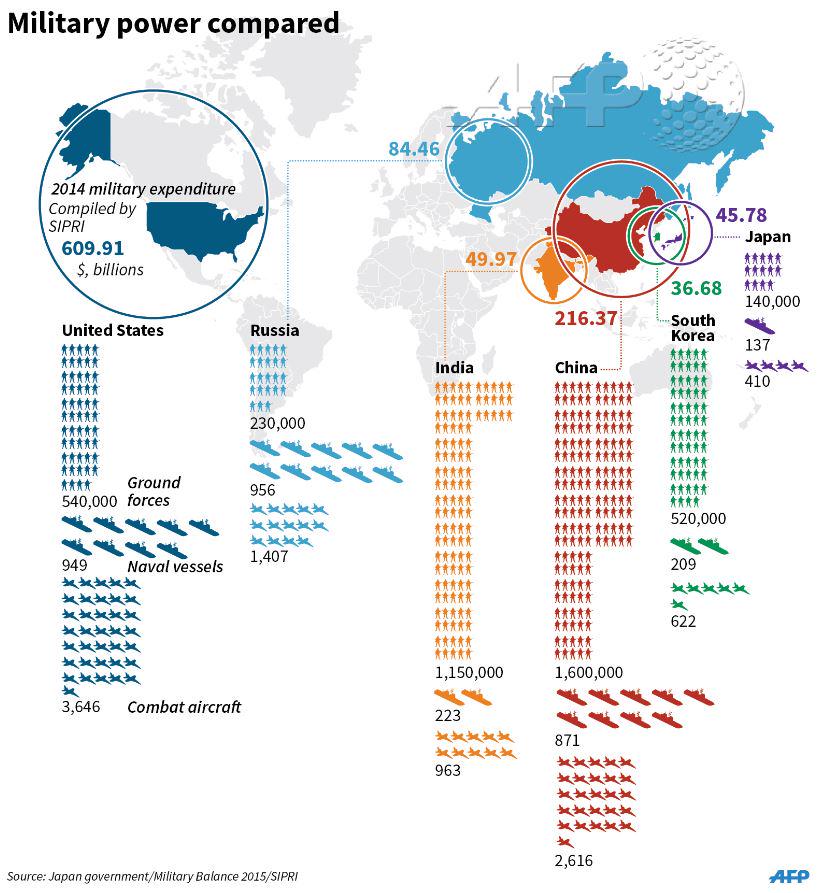
Pentagon steps up efforts to counter China’s rising power
afp.com
Maritime operations, missile tests, landing exercises: the Pentagon has been sharply stepping up its efforts to counter China’s growing military power, seen increasingly as a threat.
Tibet Equilibrium. Geography Matters. Tibet is the Key for Power Equilibrium in Asia.
On Friday an American warship approached the Paracel Islands, an island chain claimed by Beijing in the South China Sea, to affirm international “freedom of navigation” in the region.
The USS Wayne E. Meyer, a guided-missile destroyer, passed near the islands to contest Beijing’s sweeping claims to the seas around the archipelago, which is also claimed by Taiwan and Vietnam.
The Chinese claim would block “innocent passage” by other countries’ ships and is “not permitted by international law,” a US Seventh Fleet spokeswoman, Commander Reann Mommsen, said.
Friday’s was the sixth “freedom of navigation operation” — or FONOPS in naval jargon — this year, a clear acceleration in pace.
There were a total of eight in 2017 and 2018 and only six during the entire Obama presidency.
On Wednesday, the US Marine Corps announced it had conducted exercises on the Japanese islet of Tori Shima, hundreds of miles south of Tokyo, to practice landings on “hostile” shores and the seizure of landing strips.
Tibet Equilibrium. Geography Matters. Tibet is the Key for Power Equilibrium in Asia.
“This type of raid gives the commanders in the Indo-Pacific region the ability to project power and conduct expeditionary operations in a potentially contested littoral environment,” one of the officers in charge, Commander Anthony Cesaro, said in a statement.
Such a forthright description, coming from a Pentagon hardly known for unguarded talk, reflects the fresh impetus Defense Secretary Mark Esper has given to the US policy of “strategic rivalry” with China and Russia.
Esper, who chose Asia for his first overseas trip only weeks after being sworn in as Pentagon chief, has made clear that the US wants to rapidly deploy new missiles in Asia — possibly within months — to counter China’s rising military power.
– To ‘change the geometry’ –
On Thursday, acting US army secretary Ryan McCarthy, speaking in a Senate confirmation hearing, defended the development of such new missiles.
He said the new medium-range conventional missiles Washington wants to develop — now that the US is no longer constrained by the Intermediate Nuclear Forces (INF) treaty, which the Trump administration abandoned last year — would “change the geometry within Southeast Asia.”
“If we can get the appropriate partnerships, expeditionary basing rights with partners within the region,” McCarthy said, “we can change the geometry and basically reverse anti-access, area-denial capabilities that have been invested by near-peer competitors” — jargon for pushing back against sovereignty claims by China and Russia.
Tibet is the Key for Balance of Power in Asia. It is not Geometry. It is Geography that Matters. #TibetEquilibrium
And in late August, Washington formally established its Space Command, or Spacecom, a new unified command charged with ensuring US domination in space, where China has been increasingly active.
Beijing rattled US military officials in 2007 when it launched a missile that located and then destroyed a Chinese satellite, in a dramatic demonstration of China’s growing ability to militarize space.
Tibet is the Key for Balance of Power in Asia. It is not Geometry. It is Geography that Matters. #TibetEquilibrium
The Tibetan God of Snow insulted by the military occupation of Tibet.
In my analysis, the Tibetan God of Snow, Khawa Karpo is insulted by the military occupation of Tibet. The eviction of the military occupier of Tibet is the only solution to save “The Third Pole” of the world.
Rudra Narasimham Rebbapragada
Special Frontier Force
The Tibetan God of Snow insulted by the military occupation of Tibet.
The world has the third pole – and it’s melting quickly
Gaia Vince
Many moons ago in Tibet, the Second Buddha transformed a fierce nyen (a malevolent mountain demon) into a neri (the holiest protective warrior god) called Khawa Karpo, who took up residence in the sacred mountain bearing his name. Khawa Karpo is the tallest of the Meili mountain range, piercing the sky at 6,740 meters (22,112ft) above sea level. Local Tibetan communities believe that conquering Khawa Karpo is an act of sacrilege and would cause the deity to abandon his mountain home. Nevertheless, there have been several failed attempts by outsiders – the best known by an international team of 17, all of whom died in an avalanche during their ascent on 3 January 1991. After much local petitioning, in 2001 Beijing passed a law banning mountaineering there.
However, Khawa Karpo continues to be affronted more insidiously. Over the past two decades, the Mingyong glacier at the foot of the mountain has dramatically receded. Villagers blame disrespectful human behavior, including the inadequacy of prayer, greater material greed and an increase in pollution from tourism. People have started to avoid eating garlic and onions, burning meat, breaking vows or fighting for fear of unleashing the wrath of the deity. Mingyong is one of the world’s fastest shrinking glaciers, but locals cannot believe it will die because their own existence is intertwined with it. Yet its disappearance is almost inevitable.
Khawa Karpo lies at the world’s “third pole”. This is how glaciologists refer to the Tibetan plateau, home to the vast Hindu Kush-Himalaya ice sheet because it contains the largest amount of snow and ice after the Arctic and Antarctic – about 15% of the global total. However, a quarter of its ice has been lost since 1970. This month, in a long-awaited special report on the cryosphere by the Intergovernmental Panel on Climate Change (IPCC), scientists will warn that up to two-thirds of the region’s remaining glaciers are on track to disappear by the end of the century. It is expected a third of the ice will be lost in that time even if the internationally agreed target of limiting global warming by 1.5C above pre-industrial levels is adhered to.
Whether we are Buddhists or not, our lives affect, and are affected by, these tropical glaciers that span eight countries. This frozen “water tower of Asia” is the source of 10 of the world’s largest rivers, including the Ganges, Brahmaputra, Yellow, Mekong and Indus, whose flows support at least 1.6 billion people directly – in drinking water, agriculture, hydropower and livelihoods – and many more indirectly, in buying a T-shirt made from cotton grown in China, for example, or rice from India.
Joseph Shea, a glaciologist at the University of Northern British Columbia, calls the loss “depressing and fear-inducing. It changes the nature of the mountains in a very visible and profound way.”
Yet the fast-changing conditions at the third pole have not received the same attention as those at the north and south poles. The IPCC’s fourth assessment report in 2007 contained the erroneous prediction that all Himalayan glaciers would be gone by 2035. This statement turned out to have been based on anecdote rather than scientific evidence and, perhaps out of embarrassment, the third pole has been given less attention in subsequent IPCC reports.
There is also a dearth of research compared to the other poles, and what hydrological data exists has been jealously guarded by the Indian government and other interested parties. The Tibetan plateau is a vast and impractical place for glaciologists to work in and confounding factors make measurements hard to obtain. Scientists are forbidden by locals, for instance, to step out on to the Mingyong glacier, meaning they have had to use repeat photography to measure the ice retreat.
There is also a dearth of research compared to the other poles, and what hydrological data exists has been jealously guarded by the Indian government and other interested parties. The Tibetan plateau is a vast and impractical place for glaciologists to work in and confounding factors make measurements hard to obtain. Scientists are forbidden by locals, for instance, to step out on to the Mingyong glacier, meaning they have had to use repeat photography to measure the ice retreat.
One reason for the rapid ice loss is that the Tibetan plateau, like the other two poles, is warming at a rate up to three times as fast as the global average, by 0.3C per decade. In the case of the third pole, this is because of its elevation, which means it absorbs energy from rising, warm, moisture-laden air. Even if average global temperatures stay below 1.5C, the region will experience more than 2C of warming; if emissions are not reduced, the rise will be 5C, according to a report released earlier this year by more than 200 scientists for the Kathmandu-based International Centre for Integrated Mountain Development (ICIMOD). Winter snowfall is already decreasing and there are, on average, four fewer cold nights and seven more warm nights per year than 40 years ago. Models also indicate a strengthening of the south-east monsoon, with heavy and unpredictable downpours. “This is the climate crisis you haven’t heard of,” said ICIMOD’s chief scientist, Philippus Wester.
There is another culprit besides our CO2 emissions in this warming story, and it’s all too evident on the dirty surface of the Mingyong glacier: black carbon or soot. A 2013 study found that black carbon is responsible for 1.1 watts per square meter of the Earth’s surface of extra energy being stored in the atmosphere (CO2 is responsible for an estimated 1.56 watts per square meter). Black carbon has multiple climate effects, changing clouds and monsoon circulation as well as accelerating ice melt. Air pollution from the Indo-Gangetic Plains – one of the world’s most polluted regions – deposits this black dust on glaciers, darkening their surface and hastening melt. While soot landing on the dark rock has little effect on its temperature, snow and glaciers are particularly vulnerable because they are so white and reflective. As glaciers melt, the surrounding rock crumbles in landslides, covering the ice with dark material that speeds melt in a runaway cycle. The Everest base camp, for instance, at 5,300 meters, is now rubble and debris as the Khumbu glacier has retreated to the icefall.
The immense upland of the third pole is one of the most ecologically diverse and vulnerable regions on Earth. People have only attempted to conquer these mountains in the last century, yet in that time humans have subdued the glaciers and changed the face of this wilderness with pollution and other activities. Researchers are now beginning to understand the scale of human effects on the region – some have experienced it directly: many of the 300 IPCC cryosphere report authors meeting in the Nepalese capital in July were forced to take shelter or divert to other airports because of a freak monsoon.
But aside from such inconveniences, what do these changes mean for the 240 million people living in the mountains? Well, in many areas, it has been welcomed. Warmer, more pleasant winters have made life easier. The higher temperatures have boosted agriculture – people can grow a greater variety of crops and benefit from more than one harvest per year, and that improves livelihoods. This may be responsible for the so-called Karakoram anomaly, in which a few glaciers in the Pakistani Karakoram range are advancing in opposition to the general trend. Climatologists believe that the sudden and massive growth of irrigated agriculture in the local area, coupled with unusual topographical features, has produced an increase in snowfall on the glaciers which currently more than compensates for their melting.
Elsewhere, any increase in precipitation is not enough to counter the rate of ice melt and places that are wholly reliant on meltwater for irrigation are feeling the effects soonest. “Springs have dried drastically in the past 10 years without meltwater and because infrastructure has cut off discharge,” says Aditi Mukherji, one of the authors of the IPCC report.
Known as high-altitude deserts, places such as Ladakh in north-eastern India and parts of Tibet have already lost many of their lower-altitude glaciers and with them their seasonal irrigation flows, which is affecting agriculture and electricity production from hydroelectric dams. In some places, communities are trying to geoengineer artificial glaciers that divert runoff from higher glaciers towards shaded, protected locations where it can freeze over winter to provide meltwater for irrigation in the spring.
Only a few of the major Asian rivers are heavily reliant on glacial runoff – the Yangtze and Yellow rivers are showing reduced water levels because of diminished meltwater and the Indus (40% glacier-fed) and Yarkand (60% glacier-fed) are particularly vulnerable. So although mountain communities are suffering from glacial disappearance, those downstream are currently less affected because rainfall makes a much larger contribution to rivers such as the Ganges and Mekong as they descend into populated basins. Upstream-downstream conflict over extractions, dam-building, and diversions has so far largely been averted through water-sharing treaties between nations, but as the climate becomes less predictable and scarcity increases, the risk of unrest within – let alone between – nations grows.
Towards the end of this century, pre-monsoon water-flow levels in all these rivers will drastically reduce without glacier buffers, affecting agricultural output as well as hydropower generation, and these stresses will be compounded by an increase in the number and severity of devastating flash floods. “The impact on local water resources will be huge, especially in the Indus Valley. We expect to see migration out of dry, high-altitude areas first but populations across the region will be affected,” says Shea, also an author on the ICIMOD report.
As the third pole’s vast frozen reserves of freshwater make their way down to the oceans, they are contributing to sea-level rise that is already making life difficult in the heavily populated low-lying deltas and bays of Asia, from Bangladesh to Vietnam. What is more, they are releasing dangerous pollutants. Glaciers are time capsules, built snowflake by snowflake from the skies of the past and, as they melt, they deliver back into circulation the constituents of that archived air. Dangerous pesticides such as DDT (widely used for three decades before being banned in 1972) and perfluoroalkyl acids are now being washed downstream in meltwater and accumulating in sediments and in the food chain.
Ultimately the future of this vast region, its people, ice sheets and arteries depends – just as Khawa Karpo’s devotees believe – on us: on reducing our emissions of greenhouse gases and other pollutants. As Mukherji says, many of the glaciers that haven’t yet melted have effectively “disappeared because, in the dense air pollution, you can no longer see them”.
TIBETAN IDENTITY. THE CELEBRATION OF YOGURT BANQUET FESTIVAL
The Living Tibetan Spirits offer their prayers for the Blessings of Peace and Happiness as the Tibetans celebrate the Shoton, Yogurt Banquet Festival in Lhasa from August 30 to September 05.
Yogurt Festival celebrated in Tibet
By Palden Nyima in Lhasa, Tibet. chinadaily.com.cn
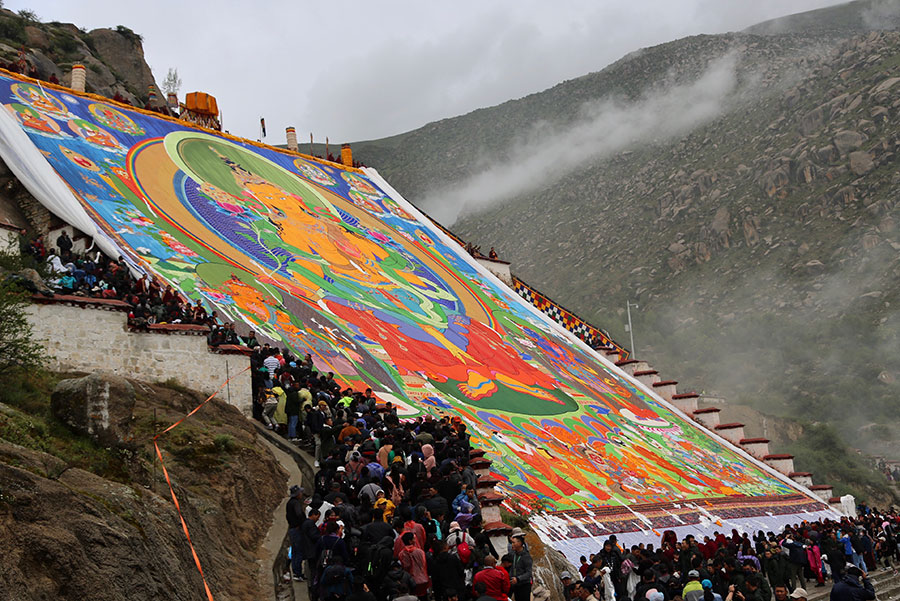
People visit a giant thangka exhibition to mark the start of the annual Shoton Yogurt Festival on Friday in Lhasa. [Photo by Palden Nyima/chinadaily.com.cn]
Thousands of Tibetans braved the rain to pay homage to giant thangka -religious images embroidered in silk -to mark the start of the annual Shoton, or Yogurt Festival, on Friday in Lhasa, capital of Tibet.
Continuous rain early in the morning and hot sun afterwards did not stop people from finishing the pilgrimage.
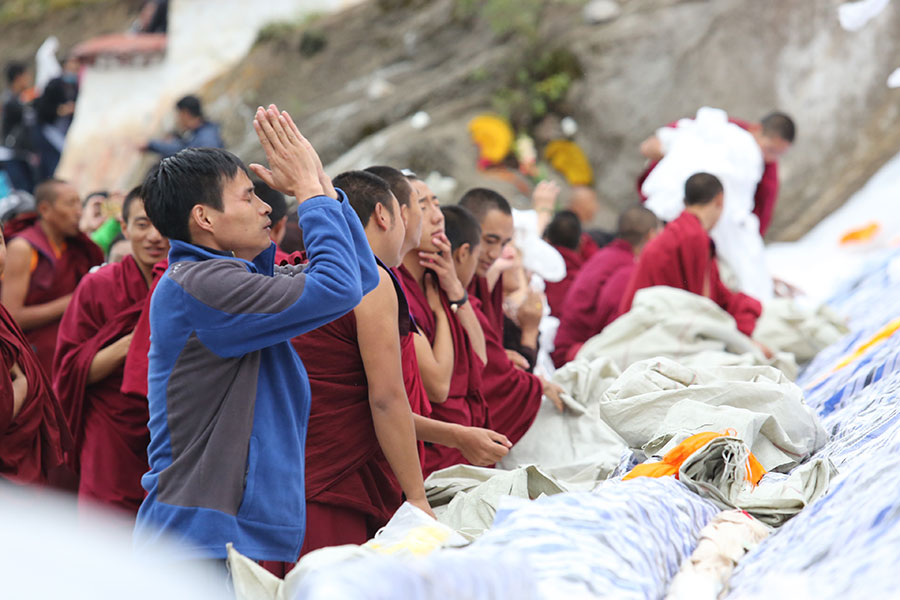
A devout Tibetan Buddhist prays in front of the exhibition of giant thangka on the annual Shoton Yogurt Festival on Friday in Lhasa. [Photo by Palden Nyima/chinadaily.com.cn
Accompanied by the sound of long bronze horns and religious chanting reverberating through the valley, Buddhist monks slowly unrolled the thangka on a hill slope aside the region’s Drepung Monastery.
The thangka was unrolled at the Drepung and Sera monasteries at 8 am.
According to an anonymous monk at the Drepung monastery, different from last year when the image of Buddha Shakyamuni was displayed, this year the image of the Future Buddha, known as Gyalwa Champa in the Tibetan language, was exhibited.
As it rained from time to time in the morning, monks covered the embroidery with thin plastic sheeting.
Tibetan Buddhists present money and khadaks, a white piece of silk, to Buddha and guests on Friday in Lhasa. [Photo by Palden Nyima/chinadaily.com.cn]
This year’s event will feature the traditional “sunning of the Buddha” ceremonies, as well as Tibetan opera performances, picnics in the Norbu Lingka Park, trekking, equestrian events, traditional music and dance, and an ethnic costume show.
“I got up at 3 am and started my pilgrimage trip in the rain from my home. It took me hours to pay the visit to the Buddha,” said Dorje Tashi, a 29-year-old resident of the region’s Doilungdechen district.
Tibetan Buddhists present money and khadaks, a white piece of silk, to Buddha and guests on Friday in Lhasa. [Photo by Palden Nyima/chinadaily.com.cn]
“This year, it is unusual – I had to pay my visit in the rain, however, I am very pleased that I could make it. I will all living beings peace and happiness,” said Dorje, adding that he also wishes the Buddha will bless him to bring good luck to him so that he cass pass the entrance exam at Tibet University.
The festival will last for one week from Aug 30 to Sep 5.
Shoton, which literally means “yogurt banquet festival,” is one of the most important festivals for Tibetans in Lhasa, and it dates back to the 17th century when it began as a religious ceremony for local residents to offer yogurt to the fifth Dalai Lama and monks in the Drepung Monastery after finishing their meditation retreats in the summer.
Shoton festival starts on the 29th day of the 6th Tibetan month. Tibetans use Lunar calendar. The festival date usually falls on August.
NATURE NURTURES TIBETAN IDENTITY OF TIBETAN NATION
NATURE NURTURES TIBETAN IDENTITY OF TIBETAN NATION.
Nature, natural forces, natural mechanisms, natural factors, and natural conditions work in conjunction to nurture and shape the Tibetan Identity of Tibetan Nation.
Rudra Narasimham Rebbapragada
SPECIAL FRONTIER FORCE
NATURE NURTURES TIBETAN IDENTITY OF TIBETAN NATION.
Tibet has seen significant progress in restoring biodiversity.
BEIJING, Aug. 17, 2019 (Xinhua) — Tibet has seen significant progress in restoring biodiversity, with a forest coverage rate of 12.14 percent, said a white paper released in March this year by China’s State Council Information Office.
The population of Tibetan antelopes has grown from 60,000 in the 1990s to more than 200,000 and Tibetan wild donkeys have increased in numbers from 50,000 to 80,000, noted the document, titled “Democratic Reform in Tibet — Sixty Years On.”
Since the Qomolangma Nature Reserve was established in 1988, Tibet has set up 47 nature reserves of all kinds, including 11 at the state level, with the total area of nature reserves accounting for more than 34.35 percent of the total area of the autonomous region, the white paper said. Tibet has 22 eco-protection areas, including one at the state level, 36 counties in receipt of transfer payments from central finance for their key ecological roles, four national scenic areas, nine national forest parks, 22 national wetland parks, and three national parks, figures showed.
The central government has continued to increase eco-compensation for Tibet in return for its cost for protecting the eco-environment and the consequent losses in development opportunities. The white paper said that since 2001, the central government has paid 31.6 billion yuan (4.71 billion U.S. dollars) in eco-compensation to Tibet for protecting forests, grassland, wetland, and key ecological reserves.
Tourists visit the Tibet Garden at the Beijing International Horticultural Exhibition in Beijing, capital of China. (Xinhua/Ren Chao)
Tourists visit the Tibet Garden at the Beijing International Horticultural Exhibition in Beijing, capital of China. (Xinhua/Ren Chao)
Yaks on a wetland in northern Tibet. (Xinhua/Purbu Zhaxi)
Sea of clouds over Medog County, Tibet. (Xinhua/Li Xin)
The scenery of Bome County of Nyingchi, Tibet. (Xinhua/Li Xin)
The scenery of Nam Co Lake in Tibet. (Xinhua/Li Xin)
The scenery of the Yamzbog Yumco Lake in Shannan, Tibet. (Xinhua/Jigme Dorje)
Tibetan wild donkeys on a pasture in Zanda County, Tibet. (Xinhua/Jigme Dorje)
The scenery of a part of a glacier in Rutog County of Ngari Prefecture, Tibet. (Xinhua/Jigme Dorje)
Banggong Co in Ngari Prefecture, Tibet. (Xinhua/Jigme Dorje)
Black-necked cranes in Linzhou County of Lhasa, Tibet. (Xinhua/Zhang Rufeng)
Glacier on the foot of Mount Qomolangma (Mount Everest) in Tibet. (Xinhua/Purbu Zhaxi)
Tangra Yumco Lake in Nagqu, Tibet. (Xinhua/Purbu Zhaxi)
Tibetan antelopes in Qiangtang National Nature Reserve in Tibet. (Xinhua/Purbu Zhaxi)
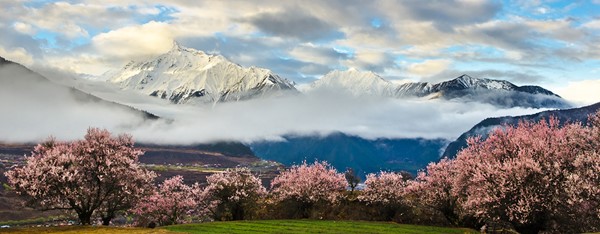
Peach flowers in the suburb of Lhasa, Tibet. (Xinhua/Purbu Zhaxi)
Trees planted along banks of the Yarlung Zangbo River (Brahmaputra River) in Tibet. (Xinhua/Purbu Zhaxi)
Lhalu Wetland National Nature Reserve in Lhasa, Tibet. (Xinhua/Purbu Zhaxi)
LADAKH, THE BATTLEFIELD TO TEST THE US-INDIA-TIBET ALLIANCE
Ladakh, the Battlefield to test the US-India-Tibet Alliance.
In my analysis, the importance of Ladakh lies in its value as the Battlefield to test the US-India-Tibet Alliance.
Rudra Narasimham Rebbapragada
Ann Arbor, Michigan, 48104-4162. USA
SPECIAL FRONTIER FORCE
Ladakh: the good, bad and ugly sides to India’s ‘Little Tibet’, high in the Himalayas
A new tunnel will provide year-round access to an area usually cut off by snow for seven months of the year
Even without it, Ladakh’s resources and environment are already being stretched to breaking point
Tim Pile
Published: 1:45 pm, 1 Aug 2019
Ladakh, the Battlefield to test the US-India-Tibet Alliance.
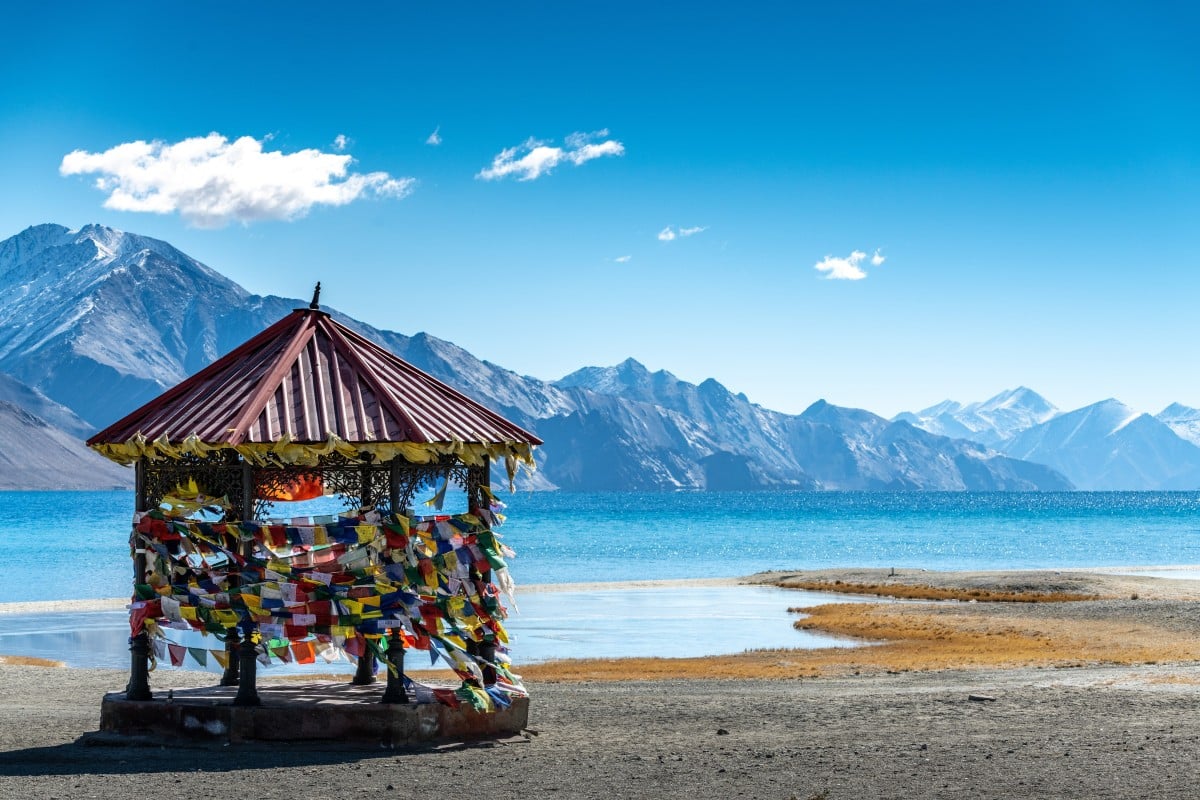
Pangong Tso, the highest salt lake in India. Photo: Shutterstock
The good
Known as Little Tibet due to a shared cultural and religious heritage, Ladakh (now, Union Territory of India) in the Indian State of Jammu and Kashmir, is about the size of England, with a population similar in number to that of the Hong Kong district of Wan Chai.
The name derives from “la dags” meaning “land of mountain passes” and it’s a region characterized by high-altitude desert hemmed in by the mighty Himalayan and Karakoram ranges.
Cut off from the rest of the country by snow for seven months of the year, India’s northernmost region comes alive in summer. Deserts with the texture of eczema are lubricated by rivers swollen with snowmelt and the run-off from dazzling turquoise lakes.
Ladakh, the Battlefield to test the US-India-Tibet Alliance.
To reach Ladakh overland involves a journey along one of the world’s highest altitude roads. Photo: Tim Pile
Shaven-headed monks emerge from brilliant-white monasteries and squint in the piercing sunlight. Talking of which, Ladakh will soon be home to the world’s largest single-location solar photovoltaic plant.
It could certainly do with the extra energy – tourism is booming and has brought tangible economic benefits. In all, 327,366 people visited the city of Leh in 2018, a whopping 50,000 increase on the previous year.
Ladakh, the Battlefield to test the US-India-Tibet Alliance.
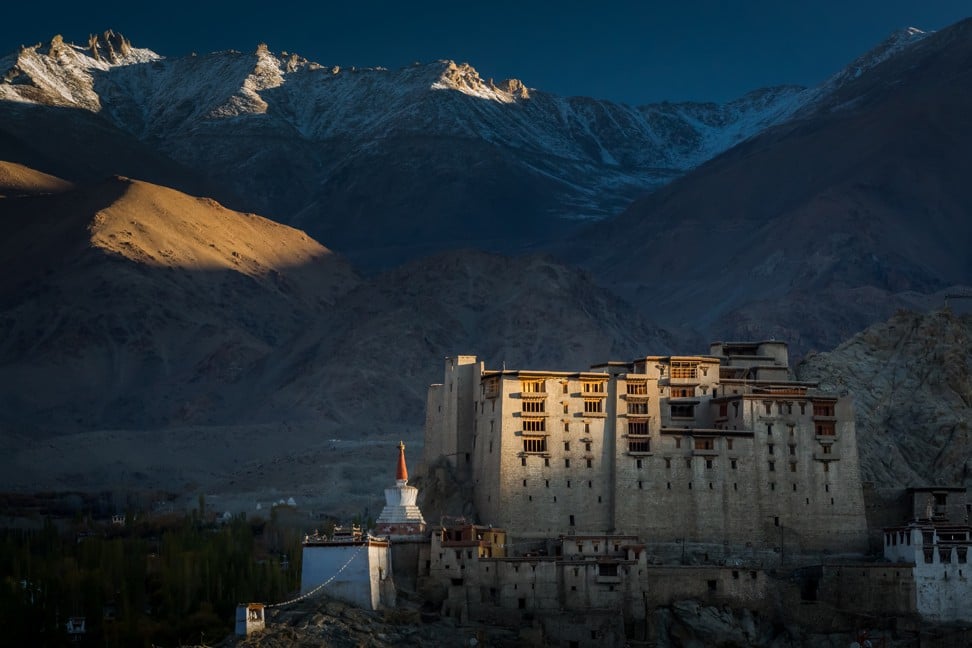
The former royal palace in Leh.
Many arrive in the state capital after completing one of the world’s great road trips. The 475km journey from Manali, in neighboring Himachal Pradesh, takes travelers between razor-sharp peaks and over high passes, including the 5,359-metre Khardung La, along one of the highest paved roads in the world.
The drive will become easier next year with the completion of the Rohtang Tunnel, a trans-Himalayan short cut that will reduce travel times and ensure year-round connectivity to Ladakh. A long-awaited railway line from Bilaspur to Manali and Leh will further open up the pristine region by 2022.
In another boost to the tourism sector, Prime Minister Narendra Modi inaugurated five new trekking routes during a visit to Leh in February.
Ladakh, the Battlefield to test the US-India-Tibet Alliance.
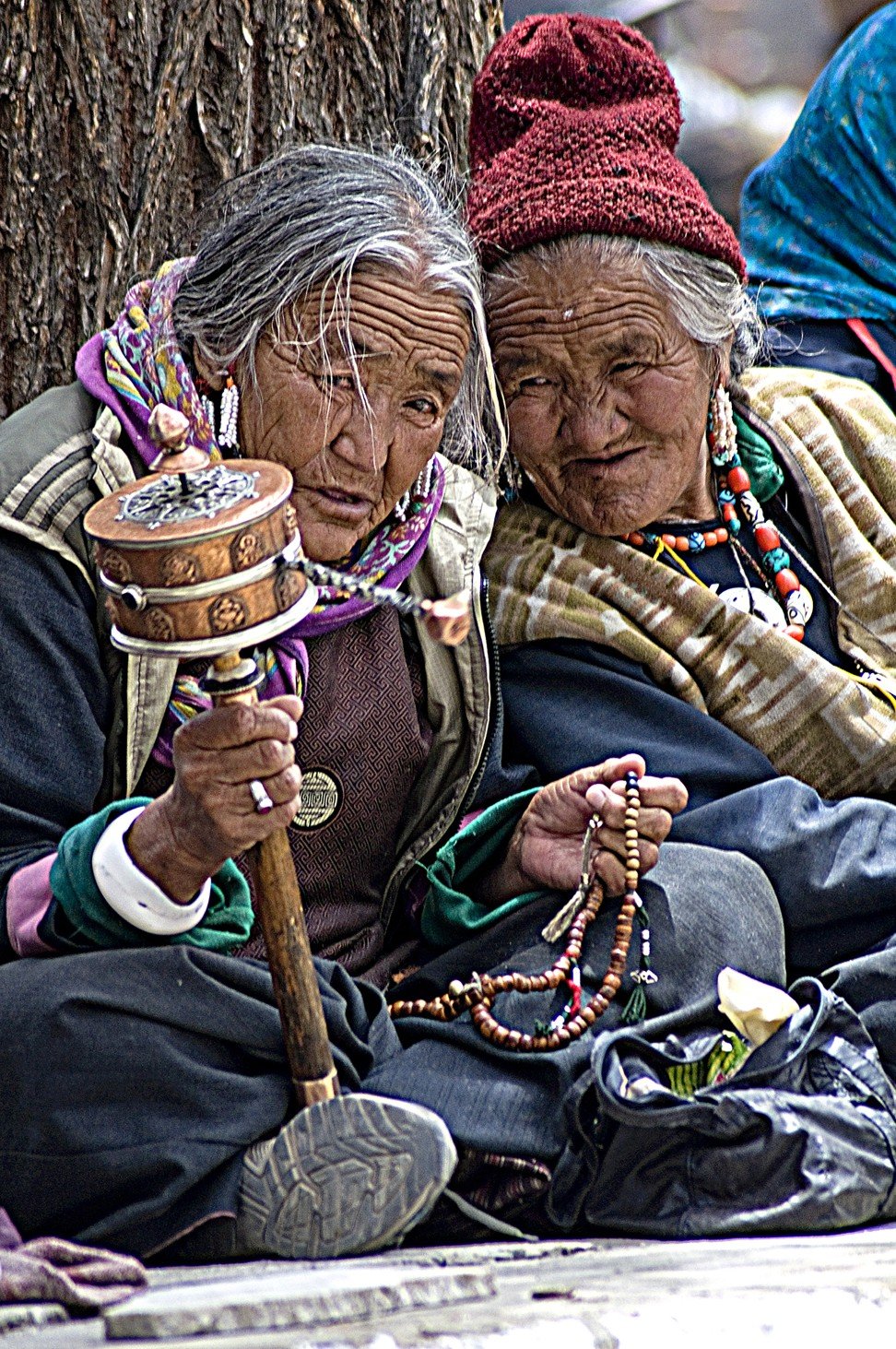
Two locals, one with a Buddhist prayer wheel. Photo: Tim Pile
Before heading onto the mountain trails, get a feel for Leh by visiting the former royal palace. The 17th-century structure was modeled on the Potala Palace, in Tibet, and offers panoramic views of the dusty, medieval-looking settlement.
Besides its temples, markets, and monasteries, Leh is a city to observe and absorb. Pick a cafe, order a cup of yak-butter tea, relax and let the sights, smells, noise and color wash over you. Ladakh’s position at the crossroads of ancient trade routes can be seen in the weathered faces of its inhabitants. Kashmiri merchants rub shoulders with shepherds and Tibetan monks haggle with Punjabi businessmen.
The best-known of Ladakh’s attractions is a six-hour drive from Leh. Pangong Tso is the highest salt lake in India. The beauty spot draws movie buffs and Instagrammers keen to see where the final scene of 2009 Bollywood blockbuster 3 Idiots was filmed.
Ladakh, the Battlefield to test the US-India-Tibet Alliance.
Leh is a city of temples, and culturally close to Tibet. Photo: Tim Pile
Next stop should be the spectacular Nubra Valley. Herders populate the high desert in summer, their yaks grazing near the snowline while tourists sign up for Bactrian camel safaris on the sand dunes of Hunder village, once a Silk Road staging post.
The bad
The farming of barley, wheat, and vegetables happen in a hurry hereabouts. No sooner are crops sown in the thin Ladakhi soil than winter starts drawing in and the ground becomes frozen solid for months on end. It’s enough to make villagers throw in the towel and head for the bright lights of Leh. That’s where fortunes are made, after all.
Except they’re not. Well, not for most Ladakhis anyway. The aforementioned tangible economic benefits accrue only to a small group of tour operators, hotel owners, and merchants, many of whom are from elsewhere in India and come to Leh solely for the tourist season.
Ladakh, the Battlefield to test the US-India-Tibet Alliance.
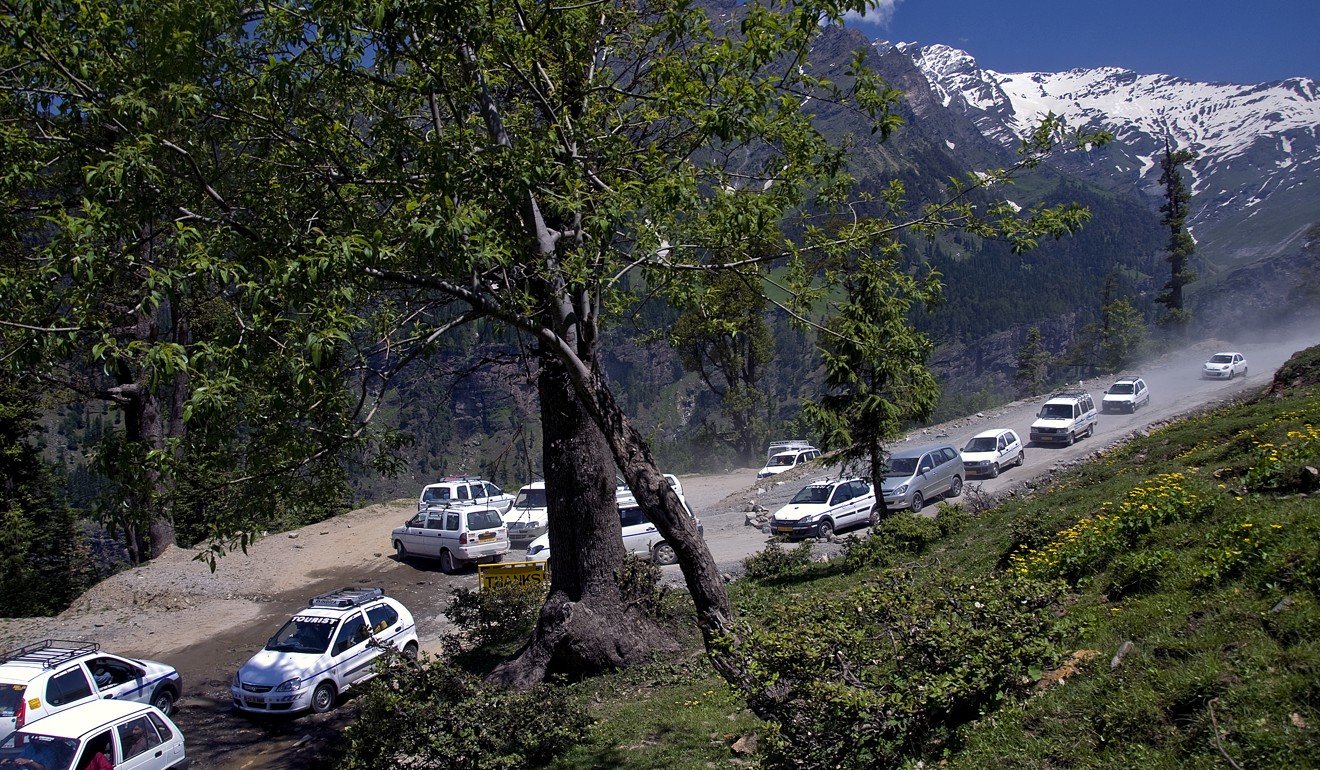
A traffic jam at Khardung La. Photo: Tim Pile
Subsistence farmers, who make up most of the population, have seen little improvement in their living conditions but are left to deal with the negative social, environmental and psychological impact of Ladakh’s change from an economy based on self-reliance to one driven by external market forces.
Writer and filmmaker Helena Norberg-Hodge feels the West has much to learn from the traditional Ladakhi way of life in terms of sustainability, diet, family values, and overall happiness. But instead, waves of wealthy outsiders descend on the pre-industrial region and leave locals, particularly the younger generation, feeling self-conscious, backward and poor.
Tourism industry wages aren’t anywhere near enough for them to emulate the high consumption habits of rich visitors, so illegal means are adopted. Theft, once unheard of in Ladakh, has become a problem, as have children pestering people for money.
Ladakh, the Battlefield to test the US-India-Tibet Alliance.
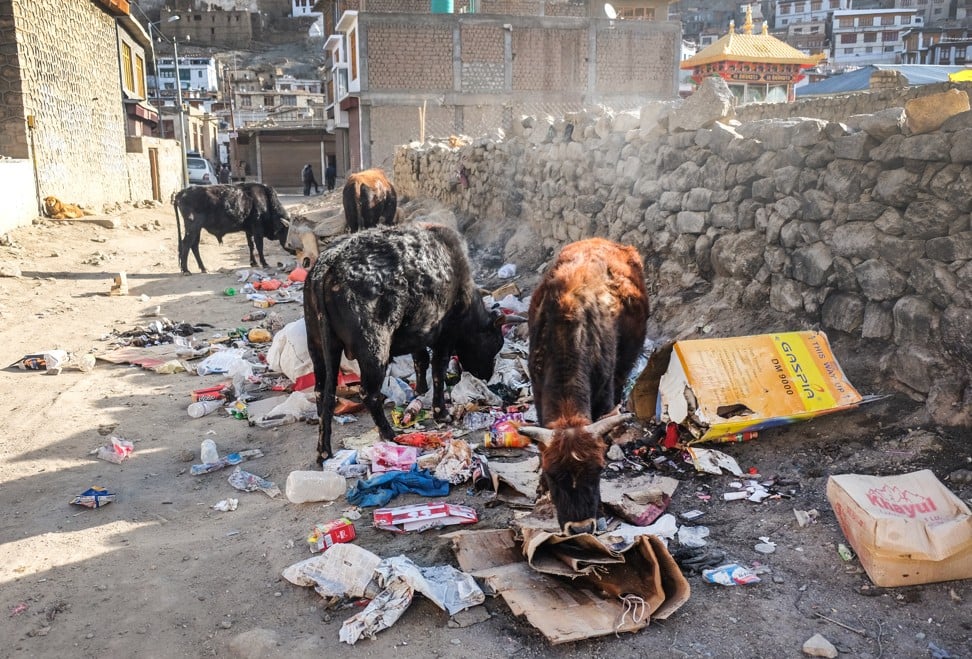
Feral cattle graze on rubbish left on the street. Photo: Shutterstock
An estimated 30,000 plastic water bottles are dumped in Leh every day. Like nearly everything else, they were trucked in across the Himalayas from thousands of kilometers away. Then there’s the diesel emitted from cars idling in traffic jams at Khardung La and other high-altitude bottlenecks.
The new Rohtang Tunnel will enable ever more sightseers to reach Ladakh but does little to suggest an enlightened model of sustainable travel is on the cards.
In recent years there has been a surge in the number of domestic tourists drawn up from the baking Indian plains by the snow-capped scenery that appears in television advertisements and Bollywood blockbusters. In fact, 3 Idiots may end up being responsible for more damage to Ladakh’s environment than almost anything else.
Ladakh, the Battlefield to test the US-India-Tibet Alliance.
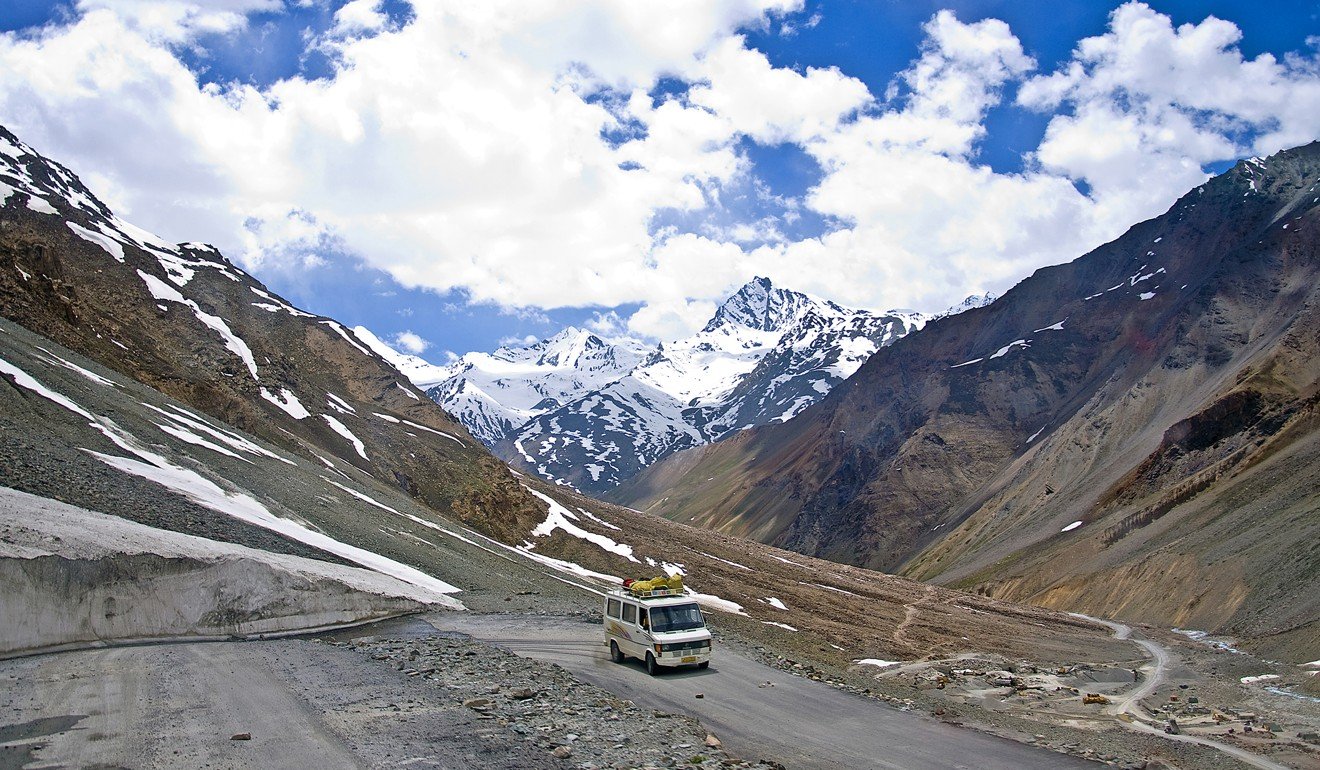
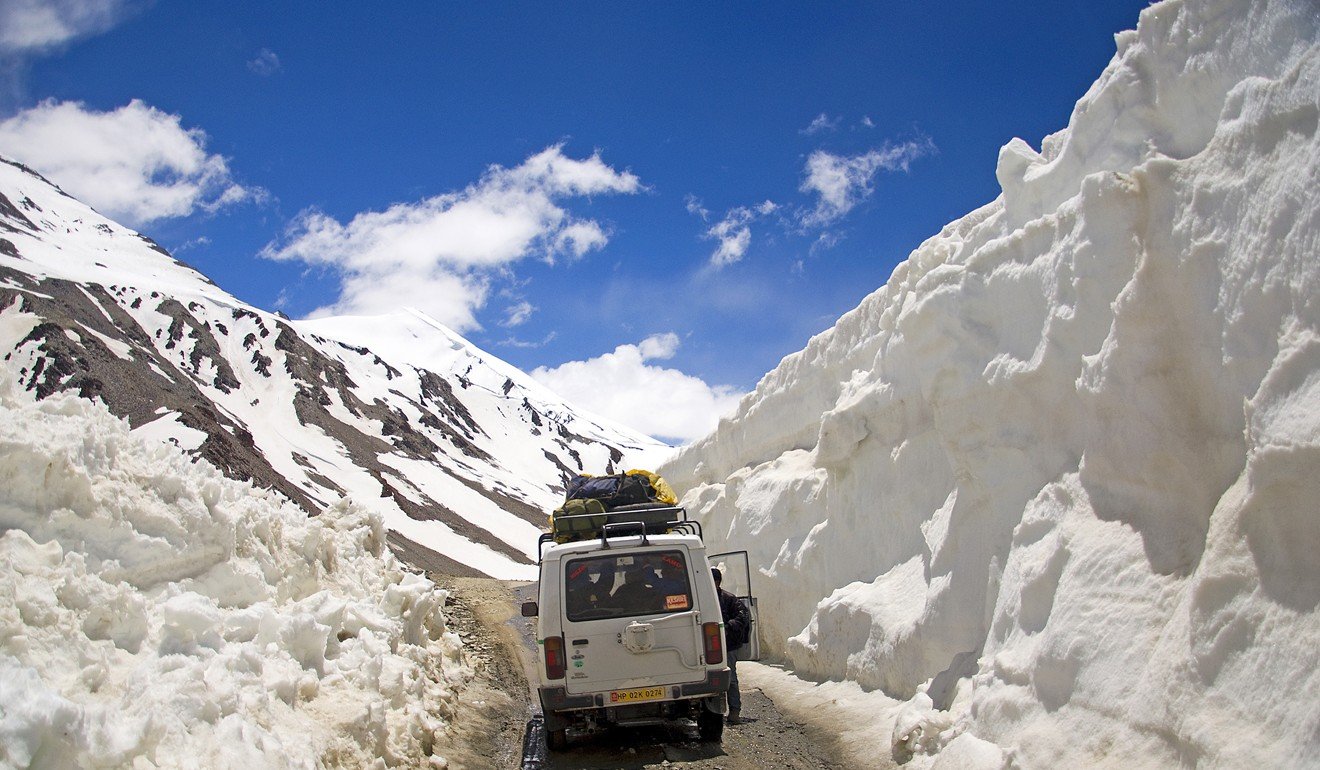
A van negotiates a road fringed by deep snow. Diminishing snowfall is evidence of the impact of climate change in Ladakh. Photo: Tim Pile
Almost. The effects of global climate breakdown are increasingly evident in the ecologically fragile Himalayas – just ask the locals. Ladakhis say they have never witnessed such erratic climatic conditions. Flash floods caused by short but heavy downpours are worrying enough, but a pattern of diminishing snowfall and resulting drought has more serious long-term implications.
The glacier on which Leh depends is predicted to melt completely within five or six years and hoteliers are already drilling boreholes in search of elusive groundwater.
The shortage isn’t helped by the rush to modernize. Replacing traditional dry toilets with Western flush systems places greater demands on scarce water resources, for example. As engineer and educator Sonam Wangchuk puts it: “If people from the big cities live simply, then people in the mountains could simply live.”
The ugly
Ladakh, the Battlefield to test the US-India-Tibet Alliance.
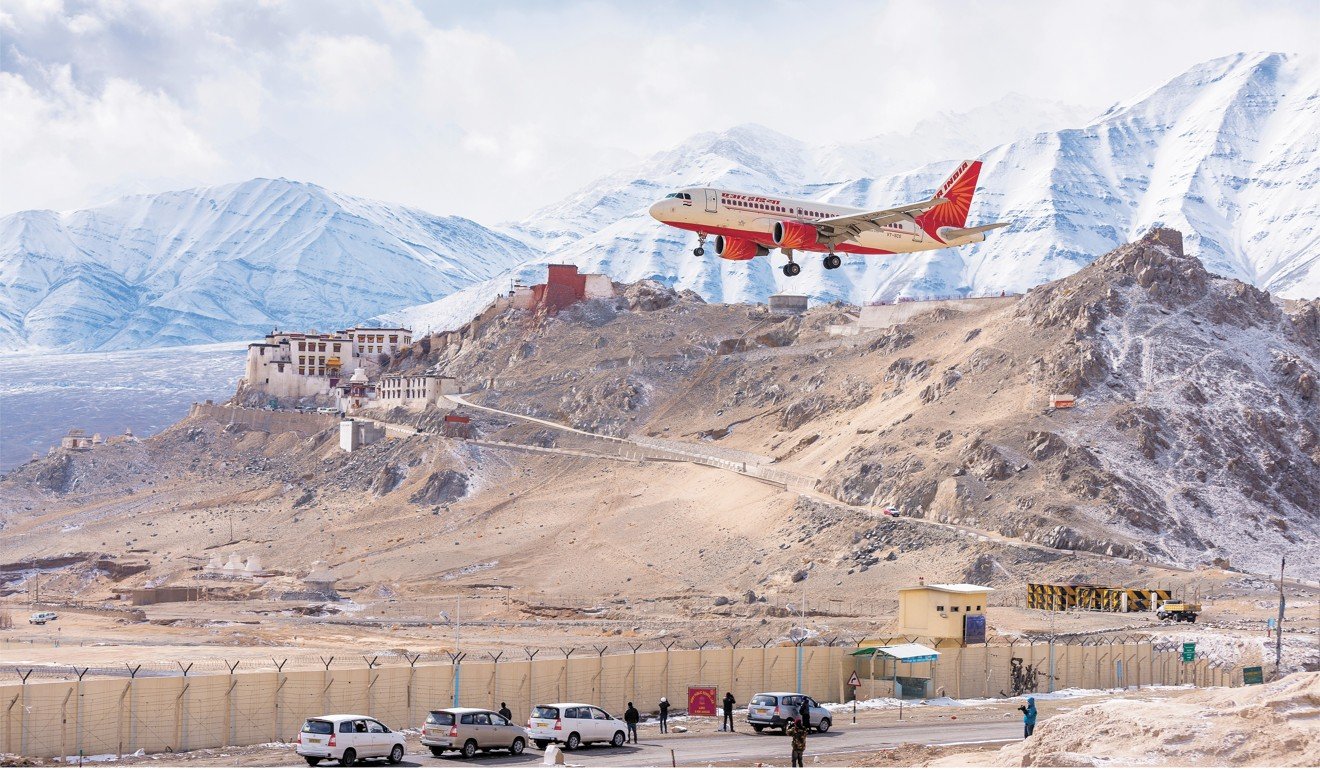
An Air India plane approaches Leh airport. Photo: Shutterstock
Fly, rather than take the bus, to Leh (3,500 meters above sea level), and the thumping headaches, dehydration and general lethargy that accompany altitude sickness will begin as soon as you reach the baggage carousel. You’ll need to rest for a day or two while the symptoms subside.
The cafes are OK but I’d steer clear of the yak-butter tea. Unless it’s for a bet.
Special Frontier Force – The War on Communism: Chinese military incursion into India demands a response. Expel Chinese nationals visiting India.
LAKE MANASAROVAR-THE SWEET WATERS OF TIBETAN NATIONALISM
Tibetan Nationalism springs from the fresh waters of Lake Manasarovar.
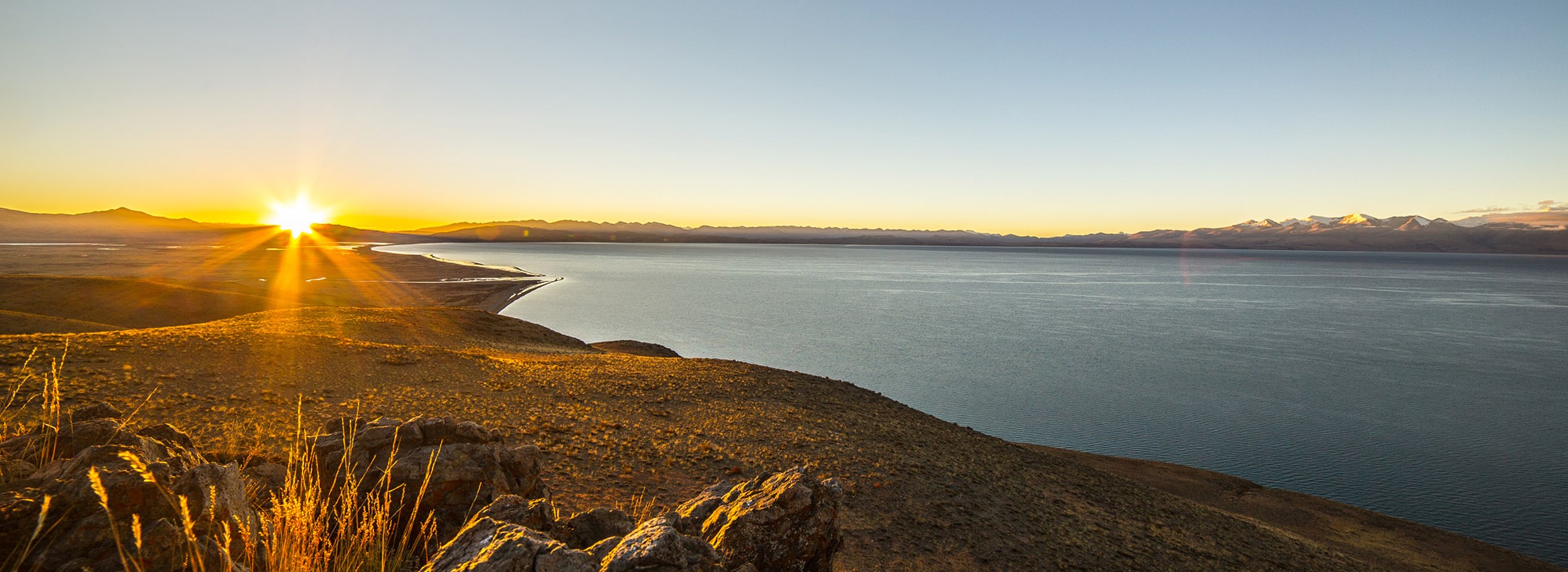
The photo was taken on July 21, 2019, shows a herd of cattle by the Mapam Yumco Lake in Burang County of Ngari Prefecture, Tibet. Located on an altitude of 4,588 meters at the Qinghai-Tibet Plateau, the 412-square-kilometer lake is a sacred Hindu and Buddhist site as well as a renowned tourist attraction. (Xinhua/Chogo)
Tibetan Nationalism springs from the fresh waters of Lake Manasarovar.
The photo was taken on July 21, 2019, shows a white pagoda by the Mapam Yumco Lake in Burang County of Ngari Prefecture, Tibet. Located on an altitude of 4,588 meters at the Qinghai-Tibet Plateau, the 412-square-kilometer lake is a sacred Hindu and Buddhist site as well as a renowned tourist attraction. (Xinhua/Chogo)
Tibetan Nationalism springs from the fresh waters of Lake Manasarovar.
The photo was taken on July 21, 2019, shows the engraved stones by the Mapam Yumco Lake in Burang County of Ngari Prefecture, Tibet. Located on an altitude of 4,588 meters at the Qinghai-Tibet Plateau, the 412-square-kilometer lake is a sacred Hindu and Buddhist site as well as a renowned tourist attraction. (Xinhua/Chogo)
Tibetan Nationalism springs from the fresh waters of Lake Manasarovar.
The photo was taken on July 21, 2019, shows the scenery of Mapam Yumco Lake in Burang County of Ngari Prefecture, Tibet. Located on an altitude of 4,588 meters at the Qinghai-Tibet Plateau, the 412-square-kilometer lake is a sacred Hindu and Buddhist site as well as a renowned tourist attraction. (Xinhua/Chogo)
Tibetan Nationalism springs from the fresh waters of Lake Manasarovar.
The photo was taken on July 21, 2019, shows a white pagoda and a lama by the Mapam Yumco Lake in Burang County of Ngari Prefecture, Tibet. Located on an altitude of 4,588 meters at the Qinghai-Tibet Plateau, the 412-square-kilometer lake is a sacred Hindu and Buddhist site as well as a renowned tourist attraction. (Xinhua/Chogo)
BEIJING DOOMED: 3 Giant Asteroids Zip Past Earth On Wednesday
Beijing Doomed.
On Wednesday, July 24, 2019 NASA detected three massive asteroids currently headed for Earth.
In my analysis of Chapter 18, The Revelation, the Doom of Babylon is near. But, Babylon remains a Mystery. Where is Babylon? In my view, Shanghai City, the largest City of the world could be “BABYLON” described in the Doomsday Prophecy.
Rudranarasimham Rebbapragada
SPECIAL FRONTIER FORCE
Beijing Doomed.
NASA Asteroid Tracker: 3 Giant Asteroids Zip Past Earth On Wednesday
Beijing Doomed. 3 massive asteroids getting closer to Earth.
NASA has detected three massive asteroids that are currently headed for Earth. According to the agency’s Center for Near Earth Object Studies (CNEOS), one of the approaching asteroids will fly closer than the Moon.
The first asteroid that will visit Earth on Wednesday is 2015 HM10. This asteroid is currently traveling at a speed of 21,273 miles per hour and is about 360 feet long. At its current size, the asteroid is bigger than the Statue of Liberty.
2015 HM10 is expected to fly past Earth on July 24 at 6:00 am ST. It will approach the planet from a distance of 0.03135 astronomical units or around 2.9 million miles away.
This asteroid was first observed on April 18, 2015. According to its trajectory record, 2015 HM10 is a frequent visitor to Earth and Jupiter’s vicinity.
Trailing behind 2015 HM10 is the asteroid known as 2019 OD. This near-Earth object is also 360 feet long. It is traveling at a much faster speed compared to 2016 HM10 at 43,000 miles per hour.
Out of the three asteroids that will fly past Earth on Wednesday, 2019 OD will approach the closest. According to CNEOS’ data, the asteroid will only be about 0.00239 astronomical units or around 222,160 miles from Earth on July 24 at 1:31 pm ST. This means 2019 OD will be flying much closer than the distance between the Earth and the Moon, which is around 238,900 miles.
Shortly after 2019 OD’s close-Earth approach, the asteroid will fly near the Moon at around 1:44 pm ST.
The last asteroid that’s set to zip past Earth on Wednesday is 2019 OE. According to CNEOS, this asteroid has a velocity of around 20,000 miles per hour. Compared to the first two asteroids, 2019 OE is much smaller with an estimated diameter of 174 feet.
2019 OE is will approach Earth on July 24 at 2:36 pm ST. Like 2019 OD, 2019 OE will also zip past the planet at a close distance. Based on the data collected by CNEOS, the asteroid will be about 0.00646 astronomical units or around 600,500 miles from the planet’s center during its approach.
TIBETAN NATIONALISM. THE LAND DESCRIBES TIBETAN IDENTITY
Tibetan Nationalism. The Land describes Tibetan Identity.
The Tibetan Identity arises from the Land and all its denizens. The Spirit of Independent Lifestyles is ingrained into the Tibetan Psyche on account of Natural Forces, Natural Factors, Natural Conditions, Natural Causes, and Natural Mechanisms that shape Tibet’s Geography and give meaning to the Tibetan Existence.
Rudranarasimham Rebbapragada
Special Frontier Force
Tibetan Nationalism. The Land describes Tibetan Identity.
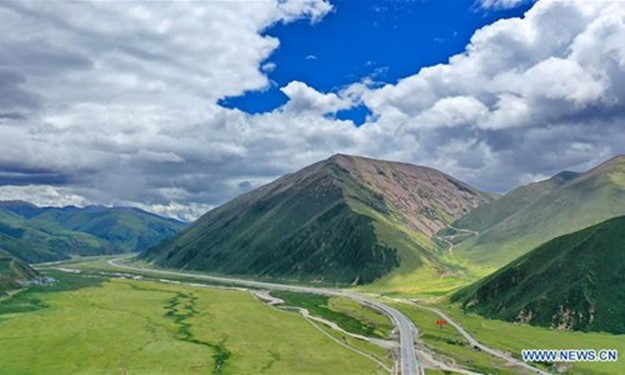
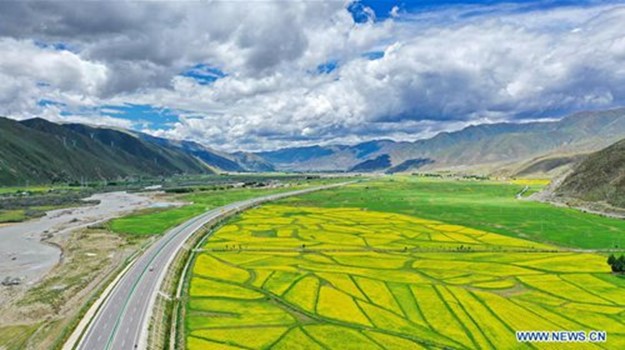
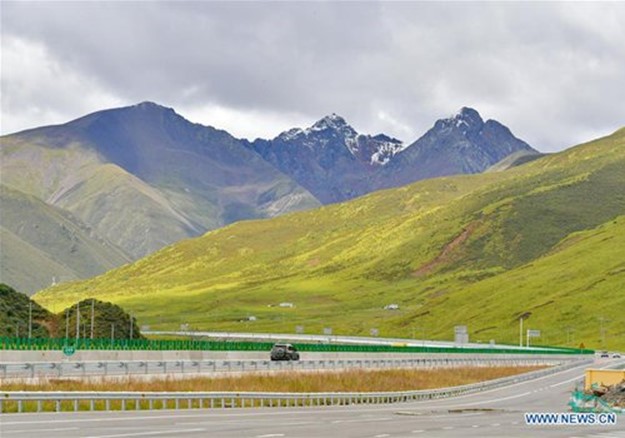
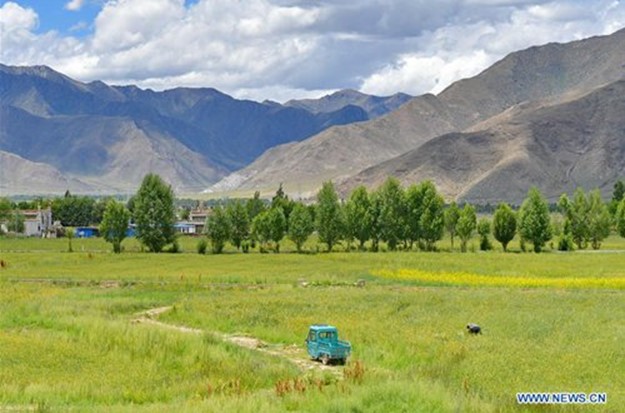
Scenery along highway linking Lhasa with Nyingchi in Tibet
Tibetan Nationalism. The Land describes Tibetan Identity.
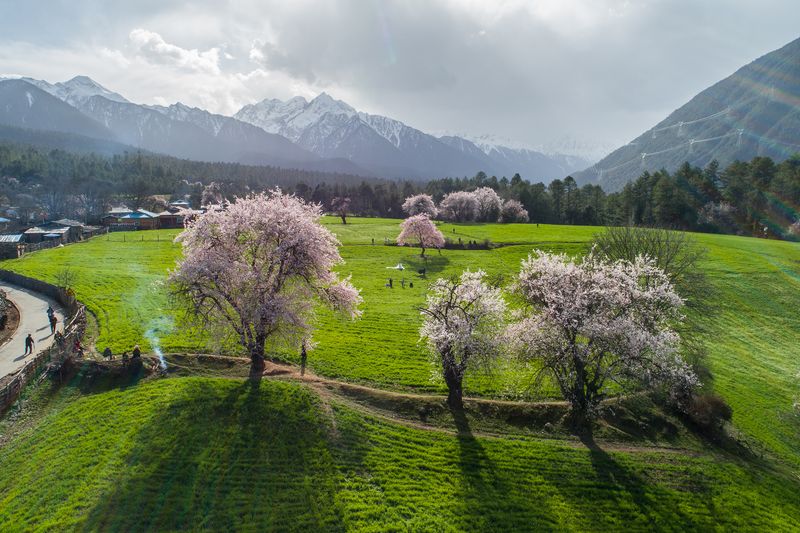
Photo taken on July 16, 2019 shows a scenery along the highway linking Lhasa with Nyingchi in southeast Tibet. (Photo: Xinhua)
Tibetan Nationalism. The Land describes Tibetan Identity.
Photo taken on July 16, 2019 shows a scenery along the highway linking Lhasa with Nyingchi in southeast Tibet. (Photo: Xinhua)
Tibetan Nationalism. The Land describes Tibetan Identity.
Photo taken on July 16, 2019 shows a scenery along the highway linking Lhasa with Nyingchi in southeast Tibet. (Photo: Xinhua)
Tibetan Nationalism. The Land describes Tibetan Identity.
Photo taken on July 16, 2019 shows a scenery along the highway linking Lhasa with Nyingchi in southeast Tibet. (Photo: Xinhua)
Tibetan Nationalism. The Land describes Tibetan Identity.
Photo taken on July 16, 2019 shows a scenery along the highway linking Lhasa with Nyingchi in southeast Tibet Autonomous. (Photo: Xinhua)
Tibetan Nationalism. The Land describes Tibetan Identity.
Chat for Tibet. I Chat, You Chat, and We Chat For Free Tibet.
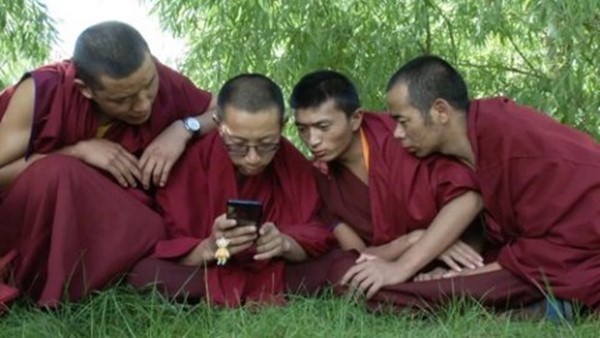
Jamyang Palden, a 30-year-old Tibetan Buddhist monk uses the WeChat app on his iPhone to leave a voice message for a friend in Tibet, in Dharmsala, India, Nov. 10, 2014.
Image Credit: AP Photo/Ashwini Bhatia
Tibetans know the surveillance risks, but many choose to give up privacy for convenience.
The digital revolution has emerged as a key factor in the rapid dissemination of news and broadcasting views. Within the last decade, social media has replaced print media, signaling a paradigm shift in how we consume and convey information. Due to advances in science and technology, sharing news and information has become less time-consuming, more convenient, and more decentralized.
But many people don’t realize that convenience has cost them their privacy. As you flow through your daily routine on a smartphone, you inadvertently share more data than you realize. This tradeoff between convenience and privacy illuminates the case of WeChat with respect to Tibetans and the larger Tibetan issue. In my research, I have found that Tibetan netizens generally give up privacy for the sake of convenience when using WeChat, operated by the Chinese company Tencent.
WeChat, the world’s largest standalone messaging app, is constantly refining their technology to monitor — and censor — content from its more than 963 million monthly active users. But still, 70 percent of Tibetans in the diaspora use the application. Overseas Tibetans or anyone with family or relationships associated with Tibet tend to download the messaging app to stay in contact, since other global social media applications are banned in the region. Tibetans who want to communicate with their relatives have no other choice but to use this means of contact.
In the eight years since Tencent debuted WeChat, it has become the dominant social networking platform in China as a whole, including in Tibet. The app has grown into an internet behemoth with over 1 billion registered users worldwide and 902 million daily users. Last year, 45 billion messages were being sent on the platform every day, 18 percent more than in 2017. The reason behind this meteoric rise is the official ban on global social media platforms in China, aided both by censorship of foreign apps – WeChat’s competitors — and subsidies from the Chinese government. This also means that WeChat’s information technology services and software are fundamentally insecure. The Chinese government claims sweeping powers over any matter considered relevant to China’s national security and pressures Chinese firms not only to censor content but, when needed, hand over user data.
Yet for many Tibetans, mobile apps like WeChat have become indispensable in their social life. News and information spreads like wildfire on WeChat and Facebook feeds, even as the mainstream media struggles to catch up with the pace.
In an interview with Tibetans recently arrived in India, one woman told me, “WeChat is set to become more obligatory in the daily lives of many Tibetan people.” At the same time, there is scrutiny of WeChat, which has been linked to an alarming rise in arrests of Tibetans. That, combined with the implementation of the recent cybersecurity laws, makes many Tibetans practice self-censorship on WeChat: discussing more about social matters and reposting and forwarding messages that are nonpolitical.
This Tibetan told me that she realized her phone was tapped, and her calls and text messages were under surveillance. Before she left Tibet, the Internet Security Bureau surprised her with their ability to repeat her words and voice messages precisely when they called her in for interrogation.
WeChat in Exile
In every nook and corner of Tibetan communities in India, many Tibetans are becoming addicted to Tencent apps, which they use extensively. People glued to their phone screens are a common sight, and many are sending voice or video messages, playing PubG, or using other functions to communicate.་ The popularity of WeChat stems from the ease of use, as well as the fact that voice messages do not require literacy in Tibetan. This means that Tibetans who may not be able to read Tibetan can still participate in groups and share their views and ideas confidently.
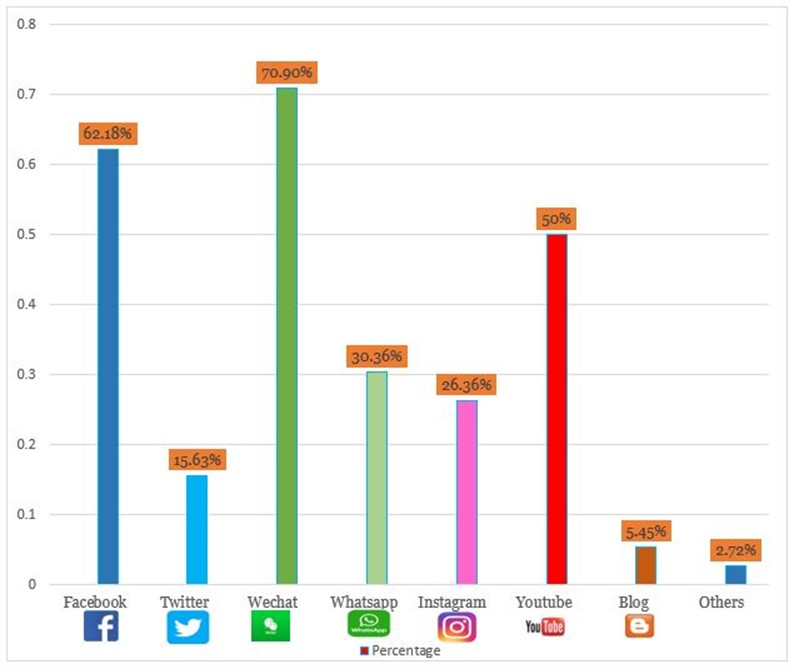
In a field survey with 550 participants from across India conducted by the author in 2018, 70.90 percent of Tibetans reported using the WeChat app extensively to connect with their family in Tibet, diaspora and abroad. And WeChat is reportedly only gaining popularity in Tibetan communities in exile.
Chat for Tibet. I Chat, You Chat, and We Chat For Free Tibet.
Fig 1. The most popular social media platforms among Tibetans. Data from author field survey.
A Tibetan roadside vendor at McLeodganj explains:
My parents are in Tibet and calls are expensive. Being deprived of formal education, I was introduced to a software called WeChat by my friend in 2012. I found it is just user friendly and does not necessarily require a fast internet connection and literacy. Since then I have been using this application. I can hold a button and talk to my family and relatives in any way at any time. I can get updates on many news and information. I even joined some chat groups and actively participated during the 2016 Tibetan election by airing my views.
But I strongly believe that I am under surveillance since the application is made in China. I rarely talk about and post any political related messages and images on my feed.
Another Tibetan man I spoke to explained to me how his family in Tibet would talk with him on WeChat almost daily. But surprisingly, one day he found that he had been removed from the family group chat, and that his parents had blocked him without any further explanation. He was notified that they were changing their profile pictures and status on WeChat but was unable to send a message or get in touch with them thereafter. This incident has left him with questions — he assumes that the Chinese cyber police might have warned his family against contacting someone outside of Tibet.
WeChat and Beijing
Tencent has officially denied any government involvement in privacy matters several times. It is, however, an accepted reality that Chinese officials censor and monitor WeChat users. WeChat also states in its privacy policy that it may share users’ data with “government, public, regulatory, judicial and law enforcement bodies or authorities” to “comply with applicable laws and regulations.” On a technical level, thus, WeChat does not offer users much protection against government surveillance. Cases of Tibetans being arrested for circulating messages that have been deemed politically sensitive evince this.
As a company based in China, WeChat is subject to state laws on content control, and while WeChat claims to be end-to-end encrypted, there is a significant evidence to suggest that client-side censorship based on keyword and surveillance is prevalent, including erasing messages that are deemed politically sensitive issues.
One Tibetan girl, who went from Lhasa to study abroad in Europe, told me why she quit WeChat. When she was at home, she created a chat group and invited 30 of her classmates on it for a dinner party. Soon after, to her horror, she was called in by government officials for severe interrogation and warned against creating any future chat groups for classmates. Later, out of frustration with the lack of privacy, she eventually quit WeChat. She further explains, “I felt insecure after the interrogation and became very cautious. I realized that the Chinese apps are absolutely not safe.”
The problem is larger than WeChat. In some villages in Tibet, police are taking away people’s phones and secretly installing an app that extracts data from emails, texts messages, and contacts. The surveillance app searches for information on a range of material, including literature by the Dalai Lama and messages that are deemed politically sensitive.
Tibet continues to witness a severe clampdown on WeChat, part of a broader crackdown on social media throughout China. Users face the threat of imprisonment if they are found responsible for “online rumors.” China has been cracking down hard on WeChat users who demonstrate sympathy and support for the Tibetan cause and blocking any avenues for the spread of relevant information. Restrictions and fines have thus been on rise for sharing “illegal” content on WeChat.
In addition to the notorious firewall, the government can censor specific words to try and control the narrative of any given incident by pushing their own agenda and restricting citizens’ freedom of expression. However, many Tibetan and Chinese netizen use images and memes to portray a serious topic in a lighthearted manner, and further increase the spread of information.
“Fake News”
The influx of information has led to a preponderance of news about conditions in Tibet. However, the catch is that false rumors are hard to tell apart from real news. Due to the security risks involved, it is difficult to validate news on Tibet, which primarily comes by way of social media.
The spread of “fake news” has become a global concern. False, misleading, or confusing online content created by fake accounts can harm the unity and harmony of any society. Unfortunately, lies and rumors are often taken seriously, and baseless allegations among Tibetans have the serious potential to affect the struggle to advocate the cause of Tibet.
Through my research, I found that some of the key factors behind growing paranoia and possible divisions in the Tibetan movement are lies and unverified rumors created by many fake accounts on popular social media outlets like WeChat and Facebook. These platforms raise concerns surrounding the dissemination of false or misleading information, as they lack the gatekeeping and verification processes that traditional media have. The convergence of traditional and new media as a means of information dissemination has raised questions regarding where to draw the line between regulation and censorship, and how to balance freedom of expression with inflammatory and provocative speech.
While enjoying the benefits of WeChat, we should be wary of the negative effects. In short, while WeChat has become and continues to be a popular medium for social interaction and bridging private and public lives, the safety of the application and security of shared content remains a legitimate concern for everyone.
Tenzin Dalha is a research fellow at the Tibet Policy Institute, doing research on Chinese cybersecurity policy and the social media landscape of Tibetan society.
Chat For Tibet. I Chat, You Chat, and We Chat For Free Tibet.






















 Whole Dude - Whole Concept