Whole Lesson – Lessons of Covert Action in Tibet

The Cold War in Asia – Lessons of Covert Action in Tibet

The Cold War in Asia. Lessons of Covert Action in Tibet.

The Cold War in Asia represents the security threat posed by the spread of Communism to mainland China. Because of my lifetime affiliation with the military organization called Special Frontier Force, I can review the covert action in Tibet to draw some lessons.

Whole Dude – Whole Secret: The CIA covert operations inside Tibet led to the creation of a military organization called Establishment Number. 22, or Special Frontier Force which was formed in 1962 during the presidency of John F. Kennedy

In my analysis, the US, India, and Tibet lack the intelligence capabilities to conduct a successful covert action in Tibet. In 1959, Tibet National Uprising failed for the CIA underestimated the enemy’s capabilities both in terms of intelligence and the use of military power to crush civilian uprising or rebellion. In 1962, the CIA again failed to know the enemy’s war preparation and the attack across the Himalayan Frontier came as a rude surprise.

Establishment No. 22 – Operation Eagle: This badge represents a military alliance/pact between India, Tibet, and the United States of America. Its first combat mission was in the Chittagong Hill Tracts which unfolded on 03 November 1971. It was named Operation Eagle. It accomplished its mission of securing peace in the region that is now knownas Republic of Bangladesh.

I directly ask the CIA to improve its intelligence capabilities to respond to the security challenge posed by the spread of Communism to mainland China. The United States fought wars in Korea and Vietnam without testing the enemy’s military capabilities. To fight against the enemy, the United States must recognize the face of the enemy. No covert action will succeed without knowing your enemy.

Rudra Narasimham Rebbapragada

Special Frontier Force-Establishment 22-Vikas Regiment

TIBET AWARENESS – PROJECT CIRCUS. The quest for Freedom in Tibet. A military training Camp known as Camp Hale was established in Colorado under the supervision of CIA officers Roger E. McCarthy and John Reagan.
Whole Dude – Whole Secret: The CIA Tibet Operation.
Whole Dude – Whole Agency: Allen Welsh Dulles shaped the history of the Central Intelligence Agency. During World War II, he had served in the Office of Strategic Services(1942-1945), and when CIA formed in 1951, he served as Deputy Director under General Walter Bedell Smith. He was appointed the Director by President Dwight D. Eisenhower during January 1953.
Whole Dude-Whole Master: November 29, 1961. President John F. Kennedy welcomes the 6th Director of CIA, John Alexander McCone.
Richard McGarrah Helms(March 30, 1913 – October 22, 2002) was the chief architect of the legislation that created the Central Intelligence Agency during 1947. He had served in CIA in various positions and was its Director from June 1966 to February 1973. The 1962 India-China War was the consequence of a failed CIA mission inside Tibet.

Lessons of Covert Action in Tibet (1950 – 1972)


Clipped /from: http://smallwarsjournal.com/index.php/jrnl/art/lessons-covert-action-tibet-1950-1972

Between 1950 and 1972, the Central Intelligence Agency (CIA), in close cooperation with the Departments of State (DoS) and Defense (DoD), conducted a comprehensive covert action campaign in support of Tibetan resistance movements fighting against Communist Chinese occupation of their homeland.  The campaign consisted of “political action, propaganda, paramilitary, and intelligence operations” intended to internally weaken and undermine the expansionist ambitions of the People’s Republic of China (PRC).[i]  Following the October 1950 invasion of Tibet by the PRC, the CIA’s Special Activities Division (SAD) inserted teams into Tibet to train, advise, and assist Tibetans who were already fighting the Communists.[ii] 

A number of Tibetan resistance fighters were specially selected and exfiltrated to the Pacific island of Saipan and Camp Hale in Colorado to undergo training in demolitions, clandestine communication, and other critical skills.[iii]  Operating out of neighboring Nepal and India, SAD-directed teams of Tibetan rebels waged a ceaseless campaign against the Chinese that tied down significant PRC troop strength, strengthened international opposition to Chinese atrocities against Tibetans, and prevented the PRC from effectively pursuing its regional ambitions in South Asia to further spread its communist ideology.[iv]  The CIA continued to support the Tibetan resistance until 1972 when U.S. President Richard Nixon changed course and decided to normalize relations with the PRC.[v]  

Though the CIA’s Tibetan covert action campaign never successfully ousted the Chinese Communists, the campaign was quite successful in accomplishing the U.S.’s limited objectives.  Through its covert action campaign, the U.S. sought to internally weaken the PRC through sustained attrition and distraction in order to prevent the Chinese from spreading their brand of communism across South Asia – specifically India.[vi]  The CIA’s covert action campaign succeeded in three ways: it depleted the PRC’s already limited resources, which further weakened the state; it undermined the PRC’s international standing and limited its regional influence, and it prevented the expansion of the PRC’s borders.[vii]   

Specifically, the CIA’s covert action campaign forced the PRC to commit vast numbers of troops and resources to pacify Tibet, which delayed a number of other critical initiatives that the young communist state sought to pursue. In 1959, the CIA estimated that the PRC had over 60,000 soldiers deployed just to subjugate Tibet, a force that required 256 tons of supplies daily to sustain. [viii]  The PRC, which had just successfully ended its own civil war in 1949, saw its military stretched incredibly thin by its Tibetan occupation.  This strain likely undermined the ability of the Chinese government in Beijing to effectively consolidate full control over the expansive country, further encumbering efforts to pursue its strategic ambitions.   

Adding to the PRC’s frustrations was the widespread international condemnation resulting from the increasingly brutal pacification campaign that China felt compelled to undertake to try and quell the Tibetan rebellion.[ix]  Much of this international focus was (and still is) cultivated by Tenzin Gyatso, the 14thDalai Lama and the spiritual leader of the majority of Tibet’s Buddhists.  During a particularly violent 1959 revolt, The Dalai Lama fled from Tibet with over 100,000 of his followers, escaping with the help of the CIA to India where he established a Tibetan “government in exile”.[x]  This government has been a constant thorn in the PRC’s side, with the Dalai Lama and his disciples incessantly lobbying the international community for Tibetan rights and autonomy from China.[xi]  The sustained focus on Chinese atrocities against the Tibetans significantly undermined the PRC’s regional standing and efforts to strengthen ties with neighbors.

Finally, the CIA’s covert action campaign was successful in its primary objective of preventing the spread of communism across South Asia.  Mao Tsetung, the chairman of the PRC’s Communist Party, was convinced during an extended stay in the Soviet Union between 1949 and 1950 to undertake the leadership role in “liberating” Asia for the cause of global communism.[xii]  However, the PRC’s inability to fully control Tibet, largely due to the CIA’s covert action campaign that sustained indigenous resistance, denied China the use of key terrain that might have enabled military action against India or even the Middle East.[xiii]  The covert action campaign thus protected the U.S. or its allies from the need to fight a major land conflict in South Asia against the military forces of the PRC. 

The CIA achieved a significant victory for the U.S. with a minimal commitment of American resources: total expenditures per year amounted to roughly $1.7 million dollars.[xiv]  However, it is important to note that the CIA’s covert action campaign cost tens of thousands of Tibetans their lives, and the supported resistance encouraged violent oppression from the Chinese occupiers. Further, when relations between the U.S. and China normalized under President Nixon, many Tibetans and even a few CIA SAD officers saw the abrupt decision in 1972 to cease support of the Tibetan resistance as tantamount to betrayal.[xv]  The Dalai Lama described this sentiment with some bitterness in a 1998 interview, saying that the CIA had aided his cause, “not because they cared about Tibetan independence, but as part of their worldwide efforts to destabilize all Communist governments.”[xvi]  Despite such accusations of duplicity, the CIA achieved its stated objectives through this covert action campaign.

The CIA’s efforts in Tibet were successful because the objectives of the covert action campaign were reasonably limited and achievable with the resources available. While the Tibetans themselves may have nursed illusions of eventually driving all Chinese occupiers from their homeland, it is clear from the available records that the CIA and the political leadership in Washington were content to simply destabilize China and frustrate the Communists’ designs to spread their ideology throughout Asia.[xvii]  Once the political winds changed and relations started to improve between the U.S. and China, the continuation of support to the Tibetan resistance was no longer in the best interests of the U.S. The U.S. successfully achieved its objectives through this covert action campaign because those objectives were achievable without escalating into a wider conflict. 

Other successful covert actions, such as the SAD-spearheaded coups that toppled the governments of Mohammed Mossadegh of Iran in 1953[xviii] and Jacobo Arbenz of Guatemala in 1954[xix] are thought by historians to have given the CIA and subsequent U.S presidents an overly optimistic opinion of the potential for covert action to achieve outsized objectives. This overconfidence likely led to the 1961 “Bay of Pigs” invasion in Cuba, which was a tremendous failure because its objectives were overly ambitious and unachievable given the limited resources that the U.S. committed.[xx]  Rather than be greeted as liberators and reinforced by masses of Cubans dissidents flocking to their cause, the US-backed Cuban rebel forces were quickly overwhelmed. The most important lesson that covert action practitioners and policymakers who consider the use of covert action should take from the highly effective campaign in Tibet is that such campaigns must be reasonably limited in their objectives to maximize the chances of success.

The Cold War in Asia. Lessons from Covert Action in Tibet.

[i] “Memorandum for the 303 Committee,” U.S. Department of State Office of the Historian, January 28, 1968, accessed October 10, 2017, https://history.state.gov/historicaldocuments/frus1964-68v30/d342.

[ii] Kenneth Conboy and James Morrison, The CIA’s Secret War in Tibet, The University Press of Kansas, 2002.

[iii] John Roberts and Elizabeth Roberts, Freeing Tibet: 50 Years of Struggle, Resilience, and Hope, (New York, AMACOM Books, 2009), 43-46.

[iv] Joe Bageant, “CIA’s Secret War in Tibet,” History.net, June 12, 2006, accessed October 10, 2017, http://www.historynet.com/cias-secret-war-in-tibet.htm.

[v] Jonathan Mirsky, “Tibet: The CIA’s Cancelled War,” The New York Review of Books, April 9, 2013, accessed October 10, 2017, http://www.nybooks.com/daily/2013/04/09/cias-cancelled-war-tibet/.

[vi] “Chinese Communist Motives in Invasion of Tibet,” Central Intelligence Agency, November 16, 1950, accessed October 10, 2017, https://www.cia.gov/library/readingroom/docs/CIA-RDP82-00457R006300270010-6.pdf.

[vii] “Memorandum for the 303 Committee,” U.S. Department of State Office of the Historian, January 28, 1968.

[viii] “Logistical Problems of the Tibetan Campaign,” Central Intelligence Agency, April 17, 1959, accessed October 10, 2017, https://www.cia.gov/library/readingroom/docs/CIA-RDP79T01049A001900130001-6.pdf.

[ix] “Tibet and China Background Paper,” Central Intelligence Agency, April 27, 1959, accessed October 10, 2017, 35-38, https://www.cia.gov/library/readingroom/docs/CIA-RDP82R00025R000100060022-5.pdf.

[x] Jennifer Latson, “How and Why the Dalai Lama Left Tibet,” Time Magazine, March 17, 2015, accessed October 10, 2017, http://time.com/3742242/dalai-lama-1959/.

[xi] Michael Backman, “Behind Dalai Lama’s Holy Cloak,” The Age, May 23, 2007, accessed October 10, 2017, http://www.theage.com.au/news/business/behind-dalai-lamas-holy-cloak/2007/05/22/1179601410290.html.

[xii] “Chinese Communist Motives in Invasion of Tibet,” Central Intelligence Agency, November 16, 1950, accessed October 10, 2017, https://www.cia.gov/library/readingroom/docs/CIA-RDP82-00457R006300270010-6.pdf.

[xiii] “Resistance in Tibet,” Central Intelligence Agency, July 21, 1958, accessed October 11, 2017, https://www.cia.gov/library/readingroom/docs/CIA-RDP79-01006A000100090001-7.pdf.

[xiv] “Memorandum for the Special Group,” U.S. Department of State Office of the Historian, January 9, 1964, accessed October 10, 2017, https://history.state.gov/historicaldocuments/frus1964-68v30/d337.

[xv] Joe Bageant, “CIA’s Secret War in Tibet,” History.net, June 12, 2006, accessed October 10, 2017, http://www.historynet.com/cias-secret-war-in-tibet.htm.

[xvi] Jim Mann, “CIA Gave Aid to Tibetan Exiles in ’60s, Files Show,” Los Angeles Times, September 15, 1998, accessed October 10, 2017, http://articles.latimes.com/1998/sep/15/news/mn-22993.

[xvii] “Memorandum for the Special Group,” Department of State Office of the Historian, January 9, 1964.

[xviii] James Risen, “SECRETS OF HISTORY: The C.I.A. in Iran — A special report. How a Plot Convulsed Iran in ’53 (and in ’79),” The New York Times, April 16, 2000, accessed October 10, 2017, http://www.nytimes.com/2000/04/16/world/secrets-history-cia-iran-special-report-plot-convulsed-iran-53-79.html?pagewanted=all.

[xix] Nick Cullather, Secret History: The CIA’s Classified Account of Its Operations in Guatemala, 1952–1954, (Stanford University Press: 1999).

[xx] Grayston Lynch, Decision for Disaster: Betrayal at the Bay of Pigs, (Dulles, VA: Potomac Books, 2000).

SPECIAL FRONTIER FORCE DEMANDS TRUMP – DALAI LAMA MEETING. IT IS LOGICAL FOR BOTH ARE OPPOSED TO COMMUNISM.

THE COLD WAR IN ASIA – THE BATTLE AGAINST SPREAD OF COMMUNISM

THE COLD WAR IN ASIA – THE BATTLE AGAINST SPREAD OF COMMUNISM

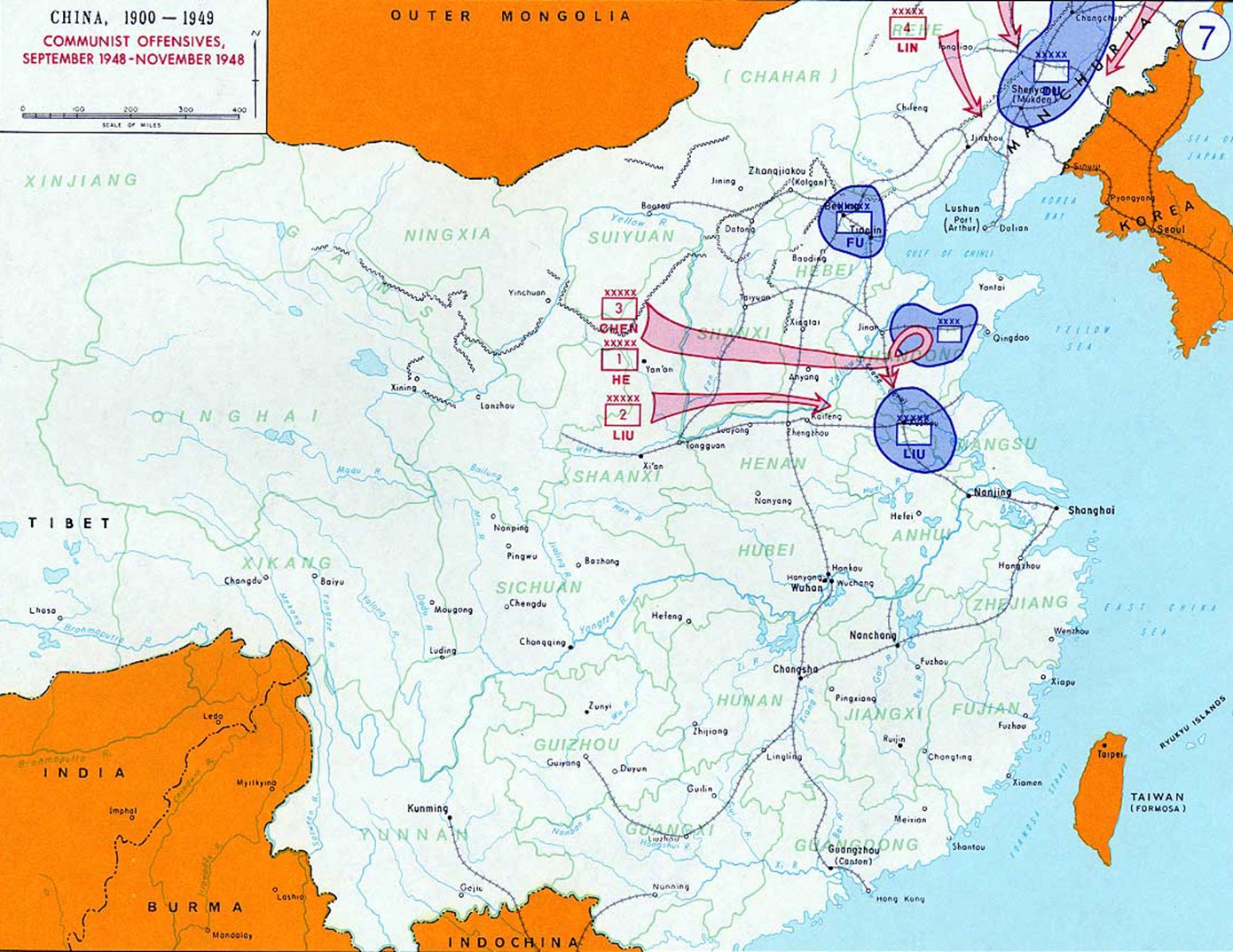
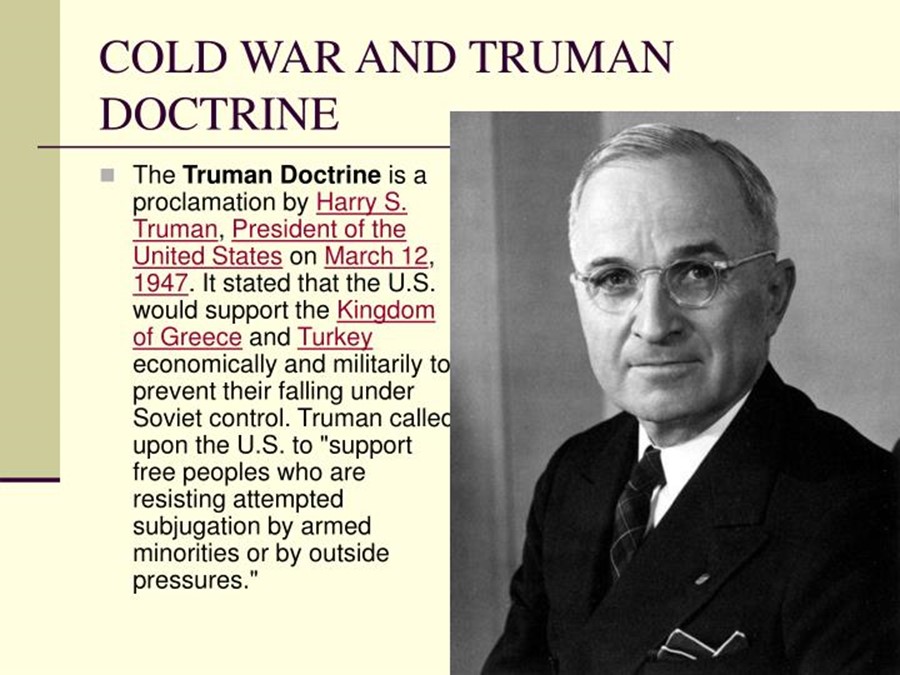
The Cold War in Asia – The Battle Against Spread of Communism. President Truman conceded the loss of China to Communists. The Cold War lingers due to incompatibility of Democracy and Communism.

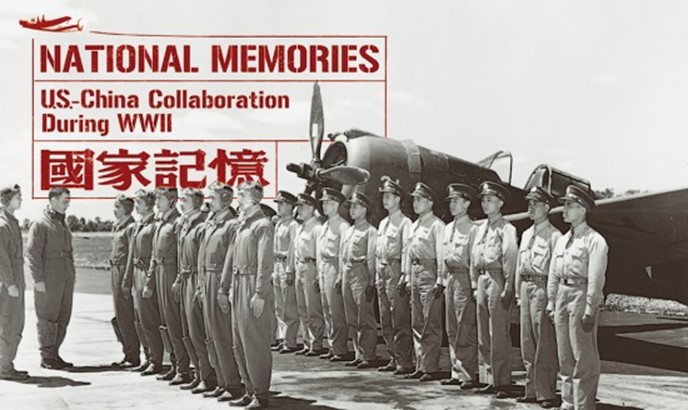
United States supported Nationalist China during World War II to prevent Communist takeover of China.

The Cold War in Asia – Battle Against Spread of Communism. In August 1946, US placed embargo on further shipment of US arms to Nationalist China.

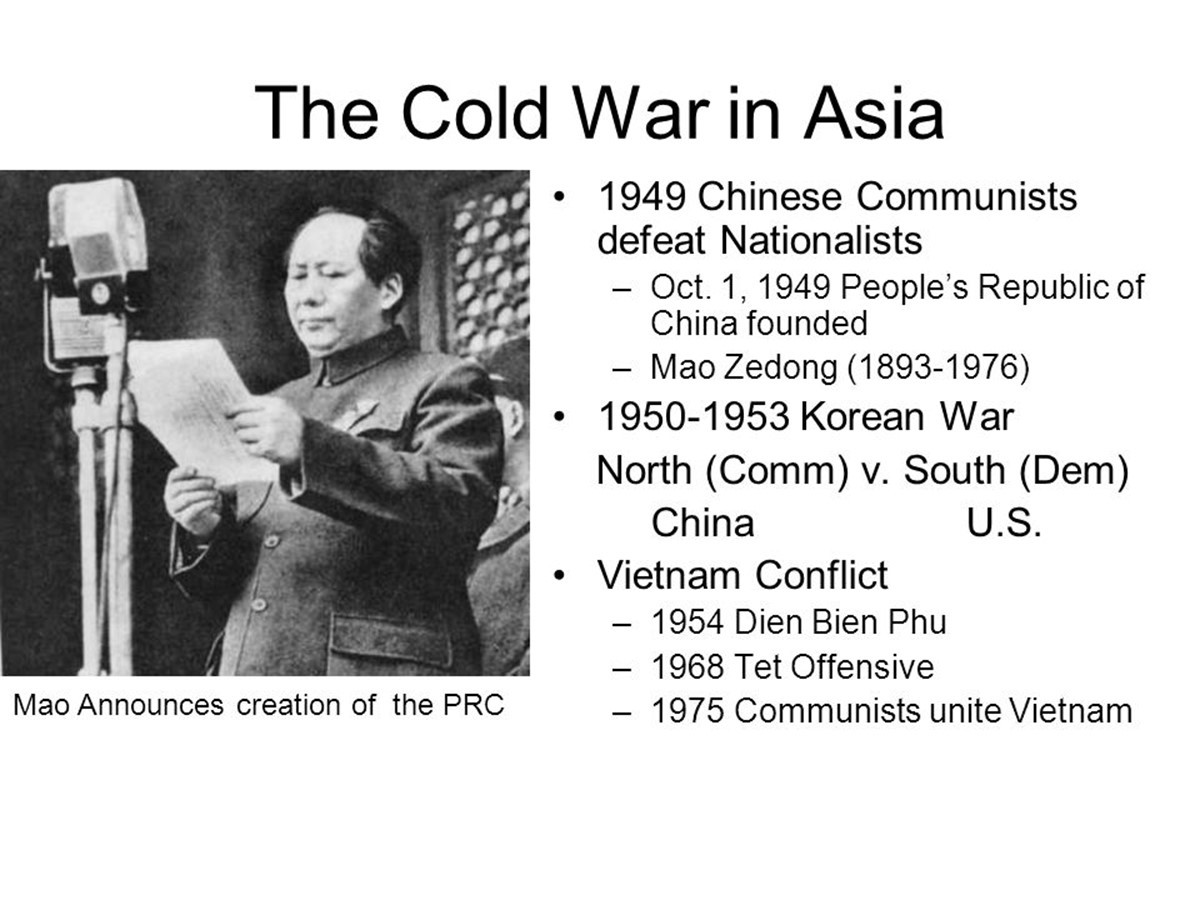
However, by 1944, the US relations with Nationalists cooled off. In August 1946, US placed embargo on further shipment of US arms to Nationalist China. The loss of China to Communists on October 01, 1949 resulted in the founding of the Republic of China in Taiwan (Portuguese Formosa) by Chan Kai-Shek and the Nationalists. It did not cause the end of Cold War in Asia. It continued to manifest itself with armed conflicts in Korea, Vietnam, Laos, and Cambodia.

The Cold War in Asia – The Battle Against Spread of Communism. Communist takeover of China in October 1949 alarmed the US, India, and Tibet. The threat remains the same.

I concede that The Cold War in Asia has not manifested as major armed conflict across Tibetan Plateau. It does not mean that there was no effort to checkmate the spread of Communism to Tibet. The United States and India tried to contain Communism that provoked Communist China’s attack across Himalayan Frontier during October 1962. The Communists claimed initial success of their armed aggression but declared unilateral cease-fire on November 21, 1962 to withdraw PLA forces from captured Indian territory.

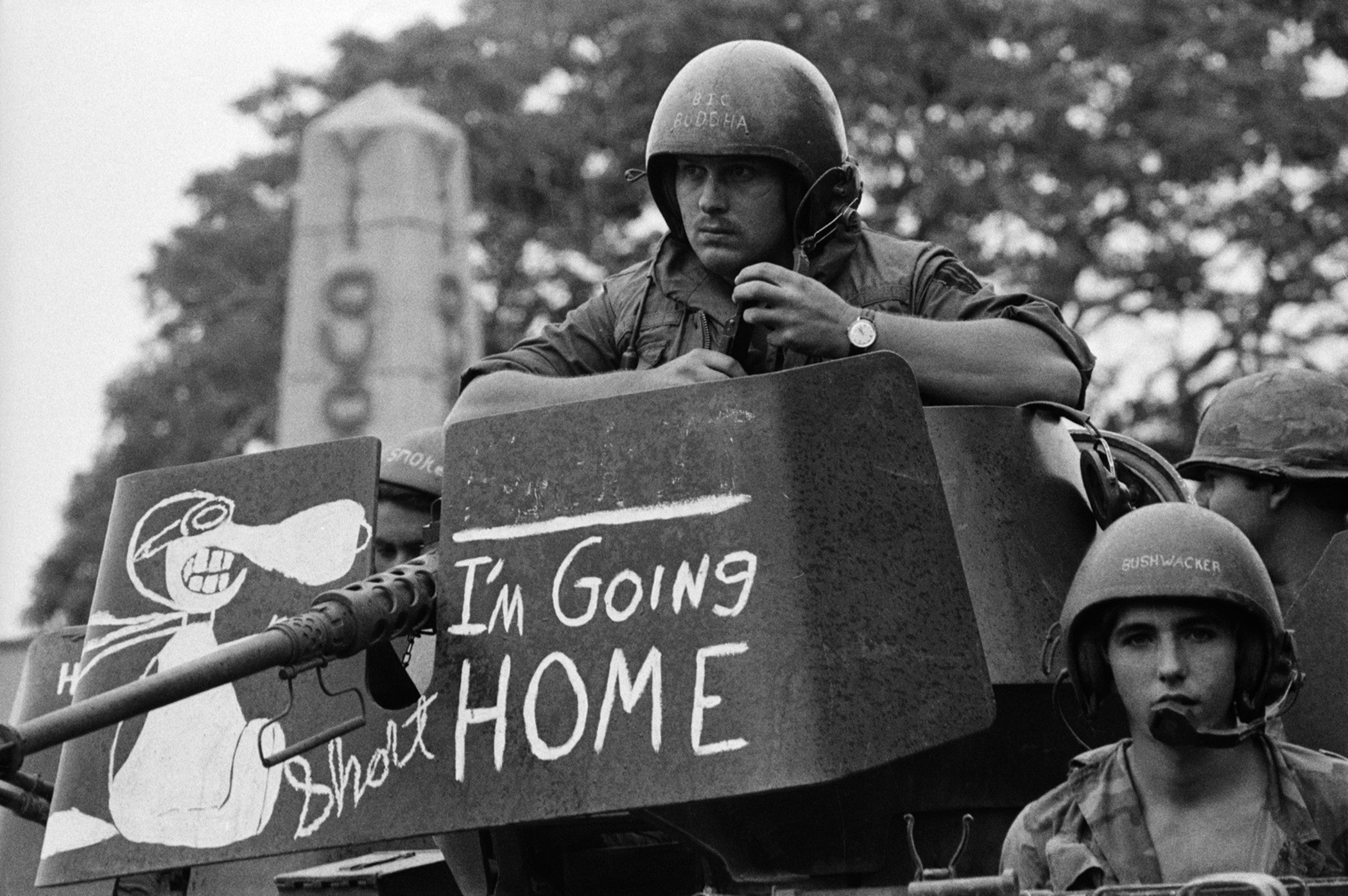
The Cold War in Asia – The Spread of Communism. Unfinished Vietnam War. Communism poses the same threat as before. Vietnam War is not the last chapter of the history of Cold War in Asia.

In 1971-72, Nixon-Kissinger tried to normalize US – China relations without securing success in Vietnam. That was not the last chapter of The Cold War in Asia.

The Cold War in Asia – The Battle Against Spread of Communism in Asia. This Threat will persist as long as Communism survives in China.

Spread of Communism in Asia poses the same threat it had initially posed on October 01, 1949. Nations defending Freedom, Democracy, Peace, Justice, and Harmony have no other choice; they remain resolved to engage, to contain, to resist, to confront, and to combat the danger posed by Communist takeover of China.

Rudranarasimham Rebbapragada

SPECIAL FRONTIER FORCE

The Cold War in Asia – The Battle Against Spread of Communism. For success of Freedom, Democracy, Peace, Justice, and Harmony in Asia, Communism must be defeated.

HOW LONG CAN CHINA AND INDIA AVOID WAR IN THE HIMALAYAS?

Clipped from: https://www.yahoo.com/news/long-china-india-avoid-war-155933378.html

The Cold War in Asia – The Battle Against Spread of Communism. India, Tibet, Bhutan Border tensions need resolution through defeat of Communism.

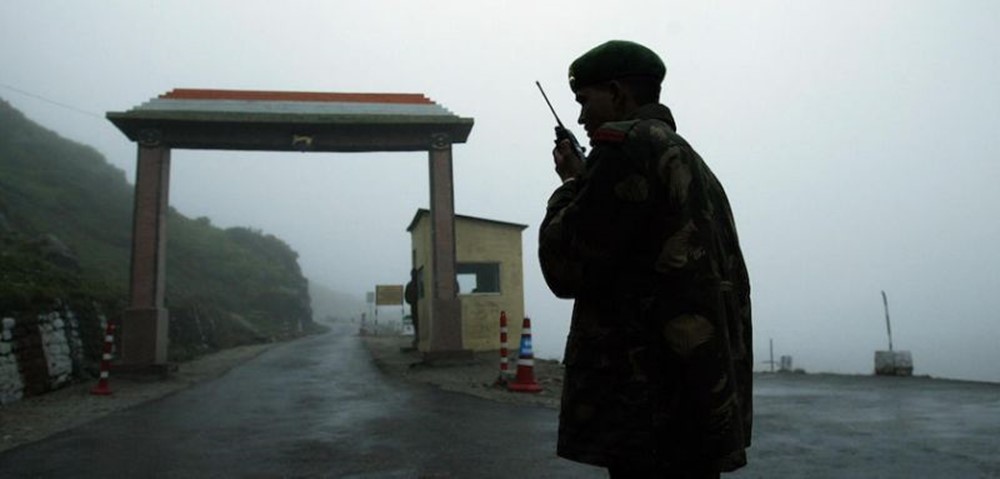
A remote corner of the Himalayas has become the unlikely scene of a major power standoff between China and India. Now entering its seventh week, the standoff centers on the tri-junction border shared by China, India, and Bhutan referred to as Doklam in India and Donglang in China. Neither side is spoiling for a fight, nor are they ready to back down anytime soon considering the security concerns, domestic political pressures, and regional reputational stakes. A series of quiet diplomatic interactions has not restrained the brinkmanship or ultimatums and the risk of a major armed clash between two Asian heavyweights remains.

China and India have sparred along the Himalayan border for decades, including a brief war (and clear Chinese victory) in 1962. In areas like Aksai Chin or Arunachal Pradesh, long-standing disputes still play out in regular diplomatic arguments. Yet until recently there seemed to be a settled status quo in the comparatively peaceful tri-national border area, which has special strategic significance, lying as it does above the 14-mile-wide Siliguri valley, or the “chicken’s neck,” that connects northeast India to the rest of the country. As it turns out, both sides had very different visions of just what that status quo was.

The clash of perceptions has left them both smarting, and dialed jingoistic language up to 11. To China, Doklam is its own sovereign territory based on treaties, tacit agreements, and de facto control. India considers Doklam a disputed territory and contends that any changes to the territory’s jurisdiction must be made in consultation with India per a 2012 understanding between the three parties.

Thus, when roughly 100 People’s Liberation Army (PLA) soldiers arrived on the Dolam plateau (an area within Doklam) on June 16 with bulldozers and earth moving machinery to improve and extend an existing Chinese road, a company-sized unit of Indian soldiers crossed into Dolam from a nearby Indian army post and interdicted the construction team. The Indian soldiers formed a “human chain” to physically obstruct the road-building project and urged the Chinese to “desist from changing the status quo.”

Since the Indian interdiction on June 18, PLA construction has halted and both sides remain at an impasse. Between 300-350 Indian troops have pitched tents near the standoff site and dug in for the long haul, supported by supply lines and 2,500 reinforcements. China recently threatened to move its own reinforcements into the area and conducted live-fire military exercises in Tibet. While Indian officials have voiced interest in dialogue, official Chinese statements demand India’s unconditional withdrawal before any talks can begin. After issuing a complaint against Chinese actions on June 20, Bhutan has otherwise remained studiously ambiguous as to its views of the standoff.

The Doklam standoff stems from China’s and India’s deep-seated suspicions about the other’s intentions. Conventional wisdom on international politics guides states to confront, not appease, those attempting to revise any status quo, lest it encourage further belligerence. But identifying exactly who the revisionist side is, and what the status quo was, is notoriously difficult in any case, because the definitions are vague and under-theorized. And it is especially hard amid the murky legacies of empire that make up the Himalayan frontiers.

For China, India’s military deployment into a disputed region is revising norms of sovereignty as well as long-standing public and private agreements. China believes its own actions and demands are sanctioned by existing agreements and understandings, and that India is subverting those agreements for unprecedented military deployments on foreign soil.

For India, China’s attempts to construct roads in disputed territories appears consistent with its previous “salami-slicing” maneuvers of unilaterally revising unsettled borders for territorial aggrandizement and expanded influence in the region. India believes China is deliberately exploiting the ambiguity of existing territorial disputes to expand its borders, influence, and offensive capability while its own actions are more explicitly legitimated by other treaties, arrangements, and security imperatives.

The historical and diplomatic ambiguity around the border has also created plenty of space for both sides to feel self-righteously aggrieved. China contends it has unquestioned sovereignty over Doklam based on an 1890 treaty between Great Britain and China delimiting the border between the Indian state of Sikkim and Tibet, as well as the boundary point with Bhutan. As both India and China have accepted this treaty, India had no legitimate grounds to cross the border and thus its actions constitute an “invasion” of Chinese territory. Secondly, China argues even if Doklam is disputed, India is still inappropriately interfering with and prejudicing a bilateral dispute between Bhutan and China.

India concedes its troops crossed an international border but into Bhutan, not China. India’s interdiction is furthermore justified by another treaty, India’s 2007 treaty of friendship with Bhutan, and both countries’ interest in halting China’s attempts to unilaterally revise the status quo. As several analysts have pointed out, the vagaries of colonial cartography and internal contradictions within the 1890 treaty mean it can actually be interpreted to support both Indian and Chinese claims.

Adding to the confusion is Bhutan’s ambiguous position. As a tiny Himalayan kingdom sandwiched between the region’s two major powers, Bhutan has enjoyed a “special relationship” with India since 1949 that some might describe more as suzerainty. While the 2007 India-Bhutan Friendship Treaty updates the 1949 agreement to accord Bhutan greater autonomy, India still wields considerable influence over Bhutan’s foreign policy. To justify its recent military actions, India has invoked an article which states that neither country will allow its territory to be used for activities that harm the other’s national security interests.

To date, however, Bhutan has yet to clarify whether India acted independently or at Bhutan’s request for military assistance in Doklam. China has argued that, absent a clear invitation, India lacks legitimate grounds for its involvement. India’s Ministry of External Affairs (MEA) has used more circumspect language like “coordination,” and has flubbed opportunities to clarify Bhutan’s request. It is possible Bhutan privately requested help or that India coerced its way into the dispute for its own security interests as it did in Sri Lanka in 1987.

Another point of contention is private diplomacy among the various actors. While not publicly brandished as justification, our sources suggest (and some reporting seems to corroborate) that PLA actions in Doklam may be based on a private understanding between China and Bhutan. Both countries have at least seven disputed territories between themselves and reports indicate Bhutan may have implicitly agreed to cede Doklam to China in the late 1990s — a period when China was busily cleaning up its frontiers — in favor of territorial gains on its northern border.

Thus, China deems its road-building in Doklam legitimate within this private, pre-settlement agreement, and fearing such a settlement, India’s military “invasion” seeks to challenge that agreement and Bhutan’s sovereignty. It is possible India was privy to this private Chinese-Bhutanese agreement over Doklam and may have tried to thwart it. Regardless, India would likely maintain that no formal agreement means no final settlement. In its diplomatic demarche to China on June 20, Bhutan stated that Chinese actions violated its 1988 and 1998 agreements prohibiting alteration of the status quo before the completion of negotiations. Moreover, another private and superseding 2012 agreement between India and China purportedly required the consultation of all three countries before a final determination on the tri-junction is made.

China also implicitly contends it has had a decades-long presence and effective jurisdiction over Doklam where Tibetan herdsman bring their livestock to graze. According to Chinese records, the PLA began patrolling Doklam once a year since 1975 and gradually extended its geographical coverage southward.

India argues the remoteness of Doklam, its harsh winters, and poor infrastructure mean China has not always exercised de facto control over the area. Bhutanese herdsman have also traditionally used Doklam as a grazing land, and security forces from all three countries have regularly patrolled the area, leading to occasional confrontations. China destroyed two Bhutanese military posts in 2007 and allegedly constructed Chinese posts at the same spot. One unofficial map circulated by Chinese bloggers even refers to a “line of actual control” between China and Bhutan, implying Bhutan exercises de facto control of Doklam.

China is also arguing that India’s actions are unprecedented. To China, India has not only interfered in a bilateral dispute but escalated it by deploying forces across a recognized international border into a third country. Indeed, even Indian observers have acknowledged Doklam is the first time India has engaged Chinese forces from the soil of a third country. Upending established norms of sovereignty through force in the name of self-defense could permit future “adventurism.”

Yet India’s argument is that it was responding to unprecedented Chinese revision of borders through road construction (both hardening and extension) in disputed territory. Such moves would create permanent facts on the ground with grave implications for Indian national security.

In our estimation, Chinese claims are vulnerable due to the ambiguity of treaty language, private agreements, and de facto possession claims. But Indian claims are by no means less vulnerable given the unprecedented nature of India’s actions on the plateau and Bhutan’s deafening silence. Both sides’ views of the status quo may appear to themselves entirely justifiable, yet to their adversary as thin gruel.

Seven weeks into the crisis, the continued impasse — and increasingly caustic rhetoric — indicates the potential for escalation remains high. The Indian national security advisor’s recent visit to Beijing did not yield any breakthroughs, contrary to some reporting. Aggressive signals of resolve like military exercises or mobilization or perceived windows of tactical opportunity in a different sector of the disputed India-China border could lead either side to miscalculate, resulting in accidental or inadvertent escalation. And any shooting that begins on the border could even expand into other domains like cyber- or naval warfare.

Despite the challenges, there are several possible resolutions in sight if both sides — and third parties trying to defuse tension — strive to understand what might seem like mutually incompatible perspectives.

For example, India could find alternative ways to grant Beijing a “win” by softening its position on China’s “One Belt, One Road” project, both sides could pursue international arbitration, or both sides could wait until harsh winter weather force both sides forces to quietly draw down.

Another “off ramp” to deescalate the crisis is a back-channel agreement with Bhutan appearing as the public arbiter, allowing both sides to save face. The most obvious solution, as many have identified, would be a mutual withdrawal and return to pre-June 16 positions – something which may already be slowly happening, as both draw back troops. For both sides to save face, the public narrative of their back-channel dialogue could rely on Bhutan.

For example, India could claim Bhutan “thanked” India for its support and commitment to upholding the bilateral friendship treaty, but after deploying its own monitoring force, Bhutan requests that India withdraw its forces. This would allow India to withdraw without appearing to bend to Chinese demands, send a message that China’s salami tactics will be challenged, and buttress its credibility with states concerned with Chinese encroachment. For its part, China can claim India withdrew first and quietly halt road construction until a final settlement is reached between itself and Bhutan. This would give all sides, including Bhutan, a face-saving exit necessary to appease domestic audiences. At the same time, India and China will have exchanged clear signals on just how serious they are about the border — and how dangerous assumptions about the other side can be.

Photo credit: DESHAKALYAN CHOWDHURY/AFP/Getty Images

The Cold War in Asia – The Battle Against Spread of Communism. Nations of Asia need to defeat Communism to resolve Border tensions and conflicts.

The Cold War in Asia – The Battle Against Spread of Communism. Border tensions and Border conflicts among Asian nations demand resolution through defeat of Communism.