THE EVIL RED EMPIRE – RED CHINA – THE GREAT PROBLEM OF TIBET: TIBET HAS LAND AREA OF 870, 000 SQUARE MILES. TIBET IS LARGER IN SIZE COMPARED TO ASIAN NATIONS LIKE JAPAN, TAIWAN, PHILIPPINES, INDONESIA, MALAYSIA, VIETNAM, AND BRUNEI. TIBET IS THREE-TIMES LARGER THAN TEXAS STATE OF UNITED STATES .
Red China released a new map showing the totality of Beijing’s territorial claims. The word ‘cartography’ describes the art or work of making maps or charts. Red China claims this “10-Dash” new map serves to educate Chinese people about their country and her territory. I consider this map as an act of ‘cartographical’ or ‘cartographic’ aggression. Military always prepares maps and charts to plan its war operations much ahead of launching offensive or defensive military actions. Publication of this map is an act of hostility, a prelude to military aggression, and preparation forWar. As such all affected nations must not hesitate to take retaliatory actions to resist Red China’s acts of aggression. The first step is to prepare people to recognize Red China as an Enemy, Adversary, and an Opponent whose actions have to be challenged.
On behalf of Special Frontier Force, I reject Red China’s new map for I do not recognize Beijing’s claim of Tibet and its territory. Republic of India does not share a border with Red China.
Rudra Narasimham Rebbapragada Ann Arbor, MI 48104-4162, USA Special Frontier Force-Establishment 22-Vikas Regiment
Could this map of China start a war?
By ISHAAN THAROOR June 27, 2014
On behalf of Special Frontier Force, I reject Red China’s new map for I do not recognize Beijing’s claim of Tibet and its territory. Republic of India does not share a border with Red China.
(Hunan Map Press/Xinhua)
Chinese authorities unveiled this week a new map showing the totality of Beijing’s territorial claims. It supplants an earlier map which had a cutaway box displaying China’s declared claims over the South China Sea. Now, Chinese citizens can “fully, directly know the full map of China,” wrote the People’s Daily, a state paper. “Readers won’t ever think again that China’s territory has primary and secondary claims,” said the editor of the map press that published it.
On the face of it, the map shouldn’t be too much of a surprise to China’s neighbors. It counts Taiwan, which Beijing considers a renegade province, as part of China. It shows China’s longstanding belief in its suzerainty over the Spratlys and Paracels, the two main archipelagos of the South China Sea, which are contested to varying degrees by Vietnam, the Philippines and a number of other Southeast Asian nations. A 10-dash line (as opposed to China’s earlier nine-dash line) encircles most of the South China Sea, a body of water which sees some $5.3 trillion worth of trade pass through it every year.
Here’s a useful interactive built by the Council on Foreign Relations on the overlapping maritime claims
The new map also shows China’s claim over the Indian state of Arunachal Pradesh. China and India have one of the world’s most intractable and long-running land border disputes, which flared during a brief, bloody war in 1962. Arunachal Pradesh is fully integrated into India’s federal system, with regular state elections. But China claims most of it as part of “Southern Tibet.”
While it may seem silly to some, maps like this routinely flare tensions in Asia, where many nations are still wrangling with the complicated geography left behind by lapsed empires. Two years ago, a map published in new Chinese passports sparked a diplomatic firestorm , with foreign ministries in Vietnam and India both voicing protests and adopting counter-measures.
On behalf of Special Frontier Force, I reject Red China’s new map for I do not recognize Beijing’s claim of Tibet and its territory. Republic of India does not share a border with Red China.
Laris Karklis/The Washington Post)
China’s economic rise has led to an increasing assertiveness in the region, with its expanding navy worrying neighbors and challenging U.S. dominance in the Pacific. It has triggered an arms race in Asia, punctuated by a growing number of dangerous incidents, including frequent maritime standoffs and altercations with Vietnamese and Philippine vessels and risky fighter jet flybys over Japanese ships.
While other countries complain, Beijing is steadily changing facts on the ground. It is building up a city in the Paracels. In May, China deployed a $1 billion oil rig in waters claimed by Vietnam, which led to violent protests and riots in Ho Chi Minh City. China is now moving in a second oil rig, despite the vociferous objections of Vietnamese officials.
The new map is an echo of this provocative worldview. But Beijing officials have sought to play it down. “The goal is to serve the Chinese public,” said a Foreign Ministry spokesperson. “As for the intentions, I think there is no need to make too much of any association here.”
Ishaan Tharoor writes about foreign affairs for The Washington Post. He previously was a senior editor at TIME, based first in Hong Kong and later in New York.
On behalf of Special Frontier Force, I reject Red China’s new map for I do not recognize Beijing’s claim of Tibet and its territory. Republic of India does not share a border with Red China.On behalf of Special Frontier Force, I reject Red China’s new map for I do not recognize Beijing’s claim of Tibet and its territory. Republic of India does not share a border with Red China.On behalf of Special Frontier Force, I reject Red China’s new map for I do not recognize Beijing’s claim of Tibet and its territory. Republic of India does not share a border with Red China.On behalf of Special Frontier Force, I reject Red China’s new map for I do not recognize Beijing’s claim of Tibet and its territory. Republic of India does not share a border with Red China.On behalf of Special Frontier Force, I reject Red China’s new map for I do not recognize Beijing’s claim of Tibet and its territory. Republic of India does not share a border with Red China.On behalf of Special Frontier Force, I reject Red China’s new map for I do not recognize Beijing’s claim of Tibet and its territory. Republic of India does not share a border with Red China.On behalf of Special Frontier Force, I reject Red China’s new map for I do not recognize Beijing’s claim of Tibet and its territory. Republic of India does not share a border with Red China.On behalf of Special Frontier Force, I reject Red China’s new map for I do not recognize Beijing’s claim of Tibet and its territory. Republic of India does not share a border with Red China.
THE EVIL RED EMPIRE – RED CHINA – IMPERIAL POWER – A GLOBAL THREAT TO PEACE : RED CHINA’S $ 1 BILLION HAIYANG – SHIYOU OIL RIG 981 .
During 1970-71, Nixon-Kissinger changed direction of US Foreign Policy that has consistently addressed the problem of Communism and the threat it posed to World Peace. Nixon-Kissinger utterly failed to evaluate dangers posed by Red China’s Expansionist Policy which is extending Chinese territory by conquering her weak neighbors like Tibet. Red China is using her economic and military power in forming and maintaining an Empire to control natural resources and thereby dominate world markets.
Red China’s Expansionism is imposing a severe stress and strain as weaker nations like Vietnam, and Philippines have to increase their defense spending in an attempt to safeguard their national interests.
Rudra Narasimham Rebbapragada Ann Arbor, MI 48104-4162, USA Special Frontier Force-Establishment 22-Vikas Regiment
THE $1 BILLION CHINESE OIL RIG THAT HAS VIETNAM IN FLAMES
Protests spurred by the planned construction of a Chinese oil rig in a disputed area of the South China Sea escalated Tuesday into Wednesday in Binh Duong province, Vietnam. (Sarah Parnass/The Washington Post)
Early Wednesday, protesters began looting and burning factories at industrial parks near Ho Chi Minh City, in what is being called the worst outbreak of public disorder in Vietnam for years. Up to 20,000 people had been involved in relatively peaceful protests on Tuesday in Binh Duong province, according to the Associated Press, but smaller groups of men later ran into foreign-owned factories and caused mayhem.
Although some of the factories were owned by companies from Taiwan and South Korea, they were not thought to be the real target of the protesters’ anger.
Red China’s Expansionism is imposing a severe stress and strain as weaker nations like Vietnam, and Philippines have to increase their defense spending in an attempt to safeguard their national interests.
(Laris Karklis / The Washington Post)
That prize belongs to China and its now-infamous “nine-dash line.”
The protests were sparked when Beijing deployed an oil rig in waters claimed by Vietnam on May 1. The Haiyang Shiyou 981 now sits about 70 miles inside the exclusive economic zone (EEZ) that extends 200 miles from the Vietnamese shore as part of the 1982 U.N. Convention on the Law of the Sea.
The problem is that China doesn’t really care about Vietnam’s EEZ. What matters to Beijing is the nine-dash line: A loosely defined maritime claim based on historical arguments which China uses to claim much of the land mass in the South China Sea. That nine-dash line (which, as the name implies, looks like nine dashes on a map) runs remarkably close to Vietnam’s shoreline, and though its nature is imprecise, Beijing seems to claim economic rights within the line.
Beijing has been using maps featuring the line since the 1950s, but it was only in the late 1960s that the issue really became a problem, after a U.N. report concluded that the area has large hydrocarbon deposits.
It has caused big rifts between China and Vietnam, which have a complicated relationship at the best of times. In 1974, after attempts by the South Vietnamese government to expel Chinese fishing ships, the Chinese navy seized the historically unoccupied Paracel Islands after a short battle and has held them since, despite a 1988 skirmish that left more than 70 Vietnamese soldiers dead. China later built a city on the largest island in the archipelago, long claimed by Vietnam, and it appears to claim an EEZ around the islands which includes the location of the Haiyang Shiyou 981.
The nine-dash line isn’t a problem just for Vietnam. Going by its U-shaped curve, the larger group of the Spratly Islands also falls within Chinese territory, despite competing claims by the Philippines, Brunei, Malaysia, Taiwan and Vietnam. The 200 or so mostly uninhabitable islands and rocks also are thought to be rich in oil and gas. In addition, China has a serious maritime dispute with Japan in the East China Sea.
Red China’s Expansionism is imposing a severe stress and strain as weaker nations like Vietnam, and Philippines have to increase their defense spending in an attempt to safeguard their national interests.
A Chinese coast guard ship is seen near the Chinese oil rig Haiyang Shiyou 981 in the South China Sea, about 130 miles off Vietnam’s shore. (Nguyen Minh/Reuters)
Vietnam and China had shown some signs of rapprochement in recent years, signing an agreement in 2011 aimed at solving the South China Sea Disputes and Hanoi had already offered the waters near where the rig is sitting for exploration by energy companies. However, with the arrival of the oil rig – said to have cost $1 billion to produce – relations are looking their worst in years. The timing of the move is worth noting, coming shortly after President Obama’s trip to Asia and just before a recent meeting of the Association of Southeast Asian Nations.
It’s a big problem for Vietnam, which is largely impotent in any battle against China. As a recent Washington Post Editorial noted, Vietnam lacks strong military ties with the United States and is ruled by a powerful Communist Party that includes a strong pro-Beijing faction. It can’t hope to compete with China’s navy, and Chinese President Xi Jinping has made it clear that he would use military strength to protect what he views as Chinese territory: A graphic example of that is the videos posted online last week that appeared to show the oil rig’s Chinese escort ramming and shooting water cannons at Vietnamese boats trying to stop the flotilla.
The protests within Vietnam seem to be a result of that impotence. Although unauthorized protests are rarely tolerated in Vietnam, the anti-China demonstrations seem to have the government’s blessing. The AP reports that signs have been handed out at protests that read : “We entirely trust the party, the government and the people’s army.” It is unclear whether the violence Wednesday morning was part of the plan, however, and Hanoi may find itself torn between two difficult choices – facing the military and economic wrath of China or its own increasingly furious domestic audience.
CORRECTION: An earlier version of this post incorrectly described the basis for China’s territorial claim there. China asserts sovereignty over land features in South China Sea that lie within a so-called nine dash line on Chinese maps; it does not assert a claim to all waters within that line. China’s assertion of a right to deploy the oil rig in its current location appears to be based a Chinese claim to the nearby Paracel Islands, not the waters themselves. The article also incorrectly stated the islands were historically unoccupied; in fact, they were once sparsely populated.
Adam Taylor writes about foreign affairs for The Washington Post. Originally from London, he studied at the University of Manchester and Columbia University.
The Washington Post
Red China’s Expansionism is imposing a severe stress and strain as weaker nations like Vietnam, and Philippines have to increase their defense spending in an attempt to safeguard their national interests.
US Secretary of State John Kerry (L) and China’s Foreign Minister Wang Yi talk before a bilateral meeting at the Putra World Trade Center August 5, 2015 in Kuala Lumpur, Malaysia. REUTERS/Brendan Smialowski/Pool
Red China’s acts of aggression alarm her neighbors and nations of Southeast Asia are trying their best to convince Red China about the nature of her acts. It is not easy to persuade a tyrant for a tyrant will always find a pretext to justify own actions and find fault with others if they complain about it. Red China is a danger to peace and tranquility in Southeast Asia and she must be quarantined until such time she recovers from her disease called ‘AGGRESSION’.
US, China bicker over territorial claims in South China Sea
By MATTHEW LEE and EILEEN NG
China’s Foreign Minister Wang Yi, right, listens while U.S. Secretary of State John Kerry talks before a bilateral meeting at the Putra World Trade Center in Kuala Lumpur, Malaysia Wednesday, Aug. 5, 2015. (Brendan Smialowski/Pool Photo via AP)
KUALA LUMPUR, Malaysia (AP) — The United States and China clashed Wednesday over who is to blame for rising tensions over territorial disputes in the South China Sea with Washington demanding a halt to “problematic actions” in the area and Beijing telling foreign parties to keep out.
In blunt but diplomatic terms, U.S. Secretary of State John Kerry and his Chinese counterpart Wang Yi suggested that efforts to ease tensions over competing claims remained a contentious work in progress despite hopes for movement on ways to resolve them here at a Southeast Asian regional security forum. Kerry urged China to end provocative land reclamation projects in the South China Sea that have ratcheted up tensions with its smaller neighbors in some of the world’s busiest commercial sea lanes. Wang, meanwhile, sent a strong message that those without claims, such as the United States, should allow China and the other claimants to deal with them on their own. Kerry told foreign ministers of members of the Association of Southeast Asian Nations that the U.S. shares their desire “to ensure the security of critical sea lanes and fishing grounds, and we want to see that disputes in the area are managed peacefully and on the basis of international law.” A senior U.S. official said Kerry made the case for easing tensions in a closed-door meeting with Wang. In his meeting with Wang, Kerry reiterated U.S. concerns about the rising tensions and “China’s large-scale reclamation, construction, and militarization of features,” according to the senior U.S. official. The official said Kerry had “encouraged” China, and the other claimants, “to halt problematic actions in order to create space for diplomacy.” The official spoke on condition of anonymity because he was not authorized to speak publicly about the private meeting. Chinese land reclamation in contested waters has irked Southeast Asian nations who, like the U.S., want China to stop. Washington is calling for a halt to aggressive actions by China and other claimants to allow a diplomatic solution to the rift. The U.S. is not a party to the conflict but says a peaceful resolution of the problem and freedom of navigation are in the U.S. national interest. China rejects any U.S. involvement and insists it has the right to continue the reclamation projects. Beijing was opposed to the issue being raised at the security forum in the first place. Kerry told the ASEAN ministers that his meeting with Wang had been “good” and that he hoped “we will find a way to move forward effectively, together, all of us” over the course of the two-day forum. But Wang gave no indication he had been swayed by Kerry, telling reporters later that foreign parties should support Beijing and ASEAN’s plan to accelerate negotiations on a code of conduct governing behavior in the disputed waters. “We want to send a clear message to the international community that China and ASEAN have the capability and wisdom to resolve this specific issue between us,” he told a news conference. “We shouldn’t allow the South China Sea region to be destabilized.” He said that China is committed to a peaceful solution through “rules and mechanisms already in place.” He also pledged that China will uphold freedom of navigation and overflight at sea. “There has not, and will not be any problem in this regard,” he said. However, ASEAN members have complained that although China has pledged to start substantive negotiations with them on a code of conduct governing behavior in the resource-rich and busy waterways, there is a gap between its pledge and the situation on the ground. China, Taiwan and several ASEAN members — the Philippines, Malaysia, Vietnam and Brunei — have wrangled over ownership and control of the South China Sea in a conflict that has flared on and off for decades. Tensions rose last year when China began building artificial islands in the Spratly Islands, which the U.S. and Beijing’s rival claimant countries fear could impede freedom of navigation and overflights in a major transit area for the world’s oil and merchandise. The disputes have led to deadly confrontations between China and Vietnam, and Washington and governments in the region are concerned that greater military deployments increase the risk of miscalculations and accidental clashes that could spiral out of control. U.S. officials say China has reclaimed more than 3,000 acres (1,200 hectares) in the last 18 months alone. That figure dwarfs the 100 acres (40 hectares) that Vietnam, Malaysia, the Philippines and Taiwan have reclaimed in disputed areas over the last 45 years. Wang bristled when asked about calls for China to halt its island-building activities. “China has stopped, China has stopped. You want to see who is building? Take a plane and go see who is still building,” he said. John Kerry South China Sea China
Copyright 2015 The Associated Press. All rights reserved. This material may not be published, broadcast, rewritten or redistributed.
THE PROBLEM OF RED CHINA’S AGGRESSION IN WEST PHILIPPINE SEA
RED CHINA’S AGGRESSION IN WEST PHILIPPINE SEA DEMANDS FULL UNDERSTANDING OF HER EXPANSIONIST POLICY.
I am pleased to note that United States is giving support to Philippines to confront the problem of Red China’s aggression in West Philippine Sea. Resolution of this problem demands a proper understanding of Red China’s Expansionist Policy and containing and resisting all manifestations of Red China’s Expansionism. Tibet is Red China’s first victim and Southeast Asia’s nations have to seek justice for Tibetans if they want to protect their own national interests from Red China’s Imperialism.
US, PHILIPPINES URGE END TO ISLAND-BUILDING IN S. CHINA SEA
FILE – Foreign Minister of the Philippines Albert del Rosario (L) and U.S. Secretary of State John Kerry shake hands before a meeting.
SIMONE ORENDAIN
August 04, 2015 8:17 AM
MANILA—
The Philippines says it will back calls by the United States for a series of measures aimed at reducing tensions in the South China Sea during a regional security forum in Kuala Lumpur Wednesday. Washington wants countries to stop building artificial islands and carrying out military activities.
The Philippines is expected to raise the issue of China’s activities in the South China Sea during meetings of the 10-member Association of Southeast Asian Nations (ASEAN) this week. Foreign Affairs Secretary Albert del Rosario released a statement Tuesday saying that his country would also endorse a U.S. call for stopping all work on disputed outcroppings and any military activities.
“As a means of de-escalating tensions in the region, the Philippines fully supports and will pro-actively promote the call of the United States on the ‘three halts’ — a halt in reclamation, halt in construction and a halt in aggressive actions that could further heighten tensions,” Del Rosario said.
However, he said the Philippines back those measures only if other claimants, including China, do the same. And he said this does not mean that China’s island construction on at least seven outcroppings is legitimate.
In recent months the U.S. has been raising concerns over China’s project to convert reefs and shoals in the Spratlys into manmade islands. “This has been the American position for what, almost two years now, saying that everyone should stop developing their particular areas that they hold,” explained Carl Baker, programs director at the Pacific Forum of the Washington-based Center for Strategic and International Studies. “But everybody knows that this is really directed at China.”
China’s Foreign Minister Wang Yi arrives at a meeting during the 48th Association of Southeast Asian Nations (ASEAN) foreign ministers meeting in Kuala Lumpur, Malaysia, Aug. 4, 2015.
CHINA’S STANCE
China insists that ASEAN forums are not the place to raise these territorial disputes.
Beijing claimed nearly the entire South China Sea, while the Philippines, Vietnam, Malaysia, Brunei and Taiwan also have overlapping claims. The Philippines has filed a case with the Permanent Court of Arbitration to question what it calls China’s “excessive claims” in the sea. China rejected the case and is not participating.
Baker does not foresee any change in the U.S. position and nor does he see a shift in China’s stance, especially since it already built the islands. He predicts that the standoff will “inhibit security cooperation” in Southeast Asia.
On Monday in Singapore, China’s foreign minister, Wang Yi, downplayed the concerns over Beijing’s island building, which has rapidly built airstrips and buildings on top of what were until recently mostly submerged rocks and reefs.
“At the moment the general situation in the South China Sea is stable, and China is steadfastly committed to working with the parties to maintain the situation which has not come easily. And we will never allow any country to destabilize the South China Sea,” said Wang.
Wang made a pitch for peacefully resolving the disputes through “consultations and negotiations” among what he called “five commitment points” of China regarding the contested sea.
RED CHINA – RED ALERT – TIBETAN LAMA TENZIN DELEK RINPOCHE DIES IN PRISON:
I regret to share this news about death of Tenzin Delek Rinpoche in a Chinese prison after he was denied medical parole. Red China fails to acknowledge the fact of detaining Tibetans for their political beliefs and this incident demands an independent inquiry by an international organization to investigate the living conditions of Tibetan political prisoners held in Chinese prisons.
Tibetan Buddhist master lama Tenzin Delek Rinpoche dies in Chinese prison
THE ASSOCIATED PRESS
Monday, July 13, 2015
AP
Tibetan lama Tenzin Delek Rinpoche in his home in Nyagqu County in 1999. Relatives of Tenzin Delek Rinpoche were informed Sunday that he has died in prison 13 years into serving a sentence.
BEIJING — Tibetan lama Tenzin Delek Rinpoche has died in prison 13 years into serving a sentence for what human rights groups say were false charges that he was involved in a bombing in a public park. He was 65.
Relatives were informed of the death Sunday, New York-based Students for a Free Tibet said Monday. Police in Sichuan province in southwestern China confirmed the death but declined to give further details.
Tenzin Delek was arrested in 2002 in relation to an April 3, 2002, blast in Chengdu city that injured three people. He was sentenced to death on charges of terror and incitement of separatism a few months later. His death sentence was commuted to life in prison in 2005, and later to 20 years’ imprisonment. He continued to maintain his innocence.
He was being held in a prison in Dazhu county in Sichuan province, which borders the Tibetan region.
A woman from the Public Security Bureau in Dazhu confirmed that Tenzin Delek died Sunday. She refused to identify herself.
Ashwini Bhatia/AP
Exile Tibetans carry placards as they participate in a candlelit vigil Monday to remember Tibetan lama Tenzin Delek Rinpoche, in Dharmsala, India. Tenzin Delek has died in prison 13 years into serving a sentence.
Students for a Free Tibet said his family members had been informed by police in Chengdu city, the capital of Sichuan province, on Sunday, but were not told how he died.
Last year, they had applied for medical parole for him on the grounds that he suffered from a heart condition, high blood pressure, dizzy spells and problems with his legs that had caused him to fall on a number of occasions.
Born in 1950 in a Tibetan area of Sichuan, Tenzin Delek stayed in India from 1982 to 1987 to study under the Dalai Lama.
During that time, the Dalai Lama recognized Tenzin Delek as a tulku, or a reincarnated lama.
GAUTAM SINGH/AP
Activists of the Regional Tibetan Youth Congress shout slogans in 2004 demanding the release of Tibetan religious leader Tenzin Delek Rinpoche, in Bangalore, India.
In 1987 he returned to China, where he worked to establish monasteries, health clinics, small schools and orphanages, rising in prominence.
Human rights groups have said his relationship with Chinese officials took a turn for the worse when he rolled back attempts to clear forests and because of his support for the Dalai Lama, who is considered a separatist by the government.
In India, exiled Tibetans marched Monday in New Delhi and in Dharmsala, where the Dalai Lama has lived since fleeing Tibet in 1959, carrying placards reading, “We want justice,” and “Murdered in Prison.”
His family called for authorities to release his body.
Tsering Topgyal/AP
An exile Tibetan man lights butter lamps during a candle light vigil and prayer Monday to remember Tibetan lama Tenzin Delek Rinpoche, in New Delhi, India.
“Tenzin Delek Rinpoche was an innocent monk who suffered over 13 years of unjust imprisonment, torture and abuse in a Chinese prison for simply advocating for the rights and well-being of his people and for expressing his devotion to His Holiness the Dalai Lama,” his India-based cousin, Geshe Nyima, said in a statement released by Students for a Free Tibet.
“The Chinese government must immediately release his body so that our family and community may perform the last Buddhist religious rites,” the statement said.
The U.S. State Department said it was saddened to learn of the death of the political prisoner.
“The United States had consistently urged China to release Tenzin Delek Rinpoche, most recently out of concern for his health,” department spokesman John Kirby said in a statement. “We hope Chinese authorities will investigate and make public the circumstances surrounding his death.”
WHAT IS TIBET’S FUTURE? KALSANT LHAMO LIGHTING BUTTER LAMPS FOR LOSAR CELEBRATION AT TSUGLAGKHANG TEMPLE, DHARAMSALA, INDIA.
I am pleased to share a story titled “Dalai Lama’s 80th birthday invites celebration and contemplation”, written by BARBARA DEMICK published by Los Angeles Times.
There is a sense of hope and optimism in Tibet, India, and the United States about Tibet’s future. The evidence to show that these three nations share a sense of optimism is the continued existence of a military organization known as Special Frontier Force. This military force is small in size and yet it reflects the strength and endurance of Tibetan Resistance Movement. Tibetans continue to resist military occupation of Tibet and are hopeful that Resistance would eventually prevail. His Holiness is hopeful for he knows Red China does not have moral strength to sustain her unjust occupation of Tibet. Many Tibetans are able to withstand pain, suffering, and misery caused by Red China’s brutal occupation and her use of repressive measures on account of virtues like patience, and perseverance. His Holiness is using the weapons of Wisdom and Compassion to fight against Evil Power.
I have lifetime affiliation to Tibetan Resistance Movement and I draw my sense of hope and optimism from an entirely different source. Red China’s sudden, unexpected downfall is shared by Apocalyptic Book of ‘REVELATION’ which describes a prophetic vision of a calamity, a catastrophe, and a disaster which will utterly ruin Red China in one single day.
Dalai Lama’s 80th birthday invites celebration and contemplation
By BARBARA DEMICK
WHAT IS TIBET’S FUTURE? REFLECTION AND CONTEMPLATION ON TIBET’S FUTURE AS HIS HOLINESS THE 14th DALAI LAMA CELEBRATES 80th BIRTHDAY ON MONDAY, JULY 06, 2015.
To hear the Dalai Lama laugh, his face lighting up in a beatific smile, it is easy to forget the cascade of disasters endured by the Tibetan Buddhist movement over the course of his life. Yet the list is long, and growing longer, as an ascendant China consolidates control over Tibet. On the cusp of the Dalai Lama’s 80th birthday Monday, which he will mark during a three-day visit to Anaheim, China’s rising economic clout is slowly strangling the movement for Tibetan independence and, in the process, nudging the charismatic Tibetan spiritual leader off the world stage. Under Chinese pressure, South Africa refused to grant him a visa last year to attend a gathering of Nobel laureates. Even Pope Francis, presumably worried about the fate of Chinese Catholics, declined to grant him an audience in December.
The 94,000-strong Tibetan community in India, which for years has operated a government in exile headquartered in this mountain resort, is shrinking as a result of tighter Chinese controls on borders and passports that keep the 6 million Tibetans living in China from leaving. At the same time, after a decades-long exodus, a new phenomenon is occurring: Tibetans are quietly requesting Chinese documents to go home, implicitly acknowledging that China’s rule over Tibet is here to stay. “Everybody knows that the economic situation is better over there than here,” said a Tibetan engineer in his 30s who is preparing to return soon and asked not to be named for fear of reprisals. “We’re paid very well back in Tibet and people feel it is better to go back home than to live here in a shack.” And yet Tibetans at home are not happy. Since 2009, 140 Tibetans have immolated themselves to protest Chinese policies that limit their freedom of movement, speech and religion, especially their right to venerate the Dalai Lama.
Exiled from his homeland since 1959, the Dalai Lama views these setbacks and challenges with the air of a man who meditates five hours a day and takes a transcendental approach to adversity. “I don’t consider China powerful at all,” he said during an interview at the sprawling complex of Buddhist temples here. “They may be powerful in their economics and weapons, but in terms of moral principles, they are very weak. The whole society is full of suspicion and full of distrust.” Looming over any discussion of Tibet is a simple actuarial fact: The Dalai Lama is in his final decades of life. At some point, Tibetan Buddhists will be faced with the loss of a man who has been revered as both a secular and spiritual leader and has given their Free Tibet movement a sense of moral authority throughout the world. That has set in motion in recent months a scramble for succession of a uniquely Buddhist variety, because the Dalai Lama’s successor is by tradition the reincarnation of his holiness. In March, the Chinese government once again signaled its intention to have a role in designating the legitimate heir, a plan that prompted the Dalai Lama to suggest that he may break with tradition and appoint his own successor or that he may not be reincarnated at all. “Reincarnation is not the business of the communists,” he said. +++ Born on July 6, 1935, the 14th Dalai Lama began life as Lhamo Dondrub in a village in China’s Qinghai province. As the story goes, the deceased 13th Dalai Lama was found with his head turned in that direction and a search party was sent to identify his reincarnation. They were delighted to find a precocious toddler who could correctly identify the Dalai Lama’s walking stick, rosary and drum. He was brought to Lhasa, the Tibetan capital, at age 4 and assumed rule over Tibet as a 15-year-old in 1950.
Dalai Lama jokingly critiques his portrait by President Bush ( REPUBLICAN ) during Dallas visit Bush, who has taken up painting in his retirement, included the Dalai Lama’s portrait among 30 paintings of world leaders unveiled in April 2014. At the time, he said he painted the renowned…
Tibet had been run as a de facto independent country in the chaotic early 20th century, but it had not been formally recognized. In 1949, Chinese Communists claimed power in distant Beijing and proved to be a force that the Himalayan mountain kingdom could not overcome. For China, the 965,000-square-mile region known as the Tibetan plateau, spread over strategic high ground in the center of Asia, is a crucial buffer from India, Nepal and Bangladesh. Encompassing roughly one-quarter of China’s landmass, it is the source of most of Asia’s largest rivers, supplying water to nearly half the world’s population. It also has the largest reserve of uranium in the world. The struggle to subdue Tibet has shaped the character of modern China, forcing it to become the kind of brutal imperial power the early communist ideologues once deplored. Beijing devotes inordinate military and diplomatic effort to defend its claim to Tibet, which it calls “a part of China since antiquity.” “The Chinese know that historically their empire was weak when control over the western borders lapsed,” said Sulmaan Wasif Khan, a specialist in Chinese foreign relations at Tufts University. Tibetan resistance to Chinese rule has been relatively nonviolent compared with ethnic disputes elsewhere, such as those involving Kurds or Chechens. Robert Barnett, a Tibet scholar at Columbia University in New York, counts only about 20 Han Chinese (the ethnic majority in China) who have been killed by political violence at the hands of Tibetans since the 1980s. The death toll among ethnic Tibetans is higher, in the hundreds including those who have self-immolated with calls for the Dalai Lama to return. If he dies in exile, though, that could change. “People may feel the Chinese forced him to die outside his country and caused him grief, and they could reap a terrible harvest of suffering,” Barnett said.
At the heart of the dilemma is the Dalai Lama. Although he abandoned calls for Tibetan independence in 1979, embracing instead a “middle way” in which Tibetans would enjoy autonomy and freedom of religion and speech under Chinese rule, the Chinese Communist Party reviles him as a separatist. “The Dalai party has never abandoned the use of violence to achieve their goal of full independence,” the State Council wrote in a “white paper” on Tibet released in mid-April. So anathema is the Dalai Lama to the Communist Party that he is treated as the one whose name cannot be mentioned. Tibetans dare not speak of him in public. Walking down the street with a portrait of the Dalai Lama will get one immediately arrested in most parts of China. Tiny medallions are routinely confiscated and destroyed. That causes a recurring cycle of ill will among Tibetans, whose reverence for their spiritual leader endures. People have crossed the Himalayas in flip-flops seeking a blessing from the Dalai Lama. Gonpo Tso, a 64-year-old Tibetan exile living in Dharamsala, says she could accept Chinese communist rule over Tibet if not for the slander of her spiritual leader.
“It gives such pain to my heart to hear the words they use about the Dalai Lama,” she said.
Tibetans remain deeply embittered about the horrors inflicted upon their society by the Communist Party from the 1950s through the 1970s: the mass starvation, the desecration of Buddhist monasteries, the arrests and executions. By the time of Mao Tse-tung’s demise in 1976, hundreds of thousands of Tibetans had perished. Some exile sources estimate up to 1.2 million deaths. Nevertheless, many Tibetans are quietly returning home, accepting that to live there they will lose many of the freedoms they enjoy in India. Consider the case of Lobsang, a Tibetan (like many, he has only one name) who trekked across the Himalayas as a 16-year-old monk to follow the Dalai Lama. Last year, Lobsang found himself among the crowd of hundreds of Tibetans outside the barbed wire-topped concrete walls of the Chinese Embassy in New Delhi. It is a place that Tibetans used to go to protest; now they line up starting at 3 a.m for documents that permit them to go home. “I felt such uneasiness being there,” said Lobsang, 34, a slightly built man who works as a Tibetan-language teacher and editor. “Here I was, as a Tibetan, asking the Chinese for permission to go back to my home.” Although the Tibetan exile community here reached a high of 118,000 in the mid-1990s, it dropped to 94,000 as of the most recent census, in 2009. Chinese state media say 80,000 Tibetan exiles have returned to visit or to live in Tibet since the 1980s. The Chinese are quietly encouraging those who elect to return.
“Back to the motherland,” crowed a headline last year on the Chinese-government website, Tibet.net. It quoted an elderly returnee exclaiming, “My hometown has gone through enormous changes. Living conditions are a lot better than before. There is also freedom of religion. Returning home was the right choice!”
Officially, the government in exile encourages Tibetans to return to their homeland to live or to visit. It now campaigns for more autonomy within China, for freedom of speech and religion and for preservation of the Tibetan language and culture.
But it is a sensitive subject for Tibetans, many of whom feel that returning is in effect a repudiation of the exile government and tacit recognition of China’s sovereignty over Tibet.
“People will tell you they are going back because they miss their families, but many are also disappointed in the Tibetan government,” said Tashi, 30, who has spent eight years in Dharamsala. He comes from China’s Sichuan province, which abuts Tibet and includes some traditionally Tibetan towns. “They see that the exile government cannot do anything for the people inside Tibet,” he added.
The Dalai Lama, though, exudes confidence. His handshake is firm. He carries a conversation in English without hesitation, pausing only on a few occasions to ask an assistant’s help in translating a complex thought. He stumbles only over a weak knee. In the rose garden outside his office, he seems inexhaustible as he greets a long reception line of misty-eyed acolytes, including Tibetans in sweeping cloaks, an Indian movie star, a British artist and a delegation of mainland Chinese. They cling to him and, reaching under the folds of crimson robes, kiss his brown lace-up shoes. The Dalai Lama obligingly strokes their cheeks and poses for photos, until his aides steer him away and with a squirt of hand sanitizer directs him to the interview. Among the droves of admirers who travel to northern India to pay homage to the Dalai Lama are many Han Chinese Buddhists, some well-to-do.
The Dalai Lama gives priority to meeting those Buddhists from the mainland, explaining to them his wishes for autonomy rather than independence. “They are our secret weapon,” joked Tenzin Taklha, the Dalai Lama’s chief secretary, pointing to a delegation that was visiting in early May. During his talks with the Chinese pilgrims, the Dalai Lama often goes out of his way to praise Chinese President Xi Jinping and his campaign against corruption.
Ending a centuries-old theocratic system, the Dalai Lama officially retired in 2011 as head of the exile government, giving up the leadership to an elected prime minister, Harvard-educated Lobsang Sangay. This fledgling experiment in democracy is something about which the Dalai Lama is very proud, but it has in effect thwarted talks with the Chinese, who will not negotiate with an exile government.
“They feel that would give credibility to my administration,” Lobsang Sangay said in an interview. “They want envoys of the Dalai Lama to talk to them directly like before.”
Although there have been no formal negotiations in five years, Chinese intermediaries have hinted that the Dalai Lama could be invited to China, if not to visit Tibet, then to make a pilgrimage to Mt. Wutai, a Buddhist holy site in Shanxi province.
“I have no preconditions for visiting Tibet or China. No conditions at all,” said the Dalai Lama, although he added, “I should have the freedom to teach and explain Buddha dharma to the Buddhists.”
The Dalai Lama said he approves of exiles returning to Tibet so that they can educate those who are there.
“Those Tibetans who are educated here and have a broader view of the world would be useful to the Tibetans inside Tibet. Therefore, I suggest that they go back and work,” he said.
The Dalai Lama, who has long played down any confrontation with China while calling for dialogue, said he has no objection to Tibetans learning Chinese or even joining the Communist Party.
In conversation, as in most other public pursuits, he is relentlessly cheerful, even giggly. He laughed off his setbacks, refusing to take the bait when asked questions designed to pique anger.
“Yes, it was the Chinese doing that South Africa denied me a visa,” he acknowledged without apparent rancor. As for the pope, he said, “I understand that the Vatican has to take care of Chinese Catholics in the People’s Republic of China. These are today’s realities.”
The Dalai Lama’s upcoming birthday is occasioning celebrations around the world.
The monk will spend his birthday at a three-day Global Compassion Summit in Anaheim, beginning Sunday. Last weekend, he made a surprise appearance at a music festival in Glastonbury, England, where singer Patti Smith, one of his many celebrity admirers, presented him with a birthday cake.
In China, Tibetan communities have been marking the birthday since the Tibetan New Year in February, in defiance of authorities. In May, a 35-year-old father of four in Sichuan province immolated himself to protest a crackdown on birthday celebrations.
On the Tibetan calendar, the birthday fell on June 21 and was marked by prayer ceremonies and picnics held mostly out of view of authorities.
Among Tibetans the birthday also has occasioned trepidation: It is a reminder, in a society that believes in a succession of lives, of the tyranny of mortality when it comes to their spiritual leader.
The rudest question to ask the Dalai Lama — and one that no one can resist — is what happens after he dies. The Dalai Lama is so tired of being asked about his health that his secretary, Tenzin Taklha, who is also his nephew, hands interviewers an 11-page primer entitled “Statement of His Holiness the Fourteenth Dalai Lama, Tenzin Gyatso, on the issue of His Reincarnation.”
According to Buddhist doctrine, the Dalai Lama should be reincarnated in the body of a newborn boy who will become the 15th Dalai Lama, after being identified by the proper religious authorities.
In the statement, however, the Dalai Lama leaves open the possibility that he, as a “superior Bodhisattva … can manifest his own emanation before death.” Practically speaking, that means he could name his successor, possibly an adult who has been groomed for the position.
The succession question has been pushed aside for another decade: The Dalai Lama says he will wait until he is about 90 and then convene an advisory group of high lamas to resolve it. One option, he has said, would be to discontinue the tradition of the Dalai Lama entirely.
Despite its professed atheism, the Chinese government wants to control the process. The State Religious Affairs Bureau Order No. 5 prohibits the reincarnation of a monk without a permit.
Beijing has indicated it will put forth its own candidate as the reincarnated Dalai Lama, setting the stage for an inevitable conflict because China’s choice is unlikely to be accepted by most Tibetans.
In 1995, the Chinese government picked a 6-year-old child to succeed the Panchen Lama, the second highest figure in Tibetan Buddhism. Another child who was selected by the Tibetans was whisked away by Chinese authorities (supposedly for his own protection) and hasn’t been heard from since.
The Dalai Lama has rejected all attempts at Chinese intervention though. “First of all, these people do not understand the theory of rebirth. Secondly, they had no knowledge of Tibetan tradition and do not know the history of successive Dalai Lamas, Panchen Lamas and other reincarnated lamas of Tibet. I feel that the Chinese officials should pay more attention and study these histories in an unbiased and objective manner.”
Some Tibetans are exasperated by the Dalai Lama’s lack of urgency. The Chinese … will find some cute little Tibetan boy they can control. – Jamyang Norbu, Tibetan novelist
“He is acting very irresponsibly,” said Jamyang Norbu, a Tibetan novelist and essayist who lives in Tennessee. “The Chinese have already set up a commission to pick the next Dalai Lama. If we don’t get in on the game, they will do it before us. They will find some cute little Tibetan boy they can control.”
Norbu, who tends to articulate frustrations that few others voice publicly, has long criticized the Dalai Lama for being too soft on China. “It is not that the Tibetan people have given up their goals,” he said. “His holiness has given up.”
WHAT IS TIBET’S FUTURE? : ON MARCH 10, 2014 TIBETAN STUDENTS IN DHARAMSALA MARCH IN SUPPORT OF TIBETAN UPRISING DAY.
WHAT IS TIBET’S FUTURE? TSUGLAGKHANG MONASTERY, McLEOD GANJ, DHARAMSALA, INDIA. MONKS DRYING CLOTHES.
WHAT IS TIBET’S FUTURE? TASHI IN BLACK TENT CAFE, McLEOD GANJ SAYS FINDING JOBS HAS BECOME DIFFICULT. HE MAY RETURN TO TIBET TO FIND EMPLOYMENT.
WHAT IS TIBET’S FUTURE? THESE TWO KIDS, TENZIN DHAYSEL(LEFT), AND TENZIN NORZOM ARE BORN IN INDIA TO TIBETAN PARENTS LIVING IN EXILE. McLEOD GANJ, DHARAMSALA.
WHAT IS TIBET’S FUTURE? EXILED TIBETANS CELEBRATING TIBETAN NEW YEAR “LOSAR” AT TSUGLAGKHANG TEMPLE. GREET EACH OTHER “TASHI DELEK.”
WHAT IS TIBET’S FUTURE? A YOUNG MONK BY NAME TENZIN SONAN IN TRAINING AT TSECHOKLING MONASTERY.
WHAT IS TIBET’S FUTURE? TSECHOKLING MONASTERY, McLEOD GANJ, DHARAMSALA, INDIA. TIBETAN BUDDHISM REQUIRES INSTRUCTION AND TRAINING FROM A VERY YOUNG AGE. TIBETANS COME TO INDIA FOR FREEDOM OF EDUCATION.
WHAT IS TIBET’S FUTURE? TIBETAN BUDDHISM ATTRACTS MONKS FROM TIBET, NEPAL, AND INDIA TO LIVE AND STUDY IN MONASTERIES FROM YOUNG AGE.
WHAT IS TIBET’S FUTURE? KALSANT LHAMO LIGHTING BUTTER LAMPS FOR LOSAR CELEBRATION AT TSUGLAGKHANG TEMPLE, DHARAMSALA, INDIA.
WHAT IS TIBET’S FUTURE? TIBETAN UPRISING DAY, MARCH 10, 2014. YOUNG TIBETAN MONKS PROTESTING TIBET’S MILITARY OCCUPATION.
The Dalai Lama leaves a Tibetan “long life ceremony” held for him last year in Dharamsala, India. He will celebrate his 80th birthday at a three-day event in Anaheim.
future of tibet
future of tibet 1
future of tibet 2
future of tibet 3
TIBET AWARENESS – TIBET OF MY CONSCIOUSNESS – TIBET BURNING.
future of tibet 5
WHAT IS TIBET’S FUTURE? REFLECTION AND CONTEMPLATION ON TIBET’S FUTURE AS HIS HOLINESS THE 14th DALAI LAMA CELEBRATES 80th BIRTHDAY ON MONDAY, JULY 06, 2015.
WHAT IS TIBET’S FUTURE? : ON MARCH 10, 2014 TIBETAN STUDENTS IN DHARAMSALA MARCH IN SUPPORT OF TIBETAN UPRISING DAY.
WHAT IS TIBET’S FUTURE?
TSUGLAGKHANG MONASTERY, McLEOD GANJ, DHARAMSALA, INDIA.
WHAT IS TIBET’S FUTURE? TASHI IN BLACK TENT CAFE, McLEOD GANJ SAYS FINDING JOBS HAS BECOME DIFFICULT. HE MAY RETURN TO TIBET TO FIND EMPLOYMENT.
WHAT IS TIBET’S FUTURE? THESE TWO KIDS, TENZIN DHAYSEL(LEFT), AND TENZIN NORZOM ARE BORN IN INDIA TO TIBETAN PARENTS LIVING IN EXILE.
WHAT IS TIBET’S FUTURE? EXILED TIBETANS CELEBRATING TIBETAN NEW YEAR “LOSAR” AT TSUGLAGKHANG TEMPLE. GREET EACH OTHER “TASHI DELEK.”
WHAT IS TIBET’S FUTURE? A YOUNG MONK BY NAME TENZIN SONAN IN TRAINING AT TSECHOKLING MONASTERY.
WHAT IS TIBET’S FUTURE? TSECHOKLING MONASTERY, McLEOD GANJ, DHARAMSALA, INDIA. TIBETAN BUDDHISM REQUIRES INSTRUCTION AND TRAINING FROM A VERY YOUNG AGE. TIBETANS COME TO INDIA FOR FREEDOM OF EDUCATION.
WHAT IS TIBET’S FUTURE? TIBETAN BUDDHISM ATTRACTS MONKS FROM TIBET, NEPAL, AND INDIA TO LIVE AND STUDY IN MONASTERIES FROM YOUNG AGE.
WHAT IS TIBET’S FUTURE? KALSANT LHAMO LIGHTING BUTTER LAMPS FOR LOSAR CELEBRATION AT TSUGLAGKHANG TEMPLE, DHARAMSALA, INDIA.
WHAT IS TIBET’S FUTURE? TIBETAN UPRISING DAY, MARCH 10, 2014. YOUNG TIBETAN MONKS PROTESTING TIBET’S MILITARY OCCUPATION.
THE EVIL RED EMPIRE – RED CHINA VS VIETNAM – SOUTH CHINA SEA DISPUTE.
People of Vietnam fought prolonged battles with French and later United States. In my assessment, Vietnamese people are driven by a sense of nationalism and they never belonged to either Soviet or Red China brand of Communism. Vietnam is getting ready to face the military challenge imposed by Red China’s Expansionist Policy. Special Frontier Force wanted to support United States during Vietnam War and it is not a desire to engage people of Vietnam in a battle. Vietnam War represented an opportunity to engage Red China in a battle and weaken her ability to supply arms and ammunition to North Vietnam across a border they share. As Vietnam prepares to defend against Red China’s aggressive behavior, Special Frontier Force will be willing to join hands with people of Vietnam in a confrontation that will halt Red China’s empire building activity.
Vietnam fishermen ‘attacked by Chinese boats’: state media
A Vietnamese fishing crew said they were attacked by a Chinese vessel using water cannon in disputed waters near the flash point Paracel Islands, Vietnam’s state media reported Monday.
The wooden Vietnamese fishing boat from central Quang Ngai province was near the Paracels — known as Hoang Sa in Vietnamese — on June 7 when it was attacked by a red-and-white painted Chinese vessel, the Lao Dong newspaper said.
“The crew signalled to the (Chinese) boat not to use water cannon as they feared their boat would sink, but they fired the water directly at them,” the report said. One of the 13-man crew was knocked over and broke his leg during the altercation, the report said, quoting the crew.
A number of Vietnamese state-run newspapers ran photos of the sailor with his leg in plaster. In a separate incident, on June 10, another Vietnamese fishing boat in the same area was surrounded by four Chinese boats and had their equipment and catch stolen, the Lao Dong newspaper said.
Fishermen unload a catch in port in the Vietnamese central coastal city of Da Nang (AFP Photo/)
The communist neighbours are locked in a longstanding maritime dispute over islands and fishing rights in the South China Sea.
Last year, tensions came to a head when Beijing moved a deep water oil rig into waters claimed by Hanoi, triggering deadly anti-China riots in Vietnam. Swept along by nationalist sentiment and forced to venture further out to sea to fill their nets, Vietnam’s commercial fishing fleet have often found themselves on the front lines of the maritime dispute.
Both Vietnam and China claim full sovereignty over the Paracel Islands, which Beijing have controlled since 1974 after seizing them from the then-South Vietnam regime in a brief battle. China’s claim to almost the entire South China Sea conflicts with those of the Philippines, Vietnam, Malaysia and Taiwan.
Vietnam’s Ministry of Foreign Affairs did not immediately respond to a request for comment.
The word “SUBJUGATE” means to bring under control, or subjection, conquer, to cause to become subservient, subdue, and to bring under yoke. Subjugation is the exact opposite of ‘Liberation’, or ‘Emancipation’. Subjugation is associated with tyranny, oppressive and unjust government, very cruel and unjust use of power or authority. Subjugation is the symptom of loss of Freedom. Red China with her military conquest of Tibet in 1950 imposed her authority with harshness, rigor, severity and uses her power in arbitrary manner using coercion. Red China is a Tyrant, one who seizes sovereignty of another nation illegally, Usurper, and a Subjugator of Tibet.
Red China – Subjugator of Tibet. The 17-point Plan signed on May 23, 1951 represents a plan for Subjugation of Tibet and not of Peaceful Liberation of Tibet.
Very often, Red China makes reference to Seventeen-Point Agreement, or 17-Point Plan, or 17-Article Agreement between the Central People’s Government and the Local Government of Tibet on Measures for the Peaceful Liberation of Tibet. Five Tibetan delegates headed by Ngapoi Ngawang Jigmei and Representatives of the Central People’s Government met in Peking(Beijing) and signed an Agreement on May 23, 1951 in presence of Red China’s Vice President Zhu De, Vice President Li Jishena, and Vice-Premier Chen Yi. This 17-Point Plan promised that there should be no coercion on the part of the Central Government of China in implementing any of its measures. During the following years, 1951-1956, Tibet recognized Red China’s true ‘evil’ intentions to subject Tibetan people to her military occupation. Both Tibet, and Republic of India conducted a series of diplomatic negotiations with Red China to loosen her military grip over Tibet. By 1957, it became very apparent that Red China is using her authority to eliminate any opposition to her direct rule. Red China has taken measures to control every aspect of Tibetan Nation giving no chance or opportunity to Tibetan people to live their lives with a natural right to freedom, an independent way of living that Tibet enjoyed during centuries of foreign rule by Mongols, and Manchu China’s Qing Dynasty(1644-1911). Seventeen-Point Agreement of 1951 is a phony agreement with lies, empty assurances and it is evidence of Red China’s treachery, cunningness, craftiness, and wickedness for which I name Red China a ‘Jackal’.
Red China – Subjugator of Tibet. The military conquest of Tibet.
At Special Frontier Force, I recognized that Red China has violated 17-Article Agreement signed on May 23, 1951. The history of Tibetan Resistance Movement that formulated the finding of Special Frontier Force bears testimony to the fact of Tibet’s subjugation under a tyrannical rule imposed by Red China.
Top Chinese officer pays visit to US: Pentagon
Fan Changlong (R), vice chairman of China’s Central Military Commission, meets with U.S. Army Chief of Staff General Raymond Odierno in Beijing, capital of China, Feb. 21, 2014. (Xinhua/Li Tao)
US army Chief of Staff General Ray Odierno (L) meets with Fan Changlong, Deputy Chairman of the Central Military Commission at Bayi Building in Beijing on February 21, 2014 (AFP Photo/Lintao Zhang)
Washington (AFP) – A top Chinese military officer began a six-day visit to the United States on Monday amid rising tensions over Beijing’s assertive stance in the South China Sea.
General Fan Changlong, vice-chairman of China’s Central Military Commission, started his tour in San Diego with a stop at the USS Ronald Reagan aircraft carrier and will hold talks on Thursday at the Pentagon with US Defense Secretary Ashton Carter, officials said.
Carter and other top US officials have recently castigated China over its push to build artificial islands in the disputed waters of the South China Sea. At a recent security conference in Singapore, Carter called for an immediate end to land reclamation by countries in the region, and accused China of being out of step with international rules.
“Turning an underwater rock into an airfield simply does not afford the rights of sovereignty or permit restrictions on international air or maritime transit,” the Pentagon chief said at the International Institute for Strategic Studies conference.
President Barack Obama earlier this month also warned Beijing over its tactics, saying territorial disputes could not be solved by “throwing elbows.” Before heading to Washington, Fan was due to visit a Boeing factory in Seattle and a US Army base at Fort Hood in Texas.
Fan is considered a counterpart to Carter, US officials said.
The general’s visit is part of a years-long effort to build a regular dialogue between the American and Chinese armed forces to defuse potential tensions and avoid miscalculations. Carter’s predecessor, Chuck Hagel, paid a visit to China in 2014 in a trip that was marked by friction, with each side trading sharply worded criticism.
Mao Zedong proclaims the founding of the People’s Republic of China in Beijing on Oct. 1, 1949.THE EVIL RED EMPIRE – RED CHINA – SUBJUGATOR OF TIBET .Red China Subjugator of Tibet – May 23, 1951 – PEKING ( Beijing)Red China Subjugator of Tibet: 17-Point Plan of May 23, 1951.Red China Subjugator of Tibet. 17 Article Agreement of May 23, 1951Red China Subjugator of Tibet – Banquet in PEKING ( Beijing).Red China Subjugator of Tibet – 17- Point Agreement, May 1951 – PEKING( Beijing).Red China Subjugator of Tibet – Tibetan Uprising – March 12, 1959.Red China – Oppression in Tibet
THE EVIL RED EMPIRE – RED CHINA – OPPRESSOR : TIBET IS NOT A PART OF RED CHINA . HOWEVER, IT IS CORRECT TO STATE THAT TIBETANS ARE OPPRESSED BY RED CHINA’S TYRANNY .
Oppressor refers to a person or group that oppresses people. Oppressor is related to terms like tyrant, despot, persecutor, and,subjugator. Oppressor is a person who uses power or authority in a cruel, unjust, or harmful way. Red China is an Oppressor for she persecutes people in Occupied Tibet. In recent times, news media in the United States have shared a number of stories to focus public attention of people about problems faced by people of Philippines and other weak neighbors of Red China because of China’s Maritime Expansionism. Not even a single word is mentioned about Red China’s oppressive rule over Occupied Tibet.
THE EVIL RED EMPIRE – RED CHINA – OPPRESSOR : TIBET IS NOT A PART OF RED CHINA . RED CHINA EXPANDED HER TERRITORY THROUGH MILITARY CONQUEST .
Tibet is the first victim of Red China’s Expansionist Policy. The problems of South China Sea demand proper evaluation of Red China’s tyranny, despotism, subjugation, persecution, suppression, and oppression of Tibetan people living their miserable lives in Occupied Tibet.
MASINLOC, Philippines — When nations duel over reefs, rocks and islets, people are going to get hurt, and in the South China Sea dispute, that means the fishermen here who once wrested a living from the contested waters.
Gunmen in a Chinese speedboat drove Macario Forones, for instance, away from a favorite spot called Scarborough Shoal, and now his boat, the Marvin-1, sits useless in the grass and weeds above the high-tide line, and he sells someone else’s fish from a stall in the local market. Efrim Forones now dives for clams in the bay, making about one-tenth of what he earned when he fished the sea. Viany Mula says he was set upon with a Chinese water cannon when he ventured out to the shoal in his boat, and now he makes deliveries around town on a motorbike, barely earning enough each day, as he p
“I really want to fish the shoal,” Mula said one recent day. “It’s a very rich fishing ground. But that’s not possible now.”
For generations, the South China Sea was a regional common. Fishing boats from all of the surrounding countries would roam its waters, pausing now and then to trade cigarettes or potatoes or gossip.
But then Vietnam, followed by the Philippines, began staking claims to some of the islands, and now China is moving in, in a big way. Beijing is building up the outposts it has established, enlarging islands that it controls and claiming exclusive rights to fishing grounds.
The smaller, poorer nations can’t put up a real fight for the access to the sea that they long enjoyed. “That’s not for us,” Mula said. “We have nothing.”
But the Philippines does have the United States behind it, after a fashion. The Americans are making more visits here, and stepping up naval patrols and overflights — and in the process, the South China Sea dispute becomes something bigger than a contest for fish. It looks more and more like a geostrategic confrontation between the two great powers, China and the United States; that’s certainly how the Chinese characterize it.
The U.S. military has long been a source of anguish, self-doubt and defiance for the Philippines, a former U.S. colony. Many Filipinos are encouraged by recent U.S. attention to the maritime dispute, but they wonder whether the Americans give much thought to the Philippines and the people who are paying a price as the dispute deepens. One in three residents of Masinloc have depended over the years on fishing for their livelihoods, said Mayor Desiree Edora. Scarborough Shoal, a half-day’s sail from shore, was a refuge from storms, a gathering place for fishermen from all over and a home to abundant grouper and giant clams. Now, the Chinese have barred foreign boats. It is like being thrown out of your own house, she said.
“We can’t replicate what Scarborough Shoal can provide,” she said.
The Philippines took China to court — an international tribunal in The Hague — two years ago over competing claims in the sea. China refused to participate; a decision is expected next year, but it probably will be unenforceable. The Philippine move may have provoked the Chinese into trying to cement their claims by occupying and building up as many spots in the sea as they can, but officials in the Philippines say they had no choice after efforts to negotiate came to nothing.
The governor of Zambales province, Hermogenes E. Ebdane Jr., said he wonders what China’s ultimate goal is. “No one’s going to war over fish,” he said. His constituents, the fishermen, will have to find something else to do. But if this confrontation is about something bigger, Ebdane said, it’s unclear what role the Philippines might have. There’s a new defense agreement with the United States, but, he said, neither side seems to have thought through the implications for the murky weeks and months ahead.
A legacy of deep ambivalence
At the Defense College in Quezon City, on the outskirts of Manila, an entire wall in the lobby is given over to a painting that depicts the massacre of four dozen U.S. soldiers by Filipino insurgents at Balangiga in 1901. A diorama up a staircase shows Filipinos battling Spanish conquistadors, and fighting against the Japanese in World War II — alongside Americans. The United States seized the Philippines from Spain in 1898 and held it until 1946. The U.S. military continued to keep permanent bases here until 1991.
The legacy is a deep ambivalence toward the United States. But the U.S. Navy is the one force that is willing to challenge the Chinese and keep up regular patrols in the region. An agreement signed last year would allow the U.S. military standing presence here, rotating forces onto Philippine bases. The agreement is held up by a lawsuit in the Philippine Supreme Court.
Washington has stepped up visits and patrols, and it has made much of joint training exercises and the donation of used military equipment. “That is not to protect the Philippines but to protect their own turf,” said Roilo Golez, a member of the country’s House of Representatives. U.S. military aid, worth about $40 million a year, is nothing but a token, he said.
The Philippine armed forces, in this nation of 100 million, remain in woeful shape. It is an article of faith that the government was caught napping when China began making its moves in the South China Sea.
“We remain quite dependent on allied help, and that is not good,” said Rafael Alban III, former secretary of the interior. “The focus of the Philippine government has been on politics, politics, politics, at the expense of national security. China is taking advantage of our inertia and lack of assertiveness. We are presenting ourselves as unworthy before friend and foe.” Walden Bello, founding director of a group called Focus on the Global South, said his country “is right back to its role in the Cold War, when it played the part of handmaiden to the United States.”
But military officials here say they are unsure of the U.S. commitment if hostilities should break out. The United States and the Philippines have a mutual defense treaty pledging assistance if either is attacked, but Washington doesn’t recognize any nation’s territorial claims in the South China Sea, including the Philippines’. Naval analysts in Washington say the U.S. response to conflict there would depend entirely on the circumstances.
“We may have overestimated how the United States will come to the rescue,” said Chito Santa Romana, an expert on China. “We may have underestimated Chinese resolve.”
Water-borne civil disobedience
The two biggest vessels in the Philippine navy are former U.S. Coast Guard cutters, retrofitted with deck guns, and of little use in standing up to the Chinese. The government, in any case, has no desire to provoke China into a military confrontation.
That leaves the fishing fleet as the country’s best means of maintaining a presence in the parts of the South China Sea that Beijing claims. Philippine — and Vietnamese — boats challenge the Chinese when and where they can, until the Chinese coast guard drives them off. It is water-borne civil disobedience.
“These are small, subsistence fishermen,” said Evan P. Garcia, undersecretary for policy in the Philippines Department of Foreign Affairs. “They’re not a threat to anybody. And it’s not as if they just went there yesterday.”
The fish they’re after may be the other big casualty of the dispute. The tensions over the years have kept anyone from getting good data on fish stocks or devising a conservation plan. Hundreds of millions of people live around the South China Sea and eat its fish. The Marine Stewardship Council, with an office in Singapore, says that the humpback wrasse and bluefin tuna populations are close to collapse. Edgardo Gomez, a marine biologist in Manila, said that the Chinese have wiped out the giant clams on Scarborough and that their construction work is destroying reefs that support the bottom rungs of the sea’s food chain.
“You have tons and tons of marine life in and around those reefs that are now gone,” he said. The hatch is being shut on a way of life. The United States and China are either pursuing strategic advantage or practicing destructive gamesmanship, depending on the perspective. Filipinos have to live with that — with the “odd detour,” as Garcia put it, that brought them here.
Viany Mula would trade his motorbike in the blink of an eye for a chance to return to sea. But that is not going to happen.
Englund visited the Philippines on a Jefferson Fellowship, supported by the East-West Center.
THE EVIL RED EMPIRE – RED CHINA – OPPRESSOR : TIBET IS NOT A PART OF RED CHINA . HOWEVER, IT IS CORRECT TO STATE THAT TIBETANS ARE OPPRESSED BY RED CHINA’S TYRANNY .
THE EVIL RED EMPIRE – RED CHINA – OPPRESSOR : Filipino fisherman’s personal story .
THE EVIL RED EMPIRE – RED CHINA – OPPRESSION IN TIBET – ON MAY 23, 1951, TIBETAN DELEGATES GAVE CONSENT TO A 17-POINT PLAN WHICH PROMISED THAT RED CHINA WILL NOT USE COERCION TO IMPLEMENT HER MEASURES INSIDE TIBET . RED CHINA VIOLATED THIS AGREEMENT .
THE EVIL RED EMPIRE – RED CHINA – OPPRESSOR : TIBET IS NOT A PART OF RED CHINA . RED CHINA EXPANDED HER TERRITORY THROUGH MILITARY CONQUEST .
Espionage is described as ‘Intelligence’ gathering, securing of information about one nation for the benefit of another. Spying is a term used to describe clandestine intelligence gathering activity. Spying involves the use of spies or agents by a government to learn the secrets of other nations. Espionage involves obtaining information using spies, secret agents, and illegal monitoring devices.
red china espionage sun tzu the art of war
In government operations, intelligence involves evaluated information concerning the strength, activities and probable course of action of its opponents. The concept of intelligence is not new. The military treatise “Ping-fa”(The Art of War) written c.400 B.C. by military philosopher Sun-tzu mentions the use of secret agents and importance of good intelligence. To obtain knowledge of enemy’s intentions, intelligence systems have been in use from ancient times. The Intelligence Service of Red China belongs to Ministry of State Security.
At Special Frontier Force, I am familiar with Red China’s espionage and her intelligence gathering operations which often target individuals serving in Special Frontier Force to identify them with specificity. Intelligence gathering in cyberspace or cyberespionage is manifestation of digital age. At Special Frontier Force, I am trained to recognize Red China as an adversary, an opponent, and an enemy. I would not expect Red China to extend her cooperation to apprehend those criminals who with a series of computer hacks have stolen vast amounts of data from a database maintained by the Office of Personnel Management in the United States. While nations may face the compulsion to gather intelligence, stealing private information of millions of civilian employees is unfair, unethical, and is totally unwarranted. As such, I would recognize Red China as a Cyber Criminal and Red China has to bear full responsibility for criminal actions of her employees or agents she hired.
With a series of major hacks, China builds a database on Americans
American and Chinese flags are adjusted before a press conference in Beijing in 2012. (Feng Li/ASSOCIATED PRESS)
By ELLEN NAKASHIMA June 5 at 5:55 PM
China is building massive databases of Americans’ personal information by hacking government agencies and U.S. health-care companies, using a high-tech tactic to achieve an age-old goal of espionage: recruiting spies or gaining more information on an adversary, U.S. officials and analysts say.
Groups of hackers working for the Chinese government have compromised the networks of the Office of Personnel Management(OPM) which holds data on millions of current and former federal employees, as well as the health insurance giant Anthem, among other targets, the officials and researchers said.
“They’re definitely going after quite a bit of personnel information,” said Rich Barger, chief intelligence officer of ThreatConnect, a Northern Virginia cybersecurity firm. “We suspect they’re using it to understand more about who to target [for espionage], whether electronically or via human recruitment.”
The targeting of large-scale databases is a relatively new tactic and is used by the Chinese government to further its intelligence-gathering, the officials and analysts say. It is government espionage, not commercial espionage, they say.
China hacked into the federal government’s network, compromising four million current and former employees’ information. The Post’s Ellen Nakashima talks about what kind of national security risk this poses and why China wants this information. (Alice Li/The Washington Post)
“This is part of their strategic goal — to increase their intelligence collection via big data theft and big data aggregation,” said a U.S. government official, who, like others, spoke on condition of anonymity to discuss a sensitive topic. “It’s part of a strategic plan.”
One hack of the OPM, which was disclosed by the government Thursday, dates at least to December, officials said. Earlier last year, the OPM discovered a separate intrusion into a highly sensitive database that contains information on employees seeking or renewing security clearances and on their background investigations.
Once harvested, the data can be used to glean details about key government personnel and potential spy recruits, or to gain information useful for counterintelligence. Records in OPM’s database of background investigations, for instance, could contain a complete history of where an individual has lived and all of his or her foreign contacts in, say, China. “So now the
Chinese counterintelligence authorities know which American officials are meeting with which Chinese,” a China cyber and intelligence expert said.
The data could help Chinese analysts do more effective targeting of individuals, said a former National Security Agency official. “They can find specific individuals they want to go after, family members,” he said.
The trend has emerged and accelerated over the past 12 to 18 months, the official said. An increase in Chinese capability has opened the way “for bigger data storage, for bigger data theft,” he said. “And when you can gain it in bulk, you take it in bulk.”
The Chinese government, he said, is making use of Chinese companies that specialize in aggregating large sets of data “to help them in sifting through” the information for useful details. “The analogy would be one of our intelligence organizations using Google, Yahoo, Accenture to aggregate data that we collected.”
China on Friday dismissed the allegation of hacking as “irresponsible and unscientific.”
Chinese Foreign Ministry spokesman Hong Lei said Beijing wanted to cooperate with other nations to build a peaceful and secure cyberspace.
“We wish the United States would not be full of suspicions, catching wind and shadows, but rather have a larger measure of trust and cooperation,” he told a regular news briefing,
The OPM disclosed that the latest hack of one of its systems exposed personal data of up to 4 million current and former employees — the largest hack of federal employee data in recent years.
U.S. officials privately said China was behind it. The stolen information included Social Security numbers and performance evaluations.
“This is an intelligence operation designed to help the Chinese government,” the China expert said. “It’s a new phase in an evolution of what they’re doing. It certainly requires greater sophistication on their part in terms of being able to take out this much data.”
Barger’s firm has turned up technical evidence that the same Chinese group is behind the hacks of Premera Blue Cross and Empire BlueCross, which were discovered at roughly the same time earlier this year.
The first OPM incident has been linked to the health-care hacks by Barger and another security researcher, John Hultquist, senior manager for cyberespionage threat intelligence at iSight Partners. Hultquist said the same group is responsible for all of them, and for other intrusions into commercial databases containing large sets of Americans’ personal information.
“They would leverage this data to get to diplomatic, political, military and economic intelligence that they typically target,” said Hultquist, who declined to comment on who was behind the attacks.
Though much Chinese cyberespionage is attributed to the People’s Liberation Army, these hacks, Barger said, appeared to be linked to the Ministry of State Security, which is a spy agency responsible for foreign espionage and domestic counterintelligence.
Other Chinese entities, including the military, may also be involved in the campaign, analysts said.
Chinese government hackers “are like a vacuum cleaner” in sucking up information electronically, said Robert “Bear” Bryant, a former top counterespionage official in the government. “They’re becoming much more sophisticated in tying it all together. And they’re trying to harm us.”
Security researchers have pointed to a cyber tool or family of malicious software called Derusbi that has been linked exclusively to Chinese actors. One group that has used Dersubi is Deep Panda, a name coined by the firm CrowdStrike, which has linked that group to the Anthem hack.
Disclosed in February, that incident exposed the Social Security numbers, addresses, phone numbers, e-mail addresses and member IDs of tens of millions of customers. No medical data such as diagnosis or treatment information was compromised, the company said.
Researchers note that in contrast to the hacks of Home Depot and Target, personal data that might have been stolen from the OPM, Anthem and the other companies have not shown up on the black market, where it can be sold to identity thieves. That is another sign, they said, that the intrusions are not being made for commercial purposes.
“Usually if there’s a criminally or financially motivated breach like that, we see the data making its way into the black market soon after that,” Barger said.
The big data approach being taken by the Chinese might seem to mirror techniques used abroad by the NSA, which has come under scrutiny for its data-gathering practices under executive authority. But in China, the authorities do not tolerate public debate over the proper limits of large-scale spying in the digital age.
“This is what all intelligence services do if they’re good,” said the China cyber expert. “If you want to find a needle, first you have to gather a haystack of needles.”
The massive data harvesting “reflects a maturity in Chinese” electronic intelligence gathering, the expert said. “You have to put in place structured data repositories. You have to have big data management tools to be able to store and sift and analyze.”
Barger said that “with a large pool of data, they can prioritize who is the best to target electronically and who is the best to target via human recruitment.”
The U.S. official noted that the Chinese “would not take [the data] if they did not have the opportunity to aggregate it.” And, he added, “they are taking it.”
Simon Denyer in Beijing contributed to this report.
Ellen Nakashima is a national security reporter for The Washington Post. She focuses on issues relating to intelligence, technology and civil liberties.



 AP
AP Ashwini Bhatia/AP
 GAUTAM SINGH/AP
 Tsering Topgyal/AP







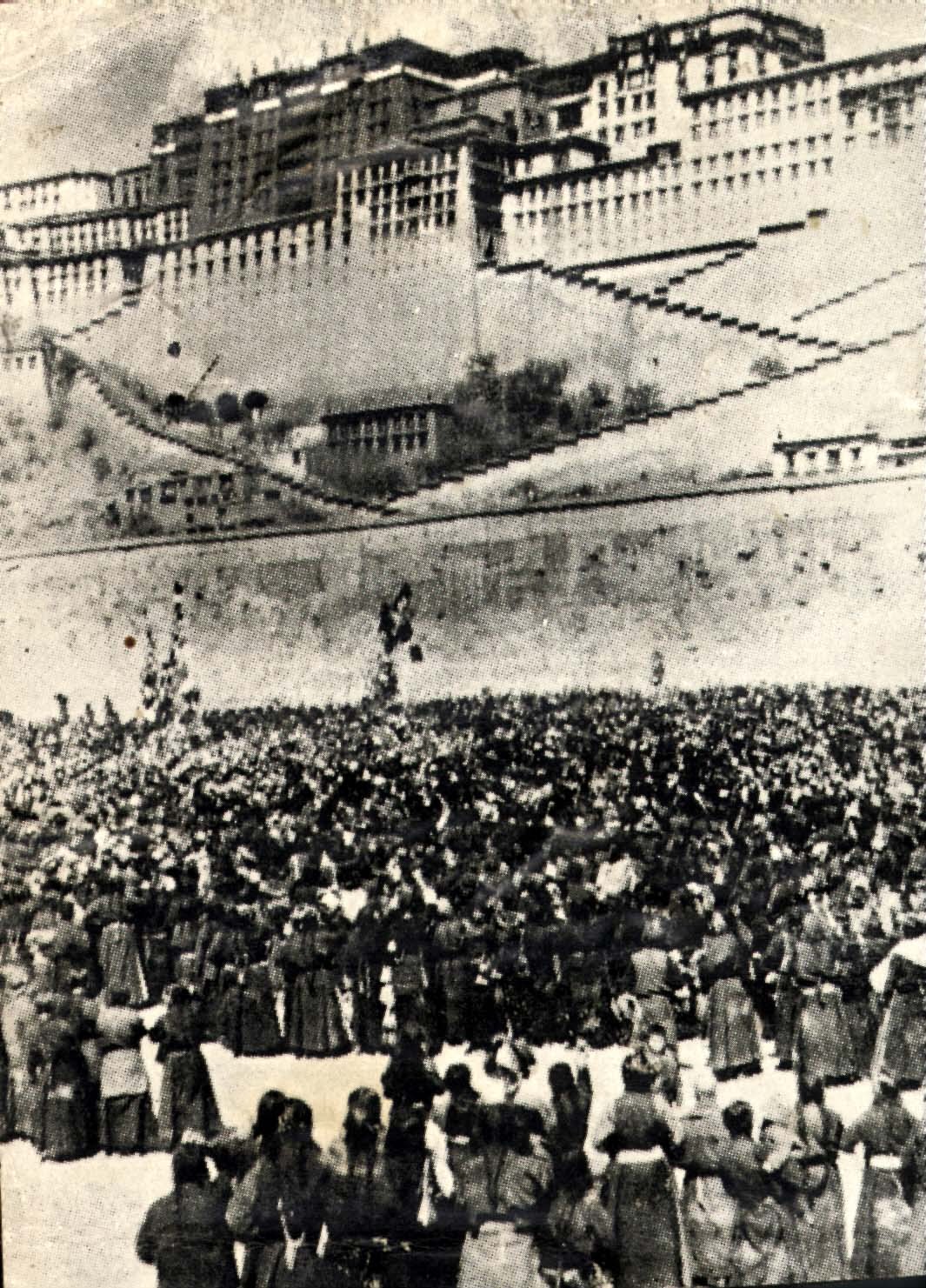







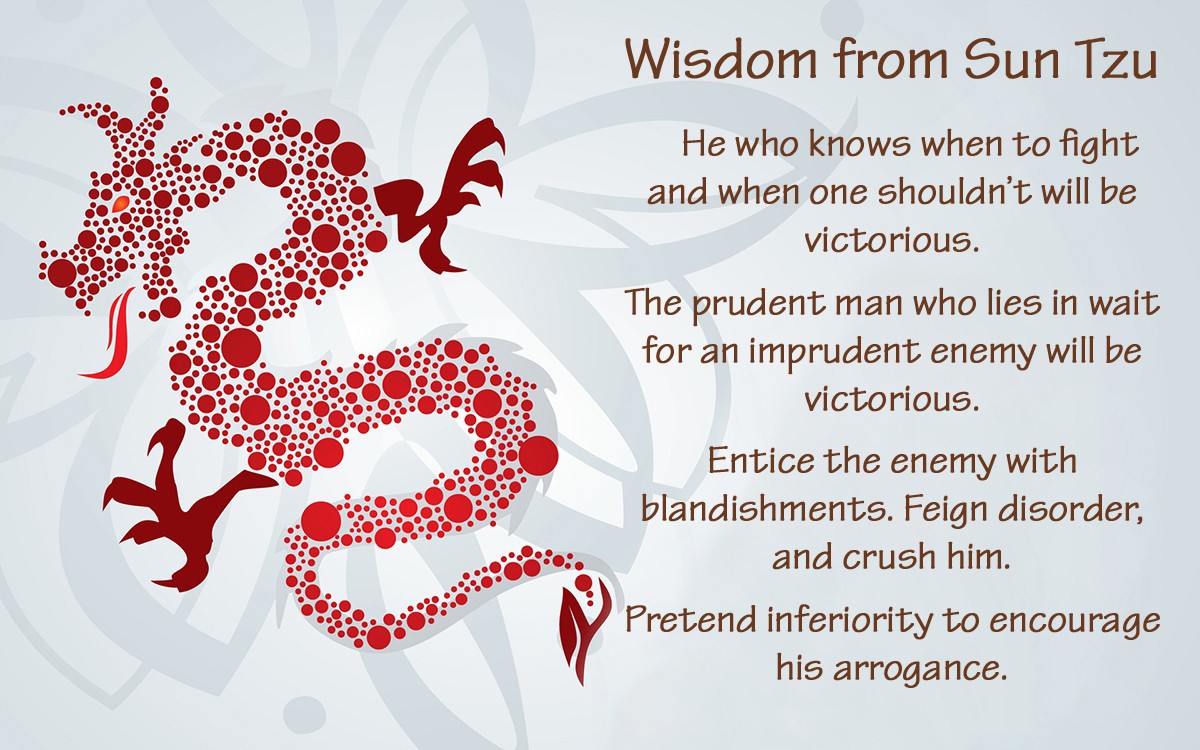





 Whole Dude - Whole Concept