RED DRAGON – RED CHINA – OCCUPIER OF TIBET

RED DRAGON – RED CHINA – OCCUPIER OF TIBET

RED DRAGON - RED CHINA - OCCUPIER OF TIBET: ARCHAEOLOGICAL FINDINGS SUGGEST THAT PEOPLE OF ANCIENT TIBET HAD FACED THREATS OF FOREIGN CONQUESTS.
RED DRAGON – RED CHINA – OCCUPIER OF TIBET: ARCHAEOLOGICAL FINDINGS SUGGEST THAT PEOPLE OF ANCIENT TIBET HAD FACED THREATS OF FOREIGN CONQUESTS.

Red China took possession of Tibet or seized Tibet using her superior military power. Red China told a lie when she claimed about peaceful liberation of Tibet by People’s Liberation Army. Red China is an occupying force that faces eviction from Tibet when Peace, Freedom, and Justice will prevail again. It is interesting to note that people of ancient Tibet had faced similar threats from external aggressors.

Rudranarasimham Rebbapragada
Ann Arbor, MI 48104-4162, USA
SPECIALFRONTIERFORCE.ESTABLISHMENT22

 
  image          
The Spirits of Special Frontier ForceAt Special Frontier Force, I host ‘The Living Tibetan Spirits’ to promote Tibet Awareness. I…
 
View on www.facebook.com Preview by Yahoo


Popular Archaeology


Archaeologist explores the first civilization of ancient Tibet

Mon, Aug 10, 2015

Vestiges of a once flourishing prehistoric civilization dot the landscape of Upper Tibet.

Archaeologist explores the first civilization of ancient Tibet
For more than two decades, University of Virginia Tibet Center archaeologist and historian John Vincent Bellezza has been exploring highland central Asia, going places where few archaeologists and explorers have ventured. Since 1992, he has investigated and documented scores of monumental sites, rock art, castles, temples, residential structures, and other features on the desolate reaches of the TIBETAN PLATEAU, building a knowledge base on a vast archaic civilization and ancient religion that flourished long before Buddhism emerged and dominated this otherwise comparatively sparsely populated high altitude region.

“Commonly, when people think of Tibet, Buddhism comes to mind,” writes Bellezza in his newest book, THE DAWN OF TIBET. By this he also implies the better-known and popular images of the imposing, sky-high, mountaintop monumental wonders of Buddhist centers such as Lhasa. But, he continues, “before Buddhism was introduced, a different type of civilization reigned in Tibet, one with monuments, art, and ideas alien to those of more recent times……….Demarcated through an enormous network of citadels and burial centers spanning one thousand miles from east to west, it would endure for some fifteen hundred years.”*

Bellezza is describing an archaic civilization known as ZHANG ZHUNG, which flourished from about 500 BC to 625 AD and encompassed most of the western and northwestern regions of the Tibetan Plateau. Mastering an ancient technology base not normally attributed to people of this region in the popular perception, the people of Iron Age Zhang Zhung, according to Bellezza, built citadels, elite stone-corbelled residential structures, temples, necropolises featuring stone pillars, sported metal armaments and a strong equestrian culture, established links with other cultures across Eurasia, and exhibited a relatively uniform and standardized cultural tradition rich in ritualistic religious practice, where kings and priests dominated the highest rungs of power. These are all characteristics of stratified, centralized and developed societies most often associated with the more southerly, lower-altitude great Old World Bronze and Iron Age civilizations that ringed the Mediterranean as well as the advanced civilizations of Mesoamerica and South America. The supporting findings on the landscape, when considered across two decades of investigation, have been nothing less than prolific.
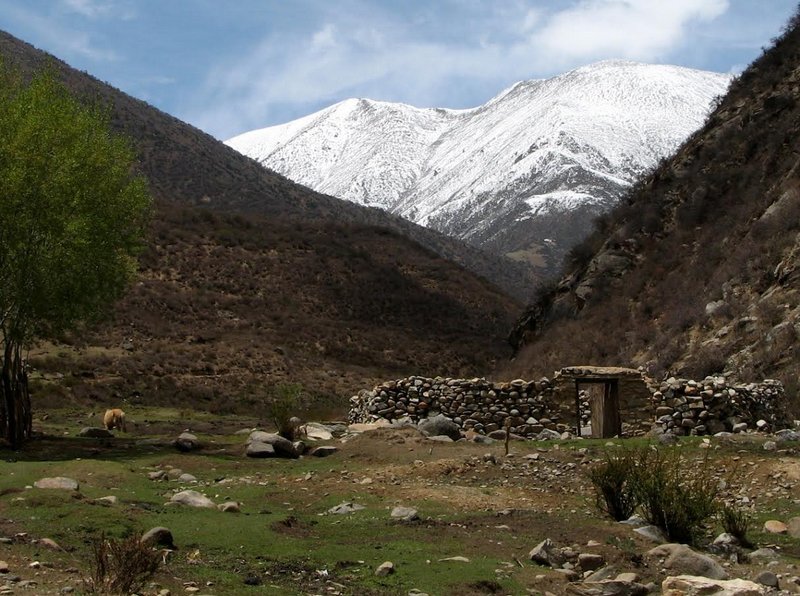
tibetmckaysavage1

The Tibetan Plateau features ancient stone structures, many of which date back to the First Millennium B.C. McKay Savage, Wikimedia Commons

But this archaeological evidence, according to Bellezza, also opened a window on a civilization that heavily fortified itself from threats both within and without. The struggle for resources in a land where climate gradually changed over preceding millennia from one that was relatively warmer and moist to one that was cold and dry may have played a significant role in this. Competing external and internal forces may have played another. “Most archaic era residential facilities in Upper Tibet were built on unassailable high ground, on inaccessible islands, or in hidden spots, “ writes Bellezza. “This insularity indicates that defense was a preoccupation of the population. Eternal Bon historical sources speak of the martial character of Zhang Zhung society and its political nexus of kings and priests.” Even the priests were depicted in the literature as possessing arms. On the other hand, notes Bellezza, “these literary accounts also hold that the ancient priesthood was very adept in the practice of astrology, divination, magic, and medicine.”*

With much still awaiting discovery and study, Bellezza continues to explore and analyze the massive trove of data he has already compiled on this ancient people. In time, he and other researchers hope, by merging references in the literary sources with the accumulating new archaeological evidence, a sharper focus on an otherwise obscure and ill-understood civilization will emerge.
dawnoftibetpic

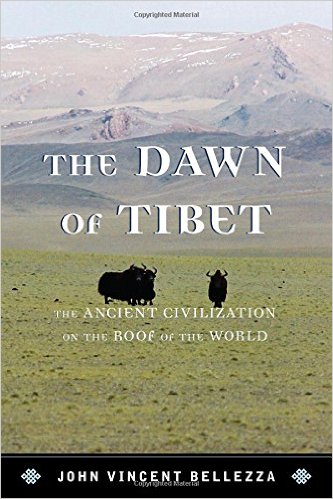
Readers can learn more about Zhang Zhung in Belezza’s book, THE DAWN OF TIBET, and in an upcoming article about Zhang Zhung authored by Bellezza in the Fall issue of Popular Archaeology Magazine.

Copyright © 2015POPULAR ARCHAEOLOGY


RED DRAGON – RED CHINA’S AGGRESSION IN WEST PHILIPPINE SEA

RED CHINA’S AGGRESSION IN WEST PHILIPPINE SEA

RED DRAGON - RED CHINA - AGGRESSION IN WEST PHILIPPINE SEA. AGGRESSOR MUST BE QUARANTINED.
RED DRAGON – RED CHINA – AGGRESSION IN WEST PHILIPPINE SEA. AGGRESSOR MUST BE QUARANTINED.

At Special Frontier Force, the fact of Red China’s aggression in Tibet is recognized since 1950. Now, Red China’s aggression in West Philippine Sea is attracting media attention unlike Red China’s prolonged military occupation of Tibet. Aggressor nation must be quarantined by placing diplomatic and economic sanctions. Aggression has to be treated like a disease and aggressor has to be isolated from rest of the global community for aggression poses dangers to peaceful existence of all people.

Rudranarasimham Rebbapragada
Ann Arbor, MI 48104-4162, USA
The Spirits of Special Frontier Force

 
  image          
The Spirits of Special Frontier ForceAt Special Frontier Force, I host ‘The Living Tibetan Spirits’ to promote Tibet Awareness. I…
 
View on www.facebook.com Preview by Yahoo


DIGITAL JOURNAL

Protesters condemn China’s aggression in West Philippine Sea 


RED DRAGON - RED CHINA - AGGRESSION IN WEST PHILIPPINE SEA : PROTEST ON JULY 25, 2015. RAFAEL ALUNAN WITH MARTIN DINO BELLE ENRIQUEZ AND DANTE JIMENEZ.
RED DRAGON – RED CHINA – AGGRESSION IN WEST PHILIPPINE SEA : PROTEST ON JULY 25, 2015. RAFAEL ALUNAN WITH MARTIN DINO BELLE ENRIQUEZ AND DANTE JIMENEZ.

By LEO REYES Jul 25, 2015


The West Philippine Sea Coalition has condemned China’s aggression in the West Philippine Sea in a protest rally held along Roxas Boulevard (fronting the West Philippine Sea) in Manila Saturday morning.

Belle Enriquez of West Philippine Sea Coalition

Belle Enriquez of West Philippine Sea Coalition
FB

The coalition members include the Volunteers Against Crime and Corruption (VACC), RAM, Anti-Drugs Advocate, Guardians, Motorcycle Philippines Federation, United Defense Manufacturing Corp., ProGun, SMX Phils and Predator Riders, among others.
The event was the 3rd Annual Day of Protest against China’s bullying in the West Philippine Sea. Simultaneous protests have also been held in London, United States and other cities across the globe.
Anti-China Rally Manila July 25 2015

Anti-China Rally, Manila July 25, 2015
FB

Among others, the West Philippine Sea Coalition cited China’s territorial aggression when it reclaimed (and continues reclaim) reefs, shoals, islets, and other submerged rocks and corals for their exclusive use despite diplomatic intervention by the US, Japan and other ASEAN-member countries.
On the environmental front, the coalition scored China for the massive destruction of the coral reefs in the disputed territories as a result of its ongoing reclamation and construction activities.
The coalition also cited China’s invasion of the Scarborough Shoal, a rich fishing ground located within the 200-mile economic zone of the Philippines.
China’s continued presence in what the Philippines claims as part of its territory had prevented hundreds of Filipino fishermen from traversing the rich fishing ground resulting in their family’s economic displacement.
The coalition lambasted China for being a top source of illegal drugs that continues to be smuggled into the Philippines by Chinese drug lords.
In their short talk during the rally, Top VACC officials Dante Jimenez and Martin Dino together with Anti-Drugs Advocate Jonathan Morales criticized China for having destroyed lives of hundreds of thousands of drug addiction victims in the country.

Former DILG Sec. Rafael Alunan with Nick SoteloFormer DILG Sec. Rafael Alunan with Nick Sotelo
FB

Alunan and leaders of the coalition called on the public to support the case pending before the UN Arbitral Tribunal by educating the people on the merits of the case. At the same time, they also urged the public to call on the nation’s leaders to fast track the development of a credible external defense capability.
Rep. Roilo Golez, who is supporting the coalition has called on the public to boycott made in China products especially garments and buy products that are made in the Philippines.

In London, Gene Alcantara, a longtime immigration adviser and social activist together with concerned Filipinos in UK joined the global protest with their placards denouncing the Chinese aggression at the Chinese Embassy despite heavy rain. Similar protest was also held in Ireland by the Filipino communities there
Gene Alcantara with friends at the Chinese Embassy in London

Gene Alcantara with friends at the Chinese Embassy in London
Gene Alcantara FB

Filipino communities across the US have also participated in the Anti-China protest like the one shown here from the Filipino group in Guam and the Marianas.
Anti-China protest in Guam July 25 2015

Anti-China protest in Guam, July 25, 2015
Gene Alcantara-FB-Pacific News Center

The leaders of the West Philippine Sea Coalition have vowed to continue heightened protests against China’s aggression in the disputed territories through legal and peaceful means.
As part of its campaign to educate the public on the country’s territorial claim, West Philippine Sea Coalition’s Belle Enriquez told Digital Journal that another forum will be held in late August to allow the public to view an ancient map showing the extent of the Philippine coastline.

Red Dragon - Red China aggressor nation - United Nations must act to stop China's Aggression in Southeast Asia.
Red Dragon – Red China aggressor nation – United Nations must act to stop China’s Aggression in Southeast Asia.