If men are from Mars and women are from Venus, the exchange of words, the battle of words, the Whole Argument could escalate into open warfare.
THE WHOLE ARGUMENT – THE BATTLE OF WORDS :
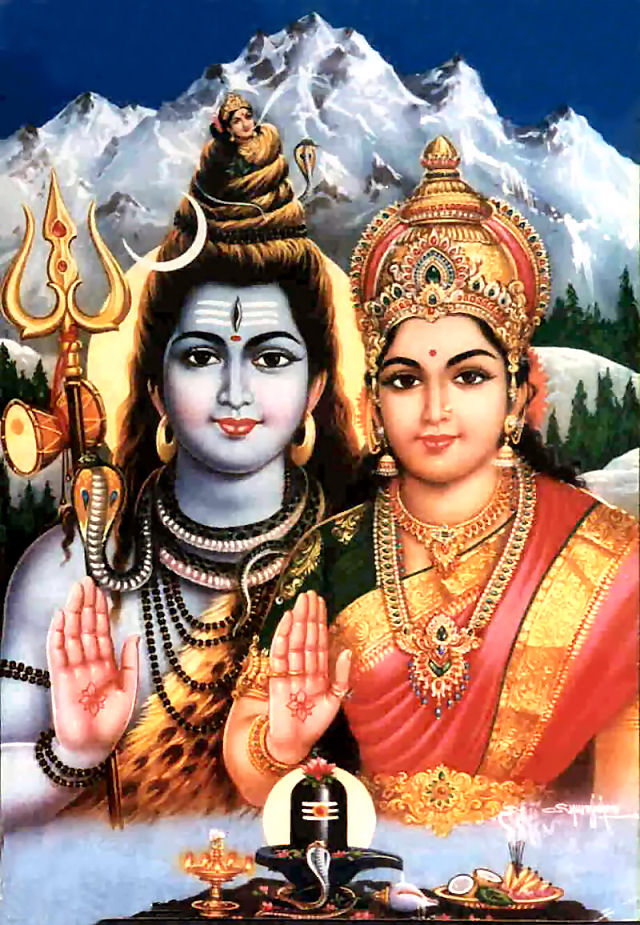
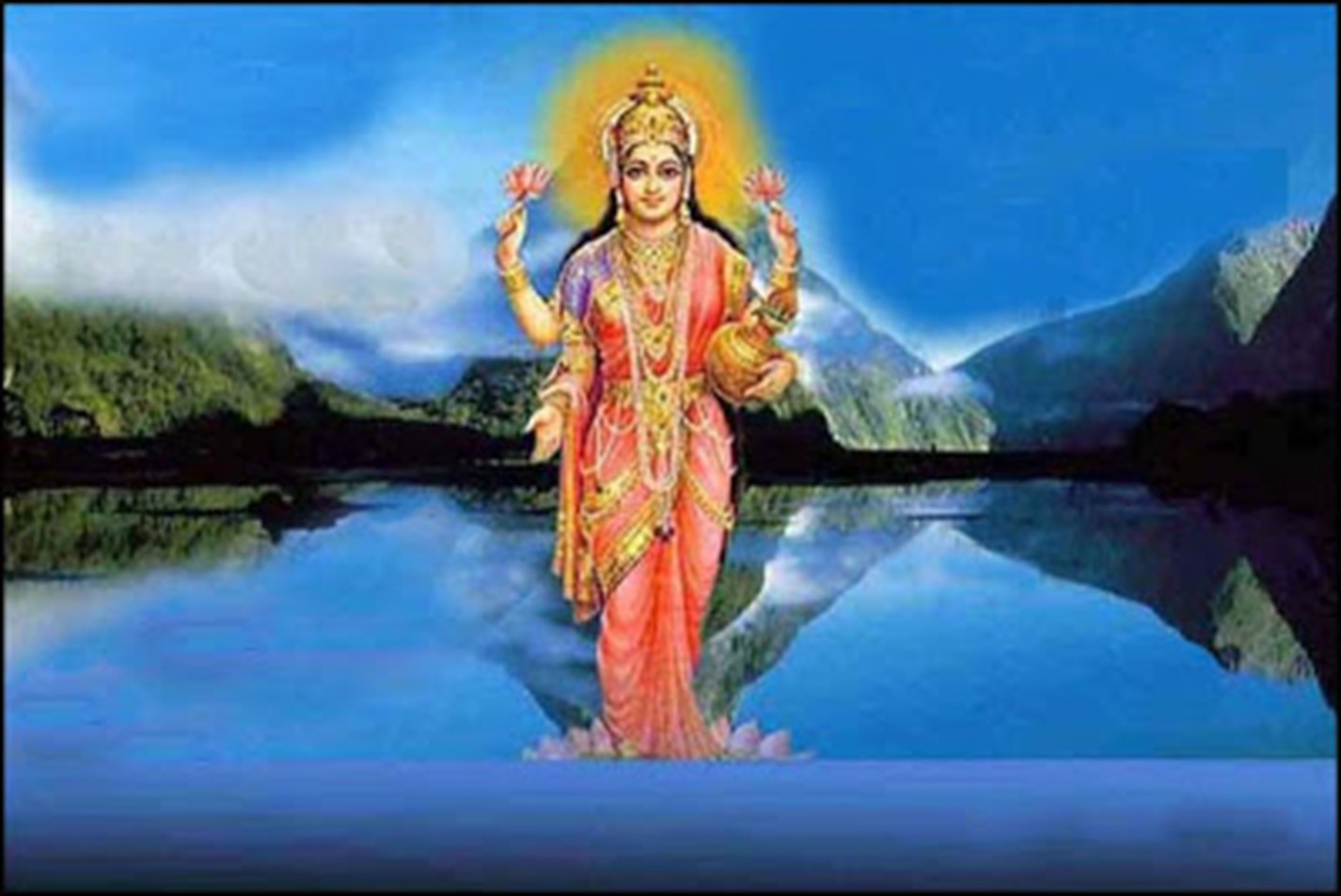
If men are from Mars and women are from Venus, the exchange of words, the battle of words, the Whole Argument could escalate into open warfare. Women while initiating conversation with men begin in the mode of interrogation. Women tend to open up with a sharp question. Some questions that are often asked are; Who are you?, What have you been doing?, Where have you been?, and What else? When questioned by a female partner, men tend to give straight, and short answers. Women never get impressed by brief and matter of fact statements. While men try to use a specific word to project a specific image associated with that word, women are adept in interpreting that word using an alternate image. Women’s zeal to prolong the conversation is often motivated by a desire to probe the man further. When the grilling begins, man relents, starts using words of endearment with his responses to defuse the situation and to take cover. Once the Battle of Words begins, women tend to remain focussed on the battle as long as they have the ammunition. Women ignore all words of endearment used by the men as they view it as a distraction and fear that they may not be able to accomplish their mission of winning the Battle of Words. The inhabitants of Venus would not stop until a total victory is firmly grasped. Man, specially the Most Auspicious One, not only is willing to accept a defeat but also lovingly chooses to get killed in the duel of words. Getting killed is Divine when the Battle of Words involves your female life partner.
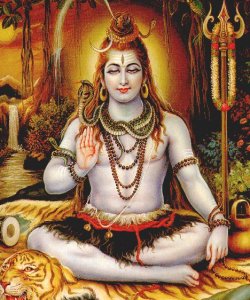
Shiva : Shuuli = The one with “TRIDENT”, the bearer of a Spear.
Parvati : Mrugaya bhishajam = ( Go and ) Find medicine.
Parvati pays no attention to the tradition that allows men to identify themselves by the personal weapon they carry. Lord Vishnu is often identified as “CHAKRI” for He uses “Sudarsan Chakra” as His personal weapon. People who worship Lord Shiva recognize Him as the bearer of “TRI SHUULA” or “TRIDENT”, a Spear. Parvati ignores the image attached to the word “Shuuli” and uses an alternate meaning attached to the word “Shuuli”. The word “Shuula” is a disease entity which is characterized by stomach ache. She interpreted “Shuuli” as a person with a disease entity called “Shuula” and hence She very mockingly suggested to Lord Shiva to go and find some medicine for His stomach ache.
Shiva : Priye + Aham + Neela KantaH = My Most Beloved, I am the One with Dark Blue Neck.
Lord Shiva ignored Parvati’s mocking suggestion to find medicine, and very politely responds with the word “Neela KantaH” which is often used to describe Him. As per the legend, Lord Shiva had protected the world from being consumed by a dangerous poisonous gas called “Haala Hala” and had safely retained it in His throat and the deadly poison had imparted a dark blue color to His throat and contributed to His name and He is very popularly known as “Neela KantaH”.
“Neela KantaH” or Pavo cristatus, family Phasianidae, a large pheasant with a metallic blue-green body; the male is celebrated for its beauty and is endowed with strong “CROWING” voice.
Parvati : Kekaam + Yekaam + Kuru = ( You ) Shout loudly ( with Your “CROWING” voice ) once.
Parvati not only avoided identifying Lord Shiva as “Neela KantaH” but also She had challenged Him to give a demonstration of His voice. Birds are very often identified in nature by their unique bird calls or songs. The Indian Blue peacock utters a long mournful scream . Parvati is unwilling to look at Lord Shiva’s throat and identify Him as “Neela KantaH” and She would rather prefer to identify Him by the quality of the sound that comes from His throat.
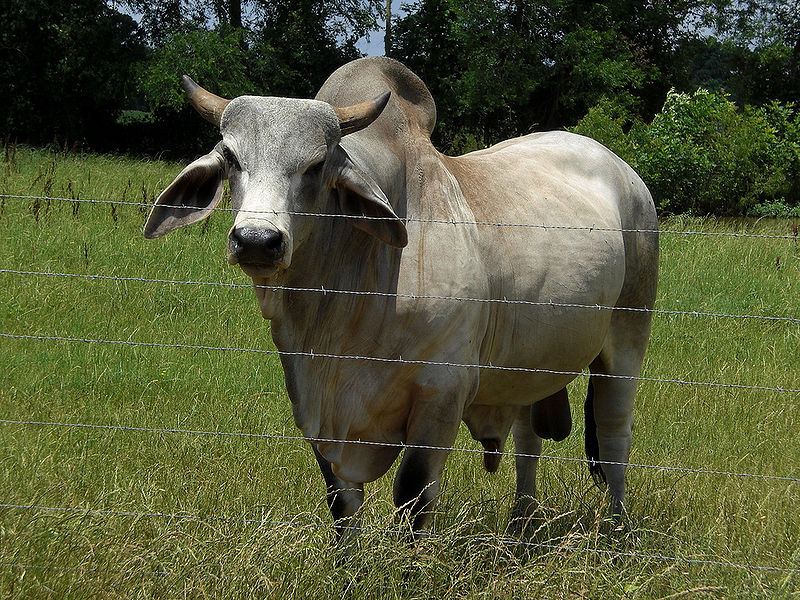
PASUPATI, BULL – Bos indicus, Zebu, the Brahman Bull; family Bovidae.
Shiva : PasupatiH = The Lord of all four legged creatures; the Lord of all living entities.
Lord Shiva is not provoked by Parvati’s suggestion to give a demonstration of His voice by giving a loud call. He very politely gives Her a different answer and identified Himself as the Lord of all creatures and He rides a Bull known as “Nandi”.
Parvati : Naiva + drushtey + vishaaney = ( I am ) Not able to see the Horns.
Parvati made a literal interpretation of the word “Pasupati” which means a bull and responded to Lord Shiva with a bit of sarcasm and had commented that She is not able to find the Horns which could be a very characteristic feature of a bull.
Shiva : O’ + Mughdhey + Sthaanuur = O’ Sweet faced One, I am “Immovable”.
Lord Shiva is very patient, did not argue about the meaning of the word “Pasupati”, and tactfully changes the subject and speaks of His Personal Quality with which people identify Him. He is famously known for His Steadfastness and the word “Sthanuu” signifies this personality trait and character. He also demonstrates no signs of irritation in His manner of speech and He very carefully chooses His words and responds to Parvati with a compliment about Her beautiful face which is full of charm and youthful exuberance.
Ficus religiosa or the Bodhi Tree is often worshipped in India. The tree is also described as “Sthaanuu” which means immovable.
Parvati : Na + vadati + taruH = A ‘tree’ cannot speak!!! ( How could a ‘tree’ talk??? )
Parvati shows no interest in evaluating Lord Shiva’s character and steadfastness and interpreted the word “Sthaanuu” in a very simple manner and further commented that if the description of “Sthaanuu” is correct; She would not expect to hear any words as trees are not endowed with the power of speech.
Shiva : Jeeviteysa + ShivaayaaH = ( I am ) Life Partner of Parvati.
Lord Shiva uses His final and ultimate weapon in this Battle of Words. The word ” SHIVA” also describes “Parvati”. By claiming that He is the Life Partner of Parvati, Lord Shiva intended to charm Her with His words and yet the same time give an appropriate response to Her question of “KASTVAM” with which She has initiated this Battle of Words.
Parvati : Gachha + Atavyaam = Run to the forest.
The alternate meaning of the word “Shiva” is Jackal. Parvati who is fully focussed upon winning the Battle of Words is not in a mood to succumb to the magic of Lord Shiva’s endearing words. Parvati amply demonstrates Her deftness in interpreting words as per the circumstances of the Battle. Jackals are very timid animals. They simply run away when they are challenged by voice. Parvati taunts Lord Shiva and tells Him to run to the forest for He has called Himself a Jackal by using the word “Shiva” to describe His Identity.
The humble and shy Indian Jackal is also described as “SHIVA”.
Iti Hatha Vachah paatu va Chandra ChuudaH = The Lord whose hairlocks are adorned by the Crescent shaped Moon, who is thus killed in the Battle of Words may protect me.
Lord Shiva- Shuuli, Neela kantaH, Pasupati, Sthaanuu, Chandra ChuudaH.
The Lord has chosen not to win the Battle of Words. Ordinary mortals should not even attempt to succeed in such a Battle of Words. Following the Lord’s example, man should choose to get killed in a Battle of Words and grant victory to the inhabitants of the planet of Venus. To concede defeat makes the argument, a Whole Argument.
Dr. R. Rudra Narasimham,
Kurnool Medical College, Kurnool, Andhra Pradesh, India,
Whole Dude – Whole Destiny. Apart from the man, the Land has its own DestinyWhole Dude – Whole Destiny. Apart from man, the Land has its own Destiny.
The Land of India or BharataVarsha is identified as KARMA KSHETRA or KARMA BHUMI and is often personified as Bharat Mata or Mother India.
The Sanskrit word Karma describes the totality of a person’s actions in any one of the successive states of that person’s existence. The Law of Karma governs all action and its inevitable consequences on the doer. Because of this deep-rooted belief in the inevitability of consequences on the doer, the Land of Bharat or India is identified as Karma Kshetra or Karma Bhumi.
Whole Dude – Whole Destiny. Apart from the man, the Land has its own Destiny.Whole Dude – Whole Destiny. Apart from man, the Land has its own Destiny.Whole Dude – Whole Destiny. Apart from man, the Land has its own Destiny.
The concept of action or Karma is also applied to the actions performed by Mother Nature and the Indian tradition often attaches the names of human personalities to reflect upon their actions. The most important being the long journey of about 3,700 miles performed by the Indian Landmass about 40 to 50 million years ago leading to the formation of Himalaya Mountains from where several rivers flow down India providing sustenance to the denizens of India.
Whole Dude – Whole Destiny. Apart from man, Mother India, Bharat Mata has her own Destiny.
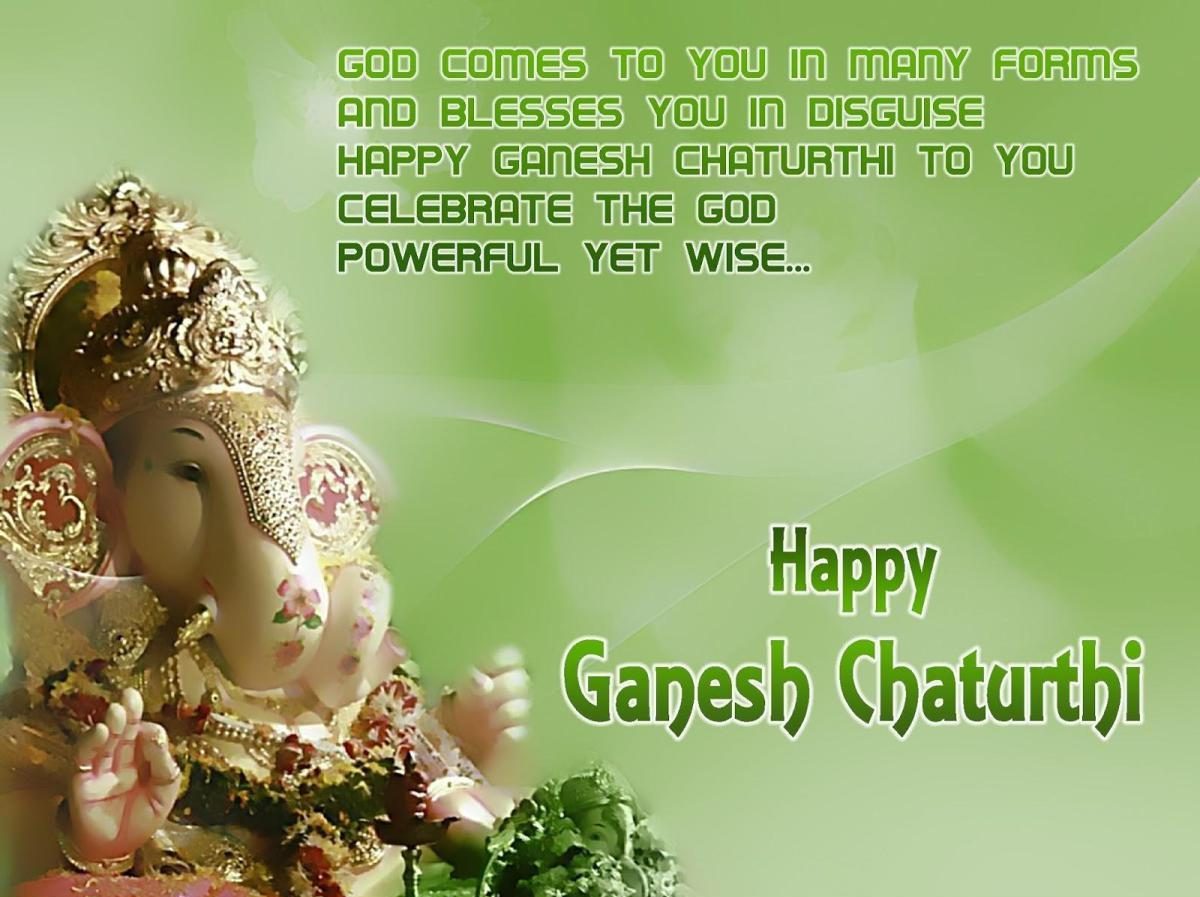
A Prayer to Lord Ganesha in the performance of all human actions that intend to promote the well-being of the performer or help in promoting the well-being of all others. It is very important to note that the Prayer exclusively intends to promote well-being and cannot be used to perform actions that intend to harm or injure others
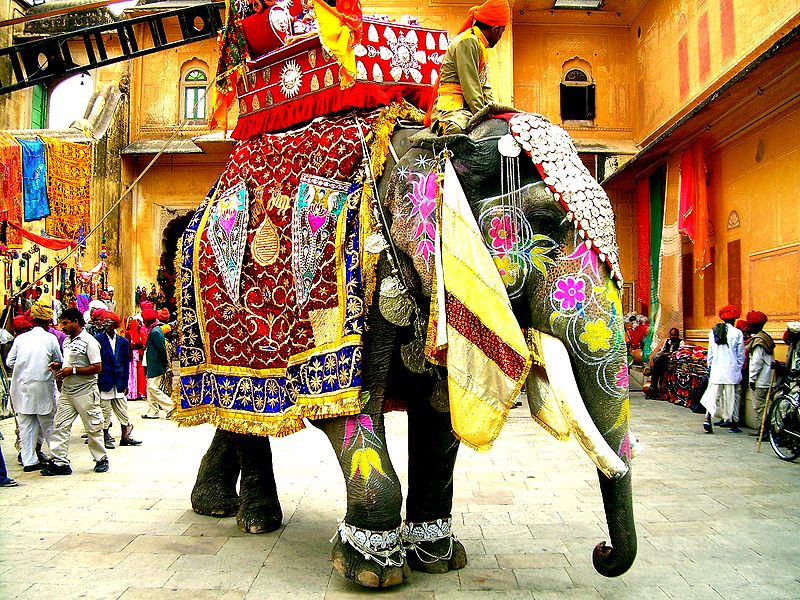
Decorated Indian elephant. The Zoomorphic form of Lord Ganesha is derived from the face of Asiatic/Indian Elephant. It provides a very interesting concept about finding Peace, Harmony, and Tranquility in the performance of human actions by simply meditating upon this face which gives the mental composure and removes obstacles in performing actions. Photo Credit:Faraz Usmani, Said&Done’s Photostream. http://www.flickr.com/photos/faraz27989/315075930/
Whole Humility: The celebration of Ganesh Chaturthi. A Prayer to Lord Ganesha for Success through Obedience and Humility.A Prayer to Lord Ganesha in the performance of all human actions that intend to promote the well-being of the performer or help in promoting the well-being of all others. It is very important to note that the Prayer exclusively intends to promote well-being and cannot be used to perform actions that intend to harm or injure others.
Sri Vakra Tunda Mahaa kaaya,
Koti Surya Sama Prabhaa,
Nir vighnam Kuru me Deva,
Subha karyeshu Sarvada.
I seek the blessings of Lord Ganesha in all of my actions that intend to promote my well-being or help in promoting the well-being of others.
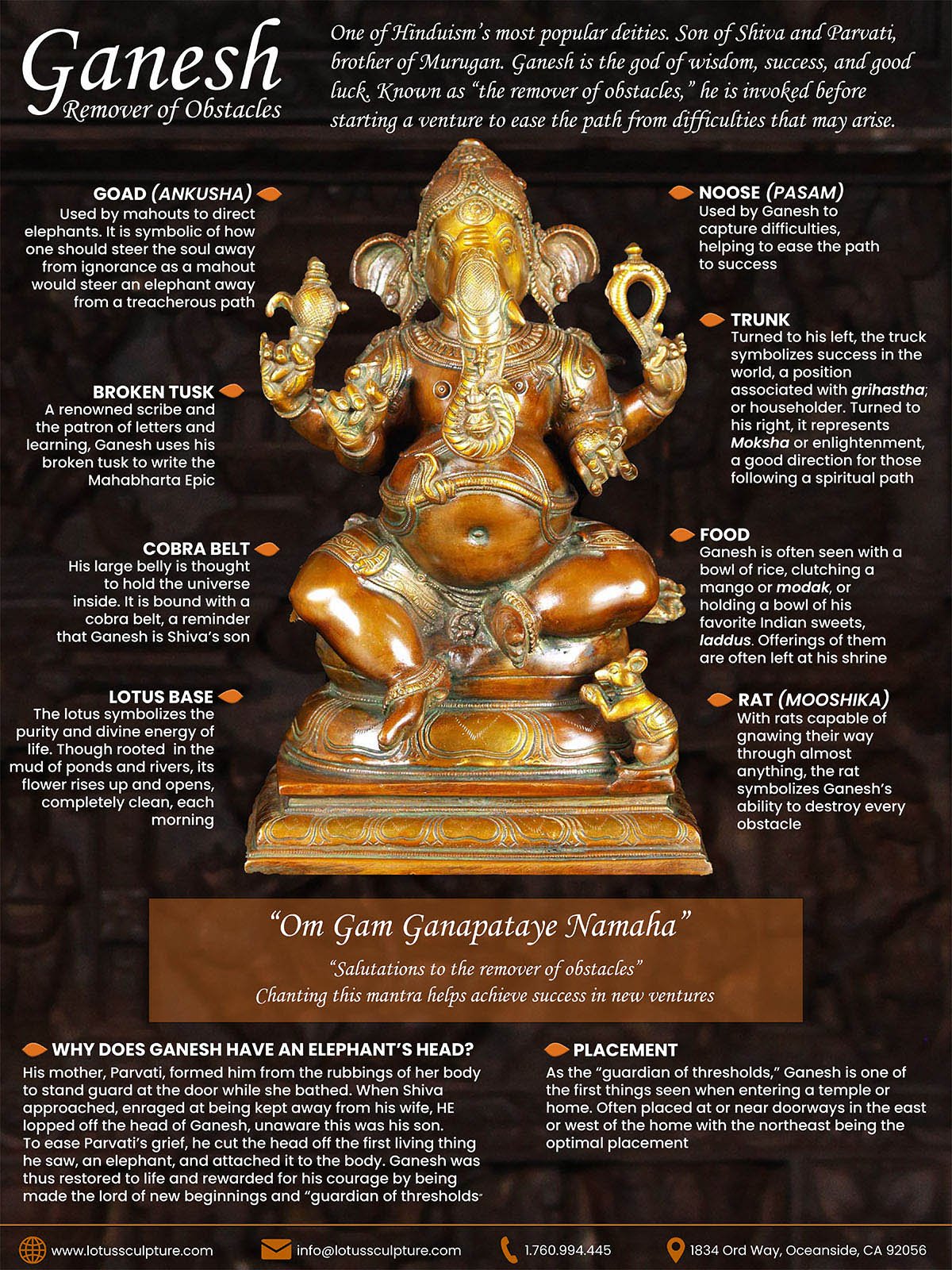
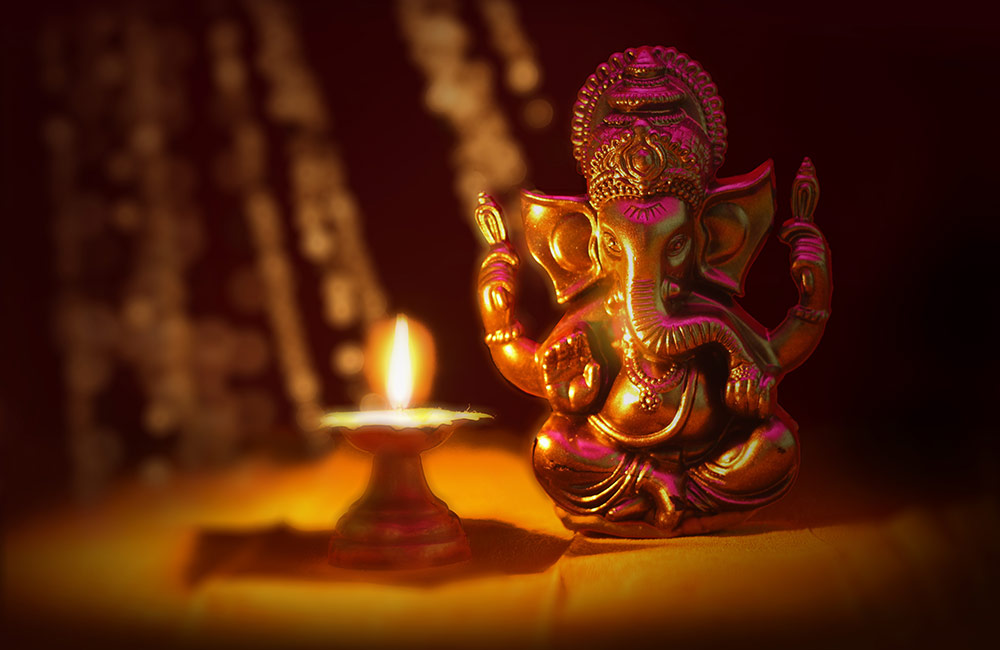
While reflecting upon Lord Ganesha it is important to understand the ‘zoomorphic’ form represented in Indian Culture. He is popularly known as the God with Elephant’s head. There are two species of elephants. Elephas maximus is native to India and Southeastern Asia. Loxodonta africana, the second elephant species is known as the African elephant. The ears of the Indian elephant are considerably smaller than those of the African elephant which has large ears with a flatter head.Indian elephants are extensively used as ceremonial animals and are also widely drafted for a variety of purposes. African elephant is never used as a ceremonial animal and used as a draft animal to a very small extent. Lord Ganesha cannot be portrayed with the head of an African elephant. He cannot be depicted with two tusks. He has one tusk and it could only resemble the tusk of an Indian elephant. The long, flexible snout known as ‘trunk’ of Ganesha must always show a bend in its curvature and is never depicted straight and hence the hymn identifies Him as “Vakra Tunda.” Some European artists who had no clue about the differences between the two elephant species had depicted Lord Ganesha with the head of an African elephant. The Lord is connected to the Land of India and only the Indian elephant has the honor to represent His zoomorphic form.
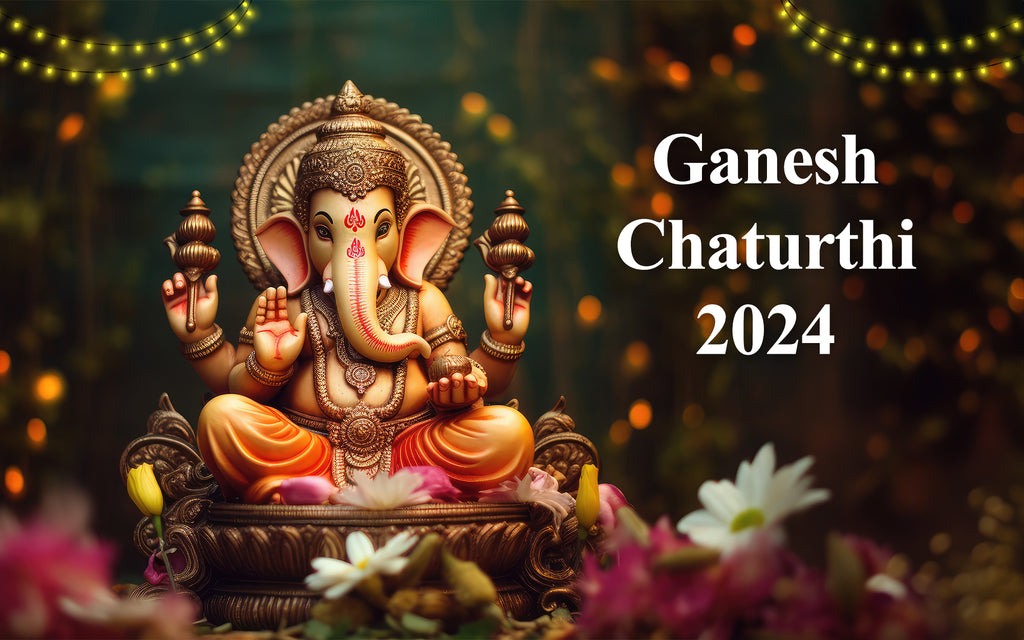
Bharat Darshan: Saturday, September 07, 2024, The celebration of Ganesh Chaturthi
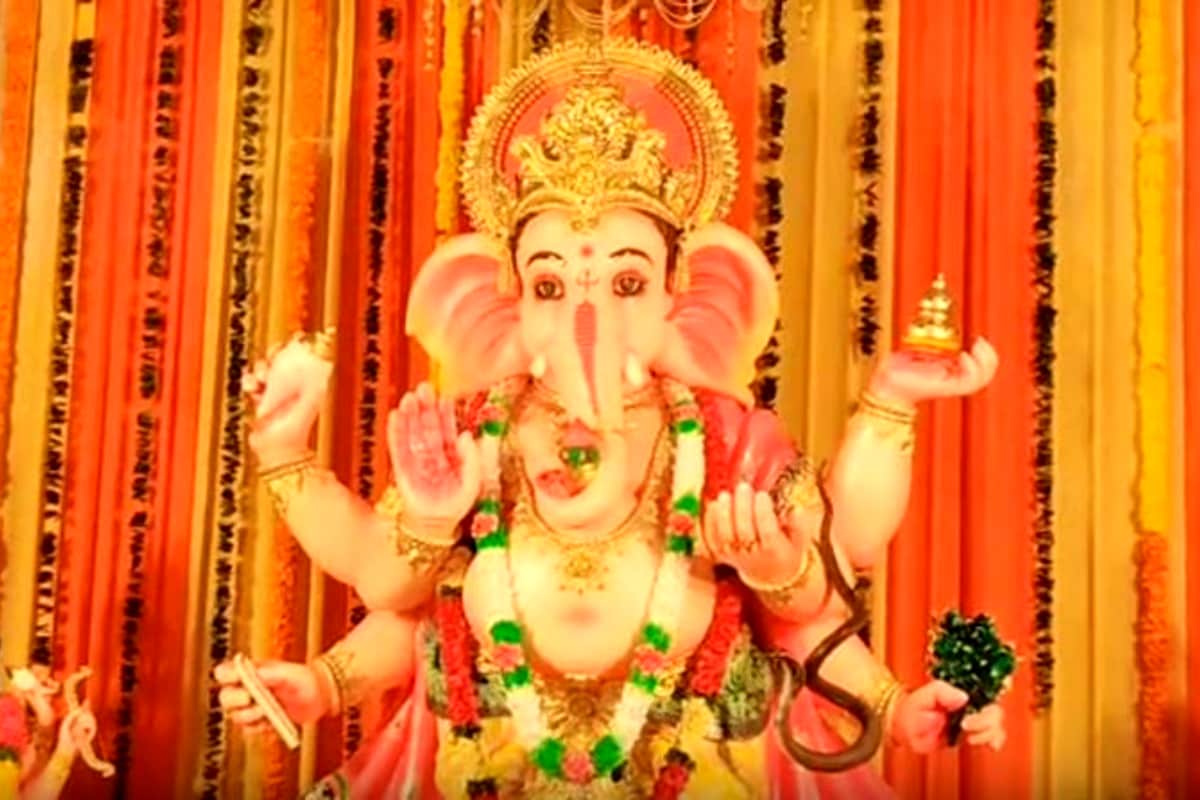
Bharat Darshan: Saturday, September 07, 2024, The celebration of Ganesh Chaturthi. A Prayer to Lord Ganesha for Success through Obedience and Humility.
The annual festival of Ganesha Chaturthi marks the birth of Lord Ganesha, the son of Lord Shiva and Goddess Parvati. It involves 10 days of celebration and takes place in the Bhadrapada month (August-September), Shukla Paksha (the Waxing Phase of Moon), the fourth day or Chaturthi as per the Hindu calendar.
Bharat Darshan: Saturday, September 07, 2024, The celebration of Ganesh Chaturthi. A Prayer to Lord Ganesha for Success through Obedience and Humility.
A Prayer to Lord Ganesha for Success through Obedience and Humility
Whole Humility: The celebration of Ganesh Chaturthi. A Prayer to Lord Ganesha for Success through Obedience and Humility.Bharat Darshan: Saturday, September 07, 2024, The celebration of Ganesh Chaturthi. A Prayer to Lord Ganesha for Success through Obedience and Humility.Bharat Darshan. Saturday, September 07, 2024. The celebration of Ganesh Chaturthi on the fourth day of the Waxing Phase (Shukla Paksha) of Moon of the Month Bhadrapada (August-September)
The auspicious festival begins on Saturday, September 07. The festival inaugurates with people bringing or making clay idols (murtis) of the Lord, and concludes on the day of Anant Chaturdashi (Tuesday, September 17), when the idol is submerged in the nearest body of water, called Ganesha visarjan.
Lord Ganesha is one of the most worshiped deities among Indian Hindus. Also known as Vinayaka or Ganpati, the elephant God is revered as the God of beginnings and the remover of obstacles.
Whole Dude – Whole Humility: A Prayer to Lord Ganesha for Success with Humility.
Indian Cultural Traditions offer tools for Success in all dimensions of Life including health, education, employment, social status and social relationships. The formula for success is simple; perform all tasks making an estimate to take care of negative consequences or outcomes, and plan for roadblocks or obstacles in the planning stage of executing any action. Indians initiate actions seeking Blessings of Lord Ganesha for their desire for Success in Life should not be directed by intellectual pride or arrogant use of physical or material power.
Bharat Darshan: Saturday, September 07, 2024, The celebration of Ganesh Chaturthi. A Prayer to Lord Ganesha for Success through Obedience and Humility.Bharat Darshan: Saturday, September 07, 2024, The celebration of Ganesh Chaturthi. A Prayer to Lord Ganesha for Success through Obedience and Humility.Bharat Darshan: Saturday, September 07, 2024, The celebration of Ganesh Chaturthi. A Prayer to Lord Ganesha for Success through Obedience and Humility.Bharat Darshan: Saturday, September 07, 2024, The celebration of Ganesh Chaturthi. A Prayer to Lord Ganesha for Success through Obedience and Humility.Bharat Darshan: Saturday, September 07, 2024, The celebration of Ganesh Chaturthi. A Prayer to Lord Ganesha for Success through Obedience and Humility.Bharat Darshan: Saturday, September 07, 2024, The celebration of Ganesh Chaturthi. A Prayer to Lord Ganesha for Success through Obedience and Humility.Bharat Darshan: Saturday, September 07, 2024, The celebration of Ganesh Chaturthi. A Prayer to Lord Ganesha for Success through Obedience and Humility.Bharat Darshan: Saturday, September 07, 2024, The celebration of Ganesh Chaturthi. A Prayer to Lord Ganesha for Success through Obedience and Humility.
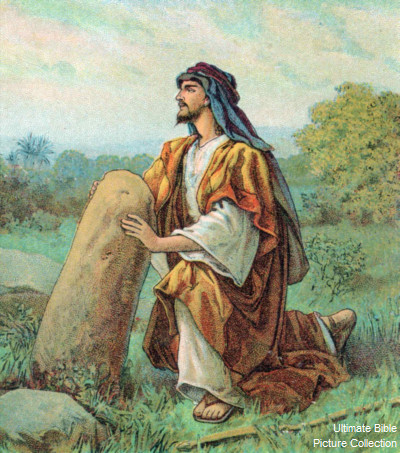
Whole House – A House for God of Israel: Jacob’s Pillow-Pillar Stone marks the site as BethEl, the House of God.
JACOB’S DREAM AT BETHEL
The story of Jacob is described in the Book of Genesis, the first Book of Old Testament. He was the son of Issac, the grandson of Abraham, and the twin brother of Esau.He was named Jacob as he came out with his hand grasping his older twin brother Esau’s heel (Genesis 25:26).
SPIRITUALITY SCIENCE – THE PROMISE OF GOOD OLD AGE: GOD’S PROMISE OF GOOD OLD AGE WAS MADE TO ABRAHAM. ISAAC, THE SON OF ABRAHAM DIED AT 180 YEARS AGE AND HAD LIVED FOR FIVE ADDITIONAL YEARS AS COMPARED TO HIS FATHER. IN THIS PAINTING, ISSAC WAS GIVING HIS BLESSINGS TO JACOB AND HE WAS DECEIVED FOR HE BECAME BLIND ON ACCOUNT OF THE NATURAL AGING PROCESS.
Jacob received his older brother’s blessing from his father and then flees to Laban in Haran to escape from his brother’s anger. His dream at Bethel is narrated in Genesis, chapter 28, verses 10-17 :
Whole House – A House for God of Israel: Jacob’s Dream at Bethel (Genesis 28: 10-17)
Jacob left Beersheba and set out for Haran. When he reached a certain place, he stopped for the night because the sun had set. Taking one of the stones there, he put it under his head and lay down to sleep. He had a dream in which he saw a stairway resting on the earth, with its top reaching to heaven, and the angels of God were ascending and descending on it. There above it stood the LORD, and He said: “I am the LORD, the God of your father Abraham and the God of Issac. I will give you and your descendants the land on which you are lying….” When Jacob awoke from his sleep, he thought, “Surely the LORD is in this place, and I was not aware of it.” He was afraid and said, “How awesome is this place! This is none other than the house of God; this is the gate of heaven.” Early the next morning Jacob took the stone he had placed under his head and set it up as a pillar and poured oil on top of it. He called the place Bethel, though the city used to be called Luz. He had further taken a vow stating that the stone he had set up as a pillar would be God’s house.
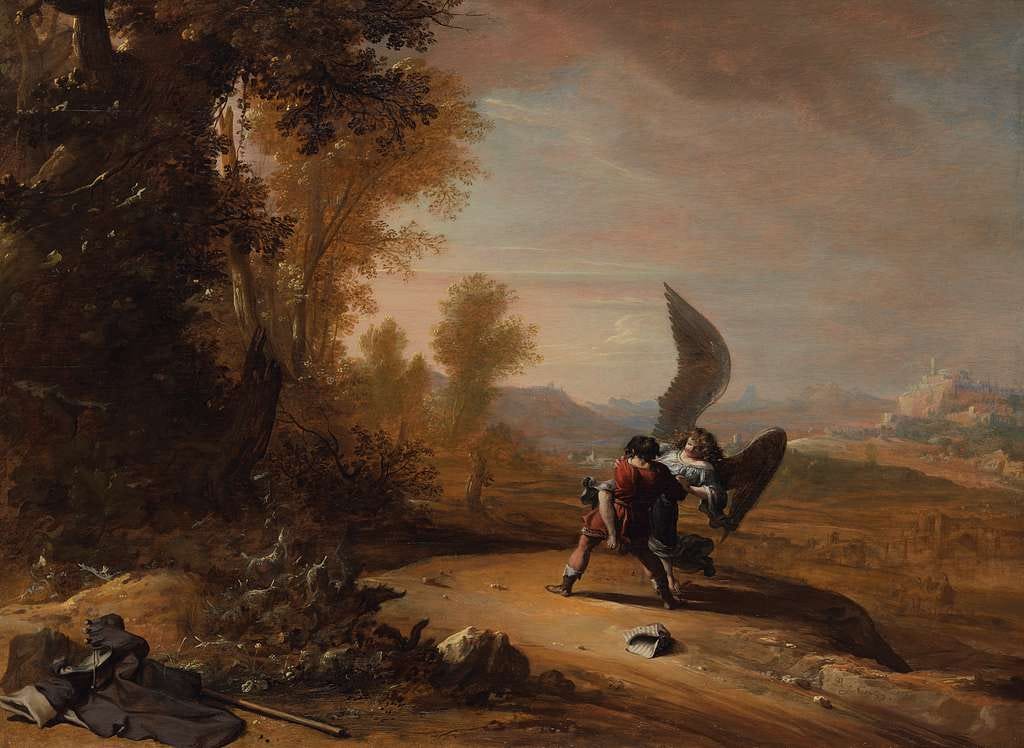
Whole House – A House of God of Israel: Jacob’s Spiritual Struggle at Jabbok (Genesis 32:22-30)
Jacob was the father of the founders of the twelve tribes of Israel. Jacob was given the name of Israel after he withstood a spiritual struggle at Jabbok (Genesis 32:22-30). Jacob had literally wrestled with God who came down in the form of a man. The name Israel is derived from the words ‘Sara’ meaning To Struggle, Wrestle, and ‘El’ meaning God. El is one short form of ‘Elohim’, the name used for God.
THE HOUSE OF GOD AT MOUNT MORIAH
Whole House – A House for God of Israel: God set up Laws for the Israelites mostly regarding holiness and worship. The Old Testament Book of Leviticus, Chapter 16, verse 34 :”This is to be a lasting ordinance for you; Atonement is to be made once a year for all the sins of the Israelites.” The Children of Jacob (the son of Issac, and grandson of Prophet Abraham) need a House for God of Israel.
In Judaism, Mount Moriah is also known as the ‘Temple Mount’, and is the most venerated as the holiest spot on Earth. After liberating Jews from a life of slavery in Egypt, at Mount Sinai, God enters into a ‘New Covenant’ and He had appeared in the form of fire before Moses and other elders.
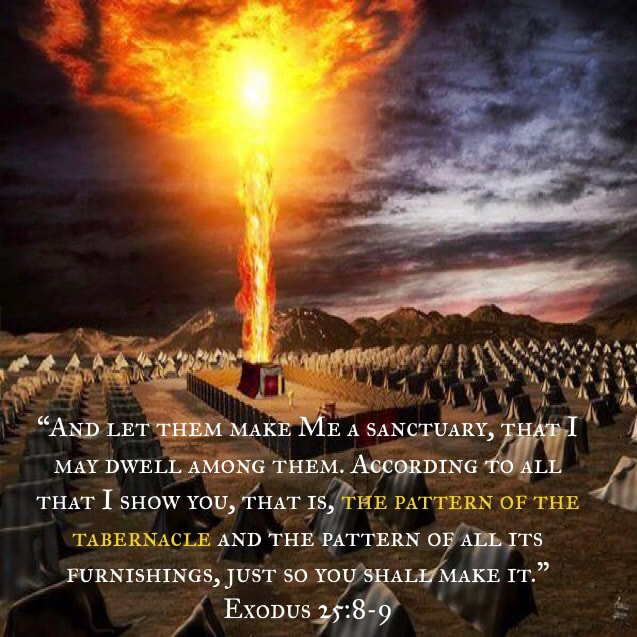
Whole House – A House for God of Israel: Make Me a Sanctuary, a Tabernacle, a House, a Temple.
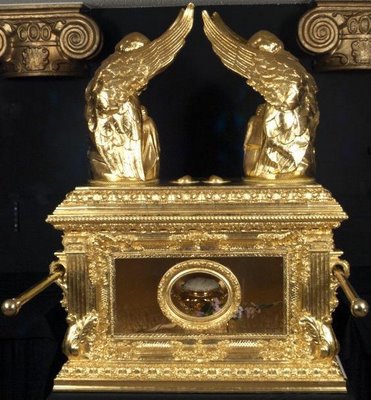
The Book of Exodus, Chapter 25, verses 8-9, God had asked the Jews: “Then have them make a sanctuary for me, and I will dwell among them. Make the Tabernacle and all its furnishings exactly like the pattern I will show you…” The Ark of the Covenant was where God manifested His presence on earth and the Ark went ahead of the Israelites wherever they traveled. The Ark was only housed in a tent for many long years and King David could only erect an altar for God (Book of 2 Samuel, chapter 24:25).
Whole House – A House for God of Israe: 1 Kings, Chapter 8, verse 13l
The opportunity to build a House for God in His Name was given to Solomon, the son of King David. Book of 1 Kings, Chapter 8, verse 13, Solomon declares: “I have indeed built a magnificent temple for you, a place for you to dwell forever.” The site selected by God for the establishment of the Holy Temple in His Name also is considered to be the spot where creation of world began, and Adam the first man was created here. Abraham brought his son Issac for sacrifice at this place. The Jewish tradition known as ‘Midrash’ also claimed that Jacob had a dream and had erected a monument and declared it as the House of Holy One. God had pushed that rock with His right foot and the rock had become the ‘Foundation Stone’, the ‘Corner Stone’, and is also known as the ‘Key Stone’ of Solomon’s First Temple. The Temple of God stands over a stone identified by Jacob as the ‘gate of heaven’. When Solomon dedicated this Temple to God in 957 B.C., God had entered His House in the form of a cloud.
GOD OF ISRAEL’S DWELLING PLACE
Whole House – A House for God of Israel
Psalm 115, song 2-3 says:
Why do the nations say,
“Where is their God?”
Our God is in heaven;
He does whatever pleases Him.
Whole House – A House for God of Israel: “I have indeed built a magnificent Temple for you to dwell forever.” The remnants of Second Temple stand mutely at a place known as Gate of Heaven. The children of Israel need a House for their God.
A PICTURE OF INDIA’S GRIEF OVER JIHADIST ATTACKS IN MUMBAI
TERROR ATTACKS ON INDIA :
Recent news reports are stating that the terror attacks on India have not seen its end and they are predicting the possibilities of more attacks similar to the Mumbai carnage on November 26, 2008. “India will continue to face a serious jihadist threat from Pakistan-based terrorist groups, and neither Indian nor U.S. policy is likely to reduce that threat in the near future”, said Angel Rabasa, lead author of the study and a senior Political Scientist with RAND, a non-profit think tank based in Santa Monica, California. According to RAND, the other extremist groups in Pakistan will find inspiration in the Mumbai attacks and there can be more attacks from groups with high body counts and symbolic targets.THE CONCEPT OF JIHAD :The term Jihad in Arabic means struggle and is often viewed as a religious duty. A person engaged in Jihad is called a ‘mujahid’, the plural is ‘mujahideen’. The Mumbai attackers identified themselves with the name of ‘Deccan Mujahideen’. The aim of Jihad includes the expansion and defense of the Islamic State and warfare against non-believers. Jihad ideology has historically inspired the conquest of non-Muslim population and the transformation of civil society which is viewed as corrupt, arrogant, and disobedient. The Holy Book of Quran, Surah 25, verse 52 states : “Therefore, do not obey the disbelievers, and strive against them with this, a great striving”. The objectives of armed warfare include uprooting unbelief and establishing supremacy of God, through Islam, in the world.”And fight them on until there is no tumult or oppression, and there prevail justice and faith in Allah altogether and everywhere.”
THE HISTORY OF JIHAD IN INDIA :
Sir Jadunath Sarkar, a historian, and former Vice-Chancellor of Calcutta University had contended that several Muslim invaders waged a systematic Jihad against Indians. Sultan Mahamud of Ghazna(present day Ghazni city,Afghanistan) conducted more than twenty Jihadist attacks on North India between 1001 and 1027. In particular the records kept by al-Utbi, Sultan Ghazni’s secretary in the ‘Tarikh-i-Yamini’ document several episodes of bloody campaigns. Persian historian Ferishta records that Sultan Ghazni wants to “root out the worship of idols from the face of all Hindustan(India)”. He looked upon the destruction of temples as an act of Jihad. Mahamud Ghazni specifically directed his campaigns to temple towns of Nagarkot, Thanesar(1011), Mathura(1018), Kannauj(1019), Kalinjar(1023), and Somnath(1024). He had also destroyed temples at Varanasi, Ujjain, Maheshwar, Jwalamukhi, and Dwaraka. Mahmud Ghazni was of Turkic origin but had patronized the use of New Persian language and gave employment to writers such as al-Biruni, and Ferdowsi who gave detailed descriptions of the enormous booty and idols brought back to Ghazni city. Asaru-L-Bilad, a 13 th century geographer also described in great detail the destruction of Somnath. Apart from his regular troops, Mahmud Ghazni had assistance from 30,000 volunteer horsemen who had participated in the Jihad. To resist the attack on Somnath, Ghogha Rana at the age of 90 sacrificed himself and his clan. There are no census documents but after an analysis of all historical documents, historian K.S.Lal had estimated that about 2 million people died during Sultan Ghazni’s attacks on Indian temple towns.Similarly, Sikandar Lodhi of Delhi earned the epithet of ‘But Shikan’- the destroyer of idols. Babur the founder of Mughal empire in India in 1527 ordered a JIHAD against Rajputs at the battle of KHANUA. He had encouraged his men to fight the infidels and asked them to become either a Ghazi(soldier of Islam) or a Shaheed(Martyr of Islam). The Mughal Emperor Aurangzeb waged Jihad against Hindus as well as Shia Muslims whom he identified as heterodox. In South India, the Hindu kingdom of Vijaynagar came under repeated attacks of annual Jihad which had started in 1501 and each attack included destruction of temples. In the historical Third Battle of Panipat(January 1761), Ahmad Shah Abdali declared a Jihad against the Marathas. Estimates from historical documents indicate that about 60 to 80 million people in India died between 1000 and 1525 CE.INDIA’S RIGHT TO SELF-DEFENSE :Indian traditions have clearly established the rules of warfare. A ‘JUST WAR’ or ‘DHARMA YUDDHA’ is a duty and is an obligation of the Ruler. We believe in the principles of protecting all non-combatants. They should not be touched or harmed in any manner. We recognize the right of self-protection, self-defense, and self-preservation. When an enemy attacks you, it would be an act of cowardice if the enemy is not engaged in a battle. In the context of defending people against Jihadist attacks, we are not only defending our territory, our property, our personal lives but also we are defending our right to think for ourselves and cherish the ideas and values that are important to our existence. We have a fundamental right to worship as we please and safeguard the traditional way of life. Since Jihadist attack is actually a war against our fundamental right to practice religion, the propagation of ideas of Jihadist warfare should be prohibited and violators should be punished. The term Self-Defense means defense of one’s rights, beliefs, and existence. The Right to defend oneself with whatever force is reasonably necessary against actual or threatened violence is universally recognized by Law. Self-Defense is a natural, inborn instinct. A National Entity has a Right and also a Duty to defend itself from attacks sponsored by an enemy or an Enemy State. The act of Self-Defense could be expressed in several different forms; a retaliation involving the use of military force, economic and trade sanctions, diplomatic sanctions, imposing travel restrictions, and other punitive or defensive actions as needed.
Dr. R. Rudra Narasimham,
Kurnool Medical College, Kurnool, Andhra Pradesh, India,
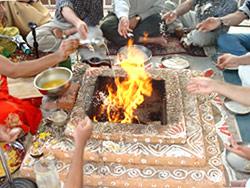
YAGNA, A VEDIC RITUAL OF SACRIFICE-‘HOTREE’ OR ‘YAGNA PERFORMER’ OFFERS ‘HAVIS’ TO FIRE (LORD AGNI)
THE UNIVERSE AS GOD’S BODY
The word ‘omnipresent’ is defined as present everywhere at the same time. The property of being present everywhere is one of the Divine attributes. In western theism it has attracted less attention and the idea of ‘omnipresence’ is explained in a bit unclear way. In Judeo-Christian, and Islamic Cultures, God is not immersed in the substance of creation even though He is able to interact with it as He chooses. They tend to the view that God is in “HEAVEN”, and that God is above and outside of all creation. They explain ‘omnipresence’ in terms of His ‘ESSENCE’ as He is present to all as the cause of their being, His ‘POWER’ as all things are subject to His power, and His ‘KNOWLEDGE’ as He constantly watches all that goes on in the world and all things are bare and open to His eyes and hence He is naturally present in every aspect of the natural order. Whereas Indian thinkers tend to believe that a thing is said to be substantially or essentially in that place in which its substance is. Hence, people in the Land of India traditionally hold the view that God is related to the universe as though it is His body. The entire creation is seen as a manifestation of the Supreme Person. The theory of transcendent(exists apart from material universe) and immanent(actually present throughout the material universe)’omnipresence’ explains the meaning of the word ‘BRAHMAN’, the Ultimate Reality. Indian people reflect this belief in their worship of creation, and the idea that God is immersed in the substance of His creation could be recognized as a core value, the foundation upon which the Cultural traditions of India are established over thousands of years of their continued existence. The rituals of temple worship and the Vedic rituals of Yagna always include aspects of Worship of Creation and the Scriptures reveal that the Gods also Worship Creation to the same extent and the Indian way of life could be stated as a quest for unity with the Divine.
A HYMN TO SEEK PROTECTION FROM THE CREATOR
Yaa srushti srashtu raadyaa vahiti vidhihutam, yaa havi ryaacha hotree
We seek the protection of God who physically manifests Himself with the eight bodies of
1. WATER- Lord VARUNA who was created prior to the creation of all other creation(of living entities).
2. FIRE- Lord Agni who receives ‘HAVIS’, the oblations or offerings given to God.
3. HOTREE- the person who is performing ‘YAGNA’, the Vedic ritual of sacrifice.
4. SUN- Lord Surya, the marker of day time.
5. MOON- Lord Chandra, the marker of night-time.
6. SKY- or ETHER which helps in the propagation of SOUND and is spread across the entire universe.
7.EARTH- Mother Earth, Goddess Bhu Devi, who bears the burden of harboring all living entities.
8. WIND- Lord VAYU who is the ‘Breath of life'(or PRANA) of all living entities that breathe.
THE FUNDAMENTAL RIGHT TO WORSHIP CREATION
The act of Creation Worship defines Indian Identity. All other Cultural Traditions that are existing in India proceed from this foundational principle. Indians seek their well-being, prosperity, happiness and eventually salvation through acts of worship. The foreign forces that occupied and ruled India tried hard to take away this Right to Worship as per our belief that God is immanent. We need to recognize the Right to Worship Creation as a Fundamental Right. Citizens while they are free to profess their religion , should not be free to ‘PROPAGATE’ a religion or idea which basically interferes with a Fundamental Right. No person could have a Fundamental Right to PROPAGATE at the expense of denying and devaluing other core values. To that extent, we should seek an amendment to PART III, Article 25 of the Constitution of India which deals with Freedom of Religion. The Constitution of India must recognize the Worship of Creation as a Foundational Principle of the Land of India and hence should be considered a Fundamental Right and should prohibit PROPAGATION of religion which infringes upon this Core Value. Such an amendment is vital to defend the Freedom of Religion as religious doctrines of Islam and Christianity are opposed to the idea of divinity of all created objects. These religious faiths divide humanity into two categories; the believers, and the non-believers. They also further express the claim that they possess a divine sanction to punish or modify the beliefs of the non-believers. In the global community, the adherents of Hindu religious faith are only a minority and they need special protection to defend the Right to Freedom of Religion.
Whole Dude – Whole Worship: The Lord God or the Principal Presiding deity at Malibu Hindu Temple is known as Lord Venkateshwara who represents the physical manifestation of the Supreme Being, Lord Vishnu in the material realm. Since the LORD is present in this terrestrial realm, He knows the Brahman Spirit that is in Prison.
Whole Dude – Whole Service: A Salute to The Law of Temperance. A tribute to John Milton.Whole Dude – Whole Service:NINE YEARS SERVICE MEDAL – A SALUTE TO THE LAW OF TEMPERANCE
The Law of Temperance
Whole Dude – Whole Service:NINE YEARS SERVICE MEDAL – A SALUTE TO THE LAW OF TEMPERANCE
John Milton (1608 – 1674), in his greatest poetic achievement of ‘PARADISE LOST’ describes Man’s First Disobedience of God, and the loss thereupon of Paradise wherein Man was placed. Adam, the first Man who was created in God’s image and likeness brought Death into the World. God declares that Adam and Eve could no longer abide in ‘Garden of Eden‘, the Paradise. God sends Angel Michael with a Band of Cherubim to dispossess them. Michael reveals to Adam the ‘Law of Temperance’ which could help him to live for many long years.
Whole Dude – Whole Service:NINE YEARS SERVICE MEDAL – A SALUTE TO THE LAW OF TEMPERANCE
Angel Michael also comforted Adam by assuring him that if he observes the ‘Law of Temperance’, Death would be like the gentle act of gathering a ripe fruit when fully mature.
Paradise Lost, Book XI ( 520-540):
Whole Dude – Whole Service: In John Milton’s epic poem of Paradise Lost, angel Michael explained ‘The Law of Temperance’ to Adam, the first created man to face the threat of death.
In John Milton’s epic poem of Paradise Lost, angel Michael explained ‘The Law of Temperance’ to Adam, the first created man to face the threat of death.
I yield it just, said Adam, and submit.
But is there yet no other way, besides
These painful passages, how we may come
To Death, and mix with our connatural dust?
There is, said, Michael, if thou well observe
The rule of not too much, by temperance taught
In what thou eatst and drinkst, seeking from thence
Due nourishment, not gluttonous delight,
Till many years over thy head return:
So maist thou live, till like ripe Fruit thou drop
Into thy Mother lap, or be with ease
Gathered, not harshly pluckt, for Death mature:
The Nature of Temperance
Whole Dude – Whole Service:NINE YEARS SERVICE MEDAL – A SALUTE TO THE LAW OF TEMPERANCE
The essence of Temperance is choosing moderation and deliberately avoid excess. In Indian Culture and Tradition, living in moderation and living in virtue are almost identical. Socrates suggests that one should “choose that which is orderly and sufficient and has a due provision for daily needs”. He compares the intemperate man “to a vessel full of holes because it can never be satisfied”. Socrates describes the temperate man as able to satisfy his limited desires, whereas the intemperate man of boundless desire, can never pause in his search of pleasure. According to Freud, when “the ego learns that it must inevitably go without immediate satisfaction, postpone gratification, learn to endure a degree of pain, and altogether renounce certain sources of pleasure”, it “becomes ‘reasonable’, is no longer controlled by the pleasure-principle, but follows the reality-principle”, which seeks ” a delayed and diminished pleasure, one which is assured by its realization of fact, its relation to reality”.
Temperance and Courage
Whole Dude – Whole Service: Saint Thomas Aquinas and ‘The Law of Temperance’.
Saint Thomas Aquinas and ‘The Law of Temperance’.
Thomas Aquinas has defined Temperance as “a disposition of the soul, moderating any passions or acts, so as to keep them within bounds. Temperate refers to a man who abstains from bodily pleasures and delights in this very fact. A man not only acts temperately but is temperate in character, when his desires are themselves habitually moderated to be in accord with reason. A temperate man is not pained at the absence of pleasure or by his abstinence from it. Temperance contributes the virtue of Fortitude which strengthens men against “the enticement of pleasure” as well as against the fear of pain. A man who is able to stand firm against the onslaught of pleasures is more able to remain firm against the dangers of death. And so “Temperance can be said to be Brave”. The endurance of pain is central to the nature of Courage. Temperance and Courage are not distinct virtues as both are based upon an ability to stand firm against pain and danger.
The Nine-Years Long Service Medal – A Salute to the Law of Temperance:
Whole Dude – Whole Service: During my service in the Indian Army Medical Corps, I learned the values of Temperance, Fortitude, Courage, and delaying gratification of desires, and avoid seeking physical comforts and pleasures.
During my service in the Indian Army Medical Corps, I learned the values of Temperance, Fortitude, Courage, and delaying gratification of desires, and avoid seeking physical comforts and pleasures.
Whole Dude – Whole Service:NINE YEARS SERVICE MEDAL – A SALUTE TO THE LAW OF TEMPERANCE
During the first nine years of my Indian Army Service, apart from taking part in the War of Liberation of Bangladesh, I participated in a variety of Army Operations that keep the men ready and prepared for a battle. Military Training and Service can be best described as habituation for a temperate character. The nature of Army Operations and Tactics always demand to overcome the onslaught of sense pleasures and voluntarily delaying the gratification of personal desires. A lifestyle based upon physical ease and comfort and indulgence in food and alcohol is not compatible with the Army way of life. The nature of Army Operations is influenced by terrain, climatic conditions, distances and the availability of transportation. There is no scope to cater for physical comfort, relaxation, and entertainment. The supply of rations and food provisions is limited because of the problems of their bulk and weight. Army Rules and the Code of Conduct emphasize that men should honor their commitment to serve more than anything else. Such commitment to Serve with Honor would only be possible only when the man in uniform lives in accordance with the Law of Temperance.
Whole Dude – Whole Service:NINE YEARS SERVICE MEDAL – A SALUTE TO THE LAW OF TEMPERANCE
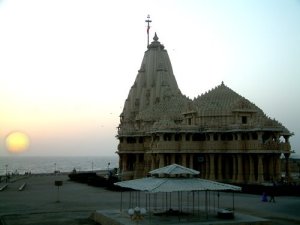
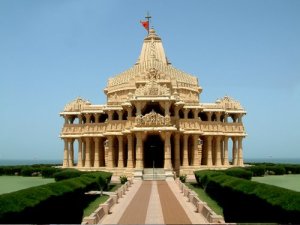
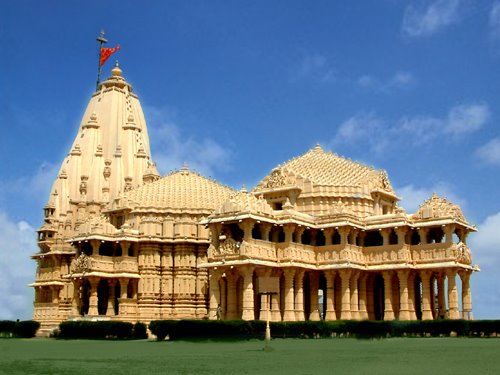
The Temple of Lord Somnath. The Battle between the Power of Creation and the Power of Destruction:
Kindly pay homage to Sardar VallabhbhaiPatel, India’s first Deputy Prime Minister who had recreated the Temple of Lord Somnath and vanquished the evil forces which visited Somnath repeatedly to utterly destroy this sacred place of Hindu worship.
Whole Dude – Whole ConvictionWhole Dude – Whole ConvictionKindly pay homage to Sardar VallabhbhaiPatel, India’s first Deputy Prime Minister who had recreated the Temple of Lord Somnath and vanquished the evil forces which visited Somnath repeatedly to utterly destroy this sacred place of Hindu worship.Kindly pay homage to Sardar VallabhbhaiPatel, India’s first Deputy Prime Minister who had recreated the Temple of Lord Somnath and vanquished the evil forces which visited Somnath repeatedly to utterly destroy this sacred place of Hindu worship.
THE TEMPLE OF LORD SOMNATH IS THE EVIDENCE FOR THE POWER OF CREATION OVER THE POWER OF DESTRUCTION.
This entry is dedicated to the memory of Sardar Vallabhbhai Patel, India’s first Deputy Prime Minister.
THE SHRINE ETERNAL :
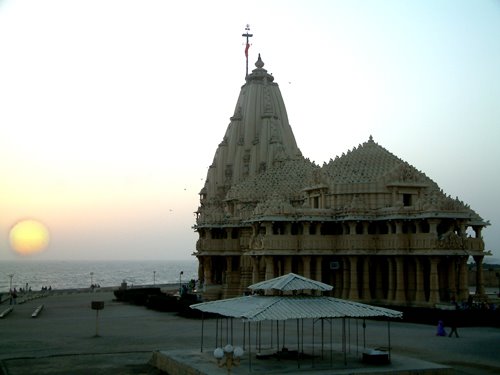
Somnath Temple is in the ‘Prabhas Kshetra’, near the seaport city of Veraval in Junagadh District, Kathiawar Peninsula of Saurashtra , on the shores of Arabian Sea,the western coast of Gujarat, India. This holy place of pilgrimage is a place of great antiquity and recent excavations there have revealed a settlement dating from about 1500 B.C. As per Indian traditions, the place is of significance as it is considered as the place from where Lord Krishna departed from this world. The presiding deity of this temple is Lord Shiva and He is known by the name of SOMNATHA or the Lord of the Moon. The present temple as it exists today is known as ‘Kailash Mahameru Prasada and is built-in CHALUKYA style of temple architecture. The site lied in a state of ruin for centuries and the decision to rebuild it was made by Sardar Vallabhbhai Patel during his visit on 13 November, 1947. The temple was inaugurated on December 1, 1951 by Dr. Rajendra Prasad, the first President of the Republic of India. He had remarked that, “The Somnath temple signifies that the power of creation is always greater than the power of destruction”. The temple symbolizes the enduring fame of Sardar Patel who during the first three years of Indian independence after 1947, had served as Deputy Prime Minister, Minister of Home Affairs, Minister of Information, and Minister of States. He was considered as practical and decisive. He was the architect of the Indian Union and his greatest contribution was the achievement of the peaceful integration of over 535 princely states into the Indian Union. The principality of Junagadh, and the princely State of Hyderabad had initially resisted the offer to join the Indian Union. Having failed in his attempts to join Pakistan, the Nawab of Junagadh fled away from the country. Mr. Bhutto,( the father of Mr. Z.A. Bhutto, who served as Pakistan’s Prime minister) acting in his capacity of the ‘DEWAN’ of the court of Junagadh, had invited Lord Mountbatten to accept the accession of Junagadh to India. In the State of Hyderabad, a militant movement called the Razakars was launched seeking independence but Sardar Patel restored peace in September 1948 and the ruler Nizam had accepted the terms of accession to the Indian Union. This part of Indian history and the integration of princely states into Indian Union has again become relevant after the enemy’s brutal attack in Mumbai which I had mentioned in my previous entry. The enemy had described himself as ‘Deccan Mujahedeen’, and the media reports indicate that the enemy had specific designs to gobble Junagadh, and Hyderabad apart from encouraging insurgency in the border State of Kashmir. The enemy’s intentions will force us to defend SOMNATH in Junagadh District which is resurrected after repeated attacks over centuries.
THE HISTORY OF SOMNATH :
Jyotirlinga Temple at Somnath is mentioned in Hindu prayers in praise and worship of Lord Shiva:”Sauraashtra dese visadeti ramye, Jyotirmayam Chandra Kalaa vatamsam, Bhakti pradaanaaya Krupaa vateernam, Tam Somanaatham Saranam prapadye.”Somnath, the confluence of three rivers, River Sarasvati, River Hiranya, River Ilanki and Kapila is mentioned in ancient Hindu Scriptures known as Rig Veda.
LORD SOMNATH TEMPLE-THE SHRINE ETERNAL- TESTIMONY TO THE POWER OF CREATION OVER THE POWER OF DESTRUCTION.
Somnath finds its mention in the ancient text of RIG VEDA. It is associated with the holy names of GANGA, YAMUNA, and SARASWATI, popularly known as ‘TIRTH DHAM’ where Indians traditionally offer worship by a practice described as ‘River Worship’. The ancient river of Saraswati may have merged into the Sea at Somnath apart from smaller rivulets known by the names of Hiranya, Kapila and Ilanki. The place is extensively described as a place of pilgrimage and its importance is narrated in the ancient texts of ‘SKANDA PURANA’, ‘BHAGAVATA PURANA’, and ‘SHIVA PURANA’. Lord Shiva in His radiant form known as ‘Jyotir Linga’ resides at Twelve different places in India and Somnath is listed as the first place of residence of ‘DWADASA JYOTIR LINGA’.Tradition claims that the original Temple of Somnath was built by Lord Moon, and was later built by King Ravana of Lanka who is a central figure in the story of Indian epic poem of RAMAYANA. The SINDH area of the Indian subcontinent came under Arab conquest in 7th century A.D. The Somnath Temple built by the YADAVA kings of Vallabhi of Saurashtra around 649 A.D. was destroyed in 725 A.D. by the Arab governor of Sindh. The Pratihara King Nagabhata II rebuilt it in red stone. Between 1001 A.D. and 1027 A.D. , the road to conquest of India was prepared by Sultan Mahmud of Ghazna( modern GHAZNI in Afghanistan) who conducted more than twenty raids into North India. His raids were mainly for plunder. They revealed the wealth of India and demonstrated the vulnerability of India to military attacks. During one of his raids, in 1024 A.D. , marching across India’s Thar Desert, Mahmud of Ghazna had plundered and destroyed the Somnath Temple. The amount looted was estimated at 20 thousand, thousand ‘Dinars’. The enormous treasures found at Somnath have been a theme of wonder for all who have written on that conquest. The Paramara King of Bhoj of Malwa, Solanki King Bhima of Anhilwara/Patan between 1026 A.D. and 1042 A.D. rebuilt the Temple. By 1297/98 A.D. , Gujarat was conquered by Ala-ud-Din Khalij, Sultan of Delhi and the Temple was razed.Solanki King Kumarapala built a Temple of stone and this was destroyed again in 1394 A.D. For the last time, the Temple was destroyed in 1706 A.D by the Mughal Emperor Aurangzeb and the site remained in ruins till India’s independence in 1947. The rebirth of the Temple on December 1, 1951 demonstrates the vitality of the Indian spirit.
A HYMN IN PRAISE OF LORD SOMNATH :
Saurashtra dese visadeti ramye
Jyotirmayam, Chandra kala vatamsam
Bhakti prada naya Krupa vatirnam
Tam Somanatham saranam prapadye.
Lord Somanatha is dwelling in His great splendor in the Province of Saurashtra. May this Lord Somanatha who is full of radiance, and the crescent-shaped Moon shines in His matted hair, with His extreme compassion grant me a great sense of devotion with which I would seek my protection and let Him be my refuge.
Jyotirlinga Temple at Somnath is mentioned in Hindu prayers in praise and worship of Lord Shiva:”Sauraashtra dese visadeti ramye, Jyotirmayam Chandra Kalaa vatamsam, Bhakti pradaanaaya Krupaa vateernam, Tam Somanaatham Saranam prapadye.”