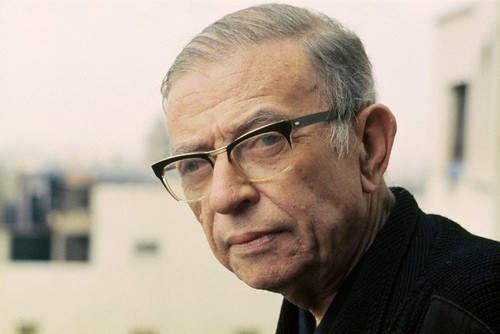
Whole Dude – Whole Philosophy: Jean Paul Sartre (b. June 21, 1905 Paris, d. April 15, 1980 Paris), French Novelist, Playwright, and exponent of Existentialism Philosophy. Whole Dude is a Whole Person who will discover his authentic existence from knowing himself as a Conscious Being.
Existentialism is the popular name of a philosophical focus on freedom of the individual human being, personal responsibility, and the importance of the individual’s need to make choices. Sartre’s thesis is that humans are essentially free, free to choose (though not free not to choose) and free to negate the given features of the world. Sartre’s belief in Radical Human Freedom includes the ability to choose not only a course of action but also what one would become. Sartre’s existentialist philosophy helps to guide social practice, the right of each individual to freely pursue subjective individual choices and find his own conception of happiness. In Sartre’s opinion, man must find his true significance. A sense of authentic existence is given to each person when he realizes his true subjectivity as a Being which is Conscious.
Whole Dude is a Whole Person who will discover his authentic existence from knowing himself as a Conscious Being.
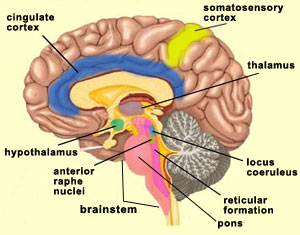
Whole Dude – Whole Philosophy: Brain Stem Reticular Formation shown as a red band in the image represents an integrative focus of consciousness functioning through its widespread interconnections with the Cerebral Cortex and other regions of the Brain. It functions to compose the contents of consciousness that would be revealed as Cortical Awareness. Reticular Formation describes “The Capacity of Consciousness” and without this function the contents of consciousness (or cortical awareness) will not be known to the individual.
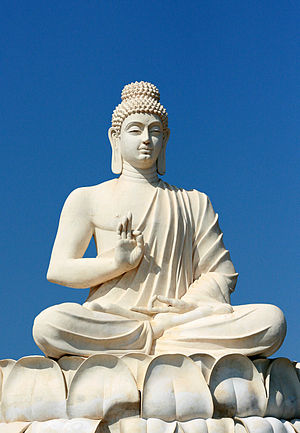
Whole Dude – Whole Compassion: Lord Gautama Buddha c. 563 to c. 483 B.C. also known as Prince Siddhartha (he who will accomplish) witnessed irremediable human suffering in the form of physical disability, sickness, old age, and death. Acting under the uplifting Power of Compassion, he left the royal palace in search of Truth. Whole Dude is a Whole Person who is Compassionate because of his true or innate human nature.
Lord Gautama Buddha also known as Prince Siddhartha married at age 16 leading a life of luxury and comfort in a royal palace. While he took a fateful chariot trip outside the palace, for the first time in his life, Prince Siddhartha witnessed irremediable human suffering in the form of physical disability, sickness, old age, and death. He left the palace at the age of 29 leaving behind his young wife and infant son. His departure from the palace in search of Truth to discover a remedy for human pain and suffering demonstrates the uplifting power of Compassion. Sympathy (sym=together + pati=suffer) describes the emotional feelings of sorrow for the sufferings or troubles of another person or others accompanied by an urge to help. Compassion describes an understanding arising from the sameness of feeling. Compassion is the key to true or real human nature. A Whole Dude or a Whole Person is Compassionate because of his true or innate human nature. Man may choose a course of action and behavior that is derived from his thoughts, feelings, moods, and desires. But, man’s existence is entirely supported by a Force/Energy/Power that could be called Compassion/Mercy/Grace of LORD GOD Creator.
Whole Dude – Whole Compassion. A Whole Dude or a Whole Person is Compassionate because of his true or innate human nature
“I think, therefore I am” is a Whole Thought as it is beyond skeptical doubt. Rene Descartes( Ren-ay, Day-kart ) b. March 31, 1596, d. February 11, 1650 the 17th century French Mathematician and Father of Modern Philosophy advanced a Philosophy based on certitude. Whole Dude is a Whole Person who will think for himself to formulate his opinion after verification using the Cartesian Principle.
French philosopher, Rene Descartes adopts the strategy of withholding his belief from anything that is not entirely certain and indubitable. He proposes a method for guaranteeing knowledge and devises a method of inquiry for reaching the truth. He argues that in order to provide a secure foundation for knowledge it is necessary to discover clear and distinct ideas that could not be doubted and could serve as a basis for deriving further truths. He stresses that a world of metaphysical truths that could be discovered by reason. He subjects his beliefs to a series of skeptical hypotheses. As per his conclusion, “I think, therefore I am,” (Cogito, ergo sum) is beyond skeptical doubt. He invokes skepticism only as a means of reaching certainty.
Whole Dude or Whole Person has the ability to think for himself and formulate his own opinion which he subjects to verification using the Cartesian Philosophy. Dr. William James in his book, The Principles of Psychology has said, “True ideas are those we can assimilate, validate, corroborate, and verify.”
I say, “Hey Dude, let us verify this statement, ‘I think, therefore I am’ and what do you want to say???
Whole Dude – Whole Thought: DR WILLIAM JAMES (1842 – 1910), PSYCHOLOGIST AND PHILOSOPHER WHO TEACHED AT HARVARD UNIVERSITY. HE STATES THAT THE TRUTH OF A PROPOSITION IS JUDGED BY ITS PRACTICAL OUTCOME
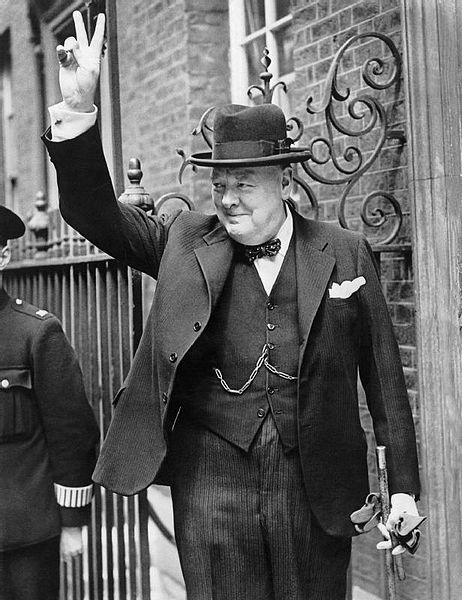
Whole Dude – Wholesome Attitude: New York – Hyde Park: Franklin D. Roosevelt Presidential Library – Winston Churchill Portrait (Photo credit: wallyg)
Attitude refers to an expression of the way one feels. Behavior is the way that someone acts. Although the two are related, they are distinct from one another as attitude focuses on how one feels, and behavior deals with one’s actions. However, one’s attitude is often expressed through their behavior.
Whole Dude – A Dude with Whole Attitude:
Whole Dude – Wholesome Attitude: The Right Honourable Sir Winston Leonard Spencer Churchill, the British Prime Minister (1940-1945 and 1951-1955) who won the Nobel Prize in Literature. A Whole Person with a Wholesome Attitude.
Whole Dude is pleased to share this photo image of Sir Winston Churchill as representative of a Whole Dude with a Whole Attitude, an attitude that is wholesome and is rewarding. He said, “You make a living by what you get. You make a life by what you give.” Life is all about The Art of Receiving and The Art of Giving and by the actions and behavior that we display in getting and giving, we show our true colors and it is all about Wholesome Attitude.
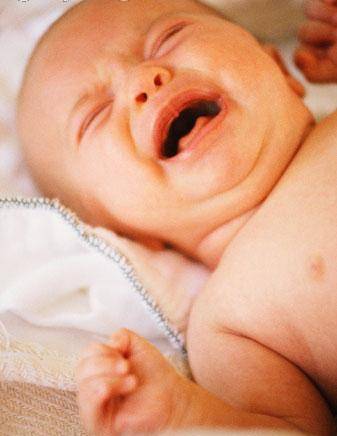
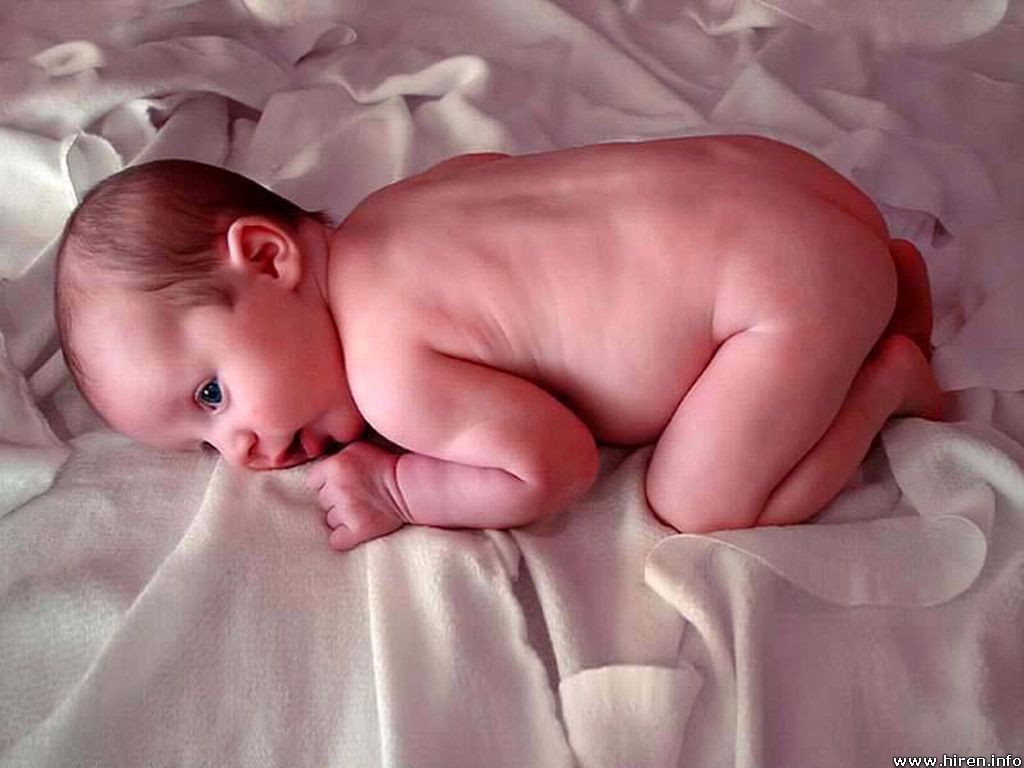
Whole Dude- Whole Self: SPIRITUALISM : THE UNITY OF MAN IN BODY, MIND, AND SOUL. Spiritualism describes the relation between a changing object and its unchanging spiritual nature. This baby which started its existence as a single, fertilized Egg-Cell will continue to grow and develop undergoing a series of changes in physical appearance or Identity and yet will retain the same Individuality during the entire course of Life’s Journey.
“EKAM EVA ADVITIYAM” – This statement in Sanskrit language is from Chandogya Upanishad (6:2:1) and it means: “I, one alone and there is no second.” The original intent of this statement is that of seeking the unity of the Objective Reality of Man known as ‘ATMA’ (the Individual Soul) and the Ultimate Reality known as ‘PARAMATMA’ or Supersoul. There is no Duality between the two and there is no disunity between Man and God.
However, God is not an object which is under Man’s control and the views about God are subjective opinions. I am quoting this statement to find the Unity of Man in body, mind, and soul. Man’s greatest need is not only to know the world around him but also to know himself better. Man must understand what it is to be a substance and what it is to exist. We need to establish knowledge about Man on a firm basis and the information it provides must be tested for its accuracy and consistency with external reality. Dr. William James in his book, The Principles of Psychology, has observed: “True ideas are those we can assimilate, validate, corroborate, and verify.” The separation of man into body, mind, and soul is not supported by scientific study of man.
Whole Dude – Whole Self: It is impossible to describe the concept called “SOUL”, or “SPIRIT” if it is never associated with its human body. If “SOUL” is defined as the vital, animating, Life Principle, Spiritualism demands the existence of a Living Soul or Spirit.
Man comes into existence from a single fertilized Egg Cell. This Man cannot be separated into two distinct entities like insentient material being and sentient spiritual being. The physical being and the conscious being are one and the same. The division of Man into a physical substance and a thinking substance or that of a physical body and a thinking mind is not valid as they have no independent existence of their own. The division of Man into physical body and an immortal, non-material or immaterial Soul is not also valid as the Soul is described as the vital, animating principle that is the chief characteristic of Life.
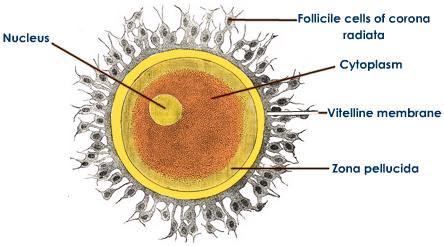
Whole Dude – Whole Self: The Egg Cell is the source of Man’s Life. The Spiritual Nature of Man could be discovered and could be described from the biological properties, characteristics and nature of the corporeal substance found in the Egg Cell.
The Spiritual Nature of Man is not a mental function. The Spiritual Nature of Man could be discovered and could be described from the biological properties, characteristics and nature of Man’s corporeal substance found in the fertilized Egg Cell. This substance is Conscious. This Single Egg Cell grows, divides, develops, and builds the cells, the tissues, and the organ systems that constitute the Human Individual. The Spiritual Nature of the substance present in the Single, fertilized Egg Cell brings the functional unity of all the cells, tissues, and organ systems to establish the Physical Reality called Man.
Whole Dude – Whole Self: Human Embryo Implantation at about six days after Conception. The Single, fertilized Egg Cell and the Human Embryo that develops from it is Conscious of its existence reflecting its Spiritual Nature.
About six days after Conception, the developing Human Embryo implants itself into maternal tissues by establishin an anatomical connection called Placenta. The implantation of Human Embryo does not involve any human thought and the Mother has no cortical awareness of the fact of implantation. The implantation demonstrates the Consciousness of the Human Embryo which is aware of the fact of its own existence. Spiritualism defines the internal, mutually beneficial relationship, partnership, association, and connection between the cells, tissues, and organ systems for the benefit of the Human Person who exists because of their living functions. The Subject that is born from the Single, fertilized Egg Cell is always a new, original, distinctive, unique, one of its own kind of Object that exists because of the innate Spiritual Nature of the material substance. Being born relates Man to the Subjective and Objective Realities of his biological existence. There is structural and functional unity between Man and his Body, Mind, and Soul. There is no Life, and there is no Human Existence if these entities are separated. Spiritualism is the potency that brings Man’s Essence and Man’s Existence to come together to provide Man the Subjcetive and Objective Reality of his own biological existence in the physical, and material world. Man is not an embodied Soul and Man is a Living Soul.
What is Man?
Whole Dude – Whole Self: This painting the Vitruvian Man (c. 1492) by Leonardo da Vinci displays a spirit of scientific inquiry. What is Man? The understanding of human nature will help to promote man’s well-being.
I will be repeatedly asking this same question in several of my blog posts on the subject of Spiritualism. I want to remind myself that the motivation for asking this question comes from a statement expressed in Sanskrit language: “Sarvesham Swastir Bhavatu”, a statement which seeks the well-being of all humans, of all races, of all cultures, of all religions, and of all nations. The meaning and purpose of human life are affected by whatever we think is the real or true nature of man. It is more important to recognize that our efforts to support the well-being of man would require correct understanding and knowledge of the real or true man.
Self and The Knowing-Self:
Whole Dude – Whole Self: FACIAL RECOGNITION-IDENTITY AND INDIVIDUALITY-THE SELF and THE KNOWING-SELF: Identity describes the external reality of man and it helps to know the man as a specific Individual. This Individual exists with unchanging Individuality which describes the internal reality of man. Identity provides awareness of the Self and Individuality involves the Knowledge of the Knowing-Self.
To know about Man, we can observe the various activities that describe the Man. The Physical being known as Man is known from the living functions performed by the tissues and organ systems of his body. This Physical being has Identity or identifying features such as age, gender, race, ethnicity and other biometrical information to know the person as a specific Individual. Factors like language, religion, culture, education, social occupation, nationality, and sexual orientation are also used to describe the Man. The Mental being known as Man is described from mental functions such as intellect, thoughts, moods, feelings, cravings, and self-pride. Man, the Social being is known from his social interactions and much of human action and behavior involves interacting with other individuals present in his social environment. Man, the Moral being is known from the choices he makes in the performance of his actions where discernment plays a role to distinguish right from wrong, and good from evil. Man, the Spiritual being is known from the nature of his existence seeking peace, harmony, and tranquility within himself and with others in his environment and community. I designate the term ‘SELF’ to describe Man as a Physical, Mental, Social, Moral, and Spiritual being. I have also observed that the Physical being is in reality consists of about 100 trillion individual living cells that show complex structural differentiation and functional organization. The corporeal substance is of spiritual nature and hence Man, the Physical being has no choice other than that of existing as a Spiritual being. The question is not that of, How Man knows himself? The question that I would like to ask is, How does the body know the Identity of the Man who lives? If the body knows its Owner, there is an anatomical structure that is associated with the function called Knowing-Self.
The Function of Knowing-Self:
Whole Dude – Whole Self: Self and The Knowing-Self
The Reticular Formation (RF) is located in the central Brain Stem and extends from Medulla to Thalamus. It consists of more than about 100,000 Brain Stem nuclei. It is estimated that a single neuron in this network may have synapses with as many as 25,000 other neurons. The RF has connections with almost all other parts of the Central Nervous System including Spinal Cord, Cranial Nerve nuclei, Cerebellum, Hypothalamus, Thalamus, Corpus Striatum, Limbic System, and Cerebral Cortex. Thus, the RF helps to coordinate and integrate actions of different parts of the Central Nervous System such as 1. regulation of muscle and reflex activity, 2. central transmission of sensory impulses, 3. respiration, 4. cardiovascular responses, 5. behavioral Arousal, and 6. Alert/Sleep Cycle.
Whole Dude – Whole Self: Self and The Knowing-Self.
There are two distinct aspects of human Consciousness namely, 1. the Capacity for Consciousness and 2. the Content of Consciousness. When Consciousness is viewed as a psychological or strictly as a mental function, it is represented by the Content of Consciousness called Cortical Awareness which is a function of the Cerebral Cortex. When Consciousness is understood as a biological function that includes the maintenance of vital functions like respiration, and circulation apart from various homeostatic mechanisms to preserve a constant internal environment, it is represented by the aspect of Capacity for Consciousness.
Whole Dude – Whole Self: Self and The Knowing-Self
The Knowing-Self is located in the Reticular Formation of the Brain Stem and its functions are of critical importance in the clinical diagnosis of Brain Death. During Life, the cells, tissues, and various organ systems of the human body work together for the benefit of ‘SELF’ which is known and recognized by this Knowing-Self.
Man is a Mortal Being:
Man’s greatest need is not only to know the world around him but also to know himself better. Man must understand what it is to be a substance and what it is to exist. Man is a physical being or thing with matter and form. The corporeal body of man is composite of two principles; matter, and form. What is called matter is potentiality, and what is called form is actuality. The corporeal substance called protoplasm becomes actuality and is recognized as a living person because of the uniqueness of its genome that operates its living functions and defines its size, shape, color, and external form or morphological appearance. However, life comes into existence only when matter or substance has the ability to acquire energy from its external environment. The human being comes to life when his corporeal substance uses its potential ability and power called ‘Nutrition’ to acquire energy and material from its environment. Life begins with fertilization, the union of sperm with egg cell, and this event called conception proceeds to develop a human being after an important event called implantation. The life journey after conception continues if there is a connection between the energy seeking embryo and its maternal energy provider. To exist means that the substance is maintaining a relationship, a partnership, a connection, or association with its source of energy. Man leads energy dependent existence deriving energy and material from nature which supports other living forms with a similar corporeal substance called protoplasm. The mortality of man must be understood as the dissolution of man’s physical form. The dissolution of living man into non-living molecules and physical elements would not alter that potentiality of protoplasm to acquire energy and material to create its own substance. Things in Nature change with Time; but what is called Nature remains unchanged even under the influence of Time. As per The Laws of Conservation of Mass and Energy as described in classical Physics, mass or energy remain constant. The potentiality of living substance to acquire energy and material to form its own kind of substance has remained unchanged or unaffected by major natural calamities and other cataclysmic events. Life forms perish and yet life continues as new life forms. During the billions of years of existence, planet Earth has experienced several minor, and major Extinction Events described in its geological history. The Science of Paleontology offers scientific evidence to support an argument based upon theoretical and practical grounds to propose that the substance called protoplasm could be eternal, immovable, immutable, and indestructible. At a fundamental level, it could be stated that man is a mortal or materialistic being who derives his physical form because of its association with an imperishable substance. During any stage of his existence, the form called man cannot be separated from the eternal nature of its substance.
Identity and Individuality:
Whole Dude – Whole Self: The Eternal Reality of Soul’s Immortality is described in The Bhagavad Gita, Chapter II, verse 12. Lord Krishna spoke to the Pandava Prince Arjuna :”Na tv evaham jatu nasam na tvam neme JanadhipaH;Na chaiva na bhavisyamaH, sarve vayam ataH param.” For each of us our Individuality existed in the past and our Individuality will continue in the future without interruption. Certainly, never at any time did I not exist, nor you, nor all these Kings and certainly never shall we cease to exist in the future.
The issue of spirituality, the nature of Soul and consciousness must be explored in the context of arriving at an understanding of man’s Identity and Individuality.
If man is viewed as an association of trillions of cells, we need to know the Identity of that Subject who lives because of the functions of the trillions of cells. The purpose of consciousness at cellular level is to foster functional unity of the multicellular organism and to establish it as an Individual. In a multicellular organism, cells have short lives as individuals. The Subject or the whole organism has a life span of its own and it has effects on individual cells. Multicellularity is accompanied by adaptive subordination of all cells to the requirements of the organism as a whole. To achieve proper numerical balance between functionally related cell groups, the death of many cells is necessary for other cells to reach maturity. This programmed cell death plays an important role in embryological development. Such programmed cell death events are essential if the organism as a whole is to develop its normal final form. Waves of genetically driven cell deaths are critical to the proper modeling of organs and organ systems.
We need to know and understand that death of cells is a must to establish the Identity and to sustain the Individuality of the human being. The dying process helps man to understand his Individuality. The Individuality is preserved while death is a daily event at the cellular level. The phenotype or the morphological appearance of the human Subject undergoes constant change during the Life journey and yet the Individuality remains unchanged. We recognize the death of this human Subject when his Soul departs from his body. Soul may be stated as an entity which is regarded as being immortal or spiritual part of the person. The Spirit of a dead person generally refers to a principle separate from the body and leading an existence of its own. If Soul is viewed as a Non-thing or Nothingness, it comes into the world of existence by entering the physical being at its conception which becomes conscious or aware of its existence. This consciousness has also existed in a previously existing Living Egg Cell which is the Mother of Life, Energy, and Knowledge.
Consciousness by its very nature is immortal, it is eternal, and it has no birth or death. We recognize the arrival and departure of the new product during the Life-Death continuum where the Individuality is unaffected by the changes that are caused by the powerful influence of Time.
Whole Dude – Whole Self: The Rudi-Grant Connection examines the complex issues of identity and individuality in the multicellular human organism. THE NEWBORN BABY ALWAYS ARRIVES INTO THE WORLD WITH AN ORIGINAL, UNIQUE, DISTINCT, AND ONE OF ITS OWN KIND OF GENOME THAT HAS NEVER EXISTED IN THE PAST AND WILL NEVER EXIST AGAIN IN THE FUTURE.
The Vitruvian Man c. 1492. The painting by Leonardo da Vinci displays the spirit of scientific inquiry. Could we know and understand Human Nature or Man’s Essence by investigating man’s mind using the Psychoanalytic principles? How does Man Exist? What is the basis for Man’s Existence? If there are hidden mental entities, how could they help or support Man’s Existence? How could Man display Essence if his Existence is not supported? Spiritualism is that potency that sustains Human Existence and is reflected as Human Nature in the structure and functions of the human being.
What is man? The tradition of knowing oneself is a longer tradition than any other Science. This is a study in which the Knower and the Known are one. The object of the scientific inquiry is the nature of the scientist. The motivation to know man comes from a statement expressed in the Sanskrit language, “Sarvesham Swastir Bhavatu” which seeks the well-being of all humans of all races, of all cultures, of all religions, and of all nations. Our efforts to support the well-being of man would be affected by our ability to discover the universal principles that describe the ‘real’ or ‘true’ nature of man. All human literary, philosophical, religious, and scientific traditions make assumptions about human nature. The basic assumption about human nature is that of finding it displayed in feelings, thoughts, moods, and mental states of the human individual from where human actions and behavior proceed. All such actions and behaviors that emanate from mental states show individualistic variations. It will not be easy to discover universal principles that could clearly establish the basis of true and real human nature by simply studying human mind and its functions.
The structure and behavior of things contribute to their individual being and function. To understand human behavior, we may have to know the structure and behavior of the human living matter or substance to which we attach human identity and recognize it as human person. I explore human nature from the functional characteristics that are observable in biotic interactions of cells, tissues, organs and organ systems formed and developed by the human living matter and constitute the human organism. If man is viewed as a multicellular organism, I discover human nature of a subject who objectively exists because of the living functions of cells, tissues, organs and organ systems that provide the biological basis for that existence. In this context, I have explored the theories shared by biologist Konrad Lorenz, psychologist Dr. B.F. Skinner, philosopher Jean Paul Sartre and now I would like to review the Theory of psychoanalysis formulated by Dr. Sigmund Freud. It must be noted that all of them and several others have explained human nature without explaining the connection between the nature that is observed and the biological basis for the existence of the human individual whose behavior and actions they have studied.
Psychoanalysis and the Principle of Determinism:
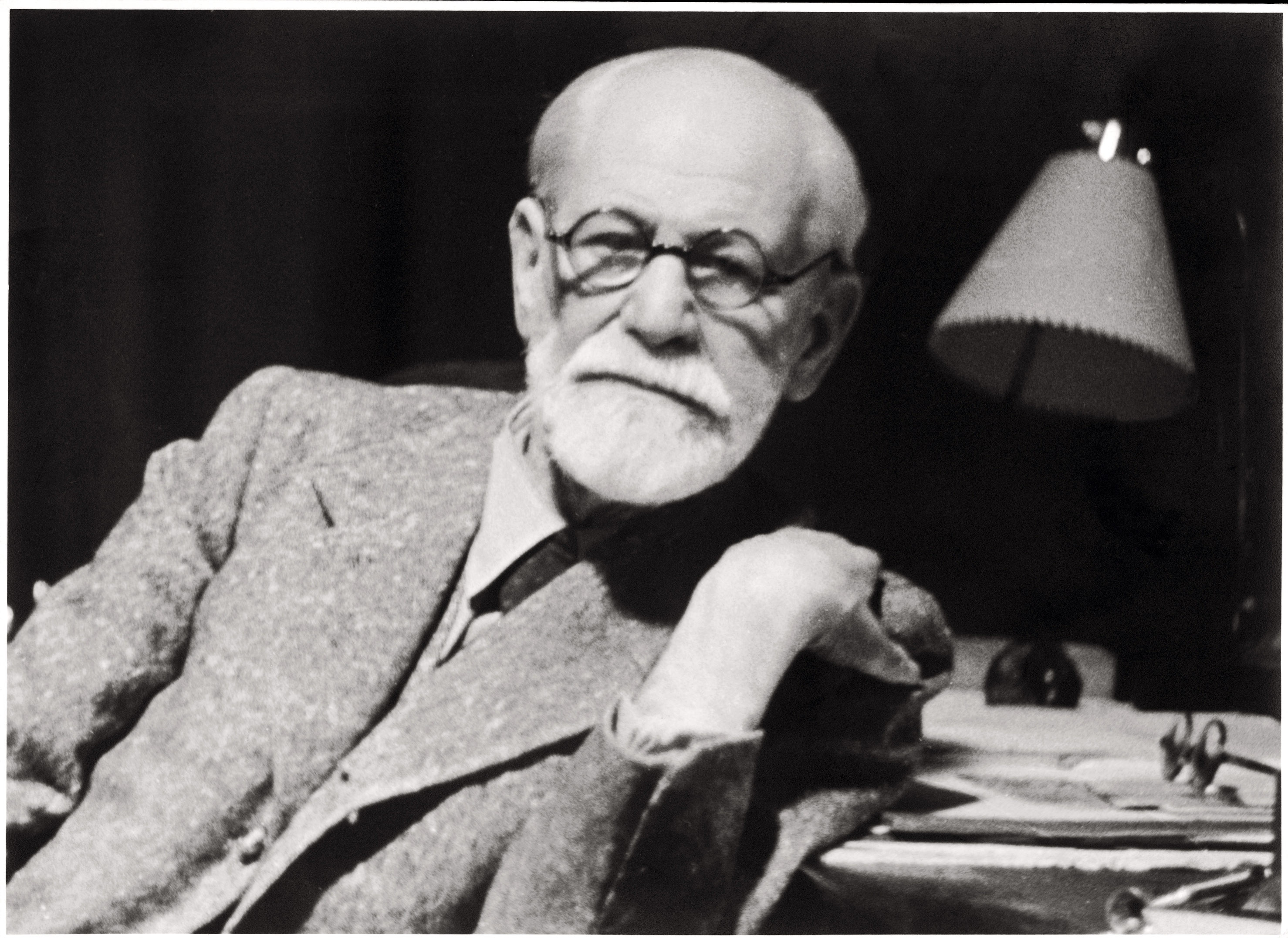
Whole Dude – Whole Analysis: Dr. Sigmund Freud (1856 to 1939) claims, “No knowledge can be obtained from Revelation, Intuition, or Inspiration.” However, he reasons that knowledge could be obtained from unseen and unobservable mental entities whose existence cannot be tested empirically.
Dr. Sigmund Freud is known as the creator of Psychoanalysis. He is the author of several books; The Interpretation of Dreams (1900), The Psychopathology of Everyday Life (1901), Three Essays on the Theory of Sexuality (1905), Five Lectures on Psycho-Analysis (1909), Introductory Lectures on Psycho-Analysis (1915 -1917), Beyond the Pleasure Principle (1920), The Ego and the Id (1923), The Future of an Illusion (1927), An Outline of Psycho-Analysis (1938), and others. He assumes that all phenomena are determined by the laws of Physics and Chemistry. He considers that man is a product of Natural Evolution and is subject to the same laws of mechanistic principles. According to Freud, every event has preceding sufficient causes within the realm of the mind. He investigates for hidden causes in a person’s mind. Freud suggests that there are uncontrollable causes in every individual’s mind that determine the choices the individual makes. Freud contends that the mind includes ‘unconscious’ items of which the person has no ordinary knowledge. Freud postulates that the ‘unconscious’ mental state is dynamic in nature and that it actively exerts pressures and influences on what a person is and what he does. Freud coined the term Psychoanalysis to describe both the theories of Personality and the method of treating mental illness.
Freud profoundly influences man’s view of himself. Psychoanalysis involves the possibility of ‘unconscious’ mental states which have causal effects on people’s mental life. Psychoanalysis is based upon the idea that people could suffer from some idea or memory or emotion of which they are not conscious, but from which they could be cured by somehow bringing it into consciousness. Freud applied Psychoanalytic theory to the whole of normal mental life, not just to pathological conditions. He evolved a method of treatment to address the problems of neurotic mental disorders. The Freudian concept thus describes the powerful influence of the ‘unconscious’ mind on conscious thought and behavior and the equally powerful influence of the apparently forgotten past on the present. Apart from using terms such as ‘unconscious’, ‘preconscious’, and ‘conscious’, he distinguished three major structural systems within the human mind or personality; the ‘id’ which contains all the instinctual drives seeking immediate satisfaction, the ‘ego’ which deals with the real world outside the person, mediating between ‘ego’ and the ‘id’, and the ‘superego’, a special part of the ‘ego’ which contains the conscience, the social norms acquired in childhood. Whatever can become ‘conscious’ or items that could be ‘preconscious’ is in the ‘ego’ and everything in the ‘id’ is permanently ‘unconscious’. Freud’s concept of man includes his theory of the ‘instincts’ or ‘drives’, the motive forces within the mind. Freud also shares the historical theory of individual human character and the adult character depends upon the experience of infancy and childhood.
Freud says that individual well-being or mental health depends on a harmonious relationship between the various parts of the mind and between the person and the real world in which man has to live. When we apply the Psychoanalytic theory to verify the contents of man’s ‘conscious’ or ‘unconscious’ mind, the basic assumption of Freud that man is governed by laws of Physics and Chemistry gets disproved. Human beings are vastly different from the entities studied by Physics and Chemistry. Psychoanalysis could only have individualistic applications. Psychoanalysis does not provide data that could be further tested empirically. We cannot test the usefulness or judge the efficacy of Psychoanalytic treatment in the same manner that is used to evaluate other therapeutic interventions.
Spiritualism and Consciousness:
Whole Dude – Whole Analysis: Dr. Sigmund Freud uses terms such as ‘preconscious’, ‘conscious’, and ‘unconscious’ without explaining the anatomical and physiological basis to describe the mental function. Consciousness has two components, 1. The Contents of Consciousness, and 2. The Capacity of Consciousness. Freud is concerned with only consciousness that is projected to the cortical areas of the brain and ignores as to how consciousness is composed by the Reticular Formation and other nuclei in the Brain Stem. Apart from being a neurological function, each living individual cell is conscious and is aware of the fact of its existence, it knows its internal condition and it reacts and responds to the conditions of its external environment.
I explain ‘Spiritualism’ as the potency that is evidenced as the presence of consciousness in any given living organism or living cell. It is the chief biological characteristic of living matter. Spiritualism is the power that causes consciousness and awareness that is exhibited in the biological properties of living matter; biological properties such as Motion, Nutrition, and Reproduction by Cell Division.
Whole Dude – Whole Analysis: The Ground Substance of Spiritualism and Spirituality. The vital characteristics, the animating principles of Protoplasm could be known by observing Amoeba proteus. The Living Substance works as an organ of Motion or Movement, as an organ of Nutrition, and as an organ of Reproduction to generate new cells which have a life span of their own. In these physiological functions, I describe the characteristics such as Cognition, Consciousness, Memory, and Intelligence which have a Spiritual role as they bring functional unity and harmony in the interactions between different parts of the same individual organism while it exists in an environment as a member of a biological community.
Spiritualism is the biological basis for human existence and it explains human nature which is expressed as an internal, mutually beneficial partnership, relationship, association, connection, and bonding between the cells, the tissues, organs and the organ systems of the human organism and the Whole Organism that represents the Human Person in the world he lives.
Clinical Medicine provides the opportunities to promote the well-being of all people as it includes the principle of verification of the objective, biological basis of human existence.
Whole Dude – Whole Analysis: SPIRITUALITY MEDICINE: The integration of Structure and Function describes the Spiritual Basis for Health and Human Existence. By knowing the structure and function of the Red Blood Cell or Erythrocyte, we can establish the facts of Blood Circulation, the reason for the structure of the Heart and Lungs, their motions and their relation to each other and their relation to the Human Being who exists as an Individual with Individuality.
Dr. Freud may explain as to why a man may choose to drink alcohol or use tobacco. But, his Psychoanalysis will not determine the behavior, action, and response of the man’s liver, heart, lungs, blood vessels and other cells, tissues, organs and organ systems to the choices that the man makes. While man makes mental choices for his actions and behavior, he has no freedom, no free will to make choices on behalf of his cells, tissues, organs and organ systems. While Freud lays the emphasis on a harmonious relationship between the various parts of the mind and between the person, I speak about harmonious relationships in the Whole Person and not simply between a few unobservable mental entities. We need a theory that recognizes the spiritual nature of man’s living matter and the spiritual relationships that it formulates while developing and building the very complex multicellular human organism.
Whole Dude – Whole Analysis: SPIRITUALITY SCIENCE – ESSENCE – IDENTITY – UNITY – EXISTENCE: THIS FERTILIZED HUMAN OVUM OR EGG CELL BEGINS THE LIFE JOURNEY OF MAN. FROM THE BEGINNING, THERE IS UNITY BETWEEN, BODY, MIND, SOUL, AND GOD.
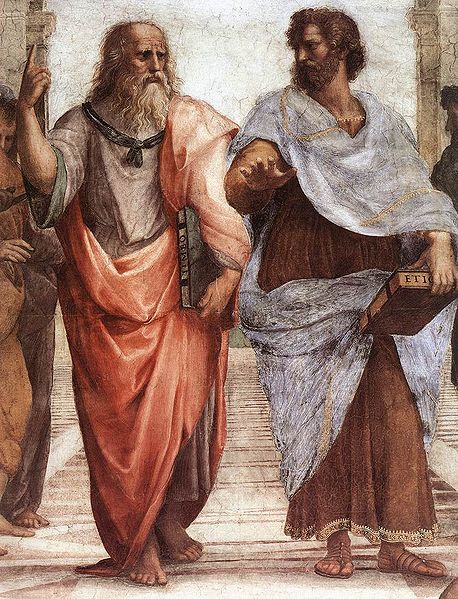
Whole Dude – Whole Form: Greek Philosophers Plato and Aristotle – To understand Human Nature, I explore the Human Form, its actions and behavior.
What is man? The motivation to ask this question comes from a statement expressed in the Sanskrit language, ‘Sarvesham Swastir Bhavatu’, which seeks the well-being of all humans, of all races, of all cultures, of all religions, and of all nations. Our efforts to support the well-being of man would be affected by our understanding the ‘real’ or ‘true’ nature of man. Aristotle describes corporeal substances are composite of two principles, form and matter. It is important to seek proper understanding of human form and to know the truth about human nature by describing the form. Being born relates man to the Subjective Reality of his physical existence and human nature is related to the fact of man’s existence in the physical world and universe. If the Objective Reality of man is non-material, we still need to know as to what exists in the world, and as to how it exists.
Plato’s Theory of Forms – The Dualism of Body and Soul:
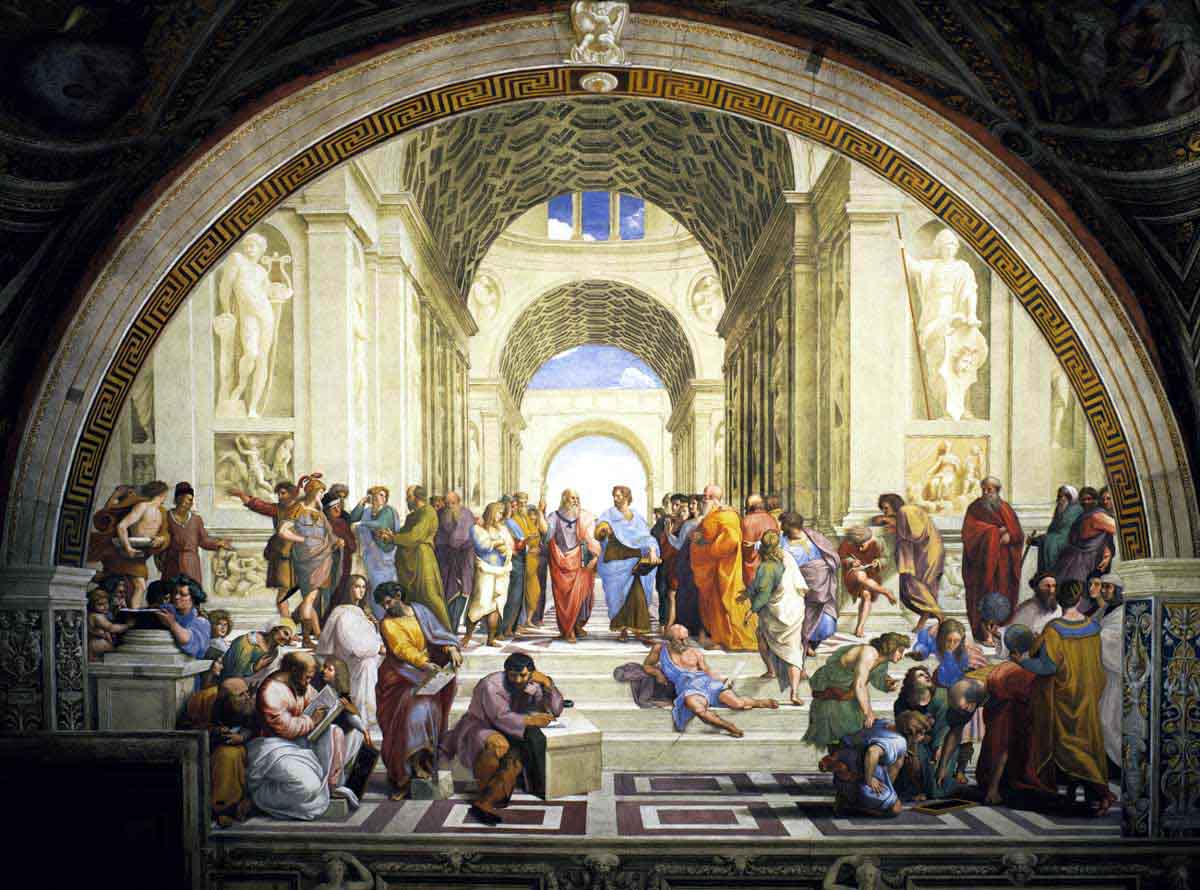
Whole Dude – Whole Form: What a great Scene in the history of Man? If Plato and Aristotle come together, Reason and Faith also come together. The Scene at the Athenian Academy of Plato depicts the confluence of Religion, Philosophy, and Science.
Greek philosopher Plato (427 B.C. to 347 B.C.) describes human nature by his Theory of Forms. He describes four aspects of human being; 1. The Logical Form, 2. The Epistemological Form, 3. The Moral Form, and 4. The Metaphysical Form.
The Logical Form: It describes the physical being, the physical form and its identity. Each human being has characteristic physical features using which he can be identified as a member of the genus Homo and he has very specific features that establishes his identity that is shared by all the members of a species known as Homo sapiens sapiens. Each member of this species could be further identified as an individual using the present Identification technology. This specific human individual will not exist with the same identifying features during his entire duration of his physical existence. The Logical Form of human is impermanent and is subject to change and eventual death. However, the existence of this physical form is important to support the existence of man and to know his nature. Existence precedes human nature or Essence. The Essence (Who You Are) is defined and is preceded by the Reality of Existence. The human being belongs to a social group, and always exists as an Individual with Individuality while his physical form changes and passes through various stages such as infancy, boyhood, teenage, adult and old age. The Logical Form is subject to change, decay, and death. Hence, the reality of this Form is often doubted. It must be noted that Plato has not known man as a multicellular organism and his description of the Logical Form is not based upon study of Human Anatomy and Human Physiology.
The Epistemological Form: The term epistemology deals with the Theory of Knowledge. It describes the possible kinds of knowledge and the degrees of certainty for each kind of knowledge. Plato describes the knowledge that human being can acquire through education, a process of learning from sensory experiences, and teaching imparted by others. Plato expects to obtain full knowledge of human forms through proper education. Such knowledge is important to know the Metaphysical Form of man. Self-Knowledge leads to the understanding of man’s true or real nature. The perception of impermanent, material, human body is described by Plato as only opinion or belief and he considers that such perception is not true knowledge of human form.
Plato has not given attention to knowledge that is innate or that is not acquired by the learning process. To perform the living functions in support of his existence, man uses biological information that is inherited and not knowledge that has to be acquired through learning.
The Moral Form: It describes qualities such as Courage and Justice, the observable aspects of human nature that could be described from human action and human behavior.
The Metaphysical Form: Plato claims that the Metaphysical Form is not perceivable by any of the senses. The Metaphysical Form is the real form of the human being as compared to the Logical Form which is considered to be unreal. The Metaphysical Form is not present in space or time, as it is beyond the world of changeable and destructible things. It belongs to the realm of unchanging, eternal forms. This form being true can be fully known through knowledge.
Plato’s Theory of Body-Soul Dualism:
Plato divides human being into two categories; 1. Body – a material entity, and 2. Mind or Soul – a non-material entity which can exist apart from the Body. Plato maintains that the Mind or Soul is indestructible, it existed eternally before birth and will exist eternally after death. He further describes the three parts of Soul as 1. Appetite – the seat of desires and passion such as hunger, thirst, and sexual desire, 2. Reason – the seat of discernment that chooses right from wrong and makes distinctions between good and evil, and 3. Spirit – the seat of self-assertion, self-interest, anger, indignation, and self-pride. Plato considers that the well-being of man depends upon harmonious interactions of the three aspects of the Soul. Plato thinks that such harmonious interactions would only be possible when Reason controls both Spirit and Appetite. To strike this balance and to maintain harmony, man has to obtain knowledge of the eternal, unchanging form. Plato thinks that Justice is revealed as a principle of each thing performing the function most appropriate to its nature, a principle of the proper adjudication of activity and being. The principle of Justice is revealed or discovered in the individual human Soul when each part of the Soul performs its proper and appropriate function. Plato believed that the Human Soul rules the Human Body. The Rule of Reason is required to combine the virtue of temperance with self-mastery and harmony results when all elements agree as to which should do what.
The Seven Dimensions of Human Existence:
Whole Dude – Whole Form: The Seven Dimensions of the Singularity recognized as Human Form
I describe the Seven Dimensions of the Singularity recognized as Human Form and each Form can be identified by its own behavior;1. The Physical Form as described by Human Anatomy and Human Physiology, 2. The Mental Form as described by sciences such as Psychology and Psychiatry, the Form that has intellectual and emotional aspects, 3. The Social Form as described by Social Sciences, the social aspects of man, his activities, and the structure and organization of all human institutions, apart from the social dimensions of man viewed as a multicellular organism hosting trillions of microbes, 4. The Moral Form as described by man’s power of discernment or conscience to make moral and ethical choices, 5, The Spiritual Form, the aspect that formulates harmonious interactions between the cells, the tissues, and the organs of the human body whose individual functions support the well-being of man, 6. The Creative Form, the existence of man as an Individual with Individuality without any choice of his own, and 7. The Rational Form, man’s use of the faculty of reasoning for his own existence.
Man’s existence would be at risk if any of these seven dimensions is adversely impacted. Unless we seek clear, visual images of Human Form in all its aspects, we will fail to understand man and his purpose in life.
Whole Dude – Whole Form: SPIRITUALITY SCIENCE – THE KNOWER – THE KNOWING-SELF: MAN, THE ENTIRE HUMAN ORGANISM IS DERIVED FROM A SINGLE FERTILIZED EGG CELL. HOW IS THE IDENTITY AND INDIVIDUALITY IS ESTABLISHED AND IS KNOWN IN THIS COMPLEX MULTICELLULAR ORGANISM?
Whole Dude – Whole Key: The Key to Human Nature. The Vitruvian Man c. 1492. The painting by Leonardo da Vinci displays the Spirit of Scientific Inquiry about Human Nature.
What is Man? The motivation for asking this question comes from a statement expressed in the Sanskrit language, “Sarvesham Swastir Bhavatu” which seeks the well-being of all humans of all races, of all cultures, of all religions, and of all nations. Our efforts to support the well-being of man would be affected by our understanding of the ‘real’, or ‘true’ nature of man.
Whole Dude – Whole Key: The Key to Human Nature. The integration of Structure and Function describes the Spiritual Basis for Health and Human Existence. By knowing the structure and function of the Red Blood Cell or Erythrocyte, we can establish the facts of Blood Circulation, the reason for the structure of the Heart and Lungs, their motions and their relation to each other and their relation to the Human Being who exists as an Individual with Individuality.
All human traditions including several philosophical and scientific traditions make assumptions about human nature. The basic assumption about human nature is that of finding it displayed in feelings, thoughts, moods, action, and behavior.
I study human nature from the functional characteristics that are observable in biotic interactions of cells, tissues, and organs that constitute the human organism. If man is viewed as a multicellular organism, I need to discover the human nature of this subject who lives because of the functions of the cells, tissues, and organs that provide the structural basis of the human organism.
The Key to Human Nature – Evolution vs Creation:
Whole Dude – Whole Key: The Key to Human Nature. Charles Darwin’s great contributions to Biology: “The Origin of Species by means of Natural Selection: Or the Preservation of Favoured Races in the Struggle of Life” (1859), The Descent of Man (1871), The Expression of the Emotions in Man and Animals (1872).
Man’s evolution from ape-like ancestors is thought to be the key to our true human nature. Ethology or the scientific study of animal behavior is based on the Theory of Evolution. In order to explain human condition, ethological theories of human nature appeal to the evolutionary past of man.
Whole Dude – Whole Key: The Key to Human Nature. Konrad Zacharias Lorenz (November 1903 to February 1989), Austrian Zoologist, founder of modern Ethology which involves scientific study of animal behavior by means of comparative zoological methods. He won the Nobel Prize for Physiology along with two other animal behaviorist.
Lorenz sees man as an animal who has evolved from other animals. He thinks that human behavior is subject to the same causal laws of nature as all animal behavior. Many patterns of animal behavior show “hereditary coordination” or “instinctive movements” that are innate rather than learned. The ‘instinctual’ behavior is fixed and may not be eliminated or altered by the environment. Instinct is inherited and it is essentially unlearned behavior. Some of the most important aspects of animal behavior are innate. Lorenz studied the nature of instinctive behavioral acts. The instinctual behavior is caused by a ‘drive’ which causes the behavior to appear spontaneously. The “four big-drives” are feeding, reproduction, flight, and aggression. Very often, behavior is activated by two or more basic drives. To account for an instinctive behavior pattern in a species, reference is made to its survival value it has for the genes for that behavior. To explain the existence of any particular organ or behavior pattern, Lorenz looks for its survival value for the species. In his book, “On Aggression” (1963), he explains the natural history of man’s aggressive behavior. He considers that man has an innate drive to aggressive behavior towards his own species like many other animals. Fighting and warlike behavior in man have an inborn basis. He seeks an evolutionary explanation for human innate aggressiveness or ‘Intra-Specific’ aggression which is concerned with fighting and threats between members of the same species. The most destructive aspect of human aggression is its communal nature and the fighting is not between individuals but between groups. Humans fight as groups and human beings are the only animals to indulge in mass slaughter of their own species. He explains that this innate aggressive behavior has evolved from the communal defense response of our pre-human ancestors. However, Lorenz made no scientific study of behavior displayed by apes. Among the members of Homo genus, man is the only surviving representative of the Homo sapiens species and hence it will not be easy to validate his conclusions about evolutionary origin of innate human aggressive behavior.
If aggression is viewed as a hereditary behavior which is based upon its survival value for the genes for that behavior, it must be noted that all human ancestors had perished and have gone extinct and the behavior of aggression could not be of value in defending their survival as a species.
Compassion within the Individual and between Individuals:
Compassion or sympathy (sym=together + pati=suffer) describes the emotional feelings of sorrow for the sufferings or troubles of another person or others accompanied by an urge to help. Compassion describes an understanding arising from the sameness of emotional feeling. When man recognizes pain or sorrow in the lives of others, it spontaneously arouses the emotional feelings of compassion. This understanding and the emotional response to the pain and suffering in the lives of others appears to be instinctive. Apart from the “four big-drives”, compassion is operated by an innate drive or it is a motivated behavior. Compassion and altruism (any behavior that appears to favor another individual’s chances of survival) is a response generated by human nature. Compassion acts like a physical force, power, or energy. It has the power to uplift man from physical pain and mental, or emotional pain or sorrow. The instinct of compassion comes into play and acts as a force, power, or energy when man experiences sorrow and reacts to the suffering or troubles of another man. I am also suggesting that the emotionally motivated behavior of compassion is found within individuals apart from between individuals. If my experience of pain or suffering does not elicit the emotional response of compassion from others, fortunately, I can derive the benefit of the uplifting power of compassion by simply knowing the source of compassion that exists within myself. When a person is enjoying a state of good health, we find that the cells, tissues, and organs of that human person are interacting with each other in a harmonious manner and these intraspecific biotic interactions display characteristics such as mutual assistance, mutual cooperation, mutual tolerance, and mutual functional subservience to provide a benefit to the human individual who lives because of the functions of these cells, tissues, and organs. The constituent parts of the human body interact with each other with a sense of devotion, sympathy, compassion, and understanding. We often try to find compassion in the actions performed by others in response to the pain, and suffering that we may experience. We describe compassion from the thoughts, emotional feelings, understanding, and sympathetic response that we witness in the behavior and action of others. I recognize compassion in the nature of the interactions between the cells, tissues, and organs of my body and consider that such compassion always operates to keep me the human person in good and positive health. I understand the reality of human existence and suggest that the existence is made possible because compassion is innate to human nature guiding the normal living functions both in health and sickness. I observe the operation of compassion in the wound healing mechanism that is described as ‘Inflammation and Repair’. The emotional feelings of compassion are important for the survival of man who exists to find emotional satisfaction from his living experience. The instinctive behavior of compassion supports the survival of man as it provides an emotional sense of satisfaction and contentment which contributes to the experience of joy and happiness in life.
Compassion is the Key to Human Nature:
Whole Dude – Whole Key: The Key to Human Nature could be discovered by knowing the Cell Structure and Functions. If hereditary behavior is operated by information present in genes, it must be noted that the genes have no independent existence of their own. The nucleus and the genes perform their cellular functions deriving energy from the cytoplasm or protoplasm of the cell. The biological properties, characteristics, and the biological nature of the living substance or protoplasm could account for the instinctive behavior pattern of compassion.
The biological properties, characteristics, and the biological nature of the living substance or protoplasm could account for an instinctive behavior pattern like compassion. Biological functions and characteristics such as nutrition, recognition, awareness, responsiveness, and communication with other living cells have not evolved because of their survival value for the species. At a fundamental level, certain living characteristics or nature is innate or implanted in matter at the beginning of life. The nature called compassion is implanted or innate to the living substance or matter known as protoplasm.
Special Frontier Force – The Spirit of Freedom:
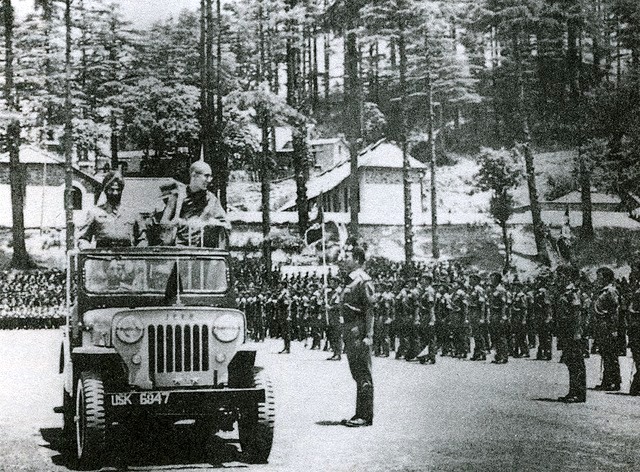
On June 03, 1972, His Holiness The 14th Dalai Lama had visited Headquarters Establishment Number.22, C/O 56 APO to inspect the Tibetan soldiers who serve in the multinational military organization called Special Frontier Force. I had served as the Medical Officer at this military Establishment and my duties required the verification of mental, and physical preparedness of all the men.
While I had served in a multinational defense organization called ‘Special Frontier Force as its Medical Officer, I had a direct opportunity to study and observe the interaction of human aggression and human spirit of compassion. Human aggression as displayed by the Tibetan soldiers of this military Establishment is in response to a stimulus from the external environment to which they have been exposed. The brutal, military occupation of the Land of Tibet by People’s Liberation Army of Communist China has provided the environmental stimulus and has influenced the external behavior and action of these Tibetan men who have volunteered to fight China’s act of military aggression. Since, as a Medical Officer, I have a spiritual relationship with these Tibetan soldiers of my Unit, I can easily recognize their true spiritual nature that seeks Peace, Harmony, and Tranquility both within the person and with others present in the external environment. The human spirit seeks Freedom and it resists military occupation and repression. I could easily recognize the Spirit that makes man to use aggression to defeat the purpose of an enemy who has compromised the desire and the quest for Freedom.
Whole Dude – Whole Human: This painting the Vitruvian Man (c. 1492) by Leonardo da Vinci displays a spirit of scientific inquiry. What is Man? The understanding of human nature will help to promote man’s well-being
What is Man? The motivation for asking this question comes from a statement expressed in the Sanskrit language, ‘Sarvesham Swastir Bhavatu’ which seeks the well-being of all human beings of all races, of all nations, of all cultures, and of all religions. The term altruism describes unselfish concern for the welfare of others. It involves human behavior and actions that appear to favor another individual’s chances of survival and reproduction. The thought expressed in the Sanskrit language reveals human nature. Our efforts to support the well-being of man would be affected by our understanding the ‘real’ or ‘true’ nature of man.
All religious and cultural traditions make assumptions about human nature. The basic assumption about human nature is that of finding it displayed in feelings, thoughts, actions, and behavior.
If man is viewed as a multicellular organism, we need to discover the human nature of this subject who lives because of the functions of the trillions of cells. Hence, we need to know if human nature is displayed in the functional characteristics that are observable in biotic interactions of cells that constitute the human organism. The objective of this blog post is to explore the universal principles that determine human nature. Human cultures and religions seek to know human nature as reflected in man’s thoughts, feelings, moods, actions, and behavior. I seek the knowledge of human nature by describing the characteristics of behavior exhibited by the cells that constitute the human individual.
The Study of Man as a Living Thing:
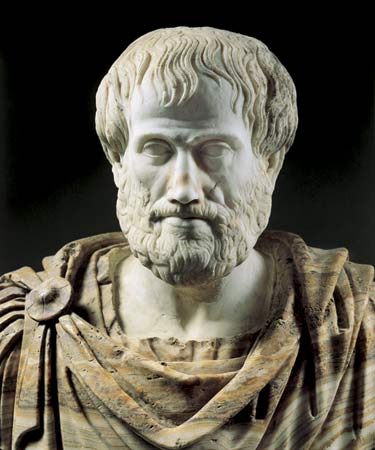
Whole Dude – Whole Human: Greek philosopher and the founder of Biology Aristotle (384 – 322 B.C.) has observed that there is a science which investigates being as being and the attributes which belong to being in virtue of its own nature.
Greek philosopher and the founder of Biology Aristotle (384 – 322 B.C.) has observed that there is a science which investigates being as being and the attributes which belong to being in virtue of its nature. For a thing to come into being, Aristotle describes four kinds of causes, 1. Efficient Cause, 2. Formal Cause, 3. Material Cause, and 4. Final Cause, the end or purpose for which a thing exists.
Aristotle describes corporeal substances are composite of two principles, form, and matter. Matter and Form are the Material and the Formal Cause respectively of what comes to be known as a thing. The matter represents the potentiality of the livng corporeal substance and the form represents the actuality of the living thing. The structure and the behavior of things contribute to their individual being and function. Aristotle did not regard the body and soul as two separate entities as the soul is merely a set of defining features.
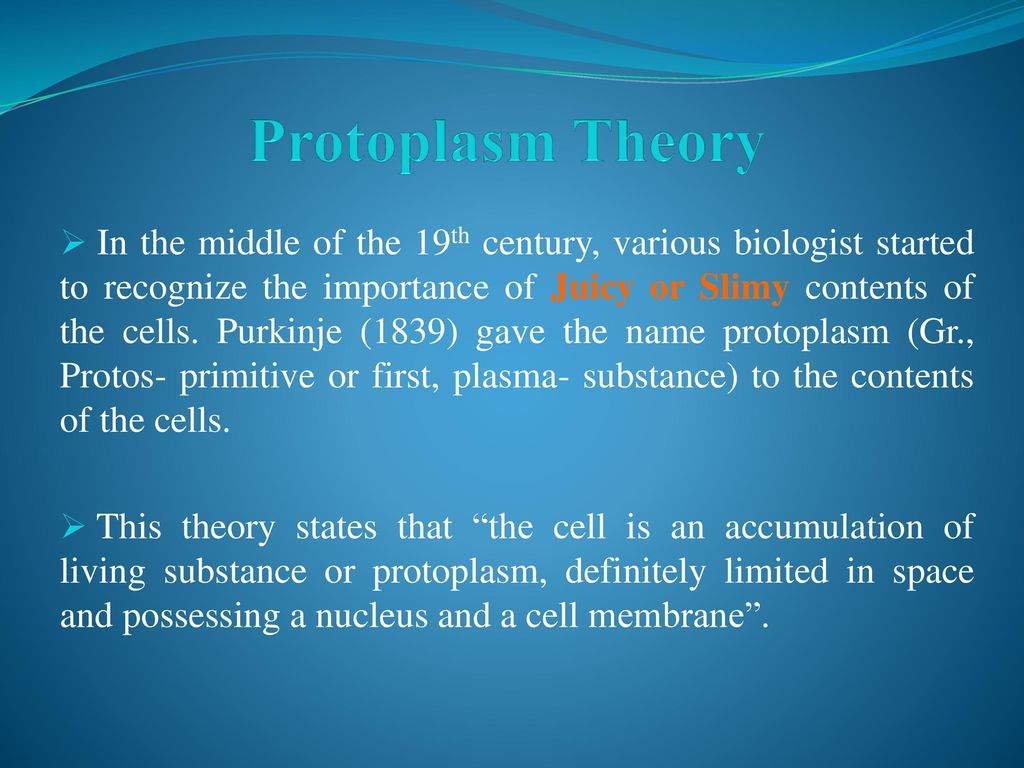
Whole Dude – Whole Human: In the middle of the 19th century, various biologist started to recognize the importance of Juicy or Slimy contents of the cells. Purkinje (1839) gave the name protoplasm (Gr., Protos- primitive or first, plasma- substance) to the contents of the cells. This theory states that the cell is an accumulation of living substance or protoplasm, definitely limited in space and possessing a nucleus and a cell membrane .
I proceed with my presentation keeping the basic criteria that Aristotle uses to know human nature, 1. the human form, 2. the living matter, 3. the human living thing, its nature being a function of its structure and its behavior. In case of man, the human form undergoes changes during every stage of its existence such as infancy, boyhood, youth, adult, and oldage.
The living matter or protoplasm continues to live without any apparent changes in its fundamental living properties. The biological functions or the characteristics of the living matter or protoplasm do not evolve or change because of its survival value for the species.
The living functions such as consciousness, responsiveness, recognition, communication through signalling, motion, and nutrition are innate properties of the living substance or protoplasm and are not acquired by a learning process. This innate ability of protoplasm to perform functions helps in the development of instinctive behavior that is observed in the organism. It is not surprising to observe that certain important features of human nature are innate rather than learned from experience. There are several factors involved in the development of human nature and in the formation of individual character. We need to recognize the contrast between the innate and the learned, heredity and environment, nature and nurture or social upbringing. The biological properties such as Motion, and Nutrition, the biological characteristics such as consciousness or awareness of its own condition called existence in a given environment, and the biological nature such as responsiveness, communication, and recognition of other living cells present in its external environment could account for an instinctive behavior pattern observed in all living organisms. This instinctive behavior pattern accounts for the nature of biotic interactions among members of a given biotic community.
To explain human nature, we need to study the character and behavior of man’s corporeal substance or protoplasm and view man as a terrestrial organism represented by a biotic community of trillions of individual living cells and as a natural host to trillions of microbes that inhabit man’s gastrointestinal tract.
The terms such as spirit or soul must be used by stating its defining features and we need to understand the connection between the feature and the substance that contributes to that feature of soul or spirit that is seen as the vital, animating principle found in all living things.
The Mechanist concept of Life:
Whole Dude – Whole Human: There is fundamental distinction between the lifeless and the living, animate and inanimate, living and nonliving matter. The living system cannot maintain its living functions by exclusively using the elementary laws of Physics and Chemistry.
The Mechanist Concept of Life asserts that the phenomena of life are merely processes and transformations obeying elementary laws of Physics and Chemistry. The living system is ultimately reducible to its constituent molecules and atoms. The living cell is a thermodynamically unstable system. This means that without continuous input of energy, a living cell will degrade spontaneously into a nonliving collection of molecules.
Whole Dude – Whole Human: The human nature of man is constituted by the spiritual nature of the living substance.
To maintain life an organism not only repairs or replaces (or both) its structures by a constant supply of the materials of which it is composed but also keeps its life processes in operation by a steady supply of energy. This functional activity of a living cell is called metabolism.
Whole Dude – Whole Human: The human nature of man is defined by the living substance that is the prerequisite to build the Living System.
Living systems must be supplied energy for continual synthesis of new organic molecules and to replace, or to repair broken organic molecules. The human nature of man is defined by the living substance that can creatively manipulate matter and energy it acquires from its external environment.
We need to explain this functional ability of a living system to acquire energy from its external environment. This ability is not operated by laws of Physics and Chemistry.
Whole Dude – Whole Human: The human nature of man is defined by the living substance that can creatively manipulate matter and energy it acquires from its external environment.
For example, in Physics, the force by which every mass or particle of matter including photons attracts and is attracted by every other mass or particle is called Gravitation which is the weakest of the four Fundamental Forces operating in nature. A living system does not use the force of Gravitation to attract a substance to use it for its metabolism. Physics explains the process of diffusion and the operation of Osmosis in which a solvent passes through a semipermeable membrane such as the wall of a livng cell, into a solution of higher concentration, so as to equalize concentrations on both sides of the membrane (the osmotic pressure gradient). Osmosis is a relevant biological mechanism but it does not fully account for the energy acquisition by a living cell.
How does Protoplasm acquires Energy?
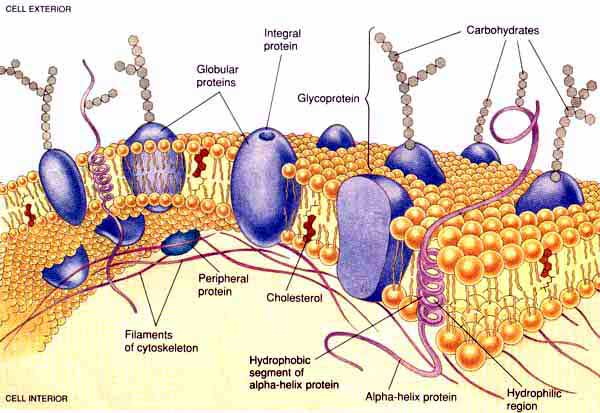
Whole Dude – Whole Human: The Biological Membrane or the Plasma Membrane separates protoplasm of the cell from its environment. It allows a highly controlled exchange of matter across the barrier it poses.
The functional activity called metabolism involves a living system’s continual exchange of some of its materials with its surroundings, principally in the process of building up, repairing, or breaking the molecules of life.
The most striking characteristics of protoplasm are its vital properties of Motion, and Nutrition. By Motion is meant the property which protoplasm has of changing its shape and position by some “intrinsic power” and exhibit amoeboid movement. Ciliary movement or the vibration of hair-like processes from the surface of any cell may also be regarded as a variety of the motion with which protoplasm is endowed. Nutrition is the “power” which protoplasm has of attracting to itself the materials necessary for its growth and maintenance from surrounding matter. When any foreign particle comes in contact with the protoplasmic substance, it becomes incorporated in it, being enwrapped by one or more processes projected from the parent mass which encloses it. When thus taken up, the foreign particle may remain in the substance of the protoplasm for some time without change, or may be again extruded. The living substance called protoplasm has the “intrinsic power” of motion and uses its power to ingest and to expel foreign particles in the external environment with which it may come into contact. The Biological Membrane or the Plasma Membrane which separates protoplasm of the cell from its environment allows a highly controlled exchange of matter across the barrier it poses; some compounds are able to pass through the membrane easily, others are completely blocked. The screening effect on the substances that enter and leave the cell is perhaps the most important function of the membrane.
The actions and behavior of protoplasmic substance are dependent upon its innate “power” and may not be attributable to elementary laws of Physics and Chemistry.
Spiritualism and Human Nature:
Whole Dude – Whole Human: Red Blood Cells provide a very good example of the adaptive subordination of cells to meet the requirements of the Whole Organism. The specialized functions of tissues and organs of human body are possible because of such functional subordination.
The structural differentiation and the functional organization of various organ systems makes man a very complex living organism. This kind of specialized functions of tissues and organs is possible because of adaptive subordination of the cells to the requirements of the Whole Organism. If altruism describes any behavior that appears to favor another individuals’ chances of survival, we can easily recognize this characteristic in the functions performed by the Red Blood Cells. Each Red Blood Cell lives for a very limited life span of its own and during its short period of existence it serves the purpose of the Whole Human Organism with a sense of devotion, with the spirit of cooperation, to provide assistance to all other cells, tissues, and organs of the body in a selfless manner.
I define the term ‘Spiritualism’ as the NATURE of a relationship, a partnership, an association, or bonding between two individual living entities based upon characteristics such as compassion, sympathy, understanding, cooperation, mutual assistance, mutual tolerance, voluntary subservience to provide some benefit to the member participating in the biotic interaction.
Spiritualism is innate and is not acquired by learning experience. The very existence of the human being and to perform the characteristic living functions, man depends upon the protoplasmic substance and its innate “power” to acquire energy from its external environment.
The human form becomes the actuality that it represents by the NATURE of its spiritual association with the protoplasmic living matter. Man is a spiritual being because of the spiritual nature of his protoplasmic living substance.
Whole Dude – Whole Human: The human nature of man is determined by the spiritual nature of his living substance often described as protoplasm.
When you breathe in smoke that comes from the end of a lit cigarette, cigar, or pipe ( often described as ‘sidestream smoke‘ ), or when you breathe in smoke that is exhaled by a smoker(often described as ‘mainstream smoke’ ), you are exposed to the risk of secondhand smoke. You will be inhaling almost the same amount of chemicals as the smoker breathes in. Tobbaco smoke contains more than 4,000 different chemical compounds, and more than 50 of them are known to cause Cancer. Some of these known carcinogens are Hydrogen Cyanide, Benzene, Formaldehyde, and Carbon monoxide. Involuntary or passive smoking can kill. There is no amount of exposure to secondhand smoke that is considered as a safe level of exposure. The more secondhand smoke that you breathe in, the more your health risk increases. Secondhand smoke exposure causes nearly 50,000 deaths per year in adult nonsmokers in the United States. 3,000 deaths are from Lung Cancer, and 46,000 deaths are from heart disease. Nonsmokers increase their risk of developing Lung Cancer by 20% to 30%, and heart disease by 25% to 30% when they are exposed to secondhand smoke. The risks of Breast Cancer and Cervical Cancer and other types of Cancer are also higher. Women who are exposed to secondhand smoke face a 69% higher risk of heart disease and a 56% higher risk of Stroke than those who are not exposed to smoke. Children are particularly vulnerable to the effects of secondhand smoke because of their bodies are still growing and they breathe at a faster rate than adults. The effects of smoking can be very significant especially for those who live or work with a smoker. In reality, most of the smoke from a burning cigarette doesn’t get sucked down into smoker’s lungs- it simply escapes into the air where it can be inhaled by anyone unfortunate enough to be nearby. Living under the shadow of a great person may give some benefits, protection, and a sense of security. But, life under the shadow of secondhand smoke is a prescription for death. There was such an unfortunate victim who had lived under the shadow of a great leader known as Mohammed Ali Jinnah.
Mohammad Ali Jinnah, Qaid-e-Azam, the great leader and founder of Pakistan. What is the risk of Living under the Shadow of a great leader?
Jinnah, Indian Muslim politician was the founder and first Governor General of Pakistan (1947-1948). His parents arranged for an early marriage for him before he left for England at the age of 16. While in London, Jinnah suffered the loss of his wife and mother. In 1895, at the age of 19, he was called o the Bar on completion of his formal studies to become a barrister. He had supported the election of Dadabhai Naoroji, a Parsi leader, a leading Indian nationalist who ran for the English Parliamnet. Naoroji became the first Indian to sit in the British House of Commons. In 1896, Jinnah returned to Karachi and then moved to Bombay to start his legal practice. He met Ruttenbai, the daughter of Dinshaw Petit, a Bombay Parsi millionaire. Jinnah had married this young and beautiful lady over tremendous opposition from her parents and others. The great love and the marriage withered and proved to be an unhappy union. The stress imposed by exposure to secondhand smoke was not known and was not recognized those days. Jinnah’s addiction to Tobacco and the price paid by his wife describe the other side of Jinnah which many people in Pakistan and India tend to ignore.
The Other side of Mohammed Ali Jinnah :
Jinnah, a great leader with a simple addiction to Tobacco.
This young and beautiful lady had great feelings of love for Jinnah and those tender feelings withered while she had lived under the Shadow of Secondhand Smoke.
I would like to share the very interesting and powerful story about the life of Ruttenbai who had lived under the shadow of Mohammed Ali Jinnah . Unfortunatley, this story posted below my post fails to mention the nature of cancer that had killed this beautiful lady at such an young age. I am very sure about the nature of her illness. She died of Lung Cancer. She developed Cancer because of inhaling tobacco smoke and it is a very well recognized risk factor now. Secondhand Tobacco smoke kills people and even now the chances of survival are not good. I had personally witnessed a similar case and had narrated that story at my Home page of BhavanaJagat and the story is titled ‘Living Under the Shadow – A Prescription for Death’. A young, beautiful lady, the first wife of Chief of Army Staff (under Prime Minister Rajiv Gandhi), General K S Sundarji ( who is well-known for Operation Blue Star ) died of Lung Cancer in Army Hospital, New Delhi during 1978. The connection between smoking and Lung Cancer was well understood but at that time the risk of Lung Cancer due to Secondhand Tobacco Smoke was not properly recognized.
The Chief of Army Staff, General Krishnaswamy Sundarrajan, PVSM - I had served under his Command while he was the General Officer Commanding of the First Armoured Division during 1976 to 1978. His first wife, Padma Sundarji had lived her life under the shadow of Secondhand Smoke.
More than 61 years have passed since the death of founder of Pakistan , Quaid-i-Azam Mohammad Ali Jinnah. But even today, nothing about Jinnah seems ordinary —not his legal career, politics, personal life, his legacy and even the property he left behind.
The great South Asian intellectual Eqbal Ahmed once described Jinnah as an enigma of modern history. His aristocratic English lifestyle, Victorian manners, and secular outlook rendered him a most unlikely leader of India ’s Muslims. Yet, he led them to separate statehood, creating history, and in Saad R. Khairi’s apt phrase, “altering geography”.
Much has been written about Jinnah’s legal career, politics, his role as a founder of Pakistan and his vision, but even today, very little is known about Jinnah’s personal life. This was probably because Jinnah never had time to write a diary or an autobiography and whatever little he wrote was formal and matter of fact. For most of his life, he remained reserved, taciturn and secretive. He wrote his will in May, 1939, but it was only after his death that Liaquat Ali Khan, his close associate and the first Prime Minister of Pakistan, came to know that he was its trustee and executor.
His only child, Dina Wadia, has hardly ever spoken about her father in public. So furious was Jinnah with Dina that he disowned her after she married a Parsi man against his wishes, and yet he left two lacs for her in his will. Akbar Ahmed’s movie Jinnah had just ten to fifteen minutes on Jinnah’s personal life, which are nowhere near enough.
Life Under The Shadow – Ruttie in Jinnah’s Shadow
image004
image005
image006
Jinnah’s first wife, fourteen year old Emibai from Paneli village, died just eight months after he left for London at age sixteen in 1892, to join Graham’s Shipping and Trading Company, which conducted business with his father in Karachi. It was a forced marriage, as Jinnah’s mother was afraid that if he went to England , he might end up marrying an English girl. He barely knew Emibai.
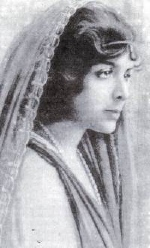
Jinnah’s second marriage with the most beautiful girl of Bombay – Ruttie: The Flower of Bombay – was like a fairy tale. It began in the summer of 1916 in Darjeeling or “Town of the Thunderbolt” (how appropriate considering what was to happen there).
Jinnah had established himself as a lawyer and a politician by then and had become friends with Sir Dinshaw Maneckjee Petit, the son of one of the richest and most devoutly orthodox Parsis of the 19th century.
The Petit`s chateau overlooked Mount Everest and it was there Jinnah met his only daughter Ruttenbai Petit or Ruttie as she was popularly called. Merely sixteen at that time, Ruttie was a charming young girl. Stanley Wolpert writes in Jinnah of Pakistan :“Precociously bright, gifted in every art, beautiful in every way. As she matured, all of her talents, gifts and beauty were magnified in so delightful and unaffected a manner that she seemed a fairy princess”.
A dazzling beauty and full of life, Ruttie had exquisite taste and affable manners. Quick-witted, she was easily one of the best dressed and most popular women among the elitist circles of Bombay . She was intellectually far more mature than other girls of her age, with diverse interests ranging from poetry (Oscar Wilde being her favorite, whom she often recited) to politics. Her large collection of books, which remained in Jinnah’s possession after her death, reflected her deep interest in poetry, literature, history, occultism, mysticism and sorcery. She was an excellent horse-rider. She attended all public meetings and was inspired by Annie Besant’s Home Rule League.
A fierce supporter of India for Indians, Ruttie was once asked about rumors of Jinnah’s possible knighthood and whether she would like to be Lady Jinnah. She snapped that she would rather be separated from her husband than take on an English title.
Jinnah on the other hand also had a special interest in acting and in Shakespeare’s dramas. While in London , he had acted in some Shakespearean plays and even considered seriously taking up acting as a profession. It was his dream to play Romeo at The Globe in London . Khwaja Razi Haider thinks it was probably Jinnah’s deep interest in Shakespeare that gave him insight into the intricacies of the human character, which he was to use for grasping the essentials of Indian politics. Jinnah was thirty-nine and Ruttie sixteen, but the age difference proved no obstacle in their love. Love has no logic.
He was enamored by her beauty and charm and she was awe- struck by “Jay”, as she called him. Jinnah asked Sir Dinshaw for Ruttie’s hand in marriage, who became furious and refused. Jinnah repeatedly pleaded his case but Dinshaw never gave in, as Jinnah had a different faith and he was more than twice Ruttie’s age. Their friendship ended and Dinshaw forbade Ruttie from meeting Jinnah while she lived in his house. He even got a court injunction restraining Jinnah from meeting her (a pity no biographer has yet traced the court papers).
The couple continued to meet secretly, and patiently waited for two years until February 1918 when Ruttie turned eighteen, and was free to marry. She walked out of her parental home to which she was never to return, and converted to Islam at Bombay ’s Jamia Mosque, under the Muslim Shiite doctrine, on April 18, 1918.
The very next day, Jinnah and Ruttie got married in a quiet ceremony at Jinnah’s Malabar Hill house in Bombay . Located in a most highly-priced area today, with Maharashtra’s Chief Minister as its next-door neighbor, Jinnah House remains a dispute between India , Pakistan and Dina Wadia. Jinnah owned another house at 10 Aurangzeb Road , Delhi , which he sold just before Partition for Rs 3 lacs. The Dutch Ambassador to India lives there now. The Raja Sahib of Mahmudabad, who signed as Jinnah’s witness, and a few other friends, attended the wedding. Maulana Muhammad Hasan Najafi was Ruttie’s witness. Jinnah presented the wedding ring to Ruttie, a gift from Raja Sahab, and paid Rs 125,000 as haq mehr . Nobody from Ruttie’s family attended the wedding. Interestingly, the Nikah Nama stated “Ruttenbai” as the bride’s name instead of Marium, her Islamic name. The honeymoon was first at Raja Sahab’s Nainitaal mansion, and then at the Maidens Hotel, a magnificent property just beyond the Red Fort.
Quaid’s Nikahnama
Quaid’s house in Bombay
Gandhi’s grandson Raj Mohan Gandhi writes about the wedding in his book Understanding the Muslim Mind: “For the first time in his life, a girl had absorbed Jinnah’s emotions. Living for sometime now in a large but somber Malabar Hill house, bowing to ladies (on occasional parties) and praising their sarees but otherwise keeping a distance from them, (he) fell in love with Ruttenbai. Joy and laughter entered Jinnah’s life. The Malabar Hill house became brighter.’ She presented him with a daughter, Dina. But, ‘Alas the happiness was not destined to last; Sarojni’s veiled prediction of trouble came true”.
Sarojni Naidu was a huge admirer of Jinnah, wrote several poems and prose pieces on him, and many historians believe she was in love with him.
She wrote this about the wedding in a letter to Sir Syed’s son, Syed Mahmud: “So Jinnah has at last plucked the Blue Flower of his desire. It was all very sudden and caused terrible agitation and anger among the Parsis; but I think the child has made far bigger sacrifices than she yet realises. Jinnah is worth it all – he loves her; the one really human and genuine emotion of his reserved and self-centred nature. And he will make her happy.”
The first few years of the marriage were a dream for Ruttie and Jinnah, the happiest time of their lives. They traveled across India , Europe and North America together. Ruttie watched with a great sense of pride the feverish political activity of her husband. She would be seen in the visitors’ gallery when Jinnah was due to speak, accompanied him to the High Court, and even attended the Nagpur session of the Congress in December 1920.
According to Wolpert: “They were a head- turning couple; he in his elegant suits, stitched in London , she with her long, flowing hair decked in flowers. There was no limit to their joy and satisfaction at that time. Their only woe was Ruttie’s complete isolation and ostracism from her family.”
Kanji Dwarkadas, a veteran leader of Congress and a close friend of the couple, who looked after Ruttie during her last days, wrote in his book Ruttie Jinnah: The story of a great friendship: “For Jinnah, who was not generous in many matters, no expense was too great to satisfy the extravagant claims of the baronet’s spoilt child. During a visit to Kashmir , she spent Rs 50,000 in refurnishing the boathouse and Jinnah gladly paid all the bills. He treated her wonderfully well, and paid without a murmur all the bills necessitated by the luxurious life she led.Ruttie’s fabulous beauty, spontaneous wit, and immense charm have been praised to the neglect of her serious interests.”
Even though Ruttie was much younger than Jinnah, she made him a very happy man. They had no separate existence and Jinnah found her a great source of inspiration.
He resigned from the Orient Club where he used to play chess and billiards. He was so deeply in love with Ruttie that he would return from the law courts on time each day and talk to her for hours on end.
Unfortunately, their happiness was short- lived and the marriage started to crack after 1922-3. What caused the ruination of the Jinnah-Ruttie marriage? Was it Jinnah’s busy political life and his inability to give enough time to Ruttie, their age difference, or their incompatibility of temperaments? He was cold, introverted and domineering. She was young, extroverted, glamorous. There is no clear answer but the fact remains that Ruttie and Jinnah still loved each other despite the rift in their marriage.
It is evident in every letter Ruttie wrote during that period, and every book written on their relationship. She moved to London with Dina in 1922 and from there too, her heart was still set on her life with Jinnah.
She wrote in a letter to Kanji in India :“And just one thing more – go and see Jinnah and tell me how he is – he has a habit of overworking himself and now that I am not there to tease and bother him, he will be worse than ever.”
After her return, the couple tried one more time to save their failing marriage and took a five-month tour to Europe and North America together. But the rift grew and by January 1928 they were virtually separated, when Ruttie became seriously ill with cancer. Shortly before her death, she wrote a letter to Jinnah from Marseilles , France where she had gone for treatment. It turned out to be her last letter to him (larger view of original hand-written letter with typed text here
Life Under The Shadow – Ruttie’s Letter to Jinnah
image011
S. S. Rajputana,
Marseilles 5 Oct 1928 Darling – thank you for all you have done. If ever in my bearing your once tuned senses found any irritability or unkindness – be assured that in my heart there was place only for a great tenderness and a greater pain – a pain my love without hurt. When one has been as near to the reality of Life (which after all is Death) as I have been dearest, one only remembers the beautiful and tender moments and all the rest becomes a half veiled mist of unrealities. Try and remember me beloved as the flower you plucked and not the flower you tread upon.
I have suffered much sweetheart because I have loved much. The measure of my agony has been in accord to the measure of my love. Darling I love you – I love you – and had I loved you just a little less I might have remained with you – only after one has created a very beautiful blossom one does not drag it through the mire. The higher you set your ideal the lower it falls.
I have loved you my darling as it is given to few men to be loved. I only beseech you that the tragedy which commenced in love should also end with it.
Darling Goodnight and Goodbye Ruttie
image013
image014
It is a pity that none of the letters that Jinnah wrote to Ruttie have ever been made public. M.C. Chagla, a former Chief Justice of the Bombay High Court and a diplomat at the UN, has described the last days of Ruttie and Jinnah’s marriage in his book “Roses in December”. Chagla knew the couple very well, as he assisted Jinnah at his chambers during that time. He idealized Jinnah but severed all ties when he began working on the idea of an independent state for the Muslims of India. He writes: By 1927, Ruttie and Jinnah had virtually separated. Ruttie’s health deteriorated rapidly in the years after they returned from their final trip together. Ruttie lived at the Taj Hotel in Bombay, almost a recluse as she became more and more bed-ridden. Kanji continued to be her constant companion. By February 18, 1929 she had become so weak that all she could manage to say to him was a request to look after her cats.Two days later, Ruttie Petit Jinnah died. It was her 29th birthday. She was buried on February 22 in Bombay according to Muslim rites. Jinnah sat like a statue throughout the funeral but when asked to throw earth on the grave, he broke down and wept. That was the only time when I found Jinnah betraying some shadow of human weakness. It’s not a well publicised fact that as a young student in England it had been one of Jinnah’s dreams to play Romeo at The Globe. It is a strange twist of fate that a love story that started like a fairy tale ended as a haunting tragedy to rival any of Shakespeare’s dramas.”
The second time Jinnah ever broke down was in August 1947 when he visited Ruttie’s grave one last time before leaving for Pakistan . The architect of Pakistan paid a high price for Partition by leaving two of his most beloved possessions on ‘the other’ side of the border, the Jinnah House on Malabar Hill where he had the happiest moments of his life, and his beloved wife Ruttie who remains buried in Bombay. Jinnah left India in August 1947, never to return again, but he left behind a piece of his heart in a little grave in a cemetery in Bombay .