Whole Identity-Who is Whole Dude at Whole Foods?

Michigan Medicine AHEAD Study uses unscientific demographic information to ascertain the Identity of Whole Dude for participation in Medical Research Project

Michigan Medicine should have known better and must use valid, verified principles to identify every Human Being as a Specific Individual with Individuality without depending upon unverified claims about Race and Ethnicity.
Michigan Medicine AHEAD Study has no Research Protocol to verify the Identity and Individuality of the Complex, Multicellular, Human Organism

Man describes his identity in terms of his personal name, age, gender, race, ethnicity, place of origin, language, religion, political, occupational, or social affiliation. In reality, the man is an association of trillions of individual cells. Michigan Medicine should have known better and must use valid, verified principles to identify every Human Being as a Specific Individual with Individuality without depending upon unverified claims about Race and Ethnicity.

Michigan Medicine AHEAD Study has no Research Protocol to verify the Identity and Individuality of the Complex, Multicellular, Human Organism

The AHEAD Study is researching the safety and effectiveness of an investigational medication in people who might be at increased risk for developing memory loss associated with Alzheimer’s Disease. The study is looking for participants age 55-80 years old, who have generally normal memory function in daily life, and who are not being treated for memory problems. For individuals age 55-64 years old, an additional risk factor is required, such as a parent or sibling with Alzheimer’s Disease or previous biomarker testing showing increased risk for developing Alzheimer’s Disease. This study sees participants in Ann Arbor. Contact Lauren Mackenzie at spearsl@med.umich.edu or 734-232-2415, Clinical Research Coordinator, Neurology Clinical Trials Organization (NeCTO), NCAC.

On Tuesday, December 05, 2023, at the Michigan Clinical Research Unit (MCRU) at the Cardiovascular Center (CVC), Whole Dude was interviewed for participating in the AHEAD Study. Whole Dude was asked to provide their demographic information to register their personal identity for participation in the Medical Research Project. Further, Whole Dude was asked to provide information about their Race which is entirely determined by the Place of their Birth, and the Country of their Birth. Whole Dude was asked to verify their Ethnicity using the one and only Criteria which relates to the Ethnicity of Hispanic people.

Whole Dude remains totally dismayed to learn that the Research Project has not established its own Protocol to describe the Identity and Individuality of the Specific Human Individual who may be included as a Research Subject in Clinical Medical Research. Michigan Medicine should have known better and must use valid, verified principles to identify every Human Being as a Specific Individual with Individuality without depending upon unverified claims about Race and Ethnicity.

Michigan Medicine AHEAD Study has no Research Protocol to verify the Identity and Individuality of the Complex, Multicellular, Human Organism
Michigan Medicine should have known better and must use valid, verified principles to identify every Human Being as a Specific Individual with Individuality without depending upon unverified claims about Race and Ethnicity.

Man is constituted as a Biotic Community of socially interacting cells and microbes

Whole Dude at Whole Foods examines the complex issues of identity and individuality in the multicellular human organism
Whole Dude at Whole Foods examines the complex issues of identity and individuality in the multicellular human organism. The Law of Individuality leaves the Individual with no choice other than that of expressing variability while being a member of a Social Group which may have a fixed Identity.
Whole Dude at Whole Foods examines the complex issues of identity and individuality in the multicellular human organism

The Cellular and the Molecular Basis of Identity and Individuality

Whole Dude at Whole Foods has Cellular and Molecular Basis for his Identity and Individuality. Human Identity undergoes changes due to the aging process but the Human Individuality persists unchanged. Individuality and the Genome. The Law of Individuality governs all Individual Living Things.

In 1965, while Whole Dude was a student of Human Anatomy at Kurnool Medical College, they had the opportunity to know Dr. J. C. B. Grant (1886-1973), the author of Grant’s Atlas of Anatomy. The 5th Edition of his Atlas was published in 1962 and was available in India in their Medical College Library.

John Charles Boileau Grant (1886–1973)

Dr. J C B Grant. Whole Dude coined the phrase Whole Individualism to discover Man by a study of the building blocks, the structural units and organization of the human body. To defend human existence, Whole Individualism lays the emphasis on knowing the person who is at risk apart from knowing the agent posing the risk.

Born in Loanhead (south of Edinburgh) in 1886, Grant studied medicine at the University of Edinburgh Medical School and graduated with an M.B., Ch.B. degree in 1908. While at Edinburgh, he worked under the renowned anatomist Daniel John Cunningham. Grant became a decorated serviceman of the Royal Army Medical Corps during the First World War before moving to Canada.

He established himself as an ‘anatomist extraordinary’ at the University of Toronto, publishing three textbooks that form the basis of Grant’s Anatomy. The textbooks are still used in anatomy classes today, and made unforgettable memories for those who found themselves in his classes nearly a century ago. One of Grant’s many accomplishments was establishing a division of histology within the department.

Whole Dude at Whole Foods has Cellular and Molecular Basis for his Identity and Individuality. Human Identity undergoes changes due to the aging process but the Human Individuality persists unchanged. Individuality and the Genome. The Law of Individuality governs all Individual Living Things.

As a medical student, Whole Dude used Grant’s Atlas of Anatomy, the seminal work of Scottish-born Dr. John Charles Boileau Grant, who was the chair of Anatomy at the University of Toronto in 1930 and retired in 1965.

Students continue to use Grant’s textbooks today, and for the more artistic anatomist there’s even a Grant’s Anatomy Coloring Book, published in 2018.

Whole Dude at Whole Foods has Cellular and Molecular Basis for his Identity and Individuality. Human Identity undergoes changes due to the aging process but the Human Individuality persists unchanged. Individuality and the Genome. The Law of Individuality governs all Individual Living Things.

At the University of Toronto, Dr.McMurrich, Chair of Anatomy was succeeded as chairman in 1930 by Dr. John Charles Boileau Grant. Dr. Grant wrote three text books, of which “An Atlas of Anatomy” (published in 1943) rapidly gained international prominence and is still, one of the most widely used anatomical atlases in the world. It is now known as “Grant’s Atlas of Anatomy” and is in its tenth edition. The atlas was based on a series of elegant dissections done either by Grant or by others under his supervision. Many of these dissections are currently housed in Grant’s Museum at the University of Toronto. 

The concept of Whole Dude relates to knowing the man, the building blocks and the structural units and organization of the human body. To defend human existence, Whole Dude lays the emphasis on knowing the person who is at risk apart from knowing the agent posing the risk.

The Identity of Multicellular Human Organism:

The cellular and the molecular basis of human identity and human individuality. Cunningham’s Manuals of Practical Anatomy provide Whole Dude the learning tools to know and understand Man’s External and Internal Reality and its Identity as described by Cells, Tissues, Organs,and Organ Systems

Daniel John Cunningham was born on 15 April 1850 in Scotland. After his initial schooling at his home town, Crieff, he took up the study of medicine at the University of Edinburgh and passed with honours. He is best known for the excellent series of dissection manuals, namely Cunningham’s Dissection Manuals. Cunningham’s Manual of Practical Anatomy has provided me the learning tools to know and understand Man’s External and Internal Reality and its Identity as described by Cells, Tissues, Organs,and Organ Systems.

The cellular and the molecular basis of human identity and human individuality. Cunningham’s Manuals of Practical Anatomy provide Whole Dude the learning tools to know and understand Man’s External and Internal Reality and its Identity as described by Cells, Tissues, Organs,and Organ Systems

Whole Dude learned the truths about the living human body and about Life while dissecting dead human bodies in a systematic manner. The Manual of Practical Anatomy which guides students through this entire process was published in England. The author Dr. Daniel John Cunningham prepared the Manual while dissecting cadavers of British or Irish citizens. He never encountered cadavers of Indian citizens. At Kurnool Medical College, Kurnool, Andhra Pradesh, India, where Whole Dude was a student, the Department of Anatomy obtains dead bodies from  Government General Hospital Kurnool and most of the deceased are the poor and often illiterate people of that region. None of the deceased had the chance to know this man called Cunningham and Cunningham had no knowledge about the existence of these people who arrive on our dissection tables. But, as the dissection of the human body proceeds, inch, by inch, we recognize the anatomical parts as described by Cunningham. The manual also lists some anatomical variations and we very often exchange information between various dissection tables and recognize the variations mentioned. The dissections also involve slicing the organs and studying them, both macroscopically, and microscopically. We did not miss any part of the human body.

The cellular and the molecular basis of human identity and human individuality. Cunningham’s Manuals of Practical Anatomy provide Whole Dude the learning tools to know and understand Man’s External and Internal Reality and its Identity as described by Cells, Tissues, Organs,and Organ Systems

So what is the Identity of this Human Person who experiences his life using Sensory Experiences such as Taste? How does the living Human organism maintains its Identity and Individuality? Apart from the Cultural Traditions of India, several Schools of Religious Thought claim that the Human Individuality and true or real Identity is represented by Human Soul. Does man have a soul? Where does this soul exist in the human body? What is the location if the soul is present in the living person? How does the human organism acquires Knowledge about its own structures and the functions they perform?To know the burdens of Life, Whole Dude asks his readers to know the reality of man and the nature of his existence.

The cellular and the molecular basis of human identity and human individuality. THE KNOWER AND THE KNOWING-SELF: IN THIS IMAGE OF HUMAN BRAIN, THE GREEN PORTION OF BRAIN STEM IS CALLED RETICULAR FORMATION. WHOLE DUDE DESCRIBES IT AS THE KNOWING-SELF AND IT IS THE “KNOWER” OF THE HUMAN BODY WHICH CONSTANTLY CHANGES ITS MORPHOLOGICAL APPEARANCE UNDER THE INFLUENCE OF TIME CALLED THE AGING PROCESS.

Human Identity vs Human Individuality:

Whole Dude at Whole Foods has Cellular and Molecular Basis for his Identity and Individuality. Human Identity undergoes changes due to the aging process but the Human Individuality persists unchanged. Individuality and the Genome. The Law of Individuality governs all Individual Living Things.

Human Identity may involve a variety of factors such as facial appearance, age, gender, race, ethnicity, language, religion, culture, nationality, sexual orientation, social and occupational status. Whereas human individuality has to be evaluated by using the markers that the human body uses to recognize its own Self and defends its own existence from threats posed by Non-Self.

Whole Dude at Whole Foods has Cellular and Molecular Basis for his Identity and Individuality. Human Identity undergoes changes due to the aging process but the Human Individuality persists unchanged. Individuality and the Genome. The Law of Individuality governs all Individual Living Things.
The cellular and the molecular basis of human identity and human individuality. In the final analysis, the human organism is a biotic community of trillions of individual, independent cells.
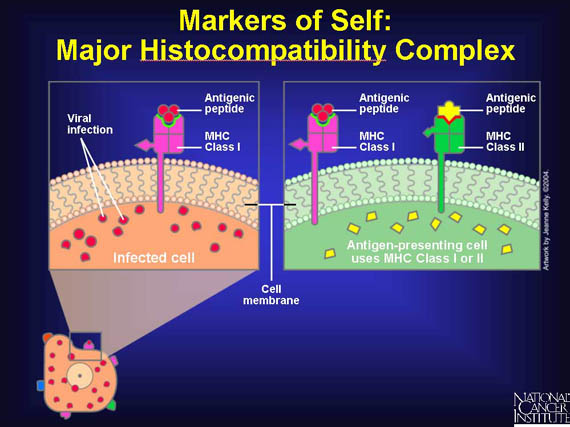
The cellular and the molecular basis of human identity and human individuality: THE MAJOR HISTOCOMPATIBILITY COMPLEX (MHC) IS THE HUMAN LEUKOCYTE ANTIGEN (HLA) GENE CLUSTER ON CHROMOSOME 6. HUMAN ORGANS AND TISSUES CANNOT BE TRANSPLANTED OR GRAFTED INTO THE BODIES OF UNRELATED INDIVIDUALS. HUMAN IDENTITY MUST BE DISCOVERED AT MOLECULAR LEVEL TO ESTABLISH THE AFFINITY BETWEEN TWO HUMAN INDIVIDUALS.
Whole Dude at Whole Foods has Cellular and Molecular Basis for his Identity and Individuality. Human Identity undergoes changes due to the aging process but the Human Individuality persists unchanged. Individuality and the Genome. The Law of Individuality governs all Individual Living Things.

THE MAJOR HISTOCOMPATIBILITY COMPLEX (MHC) IS THE HUMAN LEUKOCYTE ANTIGEN (HLA) GENE CLUSTER ON CHROMOSOME 6. HUMAN ORGANS AND TISSUES CANNOT BE TRANSPLANTED OR GRAFTED INTO THE BODIES OF UNRELATED INDIVIDUALS. HUMAN IDENTITY MUST BE DISCOVERED AT MOLECULAR LEVEL TO ESTABLISH THE AFFINITY BETWEEN TWO HUMAN INDIVIDUALS.

Human Individuality and the Genome

Individuality and the Genome. A COLONY OF GENETICALLY IDENTICAL E. COLI IS ACTUALLY A MOB OF ‘INDIVIDUALS’.

Understanding Individuality: 

Individuality and the Genome. Even among simple forms of life, like the common bacterium E. coli, genetics only partly determines what any one organism is like. E. coli expresses its individuality in many ways. All the bacilli above are genetically identical, but the shades show differences in the production of proteins that digest lactose.Credit…Dr. Michael Elowitz

Dr. Michael Elowitz, Physicist at California Institute of Technology has conducted experiments on colonies of genetically identical (Clones) E. coli bacteria under identical experimental conditions and has discovered that the clones behave in different ways which could be viewed as an expression of ‘individuality’.

Whole Dude at Whole Foods has Cellular and Molecular Basis for his Identity and Individuality. Human Identity undergoes changes due to the aging process but the Human Individuality persists unchanged. Individuality and the Genome. The Law of Individuality governs all Individual Living Things.

E. coli bacteria in billions populate our intestines. Typical E. coli bacillus has about 4,000 genes. Human cells have about 20,000 genes. The bacteria have fingerprints of their own and even when they share the exact same genome, they could still be identified as ‘individuals’.

Individuality and the Genome. Dr. Michael Elowitz and Dr. Long Cai are developing a platform through which cells can self-record their lineage and molecular event histories directly into their own DNA as they create new tissues, particularly in the brain. This research will help to address how individual cells in a developing embryo diversify into many distinct cell types, each playing its unique role in the organism.

The key to understanding E. coli’s fingerprints is to recognize that the bacteria are not simple machines. Unlike wires and transistors, E. coli’s molecules are floppy, twitchy and unpredictable. In an electronic device, like a computer or a radio, electrons stream in a steady flow through the machine’s circuits, but the molecules in E. coli jostle and wander. When E. coli begins using a gene to make a protein, it does not produce a smoothly increasing supply. It spurts out the proteins in fits and starts. One clone may produce half a dozen copies of a protein in an hour, while a clone right next to it produces none.

Michael Elowitz, a physicist at Caltech, put these bursts on display in an elegant experiment. He and his colleagues incited E. coli to produce its proteins for feeding on lactose. Dr. Elowitz and his colleagues added extra genes to the bacteria so that when they made lactose-digesting proteins, they also released light.

The bacteria, Dr. Elowitz found, did not produce a uniform glow. They flickered, sometimes brightly, sometimes dimly. And when Dr. Elowitz took a snapshot of the colony, it was not a uniform sea of light. Some microbes were dark at that moment while others shone at full strength.

At the very least, E. coli’s individuality should be a warning to those who would put human nature down to any sort of simple genetic determinism. Living things are more than just programs run by genetic software. Even in minuscule microbes, the same genes and the same genetic network can lead to different fates.

The bacteria have fingerprints of their own and even when they share the same genome, they could still be identified as individuals.

Individuality and the Genome. Man is constituted as a Biotic Community of socially interacting cells and microbes

Humans differ from one another in too many different ways and it is hard to count. The current human population of over six billion could be identified as the same number of individuals. Each human being has an unique genome of his own. There are millions of typographical differences between one genome and another human genome. Even identical twins are not truly identical at all as identical genes in our cells can behave differently. 

Living entities are not like simple machines. When we use a gene to make a protein, the gene may not produce a smoothly increasing supply of that protein. The gene tends to work in fits and starts and spurts out the protein. Identical genes can behave differently as the gene makes protein or remains silent depending upon the ‘Methyl’ groups that cap the DNA strands and function as ‘transducers’. These ‘Methyl’ groups sometimes fall off of DNA or become attached to new spots. Hence genetically identical individuals can have different physical identities in the natural world. The protein molecules that make up living entities, turn them into individuals. 

The Irrelevance of Evolution: 

CHARLES DARWIN’S ORIGIN OF SPECIES (1859) PROPOSES A MECHANISTIC, NON-PURPOSIVE ACCOUNT OF EVOLUTION AS THE PRODUCT OF NATURAL SELECTION OF RANDOMLY PRODUCED GENETIC MUTATIONS.

In the natural world, all living entities exist as individuals and express their individuality. The Theory of Evolution proposes that a species can descend or arrive to become a new species by changing its genome in a gradual and incremental manner using a mechanism that is described as Natural Selection. As per Darwinism, the mechanism of natural selection operates via a process of random and unguided mutations in the genetic code that changes the genome and eventually produces the ‘biodiversity’ that we witness in the natural world.

Individuality and the Genome. The phenomenon of Diversity must be studied beyond the realm of genes, genetic codes, and genomes. Cytoplasm and its organs must be studied to understand the physiological basis of Diversity

This Theory of Evolution has no relevance to the ultimate identity of each individual member of a given species. This identity is dictated by interplay between the various components of each individual cell and its interactions with other cells. With the same genomes or different genomes, the living entities can only exist as individuals and they have no other choice. The evolutionary connections are not relevant to this identity. To understand the phenomenon of biodiversity, we will be forced to look at each individual member of each given species. 

The Law of Individuality: 

Individuality and the Genome. The Law of Individuality formulates the phenomenon of Human Individuality.

Whole Dude states that the Law of Individuality governs all the living entities and is manifested in various biological phenomena. The genes and the genetic code function in accordance with the Law of Individuality. Hence, Whole Dude describes Individuality as a Trade Mark. It is the characteristic of a biological entity. Genes and the genetic codes are the tools that an organism uses to express its Individuality. Each organism assembles its own kind of protein molecules to define its identity and to defend its existence in the natural world. 

Individuality and the Genome. The Law of Individuality formulates the phenomenon of Changing Human Identity and the Unchanging Human Individuality.

Whole Dude is the Given Name of a known, verified, specific Whole Person

What is Identity and What is Individuality?

Human Identity and Individuality: A brief glance at the face is enough for most people to identify one another. Face recognition is a basic feature of human identity and recognition.

A brief glance at the face is enough for most people to identify one another. However, man does not exist with the same identity during the course of his life. The word identity describes the condition or fact of being a specific person. Identification is the process by which a person can be identified in an accurate and consistent manner.

The morphological or the external appearance of a person is subject to constant changes and it differs in a significant manner during the various stages of life such as infancy, boyhood, adulthood, and old age.

The morphological or the external appearance of a person is subject to constant changes and it differs in a significant manner during the various stages of life such as infancy, boyhood, adulthood, and old age. The term individuality describes the sum of the characteristics or qualities that set one person apart from others. The condition of being individual, or different from others establishes the indivisibility of man. Man is unique, original, one kind of person who has not existed before and would not also exist in future even when he shares the same identical genome. Two identical twins could be correctly identified as two different individuals. I propose the Law of Individuality and Creation which claims that man exists as Individual and has no choice in this conditioned nature of subjective physical existence in the world. Man can only exist as Individual with Individuality.

Human Identity and Individuality: If Identity described by the Phenotype establishes one face of the Coin, the Individuality describes the second face of the same coin and is established by the Genotype. While being the same, the Genotype presents the Individual with varying features of identification.

The Identification Technology:

Human Identity and Individuality: Using Fingerprints is the oldest method of Identification. The Fingerprint is electronically read by a sensor plate.

Biometrics is that branch of Biology which deals with its data statistically and by mathematical analysis. Using Fingerprints is the oldest method of Identification using biometric information. People have tiny ridges of skin on their fingers. These ridges form through a combination of genetic and environmental factors. The genetic makeup, the position of the fetus in the womb, and the composition and density of surrounding amniotic fluid play a role in how every individual ridge on the skin surface of finger will form. Fingerprints are a unique marker for a person, even an identical twin. Fingerprint analysis can define the differences between two fingerprint impressions.

Human Identity and Individuality: Fingerprints are a unique marker for a person and Fingerprint analysis can define the differences between Fingerprints.

The Fingerprint is electronically read. The corrugated ridges of the skin are non-continuous and form a pattern that has distinguishing features or minutiae. Two varieties of Fingerprint scanning technology are currently used; the optical Fingerprint scanners and the Capacitance Fingerprint scanner that uses a computerized analysis.

Iris Recognition Technology:

Human Identity and Individuality: The Iris is the most unique feature visible on the human body.Iris Scan Recorder uses pattern recognition techniques based on images of the Iris.

 Iris Scanners use pattern recognition techniques based on images of the irides (Irises) of an individual’s eyes.

Human Identity and Individuality: How does the multicellular human organism recognizes its own Identity?

No two irides being the same, even in identical twins, individuals could be identified with accuracy and consistency.

DNA Analysis:

Human Identity and Individuality: A small sample of DNA is amplified by using Polymerase Chain Reaction or PCR. The Short Tandem Repeat Analysis examines how often base pairs repeat in specific locations on a DNA strand.

A small sample of DNA is amplified by using Polymerase Chain Reaction or PCR. In a method described as Short Tandem Repeat Analysis, it is examined to find how often base pairs repeat in specific locations or loci on a given DNA strand. These can be dinucleotide, trinucleotide, tetranucleotide, or pentanucleotide repeats; that is repetition of 2, 3, 4, or 5 base pairs. Very often, the investigator looks for tetranucleotide or pentanucleotide repeats in the DNA sample. The likelihood that any two individuals (except identical twins) will have the same 13-loci DNA profile can be as high as 1 in 1 billion or greater.

Biometric Facial Recognition Technology:

Human Identity and Individuality: Every face has numerous distinguishable landmarks, the different peaks and valleys that make up facial features.

 Every face has numerous distinguishable landmarks, the different peaks and valleys that make up facial features. These landmarks are known as nodal points. Each human face has approximately 80 nodal points.

Human Identity and Individuality: How does the multicellular human organism recognizes its own identity?

Distance between the eyes, width of the nose, depth of the eye sockets, the shape of the cheekbones, the length of the jawline and other features are used as nodal points. These nodal points are measured creating a numerical code called a face print, representing the face in the database and comparison is made between images of face. 2D or 3D image of a person’s face uses distinct features of the face where rigid tissue and bone is most apparent, such as the curves of the eye socket, nose, and chin to identify the subject.

Human Identity and Individuality. In a multicellular human organism, who recognizes the Identity of the human person?

Unique templates are created from measurements between key points on the face and these measurements provide identification of the individual.

Skin Biometrics – Skin Surface Texture Analysis:

Human Identity and Individuality: The uniqueness of Skin Texture offers an opportunity to identify differences between identical twins.
Human Identity and Individuality: Surface Texture Analysis creates a Skin Print by using local information about skin texture at various points on the surface.

The Surface Texture Analysis algorithm operates on the top percentage of results as determined by the Local feature analysis. This method creates a Skin Print and performs either a 1:1 or 1:N match for verification or identification. It can identify the differences between identical twins.

 Identity, Individuality, and Consciousness:

Human Identity, Individuality, and Consciousness

Man describes his identity in terms of his personal name, age, gender, race, ethnicity, place of origin, language, religion, political, occupational, or social affiliation. In reality, the man is an association of trillions of individual cells.

Human Identity and Individuality. How does the multicellular human organism recognizes its own Identity?

The human organism is a conscious being and the function called consciousness achieves functional unity of all these individual cells and works for the benefit of the individual who always maintains his individuality.

Human Identity and Individuality. Cognitive Biology must address the issue of cognition of human Identity. In the multicellular human organism, who recognizes the Identity of the Human Individual?

This is possible because individual cells have the ability to recognize the presence of other living cells in their environment and display functional subordination to serve the purpose of the whole organism.

Human Identity, Individuality, and Consciousness – Existence precedes Essence.

Human Identity and Individuality is defined by the Doctrine of Molecular Individualism

Whole Dude coined the phrase Whole Individualism to discover Man by a study of the building blocks, the structural units and organization of the human body. To defend human existence, Whole Individualism lays the emphasis on knowing the person who is at risk apart from knowing the agent posing the risk.

Whole Dude coined the phrase Whole Individualism to discover Man by a study of the building blocks, the structural units and organization of the human body. To defend human existence, Whole Individualism lays the emphasis on knowing the person who is at risk apart from knowing the agent posing the risk.

The Whole Dude Doctrine of Whole Individualism and Molecular Individualism

TAT ASMI PRABHU - FIFTH MAHAVAKYA - MOLECULAR INDIVIDUALISM. MAN'S EXISTENCE IS DEFENDED BY MOLECULES CALLED ANTIBODIES WHICH CAN RECOGNIZE OR SEPARATE SELF AND NON-SELF PROTEIN MOLECULES.
THE WHOLE DUDE DOCTRINE OF MOLECULAR INDIVIDUALISM. MAN’S EXISTENCE IS DEFENDED BY MOLECULES CALLED ANTIBODIES WHICH CAN RECOGNIZE OR SEPARATE SELF AND NON-SELF PROTEIN MOLECULES.

The man exists in the physical world for his existence is essentially supported by Unity or ‘Eikyata’ with ‘Prabhu’, or LORD God Creator. It is of great importance to note that man’s existence involves use of a creative mechanism that deploys unique molecules that establish man’s physical identity on a molecular basis. Man’s existence is ‘Conditioned’ for he has no choice other than that of existing as an Individual with Individuality. This Individualistic Nature of Existence is defended by Immune System that deploys unique molecules called Antibodies. Man’s existence is defended by a creative mechanism that involves deployment of Antibody molecules that distinguish or separate Self and Non-Self.

MENDEL’S LAWS OF INHERITANCE VS HUMAN EVOLUTION: MAN IS ABLE TO EXIST IN NATURE FOR HE IS ABLE TO DEFEND HIS EXISTENCE BY DEPLOYING MOLECULES THAT CAN MAKE THE RECOGNITION AND DISTINCTION BETWEEN SELF AND NON-SELF.
SPIRITUALITY SCIENCE-THE ART OF KNOWING: AT A FUNDAMENTAL LEVEL, LIFE AND LIVING IS ABOUT KNOWING MATTER AS SELF OR NON-SELF. THIS IDENTIFICATION OF MATTER INVOLVES THE ABILITY TO RECOGNIZE MOLECULES OF MATTER . TO LEARN THE ART OF KNOWING, MAN HAS TO KNOW ABOUT THE MOLECULAR BASIS FOR EXISTENCE.

Modern Science has provided tools to visually examine large molecules and experimentally verify individualistic variations in their behavior. For this reason, we have to know each man as a Specific Individual with Individuality.

TAT ASMI PRABHU - FIFTH MAHAVAKYA - MOLECULAR INDIVIDUALISM. DR STEVEN CHU, US SECRETARY DEPARTMENT OF ENERGY DEMONSTRATED INDIVIDUALISTIC BEHAVIOR OF LARGE MOLECULES SUCH AS DNA.
THE WHOLE DUDE DOCTRINE OF MOLECULAR INDIVIDUALISM. DR STEVEN CHU, U.S. SECRETARY DEPARTMENT OF ENERGY DEMONSTRATED INDIVIDUALISTIC BEHAVIOR OF LARGE MOLECULES SUCH AS DNA.
The Whole Dude Doctrine of Molecular Individualism. Man exists as an Individual with Individuality. This Individualistic Nature of Existence is defended by Immune System that deploys unique molecules called Antibodies.
The Whole Dude Doctrine of Molecular Individualism. Man exists for he is united with Prabhu or LORD God Creator. Man’s existence is defended by a creative mechanism that involves deployment of Antibody molecules that distinguish or separate Self and Non-Self.

Knowing man’s identity and individuality demands understanding of molecules that defend human existence. For example, each antibody molecule bears two identical binding sites consisting of six b-loops.

The Whole Dude Doctrine of Molecular Individualism: At room temperature atoms and molecules in the air move about at breakneck speed. In order for them to be studied, they need to be slowed down or chilled. During the 1980s Steven Chu, Claude Cohen-Tannoudji, and William Phillips developed different methods for this. When atoms come in contact with light particles with fixed energies, photons, their movement is affected as if they had been bumped. With the aid of laser light from different directions and adjustment of the photon’s energy for Doppler effects, the atoms can be cooled to extremely low temperatures and captured in a trap.

Nobel Laureate, Dr. Steven Chu (United States Secretary of Energy), former Professor of Physics and Applied Physics, Stanford University has described that molecules can exhibit a surprising degree of individuality. In experiments that examine the physical behavior of single molecules, Stanford researchers have discovered that identical polymers; long, flexible, spaghetti-like molecules that are found in everything from plastics to living cells;  UNFOLD in a variety of ways even when exposed to the same experimental conditions. Dr. Chu had stated : “We discovered it because we have developed the ability to visualize and manipulate single molecules.” He had further observed that, “Only by looking at individual animals you can get a true sense of  diversity of species.” Dr. Chu researched Biological Physics and Polymer Physics. Dr. Chu’s research in Polymer Physics made use of individual molecules of DNA to study Polymer Dynamics.

We define our identity in the natural world and defend our existence by deploying unique protein molecules. Our genetic code determines the protein molecules that we use. The genetic code is made up of  DNA strands that express Molecular Individualism. It arises from exceedingly small differences in the initial configuration of the polymer.

We define our identity in the natural world and defend our existence by deploying unique protein molecules. Our genetic code determines the protein molecules that we use. The genetic code is made up of  DNA strands that express Molecular Individualism. It arises from exceedingly small differences in the initial configuration of the polymer.

Nobel Prize for Medicine Goes to Cancer Therapy

The Whole Dude Doctrine of Molecular Individualism. The Study of Antibody Molecules will help in understanding the concept of ‘Molecular Individualism’. 2018 Nobel Prize for Medicine. My Thoughts on the Molecular Basis for the Defense of Human Existence.

American James Allison and Japan’s Tasuku Honjo have won the 2018 Nobel Prize in Medicine for a pioneering approach to cancer treatment.

The Nobel committee said the pair’s research — which harnesses the body’s immune system to attack cancer cells — amounted to a “landmark in our fight against cancer.” The approach, known as immune checkpoint theory, had “revolutionized cancer treatment and has fundamentally changed the way we view how cancer can be managed,” the committee said.

Clipped from: https://www.bbc.com/news/health-45704322

The Whole Dude Doctrine of Molecular Individualism. Study of Antibody Molecules will help in understanding the concept of ‘Molecular Individualism’: 2018 Nobel Prize for Medicine. My Thoughts on the Molecular Basis for the Defense of Human Existence.

Image copyright SPL

Two scientists who discovered how to fight cancer using the body’s immune system have won the 2018 Nobel Prize for physiology or medicine.

The work, by Professor James P Allison from the US and Professor Tasuku Honjo from Japan, has led to treatments for advanced, deadly skin cancer.

Immune checkpoint therapy has revolutionized cancer treatment, said the prize-giving Swedish Academy.

Experts say it has proved to be “strikingly effective”.

Prof Allison, of the University of Texas, and Prof Honjo, of Kyoto University, will share the Nobel prize sum of nine million Swedish kronor – about $1.01 million or 870,000 euros.

Accepting the prize, Tasuku Honjo told reporters: “I want to continue my research … so that this immune therapy will save more cancer patients than ever.”

Prof Allison said: “It’s a great, emotional privilege to meet cancer patients who’ve been successfully treated with immune checkpoint blockade. They are living proof of the power of basic science, of following our urge to learn and to understand how things work.”

Treating the untreatable

Our immune system protects us from disease, but it has built-in safeguards to stop it from attacking our own tissue.


The Whole Dude Doctrine of Molecular Individualism. Study of Antibody Molecules will help in understanding the concept of ‘Molecular Individualism’: 2018 Nobel Prize for Medicine. My Thoughts on the Molecular Basis for the Defense of Human Existence.

Image copyright. Kyoto University. Image caption. Professor Tasuku Honjo and his team at Kyoto University

Some cancers can take advantage of those “brakes” and dodge the attack too.

Allison and Honjo, now both in their 70s, discovered a way to unleash our immune cells to attack tumors by turning off proteins that put the brakes on.

And that led to the development of new drugs which now offer hope to patients with advanced and previously untreatable cancer.

Immune checkpoint therapy is being used by the NHS to treat people with the most serious form of skin cancer, melanoma.

It doesn’t work for everyone, but for some patients it appears to have worked incredibly well, getting rid of the tumor entirely, even after it had started to spread around the body.

Such remarkable results had never been seen before for patients like these.


The Whole Dude Doctrine of Molecular Individualism. Study of Antibody Molecules will help in understanding the concept of ‘Molecular Individualism’: 2018 Nobel Prize for Medicine. My Thoughts on the Molecular Basis for the Defense of Human Existence.

Image copyright. Getty Images. Image caption. Professor James P Allison

Doctors have also been using the treatment to help some people with advanced lung cancer.

Prof Charles Swanton, from Cancer Research UK, congratulated the prize winners, saying: “Thanks to this groundbreaking work, our own immune system’s innate power against cancer has been realized and harnessed into treatments that continue to save the lives of patients. For cancers such as advanced melanoma, lung, and kidney, these immune-boosting drugs have transformed the outlook for many patients who had run out of options.

“The booming field of immunotherapy that these discoveries have precipitated is still relatively in its infancy, so it’s exciting to consider how this research will progress in the future and what new opportunities will arise.”

My thoughts on the Molecular Basis for the Defense of Human Existence


The Whole Dude Doctrine of Molecular Individualism. Study of Antibody Molecules will help in understanding the concept of ‘Molecular Individualism’: 2018 Nobel Prize for Medicine. My Thoughts on the Molecular Basis for the Defense of Human Existence.

The Molecular Basis for the Defense of Human Existence. Man’s Unity with Lord God Creator can be learned from the study of Immunology. Each Antibody molecule bears two identical binding sites consisting of six b-Loops.

My ‘Theory of Man’ describes the Man as a Created Being. Man’s physical existence in the natural world in good health or ill-health always demands Man’s Unity (Sanskrit. Asmi) with Lord God Creator (Sanskrit. Brahman) for Man is constituted as a Spiritual Being. Man, the Rational Being is inclined to investigate the basis for the reality of his own existence. The reasoning for my statements is derived from the study of Immunology.

The Defense of Human Existence

The Whole Dude Doctrine of Molecular Individualism. Study of Antibody Molecules will help in understanding the concept of ‘Molecular Individualism’: The Study of Immune System helps in understanding the Molecular Basis for the Defense of Human Existence.

THE MOLECULAR BASIS FOR THE DEFENSE OF HUMAN EXISTENCE. NATURE OF HUMAN IDENTITY AND INDIVIDUALITY IS REVEALED BY HUMAN DEFENSE MECHANISMS.

An individual exists in the natural world by his biological abilities to defend his continued existence as an independent entity. This essay explores the physiological aspects of human existence and the defensive mechanisms that sustain this existence and the molecules which define and shape our Individualism. The term immunity describes the natural defensive mechanisms that give an individual the ability to recognize foreign proteins and foreign substances and neutralize or degrade them with or without injury to the individual’s own tissues. Immunology is the branch of science concerned with the body’s response to foreign agents and substances.

The Functions of the Immune System

The Whole Dude Doctrine of Molecular Individualism. Study of Antibody Molecules will help in understanding the concept of ‘Molecular Individualism’: The Functions of the Immune System relate to the role played by unique protein molecules in the Defense of Human Existence.

THE MOLECULAR BASIS FOR THE DEFENSE OF HUMAN EXISTENCE. ORGANS, CELLS, AND PROTEIN MOLECULES OF IMMUNE SYSTEM REPRESENT A CREATIVE MECHANISM TO OPPOSE, NEUTRALIZE, AND DESTROY FOREIGN INVADERS.

The immune system responds to invasion by the foreign organisms and their toxic products. This immune response is also described as active immunity. In the natural world, an infant is defended by molecules transferred passively across the placenta from the mother’s circulation during the fetal stage of development. The infant after birth may also receive passively protein molecules from mother when breastfed. This passive immunity defends the baby for several months and the baby further survives by developing its own immune system. Another major function of the immune system is the removal of damaged or dying cells. The immune system is also able to recognize and eliminate abnormal or mutant cells that frequently arise within the body. Using a system that is described as immune surveillance, the body recognizes and disposes of such abnormal cells which could result in the incidence of certain types of cancer. The immune system plays a vital role in protecting the body from bacteria, viruses, fungi, and parasites and helps to prevent certain types of cancer.

The immune system is very important and it is also very sensitive. The system’s very ability to recognize foreign substances may often result in undesirable reactions. Millions of people suffer on account of hypersensitivity or allergic reactions to fairly harmless substances present in the environment. Many individuals suffer on account of their sensitivity to proteins found in the foods such as milk, eggs, fish, wheat (gluten), and nuts that we consume. Sometimes, the immune system is misdirected and initiates an immune response against the body’s own cells or tissues producing a condition known as an autoimmune disease. While an immune system could cause some problems, we take full advantage of the system to defend ourselves from serious infectious diseases such as smallpox,polio,rabies, diphtheria, whooping-cough, measles, rubella, mumps, tetanus, typhoid, cholera, tuberculosis, hepatitis B, influenza and others by using vaccines and inoculations. Millions of lives are protected by routine use of vaccines and inoculations which help the body to become resistant to these infectious agents. We also use foreign proteins to protect the lives of people in times of a severe life-threatening crisis. We use blood, plasma, and sera (containing immunoglobulins secreted by animals) with utmost care to tide over an emergency. I used foreign immunoglobulins to treat snakebite victims and tetanus cases. The foreign proteins elicit a minor immune response and the situation is carefully monitored.

By being careless and reckless, and by polluting our food, water, air, and soil with dangerous chemicals, we damage our very sensitive immune system and this is contributing to a higher incidence of immune-related health problems in the population.

Types of Immune Response

The Whole Dude Doctrine of Molecular Individualism. Study of Antibody Molecules will help in understanding the concept of ‘Molecular Individualism’: Man’s Intelligence, mental work, and mental memory are not the “First Line of Defense.”

The Molecular Basis for the Defense of Human Existence: The Fundamental Basis of Human Existence is not that of Man’s Intelligence, Mental Memory and Mental Functions.

The immune system defends human existence with a variety of cells and by the protein molecules known as immunoglobulins or antibodies produced by the immune function capable cells. The ability to recognize foreignness, specificity of the response, and the memory of the prior immune response are the key characteristics of immune defense. The immune system must be able to recognize the foreign agents and foreign materials in order to locate and destroy them. Specificity means that immunity to one foreign substance or organism does not provide resistance to another type of organism. Memory is the ability of the individual to develop an accelerated, enhanced, and long-lasting immunity after the initial attack by an infectious disease. The memory function described in Immunology should not be confused with the mental faculty called Memory. The body defends itself through two types of mechanisms which work together to protect our existence. 1. Humoral Immunity:- this involves the production of protein molecules described as immunoglobulins or antibodies.2. Cell-mediated Immunity:- It does not involve secretion of antibodies but requires direct physical contact with the foreign substance or agent. It also involves the use of other protein molecules which assist in the defense mechanisms.

Humoral Immunity

The Whole Dude Doctrine of Molecular Individualism. Study of Antibody Molecules will help in understanding the concept of ‘Molecular Individualism’: The recognition of Self and Non-Self at the molecular level is the fundamental basis for human existence.

THE MOLECULAR BASIS FOR DEFENSE OF HUMAN EXISTENCE: HUMORAL IMMUNITY INVOLVES DEPLOYMENT OF UNIQUE PROTEIN MOLECULES TO COUNTERACT WITH FOREIGN PROTEIN MOLECULES.

The cells known as Lymphocytes or B cells are produced in the bone marrow and circulate in our blood and are distributed to the various lymphoid tissues in the body, such as the lymph nodes, spleen, tonsils, and Peyer’s Patches (Lymphoid Follicles) that line the small intestine. When stimulated by an infectious organism, production of lymphocytes increases and the lymphocytes are carried to the site of infection. Depending upon the site of infection, the lymph nodes of that region often swell up and are found packed with lymphocytes. The B cells produce chemical substances known as antibodies. These are protein molecules which are specifically generated against specific organisms. The foreign substance is described as antigen. The antibodies that are generated recognize their antigens with high affinity and extreme selectivity. The interaction of an antigen with its specific antibody involves only small areas on the antigen’s surface; these areas are known as antigenic determinants. Protein molecules are very potent antigens as they have several antigenic determinants. Many carbohydrates are also antigenic because they have antigenic determinants. The antibodies circulate in the blood. The simplest, most prevalent means by which the immune system defends the body against bacteria and viruses is by a combination of a specific antibody with the antigenic determinants on the surface of the invading organism. This interaction between antibodies and antigens produces an aggregate of cells called as an agglutination. The body has wandering scavenger cells known as Macrophages. The clumps of agglutinated cells are engulfed and digested by the macrophages. Antibodies also bind to toxic molecules given off by invading microorganisms and this reaction produces large, insoluble aggregates known as precipitates. These precipitates are also removed by macrophages. The virus after entering the body survives by its ability to invade or enter cells. Antibodies prevent the ability of the virus to infect cells by covering up and blocking the attachment sites of the virus.

Cell-Mediated Immunity

The Whole Dude Doctrine of Molecular Individualism. Study of Antibody Molecules will help in understanding the concept of ‘Molecular Individualism’: Immunity and Immune Response involves the deployment of unique protein molecules.

THE MOLECULAR BASIS FOR THE DEFENSE OF HUMAN EXISTENCE: INTERACTION OF CELLS AND UNIQUE PROTEIN MOLECULES OF IMMUNE SYSTEM DEFINES MAN’S IDENTITY ON MOLECULAR BASIS.

There is another distinct type of Lymphocytes known as T lymphocytes or T cells. T cells originate in the THYMUS and become localized in lymphoid organs. The immunity associated with T cells does not involve secretion of antibodies but through their direct contact with their targets or by the effects of secreted molecules known as lymphokines which help other cells to make the direct contact. There are four kinds of T cells. 1. The cytotoxic T cells
or Natural Killer cells or NK cells defend the body by destroying infected, foreign or cancerous cells. The other three kinds of T cells regulate immune responses by secreting messenger proteins known as lymphokines. 2. Helper T cells enable the other T cells and most B cells to perform their functions. The Helper T cells are destroyed by Human Immunodeficiency Virus (HIV) in Acquired Immune Deficiency Syndrome (AIDS) patients resulting in a depressed immune response that allows infection by a variety of microorganisms and the growth of some types of cancerous tumors. AIDS patients are very vulnerable to fatal infections. 3. Suppressor T cells dampen the immune response of the B and T cells. 4. The fourth kind of T cell is involved in certain kinds of hypersensitivity reactions. In a normal healthy individual, there is a balanced ratio of these four kinds of T cells to provide an efficient immune system for defense against all foreign substances. Macrophages and White blood cells known as neutrophils have the ability to engulf and digest particulate matter by the process of phagocytosis. They eliminate many foreign organisms and particulate materials that enter the body. The ability of NK cells to kill or destroy some cancerous or tumor cells is enhanced by two lymphokines known as gamma interferon and interleukin-1. Another lymphokine known as interleukin-2 activates the Lymphokine Activated Killer Cells or LAK cells which also have the ability to kill a variety of human tumor cells. Activated T cells also secrete a lymphokine known as Transfer Factor which is able to cause normal lymphocytes to release lymphokines or otherwise become activated and thus to destroy other cells. Transfer Factor stimulates the lymphocytes to develop normal immunity.

The Cytotoxic T cells destroy other cells by interacting with antigens present on the surfaces of the cell. They are involved in the attacks on tissues and organs grafted or introduced into the body, viral antigens found on infected cells and on chemicals that have entered the body and found attached to cells. T cells are involved in skin reactions resulting from contact with molecules found in poisonous plants like Poison Ivy, Poison Sumac, and Poison Oak.

Organ Transplantation and Cell-Mediated Immunity

The Whole Dude Doctrine of Molecular Individualism. Study of Antibody Molecules will help in understanding the concept of ‘Molecular Individualism’: Identity and Individuality are determined by unique protein molecules of the human body.

THE MOLECULAR BASIS FOR THE DEFENSE OF HUMAN EXISTENCE: ORGAN TRANSPLANTATION AND IMMUNOLOGY. MOLECULES OF HISTOCOMPATIBILITY LEUKOCYTE ANTIGEN (HLA) SYSTEM

T cells are involved in the rejection of transplanted tissues and organs. The chances of successful organ transplantation are improved by carefully matching the tissue or Histocompatibility Leukocyte Antigens known as the HLA system of the donor with those of the recipient. The protein molecules of the HLA Complex establish the identity of our body, its tissues, and various organs. They work to preserve the identity of the individual and to exclude the introduction or grafting of foreign material into the body. Even after careful matching, and selection of suitable donors, transplanted tissues or organs are usually maintained by using drugs that cause immunosuppression by which the normal immune response of the recipient against the donated organ is prevented.

Biological Existence

A normal, healthy immune system is vital to defend our biological existence. Immunodeficiency diseases, depressed or compromised immune system conditions such as associated with corticosteroid therapy, chemotherapy, radiation therapy, or exposure to certain types of toxic chemicals, and autoimmune diseases impose a heavy burden and threaten our existence. Medical interventions and treatment may help us but the quality of life is invariably compromised. A functioning immune system is important to defend our existence.

Molecular Individualism

The Whole Dude Doctrine of Molecular Individualism. Study of Antibody Molecules will help in understanding the concept of ‘Molecular Individualism’: Immunology helps in understanding the Molecular Basis for Man’s Identity and Individuality.

The Molecular Basis for the Defense of Human Existence: Man exists as Individual with Individuality as his existence involves defensive mechanisms operated by independent, individual cells, and protein molecules which exhibit Cellular Autonomy. The cell is the lowest common denominator of all life. While the cell is functionally independent or autonomous or self-governing, it displays the abilities characterized by Mutal Assistance, Cooperation, Tolerance, and Functional Subservience to provide some benefit to the Individual who lives in the physical world.

2018 Nobel Prize for Medicine will help us to develop a ‘Theory of Man’ by the study of unique protein molecules that play an important role in the defense of human survival. The Physical Being called Man needs the support of Spirit, Soul, or a Divine Agency to bring Unity between the cells, tissues, organs, and organ systems providing the structural and functional basis for Man’s existence.

The Whole Dude Doctrine of Molecular Individualism. Study of Antibody Molecules will help in understanding the concept of ‘Molecular Individualism’. The Doctrine of Individualism. The Man has no choice other than that of existing as an Individual with Individuality. His genome is unique and one of its own kind.
Michigan Medicine should have known better and must use valid, verified principles to identify every Human Being as a Specific Individual with Individuality without depending upon unverified claims about Race and Ethnicity.

Whole Phenomenon – The Celebration of Lord Krishna

Supreme Phenomenon of Human Birth – The Celebration of Lord Krishna

Supreme Phenomenon of Human Birth – The Celebration of Lord Krishna
The Divine Phenomenon - The Power of Creation
Supreme Phenomenon of Human Birth – The Celebration of Lord Krishna. The Power of Creation is directly experienced by holding your own baby.

A child is a ‘Supreme Phenomenon’; not even the father, nor the mother can surpass it. There is nothing more sublime than the living touch of your own baby. You can experience the ‘Power of Creation’ by simply holding your baby.

SUPREME  PHENOMENON

Supreme Phenomenon of Human Birth – The Celebration of Lord Krishna. SPIRITUALITY SCIENCE – THE KNOWER-THE KNOWING-SELF: MAN, THE ENTIRE HUMAN ORGANISM IS DERIVED FROM A SINGLE FERTILIZED EGG CELL . HOW IS THE IDENTITY AND INDIVIDUALITY IS ESTABLISHED AND IS KNOWN IN THIS COMPLEX MULTICELLULAR ORGANISM?

By R. Suryanarayana Murthy

I saw thee dragging thy feet up the stairs

Making me watch every movement of thine

Step by step, you steadied up,

Thy broad smile hiding all thy effort

What angel pushes thee up no eye can see.

I saw thee stretching, hugging the mother earth,

Rising and falling while crawling all the way;

All to thyself, no pitfall to frighten thee,

Nor danger lurking can stop thee going

And when the journey was finished there is that glow

“Who can beat me in the race?” thy challenge goes out

Thou art the victor in all such deeds.

Thou wert the star attraction of all ages,

Napoleon acclaiming thee as the greatest of all creation;

Saintly Gandhi hugged thee to press his lips on thine

“Chacha” Nehru crawled by thy side forgetting his power and pomp;

Can the royal throne or sceptred sway provide anything equal to thee?

Thou hast remained through ages humanity’s main hope in a naughty world.

Why did the Buddha see in thy birth unredeemed sorrow and suffering?

Why was it that Jesus saw in thy advent the gnawing pain of unsullied sin?

Or why was it the great Sankara said that thy emergence was enveloped in ‘Maya’ or illusion?

Thou did confound every philosopher and kept to thyself the mystery surrounding thy species

Thou an enigma and a riddle proclaiming the unanswerable divine will.

Still the world all over rejoices in thee and gives thee royal welcome

Without thee life is a desert with no flower to bloom,

Without thee the sweetest of poetry finds no place in heart

Thou art the greatest messenger of love

And give thy message to everybody, “Love thy neighbour as thou lovest thy child,

And see in every person a latent child

And discard all hatred that corrodes the soul.”

What more sublime is there than thy living touch

What greater joy is there than thy winning smile?

For me thou art a Supreme Phenomenon

With none to surpass not even the father, nor the mother.

(This poem was published in Indian Express, Hyderabad (A.P.) Daily Edition dated November 09, 1986.)

Supreme Phenomenon of Human Birth – The Celebration of Lord Krishna

Whole Dude – Whole Potter

“If arrived, will depart, the King, the Slave and the Fakir”

Excerpt: Man vs God: Who is the Pot Maker? It is very interesting to note that Indian thinkers like Saint Kabir Das are certain about man’s departure. It would be much more interesting to reflect upon as to how man arrives here in the first place. If we understand as to when and how man arrives on planet Earth, we could be more certain about man’s status in nature.

Man vs God: Who is the Pot Maker? KABIR DAS (Kabir-Arabic for Great, Das-Sanskrit for Servant) 1398A.D. to 1448A.D. (or 1440A.D. to 1518 A.D.) presents man as the Pot maker.

Saint Kabir lived in Benaras (Kasi, Varanasi), India during 15th century. His contributions to the Bhakti or Devotion and the Sufi movements in India are well known. Some of his poetry was incorporated into the ‘Guru Granth Sahib'(Adi Granth), the sacred book of Sikhs. In this holy book, Kabir’s hymns appear at the head of ‘Bhagat Bani’. Kabir pointed to the inward life of the mind as the source of contact with the Divine. Kabir grew up as a Muslim and his family was poor and he belonged to a community whose traditional occupation was that of weavers. In my analysis, Kabir was unaware of the preachings of the Books of The Old Testament of Bible. This unawareness becomes apparent in his concept of Clay and Potter.

The Legend about Kabir’s Departure

Man vs God: Who is the Pot Maker? KABIR DAS (Kabir-Arabic for Great, Das-Sanskrit for Servant) 1398A.D. to 1448A.D. (or 1440A.D. to 1518 A.D.) presents man as the Pot maker

Kabir’s life, his birth and death, is shrouded in mystery and legend. One popular legend about Kabir’s death claims that after his death, his Muslim and Hindu disciples were fighting about the type of funeral rites as the Muslims believe in burial and the Hindus believe in cremation of dead bodies. When they had finally opened Kabir’s coffin and pushed the cloth that was used to cover the dead body, they were astonished to find that the body was missing. In lieu of the body, they found flower petals and an empty book. His disciples entered Kabir’s sayings in that book.

Man vs God: Who is the Pot Maker? KABIR DAS (Kabir-Arabic for Great, Das-Sanskrit for Servant) 1398A.D. to 1448A.D. (or 1440A.D. to 1518 A.D.) presents man as the Pot maker. If arrived, will depart, the King, the Slave, and the Fakir. The Status of man in Nature is operated under the external influence called time.
Mati Kahe Kumhaar Se Tu Kya Raunde Moye
Ek Din Aisa Aayega Mein Raundungi Toye


Aaye Hai So Jayenge Raja Rank Fakir
Ek Sinhaasan Chadhi Chale Ek Bandhe Janjir
Durbal Ko Na Sataaiye Jaaki Moti Haaye
Bina Jeev Ki khaal Se loha Bhasm Ho Jaye


Chalti Chaki Dekh Ke Diya Kabira Roye
Do Paatan Ke Bich Mein Baki Bacha Na Koi
Dukh Me Sumiran Sab Kare Sukh Mein Kare Na Koye
Jo Sukh Mein Sumiran Kare To Dukh Kahe Hoye


Patta Tuta Daal Se Le Gayi Pawan Udaye
Ab Ke Bichhade Kab Milenge Door Padenge Jaye
Kabira Aap Thagaiye Aur Na Thagiye Koi
Aap Thage Sukh Upaje Aur Thage Dukh Hoye

Humans, who arrive on this planet earth, are certain to depart as well. The King departs after having climbed the throne. The Slave departs after having lived in shackles. The Fakir, the Wise and Man of Learning, or Monk with no worldly possessions or attachments also departs when his time for departure arrives. Kabir departed, and as per the legend, his dead body mysteriously disappeared but we still have his ideas and thoughts to reflect upon the principles called Form and Matter that constitute all living things.

How and When Man Arrives?

Man vs God: Who is the Pot Maker? Human Birth is an act of Creation. It is a Divine Phenomenon. This Individuality has existed before in the past and would not cease from its existence and would continue to exist in the future. Man exists in nature as a Created Being and his Individuality remains unchanged during the entire process of Life’s Journey during the different stages of its existence.

It is very interesting to note that Indian thinkers like Saint Kabir Das are certain about man’s departure. It would be much more interesting to reflect upon as to how man arrives here in the first place. If we understand as to when and how man arrives on planet Earth, we could be more certain about man’s status in nature.

Man vs God: Who is the Pot Maker? SPIRITUALITY SCIENCE – ESSENCE – IDENTITY – UNITY – EXISTENCE: THE NEWBORN BABY ALWAYS ARRIVES INTO THE WORLD WITH AN ORIGINAL, UNIQUE, DISTINCT, AND ONE OF ITS OWN KIND OF GENOME THAT HAS NEVER EXISTED IN THE PAST AND WILL NEVER EXIST AGAIN IN THE FUTURE.

Each human being arrives as a new object, one of its own kind, original, unique, and distinctive. The genome of each man who has arrived here has not existed before, and would not exist again after the departure of that man. If arrived, man has no choice other than that of existing as an Individual with Individuality. Besides no escape from death; there is also no escape from the fact of existing as a Specific Individual with Individuality while living.

Man vs God: Who is the Pot Maker? SPIRITUALITY SCIENCE – THE HUMAN SPECIES: Modern Facial Recognition and Identification Technology allows the identification of each member of the Human Species as a specific Individual with Individuality. Two human faces are never alike and the variation can be detected.

Man has to define the term life, and death and explain the basis for his existence as an Individual with Individuality while he cannot rule or govern even a single individual living cell in his body which comprises of over 100 trillion cells. This Individuality also shapes the dying process of the Individual while the man faces challenges to his mortal existence coming from numerous directions. The King may die of his battlefield injuries. The Slave may die of the effects of heat or cold. The Fakir may die of respiratory illness like pneumonia.

Man vs God: Who is the Pot Maker? If arrived, will depart, the King, the Slave, and the Fakir. But, in my analysis, each of them arrives as unique Individuals with Individuality

The Status of Man in Nature. Who or What formed the Man?

The Status of Man in Nature. Who or What formed the Man?

Excerpt: Man is added to nature by a special act of Creation. The status of Man in Nature is determined by the Law of Natural Generation, Bio-genetic Law, and the Law of Individuality. Could we view the behavior of man and animals and the phenomena of intelligence or mind and the constitution of psyche in confirmation with the doctrine of evolution? If man is a created being, he would exist as a spiritual being, and spirituality describes the connection between man and his Creator. If an immortal principle is involved in the creation of man, the nature or essence of man would describe the nature of that immortal principle. 

The Status of Man in Nature. Who or What formed the Man? MICHELANGELO’S FAMOUS PAINTING IN SISTINE CHAPEL– MAN IS ADDED TO NATURE BY A SPECIAL ACT OF CREATION

Man is a Created Being: 

The Status of Man in Nature. Who or What formed the Man?

“You turn things upside down, 

as if the potter were thought to be like the clay! 

Shall what is formed say to Him who formed it, 

“He did not make me” ? 

Can the pot say of the potter, 

“He knows nothing”? (Isaiah, Chapter 29, verse 16) 

The Status of Man in Nature. Who or What formed the Man?

The Place of Man in the Order of Nature: 

The Status of Man in Nature. Who or What formed the Man?

Does man have an animal ancestry ? 

Could we view the behavior of man and animals and the phenomena of intelligence or mind and the constitution of psyche in confirmation with the doctrine of evolution? 

There are two different views about the place of man in nature. 

Man is a special creation in body and soul: 

The Status of Man in Nature. Who or What formed the Man?

Plants and animals did not actually exist when the world began. The Book of Genesis speaks about the successive appearance of the various forms of life. The actual production of plants and animals in their various kinds is an act of creation. An increase in the number of species upon earth is merely a matter of addition, they attribute stability to each species new as well as old. Man is simply added to the life forms already in existence without any change in the status as species of the pre-existing forms. To quote from the Book of Psalms, 104:24 

The Status of Man in Nature. Who or What formed the Man?

“How many are your works, O LORD ! 

In wisdom you made them all; 

the earth is full of your creatures.” 

The first appearance of man at a historical moment was an act of spontaneous generation, due to a special act of creation. Man is created as an individual human soul. 

So God created man in his own image, 

in the image of God He created him ; 

male and female He created them. (Book of Genesis 1:27) 

The Status of Man in Nature. Who or What formed the Man?

Man is essentially and abruptly distinct from animals. Man and ape as they now exist in the world, are essentially distinct – different in kind. 

“the Lord God formed the man from the dust of the ground and breathed into his nostrils the breath of life, and the man became a living being.” (Book of Genesis 2:7) 

The Status of Man in Nature. Who or What formed the Man?

The Law of Biogenesis – Like generating Like: 

The Status of Man in Nature. What or Who formed the Man?

An important fact about generation or reproduction is that a species always breeds true; its members always generate organisms which can be classified as belonging to the same species however much they vary among themselves as individuals within the group. Furthermore, the subgroups the races or varieties of species are able to breed with one another, but diverse species cannot interbreed. If crossbred, like the horse and the ass, they produce a sterile hybrid like the mule. 

The Status of Man in Nature. Who or What formed the Man?

Species are distinguished by their stability from generation to generation. Species are thus self-perpetuating, they in turn give stability to all the larger groupings – the genera, phyla, families – which remain as fixed from generation to generation as the species which constitute them. Nobody has actually observed or demonstrated the transformation of one species into a different species. Species of living things appear to be fixed in number and immutable in type throughout the ages. 

The Status of Man in Nature: Species are recognized on the basis of their morphology (size, shape, and appearance) and, more recently, by genetic analysis. For example, there are up to species of butterfly; they are often very different in appearance and do not interbreed.

By the Law of Natural Generation, offspring will always be of the same species as the parent organisms. No origin of species would be possible except by a special act of creation. If in the course of ages new species have arisen, their appearance cannot be accounted by natural generation. 

The Status of Man in Nature. Who or What formed the Man?

Modern science tends to affirm the Law of Biogenesis, living organisms are generated only by living organisms. 

Life could have sprung up from the nature of what is void of life

The Status of Man in Nature. Who or What formed the Man?

In the words of Aristotle, “nature proceeds little by little from things lifeless to animal life.” In terms of structure and function, animals and plants tend to demonstrate a common scheme and this analogy of forms seem to be produced in accordance with a common type. They have an actual kinship due to descent from a common parent. The facts of comparative anatomy and embryology reveal affinities in organic structure and development between organisms distinct in species. The geological record of earth indicates the great antiquity of life upon the earth, also gives evidence of the cataclysmic changes in the earth’s surface with consequences for the survival of life. The fossil remains of forms of life now extinct are not dissimilar from species alive in the present age. The Theory of Evolution describes a developmental or genetic relation among the various forms of life. 

Charles Darwin claims that new species do originate in the course of time. He describes the circumstances under which new species arise and other forms become extinct. He formulates the various factors in the differentiation of species. A new species does not require a special act of creation and it is entirely the result of a natural process which requires no factors other than those at work every day in the life, death, and breeding of plants and animals. According to Darwin, new species arises when, among the varieties of an existing species, certain intermediate forms become extinct, and the surviving varieties become more sharply separated from one another in type, and in the course of many generations of inbreeding, also tend to breed true. The process of natural selection may exterminate the parent-forms and the intermediate links. Thus the origin of species is associated with the extinction of intermediate varieties, combined with the survival of one or more of the extreme varieties. This theory requires the existence of an infinite number of intermediate members lying between two given species. 

Man is a by-product of the evolutionary process and has arrived from already existing organic forms by “descent with modification.” Man is a species and differs from other animals only by continuous variation. Man and ape differ only in degree and intermediate varieties have existed to account for their descent from a common ancestor. The genetic code of man and other primates is nearly identical and they also share the same pseudo genes (genes that are present but their character is not expressed). Man and the anthropoid apes have descended from a common ancestral form which is now extinct as are also many of the intermediate varieties in the chain of development -some fossil remains supply some of the missing links. Some of the transitional forms which are described as part-ape, part-human are identified as ‘Australopithecus’, and ‘paranthropines’. Man has become a distinct species through the extinction of intermediate varieties and he differs from animals in an accidental manner. 

The Law of Individuality and Creation:

The Status of Man in Nature. Who or What formed the Man?

Ultimately, each individual living creature differs from every other in the same group with whom, at the same time, it shares certain characteristics of the race, the species, the genus, and all the larger classes to which they belong. This uniqueness is important to describe the intrinsic value of human life and the notion of Human Individuality and Individualism. Man has arrived as an individual and essentially exists as an individual as per the Law of Individuality, a biological characteristic of all living organisms and creatures. 

The Status of Man in Nature. Who or What formed the Man?

We have two choices about the position of man in nature. There is an aspect of human existence which is not governed by our choice. Man, when viewed as a physical being, the physical being is mortal and would eventually die and everything that is born comes with its own plan for its dissolution. 

If man is a created being, he would exist as a spiritual being, and spirituality describes the connection between man and his Creator. If an immortal principle is involved in the creation of man, the nature or essence of man would describe the nature of that immortal principle. 

The Status of Man in Nature. Who or What formed the Man?

“By the sweat of your brow 

you will eat your food 

until you return to the ground, 

since from it you were taken; 

for dust you are 

and to dust you will return.” (Genesis, Chapter 3, verse 19)

The Status of Man in Nature. Who or What formed the Man?

Whole Dude – Whole Individualism

Whole Dude – Whole Individualism: The Doctrine of Individualism.
Whole Dude – Whole Individualism: IN SHANKARA’S ANALYSIS, MAN IS NOT SAVED BY ACQUIRED KNOWLEDGE. MAN CANNOT DIRECTLY RULE OR GOVERN HIS OWN BODY FOR CELLS ARE INDEPENDENT AND ENJOY CELLULAR AUTONOMY.
Whole Dude – Whole Individualism: The Doctrine of Individualism.

ManO bhudhyahamkaara Chittaani na aHam,

Na Karnam, na Jihvaa, na cha Ghraana Netram,

Na cha Vyoma Bhumir na Tejo na VaayuH,

Chidaananda RuupaH  ShivO aHam, ShivO aHam.

What is Individualism?

The word individual is derived from Latin, ‘Individualis’-that which is not divided-an individual. Individualism can be defined as follows:1. a belief that stresses the primary importance and worth of each person and in the virtues of self-reliance and personal independence, 2. the principle or practice of maintaining individuality or independence of the individual, 3. the principle or habit of or belief in independent thought or action, 4. the conception that all values, rights and duties originate in individuals, 5. a doctrine that the interests of the individual are or ought to be ethically paramount, and 6. the pursuit of individual rather than common or collective interests. The doctrine of Individualism may support a view that the interests of the individual should take precedence over the interests of the State or Social Group.

Indian Culture views human existence in absolute individualistic terms and the legacy of Indian Culture could be described as ‘Individualism’.

The Foundation for Individualism:

Bhagavad Gita - Individualism
Whole Dude – Whole Individualism: The Doctrine of Individualism.

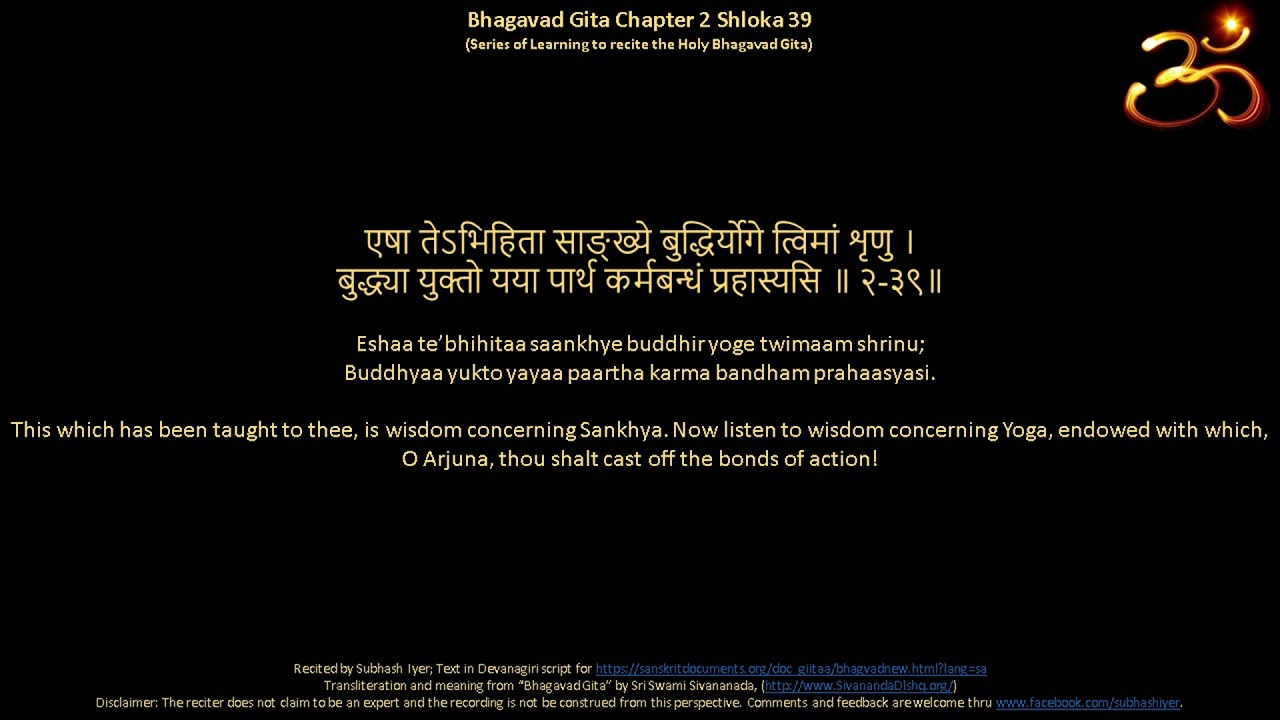
The Bhagavad Gita, Chapter II, Sankhya Yoga, verse 39, claims that the analytical knowledge derived from Samkhya philosophy gives the description of the nature of individual and individuality.

Whole Dude – Whole Individualism: The Doctrine of Individualism.

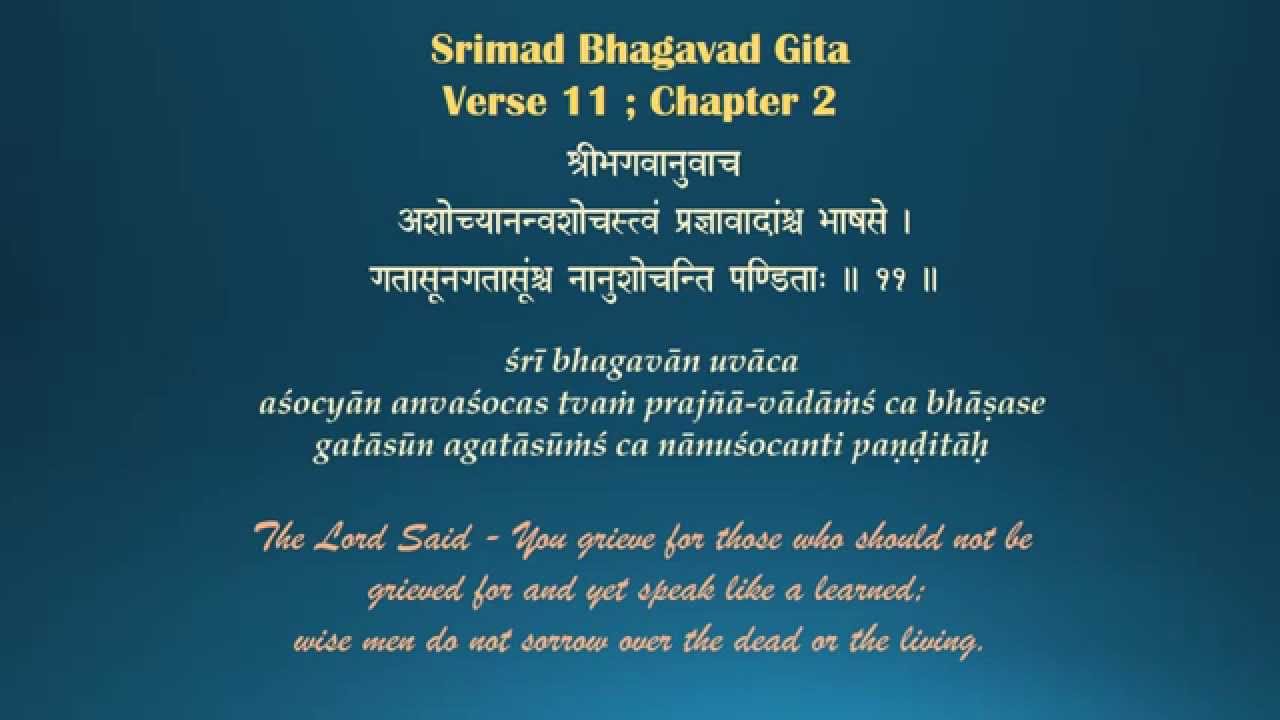
Chapter II, of the Bhagavad Gita explains this philosophy in several verses.Verse 11 claims that those who are wise lament neither for the living nor the dead.

Whole Dude – Whole Individualism: The Doctrine of Individualism.

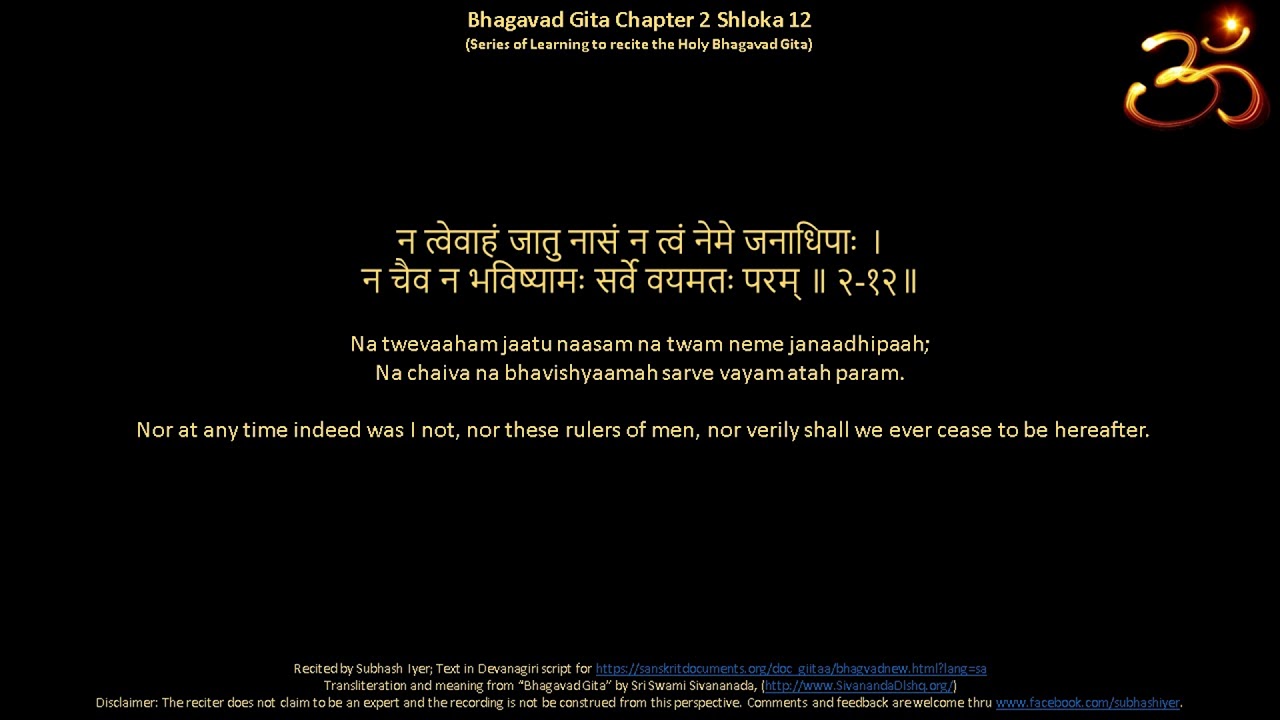
In verse 12, Lord Krishna states that there was never a time when He did not exist, nor Arjuna, nor all others in the battle field, and in the future there will never be a time when any of them cease to exist. Lord Krishna (The Supreme Individual Person) and also all other individuals are eternal persons.They existed as individuals in the past and they will continue to exist as individuals in the future.Their individuality existed in the past and their individuality will continue in the future without interruption. Lord Krishna clearly states that the individuality of all others will continue eternally. Hence, Indians do not accept the bodily conception of the living entities. Living entity is an individual soul and even though the body changes every moment, the soul does not undergo any change.

Whole Dude – Whole Individualism: The Doctrine of Individualism.

Verse 13, claims that the embodied soul continually passes, in this body, from boyhood to youth, and then to old age; similarly, the soul also passes into another body at death. By nature the human body is ever changing, and the soul is eternal.

Whole Dude – Whole Individualism: The Doctrine of Individualism.

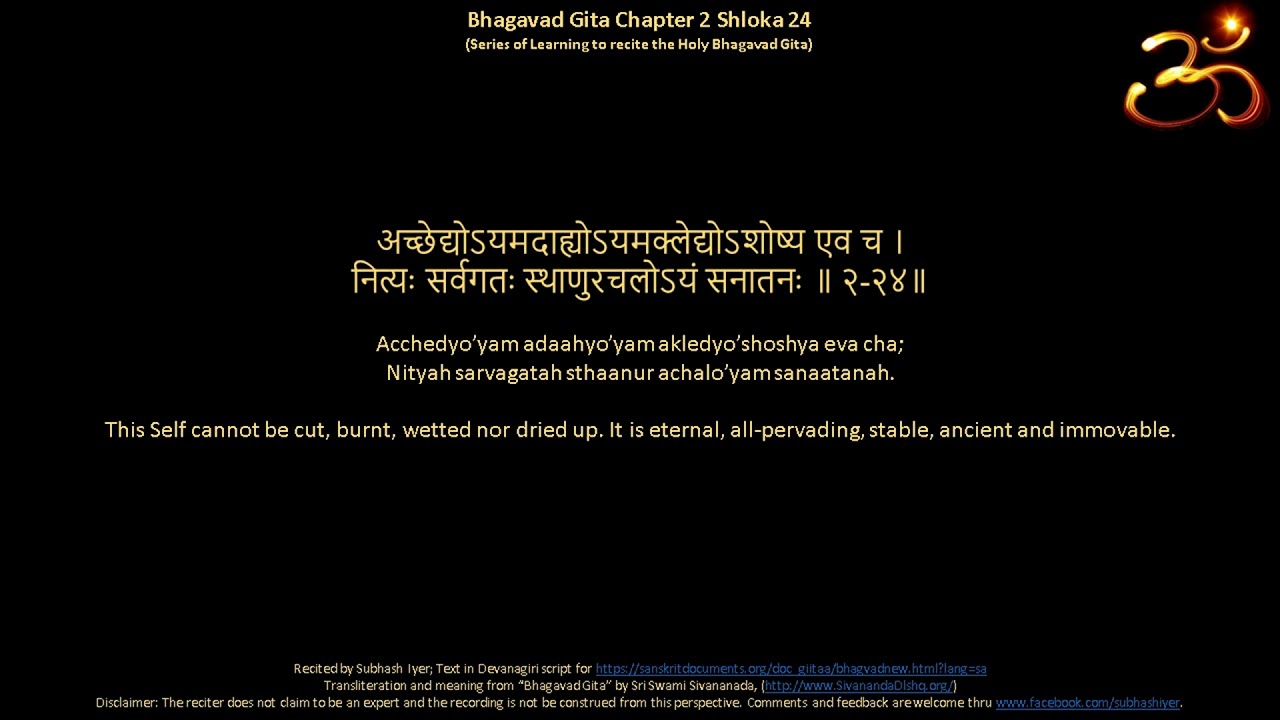
Verse 24 states that this individual soul is unbreakable and insoluble. He is everlasting, unchangeable, immovable, and eternally the same.

Whole Dude – Whole Individualism: The Doctrine of Individualism.

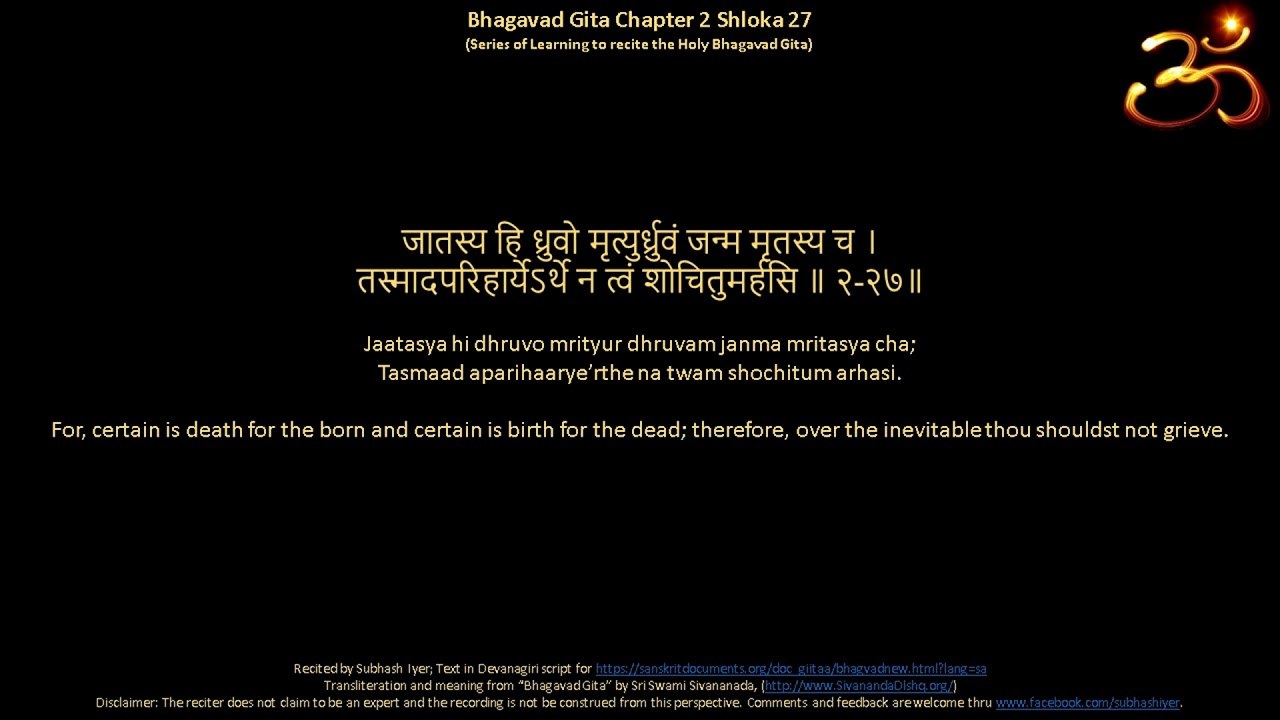
Finally, verse 27 establishes the foundation for ‘Individualism’ by stressing that ” For one who has taken his birth,death is certain; and for one who is dead, birth is certain.”

The Supremacy of Individual:

Whole Dude – Whole Individualism: The Primary importance of the Individual.

The primary importance of the individual is established by the Vedic statement “AHAM BRAHMASMI” which describes the True Identity of the Individual as that of Ultimate Reality known as Brahman. The following verse supports the idea that the Individual is a Whole entity as the Whole is derived from the Whole, perfect, Supreme Being:

Whole Dude – Whole Individualism: The Supremacy of Individual.

Om, purna mada, purna midam, purnaat purna mudachyate

Purnasya purna maadaya, purna meva vasishtyate.

“That” (is an indefinite term to designate the Invisible Absolute) is Whole (Perfect Substance with Perfect Nature and Quality); “This” (the visible, the phenomenal embodied Soul) is Whole, from the (invisible) Whole comes forth the (visible) Whole. Though the visible Whole is derived or deducted from that invisible Whole, yet the Whole remains unaltered and both retain their Perfect Condition called Whole. The human entity is virtually trapped in a repeated cycle of birth, death and rebirth.The ultimate purpose of human existence is to achieve Moksha (Liberation) or Mukti (Release) from this Cycle that is referred to as ‘Samsara’.

The Practice of Individualism:

Whole Dude – Whole Individualism: The Practice of Individualism

Individualism is built upon the value attached to knowing oneself. We are encouraged to look inwards and to reflect upon the nature of ‘SELF’. Self-Knowledge is considered to be more valuable than gaining knowledge of the material world.The following prayer which is known as Gayatri Mantra is one such example of motivating Individuals to look inwards. Similarly, Socrates suggests, “Know thyself, and you will know the universe and the gods.”

 Om Bhur Bhuva Suvah, Om tatsa vitur vareynyam

Bhargo Devasya dhee mahi dheeyo yo nah prachodayaat.

The Individual while firmly establishing his Individuality also takes complete responsibility for his actions.The Individual bears the burden for his own actions.

The Journey to Ultimate Individualism:

Whole Dude – Whole Individualism: The Doctrine of Individualism.

The Individual strives for self-reliance, learns to minimize the importance of all external relationships and concentrates upon developing an intimate relationship with his personal God.The following prayer is one such example of an Individual’s journey on the path of devotion (Bhakti).

Tva meva maata cha pitaa tva meva, Tva meva bandhu cha sakha tva meva,

Tva meva vidya, dravinam tva meva, Tva meva sarvam mama Deva Deva.

Devotion to God practically takes over, replaces and consumes the need for any other kind of external relationship such as man’s relationship to his mother, father, relatives, friends, and educational and material status.

The Goal of Absolute Individualism:

Whole Dude – Whole Individualism: The Doctrine of Individualism.

For the individual to win the battle of ‘Samsara’, to gain freedom from the cycle of birth and death, to declare victory over death and to finally reach the shore and complete the long and tiresome swim across the uncharted ocean, he is required to disentangle himself from the cobweb of relationships and set himself free. The following prayer known as Maha Mrityunjaya Mantra illustrates the point:

Whole Dude – Whole Individualism: The Doctrine of Individualism.

 Om,Triyambakam,Yajamahe sugandhim pushti vardhanam,

Urvaaru kamiva bhandha naat mrutyor muksheeya amrutaat.

Such liberated Individual who had freed himself from all external relationships would be able to proclaim his True Identity and the following verse written by Shri Shankaracharya is an example of an Individual who had reached the Goal Of Absolute Individualism:

Whole Dude – Whole Individualism: The Doctrine of Individualism.

Na Mrityur, na Shankaa, na me Jaati bheydaH,

Pitaa naiva, me naiva Maataa, na Janma,

Na Bandhur,na Mitram, Gurur naiva  SishyaH,

Chidaananda RupaH  ShivO aHam, ShivO aHam.

Thus Indian Identity is none other than the identity of “SHIVA” whose Individualistic Identity is described as Sat+Chit+Ananda.

lord-rama-with-seetha-lakshmana-and-hanuman
Whole Dude – Whole Individualism: The Doctrine of Individualism. In the epic poem of Ramayana, the concept of Individualism is vividly portrayed.

In the Epic Poem of Ramayana, the concept of Individualism is vividly portrayed. Rama alone was required to live in the forest. He could have just refused to do so. No force upon earth could have moved Him but He made His own choice. Lakshmana made His own choice and accompanied His brother for a life in the forest. Rama made no decision about Seeta. He did not want her to accompany Him into the forest. Seeta made Her own decision. All of them express their own personal independence in unique manners.

Whole Dude – Whole Individualism: The Doctrine of Individualism. The Man has no choice other than that of existing as an Individual with Individuality. His genome is unique and one of its own kind.

What is human identity? What is human individuality?

The cellular and the molecular basis of human identity and human individuality
The cellular and the molecular basis of human identity and human individuality. Human Identity undergoes changes due to the aging process but the Human Individuality persists unchanged.
The cellular and the molecular basis of human identity and human individuality

In 1965, while I was a student of Human Anatomy at Kurnool Medical College, I had the opportunity to know about Dr. J. C. B. Grant (1886-1973), the author of Grant’s Atlas of Anatomy. The 5th Edition of his Atlas was published in 1962 and was available in India in our Medical College Library.

Born in Loanhead (south of Edinburgh) in 1886, Grant studied medicine at the University of Edinburgh Medical School and graduated with an M.B., Ch.B. degree in 1908. While at Edinburgh, he worked under the renowned anatomist Daniel John Cunningham. Grant became a decorated serviceman of the Royal Army Medical Corps during the First World War before moving to Canada. He established himself as an ‘anatomist extraordinary’ at the University of Toronto, publishing three textbooks that form the basis of Grant’s Anatomy. The textbooks are still used in anatomy classes today, and made unforgettable memories for those who found themselves in his classes nearly a century ago. One of Grant’s many accomplishments was establishing a division of histology within the department.

The cellular and the molecular basis of human identity and human individuality

As a medical student, I used Grant’s Atlas of Anatomy, the seminal work of Scottish-born Dr. John Charles Boileau Grant, who would become the chair of Anatomy at the University of Toronto in 1930 and retired in 1965.

Students continue to use Grant’s textbooks today, and for the more artistic anatomist there’s even a Grant’s Anatomy Coloring Book, published in 2018.

The cellular and the molecular basis of human identity and human individuality

At the University of Toronto, Dr.McMurrich, Chair of Anatomy was succeeded as chairman in 1930 by Dr. John Charles Boileau Grant. Dr. Grant wrote three text books, of which “An Atlas of Anatomy” (published in 1943) rapidly gained international prominence and is still, one of the most widely used anatomical atlases in the world. It is now known as “Grant’s Atlas of Anatomy” and is in its tenth edition. The atlas was based on a series of elegant dissections done either by Grant or by others under his supervision. Many of these dissections are currently housed in Grant’s Museum at the University of Toronto. 

The Rudi-Grant Connection is about knowing the man, the building blocks and the structural units and organization of the human body. To defend the human existence, the Rudi-Grant Connection lays the emphasis on knowing the person who is at risk apart from knowing the agent posing the risk.

THE IDENTITY OF MULTICELLULAR HUMAN ORGANISM:

The cellular and the molecular basis of human identity and human individuality. Cunningham’s Manuals of Practical Anatomy provide me the learning tools to know and understand Man’s External and Internal Reality and its Identity as described by Cells, Tissues, Organs,and Organ Systems

Daniel John Cunningham was born on 15 April 1850 in Scotland. After his initial schooling at his home town, Crieff, he took up the study of medicine at the University of Edinburgh and passed with honours. He is best known for the excellent series of dissection manuals, namely Cunningham’s Dissection Manuals. Cunningham’s Manual of Practical Anatomy has provided me the learning tools to know and understand Man’s External and Internal Reality and its Identity as described by Cells, Tissues, Organs,and Organ Systems.

The cellular and the molecular basis of human identity and human individuality. Cunningham’s Manuals of Practical Anatomy provide me the learning tools to know and understand Man’s External and Internal Reality and its Identity as described by Cells, Tissues, Organs,and Organ Systems

I learned the truths about the living human body and about Life while dissecting the dead human bodies in a systematic manner. The Manual of Practical Anatomy which guides us through this entire process was published in England. The author Dr. Daniel John Cunningham prepared the Manual while dissecting cadavers of British or Irish citizens. He had never encountered cadavers of Indian citizens. At Kurnool Medical College, Kurnool, Andhra Pradesh, India, where I was a student, the Department of Anatomy obtains dead bodies from  Government General Hospital Kurnool and most of the deceased are the poor, illiterate, and uneducated people of that region. None of the deceased had the chance to know this man called Cunningham and Cunningham had no knowledge about the existence of these people who arrive on our dissection tables. But, as the dissection of the human body proceeds, inch, by inch, we recognize the anatomical parts as described by Cunningham. The manual also lists some anatomical variations and we very often exchange information between various dissection tables and recognize the variations mentioned. The dissections also involve slicing the organs and studying them, both macroscopically, and microscopically. We did not miss any part of the human body.

The cellular and the molecular basis of human identity and human individuality. Cunningham’s Manuals of Practical Anatomy provide me the learning tools to know and understand Man’s External and Internal Reality and its Identity as described by Cells, Tissues, Organs,and Organ Systems
The cellular and the molecular basis of human identity and human individuality. SPIRITUALITY SCIENCE – THE KNOWER – THE KNOWING-SELF: IN THIS IMAGE OF HUMAN BRAIN, THE GREEN PORTION OF BRAIN STEM IS CALLED RETICULAR FORMATION. I AM PROPOSING TO CALL IT AS THE KNOWING-SELF AND IT IS THE “KNOWER” OF THE HUMAN BODY WHICH CONSTANTLY CHANGES ITS MORPHOLOGICAL APPEARANCE UNDER THE INFLUENCE OF TIME CALLED THE AGING PROCESS.

So what is the Identity of this Human person or Human subject who experiences his life using the Sensory Experience such as taste? How does the living Human organism maintain its Identity and Individuality? Apart from the Cultural Traditions of India, several Schools of Religious Thought claim that the Human Individuality and true or real Identity is represented by Human Soul. Where does this soul exist in the human body? What is the location if the soul is present in the living person? Does man have a soul? How does the human organism acquires Knowledge about its own structures and the functions they perform? To know the burdens of Life, I ask my readers to know the reality of man and the nature of his existence.

Human Identity vs Human Individuality:

Human Identity may involve a variety of factors such as facial appearance, age, gender, race, ethnicity, language, religion, culture, nationality, sexual orientation, social and occupational status. Whereas human individuality has to be evaluated by using the markers that the human body uses to recognize its own Self and defends its own existence from threats posed by Non-Self.

The cellular and the molecular basis of human identity and human individuality
The cellular and the molecular basis of human identity and human individuality. Illustration of the anatomy of a female human face
The cellular and the molecular basis of human identity and human individuality
The cellular and the molecular basis of human identity and human individuality. In the final analysis, the human organism is a biotic community of trillions of individual, independent cells.
The cellular and the molecular basis of human identity and human individuality. SPIRITUALITY SCIENCE – HUMAN EVOLUTION: THE MAJOR HISTOCOMPATIBILITY COMPLEX (MHC) IS THE HUMAN LEUKOCYTE ANTIGEN (HLA) GENE CLUSTER ON CHROMOSOME 6. HUMAN ORGANS AND TISSUES CANNOT BE TRANSPLANTED OR GRAFTED INTO THE BODIES OF UNRELATED INDIVIDUALS. HUMAN IDENTITY MUST BE DISCOVERED AT MOLECULAR LEVEL TO ESTABLISH THE AFFINITY BETWEEN TWO HUMAN INDIVIDUALS.
The cellular and the molecular basis of human identity and human individuality

Human Individuality and the Genome

Individuality and the Genome. A COLONY OF GENETICALLY IDENTICAL E. COLI IS ACTUALLY A MOB OF ‘INDIVIDUALS’.

UNDERSTANDING INDIVIDUALITY: 

Individuality and the Genome. Even among simple forms of life, like the common bacterium E. coli, genetics only partly determines what any one organism is like. E. coli expresses its individuality in many ways. All the bacilli above are genetically identical, but the shades show differences in the production of proteins that digest lactose.Credit…Dr. Michael Elowitz

Dr. Michael Elowitz, Physicist at California Institute of Technology has conducted experiments on colonies of genetically identical (Clones) E. coli bacteria under identical experimental conditions and has discovered that the clones behave in different ways which could be viewed as an expression of ‘individuality’.

Individuality and the Genome. The Law of Individuality governs all Individual Living Things.

E. coli bacteria in billions populate our intestines. Typical E. coli bacillus has about 4,000 genes. Human cells have about 20,000 genes. The bacteria have fingerprints of their own and even when they share the exact same genome, they could still be identified as ‘individuals’.

Individuality and the Genome. Dr. Michael Elowitz and Dr. Long Cai are developing a platform through which cells can self-record their lineage and molecular event histories directly into their own DNA as they create new tissues, particularly in the brain. This research will help to address how individual cells in a developing embryo diversify into many distinct cell types, each playing its unique role in the organism.

The key to understanding E. coli’s fingerprints is to recognize that the bacteria are not simple machines. Unlike wires and transistors, E. coli’s molecules are floppy, twitchy and unpredictable. In an electronic device, like a computer or a radio, electrons stream in a steady flow through the machine’s circuits, but the molecules in E. coli jostle and wander. When E. coli begins using a gene to make a protein, it does not produce a smoothly increasing supply. It spurts out the proteins in fits and starts. One clone may produce half a dozen copies of a protein in an hour, while a clone right next to it produces none.

Michael Elowitz, a physicist at Caltech, put these bursts on display in an elegant experiment. He and his colleagues incited E. coli to produce its proteins for feeding on lactose. Dr. Elowitz and his colleagues added extra genes to the bacteria so that when they made lactose-digesting proteins, they also released light.

The bacteria, Dr. Elowitz found, did not produce a uniform glow. They flickered, sometimes brightly, sometimes dimly. And when Dr. Elowitz took a snapshot of the colony, it was not a uniform sea of light. Some microbes were dark at that moment while others shone at full strength.

At the very least, E. coli’s individuality should be a warning to those who would put human nature down to any sort of simple genetic determinism. Living things are more than just programs run by genetic software. Even in minuscule microbes, the same genes and the same genetic network can lead to different fates.

The bacteria have fingerprints of their own and even when they share the same genome, they could still be identified as individuals.

Individuality and the Genome. Man is constituted as a Biotic Community of socially interacting cells and microbes

Humans differ from one another in too many different ways and it is hard to count. The current human population of over six billion could be identified as the same number of individuals. Each human being has an unique genome of his own. There are millions of typographical differences between one genome and another human genome. Even identical twins are not truly identical at all as identical genes in our cells can behave differently. 

Living entities are not like simple machines. When we use a gene to make a protein, the gene may not produce a smoothly increasing supply of that protein. The gene tends to work in fits and starts and spurts out the protein. Identical genes can behave differently as the gene makes protein or remains silent depending upon the ‘Methyl’ groups that cap the DNA strands and function as ‘transducers’. These ‘Methyl’ groups sometimes fall off of DNA or become attached to new spots. Hence genetically identical individuals can have different physical identities in the natural world. The protein molecules that make up living entities, turn them into individuals. 

THE IRRELEVANCE OF EVOLUTION: 

Individuality and the Genome: CHARLES DARWIN’S ORIGIN OF SPECIES (1859) PROPOSES A MECHANISTIC, NONPURPOSIVE ACCOUNT OF EVOLUTION AS THE PRODUCT OF THE NATURAL SELECTION OF RANDOMLY PRODUCED GENETIC MUTATIONS.

In the natural world, all living entities exist as individuals and express their individuality. The Theory of Evolution proposes that a species can descend or arrive to become a new species by changing its genome in a gradual and incremental manner using a mechanism that is described as ‘ natural selection ‘. The mechanism of natural selection operates via a process of random and unguided mutations in the genetic code that changes the genome and eventually produces the ‘biodiversity’ that we witness in the natural world.

Individuality and the Genome. The phenomenon of Diversity must be studied beyond the realm of genes, genetic codes, and genomes. Cytoplasm and its organs must be studied to understand the physiological basis of Diversity

This Theory of Evolution has no relevance to the ultimate identity of each individual member of a given species. This identity is dictated by the interplay between the various components of each individual cell and its interactions with other cells. With the same genomes or different genomes, the living entities can only exist as individuals and they have no other choice. The evolutionary connections are not relevant to this identity. To understand the phenomenon of biodiversity, we will be forced to look at each individual member of each given species. 

THE LAW OF INDIVIDUALITY: 

Individuality and the Genome. The Law of Individuality formulates the phenomenon of Human Individuality.

I propose that the Law of Individuality governs all the living entities and is manifested in various biological phenomena. The genes and the genetic code function in accordance with the Law of Individuality. I would describe Individuality as a Trade Mark. It is the characteristic of a biological entity. Genes and the genetic codes are the tools that an organism uses to express its Individuality. Each organism assembles its own kind of protein molecules to define its identity and to defend its existence in the natural world. 

Individuality and the Genome. The Law of Individuality formulates the phenomenon of Human Individuality.

WHOLE SPIRITUALITY – WHOLE SYNTHESIS

Spiritualism – The New Synthesis:

Dr. Edward Osborne Wilson,American biologist, an expert in the Study of Ants(Myrmecology), former Professor of Zoology, Harvard University, founder of Sociobiology, has studied the genetic basis of the social behavior of all animals including humans. He had presented his theories about the biological basis of Social Behavior in his book, Sociobiology : The New Synthesis(1975). The biological basis of Social Behavior must include the study of the Behavioral Ability of the Living Substance.

Dr. Edward Osborne Wilson is recognized as the world’s leading authority on ants. He is the foremost proponent of Sociobiology, the study of the genetic basis of the social behavior of all animals including humans. In his book, Sociobiology: The New Synthesis (1975) he presents his theories about the biological basis of social behavior. It involves the application of the Theory of Evolution to the study of animal and human social behavior. It holds that the Theory of Evolution by ‘natural selection’ applies to behavior in the same way that it applies to structure and physiological functions. He holds that behavior patterns are genetically determined and are governed by the process of ‘natural selection’. Accordingly, he explains that social behavior relies upon the principle that genes are able to influence behavior and will be selected if the behaviors they encourage contribute ultimately to the reproductive success of the individual carrying those genes. The ‘Darwinian Fitness’ of an organism or a gene is a measure of the ability of that organism or gene to project copies of itself into future generations. Because, ‘natural selection’ would influence genetically controlled behavior, he believes that individuals will tend to behave in ways that maximize their ‘Darwinian Fitness’. However, he attributes 10 percent of human behavior as genetically induced, the rest being attributable to environment.

In my analysis, it could be indeed true that some behavioral abilities depend upon underlying genetic mechanisms which support the neural and hormonal mechanisms that are required in the performance of actions by organisms. Dr. Wilson recognizes the essentially biological principles on which animal societies are based and could apply those principles to human social behavior. One of Dr. Wilson’s most notable theories is that a characteristic such as ‘altruism’ could be genetically based and may have evolved through the process of ‘natural selection’. Dr. Wilson maintains that altruistic behavior is consistent with ‘natural selection’ in that the sacrifice is made to save closely related individuals who share many of the sacrificed organism’s genes.

Altruism and Sociobiology:

Ants, approximately 8,000 species of the Insect family Formicidae ( Order Hymenoptera )are social in habit and live together in organized colonies. Worker ants are maximally ‘altruistic’ and devote their whole lives to caring for the Queen to reproduce, constructing and protecting the nest, foraging for food, and tending the larvae while they are sterile. The worker ants display unselfish concern for the welfare of others and they have no chance to reproduce.

The term ‘altruism’ (French – altruisme) was coined by Auguste Comte, the founder of Positivism and Sociology. It is considered as antithesis to Egoism. Altruism is behavior that benefits others at some cost to the individual displaying altruistic behavior. Social scientists refer to altruism as the behavior of an individual who consciously comes to the aid of another, without expecting anything in return. Such behavior is influenced by empathy, an emotional response that results from being aware of another person’s emotions. In Ethics, altruism is described as a theory of conduct that regards the good of others as the end of moral action. It describes unselfish concern for the welfare of others.

However, biologists view altruism as any behavior that reduces the ‘Darwinian Fitness’ (reproductive success) of the altruist while increasing the fitness of another. It is common for animals to share food, help provide for another’s young, defend others against predators, and give alarm calls when a predator appears. Such animal altruism is common and it does not require psychological abilities and functions like sharing of emotions, feelings, and thoughts. Altruism as a behavior  is not always a psychological function or ability. It is displayed as pure altruism in the social behavior of worker bees, ants, and wasps.

Spiritualism – The New Synthesis:

It must be understood that behavior is a fundamental characteristic of life and of all living entities. All species, whether single-celled protozoans or the largest of mammals possess the capacity to respond to stimuli in their environment. This ability called responsiveness is the fundamental attribute of all kinds and types of behavior.

Psychologists like B.F. Skinner tend to focus on the learned components of behavior and stress the importance of environment and its influence on behavior. Biologists like Konrad Lorenz tend to focus primarily on the analysis of the innate components of behavior. Sociobiologists tend to recognize the role of genes and the influence of environment and describe that  behavioral abilities depend on underlying genetic mechanisms that develop the structures and physiological mechanisms that are important to display a given behavior. It may be noted that both Psychologists and Biologists are describing behavior in the context of social relations and interactions between individual and groups of living organisms. Living things behave in ways to maximize their chances of survival. In the entire animal kingdom, most living organisms display parental or social instincts. All animals display social behavior. There is no animal that is ever completely isolated from some kind of environment that includes members of the same species or other species. Animals form parental societies to care for their offspring. Bacteria come together to live as colonies. Hence, it will be important to recognize social behavior that is displayed by individual living cells.

I define Spiritualism as the capacity or the biological ability of an individual living cell to formulate harmonious relations with others and to participate in or contribute constructively to changes in the social environment. The potency called Spiritualism is reflected in the biological functions of Consciousness and Intelligence.

Red Blood Cells – Altruism – Spiritualism – The New Synthesis: Unlike most cells of the human organism, mature Red Blood Cells do not have nuclei, have no mitochondria, and have no other organelles. The Red Blood Cells cannot divide and reproduce and lead a short life while they exist to support the life and survival of trillions of other cells in the body.

At a cellular level, the social aspect of Consciousness is reflected by the biological abilities of the cell such as  association, cooperation, communication, recognition of other living cells in its immediate environment, and performing actions which have characteristics of functional subservience to provide benefits like survival and reproductive success to other cells. A very good example of Spiritualism is that of altruism displayed by the mature Red Blood Cells of the man. The mature Red Blood Cells have no nuclei and hence cannot divide or reproduce. Each Red Blood Cell has a very limited life span of its own. They sustain their meagre energy needs by a form of anaerobic respiration as they do not have mitochondria like the trillions of other cells of the human body. The Red Blood Cells are passive in nature and they simply exist to provide Oxygen to other cells and tissues, collect Carbon Dioxide while being swept along by the blood stream. Since the mature Red Blood Cells have no nuclei, their behavior is not operated by genes or genetic mechanisms which could be important in their formation, development, and maturation. The social aspects of the Red Blood Cell behavior is related to the spiritual nature of its living substance.

I would ask Biologists to give attention to the nature, functional abilities of the living substance apart from the consideration of genes and genetic mechanisms. It may be very clearly understood that the nucleus, the chromosomes, and the genes have no independent existence of their own and they perform their cellular functions while they derive energy and nutritional support from the living substance or Protoplasm that has the biological abilities of Consciousness, and Intelligence which is reflected in its properties like responsiveness, the power of nutrition, and reproduction.

Spiritualism is the Science of New Synthesis; the New Synthesis that formulates the relationships between Substance, Structure, Function, Heredity of a Living Organism and its Environment, Behavior, and Social Community.

Related articles
Spiritualism – The New Synthesis. The Behavior pf the Red Blood Cell can be described as Altruism. Red Blood Cells are packed with hemoglobin. Each Red Cell contains over 600 million hemoglobin molecules.