Whole Victory – Kashmir War

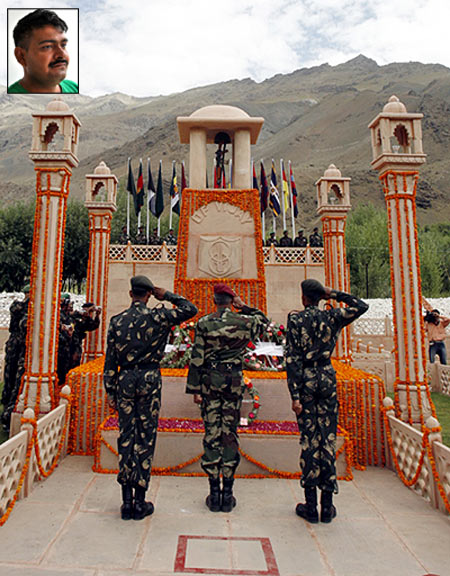
WholeDude - Whole Victory - Kashmir: Indian Armed Forces perform duties with commendable devotion and dedication to defend Indian Union from attacks by its enemies.
WholeDude – Whole Victory – Kashmir: Indian Armed Forces perform duties with commendable devotion and dedication to defend Indian Union from attacks by its enemies.

VICTORY IN THE VALLEY
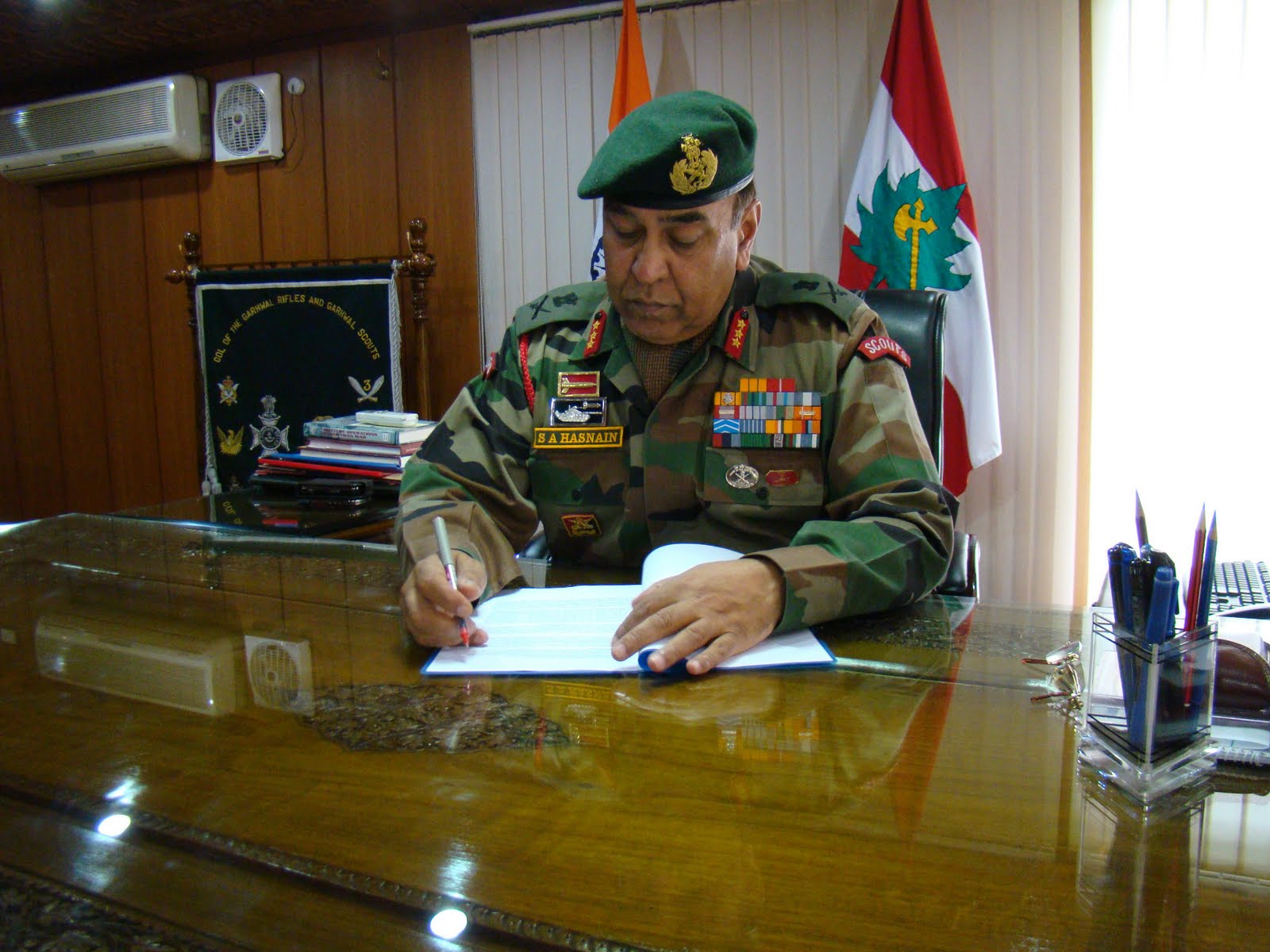
WholeDude - WholeVictory - Kashmir: Lieutenant General Syed Hasnain shares his vision about the role of Indian Armed Forces in Kashmir and predicts a Victory in all its aspects.
WholeDude – WholeVictory – Kashmir: Lieutenant General Syed Hasnain shares his vision about the role of Indian Armed Forces in Kashmir and predicts a Victory in all its aspects.

Lt Gen Syed Ata Hasnain
Indian Express, Wed Dec 11 2013

Define what it means before you decide what the army should do.
For the first time in years, a newspaper’s leadership has thrown up a serious strategic issue for debate. Kashmir is far too complex for inexperienced minds to fully comprehend and there are so many stakeholders it confounds even those who have a semblance of an idea. In a recent article in this paper (‘Disarming Kashmir’, Indian Express, December 7,), Editor-in-Chief Shekhar Gupta talks about victory in the 24-year standoff and the necessity of an early withdrawal of the army from Kashmir’s hinterland. We must first highlight what Gupta is seeking through this thought-provoking article. He says the army has become weary and therefore less professional, having lost soldiers in tactical operations this year. He wants the army to strengthen the LoC and de-escalate in the Valley, because Kashmiris, he says, must get a part of the “peace” dividend. He takes a dig, saying that some respected general with five tenures in the Valley had told him that, having defeated the Lashkar, the army has only been building golf courses and guest houses for the last five years. He adds that if any of these bad boys show their faces in Kashmir again, the army can come back to sort them out. He claims that the military objective in Kashmir (if any was spelt out) has been achieved and, that the UPA government has veritably introduced a concept of governance — veto power (on strategic decisions) for the army. One of the most important points Gupta makes is, “you cannot find a Kashmir settlement with Pakistan before embracing your own Kashmiris and restoring trust with them first”.
On the face of it, this article evokes negatives all the way but re-reads throw up issues which need serious pondering. Unfortunately, not many are aware of the degree of intellectual analysis that the army itself has done of its role in Kashmir. It recently organised a full deliberation on the concept of victory at the Army War College, Mhow.

The first question is: have we ever enunciated an aim in Kashmir? In all these years, there never has been a clearly stated political aim given to the security forces. The informally stated military aim was stabilisation by controlling infiltration and eliminating terrorists. No one realises that in such situations, political and military aims cannot be separated. In 2011, we enunciated our own joint politico-military aim for our commanders — “integrate Jammu and Kashmir with mainstream India, politically, economically, socially and psychologically”. We were clear that eliminating terrorists was the easiest part of this war, that eliminating “terrorism” was the real challenge. I wish Gupta had faulted the army for not demanding the articulation of a politico-military aim as fighting without an aim is actually unfair. The lack of such an aim results in exactly what Gupta has done — declaring victory prematurely. Victory has to be measured against an aim, or else all kinds of versions are thrown around. We also have to measure victory against a realistic assessment of the future. Afghanistan 2014 with all its imponderables looms before us; any idea of victorious peace and subsequent actions has to be connected to it. Incidentally, I am speaking of victory as not against the people of Kashmir but for them, and against the intent of Pakistan, the separatists and terror groups.

It is essential to explain a few things to those with limited military orientation. First, Kashmir is a case of rim-land insurgency. It is not the LoC alone that needs to be strong. In the event of conventional war with Pakistan, the hinterland of Kashmir is as important as the LoC. It is here that the strategic assets exist, along with strategic arteries, which can be choked in war. Remember, in each Indo-Pak war, Pakistan has depended on the Kashmiri people to rise against us. Second, the larger number of incidents, and the loss of brave soldiers, this year should make us re-evaluate the actual military situation in the Valley. Ironically, this is least important in assessing victory. In counter-insurgency/ counter-terrorism campaigns, the answer finally lies in what the people think. Third, in all these years, no serious attempt was made to project to the Kashmiri people how and why their future lay only with India. The only agency that did this was the army. No government agency has ever put together a psychological campaign to win the confidence of the people. The army did it because it is a part of its professional responsibility and all international military counter-insurgency experience talks of winning hearts and minds (WHAM). The “hearts doctrine” articulated by the army in 2011-12 was the first strategically oriented WHAM programme in Kashmir. Separatism and radicalism run hand in hand in the Valley and it will take years of committed campaigning before these are diluted — the on and off presence of terror groups doesn’t help. Who has the capability to strategize, plan and stay committed to such a campaign but the army? To presume that the army has done its job and should hand over the responsibility to civilian agencies is absolutely correct, provided there are agencies who can take it forward to “peace”. If there is none, why rue the army’s insistence that its work must not be undone? Twenty-four years of institutional wisdom need not be sacrificed in the urgency for declaring a premature victory.

A few other observations by Gupta are designed to provoke non-intellectual minds, but they deserve a brief comment. The number of soldiers lost in negative incidents in a year is never reflective of the capability of an army fighting terrorism. Moreover, the deployment of the regular army in the hinterland is at its minimum today. The army’s Rashtriya Rifles (RR) operates in the hinterland and its soldiers never get exhausted because it has a well-thought-out relief programme. Tactical minds within the RR also rue their presence among the populace, to neutralise just a handful of terrorists each year. This really is the problem — a misunderstanding that the RR’s task is to kill terrorists alone, and not recognising that the task of a counter-insurgency force is to cement the separatist population with the mainstream. There is something else that our countrymen need to know about the RR: the professional and experienced military force is our add-on resource for conventional operations, especially now that 110 wings of Pakistan’s Frontier Corps (the country’s virtual RR) have received operational experience and modern weaponry to make them force multipliers. That is a major reason the RR cannot be disbanded or re-deployed for counter-insurgency tasks in Naxal-affected areas.

To claim victory over terror groups is premature also because the number of surrendered terrorists in the Valley (all with different shades of antipathy to the establishment) is higher than the number of terrorists in holding camps and launch pads in PoK. None of the promises (by the state government or the police) to these surrendered terrorists has been fulfilled, creating a potential resource for home terror.

Gupta’s most potent statement is, “Because its (the government’s) politics is frozen, it has introduced an unprecedented new factor in Indian policymaking: a veto for the army”. Seeking and giving professional military advice is a part of governance and on Siachen, Kashmir or Manipur, the army has offered just that. If you go by this accusation, every proposal by the army should have been accepted. In the case of Siachen, it is the trust deficit that prevents the vacation of the Saltoro Ridge; on the Armed Forces (Jammu and Kashmir) Special Powers Act, 1990, the government almost relented but the only organisation that offered a rationale for its retention was the army. Its arguments went well beyond the ordinary, explaining just how it was balancing hard and soft power in the emerging situation and just how the AFSPA was only an umbrella to be used in an emergency. The army likes a cemented victory and celebration for the people, not a half-baked one which gives adversaries reason for glee.

The general with five tenures in Kashmir who says the army is out of a job needs to revisit Kashmir. Not a single new golf course has come up and yes, guest rooms are indeed necessary to ensure that more armchair strategists visit Kashmir to be briefed at Keran, Machel, Gurez, Uri, Sopore, Tral and Shopian, before passing judgement on their professional army. Don’t just visit Srinagar, Gulmarg and Pahalgam to make up your mind because the advice you will then proffer will never meet the professional needs of our army or that of our nation. Learn to trust your army — it is your army.

The writer Syed Ata Hasnain is a recently retired Lt. General, is a former general officer commanding of the Srinagar-based 15 Corps.

Whole Victory – Kashmir War

Whole Past – Operation Eagle cannot be buried as Dead History

Operation Eagle – The Past is Never Dead

GOLDEN EAGLE-OPERATION EAGLE-SPIRITUALISM-THE PAST IS NEVER DEAD: THE SPIRITUAL RELATIONSHIP BETWEEN MYSELF AND THE MEN WHO PARTICIPATED IN OPERATION EAGLE IS NOT DEAD. THE SPIRITS LIVE IN MY CONSCIOUSNESS.

The term ‘Spiritual’ describes the nature of a relationship, a partnership, an association, a connection, or bonding between two or more living entities based upon thoughts or feelings of sympathy and understanding. When I participated in the military action called ‘Operation Eagle’ that initiated the Liberation of Bangladesh in the Chittagong Hill Tracts during 1971, I formulated a spiritual relationship with the men of my Unit. I describe ‘Spiritualism’ as the relation between a changing object and its unchanging spiritual nature. Operation Eagle is a past event but because of the unchanging nature of the spiritual relationship, I have to claim: “The past is never dead and it’s not even past.”( Nobel Laureate William Faulkner )

I am happy to speak about the kind support extended by Dr. B. V. Ramarao, PhD, IRSE(Retd) to seek recognition for my participation in Operation Eagle and I am happy to publish this letter he submitted to Dr. M. M. Pallam Raju, Honourable Union Minister of State for Defence, Raksha Rajya Mantri, Government of India:

DR. MALLIPUDI MANGAPATHI PALLAM RAJU, UNION MINISTER OF STATE FOR DEFENCE, RAKSHA RAJYA MANTRI, 108-B, SOUTH BLOCK, MINISTRY OF DEFENCE, GOVERNMENT OF INDIA, NEW DELHI: OPERATION EAGLE – THE PAST IS NEVER DEAD.

Special Frontier Force – Operation Eagle -Gallantry Award:

RESPECTED Dr. M M PALLAM RAJU garu,

I had written to you in the past about the need to suitably honour
Dr. R. Rudra Narasimham, of Army Medical Corps, who did
exemplary work beyond the call of duty in the Bangla Desh War in
1971, called OPERATION EAGLE, directly handled at that time by
late Prime Minister, Smt. INDIRA GANDHI.

PETITION REFERENCE: case: CABST/E/2012/00154

A brief summary is as follows:

1. Dr. R. Rudra Narasimham, served in the Special Frontier Force from 22nd September 1971 to 18th December 1974. He was posted to Headquarters Establishment Number. 22 C/O 56 APO as Medical Officer. He served under the Command of Brigadier T S Oberoi. Under a Battle Operation Plan called Operation Eagle sanctioned and approved by the Prime Minister of India and her Cabinet Secretariat, he was posted to the South Column Unit of Operation Eagle under the Command of Lieutenant Colonel B K Narayan.

2. During 1971, Operation Eagle initiated the Liberation of Bangladesh with military action in the Chittagong Hill Tracts. In a written statement, his South Column Unit Commander Lieutenant Colonel B K Narayan had stated that this doctor had displayed a great sense of devotion to duty, maturity, physical toughness, and bravery beyond call of duty during Operation Eagle for which he had recommended the doctor for a gallantry award. In his Annual Confidential Report (Officers) for the year 1971-72, Lieutenant Colonel B K Narayan had written: “A very conscientious and Tough MO who worked hard during the Bangladesh Ops. He did very well and showed Maturity, which was beyond the call of duty. I have recommended this Officer for a gallantry award for which he deserves eminently. He is physically tough and cheerful. Is a fresh entrant with less than 2 years of Service and yet he displayed capability and confidence.” This written Annual Confidential Report(Officers) was forwarded by the Office of Inspector General Special Frontier Force to Military Secretary’s Branch (Army), MS 4(CR), MoD on 13th May 1972.

3. The citation for gallantry award initiated by Lieutenant Colonel B K Narayan was duly reviewed and recommended by Brigadier T S Oberoi and Major General Sujan Singh Uban, Inspector General, Special Frontier Force. This citation recommending the gallantry award was sent to the Medical Directorate, Medical Branch, Adjutant General’s Branch, Army Headquarters. The Director of Medical Services (Army), MoD did not take any further action to obtain the sanction for the recommended award. It is not known as to why the Director of Medical Services (Army) did not forward the citation to the Military Secretary’s Branch (Army) MoD. As such it seems that the Medical Branch had blocked or prevented the sanction of gallantry award.

4. In a written testimonial given by Lieutenant General T S Oberoi PVSM VrC, General Officer in Commanding-in-Chief, Headquarters Southern Command, Pune – 411001, dated 14th February 1983, General Oberoi had stated that this doctor deserves befitting recognition for the Service he had rendered to the Nation during the time of a national crisis. The Southern Army Commander had categorically stated that the doctor was recommended for a gallantry award for display of gallant qualities in the face of the enemy.

5. The Prime Minister of India and her Cabinet Secretariat have established the eligibility criteria for grant of Service Medals, Decorations, and Awards to the participants of Operation Eagle 1971-72. This doctor is eligible to receive the gallantry award that was duly recommended by his South Column Unit Commander Lieutenant Colonel B K Narayan, and it was duly reviewed and recommended by Force Commander Brigadier T S Oberoi and approved by Major General Sujan Singh Uban, Inspector General Special Frontier Force.

6. To serve the purpose of Justice and Fairness, I would ask that this doctor should be given the gallantry award that was duly recommended following the rules and procedures established by the Prime Minister of India for her Battle Plan of Operation Eagle.

7. Particulars of the above Officer are as follows:

Dr. R. Rudra Narasimham, B.Sc., M.B.B.S.,
Service Number. MS-8466 Rank Lieutenant/Captain AMC/SSC,
Medical Officer, South Column, Operation Eagle (1971-72),
Service Number. MR-03277K Rank Captain/Major AMC/DPC
Medical Officer, Headquarters Establishment No. 22 C/O 56 APO (1971-74),
Directorate General of Security,
Office of Inspector General Special Frontier Force,
East Block V, Level IV, R. K. Puram,
New Delhi – 110 022

Thanking You,

(Sd. BVRR)

Yours Faithfully,

B V Ramarao, PhD, IRSE (Retd.),
Retired GM (Railways),
10, Prince Apartments, Balaji Nagar,
VISAKHAPATNAM – 530 003
Tel. (0891) 2755691,
eMail: rbodapati
Dated 29 June 2012

Biographical Information:

R. Rudra Narasimham, Son of Shri. R. Suryanarayana Murthy,

13-92, First Cross Road, Prakasam Nagar, Rajahmundry, East Godavari District, Andhra Pradesh, India.

Student of Danavaipeta Municipal/Corporation High School, Rajahmundry (S.S.L.C.-  MARCH/APRIL, 1961.)

SPECIAL FRONTIER FORCE. REMARKS OF LIEUTENANT GENERAL TS OBEROI PVSM VrC., GOC -in- C, HQ SOUTHERN COMMAND, PUNE.


WHOLE DUDE – WHOLE CURE

Effects of stress on the body.
Image via Wikipedia

AN ELIXIR TO DESTROY THE ILL EFFECTS OF ‘STRESS‘ POLLUTION IN THE AGE OF KALI YUGA. 

CREATIVE USES FOR SOUND ENERGY 

The science of acoustics deals with the nature, properties, generation, propagation, and reception of sound waves. Sound is defined as a vibration, a mechanical disturbance from a state of equilibrium that propagates by wave motion through an elastic medium. In gases, and liquids, sound propagates as longitudinal, compression waves. In solids, sound propagates as transverse, shear waves. Sound waves behave in many ways as light waves do. Sound is a form of energy like light. Light is an electromagnetic wave. Unlike light, sound cannot exist in a vacuum. Acoustics is important in fields of speech and hearing, the production of music, in warfare, in research, in exploration, in medical diagnosis and therapy. Sonar is an acronym for sound navigation and ranging. Sonar is used in detection and location of submerged objects like submarines by using acoustical echo. Ultrasonics describe the study of all sound like waves whose frequency is above the range of normal human hearing. Ultrasound is widely used in industry and in medicine. Pulses of ultrasound could be used to shatter kidney stones and gall stones. Ultrasonic drills and saws are useful in surgery and dentistry. Ultrasonic transducers have come to be widely used in medical imaging and have become a common diagnostic tool in pregnancy and for screening medical conditions that affect children. The technique of studying heart motions by ultrasonic means is known as echocardiography. In modern life we use sound energy in several creative ways. 

THE WORLD IS FULL OF SOUNDS 

We encounter a great variety of sounds in our daily life. All natural phenomena such as thunder, rain, waterfall, surf, and gusts of wind generate their unique sounds which could be pleasing aswellas frightening. Across animal kingdom, sound is used for detecting danger, navigation, predation, communication, and also for relaxation. Animals possess special structures for production and reception of sounds. The sounds produced could be mechanical or vocal. The special vocal organs could also produce speech and song. Mammals can also produce sounds with parts of the body that are specialized for other purposes. We can produce sound by tapping the floor or by clapping the hands. Many animals are highly vocal and can produce species-specific sounds. By understanding the sound reception mechanisms used by animals, we can also protect ourselves. Snakes have no reception for sounds propagated through air as they do not have external ears. But they recognize the sound vibrations that are propagated through ground. Snakes often bite when they are stressed. During Operation Eagle 1971  in Chittagong Hill Tracts, the War of Bangladesh Liberation, I had allowed a large group of snakes to move under my legs by remaining still and not provoking them with any attempt to move. I had trained soldiers to protect themselves from snake bites. For example, we can easily alert others by shouting and announcing the presence of a snake while standing still and get help to avoid snake bite. Humans have developed Culture and technology such as radio, telephone, and music that allows them to generate, record, transmit, and broadcast sounds. We should further explore the potential uses for sound energy. In ancient India, thoughts were propagated from person to person using the ‘oral tradition’ which involves the use of sound energy as a tool of human communication. 

THE BIOLOGICAL EFFECTS OF SOUND 

A sudden, loud sound could disorient a person. High intensity sounds and exposure to noise could cause irritation, anxiety, fear, sleep deprivation, stress-reaction, and hearing loss. It could also cause permanent damage to the sense organs of hearing. High-order explosives produce a supersonic high pressure blast wave that could cause severe primary blast injuries in several organs like brain and lungs. Humans appreciate the value of sound as a tool for obtaining relaxation, rejuvenation of spirit and for mental amusement and entertainment. The soothing effects of sound can provide us mental comfort, help in the healing and recovery process. Indian traditions claim that sound could be used as a medicine and the sound could exert medicinal effects taking advantage of the mind-body connection. Sound undoubtedly can affect our physiological responses to stress. Sound could act like a stressor and as a stress reducer. 

THE MYSTICAL EFFECTS OF SOUND 

A ‘mantra’ can be defined as a sound, syllable, word, or group of words that are considered capable of creating transformation. The vocal sounds of the ‘mantra’ have inherent meaning independent of the understanding of the person uttering them. The incantor need not know the meaning of the words employed and it makes no difference to the mantric action. When we take prescribed medications, most of us do not understand the chemical formulas of the active ingredients and the pharmacological basis for their medicinal action. The vocal sounds of ‘mantra’ could still work even when we do not know the reason as to how it works. Many of the modern medications are derived from plants, herbs, and compounds that were traditionally used for curing illness. Indian tradition advocates the efficacy of vocal sounds in providing relief from physical problems that afflict us. In Bhagavad Gita, Chapter 7, verse 8, Lord Krishna states that He is the light of the sun and the moon, and that He is the sound in ether. Light energy, and sound energy are aspects of the various energy manifestations of an Eternal, Original,and Primeval Person described as ‘PURUSHA’, the LORD God Creator. Our earthly existence is made possible by our Cosmic Connection with the material energies that we exploit to sustain and support our living functions.. Sound is a unique natural phenomenon of our earthly existence and because of its uniqueness it could be described as a creative energy. In the entire universe that we know and have explored, planet Earth is the only place where sound is generated, sound is propagated, and sound is recognized by living entites with anatomical organs and structures that are designed for that purpose. 

THE ATTRIBUTES OF ‘KALI YUGA’ – THE AGE OF STRESS :

A person with a well-integrated personality acquires high resistance against stress and will be able to react healthily while confronting unwholesome life situations.

 The Sanskrit word ‘KALI’ means fermented or contaminated water. While fresh water contributes to good health, and vitality, polluted water would induce stress and strain and leads to illness that manifests as strife, discord, quarrel, or contention. One of the attributes of Kali Yuga is the importance attached to wealth acquisition. Money and acquisition of money have become significant “STRESSORS” in our lives. Money related problems are among top concerns playing a role in anxious or depressed moods. As avarice, greed, and wrath have become common, there is no contentment, nor discernment, and nor mental composure. As men are tormented by worries, the use of prescription drugs such as tranquilizers has become very common. Various methods have been developed to cope with psychogenic or internal stress including the use of psychotherapy. Unhealthy coping of stress is leading people to activities such as smoking, drinking, gambling, compulsive eating, and the use of mood altering drugs and chemical substances. Such unhealthy coping mechanisms to deal with stress can trigger more conflicts both at home and in the society. 

AN ‘ELIXIR’ TO DESTROY THE POLLUTING EFFECTS OF STRESS 

The creative power of sound could be used to counteract the contaminating influence of the age of KALI. The sixteen words of the HARE RAMA Mantra is first attested in the ‘Kali santaranopanisad'( KALI SANTARANA UPANISHAD) which is associated with the Krishna Yajur Veda. Creator Brahma had instructed sage Narada about the efficacy of this Mantra. The mere uttering of the words of HARI, RAMA, and KRISHNA is enough. A person does not require a Guru or a teacher to instruct the mantra. No fee is expected to obtain the knowledge of this mantra. A person is not expected to change his religion or observe any specific religious rituals as a part of using the mantra. There is no set time, or duration for repeating the words of the mantra. The words could be used individually or the precedence of the words could be rearranged. All the words are of a great potency.A person requires no previous qualification or training to use the mantra. There are no rites of initiation. It is unlike the practice of YOGA or MEDITATION. The person need not be in a temple or any other secluded place. The mantra could be used while fully engaged in the routine activities of life. The words could be repeated either out loud, softly to oneself, or internally within the mind. The mind hears the sounds of the words irrespective of the manner used to utter them. The Upanishad further states : 

“Iti sodasakam namnam 

Kali-kalmasa-nasanam 

natah parataropayah 

Sarva- Vedesu drsyate.” 

The sixteen words of ‘HARE RAMA MAHA MANTRA’ are especially meant for counteracting the polluting effects of the age of KALI. After searching through all the Vedic literature, one cannot find a better method. 

I am not surprised to read about the mystical effects of sounds that could transform our lives and protect us from STRESS. I had personal experience of withstanding the physical stress imposed by sun’s scorching heat in the open deserts during military exercises. We had used nothing more than a little shade provided by thorny bushes or the camouflage net that we use to conceal our presence. The shade would at the most reduce the heat by a couple of degrees and yet the psychological relief it provides us so immense and it enables us to resist heat the entire day. I spent time in evaluating people and witness their ability to withstand a great variety of physical, chemical, biotic, and environmental stressors. The sixteen words of Hare Krishna Mantra have the potential to destroy the evil effects of stress by increasing our stress tolerance, by inducing stress resistance and protect our biological existence. Kindly review a related blog post about Stress.

http://bhavanajagat.wordpress.com/2010/05/09/human-existence-the-age-of-stress/

Dr. R. Rudra Narasimham, B.Sc., M.B.B.S.,

Kurnool Medical College, Kurnool, Andhra Pradesh, India,

M.B.B.S., Class of April, 1970.

Whole Dude – Whole Gateway

Rajahmundry – The Gateway to Traditions and History

Bharat Darshan – Rajahmundry – The Gateway to Traditions and History. Kandukuri Veeresalingam Pantulu of Rajahmundry

Kandukuri Veeresalingam Pantulu of Rajahmundry 

Bharat Darshan – Rajahmundry – The Gateway to Traditions and History

I am a native of Rajahmundry of East Godavari District, Andhra Pradesh, India by way of my family connections. I lived only a small part of my life in my hometown. Within those few years, Rajahmundry very graciously connected me to the nation that we know as India. On one hand, I was introduced to the traditions of River Worship and Idol Worship, I got acquainted with the ideas of Ahimsa (non-injury), and at the same time I was also introduced to India’s history of foreign occupation, the pain imposed by the Muslim invaders, the struggle for Independence from the British Rule and equally important is the social awakening of the people. During the 19th century, India saw the rise of nationalism and simultaneously there was a wish to reform the society. The natives of Rajahmundry received inspiration from a variety of sources.

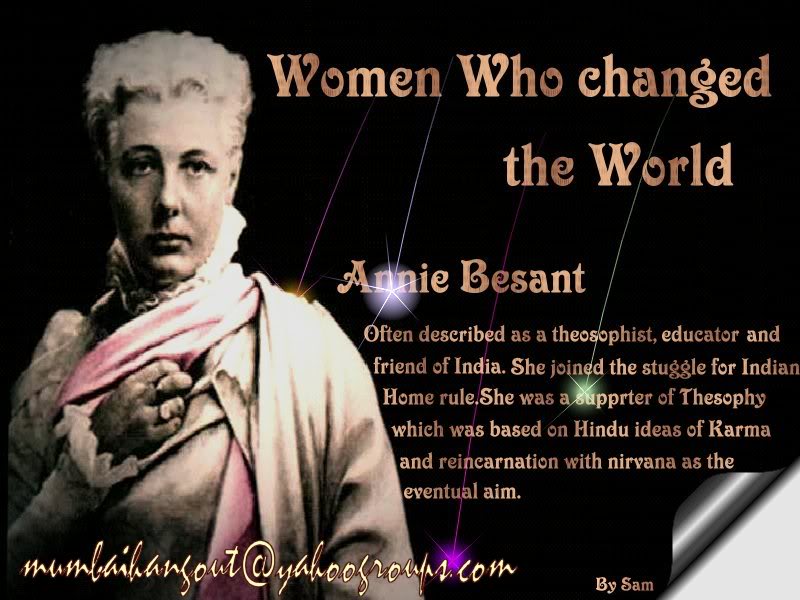
Bharat Darshan – Rajahmundry – The Gateway to Traditions and History. ANNIE BESANT – ANGEL OF INDIA.

Ms. Annie Besant who became the President of the Theosophical Society in 1907 visited Rajahmundry twice and established a place of worship known as ‘Divya Gjyan Samaj’ in a residential sub-division of Rajahmundry which is still known as ‘ALCOT GARDENS’ (named after Theosophist Henry Steel Olcott).

Bharat Darshan – Rajahmundry – The Gateway to Traditions and History

Bipin Chandra Pal (1858-1932), the leader of ‘Vande Mataram’ nationalist movement visited Rajahmundry in April 1907.

Bharat Darshan – Rajahmundry – The Gateway to Traditions and History

Alluri Sita Ramaraju (1898-1924) was inspired by the patriotic zeal of the revolutionaries in Bengal and waged a brief war against the British winning the hearts of the natives of Rajahmundry.  

Kandukuri Veeresalingam Pantulu Garu:  

Bharat Darshan – Rajahmundry – The Gateway to Traditions and History

He was born into a poor Brahmin family at Rajahmundry in 1848. About one hundred years later, when I arrived in Innespeta subdivision of Rajahmundry, the first time I had known this great man was during a visit to the municipal park on the Main Road, just a short walking distance from my grandparents’ house. There is a very imposing statue and people spoke about him with pride and admiration. My eldest brother, Hari was a student at the Veeresalingam Theistic High School in Innespeta. During the academic year 1952-53, I studied in 3rd grade at ‘Shade Girls High School’ located near ‘Kambala Cheruvu’ (Lake Kambala) while my family resided in Danavaipeta subdivision of Rajahmundry. Myself and my elder brother Pratap used to walk to the school and the easiest way to reach the school was a private road which traverses the Veeresalingam Gardens. The subdivisions of Danavai peta and the Danavai Pond and Prakasam Nagar are located on the southern side of the Gardens and Gandhi Nagar is located along the northern perimeter of the Gardens. The school is at a short distance from the north-west entrance to the Gardens. Apart from the tombs of Veeresalingam and his wife Rajya Lakshmi, the Gardens had a venue to conduct marriage functions and there was a Home for Widows. On our way to the school, we used to enter the Widow’s Home and a classmate of ours by name Sai Baba would join us in the walk to the school. On our return trip, the three of us used to reach the Home and after leaving Sai Baba, myself and my brother would resume our walk to our residence in Danavaipeta. There were several occasions when we would wait at the Home while Sai Baba’s mother would be breastfeeding him. During that school year, it was my daily experience and I knew that my friend and his mother derived their support from this great benefactor known as Veeresalingam.  

As my family lived on the outer fringes of Veeresalingam Gardens during the most part of my later school years at Danavaipeta Municipal High School, walking across the Gardens and playing cricket in the evening in the open areas of the Garden became a part of my daily routine. The Gardens had several flowering plants and fruit-bearing trees and to celebrate the festival of Ganesh we used to gather from the Gardens several flowers, leaves, and fruits which are required for the worship. At the same time, I also knew about ‘Hithakarani Samajamu’. Veeresalingam donated all his lifetime earnings and had established this trust in 1907. Addepalli Vivekananda Devi, a social worker, and educationist lived in Danavaipeta and I had seen her several times and I was aware that she was continuing the relentless effort started by Veeresalingam to empower women and for the uplifting of women.

Bharat Darshan – Rajahmundry – The Gateway to Traditions and History

In 1968, Ms. Addepalli Vivekananda Devi successfully established Srimati. Kandukuri Rajya Lakshmi College for Women near the Lake known as ‘Danavai Gunta’. My sister and a sister-in-law studied in this College.  

Veeresalingam was influenced by the ideals of ‘BRAHMO SAMAJ‘ founded by the great social reformers of Bengal, Raja Ram Mohan Roy, Keshub Chunder Sen, and Iswar Chandra Vidya Sagar who did much work for women’s emancipation. Veeresalingam was the pioneer of social reform in Andhra areas of the Madras Presidency apart from his remarkable contributions to Telugu literature and for the cause of education. 

Bharat Darshan – Rajahmundry – The Gateway to Traditions and History

During the course of life, moments slip away and fortunately, they are laid into account. If there are no memories, there is no life worth speaking about. 

Dr. R. Rudra Narasimham, B.Sc., M.B.B.S., 

Danavaipeta Municipal High School, Rajahmundry,

S.S.L.C. Class, March 1961

Bharat Darshan – Rajahmundry – The Gateway to Traditions and History.

Whole Scholar – Islamic Scholar of Indian Army delivers Sermon in Kaptai, Bangladesh

A Personal Tribute to Colonel B K Narayan, The Regiment of Artillery, Indian Army.
Whole Dude – Whole Scholar: Operation Eagle 1971-72. A Sermon in Kaptai, Bangladesh

GLORIOUS QURAN – SURAH VIII – SPOILS OF WAR, VERSE 61: “AND IF THEY INCLINE TO PEACE, INCLINE THOU ALSO TO IT, AND TRUST IN ALLAH. LO! HE IS THE HEARER, THE KNOWER.”

Whole Dude – Whole Scholar: Operation Eagle 1971-72. A Sermon in Kaptai, Bangladesh.

THE GOSPEL ACCORDING TO SAINT MATTHEW, CHAPTER 5, VERSE 9: “BLESSED ARE THE PEACEMAKERS, FOR THEY WILL BE CALLED SONS OF GOD “

Whole Dude – Whole Scholar: Operation Eagle 1971-72. A Sermon in Kaptai, Bangladesh.
Whole Dude – Whole Scholar: The military operation – Operation Eagle 1971 in the Chittagong Hill Tracts was inclined towards PEACE. A Sermon in Kaptai, Bangladesh.

Operation Eagle 1971 was conceived by Prime Minister Indira Gandhi to deliver peace to the people of Bangladesh who had earlier declared their independence from Pakistan. I had the good fortune to serve under the Command of an Islamic Scholar who had performed Hajj and who had retained the entire book of Holy Quran in his memory and a true master of Islamic religious tradition and rituals of worship. Peace is the greeting of the Righteous. The Righteous while engaged in war are inclined towards Peace. My South Column Infantry Unit Commander of Operation Eagle, Lieutenant Colonel B K Narayan belonged to the Regiment of Artillery and during the time I spent with him I learned about the peace traditions of Righteous Muslims. Kindly read my personal tribute to this Islamic Scholar who had served Indian Army in its Olive Green Uniform. 

Whole Dude – Whole Scholar: Operation Eagle 1971-72. A Sermon in Kaptai, Bangladesh
Whole Dude – Whole Scholar: Operation Eagle 1971-72. A Sermon in Kaptai, Bangladesh.

http://bhavanajagat.wordpress.com/2007/09/22/a-sermon-in-kaptai-bangladesh/

A Personal Tribute to Lieutenant Colonel B K Narayan, The Regiment of Artillery, Indian Army. An Islamic Scholar Who Served in Olive Green Uniform. The Imam of Friday Prayer in Kaptai on December 17, 1971.

A Sermon in Kaptai, Bangladesh Ops 1971-72. A personal tribute to Lieutenant Colonel B K Narayan, the Regiment of Artillery. An Islamic Scholar who served in Olive Green Uniform. The Imam of Friday Prayer on December 17, 1971.
A Sermon in Kaptai, Bangladesh Ops 1971-72. A personal tribute to Lieutenant Colonel B K Narayan, Islamic Scholar who served in Olive Green Uniform. The Imam of Friday Prayer in Kaptai on December 17, 1971: Glorious Quran, Surah VIII, SPOILS OF WAR, Verse 01: “And if they incline to peace, incline thou also to it, and trust in Allah.Lo! He is the Hearer, the Knower.”

I was in college from 1962 to 1965 and obtained the Bachelor of Science degree from Osmania University, Hyderabad. I remember this period as the Golden Age of immortal Mohd. Rafi whose melodies still fill my ears. I grew up in this cradle of Urdu language Culture and had acquired my love for ghazals and qawwalis. I spent time in Lucknow, a crown jewel in the Urdu speaking world, where you meet in the market place, ordinary folks who speak in tones that have made the language famous for its sweetness. Much later, I had served in the Royal Oman Army and took my first lesson in Arabic language. My love for Urdu and my Knowledge of Arabic language pales when I write about this Islamic Scholar and Arabic language expert whom I met in India during 1971. He passed away on Sunday, May 2, 2004, in Bahrain where he worked for over 20 years as the Head of the Translation Department at the Bahrain Archives. This is not a tribute about his academic accomplishments, the books that he had published, his military career or about his famous friendly relationship with President Gamal Abdel Nasser and President Anwar Sadat of Egypt. I am writing this tribute to recognize his personal qualities and the values that he had promoted. I am writing this tribute to recognize him as a “peacemaker.” He represents a symbol of hope and the light that he had shown may lead us on to a path of peaceful co-existence.

A personal tribute to Lieutenant Colonel B K Narayan, an Islamic Scholar who served in Olive Green Uniform. The Imam of Friday Prayer in Kaptai on December 17, 1971: ” (This is) a Scripture that We have revealed unto thee, full of blessing, that they may ponder its revelations, and that men of understanding may reflect “.(Holy Book of Quran, Surah XXXVIII, “SAAD” verse 29)

I met Lieutenant Colonel.B K Narayan in Demagiri, Mizoram in October 1971. He hails from  Karnataka, and he grew up as a Hindu. We gathered in Demagiri to make preparations to launch Operation Eagle in support of Bangla Muslims seeking freedom from military dictatorship imposed by Pakistan. In Demagiri, I reported to him to serve as his Medical Officer of the South Column Unit. He had the unique distinction of commanding an Infantry Unit in the conduct of War while he belonged to The Regiment of Artillery. I have not known a ‘GUNNER’ who could plan and execute Infantry Attacks on Enemy posts. Colonel Iqbal Singh, the Chief of Staff at the Force Headquarters also belonged to The Regiment of Artillery. But, the role played by Colonel Narayan as an Infantry Commander during War is exceptional and has no comparisons that I am aware of. I had the opportunity to converse with him for extended periods of time and came to know his admirable personality. It is not the knowledge of Arabic language that has made him unique and sets him apart from all other language experts. He is special because of his love for Islamic Culture and his ability to project the deep understanding of that Culture when he speaks to others. He performed the holy pilgrimage of Hajj and had observed all the rituals of that spiritual journey like a true and devout Muslim. When he narrated his Hajj experience, I could know the sense of joy and the purity of his intentions. His observance of Hajj, a ritual performed by all devout Muslims, was genuine, real to its core.

A Sermon in Kaptai, Bangladesh Ops 1971-72. A personal tribute to Lieutenant Colonel B K Narayan, an Islamic Scholar who served in Olive Green Uniform. On Friday, December 10, 1971, the South Column Unit under his Command fought a furious battle with Pakistan’s Security Forces just east of Barkal and forced them into a retreat On Friday, December 17, 1971, Colonel Narayan conducted the Friday Worship Service in Kaptai acting as the Imam of Friday Prayer.

From Tlabung, Demagiri, South Column marched to Borunasury and then we marched towards Barkal after neutralizing the enemy post at Jalanpara and had encounters with aggressive enemy patrolling to resist our advance at two other locations. Finally, on Friday, December 10, 1971, the enemy fought a very decisive battle on the east side of Karnaphuli River to stop our advance towards Barkal. After losing the battle, the enemy promptly beat a retreat and withdrew from Barkal, Rangamati, Kaptai, and further moved out of Chittagong without putting up a fight. Col Narayan was able to quote the Quran from his memory and would convey his understanding of the verses with great clarity. I personally witnessed his amazing performance in a little town called Kaptai, on the banks of Karnaphuli Lake, Rangamati Division of Bangladesh. He conducted the Friday Worship Service for the local Bangla Muslims and delivered a sermon which was received with great appreciation by the worshipers. His job in Uniform did not impose any obligation to organize such an event. He held that prayer meeting entirely on his own initiative and it was purely an expression of his love to worship in the Islamic tradition and it also affirms his faith that the worship of God is not limited by one single tradition.

The Friday Prayer Service was held at the State Guest House in Kaptai where I stayed after my Unit had captured Kaptai. It had a large Conference Room. Col Narayan contacted the Muslim Clerics of the local Masjid and they were absolutely delighted when they met him. His Scholarship and devotion to Islam had captivated them and they immediately agreed to convene the local congregation at the Guest House and organize the Friday Prayer Service. The Conference Hall got totally packed with worshipers. I could watch the proceedings directly from my room in the State Guest House. The Bangla Muslim Community of Kaptai were truly appreciative of Colonel Narayan and his military campaign for bringing Peace and Joy to their Community.

I knew Colonel Narayan’s great admiration for Arab people. He always described them as peace-loving people. He knew this as a fact and it was based upon his understanding of Islamic Culture and traditions. I would describe Colonel Narayan as God’s humble servant. It is important to remember and pay tribute to such “peacemakers” as we can achieve true peace through reflecting and understanding the revelations from the Holy Scriptures of all people. The Regiment of Artillery of Indian Army must record this historical contribution made by a Gunner officer who served as an Infantry Commander during the Bangladesh Ops of 1971-72.

Special Frontier Force – Establishment Number. 22 – Operation Eagle – Liberation War of Bangladesh 1971:

A personal tribute to Lieutenant Colonel B K Narayan, an Islamic Scholar who served in Olive Green Uniform. The Imam of Friday Prayer in Kaptai on December 17, 1971. OPERATION EAGLE – BANGLADESH OPERATIONS – 1971-72 – A SERMON IN KAPTAI, BANGLADESH

Mrs. Indira Gandhi, Prime Minister of India initiated Liberation of Bangladesh during 1971 with military action in the Chittagong Hill Tracts. The battle plan of this military action is known as Operation Eagle. She conceived this battle plan to bring peace in that region. She was inclined towards peace. She wanted to deliver peace to people of Bangladesh who had earlier declared their independence from Pakistan. During Operation Eagle, Bangladesh Operations of 1971-72, I served in South Column, an Infantry Unit Commanded by Lieutenant Colonel B K Narayan. He was a great Islamic Scholar. He had explained to me that PEACE is the greeting of Righteous people.

A personal tribute to Lieutenant Colonel B K Narayan, an Islamic Scholar who served in Olive Green Uniform. The Imam of Friday Prayer in Kaptai on December 17, 1971. OPERATION EAGLE – BANGLADESH OPERATIONS: The Flag of The Regiment of Artillery of Indian Army. This is a story about a Gunner, an Officer of The Regiment of Artillery who had commanded an Infantry Unit during India-Pakistan War of 1971 and had planned and executed Infantry Assaults on Enemy Posts to Liberate Bangladesh. His Unit was the first to receive the Gallantry Awards of Vir Chakra during the Liberation War of Bangladesh.
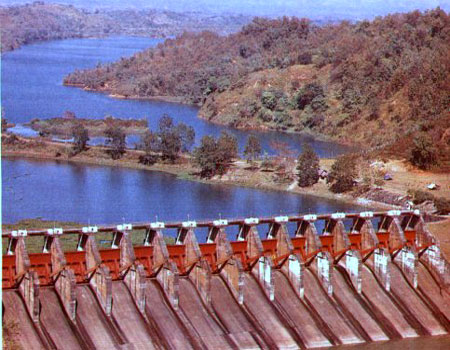
The Military Operation in Chittagong Hill Tracts during Indo-Pak War of 1971 aimed at restoring Peace and to help Bangla Muslims to live in Dignity. My Unit had captured Kaptai and this Dam was not targeted for inflicting any kind of damage.
A personal tribute to Lieutenant Colonel B K Narayan, an Islamic Scholar who served in Olive Green Uniform. The Imam of Friday Prayer in Kaptai on December 17, 1971. OPERATION EAGLE – BANGLADESH OPERATIONS: The Military Operation in the Chittagong Hill Tracts during the India-Pakistan War of 1971 aimed at restoring Peace and to deliver Peace to Bangladesh Muslims to help them live in Dignity. My Unit had captured Kaptai and this Dam was not targeted for inflicting any kind of damage. For example, we carried explosives to execute operational plans to evict the enemy but not to harm the people. In any case, Pakistan withdrew its forces after the decisive battle fought on Friday, December 10, 1971.


My Unit never discussed any Battle Plan that required blowing up the Dam over Karnaphuli River at Kaptai.
A personal tribute to Lieutenant Colonel B K Narayan, an Islamic Scholar who served in Olive Green Uniform. The Imam of Friday Prayer in Kaptai on December 17, 1971. OPERATION EAGLE – BANGLADESH OPERATIONS: My Unit never discussed any Battle Plan that required blowing up the Dam over Karnaphuli River at Kaptai. However, we discussed the Plan to capture Rangamati, and Kaptai and carried explosives if a contingency arises for their use. The Pakistan Security Forces withdrew from Rangamati and Kaptai without offering any resistance.
OPERATION EAGLE -BANGLADESH OPERATIONS: Major General Sujan Singh Uban, Inspector General of Special Frontier Force, was my Commander during Operation Eagle 1971-72 but he made no mention in his book about the Imam of Friday Prayer in Kaptai’. He did not destroy Kaptai Dam during the 1971 War. His son’s claim about Kaptai Dam is totally incorrect.
A personal tribute to Lieutenant Colonel B K Narayan, an Islamic Scholar who served in Olive Green Uniform. The Imam of Friday Prayer in Kaptai on December 17, 1971. OPERATION EAGLE – BANGLADESH Ops: THE SERMON IN KAPTAI. We helped the Bangladesh Muslims to regain their freedom and dignity. The India-Pakistan War of 1971 and the Birth of Bangladesh are very significant achievements of Prime Minister Indira Gandhi. As I was then serving in Establishment No. 22 under the Cabinet Secretariat, I had a direct and personal understanding of her Foreign Policy Initiatives. She personally approved our military Operation in the Chittagong Hill Tracts. In the conduct of this War, we had faced a very critical moment and it needed her personal intervention and a decision that she alone could make. I rendered my services and had overcome the challenge posed by that critical situation. The importance of this situation could be understood as it needed an intervention from the Prime Minister. I am now asking the Government of India to recognize my GALLANT response in enemy’s territory without any concern for my personal safety.
Electricity generated at Kaptai helps to operate Chandraghona Paper Mills near Kaptai.An engineer who had worked in the Paper Mills at Chandraghona, a Bangla Muslim had helped my Unit during our military operation in Chittagong Hill Tracts.When our Unit reached Kaptai, the engineer happily returned to his home. I went and visited the Paper and Rayon Fiber Mill at Chandraghona.
A personal tribute to Lieutenant Colonel B K Narayan, an Islamic Scholar who served in Olive Green Uniform. The Imam of Friday Prayer in Kaptai on December 17, 1971. OPERATION EAGLE 1971: Electricity generated at Kaptai helps to operate Chandraghona Paper Mills near Kaptai.An engineer who had worked in the Paper Mills at Chandraghona, a Bangla Muslim had helped my Unit during our military operation in the Chittagong Hill Tracts. When our Unit reached Kaptai, the engineer happily returned to his home. He had joined Lieutenant Colonel Assar in a military operation at Chittagong. I went and visited the Paper and Rayon Fiber Mill at Chandraghona.
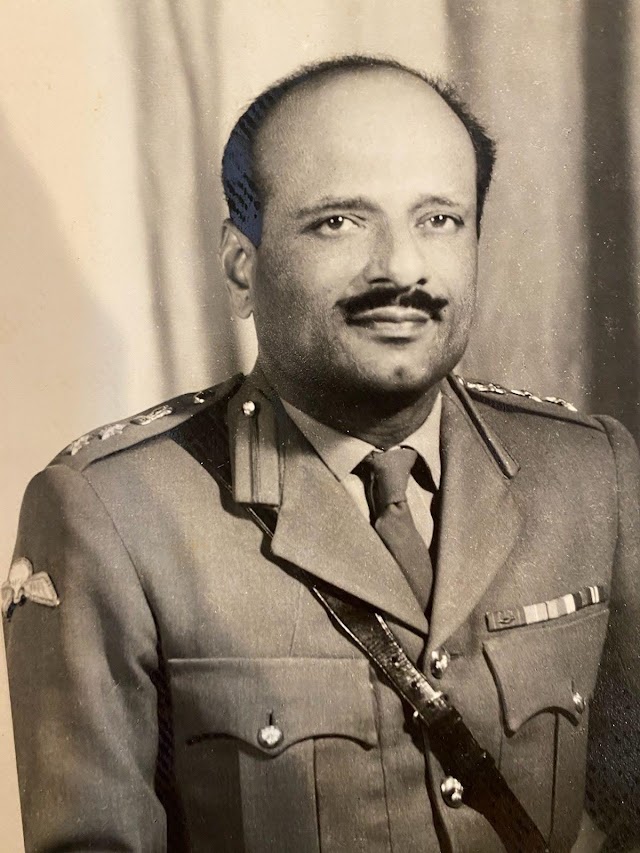
A personal tribute to Lieutenant Colonel B K Narayan, an Islamic Scholar who served in Olive Green Uniform. The Imam of Friday Prayer in Kaptai on December 17, 1971. Lieutenant Governor of Andaman & Nicobar Islands(December 1985 to December 1989) – Lieutenant General(Retd) TS Oberoi, PVSM, VrC., former General Officer Commanding-in-Chief, Headquarters Southern Command, Pune, former Inspector General, Special Frontier Force, former Commandant, Headquarters Establishment No. 22, Commander Operation Eagle –  Bangladesh Ops. He is the tall person in this photo wearing the dark brown turban. I knew him since 1971. Under his able leadership, the Liberation of Bangladesh had commenced in the year 1971 during the Indo-Pak War. Apart from his military wisdom, he took good care of all men under his Command. While I was proceeding to the Chittagong Hill Tracts, he had individually greeted all the members of my team and had delayed the departure of aircraft to ensure that a hot breakfast was served to all the men boarding the aircraft. He paid personal attention to all the aspects of the military mission to ensure the wellbeing of men apart from achieving success in accomplishing the military task. The sense of warmth he radiated is easily felt when we meet him in person. His grandson provided me the link to this photo. Photo Credit – Trishna-Ajay-Picasa Web Album.

R. R. Narasimham, B.Sc., M.B.B.S.,     

Service Number: MS-8466, Rank: Captain Branch: Army Medical Corps/Short Service Regular Commission;

Designation: Medical Officer, South Column, Operation Eagle

Organization: Headquarters Establishment No. 22  C/O 56 APO. Special Frontier Force, Vikas Regiment

My father created the SFF, I commanded it

By Inspector General GURDIP SINGH UBAN (retd)

September 22, 2020 Rediff.com

Major General Sujan Singh Uban, a legendary veteran of the Second World War, was a natural choice to raise, train and command the Special Frontier Force and mould them into a well oiled fighting machine, recalls his son Inspector General Gurdip Singh Uban (retd), who led SFF troops during the Kargil War.

As the Indian Army moved in with their major thrust into East Pakistan, the SFF, while supporting the flank of the Indian Army, by a blitzkrieg, cleared the Chittagong Hill Tracts, destroyed the Kaptai dam and encircled and prevented the escape of Pakistan’s 97 Brigade and No 2 Commando Battalion, all of whom were taken prisoner.

The SFF was poised for the capture of Chittagong port when a ceasefire was declared; a daring move which paid handsome dividends.

This earned them the title ‘Phantoms of Chittagong’.

A personal tribute to Lieutenant Colonel B K Narayan, an Islamic Scholar who served in Olive Green Uniform. The Imam of Friday Prayer in Kaptai on December 17, 1971. The Kaptai Dam was not destroyed during the Bangladesh Ops 1971-72.
A personal tribute to Lieutenant Colonel B K Narayan, an Islamic Scholar who served in Olive Green Uniform. The Imam of Friday Prayer in Kaptai on December 17, 1971.