SPECIAL FRONTIER FORCE AT BIKANER HOUSE ANNEXE SHAHJAHAN ROAD, NEW DELHI
SPECIAL FRONTIER FORCE AT BIKANER HOUSE ANNEXE, SHAHJAHAN ROAD, NEW DELHI. MY GRIEVANCE APPLICATION IS WITH SHRI. BASANT SWAROOP, DIRECTOR & GRIEVANCE OFFICER, CABINET SECRETARIAT(SR) SINCE 26 MAY 2012.
My grievance application submitted to Department of Administrative Reforms & Public Grievances had reached Shri. Basant Swaroop, Director & Grievance Officer, Cabinet Secretariat(SR), Bikaner House Annexe, Shahjahan Road, New Delhi on 26 May 2012. Director Basant Swaroop has not contacted my Unit(Special Frontier Force) to verify my Service Information and my Record of Service to ascertain my role during Bangladesh Ops of 1971. I request my readers to speak to Grievance Officer Swaroop(Phone Number. 23387030) and ask him to process my petition at an early date.
SPECIAL FRONTIER FORCE AT BIKANER HOUSE ANNEXE, SHAHJAHAN ROAD, NEW DELHI. MY GRIEVANCE APPLICATION REACHED SHRI. BASANT SWAROOP, DIRECTOR & GRIEVANCE OFFICER, CABINET SECRETARIAT(SR) ON 26 MAY 2012.
:: Grievance Status ::
PORTAL FOR PUBLIC GRIEVANCES
Brought to you by Department of Administrative Reforms & Public Grievances
Government of India
Grievance Status
Status as on 11 Jul 2015
Registration Number : CABST/E/2012/00154
Name Of Complainant : R.Rudra Narasimham
Date of Receipt : 26 May 2012
Received by : Cabinet Secretariat(SR)
Officer name : Mr Basant Swaroop
Officer Designation : Director & Grievance Officer
Contact Address : Bikaner House (Annexe), Shahjahan Road, New Delhi
Contact Number : 23387030
Grievance Description :
Dear Sir,
I had served in capacity of Medical Officer in the rank of Lieutenant and Captain in Special Frontier Force from 22 September 1971 to 18 December 1974.
I was posted at Headquarters Establishment Number. 22 C/O 56 APO. Brigadier T S Oberoi was the Commandant at Hq Establishment No. 22.
Under the plans approved by the Prime Minister of India, Cabinet Secretariat, I was issued a Movement Order and was dispatched to serve in the South Column Unit under the Command of Lieutenant Colonel B K Narayan for the execution of Operation Eagle which during 1971 had initiated the Liberation of Bangladesh with military action conducted in the Chittagong Hill Tracts.
Lieutenant Colonel B K Narayan in a written communication dated 13 May, 1972 had stated that I have displayed a great sense of devotion to duty, maturity, physical toughness, and bravery beyond call of duty during Operation Eagle. The South Column Unit Commander had also stated that he had recommended my name for a gallantry award and had submitted a citation to the Director of Medical Services(Army) for his further action. In his written remarks, Lieutenant Colonel B K Narayan gave his appreciation and commended me and said:”A very conscientious and Tough MO who worked hard during the Bangladesh Ops. He did very well and showed Maturity, which was beyond the call of duty. I have recommended this Officer for a gallantry award for which he deserves eminently. He is physically Tough and cheerful. Is a fresh entrant with less than 2 years of Service and yet he displayed capability and confidence.”
These remarks were duly reviewed by Commandant Brigadier T S Oberoi and the Annual Confidential Report(Officers) for the year 197-72 was duly forwarded to Military Secretary’s Branch, MS Branch 4(CR) MoD(Army).
In a written testimonial given by Lieutenant General T S Oberoi, PVSM, Vrc, General Officer Commanding-in-Chief, Headquarters Southern Command Pune-411001, dated 14th February, 1983. General Oberoi had stated that I deserve befitting recognition for the Service that I had rendered to the Nation during the time of a crisis. The Southern Army Commander had categorically stated that I was recommended for a gallantry award for display of gallant qualities in the face of the enemy.
It is not known as to why the Director of Medical Services(Army) had failed to take action to forward the citation for gallantry award to the MS Branch(Army), MoD.
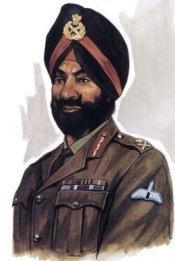
Justice and fairness demand that action must be completed to grant the gallantry award as recommended by my Unit Commander Lieutenant Colonel B K Narayan, Brigade Commander T S Oberoi and Major General Sujan Singh Uban, Inspector General Special Frontier Force who had commanded the men deployed for Operation Eagle during 1971-72.
As per the decision made by the Prime Minister of India, the Battle Plan of Operation Eagle had included the eligibility criteria for receiving Service Medals, Decorations, and Awards. The Prime Minister of India had not imposed any restrictions or time limits and as such I am still entitled to receive the gallantry award that was duly recommended following the rules and procedures given to us after approval by the Prime Minister of India and her Cabinet Secretariat.
Service Number. MS-8466; Rank. Lieutenant/Captain; Branch. Army Medical Corps/Short Service Regular Commission;
Service Number. MR-03277K; Rank. Captain/Major; Branch. Army Medical Corps/Direct Permanent Commission.
Current Status : RECEIVED THE GRIEVANCE
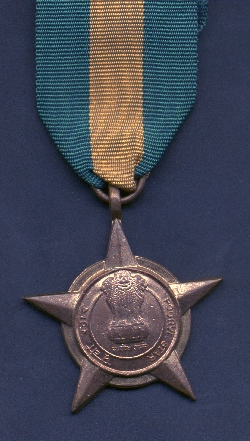
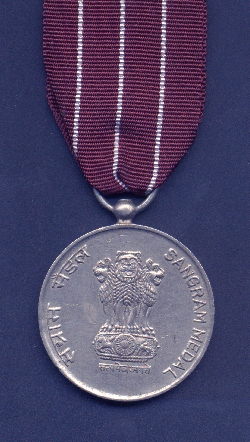
SPECIAL FRONTIER FORCE AT BIKANER HOUSE ANNEXE, SHAHJAHAN ROAD, NEW DELHI. I AM ASKING FOR VERIFICATION OF MY CLAIM FOR GRANT OF GALLANTRY AWARD DURING BANGLADESH Ops OF 1971.SPECIAL FRONTIER FORCE AT BIKANER HOUSE ANNEXE, SHAHJAHAN ROAD, NEW DELHI. THIS MILITARY MEDAL CALLED POORVI STAR IS AWARDED TO ME FOR MY PARTICIPATION IN BANGLADESH Ops OF 1971.SPECIAL FRONTIER FORCE AT BIKANER HOUSE ANNEXE, SHAHJAHAN ROAD, NEW DELHI. THIS MILITARY MEDAL CALLED SANGRAM MEDAL IS AWARDED TO ME FOR MY PARTICIPATION IN BANGLADESH Ops OF 1971.
SPECIAL FRONTIER FORCE AT VAYU BHAWAN: MY GRIEVANCE REGARDING AWARD OF GALLANTRY AWARD RECOMMENDED BY SPECIAL FRONTIER FORCE IN RECOGNITION OF MY ROLE IN BANGLADESH OPs HAS NOW REACHED VAYU BHAWAN.
My grievance about grant of gallantry award recommended in recognition of my role during Bangladesh Ops of 1971 submitted to Department of Administrative Reforms & Public Grievances has now reached Shri. Amitab Ranjan Sinha, Director Air III, Vayu Bhawan. His contact phone number: 23016326. Indian Air Force Officer Parvez Jamasji, helicopter pilot who served in the rank of Flight Lieutenant during 1971 had received Vir Chakra award for his participation in the same military operation. Apparently, my petition is being processed at Vayu Bhawan as my Unit(South Column – Special Frontier Force) received airlift support from this Air Force helicopter pilot. I would ask my readers to speak to Shri. Amitab Ranjan Sinha and request him to process my petition at an early date.
SPECIAL FRONTIER FORCE AT VAYU BHAWAN, NEW DELHI. SHRI. AMITAB RANJAN SINHA, DIRECTOR AIR III, ROOM NO. 364, VAYU BHAWAN, DHQ P.O. NEW DELHI IS CURRENTLY PROCESSING THIS GRIEVANCE SUBMITTED BY AN OFFICER WHO BELONGS TO SPECIAL FRONTIER FORCE.
:: Grievance Status ::
PORTAL FOR PUBLIC GRIEVANCES
Brought to you by Department of Administrative Reforms & Public Grievances
Government of India
Grievance Status
Status as on 11 Jul 2015
Registration Number:DARPG/E/2013/82606
Name Of Complainant:R R Narasimham
Date of Receipt:07 Sep 2013
Received by:Department of Administrative Reforms and Public Grievances
Forwarded to:Director Air III
Officer name:Shri Amitab Ranjan Sinha
Officer Designation:Director
Contact Address:Room No.364, Vayu Bhawan DHQ, PO New Delhi
Contact Number:23016326
Grievance Description:
Dear Sir, or Madam,
This grievance pertains to the following petitions registered by the Department of Administrative Reforms and Public Grievances. 1. MODEF/E/2011/00761 dated 24 Sep 2011, 2. CABST/E/2012/00154 dated 26 May 2012, 3. DARPG/E/2013/82597 dated 07 Sep 2013, and 4. MODEF/E/2013/01709 dated 05 Sep 2013.
1.A gallantry award is granted in recognition of a past event and the gallant action would always exist as a past event.
2. In the history of Republic of India, for the first time during 1971, the Prime Minister sanctioned a military action that was not planned by Army/Ministry of Defence.
3. Operation Eagle in which I had the honour to participate was not planned and executed under orders issued by Army Headquarters/Ministry of Defence.
4. The gallant action did not happen in the context of a border skirmish or that of a border conflict. It was not related to the Official War between India and Pakistan that was declared by the Prime Minister on 04 December 1971.
5. The gallant action pertains to a deliberate, planned attack deep inside the territory defended by the Enemy’s Regular Army. I had marched with the men to participate in the attack.
6. The battlefield casualties were treated at the Enemy Post we captured and not in Indian territory.
7. There was no Regimental Aid Post at the border, inside Indian territory. The treatment of battle casualties began at the site of battle, about 40 miles from the border.
8.The Brigade Headquarters which had the primary responsibility for airlifting of battle casualties could not dispatch the helicopter as the Prime Minister did not sanction the violation of Pakistan’s airspace during the first phase of Operation Eagle in the month of November 1971.
9. I as the Unit Medical Officer went beyond the call of my duty to ensure a safe, and timely evacuation of the battlefield casualties. I had marched a distance of over 80 miles from Sunrise to Sunset to complete my task inside the Enemy territory while the Enemy was still dispersed in the area.
10. Indian Army concluded its phase of military operations inside Bangladesh on 16 December 1971 when the Enemy totally surrendered. However, Operation Eagle concluded its military operation during January 1972.
11. The fact that the Prime Minister had established the eligibility criteria for the sanction of military awards, honours, and decorations to the participants of Operation Eagle could be proved by the simple fact that the Gallantry Award of Vir Chakra was given to Shri. G B Velankar, a civilian officer of my Unit who was allowed the use of Major’s rank on a honorary basis.
12. Under the battle plan of Operation Eagle, to grant military awards, the Prime Minister did not impose any time constraints as it was not a battle operation launched by Indian Army.
13. The citation that recommended the grant of Vir Chakra for my gallant action during Operation Eagle was initiated by Lieutenant Colonel B K Narayan of my Unit, it was reviewed and recommended by Brigade Commander, Brigadier T S Oberoi, and it was finally approved and recommended by the Formation Commander, Major General Sujan Singh Uban.
14. Special Frontier Force had strictly followed the guidelines included in the battle plan of Operation Eagle and the citation was directly submitted to the Director of Medical Services(Army), Medical Directorate, Army Headquarters, New Delhi before the conclusion of Operation Eagle.
15. I am not responsible for delivering the citation to the MS Branch, Ministry of Defence, New Delhi while I am on operational duty in the field. If the Medical Directorate had failed in the performance of its duty, I should not be penalized.
Date of Action:27 May 2015
SPECIAL FRONTIER FORCE AT VAYU BHAWAN: MAJOR GENERAL SUJAN SINGH UBAN AVSM, INSPECTOR GENERAL SPECIAL FRONTIER FORCE RECOMMENDED GALLANTRY AWARD FOR MY ROLE DURING BANGLADESH OPs OF 1971.SPECIAL FRONTIER FORCE AT VAYU BHAWAN: REMARKS OF LIEUTENANT GENERAL TS OBEROI PVSM, VrC., GENERAL OFFICER COMMANDING IN CHIEF, HQ SOUTHERN COMMAND, PUNE.
SPECIAL FRONTIER FORCE AT OFFICE OF THE DGAFMS : I served in this organization from September 22, 1971 to December 18, 1974. I was not a mercenary working for a foreign government or Agency. I was fully involved and was prepared to defend the legitimate border between India and Tibet as established by the McMahon Treaty and the Simla Agreement of 1914 between India and Tibet. We as an organization defended our own territory to defend our natural rights. We were fully ready to conduct offensive operations against our Enemy if the Enemy attacks us during the conduct of our military mission.
I am sharing the status of a public grievance submitted to Department of Administrative Reforms & Public Grievances. No effort is made to contact my Unit(Special Frontier Force) to verify my personal service information, record of service, and the fact of my participation in Bangladesh Ops during which my Unit recommended a gallantry award.
I am asking my readers to speak to Colonel. R. R. Kole, Director AFMS Coord, Office of DGAFMS to ask him to contact my Unit(Special Frontier Force) and obtain the relevant information to process the grievance.
PORTAL FOR PUBLIC GRIEVANCES Brought to you by Department of Administrative Reforms & Public Grievances
Government of India
Grievance Status
Status as on 10 Jul 2015
Registration Number:DARPG/E/2013/82597
Name Of Complainant:R Pratap Narayan
Date of Receipt:07 Sep 2013
Received by:Department of Administrative Reforms and Public Grievances
Forwarded to:Office of DGAFMS
Officer name:Col. R R. Kole
Officer Designation:Dir AFMS Coord.
Contact Address:Room No.7, M Block, New Delhi 110001
Contact Number: Phone 01123092004
Grievance Description:
1. My younger brother, Service Number: MS-8466/MR-03277K, Name:R. Rudra Narasimham( or R. R. Narasimham ) served as Medical Officer in Army Medical Corps from 26 July 1970 to 10 January 1984 after grant of Short Service Commission(September 1969) and Direct Permanent Commission(March 1973). He served in the rank of Lieutenant/Captain at Establishment No. 22/Special Frontier Force from 22 September 1971 to 18 December 1974.
2. He had served under the command of Major General Sujan Singh Uban, Inspector General Special Frontier Force and took part in Operation Eagle from November 1971 to January 1972. Operation Eagle had initiated the Liberation of Bangladesh with military action in Chittagong Hill Tracts. The Brigade Commander of Operation Eagle was Brigadier T S Oberoi, the Commandant, Establishment No. 22. The Chief Staff Officer was Colonel Iqbal Singh. My brother served in the South Column Unit that was commanded by Lieutenant Colonel BK Narayan. During November 1971, his Unit had attacked and captured an enemy post defended by regular troops of Pakistan’s Army. In this Infantry attack, my brother was at the front line marching with the men. The two Company Commanders, Major Savendra Singh Negi(Grenadiers), and Major G B Velankar(SFF-EST No. 22, a Civilian Officer) who led the assault on the enemy position were awarded the Gallantry Award of Vir Chakra. My brother who took part in this action with the men of these two Company Commanders was also recommended to receive the Gallantry Award of Vir Chakra. The citation for the grant of this Gallantry Award was initiated by Lieutenant Colonel BK Narayan, it was seen by Colonel Iqbal Singh, the Chief Staff Officer, it was reviewed and recommended by Brigadier T S Oberoi and it was finally approved by Major General Sujan Singh Uban, IG SFF who had recommended it and sent it directly to the Director of Medical Services, DMS(Army), Medical Directorate, New Delhi for favour of sending the citation to the MS Branch, Army Hq for their necessary action to sanction the Gallantry Award.
3. It must be clearly noted that the eligibility criteria for the grant of military awards, decorations and honours were included in the Battle Plan of Operation Eagle which was duly approved and sanctioned by the Prime Minister of India. The Prime Minister’s Office(PMO) and the Cabinet Secretariat are fully aware of the terms and conditions for the grant of awards to members who took part in Operation Eagle. My brother is requesting that the Gallantry Award to be granted as approved and recommended by the Inspector General of Special Frontier Force. My brother applied for Direct Permanent Commission during September 1972 and his application for AMC Examination held in September 1972 includes the remarks of recommendation signed by Colonel Iqbal Singh who had mentioned the citation, and had substantially quoted the citation giving the full details of my brother’s gallant response in the face of enemy action. This application for Permanent Regular Commission in Army Medical Corps is archived at the Medical Personnel Records Section(Officers)/ MPRS(O), Office of the DGAFMS, Ministry of Defence, New Delhi.
4. If you need any further information, kindly write to me and I will be happy to provide the same.
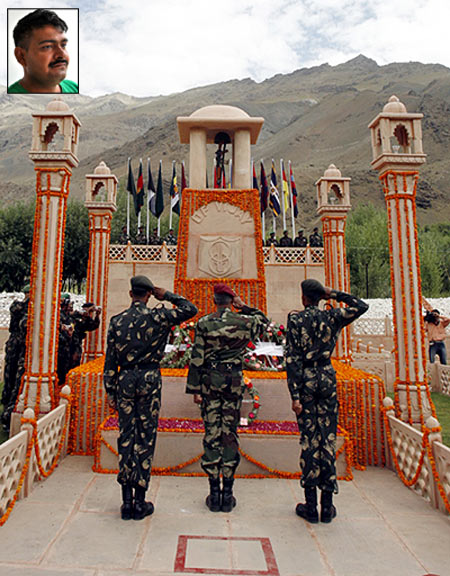
WholeDude – Whole Victory – Kashmir: Indian Armed Forces perform duties with commendable devotion and dedication to defend Indian Union from attacks by its enemies.
VICTORY IN THE VALLEY
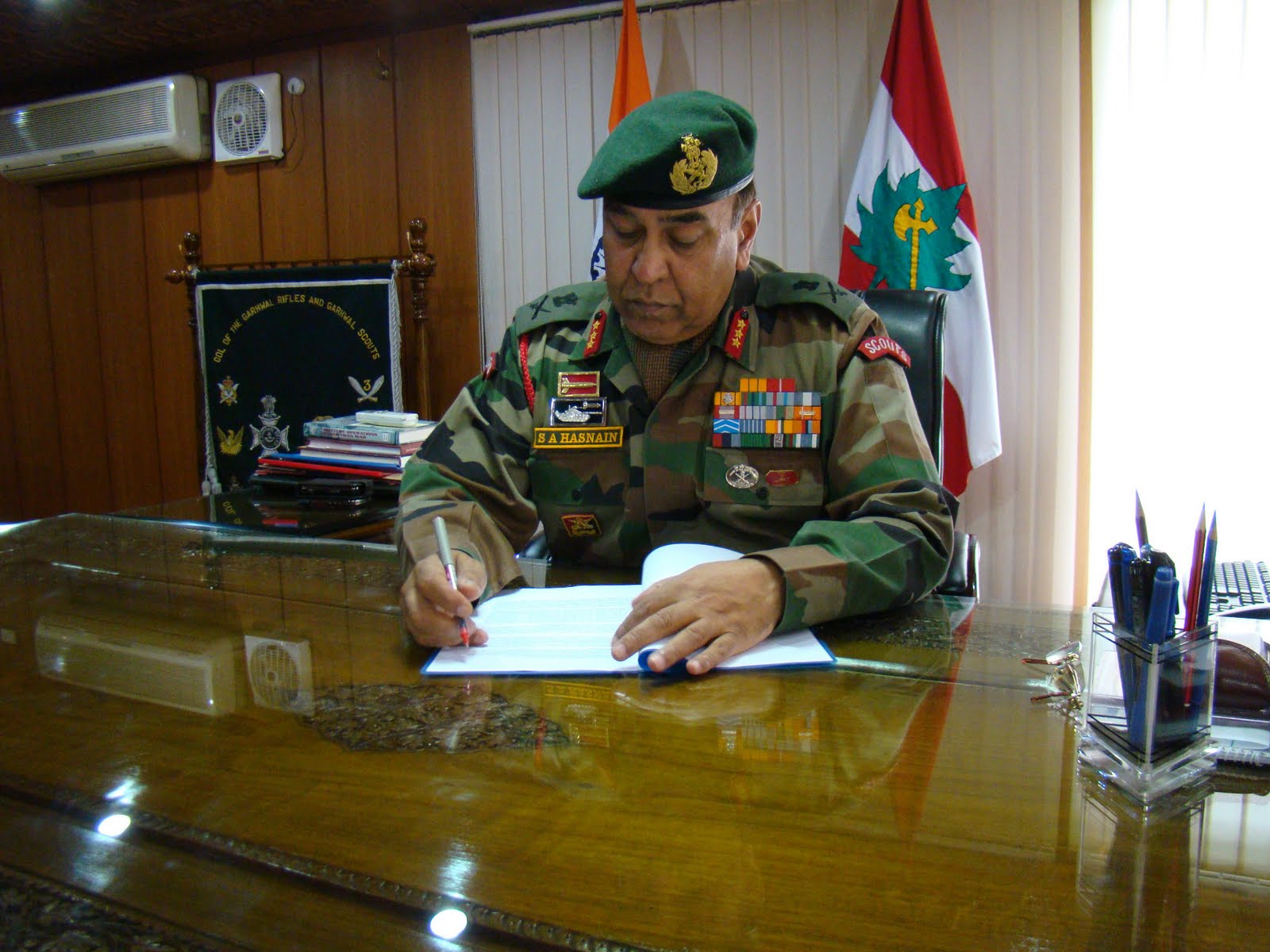
WholeDude – WholeVictory – Kashmir: Lieutenant General Syed Hasnain shares his vision about the role of Indian Armed Forces in Kashmir and predicts a Victory in all its aspects.
Lt Gen Syed Ata Hasnain Indian Express, Wed Dec 11 2013
Define what it means before you decide what the army should do. For the first time in years, a newspaper’s leadership has thrown up a serious strategic issue for debate. Kashmir is far too complex for inexperienced minds to fully comprehend and there are so many stakeholders it confounds even those who have a semblance of an idea. In a recent article in this paper (‘Disarming Kashmir’, Indian Express, December 7,), Editor-in-Chief Shekhar Gupta talks about victory in the 24-year standoff and the necessity of an early withdrawal of the army from Kashmir’s hinterland. We must first highlight what Gupta is seeking through this thought-provoking article. He says the army has become weary and therefore less professional, having lost soldiers in tactical operations this year. He wants the army to strengthen the LoC and de-escalate in the Valley, because Kashmiris, he says, must get a part of the “peace” dividend. He takes a dig, saying that some respected general with five tenures in the Valley had told him that, having defeated the Lashkar, the army has only been building golf courses and guest houses for the last five years. He adds that if any of these bad boys show their faces in Kashmir again, the army can come back to sort them out. He claims that the military objective in Kashmir (if any was spelt out) has been achieved and, that the UPA government has veritably introduced a concept of governance — veto power (on strategic decisions) for the army. One of the most important points Gupta makes is, “you cannot find a Kashmir settlement with Pakistan before embracing your own Kashmiris and restoring trust with them first”. On the face of it, this article evokes negatives all the way but re-reads throw up issues which need serious pondering. Unfortunately, not many are aware of the degree of intellectual analysis that the army itself has done of its role in Kashmir. It recently organised a full deliberation on the concept of victory at the Army War College, Mhow.
The first question is: have we ever enunciated an aim in Kashmir? In all these years, there never has been a clearly stated political aim given to the security forces. The informally stated military aim was stabilisation by controlling infiltration and eliminating terrorists. No one realises that in such situations, political and military aims cannot be separated. In 2011, we enunciated our own joint politico-military aim for our commanders — “integrate Jammu and Kashmir with mainstream India, politically, economically, socially and psychologically”. We were clear that eliminating terrorists was the easiest part of this war, that eliminating “terrorism” was the real challenge. I wish Gupta had faulted the army for not demanding the articulation of a politico-military aim as fighting without an aim is actually unfair. The lack of such an aim results in exactly what Gupta has done — declaring victory prematurely. Victory has to be measured against an aim, or else all kinds of versions are thrown around. We also have to measure victory against a realistic assessment of the future. Afghanistan 2014 with all its imponderables looms before us; any idea of victorious peace and subsequent actions has to be connected to it. Incidentally, I am speaking of victory as not against the people of Kashmir but for them, and against the intent of Pakistan, the separatists and terror groups.
It is essential to explain a few things to those with limited military orientation. First, Kashmir is a case of rim-land insurgency. It is not the LoC alone that needs to be strong. In the event of conventional war with Pakistan, the hinterland of Kashmir is as important as the LoC. It is here that the strategic assets exist, along with strategic arteries, which can be choked in war. Remember, in each Indo-Pak war, Pakistan has depended on the Kashmiri people to rise against us. Second, the larger number of incidents, and the loss of brave soldiers, this year should make us re-evaluate the actual military situation in the Valley. Ironically, this is least important in assessing victory. In counter-insurgency/ counter-terrorism campaigns, the answer finally lies in what the people think. Third, in all these years, no serious attempt was made to project to the Kashmiri people how and why their future lay only with India. The only agency that did this was the army. No government agency has ever put together a psychological campaign to win the confidence of the people. The army did it because it is a part of its professional responsibility and all international military counter-insurgency experience talks of winning hearts and minds (WHAM). The “hearts doctrine” articulated by the army in 2011-12 was the first strategically oriented WHAM programme in Kashmir. Separatism and radicalism run hand in hand in the Valley and it will take years of committed campaigning before these are diluted — the on and off presence of terror groups doesn’t help. Who has the capability to strategize, plan and stay committed to such a campaign but the army? To presume that the army has done its job and should hand over the responsibility to civilian agencies is absolutely correct, provided there are agencies who can take it forward to “peace”. If there is none, why rue the army’s insistence that its work must not be undone? Twenty-four years of institutional wisdom need not be sacrificed in the urgency for declaring a premature victory.
A few other observations by Gupta are designed to provoke non-intellectual minds, but they deserve a brief comment. The number of soldiers lost in negative incidents in a year is never reflective of the capability of an army fighting terrorism. Moreover, the deployment of the regular army in the hinterland is at its minimum today. The army’s Rashtriya Rifles (RR) operates in the hinterland and its soldiers never get exhausted because it has a well-thought-out relief programme. Tactical minds within the RR also rue their presence among the populace, to neutralise just a handful of terrorists each year. This really is the problem — a misunderstanding that the RR’s task is to kill terrorists alone, and not recognising that the task of a counter-insurgency force is to cement the separatist population with the mainstream. There is something else that our countrymen need to know about the RR: the professional and experienced military force is our add-on resource for conventional operations, especially now that 110 wings of Pakistan’s Frontier Corps (the country’s virtual RR) have received operational experience and modern weaponry to make them force multipliers. That is a major reason the RR cannot be disbanded or re-deployed for counter-insurgency tasks in Naxal-affected areas.
To claim victory over terror groups is premature also because the number of surrendered terrorists in the Valley (all with different shades of antipathy to the establishment) is higher than the number of terrorists in holding camps and launch pads in PoK. None of the promises (by the state government or the police) to these surrendered terrorists has been fulfilled, creating a potential resource for home terror.
Gupta’s most potent statement is, “Because its (the government’s) politics is frozen, it has introduced an unprecedented new factor in Indian policymaking: a veto for the army”. Seeking and giving professional military advice is a part of governance and on Siachen, Kashmir or Manipur, the army has offered just that. If you go by this accusation, every proposal by the army should have been accepted. In the case of Siachen, it is the trust deficit that prevents the vacation of the Saltoro Ridge; on the Armed Forces (Jammu and Kashmir) Special Powers Act, 1990, the government almost relented but the only organisation that offered a rationale for its retention was the army. Its arguments went well beyond the ordinary, explaining just how it was balancing hard and soft power in the emerging situation and just how the AFSPA was only an umbrella to be used in an emergency. The army likes a cemented victory and celebration for the people, not a half-baked one which gives adversaries reason for glee.
The general with five tenures in Kashmir who says the army is out of a job needs to revisit Kashmir. Not a single new golf course has come up and yes, guest rooms are indeed necessary to ensure that more armchair strategists visit Kashmir to be briefed at Keran, Machel, Gurez, Uri, Sopore, Tral and Shopian, before passing judgement on their professional army. Don’t just visit Srinagar, Gulmarg and Pahalgam to make up your mind because the advice you will then proffer will never meet the professional needs of our army or that of our nation. Learn to trust your army — it is your army.
The writer Syed Ata Hasnain is a recently retired Lt. General, is a former general officer commanding of the Srinagar-based 15 Corps.
When you breathe in smoke that comes from the end of a lit cigarette, cigar, or pipe ( often described as ‘sidestream smoke‘ ), or when you breathe in smoke that is exhaled by a smoker(often described as ‘mainstream smoke’ ), you are exposed to the risk of secondhand smoke. You will be inhaling almost the same amount of chemicals as the smoker breathes in. Tobbaco smoke contains more than 4,000 different chemical compounds, and more than 50 of them are known to cause Cancer. Some of these known carcinogens are Hydrogen Cyanide, Benzene, Formaldehyde, and Carbon monoxide. Involuntary or passive smoking can kill. There is no amount of exposure to secondhand smoke that is considered as a safe level of exposure. The more secondhand smoke that you breathe in, the more your health risk increases. Secondhand smoke exposure causes nearly 50,000 deaths per year in adult nonsmokers in the United States. 3,000 deaths are from Lung Cancer, and 46,000 deaths are from heart disease. Nonsmokers increase their risk of developing Lung Cancer by 20% to 30%, and heart disease by 25% to 30% when they are exposed to secondhand smoke. The risks of Breast Cancer and Cervical Cancer and other types of Cancer are also higher. Women who are exposed to secondhand smoke face a 69% higher risk of heart disease and a 56% higher risk of Stroke than those who are not exposed to smoke. Children are particularly vulnerable to the effects of secondhand smoke because of their bodies are still growing and they breathe at a faster rate than adults. The effects of smoking can be very significant especially for those who live or work with a smoker. In reality, most of the smoke from a burning cigarette doesn’t get sucked down into smoker’s lungs- it simply escapes into the air where it can be inhaled by anyone unfortunate enough to be nearby. Living under the shadow of a great person may give some benefits, protection, and a sense of security. But, life under the shadow of secondhand smoke is a prescription for death. There was such an unfortunate victim who had lived under the shadow of a great leader known as Mohammed Ali Jinnah.
Mohammad Ali Jinnah, Qaid-e-Azam, the great leader and founder of Pakistan. What is the risk of Living under the Shadow of a great leader?
Jinnah, Indian Muslim politician was the founder and first Governor General of Pakistan (1947-1948). His parents arranged for an early marriage for him before he left for England at the age of 16. While in London, Jinnah suffered the loss of his wife and mother. In 1895, at the age of 19, he was called o the Bar on completion of his formal studies to become a barrister. He had supported the election of Dadabhai Naoroji, a Parsi leader, a leading Indian nationalist who ran for the English Parliamnet. Naoroji became the first Indian to sit in the British House of Commons. In 1896, Jinnah returned to Karachi and then moved to Bombay to start his legal practice. He met Ruttenbai, the daughter of Dinshaw Petit, a Bombay Parsi millionaire. Jinnah had married this young and beautiful lady over tremendous opposition from her parents and others. The great love and the marriage withered and proved to be an unhappy union. The stress imposed by exposure to secondhand smoke was not known and was not recognized those days. Jinnah’s addiction to Tobacco and the price paid by his wife describe the other side of Jinnah which many people in Pakistan and India tend to ignore.
The Other side of Mohammed Ali Jinnah :
Jinnah, a great leader with a simple addiction to Tobacco.
This young and beautiful lady had great feelings of love for Jinnah and those tender feelings withered while she had lived under the Shadow of Secondhand Smoke.
I would like to share the very interesting and powerful story about the life of Ruttenbai who had lived under the shadow of Mohammed Ali Jinnah . Unfortunatley, this story posted below my post fails to mention the nature of cancer that had killed this beautiful lady at such an young age. I am very sure about the nature of her illness. She died of Lung Cancer. She developed Cancer because of inhaling tobacco smoke and it is a very well recognized risk factor now. Secondhand Tobacco smoke kills people and even now the chances of survival are not good. I had personally witnessed a similar case and had narrated that story at my Home page of BhavanaJagat and the story is titled ‘Living Under the Shadow – A Prescription for Death’. A young, beautiful lady, the first wife of Chief of Army Staff (under Prime Minister Rajiv Gandhi), General K S Sundarji ( who is well-known for Operation Blue Star ) died of Lung Cancer in Army Hospital, New Delhi during 1978. The connection between smoking and Lung Cancer was well understood but at that time the risk of Lung Cancer due to Secondhand Tobacco Smoke was not properly recognized.
The Chief of Army Staff, General Krishnaswamy Sundarrajan, PVSM - I had served under his Command while he was the General Officer Commanding of the First Armoured Division during 1976 to 1978. His first wife, Padma Sundarji had lived her life under the shadow of Secondhand Smoke.
More than 61 years have passed since the death of founder of Pakistan , Quaid-i-Azam Mohammad Ali Jinnah. But even today, nothing about Jinnah seems ordinary —not his legal career, politics, personal life, his legacy and even the property he left behind.
The great South Asian intellectual Eqbal Ahmed once described Jinnah as an enigma of modern history. His aristocratic English lifestyle, Victorian manners, and secular outlook rendered him a most unlikely leader of India ’s Muslims. Yet, he led them to separate statehood, creating history, and in Saad R. Khairi’s apt phrase, “altering geography”.
Much has been written about Jinnah’s legal career, politics, his role as a founder of Pakistan and his vision, but even today, very little is known about Jinnah’s personal life. This was probably because Jinnah never had time to write a diary or an autobiography and whatever little he wrote was formal and matter of fact. For most of his life, he remained reserved, taciturn and secretive. He wrote his will in May, 1939, but it was only after his death that Liaquat Ali Khan, his close associate and the first Prime Minister of Pakistan, came to know that he was its trustee and executor.
His only child, Dina Wadia, has hardly ever spoken about her father in public. So furious was Jinnah with Dina that he disowned her after she married a Parsi man against his wishes, and yet he left two lacs for her in his will. Akbar Ahmed’s movie Jinnah had just ten to fifteen minutes on Jinnah’s personal life, which are nowhere near enough.
Life Under The Shadow – Ruttie in Jinnah’s Shadow
image004
image005
image006
Jinnah’s first wife, fourteen year old Emibai from Paneli village, died just eight months after he left for London at age sixteen in 1892, to join Graham’s Shipping and Trading Company, which conducted business with his father in Karachi. It was a forced marriage, as Jinnah’s mother was afraid that if he went to England , he might end up marrying an English girl. He barely knew Emibai.
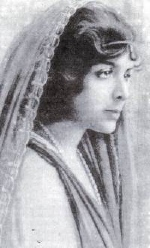
Jinnah’s second marriage with the most beautiful girl of Bombay – Ruttie: The Flower of Bombay – was like a fairy tale. It began in the summer of 1916 in Darjeeling or “Town of the Thunderbolt” (how appropriate considering what was to happen there).
Jinnah had established himself as a lawyer and a politician by then and had become friends with Sir Dinshaw Maneckjee Petit, the son of one of the richest and most devoutly orthodox Parsis of the 19th century.
The Petit`s chateau overlooked Mount Everest and it was there Jinnah met his only daughter Ruttenbai Petit or Ruttie as she was popularly called. Merely sixteen at that time, Ruttie was a charming young girl. Stanley Wolpert writes in Jinnah of Pakistan :“Precociously bright, gifted in every art, beautiful in every way. As she matured, all of her talents, gifts and beauty were magnified in so delightful and unaffected a manner that she seemed a fairy princess”.
A dazzling beauty and full of life, Ruttie had exquisite taste and affable manners. Quick-witted, she was easily one of the best dressed and most popular women among the elitist circles of Bombay . She was intellectually far more mature than other girls of her age, with diverse interests ranging from poetry (Oscar Wilde being her favorite, whom she often recited) to politics. Her large collection of books, which remained in Jinnah’s possession after her death, reflected her deep interest in poetry, literature, history, occultism, mysticism and sorcery. She was an excellent horse-rider. She attended all public meetings and was inspired by Annie Besant’s Home Rule League.
A fierce supporter of India for Indians, Ruttie was once asked about rumors of Jinnah’s possible knighthood and whether she would like to be Lady Jinnah. She snapped that she would rather be separated from her husband than take on an English title.
Jinnah on the other hand also had a special interest in acting and in Shakespeare’s dramas. While in London , he had acted in some Shakespearean plays and even considered seriously taking up acting as a profession. It was his dream to play Romeo at The Globe in London . Khwaja Razi Haider thinks it was probably Jinnah’s deep interest in Shakespeare that gave him insight into the intricacies of the human character, which he was to use for grasping the essentials of Indian politics. Jinnah was thirty-nine and Ruttie sixteen, but the age difference proved no obstacle in their love. Love has no logic.
He was enamored by her beauty and charm and she was awe- struck by “Jay”, as she called him. Jinnah asked Sir Dinshaw for Ruttie’s hand in marriage, who became furious and refused. Jinnah repeatedly pleaded his case but Dinshaw never gave in, as Jinnah had a different faith and he was more than twice Ruttie’s age. Their friendship ended and Dinshaw forbade Ruttie from meeting Jinnah while she lived in his house. He even got a court injunction restraining Jinnah from meeting her (a pity no biographer has yet traced the court papers).
The couple continued to meet secretly, and patiently waited for two years until February 1918 when Ruttie turned eighteen, and was free to marry. She walked out of her parental home to which she was never to return, and converted to Islam at Bombay ’s Jamia Mosque, under the Muslim Shiite doctrine, on April 18, 1918.
The very next day, Jinnah and Ruttie got married in a quiet ceremony at Jinnah’s Malabar Hill house in Bombay . Located in a most highly-priced area today, with Maharashtra’s Chief Minister as its next-door neighbor, Jinnah House remains a dispute between India , Pakistan and Dina Wadia. Jinnah owned another house at 10 Aurangzeb Road , Delhi , which he sold just before Partition for Rs 3 lacs. The Dutch Ambassador to India lives there now. The Raja Sahib of Mahmudabad, who signed as Jinnah’s witness, and a few other friends, attended the wedding. Maulana Muhammad Hasan Najafi was Ruttie’s witness. Jinnah presented the wedding ring to Ruttie, a gift from Raja Sahab, and paid Rs 125,000 as haq mehr . Nobody from Ruttie’s family attended the wedding. Interestingly, the Nikah Nama stated “Ruttenbai” as the bride’s name instead of Marium, her Islamic name. The honeymoon was first at Raja Sahab’s Nainitaal mansion, and then at the Maidens Hotel, a magnificent property just beyond the Red Fort.
Quaid’s Nikahnama
Quaid’s house in Bombay
Gandhi’s grandson Raj Mohan Gandhi writes about the wedding in his book Understanding the Muslim Mind: “For the first time in his life, a girl had absorbed Jinnah’s emotions. Living for sometime now in a large but somber Malabar Hill house, bowing to ladies (on occasional parties) and praising their sarees but otherwise keeping a distance from them, (he) fell in love with Ruttenbai. Joy and laughter entered Jinnah’s life. The Malabar Hill house became brighter.’ She presented him with a daughter, Dina. But, ‘Alas the happiness was not destined to last; Sarojni’s veiled prediction of trouble came true”.
Sarojni Naidu was a huge admirer of Jinnah, wrote several poems and prose pieces on him, and many historians believe she was in love with him.
She wrote this about the wedding in a letter to Sir Syed’s son, Syed Mahmud: “So Jinnah has at last plucked the Blue Flower of his desire. It was all very sudden and caused terrible agitation and anger among the Parsis; but I think the child has made far bigger sacrifices than she yet realises. Jinnah is worth it all – he loves her; the one really human and genuine emotion of his reserved and self-centred nature. And he will make her happy.”
The first few years of the marriage were a dream for Ruttie and Jinnah, the happiest time of their lives. They traveled across India , Europe and North America together. Ruttie watched with a great sense of pride the feverish political activity of her husband. She would be seen in the visitors’ gallery when Jinnah was due to speak, accompanied him to the High Court, and even attended the Nagpur session of the Congress in December 1920.
According to Wolpert: “They were a head- turning couple; he in his elegant suits, stitched in London , she with her long, flowing hair decked in flowers. There was no limit to their joy and satisfaction at that time. Their only woe was Ruttie’s complete isolation and ostracism from her family.”
Kanji Dwarkadas, a veteran leader of Congress and a close friend of the couple, who looked after Ruttie during her last days, wrote in his book Ruttie Jinnah: The story of a great friendship: “For Jinnah, who was not generous in many matters, no expense was too great to satisfy the extravagant claims of the baronet’s spoilt child. During a visit to Kashmir , she spent Rs 50,000 in refurnishing the boathouse and Jinnah gladly paid all the bills. He treated her wonderfully well, and paid without a murmur all the bills necessitated by the luxurious life she led.Ruttie’s fabulous beauty, spontaneous wit, and immense charm have been praised to the neglect of her serious interests.”
Even though Ruttie was much younger than Jinnah, she made him a very happy man. They had no separate existence and Jinnah found her a great source of inspiration.
He resigned from the Orient Club where he used to play chess and billiards. He was so deeply in love with Ruttie that he would return from the law courts on time each day and talk to her for hours on end.
Unfortunately, their happiness was short- lived and the marriage started to crack after 1922-3. What caused the ruination of the Jinnah-Ruttie marriage? Was it Jinnah’s busy political life and his inability to give enough time to Ruttie, their age difference, or their incompatibility of temperaments? He was cold, introverted and domineering. She was young, extroverted, glamorous. There is no clear answer but the fact remains that Ruttie and Jinnah still loved each other despite the rift in their marriage.
It is evident in every letter Ruttie wrote during that period, and every book written on their relationship. She moved to London with Dina in 1922 and from there too, her heart was still set on her life with Jinnah.
She wrote in a letter to Kanji in India :“And just one thing more – go and see Jinnah and tell me how he is – he has a habit of overworking himself and now that I am not there to tease and bother him, he will be worse than ever.”
After her return, the couple tried one more time to save their failing marriage and took a five-month tour to Europe and North America together. But the rift grew and by January 1928 they were virtually separated, when Ruttie became seriously ill with cancer. Shortly before her death, she wrote a letter to Jinnah from Marseilles , France where she had gone for treatment. It turned out to be her last letter to him (larger view of original hand-written letter with typed text here
Life Under The Shadow – Ruttie’s Letter to Jinnah
image011
S. S. Rajputana,
Marseilles 5 Oct 1928 Darling – thank you for all you have done. If ever in my bearing your once tuned senses found any irritability or unkindness – be assured that in my heart there was place only for a great tenderness and a greater pain – a pain my love without hurt. When one has been as near to the reality of Life (which after all is Death) as I have been dearest, one only remembers the beautiful and tender moments and all the rest becomes a half veiled mist of unrealities. Try and remember me beloved as the flower you plucked and not the flower you tread upon.
I have suffered much sweetheart because I have loved much. The measure of my agony has been in accord to the measure of my love. Darling I love you – I love you – and had I loved you just a little less I might have remained with you – only after one has created a very beautiful blossom one does not drag it through the mire. The higher you set your ideal the lower it falls.
I have loved you my darling as it is given to few men to be loved. I only beseech you that the tragedy which commenced in love should also end with it.
Darling Goodnight and Goodbye Ruttie
image013
image014
It is a pity that none of the letters that Jinnah wrote to Ruttie have ever been made public. M.C. Chagla, a former Chief Justice of the Bombay High Court and a diplomat at the UN, has described the last days of Ruttie and Jinnah’s marriage in his book “Roses in December”. Chagla knew the couple very well, as he assisted Jinnah at his chambers during that time. He idealized Jinnah but severed all ties when he began working on the idea of an independent state for the Muslims of India. He writes: By 1927, Ruttie and Jinnah had virtually separated. Ruttie’s health deteriorated rapidly in the years after they returned from their final trip together. Ruttie lived at the Taj Hotel in Bombay, almost a recluse as she became more and more bed-ridden. Kanji continued to be her constant companion. By February 18, 1929 she had become so weak that all she could manage to say to him was a request to look after her cats.Two days later, Ruttie Petit Jinnah died. It was her 29th birthday. She was buried on February 22 in Bombay according to Muslim rites. Jinnah sat like a statue throughout the funeral but when asked to throw earth on the grave, he broke down and wept. That was the only time when I found Jinnah betraying some shadow of human weakness. It’s not a well publicised fact that as a young student in England it had been one of Jinnah’s dreams to play Romeo at The Globe. It is a strange twist of fate that a love story that started like a fairy tale ended as a haunting tragedy to rival any of Shakespeare’s dramas.”
The second time Jinnah ever broke down was in August 1947 when he visited Ruttie’s grave one last time before leaving for Pakistan . The architect of Pakistan paid a high price for Partition by leaving two of his most beloved possessions on ‘the other’ side of the border, the Jinnah House on Malabar Hill where he had the happiest moments of his life, and his beloved wife Ruttie who remains buried in Bombay. Jinnah left India in August 1947, never to return again, but he left behind a piece of his heart in a little grave in a cemetery in Bombay .















 Whole Dude - Whole Concept