The Living Tibetan Spirits of Special Frontier Force commemorate the Tibetan Uprising Day
On Friday, March 10, 2023, the Living Tibetan Spirits of Special Frontier Force, Establishment 22, Vikas Regiment commemorate events of Tibetan Uprising on Tuesday, March 10, 1959.
Friday, March 10, 2023. 64th Anniversary of Tibetan Uprising Day
Tibet Uprising or Tibet Rebellion on Tuesday, March 10, 1959 makes a profound impact on the course of my life’s journey, forcing me to live in exile without a refugee status, without any asylum protection, and without an entity that can be recognized as a friend.
Tibetan Uprising Day 2023: 64th Anniversary
The Living Tibetan Spirits of Special Frontier Force commemorate the Tibetan Uprising Day
While not a traditional Tibetan Buddhist holiday, MARCH 10th is a very important date in the Tibetan calendar. This year marks the 64th anniversary of the Tibetan National Uprising. Around the world, Tibetans and their supporters remember and pay tribute to all those who have sacrificed their lives for Tibet’s struggle. An estimated one million Tibetans have perished and 98% of monasteries and nunneries were destroyed under the Communist Chinese invasion.
Lhasa’s three major monasteries—Sera-Jey, Ganden, and Drepung—were seriously damaged by shelling. Sera and Drepung were nearly damaged beyond repair. According to the TGIE, Members of the Dalai Lama’s bodyguard remaining in Lhasa were disarmed and publicly executed. Same as Tibetans found to be harboring weapons in their homes. Thousands of Tibetan monks were executed or arrested, and monasteries and temples around the city were looted or destroyed.
Women’s Uprising Day: March 12, 1959
The Living Tibetan Spirits of Special Frontier Force commemorate the Tibetan Uprising Day
ON MARCH 12, 1959, thousands of women gathered peacefully outside of the Potala Palace in Lhasa. Now known as Women’s Uprising Day many of the women involved were imprisoned, including the leader of the nonviolent demonstration, Pamo Kusang.
Some of the women were tortured, died in prison, or were executed such as Gurteng Kunsang, mother of six.
Friday, March 10, 2023. 64th Anniversary of Tibetan Uprising Day: FOR SEVENTY THREE YEARS, TIBETANS ARE LIVING UNDER MILITARY OCCUPATION. WHAT IS TIBET’S FUTURE? HOW TO EVICT THE EVIL RED EMPIRE FROM TIBET?
How to find Hope when the Final Destination remains unknown? Can Patience and Perseverance serve the purpose of Hope for Freedom, Peace, and Justice?
Thursday, March 10, 2022. 63rd Anniversary of Tibetan Uprising Day.
The Norbulingka, the Dalai Lama’s Summer Palace in Lhasa, Tibet, which was destroyed by the Chinese Army during the 1959 Tibetan Uprising but later rebuilt. lapin.lapin on Flickr.com
Chinese artillery shells pummeled the Norbulingka, the Dalai Lama’s summer palace, sending plumes of smoke, fire, and dust into the night sky. The centuries-old building crumbled under the barrage, while the badly outnumbered Tibetan Army fought desperately to repel the People’s Liberation Army (PLA) from Lhasa…
Meanwhile, amidst the snows of the high Himalaya, the teenaged Dalai Lama and his bodyguards endured a cold and treacherous two-week-long journey into India.
Origins of the Tibetan Uprising of 1959
Tibet had an ill-defined relationship with China’s Qing Dynasty (1644-1912); at various times it could have been an ally, an opponent, a tributary state, or a region within Chinese control.
In 1724, during a Mongol invasion of Tibet, the Qing seized the opportunity to incorporate the Tibetan regions of Amdo and Kham into China proper. The central area was renamed Qinghai, while pieces of both regions were broken off and added to other western Chinese provinces. This land grab would fuel Tibetan resentment and unrest into the twentieth century.
When the last Qing Emperor fell in 1912, Tibet asserted its independence from China. The 13th Dalai Lama returned from three years of exile in Darjeeling, India, and resumed control of Tibet from his capital at Lhasa. He ruled until his death in 1933.
China, meanwhile, was under siege from a Japanese invasion of Manchuria, as well as a general breakdown of order across the country.
Between 1916 and 1938, China descended into the “Warlord Era,” as different military leaders fought for control of the headless state. In fact, the once-great empire would not pull itself back together until after World War II, when Mao Zedong and the Communists triumphed over the Nationalists in 1949.
Meanwhile, a new incarnation of the Dalai Lama was discovered in Amdo, part of Chinese “Inner Tibet.” Tenzin Gyatso, the current incarnation, was brought to Lhasa as a two-year-old in 1937 and was enthroned as the leader of Tibet in 1950, at 15.
China Moves in and Tensions Rise
In 1950, Mao’s gaze turned west. He decided to “liberate” Tibet from the Dalai Lama’s rule and bring it into the People’s Republic of China. The PLA crushed Tibet’s tiny armed forces in a matter of weeks; Beijing then imposed the Seventeen Point Agreement, which Tibetan officials were forced to sign (but later renounced).
According to the Seventeen Point Agreement, privately-held land would be socialized and then redistributed, and farmers would work communally. This system would first be imposed on Kham and Amdo (along with other areas of the Sichuan and Qinghai Provinces), before being instituted in Tibet proper.
All the barley and other crops produced on the communal land went to the Chinese government, according to Communist principles, and then some was redistributed to the farmers. So much of the grain was appropriated for use by the PLA that the Tibetans did not have enough to eat.
By June of 1956, the ethnic Tibetan people of Amdo and Kham were up in arms.
As more and more farmers were stripped of their land, tens of thousands organized themselves into armed resistance groups and began to fight back. Chinese army reprisals grew increasingly brutal and included wide-spread abuse of Tibetan Buddhist monks and nuns. (China alleged that many of the monastic Tibetans acted as messengers for the guerrilla fighters.)
The Dalai Lama visited India in 1956 and admitted to Indian Prime Minister Jawaharlal Nehru that he was considering asking for asylum. Nehru advised him to return home, and the Chinese Government promised that communist reforms in Tibet would be postponed and that the number of Chinese officials in Lhasa would be reduced by half. Beijing did not follow through on these pledges.
By 1958, as many as 80,000 people had joined the Tibetan resistance fighters.
Alarmed, the Dalai Lama’s government sent a delegation to Inner Tibet to try and negotiate an end to the fighting. Ironically, the guerrillas convinced the delegates of the righteousness of the fight, and Lhasa’s representatives soon joined in the resistance!
Meanwhile, a flood of refugees and freedom fighters moved into Lhasa, bringing their anger against China with them. Beijing’s representatives in Lhasa kept careful tabs on the growing unrest within Tibet’s capital city.
March 1959 – The Uprising Erupts in Tibet Proper
Important religious leaders had disappeared suddenly in Amdo and Kham, so the people of Lhasa were quite concerned about the safety of the Dalai Lama. The people’s suspicions therefore were raised immediately when the Chinese Army in Lhasa invited His Holiness to watch a drama at the military barracks on March 10, 1959. Those suspicions were reinforced by a none-too-subtle order, issued to the head of the Dalai Lama’s security detail on March 9, that the Dalai Lama should not bring along his bodyguards.
On the appointed day, March 10, some 300,000 protesting Tibetans poured into the streets and formed a massive human cordon around Norbulingka, the Dalai Lama’s Summer Palace, to protect him from the planned Chinese abduction. The protestors stayed for several days, and calls for the Chinese to pull out of Tibet altogether grew louder each day. By March 12, the crowd had begun to barricade the streets of the capital, while both armies moved into strategic positions around the city and began to reinforce them.
Ever the moderate, the Dalai Lama pleaded with his people to go home and sent placatory letters to the Chinese PLA commander in Lhasa. and sent placatory letters to the Chinese PLA commander in Lhasa.
When the PLA moved artillery into range of the Norbulingka, the Dalai Lama agreed to evacuate the building. Tibetan troops prepared a secure escape route out of the besieged capital on March 15. When two artillery shells struck the palace two days later, the young Dalai Lama and his ministers began the arduous 14-day trek over the Himalayas for India.
On March 19, 1959, fighting broke out in earnest in Lhasa. The Tibetan army fought bravely, but they were vastly outnumbered by the PLA. In addition, the Tibetans had antiquated weapons.
The firefight lasted just two days. The Summer Palace, Norbulingka, sustained over 800 artillery shell strikes that killed an unknown number of people inside; the major monasteries were bombed, looted and burned. Priceless Tibetan Buddhist texts and works of art were piled in the streets and burned. All remaining members of the Dalai Lama’s bodyguard corps were lined up and publicly executed, as were any Tibetans discovered with weapons. In all, some 87,000 Tibetans were killed, while another 80,000 arrived in neighboring countries as refugees. An unknown number tried to flee but did not make it.
In fact, by the time of the next regional census, a total of about 300,000 Tibetans were “missing” – killed, secretly jailed, or gone into exile.
Aftermath of the 1959 Tibetan Uprising
Since the 1959 Uprising, the central government of China has been steadily tightening its grip on the Tibet.
Although Beijing has invested in infrastructure improvements for the region, particularly in Lhasa itself, it has also encouraged thousands of ethnic Han Chinese to move to Tibet. In fact, Tibetans have been swamped in their own capital; they now constitute a minority of the population of Lhasa.
Today, the Dalai Lama continues to head the Tibetan government-in-exile from Dharamshala, India. He advocates increased autonomy for Tibet, rather than full independence, but Chinese government generally refuses to negotiate with him.
Periodic unrest still sweeps through Tibet, especially around important dates such as March 10 to 19 – the anniversary of the 1959 Tibetan Uprising.
Your Citation
Szczepanski, Kallie. “The Tibetan Uprising of 1959.” ThoughtCo, Feb. 6, 2017, thoughtco.com/the-tibetan-uprising-of-1959-195267. Szczepanski, Kallie. (2017, February 6). The Tibetan Uprising of 1959. https://www.thoughtco.com/the-tibetan-uprising-of-1959-195267
Friday, March 10, 2023. 64th Anniversary of Tibetan Uprising Day .
The Rudi Connection at Whole Foods defines the Concept of Whole Medicine
Yes indeed, Life is Complicated. The complexity of Life includes not only the complicated problems of shopping for healthy foods but also the problems of shopping for Wholesome Health Care.
Spirituality Science – The Art of Medicine
Spirituality Science – The Art of Medicine
The Art of Medicine in its essence is a spiritual practice. It aims to restore the experience of Peace, Harmony, and Tranquility in the living condition of the Man. The fundamental concepts of Medical Theory reflect the Philosophy of Nature and of Man. The term Physician describes the person who practices ‘The Art of Medicine’. This term is derived from the medieval English word ‘PHYSIC'(Latin. physica; Greek. physike which means nature) which is used to describe Natural Science, Medicine, and Nature. This archaic usage of the English word “Physic” as the name for the art, science, practice and profession of Healing suggests what the word’s Greek root signifies, namely that the physician is a student of Nature.
SPIRITUALITY SCIENCE – THE ART OF MEDICINE: Hippocrates, the Greek physician(c.460 – 377 B.C.), the Father of Medicine stated that, The Art of Medicine consists in three things, 1. The Disease, 2. The Patient, and 3. The Physician.
Natural Science provides systematized knowledge of the physical world and its branches include Zoology, Botany, Chemistry, Physics, and Geology. The Faculty of Medicine represents Biological Sciences that are concerned with knowledge bearing on the relation of man to nature. Medical Science as a Natural Science must be concerned with the following two questions:
1. What is the Status of Man in Nature?
2. What is the true or real Nature of Man?
The first question deals with man’s relationship with the physical world in which man exists. The physical world represents the total of all things in Time and Space or the entire physical universe. The term Nature includes the Power, Force, and Laws that regulate or operate in the physical world. In Biology, the Theory of Evolution proposes a view about the origin of species and it describes that things in Nature change under the influence of Time. It opposes various cultural, and religious beliefs about the origin of man and his Status as a Created Being. The second question is about the essential characteristics or qualities that makes or describes man’s essence as a Human Being. The Nature of Man deals with the inborn character, innate disposition, and inherent tendencies of the Whole Person and it includes the instincts, desires, appetites, drives etc., of the Person apart from the vital functions of specialized organs. Man’s Nature could be detected from the activities of the human organism and from the forces that operate and influence these activities.
The Medical Theory – Atomism, Mechanism vs Spiritualism:
SPIRITUALITY SCIENCE – THE ART OF MEDICINE: GALEN, CLADIUS GALENUS(c. 130 – c.200 A.D.), Greek physician who served the Roman Emperors provided a synthesis of the Medicine of the ancient Greek world. In his view, “The true Art of Medicine borrows its method from Nature’s Art.”
There is tremendous increase in our knowledge of the specific diseases and man developed a vast store of well-tested remedies and still the problems of medical practice essentially remain the same. According to Galen, the Art of Healing consists in imitating the health-giving and healing powers of nature itself.
Spirituality Science – The Art of Medicine
Galen thinks of human body as an organic unity and not as a simple aggregation of atoms or a system of interlocking parts. Galen had opposed the views of Atomism, or Mechanism that views the human body as a mechanical assembly of tiny, individual parts. In Galen’s view, Nature works not by the external impact of part upon part, but by its faculties or powers for the performance of natural functions and the production of natural effects. “Nature is not posterior to the corpuscles( small, constituent parts), but a long way prior to them…” writes Galen. “Therefore it is nature which puts together the bodies of both plants and animals; and this she does by virtue of certain faculties which she possesses – these being on the one hand, attractive and assimilative of what is appropriate, and on the other, expulsive of what is foreign. Further, she skillfully moulds everything during the stage of genesis; and she also provides for the creatures after birth employing her other faculties again.”
Spirituality Science – The Art of Medicine
Galen calls Nature the Artist for it produces effects according to its powers and in conformity to its needs. Nature seems to work with intelligence and for an end, not blindly and by chance. Galen stated it as a maxim, “Nothing is done by Nature in Vain.” An Art like Medicine seems to imitate Nature by cooperating with natural process. The Art of Medicine involves following the course of nature, and thereby it enables the natural result to emerge by overcoming the chances of adverse outcome. The interior nature is the Principal cause of Healing with the physician providing exterior or external help. The physician strengthens nature and employs food and medicine to assist the natural mechanism( such as the “Repair and Inflammation” described in the Science called Human Pathology) to achieve the intended end. The subordination of The Art of Medicine to Nature appears to be the keystone of the whole structure of Medical Practice. The patient is guided to regulate and control the various aspects of diet, exercise, and the lifestyle and medicines or drugs perform an auxiliary function. Surgery is used in the treatment of injuries and to resolve problems where medication by itself will not yield good results. However, it is important to remember that surgical procedures and interventions work by cooperating with nature and natural healing process called Repair and Inflammation. In other words, the physician is a servant , not a master of Nature. Medicine as an Art can be compared to Agriculture which helps a natural result to come about but this effect would never occur without the work of the Artist. Plants may grow and reproduce without the help of farmers. A person may regain some health without the care of physicians. But, in reality, it is impossible to raise a crop or to grow an orchard by simply depending upon nature and natural mechanisms.
Spirituality Science – The Spiritual Basis for Health and Wellbeing:
Spirituality Science – The Art of Medicine
If the term Soul or Spirit describes the vital, animating principle that governs and operates the existence of the human organism, its nature and functions can be derived from studying the structure and functions of the Red Blood Cell or Erythrocyte which simply exists to integrate and to harmonize the functions of trillions of individual cells, tissues, and the organ systems that constitute the Whole Person who exists as an Individual with Individuality. Health is that condition of the body in which the physiological elements are in balance and in which the various parts function harmoniously with one another. Health represents harmony or good order, or equilibrium in the body. I describe Spirituality as the operating Principle that generates this functional unity, good order, and equilibrium among the cells, tissues, organs, and the organ systems that comprise the human organism and the human Individual who exists because of these functions experiences Peace, Harmony, and Tranquility in his living condition.
SPIRITUALITY MEDICINE – THE ART OF MEDICINE: The integration of Structure and Function describes the Spiritual Basis for Health and Human Existence. By knowing the structure and function of the Red Blood Cell or Erythrocyte, we can establish the facts of Blood Circulation, the reason for the structure of the Heart and Lungs, their motions and their relation to each other and their relation to the Human Being who exists as an Individual with Individuality.
The Theory of Medicine will determine the nature of The Art of Medicine that is practiced to establish the Physician – Patient Relationship. If The Art of Medicine is based upon Spirituality Science, the Physician – Patient Relationship will have a Spiritual basis. I would ask my readers to give attention to the problems of modern medical practice and we need a Medical Theory that would have a bearing on the following three aspects of The Art of Medicine:
1. Is Health better served by the General Practitioner treating the Whole Man or by a Specialist treating a functionally differentiated Special Organ or Organ System?
2. What should be the nature of the Physician-Patient relationship? Is there a therapeutic factor in the relationship that underlines the effectiveness of the Physician’s skills in all other respects?
3. What is the interaction between mind and body in the origin and in the cure of disease?
SPIRITUALITY SCIENCE – THE ART OF MEDICINE: Sir William Osler(1849-1919) who taught at McGill, the University of Pennsylvania, Johns Hopkins, and Oxford thinks that a Doctor of Medicine is of value to the society even when all medicines are abolished.
Spirituality Science – Holistic Medicine:
SPIRITUALITY SCIENCE – HOLISTIC MEDICINE: The Concept of ‘Holistic Medicine’ is fundamentally flawed. It fails to describe the term “WHOLE PERSON.” If the Person is not known, the concept cannot promote the Health and Well-Being of that Person. The central issue would be about knowing the True or Real Man.
Holistic Medicine is a system of health care based on a concept of the “WHOLE” person as one whose body, mind, spirit, and emotions are in balance with the environment. It is a movement within Medicine that emphasizes the need to perceive patients as “WHOLE” persons and to treat them accordingly. Holistic Medical Care follows three basic tenets; 1. Recognition of the psychological, environmental, and social contributions to disease, 2. Active involvement of the patient in the treatment process, and 3. Emphasis on preventive medicine and on life-styles that lessen the probability of developing disease. Holistic Care stresses the importance of personal responsibility for health without accounting for man’s existence in the physical world. Apart from conventional Medicine, Holistic health care may recommend alternative medicine such as Chiropractic, Acupuncture, Biofeedback, Faith Healing, Folk Medicine like “AYURVEDA”, Megavitamin therapy, Meditation and Yoga. It may avoid Surgery and Prescription Drugs. Holistic Health practitioners may encourage their patients to establish self-regulated regimes to control such illness-related factors as poor diet, smoking, alcohol intake, and stress. It may be noted that the concept of Holistic Medicine and Holistic Health Care is not officially recognized by the American Medical Association.
American Holistic Medical Association – AHMA:
SPIRITUALITY SCIENCE – HOLISTIC MEDICINE: American Holistic Medical Association must define the words it uses in the description of the concept of the “WHOLE” Person. What is Spirit? Where is Spirit in the multicellular Human Organism? What is the Structure and What are the Functions of the Spirit? AHMA must clarify the Biological Basis for Human Existence before sharing its views about the factors that contribute to Human Illness, Sickness, or Disease. IF MEDICINE OR MEDICAL INTERVENTION WORKS, AHMA MUST ALSO EXPLAIN AS TO WHY THE MEDICINE WORKS.
American Holistic Medical Association, AHMA founded in 1978 is serving as the leading advocate for the use of Holistic and Integrative Medicine. AHMA defines Holistic Medicine as the Art and Science of Healing that addresses care of the “WHOLE PERSON” – Body, Mind, and Spirit. It integrates conventional and complementary therapies to promote optimal health, and prevent and treat disease by addressing contributing factors. Holistic Health Care practitioners strive to meet the patient with grace, kindness, acceptance, and “spirit” without condition as Love is Life’s most powerful healer. Each person is seen as a unique individual rather than an example of a particular disease. AHMA states that disease must be understood to be the result of physical, emotional, “spiritual”, social, and environmental imbalance. AHMA concludes that healing takes place naturally when the physical, emotional, “spiritual”, social, and environmental aspects of Life are brought into proper balance. AHMA does not mention as to how the physical, emotional, “spiritual”, social, and environmental aspects of Life establish the reality of the Human Being who may exist in the physical world because of the interaction of these factors that are involved in the causation of Disease.
The Concept of Whole Person, Whole Man, Whole Self, and Whole Dude:
SPIRITUALITY SCIENCE – HOLISTIC MEDICINE: THE DEFINITION OF WHOLE PERSON. 1. CONSCIOUS BEING, 2. PHYSICAL BEING, 3. MENTAL BEING, 4. SOCIAL BEING, 5. MORAL BEING, and 6. SPIRITUAL BEING. This entire Human Organism is derived from a Single, Fertilized Egg Cell.SPIRITUALITY SCIENCE – HOLISTIC MEDICINE: THE WHOLE PERSON, THE WHOLE MAN, THE WHOLE BODY, MIND, AND SPIRIT, THE WHOLE DUDE, OR THE ENTIRE HUMAN ORGANISM IS DERIVED FROM THIS SINGLE, FERTILIZED EGG CELL, OR “THE WHOLE CELL.”
I would ask my readers to give due consideration to the definition of the ‘WHOLE PERSON’. I suggest that the ‘WHOLE PERSON’ is derived from the Single, Fertilized, Egg Cell or Ovum which always comes into existence with a unique Genome that is Original, distinctive, one of its own kind, and a Genome that has not existed in the Past, and will not exist again in the Future. Hence, I claim that the ‘WHOLE PERSON’ always arrives in the World as a Created Being even if man uses the latest reproductive technology to use a fertilized Egg Cell that is cloned. Man always exists as a Created Being with Identity and Individuality without any exceptions. This Person is a Conscious Being and hence is distinct from all other physical matter and all other Living Matter. The Person is Conscious of the fact of his own Existence at any given time, place, and environment. Every aspect of the ‘WHOLE PERSON’ is derived or contributed by this Single, Fertilized Egg Cell which I would like to recognize as the ‘WHOLE CELL’. To promote the health and well-being of man at any stage of his human existence; at any age, any place, any environment, and as a member of any social community, I submit that, the factors that contribute to the establishment of the ‘WHOLE CELL’ and its transformation and existence as the ‘WHOLE PERSON’ must be explained.
Spirituality Science – Holistic Medicine
Spirituality Science – Wholistic Medicine
SPIRITUALITY SCIENCE – WHOLISTIC MEDICINE: THE CELEBRATION OF LIFE. A SPECIAL TRIBUTE TO PROFESSOR RENE JULES DUBOS(February 20, 1901 to February 20, 1982) of The Rockefeller University, a Microbiologist, Humanist-Philosopher.
Holism is described as the view that an organic or integrated whole has an independent reality which cannot be understood simply through understanding of its parts. The term or phrase “HOLISTIC” deals with a view that is concerned with whole or integrated systems rather than with their parts.
SPIRITUALITY SCIENCE – WHOLISTIC MEDICINE: THE CELEBRATION OF LIFE OF PROFESSOR RENE DUBOS AND HIS CONTRIBUTION TO THE DEVELOPMENT OF HOLISTIC OR WHOLISTIC MEDICINE.
I am indeed pleased to write this blog post in Celebration of Life, the life of Professor Rene Jules Dubos of The Rockefeller University, the French-American Microbiologist who had advocated the need to perceive man as a Whole Person. The term ‘Whole’ means auspicious, sound, uninjured, healthy, entire, complete, intact, containing all the elements or parts or constituting the entire amount, extent, and number. When the term ‘Whole’ is applied to a human being, it must state all aspects of one’s being that are instrumental to the establishment of the existence of that Living Being.
SPIRITUALITY SCIENCE – WHOLISTIC MEDICINE: Professor Rene Dubos won the Pulitzer Prize for his work titled “SO HUMAN AN ANIMAL – HOW WE ARE SHAPED BY SURROUNDINGS AND EVENTS” during 1969.
Professor Rene Dubos is credited for discovering the first commercially produced antibiotic, Tyrothricin-Gramicidin, an antibiotic that is effective against Gram-Positive bacteria. He isolated the antibiotic from soil microorganisms. He laid the basis for chemotherapy. Rene Dubos played a great role in promoting our understanding of environmental and social determinants of human health and disease. In his book, ‘Mirage of Health’ (1959) he had expressed the view that man will never be free from disease because man has to continuously adapt to environmental changes. Disease results from the dynamic process of life, a process of adaptation to constant changes, both in the internal living condition, and in the external environment in which man physically exists. In his book, ‘So Human An Animal’, Rene Dubos contends that each human being is unique, unprecedented, and unrepeatable. For the same reasons that Dubos had shared, I describe man as a ‘Created Being’, the being that exists with unique, one of its own kind, original Genome which has never existed in the past, and will never again exist in the future. Rene Dubos expresses the concern that each person faces the critical danger of losing this very humaneness to his mechanized surroundings: “People spend their days in a confusion of concrete and steel, trapped in the midst of noise, dirt, ugliness, and absurdity.”
SPIRITUALITY SCIENCE – WHOLISTIC MEDICINE: Professor Rene Dubos in his book, ‘MAN ADAPTING'(1965) speaks about the man who has to continuously adapt to environmental changes.
The medical term ‘Etiology’ describes the causes or origins of disease. Professor Rene Dubos had promoted the understanding of the disease as a consequence of the relationships between the host, the etiological agents such as the disease-causing bacteria, and parasites under the influence of social, and environmental conditions that demand man to adapt to constant changes in his living conditions.
SPIRITUALITY SCIENCE – WHOLISTIC MEDICINE: In his book, ‘A GOD WITHIN'(1972), Professor Rene Dubos speaks about the importance of developing richness and diversity in Life at various levels. It provides a perspective on Ecological Crisis.
Professor Rene Dubos provides a perspective on Ecological Crisis and seeks positive values in man’s relationship to Nature. He sees hope in Benedictine stewardship. He speaks of “The Demon within”..”The thrust of technology and institutions that may run counter to living in harmony with nature.”
SPIRITUALITY SCIENCE – WHOLISTIC MEDICINE: Professor Rene Dubos in his book, ‘REASON AWAKE : SCIENCE FOR MAN(1970) describes the impact of scientific knowledge and advancement on humanity and civilization.SPIRITUALITY SCIENCE – WHOLISTIC MEDICINE: In his book, ‘THE WOOING OF EARTH'(1980), Professor Rene Dubos stated his famous dictum, “THINK GLOBALLY AND ACT LOCALLY.” He developed a Philosophy of Man in his Environment.SPIRITUALITY SCIENCE – WHOLISTIC MEDICINE: Professor Rene Dubos shared a Philosophy of Man in his Environment. Man always exists in a given physical environment, and lives as a biological member participating in biotic interactions with his biological community.
In various books that Professor Rene Dubos had authored, he developed a Philosophy of Man in his Environment. He stressed the importance of man’s relationship to the natural environment. Some of his works include, ‘Health and Disease'(1965), ‘Man, Medicine, and Environment'(1968), and ‘Beast or Angel'(1974). He described human choices and interventions to shape life, environment, and civilization. He paved the way for social action to combat environmental problems and to prevent environmental degradation that have health consequences.
In his final book, ‘The Celebration of Life'(1981), Professor Rene Dubos stressed the importance of understanding life in the context of the entire web of ecological relationships. The famous dictum of this book is: “WHEREVER HUMAN BEINGS ARE INVOLVED, TREND IS NOT DESTINY.” I am hopeful that this ‘Destiny’ of man will be shaped by God’s Unconditioned Love that flows Beyond the Good and Evil Behavior of Man.
WholeChrist – WholeLove – Nietzsche: “That which is done out of Love always takes place beyond Good and Evil.” Man with his Good or Evil actions and behavior cannot control the flow of God’s Unconditioned or ‘WholeLove’.
Spirituality Science – Whole Medicine:
SPIRITUALITY SCIENCE – WHOLE MEDICINE: The birth of Aesculapius. The Healing Art of Ancient Greece.
Medicine is among the most ancient of human occupations. Evidences of the practice of ritual healing, combining religion, and primitive science, are found in the earliest traces of human society and communal living. The Healing Art of ancient Greece was associated with the worship of Apollo who taught Medicine to Chiron and it was passed on to Aesculapius who could be a real person that lived in Greece around 1,200 B.C. The term ‘Asclepiad’ describes a physician and it was used to designate physicians belonging to a family that had produced well-known physicians for generations.
SPIRITUALITY SCIENCE – WHOLE MEDICINE: While the physician in ancient Greece was called Aesculapius, the place of Healing was known as the Temple of Aesculapius. Healing was considered to be a Divine Function or it involved Divine Mechanisms.
In ancient Greece, the knowledge of Medicine was imparted at Medical Schools and such institutions of Learning were known as ‘Askleipion’.
SPIRITUALITY SCIENCE – WHOLE MEDICINE: This ancient School of Medicine is called the ‘Askleipion’ and this could be the Hippocratic Medical School of Kos, Greece.
Hippocrates – The Father of Medicine:
SPIRITUALITY SCIENCE – WHOLE MEDICINE: Hippocrates, Greek physician of antiquity is traditionally regarded as the Father of Medicine. He belonged to the Greek Island of Kos.
Hippocrates, c. 460 – 377 B.C. was undoubtedly a historical figure in spite of the fact that most accounts about his life could be imaginative. Little is known about him, but a great tradition surrounds his name. Apart from practising his art, he presumably taught at the Medical School at Kos.
SPIRITUALITY SCIENCE – WHOLE MEDICINE: Hippocrates exercised a permanent influence on the development of Medicine and on the ideals and ethics of the medical profession.
Greek philosopher Plato called Hippocrates, “The Asclepiad of Kos.” Greek philosopher Aristotle said that, Hippocrates was called “The Great Physician.” Hippocrates had a philosophical approach to Medicine. He regarded the body as a “WHOLE” – that is, as an Organism. His medical practice resulted from his collection of information regarding parts of the body into an embracing concept and thereafter, the division of the “WHOLE” into its parts. He had promoted Medicine based on objective observation and deductive reasoning.
SPIRITUALITY SCIENCE – WHOLE MEDICINE: Hippocrates stressed the importance of relying on facts, clinical observation, and experiment.
Hippocrates stated that it is more important to know what sort of person has a disease than to know what sort of disease a person has. In a quote attributed to Hippocrates, he claimed that wherever the art of Medicine is loved, there is also a love of humanity. Hippocrates may not have authored the so-called “Hippocratic Oath”, but he could have stressed the ethical code for the medical profession. He had also stressed the importance of diet and hygiene.
SPIRITUALITY SCIENCE – WHOLE MEDICINE: Hippocrates stressed the importance of human nutrition, the role of diet in the causation of disease and the use of food in treating disease.
The principles taught by Hippocrates are, 1. a physician should work not for personal gain but for love of humanity, 2. disease should be studied by meticulous observation, and cases should be carefully recorded and studied to establish a prognosis, 3. disease is often the result of environmental forces, diet, climate, and occupation, and 4. a physician should emphasize simple treatment supplemented with careful diet and surgical intervention when necessary. In spite of the breathtaking rapidity of developments in modern Medicine, the basic concepts are still the same.
THE PHILOSOPHY OF MEDICINE – THE CONCEPT OF WHOLE MEDICINE:
SPIRITUALITY SCIENCE – WHOLE MEDICINE: If man is viewed as a “WHOLE” Organism, the organism is derived by the growth, multiplication, and development of this “Whole Cell”, the fertilized Ovum. I am advocating a systematic study of the Physical, Mental, Moral, Social, and Spiritual aspects of man’s well-being in relation to health and disease. Such as study must include the concept of this “WHOLE CELL” which has all the attributes that can be observed in man.
Medicine is the Science and Art of Diagnosing, Curing, and Preventing Disease and it includes the relief of pain, minimizing of disabilities, improving, preserving and maintaining health. The term ‘Medicine’ is also used to describe any drug or other substance used in treating disease, healing, or relieving pain. In several native traditions across the globe, Medicine may include any object, spell, rite, etc., supposed to have natural or supernatural powers as a remedy, curative, preventive, or protective. The idea of ‘Take One’s Medicine describes the requirement to endure just punishment or accepting the results of one’s action. In my view, Medicine must be concerned with the status of man in the universe, in his natural environment, in his social community while the man exists as an individual with individuality. In other words, Medicine as a Science must primarily be concerned with the biological basis for the reality of man’s physical existence in the world. A systematic study of the biological basis of human existence would demand the study of Soul and Spirit as the vital, animating principle found in all living things. I seek the existence of Soul and Spirit in a substance that is basic to life activities. Spirit or Soul must be found in a living material substance that is responsible for all living processes. The term Soul and Spirit belong to the materialistic realm where the physical reality of man’s biological existence is established. Further, I do not intend to use the term Soul or Spirit as a metaphysical or transcendental reality independent of the living organism. I would define the phrase “Whole Medicine” as a systematic study of the Physical, Mental, Moral, Social, and Spiritual aspects of Man’s Well-Being in relation to health and disease while the man exists as a Created Being.
The Rudi Connection learns the doctrine of predestination to play the Game of Chess.
Yes indeed, Life is Complicated. The complexity of Life involves the moves the man makes to live his life as if he is playing a game of chess. But, everything depends upon the opponent against whom the man is playing his game of chess.
The Rudi Connection learns the doctrine of predestination to play the Game of Chess
Human existence could be viewed as a game of chess. Depending upon the nature of the opponent, human existence faces challenges from several directions which may not be anticipated and man may or may not be able to escape from the danger posed to his existence.
The Rudi Connection learns the doctrine of predestination to play the Game of Chess
The popular game of Chess is played on a Chessboard by two players each with 16 pieces. The game pieces have varying abilities of movement over the Chessboard. The piece identified as ‘King’ can move in all directions but can only move by one space during a given move.
The Rudi Connection learns the doctrine of predestination to play the Game of Chess. Human Existence could be viewed as a Game of Chess. If I am the player, who would be my opponent?The Rudi Connection learns the doctrine of predestination to play the Game of Chess. In the Game of Chess, the King moves one space in any direction.The Rudi Connection learns the doctrine of predestination to play the Game of ChessThe Queen is the most powerful piece on the board. While you can win without her, she will do the most damage and has the most maneuverability of all the pieces. She can move as many moves in ANY direction. forward or backward. The Rudi Connection learns the doctrine of predestination to play the Game of Chess.The Rudi Connection learns the doctrine of predestination to play the Game of ChessThe Rudi Connection learns the doctrine of predestination to play the Game of Chess. The move is known as ‘Checkmate’ – Its relevance to Human Existence
The object of the Game of Chess is to ‘Checkmate’ the opponent player’s King. The move that is known as ‘Checkmate’ wins the Chess game by checking the opponent’s King so that it cannot be protected. The condition of the King after such a move indicates complete defeat or that the King is dead.
The Rudi Connection learns the doctrine of predestination to play the Game of Chess. CHRIST – THE DIVINE CHESS PLAYER
Human Existence could be compared to the Game of Chess. A variety of physical, chemical, and biological factors constantly challenge human existence. The man learns to survive by making the necessary moves and by deploying all of his defensive mechanisms and resources. During his life’s journey, the man eventually finds himself in a position without any escape route. Just like the ‘Checkmated’ King, the man may get cornered in a situation that is beyond his control. The Chess game pieces have no ability other than the movement that is allowed by the rules of the Game. Unlike the Chess Game, the man whose existence is ‘Checkmated’, the man whose existence is undefended; the man who is not capable of making any more moves to protect his own existence, may get rescued by an Uplifting Power; and such an ‘Upward’ move is not described in the Game of Chess.
Man vs God. The Joy of getting Checkmated:
The Rudi Connection learns the doctrine of predestination to play the Game of Chess. MAN vs GOD – THE JOY OF GETTING ‘CHECKMATED’.The Rudi Connection learns the doctrine of predestination to play the Game of Chess. IN HIS AUTOBIOGRAPHICAL SKETCH ‘SURPRISED BY JOY, C.S. LEWIS DESCRIBES A GAME OF CHESS.
Clive Staples Lewis (1898 – 1963), Oxford and Cambridge Scholar, novelist, writer of stories for children, and Literary Critic, in his Autobiographical Sketch titled ‘Surprised by Joy’ visualizes his existence as that of a ‘Divine Pursuit’. It is not the man who searches and eventually finds God. It is rather God who pursues the man throughout his life’s moves. God is the one who searches for man and not vice versa. God goes about seeking the souls that are His. If a man wanders off, God goes to the man in order to reconcile him. God’s searching for man is serious and is not ostensible. If life could be described as Man vs God Chess Game; God skillfully places the man in a position which gives no option of escape and finally God captures the man. C.S. Lewis has entitled the penultimate chapter of his Autobiography as “Checkmate”. Lewis describes God as the Divine Chess player who gradually maneuvers him into an impossible position. “All over the board, my pieces were in the most disadvantageous positions. Soon I could no longer cherish even the illusion that the initiative lay with me. My Adversary began to make His final moves.” When God is the Divine Chess player, getting ‘Checkmated’ is only a moment of great Joy. The man who is defeated, the man who is pursued, and the man who is outmaneuvered, is saved by the ‘Uplifting Power’ of Mercy, Grace, and Compassion of the Divine Chess player.
The Uplifting Power of the Divine Chess Player:
The Rudi Connection learns the doctrine of predestination to play the Game of Chess. THE UPLIFTING POWER OF CHRIST
In the New Testament Book John, Chapter 10, Jesus describes Himself. In verse 11, He states: “I am the Good Shepherd, the Good Shepherd lays down his life for the sheep.” And He further clarifies in verses 14 and 15 by stating: “I am the Good Shepherd; I know my sheep and my sheep know me – just as the Father knows me and I know the Father – and I lay down my life for the sheep.”
The Rudi Connection learns the doctrine of predestination to play the Game of Chess .THE BOOK OF LUKE, CHAPTER 19, VERSE 10: “FOR THE SON OF MAN CAME TO SEEK AND TO SAVE WHAT WAS LOST.”
The Shepherd and His Flock:
As the shepherd marches ahead, the sheep of his flock follow him from behind and recognize him by the commands of his voice. In the Book Matthew, Chapter 18, verses 12 to 14, Jesus describes the Parable of the Lost Sheep: “What do you think? If a man owns a hundred sheep, and one of them wanders away, will he not leave the ninety-nine on the hills and go to look for the one that wandered off? And if he finds it, I tell you the truth, he is happier about that one sheep than about the ninety-nine that did not wander off.” God is not really willing that any of us should be lost. In case we choose to wander off, He is willing to search for us, find us and take us back to His Home. And after saving the lost sheep, Jesus tells about the shepherd: “Rejoice with me; I have found my lost sheep.” (Book of Luke, Chapter 15, verses 3 – 7). God actually delights Himself by finding the lost among us.
The Problem of Black Sheep:
The Rudi Connection learns the doctrine of predestination to play the Game of Chess. BLACK SHEEP – WHAT IS THE PROBLEM ?
The problem of “Black Sheep” is not about its color. The word ‘black’ reflects the discredited status of the sheep. Black Sheep means a member of a family or group regarded as not so respectable or successful as the rest. The flock rejects one of its own, and the discredited member is described as the “Black Sheep”. The Shepherd tends to His flock of sheep who recognize Him and follow Him. In the Book John, Chapter 10, verse 9, Jesus describes Himself as the Gate of His sheep pen, and said: “If anyone enters by Me, he will be saved, and will go in and out and find pasture.” What happens to the “Black Sheep” who is not a member of His flock? The non-member could be described as a disbeliever. Who would rescue the “Black Sheep” that has wandered off? As a discredited member of my community and my country, the concept of “Black Sheep” and its “Uplift” is of great interest and concern to me.
The Rudi Connection learns the doctrine of predestination to play the Game of Chess. THE PROBLEM OF “BLACK SHEEP” – WOULD THE GOOD SHEPHERD LOOK FOR LOST “BLACK SHEEP”?
Jesus assures us that He is aware of the existence of sheep that may not belong to His sheep pen. In the Book John, Chapter 10, verse 16, He gives a sense of great hope to others who may not know Him and may not live under His protection: “I have other sheep that are not of this sheep pen. I must bring them also. They too will listen to My voice, and there shall be One flock and One Shepherd.
The Rudi Connection learns the doctrine of predestination to play the Game of Chess. JESUS WOULD ALSO FIND THE OTHER SHEEP THAT ARE NOT OF HIS SHEEP PEN. THERE SHALL BE ONE FLOCK AND ONE SHEPHERD.
The Joy of getting Checkmated:
The Rudi Connection learns the doctrine of predestination to play the Game of Chess
The Joy of playing the Game of Chess against my Divine Opponent comes from the fact that God knows you, and He takes pleasure in finding you and He gets you back into His Protection even if you have wandered away from Him and got lost. He is aware of the sheep that are not in His sheep pen. Even the “Black Sheep” belong to His sheep pen and He would rejoice when He rescues one lost sheep.
Life is like Chess. I am predestined to lose my Queen and lose the Game:
The Rudi Connection learns the doctrine of predestination to play the Game of Chess
Life is like Chess. I am predestined to lose my Queen and lose my Game. The Divine Player allowed me to make my moves and choose a Queen as per my ideals. But, my ideals lack the uplifting power of grace, mercy, and compassion. My ideal Queen got sidelined and I had no defender, and no protector to make the final push to block my opponent’s Game.
The Rudi Connection learns the doctrine of predestination to play the Game of Chess
But, losing the Game, opened the Door to my salvation. My salvation is not a matter of personal choice. I am saved because my salvation is predestined.
The Rudi Connection learns the doctrine of predestination to play the Game of ChessThe Rudi Connection learns the doctrine of predestination to play the Game of Chess.
Thursday, March 31, 2022. 63rd Milestone of Life’s Journey in Exile. The plight of the Living Tibetan Spirits.
From March 31, 1959 to March 31, 2022, the Living Tibetan Spirits record Sixty-three Years of Life’s Journey in Exile. The Struggle is not over and yet it is time to take a deep breath and say Thank You India and Thank You America.
In the Indian Tradition, the number 60 is very significant for Indians recognize Sixty specific names to mark Years for purposes of timekeeping. The Cyclical Flow of Time continues in sets of Sixty Years.
Thursday, March 31, 2022. 63rd Milestone of Life’s Journey in Exile. The plight of the Living Tibetan Spirits.
A cultural program being organized as part of the Thank You India function held in McLeod Ganj on Saturday
I do not know for how long the Tibetan struggle will go on. However, the struggle will remain alive till the spirit of Tibetans remains,” the spiritual leader of Tibetans The Dalai Lama said at the “Thank You India” programme being held at McLeod Ganj on Saturday to mark his arrival in India, exactly 60 years ago.
On March 31, 1969, the Dalai Lama was forced to flee Tibet following failed uprising against China. After he took shelter in India, Tibetan community across globe under his leadership launched struggle for free Tibet but till date have not succeeded. During last few years, the demand has changed into one for autonomous Tibet.
While interacted with media persons, the Dalai Lama, when questioned about the possibility of Tibetans returning to their homeland one day, replied that Tibetan issue is an issue of justice. While commenting on the equation between India and China, he said that both were most populated countries of the World and both have ability to destroy each other.
“Any sensible person would want ‘Hindi-Chini Bhai Bhai’ to live together. None of them can be disloyal to each other, so other things will go on by the side,” he said. “Confrontation does not yield any result and amicable solution of Tibet problem is the only way out,” the Nobel Peace Laureate said.
“The Chinese are following a socialist form of government, which means everybody should have equal rights. We are not demanding separation from China, but the Tibetan people should have the autonomy to preserve their culture, language, environment and religion,” he added.
Earlier, the Dalai Lama recalled his journey in exile. He said that no time was wasted in these years. “It is a matter of pride that Tibetans have preserved their tradition and culture, wherever they are living across the globe,” he said.
He said that as there was need to preserve Tibetan culture and language, a logical analysis was also the need of hour. “When everybody is praising Tibetans it becomes our responsibility too to check where we were lacking,” he said.
Thursday, March 31, 2022. 63rd Milestone of Life in Exile. The plight of the Living Tibetan Spirits.
Thursday, March 10, 2022. 63rd Anniversary of Tibetan Uprising Day.
On Thursday, March 10, 2022, the Living Tibetan Spirits commemorate events of Tibetan Uprising on Tuesday, March 10, 1959.
Thursday, March 10, 2022. 63rd Anniversary of Tibetan Uprising Day
Tibet Uprising or Tibet Rebellion on Tuesday, March 10, 1959 makes a profound impact on the course of my life’s journey, forcing me to live in exile without refugee status, without asylum protection, and without any entity that can be recognized as a friend.
Thursday, March 10, 2022. 63rd Anniversary of Tibetan Uprising Day: FOR SEVENTY TWO YEARS, TIBETANS ARE LIVING UNDER MILITARY OCCUPATION. WHAT IS TIBET’S FUTURE? HOW TO EVICT THE EVIL RED EMPIRE FROM TIBET?
How to find Hope when the Final Destination remains unknown? Can Patience and Perseverance serve the purpose of Hope for Freedom, Peace, and Justice?
Thursday, March 10, 2022. 63rd Anniversary of Tibetan Uprising Day.
The Norbulingka, the Dalai Lama’s Summer Palace in Lhasa, Tibet, which was destroyed by the Chinese Army during the 1959 Tibetan Uprising but later rebuilt. lapin.lapin on Flickr.com
Chinese artillery shells pummeled the Norbulingka, the Dalai Lama’s summer palace, sending plumes of smoke, fire, and dust into the night sky. The centuries-old building crumbled under the barrage, while the badly outnumbered Tibetan Army fought desperately to repel the People’s Liberation Army (PLA) from Lhasa…
Meanwhile, amidst the snows of the high Himalaya, the teenaged Dalai Lama and his bodyguards endured a cold and treacherous two-week-long journey into India.
Origins of the Tibetan Uprising of 1959
Tibet had an ill-defined relationship with China’s Qing Dynasty (1644-1912); at various times it could have been an ally, an opponent, a tributary state, or a region within Chinese control.
In 1724, during a Mongol invasion of Tibet, the Qing seized the opportunity to incorporate the Tibetan regions of Amdo and Kham into China proper. The central area was renamed Qinghai, while pieces of both regions were broken off and added to other western Chinese provinces. This land grab would fuel Tibetan resentment and unrest into the twentieth century.
When the last Qing Emperor fell in 1912, Tibet asserted its independence from China. The 13th Dalai Lama returned from three years of exile in Darjeeling, India, and resumed control of Tibet from his capital at Lhasa. He ruled until his death in 1933.
China, meanwhile, was under siege from a Japanese invasion of Manchuria, as well as a general breakdown of order across the country.
Between 1916 and 1938, China descended into the “Warlord Era,” as different military leaders fought for control of the headless state. In fact, the once-great empire would not pull itself back together until after World War II, when Mao Zedong and the Communists triumphed over the Nationalists in 1949.
Meanwhile, a new incarnation of the Dalai Lama was discovered in Amdo, part of Chinese “Inner Tibet.” Tenzin Gyatso, the current incarnation, was brought to Lhasa as a two-year-old in 1937 and was enthroned as the leader of Tibet in 1950, at 15.
China Moves in and Tensions Rise
In 1950, Mao’s gaze turned west. He decided to “liberate” Tibet from the Dalai Lama’s rule and bring it into the People’s Republic of China. The PLA crushed Tibet’s tiny armed forces in a matter of weeks; Beijing then imposed the Seventeen Point Agreement, which Tibetan officials were forced to sign (but later renounced).
According to the Seventeen Point Agreement, privately-held land would be socialized and then redistributed, and farmers would work communally. This system would first be imposed on Kham and Amdo (along with other areas of the Sichuan and Qinghai Provinces), before being instituted in Tibet proper.
All the barley and other crops produced on the communal land went to the Chinese government, according to Communist principles, and then some was redistributed to the farmers. So much of the grain was appropriated for use by the PLA that the Tibetans did not have enough to eat.
By June of 1956, the ethnic Tibetan people of Amdo and Kham were up in arms.
As more and more farmers were stripped of their land, tens of thousands organized themselves into armed resistance groups and began to fight back. Chinese army reprisals grew increasingly brutal and included wide-spread abuse of Tibetan Buddhist monks and nuns. (China alleged that many of the monastic Tibetans acted as messengers for the guerrilla fighters.)
The Dalai Lama visited India in 1956 and admitted to Indian Prime Minister Jawaharlal Nehru that he was considering asking for asylum. Nehru advised him to return home, and the Chinese Government promised that communist reforms in Tibet would be postponed and that the number of Chinese officials in Lhasa would be reduced by half. Beijing did not follow through on these pledges.
By 1958, as many as 80,000 people had joined the Tibetan resistance fighters.
Alarmed, the Dalai Lama’s government sent a delegation to Inner Tibet to try and negotiate an end to the fighting. Ironically, the guerrillas convinced the delegates of the righteousness of the fight, and Lhasa’s representatives soon joined in the resistance!
Meanwhile, a flood of refugees and freedom fighters moved into Lhasa, bringing their anger against China with them. Beijing’s representatives in Lhasa kept careful tabs on the growing unrest within Tibet’s capital city.
March 1959 – The Uprising Erupts in Tibet Proper
Important religious leaders had disappeared suddenly in Amdo and Kham, so the people of Lhasa were quite concerned about the safety of the Dalai Lama. The people’s suspicions therefore were raised immediately when the Chinese Army in Lhasa invited His Holiness to watch a drama at the military barracks on March 10, 1959. Those suspicions were reinforced by a none-too-subtle order, issued to the head of the Dalai Lama’s security detail on March 9, that the Dalai Lama should not bring along his bodyguards.
On the appointed day, March 10, some 300,000 protesting Tibetans poured into the streets and formed a massive human cordon around Norbulingka, the Dalai Lama’s Summer Palace, to protect him from the planned Chinese abduction. The protestors stayed for several days, and calls for the Chinese to pull out of Tibet altogether grew louder each day. By March 12, the crowd had begun to barricade the streets of the capital, while both armies moved into strategic positions around the city and began to reinforce them.
Ever the moderate, the Dalai Lama pleaded with his people to go home and sent placatory letters to the Chinese PLA commander in Lhasa. and sent placatory letters to the Chinese PLA commander in Lhasa.
When the PLA moved artillery into range of the Norbulingka, the Dalai Lama agreed to evacuate the building. Tibetan troops prepared a secure escape route out of the besieged capital on March 15. When two artillery shells struck the palace two days later, the young Dalai Lama and his ministers began the arduous 14-day trek over the Himalayas for India.
On March 19, 1959, fighting broke out in earnest in Lhasa. The Tibetan army fought bravely, but they were vastly outnumbered by the PLA. In addition, the Tibetans had antiquated weapons.
The firefight lasted just two days. The Summer Palace, Norbulingka, sustained over 800 artillery shell strikes that killed an unknown number of people inside; the major monasteries were bombed, looted and burned. Priceless Tibetan Buddhist texts and works of art were piled in the streets and burned. All remaining members of the Dalai Lama’s bodyguard corps were lined up and publicly executed, as were any Tibetans discovered with weapons. In all, some 87,000 Tibetans were killed, while another 80,000 arrived in neighboring countries as refugees. An unknown number tried to flee but did not make it.
In fact, by the time of the next regional census, a total of about 300,000 Tibetans were “missing” – killed, secretly jailed, or gone into exile.
Aftermath of the 1959 Tibetan Uprising
Since the 1959 Uprising, the central government of China has been steadily tightening its grip on the Tibet.
Although Beijing has invested in infrastructure improvements for the region, particularly in Lhasa itself, it has also encouraged thousands of ethnic Han Chinese to move to Tibet. In fact, Tibetans have been swamped in their own capital; they now constitute a minority of the population of Lhasa.
Today, the Dalai Lama continues to head the Tibetan government-in-exile from Dharamshala, India. He advocates increased autonomy for Tibet, rather than full independence, but Chinese government generally refuses to negotiate with him.
Periodic unrest still sweeps through Tibet, especially around important dates such as March 10 to 19 – the anniversary of the 1959 Tibetan Uprising.
Your Citation
Szczepanski, Kallie. “The Tibetan Uprising of 1959.” ThoughtCo, Feb. 6, 2017, thoughtco.com/the-tibetan-uprising-of-1959-195267. Szczepanski, Kallie. (2017, February 6). The Tibetan Uprising of 1959. https://www.thoughtco.com/the-tibetan-uprising-of-1959-195267
Thursday, March 10, 2022. 63rd Anniversary of Tibetan Uprising Day .
Happy Twosday on Tuesday, February 22, 2022. I joined Two-Two after getting Commission at age Twenty-Two.
22/02/2022: Today is Happy Twosday, and it’s both a palindrome and an ambigram
Happy Twosday on Tuesday. The date on 22nd February 2022 is both a palindrome and an ambigram. The date reads the same from left to right, from right to left AND upside down. Photograph:( Twitter )
The world will reach a historic milestone on February 22.It’s the date itself: February 22nd, 2022.This is an ambigram as well as a rare palindrome. Only a few dates on the calendar are extremely rare numerically. Such dates are usually accurate over a long period of time. Today is one of those occasions.
The date forms a palindrome and an ambigram when written in the British style on 22/02/2022, a pattern that is unique and extremely unusual. This implies it may be read in any direction, including backwards and upside down.
Personal Number: MS-8466. Rank: Captain. Name: R Rudra Narasimham, Branch: Army Medical Corps/Short Service Regular Commission. Unit: Headquarters Establishment Number. 22, C/O 56 APO. Designation: Medical Officer. Organization: SPECIAL FRONTIER FORCE. Joined Two-Two after getting Commission at age Twenty-Two.Happy Twosday on Tuesday, February 22, 2022. I belong to Two-Two and I joined Two-Two on September 22 after getting Commission at age Twenty-Two.
At age twenty-two, I got Commission in the Indian Army Medical Corps giving me the opportunity to serve in a top-secret military Establishment Number. 22 which is popularly identified as Two-Two. I joined Two-Two on September 22 making it a Special Day of my life.
Who are You at age Two-Two?
I ask my readers to share their images at age Twenty-Two.
Happy Twosday on Tuesday, 22/02/2022. I joined Two-Two after getting Commission at age Twenty-Two.
The Phantoms of Chittagong – A story from the Chittagong Hill Tracts. ESTABLISHMENT NO. 22 – OPERATION EAGLE: A COVERT MILITARY ACTION SANCTIONED BY PRIME MINISTER OF INDIA TO SECURE PEACE IN THE REGION NOW KNOWN AS THE REPUBLIC OF BANGLADESH.
The Phantoms of the Chittagong Hill Tracts. The Fifth Army in Bangladesh.The Phantoms of Chittagong – A story from the Chittagong Hill Tracts. The Comic Strip Superhero – The Phantom,The Ghost Who Walks.The Phantoms of Chittagong – A story from the Chittagong Hill Tracts. Lee Falk created the fictional Superhero known as PHANTOM
LEE FALK’S PHANTOM:
Leon Harrison Gross, popularly known as Lee Falk had created the comic strip superhero ‘The Phantom, The Ghost Who Walks’. The story of Phantom was initially set in the deep woods of Bengal of India. Later, the setting of the story moved to the jungles of the fictional African country of Bangalla. In that story, the true nature of Phantom is only known to the PYGMY tribe, the natives of the forest.
THE PHANTOMS OF CHITTAGONG: THE FIFTH ARMY IN BANGLADESH
Major General Sujan Singh Uban, AVSM, the former Inspector General of the Special Frontier Force. The Commander of ‘The Phantoms of Chittagong’.
Allied Publishers of India had published this book on April 1, 1985. The author of this Phantom fiction is Major General (Retd)Sujan Singh Uban. He commanded the Special Frontier Force in the rank of Inspector General. In his story, General Uban narrated the military exploits of the Special Frontier Force during the Liberation War of Bangladesh in 1971. General Uban was deputed to carry out a hazardous operation in the Chittagong Hill Tracts. His force was airlifted to the northeast corner of India and had reached the border of Mizoram State and had proceeded on foot to accomplish its mission. The force had operated independently in the most difficult terrain of Chittagong Hill Tracts. The phrase Fifth Army makes the important distinction between Special Frontier Force and the Indian Army.
The Phantoms of Chittagong – A story from the Chittagong Hill Tracts
For the success of this operation, General Uban was awarded the medal for distinguished service of exceptional order known as ‘Param Vishisht Seva Medal’ ( PVSM). Just like the ‘bush people’ of the forests of Bangalla know the true nature of PHANTOM, the native forest dwellers of the Chittagong Hill Tracts described as ‘CHAKMA’ know the true nature of the Phantoms, the ‘Fifth Army’ in Bangladesh. The Chakmas have eyes that can see. They had silently witnessed the movements of the Fifth Army. General Uban may not have contacted these denizens of the forests. He may have no clue as to what the Chakma might have seen. In the execution of General Urban’s military plan some of the Phantoms, gallant members of the Fifth Army sacrificed their lives. General Uban was not present when the real heroes were cremated or buried. Apart from myself, I presume that the Chakma might have seen where the ‘Phantoms of Chittagong’ were buried.
Lieutenant Governor of Andaman & Nicobar Islands(December 1985 to December 1989) – Lieutenant General(Retd) TS Oberoi, PVSM, VrC., former General Officer Commanding-in-Chief, Headquarters Southern Command, Pune, former Inspector General, Special Frontier Force, former Commandant, Headquarters Establishment No. 22. He is the tall person in this photo wearing dark brown turban. I knew him since 1971. Under his able leadership, the Liberation of Bangladesh had commenced in the year 1971 during the Indo-Pak War.Apart from his military wisdom, he took a good care of all men under his Command. While I was proceeding to the Chittagong Hill Tracts, he had individually greeted all the members of my team and had delayed the departure of aircraft to ensure that a hot breakfast was served to all the men boarding the aircraft. He paid personal attention to all the aspects of the military mission to ensure the wellbeing of men apart from achieving success in accomplishing the military task. The sense of warmth he radiated is easily felt when we meet him in person. His grandson provided me the link to this photo. Photo Credit – Trishna-Ajay-Picasa Web Album.
THE UNTOLD STORY OF THE FIFTH ARMY:
The Phantoms of Chittagong – A story from the Chittagong Hill Tracts. Operation Eagle. The military action to initiate the Liberation of Bangladesh involved the use of this US Marine Corps Service Rifle. I declined to use the US Service Rifle M14 and had no Service Weapon for self-defence.
General Uban in his book did not describe the full story about his military expedition to Bangladesh. He did not describe the Medical Evacuation Plan for his operation.
The Phantoms of Chittagong – A story from the Chittagong Hill Tracts. MS-8466 CAPTAIN R.R. NARASIMHAM, AMC/SSC. During the 1971 War, at a critical juncture, as the Unit waited for Prime Minister Indira Gandhi’s decision, this Medical Officer acted with decisive Courage inside the enemy territory and had accomplished his military Mission.
In the history of the Indian Army Medical Corps, a unique chapter was added in the forests of Chittagong Hill Tracts. It would be my privilege to narrate that historical moment. General Uban may not be aware of the fact that I had actually marched into enemy territory without my personal weapon to defend myself.
The Phantoms of Chittagong – A story from the Chittagong Hill Tracts. I was trained in the use of a 9mm SMG or Sten Gun which is very similar to the gun shown in this photo image. I had chosen to march into enemy territory without my personal weapon to defend myself. When I reported for duty, I learned that my South Column Unit had no Sten Guns on their inventory. War is a team effort. My contribution to this team effort is not based upon firing bullets from my Sten Gun. I had totally discarded any concerns about my personal safety and worked for the success of the team. I have shown Courage by not carrying this Sten Gun and in following my team like a shadow and confronting the enemy as a TEAM.The Phantoms of the Chittagong Hill Tracts.The Untold Story of the Fifth Army in Bangladesh. Where was my Sten Gun?
General Uban was not aware of the ‘SERMON’ delivered by Lieutenant Colonel B K Narayan, my South Column Unit Commander in Kaptai. On Friday, December 17, 1971 morning, the religious worship service for Bangla Muslims of Kaptai was conducted by Colonel Narayan, a non-Muslim. I shared this story at my blog post titled ‘A Sermon in Kaptai, Bangladesh’.
The Phantoms of Chittagong – A story from the Chittagong Hill Tracts. On Friday, December 17, 1971, Lieutenant Colonel B K Narayan, Commander of South Column Unit of Operation Eagle conducted the Friday Worship Service for Bangla Muslims of Kaptai, Rangamati District, Bangladesh.
General Uban was not aware of the use of Telugu language in military radio communications during a crucial phase of our Unit’s encounter with the enemy. Our enemy was not in a position to comprehend a South Indian language like Telugu. Myself and Colonel Narayan took advantage of the language barriers and had openly communicated in Telugu language. The enemy might have intercepted and listened to our radio conversations but did not decipher our messages. During 1971 War, for brief moments, the airwaves in Chittagong Hill tracts had carried words spoken in Telugu.
The Phantoms of Chittagong – A story from the Chittagong Hill Tracts. AN-PRC-25 US Army Backpack VHF Radio. We used the radio communicating in Telugu language.
General Uban is entitled to take credit for his military plan. However, the real credit goes to the person who had executed the plan on the ground. Lieutenant General T S Oberoi, PVSM, VrC who was the General Officer Commanding – in – Chief at Headquarters Southern Command, Pune during 1982-85 should get the real credit. I knew General Oberoi. In 1971, he was a Brigadier. While I was heading to Kumbhigram airfield, he had personally seen me off in the early morning hours at Sarsawa airfield. He delayed the departure of the aircraft. He insisted that the men must be served a hot breakfast before boarding the plane. I remember him for his sense of devotion to the men he had commanded. He displayed this devotion in his actions and the manner in which the military plan was executed on the ground. Rajiv Gandhi. the Prime Minister of India had simply overlooked his merit and had denied him the opportunity to serve the nation as the Chief of Army Staff. I had also served under General K S Sundarji at the First Armoured Division. In my blog post titled ‘Living Under The Shadow – A Prescription For Death’ dated June 22, 2009, I wrote that I could not perform the simple task of medical evacuation when I was called to attend upon his ailing wife. Whereas while serving under the Command of Brigadier Oberoi, in the forests of Chittagong Hill Tracts, I had written a new Chapter in the History Books of the Indian Army Medical Corps. Based upon that story, I ask the Government of India to award me the Gallantry Award Vir Chakra that was recommended but not presented. A gallantry award is not the equivalent of winning a lottery ticket. The award is only a recognition of a past event that had taken place. History cannot be rewritten. Apart from the Citation recommending me for this decoration, my Annual Confidential Report for the year 1971, Colonel Iqbal Singh’s Remarks on my application for Direct Permanent Commission – AMC Examination held in 1972 are part of the documents archived at Ministry of Defence, New Delhi. My actions in Chittagong Hill Tracts were witnessed by Bangla Muslim refugees who had accompanied us and more interestingly by a young Chakma man who had silently observed me while I cared and comforted the battle casualties. I am happy to narrate this Untold Story. Kindly view my Blog Post:
Lieutenant General T S Oberoi, the Southern Army Commander during 1983, the former Inspector General of Special Frontier Force is seen in this photo wearing a helmet. The photo was taken during 1982 while he had visited A S C Centre, Bangalore. He would have executed Operation Blue Star with due care and concern to save the lives of his men and the civilians.
I want to express my sense of appreciation and give my warmest regards to Mr. Siddique Ahmed who served at Karnaphuli Complex at Chandraghona near Kaptai and had joined our Unit during the execution of Operation Eagle. I thank him for sharing his comments on this post.
R. Rudra Narasimham, B.Sc., M.B.B.S.,
Service Number: MS-8466, Rank: CAPTAIN, Branch: Army Medical Corps/Short Service Regular Commission,
Designation: Medical Officer, South Column Operation Eagle, 1971-72,
The Phantoms of Chittagong – A story from the Chittagong Hill Tracts.THE FIFTH ARMY IN BANGLADESH. A VIEW OF MIZO HILLS (INDIA) FROM THE CHITTAGONG HILL TRACTS.The Indo-Pak War of 1971 and the Birth of Bangladesh are very significant achievements of Prime Minister Indira Gandhi. As I was then serving in Establishment No. 22 under the Cabinet Secretariat, I had direct and personal understanding of her Foreign Policy Initiatives and would call her as the ‘Creator of the Phantoms of Chittagong’. She had personally approved our covert military Operation in the Chittagong Hill Tracts. In the conduct of this War, we had faced a very critical moment and it needed her personal intervention and a decision that she alone could make. I rendered my services and had overcome the challenge posed by that critical situation. The importance of this situation could be understood as it needed an intervention from the Prime Minister. I am now asking the Government of India to recognize my GALLANT response in enemy’s territory without any concern for my personal safety.
The Medical Plan for the Fifth Army in Bangladesh – A Chakma tribal person is my eye witness during unplanned battlefield medical evacuation of casualties in the Chittagong Hill Tracts .In a hilly, forest terrain, the use of aerial firepower or bombing campaigns will not dislodge the enemy. The enemy must be found on the ground and must be directly attacked.
The Medical Plan for the Fifth Army in Bangladesh – A Chakma tribal person is my eye witness during unplanned battlefield medical evacuation of casualties in the Chittagong Hill Tracts. The Fifth Army is the name used by Major General Sujan Singh Uban, Inspector General Special Frontier Force, the Commander of Operation Eagle which started its military action on 03 November 1971 with attacks on Pakistan’s military posts in the Chittagong Hill Tracts.The Medical Plan for the Fifth Army in Bangladesh – A Chakma tribal person is my eye witness during unplanned battlefield medical evacuation of casualties in the Chittagong Hill Tracts. SPECIAL FRONTIER FORCE – ESTABLISHMENT NO. 22 – OPERATION EAGLE: IT WAS AN ACT OF WAR ON PAKISTAN SANCTIONED BY PRIME MINISTER OF INDIA TO SECURE PEACE IN THE REGION NOW KNOWN AS THE REPUBLIC OF BANGLADESH.The Medical Plan for the Fifth Army in Bangladesh – A Chakma tribal person is my eye witness during unplanned battlefield medical evacuation of casualties in the Chittagong Hill Tracts.Major General Sujan Singh Uban, PVSM, AVSM, Inspector General of Special Frontier Force. The Commander of the ‘Fifth Army in Bangladesh’.
Major General (Retd) Sujan Singh Uban, PVSM, AVSM, the former Inspector General of Special Frontier Force published a book that is titled ‘The Phantoms of Chittagong: The Fifth Army in Bangladesh’. He narrated the story about his Special Frontier Force that liberated the Chittagong Hill Tracts during the India-Pakistan War of 1971. In his book, he did not discuss the Medical Plan for the evacuation of battlefield casualties. He coined the phrase “The Fifth Army” to make the distinction between Special Frontier Force and the Indian Armed Forces. For all practical purposes, the Special Frontier Force operated with the same infantry weapons, ammunition, field gear, equipment, and supplies used by the US Army in the Vietnam War. We have not deployed field guns or artillery and had very limited airlift support. As such, Special Frontier Force is raised to engage the enemy with unconventional warfare and the men are not trained in the use of field guns. However, we have several Gunner Officers who adopt to the tactics of Special Frontier Force that doesn’t need their expertise in Artillery Warfare.
The Medical Plan for the Fifth Army in Bangladesh – A Chakma tribal person is my eye witness during unplanned battlefield medical evacuation of casualties in the Chittagong Hill Tracts. The Lieutenant Governor of Andaman & Nicobar Islands – Lieutenant General(Retd) TS Oberoi, PVSM, VrC (the tall person wearing dark-brown turban). The Liberation of Bangladesh commenced during 1971 under the able leadership of Brigadier TS Oberoi. Photo Credit – Trishna-Ajay-Picasa Web Album.The Medical Plan for the Fifth Army in Bangladesh – A Chakma tribal person is my eye witness during unplanned battlefield medical evacuation of casualties in the Chittagong Hill Tracts. MS-8466 CAPTAIN. R. R. Narasimham, AMC/SSRC, Medical Officer, Special Frontier Force.He served in the Fifth Army in Bangladesh.
THE ORGANIZATION OF MEDICAL SUPPORT IN THE BATTLEFIELD:
Each Unit or Regiment of the Armed Forces operating in the Field have to initially take care of their wounded soldiers at the Front Line of real combat. Units in the Field often set up a Regimental Aid Post (RAP) to give medical support. The Army Medical Corps positions its staff which includes Ambulance Assistants, Nursing Assistants, and Medical Officers who give this morale-boosting blanket of comfort. However, the medical resources that are available at RAP are very limited. Because of the distances, time, and practical difficulties involved, the battle casualties are evacuated from the forward-most line of contact to the nearest Field Hospital of the field formation/Division by positioning Staging Posts along the Chain of Medical Evacuation. A Staging Post that is often used is known as the Advanced Dressing Station (ADS) which supports the regimental Units of a brigade. At the ADS, the battle casualty could be resuscitated by intravenous fluids. Apart from resources like stretchers and blankets, the ADS can deploy ambulances to speedily evacuate wounded men to a Field Hospital or another intermediate Medical Staging Post.
THE MEDICAL PLAN FOR THE FIFTH ARMY IN BANGLADESH:
The Medical Plan for the Fifth Army in Bangladesh – A Chakma tribal person is my eye witness during unplanned battlefield medical evacuation of casualties in the Chittagong Hill Tracts. This retired Indian Air Force Officer, Squadron Leader Parvez Rustom Jamasji was one of the two pilots of the Mi-4 helicopters that provided airlift support to my Unit called South Column during our military action in the Chittagong Hill Tracts. In due recognition of his gallant action, he was awarded the Gallantry Award of Vir Chakra. This helicopter pilot knows the Medical Plan for the Fifth Army in Bangladesh.
The Fifth Army was tasked to operate independently with very limited logistical support. Fundamentally the battle was designed as a covert operation and hence the use of field guns was excluded. During the initial phases of the military operation in the Chittagong Hill Tracts, the men had operated on foot, on a ‘Man-Pack’ basis in roadless forests. A military Field Hospital with a Surgical Team was established at Lungleh or Lunglei in the Mizo Hills. Between the battle field and the Hospital, there were no Medical Staging Posts along the route of Casualty Evacuation. The Fifth Army did not set up any Advanced Dressing Stations. The Medical Plan was to initially provide medical support at any place selected by the Battalion in the Field and to directly evacuate the battlefield casualties to Lunglei Field Hospital by using the two Mi-4 helicopters. It was indeed a simple plan. None of us including my Battalion Commander Colonel B K Narayan, Brigadier T S Oberoi, the field Commander of this task Force, and his Chief of Staff Colonel Iqbal Singh had ever imagined that there could be a big surprise in the execution of this straight forward Battlefield Medical Evacuation Plan.
The Medical Plan for the Fifth Army in Bangladesh – A Chakma tribal person is my eye witness during unplanned battlefield medical evacuation of casualties in the Chittagong Hill Tracts.The India-Pakistan War of 1971 and the Birth of Bangladesh are very significant achievements of Prime Minister Indira Gandhi. As I was then serving in an Establishment under the Cabinet Secretariat, I had direct and personal understanding of her Foreign Policy Initiatives. She had personally approved our military Operation in the Chittagong Hill Tracts. To make the distinction between the Indian Armed Forces and the Special Frontier Force, our Inspector General coined the phrase The ‘Fifth Army in Bangladesh’. In the conduct of this War, we had faced a very critical moment and it needed the Prime Minister’s personal intervention and a decision that she alone could make. I rendered my services and overcame the challenge posed by that critical situation. The importance of this situation could be understood as it needed an intervention from the Prime Minister. I am now asking the Government of India to recognize my GALLANT response inside enemy’s territory without any concern for my personal safety.
A SHOCKING SURPRISE AND A COURAGEOUS RESPONSE:
The first attack on the enemy position was made by the men led by Major Savender Singh Negi and Major G B Velankar of my South Column Unit which was Commanded by Lieutenant Colonel B K Narayan of the Regiment of Artillery, the first Gunner Officer to Command and participate in an Infantry style assault in the conduct of military action. Another Gunner Officer of the Regiment of Artillery, Lieutenant Colonel Krishan Lal Vasudeva Commanded the Central Column Unit of this Operation.
The Medical Plan for the Fifth Army in Bangladesh – A Chakma tribal person is my eye witness during unplanned battlefield medical evacuation of casualties in the Chittagong Hill Tracts. Operation Eagle – Gallantry Award: Service Number IC-22805 Major Savendra Singh Negi, The Grenadiers, served as a Company Commander, South Column, Operation Eagle, Bangladesh Ops, the Chittagong Hill Tracts.
Later, both the Company Commanders of my South Column Unit received the Gallantry Awards of Vir Chakra for the courage displayed by them. In the India-Pakistan War of 1971, these two Officers were the first decorated apart from Major Raj Kumar Malhotra 4 PARA who was with the North Column Unit under the Command of Lieutenant Colonel Prasanta Coomar Purkayastha of Garhwal Rifles. As this successful attack of South Column Unit was concluding, my Unit Commander was informed that an airlift of battle casualties was not possible due to tactical and working difficulties as at that time the Prime Minister of India did not specifically sanction the entry of Indian aircraft into the Pakistani airspace. A helicopter flight to the enemy post that we captured was not possible on that day as the flight was not sanctioned by the Prime Minister. Most of the enemy defenders of the post that we attacked had escaped into the forest. The enemy could regroup and launch a counterattack to retake their lost position. Our men without wasting any time had taken up the defensive positions and were ready to fight if the enemy wanted to retake the post.
The use of helicopter airlift for air medical evacuation was vital to ensure the success of our military expedition. The men reacted to the news with a sense of utter disbelief. In fact, the grumblings of the men were loud, clear, and specific. It was not a sign of mutiny or the lack of trust in the Unit Leadership. Their concern was about the change of the game plan while we were in the middle of the game. I heard the men explicitly saying that they would shoot down any helicopter if it were to be deployed for any other operational reason without meeting the purpose of the battlefield medical evacuation of the casualties. I was not surprised for the men are not directly commanded by the leaders employed by India. The men have their own leaders and their leaders are involved in the planning and the execution of the battle operations. We were inside the enemy territory without stretchers, blankets and equipment for the proper conduct of ground medical evacuation. The nearest Border Security Force (BSF) outpost on the Indian border was over forty miles away. This BSF Post had a secure helipad. The challenge we had faced was to carry our battle casualties across a difficult terrain and to keep them alive until they could get to the helipad. None of the wounded were in a condition to walk on their own. All of them needed transportation as lying patients in stretchers. The Unit had not come ready to use any of its men as Stretcher Bearers. Each man had an assigned role in his own Platoon/Company. I willingly accepted to respond to this challenge and assume the responsibility to safely evacuate my patients and go with them on a foot journey to the BSF Post. The morale of the men got instantly boosted up. Pointing towards the stands of Bamboo, I suggested to the men that we could make our own improvised stretchers. It was a pleasure to watch these smart and talented men who went into action and the stretchers were assembled and ready for use in a short time. I did not get a chance to offer any guidance about how to prepare an improvised stretcher. They had entirely acted on their own.
THE MEDICAL EVACUATION – A MEMORABLE FOOT JOURNEY:
My South Column Unit Commander Lieutenant Colonel B K Narayan had to make a very difficult decision. He had to spare his fighting men for performing the duty of stretcher bearers. He assembled a party of about sixty or sixty-five men to lift and carry the stretchers and to defend the party. Stretcher bearing is a difficult task. A Bangla Muslim refugee was given to us as a guide. He did not depute any of the Infantry Officers to go with us on this tedious mission. I did not make any such demand. My medical staff, the AMC Nursing Assistants were distributed to different Companies and I wanted them to stay at their posts as the situation on the ground was still unpredictable. Hence, I was the only Army Medical Corps medical support person in this entire party proceeding on a foot journey to the BSF Post at Bonapansuria in Mizo Hills. After marching for over three hours, the nightfall and darkness obscured our path and we could not move any further. We decided to halt for the night on that jungle track. The men took turns to stay awake and remained vigilant. I kept a close watch on the condition of my patients, provided comfort and assurance and encouraged them to keep drinking small amounts of water to keep them hydrated and to prevent shock associated with blood loss due to injuries. I administered the water and medications (broad spectrum antibiotic pills to prevent wound infection and Injection Tubonic Morphia to relieve pain), checked and applied dressings and bandages as needed. We were concerned about the Mizo rebel activity in those forests. Fortunately, we spent the night without any untoward incident. We continued our march early morning before the sunrise and finally reached a stream that marks the boundary between the Indian Mizo Hills and the Chittagong Hill Tracts. The water level in the stream was low. We waded through knee level water with our stretchers. The BSF Post police personnel at Bonapansuria were delighted to receive us. They had rejoiced because of our recent victory and for capturing the enemy post. The staff at the Bonapansuria BSF Post were among the first group of Indians who knew about our military expedition and its success in the Chittagong Hill Tracts. The Mi-4 helicopter had soon arrived at that BSF Post to further transport my patients to the Field Hospital in Lunglei. All of my patients survived this prolonged ordeal. They remained calm and hopeful during the entire trip. I only used the very basic principles of Medicine and Resuscitation to give support to my patients. I had arrested bleeding, prevented further blood loss, provided relief from pain, and kept them well-hydrated. My physical presence provided them with a sense of reassurance that they needed. I was their doctor, their nurse, and their medical attendant during our march. This was a memorable, one of its kind medical evacuation story in the history of the Indian Army Medical Corps. If I had shown a sense of resolve, determination, and confidence, it was because of all these wonderful people acting as my eyewitnesses. I was performing in front of their eyes. They had absolute trust in my abilities. My patients not only survived but also cheerfully provided a telling testimony to others who had visited them at the Field Hospital in Lunglei. That was the unique, one of its own kind of battlefield medical evacuation of lying patients with only one medical support person.
THE EXPERIENCE OF ‘MADHURYA’ (SWEETNESS) AND A CHAKMA EYEWITNESS:
The Medical Plan for the Fifth Army in Bangladesh – A Chakma tribal person is my eye witness during unplanned battlefield medical evacuation of casualties in the Chittagong Hill Tracts. The Experience of Madhurya in the Chittagong Hill Tracts. The butterfly knows the Sweetness of Nectar (Madhu).
Once my patients got airlifted, I had the experience described in the Indian tradition as ‘Madhurya’ or a sense of Sweetness. At the conclusion of our medical mission, we were not feeling tired. We were simply filled with joy. We were ready to walk back immediately and rejoin the Unit in the Chittagong Hill Tracts. We started back, briskly walking through the forest without any breaks. Due to security concerns, we did not bunch up as a single group. The men remained vigilant with their loaded weapons and were fully prepared to engage any enemy. During that return trip through the forest, to my utter surprise, a young Chakma male appeared before me, apparently from nowhere. The Bangla Muslim refugee guide who was walking slightly ahead of me had stopped. The Chakma tribe speak a Bengali dialect. He spoke to the Bangla guide and could communicate that he needed my help. His father was bedridden and was in great pain. I was totally shocked to know that this unknown Chakma living in the middle of a forest had correctly identified me as a doctor of medicine. At that moment, I just looked like any other soldier. My Olive Green uniform was crumpled and dirty. I was in the same clothes for more than seven days both day and night. I had not changed my socks. I had no shower and I had not shaved. This Chakma youth did not bother to stop other men who were in my party hurriedly walking. He had not only approached me, but also he had a very specific reason for stopping me. For he had correctly known my identity, I guess that he had actually observed me while I was at work. He was my silent eyewitness. He knew the trip we made through the forest on the previous day. He had quietly observed while I nursed and treated my patients. I did not want to refuse his request for help for he had correctly identified me . I was a known stranger. I was not a soldier running through the forest. The Chakma had eyes that could see. He correctly comprehended my trade and understood that I help people who are in pain. When our party was returning, he decided to make use of that opportunity to seek my help. He did not treat me as a threat to his existence but as someone who could help his existence. I agreed to go with him to his house. I was shocked when he pointed his house to me. He lives in a tree house which was hidden from our view when we walked on the track near the house. He dropped a ladder for my use. I asked my Bangla Guide to stay on the ground. My escort party of armed men were not alerted and they stayed at about twenty feet distance from that tree and had no clue about my sudden disappearance. I did not want the Chakma family to feel intimidated by our presence in their area. I climbed up and entered the living room to find a Chakma man, the father of this young man who had stopped me. He was lying on the floor and was in pain. He had middle ear infection which was giving him a terrible pain. I dried up the ear discharge and showed him the importance of keeping the ear dry by using the cotton swab sticks that I provided him. I instilled antibiotic ear drops and showed him the way to instill ear drops after gently drying any discharge. I had a tube full of antibiotic pills. I also gave him pills for his pain and a supply of multivitamin pills. All of these pills come in different colors. I could instruct him in the use of the pills that I dispensed. I personally administered the pills and he felt better with my brief visit and intervention. I climbed down the ladder to rejoin my Bangla Guide and the escort party and we made a safe return trip to our Unit location. During this entire foot journey of over eighty miles, I had no sense of tiredness or physical fatigue. I had no sense of resentment or bitterness for making this trip which was not included in our initial Medical Plan for Casualty Evacuation. I did not experience even a trace of fear about my personal safety or wellbeing. The experience of ‘Madhurya’ was such, I was not irritated when a Chakma man had suddenly stopped me. I gave him no excuses. I entered the stranger’s house without my personal weapon and without any concern about my personal security. I provided him the medicines he needed for his recovery.
The young Chakma man displayed courage in approaching me and stopping me while I was in the company of a large group of armed men. The previous day he had apparently watched us silently as we journeyed through the forest. He had overcome that sense of fear that forced him to stay mute. He was able to communicate with a stranger who does not belong to his Land or Community. On my part, I had no desire and had no initiative that could have let me climb a tree and enter a treehouse. Just like a physically handicapped person would have declined the challenge of climbing a tree, I would not have exercised my physical ability in climbing a tree and taking the risk of entering an unknown dwelling. The Chakma did not use a threat or coerce me in any way while he approached me to get my attention.
I do not seek any personal credit or recognition for rendering medical help to an unknown forest dweller. I did not discuss the findings of my house visit with my Bangla guide or with the rest of the soldiers who were waiting for me. I did not describe this incident to my Unit Commander and to other Officers upon joining them. We just got busy with preparations for our next move to accomplish the goals of our military expedition to the Chittagong Hill Tracts.
Was I predestined to help the Chakma patient?
The Medical Plan for the Fifth Army in Bangladesh – A Chakma tribal person is my eye witness during unplanned battlefield medical evacuation of casualties in the Chittagong Hill Tracts
This Chakma man was sick and was suffering with pain even before Indian Army attacked the enemy post in the Chittagong Hill Tracts. He was confined to his treehouse unknown to any of us. He had no chance of getting any help from the external world. We carefully planned to avoid any direct contact with Chakma tribe forest dwellers and other civilian noncombatants during the course of our military expedition. We planned to directly attack the enemy positions and help the Bangla Muslim refugees to return to their homes which were at a much farther distance in fully inhabited areas. This foot journey for medical evacuation was a total surprise and was not planned. I wonder if the Chakma patient prayed for the medical intervention that had happened. If the helicopter had arrived to provide airlift, I would have never made that journey. Did the prayer of the Chakma patient had the power to stop the helicopter arriving for the battlefield casualty evacuation? Most interestingly, in 1964 while I lived in Nizamabad, Andhra Pradesh, studying for my Bachelor of Science degree, I suffered from an acute middle ear infection which ruptured the eardrum, the tympanic membrane. Fortunately, the rupture healed with treatment. The ENT Specialist ( Ear, Nose, and Throat Surgeon) at Military Hospital, Secunderabad examined me during the Medical Board Examination to assess my Fitness in 1969. He could easily discover the healed eardrum and approved my fitness to serve in the Indian Army Medical Corps. It amazes me even now that I had to unexpectedly provide help to a total stranger who was experiencing a medical condition which I had already experienced in my personal life.
Dr. R. Rudra Narasimham, B.Sc., M.B.B.S.,
Service Number. MS-8466 Rank. Captain AMC/SSC
Medical Officer, South Column Unit, Operation Eagle 1971
Headquarters Establishment No. 22 C/O 56 A.P.O.
The Medical Plan for the Fifth Army in Bangladesh – A Chakma tribal person is my eye witness during unplanned battlefield medical evacuation of casualties in the Chittagong Hill Tracts. OPERATION EAGLE 1971 – GALLANTRY AWARD – RECOGNITION BY LIEUTENANT GENERAL T S OBEROI, PVSM, VrC, GOC-in-C, Hq Southern Command
Major General Sujan Singh Uban, Inspector General Special Frontier Force: The Fifth Army in Bangladesh.THE FIFTH ARMY IN BANGLADESH – THE CHITTAGONG HILL TRACTS. THE DIFFERENCE BETWEEN THE INDIAN ARMY AND THE FIFTH ARMY IN BANGLADESH . WE USED THE SAME WEAPONS AND EQUIPMENT USED BY THE US ARMY IN VIETNAM
Major General Sujan Singh Uban, Inspector General of Special Frontier Force: The Fifth Army in Bangladesh. General Uban commanded the Fifth Army that initiated the Liberation of Bangladesh with a military action called Operation Eagle that was sanctioned by Prime Minister Indira Gandhi.Major General Sujan Singh Uban: The Fifth Army in Bangladesh. OPERATION EAGLE 1971 COMMANDED BY MAJOR GENERAL SUJAN SINGH UBAN INSPECTOR GENERAL SPECIAL FRONTIER FORCE, DIRECTORATE GENERAL OF SECURITY, R K PURAM, NEW DELHI
SPECIAL FRONTIER FORCE – OPERATION EAGLE – LIBERATION WAR OF BANGLADESH 1971:
Major General Sujan Singh Uban, Inspector General Special Frontier Force: The Fifth Army in Bangladesh.Major General Sujan Singh Uban, Inspector General Special Frontier Force: The Fifth Army in Bangladesh. He is seen meeting with Bangabandhu Sheik Mujibur Rahman.The Fifth Army in Bangladesh. Establishment No. 22 – Operation Eagle: This badge represents a military alliance/pact between India, Tibet, and the United States of America. Its first combat mission was in the Chittagong Hill Tracts which unfolded on 03 November 1971. It was named Operation Eagle. It accomplished its mission of securing peace in the region that is now known as Republic of Bangladesh.
Major General ( Retd) Sujan Singh Uban, PVSM, AVSM the former Inspector General of Special Frontier Force published the book titled,’The Phantoms of Chittagong: The Fifth Army in Bangladesh’. He narrated the story about the military exploits of his force in the Chittagong Hill Tracts during Indo-Pak War of 1971.
Okay, here are the SFF Awards for the 1971 Conflict
PVSM Hon Maj Gen Sujan Singh Uban, AVSM (Retd) IC-1003
Maj Gen SS Uban was deputed to carry out a hazardous Operation in Bangladesh with his force. His force was airlifted and thereafter operated independently and entirely on a limited air supply in most difficult terrain. The mission allocated was successfully completed. This resulted in the liberation of the Chittagong Hill tracts as well as breaking up of Mizo hostile camps organised by Pakistan. The success of the op was largely due to the initiative, drive and sound planning by Maj Gen Uban
Vir Chakra (VrC)
Operation Eagle – Gallantry Award: Service Number IC-22805 Major Survendra Singh Negi, The Grenadiers, served as a Company Commander, South Column, Operation Eagle, Bangladesh Ops, the Chittagong Hill Tracts.Operation Eagle – Gallantry Award: Flight Lieutenant Parvez Rustom Jamasji, Indian Air Force Helicopter Pilot ( with Aviation Research Centre-ARC) provided airlift to the battle casualties in the conduct of Operation Eagle, Bangladesh Ops in the Chittagong Hill Tracts.Fifth Army in Bangladesh. Remarks of Lieutenant General T S Oberoi, PVSM, VrC, General Officer Commanding-in-Chief,Headquarters Southern Command Pune 411001.He had remarked about my participation in the Indo-Pak War of 1971.Fifth Army in Bangladesh. This response dated 02/03 December, 2009 does not suggest that no citation was initiated to present the Vir Chakra Gallantry Award. However, it carefully conceals the fact that the Military Operation specifically pertains to Operation Eagle for which the Rules of Engagement were prescribed by the Prime Minister of India and not by the Indian Army. Operation Eagle was the code name for India’s Undeclared War on Pakistan that unfolded on November 03, 1971.Fifth Army in Bangladesh. Special Frontier Force – Operation Eagle – Petition to Government of India.
Lt Col Prasanta Coomar Purkayastha IC-2486 (Garhwal Rifles), Commander, North Column Unit, Op Eagle Maj Raj Kumar Malhotra IC-20824 (4 Para), Company Commander, North Column Unit, Op Eagle Maj Survendra Singh Negi IC-22805 (The Grenadiers), Company Commander, South Column Unit, Op Eagle Major G G Velankar, Company Commander, South Column Unit, Op Eagle
Flight Lieutenant Parvez Rustom Jamasji, IAF, Mi-4 Helicopter Pilot, Aviation Research Centre (ARC), Op Eagle
MS-8466 Captain R R Narasimham, AMC, Medical Officer, South Column Unit, Op Eagle. Recommended but the Army Hqrs, MS Branch, Ministry of Defence declined to offer the Gallantry Award stating that the Director of Medical Services, DMS (Army), Medical Directorate, MoD has failed to forward the citation to the MS Branch in the stipulated time.
Vishisht Seva Medal (VSM)
Lt Col Krishan Lal Vasudeva IC-7203 (Arty), Commander, Central Column Unit, Op Eagle
Major Harish Chandra Sharma IC-21075 (Jat), Company Commander, Central Column Unit, Op Eagle
Major Tarachand Pande, Company Commander, South Column Unit, Op Eagle
Captain Ashok Kumar Jaiswal, AMC, Medical Officer, North Column Unit, Op Eagle
Major Ramesh Chandra, Senior Medical Officer, Force Hq, Op Eagle
Major PCM Mehta, AMC, Surgical Specialist, Field Hospital, Lunglei, Op Eagle
Sena Medal (SM)
Capt Ugam Singh IC-22297 Company Commander Major SK Suri, Op Eagle Asst Company Commander Baldev Singh, South Column, Op Eagle Asst Company Commander Captain Man Singh Gurung, South Column, Op Eagle Asst Company Commander Surinder Nath Khanna
I am pleased to share some excerpts from the views shared by Lieutenant General Oberoi who served in the Military Operations Directorate, Indian Army Headquarters during the 1971 War. I ask my readers to note that no field guns were deployed in the conduct of the military action in the Chittagong Hill Tracts. Special Frontier Force used the basic infantry weapons, ammunition, radio sets, field gear, rations, medical supplies which the US Army was using in the Vietnam War.
Operation Eagle. The military action to initiate the Liberation of Bangladesh involved the use of this US Marine Corps Service Rifle.The General Purpose Machine Gun M60 was designed for use in the Vietnam War was equally useful for our Infantry Operation Eagle in the Chittagong Hill Tracts.M1 Muzzle loading 81mm Mortar is a heavy piece of Infantry weapon which provides indirect fire support. During Operation Eagle, our men had carried them on their backs and used them to fire upon the enemy patrols whenever they had confronted us.The most common weapon used by American Infantry Battalions in World War II, Korea, and Vietnam. Operation Eagle was fought on a manpack basis and this short-range, lightweight mortar was very useful. AN/PRC-77 Backpack radio set is similar to the AN/PRC-25 radio set. This has the additional ability to scramble voice communications while being transmitted.Short-range, manpack, portable, frequency modulated (FM) transceiver that provides two-way voice communication. Radio Set AN/PRC – 25 is used in the Vietnam War and I had used the same in Operation Eagle.A Soldier needs his gun, boots, and clothing to protect himself. During Operation Eagle 1971, I had used this US Army Nylon Poncho with Hood (Olive) to sleep on the ground and as a coat to protect myself from intense fog and dew prevalent in the Chittagong Hill Tracts. During Operation Eagle 1971 we were not allowed the use of cameras or photography. I would have looked like this man wearing Olive Green Coat Poncho. I had used US Army Cap-Jungle.Infantry marches on its feet. Boots are the most important equipment apart from Guns. I had used Ankle Canvas Boots used by the US Army in Vietnam, during Operation Eagle and had marched on feet to fight and dislodge the enemy from the Chittagong Hill Tracts.U.S. Army uses a variety of Individual Field Medical Kits. The Kits issued to us during Operation Eagle 1971 were Olive Green Canvas pouches worn on the belts by each individual. The medical supplies included Water Purification Tablets for use in water bottles, anti-Malaria pills, Insect Repellent Solution (DBP), Insect Repellant Cream (DMP), Injectable Tubonic Morphine, Oxytetracycline tablets, Multivitamin tablets, Field dressings, bandages and others. The Kits were not stamped but the contents reveal the place of origin.Operation Eagle. We used the same Water Purification Tablets and Water Canteens used by the US Army in Vietnam.Operation Eagle: Fifth Army in Bangladesh. We used the Collapsible, Tri-fold, Entrenching Tool used by the US Army in Vietnam.
1971 War in the Eastern Front – A View from Army Headquarters
Lt Gen Vijay Oberoi, PVSM, AVSM, VSM is an infantry officer (The Maratha Light Infantry) and a former Vice Chief of Army Staff. Despite losing his right leg in the 1965 India–Pakistan War, he soldiered on till his retirement in September 2001. A prolific writer and analyst, he was founder director of the Indian Army’s think tank, the Centre for Land Warfare Studies (CLAWS) for five years where he is now director emeritus. He is currently founder president of the War Wounded Foundation, set up for meaningful rehabilitation of war disabled personnel.
The brilliant victory of the Indian Armed Forces during the 1971 India-Pakistan War is rightly being celebrated this year, as Swarnim Vijay as we approach the Golden Jubilee of Vijay Diwas on 16 December. While the media has focused on battles and bravery of individual personnel, very little has come out about the perspective from Delhi, especially about the planning and conduct of operations.
Since I have first-hand knowledge of this, I am writing this piece, so that readers get a glimpse of this important aspect too. My narration will be confined to plans and actions of the Eastern Front only, as I was dealing with operations in the East in the Military Operations Directorate (MO Dte).
By September/October 1971, mobilisation and orbatting of forces was still going on and in mid-November our postings were announced. Mostly everyone was going to units and formations already in their assembly areas/launch pads. I was one of the two officers posted to Army Headquarters. I was posted to MO Dte as GSO2 MO2.
I reported for duty in MO Dte on 4 December 1971; the war had commenced the previous evening. MO Dte was the smallest directorate in Army Headquarters (AHQ) at the time, consisting of just six Sections. During several subsequent postings to MO Dte, including as DGMO in 1994-95, it remained the smallest and most prestigious directorate in AHQ.
The Special Frontier Force (SFF) launched from Mizoram for clearing the jungles of the Chittagong Hill Tract (CHT) was commanded by their Inspector General (IG) Maj Gen Sujan Singh Uban (Artillery). All signals sent by him, including Situation Reports (SITREPS) were always addressed directly to the Chief and commenced with “Greetings to Gen Sam Manekshaw from your Fifth Army Commander”, and were invariably long without saying much!
The Chakma tribals inhabiting CHT had a fair degree of autonomy under Pakistan. After the war ended, Gen Uban had taken the ceremonial sword of the Chakma Raja, Tridev Roy as a souvenir and this had created quite a diplomatic stir. It was resolved after the sword was returned to the Raja of the Chakmas.
In early 1972, it was decided to launch operations against the Chakma insurgents in Rangamati District of the CHT. I was asked to prepare an Operational Instruction for the operation, which I produced within a few hours and named it Operation Jungle Jim. My GSO 1 was surprised with the speed it was prepared! It was approved the same day and sent to HQ Eastern Command. After the Indian Forces were pulled out of Bangladesh, the operation was handed over to the Bangladeshi forces.
The Liberation of Bangladesh and the operation in Chittagong Hill Tracts.We had operated in an area under the operational control of IV CORPS.
In addition, a hush hush operation (Operation Eagle) under HQ Special Frontier Force (SFF), under the command of Maj Gen Uban was launched from Mizoram to the Chittagong Hill Tracts (CHT), primarily to capture any Pakistani personnel who may attempt to escape to Burma (now Myanmar). They were also tasked to threaten Chittagong.
Dr. R. R.Narasimham, B.Sc., M.B.B.S.,
Service Number – MS-8466 CAPTAIN AMC/SSC
Medical Officer South Column Operation Eagle
Headquarters Establishment No. 22 C/O 56 APO
Major General Sujan Singh Uban, Inspector General Special Frontier Force: The Fifth Army in Bangladesh. A Chakma village in the Chittagong Hill Tracts.Major General Sujan Singh Uban, Inspector General Special Frontier Force: The Fifth Army in Bangladesh. A Chakma village in the Chittagong Hill Tracts.The Fifth Army in Bangladesh.Special Frontier Force-Establishment No. 22-Operation Eagle:. In 1971, Special Frontier Force initiated Liberation of Bangladesh with military action in the Chittagong Hill Tracts with Battle Plan Code-named Operation Eagle. This Operation is not governed by Army Act 1950.
The Material Basis of Spirituality Science. The Rational Basis of Idol Worship. The Lord of Spring Season. Lord Madhava with Goddess Madhavi: In the Divine Song called Bhagavad Gita, Chapter X, ‘The Infinite Glories of the Ultimate Truth’-‘VIBHUTI VISTARA YOGA’ describes the LORD God Creator’s Infinite Divine Attributes, in verse # 35, Lord Krishna describes Himself as The Lord of Spring Season – The Flowery Season: “Rtunam Kusumakarah.”
What it is to be a Substance? and What it is to Exist? We need to establish knowledge about the man and the world on a firm basis and the information it provides must be tested for its accuracy and consistency with an external reality. We have to make the fundamental distinction between the living and the non-living matter. The scientific advances of the 19th and 20th centuries reinforced the materialistic position concerning the basic similarity of organic living and inorganic physical matter. The man is viewed as a product of natural evolution and is thought to be subject to the same laws of Physics and Chemistry or mechanistic principles.
The Material Basis of Spirituality Science. The Rational Basis for Idol Worship. The creative process called Ritual in the worship of the Creator.
We need a methodology to study philosophy and to understand philosophical statements. Logical Positivism, also known as Scientific Empiricism aims to clarify concepts in both everyday and scientific language. It describes analysis of language as the function of philosophy. This analysis of language and of concepts is important to understand questions of belief and ideology which affect what we think we ought to do individually and socially. I would use this method of ‘Applied Philosophy’ to analyze the concept of Spiritual Optics, the Spiritual Connection between Energy and Life. The Laws of Thermodynamics are important unifying principles of Biology. The First Law of Thermodynamics, also known as the Law of Conservation of Energy, states that Energy can neither be created nor destroyed. Spiritual Optics accounts for the capacity of photoreception and the term Spiritual Light refers to the creation of Light by God to begin the designing of Matter and the designing of the Living Matter. The man describes God as the Creator but the worship of God is not easy as God is not an Object that the man can manipulate. The man devised the rituals of God worship using his creative abilities to seek the Creator who remains aloof, distant, separate, and even disinterested or uninvolved with his own acts of creation.
The Material Basis of Spirituality Science. The Rational Basis of Idol Worship. Essence and Existence. Lord Shiva’s Essence in this idol/image is described as “ARDHANARISHWARA”, Half-Male and Half-Female, A perfect Union of Matter, Energy, and The Energy Controller.
The knowledge of Vedic thoughts and concepts spread to Greece and Europe shaping the thinking of Jews, Christians, and Muslims. Moses, and the various Old Testament prophets and Prophet Muhammad condemn idol worship for reasons shared by the Indian philosopher Dayananda Saraswati, the founder of Arya Samaj and other Indian thinkers like Kabir, and Guru Nanak. People like the Sultan of Ghazna invaded India to prove that idols that the Hindus worship are mere stones.
The Material Basis of Spirituality Science. The Rational Basis for Idol Worship. I acknowledge the spiritual nature of the matter without concern for the forms created using matter such as soil, stone, metal, or wood.
In the context of idol worship, I ask you to recognize the writings of Benedict Spinoza who was expelled by Jews as heretic. I can smash stone idols into pieces. But, I can neither create matter nor destroy matter. For God created Matter, the man cannot doubt God’s existence unless and until man can create or destroy matter. It is rational to attach God’s presence to Matter and to visualize God’s presence in stone idols carved by man.
The Material Basis of Spirituality Science. The Rational Basis for Idol Worship. The man’s physical existence on the surface of a fast spinning celestial object demands the operation of Force/Power/Energy that can impose its veil to defend the man from experiencing the reality of earth’s speed which makes earth an inhospitable place.


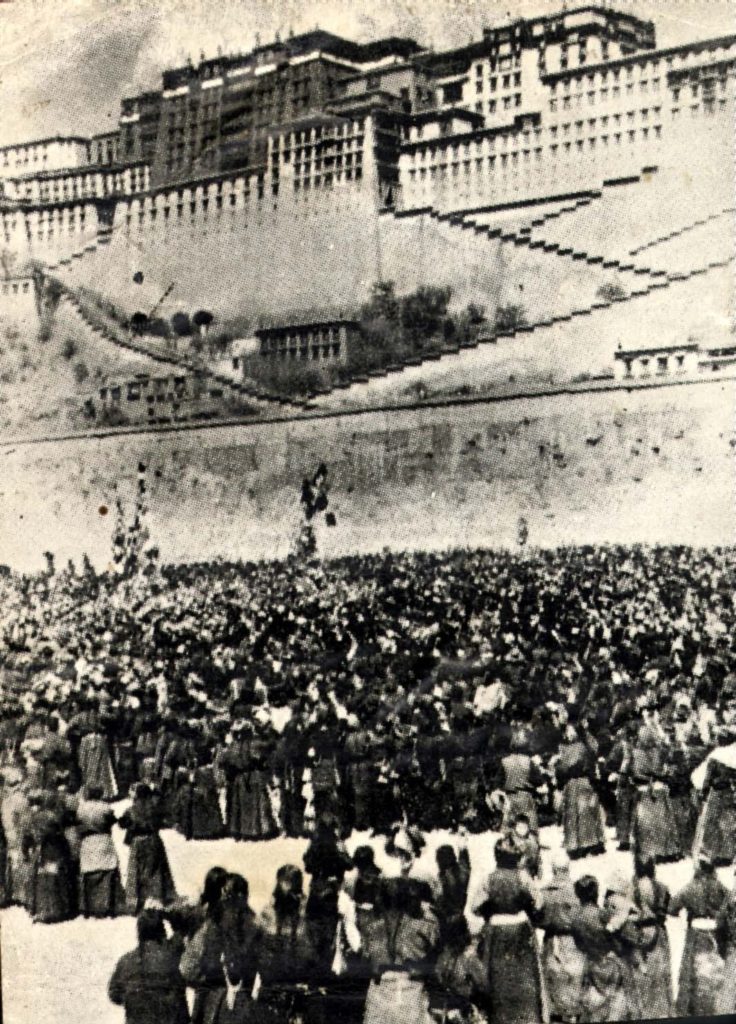
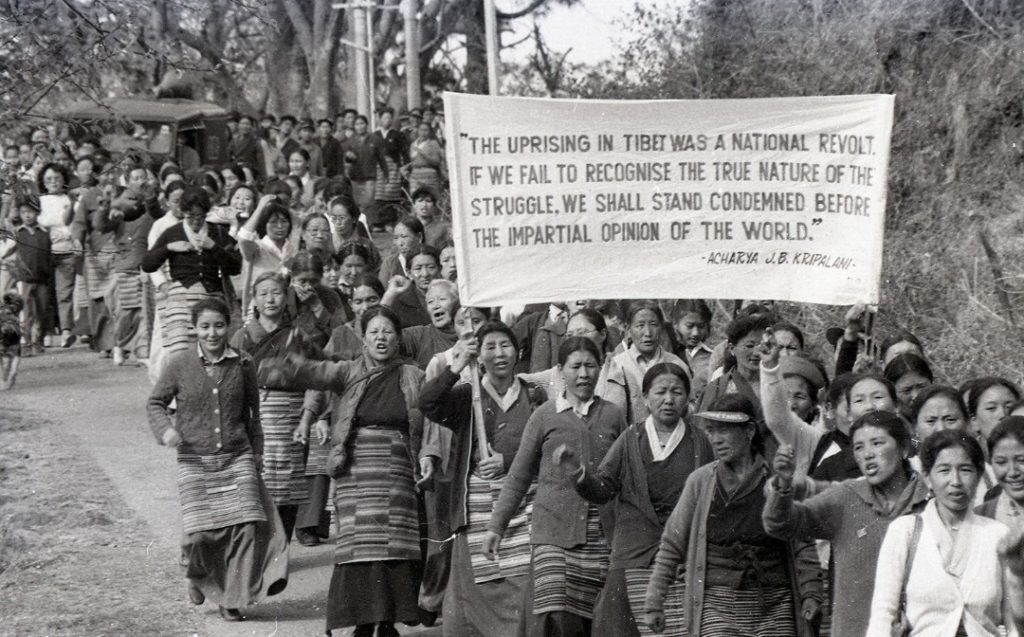


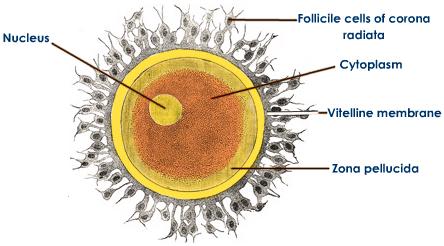


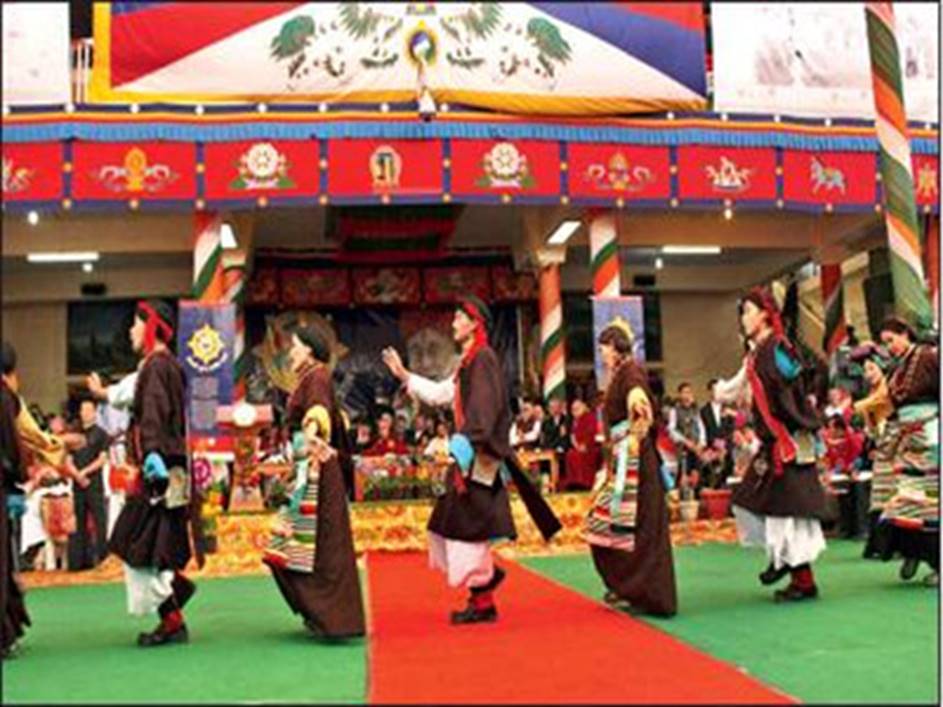










 Whole Dude - Whole Concept
