SPIRITUALITY SCIENCE – WHAT IS TIBET’S DESTINY?

SPIRITUALITY SCIENCE – WHAT IS TIBET’S DESTINY?
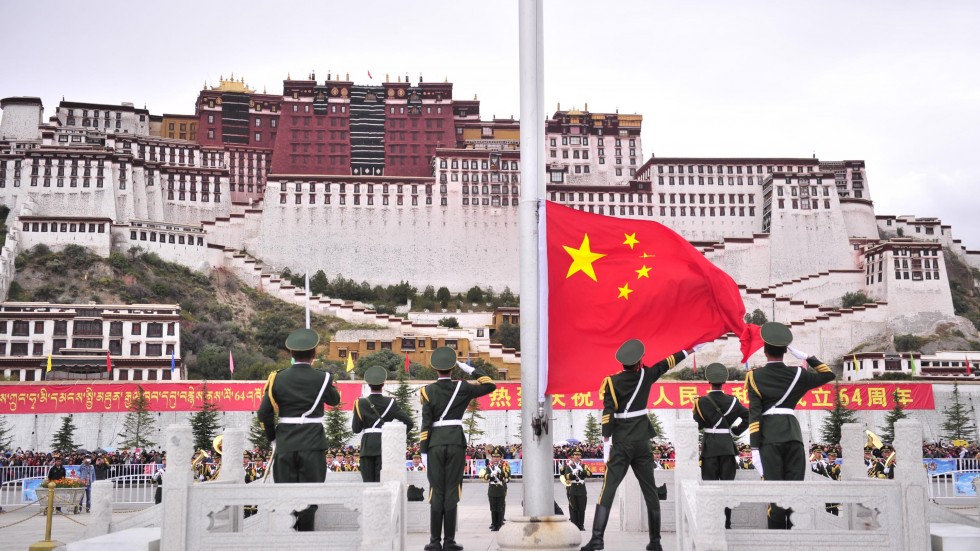
SPIRITUALITY SCIENCE – WHAT IS TIBET’S DESTINY? TIBET’S FUTURE WILL BE DECIDED BY MAN’S SUBJUGATION TO GOD’S WILL.

In India, Nepal, and Tibet, people share cultural belief in the concept of ‘KARMA’ which in general involves actions by individuals and their consequences to individuals in either present or future life. Karma involves events generated by actions performed by individual entity.

The concept of Destiny or Fate involves operation by an external agency or power over which individual entity has no control. Destiny or Fate is manifested by events with its inevitable consequences. The concept of Destiny involves subjugation of man and man’s ‘FREE WILL’ to perform actions. However, Destiny has broader implications for it unfolds events of great magnitude that can affect a large population of people or their collective identity as people.

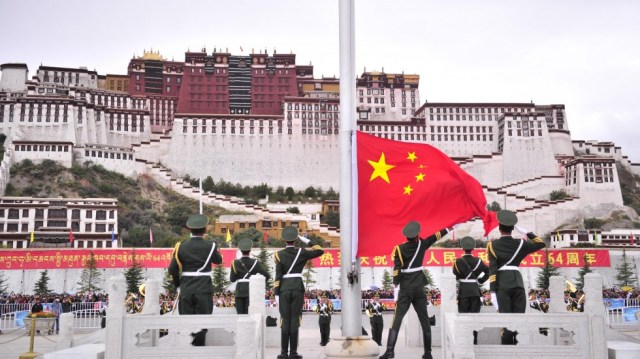
Tibet is under subjugation by superior military force exercised by Red China. Tibet’s Destiny is decided by people of China who must reconcile to live under subjugation by external Force, Power, or Agency called Destiny.

SPIRITUALITY SCIENCE – WHAT IS TIBET’S DESTINY? THE FUTURE OF TIBET, FREEDOM OR SUBJUGATION WILL BE DECIDED BY DOOM, DISASTER, CATASTROPHE, CATACLYSM, APOCALYPSE WHICH COMPELS RED CHINA TO CEASE HER SUBJUGATION OF TIBET.

In my analysis, I predict Beijing’s Doom. People of Red China may experience Catastrophe, Cataclysm, Disaster, Apocalypse, or Doomsday which cannot be revoked by paying ransom. This fateful event will compel China to reconsider Tibet’s Subjugation while their own Destiny is held in balance.

Rudranarasimham Rebbapragada

DOOM DOOMA DOOMSAYER

HUNGER FOR TIBET

Clipped from: http://himalmag.com/hunger-for-tibet/#comment-501456

The latest book on Tibet’s environmental degradation shows how any attempt to save the plateau’s ecosystem must come from within China.
  • Spirituality Science – What is Tibet’s Destiny?

    Photo image credit:Flickr / reurink jan

    (This is an essay from our March 2015 print quarterly ‘Labour and its discontents’. See more from the issue here.)

    Nineteen million people – a preliminary estimate – have lost their homes, their land and their property. Their only means of survival is to move into other regions; but there is no other region that can feed so many refugees. Hunger will probably drive them to violence. This is harvest time, already there has been plundering of crops and of course if the victims have nothing to eat themselves they will join the starving and seize crops elsewhere.

    The excerpt above comes not from a report on climate change or the displacement of local people following the building of a dam, but from China Tidal Wave, a futuristic novel published in 1991 by the writer and activist Wang Lixiong. In the novel, as a result of the central government’s relentless extracting of natural resources, the Yellow River bursts its banks, causing wide scale displacement and chaos. This event sets off a chain reaction in which several members of the ruling party make bids for power and plunge the country, and then the world, into war. In the nuclear winter that follows, those who have survived in China struggle on with what little natural resources remain, cultivating a vegetable called shugua and living in shelters that dot the ravaged land. At the end of the novel, Big Ox, a thuggish henchman of the Green Guards with a penchant for rape and torture is mauled to death by a Tibetan mastiff – the demise of the villain in the jaws of the dog symbolizing the final and grisly triumph of a ‘pure and unspoilt’ remoteness over the brutal pursuit of power.

    In parts of Tibet today, there is serious money to be made in breeding dogs to sell in China, where along with a sports car and a beautiful wife, a Tibetan mastiff is one of the three indispensable status symbols for a young man on the make. Six decades after the ‘liberation’, Tibet is being bottled and photographed, televised and sold to the mainland more than ever before, with the government undoubtedly hoping that the glossy packaging will help cover up the tricky cracks in the historical and political relationship with the motherland. The Open Up the West (Xibu da kaifa) campaign launched in 2000 aims to bring the resources of Tibet and Turkestan into more efficient sync with the industry and factories of the eastern seaboard. The showpiece of this drive, the Qinghai-Lhasa railway, was completed (ahead of schedule) six years later, enabling the more efficient transporting of Tibet’s mineral resources to mainland China, and the arrival of workers from the mainland to supply the service industries which accompany the engineers, miners and surveyors.

    Along with highways, shopping malls and the Internet have come diggers, fences and the despoiling of sacred sites; development efforts which Tibetan writer and activist Tsering Woeser calls “pseudo-modernization, essentially a kind of invasion, a sugar-coated, disguised act of violence.” An estimated two million Tibetans have been displaced or forcibly removed in preparation for infrastructure projects and mines between 2006 and 2012. Nomads are being cleared from the grasslands where they play an indispensable role in maintaining the fragile ecosystem of the Tibetan plateau, which is larger than the US states of Alaska and Texas combined, and resettled in purpose-built towns where they are euphemistically referred to as ‘ecological migrants’. Cables released by Wikileaks revealed how by 2010 the Dalai Lama had already reached the conclusion that environmental degradation in Tibet had become so severe that questions regarding political autonomy needed to be sidelined in favor of increased campaigning against the further damaging of Tibet’s natural environment. Nine major rivers are sourced on the plateau (five of these, the Yellow, Yangtze, Mekong, Indus and Brahmaputra, are among the ten longest rivers in Asia), providing irrigation, soil enrichment and support for the ecosystems on which more than a billion people depend in China, South and Southeast Asia.

    Meltdown in Tibet is not another futuristic disaster novel, although chapter subheadings like ‘Where Is the Thirsty Dragon Going to Guzzle Next?’ and ‘Why Can’t They Just Leave the Rivers Alone?’ give clues to the book’s hand-wringing and polemical tone, and mark a departure from Michael Buckley’s earlier, more tranquil guidebook writings on the Tibetan world. The book deals with two broad themes: first, how Tibet’s natural resources are increasingly featured in the schemes of a government hungry for electricity, timber, water and minerals; and second, the impact these plans are likely to have on the ecosystems, populations and politics of China’s neighbors. Scattered throughout are smaller sections on poaching and mass tourism, the changing face of Lhasa, and growing desertification in Tibet and Mongolia.

    Extraction

    The chapters dealing with dam building and water politics are the most coherent and sobering. Buckley cites research showing that the construction of “around 400 large dams” is being considered by the Indian and Chinese governments across the Himalayan watershed. The records of both New Delhi and Beijing are far from exemplary when it comes to consultation, safety and resettlement; furthermore, the Himalaya lies across an area of high seismic activity, and so would seem an irresponsible place to plan widespread digging, blasting and tunneling.

    Inside China, Buckley explains how the government has begun to look west and further upstream for the power it needs for the cities and industry of the east, partly because of a lack of space for new dams in eastern China.

  • At 200 GW, China, including the Tibet Autonomous Region (TAR), has the highest installed hydroelectric capacity of any country in the world (Brazil is second, with 84 GW). It also reflects (although Buckley only briefly mentions this) nascent but growing pressure from sections of Chinese society concerned about or affected by proposed dam projects. For example, the near-moratorium on new dam building during the 11th Five Year Plan (2006-2010) – despite the fact that the Plan envisioned major hydropower projects – was to some extent a result of civil-society groups and environmentalists putting pressure on the government. The 12th Plan, however, has been termed a ‘Great Leap Forward’ for dam building (one laughs at the idea of a cement lobby, but it almost certainly exists), and Buckley shows how much of the ‘Great Leap’ is poised to take place in Tibet.

    Currently, there are only a handful of ‘medium sized’ dams inside the TAR and the majority-Tibetan areas that border it, many of which are not operable year-round due to high-altitude rivers freezing up during winter. The government is planning to build twenty new dams, of which a proposed 38 GW capacity mega dam near Metok, in eastern Tibet, will be far and away the world’s largest if completed (the largest at the moment, the Three Gorges Dam in Hubei province, generates 22.5 GW, and set its own record in displacing 1.2 million people during construction). Although the area around Metok is sparsely populated, it is a site of religious significance for Tibetans and lies in an area prone to earthquakes. The most recent reminder of this was the 7.9 magnitude earthquake which struck Sichuan in May 2008 and killed 87,000 people. The political aftershocks of the dam will also be far-reaching; the Yarlung-Tsangpo river, upon which the dam will be built, becomes the Brahmaputra once it flows into India, and water-claiming on such a huge scale will undoubtedly raise tensions in New Delhi.

    Buckley also shows how the tender and contract-awarding processes for new dams are often hobbled by corruption. While laws introduced in 2003 stipulate that Environmental Impact Assessments must be carried out and approved before construction begins, local governments have been too easily swayed by the promise of immediate economic windfalls, and have given the go-ahead to those wanting to dig or build. Buckley also points out how distance from the central authorities means that there are ways around the government’s diktat:

    Work on Ahai Dam, in the upper Yangtze region, was carried out in secret by Sinohydro Corporation. Signs declaring the site a “military zone” were erected to discourage visitors. There was no EIA at Ahai Dam: authorities planning to visit the dam to approve the project were presented with a dam that was practically completed.

    Huaneng, another state-owned power company has been fined numerous times by the government for building before permission had officially been given, and yet continues to enjoy favor.

    Downstream

    The mega dams and water diversion projects planned by the Chinese government will allow China to “turn the water on or off” for countries downstream. Buckley travelled to Bangladesh, Burma, Cambodia, India and Nepal, and these forays worked extremely well in expanding the scope of the book and providing glimpses of the larger ecological and geopolitical picture. Lake Tonle Sap in Cambodia, for example, floods every year, acting like a ‘back up valve’ for the Mekong river, and provides 60 percent of the annual freshwater fish catch when the floodwaters recede. Local sources attribute the disastrous 2003-04 catch – which was half of its usual volume after the lake flooded for three months instead of the usual five – to the completion of the Dachaoshan dam, upstream in Yunnan, in the same year. In Burma, Buckley reports how construction of the proposed 3200 MW Myitsone dam in the northeast, at the confluence of the Mali and N’Mai (the source of the Irrawaddy, the country’s longest river) was officially suspended in 2011. The dam would have submerged more than 60 villages, while 90 percent of the power generated would have been exported back to China, and its suspension is a “rare victory for anti-dam campaigners in Burma”. However, on a visit to Myitkyina with a “Kachin guide and a motorcycle”, Buckley is informed by locals that workers are still on-site, working by night. What they are doing is unclear, and one wishes he had stayed longer to find out, but he reports that those displaced during the original phases of construction have not been allowed to return home, leading to the conjecture that, “Chinese engineers are just biding their time, waiting for the project to resume.”

    The book also reports on the activities of Chinese state-owned enterprises in Pakistan, where dam building serves the dual purpose of power generation and territory-claiming in the disputed Northern Territories. The state-owned Gezhouba Group is helping Pakistan build the 969 MW-capacity Neelum-Jhelum dam, even as India proceeds to dam the river further upstream at Kishanganga. In northeast India, similar practices are being employed by New Delhi in the face of competing claims over the waters of the Yarlung-Tsangpo/Brahmaputra: “New Delhi argues that if it has to go to the International Court of Justice to counter Chinese dam building and diversion on the Yarlung-Tsangpo, then it must show beneficial use of the river in India by building its own dams.”

  • The displacement of nomads from the grasslands and plains of Tibet is an issue with ecological as well as moral implications, and one dealt with at length in the book. With knowledge of the land, weather patterns, flora and fauna, nomadic families and their herds are part of the fragile ecosystem, the “stewards of Tibet’s grasslands”. The central government has been actively discouraging this way of life, claiming that a sedentary population can be better educated and cared for. Buckley has suspicions as to the real reasons for the resettlement programs: the freedom of movement the nomads enjoy, and the presence of valuable minerals like lithium, copper and gold underneath the land they roam over. A conversation with a nomad family near the town of Litang is interesting. The head of the family tells Buckley through an interpreter:

    There has been a lot of pressure to sell their animals and settle… He says that he will stay on the grasslands as long as he can, because he has talked to others that settled and they were very disappointed with their new lives. They were no longer free. Everything suddenly came down to a question of money and having to buy food and clothing. Here, he says, he has his freedom – and he never pays for his food or water.

    Sadly, Buckley does not explore what life is like inside one of the resettlement towns, although he highlights how exactly nomads are being forced off the grasslands, and, if not into towns, into smaller fenced-in areas, where overgrazing quickly becomes a problem. This is partly achieved through the creation of what he terms ‘Paper Parks’. These are huge areas of land designated as national parks or protected areas (and so off-limits for nomads), inside which mining companies are often free to prospect for minerals.

    Within China


    The scope of Meltdown in Tibet is impressive. Buckley does a fine job in bringing together current research on Tibet’s environment and the plans Beijing has for harnessing it to maintain the economic growth it sees as a guarantor of political stability. He is clearly at home writing on things Tibetan, and his anxiety and concern for the preservation of Tibetan culture are clear. However, throughout, the polemic follows a too-simplistic ‘environmental Tibetan / materialist Chinese’ agenda, to use the phrase of academic Graham E Clarke. “The tourists and their guides”, Buckley writes of Chinese visiting Tibet, “show little interest in Tibetan culture and religion. Their interest lies in scenery, fresh air, blue skies, photography and shopping.” He backs up this generalization with anecdotal evidence, but seems to forget that European and North American tourists go to Tibet for the same reasons; they too smoke cigarettes where they shouldn’t, and are just as capable of being patronizing and disrespectful of local sensibilities. Anyone who has travelled in Tibet will know this. The arbitrary suspicion of almost everything Chinese firstly betrays Buckley’s politics – common to the rest of the adventure writer/climber/rafter crowd who yearn for Tibet to be free, pristine and unexplored again – but also, more damagingly, does not allow his book to seriously entertain the possibility that ways of combating environmental degradation in Tibet could come from within China itself.

    Environmental activism is currently one of the few domains of Chinese politics where protest and dissent are somewhat tolerated. Zed Books’ China and the Environment: The Green Revolution and Joy Zhang and Michael Barr’s Green Politics in China (both published in 2013) explore the growth in environmental NGOs and activism, and tell us that even if green politics in China is not of the confrontational kind we are familiar with elsewhere, it is certainly happening, and sometimes with encouraging results. Following the publishing of data by monitors in the US Embassy in Beijing in 2009-10, which revealed the catastrophically high presence of PM 2.5 molecules in the air, the ‘I Monitor the Air for My Country’ campaign started by the NGO Green Beagle asked citizens to take their own PM 2.5 measurements and upload their findings online. With its catchy, social media-friendly slogan, the ‘citizen science’ campaign showed that it is possible for a group of people outside the Chinese Communist Party (CCP) to challenge the party’s position (or lack of one) on an issue that is both political and environmental, even if for a limited period.

    Examples of this concern extending to the Tibetan plateau are harder to come by. But they are there. Mining Tibet, published by the Tibet Information Network in 2002 quotes a paper by Chinese academics Hu Angang and Wen Jun published in the government’s China Tibetology journal, in which they argue that the state’s current mining policies are widening the wealth gap between Han migrant workers and local Tibetans, and should be scaled back in favor of sustainable development initiatives which involve local nomads and farmers. In 2011, ‘Globe Trekker: Across the Kekexili’, a publicity campaign by the Snow Beer brand which aimed to send an adventure group to Kekexili reserve in northwest Tibet sparked opposition from a number of environmental campaigners in mainland China mobilized by Weibo and other social media.

  • There are occasions where it seems Buckley’s book is about to take the ambitious and much-needed step to look at the potential for change from within China. Following a discussion of the successful campaign from 2004 to 2007 to halt the construction of a mega dam at Tiger Leaping Gorge in Yunnan, Buckley writes: “The fate of Tibet’s rivers lies with courageous figures… triggering change from within China.” Earlier, he makes the observation that “Chinese environmental NGOs and activism are tolerated, it seems… But Tibetan action is viewed as subversion.” Neither of these openings are followed up, which is a lost opportunity for the book and its author to take a great leap and enquire into whether the Chinese environmental activism that is currently tolerated also has Tibet on its radar, and if so, whether it could be mobilized to fight the government’s policies on the plateau (or to begin with, in Tibetan areas outside the TAR where restrictions on assembly and dissent do not seem to be as stringent). Hunting for scenarios or instances of ecologically minded Chinese and Tibetans working together would have required much arduous research in Chinese and Tibetan. But if such examples could be unearthed, then surely here was a new topic worth exploring which could have challenged the conventional narrative on Tibet and China.

    Possibilities

    The renegotiating of Tibet’s status within the ‘motherland’ has been unfolding for a while now. That closer integration with the mainland has so far been characterized by, among other things, the accelerated extraction and exploitation of Tibet’s natural resources should hardly be surprising, depressing as it is. The prices the inhabitants of resource-rich peripheries must pay for their modernity are the same everywhere. The bonds that bind Tibet to China are certainly tightening in many ways, and indeed seem to be shrinking spaces for dissent regarding autonomy and religious rights. But those who are concerned about the fate of Tibet’s environment need to be working out how they can be effective in this changing climate, and what kinds of opportunities it could offer if they learn to negotiate inside it.

    Within China, it is not only technocrats and government planners who have visions for what a future Tibet will look like. A small yet growing number of academics, journalists and activists already see a bigger picture in which the preservation of the plateau’s rivers and ecosystems is in everyone’s interest as floods, desertification and soil degradation increasingly affect the lives of those living downstream. Not every tourist from Shanghai drops litter in Lhasa or defaces statues in monasteries, just as every Belgian or Swiss visitor does not possess an inherent capacity to understand the plight of the Tibetans and the exclusive right to speak up for them. We need to begin accepting that growing numbers of Chinese people are also unhappy that Tibet’s mountains are being bulldozed and its rivers blocked up, and that they may in fact be more effective torchbearers than those of us in South Asia or in the West. One would hope that if criticism and opposition to the government’s environmental policies on the plateau could be raised as part of the more mainstream Chinese environmental agenda (and include familiar and tolerated Chinese voices), then the ‘splittist’ label would be less easily applied and voices from Tibet less easily dismissed out of hand. An ‘environmental Tibetan / environmental Chinese’ agenda is surely plausible.

    In an episode of the US sitcom Friends from 2004, Phoebe explains indignantly, to audience laughter, why her eccentric, steel-drum playing friend Marjorie is so smelly: “Hey! She will shower when Tibet is free!” Throwaway, pop-culture references like this illustrate how in the West the Tibet issue is effectively dead in terms of questions of political autonomy and religious freedom, even as Tibetans are portrayed as embodiments of compassion and suffering. Meanwhile, as its political and economic clout grows, the CCP continues ignoring the impassioned criticism of its Tibet policies that comes from abroad. Those in the West who have taken up the Tibetans’ cause and chafe at this deafness, often seem to forget that for much of the 19th and early 20th centuries, China was bullied, pillaged and shamed by a cohort of rapacious foreign powers and treated with contempt on the world stage. A sign at one of the entrances to the Summer Palace of Qing emperors in Beijing (which was destroyed by British and French soldiers in 1860) now reads ‘Do not forget the national shame, rebuild the Chinese nation.’

    Such jingoism does not bode well for the rivers, forests and mountains of the Tibetan plateau. And, when choices need to be made, will those dwelling in the mega cities of mainland China choose a less reliable electricity supply so that a dam need not be built on a river thousands of miles upstream? Possibly not. But – and this is a painfully obvious fact – Tibet’s environment is only going to be saved if people in China desire it to be. For the moment, there may be some breathing space to work out how this is to be done. In Spoiling Tibet: China and Resource Nationalism on the Roof of the World, another excellent book recently published by Zed, Gabriel Lafitte concludes that while Tibet is ‘primed’ for wider scale exploitation, this process has not yet begun in earnest. He also writes: “There is a deep spiritual hunger in China (jingshen weiji), for guidance as to how life can be made more meaningful than the endless consumer pursuit of endless wants.”

    The faceless, monolithic and all-consuming behemoth that we are told is China, has its own inefficiencies and failings. It also has ‘courageous figures’ like Wang Lixiong who want change – individuals who are mentioned only in passing in Buckley’s narrative. The excluding of such individuals is unfortunate and demonstrates an unwillingness to come to terms with the realities of Tibet’s political and economic situation today, however distasteful it may be. And when it should be the task of those who have long-standing connections with Tibet and deep sympathy for its people, to tell us where possibilities for saving its environment lie, even if they might be in China, Meltdown‘s refusal to entertain any such possibility can only ensure that the picture it paints of the future is a dark and hopeless one.

    ~Ross Adkin is a freelance journalist based in Kathmandu.

    (This is an essay from our March 2015 print quarterly ‘Labour and its discontents’. See more from the issue here.)

  • Spirituality Science – What is Tibet’s Destiny? Tibet’s Subjugation by Red China will cease when Chinese people reconcile with Power, Force, or Agency called Destiny or Fate.

DOOMED PRESIDENT GERALD FORD’S FRATERNITY HOUSE BUILDING DISCOVERS REDEEMER

DOOMED PRESIDENT GERALD FORD’S FRATERNITY HOUSE BUILDING DISCOVERS REDEEMER

DOOMED PRESIDENT GERALD FORD’S FRATERNITY BUILDING DISCOVERS REDEEMER. DKE ‘SHANT’ BUILDING AT 611 1/2 EAST. WILLIAM STREET, ANN ARBOR OBTAINED NEW LEASE ON LIFE.

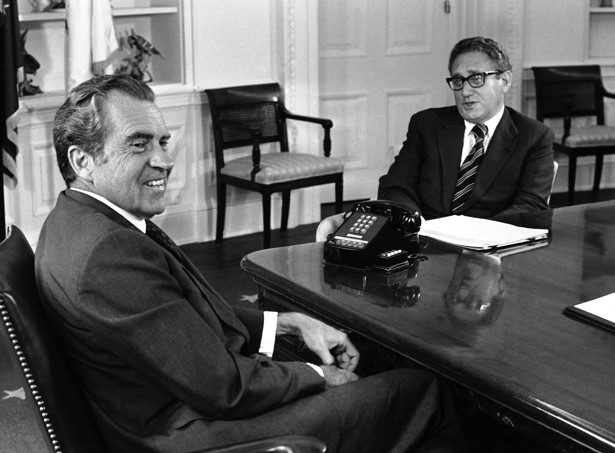
I speak of Doomed Presidency of Nixon-Kissinger and Gerald R. Ford in the context of Doomed US Policy they initiated and followed. US Policy doomed for it fundamentally violates values cherished by Founding Members who enshrined those Principles in ‘Declaration of Independence’ to establish USA as Free Nation.

The historical legacy of Doomed Nixon-Kissinger and Ford Presidency trapped my life and military career since 1971. I left India in 1984 in search of ‘REDEEMER’ or ‘DISCOVERER’ to find the true purpose in my life.

DOOMED PRESIDENT GERALD FORD’S FRATERNITY HOUSE BUILDING DISCOVERS REDEEMER TO GET NEW LEASE ON LIFE.

My readers may not be surprised to note my interest in a story published by MLive.com giving account of historic DKE Shant Building at 611 ½ East William Street, Ann Arbor. Delta Kappa Epsilon Fraternity is not able to use this Building for their activities and listed it for lease. To my utter surprise, this Doomed Building used by Gerald R. Ford is discovered by ‘REDEEMER ANN ARBOR’ Church for their Worship Service. This historic Building got a new tenant to keep its life. The Story gives me Hope of reaching my true destination in life with guidance from my personal REDEEMER.

Rudranarasimham Rebbapragada

DOOM DOOMA DOOMSAYER

MLive.com

Historic DKE Shant building on Ann Arbor’s William Street listed for lease for retail user

Doomed President Gerald Ford’s Fraternity House Building Discovers Redeemer to get New Lease on Life. Delta Kappa Epsilon Fraternity House, Shant at 611 1/2 East William Street, Ann Arbor.
Doomed President Ford’s Fraternity House Building in Ann Arbor.
Doomed President Ford’s Fraternity House Building in Ann Arbor Discovers Redeemer.


Doomed President Gerald Ford’s Fraternity House Building in Ann Arbor Discovers Redeemer.                                       
Doomed President Ford’s Fraternity House Building Discovers Redeemer.
Doomed President Ford’s Fraternity House Building in Ann Arbor Discovers Redeemer.
Doomed President Ford’s Fraternity House Building Discovers Redeemer.
Doomed President Ford’s Fraternity House Building in Ann Arbor.
Doomed President Ford’s Fraternity House Building in Ann Arbor Discovers Redeemer.


The Shant building, which is owned by the Delta Kappa Epsilon fraternity and located at 611 1/2 E. William St. is up for lease. Melanie Maxwell | The Ann Arbor News

Melanie Maxwell | melaniemaxwell@mlive.com

By Lizzy Alfs | lizzyalfs@mlive.com

on October 02, 2014 at 5:25 AM

Set behind a seven-foot brick wall and a padlocked cast-iron gate in downtown Ann Arbor is an unusual historic building in transition.

After serving as a space for weekly Delta Kappa Epsilon fraternity rituals and later, as the international headquarters for the fraternity, the 135-year-old building at 611 1/2 E. William St. is listed for lease for a retail user.

The building is located between Hunter House Hamburgers and Tianchu Restaurant.

An online real estate listing markets the building, known as the Shant, as the “most unique building on the University of Michigan campus,” noting it’s “the first time the property has been offered to the public.” The 2,000-square-foot space is listed for lease with Colliers International Ann Arbor for an annual $35 per square foot.

“Very rare opportunity for retail coffee shop or similar uses for very unique original space on campus,” the listing says.

Listing broker Jim Chaconas described the Shant as “the building that everybody wants to know.”

A long-time fixture near campus

The Shant sticks out in its surroundings – an evolving near-campus retail area – although it’s set back from the sidewalk and behind a tall brick wall. The building has retained its historic character as the area around it continues to develop.

Doomed President Ford’s Fraternity House Building in Ann Arbor Discovers Redeemer to get New Lease on Life.

The historic Shant building is located on a narrow lot at 611 1/2 E. William St. Ben Freed | The Ann Arbor News 

The Shant has a rich history in Ann Arbor; architect William Le Baron Jenney, later known as the “father of the American skyscraper,” designed the building for the Omicron Chapter of DKE at U-M. Jenney taught the university’s first courses in architecture.

The cornerstone for the chapter hall on East William Street was laid in 1878 and construction finished the following year.

As for the building’s name, people aren’t quite certain where it comes from.

“Nobody really knows,” said Sarah Christensen, DKE’s administrative director.

Designed in thirteenth century French style, the two-story building features a stone foundation, intricate wood arches, a vaulted ceiling and stained glass windows with the DKE symbol.

Doomed President Ford’s Fraternity House Building in Ann Arbor Discovers Redeemer to get New Lease on Life.

A historic photo of the Shant shows the building before 1901, when the brick wall was constructed to keep people off the property. Photo courtesy of the Bentley Historical Library, University of Michigan 

When the building was completed, it was used for weekly chapter meetings and other rituals that remain a mystery to those outside the DKE fraternity.

The building was never used to house fraternity members, who stayed at a house at 609 S. State, then a house at 1912 Geddes before DKE secured its current home at 1004 Olivia Ave.

Over time, DKE has lifted the veil of secrecy surrounding the Shant building. Years ago, only fraternity members were allowed to step foot inside the house and the brick wall outside was constructed in 1901 to keep people off the property.

Christensen said in the 1970s and 1980s, DKE members and alumni would often use the Shant building as a gathering place on football Saturdays. People would sometimes watch the games on a television on the building’s second floor.

DKE almost sold the Shant in 1980 as the fraternity faced financial troubles. A fundraising effort led by DKE alumni David K. Easlick saved the building and ownership was transferred to the newly formed Rampant Lion Foundation, which supports DKE’s educational activities.

Listing broker Jim Chaconas described the Shant as “the building that everybody wants to know.”

Today, the Omicron Chapter of DKE only meets inside the Shant about twice a year.

“It might be an alumni event, it could be a physical pinning of the pledges,” Christensen said.

The fraternity’s international headquarters rents the building’s first floor from the Rampant Lion Foundation.

A look inside the building

The DKE fraternity is proud of its history.

The walls inside the Shant are lined with photographs of DKE alumni, including five U.S. presidents: Rutherford B. Hayes, Theodore Roosevelt, U-M grad Gerald Ford, George H.W. Bush and George W. Bush.

Doomed President Ford’s Fraternity House Building in Ann Arbor Discovers Redeemer to get New Lease on Life. Delta Kappa Epsilon Fraternity Flag.

The DKE flag on display at the Shant building in 2009.The Ann Arbor News file photo 

The Gerald Ford library is on the building’s second floor, featuring works by and about DKE members.

Old DKE artifacts, including a paddle from Yale’s DKE chapter, are on display on the second floor. One photograph shows the DKE flag when it was carried to the North Pole by its discoverer.

Bricks on the Shant’s outdoor patio feature names of DKE alumni, including Gerald Ford, who have donated to the Rampant Lion Foundation.

New life for the Shant

The Shant building is listed for lease as the building is in need of repairs to its four architectural chimney features. Christensen said the fraternity organization does not have the cash flow to make the necessary repairs, and selling the building would be a last resort.

The building has a 2014 assessed value of $209,300. The property’s 2013 taxes were about $4,070.

A lease agreement with a future tenant would offer discounted rent while repairs are made to the building.

“The idea is that we would rent the space and do an agreement with a reduced rent amount and the tenant would pay for necessary repairs,” Christensen said. “The tenant would get a beautiful, unusual building to lease and then we would have the building maintained.”

Chaconas, of Colliers, said to restore the chimneys with the original materials would cost upward of $60,000. To rebuild them with different materials but a similar appearance would cost about $12,000.

Chaconas said a new tenant would not alter the character of the building.

“I’ve gone to the Historical Society and City of Ann Arbor and they are going to work with us so we don’t have to disturb the structure of the Shant,” he said.

Chaconas said he’s received preliminary interest in the building and had some showings. Examples of retail tenants he cited include a coffee shop, a wine bar or a small restaurant. Christensen mentioned a yoga studio as another example.

“It’s in a hot little area, and you’ve got your outside seating,” Chaconas said. “The upstairs could be seating, and downstairs could be a little coffee bar. …Somebody is going to do really well there.”

Lizzy Alfs is a business reporter for The Ann Arbor News. Reach her at 734-255-2638, email her lizzyalfs@mlive.com or follow her on Twitter

Registration on or use of this site constitutes acceptance of our User Agreement and Privacy Policy

© 2017 MLive Media Group. All rights reserved (About Us).

The material on this site may not be reproduced, distributed, transmitted, cached or otherwise used, except with the prior written permission of MLive Media Group.

Community Rules apply to all content you upload or otherwise submit to this site.

Inserted from <http://www.mlive.com/business/ann-arbor/index.ssf/2014/10/historic_dke_shant_building_on.html>

DOOMED PRESIDENT GERALD FORD’S FRATERNITY HOUSE BUILDING DISCOVERS REDEEMER TO GET NEW LEASE ON LIFE.
DOOMED PRESIDENT GERALD FORD’S FRATERNITY HOUSE BUILDING IN ANN ARBOR DISCOVERS REDEEMER TO GET NEW LEASE ON LIFE.
A brick donated by former President Gerald Ford sits in the ground outside the Shant, the traditional gathering house for members of Delta Kappa Epsilon’s Omicron chapter at the University of Michigan. Ford was a member of DKE. Angela Cesere | AnnArbor.com                                                                                                                                                                                                            
DOOMED PRESIDENT GERALD FORD’S FRATERNITY HOUSE BUILDING DISCOVERS REDEEMER TO GET NEW LEASE ON LIFE.

DOOMED PRESIDENCY OF GERALD FORD – AMERICA’S UNFINISHED WAR

DOOMED PRESIDENCY OF GERALD FORD – AMERICA’S UNFINISHED WAR

Doomed Presidency of Gerald Ford – America’s Unfinished War.

Nixon-Kissinger and Gerald Ford initiated era of Doomed US Presidency when they concluded War against Communism through negotiated Surrender. Unchecked Communist Expansionism in Southern Asia poses severe risks to vital US security interests in Asia-Pacific Region.

Rudranarasimham Rebbapragada

DOOM DOOMA DOOMSAYER

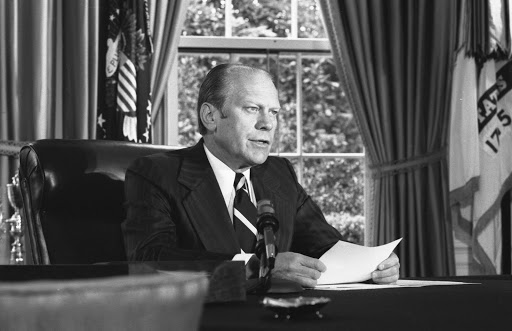
Doomed Presidency of Gerald Ford – America’s Unfinished War. The Fall of Saigon announced by President Ford on April 23, 1975.

Clipped from: http://www.history.com/this-day-in-history/ford-says-that-war-is-finished-for-america?

FORD SAYS THAT WAR IS FINISHED FOR AMERICA

At a speech at Tulane University, President Gerald Ford says the Vietnam War is finished as far as America is concerned. “Today, Americans can regain the sense of pride that existed before Vietnam. But it cannot be achieved by re-fighting a war.” This was devastating news to the South Vietnamese, who were desperately pleading for U.S. support as the North Vietnamese surrounded Saigon for the final assault on the capital city.

The North Vietnamese had launched a major offensive in March to capture the provincial capital of Ban Me Thuot (Darlac province) in the Central Highlands. The South Vietnamese defenders there fought very poorly and were quickly overwhelmed by the North Vietnamese attackers. Despite previous promises by both Presidents Richard Nixon and Gerald Ford to provide support, the United States did nothing. In an attempt to reposition his forces for a better defense, South Vietnamese President Nguyen Van Thieu ordered his forces in the Highlands to withdraw to more defensible positions to the south. What started out as a reasonably orderly withdrawal soon degenerated into a panic that spread throughout the South Vietnamese armed forces. The South Vietnamese abandoned Pleiku and Kontum in the Highlands with very little fighting and the North Vietnamese pressed the attack from the west and north. In quick succession, Quang Tri, Hue, and Da Nang in the north fell to the communist onslaught. The North Vietnamese continued to attack south along the coast, defeating the South Vietnamese forces at each encounter.

As the North Vietnamese forces closed on the approaches to Saigon, the politburo in Hanoi issued an order to Gen. Van Tien Dung to launch the “Ho Chi Minh Campaign,” the final assault on Saigon itself. Dung ordered his forces into position for the final battle.

The South Vietnamese 18th Division made a valiant final stand at Xuan Loc, 40 miles northeast of Saigon, in which the South Vietnamese soldiers destroyed three of Dung’s divisions. However, the South Vietnamese finally succumbed to the superior North Vietnamese numbers. With the fall of Xuan Loc on April 21 and Ford’s statement at Tulane, it was apparent that the North Vietnamese would be victorious. President Thieu resigned and transferred authority to Vice President Tran Van Huong before fleeing Saigon on April 25.

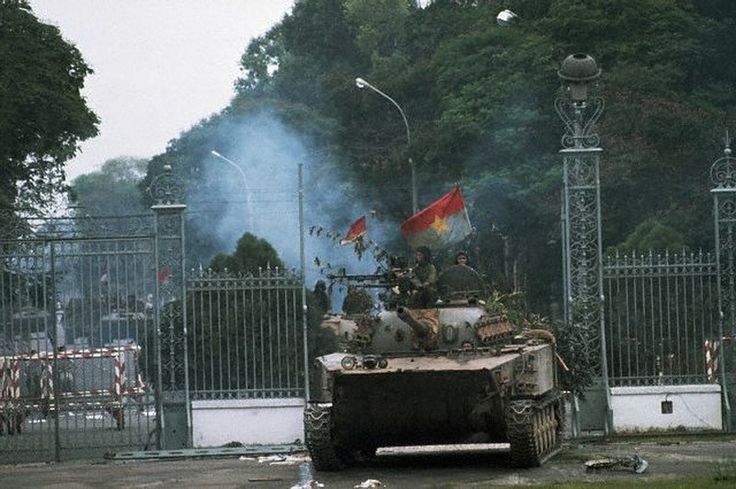
By April 27, the North Vietnamese had completely encircled Saigon and began to maneuver for their final assault. By the morning of April 30, it was all over. When the North Vietnamese tanks crashed through the gates of the Presidential Palace in Saigon, the South Vietnamese surrendered and the Vietnam War was officially over.

DOOMED PRESIDENCY OF GERALD FORD – AMERICA’S UNFINISHED WAR. NIXON-KISSINGER VIETNAM TREASON DID NOT FINISH AMERICA’S WAR ON COMMUNIST EXPANSIONISM.

NO CHINA, NO RUSSIA – U.S. MUST CHOOSE TIBET EQUILIBRIUM

 NO CHINA, NO RUSSIA – U.S. MUST CHOOSE TIBET EQUILIBRIUM

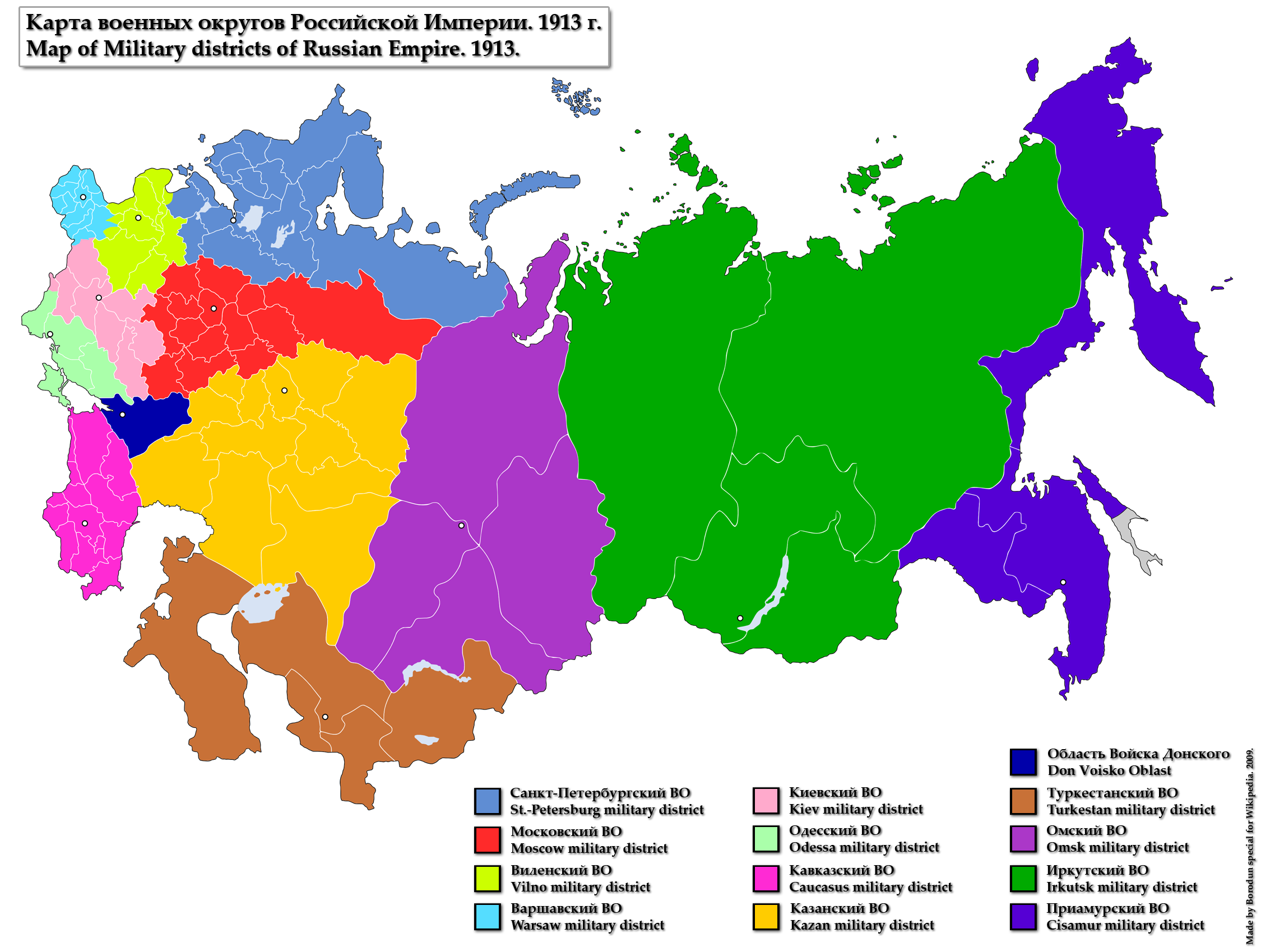
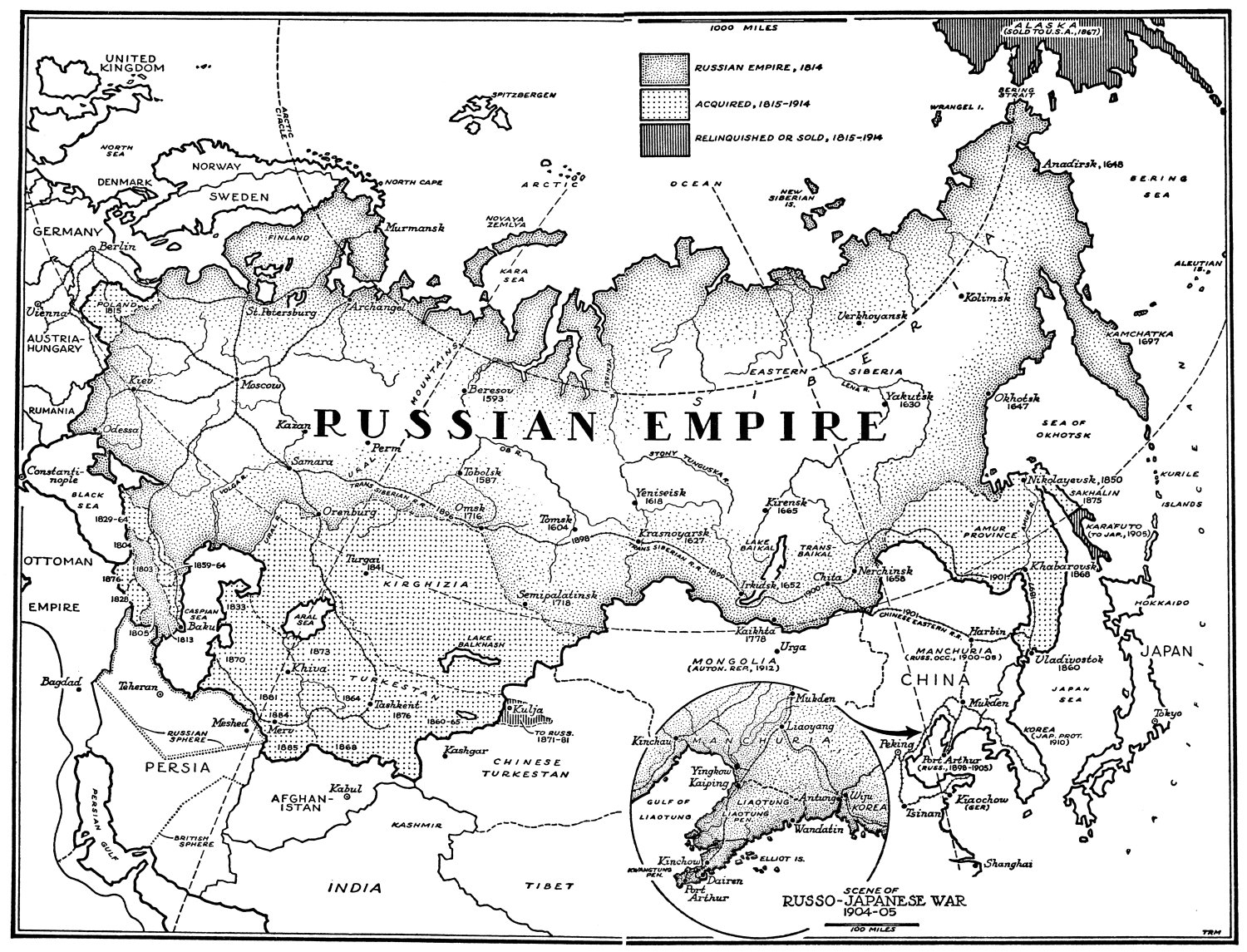
NO RUSSIA, NO CHINA – U.S. MUST CHOOSE TIBET EQUILIBRIUM. RUSSIAN EMPIRE IN 1913.

United States must define Foreign Policy before choosing allies. “AMERICA FIRST” Foreign Policy demands choosing “TIBET EQUILIBRIUM.”

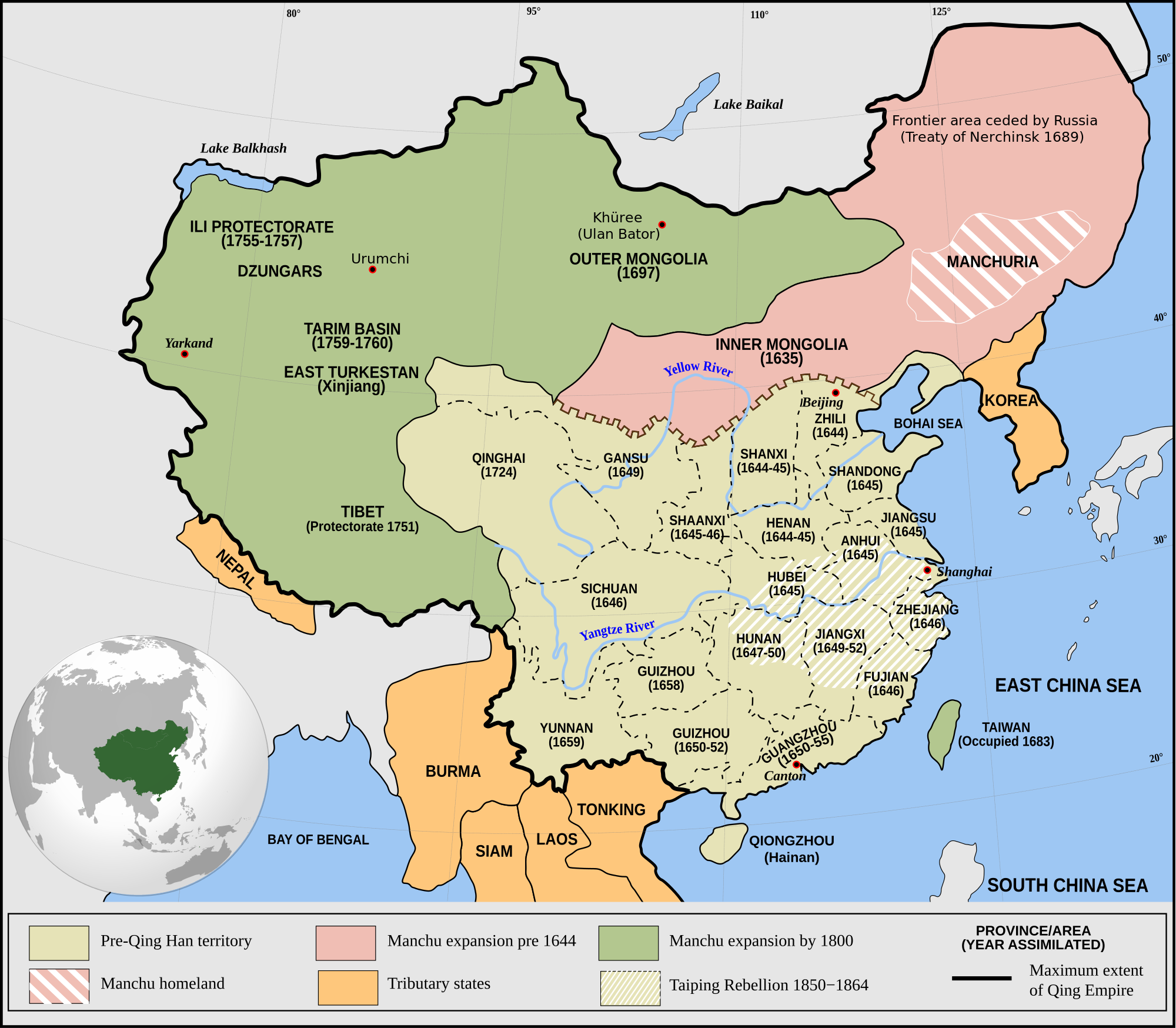
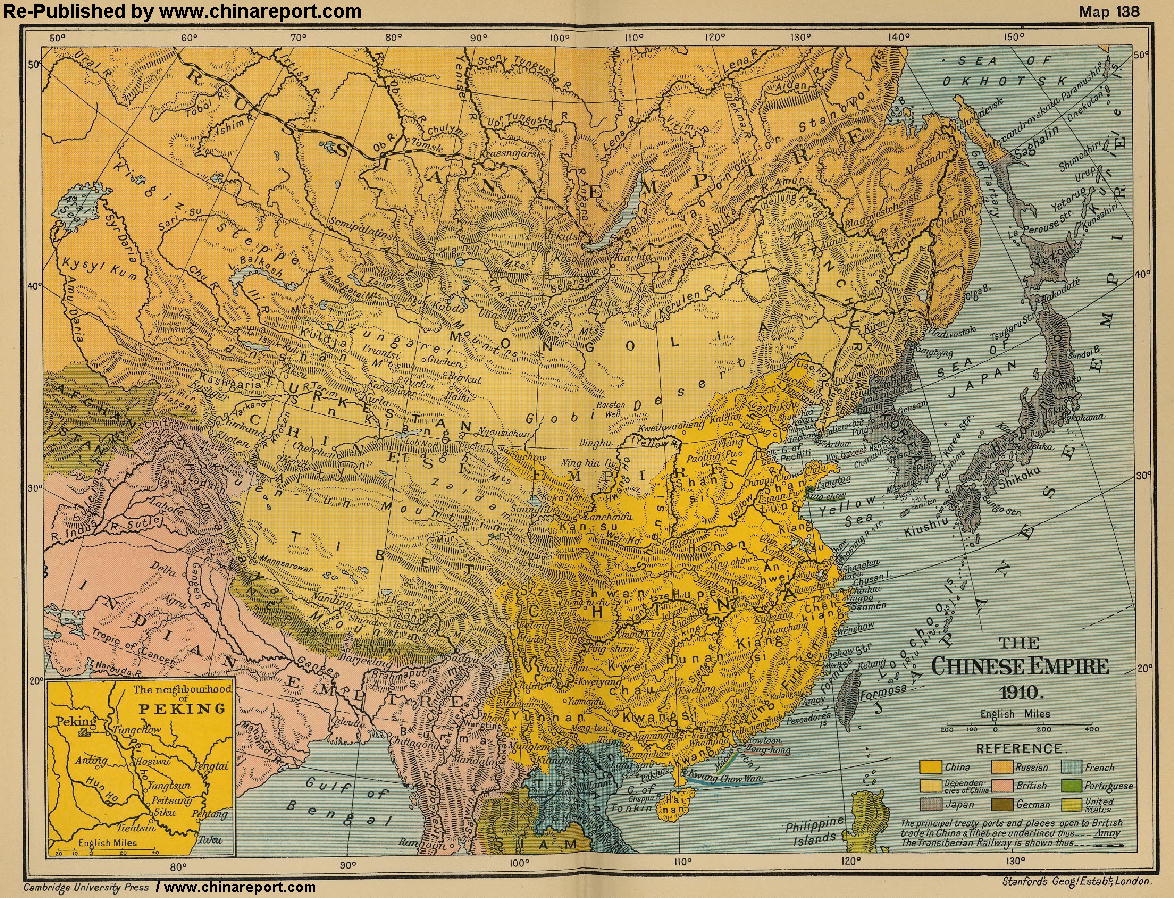
NO RUSSIA, NO CHINA – U.S. MUST CHOOSE TIBET EQUILIBRIUM. QING CHINA EMPIRE CIRCA. 1820.

Both Russia and China are major military powers of world competing for Superpower status. To achieve ‘Balance of Power’ to restore ‘Power Equilibrium’, America must choose Tibet because of its strategic location.

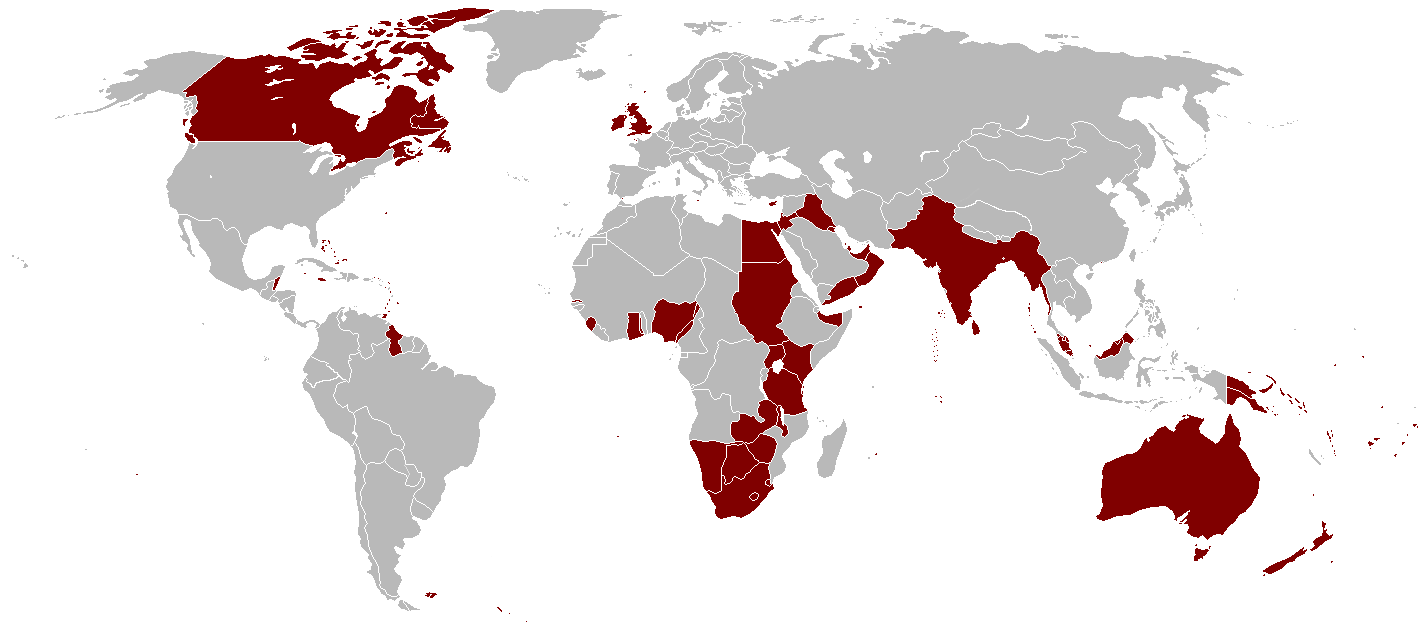
NO RUSSIA, NO CHINA – U.S. MUST CHOOSE TIBET EQUILIBRIUM. BRITISH EMPIRE 1921.

Tibet is second largest nation of the region and Tibet’s Independence from military occupation is the only real solution to contain and engage military powers like Russia and China.

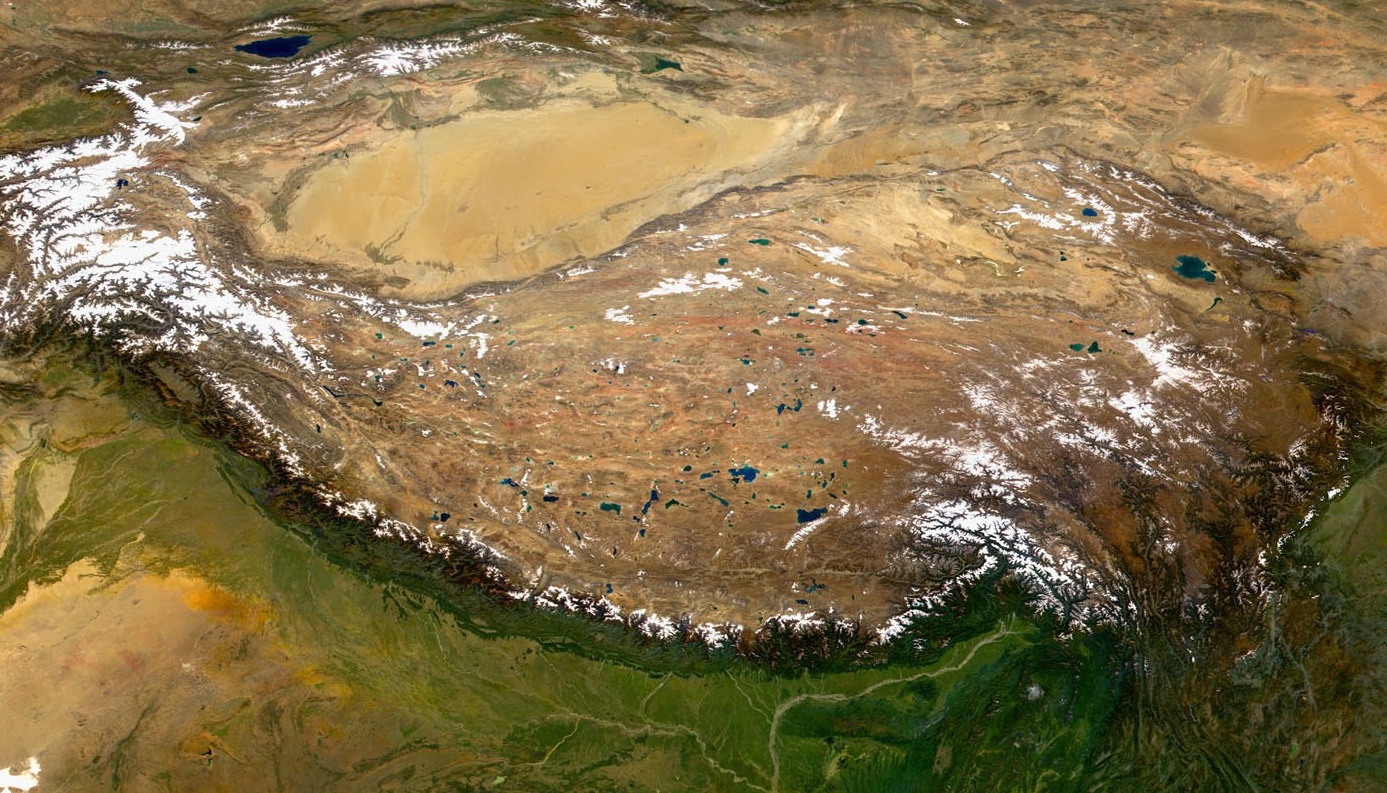
NO RUSSIA, NO CHINA – U.S. MUST CHOOSE TIBET EQUILIBRIUM. A SATELLITE’S EYE VIEW OF TIBETAN PLATEAU.
  • Major Retd Rudranarasimham, DOOM DOOMA DOOMSAYER

CHINA OR RUSSIA? U.S. MAY HAVE TO CHOOSE AN ALLY

NEWSWEEK

Newsweek Europe

NO RUSSIA, NO CHINA – U.S. MUST CHOOSE TIBET EQUILIBRIUM.

© Provided by IBT Media (UK) RTX2QS13

This article originally appeared on The Conversation.

Forty-five years ago, last February, U.S. President Richard Nixon returned from a visit to China that shocked the world and unsettled leaders in Moscow, who were awaiting a visit from Nixon a few months later.

Soviet leaders wondered if they were finally witnessing the birth of a U.S.-China alliance that they had feared ever since the breakdown of the Sino-Soviet alliance in the early 1960s.

As Washington and the media convulse over every new outrage emanating from Moscow, while President Trump repeatedly asks, “Wouldn’t it be nice if we actually got along with Russia?” U.S. policymakers are faced with the same choice between Russia and China, though this time the stakes might be even higher.

The history of persistent tensions between Russia and China suggests two choices: Accommodate and reconcile with Russia to balance against the greater power—China. Or, align with China to defend a rules-based international order from its most powerful antagonist—Russia.

It should be clear by now that we can no longer oppose Russia and China at the same time. Though that route might seem tempting and natural, given the historical aspirations of U.S. foreign policy to protect territorial sovereignty, promote human rights and provide a framework for free trade, we are no longer equal to the task.

At a minimum, that would require decisive U.S. action in Syria, firm military support for the government in Kiev, a drastic military buildup of NATO forces across Eastern Europe and a more confrontational posture in the South and East China seas. Doing that would further stretch  a U.S. military that is already facing a personnel shortage. It would also represent a burden that the American people apparently no longer wish to carry.

Lost in the discussion of whether Trump’s “America First” bravado reflects militarism or isolationism are the ways in which our options have been shaped by the administration that preceded him.

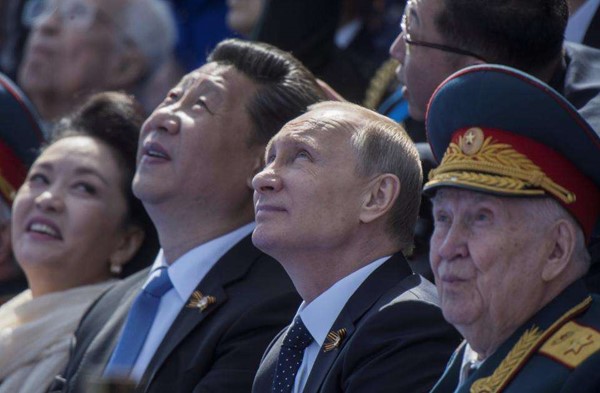
Russia’s President Vladimir Putin, second from right, and China President Xi Jinping watch the Victory Day parade at Red Square in Moscow, Russia, May 9, 2015. Reuters

We have only begun to reckon with the foreign policy legacy of Barack Obama, but he has clearly done more to shape the current global predicament than Trump has. When the Russian, Iranian and Turkish foreign ministers met in Moscow in the final weeks of the Obama administration to solve the Syrian crisis by themselves without inviting
the U.S., they were making a startling declaration: The nation that had once declared itself to be “indispensable” was now very clearly dispensable. It would have been unthinkable at any point since Pearl Harbor for American interests to be discounted so brazenly in solving the most pressing international crisis.

It is hard to separate the factors that brought us to this point. Is this simply an inevitable product of relative, or even absolute, American decline? Is it a product of a president who sought to “lead from behind” and whose fundamental foreign policy principle was that sins of commission are always worse than sins of omission? Or did Obama conclude he was dealing with a country, already exhausted by wars in Iraq and Afghanistan, that was no longer willing to shoulder the burden of defending the free world? Either way, Trump has inherited a country that is no longer willing and able to play the leadership role it once did in world affairs.

So where do we go from here? If we cannot oppose both Russia and China, then we need to compromise with at least one of them.

MAKE FRIENDS WITH RUSSIA?

Arguing for a Russian alignment is the notion that China already does more damage to American interests around the globe than Russia does. China damages U.S. economic interests through unfair trade practices, our standing in Asia by undermining our alliances, and our ability to promote democracy, particularly in Africa, by offering aid and investment without good governance conditions. As China grows more powerful and assertive, its efforts to drive the U.S. out of East Asia, coupled with increasing challenges to American interests around the globe, will amount to a full-spectrum challenge to the current U.S. position in the world.

In contrast, Russia’s challenges to American interests are relative pinpricks. Russia does not have the ability to turn either Eastern Europe or the Middle East into its own sphere of influence. It is even losing the competition for economic influence in Central Asia, its own post-Soviet backyard, to China.

Putin might not be an evil dictator bent on doing as much damage to the West as possible, but rather a spurned pragmatist with a realistic view of Russia’s position in the world who had initially hoped to cooperate with Western leaders, but has been embittered by poor treatment by them. Putin’s Russia, therefore, would represent not a mortal threat to the international world order, but rather a missed opportunity, one that can still perhaps be salvaged.

OR CHOOSE CHINA INSTEAD?

Alternatively, we could align with China against Russia.

This approach makes sense if you believe Putin began as a pragmatist, but that was only a temporary tack, given his KGB background and nationalist authoritarian inclinations. But now that he has seen how weak his opponents are and how much havoc he can wreak, he has set his sights higher. Fifteen years ago he might not have imagined he could break NATO or the EU, but now that seems within reach, and nothing will deter him from this chance to realize the fondest dreams of his Soviet predecessors. What could we possibly offer him to match such dreams? He would revel in the chaos that would follow.

Chaos, however, is precisely the opposite of what the leaders in Beijing desire. China’s resurgence is built on a world of peace and trade, a world ultimately sustained by American military strength. For China to seek to challenge such an order, it would have to imagine that it could not only fill the role the U.S. currently fills, but manage the transition in such a way as to avoid a chaotic interlude. Chinese leaders are far too clear-headed for such a gambit, and in any case they see no need to rush such a transition before conditions for it have matured.

President Xi Jinping is anyway preoccupied with ensuring the indefinite continuation of Communist Party rule. What could jeopardize that more than a world in chaos and economic disaster?

IS THE CHOICE EVEN OURS?

With Russia against China? With China against Russia?

There is no question such a choice is unpalatable. Not only would either alternative involve morally difficult concessions, but having to make the choice at all implies that the United States is no longer capable of defending the world order it has long sponsored. This is a difficult reality to accept.

And broaching the possibility of such a choice leads to more difficult questions.

Could Russia even be persuaded to align with the U.S. against China or China against Russia? What would we have to offer either side? What would this mean for our allies, especially in Europe and East Asia? The latter question might not be as insoluble as it may seem, because our allies have long since begun anticipating just such a scenario. But if we are no longer able and willing to perform the role we once did, we need to reckon with the consequences.

Jeremy Friedman is Assistant Professor, Business, Government, and the International Economy, Harvard Business School.


NO RUSSIA, NO CHINA – U.S. MUST CHOOSE TIBET EQUILIBRIUM. RUSSIAN EMPIRE 1914.                                                                                                                                                                                              
NO RUSSIA, NO CHINA – U.S. MUST CHOOSE TIBET EQUILIBRIUM. THE CHINESE  EMPIRE 1910.                                                                                                                                                                                      
NO RUSSIA, NO CHINA – U.S. MUST CHOOSE TIBET EQUILIBRIUM.                                      
NO RUSSIA, NO CHINA – U.S. MUST CHOOSE TIBET EQUILIBRIUM.

CHINA MINUS TIBET EQUALS TO POWER EQUILIBRIUM

CHINA MINUS TIBET EQUALS TO POWER EQUILIBRIUM

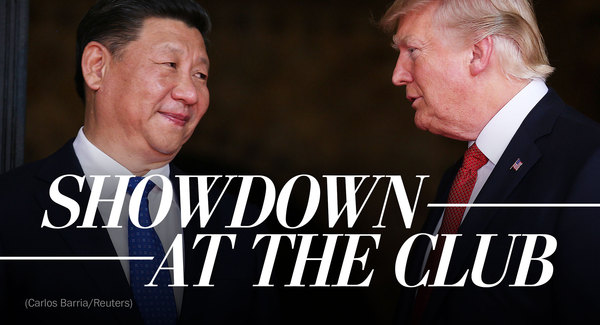
CHINA MINUS TIBET EQUALS TO POWER EQUILIBRIUM. PRESIDENT TRUMP WITH CHINESE PRESIDENT XI JINPING.

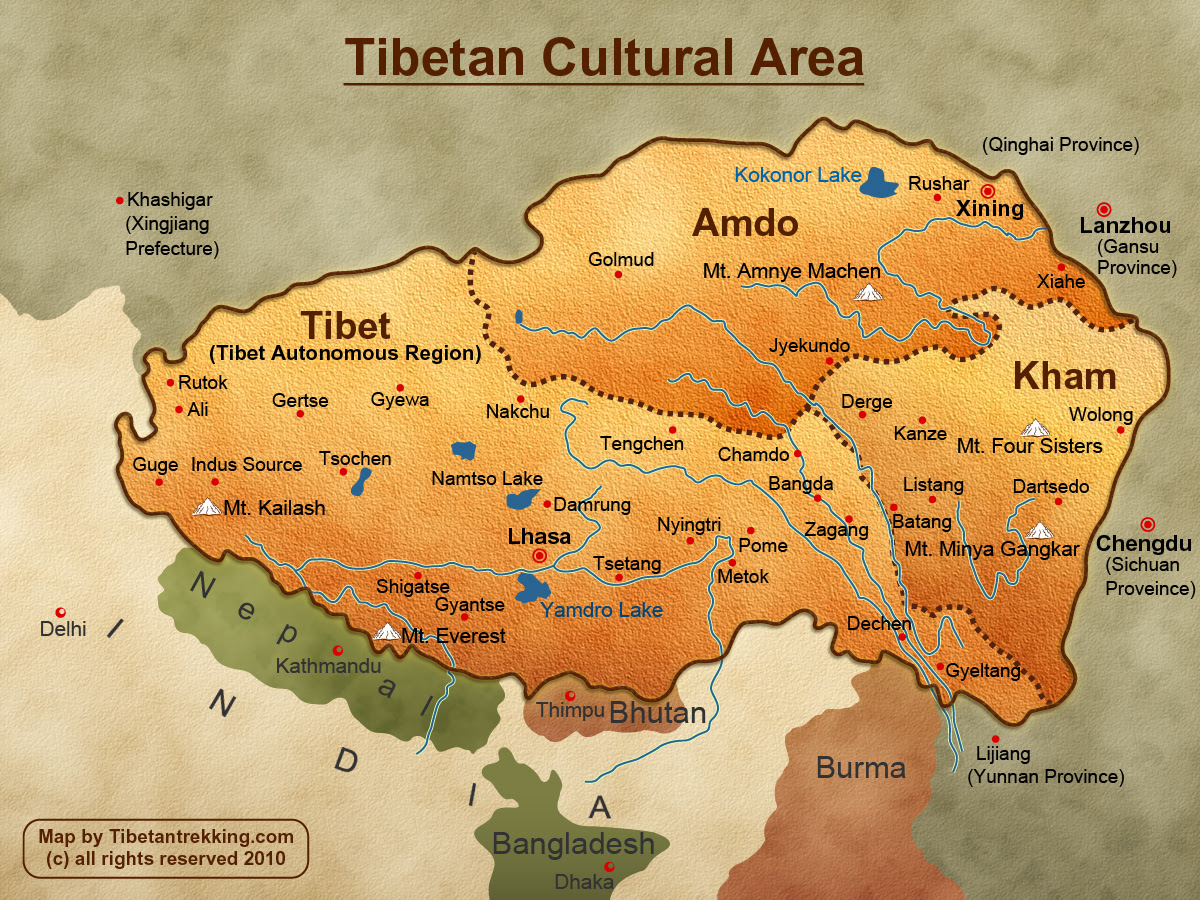
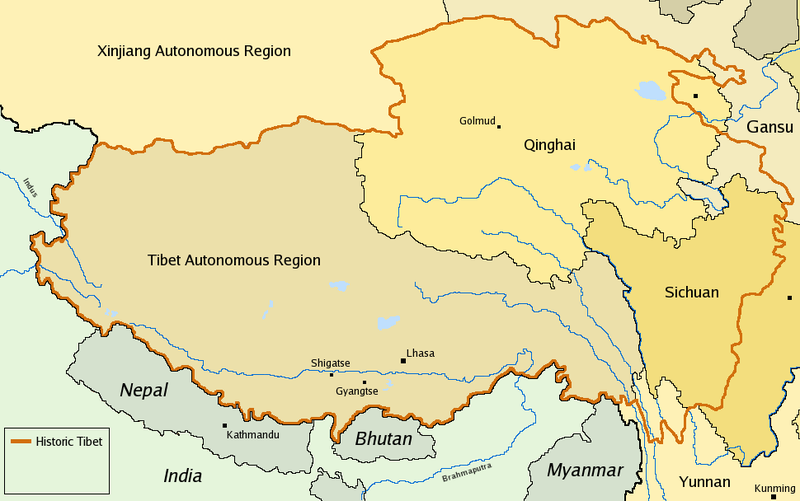
To deal with problems of Red China’s Economic, Political, Military, Maritime, and Nuclear Expansionism, I have to address the problem of Red China’s Territorial Expansionism. Red China gained 965, 000 square miles of Tibetan Territory through military occupation. In terms of size, Tibet is the second largest nation in Southern Asia, almost as large as Republic of India( over 1, 269, 221 square miles).

Evicting Tibet’s military occupier is the first step that will restore Balance of Power in Asia and I name this process as ‘TIBET EQUILIBRIUM’ for Tibetan Territory is the Key for Political, Economic, Military Imbalance that is undermining International Relations.

Rudranarasimham Rebbapragada
Ann Arbor, MI 48104-4162 USA
SPECIAL FRONTIER FORCE

CHINA MINUS TIBET EQUALS POWER EQUILIBRIUM. PRESIDENT TRUMP WITH CHINESE PRESIDENT XI JINPING.
CHINA MINUS TIBET EQUALS TO POWER EQUILIBRIUM. PRESIDENT TRUMP MEETS CHINESE PRESIDENT XI JINPING.
imp?s=135833&layout=marquee&li=todayworld&m=ee6bca8f378ecd0b471fc12c76ed04c4&p=58e71cdf71885051e1ce9582
imp?s=135834&sz=1x1&li=todayworld&m=ee6bca8f378ecd0b471fc12c76ed04c4&p=58e71cdf71885051e1ce9582 imp?s=135835&sz=1x1&li=todayworld&m=ee6bca8f378ecd0b471fc12c76ed04c4&p=58e71cdf71885051e1ce9582
imp?s=135836&sz=116x15&li=todayworld&m=ee6bca8f378ecd0b471fc12c76ed04c4&p=58e71cdf71885051e1ce9582 imp?s=135837&sz=69x15&li=todayworld&m=ee6bca8f378ecd0b471fc12c76ed04c4&p=58e71cdf71885051e1ce9582
wp-logo.png
Today's WorldView
BY ISHAAN THAROOR
BY ISHAAN THAROOR
8133dccd79bc42cfc9adc7f82c37147f-0-40-06facebook512.png 0dfb24e0a85978ee29df605d548a1664-0-40-twitter512.png
China Minus Tibet Equals to Power Equilibrium.

Chinese President Xi Jinping arrived in Palm Beach, Fla., on Thursday for an unorthodox meeting at President Trump’s Mar-a-Lago estate. The presidents and their wives are scheduled to spend about 24 hours together, including a Thursday night dinner and a working lunch the following day.
The first meaningful discussions between arguably the two most powerful people on the planet are, of course, hugely significant. Trump spent a large chunk of his election campaign attacking China’s supposedly unfair trade and fiscal practices, which he promised would be challenged by a more protectionist and nationalist Trump presidency. Xi, meanwhile, is meeting the erratic U.S. president at a time when his own political future at home is not as secure as some might think.

f4c1f20129dc6868f24a5c4c034ae3df-540-0-847573220417044480width540embedTypetwitter.jpg
China Minus Tibet Equals to Power Equilibrium.

Trump has already signaled this may be a tough encounter. But, as my colleague Simon Denyer wrote last week, it’s quite likely Xi has come bearing gifts — “a package of pledges designed to give the U.S. president some ‘tweetable’ promises to present as victories.” Whether this translates into long-term wins for either leader is less clear. Either way, here are the main storylines to watch:
The question of trade
“We can’t continue to allow China to rape our country,” declared Trump on the campaign trail last year. He was talking about the United States’ considerable trade deficit with China and Beijing’s history of currency manipulation. Part of Trump’s pledge to revive blue-collar American jobs explicitly involved punishing China on the world stage.
This was a major departure from previous U.S. administrations, both Republican and Democratic, which embraced the dogma of open markets and sought to make China a reliable partner within — not an opponent to — an American-led international order. Earlier this year, as the world readied for Trump’s inauguration, Xi cast himself as a custodian of that order, defending globalization, open borders and free trade — all things Trump campaigned against — at the World Economic Forum. Xi’s rhetoric received mixed reviews, but it underscored the strange new paradigm shaping global relations.
Ahead of Xi’s visit this week, China’s state media attempted to make the case for normal bilateral ties. “U.S. job losses are not China’s fault,” read a Xinhua commentary on Wednesday. The next day, another piece argued that China’s trade surplus “does not necessarily mean China benefits while the United States loses.” Xinhua went on: “About 40 percent of the trade surplus is actually generated by U.S. companies in China.”
Ironically, as economic experts note, Trump’s protectionist agenda is more in line with China’s own practices, including its boosting of mammoth Chinese state-run companies.
“Mr. Trump seems to want to move the U.S. toward China’s approach, rather than move China toward the U.S. approach of open trade and globalization,” said Eswar Prasad, a professor of trade at Cornell University, to my colleague Ana Swanson. “He seems to want the U.S. to be more like China than China to be more like the U.S. And I’m not sure that’s the best path for the U.S. to go down.”


A magazine featuring President Trump on display with Chinese military magazines at a newsstand in Beijing on April 4. (Mark Schiefelbein/Associated Press)
The question of security
There will be a Kim Jong Un-shaped elephant in the room in Mar-a-Lago. Amid a flurry of North Korean missile tests, the Trump administration is keen on getting China — Pyongyang’s only real friend — to bring the pariah state to heel. Trump and other senior administration officials have signaled their impatience with North Korea and threatened unilateral action in the past week.
“The clock is very, very quickly running out,” a senior White House official told reporters. “All options are on the table for us.”
This may all be bluster intended to pressure Beijing, which has cast itself as the honest broker between the North Koreans and the United States — much to American chagrin. Washington’s longstanding frustration with what it perceives as China’s unwillingness (or inability) to rein in North Korea will also run up against other geopolitical disagreements, including differences over China’s expansionist role in the South China Sea and the status of Taiwan.
On all these fronts, it’s likely the Xi-Trump meeting will yield polite sound bites — and few real changes to the tense status quo.
The question of strategy
In the short term, Trump may emerge from Mar-a-Lago having burnished his credentials as a budding statesman — a pleasant photo-op here, a nice headline there. Xi, who will return home as the Communist Party is preparing for a cabinet reshuffle, has to walk a difficult line and “lose face” in the eyes of the global media and the Chinese public.
But in the long term, Western observers see an alarming drift in the course of U.S.-China relations.

China Minus Tibet Equals to Power Equilibrium.

“The problem lies in Mr. Trump’s transactional view of the world. He prefers deals to something as necessarily ill-defined as global leadership,” wrote Financial Times columnist Philip Stephens. “Hence the decision to repudiate the Trans-Pacific Partnership, a trade agreement that would have checked Beijing’s advancing economic influence in the western Pacific and handed Washington important strategic leverage.”
“As recently as four years ago, Xi and other Chinese leaders fretted, publicly and explicitly, that their people were being seduced by the moral glamour of American democracy — by the open hearted confidence of the ‘shining city on a hill’ and by the ability of a nation founded on slavery to elect its first African-American President,” wrote the New Yorker’s Evan Osnos. “Xi worried that the American example of competence, generosity, and contempt for authoritarianism would, someday, drive his own people to challenge the rule of the Communist Party. Xi has less reason to worry about that today.”

UNITED STATES – CHINA RELATIONS DEMAND TIBET EQUILIBRIUM

UNITED STATES – CHINA RELATIONS DEMAND TIBET EQUILIBRIUM

US – CHINA RELATIONS DEMAND TIBET EQUILIBRIUM. PRESIDENT TRUMP MUST ACCEPT THE ROLE OF BALANCER.

In 1971, United States during Doomed Presidency of Nixon-Kissinger initiated a Policy that disregards the Doctrine of Balance of Power which formulates a system of international relations in which nations shift alliances to maintain an Equilibrium of Power and prevent dominance by any single state. For Balance of Power is the goal of Foreign Policy, nation can enter alliances to maintain stable power relations. Balance of Power describes the posture and policy of a nation or group of nations protecting itself against another nation or group of nations by matching its power against the power of the other side. States can pursue a policy of Balance of Power in two ways; 1. By increasing their own power, as when engaging in an armaments race or in the competitive acquisition of territory; or, 2. By adding to their power that of other states, as when embarking upon a policy of alliances. The role of “BALANCER” or “Holder of the Balance” is guided by one and only one consideration – the maintenance of “BALANCE” itself.
US – CHINA RELATIONS DEMAND TIBET EQUILIBRIUM. CHINA’S MILITARY BUDGET IS EXPANDING TAKING FULL ADVANTAGE OF US – CHINA TRADE DEFICIT.

In my analysis, with emergence of Red China as a major economic and military power of the world, Balance of Power is by necessary has become the focus of United States foreign relations. The geographical location and size of Tibet’s territory give it a predominant role in formulating US relations with all other nations of that region in Asia. For example, the size of China’s immediate neighbors is as follows:

1.Tibet – 965,000 square miles

2. Japan – 142, 811 square miles

3. North Korea – 46, 540 square miles

4. South Korea – 38, 321 square miles

5. Philippines – 115, 830 square miles

6. Taiwan – 13, 885 square miles

7. Malaysia – 128, 430 square miles

8. Indonesia – 741, 096 square miles

9. Brunei – 2, 228 square miles

United States has no choice other than that of upholding the principle of Balance of Power to defend vital, national security interests. US must perform the role of “BALANCER” or Holder of the Balance by restoring Tibet Equilibrium. Tibetan territory cannot remain under Red China’s military occupation.

Rudranarasimham Rebbapragada

DOOM DOOMA DOOMSAYER

TIBET SUPPORTERS CONVERGE ON CAPITOL HILL TO LOBBY CONGRESS

March 31, 2017 7:22 PM

  • VOA News

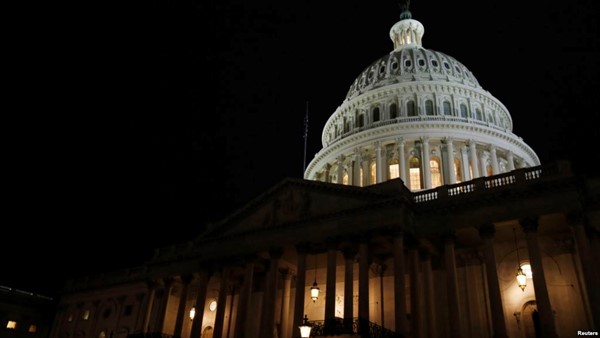
    FILE – The U.S. Capitol building is seen on Capitol Hill in Washington, Jan. 28, 2014.

    More than 130 people from 23 states converged on Capitol Hill to lobby for Tibet the week before Chinese President Xi Jinping is scheduled to meet with President Donald Trump at his Mar-a-Lago retreat in Florida on April 6.

    Although the leaders’ meeting is expected to focus on trade and the need for China to do more to rein in the nuclear and missile programs of its neighbor and ally North Korea, Tibet remains a contentious issue between the two nations.

    “Congress has shown a strong interest in Tibet since the 1980s, passing dozens of laws and resolutions related to Tibet, speaking out about conditions in Tibet, and welcoming visits by the Dalai Lama,” according to a 2014 report by the Congressional Research Service. “Such actions have long been a source of friction in the U.S.-China relationship. China charges that they amount to support for challenges to Chinese rule in Tibet.”

    US – CHINA RELATIONS DEMAND TIBET EQUILIBRIUM.

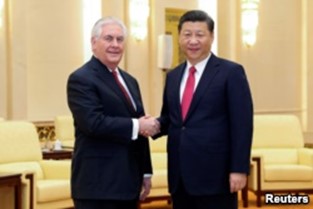
    FILE – Chinese President Xi Jinping shakes hands with U.S. Secretary of State Rex Tillerson before their meeting at the Great Hall of the People in Beijing, China, March 19, 2017.

    Bhuchung Tsering of the International Campaign for Tibet in Washington, which organized Tibet Lobby Day, said, “Looking at the meeting of President Xi of China and President Trump, we want to send a message to President Trump, through Congress and to Trump directly, that there is traditional bipartisan support for dialog with China on Tibet,” he said, adding “Secretary [of State Rex] Tillerson says he is committed to promoting dialogue on Tibet and receiving the Dalai Lama.”

    Tibet Lobby Day was held simultaneously in Washington, Brussels and Canberra, Australia, March 27-29.

    “U.S. policy has not changed,” Anna Richey-Allen, a spokeswoman for the State Department’s East Asia and Pacific Bureau, said Friday, adding that the U.S. recognizes the Tibetan Autonomous Region (TAR) and Tibetan autonomous prefectures to be a part of the People’s Republic of China.

    “We remain deeply concerned about human rights abuses and restrictions, including those imposed on religious freedom, in the TAR and elsewhere in China,” she said. “We remain committed to supporting meaningful autonomy for Tibetans and the preservation of their unique religious, cultural and linguistic traditions.

    “The United States encourages the People’s Republic of China to engage with the Dalai Lama and his representative without preconditions.”

    Ngawang Norbu of Boston, Massachusetts, was one of the Tibetan-Americans and Tibet supporters who spoke with more than 250 members of Congress and their staffs during Tibet Lobby Day.

    US – China Relations Demand Tibet Equilibrium. Tibet Lobby Day in Washington, March 2017.

    Ngawang Norbu, a Tibetan-American and Tibet supporter shown in this photo taken from video, attended Tibet Lobby Day on Capitol Hill in Washington, March 2017.

    The activists asked them to continue funding Tibet programs and to promote efforts to gain access to Tibetan areas for U.S. officials, citizens and journalists. They also want the Trump administration to implement the Tibetan Policy Act of 2002 (TPA), which has the stated purpose of supporting “the aspirations of the Tibetan people to safeguard their distinct identity.”

    “The important thing today is that there’s a new administration in America and, along with that, the exile Tibetan administration in India has declared 2017 to be a year of action for Tibet, and so that’s why I’m here,” Norbu told VOA on Wednesday. “It’s our responsibility and obligation to lobby for Tibet, and whether our requests are responded to or not is, of course, up to the leadership here, but in our mind we think our objectives and efforts will bear fruit.”

    Bhuchung expects to see the reintroduction of the proposed Reciprocal Access to Tibet Act by Representative Jim McGovern, a Democrat from Massachusetts; Representative Randy Hultgren, a Republican from Illinois; Senator Marco Rubio, a Florida Republican; and Senator Tammy Baldwin, a Wisconsin Democrat.

    US – China Relations Demand Tibet Equilibrium.Tibet Lobby Day in Washington, March 2017.

    Marah Litchford of North Carolina, shown in this photo taken from video, participated in Tibet Lobby Day in Washington, March 2017.

    North Carolinian Marah Litchford, who has expressed concern about religious freedom in Tibet, participated in the Washington movement. “They listen,” she said. “You just have to talk loudly.”

    Nike Ching and Steven Herman contributed to this report, which originated with reporting by Dondhon Namling of the VOA Tibetan service.

    US – CHINA RELATIONS DEMAND TIBET EQUILIBRIUM.


REALITY OF DALAI LAMA REINCARNATION vs RED CHINA’S MISCHIEF IN TIBET

REALITY OF DALAI LAMA REINCARNATION vs RED CHINA’S MISCHIEF IN TIBET

Reality of Dalai Lama Reincarnation becomes Self-Evident after fully accounting for Red China’s Mischief in Tibet.

Rudranarasimham Rebbapragada

DOOM DOOMA DOOMSAYER

DALAI LAMA GETS MISCHIEVOUS – THE NEW YORK TIMES

Clipped from: https://www.nytimes.com/2015/07/16/opinion/nicholas-kristof-dalai-lama-gets-mischievous.html?_r=0

REALITY OF DALAI LAMA REINCARNATION vs RED CHINA’S MISCHIEF IN TIBET.

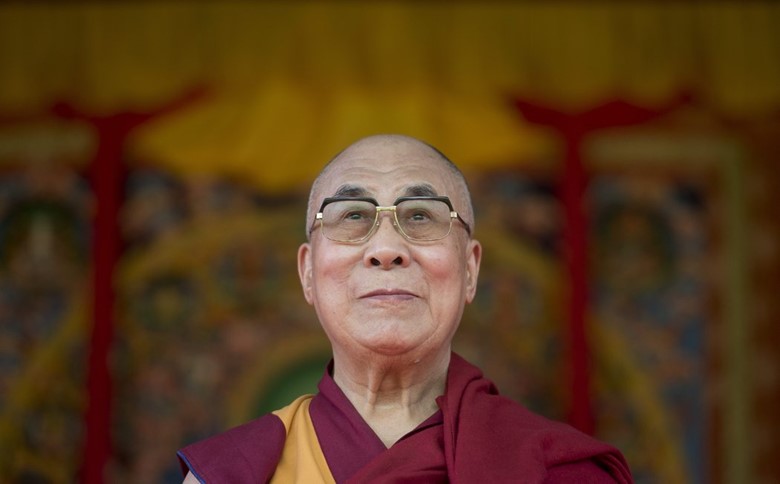
The Dalai Lama a week before his 80th birthday. Credit Will Oliver/European Pressphoto Agency

The Dalai Lama, who may be the only octogenarian spiritual leader with a profoundly mischievous streak, has a suggestion for China’s Communist leaders: Take up reincarnation.

I’m interviewing him in his hotel room in Manhattan, at the end of an overseas tour marking his 80th birthday, and we’re talking about what happens after he dies. He is the 14th Dalai Lama, each considered a reincarnation of the previous one, and usually after one has died a search is undertaken for an infant to become the next. But he has said that he may be the last of the line, or that the next Dalai Lama might emerge outside Tibet — or might even be a girl.

This talk infuriates Beijing, which is determined to choose the next Dalai Lama (to use as a tool to control Tibet). So, startlingly, the atheists in the Chinese Communist Party have been insisting that Buddhist reincarnation must continue.

“The Chinese Communist Party is pretending that they know more about the reincarnation system than the Dalai Lama,” said the Dalai Lama, laughing. “The Chinese Communists should accept the concept of rebirth. Then they should recognize the reincarnation of Chairman Mao Zedong, then Deng Xiaoping. Then they have the right to involve themselves in the Dalai Lama’s reincarnation.”

The Dalai Lama hinted that he would hold some kind of referendum among Tibetan exiles, and consultations among Tibetans within China, about whether a new Dalai Lama should succeed him. The issue will be formally resolved around his 90th birthday, he said.

One reason to end the line, he suggested, is that a future Dalai Lama might be “naughty” and diminish the position. His biggest concern seems to be that after he dies, China will select a new pet Dalai Lama who may act as a quisling to help the Chinese control Tibet and to give legitimacy to their policies there.

“Sadly, the precedent has been set,” he said, referring to the Panchen Lama, the second most important reincarnated lama in Tibetan Buddhism. After the 10th Panchen Lama died in 1989, China kidnapped the baby chosen by Tibetans as his successor and helped anoint a different child as the 11th Panchen Lama. Nobody knows what happened to the real Panchen Lama.

I admire the Dalai Lama enormously, and in 2007 he bravely used my column to send an important olive branch to Beijing — only to be criticized by fellow Tibetans as too conciliatory, and rejected as insincere by China. But I told him that I also thought there were times when he had been too cautious and had missed opportunities for rapprochement with Beijing. My examples: In the 1980s, when the leaders Hu Yaobang and Zhao Ziyang sought compromise on Tibet; after the 10th Panchen Lama died; and in the run-up to the Beijing Olympics.

The Dalai Lama was having none of that — he doesn’t think he missed opportunities. But he acknowledged that Zhao had been sympathetic and added that if Zhao and Hu had not been ousted, “the Tibetan issue would already be solved, no question.”

To my surprise, the Dalai Lama was also enthusiastic about Xi Jinping, the current Chinese leader. He spoke admiringly of Xi’s anticorruption campaign, said Xi’s mother was “very religious, a very devout Buddhist,” and noted Xi himself had spoken positively of Buddhism.

So, President Xi, if you’re reading this, the Dalai Lama would like to visit China. How about an invitation?

I had asked my followers on Twitter and Facebook to suggest questions for the Dalai Lama, and here are his responses to some of the issues they raised:

On the Myanmar Buddhists who have murdered, raped and oppressed Muslims: As he has before, the Dalai Lama strongly condemned the violence. He added: “If Buddha would come at that moment, he definitely would save or protect those Muslims.”

• On eating meat: The Dalai Lama said he had been a pure vegetarian for 20 months but then developed jaundice, so his doctors told him to start eating meat again. He now eats meat twice a week and is vegetarian the rest of the week, he said, but added that he thinks vegetarianism is preferable.

• On Pope Francis: “I admire his stance,” the Dalai Lama said. “He dismissed one German bishop [for too luxurious living]. I was so impressed. I wrote a letter to him. I expressed my admiration.”

• On gender: The Dalai Lama says he considers himself a feminist and would like to see more women leaders because he thinks women are often innately more sensitive and peaceful. “I insist that women should carry a more active role,” he said. “If eventually most of the leaders of different nations are female, maybe we’ll be safer.”

REALITY OF DALAI LAMA REINCARNATION vs RED CHINA'S MISCHIEF IN TIBET.
REALITY OF DALAI LAMA REINCARNATION vs RED CHINA’S MISCHIEF IN TIBET.

NO DALAI LAMA REINCARNATION WITHOUT FREEDOM IN OCCUPIED TIBET

NO DALAI LAMA REINCARNATION WITHOUT FREEDOM IN OCCUPIED TIBET

NO REINCARNATION OF DALAI LAMA WITHOUT FREEDOM IN OCCUPIED TIBET.

As Tibet remains under Red China’s military occupation without Freedom, Dalai Lama “REINCARNATION” remains Impossible. To restore normalcy in Tibetan National Life, Military Occupier must be evicted from Tibetan Territory. The Disease called ‘Occupation’ is the Cause and no Reincarnation is its Effect.

Rudranarasimham Rebbapragada

DOOM DOOMA DOOMSAYER

NO REINCARNATION OF DALAI LAMA WITHOUT FREEDOM IN OCCUPIED TIBET. OCCUPATION IS CAUSE. NO REINCARNATION IS ITS EFFECT.

WHY THE DALAI LAMA SAYS REINCARNATION MIGHT NOT BE FOR HIM – LA TIMES

Clipped from: http://www.latimes.com/world/asia/la-fg-dalai-lama-reincarnation-20141219-story.html

Adherents of Tibetan Buddhism believe the Dalai Lama, the religion’s highest spiritual authority, has been reincarnated in an unbroken line for centuries. But the current Dalai Lama says he may be the last.

In an interview with the BBC this week, the 79-year-old Nobel Peace Prize recipient said that he may not reincarnate after he dies.

“There is no guarantee that some stupid Dalai Lama won’t come next, who will disgrace himself or herself,” he said. “That would be very sad. So, much better that a centuries-old tradition should cease at the time of a quite popular Dalai Lama.”  

But what does reincarnation mean, and why would the Dalai Lama not want to have a successor?

How do Tibetan Buddhists believe reincarnation works?

Tibetan Buddhism teaches that after death, nearly all of us are flung back into the world of the living under the influence of harmful impulses and desires. But through compassion and prayer, a few can choose the time, place and the parents to whom they return. This affirms Buddhist teachings that one’s spirit can return to benefit humanity; it also serves to maintain a strong theological and political structure based around monasticism and celibacy.

The process through which reincarnated Buddhist masters, known as “tulkus,” are discovered is not uniform among the four main schools of Tibetan Buddhism. But generally, through dreams, signals, and other clues, senior monks identify candidates from a pool of boys born around the time the previous incarnation died. The current Dalai Lama is the 14th in the line of the Gelug school. The son of a farmer, he was recognized in 1950 after he correctly picked out objects owned by his predecessor, such as a bowl and prayer beads, jumbled among unfamiliar items.

So why would the Dalai Lama refuse to reincarnate?

Almost certainly to prevent the Chinese government from inserting itself into the process for political ends. Tibet was incorporated into China more than 60 years ago; the Dalai Lama went into exile in India in 1959 amid a revolt. China’s government has denounced him as a separatist, but the Dalai Lama currently says he only seeks a high degree of autonomy for Tibet.

In the mid-1990s, the Dalai Lama identified a 6-year-old boy as the Panchen Lama, a position second only to the Dalai Lama himself. But Chinese authorities took custody of the child, and his whereabouts remain unclear. Meanwhile, Chinese authorities identified another youth as the Panchen Lama, but he never won the trust of Tibetans.

In 2011, the Dalai Lama wrote: “Should the concerned public express a strong wish for the Dalai Lamas to continue, there is an obvious risk of vested political interests misusing the reincarnation system to fulfill their own political agenda.” He said then that he would reevaluate whether the custom should go on when he was in his 90s.

Why the statement now?

In fact, the Dalai Lama has claimed that as early as 1969 he made clear that the Tibetan people should decide whether reincarnations should continue. He has previously stated that he would not reincarnate in Tibet if it were not free, and he has mused that the Tibetan people should select their religious leaders democratically. To that effect, he has already divested the political power of his role to an elected official, based in India.

In September, the Dalai Lama stepped up his rhetoric on this point, raising the suggestion that he might be the last of his line. “If a weak Dalai Lama comes along, it will just disgrace the Dalai Lama,” he told the German newspaper Welt am Sonntag.

What do Chinese authorities say?

After the Dalai Lama’s statement in September, the Chinese government issued a firm rebuttal. Foreign Ministry spokeswoman Hua Chunying told reporters, “The title of Dalai Lama is conferred by the central government.” China, which is officially atheist, will follow “set religious procedure and historic custom” to select a successor, she said.

Other officials have followed suit. “Only the central government can decide on keeping, or getting rid of, the Dalai Lama’s lineage, and the 14th Dalai Lama does not have the final say,” Zhu eiqun, chairman of the ethnic and religious affairs committee of a high-ranking advisory body to China’s parliament, told the state-run Global Times newspaper this week. “All [the Dalai Lama] can do is use his religious title to write about the continuation or not of the Dalai Lama to get eyeballs overseas.”

What happens next?

It’s unclear what will happen when the Dalai Lama dies, but the decision is a sensitive one that will put pressure on the Chinese government.

If the Chinese government does select a successor, its choice could be rejected by Tibetans, and that could exacerbate strained relations.

But the Dalai Lama has made nonviolence a key tenet of his teachings, and losing him – and any reincarnation – could also be risky.

Wu Chuke, a professor of social science at Beijing’s Ethnic Studies University, said that if the position is left empty, “many of the Tibetan Buddhists in China will feel like that the not being able to be reincarnated will be due to restrictions from the government and will further damage the relationship between them. This will put new pressure on the Chinese government in how they will deal with this problem.”

Silbert is a special correspondent.


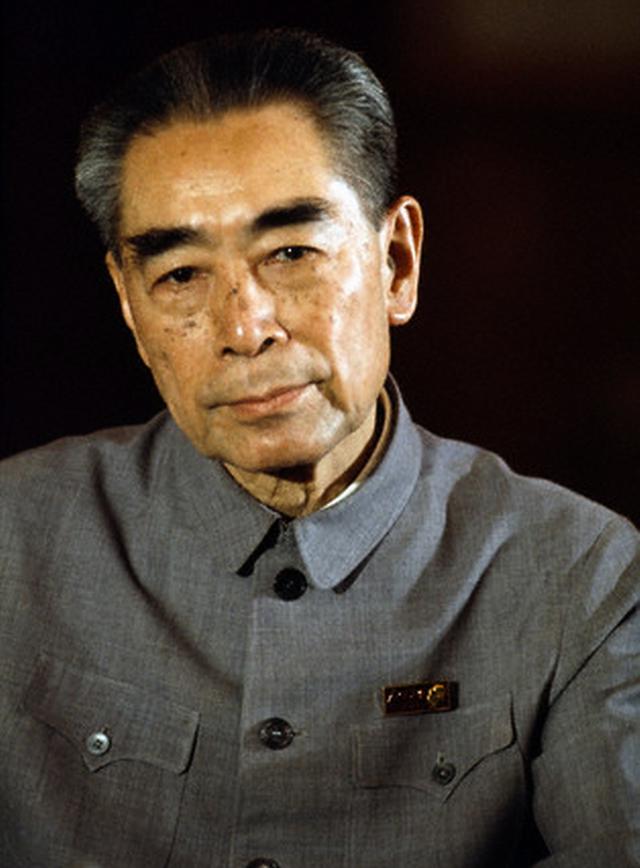
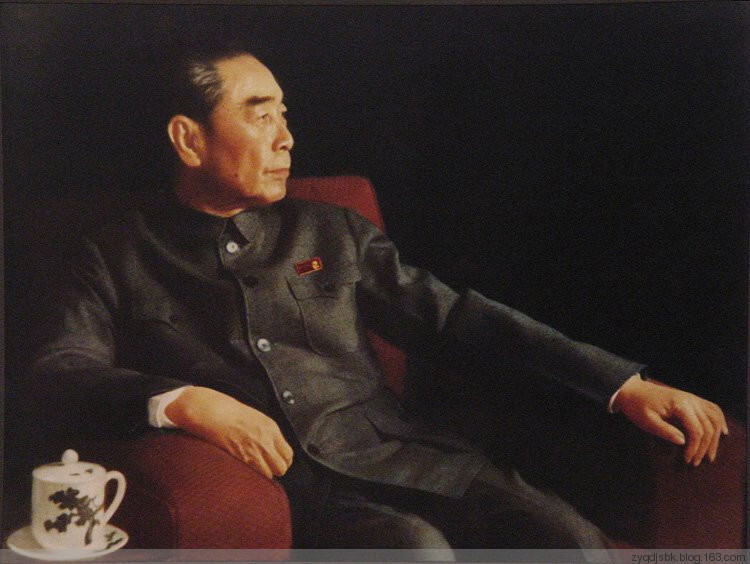
REMEMBERING PRIME MINISTER ZHOU ENLAI – DIED ON JANUARY 08, 1976

REMEMBERING PRIME MINISTER ZHOU ENLAI – DIED ON JANUARY 08, 1976

REMEMBERING PRIME MINISTER ZHOU ENLAI ON HIS 41st DEATH ANNIVERSARY.
REMEMBERING CHINESE PRIME MINISTER ZHOU ENLAI ON JANUARY 08, 2017, HIS 41st DEATH ANNIVERSARY. I KEEP HIM ALIVE IN MY THOUGHTS.

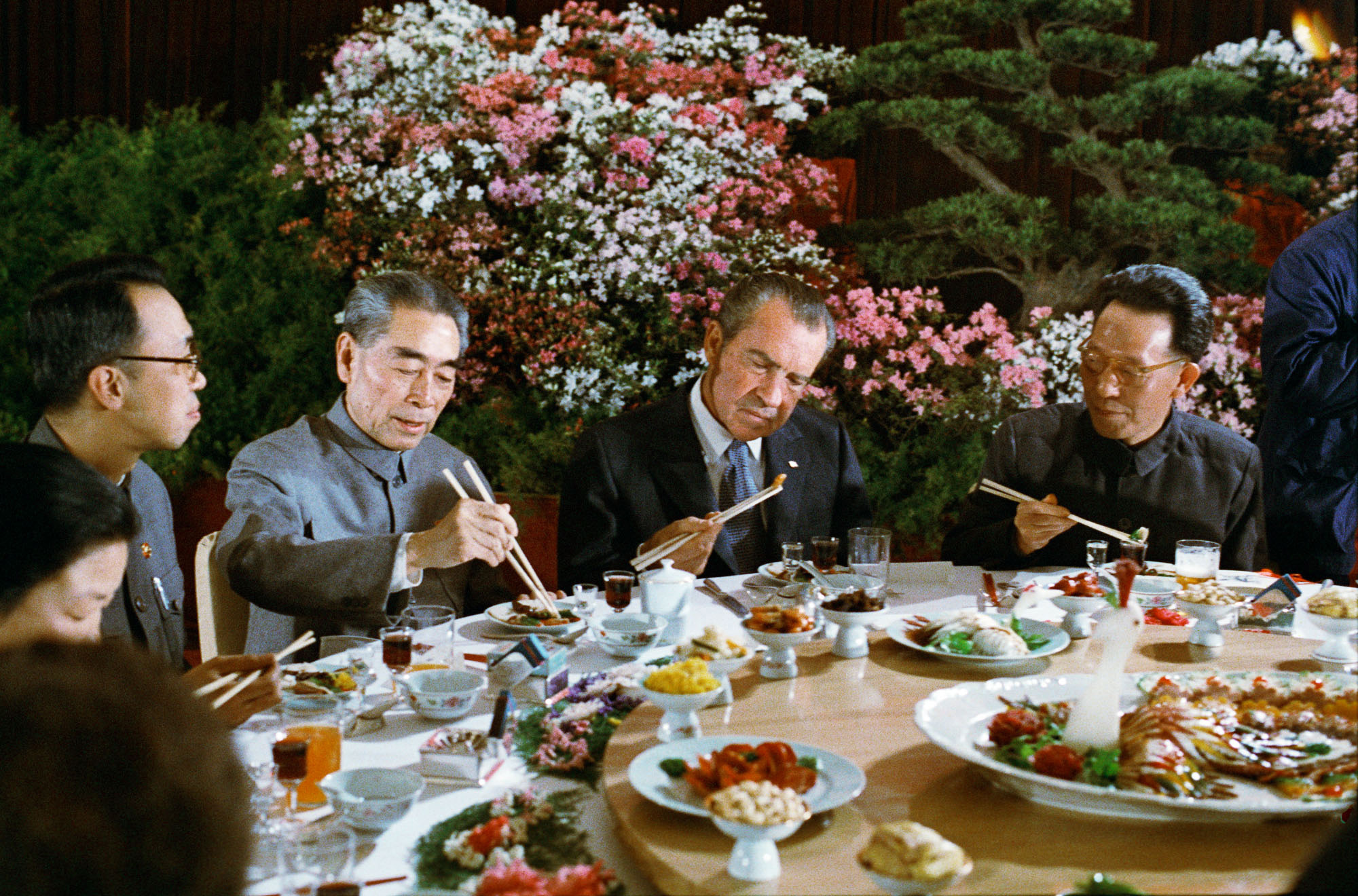
Chinese Prime Minister Zhou Enlai died on January 08, 1976. On January 08, 2017, Zhou’s 41st Death Anniversary, I disclose that I keep Zhou Enlai alive in my thoughts for Tibet is still under Military Occupation. I will bury my thoughts of Prime Minister Zhou Enlai when the Military Occupier of Tibet gets evicted from Tibet.

Rudranarasimham Rebbapragada

Ann Arbor, Michigan, USA 48104 – 4162.

DOOM DOOMA DOOMSAYER


REMEMBERING CHINESE PRIME MINISTER ZHOU ENLAI ON JANUARY 08, 2017, HIS 41st DEATH ANNIVERSARY.
REMEMBERING CHINESE PRIME MINISTER ZHOU ENLAI ON JANUARY 08, 2017, HIS 41st DEATH ANNIVERSARY. I KEEP HIM ALIVE IN MY THOUGHTS.
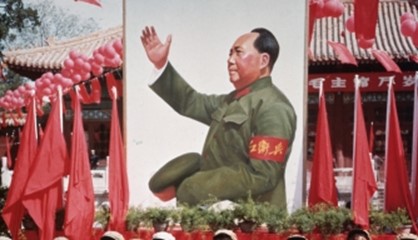
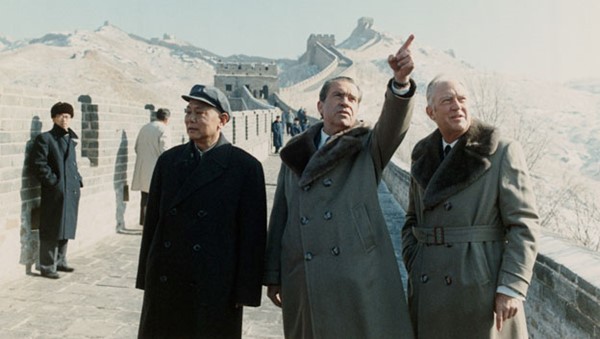
REMEMBERING CHINESE PRIME MINISTER ZHOU ENLAI ON JANUARY 08, 2017, HIS 41st DEATH ANNIVERSARY. I KEEP ZHOU ENLAI, MAO ZEDONG, RICHARD NIXON ALIVE IN MY THOUGHTS FOR TIBET REMAINS UNDER MILITARY OCCUPATION.

Cold War

1976

Chinese leader Zhou Enlai dies

  • Author
    History.com Staff

  • Website Name
    History.com

  • Year Published
    2009

  • URL
    http://www.history.com/this-day-in-history/chinese-leader-zhou-enlai-dies

  • Publisher
    A+E Networks

  • Zhou Enlai, premier of the People’s Republic of China (PRC) since 1949, dies of cancer at age 77. Zhou was second to Mao Zedong, the leader of the revolution that brought a communist regime to China, in terms of importance in the PRC. Beyond his significance as a leader of communist China, Zhou was instrumental in the negotiations that resulted in the U.S. recognition of the PRC in 1979.

    Zhou was born in 1898, and he was heavily involved in the Chinese Communist Party (CCP) by the 1920s. He rose quickly through the party ranks and became one of Mao Zedong’s most trusted advisors, particularly valued for his skill at negotiations and diplomacy. These skills were crucial during the 1930s, when the CCP found it necessary to collaborate with its enemy, the Chinese Nationalists, to oppose Japanese aggression. In 1949, the CCP was victorious in its civil war against the Nationalists and Zhou was appointed premier and foreign minister of the new government.

    During the 1950s, he represented China at various diplomatic gatherings, including the 1954 Geneva Conference and the 1955 Asian-African Conference in Bandung. He was also a stabilizing force inside China during the tumultuous years of the Cultural Revolution and its resultant political tensions.

    In the early 1970s, Zhou embarked on a program to rebuild relations with the United States, which had refused to recognize the Chinese communist government. In 1972, he and President Richard Nixon shocked the world by meeting and agreeing to work for closer political and economic relations between the two nations. These talks eventually did bear fruit in 1979, when the United States formally recognized the PRC.

Remembering Chinese Prime Minister Zhou Enlai on his 41st Death Anniversary. I keep Zhou alive in my thoughts. Major Milestones in U.S.-China Relations 
Remembering Chinese Prime Minister on his 41st Death Anniversary. I keep Zhou Enlai, Mao Zedong, and Richard Nixon alive in my thoughts. Cultural Revolution 
Remembering Chinese Prime Minister Zhou Enlai on his 41st Death Anniversary. I keep Zhou Enlai, Mao Zedong, and Richard Nixon alive in my thoughts. Nixon Returns From China 

© 2017, A&E Television Networks, LLC. All Rights Reserved.

PEACEMAKING IN OCCUPIED TIBET – DALAI LAMA – PEACEMAKER vs SPIRITUAL HEALER

PEACEMAKING IN OCCUPIED TIBET – DALAI LAMA – PEACEMAKER vs SPIRITUAL HEALER

PEACEMAKING IN OCCUPIED TIBET - DALAI LAMA - PEACEMAKER vs SPIRITUAL HEALER. THE PROBLEM OF JOY AND EVERLASTING HAPPINESS IN TIBET.
PEACEMAKING IN OCCUPIED TIBET – DALAI LAMA – PEACEMAKER vs SPIRITUAL HEALER. THE PROBLEM OF JOY AND EVERLASTING HAPPINESS IN TIBET.

Dalai Lama, exiled Ruler of Tibet is often described as Spiritual Leader of Tibet who may provide Spiritual Healing to problems experienced by people all over the world. Dalai Lama recommends Peaceful Resolution of all Conflicts. In Tibet, China’s Military Occupation violates Natural Order and Natural Equilibrium that operates Tibetan National Life. This Violation of Tibetan National Life stimulates ‘Resistance’ as Natural Reaction to Oppression. Peacemaking in Occupied Tibet demands Eviction of Military Occupier which may or may not demand application of Physical Force depending upon Red China’s willingness to seek Peaceful Resolution of Conflict arising from her own actions.

Rudranarasimham Rebbapragada

DOOM DOOMA DOOMSAYER