Whole Foods opened its Store in Ann Arbor on September 16, 1993. Whole Foods, Whole People and Whole Planet inspire Whole Dude to invent Whole Phrases: Whole Linguistics-Whole Language, Whole conversation, Whole Cookie, Whole Huddle, Whole Grind, Whole Love and others. Whole Dude uses the phrase Whole Linguistics to describe three entities; 1. Language User, 2. Language Interpreter and 3. Language Creator. Image Credit: Agenda Publications, Ann Arbor District Library, Issue Dates, September 1993, December 1997 and February 1998
Yes indeed, Life is Complicated. The complexities of Life begin with our own selves. The universe is vast and man’s role in it is insignificant. Man’s great need is not only to know the world around him but also know himself better. Man has to know the Truth about himself.
Whole Foods opened its Store in Ann Arbor on September 16, 1993. Whole Foods, Whole People and Whole Planet inspire Whole Dude to invent Whole Phrases: Whole Linguistics-Whole Language, Whole conversation, Whole Cookie, Whole Huddle, Whole Grind, Whole Love and others. Whole Dude uses the phrase Whole Linguistics to describe three entities; 1. Language User, 2. Language Interpreter and 3. Language Creator. Consciousness is the tool Whole Dude uses to explore his Whole Self.
The tradition of knowing oneself is a longer tradition than any other Science. This is a study in which the Knower and the Known are one. The object of scientific inquiry is the nature of the scientist. Consciousness is the tool Whole Dude uses to explore his Whole Self.
The tradition of knowing oneself is a longer tradition than any other Science. This is a study in which the Knower and the Known are one. The object of scientific inquiry is the nature of the scientist. Consciousness is the tool Whole Dude uses to explore his Whole Self. Dr. Oliver Wendell Holmes, Professor of Anatomy and Physiology, Dean of the Harvard Medical School 1847-1882. “To live is to function and that is all there is in living.” Life is defined by the nature of its living functions. Consciousness is the absolute characteristic of all living functions and so I define Life as “Knowledge in Action.”
Dr. Oliver Wendell Holmes, Professor of Anatomy and Physiology, Dean of the Harvard Medical School 1847-1882 states, “To live is to function and that is all there is in living.” Life is defined by the nature of its living functions. What is that exists and knows that it exists?Consciousness is the absolute characteristic of all living functions and so I define Life as “Knowledge in Action.”
What is Consciousness?
What is Consciousness? Why is this baby crying? Is it hunger? Is it thirst? Is it a wet diaper? Is it earache? Is it fever? Is it too hot? Is it too cold? Is it gripes or colic? Is it to get attention? Is it Consciousness? The baby is aware of something. The baby is aware of its own existence in an environment and is also aware of its internal condition.
Consciousness is described as a state of knowing, or awareness, or recognizing the existence, truth, or fact of ‘something’. What is that ‘something’ that is known or recognized by Consciousness? I propose to explore the contents of Consciousness to answer the question of what is Consciousness?
The Totality of Consciousness:
The Rudi Connection at Whole Foods asks, What is Consciousness?
The Science of Consciousness must explore and investigate the entire contents of Consciousness. By understanding the nature of experience provided by the Totality of Consciousness, the condition, the state, or the act of being Conscious will be explained.
Consciousness is a Mental Experience:
The Rudi-Grant Connection promotes the study of Human Anatomy to learn about consciousness.
The term consciousness is most widely used as meaning “attention to the contents or workings of one’s own mind.” English philosopher John Locke defined Consciousness as a psychological condition; it is described as the perception of what passes in a man’s own mind. In the Indian tradition, mental activities are of four kinds and collectively constitute what is named as Antahkarana; these are: 1. Manas or Manah- the seat of thoughts, 2. Buddhi or intellect and knowledge, 3. Chitta or the seat of emotions such as Kindness and Love, and 4. Ahamkara or self-ego. The mental experience or knowing of these activities of thoughts, intellect, moods, feelings, and self-ego describe Consciousness as a mental experience. Using this view, many philosophers, religious thinkers, and mystics have shared their experience of different levels of Consciousness and have given names to the higher levels or states of Consciousness. Terms such as Pure Consciousness, Cosmic Consciousness, and Super Consciousness may describe some kind of mental experience and such terms may not add any information to understand the Totality of Consciousness and its experience.
Consciousness is a Sense Experience:
What is Consciousness? Is it awareness of Sense Perception? Is it awareness of Thought? Is it awareness of Mood and Feeling? Is it awareness of Existence? Can there be any Perception without Existence? What is that Exists and Knows that it Exists?The Neural Correlates of Consciousness defined by Mormann & Koch explores Consciousness as a sense experience. It fails to understand the Totality of Consciousness.
Consciousness is generally viewed as a form of relationship or act of the mind towards objects in nature. Consciousness has been described as a continuous field or stream of mental sense-data. Some biologists and neurophysiologists view Consciousness as a brain function and describe it as an exclusive function of the nerve cells; neuronal and axonal function. Dr. Florian Mormann and Dr. Christof Koch have defined Neural Correlates of Consciousness( Florian Mormann & Christof Koch(2007) NCC, Scholarpedia 2(12):1740 ) as the minimal neuronal mechanisms jointly sufficient for any one specific conscious percept. Further, Mormann & Koch state that, “Consciousness is a puzzling, state-dependent property of certain types of complex, biological, adaptive, and highly connected systems. A Science of Consciousness must strive to explain the exact relationship between phenomenal, mental states and brain states.” They have posed the question: ” What is the nature of the relationship between the immaterial, conscious mind and its physical basis in the electro-chemical interactions in the body? The answer to this question is very simple. Consciousness is related to a material substance that is called Protoplasm and electro-chemical interactions in the body describe the properties of this living substance or material. The brain cells and all other cells have the same basic features; they are constituted by Protoplasm which has a Biological Membrane to define the limits of the Cell. Mormann & Koch also erroneously suggest that, “Only a few particular systems can experience anything, why they are Conscious and other systems such as the enteric nervous system or the immune system are not Conscious.” The enteric nervous system does in fact provide a wide range of Conscious experiences. A baby would respond with a cry when it experiences gripes or colic. In the practice of Clinical Medicine, the evaluation of pain as a symptom and as a diagnostic clinical sign plays a very significant role. The pain experienced by an individual with gastrointestinal, or genitourinary problems, or from inflammation of tissues and organs, and from problems with skeleton and musculature is registered by Consciousness. The immune system behaves in a Conscious manner and displays specificity, selectivity, and memory. A Living Cell is a highly complex, biological, adaptive, and highly connected system known in Natural Science. A simple understanding of various cell functions would explain this issue. For example, mitochondria are organelles found within most cells which provide the cells with energy. Extensive protein translocation occurs in mitochondria where about one thousand different polypeptides are imported from the cytosol. This event is orchestrated by distinct translocation machineries in the outer and the inner mitochondrial membranes. Mitochondria display functional awareness and perform the task of oxidising sugars and fats in a deliberate, and sequential manner that involves the use of different enzymes to facilitate each chemical reaction.
Consciousness is a Physical or Body Experience – The concept of Homeostasis:
The Rudi Connection at Whole Foods asks, What is Consciousness? Consciousness as a physical or body experience. The concept of Homeostasis.
Apart from thoughts, intellect, feelings, moods, and perception of various sensory information, man is aware of the fact of and the state or condition of his physical existence. Man is aware or Conscious of hunger, thirst, and sexual drive. Man is aware of vital functions like respiration, and circulation. Man is alerted and often reacts with a sense of fear when these vital functions are disturbed or threatened in a significant manner. Consciousness or awareness includes awareness of bodily functions such as appetite, lack of appetite, nausea, vomiting sensation, deglutition (the act of swallowing food and drink), satiation, and the functions of excretion and the associated sensations like the fullness of the bladder, and rectum. The human organism has awareness of its internal condition such as the state of hydration, water and electrolyte balance, and acid/base balance. The chemical events collectively called “metabolism” require the concentration of hydrogen ions and electrolytes to remain within narrow limits in the tissue cells and in the fluids which bathes them. Body responds to both volume changes and changes in the osmotic pressure of the body fluids. Life is possible only if the hydrogen ion concentration of body fluid is kept within a narrow range. In health, a blood hydrogen ion concentration of 36-44 nmol/liter or pH 7.37 – 7.45 is maintained by several closely integrated but widely differing mechanisms. 19th century French physiologist Claude Bernard had defined “Homeostasis” as “all the vital mechanisms, varied as they are, have only one object; that of preserving constant the conditions of life.” All living things maintain a constant internal environment or Internal Milieu. Living cells and organisms are aware or Conscious of the environment in which they exist as well as the state of their own internal environment making possible to witness this phenomenon of Homeostasis.
Consciousness is a Cellular Experience:
All the solid tissues in the human body consist of cells that are essentially similar to an Ovum.
Dr. Oliver Wendell Holmes, the former Dean of Harvard Medical School defines Life by stating that, “To live is to function and that is all there is in living.” Who or what is the subject who lives because of its living functions? Consciousness is a cellular experience of the cells of the brain and the body. It is an experience shared by the Whole Organism. It is an experience shared by all the living cells. The living functions of cells include uptake and conversion of nutrients, synthesis of new molecules, production of energy, and regulation and coordination of metabolic sequences apart from the function of reproduction by asexual cell division. All the solid tissues in the human body can be shown to consist largely of similar cells, differing it is true, but that are essentially similar to an ovum. The most significant feature of similarity between the cells is the presence of a soft, gelatinous, semi-fluid, granular material inside the cell. This substance known as Protoplasm is similar to that found in the ovum or the egg cell. This viscous, translucent, colloidal substance is enclosed in a membrane called Plasma Membrane or Biological Membrane. A small, spherical body called nucleus is embedded in the protoplasm. The protoplasm could be differentiated into cytoplasm/cytosol, and nucleoplasm based upon its location. Cytoplasm refers to protoplasm located outside the nucleus. Nucleoplasm refers to the protoplasm located inside the nucleus. The two essential features of any living cell in the human body are that of the presence of protoplasm and the nucleus. The most striking characteristics of protoplasm are its vital properties of Motion, and Nutrition. Protoplasm has the intrinsic power to change its shape and position and the motion is described as amoeboid movement as the motion is similar to the motion that is observed in Amoeba proteus. Nutrition is the power which protoplasm has of attracting or drawing the materials that are necessary for its growth and maintenance from surrounding matter/environment. Nutrition is not a passive, unguided, and physical event. The Biological Membrane or the Plasma Membrane allows a highly controlled exchange of matter across the barrier it poses; some compounds are able to pass through the Membrane easily, others are completely blocked. The Biological Membrane helps to maintain cell’s internal environment or constant interior milieu in which intracellular reactions occur. To maintain life, the cell not only repairs or replaces, (or both) its structures by continual synthesis of new organic molecules. This is characteristic of functional awareness or Consciousness that is at work at the cellular level. The human organism uses a repair process and it is described as Inflammation and Repair. Wound healing, and hemostasis (or blood leakage or bleeding from an injured blood vessel is controlled) are natural mechanisms operated by Cellular Consciousness. Human existence is possible because of this valuable and protective healing process which comes into immediate play after an injury or damage. Similarly, the human organism defines its identity and defends its existence by deploying unique protein molecules such as the antibodies. Antibodies recognize their antigens or foreign protein molecules with high affinity and extreme selectivity. The ability to develop specific immunity to infection is only one consequence of a wider capacity in the individual to recognize and to specifically respond to the foreignness of an extensive range of biological substances that are not normally present in the body of that individual. The adaptive immune system remembers that particular infectious agent and can prevent it causing disease later. The immune system consists of a variety of molecules and cells that are distributed throughout the body. They play an important role in inflammation, tissue damage and repair, the killing of bacteria, viruses, and tumor cells. Cellular Consciousness defends human existence.
What is Consciousness? Cognition is a natural, biological function of all living things and of all the individual blocks of Life called Cells.
A Living Cell is a highly complex, biological, adaptive, and highly connected system known in Natural Science.
What is Consciousness? Can any function be performed without the cognitive element called functional awareness?
A simple understanding of various cell functions would explain this issue. For example, mitochondria are organelles found within most cells which provide the cells with energy. Extensive protein translocation occurs in mitochondria where about one thousand different polypeptides are imported from the cytosol. This event is orchestrated by distinct translocation machineries in the outer and the inner mitochondrial membranes. Mitochondria display functional awareness and perform the task of oxidising sugars and fats in a deliberate, and sequential manner that involves the use of different enzymes to facilitate each chemical reaction.
Consciousness is a Social Experience:
What is Consciousness? The Social Awareness of Red Blood Cells: Metabolic Sensor in Red Cell, Ion Exchange Transport mechanism, Release of Nitric Oxide to modulate Vascular tone and to cause vasodilation.
Sociology lays claim to the whole of human life beyond the biological level because virtually all human activities possess a social aspect. Consciousness can be viewed as the capacity in an individual to form harmonious relations with others and to participate in or contribute constructively to changes in the social environment. Man is a social being and he is aware of the social structures and the social organization that he is part of. Parental instincts and social instincts describe an aspect of social behavior exhibited by all animals. Animals exhibit social behaviors and form parental societies to care for their offspring. Bacteria come together to live as colonies. At cellular level, the social aspect of Consciousness is reflected by the cell’s abilities such as association, cooperation, communication using signaling molecules, recognition, and functional subordination in its interactions with other living cells present in its environment. In an Ecological System, the Consciousness plays the role to establish the interrelatedness, the interdependence, and the interconnectedness.
Consciousness is a Moral Experience:
What is Consciousness? Conscious versus Conscience
Consciousness is the attribute of a conscientious person. Conscious behavior is often described as conscientious action that is scrupulous, characterized by or done with careful attention. Conscience describes awareness of one’s own acts and the application of knowledge to discern an act as right or wrong, good or evil, selfish or altruistic. Man has the intrinsic ability to recognize his acts of transgression or sinful conduct. Man is a creature with conscience and hence exists as a moral being.
Consciousness is a Spiritual Experience:
What is Consciousness? Consciousness is a Spiritual Experience.
The word spiritual is often used to describe the fact of having a relationship based on sympathy of thought or feeling. Consciousness has a spiritual function as it establishes a relationship between the energy dependent living cell and its energy provider. The living cell is a thermodynamically unstable system. This means that without continuous input of energy, a cell will degrade spontaneously into a nonliving collection of molecules. The life’s journey of the human organism begins as a single cell, that of a fertilized egg cell. This single fertilized egg cell is Conscious of its existence, is Conscious of its energy dependence and it promptly connects itself to its energy provider. Human life begins to move forward when this egg cell implants itself into the maternal tissue and the biological mother has no cortical awareness of this implantation. Cortical awareness does not describe the Totality of Consciousness. The Science of Consciousness must describe the mental, the sensory, the physical, the cellular, the social, the moral, and the spiritual aspects of Consciousness.
Consciousness is Awareness of Existence in the given Environment:
The Ground Substance of Spiritualism and Spirituality. The vital characteristics, the animating principles of Protoplasm could be known by observing Amoeba proteus. The Living Substance works as an organ of Motion or Movement, as an organ of Nutrition, and as an organ of Reproduction to generate new cells which have a life span of their own. In these physiological functions, I describe the characteristics such as Cognition, Consciousness, Memory, and Intelligence which have a Spiritual role as they bring functional unity and harmony in the interactions between different parts of the same individual organism while it exists in an environment as a member of a biological community.
Consciousness describes the condition of an individual; the condition of knowing, awareness, or recognizing the fact, the state, and the act of existence or living in a given environment. Thus, Consciousness is a natural principle that could explain what an individual knows and experiences about the world around one and inside one. There are two aspects of Consciousness that is registered subjectively by an individual; 1. Consciousness is a state of knowing or awareness of what goes on around an individual, and 2. Consciousness is a state of knowing or awareness of what goes on within the individual. Who is this individual who has the ability to know and be aware of its external and internal environment? The term environment refers to all the conditions, circumstances, and influences surrounding, and affecting the existence of a given individual, or group of individuals. The individual is a living organism and the organism could be unicellular or multicellular.
Consciousness and Material Substance:
Consciousness is an absolute attribute of Life; it is the fundamental characteristic of living matter or living substance described as Protoplasm, Cytoplasm, Cytosol, Nucleoplasm, and etc.,
Consciousness is an absolute attribute of Life; it is the fundamental characteristic of living matter or living substance described as Protoplasm or Cytoplasm, the essential living matter or material substance of all animal, and plant cells. Wherever Protoplasm is found, irrespective of the size, shape, and form of the cell or of the living organism, the contents of its Consciousness could be discovered.
Consciousness – The Law of Individuality and Creation:
Identity and Individuality are the two sides of the same Coin. The genome establishes the Identity, and Consciousness establishes the Individuality of a Living Cell or of a Living Organism.
The contents of Consciousness vary from individual to individual. There are individualistic variations in the contents of Consciousness. There can never be two identical living individuals. Even when the cells are cloned and have the same or identical genomes, the state, or condition of Protoplasm that is Conscious is never identical. With the same genome, or different genomes, the living cells can only exist or live as individuals and they have no other choice. The living substance is the same, and the nature of Consciousness is the same and yet the contents of Consciousness are not the same. This Individualistic variation of Consciousness is the characteristic of what I describe as ‘The Law of Individuality and Creation’.
The Principles of Consciousness:
Consciousness is the natural, vital principle that moves and animates all Life. The Living Cell knows the fact of its existence, it knows as to where it exists, and knows as to how it is existing.
Consciousness is the natural principle, the vital principle that moves and animates all Life. It has a set of defining features; it is the principle by which a living cell or organism knows the fact of its own existence, it knows as to where it exists, and knows as to how it is existing. Cognition is described as the act of knowing. Cognitive Science involves the study of all human activities related to Knowledge. These activities include attention, creativity, memory, perception, problem solving, thinking, and the use of language. Cognition is the process involved in knowing, or the act of knowing which includes awareness and judgment. The nature of cognition, the relationship between the knowing mind and external reality, is applicable in the study of living functions that are characteristic of the living substance or material called Protoplasm. These functions at cellular level that require cognition include nutrition, reproduction, metabolism, and association with other living cells present in the immediate environment. The human brain is often viewed as the Seat of Knowledge. Human brain’s ability to acquire, process, store, and use of information is essentially a function of the cytoplasm of the brain cells. Cognitive functions like perception and memory would establish Protoplasm as the Seat of Knowledge.
Consciousness in the Multicellular Human Organism:
The Human Organism is an association of trillions of individual living cells. Consciousness serves the purpose of Functional Unity and all the cells display adaptive functional subordination to serve the purpose of the Whole Organism or the Individual. There are two distinct aspects of human Consciousness;1. The Capacity for Consciousness, and 2. The Contents of Consciousness.The Reticular Formation of Brain Stem functions to maintain the Individuality of Man and at this location the Human Organism establishes its Identity as a Living Organism in its relationship with the rest of the human body and the external environment. The Brain Stem is irreplaceable and plays a crucial role in the diagnosis of Brain Death.SPIRITUALITY SCIENCE – THE KNOWER – THE KNOWING-SELF: IN THIS IMAGE OF HUMAN BRAIN, THE GREEN PORTION OF BRAIN STEM IS CALLED RETICULAR FORMATION. I AM PROPOSING TO CALL IT AS THE KNOWING-SELF AND IT IS THE “KNOWER” OF THE HUMAN BODY WHICH CONSTANTLY CHANGES ITS MORPHOLOGICAL APPEARANCE UNDER THE INFLUENCE OF TIME CALLED THE AGING PROCESS.What is Consciousness? I promote the study of Human Anatomy to learn about consciousnessWhat is Consciousness? I formulate the Biological Law, I am Consciousness, Therefore I am. Cunningham’s Manual of Practical Anatomy has provided me the learning tools to know and understand Man’s External and Internal Reality and its Identity as described by Cells, Tissues, Organs,and Organ Systems.What is Consciousness? I formulate the Biological Law, I am Consciousness, Therefore I am. Cunningham’s Manual of Practical Anatomy has provided me the learning tools to know and understand Man’s External and Internal Reality and its Identity as described by Cells, Tissues, Organs,and Organ Systems.What is Consciousness? I formulate the Biological Law, I am Consciousness, Therefore I am. Cunningham’s Manual of Practical Anatomy has provided me the learning tools to know and understand Man’s External and Internal Reality and its Identity as described by Cells, Tissues, Organs,and Organ Systems.
There are two distinct aspects of human Consciousness namely the Capacity for Consciousness and the Contents of Consciousness. When Consciousness is viewed as a psychological or strictly as a mental function, it is represented by the Contents of Consciousness which is a function of the Cerebral Cortex. When Consciousness is understood as a biological or living function, it is represented by the aspect of Capacity for Consciousness. The upper brain-stem, the neural structures like the Reticular Formation, and Thalamus function to compose the contents of Consciousness and project the contents to the cerebral hemispheres via the tracts of the Ascending Reticular Activating System. The integrity of these neurons and neural connections is important to maintain the alertness, and Arousal State of the Whole Organism in its relationship to its environment and internal maintenance of coordination of various living functions.
Dr. Daniel John Cunningham( 1850-1909 ), Chair of Anatomy, University of Cambridge has provided this Manual of Practical Anatomy to help medical students dissect human cadavers and learn Human Anatomy. Whether humans know and understand Human Anatomy and Physiology or not, they come into existence with full functional knowledge of every constituent cell in the body. The Human Body has Innate Knowledge of its own Structure and Function. I had acquired this Knowledge from Uneducated individuals who had gifted their bodies to promote Medical Education. This is the learning tool that I would use to know and understand the External and Internal Reality and Identity of Man as described by Cells, Tissues, and Organ Systems that constitute the human organism.
I learned about the human body while dissecting the body in a systematic manner. The Manual of Practical Anatomy which guides us through this entire process was published in England. The author Dr. Daniel John Cunningham prepared the Manual while dissecting cadavers of British or Irish citizens. He had never encountered cadavers of Indian citizens. At Kurnool Medical College, Kurnool, Andhra Pradesh, India, where I was a student, the Department of Anatomy obtains dead bodies from Government General Hospital Kurnool and most of the deceased are the poor, illiterate, and uneducated people of that region. None of the deceased had the chance to know this man called Cunningham and similarly, Cunningham had no knowledge about the existence of these people who arrive on our dissection tables. But, as the dissection of the human body proceeds, inch, by inch, we recognize the anatomical parts as described by Cunningham. The manual also lists some anatomical variations and we very often exchange information between various dissection tables and recognize the variations mentioned. The dissections also involve slicing the organs and studying them, both macroscopically, and microscopically. We did not miss any part of the human body. What is the Identity of this Human person or Human subject? How does the living Human organism maintains its Identity and Individuality? Apart from the Cultural Traditions of India, several Schools of Religious Thought claim that the Human Individual and its Identity is represented by Human Soul. Where does this Soul exist in the human body? What is the location if Soul is present in the living person? Does man have a soul?
The Grading of Consciousness in Clinical Medicine:
The reaction of pupil to light beam is often tested in the neurological evaluation of Consciousness in the practice of Clinical Medicine.
Apart from philosophers, psychologists, psychics, theologians and others, the term Consciousness is frequently used by the practitioners of Clinical Medicine. It is a useful term with several practical applications in the management of individuals with a variety of conditions that impact the neural functions, particularly the Arousal. In medical practice, the assessment and grading of Consciousness serves the purpose of being good predictor of the eventual long-term outcome or prognosis of the underlying disease or medical condition.
In Clinical Medicine, the medical practitioner evaluates the Level of Arousal or Alertness of his patient.
In Clinical Medicine, the medical practitioner evaluates the Level of Arousal or Alertness of his patient. The different levels of Consciousness are:
a. alert or awake, fully Conscious and fully Oriented to person, place, and time. This Orientation represents the normal operation of Higher Intellectual Functions. A person who is Conscious, but is under the influence of alcohol or other psychotropic drugs, neural stimulants or depressants may not be fully oriented.
b. phase of automatism – the person is not fully alert as in Sleep-walking, or recovering from the effects of anesthesia.
c. Lethargic – drowsy, sleepy, but easily arousable.
d. Delirium – a state of mental confusion, a toxic condition, altered physical, and mental state or condition.
e. Stupor – semiconscious, responsive only to painful stimuli.
f. Coma – Unconscious or not responsive to painful stimuli.
Similarly, the Edinburgh method of grading Consciousness is :
Grade 0 – Fully Conscious
Grade 1 – drowsy but responsive to vocal command.
Grade 2 – Unconscious but responsive to minimal painful stimuli.
Grade 3 – Unconscious but just responsive to strong painful stimuli.
Grade 4 – Unconscious with no response to verbal commands and all other painful stimuli.
The Glasgow Coma Scale (GCS ) is universally used in the assessment of the head injury victim. This Scale measures and provides a score that ranges from 3 to 15 points by evaluating three kinds of responses from the patient.
1. Eye Opening : Spontaneous eye opening=4; Eye opening in response to command=3; Eye opening in response to painful stimuli=2; and no response of eye opening=1.
2. Motor Response : Obeys commands=6; Localizes pain=5; Shows flexion( decorticate ) response to pain=3; Shows extension ( decerebrate ) response to pain=2; and no response( no reflex muscular activity )=1.
3. Vocal Response: Oriented to person, place, and time=5; Confused=4; Shows inappropriate speech=3; Makes incomprehensible sounds=2; and no vocal sounds=1.
Such neurological evaluations are repeated periodically to record significant changes in the medical condition of the patient. However, it must be noted that Clinical Medicine always evaluates totality of all living functions and the medical usage of the terms Conscious and Unconscious represent a careful interpretation in the context of the medical condition of the patient.
The Neural Correlates of Consciousness defined by Mormann & Koch basically ignores the existence of specific Conscious percept like NUTRITION by which the Living Organism shows its awareness of Energy dependence for its existence or living.
The Confluence of Religion, Philosophy and Science to describe my Reality
Whole Foods opened its Store in Ann Arbor on September 16, 1993. Whole Foods, Whole People and Whole Planet inspire Whole Dude to invent Whole Phrases: Whole Linguistics-Whole Language, Whole conversation, Whole Cookie, Whole Huddle, Whole Grind, Whole Love and others. Whole Dude uses the phrase Whole Linguistics to describe three entities; 1. Language User, 2. Language Interpreter and 3. Language Creator. Image Credit: Agenda Publications, Ann Arbor District Library, Issue Dates, September 1993, December 1997 and February 1998
Yes indeed, Life is Complicated. The complexities of Life begin with our own selves. The universe is vast and man’s role in it is insignificant. Man’s great need is not only to know the world around him but also know himself better. Man has to know the Truth about himself.
What is Truth? Who am I? I am Consciousness:
Whole Dude at Whole Foods Discovers the Identity of Human Soul, or the Knowing-Self.
The term Truth suggests confirmity with facts, experience, or with Reality, either as an idealized abstraction or in actual application to statements, ideas, acts, etc., Truth signifies an established or verified fact, or principle. Truth is related to the validity of what we mean. Plato defined the nature of Truth as correspondence between thought and reality. Dr. William Jones in his book, ‘The Principles of Psychology’ states : “True ideas are those we can assimilate, validate, corroborate, and verify.” The universe is vast and man’s role in it is insignificant. Man’s great need is not only to know the world around him but also know himself better. Man has to know the Truth about himself.
The Three Dimensions of Truth:
1. Truth is correspondence between a statement and the reality of external world.
2. Truth is correspondence between the observer and the reality of the observed fact. Here, we need to recognize the method used for the observation such as intuition, sense experience, or revelation.
3. Truth is correspondence between man and his true nature.
Lord Jesus Christ – Truth as Revelation:
Whole Dude at Whole Foods Verifies the Proposition, I am Consciousness. The Truth of Jesus, John, Chapter 20, verse 29: Jesus said to him (Thomas), “Have you come to believe because you have seen me? Blessed are those who have not seen and have believed.” Truth-Is it a matter of sight or sense experience, or is it a matter of faith and belief?Whole Dude at Whole Foods Verifies the Proposition, I am Consciousness: The Roman Governor Pilate asks Jesus, “What is Truth? “
The Truth about Lord Jesus Christ comes to a very critical scrutiny while he got arrested and stood before Pilate, the Roman Governor. The Book of John, Chapter 18, verses 37 and 38 record the conversation between Jesus and Pilate: So Pilate said to him, “Then you are a King?” Jesus answered, “You say I am a King. For this I was born, and for this I came into the world, to testify to the truth. Everyone who belongs to the truth listens to my voice.” “What is truth?” Pilate asked. Jesus did not answer the question as the truth must have correspondence with a reality in the external world. The truth of Jesus is about the establishment of Kingdom of Heaven upon Earth. It was a prophetic truth and the truth would be evident only when the Prophecy comes true.
Lord Gautama Buddha – Truth as Experience:
Whole Dude at Whole Foods Verifies the Proposition, I am Consciousness. Lord Gautama Buddha states, “The greatest miracle is to explain the truth and to make man realize it.”
Lord Gautama Buddha known as Siddhartha (He who will accomplish), c. 563 B.C to c. 483 B.C., left the palace at the age of 29 leaving behind his young wife and infant son. After six years of ascetic life, while meditating under a Pipal tree (later called Bodhi or Enlightenment Tree), he became Supreme Buddha (c. 528 B.C.) at the age of 35. He preached his first sermon at Sarnath. He outlined his Doctrine of Four Noble Truths and the First Noble Truth is that of suffering, the experience of pain and sorrow called Dukha is implicit in human existence. Buddha’s truth relates to man’s experience of the nature of his existence in the world. I maintain that man exists at any stage of his existence, at any given age, under any given circumstance, in either good health or ill health, in pain and suffering or that of joy and happiness due to the operation of a Fundamental Force/Power/Energy that delivers Mercy/Grace/Compassion. If suffering describes one face of the coin called human existence, Compassion describes the second face of the same coin. Compassion is implicit in human existence and the existence of all living things.
Lord Rama – Truth in Action:
Whole Dude at Whole Foods Verifies the Proposition, I am Consciousness. “WHO AM I? WHY I AM LIKE THIS?” were the questions asked by Lord Rama and these are the questions that we need to ask ourselves to know the Truth about Self.
In an epic poem known as Ramayana, Indian poet Valmiki describes Lord Rama’s life journey. Rama spent 14 years in the forest to help fulfilment of the word or promise made by his father. In the final Chapter, Book Six, Yuddha Kanda, Chapter (Sarga) 117, verse 11, He asks the following question:
so aHaM yasya yatashchaahaM bhagavaMstadbraviitu me.”
“I think of myself to be a human being, by name Rama, the son of Dasaratha. You, as a gracious Divintiy tell me who I am and why I am like this?”
In the story of Ramayana, the Creator Lord Brahma responds to the questions asked by Lord Rama. These are the questions that we need to ask ourselves. To know Truth about Self, the man must begin his inquiry with the question of Who am I?
The Inquiry about Self – Who am I?
Whole Dude at Whole Foods Verifies the Proposition, I am Consciousness. Socrates before taking poison that would end his life states, “The unexamined life is not worth living.” “Know thyself” is a virtue and to defend that virtue, Socrates makes no attempt to save his life.
The tradition of knowing oneself is a longer tradition than any other Science. This is a study in which the Knower and the Known are one. The object of scientific inquiry is the nature of the scientist.
How to Discover the Truth about Self?
Whole Dude at Whole Foods Verifies the Proposition, I am Consciousness. Austrian psychoanalyst Sigmund Freud: “No knowledge can be obtained from revelation, intuition, or inspiration.”
Religion, Philosophy, and Science may represent three distinct fields of learning about Truth and Reality. Each tries to answer fundamental questions about human life. All three differ from each other in the selection of method and subject matter. Auguste Comte, the 19th century French philosopher, the founder of Sociology describes Positive Science as the study of natural, mental, and social phenomena by empirical methods. In his view, Philosophy is mere speculation and Religion is superstition or irrational belief. Speculation represents a futile attempt to go behind the phenomena in order to discover ultimate causes or substances and such speculative methods may result in guess work or conjecture and not in knowledge. Philosophy may use Logic and system and yet its conclusions may lack the validity or objectivity of Science.The philosophical inquiry does not involve investigation by experiment. Science not only provides the knowledge that something is true, but also the reasons why it is true.
The famous Austrian psychoanalyst Sigmund Freud categorically claims that no knowledge can be obtained from revelation, intuition, or inspiration.
There is a tendency in modern times to reject the methods used by Religion and Philosophy. Philosophy may use intuitive generalization or induction from ordinary sense experience. The scientific method involves induction from an inference from experiments which involve testing and verifying a hypothesis. The observations of scientist go beyond the experiences which ordinary men have in the course of daily life. The instruments that are invented and used by scientists have immense abilities to collect numerous kinds of empirical data with precision, accuracy, and consistency. However, it may not be easy to conclude that Science alone can arrive at correspondence with Truth and Reality. Could we extend scientific methodology of investigation to every field of Inquiry? Could we obtain clarity and certainity in all matters using scientific methods? Could Science be the only avenue to Truth? Could we find Truth and Reality as an external experience? Could man use scientific information to experience Truth and Reality?
Whole Dude at Whole Foods Verifies the Proposition, I am Consciousness. Sir Issac Newton demonstrated the properties of Light rays using experimets. Science explains the above optical illusion. Could Science remove the optical illusion and give man a chance to experience the reality of this Pencil. The Reality of this Pencil would be known only when the Pencil is removed from water. When the Pencil is in Water, the man has no choice other than that of perceiving the illusion for man has no ability to change the properties of Light rays.
When a object exists in a conditioned state, like this Pencil in Water, Science may explain the illusion generated. Science and scientific information may not provide the direct experience of Truth and Reality.
Whole Dude at Whole Foods Verifies the Proposition, I am Consciousness. Could Science provide the direct sensory experience of the truth and reality of man’s speed?
Man is the observer, and the reality or truth of Earth’s Angular Speed, or Linear Speed is not an observed fact obtained by direct human sense experience. Scientific information can not provide the experience that could be generated by the truth and reality of Earth’s Speed.
The Purpose of Science: The Knowledge about Self:
Whole Dude at Whole Foods Verifies the Proposition, I am Consciousness. The purpose of Science is to describe observation and experience and provide accepted body of information and arrange it into a meaningful pattern to explain truth and reality.
The purpose of Science is to describe and codify observation and experiences. Natural Sciences such as Physical Sciences, Biological Sciences, and Medical Sciences provide accepted body of information about the world and human body. We need to arrange this information into a meaningful pattern and interpret it to describe the Reality or Truth about man. We need to apply a reasoning process which involves analysis of basic concepts to determine their consistency. Something could be said to be true if, and only if it could be verified by logical or scientific procedures. We need to use a reasoning process, a philosophical analysis to clarify statements, to verify or refute a theoretical claim by demonstrating relation between the theoretical claim and the observational evidence.
The Self and the Knowing-Self:
I divide man into two categories; 1. The Self : it represents the man as a physical, mental, and social being. The Self represents the thinking person or the person having thoughts, and feelings. 2. The Knowing Self : it represents man as a moral, and spiritual being. The Knowing Self is aware or Conscious of the thoughts and feelings of The Self.
Thinking vs Consciousness:
Whole Dude at Whole Foods Verifies the Proposition, I am Consciousness. Dr Florian Mormann & Dr Christof Koch define the Neural Correlates of Consciousness as the minimal neuronal mechanism jointly sufficient for any one specific Conscious percept. This definition basically makes no distinction between Thinking and Consciousness. The NCC definition is not based on correct understanding of the function known as Consciousness. It fails to speak about the role of Reticular Formation, and Brain Stem Nuclei that have the Capacity of Consciousness. The Capacity of Consciousness is an essential precondition of the Content of Consciousness. The Reticular Formation filters incoming stimuli to discriminate irrelevant background stimuli and composes the Content of Consciousness before relaying the information to the Cerebral hemispheres to cause Cortical awareness.
The Self may think about the nature of consciousness, but Thinking and Consciousness are two distinct functions. Thinking and Consciousness are not one and the same. Consciousness functions to provide Awareness and it is not involved in mental activities such as Thinking. The Reticular Formation of the Brain Stem supports functions such as AROUSAL and it maintains wakefulness, alertness, and sleep. In the absence of this Brain Stem function, the Individual is not capable of generating thoughts, and feelings and would not be aware of what goes on inside the Individual, and what goes on outside the Individual.
Whole Dude at Whole Foods Verifies the Proposition, I am Consciousness. In Clinical Medicine, the medical practitioner evaluates the Level of Arousal or Alertness of his patient.
The Individual – Identity and Individuality – The Two-Sides of the Same Coin:
Whole Dude at Whole Foods Verifies the Proposition, I am Consciousness. The Self has two aspects- External Reality describes the Identity of the Individual; Internal Reality establishes the Individuality of the Individual.
If man is viewed as a living thing, the thing is made of Matter and Form. The Form establishes the morphological appearance in the external world. The Matter establishes the Individuality of the Individual. The external appearance or Phenotype of man undergoes constant change and is not the same at all times. The Individuality is related to the Genotype which remains constant while man goes through various stages of his existence from conception to old age.
As per The Law of Individuality and Creation, man is a created being who always exist as an Individual with Individuality and man has no choice other than that of existing as an Individual. The Truth about Self is not about the Identity of the Individual in terms of his anthropometric measurements, biometric information, name, gender, race, ethnicity, language, religion, nationality, education, social occupation, social status or social ranking, and affiliations. This external reality has a degree of correspondence in the external world as it is often confirmed and is recognized by others who can observe the Individual. But this knowledge is subject to change and the information it provides is not experienced in a constant, and objective manner. The Truth about Self is the Truth about the human organism which is multicellular. We need to know as to who or what is the subject who lives because of the functions of the trillions of cells that comprise the human organism.
Who am I? “I am Consciousness.”
Whole Dude at Whole Foods Verifies the Proposition, I am Consciousness. WHO AM I? This question must be answered by applying a reasoning process to Inferential Knowledge about Cell Structure (ANATOMY) and Cell Functions (PHYSIOLOGY). Life is defined as “Knowledge in Action.”
All living organisms use similar building units called cells. Basically, the cell has a membrane, a nucleus, and a living substance known as Protoplasm. The nucleus has nucleic acids like DNA/RNA which have no independent existence of their own. The genome functions when it is associated with Protoplasm which has the exclusive ability to obtain energy (food) from its environment. Consciousness is a natural principle that describes the condition of an Individual; the condition of knowing, awareness, or recognizing the fact, the state, and the act of biological existence in a given environment. The term environment refers to all the conditions, circumstances, and influences surrounding, and affecting the existence of a given Individual, or a group of Individuals. Who is this Individual who has the ability to know and be aware of its external, and internal environment? The Individual is a living organism and the organism could be unicellular or multicellular. The most fundamental aspect of Consciousness as a living function that establishes biological existence is that of acquiring energy from environment. The living cell is a thermodynamically unstable system. This means that without continuous input of energy, a cell will degrade spontaneously into a non living collection of molecules.
“I am Consciousness.” – The Verification of the Proposition:
The proposition that “I am Consciousness” could be subjected to a reasoning process in two manners: 1. The Coherence Theory of Truth, and 2. The Correspondence Theory of Truth.
1. “I am Consciousness” – The Coherence Theory of Truth: The standard of Truth is the logical consistency of a proposition with a large system of propositions. “I am Consciousness” is the proposition. The propositions to support my proposition are:
a. Consciousness is a mental experience.
b. Consciousness is a sense experience.
c. Consciousness is a physical or body experience.
d. Consciousness is a social experience.
e. Consciousness is a moral experience.
f. Consciousness is a spiritual experience.
g. Consciousness is a cellular experience.
The Subject “I am” of the proposition could be defined as a physical, mental, social, moral, and spiritual being based upon the contents of the ‘Total Consciousness’ experience of that Individual.
2. “I am Consciousness” – The Correspondence Theory of Truth: Truth is viewed as a relation between an idea or proposition and its object. “I am Consciousness” is the proposition. The Subject known as “I am” is related to an idea or object described as “Consciousness.” We need to verify the Truth or Reality of a relation between the Subject and its Object. The Subject is the whole or entire human organism comprising of trillions of individual cells which function as organs and tissues of the body. The Subject “I am” can not be defined merely as a single individual, or as a specific organ like brain or mind. The body organ called brain has no independent existence of its own. Brain and its cells (neurons, axons, and connective tissue) need energy to sustain their metabolic activities. The functional relationship between the Subject and the Object operates and involves the activity of the entire organism and is not limited to the activities of brain or mind. The purpose of Consciousness at cellular level is to foster functional unity of the multicellular organism and establish it as an Individual. A living thing maintains it Individuality while being a member of a given social group. The process by which a living cell acquires energy to perform its living functions is called Nutrition. Consciousness is the awareness of energy dependent existence in a given environment and it is the characteristic of all living cells irrespective of their differentiation, functional subordination, and identification as the constituent parts of specific organs, tissues, and organ systems. The idea or Object called “Consciousness” is fundamentally related to the Subject called “I am” both at the level of the entire organism and at the level of individual cells.
Human Knowledge and the Knowledge of Self:
Whole Dude at Whole Foods Verifies the Proposition, I am Consciousness. WHO AM I? Lord Krishna describes Himself in The Bhagavad Gita, Chapter X, The Opulence of the Absolute, verse 22: “Of the Vedas, I am the Sama Veda; of the demigods, I am Indra; of the senses, I am the Mind; and in Living Beings, I am Consciousness.”
Human Knowledge is of two kinds; 1. Acquired Knowledge that is dependent upon sense experience, and reason, and 2. Innate or Intuitive Knowledge, the genetic information, the biological information that all living cells and organisms use to perform living functions and to exhibit biological behavior and instincts. The Knowledge of Self, or Self-Knowledge begins with the implantation of Consciousness in Matter and not as Sense Experience, and not on account of rational thinking with application of reason.
The Rudi Connection at Whole Foods verifies the Proposition, I am Consciousness.
Rudolf is reborn as Whole Dude to describe the spiritual connection between the Cell and its Energy Provider
Spiritualism – Whole Synthesis
Whole Dude acknowledges his German heritage at Whole Foods when he discovered the spiritual connection between man, food, and Providence.
Rudolf is Reborn as Whole Dude to describe the Spiritual Connection between the Cell and its Energy Provider. Photograph, 1893. Rudolf Virchow (1821-1902).
Whole Foods, Whole People, and Whole Planet are connected by a material substance called Protoplasm or Cytoplasm, a divine plan to provide nourishment to Life.
Rudolf is Reborn as Whole Dude to describe the Spiritual Connection between the Cell and its Energy Provider. The Discovery of Whole Spirituality at Whole Foods, Ann Arbor.
The Rudolf Connection at Whole Foods, Ann Arbor can be best described as the concept of Whole Spirituality, the three dimensional spiritual relationship between the multicellular human organism, food, and Divine Providence.
Rudolf is reborn as Whole Dude to describe the Spiritual Connection between Cell and its Energy Provider. The 3-Dimensional Spiritual Relationship between Man, Food, and God.
Spiritualism – The Cell Theory of Spirituality:
Rudolf is Reborn as Whole Dude to describe the Spiritual Connection between the Cell and its Energy Provider. The Discovery of Whole Spirituality at Whole Foods, Ann Arbor.
In Biology, cell is the basic or fundamental unit of structure, function, and organization in all living things or it is the building block of life. Let me begin with my respectful tribute to some of the people who contributed to ‘The Cell Theory’, one of the foundations of Biological Sciences. Cells were first observed in the 17th century shortly after the discovery of the microscope. Robert Hooke, british curator of instruments at The Royal Society of London, during 1665 coined the word cell. Dutch microscopist Antonie Van Leeuwenhoek (1632-1723) made over 247 microscopes and examined microorganisms and tissue samples. He gave the first complete descriptions of bacteria, protozoa (which he called animalcules), spermatozoa, and striped muscle. He also studied capillary circulation and observed Red Blood Cells.
Rudolf is Reborn as Whole Dude to describe the Spiritual Connection between the Cell and its Energy Provider. Robert Hooke, british curator of instruments at The Royal Society of London coined the term cell during 1665.Rudolf is Reborn as Whole Dude to describe the Spiritual Connection between the Cell and its Energy Provider. Dutch microscopist Antonie Van Leeuwenhoek (1668-80) studied capillary circulation and observed Red Blood Cells.
Improvements in microscopy during early 19th century permitted closer observation and the significance of cells had received better understanding. Matthias Jakob Schleiden (1838), German botanist, Theodor Schwann (1839), German physiologist, and Rudolf Virchow (1855), German pathologist, and others made important contributions to the Cell Theory that describes cell as the building block of all Life.
Rudolf is Reborn as Whole Dude to describe the Spiritual Connection between the Cell and its Energy Provider. Schleiden, Professor of Botany, The University of Jena studied plant structure under the microscope, published “Contibutions to Phytogenesis” (1838). He had also published the two-volume text of ‘Principles of Scientific Botany’.Rudolf is Reborn as Whole Dude to describe the Spiritual Connection between the Cell and its Energy Provider. Schwann founder of modern Histology extended the Cell Theory of Plants to animals in his ‘Microscopic Researches into Accordance in the Structure and Growth of Animals and Plants (1839).Rudolf is Reborn as Whole Dude to describe the Spiritual Connection between the Cell and its Energy Provider. Schwann discovered Myelin Sheath covering peripheral axons, now termed Schwann Cells. He coined the term ‘Metabolism’ for the chemical changes that take place in living tissues.Rudolf is Reborn as Whole Dude to describe the Spiritual Connection between the Cell and its Energy Provider. Rudolf Virchow, German pathologist in 1855 coined the biological dictum “OMNIS CELLULA E CELLULA” – All living cells arise only from pre-existing living cells.
The Cell is the smallest unit in the living organism that is capable of carrying on the essential life processes of sustaining metabolism for producing energy and reproducing. Many simple, small, single-celled organisms like Protozoa perform all life functions. In higher, complex, bigger, multicellular organisms, groups of cells are structurally and functionally differentiated into specialized tissues and organ systems. Thus, the Cell Theory includes the following foundational principles of the Biological Sciences:
1. All living things are made up of cells. Cell is the most elementary or basic unit of Life.
2. Cell is a fundamental unit of structure, function, and organization in all living things including plants and animals.
3. Cells only rise from division of previously existing cells.
4. All cells are similar in composition, form, and function. All cells are basically the same in chemical composition (in spite of variations) in organisms of similar species. For example, all the solid tissues in the human body can be shown to consist largely of similar cells; differing it is true, but that are essentially similar to an Ovum.
5. The cells exhibit functional autonomy. The activity of an organism depends on the total activity of ‘INDEPENDENT’ cells.
6. Energy flow (metabolism and biochemistry) occurs within cells.
7. Cells contain hereditary, biological information (DNA) which is passed from cell to cell during cell division.
Rudolf is Reborn as Whole Dude to describe the Spiritual Connection between the Cell and its Energy Provider.
The Cell Theory of Spirituality:
Rudolf is Reborn as Whole Dude to describe the Spiritual Connection between the Cell and its Energy Provider. The Discovery of Whole Spirituality at Whole Foods, Ann Arbor.
The basic or fundamental unit of life in the human organism is derived from the fertilized egg cell that eventually develops into a complete organism. The most significant feature of similarity between the cells of the human body is the presence of a soft, gelatinous, semi-fluid, granular material inside the cell. This substance known as Protoplasm or Cytoplasm, or Cytosol is similar to the ground substance found in the Ovum or the Egg Cell.
Rudolf is Reborn as Whole Dude to describe the Spiritual Connection between the Cell and its Energy Provider. Human Ovum Structure – The Cell Theory of Spirituality is based upon the Substance, Structure, Form, Organization, Function, Action and Interactions of this Single Fertilized Egg Cell that eventually develops into a complete human organism.
This viscous, translucent, colloidal substance is enclosed in a membrane called Cell Membrane, Plasma Membrane or Biological Membrane. A small spherical body called nucleus is embedded in the Protoplasm of the cell. The three essential features of any living cell in the human body are that of the presence of protoplasm, the nucleus, and the cell membrane.
Rudolf is Reborn as Whole Dude to describe the Spiritual Connection between the Cell and its Energy Provider.
Protoplasm – The Ground Substance of Spiritualism and Spirituality:
Rudolf is Reborn as Whole Dude to Describe the Spiritual Connection between the Cell and its Energy Provider.
I seek the existence of Soul or Spirit in a substance that is basic to life activities, and in a material that is responsible for all living processes. I, therefore, propose that the understanding of the true or real nature of this ground substance of all living matter will help man to discover peace, harmony, and tranquility in all of his internal and external relationships while man exists in a physical environment as a member of a social group, social community, and Society. In this blog post, I would like to pay my respectful tribute to Jan Evangelista Purkinje and Hugo Von Mohl for their great contribution to the scientific understanding of the living substance, living material, and living matter.
Rudolf is Reborn as Whole Dude to describe the Spiritual Connection between the Cell and its Energy Provider. Jan Evangelista Purkyne (Czech name), Jan Evangelista Purkinje (German name)also known as Johannes Evangelist Purkinje, b. December 17, 1787, d. July 28, 1869. The pioneer Czech experimental Physiologist whose investigations in the fields of Histology, Embryology,and Pharmacology helped create a modern understanding of the eye and vision, brain and heart function, mammalian reproduction, and the composition of cells.
Purkinje conducted his research on human vision at the University of Prague and later on, he served there as a Professor of Physiology (1850-69). He went to Germany and was appointed the Chair of Physiology and Pathology (1823-50) at the University of Breslau, Prussia. There Purkinje created the world’s first independent Department of Physiology (1839) and the first Physiological Laboratory (Physiological Institute, 1842). He is best known for his discovery of large nerve cells with many branching extensions found in the cortex of Cerebellum of the brain (Purkinje Cells, 1837). He discovered the fibrous tissue that conducts electrical impulses from the ‘pacemaker’ called Atrioventricular node or A-V node along the inside walls of the ventricles to all parts of the heart to help in Cardiac contractile function (Purkinje Fibers, 1839). In 1835, he invented and introduced the scientific term ‘Protoplasm’ to describe the ground substance found inside young animal embryo cells. He discovered the sweat glands of the skin (1833); he discovered the nine configuration groups of Fingerprints used in biometric identification of man (1823); he described the germinal vesicle or nucleus of the unripe ovum that now bears his name (1825), and he noted the protein digesting power of pancreatic extracts (1836).
Rudolf is Reborn as Whole Dude to describe the Spiritual Connection between the Cell and its Energy Provider. Hugo Von Mohl, b. April 08, 1805, d. April 01, 1872, German Botanist noted for his research on the anatomy and physiology of plant cells.
Hugo Von Mohl named the granular, colloidal material that made up the main substance of the plant cell as “Protoplasm” in 1846. Purkinje invented the word, but Hugo gave more clarity, understanding, and knowing the nature of this ground substance. He viewed cell as an “elementary organ” and in Physiology he explained Protoplasm as an organ of Motion or Movement, Nutrition, and Reproduction. It is the preliminary material in cellular generation. He was the first to propose that new cells are formed by division of preexisting cells and he had observed this process of Cell Division in the algal cells of Conferva glomerata. His observations are very important to understand the Cell Theory that explains cells as the basic building blocks of Life. He was the first to investigate the phenomenon of the stomatal openings in leaves.
Rudolf is Reborn as Whole Dude to describe the Spiritual Connection between the Cell and its Energy Provider. The Ground Substance of Spiritualism and Spirituality. The vital characteristics, the animating principles of Protoplasm could be known by observing Amoeba proteus. The Living Substance works as an organ of Motion or Movement, as an organ of Nutrition, and as an organ of Reproduction to generate new cells which have a life span of their own. In these physiological functions, I describe the characteristics such as Cognition, Consciousness, Memory, and Intelligence which have a Spiritual role as they bring functional unity and harmony in the interactions between different parts of the same individual organism while it exists in an environment as a member of a biological community.
Protoplasm is a complex, viscous, translucent solution of such materials as salts and simple sugars with other molecules, mostly proteins and fats, in a colloidal state, that is dispersed but not dissolved in one another. Carbon, Hydrogen, Oxygen, and Nitrogen constitute more than 90 percent of Protoplasm.
The Rudolf Connection at Whole Foods. God created Cytoplasm or Protoplasm as the Ground Substance of Spirituality.The Rudolf Connection at Whole Foods. God created Cytoplasm or Protoplasm as the Ground Substance of Spirituality.
It exhibits properties such as Protoplasmic Streaming or Cytoplasmic Streaming or Motion that is called “Amoeboid Movement.” It has the intrinsic power to change its shape and position.
Rudolf is Reborn as Whole Dude to describe the Spiritual Connection between the Cell and its Energy Provider. The importance of Protoplasmic or Cytoplasmic Streaming is displayed in the transportation of Neuropeptides from the sites of their Synthesis to the sites of their action at the axon terminal of the Nerve Cells.
Protoplasm has the power of Nutrition by which it can attract and obtain the materials necessary for its growth and maintenance from surrounding matter/environment.
The Rudolf Connection at Whole Foods. God created Cytoplasm or Protoplasm as the Ground Substance of Spirituality.
The living functions such as Nutrition, Cellular Respiration, and Reproduction performed by Cytoplasm involve acquiring, processing, retaining, and using information to perform tasks in a sequential manner for a predetermined purpose and hence describe Consciousness, Memory, and Intelligence.
The Rudolf Connection at Whole Foods. God created Cytoplasm or Protoplasm as the Ground Substance of Spirituality. Cellular respiration is a set of metabolic reactions and processes that take place in the cells of organisms to convert biochemical energy from nutrients into adenosine triphosphate (ATP), and then release waste products.The Rudolf Connection at Whole Foods. God created Cytoplasm or Protoplasm as the Ground Substance of Spirituality.The Rudolf Connection at Whole Foods. God created Cytoplasm or Protoplasm as the Ground Substance of Spirituality.The Rudolf Connection at Whole Foods. God created Cytoplasm or Protoplasm as the Ground Substance of Spirituality.
The terms Soul and Spirit belong to the materialistic realm where the Physical Reality of man’s biological existence is established. I have not yet discovered any good reason to use the terms Soul and Spirit as a metaphysical or transcendental Reality.
The Inheritance of Cytoplasmic Membrane or Cell or Plasma Membrane:
The Rudolf Connection at Whole Foods. God created Cytoplasm or Protoplasm as the Ground Substance of Spirituality. Living cells have a corporeal substance called Protoplasm that has the ability of Spiritual Biotic Interactions. The Biological Membrane or Cell Membrane separates the cell from its environment and other living cells present in the environment. Cells use unique proteins, biological molecules and receptor sites to recognize the other living cells and use chemical signals to facilitate the interactions. Such interactions between living cells have the characteristics of consciousness or awareness.The Rudolf Connection at Whole Foods. God created Cytoplasm or Protoplasm as the Ground Substance of Spirituality. Cytoplasmic Membrane or Cell Membrane is an integral feature of Cytoplasm, a limiting membrane devised by Cytoplasm to create boundaries to perform its numerous living functions.
The Functions of Cytoplasmic Membrane or Cell Membrane or Biological Membrane:
1. Protection: It protects the cell from its surroundings or extracellular environment. Plant cell possess wall over the plasma membrane for extra protection and support.
2. Holding cell contents: Plasma membranes hold the semi fluid protoplasmic contents of the cell intact; thus keeping the individuality of the cell.
3. Selective Permeability: Cell membrane allows only selected or specific substances to enter into the cell and are impermeable to others.
Gases like O2 and CO2 can diffuse rapidly in solution through membranes.
Small compounds like H2O and methane can easily pass through where as sugars, amino acids and charged ions are transported with the help of transport proteins.
The size of the molecules which can pass through the plasma membrane is 1-15 A0. This property is responsible for keeping a cell ‘as a cell’, an individual unit.
4. Shape: It maintains form and shape of the cell. It serves as site of anchorage or attachment of the cytoskeleton; thus providing shape to the cell (especially in animal cells without cell wall).
5. Organelles: Cell membrane delimits or covers all sub-cellular structures or organelles like nucleus, mitochondria, plastids, Golgi apparatus, endoplasmic reticulum, microbodies etc. thus protecting them form the surroundings and also helps in maintaining a constant internal environment.
6. Compartmentalization: Cell membrane separate the cells from their external environment and cell organelle from cytosol. It help the cells and their organelles to have their own microenvironments, structural and functional individuality.
7. Cell Recognition: With the help of glycolipids and glycoproteins on its surface, cell membranes are able to differentiate similar cells from dissimilar ones, foreign substances and cells own materials. Cell recognition is useful for tissue formation and defence against microbes.
8. Antigens: Cell membranes possess antigens which determine blood grouping, immune response, acceptance or rejection of a transplant (graft rejection by MHC’s on plasma membrane).
9. Microvilli: They are microscopic finger like projections of plasma membrane present on some cells like intestinal epithelial cells, which are involved in a wide variety of functions, including increasing surface area for absorption, secretion, cellular adhesion etc.
10. Sheaths of cilia and flagella: Cilia and flagella are projections from the cell; made up of microtubules which are covered by an extension of the plasma membrane.
11. Cytoplasmic bridges in plasmodesmata and gap junctions: Plasmodesmata in plant cells and gap junctions in animal cells; meant for intercellular transport and communication, form cytoplasmic bridges between adjacent cells through plasma membrane.
12. Endocytosis and Exocytosis: Bulk intake of materials or endocytosis occurs through development of membrane vesicles or invagination and engulfing by plasma membrane.
Exocytosis: It is reverse of endocytosis that provides for releasing waste products and secretory materials ot of the cells with the help of plasma membrane.
13. Impulse transmission in neurons: The transmission of a nerve impulse along a neuron from one end to the other occurs as a result of electrical changes across the plasma membrane of the neuron
14. Cell metabolism: Cell membranes control cell metabolism through selective permeability and retentivity of substances in a cell.
15. Electron transport chain in bacteria: In bacteria; Electron transport chain is located in cell membrane.
16. Osmosis through cell membrane: It is movement of solvent molecules (generally water) from the region of less concentrated solution to the region of high concentrated solution through a semi permeable membrane. Here the semi permeable membrane that helps in osmosis is the cell membrane. Eg: Root cells take up water from the soil by osmosis
17. Carrier proteins for active transport: They occur in the cell membranes and control active transport of substances. Example, GLUT1 is a named carrier protein found in almost all animal cell membranes that transports glucose across the bilayer or plasma membrane.
18. Plasma Membrane enzymes: Many enzymes are present on the plasma membrane with wide variety of catalytic activity. Example: Red blood cell plasma membranes contain a number of enzymes such as ATPases, anion transport protein, glyceraldehyde 3-phosphate dehydrogenase, protein kinases, adenylate cyclase, acetylcholinesterase.
19. Cell Membrane Receptors: Receptor on the plasma membrane performs signal transduction, converting an extracellular signal into an intra-cellular signal. Membrane possess receptors for hormones, neurotransmitters, antibodies and several other biochemicals.
20. Plasma membrane assisted Cell movements: Undulation and pseudopodia are cell membrane phenomenon involved in cell movement. Amoeba, macrophages and WBCs move with the helps of temporary organelles like pseudopodia. Pseudopods are temporary cytoplasmic projections of the cell membrane in certain unicellular protists such as Amoeba. Some mammalian cells such as fibroblasts can move over a solid surface by wave like undulations of the plasma membrane.
The Ground Substance of Spiritualism and Spirituality. The vital characteristics, the animating principles of Protoplasm could be known by observing Amoeba proteus. The Living Substance works as an organ of Motion or Movement, as an organ of Nutrition, and as an organ of Reproduction to generate new cells which have a life span of their own. In these physiological functions, I describe the characteristics such as Cognition, Consciousness, Memory, and Intelligence as spiritual attributes of Life as they bring functional unity and harmony in the interactions between different parts of the same individual organism while it exists in an environment as a member of a biological community.
Rudolf is Reborn as Whole Dude to describe the Spiritual Connection between the Cell and its Energy Provider.
The Spirituality of Substance, Function, Organization, Action, and Interactions:
Rudolf is Reborn as Whole Dude to describe the Spiritual Connection between the Cell and its Energy Provider. The Discovery of Whole Spirituality at Whole Foods, Ann Arbor.
To establish the biological existence of the human organism, I add the concept of Spiritualism and Spirituality to the Cell Theory.
The Rudolf Connection at Whole Foods. God created Cytoplasm or Protoplasm as the Ground Substance of Spirituality.
The Single Fertilized Egg Cell has ground substance that is of Spiritual nature and the Spiritualism and Spirituality consists of the following functional, and organizational characteristics:
1. The Cell is Conscious of its own existence and knows its internal condition and knows it external environment.
2. The Cell is intelligent and it has the cognitive abilities like perception and memory to acquire information, to retain information, to recall information, and to use information in the performance of its complex tasks in a sequential manner.
3. The Cell has the ability to show characteristics such as mutual cooperation, mutual tolerance, and display functional subordination and subservience while being independent.
4. The Cell grows, divides, and develops into a complete organism while it acquires substances and energy from an external environment. The power of Protoplasm/Cytoplasm to attract matter found in its external environment is called Nutrition. The Cell continuously transforms matter to build matter of its own kind for its own benefit to sustain its existence with its own identity and individuality. The Organism represents a social group or a biological community of Cells. The Spiritual nature of Protoplasm/Cytoplasm brings this functional harmony and unity in the Social Group or Biotic Community of Cells by bringing together its Essence and Existence.
5. The Cell Theory is incomplete for it does not describe the conditioned nature of the Cell’s existence. The Cell represents a Living System that is thermodynamically unstable. It requires a constant supply of matter and energy from its external environment to sustain its living functions. The concept of Whole Spirituality formulates the connection between the Cell and its external source of matter and energy.
The Rudolf Connection at Whole Foods. The Discovery of Whole Spirituality at Whole Foods, Ann Arbor. The Bone Marrow smear from a patient of Leukemia or Blood Cancer helps to illustrate the nature of Biotic Interactions in the Social Group or Biotic Community that represents the singularity called man. The true or real man can only be discovered by the microscopic study of the Cells that constitute the Organism.
The theoretical claims about Spirit and Soul, the religious and philosophical doctrines of Spiritualism and Spirituality must be verified using the Cell Theory that defines the human organism. To describe Soul or Spirit as nonmaterial or immaterial Self will not help man to know the real or true man.
The Rudolf Connection at Whole Foods. God created Cytoplasm or Protoplasm as the Ground Substance of Spirituality.
Spiritualism – The Discovery of Whole Spirituality: What is the “Connection” between man and Sun? Does man have the physical and intellectual ability or capacity to harness Solar Energy to maintain his living functions?
Whole Foods, Whole People, and Whole Planet come together in a Wholesome Relationship as God is the Energy Provider, the Original Source of Matter and Energy for Life.
Rudolf is Reborn as Whole Dude to describe the Spiritual Connection between the Cell and its Energy Provider.
Whole Dictum: The Confluence of Religion, Philosophy and Science
Whole Foods opened its Store in Ann Arbor on September 16, 1993. Whole Foods, Whole People and Whole Planet inspire Whole Dude to invent Whole Phrases: Whole Linguistics-Whole Language, Whole conversation, Whole Cookie, Whole Huddle, Whole Grind, Whole Love and others. Whole Dude uses the phrase Whole Linguistics to describe three entities; 1. Language User, 2. Language Interpreter and 3. Language Creator. Image Credit: Agenda Publications, Ann Arbor District Library, Issue Dates, September 1993, December 1997 and February 1998
“I am Consciousness, therefore I am” is a proposition to explore the nature of human consciousness, the existence of soul and man’s connection to a Conscious entity described as God.
Whole Dictum: I am Consciousness, Therefore I am. Vitruvian Man by Leonardo Da Vinci (c. 1492). This picture is used as the cover page for Best & Taylor’s Text Book of Human Physiology. Medical Science and Medical Education is knowledge built upon the foundations of understanding and knowing Human Anatomy (Structure) and Human Physiology (Function).
Spirituality Science: My Spiritual Journey – The inquiry about Self, Spirit, and Soul:
“I am Consciousness, therefore I am” is a proposition to explore the nature of human consciousness, the existence of soul and man’s connection to a Conscious entity described as God.
I submit that we have to arrive at an understanding of Self, Spirit, and Soul by knowing the structural and functional organization of the being that exists.
The Identity of Multicellular Human Organism:
Whole Dictum: I am Consciousness, Therefore I am. “ManO buddhyaHamkara, chittani na aHam, Na karnam, na jihva, na cha ghrana neytrey, Na cha vyoma, bhuumir na TejO, na vaayuH; Chidananda Rupah, Shivo aHam, Shivo aHam.” Adi Shankaracharya describes that his Identity does not pertain to his mind, intellect, the intellectual pride/ego, mental functions, his organs of sense, the five primordial elements of Nature. His Identity could only be stated as Sat+Chit+Ananda, the Identity of Ultimate Reality. However, the human organism has an Identity described by Human Anatomy and the organism’s functions (Human Physiology) establish and defend this Identity of the Human person in Nature.Dr. Daniel John Cunningham (1850-1909), Chair of Anatomy, University of Cambridge published this Manual of Practical Anatomy to help medical students dissect human cadavers to learn Human Anatomy. Whether humans know and understand Human Anatomy and Physiology or not, they come into existence with full functional knowledge of every constituent cell in the body. The Human Body has Innate Knowledge of its own Structures and Functions. I acquired this Knowledge from uneducated individuals who gifted their bodies to promote Medical Education.
I learned about human body while dissecting the body in a systematic manner. The Manual of Practical Anatomy which guides us through this entire process was published in England. The author Dr. Daniel John Cunningham prepared the Manual while dissecting cadavers of British or Irish citizens. He had never encountered cadavers of people of Indian origin. At Kurnool Medical College, Kurnool, Andhra Pradesh, India, where I was a student, the Department of Anatomy obtains dead bodies from Government General Hospital Kurnool and most of the deceased are the poor, and often uneducated people of that region. None of the deceased had a chance to know this man called Cunningham and Cunningham had no knowledge about the existence of these people who arrived on our dissection tables. But, as the dissection of the human body proceeded, inch, by inch, we recognized the anatomical parts as described by Cunningham. The manual also lists some anatomical variations and we very often exchanged information between various dissection tables and recognized the variations mentioned. The dissections also involves slicing the organs and studying them, both macroscopically, and microscopically. We did not miss any part of the human body. So what is the Identity of this Human person or Human subject? How does the living Human organism maintains its Identity and Individuality? Apart from the Cultural Traditions of India, several Schools of Religious Thought claim that the Human Individual and its Identity is represented by Human Soul. Where does this soul exist in the human body? What is the location if soul is present in the living person? Does man have a soul?
The Knowledge of Field and The Field of Activity: The concept of Kshetra and Kshetrajna:
Whole Dictum: I am Consciousness, Therefore I am. Purusha or Man is the Knower of activities of his human body or Kshetra. Yoking is about pairing, something that binds, unites, or connects or joins together to perform physical tasks that impose a heavy burden if performed without pairing. Man performs a myriad of his living functions drawing matter and energy from his external environment. This conditioned, dependent human existence is made possible for man is paired with an Everlasting Principle which provides the Knowledge to perform the vital function called Cellular Respiration
The term soul has to be carefully defined if I have to find it by exploring the human body. In the Indian tradition, the human body is described as Kshetra or Field. The individual who knows and enjoys this body, kshetra, or field is often described as Purusha. The knowledge of the body is called Kshetra Jnana and the Knower is called Kshetrajna. The person called Purusha could explore his body called ‘kshetra’ and acquire knowledge called ‘Kshetra Jnana’. So, I explore my body to find out if I have a soul and as to where it exists. I can explore my body while I am alive. If I am dead, only a different living person may get the opportunity to explore my dead body, but he may not be able to discover the soul which may have already departed from the body. If soul exists in the cadaver, Cunningham would not have missed it, and we the diligent students dissecting human cadavers would not have missed it. By definition, soul does not exist in dead bodies. It has something to do with life and the characteristics of a living person or organism. With the intellectual insight I gained by studying Human Anatomy, I can explore my living body without placing it on a dissection table.
The Functional Unity of Multicellular Human Organism:
Adaptive Subordination of Red Blood cells to the requirements of the whole Human Organism. The mature RBCs have no nuclei and they cannot divide. They are exclusively adapted to transport Oxygen and serve the Human Organism. During the life span of Human Organism, the RBCs live for short periods of time and are constantly replaced by new RBCs.
Humans are multicellular organisms. Who or what is the Subject who lives because of the functions of the trillions of cells? Multicellularity found in complex organisms like humans is accompanied by definite capabilities of cells for differentiation. The design of cells has been modified to serve specialized functions of tissues and organs. To achieve proper numerical balance between functionally related cell groups, the death of many cells is necessary for others to reach maturity. This programmed cell death plays an important role during embryological growth and development of human fetus. Waves of genetically driven cell deaths are critical to the proper modeling of organs, and organ systems. Such programmed cell death events are essential if the organism as a whole is to develop its normal final form by which its Identity as an Individual is established. The constituent cells of the organism do not display functional individuality while living as individuals. The cell in a complex organism is not truly an independently functioning unit. The cell exists and functions to achieve Unity of the Organism as a Whole. The one very important part of the environment of a cell is other cells. The Consciousness, the Awareness of individual cells in multicellular organism functions to achieve the Functional Unity of the Whole Organism. Consciousness brings Functional Unity by providing the abilities of recognition, association, and cooperation between all the cells of the multicellular organism. Multicellular organisms are characterized by the ‘Adaptive Subordination’ of the constituent cells to the requirements of the organism as a Whole. For example, mature Red Blood Cells or RBCs have no nuclei and they cannot divide or replicate. They are exclusively adapted to transport Oxygen and serve the whole human organism. The RBCs have short lives as individual cells. The human organism has a life span of its own. During the life time of a human person, RBCs live for short periods of time and are constantly replaced by new RBCs. Thus it may be stated that the purpose of Consciousness at cellular level is to foster Functional Unity of the multicellular organism and establish it as an Individual. If the term ‘Soul’ represents the Identity of this Individual, the Soul is a Functional Attribute of Consciousness at cellular level.
The Biological aspects of Human Soul:
Reticular Formation is shown as a single ‘red’ bar in this figure. It consists of numerous Brain Stem nuclei. It is a network of nerve pathways and nuclei throughout the Brain Stem. A single neuron in this network may have synapses/connections with as many as 25,000 other neurons/nerve cells.Capacity for consciousness is an upper Brain-Stem Function and the Content of consciousness is a Function of the Cerebral Cortex. The Reticular Formation which is located in the central Brain Stem helps to coordinate and integrate actions of different parts of the Central Nervous System such as regulation of muscle and reflex activity;central transmission and composition of sensory impulses; respiration; cardiovascular responses; behavioral arousal; and sleep.
I explore my body called Kshetra. The Kshetra Jnana, or Knowledge of my body is as follows: My soul is represented by an anatomical structure described as Reticular Formation in the Brain Stem. Just like my body is composed of trillions of individual cells which collectively represent and establish my physical identity in this world, my soul derives its existence and identity from trillions of these individual units or cells that comprise my body. My soul is actually a composite of trillions of units of consciousness of trillions of individual cells that comprise my human body. The Functional Unity in relation to Consciousness is achieved in the Reticular Formation, the site where Consciousness of the Whole human organism is composed and only relevant information is relayed to the Cerebral hemispheres to arouse cortical awareness. It is just like a picture or a photo which represents trillions of spots of varying degrees of light intensity or brightness. The term soul has to be defined as the manifestation of “Consciousness”. If there is no “Consciousness”, there is no soul. The existence of soul is witnessed by the presence of “Consciousness”. This biological characteristic described as “Consciousness” exists in every single living cell. If a living organism is made up of one single cell, it has a soul as manifested by its “Consciousness”. For the human person, when identified as an Individual, the anatomical location of his Soul is the Reticular Formation of the Brain Stem which receives input from the rest of the body and shapes the information and sends it to Thalamus and to Cortical Areas of the Brain which provide the awareness, the functional knowledge with which the human organism exists as a living entity. Man enjoys an existence characterized by Peace, Harmony, and Tranquility, as the Soul, or the Life Principle operates the vital functions of the complex organism without relaying all the information to the cortical areas avoiding information overload. Thereby, Man is protected from a huge information overload that is not compatible with mental peace and equilibrium.
“I am Consciousness, Therefore I am” :
DESCARTES, RENE (b. March 31, 1596, d. February 11, 1650 ), French Mathematician and Father of Modern Philosophy.
Could we extend scientific methodology of investigation into every field of inquiry? Could we find Truth, and Reality as an external experience? Is it possible to visualize Truth and Reality in the realm of Intuition and Conscience? Jean Jacques Rousseau, the French philosopher suggests that man has to find his way to his pure nature, and this through feelings. Man’s duty is to look for his most deep interior feelings and follow them. Rene Descartes advances a philosophy based on certitude. He seeks to devise a method of inquiry for reaching the Truth. He proposes a method for guaranteeing Knowledge. He argues that in order to provide a secure foundation for Knowledge it is necessary to discover “clear and distinct ideas” that could not be doubted and could serve as a basis for deriving further truths. He finds such an idea in the proposition “I think, therefore I am” (“cogito, ergosum”). Descartes stresses a world of metaphysical truths that could be discovered by pure reason. He subjects his beliefs to a series of skeptical hypotheses. He invokes skepticism as a means of reaching certainty. As per his conclusion, “I think, therefore I am” is beyond skeptical doubt.
Cartesian Philosophy – The Value of Systematic Doubt:
Human body is composed of cells and each of these cells is a conscious entity. Consciousness is a biological, cellular function which brings about Functional Unity of the Whole Organism. Cellular consciousness provides the abilities of recognition, association, and cooperation between cells. Cells are characterized by Adaptive Subordination to meet the requirements of the organism as a whole. Rene Descartes proposition to divide human body into two parts; a thinking part, and a mechanical part is incorrect.
I truly admire Descartes for adopting a strategy of withholding his belief from anything that is not entirely certain and indubitable. Skepticism is an attitude that rejects claims to certainty. Its basic philosophical contention is that the possibility of knowledge is limited by the limitations of the mind itself or by the inaccessibility of the object. Descartes is known as the Father of the Mind-Body Problem. He claims that human beings are composites of two kinds of substances, mind and body. A mind is a conscious or thinking being, that is, it understands, wills, senses, and imagines. A body is a being extended in length, width, and breadth. He thinks that minds are indivisible, whereas bodies are infinitely divisible. The “I” of the “I think, therefore I am” is the mind that he claims could exist without being extended, so that it can in principle survive the death of the body. Descartes argues that colors, sounds, tastes, heat, cold, and pain are merely sensations existing in mind/thought and that there is nothing in bodies that resembles the sensation. He thinks that all complex functioning of living organisms including human bodies could be explained solely by mechanistic physics. He even denies that consciousness could be attributed to animals in order to explain their behavior. Descartes influences the whole course of philosophical enquiry. Using the same Cartesian Philosophy, I find the proposition of Descartes to be invalid and incorrect based upon my understanding of human body, mind, and consciousness. The proposition which I use is, “I am Consciousness, therefore I am”. This clear, and distinct idea, which is beyond doubt helps me to discover man’s awareness of God or what I describe as the “God Connection”. This “Connection” is the foundation for man’s existence in the natural world.
LORD KRISHNA IN THE HINDU SCRIPTURE OF BHAGAVAD GITA, Chapter 10, The Opulence of the Absolute, verse 22 claimed that “…in living beings I am Consciousness.” Similarly, in Chapter 7, verses 9 and 10, Lord Krishna claims that “I am the life of all that Lives”, “I am the Original seed of all existences.”
Whole Foods-Whole Inspiration-Whole LanguageWhole Foods Arrives in Ann Arbor, September 1993Whole Foods opened its Store in Ann Arbor on September 16, 1993. Whole Foods, Whole People and Whole Planet inspire Whole Dude to invent Whole Phrases: Whole Linguistics – Whole Language. The concept of Whole Cookie and Whole Love. Whole Dude uses the phrase Whole Linguistics to describe three entities; 1. Language User, 2. Language Interpreter and 3. Language Creator. Image Credit: Agenda Publications, Ann Arbor District Library, Issue Dates, September 1993, December 1997 and February 1998.
The Identity named Whole Dude is derived from Whole Inheritance
Whole Existence – They Exist, Therefore I am Whole Dude: The Concept of Whole Dude relates to this Idol which personifies the Everlasting Principle as “Ardhanarishwara,” Half-Male and Half-Female at one and the same time. The Male represents the Originating Principle and the Female represents the Source Principle and their Union represents a Perfect Union of Matter, Form and Energy which is always mistaken as a Singular Entity called “I.” The Singular Entity “I” has no Existence of its own unless it is united with the Everlasting Principle to become a Being called “I am.”The Whole Dude Identity is derived from Whole Inheritance: MAN, THE ENTIRE HUMAN ORGANISM IS DERIVED FROM A SINGLE FERTILIZED EGG CELL. HOW IS THE IDENTITY AND INDIVIDUALITY IS ESTABLISHED AND IS KNOWN IN THIS COMPLEX MULTICELLULAR ORGANISM?
What is inheritance?
The Identity named Whole Dude is derived from Whole Inheritance. The Concept of Whole Inheritance goes beyond the Mendel’s Laws of Inheritance.
Inheritance is the process by which genetic information is passed on from parent to child. This is why members of the same family tend to have similar characteristics.
We actually have two genomes each
We get one copy of our genome from each of our parents
Inheritance describes how genetic material is passed on from parent to child.
How is genetic material inherited?
The Identity named Whole Dude is derived from Whole Inheritance. The Concept of Whole Inheritance goes beyond the Mendel’s Laws of Inheritance.
Most of our cells contain two sets of 23 chromosomes (they are diploid).
An exception to this rule are the sex cells (egg and sperm), also known as gametes, which only have one set of chromosomes each (they are haploid).
However, in sexual reproduction the sperm cell combines with the egg cell to form the first cell of the new organism in a process called fertilization.
This cell (the fertilized egg) has two sets of 23 chromosomes (diploid) and the complete set of instructions needed to make more cells, and eventually a whole person that is identified by the Personal Pronoun Whole Dude.
Each of the cells in the new person contains genetic material from the two parents.
This passing down of genetic material is evident if you examine the characteristics of members of the same family, from average height to hair and eye colour to nose and ear shape, as they are usually similar.
What is Cytoplasmic Inheritance?
The Identity named Whole Dude is derived from Whole Inheritance. The Concept of Whole Inheritance goes beyond the Mendel’s Laws of Inheritance.
Cytoplasmic inheritance is a type of inheritance which involves DNA of cytoplasmic organelles. In this inheritance, the offspring receives genes from the cytoplasmic organelles (plasma genes or extranuclear genes). Mitochondria and chloroplasts contain genomes composed of DNA. This organelle DNA travels from the mother egg cell to zygote. However, compared to nuclear inheritance, a small number of genes are inherited by the cytoplasmic inheritance. Moreover, it does not follow the Mendelian inheritance pattern, unlike nuclear inheritance.
The Identity named Whole Dude is derived from Whole Inheritance. The Concept of Whole Inheritance goes beyond the Mendel’s Laws of Inheritance.
What is Nuclear Inheritance?
The Identity named Whole Dude is derived from Whole Inheritance. The Concept of Whole Inheritance goes beyond the Mendel’s Laws of Inheritance.. The term Nuclear Inheritance refers to the inheritance of genetic traits such as Blood Type A, B, and O
Nuclear inheritance occurs due to the genes present on the chromosomes. Therefore, the mother nucleus and father nucleus equally contribute to nuclear inheritance. Moreover, the offspring inherits millions of genes from parents via nuclear inheritance.
WHOLE MENDELISM-ORIGIN OF LIFE: Human interest in Coloration lead Gregor Mendel to conduct his famous studies that established the science called Genetics. He conducted experiments studying the white or pinkish flowers of Pea (Pisum sativum) plants.
Whole Dude coined the phrase ‘Whole Mendelism’ to interpret the information about Biogeneration and Propagation using the mechanism of reproduction. Mendel’s Laws of Inheritance describe the transmission of hereditary traits from parent species to offspring. However, the story of Inheritance as described in Biology is not ‘Whole’ or complete for it fails to include other important aspects of ‘Inheritance’.
Cells are the building blocks of life. Each living Cell has three basic components, 1. Nucleus or genetic material, 2. Corporeal substance, living matter called protoplasm, cytoplasm, or cytosol which has several kinds of intracellular organelles with membranes, and 3. Limiting Membrane called Cell Membrane, Plasma Membrane or Biological Membrane with which a living Cell separates itself from its surrounding environment including other living cells.
Modern Evolutionary Biologists interpret Theory of Evolution chiefly as that of transmission of genetic traits giving attention to genes and alterations of genetic information or mutation. They do not give attention to the Maternal Cytoplasmic Inheritance and Inheritance of Biological Membrane when a Mother Cell reproduces to develop Daughter Cells.
Whole Dude accounts for their human existence coining the phrase Whole Inheritance which includes the contributions of the Divine Providence, the Father or Paternal Inheritance, and the Mother or Maternal Inheritance. The term inheritance must include the inheritance of Matter, Form and Knowledge to extract Energy apart from the genes which are involved in the inheritance of genetic traits as the fact of existence needs the support from an external environment at any given time and place.
The Identity named Whole Dude is derived from Whole Inheritance. The Concept of Whole Inheritance goes beyond the Mendel’s Laws of Inheritance.
The Divine Providence ensures the creation of the newborn who arrives in a physical and social environment to exist as an Individual with Individuality, an original, one of its own kind of object even if the birth involves the use of reproductive technology such as the production of genetically identical clones.
The Concept of Whole Inheritance
The Identity named Whole Dude is derived from Whole Inheritance. The Concept of Whole Inheritance goes beyond the Mendel’s Laws of Inheritance. The Human Genome is just one dimension of the 3-dimensional inheritance.
The establishment of the human existence primarily involves three kinds of inheritance. 1. The Inheritance of the Human Genome, 2. The Cytoplasmic Inheritance which includes the inheritance of the Cell, Plasma, or Biological Membrane apart from cytoplasmic organelles containing DNA such as the mitochondria, and 3. The Inheritance of Physical and Social Environment that supports the existence.
The Identity named Whole Dude is derived from Whole Inheritance. The Concept of Whole Inheritance goes beyond the Mendel’s Laws of Inheritance. The Human Genome is just one dimension of the 3-dimensional inheritance. The Divine attribute of Motherhood is the Maternal Cytoplasmic Inheritance.
The Inheritance of Cell or Plasma Membrane:
Living cells have a corporeal substance called Protoplasm that has the ability of Spiritual Biotic Interactions. The Biological Membrane or Cell Membrane separates the cell from its environment and other living cells present in the environment. Cells use unique proteins, biological molecules and receptor sites to recognize the other living cells and use chemical signals to facilitate the interactions. Such interactions between living cells have the characteristics of consciousness or awareness.
The Functions of Cell Membrane or Biological Membrane:
The Identity named Whole Dude is derived from Whole Inheritance. The Concept of Whole Inheritance goes beyond the Mendel’s Laws of Inheritance. The Human Genome is just one dimension of the 3-dimensional inheritance. The Divine attribute of Motherhood is the Maternal Cytoplasmic Inheritance.
1. Protection: It protects the cell from its surroundings or extracellular environment. Plant cell possess wall over the plasma membrane for extra protection and support.
2. Holding cell contents: Plasma membranes hold the semi fluid protoplasmic contents of the cell intact; thus keeping the individuality of the cell.
3. Selective Permeability: Cell membrane allows only selected or specific substances to enter into the cell and are impermeable to others.
Gases like O2 and CO2 can diffuse rapidly in solution through membranes.
Small compounds like H2O and methane can easily pass through where as sugars, amino acids and charged ions are transported with the help of transport proteins.
The size of the molecules which can pass through the plasma membrane is 1-15 A0. This property is responsible for keeping a cell ‘as a cell’, an individual unit.
4. Shape: It maintains form and shape of the cell. It serves as site of anchorage or attachment of the cytoskeleton; thus providing shape to the cell (especially in animal cells without cell wall).
5. Organelles: Cell membrane delimits or covers all sub-cellular structures or organelles like nucleus, mitochondria, plastids, Golgi apparatus, endoplasmic reticulum, microbodies etc. thus protecting them form the surroundings and also helps in maintaining a constant internal environment.
6. Compartmentalization: Cell membrane separate the cells from their external environment and cell organelle from cytosol. It help the cells and their organelles to have their own microenvironments, structural and functional individuality.
7. Cell Recognition: With the help of glycolipids and glycoproteins on its surface, cell membranes are able to differentiate similar cells from dissimilar ones, foreign substances and cells own materials. Cell recognition is useful for tissue formation and defence against microbes.
8. Antigens: Cell membranes possess antigens which determine blood grouping, immune response, acceptance or rejection of a transplant (graft rejection by MHC’s on plasma membrane).
9. Microvilli: They are microscopic finger like projections of plasma membrane present on some cells like intestinal epithelial cells, which are involved in a wide variety of functions, including increasing surface area for absorption, secretion, cellular adhesion etc.
10. Sheaths of cilia and flagella: Cilia and flagella are projections from the cell; made up of microtubules which are covered by an extension of the plasma membrane.
11. Cytoplasmic bridges in plasmodesmata and gap junctions: Plasmodesmata in plant cells and gap junctions in animal cells; meant for intercellular transport and communication, form cytoplasmic bridges between adjacent cells through plasma membrane.
12. Endocytosis and Exocytosis: Bulk intake of materials or endocytosis occurs through development of membrane vesicles or invagination and engulfing by plasma membrane.
Exocytosis: It is reverse of endocytosis that provides for releasing waste products and secretory materials ot of the cells with the help of plasma membrane.
13. Impulse transmission in neurons: The transmission of a nerve impulse along a neuron from one end to the other occurs as a result of electrical changes across the plasma membrane of the neuron
14. Cell metabolism: Cell membranes control cell metabolism through selective permeability and retentivity of substances in a cell.
15. Electron transport chain in bacteria: In bacteria; Electron transport chain is located in cell membrane.
16. Osmosis through cell membrane: It is movement of solvent molecules (generally water) from the region of less concentrated solution to the region of high concentrated solution through a semi permeable membrane. Here the semi permeable membrane that helps in osmosis is the cell membrane. Eg: Root cells take up water from the soil by osmosis
17. Carrier proteins for active transport: They occur in the cell membranes and control active transport of substances. Example, GLUT1 is a named carrier protein found in almost all animal cell membranes that transports glucose across the bilayer or plasma membrane.
18. Plasma Membrane enzymes: Many enzymes are present on the plasma membrane with wide variety of catalytic activity. Example: Red blood cell plasma membranes contain a number of enzymes such as ATPases, anion transport protein, glyceraldehyde 3-phosphate dehydrogenase, protein kinases, adenylate cyclase, acetylcholinesterase.
19. Cell Membrane Receptors: Receptor on the plasma membrane performs signal transduction, converting an extracellular signal into an intra-cellular signal. Membrane possess receptors for hormones, neurotransmitters, antibodies and several other biochemicals.
20. Plasma membrane assisted Cell movements: Undulation and pseudopodia are cell membrane phenomenon involved in cell movement. Amoeba, macrophages and WBCs move with the helps of temporary organelles like pseudopodia. Pseudopods are temporary cytoplasmic projections of the cell membrane in certain unicellular protists such as Amoeba. Some mammalian cells such as fibroblasts can move over a solid surface by wave like undulations of the plasma membrane.
The Divine Principle has to be both male and female and in this article, I present the feminine aspect of Divine Principle as “Whole Angel”, the harmonious blending or coming together of Angel of Beauty, Angel of Mercy, and Angel of Knowledge. My understanding of Mother and Motherhood comes from the study of the building blocks of Life. The most important building block of human life is the fertilized Egg Cell.
The Concept of Whole Inheritance: The newborn baby upon separation from its mother begins life as an independent living entity by initiation of its vital, living functions such as Respiration and Circulation. To survive in physical world, the baby needs the ability to breathe on its own and circulate the vital supply of Oxygen to all tissues and organs of the entire body.
The Father and the Mother – The Principles governing Life:
Whole Inheritance involves the Operation of Three Principles; 1. The Everlasting Principle, 2. The Father or the Originating Principle, and 3. The Mother or the Source Principle, the Source of Matter, Knowledge and Energy. LORD SHIVA’S ESSENCE IN THIS IMAGE IS DESCRIBED AS “ARDHANARISHWARA,” HALF-MALE AND HALF-FEMALE, A PERFECT UNION OF MATTER, FORM, ENERGY, AND THE ENERGY CONTROLLER.
Father is described as the male parent, an ancestor, an originator, and as a Controller. Very often, God is considered as both the Father and the Mother of all life forms. Mother is described as the female parent and something that is regarded as a ‘Source’. Father may be viewed as the ‘Prime Cause’ and Mother is the Source of ‘Prime Energy’. Mother is the source of energy in performance of all kinds of actions and in accomplishment of all kinds of work. The Mother Principle represents the Endeavor/Work/Effort that makes action possible. If Life is defined as function at the level of biological molecules, Mother represents the Source or the Origin of these organic molecules; Mother is the Source of Energy for the synthesis of these organic molecules; and Mother is the Source of Knowledge that provides the ability of recognition and the ability to use the molecules in a sequential manner to manage the biochemical reactions of these organic molecules to function as Life. Man leads a mortal or conditioned existence and the fact of existence always demands the coming together with an Everlasting Principle which is immutable, imperishable, indestructible, immortal, eternal, or always present.
Mother – Source of Life:
Goddess Laxmi – The Mother Principle that is the Origin of Life and its material well-being.
The complex, multicellular human organism begins as a single cell. That single cell is the source of life, energy, and knowledge.
The Concept of Whole Inheritance. The Divine attribute of Motherhood is the Maternal Cytoplasmic Inheritance. The Biological Dictum states “EX OVO OMNIA” – Everything comes from the Egg.The Concept of Whole Inheritance. The Divine attribute of Motherhood is the Maternal Cytoplasmic Inheritance.The Biological Dictum – “OMNIS CELLULA E CELLULA” means all cells from cells.The Concept of Whole Inheritance. The Divine attribute of Motherhood is the Maternal Cytoplasmic Inheritance of Life, Energy, and Knowledge.The Law of Biogenesis states that organisms arise only by the reproduction of other organisms. This cell known as Oocyte develops into Human Ovum or Egg Cell which begins the life of a new human organism after an event called Fertilization.
Whole Dude, as a human organism exist in this world as they arrived from a previously existing ‘Mother Cell’. By repeated cell growth and cell division or replication known as ‘Mitosis’, the human organism grows and develops into a form containing thousands of billions of cells. This process of development is called ‘Morphogenesis’ which involves not only cell growth but differentiation into specialized types of cells. All the tissues and organs of which the human body is composed have originally developed from a microscopic cell known as ‘Ovum’ or the ‘Egg Cell’. This Ovum or Egg Cell may be regarded as a perfect cell and could be described as ‘Mother Cell’. All the solid tissues in the human body can be shown to consist largely of similar cells; it is true that they may differ, but they are essentially similar to an Ovum. The Ovum is a reproductive cell that is adapted to meet the nutritional requirements of the early developmental stages of the embryo. It is always a large cell because it contains sufficient cytoplasmic substance for the development of a self-sufficient embryo. Some of the substance which is packaged in yolk particles contains cell components; typically an Ovum contains sufficient quantities of components for many cells. Thus the Ovum need not grow as it divides; as the nuclei divide, the cytoplasm subdivides until the Ovum consists of a large number of normal-sized cells. By contrast, the male reproductive cells known as ‘Spermatozoa’ contain very little cytoplasm and they cannot further divide into new cells.
The Source of Life – Protoplasm:
The Concept of Whole Inheritance. The Divine attribute of Motherhood is the Maternal Cytoplasmic Inheritance of Life, Energy, and Knowledge.There is similarity between the cells of a man and that of his Mother Cell or Egg Cell called Ovum.The Identity named Whole Dude is derived from Whole Inheritance. The Concept of Whole Inheritance goes beyond the Mendel’s Laws of Inheritance. The Human Genome is just one dimension of the 3-dimensional inheritance. The Divine attribute of Motherhood is the Maternal Cytoplasmic Inheritance. The Identity named Whole Dude is derived from Whole Inheritance. The Concept of Whole Inheritance goes beyond the Mendel’s Laws of Inheritance. The Human Genome is just one dimension of the 3-dimensional inheritance. The Divine attribute of Motherhood is the Maternal Cytoplasmic Inheritance. The Identity named Whole Dude is derived from Whole Inheritance. The Concept of Whole Inheritance goes beyond the Mendel’s Laws of Inheritance. The Human Genome is just one dimension of the 3-dimensional inheritance. The Divine attribute of Motherhood is the Maternal Cytoplasmic Inheritance.
The most significant feature of the similarity between the cells of a man and that of the ‘Mother Cell’ from which he had arrived is presence of a soft gelatinous, semi-fluid, granular material inside the cell. This substance known as ‘Protoplasm’ is similar to that found in the Ovum. The Ovum consists of this viscous, translucent, colloidal substance enclosed in a membrane called Plasma Membrane. A small spherical body called nucleus is embedded in the protoplasm. The protoplasm could also be differentiated into cytoplasm and nucleoplasm based upon its location. Cytoplasm refers to protoplasm located outside the nucleus. Nucleoplasm refers to protoplasm located inside the nucleus. The two essential features of any living cell in the human body are that of presence of protoplasm and the nucleus.
SPIRITUALISM AND CONSCIOUSNESS: Amoeba proteus is a conscious, living organism as it has the ability to perform vital, living functions.
The most striking characteristics of protoplasm are its vital properties of “Motion” and “Nutrition”. Protoplasm has the intrinsic power to change its shape and position. Motion of protoplasm is called ‘amoeboid movement’ as it resembles the movements observed in the Amoeba proteus animalcule. Nutrition is the power which protoplasm has of attracting itself the materials necessary for its growth and maintenance from surrounding matter and environment. The Egg Cell or the Ovum is the Source or the Mother of Life. This living matter, living substance, or corporeal material has divine attributes. It is conscious, it is aware, and it performs cognitive functions to sustain its own living condition.
The Law of Individuality – Heredity and Variation:
The Concept of Whole Inheritance. The Divine attribute of Motherhood is the Maternal Cytoplasmic Inheritance of Life, Energy, and Knowledge. Identity and Individuality. Two-Sides of the same Coin.The Concept of Whole Inheritance. The Divine attribute of Motherhood is the Maternal Cytoplasmic Inheritance. A child is always a created object even when it derives its life from a Mother Cell. Life always comes into existence as a new, original object and displays variation from other members of the same or different species.
Heredity is the sum of all biological processes by which particular characteristics are transmitted from parents to their offspring. A child inherits a genetic constitution from its biological parents. This hereditary endowment, the total of the genes that the child has received from both parents is called the genotype. The genotype of an individual is formed from the constituents of the genotypes of his parents. The genotype in a fertilized Egg Cell influences the developmental pattern of the child. Progeny is not exact duplicates of their parents and usually vary in many traits. Heredity and Variation are two sides of the same coin. The outward appearance of an organism is called the phenotype. The same individual shows different phenotypes in childhood, in adulthood, and in old age. The genotype, on the other hand, does not change during an individual’s life. Each cell in the human body contains the same total genetic information that was present in the fertilized Egg. However, the cells are not identical. In different types of cells, groups of genes are controlled (in effect switched on and off) by various biochemical processes, so that each cell manufactures the proteins and structures needed for it to function. Cells are regulated by the DNA in the nucleus and by the transfer of selected portions of the DNA information to the cytoplasm through the intermediate molecules of ‘Messenger RNA’. It is estimated that, on average, only about 10 percent of the genes of any cell are functional; selection of functional genes varies with the type of cell. This biological phenomenon of selective gene functioning may contribute to what I term as ‘The Law of Individuality’. Deoxyribonucleic acid or DNA accounts for the ability of all living matter to replicate itself exactly and to transmit genetic information from parent to offspring. The child maintains its individuality by selectively switching the inherited DNA on and off. The Law of Individuality applies to all living organisms. Despite the basic biological, chemical, and physical similarities found in all living things, diversity of life exists not only among and between species but also within every natural population.
The Concept of Whole Inheritance. The Divine attribute of Motherhood is the Maternal Cytoplasmic Inheritance.Despite the basic biological, chemical, and physical similarities found in all Living cells, a Diversity of Life exists within every natural population to establish The Law of Individuality.
The Mother Cell is the Source of Life for its child and yet the child comes into existence as a brand new and original product with its own Identity and Individuality. The Mother Cell does not manufacture the new multicellular organism called child. A child is always a created object even when it derives its life from a Mother Cell.
Mother – Source of Energy:
Goddess Shakti, a Protector, a Defender, and a Personification of all Material Energies present in Nature or Prakriti. Man exists as an Energy Seeker, a heterotroph and human existence is possible because of an Energy Provider. Mother is the Source of Energy for man’s physical and mental work.Adenosine triphosphate or ATP is a Nucleotide; the monomeric unit of Nucleic Acid, contains a Purine or Nitrogenous base called Adenosine, a Sugar called Ribose and three Phosphate groups.In most Chemical Reactions of all cells in which transfer of energy occurs, the nucleotide ATP is involved. It functions as a Coenzyme in many enzyme-catalyzed reactions and helps in the performance of chemical, electrical, and osmotic work in animals, plants, and microorganisms.
To maintain life an organism not only repairs or replaces (or both) its structures by a constant supply of the materials of which it is composed but also keeps its life processes in operation by a steady supply of energy.
Living systems must be supplied energy for continual synthesis of new organic molecules and to replace or to repair broken organic molecules. This functional activity; the processes of synthesis and breakdown of organic molecules by a living cell, is known as metabolism. Metabolism involves a living system’s continual exchange of some of its materials with its surroundings, principally in the process of building up or destroying its protoplasm. growth involves a higher rate of synthesis of protoplasm than a rate of breakdown of that matter.
Acquisition of Energy:
The Concept of Whole Inheritance. The Divine attribute of Motherhood is the Maternal Cytoplasmic Inheritance.Plant Life acquires useful free energy from the energy of Sunlight and hence described as Photoautotrophs.The Concept of Whole Inheritance. The Divine attribute of Motherhood is the Maternal Cytoplasmic Inheritance. Plants are known as Photoautotrophs as they have ability to use free energy from the energy of Sunlight. The Divine Mother is the Source of all Material Energies.The Concept of Whole Inheritance. The Divine attribute of Motherhood is the Maternal Cytoplasmic Inheritance. Chloroplasts act like Solar Panels to capture Solar Energy, and all terrestrial life forms depend upon energy from an extraterrestrial or Cosmic Source of Energy.
Organisms acquire energy for their metabolism by two general methods and could be classified as autotrophs or self feeders and heterotrophs or feeders of other organisms. Plants are known as Photoautotrophs as they acquire useful free energy from the energy of Sunlight. In a process known as Photosynthesis, plants use Sunlight to break water into Oxygen and Hydrogen. Hydrogen is then combined with Carbon dioxide to produce such energy-rich molecules as Adenosine triphosphate (ATP) and carbohydrates and the Oxygen is released back into the atmosphere. Humans and most other animals are known as heterotrophs – these organisms acquire energy by the controlled breakdown of pre-existing organic molecules (food) supplied by other organisms. Humans utilize the atmospheric Oxygen (released by plant life) to combine chemically with organic matter (food) they have eaten and release Carbon dioxide and water as waste products. Metabolic processes do not occur in one step. It is not similar to burning sugar in air.
Kreb’s Tricarboxylic Acid Cycle:
The Concept of Whole Inheritance. The Divine attribute of Motherhood is the Maternal Cytoplasmic Inheritance. Most cells derive their energy from a series of reactions involving Oxygen. In the course of Oxidation, three molecules of energy-rich ATP are generated for each Oxygen atom used to form a molecule of water. The Mitochondria is the cellular site of this respiratory Combustion.
The glucose, a simple sugar is broken down by a series of successive and coordinated steps, each mediated by a particular and specific enzyme. The human organism extracts useful energy by a metabolic process described as Oxidation-Reduction Reactions. The glucose is broken down in a series of about 71 enzymatically catalyzed steps. The first 11 of these biochemical reactions do not involve the use of Oxygen. These Oxidation-Reduction Reactions occur in intracellular organelles known as Mitochondria in the cytoplasm of cells.
Mitochondria – The Powerhouse of Cells:
The Concept of Whole Inheritance. The Divine attribute of Motherhood is the Maternal Cytoplasmic Inheritance.In Mitochondria, many substances are oxidized and ATP, the energy-storing chemical of the cell is produced. This energy is utilized in a variety of cellular functions and activities.
Mitochondria are typically sausage-shaped particles about 0.5 to one micron wide and about 5 to 10 microns long. They are surrounded by an outer unit membrane which controls the passage of material into and out of the mitochondria and govern their internal environment. The inner membrane is the site of the respiratory functions that make the mitochondria the so-called Powerhouse of the Cell. The inner membrane is folded repeatedly into shelf like folds called cristae which contain the enzymes that play an essential role in conversion of the energy of foodstuffs into the energy used for cellular activities.
Mitochondria and Chloroplasts -A Divine Source of Energy Acquisition:
The Concept of Whole Inheritance. The Divine attribute of Motherhood is the Maternal Cytoplasmic Inheritance. Both Mitochondria and the Chloroplasts are semi-independent and self-reproducing parts of the Living Cells. It is a Divine Mechanism to provide Energy for Metabolism the characteristic of Living Matter.The Concept of Whole Inheritance. The Divine attribute of Motherhood is the Maternal Cytoplasmic Inheritance.The Mitochondria have a degree of “AUTONOMY” and they are unlike the other components of cells.
Mitochondria and Chloroplasts found in the green plant cells perform the same fundamental processes. The Chloroplasts contain the green colored pigment known as Chlorophyll. The Chloroplasts convert the energy of Sunlight into energy-rich ATP and use ATP to convert Carbon into specific organic substances. The most important equations for living things are mutually inverse. Respiration of human organisms represents the reverse of Photosynthesis of Green Plants. Both Mitochondria and the Chloroplasts are semi-independent and self-reproducing parts of the living cells. They have a degree of autonomy and they are unlike the other components of cells. Mitochondria contain DNA in the form of a Chromosome arranged in a ring. The DNA of Mitochondria has different distribution of bases from that of the DNA found in the Chromosomes present in the nucleus. Mitochondria carry the genes for their own replication and for the enzymes found in them. They can synthesize some of their own proteins and reproduce by themselves. In one respect the mitochondria function as the parts of the cells and in another respect, they behave like independent organisms that reproduce on their own.
The Concept of Whole Inheritance. The Divine attribute of Motherhood is the Maternal Cytoplasmic Inheritance. A group of Mitochondria – Computer artwork. Who has “Designed” the Mitochondria? Do they represent a Divine Mechanism to provide Energy to Energy Dependent Living Organisms?
The Mother Cell is the source of Mitochondria found in all the cells of my human body. During the Growth and Development of Human Embryo and Fetus, all the newly formed cells contain Mitochondria derived from the Egg Cell. Hence, mother as a biological parent represents the Source of Energy for all the Living Functions and activities of her children. I cannot move a muscle in my body without drawing energy supplied by the maternal Mitochondria which continue to live and replicate establishing my mother as the Source of Energy for my existence during my entire Life’s Journey.
Mother – Source of Knowledge:
Goddess Sarasvati is the Divine Mother of Knowledge. Indian Tradition recognizes Mind, and Intellect as aspects of Material Energies. Life functions with Knowledge implanted into Living Organisms which display the characteristics of awareness, responsiveness, alertness, and consciousness.What is Life? Life is Knowledge in Action. A living cell performs a variety of functions that are characteristic of its life. The Cell Structure known as Nucleus is the Seat of Knowledge. In structures known as Chromosomes it stores hereditary, and biological information for its growth, development, replication, reproduction, and metabolic functions such as protein synthesis for its growth and maintenance. Protein Synthesis takes place in structures known as Ribosomes that are located in Cytoplasm outside the Nucleus. Nucleus transfers information to Ribosomes by using Transfer RNA. Nucleus provides only information and to use that information for its function of Protein Synthesis, the Ribosome derives Energy from another Cell Structure known as Mitochondrion. This process of Cellular Function describes Knowledge in Action.
Life is the state of an individual characterized by the capacity to perform certain functional activities including the ability of responsiveness. Life is further characterized by presence of complex transformation of organic molecules and by organization of such molecules into the successively larger units of protoplasm, cells, organs, and tissues. Hence, I have defined Life as “Knowledge in Action.”
Responsiveness represents the ability of an organism to change in response to alteration in its environment. Responsiveness, alertness, awareness, and consciousness separates living from nonliving matter and defines life’s underlying principle. Living cells are aware or conscious of the environment in which they exist as well as the state of their own internal environment. The one very important part of environment of a cell is other cells. The ability called awareness and responsiveness is important for recognition, association, and cooperation between cells. Cells function together by exchanging chemical signals.
The Biological Membrane – An Organ of Sense Perception:
The Concept of Whole Inheritance. The Divine attribute of Motherhood is the Maternal Cytoplasmic Inheritance.The Biological Membrane or Plasma Membrane functions like an Organ of Sense Perception and it maintains cell’s internal environment and establishes contact with cell’s external environment.
Cell is the most elementary unit of Life. Cell is bounded by a Plasma Membrane which is more correctly described as a Biological Membrane. It separates the cell from the environment and from other cells. It helps to maintain a constant milieu in which intracellular reactions occur. The Biological Membrane allows a highly controlled exchange of matter across the barrier it poses, some compounds are able to pass through the membrane easily, others are blocked. Cells contain various internal structures such as the nucleus, and mitochondria, each of which is enclosed by a Membrane. Both the Biological Membrane and some of the intracellular membranes are parts of a continuous Membrane System that extends through much of the body of the cell. It serves two purposes. A compartmentalization of cell is required for many cellular activities, including uptake and conversion of nutrients, synthesis of new molecules, production of energy, transportation, and release of cell products, and regulation and coordination of metabolic sequences. The cellular organelles are protected from one another’s enzymatic activities, and those of the cytoplasm. The Biological Membrane System functions like an Organ of Sense Perception and maintains the responsiveness of the cell.
The Cytoplasmic or Maternal Inheritance:
The Concept of Whole Inheritance. Mitochondria are inherited from maternal cytoplasm.
Deoxyribonucleic acid or DNA accounts for the ability of all living matter to replicate itself exactly and to transmit genetic information from parent to offspring. While offspring inherit a genetic constitution and hereditary traits from both parents, some characteristics are inherited through the maternal line only. For example, there are no Chlorophyll containing Chloroplasts in pollen grains of (male) flowers. The act of Pollination does not contribute this most important characteristic known as Chloroplasts. Chloroplasts are found only in the Egg Cells of (female) flowers. Similarly, humans inherit the Powerhouses called Mitochondria only from Maternal cytoplasm. A Cytoplasmic Inheritance is entirely Maternal. Human functions that involve Sensory Perception, Mental Cognition, Learning, and the functions of Memory and Consciousness should be viewed as functions of the cytoplasm. Cytoplasm represents the Seat of Knowledge. Man begins Life as a single cell with its cytoplasm and cell membrane. The cell grows and divides while building more of its cytoplasm. Knowledge is the Fact of Knowing, the State of Knowing, and the Act of Knowing a range of information. The Mother or the Source of Knowledge is the Maternal Cytoplasm and the Cell Membrane inherited from the Egg Cell, Ovum, or the Mother Cell.
The Identity named Whole Dude is derived from Whole Inheritance
Whole Dude acknowledges their German heritage when they discovered the spiritual connection between man, food, and Providence. Food, People, and the Planet are connected by a material substance called Protoplasm, a divine plan to provide nourishment to Life.
The Rudolf – Whole Dude Connection can be best described as the concept of Whole Spirituality, the three dimensional spiritual relationship between the multicellular human organism, food, and the Divine Providence.
Rudolf is reborn as Whole Dude to describe the spiritual connection between Cell and its Energy Provider. The 3-Dimensional Spiritual Relationship between Man, Food, and God.
Spiritualism – The Cell Theory of Spirituality:
The Rudolf Virchow – Whole Dude Connection: The Identity named Whole Dude is derived from Whole Inheritance. The Discovery of Whole Spirituality.
In Biology, cell is the basic or fundamental unit of structure, function, and organization in all living things or it is the building block of life. Let me begin with my respectful tribute to some of the people who contributed to ‘The Cell Theory’, one of the foundations of Biological Sciences. Cells were first observed in the 17th century shortly after the discovery of the microscope. Robert Hooke, british curator of instruments at The Royal Society of London, during 1665 coined the word cell. Dutch microscopist Antonie Van Leeuwenhoek (1632-1723) made over 247 microscopes and examined microorganisms and tissue samples. He gave the first complete descriptions of bacteria, protozoa (which he called animalcules), spermatozoa, and striped muscle. He also studied capillary circulation and observed Red Blood Cells.
Robert Hooke, british curator of instruments at The Royal Society of London coined the term cell during 1665.Dutch microscopist Antonie Van Leeuwenhoek (1668-80) studied capillary circulation and observed Red Blood Cells
Improvements in microscopy during early 19th century permitted closer observation and the significance of cells had received better understanding. Matthias Jakob Schleiden (1838), german botanist, Theodor Schwann (1839), german physiologist, and Rudolf Virchow (1855), german pathologist, and others made important contributions to the Cell Theory that describes cell as the building block of all Life.
Schleiden, Professor of Botany, The University of Jena studied plant structure under the microscope, published “Contibutions to Phytogenesis”(1838). He had also published the two-volume text of ‘Principles of Scientific Botany’.Schwann founder of modern Histology extended the Cell Theory of Plants to animals in his ‘Microscopic Researches into Accordance in the Structure and Growth of Animals and Plants(1839).Schwann discovered Myelin Sheath covering peripheral axons, now termed Schwann Cells. He coined the term ‘Metabolism’ for the chemical changes that take place in living tissues.Rudolf Virchow, German pathologist in 1855 coined the biological dictum “OMNIS CELLULA E CELLULA” – All living cells arise only from pre-existing living cells.
The Cell is the smallest unit in the living organism that is capable of carrying on the essential life processes of sustaining metabolism for producing energy and reproducing. Many simple, small, single-celled organisms like Protozoa perform all life functions. In higher, complex, bigger, multicellular organisms, groups of cells are structurally and functionally differentiated into specialized tissues and organ systems. Thus, the Cell Theory includes the following foundational principles of the Biological Sciences:
1. All living things are made up of cells. Cell is the most elementary or basic unit of Life.
2. Cell is a fundamental unit of structure, function, and organization in all living things including plants and animals.
3. Cells only rise from division of previously existing cells.
4. All cells are similar in composition, form, and function. All cells are basically the same in chemical composition (in spite of variations) in organisms of similar species. For example, all the solid tissues in the human body can be shown to consist largely of similar cells; differing it is true, but that are essentially similar to an Ovum.
5. The cells exhibit functional autonomy. The activity of an organism depends on the total activity of ‘INDEPENDENT’ cells.
6. Energy flow (metabolism and biochemistry) occurs within cells.
7. Cells contain hereditary, biological information (DNA) which is passed from cell to cell during cell division.
The Cell Theory of Spirituality:
The Rudolf Virchow-Whole Dude Connection: The Discovery of Whole Spirituality. The Identity named Whole Dude is derived from Whole Inheritance
The basic or fundamental unit of life in the human organism is derived from the fertilized egg cell that eventually develops into a complete organism. The most significant feature of similarity between the cells of the human body is the presence of a soft, gelatinous, semi-fluid, granular material inside the cell. This substance known as Protoplasm or Cytoplasm, or Cytosol is similar to the ground substance found in the Ovum or the Egg Cell.
Human Ovum Structure – The Cell Theory of Spirituality is based upon the Substance, Structure, Form, Organization, Function, Action and Interactions of this Single Fertilized Egg Cell that eventually develops into a complete human organism.
This viscous, translucent, colloidal substance is enclosed in a membrane called Cell Membrane, Plasma Membrane or Biological Membrane. A small spherical body called nucleus is embedded in the Protoplasm of the cell. The three essential features of any living cell in the human body are that of the presence of protoplasm, the nucleus, and the cell membrane.
Protoplasm – The Ground Substance of Spiritualism and Spirituality:
Whole Dude seeks the existence of Soul or Spirit in a substance that is basic to life activities, and in a material that is responsible for all living processes. Whole Dude, therefore, propose that the understanding of the true or real nature of this ground substance of all living matter will help man to discover peace, harmony, and tranquility in all of his internal and external relationships while man exists in a physical environment as a member of a social group, social community, and Society. In this blog post, Whole Dude pays respectful tribute to Jan Evangelista Purkinje and Hugo Von Mohl for their great contribution to the scientific understanding of the living substance, living material, and living matter.
Jan Evangelista Purkyne(Czech name), Jan Evangelista Purkinje (German name)also known as Johannes Evangelist Purkinje, b. December 17, 1787, d. July 28, 1869. The pioneer Czech experimental Physiologist whose investigations in the fields of Histology, Embryology,and Pharmacology helped create a modern understanding of the eye and vision, brain and heart function, mammalian reproduction, and the composition of cells.
Purkinje conducted his research on human vision at the University of Prague and later on, he served there as a Professor of Physiology (1850-69). He went to Germany and was appointed the Chair of Physiology and Pathology (1823-50) at the University of Breslau, Prussia. There Purkinje created the world’s first independent Department of Physiology (1839) and the first Physiological Laboratory (Physiological Institute, 1842). He is best known for his discovery of large nerve cells with many branching extensions found in the cortex of Cerebellum of the brain (Purkinje Cells, 1837). He discovered the fibrous tissue that conducts electrical impulses from the ‘pacemaker’ called Atrioventricular node or A-V node along the inside walls of the ventricles to all parts of the heart to help in Cardiac contractile function (Purkinje Fibers, 1839). In 1835, he invented and introduced the scientific term ‘Protoplasm’ to describe the ground substance found inside young animal embryo cells. He discovered the sweat glands of the skin (1833); he discovered the nine configuration groups of Fingerprints used in biometric identification of man (1823); he described the germinal vesicle or nucleus of the unripe ovum that now bears his name (1825), and he noted the protein digesting power of pancreatic extracts (1836).
Hugo Von Mohl, b. April 08, 1805, d. April 01, 1872, German Botanist noted for his research on the anatomy and physiology of plant cells.
Hugo Von Mohl named the granular, colloidal material that made up the main substance of the plant cell as “Protoplasm” in 1846. Purkinje invented the word, but Hugo gave more clarity, understanding, and knowing the nature of this ground substance. He viewed cell as an “elementary organ” and in Physiology he explained Protoplasm as an organ of Motion or Movement, Nutrition, and Reproduction. It is the preliminary material in cellular generation. He was the first to propose that new cells are formed by division of preexisting cells and he had observed this process of Cell Division in the algal cells of Conferva glomerata. His observations are very important to understand the Cell Theory that explains cells as the basic building blocks of Life. He was the first to investigate the phenomenon of the stomatal openings in leaves.
The Ground Substance of Spiritualism and Spirituality. The vital characteristics, the animating principles of Protoplasm could be known by observing Amoeba proteus. The Living Substance works as an organ of Motion or Movement, as an organ of Nutrition, and as an organ of Reproduction to generate new cells which have a life span of their own. In these physiological functions, I describe the characteristics such as Cognition, Consciousness, Memory, and Intelligence which have a Spiritual role as they bring functional unity and harmony in the interactions between different parts of the same individual organism while it exists in an environment as a member of a biological community.
Protoplasm is a complex, viscous, translucent solution of such materials as salts and simple sugars with other molecules, mostly proteins and fats, in a colloidal state, that is dispersed but not dissolved in one another. Carbon, Hydrogen, Oxygen, and Nitrogen constitute more than 90 percent of Protoplasm. It exhibits properties such as Protoplasmic Streaming or Cytoplasmic Streaming or Motion that is called “Amoeboid Movement.” It has the intrinsic power to change its shape and position. It has the power of Nutrition by which it can attract and obtain the materials necessary for its growth and maintenance from surrounding matter/environment. These functions involve acquiring, processing, retaining, and using information to perform tasks in a sequential manner for a predetermined purpose and hence describe Consciousness, Memory, and Intelligence. The terms Soul and Spirit belong to the materialistic realm where the Physical Reality of man’s biological existence is established. Whole Dude has not yet discovered any good reason to use the terms Soul and Spirit as a metaphysical or transcendental Reality.
The vital characteristics, the animating principles of Protoplasm could be known by observing Amoeba proteus. The Living Substance works as an organ of Motion or Movement, as an organ of Nutrition, and as an organ of Reproduction to generate new cells which have a life span of their own. In these physiological functions, Whole Dude describes the characteristics such as Cognition, Consciousness, Memory, and Intelligence as spiritual attributes of Life as they bring functional unity and harmony in the interactions between different parts of the same individual organism while it exists in an environment as a member of a biological community.
The Spirituality of Substance, Function, Organization, Action, and Interactions:
The Rudolf Virchow-Whole Dude Connection: The Discovery of Whole Spirituality. The Identity named Whole Dude is derived from Whole Inheritance
To establish the biological existence of the human organism, Whole Dude applies the concept of Spiritualism and Spirituality to the Cell Theory. The Single Fertilized Egg Cell has ground substance that is of Spiritual nature and the Spiritualism and Spirituality consists of the following functional, and organizational characteristics:
The Rudolf Virchow-Whole Dude Connection. The Concept of Whole Inheritance. Spirituality Science. What do you do for Living? THE PROCESS, THE MECHANISM CALLED CELLULAR RESPIRATION IS NOT LEARNED OR ACQUIRED EXPERIENCE. NO SPIRITUAL TEACHER, NO SPIRITUAL MASTER, AND NO SPIRITUAL GUIDE CAN IMPLANT THIS KNOWLEDGE IN MAN.
1. The Cell is Conscious of its own existence and knows its internal condition and knows it external environment.
2. The Cell is intelligent and it has the cognitive abilities like perception and memory to acquire information, to retain information, to recall information, and to use information in the performance of its complex tasks in a sequential manner.
3. The Cell has the ability to show characteristics such as mutual cooperation, mutual tolerance, and display functional subordination and subservience while being independent.
4. The Cell grows, divides, and develops into a complete organism while it acquires substances and energy from an external environment. The power of Protoplasm/Cytoplasm to attract matter found in its external environment is called Nutrition. The Cell continuously transforms matter to build matter of its own kind for its own benefit to sustain its existence with its own identity and individuality. The Organism represents a social group or a biological community of Cells. The Spiritual nature of Protoplasm/Cytoplasm brings this functional harmony and unity in the Social Group or Biotic Community of Cells by bringing together its Essence and Existence.
5. The Cell Theory is incomplete for it does not describe the conditioned nature of the Cell’s existence. The Cell represents a Living System that is thermodynamically unstable. It requires a constant supply of matter and energy from its external environment to sustain its living functions. The concept of Whole Spirituality formulates the connection between the Cell and its external source of matter and energy.
The Rudolf Virchow-Whole Dude Connection. The Discovery of Whole Spirituality. The Bone Marrow smear from a patient of Leukemia or Blood Cancer helps to illustrate the nature of Biotic Interactions in the Social Group or Biotic Community that represents the singularity called man. The true or real man can only be discovered by the microscopic study of the Cells that constitute the Organism.
The theoretical claims about Spirit and Soul, the religious and philosophical doctrines of Spiritualism and Spirituality must be verified using the Cell Theory that defines the human organism. To describe Soul or Spirit as nonmaterial or immaterial Self will not help man to know the real or true man.
Food, People, and the Planet come together in a Wholesome Relationship as God is the Energy Provider, the Original Source of Matter and Energy for Life.
Rudolf Virchow is Reborn as Whole Dude to describe the spiritual connection between the Cell and its Energy Provider. THE LIVING CELL IS THERMODYNAMICALLY UNSTABLE. TO EXIST, THE LIVING CELL NEEDS CONTINUOUS SUPPLY OF MATTER AND ENERGY FROM ITS EXTERNAL ENVIRONMENT. PROTOPLASM OR CYTOPLASM USES THE POWER OF NUTRITION TO ACQUIRE MATTER AND ENERGY FROM ITS EXTERNAL ENVIRONMENT AND ENABLES THE LIVING CELL TO PERFORM A VARIETY OF LIVING FUNCTIONS CALLED METABOLISM.
Whole Foods-Whole Inspiration-Whole LanguageWhole Foods, Whole People and Whole Planet inspire Whole Dude to invent Whole Phrases: Whole Linguistics – Whole Language. The concept of Whole Cookie and Whole Love. Whole Dude uses the phrase Whole Linguistics to describe three entities; 1. Language User, 2. Language Interpreter and 3. Language Creator. Image Credit: Agenda Publications, Ann Arbor District Library, Issue Dates, December 1997 and February 1998.Friday, May 02, 2025, Shankaracharya Jayanti. What is Man? What is Soul?
Adi Shankaracharya Jayanti is observed on Panchami Tithi during Shukla Paksha (the Waxing phase of Moon) of Vaishakha month (the second month of Hindu calendar) and it falls between April and May.
In his short life of 32 years, Adi Shankara walked across India – twice. May 2, 2025 is Adi Shankara Jayanti. Friday, May 02, 2025, Shankaracharya Jayanti. What is Man? What is Soul? Man is Constituted as a Spiritual Being.
On Friday, May 02, 2025, I pay my respectful tribute to Adi Guru Shankaracharya and share my thoughts on the realities of my human existence.
Friday, May 02, 2025, Shankaracharya Jayanti. What is Man? What is Soul? The Man is Constituted as a Spiritual Being.Friday, May 02, 2025, Shankaracharya Jayanti. What is Man? What is Soul? The Man is Constituted as a Spiritual Being.Friday, May 02, 2025, Shankaracharya Jayanti. What is Man? What is Soul? The Man is Constituted as a Spiritual Being.
What it is to be a Substance? and What it is to Exist? We need to establish knowledge about the man on a firm basis and the information it provides must be tested for its accuracy and consistency with an external reality. We have to make the fundamental distinction between the living and the non-living matter. The scientific advances of the 19th and 20th centuries reinforced the materialistic position concerning the basic similarity of organic living and inorganic physical matter. The man is viewed as a product of natural evolution and is thought to be subject to the same laws of Physics and Chemistry or mechanistic principles.
We need a methodology to study philosophy and to understand philosophical statements. Logical Positivism, also known as Scientific Empiricism aims to clarify concepts in both everyday and scientific language. It describes analysis of language as the function of philosophy. This analysis of language and of concepts is important to understand questions of belief and ideology which affect what we think we ought to do individually and socially. I would use this method of ‘Applied Philosophy’ to analyze the philosophical doctrine of ‘Advaita’ and to study the views and philosophy of Adi Shankara and his efforts to interpret the true or real identity of man and the world.
The Material Basis of Spirituality Science. The Truth about Soul or Spirit. Adi Shankara (c. 788 A.D. – c. 820 A.D.), the founder of the Non-Dualist or Advaita School of Indian Philosophy has shared his ideas about human soul or spirit which is called Atma or Atman in the Indian Sanskrit language. What is the Truth about Soul or Spirit?
Truth is the quality of being in accordance with experience, and verified facts. Truth or Reality can be established by using a reasoning process called verification and validation. To verify or refute a theoretical claim, we need to clarify statements by demonstrating relation between the theoretical claim and the observational evidence. Such a reasoning process could be applied in two manners; 1. The Coherence Theory of Truth, and 2. The Correspondence Theory of Truth.
Friday, May 02, 2025, Shankaracharya Jayanti. What is Man? What is Soul? Nietzsche correctly claims that people don’t want to hear the ‘Truth’. As a human being, Nietzsche is not an exception to that Rule. The Truth is, man needs an Illusion if he has to exist on the surface of fast spinning object called planet Earth.
According to the Coherence Theory of Truth, the standard of Truth is the logical consistency of a proposition with a large system of propositions. According to the Correspondence Theory of Truth, Truth is viewed as a relation between an idea or proposition and its object. To verify Truth or Reality, the Subject and Object of an idea or proposition must have a relationship. Truth when applied to statements or ideas is related to the validity of what we mean and hence it requires correspondence between thought and external reality. It is true that a man has the biological ability and capacity called ‘imagination’, but the man may not have the ability and capacity to translate the power of imagination into an actuality, an external experience that could be observed by others. In my imagination, I can seek the existence of an all blissful entity called ‘Shiva’ while in actuality, I exist in the physical world as a fragile, mortal being. Religion, Philosophy, and Science may represent three distinct fields of learning about Truth and Reality. Scientific knowledge not only provides the knowledge that something is true, but it also provides the reason as to why it is true. Religion, and Philosophy could use different methods to study Truth and Reality, but the ideas they share require verification, corroboration, and validation. In the study of a man, the know-er and the known are one. The man is the observer and the observed fact is that of the man’s nature. If a man has to know the truth about his true or real self, the man has to understand the truth and reliability of his own cognitive powers. If the Subject called man is identified as an Object called Soul, or Spirit, the Truth or Reality of Soul, or Spirit involves a structural/functional relationship between the Subject and its Object.
Adi Shankara’s Nirvana Shatakam or Atma Shatakam:
Friday, May 02, 2025, Shankaracharya Jayanti. What is Man? What is Soul? To know man, the Self, Soul, Spirit, or Atman as the Knower of Body is the first step in man’s inquiry about Self. The Knowledge will help and guide man to reach his destination using his body like a chariot.
Adi Shankara (c. 788 – c. 820 A.D.), the founder of the Non-Dualist or the Advaita School of Indian Philosophy called ‘Vedanta’ shared his ideas about human Soul, or Spirit or ‘Atma’ or ‘Atman’ in the Indian Sanskrit language. In six short poems popularly known as ‘Nirvana Shatakam’, or ‘Atma Shatakam’, he presents his mental concepts about human Soul, or Spirit which he calls “Aham” (Subject ‘A’). Adi Shankara’s primary concern is about establishing the perfect Identity between this Subject ‘A’ and its Object called “Chidananda Shivam” (Object ‘C’). However, Adi Shankara makes no attempt in his propositions to establish the basis for this Identity between the Subject A and its Object C. Adi Shankara is proposing that the Subject A or Aham has no structural, functional, mental, moral, social, and spiritual relationship with its human body or ‘B’. In his view, the human soul or spirit is not involved, and is not concerned with the existence of human body in which the soul or spirit is thought to be residing. In an effort to establish the school of thought called “Advaita” or Non-Dualism, he systematically separates the human body from its human soul. Adi Shankara further extends this proposition to claim that the Subject A is the same as the Object C and the reason he has given is that of a lack of relationship between Subject A and the human body B. Since, A is not the same as B, A is not equal to B. And, therefore, Adi Shankara claims that A is the same as C or A is equal to C. He is neither describing nor illustrating that there is or there could be a structural, functional, mental, moral, social, and spiritual relationship between A and C. If such relationship exists between A and C, Adi Shankara has not presented any observational evidence in support of his claim that states A = C.
Let us briefly review the six verses. Kindly note that the verses are composed in the Indian Sanskrit language and there are several minor variations in the words that are attributed to Adi Shankara. The word ‘Nirvana’ means ‘Mukti’ or Release (the release of the conditioned human soul), death, Sunset, and conclusion of an event (such as the end of Life).
I must clarify that ‘death’ may not be viewed as a static, or final event. Death is a dynamic event like Life which is characterized by changes like growth and development and various stages like infancy, youth, adult, and old age. Just like Sunset which is followed by Sunrise, the event called death is followed by regeneration, renewal, and rebirth. Living organisms arrive with a plan for their own dissolution and such organic decay and decomposition is influenced by the cyclical flow of Time.
Man is a Physical, Mortal Being, a Created Being with a Living Soul:
The Material Basis of Spirituality Science. The Truth about Soul or Spirit. Nirvana Shatkam, first verse.
Mano buddhi ahankara chittani naham Na cha shrotravjihve na cha ghraana netre Na cha vyoma bhumir na tejo na vayuhu Chidananda rupah Shivoham Shivoham Chidananda rupah Shivoham Shivoham Chidananda rupah Shivoham Shivoham
In the first verse of Nirvana Shatkam, Adi Shankara excludes the four mental functions known as Ma-nah ( the seat of thoughts and imagination, the chief sense organ called Mind), Buddhi (the seat of intellect and knowledge), Chitta (the seat of emotions such as compassion, affection, and devotion), and Ahankara (the seat of ego, self-pride, the sense of pride that is associated with the recognition of ‘Self’ or ‘I’ as the existing or living entity) as the basis of his true Identity or Essence (What you are). These four aspects of mental activities are described in the Indian tradition as “Antah Karanam” or “Mano Chatushtaya.” The human nature which has features such as “Chitta” or “Hrudaya,” “Karuna,” or “Daya” and “Bhakti,” is characterized as Compassion, Kindness, and Devotion; the mental qualities that are needed for formulating Spiritual relationships both within the Individual and between Individuals. Adi Shankara gives no reason for this separation of human nature from its human Soul. Similarly, he excludes the five organs of Sense Perception (often described as “Jnana Indriyas,” the organs that provide sensory information and sensory experience such as ears, tongue, nose, eyes, and skin and the Five Primordial Elements described in the Indian tradition as ‘Pancha Mahabhutas’ such as Sky, Earth, Fire, Wind, and Water. He thinks that they are not fundamentally related to his True Identity and Essence. He is specifically excluding all known material substances, material structures and forces that operate in the natural world in the description of his True Identity. In my view, I consider that man comes into existence as a newly created object, one of its own kind, original, and distinctive who could always be identified as a specific individual.
Friday, May 02, 2025, Shankaracharya Jayanti. What is Man? What is Soul?
I claim that man is a created being and man has no choice other than that of existing as an Individual with Individuality. The physical form, the morphological appearance of man always makes him unique and it has to be explained and accounted for. I suggest that the human Soul is the internal reality; and Soul is the basis for human Individuality and the Soul is the unchanging principle that allows a man to exist with changing external forms with specific physical attributes. The man is constituted by Chemical Elements and hence exists as a Physical Being.
Man is defined by his Structure, Functions, and Behavior:
The Material Basis of Spirituality Science. The Truth about Soul or Spirit. Nirvana Shatkam, second verse.
Na cha prana sangyo na vai pancha vayu hu Na va sapta dhatur na va pancha kosha Na vak pani padam na chopastha payu Chidananda rupah Shivoham Shivoham Chidananda rupah Shivoham Shivoham Chidananda rupah Shivoham Shivoham
In the second verse of Nirvana Shatkam, Adi Shankara gives a very detailed description of various tissues of the human body and describes all the vital functions and states that the Subject A or Aham has no structural or functional relationship with the man described by Human Anatomy and Human Physiology. The term Prana refers to the vital life-energy and is generally used to describe the chief characteristic to make the fundamental distinction between living and non-living; the important sign of life is the act of breathing or respiration.The term “Pancha Vayu” refers to, 1. Vyana – the air that is spread in the entire extent of the human body; 2. Samana – the air that is in the navel region; it could be the air that is swallowed during acts of eating and drinking and may refer to the intestinal gas; 3. Udana – the air that is in the throat/neck region; this narrow airway is vital for the respiratory function; 4. Apana – the air that travels downwards and outwards; it could mean the air expelled from the body as flatus or exhaled air from the lungs; and 5. Prana – the inspired air; air that is in the heart, the chief organ of Cardiovascular System that circulates Oxygen throughout human body. The term “Sapta Dhatu” refers to the seven material essences such as the skin, muscle/tendons/nerves, blood, bones, bone marrow, brain (neural tissue), and “Rasa” which describes fluids like semen and lymph. The term “Pancha Kosha” refers to the traditional view about the structure of the Soul. It is believed that the Soul has five coverings or envelopes and each layer establishes human existence and these are called as the five stages of Self-Realization; 1. Anna moya (related to Nutrition), 2. Prana moya (related to vital functions like Respiration), 3. Jnana moya (relates to implantation of Innate Knowledge and Consciousness), 4. Vijnana moya (relates to the ability to make a distinction between human body or the physical Self and Soul as the real or true Self), and 5. Ananda moya (relates to the experience of Bliss, the experience of Peace, Harmony, Tranquility, and Equilibrium as a Living Experience) ; these are the five aspects of Self-Realization and refer to the complete fulfillment or development of a man. I have discussed these five aspects in my blog post:
Adi Shankara also refers to the five organs of action that are described in the Indian tradition as “Karma Indriyas” which are the five instruments of function such as Speech (Vak), Hand-Grip and Manipulation (Pani), Locomotion (Pada), Procreation (Upastha) and Excretion (Payu). Adi Shankara has not bothered to state as to how these different organs and organ systems could function together to support the existence of the human person who lives because of those varied living functions. Life is nothing but to function and in my view, the human Soul is the central organizational structure providing the structural and functional coordination that is required for the human existence.
Man is a Mental Being, an Emotional Being and a Moral Being:
The Material Basis of Spirituality Science. The Truth about Soul or Spirit. Adi Shankaracharya (c.788 – c.820), Exponent of ‘Advaita’ or Non-Dualism. The man exists on earth under the powerful influence called Maya or Grand Illusion.
Na me dvesha ragau na me lobha mohau Na me vai mado naiva matsarya bhavaha Na dharmo na chartho na kamo na mokshaha Chidananda rupah Shivoham Shivoham Chidananda rupah Shivoham Shivoham.
In the third verse of Nirvana Shatkam, Adi Shankara correctly claims that the human Soul may not contribute to human feelings, and thoughts associated with hatred, sexual passion, greed, arrogance, and envy or jealousy. At the same time, he rejects the traditional Indian view about man’s purpose in Life; the purpose of Right Action or “Dharma”, the purpose called earning money or material wealth to support Life or “Artha”, the purpose of Procreation or “Kama”, and the purpose called God-Realization, Liberation, or “Moksha.” In other words, Adi Shankara is suggesting that human life and human existence may have no underlying purpose. He is also not giving any coping mechanism to deal with the problems associated with human emotional experiences like passionate desires. The Indian tradition consistently recommends that a man can exercise self-control as the human Soul is superior to human mind, human intellect, and human sense organs. If the human body has no structural or functional affiliation with its human Soul, it will not be likely that man can exercise self-restraint and self-control. In my view, man, the Mental Being can establish himself as a Moral Being using the innate discerning ability to make the distinction between right and wrong, and distinguish good from evil by knowing the existence of the Knowing-Self or the Soul.
Man is a Spiritual Being:
The Material Basis of Spirituality Science. The Truth about Soul or Spirit. In my analysis, man is not saved by acquired Knowledge. Man cannot directly rule or govern his own body for the building blocks of the body called cells are independent and enjoy functional autonomy.
Na punyam na papam na saukhyam na duhkham Na mantro na tirtham na vedah na yajnah Aham bhojanam naiva bhojyam na bhokta Chidananda rupah Shivoham Shivoham Chidananda rupah Shivoham Shivoham
In the fourth verse of Nirvana Shatkam, Adi Shankara claims that he has no sense of attachment to the consequences of his actions either good (“Punya”) or bad (“Paapa”). He is recommending that man need not perform temple worship, and there is no need to observe religious rituals, sacrifice, and perform acts of pilgrimage. He is rejecting the desire to seek pleasure and comfort (“Saukhyam”) and he may not be able to totally avoid the pain, misery, and the experience of suffering (“Dukham”). He specifically undermines the role of food and its five functions in support of the human existence.
The problem is that of the nature of human existence. In my view, the man at any given age, in any given condition, under all given circumstances including good health or ill-health depends upon the Power/Energy/Force called Mercy/Grace/Compassion, often called Divine Providence. The man is not in control of his own existence. The man needs a guiding, and controlling force called the Divine Providence. In my opinion, the human Soul operates as the Connection between man and the Divine Providence that supports, sustains, and preserves human existence irrespective of man’s experience of pain or pleasure. The man has no choice other than that of seeking Mercy, Grace, and Compassion that is called “Krupa” in the Sanskrit language.
Man is a Social Being:
The Material Basis of Spirituality Science. The Truth about Soul or Spirit. Nirvana Shatkam, fifth verse.
Na me mrityu shanka na mejati bhedha Pita naiva me naiva mata na janmaha Na bandhur na mitram gurur naiva shisyaha Chidananda rupah shivoham shivoham Chidananda rupah shivoham shivoham
In the fifth verse of Nirvana Shatkam, Adi Shankara very boldly asserts that he is without a trace of doubt (“Shanka”) and further adds that the Soul that he calls “Aham” has no Father, or Mother. The Indian tradition describes Father (“Pita”) as the originating principle, and Mother (“Mata”) as the sustaining principle. In my view, the human Soul comes into existence (“Janma”) because of the Supreme Will or the Supreme Soul which is the Prime Cause, the Cause of all types of things and all kinds of Existence. The human Soul is conditioned and is not totally independent and hence, the human soul still needs a Divine Mother Principle to maintain its Spiritual Condition and Spiritual Existence and a Father Principle that can account for its origination or the fact of its existence.
Man is a Conditioned Soul:
The Material Basis of Spirituality Science. The Truth about Soul or Spirit. Nirvana Shatkam, sixth verse.
Aham nirvikalpo nirakara rupo Vibhut vatcha sarvatra sarvendriyanam Na cha sangatham na muktir na meyaha Chidananda rupah Shivoham Shivoham Chidananda rupah Shivoham Shivoham Chidananda rupah Shivoham Shivoham
In this final or sixth verse of Nirvana Shatkam, Adi Shankara tries to eliminate the classical dualism that is called the dualism of Universal vs Particular. He claims that his human Soul or “Aham” is the universal entity that is limitless, formless (“Nirakara”) and is without any attributes or attachments (“Bandha”). In his view, the human Soul is essentially free; it is everything, everywhere, every time and is always in a state of equilibrium. He states this view without a trace of doubt (Nirvikalpa”).
Friday, May 02, 2025, Shankaracharya Jayanti. What is Man? What is Soul? Animate vs Inanimate Dualism. Man, Body, and Soul are united by LORD God or ‘Prabhu’ who still remains aloof, disinterested, or separate from both Animate and Inanimate Matter. GOD is a separate order distinct from Animate and Inanimate Matter.
I suggest some caution and ask my readers to recognize the importance of separation between the human soul and the Supreme Soul or the Ultimate Reality. I can understand that there is no disunity between man and his Creator.
I ask my readers to know the philosophical system of thought called ‘Nominalism’ that does not grant universality to mental concepts outside the mind. Universality could be applied only to words or “nomina”, mental habits, or concepts. Nominalism only maintains the objective existence of the concrete, individual thing. It denies all objectivity whether actual or potential to universals. The human soul is attached to the human being and the human being has his existence on planet Earth and hence is not an universal entity. Since the human condition demands existence only on planet Earth and not the rest of the universe, the human Soul cannot escape from its conditioned status while it exists as a human Soul. The Universal Soul as proposed by Adi Shankara is just a mental concept and it can only exist in the mind of the man and it may have no correspondence with the facts of external world and the Universe.
What is Truth, What is illusion?
The Material Basis of Spirituality Science. What is Truth and what is illusion? Adi Shankara claims: “Brahma Satyam, Jagat Mithya, Jivo Brahmaiva Na paraH.” Brahma is the Only Truth, the World is Illusion, and there is ultimately no difference between Brahman and the Individual True Self. My question is: “Where does this True-Self exists? Without Existence, there is no Essence. If and only if a Thing exists, it can define its Essence.
Sri Shankaracharya sums up the entire message of Vedanta in three crisp aphorisms. These are:
Adi Shankara is fully convinced in his belief that A (Soul or Spirit or Atman) and the human body B are not connected or related. It must be noted that, A or “Aham” refers to a singular person called ‘I’ and that singular person ‘I’ is in a state called ‘Being’, one who lives, or exists. If A is stated to be existing as an entity called I am, I would like to ask the following questions:
1. Who is Existing?
2. What is Existing?
3. When it is Existing?
4. Where it is Existing?
5. Why it is Existing?
If the Subject A, or Aham (I am), has no size, no shape, and no form, how could we establish the fact that A is existing? Adi Shankara fails to categorically state the place or site where A could be existing. If A is existing, we may like to know the purpose of this existence. If there is a purpose for the existence of A, the question would be, What is that purpose? How is the nature of A or the nature of C is related to its purpose? The Truth and Reality about human Soul, or Spirit can be verified, can be corroborated, and can be validated by knowing the structural, functional, mental, moral, social, and spiritual relationship, partnership, connection, association, or bonding between A, B, and C. Indian tradition suggests that the human body has three aspects; “Tri-ani-pada”, or three-in-one; and the three aspects of human body are, 1. Causal, 2. Spiritual, and 3. Material. There is a material connection between A, B, and C, if the human body has a ‘causal, and a ‘spiritual’ dimension. It would be very interesting to note that Adi Shankara specifically avoids to describe the connection or relationship between the human Soul and the human Consciousness. In the Sanskrit language, Consciousness is called “Chetana” or “Chaitanya” and this term is not used in any of the six verses. Indian tradition believes that consciousness is the evidence for the presence of the human Soul and there is a structural and functional relationship between Soul and the Living Entity that is Conscious. We need to explain the concepts of Subject-Object, Appearance-Reality, Perceptual-Categorical, Immanent-Transcendent, Regulative-Constitutive, Conditioned-Unconditioned Dualism in respect of man’s existence and man’s status in Nature.
Friday, May 02, 2025, Shankaracharya Jayanti. What is Man? What is Soul?Friday, May 02, 2025, Shankaracharya Jayanti. What is Man? What is Soul? What is Matter? and What is Spirit? I ask my readers to learn about the Material Basis of Life and Death. The Laws of Conservation are applicable to both the living, and the non-living matter. Hence, I claim that “Life can neither be created nor destroyed.” Friday, May 02, 2025, Shankaracharya Jayanti. What is Man? What is Soul? The reality of the Human Existence on the Surface of Earth is Conditioned by the Great Grand Illusion which will not allow the Man the Direct Sensory Perception of the Realities of Earth’s Motion, around the Sun, and the Spinning on its own axis.
Adhyatma Vidya. The Knowledge of the Spiritual Self. The Great Banyan Tree of Kolkata has lived for over 250 years. This tropical fig tree known as Ficus benghalensis is native to India; ‘adventitious’ roots that grow from its branches go downwards and take root to form new trunks over a relatively wide area. In the Sanskrit language, the Sacred Fig or Ficus religiosa is known as ‘ASVATTHA’. In my opinion, Hindu Scriptures refer to Banyan tree as ‘ASVATTHA’. It is cherished for its everlasting or imperishable nature. If the tree is living, we need to know the nature of its substance that keeps it living.Adhyatma Vidya. The Knowledge of the Spiritual Self. The Banyan Tree offers an unusual appearance. It has roots that appear growing from its branches and the roots are located up in the air and away from the ground; it has trunks and branches growing downwards apart from the normal branches that grow upwards and outwards. Because of its adventitious roots, Banyan Tree spreads to cover a wide area and lives for a long time. Knowing and understanding this Asvattha Tree is important to gain the Knowledge of Vedas, the Hindu Scriptures that reveal the Knowledge of the Spiritual Self or Adhyatma Vidya.
The Knowledge of the Banyan Tree:
The Hindu Scripture, The Bhagavad Gita, Chapter XV known as Purusottama Yoga speaks about the nature of the Supreme Person. It metaphorically compares the Supreme Being to the popularly known Fig Tree or Asvattha.
Adhyatma Vidya. The Knowledge of the Spiritual Self. Ficus religiosa or the Bodhi Tree is often worshipped in India. The tree is also described as “Sthaanuu” which means immovable.
I ask readers to visualize the Banyan tree called Ficus benghalensis rather than the holy tree called Ficus religiosa, or the Bodhi tree under which Lord Gautama Buddha experienced Enlightenment.
Adhyatma Vidya. The Knowledge of Spiritual Self. The Knowledge of Banyan Tree.
The first verse reads as follows: Sri Bhagavan Uvacha: “Urdhva-Mulam adhah-sakham Asvattham prahur avyayam, Chandamsi yasya parnani yas tam Veda sa Veda-vit.”The Supreme Lord Krishna said: There is a (Banyan) Asvattha Tree which has its roots upward and its branches down and metaphorically it is imperishable, and the Vedic hymns are its leaves. One who knows this Tree is the Knower of the Vedas (the person attains the Knowledge of the Ultimate Reality or the Supreme being).
When we know the Banyan Tree and its apparent imperishable quality, we may understand the true nature of man. The man is a spiritual being. The truth or falsity of this proposition depends on the fact of man’s having a substance that is of spiritual nature. Such a substance of spiritual kind is perceptible to the senses, is amenable to direct observation, and could be subject to verification by experimental science. To establish the fact of man’s spiritual nature, it needs reasoning based upon scientific validity.
The structure and the behavior of things contribute to their individual being and function. If the man has a set of defining features based upon his structure (Human Anatomy), function (Human Physiology), and behavior (Human Behavioral Science), the spiritual nature of man could be proved on theoretical and practical reasoning and could be verified by scientific experiments. I am not seeking to discover a soul or spirit that could have an existence independent of man’s physical being. However, it will be important to note that it is not possible to conceive of a soul or spirit if it is never associated with its human body. My purpose is that of describing the spiritual nature of the human organism and of other living beings. To understand the true nature of human being, we need to ascertain the validity of Knowledge that pertains to the Spiritual Self.
Man is a Mortal Being:
Man is a mortal being who must eventually die. When Lazarus died and was laid in a tomb for four days, Jesus performed a miracle and Lazarus came back to life from death. The Book of John, Chapter 11, narrates this event. In verses 41 and 42, Jesus said,”Father, I thank You that You have heard Me. And I know that You always hear Me, but I said this for the benefit of the people who are standing here, that they may believe that You sent Me.” The risen Lazarus had eventually died.
The man’s greatest need is not only to know the world around him but also to know himself better. The man must understand what it is to be a substance and what it is to exist. The man is a physical being or thing with matter and form. The corporeal body of man is composite of two principles; matter, and form. What is called matter is a potentiality, and what is called form is the actuality. The corporeal substance or matter called protoplasm becomes an actuality and is recognized as a living person because of the uniqueness of its genome that operates its living functions and defines its size, shape, color, and external form or morphological appearance. However, life comes into existence only when matter or substance has the ability to acquire energy from its external environment. The human being comes to life when his corporeal substance uses its ability and power called Nutrition to acquire energy and matter from its environment.
Life begins with fertilization, the union of sperm with an egg cell, and this event called conception proceeds to develop a human being after an important event called implantation. The life journey after conception continues if there is a connection between the energy seeking embryo and its maternal energy provider. To exist means that the living entity is maintaining a relationship, a partnership, a connection, or association with its source of energy.
The man leads energy-dependent existence deriving energy and matter from nature which supports other living forms with a similar corporeal substance called protoplasm. The mortality of man must be understood as the dissolution of man’s physical form. The dissolution of a living man into non-living molecules and chemical elements would not alter the potentiality of protoplasm to acquire energy and matter to create its own substance.
Things in Nature change with Time, but what is called Human Nature remains unchanged even under the influence of Time. As per the Laws of Conservation of Mass and Energy, as described in classical Physics, mass or energy remain constant. The potentiality of living substance to acquire energy and matter to form its own kind of substance has remained unchanged or unaffected by major natural calamities and other cataclysmic events. Life forms perish and yet life continues as new life forms. During the billions of years of existence, planet Earth has experienced several minor, and major extinction events described in its geologic history.
The Science of Paleontology offers information to support a hypothesis based upon theoretical and empirical evidence to propose that the substance called protoplasm is eternal, immutable, and indestructible as the Chemical Elements that constitute protoplasm have those defining attributes such as immutability and imperishability. At a fundamental level, it could be stated that the man is a mortal, physical being who derives his physical form because of its association with an imperishable substance. During any stage of its existence, the form called man cannot be separated from the eternal, immortal, and imperishable nature of its chemical elements.
Adhyatma Vidya. The Knowledge of the Spiritual Self. California State Tree known as Redwood includes Sequoia sempervirens and the Giant Sequoia is known as Sequoia gigantea. The Redwoods are the most massive trees in the world and could attain a trunk diameter as large as 30 feet. They also include the tallest trees in the world averaging about 300 feet high. They include the oldest known living trees and may reach ages of over 3,000 years. What is that corporeal substance that is living apparently in an imperishable manner?Adhyatma Vidya. The Knowledge of the Spiritual Self.Sequoia sempervirens. The man has officially designated this tree as the State Tree of California State. What is the connection between man and plants or trees? What is the corporeal substance shared or common to all living entities?Adhyatma Vidya. The Knowledge of the Spiritual Self. Sequoia gigantea is a massive tree. A living thing has a form and has matter. We often recognize the form and give it a name. What about the “MATTER” that constitutes the substance of this living thing? We need to understand the ‘potentiality’ of the Matter to know the nature of the Form. The Form has no independent existence of its own. The Form lives if and only if it has Matter that is living.
What is Soul or Spirit?
The Book of Genesis, Chapter 1, verse 27:”So God created man in His own image; in the image of God He created him; male and female He created them.”
Traditionally, man has been divided into two parts; body, and soul. In common usage, the term soul represents the immaterial aspect of a human being. The soul is further defined as that part of the individual which is considered to survive the death of the body. The term spirit is often used to describe a disembodied soul. On separation from the human body, the soul or spirit has a life of its own, a capacity for independent existence or self-subsistence which describes its immortality. I inform my readers to evaluate the possibility of immortality by understanding the immutable attributes of the Chemical Elements constituting the Living Matter.
The conceptions of Soul:
There are a variety of conceptions about the soul or spirit. Some of the traditional conceptions of the soul are the following:
1. The soul is the immaterial substance, form, or principle of self-motion, vitality, life force, or life in living things. The insentient body is completely distinct from the sentient soul.
2. Soul describes the Doctrine of the Self and is considered to be synonymous with the True-Self. In a human being, the soul confers the Individuality and its Human Nature.
3. The soul is often described as a thinking substance and is often equated with the mind. The soul has knowledge of itself by the reflection of its acts. The soul is the knower and it knows the physical, and mental acts of the human body where it resides.
4. The soul is important to maintain and to preserve life. The soul may not directly participate in the activities of the human body. However, the activities of the human body may have a polluting effect on the soul. If the soul is tainted or contaminated by the sinful acts of the body, the soul may obtain purification by its release from the body. Some form of human effort, activity, attitude, and behavior is essential to keep the soul in its natural, pure, and perfect condition.
5. The soul that has experienced the polluting effects by its association with a human body would be forced to experience perpetual reincarnation by a process called transmigration. The soul continues to reside as a prisoner in different bodies until such time it attains its original state or condition of purity and perfection.
6. The soul is a transcendental or noumenal object that is real but not visible and could not be detected by human sensory perception. The human body that is visible is, in fact, unreal or is a product of sensory illusion.
I ask my readers to attach a simple meaning to terms such as the soul or the spirit. It would be sufficient to describe the soul or the spirit as the vital, animating principle found in all living things.
The relationship between Soul and Human Body:
Most religions and cultures speak about the soul and describe it as some incorporeal or immaterial substance/principle of human life that is distinct from the body. Despite the frequent acceptance of the existence of a soul, different religions and philosophers have developed a variety of theories as to the nature of the soul and its relationship to the human body. There are divergent views about the origin of the soul, when and how it gets implanted into the human body, and the mortality or when and if the soul dies. I would like to share the view that is attributed to Lord Krishna, the avatar or reincarnation of Hindu God Lord Vishnu.
Adhyatma Vidya – The Bhagavad Gita:
The word ‘vidya’ is related to acquired knowledge or learned experience derived from studies or from instructions given by a teacher. The term ‘adhyatma’ pertains to the individual soul, Atma, or atman which describes the Spiritual Self. The phrase ‘Adhyatma Vidya’ could be described as the Knowledge of the Spiritual Self.
The legendary Indian Sage Veda Vyasa known as Krishna Dvaipayana was the author of the epic poem ‘The Mahabharata’ (Great Epic of the Bharata Dynasty). Veda Vyasa is recognized as the compiler of ancient Hindu texts known as the Vedas. The Book VI of Mahabharata narrates Lord Krishna’s conversation with Prince Arjuna while the warring parties of Pandavas and Kauravas had assembled at the battlefield of Kurukshetra. Lord Krishna reveals His views about the soul, the human body and their relationship in “The Song of the Lord” known as ‘The Bhagavad Gita’. These poems of The Bhagavad Gita give a synopsis of the religious thought and experience of Indians through the ages.
Spirituality Science. The Knowledge of Spiritual Self. Adhyatma Vidya. Bhagavad Gita, Chapter 10, text 39.
Chapter X of The Bhagavad Gita is titled ‘Vibhuti-Vistara Yoga’ and it describes the divine or transcendental attributes of the Supreme Lord. In verse #39, the Lord claims, “I am the generating seed of all existences. There is no being, moving or unmoving( “Chara-acharam” ) that can exist without Me.
Adhyatma Vidya. The Knowledge of the Spiritual Self.
Verse #32, the Lord proclaims, “….of all the branches of Learning and Knowledge, I am the Knowledge of the Spiritual Self (Adhyatma Vidya).
Adhyatma Vidya. The Knowledge of the Spiritual Self. In all living beings, I am consciousness.
In verse #22, the Lord describes the nature of His connection with the living beings that He has generated, “…. and in living beings, I am Consciousness (“Bhutanam Asmi Chetana”).” He also clarifies that Consciousness or Chetana as a different characteristic and separates it from the mind, intellect, and organs of sense perception. The mind is traditionally viewed as the major organ of sense perception, the seat of thoughts, intellect, emotions, feelings, and self-ego. Consciousness or Chetana is associated with the characteristics of a living being.
The Lord also cites The Vedanta Sutra to make the distinction between the body, the soul, and the Supersoul. The Vedanta, the insights from Vedic Scriptures describe three manifestations of the Supreme Lord’s Energy. These are 1. Annamoya or dependence upon Food for existence, 2. Pranamoya or the manifestation of the living symptoms and life forms, and 3. Jnanamoya or the Knowledge of the distinction between the body, the field of activity and the Knower who resides in the body. If a living being needs food for its existence and performs its living functions in a state or condition called awareness or consciousness, it could be described as the manifestation of the Supreme Lord’s Energy.
Adhyatma Vidya. The Knowledge of the Spiritual Self. I am ‘Life’ or “Jivanam” in all Living Entities.
In Chapter VII titled ‘Paramahamsa Vijnana Yoga’ or Knowledge of the Ultimate Truth, in verse #9 Lord Krishna claims: “I am the life (“Jivanam”) of all that lives.” He demonstrates a connection between life and consciousness to describe the spiritual nature of Self.
Adhyatma Vidya. The Knowledge of the Spiritual Self: Existence Precedes Essence.
The Chapter XIII of The Bhagavad Gita titled ‘Kshetra – Kshetrajna Vibhaga Yoga’ deals with the dichotomy or distinction between the material body, immortal soul, and the Supersoul. It states the view that the material body is called the field of activity or Kshetra. One who knows this body, the field of activity is called the Knower of the Field or Kshetrajna. The Knower of the Field is the Owner of the body. The Supreme Lord is also the Knower of the field of activity in all bodies( verse #3 ).
The Blessed Lord said: This body, O Kaunteya is called Kshetra (the Field) and he who knows it is called Kshetrajna (the Knower-of-the-Field) by those who know them (Kshetra and Kshetrajna) i. e., by the sages.
In this human body, there is another indwelling Observer, a Sanctioner, a Preserver, an Enjoyer, and indeed ultimate Controller called ‘Paramatma’ or Supersoul. The Supreme Lord or Paramesvaram is residing equally in all living entities( verses # 23, 27, and 28 ).
Adhyatma Vidya. The Knowledge of the Spiritual Self. Body, Soul, and the Supersoul.
The final Chapter XVIII of The Bhagavad Gita titled ‘Moksha-Upadesa Yoga’ comes to an interesting conclusion about the Single Reality that pervades all existence that is divided into innumerable forms. Verse #20 reads as follows:
Understand that Knowledge by which one undivided, imperishable (Avyayam) reality is seen within all diverse living entities is in the nature of goodness (Satvikam).
What is that undivided reality that is imperishable that connects all the diverse, living entities?
The Body-Soul Dichotomy:
In the Indian tradition, the individual soul is known as Atma or Atman. The Supreme Soul or the Supersoul is known as Paramatma, Paramesvaram, or Brahman, the Ultimate Truth, and the Reality. However, the concepts about Atma or individual soul vary and the Hindus belong to different schools of thought. While the concepts about the individual soul are different, there is general agreement among various Indian thinkers and philosophers about the distinction between the material, insentient, and perishable human body and the immaterial, sentient, and imperishable or immortal soul. The soul is independent and is not attached and it still requires the substance of the corporeal body.
However, I am not able to draw that distinction between the Body and it’s embodied Soul as I am not able to make that separation from the substance and its function. To describe a function, I need the substance. Man lives and functions with consciousness because of the fundamental nature of the corporeal substance called protoplasm, and this substance is apparently imperishable, indestructible, and immortal. We could destroy the physical form of man and several other living forms, but man or nature and the influence of Time have not demonstrated an ability to destroy this living substance which has survived on planet Earth continuously over billions of years. Man cannot create life and man cannot destroy life. Man can only live or exist because of the spiritual nature of his corporeal substance with which he can not seek separation until the time of dissolution of his physical form after an event called death. After physical decomposition, the chemical elements get eventually taken up by other living things. The substance has a life of its own and continues to create the new substance of its own kind and becomes visible as a living life form with a different identity or morphological appearance.
Man is a Created Being:
Adhyatma Vidya. Knowledge of the Spiritual Self. Man is a created being. Spirituality explores the connection between man and his Creator. The Trimurti at Elephanta Island Cave Temples near Mumbai, India represents God as the Creator (Brahma), the Preserver (Vishnu) and the Destroyer (Shiva).
The status of man in nature describes the man as a created object; a new object, one of its own kind, distinctive, and unique which cannot be duplicated by using any known reproductive technology such as cloning. Genetically identical twins can still be separated as Individuals with Individuality.
The Eternal Reality of Soul’s Immortality:
Adhyatma Vidya. The Knowledge of the Spiritual Self. Ajanta Caves near Aurangabad, Maharashtra State, India, Fresco-type wall paintings. Man’s spiritual dimension describes man’s humanity, moral nature, individuality, and Consciousness.
Religious thinkers have further defined Soul as that part of the individual which partakes of divinity. People of all races, cultures, and religions would like to investigate the nature of this God-Connection as they perceive the world and the universe in which they exist as a fact of Creation. I have not discovered evidence that would fundamentally deny the fact of Creation.
Man is a Social Being:
French philosopher Auguste Comte (1798-1857) coined the term Sociology. He believed that the scientific study of social organization would make possible a reconstitution of the social order based on principles of moral progress.
Apart from being a created Physical being, the man is recognized as a Social being as he displays social instincts and social behaviors in all of his activities. A rudimentary understanding of Sociology or Theories of Social Science would clarify this matter. Social instincts and Social Behaviors are seen in all animals including bacteria.
At a cellular level, the social function is called ‘Association’. Man is an association of trillions of cells. Each human organ and organ system represents an association of cells that display functional subordination to perform selective tasks. Life is just impossible without social structure and organization.
Matter, Energy, and Knowledge:
The Greek philosopher Aristotle observes that corporeal substances are composite of two principles, form and matter. What is called matter is a potentiality, what is called form is an actuality. The totality of things has been divided in various ways. The three fundamental distinctions are 1. the distinction between the natural and the supernatural, 2. the distinction between the material and the spiritual, and 3. the distinction between the lifeless and the living. When we make the distinction animate/inanimate, living/non-living, and inorganic/organic, a question arises about the nature of that distinction. The difference, is that one of kind or degree? The Mechanistic View claims the continuity of nature in terms of the universality of purely mechanical principles.
I define Life as the organization of matter with implanted supernatural Knowledge. The establishment of supernatural Knowledge in matter describes the operation of ‘God Principle’, Spirit, or Soul. Life comes into existence when matter and energy come together with the establishment of ‘God Connection’.
Life and Consciousness:
Amoeba proteus, the unicellular, protozoan organism is conscious or aware of its own state of existence. It has the abilities of Motion, Nutrition, and Reproduction. All of its living functions are goal-oriented. It responds to its environment and survives adverse environmental conditions by a process called encystment.
The basic characteristic of a Living Cell or organism is the presence of consciousness. I recognize a cell as a Living Cell if it displays functions that characterize the presence of awareness or consciousness. The Living Cell or Living Thing need not be aware or conscious of the Subject who may be investigating or observing the properties of that Object. The Living Object needs to be aware of its own existence and its condition called Living. Atoms and molecules display their properties and interact according to the Laws of Physics and Chemistry. Living organic molecules show individualistic behaviors under experimental conditions that could be repeated and be verified. The Living Cell is very selective and it responds in a variable manner to physical and chemical stimuli. It can communicate or send signals to other Living Cells present in its environment. It responds according to its internal condition in relation to the environment in which it exists. The interactions of non-living physical matter are not goal-oriented. The interactions of Living matter are goal-oriented and they specifically achieve the purpose of sustaining, preserving, defending, and continuing its own living condition or existence.
Life and Death is a continuous process:
When does Life begin? When does Life end? Life always comes into a state of existence from a previously existing Living Cell. Life and Death is a continuous process and is recognized by the presence of Consciousness and Individuality.
When does Life begin? When does Life end? Every Living Cell is derived from a previously existing Living Cell. Life has not experienced the final event called DEATH. Life continues its act of Living through a function called Reproduction. A given species is considered to be totally extinct only if there is no surviving member to represent that particular species. In spite of numerous major and minor extinction events, Life exists on planet Earth as if Life is imperishable. The phenomena of Life and Death always involve a social group of interacting living things.
The Soul and God Connection:
All types of Living Cells with or without nucleus represent thermodynamically unstable systems. Without a continuous input of energy, a Living Cell will degrade spontaneously into a nonliving collection of molecules. Biological existence is possible because of an association or connection, or partnership between energy seeker and energy provider.
There has been no clearly defined and universally accepted metaphysical conception of the term Soul. It is a term often used without a precise definition in philosophy, religion, or routine conversation. In this discussion, I face the problem of using words to which no definitive meaning is attached. If I make an attempt to define the word ‘God’, my readers may even speculate that I may belong to a new religious order. We need to come to a consensus even if an entity called ‘God’ does not exist.
Life is a condition that describes Synchronized Existence, the synchronization of activities, the connection between energy dependent life functions and its Source of Power.
A majority of life forms have synchronized their state of existence with an event that produces alternating periods of light and darkness while that source of light is not being turned ‘on’ and ‘off’. Rather we are forced to experience the effects of an illusion. Sunrise and Sunset is the reality that governs a majority of Biological Rhythms that control the life processes. The illusion is the necessary condition for the biological existence of Life.
Who has established the connection between Autotrophs and Heterotrophs? The creative mechanism to trap Solar Energy describes implanted Knowledge to formulate the connection between autotrophs and heterotrophs.In mitochondria, many substances(food) are oxidized and ATP, the energy-storing chemical of the Cell is produced. The most important equations for living things are mutually inverse. Respiration of humans and Cellular Respiration represents the reverse of Photosynthesis.
Soul and Death:
The idea of ‘Soul’ always comes in the context of Death. If the man is immortal, we will not be spending our time and energy to verify the existence of an immortal principle.
Red Blood Cells display functional subordination to serve the purpose of the Whole Organism. Functional differentiation and Functional Unity are important to support the existence of the Subject or Individual who is, in reality, an association of trillions of cells.
In a multicellular organism, the consciousness works both at the level of each individual cell and to establish the functioning of the organism as an individual unit. Without functional unity, the organism cannot maintain its biological existence. Cell differentiation is the process by which the individual cells use adaptation to perform specific tasks. Red Blood Cells perform specific tasks.
The neurobiological aspects of Consciousness:
Reticular Formation of Brain Stem has connections with almost all other parts of the Central Nervous System and it helps to coordinate and integrate actions of different parts of the CNS. It is important for Behavioral Arousal and the Capacity for Consciousness.
In the Human Brain Stem, several neurons, and nuclei which are in an area called Reticular Formation are functionally adapted to compose the contents of human consciousness. The Reticular Formation gives the Capacity for Consciousness. The selected contents of this consciousness are read in the cortical areas of the cerebral hemispheres and described as Cortical awareness. For example, the information about circulation, respiration, and Acid-Base Balance is processed by the Brain Stem and compensatory mechanisms if needed are initiated without the need for cortical awareness.
Consciousness is awareness of existence, the facts that relate to the state or condition of existence. Behavioral Arousal and Cortical awareness of thoughts, feelings, and sensations is an important component of total Biological Existence.
Identity and Individuality:
The Eternal Reality of Soul’s Immortality is described in The Bhagavad Gita, Chapter II, verse 13. Lord Krishna spoke to the Pandava Prince Arjuna. The morphological Identity constantly changes under the influence of Time.
For each of us, our Individuality existed in the past and our Individuality will continue in the future without interruption. Certainly, never did I not exist, nor you, nor all these Kings and certainly never shall we cease to exist in the future.
The issue of spirituality, the nature of Soul and consciousness must be explored in the context of arriving at an understanding of man’s Identity and Individuality. If the man is viewed as an association of trillions of cells, we need to know the Identity of that Subject who lives because of the functions of the trillions of cells.
Rudra Narasimham Rebbapragada
Bhavanajagat
Adhyatma Vidya – The Discovery of True or Real Self: The Knower – The Knowing-Self: The Man, the entire human organism is derived from a single, fertilized Egg Cell. How does this complex multicellular organism recognizes its own Identity?
The East-West Confluence – Discover the Star of India
Discover the Star of India: ANNIE BESANT, b. OCT.1 , 1847, LONDON – d. SEPT. 20 , 1933, ADYAR, MADRAS. THE CHARISMATIC ENGLISH WOMAN WHO MADE INDIA HER HOME.
Mylapore, Madras is my birth place. I am native of Rajahmundry. Ms. Annie Besant visited Rajahmundry twice and opened a place of worship known as ‘Divya Gjyan Samaj’ to honor the memory of Colonel Henry Steel Olcott, the first President of Theosophical Society International at Adyar, Madras. This temple is located in Alcot Gardens, Rajahmundry.
Theosophy – The Cultural Enrichment of India:
ANNIE BESANT – ANGEL OF INDIA . ENGLISH WOMAN WHO MADE INDIA HER HOME .
Theosophy is derived from the Greek ‘theos’; “God”, and ‘sophia’; “Wisdom”, and is usually translated as Divine Wisdom. Theosophy is based upon the principle that God must be experienced directly to be known at all. It lays emphasis on mystical experience. It claims that a deeper spiritual reality exists with which direct contact may be established through intuition, meditation, and revelation, by transcending man’s normal consciousness. It is held that knowledge of the ‘Divine Wisdom’ gives access to the mysteries of nature and man’s deeper being. It views that the ‘reality’ is constituted by one principle. Theosophists have affirmed an underlying all-encompassing unity that subsumes all differentiation. The Theosophical Society affirms the following objectives; 1. to form a nucleus of the universal brotherhood of humanity without distinction of race, creed, sex, caste or color; 2. to encourage the study of comparative religion, philosophy, and science; and 3. to investigate unexplained laws of nature and the powers latent in man. The Society insists that it is not offering a new system of thought but it merely identifies certain universal concepts of God, nature and man that are known to wise men in all ages and that may be found in the teaching of all the great religions.
An English Woman in India:
ANNIE BESANT – ANGEL OF INDIA . ENGLISH WOMAN WHO MADE INDIA HER HOME .
Annie Besant after her conversion to Theosophy in 1889, traveled to Adyar, Madras and made India her home. She was active in educational and humanitarian work in India. She founded the Central Hindu College at Varanasi. Beginning in 1916, she became involved in the Indian independence movement and established the Indian Home Rule League. She was the president of the Theosophical Society from 1907 until her death in 1933. She wrote several books to promote understanding of theosophical belief. Her leadership gave Indians a sense of pride in that they were exporting ideas of importance to the West. The Theosophy movement has been a pioneering agency in promotion of greater Western acquaintance with Eastern thought.
Discover ‘The Star of India’ – The Second Coming of Buddha, a new Messiah:
Discover the Star of India – The Second Coming of Buddha, the reincarnation of Bodhisattva, Maitreya, the new Messiah.
Jiddu Krishnamurti born into a Telugu speaking Hindu Brahmin family at Madanapalli in the present State of Andhra Pradesh was adopted by Annie Besant in 1909 when he was about 14 years old. She proclaimed that Krishnamurti is the vehicle of a coming World Teacher, reincarnation of Bodhisattva, Maitreya, the Second Buddha.
Discover the Star of India – The Second Coming of Buddha, the reincarnation of Bodhisattva, Maitreya, the new Messiah. The Discovery of Jiddu Krishnamurti.
She traveled in Great Britain and the United States with Krishnamurti whom she presented as a new Messiah. In 1911, she founded the ‘Order of the Star of India’ based on the claim that he was Buddha reincarnated. She was his legal guardian till 1921.In 1929, Krishnamurti dissolved this movement.
The Quest for Truth:
ANNIE BESANT – ANGEL OF INDIA . ENGLISH WOMAN WHO MADE INDIA HER HOME .
The keynote of Annie Besant’s varied activities was her unswerving loyalty to Truth. As she said, “She (Truth) may lead me into wilderness, yet I must follow her; She may strip me of all love, yet I must pursue her; though She slay me, yet will I trust in her; and I ask no other epitaph on my tomb but ‘she tried to follow Truth’.”
Rudra Narasimham Rebbapragada, B.Sc., M.B.B.S.,
Danavaipeta Municipal High School, Rajahmundry, East Godavari District, Andhra Pradesh, India.
ANNIE BESANT, b. OCT.1 , 1847 , LONDON – d. SEPT. 20 , 1933 , ADYAR, MADRAS. THE CHARISMATIC ENGLISH WOMAN WHO MADE INDIA HER HOME.ANNIE BESANT, b. OCT.1 , 1847 , LONDON – d. SEPT. 20 , 1933 , ADYAR, MADRAS. THE CHARISMATIC ENGLISH WOMAN WHO MADE INDIA HER HOME.ANNIE BESANT, b. OCT.1 , 1847 , LONDON – d. SEPT. 20 , 1933 , ADYAR, MADRAS. THE CHARISMATIC ENGLISH WOMAN WHO MADE INDIA HER HOME.ANNIE BESANT, b. OCT.1 , 1847 , LONDON – d. SEPT. 20 , 1933 , ADYAR, MADRAS. THE CHARISMATIC ENGLISH WOMAN WHO MADE INDIA HER HOME.ANNIE BESANT, b. OCT.1 , 1847 , LONDON – d. SEPT. 20 , 1933 , ADYAR, MADRAS. THE CHARISMATIC ENGLISH WOMAN WHO MADE INDIA HER HOME.ANNIE BESANT, b. OCT.1 , 1847 , LONDON – d. SEPT. 20 , 1933 , ADYAR, MADRAS. THE CHARISMATIC ENGLISH WOMAN WHO MADE INDIA HER HOMEANNIE BESANT, b. OCT.1 , 1847 , LONDON – d. SEPT. 20 , 1933 , ADYAR, MADRAS. THE CHARISMATIC ENGLISH WOMAN WHO MADE INDIA HER HOME
Who am I? Why am I like this? The Blessings of a Name beyond all Names
Bharat Darshan – Happy Rama Navami on Wednesday, April 17, 2024. Lord Rama – MY Beloved Hero.Bharat Darshan – Happy Rama Navami on Wednesday, April 17, 2024. Lord Rama – MY Beloved Hero.
Bharat Darshan – Happy Rama Navami on Wednesday, April 17, 2024. Lord Rama – MY Beloved Hero.
Sree Rama, Rama, Rameti, Rame, Raame, Manorame
Sahsra Nama tattulyam, Rama Nama Varanane.
MY BELOVED HERO:
Bharat Darshan – Happy Rama Navami on Wednesday, April 17, 2024. Lord Rama – MY Beloved Hero.
The Culture of the Land Of India introduced to me several personalities and Cultural Icons and I tend to develop a relationship with them and each of my relationships exists in a particular context. Shiva is my protector and the Master who guides my intellectual functions. I describe Lord Krishna as my “GURU”, the Guru who guides my actions and I name Prince Karna as my favorite Hero as he is the “Salt of Life.” Rama describes himself in the following words. On the occasion of Princess Seetha’s ordeal by fire at the end of the epic battle, Rama says to Brahma (The Lord of Creation) who appeared there among others:
11. manye = I think; aatmaanam = of myself; maanuSham = to be a human being; raamam = called Rama; dasharathaatmajam = the son of Dasaratha; bhagavaan = you; as a gracious Divinity; braviitu = tell; me = me; tat = that; saH aham yasya = which I as such really am; aham yashcha = and why I am like this.
“I think of myself to be a human being, by name Rama, the son of Dasaratha. You, as a gracious Divinity, tell me that which I as such really am like this.”
“I regard myself only as Rama, son of Dasaratha, an ordinary human being. Who I am in reality, where I belong, why I took birth, are matters on which you may enlighten me, and I do not know.”
In the personality of Rama, the course of human conduct and the Dharma governing it come linked together. My love for Rama could be mostly attributed to the story that is revealed in Book II, ‘Ayodhya Kanda’ of Valmiki Ramayana. We should view the events described through imagination and actually experience the emotional state of each character as the story is enacted in front of our eyes. It is claimed that, wherever Rama’s tale is told, Hanuman himself joins the gathering and reverentially stands with tear-filled eyes, listening. This has been my personal experience. Whenever I read the story about this ordinary human being, my eyes fill up with tears. I rechecked my emotions while preparing to write down this entry. When I read Ayodhya Kanda, my eyes can not resist from filling up with tears. For having experienced this emotional connection, I claim that Rama is my Beloved Hero.
My desire to speak about Rama is provided by Rama himself and I did mention about it in the very first entry of my blog posts. I give credit to the Telugu poet Bammera Potana whom I acknowledge as my ‘mentor’. Potana proclaims that he wrote his poems with the help of the creative spirit inspired directly by Rama. My Master Shiva gives the consent to entertain this idea that Rama is my resource for creative writing, my Guru Krishna approves my actions to express my sentimental attachment to Rama, Saraswati gracefully provides the ability to pen my thoughts, Hanuman certifies that my tears are genuine and Ganesha blesses my effort and lets me post this entry.
Bharat Darshan – Happy Rama Navami on Wednesday, April 17, 2024. Lord Rama – MY Beloved Hero. The Life Journey is viewed as a perilous and tedious swim without navigational aids and floatation devices across an unknown and uncharted ocean.
In the Indian tradition, the Life Journey is described as a perilous and tedious swim without navigational aids and floatation devices across an unknown and uncharted ocean. I stay afloat while I cross this ocean and the name ‘Rama’ is like a life jacket, a flotation device which would guide me to get to the destination and gives me the hope to reach the shore. I live in a universe which is a reflection of “Maya.” I find no better way to know the Ultimate Reality. I prefer to cling to the two-letter ‘Mantra’ of Ra-Ma. I would just be happy if I could find the way and end up in the company of others who lived before me placing their trust in this Name.
Mother Kaikeyi spoke prophetic words when she said Rama’s dutifulness would bring him glory undying. That glory she said will continue as long as the Himaalaya stands and the waters of Ganga flow and as long as the ocean-waves beat on the solid earth.
May everyone that reads the Chapter XV of Ayodhya Kanda receive by Rama’s grace the strength to bear the sorrows that have to be faced in life.
I would have loved to share these thoughts with my mother and I shed tears reading Rama’s story while remembering her.
Bharat Darshan – Happy Rama Navami on Wednesday, April 17, 2024. Lord Rama – MY Beloved Hero.Bharat Darshan – Happy Rama Navami on Wednesday, April 17, 2024. Lord Rama – MY Beloved Hero.
Tibet Consciousness – Quantum Physics – The Concept of Emptiness
Whole Dude – Whole Emptiness: TIBET CONSCIOUSNESS – QUANTUM PHYSICS – THE CONCEPT OF EMPTINESS. DALAI LAMA SPEAKING AT THE CONFERENCE ON QUANTUM PHYSICS. PHYSICS CANNOT ACCOUNT FOR THE EXPERIENCE OF TASTE SENSATION IMPARTED BY SALT, SODIUM CHLORIDE, A CHEMICAL COMPOUND.
Quantum Physics plays no role in understanding the reality of ‘Consciousness’ which has both Subjective and Objective basis to verify its existence. Quantum Physics encounters a problem in accounting for true nature of Light rays due to Wave vs Particle Dualism. To the same extent, Quantum Physics encounters a problem to account for the Subjective and the Objective Reality of Man’s existence in physical universe.
The condition called Existence can only be experienced by things which have structural and functional complexity. Particles can exist but cannot experience condition of their own existence unless and until they get incorporated into higher levels of structural and functional organization which is displayed by large molecules called polymers.
To explain this, I shall use the analogy of experiencing taste sensation imparted by Salt or Sodium Chloride. This sensation can never, ever be experienced from verifying the reality of its constituent Chemical Elements, Sodium, and Chlorine. Only a Chemical Compound called Salt is associated with Saltiness. Atoms of Sodium or Chlorine and their subatomic particles cannot account for such experience; and it serves no purpose by bringing Quantum Physics into discussion of the concept of Emptiness or Sunyata.
For there is a fundamental division or separation of animate and inanimate matter, the study of Quantum Physics belongs to the realm of Inanimate or Non-Living Matter. The Concept of Emptiness or “SUNYATA” shared by Acharya Nagarjuna has to be interpreted by Biology and not by using principles of Physical Science like Quantum Physics. It should not be of any surprise if Physics and Chemistry fail to account for Buddha’s ‘Enlightenment’ whether it is real or not. As such I have to state that Quantum Physics cannot verify or account for ‘Tibet Consciousness’, the reality of my Subjective and Objective Existence in Physical World.
MOTHERBOARD
Dalai Lama: Religion Without Quantum Physics Is an Incomplete Picture of Reality
Written by
DANIEL OBERHAUS Contributor
Whole Dude – Whole Emptiness: TIBET CONSCIOUSNESS – QUANTUM PHYSICS – THE CONCEPT OF SUNYATA OR EMPTINESS. DANIEL OBERHAUS, AUTHOR OF STORY ON QUANTUM PHYSICS CONFERENCE.
November 17, 2015 // 08:45 AM EST
Whole Dude – Whole Emptiness: TIBET CONSCIOUSNESS – QUANTUM PHYSICS – THE CONCEPT OF SUNYATA OR EMPTINESS. QUANTUM PHYSICS CANNOT VERIFY OR ACCOUNT FOR TIBET CONSCIOUSNESS.
The Dalai Lama in New Delhi. Photo: Daniel Oberhaus
Ever since Copernicus published On the Revolutions of the Heavenly Spheres in 1543 to outline his heliocentric cosmology and thereby kick-start modern scientific inquiry, an uneasy truce has existed between science and religion. Although Copernicus wasn’t persecuted for his views by the dominant religious authorities (in fact,Pope Clement VII expressed great interest in Copernicus’s work, and the latter would end up dedicating his Revolutions to Pope Paul III), his intellectual heir Galileo was not so lucky when he faced down the Roman Inquisition in 1633, a testament to the fragility of this philosophical truce.
This either/or approach to the world, where one considers phenomena through either a scientific or religious lens, has colored scientific inquiry ever since Galileo was placed under house arrest for his heretical (but scientifically accurate) views. Its legacy can still be seen today in the vehement spats between religiously motivated climate deniers and the militaristic guardians of science known as the New Atheists.
Yet what if there was a different approach to the world, which didn’t require planting oneself firmly in either the science or religion camp? This was the question posed by Tenzin Gyatso, the 14th Dalai Lama, as he presided over a two day conference on quantum physics and Madhyamaka philosophy in New Delhi last week. And according to His Holiness, figuring out a way to reconcile scientific and religious philosophies may prove to be essential to the future of our species.
“I hope conferences like this can address two purposes: extending our knowledge and improving our view of reality so we can better tackle our disturbing emotions,” the Dalai Lama said, opening the conference on Thursday. “Early in my lifetime, science was employed to further material and economic development. Later in the 20th century, scientists began to see that peace of mind is important for physical health and well-being… As a result of combining warm-heartedness with intelligence, I hope we’ll be better equipped to contribute to humanity’s well-being.”
The Dalai Lama has never been a stranger to science, and throughout his tenure as Tibet’s leader in exile he has advocated for the collusion of science and Eastern philosophy (even Chairman Mao commended the Dalai Lama for his “scientific mind” directly after reminding His Holiness that “religion is poison”). This intersection of interests was manifest in the diversity of His audience, which was comprised of roughly 150 Tibetan bhikkhus, academics, and students who had piled into the conference center at Jawaharlal Nehru University to listen to the Dalai Lama and a panel of physicists and monastic scholars discuss the intersection of quantum physics and Madhyamaka Buddhist philosophy.
Selections from day 1 of the conference at JNU in New Delhi
As the Dalai Lama noted in his opening remarks at the Delhi conference, he was only alerted to the intersection of quantum science and Madhyamaka, one of the main schools of Buddhist thought, about 20 years ago after having a discussion with the late Indian nuclear physicist Raja Ramanna.
According to His Holiness, Ramanna had been reading the texts of Nagarjuna, and he was struck by just how much the ideas of this 2,000 year old Madhyamaka philosopher matched his own understanding of contemporary quantum physics.
Whole Dude – Whole Emptiness: TIBET CONSCIOUSNESS – QUANTUM PHYSICS – THE CONCEPT OF SUNYATA OR EMPTINESS. IN EXPLAINING THE REALITY OF LIGHT RAYS, QUANTUM PHYSICS ENCOUNTERS THE PROBLEM OF WAVE AND PARTICLE DUALISM, TWO FUNDAMENTAL PROPERTIES OF LIGHT. SIMILARLY, QUANTUM PHYSICS CANNOT ACCOUNT FOR EXPERIENCE CALLED CONSCIOUSNESS AS IT ENCOUNTERS PROBLEM POSED BY INANIMATE – ANIMATE DUALISM.
The Dalai Lama weighs in on a discussion with Geshe Ngawang Sangye and Geshe Ngawang Samten about Cittramatrin’s view of emptiness. Photo: Daniel Oberhaus
There are generally considered to be two main philosophical schools in Buddhism, known as Mahayana and Theravada. Madhyamaka (“one who holds to the middle” or “the middle way”) belongs to the Mahayana school of thought and was developed by Nagarjuna in the second century. Although a staggering number of subtly different interpretations of Nagarjuna’s philosophies have emerged in commentaries on his work over the years, a core idea uniting them all is that of emptiness.
In Madhyamaka thought, all things are empty insofar as they lack any inherent essence or existence. This emptiness applies not just to people and things, but also to the analytic categories which are used to describe them. According to Nagarjuna, this emptiness is the product of the dependent origination of all things. In other words, all phenomena lack their own inherent existence because their very existence is dependent on the conditions that gave rise to them.
Yet for Nagarjuna, to say that nothing has any inherent existence is not the same as saying nothing exists; it is merely to posit that nothing has a “fixed and permanent nature. In order to clarify this, Nagarjuna posited two truths: a conventional truth and an ultimate truth. In so doing, he recognized that it is possible to simultaneously perceive things as actually existing out there in the world (the conventional truth) as well as recognizing that they lack any inherent existence (the ultimate truth). Holding these two seemingly contradictory positions is only possible by recognizing that ‘reality’ is an experiential phenomenon, not one that has an objective existence independent of our experience of it.
If you’re confused as to just what these ancient musings on the nature of reality have to do with contemporary quantum physics, you’re not alone.
One of the most glaring examples of the intersection of Madhyamaka and quantum physics is to be found in the principle of wave-particle duality, which holds that elementary particles (fermions and bosons) can exhibit the characteristics of both particles and waves, yet can be wholly reduced to neither.
“There seems no likelihood for forming a consistent description of the phenomena of light by a choice of only one of the two languages [particle or wave],” Einstein once said while discussing the nature of light. “It seems as though we must use sometimes the one theory and sometimes the other, while at times we may use either. We are faced with a new kind of difficulty. We have two contradictory pictures of reality; separately neither of them fully explains the phenomena of light, but together they do.”
Like the quantum wave function, a probability matrix used by physicists to describe the state of a system at a given time, wave-particle duality points us to one of the central problems at the heart of quantum science: is there an objective, independent reality that is capable of being quantified, or are all such measurements subjective by virtue of the fact that they are always dependent on an observer to take them, thus merely reflecting the observer’s knowledge?
As Einstein and the physicists at the conference pointed out, these seemingly contradictory pictures of reality really only make sense if you take them both together: a middle way, much like the Madhyamaka philosophy.
On the one hand, the act of observation collapses the indeterminacy of the wave function into a definite reality: the cat in the box is either dead or alive, the beam of light is composed of either particles or waves, which is determined through the act of observation. Yet in each case, the underlying reality is that the cat and light don’t inherently have the characteristic of being alive or dead, or a wave or particles; rather, the underlying reality, the wave function, is indeterminate and can only be quantified as a set of probabilities.
Another aspect of quantum mechanics worth mentioning is the principle of entanglement. This principle, tackled by both Einstein and Schrödinger in 1935, occurs when pairs or groups of particles are generated in such a way that the state of any given particular particle cannot be determined. Rather, the observer must measure the state of the quantum system as a whole. With an entangled system, the state of each particle is correlated with the others; therefore, measuring single particle will influence its entangled partners (what Einstein called “spooky action at a distance”), collapsing the superimposed states of the entire quantum system.
His Holiness insisted on the need for both physics and philosophy in the quest to overcome ignorance and end suffering, which are arguably the main aims of Buddhism.
To borrow from the language of Nagarjuna’s philosophy, we might say that quantum physics possesses two truths: a conventional truth (the determinate reality brought about through observation) and the ultimate truth (an indeterminate reality expressed as probabilities). These truths of quantum mechanics mirror Madhyamaka philosophy insofar as the latter professes that things do actually exist out there in the world yet have no intrinsic, objective essence and only derive their essence from our subjective interpretations.
What is more, in both cases, the explanation for the two truths is remarkably similar in both quantum mechanics and Madhyamaka philosophy. In the case of quantum mechanics, entanglement is a quantifiable expression of Nagarjuna’s notion of dependent origination—the state of a particular quantum particle cannot be expressed because it is dependent on the quantum system as a whole, much like Nagarjuna’s phenomena which cannot have their own inherent essences because their existence is dependent on the conditions which brought them forth.
Such were the ideas expressed over the course of the two-day conference at JNU in New Delhi. For the most part, the explicit connections between Madhyamaka and quantum physics were left up to the interpretation of the audience. The physicists stuck to physics and the monastic scholars stuck to Buddhism.
Yet much like each concept itself, composed of seemingly contradictory ideas that nevertheless prove to be complimentary, His Holiness insisted on the need for both physics and philosophy in the quest to overcome ignorance and end suffering, which are arguably the main aims of Buddhism. Both science and religion have their own specific uses, but one without the other can lead to less than desirable results, to say nothing of painting an incomplete picture of reality.
“Right now when we see the sad things going on in the world, crying and prayer won’t achieve very much,” His Holiness said. “Although we may be inclined to pray to God or Buddha to help us solve such problems, they might reply that since we created these problems it is up to us to solve them. Most of these problems were created by human beings, so naturally they require human solutions. We need to take a secular approach to promulgating universal human values. The sense that our basic human nature is positive is a source of hope [that]… If we really make an attempt, we can change the world for the better.”
Whole Dude – Whole Emptiness: TIBET CONSCIOUSNESS – QUANTUM PHYSICS – THE CONCEPT OF SUNYATA OR EMPTINESS. PHYSICS AND CHEMISTRY CANNOT ACCOUNT OR EXPLAIN THE EXPERIENCE OF TASTE IMPARTED BY SODIUM CHLORIDE.Whole Dude – Whole Emptiness: TIBET CONSCIOUSNESS – QUANTUM PHYSICS – THE CONCEPT OF SUNYATA OR EMPTINESS. RELIGION DOES NOT EXPLAIN REALITY USING PHYSICS OR CHEMISTRY. RELIGION IS ABOUT LIFE, AFTERLIFE, AND EVERLASTING LIFE.
The Rudi-Grant Connection nullifies the mental concept of the Buddhist Doctrine of Emptiness or Sunyavada
Whole Dude – Whole Emptiness: My Philosophy of Medicine reviews the Buddhist Doctrine of Dependent Origination of Pain and Suffering.Whole Dude – Whole Emptiness: The Rudi-Grant Connection nullifies the mental concept of the Buddhist Doctrine of Emptiness or Sunyavada.Whole Dude – Whole Emptiness: The Rudi-Grant Connection claims that the Buddhist doctrine of Dependent Origination nullifies the Doctrine of Emptiness or Sunyavada. Credit. Jessica A Grant
In 1965, while I was a student of Human Anatomy at Kurnool Medical College, I had the opportunity to know about Dr. J. C. B. Grant (1886-1973), the author of Grant’s Atlas of Anatomy. The 5th Edition of his Atlas was published in 1962 and was available in India in our Medical College Library.
Born in Loanhead (south of Edinburgh) in 1886, Grant studied medicine at the University of Edinburgh Medical School and graduated with an M.B., Ch.B. degree in 1908. While at Edinburgh, he worked under the renowned anatomist Daniel John Cunningham.
badge, headdress, British, Royal Army Medical Corps (INS 8067) Brass cap badge of the rod of Aesculapius with a serpent entwined round it, head uppermost and looking left, all within a laurel wreath. Above, an Imperial (King’s) crown and below, a scroll bearing ROYAL ARMY MEDICAL CORPS. Slider to reverse. Copyright: � IWM. Original Source: http://www.iwm.org.uk/collections/item/object/30078877The Cap Badges and the Insignia of the British Royal Medical Corps and the Indian Army Medical Corps reveal the Rudi-Grant Connection. The Indian Army Medical Corps was created from the British Royal Army Medical Corps.
Grant became a decorated serviceman of the Royal Army Medical Corps during the First World War before moving to Canada. He established himself as an ‘anatomist extraordinary’ at the University of Toronto, publishing three textbooks that form the basis of Grant’s Anatomy. The textbooks are still used in anatomy classes today, and made unforgettable memories for those who found themselves in his classes nearly a century ago. One of Grant’s many accomplishments was establishing a division of histology within the department.
Whole Dude – Whole Emptiness: The Rudi-Grant Connection claims that the Buddhist doctrine of Dependent Origination nullifies the Doctrine of Emptiness or Sunyavada
As a medical student, I used Grant’s Atlas of Anatomy, the seminal work of Scottish-born Dr. John Charles Boileau Grant, who would become the chair of Anatomy at the University of Toronto in 1930 and retired in 1965.
John Charles Boileau Grant (1886–1973)
The Rudi-Grant Connection: The Cap Badges and the Insignia of the British Royal Medical Corps and the Indian Army Medical Corps reveal the Rudi-Grant Connection. The Indian Army Medical Corps was created from the British Royal Army Medical Corps.
The author of Grant’s Atlas of Anatomy (1943), Grant used to train thousands of medical students around the world. He came to University of Toronto’s Faculty of Medicine from University of Manitoba (and previously Edinburgh), and was Chair of the Department of Anatomy there from 1930 to 1965. Although he is best known for this famous atlas, his research and teaching also included biological anthropology, as evidenced by such work as Anthropometry of the Cree and Saulteaux Indians in Northeastern Manitoba (Archaeological Survey of Canada 1929). The human skeletal collection he formed, the “J.C.B. Grant Collection,” is still a core collection for human osteology in the Department of Anthropology at University of Toronto. He is also remembered in the Grant’s Museum at the Medical Sciences Building at the University of Toronto. This museum, with its displays of anatomical specimens, many of which were dissected by Grant himself, continues to be used in an active learning environment by more than 1000 students each year.
Students continue to use Grant’s textbooks today, and for the more artistic anatomist there’s even a Grant’s Anatomy Coloring Book, published in 2018.
The Rudi-Grant Connection claims that the Buddhist doctrine of Dependent Origination nullifies the Doctrine of Emptiness or Sunyavada
At the University of Toronto, Dr.McMurrich, Chair of Anatomy was succeeded as chairman in 1930 by Dr. John Charles Boileau Grant. Dr. Grant wrote three text books, of which “An Atlas of Anatomy” (published in 1943) rapidly gained international prominence and is still, one of the most widely used anatomical atlases in the world. It is now known as “Grant’s Atlas of Anatomy” and is in its tenth edition. The atlas was based on a series of elegant dissections done either by Grant or by others under his supervision. Many of these dissections are currently housed in Grant’s Museum at the University of Toronto.
The Rudi-Grant Connection is about knowing the man, the building blocks and the structural units and organization of the human body. To defend human existence, the Rudi-Grant Connection lays the emphasis on knowing the person who is at risk apart from knowing the agent posing the risk.
The Identity of Multicellular Human Organism:
The Rudi-Grant Connection claims that the Buddhist doctrine of Dependent Origination nullifies the Doctrine of Emptiness or Sunyavada. Cunningham’s Manuals of Practical Anatomy provide me the learning tools to know and understand Man’s External and Internal Reality and its Identity as described by Cells, Tissues, Organs,and Organ Systems.
Daniel John Cunningham was born on 15 April 1850 in Scotland. After his initial schooling at his home town, Crieff, he took up the study of medicine at the University of Edinburgh and passed with honours. He is best known for the excellent series of dissection manuals, namely Cunningham’s Dissection Manuals. Cunningham’s Manual of Practical Anatomy has provided me the learning tools to know and understand Man’s External and Internal Reality and its Identity described by Cells, Tissues, Organs,and Organ Systems.
The Rudi-Grant Connection claims that the Buddhist doctrine of Dependent Origination nullifies the Doctrine of Emptiness or Sunyavada. Cunningham’s Manuals of Practical Anatomy provide me the learning tools to know and understand Man’s External and Internal Reality and its Identity described by Cells, Tissues, Organs,and Organ Systems.The Rudi-Grant Connection claims that the Buddhist doctrine of Dependent Origination nullifies the Doctrine of Emptiness or Sunyavada. Cunningham’s Manuals of Practical Anatomy provide me the learning tools to know and understand Man’s External and Internal Reality and its Identity described by Cells, Tissues, Organs,and Organ Systems.The Rudi-Grant Connection claims that the Buddhist doctrine of Dependent Origination nullifies the Doctrine of Emptiness or Sunyavada. Cunningham’s Manuals of Practical Anatomy provide me the learning tools to know and understand Man’s External and Internal Reality and its Identity described by Cells, Tissues, Organs,and Organ Systems.The Rudi-Grant Connection claims that the Buddhist doctrine of Dependent Origination nullifies the Doctrine of Emptiness or Sunyavada. Cunningham’s Manuals of Practical Anatomy provide me the learning tools to know and understand Man’s External and Internal Reality and its Identity described by Cells, Tissues, Organs,and Organ Systems.The Rudi-Grant Connection claims that the Buddhist doctrine of Dependent Origination nullifies the Doctrine of Emptiness or Sunyavada. Cunningham’s Manuals of Practical Anatomy provide me the learning tools to know and understand Man’s External and Internal Reality and its Identity described by Cells, Tissues, Organs,and Organ Systems.The Rudi-Grant Connection claims that the Buddhist doctrine of Dependent Origination nullifies the Doctrine of Emptiness or Sunyavada. Cunningham’s Manuals of Practical Anatomy provide me the learning tools to know and understand Man’s External and Internal Reality and its Identity described by Cells, Tissues, Organs,and Organ Systems.The Rudi-Grant Connection claims that the Buddhist doctrine of Dependent Origination nullifies the Doctrine of Emptiness or Sunyavada. Cunningham’s Manuals of Practical Anatomy provide me the learning tools to know and understand Man’s External and Internal Reality and its Identity described by Cells, Tissues, Organs,and Organ Systems.
I learned about the human body while dissecting the body in a systematic manner. The Manual of Practical Anatomy which guides us through this entire process was published in England. The author Dr. Daniel John Cunningham prepared the Manual while dissecting cadavers of British or Irish citizens. He had never encountered cadavers of Indian citizens. At Kurnool Medical College, Kurnool, Andhra Pradesh, India, where I was a student, the Department of Anatomy obtains dead bodies from Government General Hospital Kurnool and most of the deceased are the poor, illiterate, and uneducated people of that region. None of the deceased had the chance to know this man called Cunningham and Cunningham had no knowledge about the existence of these people who arrive on our dissection tables. But, as the dissection of the human body proceeds, inch, by inch, we recognize the anatomical parts as described by Cunningham. The manual also lists some anatomical variations and we very often exchange information between various dissection tables and recognize the variations mentioned. The dissections also involve slicing the organs and studying them, both macroscopically, and microscopically. We did not miss any part of the human body. So what is the Identity of this Human person or Human subject? How does the living Human organism maintain its Identity and Individuality? Apart from the Cultural Traditions of India, several Schools of Religious Thought claim that the Human Individual and its Identity is represented by Human Soul. Where does this soul exist in the human body? What is the location if the soul is present in the living person? Does man have a soul?How does the human organism acquires Knowledge about its own structures and the functions they perform?
There is Joy in Emptiness
Whole Dude – Whole Emptiness: The Rudi-Grant Connection claims that the Buddhist doctrine of Dependent Origination nullifies the Doctrine of Emptiness or Sunyavada. There is Joy in Emptiness. ‘Engaging Wisdom and Compassion’. The Dalai Lama spoke at Crisler Arena, Ann Arbor.
The Dalai Lama is believed to be a manifestation of Avalokiteshvara or Chenrezig, the Bodhisattva of Compassion and the patron saint of Tibet. Bodhisattvas are enlightened beings who have postponed their own nirvana and chosen to take rebirth in order to serve humanity.
Tenzin Gyatso, the 14th Dalai Lama, was born in 1935 in a small hamlet in northeastern Tibet. At the age of 2, the child who was named Lhamo Dhondup, was recognized as the reincarnation of the 13th Dalai Lama, Thubten Gyatso.
The 14th Dalai Lama visited Ann Arbor for a series of talks in Crisler Arena at the University of Michigan on Saturday and Sunday April 19 and 20, 2008. His presentation of the University of Michigan’s annual Peter M. Wege Lecture on Sustainability is in celebration of Earth Day. The Wege Lecture is sponsored by the Center for Sustainable Systems at the School of Natural Resources and Environment. He also presented a two-day program with two sessions on April 19 and 20. The focus of the session was on “Engaging Wisdom and Compassion.” The teaching is based on Acharya Nagarjuna’s Commentary on Ultimate Compassion and Je Tsong Khapa’s “In Praise of Dependent Origination.”
The Nature of Existence – The concept of Sunyata (Emptiness or Nothingness):
Whole Dude – Whole Emptiness: The Rudi-Grant Connection claims that the Buddhist doctrine of Dependent Origination nullifies the Doctrine of Emptiness or Sunyavada. There is Joy in Emptiness. Acharya Nagarjuna (A.D. 150-A.D. 250), the proponent of the ‘Sunyata’ doctrine.
Acharya Nagarjuna (A.D. 150- A.D. 250) born into a Brahmin family had lived in the present State of Andhra Pradesh, India. The emptying of the mind and the attainment of an undifferentiated unity is the theme of the ‘SUNYATA’ doctrine developed by Acharya Nagarjuna. ‘Sunyata’ is described as a state of “Pure Consciousness” in which the mind has been emptied of all particular objects and images. The emptied mind reflects or manifests the undifferentiated reality in which the world appears without distinctions and multiplicity. Nagarjuna was critical of both Buddhist and Hindu views on existence. According to Nagarjuna, the individual person is empty and lacks an eternal self. He extended the concept of ‘Sunyata’ to cover all concepts and all entities. Nagarjuna’s philosophy is also called ‘Madhyamika’ because it claims to tread the middle path. As per Nagarjuna, the nature of existence is relational. There is no eternal reality behind changing forms of existence. There is no soul, no thing, no concept independent of its context, all things are empty of an absolute reality and exist only in relation to conditions. The knowledge, perceiving the emptiness of all things and hence becoming detached from them, would help us to practice “nonattachment” in our engagement with people. If “Emptiness” is the highest Wisdom, it would help us to develop a sense of detachment and enable us to act with Compassion.
Engaging Wisdom and Compassion
Whole Dude – Whole Emptiness: The Rudi-Grant Connection claims that the Buddhist doctrine of Dependent Origination nullifies the Doctrine of Emptiness or Sunyavada. There is Joy in Emptiness. His Holiness the 14th Dalai Lama spoke on ‘Engaging Wisdom and Compassion’ on April 19-20, 2008 at Ann Arbor.
“At the root of all our suffering lies a form of ignorance, a form of unknowing”. The origin of suffering is attachment. “Self-grasping (or self-focus) gives rise to suffering. It is the root of all afflictions.” “Self-grasping” leads to attachment to impermanent things or thoughts which gives rise to suffering. Emptiness is created by casting aside the attachment to everyday things and worries. “The ultimate awakening mind is the Wisdom that directly realizes emptiness.”
Whole Dude – Whole Emptiness: The Rudi-Grant Connection claims that the Buddhist doctrine of Dependent Origination nullifies the Doctrine of Emptiness or Sunyavada
H.H. Dalai Lama advised practicing loving kindness to eliminate the afflictions caused by attachment. The ultimate goal, he said is “cultivating the Wisdom of no self”, a sense of grand emptiness that leaves behind everyday pollutants that can take both physical or emotional form.
Whole Dude – Whole Emptiness: The Rudi-Grant Connection claims that the Buddhist doctrine of Dependent Origination nullifies the Doctrine of Emptiness or Sunyavada. There is Joy in Emptiness. Is there Joy in receiving the Nobel Peace Prize?
The Rudi-Grant Connection examines the Buddhist Doctrine of Causality or Dependent Origination
Whole Dude – Whole Emptiness: The Rudi-Grant Connection nullifies the mental concept of the Buddhist Doctrine of Emptiness or Sunyavada
Dependent Origination (pratītyasamutpadā/ paṭiccasmuppāda) is the Buddhist doctrine of causality. This system of thought maintains that everything has been caused into existence. Nothing has been created ex nihilo.
Whole Dude – Whole Emptiness: The Rudi-Grant Connection claims that the Buddhist doctrine of Dependent Origination nullifies the Doctrine of Emptiness or Sunyavada.
In my analysis, the Law of Dependent Origination or the Doctrine of Causality must deal with the dependent or conditioned nature of all existence. At a fundamental level, living things exist on the surface of fast spinning Earth on account of ignorance or the lack of sensory awareness of the realities of Earth’s motions. The Fundamental Force called Gravitation imposes this state of ignorance giving the man an opportunity to formulate mental concepts or perspectives such as the Law of Dependent Origination and the Law of Emptiness or Sunyavada shared by Buddhist thinker Acharya Nagarjuna.
The man’s wisdom is strictly dependent upon the ignorance imposed by the Fundamental Force Gravitation. To that extent, it can be asserted that there is no Nirvana without the blessings of ignorance imposed by the Fundamental Force to facilitate the existence of the entity seeking Nirvana or Wisdom or Liberation from Ignorance.
The Rudolf-Rudi Connection Formulates the Biological Dictum, I am Consciousness, Therefore I am. Cunningham’s Manuals of Practical Anatomy provide me the learning tools to know and understand Man’s External and Internal Reality and its Identity described by Cells, Tissues, Organs,and Organ Systems.
According the Madhyamika, or Middle Way Buddhist philosophy, ordinary beings misperceive all objects of perception in a fundamental way. The misperception is caused by the psychological tendency to grasp at all objects of perception as if they really existed as independent entities. This is to say that ordinary beings believe that such objects exist ‘out there’ as they appear to perception. Another way to frame this is to say that objects of perception are thought to have svabhava or ‘inherent existence’—’own being’ or ‘own power’—which is to say that they are perceived and thought to exist ‘from their own side’ exactly as they appear. In this light, sunyata is the concept that all objects are Empty of svabhava, they are Empty of ‘inherent existence’. Therefore, emptiness refers to Emptiness of inherent existence. The Buddhist concept of Emptiness is a very subtle concept. In the Mūlamadhamaka kārikas, Śūnyatā is qualified as “…void, unreal, and non-existent.” Rawson states that: “one potent metaphor for the Void, often used in Tibetan art, is the sky. As the sky is the emptiness that offers clouds to our perception, so the Void is the ‘space’ in which objects appear to us in response to our attachments and longings.”
The Rudi-Grant Connection claims that the Buddhist doctrine of Dependent Origination nullifies the Doctrine of Emptiness or Sunyavada
However, ‘Emptiness’ is not the same as ‘Nothingness’, a mistake which is often made. Emptiness does not negate the play of appearances which manifest to a multitude of sentient beings, it asserts that they are insubstantial.
The Rudi-Grant Connection claims that the Buddhist doctrine of Dependent Origination nullifies the Doctrine of Emptiness or Sunyavada
The theme of śūnyatā emerged from the Buddhist doctrines of Anatta (nonexistence of the self) and Pratitya-samutpada (Interdependent Arising or the Law of Dependent Origination). The Suñña Sutta, part of the Pali Canon, relates that monk Ananda, the attendant to Gautama Buddha asked, “It is said that the world is empty, the world is empty, lord. In what respect is it said that the world is empty?” The Buddha replied, “Insofar as it is empty of a self or of anything pertaining to a self: Thus it is said, Ananda, that the world is empty.”
The Madhyamika School of Thought on Human Essence and Human Identity
Whole Dude – Whole Emptiness: Svabhava (Sanskrit: स्वभाव, svabhāva; Pali: सभाव, sabhāva; Chinese: 自性; pinyin: zìxìng; Tibetan: རང་བཞིན, Wylie: rang-bzhin) literally means “own-being” or “own-becoming”. It is the intrinsic nature, essential nature or essence of beings.
The Doctrine of Emptiness or Sunyavada represents that all things are, in very broad strokes, empty of inherent existence and Nature or Svabhava because of the Law of Dependent Origination. Madhyamika is based on the text called Mulamadhyamaka Karika which describe the Middle Way, the path between self-indulgence and self-denial. The Law of Dependent Origination considers all phenomenal existence is characterized by 1.Impermanence or Transient, 2. Unsatisfactory (not self-sufficient), and 3. Lack inherent existence.
Whole Dude – Whole Emptiness: The Rudi-Grant Connection nullifies the mental concept of the Buddhist Doctrine of Emptiness or Sunyavada.
Svabhava (Sanskrit: स्वभाव, svabhāva; Pali: सभाव, sabhāva; Chinese: 自性; pinyin: zìxìng; Tibetan: རང་བཞིན, Wylie: rang-bzhin) literally means “own-being” or “own-becoming”. It is the intrinsic nature, essential nature or essence of beings. The three dimensions of Svabhava are, 1. Essence, the essential property of that object. It denotes a property of that thing by which we can identify that object. This property is fundamental to the being of the object; it is the property without which that object ceases to be that very thing. 2. Absolute Svabhava, a property which is regarded as the true ultimate nature of things, and 3. Substance, which is not dependent on anything else. An object which has Substance or Svabhava is fundamental, irreducible and does not depend for its existence on being constructed mentally or linguistically.
In my analysis, the Essence of Life is the biological characteristic called Consciousness, the essential property of a Living Thing is the Cognitive ability called awareness of the fact or reality of its own condition called Existence. The true, ultimate nature of all Living Things or Absolute Svabhava is the Spiritual Nature of the Living, Corporeal Matter that essentially constitutes the Life of the Living Thing. This Living Matter is constituted by Substance described as the Chemical Elements, the fundamental building blocks of all that lives. The Chemical Elements are Irreducible, Immutable, Imperishable, Immortal, Eternal and even Unborn. Because of this fundamental attributes of the Chemical Elements, Life is existing on planet Earth which experienced numerous events called Extinction which wiped out the existence of some Life Forms while others continue to reproduce as if Life is Imperishable.
The Emotional Experience of Atman as Ananda, Pure Joy, or Pure Bliss:
SPIRITUALITY SCIENCE: THE SPIRIT, SOUL, OR ATMAN HAS TO BE INTERPRETED AS THE VITAL, ANIMATING PRINCIPLE THAT IS PRIMARILY INVOLVED IN ESTABLISHING MAN’S PHYSICAL EXISTENCE IN THE WORLD AND THE ISSUE IS NOT ABOUT ITS EXISTENCE WHEN SEPARATED FROM HUMAN BODY.
Atman is a Sanskrit term which describes the spiritual life principle found in all living things, especially regarded as inherent in the real or true Self of the human individual. For all purposes of conversation, Indians use the term Atman to speak about a person’s Soul which is distinct from the Body, and Mind of the person.
Bharat Darshan: The Atman or the Soul and its emotional experience as Ananda, Pure Joy, or Pure Bliss.
Indian thinkers speak extensively describing in great detail the concept of the Atman. Apart from characteristics such as imperishable, indestructible, and immutable, the Atman is viewed as ‘Light’ that dispels the darkness called Ignorance. Indian thinkers adamantly refuse to describe the structural and the functional attributes of the Atman making it difficult to define the term Atman using the information provided by Human Anatomy and Human Physiology. However, there is general agreement among the Indian thinkers about the nature of the Atman. There are four recurrent themes in the discourse about the Atman. These are, 1. The association of the Atman as the ultimate source of Great Knowledge to overcome the veiling effects of Maya or the Grand Illusion, 2. The experience of the Atman is the prerequisite to find Peace, Harmony, and Tranquility in the conditioned nature of the human existence characterized by pain, and suffering, 3. The Atman is manifested as the emotional experience of Ananda, Pure Joy, Perfect Happiness, and Pure Bliss Consciousness, and 4. The Atman is the Fourth Condition, the Fourth State, or the Fourth Quarter of Consciousness which is Pure for it is devoid of all contents, has no functional attributes, and most importantly, cannot be described.
The Emotional Experience of The Atman or the Soul as Ananda, Pure Joy, or Pure Bliss.
In my analysis, the concept of the Atman, or the Soul is useful and when validated, the concept will provide the tools for practical application to promote human well-being. To that extent, I invite my readers to study the Functional Anatomy of the Reticular Formation of the Brainstem to interpret it as the structural and functional organization called the Soul. Please review the concept of ‘Emotional Brainstem’ to understand the anatomical and physiological basis of the human emotional experience called Ananda, Pure Joy, Perfect Happiness, and Pure Bliss.
SPIRITUALITY SCIENCE – THE KNOWER – THE KNOWING-SELF: IN THIS IMAGE OF HUMAN BRAIN, THE GREEN PORTION OF BRAINSTEM IS CALLED THE RETICULAR FORMATION. I AM PROPOSING TO CALL IT AS THE KNOWING-SELF AND IT IS THE “KNOWER” OF THE HUMAN BODY WHICH CONSTANTLY CHANGES ITS MORPHOLOGICAL APPEARANCE UNDER THE INFLUENCE OF TIME CALLED THE AGING PROCESS.
In 1949 Moruzzi and Magoun first described the activating role of a wide area within the brainstem. They defined some physiological features of what they called the ascending reticular activating system, setting the scene for the discovery of the multifaceted roles of the reticular formation. In particular, beyond the original effects on behavioral arousal, a variety of effects is generated in the brain by the activation of these discrete nuclei population of the brainstem. In this way, physiological conditions such as the sleep-waking cycle, the level of arousal and attention, the drive for novelty seeking behaviors, the mood states and other brain activities were shown to depend on the ascending reticular formation. Meanwhile, it became more and more evident that an equal amount of processes is controlled by its descending pathways. More specifically, the reticular formation plays a key role in the modulation of posture, extrapyramidal movements, cardiovascular activity, breathing and a variety of harmonic variations in the sympathetic and parasympathetic systems which accompanies motor activity. The descending fibers of the reticular formation, as well as the ascending system, are critical in gating the sensory inputs and play a critical role in pain modulation, mainly by acting on the posterior horn of the spinal cord.
All these activities are impaired when a damage affects critical nuclei of the reticular formation. This may occur either suddenly, due to vascular disorders, or progressively, as it happens in neurodegenerative conditions. Interestingly, in this latter case the spreading of neurodegeneration has been attributed to the rich collaterals connecting various reticular nuclei, which are more and more involved in later stages of many neurodegenerative disorders.
During the last decades the anatomical counterparts of the reticular formation have been further investigated, even though a comprehensive description is still missing. Thus, the present research topic is designed to welcome contributions both defining the updated anatomy of the reticular formation and its physiological functions (sleep-wake cycle, EEG synchronization, postural control, etc.) as well as its involvement in a wide array of neuropsychiatric disorders (Parkinson and extrapyramidal disorders, epilepsy, sleep disorders, ADHD, degenerative dementia, neurovascular disorders, etc.).
The brainstem reticular formation (RF) represents the archaic core of those pathways connecting the spinal cord and the encephalon. It subserves autonomic, motor, sensory, behavioral, cognitive, and mood-related functions. Its activity extensively modulates cortical excitability, both in physiological conditions (i.e., sleep-wake cycle and arousal) and in disease (i.e., epilepsies). Such a wide variety of effects arises from the long course and profuse axonal branching of isodendritic reticular neurons, which allows the neuronal message to travel toward the entire cerebral cortex and downstream to the spinal cord. On the other hand, the isodendritic architecture featuring a monoplanar branching allows most RF neurons to cover roughly half of the brainstem and to be impinged by ascending and descending pathways. In parallel, such a generalized influence on CNS activity occurs in combination with highly focused tasks, such as those involved in the coordination of gaze.
The Journal Frontiers in Neuroanatomy offers an updated view to define the anatomical correlates of the multiple and interconnected roles played by the brainstem reticular formation in health and disease.
In fact, the integration of multiple activities within the brainstem reticular circuitries may explain why alterations of each of these domains may affect the emotional sphere, paving the way to the concept of emotional brainstem (Venkatraman et al.).
The Brainstem in Emotion: A Review
Anand Venkatraman1, Brian L. Edlow2 and Mary Helen Immordino-Yang3,4,5*
1*. Department of Neurology, University of Alabama at Birmingham, Birmingham, AL, USA
2*.Department of Neurology, Massachusetts General Hospital and Harvard Medical School, Boston, MA, USA
3*.Brain and Creativity Institute, University of Southern California, Los Angeles, CA, USA
4*.Rossier School of Education, University of Southern California, Los Angeles, CA, USA
5*.Neuroscience Graduate Program, University of Southern California, Los Angeles, CA, USA
Emotions depend upon the integrated activity of neural networks that modulate arousal, autonomic function, motor control, and somatosensation. Brainstem nodes play critical roles in each of these networks, but prior studies of the neuroanatomic basis of emotion, particularly in the human neuropsychological literature, have mostly focused on the contributions of cortical rather than subcortical structures. Given the size and complexity of brainstem circuits, elucidating their structural and functional properties involves technical challenges. However, recent advances in neuroimaging have begun to accelerate research into the brainstem’s role in emotion. In this review, we provide a conceptual framework for neuroscience, psychology and behavioral science researchers to study brainstem involvement in human emotions. The “emotional brainstem” is comprised of three major networks – Ascending, Descending and Modulatory. The Ascending network is composed chiefly of the spinothalamic tracts and their projections to brainstem nuclei, which transmit sensory information from the body to rostral structures. The Descending motor network is subdivided into medial projections from the reticular formation that modulate the gain of inputs impacting emotional salience, and lateral projections from the periaqueductal gray, hypothalamus and amygdala that activate characteristic emotional behaviors. Finally, the brainstem is home to a group of modulatory neurotransmitter pathways, such as those arising from the raphe nuclei (serotonergic), ventral tegmental area (dopaminergic) and locus coeruleus (noradrenergic), which form a Modulatory network that coordinates interactions between the Ascending and Descending networks. Integration of signaling within these three networks occurs at all levels of the brainstem, with progressively more complex forms of integration occurring in the hypothalamus and thalamus. These intermediary structures, in turn, provide input for the most complex integrations, which occur in the frontal, insular, cingulate and other regions of the cerebral cortex. Phylogenetically older brainstem networks inform the functioning of evolutionarily newer rostral regions, which in turn regulate and modulate the older structures. Via these bidirectional interactions, the human brainstem contributes to the evaluation of sensory information and triggers fixed-action pattern responses that together constitute the finely differentiated spectrum of possible emotions.
Introduction
Emotions are mental and bodily responses that are deployed automatically when an organism recognizes that a situation warrants such a reaction (Damasio, 1994). Due to humans’ intellectual capacities, human emotional reactions are not necessarily triggered by immediate (real) physical or social circumstances, but can also be precipitated by inferences, memories, beliefs or imaginings (Immordino-Yang, 2010). Although human emotions can involve complex cognitive deliberations (Immordino-Yang, 2010, 2015) their activating power fundamentally depends upon the modulation of arousal, motor control and somatosensation. Emotions are therefore regulated by a broad range of subcortical and cortical structures, with a critical role being played by subcortical nuclei in the pontine and midbrain tegmentum (Nauta, 1958; Parvizi and Damasio, 2001), as well as by autonomic and cardiorespiratory nuclei in the medulla (Edlow et al., 2016). Currently, most investigations of human emotion, especially in the neuropsychology literature, have focused on contribution of cortical rather than subcortical structures to human emotion, with a few notable exceptions (Buhle et al., 2013). Given that the brainstem plays a critical role in regulating and organizing emotion-related processing, the aim of this review is to provide a conceptual framework for affective researchers to study the brainstem’s role in human emotion.
Organization of Brain Regions Involved in Emotion
For the purpose of studying its role in emotion, the brainstem can be conceptualized as being composed of Ascending, Descending, and Modulatory networks. The gray matter nodes and white matter connections within each of these networks are summarized in Table 1, while Figure 1 provides a schematic overview of the networks’ brainstem nodes.
TABLE 1. The three networks of brainstem structures involved in emotion processing, and their components.FIGURE 1. Brainstem nuclei involved in human emotion. (A) Sagittal view and (B) Coronal view. DR, Dorsal Raphe; LC, Locus coeruleus; LDT, Laterodorsal tegmental nucleus; Mb, Midbrain; MR, Median raphe; P, Pons; PAG, Periaqueductal gray; PBC, Parabrachial nuclear complex; PPN, Pedunculopontine nucleus; VTA, Ventral tegmental area. The substantia nigra and the nucleus of the tractus solitarius are not shown to optimize visibility of the other structures.
Integration of signaling within these three networks occurs at all levels of the brainstem, while progressively more complex levels of integration occur in the thalamus, hypothalamus and cerebral cortex. This encephalization and hierarchical organization allows phylogenetically older pathways in the brainstem, which evaluate sensory information and give rise to fixed-action pattern responses, to be regulated by evolutionarily newer rostral regions (Tucker et al., 2000). It is important to emphasize here that this conceptual model is based upon limited information about the functioning of the human brainstem, and will likely require revision and further differentiation as new evidence arises (Seeley et al., 2007; Coenen et al., 2011; Hermans et al., 2014).
Ascending Network
Damasio’s (1996) Somatic Markers Hypothesis suggests that emotion processing incorporates somatosensory and visceral feedback from the periphery, either directly or through intervening sensory representations in caudal structures. Multiple representations of the body state in the brainstem and in the insular cortices are believed to enable simulation of future actions and sensations to guide decision making, as well as to contribute to empathy and theory of mind in humans. Self-awareness may arise from successive temporal representations of the body with increasing levels of detail (Craig, 2003a). Even the simple sensory representations of the body in the brainstem nuclei can alter affective experience, as demonstrated by studies showing that subtle modulation of a subject’s facial expressions can change self-reported affect (Harrison et al., 2010).
Interoception, which is the sense of the internal condition of the body, and emotional feeling, may share a common route through the brainstem to the anterior insular cortex (Craig, 2003a; Drake et al., 2010). The interoceptive system, represented in the cortex by the insula and adjacent regions of the frontal operculum, is particularly important for the internal simulation of observed emotion in humans (Preston et al., 2007; Pineda and Hecht, 2009) and for the experience of complex social emotions (Immordino-Yang et al., 2009, 2014, 2016). The other body map in the somatosensory cortex, which is built from dorsal column inputs and segments of the anterolateral pathway, contributes to affective understanding by simulation of facial expressions (Pineda and Hecht, 2009), analogous to the proposed function of primate mirror neurons in perception/action coupling (Rizzolatti and Craighero, 2004).
The neuroanatomic basis for the Ascending sensory network and the mechanisms by which it modulates human emotion remain poorly understood. Although the structural and functional properties of these ascending pathways have been studied extensively in rodents and non-human primates using premortem tract-tracing and invasive electrophysiological studies, these techniques cannot be applied in humans. Recent studies using diffusion tractography and resting-state functional connectivity techniques in humans have found that forebrain regions involved in regulation of mood and affect are interconnected not only with mesencephalic and pontine arousal nuclei, but also with medullary cardiorespiratory and autonomic nuclei through the medial and lateral forebrain bundles (Vertes, 2004; Edlow et al., 2016). Figure 2 provides an overview of the main structures in the Ascending network.
FIGURE 2. Major structures involved in the Ascending network. (1) Spinothalamic tracts. (2) Nucleus of the tractus solitarius. (3) Parabrachial nuclear complex. (4) Thalamus. Green arrows: Ascending projections.
It is well established that sensations from the human body are carried in two major ascending pathways in the brainstem – the dorsal columns of the spinal cord, which continue as the medial lemnisci, carry discriminatory sensation, deep touch and proprioception; the anterolateral pathway, composed of the spinothalamic tracts, carries nociceptive and temperature-related signals (Nogradi et al., 2000-2013).
The Anterolateral Pathway
The nociceptive fibers in the anterolateral pathway give off collaterals at every level that converge with projections from visceral sensory neurons in the brainstem, thereby ensuring close coordination of pain and autonomic processing (Craig, 2003b). The pathway begins with small-diameter fibers that transmit signals of fast and slow pain, chemical changes, temperature, metabolic state of muscles, itch, and sensual or light touch to lamina I of the spinal cord, from where ascending projections arise. In the caudal brainstem, these projections target the nucleus of the tractus solitarius in the medulla (Figure 2), which is also innervated by visceral and taste sensations through the vagus, glossopharyngeal and facial nerves.
The Parabrachial Complex
Tract-tracing studies in rodent models have revealed that ascending projections from the nucleus of the tractus solitarius travel to the parabrachial complex (Figures 1, 2) in the upper pons (Herbert et al., 1990), which also receives direct projections from lamina I neurons (Craig, 2003b), in addition to other inputs such as balance (Balaban, 2002). Rat studies suggest that the parabrachial complex integrates multiple types of converging sensory inputs and in turn projects to rostral regions such as the thalamus, hypothalamus, basal forebrain and amygdala, and may play an important role in arousal (Fuller et al., 2011; Edlow et al., 2012). The upper brainstem, where the parabrachial complex lies, is therefore the most caudal structure where a topographically complete map of the body can be assembled that includes all manner of interoceptive information (Damasio and Carvalho, 2013). There is also ongoing investigation of the role played by the superior colliculus, a structure in the dorsal aspect of the upper brainstem, in sensory and emotional processing in humans, but the available evidence is sparse (Celeghin et al., 2015).
The Thalamus
Immediately rostral to the upper brainstem is the thalamus, and the spinothalamic tracts, as their name indicates, end in the thalamus. A subset of thalamic nuclei function as relay structures between the emotional brainstem and rostral brain structures. The ventral posteromedial nuclei of the thalamus, which receive projections from the parabrachial complex and other parts of the anterolateral pathway, project to the insular cortex, particularly the mid/posterior dorsal part. Craig and colleagues suggested that the posterior part of the ventral medial nucleus of the thalamus, or VMPo, was uniquely involved in pain processing, particularly in primates (Craig, 2003a), but other authors had questioned the separate existence of this nucleus (Willis et al., 2002).
The intralaminar nuclei of the thalamus receive non-topographical sensory input from the spinal cord, which are in turn projected to the orbitofrontal and anterior cingulate cortices. The intralaminar nuclei are involved in orienting and attention, while arousal and visceral sensation are subserved by the midline nuclei (Morgane et al., 2005). In primates a direct pathway from lamina I to the anterior cingulate through the medial dorsal nucleus is also present (Craig, 2003a), and it has been suggested that these pathways may mediate the affective aspect of pain (Tucker et al., 2005). Indeed, the mediodorsal nucleus progressively increases in cytoarchitectonic complexity in higher animals, and is also known to project to the frontal and prefrontal cortices (Morgane et al., 2005). Thus, the thalamus contains multiple structures that appear to play a role in transmitting the signals essential for emotion processing from the brainstem to the forebrain.
Summary statement: Representations of the body of varying degrees of complexity that exist at multiple levels in the Ascending network, including the nucleus of the tractus solitarius and the parabrachial nucleus, are believed to be give rise to the “feeling” of an emotion.
Descending Network
The chief descending pathway in the human brainstem is composed of large, myelinated axons of the corticospinal tracts, transmitting motor impulses to the anterior horn cells of the spinal cord and thereafter to skeletal musculature (Nogradi and Gerta, 2000–2013). In addition, the midbrain and pontine tegmentum, as well as the medulla, contain several structures that serve as the output centers for motor and autonomic regulatory systems, which in turn regulate the bodily manifestations of the “emotion proper” (Damasio, 1994). Holstege (2009) considered the interconnected network of descending fibers and effector regions in the brainstem an “emotional motor system,” distinct from the corticospinal somatic motor pathway, each of which they divided into lateral and medial parts [Figure 3, adapted from (Holstege, 2016)].
FIGURE 3. Holstege’s conception of the Emotional and Somatic motor systems. (Adapted from Holstege, 2016).
The brainstem, as noted previously, contains a hierarchy of circuits linking ascending sensory neurons and descending effector neurons. Evidence from rat and cat studies indicates that the lower-level circuits enable quick stereotypical responses to stimuli, while the higher-level involvement of rostral centers allows for complex motor and autonomic activity and action specificity (Bandler et al., 2000; Gauriau and Bernard, 2002). This close relationship between sensory and effector networks in emotion processing is best illustrated by the close overlap seen between sites involved in emotional vocalization and pain processing in animals. Both physical and psychological pain (caused by separation from caregivers, for example) can produce distress vocalizations in animals, with the caudal brainstem containing multiple regions that control the respiratory and phonetic changes of vocalization (Tucker et al., 2005) and cardiorespiratory function during emotion (Lovick, 1993; Rainville et al., 2006; Edlow et al., 2016). The rostral nuclei are able to modulate the activity of caudal nuclei that control cardiorespiratory control and vocalization in a coordinated manner that makes the resultant action more complex and nuanced.
Lateral Part of the Emotional Motor System
The emotional motor system’s lateral part consists of projections primarily from the periaqueductal gray, as well as more rostral structures such as the amygdala and hypothalamus, to the lateral tegmentum in the caudal pons and medulla (Figures 3, 4). This lateral part of the emotional motor system is involved in specific motor actions invoked in emotions, as well as in the control of heart rate, respiration, vocalization, and mating behavior (Holstege, 2009). Studies in multiple animal models as well as in humans have revealed that the periaqueductal gray (Figures 1, 4) is a major site of integration of affective behavior and autonomic output, with strong connections to other brainstem structures (Behbehani, 1995).
Several fixed patterns of behavior, particularly those related to responding to external threats, with accompanying autonomic changes, are organized in the different columns of the periaqueductal gray in rats (Brandao et al., 2008). The lateral/dorsolateral column receives well-localized nociceptive input (superficial ‘fast’ pain, as might be expected from bites or scratches) and is believed to organize fight-or-flight reactions. When stimulated this column produces emotional vocalization, confrontation, aggression and sympathetic activation, shown by increased blood pressure, heart rate, and respiration. Many of these responses are mediated by descending projections to the paragigantocellularis lateralis nucleus in the rostral ventrolateral medulla (respiratory rhythm), the dorsal motor nucleus of the vagus (heart rate and rhythm), and caudal raphe (cardiorespiratory integration; Lovick, 1993; Edlow et al., 2016). Within this dorsolateral/lateral column itself, there are two parts. The rostral part is responsible for power/dominance (producing a “fight” response), while the caudal part invokes fear (producing a “flight” response) with blood flow to the limbs (Sewards and Sewards, 2002).
The ventrolateral column of the periaqueductal gray receives poorly localized “slow, burning” somatic and visceral pain signals, and on stimulation produces passive coping, long-term sick behavior, freezing with hyporeactivity and an inhibition of sympathetic outflow (Parvizi and Damasio, 2001; Craig, 2003b; Brandao et al., 2005; Benarroch, 2006). In this way, it is likely involved in background emotions such as those that contribute to mood. Rat studies have further revealed that lesions of the dorsolateral periaqueductal gray reduce innate defensive behaviors, while lesions of the caudal ventrolateral part reduce conditioned freezing and increase locomotor activity (Brandao et al., 2005). When the predator is far away, the ventromedial prefrontal cortex and the hippocampus, through the amygdala, activate midbrain structures centered around the ventrolateral periaqueductal gray, which results in freezing (Tucker et al., 2000). In the “circa-strike” stage when the predator is imminent, forebrain pathways are silenced, and the dorsolateral periaqueductal gray is activated, resulting in fight-or-flight reactions.
The Periaqueductal Gray in Human Emotion
Though the reactions detailed above are almost certainly incorporated into human emotion, the precise mechanisms have not been elucidated. One study involving high-resolution MRI of the human periaqueductal gray indicated that this structure has discrete functional subregions that parallel the divisions seen in animals – aversive stimuli caused activation in the ventrolateral regions of the caudal periaqueductal gray and in the lateral/dorsomedial regions of the rostral periaqueductal gray (Satpute et al., 2013). The periaqueductal gray threat response system is likely co-opted in the pathophysiology of conditions such as panic disorder and generalized anxiety disorder. Blood flow analysis suggests that the inhibitory influence of the cortex over the fight-or-flight mechanisms in the periaqueductal gray is reduced in panic disorder (Del-Ben and Graeff, 2009). Functional MRI has also revealed activation of the human periaqueductal gray in complex emotions such as frustration (Yu et al., 2014), admiration and compassion (Immordino-Yang et al., 2009), in addition to more immediate threat responses (Lindner et al., 2015).
Medial Part of the Emotional Motor System
The medial part of the emotional motor system (Figures 3, 4) consists of descending projections from the reticular formation that are involved in level-setting and modulatory functions (Holstege, 2009). Once again, the vast majority of the research on this subject has been in animals. The caudal third of the locus coeruleus (Sasaki et al., 2008) and the caudal raphe nuclei both send projections downward to the spinal cord, as depicted in Figure 4, and are responsible for descending pain modulation (Renn and Dorsey, 2005). The effect of norepinephrine from the locus coeruleus is mostly antinociceptive, while serotonin from the raphe nuclei can have varying effects depending upon the type of receptor activated (Benarroch, 2008). In rats, it has been shown that the midbrain tectum and the dorsal/lateral periaqueductal gray indirectly produce the analgesia that occurs in fear (Coimbra et al., 2006), through a primarily non-opioid mechanism involving GABAergic and serotonergic neurons (as opposed to the ventrolateral periaqueductal gray that produces a long-lasting opioid mediated analgesia; Gauriau and Bernard, 2002). It is likely that this system of fear suppressing the pain system is still present in humans, allowing us to act and move rapidly in situations of threat (Mobbs et al., 2007).
FIGURE 4. Major structures involved in the Descending network. (5) Periaqueductal gray. (6) Locus coeruleus. (7) Caudal raphe nuclei. (8) Rostral ventrolateral medullary nuclei. (9) Dorsal motor nucleus of the vagus nerve. Green arrows: Descending projections from periaqueductal gray. Blue arrows: Descending projections from the caudal raphe and locus coeruleus.
In addition to nociceptive modifications, the medial part of the emotional motor system is also involved in level-setting for arousal levels and muscle function – studies on rodents and monkeys indicate that this is accomplished through norepinephrine secretion from the locus coeruleus (Aston-Jones and Cohen, 2005; Lang and Davis, 2006) and cholinergic projections from the pedunculopontine tegmental nucleus in the upper pons (Bechara and van der Kooy, 1989; Homs-Ormo et al., 2003). Further detail regarding these important structures is provided in the section below on the Modulatory network.
Summary statement: The Descending network, otherwise referred to here as the emotional motor system, has a lateral part that triggers patterned emotional behaviors, while the medial part is responsible for level-setting in sensory and arousal systems that might be important in emotionally charged situations.
Modulatory Neurotransmitter Network – Valence, Arousal, and Reward
Since a major characteristic of an adaptive emotional behavioral response is flexibility, a network that modulates the autonomic, motor, affective and memory changes brought about by different stimuli is needed. The chief upper brainstem structures involved in this modulation are the neurotransmitter pathways arising from the upper raphe nuclei (serotonergic), the ventral tegmental area-substantia nigra pars compacta complex (dopaminergic), and the upper locus coeruleus (noradrenergic), which project widely throughout the hypothalamus, cortex and other parts of the forebrain. In addition, the laterodorsal and the pedunculopontine tegmental nuclei are sources of cholinergic fibers, which stimulate cortical activation through the thalamus. These structures are depicted in Figures 1, 5. Ascending projections from the brainstem to subcortical and cortical structures communicate the states of brainstem structures to more rostral regions of the nervous system, where these states contribute to affective experience. Since these pathways are involved in arousal and in the maintenance of consciousness (Jones, 2003), they are sometimes called the Ascending Reticular Activating System or Ascending Arousal Network (Moruzzi and Magoun, 1949; Edlow et al., 2012). The following sections on the various pathways that comprise the Modulatory network are in large part descriptions of the Ascending Reticular Activating System, albeit with a focus on how these relate to emotion.
FIGURE 5. The nuclei of the Modulatory network. (10) Substantia nigra. (11) Ventral tegmental area. (12) Raphe nuclei. (6) Locus coeruleus. (13) Pedunculopontine nucleus. (14) Laterodorsal tegmental nucleus.
The Valence-Arousal Model of Emotion and Its Critiques
The modulation of affective states by these upper brainstem-based pathways has been expressed through the two domains of valence and arousal. According to the circumplex model of emotions, each basic emotion is postulated to be a combination of these two domains, in differing degrees (Russell, 1980; Zald, 2003; Posner et al., 2009). In humans, valence correlates with pleasantness ratings, heart rate, and facial muscle activity, while arousal correlates with skin conductance, interest ratings and viewing time for stimuli (Lang and Davis, 2006). Both valence and arousal have significant impact on an organism’s relationship with the environment, influencing, for example, the allocation of attention and long term memory formation (Arbib and Fellous, 2004).
Recent work, especially in the neuroimaging literature, has raised questions about whether complex neurological processes like emotions can actually be represented by reducing to dimensions of valence and arousal. Kragel and LaBar (2016), in an interesting review of the nature of brain networks that subserve human emotion, argue that each emotion uniquely correlates with activation of a constellation of cortical and subcortical structures (Kragel and LaBar, 2016), and that the current neuroimaging data do not support the valence-arousal model of emotions. They focused on fMRI studies which have applied novel statistical methods collectively known as multivoxel pattern analysis to identify mappings between mental states and multiple measures of neural activity. The mainstay of earlier neuroimaging research on emotion was univariate pattern analysis, but multivariate analyses have the advantages of higher sensitivity, and the ability to detect counterintuitive relationships because of the lack of reliance on a priori hypotheses. These approaches also have the advantage of overcoming the assumption that dedicated modules or homogeneous neural units subserve each emotion, because they can investigate various neuronal populations at much larger spatial scales.
Kragel and LaBar (2016) suggest that while the use of machine learning approaches to large neuroimaging datasets is likely to expand in the near future, it might be premature to draw conclusions about neural substrates underlying each emotion, because the current studies using multivariate analyses have not all been consistent with one another. These differences may be coming from technical variations in the methods used to induce and assess the emotion and associated neural activations, but might also represent fundamental variations in the circuitry employed in different individuals, or even a lack of emotional “essences” that can be studied in a standardized manner across people and cultures. While this is a valid critique, we believe that the older valence-arousal classification still holds value in furthering our understanding of brainstem contributions to emotions and especially to basic emotions shared with intelligent animals. This debate may eventually be resolved with technical advances in functional neuroimaging and multidisciplinary approaches to studying emotional experiences (Immordino-Yang and Yang, 2017, in press).
Conclusion and Future Directions
The Emotional Experience of Atman as Ananda, Pure Joy, or Pure Bliss. In the final analysis, the study of human emotions involves knowing the Emotional Experience of the human subject by the study of the muscles of Facial Expression.
The brainstem contains several structures that are likely of critical importance in the generation and experience of emotion. Most prior research on human emotion has focused on cortical mechanisms, largely because of the complexity of the brainstem coupled with the difficulty of analyzing brainstem functioning using current technologies. We have provided a conceptual overview of how tegmental structures of the brainstem are involved in emotion-related processes. Future research on the structural and functional connectivity of the human brainstem is needed to further understand its role in emotion. Such work will undoubtedly contribute to a more enriched and nuanced understanding of the neurobiology of human emotion in psychology and in affective neuroscience.
The Emotional Experience of Atman as Ananda, Pure Joy, or Pure Bliss. In the final analysis, all kinds of human emotions are revealed by the muscles of Facial Expression. Illustration of the anatomy of a female human face.Whole Dude – Whole Emptiness: The Rudi-Grant Connection nullifies the mental concept of the Buddhist Doctrine of Emptiness or Sunyavada.
University of Michigan and Michigan Medicine must reject the concept of Race and Ethnicity to describe Asian/Indian Identity
University of Michigan and Michigan Medicine must learn that there is no human race called Indian
University of Michigan and Michigan Medicine must avoid the social and political constructs of Race and Ethnicity. How does the multicellular human organism verifies its own Identity?
Excerpt: The Michigan Medicine AHEAD study is examining the efficacy of a medication aimed at preventing Alzheimer’s Disease in individuals at increased risk of developing the disease. The study has, however, faced criticism regarding its focus on years of schooling and its lack of a research protocol to verify the identity and individuality of the human organism. Critics assert that biological processes like the flow of biological information and protein synthesis are not influenced by education level and that individuality should not be tied to factors such as race and ethnicity. The conceptualization of “life as knowledge in action” and that it is an interplay of cellular function and knowledge must be explored.
Whole Dude – Whole Race : Michigan Medicine and University of Michigan reveal their ignorance of the term called Race. There is no Race of People called Indian. However, several Indians, Iranians and Germans celebrate their Aryan Race heritage. I ask Michigan Medicine and University of Michigan to share its educational experience and publish its Theory of Man
On Tuesday, December 05, 2023, at the Michigan Clinical Research Unit (MCRU) at the Cardiovascular Center (CVC), I was interviewed for participating in the AHEAD Study and I completed the Stage 1A of the Screening process. I am asked to provide information about the most important occupation of my life, my sexual orientation, my race and ethnicity, my place of birth and the country of origin, the total number of years I spent in the School to register my personal identity for participation in the Medical Research Project.
Whole Dude – Whole Race: Michigan Medicine asks, “What is your Race?” There is no human race called Indian. I ask Michigan Medicine and University of Michigan to share its educational experience and publish its Theory of Man.
The AHEAD Study Research Protocol has not identified the basis for discovering the identity of a multicellular human organism. I can answer the questions I am asked. Do I have the ability to communicate my answers to the cells of my own body and reflect that identity in the living functions they perform to keep me alive?
Defining Indian Identity-The Doctrine of Individualism
Defining Indian Identity. The Doctrine of Individualism.
Excerpt: In the Indian Tradition, the true or real identity of man is unrelated to the features of his morphological appearance which is subject to changes under the influence of time. These morphological traits are unreal and the real or true man always exists as a Specific Individual with unchanging Individuality and is associated with the vital, animating principle called Soul. The human Soul is capable of transmigrating across all known human races and ethnicities.
What is Individualism?
The word individual is derived from Latin, ‘Individualis’-that which is not divided-an individual. Individualism can be defined as follows:1. a belief that stresses the primary importance and worth of each person and in the virtues of self-reliance and personal independence, 2. the principle or practice of maintaining individuality or independence of the individual, 3. the principle or habit of or belief in independent thought or action, 4. the conception that all values, rights and duties originate in individuals, 5. a doctrine that the interests of the individual are or ought to be ethically paramount, and 6. the pursuit of individual rather than common or collective interests. The doctrine of Individualism may support a view that the interests of the individual should take precedence over the interests of the State or Social Group.
Defining Indian Identity – The Doctrine of Individualism: THREE GREAT TEACHERS OF INDIA: IN SHANKARA’S ANALYSIS, MAN IS NOT SAVED BY ACQUIRED KNOWLEDGE. MAN CANNOT DIRECTLY RULE OR GOVERN HIS OWN BODY FOR THE BUILDING BLOCKS OF LIFE OR CELLS ARE INDEPENDENT AND ENJOY CELLULAR AUTONOMY. Defining Indian Identity. The Doctrine of Individualism.
ManO bhudhyahamkaara Chittaani na aHam,
Na Karnam, na Jihvaa, na cha Ghraana Netram,
Na cha Vyoma Bhumir na Tejo na VaayuH,
Chidaananda RuupaH ShivO aHam, ShivO aHam.
Indian Culture views human existence in absolute individualistic terms and the legacy of Indian Culture could be described as ‘Individualism’.
The Foundation for Individualism:
Defining Indian Identity. The Doctrine of Individualism. Defining Indian Identity. The Doctrine of Individualism.
The Bhagavad Gita, Chapter II, Sankhya Yoga, verse 39, claims that the analytical knowledge derived from Samkhya philosophy gives the description of the nature of individual and individuality.
Defining Indian Identity. The Doctrine of Individualism.
Chapter II, of the Bhagavad Gita explains this philosophy in several verses.Verse 11 claims that those who are wise lament neither for the living nor the dead.
Defining Indian Identity. The Doctrine of Individualism.
In verse 12, Lord Krishna states that there was never a time when He did not exist, nor Arjuna, nor all others in the battle field, and in the future there will never be a time when any of them cease to exist. Lord Krishna (The Supreme Individual Person) and also all other individuals are eternal persons.They existed as individuals in the past and they will continue to exist as individuals in the future.Their individuality existed in the past and their individuality will continue in the future without interruption. Lord Krishna clearly states that the individuality of all others will continue eternally. Hence, Indians do not accept the bodily conception of the living entities. Living entity is an individual soul and even though the body changes every moment, the soul does not undergo any change.
Defining Indian Identity. The Doctrine of Individualism.
Verse 13, claims that the embodied soul continually passes, in this body, from boyhood to youth, and then to old age; similarly, the soul also passes into another body at death. By nature the human body is ever changing, and the soul is eternal.
Defining Indian Identity. The Doctrine of Individualism.
Verse 24 states that this individual soul is unbreakable and insoluble. He is everlasting, unchangeable, immovable, and eternally the same.
Defining Indian Identity. The Doctrine of Individualism.
Finally, verse 27 establishes the foundation for ‘Individualism’ by stressing that ” For one who has taken his birth,death is certain; and for one who is dead, birth is certain.”
The Supremacy of Individual:
Defining Indian Identity. The Doctrine of Individualism.
The primary importance of the individual is established by the Vedic statement “AHAM BRAHMASMI” which describes the True Identity of the Individual as that of Ultimate Reality known as Brahman. The following verse supports the idea that the Individual is a Whole entity as the Whole is derived from the Whole, perfect, Supreme Being:
Defining Indian Identity. The Doctrine of Individualism.
Om, purna mada, purna midam, purnaat purna mudachyate
Purnasya purna maadaya, purna meva vasishtyate.
“That” (is an indefinite term to designate the Invisible Absolute) is Whole (Perfect Substance with Perfect Nature and Quality); “This” (the visible, the phenomenal embodied Soul) is Whole, from the (invisible) Whole comes forth the (visible) Whole. Though the visible Whole is derived or deducted from that invisible Whole, yet the Whole remains unaltered and both retain their Perfect Condition called Whole. The human entity is virtually trapped in a repeated cycle of birth, death and rebirth.The ultimate purpose of human existence is to achieve Moksha (Liberation) or Mukti (Release) from this Cycle that is referred to as ‘Samsara’.
The Practice of Individualism:
Defining Indian Identity – The Doctrine of Individualism: The illumination of Intellect -Gayatri Maha Mantra
Individualism is built upon the value attached to knowing oneself. We are encouraged to look inwards and to reflect upon the nature of ‘SELF’. Self-Knowledge is considered to be more valuable than gaining knowledge of the material world.The following prayer which is known as Gayatri Mantra is one such example of motivating Individuals to look inwards. Similarly, Socrates suggests, “Know thyself, and you will know the universe and the gods.”
Om Bhur Bhuva Suvah, Om tatsa vitur vareynyam
Bhargo Devasya dhee mahi dheeyo yo nah prachodayaat.
The Individual while firmly establishing his Individuality also takes complete responsibility for his actions.The Individual bears the burden for his own actions.
The Journey to Ultimate Individualism:
Defining Indian Identity. The Doctrine of Individualism.
The Individual strives for self-reliance, learns to minimize the importance of all external relationships and concentrates upon developing an intimate relationship with his personal God.The following prayer is one such example of an Individual’s journey on the path of devotion (Bhakti).
Tva meva maata cha pitaa tva meva, Tva meva bandhu cha sakha tva meva,
Tva meva vidya, dravinam tva meva, Tva meva sarvam mama Deva Deva.
Devotion to God practically takes over, replaces and consumes the need for any other kind of external relationship such as man’s relationship to his mother, father, relatives, friends, and educational and material status.
The Goal of Absolute Individualism:
Defining Indian Identity. The Doctrine of Individualism.
For the individual to win the battle of ‘Samsara’, to gain freedom from the cycle of birth and death, to declare victory over death and to finally reach the shore and complete the long and tiresome swim across the uncharted ocean, he is required to disentangle himself from the cobweb of relationships and set himself free. The following prayer known as Maha Mrityunjaya Mantra illustrates the point:
Defining Indian Identity. The Doctrine of Individualism.
Such liberated Individual who had freed himself from all external relationships would be able to proclaim his True Identity and the following verse written by Shri Shankaracharya is an example of an Individual who had reached the Goal Of Absolute Individualism:
Defining Indian Identity. The Doctrine of Individualism.
Na Mrityur, na Shankaa, na me Jaati bheydaH,
Pitaa naiva, me naiva Maataa, na Janma,
Na Bandhur,na Mitram, Gurur naiva SishyaH,
Chidaananda RupaH ShivO aHam, ShivO aHam.
Thus Indian Identity is none other than the identity of “SHIVA” whose Individualistic Identity is described as Sat+Chit+Ananda.
Defining Indian Identity. The Doctrine of Individualism.
In the Epic Poem of Ramayana, the concept of Individualism is vividly portrayed. Rama alone was required to live in the forest. He could have just refused to do so. No force upon earth could have moved Him but He made His own choice. Lakshmana made His own choice and accompanied His brother for a life in the forest. Rama made no decision about Seeta. He did not want her to accompany Him into the forest. Seeta made Her own decision. All of them express their own personal independence in unique manners.
Defining Indian Identity. The Doctrine of Individualism. The Man has no choice other than that of existing as an Individual with Individuality. His genome is unique and one of its own kind.





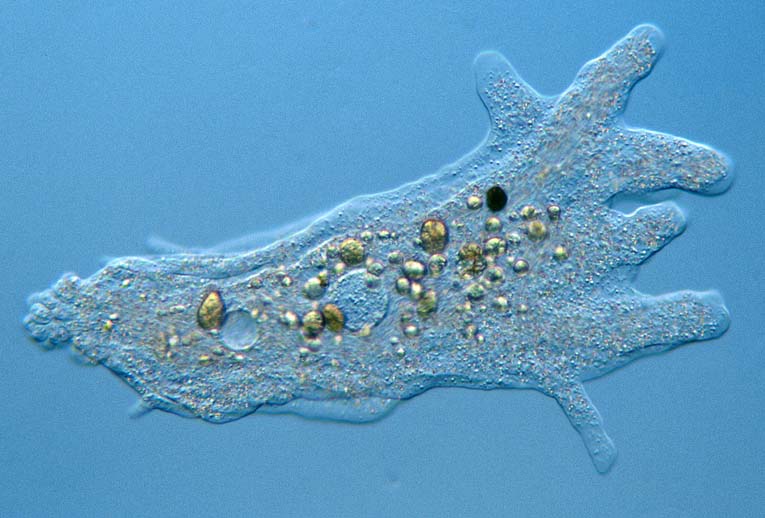


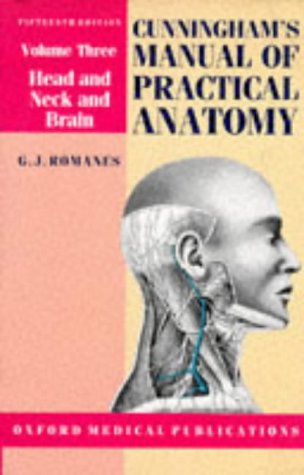


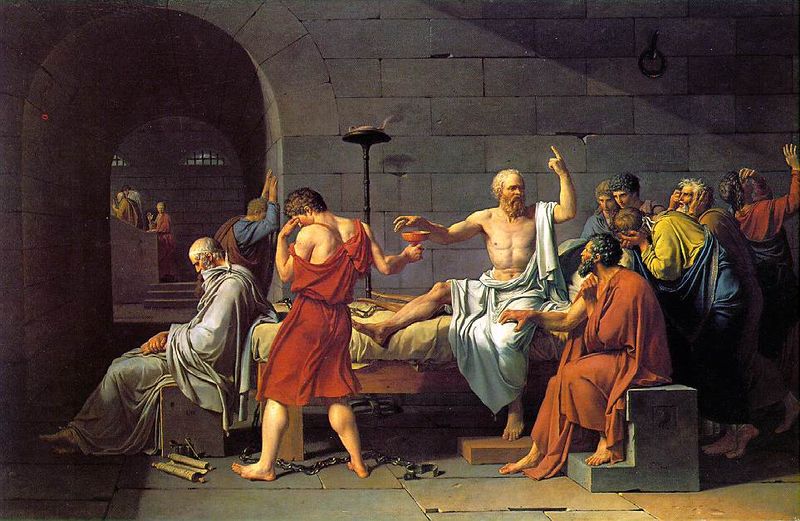


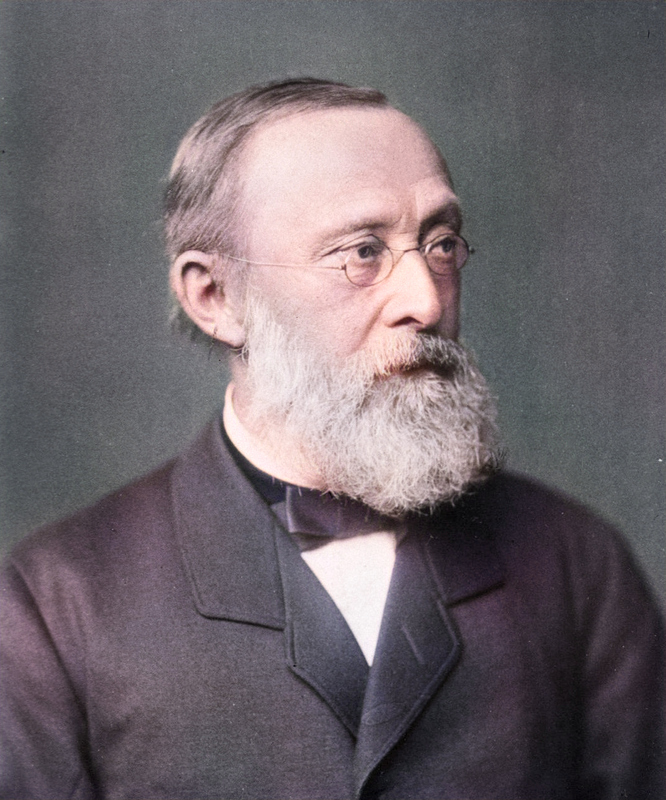


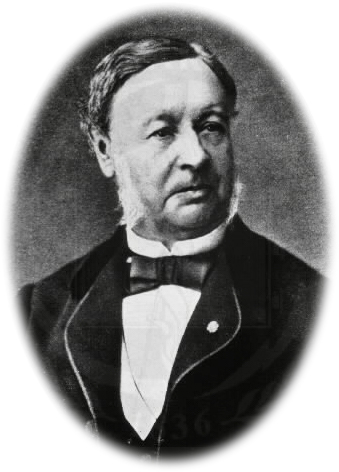


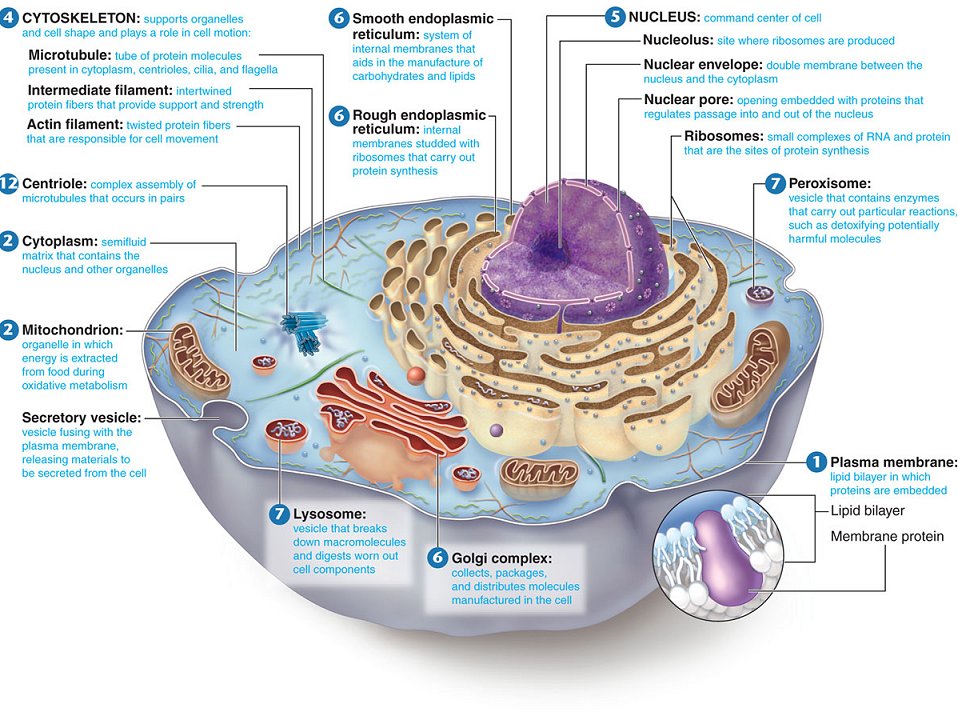




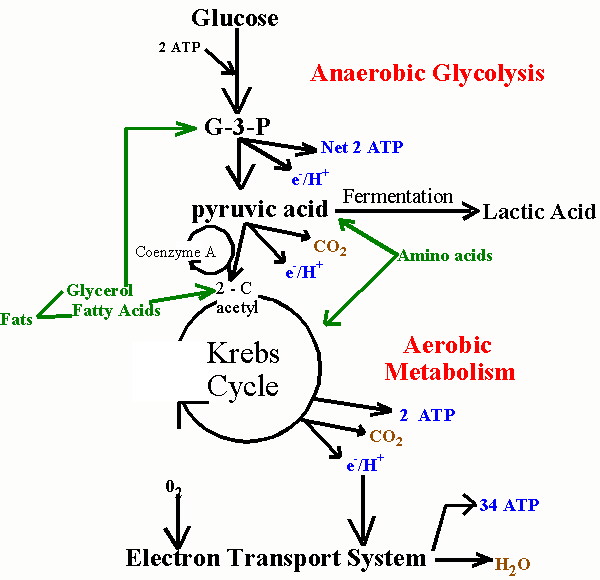


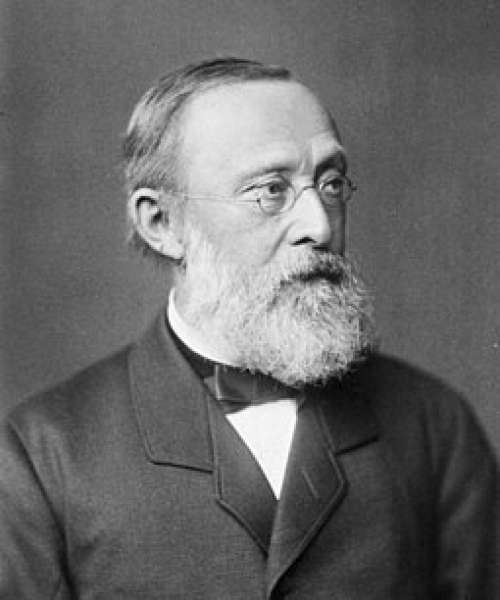





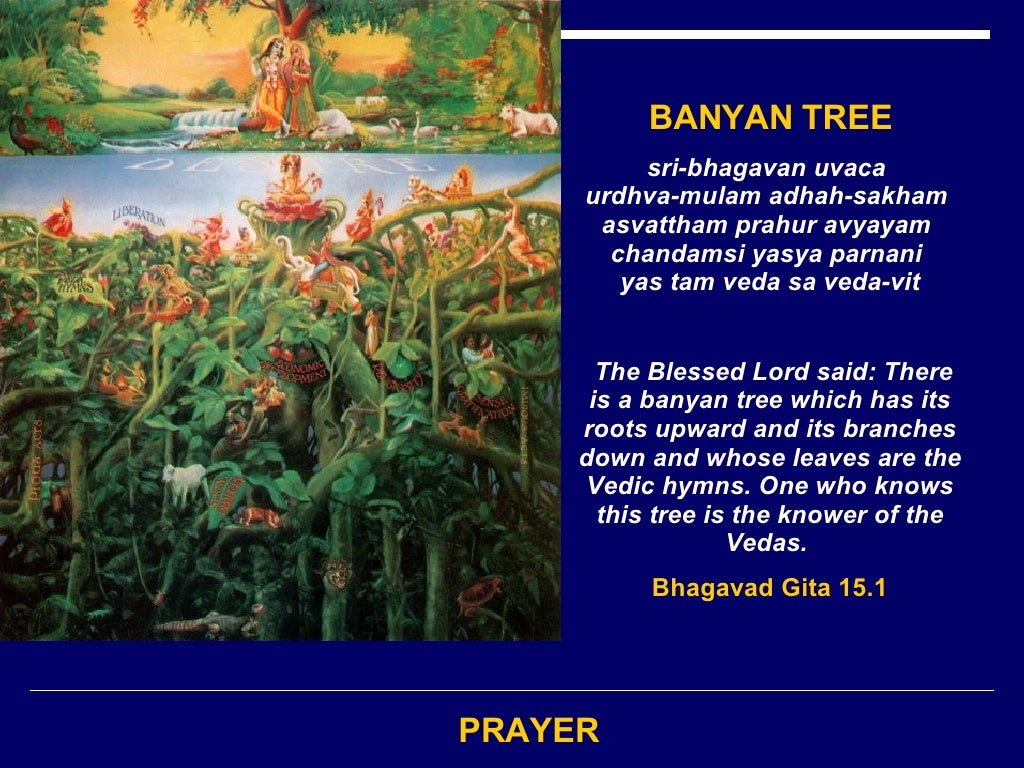


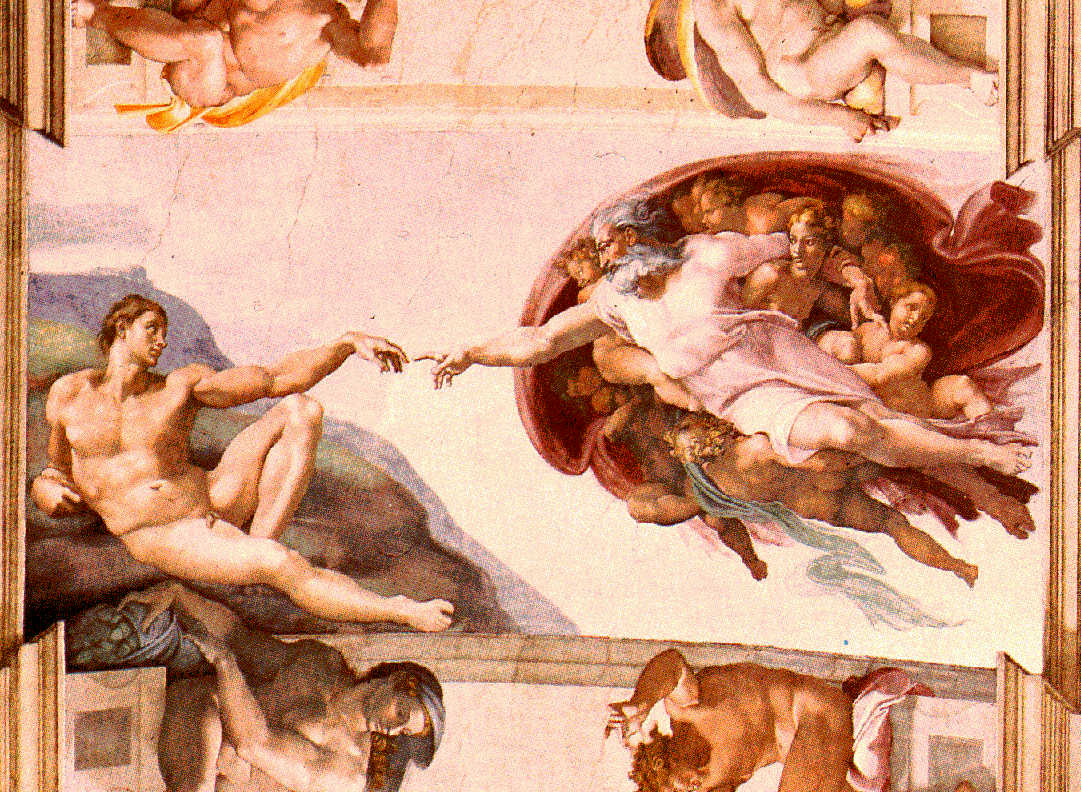


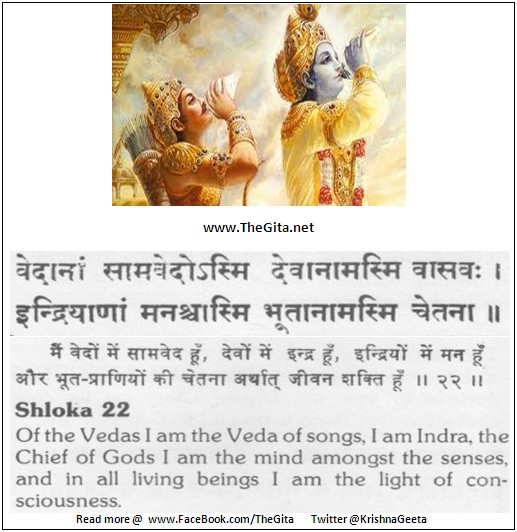
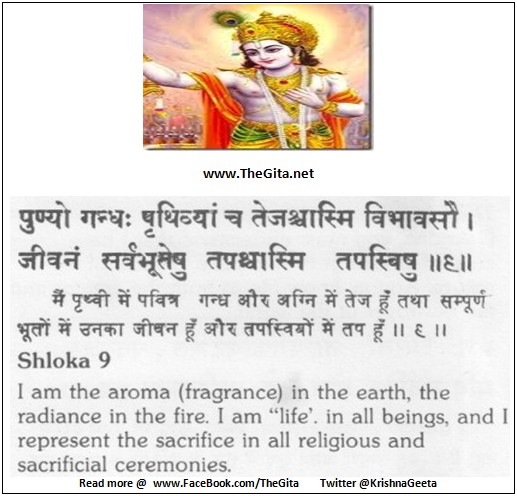

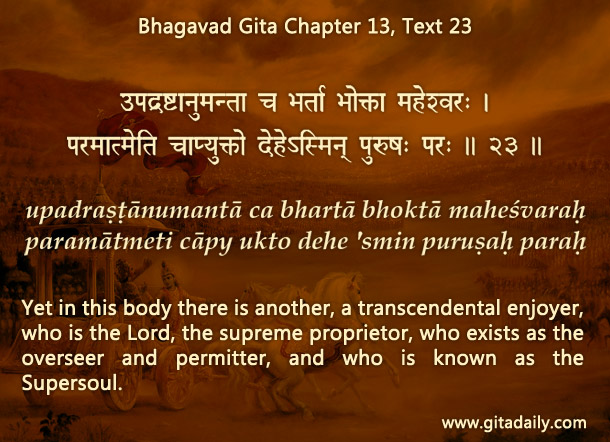


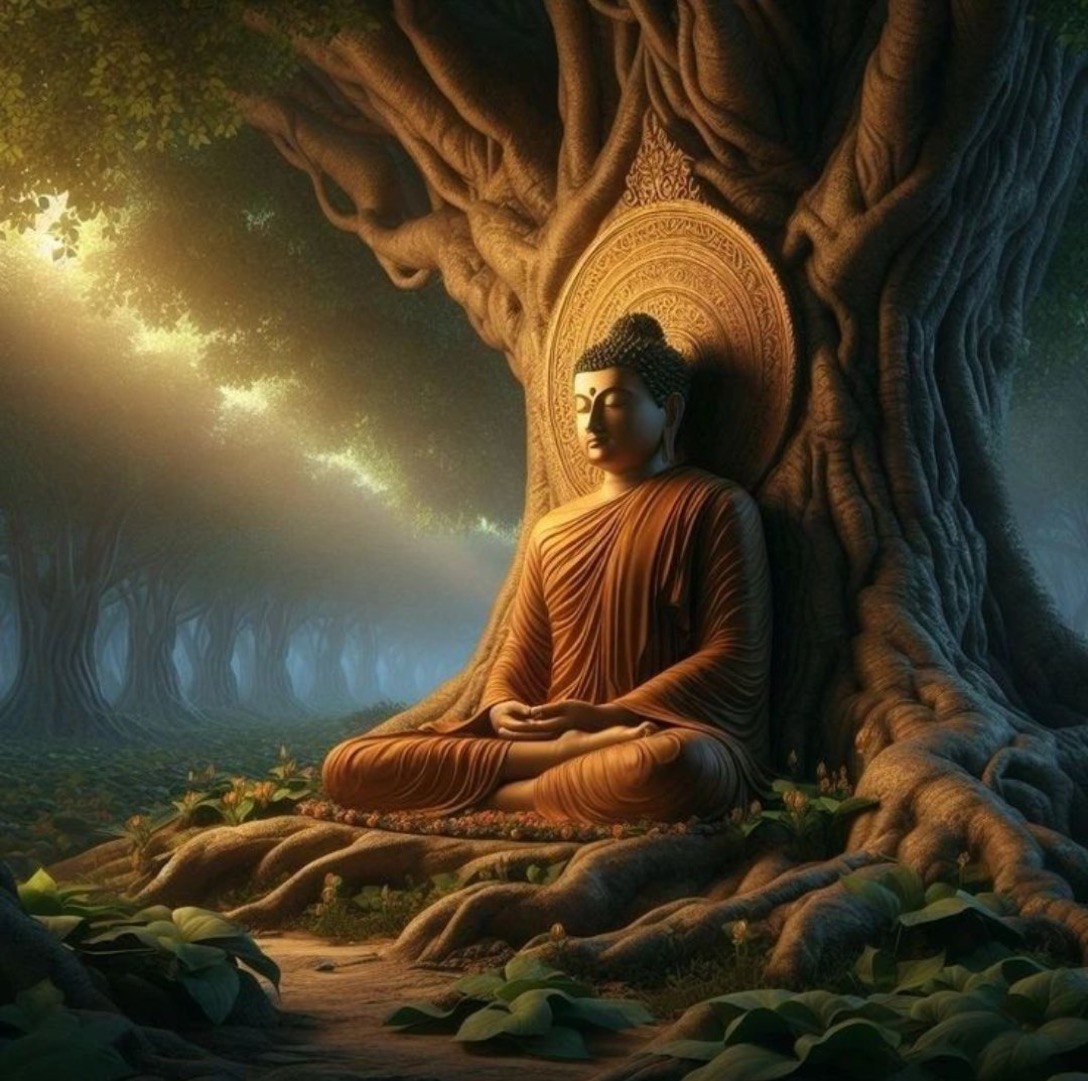








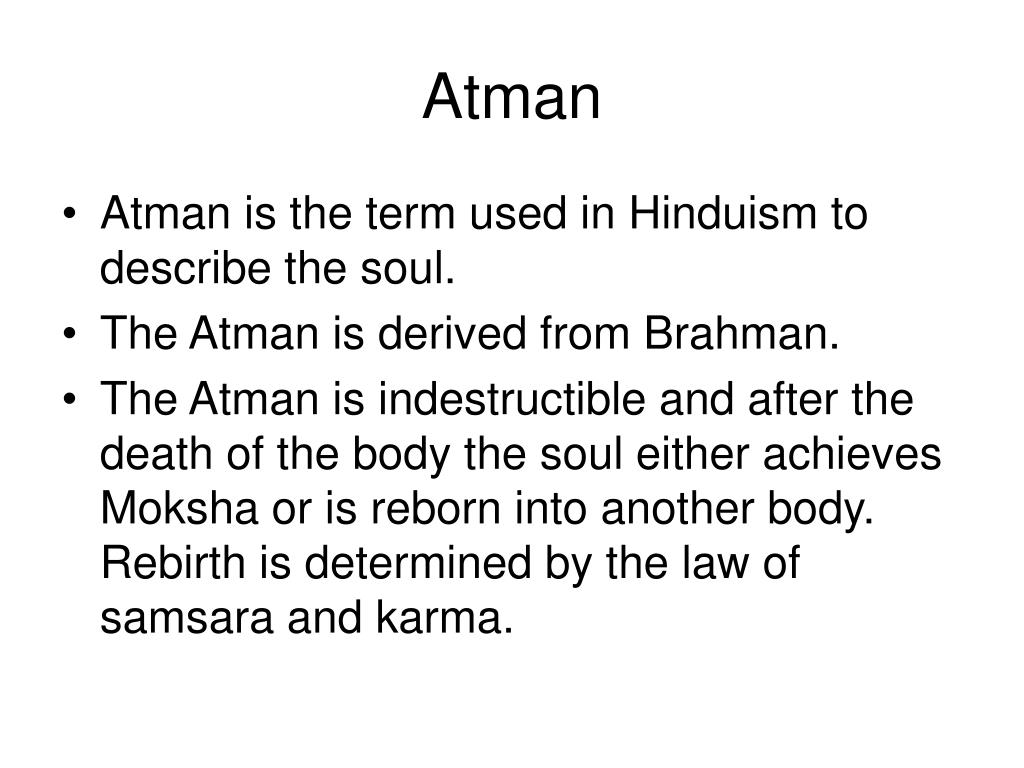

 Filippo S. Giorgi1,2 and Francesco Fornai1,3*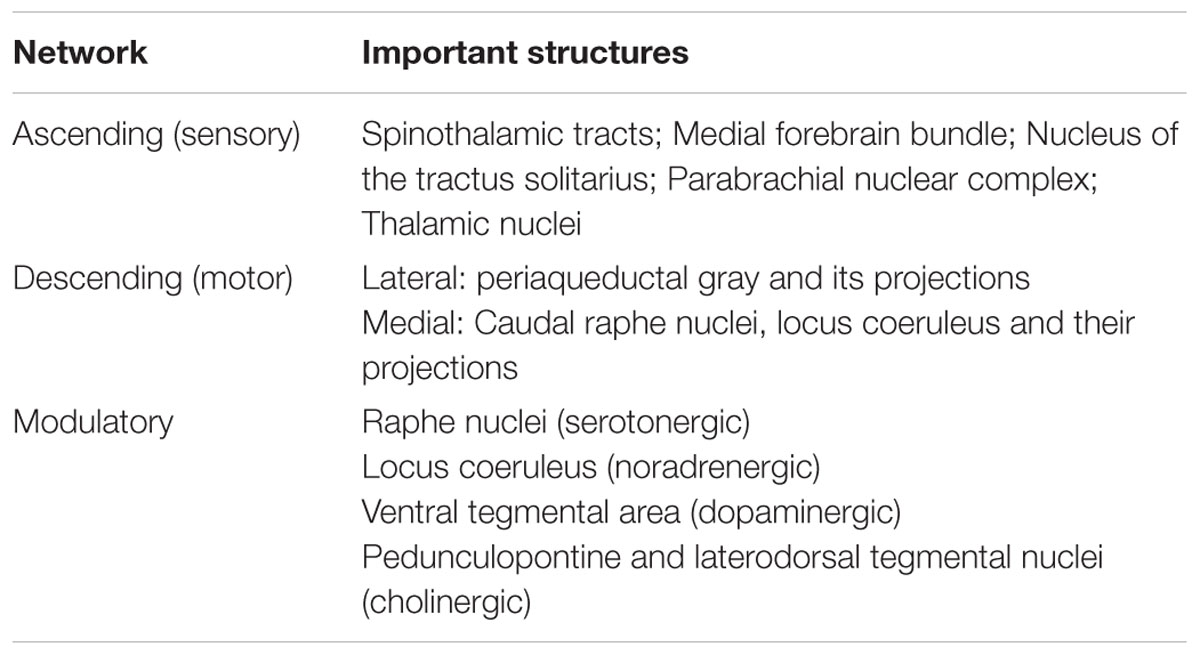
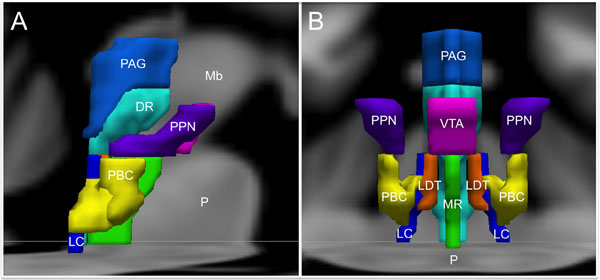
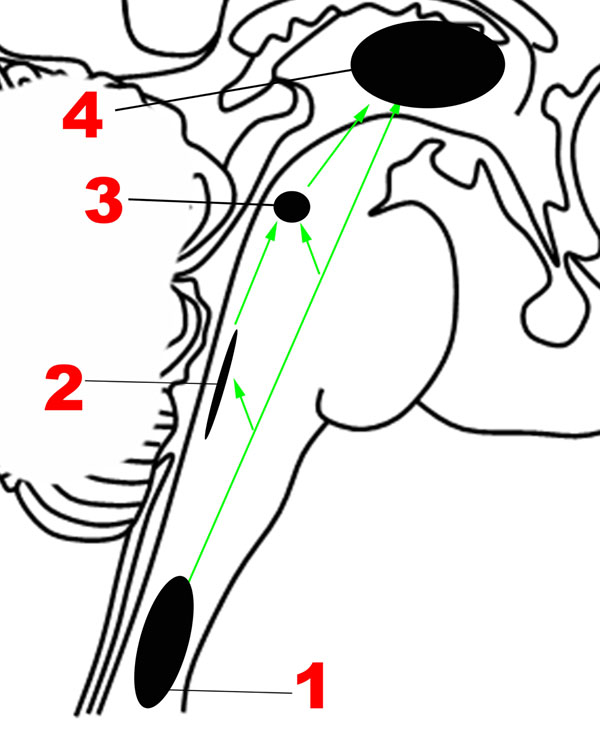
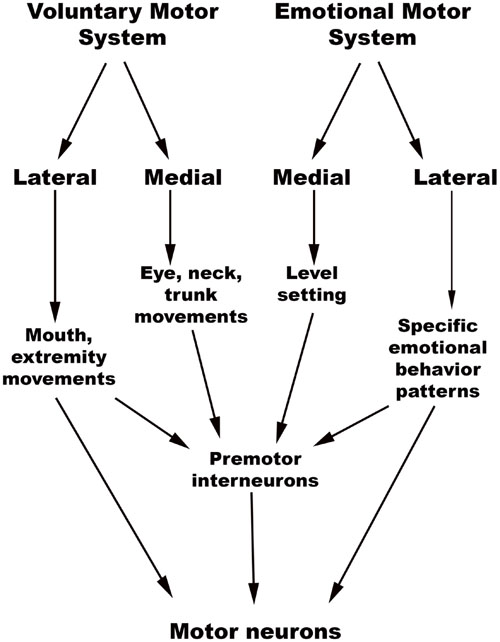
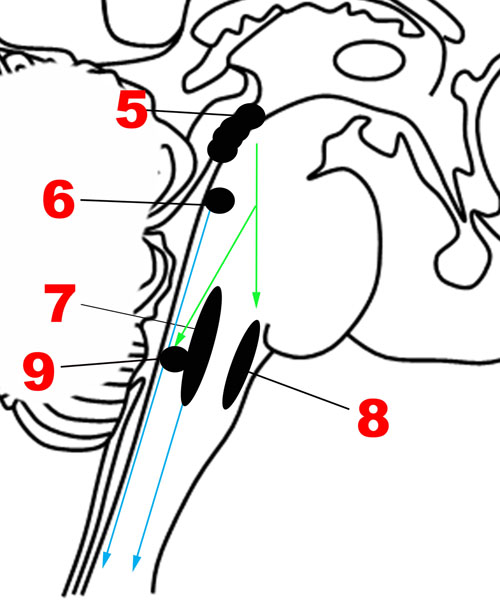
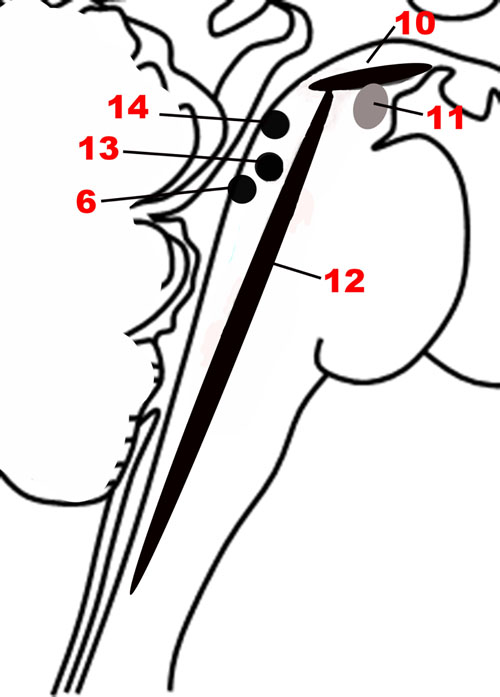


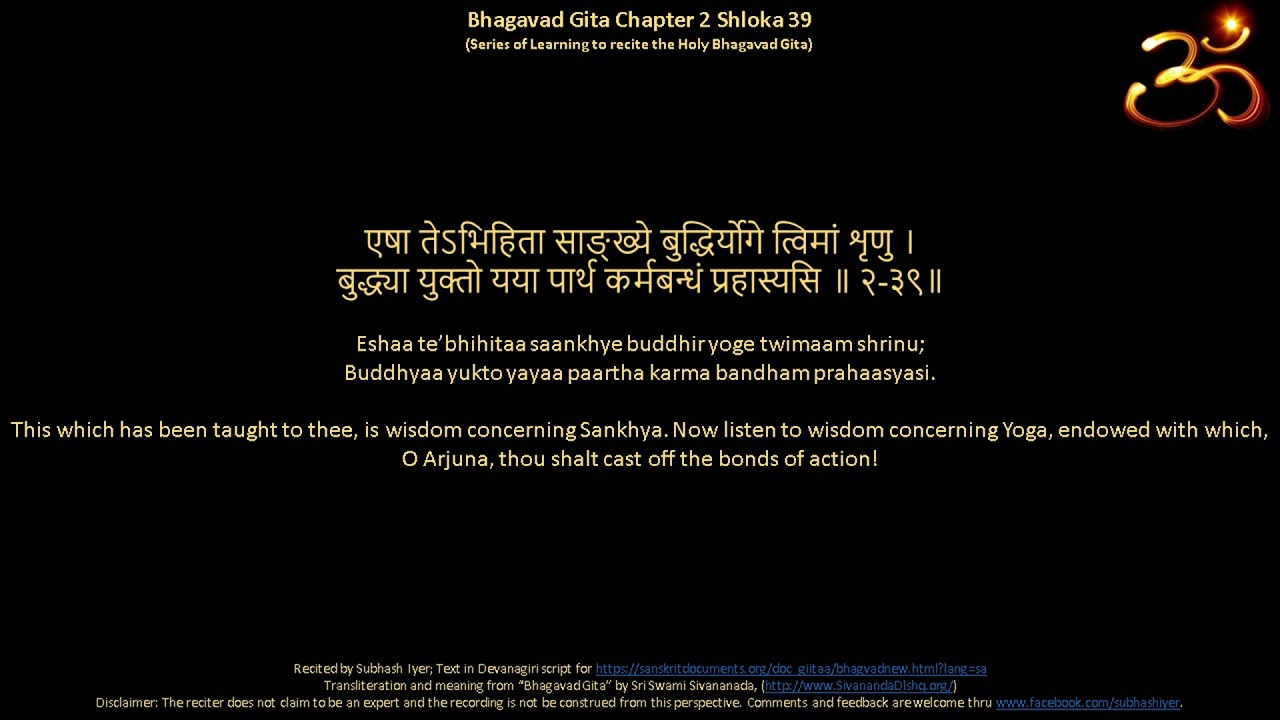
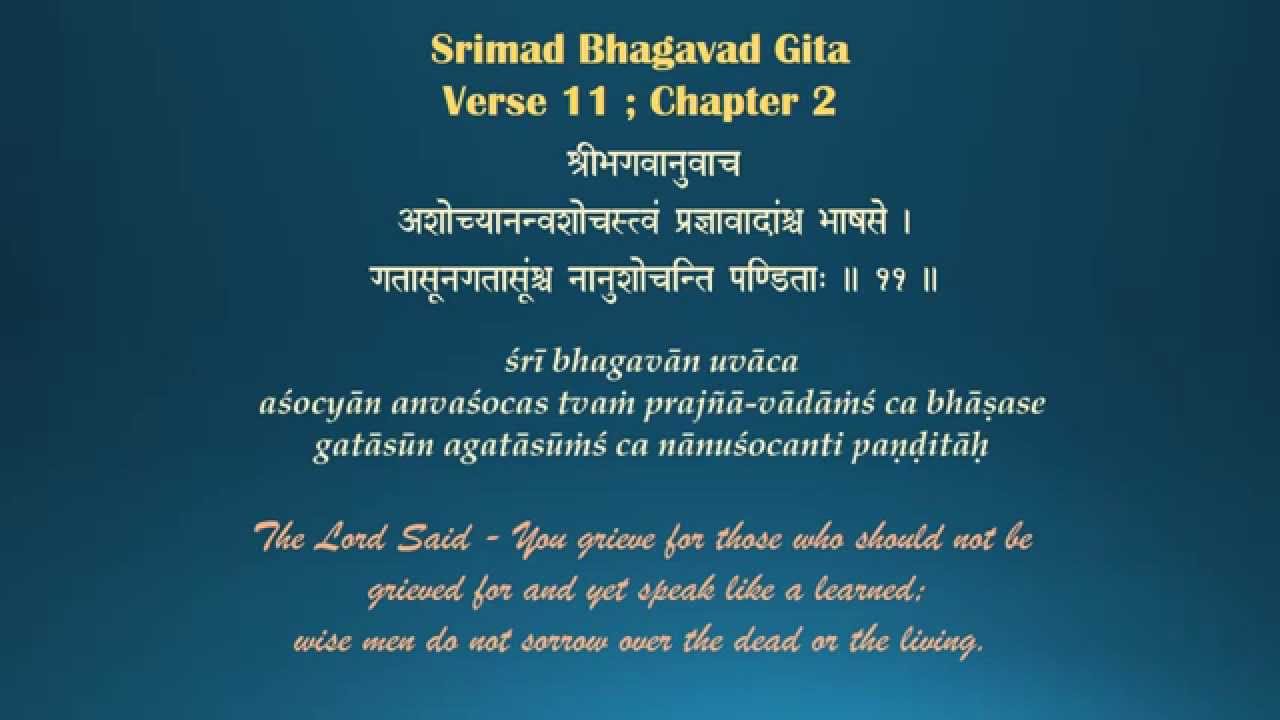
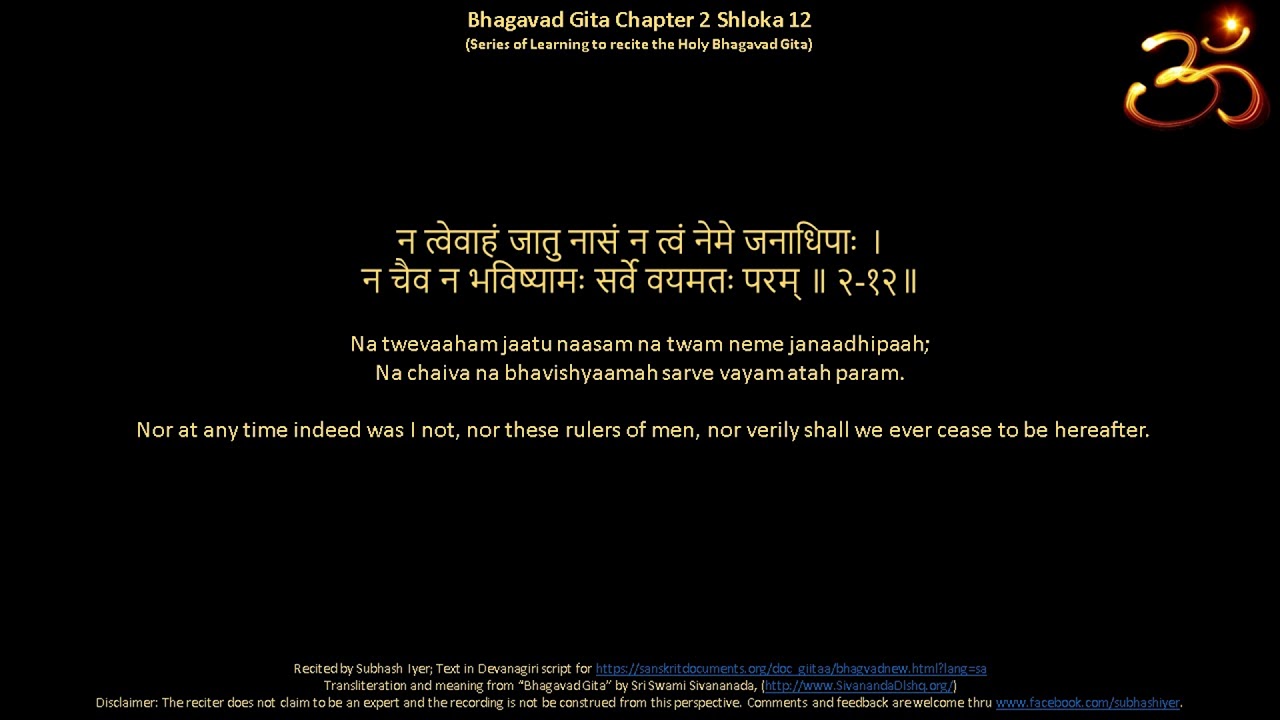

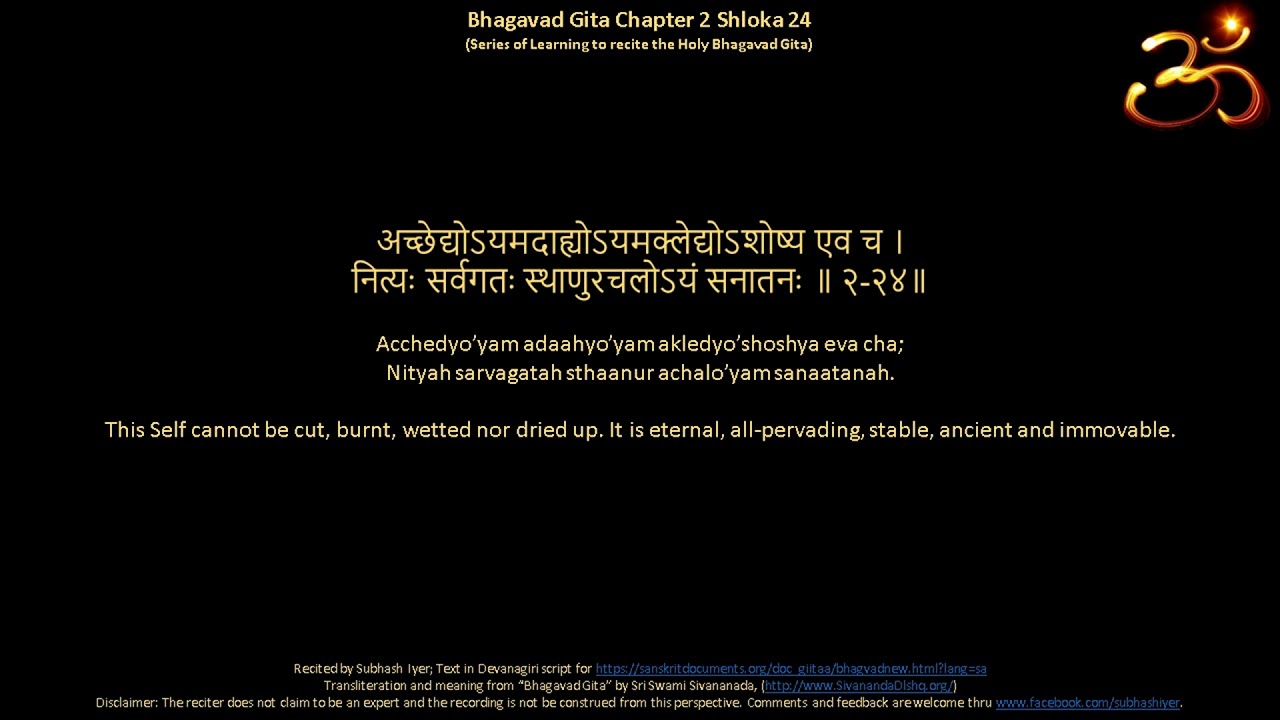
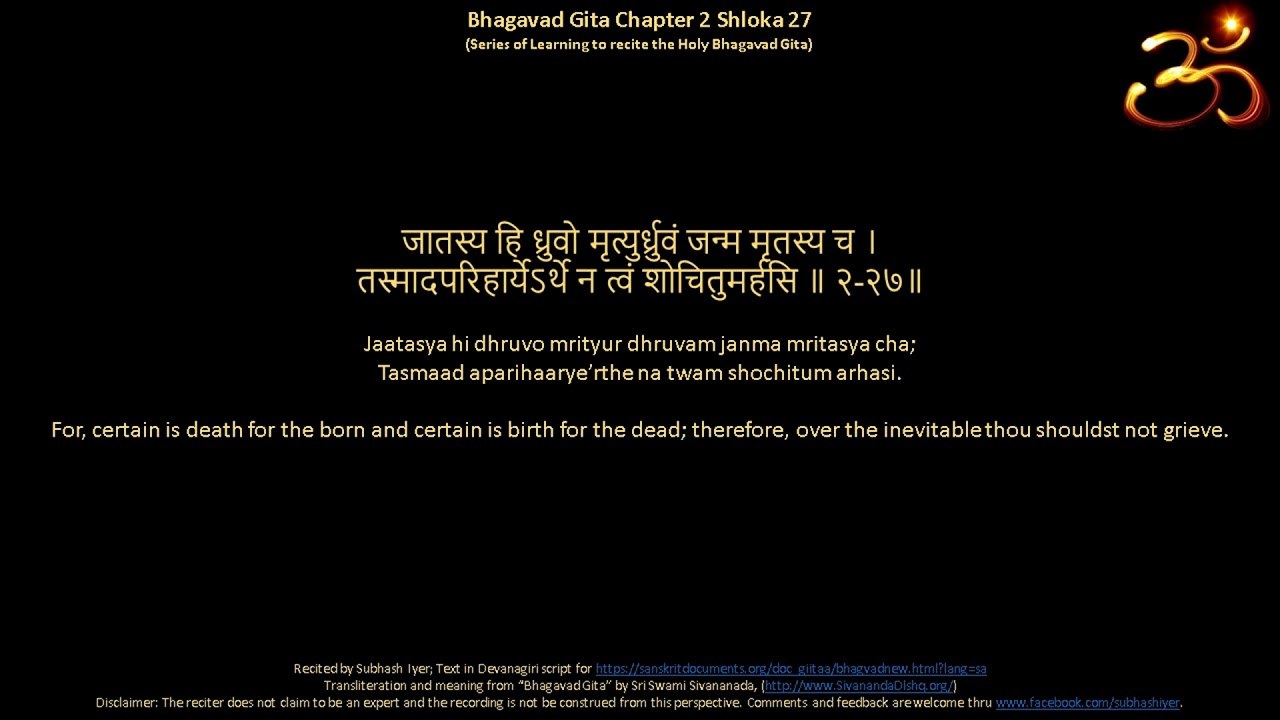




 Whole Dude - Whole Concept