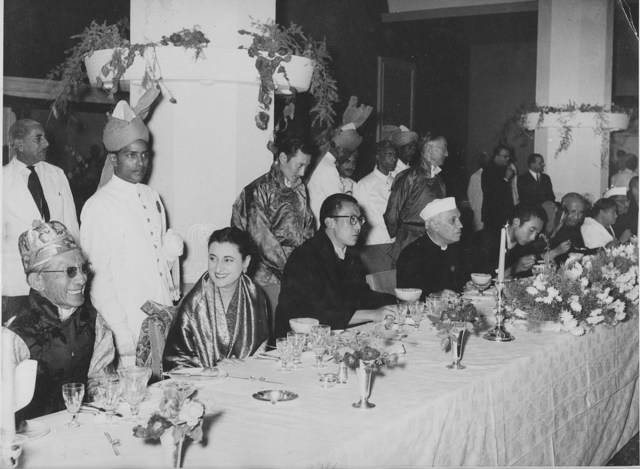
THE COLD WAR IN ASIA – TIBETAN RESISTANCE FROM 1950s TO 2017

THE COLD WAR IN ASIA – TIBETAN RESISTANCE FROM 1950s TO 2017

The Cold War in Asia – Tibetan Resistance From 1950s To 2017. Communism is the root cause of ‘The Cold War in Asia’. Tibet and India’s attempts to befriend Communist China utterly failed.
The Cold War in Asia – Tibetan Resistance From 1950s To 2017. Communist Party of China imposes dictatorial regime with no transparency and public accountability.

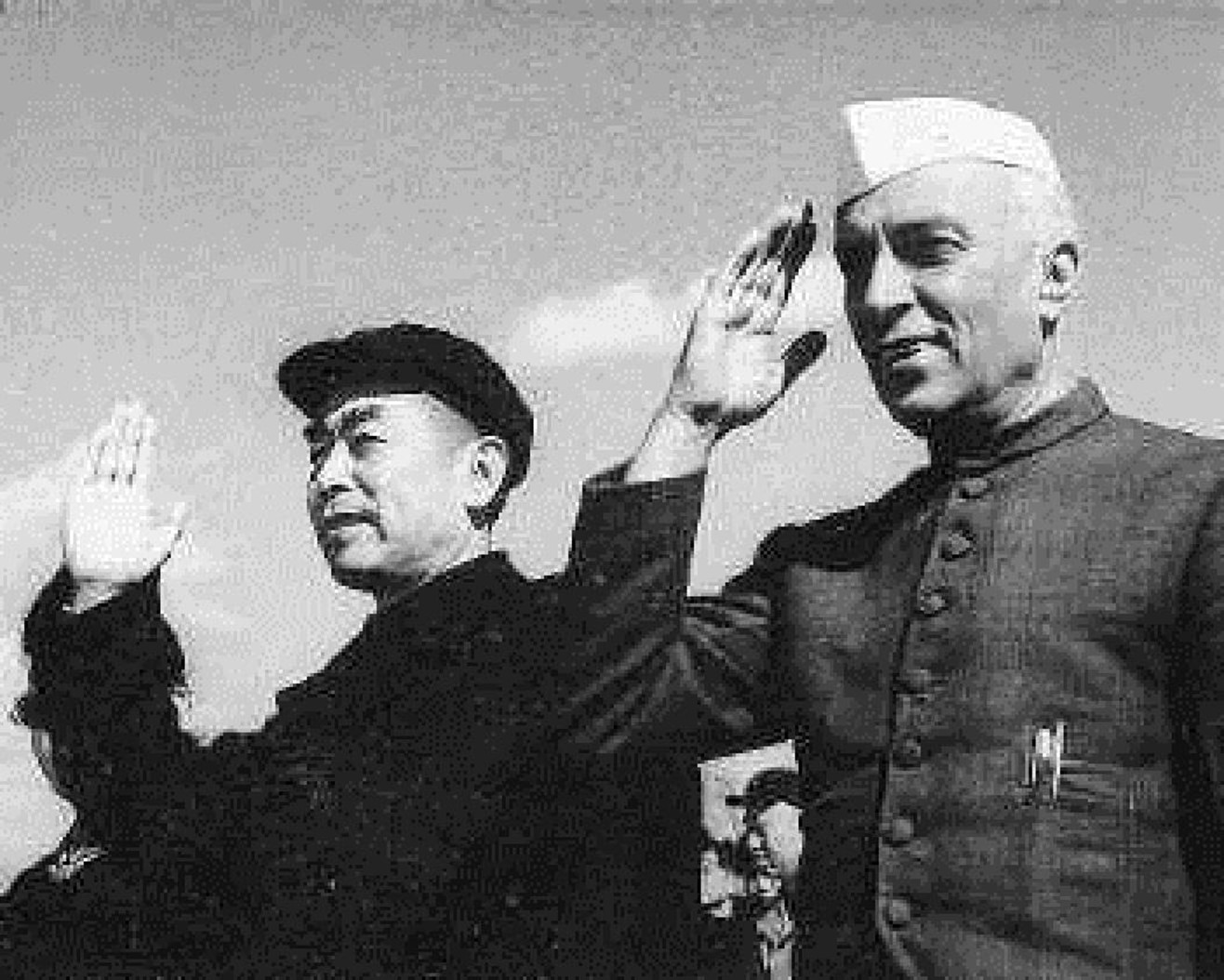
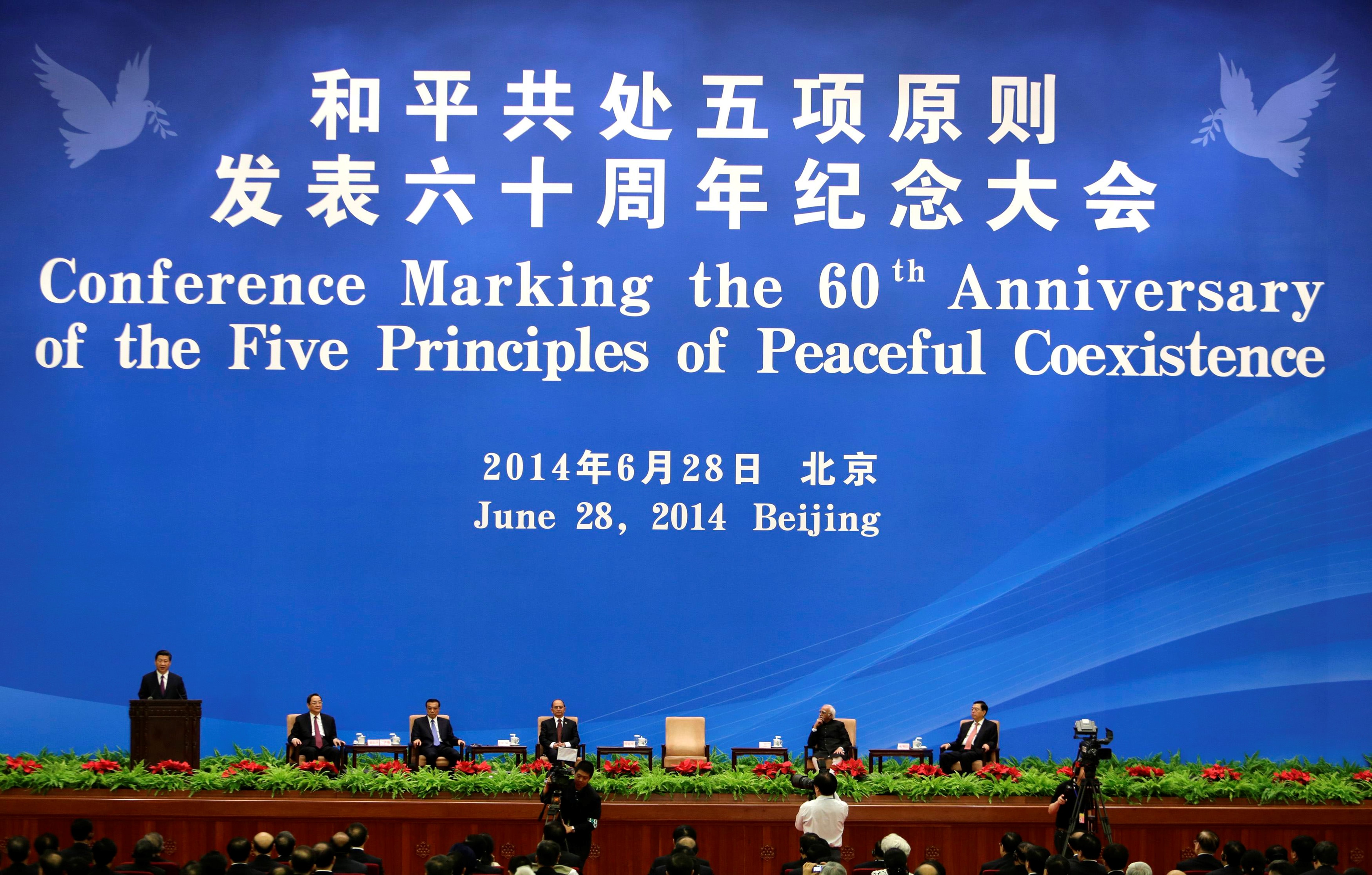
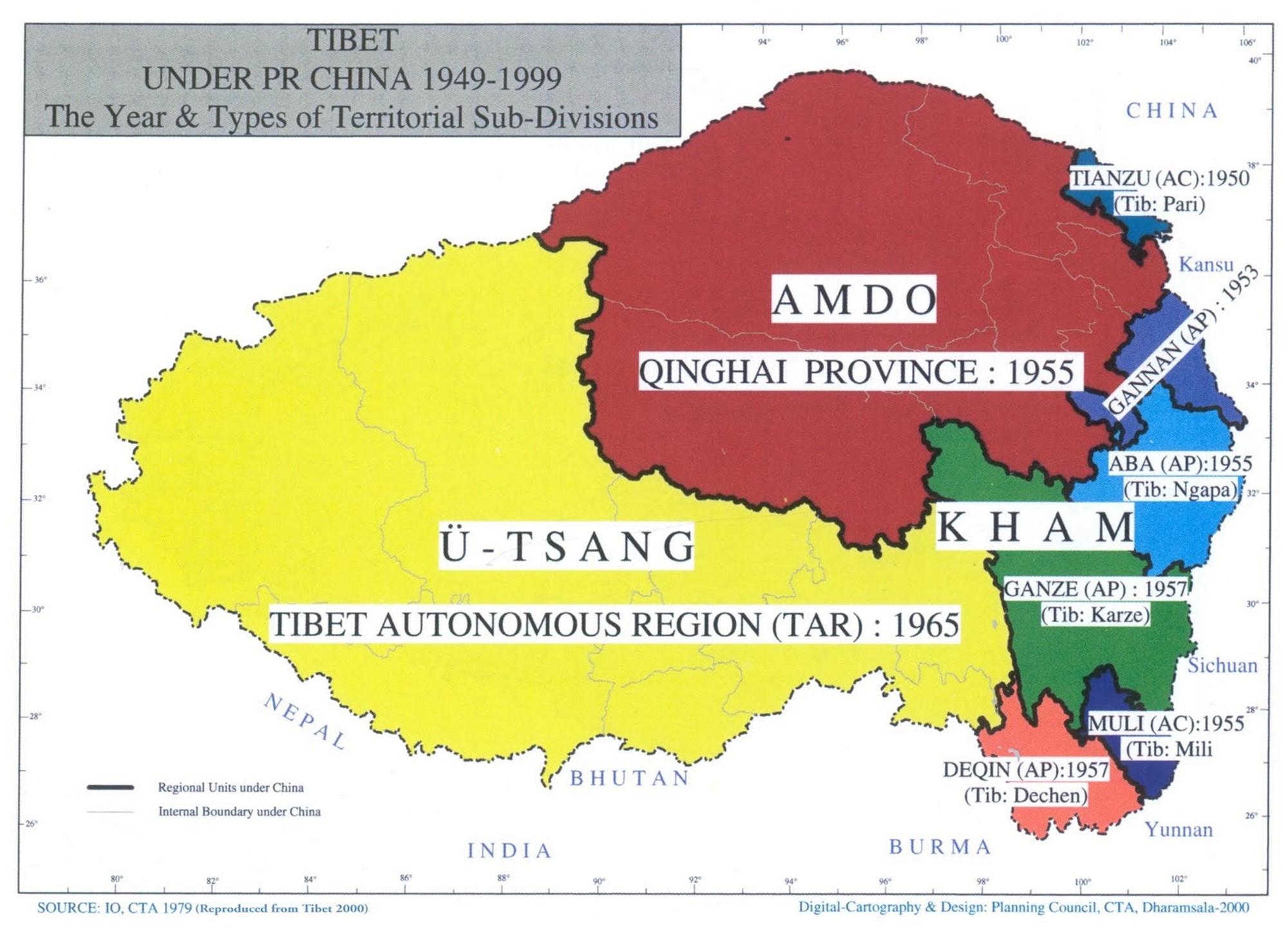
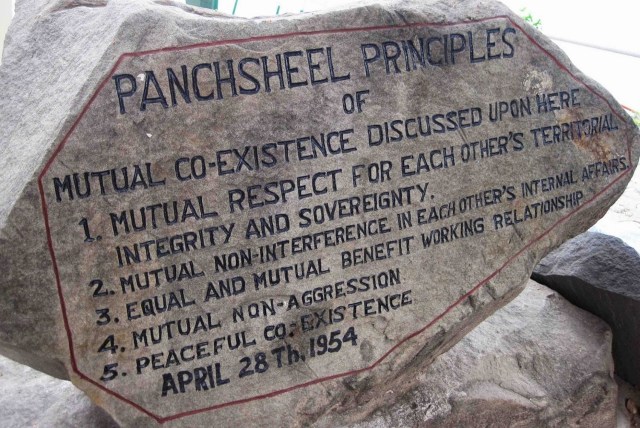
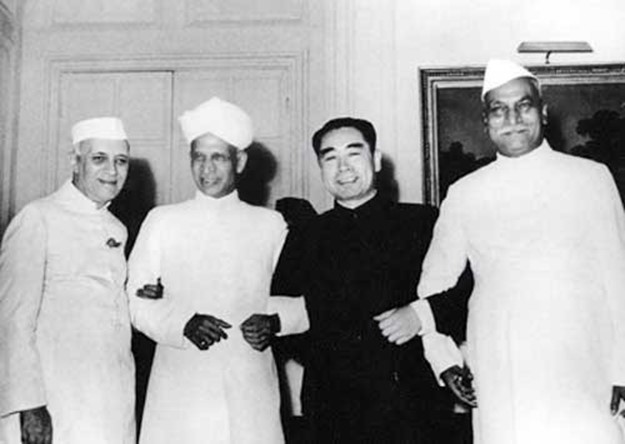
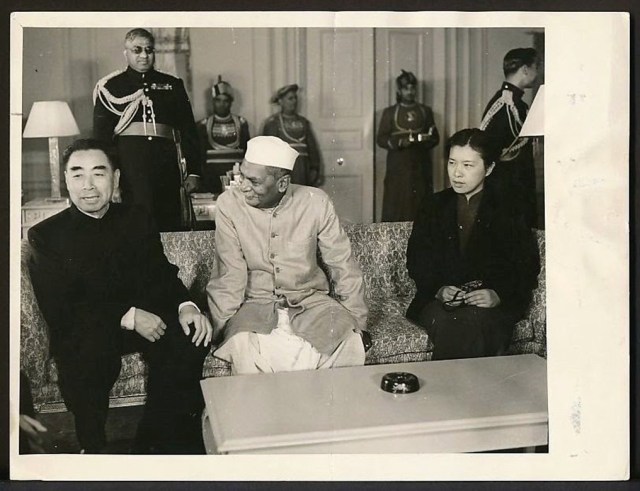
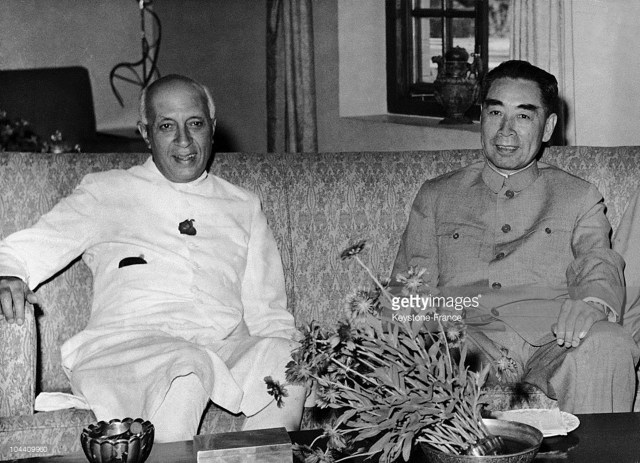
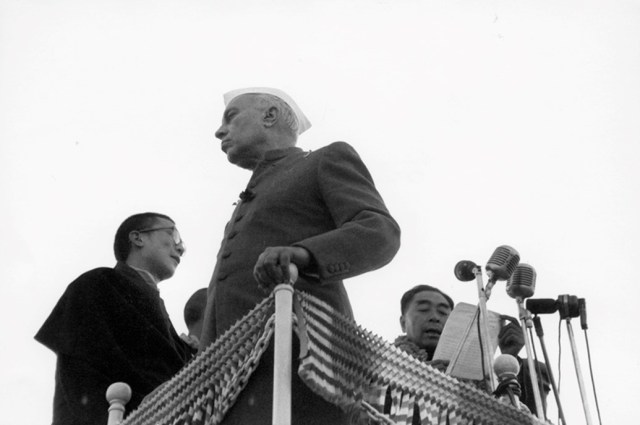
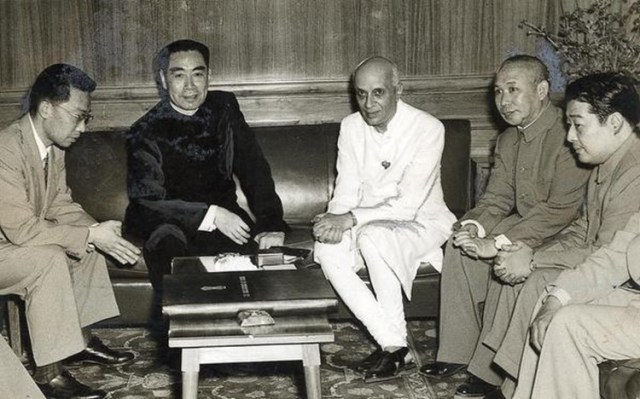
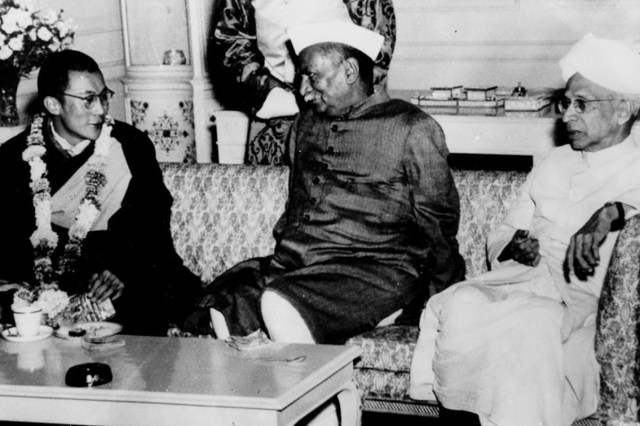
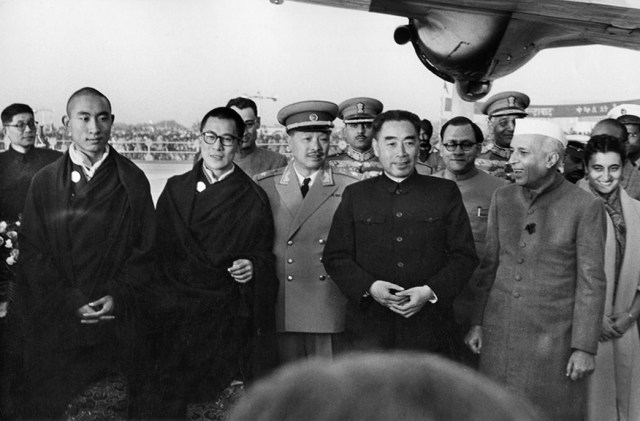
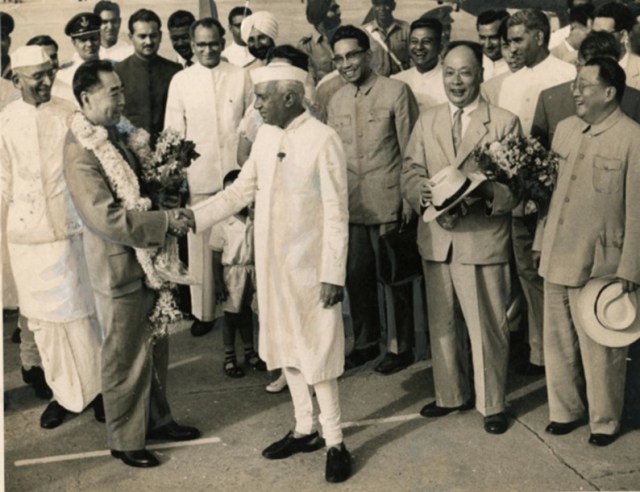
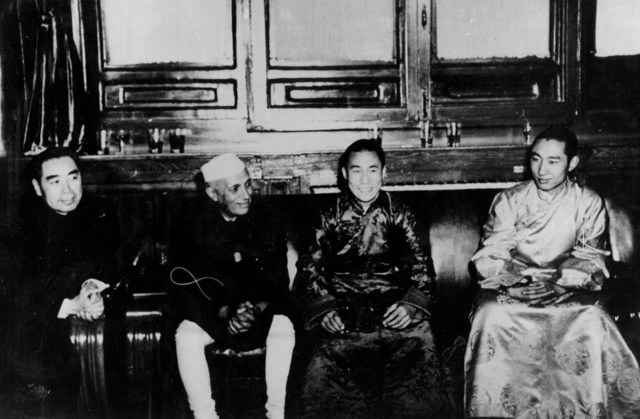
Introduction of Communism to mainland China on October 01, 1949 is the reason for ‘The Cold War in Asia’. Communism introduced dictatorial regime with no transparency and public accountability. On May 23, 1951, Tibet and Communist China signed Seventeen-Point Plan or 17-Point Agreement to ensure meaningful Tibetan Autonomy under Chinese Communist Party Governance. Further, India, and Communist China signed Panchsheel Agreement on April 29, 1954 to formalize international relations on Five-Principles of Peaceful Coexistence. Adherence to the Five-Principles of Peaceful Coexistence would indeed let China and India live together side by side with ‘Brotherly Love’ to declare “Hindi Chini Bhai Bhai.”

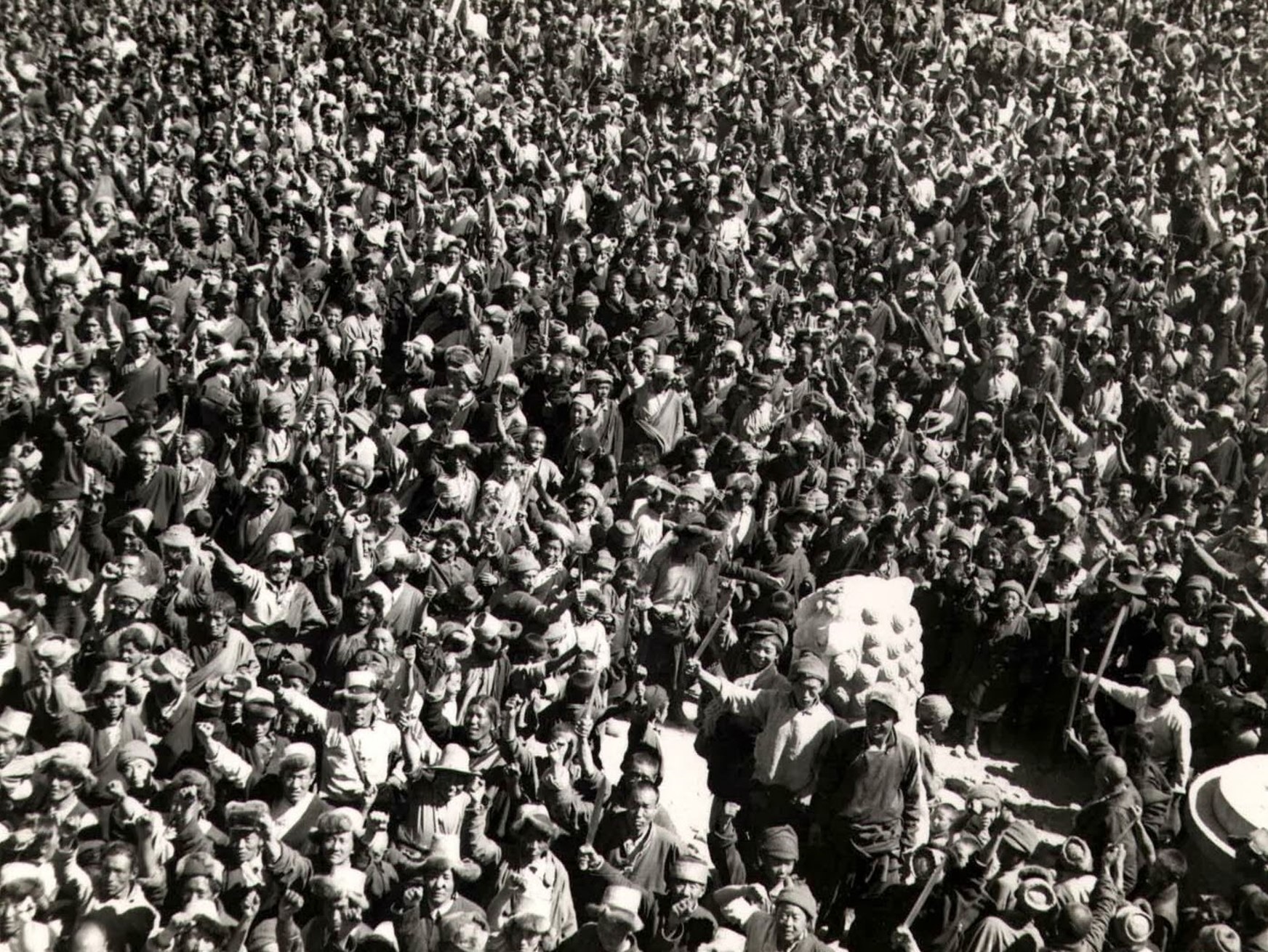
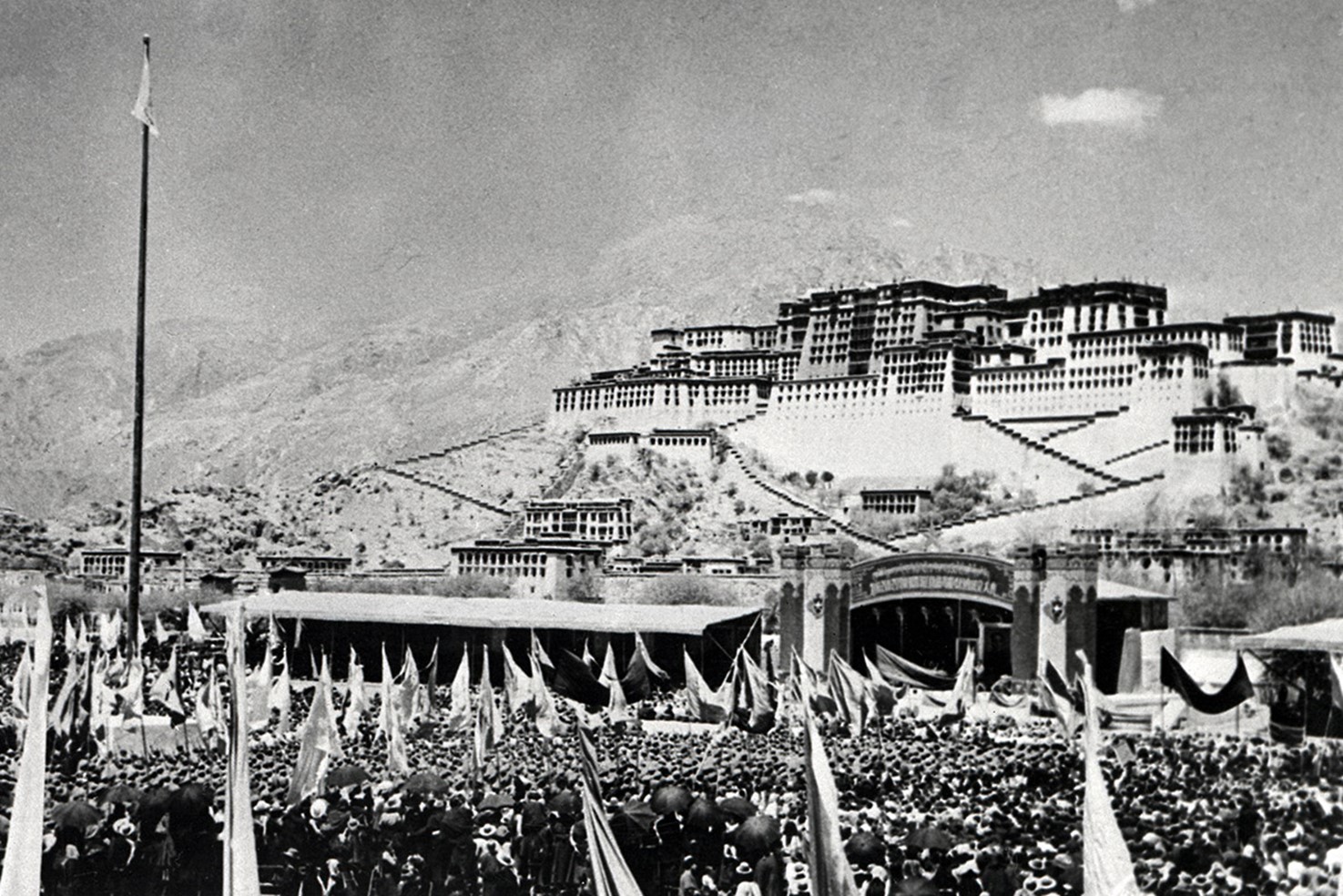
The Cold War in Asia – Tibetan Resistance From 1950s To 2017. Massive Tibetan National Uprising on March 10, 1959 is evidence for failed 17-Point Plan between Communist China and Tibet.
The Cold War in Asia – Tibetan Resistance From 1950s To 2017. Massive Tibetan National Uprising on March 10, 1959 is evidence of broken 17-Point Agreement between Communist China and Tibet.
The Cold War in Asia – Tibetan Resistance From 1950s To 2017. Introduction of Communism into mainland China on October 01, 1949 caused massive Tibetan Revolt against Communist Rule. Tibetans protesting in Lhasa on March 10, 1959.

Tibetan Resistance began in 1950s and continues in 2017 because of unwillingness of Communist Party of China to implement the 17-Point Plan as agreed. Republic of India adheres to principles of Democracy, Socialism, and Secularism. While Chinese people may embrace Buddhism, their system of Communist Party Governance with no transparency and public accountability will keep Tibetan Resistance alive. Buddhism may encourage and promote tourism but it cannot be used as the basis for formulating international relations by Secular Republic of India.

Rudranarasimham Rebbapragada

SPECIAL FRONTIER FORCE

INDIA, CHINA CANNOT DEFEAT EACH OTHER: DALAI LAMA

Clipped from: http://indianexpress.com/article/india/india-china-cannot-defeat-each-other-dalai-lama-4796446/

“India should develop a pilgrimage for Chinese people who follow Buddhism. These people can come to places like Bodh Gaya and can come closer to India emotionally as well,” he said.

The Cold War in Asia – Tibetan Resistance From 1950s To 2017. Tibet and India failed to befriend Communist China in spite of signing Agreements in 1951 and 1954.

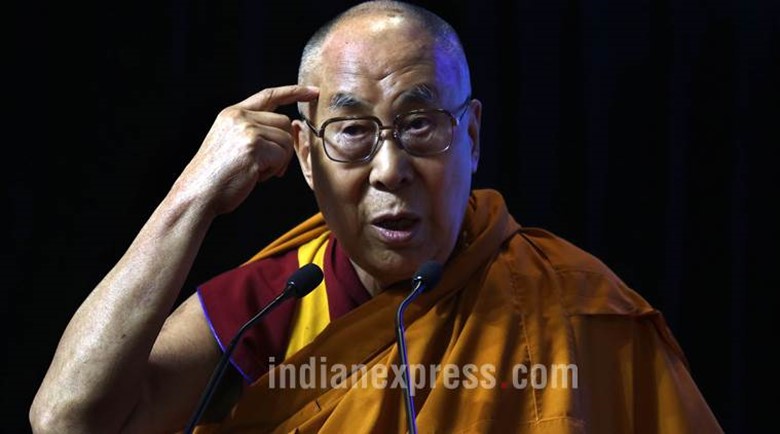
Tibetan spiritual leader the Dalai Lama gestures as he speaks during a ‘world peace and harmony conclave’ in Mumbai on Sunday. (Express photo By Pradip Das)

Tibetan spiritual leader the Dalai Lama on Monday said India and China cannot defeat each other and both the countries will have to live together as neighbours. The spirit of “Hindi-Chini Bhai Bhai” is the only way forward, he stressed. “In the current border situation, neither India nor China can defeat the other. Both countries are militarily powerful,” the Dalai Lama said. Both the countries will have to live together as neighbours, he said.

“There may be some incidents of cross-border firing. It does not matter,” he said. The Dalai Lama was responding to questions by reporters at an event here.

He said, “In 1951, a 17-point agreement was signed between the Local Government of Tibet and People’s Republic of China for peaceful liberation of Tibet. Today China is changing and has become a country with the highest Buddhist population. They (India and China) should go back to ‘Hindi Chini Bhai Bhai’ again.”

It is a Communist government but Buddhism is widely accepted, he said.

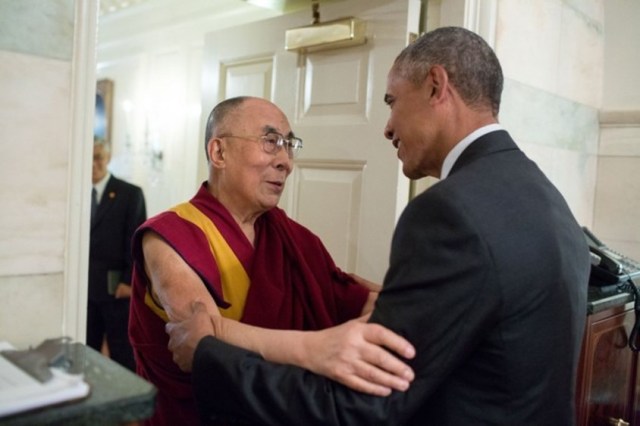
“Earlier, the Dalai Lama used to be the head of spiritual and political movements in Tibet, but in 2011, I totally retired from politics. It was a way of democratizing the institutions, because it had some feudal elements in it,” said the 14th Dalai Lama.

He suggested that India should “develop pilgrimage for Chinese” people who are followers of Buddhism.

“We must understand that the followers of Buddhism in China are actually following the line of Indian Buddhism that came from Nalanda (Indian seat of learning) and Sanskrit,” said the spiritual leader.

“India should develop a pilgrimage for Chinese people who follow Buddhism. These people can come to places like Bodh Gaya and can come closer to India emotionally as well,” he said.

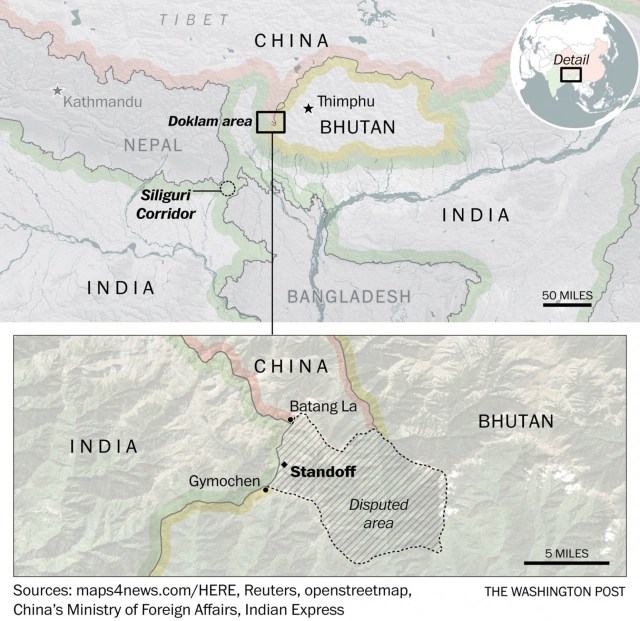
India and China have been locked in a standoff in the Doklam area since June 16 after Chinese troops began constructing a road near the Bhutan trijunction.

Commenting on the definition of secularism in the Indian context, the Dalai Lama said, “Respect for all religions and even the non-believers too. This is the definition of secularism in Indian context.”

“During the French Revolution and the Bolshevik movement, people opposed the exploitation by their kings and queens. Then religious institutions were supporting the feudal lords; hence the revolution also went against them. That’s why in the western context, secularism has become a word expressing disrespect to religion,” he said.

“Even an Indian communist leader had once told me that as a communist party worker, he does not believe in God. But for the people who he works for, they do believe in God and it is his duty to respect their feelings. I welcome such a mature approach,” the Dalai Lama said.

The Cold War in Asia – Tibetan Resistance From 1950s To 2017. Tibetans remain opposed to Communist Party of China and resist its dictatorial regime.
The Cold War in Asia – Tibetan Resistance From 1950s To 2017. Tibetans resist Communist Party of China’s dictatorial regime.

THE COLD WAR IN ASIA – THE PEACEFUL COEXISTENCE OF INDIA, TIBET, AND CHINA

THE COLD WAR IN ASIA – THE PEACEFUL COEXISTENCE OF INDIA, TIBET, AND CHINA


In 1954, India signed an agreement with People’s Republic of China formulated on the Principles of Peaceful Coexistence of nations. This agreement does not mention it in words, but is based upon the presumption that the political institution of Dalai Lama will continue to exercise meaningful role across the entire Himalayan region including Mongolia. As of today, both India and Tibet are asking for meaningful autonomy for Tibet and safeguarding Tibetan Institutions of Governance.


India, China can peacefully coexist as “Brothers” if that relationship includes recognition of Tibet as ‘Brother’ with Brotherhood Rights to Self-Governance.


Rudranarasimham Rebbapragada

SPECIAL FRONTIER FORCE


Doklam row not serious, Hindi, Chini Bhai-Bhai, says Dalai Lama

August 10

16:41 2017

By Boyd Miles


“There is some tension ‘but I do not think it is very serious. We need to make distinction between people and governments”.


Speaking in Delhi on Wednesday, the Dalai Lama used a phrase from Indo-China diplomacy of the 1950s to say: “Eventually, Hindi-Chini bhai bhai is the only way ahead [for India and China]”. Dalai Lama said, “Eventually, “Hindi-Chini- Bhai Bhai” is the only way; the two big nations, you have to live side by side”.


India is for a simultaneous withdrawal from Doklam, which, it says, belongs to its other neighbor Bhutan. “India and China have to live side by side”, he said.


“The responsibility for the institution of the Dalai Lama is also of the Himalayan region and Mongolia”, he said but emphasized that the next Dalai Lama may not have a political role to play in future and that China should not worry about his role. Beijing had then warned New Delhi of adverse consequences.


However, China will only up the ante now that the Dalai Lama has spoken on the issue.


The Dalai Lama has been strongly criticized by Beijing as a “splittist” threatening China’s unity while he is revered in India and the rest of the world as a spiritualist. He asserted that as India provides freedom, he is capable of doing many things and is getting more opportunity to share.


India had granted political asylum to the Dalai Lama who fled his homeland almost six decades ago, as a young monk of 24, to save himself from the Chinese Army, who sought to crush the mass uprising in Tibet against what they described as “China’s imperialist designs”.


“Our small Tibetan community fully practices democracy and I am an admirer of democracy”.


The Dalai Lama said the Chinese people are now enjoying greater freedom in comparison to those who lived four decades ago and praised President Xi Jinping for his fight against corruption.


Inserted from <http://currenthollywood.com/2017/08/doklam-row-not-serious-hindi-chini-bhai-bhai-says-dalai-lama/>


THE COLD WAR IN ASIA – INDIA RESPECTS SOVEREIGNTY OF TIBET AND BHUTAN

THE COLD WAR IN ASIA – INDIA RESPECTS SOVEREIGNTY OF TIBET AND BHUTAN

My ‘CIA CONNECTION’ is byproduct of ‘The Cold War in Asia’. In 1950s, India’s external relations along Himalayan Frontier were shaped by the fear of Communism spreading in Asia. For centuries, people of India, Tibet, and Bhutan lived with no major concerns about boundaries between these countries. Communist China’s Doctrine of Expansionism came into focus when Red China made claims of her sovereignty over territories of her neighbors.

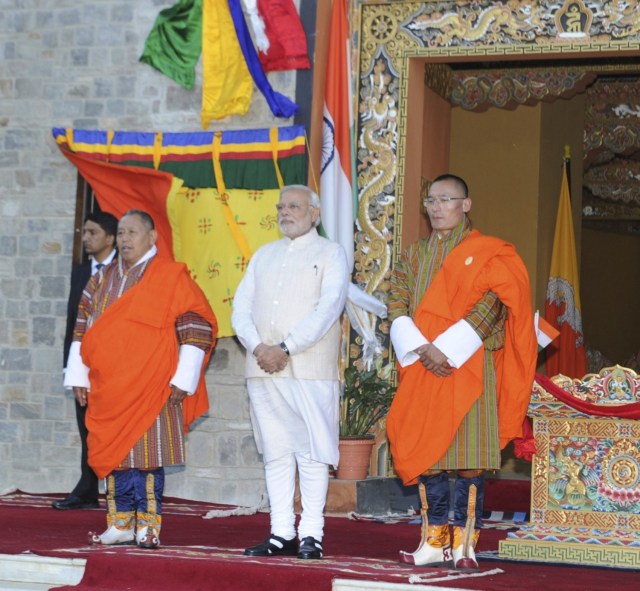
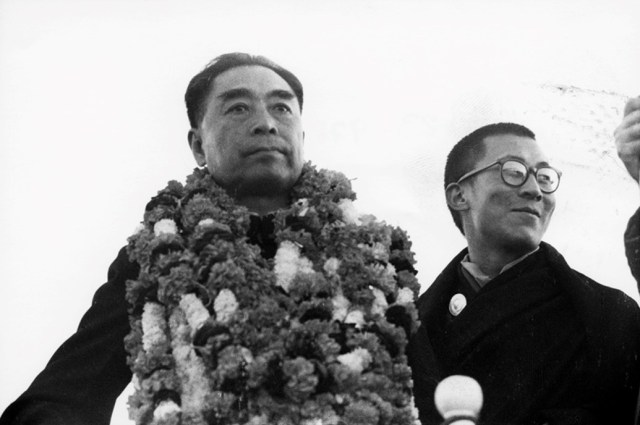
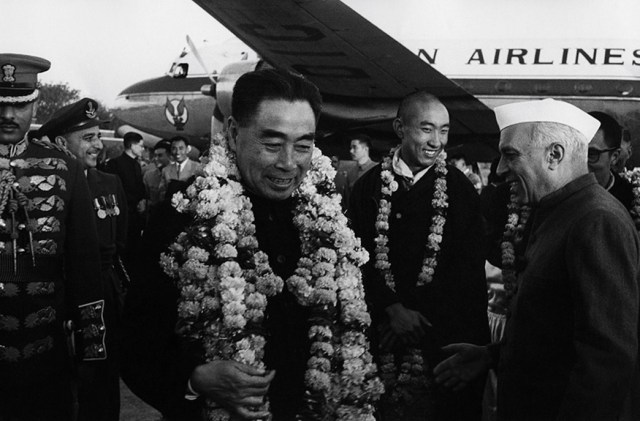
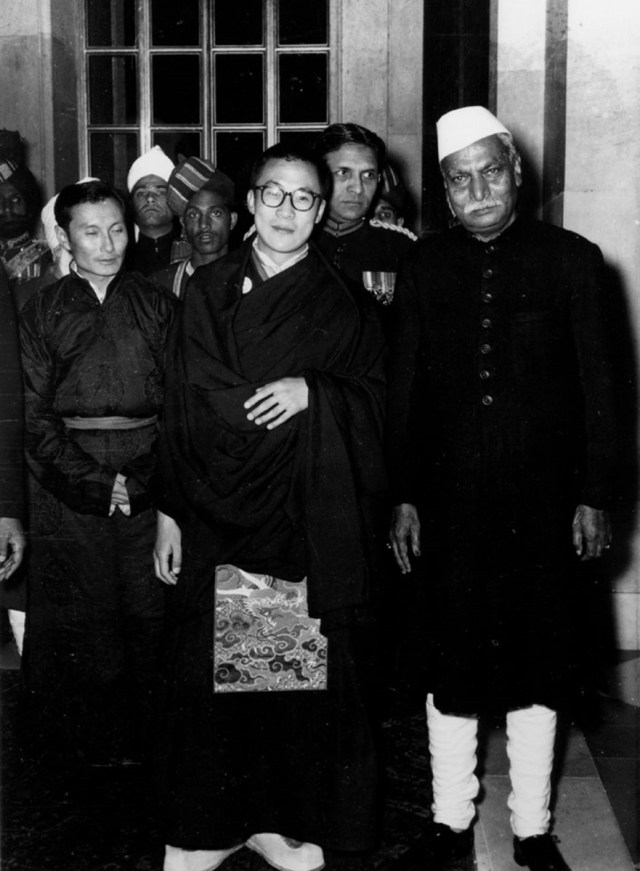
In May 1956, the 14th Dalai Lama visited New Delhi not to celebrate 2,500 Birth Anniversary of Gautama Buddha. He came to seek help and support for Tibet is the first victim of Red China’s Expansionism. Both India, and Tibet share this fear of Communism. In September 1958, Indian Prime Minister Jawaharlal Nehru visited Bhutan to forge relationships driven by fear of Communist Expansionism. India respects sovereignty of Tibet and Bhutan not because of religious or philosophical doctrine of Gautama Buddha but on account of fear of Expansionist Doctrine of Red China.

Rudranarasimham Rebbapragada

SPECIAL FRONTIER FORCE

DOKLAM STANDOFF: BHUTAN’S SOVEREIGNTY


Clipped from: https://thewire.in/159651/doklam-standoff-india-china-bhutan/

Today, as two Asian powers face off with Bhutan at the center of this delicate situation, the outcome will show whether the Asian century has a chance to be a peaceful one, or whether it will replay the violence of the colonial period.

Jawaharlal Nehru at Paro 1958. Credit: India House, Thimphu

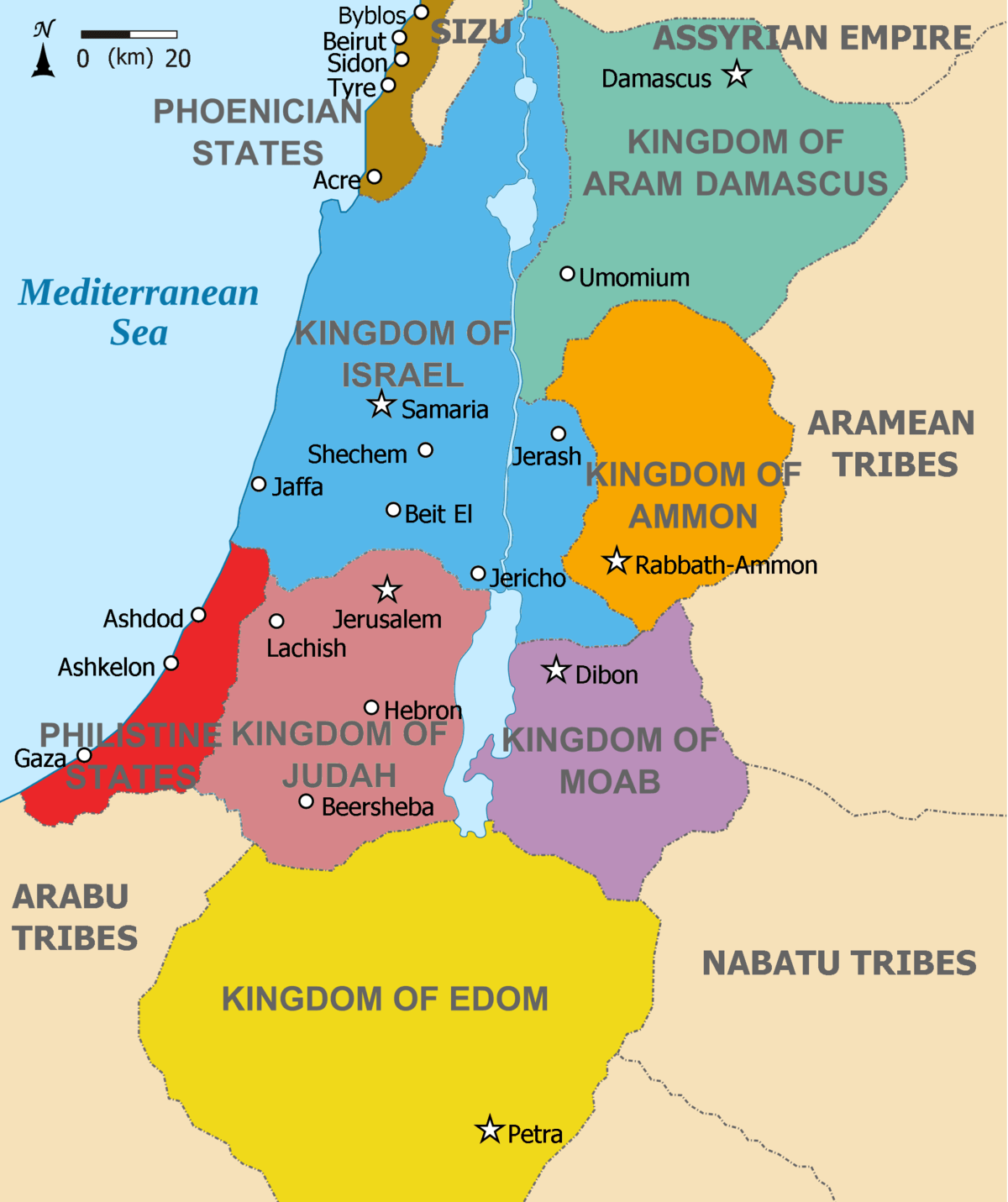
As the Doklam plateau stand-off continues well into its second month, analysts in India, China and globally have focused primarily on the India-China interaction. Those that have mentioned Bhutan – the Doklam plateau dispute is between Bhutan and China – have characterized Bhutan as either a protectorate, a state whose relationship with India limits its sovereign actions, or merely as a vassal state being bullied by India. These characterizations ignore Bhutan’s long history of fighting for its sovereignty as well the reasons (and context) in which Bhutan has pursued its special relationship with India.

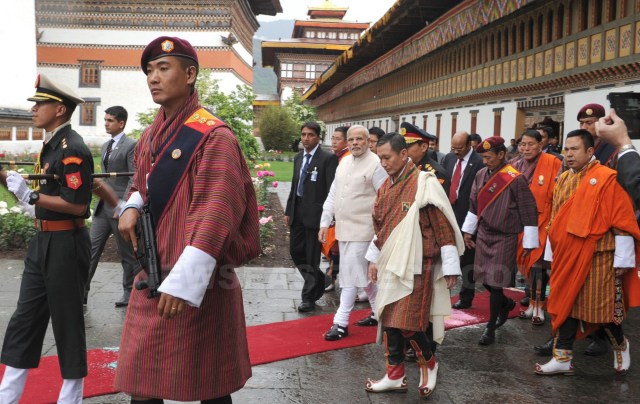
The India-Bhutan relationship is often characterized by the grants and aid that India has extended to the small country, principally to the hydropower plants that provide Bhutan its largest single source of revenue. The political relationship, though, precedes the hydropower projects by decades, and is best seen in the context of Tibetan issues. The first official meeting between the leaders of the two countries after Independence took place after Jawaharlal Nehru, accompanied by a young Indira Gandhi, travelled to Bhutan via Sikkim, by plane, jeep, horseback and yak in 1958. Although the Chinese accorded a welcoming reception, and gave Nehru’s party an honor guard while passing through Chinese administered territory, the clouds of future conflict were already there.

In 1956, on a visit to India to commemorate the 2,500 birth anniversary of the Buddha, the 14th Dalai Lama had asked for refuge. In 1959, he and his entourage would flee Tibet, setting in place a conflict that continues today.

Bhutan would not have been unaware of these issues. The Haa Drung (administrator of Haa), Jigme Palden Dorji, who also acted as the prime minister of Bhutan, was in touch with Major General Enaith Habibullah, the first Commandant of the National Defence Academy, who was also quite close to Nehru. Furthermore the pressure on the monastic orders being brought to bear by the Chinese in Tibet would have been relayed very quickly to Bhutan, whose monastic order was closely linked to Tibet’s.

The relations between Tibet and Bhutan have historically been about monks. The establishment of Bhutan as a separate domain, Druk Yul, in the 17th Century under the Zhabdrung Ngawang Namgyal, was set off by the rejection of his claims to be the head of the monastic order headed by his Gyare clan. This claim was rejected by the 5th Dalai Lama, which led to the Zhabdrung being offered shelter in Bhutan and a series of battles that would end up establishing Bhutan’s independence.

In 1864 another war erupted, this time with the British. Ashley Eden, who had negotiated an agreement with Sikkim that stripped the Chogyal of his powers and utterly eviscerated the sovereignty of the Himalayan kingdom, was sent to negotiate a similar treaty with the Bhutanese. Instead he encountered Jigme Namgyal, the Black Regent. Namgyal forced Eden to sign a different treaty – one which committed the British to return the Assamese Duars already forcibly occupied by them.

Eden’s treatment was used as a pretext for war for Britain to forcibly capture the territory they wanted – ideal for growing tea, an enormously costly cash crop of that time, one for which the Opium Wars against China had also been launched. The ensuing Duar Wars are considered victories by both Bhutan and Britain. Bhutan lost the Duars, but retained its independence, even being paid a rent (though a small amount) by the British Empire for the Duars.

Jawaharlal Nehru, Indira Gandhi with the 3rd king’s family. Credit: India House, Thimphu

In 1903 another war loomed when the British wanted to send the Younghusband expedition to Tibet. Caught between the two powers, Ugyen Wangchuck, the son of Jigme Namgyal, initially prepared for war against the British. It was his cousin and close advisor, Ugyen Dorji, a well-established trader based out of Kalimpong, who advised against this. Ugyen Wangchuck’s father-in-law also advised against it. Listening to their advice, Ugyen Wangchuck became the key facilitator for the Younghusband expedition, negotiating on behalf of both the Tibetans and British. He was one of the few that tried to keep some semblance of order in an expedition in which the British machine gunned Tibetans armed with muzzle loaders, some of whom were just trying to get away from the field of battle at Chumik Shenko.

It was this expedition, and the laurels that Ugyen Wangchuck won as a negotiator for both the power in the north – Tibet – and the power in the South – Britain – that set the stage for him being formally invested with kingship in 1907. The Tibetans, who had never in their history turned to Bhutan for help, offered him new ceremonial headgear in a mark of great respect. The British offered him knighthood, making him a Knight Commander of the Indian Empire.

This is the history of independence that the 3rd King of Bhutan, the Druk Gyalpo Jigme Wangchuck, carried forward when he welcomed Nehru to Bhutan in 1958. The King would have been well aware of what was going on in Tibet and its potential ramifications for Bhutan, which Mao claimed as part of Tibet. This was partially based on the defeat of Bhutanese forces by the Tibetan ruler Pholhanas in 1730 and 1732, invited into the country by the then Penlop (Governor) of Paro Valley, and the subsequent dispatch of Bhutanese leaders to kowtow before the Qing throne.

It is therefore why Nehru’s promise to Bhutan in September 1958, at his first speech to the Bhutanese public in Paro, was so important:

“Some may think that since India is a great and powerful country and Bhutan a small one, the former might wish to exercise pressure on Bhutan. It is therefore essential that I make it clear to you that our only wish is that you should remain an independent country, choosing your own way of life and taking the path of progress according to your will.”

It was based on this promise that Indian assistance to Bhutan, initially by helping fund Bhutan’s Five Year Plans, began. At that time Bhutan had no currency of its own, and was the country with the lowest per capita GDP in South Asia. Today Bhutan’s per capita GDP is $2,870 while India’s is $1,850. That growth has been facilitated by Indian assistance, but is based on Bhutan’s freedom to develop the way it wanted.

In recent times that freedom has been what has come under strain, most obviously when the Indian state abruptly, and without any explanation, stopped a subsidy for LPG in Bhutan in 2013, between the first and second round of the Bhutanese general elections. The LPG subsidy had an immediate impact, the ruling party lost, and the LPG subsidy was resumed, again without any real explanation. This was seen by many Bhutanese as undue interference. But while the action may have generated much talk, evidence of its efficacy – if that is what one can call so ham-handed a move – is slight.

Nehru with Jigme Dorji Wangchuk. Credit: India House, Thimphu

Bhutan has two rounds of elections, with a run off between two leading parties in the second round. (In 2008 there were only two parties registered, so there was no run off.) In the first round of the 2013 elections, the Druk Phuensum Tshogpa, the governing party, received 44.5% of the vote, with the three Opposition parties, two of whom merged together after the first round, received the rest. In the second round, after the withdrawal of the subsidy, the DPT received 45% of the votes. The impact of the subsidy removal may have had more impact on commentary than voter share, much of which is determined by local issues. Bhutan experienced a painful currency crisis that had deeply eroded the DPT’s popularity. After the elections the former Bhutanese prime minister first accused the Bhutanese Election Commission of misconduct, and when directed by the king to direct those complaints to the chief election commission, resigned his post as a member of parliament. Such moves indicate that issues within Bhutan – as in every other country – have a greater impact on politics than any external meddling.

None of this should be used as an excuse for Indian high-handedness vis-à-vis Bhutan, but just goes to show that Bhutan has acted based on its own self-interest. It has done so as well when it comes to managing its foreign relations. The security and diplomatic support that Bhutan receives from India allows it to focus on issues of its core concern. The 4th King, Jigme Singye Wangchuck, who abdicated in 2006 in favor of his son after ruling for 34 years, had all the necessary weight to conduct foreign policy differently if he wanted to. He could have been a very prominent actor on the world stage, and certainly has enough personal connections with high-ranking diplomats to play that role even now, instead he focused almost entirely on internal issues. His son, the 5th King, Jigme Khesar Wangchuck, became one of the few heads of state to address the joint houses of parliament in Japan in 2011. He too, could easily be an important international actor, and yet both father and son have chosen to play their roles in a low key manner, and Bhutan has avoided international entanglements, while strengthening the country internally. Part of that strengthening is the hydropower dams, built by grant and aid by India, which supply India with cheap electricity and Bhutan with much needed revenue. Neither of these actions, of diplomacy, or economic planning, are examples of “vassalage”, of a state forced into a subservience by its larger neighbor. Instead it has been a complex and delicate furtherance of Bhutanese sovereignty that keep Bhutan secure and prosperous, leaving it free of the meddling that has compromised the sovereignty and security of its Himalayan neighbors – Sikkim, Tibet and Nepal.

Nehru and Indira Gandhi on yaks. Credit: India House, Thimphu

The key question for those following the stand-off at Doklam is going to be this one: how will Bhutan continue to exercise its sovereignty? The challenge that China is throwing is not a merely military one, but rather the question of whether Bhutan’s old deal with India, or whether Chinese partnership will allow Bhutan greater freedom, and greater sovereignty.

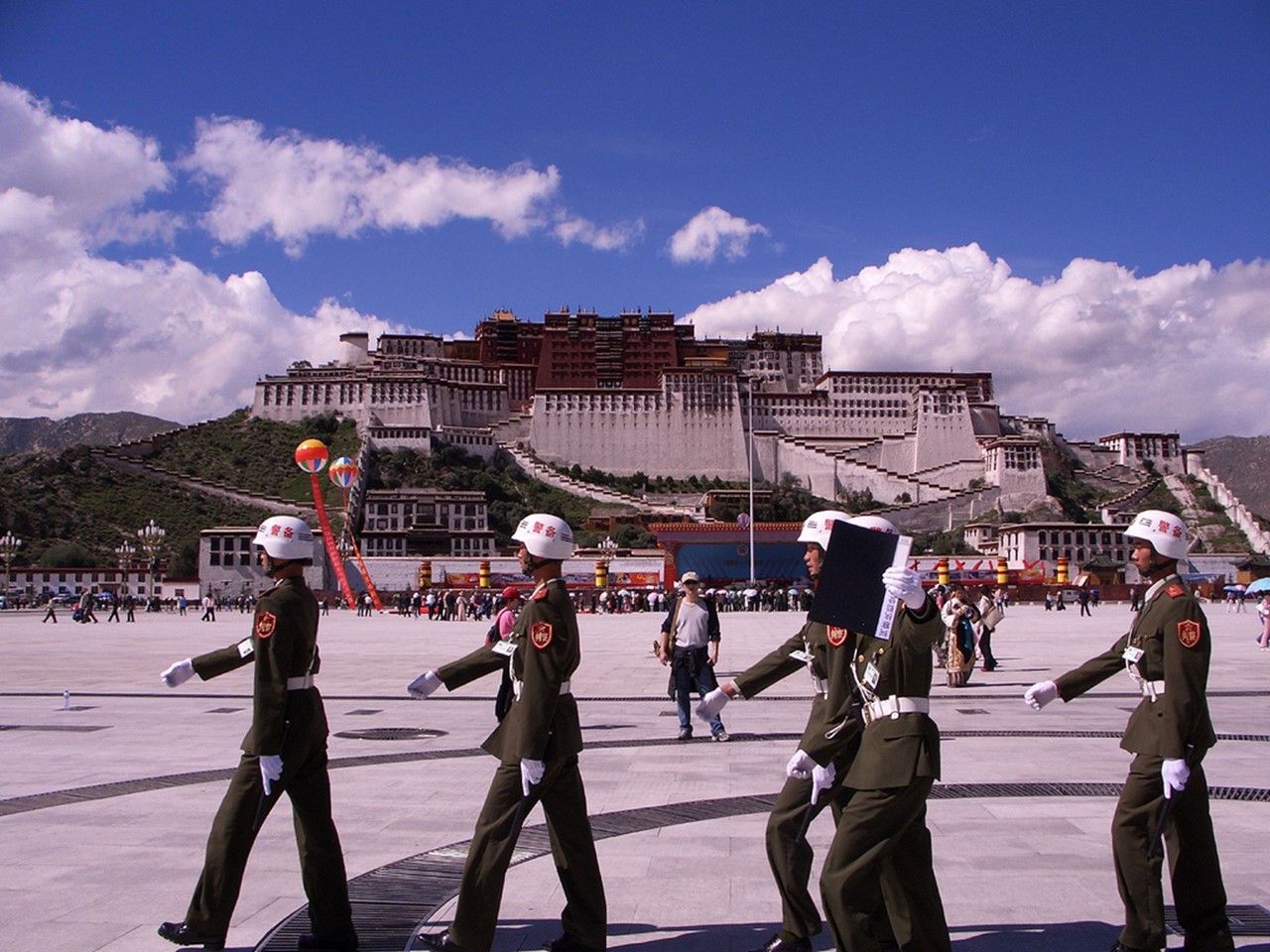
One answer to this is obvious. In Tibet the Potala palace has been reduced to a tourist attraction. The 14th Dalai Lama cannot visit, and is regularly vilified in the domestic press. Monasteries are severely constrained. Over the last few years more than a hundred Tibetans have immolated themselves. Although this has drawn scant criticism by global actors, such actions have their impact in Bhutan, where the monastic order is an important actor. Just this last week, the Nobel Laureate and long advocate for democracy, Liu Xiaobo, died in Chinese incarceration.

Yet the news from China is not all bad, nor is the news from India all good. As China invests in the grand Belt and Road Initiative (BRI), and Bhutan’s neighboring mountain state, Nepal, dreams of using BRI to link with the world, many admirers of China’s development model in Bhutan compare this to the situation in India’s northeast, where annual floods displace millions of poor, and atrocities by state forces and militants are as common as the entrenched poverty. Today Bhutan faces the challenge of managing its two gigantic neighbors, both of whom face massive internal challenges themselves. In the 18th Century, Prithvi Narayan Shah, the Gorkha King who unified Nepal, described this challenge as being like a yam between two boulders. Bhutan chose a different path, one that now means it stands as a peaceful anomaly in the midst of the contested border between the giants of Asia.

It will take great skill and wisdom to resolve this challenge from the power in the north and the power in the south. Bhutan has done this before, becoming not a yam to be crushed, but a bridge of understanding between vastly different cultures and polities. Nevertheless that incident led to massacres and was based on aggression, an outcome of colonial policies and fears. Today, as two Asian powers face off with Bhutan at the center of this delicate situation, the outcome will show whether the Asian century has a chance to be a peaceful one, or whether it will replay the violence of the colonial period. Much of that depends on how India and China, as well as Bhutan itself, manages its sovereignty. It is no small thing, and should not be ignored. To misquote George W. Bush, it would not be wise to underestimate Bhutan.


THE COLD WAR IN ASIA – INDIA AND TIBET ARE MILITARY PARTNERS TO CONTAIN COMMUNISM

THE COLD WAR IN ASIA – INDIA AND TIBET ARE MILITARY PARTNERS TO CONTAIN COMMUNISM

I warmly appreciate His Holiness the Dalai Lama’s remarks about India and China living side by side as “Brothers(Bhai-Bhai).”

The Standoff between China and India inside Bhutan’s territory called Doklam is not really serious. The real issue is that of dangers posed by spread of Communism in Asia. Both India, and Tibet recognized this real danger to foster military partnership or alliance to checkmate, to engage, to confront, to contain, to resist, and to battle against dark, and evil forces of Communism. To that extent, both India, and Tibet must consider deployment of Reserve Duty Brigade (Mobile Reserve Force or MRF) of Special Frontier Force to defend their shared values.

Rudranarasimham Rebbapragada

SPECIAL FRONTIER FORCE

DALAI LAMA INVOKES ‘HINDI CHINI BHAI BHAI’, SAYS DOKLAM STANDOFF NOT VERY SERIOUSOFF NOT


Clipped from: http://www.newindianexpress.com/nation/2017/aug/09/dalai-lama-invokes-hindi-chini-bhai-bhai-says-doklam-standoff-not-very-serious-1640716.html

Tibetan spiritual leader Dalai Lama. (File photo | PTI)

NEW DELHI: Describing the ongoing Doklam standoff as “not very serious”, the Dalai Lama today invoked “Hindi Chini Bhai Bhai”, a catch phrase that defined Sino-India ties in the 1950s, stressing that the two neighbors have to live side by side in peace.     

Asserting that any problem has to be resolved through talks, the 81-year-old Tibetan spiritual leader said the theme of 21st century should be dialogue.

“That’s the only away. One side’s retreat and defeat is an old-time thinking. In modern times, every country is dependent on each other,” he said, speaking at the Rajendra Mathur Memorial Lecture organized by the Editors Guild of India here.     

The spiritual leader, who calls himself a “chela” (disciple) of India, also needled China saying he can do more in India, which has freedom.

“Where there is no freedom, I don’t like. There is some tension, but I do not think it is very serious. We need to make distinction between people and governments. The other day, I mentioned that Hindi-Chini Bhai is the only way. India and China have to live side by side,” the Dalai Lama said, even as he added that “propaganda and wrong information make things complicated”.     

The Dalai Lama, who had fled a Chinese State crackdown in Lhasa and took shelter in India in 1959, said occasionally the two neighbors use “harsh words”, and added as a reminder that the Chinese forces eventually withdrew though they had reached Bomdila in 1962.     

Queried about any possible resumption of talks between the Central Tibetan Authority and the Chinese side, he said it may take place after the 19th national congress of the Communist Party of China, which is slated later this year. “But nothing is definite,” he said.     

India and China have been locked in a face-off in the Doklam area of the Sikkim sector for more than 50 days after Indian troops stopped the Chinese Army from building a road in the area. China claimed it was constructing the road within its territory and has been demanding immediate withdrawal of the Indian troops from the disputed Doklam plateau.     

Bhutan says Doklam belongs to it but China claims it to be its territory and says Thimphu has no dispute with Beijing over it.     

External Affairs Minister Sushma Swaraj had recently said both sides should first pull back their troops for any talks to take place, favoring a peaceful resolution of the border standoff. 


UNFINISHED VIETNAM WAR – THE ART OF KNOWING YOUR ENEMY – AMERICA’S ENEMY IN VIETNAM

 UNFINISHED VIETNAM WAR – THE ART OF KNOWING YOUR ENEMY – AMERICA’S ENEMY IN VIETNAM

Unfinished Vietnam War – The Art of Knowing Your Enemy – America’s Enemy in Vietnam. The Enemy remains Undefeated. The Enemy is alive in Tibet.


In my analysis, Vietnam War remains “Unfinished.” Firstly, the United States must define the term “ENEMY” to Know Enemy. United States recognized the threat posed by Communism to wage War to arrest the spread of Communism in South Asia. For that reason, United States began Vietnam War in response to threat posed by Soviet Union and People’s Republic of China.


Unfinished Vietnam War – The Art of Knowing Your Enemy – America’s Enemy in Vietnam. The Enemy remains Undefeated. The Enemy is alive in Tibet.

The threat posed by Communism in Asia endures as Communists are still governing Tibet, the second largest nation of South Asia. United States has no choice other than that of Knowing People’s Republic of China as “ENEMY.” The Enemy remains Undefeated. The Enemy is alive, not in Vietnam, but in Tibet.

Rudranarasimham Rebbapragada

SPECIAL FRONTIER FORCE

NORTH VIETNAM AND PEOPLE’S REPUBLIC OF CHINA SIGN AID AGREEMENT ON AUGUST 07, 1967

Clipped from: http://www.history.com/this-day-in-history/north-vietnam-and-peoples-republic-of-china-sign-aid-agreement?

Unfinished Vietnam War – The Art of Knowing Your Enemy – America’s Enemy in Vietnam. The faces of these North Vietnamese Soldiers do not truly depict the Face of Enemy in Vietnam. The Enemy remains Undefeated. The Enemy is alive in Tibet.

The North Vietnamese newspaper Nhan Dan reports that the People’s Republic of China (PRC) has signed a new agreement to give Hanoi an undisclosed amount of aid in the form of an outright grant.

Chinese support to the Communists in Vietnam had begun with their backing of the Vietminh in their war against the French. After the French were defeated, the PRC continued its support of the Hanoi regime. In April 1965, the PRC signed a formal agreement with Hanoi providing for the introduction of Chinese air defense, engineering, and railroad troops into North Vietnam to help maintain and expand lines of communication within North Vietnam. China later claimed that 320,000 of its troops served in North Vietnam during the period 1965 to 1971 and that 1,000 died there. It is estimated that the PRC provided over three-quarters of the total military aid given to North Vietnam during the war.

Cold War

1964

Congress passes Gulf of Tonkin Resolution

Vietnam War


Tonkin Gulf Resolution is passed

Unfinished Vietnam War – The Art of Knowing Your Enemy – America’s Enemy in Vietnam. The Enemy remains Undefeated. The Enemy is alive in Tibet.
Unfinished Vietnam War – The Art of Knowing Your Enemy – America’s Enemy in Vietnam. On August 07, 1964 US President Lyndon B. Johnson signed into Law, Gulf of Tonkin Resolution. The Enemy remains Undefeated. The Enemy is alive in Tibet.

The U.S. Congress passes Public Law 88-408, which becomes known as the Tonkin Gulf Resolution, giving President Johnson the power to take whatever actions he deems necessary to defend Southeast Asia including “the use of armed force.” The resolution passed 82-2 in the Senate.

Unfinished Vietnam War – The Art of Knowing Your Enemy – America’s Enemy in Vietnam. The Enemy remains Undefeated. The Enemy is alive in Tibet.

THE COLD WAR IN ASIA – THE BATTLE AGAINST SPREAD OF COMMUNISM

THE COLD WAR IN ASIA – THE BATTLE AGAINST SPREAD OF COMMUNISM

The Cold War in Asia – The Battle Against Spread of Communism. President Truman conceded the loss of China to Communists. The Cold War lingers due to incompatibility of Democracy and Communism.

United States supported Nationalist China during World War II to prevent Communist takeover of China.

The Cold War in Asia – Battle Against Spread of Communism. In August 1946, US placed embargo on further shipment of US arms to Nationalist China.

However, by 1944, the US relations with Nationalists cooled off. In August 1946, US placed embargo on further shipment of US arms to Nationalist China. The loss of China to Communists on October 01, 1949 resulted in the founding of the Republic of China in Taiwan (Portuguese Formosa) by Chan Kai-Shek and the Nationalists. It did not cause the end of Cold War in Asia. It continued to manifest itself with armed conflicts in Korea, Vietnam, Laos, and Cambodia.

The Cold War in Asia – The Battle Against Spread of Communism. Communist takeover of China in October 1949 alarmed the US, India, and Tibet. The threat remains the same.

I concede that The Cold War in Asia has not manifested as major armed conflict across Tibetan Plateau. It does not mean that there was no effort to checkmate the spread of Communism to Tibet. The United States and India tried to contain Communism that provoked Communist China’s attack across Himalayan Frontier during October 1962. The Communists claimed initial success of their armed aggression but declared unilateral cease-fire on November 21, 1962 to withdraw PLA forces from captured Indian territory.

The Cold War in Asia – The Spread of Communism. Unfinished Vietnam War. Communism poses the same threat as before. Vietnam War is not the last chapter of the history of Cold War in Asia.

In 1971-72, Nixon-Kissinger tried to normalize US – China relations without securing success in Vietnam. That was not the last chapter of The Cold War in Asia.

The Cold War in Asia – The Battle Against Spread of Communism in Asia. This Threat will persist as long as Communism survives in China.

Spread of Communism in Asia poses the same threat it had initially posed on October 01, 1949. Nations defending Freedom, Democracy, Peace, Justice, and Harmony have no other choice; they remain resolved to engage, to contain, to resist, to confront, and to combat the danger posed by Communist takeover of China.

Rudranarasimham Rebbapragada

SPECIAL FRONTIER FORCE

The Cold War in Asia – The Battle Against Spread of Communism. For success of Freedom, Democracy, Peace, Justice, and Harmony in Asia, Communism must be defeated.

HOW LONG CAN CHINA AND INDIA AVOID WAR IN THE HIMALAYAS?

Clipped from: https://www.yahoo.com/news/long-china-india-avoid-war-155933378.html

The Cold War in Asia – The Battle Against Spread of Communism. India, Tibet, Bhutan Border tensions need resolution through defeat of Communism.

A remote corner of the Himalayas has become the unlikely scene of a major power standoff between China and India. Now entering its seventh week, the standoff centers on the tri-junction border shared by China, India, and Bhutan referred to as Doklam in India and Donglang in China. Neither side is spoiling for a fight, nor are they ready to back down anytime soon considering the security concerns, domestic political pressures, and regional reputational stakes. A series of quiet diplomatic interactions has not restrained the brinkmanship or ultimatums and the risk of a major armed clash between two Asian heavyweights remains.

China and India have sparred along the Himalayan border for decades, including a brief war (and clear Chinese victory) in 1962. In areas like Aksai Chin or Arunachal Pradesh, long-standing disputes still play out in regular diplomatic arguments. Yet until recently there seemed to be a settled status quo in the comparatively peaceful tri-national border area, which has special strategic significance, lying as it does above the 14-mile-wide Siliguri valley, or the “chicken’s neck,” that connects northeast India to the rest of the country. As it turns out, both sides had very different visions of just what that status quo was.

The clash of perceptions has left them both smarting, and dialed jingoistic language up to 11. To China, Doklam is its own sovereign territory based on treaties, tacit agreements, and de facto control. India considers Doklam a disputed territory and contends that any changes to the territory’s jurisdiction must be made in consultation with India per a 2012 understanding between the three parties.

Thus, when roughly 100 People’s Liberation Army (PLA) soldiers arrived on the Dolam plateau (an area within Doklam) on June 16 with bulldozers and earth moving machinery to improve and extend an existing Chinese road, a company-sized unit of Indian soldiers crossed into Dolam from a nearby Indian army post and interdicted the construction team. The Indian soldiers formed a “human chain” to physically obstruct the road-building project and urged the Chinese to “desist from changing the status quo.”

Since the Indian interdiction on June 18, PLA construction has halted and both sides remain at an impasse. Between 300-350 Indian troops have pitched tents near the standoff site and dug in for the long haul, supported by supply lines and 2,500 reinforcements. China recently threatened to move its own reinforcements into the area and conducted live-fire military exercises in Tibet. While Indian officials have voiced interest in dialogue, official Chinese statements demand India’s unconditional withdrawal before any talks can begin. After issuing a complaint against Chinese actions on June 20, Bhutan has otherwise remained studiously ambiguous as to its views of the standoff.

The Doklam standoff stems from China’s and India’s deep-seated suspicions about the other’s intentions. Conventional wisdom on international politics guides states to confront, not appease, those attempting to revise any status quo, lest it encourage further belligerence. But identifying exactly who the revisionist side is, and what the status quo was, is notoriously difficult in any case, because the definitions are vague and under-theorized. And it is especially hard amid the murky legacies of empire that make up the Himalayan frontiers.

For China, India’s military deployment into a disputed region is revising norms of sovereignty as well as long-standing public and private agreements. China believes its own actions and demands are sanctioned by existing agreements and understandings, and that India is subverting those agreements for unprecedented military deployments on foreign soil.

For India, China’s attempts to construct roads in disputed territories appears consistent with its previous “salami-slicing” maneuvers of unilaterally revising unsettled borders for territorial aggrandizement and expanded influence in the region. India believes China is deliberately exploiting the ambiguity of existing territorial disputes to expand its borders, influence, and offensive capability while its own actions are more explicitly legitimated by other treaties, arrangements, and security imperatives.

The historical and diplomatic ambiguity around the border has also created plenty of space for both sides to feel self-righteously aggrieved. China contends it has unquestioned sovereignty over Doklam based on an 1890 treaty between Great Britain and China delimiting the border between the Indian state of Sikkim and Tibet, as well as the boundary point with Bhutan. As both India and China have accepted this treaty, India had no legitimate grounds to cross the border and thus its actions constitute an “invasion” of Chinese territory. Secondly, China argues even if Doklam is disputed, India is still inappropriately interfering with and prejudicing a bilateral dispute between Bhutan and China.

India concedes its troops crossed an international border but into Bhutan, not China. India’s interdiction is furthermore justified by another treaty, India’s 2007 treaty of friendship with Bhutan, and both countries’ interest in halting China’s attempts to unilaterally revise the status quo. As several analysts have pointed out, the vagaries of colonial cartography and internal contradictions within the 1890 treaty mean it can actually be interpreted to support both Indian and Chinese claims.

Adding to the confusion is Bhutan’s ambiguous position. As a tiny Himalayan kingdom sandwiched between the region’s two major powers, Bhutan has enjoyed a “special relationship” with India since 1949 that some might describe more as suzerainty. While the 2007 India-Bhutan Friendship Treaty updates the 1949 agreement to accord Bhutan greater autonomy, India still wields considerable influence over Bhutan’s foreign policy. To justify its recent military actions, India has invoked an article which states that neither country will allow its territory to be used for activities that harm the other’s national security interests.

To date, however, Bhutan has yet to clarify whether India acted independently or at Bhutan’s request for military assistance in Doklam. China has argued that, absent a clear invitation, India lacks legitimate grounds for its involvement. India’s Ministry of External Affairs (MEA) has used more circumspect language like “coordination,” and has flubbed opportunities to clarify Bhutan’s request. It is possible Bhutan privately requested help or that India coerced its way into the dispute for its own security interests as it did in Sri Lanka in 1987.

Another point of contention is private diplomacy among the various actors. While not publicly brandished as justification, our sources suggest (and some reporting seems to corroborate) that PLA actions in Doklam may be based on a private understanding between China and Bhutan. Both countries have at least seven disputed territories between themselves and reports indicate Bhutan may have implicitly agreed to cede Doklam to China in the late 1990s — a period when China was busily cleaning up its frontiers — in favor of territorial gains on its northern border.

Thus, China deems its road-building in Doklam legitimate within this private, pre-settlement agreement, and fearing such a settlement, India’s military “invasion” seeks to challenge that agreement and Bhutan’s sovereignty. It is possible India was privy to this private Chinese-Bhutanese agreement over Doklam and may have tried to thwart it. Regardless, India would likely maintain that no formal agreement means no final settlement. In its diplomatic demarche to China on June 20, Bhutan stated that Chinese actions violated its 1988 and 1998 agreements prohibiting alteration of the status quo before the completion of negotiations. Moreover, another private and superseding 2012 agreement between India and China purportedly required the consultation of all three countries before a final determination on the tri-junction is made.

China also implicitly contends it has had a decades-long presence and effective jurisdiction over Doklam where Tibetan herdsman bring their livestock to graze. According to Chinese records, the PLA began patrolling Doklam once a year since 1975 and gradually extended its geographical coverage southward.

India argues the remoteness of Doklam, its harsh winters, and poor infrastructure mean China has not always exercised de facto control over the area. Bhutanese herdsman have also traditionally used Doklam as a grazing land, and security forces from all three countries have regularly patrolled the area, leading to occasional confrontations. China destroyed two Bhutanese military posts in 2007 and allegedly constructed Chinese posts at the same spot. One unofficial map circulated by Chinese bloggers even refers to a “line of actual control” between China and Bhutan, implying Bhutan exercises de facto control of Doklam.

China is also arguing that India’s actions are unprecedented. To China, India has not only interfered in a bilateral dispute but escalated it by deploying forces across a recognized international border into a third country. Indeed, even Indian observers have acknowledged Doklam is the first time India has engaged Chinese forces from the soil of a third country. Upending established norms of sovereignty through force in the name of self-defense could permit future “adventurism.”

Yet India’s argument is that it was responding to unprecedented Chinese revision of borders through road construction (both hardening and extension) in disputed territory. Such moves would create permanent facts on the ground with grave implications for Indian national security.

In our estimation, Chinese claims are vulnerable due to the ambiguity of treaty language, private agreements, and de facto possession claims. But Indian claims are by no means less vulnerable given the unprecedented nature of India’s actions on the plateau and Bhutan’s deafening silence. Both sides’ views of the status quo may appear to themselves entirely justifiable, yet to their adversary as thin gruel.

Seven weeks into the crisis, the continued impasse — and increasingly caustic rhetoric — indicates the potential for escalation remains high. The Indian national security advisor’s recent visit to Beijing did not yield any breakthroughs, contrary to some reporting. Aggressive signals of resolve like military exercises or mobilization or perceived windows of tactical opportunity in a different sector of the disputed India-China border could lead either side to miscalculate, resulting in accidental or inadvertent escalation. And any shooting that begins on the border could even expand into other domains like cyber- or naval warfare.

Despite the challenges, there are several possible resolutions in sight if both sides — and third parties trying to defuse tension — strive to understand what might seem like mutually incompatible perspectives.

For example, India could find alternative ways to grant Beijing a “win” by softening its position on China’s “One Belt, One Road” project, both sides could pursue international arbitration, or both sides could wait until harsh winter weather force both sides forces to quietly draw down.

Another “off ramp” to deescalate the crisis is a back-channel agreement with Bhutan appearing as the public arbiter, allowing both sides to save face. The most obvious solution, as many have identified, would be a mutual withdrawal and return to pre-June 16 positions – something which may already be slowly happening, as both draw back troops. For both sides to save face, the public narrative of their back-channel dialogue could rely on Bhutan.

For example, India could claim Bhutan “thanked” India for its support and commitment to upholding the bilateral friendship treaty, but after deploying its own monitoring force, Bhutan requests that India withdraw its forces. This would allow India to withdraw without appearing to bend to Chinese demands, send a message that China’s salami tactics will be challenged, and buttress its credibility with states concerned with Chinese encroachment. For its part, China can claim India withdrew first and quietly halt road construction until a final settlement is reached between itself and Bhutan. This would give all sides, including Bhutan, a face-saving exit necessary to appease domestic audiences. At the same time, India and China will have exchanged clear signals on just how serious they are about the border — and how dangerous assumptions about the other side can be.

Photo credit: DESHAKALYAN CHOWDHURY/AFP/Getty Images

The Cold War in Asia – The Battle Against Spread of Communism. Nations of Asia need to defeat Communism to resolve Border tensions and conflicts.
The Cold War in Asia – The Battle Against Spread of Communism. Border tensions and Border conflicts among Asian nations demand resolution through defeat of Communism.

THE COLD WAR IN ASIA – UNFINISHED VIETNAM WAR

THE COLD WAR IN ASIA – UNFINISHED VIETNAM WAR

The Cold War in Asia – Unfinished Vietnam War. Spread of Communism to Asia undermines Natural Freedom, Natural Balance, and Natural Equilibrium shaping living experience of people.

In my analysis, the border tensions between India and Communist China are mere symptoms of ‘The Cold War in Asia’.

Nations of ‘Free World’ were alarmed by the spread of Communism into Asia. United States spent billions of dollars to prevent Communist takeover of China. Having failed to do so, United States pursued a policy of containing the spread of Communism in Asia. In the battles of Korean Peninsula, and Vietnam, Communists prevailed with support from Soviet Union and Communist China.

India’s border tension problems began with Red China’s illegal occupation of Tibet since 1950. During 1960s and 1970s, the United States and India had opportunity to launch Tibet Campaign to defend Freedom, Democracy, Peace, and Justice in Asia. Most unfortunately, during 1971-72, Nixon-Kissinger Vietnam Treason placed ‘The Cold War in Asia’ on ‘back-burner’.

The Cold War in Asia – Unfinished Vietnam War. United States, India, and Tibet missed a golden opportunity to drive Communism out of Tibet. US President Eisenhower’s Visit to India during December 1956.
The Cold War in Asia – Unfinished Vietnam War. Both Tibet, and India hoped to contain threat posed by Communism through negotiations.

I am not surprised by Communist China’s military assertiveness for the US withdrew without accomplishing ‘War for Peace’ Mission fervently advocated by US President Dwight D. Eisenhower in December 1956 while on visit to India.

Rudranarasimham Rebbapragada

SPECIAL FRONTIER FORCE

CHINA’S TOUGH STANCE ON INDIA DISPUTE RAISING CONCERN ACROSS SOUTHEAST ASIA, ANALYSTS SAY

Clipped from: http://www.scmp.com/news/china/diplomacy-defence/article/2104093/chinas-tough-stance-india-dispute-raising-concern

Beijing’s handling of protracted conflict in Himalayas has had a spillover effect in the region and fueled suspicion

The Cold War in Asia – Unfinished Vietnam War. Border tensions, Border Conflicts along Himalayan Frontier are symptoms of spread of Communism in Asia.

Vehicles travel along a mountain road near the Nathu La Pass, an open trading post in the Himalayas between India and China, in Sikkim, India. Photo: Bloomberg

The protracted border dispute between China and India in the Himalayas has created a “spillover effect” as China’s neighbors become unsettled by its tough handling of the escalating conflict between the two Asian giants, foreign policy experts have said.

China’s Foreign Minister Wang Yi and his Indian counterpart Smt. Sushma Swaraj are scheduled to attend the Asean foreign ministers’ meeting in Manila later this week. And while the North Korean nuclear crisis and South China Sea disputes are expected to dominate the meeting, analysts will also be keeping a close eye on how members of the 10-nation group interact with China and India.

Hostile border dispute with India could damage China’s global trade plan, experts warn

The Association of Southeast Asian Nations generally regards a robust Indian presence in the region as a useful deterrent against China, which has been increasingly assertive in its approach to handling territorial issues, as has been the case in the Himalayas.

The Cold War in Asia – Unfinished Vietnam War. Border tensions and Border Conflicts along Himalayan Frontier are symptomatic of Communist domination in Asia.

The disputed Doklam region (called Donglang by China) on the India, Bhutan and China tri-border. Graphic: SCMP

Are China-India trade ties turning sour amid border standoff?

China and India last week held their first substantial talks since the dispute broke out more than a month ago in the Doklam region, where the pair shares a border with Bhutan. Chinese State Councilor Yang Jiechi met Indian National Security Adviser Ajit Doval in Beijing, though neither showed any signs of backing down and tensions remain high.

Also last week, China’s Defence ministry issued its strongest warning yet to India, with a spokesman saying Beijing had stepped up its deployment along the unmarked border and would protect its sovereignty “at all costs”.

Richard Javad Heydarian, a political scientist at the Manila-based De La Salle University, said the stand-off in Doklam had had a “spillover effect” by fueling suspicion among countries that are caught in separate territorial disputes with China.

Dispatch from Doklam: Indians dig in for the long haul in standoff with China

“People are asking, if China is really peaceful, why are there so many countries having disputes with China?” he said.

Such sentiment may create fertile ground for Southeast Asian countries to leverage China’s influence with engagement with India.

Vietnam’s foreign minister and deputy prime minister, Pham Binh Minh, has called on India to play a greater role in the region and to partner with Southeast Asian countries on strategic security and promoting freedom of navigation in South China Sea.

The Cold War in Asia – Unfinished Vietnam War. Border Tensions, and Border Conflicts along Himalayan Frontier are symptomatic of spread of Communism in Asia.

India Prime Minister Narendra Modi and President Xi Jinping at a BRICS leaders’ meeting with the bloc’s Business Council in Goa last October 16. Photo: AFP

A few days after Minh spoke, Vietnam granted Indian Oil firm ONGC Videsh a two-year extension on its plan to explore a Vietnamese oil block in an area of the South China Sea contested by China and Vietnam.

Analysts said recent developments have wide strategic implications – pointing to how Asia is increasingly defined by the China-India rivalry and the renewed tensions between the two Asian giants.

How India border stand-off gives China a chance to burnish its global image

Nisha Desai Biswal, former US assistant secretary of state for South and Central Asia, was quoted by Indian media PTI as saying that China needs to acknowledge that “there is growing strategic and security capability across Asia” and that “India is a force to be reckoned with”.

Wang Yi on Tuesday backed Philippines President Rodrigo Duterte’s idea of forming joint energy ventures in the disputed South China Sea, warning that unilateral action could cause problems and damage both sides.

The Cold War in Asia – Unfinished Vietnam War. Border Tensions and Border Conflicts along Himalayan Frontier are symptomatic of spread of Communism in Asia.

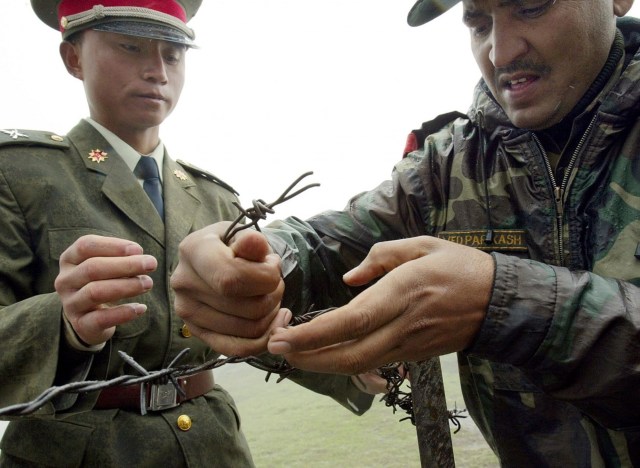
A Chinese soldier, left, is shown next to an Indian soldier at the Nathu La border crossing between India and China in India’s northeastern Sikkim state. Photo: AFP

Duterte on Monday said a partner had been found to develop oil fields and exploration, and exploitation would restart this year.

However, analysts warn that India’s strong position in the standoff has strengthened the hawkish voices in the Philippines who seize opportunities to criticize Duterte’s détente policy towards China and “push forward the narrative that the Philippines needs to be careful on how to approach China and its territorial expansion”, Heydarian said.

Explore the China-India border standoff

Under Indian Prime Minister Narendra Modi’s “Act East” policy, India in recent years has formed strategic partnerships with Southeast Asian countries including Vietnam, Indonesia, Malaysia and Singapore, and Northeast Asian countries including Japan and South Korea.

During the “India-Asean Delhi Dialogue IX” early this month, Indian External Affairs Minister Sushma Swaraj said New Delhi remained committed to enhancing maritime cooperation with Asean as well as upholding freedom of navigation and respect for international law in the region.

The Cold War in Asia – Unfinished Vietnam War. Border Tensions, and Border Conflicts along Himalayan Frontier are symptomatic of spread of Communism in Asia.

A Chinese soldier gestures as he stands near an Indian soldier on the Chinese side of the ancient Nathu La border crossing between India and China. Photo: AFP

Heydarian suggests that India’s upgrading of its strategic partnership with Asean and increasing its strategic presence in the South China Sea could be a way of pushing back against China.

Even a non-claimant Southeast Asian state such as Thailand “would see the benefit of China being challenged in the South Asia theatre”, said Thitinan Pongsudhirak, an international relations scholar at Bangkok-based Chulalongkorn University.

“India’s standing up to China can only be a boon for Southeast Asian countries even when they don’t say so openly,” he said, “Any major power keeping China in check can only yield geopolitical benefits to Southeast Asia as the region is wary of China’s growing assertiveness.”

China is being ‘unusually aggressive’ in border row

But Pongsudhirak also said that India, a “latecomer to Southeast Asia’s geopolitics”, still lacks strategic depth in terms of military reach and economic wherewithal. “But in combination with other middle powers like Japan, India can have a significant impact in Southeast Asia’s power dynamics,” he said.

Despite Southeast Asian countries’ welcoming attitude, India has remained cautious towards more strongly engaging with the region, observers said.

The Cold War in Asia – Unfinished Vietnam War. Border Tensions, and Border Conflicts along Himalayan Frontier represent Communist Expansionism in Asia.

An Indian Soldier stands at the Nathu La border crossing between India and China in India’s northeastern Sikkim state. Photo: Handout

“Southeast Asia is a natural extension of India’s security horizons in light of its growth as a regional power,” said Rajesh Manohar Basrur, a South Asia specialist with Nanyang Technological University.

Basrur said that while competition with China is a major driver of India’s engagement with Southeast Asia, India’s commitment to the region remains limited with measures amounting to no more than “symbolic acts such as military exercises, [to] generate a strategic environment aimed at building up political-psychological pressure on [China].”

Why India is cool towards China’s Belt and Road

Sourabh Gupta, a senior specialist at the Institute for China-America Studies in Washington, said that as India tries to limit fallout from its Doklam intervention, it will not want to expand the theatre of conflict or widen the geography of competition in the short-term.

“But I can foresee India making a qualitatively greater effort, albeit quietly, to build up Vietnam’s naval and law enforcement capacity to confront and deter Chinese assertiveness,” he said.

Gupta also warned that the situation in the South China Sea could lapse into even further conflict.

The Cold War in Asia – Unfinished Vietnam War. Border Tensions, and Border Conflicts along Himalayan Frontier are symptomatic of Communist Expansionism in Asia.

Chinese troops hold a banner which reads, “You’ve crossed the border, please go back.”

“India and China have a fairly rich menu of boundary management protocols which effectively translate into engagements between very lightly armed personnel from either side when a standoff breaks out,” he said.

“That is different from the situation in the South and East China Sea where engagement protocols are still very rudimentary and could see sharp escalatory spirals.”

The Cold War in Asia – Unfinished Vietnam War. Armed Conflicts in China, Korea, Vietnam, and Tibet could not checkmate spread of Communism in Asia.

MAN vs NATURE – THE BATTLE FOR QINGHAI-TIBET PLATEAU

MAN vs NATURE – THE BATTLE FOR QINGHAI-TIBET PLATEAU


Natural Forces, Natural Mechanisms patiently worked over thousands of years to create Natural Conditions that shaped Tibetan experience of Natural Freedom, Natural Equilibrium, Natural Peace, Natural Harmony, and Natural Tranquility. Tibetans maintained their frugal lifestyles in accordance with Laws of Nature.


Communist China after her illegal occupation of Tibet, continues to apply Physical Force to subjugate Tibet and Nature that operates Tibetan existence. The Battle for Qinghai-Tibet Plateau has commenced and is far from over.


Rudranarasimham Rebbapragada

DOOM DOOMA DOOMSAYER


CHINA OPENS $4 BILLION EXPRESSWAY ON PERMAFROST OF QINGHAI-TIBET PLATEAU

Clipped from: http://www.livemint.com/Politics/CWjlzpI5eEQcPUgYjIVRcM/China-opens-4-billion-expressway-on-permafrost-of-QinghaiT.html

China took six years to construct the road, at a total cost of nearly 27 billion yuan. Photo: Reuters

Beijing: China has opened an expressway on the permafrost of Qinghai-Tibet Plateau, the world’s highest, at a total cost of $4 billion.

The 634.8km expressway section, which connects Gonghe County with the city of Yushu in northwest China’s Qinghai Province, was built at an average altitude of over 4,000 meters. Up to 36% of the road is built on permafrost that could become unstable due to temperature changes caused by vehicles. Advanced technology was developed to keep the ground surface stable for the construction and operation of the expressway, said Niu Jiangzhong, from Electrical Engineering Co. Ltd of China Railway 12th Bureau Group.

Construction of the road took over six years, at a total cost of nearly 27 billion yuan ($4 billion). To protect the local environment, vegetation was removed during construction and later replanted along the roadside. The expressway has shortened the travel time between the provincial capital Xining and Yushu from 12 to just eight hours, state-run Xinhua news agency reported. PTI

First Published: Tue, Aug 01 2017. 05 03 PM IST


Whole Trouble – The Decline of American Century

The Rise of Evil Red Empire – The Cold War in Asia

Whole Trouble – The Decline of American Century. The Rise of Evil Red Empire – The Cold War in Asia. Nixon-Kissinger Vietnam Treason initiated Doomed American China Fantasy in 1972.

In my analysis, Nixon-Kissinger Vietnam Treason caused the ‘Decline of American Century’ and the ‘Rise of Evil Red Empire’. I ask my readers to remember July 15, 1971 as “Black Day to Freedom” , the Day on which US President Nixon publicly announced his decision to befriend Communist China while Americans were bleeding and dying in Vietnam to combat the spread of Communism in Asia.

Whole Trouble – The Decline of American Century. The Rise of Evil Red Empire – The Cold War in Asia. Nixon-Kissinger Vietnam Treason initiated Doomed American China Fantasy in 1972.

Nixon-Kissinger Vietnam Treason initiated Doomed American China Fantasy in 1972. Since that time, USA as a global power is on steady decline, while Red China remains in hot pursuit of her doctrine of Expansionism, a State Policy of using Military and Economic Power to subjugate people and control natural resources in weaker nations of Asia, Africa, and Europe.

Whole Trouble – The Decline of American Century. The Rise of Evil Red Empire – The Cold War in Asia. Nixon-Kissinger Vietnam Treason initiated Doomed American China Fantasy in 1972.
President Nixon met Communist China’s Prime Minister Chou Enlai. Did this act of friendship help the US Army in the Vietnam War? Could it stop Communist North Vietnam from launching its major invasion of South Vietnam during March 1972? Using this friendship, both President Nixon and Dr. Kissinger tried their best to stop India from Liberating Bangladesh during 1971. This Nixon and Chou Enlai friendship did not stop the Liberation of Bangladesh which India initiated with Operation Eagle 1971 in the Chittagong Hill Tracts.
Whole Trouble – The Decline of American Century. The Rise of Evil Red Empire – The Cold War in Asia. Nixon-Kissinger Vietnam Treason initiated Doomed American China Fantasy in 1972.
TIBET CONSCIOUSNESS – UNDYING HOPE FOR FREEDOM. US PRESIDENT NIXON’S VISIT TO COMMUNIST CHINA IS BLACK DAY TO FREEDOM.
Whole Trouble – The Decline of American Century. The Rise of Evil Red Empire – The Cold War in Asia. Nixon-Kissinger Vietnam Treason initiated Doomed American China Fantasy in 1972.
REMEMBERING CHINESE PRIME MINISTER ZHOU ENLAI ON JANUARY 08, 2017, HIS 41st DEATH ANNIVERSARY. I KEEP ZHOU ENLAI, MAO ZEDONG, RICHARD NIXON ALIVE IN MY THOUGHTS FOR TIBET REMAINS UNDER MILITARY OCCUPATION.

Military & Defense

Whole Trouble – The Decline of American Century. The Rise of Evil Red Empire – The Cold War in Asia. Nixon-Kissinger Vietnam Treason initiated Doomed American China Fantasy in 1972.

China held a massive military parade showing off its might – and it could surpass the US by 2030


Alex Lockie

Whole Trouble – The Decline of American Century. The Rise of Evil Red Empire – The Cold War in Asia. Nixon-Kissinger Vietnam Treason initiated Doomed American China Fantasy in 1972.

China’s president, Xi Jinping, presiding over the country’s massive military parade in inner Mongolia. CCTV

Chinese President Xi Jinping on Sunday presided over a massive military parade from an open-topped jeep, declaring, “The world is not peaceful, and peace needs to be defended.”

And as China’s show of force demonstrates, Beijing may have the will and the strength to replace the US as the world’s defender of peace.

“Our heroic military has the confidence and capabilities to preserve national sovereignty, security, and interests … and to contribute more to maintaining world peace,” Xi said at the parade, one day after US President Donald Trump lashed out at Beijing for its inaction regarding North Korea’s nuclear and ballistic missile programs.

China’s massive military modernization and increasing assertiveness have irked many of its neighbors in the region, and even as the US attempts to reassure its allies that US power still rules the day, that military edge is eroding.

China showed off new, mobile intercontinental ballistic missiles that it says can reach the US in 30 minutes, along with its J-20 stealth interceptor jets. And Xi inspected thousands of troops drawn from the 2 million-strong People’s Liberation Army’s on its 90th anniversary.

The historian Alfred McCoy estimates that by 2030, China, a nation of 1.3 billion, will surpass the US in both economic and military strength, essentially ending the American empire and Pax Americana the world has known since the close of World War II.

Whole Trouble – The Decline of American Century. The Rise of Evil Red Empire – The Cold War in Asia. Nixon-Kissinger Vietnam Treason initiated Doomed American China Fantasy in 1972.

Soldiers marching to celebrate the 90th anniversary of the founding of China’s People’s Liberation Army. Xinhua

But China could achieve this goal patiently and without a violent struggle. China has employed a “salami-slicing” method of slowly but surely militarizing the South China Sea in incremental steps that have not prompted a strong military response from the US. However, the result is China’s de facto control over a shipping lane that sees $5 trillion in annual traffic.

“The American Century, proclaimed so triumphantly at the start of World War II, may already be tattered and fading by 2025 and, except for the finger pointing, could be over by 2030,” McCoy wrote in his new book, “In the Shadows of the American Century: The Rise and Decline of US Global Power.”

Whole Trouble – The Decline of American Century. The Rise of Evil Red Empire – The Cold War in Asia. Nixon-Kissinger Vietnam Treason initiated Doomed American China Fantasy in 1972.

China unveiled its J-20 stealth fighter at an air show in November. China Daily/via REUTERS

China’s J-20 jet also most likely borrows from stealth secrets stolen from the US through a sophisticated hacking regime. Though China hasn’t mastered stealth technology in the way the US has, the jet still poses a real threat to US forces.

Meanwhile, the US is stretched thin. It has had been at war in Afghanistan for 16 years and in Iraq for 14, and it has been scrambling to curtail Iranian and Russian influence in Syria while reassuring its Baltic NATO allies that it’s committed to their protection against an aggressive Russia.

Under Xi, who pushes an ambitious foreign policy, China’s eventual supremacy over the US seems inevitable.

  • * Copyright © 2017 Business Insider Inc. All rights reserved. Registration on or use of this site constitutes acceptance of our Terms of Service and Privacy Policy.

Inserted from <http://www.businessinsider.com/china-military-parade-superior-to-us-by-2030-2017-7>

Whole Trouble – The Decline of American Century. The Rise of Evil Red Empire – The Cold War in Asia. Nixon-Kissinger Vietnam Treason initiated Doomed American China Fantasy in 1972. Black Day to Freedom – Whole Villain – Nixon – Mao cartoon

RED CHINA’S DOCTRINE OF NEOCOLONIALISM

RED CHINA’S DOCTRINE OF NEOCOLONIALISM

Red China’s Doctrine of Neocolonialism defines Hambantota Port deal with Sri Lanka.

Red China’s Doctrine of Neocolonialism describes Hambantota Port Deal with Sri Lanka.

Red China signed a deal with Sri Lanka to use Hambantota Port in pursuit of her doctrine of Neocolonialism. World must pay attention to China’s aggression in Tibet if it wants to resist, contain, engage, oppose, and confront China’s Neocolonialism threatening Freedom, Democracy, Peace, and Harmony in Asia, Africa, and Europe.

Rudranarasimham Rebbapragada

DOOM DOOMA DOOMSAYER

SRI LANKA SIGNS HAMBANTOTA PORT DEAL WITH CHINA

Clipped from: http://www.aljazeera.com/news/2017/07/sri-lanka-signs-hambantota-port-deal-china-170729073859204.html

Billion-dollar agreement reached despite trade union opposition and protests over security fears, including from India.

29 Jul 2017 09:54 GMT

Red China’s Doctrine of Neocolonialism describes Hambantota Port Deal with Sri Lanka.

Sri Lanka is selling a 70 percent stake to China Merchants Ports Holdings for $1.12bn [Lakruwan Wanniarachchi/AFP]

Sri Lanka has signed a $1.12bn agreement with a state-run Chinese firm to operate a port in the southeast of the country, despite security concerns and protests from trade unions.

According to the long-delayed deal reached in the capital Colombo on Saturday, Sri Lanka Ports Authority agreed to sell a 70 percent stake in the Hambantota port to China Merchants Ports Holdings.

The Chinese firm will run the workings of the newly constructed port over a 99-year lease. 

The Cabinet approved the agreement on Tuesday, almost six months after the framework deal was signed.

Public anger and protests had delayed the signing.

READ MORE: Protest over Hambantota port deal turns violent

Demonstrators rallied against the loss of land and concerns that the port could be used by the Chinese military.

Trade unions earlier in the week staged a strike against the deal, temporarily crippling fuel distribution on the island.

They fear the deal gives an advantage to China in the bunkering business, which provides fuel to ships, as the port is located on a key international shipping lane between Europe and Asia. 

Chinese President Xi Jinping launched the “One Belt, One Road” project in May, pledging tens of billions of dollars to build ports, highways and power grids in about 60 different countries, linking China to much of Asia, Europe and Africa.

Al Jazeera’s Minelle Fernandez, reporting from Colombo, said the Hambantota port located in a strategic position.

“For China to be able to get its foot in, and essentially take over this port, is considered quite an important part of its plan particularly with the new Silk Road initiative,” she said.

Sri Lanka’s government has dismissed the unions’ concerns, saying that the agreement would prove profitable and will help repay loans taken on to build the port.

India voices concern

The government argues that the port has been underused since its opening in 2010. The construction cost more than $361m, with the Export-Import Bank of China providing a large chunk of financing.

Ports Minister Mahinda Samarasinghe told journalists that Sri Lanka “cannot afford to continue to pay” back the loans without better returns at the port.

Only 44 ships have been handled by the Hambantota port since 2015, making it an unprofitable venture, DPA news agency reported.

Neighboring India has also voiced concerns that China could use the deep-sea port in the Indian Ocean to dock military vessels.

Sri Lanka has assured India that there are no security issues over the port, which it says will only be used for commercial purposes.

“No naval ship, including Chinese vessels, can call over at the Hambantota Port without our permission,” Samarasinghe said.

Al Jazeera’s Fernandez said: “The Sri Lankan government has sought to allay fears from both its neighbors and the people in the region that this is a commercial agreement which will help Sri Lanka on its road back to recovery from debt servicing.”

Source: Al Jazeera and news agencies

Red China’s Doctrine of Neocolonialism describes its One Belt, One Road (OBOR), Silk Road Initiative.

Red China’s Doctrine of Neocolonialism defines Hambantota Port Deal with Sri Lanka.

Red China’s Doctrine of Neocolonialism defines Hambantota Port Deal with Sri Lanka.

Red China’s Doctrine of Neocolonialism Defines Hambantota Port Deal with Sri Lanka.

Red China’s Doctrine of Neocolonialism defines Hambantota Port Deal with Sri Lanka.