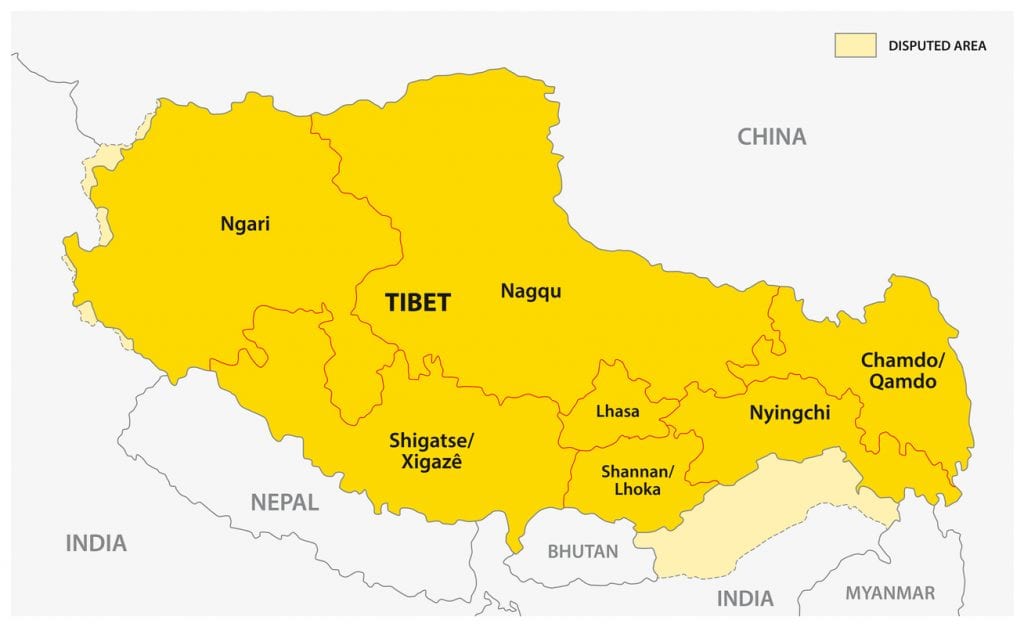
Communist China’s Sinister Plan of Sinicization of Tibet

Communist China’s Sinister Plan of Sinicization of Tibet.

India is facing the inevitable consequences of Communist China’s Sinister Plan of Sinicization of Tibet using its military power since 1950.

Rudra Narasimham Rebbapragada

Special Frontier Force-Establishment No. 22-Vikas Regiment

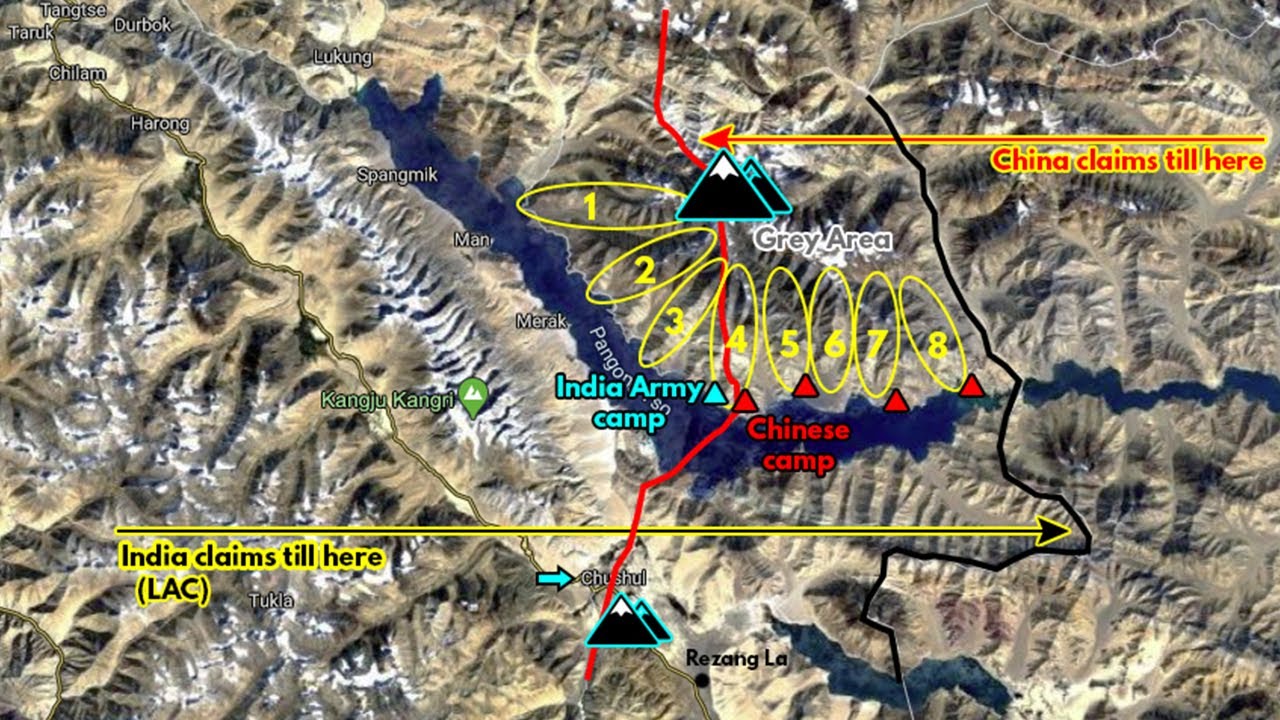
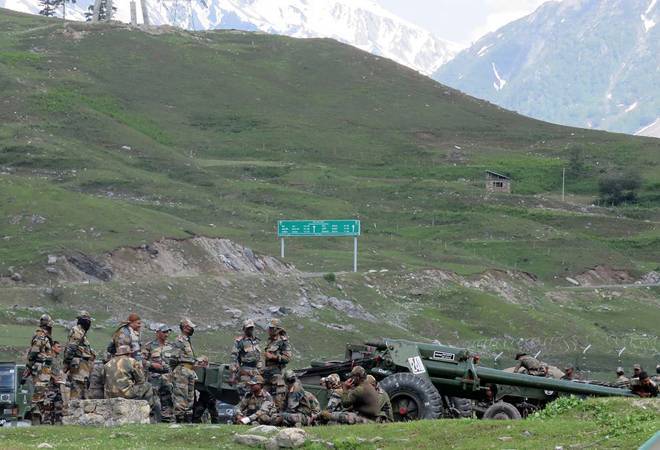
Special Frontier Force personnel were used  by Indian Army to occupy these strategic peaks in the Southern banks of Pangong Tso. This took the Chinese army by surprise. The occupation of these heights has shown Indian resolve to take the fight to the Chinese side. 

The Pangong Tso lake in Ladakh on the banks of which India and China have been engaged in a standoff for four months. India claimed on Monday that it pre-empted a move by the Chinese army to occupy Indian territory at a new point in the region. (AP file photo)

India says troops hold Himalayan hilltops after face-off with Chinese forces

By Devjyot Ghoshal  

Communist China’s Sinister Plan of Sinicization of Tibet. Reuters/Mukesh Gupta FILE PHOTO: A view of Pangong Tso lake in Ladakh region

NEW DELHI (Reuters) – A senior Indian official said on Tuesday Indian troops had deployed on four strategic hilltops after what New Delhi called an attempted Chinese incursion along the disputed Himalayan border, underlining simmering tensions between the Asian giants.

China denied that it had moved first, with an embassy spokeswoman in New Delhi accusing Indian troops of trespassing across the Line of Actual Control (LAC) – the de facto border – and conducting “flagrant provocations”.

Indian and Chinese troops have been locked in a high-altitude border confrontation for months in the western Himalayan region of Ladakh. The two sides have disputed the course of the frontier for more than half a century.

The Indian official, who was briefed on the latest incident, said the Indian troop move responded to an attempt by a large number of Chinese infantry to push through a key mountain pass late on Saturday.

“We mobilized and occupied the four heights,” the official said, adding all four hilltops were on India’s side of the LAC.

The Indian official said the Chinese soldiers were backed up by military vehicles and drew close enough to engage Indian troops in verbal arguments, but there were no clashes.

He said the incident occurred on the southern bank of Pangong Tso, a picturesque lake in the snow desert region where Indian and Chinese troops have been facing off since April.

The Indian official said the Chinese had also been consolidating positions on the northern bank of the lake with what appeared to be new defensive positions.

But Ji Rong, a spokeswoman for the Chinese embassy in New Delhi, said Indian troops had violated the LAC at Pangong Tso’s southern bank and near another mountain pass.

“What India has done runs counter to the efforts made by both sides for a period of time to ease and cool down the situation on the ground, and China is resolutely opposed to this,” she said.

“India … said it pre-empted Chinese military activity,” China’s state-backed Global Times said in an editorial. “The word ‘pre-empt’ shows it was Indian troops that first took destructive action, and the Indian troops initiated the stand-off this time.”

In June, 20 Indian soldiers were killed in hand-to-hand combat with Chinese troops in Ladakh’s Galwan area, the most serious clash between the two countries in 50 years.

Both sides then agreed to pull back with military chiefs in the region holding five rounds of talks. But the Indian military said this week Beijing had reneged on the deal by carrying out “provocative military movements to change the status quo”.

(Reporting by Devjyot Ghoshal; Editing by Sanjeev Miglani and Mark Heinrich)

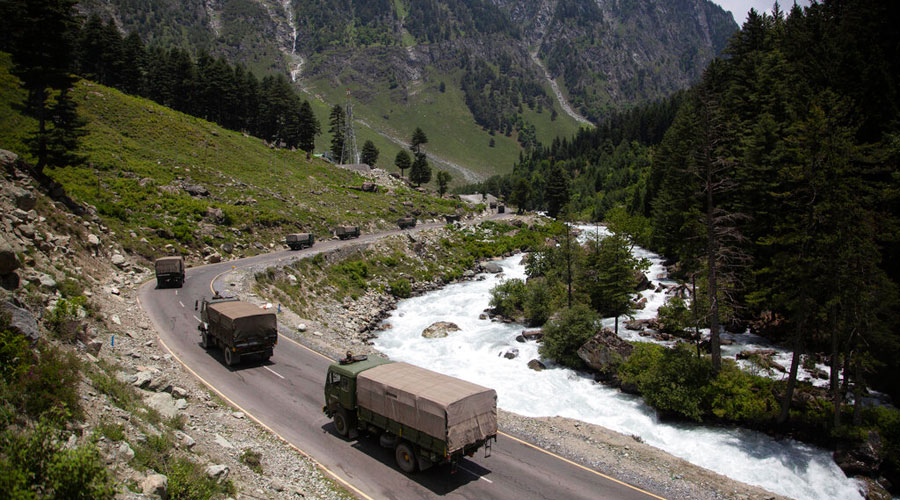
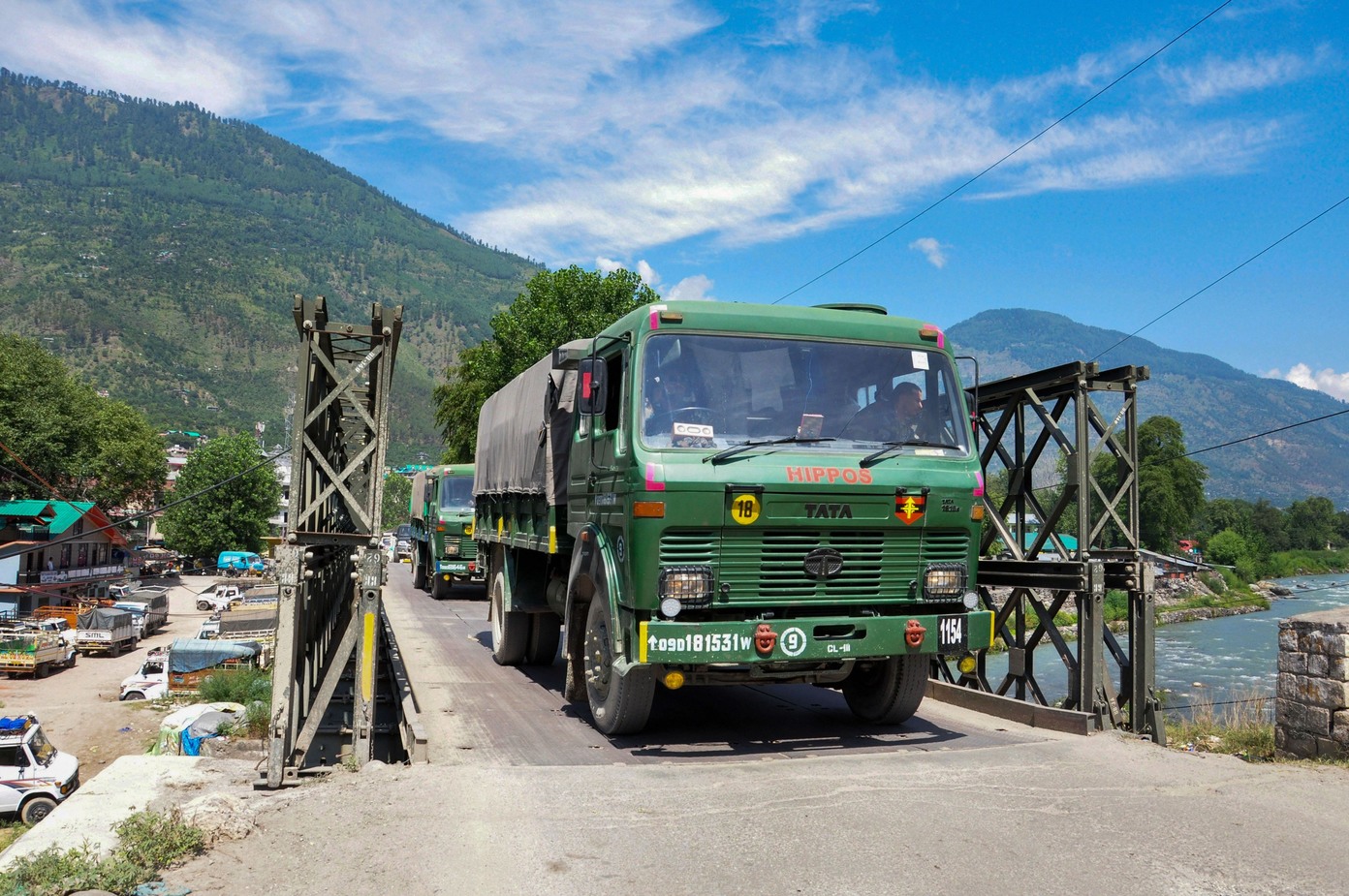
In this June 17, 2020, file photo, an Indian army convoy moves on the Srinagar- Ladakh highway at Gagangeer, north-east of Srinagar.
AP
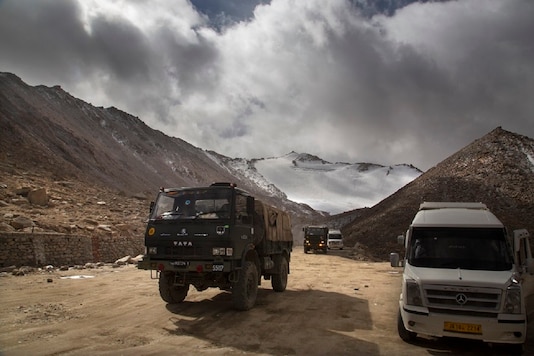
An Indian Army truck crosses Chang la pass near Pangong Lake in Ladakh region, India. (AP File Photo)
Indian Army thwarts fresh attempts by China’s PLA to change status quo in Pangong lake area in Ladakh
Indian Army is committed to maintaining peace and tranquility through dialogue, but is also equally determined to protect India’s territorial integrity: Spokesperson
PTI
Chinese troops carried out fresh “provocative action” in Pangong Tso Lake areas in Eastern Ladakh on Monday
Chinese armoured vehicles and battle tanks are positioned near the foothills of ‘Kala Top’, which is occupied by Indian forces
China took provocative action 31 August as talks were on, says India
Ladakh Clash: A Brigade Commander level flag meeting is in progress at Chushul. (File)

https://www.indiatoday.in/video/India/embed/MTcxNzA5NA==

The latest skirmish between the two sides took place along the Southern bank of the Pangong Tso, a glacial lake at 14,000 feet. This photo taken on September 14, 2018, shows a general view of Pangong Lake from the Indian-controlled side.
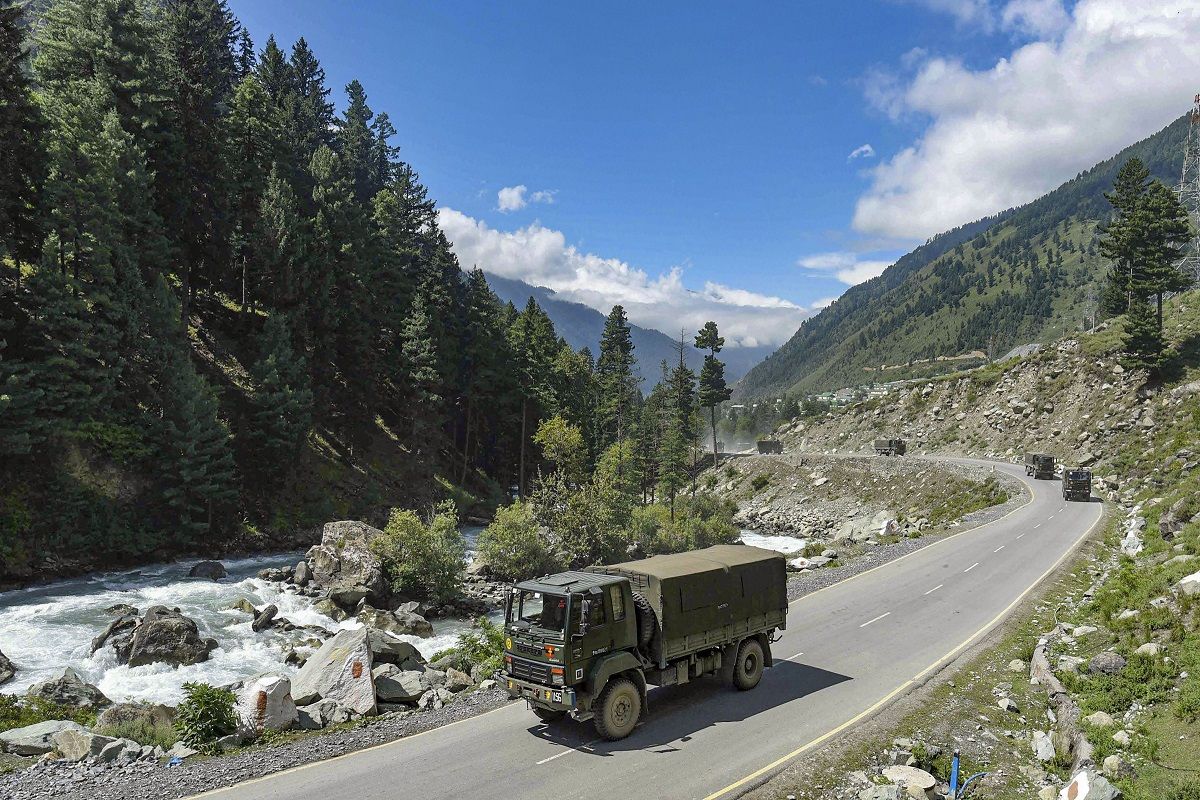
Indian Border Security Force (BSF) soldiers guard a highway leading towards Leh, bordering China, in Gagangir on June 17, 2020.
Communist China’s Sinister Plan of Sinicization of Tibet.

President Xi Jinping’s Plan for Tibet vs Nature’s Plan for Tibet

President Xi Jinping’s Plan for Tibet vs Nature’s Plan for Tibet

In my analysis, President Xi Jinping’s Plan for Tibet is not consistent with Mother Nature’s Plan for Tibet. Besides geographical isolation, Mother Nature nurtured a sense of Freedom giving the Tibetan people the experience of Peace, Harmony, and Tranquility in their daily lives. The military occupation of Tibet is fundamentally inconsistent with the Nature’s Plan for Tibet.

Rudra Narasimham Rebbapragada

Special Frontier Force-Establishment No. 22-Vikas Regiment

Sinicize Tibetan Buddhism, build fortress around Tibet, says Xi Jinping

Exiled Tibetan groups, led by exiled spiritual leader the Dalai Lama, and rights groups say Beijing’s rule amounts to “cultural genocide”.

Sutirtho Patranobis | Edited by Sohini Sarkar
Hindustan Times, Beijing

President Xi Jinping’s Plan for Tibet vs Nature’s Plan for Tibet. Chinese President Xi Jinping was addressing the country’s top leadership at a two-day forum on future governance in Tibet in Beijing, which concluded on Saturday.(REUTERS PHOTO.)

It is important to promote the “sinicization” of Tibetan Buddhism and build an “impregnable fortress” to maintain stability in Tibet, President Xi Jinping said on Saturday.

Xi added it was necessary to strengthen border defense and frontier security of the Tibet Autonomous Region (TAR), which borders India and Bhutan, adding it was necessary to educate Tibetans to strengthen the struggle against separatism.

The Chinese President was addressing the country’s top leadership at a two-day forum on future governance in Tibet in Beijing, which concluded on Saturday.

Beijing seized control over Tibet in 1950, in what is described in the Chinese narrative as a “peaceful liberation”, which aided the high-altitude Himalayan region to throw off its “feudalistic” past.

Exiled Tibetan groups, led by exiled spiritual leader the Dalai Lama, and rights groups say Beijing’s rule amounts to “cultural genocide”.

Political and ideological education needed to be strengthened in Tibet’s schools in order to “plant the seeds of loving China in the depths of the hearts of every youth”, Xi said in remarks published by state news agency Xinhua.

Xi was quoted as calling for efforts to ensure national security and enduring peace and stability, steadily improve people’s lives, maintain a good environment, solidify border defense and ensure frontier security.

“It is necessary to strengthen the education and guidance of the masses, extensively mobilize the masses to participate in the struggle against separatism, and form a copper wall and iron wall (which translates as ‘impregnable fortress” in Mandarin) for maintaining stability,” he said.

“Efforts must be made to build a new modern socialist Tibet that is united, prosperous, culturally advanced, harmonious and beautiful,” Xi said.

“It is necessary to actively guide Tibetan Buddhism to adapt to the socialist society and promote the Sinicization of Tibetan Buddhism,” he said.

Sinicization of religion could be broadly defined as an effort to mold religious beliefs and doctrine to bring them in line with the Communist Party of China’s principles and objectives, and with the culture of the majority Han community. Xi in 2015 spoke about sinicising the five major religions practiced in China: Catholicism, Protestantism, Islam, Buddhism and Daoism.

In 2019, Chinese state media announced that China had drawn up an outline to sinicize Islam by 2022 in an effort to redefine the practice of the religion and align the beliefs of Muslims with the CPC.

China’s policies towards Tibet have come under the spotlight again this year amid Beijing’s deteriorating ties with Washington.

In July, US Secretary of State Mike Pompeo said the US would restrict visas for some Chinese officials involved in blocking diplomatic access to Tibet and engaging in “human rights abuses”, adding that Washington supported “meaningful autonomy” for Tibet.

In a retaliatory move, China said it would impose visa restrictions on US citizens who have engaged in what it called “egregious” behavior over Tibet.

President Xi Jinping’s Plan for Tibet vs Nature’s Plan for Tibet

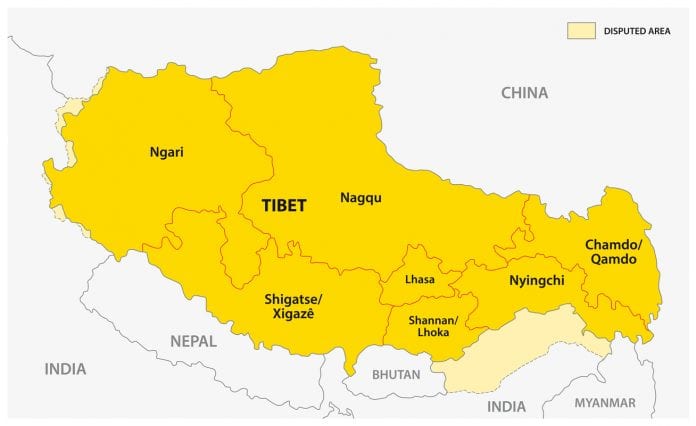
India vs China Dispute. Tibet is not a part of China

India vs China Dispute. Tibet is not a part of China.TIBET EQUILIBRIUM.

In my analysis, the dispute between India and China relates to the status of Tibet. China is in Tibet. But, Tibet is not a part of China. The dispute can be resolved by the eviction of the military occupier of Tibet.

Rudra Narasimham Rebbapragada

Special Frontier Force-Establishment No. 22-Vikas Regiment

A border dispute with China may push India closer to some of Beijing’s top rivals

CNN June 18, 2020, 12:59 AM EDT

Relations between China and India have always been complicated.

During British colonialism, India was the source of opium foreign traders forced onto Chinese markets, sparking war between the UK and the Qing Empire that ended in humiliation for China. Since independence, India’s relations with its largest neighbor have been tested by issues such as Tibet, Pakistan and the countries’ shared Himalayan border.

This week, that border blew up into renewed conflict, in the bloodiest engagement in 40 years, which left more than 20 soldiers dead after a brutal fight with fists and clubs high in the mountains amid freezing temperatures and scant oxygen.

While both governments are now scrambling to deescalate, the conflict could provide the final push for a pivot already begun by New Delhi, away from Beijing and towards China’s traditional rivals, the United States and Japan, as well as a growing regional one, Australia. As India seeks to push back against what many in the country view as Chinese aggression, it will rely on these allies more than ever.

“The sacrifice made by our soldiers will not go in vain,” Indian Prime Minister Narendra Modi said Wednesday. “India’s integrity and sovereignty is supreme for us, and no one can stop us from defending it. Nobody should have an iota of doubt about this. India wants peace. But when provoked, India will give a befitting reply.”

Rahul Gandhi, leader of the main opposition Congress Party, put it more bluntly: “How dare China kill our soldiers? How dare they take our land?”

India vs China Dispute. Tibet is not a part of China. Indian Prime Minister Narendra Modi (L) and Chinese President Xi Jinping wave to journalists before they hold a meeting in Xian, Shaanxi province, China, May 14, 2015. REUTERS/Kim Kyung-Hoon

Encircling China

In an editorial Wednesday, the influential Hindustan Times said that “China wants to limit New Delhi’s power and ambition; it wants India to accept Beijing’s primacy in Asia and beyond.”

In response, the newspaper urged, New Delhi should “double down on its partnership with the US, make Quad … a more permanent arrangement, and be a part of any club that seeks to contain Chinese power.”

The Quad, or Quadrilateral Security Dialogue, is an informal strategic forum for the US, Japan, Australia and India, featuring semi-regular summits, information exchanges and military drills. While not a formal military alliance like NATO, it is seen by some as a potential counterweight to growing Chinese influence and alleged aggression in Asia-Pacific.

While members have emphasized the more benign aspects of the relationship, such as recent cooperation on the coronavirus pandemic, the potential for military encirclement by countries has not gone unnoticed by Beijing.

As early as 2007, when the first Quad meetings were proposed, China issued formal diplomatic protests to all parties involved, and later that year Australia pulled out over fears of offending Beijing, and the alliance was put on hold until 2017, when meetings resumed, in large part due to growing concerns over Chinese advances in the South China Sea.

Potentially, an anti-China bloc led by the US could be far larger than the Quad. During a telephone call earlier this month between Modi and US President Donald Trump, the American leader invited India to join the next G7 summit. They also, according to White House spokeswoman Kayleigh McEnany, discussed “the situation on the India-China border.”

Trump has previously spoken of wanting to expand the traditional grouping of mostly European and North American states to include Washington’s allies Australia and South Korea, as well use this year’s planned meeting to “discuss China’s future.”

India has traditionally been wary of getting too close to the US, seeking to balance that relationship with strong economic — if not always diplomatic — ties to Beijing. Amid growing pressure on its border, however, and what appears to be a strong personal bond between Trump and Modi, this could be the perfect time for such a pivot.

Greater Indian participation in both the Quad and other military alliances with the US would have benefits for Washington, according to foreign affairs analyst Amrita Jash, who wrote this week that “India’s strong foothold in the Indo-Pacific provides a counterbalance to China’s growing footprint in the Indian Ocean.”

Not without cost

Both Delhi and Beijing have spoken of the desire to deescalate and preserve a peaceful relationship following this week’s clash in the Himalayas, but many experts are skeptical about how feasible, or sustainable this is.

Aidan Milliff, an expert on political violence and South Asia at the Massachusetts Institute of Technology, predicted this month that the latest conflict could “portend the development of a Sino-Indian situation that reflects an ‘ugly stability’ between India and Pakistan: persistent low-level conflicts and political-military crises that simmer below the threshold of conventional war.”

Already shaky ties between Beijing and Delhi had already been harmed by the coronavirus pandemic, with many in India blaming China for its initial mishandling of the crisis and Chinese officials frustrated by their Indian counterparts’ perceived failure to express support for Beijing at the World Health Organization and other international forums.

Any major shift towards the Quad or Washington alone would likely only take place if Delhi believes relations with Beijing are beyond repair, however, as they could come with high costs for both India and China.

Under Modi, India’s economic engagement with China has been increasing. Together, the two countries account for 17.6% of the global economy. But although China is India’s largest trading partner, their estimated $84 billion bilateral trade in 2017/18 was a mere fraction of the US-China trade volume, which stood at almost $600 billion.

Before the coronavirus pandemic, China was gradually emerging as a major foreign investor in the growing Indian market, but that trend has been halted by new investment rules passed by Delhi widely seen as aimed at Chinese firms.

Economic pain is not the only thing that will be jointly shared. While Beijing may be loathe to see India cosying up to the US and Japan, it can respond by increasing support for Delhi’s major rival: Pakistan.

China has close economic, diplomatic and military ties with Pakistan, making it one of the nation’s closest allies in the region. Between 2008 and 2017, Islamabad purchased more than $6 billion of Chinese arms, according to think tank CSIS. China has also invested billions in the China-Pakistan Economic Corridor, an integral part of Xi’s Belt and Road trade and infrastructure mega-project.

Protecting that corridor was seen by some analysts as a driving factor behind the recent spat in the Himalayas, another factor in which was recent Indian moves over Kashmir, in which China supported Pakistan in a failed attempt to censure Delhi at the United Nations.

Similarly, China has made diplomatic and economic inroads in countries traditionally considered as within Delhi’s sphere of influence, including Nepal, Sri Lanka and Bangladesh.

India’s South Asian neighbors have also increasingly looked to China for assistance during the coronavirus pandemic, accelerating a trend that seen Beijing invest heavily in the region.

The willingness of Nepal, in particular, to work with Beijing has led to concerns in Delhi of potential geopolitical realignment. Nepal, which is sandwiched between India and China, and has recently butted heads with its southern neighbor over a decision to approve a revised map that includes areas claimed by Delhi.

Part of the problem in the region are the messy, widely disputed borders that many of the countries share. If relations continue to worsen between Beijing and Delhi, however, they may seem like nothing compared to the nightmare of geopolitical complications that could arise across all of Asia-Pacific.

India vs China Dispute. Tibet is not a part of China.

When the Struggle for Democracy is shrouded in Secrecy, who will mourn the fallen Freedom Fighters?

The Unknown Soldier of America Pays Tribute to the Unmourned Soldiers of Special Frontier Force

MONDAY, MAY 25, 2020 – THE UNKNOWN SOLDIER OF AMERICA PAYS TRIBUTE TO THE UNMOURNED FREEDOM FIGHTERS OF SPECIAL FRONTIER FORCE

When the Struggle for Democracy is shrouded in Secrecy, who will mourn the Fallen Freedom Fighters.

MONDAY, MAY 25, 2020 – THE UNKNOWN SOLDIER OF AMERICA PAYS TRIBUTE TO THE UNMOURNED FREEDOM FIGHTERS OF SPECIAL FRONTIER FORCE

When the Struggle for Democracy is Shrouded in Secrecy, who will Remember and Honor the Fallen Soldiers?

On Monday, May 25, 2020, Memorial Day, I, the Unknown Soldier of America pay my tribute to the Unmourned Freedom Fighters of Special Frontier Force. I am the Living Host of ‘The Living Tibetan Spirits, the Tibetan Soldiers who gave their precious lives on the battlefield in the Chittagong Hill Tracts in 1971. The remote, inaccessible, Chittagong Hill Tracts is the kind of place where human skeletons might sink into the soil undisturbed and unmourned.

When the Struggle for Democracy is shrouded in Secrecy, who will mourn the loss of Fallen Soldiers?

I serve in Special Frontier Force as the Unknown Soldier of America to fight a war in occupied Tibet to secure Freedom, Democracy, Peace, and Justice. The service in the military organization called Special Frontier Force qualifies me as ‘Unknown Soldier of America’ for its Secret Mission serves to defend America from Enemy opposed to American Values of Freedom, Democracy, Peace, and Justice. On this Memorial Day, I may not be a Soldier with a Gun, but I am a Soldier for Life.

When the Struggle for Democracy is shrouded in Secrecy, who will mourn the loss of Fallen Freedom Fighters?

While training for this secret US sponsored military mission, Freedom Fighters of Special Frontier Force gave their precious lives. Their mortal remains lie buried in unmarked graves in the Chittagong Hill Tracts with none to pay respects with flowers. Their deaths are Unmourned and I ask my readers to Remember and to Honor their Memory. Dying away from home, away from the soil of your birth and to do so unseen and unmourned is a profound horror.

Rudra Narasimham Rebbapragada

SPECIAL FRONTIER FORCE-ESTABLISHMENT NO. 22-VIKAS REGIMENT

When the Struggle for Democracy is shrouded in secrecy, who will mourn the Fallen Freedom Fighters?

Whole Dude – Whole Welcome

Thursday, March 19, 2020. Welcome to Early Spring

Thursday, March 19, 2020. Welcome to Early Spring. I seek Blessings of Lord Madhava and Goddess Madhavi to renew my creative energy and to guide expression of my thoughts using sweet words and to promote the well-being of all my readers and become a source of Happiness to all people.

In the Indian tradition, the creative energy is personified as Goddess Madhavi, and Her consort Lord Madhava is the Controller of Creative Energy. Today, I seek Blessings of Lord Madhava and Goddess Madhavi to renew my creative energy and to guide expression of my thoughts using sweet words and to promote the well-being of all my readers and become a source of Happiness to all people.

LORD OF SEASONS – WELCOME TO EARLY SPRING. CELEBRATING THE FIRST DAY OF SPRING ON THURSDAY, MARCH 19, 2020.

I wish all my readers, ‘Happy First Day of Spring’. The exact moment of the equinox will occur Thursday night at 11:49 p.m. EDT (0349 GMT on March 20), according to the astronomy reference book “Astronomical Table of the Sun, Moon and Planets” (Willmann-Bell, 2016). At that time, the Earth will reach the point in its orbit where its axis isn’t tilted toward or away from the sun. Thus, the sun will then be directly over a specific point on the Earth’s equator moving northward. On the sky, it’s where the ecliptic and celestial equator cross each other. In fact, it will be a rather auspicious occurrence: the earliest that the equinox has occurred nationwide in 124 years.  

Welcome to Early Spring Season 2020. I seek Blessings of Lord Madhava and Goddess Madhavi to renew my creative energy and to guide expression of my thoughts using sweet words and to promote the well-being of all my readers and become a source of Happiness to all people.

EVERY CHANGING PHENOMENON IN NATURE IS OPERATED BY UNCHANGING REALITY.

Welcome to Early Spring Season 2020. I seek Blessings of Lord Madhava and Goddess Madhavi to renew my creative energy and to guide expression of my thoughts using sweet words and to promote the well-being of all my readers and become a source of Happiness to all people.

Every changing phenomenon in nature is operated by Unchanging Reality. Spring Season brings a change, and this change is possible for it is governed by Unchanging Reality. In Indian tradition, Spring Season is glorified for it symbolizes Lord Madhava, Lord of Seasons.

Welcome to Early Spring Season 2020. Lord Madhava with His consort Goddess Madhavi. I seek Blessings of Lord Madhava and Goddess Madhavi to renew my creative energy and to guide expression of my thoughts using sweet words and to promote the well-being of all my readers and become a source of Happiness to all people.

The Divine Song called Bhagavad Gita, Chapter X, ‘The Infinite Glories of the Ultimate Truth’- ‘VIBHUTI VISTARA YOGA’, describes LORD God Creator’s Infinite Divine Attributes. In verse # 35, Lord Krishna describes Himself as The Lord of Spring Season – The Flowery Season: “Rtunam Kusumakarah.”

Welcome to Early Spring Season 2020. Lord Krishna as Madhava symbolizes the Season of Flowers, the Season of Joy. I seek Blessings of Lord Madhava and Goddess Madhavi to renew my creative energy and to guide expression of my thoughts using sweet words and to promote the well-being of all my readers and become a source of Happiness to all people.

The word ‘Spring’ describes the move upward or forward from the ground, it denotes resilience or bounce, and it means to grow or develop or come into existence quickly. Among the Seasons, the Spring Season is the time during which plants begin to grow after lying dormant all Winter. In the North Temperate Zone, the Spring Season includes the months of March, April, and May, the period between the Vernal Equinox and the Summer Solstice.

Welcome to Early Spring Season 2020. I seek Blessings of Lord Madhava and Goddess Madhavi to renew my creative energy and to guide expression of my thoughts using sweet words and to promote the well-being of all my readers and become a source of Happiness to all people.

A not-so-equal equinox

On the day of the equinox, the sun will appear to rise exactly east and set exactly west. Daytime and nighttime are often said to be equally long with the equinox, but this is a common misconception — the day can be up to 8 minutes longer, depending on your latitude. 

The sun is above the horizon half the day and below for half — but that statement neglects the effect of the Earth’s atmosphere, which bends the rays of sunlight (called refraction) around the Earth’s curvature when the sun lies close to the horizon. But, because of this bending of the sun’s rays, the disk of the sun is always seen slightly higher above the horizon than it really is. 

In fact, when you see the sun appearing to sit on the horizon, what you are looking at is an optical illusion; the sun at that moment is actually below the horizon. So, we get several extra minutes of daylight at the start of the day and several extra minutes more at the end.

Sun overhead from the Emerald of the Equator

Thursday, March 19, 2020. Welcome to Early Spring. I seek Blessings of Lord Madhava and Goddess Madhavi to renew my creative energy and to guide expression of my thoughts using sweet words and to promote the well-being of all my readers and become a source of Happiness to all people.

Astronomers can calculate the moment of the vernal equinox right down to the nearest second. This year it will occur on Thursday (March 19) at 11:49:28 p.m. EDT (0349 GMT on March 20). At that moment, the sun will appear directly overhead about 50 miles (80 kilometers) south of Gorontalo, a province of Indonesia — often referred to as the “Emerald of the Equator” — on the island of Sulawesi, on the equator in the Gulf of Tomini. In the days that follow, the direct rays of the sun migrate to the north of the equator and the length of daylight in the Northern Hemisphere will correspondingly appear to increase.

LORD MADHAVA–LORD OF THE SPRING SEASON:

Welcome to Early Spring Season 2020. I seek Blessings of Lord Madhava and Goddess Madhavi to renew my creative energy and to guide expression of my thoughts using sweet words and to promote the well-being of all my readers and become a source of Happiness to all people.

In the Indian tradition, Spring Season is called ‘BASANT’, ‘VASANT’,’KUSUMAKARA’ or ‘MADHAVAM’. A chief, alluring feature of this Season is the flowering of plants. Mangifera indica, MANGO plant, a native of India bears flowers and promises to deliver its sweet, and delicious fruits.

The Spring Season is a time for rebirth, regeneration, renewal, and regrowth after a period of dormancy. Man derives a sense of joy and happiness when the plants start their growing process and quickly bear attractive flowers. It gives the experience of ‘Sweetness’ which is called ‘Madhurya’ in the Sanskrit language. It is a manifestation of a creative process, or operation of creative energy that makes human existence possible giving the man the sensation associated with consuming nectar, honey, or sweet wine. In Indian tradition, this creative energy is personified as Goddess Madhavi, and Her consort Lord Madhava is the Controller of Creative Energy. Today, I seek Blessings of Lord Madhava and Goddess Madhavi to renew my creative energy and to guide expression of my thoughts using sweet words and to promote the well-being of all my readers and become a source of Happiness to all people.

Welcome to Early Spring Season 2020. I seek Blessings of Lord Madhava and Goddess Madhavi to renew my creative energy and to guide expression of my thoughts using sweet words and to promote the well-being of all my readers and become a source of Happiness to all people.
Spring Season brings a sense of Joy, uplifts the mood of man. The Joy could be compared to the sweetness of nectar that is gathered by butterflies from various Spring Season flowers.

PRESIDENTS’ DAY 2020. THE LEGACY OF US NATIONAL DEBT

Presidents’ Day 2020. The Legacy of US National Debt.

The national debt stands at $22.72 trillion as of Sept. 30, 2019. This enormous bill didn’t come from nowhere, and it’s safe to say that the U.S. will likely continue borrowing money in the foreseeable future. So, how worried should Americans be about the national debt? There’s not a lot of agreement across the political spectrum on the answer to that question.

$20 bill from 1995. Presidents’ Day 2020. The Legacy of US National Debt. The 42nd US President (Presidential Term January 20, 1993 to January 20, 2001)made an Unjust and Unfair plan to reduce the US National Debt by denying the payment of Social Security and Medicare Benefits to tax paying alien hourly wage workers.

However, understanding why the U.S. borrows money and how different historical events shaped that process is important to any informed voter, especially with another election approaching in November. Knowing how much the federal government borrowed to deal with various issues and events throughout the last century can help you gauge whether each politician’s plans to address the national debt are feasible.

For example, you can note how 1933 saw a marked increase in debt as the new Roosevelt administration broke with the fiscal orthodoxy of the time by employing large deficits to combat the Great Depression. Each recession has correlated with a spike in borrowing, with tax revenues dropping when the needs of the American people were at their highest. All told, tracking the progress of the national debt is a valuable way to understand the U.S. government’s relationship to its people.

Using data from TreasuryDirect and the Bureau of Labor Statistics’ consumer price index inflation calculator, GOBankingRates analyzed the total U.S. national debt from 1900 to present in five-year increments and adjusted the outstanding debt for inflation to provide context in today’s dollars. 

The US Treasury Building in 1900. Presidents’ Day 2020. The Legacy of US National Debt.

1900-1904

  • Outstanding debt in 1900: $2.14 billion
    • Debt adjusted for inflation: $65.37 billion
  • Outstanding debt in 1904: $2.26 billion
    • Debt adjusted for inflation: $65.37 billion

Change in debt between 1900-1904: 5.95%
Change in debt adjusted for inflation: -$4.55 million

$20 U.S. gold certificate from 1905 Presidents’ Day 2020. The Legacy of US National Debt.

1905-1909

  • Outstanding debt in 1905: $2.27 billion
    • Debt adjusted for inflation: $66.42 billion
  • Outstanding debt in 1909: $2.64 billion
    • Debt adjusted for inflation: $74.54 billion

Change in debt between 1905-1909: 16.04%
Change in debt adjusted for inflation: $8.12 billion

William Howard Taft, who was president from 1910-1913. Presidents’ Day 2020. The Legacy of US National Debt.

1910-1914

  • Outstanding debt in 1910: $2.65 billion
    • Debt adjusted for inflation: $71.75 billion
  • Outstanding debt in 1914: $2.91 billion
    • Debt adjusted for inflation: $74.84 billion

Change in debt between 1910-1914: 9.80%
Change in debt adjusted for inflation: $3.09 billion

 U.S. Treasury Building in 1915. Presidents’ Day 2020. The Legacy of US National Debt.

1915-1919

  • Outstanding debt in 1915: $3.06 billion
    • Debt adjusted for inflation: $77.81 billion
  • Outstanding debt in 1919: $27.39 billion
    • Debt adjusted for inflation: $406.87 billion

Change in debt between 1915-1919: 795.68%
Change in debt adjusted for inflation: $329.06 billion

 $5 U.S. silver certificate from 1923. Presidents’ Day 2020. The Legacy of US National Debt.

1920-1924

  • Outstanding debt in 1920: $25.95 billion
    • Debt adjusted for inflation: $333.46 billion
  • Outstanding debt in 1924: $21.25 billion
    • Debt adjusted for inflation: $319.35 billion

Change in debt between 1920-1924: -18.12%
Change in debt adjusted for inflation: -$14.10 billion

Calvin Coolidge, who was president from 1925-1929. Presidents’ Day 2020. The Legacy of US National Debt.

1925-1929

  • Outstanding debt in 1925: $20.52 billion
    • Debt adjusted for inflation: $301.26 billion
  • Outstanding debt in 1929: $16.93 billion
    • Debt adjusted for inflation: $254.44 billion

Change in debt between 1925-1929: -17.47%
Change in debt adjusted for inflation: -$46.83 billion

Pageant in front of the U.S. Treasury Building in 1930. Presidents’ Day 2020. The Legacy of US National Debt.

1930-1934

  • Outstanding debt in 1930: $16.19 billion
    • Debt adjusted for inflation: $249.05 billion
  • Outstanding debt in 1934: $27.05 billion
    • Debt adjusted for inflation: $518.80 billion

Change in debt between 1930-1934: 67.15%
Change in debt adjusted for inflation: $269.75 billion

$1 U.S. silver certificate from 1935. Presidents’ Day 2020. The Legacy of US National Debt.

1935-1939

  • Outstanding debt in 1935: $28.70 billion
    • Debt adjusted for inflation: $538.35 billion
  • Outstanding debt in 1939: $40.44 billion
    • Debt adjusted for inflation: $747.62 billion

Change in debt between 1935-1939: 40.90%
Change in debt adjusted for inflation: $209.27 billion

US Treasury Building in 1941. Presidents’ Day 2020. The Legacy of US National Debt.

1940-1944

  • Outstanding debt in 1940: $42.97 billion
    • Debt adjusted for inflation: $788.68 billion
  • Outstanding debt in 1944: $201.00 billion
    • Debt adjusted for inflation: $2.93 trillion

Change in debt between 1940-1944: 367.80%
Change in debt adjusted for inflation: $2.15 trillion

Harry S. Truman, who was president from 1945-1949. Presidents’ Day 2020. The Legacy of US National Debt.

1945-1949

  • Outstanding debt in 1945: $258.68 billion
    • Debt adjusted for inflation: $3.69 trillion
  • Outstanding debt in 1949: $252.77 billion
    • Debt adjusted for inflation: $2.73 trillion

Change in debt between 1945-1949: -2.29%
Change in debt adjusted for inflation: -$963.81 billion

$10 U.S. silver certificate from 1953. Presidents’ Day 2020.The Legacy of US National Debt.

1950-1954

  • Outstanding debt in 1950: $257.36 billion
    • Debt adjusted for inflation: $2.74 trillion
  • Outstanding debt in 1954: $271.26 billion
    • Debt adjusted for inflation: $2.59 trillion

Change in debt between 1950-1954: 5.40%
Change in debt adjusted for inflation: -$152.83 billion

The increase in national debt from 1950-1954 was outpaced by inflation, so the value of the dollar decreased faster than the rate at which the national debt grew.

$1 U.S. silver certificate from 1957. Presidents’ Day 2020. The Legacy of US National Debt.

1955-1959

  • Outstanding debt in 1955: $274.37 billion
    • Debt adjusted for inflation: $2.63 trillion
  • Outstanding debt in 1959: $284.71 billion
    • Debt adjusted for inflation: $2.51 trillion

Change in debt between 1955-1959: 3.77%
Change in debt adjusted for inflation: -$116.70 billion

The increase in national debt from 1955-1959 was outpaced by inflation, so the value of the dollar decreased faster than the rate at which the national debt grew.

John F. Kennedy, who was president from 1961-1963. Presidents’ Day 2020. The Legacy of US National Debt.

1960-1964

  • Outstanding debt in 1960: $286.33 billion
    • Debt adjusted for inflation: $2.49 trillion
  • Outstanding debt in 1964: $311.71 billion
    • Debt adjusted for inflation: $2.58 trillion

Change in debt between 1960-1964: 8.86%
Change in debt adjusted for inflation: $98.14 billion

Lyndon B. Johnson, who was president from 1965-1969. Presidents’ Day 2020. The Legacy of US National Debt.

1965-1969

  • Outstanding debt in 1965: $317.27 billion
    • Debt adjusted for inflation: $2.59 trillion
  • Outstanding debt in 1969: $353.72 billion
    • Debt adjusted for inflation: $2.48 trillion

Change in debt between 1965-1969: 11.49%
Change in debt adjusted for inflation: -$111.54 billion

The increase in national debt from 1965-1969 was outpaced by inflation, so the value of the dollar decreased faster than the rate at which the national debt grew.

Gas ration stamps being printed by the U.S. Bureau of Engraving and Printing as a result of the 1973 oil crisis. Presidents’ Day 2020. The Legacy of US National Debt.

1970-1974

  • Outstanding debt in 1970: $370.92 billion
    • Debt adjusted for inflation: $2.46 trillion
  • Outstanding debt in 1974: $475.06 billion
    • Debt adjusted for inflation: $2.48 trillion

Change in debt between 1970-1974: 28.08%
Change in debt adjusted for inflation: $19.62 billion

Specially stamped bicentennial $2 bill from 1976. Presidents’ Day 2020. The Legacy of US National Debt.

1975-1979

  • Outstanding debt in 1975: $533.19 billion
    • Debt adjusted for inflation: $2.55 trillion
  • Outstanding debt in 1979: $826.52 billion
    • Debt adjusted for inflation: $2.93 trillion

Change in debt between 1975-1979: 55.01%
Change in debt adjusted for inflation: $378.78 billion

US Treasury Building in 1980. Presidents’ Day 2020. The Legacy of US National Debt.

1980-1984

  • Outstanding debt in 1980: $907.70 billion
    • Debt adjusted for inflation: $2.83 trillion
  • Outstanding debt in 1984: $1.57 trillion
    • Debt adjusted for inflation: $3.89 trillion

Change in debt between 1980-1984: 73.21%
Change in debt adjusted for inflation: $1.06 trillion

Senior citizens in a retirement home watching the 1987 stock market crash. Presidents’ Day 2020. The Legacy of US National Debt,

1985-1989

  • Outstanding debt in 1985: $1.82 trillion
    • Debt adjusted for inflation: $4.35 trillion
  • Outstanding debt in 1989: $2.86 trillion
    • Debt adjusted for inflation: $5.92 trillion

Change in debt between 1985-1989: 56.73%
Change in debt adjusted for inflation: $1.57 trillion

George H.W. Bush, who was president from 1990-1993. Presidents’ Day 2020. The Legacy of US National Debt.

1990-1994

  • Outstanding debt in 1990: $3.23 trillion
    • Debt adjusted for inflation: $6.36 trillion
  • Outstanding debt in 1994: $4.69 trillion
    • Debt adjusted for inflation: $8.14 trillion

Change in debt between 1990-1994: 45.14%
Change in debt adjusted for inflation: $1.78 trillion

William Jefferson Clinton was the US President from January 20, 1993 to January 20, 2001. Presidents’ Day 2020. The Legacy of US National Debt.

1995-1999

  • Outstanding debt in 1995: $4.97 trillion
    • Debt adjusted for inflation: $8.39 trillion
  • Outstanding debt in 1999: $5.66 trillion
    • Debt adjusted for inflation: $8.72 trillion

Change in debt between 1995-1999: 13.72%
Change in debt adjusted for inflation: $337.54 billion

42nd US President ( Presidential term from January 1993 to January 2001. Bill Clinton did not Balance the US Budget. Presidents’ Day 2020. The Legacy of US National Debt.

2000-2004

  • Outstanding debt in 2000: $5.67 trillion
    • Debt adjusted for inflation: $8.47 trillion
  • Outstanding debt in 2004: $7.38 trillion
    • Debt adjusted for inflation: $10.04 trillion

Change in debt between 2000-2004: 30.05%
Change in debt adjusted for inflation: $1.57 trillion

Barack Obama, who was inaugurated as the 44th U.S. president in 2009. Presidents’ Day 2020. The Legacy of US National Debt.

2005-2009

  • Outstanding debt in 2005: $7.93 trillion
    • Debt adjusted for inflation: $10.44 trillion
  • Outstanding debt in 2009: $11.91 trillion
    • Debt adjusted for inflation: $14.27 trillion

Change in debt between 2005-2009: 50.14%
Change in debt adjusted for inflation: $3.83 trillion

Occupy Wall Street protests in 2011. Presidents’ Day 2020. The Legacy of US National Debt.

2010-2014

  • Outstanding debt in 2010: $13.56 trillion
    • Debt adjusted for inflation: $15.98 trillion
  • Outstanding debt in 2014: $17.82 trillion
    • Debt adjusted for inflation: $19.35 trillion

Change in debt between 2010-2014: 31.43%
Change in debt adjusted for inflation: $3.37 trillion

Current US Treasury Building. Presidents’ Day 2020. The Legacy of US National Debt.

2015-2019

  • Outstanding debt in 2015: $18.15 trillion
    • Debt adjusted for inflation: $19.68 trillion
  • Outstanding debt in 2019: $22.72 trillion
    • Debt adjusted for inflation: $22.84 trillion

Change in debt between 2015-2019: 25.17%
Change in debt adjusted for inflation: $3.16 trillion

Presidents’ Day 2020. The Legacy of US National Debt.

China’s Population Transfer Policy. The Chinese Settlers outnumber the Native Population of Tibet, Manchuria, Inner Mongolia, and East Turkestan (Xinjiang). The Sinicization of Occupied territories.

China’s Population Transfer Policy. The Chinese Settlers outnumber the Native Population of Tibet, Manchuria, Inner Mongolia, and East Turkestan. The Sinicization of Occupied territories.

In his 5 point peace plan  the Dalai Lama called to stop Chinese colonization of Tibet and described the past and present situation.
When the newly formed People’s Republic of China invaded Tibet in 1949/50, it created a new source of conflict.  
 

TIBET NOT PART OF CHINA – INDIA SHARES NO BORDER WITH CHINA. China’s Population Transfer Policy. The Chinese Settlers outnumber the Native Population of Tibet, Manchuria, Inner Mongolia, and East Turkestan. The Sinicization of Occupied territories.

“When the newly formed People’s Republic of China invaded Tibet in 1949/50, it created a new source of conflict.  

“This was highlighted when, following the Tibetan national uprising against the Chinese and my flight to India in 1959, tensions between China and India escalated into the border war in 1962.  

“Today large numbers of troops are again massed on both sides of the Himalayan border and tension is once more dangerously high. 

“The real issue, of course, is not the Indo-Tibetan border demarcation.  

“It is China’s illegal occupation of Tibet, which has given it direct access to the Indian sub-continent.  

“The Chinese authorities have attempted to confuse the issue by claiming that Tibet has always been a part of China. 

“This is untrue.  Tibet was a fully independent state when the People’s Liberation Army invaded the country in 1949/50. 

 “Since Tibetan emperors unified Tibet, over a thousand years ago, our country was able to maintain its independence until the middle of this century.  

“At times Tibet extended its influence over neighbouring countries and peoples and, in other periods, came itself under the influence of powerful foreign rulers – the Mongol Khans, the Gorkhas of Nepal, the Manchu Emperors and the British in India. 

 “It is, of course, not uncommon for states to be subjected to foreign influence or interference. 

“Although so-called satellite relationships are perhaps the clearest examples of this, most major powers exert influence over less powerful allies or neighbours.  

“As the most authoritative legal studies have shown, in Tibet’s case, the country’s occasional subjection to foreign influence never entailed a loss of independence. 

” And there can be no doubt that when Peking’s communist armies entered Tibet, Tibet was in all respects an independent state…

“Human rights violations in Tibet are among the most serious in the world.  

“Discrimination is practiced in Tibet under a policy of ‘apartheid’ which the Chinese call ‘segregation and assimilation’.  

“Tibetans are, at best, second class citizens in their own country. 

“Deprived of all basic democratic rights and freedoms, they exist under a colonial administration in which all real power is wielded by Chinese officials of the Communist Party and the army. 

“Although the Chinese government allows Tibetans to rebuild some Buddhist monasteries and to worship in them, it still forbids serious study and teaching of religion.

“Only a small number of people, approved by the Communist Party, are permitted to join the monasteries. 

“While Tibetans in exile exercise their democratic rights under a constitution promulgated by me in 1963, thousands of our countrymen suffer in prisons and labour camps in Tibet for their religious or political convictions… 

“The massive transfer of Chinese civilians into Tibet in violation of the Fourth Geneva Convention (1949), threatens the very existence of the Tibetans as a distinct people.  

China’s Population Transfer Policy. The Chinese Settlers outnumber the Native Population of Tibet, Manchuria, Inner Mongolia, and East Turkestan. The Sinicization of Occupied territories.

“In the eastern parts of our country, the Chinese now greatly outnumber Tibetans.  

“In the Amdo province, for example, where I was born, there are, according to the Chinese statistics, 2.5 million Chinese and only 750,000 Tibetans.  Even in the so-called Tibet Autonomous Region (i.e., central and western Tibet), Chinese government sources now confirm that Chinese outnumber Tibetans. 

“The Chinese population transfer policy is not new.  It has been systematically applied to other areas before. 

“Earlier in this century, the Manchus were a distinct race with their own culture and traditions. 

“Today only two to three million Manchurians are left in Manchuria, where 75 million Chinese have settled. 

China’s Population Transfer Policy. The Chinese Settlers outnumber the Native Population of Tibet, Manchuria, Inner Mongolia, and East Turkestan (Xinjiang). The Sinicization of Occupied territories.

“In Eastern Turkestan, which the Chinese now call Sinkiang, the Chinese population has grown from 200,000 in 1949 to 7 million, more than half of the total population of 13 million.  In the wake of the Chinese colonization of Inner Mongolia, Chinese number 8.5 million, Mongols 2.5 million. 

“Today, in the whole of Tibet 7.5 million Chinese settlers have already been sent, outnumbering the Tibetan population of 6 million. 

“In central and western Tibet, now referred to by the Chinese as the “Tibet Autonomous Region”, Chinese sources admit the 1.9 million Tibetans already constitute a minority of the region’s population.  

“These numbers do not take the estimated 300,000-500,000 troops in Tibet into account – 250,000 of them in so-called Tibet Autonomous Region.

 “For the Tibetans to survive as a people, it is imperative that the population transfer is stopped and Chinese settlers return to China. 

“Otherwise, Tibetans will soon be no more than a tourist attraction and relic of a noble past. ” 

China’s Population Transfer Policy. The Chinese Settlers outnumber the Native Population of Tibet, Manchuria, Inner Mongolia, and East Turkestan. The Sinicization of Occupied territories.


Whole Curse: Slaying the Dragon of Debt

The Clinton Curse: Slaying the Dragon of Debt

Whole Dude – Whole Gimmicks: In fact, the national debt went from $4.4 Trillion at the end of 1993 to almost $5.7 Trillion at the end of 2000, U.S. Treasury data shows, a 28 percent increase in the debt over this time when our nation supposedly was running a balanced budget.

1997 Balanced Budget and Taxpayer Relief Act

SUMMARY:

The Balanced Budget Act of 1997 (a spending bill) and the Taxpayer Relief Act of 1997 (a tax bill) legislated the elimination of the annual budget deficit by 2002. Both bills were passed by Congress by large bipartisan majorities and signed into law by President Clinton prior to the August 1997 congressional recess.

DESCRIPTION:

Following difficult and highly partisan budget negotiations in 1993 (for the FY 1994 budget) and 1995 (for the FY 1996 budget), the negotiations in 1997 for the FY 1998 were marked largely by bipartisanship, even as the legislators and the President sought to produce the first balanced federal budget since 1969.

The Clinton Curse. A Balanced Budget vs Foreign Debt. Slaying the Dragon of Debt.

In my analysis, President Clinton did not create a Balanced Budget in 1997 for the first time since 1969. In fact, President Clinton violated the preachings of the Bible about Fiscal Policy. This Nation failed to receive the Blessings promised by LORD God. President Clinton foolishly chose to disobey God’s Commandments and invited the Curses promised by LORD God.

The Clinton Curse: Slaying the Dragon of Debt.

President Bill Clinton invoked the Curses promised by the LORD God for acts of disobedience of God in the formulation of the Fiscal Policy of the Nation.

The Clinton Curse: Slaying of the Dragon of Debt.

The United States has nothing to fall back in its fight to Slay the Dragon of Debt. The United States needs the promise of Prosperity to Slay the Dragon of Debt. I ask the US Congress to Repeal PRWORA, the Slavery Act of 1996 to correct the transgressions of President Bill Clinton’s Fiscal Policy.

December 06. The Death of the 13th Amendment to the US Constitution. President Bill Clinton’s “A New Beginning” imposed the Death Sentence on the rights granted by the 13th Amendment.

U.S. deficit to eclipse $1 trillion in 2020, CBO says, as fiscal imbalance continues to widen

The Clinton Curse: Slaying of the Dragon of Debt. The U.S. Capitol seen through window reflections Jan. 27, 2020. (Patrick Semansky/AP)
 

By Jeff Stein 

Jan. 28, 2020 at 3:23 p.m. EST

The U.S. government’s budget deficit is projected to reach $1.02 trillion in 2020, according to a report released Tuesday by the nonpartisan Congressional Budget Office, as the federal government continues to spend much more than it collects in tax revenue.

A combination of the 2017 tax cuts and a surge in new spending has pushed the deficit wider. This year would mark the first time since 2012 that the deficit breached $1 trillion, a threshold that has alarmed some budget experts because deficits typically contract — not expand — during periods of sustained economic growth.

Overall, the CBO projected that the federal government will spend $4.6 trillion in the fiscal year that ends Sept. 30 and bring in $3.6 trillion in tax revenue.

And some of the costliest government programs are projected to experience expansions in the next decade. Spending for Medicare, which provides health care for older Americans, will rise from $835 billion in 2020 to $1.7 trillion by 2030, while annual federal spending on Social Security will grow from roughly $1.1 trillion to $1.9 trillion over that span.

The CBO’s estimates assume that Congress will allow tax cuts for individuals passed in Republicans’ 2017 tax law to expire in 2025. GOP lawmakers in Congress will at least try to extend most if not all of these provisions.

This year’s deficit would be an increase from 2019, when the government deficit grew to $984 billion. The deficit in 2016, President Barack Obama’s last full year in office, was $585 billion. CBO now projects that the deficit will be at least $1 trillion each year in perpetuity unless policymakers make changes.

The CBO also projected the economy would grow by 2.2 percent in 2020, which represents a healthy clip but falls short of the 3 percent target set by the Trump administration. The projections were contained in the CBO’s annual budget and economic outlook.

With rising annual deficits, the total debt held by the government is also projected to grow dramatically, from about $18 trillion in 2020 to $31 trillion in 2030, according to the CBO’s projections. The U.S. government must pay interest on this debt to keep borrowing money.

“The U.S. economy is doing well, with low unemployment and rising wages that have drawn people off the sidelines and back into the labor force,” Phillip L. Swagel, the CBO’s director, said in a statement. “But our projections also suggest that over the long-term, changes in fiscal policy must be made to address the budget situation.”

The deficit outlook appears slightly worse than it did just a year ago. In 2019, bipartisan majorities in Congress approved new spending bills that added more than $500 billion to the deficit over the next decade. The most expensive new policies were the permanent repeal of taxes created under Obama’s Affordable Care Act, including one on expensive health plans.

These actions would have done more to drive up the deficit had they not been mitigated by lower-than-expected interest rates, which allow the government to borrow money more cheaply than the CBO had originally anticipated.

The CBO projection also appears to cast doubt on recent statements by President Trump and other administration officials that the 2017 Republican tax cut is creating enough revenue through new economic growth that it will offset all near-term losses. White House officials have defended the $1.5 trillion tax legislation, which slashed tax rates for businesses and many households.

Tax revenue has risen slowly since the tax cuts were passed, but many forecasters say the cuts led to a sizable drop-off in projected revenue collections. Combined with an increase in spending, the deficit has ballooned, forcing the Treasury Department to borrow more money to cover the balance.

Trump, asked about the rising deficit following the tax cuts, told CNBC last year: “We’ve taken in more revenue substantially than we did when the taxes were high. Nobody can even believe it.”AD

Treasury Secretary Steven Mnuchin also expressed confidence the tax cut would not add to the nation’s debt, saying: “We’ve tracked the numbers, and we’re right on track.”

Trump has told aides he will look for big spending cuts in his second term, a position echoed by Mnuchin, who said government spending must be slowed down. Trump aides have also previewed a potential second round of tax cuts.

The CBO report shows that tax collections are weaker than they would be without the 2017 Republican tax law, which permanently locked in lower rates for many corporations while creating temporary reductions for households. Tax revenue remained roughly flat the first year the law was in effect, despite economic growth of nearly 3 percent. It rose slightly in 2019 but not enough to compensate for flatlining the year before.AD

Asked about Mnuchin’s remarks on Tuesday, Swagel pointed to CBO’s April 2018 analysis finding the GOP tax law would increase the deficit by $1.9 trillion over 10 years. That number accounts for the impact of faster economic growth due to the tax law. Swagel served as a Treasury official in George W. Bush’s administration and worked at the American Enterprise Institute, a conservative think-tank.

In January 2017, before the tax law, the CBO projected corporate tax revenue would represent 1.8 percent of gross domestic product. Now, they are expected to represent only 1.1 percent of GDP.

Many Republicans in recent years have abandoned the calls to slash spending in part because Trump has supported big increases in the budget. During the Obama administration, many Republicans insisted on spending cuts as a way to shrink the deficit. About half of the current deficit can be attributed to spending increases and tax cuts put in place by Congress since 2015, according to the nonpartisan Committee for a Responsible Federal Budget.AD

“This is an important warning light,” Marc Goldwein, a budget expert with the group, said of the CBO’s report. “We know deficits as a share of GDP have never been this high when the economy is this strong.”

Other economic experts played down the danger posed by the rising deficit. They noted the country is still extremely unlikely to default because of the supremacy of the U.S. dollar among international creditors, and that inflation — one of the potential hazards of high deficits — remains low by historical standards.

“There is simply no threat of inflation on the horizon,” said Robert C. Hockett, a professor at Cornell University who has advised Sens. Bernie Sanders (I-Vt.) and Elizabeth Warren (D-Mass.) on economic policy matters.

Still, Hockett castigated the Trump administration for not putting the higher deficits to better use. Republicans have said the tax cuts have juiced economic growth and boosted wages for U.S. workers, while Democrats have characterized them as a giveaway to the rich.

“Trump is wasting these deficits. It’s fine to engage in deficit spending, but Trump has used them to give tax cuts to billionaires, which does nothing to increase the well-being of the vast majority of Americans or improve the nation’s productivity,” Hockett said.

Headshot of Jeff Stein
Jeff Stein is a policy reporter for The Washington Post. He was a crime reporter for the Syracuse Post-Standard and, in 2014, founded the local news nonprofit the Ithaca Voice in Upstate New York. He was also a reporter for Vox
THE CLINTON CURSE: SLAYING THE DRAGON OF DEBT.

TIBET PROBLEM IS ON THE BACK BURNER WHILE TIBET IS WARMING UP UNDER OCCUPATION

TIBET PROBLEM IS ON THE BACK BURNER WHILE TIBET IS WARMING UP. UNDER OCCUPATION.

The great problem of Tibet is on the Back Burner while Tibet is warming up due to progress and development contributed by Tibet’s Occupation and Subjugation by a Colonialist Power.

Rudra Narasimham Rebbapragada

Special Frontier Force-Establishment No. 22-Vikas Regiment

Tibet average temperature up 0.4 degrees Celsius every decade

The “roof of the world” has become warmer and wetter over the past 39 years, according to the climate center in Tibet.

Data from the Climate Bulletin of Tibet in 2019, released Thursday, shows that during the 1981-2019 period, the region’s annual average temperature rose 0.4 degrees Celsius every 10 years, while the annual precipitation was up 11.1 mm on average in a decade.

The average temperature of Tibet in 2019 was 5.2 degrees Celsius, 0.5 degrees higher than in normal years. The average precipitation was 468.4 mm last year, close to normal years’ 460.2 mm.

Ma Pengfei, an official with the climate center, said that in the context of global warming, the warming effect is more significant in the high-altitude Qinghai-Tibet Plateau than in other regions.

Coaches carrying herdsmen from Shuanghu County of Nagqu City run on a road while heading for relocation destinations in Tibet, Dec. 23, 2019. Tibet has built or renovated a total of 43,400 km of rural roads over the past five years, according to local authorities. The regional government has invested 95.7 billion yuan (around 13.7 billion U.S. dollars) over the period in paving modern roads to 2,276 villages, according to the regional transport department. (Xinhua/Chogo)

Photo taken on June 4, 2019 shows a road leading to the rural area in Qamdo City, Tibet. Tibet has built or renovated a total of 43,400 km of rural roads over the past five years, according to local authorities. The regional government has invested 95.7 billion yuan (around 13.7 billion U.S. dollars) over the period in paving modern roads to 2,276 villages, according to the regional transport department. (Xinhua/Jigme Dorje)

Aerial photo taken on Aug. 3, 2019 shows a road along the Pangong Tso lake in Ngari, Tibet. Tibet has built or renovated a total of 43,400 km of rural roads over the past five years, according to local authorities. The regional government has invested 95.7 billion yuan (around 13.7 billion U.S. dollars) over the period in paving modern roads to 2,276 villages, according to the regional transport department. (Xinhua/Jigme Dorje)

Aerial photo taken on Oct. 27, 2019 shows a long-span bridge on the Sichuan-Tibet Highway in Tangmai, Tibet. Tibet has built or renovated a total of 43,400 km of rural roads over the past five years, according to local authorities. The regional government has invested 95.7 billion yuan (around 13.7 billion U.S. dollars) over the period in paving modern roads to 2,276 villages, according to the regional transport department. (Xinhua/Sun Fei)

Tibet is warming up under Occupation. Electricians work on power transmission facilities in Nakarze county, Lhokha city in Tibet, Aug 27, 2019. [Photo/sipaphoto/com]
TIBET CONSCIOUSNESS – TIBET PROBLEM ON THE BACK BURNER SINCE 1850s WHILE TIBET IS WARMING UP UNDER OCCUPATION.


RELOCATION AND REHOUSING OF TIBETAN HERDERS.THE TIBETAN RESETTLEMENT PROGRAMS OF OCCUPIED TIBET

Photo taken on Dec. 23, 2019 in the south bank of the Yarlung Zangbo River, shows new houses built for herders migrating from Shuanghu County, Nagchu City, Tibet. A total of 2,900 residents from three villages of Shuanghu County, have recently left their hometown with an average altitude of 5,000 meters above sea level and travelled nearly 1,000 kilometers to resettle in Konggar County, which, at a relatively low altitude, is located to the south bank of the Yarlung Zangbo River in southern Tibet. (Xinhua/Chogo)

Tibetans who practically enjoyed full independence in their living styles are getting regrouped using mass relocation and rehousing programs making the Tibetan herders to live in resettlement camps in occupied Tibet.

Since 2006, the Chinese government has implemented large-scale programs to “rehouse”—through renovation of existing houses or construction of new ones—a majority of the rural population of the Tibet Autonomous Region (TAR) under a policy called “Comfortable Housing.” In parallel, the government has accelerated the relocation and sedentarization of nomadic herders in the eastern part of the Tibetan plateau, mostly in Qinghai province, and laid the ground for similar policies in other parts of the plateau. Both policies are a component of the government’s effort to “Build a New Socialist Countryside” in Tibetan areas, which the government says is designed to rapidly increase the living standards of rural Tibetans and boost the local economy.

There are host of common issues associated with the New Socialist Villages policy. These common issues include:

  • The involuntary character of many relocation and rehousing programs;
  • The absence of genuine prior consultation with affected communities;
  • The lack of meaningful avenues for challenging or seeking remedies for wrongful eviction orders;
  • Inadequate and opaque compensation mechanisms;
  • Problems with the quality of houses in which communities are resettled or rehoused;
  • Increased financial burdens and indebtedness resulting from relocation and/or reconstruction of housing; and
  • The loss of tangible and intangible assets and dissolution of communities.
An 80-year-old herder (C) migrated from Shuanghu County, Nagchu City,Tibet, stands in front of her new home with relatives on Dec. 23, 2019. A total of 2,900 residents from three villages of Shuanghu County, have recently left their hometown with an average altitude of 5,000 meters above sea level and travelled nearly 1,000 kilometers to resettle in Konggar County, which, at a relatively low altitude, is located to the south bank of the Yarlung Zangbo River in southern Tibet. (Xinhua/Chogo)
Photo taken on Dec. 23, 2019 shows a fleet of buses carrying herders migrating from Shuanghu County, Nagchu City, Tibet. A total of 2,900 residents from three villages of Shuanghu County, have recently left their hometown with an average altitude of 5,000 meters above sea level and travelled nearly 1,000 kilometers to resettle in Konggar County, which, at a relatively low altitude, is located to the south bank of the Yarlung Zangbo River in southern Tibet. (Xinhua/Chogo)
Photo taken on Dec. 23, 2019 shows a fleet of trucks carrying belongings of herders migrating from Shuanghu County, Nagchu City, Tibet. A total of 2,900 residents from three villages of Shuanghu County, have recently left their hometown with an average altitude of 5,000 meters above sea level and travelled nearly 1,000 kilometers to resettle in Konggar County, which, at a relatively low altitude, is located to the south bank of the Yarlung Zangbo River in southern Tibet. (Xinhua/Chogo)
Photo taken on Dec. 23, 2019 shows herders of Shuanghu County, Nagchu City, Tibet, on their migration trip. A total of 2,900 residents from three villages of Shuanghu County, have recently left their hometown with an average altitude of 5,000 meters above sea level and travelled nearly 1,000 kilometers to resettle in Konggar County, which, at a relatively low altitude, is located to the south bank of the Yarlung Zangbo River in southern Tibet. (Xinhua/Chogo)
Photo taken on Dec. 23, 2019, shows a 7-month-old baby from Shuanghu County, Nagchu City,Tibet, on the migration trip. A total of 2,900 residents from three villages of Shuanghu County, have recently left their hometown with an average altitude of 5,000 meters above sea level and travelled nearly 1,000 kilometers to resettle in Konggar County, which, at a relatively low altitude, is located to the south bank of the Yarlung Zangbo River in southern Tibet. (Xinhua/Chogo)
Photo taken on Dec. 23, 2019 shows a fleet of trucks carrying belongings of herders migrating from Shuanghu County, Nagchu City, Tibet. A total of 2,900 residents from three villages of Shuanghu County, have recently left their hometown with an average altitude of 5,000 meters above sea level and travelled nearly 1,000 kilometers to resettle in Konggar County, which, at a relatively low altitude, is located to the south bank of the Yarlung Zangbo River in southern Tibet. (Xinhua/Chogo)
Photo taken on Dec. 23, 2019 shows a fleet of buses carrying herders migrating from Shuanghu County, Nagchu City, Tibet. A total of 2,900 residents from three villages of Shuanghu County, have recently left their hometown with an average altitude of 5,000 meters above sea level and travelled nearly 1,000 kilometers to resettle in Konggar County, which, at a relatively low altitude, is located to the south bank of the Yarlung Zangbo River in southern Tibet. (Xinhua/Chogo)


The report by Human Rights Watch describes the Chinese government’s relocation of Tibetans as “forcible”, not because they have evidence that officials are using physical force to remove residents from their old homes, but because they are offering them no alternatives. Under international law, the term “forced eviction” does not require the physical removal of residents from their homes. It also applies to evictions that lack meaningful consultation and compensation, or in which no alternatives to relocation have been presented. Chinese government relocation and rehousing policies and practices effectively compel communities to follow government orders or—in the case of nomadic communities—to move into fixed settlements through policies that are presented as having the force of law.

The Resettlement Programs of Occupied Tibet.