Whole Pain – Bitter Memories of April 30, 1975 – Vietnam War’s Never Ending Pain

The Cold War in Asia – The Unfinished Korea-Vietnam War

BITTER MEMORIES OF APRIL 30, 1975 – VIETNAM WAR’S NEVER ENDING PAIN. CIA OFFICER JAMES E. PARKER Jr., IN VIETNAM.

James E. Parker Jr., CIA’s last Vietnam evacuee shares his bitter memories of April 30, 1975 in a story published by The Washington Times. Mr. Parker joined the CIA in 1970. I joined the Indian Army on July 26, 1970 after grant of Short Service Regular Commission during September 1969. Both of us served the CIA’s Mission in Southeast Asia with different expectations. My sadness, and mental pain continue in the context of Tibet’s continued Military Occupation since 1950s. Vietnam War gave me hope of USA’s willingness to engage and contain the threat posed by Communist Expansionism in Southern Asia.

I am still patiently waiting for the US to fulfill its Mission to evict the Military Occupier of Tibet.

Rudra Narasimham Rebbapragada

Special Frontier Force – Establishment 22 – Vikas Regiment

James Parker, CIA’s last Vietnam evacuee, holds bitter memories of fateful day – Washington Times

Sunday, April 30, 2017, 8:18 PM

Last CIA evacuee bitterly recalls U.S. Embassy cowardice, betrayals as Saigon fell to North Vietnam

BITTER MEMORIES OF APRIL 30, 1975 – VIETNAM WAR’S NEVER ENDING PAIN.

James Parker (right) received the CIA’s Intelligence Medal of Merit from CIA Director William Colby in 1975. This photograph is signed: “To James Parker – with thanks and applause for a job well done in Vietnam. William Colby.

By Richard C. Ehrlich – Special to the Washington Times – – Sunday, April 30, 2017

BANGKOK — Time has done little to dull the anger of James Parker James Parker, the last CIA officer to evacuate Vietnam, as the world marks the latest anniversary of the U.S. evacuation of its embassy in Saigon just ahead of advancing North Vietnamese forces in 1975.

When South Vietnam’s capital fell on the last day of April that year, the intelligence officer’s two best military sources committed suicide and the actions of an American diplomat endangered the lives
of escaping diplomats and
CIA personnel, the 73-year-old Mr. Parker recalled in an interview. Off the coast of Danang, panicked South Vietnamese who evacuated onto a U.S. ship shot, stabbed, raped, trampled and executed one another in revenge attacks.

But much of his anger targets Mr. Parker‘s fellow Americans as they stumbled through one of the low points of the postwar era in their nation’s history.

“As for my experiences, back in Vietnam at the end, [I remember] the absolute chickens—t character of the men in the U.S. Embassy in Saigon, how they were so petty and self-indulgent, so pedantic and so distant from the fighting,” Mr. Parker said in an interview with The Washington Times.

He said the attitude in the embassy contributed to the ignominious defeat.

“Their pusillanimity disrespected the men, American and Asian, I had known who died fighting the good fight,” he said. “The State Department people were not folks to look up to in a combat zone.”

Mr. Parker lives in Las Vegas after a 32-year career in the CIA that started in 1970. He has written several books about his experiences in Southeast Asia, including his newest volume published last year, “The Vietnam War: Its Own Self.” The colorful, 706-page book includes photographs of CIA officers, Hmong and Vietnamese soldiers, maps of bomb sites, and pictures of dead bodies and one nude Lao bar girl.

His memories of the bitter end remain especially vivid. One week before the communist North defeated the U.S.-backed South Vietnamese government, the “evacuation plan for the consulate” in Can Tho city where Mr. Parker was based degenerated into chaos.

“Jim D., a career Central Intelligence Operations officer and chief of the CIA base in the Delta of South Vietnam” insisted that the safest, most reliable evacuation would be in helicopters, Mr. Parker said in the interview, declining to reveal Jim D.’s full name. But Consul General Terry McNamara
did not trust that the CIA‘s battle-hardened Air America pilots would fly them to a waiting U.S. Navy ship.

Mr. McNamara yelled: “They could leave us all here. They are wild, uncontrollable animals, the Air America people. We control our own destiny if we go out by boat” on a 60-mile Bassac River route to the South China Sea.

Jim D. replied: “I have my people to protect, and I have [Air America] helicopters. My people go out by helicopter.”

Mr. Parker‘s and his CIA colleagues’ escape was also at risk.

“Mr. McNamara’s plan did not provide for the safety of the CIA officers,” he wrote. “We had no cover. If we were captured by the North Vietnamese, as was entirely possible, McNamara suggested we tell them that we were USAID engineers, which would not have held up during any type of serious interrogation.”

Mr. McNamara, his diplomatic staff and some South Vietnamese nationals went on boats down the “extremely dangerous” river, Mr. Parker said in the interview. “He must have known his plan would leave CIA agents behind. And I don’t think he cared.”

The State Department eventually overruled Mr. McNamara and cleared an evacuation by air.

This allowed Mr. Parker, Jim D. and others to arrange Air America helicopter flights to U.S. Navy ships for themselves, the consulate, embassy and CIA, plus more than 100 CIA key local allies during the final 48 hours.

LOSING SOURCES

One week before the war’s end, Mr. Parker‘s best South Vietnamese source, Gen. Tran Van Hai, predicted the April 30 deadline of North Vietnam’s victory. But the CIA station chief in Saigon, Tom Polgar, and CIA head analyst Frank Snepp refused to believe Mr. Parker.

backed South Vietnamese Rangers also climbed aboard.

“The Vietnamese Rangers took over my ship. Killed, raped, robbed. You could hear gunshots all the time. Soldiers were walking around with bloody knives,” Capt. Flink told Mr. Parker. “We had to lock ourselves in the pilot house. I only had a crew of 40 plus some security, but there were thousands of those wild, crazy Vietnamese people.

They insisted that North Vietnam would allow Saigon and the southern Delta to remain under U.S. protection after a cease-fire, he said.

On May 1, 1975, Gen. Hai was found dead.

“General Hai lay face down at his desk. Alone during the night, without saying good-bye to anyone, he had committed suicide. A half-empty glass of brandy, laced with poison, was near an outstretched hand,” Mr. Parker wrote.

“That report Hai gave me [predicting] the day Saigon would fall to the NVA” probably helped Mr. Parker win a top citation from his Langley bosses, the agent bitterly recalled in the interview.

Hours after Hanoi’s victory, South Vietnamese Gen. Le Van Hung — Mr. Parker‘s other top intelligence source — saluted his troops “and then shook each man’s hand. He asked everyone to leave. Some of his men did not move, so he pushed them out the door, shook off his wife’s final pleas and finally was alone in his office.

“Within moments there was a loud shot. General Hung was dead,” he wrote.

There were other bitter memories in those final days. One month before the final defeat, Merchant Marine Capt. Ed Flink aboard the Pioneer Contender — a U.S. ship chartered to the Military Sealift Command — was evacuating Americans and thousands of South Vietnamese civilians from Danang when it fell to the communists. As the mission proceeded, however, some U.S.-

“They finally shot some of the worst, once we docked but I’ll tell you, son, it was hell. We found bodies all over the ship after everyone got off. Babies, old women, young boys. Cut, shot and trampled to death.”

Mr. Parker said in the interview: “It was Vietnamese officials who shot the rioters.”

Capt. Flink later told interviewers that Vietnamese conducted onboard “kangaroo courts” and executed suspected communists.

Mr. Parker was the last CIA officer to evacuate Vietnam, escaping on May 1, 1975, two days after the U.S. abandoned the embassy in Saigon.

He joined the CIA in 1971 as a paramilitary case officer fighting alongside ethnic Hmong guerrillas and Thai forces against Lao and North Vietnamese communists inside Laos until 1973. In 1974, he became a CIA intelligence officer in South Vietnam handling Vietnamese agents and South Vietnam’s military.

He retired in 1992 but returned to the CIA on Sept. 11, 2001, as a contractor to “teach tradecraft to new hires” and work inside Cambodia, Afghanistan and elsewhere before retiring again in 2011.

All site contents © Copyright 2017 The Washington Times, LLC|3600 New York Avenue NE | Washington, DC 20002 |202-636-3000

 Inserted from <http://www.washingtontimes.com/news/2017/apr/30/james-parker-cias-last-vietnam-evacuee-holds-bitte/>

BITTER MEMORIES OF APRIL 30, 1975 – VIETNAM WAR’S NEVER ENDING PAIN. CIA OFFICER JAMES E. PARKER Jr., IN VIETNAM.

Whole Bliss – The celebration of Akshaya Tritiya

The Discovery of Whole Joy, Whole Bliss, and Whole Satisfaction

The Discovery of Bliss on Akshaya Tritiya

The festival of Akshaya Tritiya is celebrated by Hindus and Jains around the world. Also known as Akti or Akha Teej, this day is believed to be one of the most auspicious occasions. This year, it falls on Wednesday, April 30.

The Discovery of Bliss on Akshaya Tritiya.

According to the Hindu calendar, Akshaya Tritiya falls on the third tithi called Tadiya (lunar day) of Shukla Paksha of the Vaisakha month. Going by the Gregorian calendar, it falls somewhere around April and May.

The Discovery of Bliss on Akshaya Tritiya. Wednesday, April 30, 2025 is the third day of the Waxing Crescent phase of the Moon in the Second Month of Vaisaka of Hindu Calendar.

One of the most important rituals includes worshipping Lord Vishnu on this day. For Hindus, the Sanskrit meaning of Akshaya Tritiya, the two words, holds a lot of importance. “Akshaya” means “never diminishing” and the term “Tritiya” signifies the third day of the illuminated half of Vaisakha month.

History and significance

The Discovery of Bliss on Akshaya Tritiya

People celebrate Akshaya Tritiya to bring good luck to their lives. As per common belief, buying gold and properties on this day brings prosperity and wealth in the future.

The Discovery of Bliss on Akshaya Tritiya.

Going by mythology, it is believed that a number of events took place on Akshaya Tritiya, making it an auspicious day.

The Discovery of Bliss on Akshaya Tritiya

As per one legend, on Akshaya Tritiya, Treta Yuga, the second of the four yugas, started and the sixth incarnation of Lord Vishnu, Parshuram, was born.

The Discovery of Bliss on Akshaya Tritiya.

Also, it is considered that Maharishi Ved Vyasa, the author of Mahabharata, started narrating the epic to Lord Ganesh on this day.

The Discovery of Bliss on Akshaya Tritiya.

It was on this occasion that Lord Krishna met his childhood friend Sudama.

The Discovery of Bliss on Akshaya Tritiya.

As per Hindu tradition, the river Ganga descended on Earth from heaven on Akshaya Tritiya.

The Discovery of Bliss on Akshaya Tritiya.

THE STORY OF AKSHAYA PATRA:

Akshaya Patra. Discover Bliss From an Empty Pot.

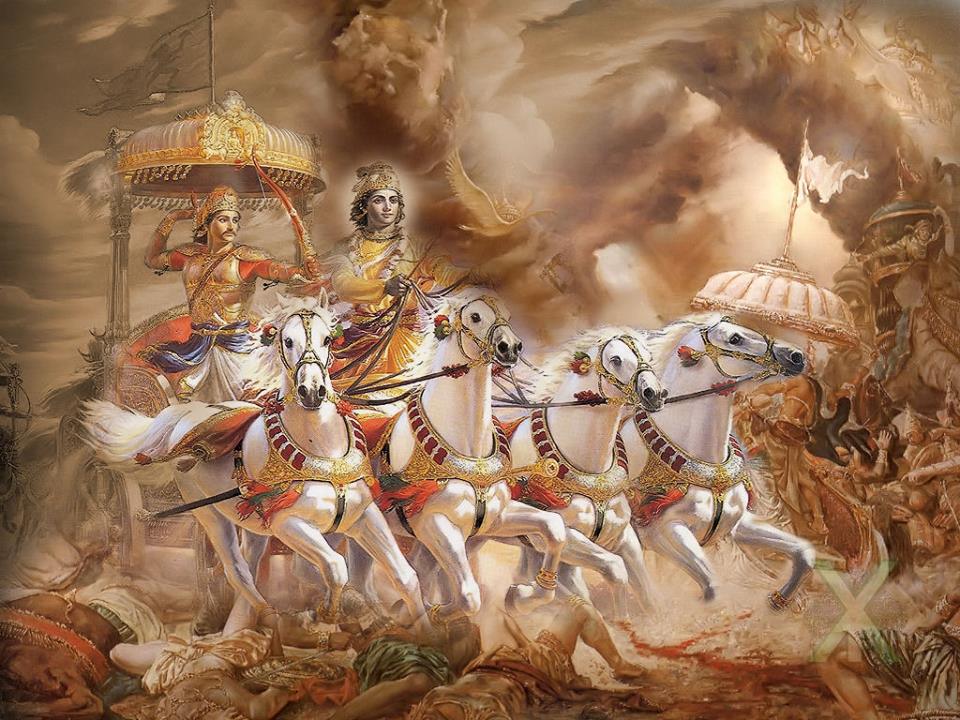
DHARMA RAJA, THE ELDEST OF PANDAVA PRINCES RECEIVING “AKSHAYA PATRA” FROM ‘SURYA BHAGAWAN’

The word ‘Akshaya Patra’ in Sanskrit language means an inexhaustible vessel. This pot could supply delicious meals in an endless manner. This story is found in the Indian Epic poem of Mahabharata. Akshaya Patra was a divine gift given to Dharmaraj by the Sun god, Surya. The pot was given to help the princely family of Pandavas to tide over their difficulties while they spent twelve years in the forest. They had to spend time in exile after losing their kingdom in a game of dice. Akshaya Patra would provide meals so that the Pandava family could keep up with the Indian traditions of hospitality.Also keeping in line with the tradition, each day Akshaya Patra would serve the final and last meal to the hostess. The hostess, Draupadi was very mindful of her traditional role and each day she would feed all the guests, all the dependents, all the family members and would then take the last meal.

THE DISCOVERY OF BLISS FROM AN EMPTY POT:

Akshaya Patra. Discover the Bliss From an Empty Pot.

As per the story from Mahabharata, one evening, Princess Draupadi finds herself in a troubled situation. A Hindu sage by the name of Durvasa with a large entourage of his disciples arrives at the forest abode of Pandava princes after hostess Draupadi took the last meal from Akshaya Patra. Since the pot cannot serve any more food, she prays to Lord Krishna seeking help to feed her guests. Lord Krishna appears before her and asks her to feed Him from Akshaya Patra. Draupadi regretfully answers that the pot is empty. He directs her to take a closer look. Princess Draupadi carefully reexamines the pot and discovers a single grain of rice that remained stuck in the pot. As instructed, she feeds the last grain from the pot to Lord Krishna and now the pot gets truly empty. However, Lord Krishna derived His satiation, complete satisfaction when the last grain from the pot got removed. Along with Lord Krishna’s experience of full satisfaction from eating a morsel of food, the entire party of guests experience full satiation and inform Princess Draupadi that she need not serve them any meal. Thus Princess Draupadi escapes from the duty of the hospitality tradition of actually feeding them that evening.

Discovery of Bliss on Akshaya Tritiya.

I am speaking of this story about Akshaya Patra to understand the concept about emptying the mind to discover pure consciousness. In Indian literature and idiom, the mind is often compared to a vessel or a pot. When all thoughts (or desires) are taken out of the mind, what would remain in the mind is like that single grain of rice that Draupadi discovered in the otherwise empty Akshaya Patra. In my analysis, this last grain of food represents the desire or attachment to life. When the desire or attachment to life is surrendered, the man attains the state of pure consciousness which discovers its unity with the Divine consciousness to provide the experience of Pure Bliss and Joy. Lord Krishna could have easily provided a hearty meal to the entire party of guests. He did not choose to provide happiness through gratification of the physical needs of the body. The pot, if seen as the representation of the mind, the mind gets truly emptied when the last grain or desire, or craving, or attachment is removed from it. Lord Krishna demonstrates that there is no need to fill-up the pot to feed our desires. He delivered Joy, Bliss, and the experience of perfect satisfaction after emptying the pot. Just like the empty Akshaya Patra that provided Bliss, when the last grain of desire or attachment is removed from the mind and given in offering to the Lord, the Lord would provide all that you may need without the physical gratification of the senses. Man at any given age, under all given circumstances, in good health, or ill-health exists in this physical world because of ‘God-Connection’, the Connection between man, the energy seeker, and God, the energy provider. When the God-Connection is recognized, the man experiences a sense of satisfaction, mental satiation, and he would have no desires to be gratified.

Bharat Darshan Discovers Bliss on Akshaya Tritiya.

Whole Demand -Tibet Wants China to Return the Real Panchen Lama

Tibet Awareness – Where is Panchen Lama?

Whole Demand -Tibet Wants China to Return the Real Panchen Lama
Whole Subversion -Red China’s appointment of 11th Panchen Lama. Red China’s Panchen Lama is a political appointee. Gyaltsen Norbert, the False 11th Panchen Lama symbolizes Red China’s Policy of Subversion. 20 years after Disappearance, Tibet wants China to Return True or Real Panchen Lama.

Red China is a ‘Jackal’ for she is dishonest, a cheat, swindler, and practices deception. Red China has deliberately acted dishonestly to deprive Tibetans of their property, their rights, and their cultural beliefs. Red China uses ‘stratagem’ to deceive others and she uses tricks or ruses in deceiving others. Red China apart from destroying Tibet’s established government called ‘The Institution of Dalai Lama’ is undermining Tibet’s established cultural institutions and belief systems that Tibetan people use to recognize figures of authority and of importance. 20 years after Disappearance, Tibet wants China to Return True or Real Panchen Lama.

Supreme Ruler of Tibet on his Europe’s Visit urges constructive criticism of China. Red China’s Real Face is Exposed; Rabid Jackal

Dalai Lama Calls for More Research into Panchen Lama Disappearance

FILE - Tibet's exiled government and Buddhist spiritual leader, the Dalai Lama, on stage before making a speech at the ESS Stadium in Aldershot, southern England, June 29, 2015.
Dalai Lama Calls for More Research into Panchen Lama Disappearance

FILE – Tibet’s exiled government and Buddhist spiritual leader, the Dalai Lama, on stage before making a speech at the ESS Stadium in Aldershot, southern England, June 29, 2015.

Reuters

September 14, 2015 6:53 PM

OXFORD, ENGLAND—

The Dalai Lama said on Monday more research was needed to settle the fate of the man he named as the Panchen Lama, the second-highest figure in Tibetan Buddhism, who vanished two decades ago but is said by the Chinese to be living a normal life.

Gendun Choekyi Nyima, now 26, disappeared shortly after he was declared by the exiled spiritual leader of Tibet to be the reincarnation of the Panchen Lama when he was six years old.
His fate, which is just one area of contention between China and the Dalai Lama over Tibet, continues to be a deep concern to many Tibetans and he remains one of China’s most zealously guarded state secrets.

A senior Chinese official said earlier this month Gendun Choekyi Nyima was “being educated, growing up healthily and does not want to be disturbed”.
The Chinese Communist Party has long maintained that Gendun Choekyi Nyima is not the real Panchen Lama, and in 1995, the government selected Gyaltsen Norbu as the 11th Panchen Lama.

The Chinese government sees the appointment of the next Dalai Lama as key to consolidating state control over Tibet, where separatist movements have flared since the 1950s, and to undermining the present Dalai Lama’s influence.
“I think the Chinese government is more concerned with the Dalai Lama institution than myself,” the Dalai Lama said on Monday at a news conference at Oxford University.

The Dalai Lama acknowledged reports on Gendun Choekyi Nyima, but said evidence was needed to make them credible.
“Some friends say that my Panchen Lama is still alive … and he has also had the opportunity to make a family,” he said.
But he added: “We need more research. Unless we do the research, [it’s] no use to make a comment like that.”

The 80-year-old Dalai Lama fled to India after a failed uprising against Chinese rule in 1959. Beijing says he is a violent separatist but the Buddhist monk denies espousing violence and says he only wants genuine autonomy for Tibet.

He has not met British Prime Minister David Cameron during this visit, which comes a month before Chinese president Xi Jinping is due to make his first official state visit to Britain.
A meeting between Cameron and the Dalai Lama in 2013 triggered a diplomatic spat between Britain and China.

Whole Demand: 30 years after Disappearance, Tibet wants China to Return True or Real Panchen Lama.

Whole Master – A Special Tribute to Spymaster John Alexander McCone

Whole Master: This is a special tribute to Spymaster John Alexander McCone who served as CIA's 6th Director from November 1961 to April 1965.
Whole Master: This is a special tribute to Spymaster John Alexander McCone who served as CIA’s 6th Director from November 1961 to April 1965.

Excerpt: Establishment -22 is the child of CIA’s Secret War in Tibet and it will be correct to recognize CIA as the ‘Mastermind’ of this operation to defend Freedom, and Democracy in the occupied Land of Tibet. Special Frontier Force take this opportunity to pay a special tribute to its ‘Master’, John Alexander McCone (b. January 04, 1902 – d. February 14, 1991) who served as the Director of CIA from November 1961 to April 1965.

EXCOMM meeting at the White House Cabinet Room...
Whole Master: A special tribute to Spymaster John Alexander McCone, the 6th CIA Director who played a leading role during the Cuban Missile Crisis. EXCOMM meeting at the White House Cabinet Room during the Cuban Missile Crisis on October 29, 1962. (Photo credit: Wikipedia)

Whole Dude – Whole Master:

Whole Dude – Whole Master: A special tribute to Spymaster John Alexander McCone, the 6th CIA Director who played a leading role during the Cuban Missile Crisis. Special Service Award presented by all Officers D Sector, Establishment -22 on 19 January 1973.

Establishment No. 22 is a military establishment that represents a military pact/alliance between the United States, India, and the Tibetan Government -in-Exile. It came into existence during November 1962 and during 1966, this organization was named Special Frontier Force. Between the Central Intelligence Agency and the members of Special Frontier Force there has been a Master-Student relationship. Establishment – 22 is the child of CIA’s Secret War in Tibet and it will be correct to recognize CIA as the ‘Mastermind’ of this operation to defend Freedom, and Democracy in the occupied Land of Tibet. Special Frontier Force take this opportunity to pay a special tribute to its ‘Master’, John Alexander McCone (b. January 04, 1902 – d. February 14, 1991) who served as the Director of CIA from November 1961 to April 1965.

John A. McCone obtained a bachelor’s degree in Mechanical Engineering from University of California at Berkeley. He built his career in the steel, construction, shipping, shipbuilding, and aircraft production industries. He founded the Bechtel-McCone Steel Company and his role in shipbuilding, and military aircraft production had attracted the attention of President Harry S. Truman who had appointed him to the Air Policy Commission in 1947 to develop strategy for American military airpower. During 1948, he was appointed as the Special Deputy to the Secretary of Defense. In 1950, he was appointed as Undersecretary of the Air Force. President Dwight Eisenhower appointed him as the Chairman of the Atomic Energy Commission during 1958 and he held that position until 1961.

Whole Dude-Whole Master: In this photo taken during 1958, John A. McCone, Chairman of the World Affairs Council is seen with General Lauris Norstad, Supreme Commander of the Allied Powers in Europe.
Whole Master: In this photo taken during 1958, John A. McCone, Chairman of the World Affairs Council is seen with General Lauris Norstad, Supreme Commander of the Allied Powers in Europe.
Whole Dude-Whole Master: U.S. delegates to the Fourth General Conference of the International Atomic Energy Agency, Vienna, Austria 1960. Left to Right:- Ambassador John S. Graham, Vice Admiral Paul F. Foster, US Navy(Retd), the Permanent U.S. Representative to the IAEA, and John A. McCone, Chairman of the U.S. Atomic Energy Commission.
Whole Master: U.S. delegates to the Fourth General Conference of the International Atomic Energy Agency, Vienna, Austria 1960. Left to Right:- Ambassador John S. Graham, Vice Admiral Paul F. Foster, US Navy(Retd), the Permanent U.S. Representative to the IAEA, and John A. McCone, Chairman of the U.S. Atomic Energy Commission.

During his tenure as the Chairman of the U.S. Atomic Energy Commission, John McCone made very significant disclosures about Israel’s nuclear capabilities. After the disaster of the Bay of Pigs Invasion of Cuba, President Kennedy forced the resignation of the CIA director Allen Welsh Dulles and Richard Bissell, the Deputy Director for Plans and Operations who had a major role in making the plan for this CIA’s Black Operation. In a very surprising, and sudden move, President Kennedy called John McCone, a Republican to take charge of the Central Intelligence Agency disregarding the fact that McCone had no prior experience in Intelligence.

Whole Dude-Whole Master: President John F. Kennedy's selection of Spymaster during 1961. Left to Right:- Allen Welsh Dulles, 5th Director of CIA, Richard Bissell, Deputy Director of Plans/Operations, President John F. Kennedy, and the newly selected 6th Director of CIA, John A. McCone.
Whole Master: President John F. Kennedy’s selection of Spymaster during 1961. Left to Right:- Allen Welsh Dulles, 5th Director of CIA, Richard Bissell, Deputy Director of Plans/Operations, President John F. Kennedy, and the newly selected 6th Director of CIA, John A. McCone.
Whole Dude-Whole Master: September 27, 1961. President Kennedy with CIA Director Allen Dulles and his new pick, John A. McCone.
Whole Master: September 27, 1961. President Kennedy with CIA Director Allen Dulles and his new pick, John A. McCone.
Whole Dude-Whole Master: November 29, 1961. President John F. Kennedy with outgoing CIA Director Allen Dulles.
Whole Master: November 29, 1961. President John F. Kennedy with outgoing CIA Director Allen Dulles.
Whole Dude-Whole Master: November 29, 1961. President John F. Kennedy welcomes the 6th Director of CIA, John Alexander McCone.
Whole Master: November 29, 1961. President John F. Kennedy welcomes the 6th Director of CIA, John Alexander McCone.
Whole Dude-Whole Master: John Alexander McCone gets the task of "rebuilding" CIA after the Bay of Pigs debacle.
Whole Master: John Alexander McCone gets the task of “rebuilding” CIA after the Bay of Pigs debacle.
Whole Dude-Whole Master: A new chapter in the history of CIA. John Alexander McCone became the "Government's principal foreign intelligence Officer" and he would work the heads of all departments and agencies, such as the State, Defense, the Attorney General, and the Chairman of the Atomic Energy Commission, that have responsibilities in the foreign intelligence field. In this photo McCone is seen with Robert Kennedy, the Attorney General. The DCI would coordinate and direct the total intelligence community.
Whole Master: A new chapter in the history of CIA. John Alexander McCone became the “Government’s principal foreign intelligence Officer” and he would work the heads of all departments and agencies, such as the State, Defense, the Attorney General, and the Chairman of the Atomic Energy Commission, that have responsibilities in the foreign intelligence field. In this photo McCone is seen with Robert Kennedy, the Attorney General. The DCI would coordinate and direct the total intelligence community.

John McCone played a leading role in strengthening the intelligence gathering abilities of CIA by launching a technological revolution. On August 05, 1963, he created the Directorate of Science and Technology.

Whole Dude-Whole Master: May 01, 1964. Presidential candidate, New York State Governor, Nelson a. Rockefeller gets Intelligence briefing. Left to Right:-John McCone, DIC; Governor Nelson A. Rockefeller; Robert S. McNamara, Defense Secretary; Dean Rusk, Secretary of State. Photo credit: Francis Miller/Time & Life.
Whole Master: May 01, 1964. Presidential candidate, New York State Governor, Nelson A. Rockefeller gets Intelligence briefing. Left to Right:John McCone, DIC; Governor Nelson A. Rockefeller; Robert S. McNamara, Defense Secretary; Dean Rusk, Secretary of State. Photo credit: Francis Miller/Time & Life.

McCone was responsible for a number of covert operations in Vietnam, Laos, Cuba, Ecuador, and Brazil. John McCone was present in the meeting held at The White House on November 19, 1962 to enter into an agreement/pact with India, and the Tibetan Government-in-Exile to formulate Establishment 22/Special Frontier Force to address the military threat posed by People’s Republic of China’s military occupation of Tibet. This operation that involves India and Tibet remains a secret.

Gyalo Thondup, the elder brother of His Holiness the 14th Dalai Lama played a critical role in raising the Tibetan Force and in formulating the trilateral military alliance with India and the U.S.
Desmond FitzGerald was serving as the Far Eastern CIA Chief in November 1962 at the time of raising Establishment 22 and Special Frontier Force

McCone was a key figure during the October 1962 Cuban Missile Crisis. He had predicted that the Soviet Union would place offensive nuclear weapons in Cuba. However, he had differences with President Lyndon B. Johnson and had resigned from his post during April 1965 and was replaced by  Admiral William F. Raborn. President Ronald Reagan during 1987 presented John McCone with the Presidential Medal of Freedom.

Whole Master: A special tribute to Spymaster John Alexander McCone, the 6th CIA Director who played a leading role during the Cuban Missile Crisis.

I say that John McCone was one of the best Spymasters that CIA ever had. What do you want to say?

Whole Master: Spymaster John Alexander McCone created the Directorate of Science and Technology on August 05, 1963 and launched technological revolution in Intelligence.

Whole Reincarnation – The Dalai Lama Life Cycle

The Dalai Lama Life Cycle – The Cyclical Flow of Times

The Dalai Lama Life Cycle. The Cyclical Flow of Times.

The photo images that capture the physical appearance of the 14th Dalai Lama may relate to just one stage of the Dalai Lama Life Cycle. As per Tibetan faith and belief, the 14th Dalai Lama is the reincarnation of the 13th Dalai Lama. The Dalai Lama Life Cycle started in 1391 centuries before their individual lifespans.

Rudra Narasimham Rebbapragada

Special Frontier Force – Establishment 22 – Vikas Regiment

The Dalai Lama Life Cycle. The Cyclical Flow of Times.

Frame by frame: Photographer Raghu Rai’s book on the 14th Dalai Lama is personal, deep and immersive

Clipped from: https://bangaloremirror.indiatimes.com/opinion/sunday-read/frame-by-frame-photographer-raghu-rais-book-on-the-14th-dalai-lama-is-personal-deep-and-immersive/articleshow/66492014.cms

The Dalai Lama Life Cycle. The Cyclical Flow of Times.

Dalai Lama

By Priyadarshini Nandy

Raghu Rai’s book captures the many shades of the Tibetan spiritual leader

Raghu Rai’s latest book – A God in Exile: The Fourteenth Dalai Lama – focuses entirely on the Dalai Lama in his various moods and moments – be it when he’s interacting with his followers or simply unwinding. The series of black and white photographs are in no particular order, but it gives readers a glimpse into the life of the spiritual leader that Rai has witnessed over three decades. “He has an aura about him, one that can probably be felt for kilometers around him. He can see through you. We are truly lucky to have him in our lives. To me, he is a rare individual,” Rai adds.

But the two weren’t always so familiar. Before meeting the Dalai Lama in 1975, Rai’s knowledge of the man was pretty much limited to a book. “I had read My Land, My People (the Dalai Lama’s autobiography). It’s one of the most understated books I’d read in a while. Powerful, and moving – it sort of makes you feel responsible towards the people of Tibet. I knew that he was their spiritual leader, someone who brings out the Buddha in you… and that was pretty much it,” Rai says.

All that was going to change, when Rai was sent to Ladakh by The Statesman, to cover a three-day teaching session by the Dalai Lama. Little did Rai know back then that his relationship with the Dalai Lama was going to deepen over the years, and turn into a long-lasting friendship.

He (the Dalai Lama) has an aura about him, one that can probably be felt for kilometers around him. He can see through you. We are truly lucky to have him in our lives

Raghu Rai

“After ’75, I met him next only a decade later. I have been wanting to do a book on the Tibetans in exile, and I followed him to Bodh Gaya. But when I reached, I was informed that he was busy with a personal ritual and no one was allowed to disturb him. But I am adamant. I told them I knew him, and I simply must see him. After great difficulty, I was shown to his tent but was told not to enter. I had to insert my camera lens through a gap in the tent to take his photograph. But he spotted me and recognized me. He asked me to come in, and I was allowed to take his photos.

I was there for about four-five days and given complete access,” Rai adds.

The Dalai Lama Life Cycle. The Cyclical Flow of Times.

Being blessed at Judah Hymn Synagogue, wearing a yarmulke

The end result was Tibet in Exile (1990), with text by Jane Perkins (who’s also written for the current book) – a brilliant visual record of the Dalai Lama and the Tibetans who live in exile.

Over time, Rai kept going back to Dharamsala to meet the Dalai Lama.

“I did assignments for various magazines, and every time I went there, I would tell him it was really important. It was gracious of him to give me complete access, and he would even introduce me as his friend.” Sharing an old story, Rai says that during one of his shoots at Dharamsala, His Holiness came out from one his prayers, and gave him an off-white stone just before Rai was leaving. “I took it and put it into my camera bag. Many years later, my health worsened. I would feel uneasy and breathless; tired during assignments. What I did then was, taken that stone out and saw there was a small hole in it. I strung a thread to it and began to wear it around my neck. And I went back to work. In the year 2000, Nita (Rai’s wife) decided enough was enough and took me to a doctor. I was told that my heart had 90 per cent blockages, and anything could happen at any moment. I would like to believe that the stone is what protected me. I had an open-heart surgery later and my wife and I decided to go to Dharamsala to thank the Dalai Lama. But when I did thank him and told him how his stone had saved my life he laughed and said, “I don’t think I can do these things”. However, he pulled me into a prolonged embrace before we left, and I felt a kind of energy that I had never felt before. I think he just heals you by instinct. He can feel and smell what’s going on in your life.”

The Dalai Lama Life Cycle. The Cyclical Flow of Times.

His Holiness’s morning occupation is often rereading Tibetan scriptures

Rai has many such stories to share – about the small jokes the Dalai Lama would crack ever so often; how he would sit in meditation for hours when no one could move him; the way he would interact with the people who had come to take his blessing – and these stories have made their way to this black and white photobook. “I have seen the spiritual connection he has with things. I have seen his compassion. And I have seen his humorous side. Once, I went to photograph him when he was sitting with a group of southeast Asian monks. It was a serious moment. And yet, in the middle of that, he spotted me and asked me why was I wearing a cap. He then asked me to come up to him and tugged at my cap and said “I want to see how much hair you have left”, and began to laugh. And with him, so did everyone. He’s like that – childlike and innocent,” Rai adds.

Interestingly, A God in Exile was not something Rai had planned. “I had seen a book on him by the Swiss photographer Manuel Bauer, and I was jealous. The photographs in the book were amazing. I honestly felt as if someone had stolen my sweetheart from me.

The Dalai Lama Life Cycle. Photographer Raghu Rai.

Raghu Rai

So I told myself that even I would do a book, and mine would be better. So in 2016, I decided to put my collection of photographs of the Dalai Lama together. I think I can say that my book is now the best one,” Rai says with a laughter.

– Photographs From A God in Exile: The Fourteenth Dalai Lama, by Raghu Rai. Published by Roli Books

The Dalai Lama Life Cycle. The Cyclical Flow of Times. The Great 5th Dalai Lama.

Whole Tyrant – Red China – Trojan Horse

Red China – Trojan Horse if not Jackass

I describe Red China’s Communist Face using terms such as Evil, Aggressor, Public Enemy No. 1,Tyrant, Occupier, Subjugator, Wicked, Cunning, Jackal, Expansionist, Neocolonialist, Obstructionist, Jackass, and Trojan Horse.

Red China’s global ambitions cannot be trusted because of her One-Party Governance with no Public Accountability and Transparency. I describe Red China’s Communist Face using terms such as Evil, Aggressor, Public Enemy No. 1,Tyrant, Occupier, Subjugator, Wicked, Cunning, Jackal, Expansionist, Neocolonialist, Obstructionist, Jackass, and Trojan Horse.

Rudra Narasimham Rebbapragada

Special Frontier Force – Establishment 22 – Vikas Regiment

CHINA’S GLOBAL AMBITIONS: ARE THERE LESSONS TO BE LEARNT FROM TIBET?

Clipped from: http://www.smh.com.au/comment/chinas-global-ambitions-are-their-lessons-to-be-learnt-from-tibet-20170820-gy0dk0.html

I describe Red China’s Communist Face using terms such as Evil, Aggressor, Public Enemy No. 1,Tyrant, Occupier, Subjugator, Wicked, Cunning, Jackal, Expansionist, Neocolonialist, Obstructionist, Jackass, and Trojan Horse.

The man who replaced the Dalai Lama as the head of Tibet’s government-in-exile has brought a troubling message to Australia. The Chinese military forcibly annexed Tibet in the 1950s, sending the Dalai Lama into hasty exile in India. The Dalai Lama retains his role as spiritual leader. But the Tibetan diaspora elected Lobsang Sangay as their political leader six years ago. He spoke at the National Press Club in Canberra earlier this month. The Harvard-educated lawyer’s message to Australia: “It happened to Tibet – you could be next.”

This is a disturbing idea, but surely a fanciful one? As president of the Tibetan government-in-exile, Sangay’s main agenda is to stir international empathy for Tibet. Encouraging us to identify with Tibet, putting us in Tibet’s shoes, is surely a clever technique for achieving his aim.

Does have anything to support his assertion? His case: “If you understand the Tibetan story, the Chinese government [before the military takeover] started building a road – our first ever highway in Tibet.

“Now, we were promised peace and prosperity with the highway, and our parents and grandparents joined in building the road. In fact, they were paid silver coins to help them build the road…

I describe Red China’s Communist Face using terms such as Evil, Aggressor, Public Enemy No. 1,Tyrant, Occupier, Subjugator, Wicked, Cunning, Jackal, Expansionist, Neocolonialist, Obstructionist, Jackass, and Trojan Horse.

“So my parents told me the Chinese soldiers with guns were so polite, so nice, the kids used to taunt them and taunt them, they always smiled. They never said anything. Then they built the road. Once the road reached Lhasa – the capital city of Tibet – first trucks came, then guns came, then tanks came. Soon, Tibet was occupied. So it started with the road.

“Then another strategy that they deployed was divide and rule, co-opting our ruling elite… They were paid, I think, in Australian context, huge consultation fees.” This brought knowing guffaws from the Australian audience.

“So,” Sangay concluded, “what you see in Australia and around the world – co-optation of ruling elites, getting high consultation fees, business leaders supporting the Chinese line of argument, and even the religious figures – we have seen all that in Tibet. So it started with the road.”

And he compared China’s current international infrastructure project with that road: “So that was the consequence of One Belt, One Road in Tibet.”

One Belt, One Road is President Xi Jinping’s signature foreign policy project. So far, 68 countries have signed up to the mighty vision of an interconnected system of road, rail, ports and bridges embracing most of the world’s population and connecting Europe to Asia and the Pacific through China on land and at sea.

I describe Red China’s Communist Face using terms such as Evil, Aggressor, Public Enemy No. 1,Tyrant, Occupier, Subjugator, Wicked, Cunning, Jackal, Expansionist, Neocolonialist, Obstructionist, Jackass, and Trojan Horse.

However, this is just a beginning; One Belt, One Road was only launched formally in May. Beijing’s plan ultimately encompasses more than 100 countries and at an estimated total cost of between $US1 trillion ($1.26 trillion) and $US4 trillion or more. China has offered to link it with Australia’s Northern Australia Infrastructure Fund, although the Turnbull government has so far declined.

I describe Red China’s Communist Face using terms such as Evil, Aggressor, Public Enemy No. 1,Tyrant, Occupier, Subjugator, Wicked, Cunning, Jackal, Expansionist, Neocolonialist, Obstructionist, Jackass, and Trojan Horse.

In the weekend edict from Beijing clamping down on Chinese foreign investment for fear of excess capital flight, Xi’s government nonetheless encouraged Chinese firms to redirect their money into projects in the One Belt, One Road plan.

Could Chinese infrastructure be a Trojan horse for Chinese takeover of foreign countries? In May, Pakistan’s English-language newspaper Dawn exposed a detailed, 231-page Chinese plan for its 15-year infrastructure rollout in Pakistan. The newspaper’s Khurram Husain described it as “a deep and broad-based penetration of most sectors of Pakistan’s economy as well as its society by Chinese enterprises and culture”.

In Australia, some of China’s proposed infrastructure investments have been prohibited on national security grounds. Last year the Turnbull government blocked a $10 billion Chinese plan to buy into NSW power distribution company Ausgrid. China’s Huawei communications firm has been barred from any investment in Australia’s National Broadband Network. And, as Fairfax’s David Wroe reported on the weekend, the federal intelligence agencies are troubled by Huawei’s buy-in to the proposed 4500 kilometer fiber optic cable connecting the Solomon Islands to Sydney. They fear it is a Chinese state-sponsored effort to find a backdoor into Australia’s critical infrastructure.

A Chinese firm’s purchase of the Port of Darwin raised deep concerns in Washington. Ructions over the decision moved the federal government to change the way the Foreign Investment Review Board reviews proposals – the board is now chaired by a former head of ASIO.

I describe Red China’s Communist Face using terms such as Evil, Aggressor, Public Enemy No. 1,Tyrant, Occupier, Subjugator, Wicked, Cunning, Jackal, Expansionist, Neocolonialist, Obstructionist, Jackass, and Trojan Horse.

Chinese soldiers with fixed bayonets attend the flag-raising ritual at dawn in Tiananmen Square.

Is Sangay right? Geremie Barme, former head of ANU’s Centre for China in the World, is both deeply knowledgeable about China and highly skeptical of its party-state apparatus. He says that Sangay is wrong on two counts. First, says Barme, it’s a “false comparison” to put Tibet with Australia and other countries in the Chinese worldview. “China went into Tibet to extract resources and for military reasons, it was not a big market for China,” says Barme, now an independent scholar and publisher of chinaheritage.net. “China as an economic and political entity is deeply implicated with global economics and politics and it needs not only resources, it needs markets.” Tibet was about resources, in other words, while it sees most of the rest of the world as markets.

I describe Red China’s Communist Face using terms such as Evil, Aggressor, Public Enemy No. 1,Tyrant, Occupier, Subjugator, Wicked, Cunning, Jackal, Expansionist, Neocolonialist, Obstructionist, Jackass, and Trojan Horse.

Second, the Chinese ruling class has not yet decided the scope of their global ambitions, according to Barme. “There is a debate in China at the moment – what responsibilities will they take in the world, and what can they afford?

“They have been studying the US imperium closely for 70 years, and studying why the Soviet Union collapsed. They do know that imperial expansion comes at a very heavy price, and are they prepared to pay that price? They don’t know yet. They do debate it.”

Depending on China’s choice, Lobsang Sangay will turn out to be either a far-seeing prophet or Chicken Little.

Peter Hartcher is the international editor.

I describe Red China’s Communist Face using terms such as Evil, Aggressor, Public Enemy No. 1,Tyrant, Occupier, Subjugator, Wicked, Cunning, Jackal, Expansionist, Neocolonialist, Obstructionist, Jackass, and Trojan Horse.

Whole Awareness – The Future of Tibet without the Dalai Lama

Tibet Awareness – The Legacy of Dalai Lama

NO REINCARNATION OF DALAI LAMA WITHOUT FREEDOM IN OCCUPIED TIBET.


I am not surprised to note about a historical change introduced by His Holiness the 14th Dalai Lama. He has given up his political power and has decided to guide future of Tibet as a spiritual leader. Such separation of powers is needed in view of Red China’s military occupation of Tibet. There will be no reincarnation of Dalai Lama without Freedom in Occupied Tibet. His legacy is of far more greater importance to Red China. But, for Dalai Lama there is no one who can save Red China. Beijing is Doomed. No other nation on Earth can come to rescue of Red China as she marches ahead to meet her downfall.

Rudra Narasimham Rebbapragada
Ann Arbor, MI 48104-4162, USA
Special Frontier Force – Establishment 22 – Vikas Regiment

Dalai Lama: China more concerned about future Dalai Lamas than I am

By Mick Krever, CNN

Updated 8:05 AM ET, Wed October 7, 2015

Dalai Lama: Future Dalai Lamas concern China
Dalai Lama: China more concerned about future Dalai Lamas than I am

Dalai Lama: Future Dalai Lamas concern China

London (CNN) The Chinese government cares more about the institution of the Dalai Lama than the man who carries that name, the 14th Dalai Lama told CNN’s Christiane Amanpour.

“I have no concern,” he told Amanpour in London, adding that it is “possible” he would be the last Dalai Lama.

sot amanpour dalai lama china future_00004219
Dalai Lama: China more concerned about future Dalai Lamas than I am

The Chinese government still considers him a political leader, the Dalai Lama said, as the previous men carrying that title were for centuries. But since 2011, he told Amanpour, he is only a spiritual leader. “I totally retired from political responsibility — not only myself retired, but also (a) four-century-old tradition.”

Buddhism in Tibet far precedes the Dalai Lama, and “in the future, Tibetan Buddhism will carry (on) without the Dalai Lama.”
Decades ago, he told Amanpour, “I publicly, formally, officially — I announced the very institution of the Dalai Lama should continue or not — (it is) up to Tibetan people.”

Amanpour spoke with the Dalai Lama shortly before he was hospitalized and forced to cancel several appearances in the United States. Now back in India, he has assured his followers he is in “excellent condition.”

The Chinese government is continually at odds with the Dalai Lama, the spiritual leader of Tibetan Buddhists. Chinese officials label him an “anti-China splittist,” alleging that he wants Tibet — now a region of China — to become an independent country.

“We are not seeking independence. Historically, we are (an) independent country. That’s what all historians know — except for the Chinese official historian; they do not accept that.”
Labeling him a “splittist,” the Dalai Lama said, fits with China’s “hardliner policy.”
“Past is past. We are looking (to the) future.”

Tibet, he said, is “materially backward,” and benefits from being part of China.
“It’s in our own interest, for further material development — provided we have our own language, very rich spirituality.”

Asked if he had a message for Chinese President Xi Jinping, who at the time was on the eve of a state visit to Washington, the Dalai Lama at first demurred.
With a laugh, he told Amanpour he’d have to think about it.

“I may say to him, Xi Jinping, leader of most populated nation, should think more realistically.”

“I want to say (to him), last year, he publicly mentioned in Paris as well as New Delhi, (that) Buddhism is a very important part of Chinese culture. He mentioned that. So I also say — I may sort of say some nice word about his — that comment.”

Nowhere else, the Dalai Lama said, is the “pure authentic” tradition of the religion kept so intact as in Tibet.

“No other Buddhist countries. So in China, preservation of Tibetan Buddhist tradition and Buddhist culture is (of) immense benefit to millions of those Chinese Buddhists.”
In one of those Buddhist countries, Myanmar, the often peaceful image of practitioners has been tarred in recent years with the persecution of — and often outright violence against — Muslim minorities, the Rohingya.

Whenever a Buddhist feels “uncomfortable” with a Muslim, or person of any other religion, the Dalai Lama said, he or she should think of “Buddha’s face.”
“If Buddha (were) there — certainly protect, or help to these victims. There’s no question. So as a follower of Buddha, you should follow Buddha sincerely. So national interest is secondary.”

“Consider as a human brothers, sisters. No matter what is his religious faith.”
“To some people, Muslim, Islam, (is) more effective. So let them follow that. We must accept that.”

© 2015 Cable News Network. Turner Broadcasting System, Inc., All Rights Reserved.

statesman: Dalai Lama: A future female Dalai Lama would have to be ...

Please join us in sending prayers & thoughts to the @DalaiLama, who is ...

Dalai Lama Quotes

TIBET AWARENESS – SICHUAN – TIBET HIGHWAY – TIBET IS NEVER PART OF CHINA.


Whole Awareness – Raising Tibet – Raising Tibet Awareness

Raising Tibet – Raising Tibet Awareness

As such Tibet is not part of China at any time in human history. There are two issues of primary concern; 1. Action of Natural Forces Raising Tibet, and 2. Red China’s use of Military Force to Occupy Tibet which demands Raising Tibet Awareness.

Mother Nature has vast resources of energy which she is slowly spending over the last 50 million years to Raise Tibet with ease and without any apparent effort. Surprisingly, humans are spending more energy as compared to Mother Nature’s energy expenditure to Raise Tibet. I am not resourceful like Mother Nature. My efforts to Raise Tibet Awareness is lot more challenging as I confront Red China who with her superior military force occupied Tibet which could not offer significant resistance. Tibet existed as Independent Nation with full control on its internal affairs even during times of Mongol and Manchu China Empires.

As such Tibet is not part of China at any time in human history. There are two issues of primary concern; 1. Action of Natural Forces Raising Tibet, and 2. Red China’s use of Military Force to Occupy Tibet which demands Raising Tibet Awareness.

Rudra Narasimham Rebbapragada
Ann Arbor, MI 48104-4162 USA

SPECIAL FRONTIER FORCE


THE CONVERSATION

As such Tibet is not part of China at any time in human history. There are two issues of primary concern; 1. Action of Natural Forces Raising Tibet, and 2. Red China’s use of Military Force to Occupy Tibet which demands Raising Tibet Awareness.

RAISING TIBET

April 28, 2016 11.30pm EDT


MIKE SANDIFORD Professor of Geology, University of Melbourne
Disclosure statement: Mike Sandiford receives funding from the Australian Research Council for research into the tectonics of the Indo-Australian tectonic plate.

Partners

University of Melbourne and Victoria State Government provide funding as founding partners of The Conversation AU.

Republish this article

We believe in the free flow of information. We use a Creative Commons Attribution NoDerivatives licence, so you can republish our articles for free, online or in print.

It’s more than a little disconcerting to wake every hour or so, gasping for air, suffocating.

It happened to me during a field season in southern Tibet camped at about 5400 metres above sea level. With my normal sleep breathing patterns, I just couldn’t get enough oxygen.
We were working in an area known as the Kampa dome, some 50 kilometres north of the border with India and about 150 kilometres east of Mount Everest.

As such Tibet is not part of China at any time in human history. There are two issues of primary concern; 1. Action of Natural Forces Raising Tibet, and 2. Red China’s use of Military Force to Occupy Tibet which demands Raising Tibet Awareness.

Crossing a pass into the Kampa dome, southern Tibet, elevation 5500 metres.

The Kampa dome is a sort of giant geological “blister”. The dome, which is about 25 kilometres across, comprises a core of rocks originating deep within the Tibetan crust now exposed beneath a carapace of much shallower rocks.

As such Tibet is not part of China at any time in human history. There are two issues of primary concern; 1. Action of Natural Forces Raising Tibet, and 2. Red China’s use of Military Force to Occupy Tibet which demands Raising Tibet Awareness.

Google Earth image of the Kampa dome in southern Tibet, viewed from the south-east. The dome rises to almost 6000 metres above sea level at its highest point. The lighter coloured rocks in the valleys in the core of the dome are granites and metamorphic rocks that have been forced up through a carapace of darker coloured and shallower sedimentary rocks, now exposed around the rim of the dome and along the ridge crests in its core. Image obtained from Google Earth – 29/04/2016

Kampa is just one of a number of domes distributed in a belt along the southern boundary of Tibet, not far north of the Himalaya. These domes attract the attention of geologists interested in what’s going on deep under Tibet and in the sequence of events that raised the plateau over the last 50 million years or so.

And that is not just of geological interest. The Tibetan plateau is so large, and so high, that it influences the global pattern of atmospheric circulation. So the raising of Tibet has had a profound impact on the evolution of the modern climate system. It is one of the elements in the transition from the green-house world of the dinosaur era to the ice-house world in which our own species has evolved.

Our work in Kampa was part of a broader program investigating the magnitude of the forces that drive tectonic plate motion. Amongst other things, getting a handle on those forces is important for understanding what limits the heights of our great mountain ranges such as the Himalaya.

The particular issue that motivated our interest in Kampa was the idea that weak rocks heated beneath Tibet were being, or had been, squeezed outwards to the south in a giant pincer movement by the ongoing convergence between the Indian and Asian plates. The idea that the rocks exposed in Kampa, as well as in the high Himalaya, are a kind of geological “toothpaste” is quite a departure from the conventional view that the mountain system has been created by stacking of thrust sheets one on top of the other.

One of the master faults lying above this purported channel of extruded rock is exposed high up in the face of Everest beneath a limestone that was deposited immediately prior to the raising of Tibet. The southern Tibetan domes make for rather easier and less dangerous field work than the face of Everest.

More than any other, mountain landscapes manifest the awesome power of our restless planet. In the rarefied atmosphere high up in the Kampa, the sense of awe was greatly magnified, especially with the Himalaya towering above the horizon.

The amount of energy involved in building these mountains, in lifting those 50 million year old limestones out of the sea to now sit high up the slopes of Everest, is simply mind-boggling, or so you would think.

To give you a sense, let’s calculate it.

Even though it involves some big numbers, the calculation is really quite trivial. We simply multiply the area of the plateau (about 2.5 million square kilometres ) by the work done against gravity. To lift a column of the crust one square metre in area by 4-5 kilometres takes about 4 trillion joules.

Harmonising units, and we get our estimate of the work done against gravity in raising Tibet – about 10 yottajoules (think “10” followed by 24 zeros).
The trouble with big numbers such as these, and one reason they feel so daunting, is we have no natural reference frame to make comparisons.

So let’s compare it to the energy we humans consume to run our daily lives. We could ask how many years would it take to raise Tibet if we put all human energy consumption to work.
In its Statistical review of world energy BP estimated the human primary energy consumption in 2015 at 550 exajoules (that is 550 followed by 18 zeros). At that rate, and neglecting inefficiencies, it would take about 20,000 years to raise Tibet.

While that’s a long time, it’s far less than the 50 million years that nature took to raise Tibet.
In fact, the rate we consume energy is around 2000 times greater than the 10 gigawatt rate nature has been storing it in the raising of Tibet.

Here in Victoria, with a population at about 6 million, we consume electrical power at a rate of about 5 gigawatts. Making that electricity is only about 30% efficient, and so the burning of coal releases heat at a rate of about 15 gigawatts.

We use energy at a rate, quite literally, that could make mountains move.
Now that is something I think really is mind-boggling.

Footnotes

We were guided in our work in the Kampa in 2004 by local herders. It’s hard to imagine more hardy folk. While communication from Tibetan to Chinese to English and back again meant many nuances were missed, it was a special experience. It seemed our guides hadn’t had much to do with westerners before, and we were quite a source of amusement for them. Indeed, it seemed to me there was a very real sense of fun in the way they went about their daily life on the top of world.

TIBET CONSCIOUSNESS – GLOBAL WARMING – CLIMATE ACTION. TIBETAN NOMADS LIVE IN PERFECT HARMONY WITH NATURE LIVING ON LIVESTOCK-REARING. INDUSTRIAL POLLUTION IS THE CHIEF CULPRIT OF GLOBAL WARMING.

Our Tibetan guides in one of the glacial valleys high in the Kampa dome, southern Tibet.

A particular highlight was their invitation, on our arrival, to join for some authentic yak’s butter tea. At these heights with little oxygen, not much fuel and with everything just a little damp, cooking is challenging. Burning damp goat dung in the close environment of a yurt produces an awful lot of foul-smelling, acrid smoke, but not much heat. I didn’t much enjoy the taste of the rancid butter either. While the invitation to join with our Tibetan hosts in their summer home remains one of my most treasured experiences, it was with some personal relief that I declined a second “cuppa”, doubting I could hold any more down.

TIBET CONSCIOUSNESS – GLOBAL WARMING – CLIMATE ACTION. GRASSLANDS FAIL TO THRIVE DUE TO WARMING AND LACK OF PRECIPITATION.

Enjoying yak butter tea inside our host’s yurt at over 5000 metres above sea level in Southern Tibet.

Despite it’s remoteness, this is a region in transition, for many reasons. One of my enduring memories of the Kampa is captured in the photo below, showing the alarming degradation of the thin soils that mantle these recently de-glaciated landscapes.

As such Tibet is not part of China at any time in human history. There are two issues of primary concern; 1. Action of Natural Forces Raising Tibet, and 2. Red China’s use of Military Force to Occupy Tibet which demands Raising Tibet Awareness.

Like so many parts of the world, soil loss in the Tibetan plateau is an issue of critical importance. As this photograph dramatically illustrates, the thin soils that mantle the rocky, recently de-glaciated landscape in the Kampa appear to be degrading at a frightening pace .
The story of what we are doing to soils on this planet is an issue of immense importance, for all people.

Copyright © 2010–2016, The Conversation US, Inc.

Raising Tibet – Raising Tibet Awareness. Tibet is Never Part of China. It is correct to state China is in Tibet as an Occupying Force.
Raising Tibet – Raising Tibet Awareness. Red China’s Occupation of Tibet threatens World’s Water Supply. Tibet is Never Part of China.
Raising Tibet – Raising Tibet Awareness. A view of Tibetan Plateau and Himalaya Mountain Range. Tibet is Never Part of China.
Raising Tibet – Raising Tibet Awareness. Collision between Indian Landmass and Eurasia is raising Tibetan Plateau. A similar collision involving Force can evict Red China from Tibet.


Whole Experience – Revealing the Agony of the Cup on Earth Day April 22

The Celebration of the Experience of Earthly Existence

Earth Day 2025. The celebration of the Flat Disc experience of existence on Mother Earth

Excerpt: Tuesday, April 22 is Earth Day and the official theme for 2025 is “Our Planet. Our Power.” Since man has no direct sensory experience of the realities of Earth’s shape and motions, the Earth Day celebration calls for the recounting of the experience of one’s own earthly existence.On Earth Day 2025, this slave is still carrying the burden of the Cross while he slowly inches towards his final, earthly destination. The alien has no choice other than that of learning the art of Whole Patience.

Earth Day 2025. The celebration of the Flat Disc experience of existence on Mother Earth

Earth Day 2025, with the theme “Our Power, Our Planet,” calls for a global movement to accelerate the transition to renewable energy. The focus is on tripling clean electricity generation by 2030, highlighting the power of renewable energy solutions like solar, wind, and hydro to combat climate change.

Earth Day 2025. The celebration of the Flat Disc experience of existence on Mother Earth

Earth is the natural home for all humans, plants, and the animals that inhabit this planet. We need to learn to keep this home safe, and healthy for the sake of our future generations. Earth’s resources should be used in a wise and judicious manner. We need to accept the stewardship of the planet and act to preserve and protect the plants and the animals that share their lives with us. 

Earth Day 2025. The celebration of the Flat Disc experience of existence on Mother Earth

Earth Day Tuesday, April 22, 2025. The Celebration of Mother Earth. Man’s Existence is shaped by Flat Earth with Arched Dome:

Earth Day 2025. The celebration of the Flat Disc experience of existence on Mother Earth

The man’s existence on surface of planet Earth demands the experience of Flat Earth with Arched Dome on which the man observes the apparent motions of Sun, Moon, planets, and stars. The man experiences alternating periods of Day and Night, and experiences changing Seasons in consistent manner without experiencing the true or real motions of Earth and with no direct experience of the true shape of Earth.

The Agony of the Cup – Recounting the Experience of one’s own Earthly Existence:

The Agony of the Cup – Earth Day Celebration. Recounting the experience of one’s own earthly existence. Please take away this Cup from me.

Since man has no direct sensory experience of the realities of Earth’s shape and motions, the Earth Day celebration calls for the recounting of the experience of one’s own earthly existence.

The Agony of the Cup – Earth Day Celebration. Recounting the experience of one’s own earthly existence. Please take away this Cup from me.

I drank from that cup. Now, the cup could be described as half full or half empty. Is that really important? The cup that I drink from gives me pain and I experience suffering. What would be the right question if I have to drink from that cup? What I truly experience from my life, the reality of my condition is more important than my attitude towards my existence. The issue is not about optimism or pessimism. I need to focus on knowing the reality and I need to face the reality about what I experience when I drink from that cup of my life. 

The Agony of the Cup – Earth Day Celebration. Recounting the experience of one’s own earthly existence. Please take away this Cup from me.

I am an alien, foreigner, sojourner, stranger, tenant and traveler with no place to call home. The reality of my earthly existence is about the never ending burden of the Cross for the alien follower.

The Agony of the Cup – Earth Day Celebration. Recounting the experience of one’s own earthly existence. Please take away this Cup from me

On Earth Day 2025, the alien is still carrying the burden of the cross while he slowly inches towards his final, earthly destination. The alien has no choice other than that of learning the art of Whole Patience.

The Agony of the Cup – Earth Day Celebration. Recounting the experience of one’s own earthly existence. Please take away this Cup from me.

I celebrate Earth Day 2025 as God is not willing to take away the Cup unless I drink it.

Earth Day. The Celebration of Mother Earth, the Source of Whole Patience.

Patience in Suffering – Recounting the Experience of one’s own Earthly Existence. Please take away this Cup from me. The alien has no choice other than that of learning the art of Whole Patience.

The First Earth Day Celebration was held on April 22, 1970. It has now become a global tradition to celebrate Planet Earth as man’s only home in this vast universe of unknown dimensions. In the Indian tradition, I pay my tribute to Mother Earth, Goddess Earth often adoringly described as Bhu Devi or Prithvi Mata.

Patience in Suffering – Recounting the Experience of one’s own Earthly Existence. Please take away this Cup from me. The alien has no choice other than that of learning the art of Whole Patience.

Mother Earth symbolizes the qualities of Patience, Tolerance, Perseverance and Endurance which is the ability to withstand pain without any complaint.

Patience in Suffering – Recounting the Experience of one’s own Earthly Existence. Please take away this Cup from me. The alien has no choice other than that of learning the art of Whole Patience.

Earth Day 2025. Indian Traditions about the role of Planet Earth:

EARTH, ‘PRITHVI’, OR ‘BHUMI’ IS DEDICATED TO PRESERVE THE COSMIC BALANCE AND UNIVERSAL ORDER.

MOTHER EARTH, ‘PRITHVI’, OR ‘BHUMI’ IS DEDICATED TO PRESERVE THE COSMIC BALANCE AND UNIVERSAL ORDER.

In the ancient Indian scripture of Rig Veda, Mother Earth or Prithvi Mata is described as the primordial goddess. She is also known by the names of Bhumi, Dhra, Dharti, Dhrithri, and Dharani all of which refer to her sustaining beneficence as “that which holds everything.” Akasha (Sky), Vayu (Wind), Agni (Fire), Jala or Varuna (Water), and Bhumi or Prithvi (Earth) are described as ‘Pancha Maha Bhutas’ or the Five Great Elemental States of the Material Nature or Prakriti. She is the consort of Lord Vishnu, the Divine Protector of the Hindu Trinity. Earth represents the female principle of fertility and is the source of all vegetation and is responsible for precious and bountiful crops and fruits that it yields. She is the sustainer and the preserver of the Cosmic Balance. She stands up to the rights of the living entities and defends them from Cosmic Forces and Energies. She symbolizes  the concept of a just and stable universe. She represents dedication to  maintenance of ‘Dharma’  or Righteous Action which defines the Universal Order. She bears witness to all of our actions and particularly the actions of miscreants and evildoers who transgress the rights of weak and innocent denizens living in her domain. She mutely observes the acts of depredations and oppression. She endures all kinds of suffering with calmness and displays a great quality of patience. However, there are natural limits to her forbearance.When stressed beyond her limits of threshold and particularly to uphold the vital principle of Dharma, she cries out aloud, calls for  attention of all gods, and insistently demands for  intervention of Lord Vishnu, the Divine Protector.

Patience in Suffering – The Concept of Whole Patience

EARTH, ‘PRITHVI’, OR ‘BHUMI’ IS DEDICATED TO PRESERVE THE COSMIC BALANCE AND UNIVERSAL ORDER. The concept of Whole Patience.

Indians find encouragement  in developing perseverance while confronting trials and tribulations of many kinds. The idea that Mother Earth is a witness to their pain and suffering provides man a sense of comfort and enables man to endure suffering with a sense of hope and  expectation of deliverance. Indians are culturally driven to face calamities with calmness as they hope that Mother Earth would intervene on their behalf. Being patient is a quality t imparted to the human character by Mother Earth.

A hymn to Praise Earth Goddess Bhu Devi:

BHAVANAJAGAT  CELEBRATES  EARTH  DAY  -  PATIENCE  IN  SUFFERING .  GODDESS  EARTH  SYMBOLIZES  MOTHER  PRINCIPLE  THAT  PRESERVES  LIFE  WHILE  MAN  PATIENTLY  ENDURES  PAIN  AND  SUFFERING .
EARTH DAY 2025 – PATIENCE IN SUFFERING. GODDESS EARTH SYMBOLIZES MOTHER PRINCIPLE THAT PRESERVES LIFE WHILE MAN PATIENTLY ENDURES PAIN AND SUFFERING .

Vishnu Shakti Samutpanne
Chitra Varne Mahitale
Aneka Ratna Sampanne
Bhoomi Devi Namostute
.

Vishnu Shakti Samutpanne, Shanka Varne Mahitale,

Aneka Ratna Sambhute, Bhumi Devi Namostute.

EARTH, ‘PRITHVI’, OR ‘BHUMI’ IS DEDICATED TO PRESERVE THE COSMIC BALANCE AND UNIVERSAL ORDER. Bhavanajagat Celebrates Earth Day – Patience in Suffering.

Earth Goddess, Bhumi Devi, you originated from the Creative Power of Lord Vishnu and you display the complexion of a Conch shell, you produce a variety of gems and precious stones. I join and press my palms together and bow my head to offer my salutations to you.

Ecology helps to formulate the Art of Patience

BHAVANAJAGAT  CELEBRATES  EARTH  DAY  -  PATIENCE  IN  SUFFERING :  WHEN  THE  INTERRELATIONSHIPS  BETWEEN  LIVING  THINGS  ARE  UNDERSTOOD,  MAN  LEARNS  THE  ART  OF  PATIENCE .
Patience in Suffering – Recounting the Experience of one’s own Earthly Existence. Please take away this Cup from me. The alien has no choice other than that of learning the art of Whole Patience: WHEN THE INTERRELATIONSHIPS BETWEEN LIVING THINGS ARE UNDERSTOOD, MAN LEARNS THE ART OF PATIENCE .

The Art of Patience involves learning the basic principles of Ecology which describe the interconnectedness, interrelatedness, and interdependence of all living creatures on planet Earth.

BHAVANAJAGAT  CELEBRATES  EARTH  DAY  -  PATIENCE  IN  SUFFERING :  MAN  IF  VIEWED  AS  A  SOCIAL     ASSOCIATION  OF  TRILLIONS  OF  INDEPENDENT,  INDIVIDUAL  LIVING  CELLS,  HUMAN  EXISTENCE  DEPENDS  UPON  MUTUAL  ASSISTANCE,  MUTUAL  COOPERATION,  MUTUAL  TOLERANCE  BETWEEN  MEMBERS  OF  THE  INTERACTING  BIOLOGICAL  COMMUNITY .
Patience in Suffering – Recounting the Experience of one’s own Earthly Existence. Please take away this Cup from me. The alien has no choice other than that of learning the art of Whole Patience: MAN IF VIEWED AS A SOCIAL ASSOCIATION OF TRILLIONS OF INDEPENDENT, INDIVIDUAL LIVING CELLS, HUMAN EXISTENCE DEPENDS UPON MUTUAL ASSISTANCE, MUTUAL COOPERATION, MUTUAL TOLERANCE BETWEEN MEMBERS OF THE INTERACTING BIOLOGICAL COMMUNITY OF TRILLIONS OF CELLS.

The principles of Ecology are applicable to human nature and human existence. Man is a social association of trillions of individual, independent living cells. Human existence depends upon mutual assistance, mutual cooperation, and mutual tolerance between members of the interacting biological community that represents the human individual. Man exists because of the living functions performed by individual members of a biotic or biological community.

BHAVANAJAGAT  CELEBRATES  EARTH  DAY -  PATIENCE  IN  SUFFERING :  WE  BELONG  TO  THE  EARTH  FOR  MAN'S  EXISTENCE  IS  CONDITIONED  AND  MAN  IS  DEPENDENT  UPON  EXTERNAL  SOURCE  OF  MATTER  AND  ENERGY .
Patience in Suffering – Recounting the Experience of one’s own Earthly Existence. Please take away this Cup from me. The alien has no choice other than that of learning the art of Whole Patience: WE BELONG TO THE EARTH FOR MAN’S EXISTENCE IS CONDITIONED AND MAN IS DEPENDENT UPON EXTERNAL SOURCE OF MATTER AND ENERGY .

Existence of man is conditioned. Man is dependent on an external source of energy and matter during all the days of his life’s journey on planet Earth.

Earth Day 2025. The celebration of the Flat Disc experience of existence on Mother Earth

THE FIRST EARTH DAY

Author: History.com Staff Website Name: History.com Publisher: A+E Networks

Earth Day, an event to increase public awareness of the world’s environmental problems, is celebrated in the United States for the first time. Millions of Americans, including students from thousands of colleges and universities, participated in rallies, marches, and educational programs.

Earth Day was the brainchild of Senator Gaylord Nelson of Wisconsin, a staunch environmentalist who hoped to provide unity to the grassroots environmental movement and increase ecological awareness. The objective was to get a nationwide demonstration of concern for the environment so large that it would shake the political establishment out of its lethargy, Senator Nelson said, and, finally, force this issue permanently onto the national political agenda. Earth Day indeed increased environmental awareness in America, and in July of that year the Environmental Protection Agency was established by special executive order to regulate and enforce national pollution legislation.

On April 22, 1990, the 20th anniversary of Earth Day, more than 200 million people in 141 countries participated in Earth Day celebrations.
Earth Day has been celebrated on different days by different groups internationally. The United Nations officially celebrates it on the vernal equinox, which usually occurs about March 21.

Earth Day 2025. The celebration of the Flat Disc experience of existence on Mother Earth
Tuesday, April 22 is Earth Day and the official theme for 2025 is “Our Planet. Our Power.” Since man has no direct sensory experience of the realities of Earth’s shape and motions, the Earth Day celebration calls for the recounting of the experience of one’s own earthly existence.On Earth Day 2025, this slave is still carrying the burden of the Cross while he slowly inches towards his final, earthly destination. The alien has no choice other than that of learning the art of Whole Patience.

Whole Learning – The Creative Writing Class at Ann Arbor Pioneer High School

The Art of Learning and Creative Writing

Pioneer High School, Ann Arbor, Michigan. The Students started a new School Year on September 08. My children in the past had attended this School. In the past ten years, I had visited this building countless number of times particularly after the School is closed at the end of the day.

East and West – What sets us apart in Learning and Creative Writing?   

Besides food, in the East, particularly in India, we tend to use visual images and use imaginary personalities with individualistic characteristics to engage in all kinds of human effort and activity. In the field of Education, we use the images and the characteristics associated with the following personalities:   

Lord Shiva-The God of Learning: Om, NamaH Shivaya, Siddham NamaH
The Art of Learning and Creative Writing: Lord Shiva-The God of Learning: Om, NamaH Shivaya, Siddham NamaH.

Lord Shiva, the God of Learning insists that we should seek the ability to think for ourselves. Learning commences after the student respectfully submits to Him and states that he is ready and prepared for Learning.

The Art of Learning and Creative Writing: Om, Namah Sivaya – The Five Letter Mantra – Traditional Indian Greeting-Namaskar

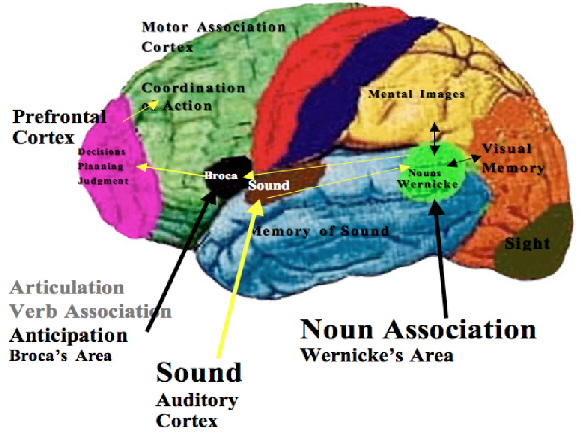
In Sanskrit language the student makes his submission to Lord Shiva: ” Om, Namah Shivaya; Siddham NamaHa.” An attitude of humility, and a willingness to accept personal responsibility and being mentally prepared before any Learning instruction is imparted are the first steps for Learning to begin. In my view, Lord Shiva presides over the frontal area (Prefrontal Cortex) of the human brain which is the seat of intellectual thoughts.   

Sarasvati - The Goddess of Wisdom and Perfect Knowledge, the Goddess of Speech or Vaak presides over the Broca's Area, the Speech Center of the Brain.
The Art of Learning and Creative Writing: Sarasvati – The Goddess of Wisdom and Perfect Knowledge, the Goddess of Speech or Vaak presides over the Broca’s Area, the Speech Center of the Brain.

Sarasvati is the Goddess of Wisdom and Perfect Knowledge. Learning is not about the mere exposure of a student to new information. Learning involves the process of assimilation of new information and an ability to analyze that information, and to formulate an opinion based upon that information. The student should be able to express that information in his speech and prove that he had imbibed the information in a critical manner. Sarasvati is also the Goddess of Speech or “Vaak” and controls the Speech Center or Area of the brain known as Broca’s Area. She banishes mental lethargy, mental laziness which impedes the ability to learn new information. She removes the mental barriers, the mental fences that we erect which disrupt ‘mental fluidity’, the fluid dynamics required for smooth flow of mental impulses between different areas of the brain involved in Learning and Speech.   

Lord Ganesha - The Mentor of Learning, the Remover of Obstacles.
The Art of Learning and Creative Writing: Lord Ganesha – The Mentor of Learning, the Remover of Obstacles.

Lord Ganesha is the Mentor of Learning. Learning is a complicated process. At individual level, it needs neuro-muscular coordination and at an external level it needs the removal of all distractions that interfere with the process of Learning. Ganesha removes all obstacles that could prevent the student from his pursuit of Learning.   

Lord Rama is the source of inspiration to writers, musicians, dancers, and other artists and craftsmen.
The Art of Learning and Creative Writing: Lord Rama is the source of inspiration to writers, musicians, dancers, and other artists and craftsmen.

Apart from the three personalities, the student can choose an image of his choice to specifically draw inspiration  while he travels on the path of Learning. The personality of Lord Rama alone inspires thousands of Indians to express their devotion to Him in creative and distinctive ways. In the Indian Tradition, the Guru or the teacher has a very unique position and is elevated to the status of the Divine Trinity represented by Brahma (the Creator), Vishnu (the Protector), and Shiva (the Restorer).   

The Creative Writing Class at Pioneer High School, Ann Arbor, Michigan:   

Jeff Kass is a teacher of Creative Writing at Pioneer High School in Ann Arbor and he also teaches at the Eastern Michigan University in Ypsilanti, Michigan. He teaches four sections of Creative Writing per day and over 110 students attend his classes to learn Creative Writing at Pioneer High School.

George Bernard Shaw - July 26, 1856 to November 2, 1950 - Author of more than 60 plays, distinguished essayist, music critic, the only person who won a Nobel Prize for Literature and also an Academy Award.
George Bernard Shaw – July 26, 1856 to November 2, 1950 – Author of more than 60 plays, distinguished essayist, music critic, the only person who won a Nobel Prize for Literature and also an Academy Award.

George Bernard Shaw apart from being a great playwright, was an influential music and drama critic, a superb essayist, and a penetrating analyst of virtually every important aspect of Western culture. The adjective ‘Shavian’ describes anything resembling his distinctive ideas or personality. Shaw rejected orthodoxy to become an atheist and a Darwinist, and moved through radical anarchism, Marxism to Socialism. He had finally arrived at Creative Evolution which viewed life as a whole and over an infinite time span. I could use his image to inspire myself while I indulge in expressing my thoughts, but I cannot draw any inspiration from his distinctive ideas  and use them as a basis for my writing.   

Jeff Kass includes a quotation from the playwright George Bernard Shaw in the hand-out for his class and designates the quotation as the Mission Statement, the Journey in Learning and Creative Writing that his students will diligently pursue throughout the semester. The Bernard Shaw quote is as follows: ” I want to be thoroughly used up when I die, for the harder I work, the more I live.” Jeff Kass further instructs his students: “I want you to be thoroughly used up. I want you to feel like you gave this class everything you possibly could and you have nothing left.” He drew the analogy of a boating crew, the athletes who compete in boating races. These athletes at the end of the race are very physically exhausted, they manage to hobble across the dock without an ounce of energy left in their bodies. Jeff Kass states that his Creative Writing Class students may experience a figurative death at the end of their semester as they are thoroughly used up.   

Row, row, row your boat, Gently down the Stream; Merrily, merrily, merrily, merrily, Life is but a Dream.
The Art of Learning and Creative Writing: Row, row, row your boat, Gently down the Stream; Merrily, merrily, merrily, merrily, Life is but a Dream.

Creative Writing and Mental Fluidity:   

Creative Writing should not demand any kind of strenuous effort and particularly should not result in mental strain. Firstly, writing needs neuromuscular coordination but it is not viewed as a physical effort. What makes an individual ‘creative’ is his ability to think for himself. An individual may need the necessary language skills to express his thoughts; he needs information about the subject of his thoughts, and his mind actually experiences a sense of profound relief when the thoughts find an outlet in the form of written expression.

Creative Writing is like the sense of relief a pregnant woman experiences after delivering the baby she had conceived before. A mind, full of thoughts is often compared to the state of pregnancy. The act of delivery is the ultimate Joy and the painful contractions of delivery are instantly forgotten and the face of the mother reflects a glow of happiness.

Creative Writing is like the sense of relief a pregnant woman experiences after delivering the baby she had conceived before. A mind, full of thoughts is often compared to the state of pregnancy. The act of delivery is the ultimate Joy and the painful contractions of delivery are instantly forgotten and the face of the mother reflects a glow of happiness.

I expect to see a Glow of Happiness when the students leave the Creative Writing Class. Creative Writing should not be like that of a boat rowing race and it should rather represent the act of gently rowing the boat down the stream and the act of rowing should give a sense of Joy as expressed in the following popular nursery rhyme:   

I expect to see a Glow of Happiness when the students leave the Creative Writing Class. Creative Writing should not be like that of a boat rowing race and it should rather represent the act of gently rowing the boat down the stream and the act of rowing should give a sense of Joy as expressed in the following popular nursery rhyme:   

Row, row, row your boat   

Gently down the stream   

Merrily, merrily, merrily, merrily   

Life is but a Dream.   

A  Creative Writer never dies as he always lives through the thoughts that he had expressed in his Writing.   

Individualism and Creativity:   

The Art of Learning and Creative Writing: What is Creativity?

We come into existence as individuals. We are created as persons with qualities and characteristics that set us apart from others. Our personal identity relates to the condition of being an individual or different from others. The students of the Creative Writing class should be able to describe their ‘Individuality’. For Creative Writing, the individual must express his original, distinctive ideas, the ideas that set him apart from the ideas expressed by other individuals. The Individuality is not related to the individual’s skin color, hair color, or the glasses the individual may wear. The Individuality exists in the thoughts and which when expressed in words speak about the Creativity of the individual. The students of the Creative writing class should seek to exist as individuals, capable of thinking for themselves, form their own opinions, and express their own distinctive ideas. The Class should provide tools to students to express their Individualism.   

Creative Writing: Individualistic Rhythm  vs Group Dance:    

Raas Leela - Lord Krishna in Vrindavan dancing with Gopis. Lord Krishna is simultaneously ONE and also DIFFERENT. He is the manifestation of Creative Energy.This Group Dance is an example of 'Individualistic Rhythm'.
The Art of Learning and Creative Writing: Raas Leela – Lord Krishna in Vrindavan dancing with Gopis. Lord Krishna is simultaneously One and also Different. He is the manifestation of Creative Energy.This Group Dance is an example of ‘Individualistic Rhythm’.

Jeff Kass encourages his students to perform a ‘Group Dance’ to encourage them to share their thoughts with the ‘Group’ and getting connected to them.The individual always exists in an environment. For Creative Writing, the individual needs to get connected to his ‘Inner- Self’, set himself apart from the social group to which he may belong. His concern should not be about the ‘Group’. His concern should be to focus on his own thoughts about everything else. What he thinks about the ‘Group’ is more relevant than being part of the ‘Group’. Creative Writing is not like the ‘Group Dance’ and in fact, it describes the ‘Individualistic Rhythm’. Lord Krishna in the above illustration is seen dancing with a Group of maidens known as Gopis. He appears before each of His dancing partner as a Different individual. He uses His Creative Energy to perform His Individualistic Rhythm. Creativity gives us the ability to express individualistic variation and define our Identity in thought and action.   

“Reflections” – Creative Writing Class at Pioneer High School:   

The Art of Learning and Creative Writing: I expect to see a Glow of Happiness when the students leave the Creative Writing Class. Creative Writing should not be like that of a boat rowing race and it should rather represent the act of gently rowing the boat down the stream and the act of rowing should give a sense of Joy as expressed in the following popular nursery rhyme:   

The Creative Writing Class at Pioneer High begins with an incomplete quote from playwright George Bernard Shaw. The quote should read as follows: “I am of the opinion that my life belongs to the whole community and as long as I live, it is my privilege to do for it whatever I can. I want to be thoroughly used up when I die, for the harder I work the more I live.” This is the view of George Bernard Shaw about the purpose of his human life and existence and hence the quote cannot be used to inspire students learning the Art of Creative Writing. For Creative Writing, the individual must first recognize his individuality, define his identity and purpose, and get connected to his ‘inner-self’ before paying attention to the social community or “Group”. This flawed ‘Mission Statement’ is now getting expressed in the ‘Reflections’ of the students. Two of the students of this Class use a homophobic word in written assignments submitted to the teacher. Sexuality describes our attitude about human sexual relationships. A Creative Writer should first learn to express his/her ideas about his/her own gender. The same applies to issues such as race, religion, or ethnicity. The Creative Writer must be given the tools to express ideas and thoughts that explain his/her gender, race, ethnicity, physical or anthropometric identity, and purpose in life before venturing to express opinions about relationships with others. The student should first recognize the difference between an ‘idea’ and an ‘opinion’. The Class should aim at expressing ‘ideas’ and not upon voicing ‘opinions’. By including the ‘opinion’ of GBS in the ‘Mission Statement’, the students are given the wrong impression that  their purpose is that of expressing ‘opinions’. If I am a male, my own personal awareness of my gender is more important than expressing that gender identity in the context of homophobia. A Creative Writer needs to express unique, and distinctive ideas and such ideas would arise only if he/she understands his/her own self.   

A Teachable Moment to the Teachers: Creative Writing at Pioneer High School:   

In the last three weeks, Jeff Kass at Pioneer High School publicly disclosed verbal or written statements of his Creative Writing Class students without giving them a prior warning. It would be appropriate to disclose to the students that their statements would be publicly disclosed and would be openly debated by the rest of the Community. A physician who may have seen or diagnosed the pregnancy of the teen in the Creative Writing Class would not have divulged that information to others. A priest who may hear confessional statements of his parishioners would not disclose them to the rest of the congregation. I wonder if there is a confidentiality clause in the teacher-pupil relationship. At a minimum, the students should be aware of the blog postings of their teacher and the public discussion. It is relevant as the teacher has not set boundaries to the freedom of speech in the context of his lesson plans. The homophobic word or expression in the written assignments rendered by two students should be evaluated for its academic merit. It appears that the students who used the words have not yet acquired narrative skills. The word ‘idea’ in the context of Creative Writing could be defined as something one thinks, a thought, mental conception, or image. Students should be encouraged to visualize their ideas and then describe their mental pictures or images. The ‘reflective’ statements with the homophobic word lack this quality; a clear description of a mental image or picture and from an academic point of view, a creative idea is neither described nor stated. The word ‘opinion’ is defined as a mental conviction, a belief, an evaluation, impression, estimation, or judgment of the quality or worth of a person or thing; a conclusion affected by one’s personal manner of looking at things. The homophobic word qualifies as an ‘opinion’ and if it is used as an ‘idea’, the mental concept or image is poorly narrated. Creative Writing demands that the writer should project his mental concepts in a vivid manner and a reader should be able to visualize that ‘idea’ described by the author. It is a teachable moment to the teachers as the incident reveals the pitfalls of inadequate instruction.   

Related Blog Post:   

Set your Mind Free – Let Sarasvati Flow

Creative Writing is like the sense of relief a pregnant woman experiences after delivering the baby she had conceived before. A mind, full of thoughts is often compared to the state of pregnancy. The act of delivery is the ultimate Joy and the painful contractions of delivery are instantly forgotten and the face of the mother reflects a glow of happiness.