Whole Dude – Whole Worship

Whole Dude – Whole Worship: Defining Indian Identity – The Worship of Feet.

Excerpt: The worship of feet, or ‘Pada Sevanam’, is an integral part of Indian identity and the culture’s philosophy of total submission and surrender to a higher divine power. In the Hindu religion, this act signifies humility, protection, and reverence. This practice is deeply rooted in Indian epics like Ramayana, where feet touching was a significant gesture. In modern times, this tradition continues, seen in ordinary life situations, such as people paying respect to elders by touching their feet. Thus, the act of worshipping feet is a unique cultural hallmark that helps define the Indian identity.
Whole Dude – Whole Worship: Defining Indian Identity – The Worship of Feet.

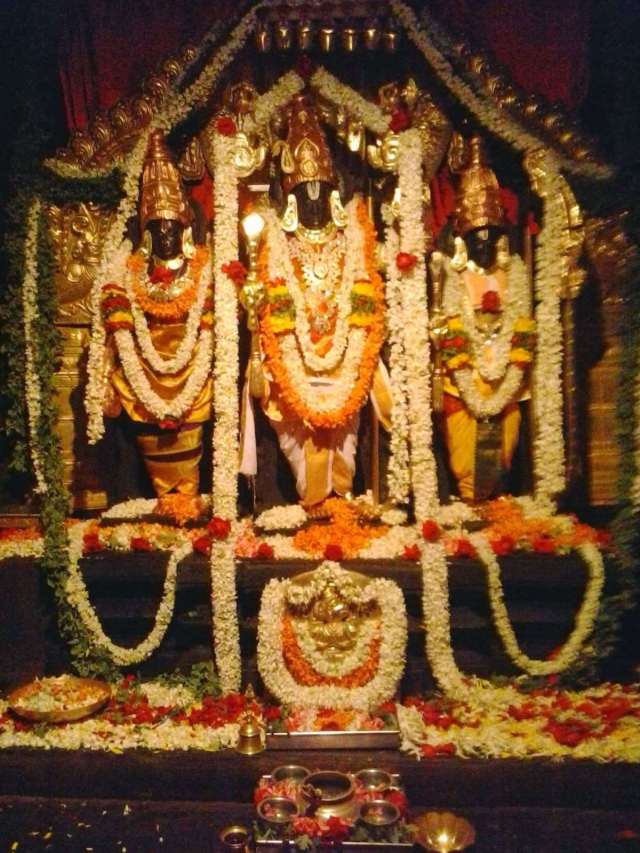
“viṣṇōḥ padē parama” ityudita praśaṃsau
yau “madhva utsa” iti bhōgya tayā’pyupāttau ।
bhūyastathēti tava pāṇitala pradiṣṭau
śrīvēṅkaṭēśa charaṇau śaraṇaṃ prapadyē ॥ 10 ॥

I seek refuge of Sri Venkateswara’s feet,
which are extolled (in the Rg Veda)
as “Visnoh parame pade” (in the most exalted abode of Vishnu),
which are, (again) extolled therein
as “madhva utsa” (meaning the fountain the honey)
as extremely enjoyable
and which are indicated as such by
the show of the palm of Thy hand.

Pada Vandanam, Pada Namaskaram, Pada Archanam, Pada Sevanam, Pada Puja or Worship of Feet: 

Whole Dude – Whole Worship: Defining Indian Identity – The Worship of Feet.

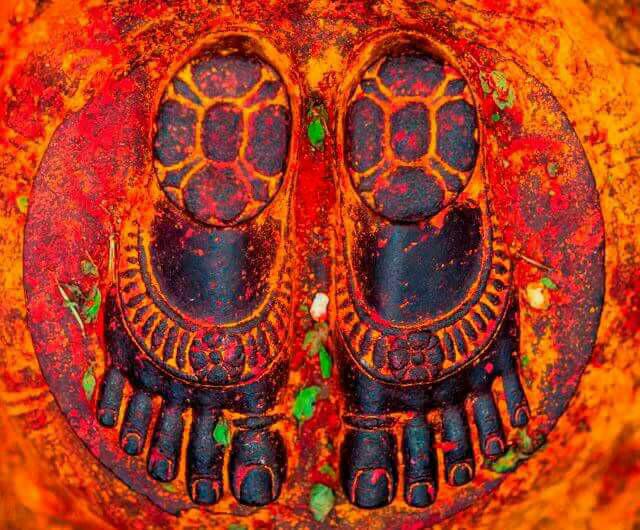
The land of India is a very unique place on this planet where people are culturally endowed with an ardent desire to worship feet.No other society or social community has openly exhibited this behavioral trait and feet worship could be described as the hall-mark of Indian Identity.This tradition and literal practice of feet worship was well established by the time the epic poem of Ramayana was composed. In AYODHYA KANDA,we read the very moving account of Rama touching the feet of His father Dasaratha and queen mother Kaikeyi after having received the orders for his banishment to live in the forest for fourteen years. Later in ARANYA KANDA, we read about the younger brother Bharata who literally clung to the feet of Rama seeking His refuge. Eventually,Bharata carried Rama’s sandals keeping them on his head and installs them on the throne (PADUKA PATTABHISHEKAM) and served them with great devotion for fourteen long years during Rama’s exile.  

Whole Dude – Whole Worship: Defining Indian Identity – The Worship of Feet.

India is the land where you witness people touching the feet of living persons as an act of worship.This is a fairly common event and sometimes the remembrance of such worship lingers in your mind.I would like to narrate one such event that I had witnessed in the past and my act of remembrance may add-on to the blessings these feet worshipers may be receiving even today.  

I was traveling by train from Rajahmundry to Lucknow City to serve in the Indian Army Medical Corps. I was motivated by a desire to see the land of India with my own eyes and know its people. For the first time, I was traveling in a first class compartment and was the sole occupant. Later in the night, a lady entered the compartment and was apparently traveling alone. She was elegantly attired, looked modest and the picture of an upper middle class house wife. Early morning, when the train halted at a station, I did not realize that she had reached her destination. She was quietly seated, was not gathering her belongings and was not even looking outside to check if some one had arrived to receive her. After a little while, I had noticed three young men, well- dressed and well-groomed, all of them little older than me, checking the list of passenger names on the door of the train compartment and entered the compartment. They did not pay any attention to my presence. One after the other, they went forward to bend and touch her feet and paid their respects. The behavior of the young men that I was keenly observing was natural, spontaneous and unpretentious. That early morning hour, they were not putting up an act in a public place to impress any one. They acted in a deliberate, purposeful and reverential manner and I am very sure that they grew up in that manner and clearly they were not inhibited in displaying their respect in front of strangers. I was a silent spectator of this scene wherein an unassuming woman suddenly got transformed into a living deity. I can assure you that you would witness such a scene only in the Land of India. Hence, I would claim that the desire to worship the feet of a living person would define Indian Identity.  

Whole Dude – Whole Worship: Defining Indian Identity – The Worship of Feet.

Every deity that Indians seek to worship are better pleased when we worship their feet. PRAHLADA  describes “PADA SEVANAM” as one of the nine ways to worship VISHNU.

Lord Rama and the Tradidtion of 'Feet Worship'
Whole Dude – Whole Worship: Ramayana gives detailed accounts of the Tradition of Feet Worship.Rama worshipped the feet of His father, mother, stepmothers and His Gurus. Bharata, the younger brother of Rama had installed the sandals (Padukas) worn by Rama upon the throne had worshipped them for fourteen years.

Indians worship feet not only as a sign of humility but also as a mark of submission, total surrender to the will of God. They touch feet as a plea for protection. This is not a mere religious rite or ritual and it actually shapes the attitudes and behavior of people. The final resting place for the individual souls (JEEVATMA)has been described as the Lotus Feet of the Lord. This is described as ‘CHARANAM’ (Feet of the Lord) ‘SHARANAM’ (Ultimate Refugee).  

Whole Dude – Whole Worship: Defining Indian Identity – The Worship of Feet

Whole Dude – Whole Journey

Excerpt: The article looks into the concept of ‘Samsara,’ which is seen in Indian traditions as a representation of life’s journey – a challenging swim across an unknown and treacherous ocean. This journey incites a fear called ‘Fear of Samsara,’ contributing to feelings of apprehension and the intense fear of the human condition. This fear is considered unique to Indian cultural traditions, differentiating them from other global traditions like Christianity, Islam, and Judaism whose followers primarily fear the Lord. However, despite this anxiety, individuals rely on chants and signs such as ‘Abhaya Mudra’ (a sign of fearlessness) from deities for support and guidance during this strenuous journey.

Whole Dude – Whole Samsara: Defining Indian Identity – The Fear of Samsara. Samsara portrays the picture of life’s journey as a tedious,difficult and challenging swim across an unknown,uncharted and treacherous ocean.

The cultural traditions that originated in India motivate people to seek refuge or shelter at the Feet of the Lord by evoking a sense of fear and this fear is described as the fear of ” SAMSARA.” Samsara or Bhava describes the viewpoint about the human condition and deals with the problems of human existence. It contributes to a sense of apprehension and anxiety and the attitude it generates is one of intense fear and helplessness.

Ullanghya sindho salilam saleelam
Yaha shoka wanheen Janakaatma jaayaaha
Aadaaya tenaiwa dadaaha Lankaa
Namaami tam praanjali raanjaneyam

Whole Dude – Whole Samsara: Defining Indian Identity-The Fear of Samsara. Samsara portrays the picture of life’s journey as a tedious,difficult and challenging swim across an unknown,uncharted and treacherous ocean.

In one great leap of faith, Lord Hanuman jumps over the sea with utmost ease, whereas crossing the sea evokes only a sense of fear in my heart. I derive some hope from the legend about the land bridge (SETU) built by the army of monkeys.The Sea God promised them that the rocks and boulders used for the construction of the bridge will be held in place and stay afloat. He did that to please Lord Rama. During my perilous journey across the ocean of SAMSARA, I use the name “RAMA” and stay afloat.

LORD RAMA - THE MEDICINE FOR A DISEASE KNOWN AS 'SAMSARA'
Whole Dude – Whole Samsara: Samsara portrays the picture of life’s journey as a tedious,difficult and challenging swim across an unknown,uncharted and treacherous ocean. In the fearful journey described as ‘SAMSARA’, I use Lord Rama’s name as a ‘Life Jacket’ and also the name serves like a Beacon of Hope and provides a sense of direction while journeying across an uncharted, treacherous sea.

The fear of the Lord is the beginning of Wisdom” says the Holy Bible, The Book of Proverbs, Chapter1, verse 7.

Whole Dude – Whole Samsara: Defining Indian Identity – The Fear of Samsara. Samsara portrays the picture of life’s journey as a tedious,difficult and challenging swim across an unknown,uncharted and treacherous ocean.

For the religious traditions that originated outside of India such as Judaism, Christianity and Islam, the fear of the Lord could be a primary motivating factor to seek the worship of the Lord. On the contrary, the religious traditions that originated in the Land of India, do not encourage their adherents to entertain any such fear of the Lord. In the Indian traditions, the Lord or the Deity that Indians choose to worship would receive them with a sign that proclaims ” Be Fearless.” The Lord reassures them with a sign that is popularly described as ABHAYA HASTA or ABHAYA MUDRA. In Indian literature, countless number of images, idols, paintings and drawings, there are invariable references to a consistent message of ABHAYA and naturally Indians are less concerned with ” The Fear of the Lord.”  

Whole Dude – Whole Samsara – Whole Journey. Abhaya Mudra and Abhaya Hasta describe the positioning of hand to indicate as a sign that overcomes the sense of fear.
Whole Dude – Whole Samsara: Defining Indian Identity – The Fear of Samsara. Samsara portrays the picture of life’s journey as a tedious,difficult and challenging swim across an unknown,uncharted and treacherous ocean.

Samsara portrays the picture of life’s journey as a tedious,difficult and challenging swim across an unknown,uncharted and treacherous ocean.

Whole Dude – Whole Samsara: Defining Indian Identity – The Fear of Samsara. Samsara portrays the picture of life’s journey as a tedious,difficult and challenging swim across an unknown,uncharted and treacherous ocean.

Samsara is also depicted as a serious disease entity afflicting a person’s health and is referred to as “Bhava Roga.” Others view Samsara as existence in a bottomless deep pit (“Aghada”)or that of being trapped in a deep well from where an escape would not be easy. The fear of Samsara/Bhava, the fear of the human condition, has nothing to do with physical courage. The powerful idea of Samsara inspires a sense of fear in the hearts of even the most courageous of all people. Cultural traditions that have their roots in the other parts of this planet may not be aware of this kind of fear and hence the fear of Samsara could be viewed as a feature that defines and molds the Indian Identity. Indians chant the Lord’s name as a medicine to cure this terrible disease and they seek Lord’s protection to reach the shore and complete the journey across the ocean.There are numerous references in the Indian literature.

Whole Dude – Whole Samsara – Whole Journey. My Life Journey started in Mylapore, Madras (Chennai City) on Kutchery Street near the Marina Beach.

Human existence is beset with countless uncertainties and difficulties which may arrive without any prior warning from different directions in an unpredictable manner. It is rational to approach life with a sense of apprehension and seek the help of the Lord who graciously held His right hand in a show of compassion and receives with a greeting of “Abhaya” and is willing to banish the fear of Samsara. 

Whole Dude – Whole Samsara: Defining Indian Identity-The Fear of Samsara. The LORD is Male and Female at one and the same time. The right hand is held in the pose of Abhaya Mudra. Samsara portrays the picture of life’s journey as a tedious,difficult and challenging swim across an unknown,uncharted and treacherous ocean.
Whole Dude – Whole Samsara – Whole Journey

Whole Dude – Whole Surrender

Whole Dude – Whole Surrender: The Worship of Feet describes the process of total surrender.

Excerpt: The Land of Bharat is a very unique place on this planet where people are culturally endowed with an ardent desire to worship feet.

Whole Dude – Whole Surrender: The Worship of Feet describes the process of total surrender.

“viṣṇōḥ padē parama” ityudita praśaṃsau
yau “madhva utsa” iti bhōgya tayā’pyupāttau ।
bhūyastathēti tava pāṇitala pradiṣṭau
śrīvēṅkaṭēśa charaṇau śaraṇaṃ prapadyē ॥ 10 ॥

I seek refuge of Sri Venkateswara’s feet,
which are extolled (in the Rg Veda)
as “Visnoh parame pade” (in the most exalted abode of Vishnu),
which are, (again) extolled therein
as “madhva utsa” (meaning the fountain the honey)
as extremely enjoyable
and which are indicated as such by
the show of the palm of Thy hand.

Pada Vandanam, Pada Namaskaram, Pada Archanam, Pada Sevanam, Pada Puja or the Worship of Feet: 

Whole Dude – Whole Surrender: The Worship of Feet describes the process of total surrender.

The land of India is a very unique place on this planet where people are culturally endowed with an ardent desire to worship feet.No other society or social community has openly exhibited this behavioral trait and feet worship could be described as the hall-mark of Indian Identity.This tradition and literal practice of feet worship was well established by the time the epic poem of Ramayana was composed. In Ayodhya Kanda,we read the very moving account of Rama touching the feet of His father Dasaratha and queen mother Kaikeyi after having received the orders for his banishment to live in the forest for fourteen years. Later in Aranya Kanda, we read about the younger brother Bharata who literally clung to the feet of Rama seeking His refuge. Eventually,Bharata carried Rama’s sandals keeping them on his head and installs them on the throne (Paduka Pattabhishekam) and served them with great devotion for fourteen long years during Rama’s exile.  

Whole Dude – Whole Surrender: The Worship of Feet describes the process called total surrender.

India is the land where you witness people touching the feet of living persons as an act of worship.This is a fairly common event and sometimes the remembrance of such worship lingers in your mind.I would like to narrate one such event that I had witnessed in the past and my act of remembrance may add-on to the blessings these feet worshipers may be receiving even today.  

I was traveling by train from Rajahmundry to Lucknow City to serve in the Indian Army Medical Corps. I was motivated by a desire to see the land of India with my own eyes and know its people. For the first time, I was traveling in a first class compartment and was the sole occupant. Later in the night, a lady entered the compartment and was apparently traveling alone. She was elegantly attired, looked modest and the picture of an upper middle class house wife. Early morning, when the train halted at a station, I did not realize that she had reached her destination. She was quietly seated, was not gathering her belongings and was not even looking outside to check if some one had arrived to receive her. After a little while, I had noticed three young men, well- dressed and well-groomed, all of them little older than me, checking the list of passenger names on the door of the train compartment and entered the compartment. They did not pay any attention to my presence. One after the other, they went forward to bend and touch her feet and paid their respects. The behavior of the young men that I was keenly observing was natural, spontaneous and unpretentious. That early morning hour, they were not putting up an act in a public place to impress any one. They acted in a deliberate, purposeful and reverential manner and I am very sure that they grew up in that manner and clearly they were not inhibited in displaying their respect in front of strangers. I was a silent spectator of this scene wherein an unassuming woman suddenly got transformed into a living deity. I can assure you that you would witness such a scene only in the Land of India. Hence, I would claim that the desire to worship the feet of a living person would define Indian Identity.  

Whole Dude – Whole Surrender: The Worship of Feet describes the process called total surrender.

Every deity that Indians seek to worship are better pleased when we worship their feet. Prince Prahlada  describes “Pada Sevanam” as one of the nine ways to worship Lord Vishnua.

Lord Rama and the Tradidtion of 'Feet Worship'
Whole Dude – Whole Surrender: Ramayana gives detailed accounts of the Tradition of Feet Worship.Rama worshipped the feet of His father, mother, stepmothers and His Gurus. Bharata, the younger brother of Rama had installed the sandals (Padukas) worn by Rama upon the throne and worshipped them for fourteen years.

Indians worship feet not only as a sign of humility but also as a mark of submission, total surrender to the will of God. They touch feet as a plea for protection. This is not a mere religious rite or ritual and it actually shapes the attitudes and behavior of people. The final resting place for the individual souls (Jeevatma)has been described as the Lotus Feet of the Lord. This is described as ‘Charanam’ (Feet of the Lord) ‘Sharanam’ (Ultimate Refuge).  

Whole Dude – Whole Surrender: Man seeks the protection by the Worship of Feet to which he totally surrenders.

Whole Dude – Whole Individualism

Whole Dude – Whole Individualism: The Doctrine of Individualism.
Whole Dude – Whole Individualism: IN SHANKARA’S ANALYSIS, MAN IS NOT SAVED BY ACQUIRED KNOWLEDGE. MAN CANNOT DIRECTLY RULE OR GOVERN HIS OWN BODY FOR CELLS ARE INDEPENDENT AND ENJOY CELLULAR AUTONOMY.
Whole Dude – Whole Individualism: The Doctrine of Individualism.

ManO bhudhyahamkaara Chittaani na aHam,

Na Karnam, na Jihvaa, na cha Ghraana Netram,

Na cha Vyoma Bhumir na Tejo na VaayuH,

Chidaananda RuupaH  ShivO aHam, ShivO aHam.

What is Individualism?

The word individual is derived from Latin, ‘Individualis’-that which is not divided-an individual. Individualism can be defined as follows:1. a belief that stresses the primary importance and worth of each person and in the virtues of self-reliance and personal independence, 2. the principle or practice of maintaining individuality or independence of the individual, 3. the principle or habit of or belief in independent thought or action, 4. the conception that all values, rights and duties originate in individuals, 5. a doctrine that the interests of the individual are or ought to be ethically paramount, and 6. the pursuit of individual rather than common or collective interests. The doctrine of Individualism may support a view that the interests of the individual should take precedence over the interests of the State or Social Group.

Indian Culture views human existence in absolute individualistic terms and the legacy of Indian Culture could be described as ‘Individualism’.

The Foundation for Individualism:

Bhagavad Gita - Individualism
Whole Dude – Whole Individualism: The Doctrine of Individualism.

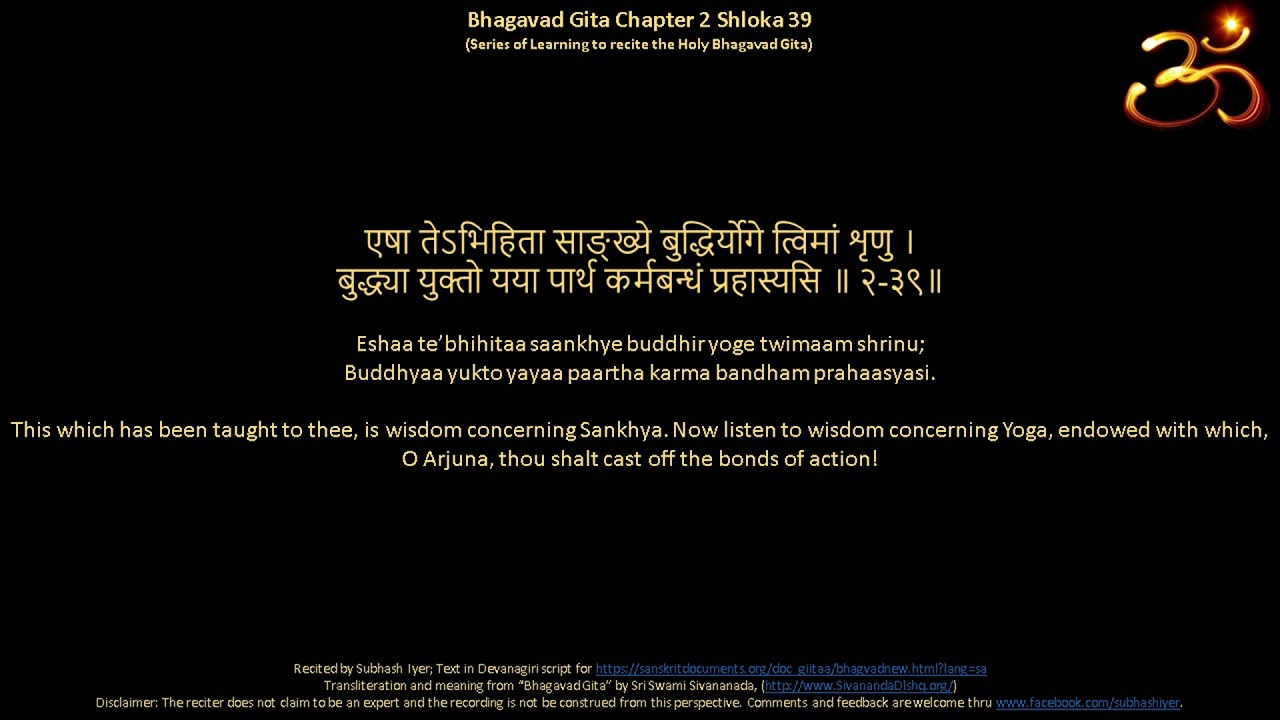
The Bhagavad Gita, Chapter II, Sankhya Yoga, verse 39, claims that the analytical knowledge derived from Samkhya philosophy gives the description of the nature of individual and individuality.

Whole Dude – Whole Individualism: The Doctrine of Individualism.

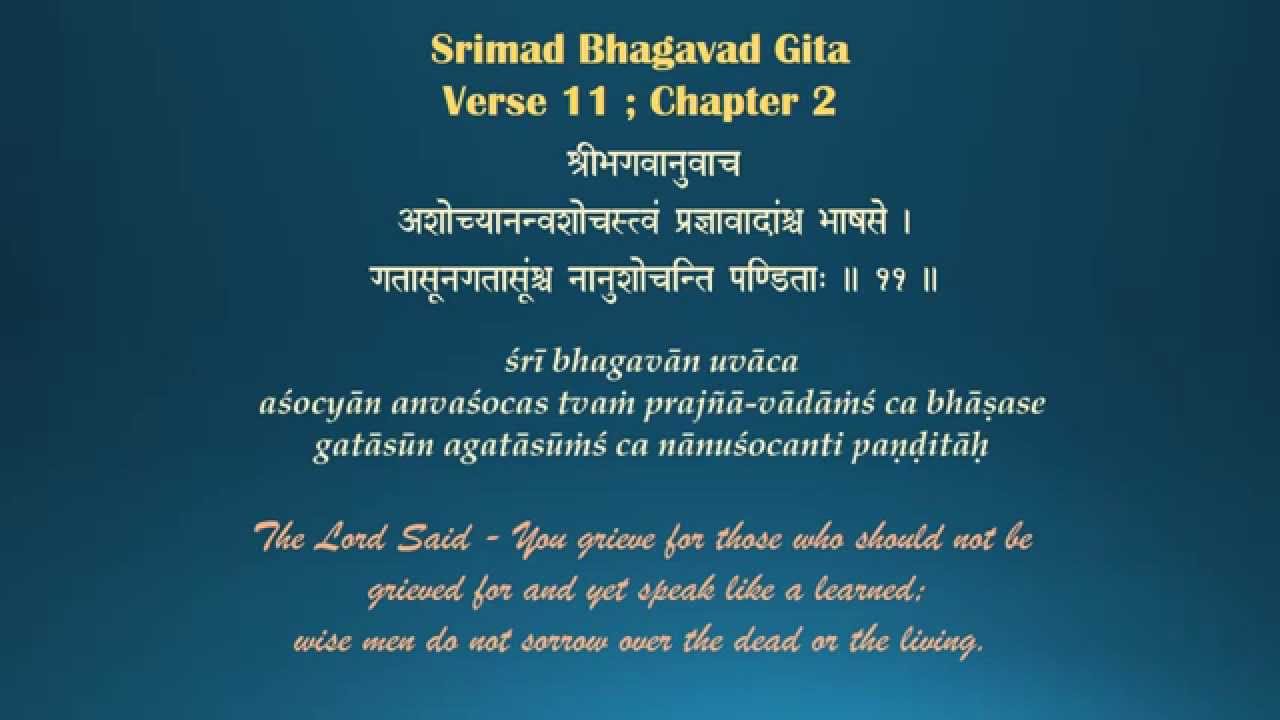
Chapter II, of the Bhagavad Gita explains this philosophy in several verses.Verse 11 claims that those who are wise lament neither for the living nor the dead.

Whole Dude – Whole Individualism: The Doctrine of Individualism.

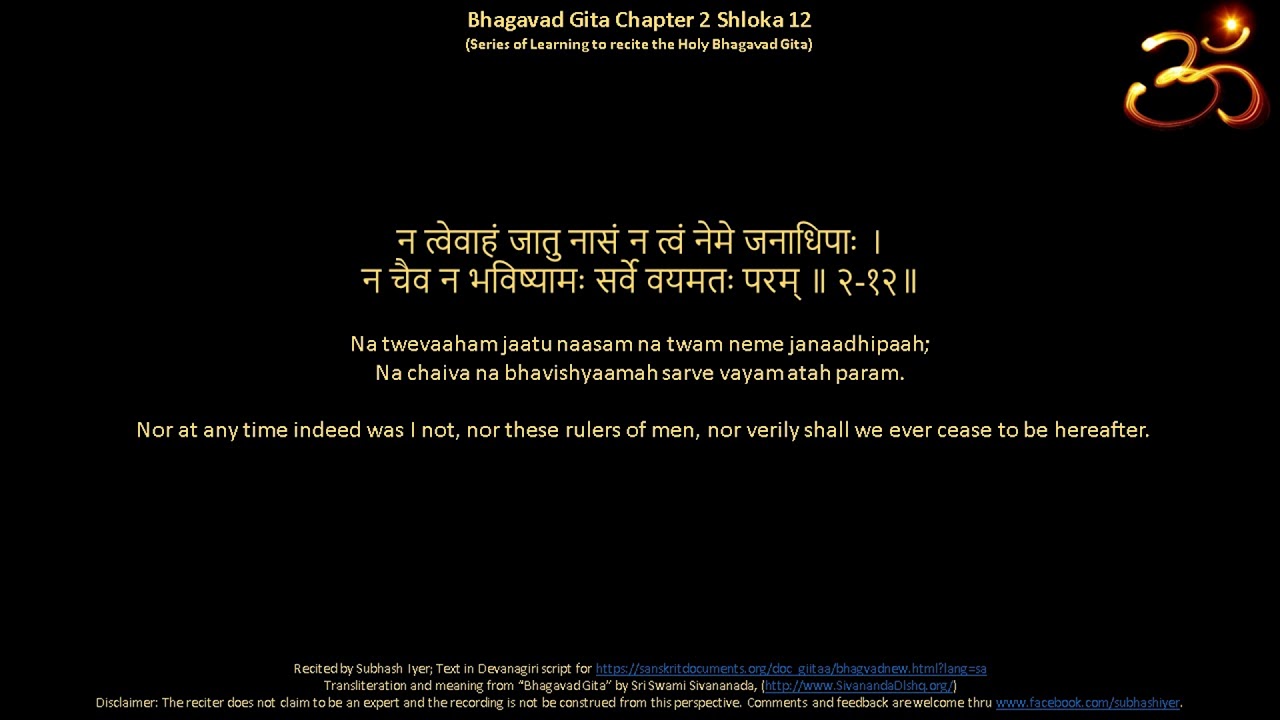
In verse 12, Lord Krishna states that there was never a time when He did not exist, nor Arjuna, nor all others in the battle field, and in the future there will never be a time when any of them cease to exist. Lord Krishna (The Supreme Individual Person) and also all other individuals are eternal persons.They existed as individuals in the past and they will continue to exist as individuals in the future.Their individuality existed in the past and their individuality will continue in the future without interruption. Lord Krishna clearly states that the individuality of all others will continue eternally. Hence, Indians do not accept the bodily conception of the living entities. Living entity is an individual soul and even though the body changes every moment, the soul does not undergo any change.

Whole Dude – Whole Individualism: The Doctrine of Individualism.

Verse 13, claims that the embodied soul continually passes, in this body, from boyhood to youth, and then to old age; similarly, the soul also passes into another body at death. By nature the human body is ever changing, and the soul is eternal.

Whole Dude – Whole Individualism: The Doctrine of Individualism.

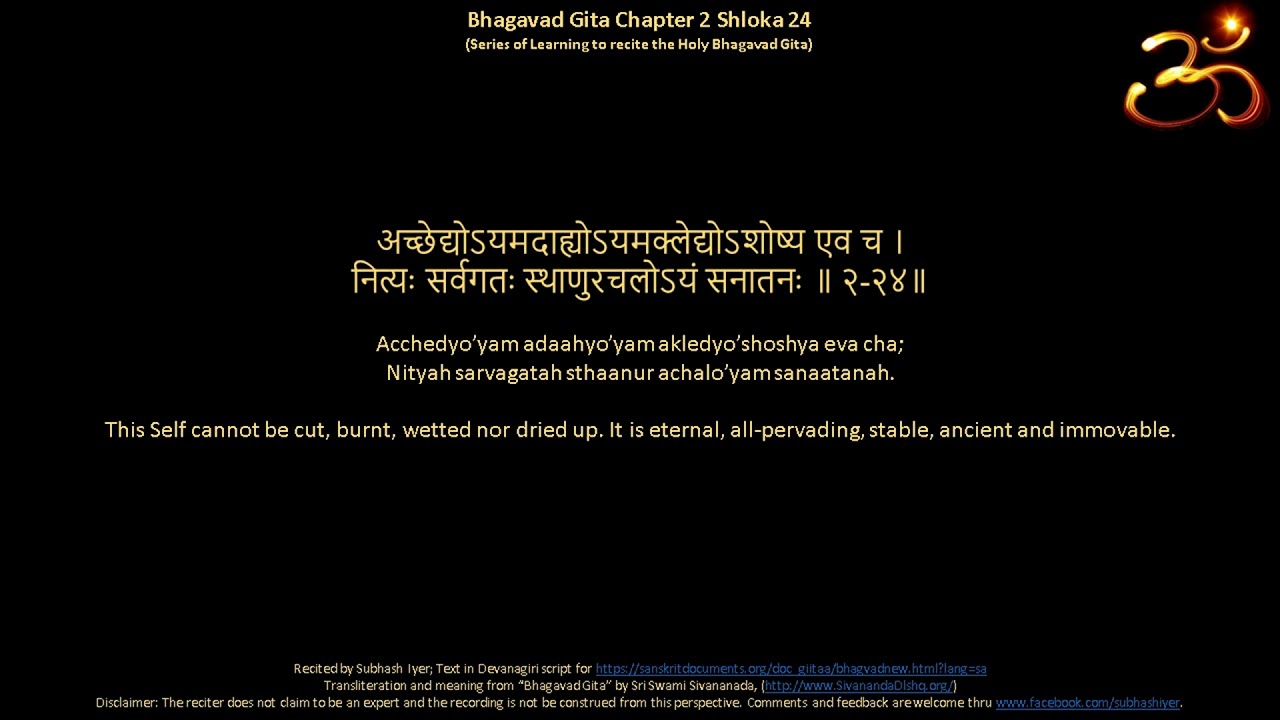
Verse 24 states that this individual soul is unbreakable and insoluble. He is everlasting, unchangeable, immovable, and eternally the same.

Whole Dude – Whole Individualism: The Doctrine of Individualism.

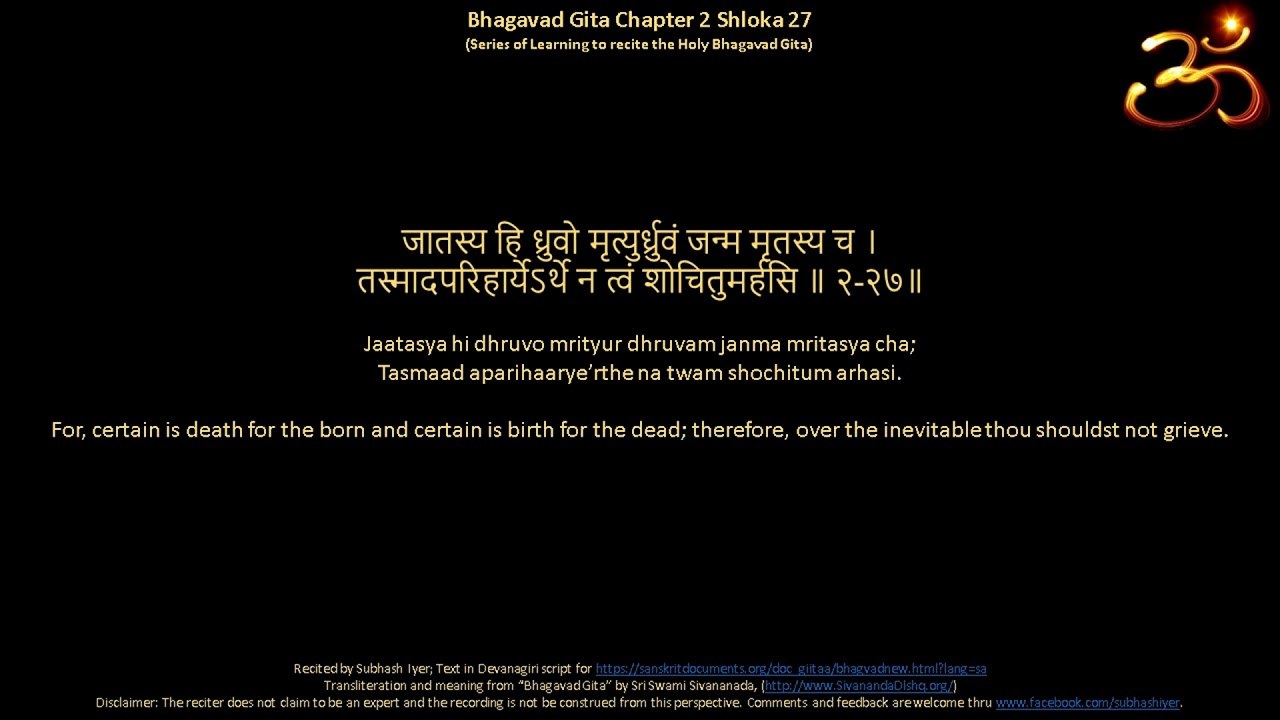
Finally, verse 27 establishes the foundation for ‘Individualism’ by stressing that ” For one who has taken his birth,death is certain; and for one who is dead, birth is certain.”

The Supremacy of Individual:

Whole Dude – Whole Individualism: The Primary importance of the Individual.

The primary importance of the individual is established by the Vedic statement “AHAM BRAHMASMI” which describes the True Identity of the Individual as that of Ultimate Reality known as Brahman. The following verse supports the idea that the Individual is a Whole entity as the Whole is derived from the Whole, perfect, Supreme Being:

Whole Dude – Whole Individualism: The Supremacy of Individual.

Om, purna mada, purna midam, purnaat purna mudachyate

Purnasya purna maadaya, purna meva vasishtyate.

“That” (is an indefinite term to designate the Invisible Absolute) is Whole (Perfect Substance with Perfect Nature and Quality); “This” (the visible, the phenomenal embodied Soul) is Whole, from the (invisible) Whole comes forth the (visible) Whole. Though the visible Whole is derived or deducted from that invisible Whole, yet the Whole remains unaltered and both retain their Perfect Condition called Whole. The human entity is virtually trapped in a repeated cycle of birth, death and rebirth.The ultimate purpose of human existence is to achieve Moksha (Liberation) or Mukti (Release) from this Cycle that is referred to as ‘Samsara’.

The Practice of Individualism:

Whole Dude – Whole Individualism: The Practice of Individualism

Individualism is built upon the value attached to knowing oneself. We are encouraged to look inwards and to reflect upon the nature of ‘SELF’. Self-Knowledge is considered to be more valuable than gaining knowledge of the material world.The following prayer which is known as Gayatri Mantra is one such example of motivating Individuals to look inwards. Similarly, Socrates suggests, “Know thyself, and you will know the universe and the gods.”

 Om Bhur Bhuva Suvah, Om tatsa vitur vareynyam

Bhargo Devasya dhee mahi dheeyo yo nah prachodayaat.

The Individual while firmly establishing his Individuality also takes complete responsibility for his actions.The Individual bears the burden for his own actions.

The Journey to Ultimate Individualism:

Whole Dude – Whole Individualism: The Doctrine of Individualism.

The Individual strives for self-reliance, learns to minimize the importance of all external relationships and concentrates upon developing an intimate relationship with his personal God.The following prayer is one such example of an Individual’s journey on the path of devotion (Bhakti).

Tva meva maata cha pitaa tva meva, Tva meva bandhu cha sakha tva meva,

Tva meva vidya, dravinam tva meva, Tva meva sarvam mama Deva Deva.
Devotion to God practically takes over, replaces and consumes the need for any other kind of external relationship such as man’s relationship to his mother, father, relatives, friends, and educational and material status.

The Goal of Absolute Individualism:

Whole Dude – Whole Individualism: The Doctrine of Individualism.

For the individual to win the battle of ‘Samsara’, to gain freedom from the cycle of birth and death, to declare victory over death and to finally reach the shore and complete the long and tiresome swim across the uncharted ocean, he is required to disentangle himself from the cobweb of relationships and set himself free. The following prayer known as Maha Mrityunjaya Mantra illustrates the point:

Whole Dude – Whole Individualism: The Doctrine of Individualism.

 Om,Triyambakam,Yajamahe sugandhim pushti vardhanam,

Urvaaru kamiva bhandha naat mrutyor muksheeya amrutaat.

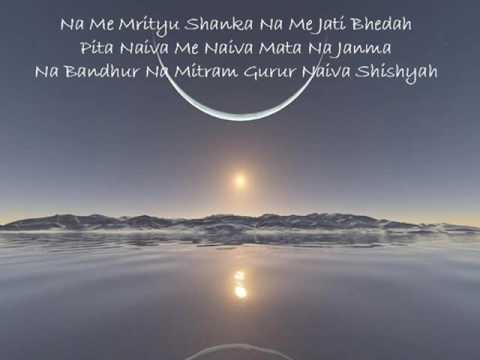
Such liberated Individual who had freed himself from all external relationships would be able to proclaim his True Identity and the following verse written by Shri Shankaracharya is an example of an Individual who had reached the Goal Of Absolute Individualism:

Whole Dude – Whole Individualism: The Doctrine of Individualism.

Na Mrityur, na Shankaa, na me Jaati bheydaH,

Pitaa naiva, me naiva Maataa, na Janma,

Na Bandhur,na Mitram, Gurur naiva  SishyaH,

Chidaananda RupaH  ShivO aHam, ShivO aHam.

Thus Indian Identity is none other than the identity of “SHIVA” whose Individualistic Identity is described as Sat+Chit+Ananda.

lord-rama-with-seetha-lakshmana-and-hanuman
Whole Dude – Whole Individualism: The Doctrine of Individualism. In the epic poem of Ramayana, the concept of Individualism is vividly portrayed.

In the Epic Poem of Ramayana, the concept of Individualism is vividly portrayed. Rama alone was required to live in the forest. He could have just refused to do so. No force upon earth could have moved Him but He made His own choice. Lakshmana made His own choice and accompanied His brother for a life in the forest. Rama made no decision about Seeta. He did not want her to accompany Him into the forest. Seeta made Her own decision. All of them express their own personal independence in unique manners.

Whole Dude – Whole Individualism: The Doctrine of Individualism. The Man has no choice other than that of existing as an Individual with Individuality. His genome is unique and one of its own kind.

Whole Dude – Whole Greeting

A Keralite Dancer in Sari( Mohini Attam: a dan...
Whole Dude – Whole Greeting: Defining Indian Identity – The Traditional Greeting.
Whole Dude – Whole Greeting: Om, Namah Sivaya – The Five Letter Mantra – Traditional Indian Greeting-Namaskar

TheTradition of Respect and Obedience: 

Whole Dude – Whole Greeting: Defining Indian Identity – The Traditional Greeting

Deuteronomy, 5th Book of Moses, The Old Testament, The Holy Bible: Chapter 10, verse 16:

“Circumcise therefore the foreskin of your heart, and be no more stiff necked.”

The word ‘Namah’ means one that bends which implies obedience. The one word ‘Namaskar’ represents the full spectrum of the legacy of India’s Culture.

Namah Shivaya:

Whole Dude – Whole Greeting: Defining Indian Identity – The Traditional Greeting. Five Letter Mantra for Learning. AUM NAMAH SHIVAYA. Namah is the most used Sanskrit word in all human interactions, worship, and the Learning Process.

I shall begin this entry with a traditional greeting. As a kid I was trained to greet and acknowledge others. The greeting is called ‘Namaskar’ or ‘Namaste’. I would begin by greeting all of you who may read this entry with my ‘Namaskar’. Namaskar is the essence of our Culture and this single word can represent the full spectrum of our Cultural legacy.

Whole Dude -Whole Greeting: Defining Indian Identity – The Traditional Greeting. Lieutenant General T A D’ Cunha, Director General of Ordnance Services is seen saluting the Corps Colors in this photo image taken during AOC 8th Reunion Celebration at AOC Centre Secunderabad.

I served in Uniform. The lesson I grasped is that to Salute is the foundation upon which the entire structure of military discipline is built.Service in the Armed Forces depends upon team work.The team structure depends upon the ability of team members to recognize and acknowledge each other at all times. I salute to acknowledge the person as a member of my team. Army accomplishes great things only when the team members follow this ground rule for their conduct and behavior. Namaskar is the tool given to me by the Culture of my Land and this tool shapes my attitude and personal behavior and this tool helps me to attain my life’s goals.

Defining Culture:

Whole Dude – Whole Greeting: Defining Indian Identity – The Traditional Greeting. Namaskar

Culture is defined as learned or acquired behavior in contrast to biological behavior which is genetically endowed. Human Culture is defined as learned behavior acquired by individuals as members of a social group.Culture denotes a people’s heritage of custom and belief. It is a system of ideas that has been transmitted down through the generations. It includes assumptions about the world, about life and existence, rules and ways to act, goals and ways of achieving them. People’s ideas about ways to live may shape the ways they actually do live.Beginning at birth, each individual is encultured by a body of norms governing behavior and other knowledge that the society has. Thus Cultural Heritage can be defined as the sum total of human knowledge and acquired behavior.

Whole Dude – Whole Greeting: Defining Indian Identity – The Traditional Greeting Namaskar

Namaskar represents the essence of my Cultural heritage. Culture gives people a sense of personal identity. Defining that ‘identity’ helps in understanding the Culture. Namaskar is the behavior I learned and Namaskar defines my ‘identity’. It is a behavior transmitted to me through the generations.

Culture of the Land:

Whole Dude – Whole Greeting: Defining Indian Identity – The Traditional Greeting. The Land of India or Bharat Varsha is traditionally identified as ‘KARMA KSHETRA’ or ‘KARMA BHUMI’.Human Existence is operated by the ‘Law of Karma’.

The Land of India in our Culture and tradition is referred to as the land of Bharat. My purpose is to learn the ideas and thoughts that have found their roots in this particular Land. Ideas and thoughts help in developing and defining our attitudes.Our attitudes are reflected in our behaviors.The behavior which springs from the seeds of ideas and thoughts that were planted in the soil could be described as the Culture of the Land. The ancient Hindu Scripture known as Rig Veda has recommended that we should keep our minds open to receive noble thoughts from all directions. I studied Natural Sciences and I gained much of my information from ideas and thoughts expressed in books that were published in the West.The basic idea and thought that I had received was that we need to carefully sort out the information that we gather. Assimilation of information would be possible only when facts are considered in a systematic manner. I learned about plants and animals as a part of my study called Biological Science. Living things are connected and are related to each other.This interconnectedness and the interrelatedness describes the ecological system.There is a great amount of diversity in nature.To understand living things, we need to group them and learn about them as a part of an ecological system. We can not understand existence if we look at individual creatures.The reactions between the players of a given geographical area gives a better understanding of life and existence. I would like to use this kind of scientific tool to identify ideas and thoughts.Some ideas and thoughts could be assigned to a particular land in the same manner that a natural scientist would identify some species are ‘NATIVE’ and others as ‘NON-NATIVE’ in the description of an Ecological System. To prove that an idea is culturally derived, we need to demonstrate that the idea is transmitted through generations.To arrive at ideas that originated in the Land of India, I would prefer to obtain a sense of direction from my great grand mother, my grand mothers and my mother. If an idea was not known to them, it may not be a part of my cultural legacy. If they had known very little, I would deem it as my good fortune and that little is my whole inheritance. Namaskar thus represents the best of my acquired knowledge.

The importance of Namaskar:

Whole Dude – Whole Greeting: Defining Indian Identity – The Traditional Greeting

The word Namaskar is usually accompanied with the action of joining hands and bringing them together in front of the body with the elbows flexed and the neck slightly bent forwards.The joining of hands symbolizes respect and the bending of the neck signifies obedience. A person with ‘stiff neck’ is generally considered to be disobedient, rude, arrogant or proud. Respect can not be shown if the person does not display an attitude of obedience.The very essence of Indian Culture can be stated as that of showing respect and obedience. This is the most important behavior that is expected of every one. It is not merely about showing respect and of obedience to the Gods that people worship. Even the Gods that people worship also implicitly observe the rule about showing respect and obedience.This social expectation rules every relationship and activity. It is the basic expectation, let it be parent-child relationship, husband-wife relationship, teacher-student relationship, employer-employee relationship, the Ruler and the subject relationship, the relationship between siblings and even between friends. Respectful conduct is expected while receiving guests, while dealing with any elderly person even though the person may not be related. In addition, several plants, trees, birds, animals, rivers, the sea and the the hills and mountains enjoy a special status and are treated with great respect.This social behavior is encouraged at all times and specially kids are trained and tutored to display this behavior. I grew up in India and my childhood is shaped by learning this behavior. Also my culture has given the freedom of choice. I am free to worship several entities in addition to God. If I am not inclined to worship God, I may choose a living person, a plant, a tree, an animal, some element of nature or even a name and shapeless stone and I am free to worship that object with the same and similar amount of respect that one may give to God.The Gods of my Culture would not get angry or jealous if I am totally preoccupied with showing respect to an object of my choice. Most people of the Land of India get used to showing respect to a variety of objects.

Showing respect and obedience is considered as the most important learning tool to acquire humility. Through humility, the individual can subdue his ‘ego’. Ego is viewed as a great obstacle in the pursuit of self-knowledge. Self-Knowledge is the chisel that lets an individual to break the shackles of all attachments. Freedom from all attachments is described as Moksha or Liberation and as Mukti or Release.This cultural norm of showing respect and obedience and the use of Namaskar would help us in attaining life’s goal or to realize man’s purpose in life.

Defining Indian Identity – The Traditional Greeting provides the tool to learn the cultural values of respect and obedience.