Whole Study – The Study of Tibetan Buddhism as a Political Science

Tibet Awareness – Tibetan System of Governance is an integral feature of Tibetan Buddhism
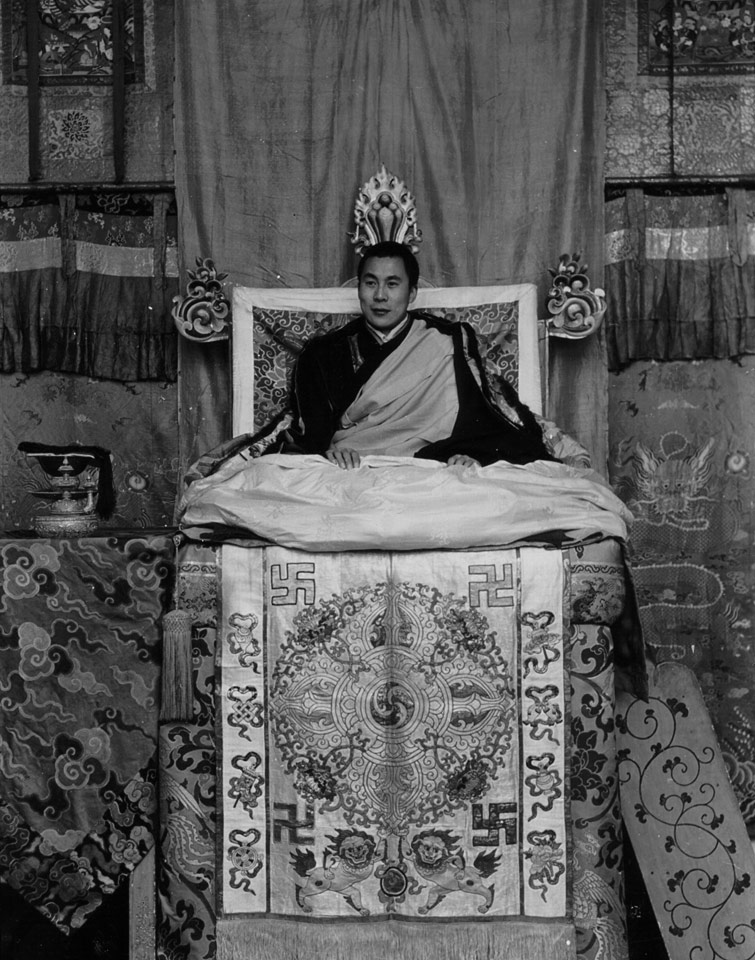
TIBET AWARENESS – THE NATURE OF TIBETAN GOVERNANCE. DALAI LAMA IS THE SUPREME RULER OF TIBET. THIS PHOTO DATED 22 FEBRUARY 1940 EXPLAINS THE NEED TO STUDY TIBETAN BUDDHISM AS A POLITICAL SCIENCE.On bhavanajagat.com

Professor Donald S. Lopez, the Arthur E. Link Distinguished University Professor of Buddhist and Tibetan studies at the University of Michigan published several books on Buddhism and teaches it as religion and as a philosophical doctrine.

TIBET AWARENESS - THE NATURE OF TIBETAN GOVERNANCE AND TIBET'S POLITICAL INSTITUTION.
TIBET AWARENESS – I ASK PROFESSOR DONALD S. LOPEZ AND OTHERS WHO TEACH TIBETAN BUDDHISM TO EXPLAIN THE NATURE OF TIBETAN GOVERNANCE AND TIBET’S POLITICAL INSTITUTION CALLED GANDEN PHODRANG GOVERNMENT OF TIBET. TIBETAN BUDDHISM IS POLITICAL SCIENCE.

I ask Professor Lopez and all other teachers of Tibetan studies to emphasize the nature of Tibetan governance and as to how Tibetan Buddhism evolved into a political system giving Tibetans a cultural tool to choose the Head of State, the Supreme Ruler of Tibet and the political institution called the Ganden Phodrang Government of Tibet, the political Institution of Dalai Lama. Tibetan Buddhism is a Political Science for it has established the rules for choosing a political official who governs the State and administers justice, and this System of Governance existed for nearly four centuries until Communist China’s military occupation of Tibet in 1950.

Tibetan Buddhism evolved into a political system giving Tibetans a cultural tool to choose the Head of State, the Supreme Ruler of Tibet and the political institution called the Ganden Phodrang Government of Tibet, the political Institution of Dalai Lama. Tibetan Buddhism is a Political Science for it has established the rules for choosing a political official who governs the State and administers justice, and this System of Governance existed for nearly four centuries until Communist China’s military occupation of Tibet in 1950.

Rudra Narasimham Rebbapragada
Ann Arbor, MI 48104-4162 USA
Special Frontier Force-Establishment 22-Vikas Regiment

Religion department hosts Buddhist scholar for lecture series

Aryanna Duhl, Staff Writer 9:31 a.m. EDT March 30, 2016

635949269682170290-FSUBrd-10-15-2015-FSView-1-U001--2015-10-14-IMG-FSV-DoddHall-JP-1014-1-1-UKC88F1R-L692356397-IMG-FSV-DoddHall-JP-1014-1-1-UKC88F1R.jpg
Tibetan Buddhism is Political Science, a System of Governance that existed for nearly four centuries until Communist China’s military occupation of Tibet in 1950.

Professor Donald S. Lopez of the University of Michigan gave two lectures as part of the Department of Religion’s 15th annual Tessa J. Bartholomuesz Lecture Series and the department’s 50th Annviersary Celebration. (Photo: James Papastavros/FSView)

“He’s like the Stephen King of Buddhist studies,” said Dr. Bryan J. Cuevas as he presented the featured speaker of the Department of Religion’s 15th annual Tessa J. Bartholomuesz Lecture Series. Professor Donald S. Lopez, the Arthur E. Link Distinguished University Professor of Buddhist and Tibetan Studies at the University of Michigan, gave two lectures, which were also a part of the Department of Religion’s 50th Anniversary celebration.

In his first presentation, “Dispatches from Nirvana: 45 Years of Buddhist Studies,” Lopez spoke first about how he came to study Buddhism. He explained that during the Vietnam War, he became disenchanted with Western thought, turning to “Eastern mysticism.”

Before his position at the University of Michigan, Lopez taught at Middlebury College in Vermont, where he was one of four religion professors, and the only one studying Eastern religions. He taught a variety of subjects, including Daoism, Confucianism and Buddhism. He then moved to Michigan, where he is one of three Buddhism scholars.

Professor Lopez has written many books on Buddhism, but spoke the most on authoring anthologies, where he attempts to question the “classics” of Buddhist literature. He estimated that only 10% of available Tibetan works have actually been studied, and attributed this to the previous lack of scholars who spoke the language. “Language foundation is crucial” to the study of religions, Lopez stressed. He clarified that when scholars don’t understand the language and culture of a religious people, they must rely only on the texts that the people have always deemed the “classics” and are therefore unable to explore others.

In his second lecture, “Christian vs. Buddhist: The Battle for the Soul of Tibet,” Lopez described the missions of Ippoito Desideri, an Italian Jesuit missionary in Tibet in the 1700s who was the first European to have studied and understood the Tibetan language and culture.

With this understanding, Desideri used the same rhetoric of the Tibetan texts to try to convince the Buddhist monks to convert to Catholicism. According to Lopez, as Desideri learned about Tibetan religion, he found that “what the Buddhists were studying was philosophy.”

This idea of Buddhism as philosophy is something that Lopez also discussed in his first lecture, sharing his hope that Buddhist studies would find its way into the Philosophy department of universities. Lopez claimed that, “when we consider a religious text to be the work of the divine,” we diminish what scholars can think about it.

He accredits the slow development of scholarship in Buddhist studies to the “delayed reaction moving away from the idea that these [Buddhist] texts were only religious doctrine,” and that once “liberated from the sacrality of the text,” scholars can study it as creative poetry.

There is still a lot of examination to be done of Buddhist thought, in attempting to fully understanding the culture as well as answering some of the most difficult philosophical questions. Though there will likely be many generations of scholars searching for answers to questions such as, “When was the Buddha born, and when did he die?” or even, “Does God exist?” Professor Lopez is proud of how far the issues of Buddhism have come.

“We are now in the golden age of Buddhist studies,” he said

I ask Professor Lopez and all other teachers of Tibetan studies to emphasize the nature of Tibetan governance and as to how Tibetan Buddhism evolved into a political system giving Tibetans a cultural tool to choose the Head of State, the Supreme Ruler of Tibet and the political institution called the Ganden Phodrang Government of Tibet, the political Institution of Dalai Lama.
donald lopez jr ph d arthur e link distinguished university professor ...


Whole Ruler – Dalai Lama Represents the Political Rights of Tibetans

Institution of Dalai Lama Represents the Political Rights of Tibetans to Self-Governance

The Institution of Dalai Lama stands for the Ganden Phodrang Government of Tibet which represents political rights of Tibetans for Self-Governance.

In my analysis, ‘Institution of Dalai Lama’ remains relevant to Tibetans in Occupied Tibet. The Institution of Dalai Lama represents The Ganden Phodrang Government of Tibet, the political symbol of Tibetan Rights to Self-Governance. The Seal that represents the Institution of Dalai Lama does not include the image of any of the Dalai Lamas that ruled over Tibet for centuries.

Dalai Lama Says, ‘Institution of Dalai Lama’ No More Politically Relevant

Clipped from: https://timesofindia.indiatimes.com/india/dalai-lama-says-institution-of-dalai-lama-no-more-politically-relevant/articleshow/65322625.cms

Whole Ruler – Dalai Lama Represents the Political Rights of Tibetans

PANAJI: Tibetan spiritual leader Dalai Lama on Wednesday said the “institution of Dalai Lama” is no longer politically relevant and it was up to the people of Tibet to decide whether the age-old tradition should continue or not.

He said the Chinese government was more concerned about this institution than him for political reasons.

Dalai Lama is a title given to spiritual leaders of Tibetan people. This title is given to those who are considered among the most important monks of the Gelug school, the newest school of Tibetan Buddhism.

Addressing an event at the Goa Institute of Management, the 14th Dalai Lama said, “As early as in 1969, I had formally made a statement whether this very institution of Dalai Lama should continue or not, it is up to the Tibetan people to decide.”

Replying to students’ queries after an hour-long address, he said, “I have no concerns. Nowadays, the Chinese government is more concerned about the Dalai Lama institution than me. The Chinese government is concerned because of political reasons,”

During the 1959 Tibetan uprising, the Dalai Lama had fled to India.

He said in 2001, the elected political leadership was appointed (by the people in exile) and for the next 10 years, he remained in semi-retired position.
“Then in 2011, I totally retired from the political responsibility. Now, the elected political leadership carries the full responsibility, I don’t get involved in their decision,” he said.

“Now, no longer Dalai Lama institution is politically relevant,” the 1989 Nobel Peace Prize winner said.
About the future Dalai Lama, he said all leaders of different Buddhist traditions hold a meeting in Tibet every year in November.


“This November, we are meeting again. In the previous meetings, they had decided that when my age reaches around 90 years, then the group of leaders will decide about the future Dalai Lama,” the 83-year-old spiritual leader said.


When asked about his own selection to the chair, Lama recalled, “According to my mother, the very day when the search party set by the Tibetan government reached my place… That very day our family was completely ignorant.”


“But that very day, I was a 2-3-year-old boy… I was so much excited. I myself don’t know why… The search party got some indications that day. When they reached our house, I ran towards them and recognized each persons’ name,” he said.


“At that time, I had some sort of some memory about past life,” the Dalai Lama said.

Institution of Dalai Lama Represents the Political Rights of Tibetans to Self-Governance

Whole Ruler – The Sovereign Institution of Tibet at The White House

The Supreme Ruler of Tibet at the White House

Whole Ruler – The Sovereign Institution of Tibet at The White House. The Institution of Dalai Lama is important to preserve Tibetan Political Identity. The Government of Tibet is represented by this Seal of Ganden Phodrang.

Tibet is a Sovereign Nation and it specifically acknowledges that the Institution of Dalai Lama and the person holding that title as the true independent, ruler of Tibet apart from being a high-ranking priest of Tibetan Buddhism.

SPECIAL FRONTIER FORCE AT THE WHITE HOUSE: The Institution of Dalai Lama is not simply about a person known as Tenzin Gyatso. He is the Supreme Commander of Tibetan Forces that serve in the military organization called Special Frontier Force.
Whole Ruler – The Sovereign Institution of Tibet at The White House. The Institution of Dalai Lama is not simply about a person known as Tenzin Gyatso. He is the Supreme Ruler of the Tibetan Nation.
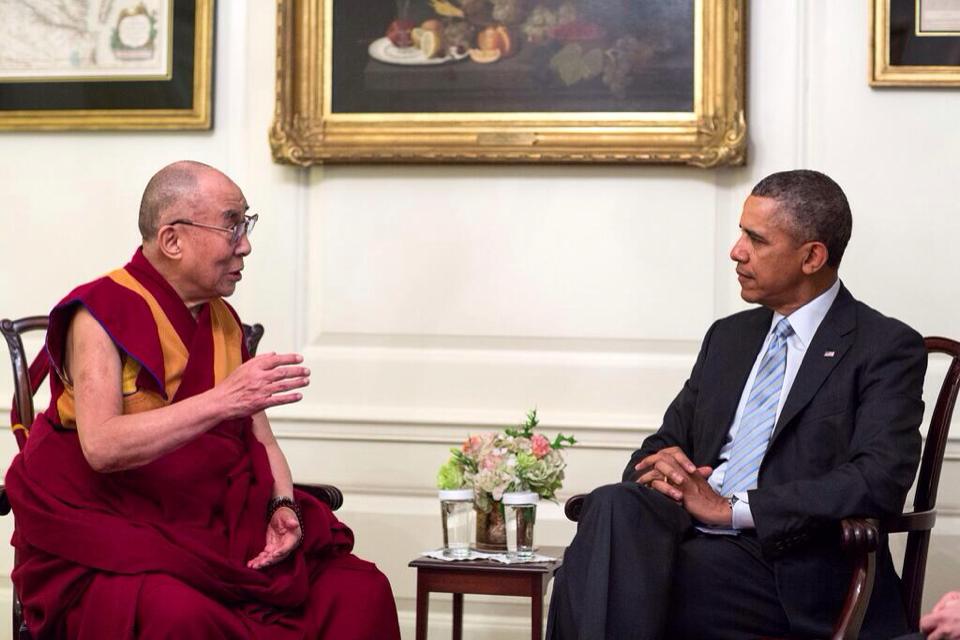
SPECIAL FRONTIER FORCE AT THE WHITE HOUSE: His Holiness the 14th Dalai Lama speaking with US President Barack Obama during their meeting in the Map Room of The White House in Washington, DC on Friday, February 21, 2014.(Official White House photo by Pete Souza)
Whole Ruler – The Sovereign Institution of Tibet at The White House. His Holiness the 14th Dalai Lama speaking with US President Barack Obama during their meeting in the Map Room of The White House in Washington, DC on Friday, February 21, 2014.(Official White House photo by Pete Souza)

On March 31, 1959, His Holiness the 14th Dalai Lama arrived in India as a political exile and was granted political asylum in India. He established the Tibetan Government-in-Exile which is based in Dharamsala of India. But, for Tibetans living in Tibet, the title Dalai Lama represents their chosen system of governance.

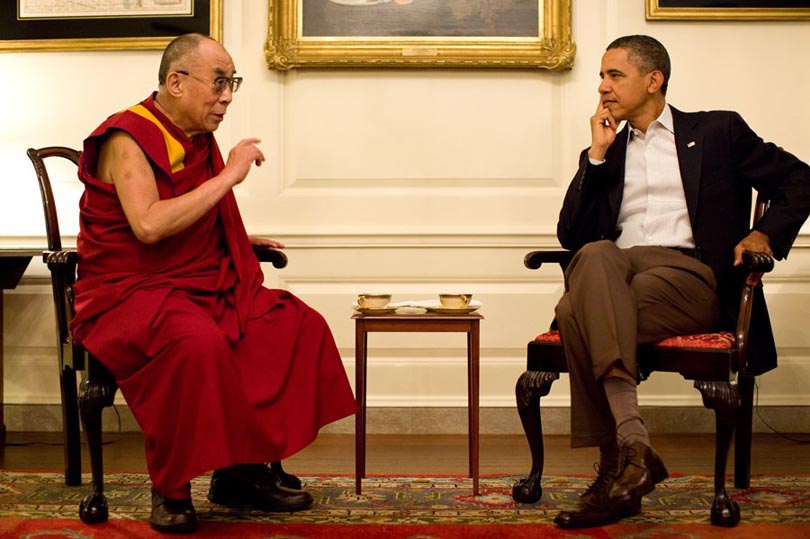
SPECIAL FRONTIER FORCE AT THE WHITE HOUSE: His Holiness the 14th Dalai Lama speaking with US President Barack Obama during their meeting in the Map Room of The White House in Washington, DC on July 16, 2011.
Whole Ruler – The Sovereign Institution of Tibet at The White House. His Holiness the 14th Dalai Lama speaking with US President Barack Obama during their meeting in the Map Room of The White House in Washington, DC on July 16, 2011.

The United States often describes His Holiness the 14th Dalai Lama as a spiritual, and cultural leader of Tibetan people without explaining the cultural aspects of Tibetan governance. In Tibetan Culture, the title Dalai Lama is given to the Leader or Chief who provides a system of Government. The Dalai Lama has the same executive powers that are typically exercised by the Head of State of any independent, sovereign nation. The title of Dalai Lama is the equivalent of titles such as President or Prime Minister who hold the executive power in nations like the United Sates, India, and Great Britain.

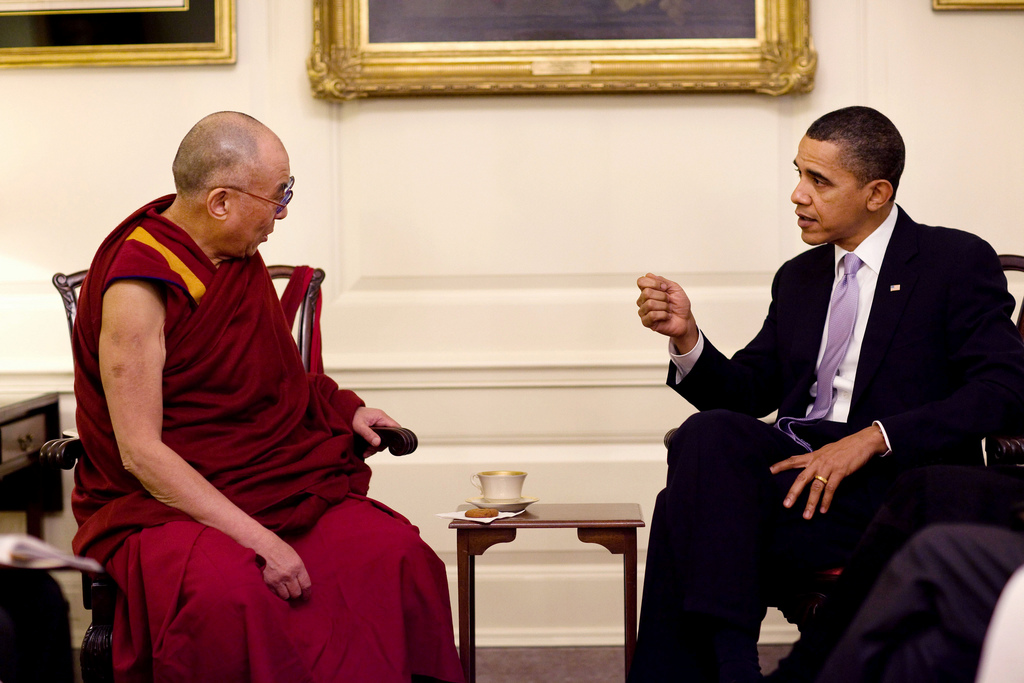
SPECIAL FRONTIER FORCE AT THE WHITE HOUSE: His Holiness the 14th Dalai Lama speaking with US President Barack Obama during their meeting in the Map Room of The White House, Washington, DC on February 18, 2010.
Whole Ruler – The Sovereign Institution of Tibet at The White House. His Holiness the 14th Dalai Lama speaking with US President Barack Obama during their meeting in the Map Room of The White House, Washington, DC on February 18, 2010.

The Sovereign, Political Institution of the Dalai Lama

SPECIAL FRONTIER FORCE AT THE WHITE HOUSE: His Holiness the 14th Dalai Lama who has visited The White House on numerous occasions during the last 30 years is the rebirth of a long line of "TULKUS" who descend from the Bodhisattva named "AVALOKITESVARA."
Whole Ruler – The Sovereign Institution of Tibet at The White House. His Holiness the 14th Dalai Lama who has visited The White House on numerous occasions during the last several years is the rebirth of a long line of “TULKUS” who descend from the Compassionate Bodhisattva named “AVALOKITESVARA.”

His Holiness the 14th Dalai Lama who had visited The White House in Washington, DC on February 21, 2014 and on numerous other occasions meeting with various US Presidents during the last 30 years, is the rebirth of a long line of “TULKUS” who descend from the Compassionate Bodhisattva named “AVALOKITESVARA.” In Tibetan Buddhism, a “TULKU” is a particularly high-ranking Lama, of whom the Dalai Lama is one. But, it is very important to recognize Dalai Lama as a ‘Hierarch’, a Leader or Chief who provides a system of Government. The Sovereign, political institution of Dalai Lama is formally known as ‘Ganden Phodrang’. The succession of this ‘hierarchy’ is maintained by the discovery of a child born soon after the death of a Dalai Lama into whom the ‘Spirit’ of the deceased has entered.

SPECIAL FRONTIER FORCE AT THE WHITE HOUSE: Tenzin Gyatso(b. 1935), the 14th Dalai Lama's Enthronement Ceremony on 22 February, 1940. Dalai Lama is the ruler of Tibet.
Whole Ruler – The Sovereign Institution of Tibet at The White House. Tenzin Gyatso (b. 1935), the 14th Dalai Lama’s Enthronement Ceremony on 22 February, 1940. Dalai Lama is the ruler of Tibet.
SPECIAL FRONTIER FORCE AT THE WHITE HOUSE: The 14th Dalai Lama sitting on the throne in this photo image of 1956-57 while Tibet came under Communist China's military occupation during 1950. With military assistance from the United Sates and India, Tibetans had revolted against the Communists and the Dalai Lama fled into exile when the massive Tibetan Uprising failed during March 1959.
Whole Ruler – The Sovereign Institution of Tibet at The White House. The 14th Dalai Lama sitting on the throne in this photo image of 1956-57 while Tibet came under Communist China’s military occupation during 1950. With military assistance from the United Sates and India, Tibetans had revolted against the Communists and the Dalai Lama fled into exile when the massive Tibetan Uprising failed during March 1959.
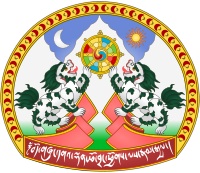
SPECIAL FRONTIER FORCE AT THE WHITE HOUSE: The political institution of Dalai Lama is formally known as 'Ganden Phodrang' and this is the Official Seal of the Tibetan Government.
Whole Ruler – The Sovereign Institution of Tibet at The White House. The Sovereign, political institution of Dalai Lama is formally known as ‘Ganden Phodrang’ and this is the Official Seal of the Tibetan Government.

The Great Fifth Dalai Lama, Lobsang Gyatso (1617-1682) founded the Ganden Phodrang Government of Tibet in 1642. During his reign, the Potala Palace on the Red Hill in Lhasa was built. The successive Dalai Lamas have headed the Tibetan Nation for nearly four centuries. The name “DALAI” is the anglicized version of Mongolian word “TA -LE” which is used as an honorific title and the equivalent of the Tibetan “RGYA-MTSHO” meaning Sea or Ocean which suggests the breadth and depth of wisdom and the temporal power of Dalai Lama on Tibetan way of life. Tibetans call the Dalai Lama as ‘Rgyal-ba Rin-po-che’ which means ‘Great Precious Conqueror. The Third Dalai Lama, Sonam Gyatso (1543-1588) had received this honorific title during 1578 while on a visit to the Mongol Chief Altan Khan who had applied this title retrospectively to the previous hierarchs making Gendun Drupa (1391-1474) the First Dalai Lama, and Gendun Gyatso (1475-1542) who became the Second Dalai Lama. This strong hierarchical organization of Tibetan Buddhism and the governance of Tibet has become the focus of Tibetan Cultural Identity and Tibetan National Character. The Eighth Dalai Lama, Jamphel Gyatso (1758-1804) fought a war with the Gurkha troops from Nepal and had defeated them with some assistance from Manchu China.  Tibet existed in a serene and unperturbed state for several centuries even while Tibet came under the control of the Yuan or Mongol Dynasty of China. In 1644, Chinese Manchu, Qing or Ching Dynasty was established and Tibet during the reign of its Seventh Dalai Lama, Kelsang Gyatso (1708-1757) came under Manchu China’s nominal protection although for the most part, the Tibetans retained full control over their internal affairs. The Manchu China Dynasty was overthrown in 1911 and the 13th Dalai Lama, Thupten Gyatso (1876-1933) had expelled the Manchu China’s troops from Tibet, promptly reasserted Tibet’s full Independence. The Great 13th Dalai Lama ruled with full personal authority and reigned as head of a Sovereign State. He had further formally announced Tibet’s full Independence on February 13, 1913.

SPECIAL FRONTIER FORCE AT THE WHITE HOUSE: The Potala Palace on the Red Hill in Lhasa was built during the reign of Lobsang Gyatso(1617-1682), the Great Fifth Dalai Lama. The Sovereign Authority of the Dalai Lama as the Ruler of Tibet was established before the US President became the Chief Executive of the United States.
Whole Ruler – The Sovereign Institution of Tibet at The White House. The Potala Palace on the Red Hill in Lhasa was built during the reign of Lobsang Gyatso (1617-1682), the Great Fifth Dalai Lama. The Sovereign Authority of the Dalai Lama as the Ruler of Tibet was established before the US President became the Chief Executive of the United States.
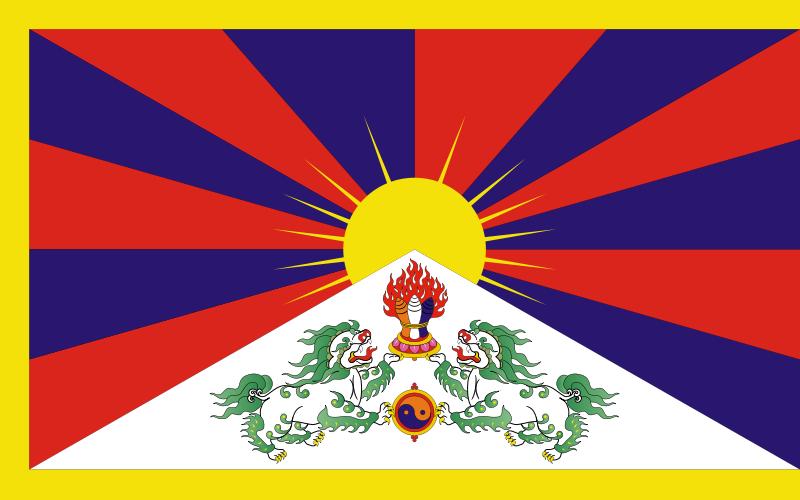
SPECIAL FRONTIER FORCE AT THE WHITE HOUSE: Special Frontier Force was founded by the United States, India, and Tibet during 1962 to defend the Tibetan Nation represented by this Flag.
Whole Ruler – The Sovereign Institution of Tibet at The White House. The Tibetan Nation represented by this Flag. It symbolizes the Supreme Authority of the institution of Dalai Lama.

Tibetans celebrate the 13th day of February as Tibetan Independence Day in recognition of their sovereignty. Being ‘Sovereign’ means that Tibetans do not acknowledge any superior and being a Sovereign Nation, Tibet has the full power to levy War, conclude Peace, contract alliances, establish Commerce and do all other acts and things which independent states may have the right to do. For 39 years, from 1911 to 1950, Tibet had indeed existed as an Independent Nation and had signed the bilateral “Mc Mahon Treaty” in Delhi during 1914 following the ‘Simla Agreement’. During October 1950, Communist China’s People’s Liberation Army invaded Tibetan soil and Tibet has come under China’s military occupation. It will be incorrect to suggest that Tibet is a part of China. Tibetans do not acknowledge China’s rule. I am pleased to share a few photo images of His Holiness the 14th Dalai Lama, the living symbol of the Tibetan Nation when he visited The White House in recent past.

SPECIAL FRONTIER FORCE AT THE WHITE HOUSE: The construction of The White House started in 1792. The United States started diplomatic relations with Tibet as it got alarmed by the Communist takeover of China during 1949. However, the 14th Dalai Lama is the first Dalai Lama who has ever visited The White House.
Whole Ruler – The Sovereign Institution of Tibet at The White House. The construction of The White House started in 1792. The United States started diplomatic relations with Tibet as it got alarmed by the Communist takeover of China during 1949. However, the 14th Dalai Lama is the first Dalai Lama who has ever visited The White House.
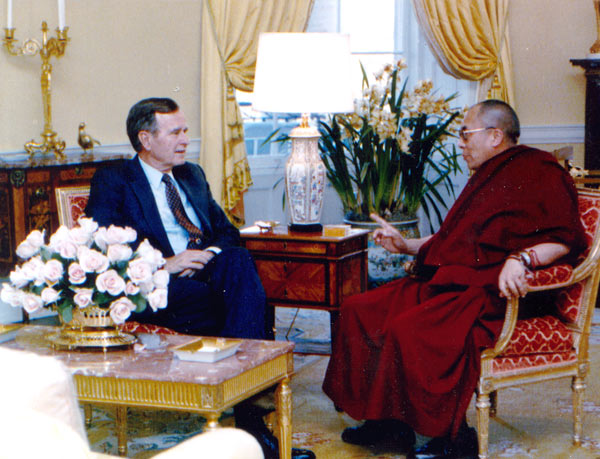
SPECIAL FRONTIER FORCE AT THE WHITE HOUSE: On April 16, 1991, the 14th Dalai Lama met with US President George H.W. Bush during his first visit to The White House.
Whole Ruler – The Sovereign Institution of Tibet at The White House. On April 16, 1991, the 14th Dalai Lama met with US President George H.W. Bush during his first visit to The White House. During 1976-77, President Bush served as the Director of Central Intelligence Agency.
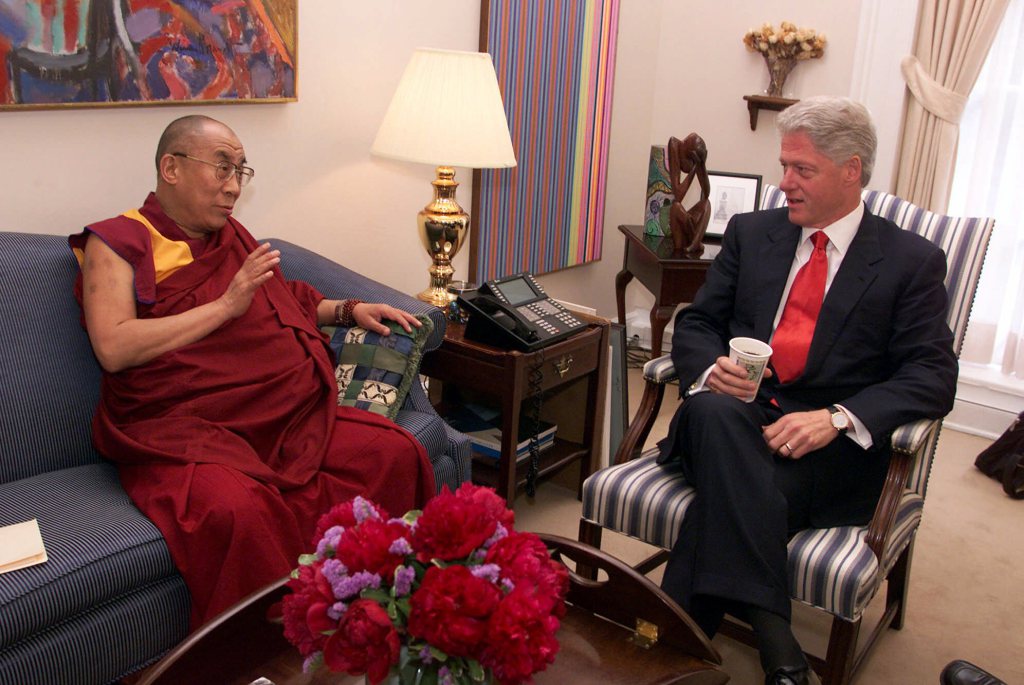
SPECIAL FRONTIER FORCE AT THE WHITE HOUSE: The 14th Dalai Lama met with US President Bill Clinton on June 20, 2000 at The White House.
Whole Ruler – The Sovereign Institution of Tibet at The White House. The 14th Dalai Lama met with US President Bill Clinton on June 20, 2000 at The White House.
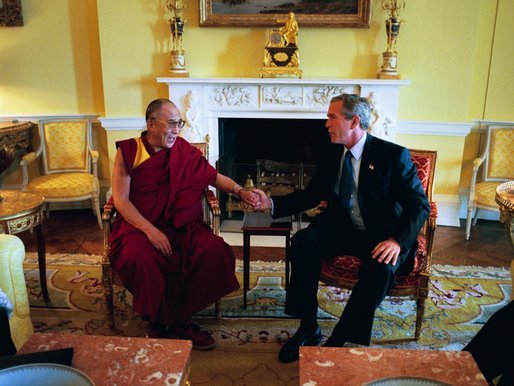
SPECIAL FRONTIER FORCE AT THE WHITE HOUSE: His Holiness the 14th Dalai Lama  speaking with US President George Bush during their meeting in The White House on September 10, 2003.
Whole Ruler – The Sovereign Institution of Tibet at The White House. His Holiness the 14th Dalai Lama speaking with US President George Bush during their meeting in The White House on September 10, 2003.
SPECIAL FRONTIER FORCE AT THE WHITE HOUSE: His Holiness the 14th Dalai Lama speaking with US President George Bush during their meeting at The White House in Washington, DC on November 09, 2005.
Whole Ruler – The Sovereign Institution of Tibet at The White House. His Holiness the 14th Dalai Lama speaking with US President George Bush during their meeting at The White House in Washington, DC on November 09, 2005.
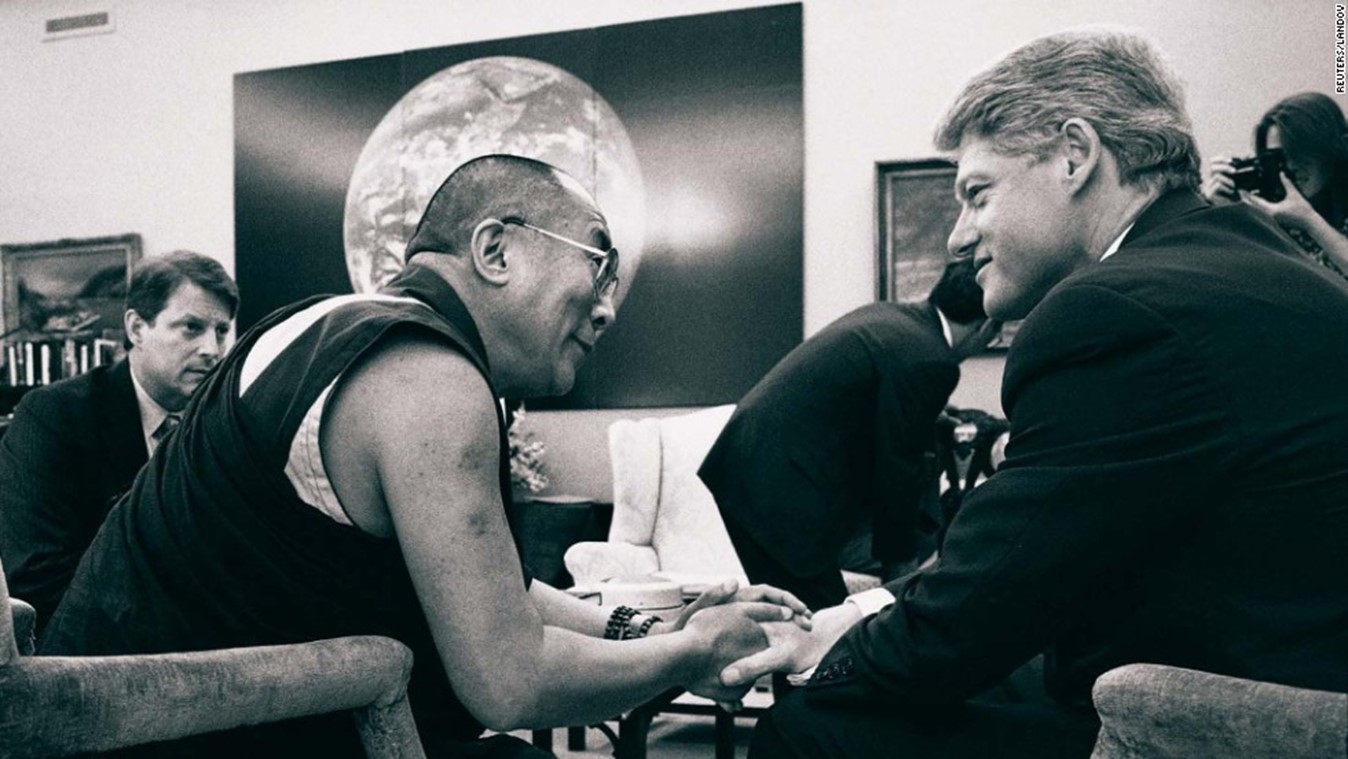
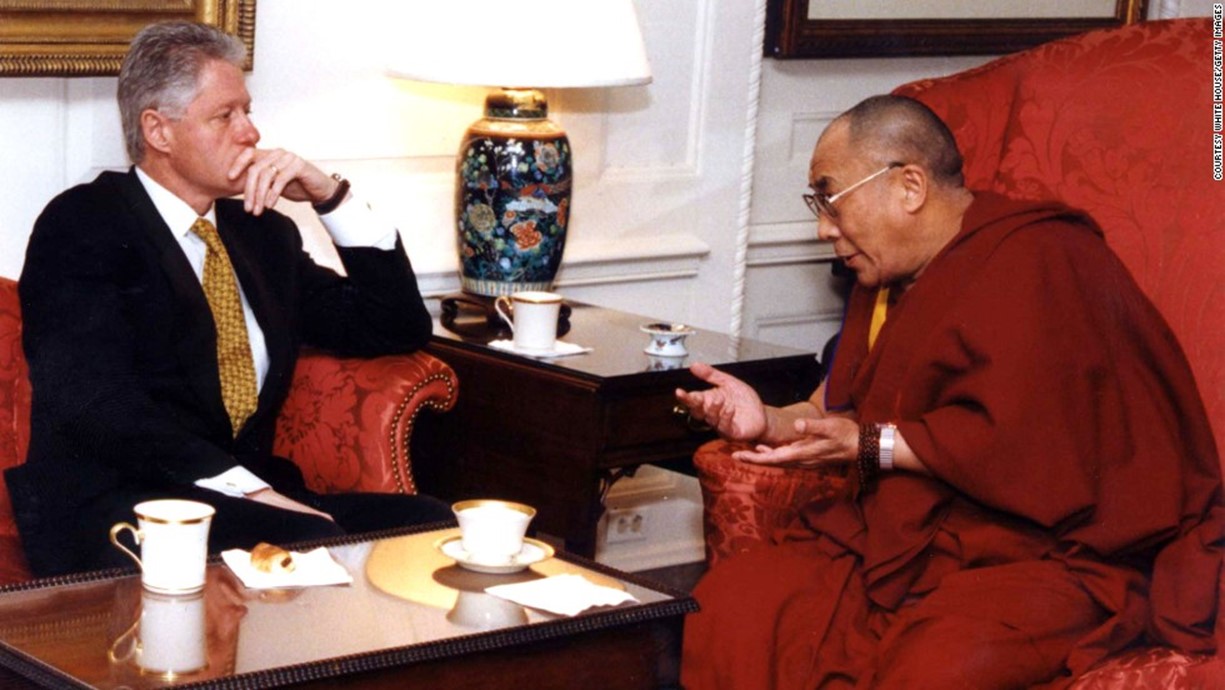
SPECIAL FRONTIER FORCE AT THE WHITE HOUSE: His Holiness the 14th Dalai Lama speaking with US President Bill Clinton during their meeting in The White House in Washington, DC.
Whole Ruler – The Sovereign Institution of Tibet at The White House. His Holiness the 14th Dalai Lama speaking with US President Bill Clinton during their meeting in The White House in Washington, DC.

I respectfully submit to my readers that the term “Dalai Lama” recognizes the person who represents the sovereign, political institution, the seat of Tibetan Government and Tibetan Sovereignty.

Whole Ruler – The Sovereign Institution of Tibet at The White House
Whole Ruler – The Sovereign Institution of Tibet at The White House. Noble Peace Prize 2002. US President Jimmy Carter maintained a friendly relationship with the Tibetan Leader since 1979.
United States Congress honored His Holiness the Dalai Lama with a Gold Medal during a ceremony in Washington,DC in 2007. President George W Bush, US Speaker of the House Nancy Pelosi, and US Senator Robert C Byrd are seen in the photo. Senator Byrd, the longest-serving member of the US Congress has died at the age of 92 after almost six decades in office. America has lost a voice of Principle and Reason. It is a time for us to reflect upon the Problem of Tibet.