Whole Illumination – Whole Dude at Whole Foods celebrates the Festival of Lights

The Phenomenon of Illumination – The Celebration of Deepavali on Monday, October 20, 2025.

The Phenomenon of Illumination – The Celebration of Deepavali on Monday, October 20, 2025.

Excerpt: Diwali, or Deepavali, is a Hindu festival of lights signifying the victory of good over evil, celebrated by followers of Jainism, Sikhism, and Buddhism as well. It falls on the 15th day of Kartik month each year. In 2025, it will be celebrated on Monday, October 20. The five-day celebration starts with Dhanteras, buying new utensils and jewelry, followed by Choti Diwali, the main Diwali celebration, Govardhan Puja, and Bhai Dooj. The difference between Diwali and Deepavali lies mainly in regional linguistic variations. The festival is also associated with illuminating the ‘inner light’ that wards off spiritual darkness. I coined the phrase Whole Optics to describe God as the Creator of Light who uses Light as an instrument of Knowledge in the performance of the Vital Function called Respiration that illuminates both the Inner and Outer Worlds by connecting the Energy Seeker and the Energy Provider.

The Phenomenon of Illumination – The Celebration of Deepavali on Monday, October 20, 2025.

Diwali or Deepawali is a festival of Hindus associated with lights (also called as festival of light) that symbolizes the victory of good over evil. Not just Hindus, but people of Jainism, Sikhism and Buddhism religion also celebrate the festival of Diwali with great pomp. According to the ancient calendar, Diwali is observed on Amavasya – the 15th day – of the month of Kartik, every year. In 2025, Diwali will be celebrated on Monday, October 20.

The Phenomenon of Illumination – The Celebration of Deepavali on Friday, November 01, 2024. The New Moon Tithi Amavasya begins on Monday October 20 and concludes on Tuesday, October 21, 2025.

What are the 5 days of Diwali in 2025?

The Phenomenon of Illumination – The Celebration of Deepavali on Monday, October 20, 2025.
The Phenomenon of Illumination – The Celebration of Deepavali on Monday, October 20, 2025. Spiritualism-The Victory of Good over Evil : I define Spiritualism as an Unchanging, Underlying Principle that supports the existence of every living Object that changes in Nature under the influence of the Cyclical Flow of Time.

Dhanteras is the first day of Diwali and is considered to be a very auspicious day to buy new utensils and jewelry. On this day, people worship Lord Dhanvantari, the god of medicine and health. 

Choti Diwali is the second day of Diwali and is also known as Kali Chaudas. On this day, people worship Lord Hanuman and Goddess Kali. It is also a day to clean the house and get rid of old and unwanted things.

Diwali is the third day of Diwali and is the main day of the festival. On this day, people worship Goddess Lakshmi, the goddess of wealth and prosperity. They also light diyas (oil lamps) and candles to illuminate their homes and businesses.

Govardhan Puja is the fourth day of Diwali and is also known as Annakut. On this day, people worship Lord Krishna and offer him a mountain of food made from various grains and vegetables.

Bhai Dooj is the fifth and final day of Diwali. On this day, sisters apply tilak (vermilion mark) on the foreheads of their brothers and pray for their well-being. Brothers in turn give gifts to their sisters.

What is the difference between Diwali and Deepavali?

Bharat Darshan – The celebration of Deepavali on Monday, October 20, 2025

Diwali and Deepavali are two different names for the same festival, which is widely celebrated in India and by the Indian diaspora around the world. The difference lies in the way the words are spelled and pronounced based on regional and linguistic variations.

Diwali: This is the more commonly used term, and it is widely recognized in North India and other parts of the country. “Diwali” is the anglicized version of the festival’s name and is commonly used in English-language contexts.

Deepavali: This term is commonly used in South India and in some Southeast Asian countries with a significant Indian population. “Deepavali” is the original Sanskrit name of the festival, where “Deepa” means “lamp” or “light,” and “Avali” means “a row” or “a series.” It refers to the rows of lamps and lights that are lit during the festival to symbolize the victory of light over darkness and good over evil.

Diwali is not only a festival of lights, but it also has great cultural and spiritual significance. The festival symbolizes the victory of good over evil, light over darkness, and knowledge over ignorance. The lighting of diyas is believed to represent the inner light that protects us from spiritual darkness. It is also a time for families and friends to come together, share sweets and delicacies, and exchange gifts.

The Phenomenon of Illumination – The Celebration of Deepavali on Monday, October 20, 2025. Indians will be celebrating the festival of KARTHIGAI DEEPAM, KARTHIKAI DEEPAM, OR ‘KARTIKA DEEPAM’. Should man search inwards or search outwards to find God? I can search if and only if my existence is supported. For my existence, I depend upon the ability of plants called photoreception.

Deepam Jyoti Parabrahma
Deepam Sarva tamopaham

Deepena Saadhyathe Sarvam
Sandhya Deepam Namostute

The Phenomenon of Illumination – The Celebration of Deepavali on Monday, October 20, 2025.

Light or JYOTI in Sanskrit language represents the Eternal Reality. Jyoti is our conscious, its our awareness and it connects us to the Creator. This consciousness permeates all entities that are created and it includes all the five elements of Mother Nature. Consciousness is a function which enables a living organism to be aware of its own state of existence and to maintain that state of existence. Living organisms are aware of their need for an external source of energy to sustain their state of existence. Living organisms exist as ‘Energy Seekers’ and to exist they need connection with a ‘Energy Provider’. Consciousness is a biological function which establishes the connection between ‘Energy Seeker’ and ‘Energy Provider’. Because of this awareness, all entities would recognize and respond to their Creator, the Prime Source of Energy and the Controller of Energy.

The Phenomenon of Illumination – The Celebration of Deepavali on Monday, October 20, 2025. Deepam Jyoti Param Brahma – Light and Ultimate Reality. Indian Tradition recognizes ‘Light’ as the manifestation of Ultimate Reality known as Param Brahma and Indians worship all sources of light including that of a light bulb.

Indians light up a lamp as a ritual to worship a deity of their choice. In several parts of the world and in various cultural traditions, the use of light is prevalent and is a part of ritualistic worship. In the Land of India, light is not only used as part of a ritual but also is directly worshiped with the belief that light represents God.

The Phenomenon of Illumination – The Celebration of Deepavali on Monday, October 20, 2025.

Spirituality Science – Light of Lights – The Phenomenon of Illumination

THE PHENOMENON OF ILLUMINATION: THE LIGHT IS THE SOURCE OF ILLUMINATION. THE KNOWLEDGE IS THE OBJECT OF ILLUMINATION. THE MIND IS THE OBSERVER OF ILLUMINATION. THERE IS UNITY BETWEEN THE SOURCE, THE OBJECT KNOWN, THE KNOWER TO MANIFEST THE PHENOMENA OF KNOWING.

SPIRITUALITY SCIENCE - LIGHT OF LIGHTS - THE PHENOMENON OF ILLUMINATION : THE LIGHT IS THE SOURCE OF ILLUMINATION. THE KNOWLEDGE IS THE OBJECT OF ILLUMINATION. THE MIND IS THE OBSERVER OF ILLUMINATION. THERE IS UNITY BETWEEN THE SOURCE, THE OBJECT KNOWN, THE KNOWER TO MANIFEST THE PHENOMENA OF KNOWING.
The Phenomenon of Illumination – The Celebration of Deepavali on Monday, October 20, 2025.SPIRITUALITY SCIENCE – LIGHT OF LIGHTS – THE PHENOMENON OF ILLUMINATION: THE LIGHT IS THE SOURCE OF ILLUMINATION. THE KNOWLEDGE IS THE OBJECT OF ILLUMINATION. THE MIND IS THE OBSERVER OF ILLUMINATION. THERE IS UNITY BETWEEN THE SOURCE, THE OBJECT KNOWN, THE KNOWER TO MANIFEST THE PHENOMENA OF KNOWING.

I am pleased to share an article titled “Light of Lights” published by Dr. Sarvepalli Anantha Padmanabha Rao, M.S. who served for many years as a Professor of Surgery, and as Director of Medical Education in the Government of Andhra Pradesh Medical and Health Services. It is important to know the views shared by the traditional thinkers of India and in my view, Indian Schools of Thought such as Advaita (Non-Dualism) have formulated their theories about the true or real identity of Self (Atman) without considering the physiological or biological basis for hosting a thought about Self (Atman) which may have an independent existence while it is totally detached from the Body, and Mind of its thinker. While Mysticism is a part of various religious traditions, I am asking my readers to seek “Whole Illumination” by investigating and by exploring the basis for man’s existence in the natural world. Any such explanation, or clarification would come to a conclusion and will assert that the man needs association, partnership, relationship, bonding, cooperation, assistance, patronage, Yoking, or Unity with a source of Energy that exists in the man’s external environment. The man cannot maintain the fact or the reality of his physical existence using introspection, meditation, or contemplative prayer which could be of use in illuminating man’s “Inner World” and provide him “Inner Vision”, a vision or illumination that describes the Identity of man’s true or real Self (Atman) and its perfect, complete, and wholesome Divine Nature.

The Phenomenon of Illumination – The Phenomenon of Knowing:
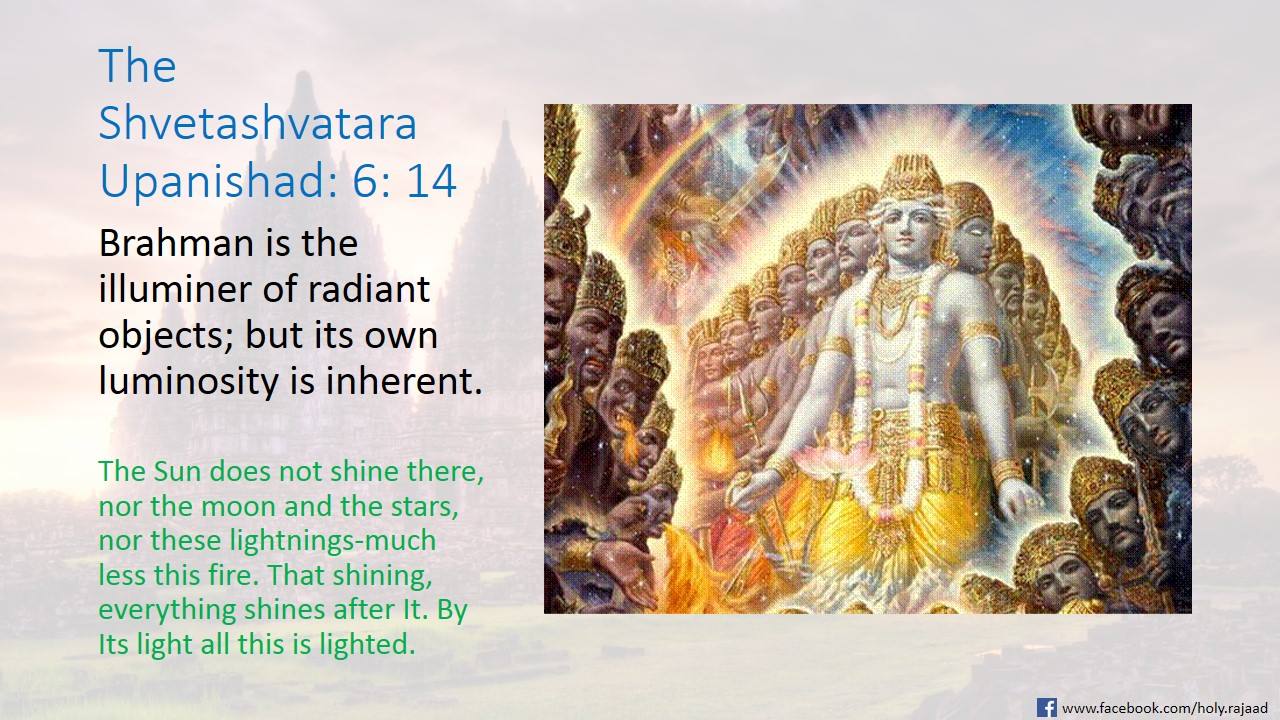
SPIRITUALITY SCIENCE - LIGHT OF LIGHTS - THE PHENOMENON OF ILLUMINATION : THE ILLUMINED MIND KNOWS THE KNOWER, THE KNOWLEDGE, AND THE SOURCE OF KNOWLEDGE.
The Phenomenon of Illumination – The Celebration of Deepavali on Monday, October 20, 2025. SPIRITUALITY SCIENCE – LIGHT OF LIGHTS – THE PHENOMENON OF ILLUMINATION: THE ILLUMINED MIND KNOWS THE KNOWER, THE KNOWLEDGE, AND THE SOURCE OF KNOWLEDGE.

The term illumination describes lighting or light. It is often used as the act or process of making something clearer or brighter or as a device for doing so. The word ‘illuminating’ or ‘illuminated’ is often applied to a clarification or explanation that sheds light on a subject that needs careful interpretation of information. In Physics, illumination is about the intensity of light per unit of area; the luminous flux per unit area at any point on a surface exposed to incident light. It is also called Illuminance. However, in Biology, the phenomenon of Illumination requires the study of Optics, Photoreception, and Photochemistry. The biological processes that involve the response of a living thing to the Light stimulus need to be stated as Photochemical Reactions which could be energy dependent and involve the use of chemical energy provided by molecules of Adenosine triphosphate (ATP). The Phenomenon of ‘Illumination’ in Biology requires the operation of three conditions; 1. The Source of Light or Lighting, 2. The Object that is Illuminated, and 3. The Observer who has the Sensory Perception called Vision, or the ability called Photoreception to acknowledge the phenomenon that is observed. Using the nature of photochemical reaction that is observed, living things can be broadly classified into two kinds; 1. Plants that respond to Light stimulus to trap its radiant Energy but have no Sensory Perception called Vision, and 2. Animals (man included) that have the Sensory Perception called Vision but do not have the ability to trap the Light  Energy. For human existence, we need all those three conditions, 1. The Sun as the Source of Light, 2. The Plants that trap the radiant energy of Sunlight using their ability called Photoreception, and 3. The man or Purusha who uses the ability called Sensory Perception or Vision and interprets that Light is God.

SPIRITUALITY SCIENCE - LIGHT OF LIGHTS - THE PHENOMENON OF ILLUMINATION : FOR MAN TO DESCRIBE HIS EXPERIENCE CALLED VISION, OR INNER VISION, APART FROM A SOURCE OF EXTERNAL OR INTERNAL LIGHT, NEEDS THE SUPPORT OF THE VITAL FUNCTION CALLED BREATHING(PRANA) THAT ESTABLISHES MAN AS A BREATHING LIVING THING(PRANI OR PRANAVANTA).
The Phenomenon of Illumination – The Celebration of Deepavali on Monday, October 20, 2025. SPIRITUALITY SCIENCE – LIGHT OF LIGHTS – THE PHENOMENON OF ILLUMINATION: FOR MAN TO DESCRIBE HIS EXPERIENCE CALLED VISION, OR INNER VISION, APART FROM A SOURCE OF EXTERNAL OR INTERNAL LIGHT, NEEDS THE SUPPORT OF THE VITAL FUNCTION CALLED BREATHING (PRANA) THAT ESTABLISHES MAN AS A BREATHING, LIVING THING (PRANI OR PRANAVANTA).

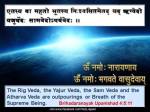
The above picture image of a verse from Brihadaranyak Upanishad 4:5:11 helps us to understand the nature of the vital function of Breathing and Respiration which is the physiological mechanism that man uses to oxidize food substances and derive energy which he further uses for his physical and mental work. If Vedas and Holy Scriptures are seen as the Source of knowledge, the transmission of that Knowledge involves the use of Breathing. If “Knowing” is compared to the phenomenon of ‘Illumination’, the act of Knowing will only be possible if there is Unity between God, the Source of Knowledge, Knower, the Individual called Jeeva who performs all his living functions because of the Knowledge implanted in his substance that makes him a Sentient or Sensible thing, or establishes him as the “Knowing-Self.” The natural phenomenon of Life and Living can be defined as ‘Knowledge in Action’. In Indian tradition the “Self” or “Atman” is the source of Inner Light that illuminates the entire human body. I am suggesting that the Light called Self or Atman illuminates by making it possible for a man to maintain his connection with an external source of energy present in the environment even while the man may find perfect Identity with God through the process called Inner Vision, Introspection, Meditation, or Contemplative Prayers with an attitude of “Whole Detachment” with all things present in the external world. I like the presentation “Light of Lights” for it nicely explains the thoughts of Shankara. However, I have noticed that the author did not provide clarification, or explanation for the final sentence, “Tat Asmi PrabhO.” It simply describes the Unity (Asmi) between man (Tat or True Self or Atman) and Lord (Prabhu). The man’s ability of Sensory Perception called Vision, and the ability of Inner Vision are of secondary importance as Existence depends directly on the act of Breathing and the Lord provides Knowledge to perform that act of Breathing. The True Self or Atman illuminates me if it is connected to Lord or Prabhu, the Original Source of Light.

LIGHT OF LIGHTS

SPIRITUALITY SCIENCE - THE LIGHT OF LIGHTS - THE PHENOMENON OF ILLUMINATION : DR SARVEPALLI ANANTHA PADMANABHA RAO, M.S., PROFESSOR OF SURGERY, DIRECTOR OF MEDICAL EDUCATION, GOVERNMENT OF ANDHRA PRADESH, MEDICAL AND HEALTH SERVICES.
The Phenomenon of Illumination – The Celebration of Deepavali on Monday, October 20, 2025. SPIRITUALITY SCIENCE – THE LIGHT OF LIGHTS – THE PHENOMENON OF ILLUMINATION: DR SARVEPALLI ANANTHA PADMANABHA RAO, M.S., PROFESSOR OF SURGERY, DIRECTOR OF MEDICAL EDUCATION, GOVERNMENT OF ANDHRA PRADESH, MEDICAL AND HEALTH SERVICES.

http://advaita-academy.org/blogs/sarvepalli.ashx#
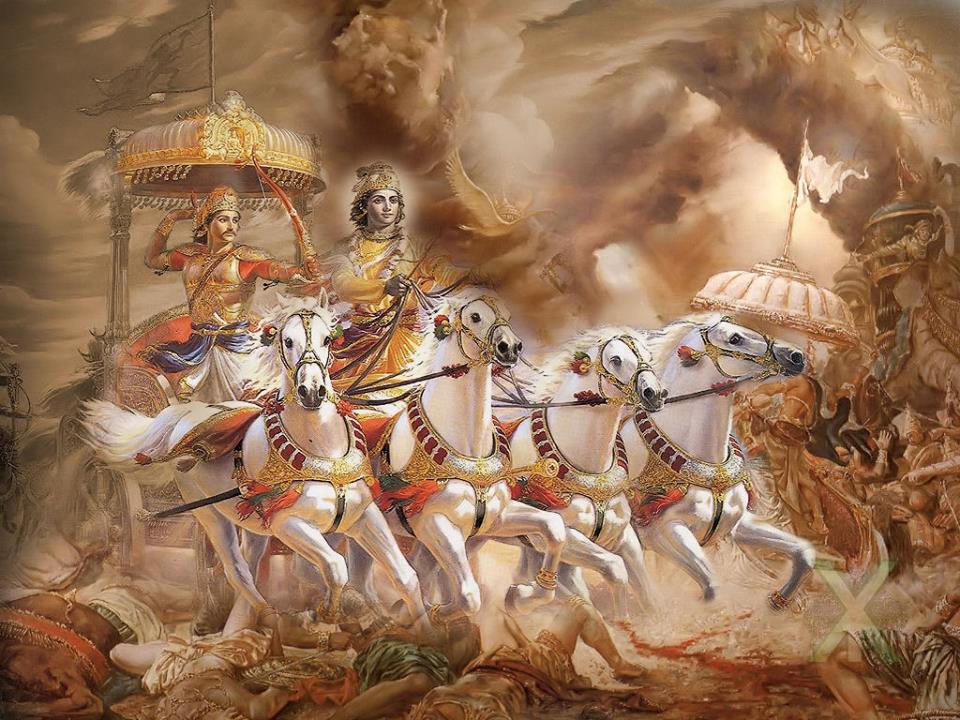
SPIRITUALITY SCIENCE - LIGHT OF LIGHTS - THE PHENOMENON OF ILLUMINATION : THE DIVINE SONG CALLED THE BHAGAVAD GITA ILLUMINATED THE MIND OF PRINCE ARJUNA WITH KNOWLEDGE AND THE SOURCE OF ALL KNOWLEDGE.
The Phenomenon of Illumination – The Celebration of Deepavali on Monday, October 20, 2025. SPIRITUALITY SCIENCE – LIGHT OF LIGHTS – THE PHENOMENON OF ILLUMINATION: THE DIVINE SONG CALLED THE BHAGAVAD GITA ILLUMINATED THE MIND OF PRINCE ARJUNA WITH KNOWLEDGE AND THE SOURCE OF ALL KNOWLEDGE.

Light illumines manifold objects in varying degrees of darkness; that is its property. Sources of such light may be external or internal to us. Examples of the former class are well-known, such as Sun, moon, fire, various kinds of lamps etc; The latter class, the internal, would be the psychic apparatus of man, comprising the sense organs, intelligence, intuition and above all the transcendental ‘Oversoul’ of R W Emerson the American philosopher. Vedanta too subscribes to such a transcendental super-conscious entity, illumining all, comprehending all and all-encompassing supreme Brahman. Flashes of intuition reveal discoveries which remain obscure prior to such overpowering experiences. Archimedes, crying out ‘eureka – eureka’ and Newton, when the apple fell and the law of gravitation revealed are instances of such intuitions . A deeper mental cloud prevents one from knowing who one exactly is in the ultimate analysis.

There is, in Greek mythology, a river named ‘Lethe’ whose waters, when drunk, would make the drinker profoundly forgetful.. One would forget, who one was, the ‘whence and wherefore’ of one’s own very self. A great philosopher likened our human predicament, to such a state of congenital amnesia, in which we lost our moorings, our “original innocence” as it were. Nescience is the technical term used for this state of primordial ignorance, which is said to cover one’s wisdom, ‘like smoke shrouds the fire or as dust sullies a mirror or as the womb envelops an embryo’ as th bhagavadgiitaa puts it. This is the ultimate darkness which needs for its dispelling, no less a light than that of the ‘Lord’, quoted in the GITA chapterXI-12 ever so stunningly – “if the light of a thousand suns were to blaze forth in the sky all at once, that might resemble the splendour of that exalted Being” – nothing short of an ‘apocalypse’, as it were, a revelation, of something not previously known or realized. Oppenheimer, the nuclear physicist, whose name is associated with the first atom bomb and who was a witness to its detonation.was so awe-struck at the sight that this line of the gItA chapter XI-32 flamed in his mind ” I am the full-blown, the all-destroying Time “. It was an indubitable intimation from the depths of his being and not much later, his intuitive insight was proved right, by the nuclear holocaust, the mayhem and the destruction at Hiroshima and Nagasaki it was cataclysmic in proportion

To Sankara, that transcendental spiritual genius, is ascribed a one-stanza poem, by name, ‘ekashlokI’. In it, is encapsulated the pith, the quintessence of the celebrated “mahAvAkya’s or the four great Vedic statements, called as such in the Advaita Vedanta. They are culled one from each of the four Vedas those statements or rather ‘truths’ are

a) ” praGYAnam Brahma, (Rigveda) pristine consciousness is Brahman.

b) ayam aatmaa Brahma (Atharva veda) – consciousness in all its apparent transformations is Brahman,

c) “tat tvam asi” (Samaveda)- You are, in essence, that consciousness, the eternal nitya, the unsullied shuddha, the fully awakened buddha, and unfettered – mukta ; the corollary follows that you are not the ignorant embodied jiiva, which you imagine you are.

d) (“aham Brahma asmi ” (Yajurveda) I am indeed that all-encompassing consciousness

It is with considerable trepidation that I have dared to translate the ‘mahaavaakya’s for fear that they may suffer the ‘noble transmutation from gold to lead’, in the process.

The order in which they are recounted here is not the temporal order in which they occur in the veda but they seem, to me, to be the order adopted by Sankara in this small ‘upadesha’ work, namely, the ekashlokii ’ As will become clear in the sequel, what is attempted here is not a word-for-word translation of the Sanskrit texts, not even a paraphrase but rather an unfolding of the traditional thought couched in the highly compressed poem

Before reproducing the Sanskrit verse, a short anecdotal account of the poignant scenario in which it is set, would be well in order, One might be tempted to ask ‘why only one verse-an ‘ekashlokI? Had not Sankara composed his shatashlokI of hundred verses and his upadesha sAhasrI of thousand teachings ? After all, what were the extenuating circumstances? As though in answer to such questions, a story is recounted thus: Sankara, on one of his peregrinations, chanced upon a spiritual aspirant who was in the throes of death. bemoaning his fate of his having to die before he could get his ‘beatitude’. The compassionate master had empathy with the man’s plight and knowing well the shruti declaration that “he who departs from this world without realising the ‘axara‘, the Imperishable entity, is a veritable wretch a ‘kRRipaNa“, the master devised for him the shortest discourse and the ‘ekashlokI was the result. The verse was composed in a frisky meter named ‘shArdUla vikrIditam’ which has four quarters of 19 syllables each, to enable him to pack all the punch at his command, in a single stanza. This imaginative story illustrates the truth that, when an exceptional master and a pupil desperately thirsting for the ‘saving wisdom’ come together, spiritual enlightenment can not be far behind.

The poem runs as follows :-

The Phenomenon of Illumination – The Celebration of Deepavali on Monday, October 20, 2025. SPIRITUALITY SCIENCE – LIGHT OF LIGHTS – THE PHENOMENON OF ILLUMINATION: FOR MAN TO DESCRIBE HIS EXPERIENCE CALLED VISION, OR INNER VISION, APART FROM A SOURCE OF EXTERNAL OR INTERNAL LIGHT, NEEDS THE SUPPORT OF THE VITAL FUNCTION CALLED BREATHING (PRANA) THAT ESTABLISHES MAN AS A BREATHING, LIVING THING (PRANI OR PRANAVANTA).

kiMjyotistavabhAnumAnahanimeraatraupradiipAdikaM.

syAdevaMravidIpadarshanavidhaukiMjyotirAkhyaahi me.

cakShustasyanimiilanAdisamayekiMdhiirdhiyodarshane.

kiMtatrAhamatobhavAnparamakamjyotistadasmiprabho.

Unless the composition is split up at the right places, it would seem baffling at the first sight, to a beginner. The piece is in the form of a catechism or what in modern pedagogy would be called a ‘one on one’ interactive session. There are five question-answer pairs, one affirmation and one authoritative live-wire exhortation of the teacher and a final total concurrence, by the disciple, after his instant transformation. We shall now proceed with what may, euphemistically, be termed an exegesis of the verse. As will be seen in the sequel, what is attempted here is not a word-to-word rendering in to English, nor even a mere paraphrasing of the work; it is rather an attempt to enter to, and to bring out the traditional import of this Vedantic composition, to the extent my limited faculties permit. Much pertinent digression from the text has been indulged in, in the exposition.

The break up of the verse, is as follows :-

Q 1 :kim jyotih tava ? – what is your illuminator? By this question, the teacher is trying to ascertain a ‘baseline’, as it were, of the pupil’s understanding so as to lead him thence to higher levels. This was a well established methodology of spiritual instruction in the days of yore. It may be noted here that the question is a general one with no adjuncts of time or place specified. The student however thinks the question pertains to daytime and to things within his visual range.

A: bhhaanumaan ahani me – The daylight of the Sun sir. This answer establishes that the seeker has his vision riveted on the external objects – the out-going vision, the so-called ‘paraak pasyati’ concept of the KaThopaniShad.

Q 2 : raatrau ? what after Sun-down ? what illumines then ?

A: pradiipa aadikam– light of the various kinds of lamps which includes illumination from the moonlight, bonfires, lighted torches et cetera; it may be noted that the field being covered is still the outer world.

Affirmation : syaad evam. rightly so my dear; here the guru seems to be saying to himself “ Oh my! your answers are correct as far as they go; but they do not go very far. Here is the next question:

Q 3 Ravi diipa darshana vidhau kim jyotih ? Akhyaahi me – Now tell me what enables you to visualize the objects so illumined by the Sun, the lamps etc.Here the preceptor is shifting focus from the outer to the inner world of the mind. Even the sun, the lamps etc. stand in the relation of visible objects to the perceiving eye.

A: caxuH– “My eye, sir, is the perceiving light in this context” Now the student is made to understand the eye as the window to his inner cognitive apparatus – the mind.

Q4 : tasya nimiilana adi samaye ? If your eyes are shut, what then? The reasons for the shut-down may be many; one may choose to turn a blind eye like Nelson or to give a more noble example, one may actually be blind like Helen Keller. ‘ The word aadi’ in the Sanskrit original in the above question may include a legion instances The guru is taking the student in to deeper waters here, to turning his mind’s eye inward and enable him to watch the gyrations of his own mind

A: dhiiH, sir, it is my intellect that provides me the illumination necessary for my purposes, I can think thoughts that would navigate the scenes for me

Q 5: dhiyaH darshane (kim) ? you are right again my son! But thought is like a spring or a fountain. There must be some faculty to get to its mainspring, its source as it were. What ultimate light is it that stands as a ‘witness’ or ‘sAxI’ as it is technically termed, to your cognitive equipment?

A: ‘tatra aham ’ sir, Shorn of the baggage of all acquired accretions, appurtenances and appearances – in short, of all objective super-impositions I stand in all my majestic aloofness, and isolation (kaivalya). as ‘Myself’.

The great spiritual warrior in Sankara has finally drawn the bitterest foe of his pupil -‘the beginning-less spiritual ignorance’ to the edge of the precipice. with a view to pushing it over to its final annihilation. With a solemn and apocalyptic, coup de maître – a masterstroke, he is going to deliver the final push the student would be led to his beatitude meaning perfect blessedness or happiness. In devising this stepwise instruction Sankara has trodden the path of the ancient sages, established for ages. The famous dialogue between the sage YaaGYavalkya and Janaka the king in the BRRihadaaranyaka Upanishad chapter iv-3, the kaTha Upanishad III-10 as also the Bhavadgiitaa chapter III-42 have laid down the same rising hierarchical levels of consciousness viz – sense objects, sense organs, intelligence, intellect and the highest of all the PuruSha- the non plus ultra, higher than Which there can be nothing. To use the those very Sanskrit words pregnant with proven meaning – proven to mystic seers of all creeds and climes in their deepest visions down the millennia – saa kaashThaa, saa paraa gatiH. THAT is the summum bonum the last post

And what may that stupendous, staggering declaration be ? Let us see that in the next line:-

THE FINAL PUSH : ataH bhavaan paramakam jyotiH Therefore my child, you are verily that Light of lights, which the Vedanta asserts in stentorian voice and peremptory tone- tat tvam asi – That Thou Art. It is not the denoted dictionary meanings of the words of the scriptural testimony that will bring the peace that passes understanding but the inner experience of the truth which is transforming in nature.

The finish : tat asmi prabho !!! Oh my master I am indeed that Light of Lights because I have just experienced that ecstatic mystic state, by your bounteous grace. It is another matter that the experience of that state can communicated in words only after descending somewhat from those Olympian heights. But at all events he has been raised to that dizzy altitude of sage-hood, the memory of which shall stamp its hallmark on every thought word and deed ever-after.

The Phenomenon of Illumination – The Celebration of Deepavali on Monday, October 20, 2025. SPIRITUALITY SCIENCE – LIGHT OF LIGHTS – THE PHENOMENON OF ILLUMINATION: FOR MAN TO DESCRIBE HIS EXPERIENCE CALLED VISION, OR INNER VISION, APART FROM A SOURCE OF EXTERNAL OR INTERNAL LIGHT, NEEDS THE SUPPORT OF THE VITAL FUNCTION CALLED BREATHING (PRANA) THAT ESTABLISHES MAN AS A BREATHING, LIVING THING (PRANI OR PRANAVANTA). LIGHT OF LIGHTS – “TAT ASMI PRABHO” – FIFTH MAHA VAKYA BY DR. SARVEPALLI ANANTHA PADMANABHA RAO.

Whole Dude – Whole Optics – Whole illumination

SPIRITUALITY SCIENCE - LIGHT OF LIGHTS - THE PHENOMENON OF ILLUMINATION : THE LIGHT IS THE SOURCE OF ILLUMINATION. THE KNOWLEDGE IS THE OBJECT OF ILLUMINATION. THE MIND IS THE OBSERVER OF ILLUMINATION. THERE IS UNITY BETWEEN THE SOURCE, THE OBJECT KNOWN, THE KNOWER TO MANIFEST THE PHENOMENA OF KNOWING.
Whole Dude – Whole Optics – Whole illumination: God created Light. The Light is the Source of illumination. The Knowledge is the Object of illumination. The mind is the Observer of illumination. There is Unity between the Source, the Object known and the Knower to manifest the phenomena of Knowing.

Spiritual Light and Spiritual Optics:

Whole Dude – Whole Optics – Whole illumination: God created Light. The Light is the Source of illumination. The Knowledge is the Object of illumination. The mind is the Observer of illumination. There is Unity between the Source, the Object known and the Knower to manifest the phenomena of Knowing

We need a methodology to study philosophy and to understand philosophical statements. Logical Positivism, also known as Scientific Empiricism aims to clarify concepts in both everyday and scientific language. It describes analysis of language as the function of philosophy. This analysis of language and of concepts is important to understand questions of belief and ideology which affect what we think we ought to do individually and socially. I use this method of ‘Applied Philosophy’ to analyze the concept of Spiritual Optics, the Spiritual Connection between Energy and Life. The Laws of Thermodynamics are important unifying principles of Biology. The First Law of Thermodynamics, also known as the Law of Conservation of Energy, states that Energy can neither be created nor destroyed. Spiritual Optics accounts for the capacity of photoreception and the term Spiritual Light refers to the creation of Light by God to begin the designing of Matter.

Man can see Light. Can man see God?

Whole Dude – Whole Optics – Whole illumination: The Organ of Sight: Photoreception by human eye requires energy and the energy is acquired by oxidation of organic molecules created during the Photosynthetic process. Plants have the ability called Photoreception and yet they do not have the capacity called Vision. Man has the ability called Photoreception and performs the sensory function called Vision and yet he directly, or indirectly depends upon the photorecognitive abilities of plants that cannot see the products of their photosynthetic function.

Photoreception by human eye requires energy and the energy is acquired by oxidation of organic molecules created during the Photosynthetic process. Plants have the ability called Photoreception and yet they do not have the capacity called Vision. Man has the ability called Photoreception and performs the sensory function called Vision and yet he directly, or indirectly depends upon the photorecognitive abilities of plants that cannot see the products of their photosynthetic function.

Man is Spiritually Blind

Whole Dude – Whole Optics – Whole illumination: Verification of Man’s Spiritual Wisdom. Man perceives God if he admits and acknowledges his ignorance or Spiritual Blindness.

Spiritual Blindness of people about God has been expressed by almost all Bhagats, but Bhagat Naam Dev Ji has been most forceful on the subject. Man cannot claim intellectual superiority as basis for knowing God. I appreciate man’s interest in formulating theories of God. But, I have to know the theory that is used to verify any given idea. 

Man inclines to use his mental faculties of thought and introspection to formulate theories about God. Bhagat Namdev ji asks, “How could I make You (GOD) an object of thought?” However, man continues to claim intellectual power to gain Knowledge or Wisdom of God while man’s physical existence in Natural World depends upon Sense Perceptions that are not true. For example, man needs visual experience of Sunrise and Sunset without concern for Sun’s true or real motion in Milky Way Galaxy. Man is able to think, contemplate, and reflect upon realities of World for his physical existence is defended by lack of awareness of true or real nature of World, a very fast spinning object. Man exists in physical World for he is blind, ignorant, or unaware of realities of World.

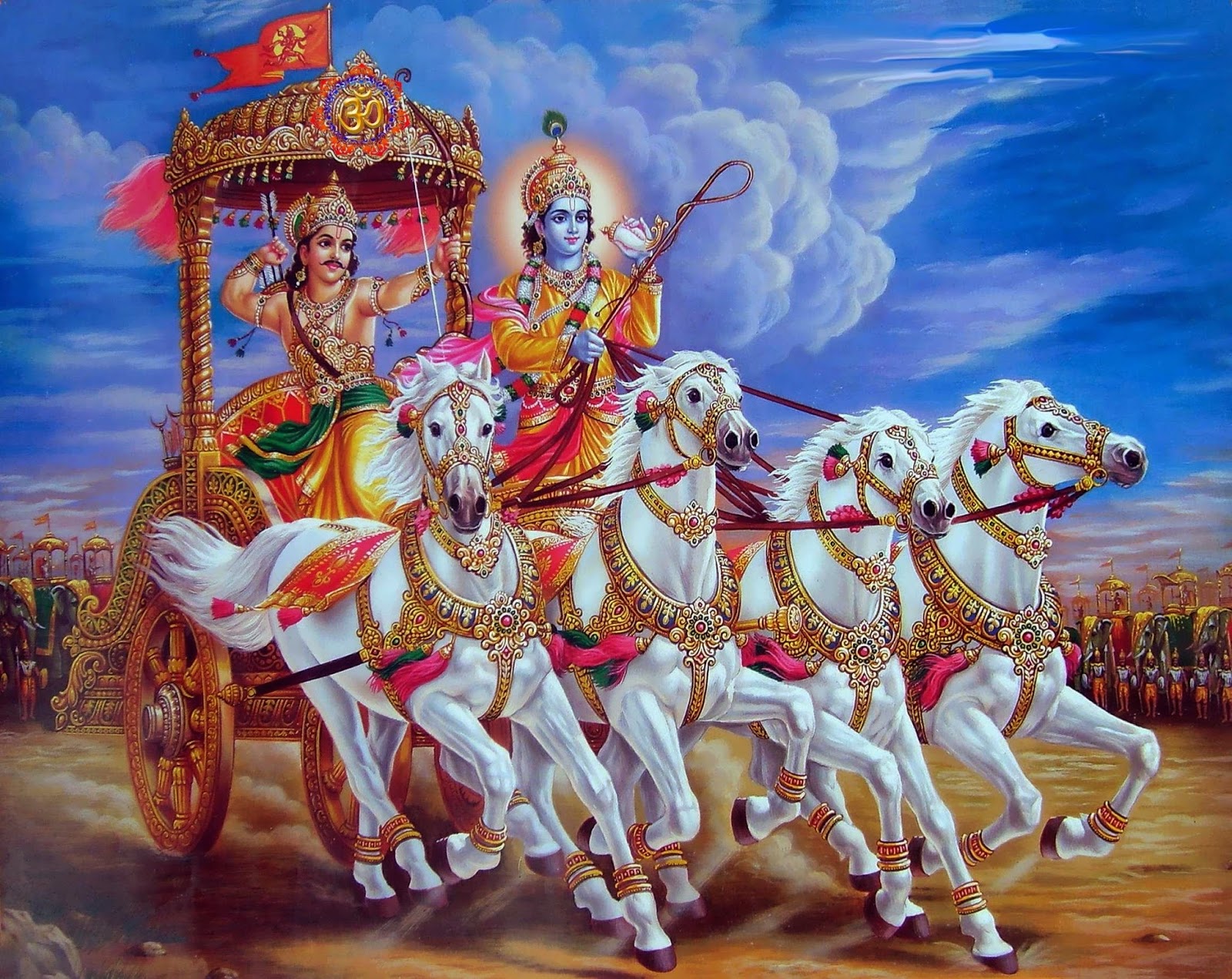
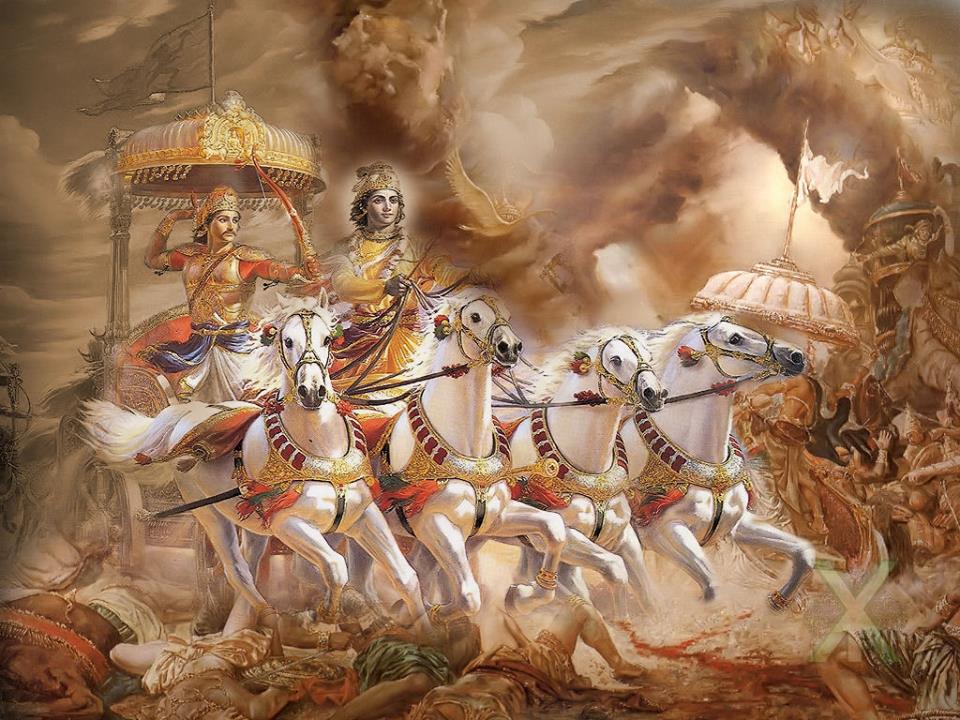
Whole Dude – Whole Optics – Whole illumination: The Knower – The Knowing-Self: To Know Man, the Self, Soul, Spirit, or Atman as the Knower of the Body is the first step in Man’s Inquiry about Self. The Man can reach his Final Destination or the Goal using his body like a chariot.

It is important to know the views shared by the traditional thinkers of India. In my analysis, the Indian Schools of Thought such as Advaita (Non-Dualism) have formulated their theories about the true or real identity of Self (Atman) without considering the physiological or biological basis for hosting a thought about Self or Atman that may have an independent existence while it is totally detached from the Body, and Mind of its thinker. While mysticism is a part of various religious traditions, I am asking my readers to seek “Whole Illumination” by investigating and by exploring the basis for man’s existence in the natural world. Any such explanation, or clarification would come to a conclusion and will assert that the man needs association, partnership, relationship, bonding, cooperation, assistance, patronage, Yoking, or Unity (often characterized in the Sanskrit language by the word Asmi) with a source of Energy that exists in the man’s external environment. The man cannot maintain the fact or the reality of his physical existence using introspection, meditation, or contemplative prayer which could be of use in illuminating man’s “Inner World” and provide him “Inner Vision”, a vision or illumination that describes the Identity of man’s true or real Self or Atman and its perfect, complete, and wholesome Divine Nature.

The Phenomenon of illumination – The Phenomenon of Knowing:

SPIRITUALITY SCIENCE - LIGHT OF LIGHTS - THE PHENOMENON OF ILLUMINATION : THE ILLUMINED MIND KNOWS THE KNOWER, THE KNOWLEDGE, AND THE SOURCE OF KNOWLEDGE.
Whole Dude – Whole Optics – Whole illumination: Man is Spiritually Blind. The illumined Mind knows the Knower, the Knowledge, and the Source of Knowledge.

The term illumination describes lighting or light. It is often used as the act or process of making something clearer or brighter or as a device for doing so. The word ‘illuminating’ or ‘illuminated’ is often applied to a clarification or explanation that sheds light on a subject that needs careful interpretation of information. In Physics, illumination is about the intensity of light per unit of area; the luminous flux per unit area at any point on a surface exposed to incident light. It is also called illuminance. However, in Biology, the phenomenon of Illumination requires the study of Optics, Photoreception, and Photochemistry. The biological processes that involve the response of a living thing to the Light stimulus need to be stated as Photochemical Reactions which could be energy dependent and involve the use of chemical energy provided by molecules of Adenosine triphosphate (ATP). The Phenomenon of illumination in Biology requires the operation of three conditions; 1. The Source of Light or Lighting, 2. The Object that is Illuminated, and 3. The Observer who has the Sensory Perception called Vision, or the ability called Photoreception to acknowledge the phenomenon that is observed. Using the nature of photochemical reaction that is observed, living things can be broadly classified into two kinds; 1. Plants that respond to Light stimulus to trap its radiant Energy but have no Sensory Perception called Vision, and 2. Animals (man included) that have the Sensory Perception called Vision but do not have the ability to trap the Light Energy. For human existence, we need all those three conditions, 1. The Sun as the Source of Light, 2. The Plants that trap the radiant energy of Sunlight using their ability called Photoreception, and 3. The man or Purusha who uses the ability called Sensory Perception or Vision and interprets that Light is God.

SPIRITUALITY SCIENCE - LIGHT OF LIGHTS - THE PHENOMENON OF ILLUMINATION : FOR MAN TO DESCRIBE HIS EXPERIENCE CALLED VISION, OR INNER VISION, APART FROM A SOURCE OF EXTERNAL OR INTERNAL LIGHT, NEEDS THE SUPPORT OF THE VITAL FUNCTION CALLED BREATHING(PRANA) THAT ESTABLISHES MAN AS A BREATHING LIVING THING(PRANI OR PRANAVANTA).
Whole Dude – Whole Optics – Whole illumination: Man is Spiritually Blind: For man to describe his sensory experience called Vision, apart from a Source of External or Internal Light, he needs the support of the vital function called Breathing (Prana) that establishes man as a breathing, living thing or Prani or Pranavanta.

The above picture image of a verse from Brihadaranyak Upanishad 4:5:11 helps us to understand the nature of the vital function of Breathing and Respiration which is the physiological mechanism that man uses to oxidize food substances and derive energy which he further uses for his physical and mental work.

Whole Dude – Whole Optics – Whole illumination: Man is Spiritually Blind. Cellular respiration is a set of metabolic reactions and processes that take place in the cells of organisms to convert biochemical energy from nutrients into adenosine triphosphate (ATP), and then release waste products.

If Vedas and Holy Scriptures are seen as the Source of knowledge, the transmission of that Knowledge involves the use of Breathing and the set of metabolic reactions and processes called Cellular Respiration. If “Knowing” is compared to the phenomenon of illumination, the act of Knowing will only be possible if there is Unity between God, the Source of Knowledge, Knower, the Individual called Jeeva who performs all his living functions because of the Knowledge implanted in his substance that makes him a Sentient or Sensible thing, or establishes him as the “Knowing-Self.” The natural phenomenon of Life and Living can be defined as ‘Knowledge in Action’. In Indian tradition the Self or Atman is the source of Inner Light that illuminates the entire human body.

Spiritual Optics – The Phenomenon of illumination – Man is Spiritually Blind

यथा प्रकाशयत्येक: कृत्स्नं लोकमिमं रवि: |
क्षेत्रं क्षेत्री तथा कृत्स्नं प्रकाशयति भारत || 34||

yathā prakāśhayaty ekaḥ kṛitsnaṁ lokam imaṁ raviḥ
kṣhetraṁ kṣhetrī tathā kṛitsnaṁ prakāśhayati bhārata

yathā—as; prakāśhayati—illumines; ekaḥ—one; kṛitsnam—entire; lokam—solar system; imam—this; raviḥ—sun; kṣhetram—the body; kṣhetrī—the soul; tathā—so; kṛitsnam—entire; prakāśhayati—illumine; bhārata—Arjun, the son of Bharat

Just as one Sun illumines the entire solar system, so does the individual soul illumines the entire body (with consciousness).

Just like the Sun who illuminates the entire living world, the soul within the body illuminates the entire field of activity of the physical body by Chetana or Consciousness. This view as stated suggests that consciousness is the proof or the symptom of the presence of the soul.

In my analysis, the Light called Self or Atman illuminates by making it possible for a man to maintain his connection with an external source of energy present in the environment even while the man may find perfect Identity with God through the process called Inner Vision, Introspection, Meditation, or Contemplative Prayers with an attitude of “Whole Detachment” with all things present in the external world.

Light of Lights

SPIRITUALITY SCIENCE - THE LIGHT OF LIGHTS - THE PHENOMENON OF ILLUMINATION : DR SARVEPALLI ANANTHA PADMANABHA RAO, M.S., PROFESSOR OF SURGERY, DIRECTOR OF MEDICAL EDUCATION, GOVERNMENT OF ANDHRA PRADESH, MEDICAL AND HEALTH SERVICES.
Spiritual Optics – The Phenomenon of illumination – Man is Spiritually Blind: The Light of Lights: DR SARVEPALLI ANANTHA PADMANABHA RAO, M.S., PROFESSOR OF SURGERY, DIRECTOR OF MEDICAL EDUCATION, GOVERNMENT OF ANDHRA PRADESH, MEDICAL AND HEALTH SERVICES.

I am pleased to share an article titled “Light of Lights” published by Dr. Sarvepalli Anantha Padmanabha Rao, M.S. who served for many years as a Professor of Surgery, and as the Director of Medical Education in the Government of Andhra Pradesh Medical and Health Services.

I like the presentation “Light of Lights” for it nicely explains the thoughts of Shankara. However, I have noticed that the author did not provide clarification, or explanation for the final sentence, “Tat Asmi PrabhO.( Tadasmi PrabhO)” which describes the Unity (Asmi) between the man (Tat) and the Lord (Prabhu). The man’s ability of Sensory Perception called Vision, and the ability of Inner Vision are of secondary importance as Existence depends directly on the act of Breathing and the LORD provides Knowledge for performing that act of Breathing and the metabolic reactions called Cellular Respiration. The True Self or Atman illuminates me if it is connected to the Lord or Prabhu, the Original Source of Light.

http://advaita-academy.org/blogs/sarvepalli.ashx#

SPIRITUALITY SCIENCE - LIGHT OF LIGHTS - THE PHENOMENON OF ILLUMINATION : THE DIVINE SONG CALLED THE BHAGAVAD GITA ILLUMINATED THE MIND OF PRINCE ARJUNA WITH KNOWLEDGE AND THE SOURCE OF ALL KNOWLEDGE.
Spiritual Optics – The Phenomenon of illumination – Man is Spiritually Blind: LIGHT OF LIGHTS: THE DIVINE SONG CALLED THE BHAGAVAD GITA ILLUMINATED THE MIND OF PRINCE ARJUNA WITH KNOWLEDGE AND THE SOURCE OF ALL KNOWLEDGE.

Light illumines manifold objects in varying degrees of darkness; that is its property. Sources of such light may be external or internal to us. Examples of the former class are well-known, such as Sun, moon, fire, various kinds of lamps etc; The latter class, the internal, would be the psychic apparatus of man, comprising the sense organs, intelligence, intuition and above all the transcendental ‘Oversoul’ of R W Emerson the American philosopher. Vedanta too subscribes to such a transcendental super-conscious entity, illumining all, comprehending all and all-encompassing supreme Brahman. Flashes of intuition reveal discoveries which remain obscure prior to such overpowering experiences. Archimedes, crying out ‘eureka – eureka’ and Newton, when the apple fell and the law of gravitation revealed are instances of such intuitions . A deeper mental cloud prevents one from knowing who one exactly is in the ultimate analysis.

There is, in Greek mythology, a river named ‘Lethe’ whose waters, when drunk, would make the drinker profoundly forgetful.. One would forget, who one was, the ‘whence and wherefore’ of one’s own very self. A great philosopher likened our human predicament, to such a state of congenital amnesia, in which we lost our moorings, our “original innocence” as it were. Nescience is the technical term used for this state of primordial ignorance, which is said to cover one’s wisdom, ‘like smoke shrouds the fire or as dust sullies a mirror or as the womb envelops an embryo’ as th bhagavadgiitaa puts it. This is the ultimate darkness which needs for its dispelling, no less a light than that of the ‘Lord’, quoted in the GITA chapterXI-12 ever so stunningly – “if the light of a thousand suns were to blaze forth in the sky all at once, that might resemble the splendour of that exalted Being” – nothing short of an ‘apocalypse’, as it were, a revelation, of something not previously known or realized. Oppenheimer, the nuclear physicist, whose name is associated with the first atom bomb and who was a witness to its detonation.was so awe-struck at the sight that this line of the gItA chapter XI-32 flamed in his mind ” I am the full-blown, the all-destroying Time “. It was an indubitable intimation from the depths of his being and not much later, his intuitive insight was proved right, by the nuclear holocaust, the mayhem and the destruction at Hiroshima and Nagasaki it was cataclysmic in proportion

To Sankara, that transcendental spiritual genius, is ascribed a one-stanza poem, by name, ‘ekashlokI’. In it, is encapsulated the pith, the quintessence of the celebrated “mahAvAkya’s or the four great Vedic statements, called as such in the Advaita Vedanta. They are culled one from each of the four Vedas those statements or rather ‘truths’ are

a) ” praGYAnam Brahma, (Rigveda) pristine consciousness is Brahman.

b) ayam aatmaa Brahma (Atharva veda) – consciousness in all its apparent transformations is Brahman,

c) “tat tvam asi” (Samaveda)- You are, in essence, that consciousness, the eternal nitya, the unsullied shuddha, the fully awakened buddha, and unfettered – mukta ; the corollary follows that you are not the ignorant embodied jiiva, which you imagine you are.

d) (“aham Brahma asmi ” (Yajurveda) I am indeed that all-encompassing consciousness

It is with considerable trepidation that I have dared to translate the ‘mahaavaakya’s for fear that they may suffer the ‘noble transmutation from gold to lead’, in the process.

The order in which they are recounted here is not the temporal order in which they occur in the veda but they seem, to me, to be the order adopted by Sankara in this small ‘upadesha’ work, namely, the ekashlokii ’ As will become clear in the sequel, what is attempted here is not a word-for-word translation of the Sanskrit texts, not even a paraphrase but rather an unfolding of the traditional thought couched in the highly compressed poem

Before reproducing the Sanskrit verse, a short anecdotal account of the poignant scenario in which it is set, would be well in order, One might be tempted to ask ‘why only one verse-an ‘ekashlokI? Had not Sankara composed his shatashlokI of hundred verses and his upadesha sAhasrI of thousand teachings ? After all, what were the extenuating circumstances? As though in answer to such questions, a story is recounted thus: Sankara, on one of his peregrinations, chanced upon a spiritual aspirant who was in the throes of death. bemoaning his fate of his having ro die before he could get his ‘beatitude’. The compassionate master had empathy with the man’s plight and knowing well the shruti declaration that “he who departs from this world without realising the ‘axara‘, the Imperishable entity, is a veritable wretch a ‘kRRipaNa“, the master devised for him the shortest discourse and the ‘ekashlokI was the result. The verse was composed in a frisky meter named ‘shArdUla vikrIditam’ which has four quarters of 19 syllables each, to enable him to pack all the punch at his command, in a single stanza. This imaginative story illustrates the truth that, when an exceptional master and a pupil desperately thirsting for the ‘saving wisdom’ come together, spiritual enlightenment can not be far behind.

The poem runs as follows :-

Spiritual Optics – The Phenomenon of illumination – Man is Spiritually Blind
kiMjyotistavabhAnumAnahanimeraatraupradiipAdikaM.
syAdevaMravidIpadarshanavidhaukiMjyotirAkhyaahi me.
cakShustasyanimiilanAdisamayekiMdhiirdhiyodarshane.
kiMtatrAhamatobhavAnparamakamjyotistadasmiprabho.

Unless the composition is split up at the right places, it would seem baffling at the first sight, to a beginner. The piece is in the form of a catechism or what in modern pedagogy would be called a ‘one on one’ interactive session. There are five question-answer pairs, one affirmation and one authoritative live-wire exhortation of the teacher and a final total concurrence, by the disciple, after his instant transformation. We shall now proceed with what may, euphemistically, be termed an exegesis of the verse. As will be seen in the sequel, what is attempted here is not a word-to-word rendering in to English, nor even a mere paraphrasing of the work; it is rather an attempt to enter to, and to bring out the traditional import of this Vedantic composition, to the extent my limited faculties permit. Much pertinent digression from the text has been indulged in, in the exposition.

The break up of the verse, is as follows :-

Q 1 :kim jyotih tava ? – what is your illuminator? By this question, the teacher is trying to ascertain a ‘baseline’, as it were, of the pupil’s understanding so as to lead him thence to higher levels. This was a well established methodology of spiritual instruction in the days of yore. It may be noted here that the question is a general one with no adjuncts of time or place specified. The student however thinks the question pertains to daytime and to things within his visual range.

A: bhhaanumaan ahani me – The daylight of the Sun sir. This answer establishes that the seeker has his vision riveted on the external objects – the out-going vision, the so-called ‘paraak pasyati’ concept of the KaThopaniShad.

Q 2 : raatrau ? what after Sun-down ? what illumines then ?

A: pradiipa aadikam– light of the various kinds of lamps which includes illumination from the moonlight, bonfires, lighted torches et cetera; it may be noted that the field being covered is still the outer world.

Affirmation : syaad evam. rightly so my dear; here the guru seems to be saying to himself “ Oh my! your answers are correct as far as they go; but they do not go very far. Here is the next question:

Q 3 Ravi diipa darshana vidhau kim jyotih ? Akhyaahi me – Now tell me what enables you to visualize the objects so illumined by the Sun, the lamps etc.Here the preceptor is shifting focus from the outer to the inner world of the mind. Even the sun, the lamps etc. stand in the relation of visible objects to the perceiving eye.

A: caxuH– “My eye, sir, is the perceiving light in this context” Now the student is made to understand the eye as the window to his inner cognitive apparatus – the mind.

Q4 : tasya nimiilana adi samaye ? If your eyes are shut, what then? The reasons for the shut-down may be many; one may choose to turn a blind eye like Nelson or to give a more noble example, one may actually be blind like Helen Keller. ‘ The word aadi’ in the Sanskrit original in the above question may include a legion instances The guru is taking the student in to deeper waters here, to turning his mind’s eye inward and enable him to watch the gyrations of his own mind

A: dhiiH, sir, it is my intellect that provides me the illumination necessary for my purposes, I can think thoughts that would navigate the scenes for me

Q 5: dhiyaH darshane (kim) ? you are right again my son! But thought is like a spring or a fountain. There must be some faculty to get to its mainspring its source as it were What ultimate light is it that stands as a ‘witness’ or ‘sAxI’ as it is technically termed, to your cognitive equipment?

A: ‘tatra aham ’ sir, Shorn of the baggage of all acquired accretions, appurtenances and appearances – in short, of all objective super-impositions I stand in all my majestic aloofness, and isolation (kaivalya). as ‘Myself’.

The great spiritual warrior in Sankara has finally drawn the bitterest foe of his pupil -‘the beginning-less spiritual ignorance’ to the edge of the precipice. with a view to pushing it over to its final annihilation. With a solemn and apocalyptic, coup de maître – a masterstroke, he is going to deliver the final push the student would be led to his beatitude meaning perfect blessedness or happiness. In devising this stepwise instruction Sankara has trodden the path of the ancient sages, established for ages. The famous dialogue between the sage YaaGYavalkya and Janaka the king in the BRRihadaaranyaka Upanishad chapter iv-3, the kaTha Upanishad III-10 as also the Bhavadgiitaa chapter III-42 have laid down the same rising hierarchical levels of consciousness viz – sense objects, sense organs, intelligence, intellect and the highest of all the PuruSha- the non plus ultra, higher than Which there can be nothing. To use the those very Sanskrit words pregnant with proven meaning – proven to mystic seers of all creeds and climes in their deepest visions down the millennia – saa kaashThaa, saa paraa gatiH. THAT is the summum bonum the last post

And what may that stupendous, staggering declaration be ? Let us see that in the next line:-

THE FINAL PUSH : ataH bhavaan paramakam jyotiH Therefore my child, you are verily that Light of lights, which the Vedanta asserts in stentorian voice and peremptory tone- tat tvam asi – THAT THOU ART. It is not the denoted dictionary meanings of the words of the scriptural testimony that will bring the peace that passes understanding but the inner experience of the truth which is transforming in nature.

The finish : tat asmi prabho !!! Oh my master I am indeed that Light of Lights because I have just experienced that ecstatic mystic state, by your bounteous grace. It is another matter that the experience of that state can communicated in words only after descending somewhat from those Olympian heights. But at all events he has been raised to that dizzy altitude of sage-hood, the memory of which shall stamp its hallmark on every thought word and deed ever-after.

Spiritual Optics – The Phenomenon of illumination: LIGHT OF LIGHTS – “TAT ASMI PRABHO” – FIFTH MAHA VAKYA BY DR. SARVEPALLI ANANTHA PADMANABHA RAO.

The phenomenon of illumination – The Perception of Spiritual Light

Spiritual Optics – The Phenomenon of illumination: I describe Photoreception by Plants as the perception of Spiritual Light.

Yes Indeed, Life is Complicated. The complexity of Life involves the Four Fundamental Forces operating in Nature. Fundamental interactions are irreducible forces that act between the elementary particles composing all matter. Physicists have distinguished four fundamental interactions: gravitational, electromagnetic, weak nuclear, and strong nuclear. Physics fails to account for the Fundamental Interaction between Living Matter and Electromagnetic Energy.

Spiritual Optics – The Phenomenon of illumination: I describe Photoreception by Plants as the perception of Spiritual Light

The Four Fundamental Interactions described by Physics do not account for the existence of Life on planet Earth. The Rudolf-Rudi doctrine of Spiritualism describes Photoreception by Plants as a Fundamental Spiritual Interaction.

Spiritual Optics – The Phenomenon of illumination: I describe Photoreception by Plants as the perception of Spiritual Light.

What it is to be a Substance? and What it is to Exist? We need to establish knowledge about the man and the world on a firm basis and the information it provides must be tested for its accuracy and consistency with an external reality. We have to make the fundamental distinction between the living and the non-living matter. The scientific advances of the 19th and 20th centuries reinforced the materialistic position concerning the basic similarity of organic living and inorganic physical matter. The man is viewed as a product of natural evolution and is thought to be subject to the same laws of Physics and Chemistry or mechanistic principles.

Spiritual Optics – Spiritual Light -Photoreception:

WholeDude - WholeDesigner - Photoreception: Photoreception is the biological responses of organisms to stimulation by light. Such responses to environmental stimuli demonstrate the presence of consciousness, the awareness of an organism of the fact of its own existence in a given external environment.
Spiritual Optics – Spiritual Light – Photoreception: Photoreception is the biological response of organism to stimulation by light. Such responses to environmental stimuli demonstrate the presence of consciousness, the awareness of an organism of the fact of its own existence in a given external environment.

Photoreception is the biological response of an organism to stimulation by light. It is not the same as the Photoelectric Effect which non-living matter such as metals can exhibit. Among living things, the presence of consciousness is displayed by their biological responses to environmental stimuli. In plants the primary photoreceptive response is described as photosynthesis, a photobiological process which leads to the conversion of carbon dioxide and water to the essential nutritive elements of all life using the energy of the Sun. Photoreception is the mechanism by which animals receive sensory information transmitted by light of different qualities and wavelengths. Just like photosynthesis, the function called vision is a vital photobiological process that is required to support existence. At a fundamental level, the visual function is concerned with supporting existence. Visual clues assist in finding food, to avoid threats to existence, and help to achieve reproductive success. Almost all organisms derive their food directly, or indirectly from the organic compounds formed within plants during photosynthesis. The stored chemical energy in those organic compounds is essential for growth, repair, reproduction, movement, and other vital functions. In animals, the ability of photoreception is dependent upon the chemical energy provided by organic molecules called Adenosine triphosphate or ATP that is produced by intracellular organelles called mitochondria which use the chemical reaction called oxidation-reduction to oxidize the organic molecules created by plants using photosynthetic energy. Thus photoreception is the fundamental photobiological process that maintains life on planet Earth. If God is viewed as the Creator of Light, Photoreception could be stated as the most important feature of a Whole Design to establish life on planet Earth. For the man has the capacity called vision, he should be able to visualize the Whole Design used by the Whole Designer, or Whole Architect, or a Whole Artist. The man gained insights about photoreception and the photosynthetic process over several centuries of careful observations and scientific experimentation.

Photoreception and Plant Growth:

Spiritual Optics – The Phenomenon of illumination: I describe Photoreception by Plants as the perception of Spiritual Light.
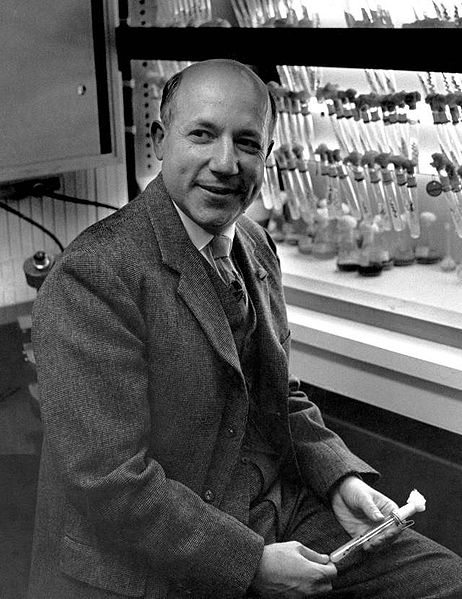
WholeDude - Whole Designer - Photoreception: Otto Heinrich Warburg(1883-1970), German chemist won the 1931 Nobel Prize for Medicine or Physiology. He had the unique distinction of getting recommended for a second Nobel Prize during 1944. He researched cellular respiration and had also studied Photosynthesis.
Spiritual Optics – The Phenomenon of illumination: Photoreception: Otto Heinrich Warburg (1883-1970), German chemist won the 1931 Nobel Prize for Medicine or Physiology. He had the unique distinction of getting recommended for a second Nobel Prize during 1944. He researched cellular respiration and also studied Photosynthesis.

In this story on Photoreception, I must mention the name of Otto Heinrich Warburg who investigated Photosynthesis and demonstrated that the process consists of several distinct steps and found that a variety of molecules are involved in the photoreaction.

WholeDude - WholeDesigner - Photoreception:  Melvin Ellis Calvin(1911-1997), American chemist received the 1961 Nobel Prize for Chemistry. He discovered the pathway of Carbon fixation during the entire cycle of Photosynthesis.
Spiritual Optics – The Phenomenon of illumination. Photoreception: Melvin Ellis Calvin (1911-1997), American chemist received the 1961 Nobel Prize for Chemistry. He discovered the Path of Carbon in the entire cycle of Photosynthesis.

Melvin Elvis Calvin worked with Andrew Benson, and James Bassham to trace the path of carbon molecule during the entire process of Photosynthesis.

WholeDude - WholeDesigner - Photoreception: Starting from 1930s attention is focussed upon the nature of biological electron-transport molecules involved in Photochemical reactions.
Spiritual Optics- The Phenomenon of illumination. Photoreception: Starting from 1930s attention is focused upon the nature of biological electron-transport molecules involved in Photochemical reactions.
WholeDude - WholeDesigner - Photoreception: The membrane proteins are important to make use of the function called Photoreception.
Spiritual Optics – The Phenomenon of illumination. Photoreception: The membrane proteins are important to make use of the function called Photoreception. Chloroplast is 4 to 6 microns in length, 1 to 2 microns in width, discoid or ellipsoid in shape. It is surrounded by two lipoprotein membranes. Inside the membranes form lamellae in a granular fluid known as stroma. The lamellae form disk-like structures called Thylakoids which are stacked to form structures called grana. The two phases of photosynthesis, 1. Light phase (absorption of light energy) and 2. Dark phase (Carbon fixation) take place inside the Chloroplast.  
WholeDude - WholeDesign - Photoreception: Electron micrograph of Chloroplast.
Spiritual Optics – The Phenomenon of illumination. Photoreception: Electron micrograph of Chloroplast.
WholeDude - WholeDesigner - Photoreception: Electron Transfer System of the Photosynthetic Photochemical Reaction.
Spiritual Optics – The Phenomenon of illumination. Photoreception: Electron Transfer System of the Photosynthetic Photochemical Reaction.
WholeDude - WholeDesigner - Photoreception: Light Harvesting System to establish Photoreception as a biological function.
Spiritual Optics – The Phenomenon of illumination. Photoreception: Light Harvesting System to establish Photoreception as a biological function.
WholeDude - WholeDesign - Photoreception: The membrane proteins of pigments involved in Photoreception involve the characteristics of intelligent functions or immanent actions that are distinct from mechanical actions.
Spiritual Optics – The Phenomenon of illumination. Photoreception: The membrane proteins of pigments involved in Photoreception involve the characteristics of intelligent functions or immanent actions that are distinct from mechanical actions.

Life involves Matter and Energy interactions manipulated by Knowledge. Life depends upon a virtually uninterrupted supply of materials or matter for its metabolism. If the word Spirit or Soul is defined as the vital, animating principle found in all living things, we need to understand the relationship between Matter and Spirit. The concern about the importance of matter is often ridiculed as Materialism, and man is often directed to value Spiritualism where the point of emphasis is man’s direct relationship with God. The separation of Matter and Spirit as two distinct entities will not help us to understand the reality of human existence. Man has to know that there is no disunity between Matter and Spirit. If Spirit is the medium of direct relationship between man and God, the nature of this medium is discovered from the nature of matter that man consumes as food and drink to establish his life. Food always represents the activities of the Living Things and hence the Source of Food and the Source of Life share a Common Source of Origin.

Photoreception – Vision:

Spiritual Optics – The Phenomenon of illumination: I describe Photoreception by Plants as the perception of Spiritual Light.

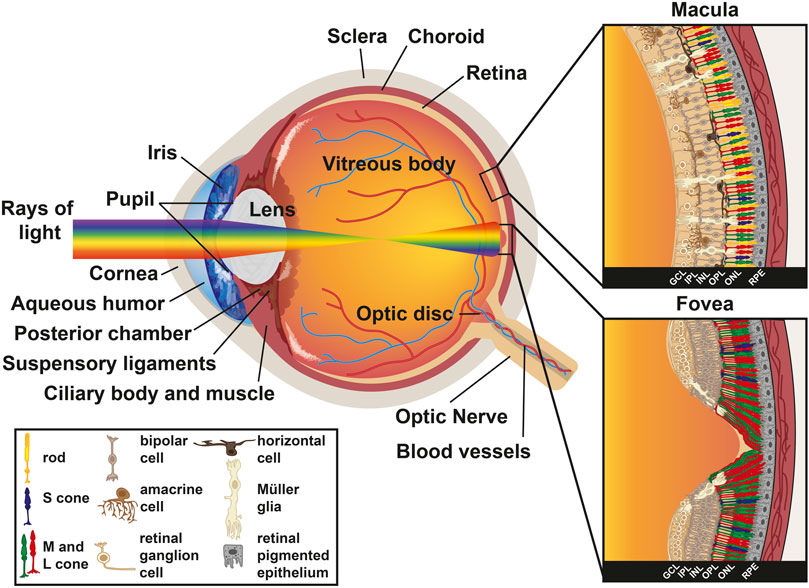
The photochemical events in vision involve the protein Opsin and the isomers of Retinal. Nerve impulses are generated by changes in the shape of proteins. The activation of visual pigment called Rhodopsin causes the nerve impulse. The photoreceptor cells of eye absorb light through a layer of pigment and convert it  into a stimulus directed toward the nervous system where it is recognized. The pigment responsible for nerve excitation consists of the chemical compound Chromophore which absorbs light, and a protein complex known as Opsin. The Chromophore contained in all visual pigments is nearly identical. Variations in the range of wavelength reception by different pigments are the result of differences in the structure of animal proteins. To describe very briefly, the process of photo or light reception involves the conversion of the light stimulus into a nerve response which is caused by changes in the electrochemical equilibrium of cell membranes.

Spiritual Optics – The Phenomenon of illumination – Man is Spiritually Blind: Photoreception by human eye requires energy and the energy is acquired by oxidation of organic molecules created during the Photosynthetic process. Plants have the ability called Photoreception and yet they do not have the capacity called Vision. Man has the ability called Photoreception and performs the sensory function called Vision and yet he directly, or indirectly depends upon the photoreceptive abilities of plants that cannot see the products of their photosynthetic function.

Photoreception is an intelligent function that leads to immanent actions in which the living thing senses, grows, and develops performing those actions. Photoreception in living things is unlike the mechanical action performed by a camera made by man. Photoreception is created to synchronize the existence of the two major systems of life; plants and animals perform their living functions to complement the functions and actions of each other. Hence Photoreception could be described as the spiritual basis for all kinds of existence on planet Earth.

Who is the Artist? Who is the Designer?

Spiritual Optics – The Phenomenon of illumination – Man is Spiritually Blind: I describe Photoreception by Plants as the perception of Spiritual Light. Chlorophyll formulates the Spiritual Connection between Energy and Life. Who is the Artist? Who is the Designer? An artist uses colors with imagination to create forms and to generate a desired visual effect. A “Whole Artist” is a person who creates his own canvas, his own tools, his own pigments, and creates the desired visual effects while the forms that are created have no such creative and cognitive abilities.

No single function can explain the coloration of living things. We need a comprehensive theory that predicts the lines and patterns of coloration of plants and animals. An artist’s palette containing only three properly chosen colors is entirely adequate under most circumstances to produce the various visual effects of color that is observed. The optical mechanisms involved in the production of color are complex. Coloration is a dynamic and complex characteristic and the term must be clearly distinguished from the term ‘color’ which only refers to the spectral qualities of emitted or reflected light. It is apparent that plants, and animals have no cognitive abilities to produce the coloration by which they are recognized. However, the coloration displayed gives us a clue about the nature of the “Whole Artist” who could be using imagination, has feelings for the forms created and seeks satisfaction from the visual effects that he produced.

Spiritual Optics – The Phenomenon of illumination – Man is Spiritually Blind: I describe Photoreception by Plants as the perception of Spiritual Light.

If a man has the ability called visual perception, he must use the ability to visualize the “Whole Artist” who is at work. I ask my readers to give attention to the three dimensions of Color Perception. These are, 1. The Designer or the Artist, 2. The Object of Perception, and 3. The visual capacity of the Viewer.

Spiritual Optics – The Phenomenon of illumination – Man is Spiritually Blind: I describe Photoreception by Plants as the perception of Spiritual Light

Photochemistry is the study of chemical processes that are exclusively brought about by the interaction of light with matter. The term design describes the action to make a plan, a pattern and carry out the execution by artistic arrangement in a skillful way. Artists, Designers, and Architects are persons who make plans, patterns, the artful scheme for the arrangement of parts, the details, the form, the substance, the color, etc., so as to produce an artistic unit. The study of Photochemistry helps us to recognize the artistic work of a Whole Designer, a Whole Architect, and a Whole Artist who uses Light, Matter, Color, Space, and Time to create living systems which are interdependent, interrelated, and interconnected. The existence of two major systems of Life, plants, and animals is perfectly synchronized and each performs its living functions to complement the living functions performed by the other. Photochemistry establishes the fundamental basis for this spiritual relationship among the living systems.

Photochemical reactions that play a vital role in biological systems are called Photobiological processes. Photochemistry establishes relationship between the laws of Physics, and Chemistry with the living functions to synchronize the interactions between Light and Matter that is important for Life to exist on planet Earth. 

Simon Cyrene

Spiritual Optics – The Phenomenon of illumination – Man is Spiritually Blind: I describe Photoreception by Plants as the perception of Spiritual Light.

WHOLE SPIRITUALITY – WHOLE LIVING

THE ART OF SPIRITUAL LIVING :

THE ART OF SPIRITUAL LIVING : SPIRITUALITY IS NOT AN INQUIRY OR INVESTIGATION ABOUT EXISTENCE OF GOD. THE PURPOSE OF SPIRITUALITY IS NOT THAT OF BECOMING FAMOUS BY GETTING ELEVATED TO SAINTHOOD.

From the beginning of human history, the ideas about Spirituality included a desire to find Peace, Harmony, and Tranquility in all of man’s internal and external relationships, while man exists in a physical environment  as a member of a social community or society. Both religious thinkers and philosophers have contemplated that Spirituality involves a potency associated with a Principle called Soul or Spirit. In Indian tradition, the term “ATMA” or “ATMAN” refers to Self, Body, Mind, and Soul depending upon different circumstances. In the YOGA System of India, the YOGA practice uses the term ATMA to describe Mind.  The purpose of Yoga is to control the Mind and to draw it away from its attachment to sense objects. The term ‘Sensual’ refers to the body and the senses as distinguished from the Intellect, Spirit, or Soul. Sensual pertains to or it is about preoccupation with bodily or sexual pleasures. The term ‘Sensuous’ refers to a variety of things affecting, appealing to, or perceived by the senses. It implies easy susceptibility through the senses, enjoying the pleasures of sensation, and a strong appeal of that which is pleasing to the eye, ear, touch, etc., Since  experience of sensual enjoyment involves the Mind, in Indian tradition, Mind is  the Chief Sense Organ or ‘INDRIYA’. The term austerity describes a variety of spiritual practices. Austerity in relation to the Mind is a process that includes attributes such as Simplicity, Solemnity, Purity, and Control. Austerity aims to find Satisfaction through the use of Self-Discipline and Self-Restraint.  A variety of spiritual practices like austerity, repentance, penance, expiation, and purgation involve accepting  Satisfaction, a mental state that relieves the burden to take action to gratify the desires that seem to hold the Mind in a captive condition. In other words, the goal of Spirituality demands finding Contentment, Satiation, and Satisfaction in the living experience of man.

THE SIX INTERNAL ENEMIES OF MAN :

THE ART OF SPIRITUAL LIVING : INDIAN TRADITION DESCRIBES THE SIX INTERNAL ENEMIES OF MAN AS KAMA(LUST), KRODHA(ANGER), LOBHA(MISERLINESS), MADA(ARROGANCE), MATSARYA(JEALOUSY), AND MOHA(IGNORANCE + ILLUSION). THESE BEHAVIORAL TRAITS TOGETHER CONSTITUTE THE PROBLEM CALLED DESIRE. THE WILD HORSE REPRESENTS THE SENSUOUS NATURE OF SENSES THAT EXERT POWERFUL INFLUENCE ON MIND AND INTELLECT DRIVING MAN ALONG THE PATH TO FIND GRATIFICATION OF DESIRE.
THE ART OF SPIRITUAL LIVING : INDIAN TRADITION DESCRIBES THE SIX INTERNAL ENEMIES OF MAN AS KAMA(LUST), KRODHA(ANGER), LOBHA(MISERLINESS), MADA(ARROGANCE), MATSARYA(JEALOUSY), AND MOHA(IGNORANCE + ILLUSION) OR INFATUATION . THESE BEHAVIORAL TRAITS TOGETHER CONSTITUTE THE PROBLEM CALLED DESIRE. THE WILD HORSE REPRESENTS THE SENSUOUS NATURE OF SENSES THAT EXERT POWERFUL INFLUENCE ON MIND AND INTELLECT DRIVING MAN ALONG THE PATH TO FIND GRATIFICATION OF DESIRE.

In Indian tradition, the six internal enemies of man constitute a group called ‘ARI VARGA’ and these are 1. KAMA or Lust, 2. KRODHA or Anger, 3. LOBHA or Miserliness, 4. MADA or Arrogance(Self-Pride), 5. MATSARYA or Jealousy, and 6. MOHA or Ignorance + Illusion known as Infatuation.These behavioral traits drive man onto a path of Self-Destruction. These six kinds of behavior are aspects of Desire. The Art of Spiritual Living deals with this problem called ‘DESIRE’ that takes charge of Mind to drive man to take actions that leave him restless, agitated, confused, irritable, resentful, and frustrated if the overpowering Desire is not gratified.

THE ART OF SPIRITUAL LIVING : IT IS THE ART OF MASTERY OF MIND. THE UNBRIDLED, WILD HORSE SYMBOLIZES THE PROBLEM CALLED 'DESIRE', A CHARACTERISTIC OF HUMAN BEHAVIOR AND ACTIONS THAT ARE OBSERVED AS LUST, ANGER, MISERLINESS, GREED, JEALOUSY, AND ARROGANCE. TAMING THIS HORSE IS THE SUBJECT OF OUR STUDY CALLED SPIRITUALITY.
THE ART OF SPIRITUAL LIVING : IT IS THE ART OF MASTERY OF MIND . THE  HORSE IS BRIDLED TO CONTROL IT AND TO GUIDE IT ON A PATH USEFUL TO ITS RIDER . THE UNBRIDLED OR UNCONTROLLED HORSE TRAVERSES ON THE PATH THAT SYMBOLIZES THE PROBLEM CALLED ‘DESIRE’.  DESIRE IS A CHARACTERISTIC OF HUMAN BEHAVIOR AND ACTIONS THAT ARE OBSERVED AS LUST, ANGER, MISERLINESS, GREED, JEALOUSY, AND ARROGANCE .  TAMING THIS HORSE IS THE SUBJECT OF OUR STUDY CALLED SPIRITUALITY.

Behavioral Science includes any of several studies such as Sociology, Psychology, Anthropology, etc., that examine human activities, conduct, aptitude, manners, and responses that are observable. In Biology, Behavior explains an organism’s responses to stimulation or environment and the observed Behavior is often described as Biotic Interactions which could be Interspecific(interactions between different groups or species) or Intraspecific( within the same group or species, or within the same organism which could be a complex living system). The term Behavioral Therapy and Behavior Modification involve the use of techniques that seek to modify Human Behavior through application of the principles of conditioning in which rewards and reinforcements or punishments establish desired habits or patterns of Behavior. In Indian tradition, the analogy of a Chariot(“RATHA KALPANA” or the Metaphor of Chariot) helps to discuss the relationships between human body, organs of sense perception(Senses), Mind, Intellect which together constitute ‘The Lower-Self’ and Soul that constitutes ‘The Knowing-Self’ or ‘The Higher-Self’.

THE ART OF SPIRITUAL LIVING : IN THE DIVINE SONG, THE BHAGAVAD GITA, PANDAVA PRINCE ARJUNA INFORMS LORD KRISHNA THAT CONTROLLING MIND IS AN EXTREMELY DIFFICULT TASK. REFERENCE GITA CHAPTER VI, VERSE#34.

Pandava Prince Arjuna in The Bhagavad Gita, Chapter VI, Verse#34 stated the utmost difficult problem called controlling Mind :

“Chanchalam hi manah Krishna

pramathi balavad drdham

tasyaham nigraham manye

Vayor iva su-dushkaram,”

For the mind is restless, turbulent, obstinate, and very strong, and to subdue it is more difficult than controlling the wind. Mind is unsteady and unbridled for it gets easily distracted by the strong appeal of things which are pleasing to the senses. Mind when left alone to act by itself, will not be able to cope with the powerful influence called Desire.

THE ART OF SPIRITUAL LIVING : INDIAN TRADITION USES THE ANALOGY OF CHARIOT TO EXPLAIN THE HIERARCHICAL RELATIONSHIP BETWEEN INERT MATTER, BODY, SENSES, MIND, INTELLECT THAT CAN HELP TO CONTROL THE HORSES CALLED DESIRES.
THE ART OF SPIRITUAL LIVING : INDIAN TRADITION USES THE ANALOGY OF CHARIOT TO EXPLAIN THE HIERARCHICAL RELATIONSHIP BETWEEN INERT MATTER , BODY, SENSES, MIND, AND INTELLECT. THE HORSES REPRESENT SENSES THAT CONSTANTLY PURSUE TO TAKE THE PATH OF SENSUOUS GRATIFICATION. THE CHARIOTEER MUST USE REINS TO RESTRAIN , TO GUIDE , AND CHECKING THE SPEED AND THE DIRECTION OF MOVEMENT OF THE HORSES.

The word DESIRE or craving involves strong, persistent, and passionate feelings to covet, wish, or long for something and it specifically suggests a longing for something lacking or needed. Craving suggests a desire to gratify a physical appetite, an urgent need that stresses intensity or ardor. The term Covet apart from eagerness, earnestness, and wanting ardently, it involves wanting something that another person rightfully possesses. The term greed and avarice describe excessive desire for having especially wealth, a desire for more than one needs or deserves. Greedy behavior involves wanting or taking all that one can get with no thought of others’ needs. Being greedy implies an insatiable desire to possess or acquire something to an amount inordinately beyond what really needs or deserves. A miser is a greedy person, who is stingy and hoards money for its own sake, even at the expense of personal comfort. Miserliness is often makes the person wretched and unhappy as there is no experience of satisfaction even though the desire is gratified. The greedy behavior that involves the habit or act of eating or consuming too much food and drink is gluttonous or gluttony. A voracious person is greedy to devour or gorge large quantities of food. A ravenous person is wildly hungry, is very eager for gratification. Ravenous may  also describe insatiable pursuit for praise or social recognition. Such behaviors make the person rapacious; a person who takes things by force, by plundering, robbing or exploiting others. It leads to establishment of a pattern of behavior called predatory in which the person is waiting to seize the opportunity to take by force and is akin to an act of preying. The term lust describes excessive sexual desire especially the zeal or enthusiasm for unrestrained sexual gratification without idealized or spiritualized feelings like love, empathy, friendship, affection, compassion, respect, and commitment to defend the well-being of the person involved in the sexual interaction. The term Carnal describes preoccupation with bodily or sexual pleasures, sensual preoccupation with gratifying the bodily senses that generally involves grossness or lewdness. The behaviors characterized by greed, lust, and gluttony are acquisitive in nature as they stress exertion of effort in acquiring material possessions to an excessive amount or using people like material objects. The term grasping suggests an unscrupulous eagerness for gain that manifests itself in a seizing upon every opportunity to get what one desires. The problem of Desire is often accompanied by emotional feelings of anger, the feelings of resentful or revengeful displeasure that motivates the person to fight back at the supposed cause of the feelings. While anger is expressed in bodily language, facial expressions, words, and acts, the term rage  describes a sudden, violent outburst of anger in which self-control is lost. Greed when combined with feelings of anger is often transformed into jealousy, envy, animosity in which the person is resentfully suspicious of a rival or a rival’s influence. It arouses  feeling of strong dislike, hatred, ill will and hostility. The degree of a person’s susceptibility to Desire gets shaped by arrogance, or feelings of self-importance which  manifests as overbearing or unwarranted self-pride. Along with arrogance comes a behavior in which the arrogant person claims or seizes things for which he has no natural right. In Indian tradition, the problem of DESIRE is  manifestation of an underlying phenomenon called “MOH” or “MOHA.”  Intense desires are primarily driven by ignorance, problems of sense perception, and operation of a force or influence called ‘ILLUSION’. Moha is  operation of a false idea, a false conception, belief, or opinion which is not in accord with facts. Moha or Infatuation causes man’s alienation or estrangement from his true or real nature. The problem of Moha leads to obsession in which ideas, desires, emotions, etc., rule or take possession of a person and the resulting persistent desire cannot be gotten rid of by the use of reasoning or discernment.

THE ART OF SPIRITUAL LIVING : THE DIVINE SONG, THE BHAGAVAD GITA, CHAPTER III, KARMA YOGA, VERSE#5 STATES THAT ALL MEN ARE FORCED TO ACT HELPLESSLY ACCORDING TO THE IMPULSES BORN OF THE MODES OF MATERIAL NATURE OR PRAKRIT.
THE ART OF SPIRITUAL LIVING : THE DIVINE SONG, THE BHAGAVAD GITA, CHAPTER III, KARMA YOGA , VERSE#5 STATES THAT ALL MEN ARE FORCED TO ACT HELPLESSLY ACCORDING TO THE IMPULSES BORN OF THE MODES OF MATERIAL NATURE OR PRAKRIT. ALL HUMAN BEHAVIOR AND ACTIONS HAVE THEIR ORIGINS OFTEN  TRACED TO EXTERNAL ENVIRONMENTAL STIMULI .

In The Bhagavad Gita, Chapter III, KARMA YOGA, verse #5 Lord Krishna instructs that  men act helplessly according to the impulses born of the Modes of Material Nature or PRAKRIT; therefore, nobody can refrain from doing something, not even for a moment. The term ‘DRIVE’ describes any of the basic biological impulses or urges such as self-preservation, hunger, sex, etc., The term ‘Motivation’ explains the motive, the forces influencing people so as to control the making of their decisions that further provides incentive and causes a person to do something or act in a certain way. The term ‘Instinct’ describes an inborn tendency to behave in a way characteristic of a species. The behavior contributed by instincts is natural, unlearned, and is often involves a predictable response to an external, environmental stimulus. Impulsive behavior involves a sudden inclination to act, usually without premeditation. For impulsive behavior, the driving force, push, thrust, impetus and incitement to action arises from a state of mind or some external environmental stimulus. Psychologists find relationship between behavior and external environmental stimuli, Psychoanalysts define Instinct as a primal, psychic force or drive such as Fear, Love, and Anger. In Freudian Psychoanalysis, instincts are of two kinds, 1. The Life Instinct(EROS), and 2. The Death Instinct(Thanatos). Some instincts may help in a secondary or subordinate way just like an accomplice who aids or abets commission of an unlawful act .

THE ART OF SPIRITUAL LIVING : THE MASTERY OF MIND REQUIRES SOME BASIC UNDERSTANDING OF MENTAL FUNCTIONS AND THE CONVERSION OF MENTAL DESIRES INTO ACTION AND BEHAVIOR.
THE ART OF SPIRITUAL LIVING : THE MASTERY OF MIND REQUIRES SOME BASIC UNDERSTANDING OF MENTAL FUNCTIONS AND THE CONVERSION OF MENTAL DESIRES INTO ACTION AND BEHAVIOR . THE BLUE-COLORED AREA CALLED RETICULAR FORMATION REPRESENTS THE KNOWING-SELF OR THE HIGHER-SELF . THE CORTICAL AREAS OF THE BRAIN BELONG TO SELF OR THE LOWER-SELF .

The Art of Spiritual Living involves the Mastery of Mind to review, to guide, to regulate and to refrain man’s actions and responses to his Enemy called Desire which can overwhelm man’s ability to preserve and support his mortal existence. The coping mechanisms involved in Desire and its Gratification determine the degree of Satiation, Contentment, and Satisfaction man may obtain at any given instant of his life. Contentment and Satisfaction are the building blocks to give the living experience called Peace, Harmony, and Tranquility. I would further examine the practice called Self-Discipline, the chief ingredient of Spiritual Living in my next article.

Related Posts:

The Art of Knowing

The Knower, and The Knowing-Self 

HUMAN NATURE AND HUMAN BEHAVIOR                                                                                                                                                                                                                                                                                                                                                                                                                                                                                                                                                                                                                                                                                                                                                                  

WHOLE SPIRITUALITY – THE ART OF KNOWING

SPIRITUALITY SCIENCE – THE ART OF KNOWING :

When I write about Man as a Spiritual Being, the concern is not about glorifying people as saints. The issue is about man’s true or real nature. My theory of Spirituality is about “The Art of Knowing” that can provide tools to all people to know themselves in an objective manner. This is a simple challenge that can be accomplished without forcing people to attend Church or any other place of worship. The Art of Knowing does not involve what most people tend to recognize as spiritual practices such as Prayer, Meditation, Yoga, or Mysticism. The Art of Knowing simply involves training people to know what they know about others or about themselves. It must be noted that Life is essentially a state, a condition, or an act of knowing.

WHOLE INTUITION  VS  WHOLE MYSTICISM :

SPIRITUALITY SCIENCE - THE ART OF KNOWING : HENRI BERGSON(1859 - 1941), FRENCH PHILOSOPHER, WAS AWARDED THE 1927 NOBEL PRIZE IN LITERATURE. HE DESCRIBED INTUITION AS THE HIGHEST FORM OF KNOWING.
SPIRITUALITY SCIENCE – THE ART OF KNOWING : HENRI BERGSON(1859 – 1941), FRENCH PHILOSOPHER, WAS AWARDED THE 1927 NOBEL PRIZE IN LITERATURE .  HE DESCRIBED INTUITION AS THE HIGHEST FORM OF KNOWING.

Henri Bergson, French philosopher, Professor at the College de France, was awarded the 1927 Nobel Prize in Literature. His famous works include Time and Free Will(1889) and The Creative Mind(1934). Bergson’s dualistic philosophy holds that the world contains two opposing tendencies, the life force and the resistance of matter against that life force. The individual knows matter through intellect but through intuition perceives the life force and the reality of time, which is not a unit of measurement but duration in terms of life experience. Bergson considered intuition to be the highest state of human knowing and  held that mysticism is the perfection of intuition. Bergson emphasized the value of intuition in scientific thinking and argued that reality is beyond rational understanding. He formulated a Theory of Knowledge in which intuition plays a central role. He contended that the expansive and creative thrust of Life explained by Darwinian mechanism. Bergson claimed that ‘Evolution’ is creative and is not based upon mechanistic principles. For similar reasons, I shared my arguments to oppose Darwin’s Theory of Evolution. I formulated my theory of ‘The Law of Creation and Individuality’ for all known living things primarily exist as Individuals with Individuality and they have no choice other than that of existing as Individuals. In this article, I would like to recognize knowing as a basic cognitive function and this biological characteristic can be attributed to a popular term called ‘Spirit’ or ‘Soul’. In this context, I would like to interpret Bergson’s views about Knowing, Intuition, Mysticism, and the Reality of Time.

SPIRITUALITY SCIENCE -  THE ART OF KNOWING : HOW DO PLANTS KNOW WHAT THEY KNOW ???  PLANTS KNOW ABOUT LIGHT, THE LENGTH OF DAY, AND THE DURATION OF DARKNESS CALLED NIGHT. THERE IS NO "INTELLECT" INVOLVED IN THIS PROCESS OF KNOWING. THE ABILITY OF KNOWING LIGHT OR PHOTORECEPTION IS EXPLAINED BY PHOTOCHEMISTRY.
SPIRITUALITY SCIENCE – THE ART OF KNOWING : HOW DO PLANTS KNOW WHAT THEY KNOW ??? PLANTS KNOW ABOUT LIGHT, THE LENGTH OF DAY, AND THE DURATION OF DARKNESS CALLED NIGHT. THERE IS NO “INTELLECT” INVOLVED IN THIS PROCESS OF KNOWING. THE ABILITY OF KNOWING LIGHT OR PHOTORECEPTION IS EXPLAINED BY PHOTOCHEMISTRY.

Intuition provides immediate understanding and it describes the ability to perceive or know things without conscious reasoning. Intuition is about direct knowing or learning of something without using the faculties of mind such as Intellect. The doctrine of Intuitionism claims that things and principles are truly apprehended by Intuition. The doctrine called Ethics describes that fundamental moral principles or the rightness of acts is apprehended by Intuition. In Biology, I would like to use the term Intuition to things apprehended by ‘Innate Knowledge’, the Knowledge that is inherent and not acquired, the Knowledge that is implanted in the Substance or Material called Living Matter. Plants know Light not because of intellectual ability but on account of an innate ability or intuitive power.

SPIRITUALITY SCIENCE - THE ART OF KNOWING : AT A FUNDAMENTAL LEVEL, LIFE AND LIVING IS ABOUT KNOWING MATTER AS SELF OR NON-SELF. THIS IDENTIFICATION OF MATTER INVOLVES THE ABILITY TO RECOGNIZE MOLECULES OF MATTER . TO LEARN THE ART OF KNOWING, MAN HAS TO KNOW ABOUT THE MOLECULAR BASIS FOR EXISTENCE.
SPIRITUALITY SCIENCE – THE ART OF KNOWING : AT A FUNDAMENTAL LEVEL, LIFE AND LIVING IS ABOUT KNOWING MATTER AS SELF OR NON-SELF. THIS IDENTIFICATION OF MATTER INVOLVES THE ABILITY TO RECOGNIZE MOLECULES OF MATTER . TO LEARN THE ART OF KNOWING, MAN HAS TO KNOW ABOUT THE MOLECULAR BASIS FOR EXISTENCE .

To learn the Art of Knowing, man has to know that the physiological basis for existence is dependent upon Innate Knowledge with which the human organism recognizes matter( such as molecules of Oxygen, or energy-yielding molecules of food substances) and further exploits matter and energy to support and maintain its living functions. To the same extent, the human organism defends its own existence by recognizing the molecules as Self or Non-Self. The immune defense mechanisms that the human body uses to recognize viruses, bacteria, protozoa, and other foreign antigens involve the recognition of molecules.

SPIRITUALITY SCIENCE - THE ART OF KNOWING : WHAT IS THE MYSTERY OF LIFE ??? CAN MYSTICISM HELP TO KNOW THE HIDDEN TRUTHS ABOUT LIFE ??? WHAT IS THE MYSTICAL INFLUENCE OF TIME THAT DRIVES THE AGING PHENOMENON ???
SPIRITUALITY SCIENCE – THE ART OF KNOWING : WHAT IS THE MYSTERY OF LIFE ??? CAN MYSTICISM HELP TO KNOW THE HIDDEN TRUTHS ABOUT LIFE ??? WHAT IS THE MYSTICAL INFLUENCE OF TIME THAT DRIVES THE AGING PHENOMENON ???

What is the Mystery of Life ??? Can Mysticism help to know the hidden truths about Life ???  Mysticism is the doctrine about knowing reality through intense contemplation and other secret practices that involve mental concentration. Mysticism is found in several religions of the world. The criteria and conditions for mystical experience vary depending on the cultural traditions, but there are three common attributes of Mysticism : 1. The experience is immediate and overwhelming, divorced from the common experience of reality, 2. The experience or the knowledge imparted by it is self-authenticating, without need of further evidence or justification, and 3. The experience is ineffable, its essence incapable of being expressed or understood outside the experience itself. The focus of Mysticism is not about the physical reality called existence but it is about a direct and immediate experience of the sacred, or the knowledge derived from such an experience. Mysticism is about the practices of those who are initiated into the mysteries, the practice of putting oneself into direct relation with God, the Absolute or any Unifying Principle of Life.  Mystics believe that it is possible to achieve communion with God through their mystic practices. There are two general tendencies in the practice of Mysticism; 1. To regard God as outside the ‘Soul’ which rises to God by successive stages, and 2. To regard God as dwelling within the ‘Soul’ to be found by delving deeper into one’s own reality. Mysticism is extended to Magic, Occultism, and the Esoteric. Magic may involve the use of charms, spells, and rituals in seeking or pretending to cause or control events or govern certain natural and supernatural forces. Occultism is about hidden, concealed, and secret information that could be beyond human understanding. The Esoteric is about confidential, private, or withheld information that is intended for or understood by only a chosen few and as such the knowledge or information is beyond the understanding of most people. The rituals of Mysticism include meditation, prayer, and a variety of ascetic disciplines. If Mysticism is about Knowing the Secrets of Life, it does not demand the learning of Human Anatomy or Human Physiology, or any of the principles of Biology.

SPIRITUALITY SCIENCE - THE ART OF KNOWING : HOW DOES THE HUMAN ORGANISM KNOWS ABOUT ITS OWN LIFETIME ??? THE AGING PHENOMENON IS RELATED TO MAN'S PERCEPTION OF TIME. HOW IS TIME CONTROLLING OR OPERATING LIFE EXPERIENCE ???
SPIRITUALITY SCIENCE – THE ART OF KNOWING : HOW DOES THE HUMAN ORGANISM KNOWS ABOUT ITS OWN LIFETIME ??? THE AGING PHENOMENON IS RELATED TO MAN’S PERCEPTION OF TIME. HOW IS TIME CONTROLLING OR OPERATING LIFE EXPERIENCE ???

 Bergson claimed that the Reality of Time is not a Unit of Measurement but duration in terms of life experience. How does the human organism knows about its own lifetime??? The human organism experiences the Aging Phenomenon which is related to man’s perception of Time. How is Time controlling or operating life experience ???  The physical reality called existence is controlled, is operated, or is directly influenced by events in man’s external environment, and the most important change in the environment is the alternating periods of light and darkness called Day and Night.

SPIRITUALITY SCIENCE - THE ART OF KNOWING : THE HUMAN ORGANISM RUNS ITS LIVING FUNCTIONS AS IF OPERATED BY A PRECISE TIMEKEEPING DEVICE OR BIOLOGICAL CLOCK. MAN'S EXPERIENCE OF TIME IS RELATED TO SUN'S APPARENT MOTIONS IN THE SKY. MAN KNOWS THE REALITY OF TIME BECAUSE OF AN ILLUSION THAT CAUSES DAY AND NIGHT GIVING MAN THE PERCEPTION OF SUN'S APPARENT MOTION WHILE CONCEALING THE REALITY OF SUN'S MOTION IN THE MILKY WAY GALAXY.
SPIRITUALITY SCIENCE – THE ART OF KNOWING : THE HUMAN ORGANISM RUNS ITS LIVING FUNCTIONS AS IF OPERATED BY A PRECISE TIMEKEEPING DEVICE OR BIOLOGICAL CLOCK. MAN’S EXPERIENCE OF TIME IS RELATED TO SUN’S APPARENT MOTIONS IN THE SKY. MAN KNOWS THE REALITY OF TIME BECAUSE OF AN ILLUSION THAT CAUSES DAY AND NIGHT GIVING MAN THE PERCEPTION OF SUN’S APPARENT MOTION WHILE CONCEALING THE REALITY OF SUN’S MOTION IN THE MILKY WAY GALAXY.

Bergson may have used the term life force to describe the vital, animating Principle called Spirit or Soul. In my view, Soul is an animating Principle for it is fundamentally related to the functional ability called Knowing. Soul is a vital Principle for it is fundamentally related to the functional ability called Nutrition, the power of a living organism to exploit matter found in its external environment. The functional attributes of Soul are related to Knowledge that is inherent or Innate and not acquired as learned experience. Soul describes man’s intuitive ability to know the fact of his own existence in a given environment and to maintain that existence while experiencing the aging process under the external influence called Time.

SPIRITUALITY SCIENCE - THE ART OF KNOWING : BLAISE PASCAL(1623 - 1662), FRENCH SCIENTIST AND RELIGIOUS PHILOSOPHER CLAIMED THAT MAN IS INFINITELY REMOVED FROM COMPREHENDING THE EXTREMES ; THE END OF THINGS AND THEIR BEGINNINGS ARE HIDDEN.
SPIRITUALITY SCIENCE – THE ART OF KNOWING : BLAISE PASCAL(1623 – 1662), FRENCH SCIENTIST AND RELIGIOUS PHILOSOPHER CLAIMED THAT MAN IS INFINITELY REMOVED FROM COMPREHENDING THE EXTREMES ; THE END OF THINGS AND THEIR BEGINNINGS ARE HIDDEN .

While writing about The Art of Knowing, I would like to remind my readers that certain things could be hidden from the human perception and man has no ability to know things even if he knows the reality of those things. Blaise Pascal, the French scientist who founded the modern Theory of Probability had claimed : “Man is a nothing in comparison with the Infinite, an All in comparison with the Nothing, a mean between Nothing and Everything. Since he is infinitely removed from comprehending the extremes, the end of things and their beginnings are hopelessly hidden from him in an impenetrable secret; he is equally incapable of seeing the Nothing from which he was made, and the Infinite in which he swallowed up.”

SPIRITUALITY SCIENCE - THE ART OF KNOWING : WHICH HAS COME FIRST ??? THE CHICK OR THE EGG ??? SPIRITUALITY IS NOT ABOUT KNOWING THE BEGINNING OR THE ENDING OF THINGS. IT IS ABOUT THINGS THAT EXIST IN THE PRESENT.
SPIRITUALITY SCIENCE – THE ART OF KNOWING : WHICH HAS COME FIRST ??? THE CHICK OR THE EGG ??? SPIRITUALITY IS NOT ABOUT KNOWING THE BEGINNING OR THE ENDING OF THINGS. IT IS ABOUT THINGS THAT EXIST IN THE PRESENT.

Which came first, the Chick or the Egg ??? Spirituality Science is not about knowing the Beginning or the Ending of things. Spirituality is about things that exist in the ‘Present’. The Physical Reality of Man’s Subjective and Objective experience of his lifetime is a functional attribute of Soul or Spirit which gives Man the cognitive ability called Knowing . If Devotion is used as a scientific method of Inquiry, ‘The Art of Knowing’ is about Knowing Man as a Spiritual Being.

Related Articles:

SPIRITUALISM – SELF AND THE KNOWING-SELF

WHAT IS LIFE ? LIFE IS KNOWLEDGE IN ACTION

WHOLE SPIRITUALITY – WHOLE ILLUMINATION


WHOLE SPIRITUALITY – WHOLE ILLUMINATION

SPIRITUALITY SCIENCE – LIGHT OF LIGHTS – THE PHENOMENON OF ILLUMINATION :

WHOLE SPIRITUALITY - WHOLE ILLUMINATION: TRIBUTE TO DR. SARVEPALLI ANANTA PADMANABHA RAO, M.S., PROFESSOR OF SURGERY AND FORMER DIRECTOR OF MEDICAL EDUCATION, GOVERNMENT OF ANDHRA PRADESH MEDICAL AND HEALTH SERVICES.
WHOLE SPIRITUALITY – WHOLE ILLUMINATION: TRIBUTE TO DR. SARVEPALLI ANANTHA PADMANABHA RAO, M.S., PROFESSOR OF SURGERY AND FORMER DIRECTOR OF MEDICAL EDUCATION, GOVERNMENT OF ANDHRA PRADESH MEDICAL AND HEALTH SERVICES.

Light is the source of illumination. Mind is the observer of illumination. Knowledge is the object of illumination. The phenomenon of Knowing involves Unity between source, object known and its Knower.

SPIRITUALITY SCIENCE - LIGHT OF LIGHTS - THE PHENOMENON OF ILLUMINATION : THE LIGHT IS THE SOURCE OF ILLUMINATION. THE KNOWLEDGE IS THE OBJECT OF ILLUMINATION. THE MIND IS THE OBSERVER OF ILLUMINATION. THERE IS UNITY BETWEEN THE SOURCE, THE OBJECT KNOWN, THE KNOWER TO MANIFEST THE PHENOMENA OF KNOWING.
SPIRITUALITY SCIENCE – LIGHT OF LIGHTS – THE PHENOMENON OF ILLUMINATION : LIGHT IS THE SOURCE OF ILLUMINATION. KNOWLEDGE IS THE OBJECT OF ILLUMINATION. MIND IS THE OBSERVER OF ILLUMINATION. THERE IS UNITY BETWEEN SOURCE, OBJECT KNOWN, AND KNOWER TO MANIFEST THE PHENOMENA OF KNOWING.

I am pleased to share an article titled “Light of Lights” published by Dr. Sarvepalli Anantha Padmanabha Rao, M.S. who served for many years as a Professor of Surgery, and as Director of Medical Education in the Government of Andhra Pradesh Medical and Health Services. It is important to know the views shared by the traditional thinkers of India. Indian Schools of Thought such as “ADVAITA”(NON-DUALISM) have formulated their theories about the true or real ‘essence of man or “SELF”(ATMAN) that may have independent existence while it is totally detached from the Body, and Mind of its thinker. While MYSTICISM is a part of various religious traditions, I am asking my readers to seek “WHOLE ILLUMINATION” by investigating and by exploring the basis for man’s existence in the natural world. Man needs connection, association, partnership, relationship, bonding, cooperation, assistance, patronage, or UNITY with a source of ENERGY that exists in the man’s external environment. Man can use introspection, meditation, or contemplative prayer in illuminating man’s “Inner World” or seek “Inner Vision”, a vision or illumination that describes Identity of man’s true or real “SELF'(ATMAN) and its perfect, complete, and wholesome Divine Nature.

THE PHENOMENON OF ILLUMINATION – THE PHENOMENON OF KNOWING:

SPIRITUALITY SCIENCE - LIGHT OF LIGHTS - THE PHENOMENON OF ILLUMINATION : THE ILLUMINED MIND KNOWS THE KNOWER, THE KNOWLEDGE, AND THE SOURCE OF KNOWLEDGE.
SPIRITUALITY SCIENCE – LIGHT OF LIGHTS – THE PHENOMENON OF ILLUMINATION : THE ILLUMINED MIND KNOWS THE KNOWER, THE KNOWLEDGE, AND THE SOURCE OF KNOWLEDGE.

The term illumination describes lighting or light. It is often used as the act or process of making something clearer or brighter or as a device for doing so. The word ‘illuminating’ or ‘illuminated’ is often applied to a clarification or explanation that sheds light on a subject that needs careful interpretation of information. In Physics, illumination is about intensity of light per unit of area; the luminous flux per unit area at any point on a surface exposed to incident light. It is also called ‘ILLUMINANCE’. However, in Biology, the phenomenon of Illumination requires the study of Optics, Photoreception, and Photochemistry. The biological processes that involve the response of a living thing to the Light stimulus need to be stated as Photochemical Reactions which could be energy dependent and involve the use of chemical energy provided by molecules of Adenosine Triphosphate(ATP). The Phenomenon of ‘ILLUMINATION’ in Biology requires operation of three conditions; 1. The Source of Light or Lighting, 2. The Object that is Illuminated, and 3. The Observer who has the Sensory Perception called Vision, or the ability called Photoreception to acknowledge the phenomenon that is observed. Using the nature of photochemical reaction that is observed, living things can be broadly classified into two kinds; 1. Plants that respond to Light stimulus to trap its radiant Energy but have no Sensory Perception called Vision, and 2. Animals(man included) that have the Sensory Perception called Vision but do not have ability to trap the Light  Energy. For human existence, we need all those three conditions, 1. The Sun as the Source of Light, 2. The Plants that trap the radiant energy of Sunlight using their ability called Photoreception, and 3. The man or Purusha who uses the ability called Sensory Perception or Vision and interprets that Light is God.

SPIRITUALITY SCIENCE - LIGHT OF LIGHTS - THE PHENOMENON OF ILLUMINATION : FOR MAN TO DESCRIBE HIS EXPERIENCE CALLED VISION, OR INNER VISION, APART FROM A SOURCE OF EXTERNAL OR INTERNAL LIGHT, NEEDS THE SUPPORT OF THE VITAL FUNCTION CALLED BREATHING(PRANA) THAT ESTABLISHES MAN AS A BREATHING LIVING THING(PRANI OR PRANAVANTA).
SPIRITUALITY SCIENCE – LIGHT OF LIGHTS – THE PHENOMENON OF ILLUMINATION : FOR MAN TO DESCRIBE HIS EXPERIENCE CALLED VISION, OR INNER VISION, APART FROM A SOURCE OF EXTERNAL OR INTERNAL LIGHT, NEEDS THE SUPPORT OF THE VITAL FUNCTION CALLED BREATHING(PRANA) THAT ESTABLISHES MAN AS A BREATHING LIVING THING(PRANI OR PRANAVANTA).

The above picture image of a verse from Brihadaranyak Upanishad 4:5:11 helps us to understand the nature of the vital function of Breathing and Respiration which is the physiological mechanism that man uses to oxidize food substances and derive energy which he further uses for his physical and mental work. If Vedas and Holy Scriptures are seen as the Source of knowledge, transmission of that Knowledge involves the use of Breathing. If “Knowing” is compared to the phenomenon of ‘ILLUMINATION’, the act of Knowing will only be possible if there is Unity between God, the Source of Knowledge, Knower, the Individual called JEEVA who performs all his living functions because of the Knowledge implanted in his substance that makes him a Sentient or Sensible thing, or establishes him as the “Knowing-Self.” The natural phenomenon of Life and Living can be defined as ‘Knowledge in Action’. In Indian tradition the “SELF” or “ATMAN” is the source of Inner Light that illuminates the entire human body. I am suggesting that the Light called SELF or ATMAN illuminates by making it possible for man to maintain his connection with an external source of energy present in the environment even while man may find perfect Identity with God through the process called Inner Vision, Introspection, Meditation, or Contemplative Prayers with an attitude of “Whole Detachment” with all things present in the external world. I like the presentation “LIGHT OF LIGHTS” for it nicely explains the thoughts of Shankara. The author concludes his presentation with a final statement, “TAT ASMI PRABHO.” It describes the Unity(ASMI) between man(TAT) and the LORD(PRABHU). Man’s ability of Sensory Perception called Vision, and the ability of Inner Vision are of secondary importance as Existence depends directly on the act of Breathing and the LORD provided Knowledge by performing that act of Breathing.

Rudranarasimham Rebbapragada
Ann Arbor, MI 48104-4162, USA
BHAVANAJAGAT.ORG

LIGHT OF LIGHTS

SPIRITUALITY SCIENCE - THE LIGHT OF LIGHTS - THE PHENOMENON OF ILLUMINATION : DR SARVEPALLI ANANTHA PADMANABHA RAO, M.S., PROFESSOR OF SURGERY, DIRECTOR OF MEDICAL EDUCATION, GOVERNMENT OF ANDHRA PRADESH, MEDICAL AND HEALTH SERVICES.
SPIRITUALITY SCIENCE – THE LIGHT OF LIGHTS – THE PHENOMENON OF ILLUMINATION : DR SARVEPALLI ANANTHA PADMANABHA RAO, M.S., PROFESSOR OF SURGERY, DIRECTOR OF MEDICAL EDUCATION, GOVERNMENT OF ANDHRA PRADESH, MEDICAL AND HEALTH SERVICES.

http://advaita-academy.org/blogs/sarvepalli.ashx#

SPIRITUALITY SCIENCE - LIGHT OF LIGHTS - THE PHENOMENON OF ILLUMINATION : THE DIVINE SONG CALLED THE BHAGAVAD GITA ILLUMINATED THE MIND OF PRINCE ARJUNA WITH KNOWLEDGE AND THE SOURCE OF ALL KNOWLEDGE.
SPIRITUALITY SCIENCE – LIGHT OF LIGHTS – THE PHENOMENON OF ILLUMINATION : THE DIVINE SONG CALLED THE BHAGAVAD GITA ILLUMINATED THE MIND OF PRINCE ARJUNA WITH KNOWLEDGE AND THE SOURCE OF ALL KNOWLEDGE.

Light illumines manifold objects in varying degrees of darkness; that is its property. Sources of such light may be external or internal to us. Examples of the former class are well-known, such as Sun, moon, fire, various kinds of lamps etc; The latter class, the internal, would be the psychic apparatus of man, comprising the sense organs, intelligence, intuition and above all the transcendental ‘Oversoul’ of R W Emerson the American philosopher. Vedanta too subscribes to such a transcendental super-conscious entity, illumining all, comprehending all and all-encompassing supreme Brahman. Flashes of intuition reveal discoveries which remain obscure prior to such overpowering experiences. Archimedes, crying out ‘eureka – eureka’ and Newton, when the apple fell and the law of gravitation revealed are instances of such intuitions . A deeper mental cloud prevents one from knowing who one exactly is in the ultimate analysis.

There is, in Greek mythology, a river named ‘Lethe’ whose waters, when drunk, would make the drinker profoundly forgetful.. One would forget, who one was, the ‘whence and wherefore’ of one’s own very self. A great philosopher likened our human predicament, to such a state of congenital amnesia, in which we lost our moorings, our “original innocence” as it were. Nescience is the technical term used for this state of primordial ignorance, which is said to cover one’s wisdom, ‘like smoke shrouds the fire or as dust sullies a mirror or as the womb envelops an embryo’ as th bhagavadgiitaa puts it. This is the ultimate darkness which needs for its dispelling, no less a light than that of the ‘Lord’, quoted in the GITA chapterXI-12 ever so stunningly – “if the light of a thousand suns were to blaze forth in the sky all at once, that might resemble the splendour of that exalted Being” – nothing short of an ‘apocalypse’, as it were, a revelation, of something not previously known or realized. Oppenheimer, the nuclear physicist, whose name is associated with the first atom bomb and who was a witness to its detonation.was so awe-struck at the sight that this line of the gItA chapter XI-32 flamed in his mind ” I am the full-blown, the all-destroying Time “. It was an indubitable intimation from the depths of his being and not much later, his intuitive insight was proved right, by the nuclear holocaust, the mayhem and the destruction at Hiroshima and Nagasaki it was cataclysmic in proportion

To Sankara, that transcendental spiritual genius, is ascribed a one-stanza poem, by name, ‘ekashlokI’. In it, is encapsulated the pith, the quintessence of the celebrated “mahAvAkya’s or the four great Vedic statements, called as such in the Advaita Vedanta. They are culled one from each of the four Vedas those statements or rather ‘truths’ are

a) ” praGYAnam Brahma, (Rigveda) pristine consciousness is Brahman.

b) ayam aatmaa Brahma (Atharva veda) – consciousness in all its apparent transformations is Brahman,

c) “tat tvam asi” (Samaveda)- You are, in essence, that consciousness, the eternal nitya, the unsullied shuddha, the fully awakened buddha, and unfettered – mukta ; the corollary follows that you are not the ignorant embodied jiiva, which you imagine you are.

d) (“aham Brahma asmi ” (Yajurveda) I am indeed that all-encompassing consciousness

It is with considerable trepidation that I have dared to translate the ‘mahaavaakya’s for fear that they may suffer the ‘noble transmutation from gold to lead’, in the process.

The order in which they are recounted here is not the temporal order in which they occur in the veda but they seem, to me, to be the order adopted by Sankara in this small ‘upadesha’ work, namely, the ekashlokii ’ As will become clear in the sequel, what is attempted here is not a word-for-word translation of the Sanskrit texts, not even a paraphrase but rather an unfolding of the traditional thought couched in the highly compressed poem

Before reproducing the Sanskrit verse, a short anecdotal account of the poignant scenario in which it is set, would be well in order, One might be tempted to ask ‘why only one verse-an ‘ekashlokI? Had not Sankara composed his shatashlokI of hundred verses and his upadesha sAhasrI of thousand teachings ? After all, what were the extenuating circumstances? As though in answer to such questions, a story is recounted thus: Sankara, on one of his peregrinations, chanced upon a spiritual aspirant who was in the throes of death. bemoaning his fate of his having ro die before he could get his ‘beatitude’. The compassionate master had empathy with the man’s plight and knowing well the shruti declaration that “he who departs from this world without realising the ‘axara‘, the Imperishable entity, is a veritable wretch a ‘kRRipaNa“, the master devised for him the shortest discourse and the ‘ekashlokI was the result. The verse was composed in a frisky meter named ‘shArdUla vikrIditam’ which has four quarters of 19 syllables each, to enable him to pack all the punch at his command, in a single stanza. This imaginative story illustrates the truth that, when an exceptional master and a pupil desperately thirsting for the ‘saving wisdom’ come together, spiritual enlightenment can not be far behind.

The poem runs as follows :-

kiMjyotistavabhAnumAnahanimeraatraupradiipAdikaM.

syAdevaMravidIpadarshanavidhaukiMjyotirAkhyaahi me.

cakShustasyanimiilanAdisamayekiMdhiirdhiyodarshane.

kiMtatrAhamatobhavAnparamakamjyotistadasmiprabho.

Unless the composition is split up at the right places, it would seem baffling at the first sight, to a beginner. The piece is in the form of a catechism or what in modern pedagogy would be called a ‘one on one’ interactive session. There are five question-answer pairs, one affirmation and one authoritative live-wire exhortation of the teacher and a final total concurrence, by the disciple, after his instant transformation. We shall now proceed with what may, euphemistically, be termed an exegesis of the verse. As will be seen in the sequel, what is attempted here is not a word-to-word rendering in to English, nor even a mere paraphrasing of the work; it is rather an attempt to enter to, and to bring out the traditional import of this Vedantic composition, to the extent my limited faculties permit. Much pertinent digression from the text has been indulged in, in the exposition.

The break up of the verse, is as follows :-

Q 1 :kim jyotih tava ? – what is your illuminator? By this question, the teacher is trying to ascertain a ‘baseline’, as it were, of the pupil’s understanding so as to lead him thence to higher levels. This was a well established methodology of spiritual instruction in the days of yore. It may be noted here that the question is a general one with no adjuncts of time or place specified. The student however thinks the question pertains to daytime and to things within his visual range.

A: bhhaanumaan ahani me – The daylight of the Sun sir. This answer establishes that the seeker has his vision riveted on the external objects – the out-going vision, the so-called ‘paraak pasyati’ concept of the KaThopaniShad.

Q 2 : raatrau ? what after Sun-down ? what illumines then ?

A: pradiipa aadikam– light of the various kinds of lamps which includes illumination from the moonlight, bonfires, lighted torches et cetera; it may be noted that the field being covered is still the outer world.

Affirmation : syaad evam. rightly so my dear; here the guru seems to be saying to himself “ Oh my! your answers are correct as far as they go; but they do not go very far. Here is the next question:

Q 3 Ravi diipa darshana vidhau kim jyotih ? Akhyaahi me – Now tell me what enables you to visualize the objects so illumined by the Sun, the lamps etc.Here the preceptor is shifting focus from the outer to the inner world of the mind. Even the sun, the lamps etc. stand in the relation of visible objects to the perceiving eye.

A: caxuH– “My eye, sir, is the perceiving light in this context” Now the student is made to understand the eye as the window to his inner cognitive apparatus – the mind.

Q4 : tasya nimiilana adi samaye ? If your eyes are shut, what then? The reasons for the shut-down may be many; one may choose to turn a blind eye like Nelson or to give a more noble example, one may actually be blind like Helen Keller. ‘ The word aadi’ in the Sanskrit original in the above question may include a legion instances The guru is taking the student in to deeper waters here, to turning his mind’s eye inward and enable him to watch the gyrations of his own mind

A: dhiiH, sir, it is my intellect that provides me the illumination necessary for my purposes, I can think thoughts that would navigate the scenes for me

Q 5: dhiyaH darshane (kim) ? you are right again my son! But thought is like a spring or a fountain. There must be some faculty to get to its mainspring its source as it were What ultimate light is it that stands as a ‘witness’ or ‘sAxI’ as it is technically termed, to your cognitive equipment?

A: ‘tatra aham ’ sir, Shorn of the baggage of all acquired accretions, appurtenances and appearances – in short, of all objective super-impositions I stand in all my majestic aloofness, and isolation (kaivalya). as ‘Myself’.

The great spiritual warrior in Sankara has finally drawn the bitterest foe of his pupil -‘the beginning-less spiritual ignorance’ to the edge of the precipice. with a view to pushing it over to its final annihilation. With a solemn and apocalyptic, coup de maître – a masterstroke, he is going to deliver the final push the student would be led to his beatitude meaning perfect blessedness or happiness. In devising this stepwise instruction Sankara has trodden the path of the ancient sages, established for ages. The famous dialogue between the sage YaaGYavalkya and Janaka the king in the BRRihadaaranyaka Upanishad chapter iv-3, the kaTha Upanishad III-10 as also the Bhavadgiitaa chapter III-42 have laid down the same rising hierarchical levels of consciousness viz – sense objects, sense organs, intelligence, intellect and the highest of all the PuruSha- the non plus ultra, higher than Which there can be nothing. To use the those very Sanskrit words pregnant with proven meaning – proven to mystic seers of all creeds and climes in their deepest visions down the millennia – saa kaashThaa, saa paraa gatiH. THAT is the summum bonum the last post

And what may that stupendous, staggering declaration be ? Let us see that in the next line:-

THE FINAL PUSH : ataH bhavaan paramakam jyotiH Therefore my child, you are verily that Light of lights, which the Vedanta asserts in stentorian voice and peremptory tone- tat tvam asi – THAT THOU ART . It is not the denoted dictionary meanings of the words of the scriptural testimony that will bring the peace that passes understanding but the inner experience of the truth which is transforming in nature

The finish : tat asmi prabho !!! Oh my master I am indeed that Light of Lights because I have just experienced that ecstatic mystic state, by your bounteous grace. It is another matter that the experience of that state can communicated in words only after descending somewhat from those Olympian heights. But at all events he has been raised to that dizzy altitude of sage-hood, the memory of which shall stamp its hallmark on every thought word and deed ever-after.

Related Articles:

WHAT IS LIFE – LIFE IS KNOWLEDGE IN ACTION

WHOLE DESIGNER – PHOTOCHEMISTRY

WHOLE DESIGNER – PHOTORECEPTION

WHOLE DESIGNER – CHLOROPHYLL

WHOLE DUDE – WHOLE DESIGNER