Whole Gateway – Sikkim Gateway to Tibet’s Declaration of Independence in 1913

Sikkim Gateway to Tibet’s Independence

While living in Sikkim, the 13th Dalai Lama directed attacks on Chinese forces in Lhasa forcing them to leave Tibet. He returned to Lhasa and took advantage of the downfall of Qing Dynasty in China. On February 13, 1913, Tibet declared Full Independence.

In 1910, Ch’ing or Qing China dispatched a military expedition to attack Lhasa to arrest the Great 13th Dalai Lama’s aspirations for Tibet’s Independence. He escaped to India. While living in Sikkim, the 13th Dalai Lama directed attacks on Chinese forces in Lhasa forcing them to leave Tibet. He returned to Lhasa and took advantage of the downfall of Qing Dynasty in China. On February 13, 1913, Tibet declared Full Independence.

File:Qing Dynasty 1820.png - Wikipedia, the free encyclopedia

Rudra Narasimham Rebbapragada

Ann Arbor, MI 48104-4162 USA
Special Frontier Force-Establishment 22-Vikas Regiment

MAJOR GENERAL SHERU THAPLIYAL’S ACCOUNT OF INDO-CHINESE CLASHES IN 1967.

While living in Sikkim, the 13th Dalai Lama directed attacks on Chinese forces in Lhasa forcing them to leave Tibet. He returned to Lhasa and took advantage of the downfall of Qing Dynasty in China. On February 13, 1913, Tibet declared Full Independence.

Indian and Chinese Armies clashed alongside Sikkim Tibet border on 11–14 September 1967 at Nathu La & 1 October 1967 at Cho La. Indian Army beat the Chinese badly with heavy casualties to Chinese and established strong control over Nathu La and Cho La. The Chinese were driven back 3km at Cho La.

Following is an account of Maj. Gen Sheru Thapliyal, (Retd.) who commanded the Nathu La brigade and an Infantry division in the Ladakh sector..

After the debacle of 1962, nothing could have enhanced the self esteem of the Indian Army than the mauling that was given to the Chinese at Nathu La in Sikkim on 11th September 1967 and at Chola on 1st October 1967. It must have come as a rude shock to the Chinese Army and also its political leadership. And by a happy coincidence, the Indian Army leadership which got the better of this eyeball-to-eyeball confrontation was the same that went on to create Bangladesh in 1971. Maj Gen Sagat Singh was GOC Mountain Division in Sikkim, Lt Gen Jagjit Aurora was the Corps Commander and Sam Manekshaw was the Eastern Army Commander.

I too served in Nathu La. After finishing my young officer’s course, it was on 21 July 1967 that I reported to my Unit, a mule pack artillery regiment in Sikkim. Those days young officers were made to have their professional mailing by sending them on long-range patrols (LRP) for area familiarisation, take part in khad race to increase their stamina and sending them to remote observations ports on Sikkim-Tibet border for a month. Having done my share of LRPs and having taken part in the khad race, I was sent to the main Sabu La observation post on the Sikkim-Tibet Border. This observation post is about a kilometre south-west of Nathu La. It dominates Nathu La by virtue of taking on higher ground and commands an excellent view of the pass as also the Chinese defense on the feature known as North shoulder. There were two observation posts at Sabu La and had a good old radio set 62 and PRC-10 and of course line communications to the guns deployed in the rear.

Nathu La at 14200 feet is an important pass on the Tibet-Sikkim border through which passes the old Gangtok-Yatung-Lhasa Trade Route. Although the Sikkim-Tibet boundary is well defined by the Anglo-Chinese Convention of 17 March 1890, the Chinese were not comfortable with Sikkim being an Indian protectorate with the deployment of the Indian Army at that time. During the 1965 War between India and Pakistan, the Chinese gave an ultimatum to India to vacate both Nathu La and Jelep La passes on the Sikkim-Tibet border. For some strange reason, the Mountain Division, under whose jurisdiction Jelep La was at that time, vacated the pass. It remains under Chinese possession till date. However, Lt. Gen Sagat Singh, true to form, refused to vacate Nathu La. Incidentally it is at Nathu La where Chinese and Indian forces are deployed barely thirty yards apart, closest anywhere on the 4000 km Sino-Indian border and the border remains undemarcated. Chinese hold the northern shoulder of the pass while Indian Army holds the southern shoulder. Two dominating features south and north of Nathu La namely Sebu La and Camel’s back were held by the Indians. Artillery observation post officers deployed on these two features have an excellent observation into Chinese depth areas whereas from Northern shoulder, Chinese have very little observations into Indian depth areas. This factor proved crucial in the clash that ensued. At the time of the clash, 2 Grenadiers was holding Nathu La. This battalion was under the command of Lt Col (Later Brigadier) Rai Singh. The battalion was under the Mountain Brigade being commanded by Brig MMS Bakshi, MVC.

The daily routine at Nathu La used to start with patrolling by both sides along the perceived border which almost always resulted in arguments. The only one on the Chinese side who could converse in broken English was the Political Commissar who could be recognised by a red patch on his cap. Sentries of both the forces used to stand barely one meter apart in the centre of the Pass which is marked by Nehru Stone, commemorating Pandit Jawaharlal Nehru’s trek to Bhutan through Nathu La and Chumbi Valley in 1959. Argument between the two sides soon changed to pushing and shoving and on 6 September 1967 a scuffle took place in which Political Commissar fell down and broke his spectacles. These incidents only added to the excitement. I developed excellent rapport with Capt Dagar of 2 Grenadiers and a few days before the clash we had gone to Gangtok together on “liberty” to see a movie. Little did I know that within a week, Dagar would be a martyr.

In order to de-escalate the situation it was decided by the Indian military hierarchy to lay a wire in the centre of the Pass from Nathu La to Sebu La to demarcate the perceived border. This task was to be carried out by the jawans of 70 Field Company of Engineers assisted by a company of 18 Rajput deployed at Yak La pass further north of Nathu La. The wire laying was to commence at first light on the fateful morning of 11 September 1967.

That morning dawned bright and sunny unlike the normal foggy days. The engineers and jawans started erecting long iron pickets from Nathu La to Sebu La along the perceived border while 2 Grenadiers and Artillery Observation Post Officers at Sebu La and Camel’s Back were on alert. Immediately the Chinese Political Commissar, with a section of Infantry came to the centre of the Pass where Lt. Col Rai Singh, CO 2 Grenadiers was standing with his commando platoon. The Commissar asked Lt Col Rai Singh to stop laying the wire. Orders to the Indian Army were clear. They were not to blink. An argument started which soon built up into a scuffle. In the ensuing melee, the commissar got roughed up. Thereafter the Chinese went up back to their bunkers and engineers resumed laying the wire.

Within a few minutes of this, a whistle was heard on the Chinese side followed by murderous medium machine gun fire from north shoulder. The pass is completely devoid of cover and the jawans of 70 Field Company and 18 Rajput were caught in the open and suffered heavy casualties which included Col Rai Singh who was wounded. He was awarded MVC later. Two brave officers – Capt Dagar of 2 Grenadiers and Major Harbhajan Singh of 18 Rajput rallied a few troops and tried to assault the Chinese MMG but both died a heroic death. They were posthumously awarded Vir Chakra and MVC respectively. 2 Grenadier opened small arms fire on North shoulder but it was not very effective. Within the first ten minutes, there were nearly seventy dead and scores wounded lying in the open on the pass. Within half an hour, Chinese artillery opened up on the pass as well as in the depth areas but it was mostly prophylactic fire due to lack of observation and failed to do much damage. Meanwhile we as artillery observation post officers asked for artillery fire, permission for which came a little later. Because of excellent domination and observation from Sebu La and Camel’s back, artillery fire was most effective and most of the Chinese bunkers on North shoulder and in depth were completely destroyed and Chinese suffered very heavy casualties which by their own estimates were over 400. The artillery duel thereafter carried on day and night. For the next three days, the Chinese were taught a lesson. On 14 September, Chinese threatened use of Air Force if shelling did not stop. By then the lesson had been driven home and an uneasy ceasefire came about. The Chinese, true to form, had pulled over dead bodies to their side of the perceived border at night and accused us of violating the border. Dead bodies were exchanged on 15 September at which time: Sam Manekshaw, Aurora and Sagat were present on the Pass.

Every battle has its own share of heroism, faint heartedness, drama and humour. The Nathu La skirmish was no exception. 2 Grenadiers were initially shaken up due to the loss of Capt Dagar and injury to their CO but found their man of the moment in Lieutenant Atar Singh who went round from trench to trench to rally the troops and was later promoted as Captain on the spot. On the lighter side was one artillery observation post officer, my colleague at Sebu La whose radio set was damaged due to shelling and he was out of communication with his guns. He rightly decided to go back to the base at Sherathang in the depth to get another radio set. While he was on his way back, Commander Artillery Brigade was coming up. He stopped the young captain, accused him of running away from the battle and sent him back after reducing him to his substantive rank of a second lieutenant. Casualties could not be evacuated for three days and nights as any move to do so invited a hail of Chinese bullets. Some wounded may well have succumbed to cold and rain. There were awards for bravery as also court martial for cowardice. However, what stood out was the steadfastness of the commanders and bravery of the jawans and junior officers. Indians refused to blink and the mighty Chinese dragon was made to look ordinary.

The situation again flared up twenty days later when on 1 October 1967 a face-off between India and China took place at Cho La, another pass on the Sikkim-Tibet border a few kilometers north of Nathu La. Despite initial casualties, 7/11 GR and 10 JAK RIF stood firm and forced the Chinese to withdraw nearly three kilometers away to a feature named Kam Barracks where they remain deployed till date. Cho La Pass is firmly in Indian hands. Indian Army had got better of the Chinese yet again.

No wonder, Sino-Indian border has remained peaceful ever since to the extent that today Chinese soldiers come and ask their Indian counterparts at Nathu La for cigarettes, rum and tea, mail is exchanged twice in a week in a hut constructed specially for this purpose and border personnel meeting takes place there twice a year. It was my privilege to command the Nathu La Brigade many years later and conduct the first border personnel meeting at Nathu La is 1995.

Whole Dude – Whole Katha

Burra Katha – My Connection to the Telugu Revolutionary Freedom Fighter

Burra Katha-My Connection to the Nation and Nationalism. A tribute to Telugu Revolutionary Freedom Fighter Alluri Sitarama Raju.
Burrakatha-My Connection to the Nation and Nationalism. A tribute to Telugu Revolutionary Freedom Fighter Alluri Sitarama Raju.

THE PRIDE OF TELUGU PEOPLE-ALLURI SITA RAMA RAJU

Burra Katha-My Connection to the Nation and Nationalism. A tribute to Telugu Revolutionary Freedom Fighter Alluri Sitarama Raju.

BURRA KATHA: THE TRADITIONAL ART FORM OF NARRATIVE ENTERTAINMENT OF ANDHRA PRADESH, INDIA

Burra Katha is the most popular art form of narrative entertainment for the Telugu-speaking Indians. A tribute to Telugu Revolutionary Freedom Fighter Alluri Sitarama Raju.

Burra Katha is the most popular art form of narrative entertainment in the State of Andhra Pradesh, India. In this theatrical form, a story teller accompanied by two partners, one on either side, recites a story while speaking, singing and dancing. The term “BURRA” refers to a stringed musical instrument called TAMBURA. The resonating chamber is made of a hollow shell (and the word ‘burra’ also refers to the human skull in the Telugu language). The main performer wears this instrument across his right shoulder. The term “KATHA” means a story. Storytelling is an important Oral Tradition in India and there are several traditional ways of narrating a story.

The main performer (‘KATHAKOODU’) plays the ‘tambura’ as he dances rhythmically moving forwards and backwards on the stage while reciting a story. He also wears a metal ring and carries a ring in his palm to add to the tempo while he sings. The co-performers play two-headed earthen drums (‘DAKKI’)to accentuate the songs. All the three performers will be wearing anklets with tiny bells called ‘ANDELU’ or ‘GAJJALU’ which add to the music when they dance and perform. One of the drummer is referred to as the ‘RAJKIYA’ and he comments on contemporary political and social issues even if the main story concerns historical or mythological events. The other drummer is known as ‘HASYAM’ and he cracks jokes and provides comic relief and constantly keeps the audience well entertained and keeps up their interest in the performance. The performers regularly address each other and the co-performers often interrupt the main performer to ask doubts and they add emphasis to the main events in the story with short words and phrases. Generally, the performance would begin with a prayer song. Then the main performer introduces the story by establishing the place, time and historical context of the action. The co-performers repeat the refrain of the narrative. The story begins with the statement, “VINARA BHARATA VEERA KUMARA, VEERA GADHA VINARA” which means, HEAR, THE YOUNG BRAVE SON OF BHARAT (INDIA), HEAR THE STORY OF THE BRAVE and the co-performers affirm the proceedings with the words ‘TANDHANA TANE TANDHANA’. After these introductions, the main plot begins in which all three performers take an active role assuming various characters in the incidents, as well as providing narrative bridges between incidents. Thus, dance, recitation, songs, dialogues and enactment of scenes provide variation within a strong narrative line of Burra Katha.

Burra Katha – My Connection to Nation and Nationalism

Burra Katha stories could be mythological, historical and sociopolitical. It became the medium to enlighten the people about the political situation and played an effective role in conveying the message to people and awakening them during Indian Independence Movement. This art form became so popular, the British government banned its performance in the Madras Presidency and Nizam, the ruler of the princely State of Hyderabad, prohibited these shows in Telengana region.

MY CONNECTION TO THE NATION AND NATIONALISM:

I am connected to the place known as Rajahmundry of East Godavari district by way of my family connections. The most important connection is that my father and my grandfather belong to Rajahmundry and both of them worked for the ‘CROWN’ while the British ruled India. The British created opportunities to render public service and Natives who served in the name of the Crown remained in their jobs even after Independence as their services were very much appreciated by the community and such public service was not seen as a hindrance to winning the political freedom. I arrived on the scene after India’s independence and the relics of the colonial rule were still fully evident. For example, the elementary school in my neighborhood was known as King George Elementary School. As I grew up, it is Rajahmundry which shaped my connection to the rest of the country. The spirit of ‘NATIONALISM’ was fully thriving even after the departure of the British. The people of Rajahmundry loved all types of freedom fighters. On one hand, they adored Mahatma Gandhi and on the other hand, they embraced ‘NETAJI’ Subhash Chandra Bose, a revolutionary as their true hero. They made no distinction between the non-violence, ahimsa credo of Gandhi and the revolutionary tactics of armed rebellion advocated by Bose. Fighting the foreign occupier was important to the natives of Rajahmundry and all kinds of tactics were equally welcome. The story that connected me to this spirit of ‘nationalism’ reached me by way of Burra Katha performances that I witnessed in Rajahmundry. The one story that made a lasting impression was about a young revolutionary freedom fighter known popularly as “RAJU.”

ANDHRA SRI , ALLURI SITA RAMA RAJU ( July 4, 1897- May 7, 1924):

Burrakatha-My Connection to the Nation and Nationalism. A tribute to Telugu Revolutionary Freedom Fighter Alluri Sitarama Raju.

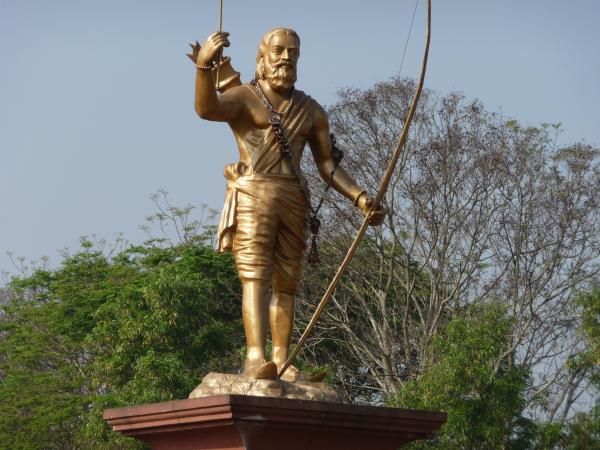
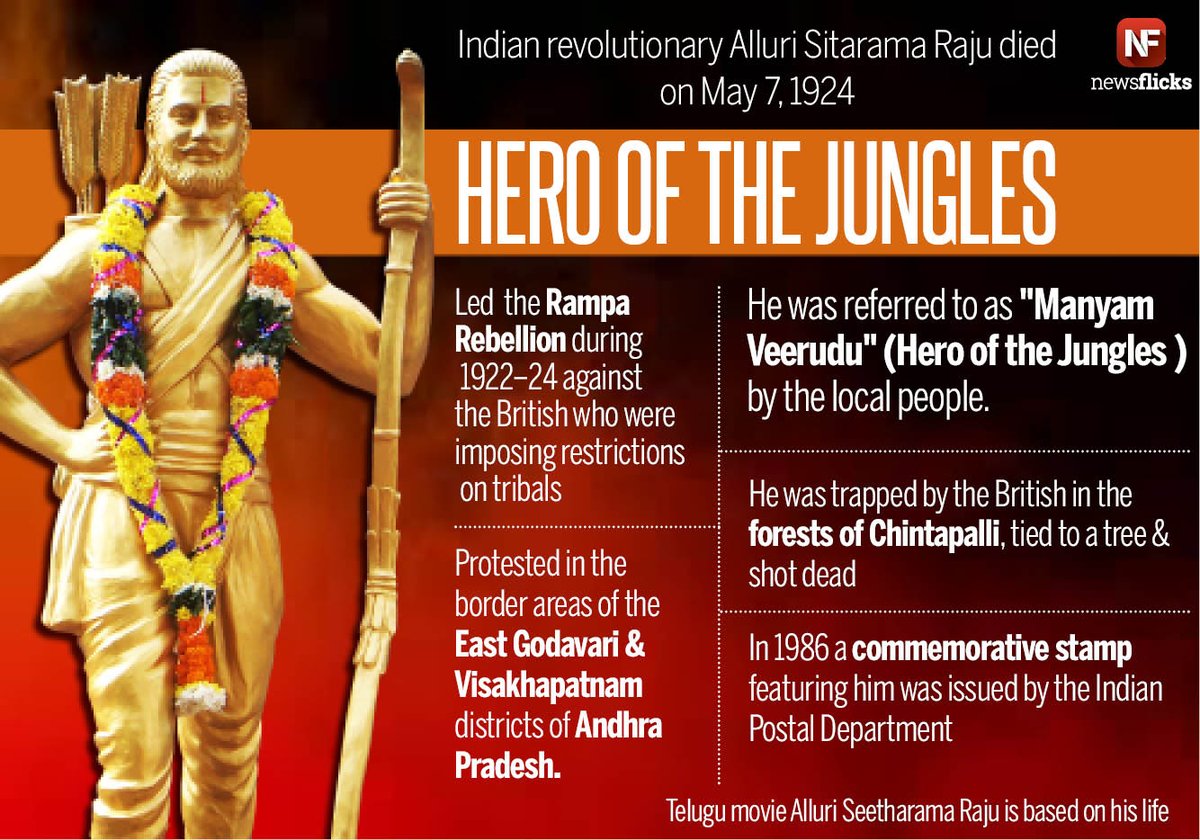
He lives in the hearts of the Telugu people as the “Manyam Veerudu” (Hero of the Jungles). He was Andhra’s early revolutionaries. He was inspired by the patriotic zeal of the revolutionaries in Bengal. He fought for social justice, for freedom and to liberate the innocent tribals from ruthless exploitation and oppression. The tribal corridor known as ‘MANYAM’ extends from Vijayanagaram to Godavari districts. He made this Agency area as his home and launched his struggle against the British with the help of the tribal people. This young man renounced his marital life and became the leader of what is known as the ‘RAMPA REBELLION’. In the Telugu language, it is known as the ‘RAMPA PITURI’. The word ‘pituri’ means complaints. He believed that freedom is not something to be begged for. He waged a successful but short lived guerilla warfare against the British occupiers from 1922 to 1923. The British General Rutherford who was deputed to crush the uprising used trickery and enticed Raju with a deal for peace. The British burnt down entire villages of the tribals, beaten the old and the children, molested the women, killed the young and tortured the captives. Raju who had innocently shown up to talk peace to save the tribals from the campaign of terror unleashed by the British forces was unceremoniously captured, was tied up to a tamarind tree and was brutally shot dead with a rifle in Mampa village, in the forests of Chintapalli. He became a martyr at the young age of 28. He was executed without a trial on May 7, 1924. His story generates the feelings of nationalism and is very effectively narrated to the people in the format of Burra Katha. Raju had his early education at Rajahmundry and I feel connected to my place and to the rest of the country because of this man of great spirit and honor.

Burrakatha-My Connection to the Nation and Nationalism. A tribute to Telugu Revolutionary Freedom Fighter Alluri Sitarama Raju.

Whole Dude – Whole Gateway

Rajahmundry – The Gateway to Traditions and History

Bharat Darshan – Rajahmundry – The Gateway to Traditions and History. Kandukuri Veeresalingam Pantulu of Rajahmundry

Kandukuri Veeresalingam Pantulu of Rajahmundry 

Bharat Darshan – Rajahmundry – The Gateway to Traditions and History

I am a native of Rajahmundry of East Godavari District, Andhra Pradesh, India by way of my family connections. I lived only a small part of my life in my hometown. Within those few years, Rajahmundry very graciously connected me to the nation that we know as India. On one hand, I was introduced to the traditions of River Worship and Idol Worship, I got acquainted with the ideas of Ahimsa (non-injury), and at the same time I was also introduced to India’s history of foreign occupation, the pain imposed by the Muslim invaders, the struggle for Independence from the British Rule and equally important is the social awakening of the people. During the 19th century, India saw the rise of nationalism and simultaneously there was a wish to reform the society. The natives of Rajahmundry received inspiration from a variety of sources.

Bharat Darshan – Rajahmundry – The Gateway to Traditions and History. ANNIE BESANT – ANGEL OF INDIA.

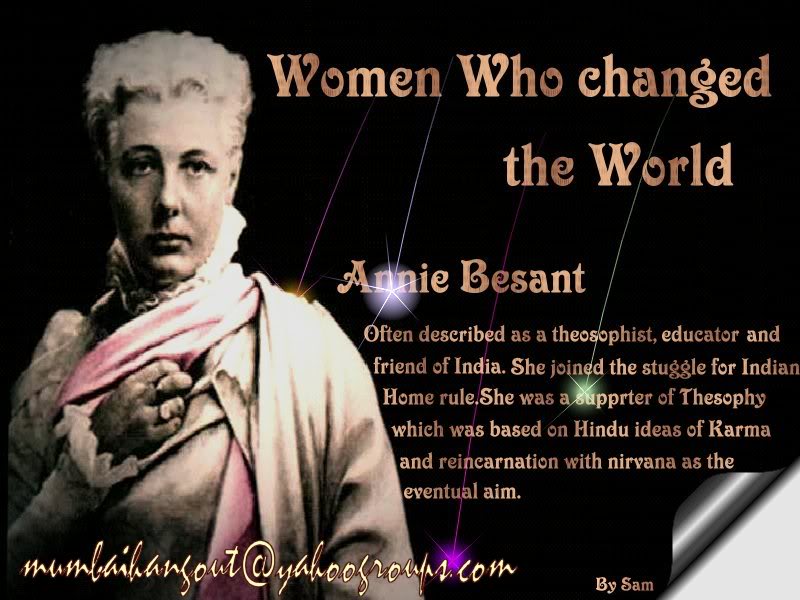
Ms. Annie Besant who became the President of the Theosophical Society in 1907 visited Rajahmundry twice and established a place of worship known as ‘Divya Gjyan Samaj’ in a residential sub-division of Rajahmundry which is still known as ‘ALCOT GARDENS’ (named after Theosophist Henry Steel Olcott).

Bharat Darshan – Rajahmundry – The Gateway to Traditions and History

Bipin Chandra Pal (1858-1932), the leader of ‘Vande Mataram’ nationalist movement visited Rajahmundry in April 1907.

Bharat Darshan – Rajahmundry – The Gateway to Traditions and History

Alluri Sita Ramaraju (1898-1924) was inspired by the patriotic zeal of the revolutionaries in Bengal and waged a brief war against the British winning the hearts of the natives of Rajahmundry.  

Kandukuri Veeresalingam Pantulu Garu:  

Bharat Darshan – Rajahmundry – The Gateway to Traditions and History

He was born into a poor Brahmin family at Rajahmundry in 1848. About one hundred years later, when I arrived in Innespeta subdivision of Rajahmundry, the first time I had known this great man was during a visit to the municipal park on the Main Road, just a short walking distance from my grandparents’ house. There is a very imposing statue and people spoke about him with pride and admiration. My eldest brother, Hari was a student at the Veeresalingam Theistic High School in Innespeta. During the academic year 1952-53, I studied in 3rd grade at ‘Shade Girls High School’ located near ‘Kambala Cheruvu’ (Lake Kambala) while my family resided in Danavaipeta subdivision of Rajahmundry. Myself and my elder brother Pratap used to walk to the school and the easiest way to reach the school was a private road which traverses the Veeresalingam Gardens. The subdivisions of Danavai peta and the Danavai Pond and Prakasam Nagar are located on the southern side of the Gardens and Gandhi Nagar is located along the northern perimeter of the Gardens. The school is at a short distance from the north-west entrance to the Gardens. Apart from the tombs of Veeresalingam and his wife Rajya Lakshmi, the Gardens had a venue to conduct marriage functions and there was a Home for Widows. On our way to the school, we used to enter the Widow’s Home and a classmate of ours by name Sai Baba would join us in the walk to the school. On our return trip, the three of us used to reach the Home and after leaving Sai Baba, myself and my brother would resume our walk to our residence in Danavaipeta. There were several occasions when we would wait at the Home while Sai Baba’s mother would be breastfeeding him. During that school year, it was my daily experience and I knew that my friend and his mother derived their support from this great benefactor known as Veeresalingam.  

As my family lived on the outer fringes of Veeresalingam Gardens during the most part of my later school years at Danavaipeta Municipal High School, walking across the Gardens and playing cricket in the evening in the open areas of the Garden became a part of my daily routine. The Gardens had several flowering plants and fruit-bearing trees and to celebrate the festival of Ganesh we used to gather from the Gardens several flowers, leaves, and fruits which are required for the worship. At the same time, I also knew about ‘Hithakarani Samajamu’. Veeresalingam donated all his lifetime earnings and had established this trust in 1907. Addepalli Vivekananda Devi, a social worker, and educationist lived in Danavaipeta and I had seen her several times and I was aware that she was continuing the relentless effort started by Veeresalingam to empower women and for the uplifting of women.

Bharat Darshan – Rajahmundry – The Gateway to Traditions and History

In 1968, Ms. Addepalli Vivekananda Devi successfully established Srimati. Kandukuri Rajya Lakshmi College for Women near the Lake known as ‘Danavai Gunta’. My sister and a sister-in-law studied in this College.  

Veeresalingam was influenced by the ideals of ‘BRAHMO SAMAJ‘ founded by the great social reformers of Bengal, Raja Ram Mohan Roy, Keshub Chunder Sen, and Iswar Chandra Vidya Sagar who did much work for women’s emancipation. Veeresalingam was the pioneer of social reform in Andhra areas of the Madras Presidency apart from his remarkable contributions to Telugu literature and for the cause of education. 

Bharat Darshan – Rajahmundry – The Gateway to Traditions and History

During the course of life, moments slip away and fortunately, they are laid into account. If there are no memories, there is no life worth speaking about. 

Dr. R. Rudra Narasimham, B.Sc., M.B.B.S., 

Danavaipeta Municipal High School, Rajahmundry,

S.S.L.C. Class, March 1961

Bharat Darshan – Rajahmundry – The Gateway to Traditions and History.