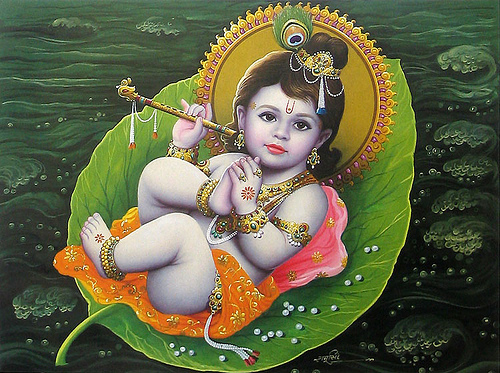
Whole Phenomenon – Whole Creator

Whole Phenomenon – Whole Creator – The Doctrine of Whole Creationism

Whole Phenomenon – Whole Creator – The Doctrine of Whole Creationism

The Doctrine of Whole Creationism Creation is stated as, “The reality called existence is established by the Unchanging Spiritual Nature of Matter in a constantly Changing World.”
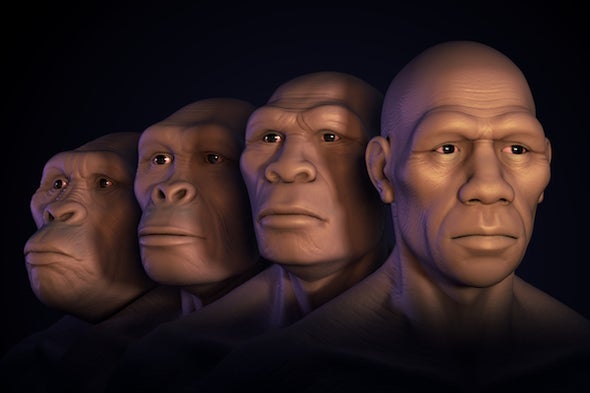
Whole Phenomenon – Whole Creator – The Doctrine of Whole Creationism: I ask my readers to investigate the nature of Living Matter found in different Life Forms to explore the Creative Potency of Matter.

I ask my readers to investigate the nature of Living Matter found in different Life Forms to explore the Creative Potency of Matter. In my analysis, the discussion about creation must include the study of creative mechanisms that operate the creative events besides the Natural Laws described by Physics and Chemistry. The creative energy/force/power or potency is very much at work sustaining the creation in the present day world.

I coined the phrase Whole Creator to make a synthesis of the creative events described in the Bible and the Hindu scriptures. The Creator is the Originator, the Sustainer, and eventually the Destroyer of all that He creates.

Spirituality Science – The Doctrine of Creation:

I ask my readers to investigate the nature of Living Matter found in different Life Forms to explore the Creative Potency of Matter. In my analysis, the discussion about creation must include the study of creative mechanisms that operate the creative events besides the Natural Laws described by Physics and Chemistry. The creative energy/force/power or potency is very much at work sustaining the creation in the present day world. Creativity is about putting together the known Chemical Elements of Matter to cause the phenomenon described as Creation.

Creation refers to the beginning of things. The ideas and thoughts about creation serve as a basis for the orientation of man in the world and help to specify man’s place in the physical universe. The Doctrine of Creation is the basis to explain man’s status in nature. The act of creation involves to bring into being a new product and the production of the new thing requires application of imagination and the use of Power/Force/Energy. Creation has two aspects; 1. Freedom of Mind to imagine possibilities. It is associated with a power called ‘Inspiration’ that provides the stimulus to both creative thought and action, and 2. Freedom of Action that converts a mental ‘possibility’ into a physical ‘actuality’. The word ‘creative’ is often used to describe the quality or power of creating as seen in the actions of an author, actor, fashion designer, artist, or musician. A created object tends to be original, unique, distinctive, and exists as one of its own kind of object.

Radha_Krishna_ISKCON_Mayapur
Whole Phenomenon – Whole Creator – The Doctrine of Whole Creationism: I coined the phrase Whole Creator to make a synthesis of the creation stories from Bible and the Bhagavad Gita.
Whole Phenomenon – Whole Creator – The Doctrine of Whole Creationism: The Doctrine of Creation and Creative Potency called Maya. Raas Leela – Lord Krishna in Vrindavan dancing with Gopis. Lord Krishna is simultaneously ONE and DIFFERENT. He is the manifestation of Creative Energy.This Group Dance is an example of ‘Individualistic Rhythm’.

‘RAAS LEELA’-LORD KRISHNA IN VRINDAVAN DANCING WITH GOPIS, SIMULTANEOUSLY ONE AND DIFFERENT-A MANIFESTATION OF CREATIVE ENERGY AND CREATIVE POTENCY CALLED MAYA

Whole Phenomenon – Whole Creator – The Doctrine of Whole Creationism: The Doctrine of Creation and Creative Potency called Maya. Simultaneously One and Different.

The Doctrine of Creation and the Creative Potency called Maya:

Whole Phenomenon – Whole Creator – The Doctrine of Whole Creationism: The Doctrine of Creation and Creative Potency called Maya. Simultaneously One and Different.

The term creation refers to the beginning of things and it helps man to specify his place in the universe and serves as a basis for the orientation of man in the world. The ideas about creation impact our culture in a very significant manner and shape man’s identity.

Krishna Consciousness – Defining Indian Identity

Whole Phenomenon – Whole Creator – The Doctrine of Whole Creationism: Krishna Consciousness. The Doctrine of Creation and Creative Potency called Maya. Simultaneously One and Different.

Krishna is known from the descriptions given in the Indian epic poems of Bhagavata Purana, Mahabharat, and The Bhagavad Gita (The Lord’s Song).
Jayadeva (late 12th century), the author of celebrated Sanskrit poem ‘GITA GOVINDA’ (“Song of Cowherd”), described Lord Krishna’s delightful and enchanting pastimes, His playful activities are popularly known as “Raas Leela.” Jayadeva used the Sanskrit word “Adbhuta” (an amazing feat) to narrate the mystical ability of Krishna to present Himself in several different forms at one and the same time. Jayadeva’s Gita Govinda gives the readers a sense of joy and the devotional service to Lord Krishna gives a chance to experience a sense of sweetness which is called Madhurya in the Sanskrit Language. 
Sri Chaitanya Mahaprabhu (16th century) established the sublime doctrine of Krishna: ‘Simultaneously One and Different’. He promoted devotion to Krishna and I claim that ‘Krishna Consciousness’ defines my Indian Identity.

Whole Phenomenon – Whole Creator – The Doctrine of Whole Creationism: The Doctrine of Creation and Creative Potency called Maya. Simultaneously One and Different.

Lord Krishna – The Cause of all Causes (The Bhagavad Gita, Chapter 7, The Yoga of Wisdom, The Knowledge of Absolute, verse 19):
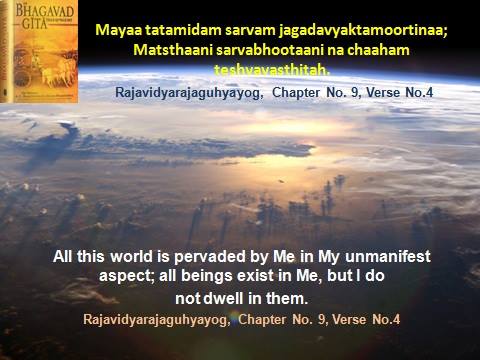
Lord Krishna is the primary cause of all material manifestations. The Sanskrit word ‘Maya’ describes the creative energy or potency of Lord Krishna (Bhagavad Gita 7:25).
Whole Phenomenon – Whole Creator – The Doctrine of Whole Creationism: The Doctrine of Creation and Creative Potency called Maya. Simultaneously One and Different.

Maya is the governing principle of the material manifestation of the universe and all that it contains. Krishna described Himself as the Supreme Lord, as the governing principle of material manifestation (Bhagavad Gita 7:30).

Whole Phenomenon – Whole Creator – The Doctrine of Whole Creationism: The Doctrine of Creation and Creative Potency called Maya. Simultaneously One and Different.

The creative energy works on three different levels. 1. Material creation leads to the creation of the total material energy known by the Sanskrit word Maha Tattva. 2. The creative principle enters into all the universes to create diversities in each of them. The fundamental particles that constitute matter have varying characteristics and properties. The individual variations are an attribute of a creative process. 3. The creative force is diffused as the all-pervading Supersoul in all the universes and is known by the Sanskrit word ‘Paramatma’. It is present even in atoms.

Whole Phenomenon – Whole Creator – The Doctrine of Whole Creationism: The Doctrine of Creation and Creative Potency called Maya. Simultaneously One and Different.

The material universe is a manifestation of the energy of the Lord. All the activities of the material world are directed by the above mentioned three forms of creative energy. However, a distinction could be made between non-living matter and the living entities. It may be said that the living entities are the manifestation of superior energy as they exist by exploiting the products of the gross and subtle inferior energy that manifests as matter (Bhagavad Gita 7:5).

Whole Phenomenon – Whole Creator – The Doctrine of Whole Creationism: The Doctrine of Creation and Creative Potency called Maya. Simultaneously One and Different.

Krishna consciousness is active in every sphere. Earth, water, fire, air, and every active principle, all chemicals, and all material elements are due to Krishna (Bhagavad Gita 7:4).

Whole Phenomenon – Whole Creator – The Doctrine of Whole Creationism: The Doctrine of Creation and Creative Potency called Maya. Simultaneously One and Different.

He is the origin and dissolution of all that is material and all that is spiritual in this world (Bhagavad Gita 7:6).

Whole Phenomenon – Whole Creator – The Doctrine of Whole Creationism: The Doctrine of Creation and Creative Potency called Maya. Simultaneously One and Different.

He is the original fragrance of this earth, He is the light in the fire, and He is the life of all that lives (Bhagavad Gita 7:9).

Whole Phenomenon – Whole Creator – The Doctrine of Whole Creationism: The Doctrine of Creation and Creative Potency called Maya. Simultaneously One and Different.

He is the taste of water, the light of the sun and the moon, and He is the syllable’ AUM’, He is the sound in ether, and He is the ability in man (Bhagavad Gita 7:8).

Whole Phenomenon – Whole Creator – The Doctrine of Whole Creationism: The Doctrine of Creation and Creative Potency called Maya. Simultaneously One and Different.

Lord Krishna is the original seed of all existences (Bhagavad Gita 7:10).

Whole Phenomenon – Whole Creator – The Doctrine of Whole Creationism: The Doctrine of Creation and Creative Potency called Maya.

Most interestingly, a similar claim is made in the Gospel According to Apostle John. The Book of John, chapter 1, verse 3 states, “All things were made through Him, and without Him, nothing was made that was made.” The Bhagavad Gita describes Lord Krishna as the Controller, and all living entities are controlled by Him.

THE DIVERSE ENERGIES OF THE LORD:

Whole Phenomenon – Whole Creator – The Doctrine of Whole Creationism: The Doctrine of Creation and Creative Potency called Maya.

All states or modes of existence such as goodness, passion, and ignorance are manifestations of His energy (Bhagavad Gita 7:12). The material nature is known by the Sanskrit word ‘Prakriti’, and all living entities are viewed as the multi energies of Krishna.
The difference lies in the quantity of energy that they contain. Energies are always controlled by the ‘Energetic’, the true source of energy. As such living entities are always controlled and they have no independent existence. While Krishna is everything, but He is independent. He is not controlled by the modes of this material nature (Bhagavad Gita 7:12).

Humans exist by drawing energy from material nature and Krishna has no such dependence. Human life is a manifestation of the creative power and energy and the existence is dependent upon the five life-giving forces contained in the material nature. Sun and moon are seen as components of the sky. They control the biological rhythms of all living creatures. The energy from Sun is trapped by the plants and is converted into complex compounds by a process known as photosynthesis. Photosynthesis is also the source of stored energies such as coal, fossil fuels, and natural gas. The Earth and its atmosphere provide all the nutrients (directly or indirectly via the mechanism of the food chains), the minerals, and the elements that are important for the structure and functioning of living entities. Water is the chief ingredient of living organisms. The act of breathing, the mechanism of respiration is an important physiological mechanism for living cells. The ability to use wind/air to a great extent defines the living process. Respiration is the process by which the cells generate energy for their activities. Fire provides the heat and energy for all metabolic activities and we exist by burning sugars and other energy providing sources. Nature (Five Life giving Energies) supports life and it helps to bring forth new members from preexisting forms of life but can not generate new beings on its own. Life can not begin spontaneously without the intervention of a creative force/energy.

What is Creativity?

Whole Phenomenon – Whole Creator – The Doctrine of Whole Creationism: The Doctrine of Creation and Creative Potency called Maya. All living things exist as Individuals with Individuality even if the Genome is cloned or genetically identical. The variation expressed is the nature of the DNA molecule.

Creative power is the power that is able to bring forth new beings. Creativity is the ability to make or otherwise bring into existence something new. The single most important element in the creative process is believed to be originality or uniqueness. Nature (Five Life giving Energies) helps in the process of replication/reproduction and sustains life. As per the Biogenetic Law, a species breeds to produce its own kind. Creativity imparts that label of distinctiveness by causing individualistic variations. 
Krishna is the personification of that creative energy and the beautiful paintings of ‘Raas Leela’ are an example of His ability to be one and different at the same time.

Whole Phenomenon – Whole Creator – The Doctrine of Whole Creationism: The Doctrine of Creation and Creative Potency called Maya. The existence of all living things as Individuals with Individualistic Variations is the manifestation of the Creative Potency called Maya

Supreme Phenomenon of Human Birth – The Celebration of Lord Krishna
Supreme Phenomenon of Human Birth – The Celebration of Lord Krishna
The Divine Phenomenon - The Power of Creation
Supreme Phenomenon of Human Birth – The Celebration of Lord Krishna. The Power of Creation is directly experienced by holding your own baby.

A child is a ‘Supreme Phenomenon’; not even the father, nor the mother can surpass it. There is nothing more sublime than the living touch of your own baby. You can experience the ‘Power of Creation’ by simply holding your baby.

SUPREME  PHENOMENON

Supreme Phenomenon of Human Birth – The Celebration of Lord Krishna. SPIRITUALITY SCIENCE – THE KNOWER-THE KNOWING-SELF: MAN, THE ENTIRE HUMAN ORGANISM IS DERIVED FROM A SINGLE FERTILIZED EGG CELL . HOW IS THE IDENTITY AND INDIVIDUALITY IS ESTABLISHED AND IS KNOWN IN THIS COMPLEX MULTICELLULAR ORGANISM?

By R. Suryanarayana Murthy

I saw thee dragging thy feet up the stairs

Making me watch every movement of thine

Step by step, you steadied up,

Thy broad smile hiding all thy effort

What angel pushes thee up no eye can see.

I saw thee stretching, hugging the mother earth,

Rising and falling while crawling all the way;

All to thyself, no pitfall to frighten thee,

Nor danger lurking can stop thee going

And when the journey was finished there is that glow

“Who can beat me in the race?” thy challenge goes out

Thou art the victor in all such deeds.

Thou wert the star attraction of all ages,

Napoleon acclaiming thee as the greatest of all creation;

Saintly Gandhi hugged thee to press his lips on thine

“Chacha” Nehru crawled by thy side forgetting his power and pomp;

Can the royal throne or sceptred sway provide anything equal to thee?

Thou hast remained through ages humanity’s main hope in a naughty world.

Why did the Buddha see in thy birth unredeemed sorrow and suffering?

Why was it that Jesus saw in thy advent the gnawing pain of unsullied sin?

Or why was it the great Sankara said that thy emergence was enveloped in ‘Maya’ or illusion?

Thou did confound every philosopher and kept to thyself the mystery surrounding thy species

Thou an enigma and a riddle proclaiming the unanswerable divine will.

Still the world all over rejoices in thee and gives thee royal welcome

Without thee life is a desert with no flower to bloom,

Without thee the sweetest of poetry finds no place in heart

Thou art the greatest messenger of love

And give thy message to everybody, “Love thy neighbour as thou lovest thy child,

And see in every person a latent child

And discard all hatred that corrodes the soul.”

What more sublime is there than thy living touch

What greater joy is there than thy winning smile?

For me thou art a Supreme Phenomenon

With none to surpass not even the father, nor the mother.

(This poem was published in Indian Express, Hyderabad (A.P.) Daily Edition dated November 09, 1986.)


Supreme Phenomenon of Human Birth – The Celebration of Lord Krishna

Whole Aesthetics – The Theory of Beauty

Beauty is in the eye of the beholder:

Whole Dude – Whole Artist – Whole Aesthetics: Beauty is in the eye of the beholder

What is Color and What is Coloration?

Whole Dude – Whole Artist – Whole Aesthetics: Beauty is in the eye of the beholder

The term ‘color’ refers to the spectral qualities of emitted or reflected light. The term ‘coloration’ is a dynamic and complex characteristic that has captured human interest and attention for a long time. The human interest to coloration ranges from purely aesthetic to the rigidly pragmatic.

Biological Coloration:

Whole Dude – Whole Artist – Whole Aesthetics: Beauty is in the eye of the beholder

Biological Coloration refers to the general appearance of an organism as determined by the quality and quantity of light that is reflected or emitted from its surface. This Coloration depends upon several factors:

1. The integrity and deployment of the structural units and features involved in the generation of color,

2. The color and distribution of the organism’s pigments, and the relative location of differently colored areas,

3. The shape, posture, position, and movement of the organism,

4. The quality and quantity of light striking the organism, including the seasonal light and temperature variations,

5. The psychological, behavioral, hormonal, and other physiological conditions associated with the use of color,

6. The visual capacity of the viewer.

The Concept of Whole Artist:

Whole Dude – Whole Artist – Whole Aesthetics: Beauty is in the eye of the beholder

The term artist is used to describe a person who works in, or is skilled in the technique of any of the fine arts, especially in painting, drawing, and sculpture. The term artistry describes the artistic ability which includes the use of imagination, a feeling for form, and a feeling for effect. I am using the term ‘Whole Artist’ to discover the person who may have used imagination to create forms to produce desired effects while the form itself lacks the cognitive abilities to generate its own form. Plants may produce flowers of different colors while they essentially lack cognitive abilities to recognize the visual effect of the color they produce. The study, the theory of beauty, or Aesthetics helps us to know the nature of the Whole Artist.

Whole Dude – Whole Artist – Whole Aesthetics: Beauty is in the eye of the beholder.

Aesthetics is a branch of philosophy dealing with the nature of art and the criteria of artistic judgment. Aesthetics involves the study or theory of beauty and of the psychological responses to it. Aesthetics has developed into a broad field of knowledge and inquiry. The term was coined by Alexander Gottlieb Baumgarten to denote a realm of concrete knowledge in which content is communicated in sensory form. Now the term is applied to the study of all the works of the fine arts, the useful arts (crafts) and natural phenomena (eg., landscapes, the human face and body) that have aesthetic value and generate an experience called aesthetic experience. Plato and Aristotle formulated the conception of art as an imitation of nature. Beauty inheres in the object itself and may be judged objectively. Hume identified beauty with that which pleases the observer. Baumgarten emphasized on the importance of feeling. If art imitates nature, the artist must deliberately alter nature by adding elements of feeling to perceive reality. The artistic process involves the use of illusion to mirror the creative process of the world.

Whole Dude – Whole Artist – Whole Aesthetics: Beauty is in the eye of the beholder.

Aesthetics involves the study of objects that have an inherent aesthetic quality to generate an aesthetic experience in the mind of an observer who has the capacity to interpret sensory information. An artist uses the artistic process to capture the creative process of the world by integrating illusion with reality.

I use the term ‘Whole Aesthetics’ to describe the integration of the human body with the principles of soul and spirit to bring ‘Whole Unity’ and ‘Whole Harmony’ between the conflicting elements of Dependence and Freedom by using an artistic process of combining Reality with Illusion. I use the term ‘Whole Aesthetics’ to describe the ‘Wholeness’ of Human Existence that requires the ‘Whole Harmony’ between Dependence and Freedom, the Whole Harmony between Illusion and Reality, the ‘Whole Unity’ between the human body, spirit and soul. 

I find the application of this artistic process in the works of Whole Artist or Whole Designer who makes the man to live on the surface of a fast spinning object called planet Earth where the Power of Time churns every future instant into a past instant without ever giving man the chance to recognize the experience of a present instant. Whole Aesthetics captures the beauty of the reality of human existence derived from the experience of illusion.

Whole Designer – Whole Artist-Whole Aesthetics:

WholeDude – Whole Artist : Chilean Mimulus flowers. Mimulus luteus. Who is the artist that caused this visual effect?

Plants have the ability of Photoreception but do not have organs of sense perception like eyes. They produce flowers as if an artist is at work. The flowers below all have two things in common: They’re beautiful, and they remind the human eye of something else entirely. These are flowers are just stunning works of art by nature.I am pleased to share the photo images of Orchids to explain the concept of Whole Designer and Whole Artist.

Masters of Plant Pareidolia

Whole Dude – Whole Artist – Whole Aesthetics: Beauty is in the eye of the beholder.

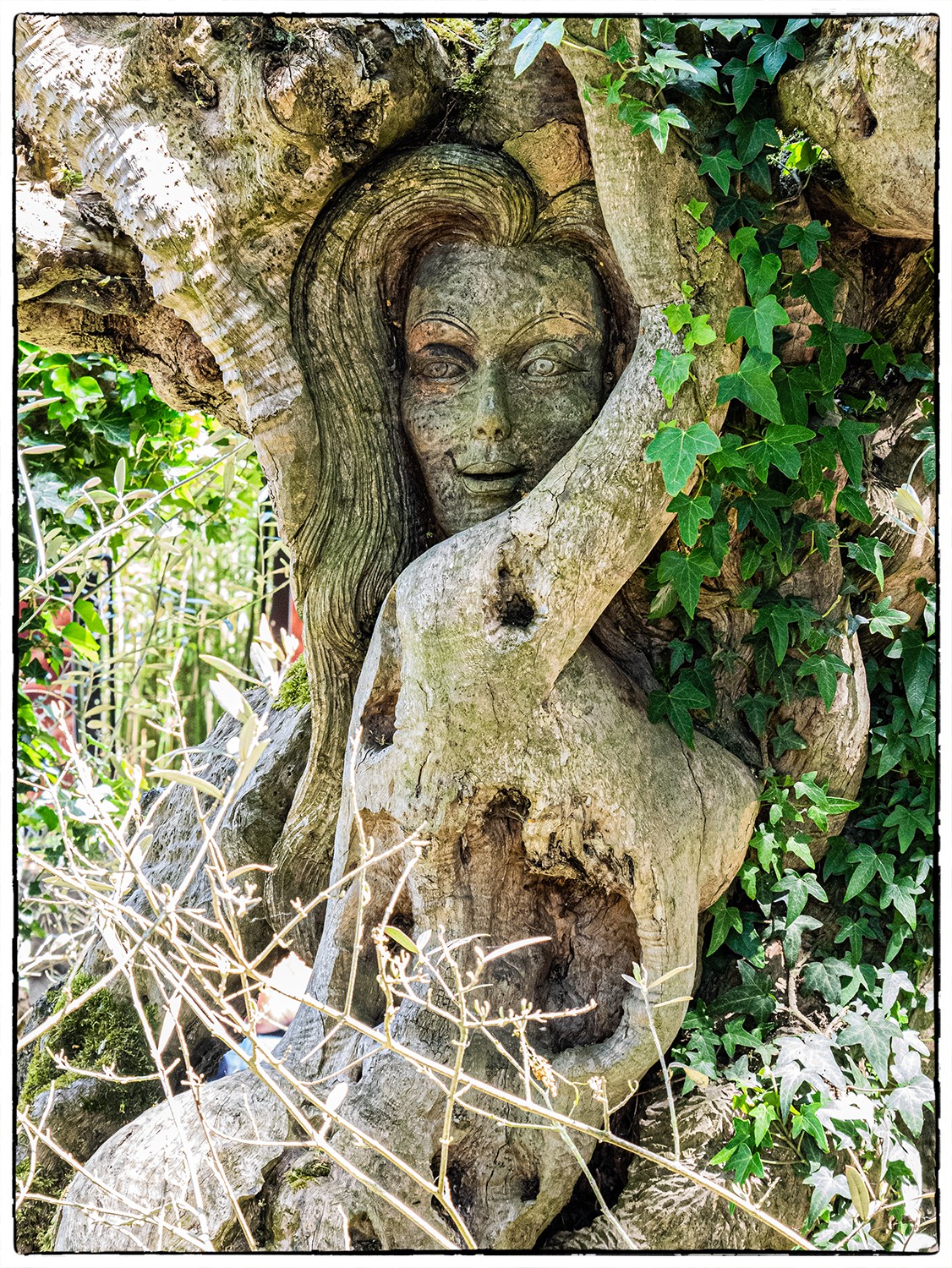
Pareidolia is the tendency to see familiar or significant images in places where none is intended. Classic examples are sightings of Jesus or the Virgin Mary in wood grain or the pastime of looking for shapes in clouds. Pareidolia is encouraged in the Rorschach inkblot test. There are plenty of examples in the natural world, and orchids are particularly notable for looking like something else.

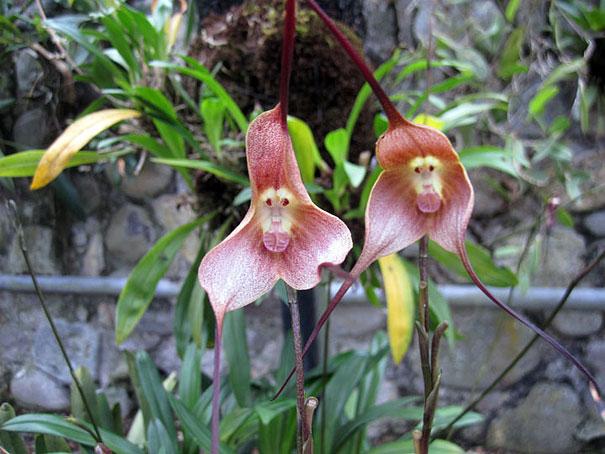
Monkey Face Orchid (Dracula simia)

Dracula simia is another species in the Dracula genus. As the name implies, the blooms of this orchid look exactly like a monkey’s face.

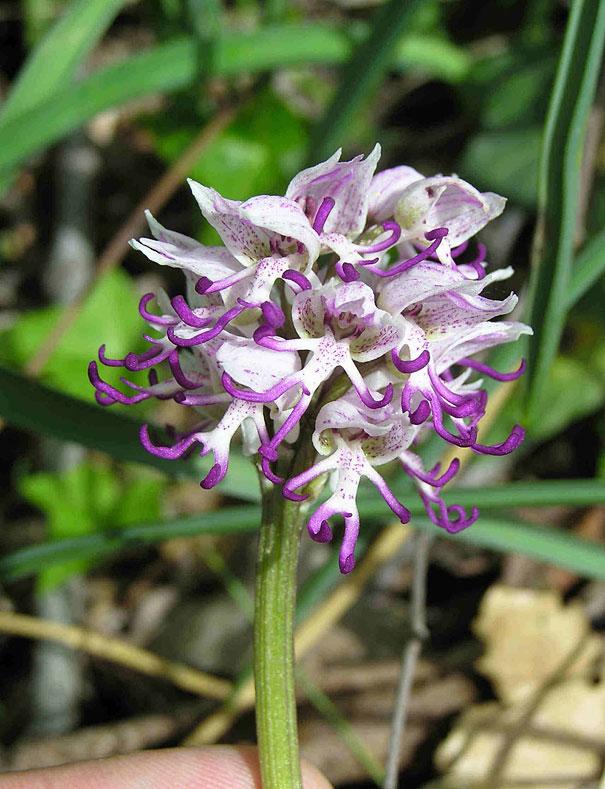
The monkey orchid (Orchis simia) is said to be shaped like a monkey’s body. A male monkey, to be sure.

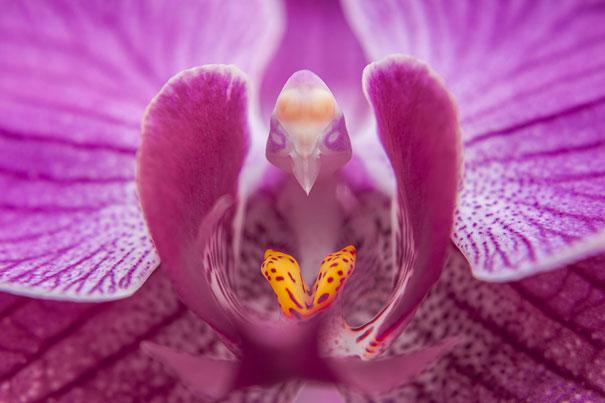
Moth Orchid ( Phalaenopsis )

There are about 60 species of Moth Orchids (Phalaenopsis), which are native to Asia and popular among orchid growers. Many of them, if you look really close, appear to have a small bird emerging from their center. Get a closer look at this pink specimen.

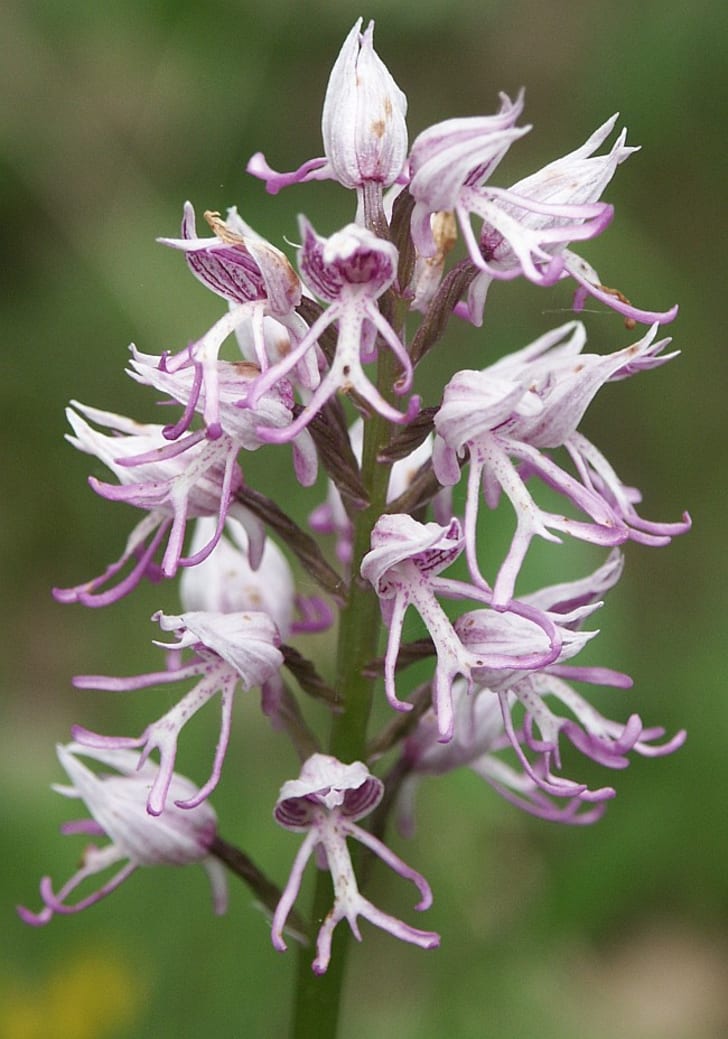
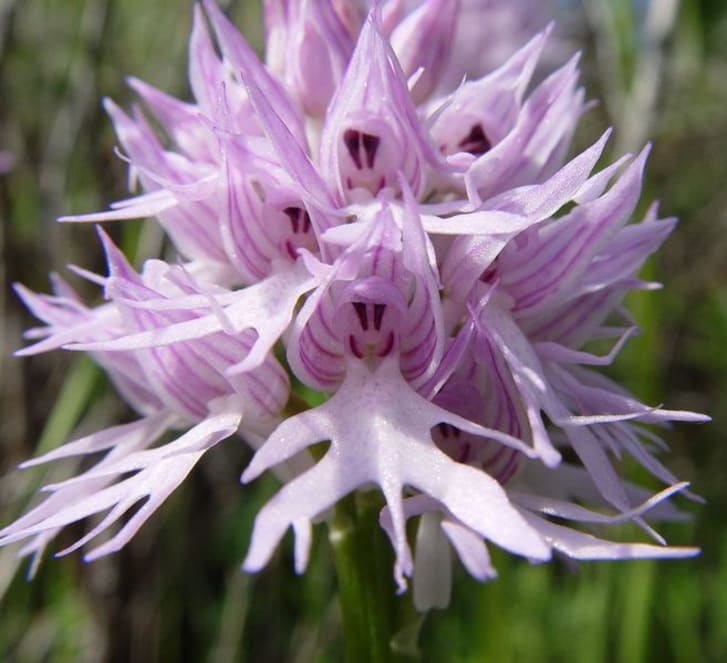
Naked Man Orchid (Orchis italica)

Orchis italica is native to the Mediterranean area, and is sometimes called the Naked Man Orchid. You can see why. The blossoms even have little eyes and smiles!

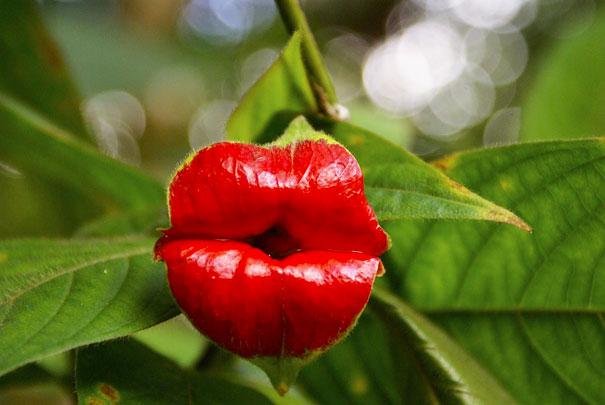
Hooker’s Lips (Psychotria elata)

Orchids may be the masters of plant pareidolia, but they aren’t the only plants that look like something else. Psychotria elata is a tropical plant that produces the psychedelic chemical DMT. The plant is also called Hooker’s Lips. I can’t imagine why.

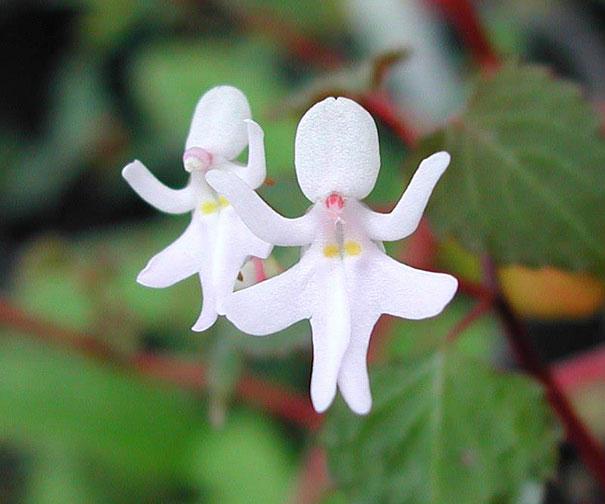
Dancing Girls (Impatiens bequaertii)

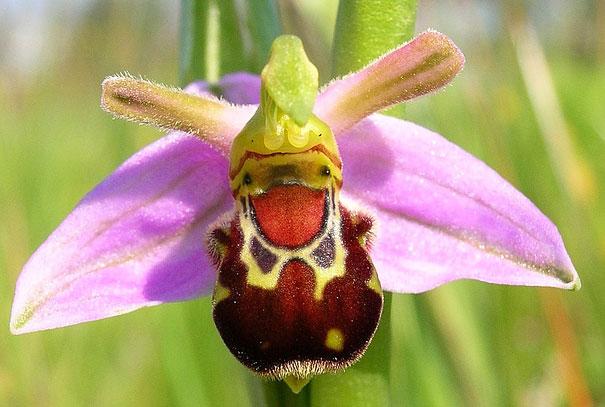
Laughing Bumble Bee Orchid (Ophrys bomybliflora)

While we can’t say that nature intended for an orchid to look like a male body or a flying duck, the orchid genus Ophrys has a simple reason for looking the way it does. The Bee Orchid (Ophrys apifera) bloom resembles a bee in order to attract bees. When a male bee tries to mate with the flower (because it’s so pretty), he ends up pollinating it. Using an insect to achieve plant sex is common, but using insect sex to achieve plant sex is brilliantly weird. It apparently works well, because Ophrys ranges over several continents.

Swaddled Babies (Anguloa uniflora)

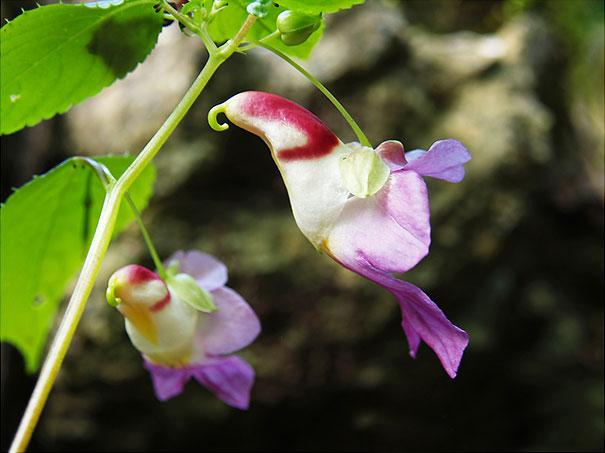
Parrot Flower (Impatiens psittacina)

Snap Dragon Seed Pod (Antirrhinum)

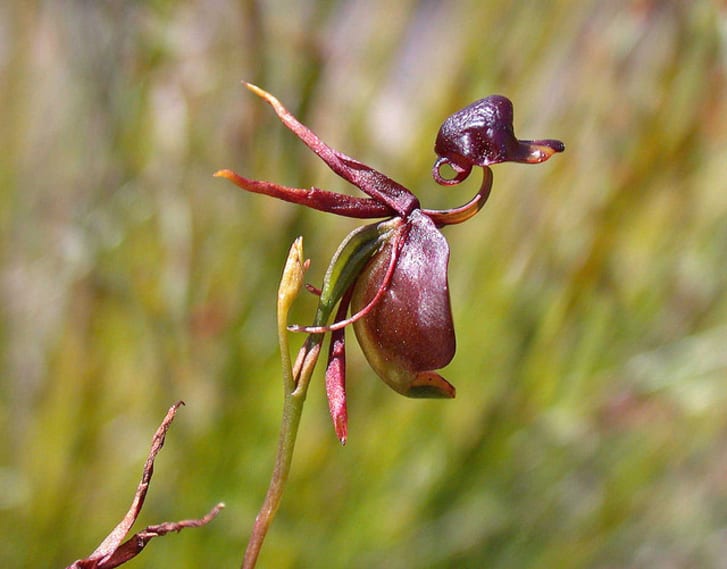
Flying Duck Orchid (Caleana major)

The Australian orchid genus Caleana is still not fully classified, but it is commonly called the Flying Duck Orchid. The shape attracts the sawfly, which pollinates the plant. Each component of the flower is design to use the sawfly, like a bright color for it to see, a place to land, and a petal that traps the fly into taking a pollen-rich route out. That’s one smart duck!

An orchid that looks remarkably like a tiger

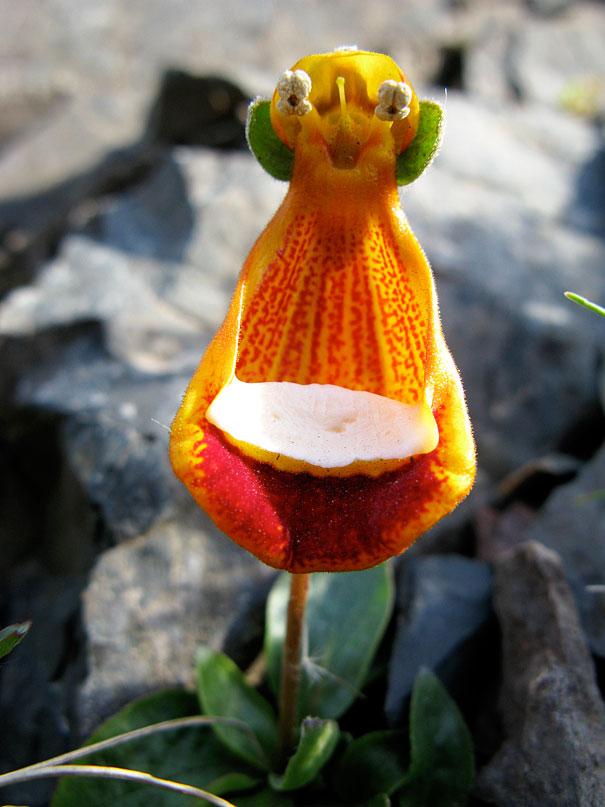
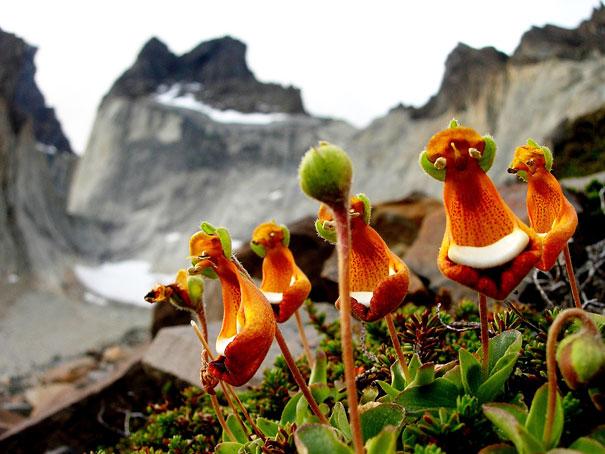
Happy Alien (Calceolaria uniflora)

And his fellow aliens

Angel Orchid (Habenaria grandifloriformis)

Dove Orchid Or Holy Ghost Orchid (Peristeria elata)

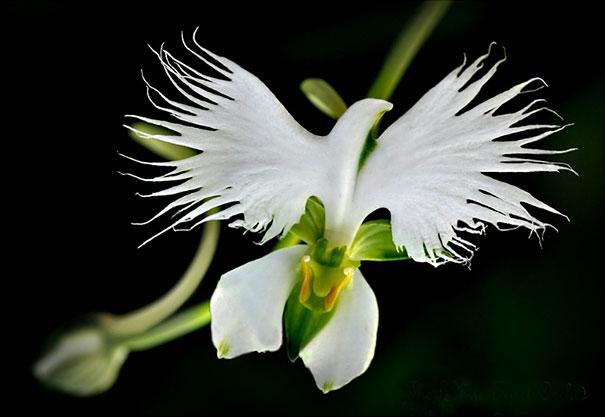
White Egret Orchid (Habenaria radiata )

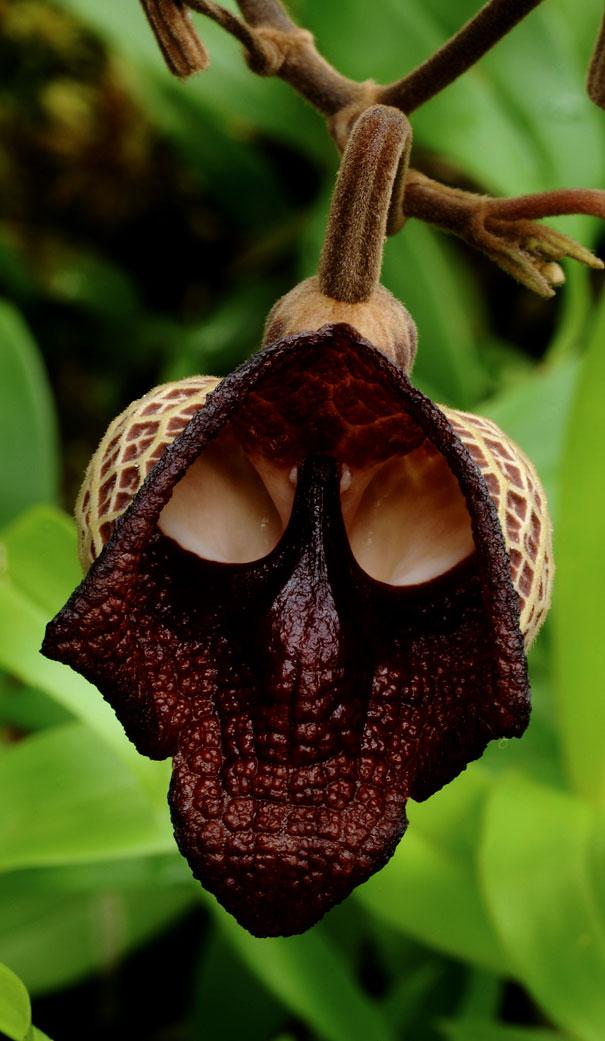
The Darth Vader (Aristolochia salvadorensis)

An Orchid that looks like a Ballerina

Whole Dude – Whole Artist – Whole Aesthetics: Beauty is in the eye of the beholder.
Whole Dude – Whole Artist – Whole Aesthetics: Beauty is in the eye of the beholder