WHOLE SPIRITUALITY – FLOW OF TIME, LIFE AND BEHAVIOR

SPIRITUALITY SCIENCE – CYCLICAL FLOW OF TIME – HUMAN NATURE – HUMAN BEHAVIOR:

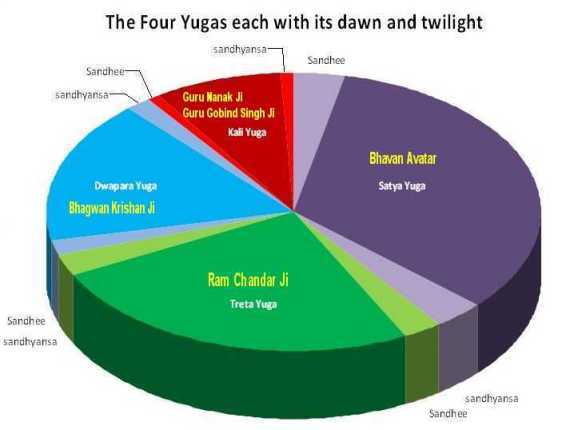
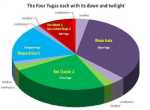
SPIRITUALITY SCIENCE - CYCLICAL FLOW OF TIME - HUMAN NATURE AND HUMAN BEHAVIOR: IN INDIAN TRADITION THE CYCLICAL FLOW OF TIME IS DESCRIBED AS FOUR PERIODS NAMED 1. SATYA YUGA, 2. TRETA YUGA, 3. DWAPARA YUGA, AND 4. KALI YUGA. MAN MAY DISPLAY DIFFERENT BEHAVIORS DURING EACH PERIOD OF TIME.
SPIRITUALITY SCIENCE – CYCLICAL FLOW OF TIME – HUMAN NATURE AND HUMAN BEHAVIOR: IN INDIAN TRADITION THE CYCLICAL FLOW OF TIME IS DESCRIBED AS FOUR PERIODS NAMED 1. SATYA YUGA, 2. TRETA YUGA, 3. DWAPARA YUGA, AND 4. KALI YUGA. MAN MAY DISPLAY DIFFERENT BEHAVIORS DURING EACH PERIOD OF TIME.
SPIRITUALITY SCIENCE - CYCLICAL FLOW OF TIME - HUMAN BEHAVIOR AND HUMAN NATURE: IN INDIAN TRADITION, MAN DISPLAYS DIFFERENT KINDS OF BEHAVIOR DUE TO EXTERNAL ENVIRONMENTAL STIMULI THAT VARY UNDER THE INFLUENCE OF TIME. INDIA'S SPIRITUAL LEADER AND MASTER GURU NANAK(c.1469 - c.1539) RESISTED THE POLLUTING EFFECTS OF KALI YUGA AND PREACHED ABOUT FUNDAMENTAL IDENTITY OF ALL RELIGIONS.
SPIRITUALITY SCIENCE – CYCLICAL FLOW OF TIME – HUMAN BEHAVIOR AND HUMAN NATURE: IN INDIAN TRADITION, MAN DISPLAYS DIFFERENT KINDS OF BEHAVIOR DUE TO EXTERNAL ENVIRONMENTAL STIMULI THAT VARY UNDER THE INFLUENCE OF TIME. INDIA’S SPIRITUAL LEADER AND MASTER GURU NANAK(c.1469 – c.1539) RESISTED THE POLLUTING EFFECTS OF KALI YUGA AND PREACHED ABOUT FUNDAMENTAL IDENTITY OF ALL RELIGIONS.

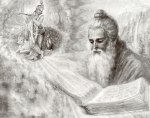
In Indian tradition, time flows in a cyclical manner and time is divided into four periods called “YUG” and the Four YUGAS are named as 1. Satya Yuga or Krita Yuga, 2. Treta Yuga, 3. Dwapara Yuga, and 4. Kali Yuga. The present times of man belong to the period Kali Yuga and hence is of a great interest. Saint Ved Vyasa, the author of Hindu epic poems of Mahabharata and Bhgavata Purana made some predictions about human behavior under the influence of the time period of Kali Yuga. The word ‘Kali’ refers to contamination, or pollution and an important consequence of the polluting effect of Kali Yuga is thought to be “STRESS.” Man’s behavior is influenced by the stressful environmental stimuli and these stimuli are aroused by man’s perception of time. Since man cannot avoid interacting with the environment in which he exists, man is instructed to take the help of chanting the Divine Name of KRISHNA and RAMA as a ‘MANTRA’ to overcome the polluting effects of Kali Yuga.

KALI KALMASHA NASANA MAHA MANTRAM – HARE KRISHNA MAHA MANTRAM:
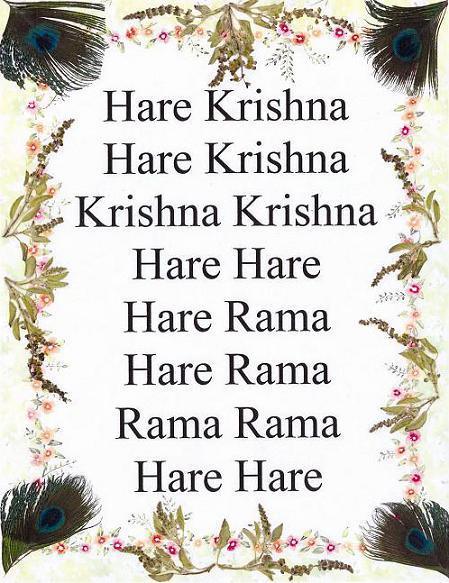
SPIRITUALITY SCIENCE - THE CYCLICAL FLOW OF TIME - HUMAN NATURE AND HUMAN BEHAVIOR:HARE KRISHNA MAHA MANTRA IS DESCRIBED AS THE CURE FOR THE POLLUTING EFFECTS OF THE TIME PERIOD CALLED KALI YUGA.
SPIRITUALITY SCIENCE – THE CYCLICAL FLOW OF TIME – HUMAN NATURE AND HUMAN BEHAVIOR:HARE KRISHNA MAHA MANTRA IS DESCRIBED AS THE CURE FOR THE POLLUTING EFFECTS OF THE TIME PERIOD CALLED KALI YUGA.

“Hare Krishna Hare Krishna, Krishna, Krishna Hare Hare,

Hare Rama Hare Rama, Rama, Rama Hare Hare.”

“Iti shodashakam naamnaam, Kalikalmasha naasanam;
NaataH parataropaayaH Sarva Vedeshu drusyate.”

Lord Rama’s name may not appear in the Vedas but it appears in Kali Santarana Upanishad, Krishna Yajur Veda, 103 Upanishad. “These sixteen words are destructive of the evil effects of Kali. No better means than this is to be seen in all the Vedas.” During 16th century A.D. Sri Chaitanya Mahaprabhu spread this Mantra among people with a great zeal. Basically, mantras are about the efficacy of Sound Energy. Shri. Ashok Coomar has kindly shared the 15 amazing predictions for the Kali Yuga made by Saint-Poet Ved Vyas in the Bhagavata Purana. While this prophesy pertains to human behavior, human nature remains essentially unchanged as human nature is operated by an unchanging, eternal, and immortal, vital principle called Soul or Spirit. While man’s identity constantly undergoes changes under the influence of time, the unchanging principle called Soul or Spirit maintains man’s individuality. Man is constituted as a Spiritual Being with a Divine attribute called Spiritual Nature that describes the true or real man. Whereas human behavior is variable and the variability is generated by the external environmental stimuli. I am asking my readers to give their attention to the distinction between Human Nature and Human behavior.

The Sound Energy – A Miracle Cure for Stress.

Rudranarasimham Rebbapragada
Ann Arbor, MI 48104-4162, USA
SPECIALFRONTIERFORCE.ESTABLISHMENT22

Ashok Coomar:

SPIRITUALITY SCIENCE - CYCLICAL FLOW OF TIME - HUMAN NATURE AND HUMAN BEHAVIOR: SAINT-POET VEDA VYASA MADE PREDICTIONS ABOUT SIGNIFICANT CHANGES IN HUMAN ATTITUDES AND BEHAVIOR DURING THE TIME PERIOD CALLED KALI YUGA. HE RECOMMENDED THE USE OF THE DIVINE NAME KRISHNA AS A REMEDY TO TREAT THE SICKNESS CAUSED BY THE POLLUTING EFFECTS OF KALI YUGA.
SPIRITUALITY SCIENCE – CYCLICAL FLOW OF TIME – HUMAN NATURE AND HUMAN BEHAVIOR: SAINT-POET VEDA VYASA MADE PREDICTIONS ABOUT SIGNIFICANT CHANGES IN HUMAN ATTITUDES AND BEHAVIOR DURING THE TIME PERIOD CALLED KALI YUGA. HE RECOMMENDED THE USE OF THE DIVINE NAME KRISHNA AS A REMEDY TO TREAT THE SICKNESS CAUSED BY THE POLLUTING EFFECTS OF KALI YUGA.
SPIRITUALITY SCIENCE - CYCLICAL FLOW OF TIME - HUMAN NATURE AND BEHAVIOR: IN THE EPIC POEM OF SRIMAD BHAGAVATA PURANA, SAINT-POET VEDA VYASA MADE PROPHETIC PREDICTIONS ABOUT CHANGING HUMAN ATTITUDES AND BEHAVIOR UNDER THE INFLUENCE OF CHANGING TIMES. INDIAN SAINT LORD CHAITANYA MAHA PRABHU DURING THE 16TH CENTURY PROPAGATED THE HARE KRISHNA MAHA MANTRA WITH A GREAT ZEAL.
SPIRITUALITY SCIENCE – CYCLICAL FLOW OF TIME – HUMAN NATURE AND BEHAVIOR: IN THE EPIC POEM OF SRIMAD BHAGAVATA PURANA, SAINT-POET VEDA VYASA MADE PROPHETIC PREDICTIONS ABOUT CHANGING HUMAN ATTITUDES AND BEHAVIOR UNDER THE INFLUENCE OF CHANGING TIMES. INDIAN SAINT LORD CHAITANYA MAHA PRABHU DURING THE 16TH CENTURY PROPAGATED THE HARE KRISHNA MAHA MANTRA WITH A GREAT ZEAL. THE INTERNATIONAL SOCIETY FOR KRISHNA CONSCIOUSNESS IS THE MOST IMPORTANT ORGANIZATION THAT IS COMBATING THE EVIL EFFECTS OF KALI YUGA.

In the last canto of the Bhagavata Purana there is a list of predictions and prophecies, about the dark times for the present age of Kali Yuga.
The following 15 predictions, written 5,000 years ago by Sage VedavyAsA,
are amazing because they appear so accurate.

Despite the negative tone of these prophecies, there is still one bright spot for all of us, which is mentioned at the end.15 Most Amazing Predictions for Kali Yuga from the Bhagavata Purana


Prediction 1:
Religion, truthfulness, cleanliness, tolerance, mercy, duration of life, physical strength and memory will all diminish day by day because of the powerful influence of the age of Kali.

Source: Srimad Bhagavatam 12.2.1
sri-suka uvaca
tatas canu-dinam dharmah
satyam saucam ksama daya
kalena balina rajan
nanksyaty ayur balam smrtih

Prediction 2:

In Kali Yuga, wealth alone will be considered the sign of a man’s good birth, proper behaviour and fine qualities. And law and justice will be applied only on the basis of one’s power.

Source: Srimad Bhagavatam 12.2.2
vittam eva kalau nṝṇāḿ
janmācāra-guṇodayaḥ
dharma-nyāya-vyavasthāyāḿ
kāraṇaḿ balam eva hi

Prediction 3:
Men and women will live together merely because of superficial attraction, and success in business will depend on deceit. Womanliness and manliness will be judged according to one’s expertise in sex, and a man will be known as a brahmana just by his wearing a thread.

Source: Srimad Bhagavatam 12.2.3

dāmpatye ‘bhirucir hetur
māyaiva vyāvahārike
strītve puḿstve ca hi ratir
vipratve sūtram eva hi

Prediction 4:
A person’s spiritual position will be ascertained merely according to external symbols, and on that same basis people will change from one spiritual order to the next. A person’s propriety will be seriously questioned if he does not earn a good living. And one who is very clever at juggling words will be considered a learned scholar.

Source: Srimad Bhagavatam 12.2.4
lińgaḿ evāśrama-khyātāv
anyonyāpatti-kāraṇam
avṛttyā nyāya-daurbalyaḿ
pāṇḍitye cāpalaḿ vacaḥ


Prediction 5:
A person will be judged unholy if he does not have money, and hypocrisy will be accepted as virtue. Marriage will be arranged simply by verbal agreement, and a person will think he is fit to appear in public if he has merely taken a bath.

Source: Srimad Bhagavatam 12.2.5
anāḍhyataivāsādhutve
sādhutve dambha eva tu
svīkāra eva codvāhe
snānam eva prasādhanam

Prediction 6:
A sacred place will be taken to consist of no more than a reservoir of water located at a distance, and beauty will be thought to depend on one’s hairstyle. Filling the belly will become the goal of life, and one who is audacious will be accepted as truthful. He who can maintain a family will be regarded as an expert man, and the principles of religion will be observed only for the sake of reputation.

Source: Srimad Bhagavatam 12.2.6
dūre vāry-ayanaḿ tīrthaḿ
lāvaṇyaḿ keśa-dhāraṇam
udaraḿ-bharatā svārthaḥ
satyatve dhārṣṭyam eva hi
dākṣyaḿ kuṭumba-bharaṇaḿ
yaśo ‘rthe dharma-sevanam

Prediction 7:
As the earth thus becomes crowded with a corrupt population, whoever among any of ther social classes shows himself to be the strongest will gain political power.

Source: Srimad Bhagavatam 12.2.7

evaḿ prajābhir duṣṭābhir
ākīrṇe kṣiti-maṇḍale
brahma-viṭ-kṣatra-śūdrāṇāḿ
yo balī bhavitā nṛpaḥ

Prediction 8:
Harassed by famine and excessive taxes, people will resort to eating leaves, roots, flesh, wild honey, fruits, flowers and seeds. Struck by drought, they will become completely ruined.

Source: Srimad Bhagavatam 12.2.9

śāka-mūlāmiṣa-kṣaudra-
phala-puṣpāṣṭi-bhojanāḥ
anāvṛṣṭyā vinańkṣyanti
durbhikṣa-kara-pīḍitāḥ

Prediction 9:
The citizens will suffer greatly from cold, wind, heat, rain and snow. They will be further tormented by quarrels, hunger, thirst, disease and severe anxiety.

Source: Srimad Bhagavatam 12.2.10
śīta-vātātapa-prāvṛḍ-
himair anyonyataḥ prajāḥ
kṣut-tṛḍbhyāḿ vyādhibhiś caiva
santapsyante ca cintayā

Prediction 10:
The maximum duration of life for human beings in Kali Yuga will become 50 years.

Source: Srimad Bhagavatam 12.2.11
triḿśad viḿśati varṣāṇi
paramāyuḥ kalau nṛṇām

Prediction 11:
Men will no longer protect their elderly parents.

Source: Srimad Bhagavatam 12.3.42
na rakshishyanti manujah
sthavirau pitarav api

Prediction 12:
In Kali-yuga men will develop hatred for each other even over a few coins. Giving up all friendly relations, they will be ready to lose their own lives and kill even their own relatives.

Source: Srimad Bhagavatam 12.3.41
kalau kakinike ‘py arthe
vigrihya tyakta-sauhridah
tyakshyanti ca priyan pranan
hanishyanti svakan api

Prediction 13:
Uncultured men will accept charity on behalf of the Lord and will earn their livelihood by making a show of austerity and wearing a mendicant’s dress. Those who know nothing about religion will mount a high seat and presume to speak on religious principles.

Source: Srimad Bhagavatam 12.3.38
sudrah pratigrahishyanti
tapo-veshopajivinah
dharmam vakshyanty adharma-jna
adhiruhyottamasanam

Prediction 14:
Servants will abandon a master who has lost his wealth, even if that master is a saintly person of exemplary character.
Masters will abandon an incapacitated servant, even if that servant has been in the family for generations.
Cows will be abandoned or killed when they stop giving milk.

Source: Srimad Bhagavatam 12.3.36
patim tyakshyanti nirdravyam
bhritya apy akhilottamam
bhrityam vipannam patayah
kaulam gas capayasvinih

Prediction 15:
Cities will be dominated by thieves;
the Vedas will be contaminated by speculative interpretations of atheists;
political leaders will virtually consume the citizens;
and the so-called priests and “intellectuals” will be devotees of their bellies and genitals.

Source: Srimad Bhagavatam 12.3.32
dasyutkrishta janapada
vedah pashanda-dushitah
rajanas ca praja-bhakshah
sisnodara-para dvijah

Despite all of these dark prophecies,
there is one good quality in this age of Kali yuga:

kaler dosha-nidhe rajann
asti hy eko maha gunah
kirtanad eva krishnasya
mukta-sangah param vrajet

“Although Kali-yuga is an ocean of faults, there is still one good quality about this age: simply by chanting the names of Krishna, one can become free from material bondage and be promoted to the transcendental kingdom.” (Source: Srimad Bhagavatam 12.3.51)

So let us take advantage of this special spiritual gift given during the dark times of Kali yuga to quickly raise ourselves spiritually through chanting of God’s holy names.—

Can anyone then ignore the 15th prediction in which lies the only hope?

Whole Dude – Whole Behavior

Human Nature and Human Behavior:

The Vitruvian Man c. 1492. The painting by Leonardo da Vinci displays the spirit of scientific inquiry. We must know the distinction between Human Nature and Human Behavior.

What is man? The motivation for asking this question comes from a statement expressed in Sanskrit language : “Sarvesham Swastir Bhavatu”, which seeks the well-being of all humans, of all races, of all religions, of all cultures, and of all nations. Our efforts to support the well-being of man would be affected by our understanding the ‘real’ or ‘true’ nature of man. I recognize that man exists with the following five forms, 1. the Physical Being as described by Human Anatomy, Human Physiology and other Medical Sciences, the human being in health and sickness, 2. the Mental Being, the intellect and emotional aspects as described by Psychology and Psychiatry, 3. the Social Being as described by Social Sciences, 4. the Moral Being as described by Morals and Ethics, the power of discernment used by man to make the distinction between good and evil, and right and wrong, and 5. the Spiritual Being as described by the spiritual nature of man’s corporeal substance that develops and builds the cells, the tissues, the organs, and the organ systems of the human body. While most religious and philosophical traditions explore spirituality by understanding human thoughts, and feelings, I try to know this spiritual aspect of human nature by observing the functional behavior that is displayed in the interactions of cells, tissues, and organs that constitute the human organism. If man is viewed as a multicellular organism, human behavior must be observed in the biotic interactions of cells, tissues, and organs because of whose functions man lives in the world. The five aspects of man contribute to the five kinds of behavior of man; the physical, mental, social, moral, and spiritual behavior. A muscle cell displays the behavior of contraction in response to a stimulus and it is able to contract because of its contractile nature which gives it the power of contracting.

In my view, Spiritualism is the human nature that gives the man the power or ability to perform his living functions and display his characteristic behaviors like feeding, breathing and reproduction. I remind my readers to be very careful to make the distinction between Human Nature and Human Behavior. For example, the power of Nutrition described by Human Physiology is not the same as the eating behavior that manifests as the problem of obesity.

Human Behavior and Environment:

Whole Dude – Whole Behavior: Burrhus Frederick Skinner (1904 – 1990), Professor of Psychology at Harvard University (1948 – 1974) proposes that the empirical study of human behavior is the only way to arrive at a true theory of human nature. He had published several books, The Behavior of Organisms:An Experimental Analysis (1938), Science and Human Behavior (1953), and Verbal Behavior (1957).
Whole Dude – Whole Behavior: The relationship between Man and Nature (Environment) that conditions human behavior.

B. F. Skinner studied behavior and the environmental causes of behavior mediated through conditioning mechanisms. In his opinion, all behavior is a function of environmental variables. He proposed a thesis of Universal Determinism, and thinks that every human event including all human choices has a set of preceding environmental causes.

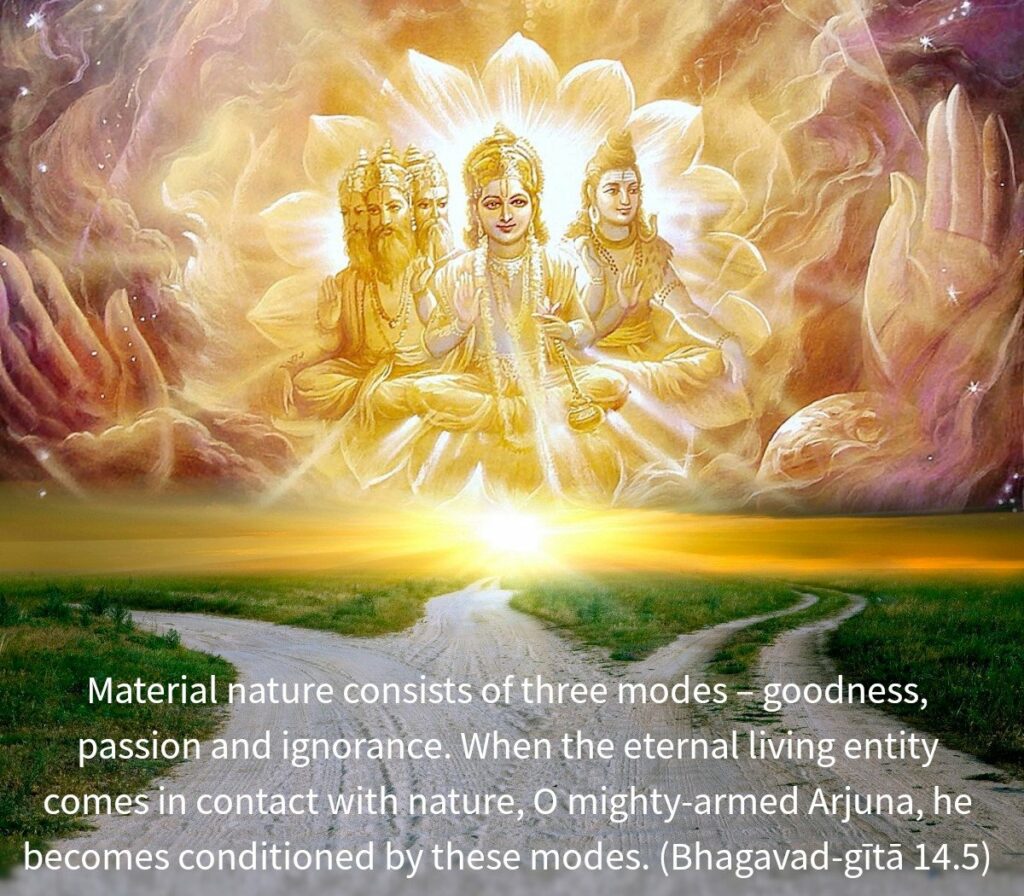
Bhagavad Gita: Chapter 14, Verse 5

सत्त्वं रजस्तम इति गुणा: प्रकृतिसम्भवा: |
निबध्नन्ति महाबाहो देहे देहिनमव्ययम् || 5||

sattvaṁ rajas tama iti guṇāḥ prakṛiti-sambhavāḥ
nibadhnanti mahā-bāho dehe dehinam avyayam

In the Indian tradition, the Bhagavad Gita also explains the relation between human behavior and environment or ‘Prakriti’. Chapter XIV, verse 5 states : “Sattvam, rajas, tama iti gunah prakriti sambhavah”, the modes of human behavior such as Sattva (the mode of goodness), Rajas (the mode of passion), and Tamas (the mode of ignorance) are generated by the interactions between human body and the environment in which he lives.

Whole Dude – Whole Behavior: A thing comprises of two categories, 1. Matter, and 2. Form. Behavior pertains to the actions performed by the Form and Nature pertains to the material nature of Matter, the Living Matter or the corporeal substance.

At the same time, Indian tradition makes a very clear distinction between true human nature and the three modes of human behavior. The real, or true man is described by the spiritual characteristic of human nature. The Bhagavad Gita in Chapter XVIII, verse 20 claims that all living entities share a single reality even while they are divided into innumerable forms (Sarva bhutesu yenaikam bhavam avyayam iksate) and directs us to recognize that spiritual nature as the true reality that is common among different living forms. B.F. Skinner paid attention to the external causes or influences that generate or modify human behavior and has totally avoided the study of innate or inner cause of behavior. He did not give any importance to the role of heredity in human behavior. This internal influence on an organism’s behavior is not directly observable and an experimenter cannot manipulate such internal influences to conduct experimental studies of behavior. Skinner’s findings about external influences and environmental conditioning mechanisms explain several aspects of human behavior but they do not explain the relationship between human behavior and human existence. To understand human existence, we have to learn about the nature of man’s substance and the behavior of the cells, tissues, and organs that provide the structural and functional basis of the human organism.

Man is a very complex living organism that shows structural differentiation and the functional organization of various tissues and organ systems. The specialized functions of tissues and organs is possible because of the functional subordination of the cells to the requirements of the organism as a whole. In other words, the specialized functions of tissues and organs could be described as ‘altruistic’ behavior, a behavior that promotes the well-being and appears to favor the individual’s chances of survival and reproduction. Man may exhibit behavior under the influence of environment and may act in the modes of behavior such as goodness (Sattva), passion (Rajas), or ignorance (Tamas), but his existence is made possible by his innate human nature which acts as an internal influence and determines the characteristics of the biotic interactions between the cells, the tissues, and organs of his own body.

Whole Dude – Whole Behavior: The integration of Structure and Function describes the Spiritual Basis for Health and Human Existence. By knowing the structure and function of the Red Blood Cell or Erythrocyte, we can establish the facts of Blood Circulation, the reason for the structure of the Heart and Lungs, their motions and their relation to each other and their relation to the Human Being who exists as an Individual with Individuality.
Related articles