Whole Action – Tibet Climate Action

Tibet Consciousness – Tibet Climate Action
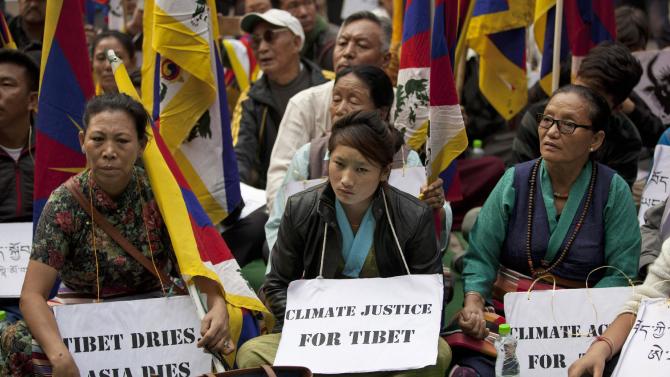
Tibet Consciousness – Tibet Climate Action in New Delhi, India. Tibetans protest ahead of Paris Climate Conference. I coined the phrase Whole Action to demand Freedom, Peace, and Justice for Tibet to save Tibet’s Climate.

To protect Tibet’s fragile environment and to preserve Tibet’s delicate ecological balance, people of world have to join hands to defeat Red China’s policies of Imperialism, and Neocolonialism. This problem of environmental degradation needs a comprehensive approach; its political, economic, and social origins demand response for any meaningful action that intends to Save Climate. I coined the phrase Whole Action to demand Freedom, Peace, and Justice for Tibet to save Tibet’s Climate.

Rudra Narasimham Rebbapragada
Ann Arbor, MI 48104-4162 USA
Special Frontier Force

GLACIERHUB

Tibet’s Melting Glaciers; The World’s Leaky Roof

Posted by CHRISTINA LANGONE on Dec 2, 2015

Tibet is often referred to as the roof of the world, since it is the world’s largest and highest plateau. The lead-up to the 21st Conference of the Parties in Paris, or COP21, created a push to make Tibet a central part of the discussions, even though it does not have direct representation there. Though some countries, such as Peru and Nepal, incorporate minority peoples into their national delegations at COP21, China has not included Tibetan representation in their delegation. The Climate Action for the Roof of the World campaign is arguing that the COP21 agreement cannot be accomplished, and thus the house cannot be saved, without direct consideration of Tibet.

TIBET CONSCIOUSNESS - TIBET CLIMATE ACTION. DEMANDING FREEDOM, PEACE, AND JUSTICE FOR TIBET.
I coined the phrase Whole Action to demand Freedom, Peace, and Justice for Tibet to save Tibet’s Climate.

This planet is our home and Tibet its roof. We need #climateaction for #Tibet – the #RoofOfTheWorld #COP21 #ADP2015 https://t.co/5JsgkUwfLb
— Dalai Lama (@DalaiLama) November 28, 2015 Tibet is not only the highest plateau, with an average elevation of more than 4000 meters above sea level, it is also known as the Third Pole of the world. With 46,000 glaciers, it is the world’s largest concentration of ice after the Arctic region and Antarctica, at the North and South Poles. Two-thirds of those glaciers may be gone by 2050 if the current rate of retreat is sustained.

TIBET CONSCIOUSNESS - TIBET CLIMATE ACTION. TIBET HOME FOR 46, 000 GLACIERS AND IS KNOWN AS THIRD POLE OF PLANET EARTH. DEMANDING FREEDOM, PEACE, AND JUSTICE FOR TIBET.
TIBET CONSCIOUSNESS – TIBET CLIMATE ACTION. TIBET HOME FOR 46, 000 GLACIERS AND IS KNOWN AS THIRD POLE OF PLANET EARTH. DEMANDING FREEDOM, PEACE, AND JUSTICE FOR TIBET.

In a press release on the campaign’s website there is a powerful quote from the Dalai Lama: “This blue planet is our only home and Tibet is its roof. As vital as the Arctic and Antarctic, it is the ThirdPole…[t]he Tibetan Plateau needs to be protected, not just for Tibetans but for the environmental health and sustainability of the entire world.” The goal of the campaign is to show the world how environmentally critical and fragile Tibet is.

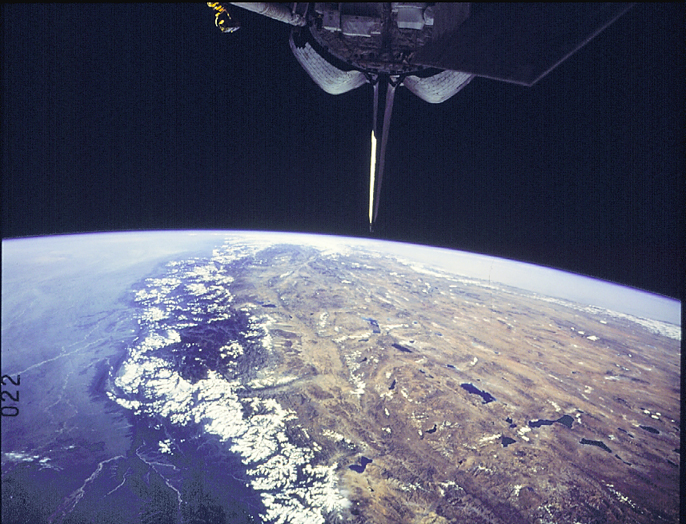
NASA photo of Himalayan Mountains and Tibetan Plateau (Courtesy of:NASA/Wikimedia Commons)
I coined the phrase Whole Action to demand Freedom, Peace, and Justice for Tibet to save Tibet’s Climate.

NASA photo of Himalayan Mountains and Tibetan Plateau (Courtesy of:NASA)

The Roof of the World campaign highlights a few key points that they feel make the Tibetan plateau crucial to the world’s climate and therefore central to COP21; the glaciers provide water for 1.3 billion people in the surrounding area, it influences the region’s monsoons, and there has been a link made connecting thinning Tibetan snow cover with heat waves in Europe.

The campaigners believe that if the Tibetan ecosystem is to be preserved, the Chinese government needs to enforce their Environmental Protection Law more vigorously and the global community needs to engage in robust climate action. The campaign points out a number of critical areas that need to be addressed in a worldwide: retreating glaciers, permafrost melting, the lack of snow accumulation since the 1950s, and threats from deforestation, mining, and dams as.

TIBET CONSCIOUSNESS - TIBET CLIMATE ACTION. DEMANDING FREEDOM, PEACE, AND JUSTICE FOR TIBET.
I coined the phrase Whole Action to demand Freedom, Peace, and Justice for Tibet to save Tibet’s Climate.

@Tibetans #RoofOfTheWorld photo challenge #peoplesclimate march happening in Brisbane https://t.co/RcNRxhINSQ pic.twitter.com/UfX4vXu3vJ
— clara (@clara111) November 28, 2015

The campaign could be seen as a form of “clicktivism” since it is being introduced to the world by way of social media. There is an online photo challenge where people post photos of themselves with their hands above their heads, forming a “roof,” to show their solidarity with the campaign. There are even pictures of the Dalai Lama getting involved, posting his own roof photo. The Dalai Lama has been actively pursuing climate change action since 2011, so it is notable that this is the campaign he has chosen to support. There is also a Thunderclap organization that attempts to amplify users’ messages through way of active social participation that the Roof of the World campaign has used to spread it’s message. The website itself, though, is full of informative guides to help update those who wish to learn more about Tibet and seems to actively push for action beyond the social media campaign.

GlacierHub’s managing editor, Ben Orlove, who is currently in Paris for the COP, met a colleague there who is familiar with Tibet. This source, whose anonymity we are maintaining, states “Tibet.net is directly funded by the Tibetan exile government [in Dharamsala, India]. The website is from Tibet Policy Institute.” The source added that it serves as a lobby group, and that a number of academics find that Tibet Policy Institute is at times unbalanced and extreme with the information on Tibet’s climate and environment. The source adds, “Tibet Policy Institute never claimed to be in the forefront of research on original Tibetan research and their job is to lobby and they are good at making information digestible and engaging for the public.”

The COP21 will begin December 7 and will bring together world leaders with the goal of a global climate agreement. Tibet is not on the agenda, but the Roof of the World Campaign hopes to make Tibet more of a focal point in the coming weeks.

Tibetan prayer flags (Photo:Ed J/Flikr, please contact the photographer before using)

Tibet’s Melting Glaciers; The World’s Leaky Roof

TIBET CONSCIOUSNESS – TIBET CLIMATE ACTION LAUNCHED BY CENTRAL TIBETAN ADMINISTRATION. DEMANDING FREEDOM, PEACE, AND JUSTICE IN TIBET.
TIBET CONSCIOUSNESS – TIBET CLIMATE ACTION. TIBETANS DEMAND FREEDOM, PEACE, AND JUSTICE FOR TIBET.
Tibet Consciousness – Tibet Climate Action – Tibet Third Pole of Blue Planet. Demanding Freedom, Peace, and Justice for Tibet.On tibet3rdpole.org
Tibet Consciousness – Tibet Climate Action. To Save ‘The Roof of the World’, demanding Freedom, Peace, and Justice for Tibet.
I coined the phrase Whole Action to demand Freedom, Peace, and Justice for Tibet to save Tibet’s Climate.

Whole Climate – Tibet’s Climate relates to the destiny of billions of people

Tibet Consciousness – Climate Action – Too Little, Too Late

TIBET CONSCIOUSNESS – TIBET CLIMATE ACTION. TIBET HOME FOR 46, 000 GLACIERS AND IS KNOWN AS THIRD POLE OF PLANET EARTH. DEMANDING FREEDOM, PEACE, AND JUSTICE FOR TIBET.

The problems of severe environmental degradation of Tibet and its melting glaciers cannot be resolved by 2015 Paris Climate Treaty. It is too little, too late. Tibet’s Climate in fact determines the destiny of billions of people. In my analysis, the problem of environmental degradation must be resolved by restoring the natural conditions that operate across the Tibetan Plateau and it includes the sense of natural freedom that shapes Tibetan existence.

Rudra Narasimham Rebbapragada
Ann Arbor, MI 48104-4162 USA
Special Frontier Force- Establishment 22-Vikas Regiment

THE NEW YORK TIMES

An Accelerating Threat

TIBET GLACIERS RETREAT SIGNALS TROUBLE FOR ASIAN WATER SUPPLY

By EDWARD WONG DEC. 8, 2015

Tibet Consciousness – Climate Action – Too Little – Too Late. 2015 Paris Climate Treaty will not resolve problem of melting glaciers of Tibet. IMAGE. THE MENGKE GLACIER.

The Mengke Glacier, one of Tibet’s largest, retreated an average of 54 feet a year from 2005 to 2014. From 1993 to 2005, it retreated 26 feet a year. Credit Adam Dean for The New York Times

MENGKE GLACIER, Over the years, Qin Xiang and his fellow scientists at a high and lonely research station in the Qilian Mountains of northwest Tibet have tracked the inexorable effects of rising temperatures on one of world’s most important water sources.

The thing most sensitive to climate change is a glacier, said Dr. Qin, 42, as he slowly tread across an icy field of the Mengke Glacier, one of Tibet’s largest. In the 1970s, people thought glaciers were permanent. They didn’t think that glaciers would recede. They thought this glacier would endure. But then the climate began changing, and temperatures climbed.
Beneath Dr. Qin’s feet, the cracking ice signaled the second-by-second shifting of the glacier.

Tibet Consciousness – Climate Action – Too Little – Too Late. 2015 Paris Climate Treaty will not fix problems of Glacier Melt in Tibet. Climate Change in Shibaocheng in Gansu Province, Tibet.

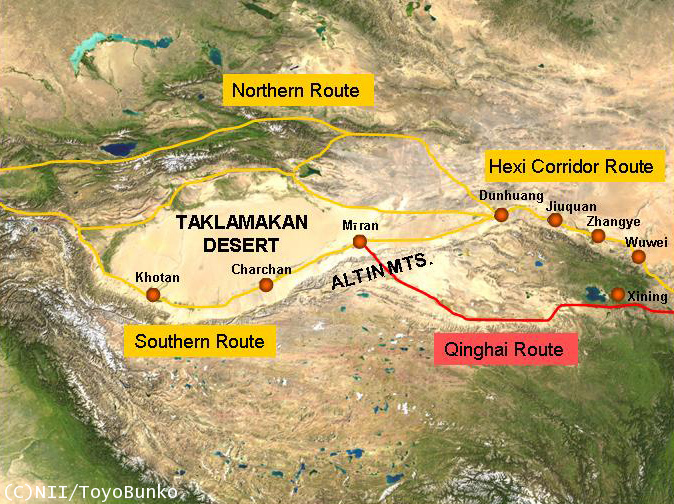
The extreme effects predicted of global climate change are already happening in Tibet. Glacier retreat here and across the so-called Third Pole, the glaciers of the Himalayas and related mountain ranges, threatens Asia’s water supply. Towns and villages along the arid Hexi Corridor, a passage on the historic Silk Road where camels still roam, have suffered floods and landslides caused by sudden summer rainstorms. Permafrost is disappearing from the Tibet-Qinghai Plateau, jeopardizing the existence of plants and animals, the livelihoods of its people and even the integrity of infrastructure like China’s high-altitude railway to Lhasa, Tibet.

Zhao Tingyu, 66, in front of homes built by the government to resettle villagers whose homes were destroyed by severe flooding caused by heavy rains in the town of Shibaocheng in Gansu Province. Shibaocheng is at the foot of the Qilian range, which has been devastated by recent storms. Credit Adam Dean for The New York Times

The fact that Chinese scientists are raising alarms about these changes is a key reason that the Chinese government has been engaging fully in climate change negotiations in recent years.
Another is the deadly urban air pollution, caused mostly by industrial coal burning, that resulted in Beijing’s first RED ALERT over air quality on Monday.

China, which remains the world’s largest emitter of greenhouse gas, pledged last year to begin lowering carbon dioxide emissions around 2030, and in Paris this month, President Xi Jinping reiterated his resolve to help slow climate change. There are no vocal climate change deniers among top Chinese officials.

In November, China released a detailed scientific report on climate change that predicted disastrous consequences for its 1.4 billion people. Those included rising sea levels along the urbanized coast, floods from storms across China and the erosion of glaciers. More than 80 percent of the permafrost on the Tibet-Qinghai Plateau could disappear by the next century, the report said. Temperatures in China are expected to rise by 1.3 to 5 degrees Celsius, or 2.3 to 9 degrees Fahrenheit, by the end of the century, and temperatures have risen faster in China in the last half-century than the global average.

People across China are already feeling the impact. The most obvious devastation comes from flooding. The report said an increase in urban floods attributed to climate change has destroyed homes and infrastructure. From 2008 to 2010, 62 percent of Chinese cities had floods; 173 had three or more.

China is more prone to the adverse effects of climate change because China is vast, has diverse types of ecology and has relatively fragile natural conditions, Du Xiangwan, chairman of the National Expert Committee on Climate Change, wrote in the report’s introduction.

Last weekend, Chinese scientists released a separate report that said the surface area of glaciers on Mount Everest, which straddles the Tibet-Nepal border, have shrunk nearly 30 percent in the last 40 years.

Vanishing glaciers raise urgent concerns beyond Tibet and China.

By one estimate, the 46,000 glaciers of the Third Pole region help sustain 1.5 billion people in 10 countries its waters flowing to places as distant as the tropical Mekong Delta of Vietnam, the hills of eastern Myanmar and the southern plains of Bangladesh. Scattered across nearly two million square miles, these glaciers are receding at an ever-quickening pace, producing a rise in levels of rivers and lakes in the short term and threatening Asia’s water supply in the long run.

A paper published this year by The Journal of Glaciology said the retreat of Asian glaciers was emblematic of a historically unprecedented global glacier decline.
I would say that climatologically, we are in unfamiliar territory, and the world’s ice cover is responding dramatically, said Lonnie G. Thompson, a glaciologist at Ohio State University who helped found a project to study climate change on the Tibetan Plateau.

Across China, the surface area of glaciers has decreased more than 10 percent since the 1960s, according to the climate change report. The report linked the expected water scarcity to national security, noting that in the future, disputes between China and neighboring countries on regional environmental resources will keep growing.

The Qilian range, on the north end of the Tibetan Plateau, straddles three provinces and towers to 18,200 feet. Scientists here at the Mengke Glacier have been studying it from a permanent research station since 2007, one of about 10 major glacier research stations in Tibet. The glacier is six miles long and covers nearly eight square miles.

As it recedes more rapidly, floods here have become more frequent and more powerful. In July, the road to the research station flooded, with water rising more than six feet.

Zhao Shangxue, who manages logistics here, said that he had had to abandon his car and walk four hours to the station.
The glacier has always melted in the summertime, but now it melts even more, he said.

A report by the research center said the retreat of the Mengke Glacier and two others in the Qilian range accelerated gradually in the 1990s, then tripled their speed in the 2000s. In the last decade, the glaciers have been disappearing at a faster rate than at any time since 1960.

From 2005 to 2014, the Mengke Glacier retreated an average of 54 feet a year, while from 1993 to 2005, it retreated 26 feet a year.
As scientists like Mr. Qin study the glacier and the consequences of its retreat, towns and villages in the region are grappling with a worsening cycle of drought, sudden rainstorms and floods.

The town closest to the glacier, Shibaocheng, has been devastated by recent storms. Its 1,250 residents, mostly ethnic Mongolian, graze yaks, horses and sheep in high pastures below the glacier during the summer. In 2012, a sudden rainstorm set off flooding that destroyed about 200 homes. Nearly 14,000 animals were killed or lost.

Old people here say they hadn’t seen such a flood in 50 or 60 years, said Gu Wei, the deputy mayor. She said rain mixed with hail came down for three days.

Scientists have no easy way to determine the exact relationship between the rainfall and the changes in the nearby glacier, Dr. Qin said. The retreat of glaciers of course has an effect on the climate and on rain patterns, but we can’t measure it, he said.

Southeast of Mengke Glacier, 180 miles away along the Hexi Corridor, Sunan County at the foot of the Qilian Mountains has experienced some of the region’s worst flooding. It is home to ethnic Yugurs and has flooded a half-dozen times since 2006.

Five years ago, at least 11 people died in floods and landslides. In July, heavy rains led to similar disasters in 13 villages, destroying more than 150 homes and causing more than $6 million of damage, an official report said.

Tibet Consciousness – Climate Action – Too Little – Too Late. 2015 Paris Climate Treaty cannot fix problems of Climate Change in Tibet. Floods in the Hexi Corridor.

Floods in the Hexi Corridor are related to torrential rains and precipitation from fronts, said Wang Ninglian, a glaciologist at the Chinese Academy of Sciences. Its caused by climate change.

Kiki Zhao and Mia Li contributed research.

A version of this article appears in print on December 9, 2015, on page A4 of the New York edition with the headline: Chinese Glacier’s Retreat Signals Trouble for Asian Water Supply.

© 2015 The New York Times Company

Tibet Consciousness – Climate Action – Too Little – Too Late. Tibet Glacier Retreat, 2015 Paris Climate Treaty has no cure for this environmental degradation. Asian Water Supply under great threat.
Tibet Consciousness – Climate Action – Too Little – Too Late.

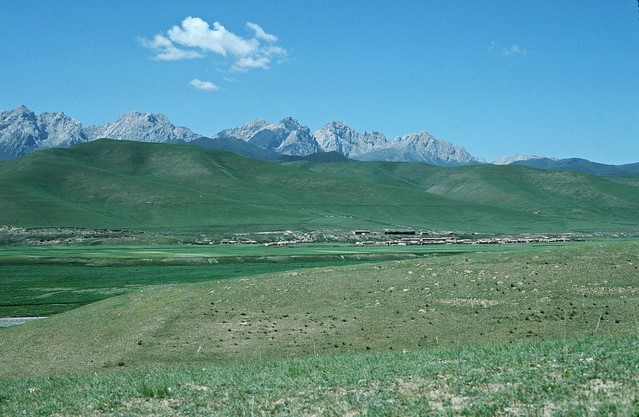
Autumn scenery in Qilian Mountains[1]- Chinadaily.com.cn

Autumn scenery in Qilian Mountains[3]- Chinadaily.com.cn

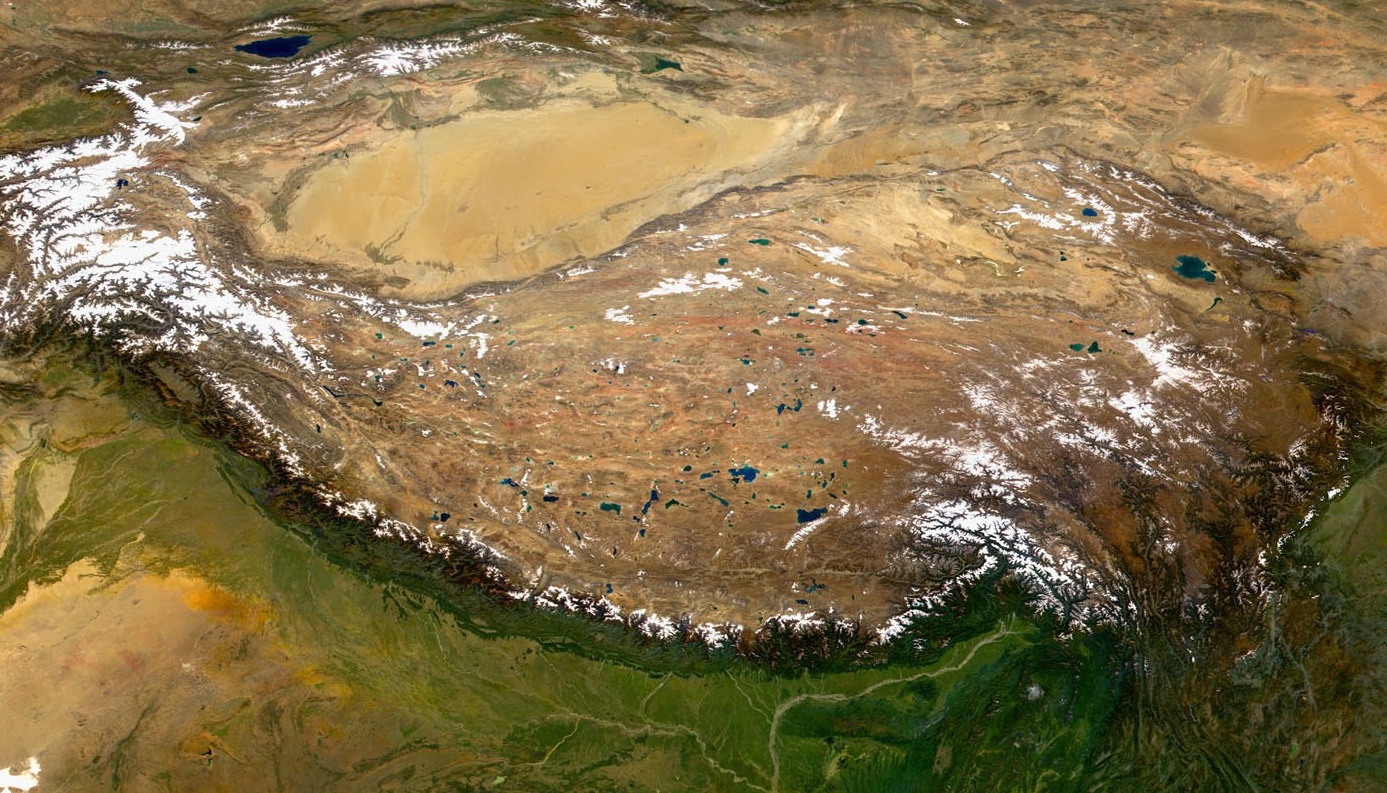
The Tibetan Plateau is surrounded by massive mountain ranges.

... areas of ICTPEM Three Rivers 4000m Naqu 5000m Qilian Mountains 3000m

Landscape Qilian Mountain, Zhangye, Gansu

Qilian Mountain Grassland in Qinghai, Qilian Mountain in Qinghai ...

The problems of severe environmental degradation of Tibet and its melting glaciers cannot be resolved by 2015 Paris Climate Treaty. It is too little, too late. Tibet’s Climate in fact determines the destiny of billions of people. In my analysis, the problem of environmental degradation must be resolved by restoring the natural conditions that operate across the Tibetan Plateau and it includes the sense of natural freedom that shapes Tibetan existence.