Whole Hope – The Hope for Freedom in occupied Tibet

Tibet Consciousness – The Undying Hope for Freedom

Hope for Tibet’s Freedom comes from a belief that predicts Red China’s sudden downfall similar to fall of the Evil Empire identified as Babylon in Revelation, Chapter 18.

On behalf of Special Frontier Force, Establishment 22, I host the Living Tibetan Spirits. These are Spirits of young Tibetan soldiers who lost their lives with the hope for Freedom in Tibet. We have not given up on our hope.

At Special Frontier Force, the concern is not about scoring a military victory. Occupation of Tibet is unjust, is illegal, and we stand opposed to it and resist  as best as possible. Victory in War is not always decided by relative strengths of parties involved. Red China’s act of aggression is Evil and hence Red China is destined to fail.

Hope for Tibet’s Freedom comes from a belief that predicts Red China’s sudden downfall similar to fall of the Evil Empire identified as Babylon in Revelation, Chapter 18.

Hope for Tibet’s Freedom comes from a belief that predicts Red China’s sudden downfall similar to fall of the Evil Empire identified as Babylon in Revelation, Chapter 18.
TIBET CONSCIOUSNESS - UNDYING HOPE FOR FREEDOM - THIS CIA TRAINED FREEDOM FIGHTER SHARED A PHOTO TAKEN BY UNKNOWN CHINESE SPY WITH JOURNALIST NOLAN PETERSON, THE DAILY SIGNAL. BOTH OF THEM HAVE TO ACCOUNT FOR THE POSSESSION OF THAT PHOTO.
TIBET CONSCIOUSNESS – UNDYING HOPE FOR FREEDOM – THIS CIA – TRAINED TIBETAN FREEDOM FIGHTER SHARED A PHOTO TAKEN BY UNKNOWN CHINESE SPY WITH JOURNALIST NOLAN PETERSON, THE DAILY SIGNAL. BOTH OF THEM HAVE TO ACCOUNT FOR THE POSSESSION OF THAT PHOTO.

I am pleased to share a story published by Nolan Peterson, foreign correspondent of The Daily Signal. Hopefully, media will give attention to the foul game played by Nixon-Kissinger during 1970-72. Special Frontier Force/Establishment 22 initiated Liberation of Bangladesh with military action in the Chittagong Hill Tracts in response to Genocide in East Pakistan. India’s Prime Minister Mrs. Indira Gandhi met US President Richard M Nixon in Washington DC on November 03/04, 1971 to enlist his support for India’s military intervention in East Pakistan. President Nixon announced his plan to visit Communist China on July 15, 1971. I call it as “Black Day to Freedom” and characterize Nixon as Backstabber of Tibet. I have known Richard M Nixon and his association with Tibetan Freedom Movement during the years he served as US Vice President during the presidency of Dwight David Eisenhower. Later, President Nixon denied support to India and Tibet for he needed help of General Yahya Khan, Pakistan’s military dictator to befriend Chairman Mao Zedong of Communist China who was known for his crimes against humanity including killing of millions of innocent civilians during infamous Cultural Revolution. I may not agree with Nolan Peterson’s analysis of events, but it doesn’t really matter. The only thing that matters to me is that of hosting undying hope for Freedom in Tibet.

Rudra Narasimham Rebbapragada
Ann Arbor, MI 48104-4162 USA
Special Frontier Force-Establishment 22-Vikas Regiment

A CIA-Trained Tibetan Freedom Fighter’s Undying Hope for Freedom

NOLAN PETERSON @nolanwpeterson October 13, 2015

TIBET CONSCIOUSNESS – UNDYING HOPE FOR FREEDOM. TSERING TUNDUK OF SPECIAL FRONTIER FORCE. ESTABLISHMENT 22. HE AND PETERSON HAVE TO EXPLAIN THEIR CONNECTION TO CHINA.

Tsering Tunduk fled Tibet in 1959 after Chinese soldiers executed his parents. (Photo: Nolan Peterson/The Daily Signal)

PANGONG LAKE, India—At dawn, the old man stood outside his home on the Indian side of Pangong Lake, thumbing his prayer beads and chanting, “Om mani padme hum.”
The sun was rising from behind a wall of Himalayan peaks on the opposite shore, which was Tibet.

The old man’s face, which had been darkly tanned by a lifetime in the high-altitude sun, was as carved and as wrinkled as the Himalayas. His mouth moved almost imperceptibly as he chanted his mantra and stared across the burning blue water toward his homeland, from which he has been exiled for more than half a century.

The old man, whose name is Tsering Tunduk, fled Tibet in 1959 with his little sister, Khunda, after Chinese soldiers executed their parents. It was the same year the Dalai Lama escaped Chinese artillery in the Tibetan capital of Lhasa to seek exile in India.

Orphaned and alone, Tunduk and his sister joined a group of refugees for a treacherous two-month-long journey across the Himalayas into India. Along the way they faced hypothermia and frostbite, a lack of food, and persistent attacks by Chinese troops. Once they arrived in India, the two children began the hard life of refugees.

Ten years later, after he had completed his studies in Mussoorie in 1969, Tunduk volunteered for a secretive all-Tibetan unit in the Indian army called Establishment 22, which the U.S. CIA helped stand up and train when China attacked India in the 1962 Sino-Indian War. Tunduk went through six months of basic training, which included jump training taught by CIA instructors, whom Tunduk remembered as “blond and tall.”

As a new recruit Tunduk made only 80 rupees a month (when he retired in 1996 he made 1,300 rupees a month, about $20), but life in the military offered Tunduk an opportunity more valuable to him than money.

TIBET CONSCIOUSNESS – UNDYING HOPE FOR FREEDOM. PANGONG LAKE NEAR INDIA – TIBET BORDER. Photo. Nolan Peterson. The Daily Signal. CIA – TRAINED TIBETAN FREEDOM FIGHTER IS NOT DEFENDING INDIA-TIBET BORDER. 

Pangong Lake, which is 83 miles long, forms part of the border between India and Tibet. (Photo: Nolan Peterson/The Daily Signal)

“China killed my parents, and I wanted revenge,” Tunduk, who is now 70 years old, said during an interview from his home on Pangong Lake. He spoke in halting, accented English as he peeled potatoes in preparation for dinner. A CD playing the Buddhist, “Om mani padme hum,” mantra set to music was on an endless loop in the background. A shrine to the Dalai Lama, draped in a Khata scarf and with offerings of fruit laid out before it, was on a shelf over the table.

“I would have fought them with a knife at that time,” Tunduk added, not looking up. “I wanted to kill them all.”

Even now, at 70, Tunduk says that when he closes his eyes to sleep at night, he is haunted by images of his dead parents. As he describes their murder, Tunduk’s face muscles relax. His usual smile is replaced by something cold and expressionless. His mind is back in a time and place that no words, not even from one’s native tongue, have the power to faithfully recreate.

Tunduk grew up in an area called Nangchen, in the Kham region of Tibet. “They went through my village to get to Lhasa,” he said.

Tunduk’s father was the village boss, he explained, and when the Chinese soldiers took over, they hauled his father and mother into the town square where the soldiers had gathered all the villagers for the Thamzing, or “struggle session”—a public spectacle used to humiliate, torture, or execute Tibetans who oppose Chinese rule.

The Chinese soldiers tied Tunduk’s father’s arms and legs behind his back, beat him, and then shot him in the head. Next, they painted a target in charcoal on Tunduk’s mother’s chest, suspended her by her arms from two wood poles, and used her for target practice, pumping her body with bullets long after she was dead.

The Chinese soldiers made Tunduk and his sister watch. “I cried, and my sister cried,” he said. “There was nothing left to do but cry.”
Tunduk remembers looking into the faces of the Chinese soldiers and seeing nothing—neither pleasure nor pain. It was as if they had no emotions, he said.

A SECRET WAR

After China invaded Tibet in 1950, a grassroots resistance movement sprang up across the Himalayan kingdom. By 1956, tens of thousands of Tibetans were fighting an insurgency against Communist China’s People’s Liberation Army (PLA). These bands of guerrilla warriors, mainly comprising Tibetans from the eastern Kham region (known for its fierce warriors and bandits), coalesced into a resistance army called the Chushi-Gangdruk, which Tibetan resistance leader Gompo Tashi headed. The Chushi-Gangdruk (which translates to “Four Rivers, Six Ranges,” signifying unity among all the regions of Tibet) played a key role in the Dalai Lama’s escape from Tibet in 1959. The resistance army also provided armed escorts for the tens of thousands of refugees who followed in the exiled leader’s footsteps to seek sanctuary in India and Nepal.

The Chushi-Gangdruk fought the modern, mechanized Chinese army on horseback, wielding swords and World War I-era weapons such as British .303 Lee-Enfield rifles. Their fighting spirit and tactical successes eventually spurred the CIA to begin an operation in 1957 to airdrop supplies and train hand-picked fighters as paratroopers at secret bases in Saipan; Camp Hale, Colorado; and Camp Peary, Virginia—at a CIA training facility also called the “farm.” The Tibetans’ training was eclectic, including espionage tradecraft, paramilitary and small unit combat tactics, and Morse code and radio communication. The CIA operation to train and assist Tibetan fighters was code-named ST CIRCUS, and the over flights and airdrop missions were named ST BARNUM.

Over the span of the CIA’s secret war in Tibet, which lasted until 1972, Tibetan agents were dropped into Tibet from aircraft ranging from World War II B-17s, which were painted all black, to C-130s from secret bases in East Pakistan (now Bangladesh). At first the CIA used East European pilots whom the CIA had previously recruited to drop anti-Soviet operatives into Ukraine. The idea was that the East European pilots would give the U.S. plausible deniability of its involvement if an aircraft went down. Later flights, however, used Air America aircrews and U.S. Forest Service smokejumpers the CIA recruited as jumpmasters and loadmasters. Special U-2 spy plane flights were also ordered to provide more intelligence about the geography of inner Tibet, much of which was still uncharted in the 1960s.

The CIA’s Tibetan operation ultimately failed to make a large-scale impact on the Chinese occupation, and many of the CIA-trained Tibetan fighters were killed in combat or captured. But the operation scored a few key tactical victories and raised the morale of exiled Tibetans. It did create an awkward situation for the Dalai Lama, however, who owed his life to the Chushi-Gangdruk warriors but was also trying to court the favor of the Indian government to secure a home for his exiled nation—backing a secret CIA war in Chinese-occupied Tibet was not in India’s interest at the time.

The CIA continued training Tibetan freedom fighters in Colorado until 1964. And support for Tibetan guerrillas based in the Mustang region of Nepal continued until President Richard Nixon’s normalization of relations with China in 1972.
Yet after CIA support dried up, approximately 10,000 Tibetan guerrilla fighters continued serving in Establishment 22.

TIBET CONSCIOUSNESS – UNDYING HOPE FOR FREEDOM. SPECIAL FRONTIER FORCE. ESTABLISHMENT NO. 22 Photo (Possibly taken by unknown Chinese Spy.) Shared by Nolan Peterson. The Daily Signal. BOTH TSERING AND PETERSON HAVE TO ACCOUNT FOR THIS PHOTO. WHICH OF THESE TWO IS CONNECTED WITH CHINESE INTELLIGENCE???

Tunduk, third from left, during jump training with the Indian army. (Photo: Shared by Nolan Peterson/The Daily Signal)

In 1962, the CIA’s Tibet operation was in limbo. The Kennedy administration questioned the utility of the mission due to the botched Bay of Pigs invasion and a budding rapprochement with India—Indian Prime Minister Jawaharlal Nehru was reluctant to support Tibet in a way that might antagonize China. The Dalai Lama’s presence in India and the CIA’s recruitment of Tibetan fighters from refugee communities made the CIA’s mission in Tibet a political liability for India’s fragile relations with Beijing.

But the political calculus for both the U.S. and India changed on Oct. 22, 1962, when China attacked India along the Himalayan frontier. India scrambled to mount a military response as 25,000 PLA troops invaded over the Thang La Ridge. Nehru’s longstanding efforts to downplay the Tibetan situation to appease Beijing were exposed as misleading, and he faced scathing criticism at home. Humiliated, Nehru turned to the U.S. to help stand up an all-Tibetan guerrilla warfare unit, tapping into the CIA’s existing recruiting and training networks for the Chushi-Gangdruk mission.

The original purpose of Establishment 22 was to use Tibetans’ fighting prowess and genetic ability to physically perform at high altitude to wage a guerrilla war against China in the Himalayas. Initially, the CIA provided much of the unit’s weapons and training. But the 1962 Sino-Indian War cooled before the Tibetan unit could be trained and fielded. India, however, recognized the combat potential of the unit and kept it active. The unit deployed to combat for the first time in East Pakistan (in hot and humid lowland conditions) in 1971 as part of Operation EAGLE, and later faced Pakistani troops in the Himalayas. Establishment 22, however, never officially faced Chinese soldiers in combat.

The use of Tibetans in operations against Pakistan was controversial among the Tibetan exile community. But the government in exile in Dharamsala ultimately supported the move out of deference to their Indian hosts. The U.S. opposed Establishment 22’s operations against Pakistan. But in 1975 the CIA rekindled its support for the Tibetan unit, sending two airborne advisers to train the Tibetans in high-altitude parachute jumps, using drop zones in Ladakh.
India later tagged Establishment 22 for counterterrorism operations. Based in Chakrata, Uttarakhand, the unit continues to serve along India’s Himalayan border as part of the Special Frontier Force.

ENEMIES

Many young Tibetan men joined the Indian military due to both the promise of exacting revenge on China and a lack of better career alternatives.
When Tunduk arrived in India, he was a 14-year-old orphan unable to communicate by means other than hand signals. “When we fled to India across the mountains we had problems with cold and food, and the Chinese were shooting at us,” he said. “And when we arrived, we had a big language problem.”

Once in India, Tunduk finished school and studied languages—he can now speak eight, he says, including English. Following graduation, however, Tunduk found that his status as a refugee afforded him few appealing career options. India conscripted many Tibetan refugees into road construction and repair teams for India’s Himalayan highways. That life didn’t appeal to Tunduk. And there was something else: he couldn’t shake his hatred for China.

“Army life was a very crazy life, but it was my best option,” he said. “I had no hope at that time to do anything else. No hope, and no aim. I faced a lot of problems, and I was affected by what happened to my parents. It made me angry. The truth is I joined the army to have revenge.”
“The army gave me a good life,” he added. “But I was always fighting for Tibet, not for India.”

Tunduk first saw combat in East Pakistan in 1971, and he fought in the 1986 battle on Siachen Glacier against Pakistani troops, in which 17 Tibetans died.
“Sometimes I became frustrated when I had to fight in other wars,” Tunduk said. “Our aim was to fight with China. Pakistan is not my enemy. China killed my parents and captured my country. China is my enemy.”

HOPE

Tunduk lives at an isolated collection of stone huts and seasonal tents called Man on the Indian shore of Pangong Lake, a thin 83-mile-long lake at an altitude of 13,940 feet, which forms part of the border between India and China in the Ladakhi Himalayas. Only nine families permanently inhabit Man, and Tunduk is the only Tibetan among them.
The lake, which is about three miles across at its widest point, is the highest saltwater lake in the world. It is the epitome of a Tibetan landscape. “After 27 years in the army, I came here because it reminds me of Tibet,” Tunduk said.

It is a long, difficult journey to Pangong Lake from the Ladhaki capital of Leh. The road is sometimes almost indiscernible as it cuts across steep mountain faces and down arid, high-altitude valleys. This road, like many in Ladakh, was constructed and maintained by Tibetan refugees pressed into construction gangs by the Indian government in the 1960s. Even today, small troupes of Tibetan road workers, comprising both men and women, are constantly at work in some of the harshest conditions imaginable. They keep India’s Himalayan roads clear, removing large rocks deposited by landslides or filling in potholes. All by hand. They live in small encampments made from old parachutes, located on what little flat ground there is. There are no trees for shade, and there is no water except for a trickle of snowmelt. Living their lives above 15,000 feet, they endure a lonely and miserable existence.

The road to Pangong Lake crosses the Chang La pass, which tops out at 17,688 feet, roughly the same height as Mt. Everest base camp in Nepal. There is an Indian army camp here, where soldiers deployed to the Himalayan border with China are sent to acclimate to the altitude. Past Chang La there are a few scattered settlements, but the Indian army constitutes most of the human footprint in this part of the Himalayas, underscoring lingering tensions with China about territorial rights in this barren, rugged territory, which date back to the 1962 Sino-Indian War.
After hours of weaving up and down mountain passes and endless switchbacks, the road enters a long valley and rounds the base of a mountain, where the ridgelines ahead seem to peel apart like curtains, revealing Pangong Lake.

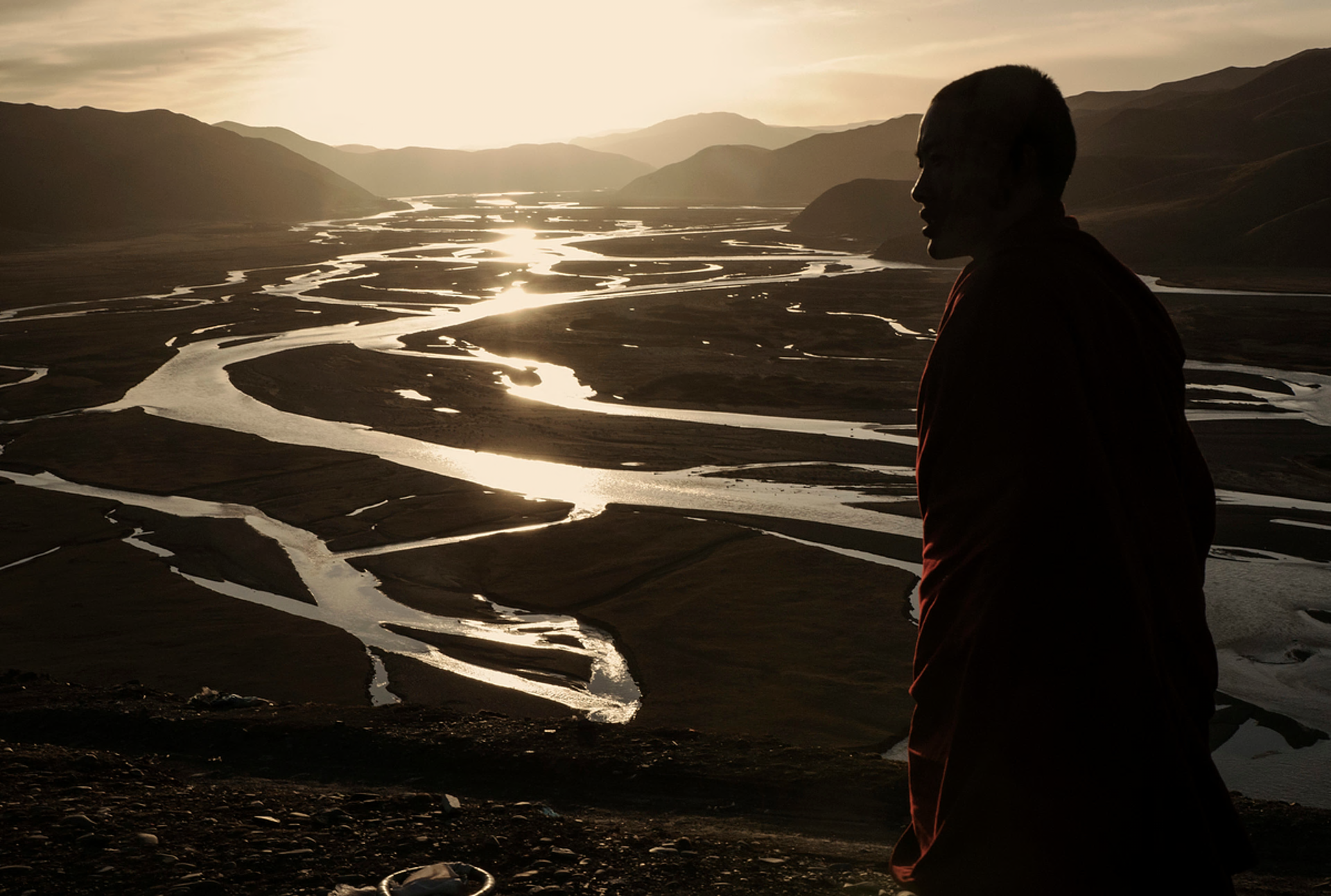
TIBET CONSCIOUSNESS – UNDYING HOPE FOR FREEDOM. SPECIAL FRONTIER FORCE. ESTABLISHMENT 22, LEH, LADHAK, INDIA. ROAD TO PANGONG LAKE. Photo. Nolan Peterson. The Daily Signal.

The road to Pangong Lake from the Ladhaki capital of Leh. (Photo: Nolan Peterson/The Daily Signal)

The lake is complete, abandoned isolation. The water is a collage of deep blue and aquamarine, contrasting sharply with the earthen oranges, browns, and reds of the surrounding mountains. All the colors, made more brilliant and crisp by the thin air, seem to swirl together; it’s like looking at a Monet painting up close. Distances seem to disappear across the massive landscape due to the increased definition of light at high altitude.

The sun’s radiation is pulsing and hot, but noticed only when the nearly constant wind settles for a brief and rare moment. The only hints of humanity are several small settlements of seasonal tents and primitive homes on the Indian lakeshore.

Tunduk is short but well-built. He stands straight and moves purposefully. His body and features have been hardened by a difficult life, not broken by it. He smiles constantly and speaks excitedly in English. He uses his hands a lot as he talks, placing a hand over his heart to show sincerity and a hand on your shoulder or knee when he addresses you.
His clothes are worn and sullied by the hard years of sustaining life in this inhospitable place. Around his neck he wears a necklace with an amulet given to him by the Dalai Lama. He handles the intricately woven design like a priceless work of art. “The Dalai Lama is my God and my king,” he said.

Tunduk used to graze cows, but the extended periods spent in the harsh climate around Pangong Lake became too demanding as he grew older. In the winter, when the temperatures sometimes drop to -40 Celsius, his cheeks and the tip of his nose would turn black from frostbite, he said. Now Tunduk sticks with growing barley and black peas—the same crops that his parents grew in Tibet when he was a boy.

“It’s a very hard life here,” he said. “We live like nomads, as my parents did.”
He stockpiles food, fuel, and other supplies for the winter in case snow closes the roads and he is cut off. The roof of his home is covered with firewood and dried saucers of yak and cow dung. The walls inside are lined with bags of rice and other foodstuff. And above the dinner table is a shrine to the Dalai Lama.

Only about two miles of water separate Tunduk’s home from Tibet. Tantalizingly close, but Tunduk has not set foot in his homeland since 1959. And as he grows older he admits the chances of him ever returning home are fading. Yet he has not given up hope.
“I’m still waiting for freedom,” he said. “And when Tibet is free one day, I will walk back home from here. I will try my best.”

Different Techniques

Tunduk married his wife, Ganyen Tsultime, on Dec. 10, 1989—the same day the Dalai Lama received the Nobel Peace Prize. “We met too late to have children,” Tunduk said. His younger sister, Khunda now lives in Simla, India, and has a daughter who is a nurse in California.

TIBET CONSCIOUSNESS – UNDYING HOPE FOR FREEDOM. SPECIAL FRONTIER FORCE, ESTABLISHMENT 22 TSERING TUNDUK. Photo. Nolan Peterson. The Daily Signal. I HAVE REASONS TO DOUBT THIS MAN’S LOYALTY TO SPECIAL FRONTIER FORCE AND ITS MISSION.

Tsering Tunduk outside his home on the Indian side of Pangong Lake. (Photo: Nolan Peterson/The Daily Signal)

Tunduk and his wife spend nights in the sanctuary of their home. They sleep, eat, and pass time in the main room, which is heated by a stove that burns a combination of wood and yak dung. As the roof timbers creak in the Himalayan wind, Tunduk plays cards with a neighbor. There is a TV, and it is tuned to Indian news. Despite his isolation, Tunduk uses television to stay apprised of what’s happening in the world, and he is well versed in foreign affairs. He compares the current plight of Syrian refugees with that of Tibetans.

“I see a lot of countries with problems today; Syria, Iraq, Afghanistan, Lebanon, Ukraine,” he said. “I see these things, and I know what these people are going through. We had our dark times, too. Where there is a war, there is a sad story. Orphans and casualties—it’s always the same.”

Tunduk, who is devoutly Buddhist, believes that he is a sinner because of what he did as a soldier. He killed in combat and is deeply ashamed of it. To atone for the sins he believes he has committed, Tunduk has resolved to live life according to the teachings of the Dalai Lama.

“My medicine is to be kind, to make others happy,” Tunduk said as he sat outside his home, sipping on butter tea on a cloudless morning. The sun was bright and strong and still low over the Tibetan mountains on the opposite side of the lake.

“We are all the same in our hearts,” he went on, looking toward Tibet. “We want to be happy and to not suffer. We all believe in the same God (In my analysis, no Tibetan Buddhist expresses his religious belief using the term God); we just have different techniques.”

Portrait of Nolan Peterson@nolanwpeterson

NOLAN PETERSON

Nolan Peterson, a former special operations pilot and a combat veteran of Iraq and Afghanistan, is The Daily Signal’s foreign correspondent based in Ukraine.

Related
Tibetan refugees outside a monastery in Leh. (Photo: Nolan Peterson/The Daily Signal)
Hope for Tibet’s Freedom comes from a belief that predicts Red China’s sudden downfall similar to fall of the Evil Empire identified as Babylon in Revelation, Chapter 18.

Tibet: The Forgotten Refugee Crisis

The Daily Signal logo


TIBET CONSCIOUSNESS – UNDYING HOPE FOR FREEDOM. SPECIAL FRONTIER FORCE. ESTABLISHMENT 22 THERE IS NO CONTROVERSY. TIBETAN EXILE PARTICIPATION IN OPERATION EAGLE 1971 WAS ON A VOLUNTARY BASIS, AND TIBETAN COMMUNITY FULLY SUPPORTED THIS OPERATIONAL TASK. THIS PHOTO WAS TAKEN BY A CHINESE SPY.On bhavanajagat.com
TIBET CONSCIOUSNESS - UNDYING HOPE FOR FREEDOM. US PRESIDENT RICHARD M NIXON HAS TO BE KNOWN AS BACKSTABBER OF TIBET. THE HOPE FOR TIBET'S FREEDOM IS STLL ALIVE.
TIBET CONSCIOUSNESS – UNDYING HOPE FOR FREEDOM. US PRESIDENT RICHARD M NIXON HAS TO BE KNOWN AS BACKSTABBER OF TIBET. THE HOPE FOR TIBET’S FREEDOM IS STLL ALIVE.
TIBET CONSCIOUSNESS - UNDYING HOPE FOR FREEDOM. US PRESIDENT RICHARD M NIXON IS TO BE KNOWN AS BACKSTABBER OF TIBET. THE HOPE FOR TIBET'S FREEDOM IS STILL ALIVE.
TIBET CONSCIOUSNESS – UNDYING HOPE FOR FREEDOM. US PRESIDENT RICHARD M NIXON IS TO BE KNOWN AS BACKSTABBER OF TIBET. THE HOPE FOR TIBET’S FREEDOM IS STILL ALIVE.
TIBET CONSCIOUSNESS - UNDYING HOPE FOR FREEDOM. US PRESIDENT RICHARD M NIXON PURPOSEFULLY, DELIBERATELY IGNORED THE PROBLEM OF GENOCIDE IN EAST PAKISTAN.
TIBET CONSCIOUSNESS – UNDYING HOPE FOR FREEDOM. US PRESIDENT RICHARD M NIXON PURPOSEFULLY, DELIBERATELY IGNORED THE PROBLEM OF GENOCIDE IN EAST PAKISTAN.
TIBET CONSCIOUSNESS - UNDYING HOPE FOR FREEDOM. US PRESIDENT RICHARD NIXON PURPOSEFULLY IGNORED GENOCIDE IN EAST PAKISTAN AND BEFRIENDED PAKISTAN'S MILITARY DICTATOR, A BUTCHER OF HIS OWN PEOPLE.
TIBET CONSCIOUSNESS – UNDYING HOPE FOR FREEDOM. US PRESIDENT RICHARD NIXON PURPOSEFULLY IGNORED GENOCIDE IN EAST PAKISTAN AND BEFRIENDED PAKISTAN’S MILITARY DICTATOR, A BUTCHER OF HIS OWN PEOPLE.
TIBET CONSCIOUSNESS - UNDYING HOPE FOR FREEDOM. US PRESIDENT RICHARD M NIXON WITH GENERAL YAHYA KHAN, PAKISTAN'S MILITARY DICTATOR WHO WAS GUILTY OF GENOCIDE. BLACK DAY TO FREEDOM.
TIBET CONSCIOUSNESS – UNDYING HOPE FOR FREEDOM. DR HENRY KISSINGER(HE WAS NOT US SECRETARY OF STATE AND MADE ILLEGAL CONTACT WITH A FOREIGN HEAD OF STATE TO FORMULATE US FOREIGN POLICY) WITH GENERAL YAHYA KHAN, PAKISTAN’S MILITARY DICTATOR WHO WAS GUILTY OF GENOCIDE. BLACK DAY TO FREEDOM.
TIBET CONSCIOUSNESS - UNDYING HOPE FOR FREEDOM. A BLACK DAY TO FREEDOM. Original caption: Washington, DC.: President Nixon meets with General Agha Yahya Khan, President of Pakistan, at the White House. Khan was among six heads of state to call on Nixon following his banquet 10/24, to mark the 25th anniversary of the United Nations. October 25, 1970 Washington, DC, USA
TIBET CONSCIOUSNESS – UNDYING HOPE FOR FREEDOM. A BLACK DAY TO FREEDOM. Original caption: Washington, DC.: President Nixon meets with General Agha Yahya Khan, President of Pakistan, at the White House. Khan was among six heads of state to call on Nixon following his banquet 10/24, to mark the 25th anniversary of the United Nations. October 25, 1970 Washington, DC, USA
TIBET CONSCIOUSNESS - UNDYING HOPE FOR FREEDOM. ON NOVEMBER 03, 1971, US PRESIDENT RICHARD M NIXON REFUSES TO CONSIDER INDIA'S PLEA FOR ASSISTANCE TO RESPOND TO HUMANITARIAN CRISIS IN EAST PAKISTAN.
TIBET CONSCIOUSNESS – UNDYING HOPE FOR FREEDOM. ON NOVEMBER 03, 1971, US PRESIDENT RICHARD M NIXON REFUSES TO CONSIDER INDIA’S PLEA FOR ASSISTANCE TO RESPOND TO HUMANITARIAN CRISIS IN EAST PAKISTAN.
TIBET CONSCIOUSNESS - UNDYING HOPE FOR FREEDOM. ON NOVEMBER 03, 1971 US PRESIDENT RICHARD NIXON DECLINED TO INTERVENE IN EAST PAKISTAN TO STOP GENOCIDE.
TIBET CONSCIOUSNESS – UNDYING HOPE FOR FREEDOM. ON NOVEMBER 03, 1971 US PRESIDENT RICHARD NIXON DECLINED TO INTERVENE IN EAST PAKISTAN TO STOP GENOCIDE.

TIBET CONSCIOUSNESS – TIBET PROBLEM ON THE BACK BURNER

TIBET CONSCIOUSNESS – TIBET PROBLEM ON THE BACK BURNER

TIBET CONSCIOUSNESS – TIBET PROBLEM ON THE BACK BURNER. TIBET PROBLEM WILL NOT GO AWAY AND TIBET CAN NEVER BE FORGOTTEN. THERE IS NO BALANCE OF POWER IN SOUTHEAST ASIA WITH RED CHINA’S MILITARY DOMINATION THREATENING PEACE AND STABILITY OF WORLD.

The Problem of Balance of Power in Southeast Asia became apparent with founding of People’s Republic of China on October 01, 1949. Red China’s Communist Party Chairman Mao Zedong wasted no time to declare his ambitious ‘Expansionist’ Policy. United States along with India gave due importance to this Tibet Problem and initiated action to respond to Red China’s Military and Economic Expansionism.

TIBET ON THE BACK BURNER

TIBET CONSCIOUSNESS - TIBET PROBLEM - ON THE BACK BURNER. NIXON-KISSINGER GET CREDIT FOR PLACING TIBET ON THE BACK BURNER. ENOUGH IS ENOUGH. THE TIME FOR ACTION IS NOW.
TIBET CONSCIOUSNESS – TIBET PROBLEM ON THE BACK BURNER. NIXON-KISSINGER GET CREDIT FOR PLACING TIBET ON THE BACK BURNER. ENOUGH IS ENOUGH. THE TIME FOR ACTION IS NOW.

US 37th President, Richard M Nixon placed Tibet Problem on the Back Burner in pursuit of his sinful desire to befriend Mao Zedong and Zhou En-Lai totally ignoring their Crimes against Humanity. Tibet’s time in History has arrived. Tibet Problem can no longer remain on the Back Burner. The time for action is NOW.

TIBET CONSCIOUSNESS - TIBET PROBLEM ON THE BACK BURNER. IN 1971, INDIA REFUSED TO KEEP PROBLEM OF BANGLADESH ON THE BACK BURNER. INDIA TOOK UNILATERAL, DECISIVE ACTION TO RESOLVE HUMANITARIAN CRISIS IN BANGLADESH.
TIBET CONSCIOUSNESS – TIBET PROBLEM ON THE BACK BURNER. IN 1971, INDIA REFUSED TO KEEP PROBLEM OF BANGLADESH ON THE BACK BURNER. INDIA TOOK UNILATERAL, DECISIVE ACTION TO RESOLVE HUMANITARIAN CRISIS IN BANGLADESH.

During 1971, Nixon-Kissinger placed the problem of Genocide in East Pakistan on the Back Burner. India refused to go along with Nixon-Kissinger and insisted that the humanitarian crisis in East Pakistan deserves a very high priority. India acted alone, and decisively resolved Bangladesh Crisis.

TIBET CONSCIOUSNESS - TIBET PROBLEM ON THE BACK BURNER. ON NOVEMBER 03, 1971, INDIAN PRIME MINISTER MRS. INDIRA GANDHI MET WITH US PRESIDENT RICHARD NIXON IN THE WHITE HOUSE. INDIA REFUSED TO KEEP BANGLADESH HUMANITARIAN CRISIS ON THE BACK BURNER AND TOOK SWIFT, DECISIVE ACTION TO INITIATE LIBERATION OF BANGLADESH USING MILITARY ACTION.
TIBET CONSCIOUSNESS – TIBET PROBLEM ON THE BACK BURNER. ON NOVEMBER 03, 1971, INDIAN PRIME MINISTER MRS. INDIRA GANDHI MET WITH US PRESIDENT RICHARD NIXON IN THE WHITE HOUSE. INDIA REFUSED TO KEEP BANGLADESH HUMANITARIAN CRISIS ON THE BACK BURNER AND TOOK SWIFT, DECISIVE ACTION TO INITIATE LIBERATION OF BANGLADESH USING MILITARY ACTION.

Nixon-Kissinger did not ‘NORMALIZE’ US-CHINA relations. Without Power Equilibrium in Southeast Asia, US cannot hope for normal relations with Red China.

Rudranarasimham Rebbapragada
Ann Arbor, MI 48104-4162 USA
SPECIAL FRONTIER FORCE


The Spirits of Special Frontier ForceThe Spirits of Special Frontier Force, Ann Arbor, MI. At Special Frontier Force, I host ‘The Living Tibetan Spirits’…
 
View on www.Facebook.com  


TIBET CONSCIOUSNESS – TIBET PROBLEM ON THE BACK BURNER. INDIA AND UNITED STATES CANNOT AFFORD TO IGNORE RED CHINA’S MILITARY DOMINATION OF TIBET.

NIXON-KISSINGER – TIBET – ON THE BACK BURNER

TIBET CONSCIOUSNESS – TIBET PROBLEM ON THE BACK BURNER. IN 1971, NIXON-KISSINGER IGNORED HUMANITARIAN CRISIS IN EAST PAKISTAN LEAVING IT ON THE BACK BURNER.

NIXON-KISSINGER – TIBET – ON THE BACK BURNER. Archer Kent Blood, the US Consul General at Dacca, East Pakistan sent this “Blood Telegram” to question the US Foreign Policy that utterly failed to denounce the atrocities, the massacre of innocent, unarmed civilians, mostly Hindu minority community living in East Pakistan during 1971 by the military rulers of Pakistan. He sent this telegram as his moral duty to uphold the humanitarian principles.

TIBET CONSCIOUSNESS – TIBET PROBLEM ON THE BACK BURNER. DURING 1971-72, NIXON-KISSINGER PLACED TIBET PROBLEM ON THE BACK BURNER. THE PROBLEM IS TOO IMPORTANT AND THEY DID NOT BURY IT. THEY LEFT IT SIMMERING.

NIXON-KIISINGER – TIBET – ON THE BACK BURNER. Richard Milhous Nixon, 37th President of the United States(1969-1974), and Dr Alfred Henry Kissinger, the National Security Adviser(1969-1975) deserve to be known as Whole Villains for not responding to the problem of genocide in East Pakistan( now known as Bangladesh) during 1971. Their actions are evil, unprincipled, and make mockery of the US Constitution.

The word ‘Villain’ describes a wicked or unprincipled character in a novel, play, etc., who opposes the protagonist or hero. Villain is someone or something regarded as the cause of a problem, difficulty, injustice, or great crime. It speaks about the evil nature of a person, very bad, disagreeable, or objectionable and such a person is often characterized as a ‘scoundrel’.

I am pleased to share Ashok Malik’s review of the book “The Blood Telegram – India’s Secret War in East Pakistan” authored by Gary J. Bass. The book reveals Archer Kent Blood, the chief US diplomat in Dacca as the hero or protagonist who had suffered on account of the actions of President Nixon and Dr. Kissinger, the National Security Adviser during 1971 . The real character and nature of President Nixon and Kissinger as ‘Villains’ can be easily discerned by reading this historical story titled “The Blood Telegram.” The book talks of the courage and uprightness of Archer Blood who was a first-hand witness to the genocide in East Pakistan, oppression of Bengali speaking Pakistanis, the mass murder and elimination of Hindu minorities and the humanitarian crisis that spilled into a massive refugee problem in India. Mr. Blood meticulously reported the massacres, the bloodshed in East Pakistan and had urged the US administration to take action to stop the military dictator of West Pakistan. Mr. Blood suffered greatly for his efforts and devotion to work. He was ignored, singled out and victimized by Dr. Kissinger. Mr. Blood’s career in the US State Department was utterly ruined and destroyed. This book is the story of what Mr. Blood did and how he suffered for being true to his conscience and his calling. It must be noted that the men and women who make up the State Department or work for the Central Intelligence Agency(CIA) are often conscientious, well-meaning folks, schooled in the simplicity and goodness of small-town, middle class life in the heart of America. They are moral people, keen to use their country’s power to make the world a better place. Such conscientious people who belonged to the Central Intelligence Agency(CIA) had rendered their service at a military organization in India known as Special Frontier Force or Establishment No. 22. Both the US President Richard M. Nixon, and Dr. Henry Kissinger, the National Security Adviser must be recognized as “WholeVillains” for their actions were motivated by an unprincipled desire to befriend Communist China without any concern for its involvement in killing its own people during the “Great Leap Forward” program of 1957-58, and during the infamous “Cultural Revolution” of 1966-69. The story reveals how Nixon and Kissinger were blinded by hate for India and Indians. They had visualized Pakistan as an essential ally and gateway to Communist China and had totally ignored the problem of human suffering in the Land that took a very painful birth as Bangladesh after India’s victory in a military battle during November-December 1971.

Gary J Bass, Professor of Politics & International Affairs at Princeton University is the author of the book titled

NIXON-KISSINGER – TIBET – ON THE BACK BURNER. Gary J. Bass, Professor of Politics & International Affairs at Princeton University is the author of the book titled “The Blood Telegram.”
He described the heroic role of Archer Kent Blood, the US Consul General in Dacca(Dhaka), East Pakistan during 1971.

Archer Kent Blood(March 20, 1923 to September 03, 2004) was the US Consul General, the Chief US Diplomat in Dacca, East Pakistan during 1971.

NIXON-KISSINGER – TIBET – ON THE BACK BURNER. Archer Kent Blood(March 20, 1923 to September 03, 2004) was the US Consul General, the Chief US Diplomat in Dacca, East Pakistan during 1971.

WholeDude - WholeVillain: Massacre in East Pakistan during 1971 is fully revealed in this book.

NIXON-KISSINGER – TIBET – ON THE BACK BURNER. Massacre in East Pakistan during 1971 is fully revealed in this book. This Genocide must not be forgotten and the Villains must be exposed.

WholeDude - WholeVillain: The role of General Yahya Khan, the military ruler of Pakistan, and US President Nixon in the brutal killings of unarmed civilians in East Pakistan during 1971 is now fully revealed. This is their photo image dated October 24, 1970.

NIXON-KISSINGER – TIBET – ON THE BACK BURNER. The role of General Yahya Khan, the military ruler of Pakistan, and US President Nixon in the brutal killings of unarmed civilians in East Pakistan during 1971 is now fully revealed. This is their photo image dated October 24, 1970. In this relationship, the US has totally disregarded the value of Democracy and showed no concern for Human Dignity and ignored its traditional role of defending Human Rights.

WholeDude - WholeVillain: Dr. Henry Kissinger is the Arch Villain in this story. Kissinger flew to China from Pakistan and had used Pakistan as a gateway to Communist China. Both of these Villains are responsible for the millions of people who died in the land called East Pakistan during 1971.

NIXON-KISSINGER – TIBET – ON THE BACK BURNER. Mockery of the US Constitution. Dr. Henry Kissinger is the Arch Villain in this story and he is seen in this photo meeting the leader of another country while responsibility of conducting diplomacy belonged to the US State Department. Kissinger flew to China from Pakistan and had used Pakistan as a gateway to Communist China. Both of these Villains are responsible for the millions of people who died in East Pakistan during 1971. Kissinger had misused and abused his position as the National Security Adviser. In clear violation of the US Constitution, he had usurped power of the Secretary of State to conduct secretive, diplomatic negotiations with foreign leaders.

During 1971, I had served in a military organization called Establishment No. 22, or Special Frontier Force which in reality represents a military alliance/pact between India, Tibet, and the United States to contain the military threat posed by Communist China’s illegal occupation of Tibet. It must be noted that Nixon had served as Vice President for two terms 1953-1956, and 1957-1960, during the presidency of Dwight David Eisenhower. President Eisenhower and his Secretary of State John Foster Dulles continued President Truman’s policy of containing Communism. In Southeast Asia, Eisenhower supported and had employed the Central Intelligence Agency(CIA) to organize the Tibetan Resistance Movement since 1957-58. Later, President John F. Kennedy took the initiative to formulate the military alliance with India and Tibet that created the Special Frontier Force during 1962. The Central Intelligence Agency(CIA) has represented the US as our military partner and took the initial responsibility to impart the necessary military training to all personnel. Its Mission is that of fighting a war to evict China from the Land of Tibet and the men are not used for spying, or gathering intelligence as undercover agents. The CIA has used the services of this Organization to monitor the nuclear activities of Communist China as China was conducting underground nuclear tests inside Tibet. During 1971-72, in a complete reversal of its foreign policy, the United States allowed the National Security Adviser to change the course of the country and to make decisions on foreign relations without giving any role to the duly appointed Secretary of State. Kissinger used the infrastructure of US State Department to orchestrate a policy that has ignored the vital US national interests and its commitment to Democracy and Freedom. Kissinger had chosen to support Pakistan’s military dictator and had used him to gain access to the Communist Leaders in Peking that paved the way for President Nixon’s visit to China during February 1972. This book reveals as to how Nixon was baffled and annoyed by American sympathies for India and he communicated this opinion to Pakistan’s military dictator General Yahya Khan and observed that Americans could be suffering from a “physiological disorder.” Nixon and Kissinger encouraged other countries to illegally ship their US supplied weapons to Pakistan violating US laws that prohibit such transfer of military equipment. Kissinger had urged China’s Foreign Minister Chou En-Lai to open a second front and attack India to stop India from giving assistance to the people of East Pakistan. As India initiated the Liberation of Bangladesh, Nixon sent the US Seventh Fleet into Bay of Bengal without any concern about India’s logistical support to the US Army that was fighting a bloody war in Vietnam, a war in which Communist China had played a big role to ensure defeat of the US Army.

WHOLEDUDE - WHOLEVILLAIN: During April 1969, Chairman Mao Tsetung had selected his Defence Minister Lin Biao as his successor and Lin became the Vice Chairman of the Communist Party.

NIXON-KISSINGER – TIBET – ON THE BACK BURNER. During April 1969, Chairman Mao Tsetung had selected his Defence Minister Lin Biao as his successor and Lin became the Vice Chairman of the Communist Party. Both of them must be held accountable for the atrocities, the crimes against humanity perpetrated in the name of “Cultural Revolution” during 1966-69. WHOLEDUDE - WHOLEVILLAIN: Defence Minister and Communist Party Vice Chairman, the successor of Chairman Mao Tsetung was apparently assassinated by Prime Minister Chou En-lai and Chairman Mao Tsetung on September 13, 1971 as he tried to escape from the country. After his killing, most of the People's Liberation Army's Generals of high command were purged. It totally amazes me to know that the US National Security Adviser Henry Kissinger would request Prime Minister Chou En-Lai to launch a military attack on India during that time to prevent India from taking military action to resolve the humanitarian crisis in East Pakistan.

NIXON-KISSINGER – TIBET – ON THE BACK BURNER.Lin Biao Defence Minister and Communist Party Vice Chairman, the successor of Chairman Mao Tsetung was apparently assassinated by Prime Minister Chou En-lai and Chairman Mao Tsetung on September 13, 1971 as he tried to escape from the country. After his killing, most of the People’s Liberation Army’s Generals of high command were purged. It totally amazes me to know that the US National Security Adviser Henry Kissinger had requested Prime Minister Chou En-Lai to launch a military attack on India during that time to prevent India from taking military action to resolve the humanitarian crisis in East Pakistan.

During 1971, the US National Security Adviser, Dr Henry Kissinger had kept his visit to Peking as a big secret. However, at Special Frontier Force, Establishment No. 22, we were fully aware of his activities. The Central Intelligence Agency(CIA) officials who were serving at Establishment No.22 as military instructors were abruptly asked to return to the United States. Communist China had insisted that it would agree to meet Henry Kissinger and receive him in Peking only after the United States removes all its personnel from India who at that time were employed in the Special Frontier Force/Establishment No. 22. After their departure, India and Tibet had agreed to jointly launch a military action in Chittagong Hill Tracts to initiate the Liberation of Bangladesh and to stop the genocide in East Pakistan.

WholeDude - WholeVillain: On November 04, 1971, India's Prime Minister Indira Gandhi made a final attempt to get support from President Richard Nixon to resolve the humanitarian crisis in East Pakistan. By that time, US had already decided to remove all its CIA personnel who were employed as military instructors at Special Frontier Force/Establishment No. 22. However, we began our military operation to initiate Liberation of Bangladesh without any assistance from the US personnel deputed by the CIA.

NIXON-KISSINGER – TIBET – ON THE BACK BURNER. On November 04, 1971, India’s Prime Minister Indira Gandhi made a final attempt to get support from President Richard Nixon to resolve the humanitarian crisis in East Pakistan. By that time, US had already decided to remove all its CIA personnel who were employed as military instructors at Special Frontier Force/Establishment No. 22. However, we began our military operation to initiate Liberation of Bangladesh without any assistance from the US personnel deputed by the CIA.

WholeDude - WholeVillain: India's Prime Minister Indira Gandhi could not obtain any support from US President Richard Nixon during her visit to Washington D.C. on November 04, 1971. However, it did not deter Special Frontier Force/Establishment No. 22 from initiating our military action to dislodge Pakistan's Army from East Pakistan. We began our military action on November 03, 1971, a day before this meeting.

NIXON-KISSINGER – TIBET – ON THE BACK BURNER. India’s Prime Minister Indira Gandhi could not obtain any support from US President Richard Nixon during her visit to Washington D.C. on November 04, 1971. However, it did not deter Special Frontier Force/Establishment No. 22 from initiating our military action to dislodge Pakistan’s Army from East Pakistan. We began our military action on November 03, 1971, a day before this meeting.

INDIA’S SECRET WAR IN EAST PAKISTAN:

WHOLEDUDE - WHOLEVILLAIN: These two leaders, the US President, the military dictator of Pakistan must be held accountable for the genocide in East Pakistan during 1971.

NIXON-KISSINGER – TIBET – ON THE BACK BURNER. These two leaders, the US President, the military dictator of Pakistan must be held accountable for the genocide in East Pakistan during 1971.

WHOLEDUDE - WHOLEVILLAIN - ORIGINAL SIN: The mockery of the US Constitution. The US National Security Adviser, Dr. Kissinger had misused and abused his official position to meet foreign Heads of State to formulate US foreign relations without the participation of the US Secretary of State. I call this Villainous act as

NIXON-KISSINGER – TIBET – ON THE BACK BURNER. Mockery of the US Constitution. The US National Security Adviser, Dr. Kissinger had misused and abused his official position to meet foreign Heads of State to formulate US foreign relations without participation of the US Secretary of State. I call this Villainous act as “Original Sin”. Both Chairman Mao Tsetung, and Prime Minister Chou En-Lai were leaders of the “Cultural Revolution” during 1966-69 and are guilty of crimes against humanity.
WholeDude - WholeVillain:

NIXON-KISSINGER – TIBET – ON THE BACK BURNER. “THE CRUEL BIRTH OF BANGLADESH” by Archer Kent Blood, the US Consul General in Dacca during 1971 describes the Villainy, the detestable acts of Pakistan’s military generals, and US President, and National Security Adviser.

India launched a Secret War in East Pakistan to respond to the huge humanitarian crisis which could not be resolved. United States pretended its ignorance of this whole problem. This military operation was given the code name Operation Eagle. On November 03, 1971, while India’s Prime Minister was visiting Washington D.C. in a final bid to enlist the support of President Nixon, Special Frontier Force without the US personnel moved into Chittagong Hill Tracts. President Richard Nixon had failed to endorse our military action, but we executed this military action using military equipment, field gear and rations provided by the United States. The infantry weapons and all other tools that we had used were the same as those used by the US Army in its Vietnam War. We prevailed in the battlefield and forced Pakistan’s Army to withdraw from their entrenched positions. The official war of India with Pakistan was declared by India’s Prime Minister on December 03, 1971.

Rudranarasimham Rebbapragada
Ann Arbor, MI 48104-4162, USA

SERVICE INFORMATION:

R. Rudra Narasimham, B.Sc., M.B.B.S.,
Personal Numbers:MS-8466/MR-03277K. Rank:Lieutenant/Captain/Major.
Branch:Army Medical Corps/Short Service Regular Commission(1969-1972); Direct Permanent Commission(1973-1984).
Designation:Medical Officer.
Unit:Establishment No.22(1971-1974)/South Column,Operation Eagle(1971-1972).
Organization: Special Frontier Force.
Reference: National Security Archive Electronic Briefing Book No. 79. The Tilt: The U.S. and the South Asian Crisis of 1971.

http://www2.gwu.edu/~nsarchiv/NSAEBB/NSAEBB79/


THE LEGACY OF TIBET – INDIA – US RELATIONS – THE QUEST FOR TIBET EQUILIBRIUM

THE LEGACY OF TIBET – INDIA – US RELATIONS – THE QUEST FOR TIBET EQUILIBRIUM

TIBET - INDIA - US - RELATIONS - THE QUEST FOR TIBET EQUILIBRIUM. TIBET IS STILL IMPORTANT FOR INDIA'S SECURITY. US WANTS POWER BALANCE IN SOUTHEAST ASIA.
TIBET – INDIA – US – RELATIONS – THE QUEST FOR TIBET EQUILIBRIUM. TIBET IS STILL IMPORTANT FOR INDIA’S SECURITY. US WANTS POWER BALANCE IN SOUTHEAST ASIA.

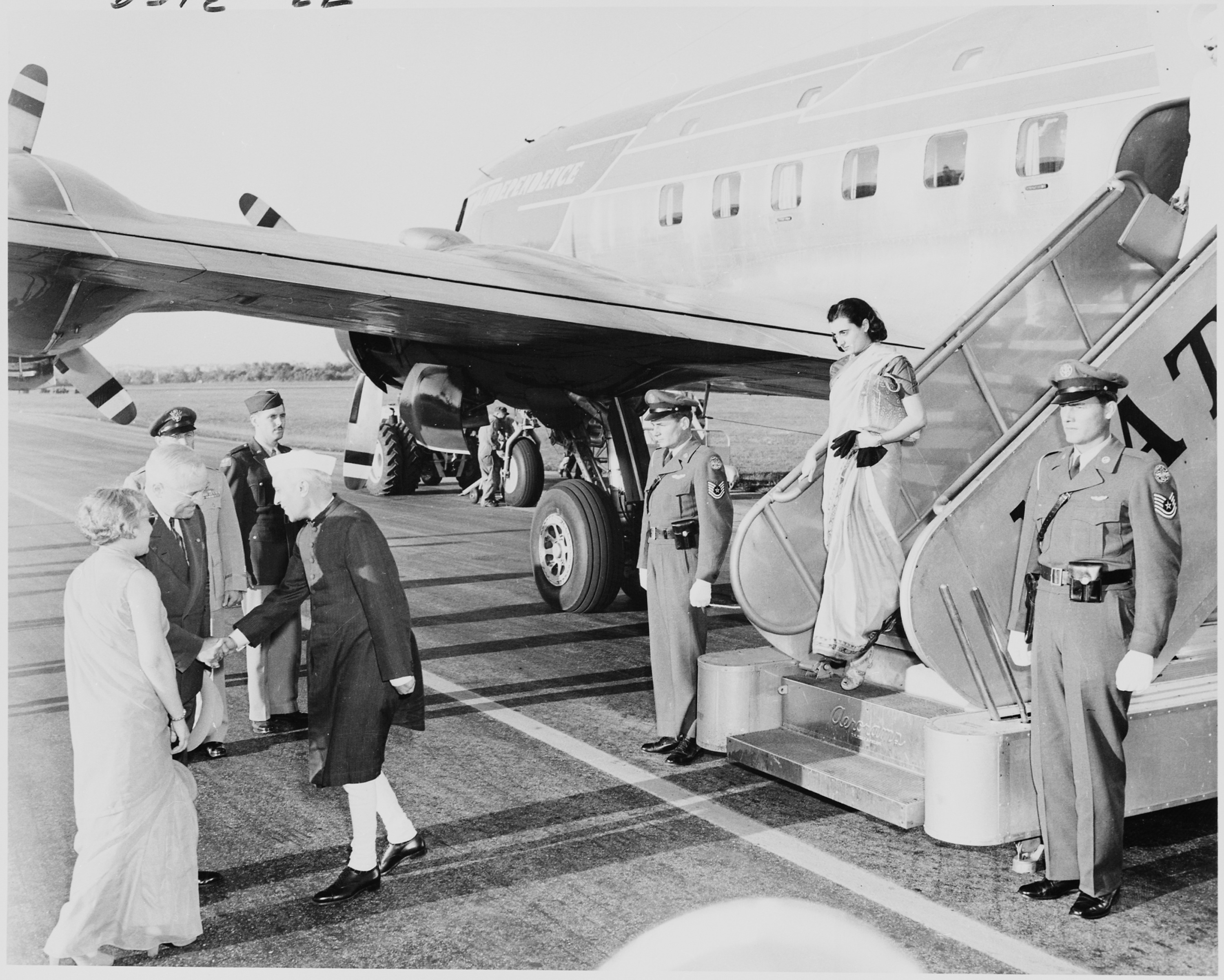
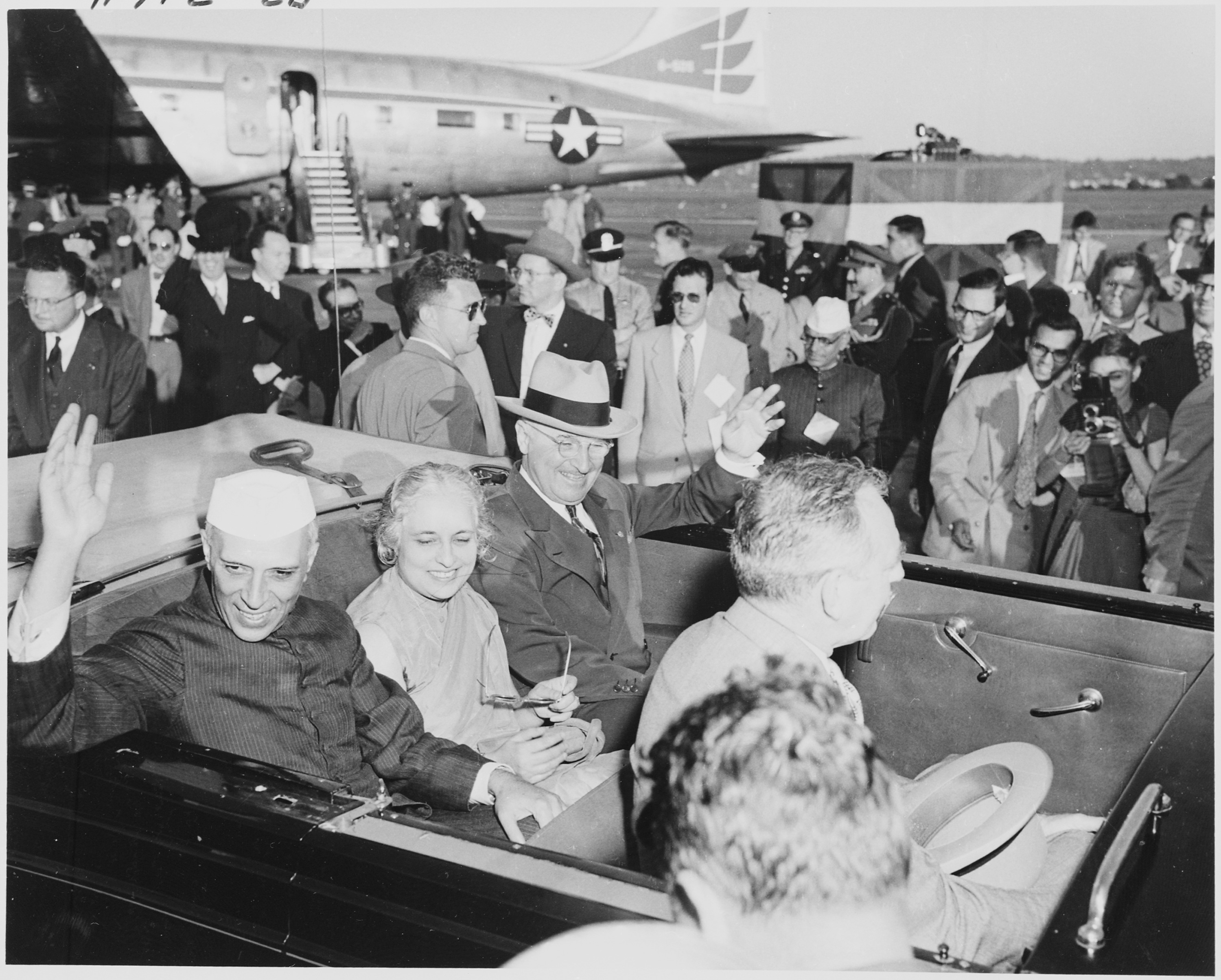
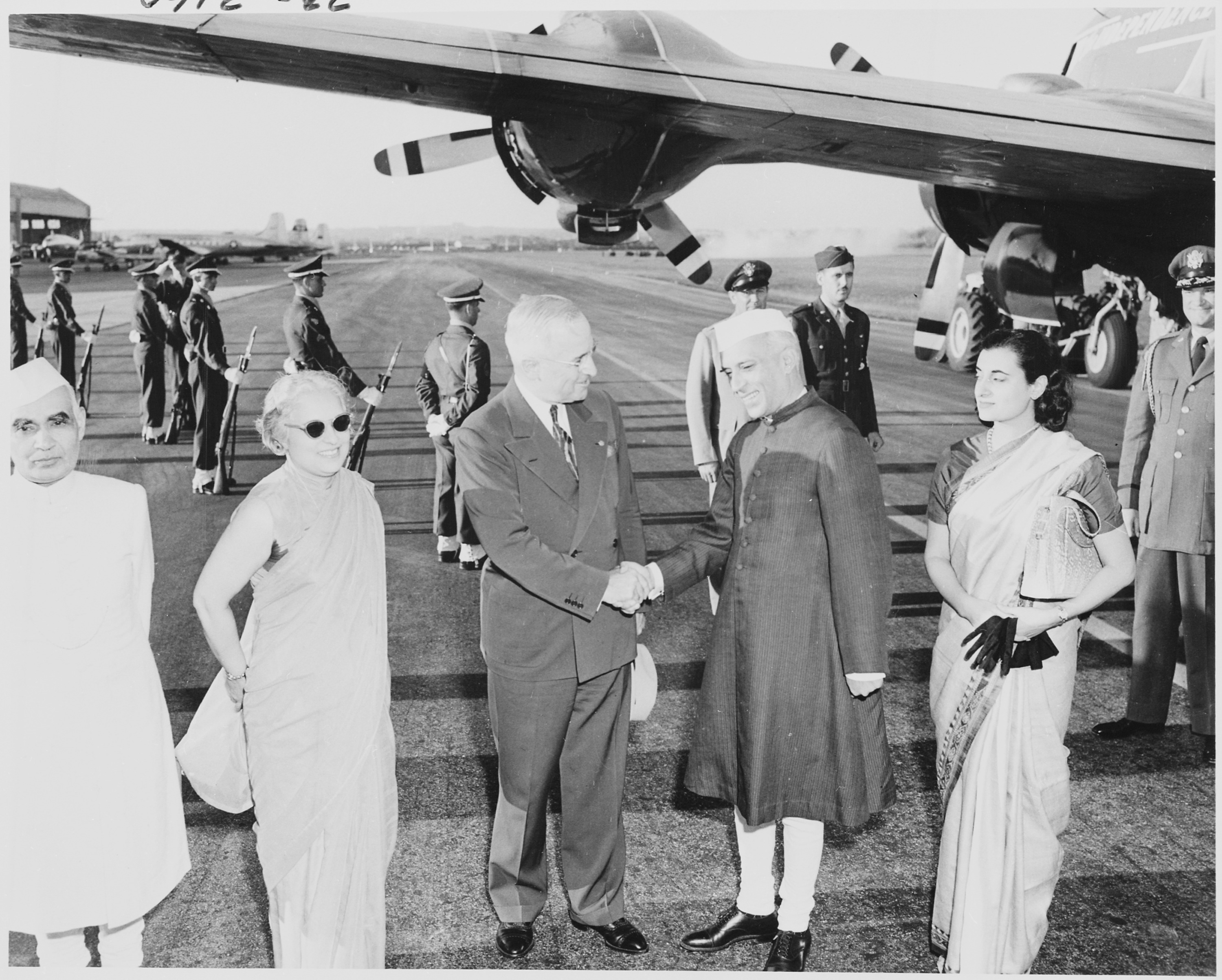
TIBET – INDIA – US RELATIONS – THE QUEST FOR TIBET EQUILIBRIUM. US PRESIDENT HARRY TRUMAN WITH INDIAN PRIME MINISTER JAWAHARLAL NEHRU AT THE NATIONAL AIRPORT IN WASHINGTON DC, ON OCTOBER 11, 1949.

People’s Republic of China came into her existence on October 01, 1949. Red China openly declared to world her ‘Expansionist’ Policy and it immediately raised security concerns in Tibet, India, and the United States. Tibet – India – US relations began with Indian Prime Minister Jawaharlal Nehru’s visit to Washington DC on October 11, 1949 to meet US President Harry Truman. Red China posed a direct threat to power balance in Southeast Asia. I would characterize Tibet – India – US relations as ‘The Quest for Tibet Equilibrium’. Tibet – India – United States remain united and have this common purpose for their historical relationship. The issue is not that of Middle Way or of meaningful autonomy for Tibetans. The issue is not that of Tibet’s Independence. It doesn’t matter if Tibet is part of China or not. Tibet, India, and the US view Communist China as “AGGRESSOR” nation in Tibet which endangered Power Balance in Southeast Asia. The issue is that of restoring Balance and Equilibrium in Tibet. Special Frontier Force is prepared to restore Balance and Equilibrium in Tibet by application of physical force to counteract Red China’s Force of Oppression in Tibet.
Rudranarasimham Rebbapragada

Ann Arbor, MI 48104-4162 USA
SPECIAL FRONTIER FORCE


The Spirits of Special Frontier ForceThe Spirits of Special Frontier Force, Ann Arbor, MI. At Special Frontier Force, I host ‘The Living Tibetan Spirits’…
 
View on www.Facebook.com


Why the Legacy of Tibet’s Cold War Freedom Fighters Still Matters

NOLAN PETERSON @nolanwpeterson October 29, 2015

TIBET – INDIA – US RELATIONS – THE QUEST FOR TIBET EQUILIBRIUM. TIBETAN RESISTANCE MOVEMENT REPRESENTS THE QUEST FOR TIBET EQUILIBRIUM. LHASANG TSERING. Photo. Nolan Peterson. The Daily Signal.

Lhasang Tsering, 68, a Chushi-Gangdruk veteran who served in Nepal’s Mustang region in the 1970s. (Photo: Nolan Peterson/The Daily Signal)

DHARAMSHALA, India—When Sonam Dorjee was a Buddhist monk at the Debung Monastery in the Tibetan capital of Lhasa, he would not kill an insect. After all, that annoying fly buzzing in your ear could be the reincarnation of a beloved family member.

But when Chinese soldiers opened fire on the Tibetan refugees with whom Dorjee was fleeing across the Himalayas in 1959, the then-25-year-old monk picked up a rifle and fought back.
“It was a journey to become a different man,” Dorjee, now 81 years old, said during an interview at his home in the misty mountain village of McLeod Ganj, just outside Dharamshala.

“I had to develop a totally different mentality,” he said. “I lost my country and saw the Chinese kill many people in front of me. If you meet such a situation, it helps you to convert your mind. I had to do something for my country. There was no other choice.”

After Chinese soldiers began to shell Lhasa in 1959, Dorjee fled across the Himalayas with a group of monks and other refugees who were escorted by Chushi-Gangdruk guerilla fighters. When Chinese soldiers attacked Dorjee’s group, the fighting spirit of the Tibetan guerillas inspired the young monk. “If not for the Chushi-Gangdruk,” he said, “His Holiness and no other Tibetans would have escaped Tibet.”

“They saved Tibet,” he added. “I saw what they did, and I was thinking that I could take a weapon and I could fight for my country too.”

TIBET – INDIA – US RELATIONS – THE QUEST FOR TIBET EQUILIBRIUM. SONAM DORJEE, ESTABLISHMENT NO. 22, SPECIAL FRONTIER FORCE. Photo. Nolan Peterson. The Daily Signal.

Sonam Dorjee, 81, a veteran of India’s Establishment 22 and a former bodyguard of the Dalai Lama. (Photo: Nolan Peterson/The Daily Signal)

Six years later, a 31-year-old Dorjee decided to abandon his monk’s robes for good when he joined Establishment 22—a secret all-Tibetan unit in the Indian army created after China attacked India in the 1962 Sino-Indian war. For the former monk, becoming a soldier meant abandoning some of his most elemental philosophies and beliefs—including the prohibition on killing.

“It was very difficult to give up being a monk,” he said. “It was a totally different life. As a monk, we do puja and we pray. As a soldier we trained to kill people.”

The CIA initially provided training and equipment for Establishment 22, and Dorjee remembers the CIA instructors fondly. He said their support gave the Tibetan resistance movement a morale boost. “America trained us, and gave us food and weapons,” he said. “I have a deep appreciation and a great respect for America.”

Dorjee served in Establishment 22 for 10 years before he was selected for the Dalai Lama’s bodyguard, a post he held for 11 years. Establishment 22 never faced Chinese soldiers in combat, but saw action in operations against Pakistan, including the 1971 Indo-Pakistani war.

Establishment 22 is still active and draws recruits from Tibetan refugees in India and Nepal. A dispute over pensions has tempered Dharamshala’s support for the unit, but even today, the possibility of one day fighting the Chinese lures Tibetan recruits.

“When I joined the army, I wanted to kill Chinese,” Dorjee said. “All I wanted was to kill just one Chinese soldier. I was very angry.”
“It didn’t work out like that,” he continued. “I regretted not killing any Chinese. Now I don’t hate China, but I don’t regret the fighting. I tried my best. I have no anger left.”

STUCK IN THE MIDDLE

The predominant narrative of the Tibetan resistance has been the Dalai Lama’s push for nonviolence and the “middle way”—a policy dating back to the 1970s that does not call for full Tibetan independence but a status of “genuine autonomy,” in which Tibetans control internal matters and are able to preserve their culture and religion but relegate international affairs and defense to Beijing.

Yet, the Dalai Lama is only one part of the Tibetan resistance story. From the 1950s through the mid-1970s a CIA-backed Tibetan freedom fighter army called the Chushi-Gangdruk waged a bloody guerilla war against China from inside Tibet and bases in Nepal. And after the 1962 Sino-Indian war, thousands of Tibetan men signed up for Establishment 22 (which the CIA trained and supported with arms and supplies) for a chance to fight China.

The combined combat history of the Chushi-Gangdruk and Establishment 22 challenges the Tibetan nonviolent resistance narrative. And the legacy of Tibet’s freedom fighters continues to inspire generations of Tibetan refugees to retain their hope for freedom and to resist Chinese oppression off the battlefield. While most Tibetan refugees still support the Dalai Lama’s middle way approach, recent signs of wavering in China’s economy have sparked a debate within the refugee community about how Tibetans should react if China’s Communist Party collapses.

“The Chushi-Gangdruk legacy has inspired younger generations,” said Tenzin Nyinjey, researcher at the Tibetan Center for Human Rights in Dharamshala—home of the Tibetan government in exile.

“The hope for freedom hasn’t faded at all,” he added. “We’re going to see something really explosive within our lifetime.”

The debate orbits around whether the Tibetan government in exile should continue pushing for autonomy, as the Dalai Lama has advocated, or push for full-fledged independence, which Tibet’s freedom fighters fought for during the Cold War. And with the Dalai Lama’s 80th birthday this year, there is also quiet debate within the refugee community about how long support for the middle way will last after his death.

“We know armed resistance is impossible, the CCP [Chinese Communist Party] has to collapse or the system has to change,” Nyinjey said. “This is not the Cold War, no one is going to arm or train Tibetans to fight. But Tibetans are quite ready to declare independence if the Communist system collapses. We have the institutions of political democracy already built here in India.”
“Independence usually doesn’t require picking up a gun,” he added. “But when the time comes, young Tibetans will do what it takes.”

Many Tibetan refugees, however, still prefer the middle way approach over full independence. They base their support for the policy on a combination of pragmatism and their faith in the Dalai Lama.

“With Gorbachev, the USSR ended in an instant,” said Norbu Dorjee, 61, a business owner in Leh, the capital of India’s Himalayan Ladakh region. “China’s problems are good for us. We hope that China will become democratic, that the Communist party will collapse and we can go home.”

“But,” Dorjee added, “we are still only asking for internal autonomy, not total independence. We have to maintain faith in the path His Holiness has chosen for us.”

“I believe the middle way will last,” said Thupten Gyantso, 41, a Tibetan refugee living in Pokhara, Nepal. “The reality is that China is too powerful for us to win independence. And even if we become independent, we will still rely on China for many things.”

Opponents of the middle way claim the 40-year-old policy has achieved little for Tibetan refugees and that human rights inside Tibet have worsened in the intervening decades.
“So long as Tibet insists on only achieving autonomy, it will not be an international issue,” said Lhasang Tsering, 68, a Chushi-Gangdruk veteran who served in Nepal’s Mustang region in the 1970s. He now lives in Dharamshala and owns a bookshop called “Bookworm.”

“Unless the Dalai Lama makes freedom the ultimate goal, for peace and justice, other countries won’t help us,” Tsering said. “It might be too late for Tibet by the time China collapses.”
Some point to the recent Tibetan government in exile’s elections for prime minister as a bellwether for a renewed independence movement. The candidate who has arguably created the most media attention within the Tibetan refugee community is LukarJam—who has stirred controversy by openly challenging the Dalai Lama’s middle way policy and arguing for independence.

“It’s fashionable to talk about the middle way, but it kills the passion to act,” Jam said, according to the Associated Press. “I have separated the spiritual and political Dalai Lama and criticize only his political policies.”
“His popularity shows skepticism about the middle way,” Nyinjey said, referring to Jam. “There’s a movement happening that shows a fracturing of Tibetan opinion, and proponents of the middle way are being forced to defend their policies.”

TIPPING POINT?

Paralleling the middle way debate is a mounting resistance movement inside Tibet against Chinese rule—evidenced by protests in 2008 and a wave of self-immolations in Tibet that began in 2009. And with Beijing hosting the 2022 Winter Olympics, some speculate that there could be a repeat of the protests that swept across Tibet in advance of the 2008 Beijing Summer Olympics.

During the 2008 protests, Tibetans sacked Chinese-owned businesses and attacked Han Chinese on the streets, underscoring simmering ethnic tensions inside China’s Tibet Autonomous Region.

“In 2008 this major uprising happened across Tibet,” said Sherab Woeser, visiting fellow at The Tibet Policy Institute, a think tank in Dharamshala. “No one expected it, and it was young people who led it. They want to have Tibetan textbooks in school and to be able to wave their flag and honor the Dalai Lama. Young people are expressing themselves in Tibet saying they want to be free.”

After the 2008 protests, Chinese authorities cracked down in the Tibet Autonomous Region. Surveillance increased, as did reports of arbitrary arrest and torture. Pictures of the Dalai Lama and the Tibetan flag were outlawed, new travel restrictions were put in place and the borders with India and Nepal were sealed, practically stemming the flow of refugees out of Tibet.

Since 2009, 142 Tibetans have self-immolated inside China as a reaction to China’s crackdown. While the Tibetan self-immolators comprise all ages and spectrums of society, the average age of the self-immolators is 24, reflecting what some claim is increasing resistance against Chinese rule among Tibetan youth.

“The self-immolations are just a continuance of the Chushi-Gangdruk resistance,” Nyinjey said. “Nothing has changed. The occupation and the oppression have always been there. The same causes of the resistance are still there, but the form of resistance has changed.”

“Tibetans have seen so much death, pain and oppression, and that shows in the way they protest,” Woeser said.
Some also speculate that a renewed Tibetan independence movement could spark a chain reaction of secessionist movements in China’s Inner Mongolia and Xinjiang autonomous regions.

“Tibet can be the Tunisia, the trigger, for the breakup of China,” Nyinjey claimed, referencing the self-immolation of a street vendor in Tunisia in December 2010 that was a catalyst for the Arab Spring.
LEGACY

Despite the overwhelming odds against them, Tibet’s guerilla fighters fought fiercely, suffering heavy casualties as they faced Chinese artillery, tanks and bombers from horseback, armed with swords and World War I rifles.

“They had no knowledge of how to fight, they were just very patriotic and wanted to fight for their country,” said Tenpa Dhargyal, 37, general secretary of the Welfare Society of Central Dokham Chushi-Gangdruk, a New Delhi-based organization dedicated to caring for Chushi-Gangdruk veterans and their families.

Dhargyal’s grandfather was a Chushi-Gangdruk fighter who died fighting the Chinese. “Their courage came from their anger,” he said.

The Chushi-Gangdruk played a key role in establishing Tibet’s government in exile. In 1959, the Chushi-Gangdruk’s control over territory in southern Tibet created a protected corridor through which the Dalai Lama escaped to India. And after the Dalai Lama was safely in exile, the Chushi-Gangdruk subsequently protected the tens of thousands of refugees who fled across the Himalayas into India and Nepal.

TIBET – INDIA – US RELATIONS – THE QUEST FOR TIBET EQUILIBRIUM. TENPA DHARGYAL, GENERAL SECRETARY, THE WELFARE SOCIETY OF CENTRAL DOKHAM CHUSHI-GANGDRUK. Photo. Nolan Peterson. The Daily Signal.

“We don’t want to live under Chinese rule. We want our country back.” —Tenpa Dhargyal, 37, general secretary of the Welfare Society of Central Dokham Chushi-Gangdruk. (Photo: Nolan Peterson/The Daily Signal)

In 1957, two years prior to the Dalai Lama’s escape, the CIA began paramilitary training for handpicked Chushi-Gangdruk fighters. The training took place at secret bases in Saipan; Camp Hale, Colorado; and Camp Peary, Virginia (at a facility known as the “farm”).

After their instruction, the Tibetan operatives parachuted into Chinese-occupied Tibet from CIA aircraft ranging from World War II era B-17s (which were painted all black) to C-130s. To create plausible deniability should an aircraft go down, the CIA initially used East European pilots recruited for covert missions over Soviet Ukraine. Air America (an aviation front for the CIA) later handled the Tibetan missions.

The Chushi-Gangdruk eventually set up camps in the remote Mustang region of Nepal, from which they launched cross-border raids into China.

The CIA supported the Chushi-Gangdruk with airdropped weapons, ammunition and supplies until 1972, when President Richard Nixon normalized relations with China and U.S. support for the Tibetan resistance was cut off. The Chushi-Gangdruk continued to operate from Nepal for several more years without U.S. backing, but achieved little.

“The U.S. treated it as a tactical move to harass the Communist block from behind, it was not a strategic decision to support Tibetan independence,” Tsering, the Chushi-Gangdruk veteran said.

“But it’s easy to point the finger at others for our failure,” he added. “We failed to capitalize on the CIA’s support to internationalize our cause and unite world opinion to support us.”

In 1974, after bowing to Chinese pressure, the Nepalese military rooted the Chushi-Gangdruk out of their mountain hideouts in Mustang, killing many (including their commander, General Gyato Wangdu, who had been trained by the CIA at Camp Hale, Colorado) in high-altitude gunfights. The Dalai Lama sent a taped message imploring the Mustang resistance to lay down their arms, spurring several fighters to commit suicide.

For some Tibetans, the history of China’s invasion of Tibet and the legacy of lives lost in the ensuing Tibetan resistance fuels a lingering distaste for submitting to Chinese rule—which they see the middle way as promoting.

“Even though they asked us to be friends with China, we don’t want it,” Dhargyal said. “We can’t make friends with them because they killed our grandparents. We don’t want to live under Chinese rule. We want our country back.”
KARMA
Chungdak Bonjutsang began to cry when he described how Chinese soldiers killed his mother in 1959.

Bonjutsang, now 61 years old, covered his eyes with his hands. His chest heaved a few times with deep breaths. He tried to fight through it and talk, but he choked up. After a silent moment, he wiped his eyes clear, looked up to the ceiling for an instant, and then continued.

Bonjutsang was only 6 years old when his mother, father, uncle and older brother crossed the Himalayas to escape Communist rule in Tibet. They were in a group of about 400, he said. Women, children and the elderly were kept in front, while the men and the Tibetan Chushi-Gangdruk guerilla fighters stayed at the rear to repel Chinese attacks. Their group was a part of the 80,000 Tibetans who flooded into India and Nepal in 1959 after the People’s Liberation Army (PLA) shelled protesters in the Tibetan capital of Lhasa.

TIBET – INDIA – US RELATIONS – THE QUEST FOR TIBET EQUILIBRIUM. CHUNGDAK BONJUTSANG TIBETAN EXILE. Photo. Nolan Peterson. The Daily Signal.

Chungdak Bonjutsang, 61, fled Tibet with his family in 1959. (Photo: Nolan Peterson/The Daily Signal)

Bonjutsang remembers the sounds of bullets ricocheting off the hard stones of the mountain when the Chinese attack came. Exposed on a high-altitude pass with nowhere to hide, the only options were to run or fight back.
Bonjutsang’s father tied the scared 6-year-old boy to one of the horses used to carry supplies so that he wouldn’t be lost in the confusion of the gunfight. And then his father and uncle joined the Chushi-Gangdruk guerillas in fighting back the Chinese soldiers.

During the attack, Bonjutsang’s mother was shot in the side. She died quickly. And with the Chinese in pursuit, there was no time to bury her. “We just left her on the ice, and then we ran away,” Bonjutsang said during an interview at the Sonamling Tibetan refugee colony in India’s Himalayan Ladakh region.

“I was very young then,” he said. “But as I grew older, the pain got worse. I can’t stop thinking about her lying dead on the ice. I see her at night when I go to sleep.”
Fifty-six years later, Bonjutsang’s pain and his anger over his mother’s murder have not faded. “China is still the enemy,” he said. He has never returned to Tibet, and admits that he may never be able to. Yet, his hope that Tibet will regain its independence has not faded—and that hope is sustained by his unshakeable faith in the Dalai Lama.

“We have great hope that we will be able to return the Dalai Lama to Tibet before he passes,” Bonjutsang said. “As long as His Holiness is alive we believe freedom is possible.”
A smile crept across Bonjutsang’s face. He added: “And, of course, we also hope His Holiness outlives the Communist Party in China.”


 Portrait of Nolan Peterson@nolanwpeterson

NOLAN PETERSON

Nolan Peterson, a former special operations pilot and a combat veteran of Iraq and Afghanistan, is The Daily Signal’s foreign correspondent based in Ukraine.


The Daily Signal logo

TIBET – INDIA – US RELATIONS – THE QUEST FOR TIBET EQUILIBRIUM. THE QUEST BEGAN ON OCTOBER 11, 1949 WITH INDIAN PRIME MINISTER’S VISIT TO WASHINGTON DC. INDIA REPRESENTED TIBET’S INTERESTS AND PROVIDED STIMULUS FOR INDIA – US RELATIONS.


TIBET – INDIA – US RELATIONS – THE QUEST FOR TIBET EQUILIBRIUM. NEHRU – TRUMAN MEETING ON OCTOBER 11, 1949. TIBET EQUILIBRIUM WAS THE CHIEF CONCERN AND PURPOSE FOR THIS RELATIONSHIP.

TIBET – INNDIA – US RELATIONS – THE QUEST FOR TIBET EQUILIBRIUM. NEHRU – TRUMAN MEETING ON OCTOBER 11, 1949. INDIA REACHED OUT TO THE US ON BEHALF OF TIBET.

TIBET – INDIA – US RELATIONS – THE QUEST FOR TIBET EQUILIBRIUM. THIS LEGACY BEGAN ON OCTOBER 11, 1949 WITH HISTORICAL MEETING OF NEHRU AND TRUMAN.


TIBET – INDIA – US RELATIONS – THE QUEST FOR TIBET EQUILIBRIUM. THIS LEGACY BEGAN WITH NEHRU AND TRUMAN AND IT WITHSTOOD THE TEST OF TIME.

TIBET – INDIA – US RELATIONS – THE QUEST FOR TIBET EQUILIBRIUM. TIBET, INDIA, AND THE US RECOGNIZE CHINA AS AGGRESSOR NATION AND DESIRE TO RESTORE BALANCE IN TIBET.


TIBET – INDIA – US RELATIONS – THE QUEST FOR TIBET EQUILIBRIUM. TIBET, INDIA, AND THE US SHARE A COMMON CONCERN ABOUT RED CHINA.


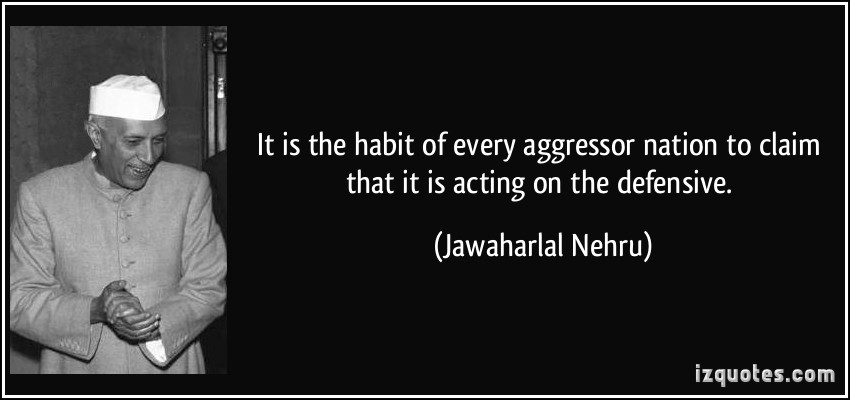
TIBET – INDIA – US RELATIONS – THE QUEST FOR TIBET EQUILIBRIUM. INDIA’S FIRST PRIME MINISTER NEHRU AND LATER ALL OTHER PRIME MINISTERS INCLUDING HIS DAUGHTER INDIRA GANDHI VIEW CHINA AS AGGRESSOR NATION.

TIBET – INDIA – US RELATIONS – THE QUEST FOR TIBET EQUILIBRIUM. IN OCTOBER 1949 WHEN COMMUNIST CHINA DECLARED HER EXPANSIONIST POLICY, IT SET OFF ALARM BELLS IN TIBET, INDIA, AND THE US.

TIBET – INDIA – US RELATIONS – THE QUEST FOR TIBET EQUILIBRIUM. TIBET, INDIA, AND THE US BEGAN THIS QUEST IN OCTOBER 1949 SOON AFTER COMMUNIST PARTY CHAIRMAN MAO ZEDONG ANNOUNCED FOUNDING OF PEOPLE’S REPUBLIC OF CHINA. THIS LEGACY OF DALAI LAMA, NEHRU, AND TRUMAN STILL SURVIVES.


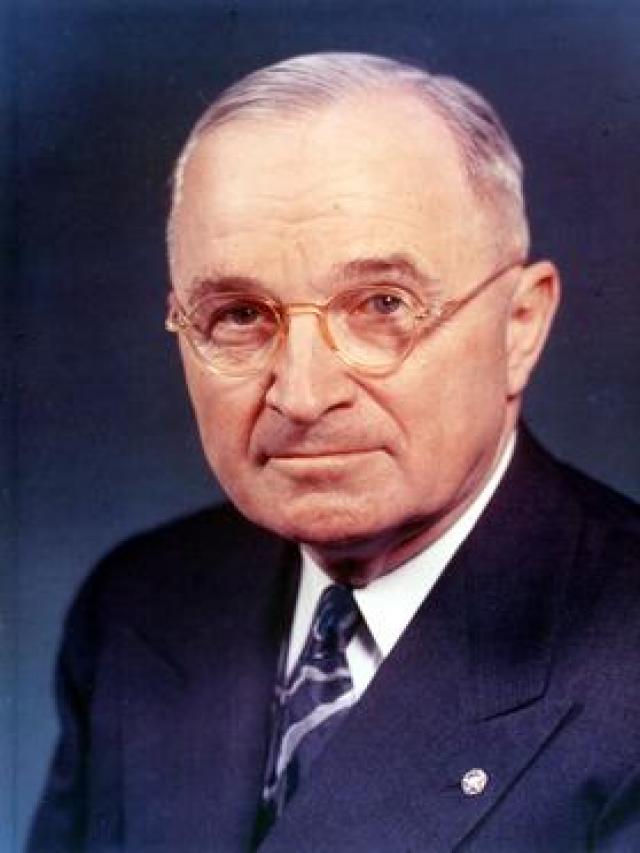
TIBET - INDIA - US RELATIONS - THE QUEST FOR TIBET EQUILIBRIUM. US PRESIDENT HARRY S TRUMAN.
TIBET – INDIA – US RELATIONS – THE QUEST FOR TIBET EQUILIBRIUM. US PRESIDENT HARRY S TRUMAN.

TIBET - INDIA - US - RELATIONS - THE QUEST FOR TIBET EQUILIBRIUM. TIBET IS STILL IMPORTANT FOR INDIA'S SECURITY. US WANTS POWER BALANCE IN SOUTHEAST ASIA.
TIBET – INDIA – US – RELATIONS – THE QUEST FOR TIBET EQUILIBRIUM. TIBET IS STILL IMPORTANT FOR INDIA’S SECURITY. US WANTS POWER BALANCE IN SOUTHEAST ASIA.

TIBET - INDIA - US RELATIONS - THE QUEST FOR TIBET EQUILIBRIUM.
TIBET – INDIA – US RELATIONS – THE QUEST FOR TIBET EQUILIBRIUM.

TIBET - INDIA - US RELATIONS - THE QUEST FOR TIBET EQUILIBRIUM. TIBET, INDIA, AND THE US VIEW CHINA AS AGGRESSOR NATION THAT UPSET POWER BALANCE IN TIBET.
TIBET – INDIA – US RELATIONS – THE QUEST FOR TIBET EQUILIBRIUM. TIBET, INDIA, AND THE US VIEW CHINA AS AGGRESSOR NATION THAT UPSET POWER BALANCE IN TIBET.

TIBET - INDIA - US RELATIONS - THE QUEST FOR TIBET EQUILIBRIUM. THE EMERGENCE OF RED CHINA IN OCTOBER 1949 AND HER EXPANSIONIST POLICY HAS UPSET POWER BALANCE IN SOUTHEAST ASIA.
TIBET – INDIA – US RELATIONS – THE QUEST FOR TIBET EQUILIBRIUM. THE EMERGENCE OF RED CHINA IN OCTOBER 1949 AND HER EXPANSIONIST POLICY HAS UPSET POWER BALANCE IN SOUTHEAST ASIA.


TIBET EQUILIBRIUM – DOCTOR’S ORDER – COMPASSION

TIBET EQUILIBRIUM – DOCTOR’S ORDER – COMPASSION

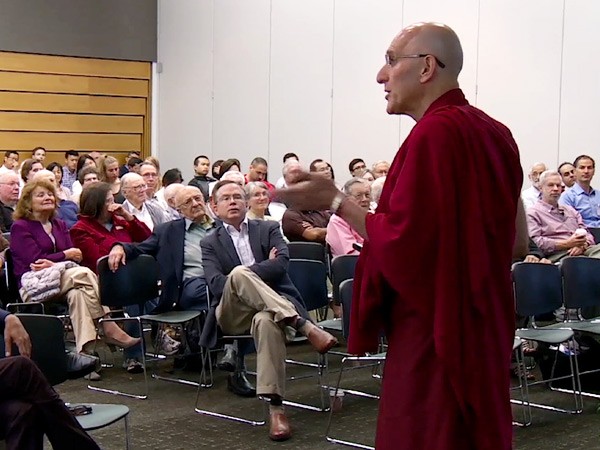
TIBET EQUILIBRIUM – DOCTOR’S ORDER – COMPASSION – DR BARRY KERZIN, DALAI LAMA’S PERSONAL PHYSICIAN.

His Holiness the Dalai Lama’s personal physician, Dr. Barry Kerzin who lives in India is prescribing use of Compassion in practice of Medicine. Compassion is an instinct that is evoked when a person witnesses pain and suffering in the lives of other living entities. Compassion provides Motivation or Drive to perform actions that will help to relieve pain experienced by a victim and provide uplift to such victim to overcome feelings of sorrow and misery. Compassion acts like a physical force for it helps the performer of Compassionate action. While acting under the influence of Compassion, the performer acts without experiencing personal hardship or tiredness. Compassion provides additional energy with which performer of Compassionate actions overcomes physical barriers that may limit physical capacity in ordinary circumstances.

In Tibet, I witness action of two opposing forces; 1. Physical Force used by Red China to oppress Tibetans, and 2. Resistance Force used by Tibetans to counteract Oppression. To have Balance and Equilibrium in Tibet, we need both interacting forces to be of same power. I witness pain, suffering, and misery in the lives of Tibetan people as their power of Resistance is not equal to Force of Oppression applied by Red China. This tragic situation in Tibet evokes instinct of Compassion directing me to take action to find Balance and Equilibrium in Tibet. I am seeking Force of Compassion to physically uplift Red Army from Tibet. When this brutalizing force is evicted from Tibet, there will be Peace, Harmony, and Tranquility in Tibet as Balance and Equilibrium will be restored.

Rudranarasimham Rebbapragada
Ann Arbor, MI 48104-4162 USA
SPECIAL FRONTIER FORCE


The Spirits of Special Frontier ForceThe Spirits of Special Frontier Force, Ann Arbor, MI.  At Special Frontier Force, I host ‘The Living Tibetan Spirits’…
 
View on www.Facebook.com


PBS NEWSHOUR
Dalai Lama’s American doctor wants more compassion in medicine

October 27, 2015 at 6:35 PM EDT

Dalai Lama’s doctor wants more compassion in medicine. Before he was a personal physician to the Dalai Lama, Dr. Barry Kerzin never imagined that a professional trip to Tibet would lead him down a decades-long path studying Buddhism and meditation. Special correspondent Fred de Sam Lazaro talks to Kerzin in India about his feeling that compassion and empathy are essential to medical training. 2015-10-27

http://www.pbs.org/newshour/wp-content/uploads/2015/10/20151027_dalailama.mp3


TRANSCRIPT

JUDY WOODRUFF: But, first, the Dalai Lama was supposed to arrive in the U.S. yesterday. He didn’t, because doctors at the Mayo Clinic advised him to rest.
But advice flows both ways in the relationship between the Buddhist leader and his personal physician.

Special correspondent Fred de Sam Lazaro reports on how the Dalai Lama inspired a California native to move halfway across the world and bring compassion back into a medical care system dominated by technology.

The report is part of Fred’s ongoing series Agents for Change.

FRED DE SAM LAZARO: Sixty-eight-year-old California native Barry Kerzin began his career as a professor of family medicine at the University of Washington. He never dreamed it would lead to a pro bono house calls thousands of miles away in Tibetan.

DR. BARRY KERZIN, Buddhist Scholar: I keep pinching myself, Fred. I don’t know.
(LAUGHTER)

FRED DE SAM LAZARO: He first arrived here after hearing that the Dalai Lama had wanted a Western physician to train traditional Tibetan doctors in modern research methods.

DR. BARRY KERZIN, Buddhist Scholar: We did a research study. And we used that pedagogically to train the local Tibetan medicine doctors how to do the research.
And then I got more involved with Buddhism. I had already been very interested. I got more involved with meditation and study. And I ended up extending my stay. And that’s happened again and again and here I am 27 years.

FRED DE SAM LAZARO: He came to India from a life punctuated by pain and loss, at 11, a near fatal brain abscess that required extensive surgery and left a permanent lump on his skull. His mother died young, and a few years later so did his wife, only in her mid-30s, both from cancer.
Buddhism became a sanctuary under the tutelage of the Dalai Lama, who told him to stay connected to the world.

DR. BARRY KERZIN: He always encouraged me to keep my credentials and to continue practicing medicine. Don’t just do the wisdom. Also do the love and the compassion. In fact, do them 50/50. Those were his words.

FRED DE SAM LAZARO: Scholarship in Buddhism led to his ordination as a monk, while meditation has been a path to inner peace and happiness. And that’s translated into empathy, he said.

DR. BARRY KERZIN: It’s slowly moved me along to be more compassionate, to be less selfish.
I don’t get angry very much anymore. I used to be highly competitive. I’m still somewhat competitive, but it’s more now personal, not at the expense of somebody else. I think it’s a combination of meditation and also, as His Holiness calls, emotional hygiene.

FRED DE SAM LAZARO: Kerzin, who now serves as a personal physician to the Dalai Lama, has taken the spiritual leader’s gospel of emotional hygiene and compassion to medical practitioners around the world.
DALAI LAMA (through interpreter): He is my messenger. Go to Japan, go to Mongolia.

FRED DE SAM LAZARO: And full circle to America.

DR. BARRY KERZIN: It’s lovely to be at Stanford.

FRED DE SAM LAZARO: A few years ago, a prestigious lecture at a top U.S. medical school wouldn’t have been given by a man who left American medicine and many stunned colleagues for a very different world, where he doesn’t own a house, car or refrigerator.

DR. BARRY KERZIN: I think initially they thought I went off the deep end. What are you doing living in India? Come on. You know, how can you stay healthy? Why don’t you come back? And you could have a very good life. You could have a very good academic life in medicine. You could have a very comfortable economic life. It’s ridiculous what you’re doing.
So let’s meditate, OK?

FRED DE SAM LAZARO: But on this day, they were listening, even meditating, with him. Kerzin says meditation helps one focus on the now, the present. You tune out the past and all your regrets, tune out planning and worry about the future. It’s taken years, he says, but gotten results, scientifically measured results.

DR. BARRY KERZIN: This is in Madison, the University of Wisconsin, and they’re researching my brain.

FRED DE SAM LAZARO: Kerzin has been part of a series of studies into the impact of meditation on the brain.

DR. BARRY KERZIN: What they found were changes in the prefrontal cortex. This area is called the executive function area, the PFC, and it helps with things like planning, reasoning, imagination, empathy, to feel as — like another person is feeling. So these areas were enhanced, both anatomically and functionally, in long-term meditators.

FRED DE SAM LAZARO: Kerzin’s host at Stanford said there’s an epidemic of dissatisfaction among American doctors today, which likely makes them more receptive to a message like Kerzin’s.

DR. ABRAHAM VERGHESE, Stanford School of Medicine: Fifty percent of them, they say in some studies, are unhappy. And that tells you this is not an individual problem. This is a systemic problem.

FRED DE SAM LAZARO: Dr. Abraham Verghese, well-known author and professor at Stanford, says technology, for all its benefits, leaves doctors little time for the compassion that drew most of them to medicine.

DR. ABRAHAM VERGHESE: There was a chilling paper from the “Journal of Emergency Medicine” titled “4,000 Clicks,” suggesting that an emergency medicine physician does 4,000 clicks a day and spends the great majority of their time on the computer, very little percentage of the time actually with patients, and similar studies that are coming out suggesting the same about residents and medical students and physicians in other specialties.

FRED DE SAM LAZARO: Kerzin says he wants to make compassion as integral to medical education as physiology or biochemistry, more partnerships between scientists and Buddhist scholars, a reconciliation of very different perspectives on life that he said he’s made internally.

DR. BARRY KERZIN: I used to say I wear two hats. So, sometimes, this is the medical hat, this is the Buddhist hat. But I don’t say that any more.

FRED DE SAM LAZARO: Today, he says he wears one scientist monk hat.

For the PBS NewsHour, this is Fred de Sam Lazaro in Dharmsala, India.


© 1996 – 2015 NewsHour Productions LLC.

All Rights Reserved.

Support the kind of journalism done by the NewsHour…Become a member of your local PBS Station.


TIBET EQUILIBRIUM – DOCTOR’S ORDER COMPASSION. THE FORCE OF OPPRESSION IS GREATER THAN THE FORCE OF RESISTANCE. COMPASSION IS TREATMENT TO BRING BALANCE AND EQUILIBRIUM IN TIBET.

TIBET EQUILIBRIUM – DOCTOR’S ORDER – COMPASSION. DR BARRY KERZIN RECOMMENDS TEACHING COMPASSION AS A SUBJECT IN MEDICAL EDUCATION.

TIBET EQUILIBRIUM – DOCTOR’S ORDER – COMPASSION. DR. BARRY KERZIN, DALAI LAMA’S PERSONAL PHYSICIAN RECOMMENDS TEACHING COMPASSION TO DOCTORS.

TIBET EQUILIBRIUM – DOCTOR’S ORDER – COMPASSION. DR. BARRY KERZIN, DALALI LAMA’S PERSONAL PHYSICIAN. TIBET NEEDS UPLIFTING POWER OF COMPASSION TO COUNTERACT FORCE OF OPPRESSION USED BY RED CHINA.


TIBET EQUILIBRIUM – DOCTOR’S ORDER – COMPASSION. DR. BARRY KERZIN, PERSONAL PHYSICIAN OF DALAI LAMA. MY PRESCRIPTION FOR TIBET. COUNTERACT OPPRESSION WITH UPLIFTING PHYSICAL FORCE OF COMPASSION.

TIBET EQUILIBRIUM – DOCTOR’S ORDER – COMPASSION. DR. BARRY KERZIN, DALAI LAMA’S PERSONAL PHYSICIAN. TIBET IS SUFFERING ON ACCOUNT OF LACK OF BALANCE CAUSED BY RED CHINA’S MILITARY OPPRESSION. MY PRESCRIPTION IS USE OF UPLIFTING PHYSICAL FORCE CALLED COMPASSION.

On www.pbs.org

Dr. Barry Kerzin – 2011 | Florida School of Holistic Living
On www.holisticlivingschool.org

Dr. Gervasio Lamas: ‘There is no prevention awareness’ - Worldnews ...
On article.wn.com

TIBET EQUILIBRIUM – DOCTOR ORDERS COMPASSION. DR. BARRY KERZIN, DALAI LAMA’S PERSONAL PHYSICIAN.


TIBET CONSCIOUSNESS – GIVE ME LIBERTY OR GIVE ME DEATH

TIBET CONSCIOUSNESS – GIVE ME LIBERTY OR GIVE ME DEATH

TIBET CONSCIOUSNESS – GIVE ME LIBERTY OR GIVE ME DEATH. TIBETAN PRAYER FOR FULFILLMENT IN LIFE. Art Print by Jon Contino

On Monday, October 26, 2015 His Holiness the Dalai Lama is set to receive National Constitution Center’s Liberty Medal in Philadelphia. A moment has arrived in Tibetan history when all Tibetans will demand in no uncertain terms, “GIVE ME LIBERTY OR GIVE ME DEATH.” There is no fulfillment in Tibetan’s life without Freedom.

Rudranarasimham Rebbapragada
Ann Arbor, MI 48104-4162 USA
SPECIAL FRONTIER FORCE


The Spirits of Special Frontier ForceThe Spirits of Special Frontier Force, Ann Arbor, MI. At Special Frontier Force, I host ‘The Living Tibetan Spirits’ to…
 
View on WWW.Facebook.com


Dalai Lama Set To Receive NCC’s Liberty Medal, Although Not In Person

October 25, 2015 5:48 PM By Molly Daly

TIBET CONSCIOUSNESS – GIVE ME LIBERTY OR GIVE ME DEATH. LIBERTY MEDAL AWARD BY NATIONAL CONSTITUTION CENTER, PHILADELPHIA.

(Tibetan spiritual leader the Dalai Lama, in 2013 file photo by Keith Tsuji/ Getty Images)

By Molly Daly
PHILADELPHIA (CBS) – National Constitution Center staffers are getting ready for Monday night’s Liberty Medal Ceremony, although this year’s recipient, the Dalai Lama, won’t be able to accept the honor in person because of health concerns.

After a performance by the all-boy Tibetan Children’s Choir, there’ll be remarks from National Constitution Center CEO Jeffrey Rosen, Mayor Nutter, and Richard Gere — a longtime friend of the Dalai Lama and Delaware Valley native.

“He’s always glad to come back to Philadelphia for a reason, and I think this is a reason that’s deeply personal to Richard Gere as a person, and I think it’s something that he’s going to feel very honored to be participating in,” says the National Constitution Center’s Jenny Parker.

There’ll also be a moving video tribute to His Holiness. Parker says the man of the hour is sending a video of his own:
“One of the things that you might hear in the Dalai Lama’s remarks is the idea that human beings are naturally inclined towards compassion and kindness, but the necessity of liberty and freedom in realizing that full potential is essential.”

Parker says that although His Holiness won’t be there physically, “I think the spirit will be very evident, and will be felt by all the attendees.”
The Dalai Lama is sending two representatives to accept the Liberty Medal on his behalf.

For more information, visit constitutioncenter.org.
Molly Daly

Molly attended Hallahan High School, LaSalle College, and Temple University, but left in her senior year. A woman of exceptional vocal talents, Daly has worked delivering singing telegrams and performing in a rock band. She once worked as a backup…

©2015 CBS Local Media, a division of CBS Radio Inc. All rights reserved.

TIBET CONSCIOUSNESS – GIVE ME LIBERTY OR GIVE ME DEATH. THE DALAI LAMA WILL RECEIVE LIBERTY MEDAL ON MONDAY, OCTOBER 26, 2015.

TIBET CONSCIOUSNESS – GIVE ME LIBERTY OR GIVE ME DEATH. DALAI LAMA TO BE HONORED WITH PHILADELPHIA’S LIBERTY MEDAL.

TIBET CONSCIOUSNESS – GIVE ME LIBERTY OR GIVE ME DEATH. DALAI LAMA TO RECEIVE PHILADELPHIA LIBERTY MEDAL.

TIBET CONSCIOUSNESS – GIVE ME LIBERTY OR GIVE ME DEATH. DALAI LAMA TO GET 2015 LIBERTY MEDAL.

TIBET CONSCIOUSNESS – GIVE ME LIBERTY OR GIVE ME DEATH. DALAI LAMA TO BE HONORED WITH 2015 LIBERTY MEDAL.

TIBET CONSCIOUSNESS – GIVE ME LIBERTY OR GIVE ME DEATH. NATIONAL CONSTITUTION CENTER, PHILADELPHIA TO AWARD 2015 LIBERTY MEDAL TO DALAI LAMA.

TIBET CONSCIOUSNESS – GIVE ME LIBERTY OR GIVE ME DEATH. TIBETANS HAVE NO FULFILLMENT IN LIFE WITHOUT FREEDOM.

TIBET CONSCIOUSNESS – GIVE ME LIBERTY OR GIVE ME DEATH. TIBETANS HAVE NO FULFILLMENT IN LIFE WITHOUT FREEDOM.

TIBET CONSCIOUSNESS – GIVE ME LIBERTY OR GIVE ME DEATH. TIBETANS HAVE NO FULFILLMENT IN LIFE WITHOUT FREEDOM.

TIBET CONSCIOUSNESS – GLOBAL WARMING – CLIMATE ACTION

TIBET CONSCIOUSNESS – GLOBAL WARMING – CLIMATE ACTION

TIBET CONSCIOUSNESS – GLOBAL WARMING – CLIMATE ACTION. JIANGGENDIRU GLACIER. HEADSTREAM OF YANGTZE RIVER. RED CHINA MUST CURB HER GREENHOUSE GAS EMISSIONS. REDUCE USE OF DIRTY FOSSIL FUELS.On www.theguardian.com

Red China’s use of Coal as fuel is causing global warming and climate change is severe across Tibetan plateau. Red China has to reduce use of fossil fuels and restrict emission of greenhouse gases. About 2.25 million Tibetans live on the Tibetan plateau mostly leading a pastoral life. These Tibetan nomads are forced to live in ‘model villages’ where livestock-rearing as an economic activity is impossible. Tibetans need Freedom to live their lives in harmony with nature. Red China’s attempts to seed clouds with Silver Iodide to promote precipitation will not address the problem caused by industrial activity using dirty fossil fuels.

Rudranarasimham Rebbapragada
Ann Arbor, MI 48104-4162 USA
SPECIAL FRONTIER FORCE

 DALAI LAMA WARNS OVER GLOBAL WARMING ON ‘ROOF OF WORLD’ 
October 20, 2015 5:48 AM

TIBET CONSCIOUSNESS – GLOBAL WARMING – CLIMATE ACTION. THE DALAI LAMA ALERTED GLOBAL COMMUNITY ON IMPORTANCE OF TIBET IN UNDERSTANDING PROBLEMS OF CLIMATE CHANGE AND PROTECTING GLOBAL ENVIRONMENTAL HEALTH.

New Delhi (AFP) – The Dalai Lama on Tuesday urged the world to protect Tibet from global warming, saying his Himalayan homeland was crucial to the health of the world.

The exiled spiritual leader called on the younger generation to play a more active role in fighting climate change as he launched a campaign by the Tibetan leadership ahead of crunch talks beginning in Paris next month.

“This blue planet is our only home and Tibet is its roof. As vital as the Arctic and Antarctic, it is the Third Pole,” he said in a statement.

“The Tibetan Plateau needs to be protected, not just for Tibetans but for the environmental health and sustainability of the entire world.”
Tibet, the world’s largest and highest plateau, is often called the “third pole” because it stores more freshwater in the form of glaciers than any region on Earth, except the North and South poles.

The region is warming at twice the global average, leading to accelerated melting of tens of thousands of glaciers that feed seven major rivers flowing through India, Bangladesh, China and Southeast Asia.

Tibet, the world’s largest and highest plateau, is often called the “third pole.”

China, which has ruled Tibet since 1951 after sending troops into the Himalayan region, has already committed to reduce emissions as a key step toward a global climate pact before the end of the year.

But exiled Tibetan leaders say the Himalayan region must be central to climate change negotiations due to open in Paris on November 30.
They want the meeting of the UN Framework Convention on Climate Change (UNFCCC) to recognise the “global significance of the Tibetan Plateau”.

“Tibetans must have a say on what happens to their land,” said Lobsang Sangay, the head of the exiled Tibetan government, which is based in the northern Indian town of Dharamshala.
“Tibetan nomads are the expert custodians of the alpine pastures and their knowledge and experience must be recognised.”

China has resettled thousands of Tibetan herdsmen in permanent villages and restricted grazing as it tries to protect the fragile ecosystem from increasing desertification.
But for many, resettlement in villages has meant an end to a traditional nomadic life that goes back centuries.

© 2015 AFP

Yahoo – ABC News Network

PHOTOGRAPHER GILLES SABRIE VISITS JIANGGENDIRU GLACIER, QINGHAI TIBETAN PLATEAU

TIBET CONSCIOUSNESS - GLOBAL WARMING - CLIMATE ACTION. YELLOW RIVER NEAR DARLAG, QINGHAI PROVINCE. QINGHAI-TIBET PLATEAU IS THE REGION MOST AT RISK FROM GLOBAL WARMING.
TIBET CONSCIOUSNESS – GLOBAL WARMING – CLIMATE ACTION. YELLOW RIVER NEAR DARLAG, QINGHAI PROVINCE. QINGHAI-TIBET PLATEAU IS THE REGION MOST AT RISK FROM GLOBAL WARMING.

TIBET CONSCIOUSNESS - GLOBAL WARMING - CLIMATE ACTION. GYARING LAKE AT THE SOURCE OF YELLOW RIVER.
TIBET CONSCIOUSNESS – GLOBAL WARMING – CLIMATE ACTION. GYARING LAKE AT THE SOURCE OF YELLOW RIVER.

TIBET CONSCIOUSNESS - GLOBAL WARMING - CLIMATE ACTION. DESERTIFICATION CAUSED BY CLIMATE CHANGE AND LACK OF PRECIPITATION LIKE RAIN AND SNOW.
TIBET CONSCIOUSNESS – GLOBAL WARMING – CLIMATE ACTION. DESERTIFICATION CAUSED BY CLIMATE CHANGE AND LACK OF PRECIPITATION LIKE RAIN AND SNOW. RED CHINA TRIES TO INDUCE PRECIPITATION BY SEEDING CLOUDS WITH SILVER IODIDE. IT DOESN’T HELP.

TIBET CONSCIOUSNESS - GLOBAL WARMING - CLIMATE ACTION. GRASSLANDS FAIL TO THRIVE DUE TO WARMING AND LACK OF PRECIPITATION.
TIBET CONSCIOUSNESS – GLOBAL WARMING – CLIMATE ACTION. GRASSLANDS FAIL TO THRIVE DUE TO WARMING AND LACK OF PRECIPITATION.

TIBET CONSCIOUSNESS - GLOBAL WARMING - CLIMATE ACTION. SOIL EROSION AGGRAVATED BY LOSS OF GRASSLAND.
TIBET CONSCIOUSNESS – GLOBAL WARMING – CLIMATE ACTION. SOIL EROSION AGGRAVATED BY LOSS OF GRASSLAND.

TIBET CONSCIOUSNESS - GLOBAL WARMING - CLIMATE ACTION. FOR CENTURIES TIBETAN NOMADS LIVED IN HARMONY WITH NATURE AS TRUE CUSTODIANS OF GRASSLAND ON THE STEPPES.
TIBET CONSCIOUSNESS – GLOBAL WARMING – CLIMATE ACTION. FOR CENTURIES TIBETAN NOMADS LIVED IN HARMONY WITH NATURE AS TRUE CUSTODIANS OF GRASSLAND ON THE STEPPES.

TIBET CONSCIOUSNESS - GLOBAL WARMING - CLIMATE ACTION. CHINESE HUNTED AND DESTROYED WILDLIFE POPULATION CAUSING ECOLOGICAL IMBALANCE. MARMOT POPULATION IS EXPLODING PUTTING PRESSURE ON GRASSLANDS.
TIBET CONSCIOUSNESS – GLOBAL WARMING – CLIMATE ACTION. CHINESE HUNTED AND DESTROYED WILDLIFE POPULATION CAUSING ECOLOGICAL IMBALANCE. MARMOT POPULATION IS EXPLODING PUTTING PRESSURE ON GRASSLANDS.

TIBET CONSCIOUSNESS - GLOBAL WARMING - CLIMATE ACTION. TIBETAN NOMADS LIVE IN PERFECT HARMONY WITH NATURE LIVING ON LIVESTOCK-REARING. INDUSTRIAL POLLUTION IS THE CHIEF CULPRIT OF GLOBAL WARMING.
TIBET CONSCIOUSNESS – GLOBAL WARMING – CLIMATE ACTION. TIBETAN NOMADS LIVE IN PERFECT HARMONY WITH NATURE LIVING ON LIVESTOCK-REARING. INDUSTRIAL POLLUTION IS THE CHIEF CULPRIT OF GLOBAL WARMING.

TIBET CONSCIOUSNESS - GLOBAL WARMING - CLIMATE ACTION. STEPPE OF SANJIANGYUAN NATIONAL NATURE RESERVE IN QINGHAI PROVINCE. NOMADS ARE FORCED TO LIVE IN CAMPS.
TIBET CONSCIOUSNESS – GLOBAL WARMING – CLIMATE ACTION. STEPPE OF SANJIANGYUAN NATIONAL NATURE RESERVE IN QINGHAI PROVINCE. NOMADS ARE FORCED TO LIVE IN CAMPS.

TIBET CONSCIOUSNESS - GLOBAL WARMING - CLIMATE ACTION. RED CHINA'S POLICY OF FORCED NOMAD RESETTLEMENT IN 'MODEL VILLAGES' WILL NOT SOLVE PROBLEMS CAUSED BY INDUSTRIAL POLLUTION.
TIBET CONSCIOUSNESS – GLOBAL WARMING – CLIMATE ACTION. RED CHINA’S POLICY OF FORCED NOMAD RESETTLEMENT IN ‘MODEL VILLAGES’ WILL NOT SOLVE PROBLEMS CAUSED BY INDUSTRIAL POLLUTION.

TIBET CONSCIOUSNESS
TIBET CONSCIOUSNESS

TIBET CONSCIOUSNESS - GLOBAL WARMING - CLIMATE ACTION.
TIBET CONSCIOUSNESS – GLOBAL WARMING – CLIMATE ACTION.

TIBET CONSCIOUSNESS - GLOBAL WARMING - CLIMATE ACTION. RED CHINA REFUSES TO ACCEPT THE CAUSE OF GLOBAL WARMING. RED CHINA IS USING DECEPTION AND PROPAGANDA INSTEAD OF ADDRESSING CORE ISSUES.
TIBET CONSCIOUSNESS – GLOBAL WARMING – CLIMATE ACTION. RED CHINA REFUSES TO ACCEPT THE CAUSE OF GLOBAL WARMING. RED CHINA IS USING DECEPTION AND PROPAGANDA INSTEAD OF ADDRESSING CORE ISSUES.

TIBET CONSCIOUSNESS - GLOBAL WARMING - CLIMATE ACTION.
TIBET CONSCIOUSNESS – GLOBAL WARMING – CLIMATE ACTION.

TIBET CONSCIOUSNESS – GLOBAL WARMING – CLIMATE ACTION. LIVESTOCK-REARING IS NOT THE CAUSE OF DESERTIFICATION.


TIBET CONSCIOUSNESS – GLOBAL WARMING – CLIMATE ACTION.

TIBET CONSCIOUSNESS – GLOBAL WARMING – CLIMATE ACTION. TRADITIONAL LIFESTYLES OF TIBETAN NOMADS BRING HARMONY IN NATURE.

TIBET CONSCIOUSNESS – GLOBAL WARMING – CLIMATE ACTION. TIBETAN NOMADS LIVE IN HARMONY WITH NATURE.

TIBET CONSCIOUSNESS – GLOBAL WARMING – CLIMATE ACTION. RED CHINA IN TIBET.

TIBET CONSCIOUSNESS – GLOBAL WARMING – CLIMATE ACTION. GLACIERS MELTING.

TIBET CONSCIOUSNESS – GLOBAL WARMING – CLIMATE ACTION – KANDZE COUNTY, TIBET.By reurinkjan on flickr-logo-1x.png

TIBET AWARENESS – GLOBAL WARMING – CLIMATE ACTION. ENVIRONMENTAL DEGRADATION IS CAUSED BY UNREGULATED POLLUTING INDUSTRIES IN CHINA.By reurinkjan on flickr-logo-1x.png

TIBET CONSCIOUSNESS – GLOBAL WARMING – CLIMATE ACTION. TIBETAN WETLANDS ARE AT GREAT RISK.By reurinkjan on flickr-logo-1x.png

TIBET CONSCIOUSNESS – GLOBAL WARMING – CLIMATE ACTION. DESERTIFICATION OF TIBET IS INCREASING ON ACCOUNT OF INDUSTRIAL POLLUTION.By reurinkjan on flickr-logo-1x.png

TIBET AWARENESS – GLOBAL WARMING – CLIMATE ACTION. TRO LA OR CHO LA RANGE. TIBET IS IMPORTANT TO DEFEND GLOBAL ENVIRONMENTAL HEALTH.By reurinkjan on flickr-logo-1x.png

TIBET CONSCIOUSNESS – GLOBAL WARMING – CLIMATE ACTION. DESERT SAND DUNES. DESERTIFICATION OF TIBET.By reurinkjan on flickr-logo-1x.png

TIBET CONSCIOUSNESS – GLOBAL WARMING – CLIMATE ACTION. RIVER YARLUNG TSANGPO OR BRAHMAPUTRA. MOUNTAINS AND SAND DUNES.By reurinkjan on flickr-logo-1x.png

TIBET CONSCIOUSNESS – GLOBAL WARMING – CLIMATE ACTION. ACTION IS NEEDED TO REGULATE POLLUTING INDUSTRIES.By reurinkjan on flickr-logo-1x.png

TIBET CONSCIOUSNESS – GLOBAL WARMING – CLIMATE ACTION. BAYANKARLA RI RGYUD RANGE.RED CHINA’S UNREGULATED INDUSTRIAL POLLUTION IS RUINING ENVIRONMENTAL HEALTH. By reurinkjan on flickr-logo-1x.png

TIBET AWARENESS – GLOBAL WARMING – CLIMATE ACTION. RED CHINA HAS TO CURB INDUSTRIAL EMISSION OF GREENHOUSE GASES.By reurinkjan on flickr-logo-1x.png