MARCH 29, 1973: THE UNFINISHED WAR TO CONTAIN COMMUNISM

MARCH 29, 1973: THE UNFINISHED WAR TO CONTAIN COMMUNISM


On March 29, 1973, the U.S. withdraws combat troops from Vietnam after the signing of the Vietnam Peace Agreement in Paris on January 29, 1973. However, the War to contain the threat posed by the spread of Communism to Asia is not over.


Rudranarasimham Rebbapragada

SPECIAL FRONTIER FORCE


Clipped from:

U.S. Withdraws from Vietnam-History


1973

U.S. withdraws from Vietnam


March 29. U.S. withdraws from Vietnam


Two months after the signing of the Vietnam peace agreement, the last U.S. combat troops leave South Vietnam as Hanoi frees the remaining American prisoners of war held in North Vietnam. America’s direct eight-year intervention in the Vietnam War was at an end. In Saigon, some 7,000 U.S. Department of Defense civilian employees remained behind to aid South Vietnam in conducting what looked to be a fierce and ongoing war with communist North Vietnam.

In 1961, after two decades of indirect military aid, U.S. President John F. Kennedy sent the first large force of U.S. military personnel to Vietnam to bolster the ineffectual autocratic regime of South Vietnam against the communist North. Three years later, with the South Vietnamese government crumbling, President Lyndon B. Johnson ordered limited bombing raids on North Vietnam, and Congress authorized the use of U.S. troops. By 1965, North Vietnamese offensives left President Johnson with two choices: escalate U.S. involvement or withdraw. Johnson ordered the former, and troop levels soon jumped to more than 300,000 as U.S. air forces commenced the largest bombing campaign in history.


During the next few years, the extended length of the war, the high number of U.S. casualties, and the exposure of U.S. involvement in war crimes, such as the massacre at My Lai, helped turn many in the United States against the Vietnam War. The communists’ Tet Offensive of 1968 crushed U.S. hopes of an imminent end to the conflict and galvanized U.S. opposition to the war. In response, Johnson announced in March 1968 that he would not seek reelection, citing what he perceived to be his responsibility in creating a perilous national division over Vietnam. He also authorized the beginning of peace talks.


Thanks for watching!

In the spring of 1969, as protests against the war escalated in the United States, U.S. troop strength in the war-torn country reached its peak at nearly 550,000 men. Richard Nixon, the new U.S. president, began U.S. troop withdrawal and “Vietnamization” of the war effort that year, but he intensified bombing. Large U.S. troop withdrawals continued in the early 1970s as President Nixon expanded air and ground operations into Cambodia and Laos in attempts to block enemy supply routes along Vietnam’s borders. This expansion of the war, which accomplished few positive results, led to new waves of protests in the United States and elsewhere.


Finally, in January 1973, representatives of the United States, North and South Vietnam, and the Vietcong signed a peace agreement in Paris, ending the direct U.S. military involvement in the Vietnam War. Its key provisions included a cease-fire throughout Vietnam, the withdrawal of U.S. forces, the release of prisoners of war, and the reunification of North and South Vietnam through peaceful means. The South Vietnamese government was to remain in place until new elections were held, and North Vietnamese forces in the South were not to advance further nor be reinforced.


However, the agreement was little more than a face-saving gesture by the U.S. government. Even before the last American troops departed on March 29, the communists violated the cease-fire, and by early 1974 full-scale war had resumed. At the end of 1974, South Vietnamese authorities reported that 80,000 of their soldiers and civilians had been killed in fighting during the year, making it the costliest of the Vietnam War.


On April 30, 1975, the last few Americans still in South Vietnam were airlifted out of the country as Saigon fell to communist forces. North Vietnamese Colonel Bui Tin, accepting the surrender of South Vietnam later in the day, remarked, “You have nothing to fear; between Vietnamese there are no victors and no vanquished. Only the Americans have been defeated.” The Vietnam War was the longest and most unpopular foreign war in U.S. history and cost 58,000 American lives. As many as two million Vietnamese soldiers and civilians were killed.


THE EVIL RED EMPIRE – RED CHINA VS TAIWAN

THE EVIL RED EMPIRE – RED CHINA VS TAIWAN

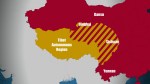
It surprises me to note that news media give attention to threats posed to national entities like Taiwan, Japan, Philippines, Indonesia, Malaysia, Vietnam, and Brunei but pay no attention to ‘The Great Problem of Tibet’. To provide some perspective on this issue, I ask my readers to compare the land area of these nations:

THE EVIL RED EMPIRE - RED CHINA - THE GREAT PROBLEM OF TIBET : TIBET HAS LAND AREA OF 870, 000 SQUARE MILES. TIBET IS LARGER IN SIZE COMPARED TO ASIAN NATIONS LIKE JAPAN, TAIWAN, PHILIPPINES, INDONESIA, MALAYSIA, VIETNAM, AND BRUNEI. TIBET IS THREE-TIMES LARGER THAN TEXAS STATE OF UNITED STATES .
THE EVIL RED EMPIRE – RED CHINA – THE GREAT PROBLEM OF TIBET : TIBET HAS LAND AREA OF 870, 000 SQUARE MILES. TIBET IS LARGER IN SIZE COMPARED TO ASIAN NATIONS LIKE JAPAN, TAIWAN, PHILIPPINES, INDONESIA, MALAYSIA, VIETNAM, AND BRUNEI. TIBET IS THREE-TIMES LARGER THAN TEXAS STATE OF UNITED STATES .

1. Taiwan – 13, 885 square miles.
2. Japan – 145, 856 square miles.
3. Philippines – 115, 830 square miles.
4. Indonesia – 741, 096 square miles.
5. Malaysia – 127, 355 square miles.
6. Vietnam – 125, 622 square miles.
7. Brunei – 2, 228 square miles.
8. TIBET – 870, 000 square miles.

Land area of Tibet includes Tibet Autonomous Region(TAR) and Tibetan territory annexed to Qinghai, Gansu, Sichuan, and Yunnan Provinces of People’s Republic of China. To give a better understanding of the size of Tibet, it may be compared to Texas, largest State in the coterminous United States. Land area of Texas is 268, 820 square miles. Tibet is larger than three States of Texas combined.

Special Frontier Force welcomes attention given to security risks posed by Red China to countries of Asia and those threats cannot be resolved without including solution to ‘The Great Problem of Tibet.’

Rudranarasimham Rebbapragada
Ann Arbor, MI 48104-4162, USA
The Spirits of Special Frontier Force

 
  image          
The Spirits of Special Frontier ForceSpecial Frontier Force is a military organization of India, Tibet, United States to resist Red…
 
View on www.facebook.com Preview by Yahoo
 
 
  TAIWAN COAST GUARD LAUNCHES NEW SHIPS AS SOUTH CHINA SEA TENSIONS RISE
  • Taiwan coast guard launches new ships as South China Sea tensions rise

Reuters

By J.R. Wu June 6, 2015

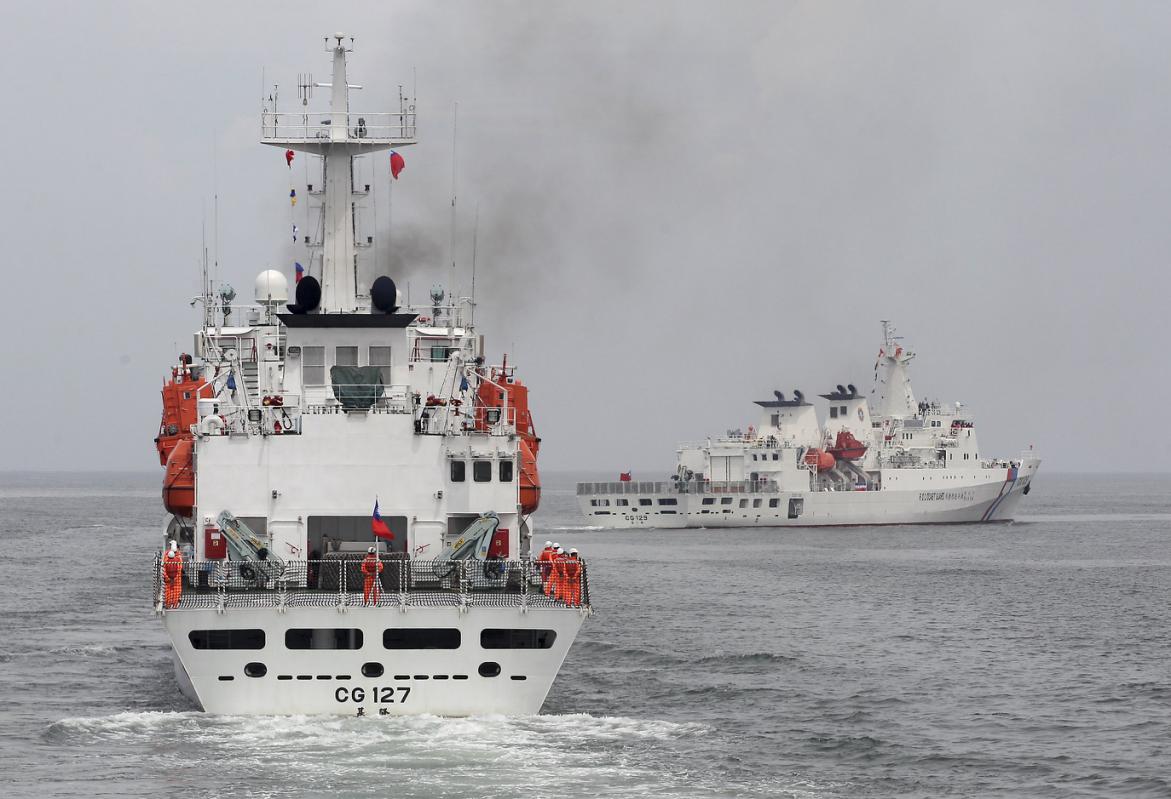
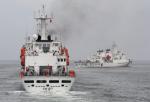
Taiwan Coast Guard's new patrol ship is seen during a commissioning ceremony in the port of Kaohsiung

Taiwan Coast Guard’s new patrol ship, the 3000-ton “Ilan” (L), is seen during a commissioning …

Taiwan Coast Guard patrol ships are seen during a drill held about 4 nautical miles out of the port of Kaohsiung, southern Taiwan, June 6, 2015. Taiwan's coast guard on Saturday commissioned its biggest ships for duty, in the form of two 3,000 ton patrol vessels, as Taipei boosts its defences amid concerns about China's growing footprint in the disputed South China Sea. REUTERS/Pichi Chuang
Taiwan Coast Guard patrol ships are seen during a drill held about 4 nautical miles out of the port of Kaohsiung, southern Taiwan, June 6, 2015. Taiwan’s coast guard on Saturday commissioned its biggest ships for duty, in the form of two 3,000 ton patrol vessels, as Taipei boosts its defences amid concerns about China’s growing footprint in the disputed South China Sea. REUTERS/Pichi Chuang

By J.R. Wu

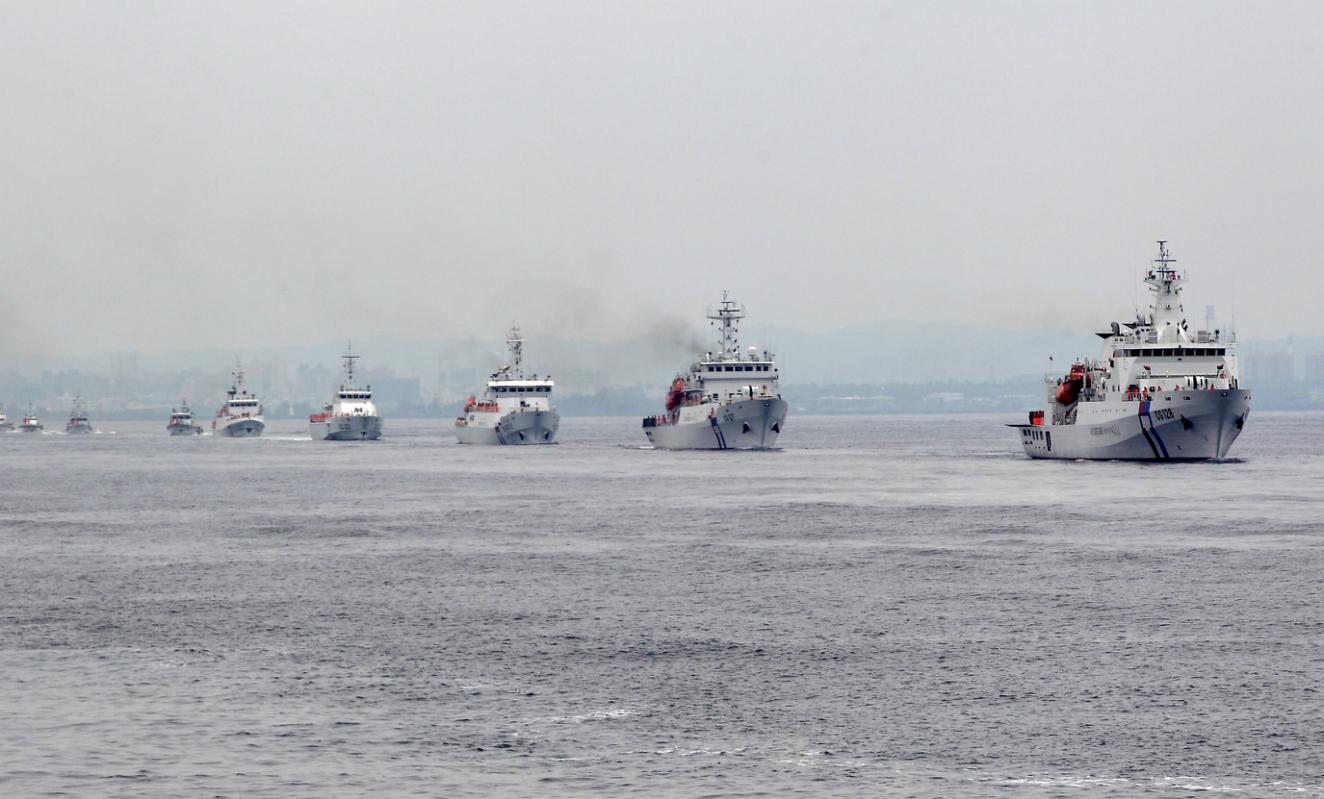
KAOHSIUNG, Taiwan (Reuters) – Taiwan’s coast guard on Saturday commissioned its biggest ships for duty in the form of two 3,000-ton patrol vessels, as the island boosts defenses amid concerns about China’s growing footprint in the disputed South China Sea.

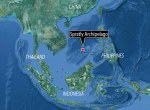
The new vessels will be able to dock at a new port being constructed on Taiping Island, the largest of the naturally occurring Spratly Islands in the South China Sea, before the end of this year.

Taiwan’s coast guard has had direct oversight of the 46-ha (114-acre) island, also known as Itu Aba, since 2000.

“Taiping Island’s defense capabilities will not be weak,” said Wang Chung-yi, minister of the Coast Guard Administration, referring to recent upgrading done on the 1,200-metre (yards) long airstrip on Taiping and the building of a new port, which he said could be completed as early as October this year.

“As far as Taiping Island is concerned, we still maintain not so much a military as a civil role,” Wang told Reuters in an interview in Taipei. Taiwan will not create conflict, but if it is provoked “we will not concede,” he said.

Taiwan Coast Guard patrol ships are seen during a drill held about 4 nautical miles out of the port of Kaohsiung, southern Taiwan, June 6, 2015. Taiwan's coast guard on Saturday commissioned its biggest ships for duty, in the form of two 3,000 ton patrol vessels, as Taipei boosts its defences amid concerns about China's growing footprint in the disputed South China Sea. REUTERS/Pichi Chuang
Taiwan Coast Guard patrol ships are seen during a drill held about 4 nautical miles out of the port of Kaohsiung, southern Taiwan, June 6, 2015. Taiwan’s coast guard on Saturday commissioned its biggest ships for duty, in the form of two 3,000 ton patrol vessels, as Taipei boosts its defences amid concerns about China’s growing footprint in the disputed South China Sea. REUTERS/Pichi Chuang

Taiwan Coast Guard patrol ships and helicopters from National Airborne Service Corps are seen during …

Unlike the Philippines and Vietnam, Taiwan has largely avoided becoming ensnared in public disputes with China over the South China Sea, through which $5 trillion in ship-borne trade passes every year.

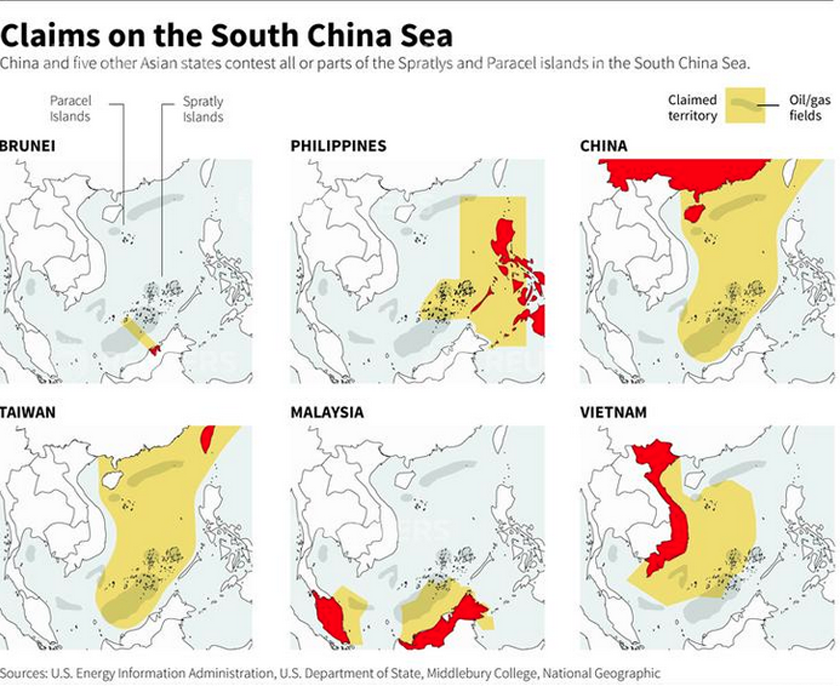
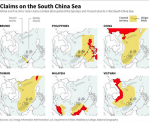
Beijing claims most of the South China Sea, while the Philippines, Brunei, Malaysia, Taiwan and Vietnam also have overlapping claims.

Rival claims by Taiwan and China go back to before defeated Nationalists fled to Taiwan after losing a civil war with the Communists in 1949.
Beijing sees self-ruled Taiwan as a renegade province to be retaken one day and bans actions that would confer sovereignty, such as negotiating territorial disputes in the South China Sea.

Taiwan President Ma Ying-jeou boarded one of the new ships on Saturday, observing rescue drills in waters off the southern Taiwan port city of Kaohsiung.
One of the vessels will be sent to the South China Sea, while the other will be assigned to waters north of Taiwan where it has overlapping claims with Japan.

Japan’s Yomiuri newspaper reported on Saturday that Group of Seven leaders meeting in Germany on Sunday would express their concern over any unilateral action to change the status quo in the East and South China Seas.

China has been criticized for extensive reclamation work and moves to turn submerged rocks into man-made structures. The United States last week said Beijing had placed mobile artillery systems in contested territory.

(Editing by Jeremy Laurence)

  • South China Sea
  • China
  • KAOHSIUNG, Taiwan

(c) Copyright Thomson Reuters 2015. Click For Restrictions – http://about.reuters.com/fulllegal.asp

Yahoo – ABC News Network

THE EVIL RED EMPIRE – RED CHINA VS PHILIPPINES

THE EVIL RED EMPIRE – RED CHINA VS PHILIPPINES

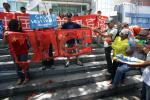
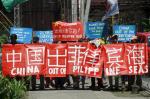
Filipino environmental activists aim water guns at mock Chinese flags as they stage a rally outside the Chinese Consulate in suburban Makati, south of Manila, Philippines on Monday, May 11, 2015 to protest against the continued building of infrastructures along a disputed group of islands known as the Spratlys in the South China Sea. The group is accusing the Chinese military of destroying the fragile ecosystem and livelihood of fishermen during their reclamation projects in the area which both countries have claimed ownership. (AP Photo/Aaron Favila)

I am sharing this story about dispute between Red China and Philippines as there are no stories written about dispute between Red China and Tibet. There is a territorial dispute between Red China and Tibet which I often refer to as ‘The Great Problem of Tibet’. Red China has a State Policy known as “EXPANSIONISM” and she extends her territory and her influence by using her superior military power over her weak neighbors. Philippines is resisting threat imposed by Red China taking help from other nations like Japan, and the United States. Filipino people have demonstrated their resolve to oppose Red China’s claims in South China Sea. Tibetans have to join this issue and learn the principles of warfare. To fight a stronger opponent, Tibet like Philippines needs partners to give strength to their demands for Justice in Occupied Tibet.

Rudranarasimham Rebbapragada
Ann Arbor, MI 48104-4162, USA
The Spirits of Special Frontier Force

 
  image          
The Spirits of Special Frontier ForceSpecial Frontier Force is a military organization of India, Tibet, United States to resist Red…
 
View on www.facebook.com Preview by Yahoo
 
 
PHILIPPINES AIRS PROGRAM ABOUT SEA DISPUTES WITH CHINA  
  • Philippines airs program about sea disputes with China

Associated Press

By JIM GOMEZ

Protesters face the Chinese Consulate to display their anti-Chinese message during a Philippines Independence Day rally in the financial district of Makati city east of Manila, Philippines, Friday, June 12, 2015. The protesters condemned the recent reclamation of land by China in the disputed Spratlys group of islands on the South China Sea. (AP Photo/Bullit Marquez)

MANILA, Philippines (AP) — The Philippine government broadcast a television program on Friday aimed at boosting public opposition to China’s increasingly assertive moves to press its territorial claims in the disputed South China Sea.

The broadcast of the first episode of a three-part series, titled “Freedom,” on the state-run TV network coincided with the Philippines’ independence day.

The 22-minute video, which was also posted on government websites, focuses on the economic impact of China’s actions, including its 2012 seizure of a disputed shoal where Chinese coast guard ships have chased away Filipino fishermen.

The broadcast reflects increased enmity among claimants in the South China Sea, which Beijing claims virtually in its entirety. The U.S. military has increased surveillance flights over the waters to reassure allies territorially at odds with Beijing.

Rising military deployments in the disputed region have heightened fears of possible confrontations and accidental clashes that could escalate into a major conflict.
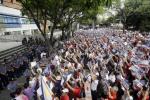
Also Friday, about 200 left-wing and nationalist protesters staged rallies at the Chinese Consulate and the U.S. Embassy in Manila to condemn Beijing’s actions, including the construction of artificial islands in the disputed Spratly Islands, and oppose what they called U.S. intervention in the dispute.

Protesters face the Chinese Consulate to display their anti Chinese message during a Philippines Independence Day rally in the financial district of Makati city east of Manila, Philippines, Friday, June 12, 2015. The protesters condemned the recent reclamation of land by China in the disputed Spratlys group of islands on the South China Sea. (AP Photo/Bullit Marquez)


Protesters carry placards as they march in a Philippines Independence Day rally toward the Chinese Consulate.

Waving red flags and holding placards that read, “U.S.-China, hands off the Philippines,” the protesters called on Filipinos to join efforts to defend the country’s sovereignty and territory.
“These two powerful countries are increasingly conniving and challenging each other in their quest for dominance in the Asia-Pacific region,” the protesters said in a statement.

The broadcast features interviews with Filipino fishermen who say they lost a key source of income after China began preventing them from sailing to Scarborough Shoal, which effectively came under Chinese control at the end of a tense standoff with Philippine ships in 2012.

A Philippine diplomat, Henry Bensurto, says in the video that China’s territorial claims include areas where coastal states like the Philippines have exclusive rights to fish and explore for other resources under the United Nations Convention on the Law of the Sea.

Chinese Embassy officials did not immediately react to the program. Beijing has steadfastly defended its right to pursue island-building and other activities in areas it says have belonged to it since ancient times.

“If we won’t get involved and take action, we may not have anything to bequeath to the next generation,” popular TV personality Lourd de Veyra says in the program. “The problem is we have a neighbor who sneaks in and out of our territory and takes away all the resources. This belongs to us.”

Department of Foreign Affairs: http://www.dfa.gov.ph
Department of Foreign Affairs Facebook account: http://www.facebook.com/dfa.ph

  • South China Sea
  • China
  • Philippines

Copyright 2015 The Associated Press. All rights reserved. This material may not be published, broadcast, rewritten or redistributed.

Yahoo – ABC News Network

THE EVIL RED EMPIRE - RED CHINA VS PHILIPPINES - FILIPINO PROTEST ON MAY 11, 2015.
THE EVIL RED EMPIRE – RED CHINA VS PHILIPPINES – FILIPINO PROTEST ON MAY 11, 2015.
Environmental activists display placards as they march towards the Chinese Embassy in Makati City, Metro Manila May 11, 2015. The activists demanded that Chinese authorities immediately put a stop to the ecological destruction caused by the reclamation activities of China in the South China Sea, which the Philippines calls West Philippine Sea. They also condemned what they say is the bullying by Chinese naval and coast guard forces of Filipino fishermen in the disputed seas, a environmental activist said. REUTERS/Romeo Ranoco
Environmental activists display placards as they march towards the Chinese Embassy in Makati City, Metro Manila May 11, 2015. The activists demanded that Chinese authorities immediately put a stop to the ecological destruction caused by the reclamation activities of China in the South China Sea, which the Philippines calls West Philippine Sea. They also condemned what they say is the bullying by Chinese naval and coast guard forces of Filipino fishermen in the disputed seas, an environmental activist said. REUTERS/Romeo Ranoco
THE EVIL RED EMPIRE - RED CHINA VS PHILIPPINES - A DISPUTE IMPOSED BY RED CHINA'S EXPANSIONIST POLICY.
THE EVIL RED EMPIRE – RED CHINA VS PHILIPPINES – A DISPUTE IMPOSED BY RED CHINA’S EXPANSIONIST POLICY.

THE EVIL RED EMPIRE – RED CHINA – ARCHENEMY

THE EVIL RED EMPIRE – RED CHINA – ARCHENEMY

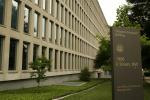
The U.S. Office of Personnel Management building in Washington June 5, 2015. In the latest in a string of intrusions into U.S. agencies' high tech systems, the Office of Personnel Management (OPM) suffered what appeared to be one of the largest breaches of information ever on government workers. The office handles employee records and security clearances.  REUTERS/Gary Cameron
The U.S. Office of Personnel Management building in Washington June 5, 2015. In the latest in a string of intrusions into U.S. agencies’ high tech systems, the Office of Personnel Management (OPM) suffered what appeared to be one of the largest breaches of information ever on government workers. The office handles employee records and security clearances. REUTERS/Gary Cameron

Archenemy is a chief or important enemy. In Biblical literature, the Archenemy is called ‘SATAN’ or ‘THE DEVIL’. The term enemy refers to a nation or force hostile to another, a military adversary. For most people, the word enemy describes an unfriendly person. Red China stole personal information of millions of American citizens and those victims would be offended by that unfriendly act. Red China may have a reason to conduct spying missions or espionage to defend her national interests. But, most Americans whose personal information is stolen, would recognize Red China’s actions as unfriendly. Red China qualifies to the title of “ARCHENEMY” for her unfriendly actions that victimized millions of people in her own territory and in territories she occupied using her military power.

Rudranarasimham Rebbapragada
Ann Arbor, MI 48104-4162, USA
The Spirits of Special Frontier Force

 
  image          
The Spirits of Special Frontier ForceSpecial Frontier Force is a military organization of India, Tibet, United States to resist Red…
 
View on www.facebook.com Preview by Yahoo


UNION: HACKERS HAVE PERSONNEL DATA ON EVERY FEDERAL EMPLOYEE

THE EVIL RED EMPIRE - RED CHINA - ARCHENEMY :  RED  CHINA'S CYBERSPYING  IS  UNFRIENDLY ACT  AND  MILLIONS OF  AMERICAN  VICTIMS  WOULD  VIEW  RED  CHINA  AS  "ENEMY."
THE EVIL RED EMPIRE – RED CHINA – ARCHENEMY : RED CHINA’S CYBERSPYING IS UNFRIENDLY ACT AND MILLIONS OF AMERICAN VICTIMS WOULD VIEW RED CHINA AS “ENEMY.”

Union: Hackers have personnel data on every federal employee

Associated Press

By KEN DILANIAN

WASHINGTON (AP) — Hackers stole personnel data and Social Security numbers for every federal employee, a government worker union said Thursday, saying that the cyber theft of U.S. employee information was more damaging than the Obama administration has acknowledged.

Sen. Harry Reid, the Democratic leader, said on the Senate floor that the December hack into Office of Personnel Management data was carried out by “the Chinese” without specifying whether he meant the Chinese government or individuals. Reid is one of eight lawmakers briefed on the most secret intelligence information. U.S. officials have declined to publicly blame China, which has denied involvement.

J. David Cox, president of the American Federation of Government Employees, said in a letter to OPM director Katherine Archuleta that based on OPM’s internal briefings, “We believe that the Central Personnel Data File was the targeted database, and that the hackers are now in possession of all personnel data for every federal employee, every federal retiree, and up to one million former federal employees.”

The OPM data file contains the records of non-military, non-intelligence executive branch employees, which covers most federal civilian employees but not, for example, members of Congress and their staffs.

The union believes the hackers stole military records and veterans’ status information, address, birth date, job and pay history, health insurance, life insurance and pension information; and age, gender and race data, he said. The letter was obtained by The Associated Press.

The union said it is basing its assessment on internal OPM briefings. The agency has sought to downplay the damage, saying what was taken “could include” personnel file information such as Social Security numbers and birth dates.

“We believe that Social Security numbers were not encrypted, a cybersecurity failure that is absolutely indefensible and outrageous,” Cox said in the letter. The union called the breach “an abysmal failure on the part of the agency to guard data that has been entrusted to it by the federal workforce.”

Samuel Schumach, an OPM spokesman, said that “for security reasons, we will not discuss specifics of the information that might have been compromised.”
The central personnel data file contains up to 780 separate pieces of information about an employee.

Cox complained in the letter that “very little substantive information has been shared with us, despite the fact that we represent more than 670,000 federal employees in departments and agencies throughout the executive branch.”

The union’s release and Reid’s comment in the Senate put into sharper focus what is looking like a massive cyber espionage success by China. Sen. Susan Collins, an intelligence committee member, has also said the hack came from China.

The U.S. Office of Personnel Management building in Washington June 5, 2015. In the latest in a string of intrusions into U.S. agencies' high tech systems, the Office of Personnel Management (OPM) suffered what appeared to be one of the largest breaches of information ever on government workers. The office handles employee records and security clearances.  REUTERS/Gary Cameron
The U.S. Office of Personnel Management building in Washington June 5, 2015. In the latest in a string of intrusions into U.S. agencies’ high tech systems, the Office of Personnel Management (OPM) suffered what appeared to be one of the largest breaches of information ever on government workers. The office handles employee records and security clearances. REUTERS/Gary Cameron


The U.S. Office of Personnel Management building in Washington June 5, 2015. 

Mike Rogers, the former chairman of the House intelligence committee, said last week that Chinese intelligence agencies have for some time been seeking to assemble a database of information about Americans. Those personal details can be used for blackmail, or also to shape bogus emails designed to appear legitimate while injecting spyware on the networks of government agencies or businesses Chinese hackers are trying to penetrate.

U.S. intelligence officials say China, like the U.S., spies for national security advantage. Unlike the U.S., they say, China also engages in large-scale theft of corporate secrets for the benefit of state-sponsored enterprises that compete with Western companies. Nearly every major U.S. company has been hacked from China, they say.

The Office of Personnel Management is also a repository for extremely sensitive information assembled through background investigations of employees and contractors who hold security clearances. OPM’s Schumach has said there is “no evidence” that information was taken. But there is growing skepticism among intelligence agency employees and contractors about that claim.

In the Senate on Thursday, Democrats blocked a Republican effort to add a cybersecurity bill to a sweeping defense measure. The vote was 56-40, four votes short of the number necessary.

Democrats had warned of the dangers of cyberspying after the theft of government personnel files, but Democrats voted against moving ahead on the legislation, frustrated with the GOP-led effort to tie the two bills together. President Barack Obama has threatened to veto the defense legislation over budget changes by the GOP.

“The issue of cybersecurity is simply too important to be used as a political chit and tucked away in separate legislation.” said Sen. Chris Coons, D-Del.

Associated Press writers Donna Cassata and Eric Tucker contributed to this report.

  • Office of Personnel Management
  • Social Security numbers
  • federal employee
  • Sen. Harry Reid
  • China

Copyright 2015 The Associated Press. All rights reserved. This material may not be published, broadcast, rewritten or redistributed.