WHOLE DUDE – WHOLE GIFT

A TIME FOR EVERY PURPOSE UNDER HEAVEN  :      

TIME HEALS ALL WOUNDS - DOES IT DESCRIBE THE POWER OF TIME?


THE BOOK OF ECCLESIASTES AND CONCEPTS ABOUT TIME  :      

The words of the Preacher, the son of King David, King in Jerusalem, Solomon the Wise.


King Solomon is believed to be the author of The Book of Ecclesiastes, The Old Testament Book of Holy Bible. These are his words from Chapter 3, verses 1-11 :      

To everything there is a season,      

A time for every purpose under Heaven:      

A time to be born,      

And a time to die;      

A time to plant,      

And a time to pluck what is planted;      

A time to kill,      

And a time to heal;      

A time to break down,      

And a time to build up;      

A time to weep,      

And a time to laugh;      

A time to mourn,      

And a time to dance;      

A time to cast away stones,      

And a time to gather stones;      

A time to embrace,      

And a time to refrain from embracing;      

A time to gain,      

And a time to lose;      

A time to keep,      

And a time to throw away;      

A time to tear,      

And a time to sew;      

A time to keep silence,      

And a time to speak;      

A time to love,      

And a time to hate;      

A time of war,      

And a time of peace.      

What profit has the worker from that in which he labors? I have seen the God-given task with which the sons of men are to be occupied. He has made everything beautiful in its time. Also He has put eternity in their hearts, except that no one can find out the work that God does from beginning to end.      

THE HEALING POWER OF TIME  :      

Human existence could be challenged by physical and psychological injuries. A physical injury could also cause a significant amount of psychological damage and to a similar extent, unhealed psychological wounds may impair physical health and wellbeing. A psychological insult or injury may impact the activities and the normal functioning of a person who is not otherwise physically diseased. Human body is naturally endowed with an ability to repair damage caused to body tissues by physical injuries and other insults. The Repair process by which body heals itself is described as Inflammation and Repair. Human existence is possible because of this valuable, and protective natural healing process. However, this healing process and mechanisms are not under man’s voluntary control. The inflammatory reaction and the repair process result in scars as remnants. Once inflammation has subsided, the body may heal by regeneration of original tissue or the original tissue could be replaced by fibrotic connective tissue leading to scarring; very often wounds heal by a combination of these two events. Different tissues in the human body have different regenerative capacities. Basing upon the ability of regeneration, three different types of cells make up the human body: 1. Labile Cells – have the ability to regenerate throughout life. The epithelial cells of skin surface are regenerated on a regular basis giving us the ability to sustain our physical appearance as long as we live. Several other cells particularly found in blood, lymph, and spleen have this ability. 2. Stable Cells – have the ability to multiply and proliferate throughout life but are dormant unless stimulated. The cells of liver, pancreas, kidney, smooth muscles such as found in the wall of intestines, and the cells of the inner lining of blood vessels belong to this category. If a part of liver is removed, the liver can regenerate new liver cells and the resected liver regains its original size. 3. Permanent Cells – these cells do not have the ability to replicate and when injured or damaged are always replaced by connective tissue that results in loss of function. Neurons, skeletal muscle cells, and cardiac muscle cells belong to this type. The injury of neurons may cause paralysis. The injury of cardiac muscle cells may cause heart failure or cardiac arrest.      

The natural process of Wound Healing is Time related.


The human body’s ability to heal itself also depends upon the nature of the insult and the agent causing the injury. Several physical, chemical, and biological agents have a great potential to cause severe damage and result in structural and functional impairment of the body from which recovery is not possible. Wound healing and restoration of function represent a process critical to the practice of Surgery. Surgeons are able to provide curative and restorative services because of the human body’s natural ability to heal itself.      

TYPES OF WOUND HEALING :      
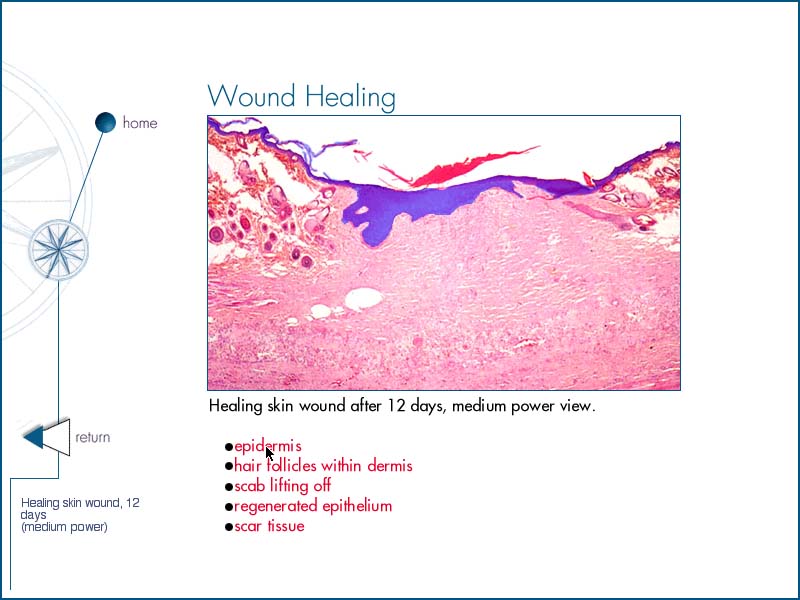
The Healing of Wounds takes Time and the Types of Wound Healing is also related to the Time Factor.


Wound Healing is the process in which a physical injury ( like a cut injury ) undergoes repair with restoration of intrinsic tissue strength and function and also with resistance to infection and other external influences. Wound Healing is affected by the type of the Wound. Clean, sterile wounds that are not at the risk of contamination by other body secretions from the gastrointestinal tract, the genitourinary tract, or the respiratory tract heal better. Infected wounds and contaminated wounds heal slowly. If a wound is suspected to be contaminated the wound is often left open to evaluate the problem and to control any infectious agent. There are three types of Wound Healing described.      

1. Primary Intention or First Intention Wound Healing – Primary Union occurs when there has been little tissue damage, the wound is clean and is not contaminated by foreign matter, the wound is not infected, and the wound edges are closely approximated and are in proper contact. The edges of a wound should be approximated as early as possible after the injury. The surgical procedure known as Primary Wound Closure allows the wound to heal by First Intention. These wounds heal rapidly with minimal amount of scarring. A Surgeon while operating inflicts clean incised wounds and closes the wounds at the end of the surgical procedure. Nature takes over the process of Healing which proceeds in a timely fashion.      

The Natural Wound Healing Process known as Inflammation and Repair involves several different kinds of body cells and chemical mediators. Macrophage is one such cell. It eats up dead tissue and devours harmful bacteria, and engulfs foreign matter present in the wound.


2. Second Intention Wound Healing – It will not be possible to close wounds immediately after an injury if the wound is large, and the two skin edges are not in contact; the wound contains a lot of dead tissue or foreign matter, or is infected. The wound could be intentionally left open until the surgeon could make it clean. Sometimes, the injured person arrives late after sustaining an injury. The time of injury is of critical importance in choosing a course of action for its healing. The surgical procedure known as Delayed or Secondary Closure brings about healing by Secondary Union. Apart from the delay in Wound Healing, the resulting scar tissue is also more extensive.      

3. Third Intention Wound Healing – Sometimes, the wound is left open and is observed for several days because of low-grade bacterial contamination. Eventually, when the wound looks healthy and the wound edges are healthy, the Surgeon would close the wound allowing it to heal by Third Intention. Depending upon the amount of loss in skin surface, and the size of the wound, skin grafts may be needed for Wound Healing and the process is delayed until suitable graft material is procured and the grafting process concludes successfully.      

Wound Healing is affected by several factors that affect human body. A healthy person recovers faster and better if he is injured. When the health is compromised, the recovery from the wounds would be unsatisfactory. Malnutrition, protein deficiency, iron deficiency, Vitamin-C ( Ascorbic acid ) deficiency, diseases of liver and kidneys delay the natural healing process. Conditions causing poor blood supply( Peripheral Arterial Disease ), diabetes, other severe systemic diseases and infections like Tuberculosis can affect wound healing. After Wound Healing, the tissue never regains its original strength that existed prior to the injury. An uncomplicated wound, six months after its healing has about 80 percent of its original strength. Most wounds continue to remodel for more than one year. First Intention healing would generally produce cosmetically acceptable scars. Some scars are unsightly with a raised surface but the scar lies entirely within the confines of the wound. These Hypertrophic scars eventually stabilize in about six months time and are amenable to further cosmetic surgical correction to improve the appearance and to restore the function of the affected body part. Scars known as ‘Keloids’ invade nearby normal tissue that was not previously involved in the wound. This type of scar continues to enlarge even after six months time and does not usually regress or soften. The Keloids cause cosmetic disfigurement which is not easily treatable. Time plays an important role in all the aspects of Wound Healing and Wound Management and exerts an unique influence of its own in the outcomes.      

THE EXPERIENCE OF PAIN AND THE EXPRESSION OF GRIEF  :      

The disfigurement caused by Leprosy is known to humanity for several centuries. This disfigurement is caused by the involvement of nerves and the loss of sensory functions.


We seek help and medical attention for our physical injuries and wounds because of our ability to experience pain.The experience of the physical sensation of pain is of utmost importance in defending and in preserving human existence. If the neurological function of pain perception is blunted or impaired for any reason, the recovery from physical wounds would be delayed and the body sustains further physical damage. Pain is of utmost importance in Clinical Medicine, both for diagnosing an underlying medical condition, to watch the progress, and in treating the condition. The human body that can not express pain or experience pain is at a great risk of harming itself. Psychological insults and injuries also cause pain and grief. To experience mental pain or grief is a natural protective, and defensive mechanism. Such ability to perceive pain from psychological attacks and insults is important to preserve the integrity and existence of the entire organism. By expressing grief, body initiates the natural healing process. While physical wounds need to be closed to help them heal faster, psychological wounds need to be exposed to bring about their healing. Emotional pain and grief must not be concealed. By properly expressing mental grievances, mind gets a chance to purge the negative emotions generated by the psychological assault. The grievance must be reported to a friend, a relative, a therapist, a priest, or to the Law Enforcement and if no such avenue is available it must be submitted to the God the person believes. Psychological wounds when hidden, fail to heal.      

Psychological Injuries and Insults Heal with passage of Time. The Pain is eased as the painful event becomes more distant and the memory of the event starts fading. Apart from memory function, Time may alter our perception of the Psychological Attack and the Injury.


Time exists even when there is no conscious entity with its awareness of past, present, and the future. Time exists not because of human memory of past events, awareness of present, and expectation of future. Time exerts an influence of its own which changes our perception of events and alters the course of consequences. A person with very good memory function would experience less pain with the passage of time after sustaining psychological trauma. The qualities of patience, tolerance, and forbearance increase our ability to withstand physical and mental pain. In the Sanskrit language, the qualities of patience, tolerance, and forbearance are described as ‘KSHAMA’. These qualities not only make the individual Stress Resistant and Resilient, they would also allow the Time’s Power of Healing to come into play. Indians seek the quality of KSHAMA to withstand the consequences of physical and psychological wounds and they believe in the concept of Time as a Healer of all Wounds.      

THE DIVINE HEALING POWER OF TIME  :      

Susruta, Surgeon of Ancient India - Surgical Care and intervention is possible only because of the body's intrinsic ability to heal its wounds. Surgery would be impossible without this Natural Gift of Inflammation and Repair.


By simply repeating and remembering the two letters, "RA", "MA" serves like a Medicine while man confronts the problems of Healing and the consequences of physical and psychological wounds. Indian Culture offers RAMA as a Medicine to all the illnesses and injuries that may afflict human existence and survival. The Indian Concept of Time describes its Divine Healing Potential and Rama provides KSHAMA, the patience, tolerance, and forbearance that is needed for Time to exert its Divine Healing Power.


Human body exists with an ability to recognize its own wounds and initiates its well synchronized response almost simultaneously and this timely response could only be described as a Divine Gift, a gift which humans have no ability to invent on their own. 

Please also view my blog post titled ‘Pain and Compassion – Philosophy of Medicine’ 

http://bhavanajagat.wordpress.com/2010/06/01/pain-and-compassion-philosophy-of-medicine/      

Dr. R. Rudra Narasimham,    

Kurnool Medical College, Kurnool, Andhra Pradesh, India,    

M.B.B.S.,  Class of  April, 1970.

WHOLE DUDE – WHOLE DIAGNOSIS

THIS PORTRAIT OF ADI SHANKARA DEPICTS HIM IN PERFECT, GOOD AND POSITIVE HEALTH.  

THE LEGEND ABOUT ‘BHAJA GOVINDAM’ : 

Adi Shankara, an Indian philosopher of 8th century CE, born in the southern Indian state of Kerala is well-known for his doctrine of Advaita Vedanta which he had established using Upanishads for reference. Shankara had established the ‘SMARTHA’ tradition to which I belong. He had recommended devotion to both Shiva and Vishnu and also the worship of other gods and goddesses. His poetic composition popularly known as ‘Bhaja Govindam’ deals with issues of human existence and the problem of death. Shankara had renounced the comforts associated with materialistic existence and had become a ‘Sanyasin'( Hindu ascetic) at a very young age and had walked across the length and breadth of India on foot. He had lived by accepting the offerings(‘biksha’) given by the community which often involved walking along the streets in places where he had lived. While he had lived in the city of Kashi also known as Benares or Varanasi, the legend claims that he had composed the twelve verses of Sanskrit poetry. He was accompanied by fourteen of his disciples who had also contributed a verse each and these songs are collectively known as ‘Bhaja Govindam’. The legend describes that Shankara had encountered a man teaching the rules of Sanskrit grammar to his students. In India, the teaching technique often involves learning by rote. A phrase is repeated several times to let the students put it into memory. As this Sanskrit Grammar teacher was repeating the phrase ‘Du krun kariney’, Shankara, a man of great spiritual insight, had instantly recognized that the Sanskrit teacher was actually facing the threat of death and the teacher himself was not aware of the threat to his physical existence. Shankara who had mastered Vedas and Upanishads was aware of the many sources both external and internal that endanger human physical existence. This particular ability of Shankara to diagnose the health of an individual interests me because of my educational experience and training in the ‘Art of Diagnosis’. Unfortunately, Shankara died at the very young age of 32. A mystery surrounds his death. The place of his death is disputed. He was always followed by his disciples. Some accounts claim that he had died in Kedarnath in the Himalayan mountains of Uttaranchal State. Others claim that he had died in the southern Indian city of Kanchi. What had contributed to his premature demise is not known. His portraits always depicted him in good and positive health. 

THE ART OF DIAGNOSING GOOD HEALTH : 

To diagnose ill-health is easy. The sick person may describe his ailments. In addition to a person’s subjective symptoms, ill-health shows objective manifestations. The art of clinical diagnosis in sickness and disease involves the use of signs and symptoms attributable to specific conditions that affect the state of health of an individual. However, the mere absence of ill-health does not necessarily mean that the person is positively healthy. Health, like beauty is often a matter of subjective impression. But, while beauty is in the eyes of the beholder, the diagnosis of perfect and positive health is a verdict rendered after a carefully executed medical examination. 

The important object of medical inspection and examination of Armed Forces personnel is to ensure that they are healthy and are able to perform the tasks assigned to them. As the medical officer providing medical cover to units in the Armed Forces of India and The Sultanate of Oman where I had served, I was responsible for assessment of health of all personnel under my care. To ensure that the troops are in good health, I was required to medically inspect all personnel under my care periodically and diagnose that they were in good health. Good health demands that a person should appear well nourished. In stature and build, a person should represent an average example of his race and class. The person should not present any evidence of emotional hyper-excitability. Temperamentally, the individual should exhibit reasonable aptitude and behavior consistent with the expectations of his occupation. Most importantly, the face of the person should reflect the bloom of vigorous health. A person in good health should appear cheerful and be full of vitality. The entire individual is carefully examined to assess the health status. I had acquired the practical skills of the ‘Art of Diagnosing Good Health’ by carefully carrying out regular, periodic health inspections of all men under my care. Armed Forces insists upon Medical Inspections for a variety of reasons and individuals who are subject to the Rules and Regulations that govern Service in Uniform cannot refuse the mandatory Medical Examinations. Medical Inspection of all the men including all food handlers of the Unit is done typically once every month. In addition, men newly posted to the Unit( New Arrivals), men before proceeding on and returning from Courses of Instruction/Leave of Absence/Temporary Duty, and after Hospital Discharge are Medically Inspected. Recruits posted to the Unit after completion of Recruit Training, and men joining their Units after serving abroad are subjected to Medical Inspections. Thorough, detailed and specific Medical Examinations of military personnel is required under the following conditions : 

1. All troops proceeding on ‘active service’ or troops proceeding overseas. 2. Individuals proceeding on permanent transfer to another Unit. 3. Men desirous of an extension of service or re-engagement. 4. Troops for transfer for the Reserve Duty. 5.Officers at the time of initiation of Annual Confidential Reports, entry to Staff College, any Course of Instruction, Fitness for Special Duty. 6. Men under arrest and undergoing sentence and before disciplinary action. 7. Men posted to serve at High Altitude. 8. Special examination at the outbreak of an infectious disease. Typically, I used to examine at least twenty known contacts of each case of Malaria or Viral Hepatitis. 

Medicine is not merely the Art of Diagnosing ill-health and it is equally the Art of Diagnosing Good and Positive Health. I had perfected this skill by meticulously repeating the task of conducting Medical Inspections thousands of times during the course of my service in the Armed Forces. This had also contributed to my ability to diagnose ill-health and in the next several posts I would narrate a few specific instances when I had diagnosed an impending outcome of death during my service and there are instances when I had diagnosed Good Health and made individuals to perform their assigned tasks and did not allow them to escape from the obligations of Military Duty. Sometimes, my acute power of observation was better than that of Physicians more qualified than me. During 1973, I was admitted to Military Hospital, ROORKEE for an intestinal infection. During my hospital stay as a patient,while I was standing in the lobby of the Officers’ Ward one particular evening, I had seen a young, male patient coming into the Ward after his admission. When I had looked at him from a distance, and the manner in which he was walking, particularly his gait and the position of his right hand over the right lower quadrant of his abdomen, I had suspected his medical problem. After he came into the Ward, from his facial appearance alone, I had recognized him as the younger brother of an Officer who was then serving with me in my Unit. Both of them belonged to the Corps of Engineers. I had introduced myself and he had confirmed his relationship to the Officer who was then serving at my Unit. I had asked him about his medical ailment. He was getting treatment from the Hospital Physician( Medical Specialist) over the last several days and was
already seen by the Physician twice in the Out-Patient Clinic and was not responding to the medicines that were prescribed. I had looked up at the Hospital Admission document. He was admitted to the Military Hospital with the provisional diagnosis of Fever Not Yet Diagnosed. I told him that Fever was not the real issue and that he was suffering on account of a common well-known surgical condition called Acute Appendicitis. I had confirmed this diagnosis by performing a simple test on this young Officer patient and told him that he would need immediate surgery and that his ‘APPENDIX’ should be removed without any delay. I proceeded to contact the Duty Medical Officer who had admitted and sent this individual to the Officers’ Ward. The Duty Officer had simply admitted this man based upon the written opinion given by the Physician. The Duty Medical Officer came over to the Officers’ Ward and he repeated the test I had performed earlier and the diagnosis was very clear. He immediately called the Duty Surgeon, who came over and repeated the test I had conducted and confirmed that Appendix should be removed. The appendix was removed and the Surgeon came back and told me that the appendix was highly inflamed and was at the risk of a RUPTURE which could pose a greater threat. While, Appendicitis is a common surgical emergency among young adults, Medical Specialists are not trained to treat this condition and sometimes they may fail to look for it. I was less qualified than the Medical Specialist but I had trained myself in the Art of Diagnosis which would be of use in diagnosis if not in delivering the special treatment a medical condition requires. Whatever may be the outcome, a Good Diagnosis is as relevant as a Good and proper Treatment. Roorkee was the hometown of this Officer patient. Later his father came to the Ward to meet me and was particularly excited with this chance coincidence ; I knew his first son and then I was in Roorkee at that precise moment and intervened as his second son was arriving at the Officers’ ward.
 

BHAJA GOVINDAM – PART-I : 

While the Art of Diagnosis interests me, I constantly remind myself that Good Health is due to the GRACE and MERCY of the LORD and Indians love to identify the LORD as GOVINDA. While we exist because of MERCY, when the existence is threatened, we have no choice other than remembering the LORD. 

Bhaja Govindam, Bhaja Govindam, 

Govindam Bhaja muudha matey, 

Sampraaptey Sannihitey kaaley, 

Nahi Nahi rakshati Du krun karaney. 

Dr. R. Rudra Narasimham,

Kurnool Medical College, Kurnool, A.P., India.,

M.B.B.S., Class of April, 1970.