Whole Doom – Whole Fantasy – The American China Fantasy Fails

Doomed American China Fantasy – The Cold War in Asia

DOOMED AMERICAN CHINA FANTASY – THE COLD WAR IN ASIA 1949 TO 2025. THE SPREAD OF COMMUNISM IN ASIA.

The Cold War in Asia is the product of Communism that spread from Europe to Asia. Nixon-Kissinger in 1971-72 initiated Policy of Doomed American China Fantasy without concern for lessons learned in Korean Peninsula and Vietnam. There is no hope and there is no future for America’s China Fantasy as Communist Party in China survives unchanged and unaffected by changing fortunes of the US Political Parties.

Rudra Narasimham Rebbapragada

DOOM DOOMA DOOMSAYER

Doomed American China Fantasy – The Cold War in Asia 1949 to 2025

AMERICA’S CHINA FANTASY

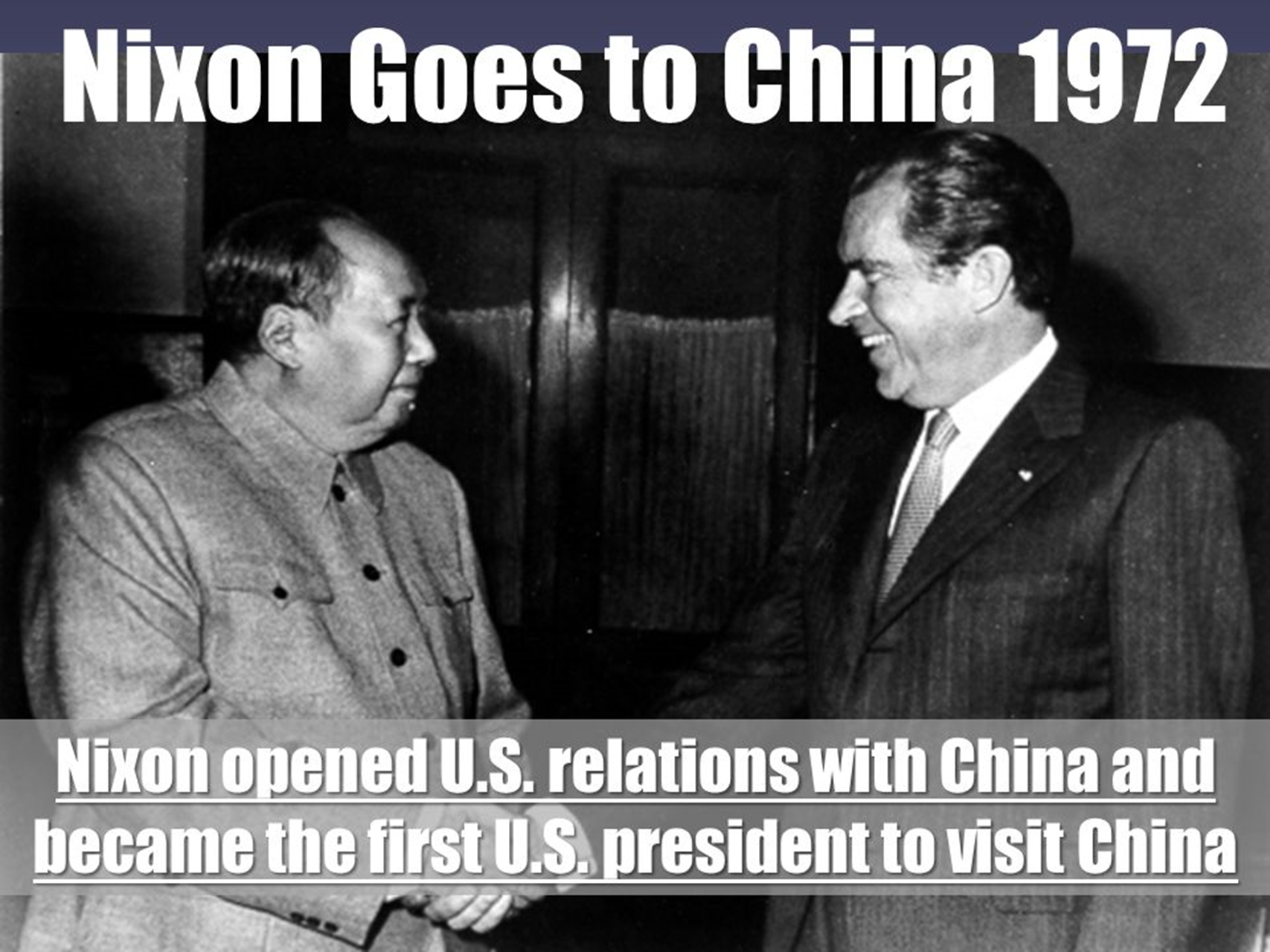
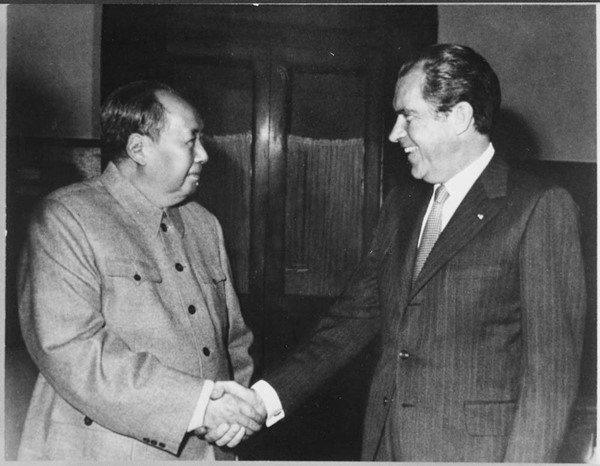
DOOMED AMERICAN CHINA FANTASY – THE COLD WAR IN ASIA 1949 TO 2025. THE SPREAD OF COMMUNISM IN ASIA.. President Nixon’s Doomed Journey to Peking in February 1972.

Clipped from: http://prospect.org/article/americas-china-fantasy

America has been operating with the wrong paradigm for China. Day after day, U.S. officials carry out policies based upon premises about China’s future that are at best questionable and at worst downright false.

The mistake lies in the very assumption that political change — and with it, eventually, democracy — is coming to China, that China’s political system is destined for far-reaching liberalization. Yet the Bush administration hasn’t thought much about what it might mean for the United States and the rest of the world to have a repressive one-party state in China three decades from now. For while China will certainly be a richer and more powerful country in 30 years, it could still be an autocracy of one form or another. Its leadership (the Communist Party, or whatever else it calls itself in the future) may not be willing to tolerate organized political opposition any more than it does today.

That is a prospect with profound implications for the United States and the rest of the world. And it is a prospect that our current paradigm of an inevitably changing China cannot seem to envision.

The notion of a China on the road to political liberalization has taken hold in the United States because it has served certain specific interests within American society. At first, in the late 1970s and the 1980s, this idea benefited the U.S. national-security establishment. At the time, the United States was seeking close cooperation with China against the Soviet Union, so that the Soviet Union would have to worry simultaneously about both countries; the Pentagon wanted to make sure the Soviet Union tied down large numbers of troops along the Sino-Soviet border that might otherwise have been deployed in Europe. Amid the ideological struggles of the Cold War, though, cooperation with China’s Communist regime was politically touchy in Washington. And so the notion that China was in the process of opening up its political system helped smooth the way with Congress and the American public.

In the 1990s, after the Soviet collapse, the idea of a politically changing China attracted a new constituency, one even more powerful than the Pentagon: the business community. As trade and investment in China became ever more important, American companies found themselves repeatedly beset with questions about why they were doing business with such a repressive regime. The paradigm of inevitable change offered multinational corporations the answer they needed. Not only was China destined to open up its political system, but trade, the theology held, would be the key that would unlock the door. It would lead to political liberalization and to democracy, with or without the support of the Chinese leadership. Accordingly, no one outside China needs to do anything, or even think much about the subject. Why bother to protest a crackdown or urge China to allow political opposition if you know that democracy, by the inexorable laws of history, is coming anyway?

The trouble is, the entire paradigm may turn out to be wrong.

What should the U.S. strategy be for dealing with China’s Leninist regime? If you ask our established political leaders, foreign-policy experts, or sinologists what the United States should do about China, you will undoubtedly get some version or another of this approach. It is called the strategy of “integration.”

The United States, the thinking goes, should try to integrate the Chinese leadership into the international community. It should seek to help China gain admission into the world’s leading international organizations. According to this logic, the nature of the Chinese regime will change after China becomes a member of international bodies such as the World Trade Organization, which it has now joined. China’s Communist Party leadership will gradually behave more like other governments; it will become more open in dealing with the Chinese people and with the rest of the world. Richard Haas, the president of the Council on Foreign Relations, has written of “the existing opportunity to integrate China into a U.S.-led world order.”

This strategy of integration dates back to the Clinton administration. In 1994, President Clinton abandoned his attempt to use trade as a lever for improving human rights in China, then needed to divert attention away from this embarrassing reversal. He did not wish to concede that that he had just downgraded the cause of human rights in China; instead, he sought a new, positive-sounding description of his policy. “Integration” gradually became the label of choice, invoked by the president and his top advisers in press conference after press conference. Integration became, above all, the justification for unrestricted trade with China. “We believe it’s the best way to integrate China further into the family of nations and to secure our interests and our ideals,” declared Clinton in one typical speech.

George W. Bush and his advisers, without ever admitting they were doing so, have perpetuated most of the essentials of Clinton’s China policy, including the avowed commitment to integration. When Secretary of State Condoleezza Rice gives a speech about China, she sooner or later calls for integrating China into the international community.

“Integration” has thus become another catchphrase like “engagement,” the earlier slogan for America’s China policy, which originated somewhat earlier, during the administration of George Bush Senior. With both words, however, the suggestion is the same: that is, with enough engagement, with sufficiently vigorous integration, the United States may succeed in altering the nature of the Chinese regime — although it is not clear exactly how this is supposed to happen. In a way, the American approach is a bit patronizing to China: It sounds as if the United States is a weary, experienced trainer bringing China to a diplomatic version of obedience school.

The fundamental problem with this strategy of integration is that it raises the obvious question: Who’s integrating whom? Is the United States now integrating China into a new international economic order based upon free-market principles? Or is China now integrating the United States into a new international political order where democracy is no longer favored, and where a government’s continuing eradication of all organized political opposition is accepted or ignored?

This is not merely a government issue. Private companies — including Internet firms like Yahoo, Google, and Microsoft — often use slogans like “engagement” and “integration” to explain why they have decided to do business in China despite Chinese rules and laws that allow continuing censorship. “I think [the Internet] is contributing to Chinese political engagement,” Bill Gates told one business gathering. Yet if Microsoft is altering its rules to accommodate China, once again the question is: Who’s changing whom?

Will it have been a success for the U.S. policy of integration if, 30 years from now, the world ends up with a Chinese regime that is still a deeply repressive one-party state but is nevertheless a member of the international community in good standing? If so, that same China will serve as a model for dictators, juntas, and other undemocratic governments throughout the world — and in all likelihood, it will be a leading supporter of these regimes. Pick a dictator anywhere today and you’ll likely find that the Chinese regime is supporting him. It has rewarded Robert Mugabe, the thug who rules Zimbabwe, with an honorary professorship, and his regime with economic aid and, reportedly, new surveillance equipment. It has been the principal backer of the military regime in Burma. And when Uzbek President Islam Karimov ordered a murderous crackdown on demonstrators in 2005, China rushed to defend him.

If China maintains its current political system over the next 30 years, then its resolute hostility to democracy will have an impact in places like Egypt, Syria, and Saudi Arabia. A permanently authoritarian China could also undermine Russia’s already diminishing commitment to democracy.

Thus, when America’s leading officials and CEOs speak so breezily of integrating China into the international community, listeners should ask: If China remains unchanged, what sort of international community will that be? Will it favor the right to dissent? Will it protect freedom of expression? Or will it simply protect free trade and the right to invest?

But wait, say the defenders of America’s existing China policy. We believe in democracy, too. There is no real disagreement here on our ultimate goals. This is all just a question of tactics. The strategy of integration (or of engagement) is designed to change China’s political system and, over the long term, to end China’s one-party state.

These arguments sound in some ways similar to claims made by the Chinese regime itself. Because Chinese Communist Party leaders don’t like to acknowledge that they intend to maintain their monopoly on power, they sometimes tell visitors that they, too, believe in democracy, that this is the ultimate goal for China, and that it is all merely a question of timing. These claims are designed for the hopelessly gullible; by its actions, day after day, the regime makes clear its tenacious hostility to the idea of political pluralism in China.

Generally, the U.S. proponents of a strategy of integration are not so cynical. To be sure, a few of them may be antidemocratic; there have always been Americans who admire, even revere, the simplicity and convenience of autocracy. However, other proponents of integration seem to believe quite sincerely that if the United States continues its current approach toward China, Chinese leaders eventually will be willing to abandon the monopoly on political power they have maintained since 1949. Yet these same proponents fail to explain how or why, given the current U.S. strategy, China’s political system will change.

The examples of reforms that they have invoked so far have served to divert attention away from the core issue of China’s one-party state. The promotion of village elections has proved to be largely unsuccessful, both because the Chinese leadership can confine this experiment exclusively to the villages and because in the villages themselves, authorities have resorted to a variety of methods, including the use of violence, to forestall democracy.

Nor is there evidence that the American promotion of the rule of law will by itself transform the political system. So long as there is no independent judiciary and China remains a one-party regime in which judges are selected by the Communist Party, promoting the rule of law won’t bring about fundamental change. Instead, it simply may lead to a more thoroughly legalized system of repression. Indeed, those lawyers in China who attempt to use the judicial system to challenge the Communist Party or to defend the rights of political dissidents have themselves been subject to persecution, including the loss of their jobs or even time in prison.

The strongest impetus for establishing the rule of law comes from the corporations and investors who are putting their money into China. They need bona fide procedures for resolving financial disputes, just as companies and investors require everywhere else in the world. It is in the interest of the Chinese regime to keep the investment dollars, euros, and yen flowing into the country, and so Chinese officials are willing to establish some judicial procedures for the foreign companies. However, the result could well be a Chinese legal system that offers special protection for foreign investors but not to ordinary Chinese individuals, much less to targets of the regime such as political dissidents or Tibetan activists.

And that raises the larger question about America’s current strategy of integration: Whom does it benefit? Above all, it enriches the elites in both China and the United States. The strategy is good for the American business community, which gets to trade with China and invest in China, and for the new class emerging in Chinese cities — the managers and entrepreneurs, many of them former party cadres or the relatives of cadres — that is getting rich from the booming trade and investment in its country. But it has not been nearly so beneficial for working-class Americans — particularly the tens of thousands who have lost their jobs in the United States as the end result of this “integration” policy.

The American people were told many years ago that bringing China into the international economic system would help change the Chinese political system. Now, American workers may well wonder whether this argument was merely a cruel hoax. Nor has the strategy of integration been such a blessing for ordinary Chinese. To be sure, China as a whole is more prosperous than it has ever been, but this new prosperity is enjoyed mostly by the urban middle class, not by the country’s overworked, underpaid factory laborers or by the hundreds of millions of peasants in the countryside.

Indeed, it is precisely because the regime knows how restive and disenchanted the Chinese people are that it refuses to open up to any form of democracy. The Chinese leaders know that they could be thrown out of office if there were free and open elections. Democracy, or even an organization calling for future democracy, is a threat to the existing political and economic order in China. That is why the regime continues to repress all forms of organized dissent and political opposition. It is also why China’s new class of managers and executives, who profit from keeping wages low, support the regime in its ongoing repression.

A few years ago, the New York Times columnist Nicholas D. Kristof gave voice to one of the most common American misconceptions about China’s political future. Reflecting on how China had progressed and where it was headed, Kristof wrote, “[Hard-liners] knew that after the Chinese could watch Eddie Murphy, wear tight pink dresses and struggle over what to order at Starbucks, the revolution was finished. No middle class is content with more choices of coffees than of candidates on a ballot.”

Once people are eating at McDonald’s or wearing clothes from The Gap, American writers rush to proclaim that these people are becoming like us, and that their political system is therefore becoming like ours. But will the newly enriched, Starbucks-sipping, condo-buying, car-driving denizens of China’s largest cities in fact become the vanguard for democracy in China? Or is it possible that China’s middle-class elite will either fail to embrace calls for a democratic China or turn out to be a driving force in opposition to democracy?

China’s emerging urban middle class, after all, is merely a small proportion of the country’s overall population — far smaller than its counterparts in Taiwan or South Korea. There are an estimated 800 million to 900 million Chinese peasants — most of them living in rural areas, although 100 million or more are working or trying to find jobs as migrants on the margins of Chinese cities. If China were to have nationwide elections, and if peasants were to vote their own interests, then the urban middle class would lose. The margin would not be close. On an electoral map of China, the biggest cities — Shanghai, Beijing, Tianjin, Guangzhou, and the others — might look something like the small gold stars on the Chinese flag: They would be surrounded by a sea of red. Add together the populations of China’s 10 largest cities and you get a total of some 62 million people. That number is larger than the population of France or Britain or Italy. But it is still only about 5 percent of China’s overall population of 1.3 billion.

If you are a multinational company trying to sell consumer products, then the rapid rise in spendable income in China’s largest cities is of staggering importance. When it comes to any national elections, however, that new Chinese middle class is merely a drop in the bucket. Those in China’s urban avant-garde have every reason to fear that they would be outvoted.

China’s urban residents have an even greater reason to fear democracy: The Communist Party has not exactly been evenhanded in its treatment of urban residents vis-à-vis peasants. On the contrary: Its policies have strongly favored the cities over the countryside. This is why there has been a wave of protests in the countryside, arising out of land seizures, local taxes, disputes over village elections, and similar controversies. It is also why the Chinese regime has been, in recent years, particularly fearful of mass movements that might sweep through the countryside and undermine the Communist Party’s control. Looking at Falun Gong, the quasi-religious movement that began to take hold during the 1990s, the Chinese leadership was haunted by a specter from the past: the Taiping Rebellion, which swept out of middle China in the 19th century and shook the Qing Dynasty to its foundations.

What lies behind the Chinese Communist Party’s monopoly on power and its continuing repression of dissent? The answer usually offered is the Communist Party itself — that the party and its more than 70 million members are clinging to their own power and privileges. This is certainly part of the answer, but not all of it. As China’s economy has thrived in recent years, strong economic and social forces have also emerged in Chinese society that will seek to protect the existing order and their own economic interests. The new middle class in Chinese cities is coming to favor the status quo nearly as much as does the Communist Party itself.

Why do we assume that what follows the Chinese Communist Party’s eventual fall will necessarily be political liberalization or democracy? One can envision other possibilities. Suppose, for example, that the party proves over the next decade to be no better at combating the country’s endemic corruption than it has been over the past decade. Public revulsion over this corruption reaches the point where the Chinese people take to the streets; leaders find they cannot depend on troops to quell these demonstrations; the Communist Party finally gives way. Even then, would the result be Chinese democracy? Not necessarily. China’s urban middle class might choose to align itself with the military and the security apparatus to support some other form of authoritarian regime, arguing that it is necessary to do so in order to keep the economy running.

The underlying premise of the U.S. integration strategy is that we can put off the question of Chinese democracy. But two or three decades from now, it may be too late. By then, China will be wealthier, and the entrenched interests opposing democracy will probably be much stronger. By then, China will be so thoroughly integrated into the world financial and diplomatic systems that, because of the country’s sheer commercial power, there will be no international support for any movement to open up China’s political system.

What should the United States do to encourage democratic change in China? A detailed list of policies can emerge only after we first rid ourselves of the delusions and the false assumptions upon which our China policy has long been based.

Above all, we have to stop taking it for granted that China is heading inevitably for political liberalization and democracy. President Bush has continued to repeat the American mantra about China, every bit as much as did his predecessors. “As China reforms its economy, its leaders are finding that once the door to freedom is opened even a crack, it cannot be closed,” Bush declared in one typical speech. Such words convey a heartwarming sense of hopefulness about China, but they do not match the reality of China itself, where doors are regularly opened by more than a crack and then closed again.

America’s political and corporate leaders also need to stop spreading the lie that trade will bring an end to China’s one-party political system. This fiction has been skillfully employed, over and over again, to help win the support of Congress and the American public for approval of trade with China. Trade is trade; its benefits and costs are in the economic sphere. It is not a magic political potion for democracy, nor has it brought an end to political repression or to the Chinese Communist Party’s monopoly on power, and there is not the slightest reason to think it will do so in the future. In fact, it is possible that our trade with China is merely helping the autocratic regime to become richer and more powerful.

America’s current China policy amounts to an unstated bargain: We have abandoned any serious attempt to challenge China’s one-party state, and in exchange we have gotten the right to unfettered commerce with China.

What we need now, above all, are political leaders who are willing to challenge America’s stale logic and phraseology concerning China. We need politicians who will call attention to the fact that America has been carrying out a policy that benefits U.S. and Chinese business interests far more than it helps ordinary working people in either country.

The reexamination should apply to both U.S. political parties and to both poles of the ideological spectrum. On the Democratic left, we need people who will question the assumptions that it is somehow “progressive” to say that democracy doesn’t matter or that it will automatically come to China some day. Such views aren’t in the least bit progressive, liberal, or enlightened. Rather, they were developed by the Clinton administration to justify policies that would enable Bill Clinton to win corporate support. During the 1990s, there were other views concerning China within the Democratic Party — those of Nancy Pelosi, for example, and George Mitchell, who took strong stands on behalf of human rights in China. The Democrats rejected those alternative approaches a decade ago. They would do well to reexamine them now.

Within the Republican Party, we need political leaders willing to challenge the Business Roundtable mentality that has dominated the party’s thinking on China for so long. If Republicans really care about political freedom, then why should they allow U.S. policy toward China to be dominated by corporate interests while the world’s most populous country is governed by a single party that permits no political opposition? President Bush has been able to conceal his business-oriented approach to China behind a facade of hawkish rhetoric. Republicans should not allow this to happen again.

Once the United States finally recognizes that China is not moving inevitably toward democracy, we can begin to decide what the right approach should be. On the one hand, it’s possible that America may seek new measures to goad the Chinese leadership toward democratic change. America also might want to reconsider its doctrinaire adherence to free trade in dealing with China. On the other hand, it’s possible that the American people may decide that there’s absolutely nothing that the United States can or should do about a huge, permanently undemocratic, enduringly repressive China. Such an entity, a Chinese autocracy persisting into the mid-21st century, would cause large problems for U.S. policy elsewhere in the world. Nevertheless, after weighing the costs and benefits of trying to push for democracy in China, the United States could opt for a policy of sheer acceptance of the existing order.

The American people are not being given such options now, however, because the choices are not being laid out. American politicians of both parties talk regularly as if liberalization and democracy are on the way in China. But what if China remains an autocracy? At the moment, that possibility seems to be outside our public discourse. We need to change that in order to figure out what we want to do.

It would be heartening if China’s leaders proceed along the lines that America’s political leaders predict. It would be wonderful if China opens up, either gradually or suddenly, to a new political system in which the country’s 1.3 billion people are given a chance to choose their own leaders. While wishing for such an outcome, however, I will not hold my breath.

James Mann, from whose new book, The China Fantasy, this article is adapted, is author-in-residence at Johns Hopkins University’s School of Advanced International Studies.

DOOMED AMERICAN CHINA FANTASY – THE COLD WAR IN ASIA 1949 TO 2025. THE SPREAD OF COMMUNISM IN ASIA.
Doomed American Fantasy – The Cold War in Asia 1949 to 2025. Communist Party of People’s Republic of China remains unaffected and unchanged by changing fortunes of the US Political Parties.


ICE-BREAKING OR HEART-BREAKING? NIXON’S HISTORIC 1972 TRIP TO PEKING

ICE-BREAKING OR HEART-BREAKING? NIXON’S HISTORIC 1972 TRIP TO PEKING

Ice-Breaking or Heart-Breaking? President Nixon’s historic 1972 trip to Peking. Nixon’s Peking Deal breaks the heart of Tibet Nation.

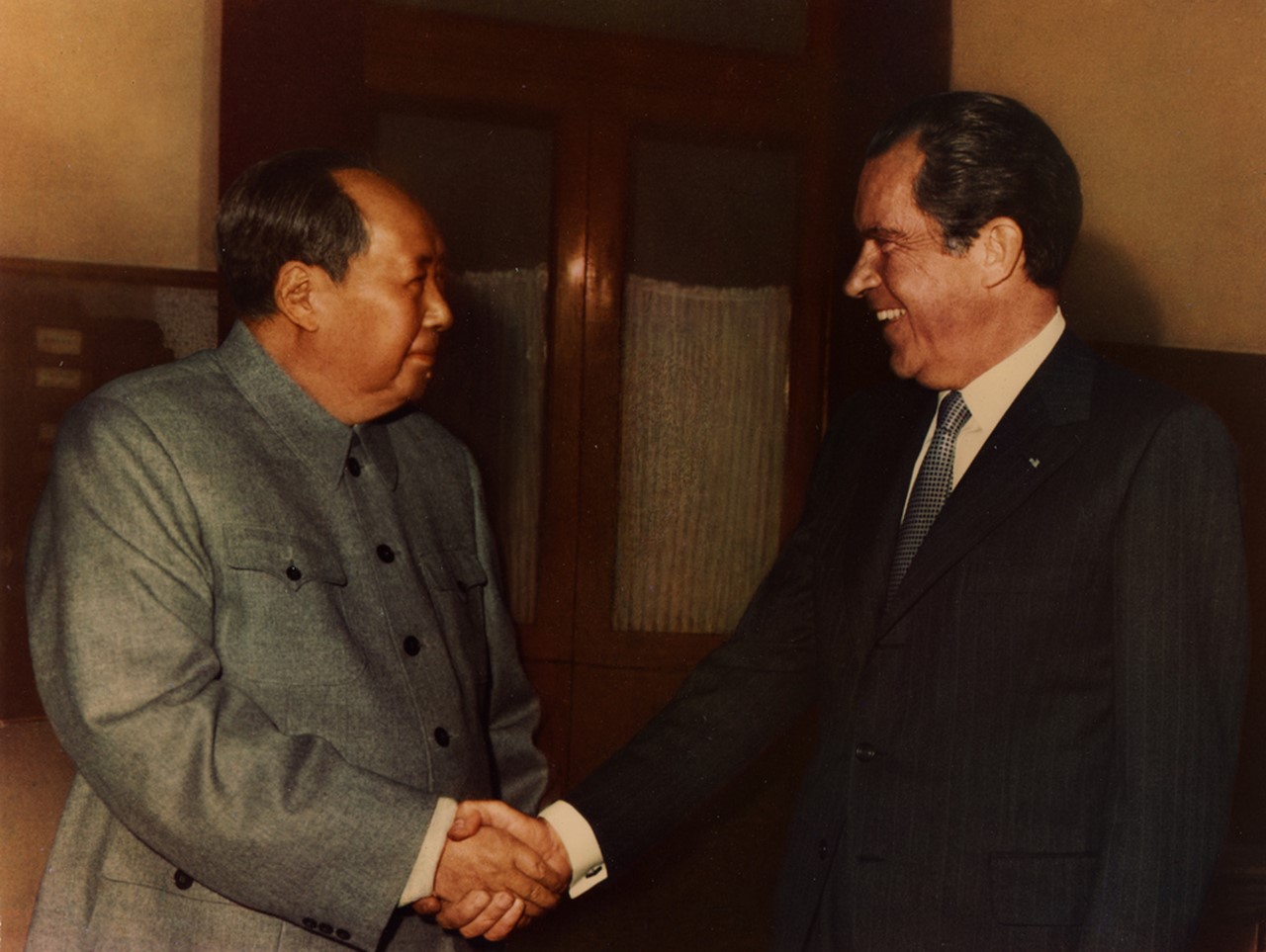
The Richard Nixon Foundation may celebrate the 40th Anniversary of the establishment of diplomatic relations between the US and China. I characterize this 1972 “ice-breaking” trip as “Heart-Breaking.” President Nixon shook hands with Chairman Mao Zedong with his right hand while backstabbing Tibet with his left hand.

Rudranarasimham Rebbapragada

SPECIAL FRONTIER FORCE

Ice-Breaking or Heart-Breaking? President Nixon’s historic 1972 trip to Peking. Deal-Making while Backstabbing Tibet.

Nixon’s historic 1972 trip to China was ‘ice-breaking’

By LIU YINMENG in Yorba Linda, California | China Daily USA | Updated: 2019-01-15 23:28

“ICE-BREAKING OR HEART-BREAKING?” PRESIDENT NIXON’S HISTORIC 1972 TRIP TO PEKING HIDES A PAINFUL TRUTH, THE BACKSTABBING OF TIBET.

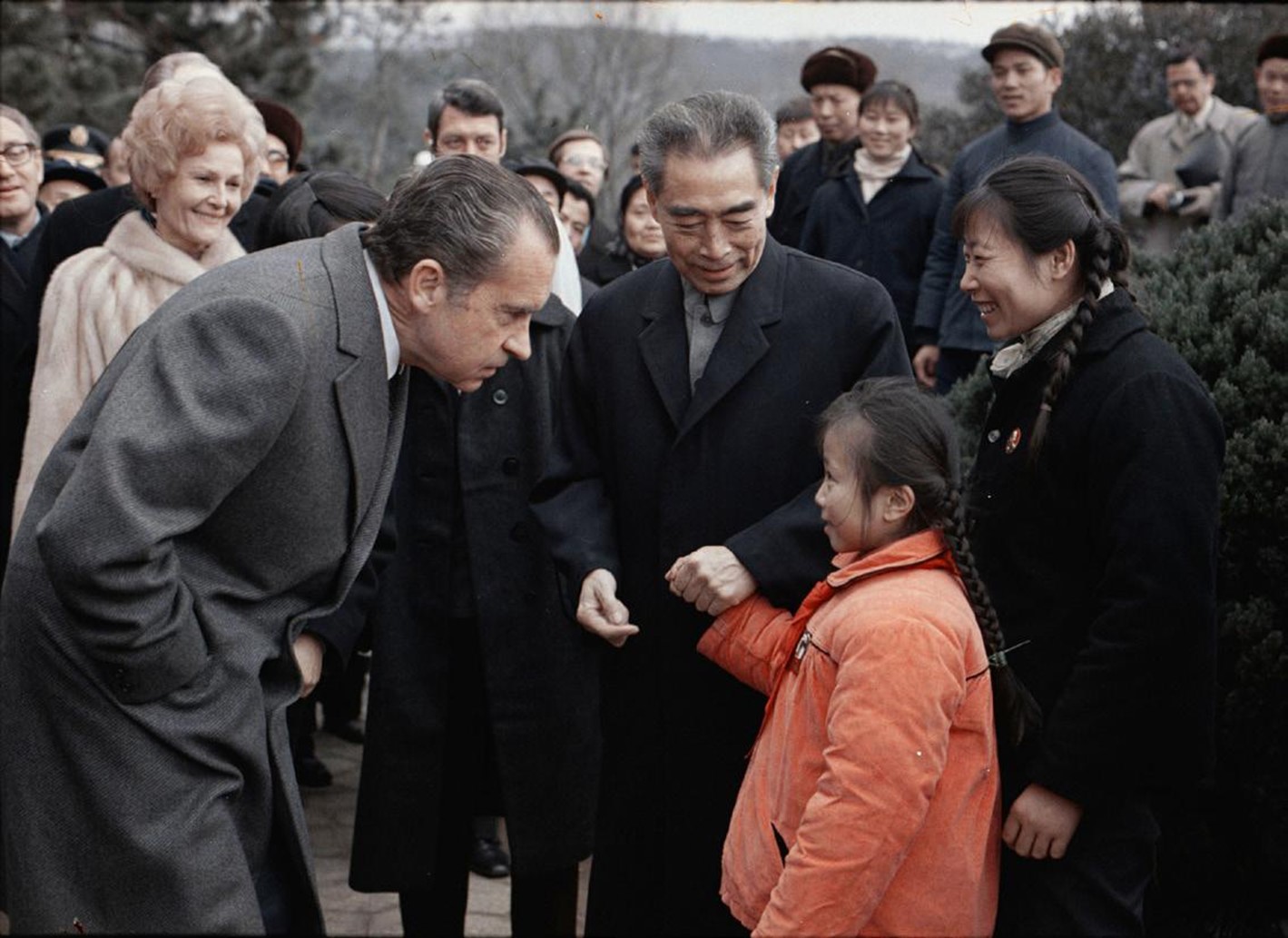
President Richard Nixon and Premier Zhou Enlai greet a young girl at Hangzhou West Lake Park in China on Feb 26, 1972. photo provided by Nixon Library

The Richard Nixon Foundation was a fitting place to celebrate the 40th anniversary of the establishment of diplomatic relations between China and the United States.

An elaborate dinner was held on Sunday at the foundation, the resting place of the American president whose “ice-breaking” trip to China in 1972 opened a significant chapter in the history of the two countries.

Elected officials, representatives of the Chinese Consulate General in Los Angeles, Chinese-American leaders, musicians and business leaders who participated called for goodwill and mutual understanding at a crucial juncture in the Sino-American relationship.

“For many years, Southern California has been running at the forefront in leading US-China subnational exchange and cooperation. It provides a good example of the mutually beneficial nature of our relations,” said Zhang Ping, Chinese consul general in Los Angeles.

He said the fact that President Xi Jinping and US President Donald Trump had reached an important consensus during their meeting at the G20 on Dec 1 is encouraging, and “it’s important that we make concerted efforts to implement their consensus”.

“As we look at the journey that bilateral relations have gone through, we are gratifying to see that our people are always standing behind the relationship,” Zhang said.

The event, co-hosted by the Roundtable of Chinese-American Organizations and the Richard Nixon Foundation, was attended by around 450 people.

The commemorative event kicked off with an “East Meets West” concert that included the national anthems of China and the US performed by the Orange County Music and Dance School.

Attendees also enjoyed performances by soprano Feng Wei and pianist Bai Chao Lan, as well as a selection of songs played by the Orange County-based Pacific Symphony, which made its debut tour in China in May.

Foundation President William Baribault called Nixon’s opening with China a “truly transformational foreign policy”.

“Because of President Nixon’s long and deep reading and understanding of history, he knew that China was a great power, and from his long and deep practice and understanding of statecraft, he knew that a truly stable, secure, prosperous and peaceful world requires the inclusion of all great powers at the table,” Baribault said.

Nixon’s 1972 trip, which he dubbed “the week that changed the world”, marked the first time a US president set foot in China.

It led to the issuance of the Shanghai Communiqué at the end of the trip and the signing of accords between US president Jimmy Carter and Chinese vice- premier Deng Xiaoping in 1979, which formally established US-China diplomatic ties.

“His weeklong tour is one of the world’s most significant diplomatic milestones in the 20th century that has a lasting impact on our future,” said Guo Song, chairwoman of the Roundtable of Chinese-American Organizations.

She said Chinese Americans abroad, who have experienced up close the ups and downs of the relationship, treasured the deep and everlasting friendships between the US and China.

Contact the writer at teresaliu@chinadailyusa.com

To accomplish this historic mission, the US President backstabbed Tibet.

TIBET EQUILIBRIUM – 66 YEARS AND COUNTING – TIBET AND CHINA

TIBET EQUILIBRIUM – 66 YEARS AND COUNTING – TIBET AND CHINA

TIBET EQUILIBRIUM – 66 YEARS AND COUNTING – TIBET AND CHINA.

American China Fantasy is Doomed. The reason is that of America’s Unfinished War in Asia. The Cold War in Asia is not about Tibet’s Independence or Autonomy. The Cold War is about engaging, containing, confronting, opposing, and resisting the threat posed by Communism and its influence in Asia.

Rudranarasimham Rebbapragada
DOOM DOOMA DOOMSAYER

TIBET EQUILIBRIUM – THE COLD WAR IN ASIA IS NOT ABOUT TIBET’S INDEPENDENCE OR AUTONOMY. ITS ABOUT SPREAD OF COMMUNISM.

DOOMED AMERICAN CHINA FANTASY – CIA’S UNFINISHED WAR IN ASIA

DOOMED AMERICAN CHINA FANTASY – CIA’S UNFINISHED WAR IN ASIA

DOOMED AMERICAN CHINA FANTASY – CIA’S UNFINISHED WAR IN ASIA.

I speak of Doomed American China Fantasy in context of ‘The Cold War in Asia’ introduced by spread of Communism from Soviet Union to China.

Doomed American China Fantasy – CIA’s Unfinished War in Asia.

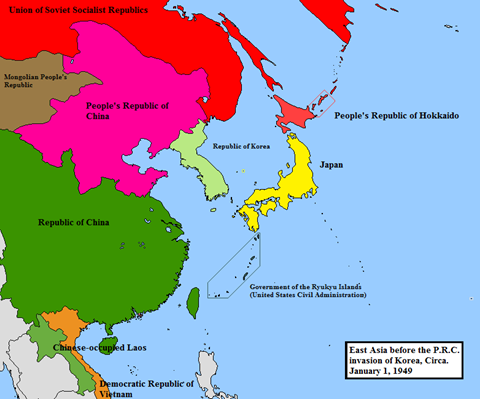
On January 01, 1949, People’s Republic of China posed a lesser threat as compared to today. Most surprisingly, the United States refused to learn from conflicts in Korea and Vietnam. Bumbling United States has yet to review fate of CIA’s Unfinished War in Asia.

Rudranarasimham Rebbapragada

DOOM DOOMA DOOMSAYER

BUMBLING Ex-CIA OFFICER CHARGED WITH SELLING SECRETS TO CHINA

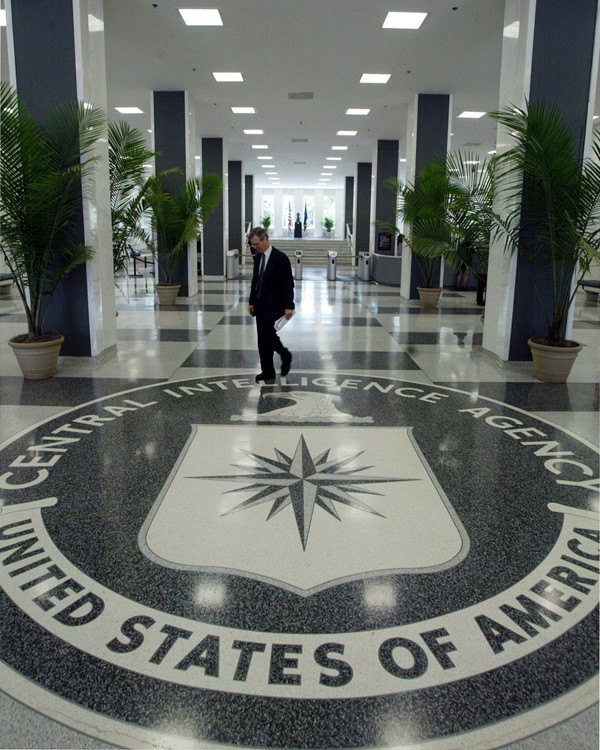
Doomed American China Fantasy – CIA’s Unfinished War in Asia. McLean Building n Virginia.

Clipped from: http://foreignpolicy.com/2017/06/23/bumbling-ex-cia-officer-charged-for-selling-secrets-to-china/

A prestigious Chinese think tank provided cover for the intelligence operation that ensnared Kevin Mallory.

  • By Bethany Allen-Ebrahimian. Bethany Allen-Ebrahimian is an assistant editor at Foreign Policy. She spent four years in China before joining Foreign Policy and holds a master’s degree in East Asian studies from Yale University., Elias Groll. Elias Groll is a staff writer at Foreign Policy, covering cyberspace and its conflicts and controversies. He has written for the magazine since 2012 and is a graduate of Harvard University.
  • June 23, 2017

Doomed American China Fantasy – CIA’s Unfinished War in Asia.

Caught with a bag of cash and an electronic device used to communicate with his handlers, a former government official with years of military and intelligence experience is accused of spying for China.

Kevin Mallory of Leesburg, Virginia is charged with providing defense-related information to a foreign government and lying to federal agents.

Mallory allegedly provided several classified government documents to a Chinese contact, who initially claimed affiliation with a prestigious Shanghai think tank, in exchange for cash. Documents filed by federal prosecutors depict Mallory, an experienced Chinese-speaking former operative, as a bumbling spy who executed his treason clumsily.

Mallory’s career spanned decades and multiple government agencies. After graduating from Brigham Young University in 1981, he served as active duty military and then an Army reservist for several years. From 1987 to 2013, he worked for different government agencies and U.S. defense contractors — as well as the CIA, according to a report in the Washington Post. He held a top secret security clearance for much of that time and was posted to regions including Iraq, China, and Taiwan.

It was only this year that Mallory allegedly began to stray from the straight and narrow, according to court documents. A Chinese handler posing as an employee of the Shanghai Academy of Social Sciences (SASS) made contact with Mallory during trips to China in March and April.

The SASS is a reputable and internationally known think tank. But it also maintains a close working relationship with the Shanghai State Security Bureau, a regional office of the Ministry of State Security, China’s intelligence arm.

In the following weeks, Mallory allegedly provided classified documents to Chinese intelligence officials in exchange for $25,000.

The FBI’s affidavit describing Mallory’s espionage activity appears to indicate that the former CIA officer tried to cover up his crimes. After he was stopped at Chicago’s O’Hare airport returning from Shanghai with $16,500 in undeclared cash in one of his bags, Mallory approached American intelligence agencies to describe his meetings in Shanghai with individuals he described as Chinese intelligence officers.

Having been caught with a payment that investigators believe was in exchange for classified government information, Mallory disclosed his contacts with the Chinese intelligence officers and may have offered his services as a double agent in order to conceal his alleged espionage on behalf of Beijing. The FBI affidavit never claims he offered to serve as a double agent, but in approaching an unspecified government agency with a communications device provided to him by the Chinese, Mallory appears to have made an overture to an American intelligence agency.

“He had a security clearance, he had apparently also worked at CIA, so he knew what he was doing,” said Peter Mattis “He had a security clearance, he had apparently also worked at CIA, so he knew what he was doing,” said Peter Mattis, a former government analyst and now a fellow at the Jamestown Foundation’s China Program.

But then Mallory made what Mattis called a “stupid mistake.”

The FBI affidavit filed in a Virginia federal court this week paints a picture of extraordinary technical incompetence by Mallory and his alleged Chinese handlers. Mallory’s Chinese contacts supplied him with a communications device — likely a smart phone — to exchange messages and allegedly transfer classified documents.

In a May 24 meeting with FBI agents, Mallory showed off the device and demonstrated how to move from a “normal” to “secure” messaging mode. When he toggled over to the secure mode, he was surprised to find that it displayed a history of his secure messages. Mallory seems to have assumed they would be deleted.

Mallory voluntarily turned the device over to the bureau for a forensic analysis. When the bureau’s technical experts dug into it, they were able to recover additional secure messages exchanged between Mallory and his Chinese contacts.

In an exchange of messages on May 3, 2017, Mallory’s handler asked why the documents had been blacked out at the top and bottom. “The black was to cross out the security classification (TOP SECRET//ORCON//,” Mallory replied. “I had to get it out without the chance of discovery. Unless read in detail, it appeared like a simple note.”

Two days later, Mallory discussed his motives with his handler: “Your object is to gain information, and my object is to be paid.” Two days later, Mallory discussed his motives with his handler: “Your object is to gain information, and my object is to be paid.” His handler replied: “My current object is to make sure your security and try to reimburse you.”

The FBI analysis also discovered four documents on the phone, three of which are described in court documents as government materials. One is top secret; the other two are classified as secret. The affidavit provides no hint as to what the documents contain.

Mattis told Foreign Policy that the “scope, scale and potential impact of Chinese intelligence operations” has been of primary concern to U.S. national security agencies for years.

Chinese think tanks, including SASS, often work closely with the Ministry of State Security. China’s spy arm prefers to meet sources inside China, and social science academies provide a useful front for intelligence and influence operations.

“Chinese think tanks can be used to invite someone over who is either a person of interest or a source,” said Mattis. “That person comes over and gives a talk, and they’ll be met and have meetings with the local state security element or the People’s Liberation Army.”

But some intelligence-linked Chinese think tanks also maintain a known presence in Washington. One of those is the China Institutes of Contemporary International Relations, which bills itself as a “comprehensive research institution” but which is also an official numbered bureau of the Ministry of State Security, functioning rather like the CIA’s Open Source Center.

The institute actively engages in the Washington think tank ecosystem and also invites U.S. officials and academics for events in Beijing. The Center for Strategic and International Studies, a nonpartisan Washington think tank, has co-hosted numerous cybersecurity dialogues with the Chinese institute in recent years.

For more than two decades, the institute has sent a fellow to Washington, who stays for a year or two, according to Mattis. “I guess some people find value in talking with them,” he said. “I have mixed feelings on that score.”

BRENDAN SMIALOWSKI/AFP/Getty Images

Doomed American China Fantasy – CIA’s Unfinished War in Asia.

Doomed American China Fantasy – CIA’s Unfinished War in Asia.

Doomed American China Fantasy – The Presidential Daily Briefing on CIA’s Unfinished War in Asia.

Doomed American China Fantasy – Unchanging Communist Party in China from 1949 to 2017. CIA’s Unfinished War in Asia.

Doomed American China Fantasy. CIA’s Unfinished War in Asia.

DOOMED AMERICAN CHINA FANTASY – NIXON-KISSINGER BACKSTAB TIBET

DOOMED AMERICAN CHINA FANTASY – NIXON-KISSINGER BACKSTAB TIBET

DOOMED AMERICAN CHINA FANTASY – NIXON-KISSINGER BACKSTAB TIBET. PLIGHT OF TIBETANS IN INDIA.

In February 1972, Nixon-Kissinger Backstab Tibet to win Communist China’s Friendship. The plight of Tibetan refugees in India is the result of Doomed American China Fantasy.

Rudranarasimham Rebbapragada

DOOM DOOMA DOOMSAYER

DECADES AFTER FLEEING TIBET, REFUGEES STILL HAVE LIMITS ON RIGHTS IN INDIA

Doomed American China Fantasy – Nixon-Kissinger Backstab Tibet. Plight of Tibetans in India.

Clipped from: https://www.voanews.com/a/decades-after-fleeing-tibet-refugees-still-have-limits-rights-india/3911014.html

Doomed American China Fantasy – Nixon-Kissinger Backstab Tibet. Plight of Tibetans in India.

A Tibetan exile carries her child as she walks toward the Tsuglagkhang temple in Dharamsala, India, March 19, 2016.

DHARAMSALA / NEW DELHI — 

Event organizer Lobsang Wangyal has to travel overseas often, but as a Tibetan refugee born in India, he did not have a passport and sometimes had to wait days to get the mandatory permits every time he went abroad.

So Wangyal, whose parents fled Tibet as teenagers, went to court to demand his right to an Indian passport.

In response to his petition, the Delhi High Court said authorities must abide by an earlier ruling that all Tibetans born in India between January 1950 and July 1987 are Indian citizens by birth, and can be issued passports.

The order came into effect in March, and Wangyal got his Indian passport shortly thereafter, using it to go to Thailand.

For the first time, he was spared the additional scrutiny that his documents always got from immigration officials.

“I feel like a real person now, having obtained a passport,” said Wangyal, 47, who was born in a Tibetan settlement in eastern Odisha state and now lives in the hill town Dharamsala.

Doomed American China Fantasy – Nixon-Kissinger Backstab Tibet. Plight of Tibetans in India.

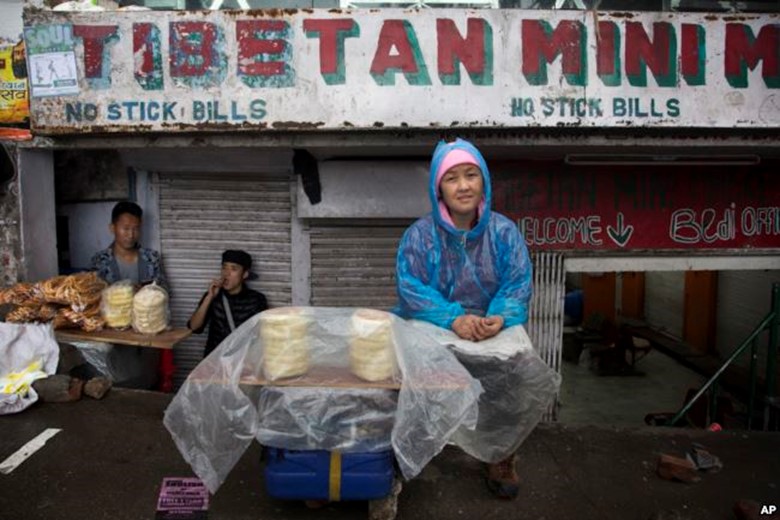
Pema Kyi, a 40-year-old exile Tibetan, sells Tibetan bread by the roadside in Dharmsala, India, June 20, 2017.

“Tibetans are seen as refugees and as stateless in India. Being seen that way after having been born and lived our whole lives in India is unfair and impractical,” he said.

‘Emotional turmoil’

Tibetans have been seeking asylum in India since the Dalai Lama fled Lhasa in 1959 after a failed uprising against Chinese occupation.

The Tibetan spiritual leader has since lived mostly in Dharamsala in the northern state of Himachal Pradesh, where his supporters run a small government in exile and advocate for autonomy for Tibet by peaceful means.

More than 100,000 Tibetans live in 39 formal settlements and dozens of informal communities across India. They generally arrive via Nepal, after a perilous trek across the Himalayas.

The Indian government has funded schools to provide free education for Tibetans, and reserved seats in medical and engineering colleges. Those eligible can get voter identification cards.

But Tibetans do not have citizenship rights, which limits their access to government jobs and freedom of movement within and outside India. They cannot own land or property.

Doomed American China Fantasy – Nixon-Kissinger Backstab Tibet. Plight of Tibetans in India.

Passang Topgyal, a 38-year-old exile Tibetan, tests a Tibetan stringed musical instrument called a piwang at his instrument shop in Dharmsala, India, June 20, 2017.

In some states, they cannot get driving licenses or bank loans. Those without identity documents are at risk of harassment, arrests and deportation to China.

“The status of statelessness is demoralizing and frustrating. There’s a lot of emotional turmoil,” said Tenzin Tselha, an activist with Students for a Free Tibet, whose father served in the Indian army.

“Sometimes I eat rice and daal [lentils] more than thukpa [Tibetan noodle soup], but I never feel Indian; I am Tibetan. It drains my energy, this struggle to always prove who I am and where I am from,” she said.

Foreigners by law

India is not a signatory to the 1951 Refugee Convention, which spells out refugee rights and state responsibilities to protect them.

Nor does it have a domestic law to protect the more than 200,000 refugees it currently hosts, including Tibetans, Sri Lankans, Afghans, Bangladeshis and Rohingyas from Myanmar. They are all considered foreigners by law.

Tibetan refugees get “enough rights and benefits,” and not everyone wants citizenship, said Sonam Norbu Dagpo, a spokesman for the Central Tibetan Administration, the government in exile.

“Even those Tibetan refugees who qualify for Indian citizenship do not apply for citizenship,” he said.

Doomed American China Fantasy – Nixon-Kissinger Backstab Tibet. Plight of Tibetans in India.

A young Tibetan exile stands backstage as she waits to perform during celebrations marking the 80th birthday of exiled Tibetan spiritual leader Dalai Lama, at Majnu Ka Tila, a Tibetan refugee camp in New Delhi, India, July 6, 2015.

While the number of refugees across the world has risen in recent years, the number of Tibetans arriving in India has fallen significantly since 2008, following a crackdown by China, which considers Tibet a renegade province.

Only 87 Tibetans registered in Dharamsala in 2015, compared with about 2,500 each year before 2008.

“India’s policy towards refugees has always been dictated by geopolitical compulsions,” said Saurabh Bhattacharjee, a professor at the National University of Juridical Sciences in Kolkata.

But beyond ensuring basic protections and civic amenities for all refugees, India must consider the status of Tibetan refugees more carefully, he said.

“Will they always remain refugees,” he said, “or should they be given some sort of permanent resident status, as they have been here for so long and have little chance of being repatriated?”

More rights

Recent court orders and the Tibetan Rehabilitation Policy of 2014 promise more rights and benefits.

The policy proposes, for the first time, to give refugees welfare benefits on par with Indians, subsidies for some college courses, more job options and greater ease in getting documents.

Doomed American China Fantasy – Nixon-Kissinger Backstab Tibet. Plight of Tibetans in India.

Young Buddhist monks wait to serve cooked rice to the attendees of the Jangchup Lamrim teachings conducted by the exiled Tibetan spiritual leader the Dalai Lama (unseen) at the Gaden Jangtse Thoesam Norling Monastery in Mundgod in the southern Indian state of Karnataka, Dec. 28, 2014.

It does not address property ownership, getting government jobs, or traveling freely within and outside India.

But the issue of rights and citizenship is also an emotional one that divides the community.

“I don’t think it’s important to have citizenship rights or to have an Indian passport,” said Dorjee Tsering, 28, who works in a store in Dharamsala selling Free Tibet T-shirts and sweatshirts. “We may face some problems, but we should sacrifice a little to preserve our heritage and identity.”

But for Wangyal, who fought for a passport, more rights are necessary.

“I would like the right to own property. A little house and a small business would be good to live a decent life,” he said. “Tibetans will fight on for Free Tibet, but at the same time we have to live our lives now.”

Doomed American China Fantasy – Nixon-Kissinger Backstab Tibet. Plight of Tibetans in India.

DOOMED AMERICAN CHINA FANTASY vs US POLICY ON TIBET

DOOMED AMERICAN CHINA FANTASY vs US POLICY ON TIBET

US President Donald Trump (2nd L) holds a bilateral meeting with China’s President Xi Jinping (R) at Trump’s Mar-a-Lago estate in Palm Beach, Florida, US, on April 7, 2017. Photo: Reuters

US Policy on Tibet is not working. It will not work until and unless the US revises US Policy on Communist China. If Communism remains the ruling doctrine of China, no US Policy on Tibet will work. United States has no choice other than that of containing, engaging, confronting, and opposing China’s Communism.

Rudranarasimham Rebbapragada

DOOM DOOMA DOOMSAYER

US CONGRESSMAN CALLS FOR NEW US POLICY ON TIBET

Clipped from: https://www.voanews.com/a/us-congressman-new-tibet-policy/3891693.html

DOOMED AMERICAN CHINA FANTASY. US CONGRESSMAN JIM McGOVERN, D-Mass., CALLS FOR NEW US  POLICY ON TIBET.

FILE – Rep. Jim McGovern, D-Mass., speaks on Capitol Hill in Washington, May 7, 2014. McGovern is calling for a new U.S. policy on Tibet.

WASHINGTON

Congressman Jim McGovern is calling for a new U.S. policy on Tibet, saying “the status quo isn’t working” and urging U.S. businesses to raise the issue of human rights in Tibet with Chinese business partners.

“It’s important that the U.S. have a policy toward Tibet because the status quo isn’t working,” McGovern, a Democrat from Massachusetts, told VOA Mandarin. “The Chinese government is just getting worse on a whole range of issues — jailing more and more Tibetans in Tibet and in the Tibetan region, so I think we need to re-assess. … We need to start walking the walk.”

US Congressman Calls for New US Policy on Tibet

China says the Himalayan region has been part of its realm for more than seven centuries and considers the Dalai Lama, the Tibetan spiritual leader, to be a dangerous separatist.

Many Tibetans insist they were essentially independent for most of that time and have protested what they regard as China’s heavy-handed rule since Chinese army units crossed the Yangtze River into eastern Tibet in 1950.

Congressional visit

Last month, McGovern traveled to Nepal and the north Indian hill town of Dharamsala, where the Dalai Lama has been in exile from Tibet for almost 60 years. The eight-person House delegation led by Rep. Nancy Pelosi, a Democrat from California, wanted to make China aware that they would not stand down in their campaign for human rights in Tibet.

Watch: US Congressman Calls for China to Show Flexibility on Tibet

The delegation, including a lone Republican, Wisconsin’s Jim Sensenbrenner, met with the Dalai Lama.

“His Holiness is not a separatist … but he wants to go home and so do his people,” McGovern said.

“China is one of the great powers of the world, they’re doing great things on climate change,” he said, adding he’s always puzzled that China “is paranoid over this monk, and paranoid over his message.”

McGovern is the sponsor of the Reciprocal Access to Tibet Act of 2017. He introduced the bipartisan bill in the House in April with Congressman Randy Hultgren, a Republican from Illinois. Marco Rubio, a Republican from Florida, and Tammy Baldwin, a Democrat from Wisconsin, introduced a companion bill in the Senate.

US Congressman Poses Reciprocal Access to Tibet Act

Travel in US

McGovern described his bill as saying, “we will treat you like you treat us” in that it calls for restricting where Chinese can visit in the United States in the same way China restricts United States officials, journalists and other citizens in Tibetan areas of the People’s Republic of China.

“If China wants its citizens and officials to travel freely in the U.S., Americans must be able to travel freely in China, including Tibet,” McGovern echoes on his website.

He also wants the U.S. to “publicly call on the Chinese government to restart the direct dialog that used to exist between the Chinese government and the Tibetan people. That needs to be restarted.”

McGovern said he wants the United States to appoint a special coordinator on Tibet as soon as possible to help elevate these issues.

“We’ve also talked about working with other countries and establishing what we call A Group of Friends on Tibet who would meet regularly and publicly to assess the situation in Tibet, and whether there’s been progress or not,” he added.

US Congressman: US Firms Can Raise Issue of Tibet With Chinese Counterparts

McGovern, who is co-chair of the bipartisan Tom Lantos Human Rights Commission, told VOA that while U.S. and Chinese companies profit from trading with each other, if U.S. companies “know what’s happening and you don’t say anything [about human rights in Tibet], then you’re complicit. China wants to do business with you. You want to do business with China but that doesn’t mean you can’t raise the issue of human rights.”

In the interview with VOA Mandarin, McGovern, who has been arrested three times protesting human rights violations in Sudan, said he is also concerned about human rights in Hong Kong, and China’s treatment of the ethnic minority group, the Uighurs.

‘We’re not perfect’

Listing hate crimes and attacks against members of the Muslim community, threats against Jewish community centers and hate crimes against the LGBTQ community, McGovern said he also worries about human rights in the United States, “so we’re not perfect.”

None of that, however, should lessen the attention paid to Tibet, McGovern said.

“I think the Chinese government thinks this issue will just go away. The Dalai Lama is in his 80s, and they think at some point he won’t be around and everybody will forget,” McGovern said.

But, he stressed, “we’re not going away, and this issue is not going away, and we’re going to keep on bringing it up over, and over, and over again until there’s some change.”

This story originated with VOA Mandarin.

DOOMED AMERICAN CHINA FANTASY – US HOUSE REPRESENTATIVE JIM McGOVERN CALLS FOR NEW US POLICY ON TIBET.