FROM VICTORY DAY TO FORFEIT OF FREEDOM – MY JOURNEY FROM DECEMBER 16, 1971 TO DECEMBER 16, 2017

FROM VICTORY DAY TO FORFEIT OF FREEDOM – MY JOURNEY FROM DECEMBER 16, 1971 TO DECEMBER 16, 2017

FROM VICTORY DAY TO FORFEIT OF FREEDOM – MY JOURNEY FROM DECEMBER 16, 1971 TO DECEMBER 16, 2017

I participated in Bangladesh Ops, code-named ‘Operation Eagle’, initiating Liberation of Bangladesh with military action in Chittagong Hill Tracts, starting from November 03/04, 1971.

In my expectation, I visualized Operation Eagle as physical and mental training to prepare me to fulfill my challenging military mission that aims at securing Freedom, Democracy, Peace, and Justice in Occupied Tibet.

Today, I need to take stock of the ground realities. Both the United States, and India have missed several opportunities to dispatch me on my military mission. Apparently, people have forfeited Freedom and Liberty in pursuit of wealth and material prosperity which they hope will provide ‘Security’.

Rudranarasimham Rebbapragada

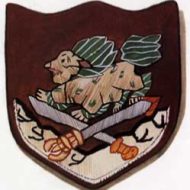
SPECIAL FRONTIER FORCE

Ann Arbor, Michigan, USA 48104-4162

VIJAY DIWAS: A TIME TO CELEBRATE AND TAKE STOCK

Clipped from: https://swarajyamag.com/defence/vijay-diwas-a-time-to-celebrate-and-take-stock

Lt Gen Niazi signing the Instrument of Surrender under the gaze of Lt Gen Aurora. (Indian Navy)

Snapshot

· Forty-six years ago today, more than 3,500 warriors of the Indian Army crafted a victory that resulted in the capture of 93,000 Pakistani prisoners of war and delivered a new nation in 14 days.

But how many of the young Indians know that 16 December is marked as Vijay Diwas?

Ask new generation Indians, the predominant group in our nation, what Vijay Diwas is all about and you are more likely to get a blank response. For a few who know anything at all, a war was fought and won, Bangladesh was created and that is all. That over 3,500 warriors of the Indian Armed Forces made the ultimate sacrifice in the war that ended in India’s victory on 16 December 1971, that we captured 93,000 Pakistani prisoners of war (PoWs) and delivered a new nation in 14 days of a two front conventional military engagement is hardly known to them.

The 1971 India-Pakistan war saw the execution of a well-considered strategy, evolved by the redoubtable Field Marshal Sam Manekshaw, even as he convinced then prime minister Indira Gandhi and her close cabinet colleagues and aides on the necessity of going slow and not being tempted by the evolving situation in March 1971. The Field Marshal had the professional courage to parry demands and shun any talk of immediate war in early 1971 when the crisis in the then East Pakistan had brewed and spilled over beyond retrieval, triggering the first reactions in South Block.

The backdrop to the situation related to the state of politics in Pakistan where the Bengali Muslims of East Pakistan were clearly resistant to the idea of being subjugated by the dominant Punjabi and Mohajir influence. The issue of language had been the touchy beginning to the standoff between East Pakistan (Bengali speaking and resistant to Urdu) and West Pakistan. Sheikh Mujibur Rahman, father of the current Prime Minister of Bangladesh Sheikh Hasina Wajed, was illegally denied his electoral victory in 1970 by Pakistan’s ruling coterie, which was influenced by Zulfiqar Bhutto. The crisis spilled into the streets and became a point of no return in March 1971. The Pakistan Army’s reign of terror on the hapless Bengalis exacerbated the situation with an initial displacement of a million refugees who spilled across the border into India. The figure progressively moved up to 10 million.

The Field Marshal famously faced the powerful coterie of Indira Gandhi and gave them a lesson in strategy. He reminded them of his demands for an enhanced budget to buy more spares for the tanks and sufficient ammunition for the artillery which had not been granted. He let them know that a war in April or May meant for the standing crop of wheat all over Western India which would be destroyed by movement of the Army thus leading to a major food crisis in India. Among other cautionary, he stated that war in June-August would be a major problem with moving dual task Army formations west to east or vice versa due to the floods and shaky railway infrastructure besides the state of the terrain in East Pakistan.

The prime minister gave in to the Army Chief’s advice and trusted him to evolve the war fighting plans should Pakistan decide to go to war. The war finally broke out on 3 December 1971 but preceding that a series of clashes occurred at the borders some of them well above the classical description of patrol and border clashes. The Indian Army followed a simple strategy.

Firstly, the war effort would be focused on the eastern theatre where the impact would have to be decisive; there was total clarity about this.

Secondly, the western front could not be ignored as Pakistan would want India’s attention to be diverted and resources divided. The western theatre was largely to be in holding mode but that would not restrict offensive operations where ever opportunities arose.

Thirdly, for the eastern theater the strategy included speedy thrusts, bypassing main opposition which would be contained or masked to allow the main advance to progress unhindered to the identified center of gravity, Dacca.

The early multi-directional threat to Dacca would unnerve the Pakistani military leadership and force it to capitulate. The role of the Indian Air Force was crucial and it led to some decisive actions such as at Longewala (Rajasthan) where a large Armoured column of the Pakistan Army was decimated in the morning after it was brought to a standstill by a single company with two recoilless guns of 23 Punjab. The Indian Air Force also ensured total domination of the air above East Pakistan. The Indian Navy not to be left behind was entrusted the task of intimidating Pakistan with a virtual blockade of Karachi, Pakistan’s only port. The Navy went well beyond its brief and achieved total domination of the sea and even raided Karachi harbor with missile attacks.

The Indian forces in the eastern theatre comprised 4 Corps under Lt Gen Sagat Singh, 33 Corps under Lt Gen M L Thapar and the newly raised 2 Corps under Lt Gen T N Raina. In less than 14 days, the Indian troops were at the doorstep of Dacca having bypassed all islands of resistance and making use of the distinct corridors provided by the riverine terrain. A parachute drop of the 2nd Para at Tangail secured the final bridges and crossings enabling the troops to make an early entry into the outskirts of Dacca even as radio messages were transmitted to the Pakistani leadership that further resistance would only result in more bloodshed while a surrender would ensure full safety of troops.

The Pakistan Army as is well known had sufficient stocks of ammunition and other logistics wherewithal. It could have fought long and resisted to the end but devoid of any air power with its forward locations under Indian siege the only thing that the Pakistanis could fight for was their honor and name as a fighting force. Lt Gen A A K Niazi, the overall commander of Pakistani forces in the eastern theatre weighed his options and made the final decision for surrender, the details of which were negotiated by Maj Gen (later Lt Gen) JFR Jacob. The surrender ceremony which was impromptu involved the signing of the surrender document by Lt Gen Niazi and its handing over to Lt Gen Jagjit Aurora, Army Commander Eastern Command. The photograph of the ceremony is now folklore and adorns every military museum, motivation hall and officers mess of the Indian Army.

The western front saw action all along, from Naya Chor in Rajasthan to Turtuk in Ladakh. Some intense armour battles were fought in the Shakargarh Bulge. 10 Para (Commando) now 10 SF under Lt Col Bhawani Singh, MVC conducted a series of raids across the international border in the Barmer sector. 9 Para (Commando) similarly earned glory for its action in Jammu and Kashmir. The Lipa Valley was captured by the famous Dagger Division among many other gains by the Indian Army on the western front.

Among the famous battles of 1971 were Akhaura, Sylhet, Hilli, Basantar, Longewala, Lipa Valley and Naya Chor. There are many heroes of 1971 whose names need to be folklore and whose deeds must be brought to the knowledge of young Indians of today. A nation which does not sufficiently glorify its military heroes is not a nation with sufficient self-esteem. India is surely not in that category as the public loves the Armed Forces, respects them immensely but unfortunately is completely divorced from knowledge about the deeds of the very forces they revere.

The names of 2/Lt Arun Khetarpal, Major Hoshiyar Singh, Flt Lt Nirmaljeet Singh Sekhon and L/Naik Albert Ekka, all winners of the Param Vir Chakra (India’s highest wartime award for valor in the face of the enemy) need to be known to India’s young. India needs a public relations outreach to educate the public about the sacrifice of its heroes. There are many patriotic organizations which are organizing events to mark Vijay Diwas, but this really needs a major push to make it a movement.

The Indian Armed Forces need to provide an example of doing something different on Vijay Diwas. It would be good to see that along with traditional ‘barakhana’ and pep talks by commanders which are routine, all units and establishments must undertake an exercise of self-appraisal and identification of strengths and weaknesses. This should be done through an exercise of mutual discussion and consultation with all stakeholders and result in identification of one or two themes from different domains (operations, training, administration, equipment management etc.) to be undertaken for rectification over the next year.

It should be entirely an internal exercise with no checks and in an environment which promotes trust and ability to function unsupervised. Subsequently the Armed Forces should project this model of self-appraisal across the nation for all civil establishments to conduct in the same spirit. Vijay Diwas must ultimately emerge as a day beyond just ceremonials. It should be seen as a day synonymous with victory over inertia and victory over inefficiency.

We can ill-afford to forget the India-Pakistan War of 1971; it is just too important an event in India’s post-1947 history. Progressive nations move on and shape their destinies with hard work and initiatives but equally draw inspiration from the achievements of the past. We cannot allow our young not to be aware of our modern day history and therefore much more effort is needed to spread the word of India’s military heritage. Fortunately, there is deep interest in this, but not enough people to explain and render assistance to educational institutions in the field of military history and strategic culture. An odd lone ranger is doing it, but it needs to become a movement.

Happy Vijay Diwas to the nation!

Created with Microsoft OneNote 2016.

DECEMBER 16, 2017 – WHO CARES FOR MY FREEDOM?

DECEMBER 16, 2017 – WHO CARES FOR MY FREEDOM?

The Living Tibetan Spirits-Major General Sujan Singh Uban ...
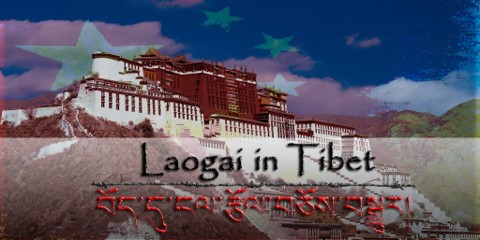
On wholedude.com

On Saturday December 16, 2017 I have no other person to join me to mourn the loss of my Freedom while Indians celebrate “VIJAY DIWAS” or Victory Day in remembrance of December 16, 1971 when India declared victory in its war against Pakistan leading to Liberation of Bangladesh.

In November-December 1971, I witnessed the loss of lives of young Tibetan soldiers during military action in Chittagong Hill Tracts. I host their spirits in my living consciousness.

Today, I find no other person, or organization willing to acknowledge the fact of losing lives of Tibetan soldiers. There is no Prime Minister, there is no President, there is no Spiritual Leader, there is no Defence Minister, there is no Army Chief, and there is no Secret Service Agency willing to acknowledge the loss of life while we took part in Operation Eagle, Bangladesh Ops that initiated Liberation of Bangladesh. I have no one to share my grief. I have no one who may extend sympathy. I have no one to give me hope. I have no one to promise Freedom down the road while my life’s journey is marching towards its inevitable destination.

Rudranarasimham Rebbapragada
Ann Arbor, MI 48104-4162 USA
SPECIAL FRONTIER FORCE

SPECIAL FRONTIER FORCE PAYS TRIBUTE TO INDIAN ARMED FORCES ON VIJAY DIWAS

On behalf of Special Frontier Force, I join the nation to pay tribute to members and families of Indian Armed Forces to honor the soldiers who lost their lives in the 1971 India-Pakistan War.

Rudranarasimham Rebbapragada
SPECIAL FRONTIER FORCE

Vijay Diwas: Nirmala Sitharaman, armed forces pay tributes to heroes of 1971 war

On Vijay Diwas, Defence Minister Nirmala Sitharaman and top brass of the armed forces paid tributes to the soldiers who lost their lives in the 1971 India-Pakistan war
PTI

Nirmala Sitharaman, army chief General Bipin Rawat, vice chief of the Indian Navy Vice Admiral Ajit Kumar P. and chief of the air staff Air Chief Marshal B.S. Dhanoa laid wreaths at the Amar Jawan Jyoti in India Gate on Vijay Diwas. Photo: PTI
New Delhi: Defence minister Nirmala Sitharaman and top brass of the armed forces on Saturday paid tributes to the soldiers who lost their lives in the 1971 India-Pakistan war, which paved the way for the creation of Bangladesh.
Sitharaman, army chief General Bipin Rawat, chief of the air staff Air Chief Marshal B.S. Dhanoa and vice chief of the Indian Navy Vice Admiral Ajit Kumar P. laid wreaths at the Amar Jawan Jyoti in India Gate, paying respect to the fallen heroes of the war.

“On #VijayDiwas, the nation remembers the courage & sacrifice of soldiers in Indo-Pak war of 1971 which led to the stunning victory of India over Pakistan,” the Defence Minister tweeted.

Vijay Diwas is commemorated on this day every year to mark India’s victory over Pakistan in the war, which had led to the creation of Bangladesh. On 16 December 1971, nearly 93,000 Pakistani soldiers had raised white flags and surrendered to the Indian Army. The victory followed the creation of Bangladesh (then East Pakistan).

A number of functions were organized in Delhi and elsewhere to commemorate India’s victory over Pakistan.

First Published: Sat, Dec 16 2017. 08 21 PM IST

Topics: Vijay Diwas Nirmala Sitharaman Bipin Rawat India Gate India Pakistan War

Copyright © 2017 HT Media Ltd. All Rights Reserved

Inserted from <http://www.livemint.com/Politics/MyO8dg8qdp58J3ngBf7MnM/Vijay-Diwas-Nirmala-Sitharaman-armed-forces-pay-tributes-t.html
>

Red China-Free Tibet « WHOLEDUDE - WHOLE PLANET
On wholedude.com

SPECIAL FRONTIER FORCE PAYS TRIBUTE TO INDIAN ARMED FORCES ON VIJAY DIWAS

SPECIAL FRONTIER FORCE PAYS TRIBUTE TO INDIAN ARMED FORCES ON VIJAY DIWAS


On behalf of Special Frontier Force, I join the nation to pay tribute to members and families of Indian Armed Forces to honor the soldiers who lost their lives in the 1971 India-Pakistan War.


Rudranarasimham Rebbapragada

SPECIAL FRONTIER FORCE


Vijay Diwas: Nirmala Sitharaman, armed forces pay tributes to heroes of 1971 war


On Vijay Diwas, Defence Minister Nirmala Sitharaman and top brass of the armed forces paid tributes to the soldiers who lost their lives in the 1971 India-Pakistan war

PTI

Nirmala Sitharaman, army chief General Bipin Rawat, vice chief of the Indian Navy Vice Admiral Ajit Kumar P. and chief of the air staff Air Chief Marshal B.S. Dhanoa laid wreaths at the Amar Jawan Jyoti in India Gate on Vijay Diwas. Photo: PTI

New Delhi: Defence minister Nirmala Sitharaman and top brass of the armed forces on Saturday paid tributes to the soldiers who lost their lives in the 1971 India-Pakistan war, which paved the way for the creation of Bangladesh.

Sitharaman, army chief General Bipin Rawat, chief of the air staff Air Chief Marshal B.S. Dhanoa and vice chief of the Indian Navy Vice Admiral Ajit Kumar P. laid wreaths at the Amar Jawan Jyoti in India Gate, paying respect to the fallen heroes of the war.


“On #VijayDiwas, the nation remembers the courage & sacrifice of soldiers in Indo-Pak war of 1971 which led to the stunning victory of India over Pakistan,” the Defence Minister tweeted.


Vijay Diwas is commemorated on this day every year to mark India’s victory over Pakistan in the war, which had led to the creation of Bangladesh. On 16 December 1971, nearly 93,000 Pakistani soldiers had raised white flags and surrendered to the Indian Army. The victory followed the creation of Bangladesh (then East Pakistan).


Many functions were organized in Delhi and elsewhere to commemorate India’s victory over Pakistan.


First Published: Sat, Dec 16, 2017. 08 21 PM IST


Topics: Vijay Diwas Nirmala Sitharaman Bipin Rawat India Gate India Pakistan War


Copyright © 2017 HT Media Ltd. All Rights Reserved


Inserted from <http://www.livemint.com/Politics/MyO8dg8qdp58J3ngBf7MnM/Vijay-Diwas-Nirmala-Sitharaman-armed-forces-pay-tributes-t.html>


THE COLD WAR IN ASIA – THE DALAI LAMA WANTS TO RETURN HOME

THE COLD WAR IN ASIA – THE DALAI LAMA WANTS TO RETURN HOME

THE COLD WAR IN ASIA – THE DALAI LAMA WANTS TO RETURN HOME

I am sharing my perspective on behalf of Special Frontier Force with which I maintain lifetime affiliation apart from my military service at Establishment No. 22 from September 1971 to December 1974. I often describe myself as Doom Dooma Doomsayer and describe Doomed American China Fantasy as ‘Doomed Gun of Doom Dooma’.

My journey to Doom Dooma, Tinsukia District, Assam started in Mylapore, Madras or Chennai and I describe it as Kasturi-Sarvepalli-Madras-India-Tibet-US Connection. On my maternal side, I am related to Dr. Sarvepalli Radhakrishnan who served as first Vice President of India for two consecutive terms(1952-62) and as second President of India from 1962-67. Most political analysts recognize Dr Radhakrishnan as a philosopher and give him no credit for his role as India’s diplomat during The Cold War Era. In my analysis, I describe Special Frontier Force as military organization that symbolizes military treaty or military pact between Tibet, India, and the US. Both India, and the US recognize His Holiness the 14th Dalai Lama as the Supreme Ruler of Tibet and hence he is in a position to enter into agreements with other nations. Due to Cold War Era secret diplomacy, the agreement between Tibet, India, and the US remains as a secret while China could easily expose its true purpose and mission. For China knows the secret, I want to affirm that our military mission is that of securing Freedom, Democracy, Peace, and Justice in Occupied Tibet. The Dalai Lama Institution of Tibetan Government for all practical purposes represents Tibetan Right to Self-Governance, and can be called Tibetan Democratic way of life.
I am indeed sad, disappointed, frustrated, disenchanted by Trump presidency and there is no excuse for not agreeing for Trump-Dalai Lama meeting at The White House. Trump’s America or Americans First Policy goes against American values of celebrating Freedom, Democracy, Peace, and Human Rights. President Trump has to know that The Cold War in Asia is not over. Americans fought bloody battles in Korea and Vietnam. Those wars do not represent warfare against Koreans or Vietnamese people. Those military conflicts represent the policy of engagement to confront, and contain and even neutralize the security threat posed by Communism. China’s One-Party governance or Communism remains a regional as well as global threat to Freedom, Democracy, Peace, and Human Rights. USA has no choice and has to choose its partners or allies to resist the danger of Communism.
I want to remind our readers not to ignore or underestimate the role of Natural Forces that shaped the reality of independent lifestyles of Tibetans over centuries. Indian Landmass continues to thrust against Asian Landmass, and the Himalayas continue to rise in height. I have no concern for man’s ability to use physical force to shape earthly events. I share the vision of Prophet Isiah and Prophet John( Book of Revelation) and predict heavenly strike against the Evil Empire code-named as “Babylon.”

Rudranarasimham Rebbapragada
SPECIAL FRONTIER FORCE

THE DALAI LAMA WANTS TO RETURN HOME

Clipped from: https://thewire.in/201726/dalai-lama-india-china-tibet/

Is India bracing for the potential fallout?


The Chinese national flag is raised during a ceremony marking the 96th anniversary of the founding of the Communist Party of China (CPC) at Potala Palace in Lhasa in July 2017. Credit: Reuters/CNS/He Penglei
The impact of the 19th Communist Party of China congress and affirmation of President Xi Jinping as China’s ‘most powerful’ leader in decades seems already to be having a bearing on India – especially on the ‘Tibet Issue’ that deeply intersects with the boundary problem. Is India bracing for the potential fallout?
There may be more to the Dalai Lama’s desire to return home than meets the eye. The Tibetan leader’s November 23 statement – “The past is past, Tibetans want to stay with China” – carries a serious political overtone, coming as it does immediately after the 19th party congress and the Doklam standoff between India and China.
The Dalai Lama’s statement that he is “not seeking independence for Tibet and wishing to stay with China” is not new; however, his declaration that “he would return to Tibet at once, if China agrees” has sparked fresh speculation of a possible rapprochement with Beijing.
The sign of rapid thawing strangely comes on the heels of President Donald Trump’s recent visit to Beijing. Most likely, Trump wouldn’t have made Tibet a pressure point in his dealings with Beijing; rather he would have dumped the Dalai Lama (whom the US fostered for over half a century) on the altar of a better trade deal and for securing China’s commitment to exert more pressure on North Korea. During the trip US officials made to Dharamsala prior to Trump’s visit, this prospect would probably have been discussed.
The inevitability of this change was clear when the US had started faltering on Tibet even earlier, when Barack Obama had to welcome the Dalai Lama through the back door of the White House, signaling Washington’s inability to withstand Beijing’s pressure.
Trump was not even inclined to embrace the issue, as he refused to meet the Tibetan leader and instead proposed zero aid in 2018 to the Tibetans, reversing the decades-old American policy. The State Department has also not appointed a special coordinator for Tibet.
Surely it couldn’t have been a coincidence that a week after Trump’s China visit, the Dalai Lama abruptly selected two personal emissaries (for an indefinite period) to represent him in all ‘global engagements’. He has cited increasing physical fatigue, but the decision to appoint two “trusted friends” – former ‘prime minister-in-exile‘ Samdong Rinpoche and current president of the ‘government in exile’, Lobsang Sangay – was meant to send a calibrated signal to China.
Anyway, the Dalai Lama has been working on a new plan – 5/50 vision – that envisaged a five-year strategy for returning to dialogue with China, but preparing for a 50-year struggle if needed – along the “hope for the best and prepare for the worst” proverb. The 5/50 strategy reaffirmed his middle way approach (Umaylam) as a realistic political means of realizing the dual aim of his early return to Tibet and fulfilling the aspirations of the Tibetan people.
Appointing personal emissaries satisfies China. Beijing has been emphatically asking the Dalai Lama to stop travelling to Western capitals, if talks are to be resumed. At the 19th party congress, the Tibet Work Forum chief told reporters that international figures have no excuse for meeting with the Dalai Lama. Recently, the Dalai Lama even had to abort his planned visit to Botswana, citing physical “exhaustion”.
Within this rapidly-unfolding scenario, the Dalai Lama appears to have sent Samdong on a discreet visit to Kunming (China). Samdong’s visit, starting from mid November, must have been facilitated by no less than You Quan – newly-appointed head of the United Front Work Department that overseas Tibetan affairs. You Quan, who formerly served as party secretary of Fujian, is a close associate of President Xi. He had earlier successfully dealt with Hong Kong, Macau and Taiwan’s business communities.
Clearly, Samdong’s visit forms part of the first five-year plan to engage with China, while Lobsang Sangay’s 17-day tour to Europe and Canada is meant to sustain the struggle for the next 50 years, if the first plan fails.
Will the talks succeed now? In the past, Chinese leaders stymied the Dalai Lama’s desire to return to Tibet. But there is a distinct possibility that it may bear fruit this time.
First, Xi, widely known to have a soft spot for Tibet, hitherto kept his own approach close to his chest, fearing resistance from hardliners. Unlike others, he held the view that the prospects for solving the Tibet problem would peter out once the Dalai Lama is no more. Xi now finds himself in a perfect position to resolve the issue as no other Chinese leader could do in the past, for he also stands to gain personally both in political and moral terms, to become the most credible leader in China’s history.
Second, the Dalai Lama too long hoped for Xi to change tack, as he hailed him as “realist” and “open-minded” in contrast to his predecessors. In fact, the Tibetan leader has admitted to having received positive signals from top Chinese officials, especially from the moderate elements as streams of Han Chinese flocked to meet him during Xi’s first term. In May this year, the party was shocked to find their own party members clandestinely funding the Dalai Lama.
But, most critically, Tibetans living inside Tibet may have pressured the Dalai Lama to seize the opportunity and resolve differences during Xi’s second term, before the window for a deal closes a few years from now.
With time running out fast, the Dalai Lama can be anything but hopeful. He has been steadily losing international support in the face of China’s rise as a world power. No longer does any country dare to receive the Dalai Lama officially.
Apart from his own ageing, the Tibetan leader faces the challenge of keeping his flock together. For example, the delay in reaching a solution causes anxiety, uncertainty and division among his people. Even inside Tibet, rising frustration and hopelessness have been highlighted by people resorting to self-immolation. The number stands at 149 so far.
And so, in what must be an embarrassing climb-down for the exiled Tibetan leaders, all they can do now is settle for the cause of “development”, besides hoping that the Chinese will not resort to repression of the Tibetan people.
Therefore, in a way, we are likely witness the curtains finally being drawn on Tibet’s quest for an independent state. Tim Johnson knew this when he aptly titled his book Tragedy in Crimson: How the Dalai Lama Conquered the World but Lost the Battle with China.
And finally, for India, the question is whether New Delhi has any role to play in this rapidly-evolving scene, and if so under what political parameters. There is no sign of anyone having even considered the impact of this. But to be cautious, any Sino-Tibetan deal would seriously risk undercutting India’s position on the boundary dispute with China.
Seemingly fretful about impending developments, the Dalai Lama now finds himself walking a political tightrope by espousing reconciliation between India and China, “living peacefully by putting the differences aside”. He maintained a hands-off position and tried not to get drawn even into the Doklam standoff – instead calling for a peaceful solution. One hopes he is successful this time.
P. Stobdan, a former Indian ambassador, specializes in Chinese, Tibetan, Mongolian and Uighur affairs.

US POLICY ON OPPRESSION IN TIBET: TOO LITTLE, TOO LATE

US POLICY ON OPPRESSION IN TIBET: TOO LITTLE, TOO LATE

US policy on ‘Oppression in Tibet’ serves no purpose for it is ‘too little, too late’. US has to make a fundamental determination of Tibet’s status as an independent nation prior to Communist China’s invasion in 1950. US has to declare the illegal nature of China’s conquest of Tibet.
I ask the United States to state clearly that Tibet was not part of China before the invasion, while also declaring that China has violated international law.

Rudranarasimham Rebbapragada
SPECIAL FRONTIER FORCE

ACTOR RICHARD GERE: IN TIBET, ‘OPPRESSION CANNOT BE TOLERATED’

Clipped from: http://wjla.com/news/entertainment/actor-richard-gere

Richard Gere at House Foreign Relations Committee’s Subcommittee on Asia and the Pacific
WASHINGTON (Sinclair Broadcast Group) – Members of the House Foreign Relations Committee’s Subcommittee on Asia and the Pacific met Wednesday to discuss U.S. policy toward Tibet.; more specifically, working toward greater access, religious freedom and human rights for Tibetan citizens.
Two bills pending before the subcommittee were highlighted. The H.R.1872 —Reciprocal Access to Tibet Act of 2017 would require the U.S. State Department to submit a list to Congress of senior Chinese officials in leadership positions for review. Congress would then determine the officials’ level of access to the United States contingent with the access U.S. officials are granted to Tibetan areas in China.

The second bill, H.Con.Res.89, maintains that United States policy toward Tibet and treatment of the Tibetan people should remain a factor in U.S. relations with China.
Subcommittee Chairman Ted Yoho, R- Fla., discussed the ways in which the Tibetan people have had their human rights and civil liberties encroached upon.
“Human rights and personal freedoms in Tibet are already in a poor and worsening state,” Yoho said. “According to a 2016 Human Rights report, the government of China engages in the severe repression of Tibet’s unique cultural and linguistic heritage by among other means strictly curtailing the civil rights of the Tibetan population, including the freedoms of speech, religion, association, assembly and movement.”
The congressman added that the flow of information is heavily restricted to Tibet by China.

“Tibet remains extremely isolated. The flow of information in and out of Tibet is tightly restricted,” Yoho said. “Tibetans are prevented from obtaining passports and moving freely and foreigners especially journalists and officials are frequently denied access.”
Ranking Member of the Subcommittee Brad Sherman, D- Calif., said in 2015 China expressed they had no intentions of granting autonomy to Tibet.
“China’s suppression of Tibet has continued and intensified. China has not held discussions about Tibet’s status with the Dalai Lama’s representatives since January 2010,” Sherman said.
Sherman then asked the lawmakers to take a stronger stance with China when conducting trade business.
“To think that we allow China to exercise that kind of control while giving them free access to our markets is something Congress needs to review,” Sherman said.
Chairman Emeritus of the Committee on Foreign Affairs Ileana Ros Lehtinen, R- Fla., also made a statement: “Tibet has been pushed to the periphery of U.S. foreign policy.”
One of the hearing’s key witnesses was award-winning actor Richard Gere. Human rights advocacy is a subject Gere has testified on before Congress in previous hearings. He also famously took a moment during the 1993 Oscar awards to ask former Chinese leader Deng Xiaoping to “take his troops, take the Chinese away from Tibet and allow these people to live as free and independent people again.”

During Wednesday’s hearing, Gere spoke to the committee as the chair of the board of directors for the International Campaign for Tibet. He told lawmakers he was touched by their support from both sides of the aisle.
“I am totally knocked out by the words I’m hearing from all of you,” Gere said. “I think everyone in this room is feeling this from a deep place. How important this is maybe not strategically but humanly and what it means to us as Americans to be coming from this place of universal responsibility protecting the welfare and human rights of everyone on this planet.”
He thanked Congress for awarding the Dalai Lama with the Congressional Gold Medal in 2007. He emphasized that the current human rights issues in Tibet strike at the core of American values.
“The respect for the identity of a people, of their religion, is something the American people understand very well and deeply care about,” Gere said. “Before being politicians or actors, we are human beings who understand that oppression cannot be tolerated; you understand that all human beings have the right to the pursuit of happiness and to avoid suffering.”
Gere also said that while President Donald Trump did discuss human rights with China during his most reason trip to Asia, he did not publicly highlight Tibet and the need for reopening a dialogue between Chinese officials and the Dalai Lama. He said it important for there to be reciprocity in diplomatic relations, not only in trade — but in freedom of movement and information.

Hearing Witness Director of the Tibetan Service, Radio Free Asia, Tenzin Tethong, spoke candidly about the difficulty in getting fact-based news reports to the Tibetan people and the struggle their reporters go through to gain access to Tibet.
“It’s extremely difficult for any of our journalists to have normal access to Tibet, which ranks among the world’s worst media environments after North Korea,” Tethong said. “Nevertheless, many of them maintain various levels of contact with vast networks of trusted sources inside who can provide tips, leads, images, video, and confirmation of events.”
Tethong claims that China has become more forceful with comprehensive censorship and propaganda in Tibet.
Hearing witness and President of the National Endowment for Democracy Carl Gershman, asserted that China’s behavior toward Tibet has actually worsened in comparison to previous leaders.
“In fact, the threat posed by China to the world order has increased with its growing economic power, and repression is worse today than at any time since the death of Mao Zedong four decades ago,” Gershman said. “In addition to the systematic effort to destroy the Tibetan religion, language, culture, and distinct national identity, China has flooded Tibet with Han Chinese settlers, placed monasteries under direct government control, arrested and tortured writers, and forcibly resettled more than two million nomads in urban areas, destroying their traditional way of life and disrupting the fragile ecosystem of the Tibet Plateau”
Gershman called on the United States to state clearly that Tibet was not part of China before the invasion, while also declaring that China has violated international law.
“We also need to remember that the struggle for Tibetan rights cannot be separated from the fight for human rights and freedom in China,” Gershman said.

SUPREME RULER OF TIBET’S LONG JOURNEY IN QUEST OF PEACE

SUPREME RULER OF TIBET’S LONG JOURNEY IN QUEST OF PEACE

SUPREME RULER OF TIBET’S LONG JOURNEY IN QUEST OF PEACE

Following the failed Uprising of Tibetans in March 1959, the Supreme Ruler of Tibet has been forced to live in exile. His long, tedious journey in quest of Peace still continues with no hope for finding Natural Peace, Natural Harmony, and Natural Equilibrium in Occupied Tibet.

If human interventions cannot restore Peace in Tibet, I do invite Heavenly Strike to restore Tibet Equilibrium.

Rudranarasimham Rebbapragada

DOOM DOOMA DOOMSAYER

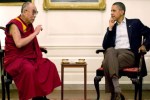
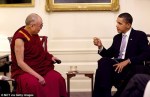
OBAMA MEETS WITH DALAI LAMA IN NEW DELHI

Clipped from: http://www.cnn.com/2017/12/01/politics/barack-obama-dalai-lama-meeting/index.html

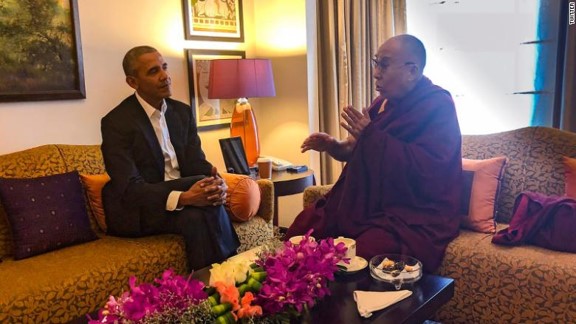
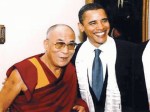
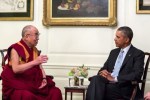
(CNN)Former US President Barack Obama met with the Dalai Lama on Friday in India, where they discussed "compassion and altruism," according to a representative from the Tibetan spiritual leader’s office.

The meeting in New Delhi was the sixth between the two Nobel Peace Prize laureates, and the first since Obama left office in January. Obama is on a five-day world tour, including stops in China and France.

The Dalai Lama said the meeting with Obama was "very good, I think we are really two old trusted friend(s)," according to a report from the India-based Central Tibetan Administration, which is essentially a government in exile.

Kasur Tempa Tsering, a representative from the Dalai Lama’s office, told the administration’s Department of Information and International Relations that the 45-minute meeting included a discussion about "promoting peace in today’s world torn by strife and violence."

"To Obama, His Holiness said, ‘You are not only a former US president but you are a Nobel laureate, you are young and you can do a lot. We should fulfill our aspiration for world peace. Maybe my generation will not see the results, but your generation will definitely see the results,’ " Kasur Tempa Tsering said, according to the report.

The Dalai Lama officially retired in 2011 from his political role as the leader of the exiled Tibetan government but remains the head of Tibetan Buddhists and is scorned by the Chinese government.

While Obama’s meetings as president with the Dalai Lama angered the Chinese, the US under his administration did not support an independent Tibet or consider the Dalai Lama a head of state. Instead, Obama backed what some Tibetans call a "middle way" that preserves the country’s religious and cultural heritage while maintaining China’s political rule.

The Dalai Lama himself has backed such an arrangement, repeatedly insisting that he is not a "separatist" despite Chinese accusations.

A spokesman for Obama could not be immediately reached on Friday for comment on the meeting.

According to the Central Tibetan Administration, Obama hosted the Dalai Lama four times in the White House: February 18, 2010, July 16, 2011, February 21, 2014, and June 15, 2016, and the two first met in 2005, when Obama was a member of the Senate.

Sent from Mail for Windows 10

Virus-free. www.avast.com

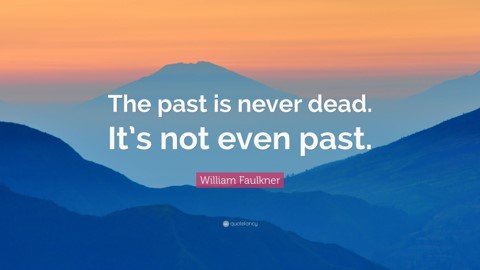
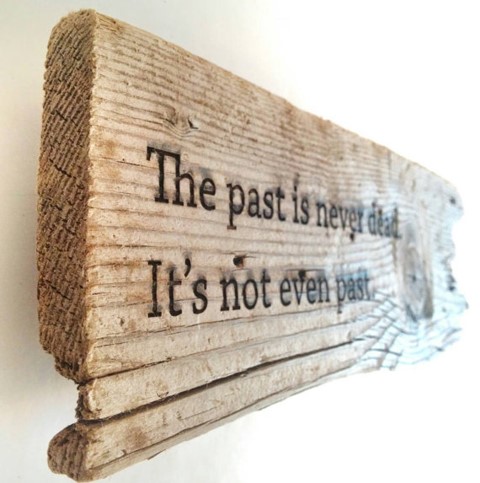
DALAI LAMA SAYS, “PAST IS PAST.” – I SAY, “THE PAST IS NOT DEAD. IN FACT IT’S NOT EVEN PAST.”

DALAI LAMA SAYS, "PAST IS PAST." – I SAY, "THE PAST IS NOT DEAD. IN FACT IT’S NOT EVEN PAST."

DALAI LAMA SAYS, "PAST IS PAST." – I SAY, "THE PAST IS NOT DEAD. IN FACT, IT’S NOT EVEN PAST."

Speaking about Tibet’s future, Dalai Lama says, "Past is past,…. Stressing that Tibetans wants to stay with China."

“We are not seeking independence… We want to stay with China. We want more development,” the spiritual leader of the Tibetan people said.

In my analysis, Tibet is blessed with Natural Freedom. Natural Forces acting over millions of years established Natural Conditions in Tibetan Plateau giving its denizens Natural Independence which man cannot take away through human efforts characterized as ‘Development’.

Tibet’s Past is not Dead. Indeed, it’s not even Past.

Rudranarasimham Rebbapragada

DOOM DOOMA DOOMSAYER

"PAST IS PAST": DALAI LAMA SAYS TIBET WANTS TO STAY WITH CHINA, WANTS DEVELOPMENT

Clipped from: http://tibet.net/2017/11/past-is-past-dalai-lama-says-tibet-wants-to-stay-with-china-wants-development/

Reproduced from Hindustan Times, 24 November 2017.

Tibet does not seek independence from China but wants greater development, Tibetan spiritual leader the Dalai Lama said in Kolkata Thursday.

China and Tibet enjoyed a close relationship, though there were occasional “fights”, he said at an interactive session organized by the Indian Chamber of Commerce.

“The past is past. We will have to look into the future,” he said, stressing that Tibetans wanted to stay with China.

“We are not seeking independence… We want to stay with China. We want more development,” the spiritual leader of the Tibetan people said.

The Dalai Lama also said China must respect Tibetans’ culture and heritage.

“Tibet has a different culture and a different script… The Chinese people love their own country. We love our own country,” he said.

Holding that no Chinese “understand what had happened in the last few decades”, he said the country had changed over the years.

“With China joining the world, it has changed 40% to 50% of what it was earlier,” he said.

The Dalai Lama referred to the ecological significance of the Tibetan Plateau and recalled that a Chinese ecologist had said its environmental impact was like that of the South Pole and the North Pole.

“The ecologist called it the Third Pole,” the Buddhist leader said.

The Dalai Lama said, “From Yangtze to Sindhu rivers, major rivers … come from Tibet. Billions of lives are involved. Taking care of the Tibetan Plateau is not only good for Tibet but for billions of people.”

The Dalai Lama also pitched for respect and recognition of the ‘Hindi-Chini bhai bhai’ spirit to take Sino-India relations forward.

“India and China should eventually find respect for ‘Hindi-Chini bhai bhai’,” he told the media when asked on China’s objections to President Ram Nath Kovind’s visit to Arunachal Pradesh.

He said “China needs India, India needs China” and “they have to live side by side”.

“There is no other way except to live peacefully and help each other,” he said.

Sent from Mail for Windows 10

Virus-free. www.avast.com

FIVE YEARS OF XI JINPING TRANSFORMS TIBET INTO GULAG ARCHIPELAGO

FIVE YEARS OF XI JINPING TRANSFORMS TIBET INTO GULAG ARCHIPELAGO

FIVE YEARS OF XI JINPING TRANSFORMS TIBET INTO GULAG ARCHIPELAGO

Five years of Xi Jinping’s rule transforms Tibet into Gulag Archipelago, a giant open-air prison. If nations of the world cannot reverse Communist China’s repression in Tibet, I invite Heavenly Strike to reestablish Natural Freedom, Natural Balance, Natural Harmony, and Natural Peace across Tibetan Plateau liberating Tibetans from Chinese Oppression and Suppression.

Rudranarasimham Rebbapragada

DOOM DOOMA DOOMSAYER

FIVE YEARS OF XI JINPING: TIBET REMAINS A GIANT OPEN-AIR PRISON

Clipped from: http://tibet.net/2017/11/five-years-of-xi-jinping-tibet-remains-a-giant-open-air-prison/

Hong Kong Free Press, 18 November

This week marks Xi Jinping’s fifth year in power. Head of the Communist Party and the nation’s armed forces, Xi has made the journey from unassuming CCP member to arguably the most powerful leader in China’s recent history.

His political ideology has been incorporated into the CCP’s party constitution, the upper echelons of the party have been filled with his allies and his political opponents have been rooted out by a nationwide anti-corruption campaign. The emperor reigns supreme.

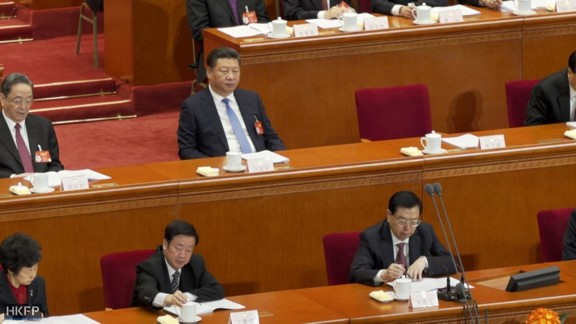
Xi Jinping at the 2017 National People’s Congress. Photo: Lukas Messmer/HKFP.

Outside of the party, Xi and the CCP hold on to power through a mix of old and new methods of intimidation. Over the past five years, the regime has maintained its dismal record on freedom of speech and its harassment of human rights defenders, along with the unfair trials and harsh prison sentences meted out by a judiciary that few would even bother to pretend is independent.

These abuses have been compounded by new methods introduced under Xi, such as laws to restrict the activities of foreign non-governmental organizations.

The objective is to maintain a rigid stability across China, where dissent is eradicated and any change takes place strictly on the terms of the party.

At the CCP’s 19th National Party Congress in late October, an emboldened Xi used his opening speech to threaten those who would dare to upend this stability, including those who do not recognize the CCP or Xi as their rulers: “We will never allow anyone, any organization, or any political party, at any time or in any form, to separate any part of Chinese territory from China.”

Tibetans will be wearily familiar with these words. They have been among those worst affected by Beijing’s desire to hold the People’s Republic of China together by force. Yet they steadfastly refuse to give in to CCP rule, remaining resolute not only through five years of Xi but also nearly 70 years of military occupation.

File photo: HKFP.

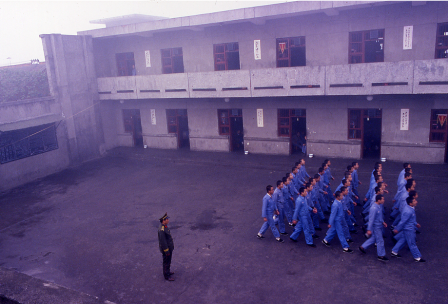
The CCP’s response has been to transform Tibet into one of the most repressive places on earth, a giant open-air prison.

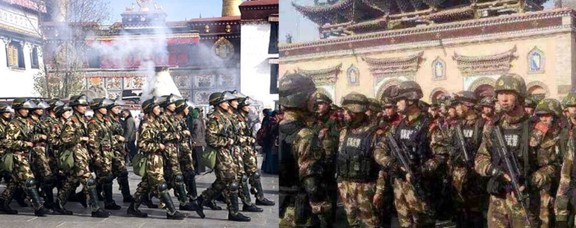
The country remains under de-facto marshal law with police and security forces ever present. Protesters are beaten and Tibetans who fly their flag or display pictures of their exiled spiritual leader, the Dalai Lama, risk being snatched from the street or their home, and made to disappear inside a vast network of detention centers and prisons where beatings and torture are routine.

Under Xi the policy has been to suffocate Tibet by massively ramping up security and surveillance while cutting it off from the wider world.

Hundreds of police stations have been established in urban areas to segment towns and cities into grid systems, allowing police and security services to monitor residents. Over 20,000 security personnel have been deployed across the country to track the daily lives of Tibet’s village population.

These measures, along with tight control of the internet and the spread of CCTV, even into monasteries, are designed to root out any would-be “splittists” or “saboteurs”, the enemies of Xi’s prized stability. The results have been stark: in Xi’s first two years in power Human Rights Watch recorded 479 cases of individuals being detained or tried for political expression or criticism of government policy.

The size and scope of these security measures were on show during the CCP National Congress in late October. For the duration of the event, the entire Tibet Autonomous Region was closed to visitors while Chinese security forces were deployed in even greater numbers. Further restrictions were imposed on the internet and social media.

The one thing Tibetans could do during this period was watch Xi’s three-hour opening speech. In fact, the authorities insisted. According to local sources, students, including children in kindergarten, hospital patients and prisoners were all required to watch the speech.

Chinese soldiers in the Tibetan capital. Photo: Free Tibet.

Xi’s iron rule in China and Tibet has been accompanied by a more assertive foreign policy, visible in Beijing’s attempts to scare foreign governments and businesses into silence over human rights in Tibet. The fear of losing access to Chinese markets has forced governments and businesses to avoid any behavior that could antagonize Beijing.

In September The Financial Times revealed that German publishing group Springer Nature – which is expanding its China-based operations – had “blocked access to at least 1,000 academic articles in China that mention subjects deemed sensitive by Beijing, including Taiwan, Tibet and Hong Kong.”

Beijing’s attempts to cut Tibet off from the world and shut down talk of human rights have been accompanied by risible claims of record levels of happiness among Tibet’s people. Independent journalists, human rights organizations and other experts keen to check these claims are barred from Tibet, but how Tibetans really feel about the occupation can be seen in the fact that since 2009, almost 150 Tibetans have set themselves on fire in protest against the occupation.

Typically, the Xi regime has attempted to stamp such protests out by threatening would-be protesters rather than listening to their grievances. But despite new regulations to punish the families and communities of self-immolation protesters, at least four Tibetans carried out such protests this year, each shouting for freedom as they set themselves alight.

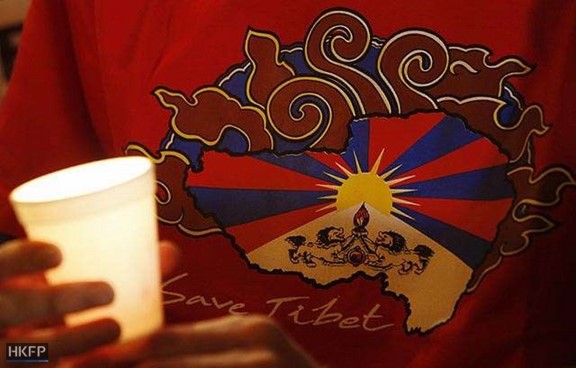
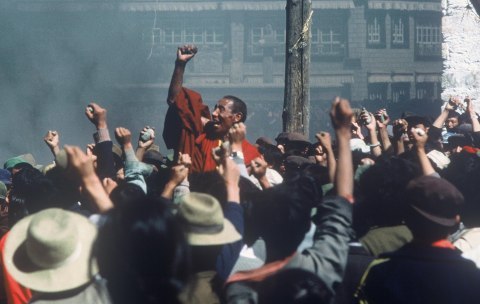
Tibetan monk Jampa Tenzin and protesters in Tibetan capital Lhasa, 1987. Photo: John Ackerly.

Other Tibetans continue to challenge the authorities and protest in defense of their environment, their culture and their freedom, showing remarkable bravery in the face of overwhelming pressure.

My organization, Free Tibet, was formed almost exactly 30 years ago in response to a series of large uprisings in Lhasa and the brutal police crackdown that followed. Ever since, we have played a key role in bringing footage and testimonies of CCP crimes and Tibetan resistance to the world’s attention, defying Beijing’s information blackout.

Those of us who live in freedom and who hear these stories from Tibet cannot afford to be silent.

As Xi Jinping looks forward to another five years in power, five more years of police crackdowns in Tibet and attempts to silence potential critics abroad, it is vital that people around the world, especially governments and world leaders, find their voice and speak out in support of Tibetans with courage and conviction.

Tibetans living under the shadow of Xi and his police state refuse to be intimidated. So must we.

John Jones is the Campaigns and Communications Manager at Free Tibet.

Sent from Mail for Windows 10

WHAT IS KSHAMA OR PATIENCE?

WHAT IS “KSHAMA?” or PATIENCE?

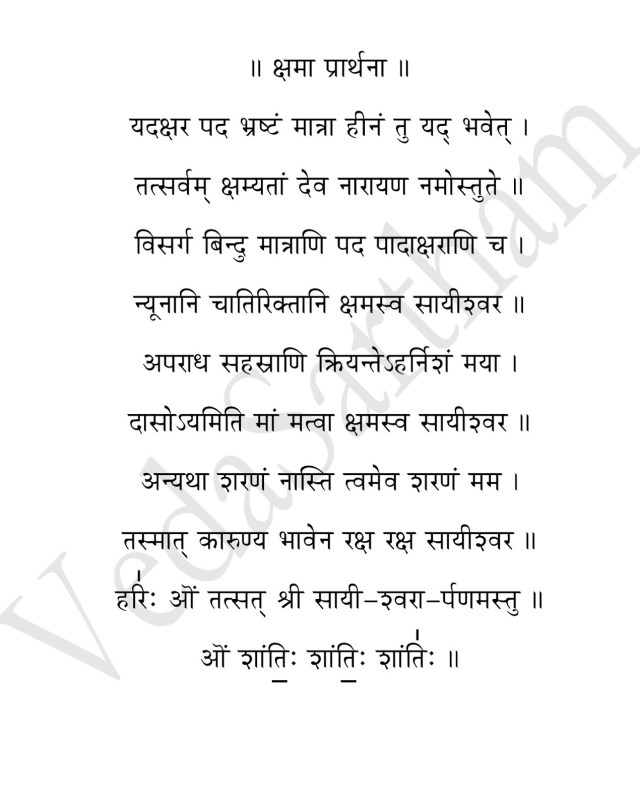
Whoever may be the person praying, whatever may be the place of prayer, the act of praying imparts virtue called “KSHAMA” or Patience.

Patience Is A Virtue Quotes. QuotesGram

Patience leads to Tolerance and Perseverance which give the ability to survive under adverse circumstances over which man has no control. For patience, tolerance, and perseverance involve factor called ‘time’ which always plays role in the natural healing procees, Time is recognized as Divine Healer.

Time is still the best answer; Forgiveness is still the best pain killer; And God is still the ...

Prayer is not act of begging for favors. Prayer is communication of our needs to God as man exists at all stages of his mortal existence on account of Divine Mercy, Grace, and Compassion.

Rudranarasimham Rebbapragada

Ann Arbor, MI, 48104-4162, USA.

MS Subbulakshmi-Kara charana Kritamva ShambhoMahadeva-Bowli-Adi-NilakantaSivan

youtube.png

MS Subbulakshmi-Kara charana Kritamva ShambhoMahadeva-Bowli-Adi-NilakantaSivan

Bombay-1959 Concert Live Recording. -uploaded in HD at http://www.TunesToTube.com

BHAVANAJAGAT.ORG

Shiva Puja Vidhi | Shodashopachara Shiva Puja Vidhi
On www.drikpanchang.com

Veda Sartham: Vedic Text Download
On vedasartham.blogspot.com

Pt Jasraj - Karacharana Kritam Vaa (Kshama Prarthna in ...
On www.youtube.com

Virus-free. www.avast.com

WHAT IS CONSCIOUSNESS? – IS THERE AWARENESS OF LIFE’S JOURNEY?

WHAT IS CONSCIOUSNESS? – IS THERE SELF-AWARENESS OF LIFE’S JOURNEY?

What is Consciousness? Is there Self-Awareness of Life’s Journey?

It is easy and convenient to use terms in conversation when no meaning is attached to the words used in conversation. It is unfortunate to note schools have not designed instructional programs to use words with well-defined meaning attached to them. Basic terms like, man, life, existence, consciousness, and self-awareness have to be used after giving or attaching meaning to those terms.

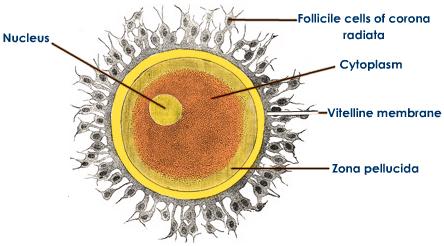
Consciousness fundamentally involves awareness of one’s own existence. For example, Amoeba proteus is aware or conscious of its own living condition at any given time, and place of its existence. Consciousness may include awareness of thoughts, moods, and feelings and yet it is not mental function. Consciousness is biological function, a characteristic of all living cells. In Clinical Medicine, consciousness is always evaluated and it does not involve taking educational, or occupational history. What you are is described by Science called Anatomy, and what you do is described by Science called Physiology. If Life is defined as ‘Knowledge in Action’, this Knowledge is not experience acquired by cells of human body through man’s learning process.

Life’s Journey relates to functional ability called locomotion which depends upon the nature of living, corporeal substance called protoplasm, or cytoplasm which always exists in perpetual state of motion. This living condition in perpetual motion is synchronized with motions of Earth that provide alternating periods of Light and Darkness called Day and Night while the Sun shines all the time. No instant during the entire period of one’s Life Journey is the same as another instant. Each living instant remains unique, or one of its own kind as no instant can repeat itself. During Life’s Journey, man has no consciousness or awareness of motion of his own living substance and has no consciousness or awareness of the motions of Earth. Man may have intellectual understanding of motions performed by his living substance and of Earth on which he finds his existence. This intellectual ability does not provide direct sensory experience of Journey performed by Living Substance or Earth. For that reason, I suggest that the “Journey” from point A to point B on the surface of Earth that man performs is predestined for man has no ability to control either motion of his living substance or motions of his earthly abode.

WHAT IS LIFE – LIFE IS KNOWLEDGE IN ACTION – Bhavanajagat
What is Consciousness? Is there Self-Awareness of Life’s Journey? On bhavanajagat.com

I always ask my readers to read cell anatomy and physiology to discuss any issue that pertains to life. The Cell Theory is verified Science; Cells are building blocks of life.

What is Consciousness? Is there Self-Awareness of Life’s Journey? On bhavanajagat.com

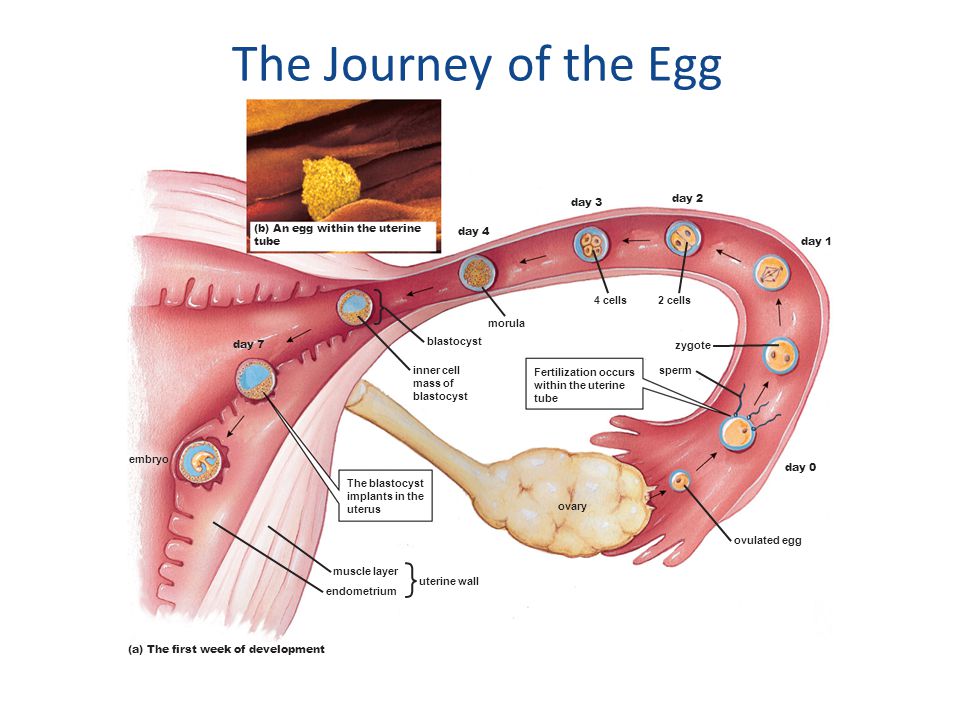
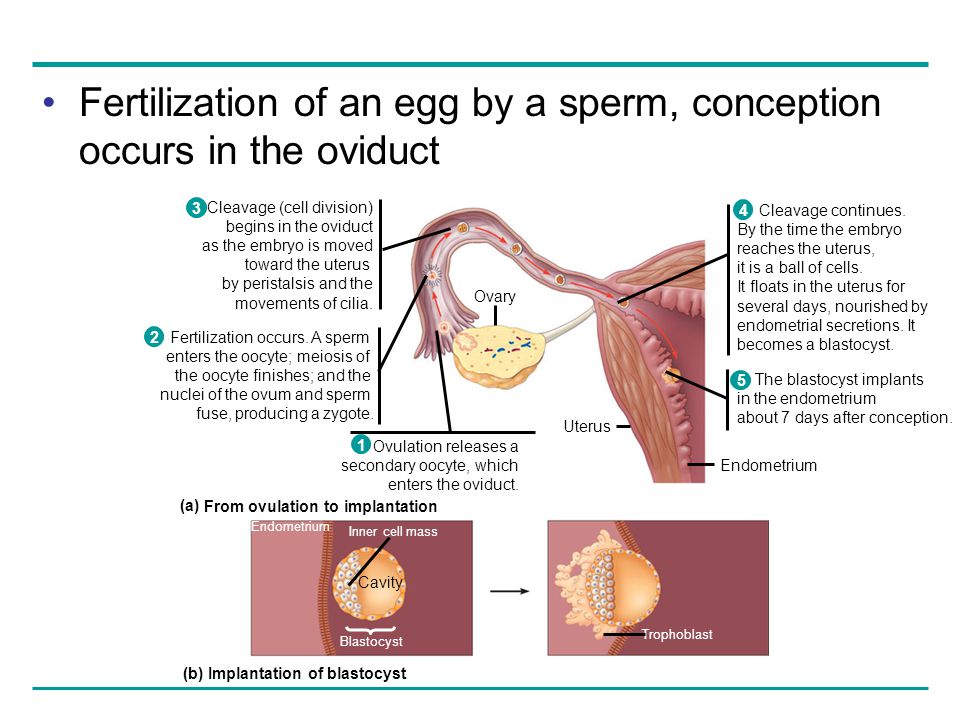
To speak of human consciousness or self-awareness, the discussion demands knowing Egg Cell as conscious entity.

File:Human Fertilization.png - Wikipedia, the free encyclopedia

This Egg Cell begins Life’s Journey from the instant called Ovulation, later, Conception, and until another instant called Implantation. Does this Journey from Ovulation, Conception, to Implantation requires Consciousness or Self-Awareness?

Rudranarasimham Rebbapragada
Ann Arbor, MI 48104-4162 USA
BHAVANAJAGAT.ORG


What is Consciousness? Is there Self-Awareness of Life’s Journey?


What is Consciousness? Is there Self-Awareness of Life’s Journey?