Whole Ruler – The Sovereign Institution of Tibet at The White House

The Supreme Ruler of Tibet at the White House

Whole Ruler – The Sovereign Institution of Tibet at The White House. The Institution of Dalai Lama is important to preserve Tibetan Political Identity. The Government of Tibet is represented by this Seal of Ganden Phodrang.

Tibet is a Sovereign Nation and it specifically acknowledges that the Institution of Dalai Lama and the person holding that title as the true independent, ruler of Tibet apart from being a high-ranking priest of Tibetan Buddhism.

SPECIAL FRONTIER FORCE AT THE WHITE HOUSE: The Institution of Dalai Lama is not simply about a person known as Tenzin Gyatso. He is the Supreme Commander of Tibetan Forces that serve in the military organization called Special Frontier Force.
Whole Ruler – The Sovereign Institution of Tibet at The White House. The Institution of Dalai Lama is not simply about a person known as Tenzin Gyatso. He is the Supreme Ruler of the Tibetan Nation.
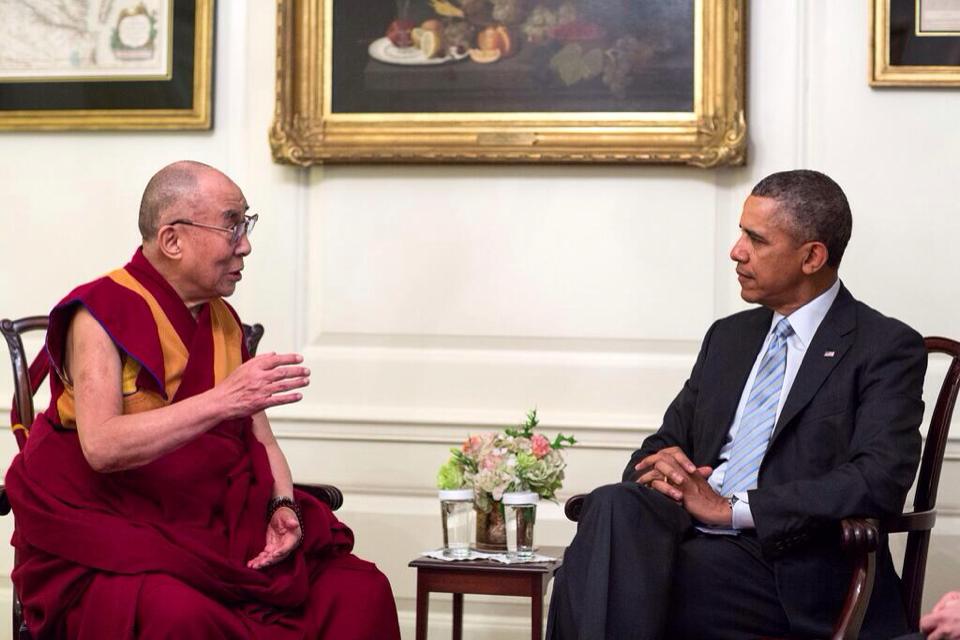
SPECIAL FRONTIER FORCE AT THE WHITE HOUSE: His Holiness the 14th Dalai Lama speaking with US President Barack Obama during their meeting in the Map Room of The White House in Washington, DC on Friday, February 21, 2014.(Official White House photo by Pete Souza)
Whole Ruler – The Sovereign Institution of Tibet at The White House. His Holiness the 14th Dalai Lama speaking with US President Barack Obama during their meeting in the Map Room of The White House in Washington, DC on Friday, February 21, 2014.(Official White House photo by Pete Souza)

On March 31, 1959, His Holiness the 14th Dalai Lama arrived in India as a political exile and was granted political asylum in India. He established the Tibetan Government-in-Exile which is based in Dharamsala of India. But, for Tibetans living in Tibet, the title Dalai Lama represents their chosen system of governance.
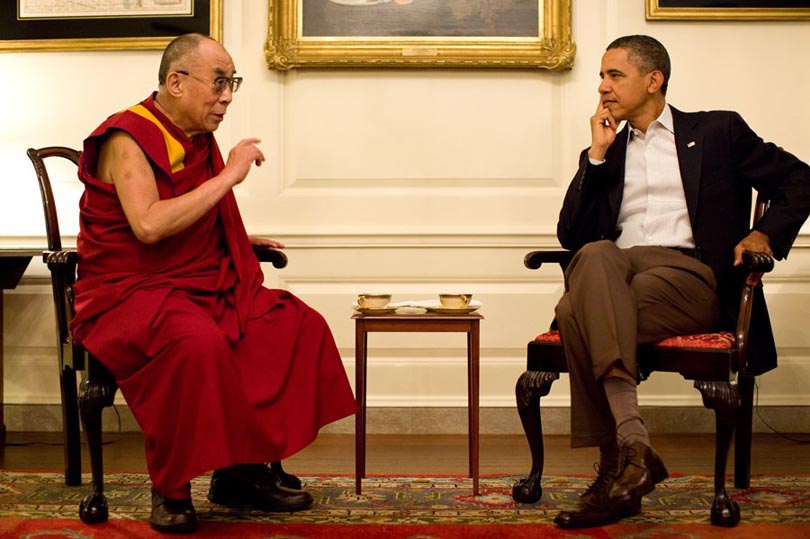
SPECIAL FRONTIER FORCE AT THE WHITE HOUSE: His Holiness the 14th Dalai Lama speaking with US President Barack Obama during their meeting in the Map Room of The White House in Washington, DC on July 16, 2011.
Whole Ruler – The Sovereign Institution of Tibet at The White House. His Holiness the 14th Dalai Lama speaking with US President Barack Obama during their meeting in the Map Room of The White House in Washington, DC on July 16, 2011.

The United States often describes His Holiness the 14th Dalai Lama as a spiritual, and cultural leader of Tibetan people without explaining the cultural aspects of Tibetan governance. In Tibetan Culture, the title Dalai Lama is given to the Leader or Chief who provides a system of Government. The Dalai Lama has the same executive powers that are typically exercised by the Head of State of any independent, sovereign nation. The title of Dalai Lama is the equivalent of titles such as President or Prime Minister who hold the executive power in nations like the United Sates, India, and Great Britain.
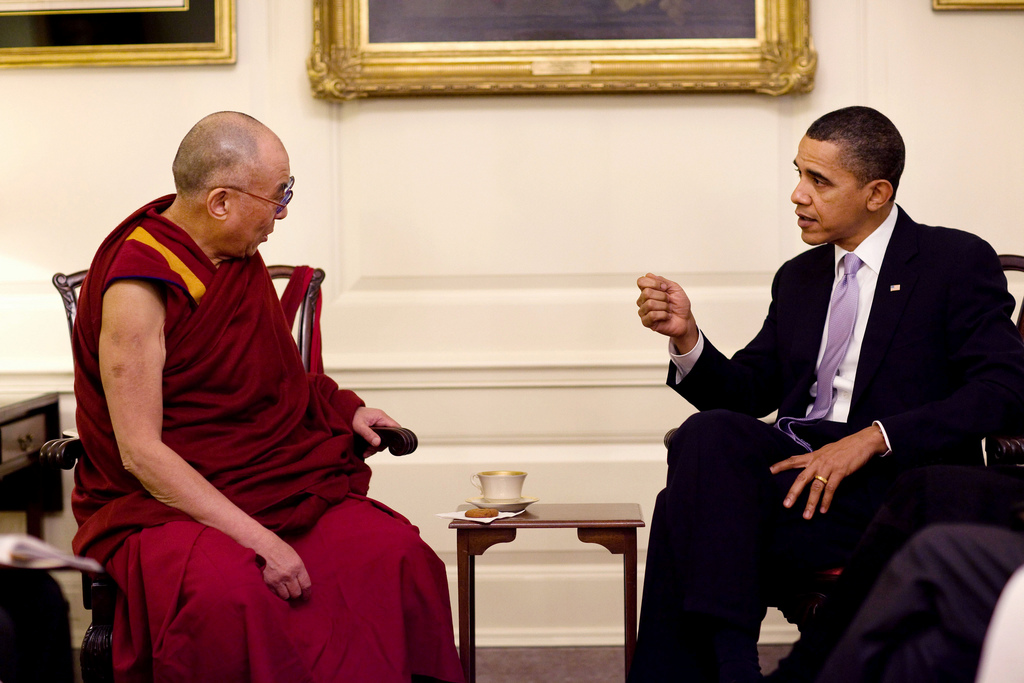
SPECIAL FRONTIER FORCE AT THE WHITE HOUSE: His Holiness the 14th Dalai Lama speaking with US President Barack Obama during their meeting in the Map Room of The White House, Washington, DC on February 18, 2010.
Whole Ruler – The Sovereign Institution of Tibet at The White House. His Holiness the 14th Dalai Lama speaking with US President Barack Obama during their meeting in the Map Room of The White House, Washington, DC on February 18, 2010.

The Sovereign, Political Institution of the Dalai Lama

SPECIAL FRONTIER FORCE AT THE WHITE HOUSE: His Holiness the 14th Dalai Lama who has visited The White House on numerous occasions during the last 30 years is the rebirth of a long line of "TULKUS" who descend from the Bodhisattva named "AVALOKITESVARA."
Whole Ruler – The Sovereign Institution of Tibet at The White House. His Holiness the 14th Dalai Lama who has visited The White House on numerous occasions during the last several years is the rebirth of a long line of “TULKUS” who descend from the Compassionate Bodhisattva named “AVALOKITESVARA.”

His Holiness the 14th Dalai Lama who had visited The White House in Washington, DC on February 21, 2014 and on numerous other occasions meeting with various US Presidents during the last 30 years, is the rebirth of a long line of “TULKUS” who descend from the Compassionate Bodhisattva named “AVALOKITESVARA.” In Tibetan Buddhism, a “TULKU” is a particularly high-ranking Lama, of whom the Dalai Lama is one. But, it is very important to recognize Dalai Lama as a ‘Hierarch’, a Leader or Chief who provides a system of Government. The Sovereign, political institution of Dalai Lama is formally known as ‘Ganden Phodrang’. The succession of this ‘hierarchy’ is maintained by the discovery of a child born soon after the death of a Dalai Lama into whom the ‘Spirit’ of the deceased has entered.

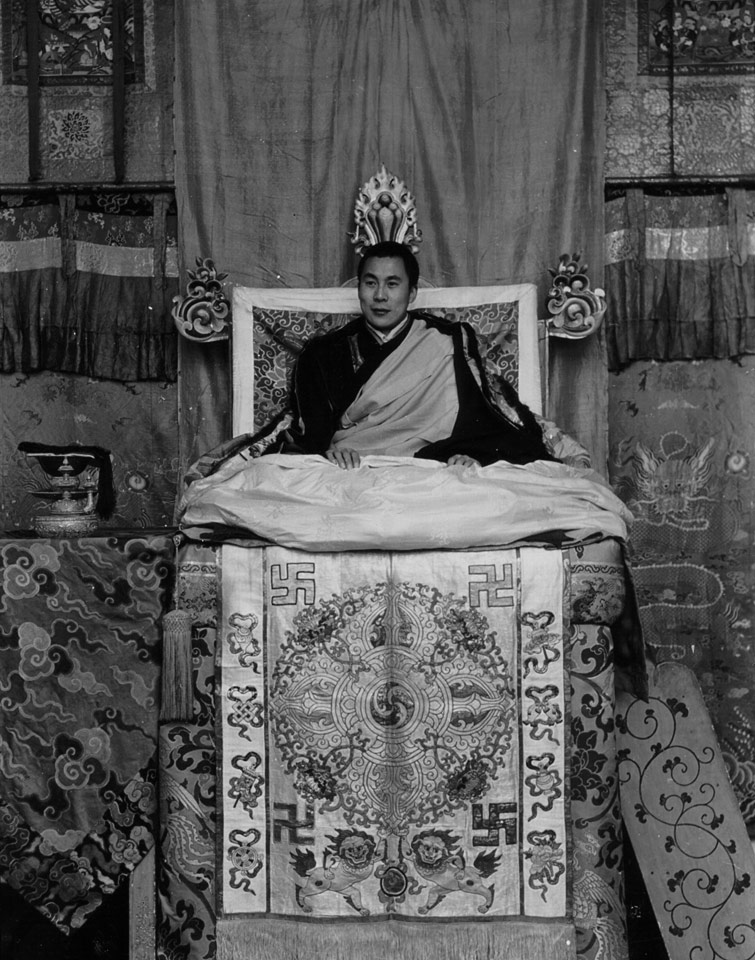
SPECIAL FRONTIER FORCE AT THE WHITE HOUSE: Tenzin Gyatso(b. 1935), the 14th Dalai Lama's Enthronement Ceremony on 22 February, 1940. Dalai Lama is the ruler of Tibet.
Whole Ruler – The Sovereign Institution of Tibet at The White House. Tenzin Gyatso (b. 1935), the 14th Dalai Lama’s Enthronement Ceremony on 22 February, 1940. Dalai Lama is the ruler of Tibet.
SPECIAL FRONTIER FORCE AT THE WHITE HOUSE: The 14th Dalai Lama sitting on the throne in this photo image of 1956-57 while Tibet came under Communist China's military occupation during 1950. With military assistance from the United Sates and India, Tibetans had revolted against the Communists and the Dalai Lama fled into exile when the massive Tibetan Uprising failed during March 1959.
Whole Ruler – The Sovereign Institution of Tibet at The White House. The 14th Dalai Lama sitting on the throne in this photo image of 1956-57 while Tibet came under Communist China’s military occupation during 1950. With military assistance from the United Sates and India, Tibetans had revolted against the Communists and the Dalai Lama fled into exile when the massive Tibetan Uprising failed during March 1959.
SPECIAL FRONTIER FORCE AT THE WHITE HOUSE: The political institution of Dalai Lama is formally known as 'Ganden Phodrang' and this is the Official Seal of the Tibetan Government.
Whole Ruler – The Sovereign Institution of Tibet at The White House. The Sovereign, political institution of Dalai Lama is formally known as ‘Ganden Phodrang’ and this is the Official Seal of the Tibetan Government.

The Great Fifth Dalai Lama, Lobsang Gyatso (1617-1682) founded the Ganden Phodrang Government of Tibet in 1642. During his reign, the Potala Palace on the Red Hill in Lhasa was built. The successive Dalai Lamas have headed the Tibetan Nation for nearly four centuries. The name “DALAI” is the anglicized version of Mongolian word “TA -LE” which is used as an honorific title and the equivalent of the Tibetan “RGYA-MTSHO” meaning Sea or Ocean which suggests the breadth and depth of wisdom and the temporal power of Dalai Lama on Tibetan way of life. Tibetans call the Dalai Lama as ‘Rgyal-ba Rin-po-che’ which means ‘Great Precious Conqueror. The Third Dalai Lama, Sonam Gyatso (1543-1588) had received this honorific title during 1578 while on a visit to the Mongol Chief Altan Khan who had applied this title retrospectively to the previous hierarchs making Gendun Drupa (1391-1474) the First Dalai Lama, and Gendun Gyatso (1475-1542) who became the Second Dalai Lama. This strong hierarchical organization of Tibetan Buddhism and the governance of Tibet has become the focus of Tibetan Cultural Identity and Tibetan National Character. The Eighth Dalai Lama, Jamphel Gyatso (1758-1804) fought a war with the Gurkha troops from Nepal and had defeated them with some assistance from Manchu China.  Tibet existed in a serene and unperturbed state for several centuries even while Tibet came under the control of the Yuan or Mongol Dynasty of China. In 1644, Chinese Manchu, Qing or Ching Dynasty was established and Tibet during the reign of its Seventh Dalai Lama, Kelsang Gyatso (1708-1757) came under Manchu China’s nominal protection although for the most part, the Tibetans retained full control over their internal affairs. The Manchu China Dynasty was overthrown in 1911 and the 13th Dalai Lama, Thupten Gyatso (1876-1933) had expelled the Manchu China’s troops from Tibet, promptly reasserted Tibet’s full Independence. The Great 13th Dalai Lama ruled with full personal authority and reigned as head of a Sovereign State. He had further formally announced Tibet’s full Independence on February 13, 1913.

SPECIAL FRONTIER FORCE AT THE WHITE HOUSE: The Potala Palace on the Red Hill in Lhasa was built during the reign of Lobsang Gyatso(1617-1682), the Great Fifth Dalai Lama. The Sovereign Authority of the Dalai Lama as the Ruler of Tibet was established before the US President became the Chief Executive of the United States.
Whole Ruler – The Sovereign Institution of Tibet at The White House. The Potala Palace on the Red Hill in Lhasa was built during the reign of Lobsang Gyatso (1617-1682), the Great Fifth Dalai Lama. The Sovereign Authority of the Dalai Lama as the Ruler of Tibet was established before the US President became the Chief Executive of the United States.
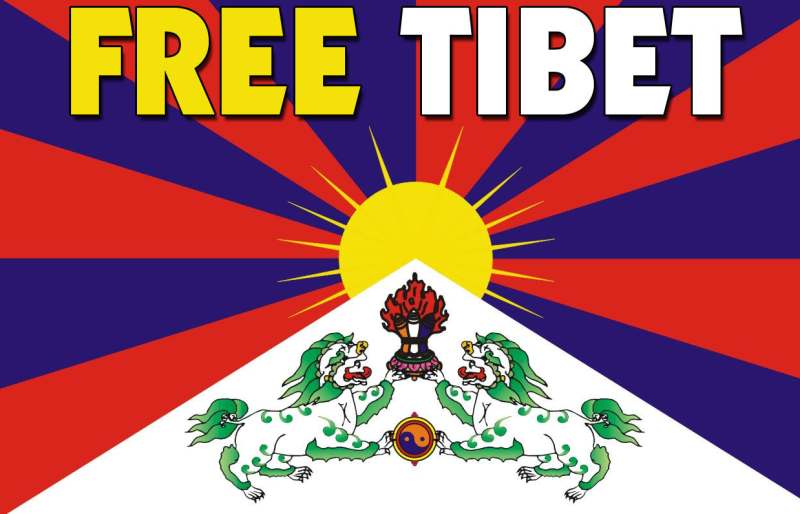
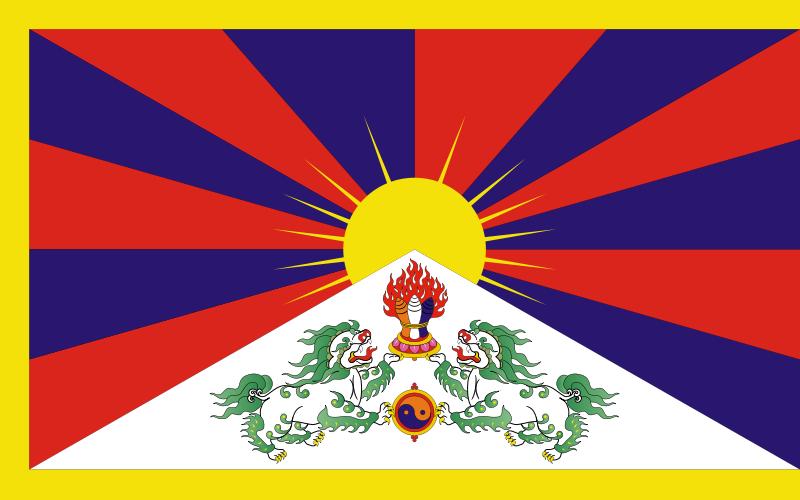
SPECIAL FRONTIER FORCE AT THE WHITE HOUSE: Special Frontier Force was founded by the United States, India, and Tibet during 1962 to defend the Tibetan Nation represented by this Flag.
Whole Ruler – The Sovereign Institution of Tibet at The White House. The Tibetan Nation represented by this Flag. It symbolizes the Supreme Authority of the institution of Dalai Lama.

Tibetans celebrate the 13th day of February as Tibetan Independence Day in recognition of their sovereignty. Being ‘Sovereign’ means that Tibetans do not acknowledge any superior and being a Sovereign Nation, Tibet has the full power to levy War, conclude Peace, contract alliances, establish Commerce and do all other acts and things which independent states may have the right to do. For 39 years, from 1911 to 1950, Tibet had indeed existed as an Independent Nation and had signed the bilateral “Mc Mahon Treaty” in Delhi during 1914 following the ‘Simla Agreement’. During October 1950, Communist China’s People’s Liberation Army invaded Tibetan soil and Tibet has come under China’s military occupation. It will be incorrect to suggest that Tibet is a part of China. Tibetans do not acknowledge China’s rule. I am pleased to share a few photo images of His Holiness the 14th Dalai Lama, the living symbol of the Tibetan Nation when he visited The White House in recent past.

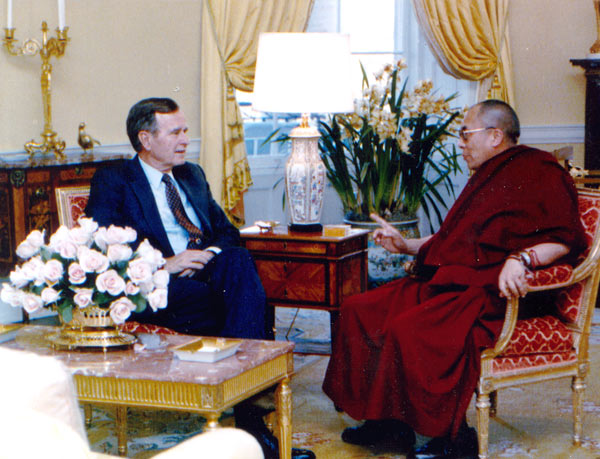
SPECIAL FRONTIER FORCE AT THE WHITE HOUSE: The construction of The White House started in 1792. The United States started diplomatic relations with Tibet as it got alarmed by the Communist takeover of China during 1949. However, the 14th Dalai Lama is the first Dalai Lama who has ever visited The White House.
Whole Ruler – The Sovereign Institution of Tibet at The White House. The construction of The White House started in 1792. The United States started diplomatic relations with Tibet as it got alarmed by the Communist takeover of China during 1949. However, the 14th Dalai Lama is the first Dalai Lama who has ever visited The White House.
SPECIAL FRONTIER FORCE AT THE WHITE HOUSE: On April 16, 1991, the 14th Dalai Lama met with US President George H.W. Bush during his first visit to The White House.
Whole Ruler – The Sovereign Institution of Tibet at The White House. On April 16, 1991, the 14th Dalai Lama met with US President George H.W. Bush during his first visit to The White House. During 1976-77, President Bush served as the Director of Central Intelligence Agency.
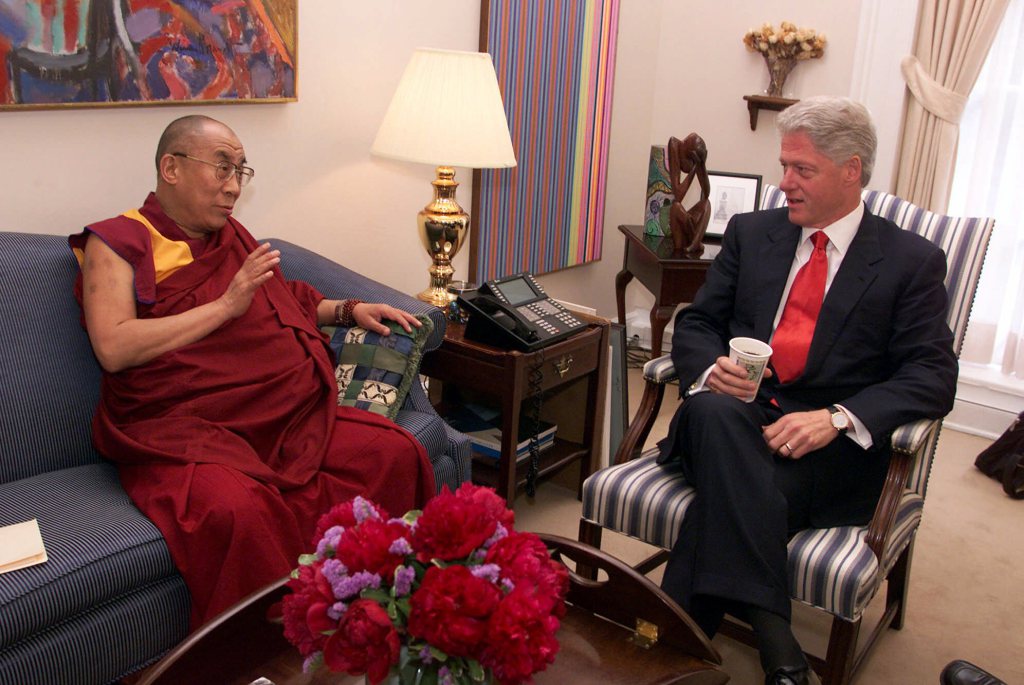
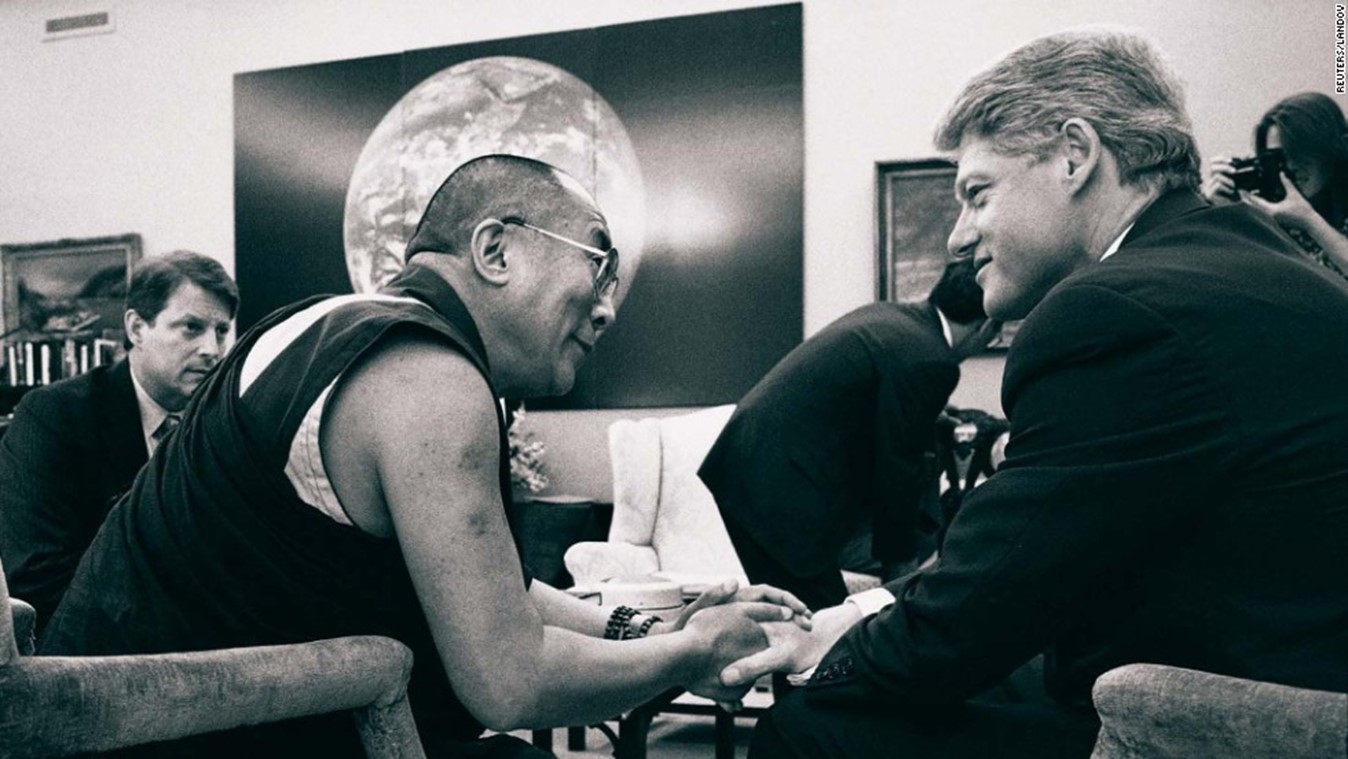
SPECIAL FRONTIER FORCE AT THE WHITE HOUSE: The 14th Dalai Lama met with US President Bill Clinton on June 20, 2000 at The White House.
Whole Ruler – The Sovereign Institution of Tibet at The White House. The 14th Dalai Lama met with US President Bill Clinton on June 20, 2000 at The White House.
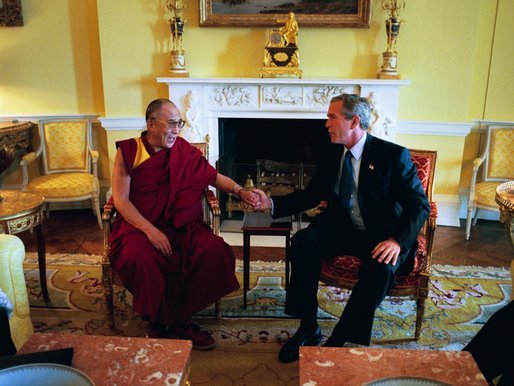
SPECIAL FRONTIER FORCE AT THE WHITE HOUSE: His Holiness the 14th Dalai Lama  speaking with US President George Bush during their meeting in The White House on September 10, 2003.
Whole Ruler – The Sovereign Institution of Tibet at The White House. His Holiness the 14th Dalai Lama speaking with US President George Bush during their meeting in The White House on September 10, 2003.
SPECIAL FRONTIER FORCE AT THE WHITE HOUSE: His Holiness the 14th Dalai Lama speaking with US President George Bush during their meeting at The White House in Washington, DC on November 09, 2005.
Whole Ruler – The Sovereign Institution of Tibet at The White House. His Holiness the 14th Dalai Lama speaking with US President George Bush during their meeting at The White House in Washington, DC on November 09, 2005.
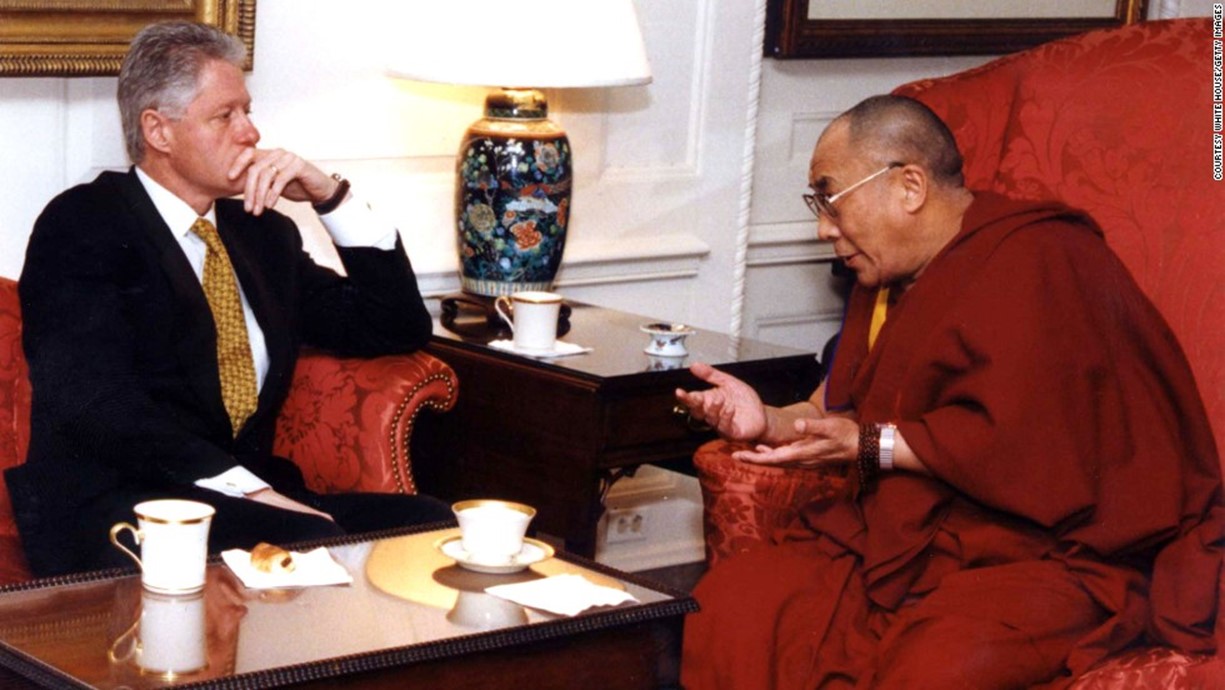
SPECIAL FRONTIER FORCE AT THE WHITE HOUSE: His Holiness the 14th Dalai Lama speaking with US President Bill Clinton during their meeting in The White House in Washington, DC.
Whole Ruler – The Sovereign Institution of Tibet at The White House. His Holiness the 14th Dalai Lama speaking with US President Bill Clinton during their meeting in The White House in Washington, DC.

I respectfully submit to my readers that the term “Dalai Lama” recognizes the person who represents the sovereign, political institution, the seat of Tibetan Government and Tibetan Sovereignty.

Whole Ruler – The Sovereign Institution of Tibet at The White House
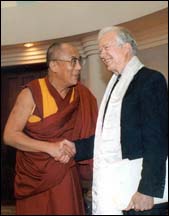
Whole Ruler – The Sovereign Institution of Tibet at The White House. Noble Peace Prize 2002. US President Jimmy Carter maintained a friendly relationship with the Tibetan Leader since 1979.
United States Congress honored His Holiness the Dalai Lama with a Gold Medal during a ceremony in Washington,DC in 2007. President George W Bush, US Speaker of the House Nancy Pelosi, and US Senator Robert C Byrd are seen in the photo. Senator Byrd, the longest-serving member of the US Congress has died at the age of 92 after almost six decades in office. America has lost a voice of Principle and Reason. It is a time for us to reflect upon the Problem of Tibet.

Whole Challenge – Uprising in the Land of Rising Sun

Tibet Awareness – Uprising in the Land of Rising Sun

WHOLE CHALLENGE: UPRISING IN THE LAND OF RISING SUN (1959) AND UPRISING IN MY HEART (1962)

I am happy to share the Guest Column titled ‘Dragon’s Familiar Dance’ published in India Today, November 07, 2011. Brahma Chellaney, the author of this article is Professor of Strategic Studies at the Centre for Policy Research, New Delhi.

The word uprising describes the action of rising up and specifically it means an outbreak against a ruler or power or the act of revolt. Tibetans witnessed an Uprising in the Land of Rising Sun. Tibetans are conscious of the fact of the flight of His Holiness the Dalai Lama to India to lead a life in exile. I am conscious of the fact of Communist China’s attack on India during 1962. Communist China’s brutal aggression provoked an uprising in my heart. It has stirred me, it caused an intense swelling of emotions and it gave birth to a desire to resist Communist China as best as possible. Tibetans and myself have experienced similar emotions and feelings and share a common desire to resist Communist China and the threat it imposed upon our consciousness. During 1962, I was a young student at Giriraj Government Arts College, Nizamabad, Nizamabad District, Telangana, India. The students of Giriraj College spontaneously reacted to China’s attack and expressed their sense of resentment. We joined hands and walked on the City streets to express our Unity and Solidarity to defend India. This desire to oppose Communist China helped me to find an opportunity to join the ranks of Indian Army. On completion of my Basic Medical Officers Command Training Course (BMOC 20/70 ) at Officers Training School, Army Medical Corps Centre, Lucknow, and professional training at Military Hospital Ambala, during my first military assignment, I joined others who share my desire to fight the Red Dragon. We all know that it is a Challenge that needs preparation. While getting trained to gain the ability to move upwards to face the enemy, some people have fallen down. They have fallen with a desire still living in their hearts.

My consciousness is aware of this desire for Freedom and it keeps the Spirits alive in the form of a desire to resist the enemy and to end the illegal occupation of the Land of Rising Sun. The desire to resist your enemy causes feelings of sorrow or dukha like all other human desires. But, the condition called Freedom is not a desire. Freedom is the natural state or condition of human beings and military occupation is a violation or transgression of this natural condition of human existence. There is no choice other than that of revolting against occupation. So, we have accepted the desire to revolt against the enemy seeking the Compassion of Buddha to uplift us from the feelings of sorrow or Dukha.

Whole Challenge: The Red Dragon’s Lust for Global Supremacy poses a great danger to Freedom and Democracy all over the world.

DRAGON’S FAMILIAR DANCE:

http://chellaney.net/2011/10/29/dragon%e2%80%99s-familiar-dance/

With the 50th anniversary of the 1962 invasion approaching, history is in danger of repeating itself.

Brahma Chellaney
The writer is professor of strategic studies at the Centre for Policy Research, New Delhi
GUEST COLUMN
India Today, November 7, 2011

As the 50th anniversary of China’s invasion approaches, history is in danger of repeating itself, with Chinese military pressures and aggressive designs against India not only mirroring the pre-1962 war situation but also extending to Pakistan-occupied Kashmir (PoK) and the oceans around India. China’s expanding axis of evil with Pakistan, including a new troop presence in PoK, heightens India’s vulnerability in Jammu and Kashmir, even as India has beefed up its defences in Arunachal Pradesh.
By muscling up to India, what is China seeking to achieve? The present situation, ominously, is no different in several key aspects from the one that prevailed in the run-up to the 1962 war.
● The aim of “Mao’s India war” in 1962, as Harvard scholar Roderick MacFarquhar has called it, was largely political: to cut India to size by demolishing what it represented—a democratic alternative to China’s autocracy. The swiftness and force with which Mao Zedong defeated India helped discredit the Indian model, boost China’s international image, and consolidate Mao’s internal power. The return of the China-India pairing decades later riles Beijing.
● Just as the Dalai Lama’s flight to India in 1959 set the stage for the Chinese military attack, the exiled Tibetan leader today has become a bigger challenge for China than ever. The continuing security clampdown across the Tibetan plateau since the March 2008 Tibetan uprising parallels the harsh Chinese crackdown in Tibet during 1959-62.
● The prevailing pattern of cross-frontier incursions and other border incidents is no different from the situation that led up to the 1962 war. Yet, India is repeating the same mistake by playing down the Chinese intrusions. Gratuitously stretching the truth, Indian officials say the incursions are the result of differing perceptions about the line of control. But which side has refused to define the line of control? It speaks for itself that China hasn’t offered this excuse. The fact is that Chinese forces are intruding even into Utttarakhand—the only sector where the line of control has been clarified by an exchange of maps—and into Sikkim, whose 206-km border with Tibet is recognized by Beijing.
● The 1962 war occurred against the backdrop of China instigating and arming insurgents in India’s northeast. Although such Chinese activities ceased after Mao’s death, China has come full circle today, with Chinese-made arms increasingly flowing into guerrilla ranks in northeast India via Burmese front organisations. In fact, Pakistan-based terrorists targeting India also rely on Chinese arms.
● China’s pre-1962 psychological war is returning. In recent years, Beijing has employed its state-run media and nationalistic websites to warn of another armed conflict. It is a throwback to the coarse rhetoric China had used in its build-up to the 1962 war. Its People’s Daily, for example, has warned India to weigh “the consequences of a potential confrontation with China.” China merrily builds strategic projects in an internationally disputed area like Pak Occupied Kashmir but responds with crude threats when others explore just for oil in the South China Sea.
● Just as India in the early 1960s retreated to a defensive position in the border negotiations after having undermined its leverage through a formal acceptance of the “Tibet region of China,” the spotlight now is on China’s revived Tibet-linked claim to Arunachal rather than on the core issue, Tibet itself. India, with its focus on process than results, has remained locked in continuous border negotiations with China since 1981—the longest and the most-fruitless process between any two nations post-Second World War. This process has only aided China’s containment-with-engagement strategy.
● In the same way that India under Nehru unwittingly created the context to embolden Beijing to wage aggression, New Delhi is again staring at the consequences of a mismanagement of relations. The more China’s trade surplus with India has swelled—jumping from $2 billion in 2002 to more than $30 billion now—the greater has been its condescension toward India. To make matters worse, the insidious, V.K. Krishna Menon-style shadow has returned to haunt Indian defence management and policy. India has never had more clueless defence and foreign ministers or a weaker Prime Minister with a credibility problem than it does today.
In fact, as it aims to mould a Sino-centric Asia, China is hinting that its real geopolitical contest is more with India than with the distant United States. The countries around India have become battlegrounds for China’s moves to encircle India. From a military invasion in 1962 and a subsequent cartographic aggression, China is moving towards a hydrological aggression and a multipronged strategic squeeze of India. China’s damming of rivers flowing from Tibet to India are highlighting Indian vulnerability on the water front even before India has plugged its disadvantage on the nuclear front by building a credible but minimal deterrent.
Whether Beijing actually sets out to teach India “the final lesson” by launching a 1962-style attack will depend on several factors. They include India’s domestic political situation, its defence preparedness, and the availability for China of a propitious international timing of the type the Cuban missile crisis provided in 1962. If India does not want to be caught napping again, it has to come out of the present political paralysis and inject greater realism into its China policy, which today bears a close resemblance to a studied imitation of an ostrich burying its head in the sand.
(c) India Today.

WHOLE CHALLENGE – FREEDOM IN THE LAND OF RISING SUN: FREE TIBET. IF NOT NOW, WHEN?

Whole Right – The Fight against Red China’s Tyranny

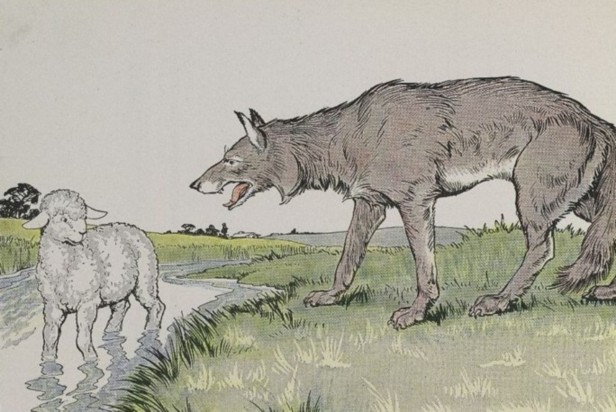
The Wolf and The Lamb: 

THE TYRANT WILL ALWAYS FIND AN EXCUSE FOR HIS TYRANNY.

This story is attributed to Aesop, the legendary Greek story-teller. Once upon a time, a Wolf was lapping at a stream. When looking up, the Wolf saw a Lamb just beginning to drink a little down the stream. “There’s my supper,” thought the Wolf. The Lamb looked so very helpless and innocent. The Wolf felt he ought  to have  an excuse for taking its life. Then he called out to the Lamb, “How dare you muddle the water from which I am drinking?” “No, Master, No,” said the Lamb; “if the water be muddy up there, I cannot be the cause of it, for it runs down from you to me.” “Well then,” said the Wolf, “Why did you call me bad names this time last year?” “That cannot be,” said the Lamb, “I am only six months old.” “I don’t care,” snarled the Wolf, “If it was not you, it was your father,” and with that he rushed upon the poor little Lamb, seized him and ate him up, saying,”Well I won’t stay supper less even though you refute every one of my imputations.” 

A tyrant will always find a pretext for his tyranny. When the oppressor is unjust, the innocent cannot get justice by reasoning. The unjust will not listen to the reasoning of the innocent. 

The Battle of Right Against Might: 

Mahatma Gandhi’s Battle Strategy – Nonviolent Non-Cooperation

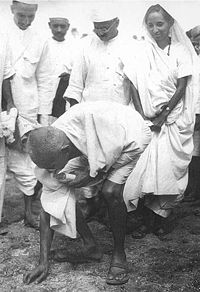
Mahatma Gandhi had challenged the mighty British Empire with a Battle Strategy of his own. On the morning of March 12, 1930, Gandhi and about 78 of his followers had set out to oppose the unjust British Rule. He started marching from Sabarmati Ashram, Ahmedabad toward the village of Dandi on the Arabian Sea. 

GANDHI’S SALT MARCH FROM MARCH 12 TO APRIL 6, 1930
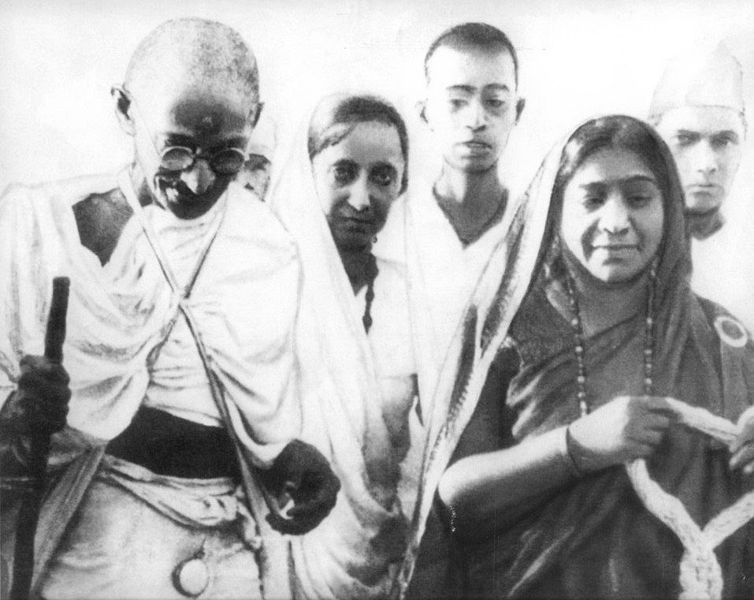
MAHATMA GANDHI AND SAROJINI NAIDU DURING SALT SATYAGRAHA OF 1930.

At that time, under the British Rule, it was forbidden to make salt or even pick it up. It was illegal to collect even natural deposits of salt. Gandhi wanted to attack this unjust Salt Act. He went to the Sea to break the Law. He had inspired people to break the Law. He had marched 240 miles to resist the British Power. The Salt March which is popularly described as Salt Satyagraha was one of Mahatma Gandhi’s most successful Campaigns in the Indian Nationalist Movement for Independence and to overthrow the British Rule. 

GANDHI RESISTED THE MIGHTY BRITISH EMPIRE WITH THIS VERY SIMPLE ACT – A BRILLIANT BATTLE PLAN AND THINKING.

When he got to the Sea, Gandhi broke the Salt Law by the simple act of picking up a tiny lump of soil with some natural salt at Dandi beach. And, he had forced the British to repeal the unjust Salt Law. Gandhi did not reach Dandi in a bus or a car. He had marched all the way on foot. He got the attention that he had wanted. He had shown the way to the people. Injustice could be resisted. Tyranny is not acceptable. People can change unjust laws and get rid of unjust rulers. 

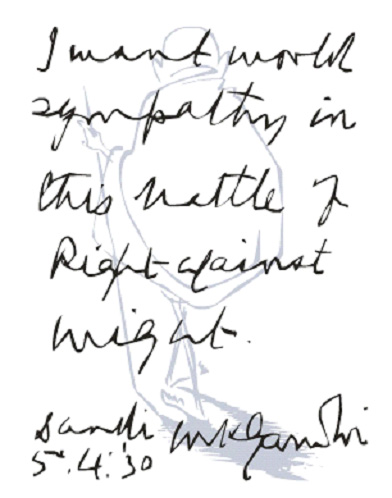
GANDHI’S APPEAL FOR SYMPATHY FOR HIS BATTLE – A STRUGGLE FOR JUSTICE

March 10 – Tibetan National Uprising Day 

TIBET AWARENESS DAY – MARCH 10 – TIBETANS OBSERVE THIS DAY AS TIBETAN NATIONAL UPRISING DAY

H.H. Dalai Lama fled into exile after the Tibetan National Uprising on March 10, 1959 was brutally crushed by Communist China. The illegal and unjust military occupation of Tibet should be challenged and should be opposed. The Chinese Rule in Tibet must be resisted. Mahatma Gandhi had demonstrated the Power of Touch. We can easily resist Chinese military occupation of Tibet. We should resolve and refuse to touch Made in China products. Gandhi won his Battle Campaign by the sheer Power of innocent people who had peacefully joined in opposition to tyranny. Tibet’s  Battle of Right against Might deserves World’s Sympathy.

The Living Tibetan Spirits

I am a witness and my consciousness got exposed to the spirits of young Tibetan men who had given their lives while dreaming about the eviction of the illegal occupier from the Land of Tibet. 

Trulku Tenzin Delek Rinpoche is a revered philanthropist and a religious leader. He is a visionary and consistent advocate of Tibetan Identity and Culture. He was sentenced to life imprisonment on January 26, 2005. He is a soldier in this ‘Battle of Right against Might.
Yeshi Jinpa is a monk of Sog Tsenden Monastery in Sog County of Nagchu Prefecture in Tibet occupied by Communist China. He was arrested on December 02, 2009. He is a soldier in this ‘Battle of Right against Might’.