Whole Identity-Who is Whole Dude at Whole Foods?

Michigan Medicine AHEAD Study uses unscientific demographic information to ascertain the Identity of Whole Dude for participation in Medical Research Project

Michigan Medicine should have known better and must use valid, verified principles to identify every Human Being as a Specific Individual with Individuality without depending upon unverified claims about Race and Ethnicity.
Michigan Medicine AHEAD Study has no Research Protocol to verify the Identity and Individuality of the Complex, Multicellular, Human Organism

Man describes his identity in terms of his personal name, age, gender, race, ethnicity, place of origin, language, religion, political, occupational, or social affiliation. In reality, the man is an association of trillions of individual cells. Michigan Medicine should have known better and must use valid, verified principles to identify every Human Being as a Specific Individual with Individuality without depending upon unverified claims about Race and Ethnicity.

Michigan Medicine AHEAD Study has no Research Protocol to verify the Identity and Individuality of the Complex, Multicellular, Human Organism

The AHEAD Study is researching the safety and effectiveness of an investigational medication in people who might be at increased risk for developing memory loss associated with Alzheimer’s Disease. The study is looking for participants age 55-80 years old, who have generally normal memory function in daily life, and who are not being treated for memory problems. For individuals age 55-64 years old, an additional risk factor is required, such as a parent or sibling with Alzheimer’s Disease or previous biomarker testing showing increased risk for developing Alzheimer’s Disease. This study sees participants in Ann Arbor. Contact Lauren Mackenzie at spearsl@med.umich.edu or 734-232-2415, Clinical Research Coordinator, Neurology Clinical Trials Organization (NeCTO), NCAC.

On Tuesday, December 05, 2023, at the Michigan Clinical Research Unit (MCRU) at the Cardiovascular Center (CVC), Whole Dude was interviewed for participating in the AHEAD Study. Whole Dude was asked to provide their demographic information to register their personal identity for participation in the Medical Research Project. Further, Whole Dude was asked to provide information about their Race which is entirely determined by the Place of their Birth, and the Country of their Birth. Whole Dude was asked to verify their Ethnicity using the one and only Criteria which relates to the Ethnicity of Hispanic people.

Whole Dude remains totally dismayed to learn that the Research Project has not established its own Protocol to describe the Identity and Individuality of the Specific Human Individual who may be included as a Research Subject in Clinical Medical Research. Michigan Medicine should have known better and must use valid, verified principles to identify every Human Being as a Specific Individual with Individuality without depending upon unverified claims about Race and Ethnicity.

Michigan Medicine AHEAD Study has no Research Protocol to verify the Identity and Individuality of the Complex, Multicellular, Human Organism
Michigan Medicine should have known better and must use valid, verified principles to identify every Human Being as a Specific Individual with Individuality without depending upon unverified claims about Race and Ethnicity.

Man is constituted as a Biotic Community of socially interacting cells and microbes

Whole Dude at Whole Foods examines the complex issues of identity and individuality in the multicellular human organism
Whole Dude at Whole Foods examines the complex issues of identity and individuality in the multicellular human organism. The Law of Individuality leaves the Individual with no choice other than that of expressing variability while being a member of a Social Group which may have a fixed Identity.
Whole Dude at Whole Foods examines the complex issues of identity and individuality in the multicellular human organism

The Cellular and the Molecular Basis of Identity and Individuality

Whole Dude at Whole Foods has Cellular and Molecular Basis for his Identity and Individuality. Human Identity undergoes changes due to the aging process but the Human Individuality persists unchanged. Individuality and the Genome. The Law of Individuality governs all Individual Living Things.

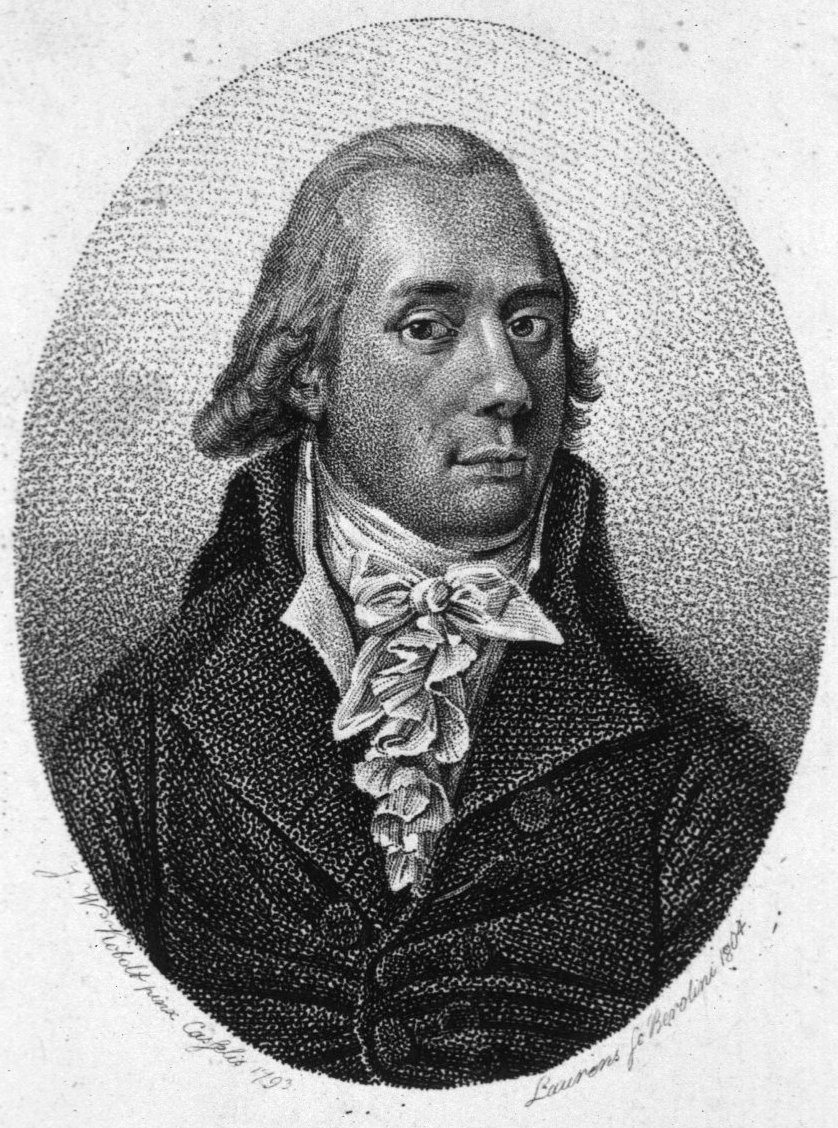
In 1965, while Whole Dude was a student of Human Anatomy at Kurnool Medical College, they had the opportunity to know Dr. J. C. B. Grant (1886-1973), the author of Grant’s Atlas of Anatomy. The 5th Edition of his Atlas was published in 1962 and was available in India in their Medical College Library.

John Charles Boileau Grant (1886–1973)

Dr. J C B Grant. Whole Dude coined the phrase Whole Individualism to discover Man by a study of the building blocks, the structural units and organization of the human body. To defend human existence, Whole Individualism lays the emphasis on knowing the person who is at risk apart from knowing the agent posing the risk.

Born in Loanhead (south of Edinburgh) in 1886, Grant studied medicine at the University of Edinburgh Medical School and graduated with an M.B., Ch.B. degree in 1908. While at Edinburgh, he worked under the renowned anatomist Daniel John Cunningham. Grant became a decorated serviceman of the Royal Army Medical Corps during the First World War before moving to Canada.

He established himself as an ‘anatomist extraordinary’ at the University of Toronto, publishing three textbooks that form the basis of Grant’s Anatomy. The textbooks are still used in anatomy classes today, and made unforgettable memories for those who found themselves in his classes nearly a century ago. One of Grant’s many accomplishments was establishing a division of histology within the department.

Whole Dude at Whole Foods has Cellular and Molecular Basis for his Identity and Individuality. Human Identity undergoes changes due to the aging process but the Human Individuality persists unchanged. Individuality and the Genome. The Law of Individuality governs all Individual Living Things.

As a medical student, Whole Dude used Grant’s Atlas of Anatomy, the seminal work of Scottish-born Dr. John Charles Boileau Grant, who was the chair of Anatomy at the University of Toronto in 1930 and retired in 1965.

Students continue to use Grant’s textbooks today, and for the more artistic anatomist there’s even a Grant’s Anatomy Coloring Book, published in 2018.

Whole Dude at Whole Foods has Cellular and Molecular Basis for his Identity and Individuality. Human Identity undergoes changes due to the aging process but the Human Individuality persists unchanged. Individuality and the Genome. The Law of Individuality governs all Individual Living Things.

At the University of Toronto, Dr.McMurrich, Chair of Anatomy was succeeded as chairman in 1930 by Dr. John Charles Boileau Grant. Dr. Grant wrote three text books, of which “An Atlas of Anatomy” (published in 1943) rapidly gained international prominence and is still, one of the most widely used anatomical atlases in the world. It is now known as “Grant’s Atlas of Anatomy” and is in its tenth edition. The atlas was based on a series of elegant dissections done either by Grant or by others under his supervision. Many of these dissections are currently housed in Grant’s Museum at the University of Toronto. 

The concept of Whole Dude relates to knowing the man, the building blocks and the structural units and organization of the human body. To defend human existence, Whole Dude lays the emphasis on knowing the person who is at risk apart from knowing the agent posing the risk.

The Identity of Multicellular Human Organism:

The cellular and the molecular basis of human identity and human individuality. Cunningham’s Manuals of Practical Anatomy provide Whole Dude the learning tools to know and understand Man’s External and Internal Reality and its Identity as described by Cells, Tissues, Organs,and Organ Systems

Daniel John Cunningham was born on 15 April 1850 in Scotland. After his initial schooling at his home town, Crieff, he took up the study of medicine at the University of Edinburgh and passed with honours. He is best known for the excellent series of dissection manuals, namely Cunningham’s Dissection Manuals. Cunningham’s Manual of Practical Anatomy has provided me the learning tools to know and understand Man’s External and Internal Reality and its Identity as described by Cells, Tissues, Organs,and Organ Systems.

The cellular and the molecular basis of human identity and human individuality. Cunningham’s Manuals of Practical Anatomy provide Whole Dude the learning tools to know and understand Man’s External and Internal Reality and its Identity as described by Cells, Tissues, Organs,and Organ Systems

Whole Dude learned the truths about the living human body and about Life while dissecting dead human bodies in a systematic manner. The Manual of Practical Anatomy which guides students through this entire process was published in England. The author Dr. Daniel John Cunningham prepared the Manual while dissecting cadavers of British or Irish citizens. He never encountered cadavers of Indian citizens. At Kurnool Medical College, Kurnool, Andhra Pradesh, India, where Whole Dude was a student, the Department of Anatomy obtains dead bodies from  Government General Hospital Kurnool and most of the deceased are the poor and often illiterate people of that region. None of the deceased had the chance to know this man called Cunningham and Cunningham had no knowledge about the existence of these people who arrive on our dissection tables. But, as the dissection of the human body proceeds, inch, by inch, we recognize the anatomical parts as described by Cunningham. The manual also lists some anatomical variations and we very often exchange information between various dissection tables and recognize the variations mentioned. The dissections also involve slicing the organs and studying them, both macroscopically, and microscopically. We did not miss any part of the human body.

The cellular and the molecular basis of human identity and human individuality. Cunningham’s Manuals of Practical Anatomy provide Whole Dude the learning tools to know and understand Man’s External and Internal Reality and its Identity as described by Cells, Tissues, Organs,and Organ Systems

So what is the Identity of this Human Person who experiences his life using Sensory Experiences such as Taste? How does the living Human organism maintains its Identity and Individuality? Apart from the Cultural Traditions of India, several Schools of Religious Thought claim that the Human Individuality and true or real Identity is represented by Human Soul. Does man have a soul? Where does this soul exist in the human body? What is the location if the soul is present in the living person? How does the human organism acquires Knowledge about its own structures and the functions they perform?To know the burdens of Life, Whole Dude asks his readers to know the reality of man and the nature of his existence.

The cellular and the molecular basis of human identity and human individuality. THE KNOWER AND THE KNOWING-SELF: IN THIS IMAGE OF HUMAN BRAIN, THE GREEN PORTION OF BRAIN STEM IS CALLED RETICULAR FORMATION. WHOLE DUDE DESCRIBES IT AS THE KNOWING-SELF AND IT IS THE “KNOWER” OF THE HUMAN BODY WHICH CONSTANTLY CHANGES ITS MORPHOLOGICAL APPEARANCE UNDER THE INFLUENCE OF TIME CALLED THE AGING PROCESS.

Human Identity vs Human Individuality:

Whole Dude at Whole Foods has Cellular and Molecular Basis for his Identity and Individuality. Human Identity undergoes changes due to the aging process but the Human Individuality persists unchanged. Individuality and the Genome. The Law of Individuality governs all Individual Living Things.

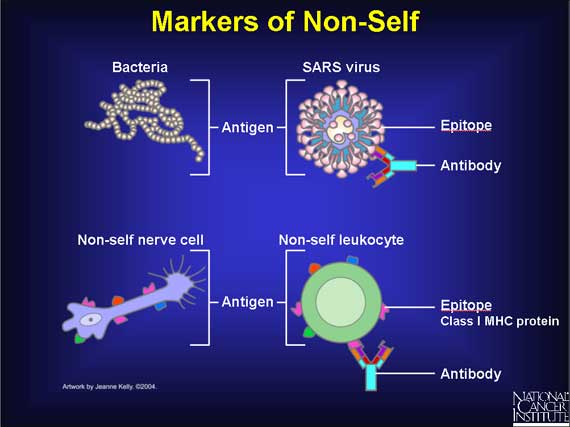
Human Identity may involve a variety of factors such as facial appearance, age, gender, race, ethnicity, language, religion, culture, nationality, sexual orientation, social and occupational status. Whereas human individuality has to be evaluated by using the markers that the human body uses to recognize its own Self and defends its own existence from threats posed by Non-Self.

Whole Dude at Whole Foods has Cellular and Molecular Basis for his Identity and Individuality. Human Identity undergoes changes due to the aging process but the Human Individuality persists unchanged. Individuality and the Genome. The Law of Individuality governs all Individual Living Things.
The cellular and the molecular basis of human identity and human individuality. In the final analysis, the human organism is a biotic community of trillions of individual, independent cells.
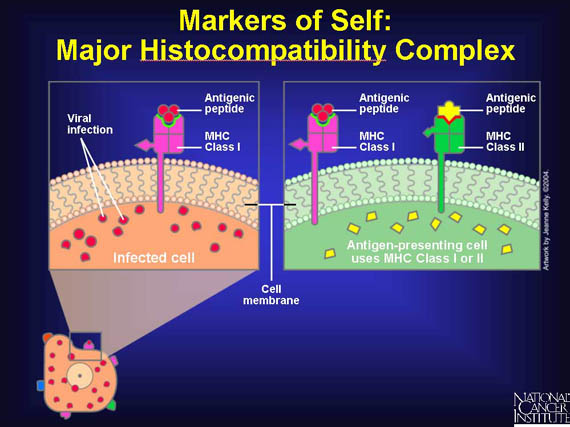
The cellular and the molecular basis of human identity and human individuality: THE MAJOR HISTOCOMPATIBILITY COMPLEX (MHC) IS THE HUMAN LEUKOCYTE ANTIGEN (HLA) GENE CLUSTER ON CHROMOSOME 6. HUMAN ORGANS AND TISSUES CANNOT BE TRANSPLANTED OR GRAFTED INTO THE BODIES OF UNRELATED INDIVIDUALS. HUMAN IDENTITY MUST BE DISCOVERED AT MOLECULAR LEVEL TO ESTABLISH THE AFFINITY BETWEEN TWO HUMAN INDIVIDUALS.
Whole Dude at Whole Foods has Cellular and Molecular Basis for his Identity and Individuality. Human Identity undergoes changes due to the aging process but the Human Individuality persists unchanged. Individuality and the Genome. The Law of Individuality governs all Individual Living Things.

THE MAJOR HISTOCOMPATIBILITY COMPLEX (MHC) IS THE HUMAN LEUKOCYTE ANTIGEN (HLA) GENE CLUSTER ON CHROMOSOME 6. HUMAN ORGANS AND TISSUES CANNOT BE TRANSPLANTED OR GRAFTED INTO THE BODIES OF UNRELATED INDIVIDUALS. HUMAN IDENTITY MUST BE DISCOVERED AT MOLECULAR LEVEL TO ESTABLISH THE AFFINITY BETWEEN TWO HUMAN INDIVIDUALS.

Human Individuality and the Genome

Individuality and the Genome. A COLONY OF GENETICALLY IDENTICAL E. COLI IS ACTUALLY A MOB OF ‘INDIVIDUALS’.

Understanding Individuality: 

Individuality and the Genome. Even among simple forms of life, like the common bacterium E. coli, genetics only partly determines what any one organism is like. E. coli expresses its individuality in many ways. All the bacilli above are genetically identical, but the shades show differences in the production of proteins that digest lactose.Credit…Dr. Michael Elowitz

Dr. Michael Elowitz, Physicist at California Institute of Technology has conducted experiments on colonies of genetically identical (Clones) E. coli bacteria under identical experimental conditions and has discovered that the clones behave in different ways which could be viewed as an expression of ‘individuality’.

Whole Dude at Whole Foods has Cellular and Molecular Basis for his Identity and Individuality. Human Identity undergoes changes due to the aging process but the Human Individuality persists unchanged. Individuality and the Genome. The Law of Individuality governs all Individual Living Things.

E. coli bacteria in billions populate our intestines. Typical E. coli bacillus has about 4,000 genes. Human cells have about 20,000 genes. The bacteria have fingerprints of their own and even when they share the exact same genome, they could still be identified as ‘individuals’.

Individuality and the Genome. Dr. Michael Elowitz and Dr. Long Cai are developing a platform through which cells can self-record their lineage and molecular event histories directly into their own DNA as they create new tissues, particularly in the brain. This research will help to address how individual cells in a developing embryo diversify into many distinct cell types, each playing its unique role in the organism.

The key to understanding E. coli’s fingerprints is to recognize that the bacteria are not simple machines. Unlike wires and transistors, E. coli’s molecules are floppy, twitchy and unpredictable. In an electronic device, like a computer or a radio, electrons stream in a steady flow through the machine’s circuits, but the molecules in E. coli jostle and wander. When E. coli begins using a gene to make a protein, it does not produce a smoothly increasing supply. It spurts out the proteins in fits and starts. One clone may produce half a dozen copies of a protein in an hour, while a clone right next to it produces none.

Michael Elowitz, a physicist at Caltech, put these bursts on display in an elegant experiment. He and his colleagues incited E. coli to produce its proteins for feeding on lactose. Dr. Elowitz and his colleagues added extra genes to the bacteria so that when they made lactose-digesting proteins, they also released light.

The bacteria, Dr. Elowitz found, did not produce a uniform glow. They flickered, sometimes brightly, sometimes dimly. And when Dr. Elowitz took a snapshot of the colony, it was not a uniform sea of light. Some microbes were dark at that moment while others shone at full strength.

At the very least, E. coli’s individuality should be a warning to those who would put human nature down to any sort of simple genetic determinism. Living things are more than just programs run by genetic software. Even in minuscule microbes, the same genes and the same genetic network can lead to different fates.

The bacteria have fingerprints of their own and even when they share the same genome, they could still be identified as individuals.

Individuality and the Genome. Man is constituted as a Biotic Community of socially interacting cells and microbes

Humans differ from one another in too many different ways and it is hard to count. The current human population of over six billion could be identified as the same number of individuals. Each human being has an unique genome of his own. There are millions of typographical differences between one genome and another human genome. Even identical twins are not truly identical at all as identical genes in our cells can behave differently. 

Living entities are not like simple machines. When we use a gene to make a protein, the gene may not produce a smoothly increasing supply of that protein. The gene tends to work in fits and starts and spurts out the protein. Identical genes can behave differently as the gene makes protein or remains silent depending upon the ‘Methyl’ groups that cap the DNA strands and function as ‘transducers’. These ‘Methyl’ groups sometimes fall off of DNA or become attached to new spots. Hence genetically identical individuals can have different physical identities in the natural world. The protein molecules that make up living entities, turn them into individuals. 

The Irrelevance of Evolution: 

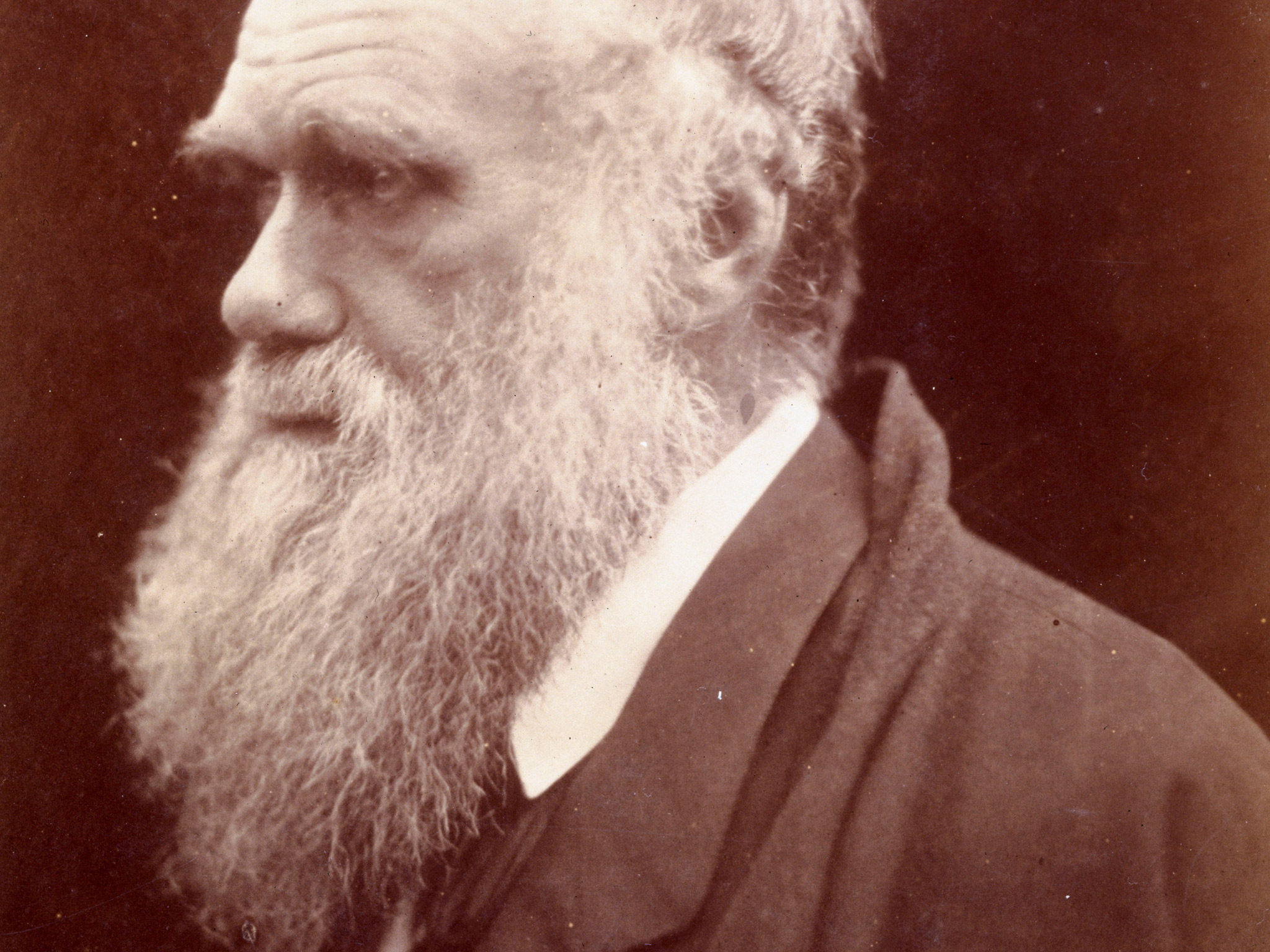
CHARLES DARWIN’S ORIGIN OF SPECIES (1859) PROPOSES A MECHANISTIC, NON-PURPOSIVE ACCOUNT OF EVOLUTION AS THE PRODUCT OF NATURAL SELECTION OF RANDOMLY PRODUCED GENETIC MUTATIONS.

In the natural world, all living entities exist as individuals and express their individuality. The Theory of Evolution proposes that a species can descend or arrive to become a new species by changing its genome in a gradual and incremental manner using a mechanism that is described as Natural Selection. As per Darwinism, the mechanism of natural selection operates via a process of random and unguided mutations in the genetic code that changes the genome and eventually produces the ‘biodiversity’ that we witness in the natural world.

Individuality and the Genome. The phenomenon of Diversity must be studied beyond the realm of genes, genetic codes, and genomes. Cytoplasm and its organs must be studied to understand the physiological basis of Diversity

This Theory of Evolution has no relevance to the ultimate identity of each individual member of a given species. This identity is dictated by interplay between the various components of each individual cell and its interactions with other cells. With the same genomes or different genomes, the living entities can only exist as individuals and they have no other choice. The evolutionary connections are not relevant to this identity. To understand the phenomenon of biodiversity, we will be forced to look at each individual member of each given species. 

The Law of Individuality: 

Individuality and the Genome. The Law of Individuality formulates the phenomenon of Human Individuality.

Whole Dude states that the Law of Individuality governs all the living entities and is manifested in various biological phenomena. The genes and the genetic code function in accordance with the Law of Individuality. Hence, Whole Dude describes Individuality as a Trade Mark. It is the characteristic of a biological entity. Genes and the genetic codes are the tools that an organism uses to express its Individuality. Each organism assembles its own kind of protein molecules to define its identity and to defend its existence in the natural world. 

Individuality and the Genome. The Law of Individuality formulates the phenomenon of Changing Human Identity and the Unchanging Human Individuality.

Whole Dude is the Given Name of a known, verified, specific Whole Person

What is Identity and What is Individuality?

Human Identity and Individuality: A brief glance at the face is enough for most people to identify one another. Face recognition is a basic feature of human identity and recognition.

A brief glance at the face is enough for most people to identify one another. However, man does not exist with the same identity during the course of his life. The word identity describes the condition or fact of being a specific person. Identification is the process by which a person can be identified in an accurate and consistent manner.

The morphological or the external appearance of a person is subject to constant changes and it differs in a significant manner during the various stages of life such as infancy, boyhood, adulthood, and old age.

The morphological or the external appearance of a person is subject to constant changes and it differs in a significant manner during the various stages of life such as infancy, boyhood, adulthood, and old age. The term individuality describes the sum of the characteristics or qualities that set one person apart from others. The condition of being individual, or different from others establishes the indivisibility of man. Man is unique, original, one kind of person who has not existed before and would not also exist in future even when he shares the same identical genome. Two identical twins could be correctly identified as two different individuals. I propose the Law of Individuality and Creation which claims that man exists as Individual and has no choice in this conditioned nature of subjective physical existence in the world. Man can only exist as Individual with Individuality.

Human Identity and Individuality: If Identity described by the Phenotype establishes one face of the Coin, the Individuality describes the second face of the same coin and is established by the Genotype. While being the same, the Genotype presents the Individual with varying features of identification.

The Identification Technology:

Human Identity and Individuality: Using Fingerprints is the oldest method of Identification. The Fingerprint is electronically read by a sensor plate.

Biometrics is that branch of Biology which deals with its data statistically and by mathematical analysis. Using Fingerprints is the oldest method of Identification using biometric information. People have tiny ridges of skin on their fingers. These ridges form through a combination of genetic and environmental factors. The genetic makeup, the position of the fetus in the womb, and the composition and density of surrounding amniotic fluid play a role in how every individual ridge on the skin surface of finger will form. Fingerprints are a unique marker for a person, even an identical twin. Fingerprint analysis can define the differences between two fingerprint impressions.

Human Identity and Individuality: Fingerprints are a unique marker for a person and Fingerprint analysis can define the differences between Fingerprints.

The Fingerprint is electronically read. The corrugated ridges of the skin are non-continuous and form a pattern that has distinguishing features or minutiae. Two varieties of Fingerprint scanning technology are currently used; the optical Fingerprint scanners and the Capacitance Fingerprint scanner that uses a computerized analysis.

Iris Recognition Technology:

Human Identity and Individuality: The Iris is the most unique feature visible on the human body.Iris Scan Recorder uses pattern recognition techniques based on images of the Iris.

 Iris Scanners use pattern recognition techniques based on images of the irides (Irises) of an individual’s eyes.

Human Identity and Individuality: How does the multicellular human organism recognizes its own Identity?

No two irides being the same, even in identical twins, individuals could be identified with accuracy and consistency.

DNA Analysis:

Human Identity and Individuality: A small sample of DNA is amplified by using Polymerase Chain Reaction or PCR. The Short Tandem Repeat Analysis examines how often base pairs repeat in specific locations on a DNA strand.

A small sample of DNA is amplified by using Polymerase Chain Reaction or PCR. In a method described as Short Tandem Repeat Analysis, it is examined to find how often base pairs repeat in specific locations or loci on a given DNA strand. These can be dinucleotide, trinucleotide, tetranucleotide, or pentanucleotide repeats; that is repetition of 2, 3, 4, or 5 base pairs. Very often, the investigator looks for tetranucleotide or pentanucleotide repeats in the DNA sample. The likelihood that any two individuals (except identical twins) will have the same 13-loci DNA profile can be as high as 1 in 1 billion or greater.

Biometric Facial Recognition Technology:

Human Identity and Individuality: Every face has numerous distinguishable landmarks, the different peaks and valleys that make up facial features.

 Every face has numerous distinguishable landmarks, the different peaks and valleys that make up facial features. These landmarks are known as nodal points. Each human face has approximately 80 nodal points.

Human Identity and Individuality: How does the multicellular human organism recognizes its own identity?

Distance between the eyes, width of the nose, depth of the eye sockets, the shape of the cheekbones, the length of the jawline and other features are used as nodal points. These nodal points are measured creating a numerical code called a face print, representing the face in the database and comparison is made between images of face. 2D or 3D image of a person’s face uses distinct features of the face where rigid tissue and bone is most apparent, such as the curves of the eye socket, nose, and chin to identify the subject.

Human Identity and Individuality. In a multicellular human organism, who recognizes the Identity of the human person?

Unique templates are created from measurements between key points on the face and these measurements provide identification of the individual.

Skin Biometrics – Skin Surface Texture Analysis:

Human Identity and Individuality: The uniqueness of Skin Texture offers an opportunity to identify differences between identical twins.
Human Identity and Individuality: Surface Texture Analysis creates a Skin Print by using local information about skin texture at various points on the surface.

The Surface Texture Analysis algorithm operates on the top percentage of results as determined by the Local feature analysis. This method creates a Skin Print and performs either a 1:1 or 1:N match for verification or identification. It can identify the differences between identical twins.

 Identity, Individuality, and Consciousness:

Human Identity, Individuality, and Consciousness

Man describes his identity in terms of his personal name, age, gender, race, ethnicity, place of origin, language, religion, political, occupational, or social affiliation. In reality, the man is an association of trillions of individual cells.

Human Identity and Individuality. How does the multicellular human organism recognizes its own Identity?

The human organism is a conscious being and the function called consciousness achieves functional unity of all these individual cells and works for the benefit of the individual who always maintains his individuality.

Human Identity and Individuality. Cognitive Biology must address the issue of cognition of human Identity. In the multicellular human organism, who recognizes the Identity of the Human Individual?

This is possible because individual cells have the ability to recognize the presence of other living cells in their environment and display functional subordination to serve the purpose of the whole organism.

Human Identity, Individuality, and Consciousness – Existence precedes Essence.

Human Identity and Individuality is defined by the Doctrine of Molecular Individualism

Whole Dude coined the phrase Whole Individualism to discover Man by a study of the building blocks, the structural units and organization of the human body. To defend human existence, Whole Individualism lays the emphasis on knowing the person who is at risk apart from knowing the agent posing the risk.

Whole Dude coined the phrase Whole Individualism to discover Man by a study of the building blocks, the structural units and organization of the human body. To defend human existence, Whole Individualism lays the emphasis on knowing the person who is at risk apart from knowing the agent posing the risk.

The Whole Dude Doctrine of Whole Individualism and Molecular Individualism

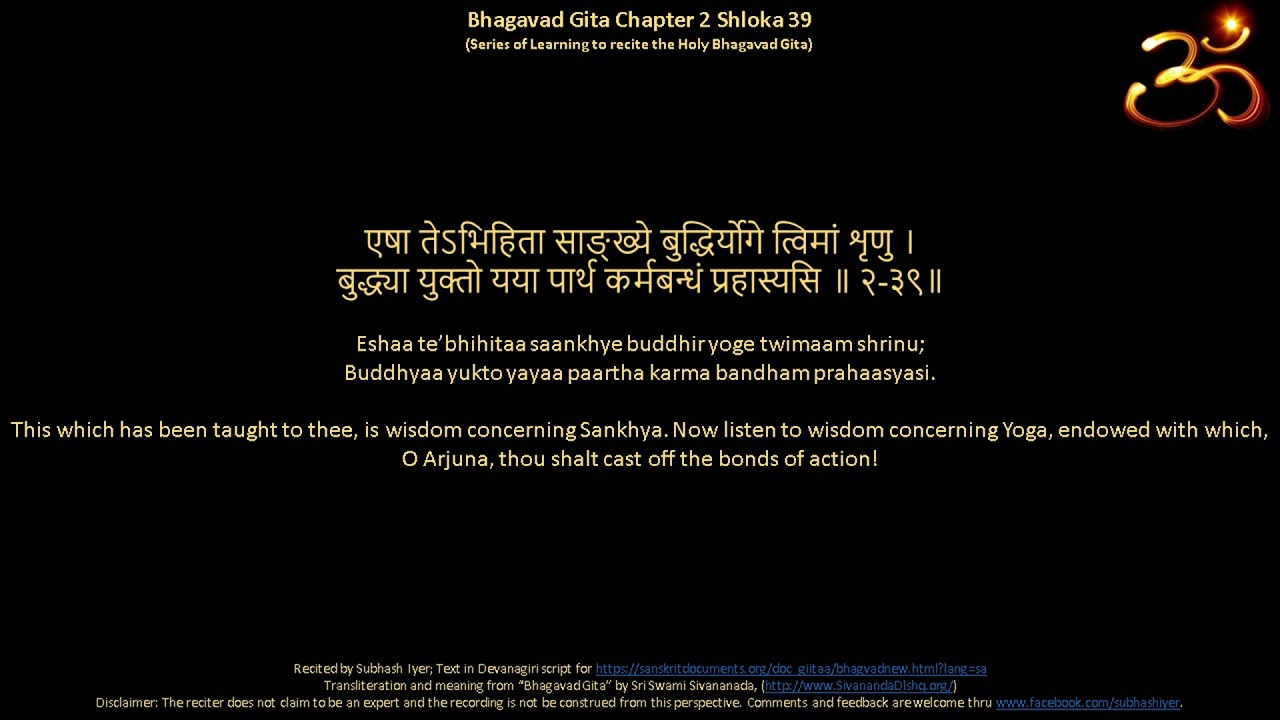
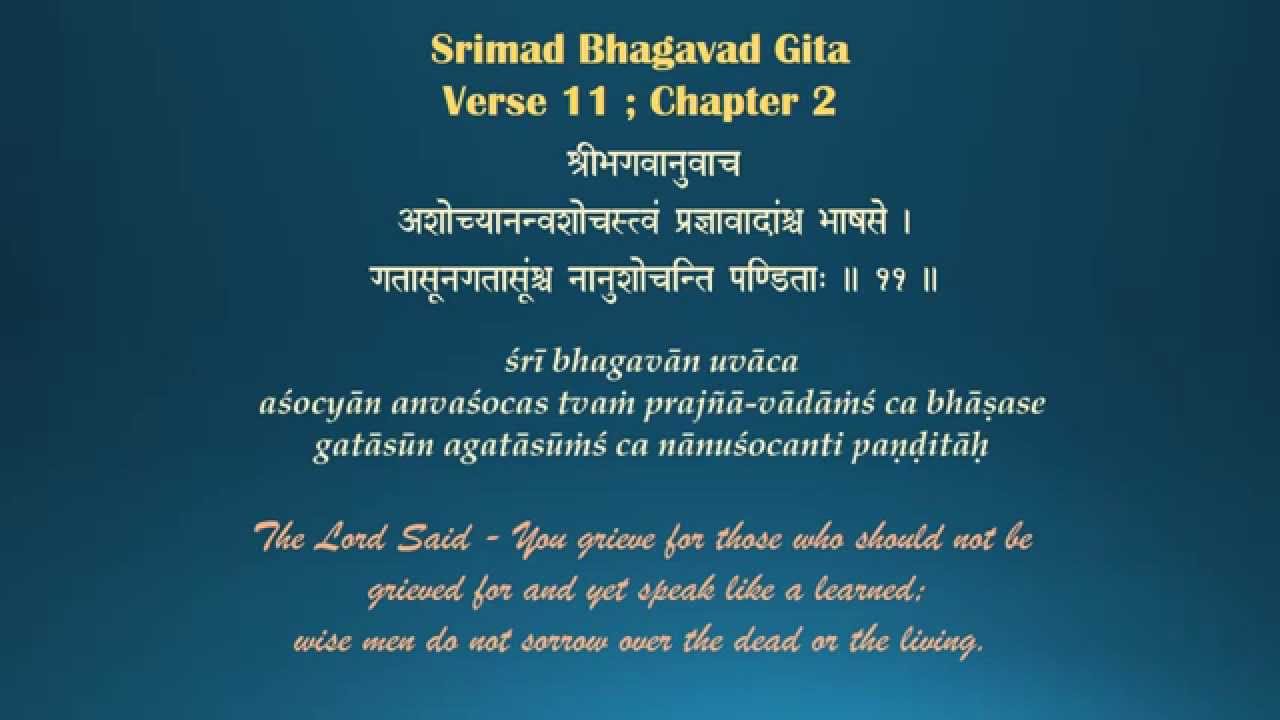
TAT ASMI PRABHU - FIFTH MAHAVAKYA - MOLECULAR INDIVIDUALISM. MAN'S EXISTENCE IS DEFENDED BY MOLECULES CALLED ANTIBODIES WHICH CAN RECOGNIZE OR SEPARATE SELF AND NON-SELF PROTEIN MOLECULES.
THE WHOLE DUDE DOCTRINE OF MOLECULAR INDIVIDUALISM. MAN’S EXISTENCE IS DEFENDED BY MOLECULES CALLED ANTIBODIES WHICH CAN RECOGNIZE OR SEPARATE SELF AND NON-SELF PROTEIN MOLECULES.

The man exists in the physical world for his existence is essentially supported by Unity or ‘Eikyata’ with ‘Prabhu’, or LORD God Creator. It is of great importance to note that man’s existence involves use of a creative mechanism that deploys unique molecules that establish man’s physical identity on a molecular basis. Man’s existence is ‘Conditioned’ for he has no choice other than that of existing as an Individual with Individuality. This Individualistic Nature of Existence is defended by Immune System that deploys unique molecules called Antibodies. Man’s existence is defended by a creative mechanism that involves deployment of Antibody molecules that distinguish or separate Self and Non-Self.

MENDEL’S LAWS OF INHERITANCE VS HUMAN EVOLUTION: MAN IS ABLE TO EXIST IN NATURE FOR HE IS ABLE TO DEFEND HIS EXISTENCE BY DEPLOYING MOLECULES THAT CAN MAKE THE RECOGNITION AND DISTINCTION BETWEEN SELF AND NON-SELF.
SPIRITUALITY SCIENCE-THE ART OF KNOWING: AT A FUNDAMENTAL LEVEL, LIFE AND LIVING IS ABOUT KNOWING MATTER AS SELF OR NON-SELF. THIS IDENTIFICATION OF MATTER INVOLVES THE ABILITY TO RECOGNIZE MOLECULES OF MATTER . TO LEARN THE ART OF KNOWING, MAN HAS TO KNOW ABOUT THE MOLECULAR BASIS FOR EXISTENCE.

Modern Science has provided tools to visually examine large molecules and experimentally verify individualistic variations in their behavior. For this reason, we have to know each man as a Specific Individual with Individuality.

TAT ASMI PRABHU - FIFTH MAHAVAKYA - MOLECULAR INDIVIDUALISM. DR STEVEN CHU, US SECRETARY DEPARTMENT OF ENERGY DEMONSTRATED INDIVIDUALISTIC BEHAVIOR OF LARGE MOLECULES SUCH AS DNA.
THE WHOLE DUDE DOCTRINE OF MOLECULAR INDIVIDUALISM. DR STEVEN CHU, U.S. SECRETARY DEPARTMENT OF ENERGY DEMONSTRATED INDIVIDUALISTIC BEHAVIOR OF LARGE MOLECULES SUCH AS DNA.
The Whole Dude Doctrine of Molecular Individualism. Man exists as an Individual with Individuality. This Individualistic Nature of Existence is defended by Immune System that deploys unique molecules called Antibodies.
The Whole Dude Doctrine of Molecular Individualism. Man exists for he is united with Prabhu or LORD God Creator. Man’s existence is defended by a creative mechanism that involves deployment of Antibody molecules that distinguish or separate Self and Non-Self.

Knowing man’s identity and individuality demands understanding of molecules that defend human existence. For example, each antibody molecule bears two identical binding sites consisting of six b-loops.

The Whole Dude Doctrine of Molecular Individualism: At room temperature atoms and molecules in the air move about at breakneck speed. In order for them to be studied, they need to be slowed down or chilled. During the 1980s Steven Chu, Claude Cohen-Tannoudji, and William Phillips developed different methods for this. When atoms come in contact with light particles with fixed energies, photons, their movement is affected as if they had been bumped. With the aid of laser light from different directions and adjustment of the photon’s energy for Doppler effects, the atoms can be cooled to extremely low temperatures and captured in a trap.

Nobel Laureate, Dr. Steven Chu (United States Secretary of Energy), former Professor of Physics and Applied Physics, Stanford University has described that molecules can exhibit a surprising degree of individuality. In experiments that examine the physical behavior of single molecules, Stanford researchers have discovered that identical polymers; long, flexible, spaghetti-like molecules that are found in everything from plastics to living cells;  UNFOLD in a variety of ways even when exposed to the same experimental conditions. Dr. Chu had stated : “We discovered it because we have developed the ability to visualize and manipulate single molecules.” He had further observed that, “Only by looking at individual animals you can get a true sense of  diversity of species.” Dr. Chu researched Biological Physics and Polymer Physics. Dr. Chu’s research in Polymer Physics made use of individual molecules of DNA to study Polymer Dynamics.

We define our identity in the natural world and defend our existence by deploying unique protein molecules. Our genetic code determines the protein molecules that we use. The genetic code is made up of  DNA strands that express Molecular Individualism. It arises from exceedingly small differences in the initial configuration of the polymer.

We define our identity in the natural world and defend our existence by deploying unique protein molecules. Our genetic code determines the protein molecules that we use. The genetic code is made up of  DNA strands that express Molecular Individualism. It arises from exceedingly small differences in the initial configuration of the polymer.

Nobel Prize for Medicine Goes to Cancer Therapy

The Whole Dude Doctrine of Molecular Individualism. The Study of Antibody Molecules will help in understanding the concept of ‘Molecular Individualism’. 2018 Nobel Prize for Medicine. My Thoughts on the Molecular Basis for the Defense of Human Existence.

American James Allison and Japan’s Tasuku Honjo have won the 2018 Nobel Prize in Medicine for a pioneering approach to cancer treatment.

The Nobel committee said the pair’s research — which harnesses the body’s immune system to attack cancer cells — amounted to a “landmark in our fight against cancer.” The approach, known as immune checkpoint theory, had “revolutionized cancer treatment and has fundamentally changed the way we view how cancer can be managed,” the committee said.

Clipped from: https://www.bbc.com/news/health-45704322

The Whole Dude Doctrine of Molecular Individualism. Study of Antibody Molecules will help in understanding the concept of ‘Molecular Individualism’: 2018 Nobel Prize for Medicine. My Thoughts on the Molecular Basis for the Defense of Human Existence.

Image copyright SPL

Two scientists who discovered how to fight cancer using the body’s immune system have won the 2018 Nobel Prize for physiology or medicine.

The work, by Professor James P Allison from the US and Professor Tasuku Honjo from Japan, has led to treatments for advanced, deadly skin cancer.

Immune checkpoint therapy has revolutionized cancer treatment, said the prize-giving Swedish Academy.

Experts say it has proved to be “strikingly effective”.

Prof Allison, of the University of Texas, and Prof Honjo, of Kyoto University, will share the Nobel prize sum of nine million Swedish kronor – about $1.01 million or 870,000 euros.

Accepting the prize, Tasuku Honjo told reporters: “I want to continue my research … so that this immune therapy will save more cancer patients than ever.”

Prof Allison said: “It’s a great, emotional privilege to meet cancer patients who’ve been successfully treated with immune checkpoint blockade. They are living proof of the power of basic science, of following our urge to learn and to understand how things work.”

Treating the untreatable

Our immune system protects us from disease, but it has built-in safeguards to stop it from attacking our own tissue.


The Whole Dude Doctrine of Molecular Individualism. Study of Antibody Molecules will help in understanding the concept of ‘Molecular Individualism’: 2018 Nobel Prize for Medicine. My Thoughts on the Molecular Basis for the Defense of Human Existence.

Image copyright. Kyoto University. Image caption. Professor Tasuku Honjo and his team at Kyoto University

Some cancers can take advantage of those “brakes” and dodge the attack too.

Allison and Honjo, now both in their 70s, discovered a way to unleash our immune cells to attack tumors by turning off proteins that put the brakes on.

And that led to the development of new drugs which now offer hope to patients with advanced and previously untreatable cancer.

Immune checkpoint therapy is being used by the NHS to treat people with the most serious form of skin cancer, melanoma.

It doesn’t work for everyone, but for some patients it appears to have worked incredibly well, getting rid of the tumor entirely, even after it had started to spread around the body.

Such remarkable results had never been seen before for patients like these.


The Whole Dude Doctrine of Molecular Individualism. Study of Antibody Molecules will help in understanding the concept of ‘Molecular Individualism’: 2018 Nobel Prize for Medicine. My Thoughts on the Molecular Basis for the Defense of Human Existence.

Image copyright. Getty Images. Image caption. Professor James P Allison

Doctors have also been using the treatment to help some people with advanced lung cancer.

Prof Charles Swanton, from Cancer Research UK, congratulated the prize winners, saying: “Thanks to this groundbreaking work, our own immune system’s innate power against cancer has been realized and harnessed into treatments that continue to save the lives of patients. For cancers such as advanced melanoma, lung, and kidney, these immune-boosting drugs have transformed the outlook for many patients who had run out of options.

“The booming field of immunotherapy that these discoveries have precipitated is still relatively in its infancy, so it’s exciting to consider how this research will progress in the future and what new opportunities will arise.”

My thoughts on the Molecular Basis for the Defense of Human Existence


The Whole Dude Doctrine of Molecular Individualism. Study of Antibody Molecules will help in understanding the concept of ‘Molecular Individualism’: 2018 Nobel Prize for Medicine. My Thoughts on the Molecular Basis for the Defense of Human Existence.

The Molecular Basis for the Defense of Human Existence. Man’s Unity with Lord God Creator can be learned from the study of Immunology. Each Antibody molecule bears two identical binding sites consisting of six b-Loops.

My ‘Theory of Man’ describes the Man as a Created Being. Man’s physical existence in the natural world in good health or ill-health always demands Man’s Unity (Sanskrit. Asmi) with Lord God Creator (Sanskrit. Brahman) for Man is constituted as a Spiritual Being. Man, the Rational Being is inclined to investigate the basis for the reality of his own existence. The reasoning for my statements is derived from the study of Immunology.

The Defense of Human Existence

The Whole Dude Doctrine of Molecular Individualism. Study of Antibody Molecules will help in understanding the concept of ‘Molecular Individualism’: The Study of Immune System helps in understanding the Molecular Basis for the Defense of Human Existence.

THE MOLECULAR BASIS FOR THE DEFENSE OF HUMAN EXISTENCE. NATURE OF HUMAN IDENTITY AND INDIVIDUALITY IS REVEALED BY HUMAN DEFENSE MECHANISMS.

An individual exists in the natural world by his biological abilities to defend his continued existence as an independent entity. This essay explores the physiological aspects of human existence and the defensive mechanisms that sustain this existence and the molecules which define and shape our Individualism. The term immunity describes the natural defensive mechanisms that give an individual the ability to recognize foreign proteins and foreign substances and neutralize or degrade them with or without injury to the individual’s own tissues. Immunology is the branch of science concerned with the body’s response to foreign agents and substances.

The Functions of the Immune System

The Whole Dude Doctrine of Molecular Individualism. Study of Antibody Molecules will help in understanding the concept of ‘Molecular Individualism’: The Functions of the Immune System relate to the role played by unique protein molecules in the Defense of Human Existence.

THE MOLECULAR BASIS FOR THE DEFENSE OF HUMAN EXISTENCE. ORGANS, CELLS, AND PROTEIN MOLECULES OF IMMUNE SYSTEM REPRESENT A CREATIVE MECHANISM TO OPPOSE, NEUTRALIZE, AND DESTROY FOREIGN INVADERS.

The immune system responds to invasion by the foreign organisms and their toxic products. This immune response is also described as active immunity. In the natural world, an infant is defended by molecules transferred passively across the placenta from the mother’s circulation during the fetal stage of development. The infant after birth may also receive passively protein molecules from mother when breastfed. This passive immunity defends the baby for several months and the baby further survives by developing its own immune system. Another major function of the immune system is the removal of damaged or dying cells. The immune system is also able to recognize and eliminate abnormal or mutant cells that frequently arise within the body. Using a system that is described as immune surveillance, the body recognizes and disposes of such abnormal cells which could result in the incidence of certain types of cancer. The immune system plays a vital role in protecting the body from bacteria, viruses, fungi, and parasites and helps to prevent certain types of cancer.

The immune system is very important and it is also very sensitive. The system’s very ability to recognize foreign substances may often result in undesirable reactions. Millions of people suffer on account of hypersensitivity or allergic reactions to fairly harmless substances present in the environment. Many individuals suffer on account of their sensitivity to proteins found in the foods such as milk, eggs, fish, wheat (gluten), and nuts that we consume. Sometimes, the immune system is misdirected and initiates an immune response against the body’s own cells or tissues producing a condition known as an autoimmune disease. While an immune system could cause some problems, we take full advantage of the system to defend ourselves from serious infectious diseases such as smallpox,polio,rabies, diphtheria, whooping-cough, measles, rubella, mumps, tetanus, typhoid, cholera, tuberculosis, hepatitis B, influenza and others by using vaccines and inoculations. Millions of lives are protected by routine use of vaccines and inoculations which help the body to become resistant to these infectious agents. We also use foreign proteins to protect the lives of people in times of a severe life-threatening crisis. We use blood, plasma, and sera (containing immunoglobulins secreted by animals) with utmost care to tide over an emergency. I used foreign immunoglobulins to treat snakebite victims and tetanus cases. The foreign proteins elicit a minor immune response and the situation is carefully monitored.

By being careless and reckless, and by polluting our food, water, air, and soil with dangerous chemicals, we damage our very sensitive immune system and this is contributing to a higher incidence of immune-related health problems in the population.

Types of Immune Response

The Whole Dude Doctrine of Molecular Individualism. Study of Antibody Molecules will help in understanding the concept of ‘Molecular Individualism’: Man’s Intelligence, mental work, and mental memory are not the “First Line of Defense.”

The Molecular Basis for the Defense of Human Existence: The Fundamental Basis of Human Existence is not that of Man’s Intelligence, Mental Memory and Mental Functions.

The immune system defends human existence with a variety of cells and by the protein molecules known as immunoglobulins or antibodies produced by the immune function capable cells. The ability to recognize foreignness, specificity of the response, and the memory of the prior immune response are the key characteristics of immune defense. The immune system must be able to recognize the foreign agents and foreign materials in order to locate and destroy them. Specificity means that immunity to one foreign substance or organism does not provide resistance to another type of organism. Memory is the ability of the individual to develop an accelerated, enhanced, and long-lasting immunity after the initial attack by an infectious disease. The memory function described in Immunology should not be confused with the mental faculty called Memory. The body defends itself through two types of mechanisms which work together to protect our existence. 1. Humoral Immunity:- this involves the production of protein molecules described as immunoglobulins or antibodies.2. Cell-mediated Immunity:- It does not involve secretion of antibodies but requires direct physical contact with the foreign substance or agent. It also involves the use of other protein molecules which assist in the defense mechanisms.

Humoral Immunity

The Whole Dude Doctrine of Molecular Individualism. Study of Antibody Molecules will help in understanding the concept of ‘Molecular Individualism’: The recognition of Self and Non-Self at the molecular level is the fundamental basis for human existence.

THE MOLECULAR BASIS FOR DEFENSE OF HUMAN EXISTENCE: HUMORAL IMMUNITY INVOLVES DEPLOYMENT OF UNIQUE PROTEIN MOLECULES TO COUNTERACT WITH FOREIGN PROTEIN MOLECULES.

The cells known as Lymphocytes or B cells are produced in the bone marrow and circulate in our blood and are distributed to the various lymphoid tissues in the body, such as the lymph nodes, spleen, tonsils, and Peyer’s Patches (Lymphoid Follicles) that line the small intestine. When stimulated by an infectious organism, production of lymphocytes increases and the lymphocytes are carried to the site of infection. Depending upon the site of infection, the lymph nodes of that region often swell up and are found packed with lymphocytes. The B cells produce chemical substances known as antibodies. These are protein molecules which are specifically generated against specific organisms. The foreign substance is described as antigen. The antibodies that are generated recognize their antigens with high affinity and extreme selectivity. The interaction of an antigen with its specific antibody involves only small areas on the antigen’s surface; these areas are known as antigenic determinants. Protein molecules are very potent antigens as they have several antigenic determinants. Many carbohydrates are also antigenic because they have antigenic determinants. The antibodies circulate in the blood. The simplest, most prevalent means by which the immune system defends the body against bacteria and viruses is by a combination of a specific antibody with the antigenic determinants on the surface of the invading organism. This interaction between antibodies and antigens produces an aggregate of cells called as an agglutination. The body has wandering scavenger cells known as Macrophages. The clumps of agglutinated cells are engulfed and digested by the macrophages. Antibodies also bind to toxic molecules given off by invading microorganisms and this reaction produces large, insoluble aggregates known as precipitates. These precipitates are also removed by macrophages. The virus after entering the body survives by its ability to invade or enter cells. Antibodies prevent the ability of the virus to infect cells by covering up and blocking the attachment sites of the virus.

Cell-Mediated Immunity

The Whole Dude Doctrine of Molecular Individualism. Study of Antibody Molecules will help in understanding the concept of ‘Molecular Individualism’: Immunity and Immune Response involves the deployment of unique protein molecules.

THE MOLECULAR BASIS FOR THE DEFENSE OF HUMAN EXISTENCE: INTERACTION OF CELLS AND UNIQUE PROTEIN MOLECULES OF IMMUNE SYSTEM DEFINES MAN’S IDENTITY ON MOLECULAR BASIS.

There is another distinct type of Lymphocytes known as T lymphocytes or T cells. T cells originate in the THYMUS and become localized in lymphoid organs. The immunity associated with T cells does not involve secretion of antibodies but through their direct contact with their targets or by the effects of secreted molecules known as lymphokines which help other cells to make the direct contact. There are four kinds of T cells. 1. The cytotoxic T cells
or Natural Killer cells or NK cells defend the body by destroying infected, foreign or cancerous cells. The other three kinds of T cells regulate immune responses by secreting messenger proteins known as lymphokines. 2. Helper T cells enable the other T cells and most B cells to perform their functions. The Helper T cells are destroyed by Human Immunodeficiency Virus (HIV) in Acquired Immune Deficiency Syndrome (AIDS) patients resulting in a depressed immune response that allows infection by a variety of microorganisms and the growth of some types of cancerous tumors. AIDS patients are very vulnerable to fatal infections. 3. Suppressor T cells dampen the immune response of the B and T cells. 4. The fourth kind of T cell is involved in certain kinds of hypersensitivity reactions. In a normal healthy individual, there is a balanced ratio of these four kinds of T cells to provide an efficient immune system for defense against all foreign substances. Macrophages and White blood cells known as neutrophils have the ability to engulf and digest particulate matter by the process of phagocytosis. They eliminate many foreign organisms and particulate materials that enter the body. The ability of NK cells to kill or destroy some cancerous or tumor cells is enhanced by two lymphokines known as gamma interferon and interleukin-1. Another lymphokine known as interleukin-2 activates the Lymphokine Activated Killer Cells or LAK cells which also have the ability to kill a variety of human tumor cells. Activated T cells also secrete a lymphokine known as Transfer Factor which is able to cause normal lymphocytes to release lymphokines or otherwise become activated and thus to destroy other cells. Transfer Factor stimulates the lymphocytes to develop normal immunity.

The Cytotoxic T cells destroy other cells by interacting with antigens present on the surfaces of the cell. They are involved in the attacks on tissues and organs grafted or introduced into the body, viral antigens found on infected cells and on chemicals that have entered the body and found attached to cells. T cells are involved in skin reactions resulting from contact with molecules found in poisonous plants like Poison Ivy, Poison Sumac, and Poison Oak.

Organ Transplantation and Cell-Mediated Immunity

The Whole Dude Doctrine of Molecular Individualism. Study of Antibody Molecules will help in understanding the concept of ‘Molecular Individualism’: Identity and Individuality are determined by unique protein molecules of the human body.

THE MOLECULAR BASIS FOR THE DEFENSE OF HUMAN EXISTENCE: ORGAN TRANSPLANTATION AND IMMUNOLOGY. MOLECULES OF HISTOCOMPATIBILITY LEUKOCYTE ANTIGEN (HLA) SYSTEM

T cells are involved in the rejection of transplanted tissues and organs. The chances of successful organ transplantation are improved by carefully matching the tissue or Histocompatibility Leukocyte Antigens known as the HLA system of the donor with those of the recipient. The protein molecules of the HLA Complex establish the identity of our body, its tissues, and various organs. They work to preserve the identity of the individual and to exclude the introduction or grafting of foreign material into the body. Even after careful matching, and selection of suitable donors, transplanted tissues or organs are usually maintained by using drugs that cause immunosuppression by which the normal immune response of the recipient against the donated organ is prevented.

Biological Existence

A normal, healthy immune system is vital to defend our biological existence. Immunodeficiency diseases, depressed or compromised immune system conditions such as associated with corticosteroid therapy, chemotherapy, radiation therapy, or exposure to certain types of toxic chemicals, and autoimmune diseases impose a heavy burden and threaten our existence. Medical interventions and treatment may help us but the quality of life is invariably compromised. A functioning immune system is important to defend our existence.

Molecular Individualism

The Whole Dude Doctrine of Molecular Individualism. Study of Antibody Molecules will help in understanding the concept of ‘Molecular Individualism’: Immunology helps in understanding the Molecular Basis for Man’s Identity and Individuality.

The Molecular Basis for the Defense of Human Existence: Man exists as Individual with Individuality as his existence involves defensive mechanisms operated by independent, individual cells, and protein molecules which exhibit Cellular Autonomy. The cell is the lowest common denominator of all life. While the cell is functionally independent or autonomous or self-governing, it displays the abilities characterized by Mutal Assistance, Cooperation, Tolerance, and Functional Subservience to provide some benefit to the Individual who lives in the physical world.

2018 Nobel Prize for Medicine will help us to develop a ‘Theory of Man’ by the study of unique protein molecules that play an important role in the defense of human survival. The Physical Being called Man needs the support of Spirit, Soul, or a Divine Agency to bring Unity between the cells, tissues, organs, and organ systems providing the structural and functional basis for Man’s existence.

The Whole Dude Doctrine of Molecular Individualism. Study of Antibody Molecules will help in understanding the concept of ‘Molecular Individualism’. The Doctrine of Individualism. The Man has no choice other than that of existing as an Individual with Individuality. His genome is unique and one of its own kind.
Michigan Medicine should have known better and must use valid, verified principles to identify every Human Being as a Specific Individual with Individuality without depending upon unverified claims about Race and Ethnicity.

Whole Dude is the Whole Person at Whole Foods

Whole Individualism = Molecular Individualism + Law of Individuality

Human Identity and Individuality is defined by the Doctrine of Molecular Individualism

Whole Dude coined the phrase Whole Individualism to discover Man by a study of the building blocks, the structural units and organization of the human body. To defend human existence, Whole Individualism lays the emphasis on knowing the person who is at risk apart from knowing the agent posing the risk.

In 1965, while Whole Dude was a student of Human Anatomy at Kurnool Medical College, they had the opportunity to know Dr. J. C. B. Grant (1886-1973), the author of Grant’s Atlas of Anatomy. The 5th Edition of his Atlas was published in 1962 and was available in India in their Medical College Library.

Born in Loanhead (south of Edinburgh) in 1886, Grant studied medicine at the University of Edinburgh Medical School and graduated with an M.B., Ch.B. degree in 1908. While at Edinburgh, he worked under the renowned anatomist Daniel John Cunningham. Grant became a decorated serviceman of the Royal Army Medical Corps during the First World War before moving to Canada. He established himself as an ‘anatomist extraordinary’ at the University of Toronto, publishing three textbooks that form the basis of Grant’s Anatomy. The textbooks are still used in anatomy classes today, and made unforgettable memories for those who found themselves in his classes nearly a century ago. One of Grant’s many accomplishments was establishing a division of histology within the department.

Whole Dude coined the phrase Whole Individualism to discover Man by a study of the building blocks, the structural units and organization of the human body. To defend human existence, Whole Individualism lays the emphasis on knowing the person who is at risk apart from knowing the agent posing the risk.

As a medical student, Whole Dude used Grant’s Atlas of Anatomy, the seminal work of Scottish-born Dr. John Charles Boileau Grant, who would become the chair of Anatomy at the University of Toronto in 1930 and retired in 1965.

John Charles Boileau Grant (1886–1973)

Dr. J C B Grant. Whole Dude coined the phrase Whole Individualism to discover Man by a study of the building blocks, the structural units and organization of the human body. To defend human existence, Whole Individualism lays the emphasis on knowing the person who is at risk apart from knowing the agent posing the risk.

The Grant’s Atlas of Anatomy (1943) is used to train thousands of medical students around the world. Grant came to University of Toronto’s Faculty of Medicine from University of Manitoba (and previously Edinburgh), and was Chair of the Department of Anatomy there from 1930 to 1965. Although he is best known for this famous atlas, his research and teaching also included biological anthropology, as evidenced by such work as Anthropometry of the Cree and Saulteaux Indians in Northeastern Manitoba (Archaeological Survey of Canada 1929). The human skeletal collection he formed, the “J.C.B. Grant Collection,” is still a core collection for human osteology in the Department of Anthropology at University of Toronto. He is also remembered in the Grant’s Museum at the Medical Sciences Building at the University of Toronto. This museum, with its displays of anatomical specimens, many of which were dissected by Grant himself, continues to be used in an active learning environment by more than 1000 students each year.

Students continue to use Grant’s textbooks today, and for the more artistic anatomist there’s even a Grant’s Anatomy Coloring Book, published in 2018.

Whole Dude coined the phrase Whole Individualism to discover Man by a study of the building blocks, the structural units and organization of the human body. To defend human existence, Whole Individualism lays the emphasis on knowing the person who is at risk apart from knowing the agent posing the risk.

At the University of Toronto, Dr.McMurrich, Chair of Anatomy was succeeded as chairman in 1930 by Dr. John Charles Boileau Grant. Dr. Grant wrote three text books, of which “An Atlas of Anatomy” (published in 1943) rapidly gained international prominence and is still, one of the most widely used anatomical atlases in the world. It is now known as “Grant’s Atlas of Anatomy” and is in its tenth edition. The atlas was based on a series of elegant dissections done either by Grant or by others under his supervision. Many of these dissections are currently housed in Grant’s Museum at the University of Toronto. 

Whole Dude coined the phrase Whole Individualism to discover Man by a study of the building blocks, the structural units and organization of the human body. To defend human existence, Whole Individualism lays the emphasis on knowing the person who is at risk apart from knowing the agent posing the risk.

The Identity of Multicellular Human Organism:

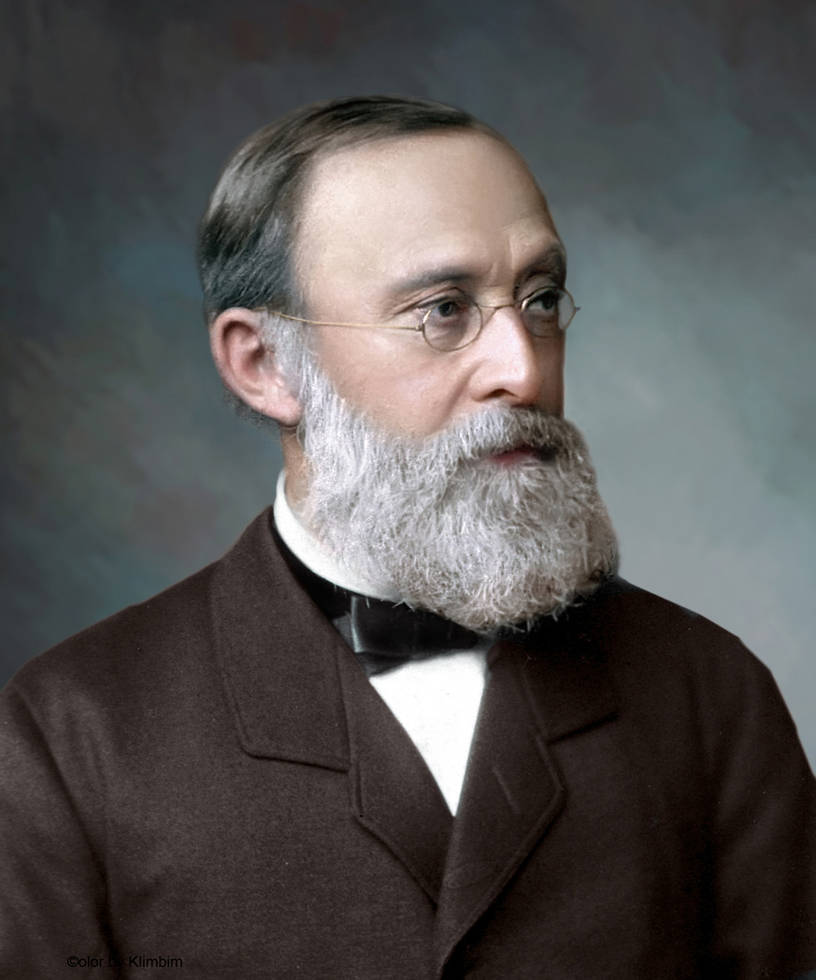
The Doctrine of Molecular Individualism. Dr John Daniel Cunningham (b. April 15, 1850, d. July 23, 1909), Scottish physician and professor of Anatomy. Cunningham’s Manual of Practical Anatomy has provided Whole Dude the learning tools to know and understand Man’s External and Internal Reality and its Identity as described by Cells, Tissues, Organs,and Organ Systems.

Daniel John Cunningham was born on 15 April 1850 in Scotland. After his initial schooling at his home town, Crieff, he took up the study of medicine at the University of Edinburgh and passed with honours. He is best known for the excellent series of dissection manuals, namely Cunningham’s Dissection Manuals. Cunningham’s Manual of Practical Anatomy has provided Whole Dude the learning tools to know and understand Man’s External and Internal Reality and its Identity as described by Cells, Tissues, Organs, and Organ Systems.

The Doctrine of Molecular Individualism. Dr John Daniel Cunningham (b. April 15, 1850, d. July 23, 1909), Scottish physician and professor of Anatomy. Cunningham’s Manual of Practical Anatomy has provided Whole Dude the learning tools to know and understand Man’s External and Internal Reality and its Identity as described by Cells, Tissues, Organs,and Organ Systems.

Whole Dude learned about the human body while dissecting the body in a systematic manner. The Manual of Practical Anatomy which guides us through this entire process was published in England. The author Dr. Daniel John Cunningham prepared the Manual while dissecting cadavers of British or Irish citizens. He had never encountered cadavers of Indian citizens. At Kurnool Medical College, Kurnool, Andhra Pradesh, India, where Whole Dude was a student, the Department of Anatomy obtains dead bodies from  Government General Hospital Kurnool and most of the deceased are the poor, and often the illiterate people of that region. None of the deceased had the chance to know this man called Cunningham and Cunningham had no knowledge about the existence of these people who arrive on our dissection tables. But, as the dissection of the human body proceeds, inch, by inch, we recognize the anatomical parts as described by Cunningham. The manual also lists some anatomical variations and we very often exchange information between various dissection tables and recognize the variations mentioned. The dissections also involve slicing the organs and studying them, both macroscopically, and microscopically. We did not miss any part of the human body. So what is the Identity of this Human Person? How does the living Human organism maintains its Identity and Individuality? Apart from the Cultural Traditions of India, several Schools of Religious Thought claim that the Human Individual and its Identity is represented by Human Soul. Where does this soul exist in the human body? What is the location if the soul is present in the living person? Does man have a soul?

The Whole Dude Doctrine of Whole Individualism and Molecular Individualism

TAT ASMI PRABHU - FIFTH MAHAVAKYA - MOLECULAR INDIVIDUALISM. MAN'S EXISTENCE IS DEFENDED BY MOLECULES CALLED ANTIBODIES WHICH CAN RECOGNIZE OR SEPARATE SELF AND NON-SELF PROTEIN MOLECULES.
THE WHOLE DUDE DOCTRINE OF MOLECULAR INDIVIDUALISM. MAN’S EXISTENCE IS DEFENDED BY MOLECULES CALLED ANTIBODIES WHICH CAN RECOGNIZE OR SEPARATE SELF AND NON-SELF PROTEIN MOLECULES.

The man exists in the physical world for his existence is essentially supported by Unity or ‘Eikyata’ with ‘Prabhu’, or LORD God Creator. It is of great importance to note that man’s existence involves use of a creative mechanism that deploys unique molecules that establish man’s physical identity on a molecular basis. Man’s existence is ‘Conditioned’ for he has no choice other than that of existing as an Individual with Individuality. This Individualistic Nature of Existence is defended by Immune System that deploys unique molecules called Antibodies. Man’s existence is defended by a creative mechanism that involves deployment of Antibody molecules that distinguish or separate Self and Non-Self. Modern Science has provided tools to visually examine large molecules and experimentally verify individualistic variations in their behavior. For this reason, we have to know each man as a Specific Individual with Individuality.

TAT ASMI PRABHU - FIFTH MAHAVAKYA - MOLECULAR INDIVIDUALISM. DR STEVEN CHU, US SECRETARY DEPARTMENT OF ENERGY DEMONSTRATED INDIVIDUALISTIC BEHAVIOR OF LARGE MOLECULES SUCH AS DNA.
THE WHOLE DUDE DOCTRINE OF MOLECULAR INDIVIDUALISM. DR STEVEN CHU, U.S. SECRETARY DEPARTMENT OF ENERGY DEMONSTRATED INDIVIDUALISTIC BEHAVIOR OF LARGE MOLECULES SUCH AS DNA.
The Whole Dude Doctrine of Molecular Individualism. Man exists as an Individual with Individuality. This Individualistic Nature of Existence is defended by Immune System that deploys unique molecules called Antibodies.
The Whole Dude Doctrine of Molecular Individualism. Man exists for he is united with Prabhu or LORD God Creator. Man’s existence is defended by a creative mechanism that involves deployment of Antibody molecules that distinguish or separate Self and Non-Self.

Knowing man’s identity and individuality demands understanding of molecules that defend human existence. For example, each antibody molecule bears two identical binding sites consisting of six b-loops.

The Whole Dude Doctrine of Molecular Individualism: At room temperature atoms and molecules in the air move about at breakneck speed. In order for them to be studied, they need to be slowed down or chilled. During the 1980s Steven Chu, Claude Cohen-Tannoudji, and William Phillips developed different methods for this. When atoms come in contact with light particles with fixed energies, photons, their movement is affected as if they had been bumped. With the aid of laser light from different directions and adjustment of the photon’s energy for Doppler effects, the atoms can be cooled to extremely low temperatures and captured in a trap.

Nobel Laureate, Dr. Steven Chu (United States Secretary of Energy), former Professor of Physics and Applied Physics, Stanford University has described that molecules can exhibit a surprising degree of individuality. In experiments that examine the physical behavior of single molecules, Stanford researchers have discovered that identical polymers; long, flexible, spaghetti-like molecules that are found in everything from plastics to living cells;  UNFOLD in a variety of ways even when exposed to the same experimental conditions. Dr. Chu had stated : “We discovered it because we have developed the ability to visualize and manipulate single molecules.” He had further observed that, “Only by looking at individual animals you can get a true sense of  diversity of species.” Dr. Chu researched Biological Physics and Polymer Physics. Dr. Chu’s research in Polymer Physics made use of individual molecules of DNA to study Polymer Dynamics.

We define our identity in the natural world and defend our existence by deploying unique protein molecules. Our genetic code determines the protein molecules that we use. The genetic code is made up of  DNA strands that express Molecular Individualism. It arises from exceedingly small differences in the initial configuration of the polymer.

We define our identity in the natural world and defend our existence by deploying unique protein molecules. Our genetic code determines the protein molecules that we use. The genetic code is made up of  DNA strands that express Molecular Individualism. It arises from exceedingly small differences in the initial configuration of the polymer.

Nobel Prize for Medicine Goes to Cancer Therapy

The Whole Dude Doctrine of Molecular Individualism. The Study of Antibody Molecules will help in understanding the concept of ‘Molecular Individualism’. 2018 Nobel Prize for Medicine. My Thoughts on the Molecular Basis for the Defense of Human Existence.

American James Allison and Japan’s Tasuku Honjo have won the 2018 Nobel Prize in Medicine for a pioneering approach to cancer treatment.

The Nobel committee said the pair’s research — which harnesses the body’s immune system to attack cancer cells — amounted to a “landmark in our fight against cancer.” The approach, known as immune checkpoint theory, had “revolutionized cancer treatment and has fundamentally changed the way we view how cancer can be managed,” the committee said.

Clipped from: https://www.bbc.com/news/health-45704322

The Whole Dude Doctrine of Molecular Individualism. Study of Antibody Molecules will help in understanding the concept of ‘Molecular Individualism’: 2018 Nobel Prize for Medicine. My Thoughts on the Molecular Basis for the Defense of Human Existence.

Image copyright SPL

Two scientists who discovered how to fight cancer using the body’s immune system have won the 2018 Nobel Prize for physiology or medicine.

The work, by Professor James P Allison from the US and Professor Tasuku Honjo from Japan, has led to treatments for advanced, deadly skin cancer.

Immune checkpoint therapy has revolutionized cancer treatment, said the prize-giving Swedish Academy.

Experts say it has proved to be “strikingly effective”.

Prof Allison, of the University of Texas, and Prof Honjo, of Kyoto University, will share the Nobel prize sum of nine million Swedish kronor – about $1.01 million or 870,000 euros.

Accepting the prize, Tasuku Honjo told reporters: “I want to continue my research … so that this immune therapy will save more cancer patients than ever.”

Prof Allison said: “It’s a great, emotional privilege to meet cancer patients who’ve been successfully treated with immune checkpoint blockade. They are living proof of the power of basic science, of following our urge to learn and to understand how things work.”

Treating the untreatable

Our immune system protects us from disease, but it has built-in safeguards to stop it from attacking our own tissue.


The Whole Dude Doctrine of Molecular Individualism. Study of Antibody Molecules will help in understanding the concept of ‘Molecular Individualism’: 2018 Nobel Prize for Medicine. My Thoughts on the Molecular Basis for the Defense of Human Existence.

Image copyright. Kyoto University. Image caption. Professor Tasuku Honjo and his team at Kyoto University

Some cancers can take advantage of those “brakes” and dodge the attack too.

Allison and Honjo, now both in their 70s, discovered a way to unleash our immune cells to attack tumors by turning off proteins that put the brakes on.

And that led to the development of new drugs which now offer hope to patients with advanced and previously untreatable cancer.

Immune checkpoint therapy is being used by the NHS to treat people with the most serious form of skin cancer, melanoma.

It doesn’t work for everyone, but for some patients it appears to have worked incredibly well, getting rid of the tumor entirely, even after it had started to spread around the body.

Such remarkable results had never been seen before for patients like these.


The Whole Dude Doctrine of Molecular Individualism. Study of Antibody Molecules will help in understanding the concept of ‘Molecular Individualism’: 2018 Nobel Prize for Medicine. My Thoughts on the Molecular Basis for the Defense of Human Existence.

Image copyright. Getty Images. Image caption. Professor James P Allison

Doctors have also been using the treatment to help some people with advanced lung cancer.

Prof Charles Swanton, from Cancer Research UK, congratulated the prize winners, saying: “Thanks to this groundbreaking work, our own immune system’s innate power against cancer has been realized and harnessed into treatments that continue to save the lives of patients. For cancers such as advanced melanoma, lung, and kidney, these immune-boosting drugs have transformed the outlook for many patients who had run out of options.

“The booming field of immunotherapy that these discoveries have precipitated is still relatively in its infancy, so it’s exciting to consider how this research will progress in the future and what new opportunities will arise.”

My thoughts on the Molecular Basis for the Defense of Human Existence


The Whole Dude Doctrine of Molecular Individualism. Study of Antibody Molecules will help in understanding the concept of ‘Molecular Individualism’: 2018 Nobel Prize for Medicine. My Thoughts on the Molecular Basis for the Defense of Human Existence.

The Molecular Basis for the Defense of Human Existence. Man’s Unity with Lord God Creator can be learned from the study of Immunology. Each Antibody molecule bears two identical binding sites consisting of six b-Loops.

My ‘Theory of Man’ describes the Man as a Created Being. Man’s physical existence in the natural world in good health or ill-health always demands Man’s Unity (Sanskrit. Asmi) with Lord God Creator (Sanskrit. Brahman) for Man is constituted as a Spiritual Being. Man, the Rational Being is inclined to investigate the basis for the reality of his own existence. The reasoning for my statements is derived from the study of Immunology.

The Defense of Human Existence

The Whole Dude Doctrine of Molecular Individualism. Study of Antibody Molecules will help in understanding the concept of ‘Molecular Individualism’: The Study of Immune System helps in understanding the Molecular Basis for the Defense of Human Existence.

THE MOLECULAR BASIS FOR THE DEFENSE OF HUMAN EXISTENCE. NATURE OF HUMAN IDENTITY AND INDIVIDUALITY IS REVEALED BY HUMAN DEFENSE MECHANISMS.

An individual exists in the natural world by his biological abilities to defend his continued existence as an independent entity. This essay explores the physiological aspects of human existence and the defensive mechanisms that sustain this existence and the molecules which define and shape our Individualism. The term immunity describes the natural defensive mechanisms that give an individual the ability to recognize foreign proteins and foreign substances and neutralize or degrade them with or without injury to the individual’s own tissues. Immunology is the branch of science concerned with the body’s response to foreign agents and substances.

The Functions of the Immune System

The Whole Dude Doctrine of Molecular Individualism. Study of Antibody Molecules will help in understanding the concept of ‘Molecular Individualism’: The Functions of the Immune System relate to the role played by unique protein molecules in the Defense of Human Existence.

THE MOLECULAR BASIS FOR THE DEFENSE OF HUMAN EXISTENCE. ORGANS, CELLS, AND PROTEIN MOLECULES OF IMMUNE SYSTEM REPRESENT A CREATIVE MECHANISM TO OPPOSE, NEUTRALIZE, AND DESTROY FOREIGN INVADERS.

The immune system responds to invasion by the foreign organisms and their toxic products. This immune response is also described as active immunity. In the natural world, an infant is defended by molecules transferred passively across the placenta from the mother’s circulation during the fetal stage of development. The infant after birth may also receive passively protein molecules from mother when breastfed. This passive immunity defends the baby for several months and the baby further survives by developing its own immune system. Another major function of the immune system is the removal of damaged or dying cells. The immune system is also able to recognize and eliminate abnormal or mutant cells that frequently arise within the body. Using a system that is described as immune surveillance, the body recognizes and disposes of such abnormal cells which could result in the incidence of certain types of cancer. The immune system plays a vital role in protecting the body from bacteria, viruses, fungi, and parasites and helps to prevent certain types of cancer.

The immune system is very important and it is also very sensitive. The system’s very ability to recognize foreign substances may often result in undesirable reactions. Millions of people suffer on account of hypersensitivity or allergic reactions to fairly harmless substances present in the environment. Many individuals suffer on account of their sensitivity to proteins found in the foods such as milk, eggs, fish, wheat (gluten), and nuts that we consume. Sometimes, the immune system is misdirected and initiates an immune response against the body’s own cells or tissues producing a condition known as an autoimmune disease. While an immune system could cause some problems, we take full advantage of the system to defend ourselves from serious infectious diseases such as smallpox,polio,rabies, diphtheria, whooping-cough, measles, rubella, mumps, tetanus, typhoid, cholera, tuberculosis, hepatitis B, influenza and others by using vaccines and inoculations. Millions of lives are protected by routine use of vaccines and inoculations which help the body to become resistant to these infectious agents. We also use foreign proteins to protect the lives of people in times of a severe life-threatening crisis. We use blood, plasma, and sera (containing immunoglobulins secreted by animals) with utmost care to tide over an emergency. I used foreign immunoglobulins to treat snakebite victims and tetanus cases. The foreign proteins elicit a minor immune response and the situation is carefully monitored.

By being careless and reckless, and by polluting our food, water, air, and soil with dangerous chemicals, we damage our very sensitive immune system and this is contributing to a higher incidence of immune-related health problems in the population.

Types of Immune Response

The Whole Dude Doctrine of Molecular Individualism. Study of Antibody Molecules will help in understanding the concept of ‘Molecular Individualism’: Man’s Intelligence, mental work, and mental memory are not the “First Line of Defense.”

The Molecular Basis for the Defense of Human Existence: The Fundamental Basis of Human Existence is not that of Man’s Intelligence, Mental Memory and Mental Functions.

The immune system defends human existence with a variety of cells and by the protein molecules known as immunoglobulins or antibodies produced by the immune function capable cells. The ability to recognize foreignness, specificity of the response, and the memory of the prior immune response are the key characteristics of immune defense. The immune system must be able to recognize the foreign agents and foreign materials in order to locate and destroy them. Specificity means that immunity to one foreign substance or organism does not provide resistance to another type of organism. Memory is the ability of the individual to develop an accelerated, enhanced, and long-lasting immunity after the initial attack by an infectious disease. The memory function described in Immunology should not be confused with the mental faculty called Memory. The body defends itself through two types of mechanisms which work together to protect our existence. 1. Humoral Immunity:- this involves the production of protein molecules described as immunoglobulins or antibodies.2. Cell-mediated Immunity:- It does not involve secretion of antibodies but requires direct physical contact with the foreign substance or agent. It also involves the use of other protein molecules which assist in the defense mechanisms.

Humoral Immunity

The Whole Dude Doctrine of Molecular Individualism. Study of Antibody Molecules will help in understanding the concept of ‘Molecular Individualism’: The recognition of Self and Non-Self at the molecular level is the fundamental basis for human existence.

THE MOLECULAR BASIS FOR DEFENSE OF HUMAN EXISTENCE: HUMORAL IMMUNITY INVOLVES DEPLOYMENT OF UNIQUE PROTEIN MOLECULES TO COUNTERACT WITH FOREIGN PROTEIN MOLECULES.

The cells known as Lymphocytes or B cells are produced in the bone marrow and circulate in our blood and are distributed to the various lymphoid tissues in the body, such as the lymph nodes, spleen, tonsils, and Peyer’s Patches (Lymphoid Follicles) that line the small intestine. When stimulated by an infectious organism, production of lymphocytes increases and the lymphocytes are carried to the site of infection. Depending upon the site of infection, the lymph nodes of that region often swell up and are found packed with lymphocytes. The B cells produce chemical substances known as antibodies. These are protein molecules which are specifically generated against specific organisms. The foreign substance is described as antigen. The antibodies that are generated recognize their antigens with high affinity and extreme selectivity. The interaction of an antigen with its specific antibody involves only small areas on the antigen’s surface; these areas are known as antigenic determinants. Protein molecules are very potent antigens as they have several antigenic determinants. Many carbohydrates are also antigenic because they have antigenic determinants. The antibodies circulate in the blood. The simplest, most prevalent means by which the immune system defends the body against bacteria and viruses is by a combination of a specific antibody with the antigenic determinants on the surface of the invading organism. This interaction between antibodies and antigens produces an aggregate of cells called as an agglutination. The body has wandering scavenger cells known as Macrophages. The clumps of agglutinated cells are engulfed and digested by the macrophages. Antibodies also bind to toxic molecules given off by invading microorganisms and this reaction produces large, insoluble aggregates known as precipitates. These precipitates are also removed by macrophages. The virus after entering the body survives by its ability to invade or enter cells. Antibodies prevent the ability of the virus to infect cells by covering up and blocking the attachment sites of the virus.

Cell-Mediated Immunity

The Whole Dude Doctrine of Molecular Individualism. Study of Antibody Molecules will help in understanding the concept of ‘Molecular Individualism’: Immunity and Immune Response involves the deployment of unique protein molecules.

THE MOLECULAR BASIS FOR THE DEFENSE OF HUMAN EXISTENCE: INTERACTION OF CELLS AND UNIQUE PROTEIN MOLECULES OF IMMUNE SYSTEM DEFINES MAN’S IDENTITY ON MOLECULAR BASIS.

There is another distinct type of Lymphocytes known as T lymphocytes or T cells. T cells originate in the THYMUS and become localized in lymphoid organs. The immunity associated with T cells does not involve secretion of antibodies but through their direct contact with their targets or by the effects of secreted molecules known as lymphokines which help other cells to make the direct contact. There are four kinds of T cells. 1. The cytotoxic T cells
or Natural Killer cells or NK cells defend the body by destroying infected, foreign or cancerous cells. The other three kinds of T cells regulate immune responses by secreting messenger proteins known as lymphokines. 2. Helper T cells enable the other T cells and most B cells to perform their functions. The Helper T cells are destroyed by Human Immunodeficiency Virus (HIV) in Acquired Immune Deficiency Syndrome (AIDS) patients resulting in a depressed immune response that allows infection by a variety of microorganisms and the growth of some types of cancerous tumors. AIDS patients are very vulnerable to fatal infections. 3. Suppressor T cells dampen the immune response of the B and T cells. 4. The fourth kind of T cell is involved in certain kinds of hypersensitivity reactions. In a normal healthy individual, there is a balanced ratio of these four kinds of T cells to provide an efficient immune system for defense against all foreign substances. Macrophages and White blood cells known as neutrophils have the ability to engulf and digest particulate matter by the process of phagocytosis. They eliminate many foreign organisms and particulate materials that enter the body. The ability of NK cells to kill or destroy some cancerous or tumor cells is enhanced by two lymphokines known as gamma interferon and interleukin-1. Another lymphokine known as interleukin-2 activates the Lymphokine Activated Killer Cells or LAK cells which also have the ability to kill a variety of human tumor cells. Activated T cells also secrete a lymphokine known as Transfer Factor which is able to cause normal lymphocytes to release lymphokines or otherwise become activated and thus to destroy other cells. Transfer Factor stimulates the lymphocytes to develop normal immunity.

The Cytotoxic T cells destroy other cells by interacting with antigens present on the surfaces of the cell. They are involved in the attacks on tissues and organs grafted or introduced into the body, viral antigens found on infected cells and on chemicals that have entered the body and found attached to cells. T cells are involved in skin reactions resulting from contact with molecules found in poisonous plants like Poison Ivy, Poison Sumac, and Poison Oak.

Organ Transplantation and Cell-Mediated Immunity

The Whole Dude Doctrine of Molecular Individualism. Study of Antibody Molecules will help in understanding the concept of ‘Molecular Individualism’: Identity and Individuality are determined by unique protein molecules of the human body.

THE MOLECULAR BASIS FOR THE DEFENSE OF HUMAN EXISTENCE: ORGAN TRANSPLANTATION AND IMMUNOLOGY. MOLECULES OF HISTOCOMPATIBILITY LEUKOCYTE ANTIGEN (HLA) SYSTEM

T cells are involved in the rejection of transplanted tissues and organs. The chances of successful organ transplantation are improved by carefully matching the tissue or Histocompatibility Leukocyte Antigens known as the HLA system of the donor with those of the recipient. The protein molecules of the HLA Complex establish the identity of our body, its tissues, and various organs. They work to preserve the identity of the individual and to exclude the introduction or grafting of foreign material into the body. Even after careful matching, and selection of suitable donors, transplanted tissues or organs are usually maintained by using drugs that cause immunosuppression by which the normal immune response of the recipient against the donated organ is prevented.

Biological Existence

A normal, healthy immune system is vital to defend our biological existence. Immunodeficiency diseases, depressed or compromised immune system conditions such as associated with corticosteroid therapy, chemotherapy, radiation therapy, or exposure to certain types of toxic chemicals, and autoimmune diseases impose a heavy burden and threaten our existence. Medical interventions and treatment may help us but the quality of life is invariably compromised. A functioning immune system is important to defend our existence.

Molecular Individualism

The Whole Dude Doctrine of Molecular Individualism. Study of Antibody Molecules will help in understanding the concept of ‘Molecular Individualism’: Immunology helps in understanding the Molecular Basis for Man’s Identity and Individuality.

The Molecular Basis for the Defense of Human Existence: Man exists as Individual with Individuality as his existence involves defensive mechanisms operated by independent, individual cells, and protein molecules which exhibit Cellular Autonomy. The cell is the lowest common denominator of all life. While the cell is functionally independent or autonomous or self-governing, it displays the abilities characterized by Mutal Assistance, Cooperation, Tolerance, and Functional Subservience to provide some benefit to the Individual who lives in the physical world.

2018 Nobel Prize for Medicine will help us to develop a ‘Theory of Man’ by the study of unique protein molecules that play an important role in the defense of human survival. The Physical Being called Man needs the support of Spirit, Soul, or a Divine Agency to bring Unity between the cells, tissues, organs, and organ systems providing the structural and functional basis for Man’s existence.

The Whole Dude Doctrine of Molecular Individualism. Study of Antibody Molecules will help in understanding the concept of ‘Molecular Individualism’. The Doctrine of Individualism. The Man has no choice other than that of existing as an Individual with Individuality. His genome is unique and one of its own kind.

Whole Analysis – Knowing the depths of your own Soul

Spiritualism vs Psychoanalysis – Know Your Soul:

Spiritualism – Psychoanalysis and Human Nature. The structure and behavior of things contribute to their individual being and function. To understand human behavior, we may have to know the structure and behavior of the human living matter or substance to which we attach human identity and recognize it as the human person

What is Mental Health?

Spiritualism – Psychoanalysis and Human Nature. The structure and behavior of things contribute to their individual being and function. To understand human behavior, we may have to know the structure and behavior of the human living matter or substance to which we attach human identity and recognize it as the human person

Mental health includes our emotional, psychological, and social well-being. It affects how we think, feel, and act, and helps determine how we handle stress, relate to others, and make choices.

Mental health is important at every stage of life, from childhood and adolescence through adulthood. Over the course of your life, if you experience mental health problems, your thinking, mood, and behavior could be affected.

Spiritualism – Psychoanalysis and Human Nature. The structure and behavior of things contribute to their individual being and function. To understand human behavior, we may have to know the structure and behavior of the human living matter or substance to which we attach human identity and recognize it as the human person

Psychoanalysis in modern mental health practice

Spiritualism – Psychoanalysis and Human Nature. The structure and behavior of things contribute to their individual being and function. To understand human behavior, we may have to know the structure and behavior of the human living matter or substance to which we attach human identity and recognize it as the human person

By Jessica
Like any discipline, psychoanalysis has evolved considerably since its inception by Freud over a century ago, and a multitude of different psychoanalytic traditions and schools of theory and practice now exist. However, some of Freud’s original ideas, such as the dynamic unconscious, a developmental approach, defence mechanisms, and transference and countertransference remain essential tenets of psychoanalytic thinking to this day.

Introduction
Freud’s vision for psychoanalysis was ambitious. Psychoanalysis was not merely a mode of treatment, but a metapsychology—a new scientific discipline in its own right—based on its “procedure for the investigation of mental processes that are almost inaccessible in any other way”.1 Although Freud did not discover the unconscious, 2 one of his greatest achievements was to make it the main object of investigation. This unconscious is dynamic, comprised of shifting feelings, fantasies, conflicts, memories, and desires that motivate our conscious thoughts and manifest behaviour, and which can be glimpsed through the window of dreams, but are kept out of consciousness by the force of repression because of their unacceptability to the social, moral, and ethical values of civilized thought. Although its nature has been much debated, the existence of a dynamic unconscious continues to constitute one of the fundamental underpinnings of psychoanalytic theory and practice to this day.

Man’s Essence and Man’s Existence:

The Vitruvian Man c. 1492. The painting by Leonardo da Vinci displays the spirit of scientific inquiry. Could we know and understand the human nature or the man’s essence by investigating the man’s mind using the psychoanalytic principles? How does the man exist? What is the basis for the man’s Existence? If there are hidden mental entities, how could they help or support the man’s existence? How could the man display his essence if his existence is not supported? Spiritualism is that potency that sustains the human existence and is reflected as human nature in the structures and functions of the human being.

What is man? The tradition of knowing oneself is a longer tradition than any other Science. This is a study in which the Knower and the Known are one. The object of the scientific inquiry is the nature of the scientist. The motivation to know man comes from a statement expressed in the Sanskrit language, “Sarvesham Svastir Bhavatu” which seeks the well-being of all the men of all races, of all cultures, of all religions, and of all nations.

Spiritualism – Psychoanalysis and Human Nature. The structure and behavior of things contribute to their individual being and function. To understand human behavior, we may have to know the structure and behavior of the human living matter or substance to which we attach human identity and recognize it as the human person

Our efforts to support the well-being of man would be affected by our ability to discover the universal principles that describe the ‘real’ or ‘true’ nature of man. All human literary, philosophical, religious, and scientific traditions make assumptions about human nature. The basic assumption about human nature is that of finding it displayed in feelings, thoughts, moods, and mental states of the human individual from where human actions and behavior proceed. All such actions and behaviors that emanate from mental states show individualistic variations.

It will not be easy to discover universal principles that could clearly establish the basis of true and real human nature by simply studying human mind and its functions.

The structure and behavior of things contribute to their individual being and function. To understand human behavior, we may have to know the structure and behavior of the human living matter or substance to which we attach human identity and recognize it as the human person.

I describe the human nature from the functional characteristics that are observable in biotic interactions of cells, tissues, organs and organ systems formed and developed by the human living matter and constitute the human organism. If a man is viewed as a multicellular organism, I discover the human nature of a subject who objectively exists because of the living functions of cells, tissues, organs and organ systems that provide the biological basis for that existence. In this context, I have explored the theories shared by biologist Konrad Lorenz, psychologist Dr. B.F. Skinner, philosopher Jean Paul Sartre and now I would like to review the Theory of psychoanalysis formulated by Dr. Sigmund Freud. It must be noted that all of them and several others have explained the human nature without explaining the connection between the nature that is observed and the biological basis for the existence of the human individual whose behavior and actions they have studied.

Psychoanalysis and the Principle of Determinism:

Dr. Sigmund Freud (1856 to 1939) claims, “No knowledge can be obtained from Revelation, Intuition, or Inspiration.” However, he reasons that knowledge could be obtained from unseen and unobservable mental entities whose existence cannot be tested empirically.

Dr. Sigmund Freud is known as the creator of Psychoanalysis. He is the author of several books; The Interpretation of Dreams (1900), The Psychopathology of Everyday Life (1901), Three Essays on the Theory of Sexuality (1905), Five Lectures on Psycho-Analysis (1909), Introductory Lectures on Psycho-Analysis (1915 -1917), Beyond the Pleasure Principle (1920), The Ego and the Id (1923), The Future of an Illusion (1927), An Outline of Psycho-Analysis (1938), and others. He assumes that all phenomena are determined by the laws of Physics and Chemistry. He considers that man is a product of Natural Evolution and is subject to the same laws of mechanistic principles.

Spiritualism – Psychoanalysis and Human Nature. The structure and behavior of things contribute to their individual being and function. To understand human behavior, we may have to know the structure and behavior of the human living matter or substance to which we attach human identity and recognize it as the human person

According to Freud, every event has preceding sufficient causes within the realm of the mind. He investigated for hidden causes in a person’s mind. Freud suggests that there are uncontrollable causes in every individual’s mind that determine the choices the individual makes. Freud contends that the mind includes ‘unconscious’ items of which the person has no ordinary knowledge. Freud postulates that the ‘unconscious’ mental state is dynamic in nature and that it actively exerts pressures and influences on what a person is and what he does. Freud coined the term Psychoanalysis to describe both the theories of Personality and the method of treating mental illness. Freud profoundly influenced man’s view of himself. Psychoanalysis involves the possibility of ‘unconscious’ mental states which have causal effects on people’s mental life. Psychoanalysis is based upon the idea that people could suffer from some idea or memory or emotion of which they are not conscious, but from which they could be cured by somehow bringing it into consciousness. Freud applied Psychoanalytic theory to the whole of normal mental life, not just to pathological conditions. He evolved a method of treatment to address the problems of neurotic mental disorders. The Freudian concept thus describes the powerful influence of the ‘unconscious’ mind on conscious thought and behavior and the equally powerful influence of the apparently forgotten past on the present.

Apart from using terms such as ‘unconscious’, ‘preconscious’, and ‘conscious’, he distinguished three major structural systems within the human mind or personality; the ‘id’ which contains all the instinctual drives seeking immediate satisfaction, the ‘ego’ which deals with the real world outside the person, mediating between ‘ego’ and the ‘id’, and the ‘superego’, a special part of the ‘ego’ which contains the conscience, the social norms acquired in childhood. Whatever can become ‘conscious’ or items that could be ‘preconscious’ is in the ‘ego’ and everything in the ‘id’ is permanently ‘unconscious’. Freud’s concept of man includes his theory of the ‘instincts’ or ‘drives’, the motive forces within the mind. Freud also shares the historical theory of individual human character and the adult character depends upon the experience of infancy and childhood. Freud says that individual well-being or mental health depends on a harmonious relationship between the various parts of the mind and between the person and the real world in which man has to live.

When we apply the Psychoanalytic theory to verify the contents of man’s ‘conscious’ or ‘unconscious’ mind, the basic assumption of Freud that man is governed by laws of Physics and Chemistry gets disproved. Human beings are vastly different from the entities studied by Physics and Chemistry. Psychoanalysis could only have individualistic applications. Psychoanalysis does not provide data that could be further tested empirically. We cannot test the usefulness or judge the efficacy of Psychoanalytic treatment in the same manner that is used to evaluate other therapeutic interventions.

Spiritualism and Consciousness:

Dr. Sigmund Freud uses terms such as ‘preconscious’, ‘conscious’, and ‘unconscious’ without explaining the anatomical and physiological basis to describe the mental function. Consciousness has two components, 1. The Contents of Consciousness, and 2. The Capacity of Consciousness. Freud is concerned with only consciousness that is projected to the cortical areas of the brain and ignores as to how consciousness is composed by the Reticular Formation and other nuclei in the Brain Stem. Apart from being a neurological function, each living individual cell is conscious and is aware of the fact of its existence, it knows its internal condition and it reacts and responds to the conditions of its external environment.

I explain ‘Spiritualism’ as the potency that is observed by the presence of consciousness in any given living organism or living cell. It is the chief biological characteristic of living matter. Spiritualism is the power that causes consciousness and awareness that is exhibited in the biological properties of living matter; biological properties such as Motion, Nutrition, and Reproduction by Cell Division. Spiritualism is the biological basis for human existence and it explains human nature which is expressed as an internal, mutually beneficial partnership, relationship, association, connection, and bonding between the cells, the tissues, and the organ systems of the human organism and the Whole Organism that represents the Human Person in the world he lives. Clinical Medicine provides the opportunities to promote the well-being of all people as it includes the principle of verification of the objective, biological basis of human existence.

Dr. Freud may explain as to why a man may choose to drink alcohol or use tobacco. But, his Psychoanalysis will not determine the behavior, action, and response of the man’s liver, heart, lungs, blood vessels and other cells, tissues, and organ systems to the choices that the man makes. While man makes mental choices for his actions and behavior, he has no freedom, no free will to make choices on behalf of his cells, tissues, and organ systems. While Freud lays the emphasis on a harmonious relationship between the various parts of the mind and between the person, I speak about harmonious relationships in the Whole Person and not simply between a few unobservable mental entities.

We need a theory that recognizes the spiritual nature of man’s living matter and the spiritual relationships that it formulates while developing and building the very complex multicellular human organism.

 Simon Cyrene

Spiritualism – Psychoanalysis and Human Nature. The structure and behavior of things contribute to their individual being and function. To understand human behavior, we may have to know the structure and behavior of the human living matter or substance to which we attach human identity and recognize it as the human person
The Ground Substance of Spiritualism and Spirituality. The vital characteristics, the animating principles of Protoplasm could be known by observing Amoeba proteus. The Living Substance works as an organ of Motion or Movement, as an organ of Nutrition, and as an organ of Reproduction to generate new cells which have a life span of their own. In these physiological functions, I describe the characteristics such as Cognition, Consciousness, Memory, and Intelligence which have a Spiritual role as they bring functional unity and harmony in the interactions between different parts of the same individual organism while it exists in an environment as a member of a biological community.

Whole Dude – Whole Future – Evolution vs Extinction

Man’s Future – Evolution or Extinction?

Man’s Future: Evolution or Extinction?

Like all other living creatures of this planet Earth, man is a mortal being. Whosoever had arrived on this planet must also depart. As a biological species, what are man’s chances of survival in the future? Man arrived on planet Earth as a created being and exists as an Individual with Individuality without any choice. Life has always survived several major and minor extinction events and the issue of survival demands the existence of a human population, a mob of individuals with individuality.

Could Man Evolve into a new Species?

Man’s Future: Evolution or Extinction?

Man is a member of the order of Primates, which is a part of the class Mammalia. The Anatomically Modern humans belong to the species Homo sapiens which is further identified as subspecies sapiens. Man is the only species in the genus Homo of the family Hominidae that is living today. All other ancestral forms of the genus Homo are extinct. The early Homo sapiens was possibly present in southeastern Europe 350,000 years ago. The numbers and range of early humans has increased about 100,000 years ago.

Man’s Future: Evolution or Extinction?

The rate of expansion of human population is related to technological advancements that increase the availability of food, or of major medical advances that reduce the number of deaths. Man not only fully inhabits and utilizes a wide range of environments but also alters these environments to his own ends. With a variety of sophisticated technologies interposed between man and the natural environment, the environment cannot exert pressures on the human species in the same way that it has on other species.

Future of Man: Evolution or Extinction? Expression of Biological Information. DNA & Genetic Information. Operon. Abilities of DNA. Produce polypeptide. Forming new DNA. DNA as genetic material. Gene hypothesis. Protein synthesis. Griffith (1931) Beadle & Tatum (1944) Replication. Avery et. al (1944) Hershey & Chase.

Essentially, the modern synthetic view of evolution could be defined as a change in gene frequency. Evolution could be described as change in the genetic composition of a population through time. For purposes of speciation or separation into new species, we need to demonstrate cumulative and important changes in the population gene pool. In the last 250,000 years there is no evidence to show any important changes in the population gene pool. Practically speaking, man’s evolution into a new species is arrested because of the intervention of culture between man and his environment.

Man’s Future: Evolution or Extinction?

The Biological Phenomenon of Extinction

Man’s Future: Evolution or Extinction?

In biology, extinction refers to the dying out or termination of a race or species of animals or plants. Extinction occurs when a species can no longer reproduce at replacement levels and all the surviving members perish at the end of their life spans which could be shortened by harsh environmental stresses. The causes of extinction include the following: 1. extra -terrestrial, 2. geological-climatical, and 3. biological. Most extinctions are thought to have resulted from environmental changes. A species could be affected in either of two ways:

1. The doomed species is not able to adapt to the changed environment and would totally perish without descendants;

2. The doomed species may adapt but, in the process, may evolve into a distinctly new species. When this transformation is completed, the doomed species would be identified as an extinct species. It should be noted that this kind of transformation of one species into a new distinct species is not actually observed by any person. The chances of man evolving into a new species is less likely because man has to some extent arrested this process due to the development of his abilities to manipulate nature.

Extinction is an ongoing feature of the Earth’s flora and fauna. The fossil record has served to demonstrate the history of most major groups of animals and plants. The record indicates the occurrence of fairly sudden extinctions of certain groups at certain times, and the fossil record also reveals the occurrence of a number of mass extinctions each involving the demise of vast number of species. A typical species becomes extinct within 10 million years of its first appearance and only one in a thousand species that have existed remain today. Some 99.9 percent of all species that have ever lived on Earth are now extinct. Mass extinctions are ecological disasters but they may also create opportunities by removing once dominant groups.

Cretaceous-Tertiary Extinction Event (K-T EVENT)

Man’s Future: Evolution or Extinction. CRETACEOUS-TERTIARY EXTINCTION EVENT OR K-T EVENT, ABOUT 65 MILLION YEARS AGO, WIPED OUT APPROXIMATELY 80 PERCENT OF ALL SPECIES OF ANIMALS INCLUDING A GREAT VARIETY OF DINOSAURS .

A drastic example of extinctions is provided by the dinosaurs. About 65 million years ago, at the end of the Cretaceous period all the major groups of dinosaurs and several forms of marine life became extinct more or less simultaneously. It has great significance because it ended the reign of the dinosaurs and opened the way for mammals to become the dominant land vertebrates. Some biologists conclude that humans owe our present dominance because of this K-T Event that saw the end of the dinosaurs.

Man’s Future – Evolution or Extinction: Dinosaur Extinction.Asteroid strike near Mexico may have caused Major Extinction Event called K-T Event. Impact site 1600km from Central America.

Evidence points to the impact of an asteroid hitting the Earth as the cause of this extinction. An important aspect of such impacts by heavenly objects would be the creation of tremendous amounts of ionizing radiation which has played a devastating role in wiping out the marine life. It is suspected that catastrophic events such as an asteroid impact/radiation may have triggered other mass extinctions as well. In fact, mass extinctions appear to have taken place approximately every 26 million years. Some paleontologists proposed that a cyclical cosmic event cause these periodic die-offs.

The Lessons from Dinosaur Extinction

The history of Dinosaurs: LONG-LASTING VOLCANIC ERUPTIONS IN DECCAN TRAPS REGION OF INDIA MAY HAVE CAUSED EXTINCTION OF DINOSAURS. EACH DINOSAUR CREATURE LIVED AS INDIVIDUAL WITH INDIVIDUALITY.

The history of dinosaurs upon planet Earth clearly tells us and warns us about the vulnerability of human existence. The structural differentiation and the sophisticated functional organization of man makes him a very complex organism. Such complexity actually places man in a position of disadvantage when a cataclysmic cosmic event actually happens. Organisms that are structurally simple and functionally primitive and those that feed upon dying or decaying organic matter may survive better and ride over the chaos caused by a massive collision.

The theory of evolution would not be able to offer a sense of hope to humanity and just like the dinosaurs, man would be the next doomed species. Life forms have become extinct and yet life continued. A living thing is a composite of form, and substance. We tend to pay attention to the form and disregard the nature of the substance. The living matter or substance has endured all extinction events over period of 3.5 billion years after the first appearance of Life on planet Earth. This living substance survives and displays the quality or the characteristic of being imperishable, immutable, immovable, and eternal. There is hope that the living substance would again survive a future major extinction event.

Man’s Future: Evolution or Extinction?

What about the life form that we recognize as man? Man could derive some comfort from the Book of Genesis, chapter 8, verse 22 which promises:

Man’s Future: Evolution or Extinction?

“As long as the earth endures,

seed-time and harvest,

cold and heat,

summer and winter,

day and night

will never cease.”

Man’s Future: Evolution or Extinction?

Whole Dude – Whole Relationship

Bharat Darshan – What is My Relationship with Myself? A tribute to Pankaj Udhas.

Human existence raises some fundamental questions about individual’s identity, the purpose in life and the nature of human relationships. I love Hakeem Omar Khayyam for he had asked himself these questions. Does the image I see in the mirror describe my true identity ? Unless I define my identity, how it would be possible to describe my relationship with others. If I do not know as to who I am, why should I contemplate on issues such as my purpose in life and my destination? Self-Knowledge is the key to answer questions about existence.   

Pankaj Udhas (1951-2024) | The elegiac voice of romance, in letter and spirit

Whole Dude – Whole Relationship: Mujh se Mera Kya Rishta Hai? What is My Relationship with Myself? Padma Shri Pankaj Udhas, performing at the concert of Shaam- E- Ghazal in the connection with Osmania University Centenary celebrations, in Hyderabad. I share this photo for I obtained my B.Sc., Degree from Osmania University, Hyderabad in March, 1965.| Photo Credit: G. Ramakrishna

Renowned ghazal singer and Padma Shri awardee Pankaj Udhas, best known for “Chitthi Ayee Hai” and “Aur Ahista Kijiye Baatein”, died on Monday following prolonged illness, his daughter Nayab said. He was 72. His daughter Nayaab Udhas took to Instagram to announce the news and wrote, “With a very heavy heart, we are saddened to inform of the sad demise of Padma Shri Pankaj Udhas on 26th February 2024 due to prolonged illness.”

Udhas died around 11 a.m. at the Breach Candy hospital, a family source said.

The last rites will be held on Tuesday, February 27.

Whole Dude – Whole Relationship: Mujh se Mera Kya Rishta Hai? What is My Relationship with Myself? Padma Shri Pankaj Udhas,

The soulful voice that soothed broken hearts, Pankaj Udhas passed away after a prolonged illness in Mumbai on February 26 at 72. At the cusp of 1980, when the ‘angry young man’ had sucked melody out of our lives, Udhas, following the footsteps of Mehdi Hasan and Jagjit Singh, popularising ghazals among the youth. Breaking away from the classical format, he liberated the romantic form from Persianised Urdu to convey their pain in a simple verse like Deewaron Se Milkar Rona Achcha Lagta Hai and tweaked the plaintive orchestration to create a new, youthful riff that could declare Mohe Aai Na Jag Se Laaj Main Itna Zor Se Nachi Aaj Ki Ghungroo Toot Gaye.

Mujh se Mera Kya Rishta Hai? What is My Relationship with Myself?

What is my relationship with myself? Rubaiyat of Persian poet Hakeem Omar Khayyam.

What is my relationship with myself ?
I have forgotten all other relationships.
How many mirrors that I have looked into, yet
I have forgotten my face. 

Whole Dude – Whole Relationship: Mujh se Mera Kya Rishta Hai? The problem of human identity. What is my relationship with myself?

Mujh Se Mera Kya Rishta Hai Lyrics

Whole Dude – Whole Relationship: Mujh se Mera Kya Rishta Hai? The problem of human identity. What is my relationship with myself? A tribute to Pankaj Udhas
  1. imaan ko bekaar naa kar doon, ya rab
    is jeene ko dushwaar naa kar doon, ya rab
    is khoff se har shaam ko pee letaa hoon
    main khud se bhee inkaar naa kar doon, ya rab

    peene de muje, bhar de mera paimaana
    duniyaa to hai ek goonja hua afasaana
    jab tak muje maalum naa ye ho jae
    main aayaa kahaan se hoon , kahaan hai jaanaa

    mujh se mera kya rishta hai?
    mujh se mera kya rishta hai?
    har ek rishta bhool gaya
    itane aaine dekhe hain
    apana cheharaa bhool gaya
    mujh se mera kya rishta hai?

    ab to ye bhee yaad nahin hai
    farq tha kithna donon mein
    ab to ye bhee yaad nahin hai
    farq tha kithna donon mein

    us kee baathen yaad rahee
    us kee baathen yaad rahee
    aur us ka lahaza bhool gaya
    itane aaine dekhe hain
    apana cheharaa bhool gaya
    mujh se mera kya rishta hai?

    pyaasi dharti ke honton par
    mera naam nahin to kya?
    pyaasi dharti ke honton par
    mera naam nahin to kya?

    main vo baadal ka tukdaa hoon
    main vo baadal ka tukdaa hoon
    jis ko dariyaa bhool gaya
    itane aaine dekhe hain
    apana cheharaa bhool gaya
    mujh se mera kya rishta hai?

    duniyaa waale kuch bhee kahen
    raashid apanee majaburi hai
    duniyaa waale kuch bhee kahen
    raashid apanee majaburi hai

    us kee gali jab yaad aayee hai
    us kee gali jab yaad aayee hai
    ghar ka rastaa bhool gaya
    itane aaine dekhe hain
    apana cheharaa bhool gaya

    mujh se mera kya rishta hai?
    har ek rishta bhool gaya
    mujh se mera kya rishta hai?
    har ek rishta bhool gaya
    mujh se mera kya rishta hai?

2.

Beemar Ko Bekaar Na Kardo Ya Rab
Iss Jeene Ko Dushwar Na Kardun Ya Rab
Iss Khaab Se Har Shaam Ko Pee Leta Hoon
Main Khud Se Bhi Inkaar Na Kar Dun Ya Rab

Peene De Mujhe Bhar De Mera Paimaana
Duniya To Hain Ek Uljha Huaa Afsaana
Jab Tak Mujhe Maalum Na Ye Ho Jaaye
Main Aaya Kahan Se Hun Kahan Hain Jaana
Mujh Se Mera Kya Rishta Hai
Har Ek Rishta Bhool Gaya
Itne Aaine Dekhe Hain Ki
Apna Chehra Bhool Gaya
Mujh Se Mera Kya Rishta Hai

Ab To Yeh Bhi Yaad Nahi Hai
Farq Tha Kitna Dono Main
Ab To Yeh Bhi Yaad Nahi Hai
Farq Tha Kitna Dono Main
Us Ki Baatein Yaad Raheen Aur
Us Ka Lehja Bhool Gaya
Itne Aaine Dekhe Hain Ki
Apna Chehra Bhool Gaya
Mujh Se Mera Kya Rishta Hai

Pyasi Dharti Ke Hothon Per
Mera Naam Nahi To Kya
Pyasi Dharti Ke Hothon Per
Mera Naam Nahi To Kya
Main Woh Baadal Ka Tukda Hoon
Jis Ko Dariya Bhool Gaya
Itne Aaine Dekhe Hain Ki
Apna Chehra Bhool Gaya
Mujh Se Mera Kya Rishta Hai

Duniya Wale Kuch Bhi Kahein
Rashid Apni Majboori Hain
Duniya Wale Kuch Bhi Kahein
Rashid Apni Majboori Hain
Uski Gali Jab Yaad Aayi Hain
Ghar Ka Rasta Bhool Gaya
Itne Aaine Dekhe Hain Ki
Apna Chehra Bhool Gaya
Mujh Se Mera Kya Rishta Hai
Har Ek Rishta Bhool Gaya
Mujh Se Mera Kya Rishta Hai
Har Ek Rishta Bhool Gaya.

What is my relationship with myself ?
I have forgotten all other relationships.
How many mirrors that I have looked into, yet
I have forgotten my face. 

Whole Dude – Whole Relationship: What is my relationship with myself? Mujh se Mera Kya Rishta hai? A tribute to Pankaj Udhas

The above lines are an attempt by me to translate into English the ‘ghazal’ titled “Mujh se Mera Kya Rishta Hai” by Mumtaz Rashid. The ‘ghazal’ is included in the music audio cassette(11/98), “Rubayee” (Volume 1). The singer is India’s famous ghazal singer Pankaj Udhas. The cassette was released by Music India, Polygram India Ltd. The cassette includes “Rubayees” of Hakim Omar Khayyam translated into Indian language Urdu by Janab Zameer Kazmi and Janab Irteza Nishat. I would particularly invite all Farsi speakers to listen to these songs and appreciate the connection between Persian language and Urdu. This melodious Indian language Urdu represents a bridge that connects the people of Iran with the people of India.

Who am I? From Where I have Arrived? Where am I Going?  

Human existence raises some fundamental questions about individual’s identity, the purpose in life and the nature of human relationships. I love Hakeem Omar Khayyam for he had asked himself these questions. Does the image I see in the mirror describe my true identity ? Unless I define my identity, how it would be possible to describe my relationship with others. If I do not know as to who I am, why should I contemplate on issues such as my purpose in life and my destination? Self-Knowledge is the key to answer questions about existence.   

The problem of human identity. What is my relationship with myself?
Whole Dude – Whole Relationship: Mujh se Mera Kya Rishta Hai? What is My Relationship with Myself? A tribute to Pankaj Udhas.

The Challenge of Self-Discovery

The Rudi-Grant Connection investigates my relationship with myself. Who am I?

In 1965, while I was a student of Human Anatomy at Kurnool Medical College, I had the opportunity to know about Dr. J. C. B. Grant (1886-1973), the author of Grant’s Atlas of Anatomy. The 5th Edition of his Atlas was published in 1962 and was available in India in our Medical College Library.

Born in Loanhead (south of Edinburgh) in 1886, Grant studied medicine at the University of Edinburgh Medical School and graduated with an M.B., Ch.B. degree in 1908. While at Edinburgh, he worked under the renowned anatomist Daniel John Cunningham. Grant became a decorated serviceman of the Royal Army Medical Corps during the First World War before moving to Canada. He established himself as an ‘anatomist extraordinary’ at the University of Toronto, publishing three textbooks that form the basis of Grant’s Anatomy. The textbooks are still used in anatomy classes today, and made unforgettable memories for those who found themselves in his classes nearly a century ago. One of Grant’s many accomplishments was establishing a division of histology within the department.

The Rudi-Grant Connection investigates my relationship with myself. Who am I?

As a medical student, I used Grant’s Atlas of Anatomy, the seminal work of Scottish-born Dr. John Charles Boileau Grant, who would become the chair of Anatomy at the University of Toronto in 1930 and retired in 1965.

Students continue to use Grant’s textbooks today, and for the more artistic anatomist there’s even a Grant’s Anatomy Coloring Book, published in 2018.

The Rudi-Grant Connection investigates my relationship with myself. Who am I?

At the University of Toronto, Dr.McMurrich, Chair of Anatomy was succeeded as chairman in 1930 by Dr. John Charles Boileau Grant. Dr. Grant wrote three text books, of which “An Atlas of Anatomy” (published in 1943) rapidly gained international prominence and is still, one of the most widely used anatomical atlases in the world. It is now known as “Grant’s Atlas of Anatomy” and is in its tenth edition. The atlas was based on a series of elegant dissections done either by Grant or by others under his supervision. Many of these dissections are currently housed in Grant’s Museum at the University of Toronto. 

The Rudi-Grant Connection is about knowing the man, the building blocks and the structural units and organization of the human body. To defend the human existence, the Rudi-Grant Connection lays the emphasis on knowing the person who is at risk apart from knowing the agent posing the risk.

The Identity of Multicellular Human Organism:

The Rudi-Grant Connection investigates my relationship with myself. Who am I? Dr John Daniel Cunningham (b. April 15, 1850, d. July 23, 1909), Scottish physician and professor of Anatomy. Cunningham’s Manual of Practical Anatomy has provided me the learning tools to know and understand Man’s External and Internal Reality and its Identity as described by Cells, Tissues, Organs,and Organ Systems.

Daniel John Cunningham was born on 15 April 1850 in Scotland. After his initial schooling at his home town, Crieff, he took up the study of medicine at the University of Edinburgh and passed with honours. He is best known for the excellent series of dissection manuals, namely Cunningham’s Dissection Manuals. Cunningham’s Manual of Practical Anatomy has provided me the learning tools to know and understand Man’s External and Internal Reality and its Identity as described by Cells, Tissues, Organs,and Organ Systems.

The Rudi-Grant Connection investigates my relationship with myself. Who am I? Dr John Daniel Cunningham (b. April 15, 1850, d. July 23, 1909), Scottish physician and professor of Anatomy. Cunningham’s Manual of Practical Anatomy has provided me the learning tools to know and understand Man’s External and Internal Reality and its Identity as described by Cells, Tissues, Organs,and Organ Systems.

I learned about the human body while dissecting the body in a systematic manner. The Manual of Practical Anatomy which guides us through this entire process was published in England. The author Dr. Daniel John Cunningham prepared the Manual while dissecting cadavers of British or Irish citizens. He had never encountered cadavers of Indian citizens. At Kurnool Medical College, Kurnool, Andhra Pradesh, India, where I was a student, the Department of Anatomy obtains dead bodies from  Government General Hospital Kurnool and most of the deceased are the poor, illiterate, and uneducated people of that region. None of the deceased had the chance to know this man called Cunningham and Cunningham had no knowledge about the existence of these people who arrive on our dissection tables. But, as the dissection of the human body proceeds, inch, by inch, we recognize the anatomical parts as described by Cunningham. The manual also lists some anatomical variations and we very often exchange information between various dissection tables and recognize the variations mentioned. The dissections also involve slicing the organs and studying them, both macroscopically, and microscopically. We did not miss any part of the human body. So what is the Identity of this Human person or Human subject? How does the living Human organism maintain its Identity and Individuality? Apart from the Cultural Traditions of India, several Schools of Religious Thought claim that the Human Individual and its Identity is represented by Human Soul. Where does this soul exist in the human body? What is the location if the soul is present in the living person? Does man have a soul? How does the human organism acquires Knowledge about its own structures and the functions they perform?

Sir, Who are you?  

Guru Adi Shankaracharya has described his own identity.”Mano budhyaHankara, Chittani naaHam; Na karnam, na jihvaa, na cha gharana neytrey; Na cha vyoma bhumeerna tejo, na vaayuH; Chidananda roopaH, Shivo aHam, Shivo aHam.” His identity does not pertain to the four functions of the brain, the five organs of special sense, and also the Five Elements of Mother Nature. Sir, who are you? I am Shiva and Shiva alone whose identity is described as Sat+Chit+Ananda.

Whole Dude – Whole Potter

“If arrived, will depart, the King, the Slave and the Fakir”

Excerpt: Man vs God: Who is the Pot Maker? It is very interesting to note that Indian thinkers like Saint Kabir Das are certain about man’s departure. It would be much more interesting to reflect upon as to how man arrives here in the first place. If we understand as to when and how man arrives on planet Earth, we could be more certain about man’s status in nature.

Man vs God: Who is the Pot Maker? KABIR DAS (Kabir-Arabic for Great, Das-Sanskrit for Servant) 1398A.D. to 1448A.D. (or 1440A.D. to 1518 A.D.) presents man as the Pot maker.

Saint Kabir lived in Benaras (Kasi, Varanasi), India during 15th century. His contributions to the Bhakti or Devotion and the Sufi movements in India are well known. Some of his poetry was incorporated into the ‘Guru Granth Sahib'(Adi Granth), the sacred book of Sikhs. In this holy book, Kabir’s hymns appear at the head of ‘Bhagat Bani’. Kabir pointed to the inward life of the mind as the source of contact with the Divine. Kabir grew up as a Muslim and his family was poor and he belonged to a community whose traditional occupation was that of weavers. In my analysis, Kabir was unaware of the preachings of the Books of The Old Testament of Bible. This unawareness becomes apparent in his concept of Clay and Potter.

The Legend about Kabir’s Departure

Man vs God: Who is the Pot Maker? KABIR DAS (Kabir-Arabic for Great, Das-Sanskrit for Servant) 1398A.D. to 1448A.D. (or 1440A.D. to 1518 A.D.) presents man as the Pot maker

Kabir’s life, his birth and death, is shrouded in mystery and legend. One popular legend about Kabir’s death claims that after his death, his Muslim and Hindu disciples were fighting about the type of funeral rites as the Muslims believe in burial and the Hindus believe in cremation of dead bodies. When they had finally opened Kabir’s coffin and pushed the cloth that was used to cover the dead body, they were astonished to find that the body was missing. In lieu of the body, they found flower petals and an empty book. His disciples entered Kabir’s sayings in that book.

Man vs God: Who is the Pot Maker? KABIR DAS (Kabir-Arabic for Great, Das-Sanskrit for Servant) 1398A.D. to 1448A.D. (or 1440A.D. to 1518 A.D.) presents man as the Pot maker. If arrived, will depart, the King, the Slave, and the Fakir. The Status of man in Nature is operated under the external influence called time.
Mati Kahe Kumhaar Se Tu Kya Raunde Moye
Ek Din Aisa Aayega Mein Raundungi Toye


Aaye Hai So Jayenge Raja Rank Fakir
Ek Sinhaasan Chadhi Chale Ek Bandhe Janjir
Durbal Ko Na Sataaiye Jaaki Moti Haaye
Bina Jeev Ki khaal Se loha Bhasm Ho Jaye


Chalti Chaki Dekh Ke Diya Kabira Roye
Do Paatan Ke Bich Mein Baki Bacha Na Koi
Dukh Me Sumiran Sab Kare Sukh Mein Kare Na Koye
Jo Sukh Mein Sumiran Kare To Dukh Kahe Hoye


Patta Tuta Daal Se Le Gayi Pawan Udaye
Ab Ke Bichhade Kab Milenge Door Padenge Jaye
Kabira Aap Thagaiye Aur Na Thagiye Koi
Aap Thage Sukh Upaje Aur Thage Dukh Hoye

Humans, who arrive on this planet earth, are certain to depart as well. The King departs after having climbed the throne. The Slave departs after having lived in shackles. The Fakir, the Wise and Man of Learning, or Monk with no worldly possessions or attachments also departs when his time for departure arrives. Kabir departed, and as per the legend, his dead body mysteriously disappeared but we still have his ideas and thoughts to reflect upon the principles called Form and Matter that constitute all living things.

How and When Man Arrives?

Man vs God: Who is the Pot Maker? Human Birth is an act of Creation. It is a Divine Phenomenon. This Individuality has existed before in the past and would not cease from its existence and would continue to exist in the future. Man exists in nature as a Created Being and his Individuality remains unchanged during the entire process of Life’s Journey during the different stages of its existence.

It is very interesting to note that Indian thinkers like Saint Kabir Das are certain about man’s departure. It would be much more interesting to reflect upon as to how man arrives here in the first place. If we understand as to when and how man arrives on planet Earth, we could be more certain about man’s status in nature.

Man vs God: Who is the Pot Maker? SPIRITUALITY SCIENCE – ESSENCE – IDENTITY – UNITY – EXISTENCE: THE NEWBORN BABY ALWAYS ARRIVES INTO THE WORLD WITH AN ORIGINAL, UNIQUE, DISTINCT, AND ONE OF ITS OWN KIND OF GENOME THAT HAS NEVER EXISTED IN THE PAST AND WILL NEVER EXIST AGAIN IN THE FUTURE.

Each human being arrives as a new object, one of its own kind, original, unique, and distinctive. The genome of each man who has arrived here has not existed before, and would not exist again after the departure of that man. If arrived, man has no choice other than that of existing as an Individual with Individuality. Besides no escape from death; there is also no escape from the fact of existing as a Specific Individual with Individuality while living.

Man vs God: Who is the Pot Maker? SPIRITUALITY SCIENCE – THE HUMAN SPECIES: Modern Facial Recognition and Identification Technology allows the identification of each member of the Human Species as a specific Individual with Individuality. Two human faces are never alike and the variation can be detected.

Man has to define the term life, and death and explain the basis for his existence as an Individual with Individuality while he cannot rule or govern even a single individual living cell in his body which comprises of over 100 trillion cells. This Individuality also shapes the dying process of the Individual while the man faces challenges to his mortal existence coming from numerous directions. The King may die of his battlefield injuries. The Slave may die of the effects of heat or cold. The Fakir may die of respiratory illness like pneumonia.

Man vs God: Who is the Pot Maker? If arrived, will depart, the King, the Slave, and the Fakir. But, in my analysis, each of them arrives as unique Individuals with Individuality

The Status of Man in Nature. Who or What formed the Man?

The Status of Man in Nature. Who or What formed the Man?

Excerpt: Man is added to nature by a special act of Creation. The status of Man in Nature is determined by the Law of Natural Generation, Bio-genetic Law, and the Law of Individuality. Could we view the behavior of man and animals and the phenomena of intelligence or mind and the constitution of psyche in confirmation with the doctrine of evolution? If man is a created being, he would exist as a spiritual being, and spirituality describes the connection between man and his Creator. If an immortal principle is involved in the creation of man, the nature or essence of man would describe the nature of that immortal principle. 

The Status of Man in Nature. Who or What formed the Man? MICHELANGELO’S FAMOUS PAINTING IN SISTINE CHAPEL– MAN IS ADDED TO NATURE BY A SPECIAL ACT OF CREATION

Man is a Created Being: 

The Status of Man in Nature. Who or What formed the Man?

“You turn things upside down, 

as if the potter were thought to be like the clay! 

Shall what is formed say to Him who formed it, 

“He did not make me” ? 

Can the pot say of the potter, 

“He knows nothing”? (Isaiah, Chapter 29, verse 16) 

The Status of Man in Nature. Who or What formed the Man?

The Place of Man in the Order of Nature: 

The Status of Man in Nature. Who or What formed the Man?

Does man have an animal ancestry ? 

Could we view the behavior of man and animals and the phenomena of intelligence or mind and the constitution of psyche in confirmation with the doctrine of evolution? 

There are two different views about the place of man in nature. 

Man is a special creation in body and soul: 

The Status of Man in Nature. Who or What formed the Man?

Plants and animals did not actually exist when the world began. The Book of Genesis speaks about the successive appearance of the various forms of life. The actual production of plants and animals in their various kinds is an act of creation. An increase in the number of species upon earth is merely a matter of addition, they attribute stability to each species new as well as old. Man is simply added to the life forms already in existence without any change in the status as species of the pre-existing forms. To quote from the Book of Psalms, 104:24 

The Status of Man in Nature. Who or What formed the Man?

“How many are your works, O LORD ! 

In wisdom you made them all; 

the earth is full of your creatures.” 

The first appearance of man at a historical moment was an act of spontaneous generation, due to a special act of creation. Man is created as an individual human soul. 

So God created man in his own image, 

in the image of God He created him ; 

male and female He created them. (Book of Genesis 1:27) 

The Status of Man in Nature. Who or What formed the Man?

Man is essentially and abruptly distinct from animals. Man and ape as they now exist in the world, are essentially distinct – different in kind. 

“the Lord God formed the man from the dust of the ground and breathed into his nostrils the breath of life, and the man became a living being.” (Book of Genesis 2:7) 

The Status of Man in Nature. Who or What formed the Man?

The Law of Biogenesis – Like generating Like: 

The Status of Man in Nature. What or Who formed the Man?

An important fact about generation or reproduction is that a species always breeds true; its members always generate organisms which can be classified as belonging to the same species however much they vary among themselves as individuals within the group. Furthermore, the subgroups the races or varieties of species are able to breed with one another, but diverse species cannot interbreed. If crossbred, like the horse and the ass, they produce a sterile hybrid like the mule. 

The Status of Man in Nature. Who or What formed the Man?

Species are distinguished by their stability from generation to generation. Species are thus self-perpetuating, they in turn give stability to all the larger groupings – the genera, phyla, families – which remain as fixed from generation to generation as the species which constitute them. Nobody has actually observed or demonstrated the transformation of one species into a different species. Species of living things appear to be fixed in number and immutable in type throughout the ages. 

The Status of Man in Nature: Species are recognized on the basis of their morphology (size, shape, and appearance) and, more recently, by genetic analysis. For example, there are up to species of butterfly; they are often very different in appearance and do not interbreed.

By the Law of Natural Generation, offspring will always be of the same species as the parent organisms. No origin of species would be possible except by a special act of creation. If in the course of ages new species have arisen, their appearance cannot be accounted by natural generation. 

The Status of Man in Nature. Who or What formed the Man?

Modern science tends to affirm the Law of Biogenesis, living organisms are generated only by living organisms. 

Life could have sprung up from the nature of what is void of life

The Status of Man in Nature. Who or What formed the Man?

In the words of Aristotle, “nature proceeds little by little from things lifeless to animal life.” In terms of structure and function, animals and plants tend to demonstrate a common scheme and this analogy of forms seem to be produced in accordance with a common type. They have an actual kinship due to descent from a common parent. The facts of comparative anatomy and embryology reveal affinities in organic structure and development between organisms distinct in species. The geological record of earth indicates the great antiquity of life upon the earth, also gives evidence of the cataclysmic changes in the earth’s surface with consequences for the survival of life. The fossil remains of forms of life now extinct are not dissimilar from species alive in the present age. The Theory of Evolution describes a developmental or genetic relation among the various forms of life. 

Charles Darwin claims that new species do originate in the course of time. He describes the circumstances under which new species arise and other forms become extinct. He formulates the various factors in the differentiation of species. A new species does not require a special act of creation and it is entirely the result of a natural process which requires no factors other than those at work every day in the life, death, and breeding of plants and animals. According to Darwin, new species arises when, among the varieties of an existing species, certain intermediate forms become extinct, and the surviving varieties become more sharply separated from one another in type, and in the course of many generations of inbreeding, also tend to breed true. The process of natural selection may exterminate the parent-forms and the intermediate links. Thus the origin of species is associated with the extinction of intermediate varieties, combined with the survival of one or more of the extreme varieties. This theory requires the existence of an infinite number of intermediate members lying between two given species. 

Man is a by-product of the evolutionary process and has arrived from already existing organic forms by “descent with modification.” Man is a species and differs from other animals only by continuous variation. Man and ape differ only in degree and intermediate varieties have existed to account for their descent from a common ancestor. The genetic code of man and other primates is nearly identical and they also share the same pseudo genes (genes that are present but their character is not expressed). Man and the anthropoid apes have descended from a common ancestral form which is now extinct as are also many of the intermediate varieties in the chain of development -some fossil remains supply some of the missing links. Some of the transitional forms which are described as part-ape, part-human are identified as ‘Australopithecus’, and ‘paranthropines’. Man has become a distinct species through the extinction of intermediate varieties and he differs from animals in an accidental manner. 

The Law of Individuality and Creation:

The Status of Man in Nature. Who or What formed the Man?

Ultimately, each individual living creature differs from every other in the same group with whom, at the same time, it shares certain characteristics of the race, the species, the genus, and all the larger classes to which they belong. This uniqueness is important to describe the intrinsic value of human life and the notion of Human Individuality and Individualism. Man has arrived as an individual and essentially exists as an individual as per the Law of Individuality, a biological characteristic of all living organisms and creatures. 

The Status of Man in Nature. Who or What formed the Man?

We have two choices about the position of man in nature. There is an aspect of human existence which is not governed by our choice. Man, when viewed as a physical being, the physical being is mortal and would eventually die and everything that is born comes with its own plan for its dissolution. 

If man is a created being, he would exist as a spiritual being, and spirituality describes the connection between man and his Creator. If an immortal principle is involved in the creation of man, the nature or essence of man would describe the nature of that immortal principle. 

The Status of Man in Nature. Who or What formed the Man?

“By the sweat of your brow 

you will eat your food 

until you return to the ground, 

since from it you were taken; 

for dust you are 

and to dust you will return.” (Genesis, Chapter 3, verse 19)

The Status of Man in Nature. Who or What formed the Man?

Whole Dude – Whole Species

Whole Dude – Whole Species: Michigan Medicine asks, What is your Race and What is your Ethnicity?

The Rudolf-Rudi Connection rejects the concept of race and ethnicity to identify the Anatomically Modern Man called Homo sapiens sapiens

Whole Dude – Whole Species: Michigan Medicine asks, What is your Race and What is your Ethnicity?

Excerpt: The Michigan Medicine AHEAD study is examining the efficacy of a medication aimed at preventing Alzheimer’s Disease in individuals at increased risk of developing the disease. The study has, however, faced criticism regarding its focus on years of schooling and its lack of a research protocol to verify the identity and individuality of the human organism. Critics assert that biological processes like the flow of biological information and protein synthesis are not influenced by education level and that individuality should not be tied to factors such as race and ethnicity. The conceptualization of “life as knowledge in action” and that it is an interplay of cellular function and knowledge must be explored.

Whole Dude – Whole Species: Michigan Medicine asks, What is your Race and What is your Ethnicity?

The AHEAD Study is researching the safety and effectiveness of an investigational medication in people who might be at increased risk for developing memory loss associated with Alzheimer’s Disease. The study is looking for participants age 55-80 years old, who have generally normal memory function in daily life, and who are not being treated for memory problems. For individuals age 55-64 years old, an additional risk factor is required, such as a parent or sibling with Alzheimer’s Disease or previous biomarker testing showing increased risk for developing Alzheimer’s Disease. This study sees participants in Ann Arbor. Contact Lauren Mackenzie at spearsl@med.umich.edu or 734-232-2415.

Whole Dude – Whole Species: Michigan Medicine asks, What is your Race and What is your Ethnicity?

On Tuesday, December 05, 2023, at the Michigan Clinical Research Unit (MCRU) at the Cardiovascular Center (CVC), I was interviewed for participating in the AHEAD Study and I completed the Stage 1A of the Screening process. I am asked to provide information about the most important occupation of my life, my sexual orientation, my race and ethnicity in the context of my place of birth and the country of origin, the total number of years I spent in the School to register my personal identity for participation in the Medical Research Project. The Research Protocol has not identified the basis for discovering the identity of a multicellular human organism. I can answer the questions I am asked. Do I have the ability to communicate my answers to the cells of my own body and reflect that identity in the living functions they perform to keep me alive?

The Rudolf-Rudi Connection Supports the Doctrine of Static Taxonomy of Immutable Species and rejects the concept of race and ethnicity to identify the Anatomically Modern Man called Homo sapiens sapiens

The Rudolf-Rudi Connection Supports the Doctrine of Static Taxonomy of Immutable Species

Yes indeed, Life is complicated. The phenomenon of Life demands the interdependence, interconnectedness, and interrelatedness of a varied range of immutable species. Today, some anthropologists entirely reject the concept of “RACE.” However, they stress the heterogeneity of world population. In Biology, the term ‘race’ is used to describe a subspecies, or variety, or breed. At the same time the present Identification Technology such as the Fingerprints, Iris Scans, Facial Recognition Technology, Skin Surface Texture Recognition Technology allows the recognition of each member of the Human Species as a specific Individual with Individuality. 

Spirituality Science – The Human Species:

SPIRITUALITY SCIENCE - THE HUMAN SPECIES: Carolus Linnaeus. Taxonomist, was the founder of the binomial system of nomenclature and the originator of modern scientific classification of plants and animals. Taxonomy is the branch of Natural Science that deals with systematic categorization of organisms.
SPIRITUALITY SCIENCE – THE HUMAN SPECIES: Carolus Linnaeus. Taxonomist, was the founder of the binomial system of nomenclature and the originator of modern scientific classification of plants and animals. The Rudolf-Rudi Connection Supports the Doctrine of Static Taxonomy of Immutable Species is the branch of Natural Science that deals with systematic categorization of organisms.

Carolus Linnaeus also known as Carl Linnaeus, (b. May 23, 1707, d. January 10, 1778) Swedish botanist, a doctor of medicine, and explorer was the first to frame principles for defining genera and species of organisms and to create a uniform system for naming them. The static concept of species or the morphological concept of species was proposed by Carolus Linnaeus. As per Linnaeus, species are fixed and immutable entities, there is no change in the species and do not vary in form, size or shape.

Linnaeus published his Systema Naturae in 1735 and Genera Plantarum in 1737. He presented and explained his classification system that was based mainly on flower parts which tend to remain unchanged from generation to generation.

SPIRITUALITY SCIENCE - THE HUMAN SPECIES: LINNAEUS DIVIDED ORGANISMS INTO TWO KINGDOMS - 1. ANIMALIA(ANIMALS), AND 2. PLANTAE(PLANTS). THE KINGDOMS ARE DIVIDED INTO THE FOLLOWING CATEGORIES: PHYLUM OR DIVISION, CLASS, ORDER, FAMILY, GENUS, AND SPECIES.
SPIRITUALITY SCIENCE – THE HUMAN SPECIES: LINNAEUS DIVIDED ORGANISMS INTO TWO KINGDOMS – 1. ANIMALIA (ANIMALS), AND 2. PLANTAE (PLANTS). THE KINGDOMS ARE DIVIDED INTO THE FOLLOWING CATEGORIES: PHYLUM OR DIVISION, CLASS, ORDER, FAMILY, GENUS, AND SPECIES USING TRAITS AND CHARACTERISTICS THAT CAN BE OBSERVED.

Linnaeus in his Systema Naturae gives a very precise description of man, placing him among the Class – Mammals, in the Order of Primates which includes the apes. Further, Linnaeus describes the varieties of man such as The Asian, The African, and The European. He depends only on external characteristics to place objects into a rational set of categories. Thus Linnaeus formulates a Static Taxonomy in which Species of living things appear to be immutable in type throughout the ages. The Species, the fundamental unit of Classification, consists of populations of morphologically similar individuals that share the similar collection of characteristics whose combination is unique to the Species. In other words, Species is distinguished by its ability to maintain its stability from generation to generation. Since Species is self-perpetuating, they maintain the stability of all other groupings like the genera, phyla, and families which remain fixed from generation to generation. Apart from the observed stability of all recognized Species, the chemical molecules that are essential to compose the Living Matter, Material, or Substance called Protoplasm have always maintained their stability. For example, water molecule is the most important of all the biomolecules of Life and its chemical composition and properties are held stable over billions of years. 

The Natural Law of Propagation:

SPIRITUALITY SCIENCE - THE HUMAN SPECIES: THE FRENCH NATURALIST GEORGES LOUIS LECLERC COMTE DE BUFFON(1707-1788) DETERMINED SPECIES NOT BY THEIR PHYSICAL APPEARANCES BUT BY THEIR REPRODUCTIVE HISTORY.
SPIRITUALITY SCIENCE – THE HUMAN SPECIES: THE FRENCH NATURALIST GEORGES LOUIS LECLERC COMTE DE BUFFON (1707-1788) DETERMINED SPECIES NOT BY THEIR PHYSICAL APPEARANCES BUT BY THEIR REPRODUCTIVE HISTORY. IN HIS VIEW, THE APES AND OTHER ANIMALS LACK THE ABILITY TO SPEAK; “THE STYLE IS THE MAN HIMSELF.”

The French naturalist Buffon in his monumental compendium on Natural History (44 Volumes), Histoire Naturelle General et Particuliere – 1749-1804, describes man as a zoological species. Buffon determined species not by their physical appearances but by their reproductive history. Two individual animals or plants are of the same Species if they can produce fertile offspring. Species are known only through the history of its natural propagation. By the law of natural propagation, offspring will always be of the same species as the parent organism. A Species always breeds true. Its members always generate organisms which can be classified as belonging to the same Species, however much they vary among themselves as individuals within the group. The sub-groups, the races or varieties of Species are able to breed with one another, but diverse Species cannot interbreed. Organisms different in Species cannot reproduce productively and if crossbred, like the horse and the ass, they produce a sterile hybrid like the mule.

The Natural Law of Propagation can be described as “The Law of Creation and Individuality.” Each kind of living thing always arrives as an original, distinctive, unique, and one of its own kind of object. No living thing has an independent choice of its own and there is no choice other than that of existing as a created object that can be identified as a specific individual thing with Individuality. Even with the use of the latest reproductive technology such as cloning, man cannot use the reproductive process to cause the existence of two identical living things.

The term ‘Species’ must be used for purposes of ease and convenience as they are trillions of Individual living things with Individuality. In my view, the French naturalist Buffon had defined the term ‘Species’ correctly using the Natural Law of Propagation.

The Natural History of Man:

SPIRITUALITY SCIENCE - THE HUMAN SPECIES: THE STUDY OF THE NATURAL HISTORY OF MAN WAS STIMULATED BY THE ENCOUNTERS WITH THE GREAT ANTHROPOID APES OF AFRICA AND ASIA.
SPIRITUALITY SCIENCE – THE HUMAN SPECIES: THE STUDY OF THE NATURAL HISTORY OF MAN WAS STIMULATED BY THE ENCOUNTERS WITH THE GREAT ANTHROPOID APES OF AFRICA AND ASIA.

When man is viewed as the subject of scientific investigation, the empirical knowledge of man is provided by observations of his structure (ANATOMY), functions (PHYSIOLOGY), his behavior (PSYCHOLOGY), his culture (ANTHROPOLOGY), and his past (ARCHAEOLOGY).

SPIRITUALITY SCIENCE - THE HUMAN SPECIES: THE DISCOVERY OF THE CHIMPANZEE AND THE ORANGUTAN(MAN OF THE WOODS IN MALAY LANGUAGE) RAISED QUESTIONS ABOUT THE STATUS OF APES AND THEIR RELATION TO MAN.
SPIRITUALITY SCIENCE – THE HUMAN SPECIES: THE DISCOVERY OF THE CHIMPANZEE AND THE ORANGUTAN (MAN OF THE WOODS IN MALAY LANGUAGE) RAISED QUESTIONS ABOUT THE STATUS OF APES AND THEIR RELATION TO MAN.
SPIRITUALITY SCIENCE - THE HUMAN SPECIES: DR. EDWARD TYSON, M.D., CONDUCTED STUDIES(1699) SPONSORED BY THE ROYAL SOCIETY OF LONDON TO ANALYZE IN GREAT DETAIL THE SIMILARITIES AND DISSIMILARITIES BETWEEN A CHIMPANZEE AND A MAN.
SPIRITUALITY SCIENCE – THE HUMAN SPECIES: DR. EDWARD TYSON, M.D., CONDUCTED STUDIES (1699) SPONSORED BY THE ROYAL SOCIETY OF LONDON TO ANALYZE IN GREAT DETAIL THE SIMILARITIES AND DISSIMILARITIES BETWEEN A CHIMPANZEE AND A MAN.

The study of the Natural History of Man was stimulated by the encounters with the great anthropoid Apes of Africa and Asia at the beginning of the 16th century. The discovery of the Chimpanzee and the Orangutan (meaning “Man of the Woods” in Malay language) raised questions about the status of Apes and their relation to Man. Dr. Edward Tyson, M.D., conducted studies (1699) sponsored by the Royal Society of London to analyze in great detail the similarities and the dissimilarities between a Chimpanzee and a man. For Tyson, the Chimpanzee was the missing link between animal and Man. But, Tyson and Darwin have no evidence to show that Chimpanzee or any other intermediate Species can actually transform its genome by gradual modification and appear in the physical world as a brand new Human Species.

SPIRITUALITY SCIENCE - THE HUMAN SPECIES: THE GERMAN PHYSIOLOGIST, COMPARATIVE ANATOMIST, AND SCHOLAR, JOHANN FRIEDRICH BLUMENBACH(1752-1840) IS RECOGNIZED AS THE FATHER OF PHYSICAL ANTHROPOLOGY. HE SHOWED THE VALUE OF COMPARATIVE ANATOMY IN THE STUDY OF MAN'S HISTORY.
SPIRITUALITY SCIENCE – THE HUMAN SPECIES: THE GERMAN PHYSIOLOGIST, COMPARATIVE ANATOMIST, AND SCHOLAR, JOHANN FRIEDRICH BLUMENBACH (1752-1840) IS RECOGNIZED AS THE FATHER OF PHYSICAL ANTHROPOLOGY. HE SHOWED THE VALUE OF COMPARATIVE ANATOMY IN THE STUDY OF MAN’S HISTORY.
SPIRITUALITY SCIENCE - THE HUMAN SPECIES: BLUMENBACH HAD A COLLECTION OF 60 HUMAN CRANIUMS AND HE PROPOSED ONE OF THE EARLIEST CLASSIFICATIONS OF THE RACES OF MANKIND USING COMPARATIVE ANATOMY.
SPIRITUALITY SCIENCE – THE HUMAN SPECIES: BLUMENBACH HAD A COLLECTION OF 60 HUMAN  SKULLS  AND HE PROPOSED ONE OF THE EARLIEST CLASSIFICATIONS OF THE RACES OF MANKIND USING COMPARATIVE ANATOMY.

Johann Friedrich Blumenbach is recognized as the Father of Physical Anthropology for his work De Generis Humani Varietate Nativa (1775-76). His research in the measurement of human skulls led him to divide mankind into five great families; Caucasian, Mongolian, Malayan, Ethiopian, and American. Human Species may include varieties that can be grouped into Races by using some common morphological traits.

SPIRITUALITY SCIENCE - THE HUMAN SPECIES: Modern Facial Recognition and Identification Technology allows the identification of each member of the Human Species as a specific Individual with Individuality. Two human faces are never alike and the variation can be detected.
SPIRITUALITY SCIENCE – THE HUMAN SPECIES: Modern Facial Recognition and Identification Technology allows the identification of each member of the Human Species as a specific Individual with Individuality. Two human faces are never alike and the variation can be detected.

At the same time the present Identification Technology such as the Fingerprints, Iris Scans, Facial Recognition Technology, Skin Surface Texture Recognition Technology allows the recognition of each member of the Human Species as a specific Individual with Individuality. 

The Origin of Species – The Theory of Evolution:

SPIRITUALITY SCIENCE - THE HUMAN SPECIES: CHARLES DARWIN'S ORIGIN OF SPECIES(1859) PROPOSED A MECHANISTIC, NONPURPOSIVE ACCOUNT OF EVOLUTION AS THE PRODUCT OF THE NATURAL SELECTION OF RANDOMLY PRODUCED GENETIC MUTATIONS.
SPIRITUALITY SCIENCE – THE HUMAN SPECIES: CHARLES DARWIN’S ORIGIN OF SPECIES (1859) PROPOSED A MECHANISTIC, NONPURPOSIVE  ACCOUNT OF EVOLUTION AS THE PRODUCT OF THE NATURAL SELECTION OF RANDOMLY PRODUCED GENETIC MUTATIONS.

Charles Darwin had no particular problem with the term ‘Species’ and in his view, Species is the term used to signify “a set of individuals closely resembling each other” – a class of plants or animals having certain characteristics. However, he wanted to seek a genealogical relationship among the various forms of life. His ideas demand a dynamic or genealogical classification of living things. While holding that new Species originate in the course of time, Darwin formulated a view about the Origin of Species and their differentiation, and the factors or circumstances under which some life forms cease to have the status of species or become extinct.

But, Darwin fails to fully account for the reality called existence. There is no Natural Law or Principle that can fully account for the existence of Life on planet Earth.

SPIRITUALITY SCIENCE - THE HUMAN SPECIES: THE ORIGIN OF HUMAN SPECIES HAS TO BE CAREFULLY EXAMINED TO INVESTIGATE THE DESCENT OF MODERN MAN OR THE HUMAN SPECIES FROM THE MEMBERS OF THE HOMINID FAMILY.
SPIRITUALITY SCIENCE – THE HUMAN SPECIES: THE ORIGIN OF HUMAN SPECIES HAS TO BE CAREFULLY EXAMINED TO INVESTIGATE THE DESCENT OF MODERN MAN OR THE HUMAN SPECIES FROM THE MEMBERS OF THE HOMINID FAMILY. IN THE GENUS CALLED HOMO, THE HUMAN SPECIES HAS ALONE SURVIVED AFTER IT EMERGED AS A BRAND NEW SPECIES THAT NEVER EXISTED BEFORE.
SPIRITUALITY SCIENCE - THE HUMAN SPECIES: TO EXPLAIN THE ORIGIN OF HUMAN SPECIES, THE HOMINID TIMELINE MUST BE STUDIED TO ASCERTAIN THE POSSIBILITY OF THE DESCENT OF MODERN MAN FROM ANY OF THE SPECIES OF THE PREHISTORIC MAN.
SPIRITUALITY SCIENCE – THE HUMAN SPECIES: TO EXPLAIN THE ORIGIN OF HUMAN SPECIES, THE HOMINID TIMELINE MUST BE STUDIED TO ASCERTAIN THE POSSIBILITY OF THE DESCENT OF MODERN MAN FROM ANY OF THE SPECIES OF THE PREHISTORIC MAN. THE ARRIVAL OF THE BRAND NEW HUMAN SPECIES IS ACCOMPANIED BY AN UNEXPLAINED LOSS OF ALL OTHER HOMINID SPECIES.
SPIRITUALITY SCIENCE - THE HUMAN SPECIES: DARWIN'S THEORY OF EVOLUTION HAS TO EXPLAIN THE NATURAL BASIS OR MECHANISM OF THE ORIGIN OF THE HUMAN SPECIES.
SPIRITUALITY SCIENCE – THE HUMAN SPECIES: DARWIN’S THEORY OF EVOLUTION HAS TO EXPLAIN THE NATURAL BASIS OR MECHANISM OF THE ORIGIN OF THE HUMAN SPECIES. DARWIN HAD FAILED TO ACCOUNT FOR THE NATURAL CONDITIONS SUCH AS THE CLIMATE, FOOD AVAILABILITY, AND HABITAT THAT FAVOR THE EXISTENCE OF THE BRAND NEW HUMAN SPECIES WHILE OTHER MEMBERS OF THE HOMO GENUS HAD NO CHANCE TO KEEP THEIR EXISTENCE
SPIRITUALITY SCIENCE - THE HUMAN SPECIES: THE HUMAN FAMILY COMPRISING OF DIFFERENT SPECIES MUST BE STUDIED TO KNOW IF RANDOM, UNGUIDED, PURPOSELESS MUTATIONS OR CHANGES IN GENES CAN BRING ABOUT THE SPECIFIC CHANGES THAT ESTABLISH THE MORPHOLOGICAL VARIATIONS THAT ARE OBSERVED.
SPIRITUALITY SCIENCE – THE HUMAN SPECIES: THE HUMAN FAMILY COMPRISING OF DIFFERENT SPECIES MUST BE STUDIED TO KNOW IF RANDOM, UNGUIDED, PURPOSELESS MUTATIONS OR CHANGES IN GENES CAN BRING ABOUT THE SPECIFIC CHANGES THAT ESTABLISH THE MORPHOLOGICAL VARIATIONS THAT ARE OBSERVED. IF THE NATURAL CLIMATIC CONDITIONS AND OTHER FACTORS CAN SUPPORT THE EXISTENCE OF THE HUMAN SPECIES, IT MUST BE EXPLAINED AS THE CAUSE OF THE EXTINCTION OF ALL OTHER SPECIES OF THE HOMO GENUS.

Evolutionary Biology describes Man as a direct descendant of nonhuman Primates. From the interpretation of fossils have arisen concepts of mutation (the process by which the genetic material of a cell is altered), transformism (the theory that one Species is changed into another) and Evolution through mechanistic, unguided, purposeless and random events.

At a fundamental level, The Great Chain of Living Beings has to be explained as a Continuity while the individual Species of Living Beings arrive as a sequence of discrete, creative steps. The precise physical form of Man as a special form or as a Human Species has to be explained by describing the role of natural factors and natural conditions of climate or environment that may determine the actual characteristics of a given Species. The morphological variations among the various members of the Homo Genus have to be related to the variations in diet, physical activity, and physical climatic conditions and the observed variations must explain the reproductive success or failure of the Species.

In my view, the substance or material called the Living Matter always exists  with the same chemical composition resisting any influence of changing Time. Because of this Unchanging Principle, the Principle of Unity, the observed phenomenon of Biodiversity is manifested in the natural world.The forms assumed by the Living Matter have always varied to demonstrate the operation of a creative mechanism that maintains the stability of each Species while generating variations among members of the same Species and between different Species.

I would further seek to explain the arrival of the Human Species as a Creative Event as other member Species of the Genus Homo disappeared simultaneously without any specific contribution made by the Nature or the natural living conditions that prevail on planet Earth.

The Rudolf-Rudi Connection. The Theory of Evolution by Natural Selection is not supported by the Cell Theory

The Rudolf-Rudi Connection at Whole Foods. Rudolf-Rudi refute the Theory of Evolution by Natural Selection.

Yes indeed, Life is complicated. If Life is a discussion about the Living Things, the conversation pertains to the two basic principles about the constitution of the Living Things. The principles are, 1. Form, and 2. Matter. The Theory of Evolution by Natural Selection tries to account for the phenomenon of biodiversity without giving attention to the Unchanging Nature, Composition, and Functions of the Living Matter described by Science as Protoplasm or Cytoplasm, a gelatinous Substance common to all Living Things. Rudolf-Rudi refute the Theory of Evolution by Natural Selection for there is no evolutionary change in the building blocks of Life.

Spirituality Science – Human Evolution:

The Rudolf-Rudi Connection at Whole Foods. Rudolf-Rudi refute the Theory of Evolution by Natural Selection. Charles Darwin’s great contributions to Biology: “The Origin of Species by means of Natural Selection: Or the Preservation of Favoured Races in the Struggle of Life”(1859), The Descent of Man (1871), The Expression of the Emotions in Man and Animals (1872).

Darwin’s Theory of Evolution involves the notion of a common ancestor for both man and the anthropoid apes. “In The Descent of Man” (1871), Charles Darwin shared a view of man’s origin by a process of natural variation from an ancestral type. We have yet to discover a common ancestor for both the anthropoid apes such as the Gorilla and the Anatomically Modern Man. Both Gorilla and Chimpanzee are natives of Africa and they exist with 48 chromosomes as compared to man’s genome that consists of 46 chromosomes.

Evolution by Natural Selection

The Rudolf-Rudi Connection at Whole Foods. Rudolf-Rudi refute the Theory of Evolution by Natural Selection.

Rudolf Virchow believed the idea that humans were the descendants of apes was an attack on society’s moral foundations. In 1858, Darwin and Wallace’s theory of evolution by natural selection was unleashed on an unsuspecting world. 

In its early years the theory of evolution was highly controversial and was fiercely debated. Virchow opposed the theory from the beginning and never relented in his opposition.

When Charles Darwin published his On the Origin of Species in 1858, Virchow was already publicly speaking out against the naturalist’s views on evolution.

In fact, in 1877, he said the idea that man had descended from apes was an attack on society’s moral foundations. He voiced his opinion that teaching the theory of evolution should not be permitted in Germany’s public schools.

Even after Darwin published his groundbreaking report, Virchow continued to speak against him and insisted that evolution was simply a hypothesis and subject to change. He was so adamant in his decision that he succeeded in getting natural history removed from school curriculum in favor of alternate hypotheses. Until he died, he insisted evolution was merely one of the multiple theories to explain human existence and required further evidence.

The Rudolf-Rudi Connection at Whole Foods. Rudolf-Rudi refute the Theory of Evolution by Natural Selection.

Virchow continued to research and write about the human body as a microcosm for society at large. Perhaps the most well-known contribution Rudolf Virchow made to the medical field was his research on cell theory. Virchow asserted that living cells do not spontaneously occur, but instead come from another living cell by way of cell division. He referred to the body as a “cell state in which each cell is a citizen.” Diseases, therefore, were just “conflict[s] between the citizens of the state, caused by outer forces.”

SPIRITUALITY SCIENCE - HUMAN EVOLUTION: IN THE DESCENT OF MAN, CHARLES DARWIN SHARED A VIEW OF MAN'S ORIGIN BY A PROCESS OF NATURAL VARIATION FROM AN ANCESTRAL TYPE. WE HAVE YET TO DISCOVER A COMMON ANCESTOR FOR BOTH THE ANTHROPOID APES SUCH AS THE GORILLA AND THE MAN.
The Rudolf-Rudi Connection at Whole Foods. Rudolf-Rudi refute the Theory of Evolution by Natural Selection. SPIRITUALITY SCIENCE – HUMAN EVOLUTION: “IN THE DESCENT OF MAN”(1871), CHARLES DARWIN SHARED A VIEW OF MAN’S ORIGIN BY A PROCESS OF NATURAL VARIATION FROM AN ANCESTRAL TYPE. WE HAVE YET TO DISCOVER A COMMON ANCESTOR FOR BOTH THE ANTHROPOID APES SUCH AS THE GORILLA AND THE MAN.
SPIRITUALITY SCIENCE - HUMAN EVOLUTION: EVOLUTIONARY BIOLOGISTS CLAIM THAT MAN HAS ARRIVED OR DESCENDED FROM AN ANCESTOR WITH 48 CHROMOSOMES AND CLAIM THAT ANCESTOR IS VERY LIKELY TO HAVE A GENOME SIMILAR TO THAT OF APES SUCH AS CHIMPANZEE AND BONBO.
The Rudolf-Rudi Connection at Whole Foods. Rudolf-Rudi refute the Theory of Evolution by Natural Selection. SPIRITUALITY SCIENCE – HUMAN EVOLUTION: EVOLUTIONARY BIOLOGISTS CLAIM THAT MAN HAS ARRIVED OR DESCENDED FROM AN ANCESTOR WITH 48 CHROMOSOMES AND CLAIM THAT ANCESTOR IS VERY LIKELY TO HAVE A GENOME SIMILAR TO THAT OF APES SUCH AS CHIMPANZEE AND BONOBO.

Human Chromosome #2 attracted a lot of attention for the nearest ape relative bonobo has near identical DNA sequences . But, the problem is that of the separation of these DNA sequences into two chromosomes called #2 a, and #2 b giving the apes a genome with 48 chromosomes.

SPIRITUALITY SCIENCE - HUMAN EVOLUTION: Chromosome #2 IS THE SECOND LARGEST HUMAN CHROMOSOME. IT CONTAINS 1,491 GENES AND MILLIONS OF BASE PAIRS.
The Rudolf-Rudi Connection at Whole Foods. Rudolf-Rudi refute the Theory of Evolution by Natural Selection. SPIRITUALITY SCIENCE – HUMAN EVOLUTION: Chromosome #2 IS THE SECOND LARGEST HUMAN CHROMOSOME. IT CONTAINS 1,491 GENES AND MILLIONS OF BASE PAIRS.

It would be very easy to speculate that the Human Chromosome #2 can result from an end to end fusion of two ancestral chromosomes such as the Chromosome #2 a, and Chromosome #2 b.

SPIRITUALITY SCIENCE - HUMAN EVOLUTION: IT IS NOT LIKELY TO PRODUCE HUMAN CHROMOSOME #2 FROM FUSION OF CHROMOSOMES #2a and #2b. APES DO NOT HAVE A FUSED CHROMOSOME.
The Rudolf-Rudi Connection at Whole Foods. Rudolf-Rudi refute the Theory of Evolution by Natural Selection. SPIRITUALITY SCIENCE – HUMAN EVOLUTION: IT IS NOT LIKELY TO PRODUCE HUMAN CHROMOSOME #2 FROM FUSION OF CHROMOSOMES #2 a and #2 b. APES DO NOT HAVE A FUSED CHROMOSOME.

Man and apes exist with genomes that are almost identical and yet man cannot directly descend from the anthropoid apes. The fusion of Chromosomes #2 a, and #2 b would cause the production of a non-viable mutant or an individual who may not produce any offspring. Firstly, we need a male and a female with this fused chromosome in their gametes; the sperm and the egg to produce an offspring with a unique set of 46 chromosomes; 22 pairs of autosomes and a pair of (XY or XX) of Sex Chromosomes X,Y. It requires two identical, rare, mutant, male and female to produce offspring and to establish an entirely new population. The Theory of Evolution proposes that random, unguided, mutations lead to changes in a Species and eventually lead to its descent as a new Species. If fusion of two, distinct, separate chromosomes such as #2 a, and #2 b is required, the fusion event must happen in a Hominid population about 10,000 years ago and this population would have no relationship with the living apes.

The Origin of Human Races:

SPIRITUALITY SCIENCE - HUMAN EVOLUTION: THE PROBLEM OF HUMAN EVOLUTION HAS TO DEAL WITH TWO BASIC ISSUES; 1. THE DISCOVERY OF HUMAN ANCESTORS, AND 2. THE ORIGIN OF HUMAN RACES.
The Rudolf-Rudi Connection at Whole Foods. Rudolf-Rudi refute the Theory of Evolution by Natural Selection.SPIRITUALITY SCIENCE – HUMAN EVOLUTION: THE PROBLEM OF HUMAN EVOLUTION HAS TO DEAL WITH TWO BASIC ISSUES; 1. THE DISCOVERY OF HUMAN ANCESTORS, AND 2. THE ORIGIN OF HUMAN RACES.
SPIRITUALITY SCIENCE - HUMAN EVOLUTION: AMONG ANTHROPOLOGISTS THERE ARE TWO VIEWS ABOUT THE EXISTENCE OF HUMAN RACES; 1.MONOGENY, AND 2. POLYGENY.
The Rudolf-Rudi Connection at Whole Foods. Rudolf-Rudi refute the Theory of Evolution by Natural Selection. SPIRITUALITY SCIENCE – HUMAN EVOLUTION: AMONG ANTHROPOLOGISTS THERE ARE TWO VIEWS ABOUT THE EXISTENCE OF HUMAN RACES; 1.MONOGENY, AND 2. POLYGENY.

The term “RACE” describes any of the different varieties or populations of human beings distinguished by physical traits such as hair, eyes, skin color, shape of body and head, facial features, and blood traits. These physical traits or characteristics are transmitted by heredity. However, it must be noted that such traits are highly variable, not every member of a race will exhibit all distinguishing traits. But, it is very clear that Human Races or varieties arose in response to inbreeding and not on account of interbreeding of different subspecies.

SPIRITUALITY SCIENCE - HUMAN EVOLUTION: ANTHROPOLOGISTS HAD INITIALLY DESCRIBED THREE PRIMARY DIVISIONS OF PEOPLE; 1. CAUCASOID, 2. MONGOLOID, AND 3. NEGROID. MEMBERS OF HUMAN SPECIES SHARE A COMMON HUMAN NATURE WHILE THERE IS VARIATION IN MORPHOLOGICAL APPEARANCES.
The Rudolf-Rudi Connection at Whole Foods. Rudolf-Rudi refute the Theory of Evolution by Natural Selection. SPIRITUALITY SCIENCE – HUMAN EVOLUTION: ANTHROPOLOGISTS HAD INITIALLY DESCRIBED THREE PRIMARY DIVISIONS OF PEOPLE; 1. CAUCASOID, 2. MONGOLOID, AND 3. NEGROID. MEMBERS OF HUMAN SPECIES SHARE A COMMON HUMAN NATURE WHILE THERE IS VARIATION IN MORPHOLOGICAL APPEARANCES.

Anthropologists had initially described three primary divisions of people, 1. Caucasoid, 2. Mongoloid, and 3. Negroid. Thomas Huxley in his paper titled “On the Geographical Distribution of the Chief Modifications of Mankind” (1870), had described racial varieties such as Bushman, Africoid, Negritoes, Melanochroi, Australoids, Xanthochroi, Polynesians, Mongoloids A, B, & C, and Esquimaux.

SPIRITUALITY SCIENCE - HUMAN EVOLUTION: THOMAS HUXLEY DURING 1870 DESCRIBED THE GEOGRAPHICAL DISTRIBUTION OF VARIOUS RACIAL VARIETIES. JOHANN FRIEDRICH BLUMENBACH(1775/76) DIVIDED MANKIND INTO FIVE GREAT FAMILIES - CAUCASIAN, MONGOLIAN, MALAYAN, ETHIOPIAN, AND AMERICAN.
The Rudolf-Rudi Connection at Whole Foods. Rudolf-Rudi refute the Theory of Evolution by Natural Selection.SPIRITUALITY SCIENCE – HUMAN EVOLUTION: THOMAS HUXLEY DURING 1870 DESCRIBED THE GEOGRAPHICAL DISTRIBUTION OF VARIOUS RACIAL VARIETIES. JOHANN FRIEDRICH BLUMENBACH (1775/76) DIVIDED MANKIND INTO FIVE GREAT FAMILIES – CAUCASIAN, MONGOLIAN, MALAYAN, ETHIOPIAN, AND AMERICAN.

It is of no surprise to note the controversy regarding the terms used to identify the varieties of mankind. As such there is no agreement and the word ‘Species’ has no defined meaning. There are two schools of thought to account for the apparent variations among the members of the Human Species. Monogeny describes a view that all human races came from a common ancestor. Polygeny is a view that asserts the separate creation of races.

The Biological Basis for Human Races:

SPIRITUALITY SCIENCE - HUMAN EVOLUTION: THE VARIATIONS AMONG MEMBERS OF THE SAME SPECIES AND OF DIFFERENT SPECIES CANNOT BE IGNORED. WHILE ALL LIVING BEINGS ARE FUNDAMENTALLY ALIKE FOR THE LIVING MATTER OR LIVING SUBSTANCE IS THE SAME. THE VARIATIONS IN FORM DEMANDS THE OPERATION OF A MOST CREATIVE PROCESS.
The Rudolf-Rudi Connection at Whole Foods.Rudolf-Rudi refute the Theory of Evolution by Natural Selection. SPIRITUALITY SCIENCE – HUMAN EVOLUTION: THE VARIATIONS AMONG MEMBERS OF THE SAME SPECIES AND OF DIFFERENT SPECIES CANNOT BE IGNORED. WHILE ALL LIVING BEINGS ARE FUNDAMENTALLY ALIKE FOR THE LIVING MATTER OR LIVING SUBSTANCE IS THE SAME. THE VARIATIONS IN FORM DEMANDS THE OPERATION OF A MOST CREATIVE PROCESS.

Today, some anthropologists entirely reject the concept of “RACE.” However, they stress the heterogeneity of world population. In Biology, the term ‘race’ is used to describe a subspecies, or variety, or breed. The search for a common ancestor for the entire Human Species is not yet over. In recent times, the techniques of DNA extraction and genomic sequencing have advanced. Evolutionary geneticists are describing their findings with a degree of boldness by simply studying the DNA and using the finding to predict the behavior and nature of the Homo Species members.

SPIRITUALITY SCIENCE - HUMAN EVOLUTION: HOMO FLORESIENSIS, ABOUT 3 FEET TALL, DISCOVERED IN LIANG BUA CAVE, ON THE ISLAND FLORES, INDONESIA. THE FLORES MAN HAS A FOSSIL RECORD THAT EXTENDS FROM 38,000 YEARS TO 12,000 YEARS AGO AND MYSTERIOUSLY DISAPPEARED.
The Rudolf-Rudi Connection at Whole Foods. Rudolf-Rudi refute the Theory of Evolution by Natural Selection, SPIRITUALITY SCIENCE – HUMAN EVOLUTION: HOMO FLORESIENSIS, ABOUT 3 FEET TALL, DISCOVERED IN LIANG BUA CAVE, ON THE ISLAND FLORES, INDONESIA. THE FLORES MAN HAS A FOSSIL RECORD THAT EXTENDS FROM 38,000 YEARS TO 12,000 YEARS AGO AND MYSTERIOUSLY DISAPPEARED.
SPIRITUALITY SCIENCE - HUMAN EVOLUTION: HOMO SAPIENS IDALTU HAS BROW RIDGES, PROMINENT JAW AND GLOBULAR HEAD, WITH SLOPING FOREHEAD. THE SKULLS of 160,000 YEARS OLD IDALTU MAN DISCOVERED IN ETHIOPIA.
The Rudolf-Rudi Connection at Whole Foods. Rudolf-Rudi refute the Theory of Evolution by Natural Selection. SPIRITUALITY SCIENCE – HUMAN EVOLUTION: HOMO SAPIENS IDALTU HAS BROW RIDGES, PROMINENT JAW AND GLOBULAR HEAD, WITH SLOPING FOREHEAD. THE SKULLS of 160,000 YEARS OLD IDALTU MAN DISCOVERED IN ETHIOPIA.
SPIRITUALITY SCIENCE - HUMAN EVOLUTION: THE IDALTU MAN WAS AT THE THRESHOLD OF MODERN HUMAN SPECIES ANATOMY BUT WAS NOT FULLY A MODERN HUMAN BEING.
The Rudolf-Rudi Connection at Whole Foods. Rudolf-Rudi refute the Theory of Evolution by Natural Selection. SPIRITUALITY SCIENCE – HUMAN EVOLUTION: THE IDALTU MAN, ANATOMICALLY SPEAKING  WAS AT THE THRESHOLD OF MODERN HUMAN SPECIES  BUT WAS NOT FULLY A MODERN HUMAN BEING.
SPIRITUALITY SCIENCE - HUMAN EVOLUTION: THIS REPLICA MAY REPRESENT A DENISOVAN GIRL WHOSE FINGER BONE CALLED PHALANX WAS DISCOVERED IN DENISOVA CAVE, ALTAI MOUNTAINS OF SOUTHERN SIBERIA. THE DENISOVA WAS MORE SIMILAR TO NEANDERTALS THAN TO MODERN HUMANS.
The Rudolf-Rudi Connection at Whole Foods. Rudolf-Rudi refute the Theory of Evolution by Natural Selection,SPIRITUALITY SCIENCE – HUMAN EVOLUTION: THIS REPLICA MAY REPRESENT A DENISOVAN GIRL WHOSE FINGER BONE CALLED PHALANX WAS DISCOVERED IN DENISOVA CAVE, ALTAI MOUNTAINS OF SOUTHERN SIBERIA. THE DENISOVA WAS MORE SIMILAR TO NEANDERTALS THAN TO MODERN HUMANS.
SPIRITUALITY SCIENCE - HUMAN EVOLUTION: HOMO SAPIENS RED DEER DISCOVERED IN MALUDONG OR RED DEER CAVE, YUNNAN PROVINCE, SOUTHERN CHINA HAD LIVED FROM 14,500 TO 11,500 YEARS AGO. RED DEER CAVE PEOPLE ARE NOT CLASSIFIED AS MODERN HUMANS.
The Rudolf-Rudi Connection at Whole Foods. Rudolf-Rudi refute the Theory of Evolution by Natural Selection. SPIRITUALITY SCIENCE – HUMAN EVOLUTION: HOMO SAPIENS RED DEER DISCOVERED IN MALUDONG OR RED DEER CAVE, YUNNAN PROVINCE, SOUTHERN CHINA HAD LIVED FROM 14,500 TO 11,500 YEARS AGO. RED DEER CAVE PEOPLE ARE NOT CLASSIFIED AS MODERN HUMANS.

To resolve the problems about finding the biological basis for human races, we may have to take the help of the Science called Immunology that deals with man’s ability to defend his own existence by recognizing Self and Non-Self marker proteins (antigens), the protein molecules that cover the surfaces of every cell in the human body.

The Law of Creation and Individuality:

SPIRITUALITY SCIENCE - HUMAN EVOLUTION: THE MAJOR HISTOCOMPATIBILITY COMPLEX(MHC) IS THE HUMAN LEUKOCYTE ANTIGEN(HLA) GENE CLUSTER ON CHROMOSOME 6. HUMAN ORGANS AND TISSUES CANNOT BE TRANSPLANTED OR GRAFTED INTO THE BODIES OF UNRELATED INDIVIDUALS. HUMAN IDENTITY MUST BE DISCOVERED AT MOLECULAR LEVEL TO ESTABLISH THE AFFINITY BETWEEN TWO HUMAN INDIVIDUALS.
The Rudolf-Rudi Connection at Whole Foods. Rudolf-Rudi refute the Theory of Evolution by Natural Selection. SPIRITUALITY SCIENCE – HUMAN EVOLUTION: THE MAJOR HISTOCOMPATIBILITY COMPLEX (MHC) IS THE HUMAN LEUKOCYTE ANTIGEN (HLA) GENE CLUSTER ON CHROMOSOME 6. HUMAN ORGANS AND TISSUES CANNOT BE TRANSPLANTED OR GRAFTED INTO THE BODIES OF UNRELATED INDIVIDUALS. HUMAN IDENTITY MUST BE DISCOVERED AT MOLECULAR LEVEL TO ESTABLISH THE AFFINITY BETWEEN TWO HUMAN INDIVIDUALS.
SPIRITUALITY SCIENCE - HUMAN EVOLUTION: HUMAN IDENTITY INVOLVES THE SURFACE MARKER PROTEINS FOUND ON EVERY CELL. TRANSPLANTED ORGANS AND TISSUES COULD BE REJECTED AS FOREIGN(NON-SELF) BY A HOST OR RECIPIENT FOR THE ANTIGENS ARE RECOGNIZED AS NON-SELF.
The Rudolf-Rudi Connection a Whole Foods. Rudolf-Rudi refute the Theory of Evolution by Natural Selection. SPIRITUALITY SCIENCE – HUMAN EVOLUTION: HUMAN IDENTITY INVOLVES THE SURFACE MARKER PROTEINS FOUND ON EVERY CELL. TRANSPLANTED ORGANS AND TISSUES COULD BE REJECTED AS FOREIGN(NON-SELF) BY A HOST OR RECIPIENT FOR THE ANTIGENS ARE RECOGNIZED AS NON-SELF. SIMILARLY, INFECTIOUS AGENTS AND PATHOGENS ARE RECOGNIZED GIVING THE BODY THE ABILITY TO RESIST INFECTIONS.
SPIRITUALITY SCIENCE - HUMAN EVOLUTION: HUMAN EXISTENCE DEMANDS THE ABILITY TO DEFEND ONE'S OWN EXISTENCE TO MAINTAIN THE ABILITY TO LIVE AS A SPECIFIC INDIVIDUAL WITH INDIVIDUALITY.
SPIRITUALITY SCIENCE – HUMAN EVOLUTION: HUMAN IDENTITY INVOLVES THE SURFACE MARKER PROTEINS FOUND ON EVERY CELL. TRANSPLANTED ORGANS AND TISSUES COULD BE REJECTED AS FOREIGN (NON-SELF) BY A HOST OR RECIPIENT FOR THE ANTIGENS ARE RECOGNIZED AS NON-SELF. SIMILARLY, INFECTIOUS AGENTS AND PATHOGENS ARE RECOGNIZED GIVING THE BODY THE ABILITY TO RESIST INFECTIONS.

The many aspects of immunological recognition is more important than that of the recognition of ancestral Species from which the Human Species may have arrived or descended. The HLA antigens are very remarkable for the extensive degree of genetic polymorphism; that is the variability between individuals is very great and there could be no two identical individuals as unrelated individuals have different HLA antigens. Histocompatibility is a condition of compatibility between the tissues of a graft or transplant and the tissues of the body receiving the graft or transplant. The understanding of histocompatibility is important for the success of organ transplantation and it clearly demonstrates that the Human Species has no choice other than that of existing as Specific Individuals with Individuality.

The Rudolf-Rudi Connection Supports the Doctrine of Static Taxonomy of Immutable Species and rejects the concept of race and ethnicity to identify the Anatomically Modern Man called Homo sapiens sapiens. The Text Book of Cellular Pathology published by German Pathologist Rudolf Virchow.

The concept of descent from another Species cannot account for immunological recognition which formulates the basis for histocompatibility and Immunity from infections.

The Rudolf-Rudi Connection Supports the Doctrine of Static Taxonomy of Immutable Species and rejects the concept of race and ethnicity to identify the Anatomically Modern Man called Homo sapiens sapiens

Whole Dude – Whole Individualism

Whole Dude – Whole Individualism: The Doctrine of Individualism.
Whole Dude – Whole Individualism: IN SHANKARA’S ANALYSIS, MAN IS NOT SAVED BY ACQUIRED KNOWLEDGE. MAN CANNOT DIRECTLY RULE OR GOVERN HIS OWN BODY FOR CELLS ARE INDEPENDENT AND ENJOY CELLULAR AUTONOMY.
Whole Dude – Whole Individualism: The Doctrine of Individualism.

ManO bhudhyahamkaara Chittaani na aHam,

Na Karnam, na Jihvaa, na cha Ghraana Netram,

Na cha Vyoma Bhumir na Tejo na VaayuH,

Chidaananda RuupaH  ShivO aHam, ShivO aHam.

What is Individualism?

The word individual is derived from Latin, ‘Individualis’-that which is not divided-an individual. Individualism can be defined as follows:1. a belief that stresses the primary importance and worth of each person and in the virtues of self-reliance and personal independence, 2. the principle or practice of maintaining individuality or independence of the individual, 3. the principle or habit of or belief in independent thought or action, 4. the conception that all values, rights and duties originate in individuals, 5. a doctrine that the interests of the individual are or ought to be ethically paramount, and 6. the pursuit of individual rather than common or collective interests. The doctrine of Individualism may support a view that the interests of the individual should take precedence over the interests of the State or Social Group.

Indian Culture views human existence in absolute individualistic terms and the legacy of Indian Culture could be described as ‘Individualism’.

The Foundation for Individualism:

Bhagavad Gita - Individualism
Whole Dude – Whole Individualism: The Doctrine of Individualism.

The Bhagavad Gita, Chapter II, Sankhya Yoga, verse 39, claims that the analytical knowledge derived from Samkhya philosophy gives the description of the nature of individual and individuality.

Whole Dude – Whole Individualism: The Doctrine of Individualism.

Chapter II, of the Bhagavad Gita explains this philosophy in several verses.Verse 11 claims that those who are wise lament neither for the living nor the dead.

Whole Dude – Whole Individualism: The Doctrine of Individualism.

In verse 12, Lord Krishna states that there was never a time when He did not exist, nor Arjuna, nor all others in the battle field, and in the future there will never be a time when any of them cease to exist. Lord Krishna (The Supreme Individual Person) and also all other individuals are eternal persons.They existed as individuals in the past and they will continue to exist as individuals in the future.Their individuality existed in the past and their individuality will continue in the future without interruption. Lord Krishna clearly states that the individuality of all others will continue eternally. Hence, Indians do not accept the bodily conception of the living entities. Living entity is an individual soul and even though the body changes every moment, the soul does not undergo any change.

Whole Dude – Whole Individualism: The Doctrine of Individualism.

Verse 13, claims that the embodied soul continually passes, in this body, from boyhood to youth, and then to old age; similarly, the soul also passes into another body at death. By nature the human body is ever changing, and the soul is eternal.

Whole Dude – Whole Individualism: The Doctrine of Individualism.

Verse 24 states that this individual soul is unbreakable and insoluble. He is everlasting, unchangeable, immovable, and eternally the same.

Whole Dude – Whole Individualism: The Doctrine of Individualism.

Finally, verse 27 establishes the foundation for ‘Individualism’ by stressing that ” For one who has taken his birth,death is certain; and for one who is dead, birth is certain.”

The Supremacy of Individual:

Whole Dude – Whole Individualism: The Primary importance of the Individual.

The primary importance of the individual is established by the Vedic statement “AHAM BRAHMASMI” which describes the True Identity of the Individual as that of Ultimate Reality known as Brahman. The following verse supports the idea that the Individual is a Whole entity as the Whole is derived from the Whole, perfect, Supreme Being:

Whole Dude – Whole Individualism: The Supremacy of Individual.

Om, purna mada, purna midam, purnaat purna mudachyate

Purnasya purna maadaya, purna meva vasishtyate.

“That” (is an indefinite term to designate the Invisible Absolute) is Whole (Perfect Substance with Perfect Nature and Quality); “This” (the visible, the phenomenal embodied Soul) is Whole, from the (invisible) Whole comes forth the (visible) Whole. Though the visible Whole is derived or deducted from that invisible Whole, yet the Whole remains unaltered and both retain their Perfect Condition called Whole. The human entity is virtually trapped in a repeated cycle of birth, death and rebirth.The ultimate purpose of human existence is to achieve Moksha (Liberation) or Mukti (Release) from this Cycle that is referred to as ‘Samsara’.

The Practice of Individualism:

Whole Dude – Whole Individualism: The Practice of Individualism

Individualism is built upon the value attached to knowing oneself. We are encouraged to look inwards and to reflect upon the nature of ‘SELF’. Self-Knowledge is considered to be more valuable than gaining knowledge of the material world.The following prayer which is known as Gayatri Mantra is one such example of motivating Individuals to look inwards. Similarly, Socrates suggests, “Know thyself, and you will know the universe and the gods.”

 Om Bhur Bhuva Suvah, Om tatsa vitur vareynyam

Bhargo Devasya dhee mahi dheeyo yo nah prachodayaat.

The Individual while firmly establishing his Individuality also takes complete responsibility for his actions.The Individual bears the burden for his own actions.

The Journey to Ultimate Individualism:

Whole Dude – Whole Individualism: The Doctrine of Individualism.

The Individual strives for self-reliance, learns to minimize the importance of all external relationships and concentrates upon developing an intimate relationship with his personal God.The following prayer is one such example of an Individual’s journey on the path of devotion (Bhakti).

Tva meva maata cha pitaa tva meva, Tva meva bandhu cha sakha tva meva,

Tva meva vidya, dravinam tva meva, Tva meva sarvam mama Deva Deva.

Devotion to God practically takes over, replaces and consumes the need for any other kind of external relationship such as man’s relationship to his mother, father, relatives, friends, and educational and material status.

The Goal of Absolute Individualism:

Whole Dude – Whole Individualism: The Doctrine of Individualism.

For the individual to win the battle of ‘Samsara’, to gain freedom from the cycle of birth and death, to declare victory over death and to finally reach the shore and complete the long and tiresome swim across the uncharted ocean, he is required to disentangle himself from the cobweb of relationships and set himself free. The following prayer known as Maha Mrityunjaya Mantra illustrates the point:

Whole Dude – Whole Individualism: The Doctrine of Individualism.

 Om,Triyambakam,Yajamahe sugandhim pushti vardhanam,

Urvaaru kamiva bhandha naat mrutyor muksheeya amrutaat.

Such liberated Individual who had freed himself from all external relationships would be able to proclaim his True Identity and the following verse written by Shri Shankaracharya is an example of an Individual who had reached the Goal Of Absolute Individualism:

Whole Dude – Whole Individualism: The Doctrine of Individualism.

Na Mrityur, na Shankaa, na me Jaati bheydaH,

Pitaa naiva, me naiva Maataa, na Janma,

Na Bandhur,na Mitram, Gurur naiva  SishyaH,

Chidaananda RupaH  ShivO aHam, ShivO aHam.

Thus Indian Identity is none other than the identity of “SHIVA” whose Individualistic Identity is described as Sat+Chit+Ananda.

lord-rama-with-seetha-lakshmana-and-hanuman
Whole Dude – Whole Individualism: The Doctrine of Individualism. In the epic poem of Ramayana, the concept of Individualism is vividly portrayed.

In the Epic Poem of Ramayana, the concept of Individualism is vividly portrayed. Rama alone was required to live in the forest. He could have just refused to do so. No force upon earth could have moved Him but He made His own choice. Lakshmana made His own choice and accompanied His brother for a life in the forest. Rama made no decision about Seeta. He did not want her to accompany Him into the forest. Seeta made Her own decision. All of them express their own personal independence in unique manners.

Whole Dude – Whole Individualism: The Doctrine of Individualism. The Man has no choice other than that of existing as an Individual with Individuality. His genome is unique and one of its own kind.

The Rudi-Grant Connection is about Self-Examination to discover my relationship with myself

The Cap Badges and the Insignia of the British Royal Medical Corps and the Indian Army Medical Corps reveal the Rudi-Grant Connection. The Indian Army Medical Corps was created from the British Royal Army Medical Corps.

The Rudi-Grant Connection investigates my relationship with myself. Who am I?

In 1965, while I was a student of Human Anatomy at Kurnool Medical College, I had the opportunity to know about Dr. J. C. B. Grant (1886-1973), the author of Grant’s Atlas of Anatomy. The 5th Edition of his Atlas was published in 1962 and was available in India in our Medical College Library.

Born in Loanhead (south of Edinburgh) in 1886, Grant studied medicine at the University of Edinburgh Medical School and graduated with an M.B., Ch.B. degree in 1908. While at Edinburgh, he worked under the renowned anatomist Daniel John Cunningham. Grant became a decorated serviceman of the Royal Army Medical Corps during the First World War before moving to Canada. He established himself as an ‘anatomist extraordinary’ at the University of Toronto, publishing three textbooks that form the basis of Grant’s Anatomy. The textbooks are still used in anatomy classes today, and made unforgettable memories for those who found themselves in his classes nearly a century ago. One of Grant’s many accomplishments was establishing a division of histology within the department.

The Rudi-Grant Connection investigates my relationship with myself. Who am I?

As a medical student, I used Grant’s Atlas of Anatomy, the seminal work of Scottish-born Dr. John Charles Boileau Grant, who would become the chair of Anatomy at the University of Toronto in 1930 and retired in 1965.

Students continue to use Grant’s textbooks today, and for the more artistic anatomist there’s even a Grant’s Anatomy Coloring Book, published in 2018.

The Rudi-Grant Connection investigates my relationship with myself. Who am I?

At the University of Toronto, Dr.McMurrich, Chair of Anatomy was succeeded as chairman in 1930 by Dr. John Charles Boileau Grant. Dr. Grant wrote three text books, of which “An Atlas of Anatomy” (published in 1943) rapidly gained international prominence and is still, one of the most widely used anatomical atlases in the world. It is now known as “Grant’s Atlas of Anatomy” and is in its tenth edition. The atlas was based on a series of elegant dissections done either by Grant or by others under his supervision. Many of these dissections are currently housed in Grant’s Museum at the University of Toronto. 

The Rudi-Grant Connection is about knowing the man, the building blocks and the structural units and organization of the human body. To defend the human existence, the Rudi-Grant Connection lays the emphasis on knowing the person who is at risk apart from knowing the agent posing the risk.

THE IDENTITY OF MULTICELLULAR HUMAN ORGANISM:

The Rudi-Grant Connection investigates my relationship with myself. Who am I? Dr John Daniel Cunningham (b. April 15, 1850, d. July 23, 1909), Scottish physician and professor of Anatomy. Cunningham’s Manual of Practical Anatomy has provided me the learning tools to know and understand Man’s External and Internal Reality and its Identity as described by Cells, Tissues, Organs,and Organ Systems.

Daniel John Cunningham was born on 15 April 1850 in Scotland. After his initial schooling at his home town, Crieff, he took up the study of medicine at the University of Edinburgh and passed with honours. He is best known for the excellent series of dissection manuals, namely Cunningham’s Dissection Manuals. Cunningham’s Manual of Practical Anatomy has provided me the learning tools to know and understand Man’s External and Internal Reality and its Identity as described by Cells, Tissues, Organs,and Organ Systems.

The Rudi-Grant Connection investigates my relationship with myself. Who am I? Dr John Daniel Cunningham (b. April 15, 1850, d. July 23, 1909), Scottish physician and professor of Anatomy. Cunningham’s Manual of Practical Anatomy has provided me the learning tools to know and understand Man’s External and Internal Reality and its Identity as described by Cells, Tissues, Organs,and Organ Systems.

I learned about the human body while dissecting the body in a systematic manner. The Manual of Practical Anatomy which guides us through this entire process was published in England. The author Dr. Daniel John Cunningham prepared the Manual while dissecting cadavers of British or Irish citizens. He had never encountered cadavers of Indian citizens. At Kurnool Medical College, Kurnool, Andhra Pradesh, India, where I was a student, the Department of Anatomy obtains dead bodies from  Government General Hospital Kurnool and most of the deceased are the poor, illiterate, and uneducated people of that region. None of the deceased had the chance to know this man called Cunningham and Cunningham had no knowledge about the existence of these people who arrive on our dissection tables. But, as the dissection of the human body proceeds, inch, by inch, we recognize the anatomical parts as described by Cunningham. The manual also lists some anatomical variations and we very often exchange information between various dissection tables and recognize the variations mentioned. The dissections also involve slicing the organs and studying them, both macroscopically, and microscopically. We did not miss any part of the human body. So what is the Identity of this Human person or Human subject? How does the living Human organism maintain its Identity and Individuality? Apart from the Cultural Traditions of India, several Schools of Religious Thought claim that the Human Individual and its Identity is represented by Human Soul. Where does this soul exist in the human body? What is the location if the soul is present in the living person? Does man have a soul? How does the human organism acquires Knowledge about its own structures and the functions they perform?

What is my relationship with myself?

The problem of human identity. What is my relationship with myself?

What is my relationship with myself ?
I have forgotten all other relationships.
How many mirrors that I have looked into, yet
I have forgotten my face. 

The above lines are an attempt by me to translate into English the ‘ghazal’ titled “MUJH SE MERA KYA RISHTA HAI” by Mumtaz Rashid. The ‘ghazal’ is included in the music audio cassette (11/98), “RUBAYEE“ (Volume 1). The singer is India’s famous ghazal singer PANKAJ UDHAS. The cassette was released by Music India, Polygram India Ltd. The cassette includes “Rubayees” of Hakim Omar Khayyam translated into Indian language Urdu by Janab Zameer Kazmi and Janab Irteza Nishat. I would particularly invite all Farsi speakers to listen to these songs and appreciate the connection between Persian language and Urdu. This melodious Indian language Urdu represents a bridge that connects the people of IRAN with the people of INDIA.

Mujh Se Mera Kya Rishta Hai Lyric

Imaan ko bekaar na kar du ya rab
Is jeene ko dushwar na kar du ya rab
Is khauf se har shaam ko pee leta hu
Main khud se bhi inkaar na kar du ya rab

Peene de mujhe bhar de mera paimana
Duniya to hain ek uljha hua afsaana
Jab tak mujhe maalum na ye ho jaaye
Main aaya kahan se hu
Kahan hain jaana

Mujh se mera kya rishta hai
Har ek rishta bhul gaya
Itne aaine dekhe hain 
Apna chehra bhul gaya
Mujh se mera kya rishta hai

Ab to ye bhi yaad nahi hai
Farq tha kitna dono me
Ab to ye bhi yaad nahi hai
Farq tha kitna dono me
Us ki baatein yaad rahi
Us ki baatein yaad rahi 
Aur uska lehja bhul gaya

Itne aaine dekhe hain 
Apna chehra bhul gaya
Mujh se mera kya rishta hai

Pyasi dharti ke hothon per
Mera naam nahi to kya
Pyasi dharti ke hothon per
Mera naam nahi to kya
Main wo baadal ka tukda hu
Jis ko dariya bhul gaya
Itne aaine dekhe hain 
Apna chehra bhul gaya

Mujh se mera kya rishta hai

Duniya wale kuch bhi kahein
Rashid apni majburi hain
Duniya wale kuch bhi kahein
Rashid apni majburi hain
Uski gali jab yaad aayi hain
Ghar ka rasta bhul gaya
Itne aaine dekhe hain 
Apna chehra bhul gaya

Mujh se mera kya rishta hai
Har ek rishta bhul gaya
Mujh se mera kya rishta hai
Har ek rishta bhul gaya
Mujh se mera kya rishta hai

Writer(s): Pankaj Udhas, Mumtaz Rashid, Omar Khayyam<br>Lyrics

Who am I? From where I have arrived? Where am I going?  

What is my relationship with myself? Rubaiyat of Persian poet Hakeem Omar Khayyam.

Human existence raises some fundamental questions about individual’s identity, the purpose in life and the nature of human relationships. I love Hakeem Omar Khayyam for he had asked himself these questions. Does the image I see in the mirror describe my true identity ? Unless I define my identity, how it would be possible to describe my relationship with others. If I do not know as to who I am, why should I contemplate on issues such as my purpose in life and my destination? Self-Knowledge is the key to answer questions about existence.   

Sir, Who are you?  

Guru Adi Shankaracharya has described his own identity.”Mano budhyaHankara, Chittani naaHam; Na karnam, na jihvaa, na cha gharana neytrey; Na cha vyoma bhumeerna tejo, na vaayuH; Chidananda roopaH, Shivo aHam, Shivo aHam.” His identity does not pertain to the four functions of the brain, the five organs of special sense, and also the Five Elements of Mother Nature. Sir, who are you? I am Shiva and Shiva alone whose identity is described as Sat+Chit+Ananda.

JAGADGURU’ Sri Adi Shankaracharya answers the above question. In six verses described as ” NIRVANA SHATKAM “, he states what he is not and as to what he could be.    

I have no death, I have no fear; I do not belong to a category, the differences that we accrue as a result of caste, creed or occupation do not belong to me; I have no father, I have no mother and in fact, I am not born (it implies that I am an eternal entity), I have no relatives, I have no friends, I have no ‘GURU’, and I am not a disciple of anyone. But, I am the reflection of the image of ‘SAT+CHIT+ANANDA, I am that SHIVA and I am SHIVA.    

I read that response from SHANKARA to acquire a sense of direction in my search for my identity. If I know, who I am, I could live in a relationship with myself. First of all, I need to forget that image, that reflection that I may have seen in the mirror.     

The problem of human identity. What is my relationship with myself?

The Designing of Matter and Life

What it is to be a Substance? and What it is to Exist? We need to establish knowledge about the man on a firm basis and the information it provides must be tested for its accuracy and consistency with an external reality. We have to make the fundamental distinction between the living and the non-living matter. The scientific advances of the 19th and 20th centuries reinforced the materialistic position concerning the basic similarity of organic living and inorganic physical matter. The man is viewed as a product of natural evolution and is thought to be subject to the same laws of Physics and Chemistry or mechanistic principles.

We need a methodology to study philosophy and to understand philosophical statements. Logical Positivism, also known as Scientific Empiricism aims to clarify concepts in both everyday and scientific language. It describes analysis of language as the function of philosophy. This analysis of language and of concepts is important to understand questions of belief and ideology which affect what we think we ought to do individually and socially. I would use this method of ‘Applied Philosophy’ to analyze the concept of Spiritual Optics, the Spiritual Connection between Energy and Life. The Laws of Thermodynamics are important unifying principles of Biology. The First Law of Thermodynamics, also known as the Law of Conservation of Energy, states that Energy can neither be created nor destroyed. Spiritual Optics accounts for the capacity of photoreception and the term Spiritual Light refers to the creation of Light by God to begin the designing of Matter described by Physics and Chemistry. I may not be able to discover the Purpose in my Life if I exist in Spiritual Darkness.

WHOLE DUDE – WHOLE DESIGNER – WHOLE MONAD:

The word ‘monad’ means a unit, something simple and indivisible, and refers to unity. In Biology, monad refers to any simple, single-celled organism specifically a simple type of flagellated protozoa or protist. In Biology, the term monad is also used to describe any of the four nuclei formed at the completion of Meiosis, the process of cell division in which gametes such as ovum or sperm cell are produced. In Chemistry, monad refers to a monovalent atom, element, or radical. In Philosophy, monad is an entity or elementary being thought of as a microcosm or ultimate unit. Monadism is the theory that the universe consists of monads.

WholeDude - WholeDesigner - Whole Monad: In Biology, the term monad refers to any simple, single-celled organism such as protozoa like Amoeba proteus. This monad is conscious, and performs intelligent actions. In its structure and function, the harmony is achieved by the vital, animating principle called Spirit or Soul.
Whole Dude – Whole Designer – Whole Monad: In Biology, the term monad refers to any simple, single-celled organism such as protozoa like Amoeba proteus. This monad is conscious, and performs intelligent actions. In its structure and function, the harmony is achieved by the vital, animating principle called Spirit or Soul.
WholeDude - WholeDesigner - Whole Monad: In Biology, the term monad refers to any simple single-celled organism such as Chlamydomonas.
Whole Dude – Whole Designer – Whole Monad: In Biology, the term monad refers to any simple single-celled organism such as Chlamydomonas.
WholeDude - WholeDesigner - Whole Monad: In Biology, the term monad is used to describe any of the four nuclei formed at the completion of cell division called Meiosis which is the most creative mechanism used during sexual reproduction to create Egg Cells or Sperm Cells which are Monads and have to unite to produce a new, complete human being who will always exist as unique, distinctive, one of its own kind of individual with a genome that never existed before, and will not exist in future.
Whole Dude – Whole Designer – Whole Monad: In Biology, the term monad is used to describe any of the four nuclei formed at the completion of cell division called Meiosis which is the most creative mechanism used during sexual reproduction to create Egg Cells or Sperm Cells which are Monads and have to unite to produce a new, complete human being who will always exist as unique, distinctive, one of its own kind of individual with a genome that never existed before, and will not exist in future.

MONADOLOGY – THE METAPHYSICAL DOCTRINE OF LEIBNIZ:

WholeDude - WholeDesigner - Whole Monad: Gottfried Wilhelm von Leibniz(1646-1716), German philosopher and mathematician. His theory of monads is shared in his work  'Monadology'(1714).
Whole Dude – Whole Designer – Whole Monad: Gottfried Wilhelm von Leibniz(1646-1716), German philosopher and mathematician. His theory of Monad is shared in his work ‘Monadology’ (1714). According to Leibniz, the world is composed of atoms of energy that are psychic.

Leibniz is associated with the philosophical theory called ‘Panpsychism’ (from Greek – pan – all and psyche – soul) which asserts that a plurality of separate and distinct psychic beings or minds constitute reality. Panpsychism is distinguished from ‘Pantheism’ (everything is God). According to Leibniz, the world is composed of atoms of energy that are psychic.  These basic elements or atoms are named monads. These monads have different levels of consciousness; in inorganic reality they are sleeping, in animals they are dreaming, in man they are waking. Further, Leibniz asserts that God is the fully conscious monad. In the metaphysics of Leibniz, the basic constituent element of physical reality is an indivisible, impenetrable unit of substance. He allows just one type of element in the build of the universe. The unique element has been given the general name of monad. He describes a basic order of three things; 1. created monads, 2. souls with perception and memory, and 3. spirits or rational souls. The degree of perfection in each case corresponds to their psychic abilities. Leibniz tried to reason that everything exists according to a reason and everything which exists has a sufficient reason to exist. He tried to solve the problem of mind-body dualism introduced by Rene Descartes. Leibniz speaks of pre-established harmony that can solve the mind-body problem. Descartes thinks that the ‘soul’ is distinct from the physical body and its nature is to ‘think’. Leibniz opposed John Locke’s theory that the mind is a “tabula rasa”(blank tablet) at birth and humans learn only through the senses. John Locke defined consciousness as a psychological condition. It is described as the perception of what passes in a man’s mind. Consciousness is viewed as a form of relationship or act of the mind towards objects in nature. Leibniz is regarded as a universal genius and is regarded as a founder of modern science. He anticipated the development of symbolic logic and, independently of Newton invented the Calculus with a superior notation. He attempted to build an institutional framework for the Sciences in central Europe and Russia. At his urging the Brandenburg Society (The Berlin-Brandenburg Academy of Sciences and Humanities) was founded in 1700. The purpose of the Academy is that of bringing unity between Natural Sciences and Humanities.

MIND vs BODY – THE UNITY OF SCIENCE AND HUMANITIES:

WholeDude - WholeDesigner - Whole Monad: The Berlin-Brandenburg Academy of Sciences and Humanities founded by Gottfried Wilhelm von Leibniz in 1700. We have yet to establish and describe the reality using words to which a definite meaning is attached.
Whole Dude – Whole Designer – Whole Monad: The Berlin-Brandenburg Academy of Sciences and Humanities founded by Gottfried Wilhelm von Leibniz in 1700. We have yet to establish and describe the reality using words to which a definite meaning is attached.

Due to a lack of unity between Natural Sciences and Humanities, we are not able to describe the reality of man, and have failed to describe the reality of this universe using words to which a definite meaning is attached. The universe is build using units such as Matter, Energy, Space, and Time. Man is composed of atoms, and chemical elements like any other form of physical matter. The difference is that of the nature of existence. The physical, non-living matter requires no supply of energy from an external source to maintain its physical existence. The living things that include all “monads” apart from man need continuous supply of energy from the external environment to sustain existence. The atoms and chemical elements of man do have mass and energy and yet that energy is not available for maintaining the living condition.
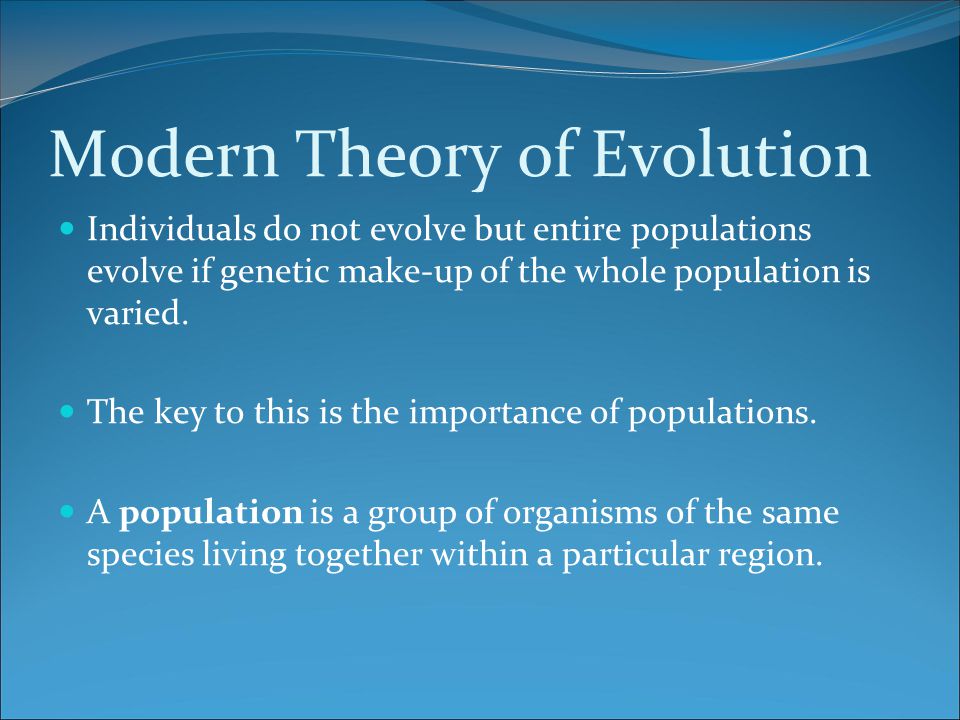
WholeDude - WholeDesigner - Whole Monad: I would like to describe the fertilized Egg Cell or Human Ovum called Zygote as a "Whole Monad." The entire human organism including the mind, and body is derived by the multiplication of this Single Cell, Single Unit, or Single Element. It is 'Whole' for it has Spirit or Soul that establishes the structural and functional harmony between the cells, tissues, and organ systems of the human being.
Whole Dude – Whole Designer – Whole Monad: I would like to describe the fertilized Egg Cell or Human Ovum called Zygote as a “Whole Monad.” The entire human organism including the mind, and body is derived by the multiplication of this Single Cell, Single Unit, or Single Element. It is ‘Whole’ for it has Spirit or Soul that establishes the structural and functional harmony between the cells, tissues, and organ systems of the human being.

The term ‘Soul’ and ‘Spirit’ is often associated with attributes such as intelligence, consciousness, and mental activity such as thinking and discernment. The term ‘intelligence’ should not be limited to the cognitive and discerning abilities of mind or brain. If the term intellect refers to the ability to perform intelligent actions, we may have to consider that all living functions have the characteristics of intelligent actions as compared to mechanical or transitive actions that could be performed by non-living physical matter. I would like to define the word ‘intellect’ as the intuitive ability with which each individual living cell performs very complex, sequential, guided, purposeful, and selective functions to maintain its own living condition. Knowledge is implanted in the substance called living matter to give it the ability to perform intelligent functions. What Leibniz has not recognized is the ‘dynamic’ nature of this basic substance or element that he has named as monad. This substance maintains its constant, unchanging nature while undergoing a change during its entire period of existence. Life is a dynamic process that involves the repair or replacement of its constituent organic molecules and taking immanent action that is called growth and development. This dynamic process is influenced by the operation of Time and manifests itself using the dimension called Space. For this reason, I would like to describe the LORD God Creator as a Whole Artist, Whole Architect, Whole Planner, and a Whole Designer who uses the building blocks of Matter, Energy, Space, and Time in a creative manner to establish the experience of reality such as the man while imposing illusion to conceal the harsh realities of the world using the Force/Power/Energy called Maya in the Indian Schools of Thought.

WHOLE DUDE – WHOLE DESIGNER – MATTER AND SPIRIT: If materialism is about the influence of money and material wealth, I would like to use the Power/Force/Energy called Money to talk about Life and Death. The Law of Conservation is applicable to both the living, and the non-living physical matter. For that reason, It can be claimed, Life is neither created nor destroyed. If any person can refute my claim using valid, scientific information, I would give the person a US $1,000 bill as a reward.

Simon Cyrene

The Material Basis of Spirituality Science. Spiritual Optics. The Unity of Science and Humanities. The Elementary Particles described by Quantum Physics have no consciousness.