Doomsayer of Doom Dooma – Prophecy revealed by Photo image in TE3N
Doomsayer of Doom Dooma – Revelation – Photo Image in Bollywood Movie TE3N.
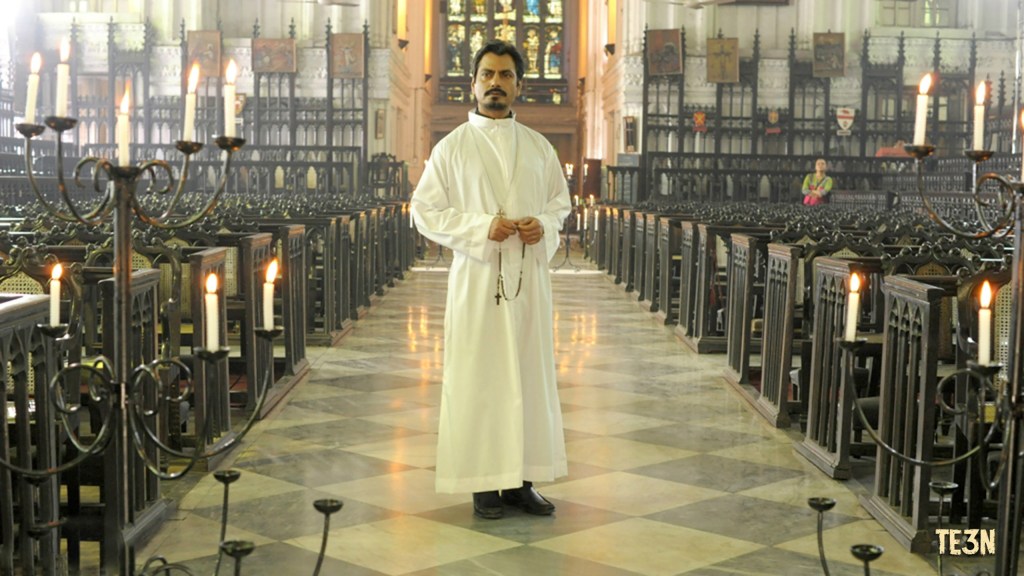
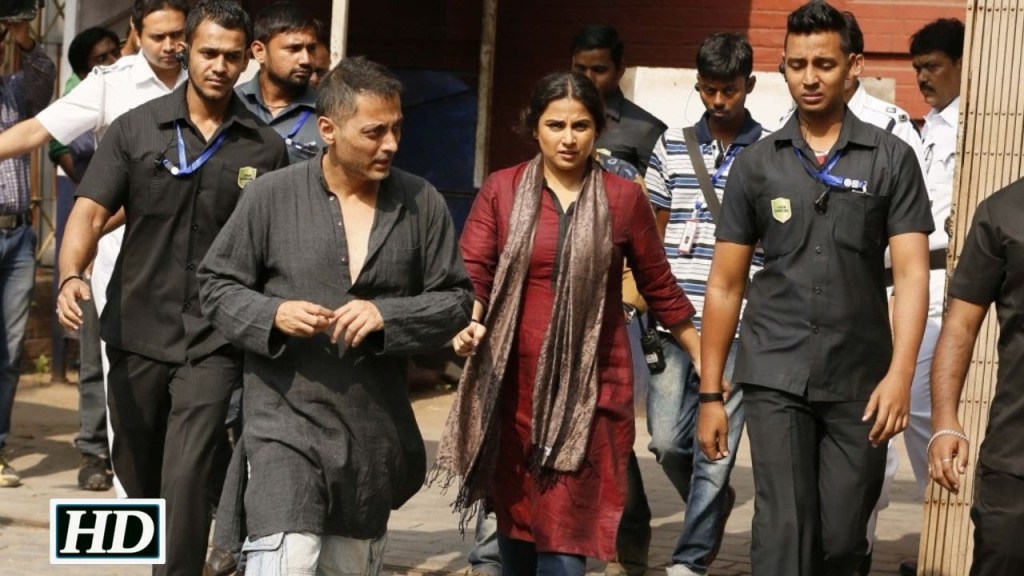
TE3N is a suspense thriller set in Kolkata. Industry’s best actors Amitabh Bachchan, Vidya Balan and Nawazuddin Siddiqui coming together in one film.
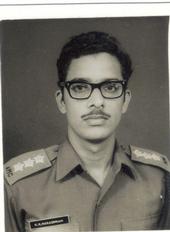
My Indian Army Photo ID image taken in 1972 at Doom Dooma serves just one purpose; it unseals Revelation Prophecy and it helps me to announce, “BEIJING IS DOOMED.”
Story in detail: It’s been 8 years since John Biswas (Amitabh Bachchan) lost his granddaughter, Angela, in a tragic kidnapping incident that scarred him & his wife Nancy forever. But eight years later, while the world has moved, John hasn’t given up his relentless quest for justice.
My Indian Army Photo ID image taken in 1972 at Doom Dooma serves just one purpose; it unseals Revelation Prophecy and it helps me to announce, “BEIJING IS DOOMED.”
He continues to visit the police station where he’s shunned & ignored every day. The only person whose help he seeks is Martin Das (Nawazuddin Siddiqui), an ex-cop turned priest who has one thing in common with John – the death of Angela had a life altering impact on both men.
My Indian Army Photo ID image taken in 1972 at Doom Dooma serves just one purpose; it unseals Revelation Prophecy and it helps me to announce, “BEIJING IS DOOMED.”
But then, 1 day, 8 years after that tragic incident, there’s another kidnapping & everything about it echoes of similarity with the kidnapping of Angela. Father Martin is once again dragged into the investigation by cop Sarita Sarkar (Vidya Balan).
My Indian Army Photo ID image taken in 1972 at Doom Dooma serves just one purpose; it unseals Revelation Prophecy and it helps me to announce, “BEIJING IS DOOMED.” Doomsayer of Doom Dooma – Revelation – Photo Image in Bollywood Movie TE3N. I use my Indian Army Photo ID image of 1972 to describe my connection with City of Doom Dooma, Tinsukia District, Assam, India. I unsealed the prophecy shared by Book of Revelation, Chapter 18 that gives detailed account of sudden, unexpected, downfall of Evil Empire in one single day.
It comes as a big surprise to find my stolen Indian Army Photo ID image from 1972 is revealed in a brief scene shot of Bollywood Movie TE3N released in June 2016.
Doomsayer of Doom Dooma – Revelation
Doomsayer of Doom Dooma – Revelation – Photo Image in Bollywood Movie TE3N. Beijing is Doomed. I use my Indian Army Photo ID image of 1972 to describe my connection with City of Doom Dooma, Tinsukia District, Assam, India. I unsealed the prophecy shared by Book of Revelation, Chapter 18 that gives detailed account of sudden, unexpected, downfall of Evil Empire in one single day.
I use my Indian Army Photo ID image of 1972 to describe my connection with City of Doom Dooma, Tinsukia District, Assam, India. I unsealed the prophecy shared by Book of Revelation, Chapter 18 that gives detailed account of sudden, unexpected, downfall of Evil Empire in one single day.
Doomsayer of Doom Dooma – Revelation – Photo Image in Bollywood Movie TE3N. Beijing is Doomed. My Indian Army Photo ID image taken in 1972 at Doom Dooma serves just one purpose; it unseals Revelation Prophecy and it helps me to announce, “BEIJING IS DOOMED.” Doomsayer of Doom Dooma – Revelation – Photo Image in Bollywood Movie TE3N. Beijing is Doomed. My Indian Army Photo ID image taken in 1972 at Doom Dooma serves just one purpose; it unseals Revelation Prophecy and it helps me to announce, “BEIJING IS DOOMED.” Doomsayer of Doom Dooma – Revelation – Photo Image in Bollywood Movie TE3N. Beijing is Doomed.My Indian Army Photo ID image taken in 1972 at Doom Dooma serves just one purpose; it unseals Revelation Prophecy and it helps me to announce, “BEIJING IS DOOMED.” Doomsayer of Doom Dooma – Revelation – Photo Image in Bollywood Movie TE3N. Beijing is Doomed. My Indian Army Photo ID image taken in 1972 at Doom Dooma serves just one purpose; it unseals Revelation Prophecy and it helps me to announce, “BEIJING IS DOOMED.” Doomsayer of Doom Dooma – Revelation – Photo Image in Bollywood Movie TE3N. Beijing is Doomed. My Indian Army Photo ID image taken in 1972 at Doom Dooma serves just one purpose; it unseals Revelation Prophecy and it helps me to announce, “BEIJING IS DOOMED.”Doomsayer of Doom Dooma – Revelation 18:1-24 – Photo Image in Bollywood Movie TE3N. Beijing is Doomed. My Indian Army Photo ID image taken in 1972 at Doom Dooma serves just one purpose; it unseals Revelation Prophecy and it helps me to announce, “BEIJING IS DOOMED.” My Indian Army Photo ID image taken in 1972 at Doom Dooma serves just one purpose; it unseals Revelation Prophecy and it helps me to announce, “BEIJING IS DOOMED.” My Indian Army Photo ID image taken in 1972 at Doom Dooma serves just one purpose; it unseals Revelation Prophecy and it helps me to announce, “BEIJING IS DOOMED.” Doomsayer of Doom Dooma – Revelation Chapter 18:1-24 – Beijing is Doomed. Photo Image in Bollywood Movie TE3N. My Indian Army Photo ID image taken in 1972 at Doom Dooma serves just one purpose; it unseals Revelation Prophecy and it helps me to announce, “BEIJING IS DOOMED.” Doomsayer of Doom Dooma – Revelation Chapter 18:1-24 – Beijing is Doomed. Photo Image in Bollywood Movie TE3N. My Indian Army Photo ID image taken in 1972 at Doom Dooma serves just one purpose; it unseals Revelation Prophecy and it helps me to announce, “BEIJING IS DOOMED.” Doomsayer of Doom Dooma – Revelation Chapter 18:1-24 inspired by Prophet Isaiah Chapter 47 – Beijing is Doomed. Photo Image in Bollywood Movie TE3N.My Indian Army Photo ID image taken in 1972 at Doom Dooma serves just one purpose; it unseals Revelation Prophecy and it helps me to announce, “BEIJING IS DOOMED.”
My Indian Army Photo ID image taken in 1972 at Doom Dooma serves just one purpose; it unseals Revelation Prophecy and it helps me to announce, “BEIJING IS DOOMED.”
My Indian Army Photo ID image taken in 1972 at Doom Dooma serves just one purpose; it unseals Revelation Prophecy and it helps me to announce, “BEIJING IS DOOMED.”My Indian Army Photo ID image taken in 1972 at Doom Dooma serves just one purpose; it unseals Revelation Prophecy and it helps me to announce, “BEIJING IS DOOMED.”
Six-Day Work Culture vs Seventh-Day Sabbath Culture – Supreme Court Broadens Protections to Workers
Sixth-Day Adventism – The US Supreme Court defends the Right to Labor for Six Days in a Week
Sixth-Day Adventism – God’s Work for Six Days precede God’s rest on the Seventh Day
Sixth-Day Adventism – The US Supreme Court defends the Right to Labor for Six Days in a Week
The Seventh-Day Adventists believe that the Sabbath should be observed on the seventh day of the week, i.e. from Friday sunset to Saturday sunset. I coined the phrase Sixth-Day Adventist to give my highest priority to God’s Commandment asking man to perform labor or work for Six Days. In my analysis, God ordained a Six-Day Work Schedule without which man cannot seek the blessings of Sabbath. The Rudi-Grant Connection at Whole Foods follows the Six-Day Weekly Work Schedule.
Sixth-Day Adventism – The US Supreme Court defends the Right to Labor for Six Days in a Week
As in most industrialized countries, the Standard Work Week in the United States begins on Monday and ends on Friday. During the Depression, President Herbert Hoover called for a reduction in Work Hours in lieu of layoffs. Later, President Franklin Roosevelt signed the Fair Labor Standards Act of 1938, which established a five-day, 40-hour workweek for many workers.
The Fair Labor Standards Act (FLSA) is fundamentally flawed for it is not inspired by the Sixth-Day Adventist Positive Work Culture.
Sixth-Day Adventism – The US Supreme Court defends the Right to Labor for Six Days in a WeekSixth-Day Adventism – The US Supreme Court defends the Right to Labor for Six Days in a WeekSixth-Day Adventism – The US Supreme Court defends the Right to Labor for Six Days in a WeekSixth-Day Adventism – The US Supreme Court defends the Right to Labor for Six Days in a WeekSixth-Day Adventism – The US Supreme Court defends the Right to Labor for Six Days in a Week
The Concept of Positive Sixth-Day Adventist Work Culture is inspired by God’s Work Week:
Sixth-Day Adventism – The US Supreme Court defends the Right to Labor for Six Days in a Week
Six is a number perfect in itself. God created the world and the man in Six Days because this number is perfect. For that reason, the man must also choose a Six-Day Work Week.
Supreme Court broadens religious protections for workers
Sixth-Day Adventism – The US Supreme Court defends the Right to Labor for Six Days in a Week
Unanimous ruling finds employers must show ‘substantial increased costs’ to deny an accommodation
By RyanTarinelli
Posted June 29, 2023 at 1:22pm
The Supreme Court broadened religious protections for workers Thursday in a ruling that clarified when employers can refuse religious accommodations for workers.
The unanimous opinion, written by Justice Samuel A. Alito Jr., found that employers must show that granting such an accommodation would lead to “substantial increased costs” in relation to the conduct of its business.
Alito wrote that justices are “brushing away” an incorrect interpretation of a previous Supreme Court case on Title VII of the Civil Rights Act. He pointed out that a diverse group of religious organizations contended that the interpretation had “blessed the denial of even minor accommodation in many cases, making it harder for members of minority faiths to enter the job market.”
The case stems from a suit brought by a rural mail carrier in Pennsylvania, Gerald Groff, who quit rather than deliver Amazon packages on Sundays, citing his Christian religion. He then sued the U.S. Postal Service for discrimination.
The U.S. Court of Appeals for the 3rd Circuit ruled in the Postal Service’s favor, citing a landmark decision from the Supreme Court in 1977, Transworld Airlines, Inc. v. Hardison, which found employers did not have to bear “undue hardship” to accommodate employees’ religious observance.
In court filings, Groff argued that the 1977 decision tamped down on the religious rights of employees that Congress meant to protect in the 1972 amendments to the Civil Rights Act.
The 3rd Circuit and other lower courts — based on a line in the 1977 decision — interpreted “undue hardship” to mean any cost or effort that is more than “de minimis,” Alito wrote in the ruling.
But that interpretation is “erroneous,” Alito wrote, and “may have had the effect of leading courts to pay insufficient attention to what the actual text of Title VII means with regard to several recurring issues.”
“We think it is enough to say that an employer must show that the burden of granting an accommodation would result in substantial increased costs in relation to the conduct of its particular business,” the opinion states.
The Supreme Court found that the law requires that an employer reasonably accommodate a worker’s religious practice, “not merely that it assess the reasonableness of a particular possible accommodation or accommodations.”
“This distinction matters. Faced with an accommodation request like Groff’s, it would not be enough for an employer to conclude that forcing other employees to work overtime would constitute an undue hardship,” the court ruled. “Consideration of other options, such as voluntary shift swapping, would also be necessary.”
Some congressional Republicans had backed such an interpretation in briefs filed in the case.
The Biden administration had argued that the court should leave the issue for members of Congress, who have spent decades considering and rejecting a higher standard to accommodate religious employees.
The Justice Department told the justices that Groff asked “this Court to do what Congress would not” by rewriting the law.
The existing law may provide too little protection for religious workers, according to the Biden administration brief, but “that argument should be directed to Congress, which is better positioned to weigh the competing interests in this sensitive area and strike the appropriate balance.”
U.S. Supreme Court buoys religious employees who seek accommodations at work
Sixth-Day Adventism – The US Supreme Court defends the Right to Labor for Six Days in a Week
By Andrew Chung
June 29 (Reuters) – The U.S. Supreme Court on Thursday bolstered the ability of employees to obtain accommodations at work for their religious practices, reviving a lawsuit by an evangelical Christian former mail carrier accusing the Postal Service of discrimination after being disciplined for refusing to show up for work on Sundays.
The 9-0 ruling threw out a lower court’s decision rejecting a claim by Gerald Groff, a former mail carrier in Pennsylvania, that the Postal Service’s actions refusing to exempt him from working on Sundays, when he observes the Sabbath, violated federal anti-discrimination law.
Groff’s case centered on a federal anti-discrimination law called Title VII of the Civil Rights Act of 1964, which prohibits employment discrimination based on religion and other factors including race, sex and national origin.
Under Title VII, employers must make allowances for a worker’s religious observance or practices unless that would cause the business “undue hardship” – which the Supreme Court in a 1977 case called Trans World Airlines v. Hardison determined to be anything imposing more than a minor, or “de minimis,” cost.
The court in Thursday’s ruling clarified the Hardison precedent. Conservative Justice Samuel Alito, who authored the decision, wrote, “We hold that showing ‘more than a de minimis cost,’ as that phrase is used in common parlance, does not suffice to establish ‘undue hardship’ under Title VII.”
Alito added, “We think it is enough to say that an employer must show that the burden of granting an accommodation would result in substantial increased costs in relation to the conduct of its particular business.”
Groff’s attorney Aaron Streett praised the ruling, saying, “This is an important victory for Americans of all faiths, who may now follow their religious consciences in the workplace.”
Groups representing some religions that are in the minority in the United States including Islam, Judaism and Hinduism had backed Groff in the case, saying they are disproportionately denied religious accommodations, forcing them to choose between their religion and their jobs.
US Supreme Court Issues Historic Ruling Strengthening Religious Accommodation Protections for Workers
Sixth-Day Adventism – The US Supreme Court defends the Right to Labor for Six Days in a Week
In a unanimous decision issued on Thursday, June 29, the United States Supreme Court has discarded decades-long precedent by strengthening legal protections for workers whose religious beliefs conflict with their job obligations. The ruling in Groff v. DeJoy is expected to have a significant impact on job opportunities for Americans of various faiths who have frequently faced challenges due to their Sabbath-keeping practices. The Court’s decision will reshape how businesses offer religious accommodation under Title VII of the Civil Rights Act of 1964.
The legal team representing Groff included Adventist attorney Alan Reinach, who serves as director of Public Affairs and Religious Liberty for the Pacific Union Conference of Seventh-day Adventists. During the appeals process, First Liberty, a prominent religious freedom advocacy group, joined the litigation team and recruited appellate counsel Aaron Streett from the law firm Baker Botts, LLP. The case was argued before the Court on April 18, 2023.
Sixth-Day Adventism – The US Supreme Court defends the Right to Labor for Six Days in a Week
Speaking for the General Conference of Seventh-day Adventists and its North American Division, Todd McFarland, Deputy General Counsel, who also wrote the amicus brief filed by the church, said, “We are very pleased this morning that the Supreme Court took an important step towards protecting people of faith in the workplace. No one should have to choose between their job and their faith. Today’s decision reaffirms that employers cannot use an employee’s religious belief as an excuse to terminate them.”
Sixth-Day Adventism – The US Supreme Court defends the Right to Labor for Six Days in a Week
A diverse group of faith-based and religious liberty organizations filed amicus briefs with the Supreme Court supporting Groff, including the General Conference of Seventh-day Adventists, The American Center for Law And Justice, The Sikh Coalition, the Union of Orthodox Jewish Congregations of America, the Council on American-Islamic Relations, the Church of Jesus Christ of Latter-day Saints, the American Hindu Coalition, the Becket Fund for Religious Liberty, and the Baptist Joint Commission.
Sixth-Day Adventism – The US Supreme Court defends the Right to Labor for Six Days in a Week
Drawing on the 1977 case, employers only had to suffer a bare minimum amount of hardship to justify denying religious accommodation to an employee,” Reinach said. “This standard neutered the law and led to the termination of employment for literally thousands of Americans of all faiths. Seventh-day Adventists were especially harmed in that hourly wage workers are frequently assigned shift schedules including Sabbath hours.”
Sixth-Day Adventism – The US Supreme Court defends the Right to Labor for Six Days in a Week
The Supreme Court’s ruling in Groff v. DeJoy not only acknowledged the unfair burden placed on workers with religious conflicts but also highlighted the need for a more robust approach to religious accommodation.
Sixth-Day Adventism – The US Supreme Court defends the Right to Labor for Six Days in a Week
The ruling is expected to have far-reaching implications for workers across the country. By raising the standard for employers to justify denying religious accommodation, the Court’s decision provides greater protection for employees with sincerely held religious beliefs. It sends a clear message that employers must make reasonable efforts to accommodate their employees’ religious practices, even if it requires some degree of hardship.
Sixth-Day Adventism – The US Supreme Court defends the Right to Labor for Six Days in a Week
The decision in Groff v. DeJoy is seen as a significant victory for religious freedom advocates who have long argued for stronger legal protections. It marks a shift toward a more equitable approach that recognizes the importance of accommodating the diverse religious practices of American workers. As a result of this ruling, employees who face conflicts between their job requirements and their religious beliefs can expect increased opportunities to obtain reasonable accommodations from their employers.
Sixth-Day Adventism – The US Supreme Court defends the Right to Labor for Six Days in a Week
Attorney Mitch Tyner, retired associate general counsel for the church and also a former Capitol Hill liaison, was both pleased and cautious about the Court’s decision. “First, kudos to Todd McFarland and team who finally got the court to right a wrong from fifty years ago,” Tyner said. “I spent more than 40 years working toward that end, and they were able to get the job done. That said, note that the opinion leaves lots of wiggle room for lower courts to decide what constitutes a substantial cost increase in each case. The Court has changed the recipe to be used to arrive at a correct decision. But remember, the ultimate proof is in the pudding, not in the recipe.” As the ruling sets a new precedent for religious accommodation, it remains to be seen how rapidly employers will adapt their policies and practices. Further litigation to clarify the Supreme Court’s new thresholds is anticipated. It is clear, however, that this decision marks a significant milestone in protecting the rights of workers with religious conflicts.
Sixth-Day Adventism – The US Supreme Court defends the Right to Labor for Six Days in a Week
When you breathe in smoke that comes from the end of a lit cigarette, cigar, or pipe ( often described as ‘sidestream smoke‘ ), or when you breathe in smoke that is exhaled by a smoker(often described as ‘mainstream smoke’ ), you are exposed to the risk of secondhand smoke. You will be inhaling almost the same amount of chemicals as the smoker breathes in. Tobbaco smoke contains more than 4,000 different chemical compounds, and more than 50 of them are known to cause Cancer. Some of these known carcinogens are Hydrogen Cyanide, Benzene, Formaldehyde, and Carbon monoxide. Involuntary or passive smoking can kill. There is no amount of exposure to secondhand smoke that is considered as a safe level of exposure. The more secondhand smoke that you breathe in, the more your health risk increases. Secondhand smoke exposure causes nearly 50,000 deaths per year in adult nonsmokers in the United States. 3,000 deaths are from Lung Cancer, and 46,000 deaths are from heart disease. Nonsmokers increase their risk of developing Lung Cancer by 20% to 30%, and heart disease by 25% to 30% when they are exposed to secondhand smoke. The risks of Breast Cancer and Cervical Cancer and other types of Cancer are also higher. Women who are exposed to secondhand smoke face a 69% higher risk of heart disease and a 56% higher risk of Stroke than those who are not exposed to smoke. Children are particularly vulnerable to the effects of secondhand smoke because of their bodies are still growing and they breathe at a faster rate than adults. The effects of smoking can be very significant especially for those who live or work with a smoker. In reality, most of the smoke from a burning cigarette doesn’t get sucked down into smoker’s lungs- it simply escapes into the air where it can be inhaled by anyone unfortunate enough to be nearby. Living under the shadow of a great person may give some benefits, protection, and a sense of security. But, life under the shadow of secondhand smoke is a prescription for death. There was such an unfortunate victim who had lived under the shadow of a great leader known as Mohammed Ali Jinnah.
Mohammad Ali Jinnah, Qaid-e-Azam, the great leader and founder of Pakistan. What is the risk of Living under the Shadow of a great leader?
Jinnah, Indian Muslim politician was the founder and first Governor General of Pakistan (1947-1948). His parents arranged for an early marriage for him before he left for England at the age of 16. While in London, Jinnah suffered the loss of his wife and mother. In 1895, at the age of 19, he was called o the Bar on completion of his formal studies to become a barrister. He had supported the election of Dadabhai Naoroji, a Parsi leader, a leading Indian nationalist who ran for the English Parliamnet. Naoroji became the first Indian to sit in the British House of Commons. In 1896, Jinnah returned to Karachi and then moved to Bombay to start his legal practice. He met Ruttenbai, the daughter of Dinshaw Petit, a Bombay Parsi millionaire. Jinnah had married this young and beautiful lady over tremendous opposition from her parents and others. The great love and the marriage withered and proved to be an unhappy union. The stress imposed by exposure to secondhand smoke was not known and was not recognized those days. Jinnah’s addiction to Tobacco and the price paid by his wife describe the other side of Jinnah which many people in Pakistan and India tend to ignore.
The Other side of Mohammed Ali Jinnah :
Jinnah, a great leader with a simple addiction to Tobacco.
This young and beautiful lady had great feelings of love for Jinnah and those tender feelings withered while she had lived under the Shadow of Secondhand Smoke.
I would like to share the very interesting and powerful story about the life of Ruttenbai who had lived under the shadow of Mohammed Ali Jinnah . Unfortunatley, this story posted below my post fails to mention the nature of cancer that had killed this beautiful lady at such an young age. I am very sure about the nature of her illness. She died of Lung Cancer. She developed Cancer because of inhaling tobacco smoke and it is a very well recognized risk factor now. Secondhand Tobacco smoke kills people and even now the chances of survival are not good. I had personally witnessed a similar case and had narrated that story at my Home page of BhavanaJagat and the story is titled ‘Living Under the Shadow – A Prescription for Death’. A young, beautiful lady, the first wife of Chief of Army Staff (under Prime Minister Rajiv Gandhi), General K S Sundarji ( who is well-known for Operation Blue Star ) died of Lung Cancer in Army Hospital, New Delhi during 1978. The connection between smoking and Lung Cancer was well understood but at that time the risk of Lung Cancer due to Secondhand Tobacco Smoke was not properly recognized.
The Chief of Army Staff, General Krishnaswamy Sundarrajan, PVSM - I had served under his Command while he was the General Officer Commanding of the First Armoured Division during 1976 to 1978. His first wife, Padma Sundarji had lived her life under the shadow of Secondhand Smoke.
More than 61 years have passed since the death of founder of Pakistan , Quaid-i-Azam Mohammad Ali Jinnah. But even today, nothing about Jinnah seems ordinary —not his legal career, politics, personal life, his legacy and even the property he left behind.
The great South Asian intellectual Eqbal Ahmed once described Jinnah as an enigma of modern history. His aristocratic English lifestyle, Victorian manners, and secular outlook rendered him a most unlikely leader of India ’s Muslims. Yet, he led them to separate statehood, creating history, and in Saad R. Khairi’s apt phrase, “altering geography”.
Much has been written about Jinnah’s legal career, politics, his role as a founder of Pakistan and his vision, but even today, very little is known about Jinnah’s personal life. This was probably because Jinnah never had time to write a diary or an autobiography and whatever little he wrote was formal and matter of fact. For most of his life, he remained reserved, taciturn and secretive. He wrote his will in May, 1939, but it was only after his death that Liaquat Ali Khan, his close associate and the first Prime Minister of Pakistan, came to know that he was its trustee and executor.
His only child, Dina Wadia, has hardly ever spoken about her father in public. So furious was Jinnah with Dina that he disowned her after she married a Parsi man against his wishes, and yet he left two lacs for her in his will. Akbar Ahmed’s movie Jinnah had just ten to fifteen minutes on Jinnah’s personal life, which are nowhere near enough.
Life Under The Shadow – Ruttie in Jinnah’s Shadow
image004
image005
image006
Jinnah’s first wife, fourteen year old Emibai from Paneli village, died just eight months after he left for London at age sixteen in 1892, to join Graham’s Shipping and Trading Company, which conducted business with his father in Karachi. It was a forced marriage, as Jinnah’s mother was afraid that if he went to England , he might end up marrying an English girl. He barely knew Emibai.
Jinnah’s second marriage with the most beautiful girl of Bombay – Ruttie: The Flower of Bombay – was like a fairy tale. It began in the summer of 1916 in Darjeeling or “Town of the Thunderbolt” (how appropriate considering what was to happen there).
Jinnah had established himself as a lawyer and a politician by then and had become friends with Sir Dinshaw Maneckjee Petit, the son of one of the richest and most devoutly orthodox Parsis of the 19th century.
The Petit`s chateau overlooked Mount Everest and it was there Jinnah met his only daughter Ruttenbai Petit or Ruttie as she was popularly called. Merely sixteen at that time, Ruttie was a charming young girl. Stanley Wolpert writes in Jinnah of Pakistan :“Precociously bright, gifted in every art, beautiful in every way. As she matured, all of her talents, gifts and beauty were magnified in so delightful and unaffected a manner that she seemed a fairy princess”.
A dazzling beauty and full of life, Ruttie had exquisite taste and affable manners. Quick-witted, she was easily one of the best dressed and most popular women among the elitist circles of Bombay . She was intellectually far more mature than other girls of her age, with diverse interests ranging from poetry (Oscar Wilde being her favorite, whom she often recited) to politics. Her large collection of books, which remained in Jinnah’s possession after her death, reflected her deep interest in poetry, literature, history, occultism, mysticism and sorcery. She was an excellent horse-rider. She attended all public meetings and was inspired by Annie Besant’s Home Rule League.
A fierce supporter of India for Indians, Ruttie was once asked about rumors of Jinnah’s possible knighthood and whether she would like to be Lady Jinnah. She snapped that she would rather be separated from her husband than take on an English title.
Jinnah on the other hand also had a special interest in acting and in Shakespeare’s dramas. While in London , he had acted in some Shakespearean plays and even considered seriously taking up acting as a profession. It was his dream to play Romeo at The Globe in London . Khwaja Razi Haider thinks it was probably Jinnah’s deep interest in Shakespeare that gave him insight into the intricacies of the human character, which he was to use for grasping the essentials of Indian politics. Jinnah was thirty-nine and Ruttie sixteen, but the age difference proved no obstacle in their love. Love has no logic.
He was enamored by her beauty and charm and she was awe- struck by “Jay”, as she called him. Jinnah asked Sir Dinshaw for Ruttie’s hand in marriage, who became furious and refused. Jinnah repeatedly pleaded his case but Dinshaw never gave in, as Jinnah had a different faith and he was more than twice Ruttie’s age. Their friendship ended and Dinshaw forbade Ruttie from meeting Jinnah while she lived in his house. He even got a court injunction restraining Jinnah from meeting her (a pity no biographer has yet traced the court papers).
The couple continued to meet secretly, and patiently waited for two years until February 1918 when Ruttie turned eighteen, and was free to marry. She walked out of her parental home to which she was never to return, and converted to Islam at Bombay ’s Jamia Mosque, under the Muslim Shiite doctrine, on April 18, 1918.
The very next day, Jinnah and Ruttie got married in a quiet ceremony at Jinnah’s Malabar Hill house in Bombay . Located in a most highly-priced area today, with Maharashtra’s Chief Minister as its next-door neighbor, Jinnah House remains a dispute between India , Pakistan and Dina Wadia. Jinnah owned another house at 10 Aurangzeb Road , Delhi , which he sold just before Partition for Rs 3 lacs. The Dutch Ambassador to India lives there now. The Raja Sahib of Mahmudabad, who signed as Jinnah’s witness, and a few other friends, attended the wedding. Maulana Muhammad Hasan Najafi was Ruttie’s witness. Jinnah presented the wedding ring to Ruttie, a gift from Raja Sahab, and paid Rs 125,000 as haq mehr . Nobody from Ruttie’s family attended the wedding. Interestingly, the Nikah Nama stated “Ruttenbai” as the bride’s name instead of Marium, her Islamic name. The honeymoon was first at Raja Sahab’s Nainitaal mansion, and then at the Maidens Hotel, a magnificent property just beyond the Red Fort.
Quaid’s Nikahnama
Quaid’s house in Bombay
Gandhi’s grandson Raj Mohan Gandhi writes about the wedding in his book Understanding the Muslim Mind: “For the first time in his life, a girl had absorbed Jinnah’s emotions. Living for sometime now in a large but somber Malabar Hill house, bowing to ladies (on occasional parties) and praising their sarees but otherwise keeping a distance from them, (he) fell in love with Ruttenbai. Joy and laughter entered Jinnah’s life. The Malabar Hill house became brighter.’ She presented him with a daughter, Dina. But, ‘Alas the happiness was not destined to last; Sarojni’s veiled prediction of trouble came true”.
Sarojni Naidu was a huge admirer of Jinnah, wrote several poems and prose pieces on him, and many historians believe she was in love with him.
She wrote this about the wedding in a letter to Sir Syed’s son, Syed Mahmud: “So Jinnah has at last plucked the Blue Flower of his desire. It was all very sudden and caused terrible agitation and anger among the Parsis; but I think the child has made far bigger sacrifices than she yet realises. Jinnah is worth it all – he loves her; the one really human and genuine emotion of his reserved and self-centred nature. And he will make her happy.”
The first few years of the marriage were a dream for Ruttie and Jinnah, the happiest time of their lives. They traveled across India , Europe and North America together. Ruttie watched with a great sense of pride the feverish political activity of her husband. She would be seen in the visitors’ gallery when Jinnah was due to speak, accompanied him to the High Court, and even attended the Nagpur session of the Congress in December 1920.
According to Wolpert: “They were a head- turning couple; he in his elegant suits, stitched in London , she with her long, flowing hair decked in flowers. There was no limit to their joy and satisfaction at that time. Their only woe was Ruttie’s complete isolation and ostracism from her family.”
Kanji Dwarkadas, a veteran leader of Congress and a close friend of the couple, who looked after Ruttie during her last days, wrote in his book Ruttie Jinnah: The story of a great friendship: “For Jinnah, who was not generous in many matters, no expense was too great to satisfy the extravagant claims of the baronet’s spoilt child. During a visit to Kashmir , she spent Rs 50,000 in refurnishing the boathouse and Jinnah gladly paid all the bills. He treated her wonderfully well, and paid without a murmur all the bills necessitated by the luxurious life she led.Ruttie’s fabulous beauty, spontaneous wit, and immense charm have been praised to the neglect of her serious interests.”
Even though Ruttie was much younger than Jinnah, she made him a very happy man. They had no separate existence and Jinnah found her a great source of inspiration.
He resigned from the Orient Club where he used to play chess and billiards. He was so deeply in love with Ruttie that he would return from the law courts on time each day and talk to her for hours on end.
Unfortunately, their happiness was short- lived and the marriage started to crack after 1922-3. What caused the ruination of the Jinnah-Ruttie marriage? Was it Jinnah’s busy political life and his inability to give enough time to Ruttie, their age difference, or their incompatibility of temperaments? He was cold, introverted and domineering. She was young, extroverted, glamorous. There is no clear answer but the fact remains that Ruttie and Jinnah still loved each other despite the rift in their marriage.
It is evident in every letter Ruttie wrote during that period, and every book written on their relationship. She moved to London with Dina in 1922 and from there too, her heart was still set on her life with Jinnah.
She wrote in a letter to Kanji in India :“And just one thing more – go and see Jinnah and tell me how he is – he has a habit of overworking himself and now that I am not there to tease and bother him, he will be worse than ever.”
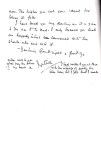
After her return, the couple tried one more time to save their failing marriage and took a five-month tour to Europe and North America together. But the rift grew and by January 1928 they were virtually separated, when Ruttie became seriously ill with cancer. Shortly before her death, she wrote a letter to Jinnah from Marseilles , France where she had gone for treatment. It turned out to be her last letter to him (larger view of original hand-written letter with typed text here
Life Under The Shadow – Ruttie’s Letter to Jinnah
image011
S. S. Rajputana,
Marseilles 5 Oct 1928 Darling – thank you for all you have done. If ever in my bearing your once tuned senses found any irritability or unkindness – be assured that in my heart there was place only for a great tenderness and a greater pain – a pain my love without hurt. When one has been as near to the reality of Life (which after all is Death) as I have been dearest, one only remembers the beautiful and tender moments and all the rest becomes a half veiled mist of unrealities. Try and remember me beloved as the flower you plucked and not the flower you tread upon.
I have suffered much sweetheart because I have loved much. The measure of my agony has been in accord to the measure of my love. Darling I love you – I love you – and had I loved you just a little less I might have remained with you – only after one has created a very beautiful blossom one does not drag it through the mire. The higher you set your ideal the lower it falls.
I have loved you my darling as it is given to few men to be loved. I only beseech you that the tragedy which commenced in love should also end with it.
Darling Goodnight and Goodbye Ruttie
image013
image014
It is a pity that none of the letters that Jinnah wrote to Ruttie have ever been made public. M.C. Chagla, a former Chief Justice of the Bombay High Court and a diplomat at the UN, has described the last days of Ruttie and Jinnah’s marriage in his book “Roses in December”. Chagla knew the couple very well, as he assisted Jinnah at his chambers during that time. He idealized Jinnah but severed all ties when he began working on the idea of an independent state for the Muslims of India. He writes: By 1927, Ruttie and Jinnah had virtually separated. Ruttie’s health deteriorated rapidly in the years after they returned from their final trip together. Ruttie lived at the Taj Hotel in Bombay, almost a recluse as she became more and more bed-ridden. Kanji continued to be her constant companion. By February 18, 1929 she had become so weak that all she could manage to say to him was a request to look after her cats.Two days later, Ruttie Petit Jinnah died. It was her 29th birthday. She was buried on February 22 in Bombay according to Muslim rites. Jinnah sat like a statue throughout the funeral but when asked to throw earth on the grave, he broke down and wept. That was the only time when I found Jinnah betraying some shadow of human weakness. It’s not a well publicised fact that as a young student in England it had been one of Jinnah’s dreams to play Romeo at The Globe. It is a strange twist of fate that a love story that started like a fairy tale ended as a haunting tragedy to rival any of Shakespeare’s dramas.”
The second time Jinnah ever broke down was in August 1947 when he visited Ruttie’s grave one last time before leaving for Pakistan . The architect of Pakistan paid a high price for Partition by leaving two of his most beloved possessions on ‘the other’ side of the border, the Jinnah House on Malabar Hill where he had the happiest moments of his life, and his beloved wife Ruttie who remains buried in Bombay. Jinnah left India in August 1947, never to return again, but he left behind a piece of his heart in a little grave in a cemetery in Bombay .
Whole Dude – Whole Destiny. Apart from the man, the Land has its own DestinyWhole Dude – Whole Destiny. Apart from man, the Land has its own Destiny.
The Land of India or BharataVarsha is identified as KARMA KSHETRA or KARMA BHUMI and is often personified as Bharat Mata or Mother India.
The Sanskrit word Karma describes the totality of a person’s actions in any one of the successive states of that person’s existence. The Law of Karma governs all action and its inevitable consequences on the doer. Because of this deep-rooted belief in the inevitability of consequences on the doer, the Land of Bharat or India is identified as Karma Kshetra or Karma Bhumi.
Whole Dude – Whole Destiny. Apart from the man, the Land has its own Destiny.Whole Dude – Whole Destiny. Apart from man, the Land has its own Destiny.Whole Dude – Whole Destiny. Apart from man, the Land has its own Destiny.
The concept of action or Karma is also applied to the actions performed by Mother Nature and the Indian tradition often attaches the names of human personalities to reflect upon their actions. The most important being the long journey of about 3,700 miles performed by the Indian Landmass about 40 to 50 million years ago leading to the formation of Himalaya Mountains from where several rivers flow down India providing sustenance to the denizens of India.
Whole Dude – Whole Destiny. Apart from man, Mother India, Bharat Mata has her own Destiny.

























 Whole Dude - Whole Concept