Whole Dude – Whole Health: October 10, 2023, World Mental Health Day. An integrated approach to Physical, Mental, Social, Moral, and Spiritual Wellbeing
Excerpt: I recognize Man’s Existence with Seven Forms or Dimensions. These are, 1. the Physical Being described by Human Anatomy, Human Physiology and other Medical Sciences, the human being in health and sickness, 2. the Mental Being, the intellect, thoughts and emotional states of Man described by Psychology and Psychiatry, 3. the Social Being described by Social Sciences, 4. the Moral Being described by Moral Science and Ethics, the power of discernment used by Man to make distinction between good and evil, and right and wrong, 5. the Spiritual Being described by Vital Power, Animating /Sensible Properties, and Conscious/Cognitive abilities of Man’s Corporeal Substance that develops and builds the cells, tissues, and organs of Human Body, 6. the Created Being which is reflected in the existence of man as an Individual with Individuality without any choice, and 7. the Rational Being which directs man to reconcile his behavior with his true or real nature that makes the man to review the actions performed in the external environment.
Whole Dude – Whole Health: October 10, 2023, World Mental Health Day – An integrated approach to Physical, Mental, Social, Moral, and Spiritual Wellbeing
What is Mental Health?
Mental health includes our emotional, psychological, and social well-being. It affects how we think, feel, and act, and helps determine how we handle stress, relate to others, and make choices.
Mental health is important at every stage of life, from childhood and adolescence through adulthood. Over the course of your life, if you experience mental health problems, your thinking, mood, and behavior could be affected.
Behavioral Health vs. Mental Health – What’s the Difference?
Whole Dude – Whole Health: October 10, 2023, World Mental Health Day. Mental Health – An integrated approach to Physical, Mental,Social, Moral and Spiritual Wellbeing
The terms “behavioral health” and “mental health” are often used interchangeably, but they don’t always mean the same thing. Mental health pertains entirely to a person’s psychological state, while behavioral health entails not just a person’s state of mind but their physical condition.
Behavioral health is defined as the connection between behavior’s impact and the health and well-being of the body, mind, and spirit.
Behavioral health includes the relationship between our daily habits (good and bad) and their effect on physical health and includes mental health disorders.
Ideally, good habits (healthy diet, exercise, and sleep routines) result in the best balance between good mental and physical health.
Conversely, poor habits typically result in degrees of poor mental and physical wellness.
Behavioral health vs. mental health: Identifying typical conditions
It’s difficult to talk about behavioral or mental health without exploring some of the corresponding conditions. Let’s start with mental health. Below are some of the most common and recognizable mental illnesses identified by the Alvarado Parkway Institute.
Common mental health illnesses:
Depression is characterized as a mood disorder and leaves people feeling persistently empty and heavy. There are different forms of depression — including postpartum and seasonal affective — but they all disrupt a person’s day-to-day life.
Generalized anxiety disorder is a step above occasional anxiety. For some people, that sense of unease can persist and interfere with everyday life by causing repetitive worries as well as sleep and concentration issues. In some cases, it can escalate into a panic disorder.
Bipolar disorder is characterized by episodes of depression and mania — extreme hyperactivity. Like most mental health conditions, there are varying degrees of bipolar disorder, and not everyone experiences it in the same way.
Schizophrenia is an uncommon condition, but it is most notable for causing people to lose touch with reality and experience symptoms like hallucinations, delusions and unhealthy, repetitive thoughts.
Negative behaviors don’t always accompany these mental health conditions. Most everyone with depression, for example, experiences sleep issues. But not everyone develops a behavioral disorder. When a distinct, regular behavior that goes beyond the scope of a typical mental illness begins to negatively affect someone, it becomes a disorder that typically requires more specific treatment. Here’s a look at some common behavioral disorders.
Common behavioral disorders:
Substance abuse often starts when people misuse substances to self-medicate or cope with an existing issue. While it may seem to work for a time, this behavior eventually worsens the problem and becomes one itself. According to the National Survey on Drug Use and Health (NSDUH), 19.7 million American adults experienced a substance abuse disorder in 2017.
Gambling addiction is similar to substance abuse. Researchers believe it can stimulate the brain’s reward systems to overproduce dopamine, creating a need to pursue risky behaviors. Gambling addiction can even result in withdrawal when the chemical high isn’t achieved.
Self-injury is most often associated with depression and disassociation, but some psychology experts think the tendency to harm oneself is more specifically tied to a negative self-image. Identifying this behavior as separate from depression can significantly impact the treatment path and potential for recovery.
Eating disorders include anorexia nervosa, bulimia nervosa and binge-eating. Not only can these behaviors lead to significant medical complications but they present a specific set of mental illness issues associated with self-image obsession and lack of perceived control.
Whole Dude – Whole Health: October 10, 2023, World Mental Health Day. An integrated approach to Physical, Mental, Social, Moral, and Spiritual Wellbeing.
The Rudi-Grant Connection at Whole Foods. Spiritualism vs Behaviorism
Whole Dude – Whole Health: The Rudi-Grant Connection at Whole Foods. Spiritualism vs Behaviorism.
Yes indeed, Life is Complicated. The complexity of Life fundamentally involves the Human Behavior and its false interpretation as Human Nature.
Whole Dude – Whole Health: The Rudi-Grant Connection at Whole Foods. Spiritualism vs Behaviorism. What is Man? The Vitruvian Man c. 1492. The painting by Leonardo da Vinci displays Spirit of Scientific Inquiry. I make distinction between Human Nature and Human Behavior.
What is Man? The motivation for asking this question comes from a statement expressed in the Sanskrit language:
Whole Dude – Whole Health: The Rudi-Grant Connection at Whole Foods. Spiritualism vs Behaviorism. WHAT IS MAN? THE MOTIVATION FOR ASKING THE QUESTION COMES FROM SHANTI MANTRA PROMOTING FINDING OF PEACE, HARMONY, AND TRANQUILITY IN MAN’S LIVING EXPERIENCE.
“Sarvesham Svastir Bhavatu”, Shanti Mantra in Sanskrit seeks the well-being of all humans, of all races, of all religions, of all cultures, and of all nations. It promotes finding of Peace, Harmony, and Tranquility in Man’s Living Experience.
Our efforts to support the well-being of Man get affected by our understanding the ‘real’ or ‘true’ nature of Man. I recognize Man’s Existence with Seven Forms or Dimensions. These are, 1. the Physical Being described by Human Anatomy, Human Physiology and other Medical Sciences, the human being in health and sickness, 2. the Mental Being, the intellect, thoughts and emotional states of Man described by Psychology and Psychiatry, 3. the Social Being described by Social Sciences, 4. the Moral Being described by Moral Science and Ethics, the power of discernment used by Man to make distinction between good and evil, and right and wrong, 5. the Spiritual Being described by Vital Power, Animating /Sensible Properties, and Conscious/Cognitive abilities of Man’s Corporeal Substance that develops and builds the cells, tissues, and organs of Human Body, 6. the Created Being which is reflected in the existence of man as an Individual with Individuality without any choice, and 7. the Rational Being which directs man to reconcile his behavior with his true or real nature that makes the man to review the actions performed in the external environment.
Whole Dude – Whole Health: WHAT IS MAN? HUMAN NATURE vs HUMAN BEHAVIOR. MAN’S SPIRITUAL NATURE IS DISPLAYED BY ALTRUISTIC BEHAVIOR OF HIS RED BLOOD CELLS.
I try to know the Spiritual Dimension of Human Nature by observing functional relationships facilitating interactions of cells, tissues, and organs making up the human organism. For Man is a Multicellular organism, Human Nature gets reflected in the biotic interactions of cells, tissues, and organs because of whose functions Man lives in the world. While the cells are Independent, Individual entities, their functional activity is characterized by Mutual Assistance, Mutual Cooperation, Mutual Tolerance, and Mutual Subordination to provide benefit to Man, the benefit of Identity and Individuality to establish him as one of its own kind, original, unique and distinctive.
The Six Dimensions of Man contribute to six kinds of Behavior of Man; the physical, mental, social, moral, spiritual and creative facets of Behavior. For example, muscle cell displays the behavior of contraction in response to a stimulus; it is able to contract because of its contractile nature which gives it the power of contracting.
I account for Spiritual Dimension of Human Nature as that of generating a Singular, Harmonious Effect in the working of trillions of cells giving Man power or ability to perform his living functions such as Respiration and display his characteristic Behaviors like Feeding, and Reproduction.
Human Behavior and Environment:
Whole Dude – Whole Health: What is Man? Burrhus Frederick Skinner (1904 – 1990), Professor of Psychology at Harvard University (1948 – 1974) proposes empirical study of human behavior as the only way to arrive at a true theory of human nature. He published several books, The Behavior of Organisms:An Experimental Analysis (1938), Science and Human Behavior (1953), and Verbal Behavior (1957).
B. F. Skinner studied Behavior and the environmental causes of Behavior mediated through conditioning mechanisms. In his opinion, all Behavior is function of environmental variables. He proposes a thesis of ‘Universal Determinism, and thinks that every human event including all human choices has a set of preceding environmental causes.
Whole Dude – Whole Health: WHAT IS MAN? HUMAN NATURE vs HUMAN BEHAVIOR. HUMAN BEHAVIOR IS CONDITIONED BY EXTERNAL INFLUENCES OF MATERIAL NATURE.Whole Dude – Whole Health: WHAT IS MAN? HUMAN NATURE vs HUMAN BEHAVIOR. THERE ARE FIVE FACTORS TO ACCOUNT FOR HUMAN ACTIONS AND BEHAVIOR.
In the Indian tradition, the Bhagavad Gita explains the relation between Human Behavior and Environment or ‘Prakriti’. Chapter XIV, verse 5 states: “Sattvam, rajas, tama iti gunah prakriti sambhavah,” the modes of Human Behavior such as Sattva (the mode of goodness), Rajas (the mode of passion), and Tamas (the mode of ignorance) generated by the interactions between Man and the environment in which he lives. At the same time, the Indian tradition makes a very clear distinction between true Human Nature and the three modes of Human Behavior. The real, or true Man is identified by Spiritual attributes of Human Nature.
Whole Dude – Whole Health: WHAT IS MAN? HUMAN NATURE vs HUMAN BEHAVIOR. SPIRITUAL NATURE IS UNDIVIDED, IS SEEN IN ALL LIVING ENTITIES.
The Bhagavad Gita in Chapter XVIII, verse 20 claims that all living entities share a single reality even while they are divided into innumerable forms (“Sarva bhutesu yenaikam bhavam avyayam iksate”) and directs us to recognize that Spiritual Nature as the true reality that is common to different living forms.
Skinner gives attention to the external causes or influences that generate or modify Human Behavior. Skinner avoids the study of Innate or Intrinsic Cause of Behavior. He gives no importance to the role of Heredity in Human Behavior. This internal influence on organism’s behavior is not directly observable and an experimenter cannot manipulate such internal influences to conduct experimental studies of Behavior. Skinner’s findings about external influences and environmental conditioning mechanisms explain several aspects of Human behavior but they do not explain the relationship between Human Behavior and Human Existence. To understand Human Existence, we have to learn about the Nature of Man’s Substance and the Behavior of cells, tissues, and organs which formulate the Structures and Functions of Man as a Living Thing.
Man is a very complex living organism showing structural differentiation with functional organization of numerous independent, individual cells, tissues, organs and organ systems. These specialized functions of tissues and organs are possible because of the functional subordination of the cells to the requirements of the organism as a whole. In other words, the specialized functions of tissues and organs could be described as ‘altruistic’ behavior, a behavior that promotes the well-being and appears to favor the individual’s chances of survival and reproduction.
Man may exhibit Behavior under the influence of environment and may act in the Modes of Behavior such as goodness (Sattva), passion (Rajas), or ignorance (Tamas), but his existence is made possible by his Innate Human Nature which as internal or intrinsic guiding influence or controlling mechanism determines the characteristics of biotic interactions between cells, tissues, organs and organ systems of his own body.
The Rudi-Grant Connection at Whole Foods Makes the Distinction Between Human Nature and Human Behavior
Whole Dude – Whole Health: The Rudi-Grant Connection at Whole Foods makes the distinction between Human Nature and Human Behvior
Yes indeed, Life is complicated. To understand the complexities of Life, we need to make the distinction between Human Nature and Human Behavior. The knowledge about the man will be incomplete if the true or real nature of man remains unknown.
What it is to be a Substance? and What it is to Exist? We need to establish knowledge about the man on a firm basis and the information it provides must be tested for its accuracy and consistency with an external reality. We have to make the fundamental distinction between the living and the non-living matter. The scientific advances of the 19th and 20th centuries reinforced the materialistic position concerning the basic similarity of organic living and inorganic physical matter. The man is viewed as a product of natural evolution and is thought to be subject to the same laws of Physics and Chemistry or mechanistic principles.
We need a methodology to study philosophy and to understand philosophical statements. Logical Positivism, also known as Scientific Empiricism aims to clarify concepts in both everyday and scientific language. It describes analysis of language as the function of philosophy. This analysis of language and of concepts is important to understand questions of belief and ideology which affect what we think we ought to do individually and socially. I would use this method of ‘Applied Philosophy’ to analyze the philosophical doctrine of ‘Materialism’ and to interpret human nature and human existence.
The term altruism describes unselfish concern for the welfare of others. It involves human behavior and actions that appear to favor another individual’s chances of survival and reproduction. Our efforts to support the well-being of man would be affected by our understanding the ‘real’ or ‘true’ nature of man.
All religious and cultural traditions make assumptions about human nature. The basic assumption about human nature is that of finding it displayed in feelings, thoughts, actions, and behavior.
Whole Dude – Whole Health: The Rudi-Grant Connection at Whole Foods makes the distinction between Human Nature and Human Behavior.
If man is viewed as a multicellular organism, we need to discover the human nature of this subject who lives because of the functions of the trillions of cells. Hence, we need to know if human nature is displayed in the functional characteristics that are observable in biotic interactions of cells that constitute the human organism.
The objective of this blog post is to explore the universal principles that determine human nature. Human cultures and religions seek to know human nature as reflected in the man’s thoughts, feelings, moods, actions, and behavior. I seek the knowledge of human nature by describing the characteristics of behavior exhibited by the cells that constitute the human individual.
The Study of Man as a Living Thing:
Whole Dude – Whole Health: October 10, 2023, World Mental Health Day. Greek philosopher and the founder of Biology Aristotle (384 – 322 B.C.) has observed that there is a science which investigates being as being and the attributes which belong to being in virtue of its own nature.
Greek philosopher and the founder of Biology Aristotle (384 – 322 B.C.) has observed that there is a science which investigates being as being and the attributes which belong to being in virtue of its nature. For a thing to come into being, Aristotle describes four kinds of causes, 1. Efficient Cause, 2. Formal Cause, 3. Material Cause, and 4. Final Cause, the end or purpose for which a thing exists. Aristotle describes corporeal substances are composite of two principles, form, and matter. Matter and Form are the Material and the Formal Cause respectively of what comes to be known as a thing. The matter represents the potentiality of the livng corporeal substance and the form represents the actuality of the living thing. The structure and the behavior of things contribute to their individual being and function. Aristotle did not regard the body and soul as two separate entities as the soul is merely a set of defining features.
I would like to proceed with my presentation keeping the basic criteria that Aristotle would use to know human nature, 1. the human form, 2. the living matter, 3. the human living thing, its nature being a function of its structure and its behavior.
1.The Human Form: In case of man, the human form undergoes changes during every stage of its existence such as infancy, boyhood, youth, adult, and old age.
2. The Living Matter: The living matter or protoplasm continues to live without any apparent changes in its fundamental living properties. The biological functions or the characteristics of the living matter or protoplasm do not evolve or change because of its survival value for the species.
3. The Human Living Thing: The living functions such as consciousness, responsiveness, recognition, communication through signalling, motion, and nutrition are innate properties of the living substance or protoplasm and are not acquired by a learning process. This innate ability of protoplasm to perform functions helps in the development of instinctive behavior that is observed in the organism. It is not surprising to observe that certain important features of human nature are innate rather than learned from experience. There are several factors involved in the development of human nature and in the formation of individual character. We need to recognize the contrast between the innate and the learned, heredity and environment, nature and nurture or social upbringing.
The biological properties such as Motion, and Nutrition, the biological characteristics such as consciousness or awareness of its own condition called existence in a given environment, and the biological nature such as responsiveness, communication, and recognition of other living cells present in its external environment could account for an instinctive behavior pattern observed in all living organisms. This instinctive behavior pattern accounts for the nature of biotic interactions among members of a given biotic community.
To explain human nature, we need to study the character and behavior of man’s corporeal substance or protoplasm and view man as a terrestrial organism represented by a biotic community of trillions of individual living cells and as a natural host to trillions of microbes that inhabit the man’s body and organs such as the gastrointestinal tract. The terms such as spirit or soul must be used by stating its defining features and we need to understand the connection between the feature and the substance that contributes to that feature called soul or spirit that is seen as the vital, animating principle found in all living things.
The Mechanist Concept of Life:
Whole Dude – Whole Health: October 10, 2023, the World Mental Health Day. There is fundamental distinction between the lifeless and the living, animate and inanimate, living and nonliving matter. The living system cannot maintain its living functions by exclusively using the elementary laws of Physics and Chemistry.
The Mechanist Concept of Life asserts that the phenomena of life are merely processes and transformations obeying elementary laws of Physics and Chemistry. The living system is ultimately reducible to its constituent molecules and atoms. The living cell is a thermodynamically unstable system. This means that without continuous input of energy, a living cell will degrade spontaneously into a nonliving collection of molecules. To maintain life an organism not only repairs or replaces (or both) its structures by a constant supply of the materials of which it is composed but also keeps its life processes in operation by a steady supply of energy. This functional activity of a living cell is called metabolism. Living systems must be supplied energy for continual synthesis of new organic molecules and to replace, or to repair broken organic molecules. We need to explain this functional ability of a living system to acquire energy from its external environment. This ability is not operated by laws of Physics and Chemistry. For example, in Physics, the force by which every mass or particle of matter including photons attracts and is attracted by every other mass or particle is called Gravitation which is the weakest of the four Fundamental Forces operating in nature. A living system does not use the force of Gravitation to attract a substance to use it for its metabolism. Physics explains the process of diffusion and the operation of Osmosis in which a solvent passes through a semipermeable membrane such as the wall of a livng cell, into a solution of higher concentration, so as to equalize concentrations on both sides of the membrane (the osmotic pressure gradient). Osmosis is a relevant biological mechanism but it does not fully account for the energy acquisition by a living cell.
How does Protoplasm acquires Energy?
Whole Dude – Whole Health: October 10, 2023, World Mental Health Day. The Biological Membrane or the Plasma Membrane separates protoplasm of the cell from its environment. It allows a highly controlled exchange of matter across the barrier it poses.
The functional activity called metabolism involves a living system’s continual exchange of some of its materials with its surroundings, principally in the process of building up or destroying its protoplasm. The most striking characteristics of protoplasm are its vital properties of Motion, and Nutrition. By Motion is meant the property which protoplasm has of changing its shape and position by some “intrinsic power” and exhibit amoeboid movement. Ciliary movement or the vibration of hair-like processes from the surface of any cell may also be regarded as a variety of the motion with which protoplasm is endowed.
Nutrition is the “power” which protoplasm has of attracting to itself the materials necessary for its growth and maintenance from surrounding matter. When any foreign particle comes in contact with the protoplasmic substance, it becomes incorporated in it, being enwrapped by one or more processes projected from the parent mass which encloses it. When thus taken up, the foreign particle may remain in the substance of the protoplasm for some time without change, or may be again extruded. The living substance called protoplasm has the “intrinsic power” of motion and uses its power to ingest and to expel foreign particles in the external environment with which it may come into contact. The Biological Membrane or the Plasma Membrane which separates protoplasm of the cell from its environment allows a highly controlled exchange of matter across the barrier it poses; some compounds are able to pass through the membrane easily, others are completely blocked. The screening effect on the substances that enter and leave the cell is perhaps the most important function of the membrane. The actions and behavior of protoplasm, the corporeal substance is dependent upon its innate “power” and may not be attributable to elementary laws of Physics and Chemistry.
Spiritualism and Human Nature:
Whole Dude – Whole Health: October 10, 2023, World Mental Health Day. Red Blood Cells provide a very good example of the adaptive subordination of cells to meet the requirements of the Whole Organism. The specialized functions of tissues and organs of human body are possible because of such functional subordination.
The structural differentiation and the functional organization of various organ systems makes man a very complex living organism. This kind of specialized functions of tissues and organs is possible because of adaptive subordination of the cells to the requirements of the Whole Organism. If altruism describes any behavior that appears to favor another individuals’ chances of survival, we can easily recognize this characteristic in the functions performed by the Red Blood Cells. Each Red Blood Cell lives for a very limited life span of its own and during its short period of existence it serves the purpose of the Whole Human Organism with a sense of devotion, with the spirit of cooperation, to provide assistance to all other cells, tissues, and organs of the body in a selfless manner.
I define the term ‘Spiritualism’ as the NATURE of a relationship, a partnership, an association, or bonding between two individual living entities based upon characteristics such as compassion, sympathy, understanding, cooperation, mutual assistance, mutual tolerance, voluntary subservience to provide some benefit to the member participating in the biotic interaction. Spiritualism is innate and is not acquired by learning experience. The man depends upon the protoplasmic substance for his very existence as a human being and to perform the characteristic living functions. The human form becomes the actuality that it represents by the Nature of its spiritual association with the protoplasmic living matter. Man is a spiritual being because of the spiritual nature of his living substance called protoplasm.
The terms Soul and Spirit belong to the materialistic realm where the Physical Reality of man’s biological existence is established. I have not yet discovered any good reason to use the terms Soul and Spirit as a metaphysical or transcendental Reality.
Whole Dude – Whole Health: October 10, 2023, World Mental Health Day. An integrated approach to Physical, Mental, Social, Moral, and Spiritual Wellbeing. The Discovery of Whole Spirituality at Whole Foods, Ann Arbor
Whole Dude – Whole Invention: The invention of Light Bulb and its connection to the Reality of Existence.
The Indian Tradition recognizes ‘Light’ as the manifestation of Ultimate Reality known as Param Brahma and Indians worship all sources of light including that of a light bulb.
Whole Dude – Whole Invention:The Light Bulb Connection to the Reality of Existence. Deepam Jyoti Param Brahma – Light and Ultimate Reality. The Indian Tradition recognizes ‘Light’ as the manifestation of Ultimate Reality known as Param Brahma and Indians worship all sources of light including that of a light bulb.Whole Dude – Whole Invention: The Light Bulb Connection to the Reality of existence. Indians celebrate the festival of “KARTHIGAI DEEPAM” . “KARTHIKAI DEEPAM” OR ‘KARTIKA DEEPAM’. Should man search inwards or search outwards to find God? I can search if and only if my existence is supported. For my existence, I depend upon the ability of plants called photo-reception.
Whole Dude – Whole Invention: The Light Bulb Connection. Thomas Alva Edison – A Great Inventor of Modern Times. His invention has connected me to my Indian Identity.
Firstly,I want to give my thanks to Mr.Thomas Alva Edison,the great American inventor. He is most famous for his development of the first commercially practical incandescent lamp (1879). Perhaps his greatest contribution, however, was the development of the world’s first central-electric-light-power station.We owe him thanks for making the human existence pleasant and comfortable. I also give my thanks to Nikola Tesla who is indeed the Genius Who Lit the World.
Whole Dude – Whole Invention:The Light Bulb Connection. While speaking about Light and Electricity, I also pay my homage to Nikola Tesla, The Genius Who Lit the World.
What is this Light Bulb connection that may define the Indian Identity?
Whole Dude – Whole Invention: The Light Bulb Connection. Indian Tradition recognizes ‘Light’ as the manifestation of Ultimate Reality known as Param Brahma and Indians worship all sources of light including that of a Light Bulb. This Light Bulb appears lit. What is the source of its energy?
I grew up in India. People visit a variety of temples to worship and to seek the presence of God.They do that at homes as well.When I was a boy, one of my early observations was that, in the evening hours as it gets dark after the sunset, when I flip the switch to turn the light on, my mother would pay respects to the light bulb. It is almost like a reflex behavior. I asked my mother about it.The instant the light bulb comes to life, it becomes a source of light and being a source of light, it would represent God. My mother told me that she would be reminded of God’s presence when the light bulb is switched on. My grandmother had also done the same thing.
We worship the light bulb as it gives us the awareness and makes us conscious of the reality of God.
LIGHT AND CONSCIOUSNESS:
Whole Dude – Whole Invention: Light is God, God is Light, the Light Bulb Connection to the Reality of Existence.
Light or JYOTI in the Sanskrit language represents the Eternal Reality. Jyoti is our conscious, its our awareness and it connects us to the Creator. This consciousness permeates all entities that are created and it includes all the Five Elements of Mother Nature.
Consciousness is a function which enables a living organism to be aware of its own state of existence and to maintain that state of existence. Living organisms are aware of their need for an external source of energy to sustain their state of existence. Living organisms exist as ‘Energy Seekers’ and to exist they need connection with a ‘Energy Provider’. Consciousness is a biological function which establishes the connection between ‘Energy Seeker’ and ‘Energy Provider’. Because of this awareness, all entities would recognize and respond to their Creator, the Prime Source of Energy and the Controller of Energy. In the Old Testament Book of Exodus, Chapter 14 narrates the story of Moses leading the children of Israel on dry ground in the midst of Red Sea.
Whole Dude – Whole Invention: The Old Testament Book of Exodus, Chapter 14, verse 16 :”But lift up your rod, and stretch your hand over the Sea and divide it. And the children of Israel shall go on dry ground through the midst of the Sea.”
Water one of the five elements of Nature has ‘awareness’, or ‘conscious’ of its Creator. Otherwise, how could Moses lead his people to ‘The Promised Land’ across the Sea? It is not just humans who possess the awareness of God. In India, in the State of Andhra Pradesh, there is a beautiful town known as SRI KALA HASTI. According to legend, at this place, a spider, a snake, an elephant, and a man worshiped Lord Shiva with an excellent sense of devotion.
Whole Dude – Whole Invention: The Light Bulb Connection. Sri Kalahasti temple, India. All living entities are ‘CONSCIOUS’ and are aware of their existence and their living environment. Living Entities are also ‘CONSCIOUS’ of the Creator. The legend at Sri Kalahasti establishes the awareness of creatures like a spider, a snake, and an elephant and their desire to seek the LORD.
Light is God, God is Light, the Light Bulb Connection to the Reality of Existence
Indians light up a lamp as a ritual to worship a deity of their choice. In several parts of the world and in various cultural traditions, the use of light is prevalent and is a part of ritualistic worship. In the Land of India, light is not only used as part of a ritual but also is directly worshiped with the belief that light represents God. Light is also worshiped in a personal form known as JYOTI, the sister of SKANDA and the daughter of Lord Shiva and Mother Parvati.
Whole Dude – Whole Invention: Defining Indian Identity – The Light Bulb Connection. Deepam, Jyoti, or Light represents God. The personification of light is Goddess Jyoti, daughter of Parvati, the Divine Mother.Whole Dude – Whole Invention: Defining Indian Identity – The Light Bulb Connection
Asato ma Sadgamaya
Tamaso ma Jyotirgamaya
Mrutyor ma Amrutamgamaya
Om, Shanti,Shanti,ShantiH.
Whole Dude – Whole Invention: Defining Indian Identity – The Light Bulb Connection
The above is a prayer to lead us towards Right Conduct, to lead us from darkness towards LIGHT (ETERNAL REALITY) and to lead us from death towards Eternal Life.
It is easy and simple to know the Indian Identity. Flip that light switch and let the ‘Light Bulb’ connect you to the Reality. The First Book of Moses called GENESIS, Chapter 1, verses 2, and 3 describe the creation of Light: Then God said, “Let there be light”; and there was light.
If light was not created, the physical matter could have simply existed as dark matter. I describe luminosity, the quality of giving off light as an event of creation.
Whole Dude – Whole Invention: Defining Indian Identity – The Light Bulb Connection
Essence and Existence:
Whole Dude – Whole Invention: Defining Indian Identity – The Light Bulb Connection
Man, the multicellular human organism exists as a physical, mental, social, moral, and spiritual being. Man’s existence is conditioned by the subjective reality called alternating periods of light and darkness known as day and night, and the unconditioned reality is that of Sun who shines with the same brightness all the time while man experiences Sunrise and Sunset.
Whole Dude – Whole Invention: Defining Indian Identity – The Light Bulb Connection to the Reality of Existence.Whole Dude – Whole Invention: Defining Indian Identity – The Light Bulb Connection to the Reality of Existence. Indian Tradition recognizes ‘Light’ as the manifestation of Ultimate Reality known as Param Brahma and Indians worship all sources of light including that of a Light Bulb. This Light Bulb appears lit. What is the source of its energy?
Earthly Existence is synchronized by the creation of Day and Night
Whole Dude – Whole Invention: Earthly Existence is Synchronized by the Creation of Day and Night. The Vitruvian Man c.1492. The painting by Leonardo da Vinci displays the spirit of scientific inquiry. The term Self-Realization describes complete fulfillment or full development of the Self and Man is not complete without full development of God-Connection. God-Realization is not about Faith or Belief in God. It is about understanding the connection between Man, the Energy Consumer, and God, the Energy Controller.
The Man’s Experience of Life in the Natural World
What it is to be a Substance? and What it is to Exist? We need to establish knowledge about the man on a firm basis and the information it provides must be tested for its accuracy and consistency with an external reality. We have to make the fundamental distinction between the living and the non-living matter. The scientific advances of the 19th and 20th centuries reinforced the materialistic position concerning the basic similarity of organic living and inorganic physical matter. The man is viewed as a product of natural evolution and is thought to be subject to the same laws of Physics and Chemistry or mechanistic principles.
We need a methodology to study philosophy and to understand philosophical statements. Logical Positivism, also known as Scientific Empiricism aims to clarify concepts in both everyday and scientific language. It describes analysis of language as the function of philosophy. This analysis of language and of concepts is important to understand questions of belief and ideology which affect what we think we ought to do individually and socially. I would use this method of ‘Applied Philosophy’ to analyze the concept of Spiritual Optics, the Spiritual dimension of the Man’s experience of Life in the Natural World.
The Beginning. The Story of Creation
Whole Dude – Whole Invention: Earthly Existence is Synchronized by the Creation of Day and Night.Whole Dude – Whole Invention: Earthly Existence is Synchronized by the Creation of Day and Night.
The Holy Bible, The Old Testament, Book of Genesis, Chapter 1 (verses 1,3,4,5,14 and 15) describes the creation of day and night.
In the beginning God created the heavens and the earth.
And God said, “Let there be light,” and there was light.
God saw that the light was good, and He separated the light from the darkness.
God called the light “day,” and the darkness He called “night.” And there was evening, and there was morning – the first day.
And God said, “Let there be lights in the expanse of the sky to separate the day from the night, and let them serve as signs to mark seasons and days and years, and let them be lights in the expanse of the sky to give light on the earth.”
Whole Dude – Whole Invention: Earthly Existence is Synchronized by the Creation of Day and Night. .Are We Living in a Designer Universe? The Geocentric Model describes the Design Effect.Video Credit: NASA, Animation: James O’Donoghue (JAXA)
Explanation: How does your favorite planet spin? Does it spin rapidly around a nearly vertical axis, or horizontally, or backwards? The featured video animates NASA images of all eight planets in our Solar System to show them spinning side-by-side for an easy comparison. In the time-lapse video, a day on Earth — one Earth rotation — takes just a few seconds. Jupiter rotates the fastest, while Venus spins not only the slowest (can you see it?), but backwards. The inner rocky planets, across the top, most certainly underwent dramatic spin-altering collisions during the early days of the Solar System. The reasons why planets spin and tilt as they do remains a topic of research with much insight gained from modern computer modeling and the recent discovery and analysis of hundreds of exoplanets: planets orbiting other stars.
Whole Dude – Whole Invention: Earthly Existence is Synchronized by the Creation of Day and Night. The First Book of Moses called GENESIS, Chapter 1, verse 4 :”And God saw the light, that it was good; and God divided the light from the darkness.”
Different planets have different rates of rotation. We use Earth’s spin to define coordinate systems for locating objects both on the ground and the sky. The timekeeping system that we use is related to the rotation of the Earth. My human existence in this Universe is synchronized with the rotational spin of the Earth. The spin gives me alternating periods of light and darkness known as Day and Night while the Sun is shining all the time.
Synchronization of the External and Internal Environment of the Living Things
Whole Dude – Whole Invention: Earthly Existence is Synchronized by the Creation of Day and Night. The First Book of Moses called GENESIS, Chapter 1, verse 14: Then God said,”Let there be lights in the firmament of the heavens to divide the day from the night; and let them be for signs and seasons, and for days and years;”
The Biological Clock – Every living system studied behaves as if it contains a highly dependable clock. The specialized properties of this clock suggest that it involves some unique biological mechanism indissociable from life itself.
Whole Dude – Whole Invention: Biological Clock is an internal-timing mechanism to synchronize biological functions.
The Biological Clock is a self-sustained internal timing mechanism that controls cyclic patterns, or rhythms, of a living organism. All organisms have this ability to synchronize their existence to events in both their internal or external environment. Because of this internal timing, certain physiological and behavioural events vary in intensity. Such time-dependent variability is expressed as a rhythm, or oscillation, with a frequency equal to that of the underlying biological clock. Biological clocks time the Solar day, the period of the Earth’s rotation relative to the Sun.
Whole Dude – Whole Invention: Earthly Existence is Synchronized by the Creation of Day and Night. THE ETERNAL LAW OF AGING: THE EPIGENETIC CLOCK, HORVATH’S CLOCK IS A BIOLOGICAL CLOCK TO MEASURE THE AGE OF MOST HUMAN TISSUES, CELL TYPES, AND ORGANS IN THE SAME INDIVIDUAL WHICH CAN HELP IN PREDICTING THE AGING PROCESS.
The Biological Rhythm – Biological Rhythms represent the periodic biological fluctuation in an organism that corresponds to and is in response to periodic environmental change. The most important example of such environmental change is that of the cyclical variations in the relative position of the Earth to the Sun and the immediate effect of this variation is that of night alternating with day or the change from darkness to light. Biological Rhythms that occur once a day are called Circadian (Latin circa:”about,” di: “day,”), Solar day, diel, daily, diurnal (day-active), or nycthemeral rhythm. Circadian rhythms are the most pervasive rhythms regulating many events for every day in the lives of most living organisms. Circadian rhythms are synchronized to an external time-giving stimulus. The external stimulus that is important for most living organisms is that of Sunrise and Sunset, the daily light-dark cycle determined by Earth’s rotation.
The Day Active or Diurnal Rhythm Regulating the Man
Whole Dude – Whole Invention: Earthly Existence is Synchronized by the Creation of Day and Night: THE HUMAN ORGANISM RUNS ITS LIVING FUNCTIONS AS IF OPERATED BY A PRECISE TIMEKEEPING DEVICE OR BIOLOGICAL CLOCK. MAN’S EXPERIENCE OF TIME IS RELATED TO SUN’S APPARENT MOTIONS IN THE SKY. MAN KNOWS THE REALITY OF TIME BECAUSE OF AN ILLUSION THAT CAUSES DAY AND NIGHT GIVING MAN THE PERCEPTION OF SUN’S APPARENT MOTION WHILE CONCEALING THE REALITY OF SUN’S MOTION IN THE MILKY WAY GALAXY.
Within the 24-hour cycle (circadian), a person usually sleeps approximately 8 hours and is awake 16 hours. In man, the daily alteration of sleep and wakefulness is accompanied by many changes, including activities of the nervous and endocrine systems and the liver and kidneys. Daily variations occur in body temperature, in heart and respiratory rates, and in blood pressure and composition of the blood.There are daily variations in chemical syntheses and in cell divisions.
Whole Dude – Whole Invention: Earthly Existence is Synchronized by the Creation of Day and Night: There are two kinds of biological responses or rhythms. 1. The activities like Sleep and Wakefulness are related to the fluctuations of physical environment such as darkness, and light, or night and day variation, and 2. The rhythms such as heartbeat, and respiratory rate occur without external geophysical correlates as a consequence of the movements of the Earth.
During the wakeful hours, mental and physical functions are most active and tissue-cell growth increases. During sleep, voluntary muscle activities nearly disappear and there is a decrease in metabolic rate, respiration, heart rate, and blood pressure. The activity of digestive system increases during the resting period, but that of the urinary system decreases. Hormones secreted by the body, such as the stimulant epinephrine (adrenaline) are released in maximal amounts about two hours before awakening so that the body is prepared for activity.
Whole Dude – Whole Invention: Earthly Existence is Synchronized by the Creation of Day and Night. The Eternal Law of Aging: HUMAN EXISTENCE IS SYNCHRONIZED WITH DAILY CHANGES IN THE EXTERNAL ENVIRONMENT IN RESPONSE TO DAYLIGHT OR DARK.
If a person tries to break the circadian rhythm by ignoring sleep for a number of days, psychological disorders begin to arise.
The Laws of Nature
Whole Dude – Whole Invention: Earthly Existence is Synchronized by the Creation of Day and Night. THE ETERNAL LAW OF AGING: THERE ARE SEVERAL THEORIES ABOUT SENESCENCE. APART FROM THE MEASUREMENT OF CHRONOLOGICAL AGE, IT WOULD BE VERY USEFUL TO ASSESS AND MEASURE THE BIOLOGICAL AGE OF THE HUMAN ORGANISM AS THAT WOULD HELP TO PREDICT AGE-RELATED CHANGES IN THE STRUCTURE AND FUNCTION AND INVENT INTERVENTION MECHANISMS TO REDIRECT OR REGULATE THE AGING PROCESS.
Diverse aspects of human physiology and behaviour show that human existence is synchronized with the Laws of Nature. When we live in accordance with the law, we get a chance to know the provider of the law.
Whole Dude – Whole Invention: Earthly Existence id Synchronized by the Creation of Day and Night. MAN’S EXISTENCE IS SHAPED BY FLAT EARTH WITH ARCHED DOME EXPERIENCE.
Whole Dude – Whole Blessings for Whole Vairagya: My mother, Annapurna grants her Whole Blessings of Akshata or Akshinta by sprinkling specially prepared uncooked, unbroken rice grains over the head of my daughter to prepare her to attain the goals of her life. Annapurne, Sadapurne, Shankara pranavallabhe, Jnana, Vairagya siddhyartham, biksham dehi cha Parvati
Whole Dude – Whole Blessings for Whole Vairagya: The Blessings of Grace, Mercy, and Compassion are received by seeking them as alms with a sense of humility and without self-pride, ego, or ahankar.
The above Shloka is part of the Sri Annapurna Stotram composed by Sri Adi Shankaracharya.
Whole Dude – Whole Blessings for Whole Vairagya: Annapurna (Annapoorna, Annapurneshwari or Annada) is the Goddess of Food and Nourishment and hence is a form of Shakti, Power, Force, and Energy.Whole Dude – Whole Blessings for Whole Vairagya: Annapurna is the Goddess of Food and Nourishment. She is the Sustainer of all Life
Annapurna (Annapoorna, Annapurneshwari, or Annada) is the Goddess of Food and Nourishment. Hence, Annapurna is a form of Shakti, Power, Force, and Energy and is described as a special manifestation of Goddess Parvati, the consort of Lord Shiva, the Lord who sustains the creation and may eventually cause its dissolution.
Whole Dude – Whole Blessings for Whole Vairagya: Goddess Annapurna (Anna+Purna ). The word Anna is translated as Food and Grains, and the word Purna means Whole, Full, or Complete.
The word Anna is translated as Food and Grains and the word Purna means Whole, Full, or Complete. Fullness comes from Fullness and it remains forever Full.
Whole Dude – Whole Blessings for Whole Vairagya.
Annapurna Devi symbolizes the abundant nourishment she gives to all. She is the Mother Principle and Lord Shiva symbolizes the Originating Principle or the Father Principle. She is the Mother Goddess of all Life. In the Indian Tradition the ritualistic worship of Food and the devotional offering of Food are highly praised. Food is considered sacred and prayers are offered before consuming Food.
Whole Dude – Whole Blessings for Whole Vairagya: In the Indian Tradition, Moksha or Liberation is viewed as the Ultimate Goal of Life. To attain this goal, the man invokes the Blessings of Goddess Annapurna every time before he consumes Food to sustain his mortal existence.
In the Indian Tradition, Food is considered only as a means towards Moksha or Liberation, the Ultimate Goal of human birth. The process to attain Moksha demands acquisition of Jnana or Knowledge using the path of Vairagya or Detachment. For Jnana (the awakening of spiritual knowledge about true or real Self) and Vairagya (dispassion, detachment, freedom from all other worldly desires), the seeker begs it as the alms of Grace, Mercy, and Compassion granted by Mother Annapurna.
Akshata or Akshinta, the Whole Blessings granted by Mother Annapurna:
Whole Dude – Whole Blessings for Whole Vairagya: Akshata or Akshinta are specially prepared Uncooked, and Unbroken Grains of Rice that deliver the Whole Blessings of Mother Annapurna.
Akshata is a Sanskrit word which means Whole. Akshata or Akshinta refers to the Unbroken and Uncooked Rice Grains offered to the deity during worship and other religious ceremonies to invoke the Whole Blessings of Mother Annapurna, the Sustainer of Life. Akshata are often sprinkled over the heads of the seekers of Whole Blessings of Life with prosperity, fertility, and bounty. Akshata are used in all auspicious occasions such as the performance of marriage ceremonies.
The Whole Concept of Whole Vairagya:
Whole Dude – Whole Blessings for Whole Vairagya
Vairagya is a Sanskrit word that translates to detachment or dispassion. In Patanjali’s Yoga Sutras (1:15), the essence of Vairagya is described as: Dispassion, the conscious mastery of the control of desire for objects seen, perceived, or heard. King-Sage Bhartrihari composed 100 verses popularly known as Vairagya Satakam.
Whole Dude – Whole Blessings for Whole VairagyaWhole Dude – Whole Blessings for Whole VairagyaWhole Dude – Whole Blessings for Whole Vairagya
The goal of renunciation and non-attachment to life is not attained by avoiding the consumption of food which sustains the mortal existence. In fact, food is the spiritual medium that provides the connection between the energy dependent man and his energy provider. The chemical energy required for the performance of all living functions involves the act of cellular respiration.
Whole Dude – Whole Blessings for Whole Vairagya: Cellular respiration is a set of metabolic reactions and processes that take place in the cells of organisms to convert biochemical energy from nutrients into adenosine triphosphate (ATP), and then release waste products.
Man is a created being and is constituted as a Spiritual Being. The Spiritual Knowledge required to establish, to maintain, and to sustain the human existence is implanted in the living, corporeal substance of the man and it cannot be acquired or learned from any external source. At a fundamental level the existence of man is not related to the physical and mental work performed by man. It is true that man must satisfy the sensations of hunger and thirst by performing actions to gather and consume food and drink but its transformation into a new form of chemical energy which alone sustains life does not depend upon any external source of Knowledge.
I ask my readers to carefully review the concept of Knowledge acquired through the Learning Experience for the attainment of Vairagya.
Whole Dude – Whole Blessings for Whole vairagya: There are four major qualities/strengths one has to develop, in order to reach the Self, and attain freedom and permanent happiness in this world we live in Today. 1. Discrimination (Viveka) 2. Dispassion(Vairagya ) 3. Desire to be Free and Desire for the Highest. (Mumukshatva) Continued—–Whole Dude – Whole Blessings for Whole Vairagya: 4th Pillar consists of Six Wealths/Strengths or Qualities : Shama (Control over mind) Dama (Control over senses) Titiksha (Endurance and forebearing) Uparati (Rejoicing in your own nature) Shraddha (Faith) Samadhana (Being at ease)Whole Dude – Whole Blessings for Whole Vairagya: What is Viveka? Whatever you consider as stationary or solid is neither stationary nor solid. Discriminating between that which is not changing, and everything else which is ever changing is Viveka . Understanding that everything is changing would reduce 99% of the misery in this world. The Spiritual nature of the living substance does not change under the influence of time.Whole Dude – Whole Blessings for Whole Vairagya: What is Vairagya? Vairagya means Becoming at Ease with What Is. An attitude of So what! Let it be, whatever takes away the feverishness in you and brings you to that pillar of dispassion. Dispassion towards the enjoyments of the five sense or the spiritual enjoyment, towards the seen and the unseen, the outer world or the inner world. Man who views Food as the source of Spiritual Energy will not get attached to Food he consumes. Whole Dude – Whole Blessings for Whole Vairagya: The existence of Man in the terrestrial domain is always conditioned and man is not born free. The desire for deliverance from the dependent, conditioned existence is experienced if and only if man retains the spiritual connection that maintains the vital, living function called Cellular Respiration.Whole Dude – Whole Blessings for Whole Vairagya. The Six virtues come into play if and only if the man keeps his physical, mortal existence performing the function of cellular respiration using spiritual knowledge implanted in the living substance of Life.Whole Dude – Whole Blessings for Whole Vairagya. Self-Control, Self-Restraint, Self-Discipline to restrain the mind depend upon the man’s ability to perform the vital, living function called Cellular Respiration.Whole Dude – Whole Blessings for Whole Vairagya: The Practice or Abhyas will be made possible if man is attached to Food to create the chemical energy required to sustain the vital, living functions such as respiration and circulation.
The concept of Whole Vairagya is based upon the following propositions:
Existence (What You Do – the performance of vital, living function called Cellular Respiration) always precedes Essence (What You Are in terms of your acquired Knowledge, Learned Experience, and through your physical, and mental effort or Practice or Abhyas.
Man is a Created Being and is constituted as a Spiritual Being. The Spiritual Knowledge is innate, and is implanted in the Living Substance which performsSpiritual Functions such as Consciousness, and Nutrition for it is aware of its own energy-dependent existence in its given external environment.
Spiritual Knowledge is not acquired through man’s physical or mental work. However, man can discover his own true or real Spiritual nature with the help of the Learning Experience.
The Lord God Creator is present in His entire creation but He remains detached, aloof, disinterested, and may even seem to be estranged from His own creation. But, man is not free and is always trapped by the shackles of conditioned, dependent, earthly existence.
The earthly, mortal, transient, ephemeral, and physical existence of man at any stage of his existence, in good health or ill health depends upon the Unconditioned Love of God who delivers the Whole Blessings of Mercy, Grace, and Compassion even if man is ignorant and is not aware of God’s existence.And,
The man who realizes that he has no deliverance, no liberation, and that there is no release from his bonding, his attachment, his yoking, his partnership, his association, and his spiritual connection with Lord God Creator attains Whole Vairagya or gets detached from the things that derive their existence from attachment to the World.
Dr. Sarvepalli Radhakrishnan (1888 -1975). I met this President during his retired life at his residence in Mylapore,Madras (Chennai). I am related to this President on my maternal side. His daughter married my maternal grandfather’s( Dr. Kasturi. Narayana Murty, M.D. Professor of Medicine Madras Medical College, Madras ) younger brother Kasturi. Seshagiri Rao who practiced Law. Mylapore is my birthplace and I grew up there. The reasons for strengthening these connections are as follows: 1. Dr. Sarvepalli studied in Madras Christian College and worked in Presidency College, Madras. My father also studied and worked in Presidency College. I am related and worked with people who studied in Madras Christian College. 2. My father taught Indian History and Sarvepalli Gopal also taught Indian History. 3. Apart from my father, several of my relatives belong to Teaching Profession. 4. As a child, I was aware of Vice President and later President of India in the context of India’s Diplomacy during Cold War Era. 5. The 1962 War happened during his Presidency and Special Frontier Force was formulated during his Presidency. These events shaped my choice to serve in the Indian Army since September 1969. I was granted Direct Permanent Regular Commission in the Army Medical Corps in March 1973 while I served as Medical Officer at Doom Dooma, Assam with Special Frontier Force. Posted by Dr. Rudra Narasimham, Rebbapragada, B.Sc., M.B.B.S.
September 05, President Sarvepalli Radhakrishnan’s birthday is celebrated as Teachers’ Day in India. On Tuesday, September 05, 2023, I want to share my reflections on the philosophy of Sarvepalli Radhakrishnan.
In my analysis, President Sarvepalli Radhakrishnan, like all other Indian thinkers, thinks of Spirit, Soul, or Atman as an immaterial principle and hence fails to examine the Material Basis of Spirit and Soul, or Atman. At a fundamental level, he fails to make the distinction between Physical Matter and Living Matter. He discusses the nature of human form and human body without sharing any thought about the living corporeal substance of the human body and human form.
Dr. Sarvepalli Radhakrishnan and the history of Special Frontier Force, Establishment No. 22, Vikas Regiment: In India, school children celebrate Dr. Radhakrishnan’s birthday (05 September) as Teachers’ Day and every year that I spent as a student, I had a special reason to remember my family connection with his daughter.
Sarvepalli Radhakrishnan (1888—1975)
As an academic, philosopher, and statesman, Sarvepalli Radhakrishnan (1888-1975) was one of the most recognized and influential Indian thinkers in academic circles in the 20th century. Throughout his life and extensive writing career, Radhakrishnan sought to define, defend, and promulgate his religion, a religion he variously identified as Hinduism, Vedanta, and the Religion of the Spirit. He sought to demonstrate that his Hinduism was both philosophically coherent and ethically viable. Radhakrishnan’s concern for experience and his extensive knowledge of the Western philosophical and literary traditions has earned him the reputation of being a bridge-builder between India and the West. He often appears to feel at home in the Indian as well as the Western philosophical contexts, and draws from both Western and Indian sources throughout his writing. Because of this, Radhakrishnan has been held up in academic circles as a representative of Hinduism to the West. His lengthy writing career and his many published works have been influential in shaping the West’s understanding of Hinduism, India, and the East.
September 05. My Musings on President Sarvepalli Radhakrishnan’s Philosophy.This photo image shows Vice President Radhakrishnan at his New Delhi residence during 1960. I met President Radhakrishnan at his Mylapore, Madras (Chennai) residence after completion of his term of presidency in 1967. He prefers to read while relaxing in his bed. This is the image, I still carry in my memory.
Radhakrishnan located his metaphysics within the Advaita (non-dual) Vedanta tradition (sampradaya). And like other Vedantins before him, Radhakrishnan wrote commentaries on the Prasthanatraya (that is, main primary texts of Vedanta ): the Upanishads (1953),Brahma Sutra (1959), and the Bhagavadgita (1948).
As an Advaitin, Radhakrishnan embraced a metaphysical idealism. But Radhakrishnan’s idealism was such that it recognized the reality and diversity of the world of experience (Prakrit) while at the same time preserving the notion of a wholly transcendent Absolute (Brahman), an Absolute that is identical to the self (Atman). While the world of experience and of everyday things is certainly not ultimate reality as it is subject to change and is characterized by finitude and multiplicity, it nonetheless has its origin and support in the Absolute (Brahman) which is free from all limits, diversity, and distinctions (Nirguṇa). Brahman is the source of the world and its manifestations, but these modes do not affect the integrity of Brahman.
In this vein, Radhakrishnan did not merely reiterate the metaphysics of Shankara (8th century C.E.), arguably Advaita Vedanta’s most prominent and enduring figure, but sought to reinterpret Advaita for present needs. In particular, Radhakrishnan reinterpreted what he saw as Shankara’s understanding of Maya strictly as illusion. For Radhakrishnan, Maya ought not to be understood to imply a strict objective idealism, one in which the world is taken to be inherently disconnected from Brahman, but rather Maya indicates, among other things, a subjective misconception of the world as ultimately real. [See Donald Bauer, Maya in Radhakrishnan’s Thought: Six Meanings Other Than Illusion (1985) for a full treatment of this issue.]
The Material Basis of Spirituality Science. The Truth about Soul or Spirit. Adi Shankara (c. 788 A.D. – c. 820 A.D.), the founder of the Non-Dualist or ADVAITA School of Indian Philosophy has shared his ideas about human soul or spirit which is called ATMA or ATMAN in the Indian Sanskrit language. What is the Truth about Soul or Spirit?
President Sarvepalli Radhakrishnan just like Adi Shankara is fully convinced in his belief that ‘A’ (Soul or Spirit, or Atman) and the human body ‘B’ are not connected or related. It must be noted that, ‘A’ or “AHAM” refers to a singular person called ‘I’ and that singular person ‘I’ is in a state called ‘Being’, one who lives, or exists. If ‘A’ is stated to be existing as an entity called I am, I would like to ask the following questions:
1. Who is Existing?
2. What is Existing?
3. When it is Existing?
4. Where it is Existing?
5. Why it is Existing?
If the Subject ‘A’, or “AHAM” (I AM), has no size, no shape, and no form, how could we establish the fact that ‘A’ is existing?
Adi Shankara/ Dr Radhakrishnan fail to categorically state the place or site where Spirit, Soul, or Atman could be existing.
If ‘A’ is existing, we may like to know the purpose of this existence. If there is a purpose for the existence of ‘A’, the question would be, What is that purpose? How is the nature of ‘A’ or the nature of ‘C’ (Ultimate Reality or God) is related to its purpose?
The Truth and Reality about human Soul, or Spirit, or Atman can be verified, can be corroborated, and can be validated by knowing the structural, functional, mental, moral, social, and spiritual relationship, partnership, connection, association, or bonding between ‘A’, ‘B’, and ‘C’. Indian tradition suggests that the human body has three aspects; “Tri-ani-pada”, or three-in-one; and the three aspects of human body are, 1. Causal, 2. Spiritual, and 3. Material. There is a material connection between ‘A’, ‘B’, and ‘C’, if the human body has a ‘causal, and a ‘spiritual’ dimension.
It would be very interesting to note that Adi Shankara and Dr Radhakrishnan specifically avoid to describe the connection or relationship between the human Soul and the human Consciousness. In the Sanskrit language, Consciousness is called Chetana and this term is not explored to study the conscious dimension of the human body. Indian tradition believes that consciousness is the evidence for the presence of the human Soul and there is a structural and functional relationship between Soul and the Living human entity that is Conscious.
We need to explain the concepts of Subject-Object, Appearance-Reality, Perceptual-Categorical, Immanent-Transcendent, Regulative-Constitutive, Conditioned-Unconditioned Dualism in respect of man’s existence and man’s status in Nature.
September 05: President Sarvepalli Radhakrishnan fails to examine the Material Basis of Spirit, Soul, or Atman.
We need a methodology to study philosophy and to understand philosophical statements. Logical Positivism, also known as Scientific Empiricism aims to clarify concepts in both everyday and scientific language. It describes analysis of language as the function of philosophy. This analysis of language and of concepts is important to understand questions of belief and ideology which affect what we think we ought to do individually and socially. I would use this method of ‘Applied Philosophy’ to analyze the philosophical doctrine of ‘Advaita’ and to study the views and philosophy of Adi Shankara and his efforts to interpret the true or real identity.
In the study of a man, the know-er and the known are one. The man is the observer and the observed fact is that of the man’s nature. If a man has to know the truth about his true or real self, the man has to understand the truth and reliability of his own cognitive powers. If the Subject called man is identified as an Object called Soul, or Spirit, the Truth or Reality of Soul, or Spirit involves a structural/functional relationship between the Subject and its Object.
September 05. My Musings on the Philosophy of President Sarvepalli Radhakrishnan. MAN’S EXISTENCE IS SHAPED BY FLAT EARTH WITH ARCHED DOME EXPERIENCE.
Dr. Sarvepalli Radhakrishnan’s metaphysics fails to account for the existence of the Spirit in the physical, material, terrestrial, or immanent realm called Earth. Just like Shankara, Radhakrishnan claims that the Absolute (Brahman) is identical to the true or real Self (Atman) without clarifying the structural and the functional relationship between the human body and its indwelling Soul, Spirit, or Atman.
In any case, Hinduism cannot be defined as the Religion of the Spirit. In my experience, most Hindus worship Mother Earth as the physical manifestation of the Absolute (Brahman). In my analysis, the Spirituality of the Hindu experience always includes a Material Basis to account for the relationship between man, Earth, and God.
Whole Dude – Whole Creationism: Lord Krishna, the Divine Supreme Being arrived in this Physical, Material World as a newborn, human baby, a Spiritual Being. Man always arrives as a Spiritual Being and Spiritualism is not a Learned or Acquired Knowledge.Whole Dude – Whole Creationism: SPIRITUALITY SCIENCE – ESSENCE – IDENTITY – UNITY – EXISTENCE: THE NEWBORN BABY ALWAYS ARRIVES INTO THE WORLD WITH AN ORIGINAL, UNIQUE, DISTINCT, AND ONE OF ITS OWN KIND OF GENOME THAT HAS NEVER EXISTED IN THE PAST AND WILL NEVER EXIST AGAIN IN THE FUTURE.
The Theory of Evolution has no relevance to the ultimate identity of each individual member of a given species. This identity is dictated by the interplay between the various components of each individual cell and its interactions with other cells. With the same genomes or different genomes, the living entities can only exist as individuals and they have no other choice. The evolutionary connections are not relevant to this identity. To understand the phenomenon of biodiversity, we will be forced to look at each individual member of each given species.
WHOLE DUDE – WHOLE CREATIONISM: The term “WholeChrist” refers to Jesus before His human birth, during His earthly existence, after His Resurrection, and to the promise of His Second Coming. The term “WholeLove” describes God’s Unconditioned Love that is not determined by human knowledge and rationality. The Birth of Jesus cannot be accounted by human knowledge and rationality.
Creation and Conservation:
Whole Dude – Whole Creationism: I coined the phrase Whole Creationism to avoid making the distinction between Creation and Conservation of Life on Earth
First published Thu Nov 9, 2017; substantive revision Tue Mar 8, 2022
In the philosophy of religion, creation is the action by which God brings an object into existence, while conservation is the action by which God maintains the existence of an object over time. The major monotheisms unambiguously affirm that God both created the world and conserves it. It is less clear, however, whether creation and conservation are to be conceived as distinct kinds of actions.
On the predominant traditional view, conservation is continuous creation. Adherents of this view typically say with Francisco Suárez that God’s creation and conservation of things are “only conceptually distinct” (Suárez 1597, 120). Jonathan Edwards, for example, says, “God’s upholding created substance, or causing its existence in each successive moment, is altogether equivalent to an immediate production out of nothing, at each moment…. So that this effect differs not at all from the first creation, but only circumstantially…” (Edwards 1758, 402). In other words, there is no real difference between the act of creation and the act of conservation, though different words may be used for them. Descartes, Malebranche, Leibniz, and Berkeley all express similar views. More recently, Philip Quinn likewise treats both God’s creating and God’s conserving as species of bringing about a thing’s existence. We call the act ‘creation’ if it occurs at the first time at which the creature exists, and we call it ‘conservation’ if it occurs at a later time, but the action is the same (e.g., Quinn 1988, 54).
Creation – Creationism – Whole Creationism:
Whole Dude – Whole Creationism: SPIRITUALITY SCIENCE – MAN IS A SPIRITUAL BEING: HUMAN BIRTH IS A DIVINE PHENOMENON. THE NEWBORN ALWAYS ARRIVES IN THE WORLD AS AN ORIGINAL, UNIQUE, DISTINCTIVE, AND ONE OF ITS OWN OBJECT WITH A GENOME THAT NEVER EXISTED IN THE PAST AND WILL NOT AGAIN EXIST IN THE FUTURE.
Creation is defined as to make or bring into existence an object, something new, original, one of its kind, unique, and distinctive. and to produce an object through imaginative skill or inspiration. As per the Theory of Creation, the natural world in which we exist is the physical manifestation of an act of Creation.
Whole Dude – Whole Creationism: In humans, the egg and sperm cells are formed through a particular kind of cell division called meiosis where the genetic material of the parent cell is divided up twice, resulting in these haploid cells with only one set of chromosomes. This is a creative mechanism to produce original objects of one of its own kind.
I coined the phrase Whole Creationism to avoid making the distinction between the original act of creating life and its sustenance over a period of time. Both Creation and Conservation of Life deploy the same creative mechanisms such as Meiosis and Photosynthesis in the creation and maintenance of the energy dependent Living Systems.
Whole Dude – Whole Creationism: Human Birth in the past, in the present, and in future will always happen as an act of Creation. It is a Divine Phenomenon. This Individuality has existed before in the past, exists in the present time, and would not cease from its existence and would continue to exist in the future. Man exists in nature as a Created Being and his Individuality remains unchanged during the entire process of Life’s Journey during the different stages of its existence.
The Law of Individuality:
Whole Dude – Whole Creationism: The Law of Individuality governs all Individual Living Things. A colony of genetically identical or cloned E. coli bacteria is actually a mob of individuals.
I propose the Law of Individuality which governs all the living entities. Either with the same and identical genome or with different genomes, all living organisms have no choice other than that of living as ‘Individuals’. The genes and the genetic codes function in accordance with the Law of Individuality. While the genetic structural organization is the same, there is functional variability due to factors over which the organism has no control. I describe Individuality as a Trade Mark. It is the characteristic of a biological entity. Genes and the genetic codes are the tools that an organism uses to express its Individuality. Each organism assembles its own kind of protein molecules to define its identity and to defend its existence in the natural world.
Whole Dude – Whole Creationism: Individuality and the Genome. The Law of Individuality formulates the phenomenon of Human Individuality.
The concept of Biological Individual and Individuality has to be always defined in the context of the Individual’s relationship with its own Body, Social Group, Society, Time, and the Environment in which the Individual finds the reality of its own Existence.
Whole Dude – Whole Creationism: The Law of Individuality leaves the Individual with no choice other than that of expressing variability while being a member of a Social Group which may have a fixed Identity which is often used to avoid the very complex and practically incomprehensible issue of biodiversity in terms of individualistic variations displayed by each living cell and living thing.
What is Identity and What is Individuality?
Whole Dude – Whole Creationism: A brief glance at the face is enough for most people to identify one another. Face recognition is a basic feature of human identity and recognition.
A brief glance at the face is enough for most people to identify one another. However, man does not exist with the same identity during the course of his life. The word identity describes the condition or fact of being a specific person. Identification is the process by which a person can be identified in an accurate and consistent manner. The morphological or the external appearance of a person is subject to constant changes and it differs in a significant manner during the various stages of life such as infancy, boyhood, adulthood, and old age.
Whole Dude – Whole Creationism: If Identity described by the Phenotype establishes one face of the Coin, the Individuality describes the second face of the same coin and is established by the Genotype. While being the same, the Genotype presents the Individual with varying features of identification.
The term individuality describes the sum of the characteristics or qualities that set one person apart from others. The condition of being individual, or different from others establishes the indivisibility of man. Man is unique, original, one kind of person who has not existed before and would not also exist in future even when he shares the same identical genome. Two identical twins could be correctly identified as two different individuals.
Whole Dude – Whole Creationism: Individuality and the Genome. The phenomenon of Diversity must be studied beyond the realm of genes, genetic codes, and genomes. Cytoplasm and its organs must be studied to understand the physiological basis of Diversity.
I propose the Law of Individuality and Creation which claims that man exists as Individual and has no choice over his conditioned nature of subjective physical existence in the world. Man can only exist as Individual with Individuality.
Whole Dude – Whole Creationism: The Divine Phenomenon – A child always comes into existence as a created object even when it derives its life from a Mother Cell.
Man describes his identity in terms of his personal name, age, gender, race, ethnicity, place of origin, language, religion, political, occupational, or social affiliation. In reality, the man is an association of trillions of individual cells and each cell lives as an individual with individuality.
Whole Dude – Whole Creationism: Individuality and the Genome. The Law of Individuality formulates the phenomenon of Human Individuality.
People all over the world directly experience the natural phenomenon of Creation. Creation is not merely a past event. Creation is an observable phenomenon of our present times. Creation is a phenomenon that would repeat and perpetuate itself as long as planet Earth exists and the Cosmic Balance, the Cosmic Harmony, and the Cosmic Connection prevails. The reality of Creation gets revealed by its own nature. Creation is a self-evident Truth.
Whole Dude – Whole Creationism: The Power of Creation imparts the sense of Joy which can be simply experienced by holding your own baby.
Six-Day Work Culture vs Seventh-Day Sabbath Culture – Supreme Court Broadens Protections to Workers
Sixth-Day Adventism – The US Supreme Court defends the Right to Labor for Six Days in a Week
Sixth-Day Adventism – God’s Work for Six Days precede God’s rest on the Seventh Day
Sixth-Day Adventism – The US Supreme Court defends the Right to Labor for Six Days in a Week
The Seventh-Day Adventists believe that the Sabbath should be observed on the seventh day of the week, i.e. from Friday sunset to Saturday sunset. I coined the phrase Sixth-Day Adventist to give my highest priority to God’s Commandment asking man to perform labor or work for Six Days. In my analysis, God ordained a Six-Day Work Schedule without which man cannot seek the blessings of Sabbath. The Rudi-Grant Connection at Whole Foods follows the Six-Day Weekly Work Schedule.
Sixth-Day Adventism – The US Supreme Court defends the Right to Labor for Six Days in a Week
As in most industrialized countries, the Standard Work Week in the United States begins on Monday and ends on Friday. During the Depression, President Herbert Hoover called for a reduction in Work Hours in lieu of layoffs. Later, President Franklin Roosevelt signed the Fair Labor Standards Act of 1938, which established a five-day, 40-hour workweek for many workers.
The Fair Labor Standards Act (FLSA) is fundamentally flawed for it is not inspired by the Sixth-Day Adventist Positive Work Culture.
Sixth-Day Adventism – The US Supreme Court defends the Right to Labor for Six Days in a WeekSixth-Day Adventism – The US Supreme Court defends the Right to Labor for Six Days in a WeekSixth-Day Adventism – The US Supreme Court defends the Right to Labor for Six Days in a WeekSixth-Day Adventism – The US Supreme Court defends the Right to Labor for Six Days in a WeekSixth-Day Adventism – The US Supreme Court defends the Right to Labor for Six Days in a Week
The Concept of Positive Sixth-Day Adventist Work Culture is inspired by God’s Work Week:
Sixth-Day Adventism – The US Supreme Court defends the Right to Labor for Six Days in a Week
Six is a number perfect in itself. God created the world and the man in Six Days because this number is perfect. For that reason, the man must also choose a Six-Day Work Week.
Supreme Court broadens religious protections for workers
Sixth-Day Adventism – The US Supreme Court defends the Right to Labor for Six Days in a Week
Unanimous ruling finds employers must show ‘substantial increased costs’ to deny an accommodation
By RyanTarinelli
Posted June 29, 2023 at 1:22pm
The Supreme Court broadened religious protections for workers Thursday in a ruling that clarified when employers can refuse religious accommodations for workers.
The unanimous opinion, written by Justice Samuel A. Alito Jr., found that employers must show that granting such an accommodation would lead to “substantial increased costs” in relation to the conduct of its business.
Alito wrote that justices are “brushing away” an incorrect interpretation of a previous Supreme Court case on Title VII of the Civil Rights Act. He pointed out that a diverse group of religious organizations contended that the interpretation had “blessed the denial of even minor accommodation in many cases, making it harder for members of minority faiths to enter the job market.”
The case stems from a suit brought by a rural mail carrier in Pennsylvania, Gerald Groff, who quit rather than deliver Amazon packages on Sundays, citing his Christian religion. He then sued the U.S. Postal Service for discrimination.
The U.S. Court of Appeals for the 3rd Circuit ruled in the Postal Service’s favor, citing a landmark decision from the Supreme Court in 1977, Transworld Airlines, Inc. v. Hardison, which found employers did not have to bear “undue hardship” to accommodate employees’ religious observance.
In court filings, Groff argued that the 1977 decision tamped down on the religious rights of employees that Congress meant to protect in the 1972 amendments to the Civil Rights Act.
The 3rd Circuit and other lower courts — based on a line in the 1977 decision — interpreted “undue hardship” to mean any cost or effort that is more than “de minimis,” Alito wrote in the ruling.
But that interpretation is “erroneous,” Alito wrote, and “may have had the effect of leading courts to pay insufficient attention to what the actual text of Title VII means with regard to several recurring issues.”
“We think it is enough to say that an employer must show that the burden of granting an accommodation would result in substantial increased costs in relation to the conduct of its particular business,” the opinion states.
The Supreme Court found that the law requires that an employer reasonably accommodate a worker’s religious practice, “not merely that it assess the reasonableness of a particular possible accommodation or accommodations.”
“This distinction matters. Faced with an accommodation request like Groff’s, it would not be enough for an employer to conclude that forcing other employees to work overtime would constitute an undue hardship,” the court ruled. “Consideration of other options, such as voluntary shift swapping, would also be necessary.”
Some congressional Republicans had backed such an interpretation in briefs filed in the case.
The Biden administration had argued that the court should leave the issue for members of Congress, who have spent decades considering and rejecting a higher standard to accommodate religious employees.
The Justice Department told the justices that Groff asked “this Court to do what Congress would not” by rewriting the law.
The existing law may provide too little protection for religious workers, according to the Biden administration brief, but “that argument should be directed to Congress, which is better positioned to weigh the competing interests in this sensitive area and strike the appropriate balance.”
U.S. Supreme Court buoys religious employees who seek accommodations at work
Sixth-Day Adventism – The US Supreme Court defends the Right to Labor for Six Days in a Week
By Andrew Chung
June 29 (Reuters) – The U.S. Supreme Court on Thursday bolstered the ability of employees to obtain accommodations at work for their religious practices, reviving a lawsuit by an evangelical Christian former mail carrier accusing the Postal Service of discrimination after being disciplined for refusing to show up for work on Sundays.
The 9-0 ruling threw out a lower court’s decision rejecting a claim by Gerald Groff, a former mail carrier in Pennsylvania, that the Postal Service’s actions refusing to exempt him from working on Sundays, when he observes the Sabbath, violated federal anti-discrimination law.
Groff’s case centered on a federal anti-discrimination law called Title VII of the Civil Rights Act of 1964, which prohibits employment discrimination based on religion and other factors including race, sex and national origin.
Under Title VII, employers must make allowances for a worker’s religious observance or practices unless that would cause the business “undue hardship” – which the Supreme Court in a 1977 case called Trans World Airlines v. Hardison determined to be anything imposing more than a minor, or “de minimis,” cost.
The court in Thursday’s ruling clarified the Hardison precedent. Conservative Justice Samuel Alito, who authored the decision, wrote, “We hold that showing ‘more than a de minimis cost,’ as that phrase is used in common parlance, does not suffice to establish ‘undue hardship’ under Title VII.”
Alito added, “We think it is enough to say that an employer must show that the burden of granting an accommodation would result in substantial increased costs in relation to the conduct of its particular business.”
Groff’s attorney Aaron Streett praised the ruling, saying, “This is an important victory for Americans of all faiths, who may now follow their religious consciences in the workplace.”
Groups representing some religions that are in the minority in the United States including Islam, Judaism and Hinduism had backed Groff in the case, saying they are disproportionately denied religious accommodations, forcing them to choose between their religion and their jobs.
US Supreme Court Issues Historic Ruling Strengthening Religious Accommodation Protections for Workers
Sixth-Day Adventism – The US Supreme Court defends the Right to Labor for Six Days in a Week
In a unanimous decision issued on Thursday, June 29, the United States Supreme Court has discarded decades-long precedent by strengthening legal protections for workers whose religious beliefs conflict with their job obligations. The ruling in Groff v. DeJoy is expected to have a significant impact on job opportunities for Americans of various faiths who have frequently faced challenges due to their Sabbath-keeping practices. The Court’s decision will reshape how businesses offer religious accommodation under Title VII of the Civil Rights Act of 1964.
The legal team representing Groff included Adventist attorney Alan Reinach, who serves as director of Public Affairs and Religious Liberty for the Pacific Union Conference of Seventh-day Adventists. During the appeals process, First Liberty, a prominent religious freedom advocacy group, joined the litigation team and recruited appellate counsel Aaron Streett from the law firm Baker Botts, LLP. The case was argued before the Court on April 18, 2023.
Sixth-Day Adventism – The US Supreme Court defends the Right to Labor for Six Days in a Week
Speaking for the General Conference of Seventh-day Adventists and its North American Division, Todd McFarland, Deputy General Counsel, who also wrote the amicus brief filed by the church, said, “We are very pleased this morning that the Supreme Court took an important step towards protecting people of faith in the workplace. No one should have to choose between their job and their faith. Today’s decision reaffirms that employers cannot use an employee’s religious belief as an excuse to terminate them.”
Sixth-Day Adventism – The US Supreme Court defends the Right to Labor for Six Days in a Week
A diverse group of faith-based and religious liberty organizations filed amicus briefs with the Supreme Court supporting Groff, including the General Conference of Seventh-day Adventists, The American Center for Law And Justice, The Sikh Coalition, the Union of Orthodox Jewish Congregations of America, the Council on American-Islamic Relations, the Church of Jesus Christ of Latter-day Saints, the American Hindu Coalition, the Becket Fund for Religious Liberty, and the Baptist Joint Commission.
Sixth-Day Adventism – The US Supreme Court defends the Right to Labor for Six Days in a Week
Drawing on the 1977 case, employers only had to suffer a bare minimum amount of hardship to justify denying religious accommodation to an employee,” Reinach said. “This standard neutered the law and led to the termination of employment for literally thousands of Americans of all faiths. Seventh-day Adventists were especially harmed in that hourly wage workers are frequently assigned shift schedules including Sabbath hours.”
Sixth-Day Adventism – The US Supreme Court defends the Right to Labor for Six Days in a Week
The Supreme Court’s ruling in Groff v. DeJoy not only acknowledged the unfair burden placed on workers with religious conflicts but also highlighted the need for a more robust approach to religious accommodation.
Sixth-Day Adventism – The US Supreme Court defends the Right to Labor for Six Days in a Week
The ruling is expected to have far-reaching implications for workers across the country. By raising the standard for employers to justify denying religious accommodation, the Court’s decision provides greater protection for employees with sincerely held religious beliefs. It sends a clear message that employers must make reasonable efforts to accommodate their employees’ religious practices, even if it requires some degree of hardship.
Sixth-Day Adventism – The US Supreme Court defends the Right to Labor for Six Days in a Week
The decision in Groff v. DeJoy is seen as a significant victory for religious freedom advocates who have long argued for stronger legal protections. It marks a shift toward a more equitable approach that recognizes the importance of accommodating the diverse religious practices of American workers. As a result of this ruling, employees who face conflicts between their job requirements and their religious beliefs can expect increased opportunities to obtain reasonable accommodations from their employers.
Sixth-Day Adventism – The US Supreme Court defends the Right to Labor for Six Days in a Week
Attorney Mitch Tyner, retired associate general counsel for the church and also a former Capitol Hill liaison, was both pleased and cautious about the Court’s decision. “First, kudos to Todd McFarland and team who finally got the court to right a wrong from fifty years ago,” Tyner said. “I spent more than 40 years working toward that end, and they were able to get the job done. That said, note that the opinion leaves lots of wiggle room for lower courts to decide what constitutes a substantial cost increase in each case. The Court has changed the recipe to be used to arrive at a correct decision. But remember, the ultimate proof is in the pudding, not in the recipe.” As the ruling sets a new precedent for religious accommodation, it remains to be seen how rapidly employers will adapt their policies and practices. Further litigation to clarify the Supreme Court’s new thresholds is anticipated. It is clear, however, that this decision marks a significant milestone in protecting the rights of workers with religious conflicts.
Sixth-Day Adventism – The US Supreme Court defends the Right to Labor for Six Days in a Week
Sixth-Day Adventist integrated plan for physical, mental, social, moral, and spiritual wellbeing of all classes of workers
Professional Wellness Month is celebrated each year in June and it throws light on the workplace’s role in creating a holistic environment for employees. It also focuses on how organizations that place emphasis on professional wellness are largely successful, attract top talent, and drive employee retention.
Sixth-Day Adventist integrated plan for physical, mental, social, moral, and spiritual wellbeing of all classes of workers
I ask my readers to reject the assumptions and the criteria described by the Fair Labor Standards Act as they contribute to Unequal Employment Opportunities at the American Workplace. As such the Fair Labor Standards Act is not consistent with the Natural Law principle of Equality that formulates the Supreme Law of this Land. We need just one plan to promote the wellness of all workers without making any distinctions such as the hourly wage earners and the salaried class imposed by the US Labor Law FLSA.
Holistic Wellness at Work:
Sixth-Day Adventist integrated plan for physical, mental, social, moral, and spiritual wellbeing of all classes of workers
In order to undertake a holistic and personalized approach to care, this will require that employers look beyond the immediate or perhaps visible needs of their employees, and instead seek to offer care that will support them as a whole person, including their
Cultural needs (i.e. expression of self, sense of identity, values, beliefs, practices; cultural capability or competency, awareness, and safety; linguistic support)
Financial needs (i.e. money for housing, transportation, utilities, food, tuition, health care)
Mental and emotional needs (i.e. mindfulness, self-efficacy and self-esteem, coping strategies, resiliency, hope)
Physical health needs (i.e. exercise, nutrition, sleep, drug use)
Safety needs (i.e. security of body, employment, and resources; law and order, and stability)
Social needs (i.e. strong social networks, friendship, love, intimacy, family planning, home, and family maintenance)
Spiritual needs (i.e. connection to others, sense of belonging, meaning, and purpose)
Self-actualization needs (i.e. self-fulfillment, personal growth)
An integrated approach to Physical, Mental, Social, Moral, and Spiritual Wellbeing
This painting the Vitruvian Man( c. 1492 ) by Leonardo da Vinci displays a spirit of scientific inquiry. What is Man? The understanding of human nature will help to promote man’s well-being.Sixth-Day Adventist integrated plan for physical, mental, social, moral, and spiritual wellbeing of all classes of workers
Our efforts to support the well-being of Man get affected by our understanding the ‘real’ or ‘true’ nature of Man. I recognize Man’s Existence with Seven Forms or Dimensions. These are, 1. the Physical Being described by Human Anatomy, Human Physiology and other Medical Sciences, the human being in health and sickness, 2. the Mental Being, the intellect, thoughts and emotional states of Man described by Psychology and Psychiatry, 3. the Social Being described by Social Sciences, 4. the Moral Being described by Moral Science and Ethics, the power of discernment used by Man to make distinction between good and evil, and right and wrong, 5. the Spiritual Being described by Vital Power, Animating /Sensible Properties, and Conscious/Cognitive abilities of Man’s Corporeal Substance that develops and builds the cells, tissues, and organs of Human Body, 6. the Created Being which is reflected in the existence of man as an Individual with Individuality without any choice, and 7. the Rational Being which directs man to reconcile his behavior with his true or real nature that makes the man to review the actions performed in the external environment.
The Six Dimensions of Man contribute to six kinds of Behavior of Man; the physical, mental, social, moral, spiritual and creative facets of Behavior. For example, muscle cell displays the behavior of contraction in response to a stimulus; it is able to contract because of its contractile nature which gives it the power of contracting.
I account for Spiritual Dimension of Human Nature as that of generating a Singular, Harmonious Effect in the working of trillions of cells giving Man power or ability to perform his living functions such as Respiration and display his characteristic Behaviors like Feeding, and Reproduction.
The Diagnosis of Good Health is better than the diagnosis of ill-health
The Diagnosis of Good Health is better than the diagnosis of ill-health: The Diagnostic Process must begin before a person experiences a health problem.
To diagnose ill-health is easy. The sick person may describe his ailments. In addition to a person’s subjective symptoms, ill-health shows objective manifestations. The art of clinical diagnosis in sickness and disease involves the use of signs and symptoms attributable to specific conditions that affect the state of health of an individual. However, the mere absence of ill-health does not necessarily mean that the person is positively healthy. Health, like beauty is often a matter of subjective impression. But, while beauty is in the eyes of the beholder, the diagnosis of perfect and positive health is a verdict rendered after a carefully executed medical examination. The Diagnostic Process must be applied to the evaluation of the man to diagnose the condition called Good, Perfect, and Positive health.Medicine is not merely the Art of Diagnosing ill-health and it is equally the Art of Diagnosing Good and Positive Health.
The Rudi Connection at Whole Foods arrives at the Concept of Whole Medicine
SPIRITUALITY SCIENCE – WHOLISTIC MEDICINE: THE DEFINITION OF WHOLE PERSON. 1. CONSCIOUS BEING, 2. PHYSICAL BEING, 3. MENTAL BEING, 4. SOCIAL BEING, 5. MORAL BEING, 6. SPIRITUAL BEING, and 7. CREATED BEING. This entire Human Organism is derived from a Single, Fertilized Egg Cell.
I define the phrase “Whole Medicine” as a systematic study of the Physical, Mental, Moral, Social, and Spiritual aspects of Man’s Well-Being in relation to health and disease while the man exists as a Created Being.
The Rudi Connection at Whole Foods defines the Concept of Whole Medicine
Yes indeed, Life is Complicated. The complexity of Life includes not only the complicated problems of shopping for healthy foods but also the problems of shopping for Wholesome Health Care.
SPIRITUALITY SCIENCE – WHOLE MEDICINE: If man is viewed as a “WHOLE” Organism, the organism is derived by the growth, multiplication, and development of this “Whole Cell”, the fertilized Ovum. I am advocating a systematic study of the Physical, Mental, Moral, Social, and Spiritual aspects of man’s well-being in relation to health and disease. Such as study must include the concept of this “WHOLE CELL” which has all the attributes that can be observed in man
In my view, Medicine must be concerned with the status of man in the universe, in his natural environment, in his social community while the man exists as an individual with individuality. In other words, Medicine as a Science must primarily be concerned with the biological basis for the reality of man’s physical existence in the world. A systematic study of the biological basis of human existence would demand the study of Soul and Spirit as the vital, animating principle found in all living things. I seek the existence of Soul and Spirit in a substance that is basic to life activities. Spirit or Soul must be found in a living material substance that is responsible for all living processes. The term Soul and Spirit belong to the materialistic realm where the physical reality of man’s biological existence is established. Further, I do not intend to use the term Soul or Spirit as a metaphysical or transcendental reality independent of the living organism. I define the phrase “Whole Medicine” as a systematic study of the Physical, Mental, Moral, Social, and Spiritual aspects of Man’s Well-Being in relation to health and disease while the man exists as a Created Being.
Sixth-Day Adventist integrated plan for physical, mental, social, moral, and spiritual wellbeing of all classes of workers
World Brahmin Day, June 01, 2023. Who am I? Why am I like this? The Discovery of Self
Brahmin, also spelled Brahman, Sanskrit Brāhmaṇa (“Possessor of Brahm”), highest ranking of the four varnas, or social classes, in India.
World Brahmin Day, June 01, 2023. Who am I? Why am I like this? The Discovery of Self
Brahmin is a varna as well as a caste within the Hindu society. In Vedic- and post-Vedic Indian subcontinent, Brahmins were designated as the priestly class as they served as priests (purohit, pandit, or pujari) and spiritual teachers (guru or acharya)
World Brahmin Day, June 01, 2023. Who am I? Why am I like this? The Discovery of Self
The term Knowledge is intimately associated with Brahman. Hence, the person identified as Brahmin is the Seeker of Knowledge, is the Teacher of Knowledge and the discoverer of his own true or real Self with the guidance of Knowledge.
World Brahmin Day, June 01, 2023. Who am I? Why am I like this? The Discovery of Self. Animate vs Inanimate Dualism. The separation of Man into perishable Body and Imperishable Soul is flawed.World Brahmin Day, June 01, 2023. Who am I? Why am I like this? The Discovery of Self
The Discovery of Real or True Self:
Adhyatma Vidya. The Knowledge of the Spiritual Self. The Great Banyan Tree of Kolkata has lived for over 250 years. This tropical fig tree known as Ficus benghalensis is native to India; ‘adventitious’ roots that grow from its branches go downwards and take root to form new trunks over a relatively wide area. In the Sanskrit language, the Sacred Fig or Ficus religiosa is known as ‘ASVATTHA’. In my opinion, Hindu Scriptures refer to Banyan tree as ‘ASVATTHA’. It is cherished for its everlasting or imperishable nature. If the tree is living, we need to know the nature of its substance that keeps it living.Adhyatma Vidya. The Knowledge of the Spiritual Self. The Banyan Tree offers an unusual appearance. It has roots that appear growing from its branches and the roots are located up in the air and away from the ground; it has trunks and branches growing downwards apart from the normal branches that grow upwards and outwards. Because of its adventitious roots, Banyan Tree spreads to cover a wide area and lives for a long time. Knowing and understanding this Asvattha Tree is important to gain the Knowledge of Vedas, the Hindu Scriptures that reveal the Knowledge of the Spiritual Self or Adhyatma Vidya.
The Knowledge of the Banyan Tree:
The Hindu Scripture, The Bhagavad Gita, Chapter XV known as Purusottama Yoga speaks about the nature of the Supreme Person. It metaphorically compares the Supreme Being to the popularly known Fig Tree or Asvattha.
Adhyatma Vidya. The Knowledge of the Spiritual Self. Ficus religiosa or the Bodhi Tree is often worshipped in India. The tree is also described as “Sthaanuu” which means immovable.
I ask readers to visualize the Banyan tree called Ficus benghalensis rather than the holy tree called Ficus religiosa, or the Bodhi tree under which Lord Gautama Buddha experienced Enlightenment.
Adhyatma Vidya. The Knowledge of Spiritual Self. The Knowledge of Banyan Tree.
The first verse reads as follows: Sri Bhagavan Uvacha: “Urdhva-Mulam adhah-sakham Asvattham prahur avyayam, Chandamsi yasya parnani yas tam Veda sa Veda-vit.”The Supreme Lord Krishna said: There is a (Banyan) Asvattha Tree which has its roots upward and its branches down and metaphorically it is imperishable, and the Vedic hymns are its leaves. One who knows this Tree is the Knower of the Vedas ( the person attains the Knowledge of the Ultimate Reality or the Supreme being).
When we know the Banyan Tree and its apparent imperishable quality, we may understand the true nature of man. The man is a spiritual being. The truth or falsity of this proposition depends on the fact of man’s having a substance that is of spiritual nature. Such a substance of spiritual kind is perceptible to the senses, is amenable to direct observation, and could be subject to verification by experimental science. To establish the fact of man’s spiritual nature, it needs reasoning based upon scientific validity.
The structure and the behavior of things contribute to their individual being and function. If the man has a set of defining features based upon his structure ( Human Anatomy ), function ( Human Physiology ), and behavior ( Human Behavioral Science ), the spiritual nature of man could be proved on theoretical and practical reasoning and could be verified by scientific experiments. I am not seeking to discover a soul or spirit that could have an existence independent of man’s physical being. However, it will be important to note that it is not possible to conceive of a soul or spirit if it is never associated with its human body. My purpose is that of describing the spiritual nature of the human organism and of other living beings. To understand the true nature of human being, we need to ascertain the validity of Knowledge that pertains to the Spiritual Self.
Man is a Mortal Being:
The man’s greatest need is not only to know the world around him but also to know himself better. The man must understand what it is to be a substance and what it is to exist. The man is a physical being or thing with matter and form. The corporeal body of man is composite of two principles; matter, and form. What is called matter is a potentiality, and what is called form is the actuality. The corporeal substance or matter called protoplasm becomes an actuality and is recognized as a living person because of the uniqueness of its genome that operates its living functions and defines its size, shape, color, and external form or morphological appearance. However, life comes into existence only when matter or substance has the ability to acquire energy from its external environment. The human being comes to life when his corporeal substance uses its ability and power called ‘Nutrition’ to acquire energy and matter from its environment.
Life begins with fertilization, the union of sperm with an egg cell, and this event called conception proceeds to develop a human being after an important event called implantation. The life journey after conception continues if there is a connection between the energy seeking embryo and its maternal energy provider. To exist means that the living entity is maintaining a relationship, a partnership, a connection, or association with its source of energy.
The man leads energy-dependent existence deriving energy and matter from nature which supports other living forms with a similar corporeal substance called protoplasm. The mortality of man must be understood as the dissolution of man’s physical form. The dissolution of a living man into non-living molecules and chemical elements would not alter the potentiality of protoplasm to acquire energy and matter to create its own substance.
Things in Nature change with Time, but what is called Human Nature remains unchanged even under the influence of Time. As per the Laws of Conservation of Mass and Energy, as described in classical Physics, mass or energy remain constant. The potentiality of living substance to acquire energy and matter to form its own kind of substance has remained unchanged or unaffected by major natural calamities and other cataclysmic events. Life forms perish and yet life continues as new life forms. During the billions of years of existence, planet Earth has experienced several minor, and major Extinction Events described in its geologic history.
The Science of Paleontology offers information to support a hypothesis based upon theoretical and empirical evidence to propose that the substance called protoplasm is eternal, immutable, and indestructible as the Chemical Elements that constitute protoplasm have those defining attributes such as immutability and imperishability. At a fundamental level, it could be stated that the man is a mortal, physical being who derives his physical form because of its association with an imperishable substance. During any stage of its existence, the form called man cannot be separated from the eternal, immortal, and imperishable nature of its chemical elements.
Adhyatma Vidya. The Knowledge of the Spiritual Self. California State Tree known as Redwood includes Sequoia sempervirens and the Giant Sequoia is known as Sequoia gigantea. The Redwoods are the most massive trees in the world and could attain a trunk diameter as large as 30 feet. They also include the tallest trees in the world averaging about 300 feet high. They include the oldest known living trees and may reach ages of over 3,000 years. What is that corporeal substance that is living apparently in an imperishable manner?Adhyatma Vidya. The Knowledge of the Spiritual Self.Sequoia sempervirens. The man has officially designated this tree as the State Tree of California State. What is the connection between man and plants or trees? What is the corporeal substance shared or common to all living entities?Adhyatma Vidya. The Knowledge of the Spiritual Self. Sequoia gigantea is a massive tree. A living thing has a form and has matter. We often recognize the form and give it a name. What about the “MATTER” that constitutes the substance of this living thing? We need to understand the ‘potentiality’ of the Matter to know the nature of the Form. The Form has no independent existence of its own. The Form lives if and only if it has Matter that is living.
What is Soul or Spirit?
Traditionally, man has been divided into two parts; body, and soul. In common usage, the term soul represents the immaterial aspect of a human being. The soul is further defined as that part of the individual which is considered to survive the death of the body. The term spirit is often used to describe a disembodied soul. On separation from the human body, the soul or spirit has a life of its own, a capacity for independent existence or self-subsistence which describes its immortality. I inform my readers to evaluate the possibility of immortality by understanding the immutable attributes of the Chemical Elements constituting the Living Matter.
The conceptions of Soul:
There are a variety of conceptions about the soul or spirit. Some of the traditional conceptions of the soul are the following:
1. The soul is the immaterial substance, form, or principle of self-motion, vitality, life force, or life in living things. The insentient body is completely distinct from the sentient soul.
2. Soul describes the Doctrine of the Self and is considered to be synonymous with the True-Self. In a human being, the soul confers the Individuality and its Human Nature.
3. The soul is often described as a thinking substance and is often equated with the mind. The soul has knowledge of itself by the reflection of its acts. The soul is the knower and it knows the physical, and mental acts of the human body where it resides.
4. The soul is important to maintain and to preserve life. The soul may not directly participate in the activities of the human body. However, the activities of the human body may have a polluting effect on the soul. If the soul is tainted or contaminated by the sinful acts of the body, the soul may obtain purification by its release from the body. Some form of human effort, activity, attitude, and behavior is essential to keep the soul in its natural, pure, and perfect condition.
5. The soul that has experienced the polluting effects by its association with a human body would be forced to experience perpetual reincarnation by a process called transmigration. The soul continues to reside as a prisoner in different bodies until such time it attains its original state or condition of purity and perfection.
6. The soul is a transcendental or noumenal object that is real but not visible and could not be detected by human sensory perception. The human body that is visible is, in fact, unreal or is a product of sensory illusion.
I ask my readers to attach a simple meaning to terms such as the soul or the spirit. It would be sufficient to describe the soul or the spirit as the vital, animating principle found in all living things.
The relationship between Soul and Human Body:
Most religions and cultures speak about the soul and describe it as some incorporeal or immaterial substance/principle of human life that is distinct from the body. Despite the frequent acceptance of the existence of a soul, different religions and philosophers have developed a variety of theories as to the nature of the soul and its relationship to the human body. There are divergent views about the origin of the soul, when and how it gets implanted into the human body, and the mortality or when and if the soul dies. I would like to share the view that is attributed to Lord Krishna, the avatar or reincarnation of Hindu God Lord Vishnu.
Adhyatma Vidya – The Bhagavad Gita:
The word ‘vidya’ is related to acquired knowledge or learned experience derived from studies or from instructions given by a teacher. The term ‘adhyatma’ pertains to the individual soul, Atma, or atman which describes the Spiritual Self. The phrase ‘Adhyatma Vidya’ could be described as the Knowledge of the Spiritual Self.
The legendary Indian Sage Veda Vyasa known as Krishna Dvaipayana was the author of the epic poem ‘The Mahabharata’ (Great Epic of the Bharata Dynasty). Veda Vyasa is recognized as the compiler of ancient Hindu texts known as the Vedas. The Book VI of Mahabharata narrates Lord Krishna’s conversation with Prince Arjuna while the warring parties of Pandavas and Kauravas had assembled at the battlefield of Kurukshetra. Lord Krishna reveals His views about the soul, the human body and their relationship in “The Song of the Lord” known as ‘The Bhagavad Gita’. These poems of The Bhagavad Gita give a synopsis of the religious thought and experience of Indians through the ages.
Spirituality Science. The Knowledge of Spiritual Self. Adhyatma Vidya. Bhagavad Gita, Chapter 10, text 39.
Chapter X of The Bhagavad Gita is titled ‘Vibhuti-Vistara Yoga’ and it describes the divine or transcendental attributes of the Supreme Lord. In verse #39, the Lord claims, “I am the generating seed of all existences. There is no being, moving or unmoving( “Chara-acharam” ) that can exist without Me.
Adhyatma Vidya. The Knowledge of the Spiritual Self.
Verse #32, the Lord proclaims, “….of all the branches of Learning and Knowledge, I am the Knowledge of the Spiritual Self (Adhyatma Vidya).
Adhyatma Vidya. The Knowledge of the Spiritual Self. In all living beings, I am consciousness.
In verse #22, the Lord describes the nature of His connection with the living beings that He has generated, “…. and in living beings, I am Consciousness (“Bhutanam Asmi Chetana”).” He also clarifies that Consciousness or Chetana as a different characteristic and separates it from the mind, intellect, and organs of sense perception. The mind is traditionally viewed as the major organ of sense perception, the seat of thoughts, intellect, emotions, feelings, and self-ego. Consciousness or Chetana is associated with the characteristics of a living being.
The Lord also cites The Vedanta Sutra to make the distinction between the body, the soul, and the Supersoul. The Vedanta, the insights from Vedic Scriptures describe three manifestations of the Supreme Lord’s Energy. These are 1. Annamoya or dependence upon Food for existence, 2. Pranamoya or the manifestation of the living symptoms and life forms, and 3. Jnanamoya or the Knowledge of the distinction between the body, the field of activity and the Knower who resides in the body. If a living being needs food for its existence and performs its living functions in a state or condition called awareness or consciousness, it could be described as the manifestation of the Supreme Lord’s Energy.
Adhyatma Vidya. The Knowledge of the Spiritual Self. I am ‘LIFE’ or “JEEVANAM” in all Living Entities.
In Chapter VII titled ‘Paramahamsa Vijnana Yoga’ or Knowledge of the Ultimate Truth, in verse #9 Lord Krishna claims: “I am the life (“Jivanam”) of all that lives.” He demonstrates a connection between life and consciousness to describe the spiritual nature of Self.
Adhyatma Vidya. The Knowledge of the Spiritual Self.Tat Asmi Prabhu – Fifth Mahavakya – Existence Precedes Essence.
The Chapter XIII of The Bhagavad Gita titled ‘Kshetra – Kshetrajna Vibhaga Yoga’ deals with the dichotomy or distinction between the material body, immortal soul, and the Supersoul. It states the view that the material body is called the field of activity or Kshetra. One who knows this body, the field of activity is called the Knower of the Field or Kshetrajna. The Knower of the Field is the Owner of the body. The Supreme Lord is also the Knower of the field of activity in all bodies( verse #3 ).
The Blessed Lord said: This body, O Kaunteya is called KSHETRA (the Field) and he who knows it is called KSHETRAJNA (the Knower-of-the-Field) by those who know them (KSHETRA and KSHETRAJNA) i. e. , by the sages .
In this human body, there is another indwelling Observer, a Sanctioner, a Preserver, an Enjoyer, and indeed ultimate Controller called ‘Paramatma’ or Supersoul. The Supreme Lord or Paramesvaram is residing equally in all living entities( verses # 23, 27, and 28 ).
Adhyatma Vidya. The Knowledge of the Spiritual Self. Body, Soul, and the Supersoul.
The final Chapter XVIII of The Bhagavad Gita titled ‘Moksha-Upadesa Yoga’ comes to an interesting conclusion about the Single Reality that pervades all existence that is divided into innumerable forms. Verse #20 reads as follows:
Understand that Knowledge by which one undivided, imperishable (Avyayam) reality is seen within all diverse living entities is in the nature of goodness (Satvikam).
What is that undivided reality that is imperishable that connects all the diverse, living entities?
The Body-Soul Dichotomy:
In the Indian tradition, the individual soul is known as Atma or Atman. The Supreme Soul or the Supersoul is known as Paramatma, Paramesvaram, or Brahman, the Ultimate Truth, and the Reality. However, the concepts about Atma or individual soul vary and the Hindus belong to different schools of thought. While the concepts about the individual soul are different, there is general agreement among various Indian thinkers and philosophers about the distinction between the material, insentient, and perishable human body and the immaterial, sentient, and imperishable or immortal soul. The soul is independent and is not attached and it still requires the substance of the corporeal body.
However, I am not able to draw that distinction between the Body and it’s embodied Soul as I am not able to make that separation from the substance and its function. To describe a function, I need the substance. Man lives and functions with consciousness because of the fundamental nature of the corporeal substance called protoplasm, and this substance is apparently imperishable, indestructible, and immortal. We could destroy the physical form of man and several other living forms, but man or nature and the influence of Time have not demonstrated an ability to destroy this living substance which has survived on planet Earth continuously over billions of years. Man cannot create life and man cannot destroy life. Man can only live or exist because of the spiritual nature of his corporeal substance with which he can not seek separation until the time of dissolution of his physical form after an event called death. After physical decomposition, the chemical elements get eventually taken up by other living things. The substance has a life of its own and continues to create the new substance of its own kind and becomes visible as a living life form with a different identity or morphological appearance.
Man is a Created Being:
Adhyatma Vidya. Knowledge of the Spiritual Self. Man is a created being. Spirituality explores the connection between man and his Creator. The Trimurti at Elephanta Island Cave Temples near Mumbai, India represents God as the Creator (Brahma), the Preserver (Vishnu) and the Destroyer (Shiva).
The status of man in nature describes the man as a created object; a new object, one of its own kind, distinctive, and unique which cannot be duplicated by using any known reproductive technology such as cloning. Genetically identical twins can still be separated as Individuals with Individuality.
The Eternal Reality of Soul’s Immortality:
Adhyatma Vidya. The Knowledge of the Spiritual Self. Ajanta Caves near Aurangabad, Maharashtra State, India, Fresco-type wall paintings. Man’s spiritual dimension describes man’s humanity, moral nature, individuality, and Consciousness.
Religious thinkers have further defined Soul as that part of the individual which partakes of divinity. People of all races, cultures, and religions would like to investigate the nature of this God-Connection as they perceive the world and the universe in which they exist as a fact of Creation. I have not discovered evidence that would fundamentally deny the fact of Creation.
Man is a Social Being:
French philosopher Auguste Comte(1798-1857) coined the term Sociology. He believed that the scientific study of social organization would make possible a reconstitution of the social order based on principles of moral progress.
Apart from being a created Physical being, the man is recognized as a Social being as he displays social instincts and social behaviors in all of his activities. A rudimentary understanding of Sociology or Theories of Social Science would clarify this matter. Social instincts and Social Behaviors are seen in all animals including bacteria.
At a cellular level, the social function is called ‘Association’. Man is an association of trillions of cells. Each human organ and organ system represents an association of cells that display functional subordination to perform selective tasks. Life is just impossible without social structure and organization.
Matter, Energy, and Knowledge:
The Greek philosopher Aristotle had observed that corporeal substances are composite of two principles, form and matter. What is called matter is a potentiality, what is called form is an actuality. The totality of things has been divided in various ways. The three fundamental distinctions are 1. the distinction between the natural and the supernatural, 2. the distinction between the material and the spiritual, and 3. the distinction between the lifeless and the living. When we make the distinction animate/inanimate, living/non-living, and inorganic/organic, a question arises about the nature of that distinction. The difference, is that one of kind or degree? The Mechanistic View claims the continuity of nature in terms of the universality of purely mechanical principles.
I define Life as the organization of matter with implanted supernatural Knowledge. The establishment of supernatural Knowledge in matter describes the operation of ‘God Principle’, Spirit, or Soul. Life comes into existence when matter and energy come together with the establishment of ‘God Connection’.
Life and Consciousness:
Amoeba proteus, the unicellular, protozoan organism is conscious or aware of its own state of existence. It has the abilities of Motion, Nutrition, and Reproduction. All of its living functions are goal-oriented. It responds to its environment and survives adverse environmental conditions by a process called encystment.
The basic characteristic of a Living Cell or organism is the presence of consciousness. I recognize a cell as a Living Cell if it displays functions that characterize the presence of awareness or consciousness. The Living Cell or Living Object need not be aware or conscious of the Subject who may be investigating or observing the properties of that Object. The Living Object needs to be aware of its own existence and its condition called Living. Atoms and molecules display their properties and interact according to the Laws of Physics and Chemistry. Living organic molecules show individualistic behaviors under experimental conditions that could be repeated and be verified. The Living Cell is very selective and it responds in a variable manner to physical and chemical stimuli. It can communicate or send signals to other Living Cells present in its environment. It responds according to its internal condition in relation to the environment in which it exists. The interactions of non-living physical matter are not goal-oriented. The interactions of Living matter are goal-oriented and they specifically achieve the purpose of sustaining, preserving, defending, and continuing the Living functions.
Life and Death is a continuous process:
When does Life begin? When does Life end? Life always comes into a state of existence from a previously existing Living Cell. Life and Death is a continuous process and is recognized by the presence of Consciousness and Individuality.
When does Life begin? When does Life end? Every Living Cell is derived from a previously existing Living Cell. Life has not experienced the final event called DEATH. Life continues its act of Living through a function called Reproduction. A given species is considered to be totally extinct only if there is no surviving member to represent that particular species. In spite of numerous major and minor extinction events, Life exists on planet Earth as if Life is imperishable.
The Soul and God Connection:
All types of Living Cells with or without nucleus represent thermodynamically unstable systems. Without a continuous input of energy, a Living Cell will degrade spontaneously into a nonliving collection of molecules. Biological existence is possible because of an association or connection, or partnership between energy seeker and energy provider.
There has been no clearly defined and universally accepted metaphysical conception of the term Soul. It is a term often used without a precise definition in philosophy, religion, or routine conversation. In this discussion, I face the problem of using words to which no definitive meaning is attached. If I make an attempt to define the word ‘God’, my readers may even speculate that I may belong to a new religious order. We need to come to a consensus even if an entity called ‘God’ does not exist.
Life is a condition that describes Synchronized Existence, the synchronization of activities, the connection between energy dependent life functions and its Source of Power.
A majority of life forms have synchronized their state of existence with an event that produces alternating periods of light and darkness while that source of light is not being turned ‘on’ and ‘off’. Rather we are forced to experience the effects of an illusion. Sunrise and Sunset is the reality that governs a majority of Biological Rhythms that control the life processes. The illusion is the necessary condition for the biological existence of Life.
WHO HAS ESTABLISHED THE CONNECTION BETWEEN AUTOTROPHS AND HETEROTROPHS? The creative mechanism to trap Solar Energy describes implanted Knowledge to formulate the connection between autotrophs and heterotrophs.In mitochondria, many substances(food) are oxidized and ATP, the energy-storing chemical of the Cell is produced. The most important equations for living things are mutually inverse. Respiration of humans and Cellular Respiration represents the reverse of Photosynthesis.
Soul and Death:
The idea of ‘Soul’ always comes in the context of Death. If the man is immortal, we will not be spending our time and energy to verify the existence of an immortal principle.
Red Blood Cells display functional subordination to serve the purpose of the Whole Organism. Functional differentiation and Functional Unity are important to support the existence of the Subject or Individual who is, in reality, an association of trillions of cells.
In a multicellular organism, the consciousness works both at the level of each individual cell and to establish the functioning of the organism as an individual unit. Without functional unity, the organism cannot maintain its biological existence. Cell differentiation is the process by which the individual cells use adaptation to perform specific tasks. Red Blood Cells perform specific tasks.
The neurobiological aspects of Consciousness:
Reticular Formation of Brain Stem has connections with almost all other parts of the Central Nervous System and it helps to coordinate and integrate actions of different parts of the CNS. It is important for Behavioral Arousal and the Capacity for Consciousness.
In the Human Brain Stem, several neurons, and nuclei which are in an area called Reticular Formation are functionally adapted to compose the contents of human consciousness. The Reticular Formation gives the Capacity for Consciousness. The contents of this consciousness are read in the cortical areas of the cerebral hemispheres and described as Cortical awareness.
Consciousness is awareness of existence, the facts that relate to the state or condition of existence. Behavioral Arousal and Cortical awareness of thoughts, feelings, and sensations is an important component of total Biological Existence.
Identity and Individuality:
The Eternal Reality of Soul’s Immortality is described in The Bhagavad Gita, Chapter II, verse 12. Lord Krishna spoke to the Pandava Prince Arjuna: “Na tv evaham jatu nasam na tvam neme JanadhipaH; Na chaiva na bhavisyamaH, sarve vayam ataH param.”
For each of us, our Individuality existed in the past and our Individuality will continue in the future without interruption. Certainly, never did I not exist, nor you, nor all these Kings and certainly never shall we cease to exist in the future.
The issue of spirituality, the nature of Soul and consciousness must be explored in the context of arriving at an understanding of man’s Identity and Individuality. If the man is viewed as an association of trillions of cells, we need to know the Identity of that Subject who lives because of the functions of the trillions of cells.
Rudra Narasimham Rebbapragada
Bhavanajagat
SPIRITUALITY SCIENCE – THE KNOWER – THE KNOWING-SELF: THE MAN, THE ENTIRE HUMAN ORGANISM IS DERIVED FROM A SINGLE FERTILIZED EGG CELL . HOW IS THE IDENTITY AND INDIVIDUALITY IS ESTABLISHED AND IS KNOWN IN THIS COMPLEX MULTICELLULAR ORGANISM ?
World Health Day 2023. My health status – Living a Life with a broken heart
World Health Day 2023 – Health for All
World Health Day (WHD), held every year on 7 April, marks the anniversary of the founding of the World Health Organization (WHO) in 1948 and each year focuses on a specific public health concern. In addition to focusing on the journey to achieving Health For All, which is this year’s theme, WHO will observe its 75th anniversary under the theme 75 years of improving public health.
World Health Day 2023. My health status – Living a Life with a broken heart
In 1948, countries of the world came together and founded WHO to promote health, keep the world safe and serve the vulnerable – so everyone, everywhere can attain the highest level of health and well-being. WHO’s 75th anniversary year is an opportunity to look back at public health successes that have improved quality of life during the last seven decades. It is also an opportunity to motivate action to tackle the health challenges of today and tomorrow.
Theory of Man precedes Theory of Health
Theory of Man precedes Theory of Health.
In my analysis, there can be no ‘Theory of Health’ without sharing a ‘Theory of Man’. The question, “What is health?” cannot be asked without raising the question, “What is man?”
Theory of Man precedes Theory of Health.
In my view, ‘ the existence of a man always precedes the essence of the man’. For that reason, the biological basis of the man’s existence must be identified to define the living entity called man. The natural event called ‘death’ precedes the natural event called ‘birth’ which heralds the arrival of newborn Life. The newborn always arrives after several programmed cellular death events.
Theory of Man precedes Theory of Health.
The man’s existence in any condition, good health or ill-health, at any age, at any given time and place, depends upon Mercy, Grace, and Compassion (Sanskrit. KRUPA or KRIPA) of LORD God Creator. The man does not exist in the natural world because of his physical and mental work. The man needs input of matter and energy, from an external source, from the moment of conception to the conclusion of his entire life journey. The man’s existence is always conditioned as he cannot regulate either internal, or external factors that determine the fact of his existence.
Theory of Man precedes Theory of Health.
I invite my readers to review the article titled “What is health?” published in Microbial Biotechnology by Dr. Harald Brüssow. I took the freedom to add a few comments to his article to help my readers to examine the topic in a critical manner.
The Living SpiritSymptoms of HealthThe Broken HeartThe Broken HeartThe Living SpiritMy Health StatusWorld Health Day 2023. My health status – Living a Life with a broken heart
The Medical Science fails to define the term ‘health’ for it fails to define the term ‘man’. To attach meaning to health, I must attach meaning to the word called ‘man’.
Classical medical research is disease focused and still defines health as absence of disease. Languages, however, associate a positive concept of wholeness with health as does the WHO health definition. Newer medical health definitions emphasize the capacity to adapt to changing external and internal circumstances. The results of the 2010 Global Burden of Disease study provides keys for a quantifiable health metrics by developing statistical tools calculating healthy life expectancy. Of central social and economic importance is the question whether healthy ageing can be achieved. This concept hinges on theories on the biological basis of lifespan determination and whether negligible senescence and the compression of morbidity can be achieved in human societies. Since the health impact of the human gut microbiome is currently a topical research area, microbiologists should be aware of the problems in defining health. Introduction The man represents a biological or biotic community of trillions of individuals; independent, living cells with individuality. The Man is also a natural host to trillions of microbes. Human life must be defined in terms of biotic interactions; both intraspecific, and interspecific biotic interactions.
Science has its fashions. Suddenly the leading science journals are full of articles about a specific topical research area. Sometimes, this wave of popularity follows a technological break-through which permits asking questions that were previously impossible to tackle or at least very hard to address experimentally. At other occasions, this cumulating of top-level research reports is the consequence of large international research efforts where grant agencies provided large amounts of money, which attracted many scientists to the field. In still other situations, the scientific community realizes that a certain field of scientific inquiry has simply been overlooked or neglected and the view offered by the new insights is exiting theoretical interest and promising practical applications. The human microbiome is currently such a fashionable field. Novel DNA sequencing techniques combined with new bioinformatic tools and the general progress of ‘–omics’ technologies offer the methods; major research grants on both sides of the Atlantic provided the money and the field has been an eye-opener for microbiologists which might be compared with the time of Leeuwenhoek when microbes in our mouth were first seen in the microscope and the time of Koch when the first isolated bacterial colonies were seen by the naked eye and linked to human disease. We perceive the human microbiome metagenome as our second human genome, as a source of human genetic variability (Schloissnig etal., 2013) and as a factor influencing human health (Clemente etal., 2012). The human gut microbiome has been associated with health issues of central importance such as obesity (Turnbaugh etal., 2006), healthy ageing (Claesson etal., 2012) and most recently cancer (Arthur etal., 2012), to quote only the most prominent fields. Probiotic bacteria have also been fashionable for a while (Thomas etal., 2010) and were judged to have a scientific basis (Neish, 2009), but scientific reports aroused less attention than gut microbiota research. Probiotics carry in their definition as ‘live health-promoting bacteria’ the concept that microbes can influence our health. But what is health? If you want to boost health, you must know what it is and how to measure it. Health: ask the experts I ask the Medical Science to apply the principles of Clinical Medicine not only to diagnose ill health but also to diagnose good and perfect or ‘Whole Health’ for the man is created by entity called God who is always Perfect and Whole.
At school we heard of Socrates who asked people who are supposed to be experts and to get an answer from a dialogue with them. Therefore, I first went to health authorities like medical doctors and their authoritative textbooks that guided generations of medical students like Harrison’s Principles of Internal Medicine (Longo etal., 2011). In the 18th edition you find ample material on pathogens, even a chapter on the human microbiome (Gordon and Knight, 2011), a chapter on women’s health, but no definition of health. Overall, one gets the impression that medicine deals with disease and not health. In a recent meeting, one of my colleagues said that the US National Institutes of Health (NIH) should correctly be called National Institutes of Diseases reflecting this disease focus of medical research. Health is currently fashionable as ‘Global Health’, but again scientists working at institutes called like this or in such programmes deal mostly with diseases. After this disappointment, the author turned to PubMed with ‘health’ and ‘definition’ as search terms and got less than 20 papers – a quite surprising outcome for such a central question of the human society. Clearly there is a problem with the definition of the term ‘health’. Health: ask the languages None of the living functions performed by a man involve the use of any known human language.
When a term is so self-evident and at the same time so elusive that no definition is provided in the scientific literature, it is frequently helpful to investigate the words we use when speaking about it. Naming is the first activity of human beings when trying to make order of things surrounding us. Words reflect the experience of many generations and words constitute a collective subconsciousness that determines still today our unexpressed thoughts and actions, more than we are aware of consciously. In the Oxford Dictionary ‘health’ is defined as ‘the state of being free from illness and injury’. It is obviously a negative definition. Such a definition reflects the current use of the words in the spoken language, but not necessarily its development over time. The English ‘health’ derives from Old English ‘hælth’, which is related to ‘whole’ ‘a thing that is complete in itself’ (Oxford Dictionary) derived from Old English ‘hal’ of Germanic origin (the addition of the w in whole/hal reflects a dialect pronunciation of the 15th century). In Middle English ‘hal’ also became ‘hail’ with the meaning of health in greetings and toasts. ‘hal’ is related to the Dutch ‘heel’ and the German ‘heil’. In German the connections between health, wholeness and salvation becomes even clearer than in English. ‘Heil-kunde’ and ‘Heil-kunst’ are still common German words for medicine, ‘Heiler’ is a traditional or alternative health provider; ‘heilfroh’ means wholly happy and refers to a relationship between health and happiness. ‘Heil’ has also religious meanings as seen from the German word ‘Heiland’ for the Christ as Savior (or for false prophets as in ‘Heil Hitler’). The German word conserved clear links with the religious and cultic realm in ‘heilig’ (English: holy) where ‘Heil’ is equivalent with salvation in the religious meaning (‘Seelen-heil’). These connotations are still vibrating consciously or unconsciously in native speakers when using these words. In fact, from this quasi-religious context the constitution of the WHO adopted in 1948 becomes understandable when stating ‘the following principles are basic to the happiness, harmonious relations and security of all peoples: Health is a state of complete physical, mental and social wellbeing and not merely the absence of disease or infirmity’. The definition has not been revised but was variously challenged for its ‘complete wellbeing’ as reflecting a fundamentalist view, referring to an ideal world of messianic expectations. Some scientists have therefore asked for redefining health to make it a realistic, measurable quantity (Saracci, 1997).
Since this language approach turned out to be revealing, let’s follow the relationship between health and wellness (are they synonyms or do they express distinct concepts?) and between health and disease (are they antonyms?). Disease is defined by the Oxford Dictionary as ‘disorder of structure or function in an organism that produces specific symptoms and is not the result of physical injury’; ‘dis-ease’ derives from the Old French ‘desaise’ (lack of ease). Wellness and illness is clearly a pair of antonyms. Illr is a Norse word for evil and was taken into Middle English with the meaning of wicked, malevolent. ‘Well’ (German: wohl) derives from a word common to many Germanic languages and means ‘in a good way’, initially as a contrast to wicked. As an adjective one of the meaning of ‘well’ is specifically ‘in good health’ (Oxford Dictionary). In German ‘wohl’ goes beyond good health, it alludes to psychological and emotional aspects (‘Wollust’: English: lust, but in Old English as in current German still in the sense of ‘pleasure’ and ‘delight’) and material wealth (‘Wohlstand’). Wellness thus goes beyond physical health and has a strong connotation of happiness, but also of hedonism (where pleasure is the chief good).
One might argue that these are linguistic associations restricted to Germanic languages. However, this is not the case: the Latin word pair ‘salus’–’malus’ has very similar connotations which were transmitted into modern Romanic languages (French: salut–maladie). In Latin ‘salus’ means health, rescue, redemption and wealth. It derives from ‘salvus’, Old Indian ‘sarvas’, which meant initially nothing else than ‘whole’. We see here again the notion of completeness with health. Malus which leads then to malady shares with the Germanic word ‘small’ a common root and thus refers to incompleteness. Malus has also moral connotation (Eritis sicut deus scientes bonum et malum – the snake in Genesis: you will be like God knowing the good and the evil). Disease has long been regarded as a celestial punishment for moral failing. In many traditional societies, health surveys should not miss to ask about ‘the evil eye’, underlining the widespread magic concepts on disease. Redefining health: medical approaches What is Spiritual Sickness? Lust, Avarice, Anger, Arrogance, Jealousy, Infatuation, and Miserliness are symptoms of Spiritual Sickness. Spiritual well-being is an integral component of Whole Health.
Recently the need for a new definition of health was expressed by the British Medical Journal (Jadad and O’Grady, 2008). A discussion via global blog conversation was initiated on ‘How should health be defined?’ The participation rate was weak: only 38 communications were counted. In an influential blog, R. Smith (2008) confessed that this issue is for most doctors an uninteresting question since they are interested in disease and not health. Medical textbooks are a massive catalogue of diseases. Health is an illusion and according to the strict standards of the WHO definition, most people are unhealthy for most of the time, so far, his comments. Research-oriented doctors complained that the WHO definition has no direct operational value – it is so widely formulated that health outcome cannot easily be measured. Health like beauty is in the eyes of the beholder. It turned out that redefining health is an extremely ambitious and complex goal. A conference held in 2009 in the Netherlands (‘Is health a state or an ability? Towards a dynamic concept of health’) (Huber, 2010), an editorial by the Lancet (‘What is health? The ability to adapt’) (Anonymous, 2009) and an analysis in the BMJ (‘Health: how should we define it?’) (Huber etal., 2011) proposed a few conclusions. The preferred view on health was the ability to adapt and to self-manage. With respect to physical health the term of ‘allostasis’ was introduced – the maintenance of physiological homeostasis through changing circumstances. In the field of mental health, a sense of coherence was identified as defining criterion. Social health included people’s capacity to fulfil their potentials and obligations, the ability to manage their life and to participate in social activities including work. R. Smith summarized this into the phrase ‘health is the capacity to love and work’ attributed to Sigmund Freud. The Dutch conference highlighted a few important aspects. When applied to ‘successful or healthy ageing’ only a very small percentage of people would fit the WHO definition. When self-rating of well-being was used a much higher percentage rated themselves as successfully ageing and this rating was roughly constant over lifetime. With an ageing population chronic disease become a life condition to many people. The Stanford Chronic Disease Self-Management Programme uses strategies to enhance self-efficacy which resulted in fewer healthcare requests. Also, the WHO has added to this discussion. In preparation of the Ottawa Charter of 1986, the WHO defined health as the ability of an individual to realize aspirations and satisfy needs and to cope with the environment. Health was thus seen as a resource for everyday life. The WHO has also developed an International Classification of Functioning, Disability and Health assessing the performance of a task in real life situation. WHO surveys assessed an individual’s health state by asking for mobility, self-care, pain, cognition, interpersonal activities, vision, sleep and energy and affect. The answers go into a single metric reaching from death (0) to perfect health (1). The abovementioned Lancet editorial quoted the French physician G. Canguilhem who perceived health in his 1943 book The Normal and the Pathological not as something that can be defined statistically or mechanistically. Health is the ability to adapt to one’s environment and its own limitations. At the Dutch conference, a participant asked for the concept of ‘salutogenesis’ (becoming healthy) and more concrete research work in a field dominated by studies of pathogenesis (becoming ill). In practical terms it means that instead of carefully observing the conditions that lead from the healthy to the diseased state, research should also be conducted for the opposite process, i.e. the transition from the diseased to the healthy state. In some diseases the transition from health to malady is a way of no return and its inverse process of ‘salutogenesis’ is obviously difficult to study. However, for microbiologists the situation is easier. Many acute infectious diseases show a transition from health to disease followed by a return to the normal. Here ‘salutogenesis’ is commonly studied and had practical outcomes. For example, understanding the immune response to an infectious agent which led to the resolution of the disease was often instrumental for designing vaccine strategies. Scaling health levels? The scaling of health fundamentally relates to the experience of satiation, satisfaction, or contentment from one’s own living condition. Dissatisfaction or a lack of contentment is absence of health.
A fundamental question not yet addressed in our discussion is whether health is a state as opposed to the alternative state of disease. There are medical conditions that allow only two alternative conditions; a frequently quoted example is a woman in childbearing age who either is pregnant or is not pregnant. There is no condition where a woman is a bit pregnant, pregnancy is an all-or-nothing event allowing only a ‘plus’ and a ‘minus’ state and no transitions between both of them. At first glance, one might also take ‘health’ and ‘disease’ as alternative ‘plus’ and ‘minus’ states. The self-perception of a subject is a relative reliable measure differentiating a healthy state from a diseased state. In a prodromal phase of an infectious disease, we feel lousy before any overt disease symptoms are evident. During convalescence we feel the reverse process of returning vigor and strength. This distinction finds expression in our outer appearance allowing not only an experienced physician, but even an attentive layperson to differentiate these two states with a single look at a person. This experience speaks for health and disease as two alternative states. However, medical doctors use scoring systems to assess the health and disease status of patients to decide on medical interventions. To quote just two examples: the Karnofsky score runs from 100 (perfect health) to 0 (death) in steps of 10 and assesses the independence or dependence of patients on assistance for everyday activity or survival; its main purpose was to quantify the capacity of cancer patients to cope with chemotherapy. Another score rates the status of newborns: the Apgar score attributes up to two points each for the appearance, pulse, grimace, activity, respiration of the baby (despite this mnemonic, Apgar is named after an anesthesiologist). Apgar expresses the need for medical intervention by the pediatrician. Apgar scores of 7 or higher characterize healthy babies. These scoring systems are interesting since first, they put health and disease into the same measurable category and second, they anticipate that both health and disease states can be graded. By their design as indicators for medical intervention, these scoring systems have more graded disease levels than graded health levels, but this point can be quickly remedied by introducing a scoring system that depicts in analogy with the number line increasing positive integers to the right as indicators of a graded health level and increasing negative integers to the left as indicators of graded disease levels.
Theory of Man precedes Theory of Health.
Around 0 is an indifference zone where the subject feels neither particularly healthy nor definitively ill. While numerous scoring systems exist to describe severity grades for many diseases, less scoring systems exist for assessing health levels. This situation could quickly be corrected: Physical strength or mental fitness could be measured quantitatively by performance tests on the subject or functional reserves could be measured by physiological tests on individual organ systems of the subject. Such physical types of test are frequently used in geriatric medicine.
This grading concept – oversimplified as it is – has interesting consequences. When physicians speak about health interventions, they speak mostly about disease interventions where a treatment shifts for example a person from disease level −7 to disease level −3 to remain in the analogy of this fictive scale. Over recent decades medical treatments were also increasingly applied on apparently healthy subjects, who show, but do not suffer, from pathophysiological states (e.g. hypertension, hypercholesterolemia) in order to prevent for example a shift from health level +3 to disease level −7 when the pathophysiological risk factor transforms into actual disease (e.g. myocardial infarct or stroke) (again in this fictive scale). However, physicians and the pharmaceutical industries have much less considered the possibility to increase health levels from for example health state +4 to health state +7 which increases physical and mental performance of the person or the functional reserves of the person’s organs. These health interventions were largely left to fitness centers and sport clubs and private activities of the individual. The aim of such nutrition and health interventions would be a better performance in everyday life, more pleasure (quality of life), but not necessarily disease prevention. However, increasing the functional reserve of the body necessarily creates a buffer such that extrinsic factors decreasing the health level do not result that quickly in disease as without this intervention. Health: ask the Global Burden of Disease (GBD) 2010 survey Burden of Disease, and Rewards of Health must be estimated after stating the purpose of human existence.
One might argue that health of an individual or a population is to a certain extent a lip service of the medical profession and the true interest of medical doctors is to cure or to prevent disease. Language-wise this focus is expressed by the now frequently used term of ‘ill health’ in the columns of leading journals like ‘Nature’ and ‘The Lancet’, which is of course a clear contradiction in terms and reflects the disease focus of medicine. One might suspect that economists and sociologists have a greater interest in the health of a population when focusing on the productivity and social ‘functioning’ of people. However, such an evaluation does not do justice to the epidemiological, statistical and intellectual efforts of the medical community to come to grip with these terms. The Herculean effort of the medical research field is illustrated by a whole issue of the Lancet describing the GBD Study 2010 in a series of articles (Das, 2012). Over 5 years 486 scientists from 302 institutions in 50 countries have collected data on ‘ill health’ and evaluated the data by using the most sophisticated statistical data treatment methods (Murray etal., 2012a). The results are stunning. It is here not the place to review these studies, but I want to share with the reader some excitement. From 1970 to 2010 global life expectancy at birth rose by 3–4 years every decade. The resolution of the data set is astonishing: you can for example compare life expectancy per region and per sex. You see then that women in Bangladesh increased their life expectancy from 47.5 years in 1970 to 71.0 years in 2010 (not a printing error). Or you get global life expectancy per 5-year intervals for both sexes, e.g. 80-year-old men had in 1970 a life expectancy of 5.8 years compared with 7.2 years in 2010 (‘the older you get, the healthier you have been’) (Wang etal., 2012). Or you get information on 235 leading causes of death separated by age and sex based on files compiling vital registrations, verbal autopsies and various surveillance data from 187 countries. You learn that mortality from communicable diseases has decreased over this time following major ameliorations in mortality from diarrheal diseases, measles and tetanus, but less so for respiratory infections and increases for HIV/AIDS. When the global years of life lost (YLL) is displayed separately for the causes and individual years between 1990 and 2010, the data analysis was so well performed that you see the 1995 famine in North Korea as a sudden increase in global death due to nutritional deficiencies and the 1994 genocide in Rwanda as an intentional injuries increase (Lozano etal., 2012).
In the context of our discussion another GBD 2010 report is even more interesting. Salomon and colleagues (2012) start their paper with the statement: ‘Improvement of population health means more than simply delaying death or increasing life expectancy at birth’. They continue: ‘With the trend of population ageing, the need to prioritize healthy ageing is increasingly recognized’. The authors of this paper focus on the description of ‘healthy life expectancy’ as a summary measure of population health. While this term has no philosophical or biological foundation, it is based on a lot of sound statistical reasoning. In fact, it goes back on a method developed 40 years ago by D. Sullivan. Healthy life expectancy is the number of years a person at a given age can expect to live in good health considering age-specific mortality, morbidity and functional health status. While health is here still largely defined negatively as the absence of disease, it becomes a measurable quantity and thus a simple logically appealing summary measure of population health. The GBD 2010 study goes even further by analyzing a composite metric that captures both premature mortality and the prevalence and severity of disease leading to the term of disability-adjusted life years (DALY) (Murray etal., 2012b). Health status was measured in other studies by the absence of disability expressed as activity restriction, or absence of dementia, or on a broader basis as a multidimensional expression of functioning. However, with a sufficiently large raw data set one can calculate the ‘healthy life expectancy’ in years. Then the difference between life expectancy minus healthy life expectancy can be interpreted as the average number of years of potentially healthy life lost to poor health. To get back to the above Bangladesh women who had in 2010 a life expectancy of 71 years, they had a healthy life expectancy of 59 years, for Canadian women the two figures were 83 and 68 years respectively. Despite different absolute numbers, women from both countries spent more than a decade with poor health. Interesting trends emerge: both for men and for women global healthy life expectancy has increased by about 4 years between 1990 and 2010 keeping with the overall trend of life expectancy increases. The gains in healthy life expectancy over the past 20 years have mainly been through reductions of child and adult mortality and not through reductions in years lost to disability (YLD). When looking into a study from member states of the European Union, larger variations were found for healthy life expectancy than for life expectancy (Jagger etal., 2008). These results are not just about statistics, they represent important elements for political decisions. The UN Millennium Development Goals have focused on the reduction of mortality from major killers like HIV, tuberculosis and malaria. With that focus life expectancy will (hopefully) increase, but it will have minor impact on healthy life expectancy. The computation of healthy life expectancy has changed over the years. Some used dichotomous weighting schemes categorizing people into either healthy or not. The new calculation accounts for the severity of disability calculated for 289 named diseases (Murray etal., 2012a) allowing thus a quantitative, gliding disability scale.
Ageing concepts Every change or natural phenomenon such as aging is operated by an underlying ‘Unchanging Principle’. For example, Chemical Compounds are operated by ‘Law of Definite Proportions’ or Proust’s Law of Definite Composition. The man experiences aging changes while Chemical Elements and Chemical Compounds of his body remain unchanged.
The structure of the world population is dramatically changing with an increasing percentage of the human population living to old and very old age (Suzman and Haage, 2011). This phenomenon is not limited to the classical industrialized countries, until 2050 China is expected to reach 440 and 101 million inhabitants older than 60 and 80 years respectively (Shetty, 2012). This change in the population pyramid has not only important socioeconomic consequences (healthcare, pension funds), but affects also the health and disease discussion in an interesting way.
Like for health, everybody knows what ageing means, but definitions are again less obvious, and biologists have not yet developed a generally shared theory of ageing (Martin, 2011). Part of the problem might be that different organisms might have their own modes of ageing. Languages are not of much help: ‘age’ is something which can be very simply counted on a timescale. Different languages reflect a different attitude towards ageing: while in English ‘ageing’ implies deterioration, in Japanese it means just the advancement of age. A Japanese researcher has therefore defined ageing as a ‘regression of physiological function accompanied by advancement of age’ (Imahori, 1992). Medical doctors consequently differentiate a chronological and a physiological age of a person.
Medical gerontologists perceive ageing as a progressive decline in structure and function of the body (Ferruci and Studenski, 2011). Most prominent and very visible are the effects of ageing on body composition: lean body mass from muscles and visceral organs decrease steadily, muscle strength decreases (sarcopenia) and is a good predictor of mortality. Progressive demineralization leads to decline of bone strength that together with neurodegeneration induces unstable gait, poor balance and slow reaction times leading to falls and fractures resulting in increasing frailty. Memory decline and dementia are other neurological observations in some, but not all ageing persons. Decline of the sensory system is frequent (vision, hearing, taste). Another physiological change is declining resting metabolic rate with ageing, which is also a marker of illness. Homeostasis pathways (hormones, inflammatory mediators, antioxidants) change progressively with age inducing a lower resistance to stress. Normal ageing is also associated with a decline in food intake particularly in men which leads to malnutrition.
While ageing leads ultimately to death, great biological differences exist for lifespan and ageing process between different organisms. While the lifetime of fly’s measures in days, some ticks survive for decades and lobsters were reported to survive for more than 100 years without any apparent loss in fertility. Similar data have been reported for turtles, where older females lay more eggs than younger females, show no loss of vigor and no increase in mortality rate with increasing age (Finch, 2009). These observations led to the concept of negligible senescence and the Centenarian Species Project (Guerin, 2004). Negligible senescence contradicts Hamilton’s influential theory that natural selection shaped senescence (Hamilton, 1966) and ideas that late survival was sacrificed in evolution for reproduction (Kirkwood and Rose, 1991). Even today, Hamilton’s Forces of Natural Selection described in his 1966 paper were compared by evolution researchers to what is the Lorentz transformation for relativistic physics (Rose etal., 2007). Of course, working with long-lived animals which might have lifetimes longer than that of the researcher is not to the taste of geneticists who prefer short-lived animals like flies and worms or mostly mice where results are obtained within a grant period. However, negligible senescence would fit other theories, for example that of the French zoologist Buffon who suggested in the 18th century that the duration of life in animals corresponded to six to seven times that of the period of growth for the given animal. An animal which has undetermined growth like some reptiles (crocodiles for example grow as long as they live) could have a very long lifespan. Those zoologists might in fact be right who claim that lobsters die from predation, accident and infection but not as a consequence of ageing.
Many ideas have been developed by biologists on ageing: for example, Hayflick developed 40 years ago an argument that the finite number of cell doublings determines the lifespan of a species (Hayflick, 1968). Molecular biologists have added arguments to this idea by highlighting the importance of telomere length shortening with increasing cell divisions. Several other mechanisms and pathways have been revealed by molecular biologists and geneticists for the ageing process. Caloric restriction and longevity is another of the fruitful fields of ageing research. Whether it applies to monkeys as our closest relatives is currently the focus of much discussion (Mattison etal., 2012).
However, all what we have discussed so far fit more the fundamental interest of biologists than that of the medical doctor. For the present review let’s therefore focus on the human condition and the medical view on healthy ageing. Healthy ageing The man’s experience of time and its consequence called aging is operated by sensory experiences that are fundamentally false. The man’s existence demands the influence of grand illusion that protects the man from experiencing the speed of planet Earth.
Thirty years ago, Fries (1980) published in The New England Journal of Medicine a seminal paper on ‘Ageing, natural death, and the compression of morbidity’ which heavily influenced the medical discussion on ageing. He starts with the statement that the length of life is fixed; speculations on immortality are rooted in human hope. The medical field assumes that death is always the result of a disease process, but due to his hypothesis of a set human lifespan, death might occur without overt disease when the normal span is lived. In his paper he depicted the ‘ideal’ human mortality curve in the absence of premature death: it is a sharp peak around the ‘naturally set’ human lifespan of 85 years. He arrived at this value from the extrapolation of life expectancy data at birth and at age 20 and 65 measured over the last century which intersect in his graph at 85 years. With that idealized model the survival curve of humans has a sharp rectangular form while the actual survival curve for humans at 1900 looked more like a triangle with a continuous decline of survival with age. In 1980 the survival curve took already a substantial rectangular form: much of the 1900-typical attrition over increasing age had been eliminated and the actual survival curve started to approach the ideal curve. He admitted that the average length of life was increasing, but he argues that this was due to a decrease in childhood mortality, not to a secular trend for an increase of life expectancy at age of 75 years. He highlighted that acute, usually infectious diseases determined mortality in the USA at 1900 and that chronic diseases have now superseded acute diseases. In his view health improvement must address chronic instead of acute diseases, morbidity and not mortality, quality of life rather than duration of life. Postponement of disease is more important than cure of a disease. Weight control, regular exercise, treatment of hypertension, elimination of smoking and alcohol over-consumption (today we would add an equilibrated diet) were the practical measures. With that focus of medical interventions, one could achieve what he called the compression of morbidity. A postponement of chronic disease would also result in a rectangularization of the morbidity and not only the mortality curve. Since loss of reserve function represented his operational definition of ageing, one could theoretically also achieve a compression of senescence. He postulated a plasticity of ageing against a non-elasticity of the human ideal lifespan.
It is interesting to compare the Fries’ model with the actual data set from the GBD 2010 study. Already in an analysis of demographic data from 2002, the WHO reported that precisely the very old age groups are growing the fastest worldwide. A cornerstone of Fries’ model is the lack in increase of centenarians over one century of observation. The WHO projects in contrast a 13-fold increase in centenarians over the next decades (Kalache etal., 2002). Better hygiene, nutrition and healthcare have increased life expectancy as also seen in GBD 2010. When the life expectancy of females in the most advanced nations is plotted against historical time, a straight line is observed showing a steady increase of 2.5 years longer life expectancy per decade between 1850 and 2000 (Suzman and Haage, 2011). Humans in some industrialized countries have now nearly reached the lifespan limits of Buffon’s formula, but the asymptotic behavior requested by a genetically fixed life expectancy was not yet observed. One central tenet of the Fries’ model is thus not confirmed. What about the compression of morbidity? GBD 2010 showed that countries with high life expectancy had mostly also lower age-specific disability than countries with low life expectancy. While an analysis of disability-adjusted life expectancy (DALE) with data from the GBD 1999 study (Mathers etal., 2001) showed still ‘some evidence to suggest that compression of morbidity may be occurring in some low mortality countries’, later analyses did not concur with this interpretation. According to GBD 2010, years lived with disability (YLD) rose despite a decrease in the prevalence of age-specific disability (Salomon etal., 2012). Simply, the decrease in disability did not keep pace with the increase in survival. A compression can only occur if healthy life expectancy would rise faster than life expectancy.
Globally, YLD rose from 583 million in 1990 to 777 million in 2010 (Vos etal., 2012). The main contributors at the global level were mental and behavioral disorders, musculoskeletal disorders, diabetes and endocrine diseases. The leading specific causes were the same in 2010 as in 1990: low back pain, major depressive disorders, iron-deficiency anemia, neck pain, chronic obstructive pulmonary disease, anxiety disorders, migraine, diabetes and falls. Rates of YLD per given number of people did not change, but since YLD rise steadily with age, population growth and ageing were the major drivers for the increase in YLD (Vos etal., 2012). The health system is thus confronted with a rising number of individuals with a range of disorders that largely cause disability but not mortality.
Outlook John Milton in his epic poem of Paradise Lost, Book XI shares the golden principles of healthy aging. Nothing too much, the Law of Temperance helps the man to live to his fullest potential.
I yield it just, said Adam, and submit. But is there yet no other way, besides These painful passages, how we may come To Death, and mix with our connatural dust?
There is, said Michael, if thou well observe [ 530 ] The rule of not too much, by temperance taught In what thou eat and drink, seeking from thence Due nourishment, not gluttonous delight, Till many years over thy head return: So may thou live, till like ripe Fruit thou drop [ 535 ] Into thy Mothers lap, or be with ease Gathered, not harshly plucked, for death mature:
In summary, GBD 2010 showed clear evidence of expansion, not compression of morbidity. An increase of the number of years lived in reduced health has implications beyond the person suffering from restricted health. Healthy ageing is a socioeconomic need since otherwise national health systems will not be able to stem the cost associated with managing increasing numbers of individuals suffering from various disease sequelae. If by preventive measures a healthy ageing could be achieved, the healthcare system could save cost and the individual could enjoy a greater quality of life for a longer period of life. This goal is quite ambitious though, but the incentive is great justifying the exploration of various associations with healthy ageing. In an accompanying review, I explore the data associating gut microbiota composition with healthy ageing and to what extent the gut microbiota composition can be changed by nutritional interventions (Brüssow, 2013). Acknowledgments
I thank my colleagues Wolfram Brück for critical reading of the manuscript and Olga Sakwinska for stimulating discussions. References
Anonymous. What is health? The ability to adapt. Lancet. 2009;373:781. [PubMed]
Arthur JC, Perez-Chanona E, Mühlbauer M, Tomkovich S, Uronis JM, Fan TJ, et al. Intestinal inflammation targets cancer-inducing activity of the microbiota. Science. 2012;338:120–123. [PMC free article] [PubMed]
Brüssow H. Microbiota and healthy ageing: observational and nutritional intervention studies. 2013. Microbial Biotechnology doi: 10.1111/1751-7915.12048. [Epub ahead of print] [PMC free article] [PubMed]
Claesson MJ, Jeffery IB, Conde S, Power SE, O’Connor EM, Cusack S, et al. Gut microbiota composition correlates with diet and health in the elderly. Nature. 2012;488:178–184. [PubMed]
Clemente JC, Ursell LK, Parfrey LW, Knight R. The impact of the gut microbiota on human health: an integrative view. Cell. 2012;148:1258–1270. [PMC free article] [PubMed]
Das P, Samarasekera U. The story of GBD 2010: a ‘super-human’ effort. Lancet. 2012;380:2067–2070. [PubMed]
Ferruci L, Studenski S. Clinical problems of aging. In: Longo DL, Fauci AS, Kasper DL, Hauser SL, Jameson JL, Loscalzo J, editors. Harrison’s Principles of Internal Medicine. 18th edition. New York, USA: McGraw-Hill; 2011. pp. 570–586.
Finch CE. Update on slow aging and negligible senescence – a mini-review. Gerontology. 2009;55:307–313. [PubMed]
Fries JF. Aging, natural death, and the compression of morbidity. New England Journal of Medicine. 1980;303:130–135. [PubMed]
Gordon JI, Knight R. The human microbiome. In: Longo DL, Fauci AS, Kasper DL, Hauser SL, Jameson JL, Loscalzo J, editors. Harrison’s Principles of Internal Medicine. 18th edition. New York, USA: McGraw-Hill; 2011. pp. 526–535.
Guerin JC. Emerging area of aging research: long-lived animals with ‘negligible senescence. Ann N Y Acad Sci. 2004;1019:518–520. [PubMed]
Hamilton WD. The molding of senescence by natural selection. J Theor Biol. 1966;12:12–45. [PubMed]
Hayflick L. Human cells and aging. Sci Am. 1968;218:32–37. [PubMed]
Huber M, Knottnerus JA, Green L, Horst H, Jadad AR, Kromhout D. How should we define health? BMJ. 2011;343:235–237. [PubMed]
Imahori K. How I understand aging. Nutritional Review. 1992;50:351–352. [PubMed]
Jadad AR, O’Grady L. How should health be defined? BMJ. 2008;337:1363–1364.
Jagger C, Gillies C, Moscone F, Cambois E, Van Oyen H, Nusselder W, Robine JM EHLEIS team. Inequalities in healthy life years in the 25 countries of the European Union in 2005: a cross-national meta-regression analysis. Lancet. 2008;372:2124–2131. [PubMed]
Kalache A, Aboderin I, Hoskins I. Compression of morbidity and active ageing: key priorities for public health policy in the 21st century. Bull World Health Organ. 2002;80:243–244. [PMC free article] [PubMed]
Kirkwood TB, Rose MR. Evolution of senescence: late survival sacrificed for reproduction. Philos Trans R Soc Lond B Biol Sci. 1991;332:15–24. [PubMed]
Longo DL, Fauci AS, Kasper DL, Hauser SL, Jameson JL, Loscalzo J, editors. Harrison’s Principles of Internal Medicine. 18th edition. New York, USA: McGraw-Hill; 2011.
Lozano R, Naghavi M, Foreman K, Lim S, Shibuya K, Aboyans V, et al. Global and regional mortality from 235 causes of death for 20 age groups in 1990 and 2010: a systematic analysis for the Global Burden of Disease Study 2010. Lancet. 2012;380:2095–2128. [PubMed]
Martin GM. The biology of aging. In: Longo DL, Fauci AS, Kasper DL, Hauser SL, Jameson JL, Loscalzo J, editors. Harrison’s Principles of Internal Medicine. 18th edition. New York, USA: McGraw-Hill; 2011. pp. 562–569.
Mathers CD, Sadana R, Salomon JA, Murray CJ, Lopez AD. Healthy life expectancy in 191 countries, 1999. Lancet. 2001;357:1685–1691. [PubMed]
Mattison JA, Roth GS, Beasley TM, Tilmont EM, Handy AM, Herbert RL, et al. Impact of caloric restriction on health and survival in rhesus monkeys from the NIA study. Nature. 2012;489:318–321. [PMC free article] [PubMed]
Murray CJ, Ezzati M, Flaxman AD, Lim S, Lozano R, Michaud C, et al. GBD 2010: design, definitions, and metrics. Lancet. 2012a;380:2063–2066. [PubMed]
Murray CJ, Vos T, Lozano R, Naghavi M, Flaxman AD, Michaud C, et al. Disability-adjusted life years (DALYs) for 291 diseases and injuries in 21 regions, 1990–2010: a systematic analysis for the Global Burden of Disease Study 2010. Lancet. 2012b;380:2197–2223. [PubMed]
Neish AS. Microbes in gastrointestinal health and disease. Gastroenterology. 2009;136:65–80. [PMC free article] [PubMed]
Rose MR, Rauser CL, Benford G, Matos M, Mueller LD. Hamilton’s forces of natural selection after forty years. Evolution. 2007;61:1265–1276. [PubMed]
Salomon JA, Wang H, Freeman MK, Vos T, Flaxman AD, Lopez AD, Murray CJ. Healthy life expectancy for 187 countries, 1990–2010: a systematic analysis for the Global Burden Disease Study 2010. Lancet. 2012;380:2144–2162. [PubMed]
Saracci R. The World Health Organization needs to reconsider its definition of health. BMJ. 1997;314:1409–1410. [PMC free article] [PubMed]
Schloissnig S, Arumugam M, Sunagawa S, Maitreya M, Tap J, Zhu A, et al. Genomic variation landscape of the human gut microbiome. Nature. 2013;493:45–50. [PMC free article] [PubMed]
Shetty P. Grey matter: ageing in developing countries. Lancet. 2012;379:1285–1287. [PubMed]
Suzman R, Haage JG. World demography of aging. In: Longo DL, Fauci AS, Kasper DL, Hauser SL, Jameson JL, Loscalzo J, editors. Harrison’s Principles of Internal Medicine. 18th edition. New York, USA: McGraw-Hill; 2011. pp. 556–561.
Thomas DW, Greer FR American Academy of Pediatrics Committee on Nutrition, American Academy of Pediatrics Section on Gastroenterology, Hepatology, and Nutrition. Probiotics and prebiotics in pediatrics. Pediatrics. 2010;126:1217–1231. [PubMed]
Turnbaugh PJ, Ley RE, Mahowald MA, Magrini V, Mardis ER, Gordon JI. An obesity-associated gut microbiome with increased capacity for energy harvest. Nature. 2006;444:1027–1031. [PubMed]
Vos T, Flaxman AD, Naghavi M, Lozano R, Michaud C, Ezzati M, et al. Years lived with disability (YLDs) for 1160 sequelae of 289 diseases and injuries 1990–2010: a systematic analysis for the Global Burden of Disease Study 2010. Lancet. 2012;380:2163–2196. [PubMed]
Wang H, Dwyer-Lindgren L, Lofgren KT, Rajaratnam JK, Marcus JR, Levin-Rector A, et al. Age-specific and sex-specific mortality in 187 countries, 1970–2010: a systematic analysis for the Global Burden of Disease Study 2010. Lancet. 2012;380:2071–2094. [PubMed]
My Health Status – Living a Life with a Broken Heart
The Living SpiritLiving with a Broken HeartThe Broken Heart Symptom of Health/DiseaseLove: a hole in the heartMy Health StatusWorld Health Day 2023. My health status – Living a Life with a broken heart
On International Women’s Day, Whole Dude Discovers Whole Woman called Whole Cookie.On International Women’s Day, Whole Dude discovers Whole Woman called Whole Cookie
International Women’s Day (March 8) is a global day celebrating the social, economic, cultural, and political achievements of women. The day also marks a call to action for accelerating women’s equality. As a student of Human Anatomy, my primary concern is about understanding the definition of man and woman in all its dimensions. For example, I dissected the cadaver of a human female to learn the Human Anatomy of the lower limbs without any concern for the gender identity of the human cadaver.
Whole Woman-Whole CookieWhole Human AnatomyPersonal Number: MS-8466. Rank: Captain. Name: R Rudra Narasimham, Branch: Army Medical Corps/Short Service Regular Commission. Unit: Headquarters Establishment Number. 22, C/O 56 APO. Designation: Medical Officer from September 22, 1971 to December 18, 1974. Organization: SPECIAL FRONTIER FORCE.On International Women’s Day, Whole Dude discovers Whole Woman called Whole Cookie
In 1965, while I was a student of Human Anatomy at Kurnool Medical College, I had the opportunity to know about Dr. J. C. B. Grant (1886-1973), the author of Grant’s Atlas of Anatomy. The 5th Edition of his Atlas was published in 1962 and was available in India in our Medical College Library.
Who is Whole Dude?
On International Women’s Day, Whole Dude discovers Whole Woman called Whole Cookie. This painting the Vitruvian Man( c. 1492 ) by Leonardo da Vinci displays a spirit of scientific inquiry. What is Man? Who is Whole Dude?
The word ‘Whole’ as an adjective describes quality of being healthy, sound, auspicious, not broken, not defective, entire, undivided, complete, containing or constituting the entire amount, or having all of its natural elements. The word ‘Whole’ is also used as a noun to describe a thing or entity that is complete in itself and which lacks none of its parts. Whole Dude is a phrase that refers to Whole Man in all aspects of one’s being, including physical, mental, social, moral, rational, creative and spiritual. The man exists because of functional unity of the entire system and hence the singularity of the multicellular organism called man may not be divided into its constituent parts like body, mind, and soul which have no independent existence of their own.
I prefer the phrase Whole Dude over other often used phrases such as Whole Man, Whole Person, Whole Self, and others. Just like ‘White Light’, the singularity described as Man is in reality a spectrum of seven colors. The seven dimensions of the Man are, 1. The Physical, 2. The Mental, 3. The Social, 4. The Moral, 5. The Spiritual, 6. The Creative, and 7. The Rational. The description of the Man as a created, spiritual, and rational being is fundamental to defining the Man as a Whole Dude.
Who is Whole Cookie?
Who is Whole Cookie?On International Women’s Day, Whole Dude discovers Whole Woman called Whole Cookie
The phrase Whole Dude somehow misses the flavor called Woman. God created both man and woman in His own image and hence God is both male and female at one and the same time. In the common usage of the term God, most often writers refer to God as if He is exclusively Male or of the masculine gender. From the very beginning, the Indian tradition views God as the First Male and the First Female and named the Male Principle as Father and the Female Principle as Mother. Father is the Originating Principle, and Mother is the Source Principle. The Indian tradition describes the Mother as the Divine Source of Matter, Energy, Knowledge, and Life or as the Constitutive Principle. Father is described as the LORD, the Owner, the Ruler, the Governor, the Controller, the Protector, the Sustainer, the Maintainer, the Preserver or as the Regulative Principle that rules, regulates, and governs all the operations of matter, energy, knowledge, and life in the created, natural Cosmic Order.
EveLilithWhole CookieOn International Women’s Day, Whole Dude discovers Whole Woman called Whole Cookie
Just like the phrase Whole Dude, I coined the phrase Whole Cookie to specifically refer to the feminine gender created by God.
On International Women’s Day, Whole Dude discovers Whole Woman called Whole Cookie. THE CREATION OF ADAM AND EVE IN GOD’S OWN IMAGE: THE OLD TESTAMENT BOOK OF GENESIS IS A WRITTEN RECORD OF THE LIFE-SPAN OF HEBREW PEOPLE. HUMAN HISTORY AND THE RECORDS OF HUMAN LONGEVITY BEGIN WITH THE CREATION OF ADAM AND EVE IN THE GARDEN OF EDEN. THE HEBREW WORD ADAM MEANS MAN.
The word Cookie is often applied to describe a young, attractive woman, a sweet thing, whose flavor is reflected in the language, behavior, and mannerisms that contribute to the constitution of the female personality. I love Whole Cookie for she brings to my experience the sweetness of the Divine Mother called Madhavi.
On International Women’s Day, Whole Dude discovers Whole Woman called Whole Cookie. IN THE INDIAN TRADITION LORD GOD IS THE CONTROLLER OF THE FORCE AND HAS A MASCULINE IDENTITY AND THE FORCE IS DESCRIBED AS HIS CONSORT WITH A FEMININE IDENTITY. GODDESS MADHAVI IS THE CONSORT OF LORD MADHAVA, THE LORD OF THE SPRING SEASON WHICH BRINGS A SENSE OF JOY AND SWEETNESS. THE WORD MADHAVI IS DERIVED FROM MADHU WHICH DESCRIBES SUGAR, WINE (FERMENTED SUGAR) AND NECTAR. WHEN MADHAVI IS KNOWN AS FORCE/POWER/ENERGY, ITS APPLICATION IS KNOWN BY THE SENSATION IT IMPARTS, THE SENSATION OF SWEETNESS CALLED MADHURYA, JOY, OR BLISS.
The name Madhavi is derived from the word Madhu, a sweet substance found in nectar, honey, wine, sugarcane, and others.
Whole Woman Selects Her Tone of Voice to Get Discovered as Whole Cookie
On International Women’s Day, Whole Dude discovers Whole Woman called Whole Cookie.
In my analysis, the flavor experienced as Whole Woman involves the attribute called the Tone of Voice. The descriptions provided by Human Anatomy and Human Physiology cannot account for the experience called Sweetness which alone helps in knowing Whole Woman as Whole Cookie.
On International Women’s Day, Whole Dude discovers Whole Woman called Whole CookieOn International Women’s Day, Whole Dude discovers Whole Woman called Whole CookieOn International Women’s Day, Whole Dude discovers Whole Woman called Whole Cookie. Broca’s Area – Brain’s Speech CenterOn International Women’s Day, Whole Dude discovers Whole Woman called Whole Cookie. Co-ordination of sensory and motor functions is vital for normal Speech.On International Women’s Day, Whole Dude discovers Whole Woman called Whole CookieOn International Women’s Day, Whole Dude discovers Whole Woman called Whole CookieIllustration of the anatomy of a female human faceOn International Women’s Day, Whole Dude discovers Whole Woman called Whole CookieOn International Women’s Day, Whole Dude discovers Whole Woman called Whole CookieOn International Women’s Day, Whole Dude discovers Whole Woman called Whole CookieOn International Women’s Day, Whole Dude discovers Whole Woman called Whole CookieOn International Women’s Day, Whole Dude discovers Whole Woman called Whole CookieOn International Women’s Day, Whole Dude discovers Whole Woman called Whole CookieOn International Women’s Day, Whole Dude discovers Whole Woman called Whole CookieOn International Women’s Day, Whole Dude discovers Whole Woman called Whole CookieOn International Women’s Day, Whole Dude discovers Whole Woman called Whole CookieOn International Women’s Day, Whole Dude discovers Whole Woman called Whole CookieOn International Women’s Day, Whole Dude discovers Whole Woman called Whole CookieOn International Women’s Day, Whole Dude discovers Whole Woman called Whole Cookie
On International Woman’s Day, Whole Dude Discovers Whole Woman Called Whole Cookie.On International Women’s Day, Whole Dude Discovers Whole Woman called Whole Cookie.
Defining Indian Identity – The Tradition of Speech Etiqeutte
Goddess Sarasvati is known as the Goddess of Speech or Vag Devi and She symbolizes the importance of Speech Etiquette and Speech Discipline.Mother India, or Bharat Mata is defined by Her Speech which is Sweet, Elegant, Pleasant, and gives pleasure and Happiness to all Her listeners.India’s National Song, popularly known as ‘VANDE MATARAM’ was composed by Shri. Bankim Chandra Chatterjee/Chattopadhyay. It describes India’s Speech Tradition.
Bankim Chandra Chatterjee composed India’s National Song BANDE MATARAM (“Hail to Thee, Mother”). “Vande Mataram” became the Mantra and slogan of people of India in their struggle for independence.
Defining Indian Identity. The Tradition of Speech Etiquette.Defining Indian Identity. The Tradition of Speech Etiquette.
In the Song Vande Mataram, the Land of India is described as Suhasini, and Sumadhura Bhashini .Suhasini refers to a person who can speak in a pleasant manner without being rude or offensive and provide a sense of cheer and humor to the listener. Sumadhura Bhashini refers to a person who speaks good and sweet words which gives a sense of pleasure to the listener.
Defining Indian Identity – The Tradition of Speech Etiquette
Speech is the oral, audible expression of human language while talking. Man became characteristically human when he learned to speak. All human Culture and its propagation appears to depend on some form of language to serve as the vehicle for teaching, persuasion and tradition.Speech is a very important aspect of human personality. Culture plays a significant role in the development of speech behavior. Particularly, in the Indian society, there are social expectations in the use of speech, speech mannerisms and in the observation of speech etiquette.The manner of speech is predictive of human behavior. Indians are expected to speak softly, in a sweet and pleasant manner. A loud-mouthed person is generally viewed as disrespectful, disobedient and disruptive. In the following poem, the famous Telugu Poet Vemana describes the importance of speech behavior.
Telugu Poet, ‘SARVAJNA’, Yogi Vemana had described the importance of Speech Etiquette in a few simple sentences.
Sri Kumaragiri Vema Reddy is popularly known as Vemana, Yogi Vemana (Telugu: వేమన) was a telugu poet. C.P. Brown, known for his research on Vemana, estimates the year of birth to be the year 1652 based on some of his verses. Vemana was the third and youngest son of Gaddam Vema, then the king of Kondaveedu in Andhra Pradesh.
Defining Indian Identity. The Tradition of Speech Etiquette.
Brass can produce high volume sound as compared to Gold but we consider Gold to be a precious metal and value its high quality in spite of its lack of ability to generate a loud sound. People who are mean-spirited and low in virtue speak in tones that reflects a sense of arrogance and self-importance. People of high virtue and good character would speak in a gentle and pleasant manner that reflects a sense of humility and the listeners would be pleased by listening to the words spoken. While speaking,the pitch and the volume of the sound is less important and we need to focus on the contents of our speech.
Speech Etiquette and Indian Culture:
Defining Indian Identity. The Tradition of Speech Etiquette.
Indian Culture describes “Saraswati” as the Goddess of Speech or “VAK”. She is known as VAG DEVI. Indians worship her to obtain fluency and to become eloquent speakers. Our identity is related to the quality and content of our speech. Speech mannerisms, speech etiquette and speech discipline are parts of the grooming process of the children in our homes. In fact, the Indian Tradition of Learning begins only after imparting the importance of Speech Etiquette in the learning Process. Children are generally counseled to use some restraint in their speech. There are several words and phrases that identify an Indian speaker according to their speech quality and content.The phrase ‘Su Bhasini’ directs us to use good and pleasing words. The phrase ‘Mita Bhasini’ directs us to speak to the point using only a few appropriate words. The phrase ‘Manjula Vani’ directs us to speak in a beautiful and elegant manner. Our traditional greeting “NAMASKAR” represents our devotion to showing respect and displaying an attitude of obedience in our public conduct. We can only meet this Cultural expectation by using a manner of speech which would convey the qualities of respect and obedience.
Defining Indian Identity. The Tradition of Speech Etiquette.
Dr.Martin Luther King, the famous Civil Rights Leader of the United States wished for that day when his sons would not be judged by the color of their skin but by the content of their character. Similarly, a person’s identity should not be assumed by the person’s physical attributes but by his attitude and behavior. As an Indian, I wish to be identified not by the color of my skin. ‘Sumadhura Bhashini’ is the Cultural standard of our speech behavior. If you care enough, listen to me, my speech would reveal to you the country of my origin.
Defining Indian Identity. The Tradition of Speech Etiquette.
Please also view a related blog post titled ‘Defining Indian Identity – The Pursuit of Pure and Perfect Knowledge’.
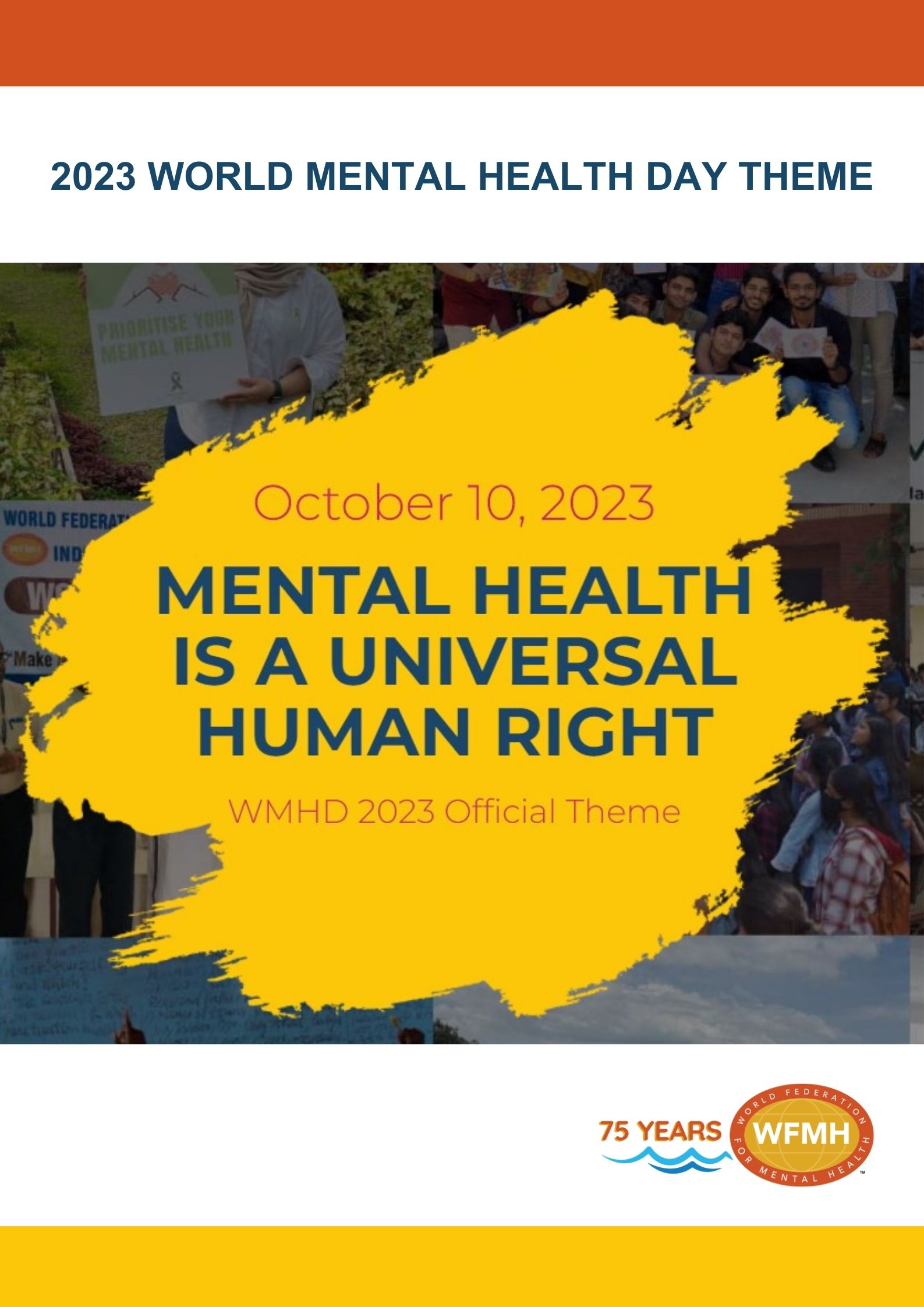








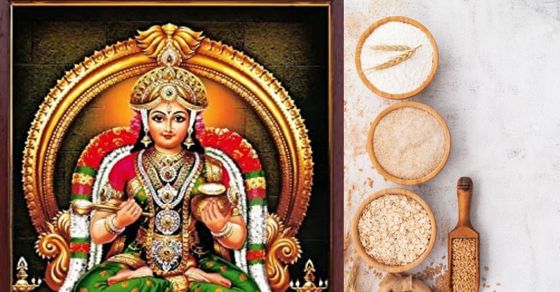


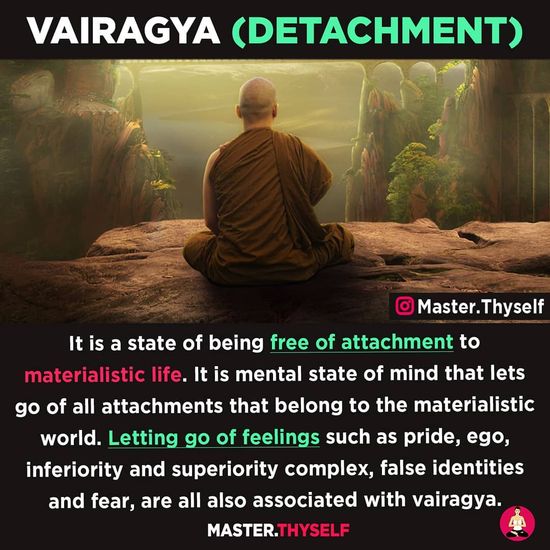


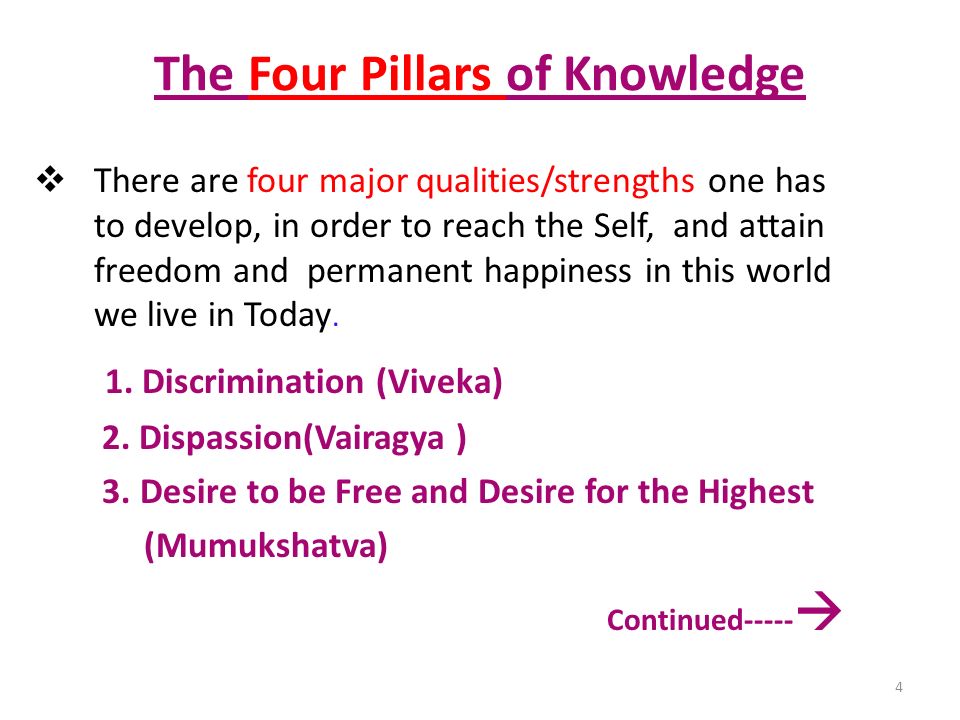
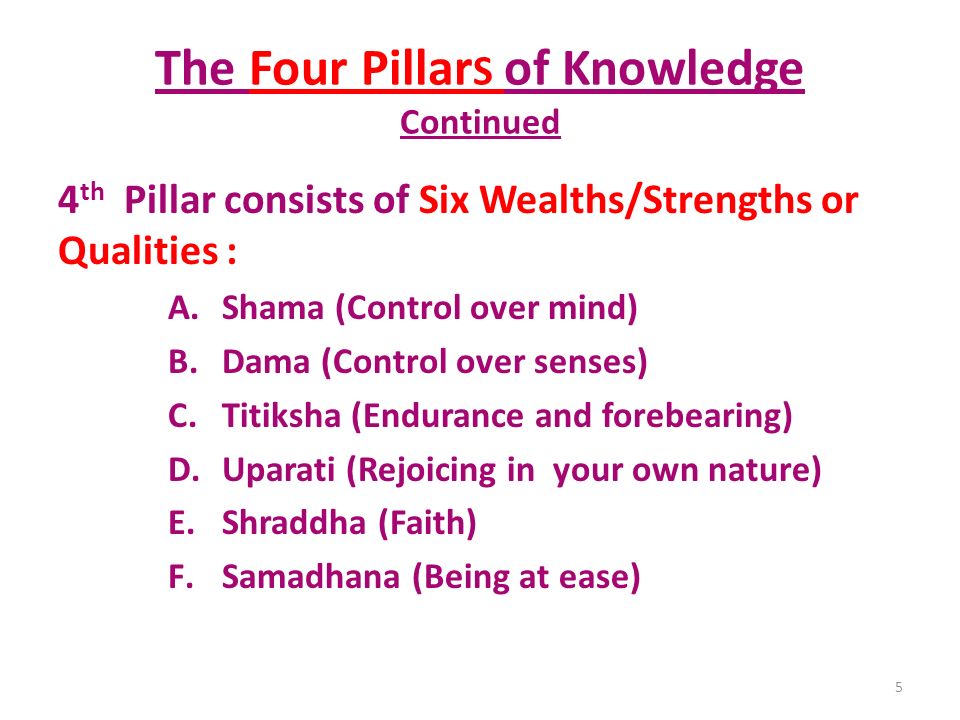


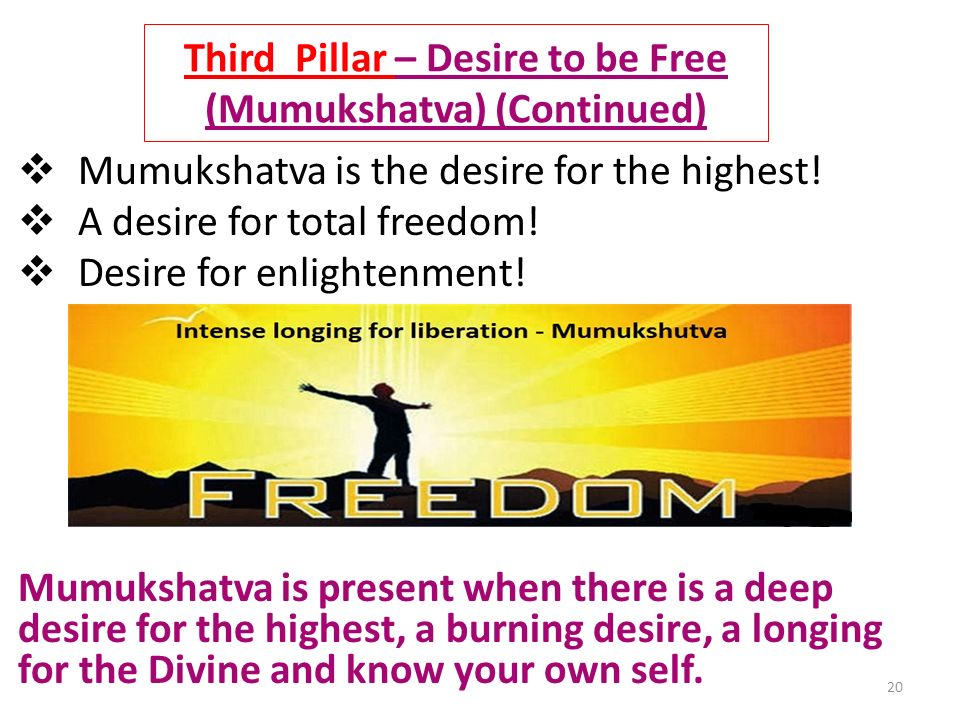


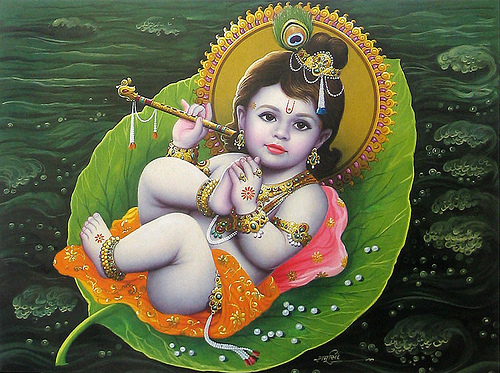

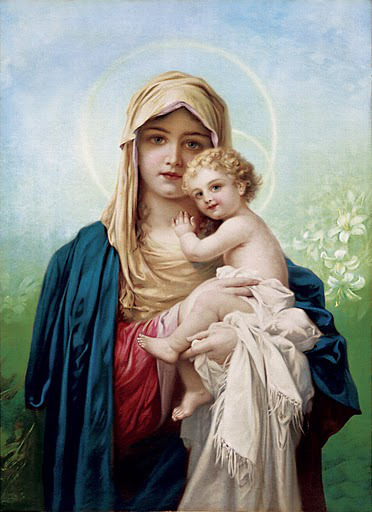
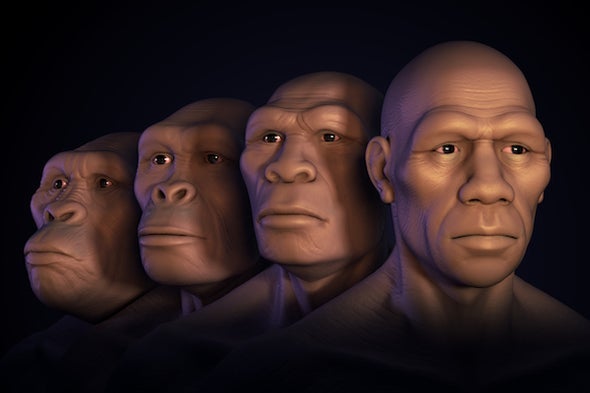
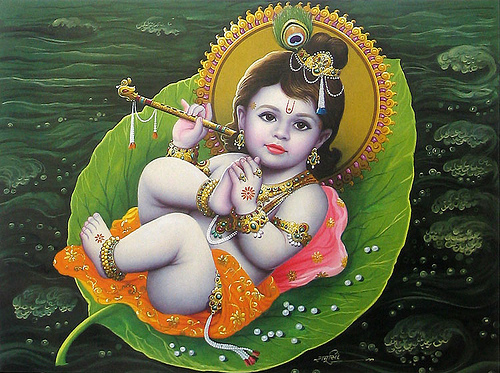
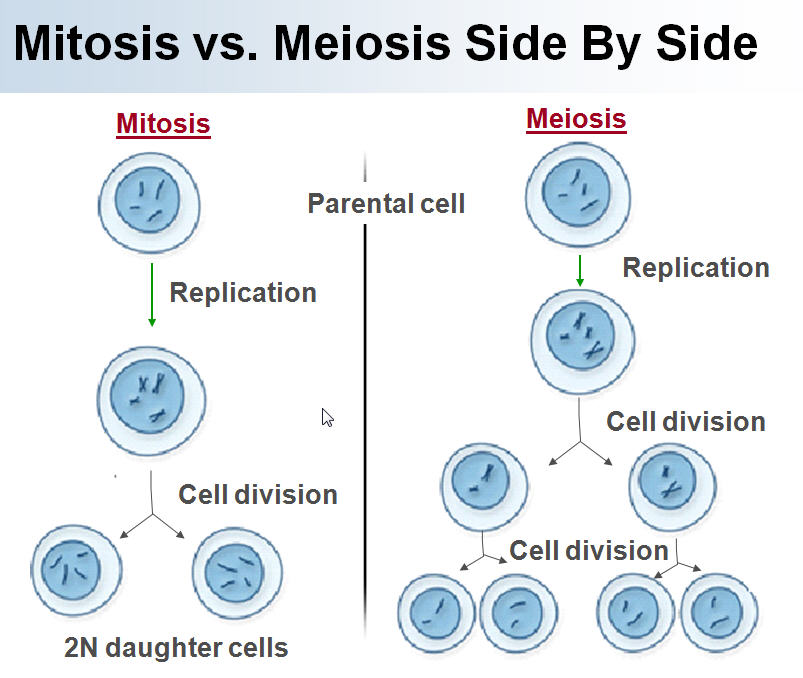


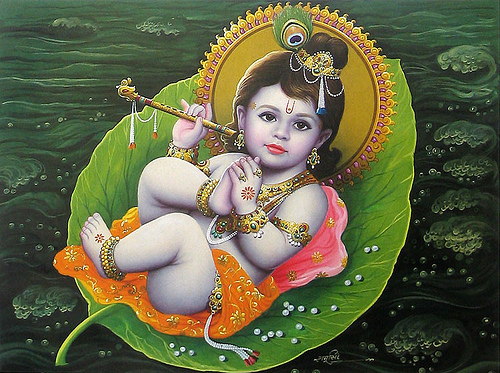


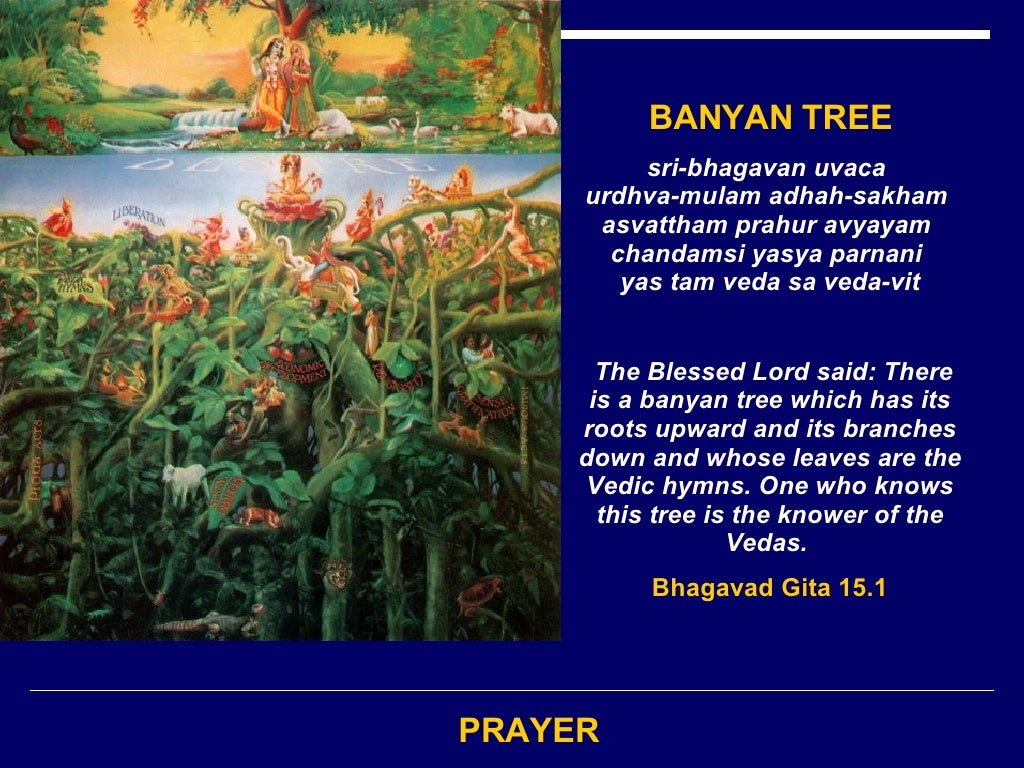


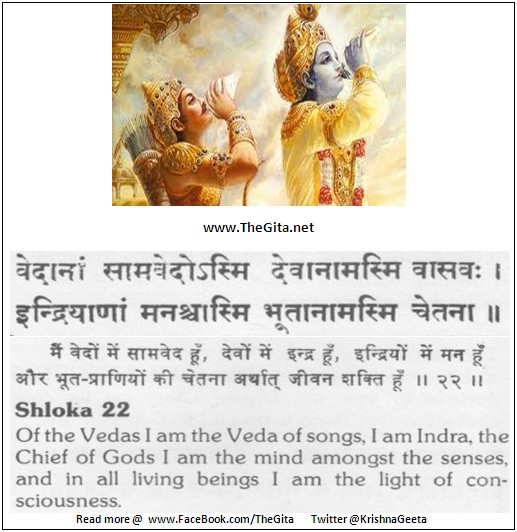
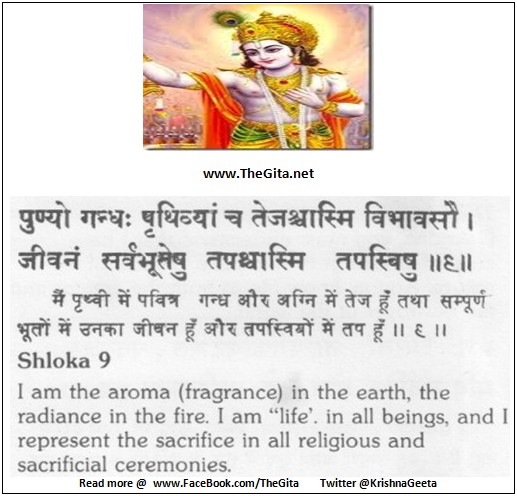

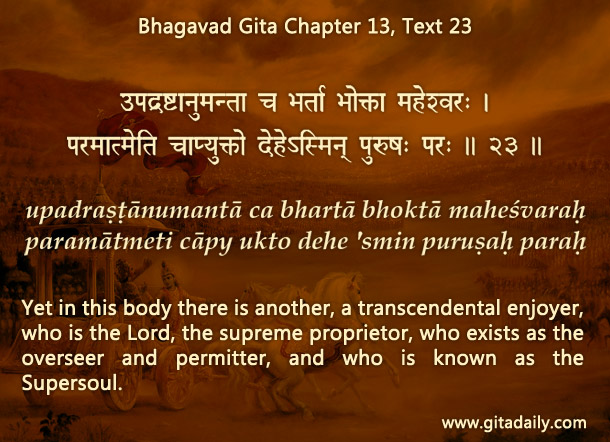


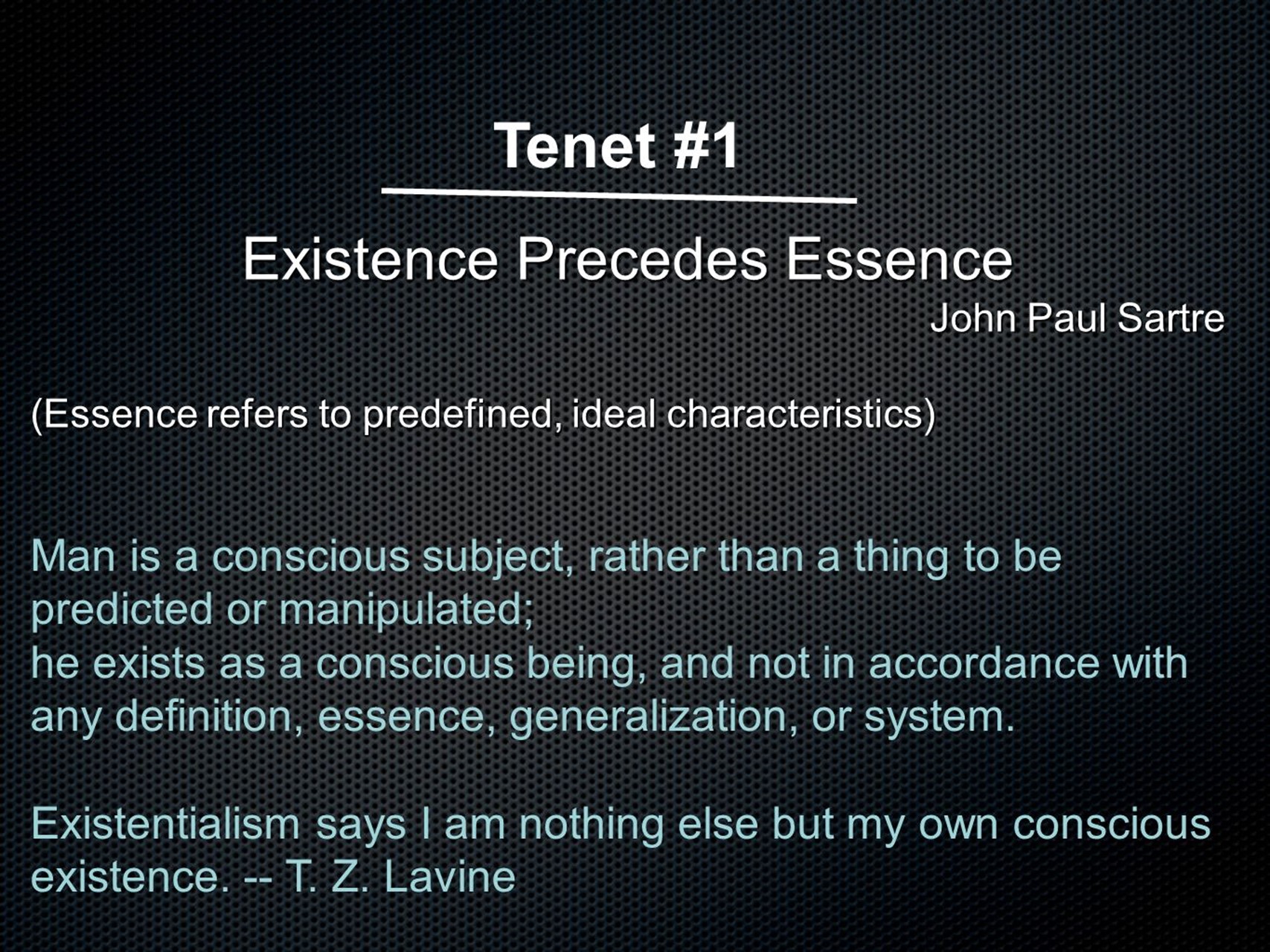

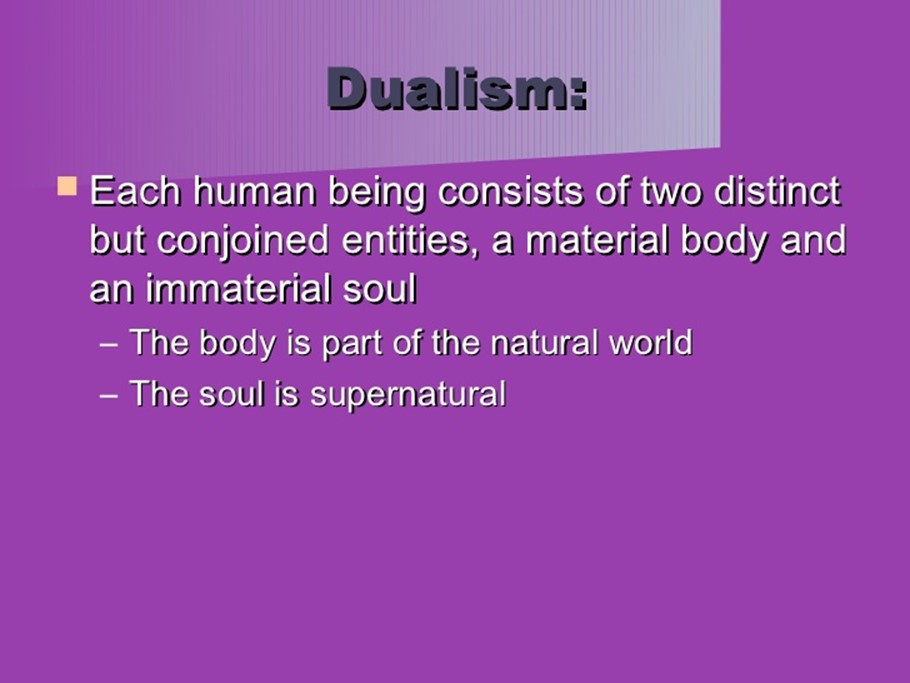





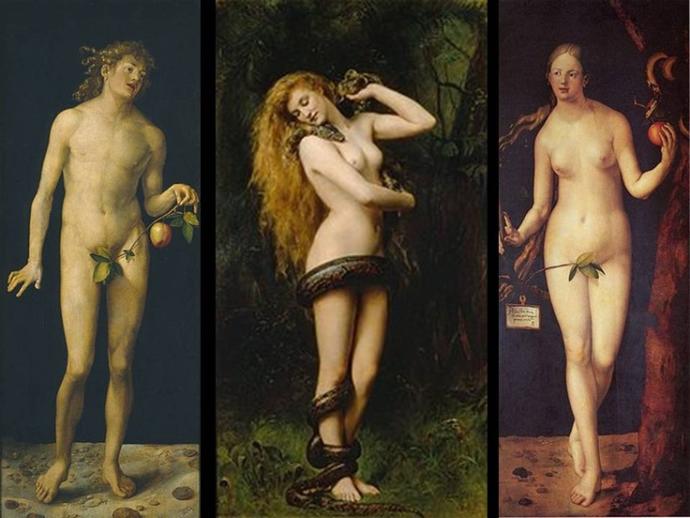







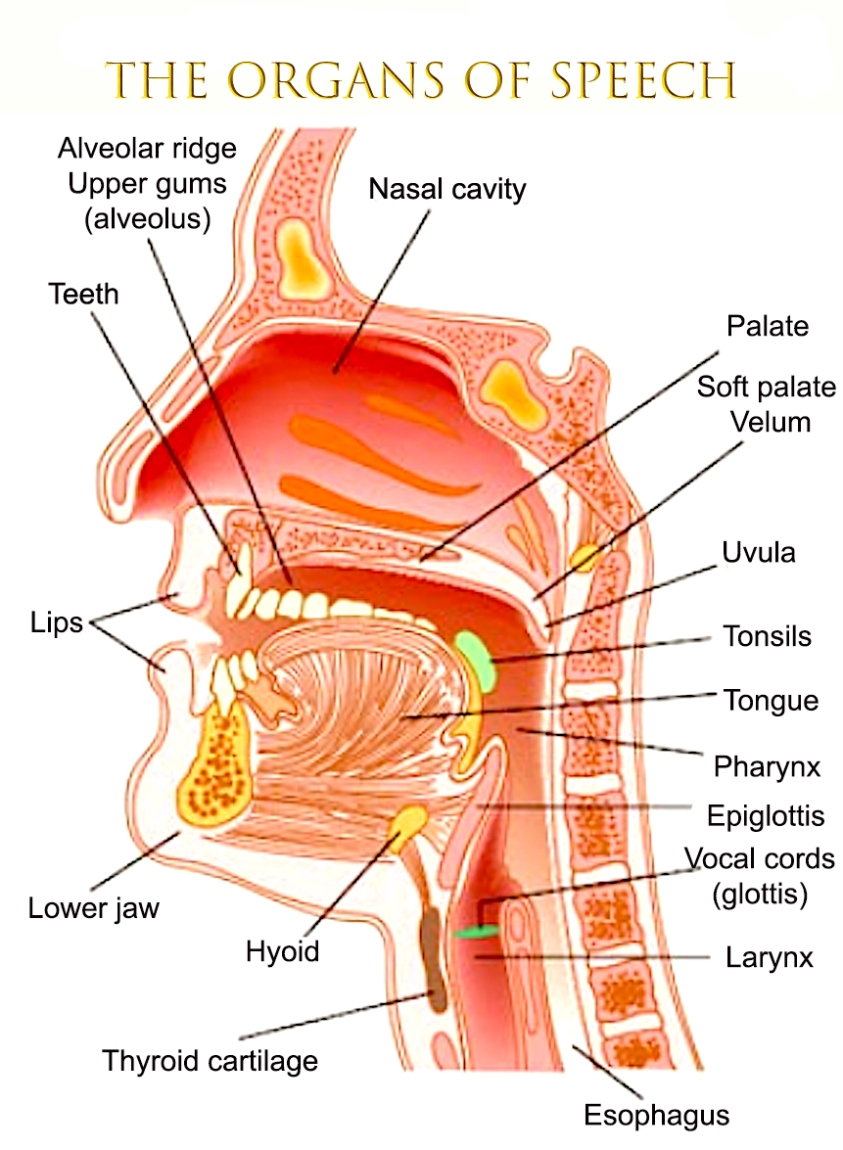
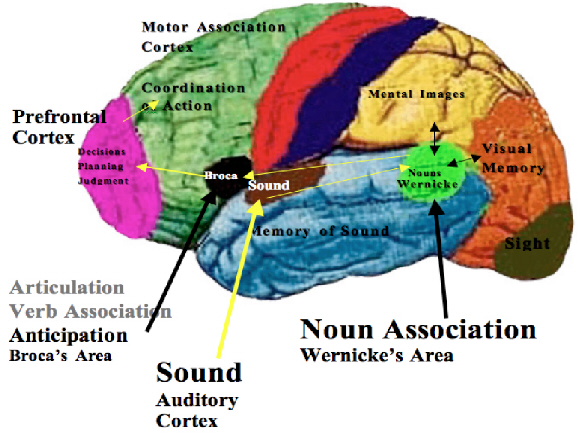
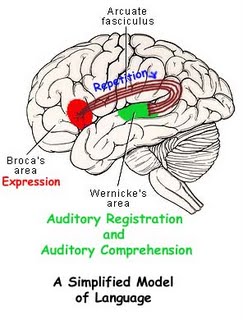
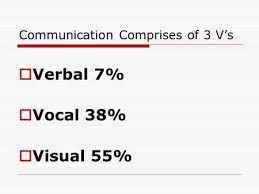

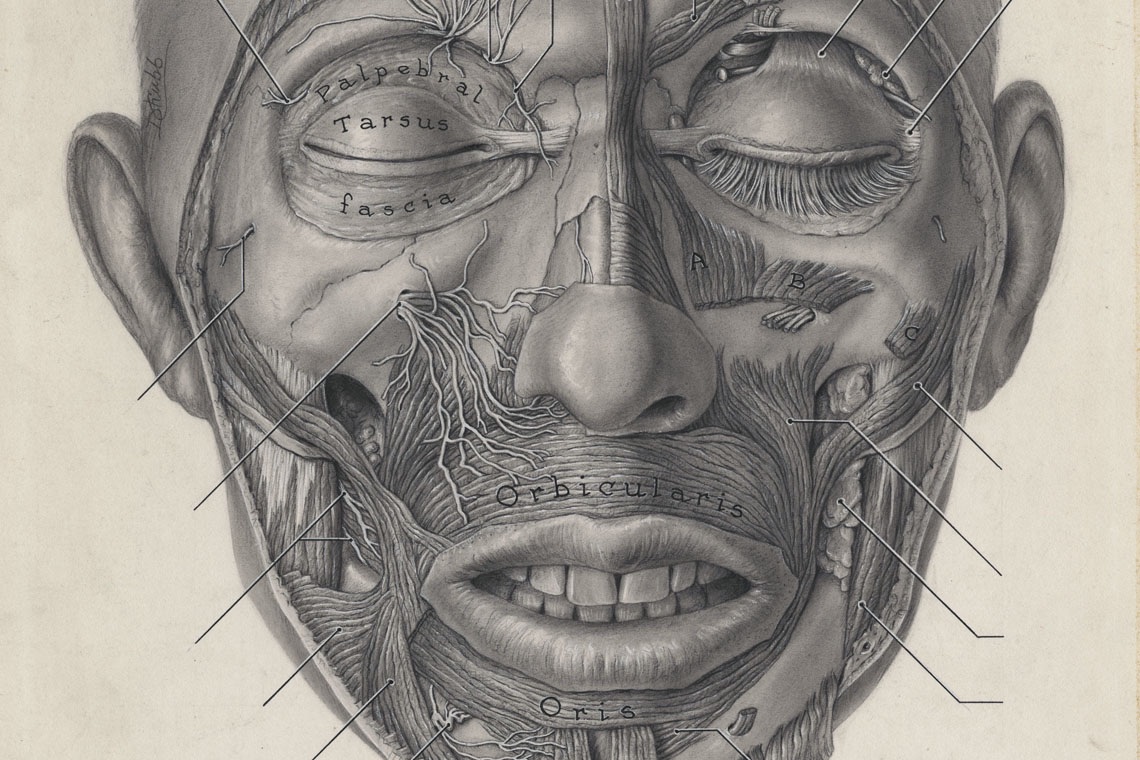
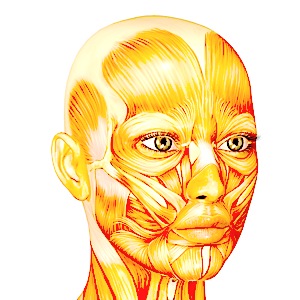





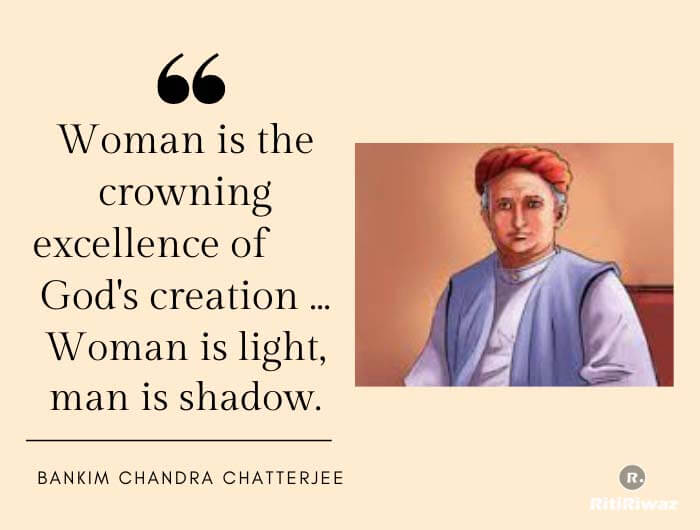




 Whole Dude - Whole Concept

