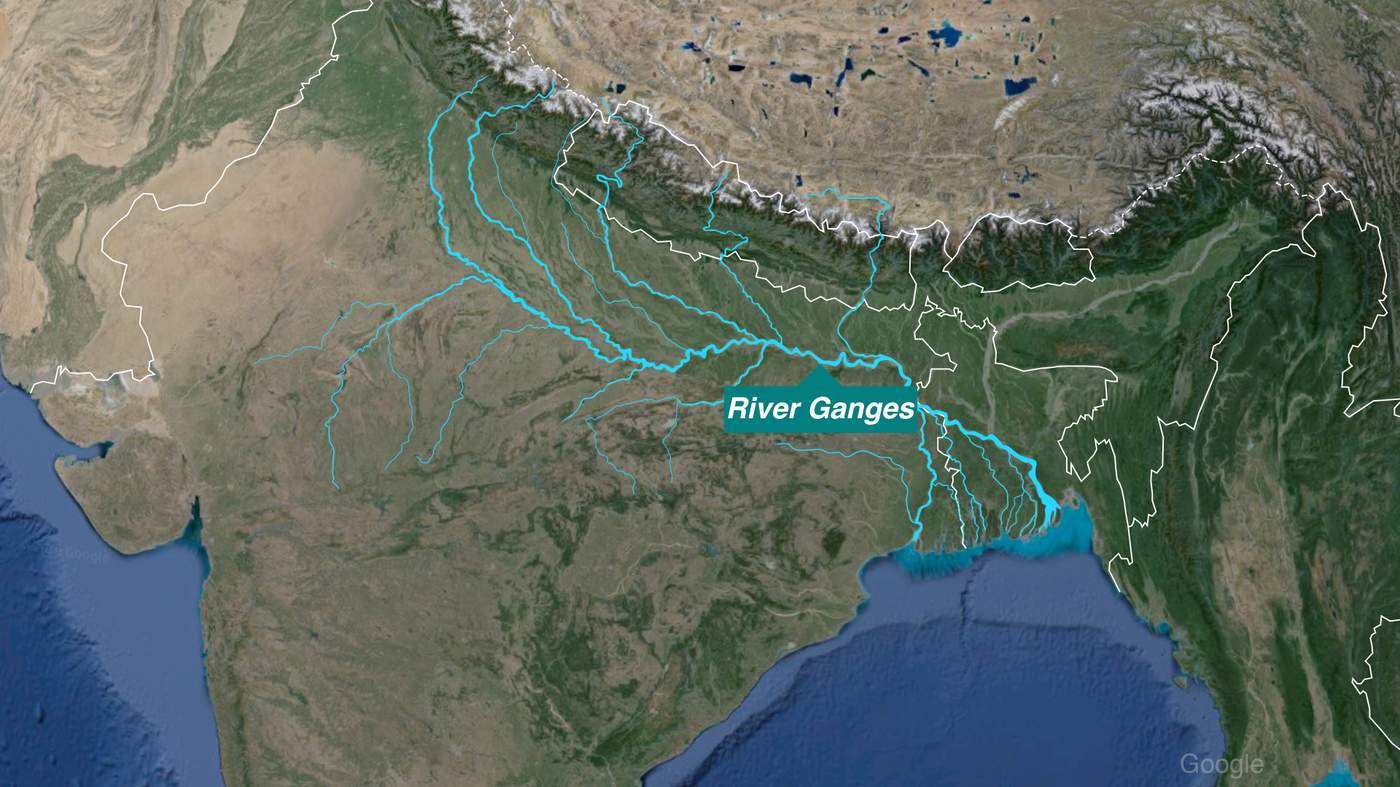
Whole Dude – Whole Indian: Defining Indian Identity – The Spirit of Nationalism. Mother Ganges is the Spirit of the Nation called India or Bharat.
Excerpt: This article emphasizes the River Ganges as the defining symbol and spirit of India, uniting the country across changing political and historical landscapes. While acknowledging India’s freedom struggle and leaders like Jawaharlal Nehru and Mahatma Gandhi, it argues that India’s identity is far deeper and not reliant on political history, language or regional customs. Highlighting a song from the 1961 film ‘Jis Desh Mein Ganga Behati Hai’, it asserts that India has always existed wherever the Ganges flows. This spiritual connection overrides every other consideration, encapsulating the essence of Indian nationalism and the country’s cultural traditions.
Whole Dude – Whole Indian: The country where River Ganges flows.
“….The Ganges,above all is the river of India,which has held India’s heart captive and drawn uncounted millions to her banks since the dawn of history.The story of the Ganges,from her source to the sea,from old times to new,is the story of India’s civilization and culture,of the rise and fall of empires,of great and proud cities,of adventures of man….”
Discovery of India, Jawaharlal Nehru
Whole Dude – Whole Indian: Jawaharlal Nehru, India’s First Prime Minister speaks eloquently about River Ganges shaping the lives of Indians throughout History. Mother Ganges is the Spirit of the Nation.
Jis Desh Mein Ganga Behati Hai (The Country Where River Ganges Flows)
Whole Dude – Whole Indian: The country where River Ganges flows.Whole Dude – Whole Indian: The country where River Ganges flows.Whole Dude – Whole Indian: The country where River Ganges flows.Whole Dude – Whole Indian: The country where River Ganges flows.Whole Dude – Whole Indian: WHAT IS INDIA? INDIA IS DEFINED AS THE LAND OR COUNTRY WHERE RIVER GANGES FLOWS. INDIA CAME INTO EXISTENCE WHEN GANGES STARTED FLOWING THROUGH THIS LAND. RIVER GANGES IS THE SPIRIT OF THIS NATION
Raj Kapoor won Filmfare’s Best Actor Award in 1961 for his portrayal of ‘Raju’, a song writer, in his film titled ‘Jis Desh Mein Ganga Behati Hai’. The picture was released during 1960 when I was twelve years old and was studying in VI-Form (S.S.L.C. Class of March 1961) in Danavaipeta Municipal High School, Rajahmundry, East Godavari District, Andhra Pradesh, India.We had a beautiful marble statue of Mahatma Gandhi right in front of our school.I studied Indian History as part of my school curriculum.I used to score well in my History tests. It was not too difficult for me to remember all those dates,names and other facts that constitute the subject matter of History. I have a deep sense of appreciation for all those leaders who orchestrated the political struggle against the British Rule.The Freedom Movement did indeed foster a sense of purpose and united people to achieve a common goal. It could be true that the fight against the Colonial powers gave a sense of Identity and very often the freedom fighters were called ‘Satyagrahis’. I have great admiration for their sense of patriotism and I am ever grateful for the sacrifices they made to win our independence. I saw this movie ‘ Jis Desh Mein ‘ just once and may have heard the title song on the radio on a few occasions.But the song , “Hotoan pe sachhai rahati hai, jahan dil me safaai rahati hai, Hum uss desh ke vaasi hai, Hum uss desh ke vaasi hai, Jis Desh Mein Ganga Behati Hai” never faded from my memory.
Whole Dude – Whole Indian: Defining Indian Identity – Mother Ganges is the Spirit of the Nation called India or BharatWhole Dude – Whole Indian: Defining Indian Identity – Mother Ganges is the Spirit of the Nation called India or Bharat
Ten years after seeing the movie, in the year 1970, at the age of 22 years , I was granted President’s Commission and joined the Indian Armed Forces in the rank of Lieutenant.While joining Service,we accept the risks that naturally accompany such an occupation and reflect upon the motivation that shapes the decision.I understand that the Freedom Struggle was important but that Struggle does not define my sense of National Identity.I have known that the country that we call India has existed long before the invasion by the Mughals,the country that we call India has existed during centuries of British Rule and now the country that we call India exists in spite of the changes in the political landscape and the political fortunes of the Parties that we elect from time to time. My sense of National Identity is not dependent upon the political history of our country. My sense of National Identity does not depend upon the language that I speak at home and it is not related to the regional customs pertaining to food or dress. I have known my country from its Cultural Traditions. In 1970,I joined the Indian Army to defend the country which lives in my mind as the Land where River Ganga flows.
Whole Dude – Whole Indian: Mahatma Gandhi is revered as the Father of the Nation and had promoted the Spirit of Nationalism during India’s long Struggle for Freedom. But, Mother Ganges is the Spirit of this Nation called India or Bharat.
In my opinion,the country that we call India is not a mere political entity. It is true that India gained its political freedom in 1947. The country is existing ever since the River Ganges started flowing across its Land.
I am not surprised that the song “Jis Desh Mein” still plays and I still hear the golden voice of immortal Mukesh, whenever my heart dreams about India. Most certainly, the Spirit of Nationalism is inspired by a history which reaches back to a period earlier than the British occupation of India.
Jis Desh Mein Ganga Behti Hai Lyric
Whole Dude – Whole Indian: Defining Indian Identity – Mother Ganges is the Spirit of the Nation called India or Bharat.
hothon pe sachchaaee rahatee hain, jahaan dil mein safaee rahatee hain hum us desh ke waasee hain, jis desh mein gangaa bahatee hain hothon pe sachchaaee rahatee hain, jahaan dil mein safaee rahatee hain hum us desh ke waasee hain, jis desh mein gangaa bahatee hain mehmaan jo humaaraa hotaa hain, wo jaan se pyaaraa hotaa hain mehmaan jo humaaraa hotaa hain, wo jaan se pyaaraa hotaa hain jyaadaa kee nahee laalach hum ko, thode mein gujaaraa hotaa hain thode mein gujaaraa hotaa hain
bachchon ke liye jo dharatee maan, sadiyon se sabhee kuchh sahatee hain
hum us desh ke waasee hain, jis desh mein gangaa bahatee hain
kuchh log jo jyaadaa jaanate hain, insaan ko kam pahachaanate hain kuchh log jo jyaadaa jaanate hain, insaan ko kam pahachaanate hain
ye poorab hain, poorabawaale, har jaan kee kimat jaanate hain milajul ke raho aaur pyaar karo, ik cheej yahee jo rahatee hain
jo jisase milaa sikhaa hum ne, gairon ko bhee apanaayaa hum ne jo jisase milaa sikhaa hum ne, gairon ko bhee apanaayaa hum ne matalab ke liye andhe ho kar, rotee ko nahee poojaa hum ne rotee ko nahee poojaa hum ne
ab hum to kyaa saaree duniyaan, saaree duniyaan se kahatee hain
hum us desh ke waasee hain, jis desh mein gangaa bahatee hain
Whole Dude – Whole Indian: Defining Indian Identity – Mother Ganges is the Spirit of the Nation called India or Bharat.
Whole Dude – Whole Leadership: The two-sides of Gandhi’s Leadership.
Excerpt: The article critically examines Mahatma Gandhi’s leadership during the Indian Independence movement, particularly focusing on his commitment to ‘Ahimsa’ or non-violence. While acknowledging Gandhi’s successful use of non-violence as a political weapon, the author questions if Gandhi was wrong in not considering violent self-defense to protect people from communal violence spawned during the Partition of India. The author suggests Gandhi underestimated the importance of using force to defend life during the violent upheaval, leading to loss of millions of lives. This is contrasted with the actions of other leaders, such as Mohammad Ali Jinnah, reviewed on their approach to the struggles during the same period.
Whole Dude – Whole Leadership: The two-sides of Gandhi’s political leadership.
The Flip Side of Gandhi’s political Leadership:
Whole Dude – Whole Leadership: Mahatma Gandhi’s leadership involved the use of nonviolence or Ahimsa as a political weapon. Did he believe in the use of violent force as a tool of self-Defense?
Leadership position gives the man an aura or charisma. Gandhi had earned the title of ‘MAHATMA’, a Great Soul because of his leadership role in India’s Struggle for Independence from British Rule. He inspired a sense of nationalism and I have acknowledged the same in several of my blog posts. He had championed the use of Nonviolence or ‘AHIMSA’ as a political tool and had encouraged people to defend human dignity and human value. However, leadership comes with responsibility. Leadership imposes a heavy burden and a true leader must take responsibility for the consequences of his actions and shortcomings. The principle of nonviolence must be evaluated in the context of defending Human Rights. A man is entitled to his life. A man has the Right to defend himself with whatever force is reasonably necessary against actual or threatened violence. Self-defense is a principle, is a natural instinct, and is a natural Law. Self-defense and Self-preservation may require the use of force or violence to stop the aggressor. It is not a crime to kill an aggressor to defend one’s own life. In a civilized society, the State has a duty to protect the lives of people, and give people the means and the support to exercise their right to self-defense. I have revisited the assassination of Mahatma Gandhi by Nathuram Godse. I had to examine the flip side of his leadership. Gandhi was the unchallenged leader of the Freedom Movement and the Congress Party. His response to British Viceroy Lord Mountbatten’s proposal for partition of British India was highly irresponsible and was not expected of a leader. The Freedom Movement had generated a demand for an Islamic State in all areas where Muslims had a numerical majority. Under the British Rule, Hindus, Muslims, Sikhs, and others had enjoyed a degree of protection and had lived together for centuries. The Freedom Struggle had changed this situation of peaceful coexistence. As the freedom struggle had intensified to end the British Rule, the British stopped paying attention to maintain peace and order within the community. To make their demand for a separate Islamic State, and to consolidate their position on the ground, Muslims had started a program of ethnic intimidation, and of ethnic cleansing to wipe out Hindus living in areas under their control. Hindu properties were looted and burned and Hindus were violently expelled from their homes. Several men, women, and children were brutally killed during vicious mob attacks. The Freedom Movement had unleashed these violent forces and no protection was given to the innocent people who were caught in the middle. In such a situation, the leadership had a moral duty and responsibility to organize and put in place the structures that could defend the community from violent attacks. It was the duty of the Congress Party and its leadership to advocate the use of force as self-defense. If Hindus had not supported the Congress Party and its demand for Freedom, the Movement would not have gained any momentum. There would be no demand for an Islamic State and any Muslim demand for freedom would be rejected and the British would have maintained Law and Order. So, Gandhi as the leader of this Freedom Movement was expected to shoulder a greater responsibility as compared to Muslim League leaders like Mohammad Ali Jinnah. The British proposal for partition of Indian subcontinent had imposed a great burden on Gandhi. His leadership duty would also include defending the rights of Hindus to their lives and to their properties. The dismemberment of British India into two independent nations should not have been agreed upon without demanding the British Viceroy Lord Mountbatten to deploy enough number of troops and make full security arrangements for a peaceful transfer of power. Gandhi as the leader of the Movement must have personally checked and satisfied himself that the British Government had enough resources to protect people. He must have consulted with the Congress Party Working Committee to make arrangements for self-defense in addition to the security measures if any taken by the British rulers. Gandhi had no vested authority or power to concede the demand for India’s Partition. He must have involved all the rank and file of the Congress Party in that decision-making process. In any case, Gandhi must have delayed Independence until arrangements for maintenance of Law and Order were finalized. The tragic consequences of Partition of India fully expose the failure of Gandhi’s leadership. He had utterly failed to visualize the importance of using violent force to defend the Right to Life. Gandhi’s flippant attitude had contributed to the loss of millions of innocent lives.
Whole Dude – Whole Leadership: Mahatma Gandhi or Jawahar Lal Nehru had no vested authority or power to concede the demand for partition of British ruled India. At a minimum, the decision process must have involved the entire rank and file of the Indian National Congress Party.Whole Dude – Whole Leadership: Mohammad Ali Jinnah, Qaid-e-Azam, the great leader of Muslims paved the way for the Partition of British India. What is the human cost for this achievement?Whole Dude – Whole Leadership: The British Indian Empire in 1909. The Rulers and the leaders of the Freedom Movement had failed the people of this ancient Land.Whole Dude – Whole Leadership: India and Pakistan. The Partition of Indian Subcontinent is the worst man-made disaster in the entire human history.Whole Dude – Whole Leadership: A group photo of failed leaders. British Viceroy Lord Mountbatten, Lord Ismay, Nehru, and Jinnah got together in Delhi on August 03, 1947 to announce the agreement for partition of British ruled Indian Empire.Whole Dude – Whole Leadership: In this photo taken at midnight, the early hour of August 15, 1947, the transfer of power from Great Britain to India appears to be very orderly and peaceful. Both sides had failed miserably in their leadership qualities as an unspeakable human tragedy overshadowed this historical moment.Whole Dude – Whole Leadership: Sikh and Hindu refugees flow into the Indian side of Punjab after the partition of British India. This ethnic cleansing of monumental proportions had involved over 14.5 million people moving in opposite directions.Whole Dude – Whole Leadership: A refugee train on its way to Punjab, India. Trains had arrived during the partition time with dead passengers and no survivors.Whole Dude – Whole Leadership: The leaders of Great Britain, India, and Pakistan must be criminally tried for genocide for their rash and reckless behavior that had devastating consequences in terms of human pain and suffering.Whole Dude – Whole Leadership: Nathuram Godse shot and killed Mahatma Gandhi on January 30, 1948. This act of violence has forced me to examine the issue of using violent force in taking life and also as self-Defense.Whole Dude – Whole Leadership: The Assassination of Mahatma Gandhi – This violent act has no purpose but it compels people to evaluate his leadership. The advocate of Nonviolence must have relied upon the use of violent power to defend the lives and properties of defenseless people.Whole Dude – Whole Leadership: A group photo of people accused in Gandhi’s murder case. Standing: Shankar Kistaiya, Gopal Godse (brother of Nathuram Godse, the main accused), Madanlal Pahwa (a refugee, who had earlier agreed to return to Lahore in the company of Gandhi), and Digambar Badge (the approver who had assisted the prosecutor). Sitting: Narayan Apte, Vinayak D Savarkar, Nathuram Godse (the sole attacker), and Vishnu Karkare.Whole Dude – Whole Leadership: Nathuram Godse spent five hours reading out a 90-page treatise justifying his decision to murder Gandhi. Judge Khosla who had presided over the trial mentioned before awarding the death sentence; “If the people sitting in the Court had been on the Jury, they would have acquitted Nathuram.” Godse had believed that Gandhi was the aggressor and Godse had acted to defend defenseless Hindus. Who was the aggressor? Who would take responsibility for the killing of millions of people?Whole Dude – Whole Leadership: The Martyr Column – Gandhi’s assassination site in New Delhi. Who has the duty to defend the defenseless?
If Mahatma Gandhi had advocated the use of violent force to protect people and their properties, he could have saved his own life. Unfortunately, the bullet that had hit Gandhi has forced us to inspect the darker side of his leadership.
Self-defense is a Right, it is a Duty, and it does not qualify as violence even when it involves killing the aggressor. I am not opposed to the idea of using nonviolence as a political weapon in the fight for India’s Freedom. The question that I would ask is; What is the idea of Independence if people are not given the opportunity to experience it?
Whole Dude – Whole Leadership: MAY HIS SOUL REST IN PEACE -Rajghat, New Delhi, the site of Gandhi’s cremation. India has a Right to Self-Defense and Indian leadership may have to use force to defend India’s hard-earned Freedom.
The View of Sri Aurobindo Ghosh on Gandhi’s adherence to Non-Violence
Whole Dude – Whole Leadership: Sri Aurobindo has asked us to remember the two sentences of this well-known aphorism: “Ahimsa paramo dharmah; Dharma himsa tathaiva cha”-Non-violence or Ahimsa is the highest principle, and so is Violence or Himsa in defense of the righteous.
The method of absolute non-violence that was followed during the ‘Satyagraha’ movement should be questioned. It led to the breaking of skulls and a great deal of suffering for the freedom fighters. Two questions arise in the context of the use of non-violence: 1. Was it right and healthy for the nation to go through this kind of non-violence? and 2. Does Indian culture and spirituality enjoin this kind of non-violence?
The well-known aphorism states:
“Ahimsa paramo DharmaH;
Dharma himsa tathaiva cha.”
Whole Dude – Whole Leadership: The two-sides of Gandhi’s Leadership.
Non-violence or Ahimsa is the highest principle, and so is violence or Himsa in defense of the righteous. Sri Aurobindo had also pointed out that, “Politics is concerned with masses of mankind and not with individuals. To ask masses of mankind to act as saints, to rise to the height of divine love and practice it in relation to their adversaries or oppressors is to ignore human nature. It is to set a premium on injustice and violence by paralyzing the hand of the deliverer when raised to strike. The Gita is the best answer to those who shrink from battle as a sin, and aggression as a lowering of morality.”
Whole Dude – Whole Leadership: Saint Samarth Ramdas and Warrior King Shivaji are the two aspects of the leadership equation.
The sword of the warrior is as necessary to the fulfillment of justice and righteousness as the holiness of the saint. Saint Ramdas is not complete without Shivaji. To maintain justice and prevent the strong from despoiling, and the weak from being oppressed is the function for which the ‘Kshatriya’ was created. “Therefore,” says Sri Krishna in the Bhagavad Gita, “God created battle and Armour, the sword, the bow, and the dagger.”
Whole Dude – Whole Leadership: The two-sides of Gandhi’s Leadership.
Gandhi’s Recipe for Self-Defense – The Proof of Pudding is in the Eating:
WHOLE DUDE – WHOLE DEFENSE: GANDHI’S RECIPE FOR SELF-DEFENSE: HINDUS MUST ACCEPT DEATH CHEERFULLY WITH A SMILE ON THEIR FACES.
Excerpt: Gandhi’s perspectives on self-defense were marked by notable contrasts. He believed that while Muslims were entitled to their concept of ‘Jihad’ and permissible to use violence, Hindus should endure violent attacks passively. Gandhi condoned violence perpetrated by Muslims, counseling Hindus to accept such violence cheerfully. His views were seen in his involvement in the Khilafat Movement that sought full Muslim participation in India’s struggle for independence. Additionally, during the Moplah rebellion, Gandhi praised the perpetrators and dismissed their violence as religiously justified. His controversial views extended to the partition-related violence, where he advised Hindus to face death cheerfully without seeking revenge.
Whole Dude – Whole Defense: Gandhi’s Recipe for Self-Defense: The Shocking Truth about Gandhi. Hindus need no Self-Defense
Gandhi categorically pronounces his views on self-defense and his words need no further clarification. It is very interesting to observe that Gandhi makes distinction between violence imposed by Muslims and the violence that should be endured by Hindus.In Gandhi’s opinion, Muslims have entitlement to their concept of ‘Jihad’ and can use violence, force, or warfare as a religious duty. Hindus are not required to offer any kind of resistance if they happen to come under a violent attack. Gandhi has no problem if an Afghan warlord attacks India to defeat the British Raj and states that Indians must not oppose that kind of military attack. But, Gandhi vigorously opposed people like Subhash Chandra Bose and their quest for Freedom by using force. Gandhi discovers good reasons to condone violence perpetrated by Muslims and consistently counsels Hindus to accept violence with a sense of cheer and rejoice and to adhere to their spiritual belief in Rebirth.
WHOLE DUDE – WHOLE DEFENSE: GANDHI’S RECIPE FOR SELF-DEFENSE: GANDHI DENIES HINDUS THE RIGHT TO SELF-DEFENSE. GANDHI CHARACTERIZES SUBHASH CHANDRA BOSE AS A SPOILT CHILD. BOSE HAD NO CHOICE OTHER THAN THAT OF LEAVING CONGRESS TO RAISE AZAD HIND FAUZ, INDIA’S NATIONAL ARMY TO FIGHT THE BRITISH RULE OF INDIA TAKING THE HELP FROM AXIS POWERS, GERMANY, AND JAPAN.
I received Gandhi’s pronouncements from Shri. Hari Kak. I give my thanks to him for sharing this information about Gandhi and his role as a leader.
To remember Gandhi on his birth anniversary (born. October 02, 1869, died. January 30, 1948 ), the followers of his views and way of life, may like to read the extent to which he tried to take the Muslims along with him to formulate his leadership role in India’s Independence Movement.
THE KHILAFAT MOVEMENT:
Whole Dude – Whole Defense: Gandhi’s Recipe for Self-Defense: Gandhi supports the use of violence by Khilafat Movement against the British as well as Hindus.
Gandhi returned to India during 1914 with a determination to fight for India’s Independence. With his experience in South Africa, and as a shrewd observer of the ongoing independence movement, he realised that it was Hindu dominated and to make it a success the full participation of the Muslims was essential. To achieve this aim he bent over backwards to appease Muslims and during the last days of his life his efforts went to inexplicable lengths. The Ottoman Caliphate in Turkey was tottering under the French-British attacks and ended with Mustafa Kamal abolishing the institution. But, strangely in India, the Muslims under the leadership of brothers Maulana Mohammed Ali, a cleric and journalist and Maulana Shaukat Ali started the Khilafat Movement. Around 1920, Gandhi joined it along with Maulana Abdul Kalam Azad, an eminent Congressman.
Whole Dude – Whole Defense: Gandhi’s Recipe for Self-Defense: Congress leaders Gandhi, Nehru, and Maulana Abdul Kalam Azad join the KHILAFAT Movement in 1920
Dr. B R Ambedkar in his voluminous tome ” Pakistan or The Partition of” refers to an invitation extended by the Ali brothers,to the Amir of Afghanistan to invade India to wage “jihad” against the British – a horrendous proposition which was supported by Khilafat-besotted Gandhi. C.Y. Chintamani (Editor of ‘The Leader’ of Allahabad) and Rev. C.F. Andrews tried to dissuade Gandhi from supporting the “mad” venture of Ali brothers in seeking Afghan invasion of India. Gandhi’s reaction was “I cannot understand why the Ali Brothers are going to be arrested as the rumours go, and why I am to remain free. They have done nothing which I would not do. If they had sent a message to Amir, I also would send one to inform the Amir that if he came, no Indian so long as I can help it would help the Government to drive him back.” There was some non-cooperation and protests but by the end of 1924, the Khilafat Movement, as expected, had totally collapsed. Ali brothers blamed Gandhi for the failure of the Khilafat Movement. Maulana Mohammed Ali to whom Gandhi had shown great affection said, : “However pure Mr. Gandhi’s character may be, he must appear to me, from the point of religion, inferior to any Mussalman even though he be without character.” He further emphasizes: “Yes, according to my religion and creed, I do hold an adulterous and a fallen Mussalman to be better than Mr Gandhi.” Showing their true colours,the Ali brothers later joined the Muslim League.
THE MOPLAH REBELLION OF 1921:
Whole Dude – Whole Defense: Gandhi’s Recipe for Self-Defense: The Moplah Hindu Genocide of 1921
Taking a clue from the Khalifat movement the Moplahs (Mopillas) in Kerala revolted in 1921, against their Hindu landlords and turned it into a killing spree of Hindus of all vocations. Annie Besant states: “They (Moplahs) murdered and plundered abundantly, and killed or drove away all Hindus who would not apostatise. Somewhere about a lakh (100,000) of people were driven from their homes with nothing but their clothes they had on, stripped of everything. Malabar has taught us what Islamic rule still means, and we do not want to see another specimen of the Khilafat Raj in India.”
As pointed out by Dr. Ambedkar , after the brutal killings of “Kaffirs” during ‘Moplah rebellion’, there was hardly any reaction by Khalifat-oriented Gandhi, or for that matter even Congress Party. They were all praise for Moplahs whom Gandhi even described as “brave people” and condoned their savagery by saying that “they did what was right according to their religion.” These were the early years of Gandhi’s leadership role in India’s Freedom Movement.
GANDHI’S VIEWS ON PARTITION RELATED VIOLENCE OF INDIA: HINDUS MUST DIE WITH A SMILE ON THEIR FACES
Some of his views on partition are listed below. They defy comprehension:
Prarthana-Pravachan Part I PP 54-8; CWOMG vol 87 pg 394-5 Speech at Prayer Meeting. New Delhi, May 1, 1947 ….Jinnah Saheb presides over a great organisation. Once he has Affixed his signature to the appeal, how can even one Hindu be killed at the hands of the Muslims? I would tell the Hindus to face death Cheerfully if the Muslims are out to kill them. I would be a real Sinner if after being stabbed I wished in my last moment that my son Should seek revenge. I must die without rancour. But why in the First place would a Muslim kill at all when he has been asked not to do it?….. You may turn round and ask whether all Hindus and all Sikhs should die. Yes, I would say. Such martyrdom will not be in vain….. Muslim slaughter of Hindus was defended by the Mahatma as being that by a “brave and god-fearing people who were fighting for what they consider as religion, and in a manner which they consider as religion” (BR Ambedkar, quoted by Arvind Lavakare). Indeed, the Mahatma said, “Hindus should never be angry against the Muslims even if the latter might make up their minds to undo even their existence” and Hindus “should not be afraid of death. After all, the killers will be none other than our Muslim brothers.” Kindly read the news story at rediff.com, April 16, 2002 (Arvind Lavakare, “Of Sabarmati secularism & non-violence”)
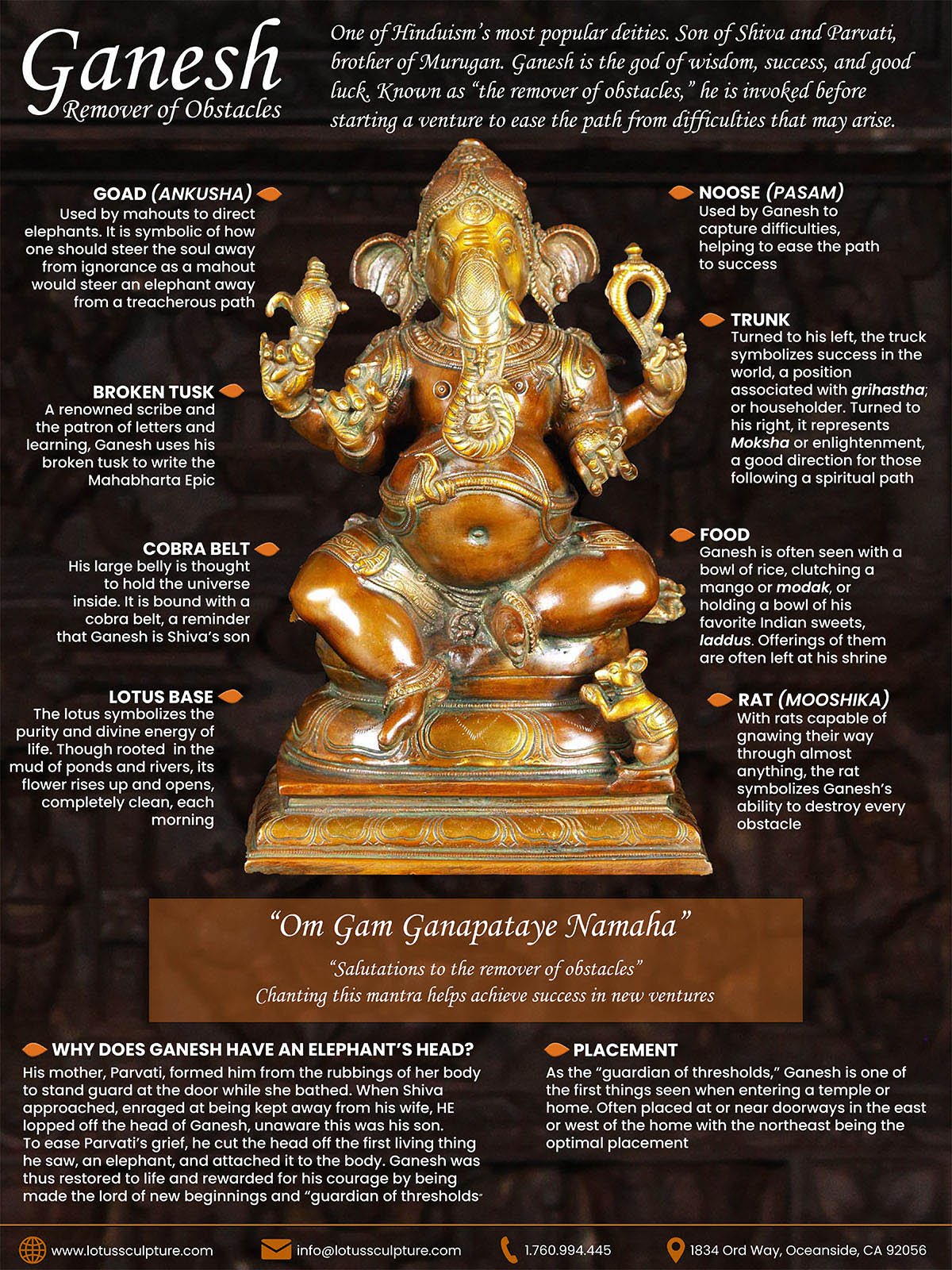
Whole Humility: The celebration of Ganesh Chaturthi. A Prayer to Lord Ganesha for Success through Obedience and Humility.Whole Dude – Whole Success: A Prayer to Lord Ganesha for Success with Humility.
Excerpt: The article discusses the importance of Lord Ganesha in achieving success through humility. Revered as a deity with extensive knowledge and radiant brilliance, Ganesha is believed to remove obstacles and guide humans towards success, promoting the idea that divine sanction plays a significant role alongside personal effort. The piece emphasizes the four primary goals of human existence (Dharma, Artha, Kama, and Moksha), asserting that success in these areas should be pursued through the lens of humility. It also delves into the illusions created by our perception of time and suggests that prayer to Lord Ganesha can help one navigate these misconceptions.
Whole Dude – Whole Success: A Prayer to Lord Ganesha for Success with Humility.
Lord Ganesha is unique among all deities. He has a human form with the head of an Asian elephant. Like the elephant which can grasp objects with its trunk, the entire realm of knowledge is in His grasp. In brilliance, He outshines Sun (Surya) and His radiant appearance can illuminate the entire universe. His body is so huge, it can accommodate the entire creation.
Lord Ganesha is worshiped to remove obstacles. He removes obstacles when we contemplate actions that promote our well-being and brings us the goodwill of others and the actions should have no evil design or purpose. Lord Ganesha removes obstacles and paves the way for accomplishment and success in human endeavors. The notion that success is the result of divine sanction rather than being entirely due to personal effort, would let us reach our goals with a sense of modesty and humility.
Whole Dude – Whole Success: PRAYER TO LORD GANESHA – SUCCESS THROUGH OBEDIENCE AND HUMILITY.
The primary goals for man have been described as Dharma, Artha, Kama, and Moksha. Dharma (right conduct)is not only a goal but also is the way. The other three goals should only be reached following the way of Dharma. To prepare for the journey on the path of Dharma, the traveler finds direction from a sense of humility.
Bharat Darshan: Saturday, September 07, 2024, The celebration of Ganesh Chaturthi. A Prayer to Lord Ganesha for Success through Obedience and Humility.
The radiant and immense personality of Ganesha endows us with humility. Having reached the goals of Artha (personal wealth, social status and position), and Kama (fulfillment of desires, progeny, and family), we inevitably encounter with the consequences of the powerful effects of time. The following verse from ‘ Bhaja Govindam’ sets us on a mission to seek the fourth goal of human existence.
Whole Dude – Whole Success: A Prayer to Lord Ganesha for Success with Humility.
The fear that time would dissolve everything we possess would help us to overcome arrogance that may be associated with acquiring wealth, family and being youthful in age.
Sooner or later, we set our sights for the fourth goal and it will not be very easy to visualize the final destination. To achieve Moksha or Mukti, to reach the shore of liberation and conclude the journey across the ocean of Samsara, a person endowed with humility would be able to say the following prayer and get the needed help.
Whole Dude – Whole Success: A prayer to Lord Ganesha for Success with Humility. The flow of Time remains a Mystery. Man is conditioned to experience the aging process as if Time flows in a Straight Line like an Arrow.
Human existence is permanently bound to the illusion that shapes the sensory experience of Sunrise and Sunset. Sun shines with all His radiance all the time. The living entities exist in an illusion state which helps them to mark their existence by the alternating periods of light and darkness. We do not have the biological ability to detect the spin of the Earth and we have synchronized our existence with Sunrise and Sunset and this biological rhythm, known as Solar Rhythm, Circadian Rhythm, or Diurnal Rhythm, manages several of our biological functions.
Whole Dude – Whole Success: The Grandfather Clock – The division of the day into hours, minutes, and seconds helps us to recognize the passage of time. We have no sensory perception of Earth’s spin that gives us alternate periods of light and darkness.
It is not easy to comprehend the Ultimate Reality when the existence is synchronized with an illusion. Time’s Power of Dissolution would eventually compel us to investigate and to explore the concept of Absolute and Unchanging Reality. A prayer to Lord Ganesha would endow us with humility that we need to achieve the four primary goals and gives us success in life.
MENTORSHIP: Bammera Potana, the well-known Telugu poet while translating the epic poem of Bhagavatam from the Sanskrit language into Telugu stated that he would narrate the story of Bhagavatam using imagination and inspiration entirely provided by Lord Rama:
Whole Dude – Whole Success: A Prayer to Lord Ganesha for Success with Humility under the mentorship of poet Bammera Potana.Whole Dude – Whole Success: A Prayer to Lord Ganesha for Success with Humility under the mentorship of poet Bammera Potana.
I would like to narrate my story, describe my ideas, and share my thoughts drawing inspiration from Lord Rama. My endeavor is to destroy the state of conditioned existence called ‘Bhava’, and get over the fear of ‘Samsara’, a journey of the embodied soul across uncharted sea which constantly evokes a sense of fear of the unknown.
Whole Dude – Whole Success: A Prayer to Lord Ganesha for Success with Humility under the mentorship of Poet Bammera Potana.
Maharishi Valmiki, Adikavi, Prime Poet, had no formal education. He was totally inspired to narrate the Story of Lord Rama called RAMAYANA. Telugu Poet Bammera Potana who also had no formal education translated the epic poem known as Bhagavatam from Sanskrit into Telugu and displayed his immense powers of creativity. He not only dedicated his work to Lord Rama but also acknowledged that every word that he used was inspired by Lord Rama. For my humble endeavor, I seek the same inspiration.
Anyatha sharanam nasti, tvameva sharanam mamah
Tasmat karunya bhavena, kshamasva Parameshvara.
I have no other refuge, Thou art my sole refuge, Out of a sense of compassion, protect me, O Supreme Lord!
Whole Dude – Whole Success: A prayer to Lord Ganesha for Success with Humility.Whole Dude – Whole Success: A Prayer to Lord Ganesha for Success with Humility. THE MAN’S EXISTENCE IS SHAPED BY FLAT EARTH WITH ARCHED DOME EXPERIENCE. THE REALITIES OF EARTH’S SHAPE AND MOTIONS ARE OVERPOWERED BY THE INFLUENCE CALLED ILLUSION.
Whole Dude – Whole Worship: Defining Indian Identity – The Worship of Feet.
Excerpt: The worship of feet, or ‘Pada Sevanam’, is an integral part of Indian identity and the culture’s philosophy of total submission and surrender to a higher divine power. In the Hindu religion, this act signifies humility, protection, and reverence. This practice is deeply rooted in Indian epics like Ramayana, where feet touching was a significant gesture. In modern times, this tradition continues, seen in ordinary life situations, such as people paying respect to elders by touching their feet. Thus, the act of worshipping feet is a unique cultural hallmark that helps define the Indian identity.
Whole Dude – Whole Worship: Defining Indian Identity – The Worship of Feet.
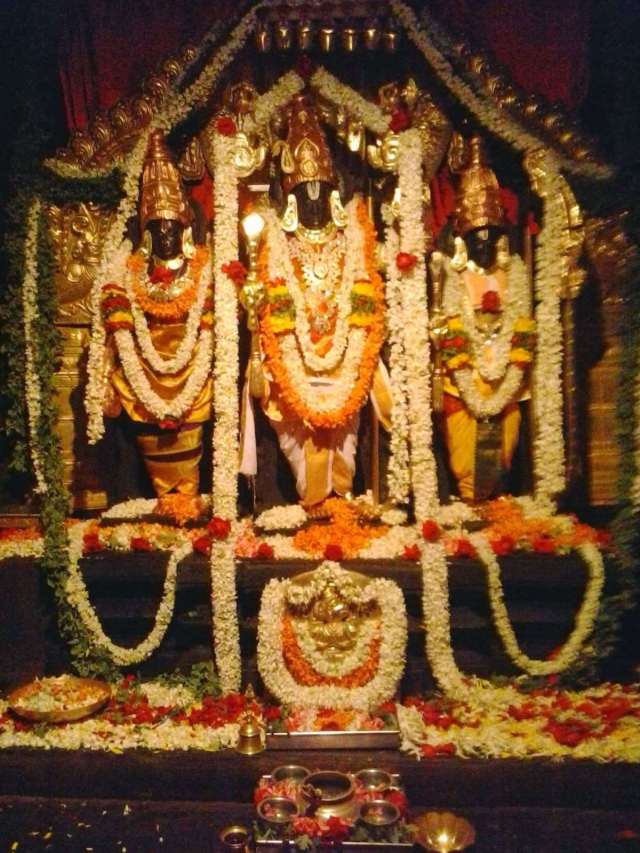
I seek refuge of Sri Venkateswara’s feet, which are extolled (in the Rg Veda) as “Visnoh parame pade” (in the most exalted abode of Vishnu), which are, (again) extolled therein as “madhva utsa” (meaning the fountain the honey) as extremely enjoyable and which are indicated as such by the show of the palm of Thy hand.
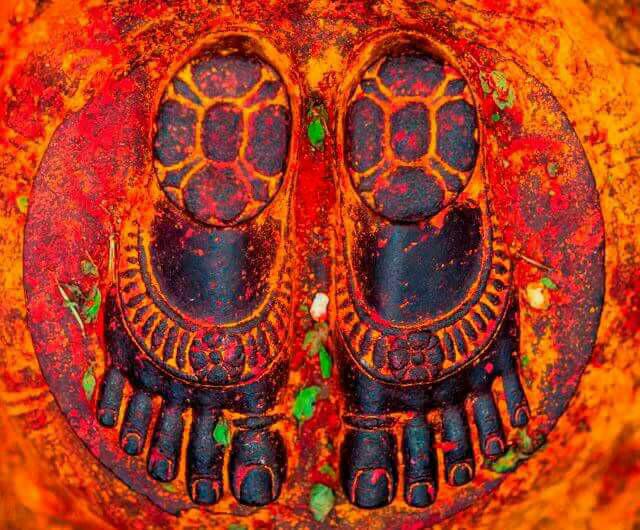
Pada Vandanam, Pada Namaskaram, Pada Archanam, Pada Sevanam, Pada Puja or Worship of Feet:
Whole Dude – Whole Worship: Defining Indian Identity – The Worship of Feet.
The land of India is a very unique place on this planet where people are culturally endowed with an ardent desire to worship feet.No other society or social community has openly exhibited this behavioral trait and feet worship could be described as the hall-mark of Indian Identity.This tradition and literal practice of feet worship was well established by the time the epic poem of Ramayana was composed. In AYODHYA KANDA,we read the very moving account of Rama touching the feet of His father Dasaratha and queen mother Kaikeyi after having received the orders for his banishment to live in the forest for fourteen years. Later in ARANYA KANDA, we read about the younger brother Bharata who literally clung to the feet of Rama seeking His refuge. Eventually,Bharata carried Rama’s sandals keeping them on his head and installs them on the throne (PADUKAPATTABHISHEKAM) and served them with great devotion for fourteen long years during Rama’s exile.
Whole Dude – Whole Worship: Defining Indian Identity – The Worship of Feet.
India is the land where you witness people touching the feet of living persons as an act of worship.This is a fairly common event and sometimes the remembrance of such worship lingers in your mind.I would like to narrate one such event that I had witnessed in the past and my act of remembrance may add-on to the blessings these feet worshipers may be receiving even today.
I was traveling by train from Rajahmundry to Lucknow City to serve in the Indian Army Medical Corps. I was motivated by a desire to see the land of India with my own eyes and know its people. For the first time, I was traveling in a first class compartment and was the sole occupant. Later in the night, a lady entered the compartment and was apparently traveling alone. She was elegantly attired, looked modest and the picture of an upper middle class house wife. Early morning, when the train halted at a station, I did not realize that she had reached her destination. She was quietly seated, was not gathering her belongings and was not even looking outside to check if some one had arrived to receive her. After a little while, I had noticed three young men, well- dressed and well-groomed, all of them little older than me, checking the list of passenger names on the door of the train compartment and entered the compartment. They did not pay any attention to my presence. One after the other, they went forward to bend and touch her feet and paid their respects. The behavior of the young men that I was keenly observing was natural, spontaneous and unpretentious. That early morning hour, they were not putting up an act in a public place to impress any one. They acted in a deliberate, purposeful and reverential manner and I am very sure that they grew up in that manner and clearly they were not inhibited in displaying their respect in front of strangers. I was a silent spectator of this scene wherein an unassuming woman suddenly got transformed into a living deity. I can assure you that you would witness such a scene only in the Land of India. Hence, I would claim that the desire to worship the feet of a living person would define Indian Identity.
Whole Dude – Whole Worship: Defining Indian Identity – The Worship of Feet.
Every deity that Indians seek to worship are better pleased when we worship their feet. PRAHLADA describes “PADA SEVANAM” as one of the nine ways to worship VISHNU.
Whole Dude – Whole Worship: Ramayana gives detailed accounts of the Tradition of Feet Worship.Rama worshipped the feet of His father, mother, stepmothers and His Gurus. Bharata, the younger brother of Rama had installed the sandals (Padukas) worn by Rama upon the throne had worshipped them for fourteen years.
Indians worship feet not only as a sign of humility but also as a mark of submission, total surrender to the will of God. They touch feet as a plea for protection. This is not a mere religious rite or ritual and it actually shapes the attitudes and behavior of people. The final resting place for the individual souls (JEEVATMA)has been described as the Lotus Feet of the Lord. This is described as ‘CHARANAM’ (Feet of the Lord) ‘SHARANAM’ (Ultimate Refugee).
Whole Dude – Whole Worship: Defining Indian Identity – The Worship of Feet
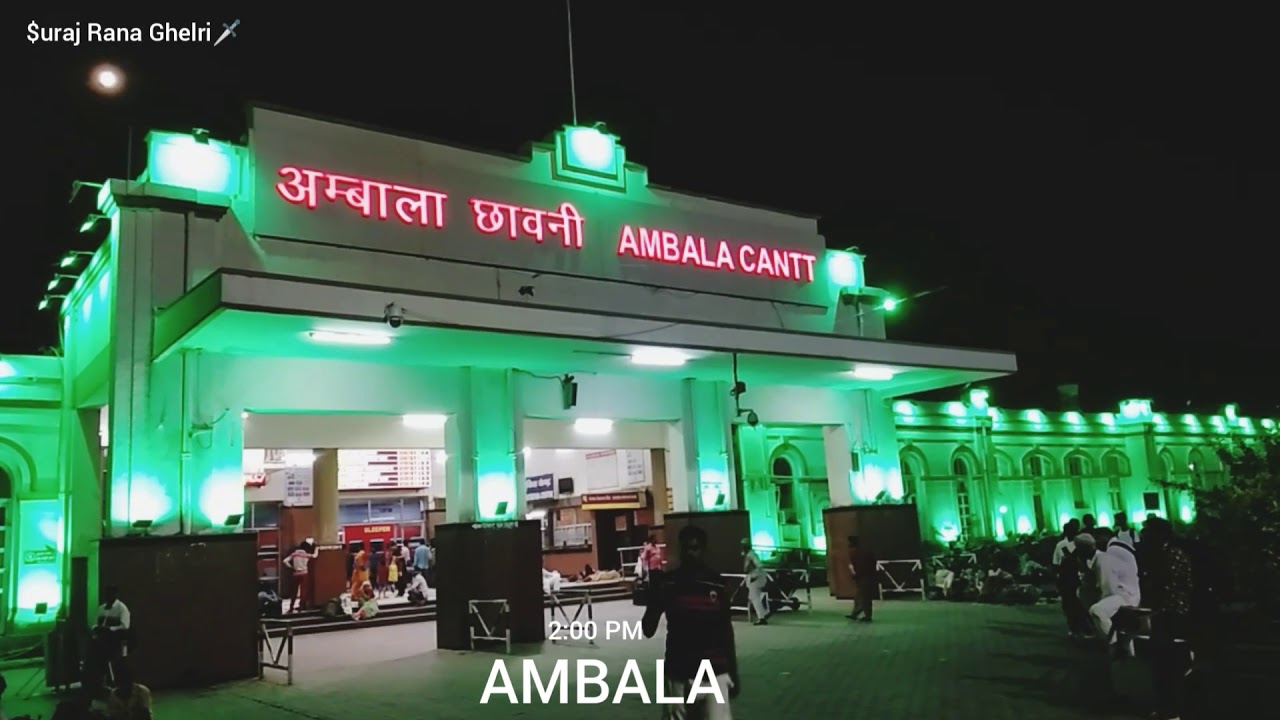
Whole Dude – Whole Listening: I arrived in Ambala Cantt in September 1970 on completion of Basic Medical Officers Course, BMOC 20/70 at AMC Centre and Officers Training School, Lucknow.
Excerpt: In 1970, Dr. R. Rudra Narasimham, while serving in the Military Hospital, Ambala Cantt, used an unconventional method to find a patient’s missing watch, leveraging the deep-seated Indian regard for truth. He listened to all the patients’ heartbeats, insinuating that he could identify the wrongdoer through this procedure. Ultimately, the missing watch was returned, saving the culprit public humiliation. This incident reflects the strong Indian sense of truth and the belief that it cannot remain concealed when one searches his own heart. Narasimham’s tale is a spiritual illustration that truth, represented by Lord Rama, and the essence of existence, is ultimately compassionate.
Defining Indian Identity -Finding Truth – Listening to the Heart. The Divine Mother is fondly remembered by invoking the numerous endearing names such as Amba, Durga, Parvati, and others.Whole Dude – Whole Listening: I served in Military Hospital, Ambala from September 1970 to September 1971. A view of the Medical Division at MH Ambala
While I was posted as an Intern at Military Hospital, Ambala, a patient of my Surgical Ward reported the problem of his missing watch.
To investigate the problem, I asked all the patients to come to my office and I carefully listened to their heartbeats. It was my impression that the missing watch was in the possession of one of the patients who was not its rightful owner.
I listened to their heart beats after I announced to them that I could discover the wrongful owner of the watch as the truth could be found in his heart. At the end of this listening session, I announced that I discovered the truth and asked the unspecified wrongful owner to return the watch to the place from where it was picked up, for that would give him a chance to avoid public exposure of his mischief. As expected by me, the missing watch found its way back to the bathroom from where it was picked up. The watch was returned to its rightful owner.
I listened to the hearts of my patients under the assumption that Indians have a deep sense of concern for truth and this concern about truth is a defining characteristic of Indian Identity. I would not suggest that my patients were gullible enough to trust my words about finding the culprit by listening to the heart sounds. They indeed have a true concern about the nature of truth and their inability to conceal truth from being revealed when man looks into his own heart in search of truth.
Dr. R. Rudra Narasimham, B.Sc., M.B.B.S.,
Personal Number – MS-8466 Rank Lieutenant/Captain Intern/Medical Officer ( 1970-71),
Military Hospital, Ambala, Haryana, India.
SPIRITUALITY SCIENCE – ESSENCE AND EXISTENCE – CHIDAMBARA RAHASYAM: LORD GOD IS JUST ONE AND THE SAME AND YET MAN KNOWS HIM BY DIFFERENT NAMES. IN THE INDIAN TRADITION, THE NAME RAMA IS THE PERSONIFICATION OF THE ABSOLUTE TRUTH OR THE ULTIMATE REALITY. LORD RAMA IS THE SOURCE OF KRUPA OR COMPASSION FOR HE HAS THE EXPERIENCE OF A LIFE JOURNEY IN HIS PHYSICAL MANIFESTATION AS A HUMAN BEING.
I seek refuge of Sri Venkateswara’s feet, which are extolled (in the Rg Veda) as “Visnoh parame pade” (in the most exalted abode of Vishnu), which are, (again) extolled therein as “madhva utsa” (meaning the fountain the honey) as extremely enjoyable and which are indicated as such by the show of the palm of Thy hand.
Pada Vandanam, Pada Namaskaram, Pada Archanam, Pada Sevanam, Pada Puja or the Worship of Feet:
Whole Dude – Whole Surrender: The Worship of Feet describes the process of total surrender.
The land of India is a very unique place on this planet where people are culturally endowed with an ardent desire to worship feet.No other society or social community has openly exhibited this behavioral trait and feet worship could be described as the hall-mark of Indian Identity.This tradition and literal practice of feet worship was well established by the time the epic poem of Ramayana was composed. In Ayodhya Kanda,we read the very moving account of Rama touching the feet of His father Dasaratha and queen mother Kaikeyi after having received the orders for his banishment to live in the forest for fourteen years. Later in Aranya Kanda, we read about the younger brother Bharata who literally clung to the feet of Rama seeking His refuge. Eventually,Bharata carried Rama’s sandals keeping them on his head and installs them on the throne (Paduka Pattabhishekam) and served them with great devotion for fourteen long years during Rama’s exile.
Whole Dude – Whole Surrender: The Worship of Feet describes the process called total surrender.
India is the land where you witness people touching the feet of living persons as an act of worship.This is a fairly common event and sometimes the remembrance of such worship lingers in your mind.I would like to narrate one such event that I had witnessed in the past and my act of remembrance may add-on to the blessings these feet worshipers may be receiving even today.
I was traveling by train from Rajahmundry to Lucknow City to serve in the Indian Army Medical Corps. I was motivated by a desire to see the land of India with my own eyes and know its people. For the first time, I was traveling in a first class compartment and was the sole occupant. Later in the night, a lady entered the compartment and was apparently traveling alone. She was elegantly attired, looked modest and the picture of an upper middle class house wife. Early morning, when the train halted at a station, I did not realize that she had reached her destination. She was quietly seated, was not gathering her belongings and was not even looking outside to check if some one had arrived to receive her. After a little while, I had noticed three young men, well- dressed and well-groomed, all of them little older than me, checking the list of passenger names on the door of the train compartment and entered the compartment. They did not pay any attention to my presence. One after the other, they went forward to bend and touch her feet and paid their respects. The behavior of the young men that I was keenly observing was natural, spontaneous and unpretentious. That early morning hour, they were not putting up an act in a public place to impress any one. They acted in a deliberate, purposeful and reverential manner and I am very sure that they grew up in that manner and clearly they were not inhibited in displaying their respect in front of strangers. I was a silent spectator of this scene wherein an unassuming woman suddenly got transformed into a living deity. I can assure you that you would witness such a scene only in the Land of India. Hence, I would claim that the desire to worship the feet of a living person would define Indian Identity.
Whole Dude – Whole Surrender: The Worship of Feet describes the process called total surrender.
Every deity that Indians seek to worship are better pleased when we worship their feet. Prince Prahlada describes “Pada Sevanam” as one of the nine ways to worship Lord Vishnua.
Whole Dude – Whole Surrender: Ramayana gives detailed accounts of the Tradition of Feet Worship.Rama worshipped the feet of His father, mother, stepmothers and His Gurus. Bharata, the younger brother of Rama had installed the sandals (Padukas) worn by Rama upon the throne and worshipped them for fourteen years.
Indians worship feet not only as a sign of humility but also as a mark of submission, total surrender to the will of God. They touch feet as a plea for protection. This is not a mere religious rite or ritual and it actually shapes the attitudes and behavior of people. The final resting place for the individual souls (Jeevatma)has been described as the Lotus Feet of the Lord. This is described as ‘Charanam’ (Feet of the Lord) ‘Sharanam’ (Ultimate Refuge).
Whole Dude – Whole Surrender: Man seeks the protection by the Worship of Feet to which he totally surrenders.
Whole Dude – Whole Hospitality: Defining Indian Identity – The Tradition of Hospitality. Honoring our fallen soldiers. The War Memorial in Walong, Arunachal PradeshWhole Dude – Whole Hospitality: Defining Indian Identity – The Tradition of Hospitality. I arrived at DumDuma (Doom Dooma) Airfield, Assam in 1972 after the successful conclusion of Operation Eagle, the military action in the Chittagong Hill Tracts, Bangladesh.Whole Dude – Whole Hospitality: I had the wonderful opportunity to serve in the North East Frontier Agency (NEFA), Arunachal Pradesh during 1972-73, after Indian Army’s victory in Bangladesh. I camped at Walong visiting troops.Whole Dude – Whole Hospitality: A view from a hill top near Walong, Arunachal Pradesh.Whole Dude – Whole Hospitality: During the 1962 Chinese aggression Indian Army valiantly resisted the enemy’s attack in a historical battle at Namti Plains, near Walong, Arunachal Pradesh.Whole Dude – Whole Hospitality: Suspension bridge across Lohit River near Chigwinti, Arunachal Pradesh.Whole Dude – Whole Hospitality: This is a picture taken at Headquarters ‘D’ Sector, prior to my visit to Chigwinti, and Walong. I am seen here along with Major Deedar Singh, the Unit Adjutant, and Captain Roop Singh an Assistant Company Commander standing in the middle.
This entry is dedicated to the memory of those brave men who gave their precious lives fighting the massive Chinese aggression in 1962. I experienced the traditional Indian hospitality at a forward Company location in Arunachal Pradesh (North East Frontier Agency) and my memories are fresh after a lapse of nearly 35 years and the reason is that I still feel the same passion to serve our men who fight for our country.
Service Award presented by all Officers D Sector, Establishment 22Whole Dude – Whole Hospitality: Defining Indian Identity – The Tradition of Hospitality. A view of Lohit River at Walong, Anjaw District.
In 1962 while the Chinese attacked India, I was a first year student studying for a Bachelor of Science degree (3- Year Bachelor’s Degree Course) at Government Giriraj Arts College, Nizamabad, Andhra Pradesh. India was taken aback by this unprovoked and unexpected invasion across the Himalayan Frontier. There was a spontaneous reaction from people across our nation. Nizamabad was no exception and the Giriraj students took out a procession to condemn the enemy. I was not a student leader but I was the son of the Principal of the College. That placed me in the very first row of students who led the procession. At that time, I did not visualize myself that I would be wearing the Olive Green Indian Army Uniform.
Whole Dude – Whole Hospitality: Special Frontier Force – Lohit River: “WALONG WILL NEVER FALL AGAIN.”
By year 1972, I completed two years of service in Indian Army and the great moment in my life arrived when I stood before the War Memorial in WALONG. The following verses were inscribed on it:
The sentinel hills that round us stand
bear witness that we loved our land.
Amidst shattered rocks and flaming pine
We fought and died on Namti Plain.
O Lohit, gently by us glide
pale stars above us softly shine
as we sleep here in sun and rain.
Whole Dude – Whole Hospitality: Defining Indian Identity – The Tradition of Hospitality.
Let us keep our collective memory afresh and pay tribute to these loyal sons of our land.
The Tradition of Hospitality in India:
Whole Dude – Whole Hospitality: Defining Indian Identity – The Tradition of Hospitality.
Hospitality is a fairly popular tradition for a variety of cultures across our globe. In India the tradition was well established a long time ago and we elevated it to a degree which may not be seen anywhere else in this world. The Vedic statement ” Athiti Devo Bhava ” is a thought that finds its expression only in our Land. The word ‘Athiti’ defines the guest as a person who could show up at your home without a prior notice or formal invitation and on a day and at a time of his own choice. Our literature is full of stories about this great tradition of hospitality and the episode described in the story of MAHA BHARATA shows the importance of preserving this tradition. Princess Draupadi was overwhelmed by the arrival of a large number of guests , while she and the Pandava Princes lost their kingdom and were living in the forest. She did not want to fail in her duty of being a good hostess. She was desperate and she met this challenge by earnestly praying to Lord Krishna. Upholding the principle of hospitality is very important to Lord Krishna and He gracefully provided the help Draupadi needed to serve her guests in accordance with our Dharma (Right Conduct). Her adherence to the tradition of hospitality truly defines the Indian Identity.
Most of you would have experienced some act of hospitality or the other and I want to narrate a simple act of hospitality that I experienced at CHINGAWANTY ( or CHIGWINTI ) in Arunachal Pradesh and would take this opportunity to speak of my memorable experience at this forward Company location and describe this as our Indian Identity.
The Tradition of Hospitality at Chingawanty (CHIGWINTI ):
Whole Dude – Whole Hospitality: Defining Indian Identity – The Tradition of Hospitality
The Company Commander Major.G B Valenkar was the recipient of VIR CHAKRA award for his role in Operation Eagle, the military action that initiated the Liberation of Bangladesh in 1971 with attacks on the enemy posts in the Chittagong Hill Tracts. During Operation Eagle, we had worked together in the South Column Unit under the Command of Lieutenant Colonel B K Narayan.
Major Valenkar briefed me about the traditional hospitality of the men of his Company. Before the dinner was served, he told me that the men would continue to serve food till such time I announce that I am fully satiated and that I need no further servings. Then, they would bring one more final serving to ensure that I am truly satiated and well fed. I wanted to test the men and find out for myself their devotion to their hospitality tradition. After dinner was announced, I mentioned my preference for bread.
Whole Dude – Whole Hospitality: Defining Indian Identity – The Tradition of Hospitality.
Instead of ‘chapatis’, I told the men hosting my dinner, that I would like to be served with poori (soft, fluffy, deep-fried Indian Bread) to go with my meal. The dishes were served piping hot and the fried poori were made one after the other and a fresh serving would arrive just before I would finish the previous serving. The food was delicious and the mountain weather was cool and refreshing and I was young and had a healthy appetite. I continued eating while having a pleasant conversation with Major.Valenkar and after several servings, the man stood before me respectfully and asked me to grant him some additional time before he could bring forth the next serving. He mentioned that the cook had run out of the dough he had prepared for the evening meal. I responded saying that I really need no further servings and asked him not to bother about preparing more dough. The man submitted that it would not be fair on my part to stop him at that juncture and stated that I could only stop him from serving only at a time when he is able to provide more servings. In the Indian Hospitality tradition, the guest is also expected to give his host a reasonable opportunity to fulfill his obligation and the host has also a right to derive a sense of satisfaction by observing the rules of hospitality. I had to concede and in a little while, he resumed his service. After eating to my heart’s content, I told him that I am really satiated. He agreed to bring in the final serving and he passed in the test and he did not give up until he made sure that I am fed till such time that I am fully fed.
I am speaking of this hearty meal to just give you a chance to taste the passion that keeps us united and we relish the opportunity to serve our Land and defend its traditions of Valor and Hospitality.
Whole Dude – Whole Hospitality: Defining Indian Identity – The Tradition of Hospitality
Annam Brahma raso Vishnu pakto Devo Maheshvarah
Evam samchintya bhumjaano, drushti dosho na lipyate.
Whole Dude – Whole Hospitality: The Hospitality Tradition is based upon the concept of Whole Food or Annapurna, the Goddess of Food
The above verse is asking us to consider both, the meal, and the person who is partaking the meal as God.
Whole Dude – Whole Hospitality: Defining Indian Identity – The Tradition of Hospitality.
Whole Dude – Whole Tradition: Defining Indian Identity-The Tradition of Ahimsa. The Tradition of Cow Worship and Cow Protection.
Lord Krishna in Bhagavad Gita, Chapter 11, Visvarupa-Darsana Yoga, The Vision of the Universal Form, verse 55 proclaims “Advesham Sarva Bhuteshu”- Being devoid of enmity towards all living entities is a must and laid the foundational principle of Ahimsa. Krishna is most popularly known as Govinda, a provider of a great sense of Joy to cattle.
Whole Dude – Whole Tradition: Defining Indian Identity. The Tradition of Ahimsa. Mahatma Gandhi was a staunch advocate of Cow Protection and Prevention of Animal Cruelty.
Mahatma Gandhi applied the principles of ‘Ahimsa’ to fight for India’s Freedom.
“Cow protection to me is not mere protection of the cow. It means protection of all that lives and is helpless and weak in the world.” -Mahatma Gandhi.
Whole Dude – Whole Tradition: Defining Indian Identity. The Tradition of Ahimsa. Lord Gautama Buddha preached Nonviolence and Kindness towards all living things.
Siddhartha Gautama Buddha lived in India, c. 563 B.C. – c. 483 B.C. was the founder of Buddhism.
Whole Dude – Whole Tradition: Defining Indian Identity. The Tradition of Ahimsa. LORD MAHAVIRA – Jainism is founded in the 6th century B.C. emphasized the importance of reverence for all living things.
Lord Mahavira – Jainism is founded in the 6th century B.C. emphasized the importance of reverence for all living things.
In the ancient land of India, the tradition and practice of ‘Ahimsa'(noninjury) has been well established. This entry is not intended to speak about the greatness of Lord Mahavira, Lord Gautama Buddha or Mahatma Gandhi. Their contributions are well-known and well-respected by all. As a beneficiary of this great tradition, I want to claim that Ahimsa helps humans as much as it promotes the well-being of animals. Animals give us a chance to learn and practice the habit of showing compassion. Animals may not be able to speak and communicate their fears, pain, and suffering. But they provide us with the skills to listen and know the emotion of fear. Animals give us the ability to discern pain when we are not in a position to speak for ourselves. I want to describe as to how a person, experienced in preventing cruelty to animals, is well equipped to rescue humans.
Child Abduction and the story of a miraculous rescue:
Whole Dude – Whole Tradition: Swami Karunyananda ( One who delights himself or experiences a sense of Joy by showing Karuna or Compassion. His birth name was Venkata Subbiah. His birthplace was Kammavarpalayam, a tiny village in Madras or Tamil Nadu State of India. He founded and established Sri Gowthami Jeevakarunya Sangham at Rajahmundry during 1940.
Swami Karunyananda, One who delights himself or experiences a sense of Joy by showing Karuna or Compassion. His birth name was Venkata Subbiah. His birthplace was Kammavarpalayam, a tiny village in Madras or Tamil Nadu State of India. He founded and established Sri Gowthami Jeevakarunya Sangham at Rajahmundry during 1940.
Whole Dude – Whole Tradition: Defining Indian Identity – The Tradition of Ahimsa
I am narrating my personal story to recall an event and express my gratitude to a person whose name is not known to me but whom I remember for his timely intervention to rescue me. Otherwise, my life’s journey would have proceeded on an altogether different track. This very simple, down to earth, the unassuming person acted in a manner that had made a lasting impression on my mind and I am able to recollect the incident without any effort.
In 1951, that is 56 years ago, I lived in the town of Rajahmundry, East Godavari district of the present State of Andhra Pradesh. The town is on the left bank of river Godavari which enters the town from the north and flows towards the south. I lived in a residential neighborhood known by the name Innispet and it is located next to the river bank.
Those days, many of the streets had no given names and the houses had no designated house numbers. The part of the street where I lived was later named as ‘KALABARGI VARI’ street. Our house was built by my grandfather (Late)Shri.R.Subbarao who had earlier worked as the District Public Prosecutor. I lived with my grandmother Smt. Lakshmi Narasamma, my parents and two elder brothers. My great-grandmother and my grandmother’s sister had also lived in this mansion. My younger brother and sister are not yet born. I may also mention that my father had chosen my personal name to be Rudra Narasimham and he had made this choice to please and honor my grandmother. For this reason, I had also enjoyed her affectionate treatment.
At the age of three and a half years, I was able to walk and move freely. My elder brothers had already joined schools. I whined about it and my father got me enrolled at King George Elementary School which was on the same street at a short distance from my home. The name King George reminds us of our colonial past. The School had a very modest structure. There was no kindergarten class and hence I joined the grade 1 class.
A little while after the monsoon season had finished, the School was temporarily closed because of a panic created by a string of child abduction incidents. My father was in the habit of going out for an evening walk. That day, the evening was cool and pleasant and the sky was clear. I insisted that I would accompany my father during his evening walk. He tried to talk me out of it and more so out of concern about the child lifting incidents. He left for his walk leaving me at home. I slipped out of the house and I thought I would be able to follow him from behind while he walked ahead of me.
I was walking south on the street and very soon lost sight of him. I kept walking, went past an intersection and at the next intersection, the street had ended. I made a right turn as I had noticed that a lot of people were walking in that direction towards the ‘Main Street’ of our town. The streets had no sidewalks and the pedestrians walk all over the street and there was not much of vehicular traffic.
Soon after I made the right turn, I was suddenly lifted up by a stranger and was handed over to a woman who accompanied him. I instantaneously recognized that I was in some big trouble. I started crying loudly but was not able to express my sense of fear in words. The pedestrian crowd around me paid no attention and my crying aroused no particular concern.
This terrible situation suddenly changed when a man wearing simple, white, hand-spun garments (‘KHADI’) came by riding on a bike. He spontaneously reacted to my crying. In my speechless voice, like any other dumb animal, I could communicate to him that I was very apprehensive and that I was gripped with a sense of fear and pain. He read my emotions correctly and he lost no time and decided to intervene.
He stopped the pair and started grilling them with questions and insisted that I was not their child. They initially argued that I was their child. My rescuer did not relent a bit and eventually, he demanded that the pair should accompany him to the Police Station to verify my identity. I remained a silent spectator and the sense of fear would not let me speak up the fact that I was not their child and that woman was not my mother.
As the heat of the argument built up, the pair decided to get away and the woman dropped me down leaving me with the man on the bike. I was at ease in the company of this unknown man and the sense of fear vanished and I stopped crying.
He placed me on the front bar of his bike. He inquired about my address. The only information that I could provide was that my house was located near a doctor’s clinic. Meantime, the evening had already turned into night. He decided to return me to my home. Before doing so, he took me to a street vendor selling sweets and snacks. He asked me to pick an item of my choice. He paid the merchant. After I finished eating my snack, I felt a lot more relaxed and was ready for the bike ride through the neighborhood.
After spending some time conversing with me, he began his search at the north end of the street where I lived. The street was fairly long and had several houses on either side. Those were the days when we had no television; before retiring for sleep, people were in the habit of relaxing in front of their homes after it gets dark. House after house, he was checking with people and was inquiring about any missing child.
Finally, we arrived at the intersection where my house stood on the street corner. At that point, to recognize my house was very easy for me. I saw my grandmother and my mother standing on the front porch with a very worried expression on their faces. The search was over and I simply jumped out from the bike and literally ran into my home. I was not around when my mother and grandmother thanked him for bringing me back home safely and they were shocked to know that I was briefly got abducted. Later, my mother tried to gently admonish me and asked if I would ever go out alone all by myself. By then, I had lost the fear that gripped my mind and I was happy with my experience of meeting this man who got me back home and very boldly I answered my mother that I am not afraid of going out on my own.
This unknown man worked for a charitable organization by the name “Sri Gowthami Jeeva Karunya Sangham.” This organization provides animal shelters and a variety of humanitarian services. The employees patrol the streets on bikes to detect and to prevent cruelty to animals.
His belief in Ahimsa or Non-Injury, his personal experience in dealing with the pain and suffering of dumb animals had also given him the insight to recognize my plight when I was lifted up from the street. On a crowded street, while I was snatched, no one had paid attention to my cries, but for this person, the abduction would have proceeded unnoticed.
I describe that this person has the Indian Identity that I cherish and value. This Identity springs from our long-established Cultural tradition of Ahimsa. I would consider him to be a true practitioner of Ahimsa.
I have not personally known or seen Sri. Karunyananda (1894- 1997) who established Sri Gowthami Jeeva Karunya Sangham in Rajahmundry during the year 1940. Karunyananda was at Swami Sivananda’s Ashram at Rishikesh in northern India. Mahatma Gandhi visited Rishikesh and addressed the group of young ‘sanyasins’ at the Ashram. He encouraged them to render humanitarian service and serve others to practice the principle of ‘Ahimsa’ which involves treating all living entities with a sense of respect and dignity.
This concept of ‘Ahimsa’ reached me through the service rendered by a man who practiced the principle of ‘Ahimsa’ and gained the ability to recognize pain and suffering even when there is no verbal communication to express that condition.
Dr. R. Rudra Narasimham, B.Sc., M.B.B.S.,
Danavaipeta Municipal High School, Rajahmundry, East Godavari District, Andhra Pradesh, India,
S.S.L.C., Class of March 1961.
Whole Dude – Whole Tradition: Defining Indian Identity – The Tradition of Ahimsa. A tribute to the founder of Shri Gowthami Jeeva Karunya Sangham, Rajahmundry.
Whole Dude – Whole Greeting: Defining Indian Identity – The Traditional Greeting.Whole Dude – Whole Greeting: Om, Namah Sivaya – The Five Letter Mantra – Traditional Indian Greeting-Namaskar
TheTradition of Respect and Obedience:
Whole Dude – Whole Greeting: Defining Indian Identity – The Traditional Greeting
Deuteronomy, 5th Book of Moses, The Old Testament, The Holy Bible: Chapter 10, verse 16:
“Circumcise therefore the foreskin of your heart, and be no more stiff necked.”
The word ‘Namah’ means one that bends which implies obedience. The one word ‘Namaskar’ represents the full spectrum of the legacy of India’s Culture.
Namah Shivaya:
Whole Dude – Whole Greeting: Defining Indian Identity – The Traditional Greeting. Five Letter Mantra for Learning. AUM NAMAH SHIVAYA. Namah is the most used Sanskrit word in all human interactions, worship, and the Learning Process.
I shall begin this entry with a traditional greeting. As a kid I was trained to greet and acknowledge others. The greeting is called ‘Namaskar’ or ‘Namaste’. I would begin by greeting all of you who may read this entry with my ‘Namaskar’. Namaskar is the essence of our Culture and this single word can represent the full spectrum of our Cultural legacy.
Whole Dude -Whole Greeting: Defining Indian Identity – The Traditional Greeting. Lieutenant General T A D’ Cunha, Director General of Ordnance Services is seen saluting the Corps Colors in this photo image taken during AOC 8th Reunion Celebration at AOC Centre Secunderabad.
I served in Uniform. The lesson I grasped is that to Salute is the foundation upon which the entire structure of military discipline is built.Service in the Armed Forces depends upon team work.The team structure depends upon the ability of team members to recognize and acknowledge each other at all times. I salute to acknowledge the person as a member of my team. Army accomplishes great things only when the team members follow this ground rule for their conduct and behavior. Namaskar is the tool given to me by the Culture of my Land and this tool shapes my attitude and personal behavior and this tool helps me to attain my life’s goals.
Defining Culture:
Whole Dude – Whole Greeting: Defining Indian Identity – The Traditional Greeting. Namaskar
Culture is defined as learned or acquired behavior in contrast to biological behavior which is genetically endowed. Human Culture is defined as learned behavior acquired by individuals as members of a social group.Culture denotes a people’s heritage of custom and belief. It is a system of ideas that has been transmitted down through the generations. It includes assumptions about the world, about life and existence, rules and ways to act, goals and ways of achieving them. People’s ideas about ways to live may shape the ways they actually do live.Beginning at birth, each individual is encultured by a body of norms governing behavior and other knowledge that the society has. Thus Cultural Heritage can be defined as the sum total of human knowledge and acquired behavior.
Whole Dude – Whole Greeting: Defining Indian Identity – The Traditional Greeting Namaskar
Namaskar represents the essence of my Cultural heritage. Culture gives people a sense of personal identity. Defining that ‘identity’ helps in understanding the Culture. Namaskar is the behavior I learned and Namaskar defines my ‘identity’. It is a behavior transmitted to me through the generations.
Culture of the Land:
Whole Dude – Whole Greeting: Defining Indian Identity – The Traditional Greeting. The Land of India or Bharat Varsha is traditionally identified as ‘KARMA KSHETRA’ or ‘KARMA BHUMI’.Human Existence is operated by the ‘Law of Karma’.
The Land of India in our Culture and tradition is referred to as the land of Bharat. My purpose is to learn the ideas and thoughts that have found their roots in this particular Land. Ideas and thoughts help in developing and defining our attitudes.Our attitudes are reflected in our behaviors.The behavior which springs from the seeds of ideas and thoughts that were planted in the soil could be described as the Culture of the Land. The ancient Hindu Scripture known as Rig Veda has recommended that we should keep our minds open to receive noble thoughts from all directions. I studied Natural Sciences and I gained much of my information from ideas and thoughts expressed in books that were published in the West.The basic idea and thought that I had received was that we need to carefully sort out the information that we gather. Assimilation of information would be possible only when facts are considered in a systematic manner. I learned about plants and animals as a part of my study called Biological Science. Living things are connected and are related to each other.This interconnectedness and the interrelatedness describes the ecological system.There is a great amount of diversity in nature.To understand living things, we need to group them and learn about them as a part of an ecological system. We can not understand existence if we look at individual creatures.The reactions between the players of a given geographical area gives a better understanding of life and existence. I would like to use this kind of scientific tool to identify ideas and thoughts.Some ideas and thoughts could be assigned to a particular land in the same manner that a natural scientist would identify some species are ‘NATIVE’ and others as ‘NON-NATIVE’ in the description of an Ecological System. To prove that an idea is culturally derived, we need to demonstrate that the idea is transmitted through generations.To arrive at ideas that originated in the Land of India, I would prefer to obtain a sense of direction from my great grand mother, my grand mothers and my mother. If an idea was not known to them, it may not be a part of my cultural legacy. If they had known very little, I would deem it as my good fortune and that little is my whole inheritance. Namaskar thus represents the best of my acquired knowledge.
The importance of Namaskar:
Whole Dude – Whole Greeting: Defining Indian Identity – The Traditional Greeting
The word Namaskar is usually accompanied with the action of joining hands and bringing them together in front of the body with the elbows flexed and the neck slightly bent forwards.The joining of hands symbolizes respect and the bending of the neck signifies obedience. A person with ‘stiff neck’ is generally considered to be disobedient, rude, arrogant or proud. Respect can not be shown if the person does not display an attitude of obedience.The very essence of Indian Culture can be stated as that of showing respect and obedience. This is the most important behavior that is expected of every one. It is not merely about showing respect and of obedience to the Gods that people worship. Even the Gods that people worship also implicitly observe the rule about showing respect and obedience.This social expectation rules every relationship and activity. It is the basic expectation, let it be parent-child relationship, husband-wife relationship, teacher-student relationship, employer-employee relationship, the Ruler and the subject relationship, the relationship between siblings and even between friends. Respectful conduct is expected while receiving guests, while dealing with any elderly person even though the person may not be related. In addition, several plants, trees, birds, animals, rivers, the sea and the the hills and mountains enjoy a special status and are treated with great respect.This social behavior is encouraged at all times and specially kids are trained and tutored to display this behavior. I grew up in India and my childhood is shaped by learning this behavior. Also my culture has given the freedom of choice. I am free to worship several entities in addition to God. If I am not inclined to worship God, I may choose a living person, a plant, a tree, an animal, some element of nature or even a name and shapeless stone and I am free to worship that object with the same and similar amount of respect that one may give to God.The Gods of my Culture would not get angry or jealous if I am totally preoccupied with showing respect to an object of my choice. Most people of the Land of India get used to showing respect to a variety of objects.
Showing respect and obedience is considered as the most important learning tool to acquire humility. Through humility, the individual can subdue his ‘ego’. Ego is viewed as a great obstacle in the pursuit of self-knowledge. Self-Knowledge is the chisel that lets an individual to break the shackles of all attachments. Freedom from all attachments is described as Moksha or Liberation and as Mukti or Release.This cultural norm of showing respect and obedience and the use of Namaskar would help us in attaining life’s goal or to realize man’s purpose in life.
Defining Indian Identity – The Traditional Greeting provides the tool to learn the cultural values of respect and obedience.














 Whole Dude - Whole Concept