THE EVIL RED EMPIRE – AIRSPACE EXPANSIONISM

THE EVIL RED EMPIRE – AIRSPACE EXPANSIONISM:
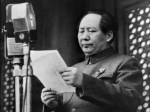
Mao Zedong proclaims the founding of the People's Republic of China in Beijing on Oct. 1, 1949.
Mao Zedong proclaims the founding of the People’s Republic of China in Beijing on Oct. 1, 1949.

The term “The Evil Red Empire” describes the national entity founded by Communist leader Mao Zedong on October 01, 1949. To build an Empire, Mao Zedong formulated a Policy of Expansionism in late 1940s.

the evil red empire airspace expansionism

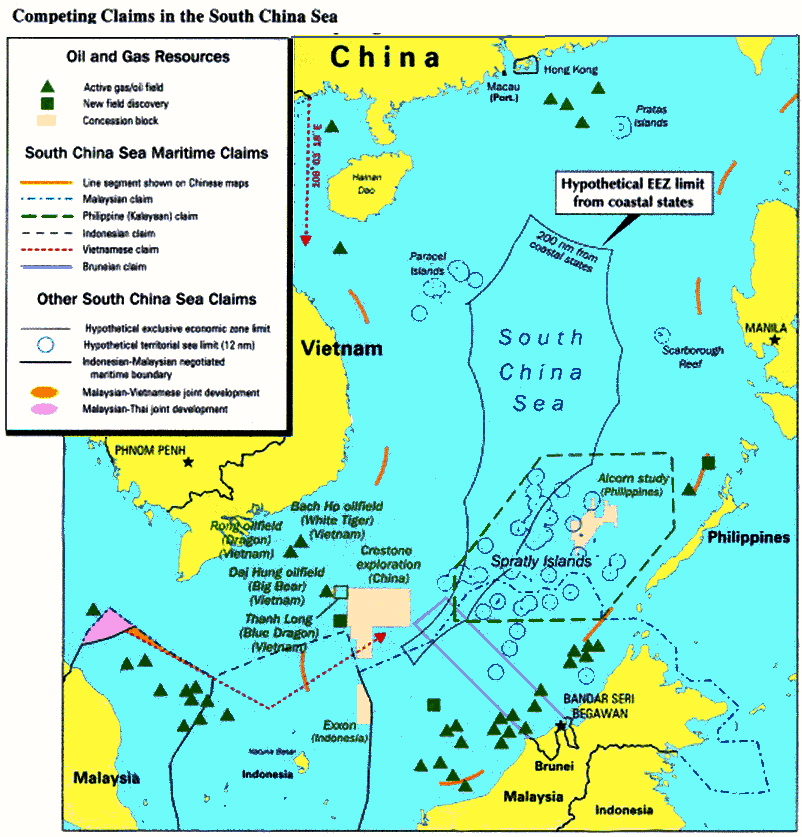
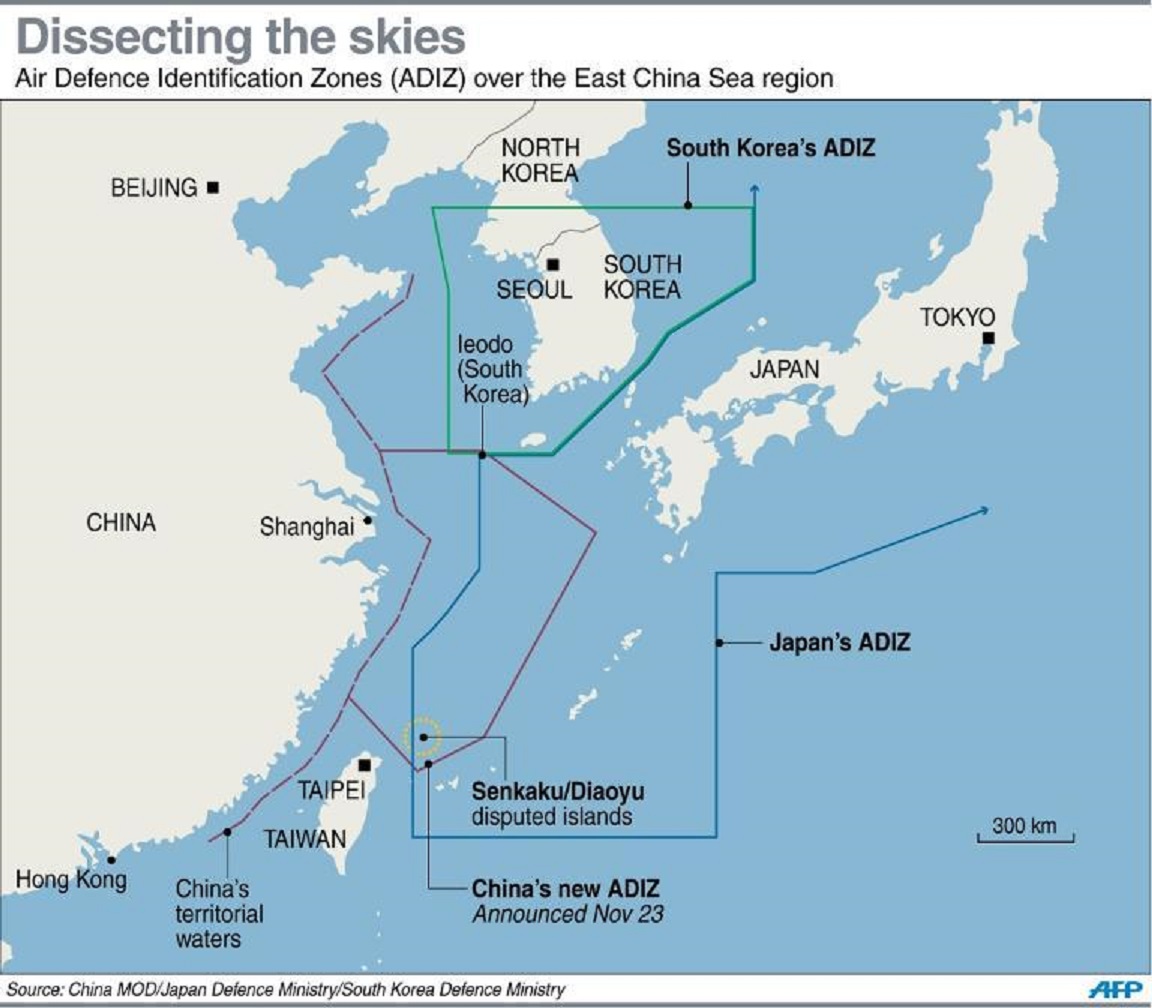
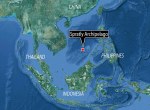
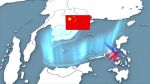
Airspace is the space extending up above an area of the earth’s surface; specifically, airspace refers to the space above a nation over which it can claim jurisdiction. Red China’s maritime expansionism in South China Sea poses a security threat as it involves the rights to use the airspace by other countries. With its land reclamation activities, Red China has expanded its claims to Land, Sea, and Airspace and is further willing to control that airspace by establishing its own Air Defence Identification Zone.
the evil red empire airspace nine dash expansionism

United States Navy and Air Force have no option other than that of challenging Red China’s illegal claim to sovereignty using land reclamation and building activity without any approval from its neighbors who have legitimate claims in that region.

Rudranarasimham Rebbapragada
Ann Arbor, MI 48104-4162, USA
SPECIALFRONTIERFORCE.ESTABLISHMENT22

U.S., CHINA SET FOR HIGH-STAKES RIVALRY IN SKIES ABOVE SOUTH CHINA SEA
the evil red empire airspace south china sea expansionism


Reuters

By Greg Torode

An aerial photo taken though a glass window of a Philippine military plane shows the alleged on-going land reclamation by China on mischief reef in the Spratly Islands .

An aerial photo taken though a glass window of a Philippine military plane shows the alleged on-going …

By Greg Torode

HONG KONG (Reuters) – When the U.S. navy sent a littoral combat ship on its first patrol of the disputed Spratly islands in the South China Sea during the past week, it was watching the skies as well.

The USS Fort Worth, one of the most modern ships in the U.S. navy, dispatched a reconnaissance drone and a Seahawk helicopter to patrol the airspace, according to a little-noticed statement on the navy’s website.

While the navy didn’t mention China’s rapid land reclamation in the Spratlys, the ship’s actions were a demonstration of U.S. capabilities in the event Beijing declares an Air Defence Identification Zone (ADIZ) in the area – a move experts and some U.S. military officials see as increasingly likely.

“It’s not inevitable but if we are betting paychecks I’ll bet that they will eventually declare one, I just don’t know when,” said a senior U.S. commander familiar with the situation in Asia.
ADIZs are not governed by formal treaties or laws but are used by some nations to extend control beyond national borders, requiring civilian and military aircraft to identify themselves or face possible military interception.

China sparked condemnation from the United States and Japan when it imposed an ADIZ in the East China Sea, above uninhabited islands disputed with Tokyo, in late 2013.

Chinese military facilities now under construction on Fiery Cross Reef in the Spratlys, including a 3,000-metre (10,000-foot) runway and airborne early warning radars, could be operational by the year-end, said the U.S. commander, who declined to be identified.

Recent satellite images also show reclamation work on Subi Reef creating landmasses that, if joined together, could make space for a similar sized airstrip.
Growing concern in Washington that China might impose air and sea restrictions in the Spratlys once it completes work on its seven artificial islands is likely to be on the agenda when U.S.

Secretary of State John Kerry meets Chinese leaders in Beijing this weekend for previously scheduled talks.

TOUGH TO ENFORCE

Asia’s rising power claims sovereignty over most of the South China Sea, through which $5 trillion in ship-borne trade passes every year. The Philippines, Vietnam, Malaysia, Taiwan and Brunei also have overlapping claims.

China has said it had every right to set up an ADIZ but that current conditions in the South China Sea did not warrant one.

Enforcing such an ADIZ would be difficult even with two airstrips capable of handling fighter planes in the Spratlys, as well as an expanded airstrip on Woody island in the disputed Paracel island chain further north because of the distances involved, regional military officials and experts said.

The Spratlys for example lie more than 1,100 km (680 miles) from the Chinese mainland, putting China’s well-equipped airbases along its coastline well out of reach.
“Even with the new reclamations, it is going to be a stretch for China to routinely enforce such a zone that far south,” said Richard Bitzinger, a regional security analyst at Singapore’s S. Rajaratnam School of International Studies.

The Japanese and U.S. military ignore the ADIZ above the East China Sea, as does Japan’s two major carriers, ANA Holdings <9202.T> and Japan Airlines <9201.T>.

A study produced by the independent U.S. Congressional Research Service earlier this year noted that while China’s air force actively monitors that zone with ground radar from its coastline, it had generally shown restraint in enforcement.
China’s planes were unlikely to maintain a constant presence over the East China Sea, the study noted, citing a U.S. air force assessment.

RISK OF ESCALATION

The South China Sea might prove more problematic for China given the complexity of the dispute and the possibility of challenges from the U.S. navy and air force.

Indeed, on Tuesday, a U.S. official said the Pentagon was considering sending military aircraft and ships to assert freedom of navigation around the Chinese-made islands.
China’s Foreign Ministry responded by saying Beijing was “extremely concerned” and demanded clarification.

On Friday it accused the Philippines of working together with the United States to “exaggerate the China threat” over the Spratlys.
China had recently warned Philippine air force and navy planes at least six times to leave the Spratlys, the Philippine military commander responsible for the region said last week. The planes refused.

Zhang Baohui, a mainland security expert at Hong Kong’s Lingnan University, said he was worried about the risk of confrontation from any U.S. show of force.
“It’s reckless,” he said, referring to Washington’s latest plans.

“It has a built-in dynamic for unintended escalation,” he added. “Are they willing to take the consequences of this escalation?”
At sea, tensions are already apparent.

The naval statement about the USS Fort Worth, which can also hunt submarines and support amphibious landings, noted the ship “encountered multiple People’s Liberation Army-Navy warships” during its patrol. It did not go into detail.
“Our interactions with Chinese ships continue to be professional and (the Code for Unplanned Encounters at Sea) helps clarify intentions and prevent miscommunication,” Commander

Matt Kawas, the Fort Worth’s commanding officer, said in the statement.
(Additional reporting by Tim Kelly and Nobuhiro Kobu in YOKOHAMA, Japan; Editing by Dean Yates)

  • South China Sea
  • East China Sea
  • China

Obama Salutes Marines in Nepalese Crash

(c) Copyright Thomson Reuters 2015. Click For Restrictions – http://about.reuters.com/fulllegal.asp

Yahoo – ABC News Network
the evil red empire airspace south china sea
the evil red empire airspace south china sea expansionism
the evil red empire airspace maritime expansionism
the evil red empire airspace expansionism air defence zones

THE EVIL RED EMPIRE – MILITARY EXPANSIONISM

THE EVIL RED EMPIRE – MILITARY EXPANSIONISM:

THE  EVIL  RED  EMPIRE -  MILITARY  EXPANSIONISM :   THE  RED  DRAGON'S  EXPANSIONISM   USING  ITS  SUPERIOR  MILITARY  POWER  OVER  ITS  WEAKER  NEIGHBORS .
THE EVIL RED EMPIRE – MILITARY EXPANSIONISM : THE RED DRAGON’S EXPANSIONISM USING ITS SUPERIOR MILITARY POWER OVER ITS WEAKER NEIGHBORS .

Red China’s land reclamation activities in South China Sea are mere symptoms of a serious disease called Military Expansionism. Red China is projecting its military power by acting against the interests of its neighbors for she thinks there is no one besides her. In Red China’s estimate, all other nations will submit to her superior military power or at a minimum avoid a direct military conflict to change her behavior. The word ‘APOCALYPSE’ means unveiling or revelation, it refers to a revelation depicting symbolically the ultimate destruction of Evil and triumph of Good. The word ‘DOOM’ refers to what is laid down, decree, judgment, a sentence of condemnation, destiny, tragic fate, ruin, to ordain as a penalty. Doomsayer is a person disposed to predicting catastrophe or disaster. As Doomsayer of Doom Dooma, I am predicting the downfall of The Evil Red Empire without the need for fighting against its military power.

“Therefore in one day her plagues will overtake her
death, mourning and famine.
She will be consumed by fire,
for mighty is the Lord God who judges her.” (REVELATION 18:4)

I am not surprised to read REUTERS news story published by David Brunnstrom that the US Secretary of State John Kerry would take tough approach in China over South China Sea during his visit to Beijing on Saturday, May 16, 2015.

Rudranarasimham Rebbapragada
Ann Arbor, MI 48104-4162, USA
SPECIALFRONTIERFORCE.ESTABLISHMENT22

U.S. Kerry to take tough approach in China over South China Sea

Reuters

By David Brunnstrom 16 hours ago

Chinese President Xi Jinping speaks with U.S. State Secretary John Kerry, through a translator, during a lunch banquet in the Great Hall of the People in Beijing .

Chinese President Xi Jinping (L) speaks with U.S. State Secretary John Kerry (R), through a translator, …

By David Brunnstrom

WASHINGTON (Reuters) – U.S. Secretary of State John Kerry will leave China “in absolutely no doubt” about Washington’s commitment to ensuring freedom of navigation and flight in the South China Sea when he visits Beijing this weekend, a senior State Department official said on Wednesday.

Setting the scene for what could be contentious encounters with Chinese leaders, including President Xi Jinping, the official said Kerry would warn that China’s land reclamation work in contested waters could have negative consequences for regional stability – and for relations with the United States.

On Tuesday, a U.S. official said the Pentagon was considering sending military aircraft and ships to assert freedom of navigation around rapidly growing Chinese-made artificial islands in the disputed South China Sea.

China’s Foreign Ministry responded by saying that Beijing was “extremely concerned” and demanded clarification.

U.S. Assistant Secretary of Defense David Shear told a Senate hearing the United States had right of passage in areas claimed by China. “We are actively assessing the military implications of land reclamation and are committed to taking effective and appropriate action,” he said, but gave no details.

Cui Tiankai, China’s ambassador to the United States, responded by warning Washington not to interfere in the South China Sea dispute and rebuked it for “double standards” in its criticism of Beijing, state news agency Xinhua said on Thursday.

“Just who is creating tensions in the South China Sea?” Cui was quoted as saying. “In the past few years, the United States has intervened in such a high-profile way. Is that to stabilize the situation or to further mess it up? The facts are out there.”

Cui, in an interview with Chinese media in the United States on Wednesday, noted that some countries had already begun reclaiming land on reefs that Beijing says belong to China, but the United States had not singled them out.

On the Pentagon’s plan to send military aircraft and ships to the South China Sea, Cui “stressed that many things in the world cannot rely on a show of force to solve them and that the knee-jerk ‘Cold War’ mentality to use force is outdated”.

The senior State Department official said “the question about what the U.S Navy does or doesn’t do is one that the Chinese are free to pose” to Kerry in Beijing, where he is due on Saturday for meetings with civilian and military leaders.

Kerry’s trip is intended to prepare for the annual U.S.-China Strategic and Economic Dialogue next month in Washington and Xi’s expected visit to Washington in September. But growing strategic rivalry rather than cooperation look set to dominate.

China’s Foreign Ministry spokeswoman Hua Chunying said that freedom of navigation did not mean that foreign military ships and aircraft can enter another country’s territorial waters or airspace at will.

“YOU CAN’T BUILD SOVEREIGNTY”

The State Department official dismissed the idea that constructing islands out of half-submerged reefs gave China any right to territorial claims.
“Ultimately no matter how much sand China piles on top of a submerged reef or shoal … it is not enhancing its territorial claim. You can’t build sovereignty,” he said.

He said Kerry would “reinforce … the very negative consequences to China’s image and China’s relationship with its neighbors on regional stability and potentially on the U.S.- China relationship from their large-scale reclamation efforts and the behavior generally in the South China Sea.”

Beijing claims sovereignty over most of the South China Sea, through which $5 trillion in ship-borne trade passes every year. The Philippines, Vietnam, Malaysia, Taiwan and Brunei have overlapping claims.

Last month, the U.S. military commander for Asia, Admiral Samuel Locklear, said China could eventually deploy radar and missile systems on the islands it is building in the Spratly archipelago that could be used to enforce an exclusion zone should it move to declare one.

The U.S. official who spoke on Tuesday said U.S. Defense Secretary Ash Carter had requested options that include sending aircraft and ships within 12 nautical miles (22 km) of the reefs China has been building up.

U.S. President Barack Obama announced a strategic shift toward Asia in 2011 in response to growing Chinese power and influence, but critics have questioned his commitment to this “rebalance” given U.S. security distractions elsewhere in the world and stretched resources.

News of the possibly tougher U.S. stance came as the key economic pillar of the rebalance suffered a blow at the hands of Obama’s Democrats in the U.S. Senate, who blocked debate on a bill that would have smoothed the path for a 12-nation Trans-Pacific Partnership (TPP) trade deal.

Failure to clinch an agreement could damage Washington’s leadership image in Asia, where China has been forging ahead with a new Beijing-led Asian Infrastructure Investment Bank (AIIB) seen as a challenge to U.S. global financial leadership.

(Additional reporting by Phil Stewart and David Alexander, and Ben Blanchard and Sui-Lee Wee in Beijing; Editing by Emily Stephenson, W Simon, Christian Plumb, Chris Reese and Alex Richardson)

  • South China Sea
  • China
  • John Kerry
  • Beijing

What to read next

  • US anxious over China's 'great wall of sand'US anxious over China’s ‘great wall of sand’AFPRail Assoc. Says Safety Measures Being Adopted

(c) Copyright Thomson Reuters 2015. Click For Restrictions – http://about.reuters.com/fulllegal.asp

Yahoo – ABC News Network