On March 01, 1964 I was a student of Bachelor of Science(B.SC.)3-Year Degree Course at Giriraj Government Arts College, Nizamabad, India. My Spirit of Nationalism was at its peak after I witnessed China’s War of Aggression in 1962. My English Language Course introduced me to ‘A Passage to India’ novel authored by E.M. Forster, a story that deals with British Colonial domination of India.
I left India in January 1984 and arrived in Ann Arbor, Michigan, U.S.A. during July 1986. To my surprise, I learned about Forster’s visit to Ann Arbor.
On March 01, 2018, I reflect upon prospects of my own ‘Passage to India’. I cannot confirm it for I am not sure about Final Destination of my mortal Life Journey. If I have to revisit India which I have not done since 1984, I ask God to do the favor of giving me an opportunity to share my story as ‘A Passage to India’, the one and only story I love to publish.
Rudranarasimham Rebbapragada
SPECIAL FRONTIER FORCE
E.M. FORSTER TAKES A PASSAGE TO INDIA – MAR 01, 1921 – HISTORY.com
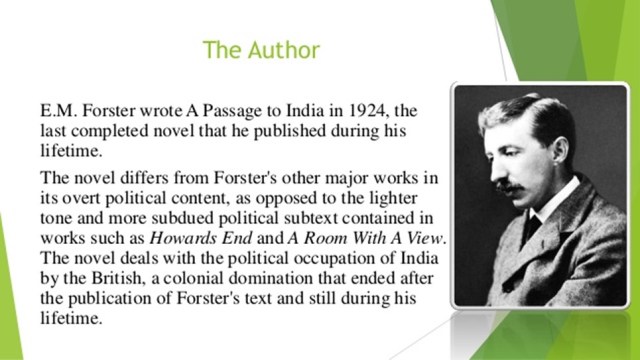
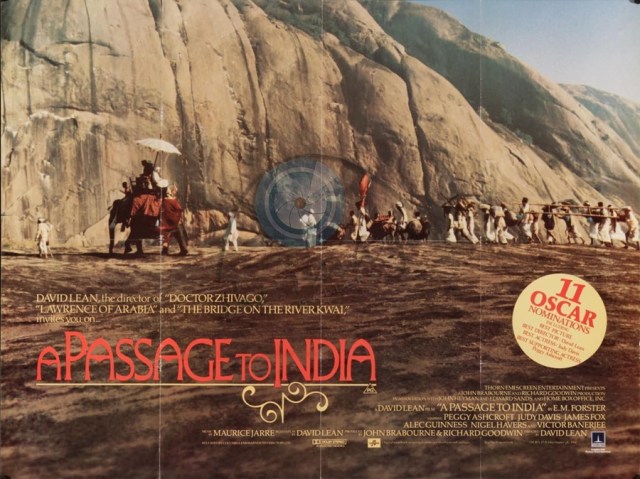
Forty-one-year-old British writer E.M. Forster embarks on his second trip to India after an absence of eight years. Forster would turn his observations of the country into his fifth and most critically acclaimed novel, A Passage to India, published in 1924. The novel explored racism and colonialism through the story of an English tourist who accuses a respected Indian doctor of attacking her.
Forster was born in London in 1879, the son of an architect. His father died before he was two, and he spent most of his childhood with his mother and a great-aunt in an old house called Rooksnest, which later became the model for the country estate portrayed in Howard’s End. Forster was teased and tormented mercilessly at the private school he attended as a day student and remained shy and timid throughout the rest of his life. However, he found intellectual companionship during his university years at King’s College, Cambridge, where he joined a secret society of intellectuals called the Apostles.
Forster began contributing essays and stories to the newly formed Independent Review in 1903 and published his first novel, Where Angels Fear to Tread, two years later. Like his later books, the novel looked at English discomfort with foreign cultures. Forster traveled widely, visiting Greece, Italy, and India, and later served with the Red Cross in Alexandria, Egypt, from 1915 to 1919. Forster made many close friends among the intellectual and literary “Bloomsbury set,” including Virginia Woolf.
Forster published five novels by 1924 and received an honorary fellowship from his alma mater in 1946, which allowed him to live in Cambridge for the rest of his long life. Although Forster lived to be 91, he published no novels in his lifetime after A Passage to India, although a sixth novel, Maurice, which dealt with homosexuality, was published after his death.
BEIJING’S DEBT CRISIS – CHINA’S MILITARY INSECURITY
In my analysis, China’s greater defense spending reflects her military insecurity driven by insurmountable Debt Crisis. The World’s largest military will bite dust for its doom cannot be warded off by paying ransom.
Rudranarasimham Rebbapragada
SPECIAL FRONTIER FORCE
CHINA’S MILITARY FLEXES MUSCLES FOR DOMESTIC OBJECTIVE: MORE FUNDING
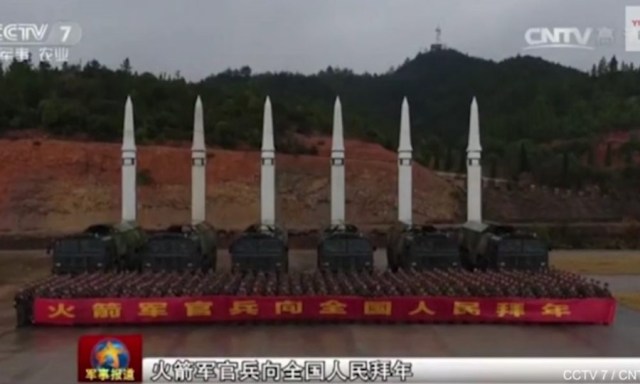
BEIJING (Reuters) – With stealth jets entering service, leaked pictures of new high-tech naval artillery and proud reports of maneuvers that “dare to shine the sword,” China’s armed forces are putting on a show of power as they lobby for greater defense spending.
Although it is the world’s largest military, the People’s Liberation Army has been privately unhappy that it got less than double-digit funding increases the past two years. It has recently been making the case that it needs more money to deal with increased global uncertainty, diplomats and several sources with ties to the armed forces say.
In the run-up to the defense budget’s release at the annual meeting of China’s parliament next week, state media outlets have been filled with coverage of military drills, advanced new equipment and thrilling tales of derring-do in a new film very loosely based on China’s evacuating people from Yemen’s civil war in 2015.
The overall message is clear: China faces serious challenges, from U.S. President Donald Trump’s threats of force against nuclear-armed North Korea to an increasingly tense border dispute with India and what Beijing sees as efforts by self-ruled Taiwan to assert its sovereignty.
Confronting those challenges requires cash, a point the military is now trying to drive home.
“If you keep telling your people China is facing all these threats, you have to be able to back it up to show you are spending enough,” said a senior Beijing-based Western diplomat.
President Xi Jinping promised in his keynote speech to the Communist Party Congress in October to make China’s armed forces world-class by the middle of the century. The military has deployed an increasingly sophisticated propaganda machine to make sure that promise stays top of mind.
A professionally shot air force video released to celebrate the Lunar New Year this month entitled “New fighters of the great power to safeguard the new era” led with footage of the latest fighter to enter service, the J-20 stealth jet, designed as a counterpart to the radar-evading the Lockheed Martin F-22 Raptor.
“It looks like they are making the case for a large rise in defense spending,” said an Asian diplomat, speaking of the recent uptick in military-related stories in China.
NERVOUS NEIGHBORS
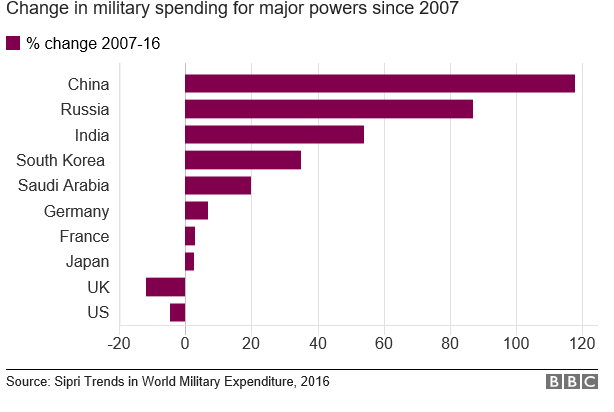
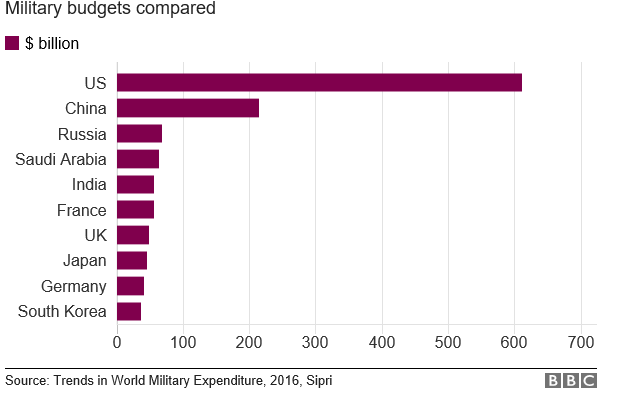
China’s defense spending is only about one-quarter that of the United States, if official figures are accurate. China has repeatedly said that it has no hostile intent, that its military is for defensive missions, and that defense spending is transparent.
Many of the country’s neighbors beg to differ, calling out what they see as Chinese saber-rattling as it ramps up drills in the region.
Vietnam, one of the most vocal opponents of China’s South China Sea claims, has tightened its military relationship with the United States. Taiwan has pledged to grow defense spending, and wants to buy new, advanced U.S. equipment.
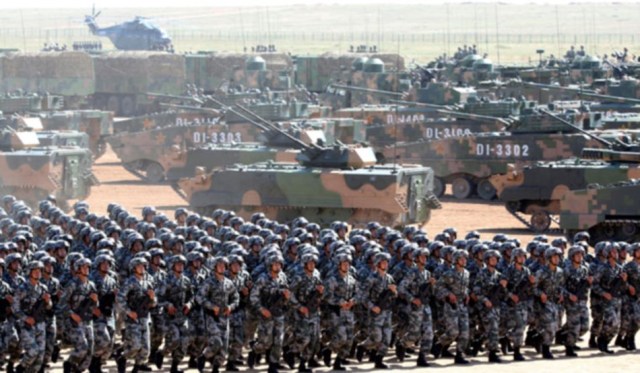
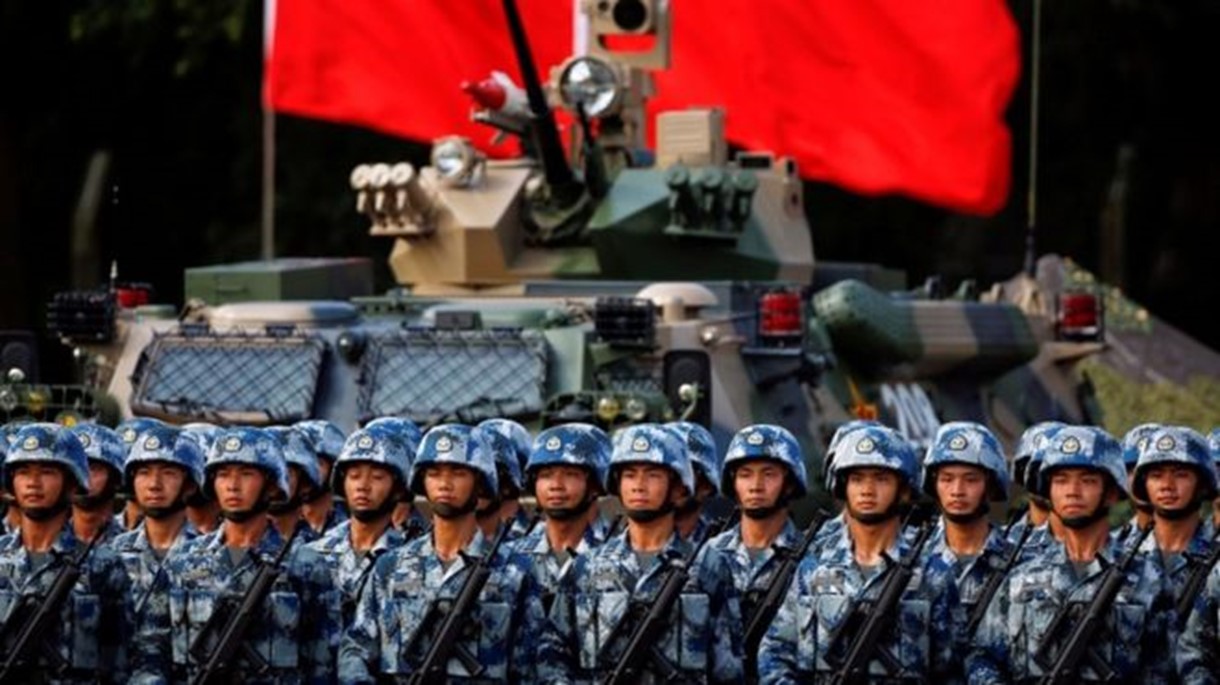
FILE PHOTO: Soldiers of China’s People’s Liberation Army (PLA) take part in a military parade to commemorate the 90th anniversary of the foundation of the army at the Zhurihe military training base in Inner Mongolia Autonomous Region, China, July 30, 2017. China Daily via REUTERS/File Photo
The official People’s Liberation Army Daily said this month that although China was committed to a defensive military policy, it had to “dare to shine the sword” with air patrols far from China’s coast, whether close to Taiwan or over uninhabited islets disputed with Japan in the East China Sea.
Such flights, it said, protected China’s “bottom line” on strategic issues.
One source with ties to the military said another pressing area for more spending was salaries, which have not kept up with those of private-sector workers.
“Simply relying on ‘the great Xi to lead us to victory’ won’t cut it,” the source said, referring to efforts to recruit the best and the brightest into the military by appealing to national pride.
BETWEEN THE LINES
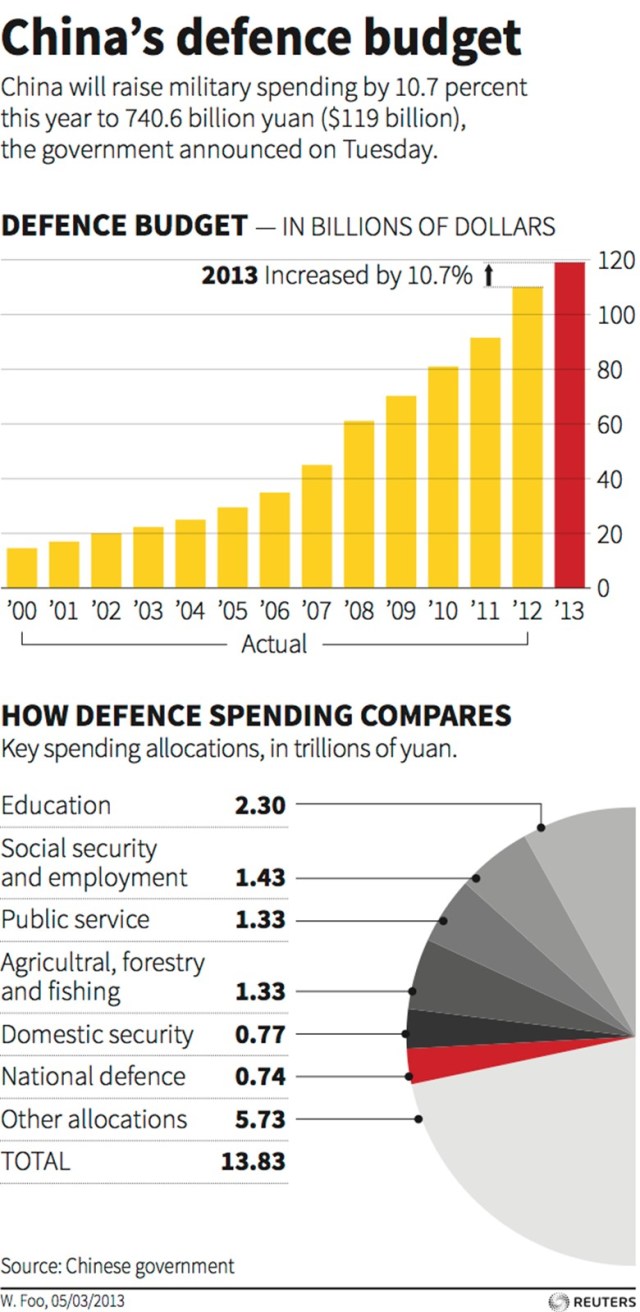
The defense budget will only disclose a top-line number, with a percentage comparison to the previous year. No breakdown on spending is provided.
Last year, China’s parliament did not initially release the figure, sparking questions over transparency. But when it did, the budget increase was 7 percent, the smallest in more than a decade.
The budgeted increase of 7.6 percent for 2016 was the lowest in six years and the first single-digit rise since 2010, following a nearly unbroken two-decade run of double-digit increases.
Experts say the true figure is likely much higher than what is officially reported, with money for some military projects included in ostensibly non-military spending.
“Particularly given China’s civil-military integration, it is difficult to know where defense spending ends” and civilian research and development begins, said another Western diplomat, who analyses China’s military.
Some defense experts say that China is eroding the United States’ military technology dominance and that the People’s Liberation Army could surpass the U.S. military in artificial intelligence capabilities, which have become a spending priority for Beijing.
But in the absence of transparency about new technologies, such as an experimental electromagnetic railgun state media suggested this year was being tested aboard a Chinese warship, there is skepticism about their combat readiness.
China has not fought a war since 1979, a brief invasion of Vietnam that ended badly for China.
China’s Defense Ministry declined to comment ahead of the figure being released by parliament. The general percentage rise is typically given the day before parliament opens, and the raw figure the next day. Parliament opens March 5.
Reporting by Ben Blanchard and Michael Martina; Editing by Gerry Doyle
Zhejian Geely Holding, Chinese automaker which owns VOLVO has acquired 9.7 percent stake in Daimler. In my analysis, Europe is under grips of China’s Neocolonialism. It seems Germany is not able to defend Daimler’s Intellectual Property Rights from relentless attacks by Chinese Economic Expansionism.
Rudranarasimham Rebbapragada
SPECIAL FRONTIER FORCE
CHINA’S GEELY RAID ON DAIMLER REIGNITES GERMAN KNOW-HOW FEARS
BERLIN/FRANKFURT (Reuters) – Automaker Geely’s purchase of a $9 billion stake in Mercedes maker Daimler rekindled fears in Germany on Monday of its highly-prized expertise falling into Chinese hands.
Economy minister Brigitte Zypries stuck to Berlin’s position that Geely’s [GEELY.UL] swoop was a business matter but said Germany’s openness must not be not exploited by other countries.
Geely, which owns rival Swedish carmaker Volvo, is pushing Daimler for access to know-how in electric and autonomous cars.
Germany tightened its rules on foreign takeovers last year, the first European Union country to do so, after a series of deals saw China gain access to high-tech know-how, while attempts by German companies to buy full control of Chinese rivals remains prohibited.
Although under German law, the government can only intervene if a threshold of 25 percent is exceeded, investors must abide by market rules, Zypries said in interviews with Daimler’s home-town newspaper Stuttgarter Zeitung and Handelsblatt newspaper.
Geely revealed its 9.7 percent stake in Daimler (DAIGn.DE) on Friday, surprising the market as it had not disclosed having crossed regulatory thresholds of 3 and 5 percent.
Financial and markets regulator Bafin, which oversees the proper disclosure of stakes said it was investigating whether there had been any breach of disclosure rules, which can result in fines of 10 million euros or more.
The Chinese carmaker first approached Daimler in November and asked it to issue shares, so it could buy a stake, as well as for access to battery technology to help set up an electric car joint venture in Wuhan, China.
Daimler, which employs 289,000 people, declined to do a deal as it had reservations about a new industrial alliance for fear of alienating its existing Chinese joint venture partner BAIC (1958.HK), a person familiar with the carmaker’s thinking said.
Daimler and BAIC on Sunday said they were planning to co-invest more than 11.9 billion yuan ($1.88 billion) to build a new local production base.
“Daimler has already rejected Geely’s overtures once, and Daimler execs we spoke with argue it’s simply not clear what Geely could offer Mercedes,” Bernstein Research analyst Robin Zhu said in a note.
STEALTH RAID
Geely responded to the rejection in November by enlisting Dirk Notheis, the former Chief Executive of Morgan Stanley in Germany and Yi Bao, a former CEO of Morgan Stanley Huaxin Securities, sources familiar with the matter told Reuters.
Notheis, who declined comment, and Yi Bao, who could not be reached, devised a way for Geely to build a significant stake in Daimler using aggressive takeover tactics which German regulators had sought to quash.
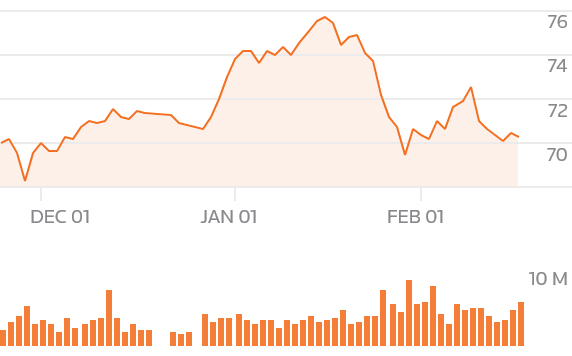
Daimler AG70.23
DAIGn.DEXetra
-0.18(-0.26%)
DAIGn.DE
1958.HK
0175.HK
000333.SZ
KU2G.DE
Geely worked with Bank of America Merrill Lynch, which declined to comment on Monday, to help secure a 9.69 percent voting stake using derivatives to help skirt disclosure requirements, two people familiar with the deal told Reuters.
Mercedes-Benz executives in Stuttgart were at first caught off guard by the approach but welcomed Geely in meetings on Monday to see how to “constructively discuss” industry changes.
Zhejian Geely Holding also owns several other carmakers including Sweden’s Volvo Cars, London’s black-cab maker LEVC and its own Geely Automobile Holdings (0175.HK). It has agreed to buy a $3.3 billion stake in Volvo Trucks.
KNOCK-ON IMPACT
The first sign of wider ramifications from Geely’s move on Daimler surfaced on Monday as Volvo Trucks dropped the chief executive of Geely’s Volvo Cars from its board, citing competition concerns with rival Daimler.
And EU trade ministers will meet this week to discuss a range of issues including how better to protect strategically important European companies from unwanted investors.
Several major deals during 2017 raised German sensitivities about multi-billion euro foreign takeovers, notably Chinese home appliance maker Midea Group (000333.SZ) buying German robotics firm Kuka (KU2G.DE), and Hong Kong billionaire Li Ka-shing’s buying German metering firm Ista.[L8N1QG3VD]
“The events of last Friday are the latest demonstrations of China’s growing confidence and assertiveness, growing desire to impose its will on global affairs, and growing willingness to exploit the German OEMs’ heavy reliance on Chinese profits,” Bernstein Research said.
Reporting by Michael Nienaber in Berlin, Georgina Prodhan, Arno Schuetze and Edward Taylor in Frankfurt and Johannes Hellstrom in Stockholm; Editing by Keith Weir and Alexander Smith
THE LIVING TIBETAN SPIRITS – WHAT IS MY FINAL DESTINATION ?
In my Consciousness, I host ‘The Living Tibetan Spirits’, the Spirits of young Tibetan Soldiers who gave their precious lives in Chittagong Hill Tracts during Bangladesh Ops of 1971. His Holiness the Dalai Lama expressed his desire to return to his home in Tibet. I admit that myself and ‘The Tibetan Living Spirits’ have no Home or Place that we may claim as our own. What is my Final Destination? I have no answer. If not His Holiness, I need ‘MANJUSHREE'(Manjusri) Bodhisattva of Wisdom to give Blessings of Compassion to complete my mortal journey with or without reaching Final Destination.
It has been a lifetime wish for the Lama to visit Wutaishan, his native town. But he must follow his own saying: Look at situations from all angles. It is unwise for him to go on pilgrimage in China right now
At the end of 2017, Prof Samdhong Rinpoche, former Chairman of the Central Tibetan Administration in Dharamshala and now, the Dalai Lama’s Special Envoy, went to China to ‘negotiate’ an eventual visit of the Tibetan leader to Wutaishan in Shanxi Province of northern China.
Mount Wutai is said to be one of the four sacred mountains in Buddhism. Each of the mountains is viewed as the abode of one of the four great bodhisattvas. Wutai is the home of Manjushree, the Bodhisattva of wisdom.
Since decades, the Dalai Lama has expressed the wish to visit Wutaishan in his lifetime. While in China, Samdhong Rinpoche is said to have met senior officials of the United Front Work Department in Kunming and Wutaishan to discuss the proposed visit, which would exclude Tibet, as Beijing does not want to see the Dalai Lama returning to his native land, where he is immensely popular.
Beijing believes that China could benefit from the visit by extracting a ‘statement’ from the Dalai Lama. But can the Tibetan leader ‘admit’ to Tibet always ‘belonging’ to China?
In his Five-Point Peace Plan speech in Washington DC in 1987, which heralded his Middle Way approach, the Dalai Lama stated: “The real issue …is China’s illegal occupation of Tibet, which has given it direct access to the Indian sub-continent. The Chinese authorities have attempted to confuse the issue by claiming that Tibet has always been a part of China. This is untrue. Tibet was a fully independent State when the People’s Liberation Army invaded the country in 1949/50.”
The Dalai Lama knows history can’t (and shouldn’t) be changed. In 1987, the Lama stated: “China’s aggression, condemned by virtually all nations of the free world, was a flagrant violation of international law. …China’s military occupation of Tibet continues.”
The recent secret, though formal, contacts between Beijing and Dharamshala, could make the public believe that there was a relaxation of the Chinese position. It is not the case.
On February 11, The Global Times reported: “The public security bureau (PSB) in Southwest China’s Tibet Autonomous Region has released details on how the public can provide tips on activities of criminal gangs connected to the separatist forces of the Dalai Lama.”
Practically, it means that the Tibetans, who worship, or even simply respect, the Dalai Lama could now be termed criminals?
The mouthpiece of the Party continued: “[the circular] warns local people to be on the lookout for the ‘evil forces’ of the Dalai Lama that might use local temples and religious control to confuse and incite people against the Party and Government.”
The circular asked people to report on the activities of ‘foreign hostile forces’. Interestingly, a few weeks ago, Beijing announced the nomination of three Han cadres in the 20-member Tibet delegation to the National People’s Congress (NPC).
One of the delegates is Zhao Kezhi, the Minister of Public Security, responsible for the dreaded PSBs; he will ‘represent’ Tibet at the NPC. Probably wanting to show the leadership his efficiency, Zhao acted fast; the PSB’s circular said: “Criminal gangs are cancers on the healthy economic and social development, and gangsters are a chronic disease that severely disgusts the public”.
It listed 22 illegal activities to be reported to the PSB; three of them mention the ‘Dalai’s clique’: “The Dalai Lama has been in exile for decades but still holds the ambition to split China’s Tibet from the Chinese territory.”
Dai, a professor at Public Security University of China told The Global Times: “Collusion with criminal gangs is a tactic the Dalai group uses to spreading its message of separatism. These kinds of gangsters were involved in the Lhasa rebellion in the 1950s and the violent incident in 2008 in Tibet.”
Dai added “the spread of separatist gangs in Tibet is rampant. Only a campaign against the ‘gangsters’ would deter secessionist activities by the Dalai.”
Wang Xiaobin, a Chinese scholar at the Beijing-based China Tibetology Research Center, explained that the primary task for Tibet is “to maintain national and ethnic unity”. He cited a few groups in China “closely connected with the Dalai group…The Dalai group always interferes in national affairs by controlling temples, including lamas and living Buddhas, and by spreading a kind of ‘middle way’ to the world.”
Xinhua had earlier reported that the campaign would involve targeting “protective umbrellas of gang crime — the officials who shelter the criminals.”
This explains another Han nomination in the NPC’s Tibet delegation, Jing Hanchao, who is currently Vice-President of the Supreme People’s Court. Jing will make sure that the ‘criminals’ caught in the nets of Zhao Kezhi are heavily sentenced.
All this comes at a time when Beijing has just introduced sophisticated facial recognition software on the plateau. The circular promised that the PSB informers’ identity and safety will be protected: “The targets are gangsters who threaten political stability and infiltrate politics, or encourage the public to go against the Party.”
Beijing has also taken the campaign against the Dalai Lama internationally; there too it has been ferocious.
On February 8, The People’s Daily Online titled: ‘Mercedes-Benz: Don’t dare challenge China’s core interest’ while announcing that the German car company had apologized for quoting the Dalai Lama ‘in an extremely wrong message’. What did Mercedes-Benz do so wrong?
Next to one of its luxury cars, the German firm had quoted the Dalai Lama: “Look at situations from all angles, and you will become more open.”
You may think that it is a nice quote, but Beijing is not amused: “The post not only hurt the feelings of the Chinese people, but also challenged their bottom line on national sovereignty.”
The challenge is clear: If the firm, which sold 600,000 new cars in China in 2017, wants to continue to do business in the Middle Kingdom, it has to follow the paranoid regime’s diktats. The same misadventure had recently happened to the US hotel chain Marriott, who had to profusely apologize for wrongly marking Tibet and Taiwan as independent countries.
President Xi Jinping would have said in 2015 that foreign interference in China’s domestic affairs is intolerable: “Country, enterprise, or individual should not challenge the core interests of China, and [have] any activity to split China.”
Even after due apology by Mercedes-Benz, the Chinese newspaper said that “the apology lacks sincerity and reflects the German carmaker’s lack of understanding of Chinese culture and values. China’s core interests cannot be challenged.”
The paper even compared the Dalai Lama to Hitler: “How will the German people react if a foreign enterprise speaks highly of Adolf Hitler.”
It seems definitely unwise for the Dalai Lama, considered by Beijing as the ‘head of the gangsters’, to go on pilgrimage in China right now. Let us hope that the spiritual leader will not accept the diktats of the bully regime in Beijing.
(The writer is an expert on India-China relations and an author)
WHERE IS FRIENDSHIP? FROM SPACE FANTASY TO GROUND REALITY
On February 20, 1962 I was a student at Giriraj Government Arts College, Nizamabad, India entertaining my dreams of Friendship and living life with Space Fantasy. Space Travel was the topic of my presentation at my College Seminar sponsored by Science Association. I briefly floated a Club called ‘FRIENDSHIP CLUB’ to bring youth together in promoting Democracy, Freedom, and Peace, the American Values I imbibed.
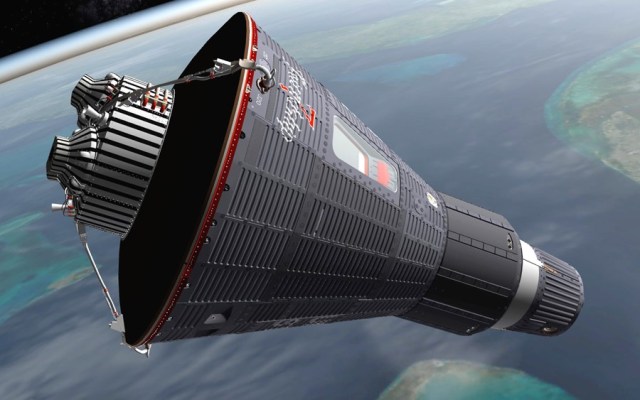
On February 20, 2018 I am sharing the story about Friendship 7 Spacecraft to tell the world that I do not have an American Friend with whom I can communicate the Ground Reality that put an end to my Space Fantasy.
Rudranarasimham Rebbapragada
SPECIAL FRONTIER FORCE
AN AMERICAN ORBITS EARTH – FEBRUARY 20, 1962 – HISTORY.com
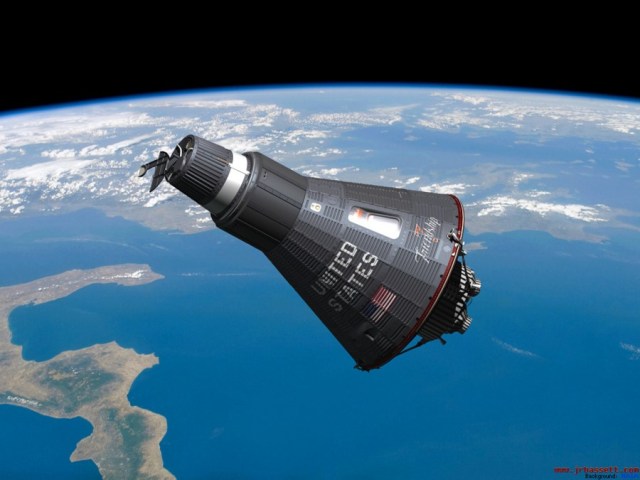
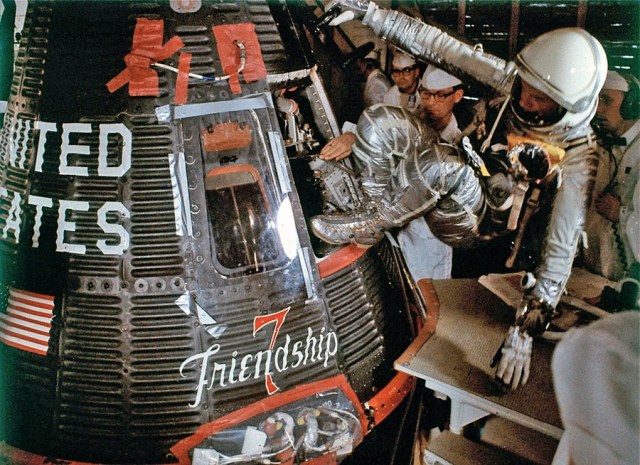
From Cape Canaveral, Florida, John Hershel Glenn Jr. is successfully launched into space aboard the Friendship 7 spacecraft on the first orbital flight by an American astronaut.
Glenn, a lieutenant colonel in the U.S. Marine Corps, was among the seven men chosen by the National Aeronautics and Space Administration (NASA) in 1959 to become America’s first astronauts. A decorated pilot, he flew nearly 150 combat missions during World War II and the Korean War. In 1957, he made the first nonstop supersonic flight across the United States, flying from Los Angeles to New York in three hours and 23 minutes.
Glenn was preceded in space by two Americans, Alan B. Shepard Jr. and Virgil I. “Gus” Grissom, and two Soviets, Yuri A. Gagarin and Gherman S. Titov. In April 1961, Gagarin was the first man in space, and his spacecraft Vostok 1 made a full orbit before returning to Earth. Less than one month later, Shepard was launched into space aboard Freedom 7 on a suborbital flight. In July, Grissom made another brief suborbital flight aboard Liberty Bell 7. In August, with the Americans still having failed to make an orbital flight, the Russians sprinted further ahead in the space race when Titov spent more than 25 hours in space aboard Vostok 2, making 17 orbits. As a technological power, the United States was looking very much second-rate compared with its Cold War adversary. If the Americans wanted to dispel this notion, they needed a multi-orbital flight before another Soviet space advance arrived.
It was with this responsibility in mind that John Glenn lifted off from the launch pad at Cape Canaveral at 9:47 a.m. on February 20, 1962. Some 100,000 spectators watched on the ground nearby and millions more saw it on television. After separating from its launching rocket, the bell-shaped Friendship 7 capsule entered into an orbit around Earth at a speed of about 17,500 miles per hour. Smoothing into orbit, Glenn radioed back, “Capsule is turning around. Oh, that view is tremendous.”
During Friendship 7‘s first orbit, Glenn noticed what he described as small, glowing fireflies drifting by the capsule’s tiny window. It was some time later that NASA mission control determined that the sparks were crystallized water vapor released by the capsule’s air-conditioning system. Before the end of the first orbit, a more serious problem occurred when Friendship 7‘s automatic control system began to malfunction, sending the capsule into erratic movements. At the end of the orbit, Glenn switched to manual control and regained command of the craft.
Toward the end of Glenn’s third and last orbit, mission control received a mechanical signal from the spacecraft indicating that the heat shield on the base of the capsule was possibly loose. Traveling at its immense speed, the capsule would be incinerated if the shield failed to absorb and dissipate the extremely high reentry temperatures. It was decided that the craft’s retrorockets, usually jettisoned before reentry, would be left on in order to better secure the heat shield. Less than a minute later, Friendship 7 slammed into Earth’s atmosphere.
During Glenn’s fiery descent back to Earth, the straps holding the retrorockets gave way and flapped violently by his window as a shroud of ions caused by excessive friction enveloped the spacecraft, causing Glenn to lose radio contact with mission control. As mission control anxiously waited for the resumption of radio transmissions that would indicate Glenn’s survival, he watched flaming chunks of retrorocket fly by his window. After four minutes of radio silence, Glenn’s voice crackled through loudspeakers at mission control, and Friendship 7 splashed down safely in the Atlantic Ocean. He was picked up by the USS destroyer Noa, and his first words upon stepping out of the capsule and onto the deck of the Noa were, “It was hot in there.” He had spent nearly five hours in space.
Glenn was hailed as a national hero, and on February 23 President John F. Kennedy visited him at Cape Canaveral. He later addressed Congress and was given a ticker-tape parade in New York City.
Out of a reluctance to risk the life of an astronaut as popular as Glenn, NASA essentially grounded the “Clean Marine” in the years after his historic flight. Frustrated with this uncharacteristic lack of activity, Glenn turned to politics and in 1964 announced his candidacy for the U.S. Senate from his home state of Ohio and formally left NASA. Later that year, however, he withdrew his Senate bid after seriously injuring his inner ear in a fall. In 1970, following a stint as a Royal Crown Cola executive, he ran for the Senate again but lost the Democratic nomination to Howard Metzenbaum. Four years later, he defeated Metzenbaum, won the general election, and went on to win reelection three times. In 1984, he unsuccessfully sought the Democratic nomination for president.
In early 1998, NASA announced it had approved Glenn to serve as a payload specialist on the space shuttle Discovery. On October 29, 1998, nearly four decades after his famous orbital flight, the 77-year-old Glenn became the oldest human ever to travel in space. During the nine-day mission, he served as part of a NASA study on health problems associated with aging. In 1999, he retired from his U.S. Senate seat after four consecutive terms in office, a record for the state of Ohio.
BEIJING DOOMED – “INFORMISATION” – THE ROLE OF INFORMATION IN WARFARE
In my War against Evil Red Empire, I use ‘Information’ as my weapon of choice to predict sudden, unexpected downfall of arrogant regime in Beijing. There are two key pieces of ‘Information’ that I discovered in the Books of Bible that help me to plan my attack using Heavenly Strike rather than man’s military power.
Beijing Doomed – Informisation – The Role of Information in Warfare.Beijing Doomed – Informisation – The Role of Information in Warfare.Beijing Doomed – Informisation – The Role of Information in Warfare.Beijing Doomed – Informisation – The Role of Information in Warfare.
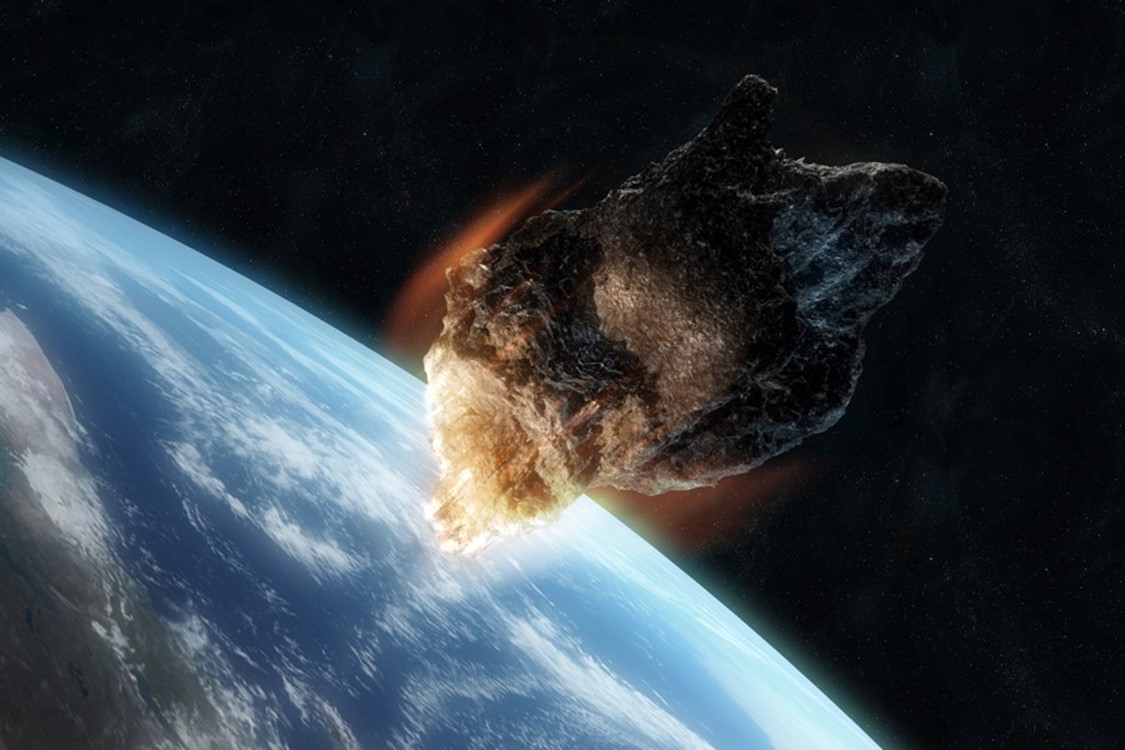
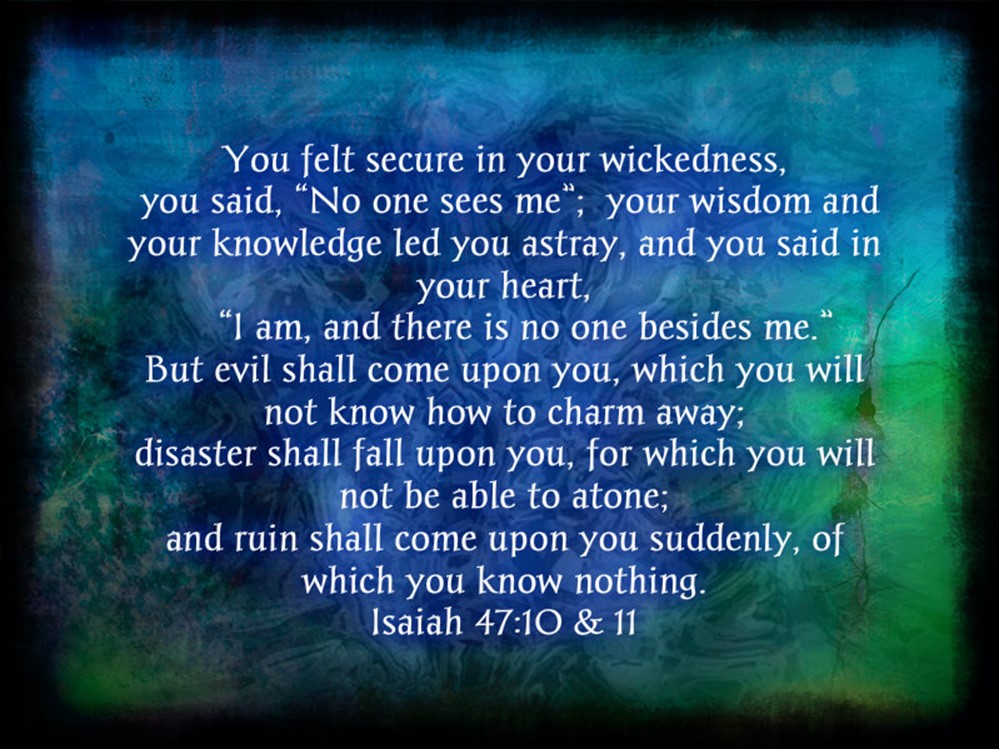
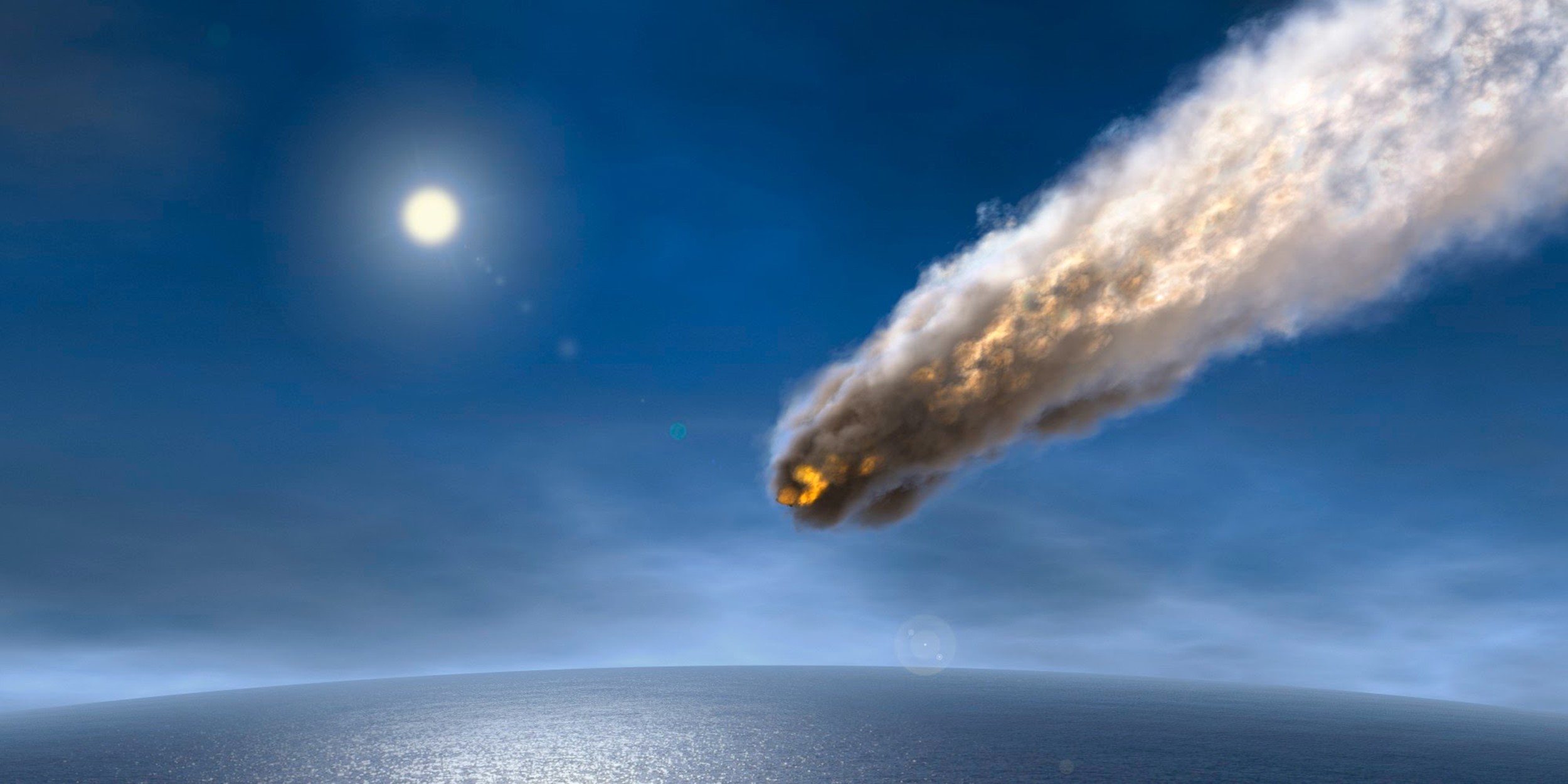
The Book of Isaiah, Chapter 47, and Book of REVELATION, Chapter 18 provide Information as to how Natural Force, Natural Mechanisms, Natural Events, and Natural Factors can bring about Downfall of Evil Power on Earth.
Beijing Doomed – Informisation – The Role of Information in Warfare.
Image copyright Reuters. Image caption. Experts say China is developing weaponry tailored for export to specific markets, including some deemed too sensitive for Western manufacturers
China’s modernization of its armed forces is proceeding faster than many analysts expected.
Now, according to experts at the International Institute for Strategic Studies – the IISS – in London, it is China and no longer Russia, that increasingly provides the benchmark against which Washington judges the capability requirements for its own armed forces.
This is especially true in terms of air and naval forces – the focus of China’s modernization effort. Events in Europe mean that for the US Army, it is still largely Russian capabilities that provide the benchmark threat.
This trend has been chronicled in the Military Balance, the annual assessment of global military capabilities and Defence spending, published by the IISS since 1959.
Of course, transformation of the Chinese military has been under way for some time. But now a significant way-point has been reached – or is very close – that will make it the “peer competitor” for Washington.
Beijing Doomed – Informisation – The Role of Information in Warfare.
Ahead of publication of this year’s Military Balance later this week, I sat down with a group of IISS experts to try to tease out more of the details of this trend, providing a powerful narrative to the annual compendium’s tables and statistics.
China’s progress and technical abilities are remarkable – from ultra-long-range conventional ballistic missiles to fifth generation fighter jets. Last year the first hull of China’s latest warship – the Type 55 cruiser – was put into the water. Its capabilities would give any NATO navy pause for thought.
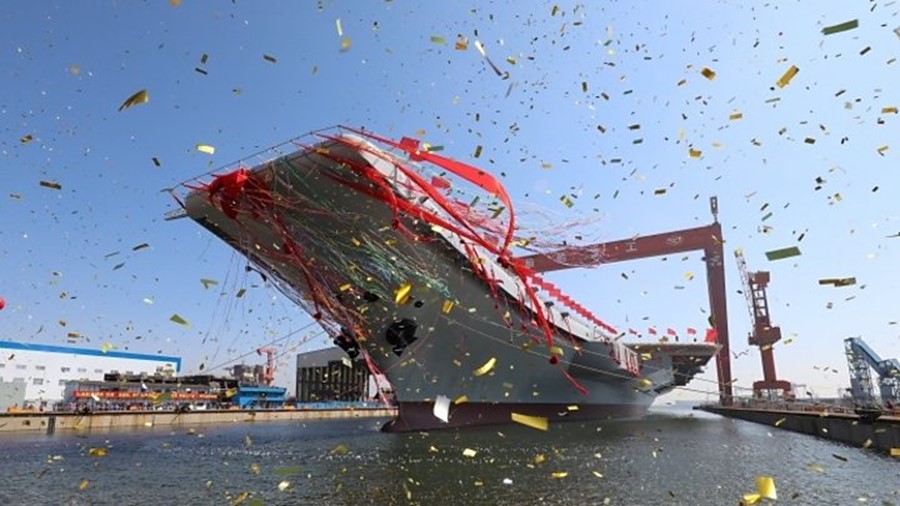
China is working on its second aircraft carrier. It is revamping its military command structure to give genuine joint headquarters involving all the key services. In terms of Artillery, Air Defence and Land Attack it has weapons that out-range anything the US can deploy.
Since the late 1990s, when it received an influx of advanced Russian technology, the Chinese Navy couldrecapitalize the bulk of its surface and subsurface fleets.
Beijing Doomed – Informisation – The Role of Information in Warfare.
In the air, its new single-seat fighter, the J-20, is said by the Chinese to be in operational service.
It is what is known in the trade as a “fifth generation fighter”, meaning that it incorporates stealth technology; it has a supersonic cruising speed; and highly integrated avionics.
IISS experts remain skeptical.
“The Chinese Air Force”, they say, “still needs to develop suitable tactics to operate the low-observable jet and must come up with doctrines to mix these ‘fifth generation’ warplanes with earlier ‘fourth generation models’.
“Still, China’s progress is clear,” they say, “you can add to these aircraft a whole range of capable air-to-air missiles that are every bit on a par with those in Western arsenals.”
This year’s Military Balance devotes a whole chapter to developments in Chinese and Russian air-launched weapons which they see as a key test for western dominance.
Beijing Doomed – Informisation – The Role of Information in Warfare.
The US and its allies have waged air campaigns since the end of the Cold War and have lost very few aircraft. But this dominance, according to the IISS, may be increasingly challenged. China, for example, is developing a very long-range air-to-air missile intended specifically to strike at tanker and command and control aircraft that now orbit out of harm’s way; essential but vulnerable elements in any air operation.
The authors of the Military Balance argue China’s air-to-air missile developments by 2020, “will likely force the US and its regional allies to re-examine not only their tactics, techniques and procedures, but also direction of their own combat-aerospace development programmes”.
On land the Chinese army is lagging behind in this modernization effort according to the IISS. Only about half of its equipment is serviceable in terms of modern combat.
But even here progress is being made. China has set a goal of 2020 as the date to achieve both “mechanization” and what it calls “informisation“. Quite what China means by this is latter term is unclear, but Beijing has been watching the developing role of information in warfare and seeking to adapt this to its own particular circumstances.
Beijing Doomed – Informisation – The Role of Information in Warfare.
Image copyright AFP. Image caption. An armed Chinese drone of the type for sale to other countries
China has one clear strategic aim in mind to which many of its new weapons systems are tailored. In event of a conflict, this is to push US military power as far away from its shores as possible, ideally deep into the Pacific. This strategy is known in military jargon as “anti-access area denial” – sometimes abbreviated as A2AD. This explains China’s focus on long-range air and maritime systems that can hold the US Navy’s carrier battle groups at risk.
So as a military player China has pretty well joined the Premier League. But this though is not the end of Beijing’s global military impact. It is also pursuing an ambitious arms export strategy. Often China is willing to sell advanced technologies that other countries either do not have, or are unwilling to sell to all but their closest allies.
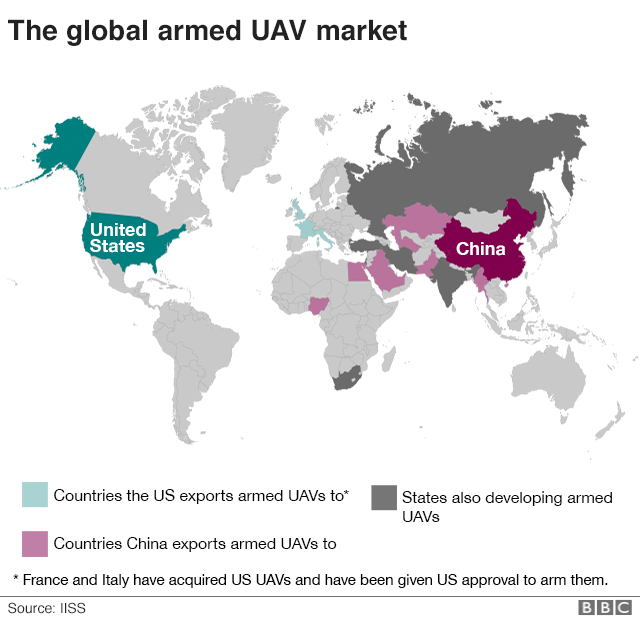
The market for armed drones is a case in point. This is a rapidly spreading technology that raises huge questions about the boundary between peace and war. The US, which was one of the pioneers in this field, has refused to sell sophisticated armed drones to anyone except a limited number of its closest NATO allies like the United Kingdom. France, which already operates US-supplied Reaper drones, has plans to arm drones as well.
China has had no such constraints, displaying impressive unmanned aerial vehicles along the various munitions that they can carry at arms shows around the world. The IISS Military Balance says that China has sold its armed UAVs to a number of countries including Egypt, Nigeria, Pakistan, Saudi Arabia, the United Arab Emirates, and Myanmar, among others.
Beijing Doomed – Informisation – The Role of Information in Warfare.
This is a very good example of unintended consequences. Washington’s reluctance to sell this technology leaves the field open to Beijing. Inevitably this has a wider role in the spread of such weapons, encouraging other countries who operate UAVs solely for intelligence gathering purposes to seek armed variants as well.
US and Western arms exporters see China as a growing commercial threat. Compared with even a decade ago, there is a serious Chinese presence in the marketplace, offering good quality equipment. China, as the armed UAV example illustrates, is also willing to enter markets which many Western manufacturers, or their governments, see as being too sensitive.
And as the IISS experts told me, China tends to win on all aspects of the deal. Typically Chinese weaponry will give you 75% of capability of the available Western technology for 50% of the price. In business terms it’s a strong offer.
Beijing Doomed – Informisation – The Role of Information in Warfare.
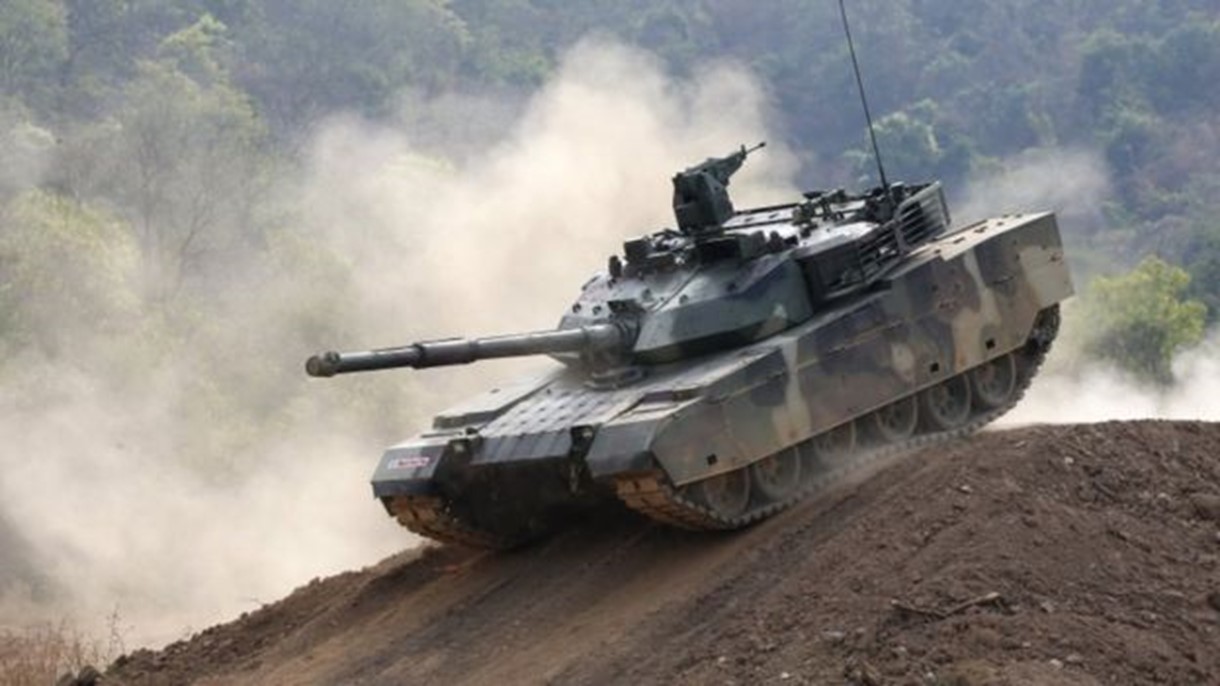
Image copyright EPA. Image caption. The Thai army testing out a newly purchased Chinese-manufactured VT4 main battle tank in January 2018
China’s ground warfare exports are less impressive. They still have to compete for customers with countries like Russia and Ukraine. But when Kiev couldn’t meet the timeframe for a tank deal with Thailand in 2014, the Thais bought Chinese VT4 tanks instead. Last year Thailand went back for more.
IISS experts say that China is also trying to develop weaponry tailored to specific markets. They point to a new light tank for example intended for African countries, whose roads and infrastructure would not be able to cope with many of the heavier models offered by others.
China’s growing role as a source of sophisticated weaponry is something that is worrying many countries and not just its neighbours. Western air forces have enjoyed some three decades of dominance. But the “anti-access” strategy of the Chinese has provided weapons that could easily be employed by others to do the same thing.
A Western European country may never face China in a conflict, but it could well face sophisticated Chinese weapons systems in the hands of others. As one IISS expert put it, “the perception that you will enter a low-risk environment when intervening overseas, now needs to be questioned.”
Beijing Doomed – Informisation – The Role of Information in Warfare.
RED CHINA’S NEOCOLONIALISM POSES THREAT BEYOND TIBET’S BORDERS
RED CHINA’S NEOCOLONIALISM POSES THREAT BEYOND TIBET’S BORDERS
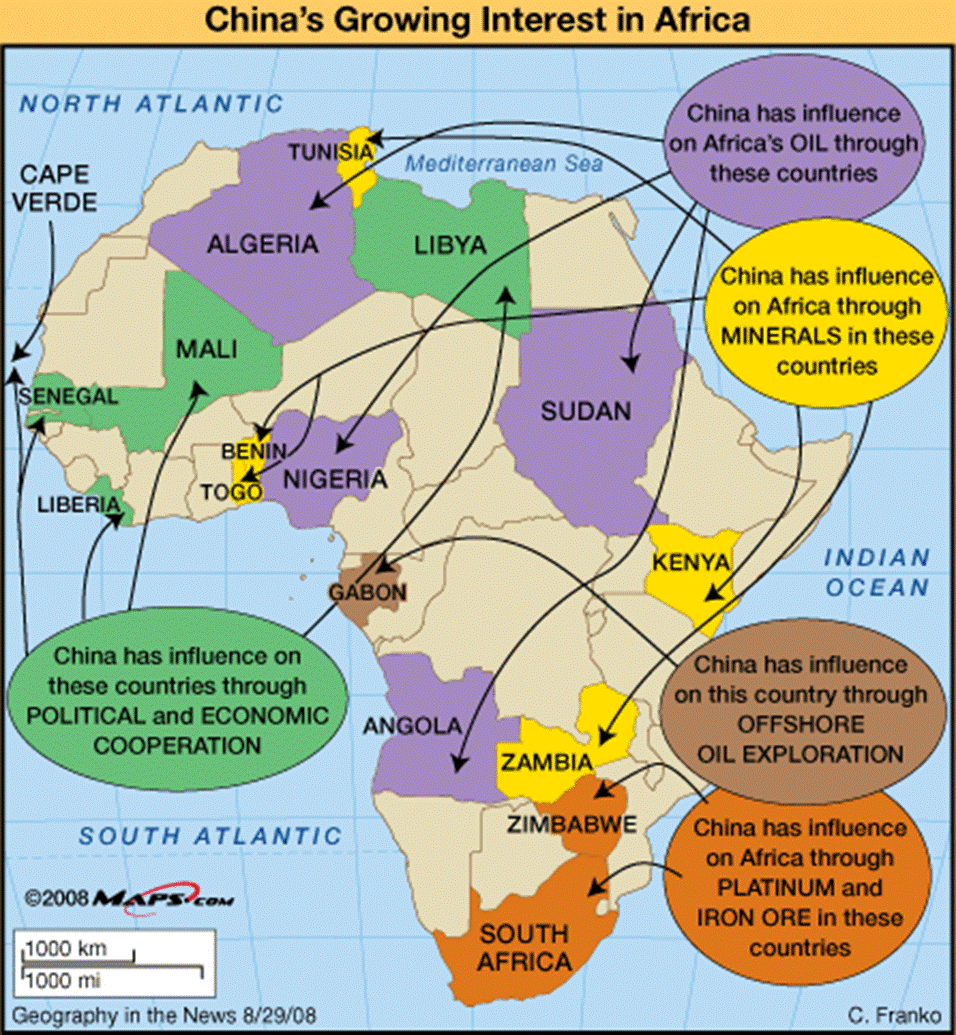
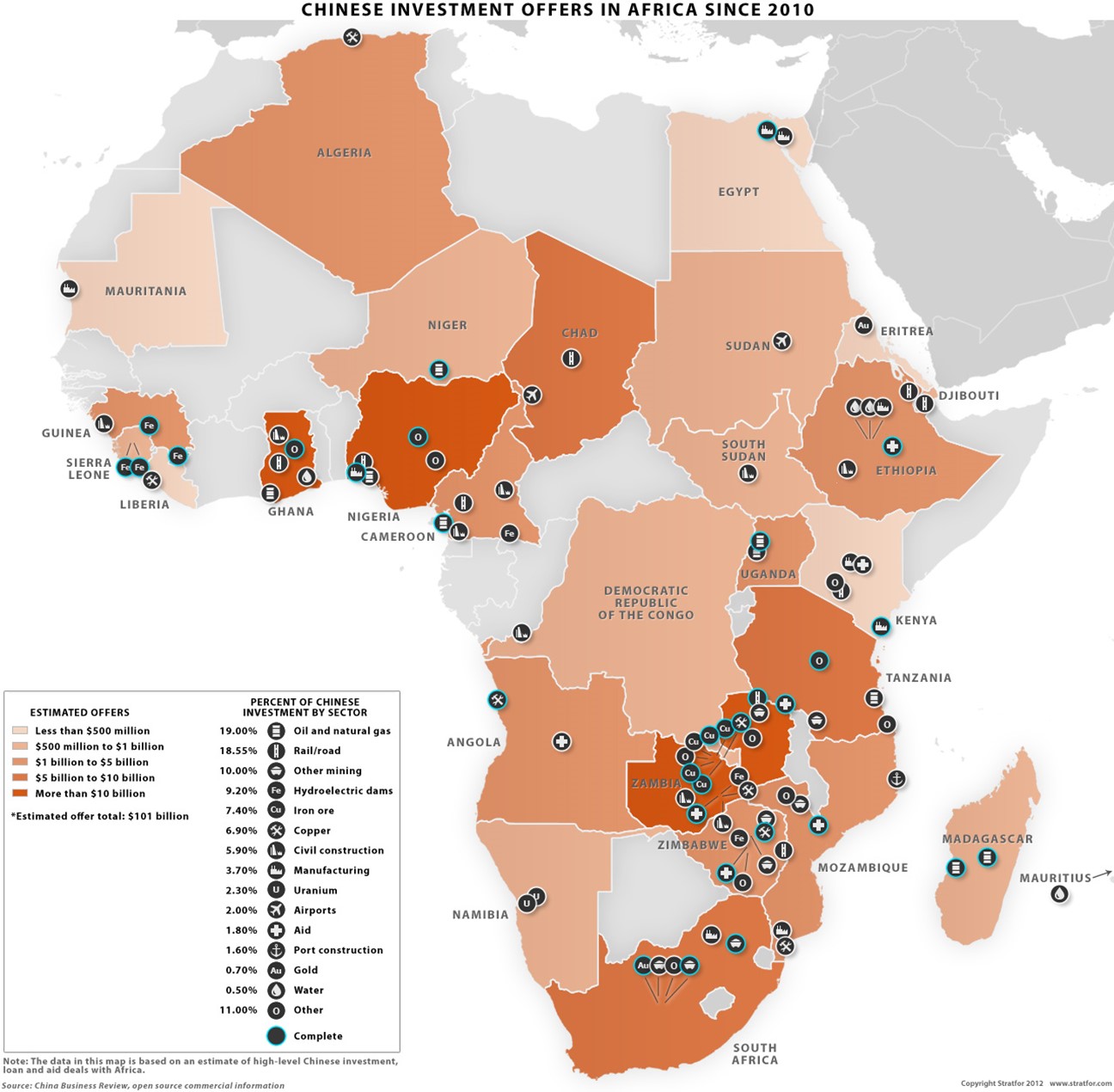
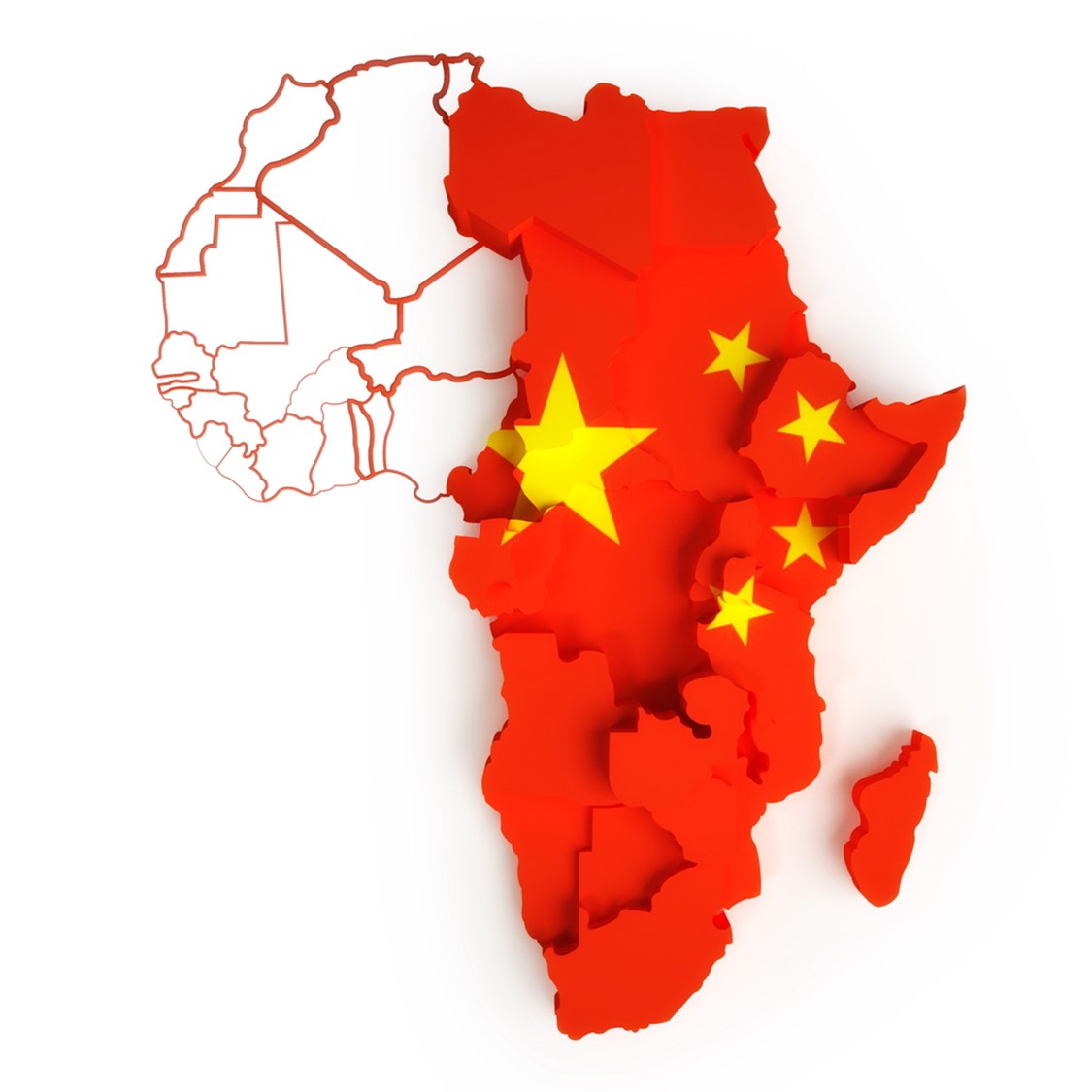
Red China’s doctrine of Neocolonialism is not limited to colonization of Tibet. Red China’s Expansionism has already snared several countries of Africa.
Rudranarasimham Rebbapragada
SPECIAL FRONTIER FORCE
RED CHINA’S NEOCOLONIALISM POSES THREAT BEYOND TIBET’S BORDERS
SOUTH AFRICA’S TIBET PROBLEM: AN INTERVIEW WITH CHINA’S PUBLIC ENEMY NUMBER TWO, LOBSANG SANGAY – DAILY MAVERICK
RED CHINA’S NEOCOLONIALISM POSES THREAT BEYOND TIBET’S BORDERS
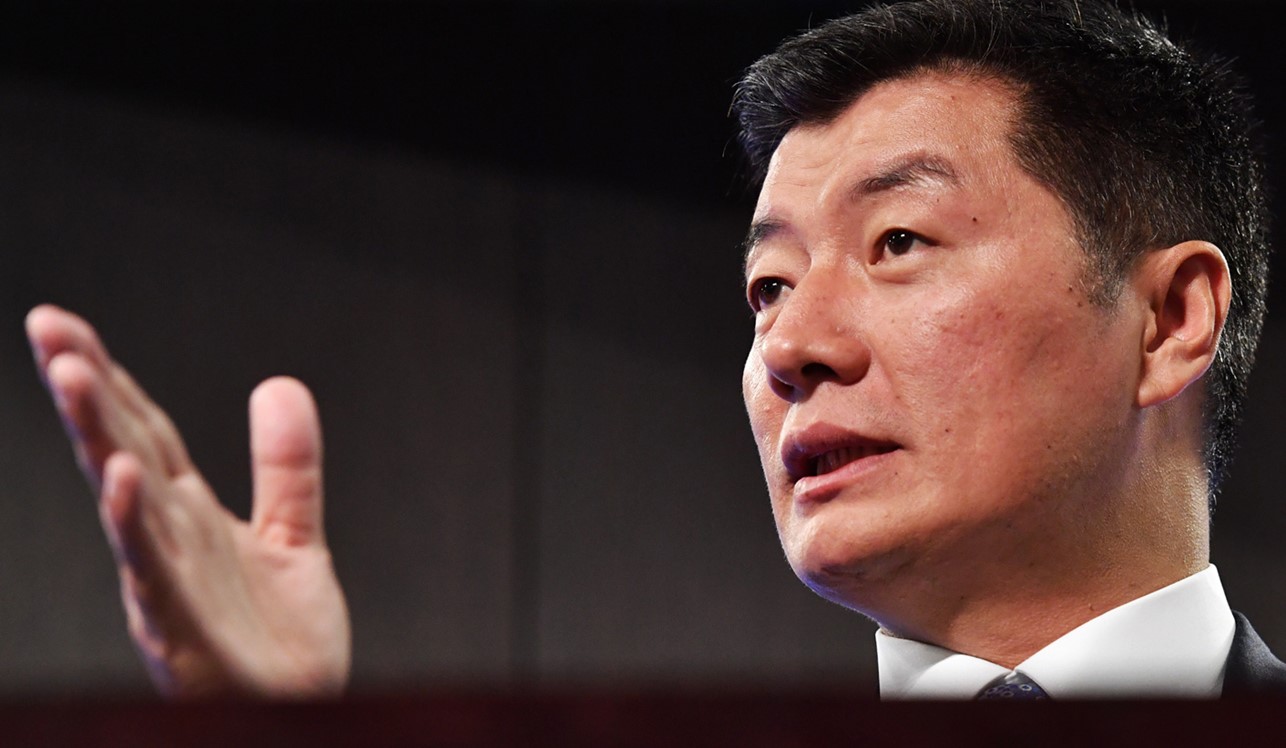
On Monday 5 February, Lobsang Sangay, the president of the Tibetan government-in-exile, arrived in South Africa for a four-day visit. The Department of Home Affairs couldn’t stop him because, unlike the Dalai Lama, he doesn’t travel on refugee papers. KEVIN BLOOM spoke to the “sikyong” about realpolitik, the influence of Beijing, and the environmental catastrophe that will be visited upon the planet if China doesn’t cease its exploitation of the Tibetan plateau.
I. Pieces of silver
“The occupation of Tibet started with a road.”
Sentences like these, because they indicate that you are in the presence of a storyteller, are an invitation to shut down the chattering mind; to simply and unreservedly listen. Even more so when the speaker of the sentence is somebody like Lobsang Sangay, the “sikyong” (president) of the Tibetan government-in-exile. And especially so when the speaker has the power to shame your own government – when his sentences, like the one above, are used to set the scene for the contextual parallels between Communist China’s behavior on the Tibetan plateau in the last century and its behavior in Africa today.
“The Chinese army were so polite, so nice,” said the sikyong, about the first visitors to travel up that road in 1950. “Children used to push them and slap them and pinch them, and they just kept smiling. The Tibetan workers who helped build the road were paid in silver coins. Later we found that the Chinese government deliberately built silver coin factories, near Chengdu, for this purpose. The question, when the Chinese troops came up the road, was to surrender or to fight. There was not much consensus among the ruling elite. A few of them were already siding with the Chinese government, saying, ‘Communism is good’.”
And it was here, according to the sikyong, that the mould for China’s modern expansionist drive had originally been fashioned and cast – because, by the time the 1959 uprising failed, forcing the Dalai Lama into exile in India, it had been discovered that these supporters of Chairman Mao had taken payment in silver coins too.
“So, you can clearly see the template,” said the sikyong, “not just in Africa, but in many places – Europe and Australia included. I’ve been saying this for a number of years.”
Which was no empty boast: the public record bore it out. Problem was, the South African government had been doing their utmost to ensure that such things weren’t said on local soil. In the last nine years, the Dalai Lama – who had transferred his political power to the sikyong in 2011 – had been denied a visa by the Department of Home Affairs three times. In 2009, the spiritual leader of the Tibetan people (an incarnation of Avalokiteshvara, Bodhisattva of Compassion), was refused entry to the country for a peace conference. In 2011, he was barred from coming for his old friend Desmond Tutu’s 80th birthday. In 2014, the good people in Pretoria stopped him from attending the 14th World Summit of Nobel Peace Laureates.
But at each visa refusal, even though it was obvious to the world’s press, and even though China had publicly thanked South Africa for its “correct position” on the matter, our government played dumb. In December 2015, one month after the Forum on China-Africa Co-operation, where President Xi Jinping had pledged $60-billion to Africa for infrastructure projects and had promised to “work closely” with President Jacob Zuma in the creation of 10 special economic zones, the head of the African Affairs Department in the Beijing Foreign Ministry flat-out confirmed what everyone knew to be true. “We invest a lot of money in South Africa,” he told a delegation of African journalists, “and we can’t allow [the Dalai Lama] to come and spoil the good relations.”
Our government’s response to this bracing dose of reality? They denied that China, or any outside power, held sway over their foreign policy. “On two previous occasions when [the Dalai Lama applied for a visa], the applications were withdrawn by his own officials,” said Clayson Monyela, spokesman for the Department of International Relations and Co-operation. “In fact, he is welcome to apply for a visa and that application would go through the Department of Home Affairs. It is just unfortunate that on previous occasions we were never given the opportunity to make that determination.”
Unfortunate too, perhaps, that Sikyong Lobsang Sangay, who travels on a United States passport, can’t be so easily denied – with the Dalai Lama, who intentionally travels on refugee papers, Home Affairs can be as intransigent as they like.
“I’m here, in some ways, to remind the South African government of the principles and values on which their Constitution and country was founded,” the sikyong informed Daily Maverick, a few hours after breezing through customs at OR Tambo. “Because of friends around the world, because of support from the international community, South Africa has gained its democracy. So, it’s natural for me to come and say, hey, we need your support now as well.”
II. More (infinitely more) pieces of silver
By all the measurements of modern realpolitik, the sikyong is on a fool’s errand. He may be the first Tibetan to obtain a doctorate in juridical science from Harvard Law School, he may be an expert in international human rights law, democratic constitutionalism, and conflict resolution – his birth-name may even mean “kind-hearted lion” – but he is still up against the essence, the very apotheosis, of historical and contemporary power. The upside? You don’t have to explain any of this to him.
“There was a big story in the media five years ago,” the sikyong said, from across the dining table at the Lamrim Tibetan Buddhist Centre in Auckland Park, Johannesburg. “It was about whether the foreign minister of Australia, Bob Carr, would meet with me. So, when I visited parliament, I took the elevator up, the door opened, and there he was, Bob Carr. We just said, ‘hi, hi’. Obviously, he didn’t want to shake my hand. It could compromise his position from a perception point of view.”
Four years later, the sikyong went on, Carr had become a China expert, the director of the Australia China Relations Institute at the University of Technology Sydney. The Australian people, he said, were suddenly suffering from “buyer’s remorse” – Chinese influence in the country had by this point spread from trade into politics and academia and had prompted the launch of a major local inquiry.
The investigation, wrote prominent Australian journalist and television presenter Chris Uhlmann in June 2017, “examined Chinese Communist Party activities that ranged from directing student groups, through threatening pro-democracy advocates to effectively controlling most Chinese-language media in Australia.” Carr’s institute, Uhlmann further noted, had been backed by billionaire property developers with links to the CCP.
The much bigger story, however, the story that for the sikyong would one day affect not just Australia or South Africa but ultimately the entire world, was the story of China’s exploitation of Tibet’s resources. It was no coincidence, said the sikyong, that the Mandarin appellation for Tibet – Xizang – meant “Western Treasure”. This proved, he claimed, that China had “always been aware” of the wealth in the Tibetan highlands. “Why do you think Chinese phones are so cheap?” he asked. “It’s because of the lithium on the Tibetan plateau.”
As the sikyong had written in a widely shared Guardian piece in August 2017, it wasn’t just lithium – it was oil and gas and (more disturbingly) water. At an average elevation of 4,000 meters and a surface area of 2.5 million square kilometers, the Tibetan plateau holds the largest store of glacial ice after the Earth’s two poles: hence its other ‘moniker’, “the third pole”. All 10 of the major river systems in Asia originate on the plateau, the sikyong reminded Daily Maverick, and so constitute a lifeline for nearly 2 billion people.
“China has 19% of the world’s population but only 12% of its fresh water,” he said. “Already, 400 million are facing a scarcity. The situation in India, Pakistan and Bangladesh is worse. All of these are dependent on the water tower of Tibet. You can clearly see where it is leading.”
Hydro-damming, explained the sikyong, was diverting more and more of the precious resource into China. But the damming policy, together with unchecked mineral extraction and the effects of climate change, would ultimately melt the glaciers and destroy Tibet’s ecosystems, which would result in catastrophe for the citizens of China too.
As the sikyong put it in his Guardian piece: “Tibet symbolizes the three crises that confront Asia today: a natural resources crisis, an environmental and a climate crisis. These three are interlinked and potentially pose a threat to the ecological well-being and climate security not just of Asia but even of Europe, North America and Australia.”
Africa, of course, would not be spared – the Chinese road, when all was said and done, went everywhere. And so, what about hope? What did the Sikyong have to say about this resource?
“We believe in the law of karma,” he smiled. “All you can do is keep trying. It’s not nihilism, it gives a sense of optimism, because whatever begins, ends.”
RED CHINA’S NEOCOLONIALISM POSES THREAT BEYOND TIBET’S BORDERS
WHAT’S IN A NAME? “RUDRA” – INDIAN ARMY ATTACK HELICOPTER
I arrived into this world at my maternal grandfather’s home on Kutchery Street, near Kapaleeswarar Temple in Mylapore, Madras, Chennai. My father named me “RUDRA” to please LORD Shiva to obtain His blessings to defend my mortal existence.
Indeed, those blessings helped me to act with courage while taking part in military action in remote Chittagong Hill Tracts during Bangladesh Ops of 1971-72. My Unit Commander Lieutenant Colonel B K Narayan, my Brigade Commander Brigadier T S Oberoi, and my Formation Commander Major General Sujan Singh Uban recommended the award of ‘Vir Chakra’ for my display of gallantry in providing medical support at Enemy Post that we captured.
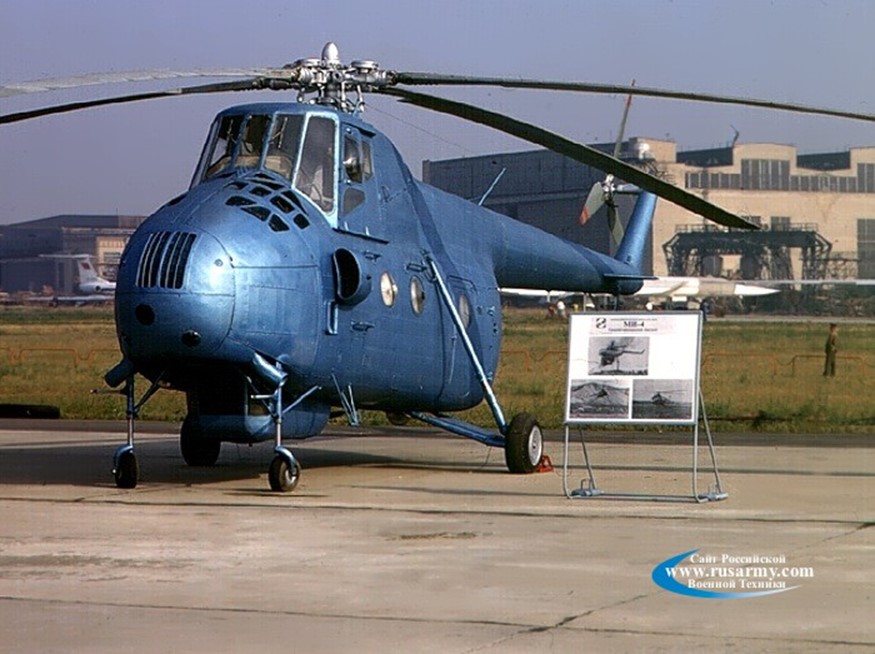
Our Medical Plan for this military action included use of Russian Army Mi 4 helicopter to air lift battlefield casualties. However, Prime Minister of India, Mrs. Indira Gandhi who sanctioned this covert military assault refused to send helicopter to Enemy’s Post located deep inside Enemy territory. As air lift was not provided, I marched on foot to reach a helipad in Indian territory to safely evacuate my patients to Field Hospital saving their lives.
In 1971, Indian Army refused to grant me the Gallantry Award recommended for there was delay in transmission of ‘Citation’ from Army Medical Directorate building to MS Branch building, at Army HQ in New Delhi. Indian Army did not account for the delay in dispatch of helicopter to provide airlift support for battlefield casualties and further failed to acknowledge my timely intervention to defend lives of soldiers on battlefield.
I am pleased to note that Indian Army has chosen the name “RUDRA” for its Advanced Light Helicopter.
Rudra Narasimham Rebbapragada
SPECIAL FRONTIER FORCE
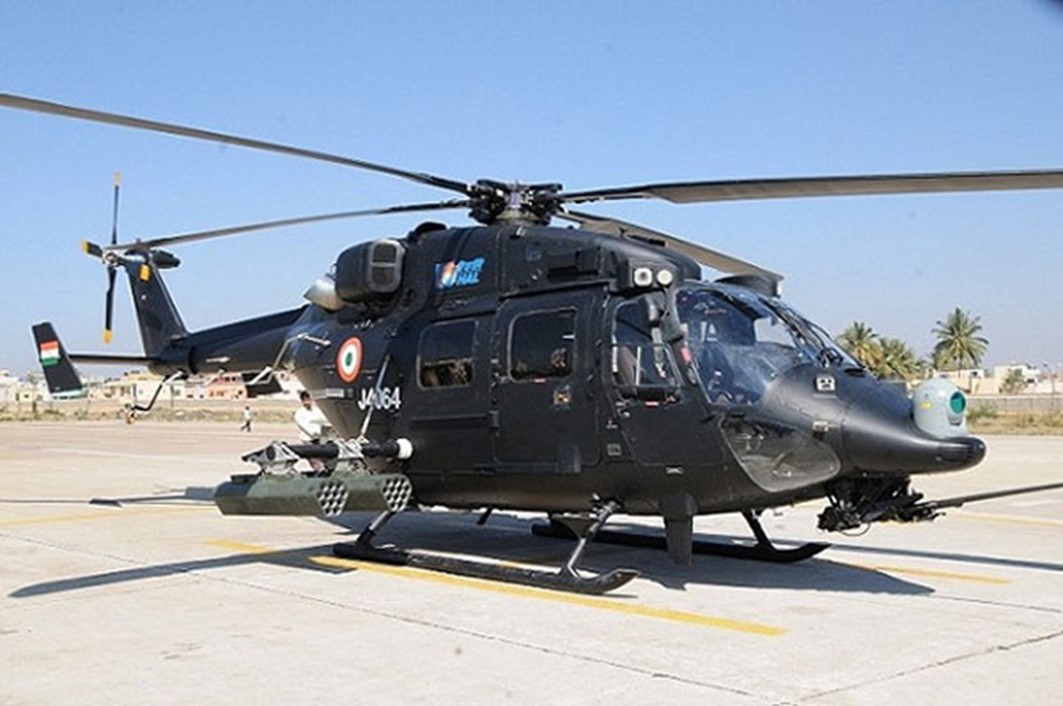
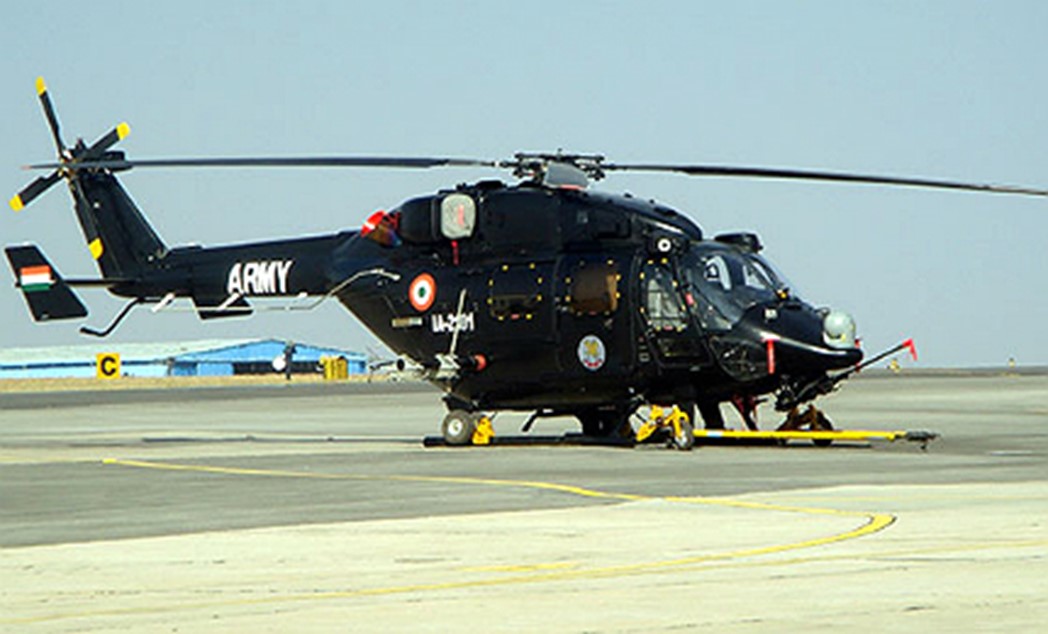
HAL RUDRA (ALH WSI) ATTACK HELICOPTER – ARMY TECHNOLOGY
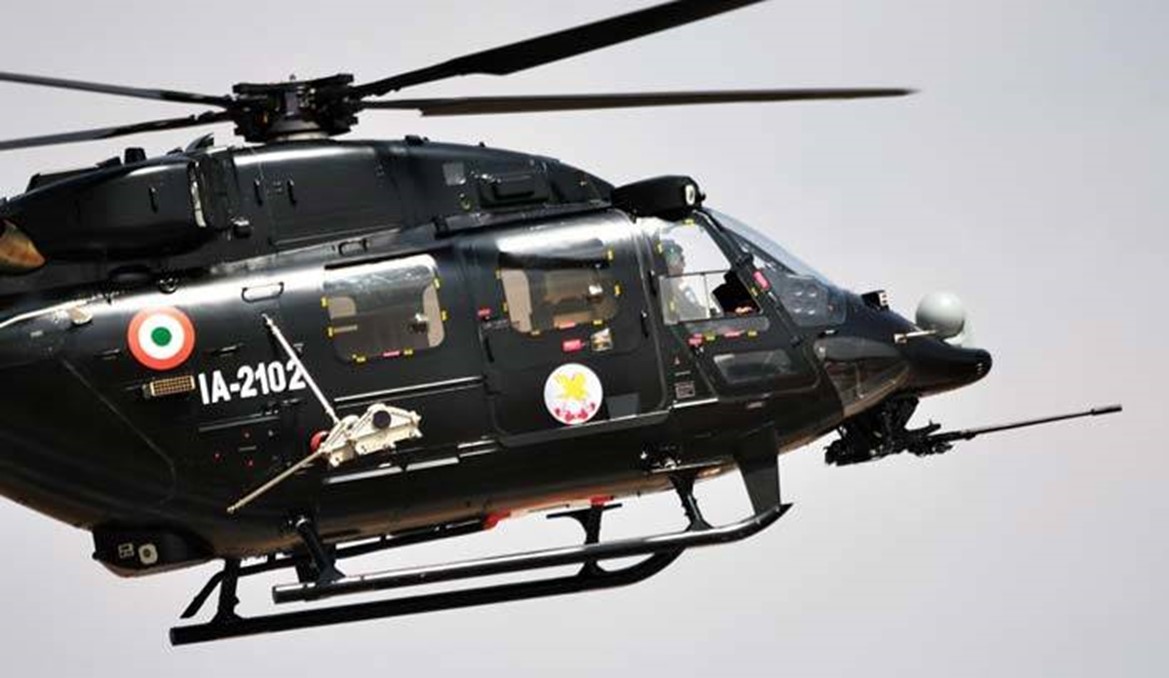
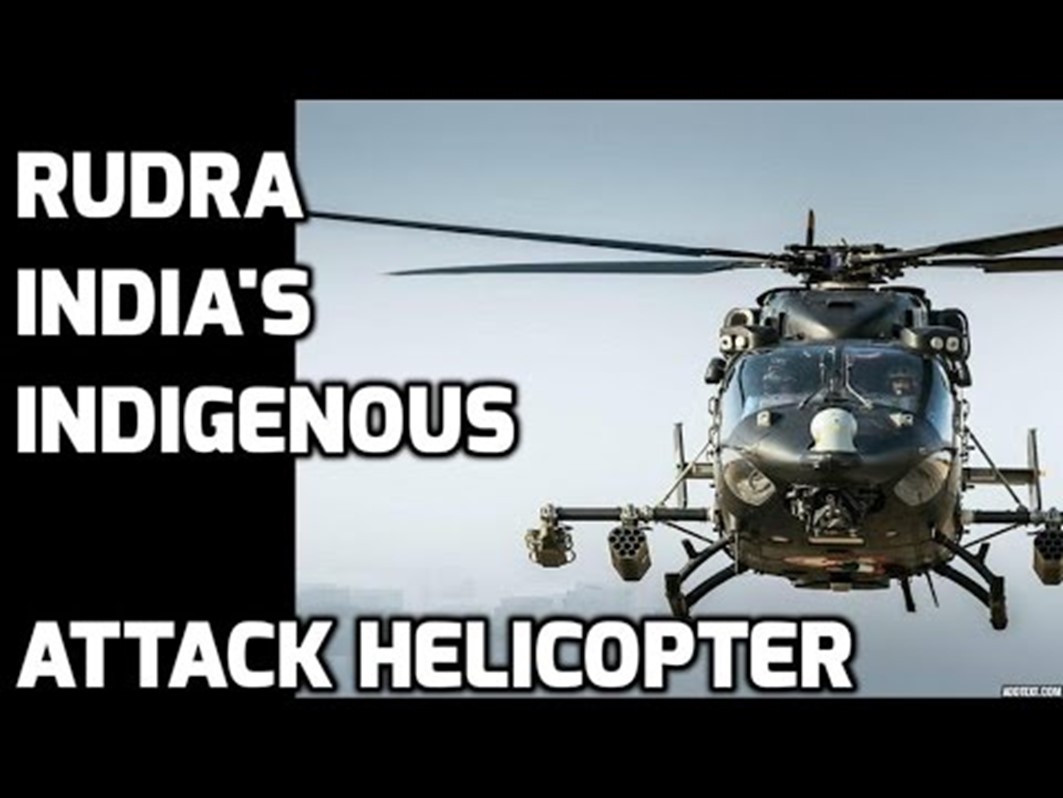
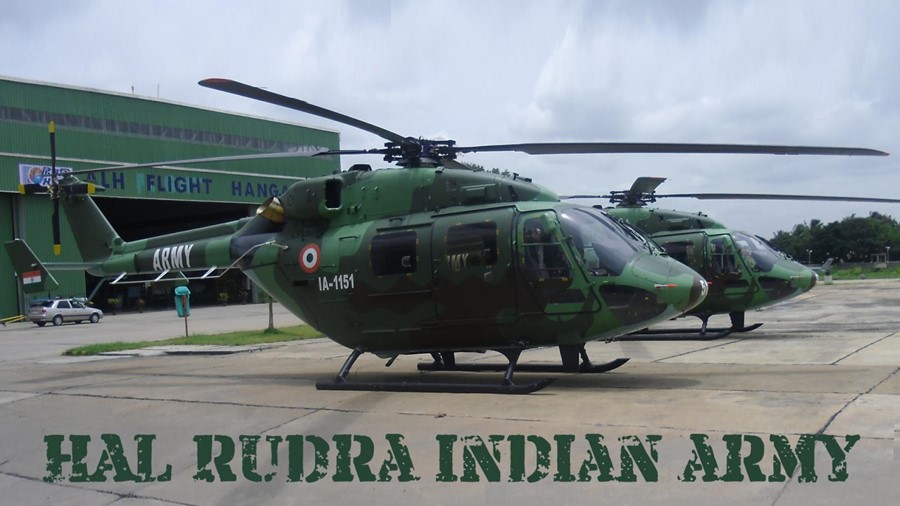
Rudra is an attack helicopter manufactured by Hindustan Aeronautics Limited (HAL), for the Indian Army. It is the Weapon System Integrated (WSI) Mk-IV variant of the Dhruv Advanced Light Helicopter (ALH). Rudra is the first armed helicopter being produced indigenously in India.
The HAL Rudra helicopter can be deployed in wide range of missions, including reconnaissance, troop transport, anti-tank warfare and close air support.
HAL was contracted to deliver about 76 Rudra ALH Mk-IV helicopters for the Indian Army and the Indian Air Force. The Indian Army plans to equip its Army Aviation Corps with 60 helicopters, forming six squadrons. HAL handed over the first Rudra helicopter to the Indian Army in February 2013.
Design and development of the attack helicopter
“HAL was contracted to deliver about 76 Rudra ALH Mk-IV helicopters for the Indian Army and the Indian Air Force.”
Development for the WSI variant was authorized in December 1998. The prototype made its first flight in August 2007. Rudra completed a final round of weapon firing trials in September 2011. The 20mm turreted gun was tested during these trials.
The Mistral air-to-air missiles and 70mm rockets were tested on Rudra in November 2011. Mistral is an infrared homing missile, which is capable of striking the targets within a range of 6.5km. The ground tests for the first production helicopter were concluded in September 2012.
HAL Rudra Mk-IV received initial operational clearance (IOC) from Centre for Military Airworthiness and Certification (CEMILAC) in February 2013. The helicopter was displayed for the first time at Aero India 2013 show.
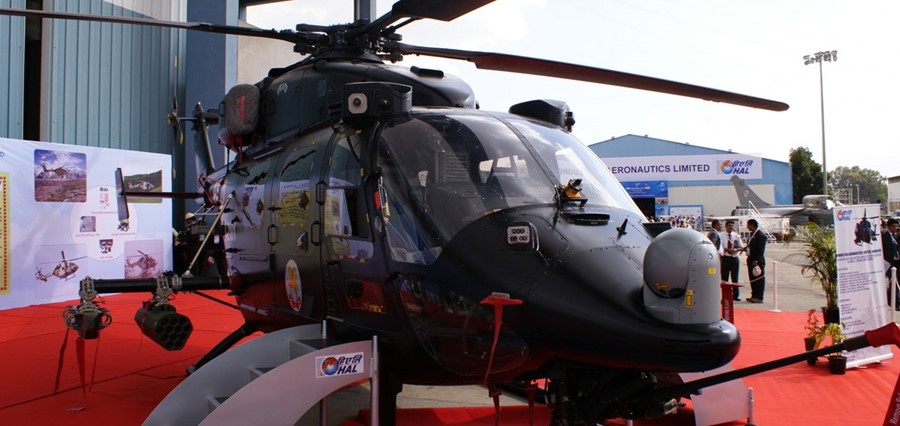
HAL Rudra incorporates a conventional design. Carbon fiber composite materials have been used in construction to achieve weight reduction. The twin engines mounted above the cabin are attached to a four-blade composite main rotor. The cockpit is made of Kevlar and carbon-fiber materials.
Rudra has a length of 15.8m, main rotor diameter of 13.2m and a height of 4.9m. The maximum take-off weight of the helicopter is 5,500kg. Rudra can carry a payload of 2,600kg.
Cockpit and avionics systems of Rudra
The advanced glass cockpit of Rudra houses crash-worthy seats for accommodating two crew members. The night vision goggle (NVG) compatible cockpit is equipped with multifunction displays, dual flight controls and automatic flight control system.
The avionics suite integrates a global positioning system, FLIR, HF/UHF communications radio, Infrared Friend or Foe (IFF) identification system, Doppler navigation and a radio altimeter. The electro-optic pod, helmet-mounted sight and fixed sights ensure the pilots can accurately engage targets using onboard weapons.
Armament and countermeasures of the Indian helicopter
The Nexter THL-20 chin mounted gun turret is fitted with a 20mm M621 automatic cannon. The gun can fire at a rate of 750 rounds per minute. It has an effective range of 2,000m.
“The Mistral air-to-air missiles and 70mm rockets were tested on Rudra in November 2011.”
The stub wings of Rudra can be fitted with up to eight Helina (Helicopter-launched Nag) anti-tank guided missiles, four MBDA Mistral short-range air-to-air missiles or four rocket pods for 68mm/70mm rockets.
The HAL Rudra helicopter is equipped with SAAB Integrated Defensive Aids Suite (IDAS), radar warning receiver, IR jammer, flare and chaff dispenser.
The IDAS can be integrated with RWS-300 radar-warning sensor, LWS-310 laser warning sensor, MAW-300 missile-approach warning sensor and BOP-L series advanced lightweight countermeasures dispensing system.
HAL Rudra engines and landing gear
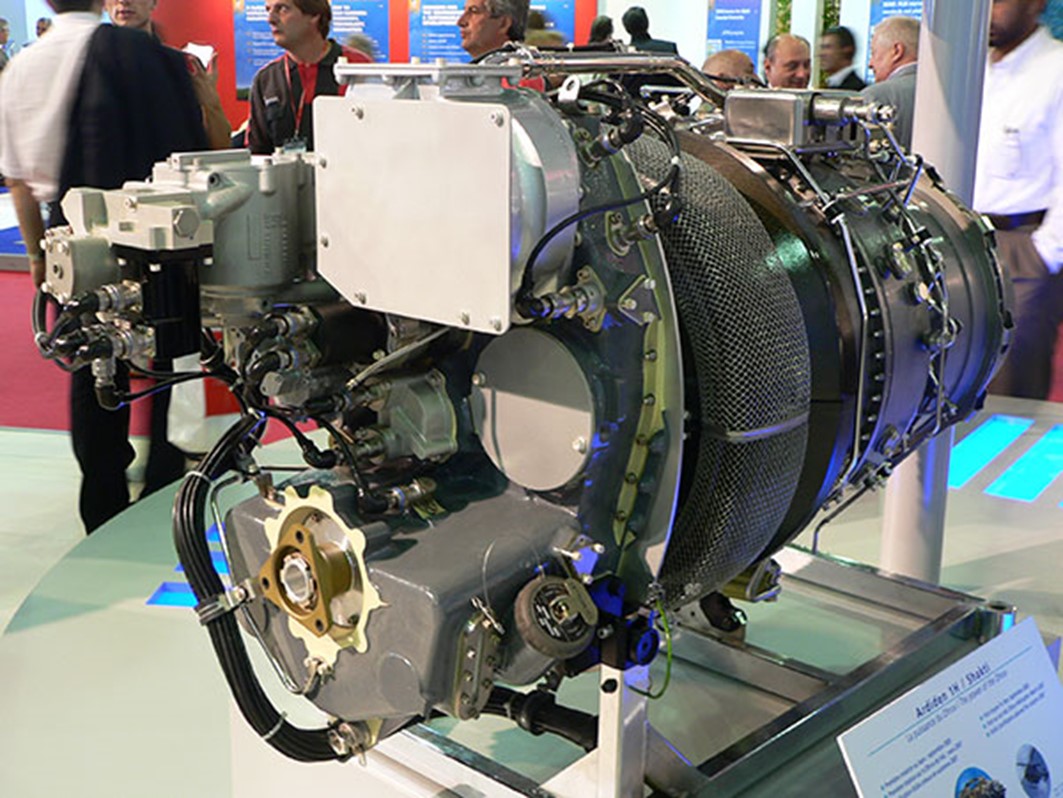
The HAL Rudra helicopter is powered by two HAL / Turbomeca Ardiden 1H1 (Shakti) turboshaft engines. Each engine delivers a maximum continuous power of 1,067kW. The operation of the engines is controlled by full authority digital engine control (FADEC) system. The helicopter has a fixed-type metal skid landing gear. The tail section features a tail skid to protect the tail rotor during tail-down landings.
The helicopter has a maximum continuous speed of 270km/h. The never exceed speed of the helicopter is 300km/h. Rudra can fly at a maximum altitude of 20,000ft and can climb at a rate of 10.3m/s. It has a range of 660km.
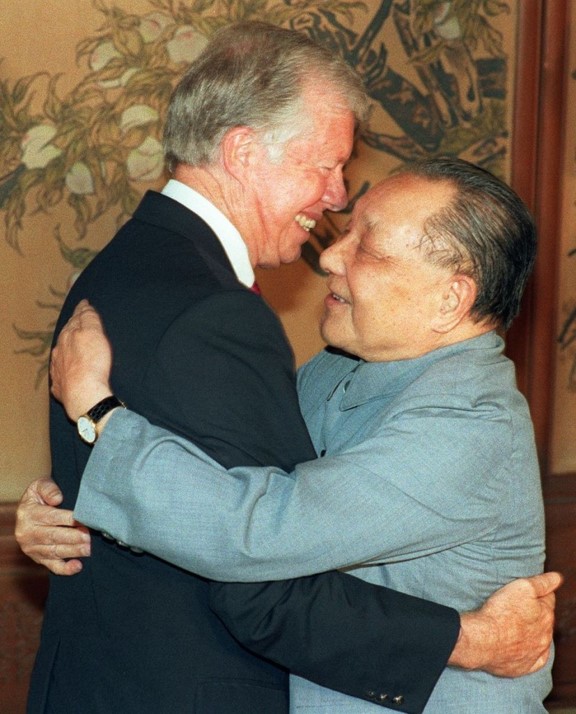
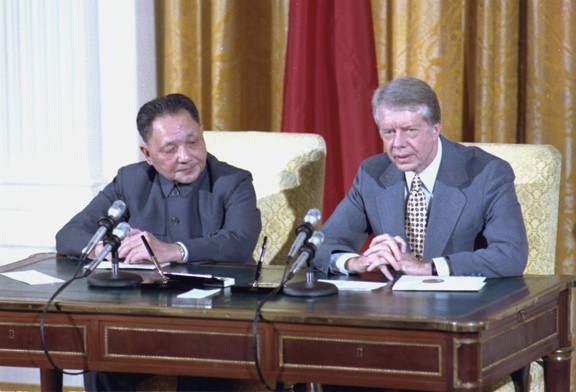
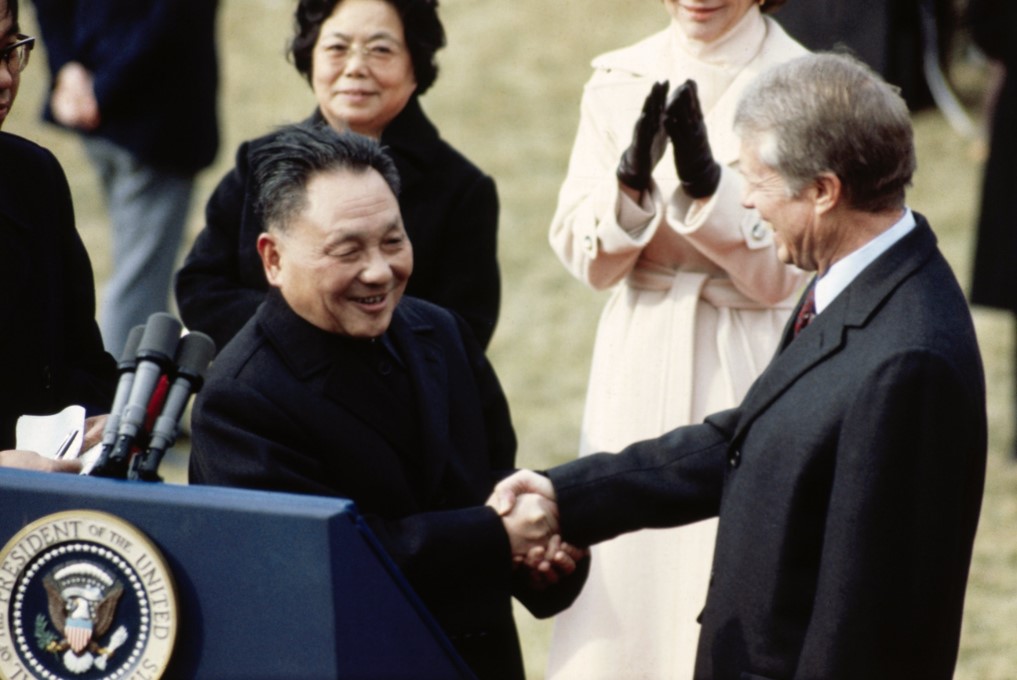
DOOMED PRESIDENCY OF JIMMY CARTER – MILITARY EQUIPMENT SALES TO COMMUNIST CHINA
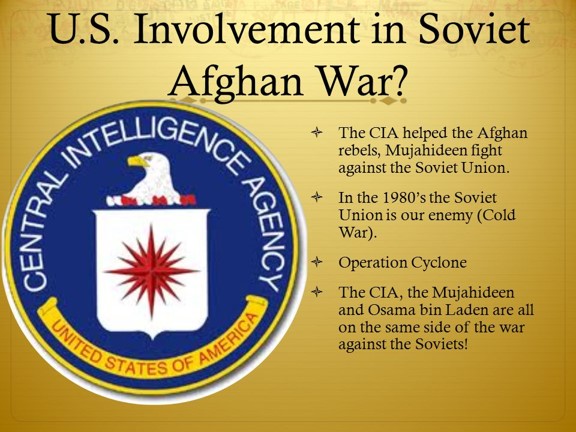
United States lost sense of direction in departing from national values to oppose Soviet Union’s invasion of Afghanistan. US foreign policy is misdirected in two manners; these are, 1. Cementing closer relationship with Communist China by giving it official recognition in 1979, and 2. Fighting Soviet occupation of Afghanistan by raising radical Islamic militias. It’s no surprise to find US fighting the “FOREVER WAR” in Afghanistan with no relief in sight.
Rudranarasimham Rebbapragada Special Frontier Force
U.S. ANNOUNCES MILITARY EQUIPMENT SALES TO CHINA – JANUARY 24, 1980 – HISTORY.com
1980 In an action obviously designed as another in a series of very strong reactions to the Soviet invasion of Afghanistan, U.S. officials announce that America is ready to sell military equipment (excluding weapons) to communist China. The surprise statement was part of the U.S. effort to build a closer relationship with the People’s Republic of China for use as leverage against possible Soviet aggression. The announcement concerning military equipment sales was one of many actions on the U.S-China front taken in the wake of the Soviet intervention in Afghanistan in December 1979. The U.S. Congress, on the same day, approved most-favored-nation trading status for China. In addition, an agreement was signed for the construction of a station in China that would be able to receive information from an American satellite; such information would aid China in such fields as agriculture and mining. The proposed sale of military equipment, however, was the most dramatic and controversial move made by the administration of President Jimmy Carter. Though such equipment would be limited to non-weapon materiel related to such areas as transportation and communications, the step was a significant one in terms of the developing U.S.-China relationship. The fact that the announcement occurred so soon after the Soviet action in Afghanistan was no coincidence–as one U.S. official noted, that action “sped up or catalyzed the process.” The Carter administration’s decision to sell military equipment to communist China barely a year after establishing diplomatic relations with the People’s Republic of China was an indication of just how seriously the United States government viewed the Soviet attack on Afghanistan. The U.S. response to the Soviet Union was multi-faceted and vigorous, including diplomatic broadsides, economic sanctions, and even boycotting the 1980 Olympic games in Moscow. Many political analysts believed that the Soviet Union’s invasion of Afghanistan was a grievous diplomatic error, as it virtually ended any talk of détente with the United States.
JANUARY 23, 1973 – AMERICA SURRENDERS TO PEOPLE’S REPUBLIC OF CHINA
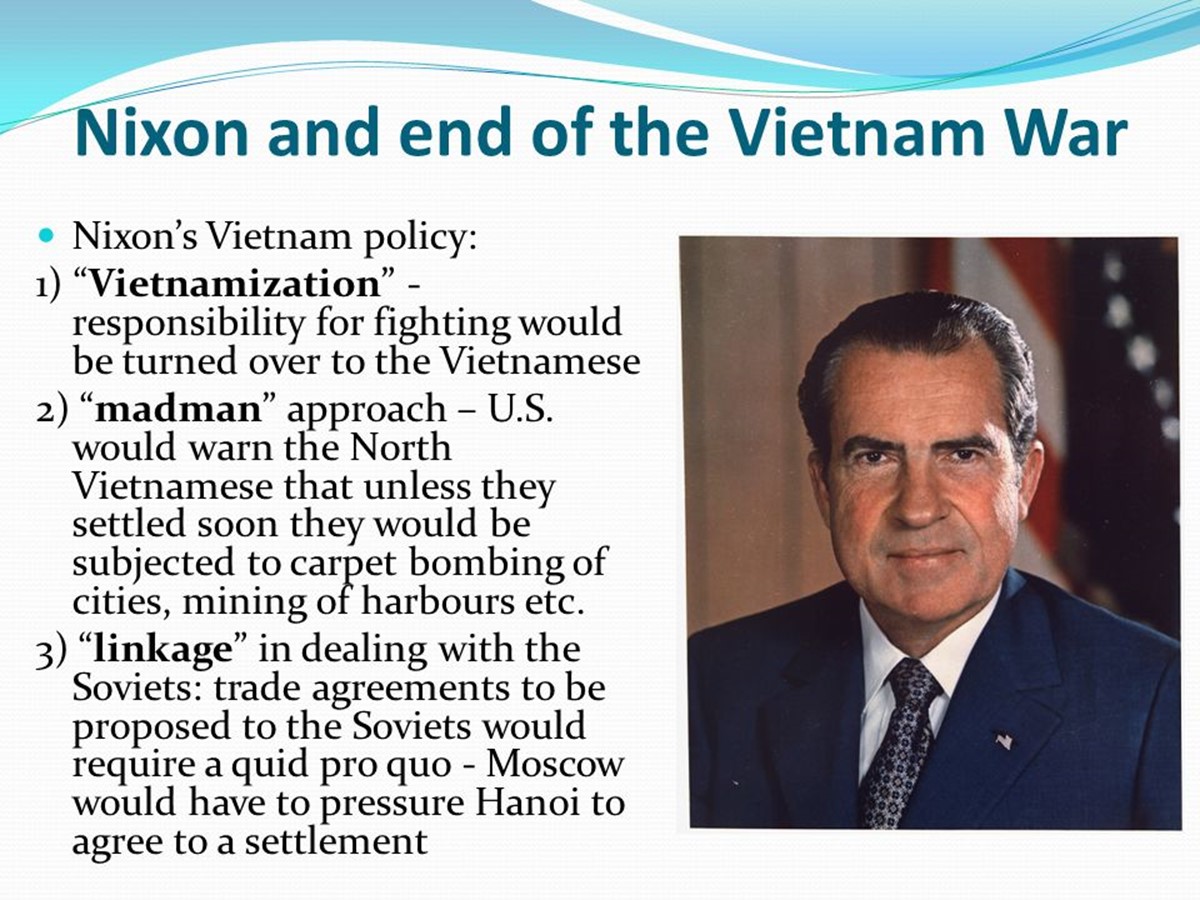
In my analysis, An Agreement Ending the War and Restoring Peace in Vietnam” represents America’s surrender to People’s Republic of China. In reality, Americans are fighting against the spread of Communism to mainland China and they are yet to fight against Communist China. Neither Korea nor Vietnam is the real Enemy.
Rudranarasimham Rebbapragada
SPECIAL FRONTIER FORCE
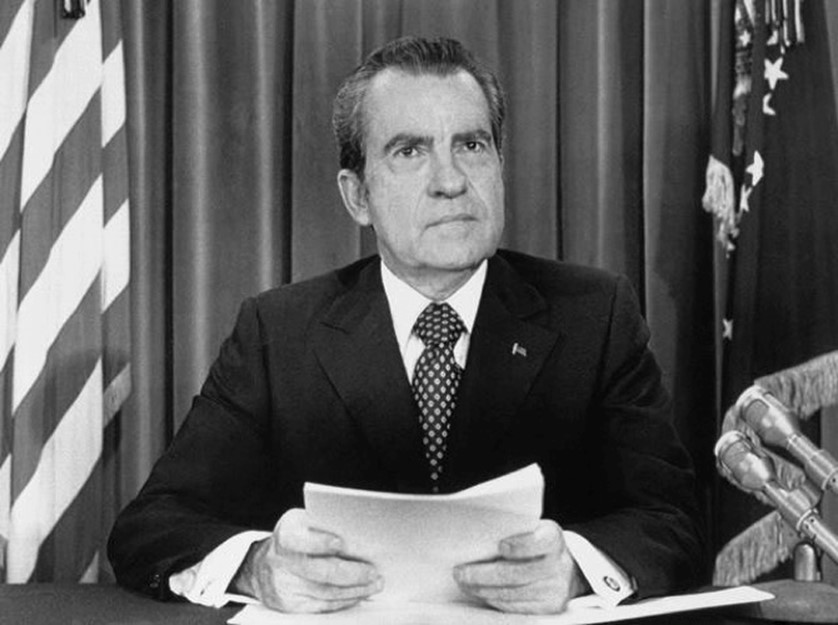
Nixon announces peace settlement reached in Paris JANUARY 23, 1973





















 Whole Dude - Whole Concept