THE TIBET QUESTION – MIDDLE WAY APPROACH POSES DANGER TO WORLD

THE TIBET QUESTION – MIDDLE WAY APPROACH POSES DANGER TO WORLD


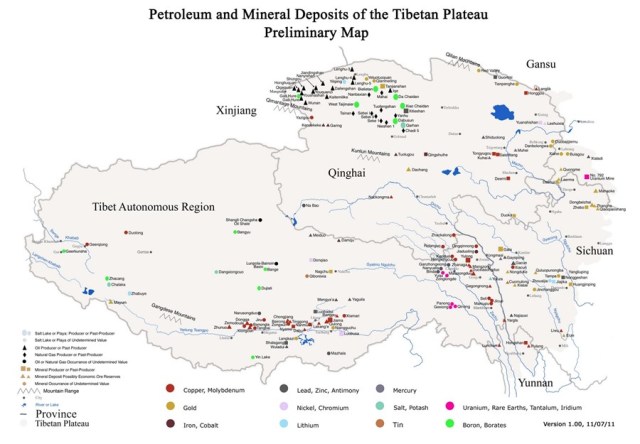
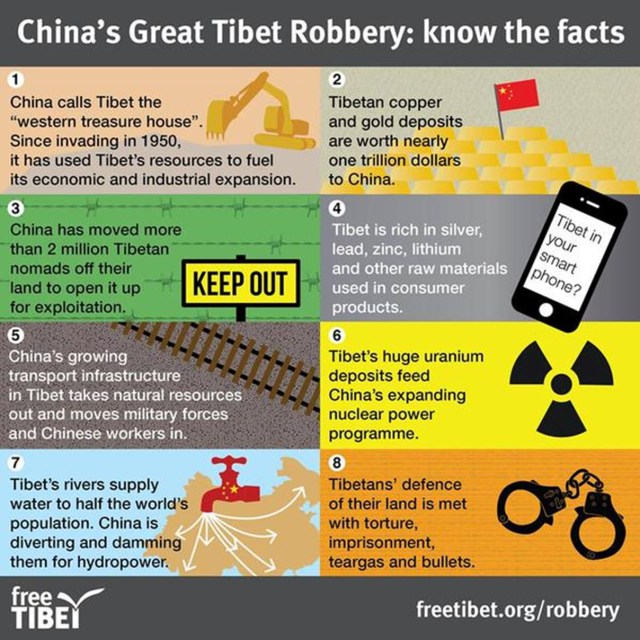
In my analysis, ‘The Tibet Question’ must not be resolved using ‘Middle Way’ approach recommended by the Dalai Lama, the Supreme Ruler of Tibet. World must recognize danger posed by Chinese occupation of Tibet. During 1950 to 1990, I was willing to embrace ‘Middle Way’ as practical solution to the Tibet Problem. I have not recognized threats posed by Chinese Military Expansionism. China is using military power to colonize Tibet to exploit natural resources without any concern for the consequences to environment and disruption of ecological balance. Granting ‘Meaningful Autonomy’ to Tibet will not save the world from ecological disaster posed by Chinese Economic

Expansionism.

In my view, any solution that keeps Tibet in China will not succeed if China remains inside Tibet. There is no way other than that of getting China out of Tibet.


Rudranarasimham Rebbapragada

SPECIAL FRONTIER FORCE


MIDDLE WAY APPROACH BENEFICIAL FOR TIBET, CHINA: DALAI LAMA – THE STATESMAN

Clipped from: https://www.thestatesman.com/india/middle-way-approach-beneficial-tibet-china-dalai-lama-1502642721.html

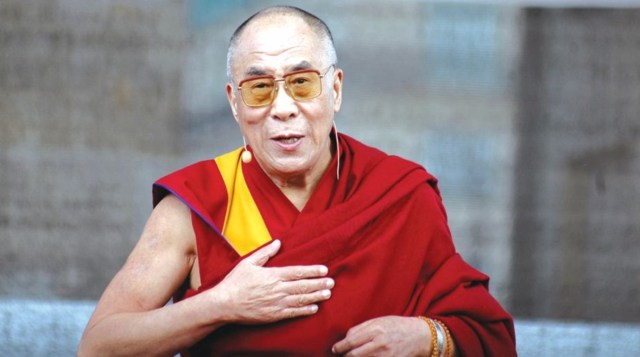
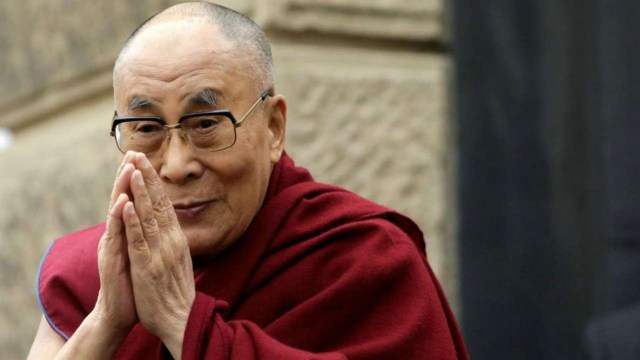
Dalai Lama.

Tibetan spiritual leader Dalai Lama on Wednesday said the ‘Middle Way Approach’ is the most practical approach and mutually beneficial to both the Tibetan and Chinese to solve the crisis in Tibet.

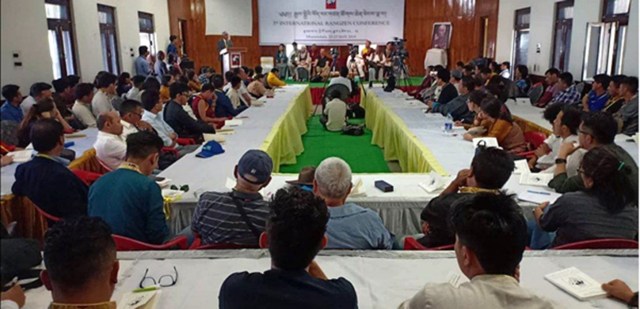
Addressing the delegates of the first international conference on Umaylam, Middle Way Approach at Tsuglagkhang in Dharamshala, he said that the guiding spirit of the Middle Way Approach is the pursuit of a mutually acceptable and mutually beneficial solution through dialogue, in the spirit of reconciliation and compromise.

“We resolved not to seek the separation and independence of Tibet but to strive for a solution within the framework of the People’s Republic of China (PRC),” he said.

Dalai Lama said despite all our sincere efforts to come to a peaceful settlement with the Chinese government, eventually in 1959, he along with his Cabinet had to go into exile. “Soon after arriving in exile, we began a series of discussions on this issue with, and solicited suggestions from all on how to resolve the Tibetan problem through contact and discussions with the Chinese authorities,” he said, adding as a result, around 1974 the Tibetans adopted the Middle Way Approach. He said the approach even finds endorsement and solid support from a large number of Chinese scholars, activists, writers and public personalities. He regaled the 1,000 articles and opinion pieces written by Chinese scholars and writers supporting the move.

“These include a report by the Beijing-based legal NGO, the Gongmeng Constitutional Initiative, describing the suffering and grievances of the Tibetan people and calling for policy change. In 2012, 82 Chinese NGOs based in 15 countries sent a petition to the United Nations, the European Union, various Parliaments and governments, exhorting them to urge the Chinese government to start negotiations as soon as possible.

It included discussion on issues including religious freedom, the rights of using and preserving Tibetan language and culture and the Dalai Lama’s unfettered return to Tibet,” he said The Tibetan spiritual leader also spoke about how in the last few decades, global interests in Tibetan culture and religion have increased.

“More and more people now realise that Tibetans can contribute much to the world in developing inner values of peace and compassion. Even well-known scientists are now deeply engaged in exploring and researching the scientific and philosophical aspects of Tibetan Buddhism in bringing holistic well-being to all human beings irrespective of their faiths,” he added.


FREEDOM vs MEANINGFUL AUTONOMY IN OCCUPIED TIBET

FREEDOM vs MEANINGFUL AUTONMY IN OCCUPIED TIBET


At Special Frontier Force, I trained to fight war in occupied Tibet to secure Freedom. In my analysis, the struggle or resistance against occupation is not simply about political oppression or suppression or repression of Tibetans. The struggle for freedom includes desire to prevent economic exploitation of Tibet’s natural resources in name of growth and development.

Rudranarasimham Rebbapragada

SPECIAL FRONTIER FORCE


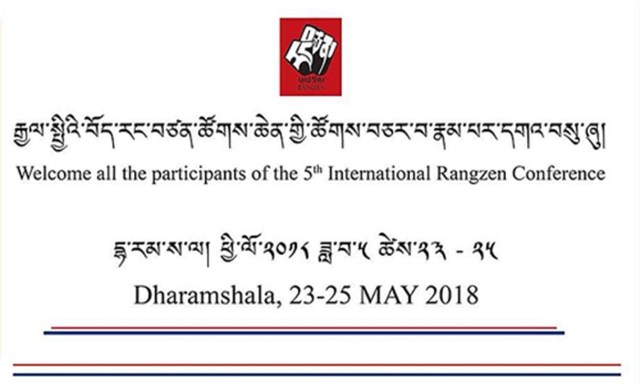
FIFTH INTERNATIONAL RANGZEN CONFERENCE HELD IN DHARAMSHALA … TIBET SUN


Clipped from: https://www.tibetsun.com/news/2018/05/26/fifth-international-rangzen-conference-held-in-dharamshala#comment-5376


Prominent Tibetan independence advocates Jamyang Norbu (left), Lhasang Tsering (second right), Tenzin Tsundue (right), and supporter Vujay Kranti, during the opening of the Fifth International Rangzen Conference in Dharamshala, India, on 23 May 2018. Facebook

Tibet Sun Online News

Exile Tibetans supporting an independent Tibet held the Fifth International Rangzen Conference in Dharamshala, India, the capital of the Tibetan Diaspora.

The three-day conference which began on 23 May was attended by more than 100 exile Tibetans from India, Nepal, Europe, and the United States. The conference concluded on Friday.

Prominent independence advocates Jamyang Norbu, Lhasang Tsering, and Tenzin Tsundue, and Tibetologists Dibyesh Anand and Vijay Kranti, were among the attendees.

Tibetan spiritual leader the Dalai Lama met the participants at his residence in the morning of the last day of the conference.

The first Rangzen Conference was held in Dharamshala in 2012. Since then three more such conferences were held: Delhi in 2015, New York City in 2016, and Paris in 2017.

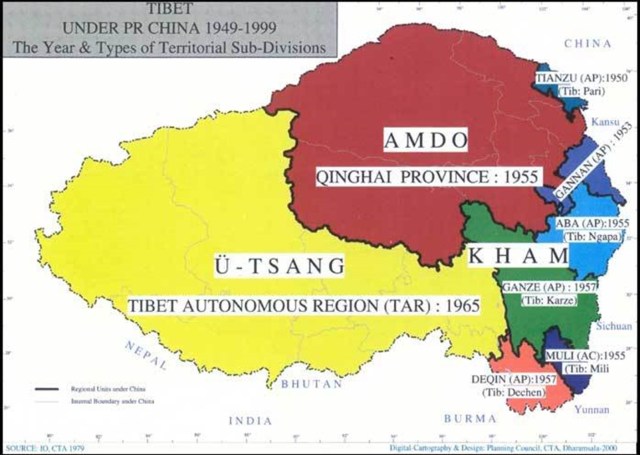
Unlike the official policy of the Central Tibetan Administration that seeks autonomy for Tibet within China, the independence advocates seek separation of Tibet from China, for a geographical area of 2.5 million square kilometers that constitute what Tibetans call the three provinces of Tibet — Amdo, Kham, and U-Tsang.

China occupied Tibet in 1959, which led to the flight of the Dalai Lama, then the spiritual and temporal leader of Tibet, into exile in India. He established the exile Tibetan administration in McLeod Ganj, a suburban village of Dharamshala in northern India.

In exile, the Dalai Lama initially rallied for an independent Tibet, but changed his stance to a policy called the “Middle-way” that advocates for Tibet to remain within China, but have greater freedom for Tibetans in administering their own affairs.


SPIRITUALITY SCIENCE – ROLE OF EDUCATION IN PROMOTING HUMAN WELL-BEING

SPIRITUALITY SCIENCE – ROLE OF EDUCATION IN PROMOTING HUMAN WELL-BEING


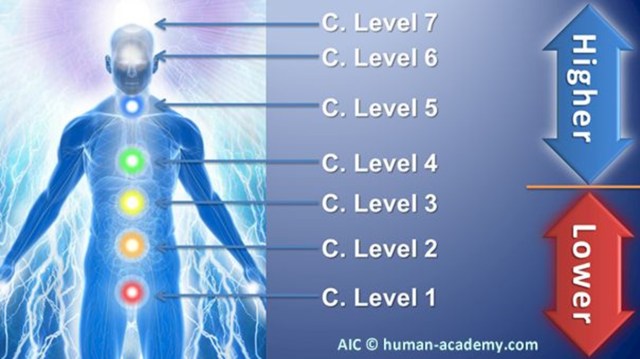
I share the concern expressed by His Holiness the Dalai Lama about shortcomings of educational mission. In my analysis, apart from education, most religions, and philosophical doctrines fail to identify all the dimensions of man in relation to man’s existence on the surface of fast spinning celestial object called World. Indian traditions of Yoga may describe seven levels or ‘Chakras’ of human consciousness.


In my view, man’s singularity as Human Being is like Color Spectrum of Light. The seven colors of man are, 1. Physical, Mortal Being, 2. Mental Being, 3. Social Being, 4. Moral Being, 5. Spiritual Being, 6. Created Being, and 7. Rational Being. It will not be of much help to learn about World as a planet revolving around Sun. At a fundamental level, man as to learn about illusion of ‘Flat Disc’ as the most important sensory experience that determines reality of his mortal existence.


Rudranarasimham Rebbapragada

SPECIAL FRONTIER FORCE


DALAI LAMA RUES NEGLECT OF HUMAN WELL-BEING IN EDUCATION – THE STATESMAN


Clipped from: https://www.thestatesman.com/india/dalai-lama-rues-neglect-human-well-education-1502639016.html

Dalai Lama.

Tibetan spiritual leader Dalai Lama on Monday rued the neglect of human well-being in education and said it is the responsibility of ‘education institutions to nurture both physical and inner wellbeing’.

Addressing the devotees from Vietnam, he said the poor are suffering incessantly, children are dying in various parts of the world due to lack of basic facilities. The people with riches are not necessarily happy or peaceful.

He argued that education system as the source of intellectual nourishment, have neglected basic human nature and its needs.

“Our existing education system is very much oriented towards materialistic goals and as a result, our way of life has been materialistic,” he said. He said through paying attention to our inner well-being, we can bring peace in our individual lives as well as in communities and can be extended to the world.

“The 21st century should eventually become a century of peace, not through prayers but through training of the mind,” he said, adding education is universal; through education, we can introduce knowledge of inner values and ethics. He iterated his commitment to introduce universal ethics in the education system based on India’s secular tradition.

“India celebrates secular values, which accords respect for all religion and respects non-believer. According to my view, I am trying to introduce in existing education system some teaching of moral ethics based on scientific values, not based on religious beliefs,” he said.

Referring to the alarming suicide rate in cities in comparison to rural, he said the answer is in countryside, farmers have a strong sense of community. They come together during farming and always have the sense of belonging to a community. Therefore, they experience much less loneliness.

“In big cities, neighbours greet each other in morning and in social gatherings, but people to people connections are not necessarily very sincere. It is only at face level; artificial,” he said.


LIVING TIBETAN SPIRITS – NATURE’S AGENDA – TIBET EQUILIBRIUM


LIVING TIBETAN SPIRITS – NATURE’S AGENDA – TIBET EQUILIBRIUM


Living Tibetan Spirits speak of Nature’s Agenda in Tibet. Freedom and Independence are gifts of Nature quietly operating across Tibetan Plateau long before the arrival of Anatomically Modern Man. Occupying force wielded by Communist China creates imbalance, disharmony, and discord in lives of Tibetans who view freedom as natural experience. There is no reason for Tibetans to raise their voices demanding freedom. In my analysis, Tibet Equilibrium is about balancing physical force applied by Communist regime to overcome Nature’s Agenda of granting freedom without asking questions.


Rudranarasimham Rebbapragada

SPECIAL FRONTIER FORCE


PUTTING TIBET BACK ON THE AGENDA BY DHONDUP WANGCHEN – PROJECT SYNDICATE


Clipped from: https://www.project-syndicate.org/commentary/china-tibet-human-rights-commitments-by-dhondup-wangchen-2018-05

Human rights activists had hoped that international attention on China during the 2008 Summer Olympic Games in Beijing would lead to greater political and religious freedom. It didn’t, but it’s not too late to pressure China to adhere to its past commitments.

WASHINGTON, DC – In 2001, when Beijing was selected to host the 2008 Summer Olympics, expectations were high that China’s human-rights performance would improve in the international spotlight. Even Chinese officials predicted change; as Beijing’s mayor said at the time, hosting the games would “benefit the further development of our human-rights cause.”

But ten years later, China remains one of the world’s most illiberal countries. Ethnic minorities are targeted, the regime’s critics are imprisoned, and promises of reform have been virtually meaningless. As a Tibetan political dissident, I am living proof of this reality.

In December 2017, I arrived in the United States after being held in Chinese prisons for more than six years. I endured beatings and torture for the “crime” of asking Tibetans what they thought about China’s leadership.

As a boy, I was only dimly aware of China’s repression in Tibet. It wasn’t until the early 1990s, when I first visited the Tibetan capital of Lhasa, that I understood what it meant to be a target of China’s occupation. In 1992, when I was 18, I watched as monks from Lhasa’s Ganden Monastery were dragged off to prison for demanding religious and political freedom. Many spent years in jail for daring to speak out against China, and as I grew older, I vowed to speak out, too.

My first stint in a Chinese prison was tied to work I began in the early 2000s printing and distributing Tibetan-language books. I considered these texts to be important readings on Tibetan politics, culture, and religion. Chinese authorities, however, viewed them as a challenge to their rule, and they punished me accordingly.

As the 2008 Olympics approached, I began looking for new ways to record my people’s history. This was when friends and I began planning a documentary film – eventually called Leaving Fear Behind – about Tibetans’ aspirations.

In the winter of 2007, we left our fear behind and traveled throughout Tibet, cameras in hand. To gain our subjects’ trust, we shared DVDs of the Dalai Lama being awarded the Congressional Gold Medal by President George W. Bush in October 2007. In interview after interview, Tibetans expressed their desire to see the Dalai Lama return to Tibet and shared their frustrations that the lead-up to the Olympics had not brought more freedom.

On March 26, 2008, my work caught up with me when I was arrested by China’s secret police. Once in custody, the torture began immediately. For days, I was forced to sit in the “tiger chair,” a restraining device used to immobilize prisoners during long hours of questioning. During these sessions, I was told that I would be released if I admitted that my film project was illegal. But I refused, firm in my belief that I had done nothing wrong.

Eventually, I received a six-year prison sentence for “subversion of state power.” During the course of my incarceration, I was moved often and forced to carry out manual labor for hours with no breaks. At one prison in Xining, my health deteriorated after I became infected with hepatitis B. But it wasn’t until I was released, in June 2014, that I was able to receive treatment.

Even without bars around me, I remained caged. I was kept under house arrest, and my communications were closely monitored. All I wanted to do was study, improve my Tibetan language skills, and find a job. But in much of Tibet, even simple dreams have become impossible for Tibetans; for many, the only option is to flee.

My long, risky, and costly journey to freedom ended on Christmas Day last year, when I arrived in San Francisco and was reunited with my family (they left China years ago for their own safety). For various reasons, I must keep the details of my escape private, but it is no secret that many around the world aided me. Leaders in the US, Germany, Switzerland, and the Netherlands frequently called on China to release me, and I am convinced that this pressure is why I received fewer beatings and slightly better treatment than my cellmates.

Unfortunately, many other Tibetans remain locked up for their beliefs. They need support, too. As I told US lawmakers during congressional testimony in February, Western governments have long supported the people of Tibet. But, as China has grown more economically and politically powerful, that support has waned.

Tibetans are not bargaining chips to appease an ascendant China; although the Chinese authorities bristle when democratic governments support us, our aspirations must not be traded away for political expedience. One way President Donald Trump’s administration could recommit to US support would be by appointing a Special Coordinator for Tibetan Issues, a State Department post mandated by the Tibet Policy Act of 2002 that has been vacant since Trump took office. Congress should also pass the Reciprocal Access to Tibet Act – a legislative solution to promoting positive change in Tibet – and demand the release of all Tibetan political prisoners.

Nearly a decade has passed since the curtain fell on the 2008 Olympics. But while the Chinese government doesn’t talk much about human rights anymore, the international community must never stop. I can assure you that Tibetans inside Tibet have not given up their struggle – even if fewer people are listening.


LIVING TIBETAN SPIRITS DEMAND TRANSPARENCY AND PUBLIC ACCOUNTABILITY AS PRECONDITION FOR DEMOCRACY


LIVING TIBETAN SPIRITS DEMAND TRANSPARENCY AND PUBLIC ACCOUNTABILITY AS PRECONDITION FOR DEMOCRACY


Living Tibetan Spirits demand ‘Transparency and Public Accountability’ as precondition for Democracy, Freedom, Peace, and Justice in Occupied Tibet. Further, Living Tibetan Spirits absolutely reject Cold War Era Secret Diplomacy.

Living Tibetan Spirits demand the United States and India to formally recognize Tibetan Government-in-Exile and conduct Diplomacy with Dignity to show Respect and to Honor Tibetan National Identity.


Rudranarasimham Rebbapragada

SPECIAL FRONTIER FORCE


US ENVOY JUSTER CALLS ON DALAI LAMA


Clipped from: https://www.thestatesman.com/india/us-envoy-juster-calls-dalai-lama-1502631324.html

DALAI LAMA

US Ambassador Kenneth Juster called on Tibetan spiritual leader, the Dalai Lama, at his official palace here on Friday, the Central Tibetan Administration (CTA) said.

During the two-day visit, which concluded on Friday, the Ambassador met high-ranking officials of the CTA, including President Lobsang Sangay twice.

The CTA also hosted a dinner reception followed by cultural performances at the Tibetan Institute of Performing Arts for the visiting dignitary, a post on the CTA’s website said.

Following the audience with the Dalai Lama, the Ambassador said he had discussions on a wide-range of issues with the Dalai Lama.

He expressed that he was particularly inspired by the Dalai Lama’s views on how inner peace of individuals can be spread and bring broader peace to mankind, said the post.

He also said he requested the Dalai Lama to visit the US again in the future.

The Ambassador was accompanied by a four-member delegation from the US embassy, comprising Special Assistant Anood Taqui and Deputy Political Minister Counsellor Derek Westfall.

The Dalai Lama, who believes in the “middle-path” policy that demands “greater autonomy” for the people in Tibet, is viewed by the Chinese as a hostile element who is bent on splitting Tibet from China.

He lives in exile along with some 140,000 Tibetans, over 100,000 of them in India. Over six million Tibetans live in Tibet.

The Tibetan exile administration is based in this northern Indian hill town, but is not recognized by any country.


I SAY CHINA CANNOT STAY IN TIBET IF TIBET STAYS IN CHINA

I SAY CHINA CANNOT STAY IN TIBET IF TIBET STAYS IN CHINA


In my analysis, the real issue is not that of where Tibet stays. Dalai Lama says, ‘Tibet can stay in China’. I say, “China cannot stay in Tibet.” China in Tibet is the real problem.


Rudranarasimham Rebbapragada

SPECIAL FRONTIER FORCE


TIBET CAN STAY IN CHINA, DALAI LAMA SAYS


Clipped from: https://www.msn.com/en-us/news/world/tibet-can-stay-in-china-dalai-lama-says/ar-AAwhE6P

The Dalai Lama has said that Tibet can remain a part of China if Beijing guarantees to protect the disputed region’s culture and autonomy.

Speaking to mark the 60th anniversary of his exile to India on Sunday, the 82-year-old said Tibetan and Chinese citizens could have a mutually beneficial relationship, daily Indian newspaper The Hindu reported.

The Dalai Lama—the 14th person to be chosen for the position—left Tibet at the start of the unsuccessful 1959 uprising against the Chinese central government. He has since been based in northern India, initially serving as the political and later only spiritual head of the Tibetan community in exile.

© Provided by IBT Media

“Historically and culturally, Tibet has been independent. The region’s geography shows where Tibet begins,” he said. “So long as the constitution of China recognizes our culture and Tibetan autonomous region’s special history, they can remain [part of China].”

The Nobel Peace Prize laureate noted that while Tibet stood to benefit economically from remaining a part of China, the rest of the country could gain from exposure to Tibetan Buddhism. Although the speech is an important step toward compromise with Beijing, the Dalai Lama stressed the need to protect Tibetan culture.

China has been accused of a “cultural genocide” against the Tibetan people—sometimes by the Dalai Lama himself—over its policy of Sinicization of the region. Beijing has been uncompromising in its rule of the Himalayan region and considers the Dalai Lama a separatist.

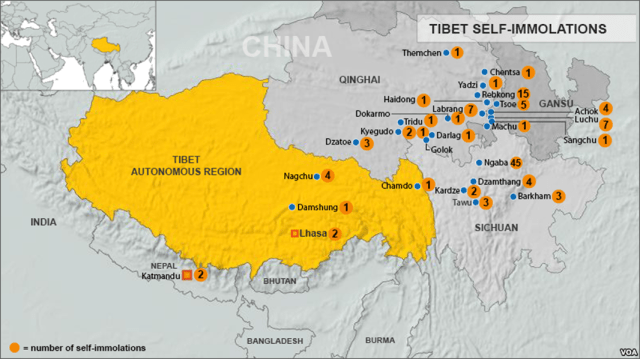
The Communist Party has encouraged Han Chinese migration to Tibet and restricted the teaching of traditional languages. Such policies have drawn fierce opposition from Tibetans. In 2008, Tibetan protests against the central government broke out. The movement was brutally suppressed, with scores killed and thousands arrested. Since 2009 there have been more than 100 self-immolations as desperate Tibetans voice their continued dissent.

© Provided by IBT Media

Nonetheless, the Dalai Lama is now encouraging cooperation and reconciliation. “There was a time when every French looked at the Germans as enemies,” he said. “But today they are in the European Union. Similarly, we can work together.”

The Dalai Lama’s remarks come ahead of a meeting between Chinese President Xi Jinping and Indian Prime Minister Narendra Modi on April 27 and 28. Regional rivalry and border friction have meant relations between the mammoth neighbors have often been tense, and occasionally outright hostile.

The “informal summit” will be held in the central Chinese city of Wuhan and will be the first since the 2017 Doklam border standoff. The Dalai Lama said he was in favor of the meeting, encouraging both leaders to improve relations. “I think it is really good that they are meeting,” he said. “They have to live side-by-side, so it is better to live as a family.”

The Dalai Lama was formally assigned his leadership duties aged just 15. With China’s tight control of Tibet, he has admitted he may be the last to hold the position, and Beijing says it has the power to choose his successor. “The Dalai Lama institution will cease one day,” the leader told the BBC in 2014. “These man-made institutions will cease.”


LIVING TIBETAN SPIRITS NEED INFINITE COMPASSION OF BODHISATTVA

LIVING TIBETAN SPIRITS NEED INFINITE COMPASSION OF BODHISATTVA


As life’s tedious journey relentlessly proceeds towards its miserable conclusion, Living Tibetan Spirits need Infinite Compassion of Bodhisattva.


Rudranarasimham Rebbapragada

SPECIAL FRONTIER FORCE


THE MURALS OF TIBET, WITH AN ASSIST FROM THE DALAI LAMA


Clipped from: http://www.latimes.com/entertainment/arts/la-ca-cm-murals-of-tibet-20180429-htmlstory.html

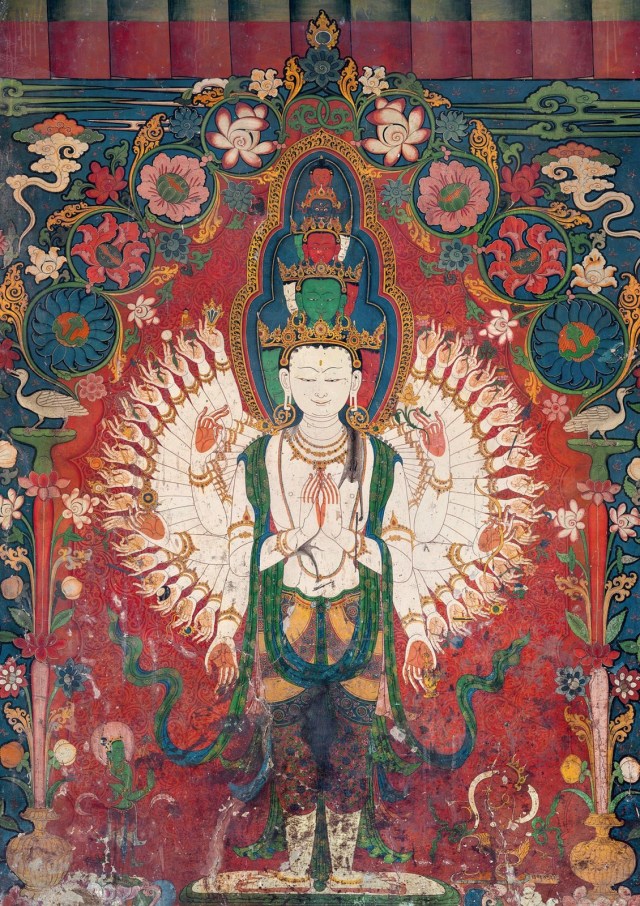
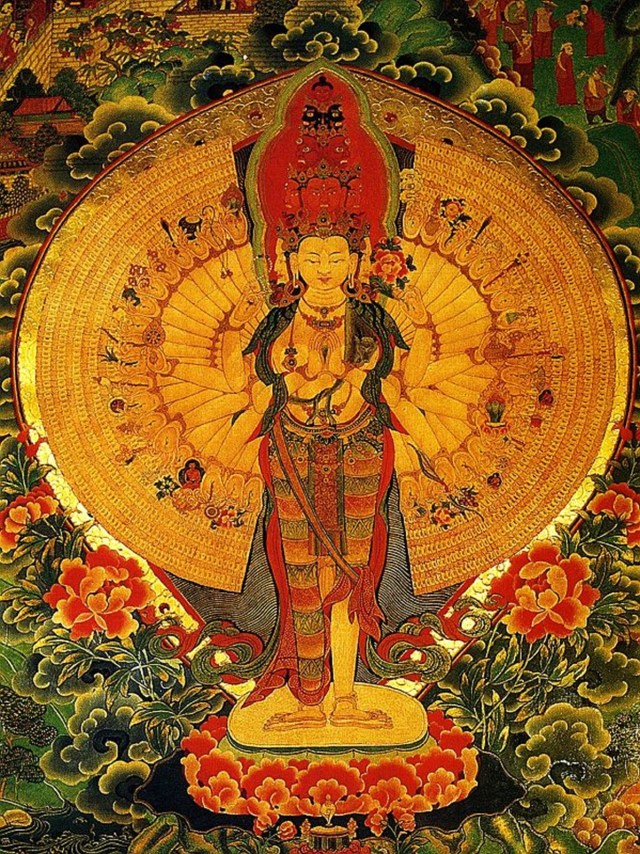
“Eleven-Headed Avalokiteshvara,” 15th century, from Gyantse Kumbum, 65 inches by 45 inches, from Taschen’s “Murals of Tibet.” (Thomas Laird / Taschen)

American photographer Thomas Laird spent 50 hours over 10 years with the Dalai Lama, and through all those candid conversations, one point stood out: Before his holiness could read, Tibetan murals were crucial to his early education.

Now Laird has compiled images of 130 centuries-old, life-size artworks into “Murals of Tibet,” newly published by Taschen. The sumo-sized tome is the first collection of representative Tibetan art blessed by the Dalai Lama, who signed all 998 copies of the 500-page limited-edition book.

The murals are housed in temples, monasteries, stupas and other sites dating from 633. Because they were in small spaces with no electricity or windows, the murals had long been challenging to view. Traditional photographic techniques couldn’t capture the breadth of the paintings.

Armed with new multi-image capture and render techniques, Laird spent 10 years photographing the murals in life-size resolution, some 10 feet by 10 feet. Every mural is laden with copious, intricate details relating purposeful stories.

“They are not just art but motivational tools and philosophical statements,” Laird said.

Take, for example, “The Eleven Headed Avalokiteshvara,” the Bodhisattva of Infinite Compassion, with more than 40 hands and multiple levels of faces.

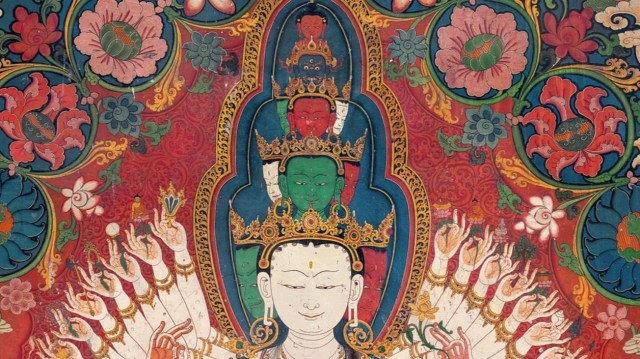
Detail of “Eleven-Headed Avalokiteshvara.” Thomas Laird / Taschen

“They’re a metaphor,” Laird said. “He is omniscient, able to see in all directions simultaneously.”

In each hand is a unique object indicating the Bodhisattva’s power to reach out to different classes of beings.

“The multitude of appendages symbolize his immense ability to see pain and suffering in the world,” Laird said.

Dressed in robes of a prince and adorned in gold jewelry, the Bodhisattva expresses transmutation and power. A blue, red and gold aura emanates around the 11 heads. Behind is a red field, an infinite void, symbolized by flames. Beyond is an archway of lotuses, peonies and clouds. A goose on either side symbolizes long life and spiritual attainment.

While objects of majestic beauty, the murals also serve as points of guidance and appreciation for those seeking spiritual mindfulness.


CHINESE DREAM – GREAT GAME OF TIBET DOMINATION

CHINESE DREAM – GREAT GAME OF TIBET DOMINATION
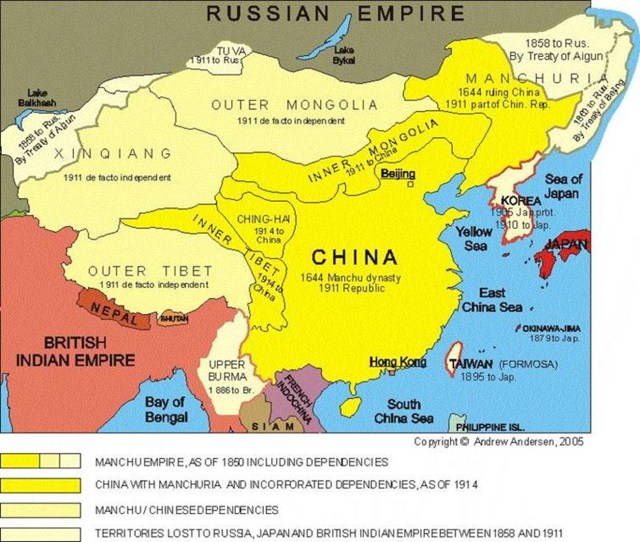


Natural Forces, Natural Factors, Natural Conditions, and Natural Causes shaped Tibetan Existence over centuries. In the 19th century “Great Game” expanding empires of Great Britain, Czarist Russia, and Manchus – Qing Dynasty of China dreamed about domination of remote, desolate Tibetan Plateau. They failed to realize their dream.


The Chinese Revolution of 1949 gave Communist Party leader Mao Zedong to reinstate Chinese Dream and to relaunch Great Game of Tibet Domination.


In my analysis, Natural Forces will kill Chinese Dream of Tibet Domination. For example, asteroids have the most destructive power in Solar System and can neutralize Chinese Dream in matter of a few minutes. Beijing invented her own Doom by using physical force with evil intentions.


Rudranarasimham Rebbapragada

SPECIAL FRONTIER FORCE



THE TIBET QUESTION


Clipped from: http://www.dailypioneer.com/columnists/oped/the-tibet-question.html

Despite six decades of Chinese rule, maintaining domestic stability in Tibet is a challenge for Beijing, JNU professor Swaran Singh tells Sapna Singh in an interview. Excerpts:

Q:  In 2000, China officially launched the ‘Open Up the West’ policy which is also termed as the Xibu da Kaifa policy to address economic, regional, ecological and security concerns…

A: The fundamental limitation of Xibu da Kaifa has been the continued alienation of the Tibetans. Though a large number of native Tibetans have been co-opted into various positions and programs, the policy has largely focused on Han Chinese being resettled in Tibet. They have also been the main beneficiaries. Besides, this region also remains sparsely inhabited by Chinese minorities with few urban centers to generate commercial activity, Lhasa being an exception. But China has also done work in building all-weather expressways, starting regular flights and, above all, operationalizing the rail link between Beijing and Lhasa which is being extended to other cities.

Q: China aims to become a regional power by 2025 and a global power by 2050. However, securing complete control within its own boundaries has gained huge significance. How challenging is maintaining domestic stability for China?

A: With China’s economic growth rates tapering down from 9 per cent to about 6.5 per cent in the last three decades, it has resulted in nationalism becoming another instrument to ensure regime legitimacy. Having emerged as the next economic superpower, China is today seeking to reclaim territories that it thinks were wrongly taken away from it. But instead of negotiating, Beijing seems to be using unilateral muscle-flexing to reclaim these territories, especially from weaker and vulnerable

neighboring nations. Chinese President Xi Jinping’s outline of the ‘Chinese Dream’ and his target to make China a “regional and global power are part of that exercise to ensure his regime’s legitimacy.

Q: For the projection of China’s hard and soft power in the Western and Central Asian region, how pivotal do you think the Belt and Road initiative is to Xinjiang and Tibet?

A: With President Xi being empowered like no other leader, his ambitious BRI has the potential to become the locomotive of China’s rise. By building infrastructure and other logistics of connectivity, this initiative seeks to rekindle the Middle Kingdom’s dream of all roads leading to Beijing. Poor nations are becoming willing partners to this scheme; though in the future, these nations will have to bear the burden of China’s indulgence that will create debt traps for a host of nations. In the long run it will most likely negatively affect China’s equations with these countries.

Q: Is the ‘Hanization of Tibet’ and the marginalization of Tibetans through infrastructure development Beijing’s attempt to ‘control’ Tibet?

A: In the 19th century Great Game among expanding empires of Czarist Russia, British India and China, the insurmountable plateau of Tibet was always seen as an impregnable territory. With the end of the British Empire in India and Russia getting entangled with European nations, China extended its control over Tibet in the early 1950s. Given this history — especially Younghusband’s expedition (1905) followed by the Shimla Accord (1915) — Beijing saw Tibet as its soft underbelly, making it vulnerable to its South Asian neighbors, especially India, where the Dalai Lama fled in 1959 to set up his Government-in-exile. For several decades, Tibet was held as a fortress by the Chinese and it was only gradually, from the 1970s, that it was opened up to foreign visitors.

Though China’s economic prowess and garrisons ensure control over Tibet today, continued unrest among Tibetans, both inside China and outside, and especially the iconic presence of the Dalai Lama in India, continues to cause paranoia in China about Tibet not being fully assimilated as a Chinese province.

Q: Tibet is a multi-ethnic society with people from Se, Mu, Dong, Tong, Drum, Ra and Bai… how is this diversity being managed by China?

A: China has launched several affirmative action policies to support its minorities. Yet, they stand to be marginalized. Especially, the Tibetans with their nomadic culture has allowed China to fill its urban centers with members of the Han ethnic group who today control most of the administrative and commercial levers in Tibet. Empowerment of Tibetans in that sense is mere window-dressing. Both in Xinjiang and Tibet, these minorities are often categorized as Muslim and Tibetan but have dozens of sub-categories with strong identities, which have allowed monolithic Han ethnic identity to subsume the centre, pushing these minorities further to the periphery.  

Q: What is Protected Area Permit (PAP) scheme? Do you think that by promoting or relaxing PAP, China is trying to control visitors to India’s frontiers even as it promotes ‘border tourism’?

A: Both China and India remain sensitive to their remote border regions and have institutionalized special permit provisions to disallow free thoroughfare and access to their border areas. The main difference is that China’s infrastructure building in these remote border regions has been relatively efficient. Having travelled on both the Tibetan/Chinese and Indian side of the border, I can vouch for the difference though both sides have their limitations in accessing uninhabited terrain.

Q: China has constructed an elaborated network of roads in Tibet which includes both national highways and provincial roads. Indians, on the other hand, are migrating to cities and border areas’ population is shrinking. Comment.

A: China’s economy is a $13.6 trillion one and India’s economy stands at $2.6 trillion. This tells us how much economic resources are available to both sides to pursue their national priorities. China surely has earned a reputation for infrastructure building though India has also been making efforts to provide more comfort for both the Armed Forces and the population that lives in these remote border regions. Only the scale and speeds are very different, and this asymmetry is on the rise and needs to be calibrated in India-China policy.  

Q: China is also working on building road infrastructure in terms of its ‘long-term goal’. What would be the impact of road infrastructure near border areas on India in terms of national security?

A: China’s juggernaut of infrastructure building in its frontier areas facing India is a reality that cannot be ignored by New Delhi. China has already brought the railways to Shigatse and has carried out feasibility studies for its extensions to Bulang, Gyirong and Yadong. China’s historic feet in building railroads using permafrost technologies in snow-capped Kuen Luo and the Himalayan ranges to reach Lhasa provides credibility to its commitment to undertake these extensions.

Besides, Nepal seems equally excited to participate and facilitate connections to Kathmandu. Bhutan may also be lured by Beijing in coming times. It’s a tough choice for New Delhi to make as to whether it wishes to allow this rail network to connect with India’s in Nainital, Siliguri and Guwahati or stay away from it. Both decisions will have their costs and benefits.

Q: According to Beijing’s narrative, Tibetans have enjoyed the benefits of growth. However, Tibetans have been arguing that they have been excluded from growth and been relegated to second-class citizenship.

A: China’s incentivization of Tibetan minorities has not been fully harnessed by the Tibetans, given their nomadic culture and spiritual values which are broadly non-materialistic. Besides, continued disjunction of Tibetans, torn between Beijing and their Government-in-exile in Dharamshala, has been a constant source of anxiety and uncertainty. As a result, invariably, Han Chinese have remained the major beneficiaries of most pro-Tibetan policies, leaving Tibetans on the margins.

(The interviewer is Principal Correspondent, The Pioneer)



PRACTICAL vs NATURAL SOLUTION FOR FREEDOM IN TIBET

PRACTICAL vs NATURAL SOLUTION FOR FREEDOM IN TIBET


In my analysis, Freedom in Tibet is Natural Condition or Phenomenon resulting from Natural Forces acting upon Tibetan Plateau in unceasing manner. Tibetans got accustomed to Independent lifestyles as Freedom in Tibet is entirely natural. People’s Republic of China’s use of military force and power to abrogate Freedom in Tibet apart from being unfair and unjust remains unnatural. Peace, Harmony, and Tranquility in human living experience demand natural operations.


Living Tibetan Spirits bet on ‘Karmic Design’ as consequences of evil actions result in Calamity, Disaster, Catastrophe, Cataclysm, and Apocalypse. China cannot ward off disaster by paying ransom. Natural Calamity will force China to restore Natural Freedom in Occupied Tibet. All existence is bound by time and change, yet ultimately rests in the Divine. Freedom in Tibet is Just a Stone’s Throw Away. I say, “BEIJING DOOMED.”


Rudranarasimham Rebbapragada

SPECIAL FRONTIER FORCE


AS DALAI LAMA LOOKS FOR PRACTICAL SOLUTION OVER ‘FREE TIBET’, TIBETANS BET ON ‘KARMIC DESIGN’


Clipped from: http://www.dnaindia.com/india/report-as-dalai-lama-looks-for-practical-solution-tibetans-bet-on-karmic-design-for-free-tibet-2601382

For decades, Tibetans living in exile across the globe fought what they thought was a “freedom struggle”. Sixty years down the line, it is a “karmic design” which they seem to be banking upon to get back to their homeland.

With China asserting itself like never before, and His Holiness the Dalai Lama talking about Tibetans “not seeking separation” from China but only “certain rights” to enable Tibetans preserve their culture, language and rich Buddhist tradition, Tibetans who have grown-up on the idea of a Free Tibet now find themselves in a quandary.

The Tibetans’ belief that since two of the three dreams dreamt by His Holiness the Dalai Lama came true the third one will come true too, is what appears to be lending more hope to the exiled community than the idea of a “freedom struggle”.

In the first dream, the Dalai Lama saw bloodshed. The Tibetans believe that this dream became a reality after 81,000 Tibetans were killed between March and September 1959 and a million Tibetans died during the Chinese invasion and occupation.

In the second dream, His Holiness saw that he was meeting with people wearing white clothing. After arriving in India, the Dalai Lama met with the likes of India’s first Prime Minister Jawaharlal Nehru and first President Rajendra Prasad—both used to wear white kurtas. So, the Tibetans believe that the second dream came true as well.

But it is the third dream which gives Tibetans maximum hope. In that, the Dalai Lama dreamt of himself being in a room “filled with light” in the Potala Palace in Lhasa where he is getting reunited with Tibetans inside Tibet.

“Because the first two dreams came true, by karmic design, the third dream will also come true,” Dr Lobsang Sangay, President of the Central Tibetan Administration, told a massive gathering of Tibetans in the picturesque hill township of McLeod Ganj last week.

“Let us reunite Dalai Lama with Tibetans inside Tibet,” Dr Lobsang Sangay, Dalai Lama’s political successor, said asking the Tibetans to re-dedicate themselves and strengthen their efforts to make the dream and Dalai Lama’s return to Potala Palace a reality.

The fact that the Tibetan cause has got watered down from a freedom struggle to autonomy over the years is something that has not gone unnoticed.

Tibetans living in exile across the globe are observing the year 2018 as “Thank You India” year. This, they say, is an expression of their gratitude towards a country which not only gave them shelter but also helped keep their “freedom struggle” and “movement” alive for six decades.

McLeod Ganj—the seat of the Tibetan Government-In-Exile–in Dharamshala in Himachal Pradesh is not called “Little Lhasa” for nothing. This place has not been just a home away from home for the exiled Tibetans. It has also been a launchpad sheltering a struggle which hopes to return the exiled Tibetans to their homeland someday.

So when the 14th Dalai Lama says that at a “practical level”, the Tibetans are “not seeking separation” from China and that their “elected political leadership” is committed to this stance, don’t the Tibetans have reason to feel let down? Even if they do, the Tibetans do well to hide it. Given the stature His Holiness enjoys, it is difficult to find a Tibetan voice dissenting with the Dalai Lama.

The Dalai Lama says that while remaining within the People’s Republic of China, Tibetans should have certain rights enshrined in the Chinese Constitution so that Tibetans can preserve their culture, language and rich Buddhist tradition. It’s anybody’s guess how generations of Tibetans who were brought up on dreams of a Free Tibet would feel about this.

In “practical” terms, the spiritual leader probably realizes that this is the best bargain he could secure from the increasingly assertive Chinese.

But the tone and tenor adopted by the political leadership of the Tibetan movement however would still make one believe that the idea of complete freedom has not been given up completely. Not yet.

At the main event to commence the year-long “Thank You India” celebrations, Dr Lobsang Sangay minced no words in detailing “60 years of China’s illegal invasion and occupation of Tibet”, “60 years of destruction of Tibetan civilization, culture and identity”, “60 years of killing, arbitrary arrests and tortures”, “60 years of China’s mass exploitation of our precious natural resources…our forests, our water and our glaciers”, and “60 years of tragedy, 60 years of suffering, 60 years of sadness and 60 years of pain”.

Sangay also lent a completely new dimension to Indian Prime Minister Narendra Modi’s “Make In India” program by saying that the “original Make In India is the Tibetan movement”.

“Tibetans were born and brought up in India. They were educated in India. Our democracy replicates Indian democracy. Our philosophy of ahimsa comes from Indian philosophy. And the Tibetan cause is being rebuilt in India for the last 60 years,” Sangay said. “The original Made in India will also succeed. Your success will be our success, our success will be your success,” the Tibetan leader said addressing India’s Culture Minister Mahesh Sharma and senior BJP leader Ram Madhav.

No separation from China?  And Dalai Lama’s return to Potala Palace even as it continues to be under Chinese occupation? Will the 1.28 lakh Tibetans-in-exile ever amenably settle for that is the question that needs immediate answering.


SIXTY-EIGHT YEARS OF CHINESE AGGRESSION IN TIBET


SIXTY-EIGHT YEARS OF CHINESE AGGRESSION IN TIBET


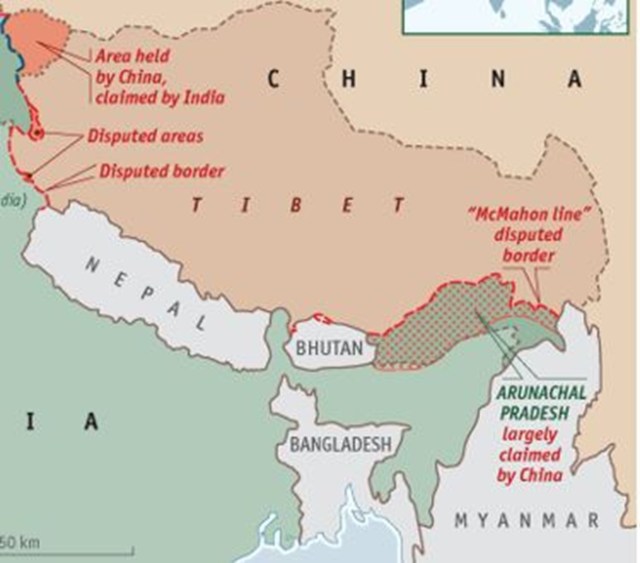
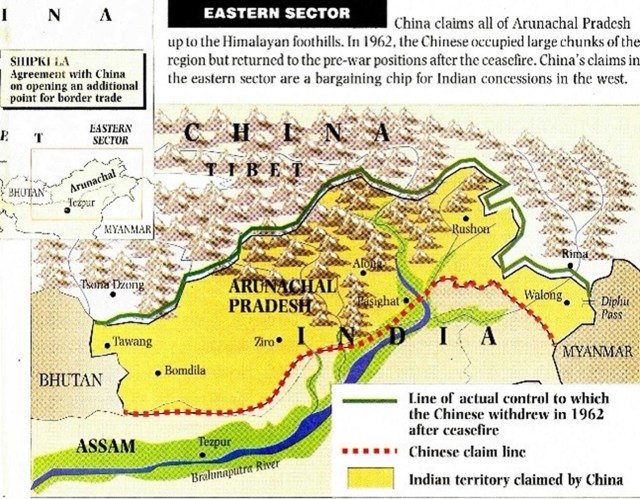
For the last sixty-eight years, India is facing security threats all along the Himalayan Frontier following Communist China’s invasion of Tibet. India has no border with China. The border disputes between India and China simply describe the fact of Chinese Aggression in Tibet.


Rudranarasimham Rebbapragada

SPECIAL FRONTIER FORCE


ARMY INCREASES STRENGTH AT INDIA-CHINA-MYANMAR TRIJUNCTION NEAR TIBET TO PREVENT REPEAT OF A DOKLAM-LIKE STANDOFF


Clipped from: https://www.outlookindia.com/website/story/to-prevent-repeat-of-a-doklam-like-standoff-army-increases-strength-at-india-chi/310352

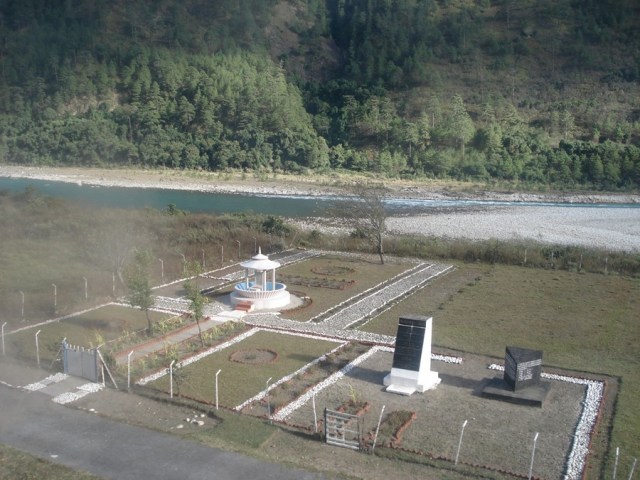
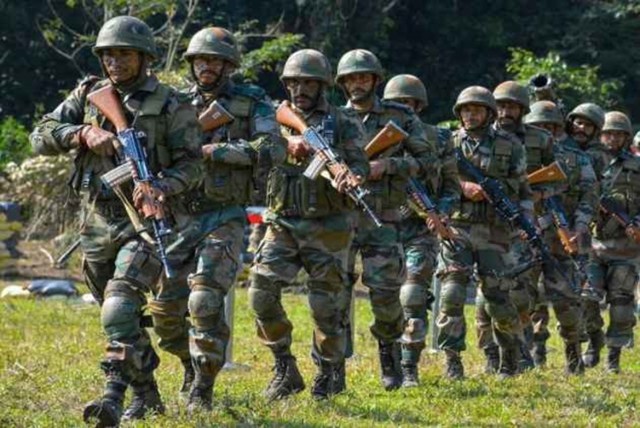
Indian troops deployed along the disputed Sino-India border in the Himalayan range of the Arunachal sector have increased their patrolling at a tri-junction of India, China and Myanmar to prevent a repeat of a Doklam-like standoff.

Top Army officials told PTI that the tri-junction, located around 50km from Walong, the easternmost town of India near the Tibet region, is extremely important for India to help it maintain its dominance in the nearby mountain passes and other areas.

Advertisement opens in new window

“After the Doklam standoff, we have increased our presence on India’s side of the tri-junction as it is very important for us from the strategic dimension,” a senior Army official said.

He said Chinese troops did not enter the Tri-junction too frequently but had developed a road infrastructure near the area which could be advantageous for the mobilization of army personnel.

Walong, situated on the bank of Lohit river, had witnessed the bravery of Indian troops against Chinese aggression during the 1962 war between the two countries.

The deepening of military engagement between China and Myanmar was another reason for India ramping up its presence at the tri-junction with thick rainforests on the Himalayan ranges.

The official said Myanmar’s border guarding forces did not patrol the tri-junction.

“After the tri-junction in Doklam in the Sikkim sector, this is the most important tri-junction along the Sino-India border,” he said.

Troops of India and China were locked in a 73-day-long standoff in Doklam from June 16 last year after the Indian side stopped the building of a road in the disputed area by the Chinese Army. The face-off ended on August 28.

The area in Doklam where China tried to construct a road is a disputed territory claimed by both China and Bhutan. India sent its troops to stop the Chinese construction activity, saying it could be a threat to its strategic interests in the region.

Since the Doklam standoff, India has deployed more troops and increased patrolling along the borders with China in the Tibetan region.

Another official said Indian troops have also enhanced their presence in all the areas in the Lohit Valley near the tri-junction.

“There are 18 mountain passes in the region and we have been carrying out long-range patrols to all these passes regularly,” he said.

He further said,” We have been carrying out war rehearsals regularly. You have to be in an offensive mode to remain in an advantageous position.”

China has been laying new roads and improving its overall infrastructure along the nearly 4,000km-long border with India.

Defence Minister Nirmala Sitharaman said last month that China had undertaken the construction of helipads, sentry posts and trenches for its army personnel near Doklam.


Sources said China has been keeping its troops in north Doklam and significantly ramping up its infrastructure in the disputed area.

In January, Army Chief Gen. Bipin Rawat had said the time had come for India to shift its focus from its borders with Pakistan to the frontier with China, indicating the seriousness of the situation.