The West Meets the East – Meet the White American Brahmin
Bharat Darshan – The West Meets the East-Meet the White American Brahmin.
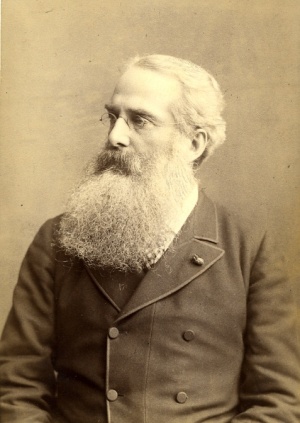
Colonel Henry Steel Olcott (Born. August 2, 1832,Orange, N.J. U.S.A., Died. February 17, 1907, Adyar, Madras (Chennai), India.
Bharat Darshan – The West Meets the East-Meet the White American Brahmin.
“OH, East is East, and West is West,
And never the twain shall meet.
Till Earth and Sky stand presently at
God’s Great Judgment Seat.”
(Rudyard Kipling, English poet, novelist, Nobel Prize winner)
The West Meets the East – The East – West Confluence:
Bharat Darshan – The West Meets the East. Meet the White American Brahmin. Helena Petrovna Blavatsky and Colonel Henry Steel Olcott founded the Theosophical Society and established its headquarters at Adyar, Madras, Chennai .
Colonel Henry Steel Olcott, an American lawyer and philosopher founded the Theosophical Society in New York City in 1875 along with Russian-born religious mystic Helena Petrovna Blavatsky, William Judge and others. He became the first president of the Theosophical Society. In 1878 he and Blavatsky visited India. The two settled there in 1879 and in 1882 established the permanent headquarters of the Theosophical Society at Adyar, Madras. Theosophy incorporates aspects of Buddhism, Hinduism and Christian esotericism. His acceptance by and influence on the Buddhists was far reaching. Identified with Eastern philosophical thought, he also helped revive Hindu philosophy. A Pandit conferred on him the sacred thread of the Brahmin caste.
Olcott dedicated his energies to fraternal understanding and the search for truth. He referred to theosophists as “original searchers after spiritual knowledge”. In his farewell message he expressed the wish ” to impress on all men on earth that ‘there is no religion higher than Truth’ and that in the Brotherhood of Religions lies the peace and progress of humanity.”
Upon his death at Adyar, Madras, India in 1907, Olcott was succeeded as president by Ms. Annie Besant, a social reformer and Indian independence leader. She visited my home town Rajahmundry twice and established ‘Divya Gjyan Samaj'(Divine Wisdom Assembly) building at Alcot Gardens. The teachings of the Theosophical Society emphasized human service, a spiritual evolutionism and the role of suprahuman masters of Wisdom (“ADEPTS”).
The natives of my home town Rajahmundry still honour the memory of Colonel Olcott. The residential community of ‘Alcot Gardens’ derives its name from “Olcott”. (Kindly review the comment posted .)
Dr. R. Rudra Narasimham, B.Sc., M.B.B.S.,
Danavaipeta Municipal High School, Rajahmundry, East Godavari District, Andhra Pradesh, India,
S.S.L.C., Class of March, 1961.
THE WEST MEETS THE EAST. MEET THE WHITE AMERICAN BRAHMIN. ANNIE BESANT – ANGEL OF INDIA .
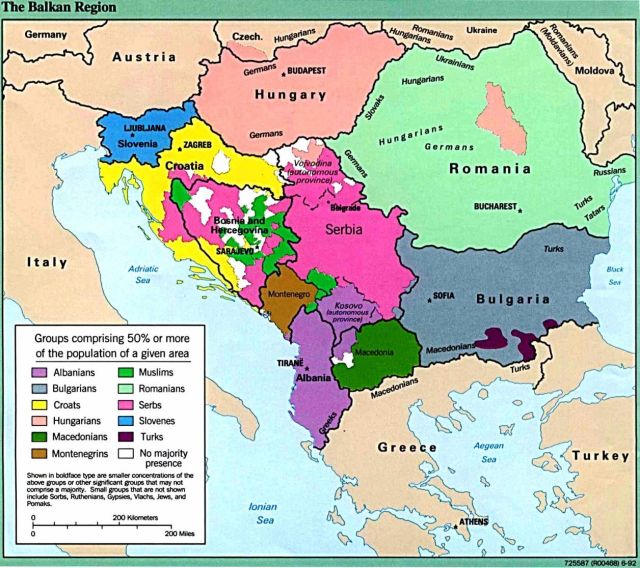
KOSOVO-A TINY, ECONOMICALLY STAGNANT BREAKAWAY PROVINCE OF SERBIA
Kosovo’s independence – A threat to India
James Palmer is a student in the Fletcher School of Law and Diplomacy at Tufts University in Medford, Massachusetts, U.S.A.(james.palmer@tufts.edu) In a guest editorial titled ‘ U.S. blunders by recognizing Kosovo independence’ that was published in The Detroit Free Press on Monday, March 31, 2008, he claims that the decision to recognize Kosovo’s independence is foolish. In doing so, he states that the United States and its European allies have undermined international law and opened the door to separatist movements world wide to follow suit.
THE UNITED NATIONS AND THE INTERNATIONAL LAW:
Kosovo’s independence – A threat to India
The United Nations Charter enshrines the inviolability of state sovereignty. Mr. Palmer argues that in recognizing Kosovo without a UN Security Council Resolution, the United States and its European allies have weakened two of the fundamental principles of international law: that states are free to determine their internal composition and that their territorial integrity must be respected. Security Council Resolution 1244 placed Kosovo under the UN administration and provided for Kosovo’s autonomy within Serbia. Now, the administrative authority is transferred from the UN sanctioned mission in Kosovo to an EU mission that has no legal mandate in the province. The main problem is that Kosovo’s independence undermines a system of international law. Kosovo’s independence sets the precedent for ethnic enclaves within other sovereign states. As per Mr. Palmer, the dangerous precedent it has created is: the carving off of a sovereign state’s territory in favor of an ethnic and religious minority threatening violence – a model to be replicated elsewhere.
America has been making ill-fated decisions in the Balkans for at least a decade and a half. Kosovo’s unilateral declaration of independence has only re inflamed the divisions and enmities of the 1990s. Mr. Palmer warns that the ethnic Albanians in the states of Bosnia, Macedonia and Montenegro are emboldened and they are calling for creation of “greater Albania” which would result in a new round of ethnic cleansing and more violence.
KOSOVO AND KASHMIR – AMERICAN POLICY:
Kosovo’s independence – A threat to India
America and its European ally Great Britain have consistently worked to undermine the interests of India in the United Nations and the Security Council had passed resolutions which ignore India’s territorial integrity and India’s sovereignty over areas of Kashmir that Pakistan illegally occupied during its wars of aggression in 1947-48 (First Kashmir War).
Kosovo’s independence – A threat to India. Soviet Prime Minister Nikita Khrushchev in Srinagar, Kashmir in 1955.
India could protect its vital interests in the Security Council only on account of the help provided by the Soviet Union. Leaders of USSR, Nikita Khrushchev (1953-1964) and Leonid Brezhnev (1964-1982) played the role of a life savior and had helped India to defend its position with regard to Kashmir. At the end of the cold war, America to exercise its role as the world’s only Super Power had changed its attitude towards the basic principles of the United Nations Charter which govern international relations. America would now like to intervene on its own initiative without obtaining a mandate from the United Nations. American support to militant groups based in Kashmir clearly poses a great threat to India’s sovereignty over Kashmir and India should protect itself from the dangerous precedent created by the unilateral declaration of independence by Kosovo.
Kosovo’s independence threatens the Republic of India due to the threat posed by American interventionism.
Whole Dude – Whole Intuition: Jean Jacques Rousseau, Swiss-French philosopher, writer, and political theorist was one of the great figures of the French Enlightenment and he continues to inspire the Romantic generation
JEAN JACQUES ROUSSEAU – FRENCH PHILOSOPHER, POLITICAL THEORIST WHOSE IDEAS INSPIRED THE LEADERS OF FRENCH REVOLUTION
Could science and the methods of rational and empirical inquiry help us in knowing the nature and the destiny of humanity? Could we extend scientific methods into every field of inquiry? Could we find truth and reality as an external experience or is it visualized entirely in the realm of intuition and conscience?
How to attain Enlightenment? The Methods of Inquiry called Reason, Experience, and Intuition
Whole Dude – Whole Intuition: How to attain Enlightenment?
Man has to find his way to his pure nature, and this, through feelings. Man’s duty is to look for his most deep interior feelings and follow them.
Enlightenment – The Age of Reason:
Whole Dude – Whole Intuition: How to attain Enlightenment?
Enlightenment is a European intellectual movement of the 17th and 18th centuries in which ideas concerning God, reason, nature and man were synthesized into a world view. The thinkers of the Enlightenment were committed to secular views based on reason or human understanding only, which they hoped would provide a basis for beneficial changes affecting every area of life and thought.
Whole Dude – Whole Intuition: How to attain Enlightenment?
The Enlightenment was based upon a few great fundamental ideas- such as the dedication to reason, the belief in intellectual progress, the confidence in nature as a source of inspiration and value, and the search for tolerance and freedom in political and social institutions. Central to Enlightenment thought were the use and the celebration of reason, the power by which man understands the universe and improves his own condition. The goals of rational man were considered to be knowledge, freedom and happiness. It instigated revolutionary developments in art, philosophy and politics. Sir Issac Newton is considered to be the true father of Enlightenment. He established the basic idea of the authority and autonomy of reason.
Whole Dude – Whole Intuition: How to attain Enlightenment?
The Enlightenment Movement eventually broke up under the impact of new evidence and new insights. Nature, once considered a synonym of reason and visible proof of the existence of God and His benevolence, broke up into something to be studied with scientific objectivity and something to be enjoyed in romantic indulgence. The most significant contribution of the Enlightenment came in the field of social and political philosophy.
Rousseau, Jean-Jacques – The Role of Intuition:
Whole Dude – Whole Intuition: How to attain Enlightenment?JEAN-JACQUES, ROUSSEAU (b.JUNE 28, 1712, GENEVA, SWITZERLAND-d. JULY 2, 1778, ERMENONVILLE, FRANCE) FRENCH PHILOSOPHER, POLITICAL THEORIST WHOSE IDEAS INSPIRED THE LEADERS OF THE FRENCH REVOLUTION.
Rousseau is the least academic of modern philosophers but in many ways he is the most influential. His thought marked the end of the Age of Reason and the birth of Romanticism.
Whole Dude – Whole Intuition: How to attain Enlightenment?
Rousseau makes a profound impact on people’s way of life. He opens men’s eyes to the beauties of nature and he makes liberty an object of almost universal aspiration.
He is credited with having introduced a great discovery about the nature of freedom and he emphasizes the primacy of individual liberty. The other Enlightenment thinkers pursued the nature of humankind empirically in physiological and psychological studies or in historical and anthropological researches, whereas Rousseau seeks the nature of humans in the wholly private realm of intuition and conscience. He looks inward for the fundamental source of moral obligation. Enlightenment has faith in reason which is understood as abstraction from external experience, Rousseau emphasizes that the inner life is the source of truth.
Rousseau shares the Enlightenment view that society perverts natural man, the “noble savage” who lives harmoniously with nature, free from selfishness, want, possessiveness, and jealousy. In his essay, ‘ A Discourse on the Sciences and the Arts ‘(1750), he argues that the history of man’s life on earth has been a history of decay. Man is good by nature but has been corrupted by society and civilization.
Whole Dude – Whole Intuition: How to attain Enlightenment?
One of the first principles of Rousseau’s political philosophy is that politics and morality never be separated. The second important principle is freedom, which the state is created to preserve. The state is a unity and as such expresses the general will. The general will is to secure freedom, equality and justice within the state and in the Social Contract, individual sovereignty is given up to the state in order that these goals might be achieved.
Whole Dude – Whole Intuition: How to attain Enlightenment?
In his political book called ‘Du Contrat Social’ (The Social Contract) published in 1762, Rousseau begins with the opening sentence; “Man was born free, but he is everywhere in chains.” He proposes a society that’s able to cultivate the individual’s moral stature without injury to his freedom. He expresses freedom and equality of citizens in the idiom of natural and inalienable rights. Rousseau believes that man has to find his way to his pure nature and to achieve this, man’s duty is to look for his most deep interior feelings and follow them.
Science and scientific methods bring us knowledge about life, nature and the universe that we live in. But, intuition provides us with the insight to improve the way we live this life.
Whole Dude – Whole Intuition: How to attain Enlightenment
The Policy of Regime Change Dismantles the Republic of Yugoslavia
Driving the last nail into the coffin. The Dismembering of the Republic of Yugoslavia. NEHRU, NKRUMAH, NASSER, SUKARNO, TITO-THE FOUNDING LEADERS OF NON-ALIGNED MOVEMENT
NEHRU, NKRUMAH, NASSER, SUKARNO, TITO-THE FOUNDING LEADERS OF NON-ALIGNED MOVEMENT
THE INITIATIVE OF FIVE:
Driving the Last Nail into the Coffin – The Dismembering of the Republic of Yugoslavia. President Tito was the first Secretary General for the Non-Aligned Movement.
The term ” Non-Alignment ” was coined by Indian Prime Minister Nehru during his speech in 1954 in Colombo, Sri Lanka. The first official Non-Aligned Movement Summit was held in September 1961 in Belgrade at the initiative of Yugoslav President Tito and he was appointed as the first Secretary General for the Non-Aligned Movement. India, Yugoslavia, Egypt, Ghana and Indonesia became the leading advocates for this Movement and currently 55 percent of world’s population is represented by the Non-Aligned Movement.
I grew up in India and developed a sense of fondness for Yugoslavia and viewed it as a friend and a partner in a world that is divided into rival camps.
THE DISMEMBERING OF THE REPUBLIC OF YUGOSLAVIA:
Driving the Last Nail into the Coffin – The Dismembering of the Republic of Yugoslavia
Yugoslavia is the largest of the Balkan countries of southeastern Europe, is bordered by Austria and Hungary in the north, Romania and Bulgaria in the east, Greece and Albania in the south, and Italy and the Adriatic Sea in the west. From the end of World War II until 1990, Yugoslavia was a Communist state. Hence, the West led by the United States targeted this nation for destruction. The death of Tito in 1980 provided an opportunity. Ethnic rivalries were encouraged and violent conflicts between various ethnic and religious groups were strongly supported by various outside forces and the country started falling apart into bits by 1991.
THE LAST NAIL IN THE COFFIN:
Driving the Last Nail into the Coffin – The Dismembering of the Republic of Yugoslavia
The unilateral declaration of independence on February 18, 2008 by Kosovo which is under occupation by U.S. led NATO forces is the final nail in the coffin and the West had successfully accomplished its mission of dismembering the State of Yugoslavia.
This event is of very great significance to India as the United States continues to support ethnic and religious rivalries in the Indian sub-continent. The United States over the last several decades is pursuing a policy that would assure the dismembering of the Republic of India and it openly funds, arms and equips the secessionist elements and provides political patronage in public events such as the Party Conventions.
Driving the Last Nail into the Coffin – The Dismembering of the Republic of Yugoslavia. Kosovo’s independence threatens the Republic of India due to the threat posed by American interventionism.The US Policy of Regime Change – The Dismantling of the Republic of Yugoslavia
Shia Muslim Ruler of Golconda. Verily, a Blessed Soul
Shia Muslim Ruler of Golconda is a Verily Blessed Soul. The Temple in Bhadrachalam gives testimony to this date.
SREE SEETHA RAMACHANDRA SWAMY SHRINE-TEMPLE OF LORD RAMA IN BHADRACHALAM
Myths, Legends, and Reality – Defining Indian Identity. A Temple to define the concept of Ultimate Reality.
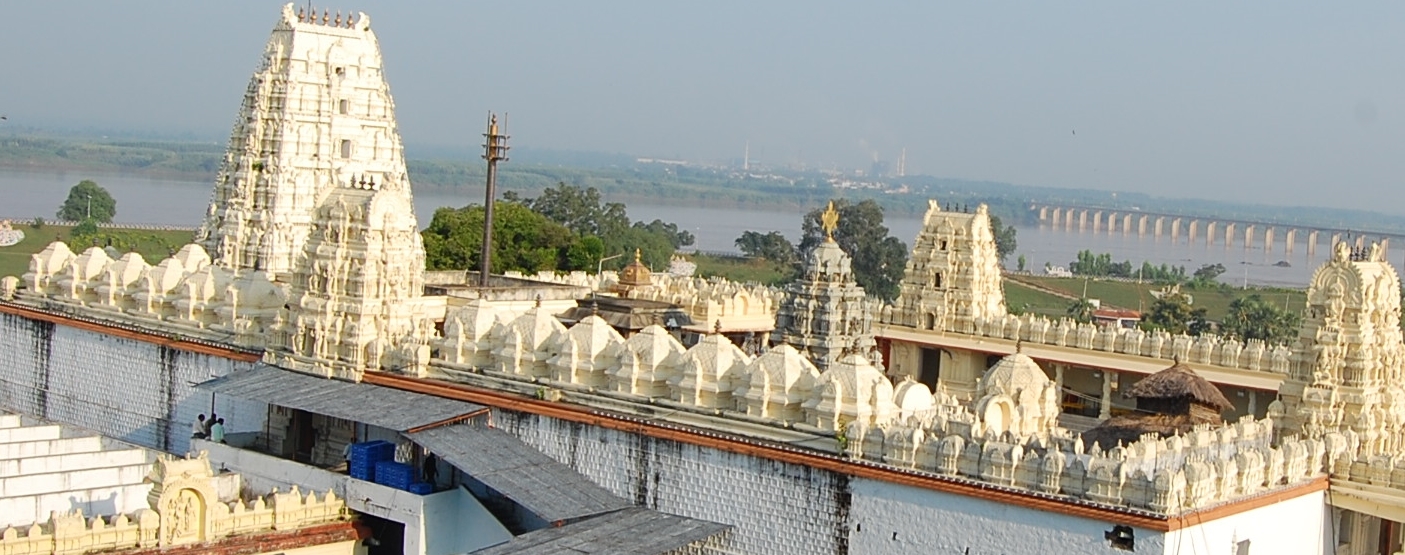
This temple town of Bhadrachalam, located on the northern banks of the river Godavari in Khammam District of Telangana, India, best describes my Indian Identity as it brings together our myths, our legends and our quest for the “Ultimate Reality”.
Myths, Legends, and reality – Defining Indian Identity. A Temple to define the Ultimate Reality. The place described as Panchvati is in the vicinity of Bhadrachalam as per our local legend
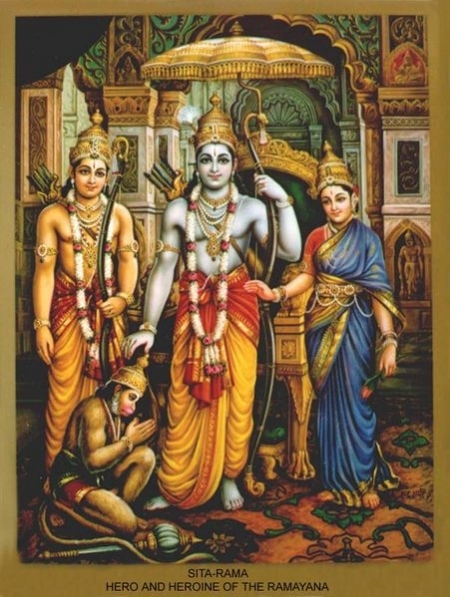
This place is connected to events described in the epic poem of Ramayan which narrates Lord Rama’s journey in our Land. Rama while living in exile, camped in the forest by the name ‘Dandakaranya’ and His spouse Seetha was abducted and eventually, Rama and His brother Laxmana cross the river Godavari at this place in search of Seetha. A pious man known as Bhadra prayed at this place seeking Lord Rama’s return to this place. Much later, a simple tribal woman who lived in this area discovered the idols of ‘Vaikuntha Rama’ (for He carried the Sudarshana Chakra apart from the bow and arrow) with Seetha seated on His lap and the idol of Laxmana standing next to them.
Myths, Legends, and Reality -Defining Indian Identity. A Temple to define the concept of Ultimate Reality
Kancharla Gopanna, a Tahsildar (revenue official) of Palvancha Paragana, completed building this temple in 1674 A.D. The legend about the divine intervention and the miraculous release of Gopanna from the prison at the Golconda Fort is narrated in my entry titled, ‘The Benevolent Shia Ruler of Golconda-Verily, A Blessed Soul’.
ABOUT MYTHS AND LEGENDS:
Myths, Legends, and Reality. Defining Indian Identity. A Temple to define the concept of Ultimate Reality.
Myths are traditional stories which serve to explain our connection to God and the universe and hence they are not the same like the fictional stories. Myths exist in a historical context but may not be true historical accounts that are supported by scientific verification. Legends are stories handed down for generations among a people and popularly believed to have a historical basis but do not qualify for inclusion in a text book of history. As an Indian, I depend upon myths and legends to derive a sense of direction, a sense of guidance and a sense of hope for my human existence. They help me to know who I am and where I am going.
ABOUT REALITY AND ULTIMATE REALITY:
The influence called Time makes the distinction between Real and Unreal. A Temple to define the concept of Ultimate Reality
Indians are very concerned about the effects of Time . We practically witness in our daily lives the forceful consequences of time. Time changes the course of human life and time changes the physical world. However, the “Ultimate Reality” does not change, it is constant and it is eternal. Indians seek this Reality as it represents their natural home and that is their final destination on completion of the life’s journey. Since ‘TRUTH’ is unchanging in its character, is also described as the Reality that we cherish to experience.
Myths, Legends, and Reality. Defining Indian Identity. A Temple defines the concept of Ultimate Reality. The name Ra Ma represents Eternal Truth.
Millions of Indians express this desire for Truth and the Reality with a very simple statement. They claim that the name “RA MA” is eternal Truth. Our search for Truth and Reality becomes very easy if we just seek “RA MA”. Great powers on this earth had vainly tried to destroy our belief in RAMA. Mughal Emperor Babur destroyed the temple in Ayodhya which we consider as Rama’s birth place. The forces of Sultan Tughlak destroyed the Rama temple in my home town Rajahmundry. Mughal Emperor Aurangzeb destroyed countless number of temples and idols of Rama. Yet the myth and legend of Rama survives. At Bhadrachalam also known as Bhadra giri or Bhadradri (the hill of Bhadra), Sultan Tani Shah, a benevolent Shia Muslim ruler of Golconda, helped Kancharla Gopanna to maintain this temple. This devotee of Lord Rama is popularly known by the name Bhakta Rama Dasu.
WOULD IT BE POSSIBLE TO DESTROY RAMA?
Myths, Legends, and Reality. Defining Indian Identity. A Temple defines the concept of Ultimate Reality.
Many have tried to destroy the idols and images of Rama. For example, if some one would destroy the temple of Rama in Bhadrachalam, we still connect this place and the forest and the river with Rama’s life journey. If some one would destroy the forest, level the ground and change the course of the river, I would still look for the signs of His presence in the creation of the heavens and the earth. I would describe the blue sky as the color of Rama. If some one could destroy the blue sky and when I look up and see the dark sky, I would say that I am reminded of Lord Krishna who is described as black in color as dark as the sky of New Moon’s day. Our myths remind us that Rama and Krishna are one and the same. I do know people take great pride in their physical power but it may not be easy to wipe out a belief system which is more than the Idols which represent the Belief. The Indian Identity associated with Blue and Dark sky would survive as long as there is a sky above our heads and as long as the difference of night and day exists on this earth.
Myths, Legends, and Reality – Defining Indian Identity. A Temple to define the concept of Ultimate Reality.
” Lo! In the creation of the heavens and the earth and (in) the difference of night and day are tokens (of His sovereignty) for men of understanding”. Surah III, verse 190, Holy Book of Quran.
Myths, Legends, and Reality – Defining Indian Identity. A Temple to define the concept of Ultimate Reality.
Shia Muslim Ruler of Golconda. Verily, a Blessed Soul
Shia Muslim Ruler of Golconda. Verily, a Blessed Soul. SULTAN ABUL HASAN QUTB SHAH (MAY PEACE BE UPON HIM).Golconda Fort near the City of Hyderabad, the seat of Qutb Shahi Dynasty. GOLCONDA FORT- “GOLLA KONDA”(SHEPHERD’S HILL)
Quli Qutub Mulk, a Shia Muslim from Persia (present day Turkmenistan) with friends and a few relatives migrated to Delhi in the beginning of 16th century CE. He migrated south to Deccan and served Bahmani Sultan Mohammad Shah. He conquered Golconda and was appointed as the governor of the Telangana region (about the size of France) in 1512 CE. After the disintegration of the Bahmani Kingdom into the five Deccan Sultanates, Quli Qutub Mulk declared independence, assumed the title of ‘QUTUB SHAH’ and established the Qutb Shahi Dynasty of Golconda in 1518 CE. Qutub Shahis were great builders and patrons of learning. They not only patronized the Persian culture but also the regional culture of the Deccan, symbolized by the Telugu language and the Deccani idiom of Urdu. The Golconda rulers learned Telugu.
The Qutub Shahis was the ruling family of the kingdom of Golconda, DECCAN, southern India. They were Shia Muslims and belonged to a Turkmen tribe from the Turkmenistan-Armenia region. The dynasty ruled Golconda for 171 years until the Mughal Emperor Aurangazeb’s armies conquered the Deccan in 1687 CE. Abdullah Qutb Shah, the sixth ruler of the Qutb Shahi Dynasty (1626-1672 CE). Abdul Hasan Tana Shah married his daughter and gained access to power.Tana Shah (Abul Hasan Qutb Shah or Tanishah) (1672-1687 CE)
Sultan Abul Hasan Qutb Shah was the seventh and the last ruler of the Kingdom of Golconda (Deccan, Southern India) under the Qutb Shahi Dynasty. He ruled from 1672 CE to 1687 CE. He is also known as Abul Hasan Tana Shah and more popularly, he is known as TANI SHAH meaning benevolent ruler. He did not discriminate against those of other ethnicities or religions. He hired Hindus as his ministers and generals.
Akkanna, Madanna were secretaries to the prime minister during Abdullah Qutb Shah rule and their position helped Gopanna get a post as Palvancha Tehsildar. Sultan Tana Shah appointed Madanna as Prime Minister and Akkanna as Revenue Minister.
Madanna served as an official during Sultan Abdullah Qutb Shah’s rule. Madanna had a nephew by name Kancharla Gopanna and he helped Gopanna to be appointed as a “Tehsildar” (a revenue official) of Palvancha county.
Pokala Dhammakka, a tribal woman living in Bhadrareddypalem, found the central icon of Rama in an anthill.
During mid 17th century CE, Pokala Dhammakka, a tribal woman living in Bhadrareddypalem, found the central icon of Rama in an anthill. She dissolved the anthill using the water from the Godavari River. With the help of the villagers, Dhammakka constructed a mandapam (a temporary platform with a roof) and offered prayers to the deities. Following Abdullah Qutb Shah’s orders, Gopanna enforced the Jizyah tax (jizyah, also spelled jizya, historically, a tax paid by non-Muslim populations to their Muslim rulers., a penalty designed to make Hindus pay for not adopting Islam). Observing the dilapidated state of the worship site, Gopanna decided to build a temple for Rama, Seeta, and Laxmana idols by raising donations. In the initial attempt, Gopanna received harsh criticism from the local Hindus for enforcing the Jizyah tax. Dejected by numerous rebuffs, Gopanna decided to use a portion of the tax collected to build the temple and face the consequences. The temple was built by Gopanna in 1662 CE with a cost of nearly six lakh Varahas ( Gold coins). Abdullah Qutb Shah summoned Gopanna, who had no proper answer for misusing kingdom’s funds.
Sultan found Gopanna was guilty of the misuse of the funds and had him imprisoned at the Golconda Fort.
A LEGEND ABOUT DIVINE INTERVENTION:
Shia Ruler of Golconda, Verily, a Blessed Soul. A Temple to define the concept of Ultimate Reality.Did Lord Rama actually visit Golconda Fort to obtain the release of Kancharla Gopanna from the prison? Sultan Tani Shah believed that it was God or Allah who had come to him and cleared the debt owed by Gopanna. He further expressed that belief in his actions. He allowed Gopanna to complete the construction of Lord Rama’s Temple in Bhadrachalam and financially supported the maintenance of that Temple. By doing so, the Shia Ruler of Golconda gave us a chance to reflect upon Lord’s Mercy, Grace, and Compassion.
Gopanna spent about 12 years in prison. According to legend, God intervened on behalf of Gopanna to obtain his release from the prison at Golconda Fort.
RamaTanka Gold Coins given to Tana Shah are still in display at Bhadrachalam Temple.
As per the legend, Lord Rama in disguise had come before the King and returned the money owed by Gopanna and the debt was repaid with gold coins. God who came to rescue Gopanna from the prison had met the Sultan but not the prisoner. Upon his release from the prison, Gopanna did express his sorrow for missing the opportunity to meet the Lord. Gopanna was released from the prison and he successfully finished the construction of the Rama temple which stands even today. Sultan Tani Shah publicly acknowledged that he had met “ALLAH ” and recognized the fact of Gopanna’s release from the prison was made possible by divine intervention. He made permanent arrangements for the upkeep of this temple. The funds that were collected as tax from Palvancha county were allocated to the temple and also he had established an annual tradition of sending pearls to shower the Deity during the annual temple festival. This tradition of offering pearls was continued by the rulers of the princely State of Hyderabad popularly known as the ‘Nizams of Hyderabad’, who ruled the Telangana region continuously until India’s independence. The Hyderabad State became a part of the Indian Union and the State of Andhra Pradesh came into existence in 1956. The Government of Andhra Pradesh and later Telangana followed the tradition established by Sultan Tani Shah in the 17th century and the tradition of offering pearls to Lord Rama still exists.
VERILY A BLESSED SOUL:
Shia Ruler of Golconda, Verily a Blessed Soul.
Did Lord Rama actually visit Golconda Fort to obtain the release of Kancharla Gopanna from the prison? Sultan Tani Shah believed that it was God or Allah who had come to him and cleared the debt owed by Gopanna. He further expressed that belief in his actions. He allowed Gopanna to complete the construction of Lord Rama’s Temple in Bhadrachalam and financially supported the maintenance of that Temple. By doing so, the Shia Ruler of Golconda gave us a chance to reflect upon Lord’s Mercy, Grace, and Compassion.
This Lord Rama’s Temple in Bhadrachalam is a testimony about Lord’s Grace, Mercy, and Compassion.
This benevolent ruler defended the Golconda Fort for eight months when the Mughal Emperor Aurangzeb attacked it in 1687 A.D. In October 1687, the Fort was captured by bribery and Sultan Tani Shah was taken as a prisoner and was imprisoned in Daulatabad Fort until his death.
I would call Sultan Tani Shah is a Blessed Soul for he recognized God’s plan and purpose and supported Gopanna to build the temple and provided for the maintenance of the temple and gave us the opportunity to know about God’s Compassion, Grace, and Mercy. Secondly, Sultan Tani Shah received the biggest gift that a man could ever seek. Man always cherishes the idea of meeting his Creator, the Father in Heaven, Allah, the Lord, RAMA the divine reincarnation of Vishnu and very few actually realize that dream. Gopanna was rescued but could not meet RAMA. Sultan Tani Shah did not pray or ask for this favor from God. He is a Blessed Soul because God granted him that gift. He received a sensory experience of that Reality called God and I fully trust this experience he had shared with others. Sultan Tani Shah’s actions substantiate his claim. Most importantly, he did not seek any personal reward or personal gain while he acted in the obedience of a God he never actually believed and had never intended to worship in any manner. He acted without seeking the fruits of his actions. I bless this Shia Ruler of Golconda and pray for Lord’s Peace be upon him forever.
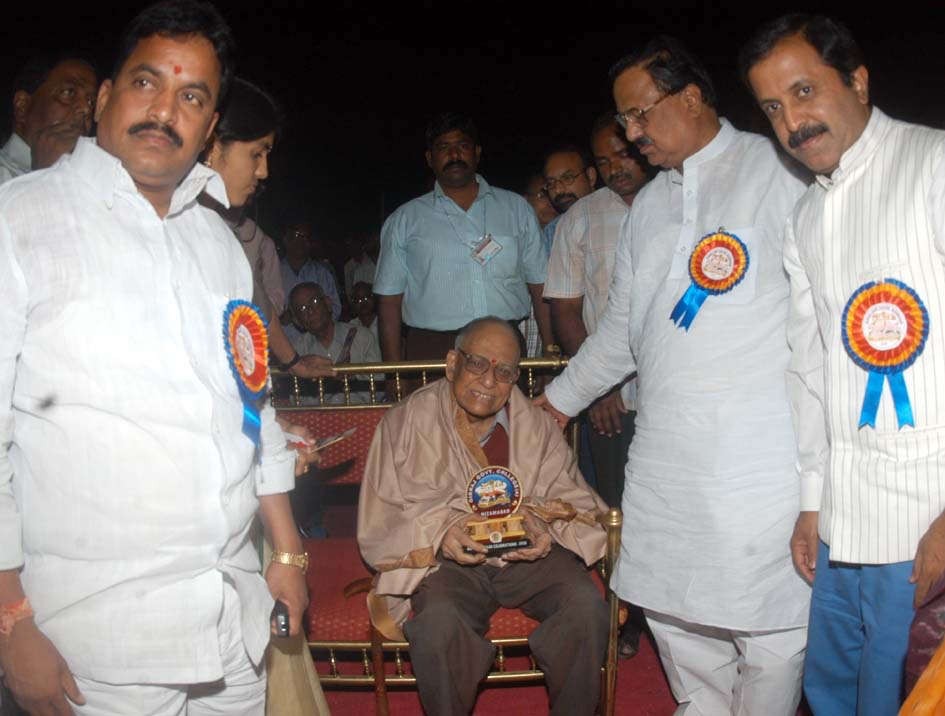
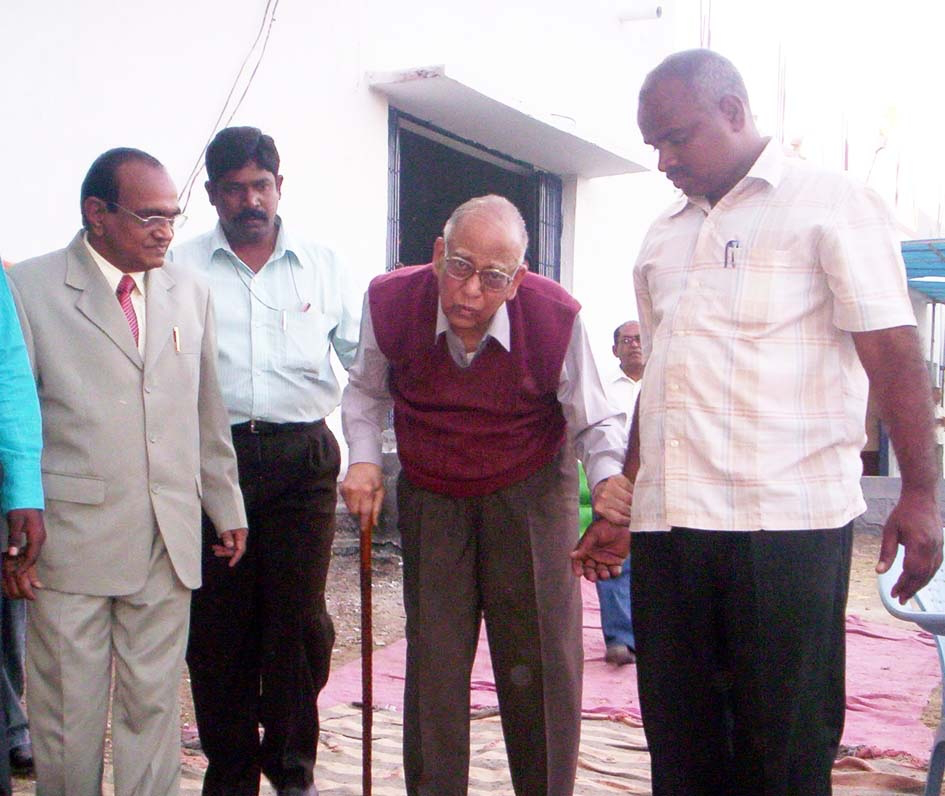
Whole Dude – Whole Jubilee: My Father, Shri. R. Suryanarayana Murthy, Principal (1961-65) rejoicing during the Golden Jubilee Celebrations at Giriraj Government Degree College, Nizamabad.
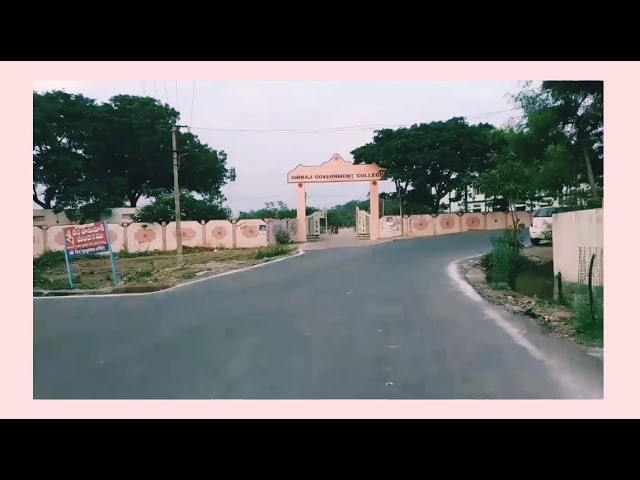
Golden Jubilee celebrations were held from 20th January 2008 to 21st January 2008 at Girraj Govt. College,Nizamabad. A large number of distinguished guests attended the ceremony and made it a grand success. On behalf of the Golden Jubilee celebrations, Girraj Govt. College launched a web portal named www.ggnzb.info The College was established on July 12, 1956.
Whole Dude – Whole Jubilee: My Father, Shri. R. Suryanarayana Murthy, Principal (1961-65) rejoicing during the Golden Jubilee Celebrations at Giriraj Government Degree College, Nizamabad. My friend, Apkari Surya Prakash also served as the Principal (2002-2005)My Father, Shri. R. Suryanarayana Murthy, Principal (1961-65) rejoicing during the Golden Jubilee Celebrations at Giriraj Government Degree College, Nizamabad.Whole Dude – Whole Jubilee: My Father, Shri. R. Suryanarayana Murthy, Principal (1961-65) rejoicing during the Golden Jubilee Celebrations at Giriraj Government Degree College, Nizamabad.Whole Dude – Whole Jubilee: My Father, Shri. R. Suryanarayana Murthy, Principal (1961-65) rejoicing during the Golden Jubilee Celebrations at Giriraj Government Degree College, Nizamabad.Whole Dude – Whole Jubilee: My Father, Shri. R. Suryanarayana Murthy, Principal (1961-65) rejoicing during the Golden Jubilee Celebrations at Giriraj Government Degree College, Nizamabad.Whole Dude – Whole Jubilee: The Golden Jubilee Celebrations at Giriraj Government College, Nizamabad.
I was a student of Giriraj Government Arts College, Nizamabad, Andhra Pradesh (now Telangana), India from 1961 to 1965.I joined the Pre-University Course (P.U.C.) and did the 3-Year Bachelor of Science Degree Course (B.Sc.) at Giriraj. My father, Shri. R. Suryanarayana Murthy was the Principal of Giriraj during those years. My Professor of Zoology, S. Lakshman Rao served as the Principal from 1960-61 prior to my father’s appointment as Principal in 1961. I am glad to find his name again as the Principal from 1981-83. K.S.R. Sarma was my Professor of Physics (1962-65) and I am glad to find his name as the Principal (1977-78).
Whole Dude – Whole Jubilee: The Golden Jubilee Celebrations at Giriraj Government College, Nizamabad.
My friend Apkari Surya Prakash did his Bachelor of Arts 3-Year Degree Course (1962-65) at Giriraj and later he served as the Principal of Giriraj from 2002 to 2005.
Whole Dude – Whole Jubilee: The Golden Jubilee Celebrations at Giriraj Government College, Nizamabad.Whole Dude – Whole Jubilee: The Golden Jubilee Celebrations at Giriraj Government College, Nizamabad.Whole Dude – Whole Jubilee: The Golden Jubilee Celebrations at Giriraj Government College, Nizamabad.Whole Dude – Whole Jubilee: The Golden Jubilee Celebrations at Giriraj Government College, Nizamabad.Whole Dude – Whole Jubilee: The Golden Jubilee Celebrations at Giriraj Government College, Nizamabad.Whole Dude – Whole Jubilee: The Golden Jubilee Celebrations at Giriraj Government College, Nizamabad.Whole Dude – Whole Jubilee: The Golden Jubilee Celebrations at Giriraj Government College, Nizamabad.
Whole Dude – Whole Opinion: My musings on the death of Socrates
NO EVIL CAN BEFALL A GOOD MAN EITHER HERE OR HEREAFTER
THE DEATH OF SOCRATES
Ms. Emily Wilson is the author of this book (Harvard, 247 pages, $19.95) and it was reviewed by Thomas Meaney and the article with the title The Afterlife of a Skeptic appeared in The Wall Street Journal in its edition of Saturday/Sunday, November 24-25, 2007. The book deals with as to how the execution of a philosopher has been reinterpreted for every era. The history of the interpretation of Socrates’ death speaks about the history of philosophy in the West. Mr. Meaney begins his review with the observation that the name of Socrates recalls his death more than his bewilderingly eccentric life.
Whole Dude – Whole Opinion: My musings on the death of Socrates
Socrates, ancient Athenian philosopher, is best remembered for his admonition to “KNOW THY SELF.” He laid the philosophical foundations of Western Culture. He made an effort to shore up the ethical dimension of life. He directed philosophical thought toward analyses of the character and conduct of human life. As Cicero said, Socrates “brought down philosophy from heaven to earth” – i.e. from the nature speculation of the Ionian and Italian cosmologists to analyses of the character and conduct of human life, which he had assessed in terms of an original theory of the soul. Socrates turned philosophy away from a study of the way things are, toward a consideration of virtue and the health of the human soul. He was a man of deep piety with the temperament of a mystic. He believed in the soul’s immortality and claimed that the soul of man partakes of the Divine. Socrates held himself to be an envoy from God. He believed himself charged with a mission from God to make his fellowmen aware of their ignorance and of the supreme importance of knowledge of what is for the soul’s good.
Whole Dude – Whole Opinion: My musings on the death of Socrates
Socrates redirected philosophy from cosmology to the formulation of a rule of life, to the “practical use of reason.” The specific message from God that Socrates brought to his fellowmen was that of the “care” or “tending” of one’s ” soul, to make one’s soul as good as possible”- “making it like God,” in fact – and not to ruin one’s life, as most men do, by putting care for the body or for “possessions” before care for the “soul”; for the “soul” is that which is most truly a man’s self. According to Socrates the soul is the man. He believed that to do wrong is to damage one’s soul. From this it follows that it is always worse to do wrong than to be wronged and that one must never return wrong for wrong. He also maintained that virtue is knowledge and that all the virtues really amount to knowledge. His self-control and powers of endurance were exemplary. His self-imposed life of hardships and austerity was the price of his spiritual independence.
Whole Dude – Whole Opinion: My musings on the death of Socrates
Socrates believed that he can teach merely by asking the right questions. He spent his life in conversation with Athenian citizens, seeking true knowledge and exposing the errors of those who claimed to have wisdom. Socrates challenged anyone with a pretense to knowledge. Socrates ushered in an age of rational inquiry. According to Socrates, the radical vice of ancient democracy is that of putting society in the hands of men without true insight and with no adequate expert knowledge (and in this regard, Socrates is absolutely correct and even today that is the biggest danger of Democracy!). He expected that statesmen should act like “physicians of the body politic” and that they should promote “righteousness and temperance.”
Whole Dude – Whole Opinion: My musings on the death of Socrates
Socrates was indicted for “impiety,” “corruption of the young,” and “neglect of the gods whom the city worships and the practice of religious novelties.” He elevated virtue over the gods themselves, whose approval was so central to Athenian civil life. Socrates claimed that he could prick the city into a higher state of self-awareness by disturbing its settled world view. In Plato’s account of the trial, “The Apology,” Socrates defended himself not as a victim of censorship but as a benefactor of Athens. In an open- air Athenian court room in 399 B.C., the world’s first democracy sentenced one of the world’s first public intellectuals to death for disrespecting the city’s gods and leading its youth astray. His disciples were prepared to help him escape, but Socrates baffled them when he cheerfully swigged his lethal cup of hemlock after praising the city that wanted him gone. Socrates died for choosing the right to speak his conscience.
In the 18 th and 19 th centuries, Socrates was a hero aswellas a scourge for the best minds of their ages. Nietzsche saw Socrates as a deleterious species of cultural sickness. For him, Socrates marked the beginning of the regrettable triumph of “naive rationalism.” Socrates’ death was a hostile act that, by championing a deadeningly abstract and unattainable notion of virtue, precluded living authentically in the world. Socrates is described as a radical skeptic. Ms. Wilson in her book concludes her interpretation of Socrates’ death with a curiously banal argument. She charges that Socrates wasn’t a good family man.
In the closing words of his speech to the jury, Socrates says: “when my sons grow up, punish them, and pain them in the very same way I pained you, if they seem to you to care about money or anything else before virtue. And if they are reputed to be something when they are nothing, reproach them just as I did you, tell them that they do not care for the things they should, and that they suppose they are something when they are worth nothing .” The man who had been condemned to death for corrupting the sons of the city ends his life by instructing his executioners about how to treat his own children. He goes to his death with his faith in his own reason. After 2,400 years, it is still a resounding epitaph.
Whole Dude – Whole Opinion: My musings on the death of Socrates. LORD SHIVA – THE GOD OF LEARNING – THE PURSUIT OF KNOWLEDGE AND WISDOM
I am totally surprised by the book and its review. In the West, there appears to be no awareness of the ideas and thoughts that are routinely expressed in the East. I would not describe Socrates as a skeptic and I would never describe his way of life as eccentric. I would compare Socrates to Shiva on one hand and on the other, I would compare him to Gautama Buddha. If Jesus Christ, who had written nothing, spent His time talking to people, when put on trial did not defend Himself and made no attempt to protect His personal life and did not return to His earthly parents’ home, could be recognized as The Savior of Mankind , I would most certainly uphold Socrates’ claim that he is indeed a benefactor.
Whole Dude – Whole Opinion: My musings on the death of Socrates. SPIRITUALITY SCIENCE – THE DOCTRINE OF CREATION: SOCRATES – “KNOW THYSELF, AND YOU WILL KNOW THE UNIVERSE AND THE GODS.”
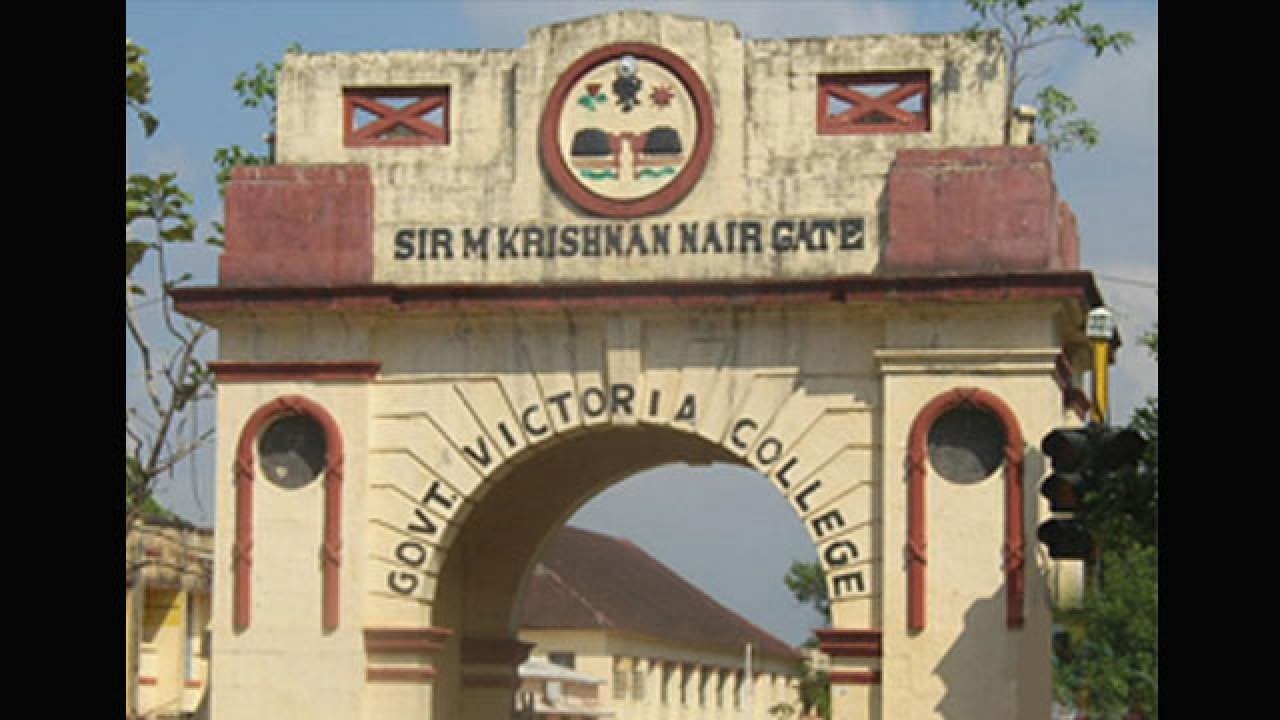
Whole Dude – Whole Account: The Moments Slip Away And Are Laid to Your Account. Recalling the Moments at Government Victoria College, Palghat.
Government Victoria College, Palakkad is the oldest institution of higher learning in the Malabar region of Kerala. In January 1888 it was raised to the rank of a second grade college and was affiliated to the University of Madras. The institution was taken over by the Government of Madras Presidency in 1919.The teaching of Geography as an optional subject for ‘Intermediate’ students commenced in 1945. Before the creation of linguistic provinces in 1956, Palghat was part of Madras State after India’s independence in 1947.
Whole Dude – Whole Account: Moments Slip Away And Are Laid to Your Account. Recalling the Moments at Government Victoria College, Palghat.
The Motto of the College is the Latin slogan Labuntur et imputantur. Indeed it is true that life’s moments slip away and fortunately they are laid to your account.
Whole Dude – Whole Account: Moments Slip Away And Are Laid to Your Account. Recalling the Moments at Government Victoria College, Palghat.
Because of Victoria College, I am able to recall some of those moments that slipped away from my life about 55 years ago. I am speaking of the times when Palghat was a part of Madras State and when Victoria College was affiliated to the Madras University. In 1952, I was a four-year old kid and my father was employed in the Madras State Educational Service. He had obtained his M.A degree in Indian History from Madras University and worked in the Madras Presidency College, Madras which is now known as Chennai city. My father had also a Diploma in Geography and he was transferred to Government Victoria College, Palghat to teach Geography. In his long career in the Educational Service, my father taught mostly Indian History, and at Victoria College, he taught Geography and was assigned to the Department of Geography.
Whole Dude – Whole Account: The Moments Slip Away and are Laid to Your Account. Reliving the Moments of Life at Queen Victoria College, Palghat.
We lived in a rented house in Palghat. The house is on a dead-end street and it is the last house on the street and it abuts the college compound wall.The house faces the college cricket stadium/sports grounds.There is a canteen of the college right in front of the house.The stadium has a nice pavilion for the spectators to sit and watch the games. Our landlord had two sons who were then students at the college. Apart from my parents, I lived with my two elder brothers. For the first time in my life, I was introduced to the game of Cricket in this house while we lived in Palghat. In the front courtyard of the house, we had a large tree which served as the stumps for our game. Very often, myself and my brothers would watch the Cricket matches and I have seen for the first time the official scorekeeping sheets they fill up during the game. Cricket has been popular with Indians for a long time. It was not Mylapore, Madras and it was not my native place Rajahmundry where I took my first lesson to play this game. I remember Palghat as the place where my love for the game of Cricket began.
Whole Dude – Whole Account: Moments Slip Away And Are Laid to Your Account. Recalling the Moments at Government Victoria College, Palghat.
When I opened my PALGHAT ACCOUNT, my landlord’s two sons still look young and fresh like any other college students and I still have the visual image of myself and my brothers, all kids, playing cricket in front of the house. This is life. It is full of moments that quietly slip away and if you are lucky, the account that you have created is still there and you have the chance to recapture the moment and you can actually relive in that moment and the freshness of it is carefully preserved and it tastes as good as it was on the first occasion. Thanks to Victoria College, Palghat and I still have an account with credit balance.
Whole Dude – Whole Account: Moments Slip Away And Are Laid to Your Account. Recalling the Moments at Government Victoria College, Palghat.
Essence and Existence:
What is man’s nature and how to describe man’s essence? The essence is supported by existence. The existence is in the moments that slip away on which man has no control. Man exists as he helplessly watches the moment called future is churned into past, and present is only an instant in this future-past continuum. Fortunately, man can recall and revisit the moments that have slipped away and bring past into the present moment.
Whole Dude – Whole Account: Moments Slip Away And Are Laid to Your Account. Recalling the Moments at Government Victoria College, Palghat.
Human existence faces challenges from several directions. The concept of Samsara is an additional and significant challenge experienced by the people of Land of India. Lord Rama during His life’s journey had faced several challenges and His name gives the comfort and protection that I seek while my journey is rough and tough.
The Culture of the Land Of India introduced to me several personalities and Cultural icons and I tend to develop a relationship with them and each of my relationships exists in a particular context. Shiva is my protector and the Master who guides my intellectual functions. I describe Lord Krishna as my Guru, the Guru who guides my actions and I name Prince Karna as my favorite Hero as he is the “Salt of Life.” Rama describes himself in the following words. On the occasion of Princess Seetha’s ordeal by fire at the end of the epic battle, Rama says to Brahma (The Lord of Creation) who appeared there among others:
11. manye = I think; aatmaanam = of myself; maanuSham = to be a human being; raamam = called Rama; dasharathaatmajam = the son of Dasaratha; bhagavaan = you; as a gracious Divinity; braviitu = tell; me = me; tat = that; saH aham yasya = which I as such really am; aham yashcha = and why I am like this.
“I think of myself to be a human being, by name Rama, the son of Dasaratha. You, as a gracious Divinity, tell me that which I as such really am like this.”
“I regard myself only as Rama, son of Dasaratha, an ordinary human being. Who I am in reality, where I belong, why I took birth, are matters on which you may enlighten me, and I do not know.”
In the personality of Rama, the course of human conduct and the Dharma governing it come linked together. My love for Rama could be mostly attributed to the story that is revealed in Book II, ‘Ayodhya Kanda’ of Valmiki Ramayana. We should view the events described through imagination and actually experience the emotional state of each character as the story is enacted in front of our eyes. It is claimed that, wherever Rama’s tale is told, Hanuman himself joins the gathering and reverentially stands with tear-filled eyes, listening. This has been my personal experience. Whenever I read the story about this ordinary human being, my eyes fill up with tears. I rechecked my emotions while preparing to write down this entry. When I read Ayodhya Kanda, my eyes can not resist from filling up with tears. For having experienced this emotional connection, I claim that Rama is my Beloved Hero.
My desire to speak about Rama is provided by Rama himself and I did mention about it in the very first entry of my blog posts. I give credit to the Telugu poet Bammera Potana whom I acknowledge as my ‘mentor’. Potana proclaims that he wrote his poems with the help of the creative spirit inspired directly by Rama. My Master Shiva gives the consent to entertain this idea that Rama is my resource for creative writing, my Guru Krishna approves my actions to express my sentimental attachment to Rama, Saraswati gracefully provides the ability to pen my thoughts, Hanuman certifies that my tears are genuine and Ganesha blesses my effort and lets me post this entry.
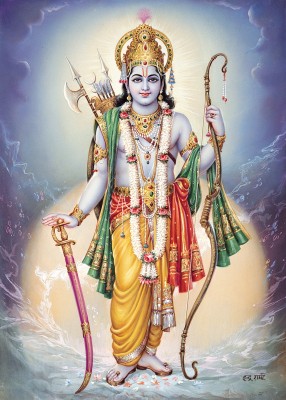
Lord Rama – My Beloved Hero. The Life Journey is viewed as a perilous and tedious swim without navigational aids and floatation devices across an unknown and uncharted ocean.
In the Indian tradition, the Life Journey is described as a perilous and tedious swim without navigational aids and floatation devices across an unknown and uncharted ocean. I stay afloat while I cross this ocean and the name ‘RAMA’ is like a life jacket, a flotation device which would guide me to get to the destination and gives me the hope to reach the shore. I live in a universe which is a reflection of “MAYA.” I find no better way to know the Ultimate Reality. I prefer to cling to the two-letter ‘MANTRA’ of RA-MA. I would just be happy if I could find the way and end up in the company of others who lived before me placing their trust in this Name.
Mother Kaikeyi spoke prophetic words when she said Rama’s dutifulness would bring him glory undying. That glory she said will continue as long as the Himaalaya stands and the waters of Ganga flow and as long as the ocean-waves beat on the solid earth.
May everyone that reads the Chapter XV of Ayodhya Kanda receive by Rama’s grace the strength to bear the sorrows that have to be faced in life.
I would have loved to share these thoughts with my mother and I shed tears reading Rama’s story while remembering her.
RA MA – The Two letters are a source of inspiration to millions of people across India. In the field of Art, Literature, and Music, the personality of Rama inspires people to creatively express their thoughts and ideas.
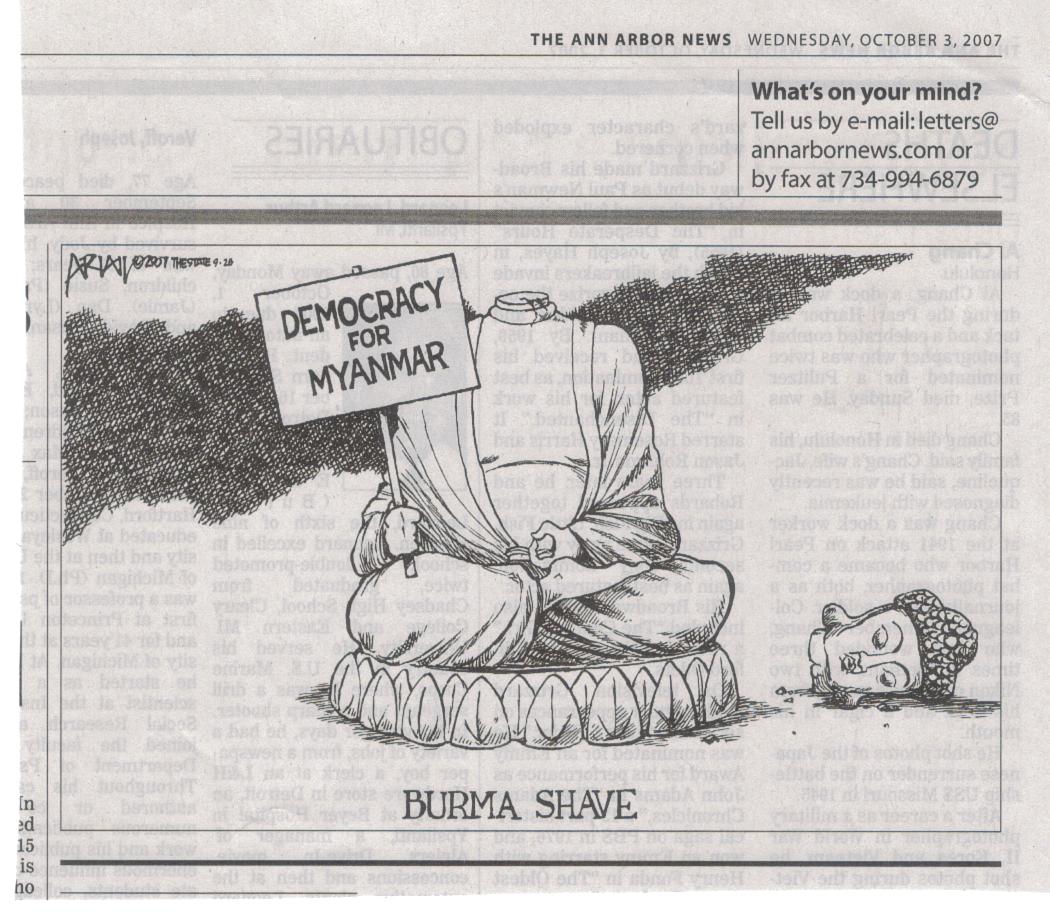
Excerpt: The article condemns a cartoon illustration of a decapitated Buddha, published in The Ann Arbor News on October 3, 2007, describing it as offensive and tasteless. The author asserts that the image serves no purpose other than to offend followers of Lord Gautama Buddha.
The cartoon picture of decapitated Buddha that was published in The Ann Arbor News on Wednesday, October 3, 2007 is plainly disgusting and is clearly an insult. It serves no purpose other than to hurt the feelings of people who respect Lord Gautama Buddha.

















 Whole Dude - Whole Concept
