RED DRAGON – RED CHINA – IMPERIALIST

RED DRAGON – RED CHINA – IMPERIALIST
red china west philippine sea aggression fiery cross reef
RED DRAGON – RED CHINA  West Philippine Sea Aggression –  Fiery Cross Reef

Red China’s passionate desire to exercise power and influence over her weaker regional neighbors has undermined the prospects for Peace, Security, and Stability in Southeast Asia since 1950s.

Rudranarasimham Rebbapragada
Ann Arbor, MI 48104-4162, USA
SPECIALFRONTIERFORCE.ESTABLISHMENT22

 
  image          
The Spirits of Special Frontier ForceAt Special Frontier Force, I host ‘The Living Tibetan Spirits’ to promote Tibet Awareness. I…
 
View on www.facebook.com Preview by Yahoo


SE Asia warns of ‘increased tensions’ over S. China Sea

AFP

By Nicolas Revise August 6, 2015 1:40 PM


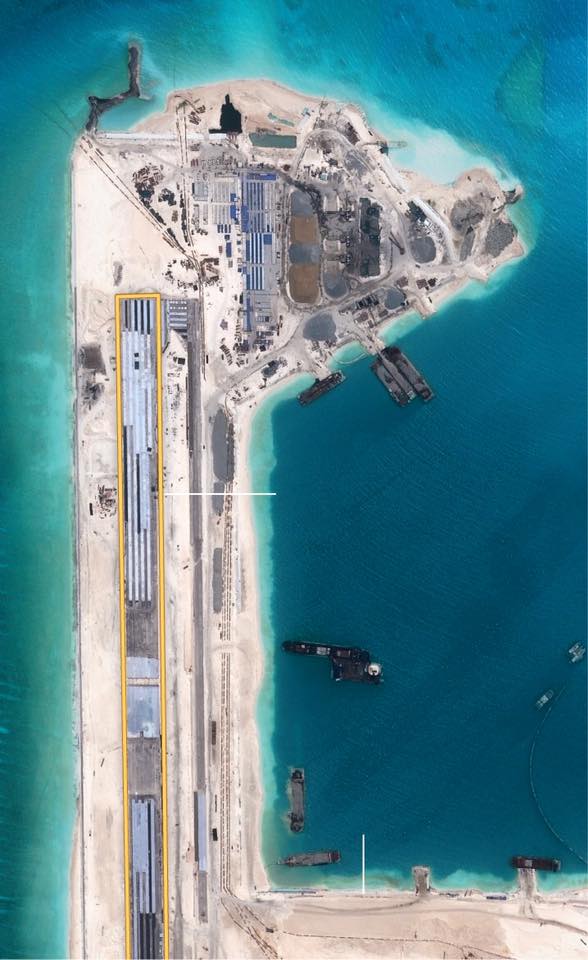
A satellite image of what is claimed to be an airstrip, under-construction at Fiery Cross Reef in the disputed South China Sea
RED DRAGON – RED CHINA – IMPERIALIST: A satellite image of China’s military airstrip at Fiery Cross Reef.

Land reclamation in the South China Sea has “increased tensions” in the region, Southeast Asian foreign ministers said Thursday at the close of talks dominated by Beijing’s island-building.

The declaration, contained in a final communique, followed a warning by US Secretary of State John Kerry that Washington would not tolerate any restrictions on freedom of navigation in the strategically important waters.

The Southeast Asian ministers’ joint final statement noted “the serious concerns expressed by some ministers on the land reclamations in the South China Sea”.
It said the land works “have eroded trust and confidence, increased tensions and may undermine peace, security and stability in the South China Sea,” without specifically singling out Beijing.

The communique was hashed out after two days of wrangling over how hard to pressure China on its controversial drive to expand tiny reefs and build military posts in the disputed waters.

The issue took centre stage at the series of diplomatic meetings this week in Kuala Lumpur, hosted by the 10-nation Association of Southeast Asian Nations (ASEAN).
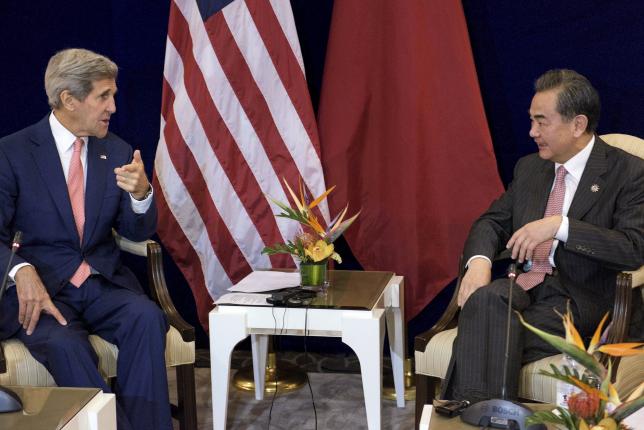
US Secretary of State John Kerry (L) and China's Foreign Minister Wang Yi talk before a bilateral meeting at the Putra World Trade Center August 5, 2015 in Kuala Lumpur, Malaysia.  REUTERS/Brendan Smialowski/Pool
US Secretary of State John Kerry (L) and China’s Foreign Minister Wang Yi talk before a bilateral meeting at the Putra World Trade Center August 5, 2015 in Kuala Lumpur, Malaysia. REUTERS/Brendan Smialowski/Pool

US Secretary of State John Kerry attends an Association of Southeast Asian Nations (ASEAN) meeting in Kuala Lumpur, Malaysia.

They also included envoys from two dozen other nations such as China and the United States.
Beijing claims control over nearly the entire South China Sea, a key shipping route thought to hold rich oil and gas reserves.
Vietnam, the Philippines, Malaysia and Brunei — all ASEAN members — also have various claims, as does Taiwan, many of which overlap.

Even before the land reclamations, China had sparked rising unease over the years with actions interpreted as seeking to shore up its disputed claims, in violation of a pledge not to upset the status quo.

A day after voicing concern to his Chinese counterpart Wang Yi over the potential “militarization” of the South China Sea, Kerry said freedom of navigation must be maintained.

red china west philippine sea aggression johnson south reef
Red Dragon – Red China – Imperialist: West Philippine Sea Aggression. Johnson South Reef

Alleged reclamation by China on what is internationally recognised as the Johnson South Reef in the West Philippine Sea or South China Sea.

– Behind-the-scenes wrangling –

“Let me be clear: The United States will not accept restrictions on freedom of navigation and overflight, or other lawful uses of the sea,” he told reporters.

Diplomatic sources told AFP the Philippines and Vietnam — which have been in the most direct confrontation with China — had called for strong language.
But they said there had been pushback from Beijing’s traditional allies among the association. Cambodia, Laos and Myanmar traditionally side with China within ASEAN.

The tug-of-war raised the spectre of a bitter 2012 ASEAN meeting hosted by Cambodia, when the bloc was unable for the first time in its four-decade history to issue a joint statement.
Cambodia was accused of precipitating the debacle by refusing to allow criticism of China over territorial issues.

A Malaysian foreign ministry source told AFP there were some “ASEAN members who said that we don’t want a repeat of 2012”.

The United States and Southeast Asian nations have called for a halt to further island-expansion and construction by China.
Wang, however, said Wednesday that land reclamation had “already stopped” — a claim some diplomats said was met with scepticism at the gathering.

Kerry told reporters after the close of the talks: “The Chinese have indicated that they have stopped. I hope it is true. I don’t know yet.”
ASEAN has expressed increasing impatience with China’s actions over the years.

Analysts, however, say Beijing maintains immense diplomatic and economic leverage in the region and that a concerted and sustained effort by ASEAN to resist China’s assertions was unlikely.
Singapore International News South China Sea

© 2015 AFP

Yahoo – ABC News Network

RED DRAGON – RED CHINA – POWER-HUNGRY

RED DRAGON – RED CHINA – POWER-HUNGRY

Red China’s Communist Party Chairman Mao Zedong formulated his plan for creation of Evil Red Empire because of his insatiable desire for power and influence over the lives of all other nations in Southeast Asia.

Rudranarasimham Rebbapragada
Ann Arbor, MI 48104-4162, USA
SPECIALFRONTIERFORCE.ESTABLISHMENT22

image
The Spirits of Special Frontier ForceAt Special Frontier Force, I host ‘The Living Tibetan Spirits’ to promote Tibet Awareness. I…
View on www.facebook.com Preview by Yahoo

ABC News

Analysis: South China Sea dispute pits power-hungry China against weaker regional neighbours

By South-East Asia correspondent SAMANTHA HAWLEY

Updated June 21, 2014 11:53:05

South China Sea dispute


Photo: China and Vietnam are now in the depths of the most serious deterioration of relations since the 1970s. (Wikipedia Commons, File Image)

The dispute over the South China Sea pits China against its smaller, weaker regional neighbours.
Vietnam is one of them, and right now there is a concerning flash point that could have deep, significant implications for the region.

Around Vietnam you find propaganda billboards denouncing China’s actions after it built a billion-dollar oil rig about 200 nautical miles off the Vietnamese coast.
It is condemnation that spilled out onto the streets in the most significant protests seen in the one-party state for many years.

Chinese nationals were forced to flee the country as their businesses were burned to the ground. Beijing says at least four of its nationals were killed.
The oil rig sits about 30 kilometres south of the Paracel Islands, which China says it has irrefutable sovereignty over, along with the Spratly Islands to south.

Vietnam says the islands and the seas around them belong to it, and so the two communist nations are now in the depths of the most serious deterioration of relations since the 1970s.
Vietnam is accusing China of bullying tactics as it tries to force its ships out of the area; China says its smaller neighbour is taunting it, and Beijing has warned its tolerance is low.

In one case Vietnam says a fishing boat was sunk after being rammed by the Chinese.
Beijing rejects the allegation, and accuses Vietnam of sabotage.

China says its boats have been rammed by Vietnam more than 1,000 times and has now gone to the United Nations to try to have the case heard.

Vietnam says there are almost 120 Chinese ships stationed around the oil rig, including warships, but says it will not send military assets to the disputed seas.
It does not want to provoke unwanted hostility from Beijing.

Is China’s stance more a show of strength than oil drilling exercise?

There is a question mark over whether China is actually drilling for oil, or even if there is oil below the sea bed, or whether this is much more about military positioning and a show of strength.

Vietnam has the support of the Philippines, which has its own territorial dispute with China.
Troops from the two nations recently gathered on one of the contested islands to play a game of volleyball, a move condemned by China.

Beijing says Vietnam has been forcibly and illegally disrupting operations on the rig.
Several other countries have territorial claims over the waters, including Malaysia, Taiwan and Brunei.

China claims to have sovereignty over more than 90 per cent of the resource-rich ocean.
Taking a journey close to the Chinese oil rig, you see first-hand the very real tensions at sea.

According to the Vietnamese, just 10 of its coast guard boats are now stationed in the area. One of them is the Coast Guard ship 8003.
With about 40 crew on board, it has been patrolling waters adjacent to the oil rig since May.

Twice a day it ventures closer to within eight nautical miles of the rig and via loudspeaker warns China it is breaching Vietnamese sovereignty and breaking international law and orders them to leave.

In turn, the Chinese chase the ships out of the area, in what looks like a bullfight at sea.
An up-close observation of the tensions provides an appreciation of a maritime power play where the most powerful nation is winning. And it’s not Vietnam.

Vietnam, China, Malaysia have eyes on the prize

Explore the conflicting territorial claims in the South China Sea

cell-slides Rich in resources and traversed by a quarter of global shipping, the South China Sea is the stage for several territorial disputes that threaten to escalate tensions in the region.At the heart of these disputes are a series of barren islands in two groups – the Spratly Islands, off the coast of the Philippines, and the Paracel Islands, off the coasts of Vietnam and China. Both chains are essentially uninhabitable, but are claimed by no fewer than seven countries, eager to gain control of the vast oil and gas fields below them, as well as some of the region’s best fishing grounds.Indonesia, Malaysia and Brunei have made claims to part of the Spratlys based on the internationally recognised Exclusive Economic Zone (EEZ), which extends 200 hundred nautical miles from a country’s coastline. Based on the EEZ, the Philippines has the strongest claim on the Spratlys and their resources, with its EEZ covering much of the area. However the lure of resources, and prospect of exerting greater control over shipping in the region, means that greater powers are contesting the Philippines’ claims. China has made extensive sovereignty claims on both the Spratlys and the Paracels to the north, based largely on historic claims outlined in a map from the middle part of the 20th Century known as the ‘Nine Dash Map’.Taiwan also makes claims based on the same map, as it was created by the nationalist Kuomintang government, which fled to Taiwan after the communists seized power in China. Vietnam also claims the Spratlys and the Paracels as sovereign territory, extending Vietnam’s EEZ across much of the region and bringing it into direct conflict with China.There have been deadly protests in Vietnam over China’s decision to build an oil rig off the Paracels.One Chinese worker in Vietnam was killed and a dozen injured in riots targeting Chinese and Taiwanese owned factories, prompting 3,000 Chinese nationals to flee the country. EEZ can only be imposed based on boundaries of inhabitable land, and this has prompted all the countries making claims on the region to station personnel, and in some cases build military bases out of the water, to bolster their claim.Building and protecting these structures has resulted in a series of stand-offs between countries in the region, each with the potential to escalate.China has been leading the charge with these installations, and has deployed vessels to the region to protect their interests. Chinese coast guard vessels have used a water cannon on Vietnamese vessels, as well as blockading an island where the Philippines has deployed military personnel.

This service may include material from Agence France-Presse (AFP), APTN, Reuters, AAP, CNN and the BBC World Service which is copyright and cannot be reproduced.
AEST = Australian Eastern Standard Time which is 10 hours ahead of UTC (Greenwich Mean Time)

© 2015 ABC

RED DRAGON – RED CHINA – JACKAL

RED DRAGON – RED CHINA – JACKAL

I describe Red China as the Evil One as there are two aspects of evildoer; a physical, and a spiritual aspect. Evil means wicked, cunning, deceitful, crafty, and it often involves deliberately misleading people using clever lies. To resist Red China’s aggression in South China Sea or West Philippine Sea, nations have to recognize cunning tricks used by Red China to give legitimacy to her own actions. Red China’s Foreign Minister Wang Yi claimed on Wednesday that Red China has stopped land reclamation activity and added that the dispute will be resolved through dialogue. This is an example of a thoroughly misleading statement; on one hand Red China keeps her illegal constructions intact giving her military advantage while on the other hand she would not let her regional neighbors use any intervention other than that of dialogue. In other words, Red China – Jackal expects her neighbors to live peacefully tolerating her aggression that disregards their claims.

Rudranarasimham Rebbapragada
Ann Arbor, MI 48104-4162, USA
SPECIALFRONTIERFORCE.ESTABLISHMENT22

image
The Spirits of Special Frontier ForceAt Special Frontier Force, I host ‘The Living Tibetan Spirits’ to promote Tibet Awareness. I…
View on www.facebook.com Preview by Yahoo


South China Sea dispute: John Kerry says US will not accept restrictions on movements in the sea

Updated August 07, 2015 08:09:26

US secretary of state John Kerry speaks during a news conference in Malaysia

Photo: US Secretary of State John Kerry says he is concerned about China’s movements in the South China Sea.(REUTERS: BRENDAN SMIALOWSKI/POOL)

US secretary of state John Kerry has accused China of not allowing freedom of navigation and overflight in the disputed South China Sea, despite giving assurances that such freedoms would not be impeded.

Addressing a regional meeting in Kuala Lumpur that has been dominated by the South China Sea issue, Mr Kerry said China’s construction of facilities for “military purposes” on man-made islands was raising tensions and risked “militarisation” by other claimant states.

“Freedom of navigation and overflight are among the essential pillars of international maritime law,” Mr Kerry told the East Asia Summit attended by foreign ministers from South-East Asia, China, Japan and other nations, including Australia.

“Despite assurances that these freedoms would be respected, we have seen warnings issued and restrictions attempted in recent months.
“Let me be clear: The United States will not accept restrictions on freedom of navigation and overflight, or other lawful uses of the sea.”

A MARITIME POWER PLAY

The dispute over the South China Sea pits China against its smaller, weaker regional neighbours, writes South-East Asia correspondent Samantha Hawley.

China has warned Philippine military aircraft away from the artificial islands in the Spratly archipelago of the South China Sea, Philippine military officials said.
The Chinese navy also issued eight warnings to the crew of a US P8-A Poseidon surveillance aircraft when it conducted overflights in the area in May, according to CNN, which had a reporter on board the US aircraft.

China claims most of the South China Sea, through which $US5 trillion in ship-borne trade passes every year. The Philippines, Vietnam, Malaysia, Taiwan and Brunei also have overlapping claims.

The ASEAN group of South-East Asian nations said some members had “serious concerns” about land reclamation in the South China Sea, according to a draft of the final communique seen by Reuters.

The final communique will be issued at the end of their separate talks in Kuala Lumpur this week.
Member states had wrangled hard before finally agreeing on the wording of the communique.

The communique is expected to say that South China Sea matters were extensively discussed.
It will also say that China and ASEAN countries would proceed to the “next stage” of consultations on a code of conduct that is intended to bind them to detailed rules of behaviour at sea.

Satellite image of Chinese air base in the South China Sea

Photo: A satellite image of a Chinese air base on an island in Fiery Cross Reef, in the South China Sea in June(Centre for Strategic and International Studies)

On Wednesday, Chinese foreign minister Wang Yi said Beijing had halted land reclamation in the South China Sea and that ASEAN and China shared a desire to resolve the thorny issue through dialogue.

Earlier in June, China said it would soon complete some of its reclamation in the Spratly archipelago of the South China Sea, while adding it would continue to build facilities on the man-made islands.

Mr Kerry said he hoped China had stopped island building, but that what was needed was an end to “militarisation”.

He added that Wang’s commitment to resolving the South China Sea issue had not been as “fulsome” as some had hoped.
“In my meeting with … Wang Yi, he indicated I think a different readiness of China to try to resolve some of this, though I think it was still not as fulsome as many of us would like to see,”

Mr Kerry told reporters.
“But it’s a beginning, and it may open up some opportunity for conversation on this in months ahead. We’ll have to wait and see.”

Vietnam, China, Malaysia have eyes on the prize

Explore the conflicting territorial claims in the South China Sea

cell-slides Rich in resources and traversed by a quarter of global shipping, the South China Sea is the stage for several territorial disputes that threaten to escalate tensions in the region.At the heart of these disputes are a series of barren islands in two groups – the Spratly Islands, off the coast of the Philippines, and the Paracel Islands, off the coasts of Vietnam and China. Both chains are essentially uninhabitable, but are claimed by no fewer than seven countries, eager to gain control of the vast oil and gas fields below them, as well as some of the region’s best fishing grounds.Indonesia, Malaysia and Brunei have made claims to part of the Spratlys based on the internationally recognised Exclusive Economic Zone (EEZ), which extends 200 hundred nautical miles from a country’s coastline. Based on the EEZ, the Philippines has the strongest claim on the Spratlys and their resources, with its EEZ covering much of the area. However the lure of resources, and prospect of exerting greater control over shipping in the region, means that greater powers are contesting the Philippines’ claims. China has made extensive sovereignty claims on both the Spratlys and the Paracels to the north, based largely on historic claims outlined in a map from the middle part of the 20th Century known as the ‘Nine Dash Map’.Taiwan also makes claims based on the same map, as it was created by the nationalist Kuomintang government, which fled to Taiwan after the communists seized power in China. Vietnam also claims the Spratlys and the Paracels as sovereign territory, extending Vietnam’s EEZ across much of the region and bringing it into direct conflict with China.There have been deadly protests in Vietnam over China’s decision to build an oil rig off the Paracels.One Chinese worker in Vietnam was killed and a dozen injured in riots targeting Chinese and Taiwanese owned factories, prompting 3,000 Chinese nationals to flee the country. EEZ can only be imposed based on boundaries of inhabitable land, and this has prompted all the countries making claims on the region to station personnel, and in some cases build military bases out of the water, to bolster their claim.Building and protecting these structures has resulted in a series of stand-offs between countries in the region, each with the potential to escalate.China has been leading the charge with these installations, and has deployed vessels to the region to protect their interests. Chinese coast guard vessels have used a water cannon on Vietnamese vessels, as well as blockading an island where the Philippines has deployed military personnel.

Reuters

First posted August 06, 2015 21:54:05

This service may include material from Agence France-Presse (AFP), APTN, Reuters, AAP, CNN and the BBC World Service which is copyright and cannot be reproduced.
AEST = Australian Eastern Standard Time which is 10 hours ahead of UTC (Greenwich Mean Time)

© 2015 ABC

RED DRAGON – RED CHINA – A TYRANT

RED DRAGON – RED CHINA – A TYRANT

US Secretary of State John Kerry (L) and China's Foreign Minister Wang Yi talk before a bilateral meeting at the Putra World Trade Center August 5, 2015 in Kuala Lumpur, Malaysia.  REUTERS/Brendan Smialowski/Pool
US Secretary of State John Kerry (L) and China’s Foreign Minister Wang Yi talk before a bilateral meeting at the Putra World Trade Center August 5, 2015 in Kuala Lumpur, Malaysia. REUTERS/Brendan Smialowski/Pool

Red China’s acts of aggression alarm her neighbors and nations of Southeast Asia are trying their best to convince Red China about the nature of her acts. It is not easy to persuade a tyrant for a tyrant will always find a pretext to justify own actions and find fault with others if they complain about it. Red China is a danger to peace and tranquility in Southeast Asia and she must be quarantined until such time she recovers from her disease called ‘AGGRESSION’.

Rudranarasimham Rebbapragada
Ann Arbor, MI 48104-4162, USA
The Spirits of Special Frontier Force

 
  image          
The Spirits of Special Frontier ForceAt Special Frontier Force, I host ‘The Living Tibetan Spirits’ to promote Tibet Awareness. I…
 
View on www.facebook.com Preview by Yahoo


US, China bicker over territorial claims in South China Sea

Associated Press

By MATTHEW LEE and EILEEN NG 


China’s Foreign Minister Wang Yi, right, listens while U.S. Secretary of State John Kerry talks before a bilateral meeting at the Putra World Trade Center in Kuala Lumpur, Malaysia Wednesday, Aug. 5, 2015. (Brendan Smialowski/Pool Photo via AP)

China’s Foreign Minister Wang Yi, right, listens while U.S. Secretary of State John Kerry talks before a bilateral meeting at the Putra World Trade Center in Kuala Lumpur, Malaysia Wednesday, Aug. 5, 2015. (Brendan Smialowski/Pool Photo via AP)

KUALA LUMPUR, Malaysia (AP) — The United States and China clashed Wednesday over who is to blame for rising tensions over territorial disputes in the South China Sea with Washington demanding a halt to “problematic actions” in the area and Beijing telling foreign parties to keep out.

In blunt but diplomatic terms, U.S. Secretary of State John Kerry and his Chinese counterpart Wang Yi suggested that efforts to ease tensions over competing claims remained a contentious work in progress despite hopes for movement on ways to resolve them here at a Southeast Asian regional security forum.
Kerry urged China to end provocative land reclamation projects in the South China Sea that have ratcheted up tensions with its smaller neighbors in some of the world’s busiest commercial sea lanes.
Wang, meanwhile, sent a strong message that those without claims, such as the United States, should allow China and the other claimants to deal with them on their own.
Kerry told foreign ministers of members of the Association of Southeast Asian Nations that the U.S. shares their desire “to ensure the security of critical sea lanes and fishing grounds, and we want to see that disputes in the area are managed peacefully and on the basis of international law.” A senior U.S. official said Kerry made the case for easing tensions in a closed-door meeting with Wang.
In his meeting with Wang, Kerry reiterated U.S. concerns about the rising tensions and “China’s large-scale reclamation, construction, and militarization of features,” according to the senior U.S. official.
The official said Kerry had “encouraged” China, and the other claimants, “to halt problematic actions in order to create space for diplomacy.” The official spoke on condition of anonymity because he was not authorized to speak publicly about the private meeting.
Chinese land reclamation in contested waters has irked Southeast Asian nations who, like the U.S., want China to stop. Washington is calling for a halt to aggressive actions by China and other claimants to allow a diplomatic solution to the rift. The U.S. is not a party to the conflict but says a peaceful resolution of the problem and freedom of navigation are in the U.S. national interest.
China rejects any U.S. involvement and insists it has the right to continue the reclamation projects. Beijing was opposed to the issue being raised at the security forum in the first place.
Kerry told the ASEAN ministers that his meeting with Wang had been “good” and that he hoped “we will find a way to move forward effectively, together, all of us” over the course of the two-day forum.
But Wang gave no indication he had been swayed by Kerry, telling reporters later that foreign parties should support Beijing and ASEAN’s plan to accelerate negotiations on a code of conduct governing behavior in the disputed waters.
“We want to send a clear message to the international community that China and ASEAN have the capability and wisdom to resolve this specific issue between us,” he told a news conference. “We shouldn’t allow the South China Sea region to be destabilized.”
He said that China is committed to a peaceful solution through “rules and mechanisms already in place.” He also pledged that China will uphold freedom of navigation and overflight at sea. “There has not, and will not be any problem in this regard,” he said.
However, ASEAN members have complained that although China has pledged to start substantive negotiations with them on a code of conduct governing behavior in the resource-rich and busy waterways, there is a gap between its pledge and the situation on the ground.
China, Taiwan and several ASEAN members — the Philippines, Malaysia, Vietnam and Brunei — have wrangled over ownership and control of the South China Sea in a conflict that has flared on and off for decades.
Tensions rose last year when China began building artificial islands in the Spratly Islands, which the U.S. and Beijing’s rival claimant countries fear could impede freedom of navigation and overflights in a major transit area for the world’s oil and merchandise.
The disputes have led to deadly confrontations between China and Vietnam, and Washington and governments in the region are concerned that greater military deployments increase the risk of miscalculations and accidental clashes that could spiral out of control.
U.S. officials say China has reclaimed more than 3,000 acres (1,200 hectares) in the last 18 months alone. That figure dwarfs the 100 acres (40 hectares) that Vietnam, Malaysia, the Philippines and Taiwan have reclaimed in disputed areas over the last 45 years.
Wang bristled when asked about calls for China to halt its island-building activities.
“China has stopped, China has stopped. You want to see who is building? Take a plane and go see who is still building,” he said.
John Kerry South China Sea China


Copyright 2015 The Associated Press. All rights reserved. This material may not be published, broadcast, rewritten or redistributed.


Yahoo – ABC News Network

RED DRAGON – RED CHINA – SOUTH CHINA SEA AGGRESSION

RED DRAGON – RED CHINA – SOUTH CHINA SEA AGGRESSION

Red China is guilty of aggression for she makes unprovoked attacks on other nations. Red China is in the habit of being destructively hostile to her weak neighbors. Red China used her armed forces violating her international obligations in ruthless pursuit of her desire to dominate other nations to further her own ends. Firstly, I am asking news media to use correct linguistic terms to describe Red China’s war like acts.

Rudranarasimham Rebbapragada
Special Frontier Force

The Japan Times

Chinese Foreign Minister Wang Yi listens while U.S. Secretary of State John Kerry talks before a bilateral meeting at the Putra World Trade Center on Wednesday in Kuala Lumpur. | REUTERS

Kerry raises South China Sea concerns with China’s Wang

AFP-JIJI, Reuters

  • Aug 5, 2015

    • Online: Aug 05, 2015
    • Print: Aug 06, 2015
    • Last Modified: Aug 05, 2015

KUALA LUMPUR – U.S. Secretary of State John Kerry voiced concern to China on Wednesday over its land reclamation in the South China Sea and the “militarization” of its disputed waters.
Kerry made the remarks to Foreign Minister Wang Yi in Kuala Lumpur on the sidelines of meetings involving the 10-member Association of Southeast Asian Nations, where maritime tensions have taken center stage.

The official said Kerry told Wang that while Washington did not take a position on sovereignty claims in the strategic waterway, it wanted to see them resolved peacefully and in accordance with international law.

“He encouraged China, along with the other claimants, to halt problematic actions in order to create space for diplomacy,” the official said.
In brief remarks to reporters after his talks with Kerry, Wang said China would pursue “peaceful discussions” to resolve the South China Sea dispute. He did not elaborate.

Recent satellite images show China has almost finished building a 3,000-metre airstrip on one of its seven new islands in the Spratlys.
The airstrip will be long enough to accommodate most Chinese military aircraft, security experts have said, giving Beijing greater reach into the heart of maritime Southeast Asia.

China claims most of the South China Sea, through which $5 trillion in ship-borne trade passes every year. The Philippines, Vietnam, Malaysia, Taiwan and Brunei have overlapping claims.

China had said it did not want the South China Sea dispute raised at this week’s ASEAN meetings, but some ministers, including from host Malaysia, rebuffed that call, saying the issue was too important to ignore.

In a statement, Japan’s Senior Vice Foreign Minister Minoru Kiuchi “voiced deep concern over unilateral actions that change the status quo and heighten tensions in the South China Sea, including large-scale land reclamation, the construction of outposts and their use for military purposes.”

Despite strong public comments by several Southeast Asian ministers about the need to reduce tensions, the grouping had yet to issue a customary communique following annual talks between its foreign ministers on Tuesday.

“On the South China Sea, I think we are probably nearing a formulation,” said Jakkrit Srivali, director-general of the ASEAN department at Thailand’s Foreign Affairs Ministry.
Other issues had also held up the statement, he said without elaborating. A communique was expected at the end of joint meetings between ASEAN, the United States, China, Japan and other countries on Thursday, senior officials said.

China and Southeast Asian nations had agreed to set up a foreign ministers’ hotline to tackle emergencies in the waterway, a senior ASEAN official said on Friday. This was expected to be contained in the communique.

Wang was due to hold talks with ASEAN foreign ministers later on Wednesday.
On Monday, he described calls for a freeze in activity in the South China Sea as “unrealistic.”

Kerry told his ASEAN counterparts in a separate meeting that Washington wanted to see stability in the South China Sea.
“We want to ensure the security of critical sea lanes and fishing grounds and to see that disputes in the area are managed peacefully and on the basis of international law,” Kerry said.

China has shown no sign of halting its construction on artificial islands in disputed areas.
It has accused the United States of militarizing the South China Sea by staging patrols and joint military drills.

The senior State Department official said Kerry and Wang also discussed Chinese President Xi Jinping’s visit to the United States in September, as well as U.S. concerns over cybersecurity and human rights in China.

“They agreed there are many shared challenges that both countries should work closer together to address, such as climate change and development, and that more dialogue and cooperation between the United States and China remains vital,” the official said.

Chinese Foreign Minister Wang Yi listens while U.S. Secretary of State John Kerry talks before a bilateral meeting at the Putra World Trade Center on Wednesday in Kuala Lumpur. | REUTERS
 

  • Revelation
    So, is the whole world just going to continue sitting on their thumbs while China continues to advance is what is clearly not quote “militarization”, but indeed militarization? What will it take to get the United States, the U.N- SOMEONE- to strike in glaring detail the Chinese government is ignoring officially set maritime borders and take actual action against this? Do we honestly have to wait until China takes over a nation or two in order to wake people up?
    This is not a time to shy due to the possibility of war. We might have one in the future if this keeps up.

    • koedo
      I couldn’t agree more. What’s truly frightening is the mismatch between Kerry and Wang Yi. Remember, Kerry and Obama, think they just accomplished a historic agreement with Iran. As far as negotiating with China goes, history is, indeed, repeating itself and Kerry is playing the lead role of Neville Chamberlain. China does not fear the current US administration in the least bit. Why should they? Kerry and Obama’s complete incompetence in the arena of foreign policy, is going to, literally, get people killed.

      • Revelation
        Bother the US Administration the Chinese government fears no one, and why? Because the world has stupidly fed the beast until it’s become the monster it is today. The majority of world economies depend on China, and they can’t simply sever relations; China knows this, which is why they dare to cause trouble.
        No kidding how incompetent Obama is; then again, the States has not had a competent president in ages, let alone one who isn’t a bloody coward.

The Japan Times LTD. All rights reserved.

RED DRAGON – RED CHINA – HISTORY OF AGGRESSION IN SOUTHEAST ASIA

RED DRAGON – RED CHINA – HISTORY OF AGGRESSION IN SOUTHEAST ASIA

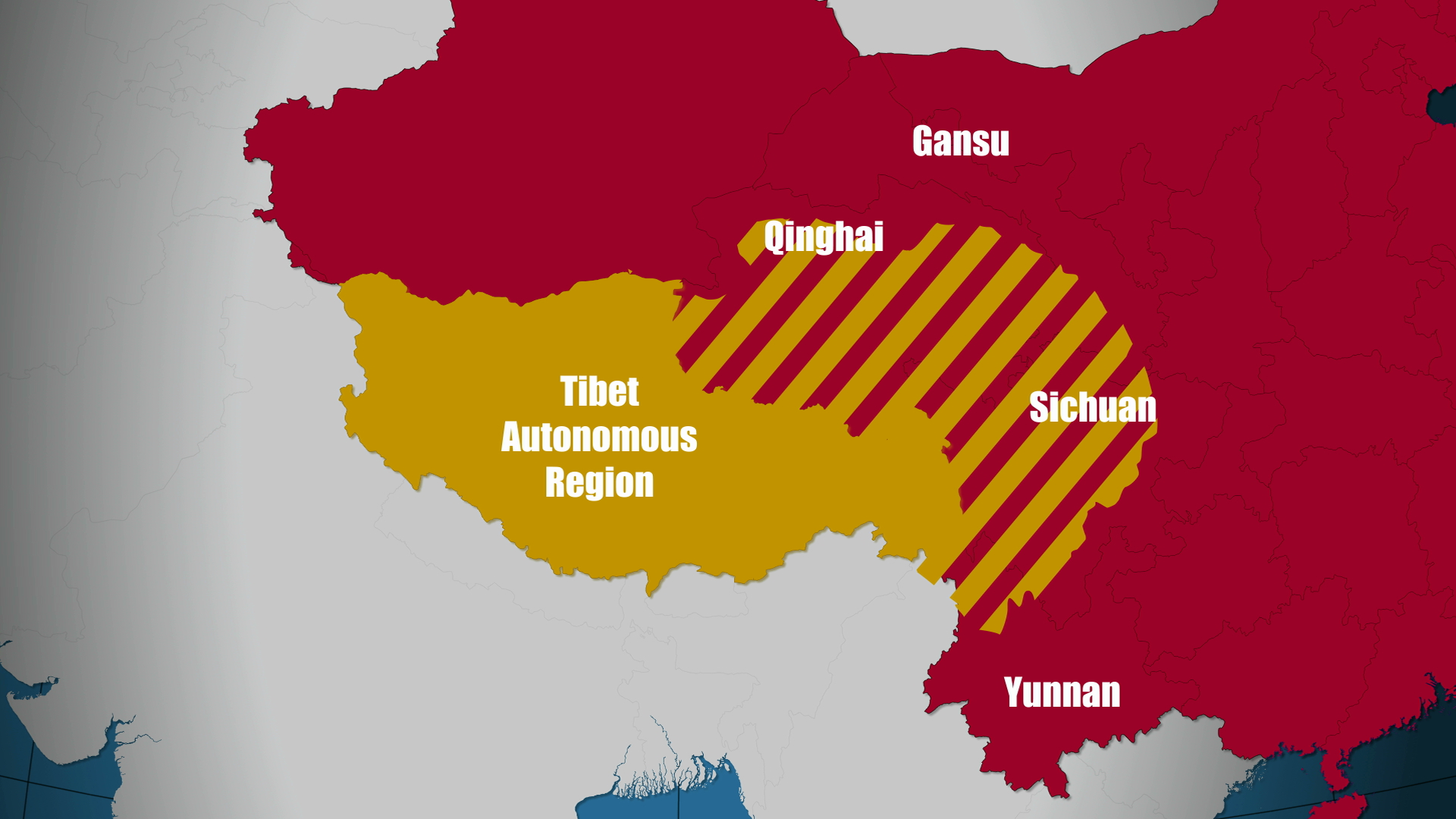
Red China’s acts of aggression in West Philippine Sea or South China Sea have to be examined in the context of Red China’s aggression in Tibet. Red China occupied 965, 000 square miles of Tibetan territory which represents one-quarter of Red China’s landmass. United States has no choice other than that of confronting all aspects of Red China’s aggression.

Rudranarasimham Rebbapragada
Ann Arbor, MI 48104-4162, USA
The Spirits of Special Frontier Force

image
The Spirits of Special Frontier ForceAt Special Frontier Force, I host ‘The Living Tibetan Spirits’ to promote Tibet Awareness. I…
View on www.facebook.com Preview by Yahoo

Kerry raises South China Sea concerns with China’s Wang | Reuters

RED DRAGON – RED CHINA – HISTORY OF AGGRESSION

RED DRAGON – RED CHINA – HISTORY OF AGGRESSION

Red China’s acts of aggression in West Philippine Sea or South China Sea have to be examined in the context of Red China’s aggression in Tibet. Red China occupied 965, 000 square miles of Tibetan territory which represents one-quarter of Red China’s landmass. United States has no choice other than that of confronting all aspects of Red China’s aggression.

Rudranarasimham Rebbapragada
Ann Arbor, MI 48104-4162, USA
The Spirits of Special Frontier Force

image
The Spirits of Special Frontier ForceAt Special Frontier Force, I host ‘The Living Tibetan Spirits’ to promote Tibet Awareness. I…
View on www.facebook.com Preview by Yahoo

Kerry raises South China Sea concerns with China’s Wang | Reuters

TIBET’S MILITARY OCCUPATION – THE GREAT TIBET PROBLEM

TIBET’S MILITARY OCCUPATION – THE GREAT TIBET PROBLEM

Historically Tibet came under military conquests by Mongol China and Manchu China and yet retained its independent way of living without any problem. The Evil Red Empire formulated by Red China’s Communist Party Chairman Mao Zedong unleashed a different kind of beast to rule over the lives of Tibetan people. During 1950s, both India and Tibet believed that the beast called ‘The Red Dragon’ can be appeased and treated her with patience, and tolerance seeking a peaceful resolution to the problem caused by Red China’s military invasion of Tibet in 1950. In 1959, Tibetans made an unsuccessful attempt to tame ‘The Red Dragon’ and their failure could be attributed to cunningness, craftiness of Red China which acts like a Jackal concealing her true intentions. Red China has become more confident over the years and thinks that there is no one besides her. Unlike in past, Tibet’s conquest by Red China has transformed Tibet into a colony from which China extracts all natural resources while maintaing a tight grip over the lives of people using her brute force. Red China developed road, rail, and air connections with Tibet to sustain its colonization denying Tibetans their natural rights to Freedom. I am expecting that Red China’s military grip over Tibet will slacken because of an unexpected strike that would bring The Red Dragon to her knees.

Rudranarasimham Rebbapragada
Ann Arbor, MI 48104-4162, USA
The Spirits of Special Frontier Force

image
The Spirits of Special Frontier ForceAt Special Frontier Force, I host ‘The Living Tibetan Spirits’ to promote Tibet Awareness. I…
View on www.facebook.com Preview by Yahoo
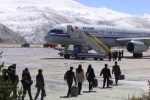
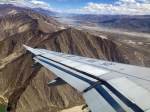
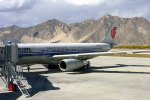
  1. China is on an Airports and Infrastructure spree in Tibet

    AUTHOR: CLAUDE APRI

    AUGUST 4, 2015

    [​IMG]

    Isn’t it strange that some of the most significant news are often missed in the cacophony of the ‘Breaking News’ channels?

    On the same day, two game-changing pieces of information appeared in the Chinese media. Yet, they just looked innocuous.

    The first one was about the 6th Tibet Work Forum. Was it held in Beijing or in the sea-resort of Beidaihe, where the top leaders escaped the unpleasant Beijing weather? I shall come back to it later.

    The second information was the PLA/Civil integration for the management of the Lhasa airport; it has serious strategic implications for India, which is struggling to build some infrastructure in Arunachal and Ladakh.

    Xinhua officially announced the vital airport integration to “strengthen aviation safety and combat support capabilities.”

    A joint statement from the People Liberation Army Air Force (PLAAF) and General Administration of Civil Aviation (CAAC) said that the integration will include joint maintenance of airport support facilities, joint flight safety support and joint airport management.

    Interestingly, the Lhasa Gongkar Airport in Tibet will be the first of the two pilot airports to implement the PLA/civil ‘integration’ (with the Sunan Shuofang Airport in Wuxi in Jiangsu province). The job should be completed during the second half of 2015.

    The PLAAF/CAAC circular further affirms that “all the civil-military airports will conduct strengthened integration next year.”

    To flood the Tibetan plateau with millions of Chinese tourists, a good infrastructure is required. Airports and the railway line are the backbones of a booming tourism in Tibet. The same infrastructure could be crucial in case of conflict with India; integration of the airport management was therefore required.

    Once the Lhasa Gonggar Airport, located about 62 kilometres from the Tibetan capital has its joint PLA/Civil management, the other airports on the plateau will follow.

    A couple of years ago, Xinhua had announced that the airport in Chamdo (known as the Bangda Airport) was reopened after major repairs. Xinhua reported then: “The Bangda Airport, the world’s highest-altitude civilian airport currently in use, is expected to resume operations.” It had temporarily been closed to repair a 19-year-old runway.

    Also strategically important is the Nyingtri Mainling Airport, situated just north of the McMahon Line, the border with India; it serves Bayi, the main PLA garrison in the Tibetan Autonomous Region.

    Ngari Gunsa Airport already used by the PLA posted opposite the Indian troops in Ladakh and Himachal Pradesh, started its operations in 2010, becoming the fourth civil airport in Tibet after Lhasa, Nyingchi and Chamdo airports.

    Shigatse, the second city in Tibet is served by the railway line since August last year but also has the Shigatse Peace Airport, called Shigatse Air Base.

    It was solely for military use until 2010, when a 100 million US $ expansion was completed.

    The 4,411-metre-high Kardze Daocheng Yading airport, built in Kardze in Sichuan province was put into operation in 2014 (a year earlier than planned!). The Sichuan authorities planned to bring one million tourists to the area by 2015. But as important as tourism, the airport facilitates the transportation of fresh troops from the Military Area Command in Chengdu to Kardze prefecture. Kardze has been one of the most restive areas on the Tibetan plateau. With one stone, two birds are killed: the Tibetan protesters can be ‘pacified’ in no time and the deluge of Chinese tourists brings hefty revenues.

    Another airport has come up in the Nagchu Prefecture of Tibet. Completed in 2014, the Nagchu Airport is now the highest airport in the world at 4,436 m.

    The Modi Sarkar is aware of all this, but while China speedily builds Tibet’s infrastructure (using the perfect excuse of having to cater for millions of Han tourists), India develops its border areas at snail’s pace, struggling to create a semblance of infrastructure. It is true that the terrain is far more difficult in the Indian side, but so are the bureaucratic hurdles.

    In Arunachal for example, the process indeed needs perseverance and an unshakable will to change the tide. Despite the declared resolve from the present Government, it may take years for proper roads to reach the remotest districts of Arunachal Pradesh…and stop the Chinese ‘visits’.

    It is not an easy challenge, but Prime Minister Narendra Modi has realised that the North-East cannot be developed from Delhi. In his latest monthly radio programme Maan ki Baat, he announced that he was “deputing Central Government officials to find solutions to problems being faced by the region”.

    One of the decisions taken by the Union Government has been to modify the guidelines of the Border Area Development Programme drafted some 10 years ago. According to the new notification,

    “The main objective of the BADP is to meet the special developmental needs and well being of the people living in remote and inaccessible areas situated near the international border and to saturate the border areas with the entire essential infrastructure …(with a) participatory approach.”

    I mentioned another information released by Xinhua the same day about the 6th Tibet Work Forum, which decides the fate of Tibet (as well as Tibet’s southern neighbours) for the next 5/10 years

    The opening of the Forum just took place in Beidaihe, the sea-resort where the Communist leadership retires during the hot summer.

    Xinhua reported that top Chinese leaders have met “to discuss economic and social development in Tibet, and how to ensure the autonomous region achieves prolonged stability.”

    The statement of the Political Bureau of the Central Committee of the Communist Party of China (CPC) further noted: “Safeguarding national unity and strengthening ethnic unity should be highlighted in work involving Tibet.” The so-called stability is undoubtedly foremost in the mind of the leadership. The statement added:

    “Efforts should be made to unswervingly carry out the anti-separatism battle, promote the region’s economic and social development, safeguard and improve people’s welfare, and enhance exchanges and integration of different ethnic groups.”

    The Politburo (or probably an extended Politburo) is said to have agreed that “strengthening Tibetan infrastructure, helping it foster competitive industries while ensuring environmental protection are the means to achieve marked improvement in living conditions and more social cohesion,” were the priorities for the restive region.

    The PLA/Civil integration of the airports in Tibet will certainly help Beijing to ‘strengthen the infrastructure’ and consolidate its presence on the Plateau.

    To give an example of the seriousness of the situation for India, it is enough to quote the case of Metok, the last Tibetan village before the Yarlung Tsangpo/Brahmaputra enters Upper Siang district of Arunachal Pradesh.

    China Tibet Online explains:

    “The remoteness of the location, together with other reasons such as climate and geological condition, and economic development, led to the isolation of the region. Having no way linking it to the outside world until the end of 2013, Metok is the last county in China to have its road.”

    Historically, this was a mythic place; only a very few intrepid pilgrims had visited the ‘hidden valley’. Now, Zhang Yuhui, an executive deputy director of Metok County affirmed that the income from tourism in Metok (which has 11,000 inhabitants only) has reached 1.6 billion US $, just in the matter of 2 years.

    China Tibet Online says:

    “Going to Metok had once been only the privilege of the ‘brave’ before the traffic was improved. After the opening of the road to Metok, self-driving travel became popular apart from hiking. Visitors from various places were attracted to this beautiful place.”

    Can you believe that this tiny (though strategic valley) hosted 70,000 visitors in 2013, the first year the road was opened. It grew to 90,000 in 2014 and the Chinese government expects 130,000 visitors in 2015.

    And this just a few kilometers north of the Indian border!

    No other comment is required.

    The Narendra Modi Sarkar has indeed to hurry up and undertake the development of the border on a war footing.

THE PROBLEM OF RED CHINA’S AGGRESSION IN WEST PHILIPPINE SEA

THE PROBLEM OF RED CHINA’S AGGRESSION IN WEST PHILIPPINE SEA

RED CHINA'S AGGRESSION IN WEST PHILIPPINE SEA DEMANDS FULL UNDERSTANDING OF HER EXPANSIONIST POLICY.
RED CHINA’S AGGRESSION IN WEST PHILIPPINE SEA DEMANDS FULL UNDERSTANDING OF HER EXPANSIONIST POLICY.

I am pleased to note that United States is giving support to Philippines to confront the problem of Red China’s aggression in West Philippine Sea. Resolution of this problem demands a proper understanding of Red China’s Expansionist Policy and containing and resisting all manifestations of Red China’s Expansionism. Tibet is Red China’s first victim and Southeast Asia’s nations have to seek justice for Tibetans if they want to protect their own national interests from Red China’s Imperialism.

Rudranarasimham Rebbapragada
Ann Arbor, MI 48104-4162, USA
The Spirits of Special Frontier Force

 
  image          
The Spirits of Special Frontier ForceAt Special Frontier Force, I host ‘The Living Tibetan Spirits’ to promote Tibet Awareness. I…
 
View on www.facebook.com Preview by Yahoo
 
 Close

VOICE OF AMERICA

US, PHILIPPINES URGE END TO ISLAND-BUILDING IN S. CHINA SEA

FILE - Foreign Minister of the Philippines Albert del Rosario (L) and U.S. Secretary of State John Kerry shake hands before a meeting.
FILE – Foreign Minister of the Philippines Albert del Rosario (L) and U.S. Secretary of State John Kerry shake hands before a meeting.

SIMONE ORENDAIN

August 04, 2015 8:17 AM

MANILA—

The Philippines says it will back calls by the United States for a series of measures aimed at reducing tensions in the South China Sea during a regional security forum in Kuala Lumpur Wednesday. Washington wants countries to stop building artificial islands and carrying out military activities.

The Philippines is expected to raise the issue of China’s activities in the South China Sea during meetings of the 10-member Association of Southeast Asian Nations (ASEAN) this week.
Foreign Affairs Secretary Albert del Rosario released a statement Tuesday saying that his country would also endorse a U.S. call for stopping all work on disputed outcroppings and any military activities.

“As a means of de-escalating tensions in the region, the Philippines fully supports and will pro-actively promote the call of the United States on the ‘three halts’ — a halt in reclamation, halt in construction and a halt in aggressive actions that could further heighten tensions,” Del Rosario said.

However, he said the Philippines back those measures only if other claimants, including China, do the same. And he said this does not mean that China’s island construction on at least seven outcroppings is legitimate.

In recent months the U.S. has been raising concerns over China’s project to convert reefs and shoals in the Spratlys into manmade islands.
“This has been the American position for what, almost two years now, saying that everyone should stop developing their particular areas that they hold,” explained Carl Baker, programs director at the Pacific Forum of the Washington-based Center for Strategic and International Studies. “But everybody knows that this is really directed at China.”
China's Foreign Minister Wang Yi arrives at a meeting during the 48th Association of Southeast Asian Nations (ASEAN) foreign ministers meeting in Kuala Lumpur, Malaysia, Aug. 4, 2015.

China’s Foreign Minister Wang Yi arrives at a meeting during the 48th Association of Southeast Asian Nations (ASEAN) foreign ministers meeting in Kuala Lumpur, Malaysia, Aug. 4, 2015.

CHINA’S STANCE

China insists that ASEAN forums are not the place to raise these territorial disputes.

Beijing claimed nearly the entire South China Sea, while the Philippines, Vietnam, Malaysia, Brunei and Taiwan also have overlapping claims. The Philippines has filed a case with the Permanent Court of Arbitration to question what it calls China’s “excessive claims” in the sea. China rejected the case and is not participating.

Baker does not foresee any change in the U.S. position and nor does he see a shift in China’s stance, especially since it already built the islands. He predicts that the standoff will “inhibit security cooperation” in Southeast Asia.

On Monday in Singapore, China’s foreign minister, Wang Yi, downplayed the concerns over Beijing’s island building, which has rapidly built airstrips and buildings on top of what were until recently mostly submerged rocks and reefs.

“At the moment the general situation in the South China Sea is stable, and China is steadfastly committed to working with the parties to maintain the situation which has not come easily. And we will never allow any country to destabilize the South China Sea,” said Wang.

Wang made a pitch for peacefully resolving the disputes through “consultations and negotiations” among what he called “five commitment points” of China regarding the contested sea.

RED DRAGON – RED CHINA’S AGGRESSION IN WEST PHILIPPINE SEA

RED CHINA’S AGGRESSION IN WEST PHILIPPINE SEA

RED DRAGON - RED CHINA - AGGRESSION IN WEST PHILIPPINE SEA. AGGRESSOR MUST BE QUARANTINED.
RED DRAGON – RED CHINA – AGGRESSION IN WEST PHILIPPINE SEA. AGGRESSOR MUST BE QUARANTINED.

At Special Frontier Force, the fact of Red China’s aggression in Tibet is recognized since 1950. Now, Red China’s aggression in West Philippine Sea is attracting media attention unlike Red China’s prolonged military occupation of Tibet. Aggressor nation must be quarantined by placing diplomatic and economic sanctions. Aggression has to be treated like a disease and aggressor has to be isolated from rest of the global community for aggression poses dangers to peaceful existence of all people.

Rudranarasimham Rebbapragada
Ann Arbor, MI 48104-4162, USA
The Spirits of Special Frontier Force

 
  image          
The Spirits of Special Frontier ForceAt Special Frontier Force, I host ‘The Living Tibetan Spirits’ to promote Tibet Awareness. I…
 
View on www.facebook.com Preview by Yahoo


DIGITAL JOURNAL

Protesters condemn China’s aggression in West Philippine Sea 


RED DRAGON - RED CHINA - AGGRESSION IN WEST PHILIPPINE SEA : PROTEST ON JULY 25, 2015. RAFAEL ALUNAN WITH MARTIN DINO BELLE ENRIQUEZ AND DANTE JIMENEZ.
RED DRAGON – RED CHINA – AGGRESSION IN WEST PHILIPPINE SEA : PROTEST ON JULY 25, 2015. RAFAEL ALUNAN WITH MARTIN DINO BELLE ENRIQUEZ AND DANTE JIMENEZ.

By LEO REYES Jul 25, 2015


The West Philippine Sea Coalition has condemned China’s aggression in the West Philippine Sea in a protest rally held along Roxas Boulevard (fronting the West Philippine Sea) in Manila Saturday morning.

Belle Enriquez of West Philippine Sea Coalition

Belle Enriquez of West Philippine Sea Coalition
FB

The coalition members include the Volunteers Against Crime and Corruption (VACC), RAM, Anti-Drugs Advocate, Guardians, Motorcycle Philippines Federation, United Defense Manufacturing Corp., ProGun, SMX Phils and Predator Riders, among others.
The event was the 3rd Annual Day of Protest against China’s bullying in the West Philippine Sea. Simultaneous protests have also been held in London, United States and other cities across the globe.
Anti-China Rally Manila July 25 2015

Anti-China Rally, Manila July 25, 2015
FB

Among others, the West Philippine Sea Coalition cited China’s territorial aggression when it reclaimed (and continues reclaim) reefs, shoals, islets, and other submerged rocks and corals for their exclusive use despite diplomatic intervention by the US, Japan and other ASEAN-member countries.
On the environmental front, the coalition scored China for the massive destruction of the coral reefs in the disputed territories as a result of its ongoing reclamation and construction activities.
The coalition also cited China’s invasion of the Scarborough Shoal, a rich fishing ground located within the 200-mile economic zone of the Philippines.
China’s continued presence in what the Philippines claims as part of its territory had prevented hundreds of Filipino fishermen from traversing the rich fishing ground resulting in their family’s economic displacement.
The coalition lambasted China for being a top source of illegal drugs that continues to be smuggled into the Philippines by Chinese drug lords.
In their short talk during the rally, Top VACC officials Dante Jimenez and Martin Dino together with Anti-Drugs Advocate Jonathan Morales criticized China for having destroyed lives of hundreds of thousands of drug addiction victims in the country.

Former DILG Sec. Rafael Alunan with Nick SoteloFormer DILG Sec. Rafael Alunan with Nick Sotelo
FB

Alunan and leaders of the coalition called on the public to support the case pending before the UN Arbitral Tribunal by educating the people on the merits of the case. At the same time, they also urged the public to call on the nation’s leaders to fast track the development of a credible external defense capability.
Rep. Roilo Golez, who is supporting the coalition has called on the public to boycott made in China products especially garments and buy products that are made in the Philippines.

In London, Gene Alcantara, a longtime immigration adviser and social activist together with concerned Filipinos in UK joined the global protest with their placards denouncing the Chinese aggression at the Chinese Embassy despite heavy rain. Similar protest was also held in Ireland by the Filipino communities there
Gene Alcantara with friends at the Chinese Embassy in London

Gene Alcantara with friends at the Chinese Embassy in London
Gene Alcantara FB

Filipino communities across the US have also participated in the Anti-China protest like the one shown here from the Filipino group in Guam and the Marianas.
Anti-China protest in Guam July 25 2015

Anti-China protest in Guam, July 25, 2015
Gene Alcantara-FB-Pacific News Center

The leaders of the West Philippine Sea Coalition have vowed to continue heightened protests against China’s aggression in the disputed territories through legal and peaceful means.
As part of its campaign to educate the public on the country’s territorial claim, West Philippine Sea Coalition’s Belle Enriquez told Digital Journal that another forum will be held in late August to allow the public to view an ancient map showing the extent of the Philippine coastline.

Red Dragon - Red China aggressor nation - United Nations must act to stop China's Aggression in Southeast Asia.
Red Dragon – Red China aggressor nation – United Nations must act to stop China’s Aggression in Southeast Asia.