Whole Dude at Whole Foods needs a Final Destination to Rest in Peace.I am a Refugee. What is my Final Destination?
I am a Refugee for I host ‘The Living Tibetan Spirits’, the Spirits of young Tibetan Soldiers who gave their precious lives while dreaming about ‘Freedom’ in Occupied Tibet.
For I am a Refugee, I am not entitled to the benefits entitled to the citizens of my host nation. I am in the search of my Final Destination where I can die with Peace and Dignity. My host nation is Free and yet as a Refugee I live under terms and conditions imposed on my existence as a Refugee. What is the Choice I can make? The options are, 1. Labor until Death in the host nation, and 2. Peaceful Death in the Enemy’s Prison.
I am a Refugee. What is my Final Destination.
India – Tibet – China Dalai Lama says he would like to return to Tibet before he dies
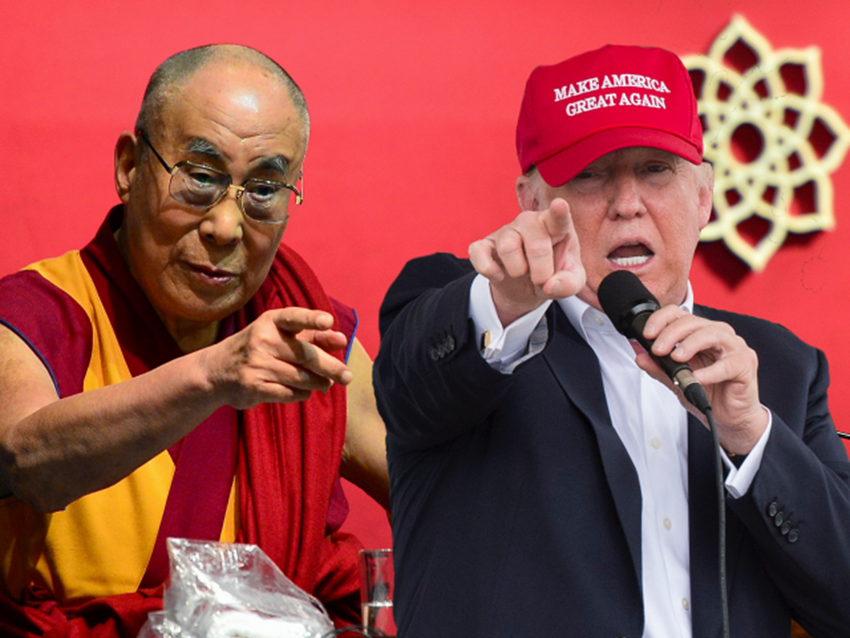
The spiritual leader of Tibetan Buddhism fled Lhasa during the 1959 uprising. Beijing considers him a “wolf in sheep’s clothing”. Like Xi Jinping, Donald Trump never asked to meet him.
Dharamshala (AsiaNews/Agencies) – “The Tibetan people have trust in me, they ask me [to] come to Tibet,” said the Dalai Lama in an interview with the BBC.
I am a Refugee. What is my Final Destination?
Speaking with the journalist, the spiritual leader of Tibetan Buddhism talked about his desire to return to Lhasa before he dies. He was forced to abandon the Potala Palace (his official residence) during the Tibetan uprising against Chinese military rule in 1959.
Since then, Tenzin Gyatso, the 14th Dalai Lama, has found refuge in Dharamshala (India) along with another 10,000 Tibetan Buddhists who live their Himalayan exile in Arunachal Pradesh.
In the interview the Dalai Lama describes India, the country that welcomed him, his “spiritual home”. Grateful for the hospitality he received, he notes that one advantage of not being able to return home to Tibet is that India is a free country where he can express himself openly.
Although he has often tried to engage Beijing in dialogue, to safeguard the autonomy of Tibetan religion and culture threatened by a “cultural genocide”, the Chinese Communist Party has always branded him a “dangerous” separatist seeking Tibetan independence.
In order to return to Tibet, he gave up his political role in 2011 to remain only as the spiritual leader of Tibetan Buddhism. But the Chinese Communist Party continues to view him as a “wolf in sheep’s clothing”.
At the age of 84, he enjoys good health, although he needs an assistant to walk. In April, Tibetan Buddhists all over the world were concerned for several days after his sudden hospitalization in a Delhi hospital for a lung infection.
In addition to going home to Tibet, the Dalai discussed various topics in the BBC interview: Brexit, migrants, a female Dalai Lama woman who should be “more attractive” than a man.
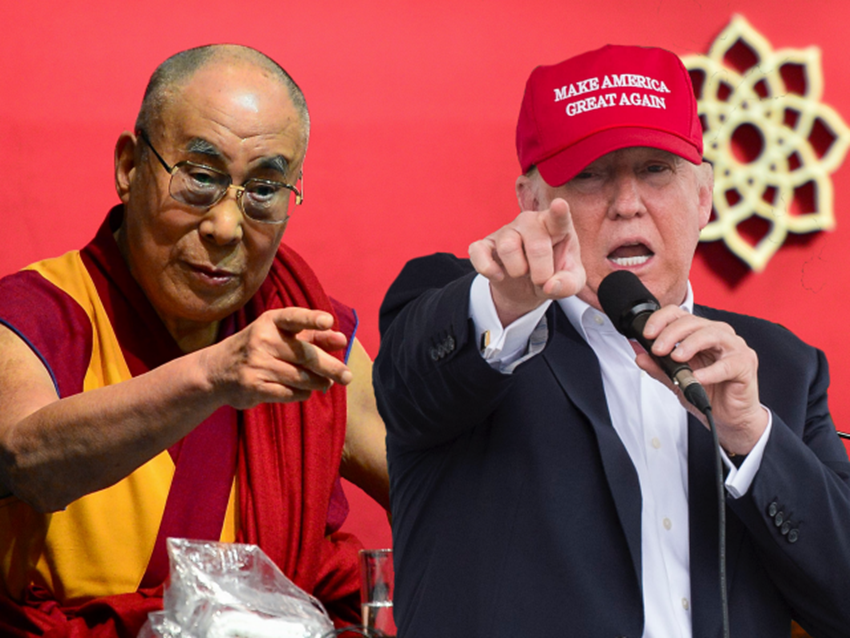
He also voiced strong criticism of US President Donald Trump who, in his view, lacks “moral principle”. The slogan (America First) that allowed him to win “is wrong”. The US leader, he noted, like Xi Jinping, never asked to meet him.
Thank You India Campaign of 2018 – Living Tibetan Spirits
Whole Campaign – Dalai Lama’s Thank You India Campaign
I identify myself as host of ‘The Living Tibetan Spirits’. His Holiness the Dalai Lama arrived in India sixty-six-years ago. I count the days of my life-in-exile since January 10, 1984. I live as a Refugee in the United States without knowing my Refuge. Many Tibetan refugees may understand my claims about life-in-exile for it is not a personal choice. It’s a choice imposed upon us.
Whole Campaign – Dalai Lama’s Thank You India Campaign
Rudra Narasimham Rebbapragada
Special Frontier Force-Establishment 22-Vikas Regiment
Whole Campaign – Dalai Lama’s Thank You India CampaignWhole Campaign – Dalai Lama’s Thank You India CampaignWhole Campaign – Dalai Lama’s Thank You India CampaignWhole Campaign – Dalai Lama’s Thank You India Campaign
As Dalai Lama Event is Shifted From Delhi, Modi’s Line on Tibet Remains a Puzzle – The Wire
Whole Campaign – Dalai Lama’s Thank You India Campaign
The MEA says India’s position on the Dalai Lama is the same but the fact that a circular was issued advising officials to keep their distance suggests a change had occurred which is now being corrected.
Whole Campaign – Dalai Lama’s Thank You India Campaign
The Dalai Lama waves as he leaves after speaking on “Embracing the Beauty of Diversity in our World” to thousands at the UC San Diego campus in San Diego, California, US, June 16, 2017. Credit: Reuters/ Mike Blake/Files
New Delhi: Days after newspaper reports of a top official directing all government functionaries to avoid events commemorating 60 years of the Dalai Lama’s exile in India, the Tibetan ‘government in exile’ has decided to shift major programmes slotted for Delhi on March 31 April 1 to Dharamsala in Himachal Pradesh.
While officials from the Central Tibet Administration (CTA) – the NGO that the exiles run – denied receiving any instructions from the Indian government, China-watchers in Delhi say they are puzzled by the underlying message the Modi government is sending with its new circular, given how it had earlier projected a willingness to play the ‘Tibet card’.
The Indian Express reported on March 4 that Cabinet Secretary P.K. Sinha had issued a classified circular “discouraging” government functionaries – political and bureaucratic – from attending events organised by the Tibetan government-in-exile to mark the key anniversary over the next few months.
The circular was apparently issued to central ministries and state governments on the urging of the new foreign secretary, Vijay Gokhale. The letter from Gokhale to Sinha was dated February 22, as per the newspaper. A day later, Gokhale travelled to Beijing on his first visit to China as foreign secretary.
The Ministry of External Affairs responded to reporters queries on the Indian Express report by stating that India has not changed its position on the Dalai Lama. Describing him as a “revered religious leader” who is “deeply respected” by Indians, the MEA added that the Dalai Lama is “accorded all freedom to carry out his religious activities in India”.
Speaking to The Wire, Dhardon Sharling, information secretary, CTA, did not want to comment on the circular “since this was not officially communicated to us”.
She added that there had been a change in plans for the main ‘Thank you India’ event. “It is true that the ‘thank you India’ public event is rescheduled and will take place on March 31 – the 60th year since his Holiness stepped on the Indian soil and the venue is shifted from Delhi to Dharamshala,” Sharling said.
While the March 31 inter-faith meeting of Raj Ghat had been cancelled, the main event was to be held in Delhi on April 1, which has now been shifted a day earlier to Dharamshala.
Sharling said that the events were planned throughout the year “to publicly express our gratitude to the government and people of India”.
“India has been our second home for six decades,” she added.
When asked about the cause behind the change in plans, she said, “I cannot cite the key reason behind but we are following directives from our leadership to hold the event in Dharamshala instead”.
The CTA Sangay is in Delhi on an “official visit” this week, during which he will meet with “officials and dignitaries”.
According to some sources, similar circulars have been sent out in previous years as periodic reminders to government officials to keep their distance.
However, according to another former Indian diplomat, it was a “little surprising” that a formal circular was issued. “Government does at times discourage people from attending a meeting, but this was a pre-emptive move…and done on a formal circular,” he said.
Former director of the Institute of Chinese studies Alka Acharya also wondered if these notes were a normal routine. “It would not be surprising if such notes were sent around by the MEA from time to time in the past as well, possibly on the eve of state visits or when some very high-profile functions were organised,” she said.
The Cabinet Secretary’s circular gave the reasoning that the Dalai Lama’s upcoming commemorative events would be held at a “very sensitive time in the context of India’s relations with China”.
Prime Minister Narendra Modi is scheduled to attend the SCO summit in June. The Times of India reported that there are important bilateral meets planned ahead of that high-level visit by Modi.
India-based French expert on Sino-India ties and Tibet, Claude Arpi, described himself as “sad” at the issuing of the circular, adding that “sensitive time means nothing”. “Times have been ‘sensitive’ since the Dalai Lama crossed the border at Khenzimane on March 31, 1959. It will remain ‘sensitive’,” asserted Arpi.
China has frequently raised the issue of presence of Tibetan refugees and activities of Dalai Lama with the Indian government. The default Indian position has always been that India is a “open society” and there are not many restrictions on freedom of expression, including for refugees.
“It is a sensitive issue that has always been managed. The Dalai Lama has been meeting senior government functionaries. A complete restriction on him is something we have never accepted,” said the former Indian diplomat.
In fact, he pointed out that the circular could give the impression to the Chinese that the government has more leverage on the activities of the Tibetan exiles. “It raises expectations,” he said.
Arpi agreed that China will also ‘note’ that India agreed “to their demand and ask more”. “It will not help India in the long run,” he argued, adding, “…if the time was really sensitive, one or two ministers could be told not to meet HHDL (His Holiness Dalai Lama). Why a circular? [This is] uncalled for.”
He asked whether China would have been ‘nicer’ and supported Indian aspirations at the UN Security council if India had capitulated at Doklam. “The answer is No”.
Strategic expert Bharat Karnad had more scathing phrases for the cabinet secretary’s circular – “Sheer cravenness”.
When asked if he thought that it was justified for India to be circumspect at this moment, Karnad said, “Not in the least. If anything, Xi’s assumption of dictatorial powers is the time to stand up to China, not display what in my books I have called “bovine pacifism” where big powerful states are concerned”
The CTA president Lobsang Sangay had announced in January that the 60 years anniversary would be marked by year-long events, with the highlight being a public gathering at New Delhi’s Thyagaraj sports complex on April 1.
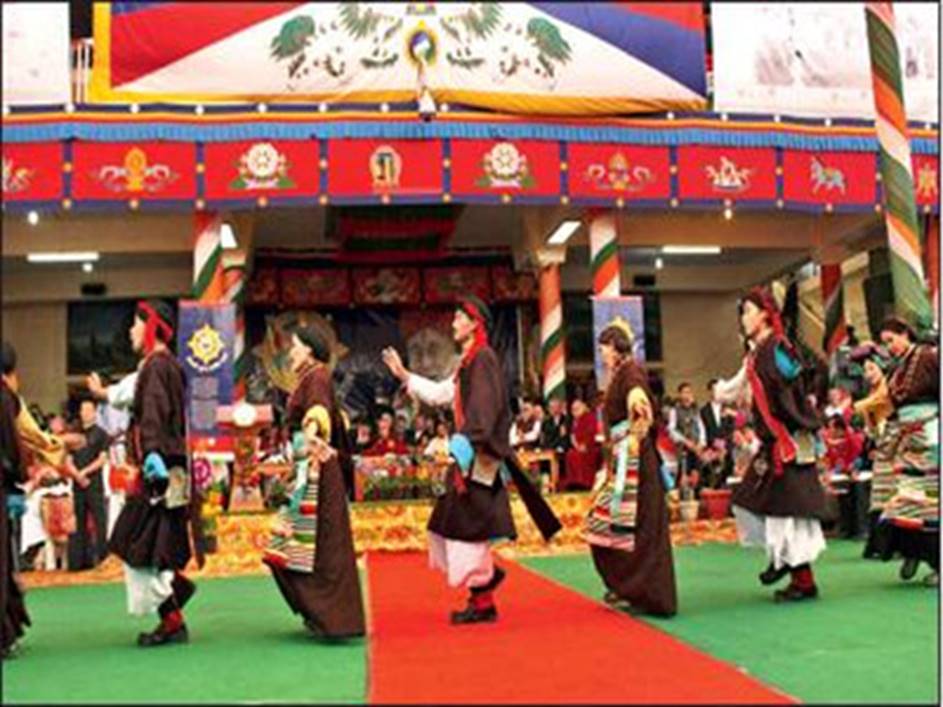
Termed the ‘Thank you India’ campaign, Sangay had said at the launch that the April 1 event “will feature public addresses by Indian dignitaries and Tibetan cultural performances and is expected to draw over 5000 people”.
Acharya pointed out that there had seemed to be a “rethinking” in official circles, “and most certainly a hardening of views on the Tibetan issue, within the strategic community”.
She was referring to the earlier playing up of the so-called ‘Tibet card’ by this government, which was to have a more visible relationship with the Tibetan leader and high-profile visits to Arunachal Pradesh. Ministers like Kiren Rijiju and Mahesh Sharma have met with the spiritual leader, though the prime minister has not yet done so.
The Dalai Lama shared the stage with Indian president in 2016 in Rashtrapati Bhawan at an event described as “non-political” after a Chinese protest. When the Dalai Lama visited Arunachal last year on his sixth visit, he was received by the chief minister and other state officials.
India had also allowed the US ambassador Richard Varma to visit Tawang for the first time. China claims the entire Indian state of Arunachal Pradesh and calls it “southern Tibet”.
The Indian government had also asserted that its steadfast response to China during the Doklam crisis was one of the reason for Chinese troops to withdraw from the confrontation site. The Chinese troops may have gone away from the eyeball-to-eyeball situation, but they continue to maintain a presence in the region.
While relations has been tense between India and China over a number of issues, there had been tactical cooperation recently between the two neighbours. Despite initial objections, China allowed Pakistan to be put on the ‘grey list’ of the Financial Action Task Force for not taking steps to stop financial transactions by terror groups like Jaish-e-Mohammed and Lashkar-e-Taiba.
Acharya believed that given that the foreign secretary’s note to the cabinet secretary went out a day before he left for Bejing, “there seems to be a prima facie case for a quid pro quo having occurred”.
However, she does not believe that this amounts to a downgrading in ties with the Central Tibetan Administration (CTA).
“…this is probably not the first time that such notes have been circulated and the government’s note orcCircular by itself does not amount to any dramatic shift or change. In fact, there have been numerous occasions in the past when the government has taken a step backwards or reconsidered its decision with regard to either hosting specific events or cancelled meetings scheduled with the Dalai Lama. Often to our discomfiture,” she said.
The cancellation of the scheduled meeting of the BJP president Amit Shah with Dalai Lama in May 2015 ahead of the prime minister’s visit to China was cited as an example.
She argued that the circular may not be a downgrading, as much as “reverting to the earlier approach of distancing the government from events and activities organised by the Dalai Lama or the CTA”.
Acharya pointed out that that as joint secretary of East Asia division, “the current Foreign Secretary had ensured that there was no government participation in the “50 Years in Exile events” organised in 2009″.
As per sources in the Tibetan government-in-exile, the events around the golden jubilee anniversary had been rather subdued. “There was no media, PR or social media then. There was a different leadership then. Things have changed a lot in ten years”.
Arpi was not convinced. “Perhaps not,” he said on the possibility of downgrading of links between the Indian government and the CTA due to the circular, adding, “JS (XP) said that nothing has changed. It remains unfortunate, but hopefully temporary”.
He added that there was “no doubt that the coming months will be hot, especially when the passes in the central and eastern sectors open”. Arpi was pointing to the possibility of more Chinese ‘incursions’ across the un-demarcated boundary.
However, Karnad noted that if this was the “first step in India’s surrendering the ‘Tibet card’ then more trouble is heading this way”. “Especially because NSA Doval has got nothing from the Chinese special representative on border talks on paper to say this is the exchange. Time and again, Chinese leaders have said something, gotten India to commit, and then backed off – but Delhi has never shown the guts to do the same,” he added.
Whole Campaign – Dalai Lama’s Thank You India CampaignWhole Campaign – Dalai Lama’s Thank You India CampaignWhole Campaign – Dalai Lama’s Thank You India CampaignWhole Campaign – Dalai Lama’s Thank You India CampaignWhole Campaign – Dalai Lama’s Thank You India CampaignWhole Campaign – Dalai Lama’s Thank You India CampaignWhole Campaign – Dalai Lama’s Thank You India CampaignWhole Campaign – Dalai Lama’s Thank You India Campaign
The Supreme Ruler of Tibet is unlike any spiritual leader or king
The Supreme Ruler of Tibet is unlike any spiritual leader or king
I am pleased to share the photo images of the 14th Dalai Lama, the Supreme Ruler of Tibet, living in exile.
All photographs are part of the book, ‘A God in Exile: The Fourteenth Dalai Lama by Raghu Rai’, published by Roli Books.
The BBC News shared these photo images describing the Dalai Lama as a ‘spiritual leader’. Photographer and author Raghu Rai went a step further in recognizing the Dalai Lama as “A God in Exile.”
In my analysis, the relevance of the 14th Dalai Lama relates to the Institution of Dalai Lama that governs Tibet giving a sense of reality to the Tibetan Living Experience. If the Dalai Lama is just a Spiritual Leader, he would not be living in exile. If the Dalai Lama is indeed a ‘God’, Communist China would have utterly failed in crushing the massive Tibetan Uprising of March 1959.
Rudra Narasimham Rebbapragada
Special Frontier Force-Establishment 22-Vikas Regiment
The Supreme Ruler of Tibet is unlike any spiritual leader or kingThe Supreme Ruler of Tibet is unlike any spiritual leader or king
The Dalai Lama: Intimate portrait of a spiritual leader – BBC News
The 14th Dalai Lama. The Supreme Ruler of Tibet living in exile. The Supreme Ruler of Tibet is unlike any spiritual leader or king
Image copyright Raghu Rai Image caption The Dalai Lama watching the TV series, Mahabharata
A new book by acclaimed Indian photographer Raghu Rai offers an unprecedented glimpse into the life of one of the world’s leading religious figures.
A God In Exile is the result of a photographer’s decades-long insight into his muse. Rai took his first picture of the iconic Tibetan spiritual leader in 1975.
He recalled being stopped by the Dalai Lama’s security. “I somehow managed to make eye contact with His Holiness and asked him if I could take some photos of him. He smiled and said yes,” Rai told the BBC.
Over the years, he has photographed the Dalai Lama many times and has cultivated a “deep friendship”.
In March 1959, as Chinese troops crushed an attempted uprising in Tibet, the 14th Dalai Lama, who was born Tenzin Gyatso, fled into India. He was then a young man in his mid-20s.
The 14th Dalai Lama. The Supreme Ruler of Tibet living in exile. The Supreme Ruler of Tibet is unlike any spiritual leader or king
Image copyright Raghu Rai
The Indian government granted him asylum and he settled in the northern town of Dharamshala. About 80,000 Tibetans followed him into exile, most of whom settled in the same area.
The 14th Dalai Lama. The Supreme Ruler of Tibet living in exile.The Supreme Ruler of Tibet is unlike any spiritual leader or king
Image copyright Raghu Rai
Thronged by Tibetan worshippers and tourists, the Dalai Lama is seen in the above image blessing a woman at a ceremony.
“When he sees his Tibetans, my god! You should see his eyes! It’s like a grandfather doting on his grandchildren,” Rai says.
In 2014, Rai decided to curate the hundreds of photos he had taken of the Dalai Lama and compile them into a book – a project which, he said, has been in the making for 40 years.
· The ancient wisdom the Dalai Lama hopes will enrich the world
The 14th Dalai Lama. The Supreme Ruler of Tibet living in exile. The Supreme Ruler of Tibet is unlike any spiritual leader or king
Image copyright Raghu Rai
Many of the photos in the collection capture the Dalai Lama in candid moments, giving us an intimate glimpse into his everyday life.
“He loves to play with animals – I was waiting for him one day when he suddenly showed up with a cat,” Rai says.
The 14th Dalai Lama. The Supreme Ruler of Tibet living in exile. The Supreme Ruler of Tibet is unlike any spiritual leader or king
Image copyright Raghu Rai
Rai also captured scenes from the Dalai Lama’s 80th birthday celebrations in 2015 at home in Dharamshala.
He hosted his siblings, including his older brother, Gyalo Thondup (pictured above), whom he introduced to guests as a “troublemaker”.
The book’s preface, written by Rai, offers readers an account of his interactions with the Dalai Lama.
“He left an indelible impression on me – gentle, gracious, humble and full of wonder. It is peculiar to say such a thing, but I got the strange yet pleasant feeling of being equals, despite his position. In hindsight, I realise it was because His Holiness behaved with such unfeigned kindness and lack of vanity.”
The 14th Dalai Lama. The Supreme Ruler of Tibet living in exile. The Supreme Ruler of Tibet is unlike any spiritual leader or king
Image copyright Raghu Rai
Many images in the book feature the Dalai Lama performing innocuous chores such as repairing his TV or gardening in his home – tasks that he always did himself, Rai says.
The 14th Dalai Lama. The Supreme Ruler of Tibet living in exile. The Supreme Ruler of Tibet is unlike any spiritual leader or king
Image copyright Raghu Rai
“In a lot of ways, he gave me everything a photographer ever wants from a subject,” the photographer says.
The 14th Dalai Lama. The Supreme Ruler of Tibet living in exile. The Supreme Ruler of Tibet is unlike any spiritual leader or king
Image copyright Raghu Rai
Among the Dalai Lama’s favorite places at his home is the garden, where he grows all sorts of plants.
All photographs are part of the book, ‘A God in Exile: The Fourteenth Dalai Lama by Raghu Rai’, published by Roli Books.
The Supreme Ruler of Tibet is unlike any spiritual leader or king
The Supreme Ruler of Tibet is trapped in Exile for 66-Years
The Supreme Ruler of Tibet is Living in Exile for Sixty-Six-Years.
On Saturday, July 12, 2025 I want to remind my readers that the Supreme Ruler of Tibet is trapped in exile for sixty-six- years. My concern is not about the Face of Tibetan Buddhism. I am helplessly watching the Face of Tibetan Ruler changing under influence of relentless trappings of Time.
Rudra Narasimham Rebbapragada
Special Frontier Force-Establishment 22-Vikas Regiment
TIBET AWARENESS – SUPREME RULER OF TIBET FORCED TO LIVE IN EXILE. A GUARD OF HONOR BY ASSAM RIFLES, MARCH 31, 1959.
The Dalai Lama on Donald Trump, China and His Search for Joy | Time
The Supreme Ruler of Tibet is Living in Exile for Sixty-Six-Years.
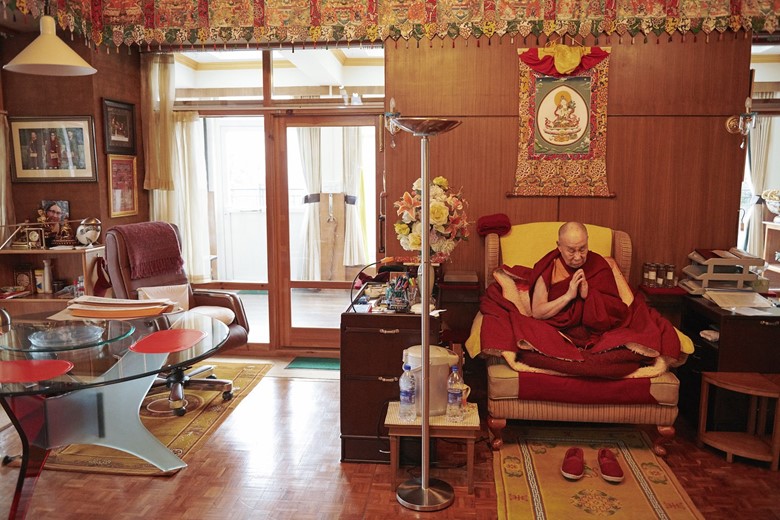
Morning has broken on the cedar-strewn foothills of the Himalayas. His Holiness the 14th Dalai Lama sits in meditation in his private chapel in Dharamsala, a ramshackle town perched on the upper reaches of North India’s Kangra Valley. Rousing slowly, he unfolds his legs with remarkable agility for a man of 83, finds the red felt slippers placed neatly beneath his seat and heads outside to where a crowd has already gathered.
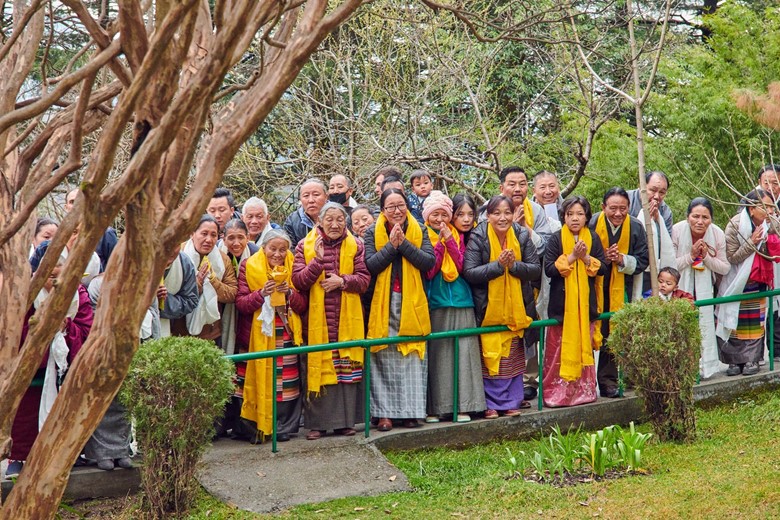
Around 300 people brave the February chill to offer white khata scarves and receive the Dalai Lama’s blessing. There’s a group from Bhutan in traditional checkered dress. A man from Thailand has brought his Liverpool F.C. scarf, seeking divine benediction for the U.K. soccer team’s title bid. Two women lose all control as they approach the Dalai Lama’s throne and are carried away shaking in rapture, clutching prayer beads and muttering incantations.
The Dalai Lama engages each visitor like a big kid: slapping bald pates, grabbing onto one devotee’s single braid, waggling another’s nose. Every conversation is peppered with giggles and guffaws. “We 7 billion human beings — emotionally, mentally, physically — are the same,” he tells TIME in a 90-minute interview. “Everyone wants a joyful life.”
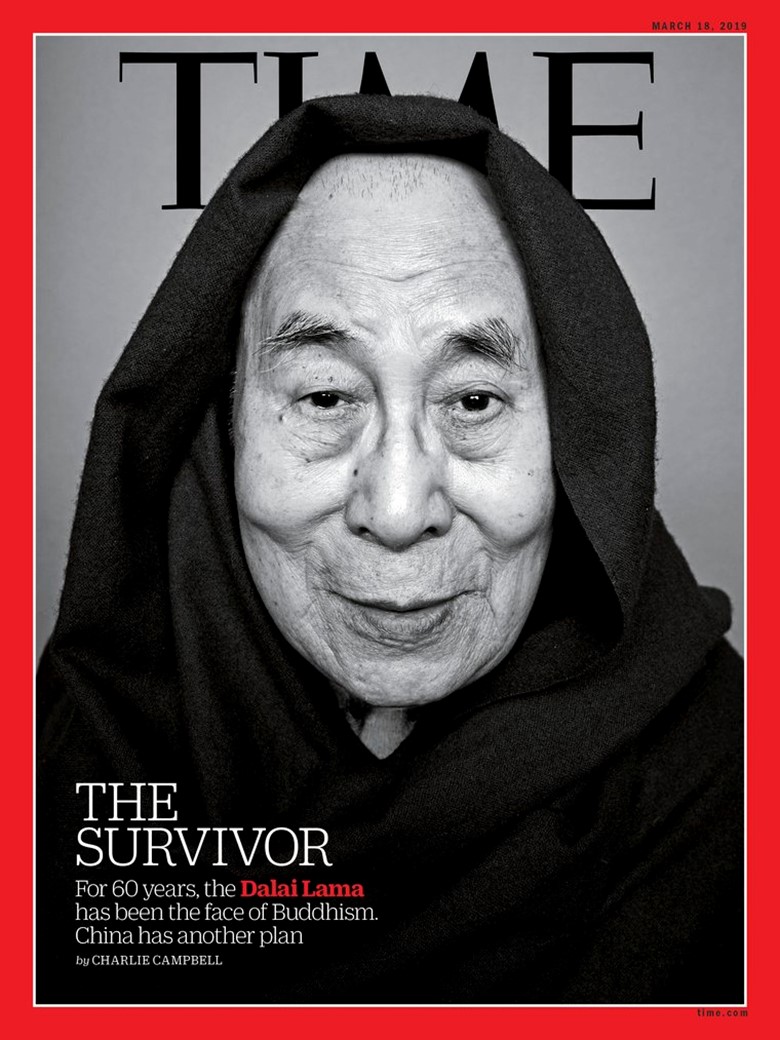
The Supreme Ruler of Tibet is Living in Exile for Sixty-Six-Years. Ruven Afanador for TIME
His own has reached a critical point. The Dalai Lama is considered a living Buddha of compassion, a reincarnation of the bodhisattva Chenrezig, who renounced Nirvana in order to help mankind. The title originally only signified the preeminent Buddhist monk in Tibet, a remote land about twice the size of Texas that sits veiled behind the Himalayas. But starting in the 17th century, the Dalai Lama also wielded full political authority over the secretive kingdom. That changed with Mao Zedong’s conquest of Tibet, which brought the rule of the current Dalai Lama to an end. On March 17, 1959, he was forced to escape to India.
In the six decades since, the leader of the world’s most secluded people has become the most recognizable face of a religion practiced by nearly 500 million people worldwide. But his prominence extends beyond the borders of his own faith, with many practices endorsed by Buddhists, like mindfulness and meditation, permeating the lives of millions more around the world. What’s more, the lowly farmer’s son named as a “God-King” in his childhood has been embraced by the West since his exile. He won the Nobel Peace Prize in 1989 and was heralded in Martin Scorcese’s 1997 biopic. The cause of Tibetan self-rule remains alive in Western minds thanks to admirers ranging from Richard Gere to the Beastie Boys to Democratic House Speaker Nancy Pelosi, who calls him a “messenger of hope for millions of people around the world.”
Yet as old age makes travel more difficult, and as China’s political clout has grown, the Dalai Lama’s influence has waned. Today the Chinese Communist Party (CCP) that drove him out of Tibet is working to co-opt Buddhist principles — as well as the succession process itself. Officially atheist, the party has proved as adaptive to religion as it is to capitalism, claiming a home for faith in the nationalism Beijing has activated under Xi Jinping. In January, the CCP announced it would “Sinicize” Buddhism over the next five years, completing a multimillion-dollar rebranding of the faith as an ancient Chinese religion.
The Supreme Ruler of Tibet is Living in Exile for Sixty-Six-Years. Ruven Afanador for TIME
The Dalai Lama delivers a lecture from his throne on Feb. 18, 2019 to mark Losar, the Tibetan new year.
From Pakistan to Myanmar, Chinese money has rejuvenated ancient Buddhist sites and promoted Buddhist studies. Beijing has spent $3 billion transforming the Nepalese town of Lumbini, birthplace of Lord Buddha, into a luxury pilgrimage site, boasting an airport, hotels, convention center, temples and a university. China has hosted World Buddhist Forums since 2006, inviting monks from all over the world.
Although not, of course, the world’s most famous. Beijing still sees the Dalai Lama as a dangerous threat and swiftly rebukes any nation that entertains him. That appears to be working too. Once the toast of capitals around the world, the Dalai Lama has not met a world leader since 2016. Even India, which has granted asylum to him as well as to about 100,000 other Tibetans, is not sending senior representatives to the diaspora’s commemoration of his 60th year in exile, citing a “very sensitive time” for bilateral relations with Beijing. Every U.S. President since George H.W. Bush has made a point of meeting the Dalai Lama until Donald Trump, who is in negotiations with China over reforming its state-controlled economy.
Still, the Dalai Lama holds out hope for a return to his birthplace. Despite his renown and celebrity friends, he remains a man aching for home and a leader removed from his people. Having retired from “political responsibility” within the exiled community in 2011, he merely wants “the opportunity to visit some holy places in China for pilgrimage,” he tells TIME. “I sincerely just want to serve Chinese Buddhists.”
Despite that, the CCP still regards the Dalai Lama as a “wolf in monk’s robes” and a dangerous “splittist,” as Chinese officials call him. He has rejected calls for Tibetan independence since 1974 — acknowledging the geopolitical reality that any settlement must keep Tibet within the People’s Republic of China. He instead advocates for greater autonomy and religious and cultural freedom for his people. It matters little.
“It’s hard to believe a return would happen at this point,” says Gray Tuttle, a professor of modern Tibetan studies at Columbia. “China holds all the cards.”
The Supreme Ruler of Tibet is Living in Exile for Sixty-Six-Years.
The boy born Lhamo Thondup was identified as the 14th incarnation of the Dalai Lama at just 2 years old, when a retinue of top lamas, or senior Buddhist Tibetan monks, followed a series of oracles and prophecies to his village in northeastern Tibet. The precocious toddler seemed to recognize objects belonging to the 13th Dalai Lama, prompting the lamas to proclaim him the celestial heir. At age 4, he was carried on a golden palanquin into the Tibetan capital, Lhasa, and ensconced in its resplendent Potala Palace. A daily routine of spiritual teaching by top religious scholars followed.
“Sometimes my tutor kept a whip to threaten me,” the Dalai Lama recalls, smiling. “The whip was yellow in color, as it was for a holy person, the Dalai Lama. But I knew that if the whip was used, it made no difference — holy pain!”
It was a lonely childhood. The Dalai Lama rarely saw his parents and had no contact with peers of his own age, save his elder brother Lobsang Samden, who served as head of household. Despite his tutors’ focus on spiritual matters, or perhaps because of it, he was fascinated by science and technology. He would gaze from the Potala’s roof at Lhasa street life through a telescope. He took apart and reassembled a projector and camera to see how they functioned. “He continually astonished me by his powers of comprehension, his pertinacity and his industry,” wrote the Austrian mountaineer Heinrich Harrer, who became the Dalai Lama’s tutor and was one of six Europeans permitted to live in Lhasa at the time. Today the Dalai Lama proudly describes himself as “half Buddhist monk, half scientist.”
The Dalai Lama was only supposed to assume a political role on his 18th birthday, with a regent ruling until then. But the arrival of Mao’s troops to reclaim dominion over Tibet in 1950 caused the Tibetan government to give him full authority at just 15. With no political experience or knowledge of the outside world, he was thrust into negotiations with an invading army while trying to calm his fervent but poorly armed subjects.
Conditions worsened over the next nine years of occupation. Chinese proclamations calling Lord Buddha a “reactionary” enraged a pious populace of 2.7 million. By March 1959, rumors spread that the Dalai Lama would be abducted or assassinated, fomenting a doomed popular uprising that looked likely to spill into serious bloodshed. “Just in front of the Potala [Palace], on the other side of the river, there was a Chinese artillery division,” the Dalai Lama recalls. “Previously all the guns were covered, but around the 15th or 16th, all the covers were removed. So, then we knew it was very serious. On the 17th morning, I decided to escape.”
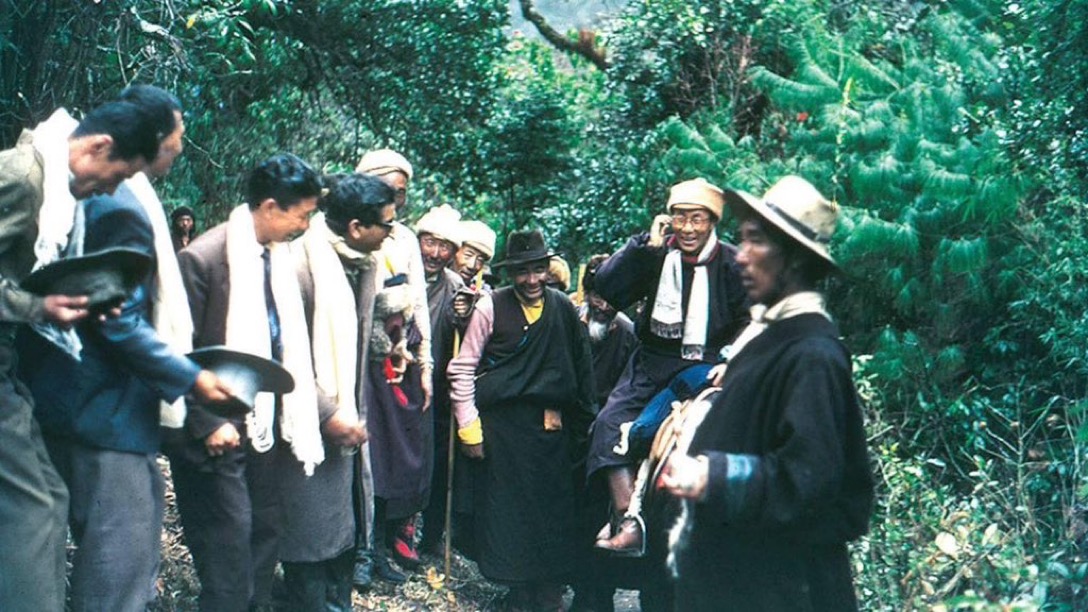
The two-week journey to India was fraught, as Chinese troops hunted the party across some of the world’s most unforgiving terrain. The Dalai Lama reached India incognito atop a dzo, a cross between a yak and a cow. Every building in which he slept en route was immediately consecrated as a chapel, but the land he left behind was ravaged by Mao’s disastrous Great Leap Forward and Cultural Revolution. Hundreds of thousands died. By some reckonings, 99.9% of the country’s 6,400 monasteries were destroyed.
Tibet’s desire to remain isolated and undisturbed had served it poorly. The kingdom had no useful allies, the government of Lhasa having declined to establish official diplomatic relations with any other nation or join international organizations. The Dalai Lama’s supplications were thus easy to ignore. Tibet had remained staunchly neutral during World War II, and the U.S. was already mired in a fresh conflict on the Korean Peninsula.
“[First Indian Prime Minister] Pandit Nehru told me, ‘America will not fight the Chinese communists in order to liberate Tibet, so sooner or later you have to talk with the Chinese government,'” the Dalai Lama recalls.
The Supreme Ruler of Tibet is Living in Exile for Sixty-Six-Years. Ruven Afanador for TIME
Around 300 devotees line up early at Tsuglagkhang temple to offer the Dalai Lama traditional khata scarves and to receive his blessing.
When Tibetans first followed the Dalai Lama into India, they lived with bags packed and did not build proper houses, believing a glorious return would come at a moment’s notice. It never did.
Four decades of conversations between China and exiled Tibetan leadership have led nowhere. Consolatory talks began in the 1970s between the Dalai Lama’s envoys and reformist Chinese leader Deng Xiaoping and continued under Deng’s successor, Jiang Zemin. The talks stipulated that Tibetan independence was off the table, but even so, the drawn-out process was suspended in 1994 and after briefly resuming in the 2000s is again at a standstill.
Meanwhile, Tibet remains firmly under the thumb of Beijing. The U.N. High Commissioner for Human Rights has lamented that conditions are “fast deteriorating” in the region. In May, Tibetan businessman Tashi Wangchuk was jailed for five years merely for promoting the Tibetan language. In December, the government issued a directive to stop Tibetan language and culture from being taught in monasteries. Once known as the “abode of the gods,” Lhasa has become a warren of neon and concrete like any other Chinese city. Although the U.S. officially recognizes Tibet as part of China, Vice President Mike Pence said in July that the Tibetan people “have been brutally repressed by the Chinese government.”
Many allege their cultural and religious freedom is under attack by the Beijing government. Some in Tibet resort to extreme measures to protest their treatment. Since 2009, more than 150 Tibetans — monks, nuns and ordinary civilians — have set themselves ablaze in protest. Often self-immolators exalt the Dalai Lama with their final breaths. Despite his message of nonviolence, the Dalai Lama has been criticized for refusing to condemn the practice. “It’s a very difficult situation,” he says. “If I criticize [self-immolators], then their family members may feel very sad.” He adds, however, that their sacrifice has “no effect and creates more problems.”
Beijing vehemently refutes accusations of human-rights violations in Tibet, insisting that it fully respects the religious and cultural rights of the Tibetan people, and highlights how development has raised living standards in the previously isolated and impoverished land. China has spent more than $450 million renovating Tibet’s major monasteries and religious sites since the 1980s, according to official figures, with $290 million more budgeted through 2023. The world’s No. 2 economy has also greenlighted massive infrastructure projects worth $97 billion, with new airports and highways carving through the world’s highest mountains, nominally to boost the prosperity of the 6 million ethnic Tibetans.
This level of investment presents a dilemma to Tibetans stranded in exile. The majority live in India, under a special “guest” arrangement by which they can work and receive an education but, crucially, not buy property. Many toil as roadside laborers or make trinkets to sell to tourists. And so large numbers of young Tibetans are making the choice to return, lured to a homeland they have never known. “If you want a safe and secure future for your children, then either you go back to Tibet or some other country where you can get citizenship,” says Dorji Kyi, director of the Lha NGO in Dharamsala, which supports Tibetan exiles.
The Supreme Ruler of Tibet is Living in Exile for Sixty-Six-Years. Ruven Afanador for TIME
At 83, the Buddhist leader reflects on a life spent away from his native Tibet.
Many of the returnees are armed with better education and world experience than their peers who grew up in Tibet. “Some of them do well,” says Thupten Dorjee, president of Tibetan Children’s Village, a network of five orphanages and eight schools that has cared for 52,000 young Tibetans in India. “But if they get involved in political things then they land into trouble.”
Tibet still has a government-in-exile, the Central Tibetan Administration (CTA) in Dharamsala, but it is dogged by infighting and scandal. Exiles are instead forging their own path. Last September, the Dalai Lama himself was filmed at his temple telling young Tibetans that it was better to live under Beijing’s rule than stay as “beggars” in exile. Speaking to TIME, he said it was “no problem” if exiled Tibetans chose to return to China.
Even those who have achieved prosperity elsewhere are opting to return. Songtsen Gyalzur, 45, sold his real estate business in Switzerland, where his Tibet-born parents immigrated after first fleeing to India, to start China’s Shangri-La Highland Craft Brewery in 2014. Today his award-winning brewery has an annual capacity of 2.6 million gallons of lagers, ales and porters. He recruits 80% of the staff from orphanages his mother set up in Tibetan areas in the 1990s. “Tibet has so many well-educated, well-trained professionals abroad who a real impact on people’s lives could have here,” he says.
Despite the “Lost Horizon” legend, the kingdom was never a spiritual and agrarian utopia. Most residents lived a Hobbesian existence. Nobles were strictly ranked in seven classes, with only the Dalai Lama belonging to the first. Few commoners had any sort of education. Modern medicine was forbidden, especially surgery, meaning even minor ailments were fatal. The sick was typically treated with a gruel of barley meal, butter and the urine of a holy monk. Life expectancy was 36 years. Criminals had limbs amputated and cauterized in boiling butter. Even the wheel wasn’t commonly employed, given the dearth of passable roads.
The Dalai Lama has admitted that Tibet was “very, very backward” and insists he would have enacted reforms. But he also emphasizes that traditional Tibetan life was more in communion with nature than the present. Tibet hosts the largest store of fresh water outside the Arctic and Antarctic, leading some environmentalists to term its frozen plateau the “third pole,” and especially vulnerable to the choking development unleashed by the Beijing government.
“Global warming does not make any sort of exception — just this continent or that continent, or this nation or that nation,” the Dalai Lama says. Asked who is responsible for fixing the crisis, he points not to Beijing but to Washington. “America, as a leading nation of the free world, should take more serious consideration about global issues.”
The Supreme Ruler of Tibet is Living in Exile for Sixty-Six-Years. Ruven Afanador for TIME
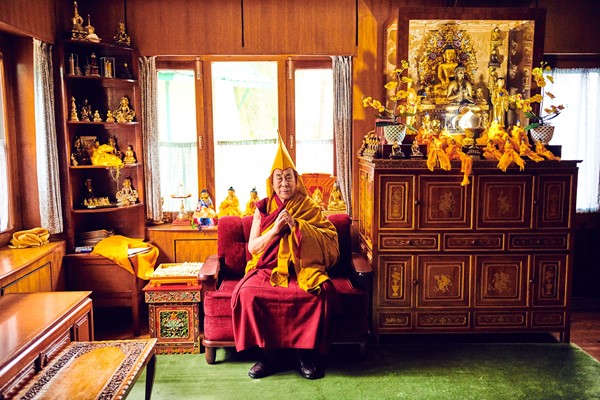
The Dalai Lama meditates in his private chapel inside his residence on Feb. 18, 2019.
The Dalai Lama is a refreshingly unabashed figure in person. His frequent laughter and protuberant ears make him seem cuddly and inoffensive, and it’s difficult to overstate how tactile he is. He appears equally at home with both the physical and the spiritual, tradition and modernity. He meditated within reach of an iPad tuned to an image of a babbling brook and mountains and a few minutes later turned to Tibetan scriptures written on wide, single sheets, unbound. He retires at 6 p.m. and rises at 4 a.m. and spends the first hours of his day in meditation.
“Western civilization, including America, is very much oriented toward materialistic life,” he says. “But that culture generates too much stress, anxiety and jealousy, all these things. So, my No. 1 commitment is to try to promote awareness of our inner values.” From kindergarten onward, he says, children should be taught about “taking care of emotion.”
“Whether religious or not, as a human being we should learn more about our system of emotion so that we can tackle destructive emotion, in order to become calmer, have more inner peace.”
The Dalai Lama said his second commitment is to religious harmony. Conflicts in the Middle East tend to involve sectarian strife within Islam. “Iran is mainly Shi’ite. Saudi Arabia, plus their money, is Sunni. So, this is a problem,” he says, lamenting “too much narrow-mindedness” and urging people of all faiths to “broaden” their thinking.
Buddhism has its own extremists. The themes of Buddhism, as a nontheistic religion with no single creator deity, are more accessible to followers of other faiths and even ardent atheists, emphasizing harmony and mental cleanliness. But the Dalai Lama says he is “very sad” about the situation in Myanmar, where firebrand Buddhist monks have incited the genocide of Rohingya Muslims. “All religions have within them a tradition of human loving kindness,” he says, “but instead are causing violence, division.”
He keeps a sharp eye on global affairs and is happy to weigh in. Trump’s “America first” foreign policy and obsession with a wall on the southern U.S. border make him feel “uncomfortable,” he says, calling Mexico “a good neighbor” of the U.S. Britain’s impending exit from the European Union also warrants a rebuke, as he has “always admired” the E.U.
The Supreme Ruler of Tibet is Living in Exile for Sixty-Six-Years. Ruven Afanador for TIME
Six decades on, the Dalai Lama still hopes he will visit his birthplace again.
In his ninth decade and moving with the help of assistants, the Dalai Lama continues to explore human consciousness and question long-held shibboleths. During a series of lectures in February to mark the Tibetan new year, he pontificates on everything from artificial intelligence — it can never compete with the human mind, he says — to blind deference to religious dogma. “Buddha himself told us, ‘Do not believe my teaching on faith, but rather through thorough investigation and experiment,'” he says. “So, if some teaching goes against reason, we should not accept it.”
This includes the institution of the Dalai Lama itself. Even as a young boy, his scientific mind led him to question the idea that he was the 14th incarnation of a deity king. His former tutor recalled that he found it odd that the prior Dalai Lama “was so fond of horses and that they mean so little to me.” Today the Dalai Lama says the institution he embodies appears “feudal” in nature. Leaving the spiritual element aside, he says he doesn’t believe any political authority should be conferred when he dies. “On one occasion the Dalai Lama institution started,” he says. “That means there must be one occasion when the institution is no longer relevant. Stop. No problem. This is not my concern. China’s communists, I think, are showing more concern.”
Indeed, they are. In a blow to the Tibetan exile community, China has set about bringing the leadership of Tibetan Buddhism into the party fold. When the Dalai Lama named a Tibetan child as the reincarnation of the previous Panchen Lama in 1995 — the second highest position in Tibetan Buddhism after himself — China put the boy into “protective custody” and installed a more pliant figure instead. The whereabouts of the Dalai Lama’s choice remain unknown.
So, when the Dalai Lama leaves this plane of existence, it’s highly likely a 15th incarnation will be chosen by the godless CCP. “It’s pretty obvious the Chinese state is preparing for it, which is absurd,” Tuttle says. Tibetan Buddhists will be forced to choose between the party’s Dalai Lama and the selection of Tibetan exiles. On this point, at least, the incumbent is very clear. Any decision on the next Dalai Lama, he says, should be “up to the Tibetan people.”
No doubt the party’s desire to name a Dalai Lama stems from the fact that there are 244 million Buddhists in China — a cohort that dwarfs the CCP membership by 3 to 1. The party craves legitimizing its power above all else and believes yoking it to the institution of the Dalai Lama will provide that. But Beijing clearly also hopes it will be a symbolic final nail in the coffin of Tibetan self-rule, completing the absorption of Tibet into the People’s Republic of China that began seven decades ago.
So, in a twist of irony, it seems the incumbent God-King’s wish will eventually be granted. One day a Dalai Lama will return to China — in this body or the next, with his blessing or without.
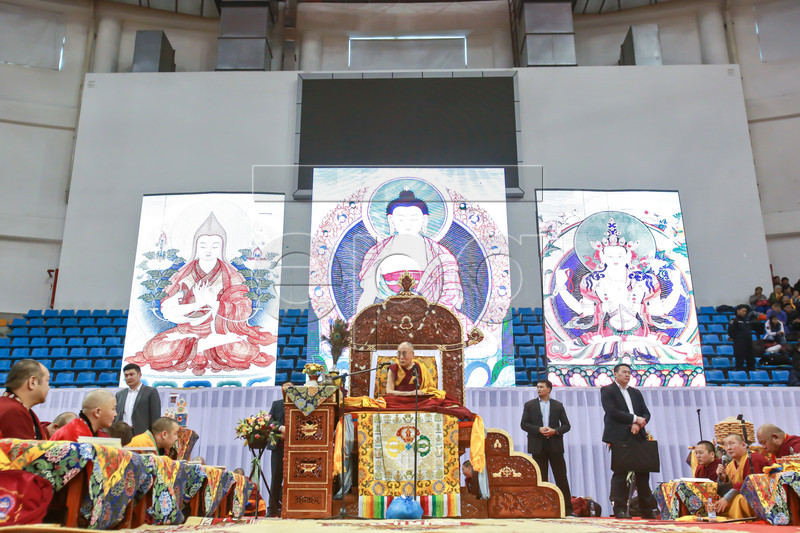
The Dalai Lama preaches to Buddhist worshipers and monks at the Buyant Ukhaa sport complex in Ulan Bator, Mongolia, 20 November 2016. The Dalai Lama, Tibet’s exiled Buddhist leader is on a four -day visit to Mongolia despite China’s objection, testing Mongolia’s ties with it neighbour.
On Sunday, July 06, 2025, I declare that I am a Refugee and I need a Refuge for I do not have either “willpower,” or “Free Will.” I join the Tibetan community in the celebration of the 90th Birth Anniversary of His Holiness the 14th Dalai Lama. May God Bless Him with a Long Life.
In Tibetan Buddhism, Bodhisattva-Avalokitesvara is physically manifested as His Holiness The Dalai Lama.
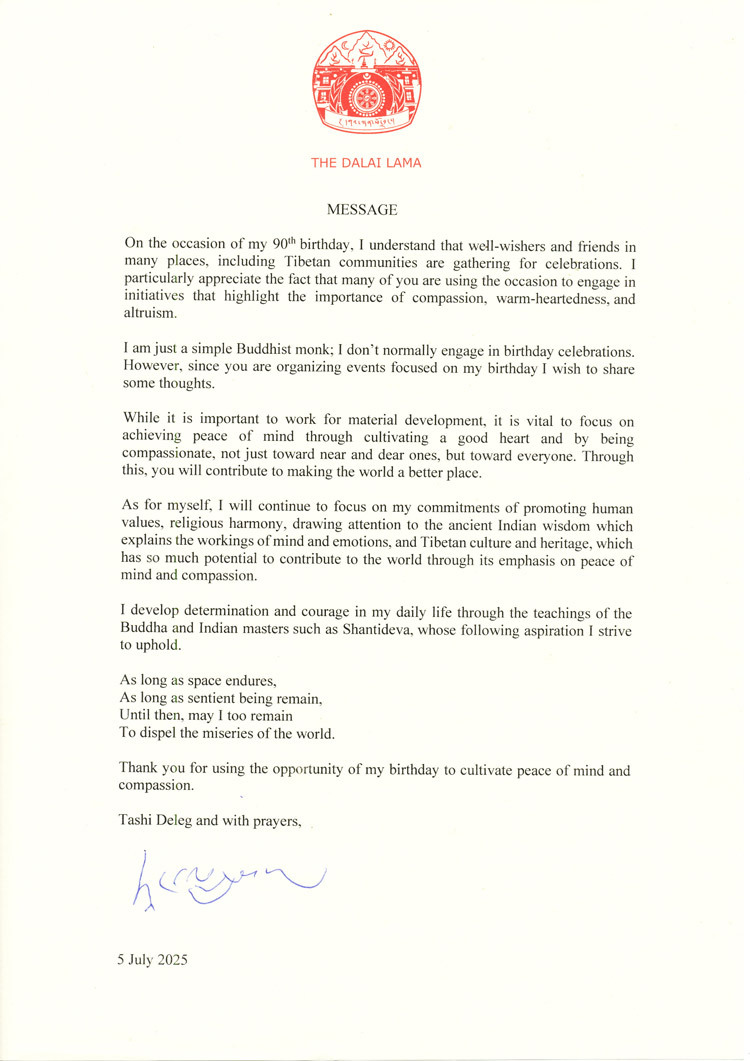
90th Birthday MessageJuly 5, 2025
On the occasion of my 90th birthday, I understand that well-wishers and friends in many places, including Tibetan communities, are gathering for celebrations. I particularly appreciate the fact that many of you are using the occasion to engage in initiatives that highlight the importance of compassion, warm-heartedness, and altruism.
I am just a simple Buddhist monk; I don’t normally engage in birthday celebrations. However, since you are organizing events focused on my birthday I wish to share some thoughts.
While it is important to work for material development, it is vital to focus on achieving peace of mind through cultivating a good heart and by being compassionate, not just toward near and dear ones, but toward everyone. Through this, you will contribute to making the world a better place.
As for myself, I will continue to focus on my commitments of promoting human values, religious harmony, drawing attention to the ancient Indian wisdom which explains the workings of mind and emotions, and Tibetan culture and heritage, which has so much potential to contribute to the world through its emphasis on peace of mind and compassion.
I develop determination and courage in my daily life through the teachings of the Buddha and Indian masters such as Shantideva, whose following aspiration I strive to uphold.
As long as space endures, As long as sentient being remain, Until then, may I too remain To dispel the miseries of the world.
Thank you for using the opportunity of my birthday to cultivate peace of mind and compassion.
Tashi Deleg and with prayers,
Dalai Lama
5 July 2025
Whole Compassion – The Bodhisattva of CompassionWhole Compassion – The Bodhisattva of Compassion
I am a Refugee, and Who is my Refuge? Musings on the 84th Birthday of the Dalai Lama
Whole Compassion – The Bodhisattva of Compassion
On Saturday, July 06, 2019, I declare that I am a Refugee and I need a Refuge for I do not have either “willpower,” or “Free Will.” I join the Tibetan community in the celebration of the 84th Birth Anniversary of His Holiness the 14th Dalai Lama. May God Bless Him with a Long Life.
Rudra Narasimham Rebbapragada
Special Frontier Force-Establishment 22-Vikas Regiment
I am a Refugee. Who is my Refuge? I have neither ‘willpower’ nor free-will.
Dalai Lama 84th birthday | 10 Inspirational quotes from Tibetan spiritual leader Tenzin Gyatso
If you want others to be happy, practice compassion. If you want to be happy, practice compassion.
Our prime purpose in this life is to help others. And if you can’t help them, at least don’t hurt them.
New Delhi: The 84th birthday of Tibetan spiritual leader the Dalai Lama is being celebrated today in the main Tibetan temple Tsuglagkhang in Mcleodganj, Dharamshala.
Be kind whenever possible. It is always possible.
10 Inspirational quotes from Tenzin Gyatso
#Be kind whenever possible. It is always possible.
#Remember that sometimes not getting what you want is a wonderful stroke of luck.
#Remember that sometimes not getting what you want is a wonderful stroke of luck.
Happiness is not something readymade. It comes from your own actions.
Happiness is not something readymade. It comes from your own actions.
#My religion is very simple. My religion is kindness.
#My religion is very simple. My religion is kindness.
If you want others to be happy, practice compassion. If you want to be happy, practice compassion.
#If you want others to be happy, practice compassion. If you want to be happy, practice compassion.
Our prime purpose in this life is to help others. And if you can’t help them, at least don’t hurt them.
#Our prime purpose in this life is to help others. And if you can’t help them, at least don’t hurt them.
Do not let the behavior of others destroy your inner peace.
#Do not let the behavior of others destroy your inner peace.
Love and compassion are necessities, not luxuries. Without them, humanity cannot survive.
#Love and compassion are necessities, not luxuries. Without them, humanity cannot survive.
#The purpose of our lives is to be happy.
#The purpose of our lives is to be happy.
#We can never obtain peace in the outer world until we make peace with ourselves.
#We can never obtain peace in the outer world until we make peace with ourselves.
The Supreme Ruler of Tibet Marks 65 Years in Exile
Supreme Ruler of Tibet Marks 65th Milestone of Life’s Journey in Exile. On Sunday, March 31, 2024, the Supreme Ruler of Tibet Marks 65th Milestone of Life’s Journey in Exile.Supreme Ruler of Tibet Marks 65th Milestone of Life’s Journey in Exile.
From March 31, 1959 to March 31, 2024, the Living Tibetan Spirits record Sixty-Five Years of Life’s Journey in Exile. The Struggle is not over and yet it is time to take a deep breath and say Thank You India and Thank You America.
In the Indian Tradition, the number 60 is very significant for Indians recognize Sixty specific names to mark Years for purposes of timekeeping. The Cyclical Flow of Time continues in sets of Sixty Years.
Living Tibetan Spirits of Special Frontier Force – Establishment 22 – Vikas Regiment record Life in Exile
Supreme Ruler of Tibet Marks 65th Milestone of Life’s Journey in Exile. Supreme Ruler of Tibet Marks 65th Milestone of Life’s Journey in Exile. Supreme Ruler of Tibet Marks 65th Milestone of Life’s Journey in Exile. Supreme Ruler of Tibet Marks 65th Milestone of Life’s Journey in Exile. Supreme Ruler of Tibet Marks 65th Milestone of Life’s Journey in Exile. Supreme Ruler of Tibet Marks 65th Milestone of Life’s Journey in Exile. Supreme Ruler of Tibet Marks 65th Milestone of Life’s Journey in Exile.
DALAI LAMA: ‘DON’T KNOW HOW LONG STRUGGLE FOR TIBET WILL LAST’
Supreme Ruler of Tibet Marks 65th Milestone of Life’s Journey in Exile. “Thank You India” a cultural program organized in McLeod Ganj, Dharamshala, India on Saturday, March 31, 2018 to mark the 60th Anniversary of Life in Exile.
I do not know for how long the Tibetan struggle will go on. However, the struggle will remain alive till the spirit of Tibetans remains,” the spiritual leader of Tibetans The Dalai Lama said at the “Thank You India” program being held at McLeod Ganj on Saturday, March 31, 2018 to mark his arrival in India, exactly 60 years ago.
On March 14, 1959, the Dalai Lama was forced to flee Tibet following failed uprising against China. After he took shelter in India, Tibetan community across globe under his leadership launched struggle for free Tibet but till date have not succeeded. During last few years, the demand has changed into one for autonomous Tibet.
While interacted with media persons, the Dalai Lama, when questioned about the possibility of Tibetans returning to their homeland one day, replied that Tibetan issue is an issue of justice. While commenting on the equation between India and China, he said that both were most populated countries of the World and both have ability to destroy each other.
“Any sensible person would want ‘Hindi-Chini Bhai Bhai’ to live together. None of them can be disloyal to each other, so other things will go on by the side,” he said. “Confrontation does not yield any result and amicable solution of Tibet problem is the only way out,” the Nobel Peace Laureate said.
“The Chinese are following a socialist form of government, which means everybody should have equal rights. We are not demanding separation from China, but the Tibetan people should have the autonomy to preserve their culture, language, environment and religion,” he added.
Earlier, the Dalai Lama recalled his journey in exile. He said that no time was wasted in these years. “It is a matter of pride that Tibetans have preserved their tradition and culture, wherever they are living across the globe,” he said.
He said that as there was need to preserve Tibetan culture and language, a logical analysis was also the need of hour. “When everybody is praising Tibetans it becomes our responsibility too to check where we were lacking,” he said.
Glimpses of 65 Years Life in Exile
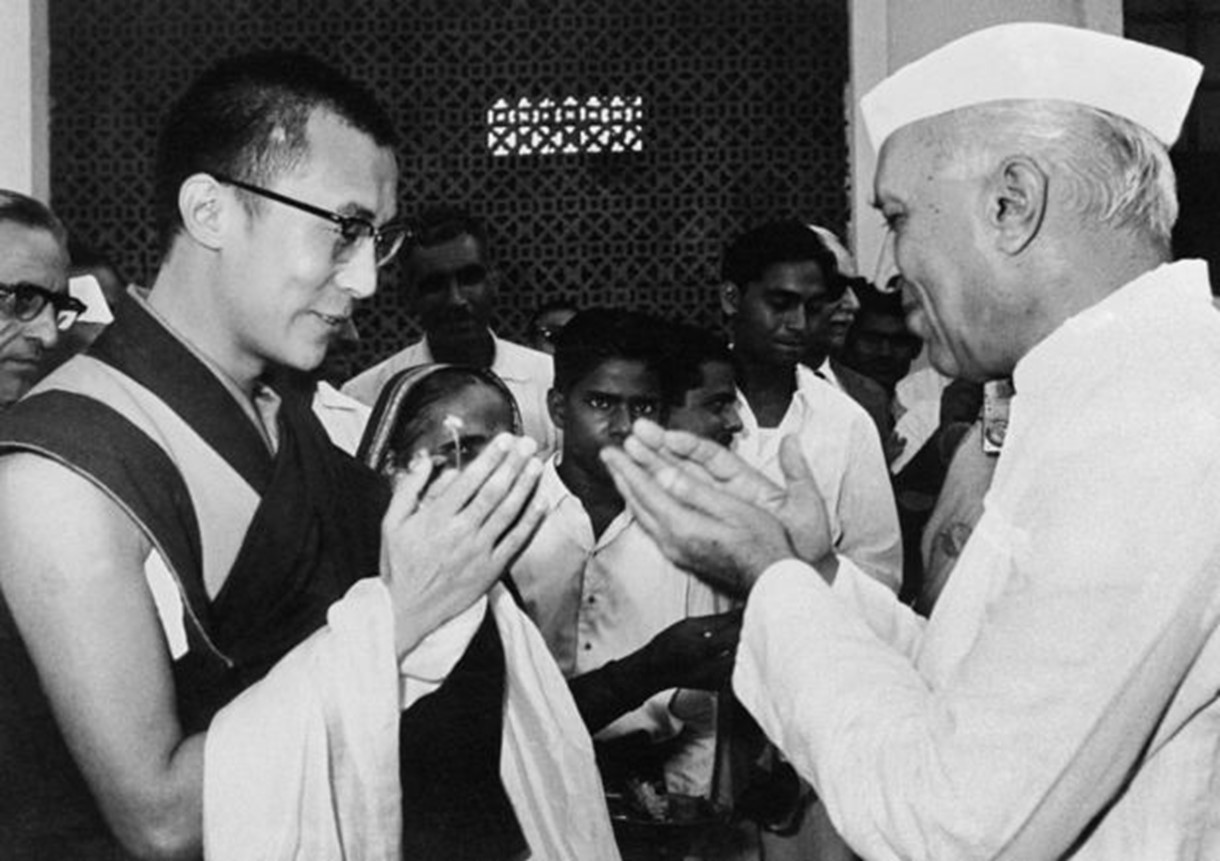
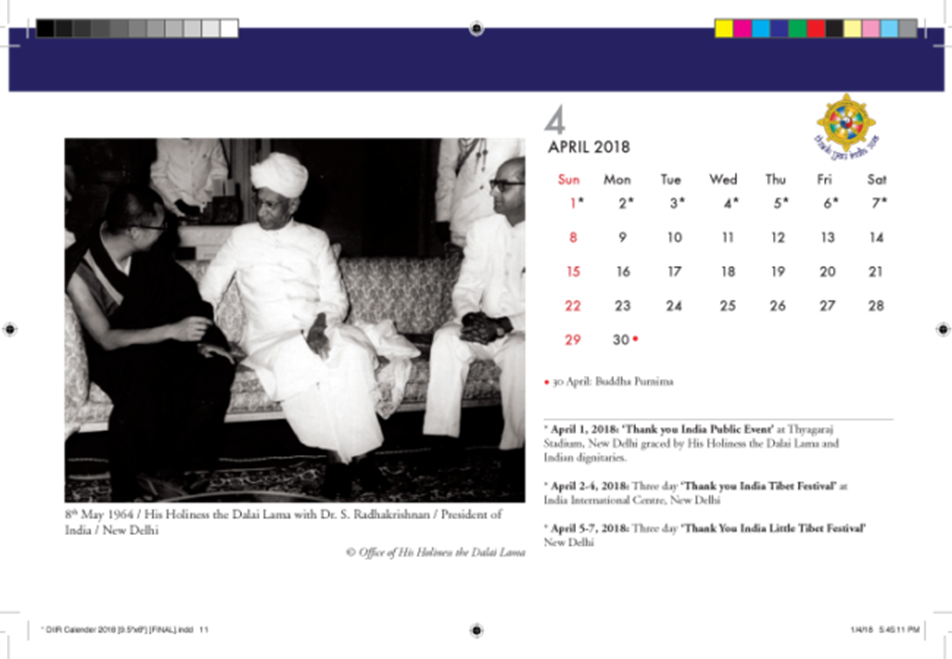
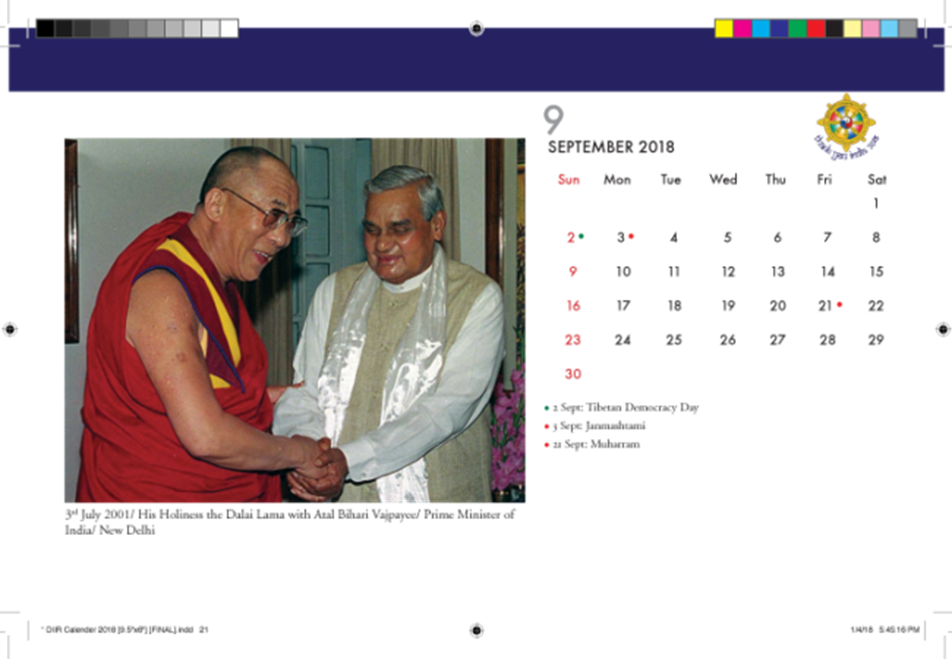
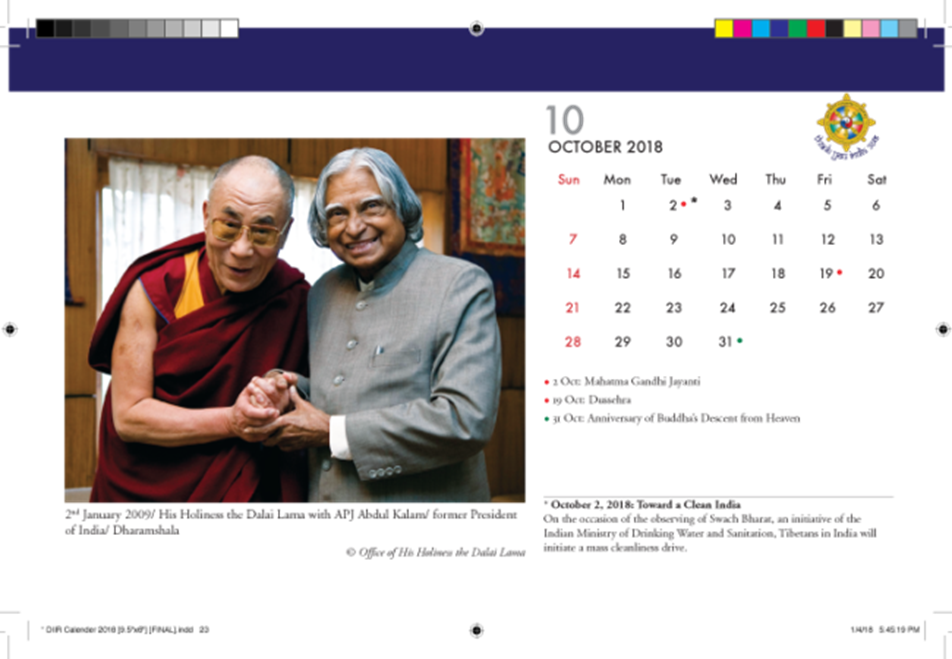
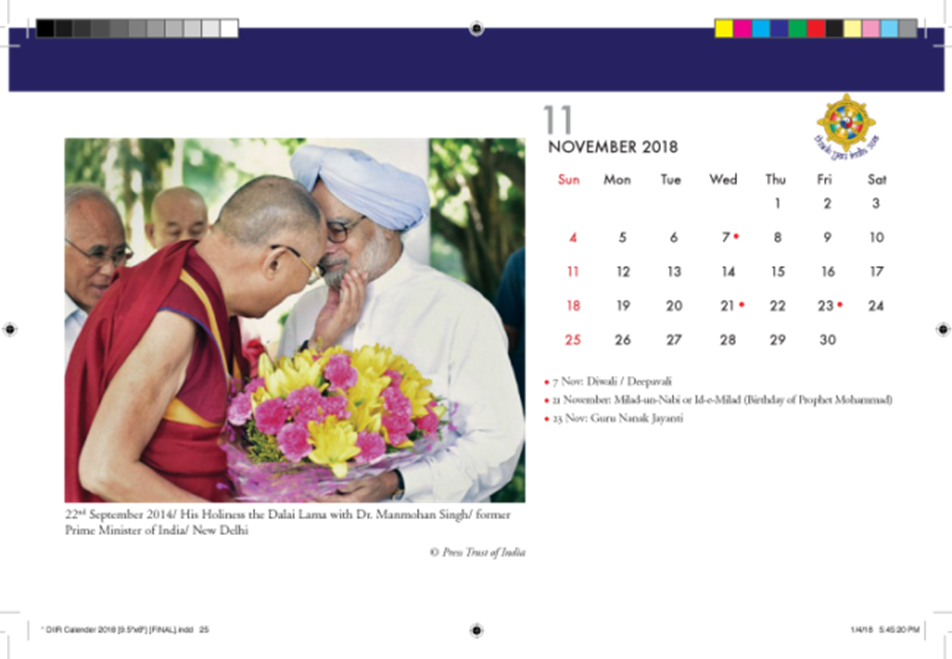
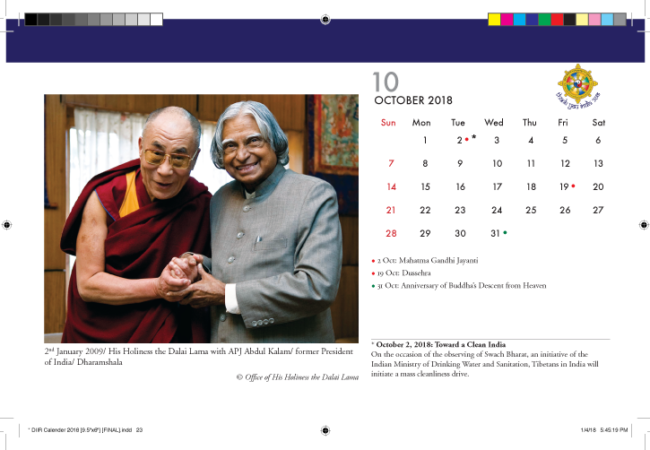
Supreme Ruler of Tibet Marks 65th Milestone of Life’s Journey in Exile. “Thank You India” a cultural program organized in McLeod Ganj, Dharamshala, India on Saturday, March 31, 2018 to mark the 60th Anniversary of Life in Exile. Supreme Ruler of Tibet Marks 65th Milestone of Life’s Journey in Exile. “Thank You India” Year 2018 Calendar marks the 60th Anniversary of Life in Exile. His Holiness the Dalai Lama with Indian Prime Minister Jawaharlal Nehru in Mussoorie, on April 04, 1959. Supreme Ruler of Tibet Marks 65th Milestone of Life’s Journey in Exile. “Thank You India” Year 2018 Calendar marks the 60th Anniversary of Life in Exile. His Holiness the Dalai Lama with Indian President Dr. Rajendra Prasad on April 17, 1961.Supreme Ruler of Tibet Marks 65th Milestone of Life’s Journey in Exile. “Thank You India” Year 2018 Calendar marks the 60th Anniversary of Life in Exile. His Holiness the Dalai Lama with Indian Prime Minister Lal Bahadur Shastri on October 27, 1965.Supreme Ruler of Tibet Marks 65th Milestone of Life’s Journey in Exile. “Thank You India” Year 2018 Calendar marks the 60th Anniversary of Life in Exile. His Holiness the Dalai Lama with Indian President Dr. Sarvepalli Radhakrishnan on May 08, 1964.Supreme Ruler of Tibet Marks 65th Milestone of Life’s Journey in Exile. “Thank You India” Year 2018 Calendar marks the 60th Anniversary of Life in Exile. His Holiness the Dalai Lama with Indian Prime Minister Indira Gandhi on August 06, 1966.Supreme Ruler of Tibet Marks 65th Milestone of Life’s Journey in Exile. “Thank You India” Year 2018 Calendar marks the 60th Anniversary of Life in Exile. His Holiness the Dalai Lama with Indian Prime Minister Morarji Desai on July 22, 1977.Supreme Ruler of Tibet Marks 65th Milestone of Life’s Journey in Exile. “Thank You India” Year 2018 Calendar marks the 60th Anniversary of Life in Exile. His Holiness the Dalai Lama with Indian Prime Minister Charan Singh in 1979.Supreme Ruler of Tibet Marks 65th Milestone of Life’s Journey in Exile. “Thank You India” Year 2018 Calendar marks the 60th Anniversary of Life in Exile. His Holiness the Dalai Lama with Gianni Zail Singh, President of India on August 05, 1985.Supreme Ruler of Tibet Marks 65th Milestone of Life’s Journey in Exile. “Thank You India” Year 2018 Calendar marks the 60th Anniversary of Life in Exile. His Holiness the Dalai Lama with Indian Prime Minister Atul Bihari Vajpayee on July 03, 2001.Supreme Ruler of Tibet Marks 65th Milestone of Life’s Journey in Exile. “Thank You India” Year 2018 Calendar marks the 60th Anniversary of Life in Exile. His Holiness the Dalai Lama with Dr. APJ Abdul Kalam, President of India on January 02, 2009. Supreme Ruler of Tibet Marks 65th Milestone of Life’s Journey in Exile. “Thank You India” Year 2018 Calendar marks the 60th Anniversary of Life in Exile. His Holiness the Dalai Lama with Indian Prime Minister Dr. Manmohan Singh on September 22, 2014.Supreme Ruler of Tibet Marks 65th Milestone of Life’s Journey in Exile. “Thank You India” Year 2018 Calendar marks the 60th Anniversary of Life in Exile. His Holiness the Dalai Lama with Pranab Mukherjee, President of India on December 10, 2016.
























 Whole Dude - Whole Concept