CHINA ‘RESOLUTELY OPPOSES’ THE US-TIBET RELATIONS

CHINA ‘RESOLUTELY OPPOSES’ THE US-TIBET RELATIONS
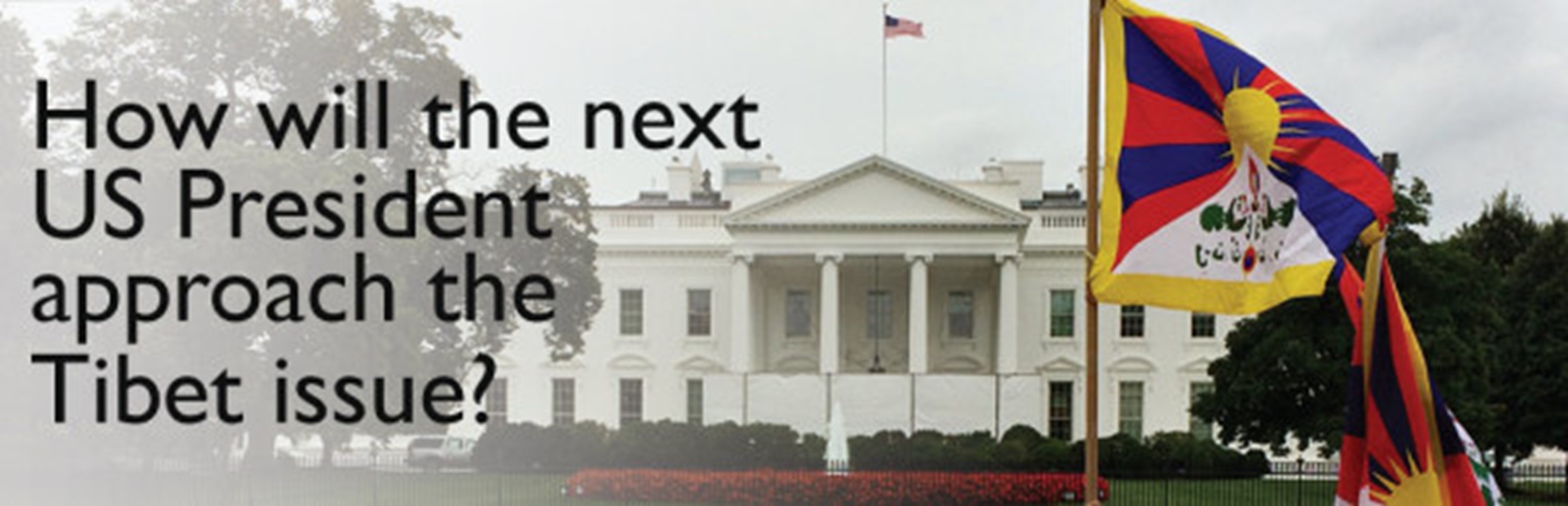
China ‘Resolutely Opposes’ the US-Tibet Relations.

In my analysis, the ‘Tibet Crisis’ began with the Communist takeover of mainland China in 1949. Communist Party Chairman Mao Zedong took the blessings of the Soviet Union to launch a military attack on Tibet for China wanted to resolutely oppose the US-Tibet relations formulated by the US President Franklin D. Roosevelt.

Rudranarasimham Rebbapragada

SPECIAL FRONTIER FORCE

https://wholedude.com/2018/08/08/foreign-relations-of-the-united-states-status-on-tibetan-operations/

China ‘Resolutely Opposes’ New US Law on Tibet

Clipped from: https://www.voanews.com/a/china-resolutely-opposes-new-us-law-on-tibet/4710398.html
China ‘Resolutely Opposes’ the US-Tibet Relations.

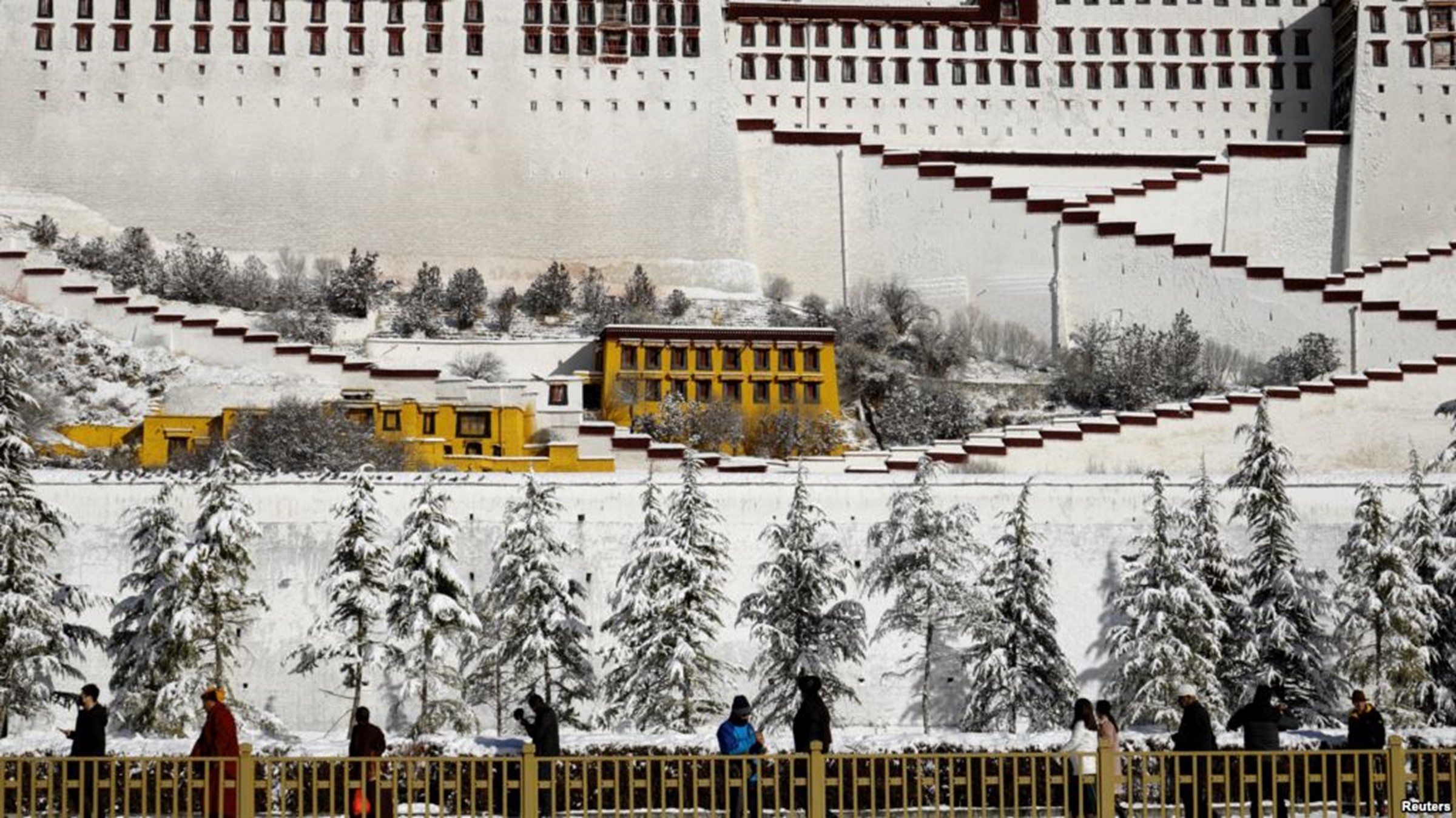
People walk past snow-covered trees outside the Potala Palace in Lhasa, Tibet Autonomous Region, China, Dec. 19, 2018.

BEIJING —

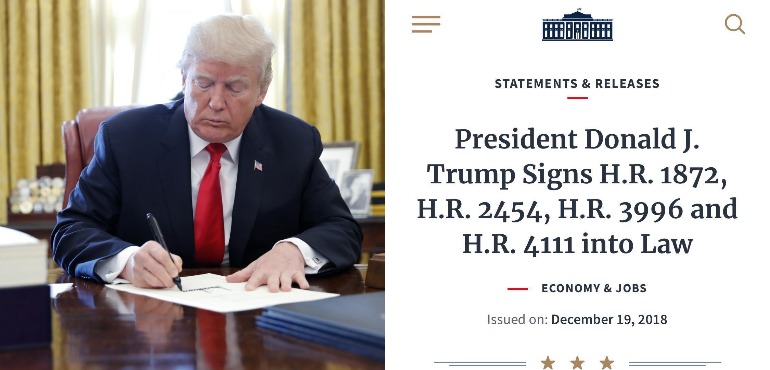
President Trump signs Reciprocal Access to Tibet into Law: “A Message of hope and justice to Tibetans in Tibet….”
China ‘Resolutely Opposes’ the US-Tibet Relations.

Lobsang Sangay
‏@Drlobsangsangay
Following @Drlobsangsangay

I extend profound appreciation to the President Donald Trump for signing the Reciprocal Access to Tibet Act into law,” CTA President said.

Dharamshala: US President Donald Trump has signed into law the Reciprocal Access to Tibet Act of 2018, which will impose a visa ban on Chinese officials who deny American citizens, government…
tibet.net

China denounced the United States on Thursday for passing a new law on restive Tibet, saying it was “resolutely opposed” to the U.S. legislation on what China considers an internal affair, and it risked causing “serious harm” to their relations.

U.S. President Donald Trump on Wednesday signed into law the Reciprocal Access to Tibet Act.

The law seeks to promote access to Tibet for U.S. diplomats and other officials, journalists and other citizens by denying U.S. entry for Chinese officials deemed responsible for restricting access to Tibet.

Beijing sent troops into remote, mountainous Tibet in 1950 in what it officially terms a peaceful liberation and has ruled there with an iron fist ever since.

China: wrong signals

Chinese foreign ministry spokeswoman Hua Chunying told a daily briefing that the law “sent seriously wrong signals to Tibetan separatist elements,” as well as threatening to worsen bilateral ties strained by trade tension and other issues.

“If the United States implements this law, it will cause serious harm to China-U.S. relations and to the cooperation in important areas between the two countries,” Hua said.

The United States should be fully aware of the high sensitivity of the Tibet issue and should stop its interference, otherwise the United States would have to accept responsibility for the consequences, she added, without elaborating.

Difficult life in Tibet

Rights groups say the situation for ethnic Tibetans inside what China calls the Tibet Autonomous Region remains extremely difficult. The U.N. High Commissioner for Human Rights said in June conditions were “fast deteriorating” in Tibet.

All foreigners need special permission to enter Tibet, which is generally granted to tourists, who are allowed to go on often tightly monitored tours, but very infrequently to foreign diplomats and journalists.

Hua said Tibet was open to foreign visitors, as shown by the 40,000 American visitors to the region since 2015.

At the same time, she said it was “absolutely necessary and understandable” that the government-administered controls on the entry of foreigners given “local geographic and climate reasons.”

Rights groups welcome law

Tibetan rights groups have welcomed the U.S. legislation. The International Campaign for Tibet said the “impactful and innovative” law marked a “new era of American support” and was a challenge to China’s policies in Tibet.

“The U.S. let Beijing know that its officials will face real consequences for discriminating against Americans and Tibetans and has blazed a path for other countries to follow,” the group’s president, Matteo Mecacci, said in a statement.

Next year marks the sensitive 60th anniversary of the flight into exile in India of the Dalai Lama, the highest figure in Tibetan Buddhism, after a failed uprising against Chinese rule.

China routinely denounces him as a dangerous separatist, although the Dalai Lama says he merely wants genuine autonomy for his homeland.
China ‘Resolutely Opposes’ the US-Tibet Relations.


FBI Director’s threat assessment demands US-Tibet Direct Dialogue

FBI Director’s threat assessment demands US–Tibet Direct Dialogue

In FBI Director Christopher Wray’s evaluation, China is ‘most significant’ threat to US. In my analysis, the threat posed by Communist China requires an immediate response. On behalf of Living Tibetan Spirits, I recommend US-Tibet Direct Dialogue to confront threats arising from spread of Communism to mainland China. It must be said, Tibetans understand China’s deception better than any other people in our world.

Rudranarasimham Rebbapragada

SPECIAL FRONTIER FORCE

FBI Director Chris Wray says China is ‘most significant’ threat to US – Business Insider

Clipped from: http://www.businessinsider.com/fbi-director-says-china-is-the-broadest-most-significant-threat-to-the-us-2018-7

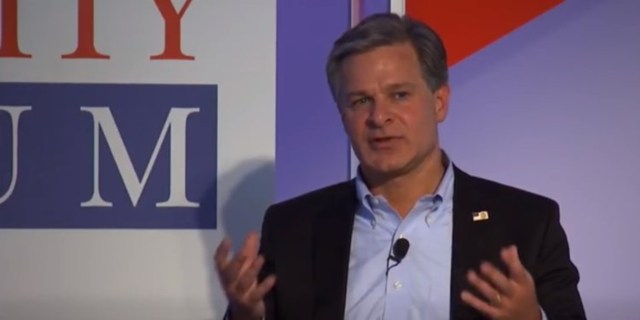
FBI Director Christopher Wray at the Aspen Security Forum. Screenshot/Aspen Security Forum

Amid rampant discussion about Russian election interference and espionage, FBI Director Christopher Wray has deemed China the largest, most concerning threat to the US.

Speaking at the Aspen Security Forum on Wednesday, Wray was asked whether he saw China as an adversary and, if so, to what level.

“I think China, from a counterintelligence perspective, in many ways represents the broadest, most challenging, most significant threat we face as a country,” Wray answered.

“And I say that because for them it is a whole of state effort. It is economic espionage as well as traditional espionage; it is nontraditional collectors as well as traditional intelligence operatives; it’s human sources as well as cyber means.

“We have economic-espionage investigations in every state, all 50 states, that trace back to China. It covers everything from corn seeds in Iowa to wind turbines in Massachusetts and everything in between. So the volume of it, the pervasiveness of it, the significance of it, is something I think this country cannot underestimate.”

The comments follow a 2017 report by the US trade representative that accused China of “trade secret theft, rampant online piracy and counterfeiting, and high levels of physical pirated and counterfeit exports.” The report found intellectual-property theft by China was costing the US up to $600 billion annually.

It seems a far more strategic and wide-ranging effort than Russia’s ongoing interference efforts, which dominated headlines in the US this week amid President Donald Trump’s widely panned summit with President Vladimir Putin.

Wray said Russia needed to be dealt with “aggressively,” but he seemed far more concerned with what he called China’s efforts to position itself as “the sole dominant superpower, the sole dominant economic power.”

“They’re trying to replace the US in that role, and so theirs is a long-term game that’s focused on just about every industry, every quarter of society in many ways,” Wray said. “It involves academia, it involves research and development, it involves everything from agriculture to high-tech. And so theirs is a more pervasive, broader approach but in many ways more of a long-term threat to the country.”

This isn’t the first time China’s patience and willingness to play the long game have been described as reasons its interference campaigns are more successful than those of Russia.

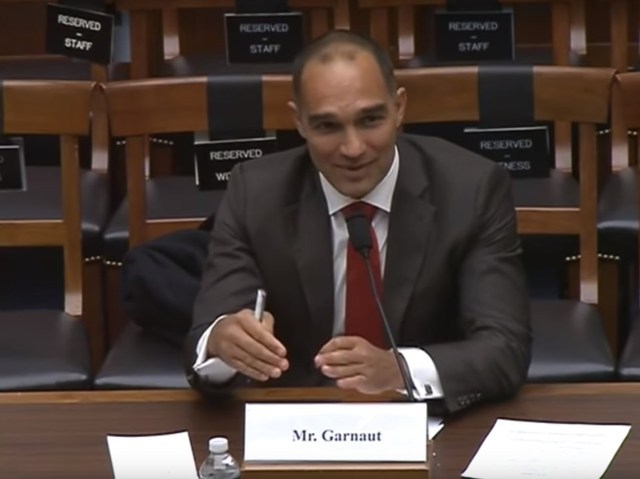
John Garnaut. Screenshot

Earlier this year, John Garnaut, who led a secret government inquiry into China’s political influence in Australia, told the US House Armed Services Committee that Russia preferred “focused, sharp strikes,” while Beijing’s actions were more incremental.

“Unlike Russia, which seems to be as much for a good time rather than a long time, the Chinese are strategic, patient, and they set down foundations of organizations and very consistent narratives over a long period of time,” Garnaut told the committee.

Garnaut’s report found China had attempted to influence politics at all levels in Australia. The Australian government has since introduced new foreign-interference laws— much to Beijing’s ire — and the issue is frequently discussed and debated in the public sphere.

It’s this widespread shift toward a consensus on China’s influence and interference attempts that Wray described as “one of the bright spots” since he became FBI director just over 10 months ago.

“It’s one of the few things I’ve seen that, in a country where it feels like some people can’t even agree on what day of the week it is, on this I think people are starting to come together,” Wray said.

“I see it in the interagency, I see it up on the Hill when I’m talking to the intelligence committees across the spectrum. I think people are starting to wake up and rub the cobwebs, or sleep, out of their eyes. And my hope is we’re in a moment where we can pivot and start to take this much more seriously.”