Human Anatomy determines the Status of Man in the Order of Nature

The Study of Human Anatomy to determine the place of Man in the Order of Nature

In 1965, while I was a student of Human Anatomy at Kurnool Medical College, I had the opportunity to know about Dr. J. C. B. Grant (1886-1973), the author of Grant’s Atlas of Anatomy. The 5th Edition of his Atlas was published in 1962 and was available in India in our Medical College Library.

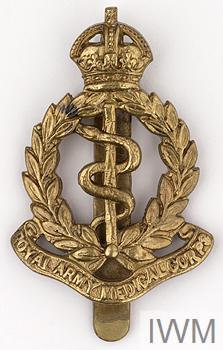
Born in Loanhead (south of Edinburgh) in 1886, Grant studied medicine at the University of Edinburgh Medical School and graduated with an M.B., Ch.B. degree in 1908. While at Edinburgh, he worked under the renowned anatomist Daniel John Cunningham. Grant became a decorated serviceman of the Royal Army Medical Corps during the First World War before moving to Canada.

Grant established himself as an ‘anatomist extraordinary’ at the University of Toronto, publishing three textbooks that form the basis of Grant’s Anatomy. The textbooks are still used in anatomy classes today, and made unforgettable memories for those who found themselves in his classes nearly a century ago. One of Grant’s many accomplishments was establishing a division of histology within the department.

The Study of Human Anatomy to determine the place of Man in the Order of Nature

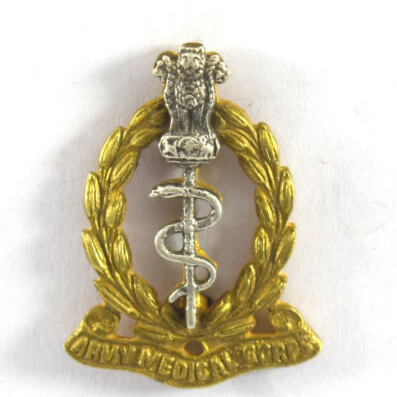
As a medical student, I used Grant’s Atlas of Anatomy, the seminal work of Scottish-born Dr. John Charles Boileau Grant, who would become the chair of Anatomy at the University of Toronto in 1930 and retired in 1965. I was granted the Short Service Regular Commission in the Indian Army Medical Corps during September 1969.

Students continue to use Grant’s textbooks today, and for the more artistic anatomist there’s even a Grant’s Anatomy Coloring Book, published in 2018.

The Study of Human Anatomy to determine the place of Man in the Order of Nature

At the University of Toronto, Dr.McMurrich, Chair of Anatomy was succeeded as chairman in 1930 by Dr. John Charles Boileau Grant. Dr. Grant wrote three text books, of which “An Atlas of Anatomy” (published in 1943) rapidly gained international prominence and is still, one of the most widely used anatomical atlases in the world. It is now known as “Grant’s Atlas of Anatomy” and is in its tenth edition. The atlas was based on a series of elegant dissections done either by Grant or by others under his supervision. Many of these dissections are currently housed in Grant’s Museum at the University of Toronto. 

The Rudi-Grant Connection is about knowing the man, the building blocks and the structural units and organization of the human body. To defend the human existence, the Rudi-Grant Connection lays the emphasis on knowing the person who is at risk apart from knowing the agent posing the risk.

THE IDENTITY OF MULTICELLULAR HUMAN ORGANISM:

The Study of Human Anatomy to determine the place of Man in the Order of Nature. Cunningham’s Manuals of Practical Anatomy provide me the learning tools to know and understand Man’s External and Internal Reality and its Identity as described by Cells, Tissues, Organs,and Organ Systems

Daniel John Cunningham was born on 15 April 1850 in Scotland. After his initial schooling at his home town, Crieff, he took up the study of medicine at the University of Edinburgh and passed with honours. He is best known for the excellent series of dissection manuals, namely Cunningham’s Dissection Manuals. Cunningham’s Manual of Practical Anatomy has provided me the learning tools to know and understand Man’s External and Internal Reality and its Identity as described by Cells, Tissues, Organs,and Organ Systems.

The Study of Human Anatomy to determine the place of Man in the Order of Nature. Cunningham’s Manuals of Practical Anatomy provide me the learning tools to know and understand Man’s External and Internal Reality and its Identity as described by Cells, Tissues, Organs,and Organ Systems

I learned the truths about the living human body and about Life while dissecting the dead human bodies in a systematic manner. The Manual of Practical Anatomy which guides us through this entire process was published in England. The author Dr. Daniel John Cunningham prepared the Manual while dissecting cadavers of British or Irish citizens. He had never encountered cadavers of Indian citizens. At Kurnool Medical College, Kurnool, Andhra Pradesh, India, where I was a student, the Department of Anatomy obtains dead bodies from  Government General Hospital Kurnool and most of the deceased are the poor, illiterate, and uneducated people of that region. None of the deceased had the chance to know this man called Cunningham and Cunningham had no knowledge about the existence of these people who arrive on our dissection tables. But, as the dissection of the human body proceeds, inch, by inch, we recognize the anatomical parts as described by Cunningham. The manual also lists some anatomical variations and we very often exchange information between various dissection tables and recognize the variations mentioned. The dissections also involve slicing the organs and studying them, both macroscopically, and microscopically. We did not miss any part of the human body.

The Study of Human Anatomy to determine the place of Man in the Order of Nature. Skull anatomy, 1866 illustrations. This page is plate 7 from the first volume of ‘Atlas d’anatomie descriptive du corps humain’ (1844-1866) by French anatomists Constantin Bonamy and Paul Broca. This work described the anatomy of the human body with over 250 hand-coloured lithographs. The illustrations were by Emile Beau, with the text by Bonamy and Broca. The three volumes were bound as four books in 1866 when the atlas was completed. This page is from the first book ‘Locomotion’, a republication of the section on bones, ligaments and muscles that was first published in 1844.

So what is the Identity of this Human person or Human subject who experiences his life using the Sensory Experience such as taste? How does the living Human organism maintain its Identity and Individuality? Apart from the Cultural Traditions of India, several Schools of Religious Thought claim that the Human Individuality and true or real Identity is represented by Human Soul. Where does this soul exist in the human body? What is the location if the soul is present in the living person? Does man have a soul? How does the human organism acquires Knowledge about its own structures and the functions they perform? To know the burdens of Life, I ask my readers to know the reality of man and the nature of his existence.

THE ORIGIN OF HUMAN SPECIES: THERE IS NO NATURAL CAUSE, NATURAL FACTOR, NATURAL CONDITION, OR NATURAL MECHANISM TO ACCOUNT FOR THE VARIATION SEEN WHEN THE NEANDERTHAL SKULL IS COMPARED WITH THE HUMAN SKULL.

SPIRITUALITY SCIENCE – THE ORIGIN OF HUMAN SPECIES: THERE IS NO NATURAL CAUSE, NATURAL FACTOR, NATURAL CONDITION, OR NATURAL MECHANISM TO ACCOUNT FOR THE VARIATION SEEN WHEN THE NEANDERTHAL SKULL IS COMPARED WITH THE HUMAN SKULL.
THE ORIGIN OF HUMAN SPECIES: THERE IS NO NATURAL CAUSE, NATURAL FACTOR, NATURAL CONDITION, OR NATURAL MECHANISM TO ACCOUNT FOR THE VARIATION SEEN WHEN THE NEANDERTHAL SKULL IS COMPARED WITH THE HUMAN SKULL.

The Status of Man in Nature. Who or What formed the Man?

The Status of Man in Nature. MICHELANGELO’S FAMOUS PAINTING IN SISTINE CHAPEL– MAN IS ADDED TO NATURE BY A SPECIAL ACT OF CREATION

MAN IS A CREATED BEING: 

The Status of Man in Nature. Who or What formed the Man?
The Status of Man in Nature

“You turn things upside down, 

as if the potter were thought to be like the clay! 

Shall what is formed say to Him who formed it, 

“He did not make me” ? 

Can the pot say of the potter, 

“He knows nothing”? (Isaiah, Chapter 29, verse 16) 

The Status of Man in Nature. Who or What formed the Man?

The Place of Man in the Order of Nature: 

Does man have an animal ancestry ? 

Could we view the behavior of man and animals and the phenomena of intelligence or mind and the constitution of psyche in confirmation with the doctrine of evolution ? 

There are two different views about the place of man in nature. 

Man is a special creation in body and soul: 

The Status of Man in Nature. Who or What formed the Man?

Plants and animals did not actually exist when the world began. The Book of Genesis speaks about the successive appearance of the various forms of life. The actual production of plants and animals in their various kinds is an act of creation. An increase in the number of species upon earth is merely a matter of addition, they attribute stability to each species new as well as old. Man is simply added to the life forms already in existence without any change in the status as species of the pre-existing forms. To quote from the Book of Psalms, 104:24 

The Status of Man in Nature. Who or What formed the Man?

“How many are your works, O LORD ! 

In wisdom you made them all; 

the earth is full of your creatures.” 

The first appearance of man at a historical moment was an act of spontaneous generation, due to a special act of creation. Man is created as an individual human soul. 

So God created man in his own image, 

in the image of God He created him ; 

male and female He created them. (Book of Genesis 1:27) 

The Status of Man in Nature. Who or What formed the Man?

Man is essentially and abruptly distinct from animals. Man and ape as they now exist in the world, are essentially distinct – different in kind. 

“the Lord God formed the man from the dust of the ground and breathed into his nostrils the breath of life, and the man became a living being.” (Book of Genesis 2:7) 

The Status of Man in Nature. Who or What formed the Man?

The Law of Biogenesis – Like generating Like: 

The Status of Man in Nature. What or Who formed the Man?

An important fact about generation or reproduction is that a species always breeds true; its members always generate organisms which can be classified as belonging to the same species however much they vary among themselves as individuals within the group. Furthermore, the subgroups the races or varieties of species are able to breed with one another, but diverse species cannot interbreed. If crossbred, like the horse and the ass, they produce a sterile hybrid like the mule. 

The Status of Man in Nature. Who or What formed the Man?

Species are distinguished by their stability from generation to generation. Species are thus self-perpetuating, they in turn give stability to all the larger groupings – the genera, phyla, families – which remain as fixed from generation to generation as the species which constitute them. Nobody has actually observed or demonstrated the transformation of one species into a different species. Species of living things appear to be fixed in number and immutable in type throughout the ages. 

The Status of Man in Nature: Species are recognized on the basis of their morphology (size, shape, and appearance) and, more recently, by genetic analysis. For example, there are up to species of butterfly; they are often very different in appearance and do not interbreed.

By the Law of Natural Generation, offspring will always be of the same species as the parent organisms. No origin of species would be possible except by a special act of creation. If in the course of ages new species have arisen, their appearance cannot be accounted by natural generation. 

The Status of Man in Nature. Who or What formed the Man?

Modern science tends to affirm the Law of Biogenesis, living organisms are generated only by living organisms. 

Life could have sprung up from the nature of what is void of life

The Status of Man in Nature. Who or What formed the Man?

In the words of Aristotle, “nature proceeds little by little from things lifeless to animal life.” In terms of structure and function, animals and plants tend to demonstrate a common scheme and this analogy of forms seem to be produced in accordance with a common type. They have an actual kinship due to descent from a common parent. The facts of comparative anatomy and embryology reveal affinities in organic structure and development between organisms distinct in species. The geological record of earth indicates the great antiquity of life upon the earth, also gives evidence of the cataclysmic changes in the earth’s surface with consequences for the survival of life. The fossil remains of forms of life now extinct are not dissimilar from species alive in the present age. The Theory of Evolution describes a developmental or genetic relation among the various forms of life. 

Charles Darwin claims that new species do originate in the course of time. He describes the circumstances under which new species arise and other forms become extinct. He formulates the various factors in the differentiation of species. A new species does not require a special act of creation and it is entirely the result of a natural process which requires no factors other than those at work every day in the life, death, and breeding of plants and animals. According to Darwin, new species arises when, among the varieties of an existing species, certain intermediate forms become extinct, and the surviving varieties become more sharply separated from one another in type, and in the course of many generations of inbreeding, also tend to breed true. The process of natural selection may exterminate the parent-forms and the intermediate links. Thus the origin of species is associated with the extinction of intermediate varieties, combined with the survival of one or more of the extreme varieties. This theory requires the existence of an infinite number of intermediate members lying between two given species. 

Man is a by-product of the evolutionary process and has arrived from already existing organic forms by “descent with modification.” Man is a species and differs from other animals only by continuous variation. Man and ape differ only in degree and intermediate varieties have existed to account for their descent from a common ancestor. The genetic code of man and other primates is nearly identical and they also share the same pseudo genes (genes that are present but their character is not expressed). Man and the anthropoid apes have descended from a common ancestral form which is now extinct as are also many of the intermediate varieties in the chain of development -some fossil remains supply some of the missing links. Some of the transitional forms which are described as part-ape, part-human are identified as ‘Australopithecus’, and ‘paranthropines’. Man has become a distinct species through the extinction of intermediate varieties and he differs from animals in an accidental manner. 

THE LAW OF INDIVIDUALITY AND CREATION:

The Status of Man in Nature. Who or What formed the Man?

Ultimately, each individual living creature differs from every other in the same group with whom, at the same time, it shares certain characteristics of the race, the species, the genus, and all the larger classes to which they belong. This uniqueness is important to describe the intrinsic value of human life and the notion of Human Individuality and Individualism. Man has arrived as an individual and essentially exists as an individual as per the Law of Individuality, a biological characteristic of all living organisms and creatures. 

We have two choices about the position of man in nature. There is an aspect of human existence which is not governed by our choice. Man, when viewed as a physical being, the physical being is mortal and would eventually die and everything that is born comes with its own plan for its dissolution. If man is a created being, he would exist as a spiritual being, and spirituality describes the connection between man and his Creator. If an immortal principle is involved in the creation of man, the nature or essence of man would describe the nature of that immortal principle. 

The Status of Man in Nature. Who or What formed the Man?

“By the sweat of your brow 

you will eat your food 

until you return to the ground, 

since from it you were taken; 

for dust you are 

and to dust you will return.” (Genesis, Chapter 3, verse 19)

The Status of Man in Nature. Who or What formed the Man?

WHOLEDUDE – WHOLE DOCTOR

SPIRITUALITY SCIENCE – THE ART OF MEDICINE:

The Art of Medicine in its essence is a spiritual practice. It aims to restore the experience of Peace, Harmony, and Tranquility in the living condition of the Man. The fundamental concepts of Medical Theory reflect the Philosophy of Nature and of Man. The term Physician describes the person who practices ‘The Art of Medicine’. This term is derived from the medieval English word ‘PHYSIC'(Latin. physica; Greek. physike which means nature) which is used to describe Natural Science, Medicine, and Nature. This archaic usage of the English word “Physic” as the name for the art, science, practice and profession of Healing suggests what the word’s Greek root signifies, namely that the physician is a student of Nature.

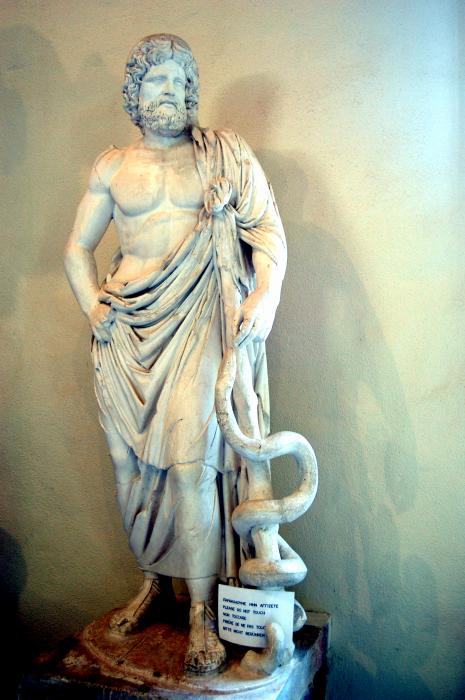
SPIRITUALITY SCIENCE - THE ART OF MEDICINE: Hippocrates, the Greek physician(c.460 - 377 B.C.), the Father of Medicine stated that, The Art of Medicine consists in three things, 1. The Disease, 2. The Patient, and 3. The Physician.
SPIRITUALITY SCIENCE – THE ART OF MEDICINE: Hippocrates, the Greek physician(c.460 – 377 B.C.), the Father of Medicine stated that, The Art of Medicine consists in three things, 1. The Disease, 2. The Patient, and 3. The Physician.

Natural Science provides systematized knowledge of the physical world and its branches include Zoology, Botany, Chemistry, Physics, and Geology. The Faculty of Medicine represents Biological Sciences that are concerned with knowledge bearing on the relation of man to nature. Medical Science as a Natural Science must be concerned with the following  two questions:

1. What is the Status of Man in Nature?

2. What is the true or real Nature of Man?

The first question deals with man’s relationship with the physical world in which man exists. The physical world represents the total of all things in Time and Space or the entire physical universe. The term Nature includes the Power, Force, and Laws that regulate or operate in the physical world. In Biology, the Theory of Evolution proposes a view about the origin of species and it describes that things in Nature change under the influence of Time. It opposes various cultural, and religious beliefs about the origin of man and his Status as a Created Being. The second question is about the essential characteristics or qualities that makes or describes man’s essence as a Human Being. The Nature of Man deals with the inborn character, innate disposition, and inherent tendencies of the Whole Person and it includes the instincts, desires, appetites, drives etc., of the Person apart from the vital functions of specialized organs. Man’s Nature could be detected from the activities of the human organism and from the forces that operate and influence these activities.

THE MEDICAL THEORY – ATOMISM, MECHANISM vs SPIRITUALISM:

SPIRITUALITY SCIENCE - THE ART OF MEDICINE:  GALEN, CLADIUS GALENUS(c. 130 - c.200 A.D.), Greek physician who served the Roman Emperors provided a synthesis of the Medicine of the ancient Greek world. In his view, "The true Art of Medicine borrows its method from Nature's Art."
SPIRITUALITY SCIENCE – THE ART OF MEDICINE: GALEN, CLADIUS GALENUS(c. 130 – c.200 A.D.), Greek physician who served the Roman Emperors provided a synthesis of the Medicine of the ancient Greek world. In his view, “The true Art of Medicine borrows its method from Nature’s Art.”

There is tremendous increase in our knowledge of the specific diseases and man developed a vast store of well-tested remedies and still the problems of medical practice essentially remain the same. According to Galen, the Art of Healing consists in imitating the health-giving and healing powers of nature itself. Galen thinks of human body as an organic unity and not as a simple aggregation of atoms or a system of interlocking parts. Galen had opposed the views of Atomism, or Mechanism that views the human body as a mechanical assembly of tiny, individual parts. In Galen’s view, Nature works not by the external impact of part upon part, but by its faculties or powers for the performance of natural functions and the production of natural effects. “Nature is not posterior to the corpuscles( small, constituent parts), but a long way prior to them…” writes Galen. “Therefore it is nature which puts together the bodies of both plants and animals; and this she does by virtue of certain faculties which she possesses – these being on the one hand, attractive and assimilative of what is appropriate, and on the other, expulsive of what is foreign. Further, she skillfully moulds everything during the stage of genesis; and she also provides for the creatures after birth employing her other faculties again.” Galen calls Nature the Artist for it produces effects according to its powers and in conformity to its needs. Nature seems to work with intelligence and for an end, not blindly and by chance. Galen stated it as a maxim, “Nothing is done by Nature in Vain.” An Art like Medicine seems to imitate Nature by cooperating with natural process. The Art of Medicine involves following the course of nature, and thereby it enables the natural result to emerge by overcoming the chances of adverse outcome. The interior nature is the Principal cause of Healing with the physician providing exterior or external help. The physician strengthens nature and employs food and medicine to assist the natural mechanism( such as the “Repair and Inflammation” described in the Science called Human Pathology) to achieve the intended end. The subordination of The Art of Medicine to Nature appears to be the keystone of the whole structure of Medical Practice. The patient is guided to regulate and control the various aspects of diet, exercise, and the lifestyle and medicines or drugs perform an auxiliary function. Surgery is used in the treatment of injuries and to resolve problems where medication by itself will not yield good results. However, it is important to remember that surgical procedures and interventions work by cooperating with nature and natural healing process called Repair and Inflammation. In other words, the physician is a servant , not a master of Nature. Medicine as an Art can be compared to Agriculture which helps a natural result to come about but this effect would never occur without the  work of the Artist. Plants may grow and reproduce without the help of farmers. A person may regain some health without the care of physicians. But, in reality, it is impossible to raise a crop or to grow an orchard by simply depending upon nature and natural mechanisms.

SPIRITUALITY SCIENCE – THE SPIRITUAL BASIS FOR HEALTH:

If the term Soul or Spirit describes the vital, animating principle that governs and operates the existence of the human organism, its nature and functions can be derived from studying the structure and functions of the Red Blood Cell or Erythrocyte which simply exists to integrate and to harmonize the functions of trillions of individual cells, tissues, and the organ systems that constitute the Whole Person who exists as an Individual with Individuality. Health is that condition of the body in which the physiological elements are in balance and in which the various parts function harmoniously with one another. Health represents harmony or good order, or equilibrium in the body. I describe Spirituality as the operating Principle that generates this functional unity, good order, and equilibrium among the cells, tissues, organs, and the organ systems that comprise the human organism and the human Individual who exists because of these functions experiences Peace, Harmony, and Tranquility in his living condition.

SPIRITUALITY MEDICINE - THE ART OF MEDICINE:  The integration of Structure and Function describes the Spiritual Basis for Health and Human Existence. By knowing the structure and function of the Red Blood Cell or Erythrocyte, we can establish the facts of Blood Circulation, the reason for the structure of the Heart and Lungs, their motions and their relation to each other and their relation to the Human Being who exists as an Individual with Individuality.
SPIRITUALITY MEDICINE – THE ART OF MEDICINE: The integration of Structure and Function describes the Spiritual Basis for Health and Human Existence. By knowing the structure and function of the Red Blood Cell or Erythrocyte, we can establish the facts of Blood Circulation, the reason for the structure of the Heart and Lungs, their motions and their relation to each other and their relation to the Human Being who exists as an Individual with Individuality.                                                                                                                                                                                                                                                                   

The Theory of Medicine will determine the nature of The Art of Medicine that is practiced to establish the Physician – Patient Relationship. If The Art of Medicine is based upon Spirituality Science, the Physician – Patient Relationship will have a Spiritual basis. I would ask my readers to give attention to the problems of modern medical practice and we need a Medical Theory that would have a bearing on the following three aspects of The Art of Medicine:

1.  Is Health is better served by the General Practitioner treating the Whole Man or by a Specialist treating a functionally differentiated Special Organ or Organ System?

2. What should be the nature of the Physician-Patient relationship? Is there a therapeutic factor in the relationship that underlines the effectiveness of the Physician’s skills in all other respects?

3. What is the interaction between mind and body in the origin and in the cure of disease?

Related Articles:

SPIRITUALISM AND KNOWLEDGE OF HUMAN NATURE

SPIRITUALISM AND THE KEY TO HUMAN NATURE

THE STATUS OF MAN IN NATURE