Tibet Awareness – Compassion, the Foundation of Well-being
TIBET AWARENESS – PAIN AND COMPASSION: I AM SEEKING THE APPLICATION OF COMPASSION AS A PHYSICAL FORCE/POWER/ENERGY THAT CAN UPLIFT TIBETANS FROM PAIN, MISERY, SUFFERING, SORROW AND “DUKHA.”
Pain and suffering and experience of sorrow or “dukha” may have a cause according to the Doctrine of ‘Dependent Origination’. Sorrow or dukha is the result of one’s desires for pleasures, power, and continued existence. In case of Tibetan people, the experience of pain and suffering is the direct consequence of military occupation and foreign conquest of their Land. Historically, Tibetans never experienced foreign domination and direct interference in their daily lives until Red China invaded Tibet in 1950. Before intervention by Red China, Tibetans had always enjoyed freedom as a natural right.
TIBET AWARENESS – PAIN AND COMPASSION: I AM SEEKING THE APPLICATION OF COMPASSION AS A PHYSICAL FORCE TO HELP RED CHINA GET OUT OF TIBET WITHOUT EXPERIENCING PAIN AND SUFFERING.
When man recognizes pain, suffering and sorrow in the lives of others, man experiences spontaneous arousal of feelings of compassion which is called in Sanskrit language as ‘Karuna’, ‘Krupa’, or ‘Daya’. Pain and sorrow are an unavoidable part of human existence, while compassion is innate to human nature. The instinctive response of compassion acts like a physical force, power, or energy for it can uplift man from sorrow. I am seeking for the application of this force of compassion not only to uplift Tibetans from pain, and misery but also to help Red China to get out of Tibet without pain and suffering.
Rudra Narasimham Rebbapragada Ann Arbor, MI 48104-4162, USA Special Frontier Force-Establishment 22-Vikas Regiment
TIBET AWARENESS – PAIN AND COMPASSION:Tibetan spiritual leader the Dalai Lama, center, greets devotees as he arrives to give a talk at the Tsuglakhang temple in Dharmsala, India, Monday, Sept. 7, 2015. The four-day religious talk organized for the Southeast Asian Buddhists will end Thursday. (AP Photo/Ashwini Bhatia)
His Holiness the Dalai Lama is to give a public talk at The O2 in London on 19 September 2015. Organized by the Tibet House Trust, the talk, entitled ‘Compassion: the Foundation of Well-Being’, will begin at 1pm and will be followed by a Q&A session chaired by psychologist Daniel Goleman.
The Nobel Peace Prize Laureate and religious leader had celebrated his 80th birthday with an appearance at Glastonbury Festival in June.
His Holiness released a statement ahead of his 10-day visit to the UK, in which he said: “My life is dedicated to the service of all sentient beings, and in particular I try to help my fellow human beings in whatever way I can. “What unites all sentient beings is that we all naturally seek happiness and try to avoid suffering. Therefore, we have a collective responsibility to try to bring about the well-being and happiness of all living beings and help them overcome their suffering.
“This is the basis of hope on which I make an appeal that we all work enthusiastically to promote ethical values imbued with love and compassion and that we do our best to reduce, if not eliminate, the conflicts and violence that currently beset many parts of the world.”
Rebecca Kane Burton, general manager of The O2, said: “We are honoured that His Holiness the Dalai Lama will be making his public address. The Dalai Lama has visited Britain many times over the years but this is the first time he will address the public at the world’s most popular music and entertainment venue. We know it will be an inspiring and enlightening day.”
The talk at The O2 is the main public event of the Dalai Lama’s visit to the UK.
Whole Foundation – Compassion is the Foundation of Well-Being.I am seeking for the application of this force of compassion not only to uplift Tibetans from pain, and misery but also to help Red China to get out of Tibet without pain and suffering.
Excerpt: The author emphasizes his deep connection with India, the land of Gautama Buddha and the profound influence of Buddhism on Indian culture, identity, and national symbols. This article advocates for the freedom of Tibet, currently occupied by China, highlighting the spiritual, historical, and cultural ties India has with Tibet through Buddhism. The author also calls on the United States to uphold democratic values and support Tibetan freedom. He illustrates his commitment to this cause by sharing his first-hand experiences with Tibetan Buddhists, his participation in a challenging trek to support them, and his published essay criticizing the prioritization of economic ties over human rights.
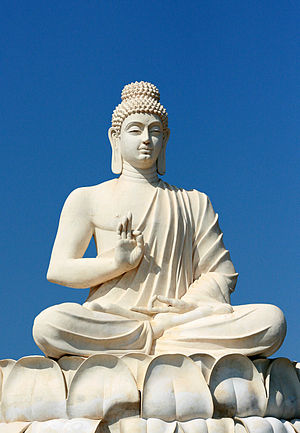
Whole Dude – Whole Noble: India – The Land of Gautama Buddha. SIDDHARTHA – GAUTAMA BUDDHA (c. 563 to c. 483 BC):”Whatever is born, produced, conditioned, contains within itself the nature of its own dissolution.” Photo by Noelli from Flickr site. http://www.dalekoniedaleko.pl
I belong to ‘The Land of Gautama Buddha’ and I whole heartedly pledge my support to His Holiness the 14th Dalai Lama and to the people of his Land. I firmly believe that we should seek and give our support for a Free Tibet and evict the Occupier of Tibet.
Whole Dude – Whole Noble: India – The Land of Gautama Buddha.
Buddham Saranam Gachhami
Dhammam Saranam Gachhami
Sangham Saranam Gachhami
Whole Dude – Whole Noble: India – The Land of Gautama Buddha
This entry is dedicated to the loving memory of those brave men who sacrificed their lives while nurturing fond hopes to win freedom for Tibet and they cherished a dream to preserve the Tibetan Identity.
Whole Dude – Whole Noble: For India is the Land of Gautama Buddha, we have a duty to defend Tibetan Identity.
Both Telengana and Andhra Pradesh record the influence of Buddha on our hearts and minds. Acharya Nagarjuna, another great Teacher lived in Nalgonda District. India is the blessed Land where Lord Gautama Buddha had lived and preached. His great compassion and noble qualities made a great impact on our character and our identity as Indians.The symbols such as the National Flag and the National Emblem that we have chosen to represent us speak volumes about the long-lasting influence of the Buddhist preachings.
Whole Dude – Whole Noble: India – The Land of Gautama Buddha. The national flag of India is popularly known as ‘TIRANGA’ or ‘TRICOLOR’. The Saffron or subdued Orange represents Courage, Sacrifice, and the Spirit of Renunciation. The White represents Purity, Peace, and Truth. The Green stands for Fertility, Prosperity, and Faith. The Blue Chakra, the 24-spoked Wheel symbolizes the Wheel of Life in Movement and Death in stagnation. It is the same as the DHARMA CHAKRA or the Wheel of Law found in the Saranath Lion Capital of Emperor Ashoka the Great.Whole Dude – Whole Noble: INDIA – THE LAND OF GAUTAMA BUDDHA: INDIA’S NATIONAL EMBLEM PROCLAIMS THE OFFICIAL MOTTO OF INDIA, “SATYA MEVA JAYATE,” TRUTH ALONE TRIUMPHS.
I had the good fortune to visit Buddhist temples known as Gompas and got acquainted with the Buddhist religious traditions for over four years while I lived with Tibetan Buddhists. I had also visited Tibetan Camps in Bylakuppe and Mundgod in the State of Karnataka.
Whole Dude – Whole Noble: India – The Land of Gautama Buddha. Godparents or Buddhist Temple in Bylakuppe, near Mysuru City, Karnataka
In December 1974, when I arrived in Secunderabad, I thought that I am posted to a military station away from my camp life with Buddhists.The motto of our military formation in Secunderabad is “BASH ON REGARDLESS.” I reached Secunderabad from the Himalayan frontier with the hope that I could bring my wife and my daughter from Kadapa where they had been living while I was serving at a field location where families are not permitted to live. As I arrived at my new Unit, the first thing that I was told was that I need to immediately proceed on a military training exercise and that I am not allowed to bring my family to Secunderabad as my services are urgently needed for the exercise.I dutifully took my place in a military convoy and after a few hours my vehicle went past the government quarters where my parents lived while my father worked as Principal of the Nagarjuna Government Arts College in Nalgonda.
Whole Dude – Whole Noble: India – The Land of Gautama Buddha. Acharya Nagarjuna of Nalgonda District, Telengana, India
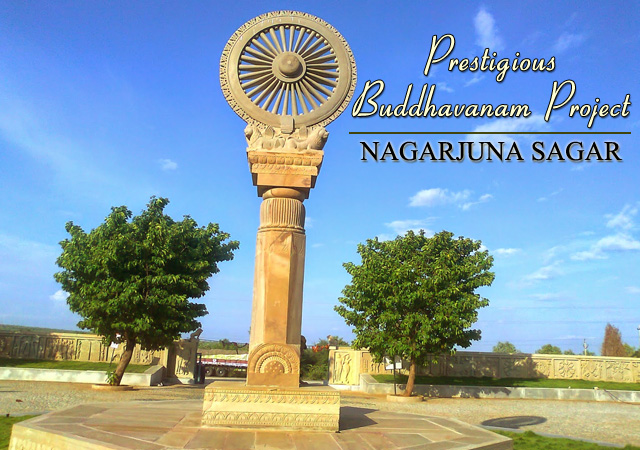
I reached the exercise location near Nagarjuna Sagar and that was my first visit to that area even though I had lived in Andhra Pradesh for a fairly long time.I took the opportunity to visit the historical site of Acharya Nagarjuna’s ‘Vihara’.
Whole Dude – Whole Noble: India – The Land of Gautama Buddha. Nagarjuna Sagar, Nagarjuna Konda, Nagarjuna Vihara, Buddha Vanam, Nalgonda District.
Prince Siddhartha left his wife and infant son in the middle of the night and abandoned his life of comfort in a royal palace as he desired to find the “Truth.” I had no intention to travel in the foot steps of Gautama Buddha, but I chose to stay away from my family if that could help His followers to reclaim their lost possessions and preserve their identity. Even today when I look back, I do not regret the time I spent away from my family and my mission to support Tibetan Buddhists was indeed a serious one. I was willing to put my life on-line if that could make a difference in the lives of those Buddhists who needed my services. I want to share the following essay which was published in ‘The Ann Arbor News’ on Thursday,October 14,1999 and hopefully this essay may convey you the passion with which I had served to support the followers of Gautama Buddha:
Don’t neglect Tibet for the sake of making money in China:
Don’t Neglect Tibet For the Sake of Making Money in China.
The United States-China relationship has naturally come under a critical review because of the nuclear espionage charges.It is irrelevant if China has actually benefited from the sensitive information that the U.S. has lost. What is far more important is the fact that the U.S. has lost its ability to keep sensitive information secure.
Presidential candidate George W.Bush has very correctly pointed out that the U.S. needs to prepare against a potential military threat that China might pose.
A review of the U.S.-China bilateral relationship should take us back 30 years to the time it actually began. The relationship,from the beginning,has no solid foundation. In spite of the huge trade and commerce relationship that the U.S. built up with China over these years, there is a basic lack of trust.
The reason for this mistrust is political. The Chinese political system derives its strength from the ideology of communism. The U.S. essentially adheres to the values of democracy, freedom and liberty.
China, as of today, is not a free society.Its political philosophy does not inspire us and is not trustworthy.Whatever the U.S. business investments may be,whatever the market reforms that China has introduced in recent times may be, there is a huge gap in terms of our political ideologies.
Communism and democracy cannot become good partners in a bilateral relationship.
The reason that I believe would end the U.S.-China bilateral relationship is the problem of Tibet.
The identity of Tibetan people could not be destroyed by all these years of Chinese oppression.The passion of Tibetan people for their freedom could not be subdued by prolonged, brutal occupation. Tibetan people are brave and courageous. They are willing to pay the price to regain their land and liberate it. They have the strength, will power and commitment to achieve this goal.
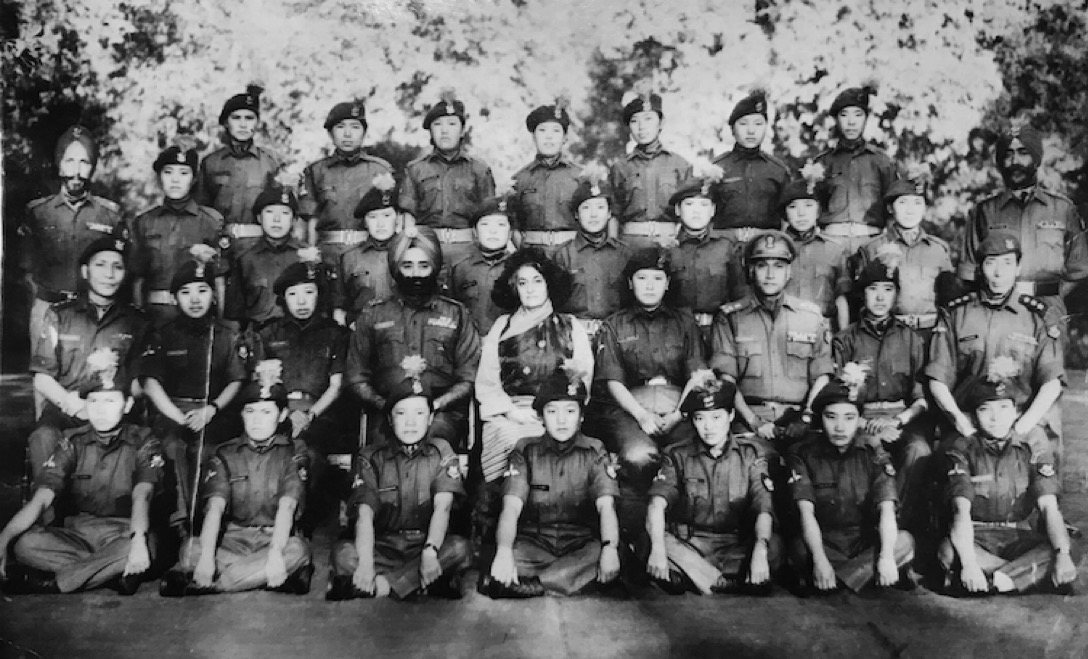
I witnessed this fact when I marched with hundreds of Tibetans through dense inhospitable forests for three months some years ago.
This was not a camping expedition.We had sick people and severely injured people who were sent to hospitals.We had beautiful people who lost their lives in those remote forests and they lay buried or cremated there. Their sacrifices are etched into my memory.
The only reason for taking that risk to suffer loss of life is the issue of winning back Tibetan freedom.
I also had an opportunity to speak with hundreds of Tibetan boys. Each one of them had a clear idea of their national identity and a compelling desire to win their freedom even if they had to pay for it with their lives.
The U.S. should understand that the issue of Tibet is not going to fade away.
When China occupied Tibet, the U.S. sent its citizens to help these people to plan their resistance.The U.S. sent tons and tons of supplies to aid their struggle. U.S. did not cover itself in glory when it withdrew this support it gave to Tibetans. The U.S. personnel were withdrawn and the aid dried up. That was an intensely painful moment for people like me who were then living with Tibetan people.
All of us had an understanding of the event that led the U.S. to backstab the Tibetan people. The U.S. sacrificed the freedom of the Tibetan people in its quest for establishing bilateral ties with communist China.
Thirty years after this betrayal, the United States should reevaluate the basic principles for which it stands today. The U.S. flag has been always a symbol of freedom. The issue is not that of containment of China. The issue is not that of engagement of China. The real issue is that of the freedom of the Tibetan people. We need to stand up for our own fundamental values and do the right thing.
Whole Dude – Whole Noble: India, the Land of Gautama Buddha must secure Peace, Freedom, and Justice in Occupied Tibet.Whole Dude – Whole Noble: India – The Land of Gautama Buddha.
Whole Memory – The ancient Land of India remembers Lord Gautama Buddha
The memories of Lord Gautama Buddha are indeed timeless. The Land of India has unfading, undying, everlasting memory of Prince Siddhartha and it is of great pleasure to share those memories.
Sunday, 26 Jul 2015
IN SKARDU, SIDDHARTHA SINGS ON
The rock carving of Buddha in Baltistan serves as a window into the past
By FERYA ILYAS
Published: July 26, 2015
Images of Buddha in his different forms meticulously carved on a rock in Skardu. PHOTO COURTESY: BCDF
Centuries have passed since Buddhists disappeared from Gilgit-Baltistan (G-B), but Buddha still watches over the serene town of Skardu from the corner of a cliff. Immortalised in stone, the sage continues to radiate wisdom for those who seek. But sadly, there are none.
Resting at the edge of Manthal village on the left of a stream from Satpara Lake, the granite – known as the Buddha Rock – is pale and smooth. Believed to be carved between 8th and 10th centuries, the relic represents the glory of the past, of a time when men and women meditated in the footsteps of the ‘One Who Woke Up’.
It has the makings of a heritage site – bearing testimony to a tradition which has disappeared. Its significance goes beyond nationalities. Yet, it sits at the border of Manthal village, ignored and forgotten by the world.
The serene and spotless Satpara Lake in Skardu. PHOTO COURTESY: MARYAM TARIQ
It is widely believed in Pakistan that the rock was not known to most until British traveler Jane E Duncan documented it in the early 1900s. “I went to Sadpor in search of the carved rock which Rajah Spindia at Khapallu had told me about; three miles and a half from Skardo, and a few yards off the road to Sadpor, we came to the rock, which proved to be a large and important relic of antiquity,” Duncan wrote in her book ‘A Summer Ride Through Western Tibet’ about the 1904 trip to Skardu.
Wazir Ejaz, CEO of Baltistan Culture and Development Foundation (BCDF), tells us that Duncan―failing to understand the Tibetan inscription on the rock―copied it and sent it to German scholar August Hermann Francke who was working in Ladakh. “Francke deciphered the script in English and published it in Calcutta and the world came to know about this magnificent carving,” Ejaz says.
However, British Tibetologist Philip Denwood, in his 2007 article for Journal of Inner Asian Art & Archaeology 2, said the rock carvings and Tibetan inscriptions were noticed by GT Vigne and reproduced in 1836 and 1838. Denwood further wrote AGA Durand published a photograph of the whole rock in 1899.
Shedding light on the ancient relief, historian Muhammad Abbas Kazmi says the carving and Tibetan inscriptions were made on a 30-foot high and 20-foot wide triangle-shaped rock. “The carving depicts present time Buddha—Siddhārtha Gautama—in the centre, 20 smaller Buddhas of the past around him and future Buddhas – Maitreya – standing on both sides,” Kazmi interprets. He claims that in Buddhist tradition, the ‘Council of all Buddhas’ as represented in the carving is called ‘Mandal’ – a word from which the village’s name is derived.
Tibetan text engraved on Buddha Rock.
All the Buddhas, except the Maitreyas, are shown resting on lotuses in Bhumisparsha position which means ‘touching the earth’ and signifies the moment of enlightenment for Gautama. It is the moment when Buddha, after six years of hardship, decides to sit under a tree and not move until he achieves supreme and final wisdom. He is distracted by Mara, the lord of desire, but to no use. Gautama resisted every temptation and as the final test, Mara challenged Buddha to tell him who would bear witness to his worthiness to attain wisdom. Gautama said nothing and touched the ground beneath him. The earth shook. “The earth is my witness,” Buddha said.
The Tibetan script on the Buddha Rock, though incomplete at many places, instructs the followers of Gautama to take care of this sculpture. “The faithful ones (should) from time to time (make the colours of the sculptures) bright, and clean the place of offering that it may not decay,” says the text, as translated by Franke in the 20th century. Kazmi says only one of the three-part text is visible today but the entire script—with only a few characters missing—was on the rock when Duncan examined it.
In her book, Duncan wrote that she submitted copies of the inscription to several Buddhist scholars in London and Paris but because of the missing characters, none could give a rendering. “I wrote to Mr Francke telling him of my difficulty in getting a good translation, and he immediately sent a competent Tibetan from Khalatse to Sadpor to make new copies and this man was able to fill up many of my blank spaces, as he recognised numerous letters which had been partly destroyed,” the British traveler wrote, expressing amusement over the Tibetan charging just Rs12 for his long and fatiguing journey to the rock and back and his trouble in making the copies.
Francke, who translated the ancient text, said that “judging from the orthography employed, the writing is as old as those at Balu-mkhar, dating from not later than 1000 AD and, imperfect as they are, are of great philological and antiquarian interest; they all seem to refer to the sculptures on the rock.” He added, “Line No 8 in the third of them seems to indicate that the sculptures of Buddha are much older than the inscriptions themselves.”
Present time Buddha, Siddhãrtha Gautama, craved in the middle of the rock.
Duncan, in her travelogue, wrote that the hole was used to hold light. “At the top of the rock above the Buddha’s head there is a square hole, which the chowkidar, who acted as my guide, said was used for holding a light, and the stone round it looks smoke-blackened,” she wrote.A prominent feature of the relic is a square cube cut out at the top of the stone. Last summer, when I arrived here, I saw visitors aiming to throw pebbles inside the hollow boxy space in fulfillment of a myth that praying and then throwing a stone inside the cube successfully will make a wish come true—a local spin on European wishing wells and lovers’ locks.
Historian Kazmi, however, says the space was probably used to hold a beam with support from both sides of the stone to carry a roof. “The square recess and cuts on the edges very clearly indicate that in the beginning there was a canopy over the rock-face of the carving to protect it from weather effects,” he explains. Buddhism specialist Dr Christian Luczanits concurs, pointing out that the images were probably painted originally and the roof had protected the paintings.
A copy of a portion of Tibetan text engraved on Buddha Rock. SOURCE: JANE E DUNCAN’S A SUMMER RIDE THROUGH WESTERN TIBET
The exact purpose may remain a mystery for years to come or maybe even be lost forever if the relic is not protected from wear and tear caused by nature and humans. “The sculpture should have been declared a heritage site by UNESCO long ago, but the government and BCDF have failed to make efforts to preserve the eroding piece of history,” Kazmi says, pleading to authorities to pay attention to the relic.
Pakistan, which hosts six world heritage sites, has failed to even mention the Buddha Rock in its Tentative List from which the UN body picks places of ‘special cultural or physical significance’. The last inventory was complied in 2004 in which ten nominations were made in addition to 1993’s eight recommendations. And as per the rules, Pakistan can re-examine the list at least every ten years.
Ejaz says the BCDF―which has Buddha Rock on lease for 90 years―considered recommending it to UNESCO for a heritage site as well as for one of its awards, but did not do so because the relic does not fulfill their criteria.
Dr Luczanits sees this rock carving as part of a larger group of Buddhist relics in the region, which he recommends to be declared a heritage site together. “What is more important is to create awareness locally to ensure protection of the site as part of the heritage,” the Buddhism expert says. And BCDF’s chief Ejaz tells us that for this purpose, his organisation has constructed a boundary wall around the rock and deployed a security guard to facilitate tourists. “The BCDF has also constructed a tourist hut nearby in collaboration with the government’s tourism department and submitted proposals to different donor agencies to preserve its writings and images,” adds Ejaz.
Crystal clear Satpara Lake.
Protection of the site is crucial for preserving history as many believe this place was important for the spread of Buddhism in the area and served as a pilgrimage site for worshippers from far and wide. However, there is no concrete evidence to prove the exact use of the place.
“Such rock carvings are usually at spots that are widely visible and thus serve as a reminder of Buddhism in general, besides having a more specific local ritual function that we cannot reconstruct today anymore, except for its latest use like recorded by Ms Duncan for the square recess on Buddha Rock,” Dr Luczanits tells us. The real story behind the stone may never unravel, but Kazmi vouches for the uniqueness of the carving. “Nowhere in the Buddhist world has anyone seen the depiction of all Buddhas in such a magnificent style,” he claims to point out the importance of Baltistan, and Skardu in particular, in the Buddhist history of the region. “Even in Lhasa, China—which has been the center of Mahayana Buddhism and the seat of Buddhist kings and fourteen Dalai Lamas—such a glorious picture has not been carved,” he says with a hint of pride. Buddhism expert Dr Luczanits says the relief is part of a larger group all along the southern edge of the western Himalayas where rocks were used to depict Buddhist imagery. “The one in Skardu is unique in its composition, high quality carving and the number of Buddhas depicted; the carving emphasises the cosmic quality of the Buddha through the repetition of his image around him,” he says.
An older image showing the entrance to the historic site. The barbed-wire boundary has now been replaced with a concrete wall.
Baltistan was the land of Shamanism until Buddhism arrived in the 4th Century with the monks from Northern India, well before it entered Ladakh and Tibet. Many monasteries were built during the Palolashahi kingdom that ruled the area and the religion continued to flourish after the Tibetan conquest of the region in the second quarter of the 8th Century. In the 14th Century, Ali Hamadani and his followers arrived from Iran and changed the landscape forever. Locals embraced Islam and Buddhism vanished from their daily lives. The places of worship fell into despair due to no visitors and because the preachers of the new religion called for shunning the past. “By the 15th Century, no Buddhist was left in Baltistan and the Muslim population wreaked havoc on the Buddhist legacy, destroying religious buildings and monuments,” claims Kazmi, adding that many dug out the foundations of religious sites in search of wealth believed to be buried by Buddhist kings and lamas. More recently, in 2007 the Taliban in Swat defaced the biggest Buddha sculpture in the world, second only to the monumental statues in Bamiyan, Afghanistan, which were destroyed in 2001 by the Afghan Taliban.
‘The Little Tibet’ and its Buddhist heritage disappeared over time, but what mysteriously survived was the Buddha Rock among a handful of artifacts. “In the midst of a purely Mohammedan population, these monuments have been allowed to remain intact except for the partial defacement of the inscriptions, while over the rest of the country every trace of its ancient religion appears to have been destroyed,” Duncan wrote in surprise.
Dr Luczanits says it is not uncommon that such rock carvings were either ignored once the religion changed or reinterpreted to attain a new meaning for the locals. In this case it appears, Buddha was simply left in peace.
Ferya Ilyas is a senior subeditor at The Express Tribune. She tweets @ferya_ilyas
Whole Memory – The ancient Land of India remembers Lord Gautama Buddha
What is Matter? and What is Spirit? If materialism is about the influence of material wealth, I would like to use the Power/Force/Energy called Money to talk about Life and Death. The Laws of Conservation are applicable to both the living, and the non-living matter. Hence, it can be stated that “Life can neither be created nor destroyed.” If any person can refute my claim using valid, scientific information, I would offer the person a US $1,000 bill as a reward
What it is to be a Substance? and What it is to Exist? We need to establish knowledge about the man on a firm basis and the information it provides must be tested for its accuracy and consistency with an external reality. We have to make the fundamental distinction between the living and the non-living matter. The scientific advances of the 19th and 20th centuries reinforced the materialistic position concerning the basic similarity of organic living and inorganic physical matter. The man is viewed as a product of natural evolution and is thought to be subject to the same laws of Physics and Chemistry or mechanistic principles.
We need a methodology to study philosophy and to understand philosophical statements. Logical Positivism, also known as Scientific Empiricism aims to clarify concepts in both everyday and scientific language. It describes analysis of language as the function of philosophy. This analysis of language and of concepts is important to understand questions of belief and ideology which affect what we think we ought to do individually and socially. I would use this method of ‘Applied Philosophy’ to analyze the philosophical doctrine of Gautama Buddha and his teaching about life and death.
THE MATERIAL BASIS OF SPIRITUALITY SCIENCE: LORD GAUTAMA BUDDHA CLAIMS THAT WHATEVER IS BORN, PRODUCED, OR CONDITIONED CONTAINS WITHIN ITSELF THE NATURE OF ITS OWN DISSOLUTION. LIFE IS CONDITIONED TO EXPERIENCE CHANGE UNDER THE INFLUENCE OF TIME AND LIVING THINGS ARE BORN TO EXPERIENCE DISSOLUTION AT THE END OF THEIR LIFETIME.
Gautama Buddha claims that whatever is born, produced, conditioned, contains within itself the nature of its own dissolution. The greatest miracle is that of explaining the truth and to make man realize it. What is the Truth? To know the truth about Life, we have to understand the influence of Time. Individual living entities exist during their own Lifetime while the vital principle that animates all Life remains imperishable, immortal, eternal, and unchanging. Time is defined as the duration in which things are considered as happening in the past, present, or future. Time is the measurement of duration, the period between two events during which something exists, happens, or acts. This concept of Time demands that we must make a fundamental distinction between static and dynamic events. Static is the term used to describe a body, mass, or force that is at rest or in equilibrium and hence it is inactive, stationary, not moving, or progressing. Life is a dynamic event in which the object called the living thing exists by a tendency towards change or productive activity. Life requires presence of a vital, energetic, animating principle that maintains the equilibrium called existence while responding to a flow of events that measure the duration of existence of that living thing. In my view, Death is also a dynamic event and it is not a static event as the change called Death inevitably flows to cause Rebirth. The flow of Life must be synchronized with the flow of Time for both of them to proceed until Eternity. I describe Spirituality as the potency that generates the living experience of Peace, Harmony, and Tranquility in the Time and Life Interactions. To know this, we may have to know about the Cyclical Changes of Matter, and the Cyclical Flow of Time. Chemistry is the Science that would give us understanding of Living Matter and of Cyclical Changes that are caused by Chemical Reactions. In the study of Life, Chemistry is the Science that describes the nature of ‘Spiritual Interactions’. The ‘Spiritual Interactions’ between Time and Matter establish, support, and preserve the existence of Life on this planet Earth.
MATTER – CHEMICAL ELEMENTS AND CHEMICAL COMPOUNDS:
THE MATERIAL BASIS OF SPIRITUALITY SCIENCE: HENNIG BRAND (c. 1630-c. 1710), GERMAN ALCHEMIST WHO DISCOVERED PHOSPHORUS DURING c.1669 or 1674. I WOULD DESCRIBE CHEMISTRY AS THE SCIENCE OF SPIRITUAL INTERACTIONS.The Material Basis of Spirituality Science: ROBERT BOYLE (1627-1691)THE FATHER OF MODERN CHEMISTRY. Anglo-Irish Physicist and Chemist who separated the Science of Chemistry from Alchemy. He gave the first precise definitions of a Chemical Element, a Chemical Reaction, and Chemical Analysis. He discovered Boyle’s Law (Gas Laws).
All ‘Matter’ is composed of fundamental materials called Chemical Elements. A substance that cannot be decomposed into simpler substances by ordinary chemical processes is by definition an Element. There are about 88 ‘naturally’ occurring Elements, and about 20 Elements are used in measurable amounts by most living organisms. Phosphorus is an essential Element to all Life as it is component of DNA and RNA that make up the genetic material of all cells and control reproduction of both the cell and the organism. Phosphorus is part of the energy storage and utilization system at the cellular level. In addition, Carbon, Hydrogen, Nitrogen, Oxygen, Iron, Calcium, Potassium, Magnesium, Cobalt, Cadmium, Copper, Manganese, Zinc, Molybdenum, Boron, Sodium, Chlorine, Fluorine, Iodine, Sulfur, and Chromium are all essential to one form of life or another. Elements can combine with one another to form a wide variety of more complex substances called Chemical Compounds. A Chemical Compound is a substance in which two or more Elements are joined by Chemical Bonds. A Chemical Compound can be created or broken down by means of a Chemical Reaction but not by mechanical or physical separation techniques. It helps to make a distinction between Mixture and Compound. Most naturally occurring Matter represents Physical Mixtures of Chemical Compounds that could be separated using simple physical techniques. While the number of known Elements is small, the number of possible Compounds is almost ‘infinite’; perhaps a million or more Chemical Compounds are known to exist. When two or more Elements combine to form a Compound, they lose their separate identities, and the product called Chemical Compound has characteristics quite different from those of the constituent Elements. For example, the Common Salt or Sodium Chloride is combination of the highly reactive metallic element Sodium (Na) and the poisonous gas Chlorine (Cl). The unique taste and flavor imparted by Salt cannot be discovered by studying the physical and chemical properties of Sodium or Chlorine. Elements in Compounds always are combined in definite proportion. For instance, a molecule of Water is always made up of two Hydrogen (H) atoms and one Oxygen (O) atom. Again, I would like to pay attention to the fact of two gaseous elements, Hydrogen, and Oxygen with quite different physical and chemical properties can combine to form the Compound Water which has altogether different properties from either Hydrogen or Oxygen. The simple, pure, original, and sweet taste imparted by Fresh Water cannot be discovered in its constituent Elements. I have mentioned that the Element Phosphorus is basic to all Life. Phosphorus is discovered in c.1674 by Hennig Brand. It is an extremely poisonous, yellow to white, waxy, solid substance. When exposed to air, Phosphorus ignites spontaneously. Some of the commercial uses of Phosphorus include the making of detergents, toxic nerve gases and explosives. We have to learn to make the distinction between Chemical Elements and Chemical Compounds and apply this understanding to know the nature of relationship between things. Calcium Phosphate is the principal material found in bones and teeth. Adenosine triphosphate or ATP is the fundamental energy source in living things. It is very understandable that all Matter is composed of units called Atoms and the physical structure of Atom is well-known. We have to be very careful and avoid deriving understanding about Life and Living Matter from the descriptive knowledge derived from Quantum Physics. To understand the nature of living experience, we need Chemical Molecules and Chemical Compounds whose qualities and characteristics may not be discovered from the study of Nuclear Physics. The phenomenon of creating and breaking down Chemical Compounds in living organisms is known as Metabolism. A Chemical Compound’s smallest units are, Molecules, and Ions. A Molecule can exist in the free state and still retain the characteristics of the Element or Compound; a Molecule can be formed by an Element when it consists of one Atom, or two, or more similar Atoms; a Molecule can be formed by a Compound when it consists of two or more different Atoms. The term ‘Ion’ is used to describe an Atom or Molecule bearing an electric charge as a result of having a number of negative electrons unequal to the number of positive protons in its nuclei. ‘Ionization’ is the process that describes the formation of ‘Ions’ from neutral Atoms or Molecules. ‘Ions’ that are positively charged are known as ‘Cations’, and that are negatively charged are known as ‘Anions’. Simple ‘Ions’ consist of a single charged Atom; double, triple, or even higher positive or negative charges are possible. Oxidation of Hydrogen removes its single electron and gives H+ or cationic Hydrogen which contains no electrons and it has a nucleus which is composed of one proton. This cationic Hydrogen plays a particularly important role in the Acid-Base Chemistry of the human organism with many reactions exchanging protons between soluble molecules. The internal environment of a living cell includes Hydrogen, Potassium, Sodium, Magnesium, Calcium, Chloride, Sulfate, Phosphate and several organic acid ‘Ions’. The chemical events collectively called ‘Metabolism’ require the concentration of Hydrogen Ions and electrolytes to remain within narrow limits in the tissue cells and in the fluid which bathes them. The term ‘pH’ or ‘Acidity’ is a measure of the Hydrogen Ion concentration and a reading level of 7 indicates ‘Neutral’. Human life is possible only if the Hydrogen Ion concentration of body fluid is kept within a narrow range. In health, a blood Hydrogen Ion concentration of 36 – 44 nmol/Liter or pH level of 7.37 – 7.45 is maintained by several closely integrated but widely differing mechanisms.
THE CHEMICAL ELEMENTS AND CHEMICAL COMPOUNDS OF LIFE:
The Material Basis of Spirituality Science: HENRY CAVENDISH (1731-1810), British Chemist and Physicist noted for his discovery of Hydrogen, a gaseous Element during 1766. French Chemist Lavoisier named the gas Hydrogen in 1783. Hydrogen is the most abundant element in the universe and it is the major fuel in fusion reactions of the Sun. However, this gas in its free state is very rare in our planet Earth.The Material Basis of Spirituality Science: Hydrogen, the most abundant Element in the universe is present in its diatomic, molecular form. Hydrogen is important for the formation of Stars. In this photo image, NGC 604, a giant region of ionized Hydrogen in the Triangulum Galaxy is seen.The Material Basis of Spirituality Science: Hydrogen makes up most of the mass (over 90%)of the universe and about 75 % of natural Matter by number of Atoms.Naturally occurring atomic Hydrogen is rare on Earth because Hydrogen readily forms covalent Compounds with most Elements. Hydrogen is present in the Water Molecule and in most Organic Compounds found in living organisms. Hydrogen forms a vast variety of Compounds with Carbon that are called Hydrocarbons.
To understand Life, we have to know about Hydrogen as it is the fuel that Sun expends in its role as the Cosmic source of Energy that supports the biological existence of all terrestrial organisms. The man exists on the surface of planet Earth not on account of the merit of his physical, or mental work and effort. Firstly, the man has no direct access to this source of energy produced from Hydrogen fuel. If Hydrogen is important to support the existence of Life, we have to understand the nature of ‘Spiritual Interactions’. Secondly, Hydrogen is important as it is required to form the Water Molecule. However, Oxygen, a colorless, odorless, tasteless gas, is the most abundant Element at the surface of the Earth. In the terrestrial environment, Oxygen accounts for about half of the mass of the Earth’s crust, 89% of the mass of the oceans, and 23% of the mass of the atmosphere or 21% of its volume. Oxygen makes up about two-thirds of the human body. It is a vital substance which supports vital functions. Among Chemical Elements used by human body, Oxygen has the highest electronegativity and electron affinity. Oxygen can form ‘Anion’ with a double negative charge by accepting electrons from a donor like Hydrogen. Most of the Earth’s rocks and soils are principally compounds of Oxygen with Silicon and other metals. It is well understood that most organisms depend on Oxygen to sustain their biological processes. Biological Oxidation-Reduction Reactions are ultimately the sources of energy for the higher plants and animals. While speaking about importance of Oxygen in the biosphere, we must recognize that Oxygen is responsible for natural decomposition of all organic material. Waste products from activity of the living organisms, dead plants and animals decompose or oxidized through the agency of microorganisms. Thus, Oxygen plays a key role both in its support of important processes of Life and Death. Organic decay and decomposition is of fundamental importance for Life to renew itself and to be reborn and to cause rebirth. The study of ‘Spiritual Interactions’ must include the study of Life and Death.
The Material Basis of Spirituality Science: Joseph Priestley and Karl Scheele were the first to isolate the gaseous Element during 1773-74 which was named by Antoine Laurent Lavoisier as Oxygen. It is a colorless, odorless, tasteless gas, and is the most abundant Element found on planet Earth.The Material Basis of Spirituality Science: Oxygen makes up about 90% of Water, two-thirds of the human body, and 20% by volume of Air. Normal atmospheric Oxygen is a diatomic Molecule.The Material Basis of Spirituality Science: The common Chemical Reaction in which Oxygen unites with another substance is called Oxidation.Combustion or rapid oxidation, the burning of s substance may generate light and heat. The process called Oxidation need not involve generation of light and heat. Oxygen itself does not burn. The Respiration of plants and animals is a form of Oxidation that is essential to liberation of the energy stored in such food materials as Carbohydrates, Fats, and Proteins. Oxygen is necessary to sustain Metabolism which primarily involves the Oxidation-Reduction Chemical Reactions. If the Oxygen concentration were to drop to about half its value in the atmosphere, humans could no longer survive. The loss of Oxygen is critical as the human body has no means of storing Oxygen. Because the human body stores no Oxygen, any interference with breathing and ventilation that lasts more than a few minutes can cause Death.
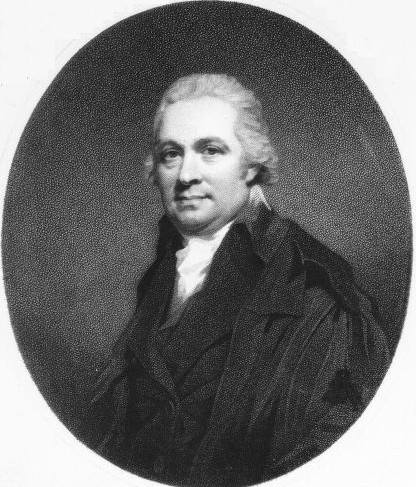
The Material Basis of Spirituality Science: Dr. Daniel Rutherford (1749-1819), Professor of Medicine & Botany, Edinburgh University, Scotland, discovered Nitrogen in 1772. Joseph Priestley and Henry Cavendish in England, and Carl W. Scheele in Sweden also get credit for the discovery of Nitrogen. The French Chemist Antoine Lavoisier proved that it is an Element.
On planet Earth, Nitrogen, the most abundant uncombined Element occurs as the diatomic molecule. Atmospheric air is 78.06% Nitrogen gas by volume. Nitrogen is an important component of Protoplasm or Living Matter. It is very remarkable to note that one type of organic molecule with a nitrogenous base plays a variety of roles in support of living functions.
The Material Basis of Spirituality Science: Adenosine triphosphate or ATP is a Nucleotide; the monomer unit of Nucleic Acid,contains a Purine or Nitrogenous base called Adenosine, a Sugar called Ribose and three Phosphate groups.In most Chemical Reactions of all cells in which transfer of energy occurs, the nucleotide ATP is involved. It functions as a Coenzyme in many enzyme-catalyzed reactions and helps in performance of chemical, electrical, and osmotic work in animals, plants, and microorganisms.The Material Basis of Spirituality Science: Cyclic Adenosine Mono Phosphate or cAMP is formed from ATP by the catalytic action of the enzyme Adenyl Cyclase. It controls many important functions in the cell including the ability of the cell to generate electrical impulses and is called “Second Messenger.”It is responsible for the intracellular mediation of hormonal effects on various cellular processes; e.g., Lipid Metabolism, Membrane Transport by opening Ion Channels, and Cell Reproduction.The Material Basis of Spirituality Science: All living organisms need organic nitrogen compounds such as Proteins, Vitamins like Thiamine and Riboflavin. In nature, Nitrogen from the air is ‘fixed’ by some bacteria and plants. It is then made available to all organisms through ‘Nitrogen Cycle’.
The nonmetallic Element, Carbon is known to man since ancient times. Organic Chemistry is the study of Carbon Compounds. All living organisms contain Carbon Compounds and hence Carbon is the central Element in the Compounds of which organisms are composed. The Carbon Element found in all living organisms is primarily derived from Carbon Dioxide found in atmospheric air or dissolved in water. It occurs both free and combined form in nature and makes up about 1% of the volume of dry air. Carbon Dioxide is a colorless, odorless, tasteless gas. It is the raw material for Photosynthesis in green plants and is a product of animal respiration and of the decay of organic matter. It can cause Death by suffocation if inhaled in large amounts. If this Chemical Compound Carbon Dioxide, a gas that has the potential to cause Death, can impart ‘SWEETNESS’ to a substance that we recognize as ‘SUGAR’, it speaks about the potency that I describe as ‘Spiritual Interaction’ between the Elements of Life.
The Material Basis of Spirituality Science: Plants incorporate Carbon into Carbohydrates and other complex organic molecules by means of Photosynthesis. During Respiration or Cellular Oxidation, living organisms combine Oxygen with portions of Carbohydrate molecule, releasing Carbon in the form of Carbon dioxide and water.
Water Molecules are the simplest and most abundant of all the Molecules found in the living cell. The simplest forms of Life such as the Virus particles may exist as Molecules of Nucleic Acids and need living cells for their replication. Most Chemical Reactions inside the living cell require the aqueous medium. Cells contain 70 to 80% Water. Cell Chemistry involves the study of Reactions in aqueous solutions. But, much of the Water in Cells is not ordinary Water; it is found ‘structured’ in shells surrounding macromolecules, especially proteins. The activities inside the Cell are separated and take place inside compartments that are regulated. It is important to know that most of the Water inside the living Cell is structured and the Chemistry of the living Cell demands separation of events at Molecular level.
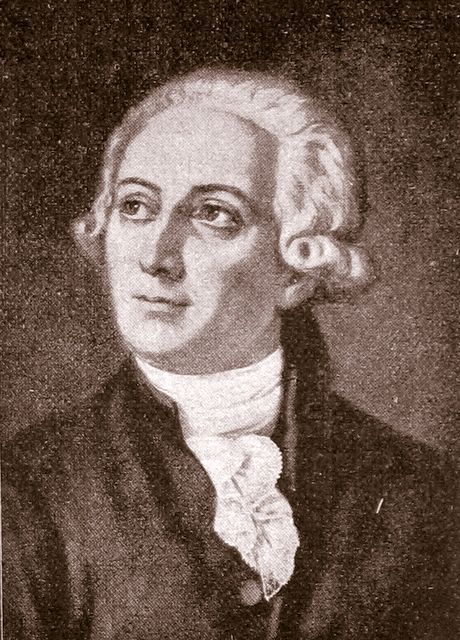
The Material Basis of Spirituality Science : ANTOINE LAURENT LAVOISIER (1743-1794), French Chemist and Physicist. He discovered the Composition of Water Molecule and of various other Organic Compounds.
The Material Basis of Spirituality Science: Water Molecule looks very simple and yet it plays a mysterious role inside all living cells. It is essential to Life and its propagation. Its Spiritual nature is revealed by its pure, original, and sweet taste it imparts apart from its role as a Chemical Compound. It is the main mode of transport of many Elements that are needed by living organisms. Water is the Agent that leaches Nutrient Elements and Compounds from rocks and soils and makes them available for use by plants ,and animals.
THE CYCLICAL FLOW OF TIME:
THE MATERIAL BASIS OF SPIRITUALITY SCIENCE: SUN THE COSMIC SOURCE OF ENERGY SHINES ALL THE TIME. IT IS APPARENTLY AN UNCHANGING EVENT. HOW DOES MAN MEASURE HIS TIME?
The Material Basis of Spirituality Science:The Flow of Time is measured as the duration or the interval between two events; Time exists for man and other living organisms as the measure of the period of duration from Sunrise to Sunset that causes an environmental change; the alternating periods of Light (DAY) and Darkness (NIGHT). Earth’s Rotational Spin transforms the instant called ‘FUTURE’ into an instant called ‘PAST’ without giving man any choice to know the instant called ‘PRESENT’. Earth’s Revolution brings Seasons that man experiences at regular and constant intervals of Time while man simply exists on the surface of planet Earth with no physical experience of Earth’s Motions through Space.
Things in Nature change with Time. Does Time exert a ‘FORCE’ entirely of its own to change things in Nature? If Time is viewed as a ‘FORCE’, or ‘POWER’, who controls this Force or Power and what are the Laws that operate this Force or Power? The Clocks and Calendars that man has invented create the illusion that we live in a world of mathematically measured segments of Time. Sir Issac Newton(1687) stated that the flow of Time is absolute. Time is looked upon as a flow like a river: It “flows equably without relation to anything external.” Herman Minkowski, a Mathematician, added Time as the Fourth Dimension of three-dimensional Space. Time is seen as a dimension like Height and Width and it gives meaning to events and the order in which they occur. In 1905, while postulating the Theory of Relativity, Albert Einstein had observed that measurement of Time is affected by the motion of the observer and hence it is not absolute. Gravity affects both Time and Light. Measurement of Time is affected by the gravitational field of each celestial body. The experience of Time on this planet is an illusion and it may not be an absolute experience. Physicists tend to describe Time and Space as the building blocks of this universe. In the context of understanding the relationship between Time and Life, we will be forced to see Time in the internal Biological Clocks that keep all living entities in ‘sync’ with Nature.
The Material Basis of Spirituality Science: The Biological Clock: Every Living System behaves as if it contains a highly dependable ‘CLOCK’. It is a self-sustained internal timing mechanism that controls the ability of an organism to synchronize its existence with events in its internal and external environment.Such Time-Dependent variability in Function is called a Biological Rhythm.
All living things have in their nature a plan for their own dissolution and have ability to use some unique Time-Dependent biological mechanism that is indissociable from life itself. Biological Rhythms represent the periodic biological fluctuation in an organism that corresponds to and is in response to periodic environmental change. Biological Clock in man measures Time as the Solar Day, the period of Earth’s Rotational Spin relative to the Sun. Such Biological Rhythms that occur once a Day are called Circadian ( Latin Circa: About, Di: Day ), Solar Day, Diel, Daily, or Diurnal (Day-Active) Rhythm. The Rhythm is synchronized with an external Time-giving stimulus. Within the 24-Hour Cycle, a person usually sleeps approximately 8 hours and is awake 16 hours. For the health and the well-being of man, the daily alteration of Sleep and Wakefulness is important to maintain optimal physiological functions.The man is conditioned to exist under the influence of Time which is operated on planet Earth by its Rotation on its own axis.
THE CYCLICAL FLOW OF LIFE, MATTER, AND ENERGY:
All living organisms depend upon about 20 naturally occurring Chemical Elements. In order for Life to survive, these Elements must be constantly recycled in forms that plants and animals can use. Nutrient Cycle is the term used to describe the natural processes that keep all the Chemical Elements needed to support Life circulating within the Biosphere or Ecosphere. The far-reaching nature of Nutrient Cycles reveal the Interactions between Time, Life, Death, and Rebirth. Life continues using the process called Rebirth. Death is an important requirement to regenerate Life. Dissolution of individual living entities under the influence of Time is a prerequisite for Renewal of Life and propagation of Life over the limits imposed by Time.
THE WATER OR HYDROLOGIC CYCLE:
The Material Basis of Spirituality Science: The Water Cycle or Hydrologic Cycle is necessary for the operation of all Nutrient Cycles. The energy for transportation of Water Molecules is provided by Sun and it is the Fundamental Basis for all other Time-Life Spiritual Interactions.
Water is important to all life forms for its role in the control of environmental conditions and as it is the main mode of transport of many nutrients; it is the agent that leaches nutrients from rocks and soils and make them available for further use by living organisms.
THE CARBON CYCLE:
The Material Basis of Spirituality Science: The Carbon Cycle clearly illustrates complexity of relationships involved in the processes of Recycling Nutrient Elements in Nature. Life depends on the interwoven and interdependent relationships of green plants and animals, supplemented by the activities of bacteria, and the constant transport of nutrients within the Ecosystem and within organisms.
The Carbon Cycle describes the exchange of Carbon between living organisms and non-living environment.To maintain Life, an organism not only repairs or replaces (or both) its structures by a constant supply of the materials of which it is composed but also keep its life processes in operation by a steady supply of energy. Living Systems must be supplied energy on a continual basis. Once spent, the energy for Life cannot be replenished except by further exposure of green plants to Sunlight. The Chemical Elements of Life are continually recycled by such processes as Photosynthesis and Respiration.
THE OXYGEN CYCLE:
The Material Basis of Spirituality Science: Photosynthesis and Respiration are complementary functions and drive the Oxygen Cycle.Oxygen is necessary to sustain Metabolism. Oxygen is also important and is responsible for natural decomposition of organic material, waste products of Metabolism, oxidative decomposition of dead plants and animals through the agency of microorganisms.
Oxygen is equally important for Life and Death as Death must be accompanied by decay and decomposition of organic material to release the Nutrient Elements for further use by other living organisms.
THE NITROGEN CYCLE:
The Material Basis of Spirituality Science: All living organisms participate in the Nitrogen Cycle. It includes the processes and Chemical Reactions involved in producing organic Nitrogen from inorganic Nitrogen and subsequently breaking down organic Nitrogen back to the inorganic form.
The Nitrogen Cycle begins when atmospheric Nitrogen and Hydrogen combine to form Ammonia in a process called Ammonification. The Nitrogen Compounds are made available to plants which combine them with the products of Photosynthesis to form Amino Acids, which are the basic components of plant Proteins. Animals eat plant Proteins, break them down into Amino Acids during the process of digestion, and recombine them to form their own particular forms of Proteins in order to build tissues and organs of their bodies. Through the breakdown of waste products, death and decay, organic Nitrogen compounds reenter environment.
THE PHOSPHORUS CYCLE:
The Material Basis of Spirituality Science: Phosphorus recycles more slowly than other Nutrient Elements. Phosphates are taken up by the roots of green plants and used in organic synthesis. They are passed to animals through ‘Food Chains’. Ultimately, Phosphates are released to soil through bacterial and fungal decomposition after the death of an animal.
The Material Basis of Spirituality Science: We need to make distinction between the Chemical Element Phosphorus and Phosphate the Chemical Compound that supports Life. The Phosphate mineral found in the rocks may have taken millions of years before it became available to plant Life.
ECOLOGY – LIFE AND DEATH SPIRITUAL INTERACTIONS:
The Material Basis of Spirituality Science: Life depends on the interwoven and interdependent relationships between living organisms and the environment. No organism leads a truly independent existence of its own. Each organism lives by either consuming other organisms or the products from other organisms. In a Biological Community, Life and Death have a relationship which has a Spiritual Basis.
Ecology describes movement of Chemical Elements and Chemical Molecules in nature because of the interrelationships and interconnectedness of organisms that form the ‘Food Chains’. This flow has a cyclical pattern and Life and Death could be described as two stages in this exchange of material and energy between the living and non-living environment. Greek philosopher Heraclitus (c. 535 B.C. – c. 475 B.C.) held that there is no permanent Reality except the Reality of Change. His famous maxim: “You cannot step twice in the same River.” I beg to differ from his view. The permanent Reality describes the unchanging Spiritual Nature of a Chemical Molecule that supports Life and Existence. Water Molecule came into its existence billions of years ago and it still retains its unique and distinctive properties and is entirely unaffected by the influence of Time while it undergoes both physical and chemical changes in its Interactions. I seek to describe Spirituality in the unchanging nature of Chemical Molecules that operate the dynamic events of both Life and Death. If Life involves a series of Chemical Reactions such as the Redox or Oxidation-Reduction Chemical Reactions, the same dynamic process continues into Death causing changes to promote Regeneration, Rejuvenation, Renewal, and Rebirth. Spirituality has to be stated as the Dynamic Force that promotes Peace, Harmony, and Tranquility in the material transformations described as Life and Death.
What is Matter? and What is Spirit? If materialism is about the influence of material wealth, I would like to use the Power/Force/Energy called Money to talk about Life and Death. The Laws of Conservation are applicable to both the living, and the non-living matter. Hence, it can be stated that “Life can neither be created nor destroyed.” If any person can refute my claim using valid, scientific information, I would offer the person a US $1,000 bill as a reward.










 Whole Dude - Whole Concept

