The Vitruvian Man c. 1492. The painting by Leonardo da Vinci displays the spirit of scientific inquiry. We must know the distinction between Human Nature and Human Behavior.
What is man? The motivation for asking this question comes from a statement expressed in Sanskrit language : “Sarvesham Swastir Bhavatu”, which seeks the well-being of all humans, of all races, of all religions, of all cultures, and of all nations. Our efforts to support the well-being of man would be affected by our understanding the ‘real’ or ‘true’ nature of man. I recognize that man exists with the following five forms, 1. the Physical Being as described by Human Anatomy, Human Physiology and other Medical Sciences, the human being in health and sickness, 2. the Mental Being, the intellect and emotional aspects as described by Psychology and Psychiatry, 3. the Social Being as described by Social Sciences, 4. the Moral Being as described by Morals and Ethics, the power of discernment used by man to make the distinction between good and evil, and right and wrong, and 5. the Spiritual Being as described by the spiritual nature of man’s corporeal substance that develops and builds the cells, the tissues, the organs, and the organ systems of the human body. While most religious and philosophical traditions explore spirituality by understanding human thoughts, and feelings, I try to know this spiritual aspect of human nature by observing the functional behavior that is displayed in the interactions of cells, tissues, and organs that constitute the human organism. If man is viewed as a multicellular organism, human behavior must be observed in the biotic interactions of cells, tissues, and organs because of whose functions man lives in the world. The five aspects of man contribute to the five kinds of behavior of man; the physical, mental, social, moral, and spiritual behavior. A muscle cell displays the behavior of contraction in response to a stimulus and it is able to contract because of its contractile nature which gives it the power of contracting.
In my view, Spiritualism is the human nature that gives the man the power or ability to perform his living functions and display his characteristic behaviors like feeding, breathing and reproduction. I remind my readers to be very careful to make the distinction between Human Nature and Human Behavior. For example, the power of Nutrition described by Human Physiology is not the same as the eating behavior that manifests as the problem of obesity.
Human Behavior and Environment:
Whole Dude – Whole Behavior: Burrhus Frederick Skinner (1904 – 1990), Professor of Psychology at Harvard University (1948 – 1974) proposes that the empirical study of human behavior is the only way to arrive at a true theory of human nature. He had published several books, The Behavior of Organisms:An Experimental Analysis (1938), Science and Human Behavior (1953), and Verbal Behavior (1957).Whole Dude – Whole Behavior: The relationship between Man and Nature (Environment) that conditions human behavior.
B. F. Skinner studied behavior and the environmental causes of behavior mediated through conditioning mechanisms. In his opinion, all behavior is a function of environmental variables. He proposed a thesis of Universal Determinism, and thinks that every human event including all human choices has a set of preceding environmental causes.
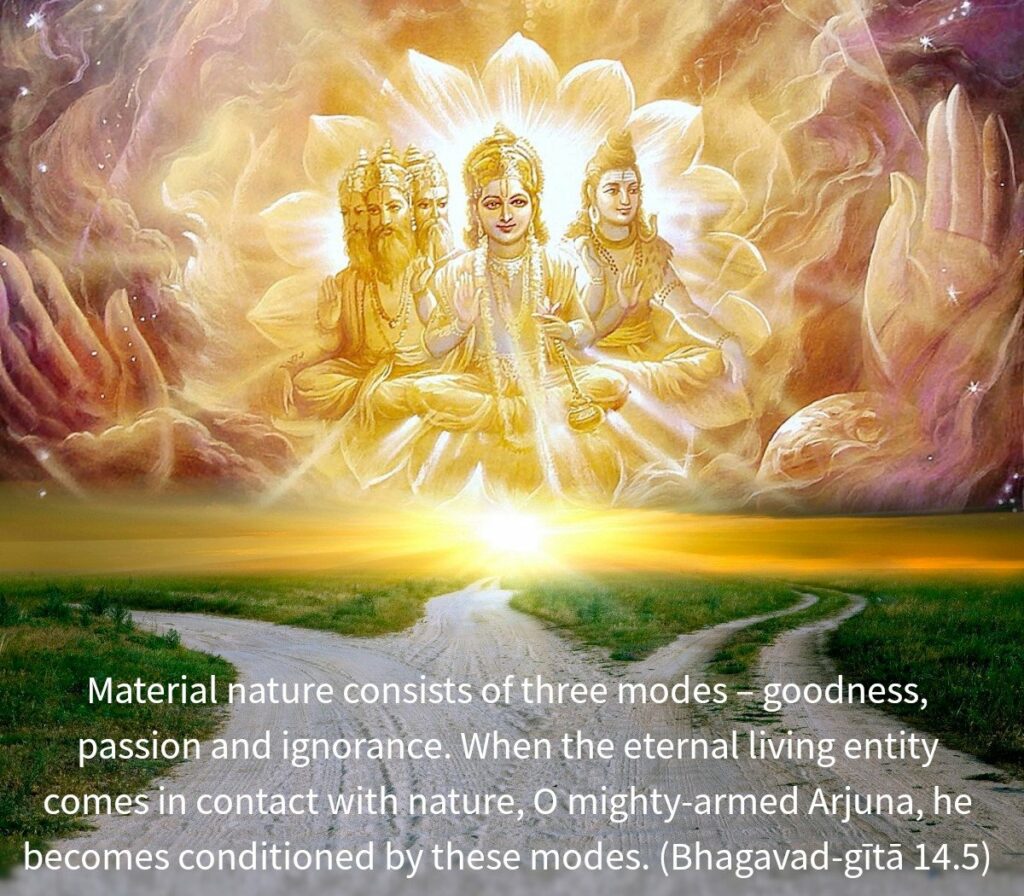
In the Indian tradition, the Bhagavad Gita also explains the relation between human behavior and environment or ‘Prakriti’. Chapter XIV, verse 5 states : “Sattvam, rajas, tama iti gunah prakriti sambhavah”, the modes of human behavior such as Sattva (the mode of goodness), Rajas (the mode of passion), and Tamas (the mode of ignorance) are generated by the interactions between human body and the environment in which he lives.
Whole Dude – Whole Behavior: A thing comprises of two categories, 1. Matter, and 2. Form. Behavior pertains to the actions performed by the Form and Nature pertains to the material nature of Matter, the Living Matter or the corporeal substance.
At the same time, Indian tradition makes a very clear distinction between true human nature and the three modes of human behavior. The real, or true man is described by the spiritual characteristic of human nature. The Bhagavad Gita in Chapter XVIII, verse 20 claims that all living entities share a single reality even while they are divided into innumerable forms (Sarva bhutesu yenaikam bhavam avyayam iksate) and directs us to recognize that spiritual nature as the true reality that is common among different living forms. B.F. Skinner paid attention to the external causes or influences that generate or modify human behavior and has totally avoided the study of innate or inner cause of behavior. He did not give any importance to the role of heredity in human behavior. This internal influence on an organism’s behavior is not directly observable and an experimenter cannot manipulate such internal influences to conduct experimental studies of behavior. Skinner’s findings about external influences and environmental conditioning mechanisms explain several aspects of human behavior but they do not explain the relationship between human behavior and human existence. To understand human existence, we have to learn about the nature of man’s substance and the behavior of the cells, tissues, and organs that provide the structural and functional basis of the human organism.
Man is a very complex living organism that shows structural differentiation and the functional organization of various tissues and organ systems. The specialized functions of tissues and organs is possible because of the functional subordination of the cells to the requirements of the organism as a whole. In other words, the specialized functions of tissues and organs could be described as ‘altruistic’ behavior, a behavior that promotes the well-being and appears to favor the individual’s chances of survival and reproduction. Man may exhibit behavior under the influence of environment and may act in the modes of behavior such as goodness (Sattva), passion (Rajas), or ignorance (Tamas), but his existence is made possible by his innate human nature which acts as an internal influence and determines the characteristics of the biotic interactions between the cells, the tissues, and organs of his own body.
Whole Dude – Whole Behavior: The integration of Structure and Function describes the Spiritual Basis for Health and Human Existence. By knowing the structure and function of the Red Blood Cell or Erythrocyte, we can establish the facts of Blood Circulation, the reason for the structure of the Heart and Lungs, their motions and their relation to each other and their relation to the Human Being who exists as an Individual with Individuality.
Whole Dude – Whole Key: The Key to Human Nature. The Vitruvian Man c. 1492. The painting by Leonardo da Vinci displays the Spirit of Scientific Inquiry about Human Nature.
What is Man? The motivation for asking this question comes from a statement expressed in the Sanskrit language, “Sarvesham Swastir Bhavatu” which seeks the well-being of all humans of all races, of all cultures, of all religions, and of all nations. Our efforts to support the well-being of man would be affected by our understanding of the ‘real’, or ‘true’ nature of man.
Whole Dude – Whole Key: The Key to Human Nature. The integration of Structure and Function describes the Spiritual Basis for Health and Human Existence. By knowing the structure and function of the Red Blood Cell or Erythrocyte, we can establish the facts of Blood Circulation, the reason for the structure of the Heart and Lungs, their motions and their relation to each other and their relation to the Human Being who exists as an Individual with Individuality.
All human traditions including several philosophical and scientific traditions make assumptions about human nature. The basic assumption about human nature is that of finding it displayed in feelings, thoughts, moods, action, and behavior.
I study human nature from the functional characteristics that are observable in biotic interactions of cells, tissues, and organs that constitute the human organism. If man is viewed as a multicellular organism, I need to discover the human nature of this subject who lives because of the functions of the cells, tissues, and organs that provide the structural basis of the human organism.
The Key to Human Nature – Evolution vs Creation:
Whole Dude – Whole Key: The Key to Human Nature. Charles Darwin’s great contributions to Biology: “The Origin of Species by means of Natural Selection: Or the Preservation of Favoured Races in the Struggle of Life” (1859), The Descent of Man (1871), The Expression of the Emotions in Man and Animals (1872).
Man’s evolution from ape-like ancestors is thought to be the key to our true human nature. Ethology or the scientific study of animal behavior is based on the Theory of Evolution. In order to explain human condition, ethological theories of human nature appeal to the evolutionary past of man.
Whole Dude – Whole Key: The Key to Human Nature. Konrad Zacharias Lorenz (November 1903 to February 1989), Austrian Zoologist, founder of modern Ethology which involves scientific study of animal behavior by means of comparative zoological methods. He won the Nobel Prize for Physiology along with two other animal behaviorist.
Lorenz sees man as an animal who has evolved from other animals. He thinks that human behavior is subject to the same causal laws of nature as all animal behavior. Many patterns of animal behavior show “hereditary coordination” or “instinctive movements” that are innate rather than learned. The ‘instinctual’ behavior is fixed and may not be eliminated or altered by the environment. Instinct is inherited and it is essentially unlearned behavior. Some of the most important aspects of animal behavior are innate. Lorenz studied the nature of instinctive behavioral acts. The instinctual behavior is caused by a ‘drive’ which causes the behavior to appear spontaneously. The “four big-drives” are feeding, reproduction, flight, and aggression. Very often, behavior is activated by two or more basic drives. To account for an instinctive behavior pattern in a species, reference is made to its survival value it has for the genes for that behavior. To explain the existence of any particular organ or behavior pattern, Lorenz looks for its survival value for the species. In his book, “On Aggression” (1963), he explains the natural history of man’s aggressive behavior. He considers that man has an innate drive to aggressive behavior towards his own species like many other animals. Fighting and warlike behavior in man have an inborn basis. He seeks an evolutionary explanation for human innate aggressiveness or ‘Intra-Specific’ aggression which is concerned with fighting and threats between members of the same species. The most destructive aspect of human aggression is its communal nature and the fighting is not between individuals but between groups. Humans fight as groups and human beings are the only animals to indulge in mass slaughter of their own species. He explains that this innate aggressive behavior has evolved from the communal defense response of our pre-human ancestors. However, Lorenz made no scientific study of behavior displayed by apes. Among the members of Homo genus, man is the only surviving representative of the Homo sapiens species and hence it will not be easy to validate his conclusions about evolutionary origin of innate human aggressive behavior.
If aggression is viewed as a hereditary behavior which is based upon its survival value for the genes for that behavior, it must be noted that all human ancestors had perished and have gone extinct and the behavior of aggression could not be of value in defending their survival as a species.
Compassion within the Individual and between Individuals:
Compassion or sympathy (sym=together + pati=suffer) describes the emotional feelings of sorrow for the sufferings or troubles of another person or others accompanied by an urge to help. Compassion describes an understanding arising from the sameness of emotional feeling. When man recognizes pain or sorrow in the lives of others, it spontaneously arouses the emotional feelings of compassion. This understanding and the emotional response to the pain and suffering in the lives of others appears to be instinctive. Apart from the “four big-drives”, compassion is operated by an innate drive or it is a motivated behavior. Compassion and altruism (any behavior that appears to favor another individual’s chances of survival) is a response generated by human nature. Compassion acts like a physical force, power, or energy. It has the power to uplift man from physical pain and mental, or emotional pain or sorrow. The instinct of compassion comes into play and acts as a force, power, or energy when man experiences sorrow and reacts to the suffering or troubles of another man. I am also suggesting that the emotionally motivated behavior of compassion is found within individuals apart from between individuals. If my experience of pain or suffering does not elicit the emotional response of compassion from others, fortunately, I can derive the benefit of the uplifting power of compassion by simply knowing the source of compassion that exists within myself. When a person is enjoying a state of good health, we find that the cells, tissues, and organs of that human person are interacting with each other in a harmonious manner and these intraspecific biotic interactions display characteristics such as mutual assistance, mutual cooperation, mutual tolerance, and mutual functional subservience to provide a benefit to the human individual who lives because of the functions of these cells, tissues, and organs. The constituent parts of the human body interact with each other with a sense of devotion, sympathy, compassion, and understanding. We often try to find compassion in the actions performed by others in response to the pain, and suffering that we may experience. We describe compassion from the thoughts, emotional feelings, understanding, and sympathetic response that we witness in the behavior and action of others. I recognize compassion in the nature of the interactions between the cells, tissues, and organs of my body and consider that such compassion always operates to keep me the human person in good and positive health. I understand the reality of human existence and suggest that the existence is made possible because compassion is innate to human nature guiding the normal living functions both in health and sickness. I observe the operation of compassion in the wound healing mechanism that is described as ‘Inflammation and Repair’. The emotional feelings of compassion are important for the survival of man who exists to find emotional satisfaction from his living experience. The instinctive behavior of compassion supports the survival of man as it provides an emotional sense of satisfaction and contentment which contributes to the experience of joy and happiness in life.
Compassion is the Key to Human Nature:
Whole Dude – Whole Key: The Key to Human Nature could be discovered by knowing the Cell Structure and Functions. If hereditary behavior is operated by information present in genes, it must be noted that the genes have no independent existence of their own. The nucleus and the genes perform their cellular functions deriving energy from the cytoplasm or protoplasm of the cell. The biological properties, characteristics, and the biological nature of the living substance or protoplasm could account for the instinctive behavior pattern of compassion.
The biological properties, characteristics, and the biological nature of the living substance or protoplasm could account for an instinctive behavior pattern like compassion. Biological functions and characteristics such as nutrition, recognition, awareness, responsiveness, and communication with other living cells have not evolved because of their survival value for the species. At a fundamental level, certain living characteristics or nature is innate or implanted in matter at the beginning of life. The nature called compassion is implanted or innate to the living substance or matter known as protoplasm.
Special Frontier Force – The Spirit of Freedom:
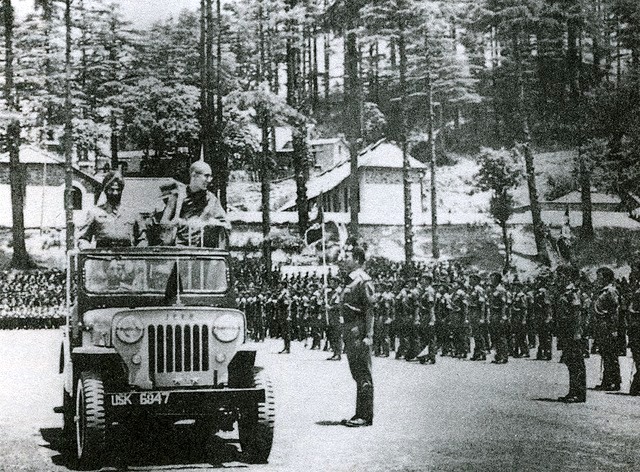
On June 03, 1972, His Holiness The 14th Dalai Lama had visited Headquarters Establishment Number.22, C/O 56 APO to inspect the Tibetan soldiers who serve in the multinational military organization called Special Frontier Force. I had served as the Medical Officer at this military Establishment and my duties required the verification of mental, and physical preparedness of all the men.
While I had served in a multinational defense organization called ‘Special Frontier Force as its Medical Officer, I had a direct opportunity to study and observe the interaction of human aggression and human spirit of compassion. Human aggression as displayed by the Tibetan soldiers of this military Establishment is in response to a stimulus from the external environment to which they have been exposed. The brutal, military occupation of the Land of Tibet by People’s Liberation Army of Communist China has provided the environmental stimulus and has influenced the external behavior and action of these Tibetan men who have volunteered to fight China’s act of military aggression. Since, as a Medical Officer, I have a spiritual relationship with these Tibetan soldiers of my Unit, I can easily recognize their true spiritual nature that seeks Peace, Harmony, and Tranquility both within the person and with others present in the external environment. The human spirit seeks Freedom and it resists military occupation and repression. I could easily recognize the Spirit that makes man to use aggression to defeat the purpose of an enemy who has compromised the desire and the quest for Freedom.
Whole Dude – Whole Human: This painting the Vitruvian Man (c. 1492) by Leonardo da Vinci displays a spirit of scientific inquiry. What is Man? The understanding of human nature will help to promote man’s well-being
What is Man? The motivation for asking this question comes from a statement expressed in the Sanskrit language, ‘Sarvesham Swastir Bhavatu’ which seeks the well-being of all human beings of all races, of all nations, of all cultures, and of all religions. The term altruism describes unselfish concern for the welfare of others. It involves human behavior and actions that appear to favor another individual’s chances of survival and reproduction. The thought expressed in the Sanskrit language reveals human nature. Our efforts to support the well-being of man would be affected by our understanding the ‘real’ or ‘true’ nature of man.
All religious and cultural traditions make assumptions about human nature. The basic assumption about human nature is that of finding it displayed in feelings, thoughts, actions, and behavior.
If man is viewed as a multicellular organism, we need to discover the human nature of this subject who lives because of the functions of the trillions of cells. Hence, we need to know if human nature is displayed in the functional characteristics that are observable in biotic interactions of cells that constitute the human organism. The objective of this blog post is to explore the universal principles that determine human nature. Human cultures and religions seek to know human nature as reflected in man’s thoughts, feelings, moods, actions, and behavior. I seek the knowledge of human nature by describing the characteristics of behavior exhibited by the cells that constitute the human individual.
The Study of Man as a Living Thing:
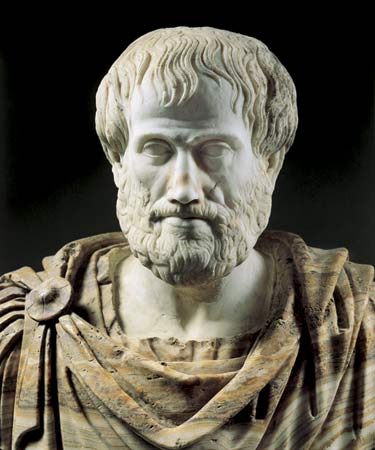
Whole Dude – Whole Human: Greek philosopher and the founder of Biology Aristotle (384 – 322 B.C.) has observed that there is a science which investigates being as being and the attributes which belong to being in virtue of its own nature.
Greek philosopher and the founder of Biology Aristotle (384 – 322 B.C.) has observed that there is a science which investigates being as being and the attributes which belong to being in virtue of its nature. For a thing to come into being, Aristotle describes four kinds of causes, 1. Efficient Cause, 2. Formal Cause, 3. Material Cause, and 4. Final Cause, the end or purpose for which a thing exists.
Aristotle describes corporeal substances are composite of two principles, form, and matter. Matter and Form are the Material and the Formal Cause respectively of what comes to be known as a thing. The matter represents the potentiality of the livng corporeal substance and the form represents the actuality of the living thing. The structure and the behavior of things contribute to their individual being and function. Aristotle did not regard the body and soul as two separate entities as the soul is merely a set of defining features.
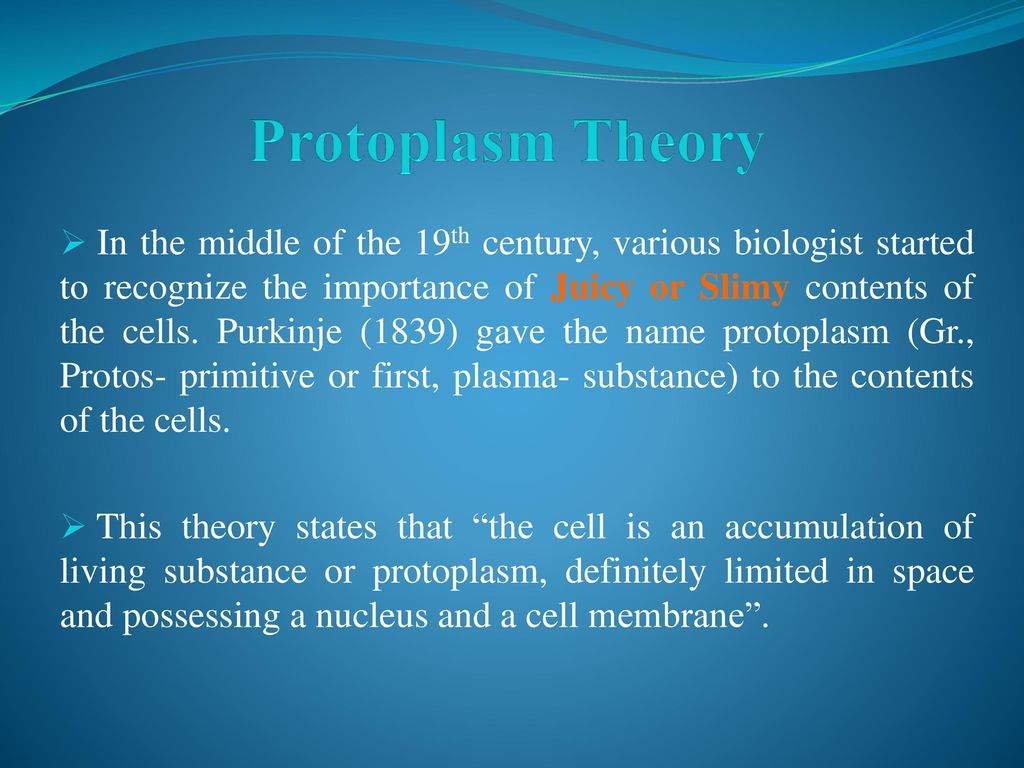
Whole Dude – Whole Human: In the middle of the 19th century, various biologist started to recognize the importance of Juicy or Slimy contents of the cells. Purkinje (1839) gave the name protoplasm (Gr., Protos- primitive or first, plasma- substance) to the contents of the cells. This theory states that the cell is an accumulation of living substance or protoplasm, definitely limited in space and possessing a nucleus and a cell membrane .
I proceed with my presentation keeping the basic criteria that Aristotle uses to know human nature, 1. the human form, 2. the living matter, 3. the human living thing, its nature being a function of its structure and its behavior. In case of man, the human form undergoes changes during every stage of its existence such as infancy, boyhood, youth, adult, and oldage.
The living matter or protoplasm continues to live without any apparent changes in its fundamental living properties. The biological functions or the characteristics of the living matter or protoplasm do not evolve or change because of its survival value for the species.
The living functions such as consciousness, responsiveness, recognition, communication through signalling, motion, and nutrition are innate properties of the living substance or protoplasm and are not acquired by a learning process. This innate ability of protoplasm to perform functions helps in the development of instinctive behavior that is observed in the organism. It is not surprising to observe that certain important features of human nature are innate rather than learned from experience. There are several factors involved in the development of human nature and in the formation of individual character. We need to recognize the contrast between the innate and the learned, heredity and environment, nature and nurture or social upbringing. The biological properties such as Motion, and Nutrition, the biological characteristics such as consciousness or awareness of its own condition called existence in a given environment, and the biological nature such as responsiveness, communication, and recognition of other living cells present in its external environment could account for an instinctive behavior pattern observed in all living organisms. This instinctive behavior pattern accounts for the nature of biotic interactions among members of a given biotic community.
To explain human nature, we need to study the character and behavior of man’s corporeal substance or protoplasm and view man as a terrestrial organism represented by a biotic community of trillions of individual living cells and as a natural host to trillions of microbes that inhabit man’s gastrointestinal tract.
The terms such as spirit or soul must be used by stating its defining features and we need to understand the connection between the feature and the substance that contributes to that feature of soul or spirit that is seen as the vital, animating principle found in all living things.
The Mechanist concept of Life:
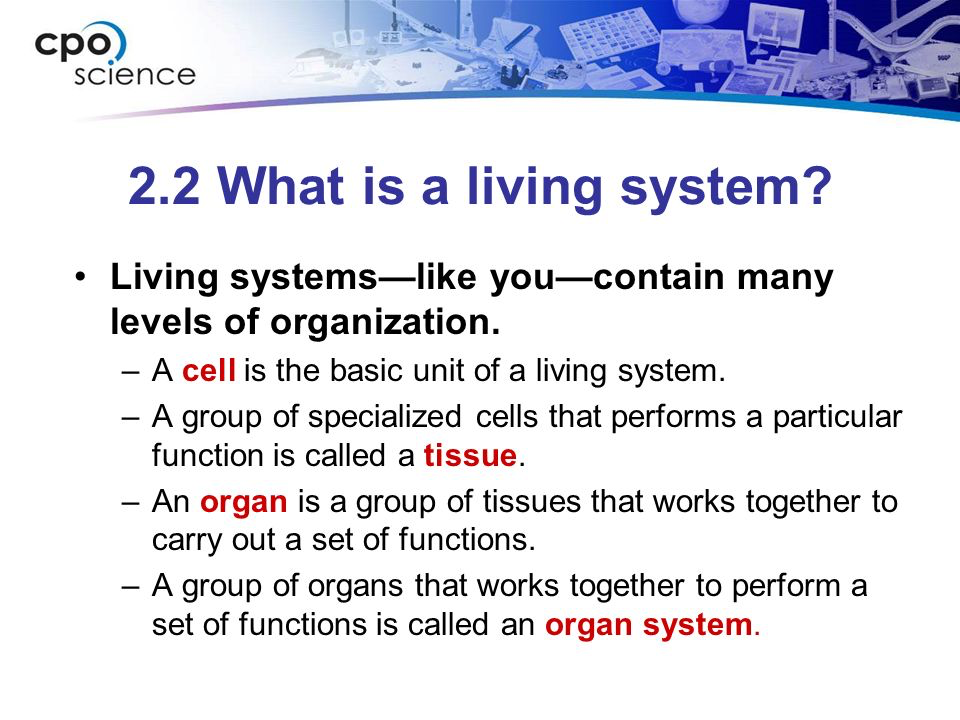
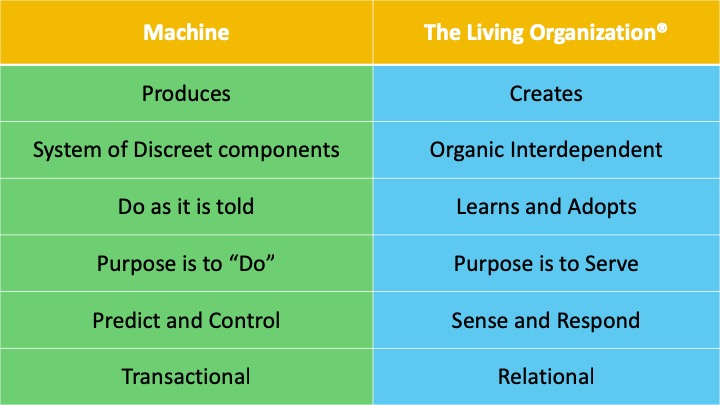
Whole Dude – Whole Human: There is fundamental distinction between the lifeless and the living, animate and inanimate, living and nonliving matter. The living system cannot maintain its living functions by exclusively using the elementary laws of Physics and Chemistry.
The Mechanist Concept of Life asserts that the phenomena of life are merely processes and transformations obeying elementary laws of Physics and Chemistry. The living system is ultimately reducible to its constituent molecules and atoms. The living cell is a thermodynamically unstable system. This means that without continuous input of energy, a living cell will degrade spontaneously into a nonliving collection of molecules.
Whole Dude – Whole Human: The human nature of man is constituted by the spiritual nature of the living substance.
To maintain life an organism not only repairs or replaces (or both) its structures by a constant supply of the materials of which it is composed but also keeps its life processes in operation by a steady supply of energy. This functional activity of a living cell is called metabolism.
Whole Dude – Whole Human: The human nature of man is defined by the living substance that is the prerequisite to build the Living System.
Living systems must be supplied energy for continual synthesis of new organic molecules and to replace, or to repair broken organic molecules. The human nature of man is defined by the living substance that can creatively manipulate matter and energy it acquires from its external environment.
We need to explain this functional ability of a living system to acquire energy from its external environment. This ability is not operated by laws of Physics and Chemistry.
Whole Dude – Whole Human: The human nature of man is defined by the living substance that can creatively manipulate matter and energy it acquires from its external environment.
For example, in Physics, the force by which every mass or particle of matter including photons attracts and is attracted by every other mass or particle is called Gravitation which is the weakest of the four Fundamental Forces operating in nature. A living system does not use the force of Gravitation to attract a substance to use it for its metabolism. Physics explains the process of diffusion and the operation of Osmosis in which a solvent passes through a semipermeable membrane such as the wall of a livng cell, into a solution of higher concentration, so as to equalize concentrations on both sides of the membrane (the osmotic pressure gradient). Osmosis is a relevant biological mechanism but it does not fully account for the energy acquisition by a living cell.
How does Protoplasm acquires Energy?
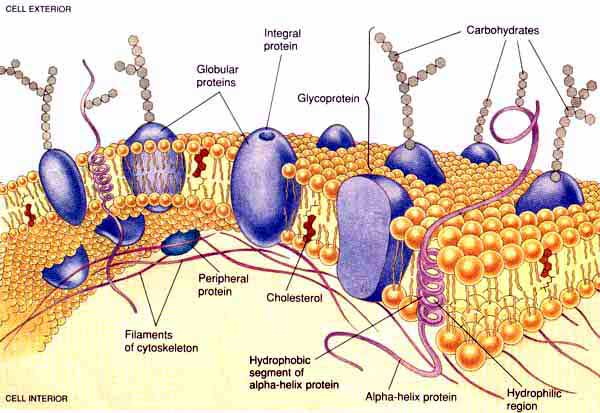
Whole Dude – Whole Human: The Biological Membrane or the Plasma Membrane separates protoplasm of the cell from its environment. It allows a highly controlled exchange of matter across the barrier it poses.
The functional activity called metabolism involves a living system’s continual exchange of some of its materials with its surroundings, principally in the process of building up, repairing, or breaking the molecules of life.
The most striking characteristics of protoplasm are its vital properties of Motion, and Nutrition. By Motion is meant the property which protoplasm has of changing its shape and position by some “intrinsic power” and exhibit amoeboid movement. Ciliary movement or the vibration of hair-like processes from the surface of any cell may also be regarded as a variety of the motion with which protoplasm is endowed. Nutrition is the “power” which protoplasm has of attracting to itself the materials necessary for its growth and maintenance from surrounding matter. When any foreign particle comes in contact with the protoplasmic substance, it becomes incorporated in it, being enwrapped by one or more processes projected from the parent mass which encloses it. When thus taken up, the foreign particle may remain in the substance of the protoplasm for some time without change, or may be again extruded. The living substance called protoplasm has the “intrinsic power” of motion and uses its power to ingest and to expel foreign particles in the external environment with which it may come into contact. The Biological Membrane or the Plasma Membrane which separates protoplasm of the cell from its environment allows a highly controlled exchange of matter across the barrier it poses; some compounds are able to pass through the membrane easily, others are completely blocked. The screening effect on the substances that enter and leave the cell is perhaps the most important function of the membrane.
The actions and behavior of protoplasmic substance are dependent upon its innate “power” and may not be attributable to elementary laws of Physics and Chemistry.
Spiritualism and Human Nature:
Whole Dude – Whole Human: Red Blood Cells provide a very good example of the adaptive subordination of cells to meet the requirements of the Whole Organism. The specialized functions of tissues and organs of human body are possible because of such functional subordination.
The structural differentiation and the functional organization of various organ systems makes man a very complex living organism. This kind of specialized functions of tissues and organs is possible because of adaptive subordination of the cells to the requirements of the Whole Organism. If altruism describes any behavior that appears to favor another individuals’ chances of survival, we can easily recognize this characteristic in the functions performed by the Red Blood Cells. Each Red Blood Cell lives for a very limited life span of its own and during its short period of existence it serves the purpose of the Whole Human Organism with a sense of devotion, with the spirit of cooperation, to provide assistance to all other cells, tissues, and organs of the body in a selfless manner.
I define the term ‘Spiritualism’ as the NATURE of a relationship, a partnership, an association, or bonding between two individual living entities based upon characteristics such as compassion, sympathy, understanding, cooperation, mutual assistance, mutual tolerance, voluntary subservience to provide some benefit to the member participating in the biotic interaction.
Spiritualism is innate and is not acquired by learning experience. The very existence of the human being and to perform the characteristic living functions, man depends upon the protoplasmic substance and its innate “power” to acquire energy from its external environment.
The human form becomes the actuality that it represents by the NATURE of its spiritual association with the protoplasmic living matter. Man is a spiritual being because of the spiritual nature of his protoplasmic living substance.
Whole Dude – Whole Human: The human nature of man is determined by the spiritual nature of his living substance often described as protoplasm.










 Whole Dude - Whole Concept