Whole Dude – Whole Service

Whole Dude – Whole Service:

John Milton (1608-1674). Milton wrote many of ...
Whole Dude – Whole Service: A Salute to The Law of Temperance. A tribute to John Milton.
Whole Dude – Whole Service: NINE YEARS SERVICE MEDAL – A SALUTE TO THE LAW OF TEMPERANCE

The Law of Temperance

Whole Dude – Whole Service: NINE YEARS SERVICE MEDAL – A SALUTE TO THE LAW OF TEMPERANCE

John Milton (1608 – 1674), in his greatest poetic achievement of ‘PARADISE LOST’ describes Man’s First Disobedience of God, and the loss thereupon of Paradise wherein Man was placed. Adam, the first Man who was created in God’s image and likeness brought Death into the World. God declares that Adam and Eve could no longer abide in ‘Garden of Eden‘, the Paradise. God sends Angel Michael with a Band of Cherubim to dispossess them. Michael reveals to Adam the ‘Law of Temperance’ which could help him to live for many long years.

Whole Dude – Whole Service: NINE YEARS SERVICE MEDAL – A SALUTE TO THE LAW OF TEMPERANCE

Angel Michael also comforted Adam by assuring him that if he observes the ‘Law of Temperance’, Death would be like the gentle act of gathering a ripe fruit when fully mature.

Paradise Lost, Book XI ( 520-540):

Whole Dude – Whole Service: In John Milton’s epic poem of Paradise Lost, angel Michael explained ‘The Law of Temperance’ to Adam, the first created man to face the threat of death.

In John Milton’s epic poem of Paradise Lost, angel Michael explained ‘The Law of Temperance’ to Adam, the first created man to face the threat of death.

I yield it just, said Adam, and submit.

But is there yet no other way, besides

These painful passages, how we may come

To Death, and mix with our connatural dust?

There is, said, Michael, if thou well observe

The rule of not too much, by temperance taught

In what thou eatst and drinkst, seeking from thence

Due nourishment, not gluttonous delight,

Till many years over thy head return:

So maist thou live, till like ripe Fruit thou drop

Into thy Mother lap, or be with ease

Gathered, not harshly pluckt, for Death mature:

The Nature of Temperance

Whole Dude – Whole Service: NINE YEARS SERVICE MEDAL – A SALUTE TO THE LAW OF TEMPERANCE

The essence of Temperance is choosing moderation and deliberately avoid excess. In Indian Culture and Tradition, living in moderation and living in virtue are almost identical. Socrates suggests that one should “choose that which is orderly and sufficient and has a due provision for daily needs”. He compares the intemperate man “to a vessel full of holes because it can never be satisfied”. Socrates describes the temperate man as able to satisfy his limited desires, whereas the intemperate man of boundless desire, can never pause in his search of pleasure. According to Freud, when “the ego learns that it must inevitably go without immediate satisfaction, postpone gratification, learn to endure a degree of pain, and altogether renounce certain sources of pleasure”, it “becomes ‘reasonable’, is no longer controlled by the pleasure-principle, but follows the reality-principle”, which seeks ” a delayed and diminished pleasure, one which is assured by its realization of fact, its relation to reality”.

Temperance and Courage

Whole Dude – Whole Service: Saint Thomas Aquinas and ‘The Law of Temperance’.

Saint Thomas Aquinas and ‘The Law of Temperance’.

Thomas Aquinas has defined Temperance as “a disposition of the soul, moderating any passions or acts, so as to keep them within bounds. Temperate refers to a man who abstains from bodily pleasures and delights in this very fact. A man not only acts temperately but is temperate in character, when his desires are themselves habitually moderated to be in accord with reason. A temperate man is not pained at the absence of pleasure or by his abstinence from it. Temperance contributes the virtue of Fortitude which strengthens men against “the enticement of pleasure” as well as against the fear of pain. A man who is able to stand firm against the onslaught of pleasures is more able to remain firm against the dangers of death. And so “Temperance can be said to be Brave”. The endurance of pain is central to the nature of Courage. Temperance and Courage are not distinct virtues as both are based upon an ability to stand firm against pain and danger.

The Nine-Years Long Service Medal – A Salute to the Law of Temperance:

Whole Dude – Whole Service: During my service in the Indian Army Medical Corps, I learned the values of Temperance, Fortitude, Courage, and delaying gratification of desires, and avoid seeking physical comforts and pleasures.

During my service in the Indian Army Medical Corps, I learned the values of Temperance, Fortitude, Courage, and delaying gratification of desires, and avoid seeking physical comforts and pleasures.

Whole Dude – Whole Service: NINE YEARS SERVICE MEDAL – A SALUTE TO THE LAW OF TEMPERANCE

During the first nine years of my Indian Army Service, apart from taking part in the War of Liberation of Bangladesh, I participated in a variety of Army Operations that keep the men ready and prepared for a battle. Military Training and Service can be best described as habituation for a temperate character. The nature of Army Operations and Tactics always demand to overcome the onslaught of sense pleasures and voluntarily delaying the gratification of personal desires. A lifestyle based upon physical ease and comfort and indulgence in food and alcohol is not compatible with the Army way of life. The nature of Army Operations is influenced by terrain, climatic conditions, distances and the availability of transportation. There is no scope to cater for physical comfort, relaxation, and entertainment. The supply of rations and food provisions is limited because of the problems of their bulk and weight. Army Rules and the Code of Conduct emphasize that men should honor their commitment to serve more than anything else. Such commitment to Serve with Honor would only be possible only when the man in uniform lives in accordance with the Law of Temperance.

Whole Dude – Whole Service: NINE YEARS SERVICE MEDAL – A SALUTE TO THE LAW OF TEMPERANCE


Whole Dude – Whole Conviction

ca. 1940, Probably India --- Vallabhbhai Patel...
Whole Dude – Whole Conviction

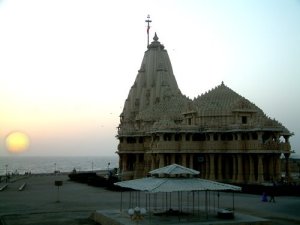
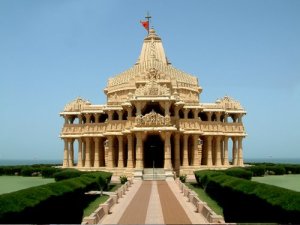
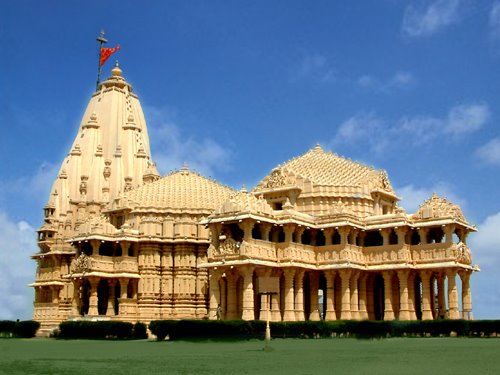
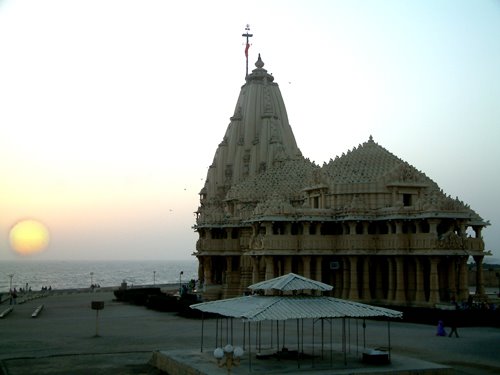
The Temple of Lord Somnath. The Battle between the Power of Creation and the Power of Destruction:

Kindly pay homage to Sardar Vallabhbhai Patel, India’s first Deputy Prime Minister who had recreated the Temple of Lord Somnath and vanquished the evil forces which visited Somnath repeatedly to utterly destroy this sacred place of Hindu worship.

Whole Dude – Whole Conviction
Kindly pay homage to Sardar Vallabhbhai Patel, India’s first Deputy Prime Minister who had recreated the Temple of Lord Somnath and vanquished the evil forces which visited Somnath repeatedly to utterly destroy this sacred place of Hindu worship.

Whole Dude – Whole Power

THE TEMPLE OF LORD SOMNATH IS THE EVIDENCE FOR THE POWER OF CREATION OVER THE POWER OF DESTRUCTION. 

This entry is dedicated to the memory of Sardar Vallabhbhai Patel, India’s first Deputy Prime Minister. 

THE SHRINE ETERNAL : 

Somnath Temple is in the ‘Prabhas Kshetra’, near the seaport city of Veraval in Junagadh District, Kathiawar Peninsula of Saurashtra , on the shores of Arabian Sea,the western coast of Gujarat, India. This holy place of pilgrimage is a place of great antiquity and recent excavations there have revealed a settlement dating from about 1500 B.C. As per Indian traditions, the place is of significance as it is considered as the place from where Lord Krishna departed from this world. The presiding deity of this temple is Lord Shiva and He is known by the name of SOMNATHA or the Lord of the Moon. The present temple as it exists today is known as ‘Kailash Mahameru Prasada and is built-in CHALUKYA style of temple architecture. The site lied in a state of ruin for centuries and the decision to rebuild it was made by Sardar Vallabhbhai Patel during his visit on 13 November, 1947. The temple was inaugurated on December 1, 1951 by Dr. Rajendra Prasad, the first President of the Republic of India. He had remarked that, “The Somnath temple signifies that the power of creation is always greater than the power of destruction”. The temple symbolizes the enduring fame of Sardar Patel who during the first three years of Indian independence after 1947, had served as Deputy Prime Minister, Minister of Home Affairs, Minister of Information, and Minister of States. He was considered as practical and decisive. He was the architect of the Indian Union and his greatest contribution was the achievement of the peaceful integration of over 535 princely states into the Indian Union. The principality of Junagadh, and the princely State of Hyderabad had initially resisted the offer to join the Indian Union. Having failed in his attempts to join Pakistan, the Nawab of Junagadh fled away from the country. Mr. Bhutto,( the father of Mr. Z.A. Bhutto, who served as Pakistan’s Prime minister) acting in his capacity of the ‘DEWAN’ of the court of Junagadh, had invited Lord Mountbatten to accept the accession of Junagadh to India. In the State of Hyderabad, a militant movement called the Razakars was launched seeking independence but Sardar Patel restored peace in September 1948 and the ruler Nizam had accepted the terms of accession to the Indian Union. This part of Indian history and the integration of princely states into Indian Union has again become relevant after the enemy’s brutal attack in Mumbai which I had mentioned in my previous entry. The enemy had described himself as ‘Deccan Mujahedeen’, and the media reports indicate that the enemy had specific designs to gobble Junagadh, and Hyderabad apart from encouraging insurgency in the border State of Kashmir. The enemy’s intentions will force us to defend SOMNATH in Junagadh District which is resurrected after repeated attacks over centuries. 

THE HISTORY OF SOMNATH :

Jyotirlinga Temple at Somnath is mentioned in Hindu prayers in praise and worship of Lord Shiva:”Sauraashtra dese visadeti ramye, Jyotirmayam Chandra Kalaa vatamsam, Bhakti pradaanaaya Krupaa vateernam, Tam Somanaatham Saranam prapadye.”
Somnath, the confluence of three rivers, River Sarasvati, River Hiranya, River Ilanki and Kapila is mentioned in ancient Hindu Scriptures known as Rig Veda.


LORD SOMNATH TEMPLE-THE SHRINE ETERNAL- TESTIMONY TO THE POWER OF CREATION OVER THE POWER OF DESTRUCTION.

 Somnath finds its mention in the ancient text of RIG VEDA. It is associated with the holy names of GANGA, YAMUNA, and SARASWATI, popularly known as ‘TIRTH DHAM’ where Indians traditionally offer worship by a practice described as ‘River Worship’. The ancient river of Saraswati may have merged into the Sea at Somnath apart from smaller rivulets known by the names of Hiranya, Kapila and Ilanki. The place is extensively described as a place of pilgrimage and its importance is narrated in the ancient texts of ‘SKANDA PURANA’, ‘BHAGAVATA PURANA’, and ‘SHIVA PURANA’. Lord Shiva in His radiant form known as ‘Jyotir Linga’ resides at Twelve different places in India and Somnath is listed as the first place of residence of ‘DWADASA JYOTIR LINGA’.Tradition claims that the original Temple of Somnath was built by Lord Moon, and was later built by King Ravana of Lanka who is a central figure in the story of Indian epic poem of RAMAYANA. The SINDH area of the Indian subcontinent came under Arab conquest in 7th century A.D. The Somnath Temple built by the YADAVA kings of Vallabhi of Saurashtra around 649 A.D. was destroyed in 725 A.D. by the Arab governor of Sindh. The Pratihara King Nagabhata II rebuilt it in red stone. Between 1001 A.D. and 1027 A.D. , the road to conquest of India was prepared by Sultan Mahmud of Ghazna( modern GHAZNI in Afghanistan) who conducted more than twenty raids into North India. His raids were mainly for plunder. They revealed the wealth of India and demonstrated the vulnerability of India to military attacks. During one of his raids, in 1024 A.D. , marching across India’s Thar Desert, Mahmud of Ghazna had plundered and destroyed the Somnath Temple. The amount looted was estimated at 20 thousand, thousand ‘Dinars’. The enormous treasures found at Somnath have been a theme of wonder for all who have written on that conquest. The Paramara King of Bhoj of Malwa, Solanki King Bhima of Anhilwara/Patan between 1026 A.D. and 1042 A.D. rebuilt the Temple. By 1297/98 A.D. , Gujarat was conquered by Ala-ud-Din Khalij, Sultan of Delhi and the Temple was razed.Solanki King Kumarapala built a Temple of stone and this was destroyed again in 1394 A.D. For the last time, the Temple was destroyed in 1706 A.D by the Mughal Emperor Aurangzeb and the site remained in ruins till India’s independence in 1947. The rebirth of the Temple on December 1, 1951 demonstrates the vitality of the Indian spirit. 

A HYMN IN PRAISE OF LORD SOMNATH : 

Saurashtra dese visadeti ramye 

Jyotirmayam, Chandra kala vatamsam 

Bhakti prada naya Krupa vatirnam 

Tam Somanatham saranam prapadye. 

Lord Somanatha is dwelling in His great splendor in the Province of Saurashtra. May this Lord Somanatha who is full of radiance, and the crescent-shaped Moon shines in His matted hair, with His extreme compassion grant me a great sense of devotion with which I would seek my protection and let Him be my refuge. 

Jyotirlinga Temple at Somnath is mentioned in Hindu prayers in praise and worship of Lord Shiva:”Sauraashtra dese visadeti ramye, Jyotirmayam Chandra Kalaa vatamsam, Bhakti pradaanaaya Krupaa vateernam, Tam Somanaatham Saranam prapadye.”