Whole Worship – Whole Puja – The Tradition of Guru Worship

The Celebration of Guru Purnima:

The celebration of Guru Purnima and Vyasa Purnima on Thursday, July 10, 2025.

The Sanskrit word ‘guru’ translates to ‘dispeller of darkness’. Guru Purnima, marks the appearance day of Srila Vyasadeva.

The celebration of Guru Purnima and Vyasa Purnima on Thursday, July 10, 2025

Guru Purnima falls every year on the day of Ashadha Shukla Purnima. It is also known as Vyasa Purnima because Veda Vyasa, the sage who wrote the Mahabharata and assembled the Vedas, celebrates his birthday on this day.

The celebration of Guru Purnima and Vyasa Purnima on Thursday, July 10, 2025

Bharat Darshan – Bhagavan Ved Vyas – Author of Geetopanishad

BHARAT DARSHAN - BHAGAVAN VED VYAS - AUTHOR OF GEETOPANISHAD.
The celebration of Guru Purnima and Vyasa Purnima on Thursday, July 10, 2025

In the Indian tradition, Ved Vyas is the legendary author of epic poem Mahabharat, Bhagavata Purana, and several other Puranas , son of Sage Parashara, and Satyavati. He is father of Sage Shuka, King Pandu, and Minister Vidura. He is great-grandson of Maharishi Vasishta, and grandson of Sage Shakti. Ved Vyas is a historical person, a contemporary of another legendary person known as Lord Krishna whom Indians worship. As per Indian tradition, Lord Krishna belongs to a time period or “Yug” called ‘Dwapar Yug.” Apart from being a great poet, Ved Vyas is recognized as a great teacher, a spiritual guide, and a divine personality with exceptional creative writing abilities. He is often recognized as author of ‘Geetopanishad’ for the divine song, ‘Bhagavad Gita’ distills the essence of Vedic Wisdom and presents it as useful guide to live daily life experiencing peace, harmony, and tranquility.

BHARAT DARSHAN - BHAGAVAN VED VYAS - AUTHOR OF GEETOPANISHAD.
The celebration of Guru Purnima and Vyasa Purnima on Thursday, July 10, 2025

In India, there was a suggestion or speculation about some unknown author, who may have inserted into epic poem Mahabharat, his/her poetical work (700 verses) that most Indians recognize as “Bhagavad Gita” and may have given credit to Ved Vyas, original author of Mahabharat. It raises issues about identity of author and the methods that people use to know the identity of any given person. In both Biology, and Medical Science, identification of individuals or individual entities is very important. Forensic Medicine deals with the identification of unknown dead bodies. In common practice, man is recognized by his occupation or actions. A poet is identified by his/her poetical composition, the literary contents of work published.

BHARAT DARSHAN - BHAGAVAN VED VYAS - AUTHOR OF GEETOPANISHAD.
The celebration of Guru Purnima and Vyasa Purnima on Thursday, July 10, 2025

I took time to study the concepts shared in Bhagavad Gita, and Bhagavata Purana and I could easily identify the similarities of views. In Bhagavad Gita, Lord Sri Krishna spoke to Prince Arjuna. In Bhagavata Purana, in a story popularly known as ‘Prahalad Charitra’ Demon King Hiranyakashipu spoke to grieving family members following death of his brother. Both of them use the same words and share the same Vedic knowledge about life and death.

BHARAT DARSHAN - BHAGAVAN VED VYAS - AUTHOR OF GEETOPANISHAD, BHAGAVATA PURANA, OTHER PURANAS, AND EPIC POEM MAHABHARAT.
The celebration of Guru Purnima and Vyasa Purnima on Thursday, July 10, 2025

The poet who composed Bhagavad Gita knows concepts shared by Vedas and Upanishads. For example, we can compare ‘Parable of the Chariot’ or “Ratha Kalpana” of Katha Upanishad, Part III, verses 3 to 11 with Bhagavad Gita, Chapter III, verses 39 to 43. The author of Bhagavad Gita reconstructed Ratha Kalpana and presented his own version and there is subtle difference between those two concepts. I recognize Veda Vyas as author of Bhagavad Gita through literary analysis and by comparing views and concepts that appear in different works in different contexts. We can easily know the identity of the author by examining his work.

Comparison of Amrita Bindu Upanishad (Krishna Yajur Veda) and Bhagavad Gita:

“Eka eva hi bhutatma bhute bhute vyavasthitah
ekadha bahudha caiva drsyate jala Chandravat.” (Verse # 12)

Being the One, the universal Soul is present in all beings, present in each individual living entity, and this One entity is viewed as several, different entities, just like reflection of (same) Moon seen in several pots of water.
The celebration of Guru Purnima and Vyasa Purnima on Thursday, July 10, 2025

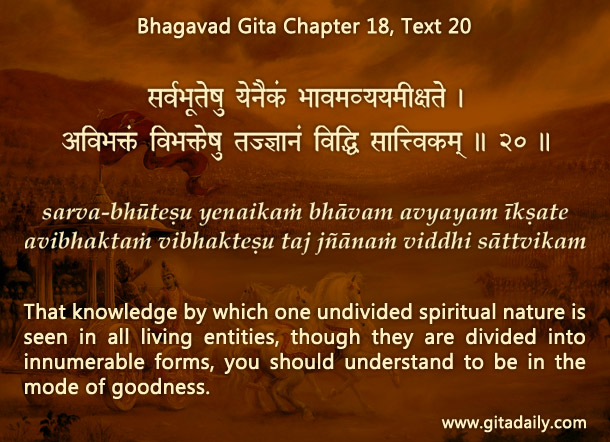
“Sarva-bhutesu yenaikam bhavam avyayam iksate,
avibhaktam vibhaktesu taj jnanam viddhi sattvikam.”(Bhagavad Gita, Chapter XVIII, Verse #20)

The knowledge of one who sees in every living entity, though divided into innumerable forms, one undivided spiritual nature, that knowledge is to be understood as being in the mode of Goodness. Just like the verse from Amrita Bindu Upanishad, this verse speaks about one single reality pervading all existence.

Comparison of Katha Upanishad (Ratha Kalpana) and Bhagavad Gita:

BHARAT DARSHAN - BHAGAVAN VED VYAS - AUTHOR OF GEETOPANISHAD. PARABLE OF CHARIOT, RATHA KALPANA OF KATHA UPANISHAD. THE RELATIONSHIP BETWEEN BODY, ORGANS OF SENSE PERCEPTION, MIND, SEAT OF INTELLECT OR DISCERNMENT, AND SOUL.
The celebration of Guru Purnima and Vyasa Purnima on Thursday, July 10, 2025. Parable of Chariot, Ratha Kalpana of Katha Upanishad. The relationship between body, organs of sense perception, mind, seat of intellect or discernment and soul.

“atmanam rathinam viddhi,
sariram ratham eva tu,
buddhim tu Saradhim viddhi
manah pragraham eva ca;
indriyani hayan ahur
visayams tesu gocaran
atmendriya-mano-yuktam
bhoktety ahur manisinah.” (Katha Upanishad, Part III, Sadhana, Verses 3 &4)

Know the Atman (Self) as the Master or Lord of the chariot, and the body as the chariot, know also the intellect to be the driver and mind as reins. The senses are called the horses, the sense objects are the roads; when the Atman is united with body, senses and mind, then the Wise call Him the Enjoyer.

BHARAT DARSHAN - BHAGVAN VED VYAS - AUTHOR OF GEETOPANISHAD. BODY-MIND-SOUL ARE CONNECTED TO EACH OTHER, WITH SOUL HAVING A CENTRAL CONTROLLING POWER OVER SOME ASPECTS OF FUNCTIONS OF OTHER PARTS OR UNITS TO PROMOTE UNITY AND HARMONY.
The celebration of Guru Purnima and Vyasa Purnima on Thursday, July 10, 2025. Body, Mind, and Soul are connected to each other, with Soul having a central controlling power over some aspects of functions of other parts or units to promote unity and harmony.

These describe hierarchy, various levels of functional control in a complex system that has different parts like body, organs of sense perception, mind, intellect, and a Master who enjoys because of functional Unity and Harmony of organizational units. In a chariot driven by horses, reins are used as a means of guiding, controlling, checking, or restraining horses. The driver uses reins to control horses to slow them down or stop or to allow them to run at full speed without restraint if required.

BHARAT DARSHAN - BHAGAVAN VED VYAS - AUTHOR OF GEETOPANISHAD. THE PROBLEM CALLED DESIRE. THERE ARE SIX KINDS OF DESIRES; 1. KAMA(LUST), 2. KRODHA(ANGER), 3. LOBHA(MISERLINESS), 4.MOHA(INFATUATION), 5. MADA(ARROGANCE), AND 6. MATSARYA(JEALOUSY).
The celebration of Guru Purnima and Vyasa Purnima on Thursday, July 10, 2025. The problem called Desire. There are Six kinds of Desires; 1. Kama (Lust), 2. Krodha (Anger), 3. LOBHA (Miserliness), 4. Moha (Infatuation), 5. Mada (Arrogance), and 6. Matsarya (Jealousy).

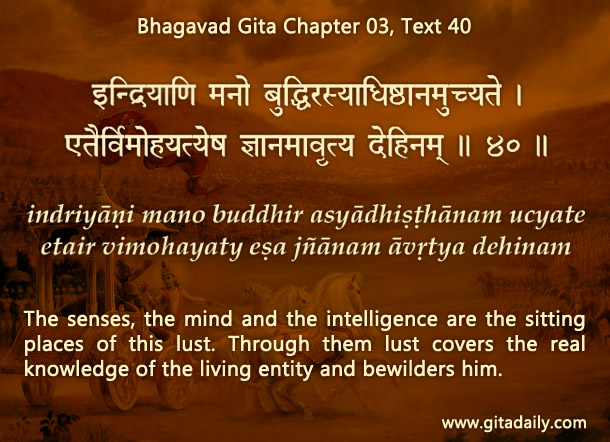
“Indriyani mano buddhir asyadhisthanam ucyate
etair vimohayaty esa jnanam avrtya dehinam.” (Bhagavad Gita, Chapter III, Verse 40)
The celebration of Guru Purnima and Vyasa Purnima on Thursday, July 10, 2025. The problem called Desire. There are Six kinds of Desires; 1. Kama (Lust), 2. Krodha (Anger), 3. LOBHA (Miserliness), 4. Moha (Infatuation), 5. Mada (Arrogance), and 6. Matsarya (Jealousy).

It is declared that the senses, the mind, and the intelligence are the stronghold of this sensual desire (‘Kama’), covering one’s discrimination this enemy called sensual desire deludes the living entities.

BHARAT DARSHAN - BHAGAVAN VED VYAS - AUTHOR OF GEETOPANISHAD. PRINCE ARJUNA IS THE MASTER(SOUL), LORD KRISHNA, CHARIOTEER(BUDDHI/INTELLECT), REINS(MIND), HORSES(SENSE ORGANS), CHARIOT(BODY), AND THE ROAD REPRESENTS PURSUIT TO REACH GOAL.
The celebration of Guru Purnima and Vyasa Purnima on Thursday, July 10, 2025. Body, Mind, and Soul are connected to each other, with Soul having a central controlling power over some aspects of functions of other parts or units to promote unity and harmony. Prince Arjuna is the Master (Soul), the Charioteer (Lord Krishna) symbolizes Buddhi (Intellect), the Reins symbolize Mind and Horses symbolize the Sense Organs, the Chariot symbolizes the human Body, and the Road represents the Pursuit to reach goal.

“tasmat tvam indriyany adau niyama bharatarsabha
papmanam prajahi hy enam jnana-vijnana nasanam.”(Bhagavad Gita, Chapter III, Verse 41)

The celebration of Guru Purnima and Vyasa Purnima on Thursday, July 10, 2025

Therefore O’ Arjuna, first you must bring the senses under control and directly destroy this sensual desire(‘Kama’), which is embodiment of sin and the destroyer of knowledge and self-realization.

BHARAT DARSHAN - BHAGAVAN VED VYAS - AUTHOR OF GEETOPANISHAD. TO FIGHT WITH AN EXTERNAL ENEMY IS EASY. MAN HAS TO BE MINDFUL OF INTERNAL ENEMY CALLED 'DESIRE' WHICH HAS SIX DIMENSIONS.
The celebration of Guru Purnima and Vyasa Purnima on Thursday, July 10, 2025. To fight with an external enemy is easy. Man has to be mindful of an internal enemy called Desire which has Six Dimensions.

“indriyani parany ahur indriyebhyah param manah,
manasas tu para buddhir yo buddheh paratas tu sah.”(Bhagavad Gita, Chapter III, Verse#42)

The celebration of Guru Purnima and Vyasa Purnima on Thursday, July 10, 2025. To fight with an external enemy is easy. Man has to be mindful of an internal enemy called Desire which has Six Dimensions.

It is declared, the senses are superior (than insensible matter) but more than the senses, the mind is superior, but more than the mind the intelligence is superior, and more than the intelligence that which is superior is the individual consciousness (Atma).

BHARAT DARSHAN - BHAGAVAN VED VYAS - AUTHOR OF GEETOPANISHAD. INTERNAL ENEMY CALLED 'DESIRE' CAN RUIN AND DESTROY MAN'S LIFE ,DEFEAT MAN AND PREVENT HIM FROM REACHING HIS GOAL OR DESTINATION.
The celebration of Guru Purnima and Vyasa Purnima on Thursday, July 10, 2025. To fight with an external enemy is easy. Man has to be mindful of an internal enemy called Desire which has Six Dimensions.

“evam buddheh param buddhva samstabhyatmanam atmana
jahi satrum maha-baho kama-rupam durasadam.”(Bhagavad Gita, Chapter III, Verse#43)

The celebration of Guru Purnima and Vyasa Purnima on Thursday, July 10, 2025. To fight with an external enemy is easy. Man has to be mindful of an internal enemy called Desire which has Six Dimensions.

Thus knowing the individual consciousness (Atman) to be superior to the intelligence, O’ mighty armed one, steady the mind by self-realization and conquer this insatiable enemy which presents in the form of sensual desire (Kama).

BHARAT DARSHAN - BHAGAVAN VED VYAS - AUTHOR OF GEETOPANISHAD. BHAGAVAD GITA IS A PRACTICAL GUIDE TO LIVE DAILY LIFE.
The celebration of Guru Purnima and Vyasa Purnima on Thursday, July 10, 2025. To fight with an external enemy is easy. Man has to be mindful of an internal enemy called Desire which has Six Dimensions.

Bhagavad Gita distills wisdom of Upanishads and conveys knowledge that is of practical value and can be used as daily living guide. While Bhagavad Gita avoids analogy of chariot, the author uses the same concept to guide readers to learn The Art of Self-Discipline, a training that develops self-restraint, self-control to shape character and personal conduct that promote orderliness and efficiency in any given field of human activity or work performance.

If I have the intellectual capacity to compose 700 poems and insert them into work done by another person, I will not stop writing. I will be driven by the same creative zeal to compose more poems and keep publishing my works using my name or another name. Bhagavad Gita exposes identity of a literary genius at work, and very few people have such creative writing ability. If any of my readers have doubts about identity of Ved Vyas; you may have to support your view citing literary works of comparable merit and make claim that a different author made insertion of his/her work giving credit to Ved Vyas.

BHARAT DARSHAN - BHAGAVAN VED VYAS - AUTHOR OF GEETOPANISHAD. VED VYAS IS A HISTORICAL PERSON, INDIAN TRADITION NAMES TIME PERIODS OR YUG. VED VYAS BELONGS TO 'DWAPARA YUGA'.
The celebration of Guru Purnima and Vyasa Purnima on Thursday, July 10, 2025. To fight with an external enemy is easy. Man has to be mindful of an internal enemy called Desire which has Six Dimensions. Ved Vyas is a historical person. Indian tradition names Time Periods as Yug and Ved Vyas belongs to Dwapara Yuga.

Bhagavad Gita refers to Kurukshetra battlefield as “Dharma Kshetra” and the concern of its author is about values, the battle between good and evil. Secondly, the conversation on the battlefield begins with Prince Duryodhana speaking to his guru Dronacharya. Here, the author is carefully suggesting that battle is not decided by relative strengths of parties engaged in war. Prince Duryodhana made an estimate of strength of Pandava Camp and was impressed by strength of Kaurava Camp. But, the author’s concern is about ‘Dharma’ or right actions and the ultimate success of right over might. Sanjaya was a disciple of author Veda Vyas and the author used his poetic imagination and freedom to confer a special ability to his student to know his thoughts as reflected in battlefield dialogue.

Hymns in praise of Maharishi Ved Vyas:

BHARAT DARSHAN - BHAGAVAN VED VYAS - AUTHOR OF GEETOPANISHAD. VED VYAS IS A DIVINE BEING FOR HE SHARED DIVINE KNOWLEDGE THAT BRINGS JOY, BLISS, HAPPINESS, AND ANANDA.
The celebration of Guru Purnima and Vyasa Purnima on Thursday, July 10, 2025. To fight with an external enemy is easy. Man has to be mindful of an internal enemy called Desire which has Six Dimensions. Ved Vyas is a Divine Being for he shared Divine Knowledge that brings Joy, Bliss, Happiness, and Ananda.

Krishna Dwaipayanam Vyasam, sarva loka hite ratam,
Vedabja Bhaskaram Vande Shamdadi nilayam munim.

Vyasaya Vishnu rupaya, Vyasa rupaya Vishnave
Namo vai Brahmanidhaye, Vasishtaya Namo NamaH.

Vyasam Vasishta naptaram, ShakteH poutra makalmasham
Parasaratmajam, Vande Shuka taponidhim.

The celebration of Guru Purnima and Vyasa Purnima on Thursday, July 10, 2025. To fight with an external enemy is easy. Man has to be mindful of an internal enemy called Desire which has Six Dimensions. Ved Vyas is a Divine Being for he shared Divine Knowledge that brings Joy, Bliss, Happiness, and Ananda.

Whole Dude – Whole Worship

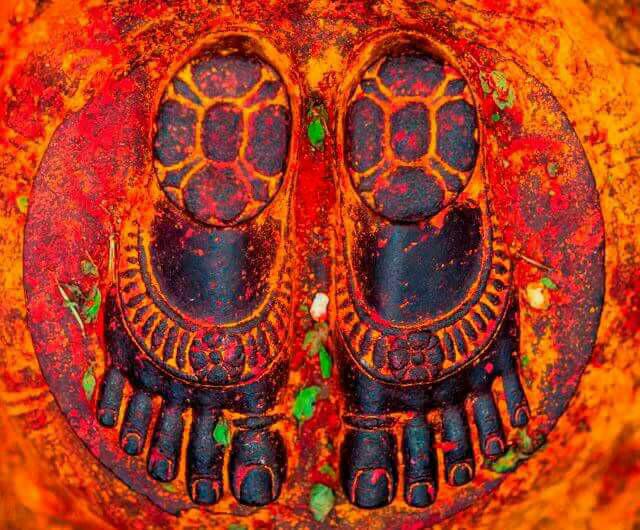
Whole Dude – Whole Worship: Defining Indian Identity – The Worship of Feet.

Excerpt: The worship of feet, or ‘Pada Sevanam’, is an integral part of Indian identity and the culture’s philosophy of total submission and surrender to a higher divine power. In the Hindu religion, this act signifies humility, protection, and reverence. This practice is deeply rooted in Indian epics like Ramayana, where feet touching was a significant gesture. In modern times, this tradition continues, seen in ordinary life situations, such as people paying respect to elders by touching their feet. Thus, the act of worshipping feet is a unique cultural hallmark that helps define the Indian identity.

Whole Dude – Whole Worship: Defining Indian Identity – The Worship of Feet.

“viṣṇōḥ padē parama” ityudita praśaṃsau
yau “madhva utsa” iti bhōgya tayā’pyupāttau ।
bhūyastathēti tava pāṇitala pradiṣṭau
śrīvēṅkaṭēśa charaṇau śaraṇaṃ prapadyē ॥ 10 ॥

I seek refuge of Sri Venkateswara’s feet,
which are extolled (in the Rg Veda)
as “Visnoh parame pade” (in the most exalted abode of Vishnu),
which are, (again) extolled therein
as “madhva utsa” (meaning the fountain the honey)
as extremely enjoyable
and which are indicated as such by
the show of the palm of Thy hand.

Pada Vandanam, Pada Namaskaram, Pada Archanam, Pada Sevanam, Pada Puja or Worship of Feet: 

Whole Dude – Whole Worship: Defining Indian Identity – The Worship of Feet.

The land of India is a very unique place on this planet where people are culturally endowed with an ardent desire to worship feet.No other society or social community has openly exhibited this behavioral trait and feet worship could be described as the hall-mark of Indian Identity.This tradition and literal practice of feet worship was well established by the time the epic poem of Ramayana was composed. In AYODHYA KANDA,we read the very moving account of Rama touching the feet of His father Dasaratha and queen mother Kaikeyi after having received the orders for his banishment to live in the forest for fourteen years. Later in ARANYA KANDA, we read about the younger brother Bharata who literally clung to the feet of Rama seeking His refuge. Eventually,Bharata carried Rama’s sandals keeping them on his head and installs them on the throne (PADUKA PATTABHISHEKAM) and served them with great devotion for fourteen long years during Rama’s exile.  

Whole Dude – Whole Worship: Defining Indian Identity – The Worship of Feet.

India is the land where you witness people touching the feet of living persons as an act of worship.This is a fairly common event and sometimes the remembrance of such worship lingers in your mind.I would like to narrate one such event that I had witnessed in the past and my act of remembrance may add-on to the blessings these feet worshipers may be receiving even today.  

I was traveling by train from Rajahmundry to Lucknow City to serve in the Indian Army Medical Corps. I was motivated by a desire to see the land of India with my own eyes and know its people. For the first time, I was traveling in a first class compartment and was the sole occupant. Later in the night, a lady entered the compartment and was apparently traveling alone. She was elegantly attired, looked modest and the picture of an upper middle class house wife. Early morning, when the train halted at a station, I did not realize that she had reached her destination. She was quietly seated, was not gathering her belongings and was not even looking outside to check if some one had arrived to receive her. After a little while, I had noticed three young men, well- dressed and well-groomed, all of them little older than me, checking the list of passenger names on the door of the train compartment and entered the compartment. They did not pay any attention to my presence. One after the other, they went forward to bend and touch her feet and paid their respects. The behavior of the young men that I was keenly observing was natural, spontaneous and unpretentious. That early morning hour, they were not putting up an act in a public place to impress any one. They acted in a deliberate, purposeful and reverential manner and I am very sure that they grew up in that manner and clearly they were not inhibited in displaying their respect in front of strangers. I was a silent spectator of this scene wherein an unassuming woman suddenly got transformed into a living deity. I can assure you that you would witness such a scene only in the Land of India. Hence, I would claim that the desire to worship the feet of a living person would define Indian Identity.  

Whole Dude – Whole Worship: Defining Indian Identity – The Worship of Feet.

Every deity that Indians seek to worship are better pleased when we worship their feet. PRAHLADA  describes “PADA SEVANAM” as one of the nine ways to worship VISHNU.

Lord Rama and the Tradidtion of 'Feet Worship'
Whole Dude – Whole Worship: Ramayana gives detailed accounts of the Tradition of Feet Worship.Rama worshipped the feet of His father, mother, stepmothers and His Gurus. Bharata, the younger brother of Rama had installed the sandals (Padukas) worn by Rama upon the throne had worshipped them for fourteen years.

Indians worship feet not only as a sign of humility but also as a mark of submission, total surrender to the will of God. They touch feet as a plea for protection. This is not a mere religious rite or ritual and it actually shapes the attitudes and behavior of people. The final resting place for the individual souls (JEEVATMA)has been described as the Lotus Feet of the Lord. This is described as ‘CHARANAM’ (Feet of the Lord) ‘SHARANAM’ (Ultimate Refugee).  

Whole Dude – Whole Worship: Defining Indian Identity – The Worship of Feet

Whole Dude – Whole Learning

Whole Dude – Whole Learning: Defining Indian Identity – Idol Worship – A Learning Experience

Sri Raghavam Dasarathatmajam aprameyam  

Sita-patim Raghu kulanvaya ratna deepam  

Ajanubahum aravinda-dalayataksham  

Ramam nisachara vinashakaram Namami.  

Idol Worship – A Way of Life:  

Whole Dude – Whole Learning: Defining Indian Identity – Idol Worship – A Way of Life

Worship of idols and images is an part of daily life in many Indian homes. Long before its birth as a political entity, the Land of India was recognized by the outside world as a Land where people worship idols. The plurality of gods in daily worship is a way of life. Indian people worship idols and images of one or another of the innumerable gods in their homes, in public places as well as in temples.  

Childhood is a time of great learning experiences. A child imbibes Cultural values and learns Cultural traditions mainly at home while the child is dependent on and is educated by parents and other adults. Children acquire the Culture of the society they live in through a gradual learning process.  My childhood learning experience of idol worship occurred in two places. While I was in Mylapore (Madras/Chennai City), the day would generally begin with a small errand. Myself and my elder brother Pratap would go out with a basket and gather flowers by just walking around in the neighborhood. Every home would keep some flowering plants which are traditionally used in daily worship. We were fond of gathering a variety of flowers for my maternal grandmother’s morning worship. It was a pleasant task and the fragrance of ‘Parijatham’ flowers that we gathered still lingers in my memory. I also spent my early childhood in Rajahmundry at my paternal grandfather’s home in Innispeta. My grandmother would also worship the morning rising Sun before starting her idol worship. Very often, we wait in the courtyard and alert our grandmother when Sun shows up in the sky. During the monsoon season, one has to patiently wait for the rain clouds to drift and let the Sun come out. At the end of her worship, we were always ready to receive the offerings (PRASAD) and there was always a sense of pleasure while waiting for these daily morning treats. Childhood was spent in observing the adults and on special occasions, the children at home participate in the worship while the elders give directions. The worship at temples was done in the company of parents and elders.  

A Learning Experience from 1954:  

Whole Dude – Whole Learning: Defining Indian Identity – Idol Worship – A Way of Life

I was six years old and was a fourth class student at King George Elementary School, in Innispeta of Rajahmundry. One evening, just after it became dark, my father experienced sudden abdominal pain. The intensity of his pain was very severe and he was alarmed by his condition. As the pain persisted, he started pressing people to notify others about his predicament and I remember that he wanted that his younger brother (a doctor) who was then working in Nagpur City, should be alerted with a telegram. At one point of this painful state, my father had even asked that he should be laid on the floor in the anticipation of an impending death. My two elder brothers, Hari and Pratap, and myself watched this scene and were moved into action. At my eldest brother Hari’s initiative, the three of us proceeded to Lord Sri Rama’s temple which is located near the Godavari river bank, a short walking distance from our home. The temple was still open and had only a very few worshipers as night had set in. We stood before the idols in total silence and paid our respects with the traditional greeting of ‘Namaskar’. Temple worship is a simple act. You just need to come before the idol and you are not really required to speak out your concerns and spell out the reasons for seeking the darshan (viewing the idol). It took a couple of minutes and the priest graciously gave us a mango fruit as ‘prasad’. Those few minutes that I spent standing mutely before Rama’s idol at night-time, is the reason that I still remember and recall my father’s abdominal pain after a lapse of about fifty-three years. I went to the temple with a sense of anxiety and with a sense of expectation that visiting the idol of Rama would somehow help my father to get rid of that terrible pain. I silently communicated my concern to the idol and I received a response. The response that I received was that of reassurance and comfort. I felt immediately relieved of a burden and felt upbeat and the feeling was one of instant gratification. Myself and my brothers returned home from the temple. I wanted to tell my father about our visiting the temple and I wanted to assure him that he would be alright if he would take a few drops of the juice from the mango fruit that we received from the priest. When we got back, the scene had changed. I did not get a chance to speak to my father and offer him the mango fruit. He had a large vomiting and threw up the food that he ate before. It helped him, his pain started to subside and he could rest without further problems. We retired for the night and the next day was just a routine day at the school. We never discussed that painful episode again and the communication that I received from Rama’s idol got preserved in my memory and my family had no chance to know about it. 


Whole Dude – Whole Learning: LORD RAMA. His image or idol is worshiped by Indian people. Is that a false belief? Is that a superstition? What is true Worship?

The rest of the world may call my visiting Lord Rama’s idol as an act of superstition or false belief. My heart knows and my mind remembers that the idol gave me a sense of relief and comfort and my experience was real and genuine. Every one is welcome to take the place of that idol and if they are willing to be a source of comfort, and I am willing to have their darshan and worship them just like the idols that I would like to worship seeking a personal experience which is real while the basis for the belief is not easy to verify.  

Whole Dude – Whole Learning: The simplest form of Idol Worship involves standing before the Idol and greeting the Idol with palms pressed in front of you.

Whole Dude – Whole Puja

Defining Indian Identity – Guru Puja. The Worship of Jagat Guru, the Great Teacher of the World.

THE TRADITION OF “GURU” WORSHIP (PUJA): 

Defining Indian Identity – Guru Puja. The Worship of Jagat Guru, the Great Teacher of the World.

Since Vedic times, in the Land of India, teachers are held in high esteem and the reverence is reflected in the following verse. According to my uncle, Capt.R. R. Rao, “there is no Mantra greater than this”:

Gurur Brahma, Gurur Vishnu, Gurur Devo Mahesvarah
Guruh Sakshaat ParaBrahma, tasmai Shri Gurave Namah.

Defining Indian Identity – Guru Puja. The Worship of Jagat Guru, the Great Teacher of the World.

 My Guru: 

Defining Indian Identity – Guru Puja. The Worship of Jagat Guru, the Great Teacher of the World.

After joining Kurnool Medical College in 1965, I started visualizing Lord Sri Krishna as my personal Guru.I had a pocket-size edition of Bhagavad Gita published by Gita Press, Gorakhpur, Uttar Pradesh, India.The book includes the verses in Sanskrit with its English translation.That format allowed me to read the verse in its original form and understand its purport through my own efforts.I had a hectic time at the School and was exposed to new information every day.

Whole Dude – Whole Puja: My Guru

Over four and half years time, I studied Physics, Human Anatomy, Human Physiology, Medical Biochemistry, Pharmacology, Microbiology, Pathology, Forensic Medicine, Ear, Nose & Throat diseases, Ophthalmology, Social & Preventive Medicine, General Medicine, Surgery, and Obstetrics & Gynecology. Simultaneously, I was reading one or more chapters from Gita every day and was slowly incorporating Krishna as my Guru. I was more attracted to His teaching of “Karma Yoga” and I would still consider Him as my Guru even if “Gita” is the only known contribution made by Him.

Defining Indian Identity – Guru Puja. The Worship of Jagat Guru, the Great Teacher of the World.

My other Guru:

Defining Indian Identity – Guru Puja. The Worship of Jagat Guru, the Great Teacher of the World.
Adi Shankaracharya has emphatically stated that his identity is neither that of Guru nor that of a student or disciple. I am not free to describe him as my Guru and I cannot call myself his disciple. I need to reflect upon my Identity and seek that Identity to experience the Reality.

Fortunately,I did not spend any time and energy to search and discover the right Guru.The choice was made for me the moment I arrived on this planet.I grew up in a family which followed the “Smartha” tradition established by Adi Shankaracharya. I have the freedom to designate Shiva as my personal Protector. I am free to choose Rama as my Benefactor.I seek favors from Sarasvathi in my pursuit of Pure Knowledge.I make the perilous journey across the ocean with encouragement from Hanuman. Ganesha assures me of success in my personal endeavors. In my struggles and battle of life, Krishna guides me to find the winning strategy. If I have to defend my self, I draw courage from Bhavani. I love to read and memorize the beautiful verses composed by Adi Shankaracharya. I would just quote a verse which my eldest brother,Prof. R. Subba Rao recognizes as a very powerful thought: 

Defining Indian Identity – Guru Puja. The Worship of Jagat Guru, the Great Teacher of the World.

Even after learning every thing that is humanly possible,we still need to desire and focus upon the lotus feet of the Master, the giver of Knowledge or the One who dispels ignorance. With the blessings from my other Guru,I describe my attitude about human existence as that of “Individualism.”

Defining Indian Identity – Guru Puja. The Worship of Jagat Guru, the Great Teacher of the World.

Na me mrtyu shanka na mejati bhedaha
Pita naiva me naiva mataa na janmaha
Na bandhur na mitram gurur naiva shisyaha
Chidananda rupah shivo’ham shivo’ham

I have no fear of death, no caste or creed,
I have no father, no mother, for I was never born,
I am not a relative, nor a friend, nor a teacher nor a student,
I am the form of consciousness and bliss,
I am the eternal Shiva…

My elder brother Pratap stressed about the importance of “Guru Krupa” (Master’s Compassion). My Guru’s Mercy is revealed to me in the fact that I am able to work seven days a week.I can very easily manage to work eighty or more hours per week on account of this Guru-Sishya relationship while I maintain that I am a mere Individual and I am neither a Guru nor a disciple. I do not experience any stress or mental fatigue on account of sixteen hour work schedules. At the same time, I am mentally alert and could indulge in a bit of creative writing every now and then. Apart from this ability to work 365 days each year while I am 59 years old, the following verse shows that they are advantages in having Krishna as personal Guru: 

Defining Indian Identity – Guru Puja. The Worship of Jagat Guru, the Great Teacher of the World.

bhagavadh giitaa kijnchidadhiitaa

gangaa jalalava kanikaapiitaa .

sakridapi yena muraari samarchaa

kriyate tasya yamena na charchaa

भगवद् गीता किञ्चिदधीता
गङ्गा जललव कणिकापीता .
सकृदपि येन मुरारि समर्चा
क्रियते तस्य यमेन न चर्चा .. २१..

Defining Indian Identity – Guru Puja. The Worship of Jagat Guru, the Great Teacher of the World.