Whole Aryan – There is no Human Race called Indian

University of Michigan and Michigan Medicine must learn that there is no human race called Indian

Whole Aryan – There is no Human Race called Indian: Michigan Medicine and University of Michigan reveal their ignorance of the term called Race. There is no Race of People called Indian. However, several Indians, Iranians and Germans celebrate their Aryan Race heritage. I ask Michigan Medicine and University of Michigan to share its educational experience and publish its Theory of Man

Excerpt: The Michigan Medicine AHEAD study is examining the efficacy of a medication aimed at preventing Alzheimer’s Disease in individuals at increased risk of developing the disease. The study has, however, faced criticism regarding its focus on years of schooling and its lack of a research protocol to verify the identity and individuality of the human organism. Critics assert that biological processes like the flow of biological information and protein synthesis are not influenced by education level and that individuality should not be tied to factors such as race and ethnicity. The conceptualization of “life as knowledge in action” and that it is an interplay of cellular function and knowledge must be explored.

Whole Aryan – There is no Human Race called Indian: Michigan Medicine asks, “What is your Race?” I ask Michigan Medicine and University of Michigan to share its educational experience and publish its Theory of Man. I categorically claim that there is no human race called Indian.

The AHEAD Study is researching the safety and effectiveness of an investigational medication in people who might be at increased risk for developing memory loss associated with Alzheimer’s Disease. The study is looking for participants age 55-80 years old, who have generally normal memory function in daily life, and who are not being treated for memory problems. For individuals age 55-64 years old, an additional risk factor is required, such as a parent or sibling with Alzheimer’s Disease or previous biomarker testing showing increased risk for developing Alzheimer’s Disease. This study sees participants in Ann Arbor. Contact Lauren Mackenzie at spearsl@med.umich.edu or 734-232-2415.

Whole Aryan – There is no Human Race called Indian: Michigan Medicine asks, “What is your Race?” There is no human race called Indian. I ask Michigan Medicine and University of Michigan to share its educational experience and publish its Theory of Man.

On Tuesday, December 05, 2023, at the Michigan Clinical Research Unit (MCRU) at the Cardiovascular Center (CVC), I was interviewed for participating in the AHEAD Study and I completed the Stage 1A of the Screening process. I am asked to provide information about the most important occupation of my life, my sexual orientation, my race and ethnicity in the context of my place of birth and the country of origin, the total number of years I spent in the School to register my personal identity for participation in the Medical Research Project.

Whole Aryan – There is no Human Race called Indian: Michigan Medicine asks, “What is your Race?” There is no human race called Indian. I ask Michigan Medicine and University of Michigan to share its educational experience and publish its Theory of Man.

The AHEAD Study Research Protocol has not identified the basis for discovering the identity of a multicellular human organism. I can answer the questions I am asked. Do I have the ability to communicate my answers to the cells of my own body and reflect that identity in the living functions they perform to keep me alive?

Whole Aryan – There is no Human Race called Indian: University of Michigan and Michigan Medicine must learn that there is no human race called Indian

There is no racial or ethnic identity described as American or European. For the same reason, there is no racial or ethnic identity that can be construed as Asian/Indian. India has over a billion human population. No person uses the terms Asian/Indian and Non-Hispanic if they are asked to describe their identity. However, many Indians respectfully acknowledge their racial heritage using the term Aryan. This identity is equally shared by Persians and Germans to varying extents

The differences between race and ethnicity – and why they’re so hard to define

Harmeet Kaur

By Harmeet Kaur, CNN

Updated 8:07 AM EDT, Tue May 30, 2023

CNN — 

Whole Aryan – There is no Human Race called Indian: The differences between race and ethnicity – and why they’re so hard to define

If you’ve ever filled out a Census form, a college application or a patient questionnaire at the doctor’s office, you’ve probably been asked to identify your race and ethnicity.

Governments, workplaces and educational institutions often collect data on these categories to determine things like which programs require funding, what disparities exist between different groups and when civil rights violations are occurring.

But you might have also felt that checking a box on a form requires you to define yourself in ways that don’t necessarily align with your own identity.

If it seems like the distinctions between race and ethnicity are confusing, unsatisfying or unclear, you’re onto something. These categories are messy and lack concrete definitions. Their meanings have evolved over time and can shift depending on the context.

“It’s not like there is some truthful race and truthful ethnicity out there, and that we bestow it on the population,” said Tomás Jiménez, a sociology professor at Stanford University who studies race and ethnicity. “It comes from an observation of how people use these ways of categorizing themselves and each other.”

Put another way, race and ethnicity are social and political constructs. Still, they carry enormous consequences in the US, Jiménez and other scholars say. Here’s how to make sense of them. 

Race and ethnicity, defined (sort of)

In US parlance, race refers to a group of people who share physical traits – such as skin color, hair texture or eye shape – based on some common ancestry. That common ancestry is broadly related to geography, said Grace Kao, a professor of sociology at Yale University. (For example, White people can generally trace their roots back to Europe, while Black people can generally trace their roots to Africa.)

The US Office of Management and Budget, which determines the racial categories used by the Census Bureau and other federal agencies, currently outlines five racial groups: American Indian or Alaska Native, Asian, Black or African American, Native Hawaiian or Other Pacific Islander, and White.

Ethnicity, meanwhile, refers to a group of people who share a common history and culture. It sometimes (but not always) correlates to national origin – for example, a person might be categorized as racially Asian and ethnically Chinese. But this understanding of ethnicity would not apply in other parts of the world. In China, for example, a person’s ethnicity would be described using more specific terms. There are 56 officially recognized ethnic groups in the country, including the Han people, the Mongols and the Uyghurs.

Census forms and other questionnaires rely on self-identification to determine a person’s race and ethnicity. But people make assumptions and assessments about others’ racial and ethnic identities all the time, and individuals don’t have control over how they’re perceived. Nancy López, a professor of sociology at the University of New Mexico, refers to this phenomenon as “street race” – the race that people see you as when you’re out in public. 

“When you show up to look for an apartment, people are not asking you ‘What’s your ancestry?’” López said. “They just take a look at you and decide, ‘We want people who look like you living next to us or we don’t.’”

One way to understand street race is through the way Blackness is characterized in the US. Someone can have a Black parent and a White parent, but if they have a certain skin tone and hair texture, they will likely be perceived as solely Black (a legacy of the one-drop rulethat classified anyone with known African ancestry as Black).

Kao pointed to her own identity as an Asian American woman as another example. People might assume upon looking at her that she doesn’t speak English or that she’s an immigrant. But she said her husband, who is White and from Canada, doesn’t face those kinds of assumptions.

“That speaks to how important race is,” she said. “It’s not something we can just pretend doesn’t exist, because it affects everything in terms of our daily lives.”

Examples of how race and ethnicity overlap

Despite their importance in our society, the categories of race and ethnicity are far from fixed.

Merriam-Webster’s dictionary entry shows that race has previously been understood as “a group of people sharing a common cultural, geographical, linguistic, or religious origin or background,” “the descendants of a common ancestor” and “a group of people sharing some habit or characteristic (such as profession or belief).” During the late 19th and early 20th centuries, for example, groups such as the Irish, Italians and Jews were referred to in the US as separate races. Today, members of those groups would largely be classified as White in the US. 

The US Census is another useful case study in the malleability of race. 

Beginning in 1870, the government added Chinese under a category labeled “color” to describe all East Asians. The “color” category was later renamed as “race,” and Japanese was added in 1890. Later iterations of the form used the term Hindu to describe South Asians (despite the fact that most South Asian migrants at the time were Sikh and Muslim), according to the Pew Research Center. 

Mexican was included as a racial category on the 1930 census. But Mexican American groups at the time didn’t want Mexicans to be counted as a separate race, fearing that would affect how certain populations are counted. might be targeted by the government. It would be 40 years before the government tried to count the Latino population again, this time asking about origin separately from race. Though the wording of the question has since evolved, the census continues to categorize Hispanic and Latino as an ethnic identity rather than a racial one.

The five racial categories that are listed on the census today – American Indian or Alaska Native, Asian, Black or African American, Native  or Other Pacific Islander, and White – have been in place since 1997. But there has long been debate about whether those are sufficient, and the Biden administration is currently proposing changes to the 2030 census that would affect how certain populations are counted.    

Whole Aryan – There is no Human Race called Indian: The differences between race and ethnicity – and why they’re so hard to define

The proposal would combine the race and ethnicity questions into one. That means instead of being asked about Hispanic or Latino origin separately from race, respondents would see a box for “Hispanic or Latino” alongside such categories as “Black,” “White” and “American Indian or Alaska Native.” Respondents would be able to select multiple categories from the list. Several Latino civil rights organizationssupport the change – many Latinos currently check the “some other race” box, and there have been concerns about whether the population is being adequately counted.

Others, including Afro-Latino scholars such as López, argue that combining race and ethnicity into one category on the census would lump together a highly diverse population and make it more difficult to understand racial inequities in housing, employment and other arenas. There are White, Black and Indigenous Latinos, López said. She instead proposes that the Census add a category such as “brown” to capture the specific experiences that Latinos of mixed ancestry experience.

Under the proposed changes to the 2030 Census, “Middle Eastern or North African” would also be added as a category – the government currently classifies those of Middle Eastern or North African (MENA) descent as White, although many Arab Americans have said that does not reflect their reality.

Kao said such debates over how groups are categorized illustrate just how complicated these categories are.

“Everything is messy,” she added. “If we were talking five years from now or 10 years from now, it could be totally different.”

Why race and ethnicity are important

Jiménez thinks about the categories of race and ethnicity as “claims that we make about who’s in and who’s out.”

In the case of race, Jiménez says, society has ascribed meaning to certain physical features and created a hierarchy around them that informs who is treated with respect and dignity and who has access to wealth, education and other resources. But race isn’t an innate biological classification – anthropologists and geneticists who have studied these questions have found that there is no set of physical or behavioral traits that corresponds to all of the people in a given race. Our understanding of race is instead a product of colonization, the transatlantic slave trade and migration patterns, scholars say.

“Our modern conception of race is one that is European, and it immediately puts Europeans or Whites at the top of the hierarchy,” Kao said. “You can argue that if you have racial groups, you don’t need to have a hierarchy. We can say the world is divided into these populations and not assume that one is superior to the other. But that’s not the way our racial categories have formed.”

Ethnicity can be similarly squishy, Jiménez said. There are certain markers that we typically use to determine whether someone is part of an ethnic group, like where their family is from, what foods they eat or what language they speak. Still, a person with Puerto Rican parents who doesn’t speak Spanish might be seen by others in the community as “not Latino enough” just as a person with one Iranian parent might be seen as “not Persian enough.” 

To complicate matters, ethnicity is sometimes conflated with political states that may not have existed in their current form a few hundred years ago. For example, Jiménez points out, Italian is widely considered an ethnicity in the US today. But some earlier Italian immigrants might not have described themselves as Italian given regional differences within the population, he added.

“The fact that the boundaries move around… (and) the fact that those change over time all speak to the fact that we’re making this up collectively,” Jiménez said.

Given that these categories are social constructions, it might be tempting to suggest that we do away with them all together. On an individual level, these classifications can feel limiting, Kao said – no one wants to feel constrained by stereotypes or perceptions that others have of them because of their racial or ethnic identity. But at the same time, race – and ethnicity to a degree – has very real implications in our society, and understanding it is imperative to discern where disparities are occurring and how they might be addressed.

That, Jiménez said, is the paradox of these socially constructed categories.

“It is something that frustrates us,” he said. “It’s also in some ways a requirement if we are to get to a place where these categories matter less and less – in ways that affect us negatively.”

Whole Aryan – There is no Human Race called Indian: University of Michigan and Michigan Medicine must learn that there is no human race called Indian

Whole Race – Whole Persian

Whole Race – Whole Persian: Michigan Medicine and University of Michigan reveal their ignorance of the term called Race. There is no Race of People called Indian. However, several Indians, Iranians and Germans celebrate their Aryan Race heritage. I ask Michigan Medicine and University of Michigan to share its educational experience and publish its Theory of Man

I ask Michigan Medicine and University of Michigan to admit its ignorance of the meaning of the term called Race. There is no human race called Indian

Excerpt: The Michigan Medicine AHEAD study is examining the efficacy of a medication aimed at preventing Alzheimer’s Disease in individuals at increased risk of developing the disease. The study has, however, faced criticism regarding its focus on years of schooling and its lack of a research protocol to verify the identity and individuality of the human organism. Critics assert that biological processes like the flow of biological information and protein synthesis are not influenced by education level and that individuality should not be tied to factors such as race and ethnicity. The conceptualization of “life as knowledge in action” and that it is an interplay of cellular function and knowledge must be explored.

Whole Race – Whole Persian: Michigan Medicine asks, “What is your Race?” I ask Michigan Medicine and University of Michigan to share its educational experience and publish its Theory of Man. I categorically claim that there is no human race called Indian.

The AHEAD Study is researching the safety and effectiveness of an investigational medication in people who might be at increased risk for developing memory loss associated with Alzheimer’s Disease. The study is looking for participants age 55-80 years old, who have generally normal memory function in daily life, and who are not being treated for memory problems. For individuals age 55-64 years old, an additional risk factor is required, such as a parent or sibling with Alzheimer’s Disease or previous biomarker testing showing increased risk for developing Alzheimer’s Disease. This study sees participants in Ann Arbor. Contact Lauren Mackenzie at spearsl@med.umich.edu or 734-232-2415.

Whole Race – Whole Persian: Michigan Medicine asks, “What is your Race?” There is no human race called Indian. I ask Michigan Medicine and University of Michigan to share its educational experience and publish its Theory of Man.

On Tuesday, December 05, 2023, at the Michigan Clinical Research Unit (MCRU) at the Cardiovascular Center (CVC), I was interviewed for participating in the AHEAD Study and I completed the Stage 1A of the Screening process. I am asked to provide information about the most important occupation of my life, my sexual orientation, my race and ethnicity in the context of my place of birth and the country of origin, the total number of years I spent in the School to register my personal identity for participation in the Medical Research Project.

Whole Race – Whole Persian: Michigan Medicine asks, “What is your Race?” There is no human race called Indian. I ask Michigan Medicine and University of Michigan to share its educational experience and publish its Theory of Man.

The AHEAD Study Research Protocol has not identified the basis for discovering the identity of a multicellular human organism. I can answer the questions I am asked. Do I have the ability to communicate my answers to the cells of my own body and reflect that identity in the living functions they perform to keep me alive?

India and Iran – What is the Connection?

Whole Race – Whole Persian: India and Iran – What is the connection? It relates to my military service in the Indian Army and the Royal Oman Army.

I joined the Indian Army Medical Corps during September 1969 when I qualified for the grant of  Short Service Regular Commission in the rank of Second Lieutenant. General Manekshaw had a very high reputation across all the ranks and branches of the Indian Armed Forces. I had no opportunity to meet him in person but I always felt motivated by his spirit and enthusiasm to perform military tasks with cheerfulness and a sense of strong conviction to uphold the pride and dignity of Indian Army.

MY CONNECTION WITH THE PARSI COMMUNITY OF INDIA:

Whole Race – Whole Persian: Parsi Community in India had arrived from HORMUZ area of Persia. My military career in India began under the leadership of General Sam Manekshaw, a Parsi by birth, and Srimati Indira Gandhi who had married Feroze Gandhi, a Parsi by birth. Interestingly, my military career has ended in July 1986 at KHASAB, on the shores of the Strait of Hormuz.

Parsis are the followers in India of the Iranian Prophet Zoroaster. The name means Persians. According to tradition, the Parsis had initially settled at Hormuz on the Persian Gulf and they sailed to India in the 8th century. They form a well-defined community and they have retained almost unchanged the beliefs and customs of their ancestors. Just like other Indians, the Parsis consider the elements of Fire, Water and Earth as sacred. I would like to speak about two members of this community with whom I am  connected with love and a great admiration.

1. Field Marshal Sam Hormusji Framji Jamshedji Manekshaw:

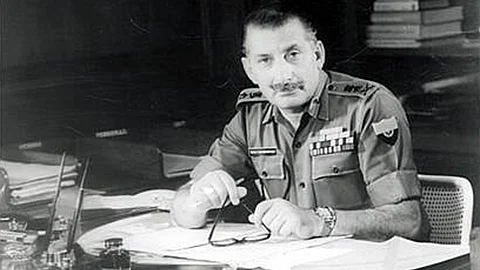
WHOLE RACE – WHOLE PERSIAN: SAM THE BRAVE’-FIELD MARSHAL SAM HORMUSJI FRAMJI JAMSHEDJI MANEKSHAW, MILITARY CROSS, PADMA VIBHUSHAN, PADMA BHUSHAN, CHIEF OF ARMY STAFF 07 JUNE 1969-15 JAN 1973

In the year 1969, while I was a student at Kurnool Medical College, Kurnool, Andhra Pradesh, I qualified for the  grant of Short Service Regular Commission  to join the Indian Army Medical Corps in the rank of Second Lieutenant. I joined the Army Medical Corps on 26 July, 1970 in the rank of Lieutenant. On completion of my training, I got promoted to the rank of Captain on 26 July, 1971. My first task was getting ready for the crisis that India was facing on account of the influx of the Bangla refugees.

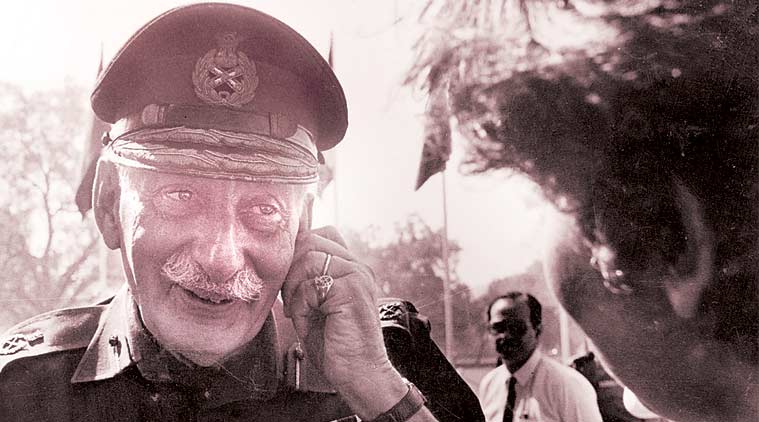
Whole Race – Whole Persian: Field Marshal Sam Hormusji Framji Jamshedji Manekshaw is popularly known as ‘SAM BAHADUR’. He was 8th Chief of Army Staff of Indian Army from 07 June 1969 to 15 January 1973. My career in the Indian Army commenced with this Parsi Connection. He served as the GOC-in-C of the Eastern Command.

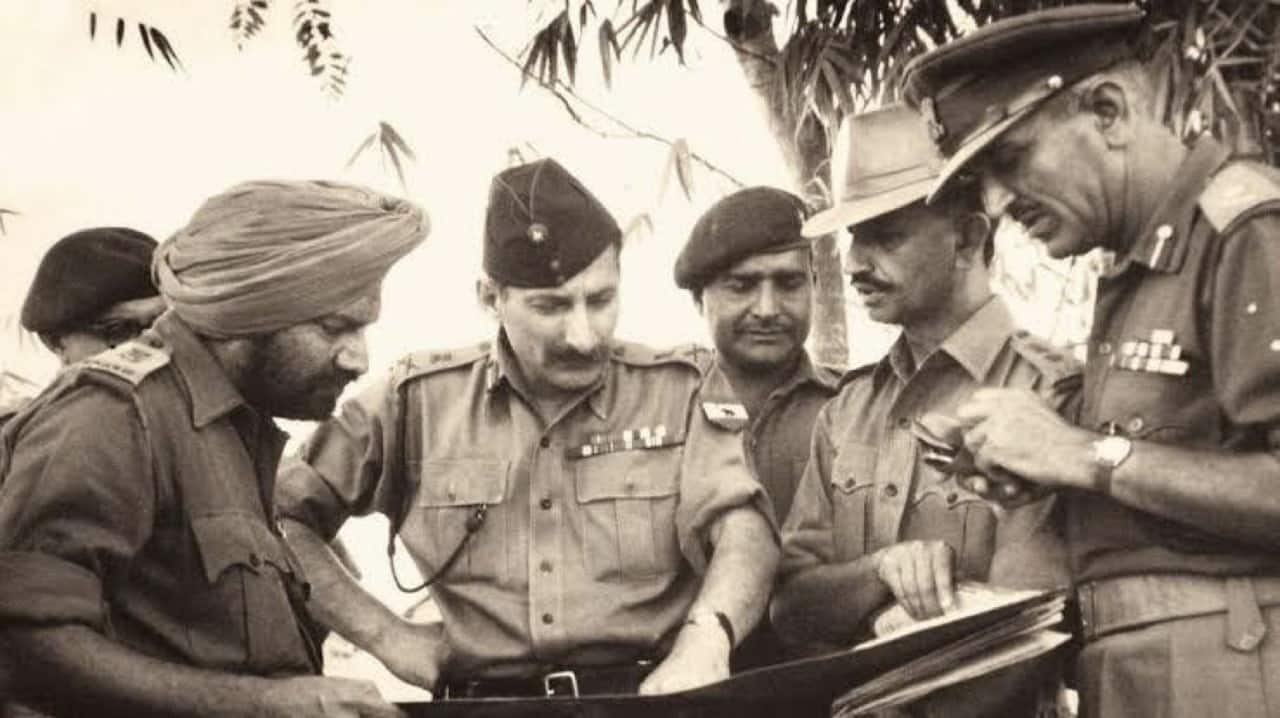
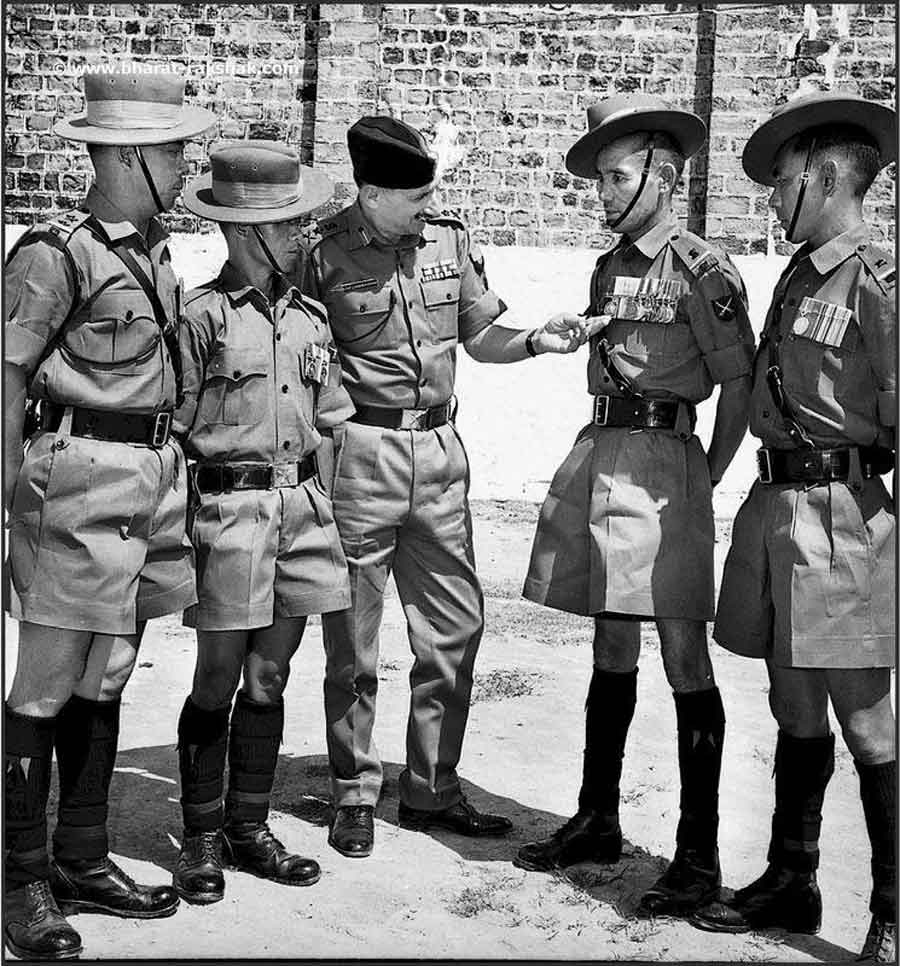
General Manekshaw was born in Amritsar, Punjab to Parsi parents. He became the 8th Chief of Staff of the Indian Army in 1969 and his distinguished military career has spanned four decades and through five wars, including World War II. He has the rare distinction of being honoured for his bravery on the battle front itself. He won the Military Cross for display of his valour in face of stiff resistance from the Japanese while he was leading a counter-offensive against the invading Japanese Army in Burma. He is the architect of India’s heroic victory in the 1971 India-Pakistan War. He had shown uncommon ability to motivate the troops and coupled it with a mature war strategy. He had masterminded the rout of the Pakistan Army in one of the quickest victories in recent military history. I take pride in my military service and my connection to Sam Bahadur. This military experience has helped me while I participated in Military Security and Intelligence Operations at Strait of Hormuz, Persian Gulf during 1984 to 1986 while I served in Royal Oman Army.

Whole Race – Whole Persian: The rugged sea coast of Musandam Peninsula where I had worked hard patrolling the coastline, visiting remote villages, looking for Iranian infiltrators. Iran is just 18 miles away. I used to look towards Bandar Abbas of Iran which is clearly visible while I used to drive over these hill cliffs. I had a sense of fascination for Hormuz region of Iran. Parsi community of India had arrived from Hormuz. My military career in Indian Army had started under General Manek Shaw. Prime Minister Indira Gandhi’s husband Feroze Gandhi was a Parsi by birth. I had actually visited Iranian Embassy in Muscat. The Staff were excited to receive me as I went there in my military uniform and they had recognized that I was stationed at Khasab defending Strait of Hormuz. They wanted to help me but they had no powers. I was not seeking a tourist visa. I had reconciled. It was not God’s Plan. When God plans your Journey, there would be no obstacles. His uplifting power would enable you to overcome all obstacles.

I began my military service under the leadership of a member of the Parsi Community which had arrived in India from Hormuz area of Persian Gulf (Iran) and my military career came to a final conclusion  at Headquarters Peninsular Security Force (Hq PENSEC), Musandam, Khasab, on the shores of Persian Gulf at Strait of Hormuz while I was very actively involved in arresting the growth of Iranian influence in that area.

2. FEROZE GANDHI (FEROZE GANDHY):

INDIA  AND  IRAN  WHAT  IS  THE  CONNECTION ???  I  DESCRIBE  THIS  CONNECTION  FROM  MY  NATIONAL  PERSPECTIVE .  IT  NARRATES  MY  LIFE'S  JOURNEY  FROM  INDIA  TO  THE  SHORES  OF  STRAIT  OF  HORMUZ ,  PERSIAN  GULF . I SENT  A  LETTER  TO  MRS .  INDIRA  GANDHI  WHEN  SHE  BECAME  THE  THIRD  PRIME  MINISTER  OF  INDIA  IN  1966.
WHOLE RACE – WHOLE PERSIAN: INDIA AND IRAN WHAT IS THE CONNECTION? I DESCRIBE THIS CONNECTION FROM MY NATIONAL PERSPECTIVE. IT NARRATES MY LIFE’S JOURNEY FROM INDIA TO THE SHORES OF STRAIT OF HORMUZ , PERSIAN GULF. I SENT A LETTER OF CONGRATULATIONS TO MRS. INDIRA GANDHI WHEN SHE BECAME THE THIRD PRIME MINISTER OF INDIA IN 1966.
Whole Race – Whole Persian: On January 24, 1966, Indira Gandhi became the third Prime Minister of India. She had married Feroze Gandhy or Feroze Gandhi born into a Parsi family. Feroze Gandhi was a Member of India’s First Parliament and had won elections to the Parliament in 1952 and 1957 from Rai Bareilly Constituency in Uttar Pradesh State.

Feroze Gandhi was born into a Parsi family. He was a member of India’s first Parliament. He won his election in 1952 and in 1957 from Rai Bareilly constituency in Uttar Pradesh. His wife was his election manager. He was the husband of India’s first woman Prime Minister, Mrs. Indira Gandhi and the father of the former Indian Prime Minister Rajiv Gandhi. His grandson is a Member of Indian Parliament. Feroze died in 1960 but his name connects me to our beloved Prime Minister Indira Gandhi. I was a student in Kurnool Medical College in 1966 when Mrs. Gandhi was first appointed as the Prime Minister. I wrote her a personal letter to congratulate her and she had graciously responded to that letter. In 1967, I was in New Delhi to participate in a National Student Seminar for National Integration . Myself and other student delegates had a opportunity to meet Mrs. Gandhi at her residence and exchanged our views and expressed our concerns on several issues. After joining Indian Army, in 1971, I  joined duty at the Office of the Directorate General of Security which takes its orders from the Prime Minister’s Cabinet Secretariat. It gave me an opportunity to understand the great leadership role played by Mrs.Gandhi and it provided me an insight into her foreign policy initiatives. Mrs. Gandhi’s decisive leadership had helped India to successfully test our first nuclear weapon.

SPECIAL FRONTIER FORCE – OPERATION EAGLE – INDIRA GANDHI’S MILITARY ACTION IN THE CHITTAGONG HILL TRACTS – LIBERATION WAR OF BANGLADESH 1971:

INDIA  AND  IRAN  -  WHAT  IS  THE  CONNECTION ??? INDIAN  AIR  FORCE  HELICOPTER  PILOT  FLIGHT LIEUTENANT  PARVEZ  JAMASJI, VrC .  THE  FIRST  PARSI  OFFICER  OF  INDIAN  ARMED  FORCES  THAT  I  MET  AND  BRIEFLY  INTERACTED  DURING  THE  MILITARY  ACTION  IN  CHITTAGONG  HILL  TRACTS  THAT  INITIATED  THE  LIBERATION  OF  BANGLADESH  DURING  1971.
WHOLE RACE – WHOLE PERSIAN: INDIA AND IRAN – WHAT IS THE CONNECTION?
INDIAN AIR FORCE HELICOPTER PILOT FLIGHT LIEUTENANT PARVEZ JAMASJI, VrC . THE FIRST PARSI OFFICER OF INDIAN ARMED FORCES THAT I MET AND BRIEFLY INTERACTED DURING THE MILITARY ACTION IN THE CHITTAGONG HILL TRACTS THAT INITIATED THE LIBERATION OF BANGLADESH DURING 1971.

Among several people who had participated in Operation Eagle 1971, I want to mention the name of Flight Lieutenant Parvez Jamasji of Indian Air Force, the Parsi helicopter pilot who helped me with my battle casualty evacuation from the Chittagong Hill Tracts to our Field Hospital at Lungleh, Mizoram.

WHOLE RACE – WHOLE PERSIAN: OPERATION EAGLE 1971 – INDIA’S MILITARY VICTORY IN THE CHITTAGONG HILL TRACTS – THE PARSI CONNECTION

Iran is an ancient land. We had trade and Cultural relations with Iran (PERSIA – THE LAND OF ARYANS) for several centuries. People of Persian origin have immensely contributed to India in a variety of fields such as business, arts, architecture and public service. The Parsi community of India represents my connection to Iran, a Land which still proclaims its Aryan heritage.

Major General Sujan Singh Uban, Inspector General of Special Frontier Force, was my Commander during Indo-Pak War of 1971
Whole Race – Whole Persian: Major General Sujan Singh Uban, Inspector General of Special Frontier Force, was my Commander during Indo-Pak War of 1971. I used this military experience in the conduct of Security and Intelligence Operations at the ‘Strait of Hormuz’, Persian Gulf.
The Taste of Victory. Indian Armed Forces scored a historical victory in its successful conduct of a massive military campaign that resulted in the Birth of Bangladesh.
Whole Race – Whole Persian: The Taste of Victory. Indian Armed Forces scored a historical victory in its successful conduct of a massive military campaign that resulted in the Birth of Bangladesh.

Dr. R. Rudra Narasimham, B.Sc., M.B.B.S.,

Service Number: MR-03277K, Rank: Major  Army Medical Corps/Direct Permanent Commission  & XSCO-324 Naqeeb/Captain  Force Medical Services, Royal Oman Army, Sultanate of Oman

Medical Officer, South Column Unit, Operation Eagle 1971-72

Headquarters Establishment No. 22  C/O  56  APO

Bharat Darshan – Remembering Sam Bahadur

Bharat Darshan-Remembering Sam Bahadur
Bharat Darshan – Remembering Sam Manekshaw. 8th Chief of Army Staff and Prime Minister of India, my Parsi Connections in 1970.
Bharat Darshan – Remembering Sam Bahadur. Mrs. Indira Gandhi, Prime Minister of India with Indian Army Chief Sam Manekshaw, my Parsi Connections.

I have good reasons to pay this tribute to Field Marshal Sam Manekshaw (‘SAM BAHADUR’) who passed away on June 27, 2008. I count him as my ‘Parsi Connection’ apart from Mrs. Indira Gandhi who was India’s Prime Minister when I reported to Officers Training School, AMC Centre, Lucknow on July 26, 1970 to attend Basic Medical Officers Course 20/70. Interestingly, when I left military service, I was at Strait of Hormuz near Hormuz region of Iran to which Parsi community has its historical relationship.

Bharat Darshan-Remembering Sam Bahadur.

The video jerked into play… realised I wasn’t looking for the Great Man: Sam Manekshaw’s daughter Maja Daruwala

Field Marshal Sam Manekshaw died this day in 2008. A daughter remembers.

Bharat Darshan – Remembering Sam Bahadur Field Marshal Sam Manekshaw.

Field Marshal Sam Manekshaw led the Indian Army to victory in East Pakistan. (Photo: Express Archive)Written by Maja Daruwala | New Delhi | Published:June 27, 2016 1:27 am

Perhaps because there are so few of us around, people feel obliged to email and SMS me snippets of news and views, blogs, pictures and videos about Parsees. The complimentary pieces are bittersweet gestures of affection for a friend. They come tinged with regret that seems to mourn the inevitable passing away of our tiny community. The last little video I got came with the message “You should be proud” and opened into a montage of the usual greats. I watched with only tepid interest as the pictures and names in blazoned heroic script passed across the screen. There was Jamshedji, and Dorabji, Nani, Fali and Soli. There was Bhikhaji Cama and atomic energy Bhabha and Rattan of course, Adi, and apro Zubin and Cyrus. I’d seen them all before. At the end, the video stalled and I realised I was mildly miffed at the producers who had missed one name.Still and sad, I stared hard at the little dots going round and round as the video buffered into its last five seconds. In those long moments, I felt my chest tighten and my eyes prick as I remembered the missing man. He had meant so much to us. Eight years dead this week, he was still right there at every family gathering, lighting up the room with silly teasing and laughter, telling funny stories about the cook in Amritsar whose kheema my mother could never match, or the fair girl who’d given him his first innocent kiss by the back loo in exchange for a promise not to tell the elders she was meeting with the local rake, or the tale of how he had exasperated his mother into throwing a bunch of keys at him for explaining to all the household that his hazel eyes came from being born in Egypt. When we asked; “Why Egypt? His only explanation was “Baby, that’s the only name I knew!”

He taught us the names of all the flowers in the garden and read us Scheherazade stories from the Arabian Nights. Then wickedly played king. My sister was the favoured and beautiful Lal Pari, I the ugly sidey grateful to be included. When we asked what our mother was he’d say airily: “Oh, she’s the lady in waiting — waiting for everything.” He loved being the hero and would post us scurrilous detective stories at boarding school. In the hols, I complained to my aunt that no one believed the letters were from my father and she cried out “Bhai, you’re still doing the same thing!” She had been an early victim in their school days.
He had enthusiasms and dragged us willy-nilly into them because they had to be shared by everyone around. So my mother, straw hat on head, walked across the winter sun fields near Delhi while he shot quail and joined the locals in chai on the khatia after. At home, my sister wiggled hot and impatient under studio lights while he perfected the angle of his tripod camera. At the race course, he taught me to feed our one-fourth of a race horse with an open flat hand so I wouldn’t get bitten. It mattered not at all that First Entry never won a race.
In Ferozpur, the huge grounds of Flagstaff House turned him farmer. So we all dug potatoes out of the ground, picked cotton and felt how aniseed tasted right off the stalk. In Mhow, he battled the cook for suzerainty over the kitchen and competed with him to show he could make the best tasting chola ever — for breakfast! In Coonoor, it was trout fishing and endless hours fiddling to find just the right rods and reels and being coaxed into spearing live bait on to hook because he wasn’t going to do it.
Then it was milch cows. We had to have them. All the houses along Porter Avenue got milk at the same price for 20 years. Meticulous accounts were kept. The grandchildren got the 6 am milk run and my mother got to name the animals: Rose (naturally, what else can you name a cow), then Rose Bud, then just Bud, then Bud Bud. Until the Gorkhas put their foot down and only a minimal cow was allowed to remain on the premises.
He loved being loved and retired hurt one time when our long time charioteer cook and Gorkhas agreed that “hamari madam jaisa koi nahi”. He wasn’t expecting it. Beyond the jesting, there was wisdom. “You must spoil your children and spoil your children but they must never get spoiled.” He’d say.
The video jerked into play and pulled me out of my reverie. At last I was face to face with the last name and portrait. We looked at each other and I realised I wasn’t looking for the Great Man at all but for the funny, handsome brave father whose face anyway lives behind my eyes — always.

Bharat Darshan – Remembering Sam Bahadur, Field Marshal Manekshaw.
Bharat Darshan-Remembering Sam Bahadur (GOC IV CORPS)
Bharat Darshan – Remembering Sam Bahadur, Field Marshal Sam Manekshaw.
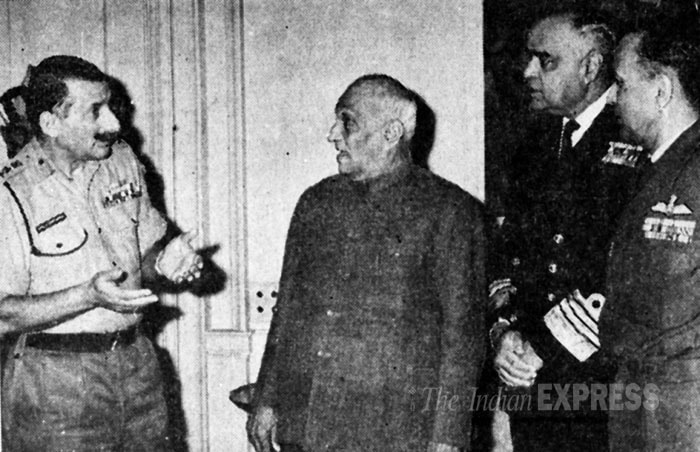
Bharat Darshan – Remembering Sam Bahadur, Field Marshal Sam Manekshaw. Indian President V.V. Giri with Army, Navy, and Air Chiefs.
Bharat Darshan – Remembering Sam Bahadur, Field Marshal Sam Manekshaw.
Bharat Darshan - Remembering Sam Bahadur, Field Marshal Manekshaw, Final Journey on June 27, 2008.
Bharat Darshan – Remembering Sam Bahadur, Field Marshal Manekshaw, Final Journey on June 27, 2008.
Bharat Darshan-Remembering Sam Bahadur.
Whole Race – Whole Persian: Remembering Sam Bahadur. India – Iran, Hormuz – Parsi Connection

Whole Dude – Whole Jahan

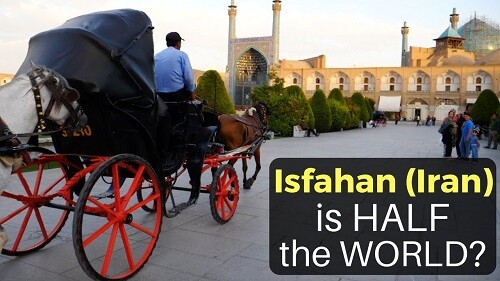
Isfahan is Half the World – Where is the other Half?

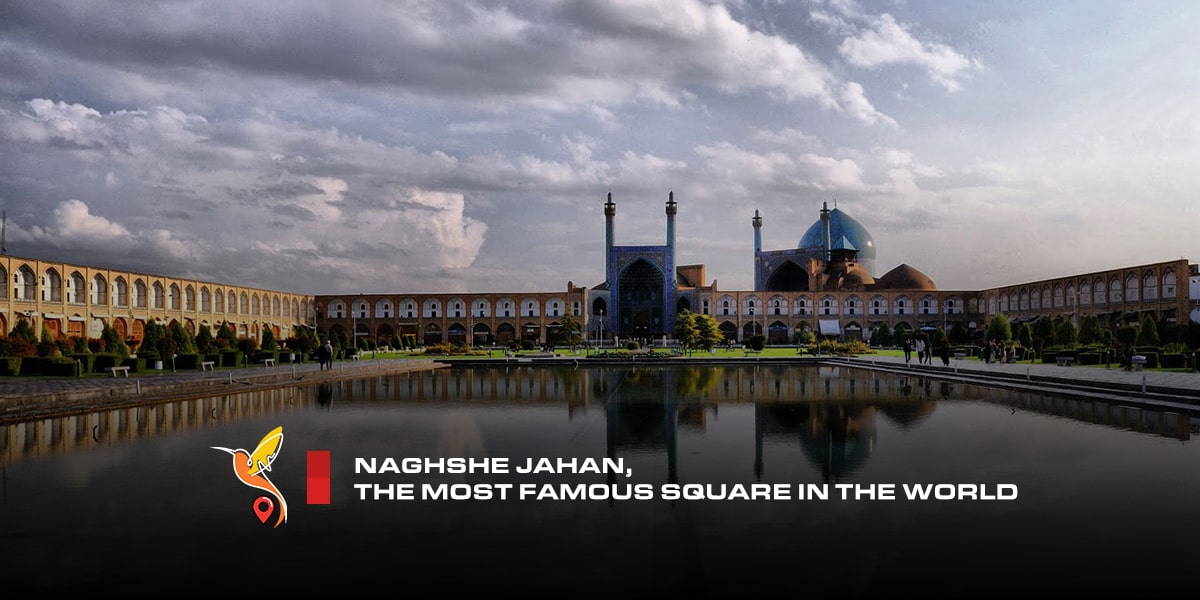
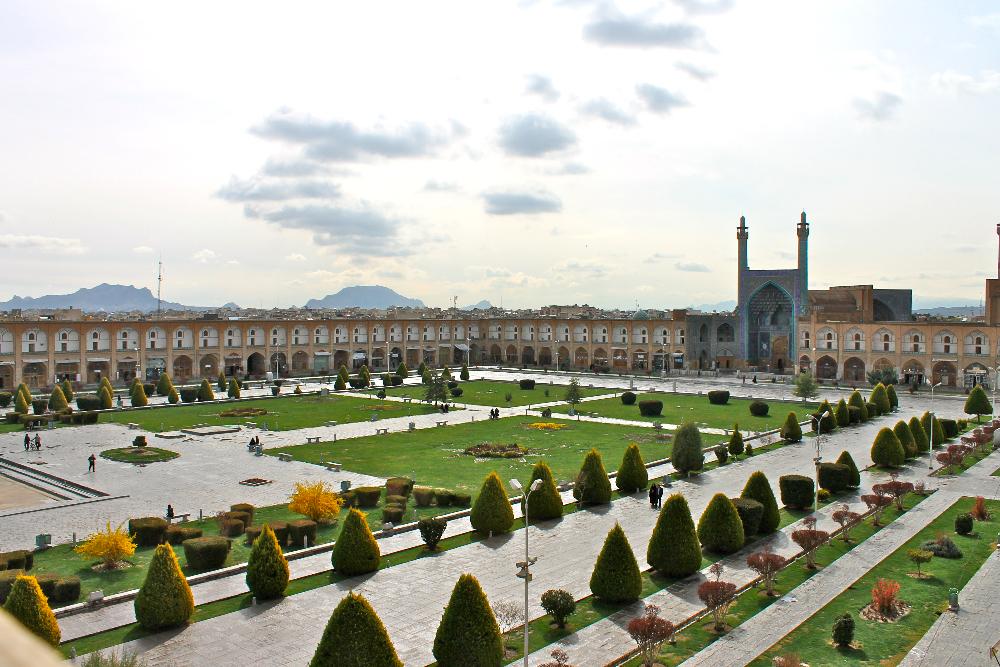
Isfahan – Nesf-E-Jahan – Half the World -Where is the other Half? The Persian Word Jahan means the World.

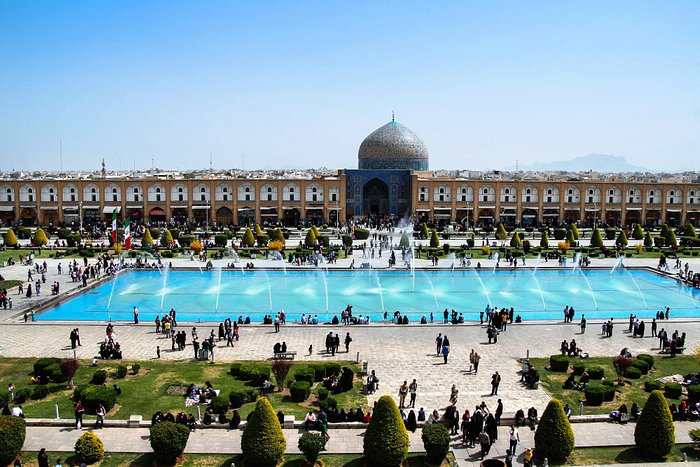
Isfahan is located at about 400 km (250 miles) south of Iranian capital city of Tehran. Isfahan is considered to be a charming and memorable place and it is popularly known as Nesf-e-Jahan meaning that Isfahan is half the world, I name Hyderabad (Deccan),India as the other half. Hyderabad is charming and its historical monuments are being restored and the city was originally modeled after Isfahan and very soon people would appreciate the connection between these two cities.

Isfahan – Nesf-E-Jahan – Half the World -Where is the other Half? The Persian Word Jahan means the World.

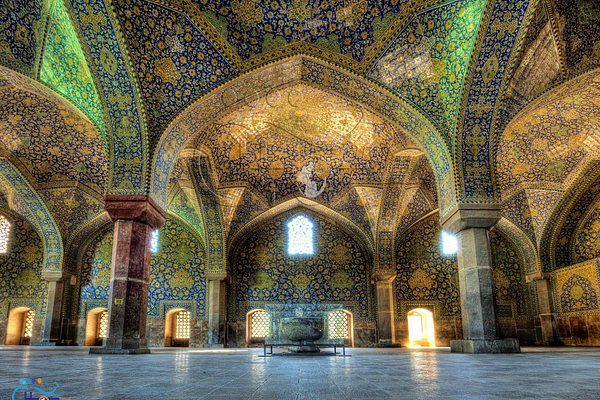
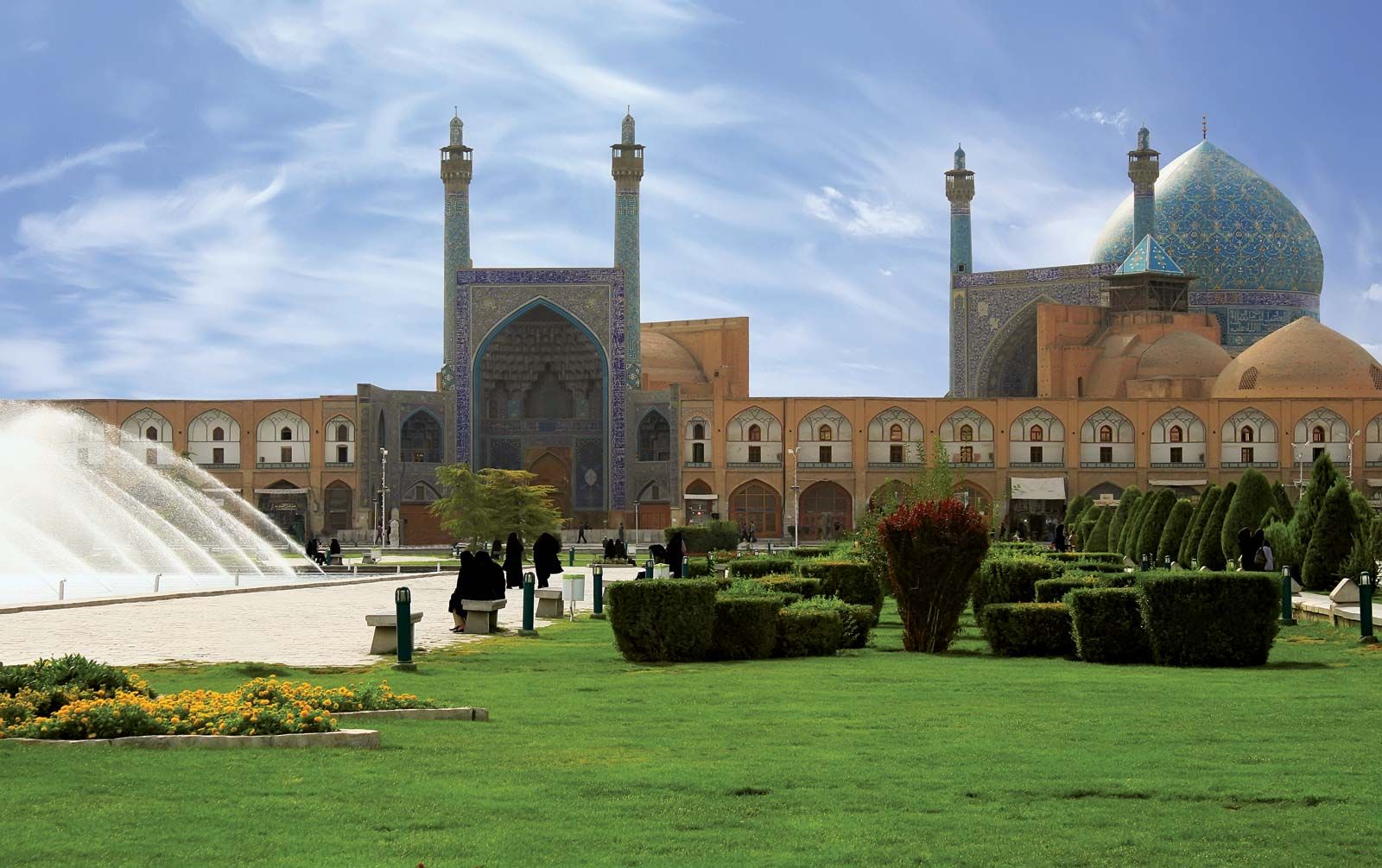
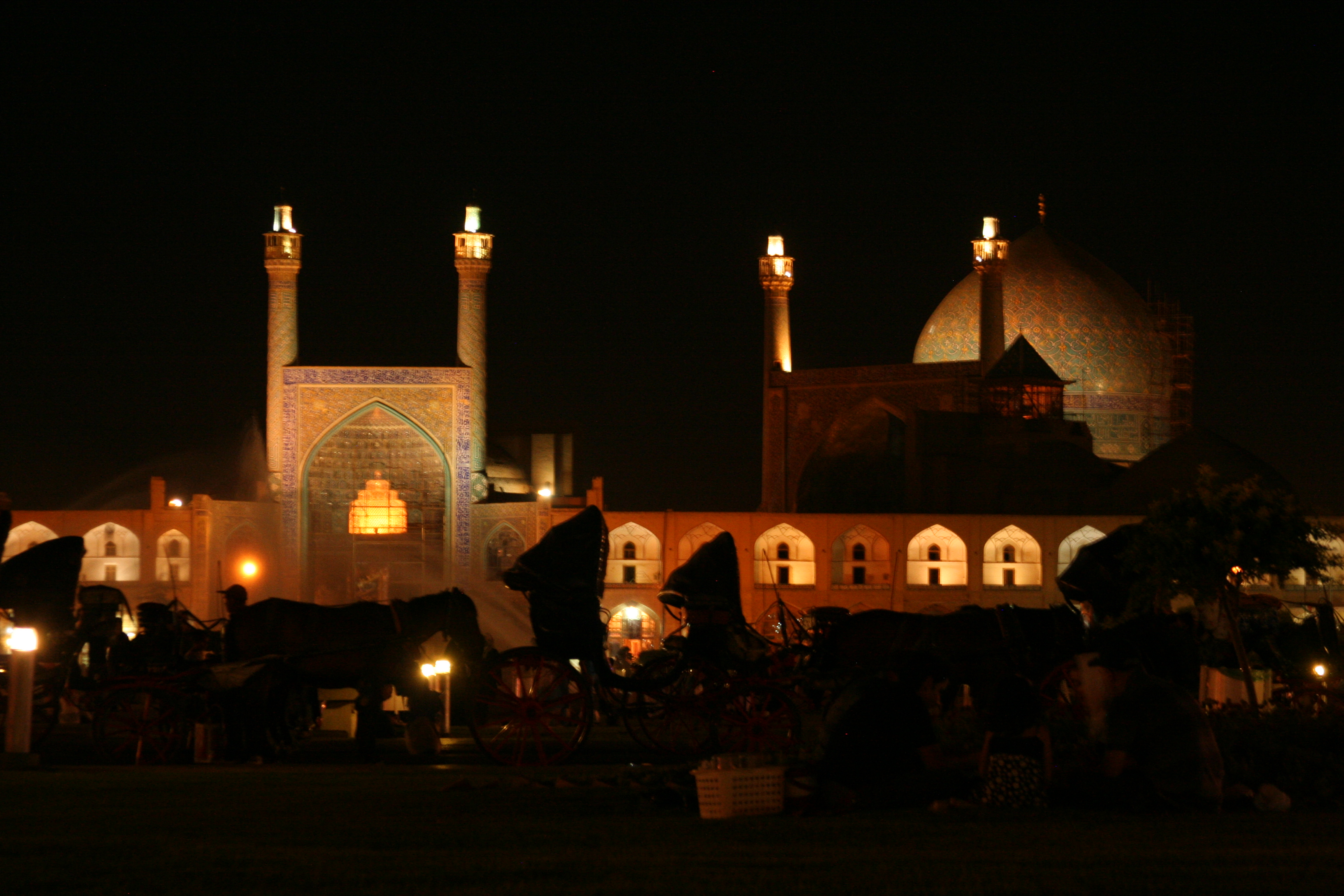
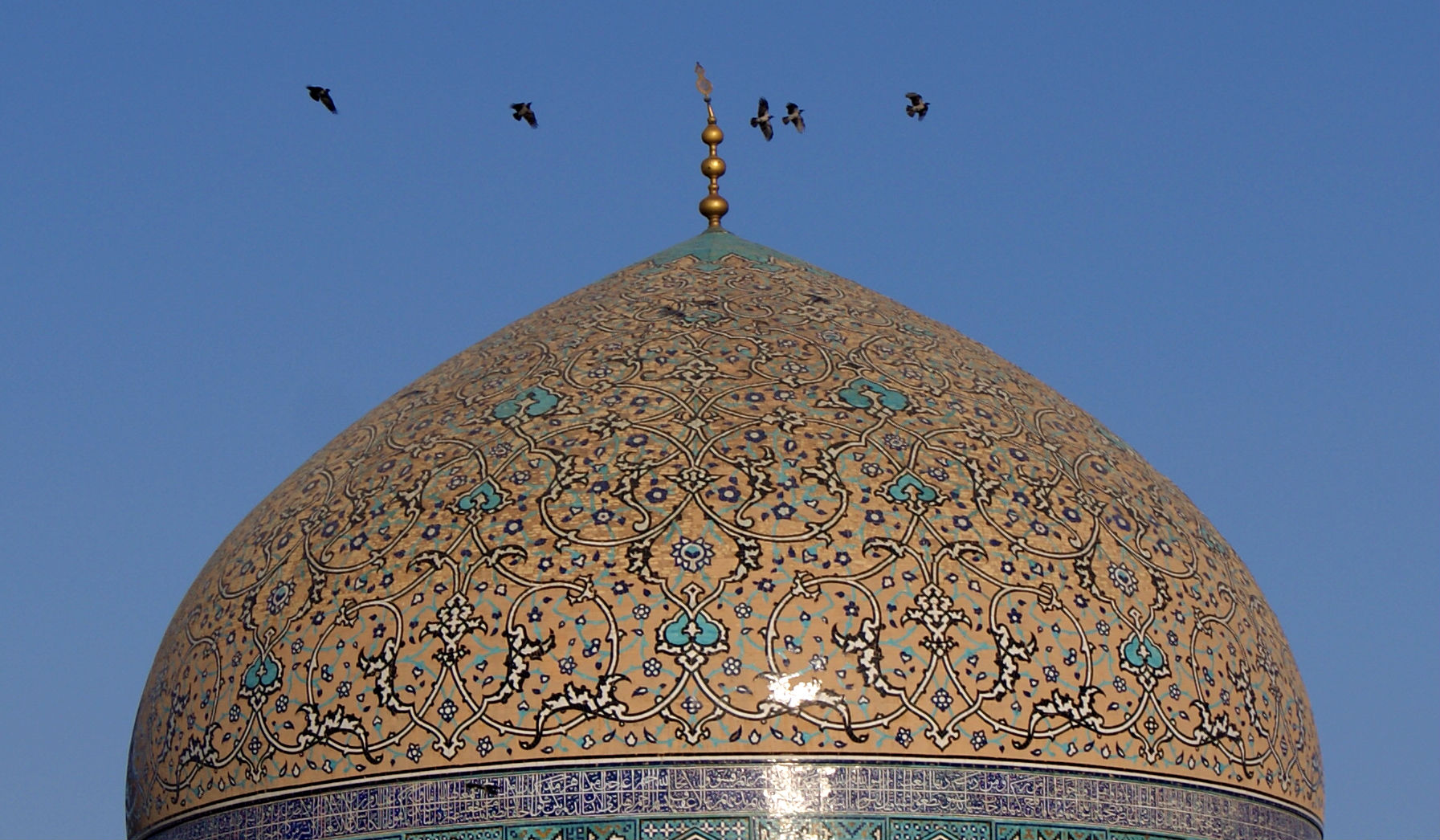
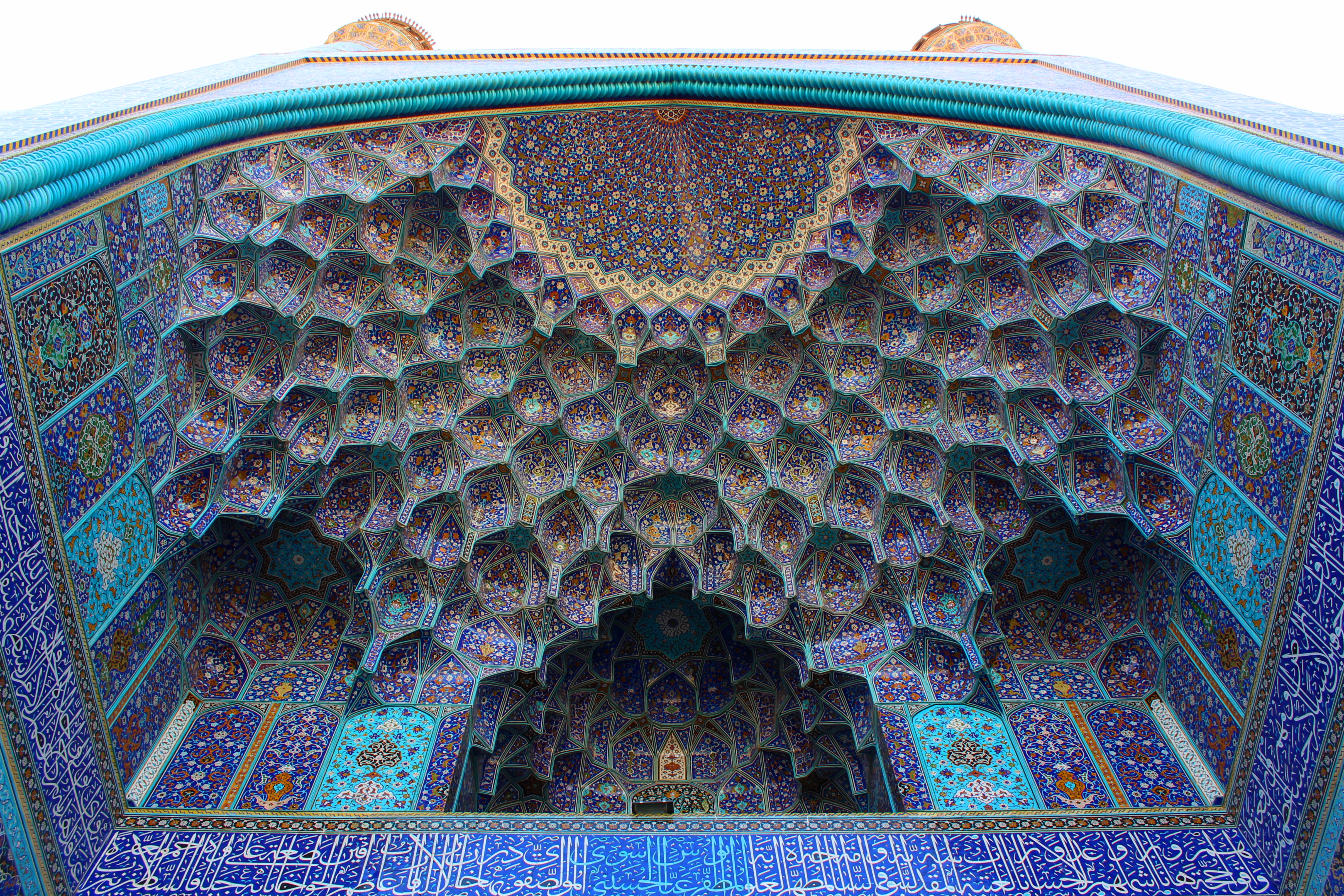
THE BLUE MOSQUE OF ISFAHAN

Isfahan – Nesf-E-Jahan – Half the World -Where is the other Half? The Persian Word Jahan means the World.

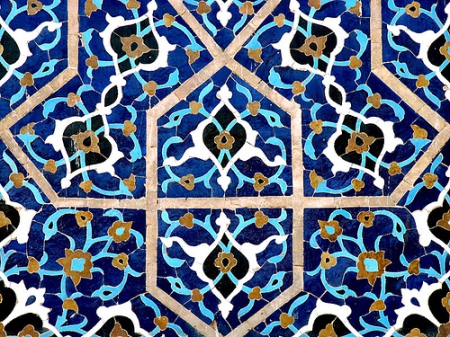
The Blue Tiles of Isfahan

The entrance to Shah Mosque (aka Imam Mosque o...
Whole Dude – Whole Jahan: The Blue Tiles of Isfahan. Isfahan – Nesf-E-Jahan – Half the World -Where is the other Half? The Persian Word Jahan means the World.

Qutb Shahi Dynasty of Golconda, Deccan, India

Qutb Shahi Dynasty of Golconda, Deccan, India. Golconda Fort.

GOLCONDA FORT- “GOLLA KONDA” (SHEPHERD’S HILL) 

QULI QUTB-UL- MULK  

Qutb Shahi Dynasty of Golconda, Deccan, India. Sultan Muhammad Quli Qutb-ul-Mulk

Quli Qutb Mulk, a Shia Muslim from Persia (present day Turkmenistan) with friends and a few relatives had migrated to Delhi in the beginning of 16th century A.D. He migrated south to Deccan and served Bahmani Sultan Mohammad Shah. He conquered Golconda and was appointed as the governor of the Telangana region (about the size of France) in 1512 A.D. After the disintegration of the Bahmani Kingdom into the five Deccan Sultanates, he declared independence, assumed the title of ‘QUTB SHAH’ and established the Qutb Shahi Dynasty of Golconda in 1518 A.D. Qutb Shahis were great builders and patrons of learning. They not only patronized the Persian culture but also the regional culture of the Deccan, symbolized by the Telugu language and the Deccani idiom of Urdu. The Golconda rulers learned Telugu. The Qutb Shahi Dynasty will be remembered because of the legend associated with the construction of a Hindu temple in Bhadrachalam.

Myths, Legends and the Reality – Defining Indian Identity

Myths, Legends, and Reality – Defining Indian Identity. Sree Seetha Ramachandra Swamy at Bhadradri. Temple of Lord Rama in Bhadrachalam defines the concept of Ultimate Reality.

Sri Sita Ramachandra Swamy Shrine -Temple of Lord Rama in Bhadrachalam

Qutb Shahi Dynasty of Golconda, Deccan, India. Defining Indian Identity
Myths, Legends, and Reality – Defining Indian Identity. A Temple to define the concept of Ultimate Reality.

This temple town of Bhadrachalam, located on the northern banks of the river Godavari in Khammam District of Telangana, India, best describes my Indian Identity as it brings together our myths, our legends and our quest for the “Ultimate Reality”.

Myths, Legends, and reality – Defining Indian Identity. A Temple to define the Ultimate Reality. The place described as Panchvati is in the vicinity of Bhadrachalam as per our local legend

This place is connected to events described in the epic poem of Ramayan which narrates Lord Rama’s journey in our Land. Rama while living in exile, camped in the forest by the name ‘Dandakaranya’ and His spouse Seetha was abducted and eventually, Rama and His brother Laxmana cross the river Godavari at this place in search of Seetha. A pious man known as Bhadra prayed at this place seeking Lord Rama’s return to this place. Much later, a simple tribal woman who lived in this area discovered the idols of ‘Vaikuntha Rama’ (for He carried the Sudarshana Chakra apart from the bow and arrow) with Seetha seated on His lap and the idol of Laxmana standing next to them.

Myths, Legends, and Reality -Defining Indian Identity. A Temple to define the concept of Ultimate Reality

Kancharla Gopanna, a Tahsildar (revenue official) of Palvancha Paragana, completed building this temple in 1674 A.D. The legend about the divine intervention and the miraculous release of Gopanna from the prison at the Golconda Fort is narrated in my entry titled, ‘The Benevolent Shia Ruler of Golconda-Verily, A Blessed Soul’.

About Myths and Legends:

Myths, Legends, and Reality. Defining Indian Identity. A Temple to define the concept of Ultimate Reality.

Myths are traditional stories which serve to explain our connection to God and the universe and hence they are not the same like the fictional stories. Myths exist in a historical context but may not be true historical accounts that are supported by scientific verification. Legends are stories handed down for generations among a people and popularly believed to have a historical basis but do not qualify for inclusion in a text book of history. As an Indian, I depend upon myths and legends to derive a sense of direction, a sense of guidance and a sense of hope for my human existence. They help me to know who I am and where I am going.

About Reality and Ultimate Reality:

The influence called Time makes the distinction between Real and Unreal. A Temple to define the concept of Ultimate Reality

Indians are very concerned about the effects of Time . We practically witness in our daily lives the forceful consequences of time. Time changes the course of human life and time changes the physical world. However, the “Ultimate Reality” does not change, it is constant and it is eternal. Indians seek this Reality as it represents their natural home and that is their final destination on completion of the life’s journey. Since ‘TRUTH’ is unchanging in its character, is also described as the Reality that we cherish to experience.

Myths, Legends, and Reality. Defining Indian Identity. A Temple defines the concept of Ultimate Reality. The name Ra Ma represents Eternal Truth.

Millions of Indians express this desire for Truth and the Reality with a very simple statement. They claim that the name “RA MA” is eternal Truth. Our search for Truth and Reality becomes very easy if we just seek “RA MA”. Great powers on this earth had vainly tried to destroy our belief in RAMA. Mughal Emperor Babur destroyed the temple in Ayodhya which we consider as Rama’s birth place. The forces of Sultan Tughlak destroyed the Rama temple in my home town Rajahmundry. Mughal Emperor Aurangzeb destroyed countless number of temples and idols of Rama. Yet the myth and legend of Rama survives. At Bhadrachalam also known as Bhadra giri or Bhadradri (the hill of Bhadra), Sultan Tani Shah, a benevolent Shia Muslim ruler of Golconda, helped Kancharla Gopanna to maintain this temple. This devotee of Lord Rama is popularly known by the name Bhakta Rama Dasu.

Would it be possible to destroy Rama?

Myths, Legends, and Reality. Defining Indian Identity. A Temple defines the concept of Ultimate Reality.

Many have tried to destroy the idols and images of Rama. For example, if some one would destroy the temple of Rama in Bhadrachalam, we still connect this place and the forest and the river with Rama’s life journey. If some one would destroy the forest, level the ground and change the course of the river, I would still look for the signs of His presence in the creation of the heavens and the earth. I would describe the blue sky as the color of Rama. If some one could destroy the blue sky and when I look up and see the dark sky, I would say that I am reminded of Lord Krishna who is described as black in color as dark as the sky of New Moon’s day. Our myths remind us that Rama and Krishna are one and the same. I do know people take great pride in their physical power but it may not be easy to wipe out a belief system which is more than the Idols which represent the Belief. The Indian Identity associated with Blue and Dark sky would survive as long as there is a sky above our heads and as long as the difference of night and day exists on this earth.

Myths, Legends, and Reality – Defining Indian Identity. A Temple to define the concept of Ultimate Reality.

” Lo! In the creation of the heavens and the earth and (in) the difference of night and day are tokens (of His sovereignty) for men of understanding”. Surah III, verse 190, Holy Book of Quran.

Myths, Legends, and Reality – Defining Indian Identity. A Temple to define the concept of Ultimate Reality.

Shia Muslim Ruler of Golconda. Verily, a Blessed Soul

Shia Muslim Ruler of Golconda. Verily, a Blessed Soul. SULTAN ABUL HASAN QUTB SHAH (MAY PEACE BE UPON HIM).
Golconda Fort near the City of Hyderabad, the seat of Qutb Shahi Dynasty. GOLCONDA FORT- “GOLLA KONDA”(SHEPHERD’S HILL) 

Quli Qutub Mulk, a Shia Muslim from Persia (present day Turkmenistan) with friends and a few relatives migrated to Delhi in the beginning of 16th century CE. He migrated south to Deccan and served Bahmani Sultan Mohammad Shah. He conquered Golconda and was appointed as the governor of the Telangana region (about the size of France) in 1512 CE. After the disintegration of the Bahmani Kingdom into the five Deccan Sultanates, Quli Qutub Mulk declared independence, assumed the title of ‘QUTUB SHAH’ and established the Qutb Shahi Dynasty of Golconda in 1518 CE. Qutub Shahis were great builders and patrons of learning. They not only patronized the Persian culture but also the regional culture of the Deccan, symbolized by the Telugu language and the Deccani idiom of Urdu. The Golconda rulers learned Telugu. 

The Qutub Shahis was the ruling family of the kingdom of Golconda, DECCAN, southern India. They were Shia Muslims and belonged to a Turkmen tribe from the Turkmenistan-Armenia region. The dynasty ruled Golconda for 171 years until the Mughal Emperor Aurangazeb’s armies conquered the Deccan in 1687 CE. 
Abdullah Qutb Shah, the sixth ruler of the Qutb Shahi Dynasty (1626-1672 CE). Abdul Hasan Tana Shah married his daughter and gained access to power.
Tana Shah (Abul Hasan Qutb Shah or Tanishah) (1672-1687 CE)

 Sultan Abul Hasan Qutb Shah was the seventh and the last ruler of the Kingdom of Golconda (Deccan, Southern India) under the Qutb Shahi Dynasty. He ruled from 1672 CE to 1687 CE. He is also known as Abul Hasan Tana Shah and more popularly, he is known as TANI SHAH meaning benevolent ruler. He did not discriminate against those of other ethnicities or religions. He hired Hindus as his ministers and generals.


Akkanna, Madanna were secretaries to the prime minister during Abdullah Qutb Shah rule and their position helped Gopanna get a post as Palvancha Tehsildar. Sultan Tana Shah appointed Madanna as Prime Minister and Akkanna as Revenue Minister.

Madanna served as an official during Sultan Abdullah Qutb Shah’s rule. Madanna had a nephew by name Kancharla Gopanna and he helped Gopanna to be appointed as a “Tehsildar” (a revenue official) of Palvancha county.

Pokala Dhammakka, a tribal woman living in Bhadrareddypalem, found the central icon of Rama in an anthill.

During mid 17th century CE, Pokala Dhammakka, a tribal woman living in Bhadrareddypalem, found the central icon of Rama in an anthill. She dissolved the anthill using the water from the Godavari River. With the help of the villagers, Dhammakka constructed a mandapam (a temporary platform with a roof) and offered prayers to the deities.
Following Abdullah Qutb Shah’s orders, Gopanna enforced the Jizyah tax (jizyah, also spelled jizya, historically, a tax  paid by non-Muslim populations to their Muslim rulers., a penalty designed to make Hindus pay for not adopting Islam). Observing the dilapidated state of the worship site, Gopanna decided to build a temple for Rama, Seeta, and Laxmana idols by raising donations.

In the initial attempt, Gopanna received harsh criticism from the local Hindus for enforcing the Jizyah tax.
Dejected by numerous rebuffs, Gopanna decided to use a portion of the tax collected to build the temple and face the consequences. The temple was built by Gopanna in 1662 CE with a cost of nearly six lakh Varahas ( Gold coins).
Abdullah Qutb Shah summoned Gopanna, who had no proper answer for misusing kingdom’s funds.

Sultan found Gopanna was guilty of the misuse of the funds and had him imprisoned at the Golconda Fort.  

A Legend About Divine Intervention: 

Shia Ruler of Golconda, Verily, a Blessed Soul. A Temple to define the concept of Ultimate Reality.
Did Lord Rama actually visit Golconda Fort to obtain the release of Kancharla Gopanna from the prison? Sultan Tani Shah believed that it was God or Allah who had come to him and cleared the debt owed by Gopanna. He further expressed that belief in his actions. He allowed Gopanna to complete the construction of Lord Rama’s Temple in Bhadrachalam and financially supported the maintenance of that Temple. By doing so, the Shia Ruler of Golconda gave us a chance to reflect upon Lord’s Mercy, Grace, and Compassion.

 Gopanna spent about 12 years in prison. According to legend, God intervened on behalf of Gopanna to obtain his release from the prison at Golconda Fort.

RamaTanka Gold Coins given to Tana Shah are still in display at Bhadrachalam Temple.

As per the legend, Lord Rama in disguise had come before the King and returned the money owed by Gopanna and the debt was repaid with gold coins. God who came to rescue Gopanna from the prison had met the Sultan but not the prisoner. Upon his release from the prison, Gopanna did express his sorrow for missing the opportunity to meet the Lord. Gopanna was released from the prison and he successfully finished the construction of the Rama temple which stands even today. Sultan Tani Shah publicly acknowledged that he had met “ALLAH ” and recognized the fact of Gopanna’s release from the prison was made possible by divine intervention. He made permanent arrangements for the upkeep of this temple. The funds that were collected as tax from Palvancha county were allocated to the temple and also he had established an annual tradition of sending pearls to shower the Deity during the annual temple festival. This tradition of offering pearls was continued by the rulers of the princely State of Hyderabad popularly known as the ‘Nizams of Hyderabad’, who ruled the Telangana region continuously until India’s independence. The Hyderabad State became a part of the Indian Union and the State of Andhra Pradesh came into existence in 1956.  The Government of Andhra Pradesh and later Telangana followed the tradition established by Sultan Tani Shah in the 17th century and the tradition of offering pearls to Lord Rama still exists.   

VERILY A BLESSED SOUL: 

Shia Ruler of Golconda, Verily a Blessed Soul.

Did Lord Rama actually visit Golconda Fort to obtain the release of Kancharla Gopanna from the prison? Sultan Tani Shah believed that it was God or Allah who had come to him and cleared the debt owed by Gopanna. He further expressed that belief in his actions. He allowed Gopanna to complete the construction of Lord Rama’s Temple in Bhadrachalam and financially supported the maintenance of that Temple. By doing so, the Shia Ruler of Golconda gave us a chance to reflect upon Lord’s Mercy, Grace, and Compassion.  

This Lord Rama’s Temple in Bhadrachalam is a testimony about Lord’s Grace, Mercy, and Compassion.

 This benevolent ruler defended the Golconda Fort for eight months when the Mughal Emperor Aurangzeb attacked it in 1687 A.D. In October 1687, the Fort was captured by bribery and Sultan Tani Shah was taken as a prisoner and was imprisoned in Daulatabad Fort until his death.  

I would call Sultan Tani Shah is a Blessed Soul for he recognized God’s plan and purpose and supported Gopanna to build the temple and provided for the maintenance of the temple and gave us the opportunity to know about God’s Compassion, Grace, and Mercy. Secondly, Sultan Tani Shah received the biggest gift that a man could ever seek. Man always cherishes the idea of meeting his Creator, the Father in Heaven, Allah, the Lord, RAMA the divine reincarnation of Vishnu and very few actually realize that dream. Gopanna was rescued but could not meet RAMA. Sultan Tani Shah did not pray or ask for this favor from God. He is a Blessed Soul because God granted him that gift. He received a sensory experience of that Reality called God and I fully trust this experience he had shared with others. Sultan Tani Shah’s  actions substantiate his claim. Most importantly, he did not seek any personal reward or personal gain while he acted in the obedience of a God he never actually believed and had never intended to worship in any manner. He acted without seeking the fruits of his actions. I bless this Shia Ruler of Golconda and pray for Lord’s Peace be upon him forever.   

Shia Ruler of Golconda, Verily a Blessed Soul.

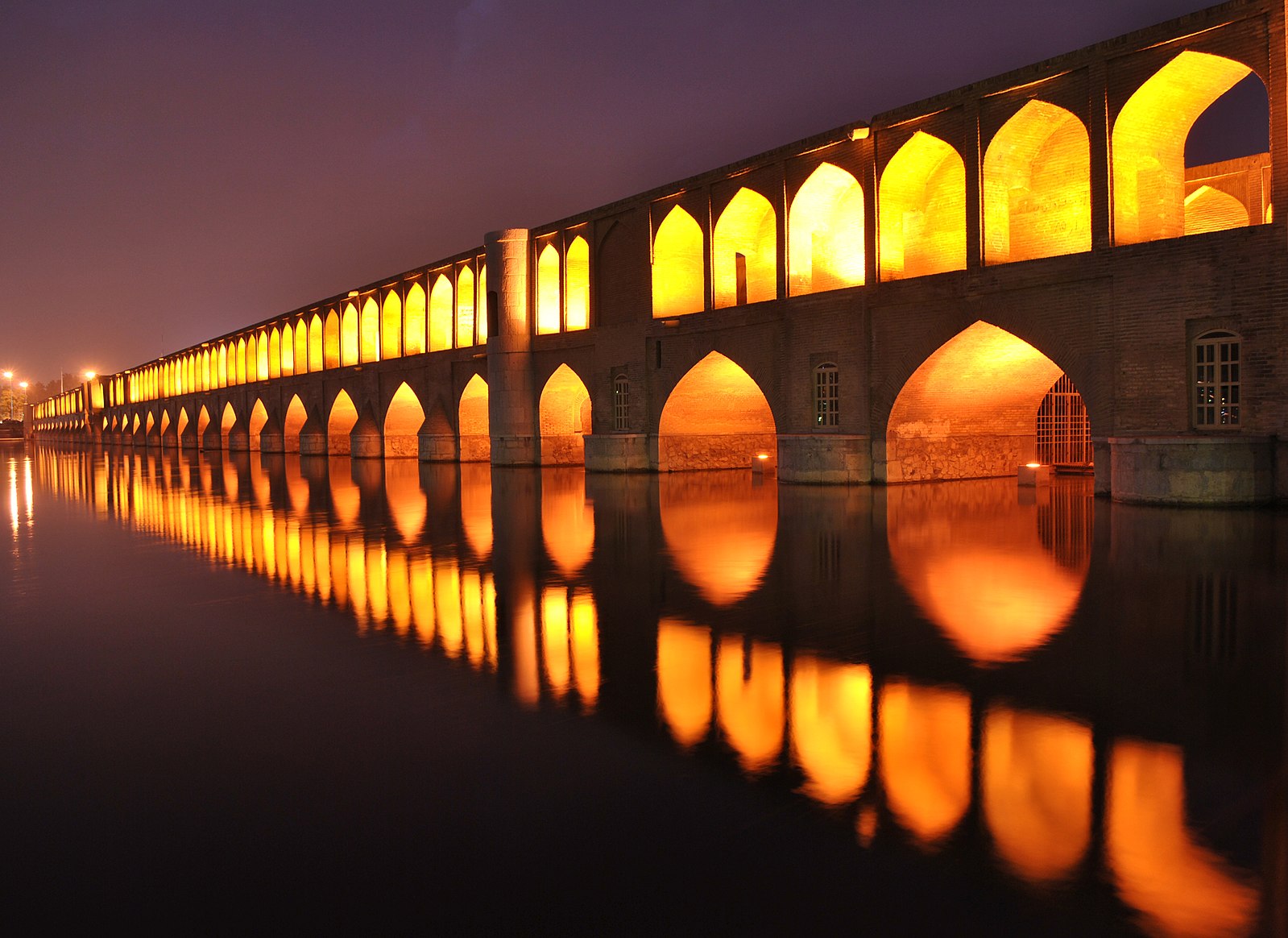
A Replica of Heaven on Earth – Isfahan, Half the World and Hyderabad, the Second Half

A Replica of Heaven on Earth – Isfahan, Half the World and Hyderabad, the Second Half

Charminar – Architectural Centerpiece of Hyderabad 

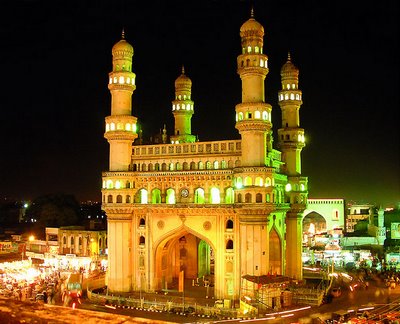
Muhammad Quli Qutub Shah, the fifth Sultan of the Qutb Shahi Dynasty of Golconda described the then new city of Esfahan (Isfahan) of Persia as “unparalleled in the world and a replica of Heaven itself.” He ascended to the throne in 1580 at the age of 15 and ruled for thirty-one years. He founded the city of Hyderabad and this most well planned city was modeled on the city of Esfahan. Architects from Persia planned the lay out of Hyderabad City which was built on the southern bank of Musi River in 1591. Charminar (Four Towers) was built as the architectural centerpiece and it defines the center of the Hyderabad City. He married a Telangana Telugu woman named Bhagmati and hence the city is known as ‘BHAGYA NAGAR’. He gave her the name Hyder Mahal and the city got its name from her new identity. He built Jama Masjid in 1597. 

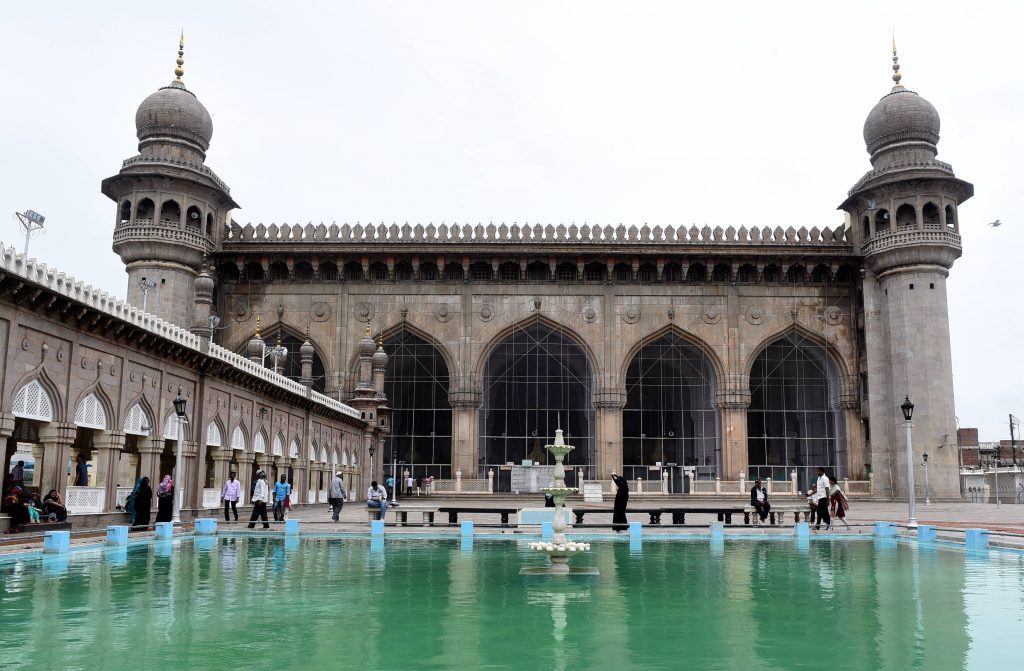
A Replica of Heaven on Earth – Isfahan, Half the World and Hyderabad, the Second Half. Jama Masjid of Hyderabad.

Iran helping India to restore Qutb Shahi Monuments

Iran helping India to restore Hyderabad Qutb Shahi monuments

QUTB SHAHI DYNASTY-HISTORICAL MONUMENTS OF HYDERABAD 

Iran helping India to restore Hyderabad Qutb Shahi monuments

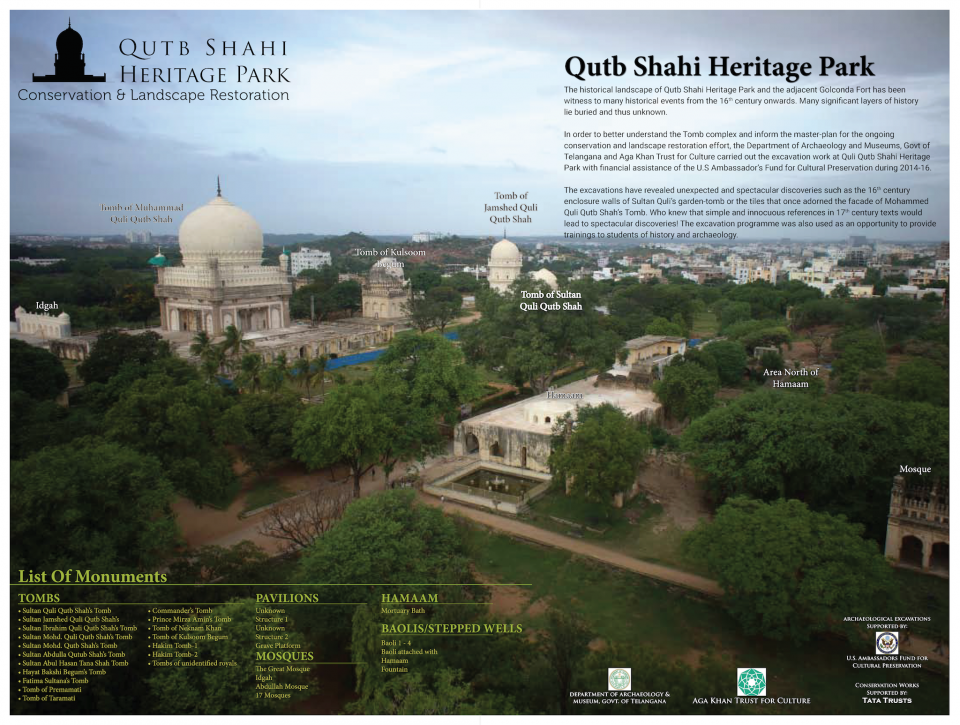
The Qutb Shahis was the ruling family of the kingdom of Golconda, Deccan, India. They were Shia Muslims and belonged to a Turkmen tribe from the Turkmenistan-Armenia region. The dynasty ruled Golconda for 171 years until the Mughal Emperor Aurangazeb’s armies conquered the Deccan in 1687. Amidst beautifully laid out gardens of Ibrahim Bagh there are seven tombs erected in the memory of the departed kings of Golconda and they are known as Qutub Shahi tombs. They are located one km away from Golconda Fort. The site is considered to be one of the world’s largest necropolis and nowhere in the world there are so many tombs in one place. 

Iran helping India to restore Hyderabad Qutb Shahi monuments

Each tomb stands on a raised platform. It is a domed structure built on a square base surrounded by pointed arches. The quadrangular terrace is approached on all sides by flights of steps. The galleries of the smaller tombs are single storied while the larger ones are two-storied. In the center of each tomb is a sarcophagus which overlies the actual burial vault in a crypt below. The material used was Grey granite embellished with stucco ornamentation. The domes were originally overlaid with blue and green tiles of which only a few pieces remain now. The tombs were once furnished with carpets, chandeliers and velvet canopies on silver poles. Qurans were kept on decorated supports.Golden spires were fitted over the tombs of the Sultans. The tombs were surrounded by rose gardens and fountains. The tomb of founder of Hyderabad City, Muhammad Quli Qutb Shah is the most impressive, rising to a height of 42.5 meters with a large dome and 28 open arches on each side. He had taken Iranian help in the planning of Hyderabad. 

Iran helping India to restore Hyderabad Qutb Shahi monuments

Iranian Government and the Iranian Consulate in Hyderabad have taken a great interest in the restoration work of these tombs. During August 2006, six Iranian experts visited the site to draw up the plans for restoration which also includes the Prema mati Mosque, and the Badshahi Ashoor Khana where tears are shed over the martyrdom of the Prophet’s grandson Hussain. The underground drainage system, the fountains and the hamam (bath) that existed before would be restored. Gardens will be developed in and around the monuments. This project when completed will be like 20 Taj Mahals at one place.

Iran helping India to restore Hyderabad Qutb Shahi monuments
Iran helping India to restore Hyderabad Qutb Shahi monuments. The City around these monuments has totally changed over the years.
A Replica of Heaven on Earth – Isfahan, Half the World and Hyderabad, the Second Half

Whole Dude – Whole Relationship

Bharat Darshan – What is My Relationship with Myself? A tribute to Pankaj Udhas.

Human existence raises some fundamental questions about individual’s identity, the purpose in life and the nature of human relationships. I love Hakeem Omar Khayyam for he had asked himself these questions. Does the image I see in the mirror describe my true identity ? Unless I define my identity, how it would be possible to describe my relationship with others. If I do not know as to who I am, why should I contemplate on issues such as my purpose in life and my destination? Self-Knowledge is the key to answer questions about existence.   

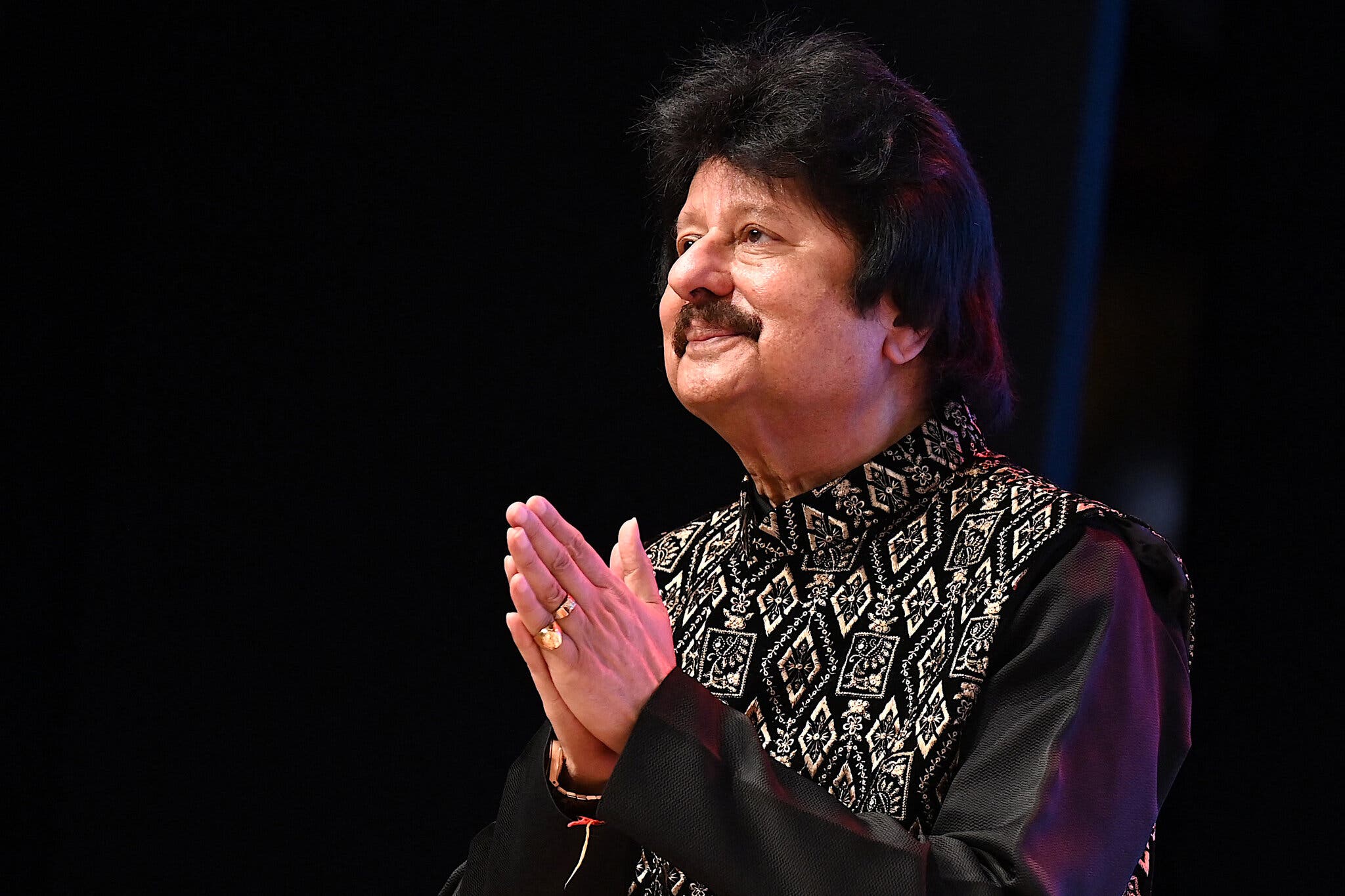
Pankaj Udhas (1951-2024) | The elegiac voice of romance, in letter and spirit

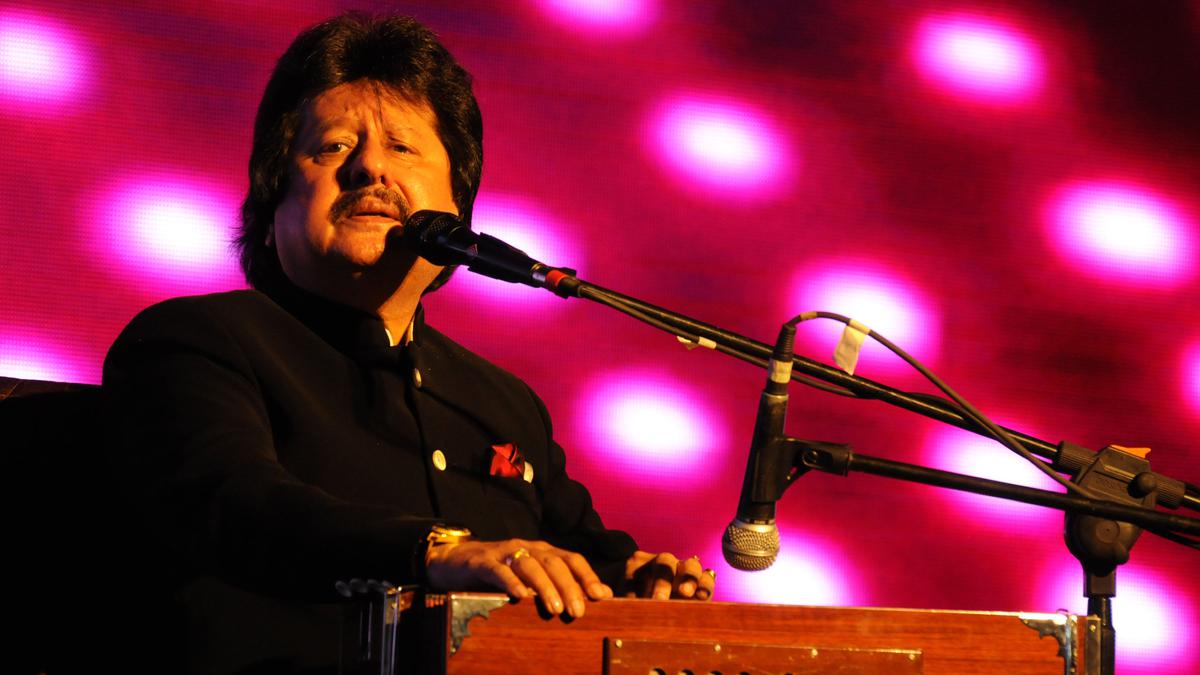
Whole Dude – Whole Relationship: Mujh se Mera Kya Rishta Hai? What is My Relationship with Myself? Padma Shri Pankaj Udhas, performing at the concert of Shaam- E- Ghazal in the connection with Osmania University Centenary celebrations, in Hyderabad. I share this photo for I obtained my B.Sc., Degree from Osmania University, Hyderabad in March, 1965.| Photo Credit: G. Ramakrishna

Renowned ghazal singer and Padma Shri awardee Pankaj Udhas, best known for “Chitthi Ayee Hai” and “Aur Ahista Kijiye Baatein”, died on Monday following prolonged illness, his daughter Nayab said. He was 72. His daughter Nayaab Udhas took to Instagram to announce the news and wrote, “With a very heavy heart, we are saddened to inform of the sad demise of Padma Shri Pankaj Udhas on 26th February 2024 due to prolonged illness.”

Udhas died around 11 a.m. at the Breach Candy hospital, a family source said.

The last rites will be held on Tuesday, February 27.

Whole Dude – Whole Relationship: Mujh se Mera Kya Rishta Hai? What is My Relationship with Myself? Padma Shri Pankaj Udhas,

The soulful voice that soothed broken hearts, Pankaj Udhas passed away after a prolonged illness in Mumbai on February 26 at 72. At the cusp of 1980, when the ‘angry young man’ had sucked melody out of our lives, Udhas, following the footsteps of Mehdi Hasan and Jagjit Singh, popularising ghazals among the youth. Breaking away from the classical format, he liberated the romantic form from Persianised Urdu to convey their pain in a simple verse like Deewaron Se Milkar Rona Achcha Lagta Hai and tweaked the plaintive orchestration to create a new, youthful riff that could declare Mohe Aai Na Jag Se Laaj Main Itna Zor Se Nachi Aaj Ki Ghungroo Toot Gaye.

Mujh se Mera Kya Rishta Hai? What is My Relationship with Myself?

What is my relationship with myself? Rubaiyat of Persian poet Hakeem Omar Khayyam.

What is my relationship with myself ?
I have forgotten all other relationships.
How many mirrors that I have looked into, yet
I have forgotten my face. 

Whole Dude – Whole Relationship: Mujh se Mera Kya Rishta Hai? The problem of human identity. What is my relationship with myself?

Mujh Se Mera Kya Rishta Hai Lyrics

Whole Dude – Whole Relationship: Mujh se Mera Kya Rishta Hai? The problem of human identity. What is my relationship with myself? A tribute to Pankaj Udhas
  1. imaan ko bekaar naa kar doon, ya rab
    is jeene ko dushwaar naa kar doon, ya rab
    is khoff se har shaam ko pee letaa hoon
    main khud se bhee inkaar naa kar doon, ya rab

    peene de muje, bhar de mera paimaana
    duniyaa to hai ek goonja hua afasaana
    jab tak muje maalum naa ye ho jae
    main aayaa kahaan se hoon , kahaan hai jaanaa

    mujh se mera kya rishta hai?
    mujh se mera kya rishta hai?
    har ek rishta bhool gaya
    itane aaine dekhe hain
    apana cheharaa bhool gaya
    mujh se mera kya rishta hai?

    ab to ye bhee yaad nahin hai
    farq tha kithna donon mein
    ab to ye bhee yaad nahin hai
    farq tha kithna donon mein

    us kee baathen yaad rahee
    us kee baathen yaad rahee
    aur us ka lahaza bhool gaya
    itane aaine dekhe hain
    apana cheharaa bhool gaya
    mujh se mera kya rishta hai?

    pyaasi dharti ke honton par
    mera naam nahin to kya?
    pyaasi dharti ke honton par
    mera naam nahin to kya?

    main vo baadal ka tukdaa hoon
    main vo baadal ka tukdaa hoon
    jis ko dariyaa bhool gaya
    itane aaine dekhe hain
    apana cheharaa bhool gaya
    mujh se mera kya rishta hai?

    duniyaa waale kuch bhee kahen
    raashid apanee majaburi hai
    duniyaa waale kuch bhee kahen
    raashid apanee majaburi hai

    us kee gali jab yaad aayee hai
    us kee gali jab yaad aayee hai
    ghar ka rastaa bhool gaya
    itane aaine dekhe hain
    apana cheharaa bhool gaya

    mujh se mera kya rishta hai?
    har ek rishta bhool gaya
    mujh se mera kya rishta hai?
    har ek rishta bhool gaya
    mujh se mera kya rishta hai?

2.

Beemar Ko Bekaar Na Kardo Ya Rab
Iss Jeene Ko Dushwar Na Kardun Ya Rab
Iss Khaab Se Har Shaam Ko Pee Leta Hoon
Main Khud Se Bhi Inkaar Na Kar Dun Ya Rab

Peene De Mujhe Bhar De Mera Paimaana
Duniya To Hain Ek Uljha Huaa Afsaana
Jab Tak Mujhe Maalum Na Ye Ho Jaaye
Main Aaya Kahan Se Hun Kahan Hain Jaana
Mujh Se Mera Kya Rishta Hai
Har Ek Rishta Bhool Gaya
Itne Aaine Dekhe Hain Ki
Apna Chehra Bhool Gaya
Mujh Se Mera Kya Rishta Hai

Ab To Yeh Bhi Yaad Nahi Hai
Farq Tha Kitna Dono Main
Ab To Yeh Bhi Yaad Nahi Hai
Farq Tha Kitna Dono Main
Us Ki Baatein Yaad Raheen Aur
Us Ka Lehja Bhool Gaya
Itne Aaine Dekhe Hain Ki
Apna Chehra Bhool Gaya
Mujh Se Mera Kya Rishta Hai

Pyasi Dharti Ke Hothon Per
Mera Naam Nahi To Kya
Pyasi Dharti Ke Hothon Per
Mera Naam Nahi To Kya
Main Woh Baadal Ka Tukda Hoon
Jis Ko Dariya Bhool Gaya
Itne Aaine Dekhe Hain Ki
Apna Chehra Bhool Gaya
Mujh Se Mera Kya Rishta Hai

Duniya Wale Kuch Bhi Kahein
Rashid Apni Majboori Hain
Duniya Wale Kuch Bhi Kahein
Rashid Apni Majboori Hain
Uski Gali Jab Yaad Aayi Hain
Ghar Ka Rasta Bhool Gaya
Itne Aaine Dekhe Hain Ki
Apna Chehra Bhool Gaya
Mujh Se Mera Kya Rishta Hai
Har Ek Rishta Bhool Gaya
Mujh Se Mera Kya Rishta Hai
Har Ek Rishta Bhool Gaya.

What is my relationship with myself ?
I have forgotten all other relationships.
How many mirrors that I have looked into, yet
I have forgotten my face. 

Whole Dude – Whole Relationship: What is my relationship with myself? Mujh se Mera Kya Rishta hai? A tribute to Pankaj Udhas

The above lines are an attempt by me to translate into English the ‘ghazal’ titled “Mujh se Mera Kya Rishta Hai” by Mumtaz Rashid. The ‘ghazal’ is included in the music audio cassette(11/98), “Rubayee” (Volume 1). The singer is India’s famous ghazal singer Pankaj Udhas. The cassette was released by Music India, Polygram India Ltd. The cassette includes “Rubayees” of Hakim Omar Khayyam translated into Indian language Urdu by Janab Zameer Kazmi and Janab Irteza Nishat. I would particularly invite all Farsi speakers to listen to these songs and appreciate the connection between Persian language and Urdu. This melodious Indian language Urdu represents a bridge that connects the people of Iran with the people of India.

Who am I? From Where I have Arrived? Where am I Going?  

Human existence raises some fundamental questions about individual’s identity, the purpose in life and the nature of human relationships. I love Hakeem Omar Khayyam for he had asked himself these questions. Does the image I see in the mirror describe my true identity ? Unless I define my identity, how it would be possible to describe my relationship with others. If I do not know as to who I am, why should I contemplate on issues such as my purpose in life and my destination? Self-Knowledge is the key to answer questions about existence.   

The problem of human identity. What is my relationship with myself?
Whole Dude – Whole Relationship: Mujh se Mera Kya Rishta Hai? What is My Relationship with Myself? A tribute to Pankaj Udhas.

The Challenge of Self-Discovery

The Rudi-Grant Connection investigates my relationship with myself. Who am I?

In 1965, while I was a student of Human Anatomy at Kurnool Medical College, I had the opportunity to know about Dr. J. C. B. Grant (1886-1973), the author of Grant’s Atlas of Anatomy. The 5th Edition of his Atlas was published in 1962 and was available in India in our Medical College Library.

Born in Loanhead (south of Edinburgh) in 1886, Grant studied medicine at the University of Edinburgh Medical School and graduated with an M.B., Ch.B. degree in 1908. While at Edinburgh, he worked under the renowned anatomist Daniel John Cunningham. Grant became a decorated serviceman of the Royal Army Medical Corps during the First World War before moving to Canada. He established himself as an ‘anatomist extraordinary’ at the University of Toronto, publishing three textbooks that form the basis of Grant’s Anatomy. The textbooks are still used in anatomy classes today, and made unforgettable memories for those who found themselves in his classes nearly a century ago. One of Grant’s many accomplishments was establishing a division of histology within the department.

The Rudi-Grant Connection investigates my relationship with myself. Who am I?

As a medical student, I used Grant’s Atlas of Anatomy, the seminal work of Scottish-born Dr. John Charles Boileau Grant, who would become the chair of Anatomy at the University of Toronto in 1930 and retired in 1965.

Students continue to use Grant’s textbooks today, and for the more artistic anatomist there’s even a Grant’s Anatomy Coloring Book, published in 2018.

The Rudi-Grant Connection investigates my relationship with myself. Who am I?

At the University of Toronto, Dr.McMurrich, Chair of Anatomy was succeeded as chairman in 1930 by Dr. John Charles Boileau Grant. Dr. Grant wrote three text books, of which “An Atlas of Anatomy” (published in 1943) rapidly gained international prominence and is still, one of the most widely used anatomical atlases in the world. It is now known as “Grant’s Atlas of Anatomy” and is in its tenth edition. The atlas was based on a series of elegant dissections done either by Grant or by others under his supervision. Many of these dissections are currently housed in Grant’s Museum at the University of Toronto. 

The Rudi-Grant Connection is about knowing the man, the building blocks and the structural units and organization of the human body. To defend the human existence, the Rudi-Grant Connection lays the emphasis on knowing the person who is at risk apart from knowing the agent posing the risk.

The Identity of Multicellular Human Organism:

The Rudi-Grant Connection investigates my relationship with myself. Who am I? Dr John Daniel Cunningham (b. April 15, 1850, d. July 23, 1909), Scottish physician and professor of Anatomy. Cunningham’s Manual of Practical Anatomy has provided me the learning tools to know and understand Man’s External and Internal Reality and its Identity as described by Cells, Tissues, Organs,and Organ Systems.

Daniel John Cunningham was born on 15 April 1850 in Scotland. After his initial schooling at his home town, Crieff, he took up the study of medicine at the University of Edinburgh and passed with honours. He is best known for the excellent series of dissection manuals, namely Cunningham’s Dissection Manuals. Cunningham’s Manual of Practical Anatomy has provided me the learning tools to know and understand Man’s External and Internal Reality and its Identity as described by Cells, Tissues, Organs,and Organ Systems.

The Rudi-Grant Connection investigates my relationship with myself. Who am I? Dr John Daniel Cunningham (b. April 15, 1850, d. July 23, 1909), Scottish physician and professor of Anatomy. Cunningham’s Manual of Practical Anatomy has provided me the learning tools to know and understand Man’s External and Internal Reality and its Identity as described by Cells, Tissues, Organs,and Organ Systems.

I learned about the human body while dissecting the body in a systematic manner. The Manual of Practical Anatomy which guides us through this entire process was published in England. The author Dr. Daniel John Cunningham prepared the Manual while dissecting cadavers of British or Irish citizens. He had never encountered cadavers of Indian citizens. At Kurnool Medical College, Kurnool, Andhra Pradesh, India, where I was a student, the Department of Anatomy obtains dead bodies from  Government General Hospital Kurnool and most of the deceased are the poor, illiterate, and uneducated people of that region. None of the deceased had the chance to know this man called Cunningham and Cunningham had no knowledge about the existence of these people who arrive on our dissection tables. But, as the dissection of the human body proceeds, inch, by inch, we recognize the anatomical parts as described by Cunningham. The manual also lists some anatomical variations and we very often exchange information between various dissection tables and recognize the variations mentioned. The dissections also involve slicing the organs and studying them, both macroscopically, and microscopically. We did not miss any part of the human body. So what is the Identity of this Human person or Human subject? How does the living Human organism maintain its Identity and Individuality? Apart from the Cultural Traditions of India, several Schools of Religious Thought claim that the Human Individual and its Identity is represented by Human Soul. Where does this soul exist in the human body? What is the location if the soul is present in the living person? Does man have a soul? How does the human organism acquires Knowledge about its own structures and the functions they perform?

Sir, Who are you?  

Guru Adi Shankaracharya has described his own identity.”Mano budhyaHankara, Chittani naaHam; Na karnam, na jihvaa, na cha gharana neytrey; Na cha vyoma bhumeerna tejo, na vaayuH; Chidananda roopaH, Shivo aHam, Shivo aHam.” His identity does not pertain to the four functions of the brain, the five organs of special sense, and also the Five Elements of Mother Nature. Sir, who are you? I am Shiva and Shiva alone whose identity is described as Sat+Chit+Ananda.

Whole Dude – Whole Persian

India and Iran – What is the Connection?

Whole Dude – Whole Persian: India and Iran – What is the connection? It relates to my military service in the Indian Army and the Royal Oman Army.

I joined the Indian Army Medical Corps during September 1969 when I qualified for the grant of  Short Service Regular Commission in the rank of Second Lieutenant. General Manekshaw had a very high reputation across all the ranks and branches of the Indian Armed Forces. I had no opportunity to meet him in person but I always felt motivated by his spirit and enthusiasm to perform military tasks with cheerfulness and a sense of strong conviction to uphold the pride and dignity of Indian Army.

MY CONNECTION WITH THE PARSI COMMUNITY OF INDIA:

Whole Dude – Whole Persian: Parsi Community in India had arrived from HORMUZ area of Persia. My military career in India began under the leadership of General Sam Manekshaw, a Parsi by birth, and Srimati Indira Gandhi who had married Feroze Gandhi, a Parsi by birth. Interestingly, my military career has ended in July 1986 at KHASAB, on the shores of the Strait of Hormuz.

Parsis are the followers in India of the Iranian Prophet Zoroaster. The name means Persians. According to tradition, the Parsis had initially settled at Hormuz on the Persian Gulf and they sailed to India in the 8th century. They form a well-defined community and they have retained almost unchanged the beliefs and customs of their ancestors. Just like other Indians, the Parsis consider the elements of Fire, Water and Earth as sacred. I would like to speak about two members of this community with whom I am  connected with love and a great admiration.

1. Field Marshal Sam Hormusji Framji Jamshedji Manekshaw:

WHOLE DUDE – WHOLE PERSIAN: SAM THE BRAVE’-FIELD MARSHAL SAM HORMUSJI FRAMJI JAMSHEDJI MANEKSHAW, MILITARY CROSS, PADMA VIBHUSHAN, PADMA BHUSHAN, CHIEF OF ARMY STAFF 07 JUNE 1969-15 JAN 1973

In the year 1969, while I was a student at Kurnool Medical College, Kurnool, Andhra Pradesh, I qualified for the  grant of Short Service Regular Commission  to join the Indian Army Medical Corps in the rank of Second Lieutenant. I joined the Army Medical Corps on 26 July, 1970 in the rank of Lieutenant. On completion of my training, I got promoted to the rank of Captain on 26 July, 1971. My first task was getting ready for the crisis that India was facing on account of the influx of the Bangla refugees.

Whole Dude – Whole Persian: Field Marshal Sam Hormusji Framji Jamshedji Manekshaw is popularly known as ‘SAM BAHADUR’. He was 8th Chief of Army Staff of Indian Army from 07 June 1969 to 15 January 1973. My career in the Indian Army commenced with this Parsi Connection. He served as the GOC-in-C of the Eastern Command.

General Manekshaw was born in Amritsar, Punjab to Parsi parents. He became the 8th Chief of Staff of the Indian Army in 1969 and his distinguished military career has spanned four decades and through five wars, including World War II. He has the rare distinction of being honoured for his bravery on the battle front itself. He won the Military Cross for display of his valour in face of stiff resistance from the Japanese while he was leading a counter-offensive against the invading Japanese Army in Burma. He is the architect of India’s heroic victory in the 1971 India-Pakistan War. He had shown uncommon ability to motivate the troops and coupled it with a mature war strategy. He had masterminded the rout of the Pakistan Army in one of the quickest victories in recent military history. I take pride in my military service and my connection to Sam Bahadur. This military experience has helped me while I participated in Military Security and Intelligence Operations at Strait of Hormuz, Persian Gulf during 1984 to 1986 while I served in Royal Oman Army.

Whole Dude – Whole Persian: The rugged sea coast of Musandam Peninsula where I had worked hard patrolling the coastline, visiting remote villages, looking for Iranian infiltrators. Iran is just 18 miles away. I used to look towards Bandar abbas of Iran which is clearly visible while I used to drive over these hill cliffs. I had a sense of fascination for Hormuz region of Iran. Parsi community of India had arrived from Hormuz. My military career in Indian Army had started under General Manek Shaw. Prime Minister Indira Gandhi’s husband Feroze Gandhi was a Parsi by birth. I had actually visited Iranian Embassy in Muscat. The Staff were excited to receive me as I went there in my military uniform and they had recognized that I was stationed at Khasab defending Strait of Hormuz. They wanted to help me but they had no powers. I was not seeking a tourist visa. I had reconciled. It was not God’s Plan. When God plans your Journey, there would be no obstacles. His uplifting power would enable you to overcome all obstacles.

I began my military service under the leadership of a member of the Parsi Community which had arrived in India from Hormuz area of Persian Gulf (Iran) and my military career came to a final conclusion  at Headquarters Peninsular Security Force (Hq PENSEC), Musandam, Khasab, on the shores of Persian Gulf at Strait of Hormuz while I was very actively involved in arresting the growth of Iranian influence in that area.

2. FEROZE GANDHI (FEROZE GANDHY):

INDIA  AND  IRAN  WHAT  IS  THE  CONNECTION ???  I  DESCRIBE  THIS  CONNECTION  FROM  MY  NATIONAL  PERSPECTIVE .  IT  NARRATES  MY  LIFE'S  JOURNEY  FROM  INDIA  TO  THE  SHORES  OF  STRAIT  OF  HORMUZ ,  PERSIAN  GULF . I SENT  A  LETTER  TO  MRS .  INDIRA  GANDHI  WHEN  SHE  BECAME  THE  THIRD  PRIME  MINISTER  OF  INDIA  IN  1966.
WHOLE DUDE – WHOLE PERSIAN: INDIA AND IRAN WHAT IS THE CONNECTION? I DESCRIBE THIS CONNECTION FROM MY NATIONAL PERSPECTIVE. IT NARRATES MY LIFE’S JOURNEY FROM INDIA TO THE SHORES OF STRAIT OF HORMUZ , PERSIAN GULF. I SENT A LETTER OF CONGRATULATIONS TO MRS. INDIRA GANDHI WHEN SHE BECAME THE THIRD PRIME MINISTER OF INDIA IN 1966.
Whole Dude – Whole Persian: On January 24, 1966, Indira Gandhi became the third Prime Minister of India. She had married Feroze Gandhy or Feroze Gandhi born into a Parsi family. Feroze Gandhi was a Member of India’s First Parliament and had won elections to the Parliament in 1952 and 1957 from Rai Bareilly Constituency in Uttar Pradesh State.

Feroze Gandhi was born into a Parsi family. He was a member of India’s first Parliament. He won his election in 1952 and in 1957 from Rai Bareilly constituency in Uttar Pradesh. His wife was his election manager. He was the husband of India’s first woman Prime Minister, Mrs. Indira Gandhi and the father of the former Indian Prime Minister Rajiv Gandhi. His grandson is a Member of Indian Parliament. Feroze died in 1960 but his name connects me to our beloved Prime Minister Indira Gandhi. I was a student in Kurnool Medical College in 1966 when Mrs. Gandhi was first appointed as the Prime Minister. I wrote her a personal letter to congratulate her and she had graciously responded to that letter. In 1967, I was in New Delhi to participate in a National Student Seminar for National Integration . Myself and other student delegates had a opportunity to meet Mrs. Gandhi at her residence and exchanged our views and expressed our concerns on several issues. After joining Indian Army, in 1971, I  joined duty at the Office of the Directorate General of Security which takes its orders from the Prime Minister’s Cabinet Secretariat. It gave me an opportunity to understand the great leadership role played by Mrs.Gandhi and it provided me an insight into her foreign policy initiatives. Mrs. Gandhi’s decisive leadership had helped India to successfully test our first nuclear weapon.

SPECIAL FRONTIER FORCE – OPERATION EAGLE – INDIRA GANDHI’S MILITARY ACTION IN THE CHITTAGONG HILL TRACTS – LIBERATION WAR OF BANGLADESH 1971:

INDIA  AND  IRAN  -  WHAT  IS  THE  CONNECTION ??? INDIAN  AIR  FORCE  HELICOPTER  PILOT  FLIGHT LIEUTENANT  PARVEZ  JAMASJI, VrC .  THE  FIRST  PARSI  OFFICER  OF  INDIAN  ARMED  FORCES  THAT  I  MET  AND  BRIEFLY  INTERACTED  DURING  THE  MILITARY  ACTION  IN  CHITTAGONG  HILL  TRACTS  THAT  INITIATED  THE  LIBERATION  OF  BANGLADESH  DURING  1971.
WHOLE DUDE – WHOLE PERSIAN: INDIA AND IRAN – WHAT IS THE CONNECTION?
INDIAN AIR FORCE HELICOPTER PILOT FLIGHT LIEUTENANT PARVEZ JAMASJI, VrC . THE FIRST PARSI OFFICER OF INDIAN ARMED FORCES THAT I MET AND BRIEFLY INTERACTED DURING THE MILITARY ACTION IN THE CHITTAGONG HILL TRACTS THAT INITIATED THE LIBERATION OF BANGLADESH DURING 1971.

Among several people who had participated in Operation Eagle 1971, I want to mention the name of Flight Lieutenant Parvez Jamasji of Indian Air Force, the Parsi helicopter pilot who helped me with my battle casualty evacuation from the Chittagong Hill Tracts to our Field Hospital at Lungleh, Mizoram.

WHOLE DUDE – WHOLE PERSIAN: OPERATION EAGLE 1971 – INDIA’S MILITARY VICTORY IN THE CHITTAGONG HILL TRACTS – THE PARSI CONNECTION

Iran is an ancient land. We had trade and Cultural relations with Iran (PERSIA – THE LAND OF ARYANS) for several centuries. People of Persian origin have immensely contributed to India in a variety of fields such as business, arts, architecture and public service. The Parsi community of India represents my connection to Iran, a Land which still proclaims its Aryan heritage.

Major General Sujan Singh Uban, Inspector General of Special Frontier Force, was my Commander during Indo-Pak War of 1971
Whole Dude – Whole Persian: Major General Sujan Singh Uban, Inspector General of Special Frontier Force, was my Commander during Indo-Pak War of 1971. I used this military experience in the conduct of Security and Intelligence Operations at the ‘Strait of Hormuz’, Persian Gulf.
The Taste of Victory. Indian Armed Forces scored a historical victory in its successful conduct of a massive military campaign that resulted in the Birth of Bangladesh.
Whole Dude – Whole Persian: The Taste of Victory. Indian Armed Forces scored a historical victory in its successful conduct of a massive military campaign that resulted in the Birth of Bangladesh.

Dr. R. Rudra Narasimham, B.Sc., M.B.B.S.,

Service Number: MR-03277K, Rank: Major  Army Medical Corps/Direct Permanent Commission  & XSCO-324 Naqeeb/Captain  Force Medical Services, Royal Oman Army, Sultanate of Oman

Medical Officer, South Column Unit, Operation Eagle 1971-72

Headquarters Establishment No. 22  C/O  56  APO

Bharat Darshan – Remembering Sam Bahadur

Bharat Darshan-Remembering Sam Bahadur
Bharat Darshan – Remembering Sam Manekshaw. 8th Chief of Army Staff and Prime Minister of India, my Parsi Connections in 1970.
Bharat Darshan – Remembering Sam Bahadur. Mrs. Indira Gandhi, Prime Minister of India with Indian Army Chief Sam Manekshaw, my Parsi Connections.

I have good reasons to pay this tribute to Field Marshal Sam Manekshaw (‘SAM BAHADUR’) who passed away on June 27, 2008. I count him as my ‘Parsi Connection’ apart from Mrs. Indira Gandhi who was India’s Prime Minister when I reported to Officers Training School, AMC Centre, Lucknow on July 26, 1970 to attend Basic Medical Officers Course 20/70. Interestingly, when I left military service, I was at Strait of Hormuz near Hormuz region of Iran to which Parsi community has its historical relationship.

Bharat Darshan-Remembering Sam Bahadur.

The video jerked into play… realised I wasn’t looking for the Great Man: Sam Manekshaw’s daughter Maja Daruwala

Field Marshal Sam Manekshaw died this day in 2008. A daughter remembers.

Bharat Darshan – Remembering Sam Bahadur Field Marshal Sam Manekshaw.

Field Marshal Sam Manekshaw led the Indian Army to victory in East Pakistan. (Photo: Express Archive)Written by Maja Daruwala | New Delhi | Published:June 27, 2016 1:27 am

Perhaps because there are so few of us around, people feel obliged to email and SMS me snippets of news and views, blogs, pictures and videos about Parsees. The complimentary pieces are bittersweet gestures of affection for a friend. They come tinged with regret that seems to mourn the inevitable passing away of our tiny community. The last little video I got came with the message “You should be proud” and opened into a montage of the usual greats. I watched with only tepid interest as the pictures and names in blazoned heroic script passed across the screen. There was Jamshedji, and Dorabji, Nani, Fali and Soli. There was Bhikhaji Cama and atomic energy Bhabha and Rattan of course, Adi, and apro Zubin and Cyrus. I’d seen them all before. At the end, the video stalled and I realised I was mildly miffed at the producers who had missed one name.Still and sad, I stared hard at the little dots going round and round as the video buffered into its last five seconds. In those long moments, I felt my chest tighten and my eyes prick as I remembered the missing man. He had meant so much to us. Eight years dead this week, he was still right there at every family gathering, lighting up the room with silly teasing and laughter, telling funny stories about the cook in Amritsar whose kheema my mother could never match, or the fair girl who’d given him his first innocent kiss by the back loo in exchange for a promise not to tell the elders she was meeting with the local rake, or the tale of how he had exasperated his mother into throwing a bunch of keys at him for explaining to all the household that his hazel eyes came from being born in Egypt. When we asked; “Why Egypt? His only explanation was “Baby, that’s the only name I knew!”

He taught us the names of all the flowers in the garden and read us Scheherazade stories from the Arabian Nights. Then wickedly played king. My sister was the favoured and beautiful Lal Pari, I the ugly sidey grateful to be included. When we asked what our mother was he’d say airily: “Oh, she’s the lady in waiting — waiting for everything.” He loved being the hero and would post us scurrilous detective stories at boarding school. In the hols, I complained to my aunt that no one believed the letters were from my father and she cried out “Bhai, you’re still doing the same thing!” She had been an early victim in their school days.
He had enthusiasms and dragged us willy-nilly into them because they had to be shared by everyone around. So my mother, straw hat on head, walked across the winter sun fields near Delhi while he shot quail and joined the locals in chai on the khatia after. At home, my sister wiggled hot and impatient under studio lights while he perfected the angle of his tripod camera. At the race course, he taught me to feed our one-fourth of a race horse with an open flat hand so I wouldn’t get bitten. It mattered not at all that First Entry never won a race.
In Ferozpur, the huge grounds of Flagstaff House turned him farmer. So we all dug potatoes out of the ground, picked cotton and felt how aniseed tasted right off the stalk. In Mhow, he battled the cook for suzerainty over the kitchen and competed with him to show he could make the best tasting chola ever — for breakfast! In Coonoor, it was trout fishing and endless hours fiddling to find just the right rods and reels and being coaxed into spearing live bait on to hook because he wasn’t going to do it.
Then it was milch cows. We had to have them. All the houses along Porter Avenue got milk at the same price for 20 years. Meticulous accounts were kept. The grandchildren got the 6 am milk run and my mother got to name the animals: Rose (naturally, what else can you name a cow), then Rose Bud, then just Bud, then Bud Bud. Until the Gorkhas put their foot down and only a minimal cow was allowed to remain on the premises.
He loved being loved and retired hurt one time when our long time charioteer cook and Gorkhas agreed that “hamari madam jaisa koi nahi”. He wasn’t expecting it. Beyond the jesting, there was wisdom. “You must spoil your children and spoil your children but they must never get spoiled.” He’d say.
The video jerked into play and pulled me out of my reverie. At last I was face to face with the last name and portrait. We looked at each other and I realised I wasn’t looking for the Great Man at all but for the funny, handsome brave father whose face anyway lives behind my eyes — always.

Bharat Darshan – Remembering Sam Bahadur, Field Marshal Manekshaw.
Bharat Darshan – Remembering Sam Bahadur, Field Marshal Sam Manekshaw.
Bharat Darshan-Remembering Sam Bahadur (GOC IV CORPS)
Bharat Darshan – Remembering Sam Bahadur, Field Marshal Sam Manekshaw.
Bharat Darshan – Remembering Sam Bahadur, Field Marshal Sam Manekshaw. Indian President V.V. Giri with Army, Navy, and Air Chiefs.
Bharat Darshan – Remembering Sam Bahadur, Field Marshal Sam Manekshaw.
Bharat Darshan - Remembering Sam Bahadur, Field Marshal Sam Manekshaw.
Bharat Darshan – Remembering Sam Bahadur, Field Marshal Sam Manekshaw.
Bharat Darshan - Remembering Sam Bahadur, Field Marshal Manekshaw, Final Journey on June 27, 2008.
Bharat Darshan – Remembering Sam Bahadur, Field Marshal Manekshaw, Final Journey on June 27, 2008.
Bharat Darshan-Remembering Sam Bahadur.
Whole Dude – Whole Persian: Remembering Sam Bahadur. India – Iran, Hormuz – Parsi Connection.

Whole Dude – Whole Opportunity

Whole Dude – Whole Opportunity: Iran – A Missed Opportunity? My military service in Royal Oman Army 1984-86.

The Strait of Hormuz

Whole Dude – Whole Opportunity: The rugged sea coast of Musandam Peninsula where I had worked hard patrolling the coastline, visiting remote villages, looking for Iranian infiltrators. Iran is just 18 miles away. I used to look towards Bandar Abbas of Iran which is clearly visible while I used to drive over these hill cliffs. I had a sense of fascination for Hormuz region of Iran. Parsi community of India had arrived from Hormuz. My military career in Indian Army had started under General Manek Shaw. Prime Minister Indira Gandhi’s husband Feroze Gandhi was a Parsi by birth. I had actually visited Iranian Embassy in Muscat. The Staff were excited to receive me as I went there in my military uniform and they had recognized that I was stationed at Khasab defending Strait of Hormuz. They wanted to help me but they had no powers. I was not seeking a tourist visa. I had reconciled. It was not God’s Plan. When God plans your Journey, there would be no obstacles. His uplifting power would enable you to overcome all obstacles.

The Strait of Hormuz connects Persian Gulf with Gulf of Oman and kindly view the enlarged picture and you would appreciate the maritime boundaries between Iran and Oman and the narrow shipping lanes that are vital for global energy supply. I served in The Sultanate of Oman’s Land Forces and also took part in the operations conducted by The Sultanate of Oman’s Air force, Navy and Coast Guard almost on a daily basis while I was stationed at Al-KHASAB air base.

Whole Dude – Whole Opportunity: Iran – A Missed Opportunity? My military service in Royal Oman Army 1984-86. The Gulf Crisis in Qatar – The US Military Presence in Oman. The Khasab airfield.

My Unit Hq PENSEC is responsible for the security of the Musandam Peninsula and also safeguard Oman’s territorial waters. We keep a 24 hours watch on all the vessels that transit through the Strait of Hormuz and provide navigational guidance and assistance as needed. Apart from keeping this vigil and monitoring the activity in the narrow shipping lanes, we regularly patrol all the coastal villages and contact the residents on a regular basis and gather information about any possible cross border infiltration. I used to make my trips using a variety of modes of transportation that included boats, smaller naval vessels, helicopters and land rovers. There are very few roads and the terrain is rocky and very rough. The villages are literally cut off from the rest of the country. Oman’s Ministry of Health runs clinics and hospitals at places like Khasab and Bukha and the smaller village communities have no such facilities and I have not noticed even grocery stores as the places are remote and inaccessible. I made a very dramatic impact upon the Village Patrolling operations in Musandam Peninsula and successfully redirected the military security and intelligence operation to provide assistance to the villagers.

Whole Dude – Whole Opportunity: Iran – A Missed Opportunity? My military service in Royal Oman Army 1984-86.

I used to spend my time talking to the residents, provide free medicine and arrange free helicopter trips to obtain hospital care in Khasab. Many of them needed dental treatment and were not able to visit a dentist. I could use the military helicopters to take them to the dentist and bring them back to their homes at the end of their appointments. During all of my trips, women, children, the elderly and others used to come out of their dwellings and line up to converse with me. To my utter surprise, sometimes I used to meet women from Hyderabad, India who had married Omani citizens. During my journeys, I used to get a very clear view of the coastline of Iran and I was told that many villagers regularly do their shopping at Bandar-e-Abbas of Iran.

Iran – A Missed Opportunity?

Whole Dude – Whole Opportunity: Iran – A Missed Opportunity? My military service in Royal Oman Army 1984-86. Musandam Peninsula, Oman

Before I moved to Oman in January 1984, I made an attempt to find employment in Iran. I visited the beautiful Iranian Consulate in Hyderabad, India. Several of my friends who were then serving in the Medical and Health Services of the Government of Andhra Pradesh, had been to Iran on 5-years deputation, gave me a very good account of their service conditions and experience in Iran. I was looking for an opportunity to serve in the Iranian Armed Forces and was not really keen to take up a job with their Ministry of Health. Simultaneously, I found this opportunity in Oman to serve as an Officer with a good contract from their Ministry of Defense. Interestingly, I had again gone to the Iranian Embassy in Muscat, Oman in July, 1986 looking for an opportunity to live in Iran. I met with their senior officials who received me with great courtesy. Very regretfully, they claimed that their hands are tied and they could not give me the type of Visa I wanted. However, they sincerely appreciated my desire to work and live in Iran. If God is willing, may be I would get a third chance to knock on the doors of some Iranian Embassy. When I look back into our history, the story of Aryan Migration to Iran interests me a lot and I also recognize that Persian was the Court language during the long rule by Mughals (Moguls) and I love listening to ‘ghazals’, the lyrics composed in the Indian language Urdu which is enriched with the ideas and thoughts that are expressed in the Persian language.

Whole Dude – Whole Opportunity: Iran – A Missed Opportunity? My military service in Royal Oman Army 1984-86. The Gulf Crisis in Qatar – The US Military Presence in Oman. Khasab.
Whole Dude – Whole Opportunity: It was in the Sultanate of Oman I came to know that the phrase “In God We Trust” is the Official Motto of the United States of America when I read a news story published in The Oman Daily Observer, Oman’s only English language news paper. While serving in Oman, I had visited Masirah island, served at Sultanate of Oman’s Airforce Base at Thumrait. After the Gulf Wars, American military operations based in Oman have become widely known. I had served at different locations including Muaskar Al Murtafaa (MAM -The Ministry of Defence and Force Medical Services Headquarters), Jebel Akhdar, Rustaq,Thumrait, Aydim, Salalah,Raysut,Dhofar region, As Seeb Airforce Base, Ghalla,Bait Al Falaj, Nizwa and other places. I had traveled by road, by sea, and in air on various assignments. At Khasab, I had also provided support to Sultanate of Oman’s Naval base at Goat Island.