Whole Review – Movie TE3N Reveals My Tibet Connection by grouping four photo images in a single screenshot

MOVIE TE3N REVEALS MY TIBET CONNECTION

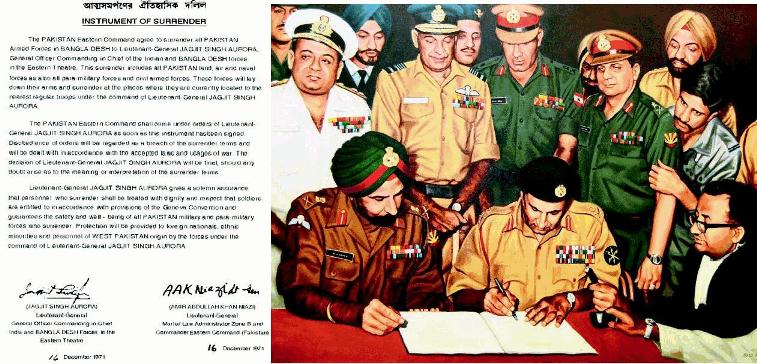
Whole Review – Movie TE3N Reveals My Tibet Connection by grouping four photo images in a single screenshot: SURRENDER AGREEMENT SIGNED IN DHAKA ON DECEMBER 16, 1971.
Whole Review – Movie TE3N Reveals My Tibet Connection by grouping four photo images in a single screenshot: LIBERATION OF BANGLADESH ON DECEMBER 16, 1971.
Whole Review – Movie TE3N Reveals My Tibet Connection by grouping four photo images in a single screenshot: Pakistan Surrenders on December 16, 1971.
Movie TE3N Reveals my Tibet Connection by using Four Photo images grouped together in a single screenshot. Liberation of Bangladesh on December 16, 1971.
Movie TE3N Reveals my Tibet Connection by grouping four photo images in a single screenshot. Surrender Agreement in Dhaka on December 16, 1971.
TE3N Movie Reviews my Tibet Connection by grouping together four photo images. Pakistan surrenders in Dhaka on December 16, 1971.

TE3N Movie Producer Sujoy Ghosh and Director Ribhu Das Gupta imaginatively created a screenshot grouping four different photo images to describe my Tibet Connection; These are,

1. Surrender Agreement signed in Dhaka on December 16, 1971 leading to creation of independent nation of Bangladesh,

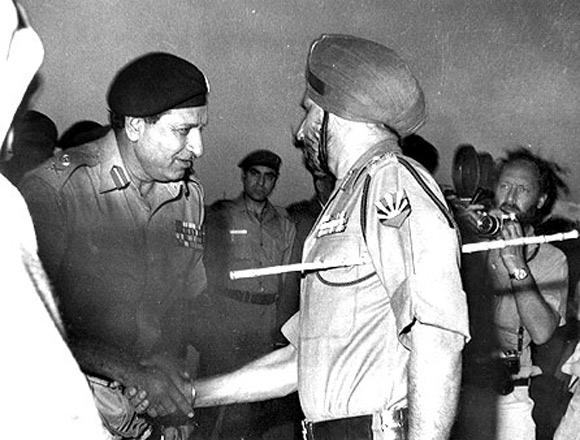
Lieutenant General Dalbir Singh AVSM VSM, General Officer-in-Command, Eastern Command of Indian Army had served as the Inspector General of Special Frontier Force prior to his promotion to the rank of Lieutenant General. He served in the rank of Brigadier during the 1971 War but Movie TE3N chose this photo image.

2. Lieutenant General Dalbir Singh Suhag, General Officer Commanding-in-Chief, Headquarters Eastern Command, Kolkata, who actually participated in the 1971 War while serving in the rank of Brigadier,
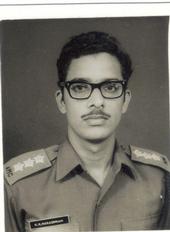
TE3N Movie Reviews my Tibet Connection by grouping four photo images in a single screenshot. My Indian Army Picture ID photo image of 1972 taken at Doom Dooma, Tinsukia District, Assam, India. In reality, I participated in the 1971 War wearing the badges of rank of Lieutenant and not Captain

3. My Indian Army Picture ID photo image of 1972 taken in Doom Dooma while I was posted to D Sector, Establishment 22 after the 1971 War, and

Lieutenant General T S Oberoi, the Southern Army Commander during 1983, the former Inspector General of Special Frontier Force is seen in this photo wearing a helmet. The photo was taken during 1982 while he visited Army Service Corps Centre, Bangalore. In reality, he served as my Brigade Commander during the 1971 War.

4. Lieutenant General Thirath Singh Oberoi PVSM VrC, General Officer Commanding-in-Chief, Headquarters Southern Command Pune while he visited Army Service Corps Centre in Bangalore in 1982. In reality, T S Oberoi served in the rank of Brigadier during the 1971 War.

Photo images 2, 3, and 4 are related for they relate to our military service at Special Frontier Force, Establishment 22 now known as Vikas Regiment. In November 1971, Special Frontier Force initiated Liberation of Bangladesh with military action in the Chittagong Hill Tracts and so, these images relate to the photo image of the Surrender Agreement signed in Dhaka on December 16, 1971.

Beijing is Doomed – Revelation Unsealed

TE3N Movie explores my Tibet Connection. Beijing is Doomed – Revelation Unsealed. Strike by Heavenly Object.

I kept silent about my participation in Operation Eagle, Bangladesh Ops for a very long time and none of you heard that word from me until 2010 when I started my demand for gallantry award after His Holiness the Dalai Lama’s visit to Ann Arbor, Michigan on March 03/04, 2008. I did not invite him to visit Ann Arbor, and I had no time to meet him. I read news media coverage, particularly the story published by The Ann Arbor News of this event. Prior to this date, I did not speak or write about him. I realized that the time has come to describe my Tibet Connection. If I had really cared about getting Gallantry Award, I would have reacted in January 1972 when my Unit Commander informed me that the Indian Army Medical Directorate did not forward my gallantry award citation on time to Army Headquarters, MS Branch. The citation was not lost. It was not sent in time for its consideration. I raised the issue in 2010, for it is important to disclose my Tibet Connection.

I want to receive Gallantry Award recommended in 1971 War. However, it is not an acknowledgment of my service in Indian Army. The award was recommended by my Unit Commander who knew that I deliberately chose to enter Enemy territory without carrying my service weapon. Under Army Act, the refusal to carry personal weapon, the concealing or disposal of personal weapon, or not using weapon against Enemy are punishable offenses. My Unit (South Column, Op Eagle, Establishment 22 – Special Frontier Force) is not subject to Army Act. They have not threatened to discipline me. Rather, they have shown appreciation for my determination to work without my personal weapon. I made that decision because of my Tibet Connection.

While most of you may have read about speeches or quotes from speeches given by the Dalai Lama, may not be knowing about an assurance the Dalai Lama has given to his followers. Dalai Lama lives on the hope that China’s Communist Regime would experience sudden downfall. Many in the Tibetan Exile community share this hope as they believe or have faith in his words. I acknowledge my Tibet Connection, but I am not follower of the Dalai Lama. So, I had to investigate his statement and subject it to my rational analysis, a scientific method which I call Devotional Inquiry. I use the term Devotion not in the context of any kind of worship service or prayerful thought. I don’t look inwards. I look for answers examining the reality of external world.

For example, many Christians believe in the Future Coming of Christ or Advent. This hope comes from The New Testament Book of Revelation. Over 2,000 years have passed, many believers lived and died and yet the prophecy has not come true. I looked at various possibilities to account for Dalai Lama’s hope for the sudden, unexpected downfall of China. He has not shared or further explained the mechanism to trigger a sudden downfall of Communist China. World War II came to an abrupt stop when US bombed Hiroshima and Nagasaki. Japan surrendered in August 1945. I ruled out the possibility of China surrendering in World War III. Regimes have changed after public revolts like American Revolution, French Revolution, Red Revolution, and October Revolution of China. In fact, Tibet formally declared Full Independence on February 13, 1913 after the downfall of Manchu China following 1911 Revolution. We have seen some protests in China during 1989, protests in Hong Kong, and signs of severe labor unrest in China. But, I am not expecting a Great Proletarian Revolution to cause China’s downfall. If not political unrest, I considered the possibility of economic meltdown and severe or Great Depression. It is a good possibility as their Communist – Capitalist Economy will fail and is currently failing.

Historically, we have records of great empires rising and falling. People have given a variety of reasons to account for rise and fall of empires. Diseases like Malaria may account for fall of Roman Empire. Apart from health and sickness, people have cultural beliefs. Jews may believe in Messiah, Christians believe in the Kingdom of Heaven, Buddhists believe in Reincarnation of Compassionate Buddha (Maitreya), and Hindus may believe in Reincarnation of Lord Vishnu to change World Order to restore Peace and Justice.

Being student of Biology, I looked at Natural Causes and Natural Mechanisms that can significantly impact life on Earth. Natural calamities like floods, earthquakes, and hurricanes can have devastating effect. But, most major and minor mass extinction events have extraterrestrial causes such as Radiation or impact or collision by celestial objects like comets or asteroids. Planet Earth experienced several such collision events. At K-T Junction, about 65 million years ago, the entire Dinosaur population got wiped out while Life on Earth continued to multiply. In most recent times, during Geological Epoch called Holocene, entire species of Hominin Family got wiped out with the exception of Anatomically Modern Man leaving no surviving prehistoric man such as Neanderthal, Denisova, or Cro-Magnon. But, in terms of Science, these are all random, unguided events that can be interpreted as accidents and are not purposeful actions.

I account for human life as series of guided, goal-oriented, sequential, purposeful actions which demand synchronization with events in external environment such as periods of light and darkness, and Conservation of Mass, Energy, and Momentum. While planet Earth is spinning at great speed and is moving all the time, I sleep and get up in Ann Arbor as if Earth is a stationary object. I am not predicting a random, spontaneous event or natural calamity that may cause sudden downfall of China.

I looked at Book of Revelation written by Prophet John who most Christian theologians think of as Apostle John, one of Jesus Christ’s Twelve Disciples. Apparently, he wrote this Book while imprisoned in a small island far away from Babylon. But, that is not important. Historical Babylonian Empire had fallen several centuries before birth of Jesus Christ. There was no Evil Babylon when John wrote his Revelation Prophecy. Babylon is thought of a ‘code’ name for some unknown Evil Empire. Some think, that the term ‘Evil Empire’ or ‘Babylon’ may refer to Rome or even China in the East which was not a great empire at the time of writing that Book.

Chapter 18, Book of Revelation, that describes sudden downfall of Babylon was inspired by The Old Testament Book of Isaiah, a Hebrew Prophet. His prophecy came true when Persian Emperor Cyrus defeated and vanquished Babylon and graciously permitted rebuilding of Second Temple in Jerusalem long before the birth of Jesus Christ. So John has no reason to make prophecy about Babylon while he lived during the lifetime of Jesus and His Crucifixion.

I accept the scenario described in Chapter 18, Book of Revelation. I am not claiming a new prophetic vision. I am simply unsealing the mystery of Babylon. When I state, “Beijing is Doomed,” I am not visualizing natural accident or natural calamity. China’s downfall will come by guided, goal-oriented, purposeful, sequential actions following its strike by a heavenly object such as asteroid, large stone which will collide with China’s largest City of Shanghai.

Doomsayer of Doom Dooma – Revelation – Photo Image in Bollywood Movie – TE3N

TE3N MOVIE EXPLORES MY TIBET CONNECTION BY GROUPING TOGETHER FOUR PHOTO IMAGES IN A SINGLE SCREENSHOT.

TE3N is a suspense thriller set in Kolkata. Industry’s best actors Amitabh Bachchan, Vidya Balan and Nawazuddin Siddiqui coming together in one film.

Story in detail:

It’s been 8 years since John Biswas (Amitabh Bachchan) lost his granddaughter, Angela, in a tragic kidnapping incident that scarred him & his wife Nancy forever. But eight years later, while the world has moved, John hasn’t given up his relentless quest for justice.

He continues to visit the police station where he’s shunned & ignored every day. The only person whose help he seeks is Martin Das (Nawazuddin Siddiqui), an ex-cop turned priest who has one thing in common with John – the death of Angela had a life altering impact on both men.

But then, 1 day, 8 years after that tragic incident, there’s another kidnapping & everything about it echoes of similarity with the kidnapping of Angela. Father Martin is once again dragged into the investigation by cop Sarita Sarkar (Vidya Balan).

Doomsayer of Doom Dooma – Beijing is Doomed: In 1972, a Chinese spy who infiltrated my military camp in Doom Dooma sent my photo image to Peking (Beijing).

It comes as a big surprise to find my stolen Indian Army Photo ID image from 1972 is revealed in a brief screenshot of this Movie.

Doomsayer of Doom Dooma – Revelation

TE3N Movie explores my Tibet Connection. Beijing is Doomed.

I use my Indian Army Photo ID image of 1972 to describe my connection with City of Doom Dooma, Tinsukia District, Assam, India. I unsealed the prophecy shared by Book of Revelation, Chapter 18 that gives detailed account of sudden, unexpected, downfall of Evil Empire in one single day.

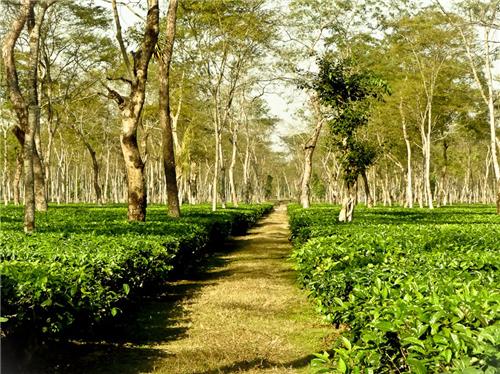
TE3N Movie explores my Tibet Connection using photo image taken at Doom Dooma in 1972. Beijing is Doomed.
TE3N Movie explores my Tibet Connection using single screenshot of photo image taken at Doom Dooma, Tinsukia District, Assam. Beijing is Doomed.
TE3N Movie explores my Tibet Connection. Beijing is Doomed.
TE3N Movie explores my Tibet Connection. Beijing is Doomed. Mystery of Revelation 18: 1-24 Unsealed.
TE3N Movie explores my Tibet Connection. Mystery of Babylon Unsealed. Beijing is Doomed.

My Indian Army Photo ID image taken in 1972 at Doom Dooma serves just one purpose; it unseals Revelation Prophecy and it helps me to announce, “BEIJING IS DOOMED.”

Whole Review – Movie TE3N Reveals My Tibet Connection by grouping four photo images in a single screenshot. Special Service Award presented by all Officers D Sector, Establishment 22, at Doom Dooma, Tinsukia District, Assam, India.

Whole Dude – Whole Failure

The assassination of Bangladesh Prime Minister Sheikh Mujibur Rahman on August 15, 1975.

A rare family photograph of Bangbandhu Sheikh Mujibur Rahman, where he sits in the middle with his youngest Sheikh Rissell on his lap, Sheikh Kamal on the very left, Sheikh Rehana, second from left, spouse Begum Fazilatunnesa Mujib, on Bangbandhu’ right, Sheikh Jamal, fifth from left, and incumbent Bangladesh Prime Minister Sheikh Hasina on the very right

I returned to Chakrata, India during the last week of January 1972 after the successful conclusion of Operation Eagle that initiated the Liberation of Bangladesh with military action in the Chittagong Hill Tracts. During February 1972, I had the opportunity to take part in the training of a National Security Force (Jatiyo Rakkhi Bahini) whose mission was very clear from the beginning. There was an utter sense of urgency and earnestness to defend the personal life of Bangabandhu Bangladesh Prime Minister Sheikh Mujibur Rahman as our intelligence information discovered a plot getting brewed by a few Bangladesh Army Officers who were not satisfied with Bangabandhu’s vision for a modern, democratic nation of Bangladesh. In February 1972, the training of the National Defence Force (Jatiyo Rakkhi Bahini) commenced in Establishment 22, near Chakrata. I have direct personal insight of the training of Mujib Bahini before the 1971 War and of JRB in 1972 after the War.

Indira Gandhi’s paramount concern at that moment of time was figuring out how to get Bangladesh leader Sheikh Mujibur Rahman back to his country alive and well.
She was prepared to pay any price to save his life. This much the prime minister confided to at least one member of her so called ‘kitchen Cabinet’. That person was Ram Nath Kao.the RAW chief.

Bangabandhu, Father of the Nation, Bangladesh Prime Minister Sheikh Mujibur Rahman had twice ignored India’s alert against the bloody putsch, saying the plotters were his “own children” who will not harm him.

Over seven months before the ‘Bangabandhu’ was assassinated along with most of his family members in the August 15, 1975 carnage, a former top Research and Analysis Wing (RAW) official had met him here to warn him against the conspirators.

“These are my own children and they will not harm me,” the Bangladesh leader had told Rameshwar Nath Kao, founder of the India’s external intelligence agency, who meet him in December, 1974 with the approval of the then Indian Prime Minister Mrs. Indira Gandhi.

Referring to the book “Inside R&AW” by Asoka Raina, the report said Rahman had dismissed the concern with a wave of his hand. Kao did not argue but said the Indian information was reliable and he would send him more details of the plot.

He subsequently sent a senior RAW officer to Dhaka in March, 1975 who gave Rahman exact details of the units and ranks of the serving and dismissed officers who were hatching the plot to overthrow his post-independence government.

“But again, he (Bangabandhu) was not convinced,” it said.

.Prime Minister Sheikh Mujibur Rahman welcoming Indian Prime Minister Mrs. Indira Gandhi on March 17, 1972 at Dhaka Airport.
Prime Minister Mrs Indira Gandhi interacting with Sheikh Mujibur Rahman on 07 Feb 1972 at Raj Bhavan, Calcutta (Kolkata)
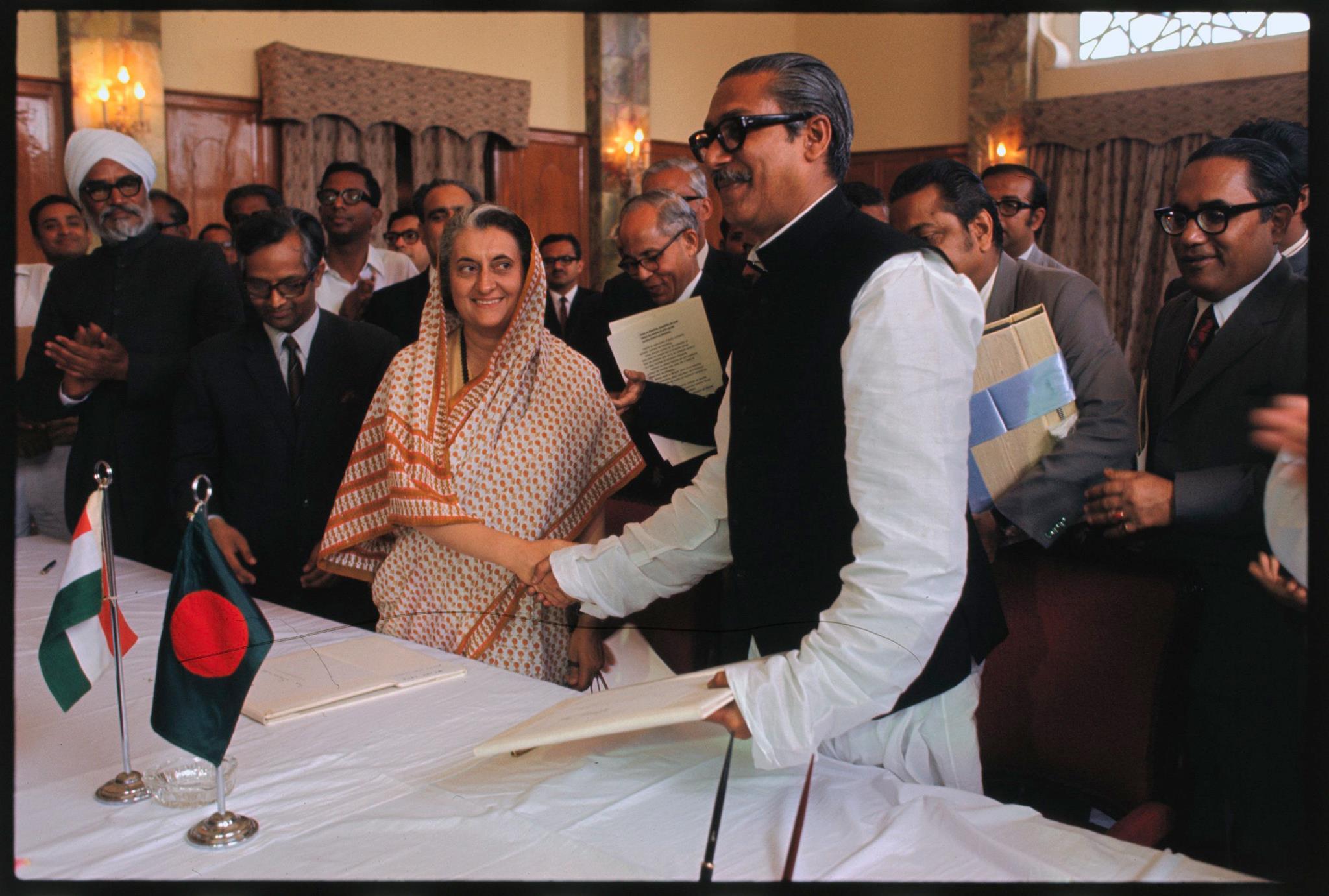
Prime Minister Indira Gandhi with Prime Minister Sheikh Mujibur Rahman (March 1972)
Bangabandhu Bangladesh Prime Minister Sheikh Mujibur Rahman with Indian Prime Minister Mrs. Indira Gandhi (March 1972).
A smiling Bangabandhu Sheikh Mujibur Rahman during the signing of Mujib-Indira treaty (May 16, 1974).

I returned to Chakrata, India during the last week of January 1972 after the successful conclusion of Operation Eagle that initiated the Liberation of Bangladesh with military action in the Chittagong Hill Tracts. During February 1972, I had the opportunity to take part in the training of a National Security Force (Jatiyo Rakkhi Bahini) whose mission was very clear from the beginning. There was an utter sense of urgency and earnestness to defend the personal life of Bangabandhu Bangladesh Prime Minister Sheikh Mujibur Rahman as our intelligence information discovered a plot getting brewed by a few Bangladesh Army Officers who were not satisfied with Bangabandhu’s vision for a modern, democratic nation of Bangladesh. In February 1972, the training of the National Defence Force (Jatiyo Rakkhi Bahini) commenced in Establishment 22, near Chakrata. I have direct personal insight of the training of Mujib Bahini before the 1971 War and of JRB in 1972 after the War.

In my analysis, India had prior information of the assassination plot. India diligently shared the intelligence information with Bangladesh Prime Minister. The choice to act upon the intelligence information was entirely left in the hands of Bangladesh Prime Minister. Indian Prime Minister Mrs. Indira Gandhi took utmost care to get his release from the military prison in West Pakistan and played a critical role to avoid the death sentence imposed on him. At the same time, India treated the new independent nation with grace and respect giving Bangladesh to discover its own destiny without external influence.

Rudra Narasimham Rebbapragada

Special Frontier Force-Establishment No. 22-Vikas Regiment

Jatiyo Rakkhi Bahini (JRB) – from law enforcers to Sheikh Mujib’s private army

Sheikh Mujib’s hatred for all things military

Sheikh Mujib had an understandable hatred for all things military. He had suffered grievously at the hands of Pakistan’s two military dictators, Field Marshall Ayub Khan and General Yahya Khan. Ayub had arrested Sheikh Mujib on 7 October 1958, the day he seized power. During the next 10-and-half-years of Ayub’s dictatorship Sheikh Mujib had been jailed for long periods in solitary confinement. Then in 1968, while once more in detention for political activity, he was made the principle accused in the notorious Agartala Conspiracy trial in Dhaka. The charge conspiring with India for the secession of East Pakistan. It was a capital offence and Mujib only escaped the gallows because a countryside upsurge against Ayub in 1968 forced him to drop the charges and bring Mujib to the conference table.

While a prisoner of General Yahya Khan in 1971 during the Bangladesh independence struggle, Sheikh Mujib had had an even closer brush with death. According to Sheikh Mujib, he had been tried by a military court and found guilty of treason and sedition. He was to be executed on 15 December 1971, a day before Pakistan surrendered to Bangladesh in Dhaka. Fortunately for him the ceasefire was ordered that night and he was smuggled away to safety by the prison jailor.

Sheikh Mujib carried his hatred of the army with him to the grave. This attitude was shared by his ministers and other senior Awami Leaguers who had also escaped death at the hands of the Pakistan army in 1971.To their [senior Awami Leaguers] basic hostility of things military was added, after independence, the fear that the Bangladesh army might try to supplant them. This anxiety was grounded in the fact that the Bengali military men had been in the thick of the fighting during the independence movement while the Awami Leaguers stayed safely in Calcutta out of the line of fire. As such it would have been understandable if the army men with the other freedom fighters had insisted on positions of influence in the new state. The army as an institution at least did not make this demand. It was content to let Mujib rule and in the first two years of independence gave him loyalty and support.

Anthony Mascarenhas, journalist who wrote the groundbreaking ‘Genocide’ article in 1971 & author of “Bangladesh: A Legacy of Blood” (1986)

Mujib and his ministers, however, from the very start deliberately emasculated [made efforts to weaken] the role of the Defence Forces. Before he was one month in office Mujib took the first step in this direction by signing a 25 year Treaty of Friendship and Mutual Assistance with India. The Indian army had helped to create Bangladesh and it was to India that Mujib now looked to protect it from external aggression. The treaty thus obviated the need for an effective fighting force and the country’s defence establishment was reduced to a police-keeping and largely ceremonial role.I don’t want to create another monster like the one we had in Pakistan.

Sheikh Mujib told Anthony Mascarenhas in February 1974 that he was against a powerful military force

Nevertheless, in independent Bangladesh Prime Minister Sheikh Mujib took initiatives to establish military academies for building skilled and ideal armed forces in the country. He inaugurated the Military Academy in Comilla Cantonment in 1974. However, with the administration of the country at its infancy and his personal dislike for all things military, Sheikh Mujib remained reluctant to dispense too much power to the army and maintained a cautious approach throughout his reign.When you play with gentlemen, you play like a gentleman. But when you play with bastards, make sure you play like a bigger bastard. Otherwise you will lose. Don’t forget I have had good teachers.

Sheikh Mujib allegedly remarked to Anthony Mascarenhas during a poker game on a night train from the Grand Canyon to Los Angeles

Creation of JRB

In early 1972, the government announced the formation of an elite paramilitary force named the Jatiyo Rakkhi Bahini (National Defence Force), or JRB for short. The Jatiyo Rakkhi Bahini Order, 1972 (President’s Order no. 21 of 1972) was promulgated on 7 March 1972 – on the first anniversary of Sheikh Mujib’s famous Ebarer Sangram speech – with a retroactive effect from 1 February 1972.

The idea for the JRB is believed to have resulted from a discussion between the top leaders of Mujib Bahini (also known as Bangladesh Liberation Force or BLF) and Sheikh Mujibur Rahman. The leaders made Sheikh Mujib realise that the fruit of the labour during the independence war could be undone by anti-revolutionary forces within the young volatile nation. It was a view also shared by Tajuddin Ahmad. He advised Sheikh Mujib that the 100,000 trained and armed common people that had participated as muktijuddhas (freedom fighters) during the Swadhinata Juddho (Independence War) should come under national service and a paramilitary force should be formed for them.

Sheikh Mujib was also aware of the growing threat of coup from the military. To combat these, Sheikh Mujib formed the new elite force to provide security for the people after initially rejecting the idea. The task force was formed without any consultation in the cabinet.

So about 110,000 government certified freedom fighters, at the very outset of the independence, felt ignored and excluded from the reconstruction of the new country. Though Sheikh Mujib offered the freedom fighters to join the armed forces, only 8,000 turned up – mostly young Mujib Bahini members and other loyal cadres – and they were absorbed in the Jatiyo Rakkhi Bahini.

Indian link

Jatiyo Rakkhi Bahini was actively deployed just after the Indian Army left Bangladesh on 17 March 1972. The force was trained and brought up by Indian Major General Sujan Singh Uban from Research and Analysis Wing (RAW) as per the request of Sheikh Mujibur Rahman. General Uban, had also trained the Mujib Bahini in India during the 1971 Bangladesh Liberation War and accompanied Sheikh Moni to Bangladesh.

The basic training of the force was not provided by the Bangladesh Army but instead given in India, by Indian Army. Any additional special training were also provided by India in the Indian Military Academy of Dehradun. The JRB troops were armed with Indian assault rifles, heavy machine guns, steel helmet, and leather boots. Jeeps and trucks were imported from India and their olive green-coloured uniform was similar to that of the Border Security Force 66 of the Indian Army.

The JRB was led by Brigadier General A. N. M. Nuruzzaman who was appointed as the Director General while Major Anwarul Alam Shahid (Training), Lieutenant Colonel Abul Hasan Khan (Administration), Lieutenant Colonel Sarwar (Operations), Lieutenant Colonel Sabihuddin (Signals) and Lieutenant Colonel Azizul Islam (Zonal Head Quarter of Chittagong) were his five deputies.

Brigadier Nuruzzaman was a Sector 3 (Brahmanbaria and parts of Sylhet) Commander during 1971 Liberation War.The raising of a new paramilitary force, JRB having exclusive allegiance to Sheikh Mujib proved morally and politically disastrous. JRB became the target of anti-Mujib campaign.

At the height of its influence in 1975 JRB was 25,000 member strong and plans were put in place for it to grow to an astronomical 130,000 by the end of 1980 – that’s more than the number of muktijuddhas who fought in the Swadhinata Juddho. These troops would have been distributed to every district under the authority of the 60 District Governors. To finance this force, Sheikh Mujib used the major part of the 13% of public expenditures allocated to defence, and recruitment of new soldiers in the army was almost stopped. When the Rakkhi Bahini was raised to 25,000 men with basic military training and modern automatic weapons, the discontent amongst some army men turned into antagonism. All these discrimination created rift between the two forces.The Jatiyo Rakkhi Bahini, which roughly translated means National Security Force, was an elite para-military force whose members had to take oaths of personal loyalty to Bangabandhu Sheikh Mujibur Rahman.

Bangabandhu Sheik Mujibur Rahman with Major General Sujan Singh Uban, Inspector General Special Frontier Force. In February 1972, the training of the National Defence Force (Jatiyo Rakkhi Bahini) commenced in Establishment 22, near Chakrata. I have direct personal insight of the training of Mujib Bahini before the 1971 War and of JRB in 1972 after the War.