Could science and the methods of rational and empirical inquiry help us in knowing the nature and the destiny of humanity? Could we extend scientific methods into every field of inquiry? Could we find truth and reality as an external experience or is it visualized entirely in the realm of intuition and conscience?
Enlightenment is a European intellectual movement of the 17th and 18th centuries in which ideas concerning God, reason, nature and man were synthesized into a world view. The thinkers of the Enlightenment were committed to secular views based on reason or human understanding only, which they hoped would provide a basis for beneficial changes affecting every area of life and thought.
The Enlightenment was based upon a few great fundamental ideas- such as the dedication to reason, the belief in intellectual progress, the confidence in nature as a source of inspiration and value, and the search for tolerance and freedom in political and social institutions. Central to Enlightenment thought were the use and the celebration of reason, the power by which man understands the universe and improves his own condition. The goals of rational man were considered to be knowledge, freedom and happiness. It instigated revolutionary developments in art, philosophy and politics. Sir Issac Newton is considered to be the true father of Enlightenment. He established the basic idea of the authority and autonomy of reason.
The Enlightenment Movement eventually broke up under the impact of new evidence and new insights. Nature, once considered a synonym of reason and visible proof of the existence of God and His benevolence, broke up into something to be studied with scientific objectivity and something to be enjoyed in romantic indulgence. The most significant contribution of the Enlightenment came in the field of social and political philosophy.
Rousseau, Jean-Jacques – The Role of Intuition
Whole Dude – Whole Enlightenment: JEAN-JACQUES, ROUSSEAU(b.JUNE 28, 1712, GENEVA, SWITZERLAND-d. JULY 2, 1778, ERMENONVILLE, FRANCE) FRENCH PHILOSOPHER, POLITICAL THEORIST WHOSE IDEAS INSPIRED THE LEADERS OF THE FRENCH REVOLUTION.
JEAN-JACQUES, ROUSSEAU (b.JUNE 28, 1712, GENEVA, SWITZERLAND-d. JULY 2, 1778, ERMENONVILLE, FRANCE) FRENCH PHILOSOPHER, POLITICAL THEORIST WHOSE IDEAS INSPIRED THE LEADERS OF THE FRENCH REVOLUTION.
Rousseau is the least academic of modern philosophers but in many ways he is the most influential. His thought marked the end of the Age of Reason and the birth of Romanticism.
Rousseau had a profound impact on people’s way of life. He opened men’s eyes to the beauties of nature and he made liberty an object of almost universal aspiration.
He is credited with having introduced a great discovery about the nature of freedom and he emphasized the primacy of individual liberty. The other Enlightenment thinkers pursued the nature of humankind empirically in physiological and psychological studies or in historical and anthropological researches, whereas Rousseau sought the nature of humans in the wholly private realm of intuition and conscience. He looked inward for the fundamental source of moral obligation. Enlightenment has faith in reason which is understood as abstraction from external experience, Rousseau has emphasized that the inner life as a source of truth.
Rousseau had shared the Enlightenment view that society had perverted natural man, the “noble savage” who lived harmoniously with nature, free from selfishness, want, possessiveness, and jealousy. In his essay, ‘ A Discourse on the Sciences and the Arts ‘(1750), he argued that the history of man’s life on earth has been a history of decay. Man is good by nature but has been corrupted by society and civilization.
One of the first principles of Rousseau’s political philosophy is that politics and morality never be separated. The second important principle is freedom, which the state is created to preserve. The state is a unity and as such expresses the general will. The general will is to secure freedom, equality and justice within the state and in the Social Contract, individual sovereignty is given up to the state in order that these goals might be achieved.
In his political book called ‘ Du Contrat Social ‘(The Social Contract) published in 1762, Rousseau begins with the opening sentence; ” Man was born free, but he is everywhere in chains “. He proposed a society able to cultivate the individual’s moral stature without injury to his freedom. He had expressed freedom and equality of citizens in the idiom of natural and inalienable rights. Rousseau had believed that man has to find his way to his pure nature and to achieve this , man’s duty is to look for his most deep interior feelings and follow them.
Gautama, at the age of 35, attained the Enlightenment or Awakening. In Buddha’s own recorded words : ” My mind was emancipated…. Ignorance was dispelled, science(knowledge) arose, darkness was dispelled, light arose.”
Science and scientific methods bring us knowledge about life, nature and the universe that we live in. But, intuition provides us with the insight to improve the way we live this life. My Guru, Shankara has spoken a word of caution:
Whole Dude – Whole Enlightenment: Attain Enlightenment -Reason, Experience, and IntuitionWhole Dude – Whole Enlightenment: Attain Enlightenment -Reason, Experience, and IntuitionCould science and the methods of rational and empirical inquiry help us in knowing the nature and the destiny of humanity? Could we extend scientific methods into every field of inquiry? Could we find truth and reality as an external experience or is it visualized entirely in the realm of intuition and conscience?
When I write about Man as a Spiritual Being, the concern is not about glorifying people as saints. The issue is about man’s true or real nature. My theory of Spirituality is about “The Art of Knowing” that can provide tools to all people to know themselves in an objective manner. This is a simple challenge that can be accomplished without forcing people to attend Church or any other place of worship. The Art of Knowing does not involve what most people tend to recognize as spiritual practices such as Prayer, Meditation, Yoga, or Mysticism. The Art of Knowing simply involves training people to know what they know about others or about themselves. It must be noted that Life is essentially a state, a condition, or an act of knowing.
WHOLE INTUITION VS WHOLE MYSTICISM :
SPIRITUALITY SCIENCE – THE ART OF KNOWING : HENRI BERGSON(1859 – 1941), FRENCH PHILOSOPHER, WAS AWARDED THE 1927 NOBEL PRIZE IN LITERATURE . HE DESCRIBED INTUITION AS THE HIGHEST FORM OF KNOWING.
Henri Bergson, French philosopher, Professor at the College de France, was awarded the 1927 Nobel Prize in Literature. His famous works include Time and Free Will(1889) and The Creative Mind(1934). Bergson’s dualistic philosophy holds that the world contains two opposing tendencies, the life force and the resistance of matter against that life force. The individual knows matter through intellect but through intuition perceives the life force and the reality of time, which is not a unit of measurement but duration in terms of life experience. Bergson considered intuition to be the highest state of human knowing and held that mysticism is the perfection of intuition. Bergson emphasized the value of intuition in scientific thinking and argued that reality is beyond rational understanding. He formulated a Theory of Knowledge in which intuition plays a central role. He contended that the expansive and creative thrust of Life explained by Darwinian mechanism. Bergson claimed that ‘Evolution’ is creative and is not based upon mechanistic principles. For similar reasons, I shared my arguments to oppose Darwin’s Theory of Evolution. I formulated my theory of ‘The Law of Creation and Individuality’ for all known living things primarily exist as Individuals with Individuality and they have no choice other than that of existing as Individuals. In this article, I would like to recognize knowing as a basic cognitive function and this biological characteristic can be attributed to a popular term called ‘Spirit’ or ‘Soul’. In this context, I would like to interpret Bergson’s views about Knowing, Intuition, Mysticism, and the Reality of Time.
SPIRITUALITY SCIENCE – THE ART OF KNOWING : HOW DO PLANTS KNOW WHAT THEY KNOW ??? PLANTS KNOW ABOUT LIGHT, THE LENGTH OF DAY, AND THE DURATION OF DARKNESS CALLED NIGHT. THERE IS NO “INTELLECT” INVOLVED IN THIS PROCESS OF KNOWING. THE ABILITY OF KNOWING LIGHT OR PHOTORECEPTION IS EXPLAINED BY PHOTOCHEMISTRY.
Intuition provides immediate understanding and it describes the ability to perceive or know things without conscious reasoning. Intuition is about direct knowing or learning of something without using the faculties of mind such as Intellect. The doctrine of Intuitionism claims that things and principles are truly apprehended by Intuition. The doctrine called Ethics describes that fundamental moral principles or the rightness of acts is apprehended by Intuition. In Biology, I would like to use the term Intuition to things apprehended by ‘Innate Knowledge’, the Knowledge that is inherent and not acquired, the Knowledge that is implanted in the Substance or Material called Living Matter. Plants know Light not because of intellectual ability but on account of an innate ability or intuitive power.
SPIRITUALITY SCIENCE – THE ART OF KNOWING : AT A FUNDAMENTAL LEVEL, LIFE AND LIVING IS ABOUT KNOWING MATTER AS SELF OR NON-SELF. THIS IDENTIFICATION OF MATTER INVOLVES THE ABILITY TO RECOGNIZE MOLECULES OF MATTER . TO LEARN THE ART OF KNOWING, MAN HAS TO KNOW ABOUT THE MOLECULAR BASIS FOR EXISTENCE .
To learn the Art of Knowing, man has to know that the physiological basis for existence is dependent upon Innate Knowledge with which the human organism recognizes matter( such as molecules of Oxygen, or energy-yielding molecules of food substances) and further exploits matter and energy to support and maintain its living functions. To the same extent, the human organism defends its own existence by recognizing the molecules as Self or Non-Self. The immune defense mechanisms that the human body uses to recognize viruses, bacteria, protozoa, and other foreign antigens involve the recognition of molecules.
SPIRITUALITY SCIENCE – THE ART OF KNOWING : WHAT IS THE MYSTERY OF LIFE ??? CAN MYSTICISM HELP TO KNOW THE HIDDEN TRUTHS ABOUT LIFE ??? WHAT IS THE MYSTICAL INFLUENCE OF TIME THAT DRIVES THE AGING PHENOMENON ???
What is the Mystery of Life ??? Can Mysticism help to know the hidden truths about Life ??? Mysticism is the doctrine about knowing reality through intense contemplation and other secret practices that involve mental concentration. Mysticism is found in several religions of the world. The criteria and conditions for mystical experience vary depending on the cultural traditions, but there are three common attributes of Mysticism : 1. The experience is immediate and overwhelming, divorced from the common experience of reality, 2. The experience or the knowledge imparted by it is self-authenticating, without need of further evidence or justification, and 3. The experience is ineffable, its essence incapable of being expressed or understood outside the experience itself. The focus of Mysticism is not about the physical reality called existence but it is about a direct and immediate experience of the sacred, or the knowledge derived from such an experience. Mysticism is about the practices of those who are initiated into the mysteries, the practice of putting oneself into direct relation with God, the Absolute or any Unifying Principle of Life. Mystics believe that it is possible to achieve communion with God through their mystic practices. There are two general tendencies in the practice of Mysticism; 1. To regard God as outside the ‘Soul’ which rises to God by successive stages, and 2. To regard God as dwelling within the ‘Soul’ to be found by delving deeper into one’s own reality. Mysticism is extended to Magic, Occultism, and the Esoteric. Magic may involve the use of charms, spells, and rituals in seeking or pretending to cause or control events or govern certain natural and supernatural forces. Occultism is about hidden, concealed, and secret information that could be beyond human understanding. The Esoteric is about confidential, private, or withheld information that is intended for or understood by only a chosen few and as such the knowledge or information is beyond the understanding of most people. The rituals of Mysticism include meditation, prayer, and a variety of ascetic disciplines. If Mysticism is about Knowing the Secrets of Life, it does not demand the learning of Human Anatomy or Human Physiology, or any of the principles of Biology.
SPIRITUALITY SCIENCE – THE ART OF KNOWING : HOW DOES THE HUMAN ORGANISM KNOWS ABOUT ITS OWN LIFETIME ??? THE AGING PHENOMENON IS RELATED TO MAN’S PERCEPTION OF TIME. HOW IS TIME CONTROLLING OR OPERATING LIFE EXPERIENCE ???
Bergson claimed that the Reality of Time is not a Unit of Measurement but duration in terms of life experience. How does the human organism knows about its own lifetime??? The human organism experiences the Aging Phenomenon which is related to man’s perception of Time. How is Time controlling or operating life experience ??? The physical reality called existence is controlled, is operated, or is directly influenced by events in man’s external environment, and the most important change in the environment is the alternating periods of light and darkness called Day and Night.
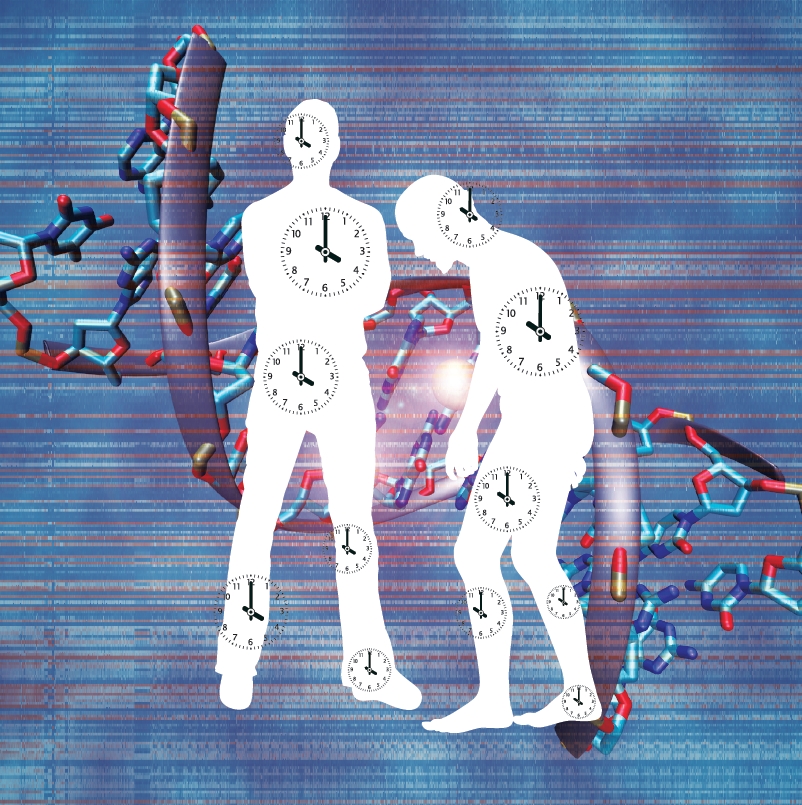
SPIRITUALITY SCIENCE – THE ART OF KNOWING : THE HUMAN ORGANISM RUNS ITS LIVING FUNCTIONS AS IF OPERATED BY A PRECISE TIMEKEEPING DEVICE OR BIOLOGICAL CLOCK. MAN’S EXPERIENCE OF TIME IS RELATED TO SUN’S APPARENT MOTIONS IN THE SKY. MAN KNOWS THE REALITY OF TIME BECAUSE OF AN ILLUSION THAT CAUSES DAY AND NIGHT GIVING MAN THE PERCEPTION OF SUN’S APPARENT MOTION WHILE CONCEALING THE REALITY OF SUN’S MOTION IN THE MILKY WAY GALAXY.
Bergson may have used the term life force to describe the vital, animating Principle called Spirit or Soul. In my view, Soul is an animating Principle for it is fundamentally related to the functional ability called Knowing. Soul is a vital Principle for it is fundamentally related to the functional ability called Nutrition, the power of a living organism to exploit matter found in its external environment. The functional attributes of Soul are related to Knowledge that is inherent or Innate and not acquired as learned experience. Soul describes man’s intuitive ability to know the fact of his own existence in a given environment and to maintain that existence while experiencing the aging process under the external influence called Time.
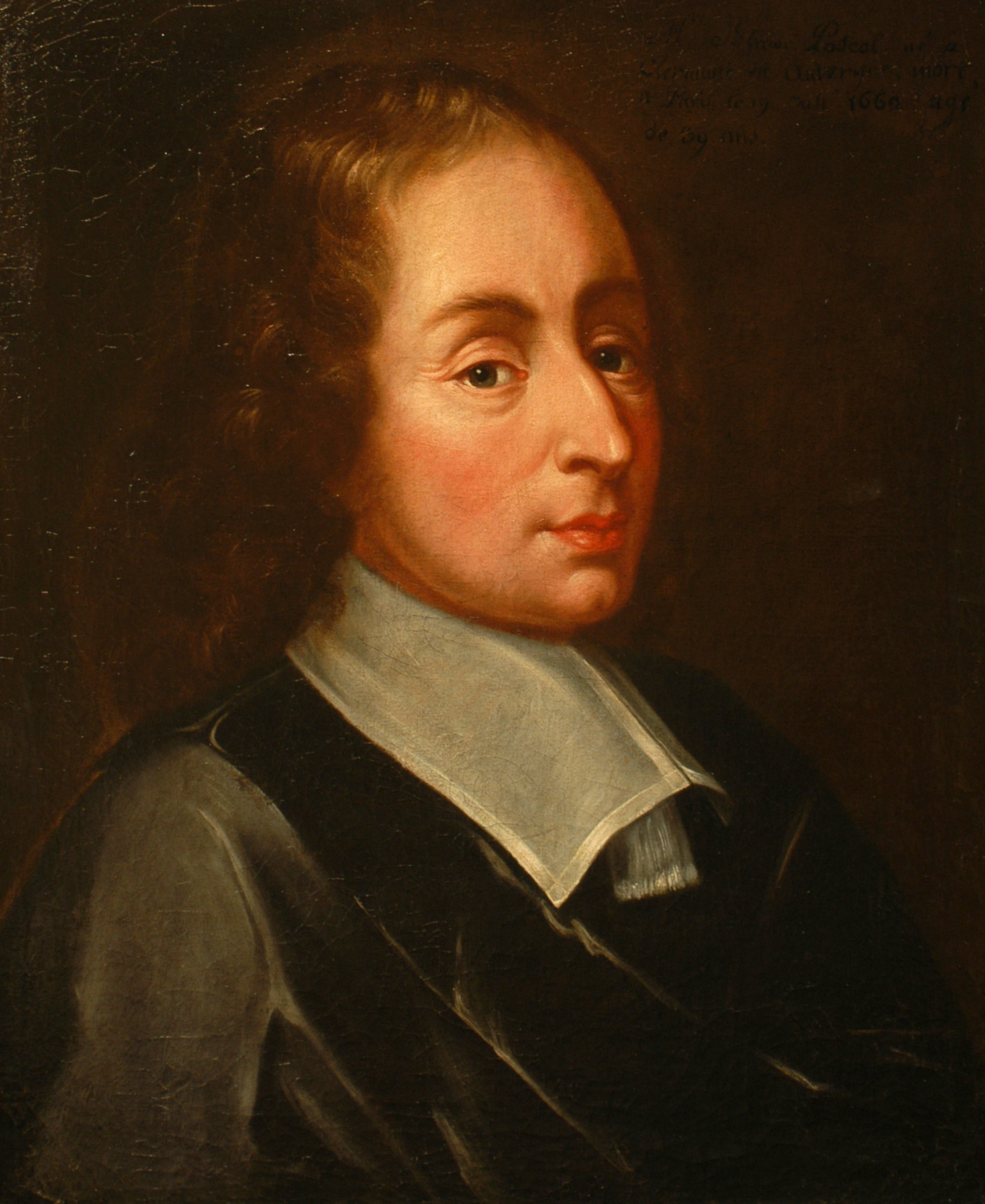
SPIRITUALITY SCIENCE – THE ART OF KNOWING : BLAISE PASCAL(1623 – 1662), FRENCH SCIENTIST AND RELIGIOUS PHILOSOPHER CLAIMED THAT MAN IS INFINITELY REMOVED FROM COMPREHENDING THE EXTREMES ; THE END OF THINGS AND THEIR BEGINNINGS ARE HIDDEN .
While writing about The Art of Knowing, I would like to remind my readers that certain things could be hidden from the human perception and man has no ability to know things even if he knows the reality of those things. Blaise Pascal, the French scientist who founded the modern Theory of Probability had claimed : “Man is a nothing in comparison with the Infinite, an All in comparison with the Nothing, a mean between Nothing and Everything. Since he is infinitely removed from comprehending the extremes, the end of things and their beginnings are hopelessly hidden from him in an impenetrable secret; he is equally incapable of seeing the Nothing from which he was made, and the Infinite in which he swallowed up.”
SPIRITUALITY SCIENCE – THE ART OF KNOWING : WHICH HAS COME FIRST ??? THE CHICK OR THE EGG ??? SPIRITUALITY IS NOT ABOUT KNOWING THE BEGINNING OR THE ENDING OF THINGS. IT IS ABOUT THINGS THAT EXIST IN THE PRESENT.
Which came first, the Chick or the Egg ??? Spirituality Science is not about knowing the Beginning or the Ending of things. Spirituality is about things that exist in the ‘Present’. The Physical Reality of Man’s Subjective and Objective experience of his lifetime is a functional attribute of Soul or Spirit which gives Man the cognitive ability called Knowing . If Devotion is used as a scientific method of Inquiry, ‘The Art of Knowing’ is about Knowing Man as a Spiritual Being.
Whole Dude – Whole Intuition: Jean Jacques Rousseau, Swiss-French philosopher, writer, and political theorist was one of the great figures of the French Enlightenment and he continues to inspire the Romantic generation
JEAN JACQUES ROUSSEAU – FRENCH PHILOSOPHER, POLITICAL THEORIST WHOSE IDEAS INSPIRED THE LEADERS OF FRENCH REVOLUTION
Could science and the methods of rational and empirical inquiry help us in knowing the nature and the destiny of humanity? Could we extend scientific methods into every field of inquiry? Could we find truth and reality as an external experience or is it visualized entirely in the realm of intuition and conscience?
How to attain Enlightenment? The Methods of Inquiry called Reason, Experience, and Intuition
Whole Dude – Whole Intuition: How to attain Enlightenment?
Man has to find his way to his pure nature, and this, through feelings. Man’s duty is to look for his most deep interior feelings and follow them.
Enlightenment – The Age of Reason:
Whole Dude – Whole Intuition: How to attain Enlightenment?
Enlightenment is a European intellectual movement of the 17th and 18th centuries in which ideas concerning God, reason, nature and man were synthesized into a world view. The thinkers of the Enlightenment were committed to secular views based on reason or human understanding only, which they hoped would provide a basis for beneficial changes affecting every area of life and thought.
Whole Dude – Whole Intuition: How to attain Enlightenment?
The Enlightenment was based upon a few great fundamental ideas- such as the dedication to reason, the belief in intellectual progress, the confidence in nature as a source of inspiration and value, and the search for tolerance and freedom in political and social institutions. Central to Enlightenment thought were the use and the celebration of reason, the power by which man understands the universe and improves his own condition. The goals of rational man were considered to be knowledge, freedom and happiness. It instigated revolutionary developments in art, philosophy and politics. Sir Issac Newton is considered to be the true father of Enlightenment. He established the basic idea of the authority and autonomy of reason.
Whole Dude – Whole Intuition: How to attain Enlightenment?
The Enlightenment Movement eventually broke up under the impact of new evidence and new insights. Nature, once considered a synonym of reason and visible proof of the existence of God and His benevolence, broke up into something to be studied with scientific objectivity and something to be enjoyed in romantic indulgence. The most significant contribution of the Enlightenment came in the field of social and political philosophy.
Rousseau, Jean-Jacques – The Role of Intuition:
Whole Dude – Whole Intuition: How to attain Enlightenment?JEAN-JACQUES, ROUSSEAU (b.JUNE 28, 1712, GENEVA, SWITZERLAND-d. JULY 2, 1778, ERMENONVILLE, FRANCE) FRENCH PHILOSOPHER, POLITICAL THEORIST WHOSE IDEAS INSPIRED THE LEADERS OF THE FRENCH REVOLUTION.
Rousseau is the least academic of modern philosophers but in many ways he is the most influential. His thought marked the end of the Age of Reason and the birth of Romanticism.
Whole Dude – Whole Intuition: How to attain Enlightenment?
Rousseau makes a profound impact on people’s way of life. He opens men’s eyes to the beauties of nature and he makes liberty an object of almost universal aspiration.
He is credited with having introduced a great discovery about the nature of freedom and he emphasizes the primacy of individual liberty. The other Enlightenment thinkers pursued the nature of humankind empirically in physiological and psychological studies or in historical and anthropological researches, whereas Rousseau seeks the nature of humans in the wholly private realm of intuition and conscience. He looks inward for the fundamental source of moral obligation. Enlightenment has faith in reason which is understood as abstraction from external experience, Rousseau emphasizes that the inner life is the source of truth.
Rousseau shares the Enlightenment view that society perverts natural man, the “noble savage” who lives harmoniously with nature, free from selfishness, want, possessiveness, and jealousy. In his essay, ‘ A Discourse on the Sciences and the Arts ‘(1750), he argues that the history of man’s life on earth has been a history of decay. Man is good by nature but has been corrupted by society and civilization.
Whole Dude – Whole Intuition: How to attain Enlightenment?
One of the first principles of Rousseau’s political philosophy is that politics and morality never be separated. The second important principle is freedom, which the state is created to preserve. The state is a unity and as such expresses the general will. The general will is to secure freedom, equality and justice within the state and in the Social Contract, individual sovereignty is given up to the state in order that these goals might be achieved.
Whole Dude – Whole Intuition: How to attain Enlightenment?
In his political book called ‘Du Contrat Social’ (The Social Contract) published in 1762, Rousseau begins with the opening sentence; “Man was born free, but he is everywhere in chains.” He proposes a society that’s able to cultivate the individual’s moral stature without injury to his freedom. He expresses freedom and equality of citizens in the idiom of natural and inalienable rights. Rousseau believes that man has to find his way to his pure nature and to achieve this, man’s duty is to look for his most deep interior feelings and follow them.
Science and scientific methods bring us knowledge about life, nature and the universe that we live in. But, intuition provides us with the insight to improve the way we live this life.
Whole Dude – Whole Intuition: How to attain Enlightenment





 Whole Dude - Whole Concept