Whole Dude at Whole Foods coins the dictum, Life is neither created nor destroyed by Man

The Laws of Conservation of Matter and Life – Life is neither created nor destroyed

Yes Indeed, Life is Complicated. The complexity of Life involves the perplexing problem of Death. But, I ask my readers to meditate on the phenomenon called Life by understanding the designing of Matter and Spirit.

Whole Dude at Whole Foods dwells on the understanding of Life and not Death

What it is to be a Substance? and What it is to Exist? We need to establish knowledge about the man on a firm basis and the information it provides must be tested for its accuracy and consistency with an external reality. We have to make the fundamental distinction between the living and the non-living matter. The scientific advances of the 19th and 20th centuries reinforced the materialistic position concerning the basic similarity of organic living and inorganic physical matter. The man is viewed as a product of natural evolution and is thought to be subject to the same laws of Physics and Chemistry or mechanistic principles.

We need a methodology to study philosophy and to understand philosophical statements. Logical Positivism, also known as Scientific Empiricism aims to clarify concepts in both everyday and scientific language. It describes analysis of language as the function of philosophy. This analysis of language and of concepts is important to understand questions of belief and ideology which affect what we think we ought to do individually and socially. I use this method of ‘Applied Philosophy’ to analyze the philosophical doctrine of ‘Materialism’ and to study the views and philosophy of Baruch Spinoza and his efforts to interpret human nature and human existence.

Whole Dude – Whole Designer – Matter and Spirit:
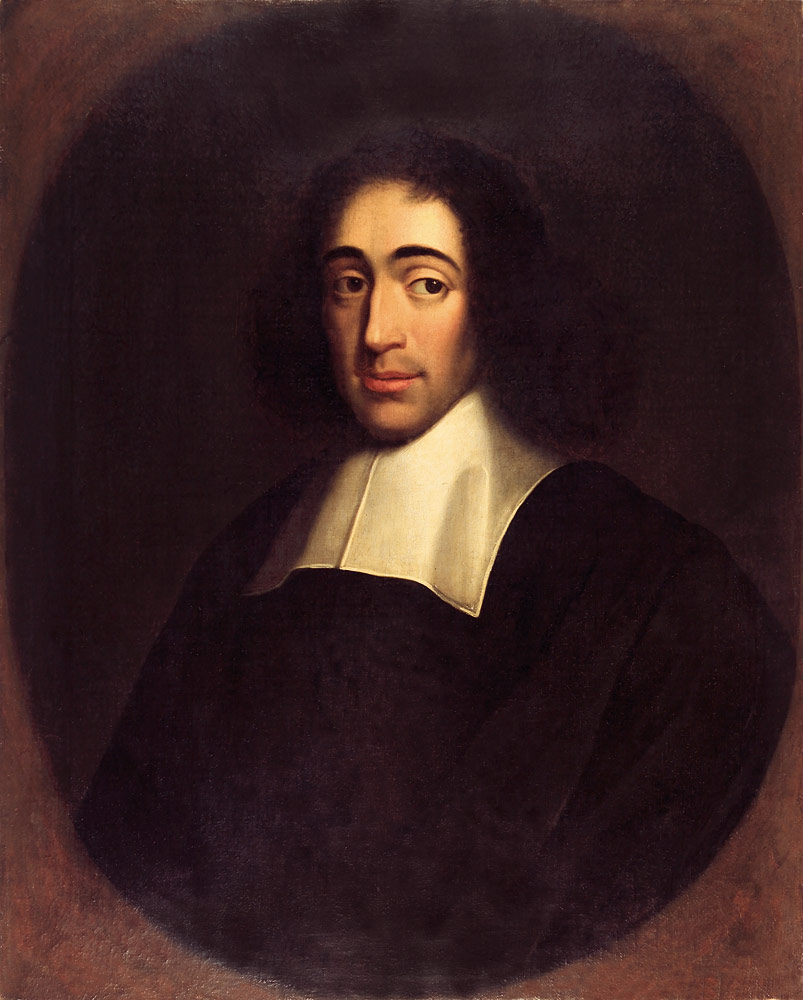
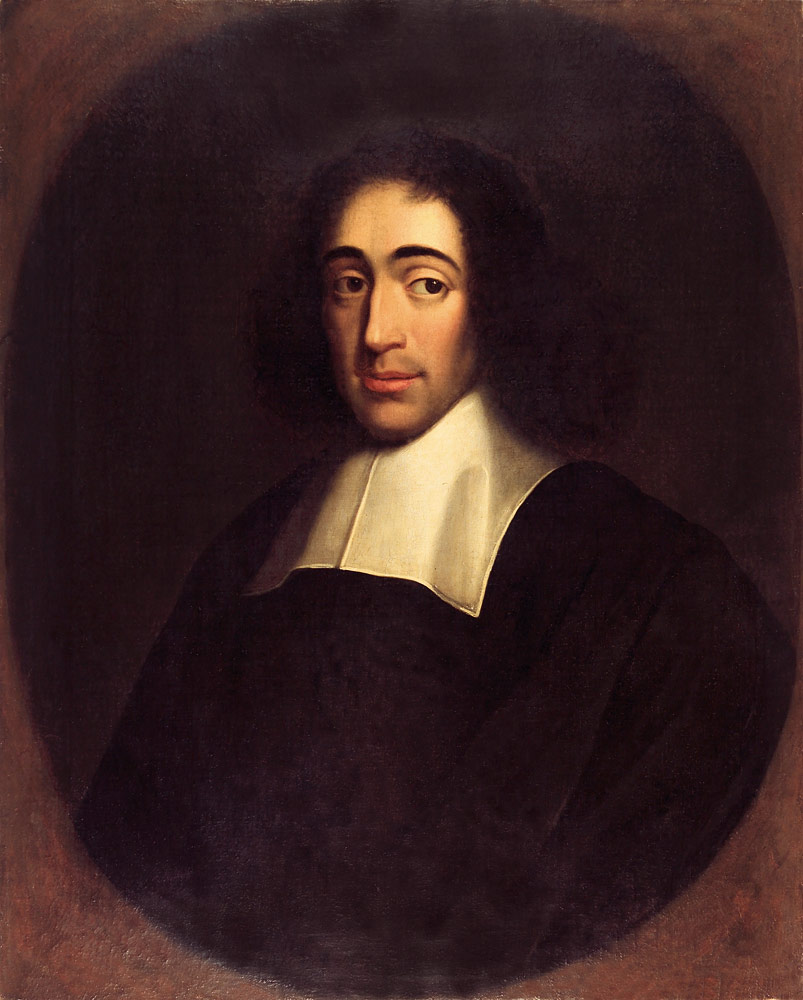
WholeDude - WholeDesigner - Matter and Spirit: Baruch(Benedict) Spinoza(1632-1677) Dutch philosopher taught that there is but one infinite substance called God or Nature having infinite attributes. He held that mind, and body as merely different aspects of a single substance. In his view, God is Nature in its fullness.
Whole Dude at Whole Foods dwells upon the understanding of Life and not Death: Baruch (Benedict) Spinoza( 1632-1677) Dutch philosopher taught that there is but one infinite substance called God or Nature having infinite attributes. He held that mind, and body as merely different aspects of a single substance. In his view, God is Nature in its fullness.

Matter is an actual substance that has properties such as mass or weight, and occupies space. Matter has other attributes like motion, size, shape, and a form by which it may be recognized.

Whole Dude at Whole Foods dwells on the understanding of Life and not Death

Materialism is defined as a system of thought that explains the nature of world as entirely dependent on “matter” the final reality. Materialism as a philosophical doctrine deals with matter as the only reality and that everything in the world, including thought, will, and feeling can be explained only in terms of matter. I speak of matter which includes the understanding of Living Matter.

Whole Dude at Whole Foods dwells on the understanding of Life and not Death

Baruch (Benedict) Spinoza, Dutch philosopher teaches that there is but one infinite substance, God or Nature, having infinite attributes of which only thought and extension are knowable. He was excommunicated from his Jewish community. He held that mind and body as merely different aspects of a single substance. In his view, God is Nature in its fullness. Matter is immutable or indestructible, and Spinoza explains the indestructibility of matter is established by the uncreated and eternal nature of God. “By Body”, Spinoza writes, “I understand a mode which expresses in a certain and determinate manner the essence of God in so far as He is considered as the thing extended.”

The Rudi Connection at Whole Foods dwells upon the understanding of Life and not Death

This philosophical doctrine of Materialism is used in modern times to explain that comfort, pleasure, and wealth are the only goals or values of human life and human existence. The idea of materialism is used to contrast it with the spiritual, or intellectual goals, or values of human life. In my view, man will not be able to define his purpose in life if there is separation of matter, and spirit. Man is a physical being with matter and form. To define the goals, or values of human life, man must understand what it is to be a substance and what it is to exist. If matter and spirit are separated, and if there is no unity between matter and spirit, human life would be simply impossible. The word or term ‘Spirit’ is associated with characteristics such as immutable, immortal, immovable, imperishable, indestructible, immaterial, eternal, and unchanging, or constant nature of a substance which withstands the influence of time. If God is uncreated and is eternal, Spirit is a natural extension of that God’s nature and shares the same attributes. To recognize the spiritual potential of a substance, we have to understand the nature of matter.

The Laws of Conservation – “Life is neither created nor destroyed”
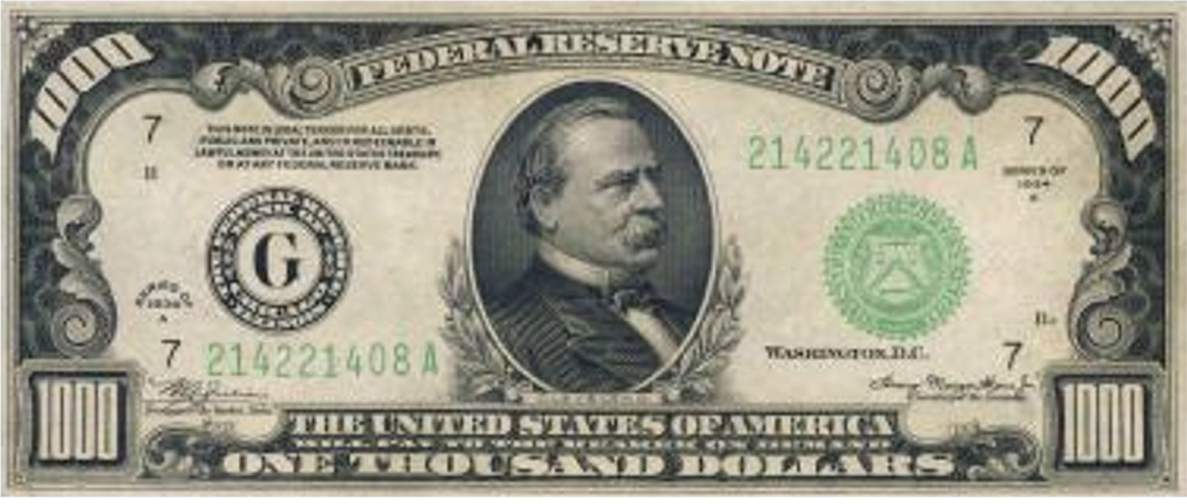
WHOLEDUDE - WHOLEDESIGNER - MATTER AND SPIRIT: If materialism is about the influence of money and material wealth, I would like to use the Power/Force/Energy called Money to talk about Life and Death. The Law of Conservation is applicable to both living, and non-living matter. If any person can refute my claim using valid, scientific information, I would give the person a US $1,000 bill as a reward.
Whole Dude at Whole Foods dwells on the understanding of Life and not Death: If materialism is about the influence of material wealth, I have to use the Power/Force/Energy called Money to talk about Life and Death. The Laws of Conservation are applicable to both living, and non-living matter. Hence, it can be stated that “Life can neither be created nor destroyed.” If any person can refute my claim using valid, scientific information, I give the person an US $1,000 bill as a reward.

If materialism is about the influence of material wealth, I have to use the Power/Force/Energy called Money to talk about Life and Death. The Laws of Conservation are applicable to both living, and non-living matter. Hence, if matter can neither be created nor destroyed, it can be stated that “Life can neither be created nor destroyed.” If any person can refute my claim using valid, scientific information, I give the person an US $1,000 bill as a reward.

The Laws of Conservation of Matter:

WholeDude - WholeDesigner - Matter and Spirit: Antoine Laurent Lavoisier(1743-1794) French chemist and physicist, the founder of modern Chemistry. He gave the name Oxygen to the gaseous chemical element discovered by Joseph Priestley. He discovered the composition of Water molecule. He formulated the Law of Conservation of Mass.
Whole Dude at Whole Foods dwells on the understanding of Life and not Death: Antoine Laurent Lavoisier (1743-1794) French chemist and physicist, the founder of modern Chemistry. He gave the name Oxygen to the gaseous chemical element discovered by Joseph Priestley. He discovered the composition of Water molecule. He formulated the Law of Conservation of Mass.

Chemical elements are the fundamental materials of which all matter is composed. There are about 107 known chemical elements. Chemical elements can combine with one another to form a wide variety of more complex substances called compounds. The number of possible compounds is infinite; perhaps a million chemical compounds are known. When two or more elements combine to form a compound, they lose their separate identities and the product has characteristics quite different from those of the constituent elements. The gaseous elements hydrogen and oxygen with quite different properties can combine to form the compound water which has altogether different properties from either hydrogen or oxygen. Most of naturally occurring matter represents physical mixtures of compounds. The indestructibility of matter was explained by Lavoisier as the Law of Conservation. “We may lay it down as an incontestable axiom,” Lavoisier writes, “that in all the operations of art and nature, nothing is created; an equal quantity of matter exists both before and after the experiment.” What appears to be the destruction of a body is merely the transformation of its matter into another physical condition, without loss of mass unless there is an equivalent gain in energy. The total quantity of matter and energy remains constant throughout all physical changes. Material substances undergo changes when they interact with other material substances, but this “change” cannot be described as the permanent reality. The permanent reality describes the unchanging, or constant nature of chemical elements and molecules in spite of their tendency to interact with other elements and molecules.

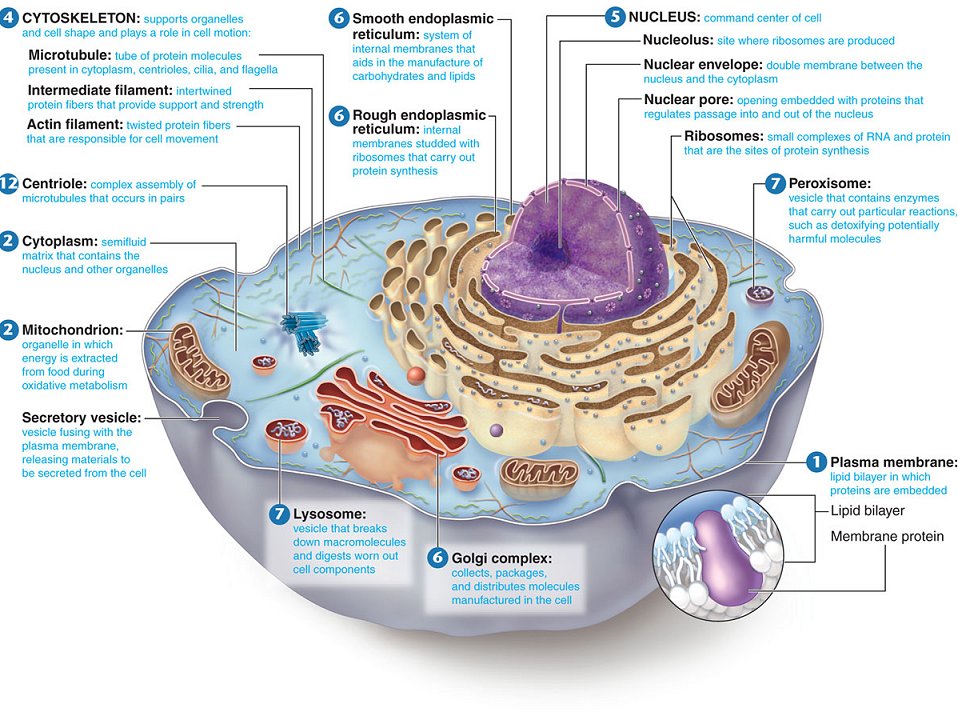
WHOLEDUDE - WHOLEDESIGNER - MATTER AND SPIRIT: Water is the simplest and most abundant of all the molecules found in all living matter. The chemical composition of living matter reveals 70 to 80 percent as that of water. At the same time, water can exist as simple, physical, or non-living matter. I claim that water molecule has the potentiality to constitute living matter because of its spiritual nature.
Whole Dude at Whole Foods dwells upon the understanding of Life and not Death: Water is the simplest and most abundant of all the molecules found in all living matter. The chemical composition of living matter reveals 70 to 80 percent water. At the same time, water can exist as simple, physical, or non-living matter. I claim that water molecule has the potentiality to constitute living matter because of its spiritual nature. Under the influence of time, living matter is transformed into molecules of non-living matter and yet the properties of molecules is fundamentally conserved allowing the change to proceed in either direction.

The Laws of Conservation are any of the several principles applied in Physics and Chemistry that state that certain properties of an isolated system remain constant with time. Each Law signifies that the nature of a substance or thing that does not change with the passage of time. However, it must be noted that change is the pervasive phenomenon of the natural world. It is said that, “Things in Nature Change with Time.” Although matter may change its form, or shape under the influence of time, its mass always remains the same. The Law of Conservation of Mass implies that matter can be neither created nor destroyed, that is, processes that change the physical, or chemical properties of substances within an isolated system leave the total mass unchanged. Similarly, The Law of Conservation of Energy implies that energy can be neither created nor destroyed, although it can be changed from one form (mechanical, kinetic, chemical, etc.,) into another form such as heat, or the energy consumed in the performance of work. In an isolated system, the sum of all forms of energy therefore remain constant. Every conservation law concerns a collection of two, or more objects, isolated from external influence, for which some physical quantity remains unchanged in time, or is conserved, quite apart from the details of what goes on between the interacting particles within the system. An important function of conservation laws is that they make it possible to predict the macroscopic behavior of a system without having to consider the microscopic details of the course of a physical process or chemical reaction. The fundamental character of these conservation laws is evident in the fact that each law may be deduced from or related to a symmetry property of space and time. The symmetry property of space and time determines the periodic frequency with which a natural change occurs while the nature or properties of things is conserved to allow the change to repeat itself in an expected manner.    

What is Spirit? Unchanging Nature in a Changing World:

WholeDude - WholeDesigner - Matter and Spirit: Many important biological processes involve Redox or Oxidation and Reduction Chemical Reactions. These chemical reactions reveal a dynamic process that is the characteristic of both Life and Death. If Life is explained by a series of chemical reactions, the same process continues into Death.
Whole Dude at Whole Foods dwells on the understanding of Life and not Death: Many important biological processes involve Redox or Oxidation and Reduction Chemical Reactions. These chemical reactions reveal a dynamic process that is the characteristic of both Life and Death. If Life is explained by a series of chemical reactions, the same process continues into Death.

Natural Science, and Natural History is about the natural phenomenon called change. The systematized knowledge of Biological Sciences provide us with information about extinction which is the most common phenomenon in planet Earth’s Natural History. Earth has witnessed several major, and minor episodes called extinction during which certain life forms got wiped out. While extinction is driven by climate change and its associated environmental change, life continues to exist on Earth without any apparent change in the chemical composition of living matter. Extinction involves the loss of forms and it does not involve a change in the nature of the corporeal substance that has the potential called Life and is known as Living Matter. In other words, it may be stated that if a change is observed in the natural world, it is always supported by an underlying, unchanging principle. While living things are born and die at the end of their lifetime, the matter, or the corporeal substance which has the potential to establish Life remains unchanged and its nature is conserved and is not affected by time. Under the influence of the cyclical flow of time, individual, living things are born and are dying while the Principle of Conservation maintains the unchanging nature of things that constitute Life or Living Matter. Life is established by a vital, animating principle called Spirit; the presence of Spirit can be related to the unchanging or immutable nature of Matter that gets the nature called Eternal, or Immortal, or Imperishable or Indestructible that overcomes the limitations imposed by Time and Space. The Magic of Creation involves the use of a design, or plan to introduce the abilities such as thought, will, feelings, and cognition into matter that reveals their presence or absence while passing through stages like Life and Death. The same chemical elements, chemical compounds, and chemical reactions operate in the state called living and death and both are maintained by the same unchanging nature of Matter and Spirit.

In my opinion, it is not correct to regard Spirit as separate from Matter. It will not be correct to separate man into physical body or matter, thinking substance or mind, and immaterial substance called Spirit. There is no human existence if there is disunity or separation of Matter, Spirit, Body, and the Mind. The uncreated, Eternal, Spiritual nature of God that is shared by Spirit and Matter would lead us to claim: “Life can neither be created nor destroyed.”

Whole Dude at Whole Foods dwells on the understanding of Life and not Death

Whole Proposition of Whole Dude at Whole Foods

Whole Dictum: The Confluence of Religion, Philosophy and Science

“I am Consciousness, therefore I am” is a proposition to explore the nature of human consciousness, the existence of soul and man’s connection to a Conscious entity described as God.

Whole Dictum: I am Consciousness, Therefore I am. Vitruvian Man by Leonardo Da Vinci (c. 1492). This picture is used as the cover page for Best & Taylor’s Text Book of Human Physiology. Medical Science and Medical Education is knowledge built upon the foundations of understanding and knowing Human Anatomy (Structure) and Human Physiology (Function).

Spirituality Science: My Spiritual Journey – The inquiry about Self, Spirit, and Soul:

“I am Consciousness, therefore I am” is a proposition to explore the nature of human consciousness, the existence of soul and man’s connection to a Conscious entity described as God.

I submit that we have to arrive at an understanding of Self, Spirit, and Soul by knowing the structural and functional organization of the being that exists. 

The Identity of Multicellular Human Organism:

Whole Dictum: I am Consciousness, Therefore I am. “ManO buddhyaHamkara, chittani na aHam, Na karnam, na jihva, na cha ghrana neytrey, Na cha vyoma, bhuumir na TejO, na vaayuH; Chidananda Rupah, Shivo aHam, Shivo aHam.” Adi Shankaracharya describes that his Identity does not pertain to his mind, intellect, the intellectual pride/ego, mental functions, his organs of sense, the five primordial elements of Nature. His Identity could only be stated as Sat+Chit+Ananda, the Identity of Ultimate Reality. However, the human organism has an Identity described by Human Anatomy and the organism’s functions (Human Physiology) establish and defend this Identity of the Human person in Nature.
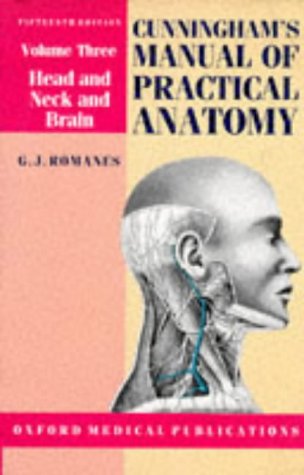
Dr. Daniel John Cunningham (1850-1909), Chair of Anatomy, University of Cambridge published this Manual of Practical Anatomy to help medical students dissect human cadavers to learn Human Anatomy. Whether humans know and understand Human Anatomy and Physiology or not, they come into existence with full functional knowledge of every constituent cell in the body. The Human Body has Innate Knowledge of its own Structures and Functions. I acquired this Knowledge from uneducated individuals who gifted their bodies to promote Medical Education.

I learned about human body while dissecting the body in a systematic manner. The Manual of Practical Anatomy which guides us through this entire process was published in England. The author Dr. Daniel John Cunningham prepared the Manual while dissecting cadavers of British or Irish citizens. He had never encountered cadavers of people of Indian origin. At Kurnool Medical College, Kurnool, Andhra Pradesh, India, where I was a student, the Department of Anatomy obtains dead bodies from  Government General Hospital Kurnool and most of the deceased are the poor, and often uneducated people of that region. None of the deceased had a chance to know this man called Cunningham and Cunningham had no knowledge about the existence of these people who arrived on our dissection tables. But, as the dissection of the human body proceeded, inch, by inch, we recognized the anatomical parts as described by Cunningham. The manual also lists some anatomical variations and we very often exchanged information between various dissection tables and recognized the variations mentioned. The dissections also involves slicing the organs and studying them, both macroscopically, and microscopically. We did not miss any part of the human body. So what is the Identity of this Human person or Human subject? How does the living Human organism maintains its Identity and Individuality? Apart from the Cultural Traditions of India, several Schools of Religious Thought claim that the Human Individual and its Identity is represented by Human Soul. Where does this soul exist in the human body? What is the location if soul is present in the living person? Does man have a soul?

The Knowledge of Field and The Field of Activity: The concept of Kshetra and Kshetrajna:                 

Whole Dictum: I am Consciousness, Therefore I am. Purusha or Man is the Knower of activities of his human body or Kshetra. Yoking is about pairing, something that binds, unites, or connects or joins together to perform physical tasks that impose a heavy burden if performed without pairing. Man performs a myriad of his living functions drawing matter and energy from his external environment. This conditioned, dependent human existence is made possible for man is paired with an Everlasting Principle which provides the Knowledge to perform the vital function called Cellular Respiration

The term soul has to be carefully defined if I have to find it by exploring the human body. In the Indian tradition, the human body is described as Kshetra or Field. The individual who knows and enjoys this body, kshetra, or field is often described as Purusha. The knowledge of the body is called Kshetra Jnana and the Knower is called Kshetrajna. The person called Purusha could explore his body called ‘kshetra’ and acquire knowledge called ‘Kshetra Jnana’. So, I explore my body to find out if I have a soul and as to where it exists.  I can explore my body while I am alive. If I am dead, only a different living person may get the opportunity to explore my dead body, but he may not be able to discover the soul which may have already departed from the body. If soul exists in the cadaver, Cunningham would not have missed it, and we the diligent students dissecting human cadavers would not have missed it. By definition, soul does not exist in dead bodies. It has something to do with life and the characteristics of a living person or organism. With the intellectual insight I gained by studying Human Anatomy, I can explore my living body without placing it on a dissection table.

The Functional Unity of Multicellular Human Organism:

Adaptive Subordination of Red Blood cells to the requirements of the whole Human Organism. The mature RBCs have no nuclei and they cannot divide. They are exclusively adapted to transport Oxygen and serve the Human Organism. During the life span of Human Organism, the RBCs live for short periods of time and are constantly replaced by new RBCs.

Humans are multicellular organisms. Who or what is the Subject who lives because of the functions of the trillions of cells? Multicellularity found in complex organisms like humans is accompanied by definite capabilities of cells for differentiation. The design of cells has been modified to serve specialized functions of tissues and organs. To achieve proper numerical balance between functionally related cell groups, the death of many cells is necessary for others to reach maturity. This programmed cell death plays an important role during embryological growth and development of human fetus. Waves of genetically driven cell deaths are critical to the proper modeling of organs, and organ systems. Such programmed cell death events are essential if the organism as a whole is to develop its normal final form by which its Identity as an Individual is established. The constituent cells of the organism do not display functional individuality while living as individuals. The cell in a complex organism is not truly an independently functioning unit. The cell exists and functions to achieve Unity of the Organism as a Whole. The one very important part of the environment of a cell is other cells. The Consciousness, the Awareness of individual cells in multicellular organism functions to achieve the Functional Unity of the Whole Organism. Consciousness brings Functional Unity by providing the abilities of recognition, association, and cooperation between all the cells of the multicellular organism. Multicellular organisms are characterized by the ‘Adaptive Subordination’ of the constituent cells to the requirements of the organism as a Whole. For example, mature Red Blood Cells or RBCs have no nuclei and they cannot divide or replicate. They are exclusively adapted to transport Oxygen and serve the whole human organism. The RBCs have short lives as individual cells. The human organism has a life span of its own. During the life time of a human person, RBCs live for short periods of time and are constantly replaced by new RBCs. Thus it may be stated that the purpose of Consciousness at cellular level is to foster Functional Unity of the multicellular organism and establish it as an Individual. If the term ‘Soul’ represents the Identity of this Individual, the Soul is a Functional Attribute of Consciousness at cellular level.

The Biological aspects of Human Soul:

Reticular Formation is shown as a single ‘red’ bar in this figure. It consists of numerous Brain Stem nuclei. It is a network of nerve pathways and nuclei throughout the Brain Stem. A single neuron in this network may have synapses/connections with as many as 25,000 other neurons/nerve cells.
Capacity for consciousness is an upper Brain-Stem Function and the Content of consciousness is a Function of the Cerebral Cortex. The Reticular Formation which is located in the central Brain Stem helps to coordinate and integrate actions of different parts of the Central Nervous System such as regulation of muscle and reflex activity;central transmission and composition of sensory impulses; respiration; cardiovascular responses; behavioral arousal; and sleep.

I explore my body called Kshetra. The Kshetra Jnana, or Knowledge of my body is as follows:
My soul is  represented by an anatomical structure described as Reticular Formation in the Brain Stem.  Just like my body is composed of trillions of individual cells which collectively represent and establish my physical identity in this world, my soul derives its existence and identity from trillions of these individual units or cells that comprise my body. My soul is actually a composite of trillions of units of consciousness of trillions of individual cells that comprise my human body. The Functional Unity in relation to Consciousness is achieved in the Reticular Formation, the site where Consciousness of the Whole human organism is composed and only relevant information is relayed to the Cerebral hemispheres to arouse cortical awareness. It is just like a picture or a photo which represents trillions of spots of varying degrees of light intensity or brightness. The term soul has to be defined as the manifestation of “Consciousness”. If there is no “Consciousness”, there is no soul. The existence of soul is witnessed by the presence of “Consciousness”. This biological characteristic described as “Consciousness” exists in every single living cell. If a living organism is made up of one single cell, it has a soul as manifested by its “Consciousness”. For the human person, when identified as an Individual, the anatomical location of his Soul is the Reticular Formation of the Brain Stem which receives input from the rest of the body and shapes the information and sends it to Thalamus and to Cortical Areas of the Brain which provide the awareness, the functional knowledge with which the human organism exists as a living entity. Man enjoys an existence characterized by Peace, Harmony, and Tranquility, as the Soul, or the Life Principle operates the vital functions of the complex organism without relaying all the information to the cortical areas avoiding information overload. Thereby, Man is protected from a huge information overload that is not compatible with mental peace and equilibrium
.

“I am Consciousness, Therefore I am” :

DESCARTES, RENE (b. March 31, 1596, d. February 11, 1650 ), French Mathematician and Father of Modern Philosophy.

Could we extend scientific methodology of investigation into every field of inquiry? Could we find Truth, and Reality as an external experience? Is it possible to visualize Truth and Reality in the realm of Intuition and Conscience? Jean Jacques Rousseau, the French philosopher suggests that man has to find his way to his pure nature, and this through feelings. Man’s duty is to look for his most deep interior feelings and follow them. Rene Descartes advances a philosophy based on certitude. He seeks to devise a method of inquiry for reaching the Truth. He proposes a method for guaranteeing Knowledge. He argues that in order to provide a secure foundation for Knowledge it is necessary to discover “clear and distinct ideas” that could not be doubted and could serve as a basis for deriving further truths. He finds such an idea in the proposition “I think, therefore I am” (“cogito, ergosum”). Descartes stresses a world of metaphysical truths that could be discovered by pure reason. He subjects his beliefs to a series of skeptical hypotheses. He invokes skepticism as a means of reaching certainty. As per his conclusion, “I think, therefore I am” is beyond skeptical doubt.

Cartesian Philosophy – The Value of Systematic Doubt:

Human body is composed of cells and each of these cells is a conscious entity. Consciousness is a biological, cellular function which brings about Functional Unity of the Whole Organism. Cellular consciousness provides the abilities of recognition, association, and cooperation between cells. Cells are characterized by Adaptive Subordination to meet the requirements of the organism as a whole. Rene Descartes proposition to divide human body into two parts; a thinking part, and a mechanical part is incorrect.

I truly admire Descartes for adopting a strategy of withholding his belief from anything that is not entirely certain and indubitable. Skepticism is an attitude that rejects claims to certainty. Its basic philosophical contention is that the possibility of knowledge is limited by the limitations of the mind itself or by the inaccessibility of the object. Descartes is known as the Father of the Mind-Body Problem. He claims that human beings are composites of two kinds of substances, mind and body. A mind is a conscious or thinking being, that is, it understands, wills, senses, and imagines. A body is a being extended in length, width, and breadth. He thinks that minds are indivisible, whereas bodies are infinitely divisible. The “I” of the “I think, therefore I am” is the mind that he claims could exist without being extended, so that it can in principle survive the death of the body. Descartes argues that colors, sounds, tastes, heat, cold, and pain are merely sensations existing in mind/thought and that there is nothing in bodies that resembles the sensation. He thinks that all complex functioning of living organisms including human bodies could be explained solely by mechanistic physics. He even denies that consciousness could be attributed to animals in order to explain their behavior. Descartes influences the whole course of philosophical enquiry. Using the same Cartesian Philosophy, I find the proposition of Descartes to be invalid and incorrect based upon my understanding of human body, mind, and consciousness. The proposition which I use is, “I am Consciousness, therefore I am”. This clear, and distinct idea, which is beyond doubt helps me to discover man’s awareness of God or what I describe as the “God Connection”. This “Connection” is the foundation for man’s existence in the natural world.  

LORD KRISHNA IN THE HINDU SCRIPTURE OF BHAGAVAD GITA, Chapter 10, The Opulence of the Absolute, verse 22 claimed that “…in living beings I am Consciousness.” Similarly, in Chapter 7, verses 9 and 10, Lord Krishna claims that “I am the life of all that Lives”, “I am the Original seed of all existences.”